



Imidafenacin

Based on 1 Customer Validation
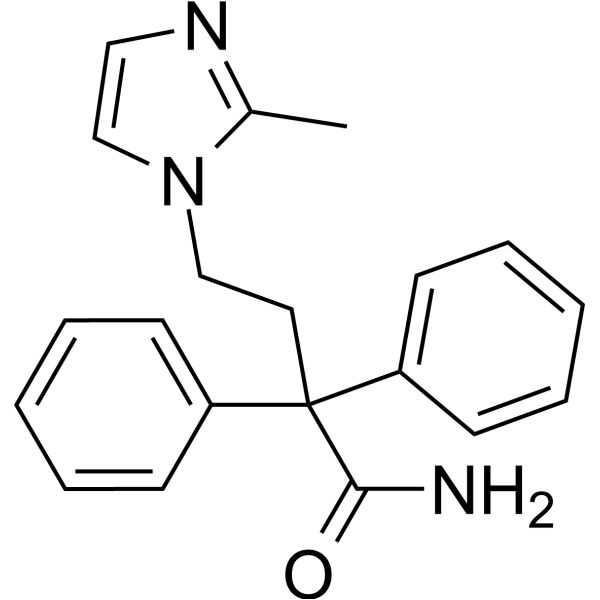
Imidafenacin (KRP-197; ONO-8025) is an orally active inhibitor of muscarinic (mAChR) M1 and M3 receptors. Imidafenacin potently inhibits bladder contraction in vivo and exerts an antidiuretic effect by enhancing the signaling pathway of vasopressin (antidiuretic hormone). Imidafenacin can be used in research related to overactive bladder.
For research use only. We do not sell to patients.
- Purity : 99.26%
- CAS No.: 170105-16-5
- Formula: C20H21N3O
- Molecular Weight:319.40
-
Storage:Powder -20°C, 3 years , 4°C, 2 years ; In solvent -80°C, 2 years , -20°C, 1 year

To place orders, for customer services and technical support, please contact: MedChemExpress USA
Tel: 609-228-6898 E-mail: [email protected] [email protected]


-
 Biological Activity
-
Chemical Information
-
Solvent & Solubility
- Protocols
- Purity & Documentation
- References
-
 Help & FAQs


-
HY-70020B
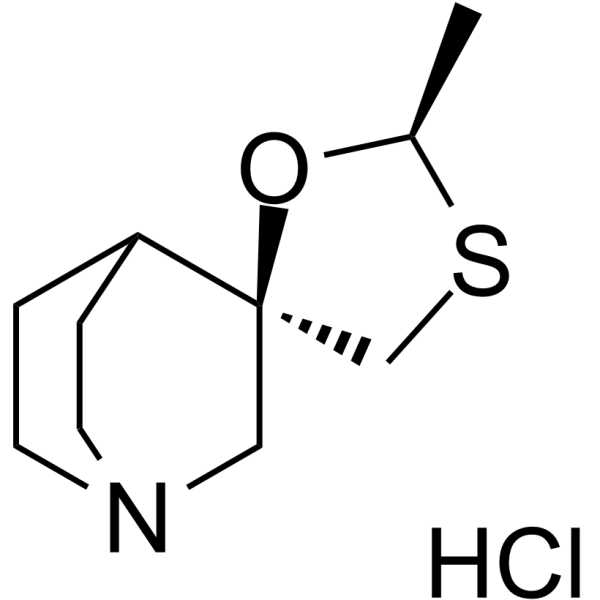
Cevimeline hydrochlorideMuscarinic M1/M3 Receptor Agonist -

HY-B0662R
Imidafenacin (Standard)Standard of Imidafenacin -
HY-17360
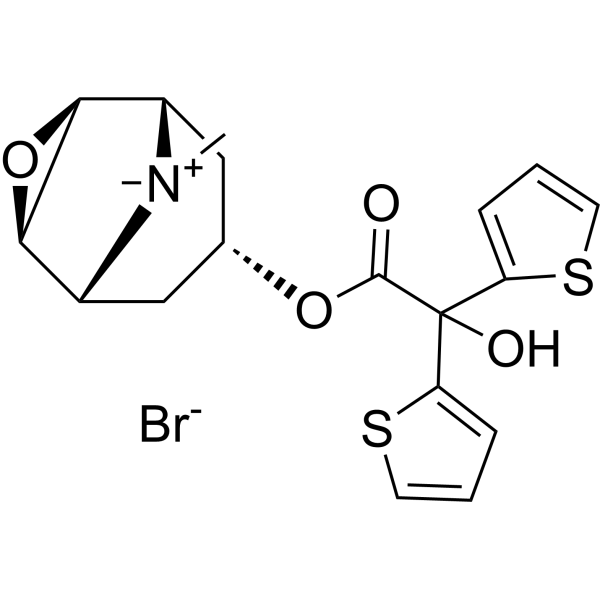
Tiotropium BromidemAChR Antagonist -
HY-13410
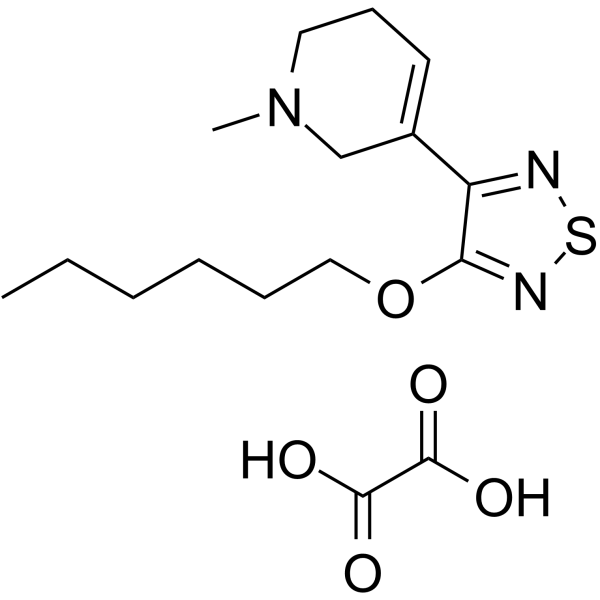
Xanomeline oxalateM1/M4 Agonist -
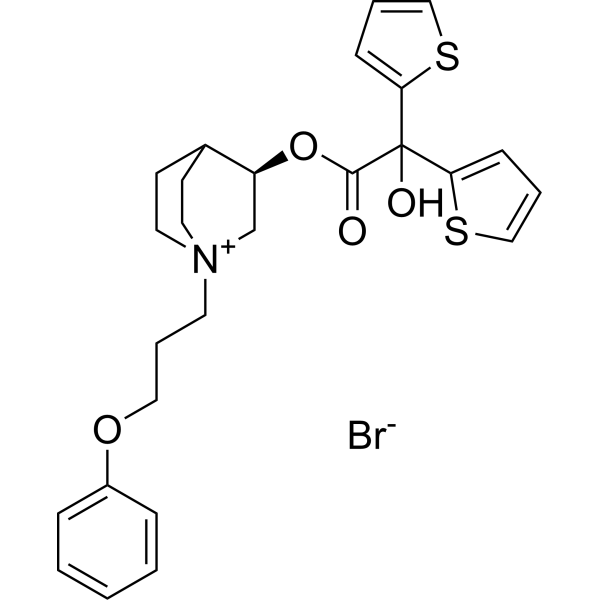
HY-14144
Aclidinium BromidemAChR Antagonist -
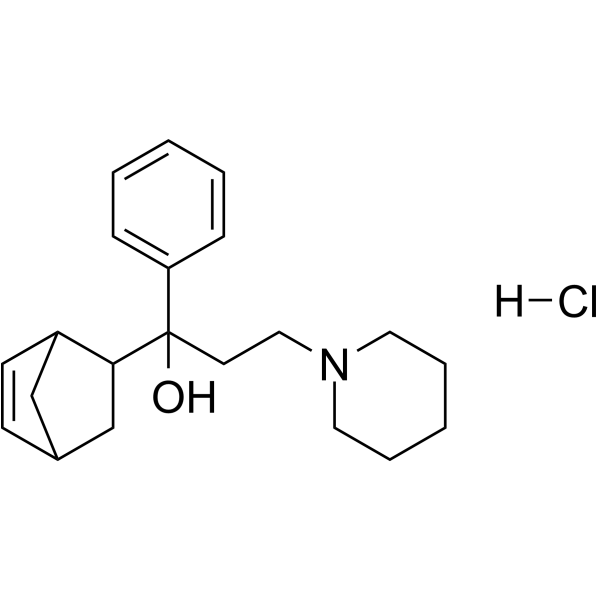
HY-13204
Biperiden hydrochlorideMuscarinic Receptor Antagonist -
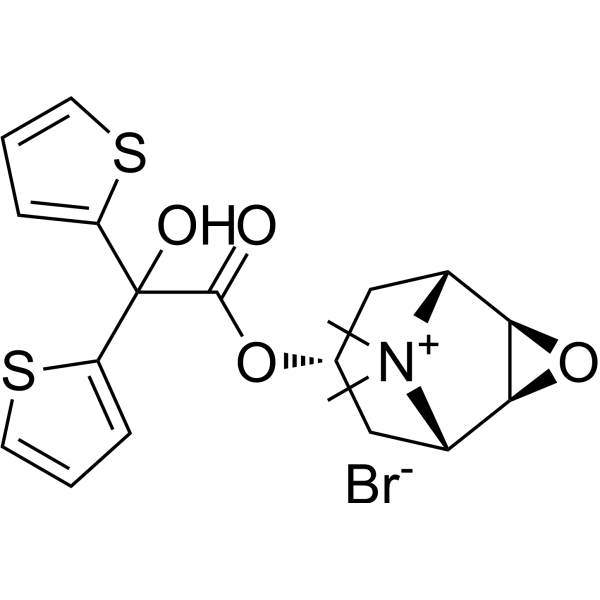
HY-17360R
Tiotropium Bromide (Standard)mAChR Antagonist -
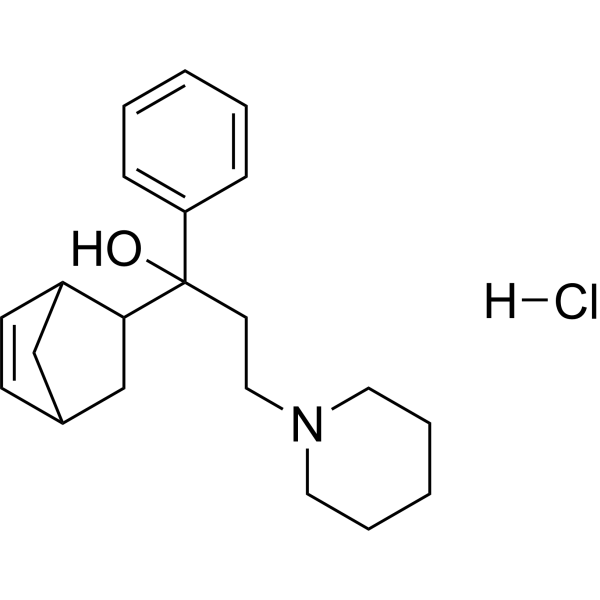
HY-13204R
Biperiden hydrochloride (Standard)Muscarinic Receptor Antagonist -

HY-13410R
Xanomeline oxalate (Standard)M1/M4 Agonist -

HY-14144R
Aclidinium Bromide (Standard)mAChR Antagonist
All Vasopressin Receptor Isoforms
More

Biological Activity
Description
IC50 & Target
[1]|
mAChR1 |
mAChR3 |
In Vivo
Imidafenacin (0.05-0.2 mg/kg; p.o.; single dose) dose-dependently prevents carbamylcholine-induced reductions in bladder capacity in conscious female rats with an ID50 of 0.055 mg/kg, and significantly lowers maximum intravesical pressure at doses of 0.05, 0.1, and 0.2 mg/kg[2].
Imidafenacin (0.0625-1 mg/kg; p.o.; singe dose) dose-dependently inhibits distention-induced rhythmic bladder contractions in conscious male rats with an ID30 of 0.17 mg/kg, with effects peaking 30-50 minutes post-dosing and lasting at least 120 minutes[2].
Imidafenacin (0.3-2.4 mg/kg; p.o.; single dose) dose-dependently inhibits carbamylcholine-induced salivary secretion in conscious male rats with an ID50 of 1.5 mg/kg[2].
Imidafenacin (1-10 mg/kg; p.o.; daily; 7 days) does not impair spatial learning or memory in male rats tested in the Morris water maze task[2].
MedChemExpress (MCE) has not independently confirmed the accuracy of these methods. They are for reference only.
-
Animal Model:Sprague-Dawley (female, 220-290 g, orally water-loaded)[1]
-
Dosage:3-300 μg/kg
-
Administration:i.v.; single dose
-
Result:Dose-dependently suppressed urine production, with the minimum effective dose identified as 10 μg/kg.
Produced approximately 50% inhibition of urine volume relative to the vehicle group at 100 μg/kg.
Enhanced the antidiuretic effect beyond that of either agent alone when administered at 10 μg/kg in combination with desmopressin at its minimum effective dose.
Had its antidiuretic effect completely inhibited by pretreatment with 3 mg/kg mozavaptan at 10 μg/kg and 300 μg/kg.
Further suppressed urine production compared to desmopressin alone in the presence of mozavaptan when 300 μg/kg was added to a combination of 3 mg/kg mozavaptan and 0.1 μg/kg desmopressin.
-
Animal Model:Wistar rats (male, 190-340 g)[2]
-
Dosage:1 mg/kg; 10 mg/kg
-
Administration:p.o.; daily; 7 days
-
Result:Did not alter escape latencies during the acquisition phase compared to vehicle controls at doses of 1 mg/kg and 10 mg/kg.
Showed a significant preference for the quadrant where the platform was previously placed during the spatial probe trial at doses of 1 mg/kg and 10 mg/kg, similar to vehicle controls.
Clinical Trial
| NCT Number | Sponsor | Condition | Start Date |
Phase

|
|---|---|---|---|---|
| NCT01329991 | 2011-05 | PHASE1 |


Chemical Information
-
CAS No. 170105-16-5
-
Appearance Solid
-
Molecular Weight 319.40
-
Formula C20H21N3O
-
Color White to off-white
-
SMILES
NC(C(C1=CC=CC=C1)(C2=CC=CC=C2)CCN3C(C)=NC=C3)=O
-
Synonyms
KRP-197; ONO-8025
-
Shipping
Room temperature in continental US; may vary elsewhere.
-
Storage
Powder -20°C 3 years 4°C 2 years In solvent -80°C 2 years -20°C 1 year


Solvent & Solubility
In Vitro:
DMSO : 31.25 mg/mL (97.84 mM; ultrasonic and warming and heat to 60°C; Hygroscopic DMSO has a significant impact on the solubility of product, please use newly opened DMSO)
Please refer to the solubility information to select the appropriate solvent. Once prepared, please aliquot and store the solution to prevent product inactivation from repeated freeze-thaw cycles.
Storage method and period of stock solution: -80°C, 2 years; -20°C, 1 year. When stored at -80°C, please use it within 2 years. When stored at -20°C, please use it within 1 year.
Please refer to the solubility information to select the appropriate solvent. Once prepared, please aliquot and store the solution to prevent product inactivation from repeated freeze-thaw cycles.
Storage method and period of stock solution: -80°C, 2 years; -20°C, 1 year. When stored at -80°C, please use it within 2 years. When stored at -20°C, please use it within 1 year.
Concentration (start) × Volume (start) = Concentration (final) × Volume (final)
In Vivo:
Select the appropriate dissolution method based on your experimental animal and administration route.
- For the following dissolution methods, please ensure to first prepare a clear stock solution using an In Vitro approach and then sequentially add co-solvents:
- To ensure reliable experimental results, the clarified stock solution can be appropriately stored based on storage conditions. As for the working solution for In Vivo experiments, it is recommended to prepare freshly and use it on the same day.
- The percentages shown for the solvents indicate their volumetric ratio in the final prepared solution. If precipitation or phase separation occurs during preparation, heat and/or sonication can be used to aid dissolution.
Add each solvent one by one: 10% DMSO 40% PEG300 5% Tween-80 45% Saline
Solubility: ≥ 2.08 mg/mL (6.51 mM); Clear solution
This protocol yields a clear solution of ≥ 2.08 mg/mL (saturation unknown).
Taking 1 mL working solution as an example, add 100 μL DMSO stock solution (20.8 mg/mL) to 400 μL PEG300, and mix evenly; then add 50 μL Tween-80 and mix evenly; then add 450 μL Saline to adjust the volume to 1 mL.
Preparation of Saline: Dissolve 0.9 g sodium chloride in ddH₂O and dilute to 100 mL to obtain a clear Saline solution.
Add each solvent one by one: 10% DMSO 90% (20% SBE-β-CD in Saline)
Solubility: ≥ 2.08 mg/mL (6.51 mM); Clear solution
This protocol yields a clear solution of ≥ 2.08 mg/mL (saturation unknown).
Taking 1 mL working solution as an example, add 100 μL DMSO stock solution (20.8 mg/mL) to 900 μL 20% SBE-β-CD in Saline, and mix evenly.
Preparation of 20% SBE-β-CD in Saline (4°C, storage for one week): 2 g SBE-β-CD powder is dissolved in 10 mL Saline, completely dissolve until clear.
In Vivo Dissolution Calculator
Please enter the basic information of animal experiments:
-
-
-
-
Recommended: Prepare an additional quantity of animals to account for potential losses during experiments.
Please enter your animal formula composition:
-
%DMSO +
Recommended: Keep the proportion of DMSO in working solution below 2% if your animal is weak.
-
%+
-
+%Tween-80 + +
-
%Saline +
The co-solvents required include: DMSO, . All of co-solvents are available by MedChemExpress (MCE). , Tween 80. All of co-solvents are available by MedChemExpress (MCE).
Working solution concentration: 0.22 mg/mL
Method for preparing stock solution: mg drug dissolved in μL DMSO. Stock solution concentration: mg/mL.
1. Take μL DMSO stock solution;
2. Add μL .
μL , mix evenly;
3. Then add μL Tween 80, mix evenly;
4. Then add μL
Please ensure that the stock solution in the first step is dissolved to a clear state, and add co-solvents in sequence. You can use ultrasonic heating (ultrasonic cleaner, recommended frequency 20-40 kHz), vortexing, etc. to assist dissolution.


Purity & Documentation
-
Data Sheet (286 KB)
-
SDS (396 KB)
- English - EN (396 KB)
- Français - FR (396 KB)
- Deutsch - DE (396 KB)
- Norwegian - NO (396 KB)
- Español - ES (396 KB)
- Swedish - SV (396 KB)
- Italian - IT (396 KB)
- Korean - KR (396 KB)
- Portuguese - PT (396 KB)
-
Handling Instructions (2659 KB)
References


Complete Stock Solution Preparation Table
Please refer to the solubility information to select the appropriate solvent. Once prepared, please aliquot and store the solution to prevent product inactivation from repeated freeze-thaw cycles.
Storage method and period of stock solution: -80°C, 2 years; -20°C, 1 year. When stored at -80°C, please use it within 2 years. When stored at -20°C, please use it within 1 year.
| Optional Solvent | Concentration Solvent Mass | 1 mg | 5 mg | 10 mg | 25 mg |
|---|---|---|---|---|---|
| DMSO | 1 mM | 3.1309 mL | 15.6544 mL | 31.3087 mL | 78.2718 mL |
| 5 mM | 0.6262 mL | 3.1309 mL | 6.2617 mL | 15.6544 mL | |
| 10 mM | 0.3131 mL | 1.5654 mL | 3.1309 mL | 7.8272 mL | |
| 15 mM | 0.2087 mL | 1.0436 mL | 2.0872 mL | 5.2181 mL | |
| 20 mM | 0.1565 mL | 0.7827 mL | 1.5654 mL | 3.9136 mL | |
| 25 mM | 0.1252 mL | 0.6262 mL | 1.2523 mL | 3.1309 mL | |
| 30 mM | 0.1044 mL | 0.5218 mL | 1.0436 mL | 2.6091 mL | |
| 40 mM | 0.0783 mL | 0.3914 mL | 0.7827 mL | 1.9568 mL | |
| 50 mM | 0.0626 mL | 0.3131 mL | 0.6262 mL | 1.5654 mL | |
| 60 mM | 0.0522 mL | 0.2609 mL | 0.5218 mL | 1.3045 mL | |
| 80 mM | 0.0391 mL | 0.1957 mL | 0.3914 mL | 0.9784 mL |


Imidafenacin Related Classifications
HY-B0662 Related Classifications
 Powered by Bioz
Keywords
- Imidafenacin
- 170105-16-5
- KRP-197
- ONO-8025
- KRP197
- KRP 197
- ONO8025
- ONO 8025
- ONO-8025
- mAChR
- Vasopressin Receptor
- acetylcholine
- vasopressin signaling pathway
- overactive bladder
- Sprague-Dawley rats
- conscious rats
- muscarinic acetylcholine M1 receptors
- muscarinic acetylcholine M3 receptors
- urinary bladder
- carbamylcholine
- salivary secretion
- Inhibitor
- inhibitor
- inhibit