



V2 Receptor
V2 receptor (V2R/AVPR2) is a renal G protein-coupled receptor that mediates arginine vasopressin control of body water homeostasis in distal tubules and collecting ducts[1]. Mechanistically, AVP activates V2R-dependent Gs-adenylate cyclase-cAMP signaling, which promotes AQP2 translocation in collecting duct principal cells and increases water reabsorption[1][2]. Quantitative phosphoproteomics further supports multiple V2R-dependent signaling pathways in renal collecting duct cells, making V2R a central experimental entry point for urine-concentrating mechanisms[3]. In disease models, loss-of-function mutations in V2R cause X-linked nephrogenic diabetes insipidus, whereas excessive AVP-V2R activity contributes to water retention and hyponatremia[4][5]. Compared with related isoforms, V2R primarily regulates urine osmotic concentration, while V1a receptors promote natriuresis and V1b receptors regulate potassium secretion in distal nephron segments[6]. For experimental applications, dDAVP/desmopressin remains a standard V2R-selective agonist, and tolvaptan is a selective oral V2R antagonist used to study and treat hyponatremia[7][5]. Recent cryo-EM structures show that tolvaptan and Mambaquaretin bind the V2R orthosteric site in distinct inactive conformations, supporting structure-guided antagonist design[8].- V2R links vasopressin sensing to cAMP signaling, AQP2 trafficking, and renal water reabsorption.- V2R differs from V1a and V1b by its dominant role in urine concentration.- dDAVP and tolvaptan support agonist-antagonist studies of V2R-dependent water-balance disorders.
References:
- [1]. Koshimizu TA, et al. Vasopressin V1a and V1b receptors: from molecules to physiological systems. Physiol Rev. 2012 Oct;92(4):1813-64. [Content Brief]
- [2]. Robben JH, et al. Cell biological aspects of the vasopressin type-2 receptor and aquaporin 2 water channel in nephrogenic diabetes insipidus. Am J Physiol Renal Physiol. 2006 Aug;291(2):F257-70. [Content Brief]
- [3]. Rinschen MM, et al. Quantitative phosphoproteomic analysis reveals vasopressin V2-receptor-dependent signaling pathways in renal collecting duct cells. Proc Natl Acad Sci U S A. 2010 Feb 23;107(8):3882-7. [Content Brief]
- [4]. Pan Y, et al. Mutations in the V2 vasopressin receptor gene are associated with X-linked nephrogenic diabetes insipidus. Nat Genet. 1992 Oct;2(2):103-6. [Content Brief]
- [5]. Schrier RW, et al. Tolvaptan, a selective oral vasopressin V2-receptor antagonist, for hyponatremia. N Engl J Med. 2006 Nov 16;355(20):2099-112. [Content Brief]
- [6]. Natochin YV, et al. Vasopressin receptor subtypes and renal sodium transport. Vitam Horm. 2020;113:239-258. [Content Brief]
- [7]. Saito M, et al. 1-desamino-8-D-arginine vasopressin (DDAVP) as an agonist on V1b vasopressin receptor. Biochem Pharmacol. 1997 Jun 1;53(11):1711-7. [Content Brief]
- [8]. Fouillen A, et al. Inactive structures of the vasopressin V2 receptor reveal distinct binding modes for Tolvaptan and Mambaquaretin toxin. Nat Commun. 2025 Apr 24;16(1):3899. [Content Brief]
-
V2 Receptor Related Products (22)
Related Products (22)

- 1
- 2
-
Tolvaptan
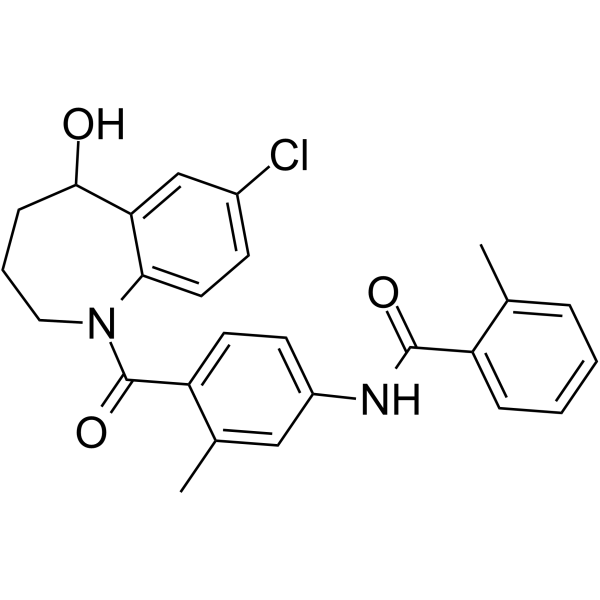 0 ImagesSynonyms: OPC-41061Tolvaptan is a selective, competitive and orally active vasopressin receptor 2 (V2R) antagonist with an IC50 of 1.28 μM for the inhibition of arginine vasopressin (AVP)-induced platelet aggregation. Tolvaptan induces cell apoposis and affects cell cycle. Tolvaptan can be used for the research of hyponatremia.
-
Argipressin
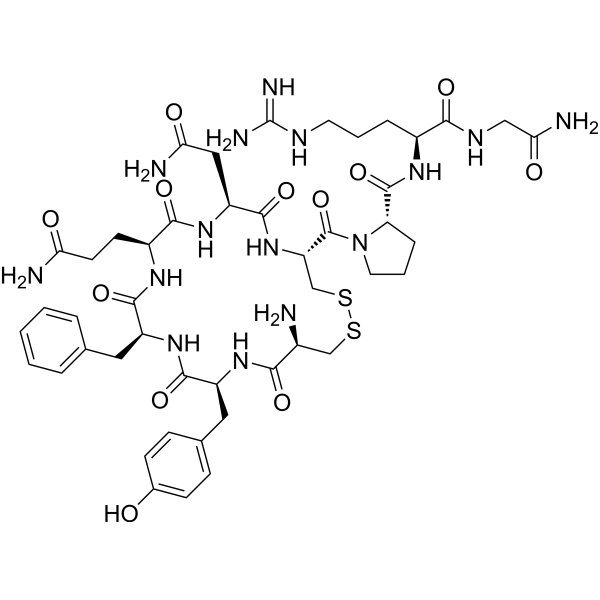 0 ImagesArgipressin (Arg8-vasopressin) binds to the V1, V2, V3-vascular arginine vasopressin receptor, with a Kd value of 1.31 nM in A7r5 rat aortic smooth muscle cells for V1.
-
Conivaptan hydrochloride
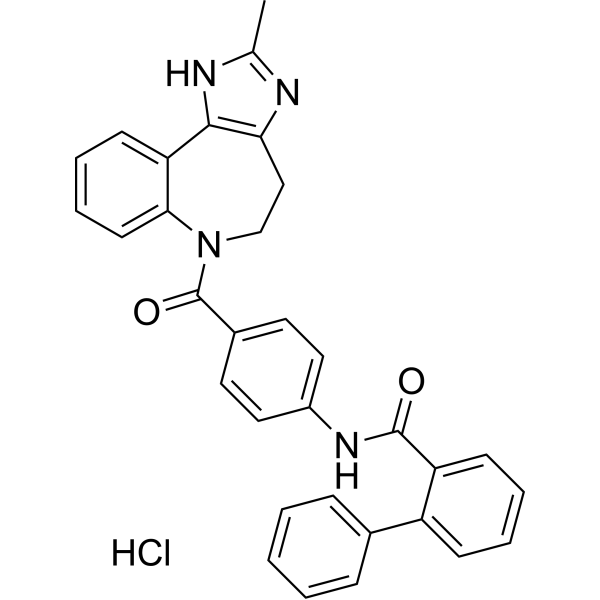 0 ImagesSynonyms: YM 087Conivaptan hydrochloride (YM 087) is an orally active dual vasopressin V1a/V2 receptor antagonist with Ki values of 0.48 nM and 3.04 nM for vasopressin V1a receptor and V2 receptor, respectively. Conivaptan hydrochloride competitively and reversibly blocks vasopressin-mediated antidiuresis, vasoconstriction, and cellular hypertrophy, while inhibiting CYP3A4. Conivaptan hydrochloride inhibits vasopressin-induced intracellular calcium, cAMP, and mitogen-activated kinase activation in vascular smooth muscle cells and cardiomyocytes. Conivaptan hydrochloride induces water diuresis while improving hemodynamics in heart failure models, reducing left ventricular end-diastolic pressure, vascular resistance, and organ weight. Conivaptan hydrochloride is used for research on hyponatremia and congestive heart failure.
-
Mozavaptan
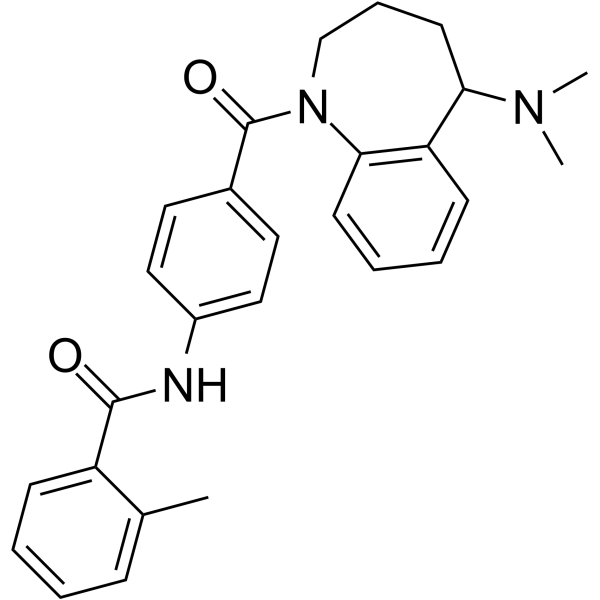 0 ImagesSynonyms: OPC-31260Mozavaptan (OPC-31260) is a benzazepine derivative and a potent, selective, competitive and orally active vasopressin V2 receptor antagonist with an IC50 of 14 nM. Mozavaptan shows ~85-fold selectivity for V2 receptor over V1 receptor (IC50 of 1.2 μM), and can antagonize the antidiuretic action of arginine vasopressin (AVP) in vivo. Mozavaptan has the potential for hyponatremia, syndrome of inappropriate antidiuretic hormone (SIADH), and congestive heart failure treatment.
-
Mozavaptan hydrochloride
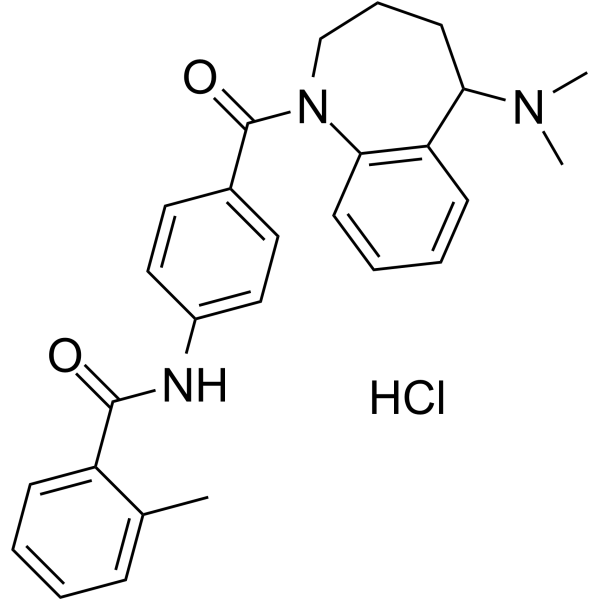 0 ImagesSynonyms: OPC-31260 hydrochlorideMozavaptan hydrochloride (OPC-31260 hydrochloride) is a benzazepine derivative and a potent, selective, competitive and orally active vasopressin V2 receptor antagonist with an IC50 of 14 nM. Mozavaptan hydrochloride shows ~85-fold selectivity for V2 receptor over V1 receptor (IC50 of 1.2 μM), and can antagonize the antidiuretic action of arginine vasopressin (AVP) in vivo. Mozavaptan hydrochloride has the potential for hyponatremia, syndrome of inappropriate antidiuretic hormone (SIADH), and congestive heart failure treatment.
-
AGN-190851
 0 ImagesCat. No.: HY-165456CAS No.: 134892-42-5AGN-190851 is a potent and selective agonist of α2-adrenergic receptor (α2 adrenoceptor). AGN-190851 induces dose-dependent water diuresis in rats, and inhibits vasopressin V2 receptor in a species-dependent manner in vitro, thereby suppressing cAMP production. AGN-190851 enhances the contraction of porcine myometrium. AGN 190851 can be used in studies on renal diuretic mechanisms, pharmacology of α2-adrenergic receptor subtypes, and parturition.
-
Conivaptan-d4
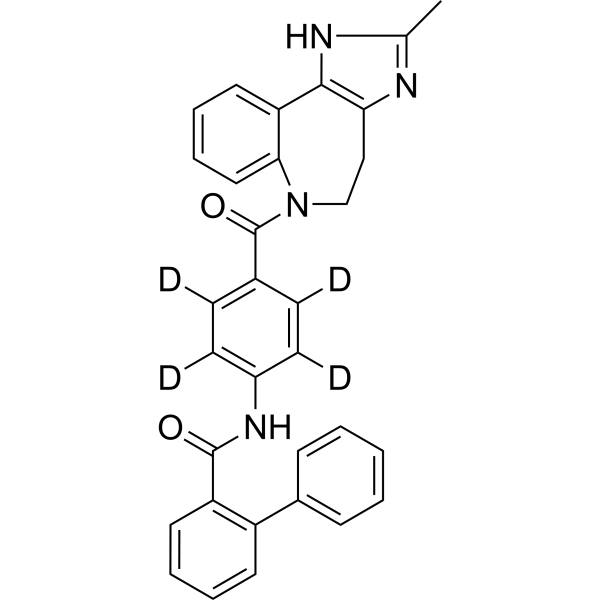 0 ImagesCat. No.: HY-129511CAS No.: 1129433-63-1Synonyms: YM 087-d4Conivaptan-d4 (YM 087-d4) is the deuterated-labeled Conivaptan (HY-18347). Conivaptan (YM 087 free base) is an orally active dual vasopressin V1a/V2 receptor antagonist with Ki values of 0.48 nM and 3.04 nM for vasopressin V1a receptor and V2 receptor, respectively. Conivaptan competitively and reversibly blocks vasopressin-mediated antidiuresis, vasoconstriction, and cellular hypertrophy, while inhibiting CYP3A4. Conivaptan inhibits vasopressin-induced intracellular calcium, cAMP, and mitogen-activated kinase activation in vascular smooth muscle cells and cardiomyocytes. Conivaptan induces water diuresis while improving hemodynamics in heart failure models, reducing left ventricular end-diastolic pressure, vascular resistance, and organ weight. Conivaptan is used for research on hyponatremia and congestive heart failure.
-
Lixivaptan
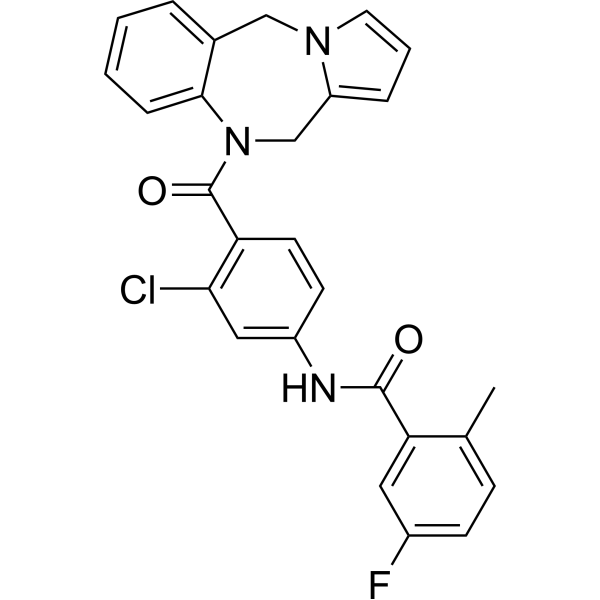 0 ImagesSynonyms: VPA-985; WAY-VPA 985Lixivaptan (VPA-985, WAY-VPA 985) is an orally active and selective vasopressin receptor V2 antagonist, with IC50 values of 1.2 and 2.3 nM for human and rat V2, respectively.
-
Fedovapagon
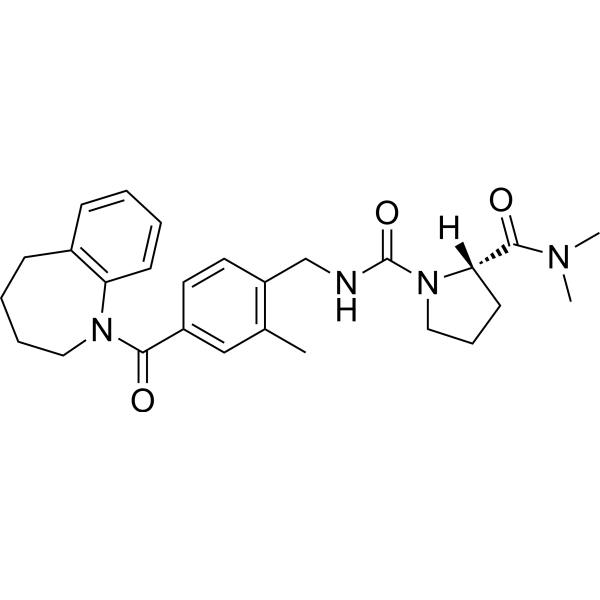 0 ImagesSynonyms: VA106483Fedovapagon (VA106483) is a selective and orally active vasopressin V2 receptor (V2R) agonist with an EC50 of 24 nM. Fedovapagon can be used in the research of nocturia.
-
Vasopressin Dimer (parallel) TFA
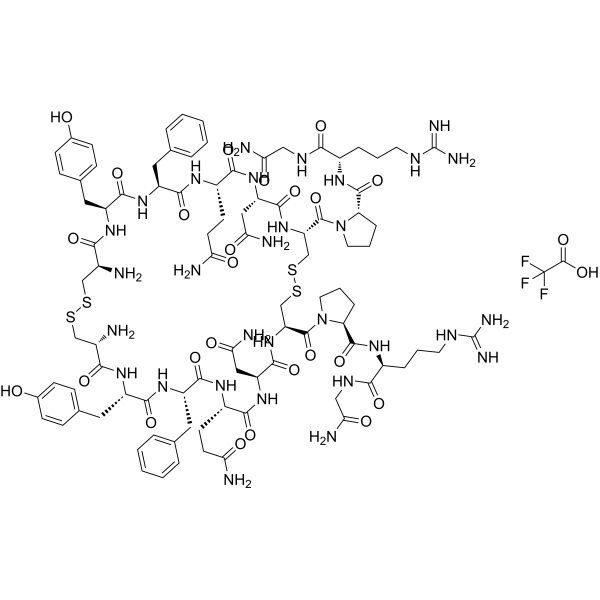 0 ImagesCat. No.: HY-P5213Purity: 99.55%Vasopressin Dimer (parallel) TFA is a parallel dimer of Vasopressin (HY-B1811). Vasopressin Dimer (parallel) TFA can activate four G protein-coupled receptors, V1aR, V1bR, V2R, and OTR.
-
Vasopressin V2 receptor antagonist 1
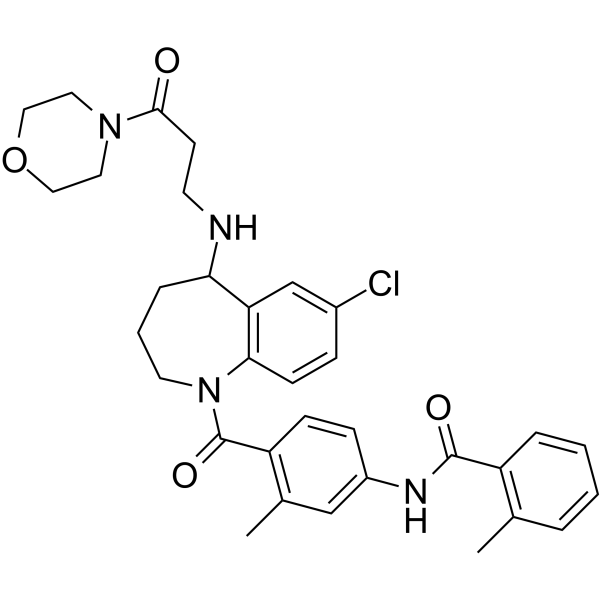 0 ImagesCat. No.: HY-146272CAS No.: 2648650-50-2Vasopressin V2 receptor antagonist 1 is a vasopressin V2 receptor (V2R) antagonist with a Ki value of 3.8 nM. Vasopressin V2 receptor antagonist 1 inhibits renal cyst formation in embryonic renal cyst models and mouse models. Vasopressin V2 receptor antagonist 1 can be used in research related to autosomal dominant polycystic kidney disease.
-
V1a/V2 antagonist 1
 0 ImagesCat. No.: HY-168742V1a/V2 antagonist 1 (Compound 18j) is an orally active dual V1a and V2 receptor antagonist with high binding affinity for both receptors (Ki: 0.13 nM for hV1a, 0.53 nM for hV2 and 0.5 nM for mV1a; IC50: 2.2 nM for hV1a). V1a/V2 antagonist 1 inhibits Oxytocin (HY-17571)-induced scratching behavior in mice.
-
Vasopressin Dimer (anti-parallel) TFA
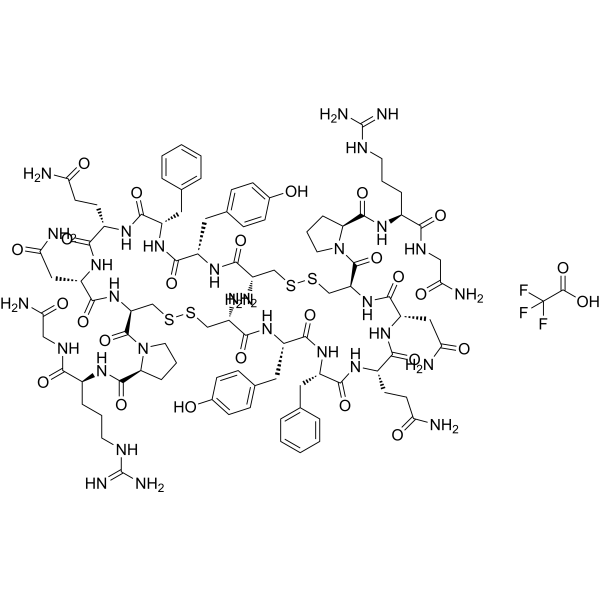 0 ImagesCat. No.: HY-P5214Vasopressin Dimer (anti-parallel) TFA is an anti-parallel dimer of Vasopressin (HY-B1811). Vasopressin Dimer (anti-parallel) TFA can activate four G protein-coupled receptors, V1aR, V1bR, V2R, and OTR.
-
XYDC2050
 0 ImagesCat. No.: HY-180142XYDC2050 (Compound 29) is a selective vasopressin V2 receptor (V2R) antagonist with an IC50 of 27 nM and a Ki of 2.8 nM. XYDC2050 shows a Ki of 420.7 nM (SI = 162 fold) for V1R. XYDC2050 can inhibit Vasopressin (HY-B1811)-induced intracellular cyclic adenosine monophosphate (cAMP) accumulation with an IC50 of 12 nM. XYDC2050 can inhibit the growth of renal cysts, reduce the ratio of kidney weight to body weight and decrease the area of cysts and the cystic index. XYDC2050 can be used for the research of autosomal dominant polycystic kidney disease (ADPKD).
-
Mozavaptan-d6
 0 ImagesCat. No.: HY-18346SCAS No.: 2750534-83-7Synonyms: OPC-31260-d6Mozavaptan-d6 (OPC-31260-d6) is the deuterium labeled Mozavaptan. Mozavaptan (OPC-31260) is a benzazepine derivative and a potent, selective, competitive and orally active vasopressin V2 receptor antagonist with an IC50 of 14 nM. Mozavaptan shows ~85-fold selectivity for V2 receptor over V1 receptor (IC50 of 1.2 μM), and can antagonize the antidiuretic action of arginine vasopressin (AVP) in vivo. Mozavaptan has the potential for hyponatremia, syndrome of inappropriate antidiuretic hormone (SIADH), and congestive heart failure treatment.
-
Pecavaptan
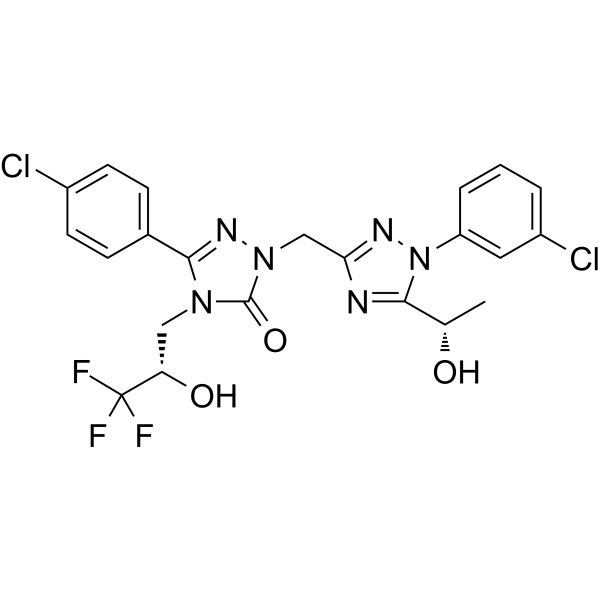 0 ImagesCat. No.: HY-109133CAS No.: 1914998-56-3Synonyms: BAY 1753011Pecavaptan, a chemical probe, is an orally active and dual antagonist of V1a/V2 receptor (Ki=0.5 nM and 0.6 nM for human, respectively). Pecavaptan promotes an increase in urine production, which reduces the associated symptoms of water retention and edema.
-
Conivaptan
 0 ImagesCat. No.: HY-18347CAS No.: 210101-16-9Synonyms: YM 087 free baseConivaptan (YM 087 free base) is an orally active dual vasopressin V1a/V2 receptor antagonist with Ki values of 0.48 nM and 3.04 nM for vasopressin V1a receptor and V2 receptor, respectively. Conivaptan competitively and reversibly blocks vasopressin-mediated antidiuresis, vasoconstriction, and cellular hypertrophy, while inhibiting CYP3A4. Conivaptan inhibits vasopressin-induced intracellular calcium, cAMP, and mitogen-activated kinase activation in vascular smooth muscle cells and cardiomyocytes. Conivaptan induces water diuresis while improving hemodynamics in heart failure models, reducing left ventricular end-diastolic pressure, vascular resistance, and organ weight. Conivaptan is used for research on hyponatremia and congestive heart failure.
-
L-364918
 0 ImagesCat. No.: HY-129333CAS No.: 122211-31-8L-364918 is a potent and selective oxytocin and arginine vasopressin antagonist with Ki values of 30, 1300, 2400 nM for OT, AVP-V1, AVP-V2, respectively. L-364918 has the potential for the research of preterm labor and disturbances in water balance.
-
YM218 free base
 0 ImagesCat. No.: HY-118918CAS No.: 387816-81-1YM218 free base is an orally active non-peptide vasopressin (AVP) receptor antagonist. YM218 free base has a high affinity for rat liver V1A receptors with a Ki value of 0.50 nM; it has a lower affinity for rat pituitary V1B, kidney V2, and uterine oxytocin receptors with Ki values of 1510 nM, 72.2 nM, and 150 nM, respectively. YM218 free base can be used in the study of diabetes and kidney disease.
-
Conivaptan hydrochloride (Standard)
 0 ImagesSynonyms: YM 087 (Standard)Conivaptan hydrochloride (Standard) (YM 087 (Standard)) is the analytical standard of Conivaptan hydrochloride (HY-18347A). This product is intended for research and analytical applications. Conivaptan hydrochloride is an orally active dual vasopressin V1a/V2 receptor antagonist with Ki values of 0.48 nM and 3.04 nM for vasopressin V1a receptor and V2 receptor, respectively. Conivaptan hydrochloride competitively and reversibly blocks vasopressin-mediated antidiuresis, vasoconstriction, and cellular hypertrophy, while inhibiting CYP3A4. Conivaptan hydrochloride inhibits vasopressin-induced intracellular calcium, cAMP, and mitogen-activated kinase activation in vascular smooth muscle cells and cardiomyocytes. Conivaptan hydrochloride induces water diuresis while improving hemodynamics in heart failure models, reducing left ventricular end-diastolic pressure, vascular resistance, and organ weight. Conivaptan hydrochloride is used for research on hyponatremia and congestive heart failure.
- 1
- 2



