From 11:00 pm to 12:00 pm EST ( 8:00 pm to 9:00 pm PST ) on January 6th, the website will be under maintenance. We are sorry for the inconvenience. Please arrange your schedule properly.
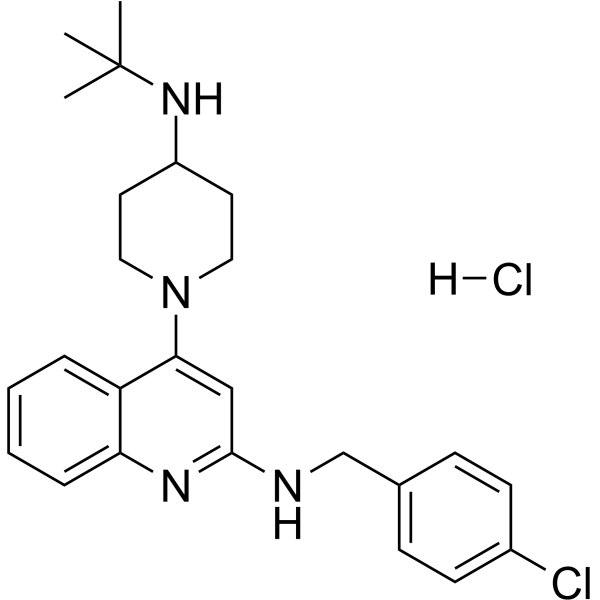
IFN alpha-IFNAR-IN-1 hydrochloride is a nonpeptidic, low-molecular-weight inhibitor of the interaction between IFN-α and IFNAR. IFN alpha-IFNAR-IN-1 hydrochloride inhibits modified Vaccinia virus ankara (MVA)-induced IFN-α responses in murine bone-marrow-derived, Flt3- L-differentiated pDC cultures (BM-pDCs) (IC50=2-8 μM) .
Vonafexor (EYP001) is an orally active, non-steroidal and selective FXR agonist. Vonafexor shows significant HBsAg reduction when combined with Peg-IFNα. Vonafexor can be used for anti-HBV research .
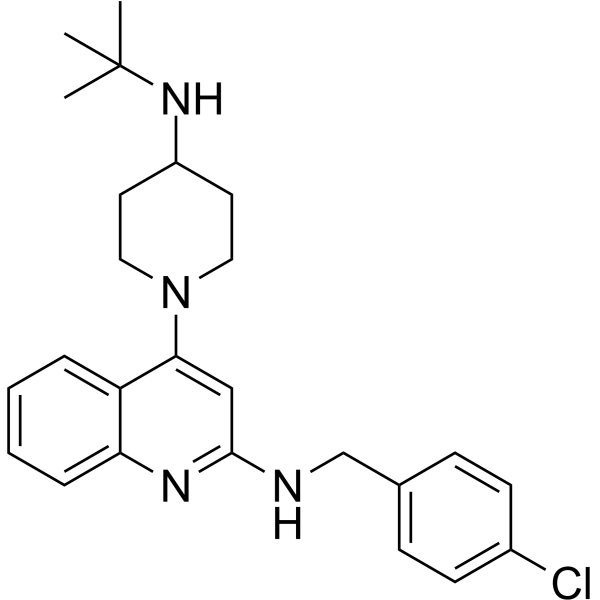
Ezurpimtrostat hydrochloride (GNS561 hydrochloride) is an orally active PPT1 inhibitor, autophagy inhibitor, immunomodulator, anti-inflammatory agent, and anticancer agent. Ezurpimtrostat hydrochloride inhibits PPT1, dysregulates lysosomal function, redistributes mTOR, and induces apoptosis. Ezurpimtrostat hydrochloride reduces IFN‑α, CRP, immune complex deposition, and SARS‑CoV‑2 viral load. Ezurpimtrostat hydrochloride can be used for the study of systemic lupus erythematosus, SARS‑CoV‑2, hepatocellular carcinoma, fibrosis, and related disorders .
Ligelizumab (QGE 031) is a humanized high-affinity anti-immunoglobulin IgE monoclonal antibody. Ligelizumab selectively inhibits the binding of IgE to the high-affinity receptor FcεRI, while the inhibitory effect on the low-affinity receptor CD23 is weak. Ligelizumab can inhibit the activation of effector cells such as mast cells and Basophil, while reducing the production of IgE by B cells, and restoring the IFN-α production and regulatory T cell (Treg) induction function of plasmacytoid dendritic cells (pDC). Ligelizumab can be used in the study of allergic diseases (such as chronic spontaneous urticaria, allergic asthma) .
Sifalimumab (MEDI-545) is an anti-IFNα monoclonal antibody. Sifalimumab suppresses the abnormal immune activity by binding to multiple interferon-alpha (IFNα) subtypes. Sifalimumab can be used in systemic lupus erythematosus (SLE) research .
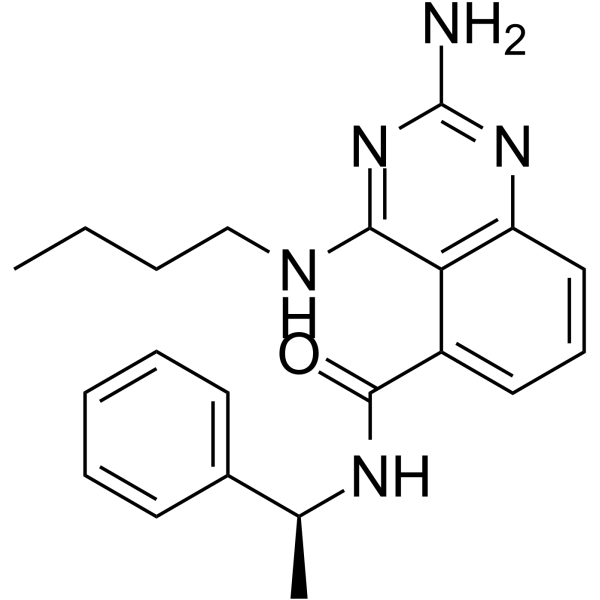
TLR7 agonist 1 is a selective TLR7 agonist with an LEC value of 90 nM. TLR7 agonist 1 activates downstream immune regulation and shows no activity against TLR8. TLR7 agonist 1 induces endogenous IFN-α production in mice .
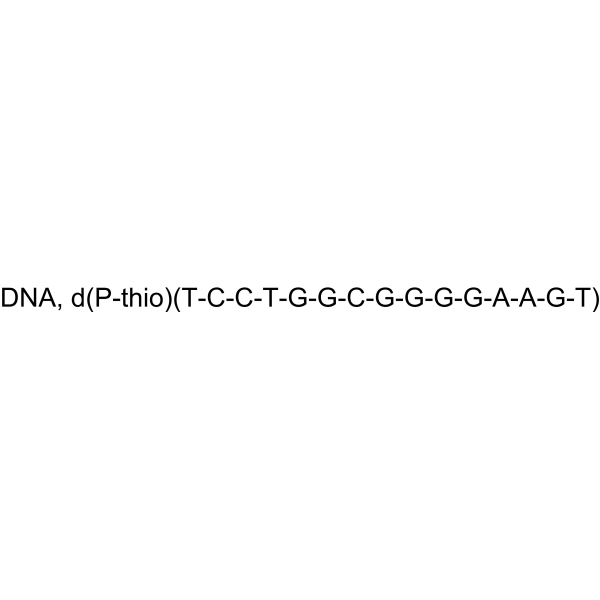
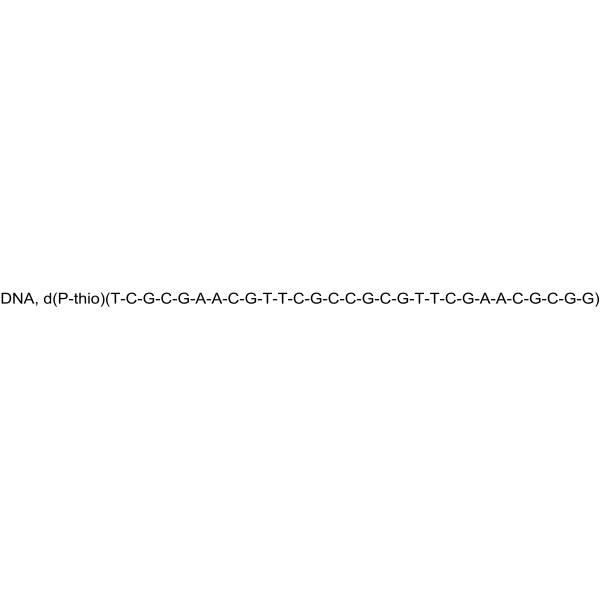
CpG ODN 10101 (ODN 10101; CPG 10101) is a selective agonist targeting TLR9, a synthetic oligodeoxynucleotide modified with phosphate thioester. CpG ODN 10101 activates B cells and plasmacytoid dendritic cells (pDCs), inducing the production of cytokines and chemokines such as interferon-IFN-α, interferon-inducible protein IP-10, and 2'5'-oligoadenylate synthase (2'5'-OAS), regulating innate immunity and promoting Th1 adaptive immune responses. CpG ODN 10101 also possesses antiviral properties and enhances vaccine immunogenicity, making it suitable as an immunomodulator and vaccine adjuvant for vaccine development in chronic hepatitis C and infectious diseases such as melioidosis, pertussis, and respiratory syncytial virus (RSV) .
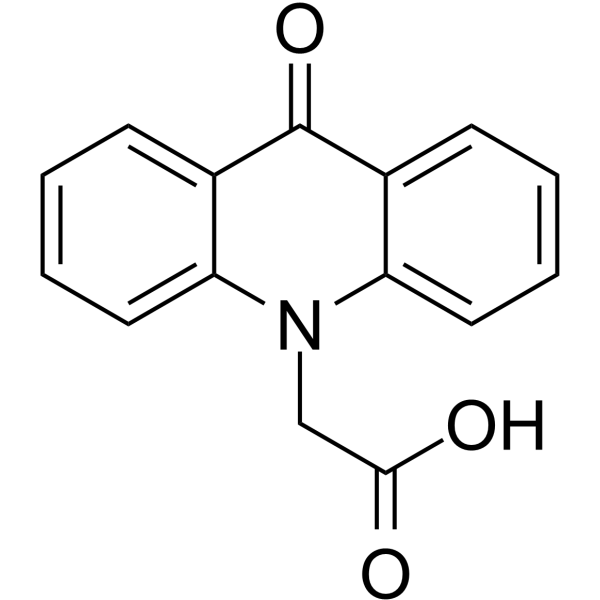
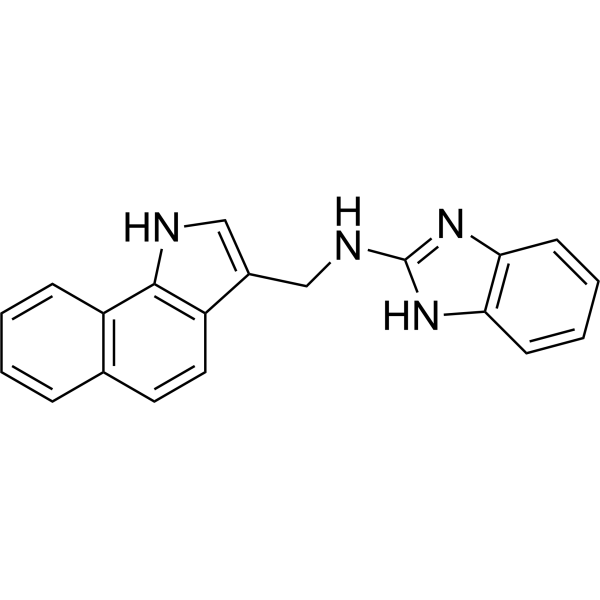
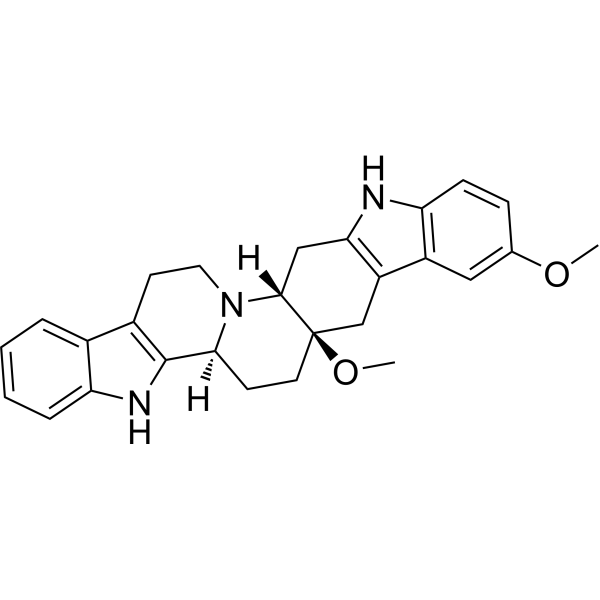
Cridanimod is a potent progesterone receptor (PR) activator mediated through induction of IFNα and IFNβ expression. Cridanimod is a small-molecule immunomodulator and interferon inducer .
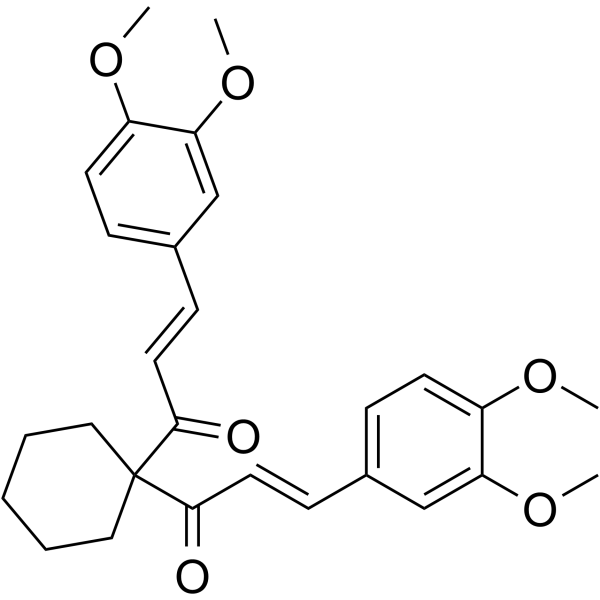
FLLL32, a synthetic analog of curcumina, is a JAK2/STAT3 dual inhibitor with anti-tumor activity. FLLL32 can inhibit the induction of STAT3 phosphorylation by IFNα and IL-6 in breast cancer cells .
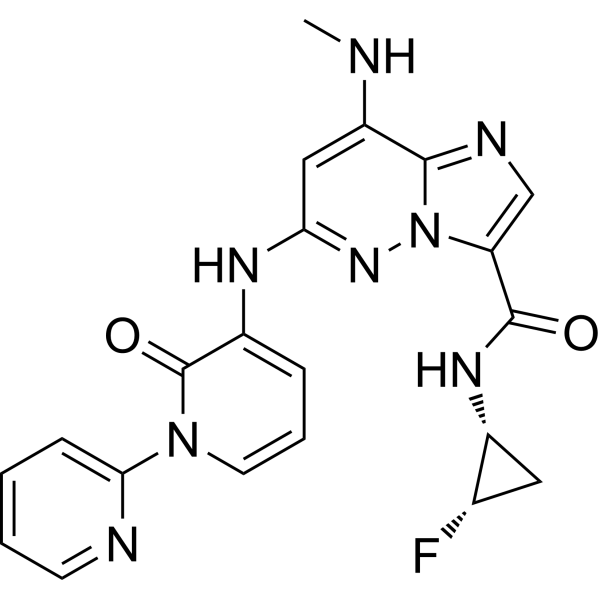
TyK2-IN-2 (Compoud 18) is a potent and selective TYK2 inhibitor with IC50s of 7 nM, 0.1 μM and 0.05 μM for TYK2 JH2, IL-23 and IFNα, respectively. TyK2-IN-2 also inhibits phosphodiesterase 4 (PDE4) with an IC50 of 62 nM. TyK2-IN-2 can be used for the research of inflammatory and autoimmune diseases .
Ezurpimtrostat (GNS561) is an orally active PPT1 inhibitor, autophagy inhibitor, immunomodulator, anti-inflammatory agent, and anticancer agent. Ezurpimtrostat inhibits PPT1, dysregulates lysosomal function, redistributes mTOR, and induces apoptosis. Ezurpimtrostat reduces IFN‑α, CRP, immune complex deposition, and SARS‑CoV‑2 viral load. Ezurpimtrostat can be used for the study of systemic lupus erythematosus, SARS‑CoV‑2, hepatocellular carcinoma, fibrosis, and related disorders .
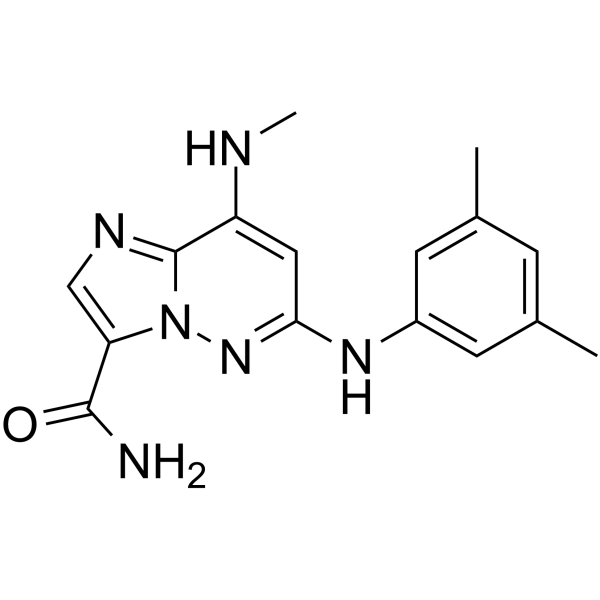
Tyk2-IN-7 is an orally active TYK2 JH2 inhibitor, binds to TYK2 JH2 domain with IC50 and Ki.app of 0.00053 μM and 0.00007 μM, respectively. Tyk2-IN-7 provides a highly selective alternative to conventional TYK2 orthosteric inhibitors, inhibits TYK2/JAK1/JAK2 kinase domain. Tyk2-IN-7 can inhibit the IL-23 and IFN-α signaling pathways. Tyk2-IN-7 is commonly used in the study of inflammatory conditions such as colitis .
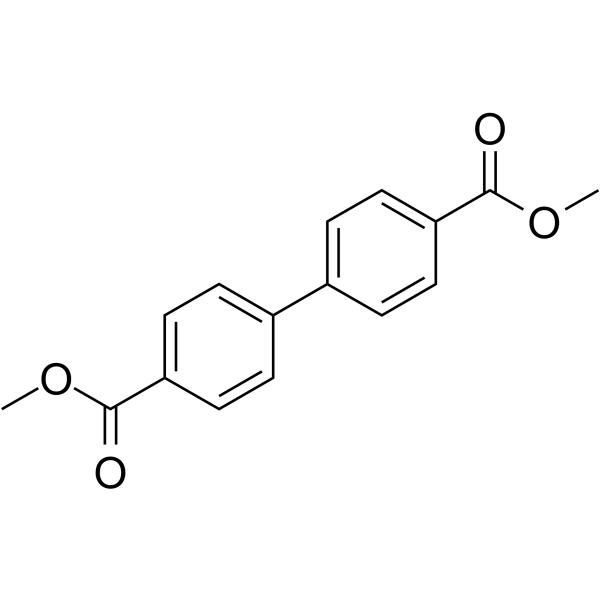
Dimethyl biphenyl-4,4'-dicarboxylate (Biphenyl dimethyl dicarboxylate) is a hepatoprotective agent. Dimethyl biphenyl-4,4'-dicarboxylate stimulates the Jak/Stat signaling pathway and induces the expression of IFN-α-stimulated genes, particularly 6-16 and ISG12. Dimethyl biphenyl-4,4'-dicarboxylate inhibits the replication of pregenomic RNA and HBeAg. Polymer micelles loaded with Dimethyl biphenyl-4,4'-dicarboxylate can serve as carriers for the compound. Dimethyl biphenyl-4,4'-dicarboxylate can be used as an auxiliary improving agent for chronic hepatitis. Dimethyl biphenyl-4,4'-dicarboxylate is applicable to research related to chronic hepatitis B .\n
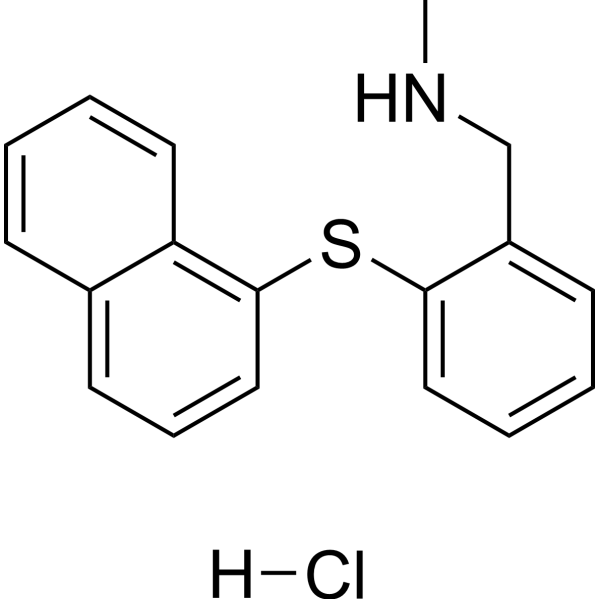
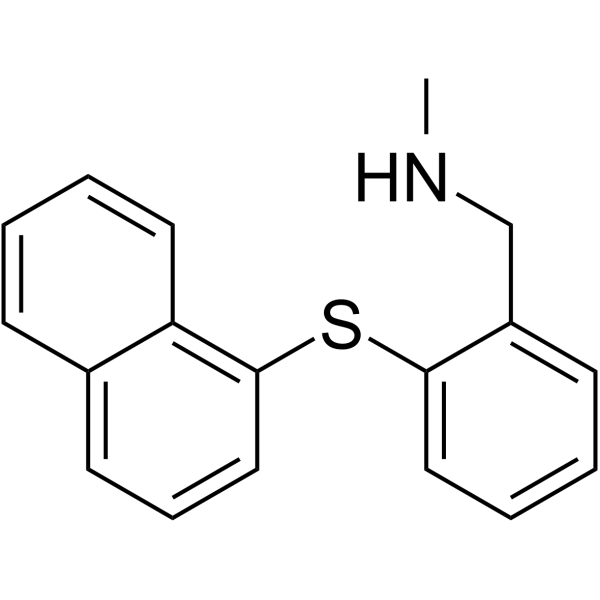
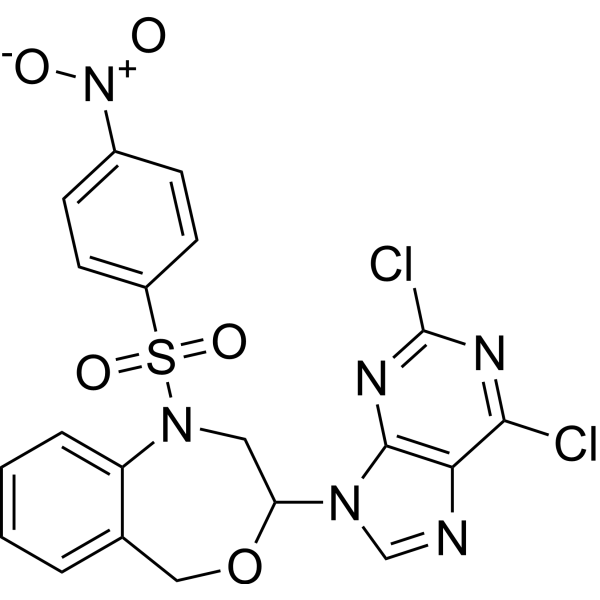
AJ2-71 is a SLCl5A4 inhibitor. AJ2-71 inhibits IFN-α production. AJ2-71 blocks SLC15A4-mediated MDP transport. AJ2-71 can be used for research of inflammation .
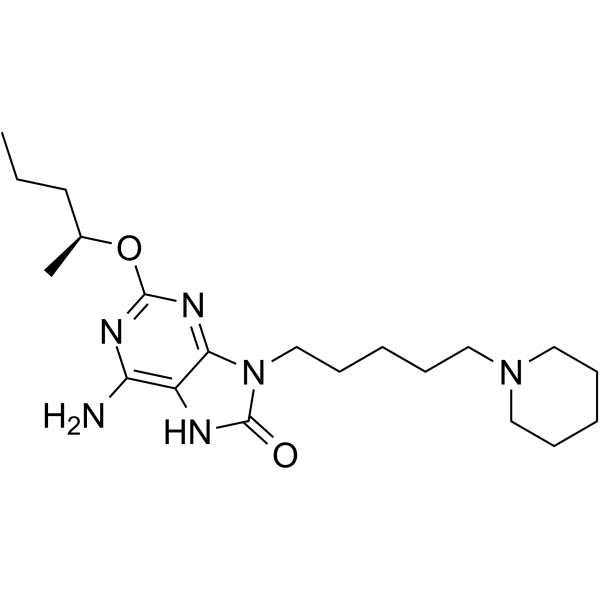
GSK2245035 is a highly potent and selective intranasal Toll-Like receptor 7 (TLR7) agonist with preferential Type-1 interferon (IFN)-stimulating properties. GSK2245035 has pEC50s of 9.3 and 6.5 for IFNα and TFNα. GSK2245035 effectively suppresses allergen-induced Th2 cytokine production in human peripheral blood cell cultures. GSK2245035 is used for asthma .
Tyk2-IN-5 (compound 6) is a potent, selective and orally active tyrosine kinase 2 (Tyk2) inhibitor that acts on the JH2 structural domain. Tyk2-IN-5 shows a Ki value of 0.086 nM for Tyk2 JH2 and an IC50 value of 25 nM for IFNα. Tyk2-IN-5 efficiently inhibits the production of IFNγ in a pharmacodynamic rat model and is fully efficacious in a rat model of arthritis .
Vidutolimod (CMP-001) is a virus-like particle containing a TLR9 activator . Vidutolimod induces human peripheral blood mononuclear cells to secrete IFNα, and upregulates the gene expression of CXCL10, PDL1, IDO and CD80. Vidutolimod activates TLR9, which in turn triggers plasmacytoid dendritic cell activation, production of IFNγ and TNFα, induction of CXCL10, and recruitment of antitumor T cells. Vidutolimod causes influenza-like symptoms, hypotension and tumor regression, and its activity depends on the presence of anti-Qβ antibodies. Vidutolimod modulates monocyte function, promotes CD4 T cell proliferation, and activates multiple immune cell types in an environment with anti-Qβ antibodies. Vidutolimod prolongs the survival of tumor-bearing mice. Vidutolimod is used in research related to advanced melanoma, head and neck squamous cell carcinoma, and advanced non-small cell lung cancer .
IFN alpha-IFNAR-IN-1 is a nonpeptidic, low-molecular-weight inhibitor of the interaction between IFN-α and IFNAR. IFN alpha-IFNAR-IN-1 inhibits modified Vaccinia virus ankara (MVA)-induced IFN-α responses in murine bone-marrow-derived, Flt3- L-differentiated pDC cultures (BM-pDCs) (IC50=2-8 μM) .
Vidutolimod sodium is a CpG-A oligodeoxynucleotide. Vidutolimod sodium is a Toll-like receptor 9 (TLR9) agonist, which activates plasmacytoid dendritic cells (pDCs) and triggers interferon alpha (IFNα) release, leading to a cascade of anti-tumor immune effects.
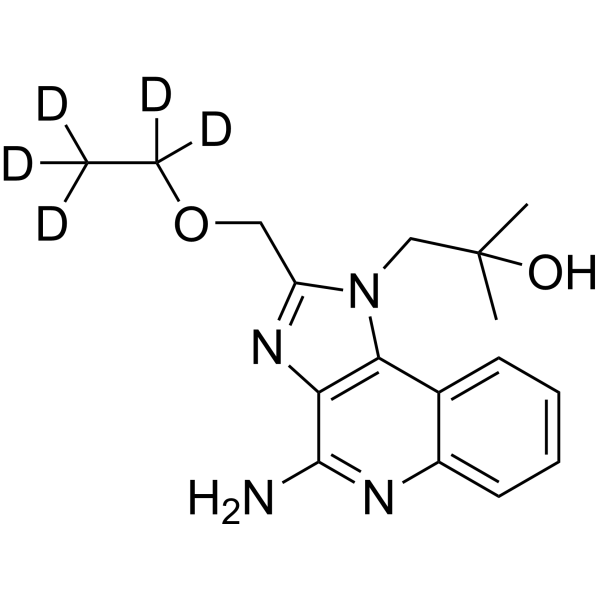
Resiquimod-d5 is deuterium labeled Resiquimod. Resiquimod is a Toll-like receptor 7 and 8 (TLR7/TLR8) agonist that induces the upregulation of cytokines such as TNF-α, IL-6 and IFN-α .
ODN 2336 sodium is a A-Class CpG ODN (oligodeoxynucleotides), is a potent TLR9 agonist. ODN 2336 sodium induces the production of IFN-α. ODN 2336 sodium up-regulates the expression of IP-10 mRNA and IL-18 mRNA. ODN 2336 sodium can be used as adjuvant of vaccines .
ODN INH-18 sodium is a linear 24-mer class B INH-ODN in which the 5' INH-ODN 4084-F sequence was followed by a random stretch of 12 nucleotides lacking the ability to form significant secondary structures. ODN INH-18 sodium showes inhibitory potency for TLR9 ligand-induced IFN-α production.
ssRNA42 (sodium) is a 20-mer phosphothioate protected single-stranded RNA oligonucleotide. ssRNA42 (sodium) derives from ssRNA40 by replacement of all G nucleotides with adenosine. ssRNA42 activated human PBMCs to secrete IFN-α, TNF-a, IL- 12p40, and IL-6, but ssRNA42 failed to stimulated murine pDCs and PBMCs.
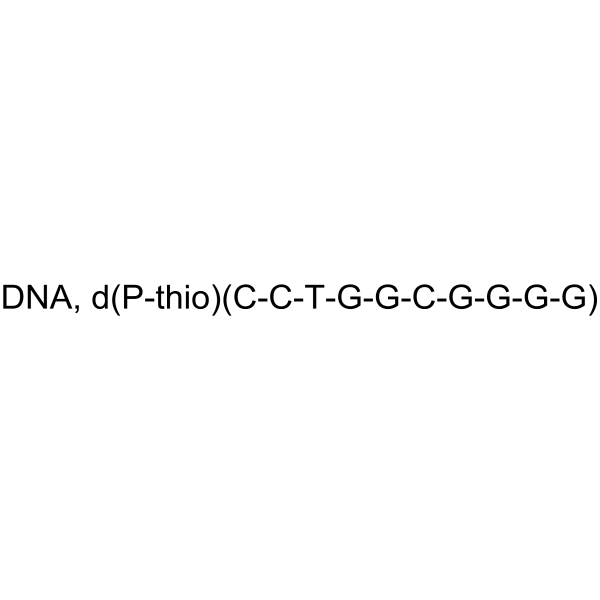
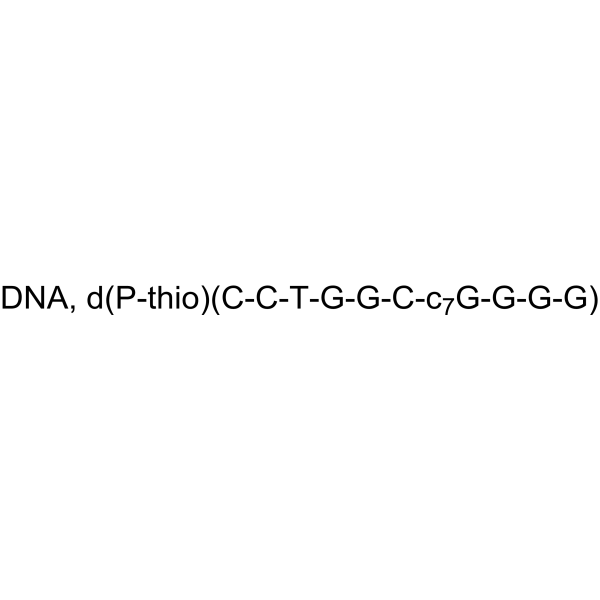
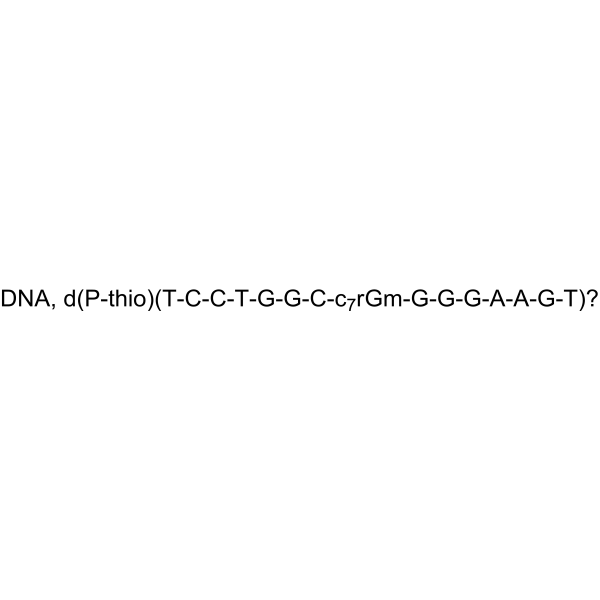
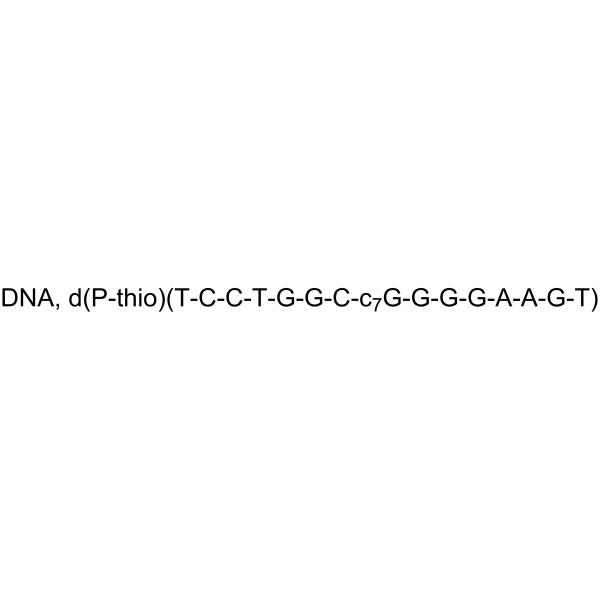
ODN 24987 sodium is a Guanine-modified inhibitory oligonucleotides (ODN), targeting TLR9. ODN 24987 can inhibit IL-6 and IFN-α release. ODN 24987 sodium can be used for research immune disorders. ODN 24987 sequence: 5’-C-C-T-G-G-C-c7G-G-G-G-3’ .
G3-YSD is a cGAS agonist. G3-YSD directly interacts with cGAS to enhance its enzymatic activity, promote the conversion of ATP and GTP into cGAMP, and trigger STING-dependent IFN-α/β secretion. G3-YSD acts as a viral mimic to replace actual viral DNA . G3-YSD is applicable to research related to long COVID and type 1 human immunodeficiency virus infection .
TYD-68 is a highly efficient and selective CRBN-recruited TYK2 PROTAC degrader with a DC50 value of 0.42 nM. TYD-68 significantly inhibits IL-12 and IFN-α-induced STAT4 and STAT1 phosphorylation, thereby blocking TYK2-dependent signaling pathways.
TYD-68 can be used in the study of psoriasis. (Pink: Target protein ligand (HY-173359); Black: Linker (HY-W007732B); Blue: E3 ligase ligand (HY-14658); E3 ligase ligand + Linker (HY-173358)) .
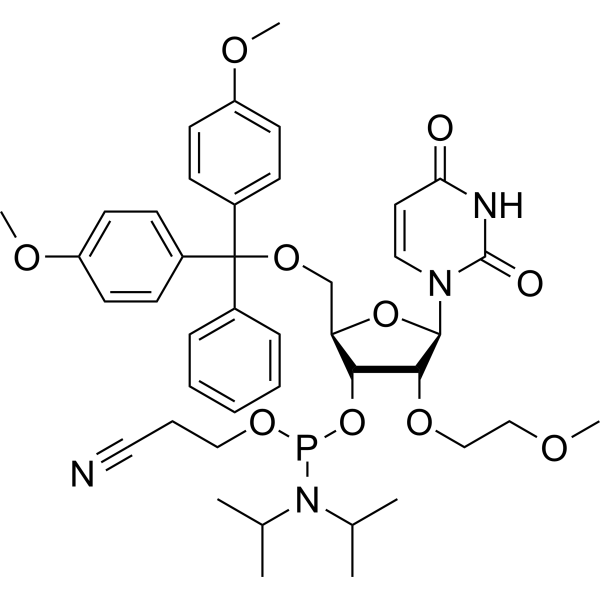
2'-O-MOE-U is a nucleic acid modification group (Phosphoramidite) with 3'-exonuclease inhibitory activity. 2'-O-MOE-U also exhibits gene silencing activity and double-stranded oligonucleotide stability. By forming steric interactions with 3'-exonuclease residues, 2'-O-MOE-U anchors the 3'-end of the siRNA guide strand in the hAgo2 PAZ domain, thereby regulating double-stranded thermal stability and enhancing base-pairing specificity. 2'-O-MOE-U does not induce IFNα production, can be incorporated at multiple sites of siRNA to enhance RNAi activity, and produces a synergistic effect with 2'-F modification. 2'-O-MOE-U has been widely used in studies related to breast cancer and other diseases .
QL-1200186 is a selective, orally active, allosteric inhibitor targeting the tyrosine kinase TYK2 pseudokinase domain JH2 (IC50=0.06 nM, TYK2 JH2), with 164-fold selectivity over TYK1 JH2 (IC50=9.85 nM,TYK1 JH2). QL-1200186 first stabilizes the TYK2 JH2 conformation, inhibits the activity of the JH1 catalytic domain, and blocks the IFNα, IL-12/IL-23-mediated JAK-STAT signaling pathway. QL-1200186 can inhibit the production of Th1/Th17 cell-related cytokines (such as IFNγ, IL-23), reduce immune cell activation, and has no significant effect on JAK1/2/3 kinase activity. QL-1200186 can significantly improve skin inflammation in the Imiquimod (HY-B0180)-induced psoriasis mouse model and reduce the Psoriasis Area and Severity Index (PASI) score. QL-1200186 can be used in the study of autoimmune diseases such as psoriasis and systemic lupus erythematosus (SLE) .
ODN 21158 is a potent G-modified TLR3 and TLR9 inhibitor. ODN 21158 shows no cytotoxic. ODN 21158 inhibits IFN-α secretion in a dose dependent manner .
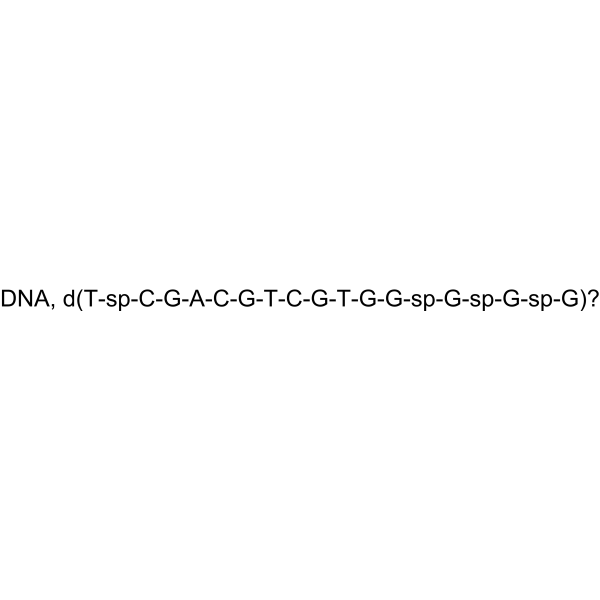
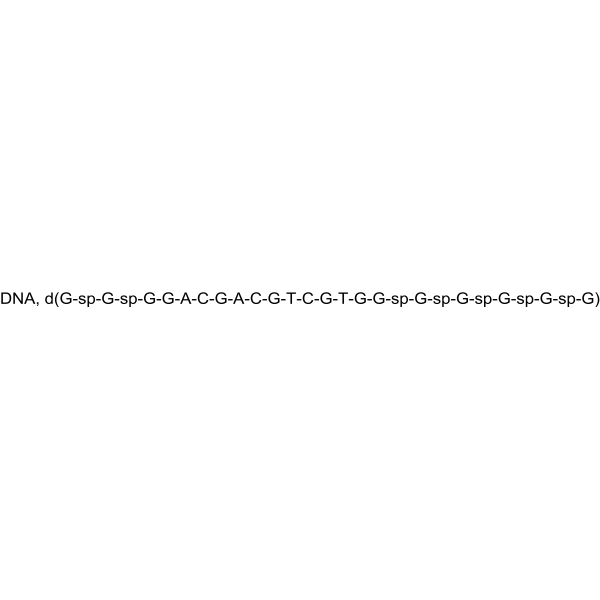
ODN 6016 is a CpG-A oligonucleotides. ODN 6016 can induce IFN-α production, can be used for researching immune disorders including immunodeficiency caused by HIV-1. ODN 6016 sequence: T-sp-C-G-A-C-G-T-C-G-T-G-G-sp-G-sp-G-sp-G .
ODN 6016 sodium is a CpG-A oligonucleotides. ODN 6016 sodium can induce IFN-α production, and can be used for researching immune disorders including immunodeficiency caused by HIV-1. ODN 6016 sequence: T-sp-C-G-A-C-G-T-C-G-T-G-G-sp-G-sp-G-sp-G .
KBD4466 is an orally active potent TLR7 and TLR8 inhibitor with IC50s of 0.9 nM and 2.8 nM, respectively. KBD4466 inhibits the expression of inflammatory cytokines IL-6 andIFN-α. KBD4466 improves disease progression and survival in the BXSB/MpJ mouse model of Systemic Lupus Erythematosus (SLE). KBD4466 can be used in the study of autoimmune diseases .
ODN D-SL03 sodium is a C class CpG oligonucleotides, and can induce stimulate PBMCs to produce high level of IFN-α. ODN D-SL03 sodium can activate human B cells, NK cells and mononuclear cells and up-regulate expression of CD80, CD86 and HLA-DR on the surface of subsets in human PBMCs. ODN D-SL03 sodium also can inhibit the growth of the tumor. ODN D-SL03 sequence: 5'-tcgcgaacgttcgccgcgttcgaacgcgg-3' .
ODN 2336 is a A-Class CpG ODN (oligodeoxynucleotides), is a potent TLR9 agonist. ODN 2336 induces the production of IFN-α. ODN 2336 up-regulates the expression of IP-10 mRNA and IL-18 mRNA. ODN 2336 can be used as adjuvant of vaccines .
GLPG4471 is a selective and orally active IRAK4 inhibitor with an IC50 of 1.7 nM. GLPG4471 exhibits potent inhibition of cytokine (TNFα and IFNα) secretion in cellular and whole blood phenotypic assays. GLPG4471 displays significant activity in a mouse model of collagen-induced arthritis. GLPG4471 can be used for the study of arthritis .
ODN 24888 sodium is an guanine-modified inhibitory oligonucleotides (INH-ODN), shows potent inhibition on TLR7/TLR9-mediated signaling. ODN 24888 sodium impairs IFN-α level and NF-κB activation, inhibits IL-6 release. ODN 24888 sodium involves in immune and inflammatory responses, can be used as a vaccine adjuvant .
ODN 24987 is a Guanine-modified inhibitory oligonucleotides (ODN), targeting TLR9. ODN 24987 can inhibit IL-6 and IFN-α release. ODN 24987 can be used for research immune disorders. ODN 24987 sequence: 5’-C-C-T-G-G-C-c7G-G-G-G-3’ .
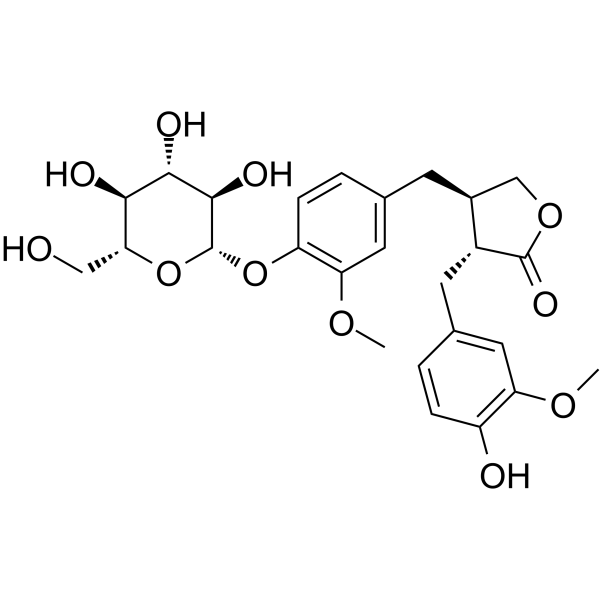
Matairesinol monoglucoside is a STING activator. Matairesinol monoglucoside modulates the STING-TBK1-IRF3 signaling axis, promotes STING transcriptional expression, increases TBK1 and IRF3 phosphorylation. Matairesinol monoglucoside induces IFN-α and IFN-β production, reduces HBV DNA, HBsAg, and HBeAg expression. Matairesinol monoglucoside can be used for the research of hepatitis b virus (hbv) infection .
TLR7 agonist 29 (Compound 1) is the agonist for TLR7 with an EC50 of 5.2 nM for human TLR7 (EC50 for mouse TLR7 is 48.2 nM). TLR7 agonist 29 activates bone marrow-derived macrophages (BMDMs), stimulates myeloid cells in the tumor microenvironment, promotes the expression of PD-L1, CD86 and IFN-α. TLR7 agonist 29 can be used as payload for synthesis of ADC .
Resiquimod (Standard) is the analytical standard of Resiquimod. This product is intended for research and analytical applications. Resiquimod is a Toll-like receptor 7 and 8 (TLR7/TLR8) agonist that induces the upregulation of cytokines such as TNF-α, IL-6 and IFN-α.
ODN INH-18 is a linear 24-mer class B INH-ODN in which the 5' INH-ODN 4084-F sequence was followed by a random stretch of 12 nucleotides lacking the ability to form significant secondary structures. ODN INH-18 showes inhibitory potency for TLR9 ligand-induced IFN-α production.
AZ12441970 is a potent and selectiveToll-like receptor 7 (TLR7) agonist, exhibiting pEC50s of 6.8 and 6.6 for human and rat TLR7. AZ12441970 shows efficacy in a mouse allergic airway model with minimal induction of systemic IFN-α. AZ12441970 can be used for allergic airway disease research .
ODN 24888 is an guanine-modified inhibitory oligonucleotides (INH-ODN), shows potent inhibition on TLR7/TLR9-mediated signaling. ODN 24888 impairs IFN-α level and NF-κB activation, inhibits IL-6 release. ODN 24888 involves in immune and inflammatory responses, can be used as a vaccine adjuvant .
AGS-009 is a humanized monoclonal neutralising antibody targeting IFN-α. AGS-009 significantly reduces activated lymphocytes, such as CD4 + and CD8 + T cells as well as B cells in SIV infection rhesus macaque models. AGS-009 can be used for autoimmune diseases like systemic lupus erythematosus (SLE) and HIV infections research .
(rac)-Lomedeucitinib ((rac)-BMS-986322) is the racemate of Lomedeucitinib. Lomedeucitinib (BMS-986322) is a tyrosine protein kinase (TYK2) inhibitor. Lomedeucitinib has anti-inflammatory activity and significant inhibitory effect on IFNα (IC50=0.047 μM) production downstream of IL-12/TYK2. Lomedeucitinib is indicated for the study of plaque psoriasis and pruritus .
S-27609 is an imidazoquinoline with antiviral and antitumour properties. S-27609 can induce peripheral blood mononuclear cells to produce various cytokines such as interferon-α (IFN-α), tumor necrosis factor-α (TNF-α), and interleukin-1β (IL-1β). S-27609 is promising for research of viral infections (e.g., herpes virus) and tumors .
TLR7/8 agonist 13 is an orally active dual agonist of TLR7 (lowest effective concentrations (LEC) [hTLR7] = 1.6 μM) and TLR8 (LEC [hTLR8] = 1.6 μM). TLR7/8 agonist 13 exhibits agonistic activity against human peripheral blood mononuclear cells (hPBMCs) (LEC [hPBMC] = 0.5 μM). TLR7/8 agonist 13 induces endogenous IFNα, activating myeloid dendritic cells and monocytes toward a TH1 phenotype in mice and cynomolgus monkeys. TLR7/8 agonist 13 reduces viral load and HBV surface antigen expression in a mouse model of chronic AAV-HBV infection. TLR7/8 agonist 13 has the potential to indirectly induce IFNγ, which may promote HBV antigen-specific CD8 T cell-mediated responses. TLR7/8 agonist 13 can be used to study hepatitis B virus .
Human IL18R1 mRNA encodes the human interleukin 18 receptor 1 (IL18R1) protein, a cytokine receptor that belongs to the interleukin 1 receptor family. IL18R1 is essential for IL18 mediated signal transduction. IFN-alpha and IL12 are reported to induce the expression of this receptor in NK and T cells.
Cridanimod is a potent progesterone receptor (PR) activator mediated through induction of IFNα and IFNβ expression. Cridanimod is a small-molecule immunomodulator and interferon inducer .
IFNA1 Human Pre-designed siRNA Set A contains three designed siRNAs for IFNA1 gene (Human), as well as a negative control, a positive control, and a FAM-labeled negative control.
ODN 21595 sodium is a Guanine-Modified TLR7 and TLR9 inhibitor. ODN 21595 sodium inhibits the release of IFN-α and IL-6 with no cytotoxic. ODN 21595 sodium reduces the expression of CD86 and HLA-DR. ODN 21595 sodium has the potential for the research of systemic lupus erythematosus (SLE) .
ODN 21595 is a Guanine-Modified TLR7 and TLR9 inhibitor. ODN 21595 inhibits the release of IFN-α and IL-6 with no cytotoxic. ODN 21595 reduces the expression of CD86 and HLA-DR. ODN 21595 has the potential for the research of systemic lupus erythematosus (SLE) .
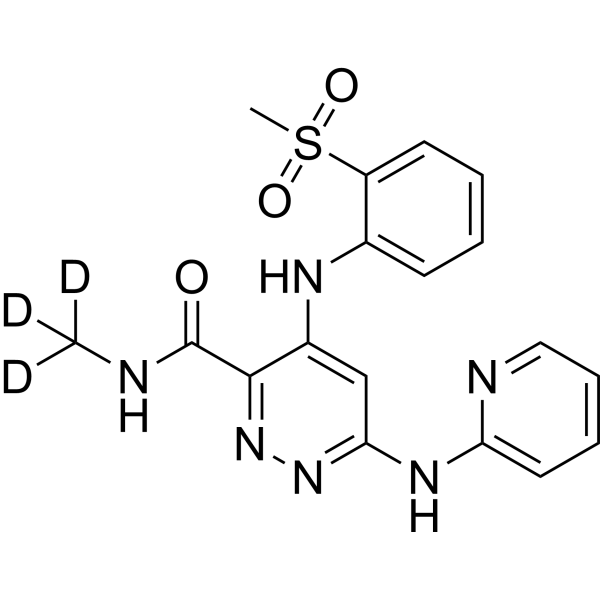
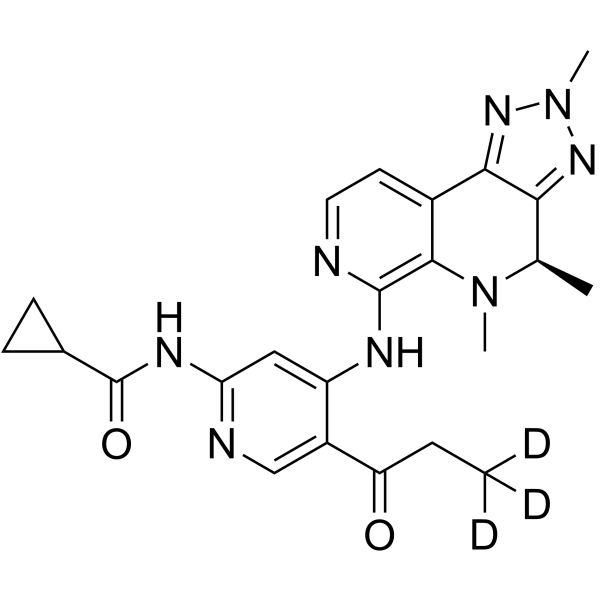
Tyk2-IN-18-d3 (Compound 18) is a Tyk2 inhibitor with an IC50 value of < 30 nM for both IL-23 and IFNα. Tyk2-IN-18-d3 can be used for research on autoimmune diseases .
Bozepinib is a PKR (RNA-dependent protein kinase) activator and potently inhibits the HER-2 signaling pathway as well as JNK and ERK kinases. Bozepinib induces PKR-mediated apoptosis and synergizes with IFNα to trigger apoptosis, autophagy and senescence. Bozepinib also demonstrates in vivo antitumor and antimetastatic efficacy in xenografted nude mice .
SIMR3030 is a potent SARS-CoV-2 PLpro inhibitor with an IC50 value of 0.0399 µg/mL. SIMR3030 shows antiviral activity. SIMR3030 decreases SARS-CoV spike, ORF1b, IFN-α, IL-6 mRNA expression. SIMR3030 exhibits a satisfactory safety profile in mice .
ODN INH-18 triethylamine is a linear 24-mer class B INH-ODN in which the 5' INH-ODN 4084-F sequence was followed by a random stretch of 12 nucleotides lacking the ability to form significant secondary structures. ODN INH-18 triethylamine showes inhibitory potency for TLR9 ligand-induced IFN-α production.
GSK2245035 maleate is a highly potent and selective intranasal Toll-Like receptor 7 (TLR7) agonist with preferential Type-1 interferon (IFN)-stimulating properties. GSK2245035 maleate has pEC50s of 9.3 and 6.5 for IFNα and TFNα. GSK2245035 maleate effectively suppresses allergen-induced Th2 cytokine production in human peripheral blood cell cultures. GSK2245035 maleate is used for asthma .
ODN D-SL03 is a C class CpG oligonucleotides, can induce stimulate PBMCs to produce high level of IFN-α. ODN D-SL03 can activate human B cells, NK cells and mononuclear cells and up-regulate expression of CD80, CD86 and HLA-DR on the surface of subsets in human PBMCs. ODN D-SL03 also can inhibit the growth of the tumor. ODN D-SL03 sequence: 5'-tcgcgaacgttcgccgcgttcgaacgcgg-3' .
Anti-Mouse IFN Alpha Antibody (TIF-3C5) reacts with the mouse IFNα. Anti-Mouse IFN Alpha Antibody (TIF-3C5) binds specifically to mouse IFNα species (IFN-α-A, IFN-α-1, IFN-α-4, IFN-α-5, IFN-α-11. and IFN-α-13) and does not bind murine murine IFNγ or IFNβ. Recommend Isotype Controls: Polyclonal Armenian hamster IgG, Isotype Control (HY-P990305) .
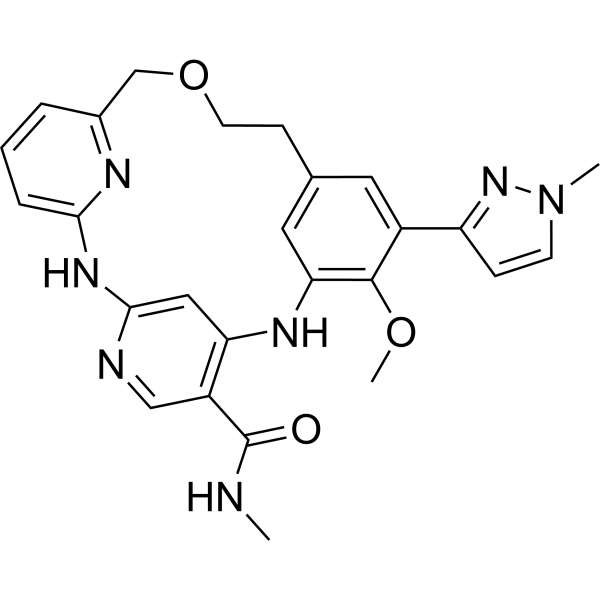
Tyk2-IN-23 is a potent, orally active, selective TYK2 inhibitor (IC50 = 18 nM), exhibiting more than > 70-fold selectivity over JAK1/2/3 isoforms. Tyk2-IN-23 potently inhibits p-STAT3 in TYK2-dependent signaling activated by IFN-α and IL-10. Tyk2-IN-23 potently inhibits IFN-α-induced STAT1 phosphorylation in H9 cells. Tyk2-IN-23 can be used for the study of alopecia areata and allergic Rhinitis .
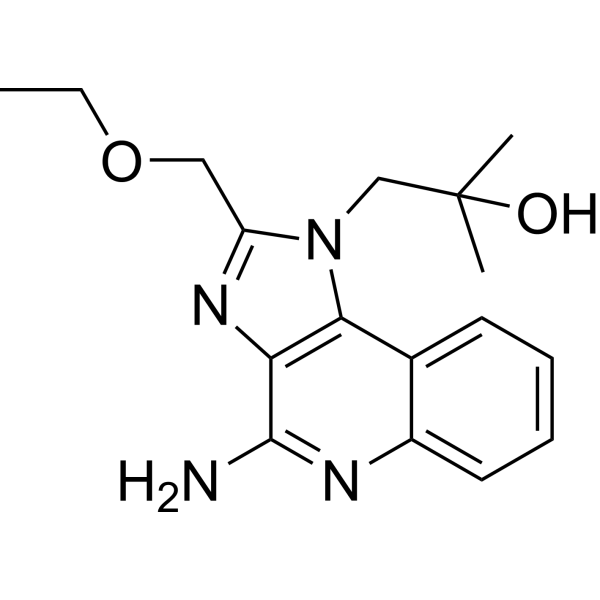
2-Hydroxy Imiquimod (R-842), a hydroxylated metabolite of Imiquimod (HY-B0180), is an immunomodulating agent. 2-Hydroxy Imiquimod can induce IFN-α, TNF-α, IL-1, IL-6 and IL-8 in human blood cells. 2-Hydroxy Imiquimod exhibits antivirus and antitumor activities. 2-Hydroxy Imiquimod can be used for the researches of cancer, infection and immunology .
IRAK4-IN-33 (Compound 22) is a selective, potent and orally active interleukin-1 receptor-associated kinase 4 (IRAK4) inhibitor with an IC50 0.36 nM. IRAK4-IN-33 can block the pro-inflammatory signaling pathway mediated by IRAK4 and inhibit the release of TNFα and IFNα. IRAK4-IN-33 shows weak inhibition for hERG channel (IC50 > 30 μM). IRAK4-IN-33 can be used for the research of inflammation and immunology, such as rheumatoid arthritis .
TyK2-IN-2 (Standard) is the analytical standard of TyK2-IN-2 (HY-101762). This product is intended for research and analytical applications. TyK2-IN-2 (Compoud 18) is a potent and selective TYK2 inhibitor with IC50s of 7 nM, 0.1 μM and 0.05 μM for TYK2 JH2, IL-23 and IFNα, respectively. TyK2-IN-2 also inhibits phosphodiesterase 4 (PDE4) with an IC50 of 62 nM. TyK2-IN-2 can be used for the research of inflammatory and autoimmune diseases .
DBPR110 is a nonstructural protein 5A (NS5A) inhibitor with inhibitory activity against hepatitis C virus (HCV). DBPR110 exhibited a 50% effective concentration (EC50) of 3.9 ± 0.9 pM and a selectivity index value of over 12,800,000 by reducing HCV1b replicon reporter expression. DBPR110 also effectively reduced the activity of HCV2a replicon with an EC50 of 228.8 pM and a selectivity index value of over 173,130. DBPR110 showed synergy with interferon alpha (IFN-α), NS3 protease inhibitors, and NS5B polymerase inhibitors. The results of DBPR110 suggest that it may be an effective small molecule inhibitor against HCV NS5A .
Anti-Mouse CD1d Antibody (1B1) is an antibody targeting mouse CD1d (Kd=12.5 nM). By inserting into the lipid-binding groove of CD1d, Anti-Mouse CD1d Antibody (1B1) overlaps with the binding sites of type I and type IINKT cell receptors (TCR), thereby effectively blocking TCR-mediated interactions. Anti-Mouse CD1d Antibody (1B1) activates antigen-presenting cells such as dendritic cells and macrophages, induces them to release IL-12p70, and increases the levels of key cytokines including IL-12, IFN-γ and IFN-α in mouse serum. Anti-Mouse CD1d Antibody (1B1) can be used in studies related to renal cancer, breast cancer and colon adenocarcinoma. When combined with anti-DR5 or anti-CD137 antibodies and chemotherapeutic drugs, Anti-Mouse CD1d Antibody (1B1) exhibits significant tumor inhibitory and even eradication effects in mice .
Ligelizumab (QGE 031) is a humanized high-affinity anti-immunoglobulin IgE monoclonal antibody. Ligelizumab selectively inhibits the binding of IgE to the high-affinity receptor FcεRI, while the inhibitory effect on the low-affinity receptor CD23 is weak. Ligelizumab can inhibit the activation of effector cells such as mast cells and Basophil, while reducing the production of IgE by B cells, and restoring the IFN-α production and regulatory T cell (Treg) induction function of plasmacytoid dendritic cells (pDC). Ligelizumab can be used in the study of allergic diseases (such as chronic spontaneous urticaria, allergic asthma) .
Sifalimumab (MEDI-545) is an anti-IFNα monoclonal antibody. Sifalimumab suppresses the abnormal immune activity by binding to multiple interferon-alpha (IFNα) subtypes. Sifalimumab can be used in systemic lupus erythematosus (SLE) research .
AGS-009 is a humanized monoclonal neutralising antibody targeting IFN-α. AGS-009 significantly reduces activated lymphocytes, such as CD4 + and CD8 + T cells as well as B cells in SIV infection rhesus macaque models. AGS-009 can be used for autoimmune diseases like systemic lupus erythematosus (SLE) and HIV infections research .
Anti-Mouse IFN Alpha Antibody (TIF-3C5) reacts with the mouse IFNα. Anti-Mouse IFN Alpha Antibody (TIF-3C5) binds specifically to mouse IFNα species (IFN-α-A, IFN-α-1, IFN-α-4, IFN-α-5, IFN-α-11. and IFN-α-13) and does not bind murine murine IFNγ or IFNβ. Recommend Isotype Controls: Polyclonal Armenian hamster IgG, Isotype Control (HY-P990305) .
Anti-Mouse CD1d Antibody (1B1) is an antibody targeting mouse CD1d (Kd=12.5 nM). By inserting into the lipid-binding groove of CD1d, Anti-Mouse CD1d Antibody (1B1) overlaps with the binding sites of type I and type IINKT cell receptors (TCR), thereby effectively blocking TCR-mediated interactions. Anti-Mouse CD1d Antibody (1B1) activates antigen-presenting cells such as dendritic cells and macrophages, induces them to release IL-12p70, and increases the levels of key cytokines including IL-12, IFN-γ and IFN-α in mouse serum. Anti-Mouse CD1d Antibody (1B1) can be used in studies related to renal cancer, breast cancer and colon adenocarcinoma. When combined with anti-DR5 or anti-CD137 antibodies and chemotherapeutic drugs, Anti-Mouse CD1d Antibody (1B1) exhibits significant tumor inhibitory and even eradication effects in mice .
Matairesinol monoglucoside is a STING activator. Matairesinol monoglucoside modulates the STING-TBK1-IRF3 signaling axis, promotes STING transcriptional expression, increases TBK1 and IRF3 phosphorylation. Matairesinol monoglucoside induces IFN-α and IFN-β production, reduces HBV DNA, HBsAg, and HBeAg expression. Matairesinol monoglucoside can be used for the research of hepatitis b virus (hbv) infection .
IFN-α/β R2 protein and IFNAR1 together constitute the heterodimeric receptor of type I interferon and initiate the JAK-STAT signaling cascade. Upon binding of type I interferons, IFNAR1 and IFNAR2 activate related Janus kinases (TYK2 and JAK1) in proximity, resulting in cross-phosphorylation. IFN-alpha/beta R2 Protein, Mouse (HEK293, His) is the recombinant mouse-derived IFN-alpha/beta R2 protein, expressed by HEK293 , with C-6*His labeled tag.
IFN-alpha 1 (IFNA1), belongs to type I interferon family, is produced by macrophages with antiviral activities. IFN-alpha 1 involves in the activation of JAK1 and TYK2 pathway, exerts function by inhibiting viral replication as well as modulating immune response. IFN-alpha 1/IFNA1 Protein, Mouse (P.pastoris, His) is produced in P.pastoris yeast cells with a C-Terminal His-tag.
IFN-alpha B/IFNA8 protein is a member of the alpha/beta interferon family. IFN-alpha B/IFNA8 Protein, Cynomolgus (HEK293, His) is the recombinant cynomolgus-derived IFN-alpha B/IFNA8 protein, expressed by HEK293 , with C-His labeled tag.
IFN-alpha B/IFNA8 Protein, synthesized by macrophages, displays potent antiviral activities. It stimulates the production of essential enzymes—a protein kinase and an oligoadenylate synthetase—that are pivotal in cellular defense against viral infections. IFN-alpha B/IFNA8 Protein, Human (HEK293) is the recombinant human-derived IFN-alpha B/IFNA8 protein, expressed by HEK293, with tag free and additional two amino acids (Gly & Pro) at the N-terminus.
IFN-alpha B/IFNA8 Protein, synthesized by macrophages, displays potent antiviral activities. It stimulates the production of essential enzymes—a protein kinase and an oligoadenylate synthetase—that are pivotal in cellular defense against viral infections. IFN-alpha B/IFNA8 Protein, Human (HEK293, His) is the recombinant human-derived IFN-alpha B/IFNA8 protein, expressed by HEK293 , with C-His labeled tag.
IFN-α/β R2 protein and IFNAR1 together constitute the heterodimeric receptor of type I interferon and initiate the JAK-STAT signaling cascade. Upon binding of type I interferons, IFNAR1 and IFNAR2 activate related Janus kinases (TYK2 and JAK1) in proximity, resulting in cross-phosphorylation. IFN-alpha/beta R2 Protein, Mouse (Biotinylated, HEK293, His, Avi) is the recombinant mouse-derived IFN-alpha/beta R2 protein, expressed by HEK293, with C-Avi and C-His labeled tag.
IFN-alpha 2a, Human, a cytokine primarily produced by macrophages, displays robust antiviral activities. Its interaction with IFNAR2 is pivotal in mediating essential signaling pathways, contributing to intricate defense mechanisms against viral infections. IFN-alpha 2b/IFNA2 Protein, Human (HEK293, Fc) is the recombinant human-derived IFN-alpha 2b/IFNA2 protein, expressed by HEK293 , with C-hFc labeled tag.
IFN-alpha B/IFNA8 protein is a member of the alpha/beta interferon family. IFN-alpha B/IFNA8 Protein, Cynomolgus (HEK293, mFc) is the recombinant cynomolgus-derived IFN-alpha B/IFNA8, expressed by HEK293, with C-mFc labeled tag.
IFN-alpha B/IFNA8 protein is a member of the alpha/beta interferon family. IFN-alpha B/IFNA8 Protein, Cynomolgus (HEK293, mFc, solution) is the recombinant cynomolgus-derived IFN-alpha B/IFNA8 protein, expressed by HEK293 , with C-mFc labeled tag.
IFN-alpha 4 (IFNA4), belongs to type I interferon family, is produced by macrophages with antiviral activities. IFN-alpha 4/IFNA4 Protein, Mouse (HEK293, His) contains 162 a.a. (C25-E186), produced in HEK293 cells with a C-terminal His-tag.
IFN-alpha 4 (IFNA4), belongs to type I interferon family, is produced by macrophages with antiviral activities. IFN-alpha 4/IFNA4 Protein, Cynomolgus (HEK293, Fc), produced in HEK293 cells with a C-terminal mFc-tag.
IFN alpha 1a Protein, synthesized by macrophages, exhibits robust antiviral activities by stimulating key enzymes—a protein kinase and an oligoadenylate synthetase. This orchestrated molecular response enhances the host's immune defenses against viral threats. IFN-alpha 1/IFNA1 Protein, Mouse (HEK293, hFc) is the recombinant mouse-derived IFN-alpha 1/IFNA1 protein, expressed by HEK293 , with C-hFc labeled tag.
IFN-alpha 7 (IFNA7), belongs to type I interferon family, is produced by macrophages with antiviral activities. IFN-alpha 7/IFNA7 Protein, Human (P.pastoris, His) contains 166 a.a. (C24-D189), produced in P.pastoris yeast cells with a C-terminal His-tag.
IFN-alpha 7 (IFNA7), belongs to type I interferon family, is produced by macrophages with antiviral activities. IFN-alpha 7/IFNA7 Protein, Human (HEK293, Fc) contains 166 a.a. (C24-D189), produced in HEK293 cells with a N-terminal hFc-tag.
IFN-alpha 13 (IFNA13), belongs to type I interferon family, is produced by macrophages with antiviral activities. IFN-alpha 13/IFNA13 Protein, Cynomolgus (HEK293, His) contains 166 a.a. (C25-E190), produced in HEK293 cells with a C-terminal His-tag.
IFN-alpha 13 (IFNA13), belongs to type I interferon family, is produced by macrophages with antiviral activities. IFN-alpha 13/IFNA13 Protein, Mouse (HEK293, His) contains 189 a.a. (M1-E189), produced in HEK293 cells with a C-terminal His-tag.
IFN-alpha 13 (IFNA13), belongs to type I interferon family, is produced by macrophages with antiviral activities. IFN-alpha 13/IFNA13 Protein, Cynomolgus (HEK293, Fc) contains 166 a.a. (C25-E190), produced in HEK293 cells with a C-terminal hFc-tag.
IFN-alpha 13 (IFNA13), belongs to type I interferon family, is produced by macrophages with antiviral activities. IFN-alpha 13/IFNA13 Protein, Mouse (HEK293, Fc) contains 166 a.a. (C24-E189), produced in HEK293 cells with a N-terminal hFc-tag.
IFN-alpha 13 (IFNA13), belongs to type I interferon family, is produced by macrophages with antiviral activities. IFN-alpha 13/IFNA13 Protein, Mouse (P.pastoris, His) contains 166 a.a. (C24-E189), produced in P.pastoris yeast cells with a C-terminal His-tag.
IFN-alpha 1/13 (IFNA1), belongs to type I interferon family, is produced by macrophages with antiviral activities. IFN-alpha 1 involves in the activation of JAK1 and TYK2 pathway, exerts function by inhibiting viral replication as well as modulating immune response. IFN-alpha 1b/IFNA13 Protein, Human contains 166 a.a. (C24-D189, A137V), produced in E. coli cells with tag free.
IFN-alpha 2 (IFNA2), belongs to type I interferon family, is a protein secreted by cells infected by a virus and acting on other cells to inhibit viral infection. IFN-alpha 2 increases the frequencies of cytotoxic CD8+ T cells and induces CD4+ T cell depletion. IFN-alpha 2/IFNA2 Protein, Mouse (P.pastoris) contains 167 a.a. (C24-E190), is produced in yeast strain P. pastoris with tag free.
IFN-alpha 5 (IFNA5), belongs to type I interferon family, is produced by macrophages with antiviral activities. IFN-alpha 5/IFNA5 Protein, Human (HEK293, Fc) contains 168 a.a. (L22-E189), produced in HEK293 cells cells with a N-terminal hFc-tag.
IFN-alpha 5 (IFNA5), belongs to type I interferon family, is produced by macrophages with antiviral activities. IFN-alpha 5/IFNA5 Protein, Human (P.pastoris, His) contains 168 a.a. (L22-E189), produced in P. pastoris yeast cells with a C-terminal His-tag.
IFN-alpha 2 (IFNA2), belongs to type I interferon family, is a protein secreted by cells infected by a virus and acting on other cells to inhibit viral infection. IFN-alpha 2 increases the frequencies of cytotoxic CD8+ T cells and induces CD4+ T cell depletion. IFN-alpha 2b/IFNA2 Protein, Human (P.pastoris) contains 165 a.a., is produced in yeast strain P. pastoris with tag free.
IFN-alpha 2 (IFNA2), belongs to type I interferon family, is a protein secreted by cells infected by a virus and acting on other cells to inhibit viral infection. IFN-alpha 2 increases the frequencies of cytotoxic CD8+ T cells and induces CD4+ T cell depletion. IFN-alpha 2/IFNA2 Protein, Mouse (HEK293, Fc) contains 167 a.a. (C24-E190), is produced in HEK293 cells with a N-terminal hFc-tag.
IFN-alpha 13 (IFNA1), belongs to type I interferon family, is produced by macrophages with antiviral activities. IFN-alpha 1 involves in the activation of JAK1 and TYK2 pathway, exerts function by inhibiting viral replication as well as modulating immune response. IFN-alpha 1/IFNA13 Protein, Human (P.pastoris, His) is produced in P.pastoris yeast cells with a C-Terminal His tag.
IFN-alpha 2 (IFNA2), belongs to type I interferon family, is a protein secreted by cells infected by a virus and acting on other cells to inhibit viral infection. IFN-alpha 2 increases the frequencies of cytotoxic CD8+ T cells and induces CD4+ T cell depletion. IFN-alpha 2/IFNA2 Protein, Rhesus Macaque (P.pastoris) contains 165 a.a. (C24-E188), is produced in yeast strain P. pastoris with tag free.
IFN-alpha 2 (IFNA2), belongs to type I interferon family, is a protein secreted by cells infected by a virus and acting on other cells to inhibit viral infection. IFN-alpha 2 increases the frequencies of cytotoxic CD8+ T cells and induces CD4+ T cell depletion. IFN-alpha 2/IFNA2 Protein, Rhesus Macaque (HEK293, His) contains 188 a.a. (M1-E188), is produced in HEK293 cells with a C-terminal His-tag.
IFN-alpha 2 (IFNA2), belongs to type I interferon family, is a protein secreted by cells infected by a virus and acting on other cells to inhibit viral infection. IFN-alpha 2 increases the frequencies of cytotoxic CD8+ T cells and induces CD4+ T cell depletion. IFN-alpha 2/IFNA2 Protein, Rhesus Macaque (HEK293, Fc) is produced in HEK293 cells with a C-terminal mFc-tag.
IFN-alpha 2/IFNA2 Protein, synthesized by macrophages, exhibits potent antiviral activities. Its interaction with IFNAR2 plays a pivotal role in signaling processes, contributing to the intricate network of antiviral defense mechanisms. IFN-alpha 2/IFNA2 Protein, Mouse is the recombinant mouse-derived IFN-alpha 2/IFNA2 protein, expressed by E. coli, with tag free.
IFN-alpha 6 (IFNA6), belongs to type I interferon family, is produced by macrophages with antiviral activities. IFN-alpha 6/IFNA6 Protein, Human (His-Myc) contains 169 a.a. (S21-E189), produced in E. coli cells with a N-terminal His-tag and a C-terminal Myc-tag.
IFN-alpha 6 (IFNA6), belongs to type I interferon family, is produced by macrophages with antiviral activities. IFN-alpha 6/IFNA6 Protein, Human (HEK293, His) contains 169 a.a. (S21-E189), produced in HEK293 cells with a C-terminal His-tag.
IFN-alpha 2/IFNA2 Protein, synthesized by macrophages, exhibits potent antiviral activities. Its interaction with IFNAR2 plays a pivotal role in signaling processes, contributing to the intricate network of antiviral defense mechanisms. IFN-alpha 2/IFNA2 Protein, Mouse (His) is the recombinant mouse-derived IFN-alpha 2/IFNA2 protein, expressed by E. coli , with N-6*His labeled tag.
IFN-alpha 2 (IFNA2), belongs to type I interferon family, is a protein secreted by cells infected by a virus and acting on other cells to inhibit viral infection. IFN-alpha 2 increases the frequencies of cytotoxic CD8+ T cells and induces CD4+ T cell depletion. IFN-alpha 2b/IFNA2 Protein, Human contains 165 a.a. (C24-E188), is a protein produced in E. coli with tag free.
IFN-alpha 2 (IFNA2), belongs to type I interferon family, is a protein secreted by cells infected by a virus and acting on other cells to inhibit viral infection. IFN-alpha 2 increases the frequencies of cytotoxic CD8+ T cells and induces CD4+ T cell depletion. IFN-alpha 2b/IFNA2 Protein, Human contains 165 a.a., is produced in E. coli with N-6*His tagged.
IFN-alpha 4 (IFNA4), belongs to type I interferon family, is produced by macrophages with antiviral activities. IFN-alpha 4/IFNA4 Protein, Human (HEK293, Fc) contains 166 a.a. (C24-D189), produced in HEK293 cells with a N-terminal hFc-tag.
IFN-alpha 4 (IFNA4), belongs to type I interferon family, is produced by macrophages with antiviral activities. IFN-alpha 4/IFNA4 Protein, Human (sf9, His) contains 189 a.a. (M1-D189), produced in Sf9 insect cells cells with a C-terminal His-tag.
IFN-alpha 1 (IFNA1), belongs to type I interferon family, is produced by macrophages with antiviral activities. IFN-alpha 1 involves in the activation of JAK1 and TYK2 pathway, exerts function by inhibiting viral replication as well as modulating immune response. IFN-alpha 1/IFNA13 Protein, Human (HEK293, His) is produced in HEK293 cells with a C-Terminal His-tag.
IFN-alpha 17 (IFNA17) is an antivirus drug. Type I Interferons (INFαs and INF β) are proinflammatory cytokines that promote atherosclerosis. IFNα, a cytokine with multiple functions in innate and adaptive immunity and a potent inhibitor of HIV, exerts antiviral activity. IFN-alpha 17/IFNA17 Protein, Human (His) is the recombinant human-derived IFN-alpha 17/IFNA17 protein, expressed by E. coli , with N-6*His tag.
IFN-alpha 2 (IFNA2), belongs to type I interferon family, is a protein secreted by cells infected by a virus and acting on other cells to inhibit viral infection. IFN-alpha 2 increases the frequencies of cytotoxic CD8+ T cells and induces CD4+ T cell depletion. IFN-alpha 2a/IFNA2 Protein, Human (C24-E188, R46K) contains 165 a.a., is produced in E. coli with tag free.
IFN-alpha 1a/IFNA1 Protein, produced by macrophages, demonstrates robust antiviral activities. It stimulates essential enzymes—a protein kinase and an oligoadenylate synthetase—contributing to the intricate molecular response that fortifies the host's immune defenses against viral threats. Animal-Free IFN-alpha 1/IFNA13 Protein, Human (His) is the recombinant human-derived animal-FreeIFN-alpha 1a/IFNA1 protein, expressed by E. coli , with N-His labeled tag. This product is for cell culture use only.
IFN-alpha 4 (IFNA4), belongs to type I interferon family, is produced by macrophages with antiviral activities. IFN-alpha 4/IFNA4 Protein, Rat (HEK293, Fc) contains 166 a.a. (C24-K189), produced in HEK293 cells with a N-terminal hFc-tag.
IFN-alpha 5 (IFNA5), belongs to type I interferon family, is produced by macrophages with antiviral activities. IFN-alpha 5/IFNA5 Protein, Mouse (P.pastoris, His) contains 168 a.a. (C24-E189), produced in P. pastoris yeast cells with a C-terminal His-tag.
IFN-alpha 5 (IFNA5), belongs to type I interferon family, is produced by macrophages with antiviral activities. IFN-alpha 5/IFNA5 Protein, Mouse (HEK293, His) contains 166 a.a. (C24-E189), produced in HEK293 cells with a C-terminal His-tag.
IFN-alpha 5 (IFNA5), belongs to type I interferon family, is produced by macrophages with antiviral activities. IFN-alpha 5/IFNA5 Protein, Mouse (HEK293, Fc) contains 189 a.a. (M1-E189), produced in HEK293 cells with a C-terminal hFc-tag.
IFN-alpha 10 (IFNA10), belongs to type I interferon family, is produced by macrophages with antiviral activities. IFN-alpha 10/IFNA10 Protein, Human (HEK293, His) contains 189 a.a. (M1-D189), produced in HEK293 cells with a C-terminal His-tag.
IFN-alpha 10 (IFNA10), belongs to type I interferon family, is produced by macrophages with antiviral activities. IFN-alpha 10/IFNA10 Protein, Human (HEK293, Fc) contains 166 a.a. (C24-D189), produced in HEK293 cells with a N-terminal hFc-tag.
IFN-alpha 14 (IFNA14), belongs to type I interferon family, is produced by macrophages with antiviral activities. IFN-alpha 14/IFNA14 Protein, Mouse (HEK293, His) contains 166 a.a. (C24-K189), produced in HEK293 cells with a C-terminal His-tag.
IFN-alpha 14 (IFNA14), belongs to type I interferon family, is produced by macrophages with antiviral activities. IFN-alpha 14/IFNA14 Protein, Mouse (HEK293, Fc) contains 166 a.a. (C24-K189), produced in HEK293 cells with a N-terminal hFc-tag.
IFN-alpha 14 (IFNA14), belongs to type I interferon family, is produced by macrophages with antiviral activities. IFN-alpha 14/IFNA14 Protein, Rhesus Macaque (P.pastoris, His) contains 166 a.a. (C24-D189), produced in P.pastoris yeast cells with a C-terminal His-tag.
IFN-alpha 4 (IFNA4), belongs to type I interferon family, is produced by macrophages with antiviral activities. IFN-alpha 4/IFNA4 Protein, Human (HEK293, His) contains 166 a.a. (C24-D189), produced in HEK293 cells cells with a C-terminal His-tag.
IFNAR1, one of the subunit of IFN-α/β receptor, is a type I IFN receptor. IFNAR1 forms the heterodimeric receptor with IFNAR2. IFNAR1 mediates IFN-induced STAT signaling by interacting with tyrosine kinase 2 (Tyk2). Upon activation by these IFNs, IFNAR1 and IFNAR2 undergo a conformational change to promote a cascade of downstream signaling events, including the phosphorylation of Tyk2 and JAK1, STAT1 and STAT2. IFNAR1 Protein, Mouse (HEK293, Fc) is a recombinant mouse IFNAR1 (E27-T429) with C-terminal hFc tag, which is produced in HEK293 cells.
IFNAR1, one of the subunit of IFN-α/β receptor, is a type I IFN receptor. IFNAR1 forms the heterodimeric receptor with IFNAR2. IFNAR1 mediates IFN-induced STAT signaling by interacting with tyrosine kinase 2 (Tyk2). Upon activation by these IFNs, IFNAR1 and IFNAR2 undergo a conformational change to promote a cascade of downstream signaling events, including the phosphorylation of Tyk2 and JAK1, STAT1 and STAT2. IFNAR1 Protein, Mouse (HEK293, Fc) is a recombinant mouse IFNAR1 (E27-T429) with C-terminal His and Avi tags, which is produced in HEK293 cells.
IFNAR1, one of the subunit of IFN-α/β receptor, is a type I IFN receptor. IFNAR1 forms the heterodimeric receptor with IFNAR2. IFNAR1 mediates IFN-induced STAT signaling by interacting with tyrosine kinase 2 (Tyk2). Upon activation by these IFNs, IFNAR1 and IFNAR2 undergo a conformational change to promote a cascade of downstream signaling events, including the phosphorylation of Tyk2 and JAK1, STAT1 and STAT2. IFNAR1 Protein, Human (HEK293, His-Avi) is a recombinant human IFNAR1 (K28-K436) with C-terminal His and Avi tag, which is produced in HEK293 cells.
IFN-alpha 14 (IFNA14), belongs to type I interferon family, is produced by macrophages with antiviral activities. IFN-alpha 14/IFNA14 Protein, Human (His-SUMO) contains 166 a.a. (C24-D189), produced in E. coli cells with a N-terminal His-SUMO tag.
IFNAR1, one of the subunit of IFN-α/β receptor, is a type I IFN receptor. IFNAR1 forms the heterodimeric receptor with IFNAR2. IFNAR1 mediates IFN-induced STAT signaling by interacting with tyrosine kinase 2 (Tyk2). Upon activation by these IFNs, IFNAR1 and IFNAR2 undergo a conformational change to promote a cascade of downstream signaling events, including the phosphorylation of Tyk2 and JAK1, STAT1 and STAT2. IFNAR1 Protein, Human (Biotinylated, HEK293, His-Avi) is a biotinylated recombinant human IFNAR1 (K28-K436) with C-terminal His and Avi tag, which is produced in HEK293 cells.
IFN alpha 1a Protein, synthesized by macrophages, exhibits robust antiviral activities by stimulating key enzymes—a protein kinase and an oligoadenylate synthetase. This orchestrated molecular response enhances the host's immune defenses against viral threats. Animal-Free IFN alpha 1/IFNA1 Protein, Mouse (His) is the recombinant mouse-derived animal-FreeIFN alpha 1a protein, expressed by E. coli , with N-His labeled tag.This product is for cell culture use only.
IFN alpha 1a Protein, synthesized by macrophages, exhibits robust antiviral activities by stimulating key enzymes—a protein kinase and an oligoadenylate synthetase. This orchestrated molecular response enhances the host's immune defenses against viral threats. IFN alpha 1/IFNA1 Protein, Mouse (HEK293, His) is the recombinant mouse-derived IFN alpha 1/IFNA1 protein, expressed by HEK293, with C-His labeled tag.
IFNAR1, one of the subunit of IFN-α/β receptor, is a type I IFN receptor. IFNAR1 forms the heterodimeric receptor with IFNAR2. IFNAR1 mediates IFN-induced STAT signaling by interacting with tyrosine kinase 2 (Tyk2). Upon activation by these IFNs, IFNAR1 and IFNAR2 undergo a conformational change to promote a cascade of downstream signaling events, including the phosphorylation of Tyk2 and JAK1, STAT1 and STAT2. IFNAR1 Protein, Cynomolgus (HEK293, His) is a recombinant Cynomolgus IFNAR1 (A25-K437) with C-terminal 6*His tag, which is produced in HEK293 cells.
IFNAR1, one of the subunit of IFN-α/β receptor, is a type I IFN receptor. IFNAR1 forms the heterodimeric receptor with IFNAR2. IFNAR1 mediates IFN-induced STAT signaling by interacting with tyrosine kinase 2 (Tyk2). Upon activation by these IFNs, IFNAR1 and IFNAR2 undergo a conformational change to promote a cascade of downstream signaling events, including the phosphorylation of Tyk2 and JAK1, STAT1 and STAT2. IFNAR1 Protein, Rhesus Macaque (HEK293) is a recombinant rhesus macaque IFNAR1 (M1-K437) without any tag, which is produced in HEK293 cells.
IFNAR1, one of the subunit of IFN-α/β receptor, is a type I IFN receptor. IFNAR1 forms the heterodimeric receptor with IFNAR2. IFNAR1 mediates IFN-induced STAT signaling by interacting with tyrosine kinase 2 (Tyk2). Upon activation by these IFNs, IFNAR1 and IFNAR2 undergo a conformational change to promote a cascade of downstream signaling events, including the phosphorylation of Tyk2 and JAK1, STAT1 and STAT2. IFNAR1 Protein, Rhesus Macaque (HEK293, Fc) is a recombinant rhesus macaque IFNAR1 (M1-K437) with a C-terminal hFc tag, which is produced in HEK293 cells.
IFNAR1, one of the subunit of IFN-α/β receptor, is a type I IFN receptor. IFNAR1 forms the heterodimeric receptor with IFNAR2. IFNAR1 mediates IFN-induced STAT signaling by interacting with tyrosine kinase 2 (Tyk2). Upon activation by these IFNs, IFNAR1 and IFNAR2 undergo a conformational change to promote a cascade of downstream signaling events, including the phosphorylation of Tyk2 and JAK1, STAT1 and STAT2. IFNAR1 Protein, Mouse (HEK293, His) is a recombinant mouse IFNAR1 (M1-T429) with C-terminal His tag, which is produced in HEK293 cells.
IFNAR1, one of the subunit of IFN-α/β receptor, is a type I IFN receptor. IFNAR1 forms the heterodimeric receptor with IFNAR2. IFNAR1 mediates IFN-induced STAT signaling by interacting with tyrosine kinase 2 (Tyk2). Upon activation by these IFNs, IFNAR1 and IFNAR2 undergo a conformational change to promote a cascade of downstream signaling events, including the phosphorylation of Tyk2 and JAK1, STAT1 and STAT2. IFNAR1 Protein, Human (HEK293, Fc) is a recombinant human IFNAR1 (K28-K436) with C-terminal hFc tag, which is produced in HEK293 cells.
IFN-alpha/beta R2, one of the subunit of IFN-α/β receptor, is a type I IFN receptor. IFN-alpha/beta R2 forms the heterodimeric receptor with IFNAR1, and binds to type I IFNs. IFN-alpha/beta R2 also interacts with JAK1 and leads to tyrosine phosphorylation of the IFNARs and STAT proteins. Upon activation by these IFNs, IFNAR1 and IFN-alpha/beta R2 undergo a conformational change to promote a cascade of downstream signaling events, including the phosphorylation of Tyk2 and JAK1, STAT1 and STAT2. IFN-alpha/beta R2 Protein, Human (HEK293, His) is a recombinant human IFN-alpha/beta R2 (I27-K243) with C-terminal 6*His tag, which is produced in HEK293 cells.
IFN-alpha/beta R2, one of the subunit of IFN-α/β receptor, is a type I IFN receptor. IFN-alpha/beta R2 forms the heterodimeric receptor with IFNAR1, and binds to type I IFNs. IFN-alpha/beta R2 also interacts with JAK1 and leads to tyrosine phosphorylation of the IFNARs and STAT proteins. Upon activation by these IFNs, IFNAR1 and IFN-alpha/beta R2 undergo a conformational change to promote a cascade of downstream signaling events, including the phosphorylation of Tyk2 and JAK1, STAT1 and STAT2. IFN-alpha/beta R2 Protein, Human (HEK293, hFc) is a recombinant human IFN-alpha/beta R2 (I27-K243) with C-terminal hFc tag, which is produced in HEK293 cells.
IFN-alpha/beta R2, one of the subunit of IFN-α/β receptor, is a type I IFN receptor. IFN-alpha/beta R2 forms the heterodimeric receptor with IFNAR1, and binds to type I IFNs. IFN-alpha/beta R2 also interacts with JAK1 and leads to tyrosine phosphorylation of the IFNARs and STAT proteins. Upon activation by these IFNs, IFNAR1 and IFN-alpha/beta R2 undergo a conformational change to promote a cascade of downstream signaling events, including the phosphorylation of Tyk2 and JAK1, STAT1 and STAT2. IFN-alpha/beta R2 Protein, Cynomolgus (HEK293, His) is a recombinant biotinylated cynomolgus IFN-alpha/beta R2 (M1-K243) with C-terminal His tag, which is produced in HEK293 cells.
IFN-α/β R2 protein forms a heterodimer with IFNAR1 and acts as a receptor for type I interferons. After interferon binding, the receptor subunit activates JAK, leading to the phosphorylation of STAT transcription factors. IFN-alpha/beta R2 Protein, Human (HEK293, His, solution) is the recombinant human-derived IFN-alpha/beta R2 protein, expressed by HEK293 , with C-His labeled tag.
IFN-alpha/beta R2, one of the subunit of IFN-α/β receptor, is a type I IFN receptor. IFN-alpha/beta R2 forms the heterodimeric receptor with IFNAR1, and binds to type I IFNs. IFN-alpha/beta R2 also interacts with JAK1 and leads to tyrosine phosphorylation of the IFNARs and STAT proteins. Upon activation by these IFNs, IFNAR1 and IFN-alpha/beta R2 undergo a conformational change to promote a cascade of downstream signaling events, including the phosphorylation of Tyk2 and JAK1, STAT1 and STAT2. IFN-alpha/beta R2 Protein, Human (Biotinylated, HEK293, His) is a recombinant biotinylated human IFN-alpha/beta R2 (I27-K243) with C-terminal His tag, which is produced in HEK293 cells.
IFNAR1, one of the subunit of IFN-α/β receptor, is a type I IFN receptor. IFNAR1 forms the heterodimeric receptor with IFNAR2. IFNAR1 mediates IFN-induced STAT signaling by interacting with tyrosine kinase 2 (Tyk2). Upon activation by these IFNs, IFNAR1 and IFNAR2 undergo a conformational change to promote a cascade of downstream signaling events, including the phosphorylation of Tyk2 and JAK1, STAT1 and STAT2. IFNAR1 Protein, Human (HEK293, His) is a recombinant human IFNAR1 (K28-K436) with C-terminal 6*His tag, which is produced in HEK293 cells.
Tyk2-IN-7 is an orally active TYK2 JH2 inhibitor, binds to TYK2 JH2 domain with IC50 and Ki.app of 0.00053 μM and 0.00007 μM, respectively. Tyk2-IN-7 provides a highly selective alternative to conventional TYK2 orthosteric inhibitors, inhibits TYK2/JAK1/JAK2 kinase domain. Tyk2-IN-7 can inhibit the IL-23 and IFN-α signaling pathways. Tyk2-IN-7 is commonly used in the study of inflammatory conditions such as colitis .
Resiquimod-d5 is deuterium labeled Resiquimod. Resiquimod is a Toll-like receptor 7 and 8 (TLR7/TLR8) agonist that induces the upregulation of cytokines such as TNF-α, IL-6 and IFN-α .
(rac)-Lomedeucitinib ((rac)-BMS-986322) is the racemate of Lomedeucitinib. Lomedeucitinib (BMS-986322) is a tyrosine protein kinase (TYK2) inhibitor. Lomedeucitinib has anti-inflammatory activity and significant inhibitory effect on IFNα (IC50=0.047 μM) production downstream of IL-12/TYK2. Lomedeucitinib is indicated for the study of plaque psoriasis and pruritus .
Tyk2-IN-18-d3 (Compound 18) is a Tyk2 inhibitor with an IC50 value of < 30 nM for both IL-23 and IFNα. Tyk2-IN-18-d3 can be used for research on autoimmune diseases .
Interferon alpha/beta receptor 1 Antibody (YA3833) is a Mouse-derived and non-conjugated IgG1 monoclonal antibody, targeting to Interferon alpha/beta receptor 1.
Interferon alpha/beta receptor 1 Antibody (YA3833) is a Mouse-derived and non-conjugated IgG1 monoclonal antibody, targeting to Interferon alpha/beta receptor 1.
IFNAR1; IFNAR; Interferon alpha/beta receptor 1; IFN-R-1; IFN-alpha/beta receptor 1; Cytokine receptor class-II member 1; Cytokine receptor family 2 member 1; CRF2-1; Type I interferon receptor 1
WB, IP
Human
Interferon alpha/beta Receptor 1 Antibody (YA3112) is a Rabbit-derived and non-conjugated IgG monoclonal antibody, targeting to Interferon alpha/beta Receptor 1.
IFNAR1; IFNAR; Interferon alpha/beta receptor 1; IFN-R-1; IFN-alpha/beta receptor 1; Cytokine receptor class-II member 1; Cytokine receptor family 2 member 1; CRF2-1; Type I interferon receptor 1
WB, IP
Human
Interferon alpha/beta Receptor 1 Antibody (YA3112) is a Rabbit-derived and non-conjugated IgG monoclonal antibody, targeting to Interferon alpha/beta Receptor 1.
CpG ODN 10101 (ODN 10101; CPG 10101) is a selective agonist targeting TLR9, a synthetic oligodeoxynucleotide modified with phosphate thioester. CpG ODN 10101 activates B cells and plasmacytoid dendritic cells (pDCs), inducing the production of cytokines and chemokines such as interferon-IFN-α, interferon-inducible protein IP-10, and 2'5'-oligoadenylate synthase (2'5'-OAS), regulating innate immunity and promoting Th1 adaptive immune responses. CpG ODN 10101 also possesses antiviral properties and enhances vaccine immunogenicity, making it suitable as an immunomodulator and vaccine adjuvant for vaccine development in chronic hepatitis C and infectious diseases such as melioidosis, pertussis, and respiratory syncytial virus (RSV) .
Vidutolimod (CMP-001) is a virus-like particle containing a TLR9 activator . Vidutolimod induces human peripheral blood mononuclear cells to secrete IFNα, and upregulates the gene expression of CXCL10, PDL1, IDO and CD80. Vidutolimod activates TLR9, which in turn triggers plasmacytoid dendritic cell activation, production of IFNγ and TNFα, induction of CXCL10, and recruitment of antitumor T cells. Vidutolimod causes influenza-like symptoms, hypotension and tumor regression, and its activity depends on the presence of anti-Qβ antibodies. Vidutolimod modulates monocyte function, promotes CD4 T cell proliferation, and activates multiple immune cell types in an environment with anti-Qβ antibodies. Vidutolimod prolongs the survival of tumor-bearing mice. Vidutolimod is used in research related to advanced melanoma, head and neck squamous cell carcinoma, and advanced non-small cell lung cancer .
Vidutolimod sodium is a CpG-A oligodeoxynucleotide. Vidutolimod sodium is a Toll-like receptor 9 (TLR9) agonist, which activates plasmacytoid dendritic cells (pDCs) and triggers interferon alpha (IFNα) release, leading to a cascade of anti-tumor immune effects.
ODN 2336 sodium is a A-Class CpG ODN (oligodeoxynucleotides), is a potent TLR9 agonist. ODN 2336 sodium induces the production of IFN-α. ODN 2336 sodium up-regulates the expression of IP-10 mRNA and IL-18 mRNA. ODN 2336 sodium can be used as adjuvant of vaccines .
ODN INH-18 sodium is a linear 24-mer class B INH-ODN in which the 5' INH-ODN 4084-F sequence was followed by a random stretch of 12 nucleotides lacking the ability to form significant secondary structures. ODN INH-18 sodium showes inhibitory potency for TLR9 ligand-induced IFN-α production.
ssRNA42 (sodium) is a 20-mer phosphothioate protected single-stranded RNA oligonucleotide. ssRNA42 (sodium) derives from ssRNA40 by replacement of all G nucleotides with adenosine. ssRNA42 activated human PBMCs to secrete IFN-α, TNF-a, IL- 12p40, and IL-6, but ssRNA42 failed to stimulated murine pDCs and PBMCs.
ODN 24987 sodium is a Guanine-modified inhibitory oligonucleotides (ODN), targeting TLR9. ODN 24987 can inhibit IL-6 and IFN-α release. ODN 24987 sodium can be used for research immune disorders. ODN 24987 sequence: 5’-C-C-T-G-G-C-c7G-G-G-G-3’ .
G3-YSD is a cGAS agonist. G3-YSD directly interacts with cGAS to enhance its enzymatic activity, promote the conversion of ATP and GTP into cGAMP, and trigger STING-dependent IFN-α/β secretion. G3-YSD acts as a viral mimic to replace actual viral DNA . G3-YSD is applicable to research related to long COVID and type 1 human immunodeficiency virus infection .
2'-O-MOE-U is a nucleic acid modification group (Phosphoramidite) with 3'-exonuclease inhibitory activity. 2'-O-MOE-U also exhibits gene silencing activity and double-stranded oligonucleotide stability. By forming steric interactions with 3'-exonuclease residues, 2'-O-MOE-U anchors the 3'-end of the siRNA guide strand in the hAgo2 PAZ domain, thereby regulating double-stranded thermal stability and enhancing base-pairing specificity. 2'-O-MOE-U does not induce IFNα production, can be incorporated at multiple sites of siRNA to enhance RNAi activity, and produces a synergistic effect with 2'-F modification. 2'-O-MOE-U has been widely used in studies related to breast cancer and other diseases .
ODN 21158 is a potent G-modified TLR3 and TLR9 inhibitor. ODN 21158 shows no cytotoxic. ODN 21158 inhibits IFN-α secretion in a dose dependent manner .
ODN 6016 is a CpG-A oligonucleotides. ODN 6016 can induce IFN-α production, can be used for researching immune disorders including immunodeficiency caused by HIV-1. ODN 6016 sequence: T-sp-C-G-A-C-G-T-C-G-T-G-G-sp-G-sp-G-sp-G .
ODN 6016 sodium is a CpG-A oligonucleotides. ODN 6016 sodium can induce IFN-α production, and can be used for researching immune disorders including immunodeficiency caused by HIV-1. ODN 6016 sequence: T-sp-C-G-A-C-G-T-C-G-T-G-G-sp-G-sp-G-sp-G .
ODN D-SL03 sodium is a C class CpG oligonucleotides, and can induce stimulate PBMCs to produce high level of IFN-α. ODN D-SL03 sodium can activate human B cells, NK cells and mononuclear cells and up-regulate expression of CD80, CD86 and HLA-DR on the surface of subsets in human PBMCs. ODN D-SL03 sodium also can inhibit the growth of the tumor. ODN D-SL03 sequence: 5'-tcgcgaacgttcgccgcgttcgaacgcgg-3' .
ODN 2336 is a A-Class CpG ODN (oligodeoxynucleotides), is a potent TLR9 agonist. ODN 2336 induces the production of IFN-α. ODN 2336 up-regulates the expression of IP-10 mRNA and IL-18 mRNA. ODN 2336 can be used as adjuvant of vaccines .
ODN 24888 sodium is an guanine-modified inhibitory oligonucleotides (INH-ODN), shows potent inhibition on TLR7/TLR9-mediated signaling. ODN 24888 sodium impairs IFN-α level and NF-κB activation, inhibits IL-6 release. ODN 24888 sodium involves in immune and inflammatory responses, can be used as a vaccine adjuvant .
ODN 24987 is a Guanine-modified inhibitory oligonucleotides (ODN), targeting TLR9. ODN 24987 can inhibit IL-6 and IFN-α release. ODN 24987 can be used for research immune disorders. ODN 24987 sequence: 5’-C-C-T-G-G-C-c7G-G-G-G-3’ .
ODN INH-18 is a linear 24-mer class B INH-ODN in which the 5' INH-ODN 4084-F sequence was followed by a random stretch of 12 nucleotides lacking the ability to form significant secondary structures. ODN INH-18 showes inhibitory potency for TLR9 ligand-induced IFN-α production.
ODN 24888 is an guanine-modified inhibitory oligonucleotides (INH-ODN), shows potent inhibition on TLR7/TLR9-mediated signaling. ODN 24888 impairs IFN-α level and NF-κB activation, inhibits IL-6 release. ODN 24888 involves in immune and inflammatory responses, can be used as a vaccine adjuvant .
Human IL18R1 mRNA encodes the human interleukin 18 receptor 1 (IL18R1) protein, a cytokine receptor that belongs to the interleukin 1 receptor family. IL18R1 is essential for IL18 mediated signal transduction. IFN-alpha and IL12 are reported to induce the expression of this receptor in NK and T cells.
IFNA1 Human Pre-designed siRNA Set A contains three designed siRNAs for IFNA1 gene (Human), as well as a negative control, a positive control, and a FAM-labeled negative control.
ODN 21595 sodium is a Guanine-Modified TLR7 and TLR9 inhibitor. ODN 21595 sodium inhibits the release of IFN-α and IL-6 with no cytotoxic. ODN 21595 sodium reduces the expression of CD86 and HLA-DR. ODN 21595 sodium has the potential for the research of systemic lupus erythematosus (SLE) .
ODN 21595 is a Guanine-Modified TLR7 and TLR9 inhibitor. ODN 21595 inhibits the release of IFN-α and IL-6 with no cytotoxic. ODN 21595 reduces the expression of CD86 and HLA-DR. ODN 21595 has the potential for the research of systemic lupus erythematosus (SLE) .
ODN INH-18 triethylamine is a linear 24-mer class B INH-ODN in which the 5' INH-ODN 4084-F sequence was followed by a random stretch of 12 nucleotides lacking the ability to form significant secondary structures. ODN INH-18 triethylamine showes inhibitory potency for TLR9 ligand-induced IFN-α production.
ODN D-SL03 is a C class CpG oligonucleotides, can induce stimulate PBMCs to produce high level of IFN-α. ODN D-SL03 can activate human B cells, NK cells and mononuclear cells and up-regulate expression of CD80, CD86 and HLA-DR on the surface of subsets in human PBMCs. ODN D-SL03 also can inhibit the growth of the tumor. ODN D-SL03 sequence: 5'-tcgcgaacgttcgccgcgttcgaacgcgg-3' .
Inquiry Online
Your information is safe with us. * Required Fields.
Western blot analysis of extracts from THP-1(lane 2(20μg), Jurkat (lane 3(20μg) and NIH3T3(lane 4(20μg) using FOXO1A (HY-P80132) Rabbit mAb. Proteins were transferred
to a PVDF membrane and blocked with 5% non-fat milk in TBST for 2 hour at room temperature. The primary antibody (1/1000) and Loading control antibody (Beta Actin, HY-P80438, 1/10000) was
used in 5% non-fat milk in TBST at 4°C overnight. Goat Anti-Mouse/Rabbit IgG-HRP Secondary Antibody (1/10000) was used for 1 hour at room temperature.
Western blot analysis of extracts from THP-1(lane 2(20μg), Jurkat (lane 3(20μg) and NIH3T3(lane 4(20μg) using FOXO1A (HY-P80132) Rabbit mAb. Proteins were transferred
to a PVDF membrane and blocked with 5% non-fat milk in TBST for 2 hour at room temperature. The primary antibody (1/1000) and Loading control antibody (Beta Actin, HY-P80438, 1/10000) was
used in 5% non-fat milk in TBST at 4°C overnight. Goat Anti-Mouse/Rabbit IgG-HRP Secondary Antibody (1/10000) was used for 1 hour at room temperature.
Western blot analysis of extracts from THP-1(lane 2(20μg), Jurkat (lane 3(20μg) and NIH3T3(lane 4(20μg) using FOXO1A (HY-P80132) Rabbit mAb. Proteins were transferred
to a PVDF membrane and blocked with 5% non-fat milk in TBST for 2 hour at room temperature. The primary antibody (1/1000) and Loading control antibody (Beta Actin, HY-P80438, 1/10000) was
used in 5% non-fat milk in TBST at 4°C overnight. Goat Anti-Mouse/Rabbit IgG-HRP Secondary Antibody (1/10000) was used for 1 hour at room temperature.
Western blot analysis of extracts from THP-1(lane 2(20μg), Jurkat (lane 3(20μg) and NIH3T3(lane 4(20μg) using FOXO1A (HY-P80132) Rabbit mAb. Proteins were transferred
to a PVDF membrane and blocked with 5% non-fat milk in TBST for 2 hour at room temperature. The primary antibody (1/1000) and Loading control antibody (Beta Actin, HY-P80438, 1/10000) was
MedchemExpress Validation 03
Western blot analysis of extracts from THP-1(lane 2(20μg), Jurkat (lane 3(20μg) and NIH3T3(lane 4(20μg) using FOXO1A (HY-P80132) Rabbit mAb. Proteins were transferred
MedchemExpress Validation 04
Western blot analysis of extracts from THP-1(lane 2(20μg), Jurkat (lane 3(20μg) and NIH3T3(lane 4(20μg) using FOXO1A (HY-P80132) Rabbit mAb. Proteins were transferred
to a PVDF membrane and blocked with 5% non-fat milk in TBST for 2 hour at room temperature. The primary antibody (1/1000) and Loading control antibody (Beta Actin, HY-P80438, 1/10000) was
used in 5% non-fat milk in TBST at 4°C overnight. Goat Anti-Mouse/Rabbit IgG-HRP Secondary Antibody (1/10000) was used for 1 hour at room temperature.
MedchemExpress Validation
Western blot analysis of extracts from THP-1(lane 2(20μg), Jurkat (lane 3(20μg) and NIH3T3(lane 4(20μg) using FOXO1A (HY-P80132) Rabbit mAb. Proteins were transferred
to a PVDF membrane and blocked with 5% non-fat milk in TBST for 2 hour at room temperature. The primary antibody (1/1000) and Loading control antibody (Beta Actin, HY-P80438, 1/10000) was
used in 5% non-fat milk in TBST at 4°C overnight. Goat Anti-Mouse/Rabbit IgG-HRP Secondary Antibody (1/10000) was used for 1 hour at room temperature.
Western blot analysis of extracts from THP-1(lane 2(20μg), Jurkat (lane 3(20μg) and NIH3T3(lane 4(20μg) using FOXO1A (HY-P80132) Rabbit mAb. Proteins were transferred
to a PVDF membrane and blocked with 5% non-fat milk in TBST for 2 hour at room temperature. The primary antibody (1/1000) and Loading control antibody (Beta Actin, HY-P80438, 1/10000) was
used in 5% non-fat milk in TBST at 4°C overnight. Goat Anti-Mouse/Rabbit IgG-HRP Secondary Antibody (1/10000) was used for 1 hour at room temperature.
MedchemExpress Validation
Western blot analysis of extracts from THP-1(lane 2(20μg), Jurkat (lane 3(20μg) and NIH3T3(lane 4(20μg) using FOXO1A (HY-P80132) Rabbit mAb. Proteins were transferred
to a PVDF membrane and blocked with 5% non-fat milk in TBST for 2 hour at room temperature. The primary antibody (1/1000) and Loading control antibody (Beta Actin, HY-P80438, 1/10000) was
used in 5% non-fat milk in TBST at 4°C overnight. Goat Anti-Mouse/Rabbit IgG-HRP Secondary Antibody (1/10000) was used for 1 hour at room temperature.
MedchemExpress Validation
Western blot analysis of extracts from THP-1(lane 2(20μg), Jurkat (lane 3(20μg) and NIH3T3(lane 4(20μg) using FOXO1A (HY-P80132) Rabbit mAb. Proteins were transferred
to a PVDF membrane and blocked with 5% non-fat milk in TBST for 2 hour at room temperature. The primary antibody (1/1000) and Loading control antibody (Beta Actin, HY-P80438, 1/10000) was
used in 5% non-fat milk in TBST at 4°C overnight. Goat Anti-Mouse/Rabbit IgG-HRP Secondary Antibody (1/10000) was used for 1 hour at room temperature.
MedchemExpress Validation
Western blot analysis of extracts from THP-1(lane 2(20μg), Jurkat (lane 3(20μg) and NIH3T3(lane 4(20μg) using FOXO1A (HY-P80132) Rabbit mAb. Proteins were transferred
to a PVDF membrane and blocked with 5% non-fat milk in TBST for 2 hour at room temperature. The primary antibody (1/1000) and Loading control antibody (Beta Actin, HY-P80438, 1/10000) was
used in 5% non-fat milk in TBST at 4°C overnight. Goat Anti-Mouse/Rabbit IgG-HRP Secondary Antibody (1/10000) was used for 1 hour at room temperature.
MedchemExpress Validation
Western blot analysis of extracts from THP-1(lane 2(20μg), Jurkat (lane 3(20μg) and NIH3T3(lane 4(20μg) using FOXO1A (HY-P80132) Rabbit mAb. Proteins were transferred
to a PVDF membrane and blocked with 5% non-fat milk in TBST for 2 hour at room temperature. The primary antibody (1/1000) and Loading control antibody (Beta Actin, HY-P80438, 1/10000) was
used in 5% non-fat milk in TBST at 4°C overnight. Goat Anti-Mouse/Rabbit IgG-HRP Secondary Antibody (1/10000) was used for 1 hour at room temperature.
MedchemExpress Validation
Western blot analysis of extracts from THP-1(lane 2(20μg), Jurkat (lane 3(20μg) and NIH3T3(lane 4(20μg) using FOXO1A (HY-P80132) Rabbit mAb. Proteins were transferred
to a PVDF membrane and blocked with 5% non-fat milk in TBST for 2 hour at room temperature. The primary antibody (1/1000) and Loading control antibody (Beta Actin, HY-P80438, 1/10000) was
used in 5% non-fat milk in TBST at 4°C overnight. Goat Anti-Mouse/Rabbit IgG-HRP Secondary Antibody (1/10000) was used for 1 hour at room temperature.
MedchemExpress Validation
Western blot analysis of extracts from THP-1(lane 2(20μg), Jurkat (lane 3(20μg) and NIH3T3(lane 4(20μg) using FOXO1A (HY-P80132) Rabbit mAb. Proteins were transferred
to a PVDF membrane and blocked with 5% non-fat milk in TBST for 2 hour at room temperature. The primary antibody (1/1000) and Loading control antibody (Beta Actin, HY-P80438, 1/10000) was
used in 5% non-fat milk in TBST at 4°C overnight. Goat Anti-Mouse/Rabbit IgG-HRP Secondary Antibody (1/10000) was used for 1 hour at room temperature.
MedChemExpress values your privacy and your trust is important to us. We use cookies to enhance your website experience. Some cookies are necessary to run the website.
Privacy and Cookie Policy