



IFN-alpha 2a/IFNA2 Protein, Human (R46K)
Based on 10 publication(s) in Google Scholar
IFN-alpha 2 (IFNA2), belongs to type I interferon family, is a protein secreted by cells infected by a virus and acting on other cells to inhibit viral infection. IFN-alpha 2 increases the frequencies of cytotoxic CD8+ T cells and induces CD4+ T cell depletion. IFN-alpha 2a/IFNA2 Protein, Human (C24-E188, R46K) contains 165 a.a., is produced in E. coli with tag free.
- Species: Human
- Source: E. coli
-
Storage:Stored at -20°C for 2 years from date of receipt. After reconstitution, it is stable at 4°C for 1 week or -20°C for longer (with carrier protein). It is recommended to freeze aliquots at -20°C or -80°C for extended storage.


To place orders, for customer services and technical support, please contact: MedChemExpress USA
Tel: 609-228-6898 E-mail: [email protected] [email protected]


-
 Biological Activity
-
Technical Parameters
-
Product Properties
- Documentation
- References
- Help & FAQs


-

HY-P7025
IFN-gamma Protein, Human -
HY-P73128
IFN-beta Protein, Human (CHO) -
HY-P7023
IFN-alpha 2b/IFNA2 Protein, Human -
HY-P7044
IL-6 Protein, Human -
HY-P7058
TNF-alpha/TNFSF2 Protein, Human -
HY-P7544
IFN-alpha 2/IFNA2 Protein, Mouse -
HY-P73129
IFN-beta Protein, Human (HEK293, Fc) -
HY-P70445
IL-4 Protein, Human -
HY-107202
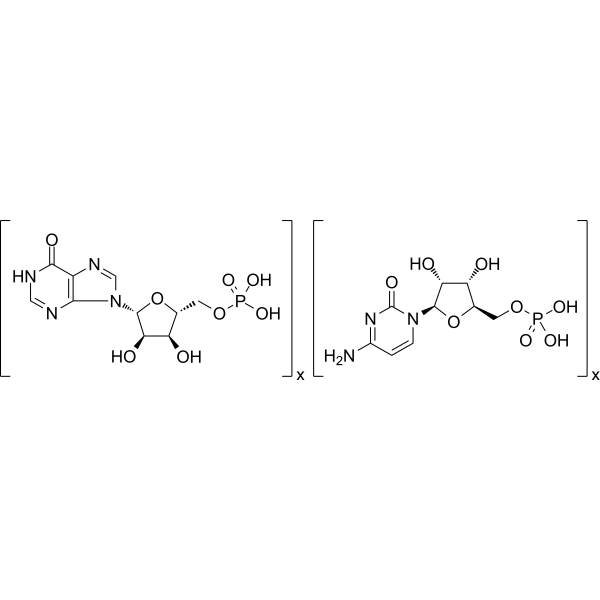
Polyinosinic-polycytidylic acidTLR-3 Agonist -
HY-10108
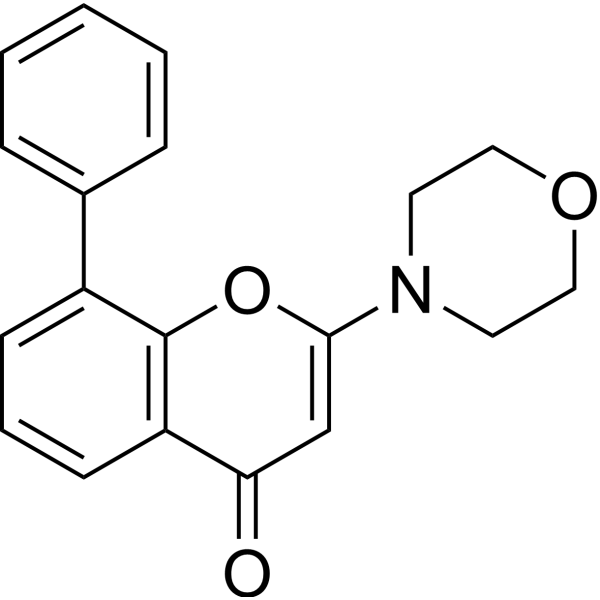
LY294002PI3K Inhibitor -
HY-13740
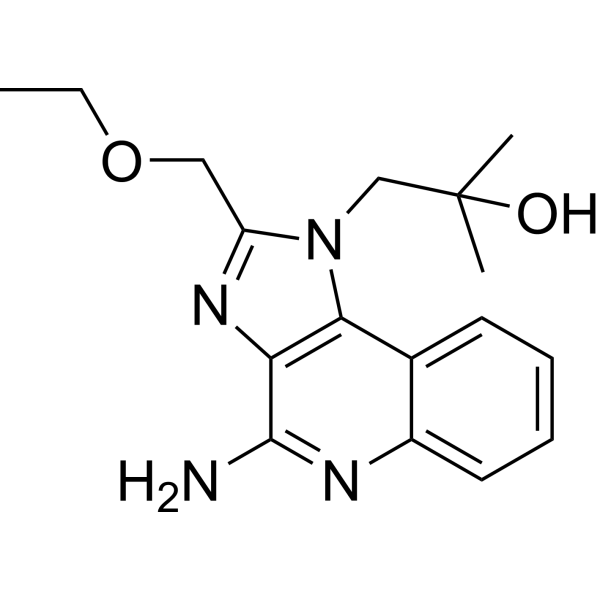
ResiquimodTLR7/8 Agonist -
HY-13453
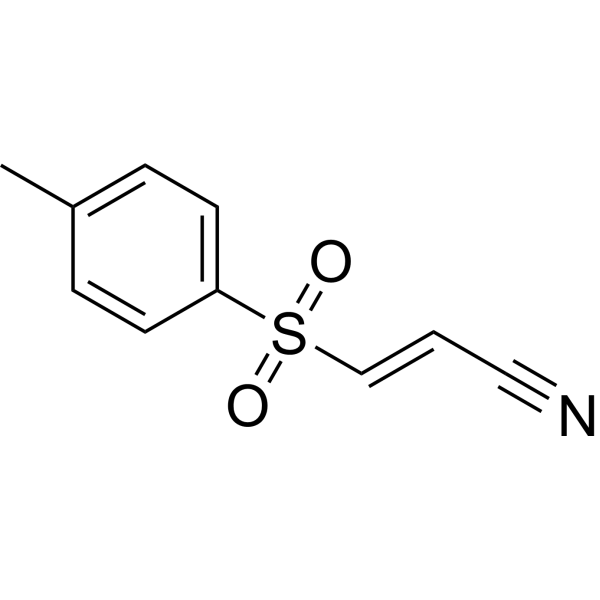
BAY 11-7082IκBα/NF-κB Inhibitor


Biological Activity
Description
IFN-alpha 2 (IFNA2), belongs to type I interferon family, is a protein secreted by cells infected by a virus and acting on other cells to inhibit viral infection[1]. IFN-alpha 2 increases the frequencies of cytotoxic CD8+ T cells and induces CD4+ T cell depletion[3]. IFN-alpha 2a/IFNA2 Protein, Human (C24-E188, R46K) contains 165 a.a., is produced in E. coli with tag free.
Background
IFN-alpha 2 (IFNA2; IFN-α2), belongs to the type I interferon family, produced by the plasmacytoid dendritic cells (pDCs) exposure to HIV-1BaL in order to inhibit viral infection[1].
Interferon (IFN) is originally identified as a substance ‘interfering’ with viral replication in vitro. IFN-α/β and related molecules are classified as type I IFNs, as for the other two types of type II IFN (IFN-γ) and type III IFNs (IFN-λ), respectively[2].
IFN-alpha 2 subtype is the only one that is currently licensed to treat infections caused by hepatitis B virus (HBV) and HCV[3].
IFN-alpha 2 shows a Sortilin-dependent trafficking in cells and increases the expression level of interferon-stimulated genes (ISGs) in HIV-infected cells[1][4]. It also exhibits cytotoxic activity against CD8+ T cells and enhances CD4+ T cell depletion[3].
Among the IFN-alpha 2 alleles, IFN-alpha 2b is being the predominant allele while IFNα-2a is less predominant and IFNα-2c only a minor allelic variant[5].
IFN-alpha 2 has a bored application in research of cancer, including some hematological malignancies and solid tumors[6]. As for a wildly use of IFN in animal disease model, the sequence of amino acids in IFNA2a protein of human is very different from mouse (59.57%).
In Vivo
IFNA2a (hydrodynamic injection with plasmids) leads to upregulation of interferon-stimulated genes (ISGs) and results HIV-1 induced CD4+ T cell depletion in the hu-PBL humanized mouse model[3].
Verified Bioactivity
The ED50 is ≤0.5005 ng/mL as measured by TF-1 cells, corresponding to a specific activity of ≥1.998 × 10⁶ units/mg.
MCE Validation Data
-
Purity - SDS-PAGE
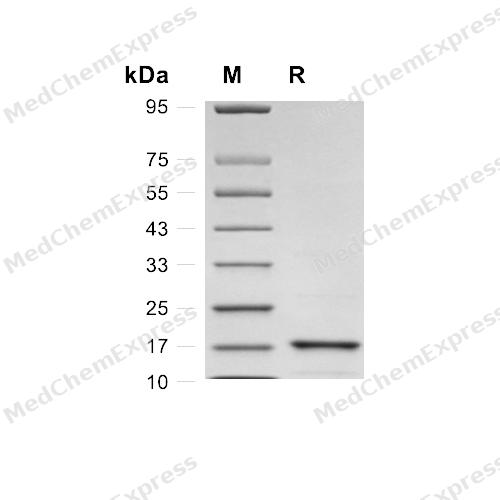
Purity - SDS-PAGE
-
Bioactivity - Cell-Based Assay
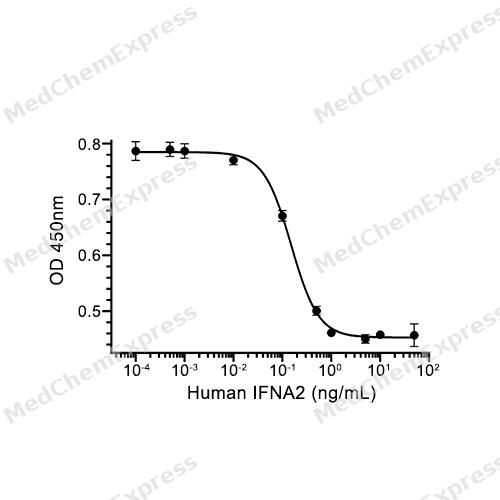
Bioactivity - Cell-Based Assay


Publications (10)
-
Journal Impact Factor
-
Most Recent
-
JHEP Rep
JMJD2D stabilises and cooperates with HBx protein to promote HBV transcription and replication. [Abstract]2023 Jul 15;5(10):100849. PMID: 37701334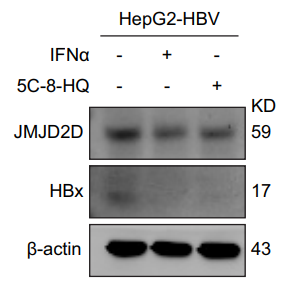
IFN-alpha 2a/IFNA2 Protein, Human (R46K) purchased from MedChemExpress. Usage Cited in: JHEP Rep. 2023 Jul 15;5(10):100849. [Abstract]
The protein levels of HBx were reduced in HBV-infected HepG2-NTCP cells after 5C-8-HQ (20 μM, HY-12304) and IFN-alpha 2a/IFNA2 Protein (IFNα, 20 ng/mL, HY-P7022) treatment, respectively, as measured by western blotting.
-
Cell Rep
IFNα-induced BST2+ tumor-associated macrophages facilitate immunosuppression and tumor growth in pancreatic cancer by ERK-CXCL7 signaling. [Abstract]2024 Apr 23;43(4):114088. PMID: 38602878 -
Int Immunopharmacol
Trans-cinnamaldehyde alleviates IFN-α-induced depressive-like behaviors by restoring astrocytic Cx43 gap junction. [Abstract]2025 Dec 10:167:115741. PMID: 41160920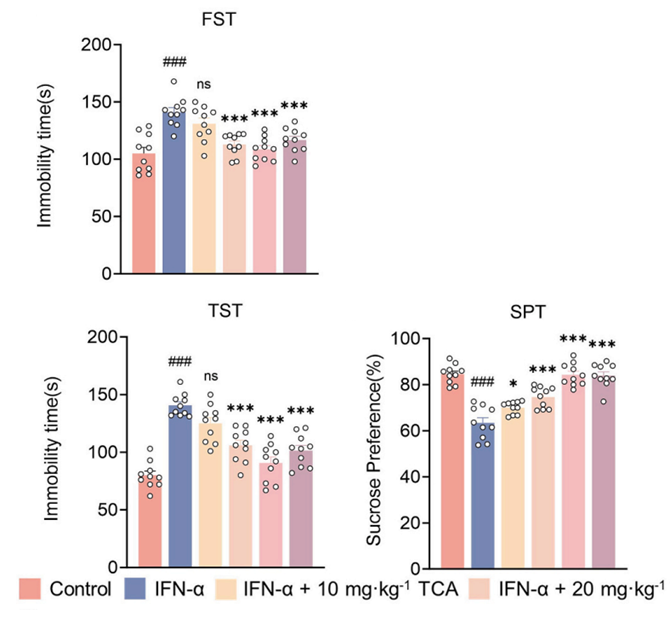
IFN-alpha 2a/IFNA2 Protein, Human (R46K) purchased from MedChemExpress. Usage Cited in: Int Immunopharmacol. 2025 Dec 10:167:115741. [Abstract]
Trans-cinnamaldehyde (TCA) attenuated IFN-alpha 2a/IFNA2 Protein (IFN-α, HY-P7022, 8000 IU/g; s.c.; once daily for 10 days)-induced depressive-like behaviors in the FST, TST and SPT (n = 10). Compared with controls, IFN-α treatment significantly increased immobility time in both the FST and TST (P < 0.001) and diminished sucrose preference in the SPT (P < 0.001), indicative of behavioral despair and anhedonia.
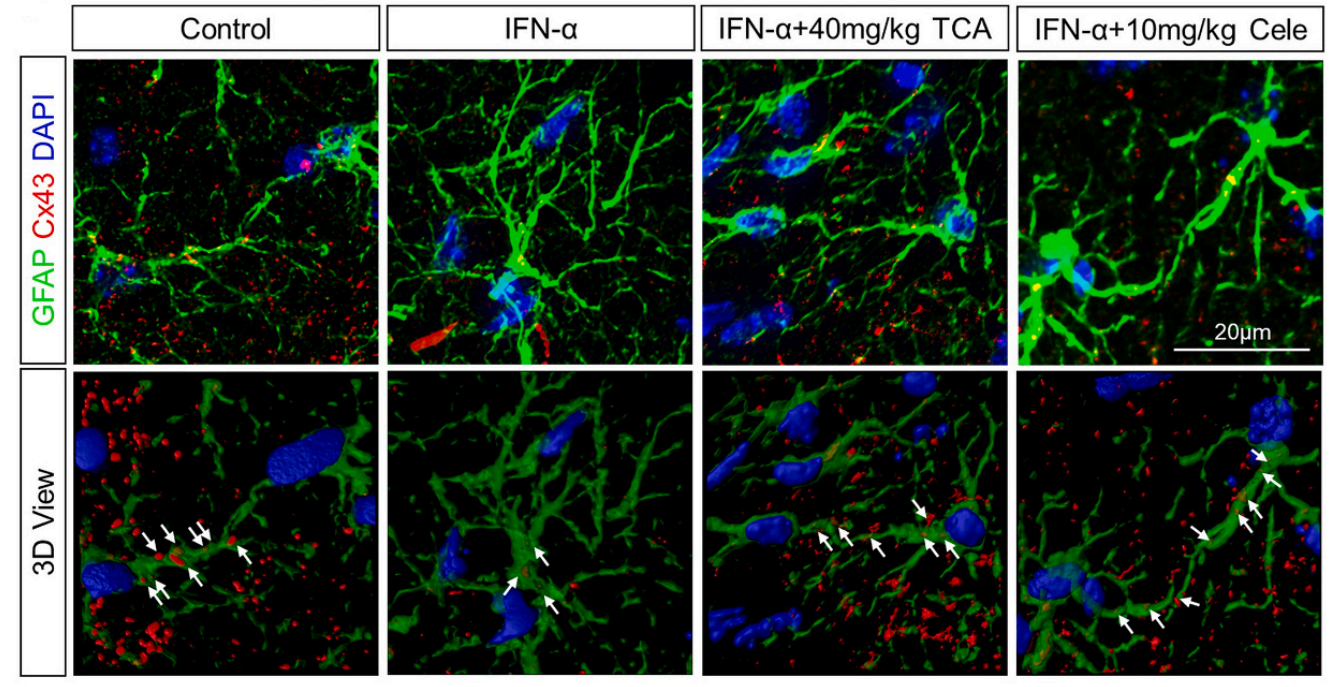
IFN-alpha 2a/IFNA2 Protein, Human (R46K) purchased from MedChemExpress. Usage Cited in: Int Immunopharmacol. 2025 Dec 10:167:115741. [Abstract]
Representative fluorescence image of astrocytic Cx43 (red), astrocytes (green), and their overlap. Immunofluorescence analysis of astrocytic Cx43 (co-labeled with GFAP) revealed that IFN-alpha 2a/IFNA2 Protein (IFN-α, HY-P7022, 8000 IU/g; s.c.; once daily for 10 days) treatment substantially decreased Cx43 expression (P < 0.001), while TCA administration reversed this deficit (P < 0.001).
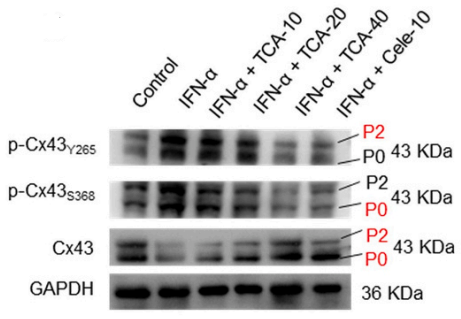
IFN-alpha 2a/IFNA2 Protein, Human (R46K) purchased from MedChemExpress. Usage Cited in: Int Immunopharmacol. 2025 Dec 10:167:115741. [Abstract]
IFN-alpha 2a/IFNA2 Protein (IFN-α, HY-P7022, 8000 IU/g; s.c.; once daily for 10 days). Representative blots of Cx43 and its phosphorylated forms at Y265 and S368. TCA-10, TCA-20 and TCA-40 represents TCA doses of 10 mg/kg, 20 mg/kg and 40 mg/kg, while Cele-10 represents Celecoxib at 10 mg/kg.
-
RMD Open
Idiopathic inflammatory myopathies lack neutralising autoantibodies to type- I, II and III interferons. [Abstract]2025 Sep 25;11(3):e005836. PMID: 40998521 -
Sci Rep
Establishment and characterization of a novel immortalized human aortic valve interstitial cell line. [Abstract]2025 Mar 29;15(1):10917. PMID: 40157927 -
Virol Sin
CK1α upregulates the IFNAR1 expression to prompt the anti-HBV effect of type I IFN in hepatoma carcinoma cells. [Abstract]2022 Dec;37(6):894-903. PMID: 35985475 -
Lupus Sci Med
Expression pattern and clinical significance of MerTK on circulating NK cells in systemic lupus erythematosus. [Abstract]2025 Jun 19;12(1):e001407. PMID: 40541265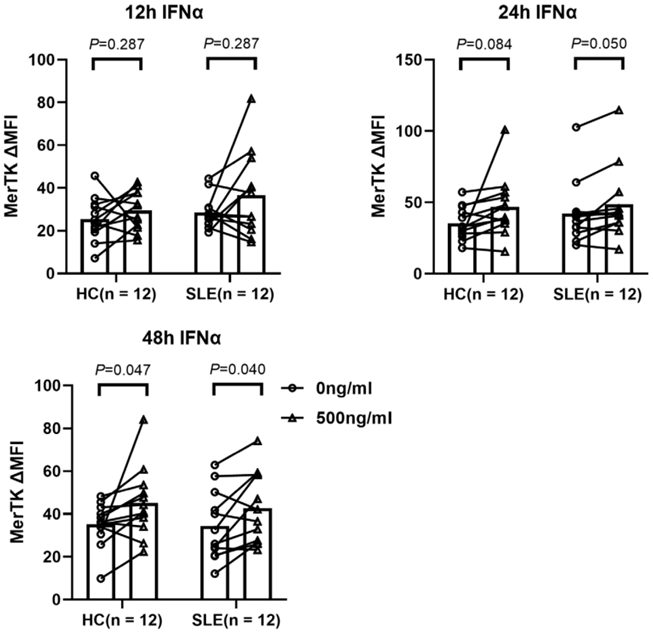
IFN-alpha 2a/IFNA2 Protein, Human (R46K) purchased from MedChemExpress. Usage Cited in: Lupus Sci Med. 2025 Jun 19;12(1):e001407. [Abstract]
MerTK expression on NK cells from SLE and healthy PBMCs in response to IFN-alpha 2a/IFNA2 Protein (IFNα, 500 ng/mL, HY-P7022) after 12 hours, 24 hours and 48 hours (paired t-test).
-
Clin Immunol
Interferon-α2a induces CD4+ T cell apoptosis and suppresses Th1/Th17 responses via upregulating IRF1-mediated PDL1 expression in dendritic cells from Behcet's uveitis. [Abstract]2023 May:250:109303. PMID: 36997038 -
Gene
A novel homozygous ISG15 missense variant leads to severe inflammatory skin lesions, interstitial pneumonia, and basal ganglia calcifications in a Chinese infant with ISG15 deficiency. [Abstract]2025 Aug 10:960:149537. PMID: 40318816 -
Dev Comp Immunol
Porcine IFI44L inhibits transmissible gastroenteritis virus (TGEV) replication by activating IFN-Ⅰ signaling pathway. [Abstract]2025 Sep 29:172:105483. PMID: 41033382


Technical Parameters
-
Species Human
-
Source E. coli
-
Tag Tag Free
-
Accession
P01563 (C24-E188, R46K)
-
Molecular Construction
-
N-term
-
IFNA2 (C24-E188, R46K)
Accession # P01563 -
C-term
-
-
Protein Length
Full Length of Mature Protein
-
Synonyms
IFNA2; IFN-Alpha-2; Interferon Alpha 2; IFNA2B; IFN-AlphaA; LeIF A; IFNA; Interferon Alpha 2a; Alpha-2a Interferon; Interferon Alpha-A; Interferon Alpha 2b; Interferon 1AB4; Interferon Alpha A; IFNA2C; Interferon Alpha-2; IFNA2A
-
AA Sequence
CDLPQTHSLGSRRTLMLLAQMRKISLFSCLKDRHDFGFPQEEFGNQFQKAETIPVLHEMIQQIFNLFSTKDSSAAWDETLLDKFYTELYQQLNDLEACVIQGVGVTETPLMKEDSILAVRKYFQRITLYLKEKKYSPCAWEVVRAEIMRSFSLSTNLQESLRSKE
-
Predicted Molecular Mass
19.2 kDa
-
Molecular Weight
Approximately 16-19 kDa, based on SDS-PAGE under reducing conditions.
-
Purity
≥ 95%, as determined by reducing SDS-PAGE.


Product Properties
Lyophilized powder
1.Lyophilized from a 0.22 μm filtered solution of 20 mM PB, 150 mM NaCl, pH 7.2.
2.Lyophilized from a 0.22 μm filtered solution of PBS.
3.Lyophilized from a 0.22 μm filtered solution of 50 mM Tris-HCl, 300 mM NaCl, pH 8.0.
4.Lyophilized from a 0.22 μm filtered solution of PBS, pH 7.4.
Please refer to the lot-specific COA for specific buffer information.
Note: For SPR assay, please replace the buffer. Primary amine components (e.g., Tris, imidazole) can affect protein-coupled chips.
<1 EU/μg, determined by LAL method.
It is not recommended to reconstitute to a concentration less than 100 μg/mL in ddH2O. For long term storage it is recommended to add a carrier protein (0.1% BSA, 5% HSA, 10% FBS or 5% Trehalose).
Stored at -20°C for 2 years from date of receipt. After reconstitution, it is stable at 4°C for 1 week or -20°C for longer (with carrier protein). It is recommended to freeze aliquots at -20°C or -80°C for extended storage.
Room temperature in continental US; may vary elsewhere.


Documentation
-
Data Sheet (266 KB)
-
SDS (252 KB)
- English - EN (252 KB)
- Français - FR (252 KB)
- Deutsch - DE (252 KB)
- Norwegian - NO (252 KB)
- Español - ES (252 KB)
- Swedish - SV (252 KB)
- Italian - IT (252 KB)
- Korean - KR (252 KB)
- Portuguese - PT (252 KB)
-
Handling Instructions (2659 KB)


References
[1]. Abraham S, et al. Gene therapy with plasmids encoding IFN-β or IFN-α14 confers long-term resistance to HIV-1 in humanized mice. Oncotarget. 2016 Nov 29;7(48):78412-78420. [Content Brief]
[2]. Gerasymenko IM, et al. MULTIPLEX PCR ASSAY FOR DETECTION OF HUMAN SOMATOTROPIN AND INTERFERON ALPHA2b GENES IN PLANT MATERIAL. Tsitol Genet. 2015 May-Jun;49(3):3-8. [Content Brief]
[3]. Zhang SY, et al. Inborn errors of interferon (IFN)-mediated immunity in humans: insights into the respective roles of IFN-alpha/beta, IFN-gamma, and IFN-lambda in host defense. Immunol Rev. 2008 Dec;226:29-40. [Content Brief]
[4]. Chang CH, et al. A new method to produce monoPEGylated dimeric cytokines shown with human interferon-α2b. Bioconjug Chem. 2009 Oct 21;20(10):1899-907. [Content Brief]
[5]. Sutter K, et al. Interferon α subtypes in HIV infection. Cytokine Growth Factor Rev. 2018 Apr;40:13-18. [Content Brief]
[6]. Watanabe H, et al. Detailed structure of mouse interferon α2 and its interaction with Sortilin. J Biochem. 2021 Oct 11;170(2):265-273. [Content Brief]
[7]. Gull I, et al. Heterologous expression, immunochemical and computational analysis of recombinant human interferon alpha 2b. Springerplus. 2013 Jun 15;2(1):264. [Content Brief]
[8]. Paul F, et al. IFNA2: The prototypic human alpha interferon. Gene. 2015 Aug 10;567(2):132-7. [Content Brief]

Calculators
Concentration (start) × Volume (start) = Concentration (final) × Volume (final)


 Powered by Bioz

