Search Result
Results for "
BRD4 PROTAC degrader
" in MedChemExpress (MCE) Product Catalog:
| Cat. No. |
Product Name |
Target |
Research Areas |
Chemical Structure |
-
- HY-133736
-
|
|
PROTAC-Linker Conjugates for PAC
ADC Payload
Epigenetic Reader Domain
|
Cancer
|
|
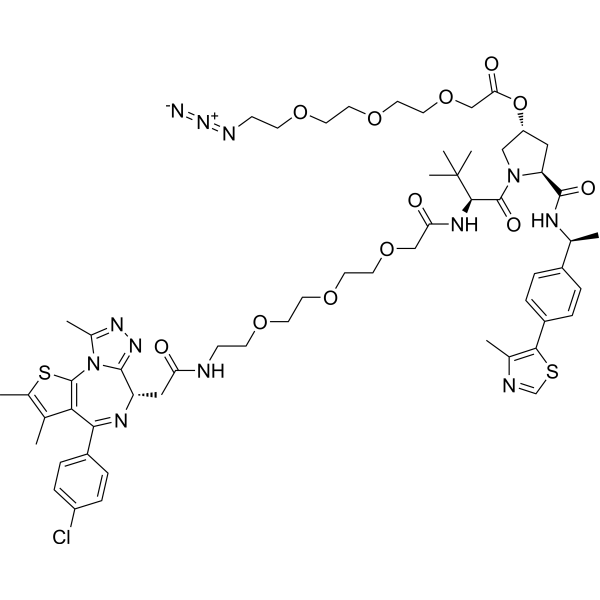
PROTAC BRD4 Degrader-5-CO-PEG3-N3 is a PROTAC-linker Conjugate for PAC, comprises the BRD4 degrader (MZ 1 (HY-107425) analog) and PEG-based linker. PROTAC BRD4 Degrader-5-CO-PEG3-N3 is a click chemistry reagent, it contains an Azide group and can undergo copper-catalyzed azide-alkyne cycloaddition reaction (CuAAc) with molecules containing Alkyne groups. It can also undergo strain-promoted alkyne-azide cycloaddition (SPAAC) reactions with molecules containing DBCO or BCN groups. PROTAC BRD4 Degrader-5-CO-PEG3-N3 can be used for the research of HER2-positive breast cancer .
|
-
-
- HY-133131
-
|
|
PROTACs
Epigenetic Reader Domain
|
Cancer
|
|
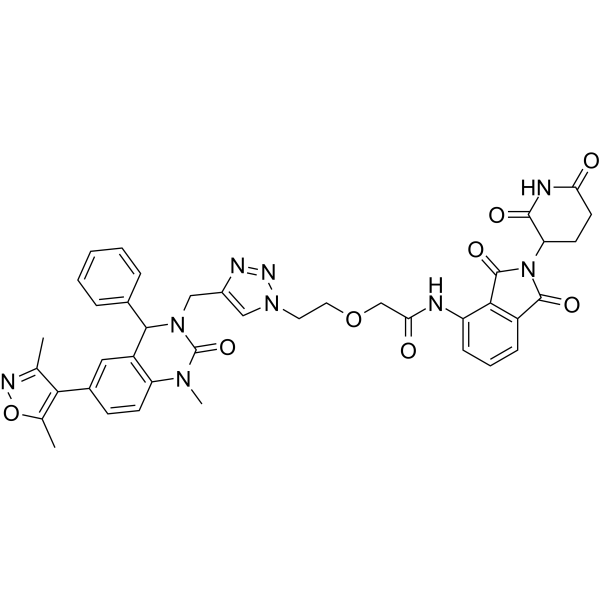
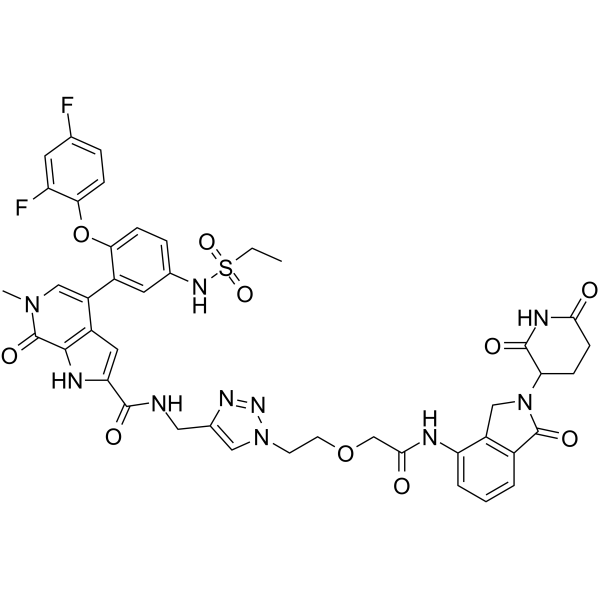
PROTAC BRD4 Degrader-1 is a PROTAC connected by ligands for Cereblon and BRD4 with an IC50 of 41.8 nM against BRD4 BD1. PROTAC BRD4 Degrader-1 can effectively degrade BRD4 protein and suppress c-Myc expression .
|
-
-
- HY-111433
-
|
|
PROTACs
Epigenetic Reader Domain
|
Cancer
|
|
BRD4 degrader AT1 is a PROTAC connected by ligands for von Hippel-Lindau and BRD4 as a highly selective Brd4 degrader, with a Kd of 44 nM for Brd4 BD2 in cells.
|
-
-
- HY-114305
-
A1874
2 Publications Verification
|
PROTACs
Epigenetic Reader Domain
|
Cancer
|
|
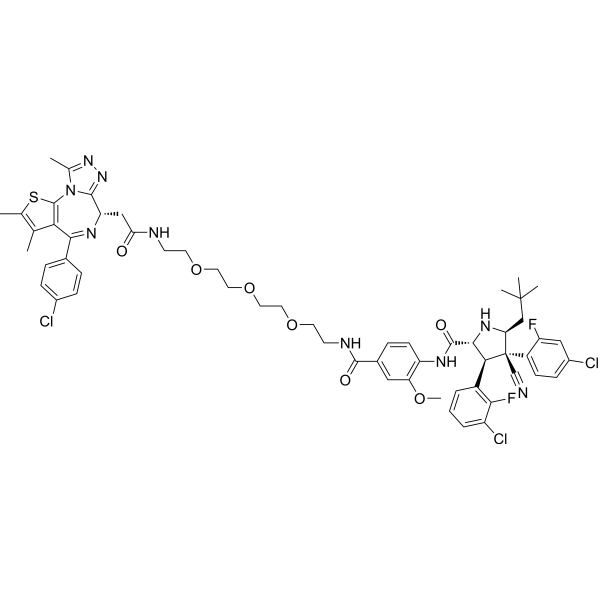
A1874 is a nutlin-based (MDM2 ligand) and BRD4-degrading PROTAC with a DC50 of 32 nM (induce BRD4 degradation in cells). Effective in inhibiting many cancer cell lines proliferation .
|
-
-
- HY-133737
-
|
PROTAC BRD4 degrader-5
|
PROTACs
Epigenetic Reader Domain
|
Cancer
|
|
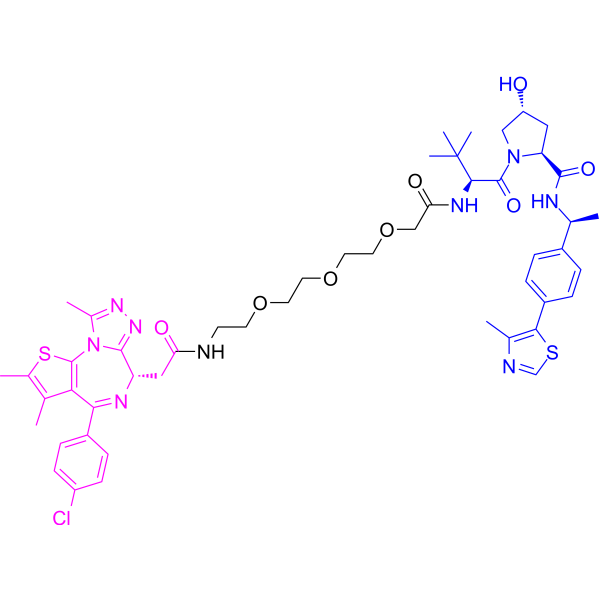
GAL-02-221 is a PROTAC connected by ligands for von Hippel-Lindau and BRD4. GAL-02-221 can potent degrade BRD4 in HER2 positive and negative breast cancer cell lines .
|
-
-
- HY-129937A
-
GNE-987
1 Publications Verification
|
PROTACs
Epigenetic Reader Domain
|
Cancer
|
|
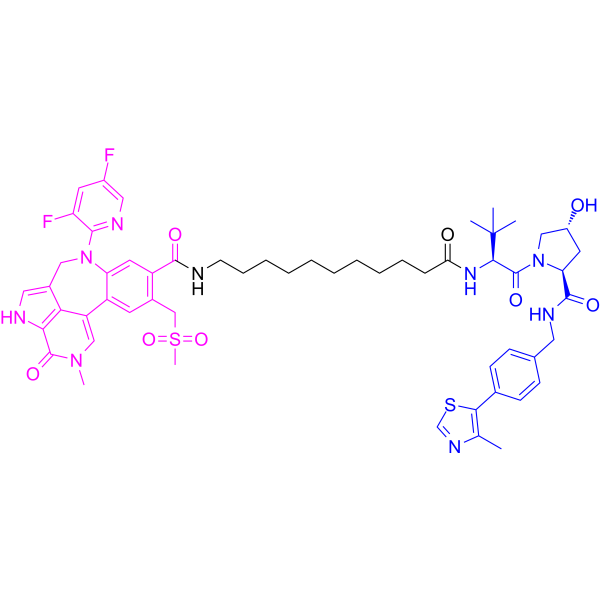
GNE-987 is a VHL-dependent BRD4 PROTAC degrader. GNE-987 exhibits picomolar cell BRD4 degradation activity (DC50=0.03 nM for EOL-1 AML cell line). GNE-987 binds equipotently to the BD1 and BD2 bromodomains of BRD4 with low nanomolar affinities (IC50=4.7 and 4.4 nM, respectively). GNE-987 can be used for the research of cancer .
|
-
-
- HY-138555
-
|
|
PROTACs
Epigenetic Reader Domain
|
Cancer
|
|
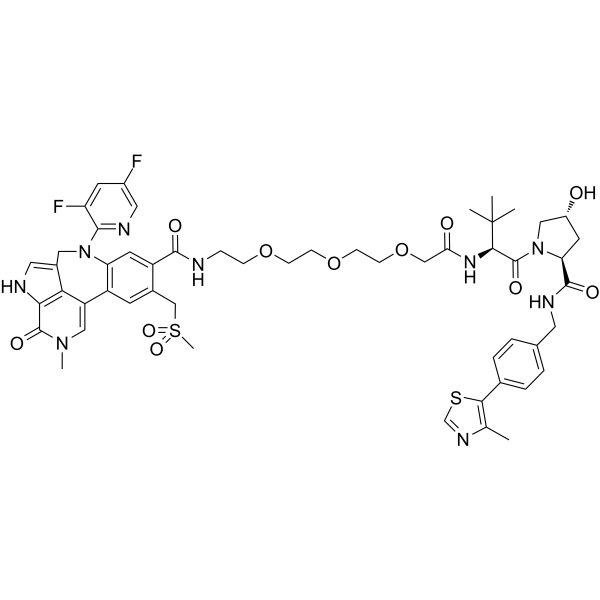
PROTAC BRD4 Degrader-8 is a PROTAC connected by ligands for von Hippel-Lindau and BRD4, with IC50s of 1.1 nM and 1.4 nM for BRD4 BD1 and BD2, respectively. PROTAC BRD4 Degrader-8 is capable of potently degrading the BRD4 protein in PC3 prostate cancer cells .
|
-
-
- HY-133136
-
-
-
- HY-138632
-
|
|
PROTACs
Epigenetic Reader Domain
PROTAC-Linker Conjugates for PAC
|
Cancer
|
|
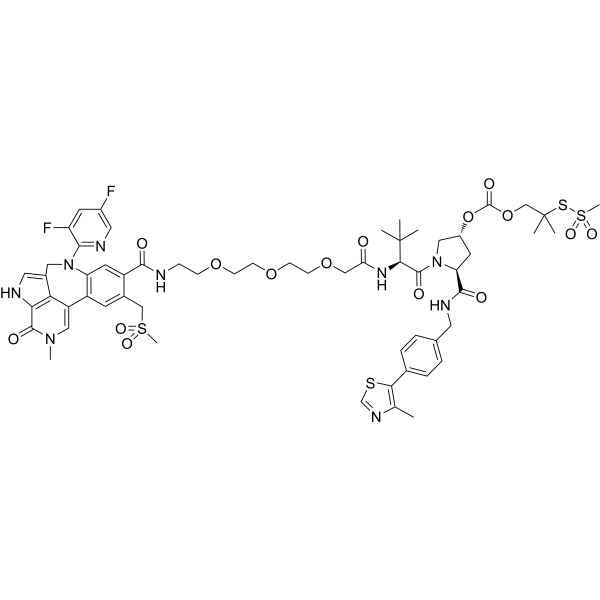
PROTAC BRD4 Degrader linker conjugate is a linker-payload conjugate as well as a bifunctional degrader of BRD4 that binds to VHL, consisting of PROTAC and a linker. PROTAC BRD4 Degrader linker conjugate can be conjugated with STEAP1 and CLL1 antibodies to degrade BRD4 protein, with DC50 values of 0.86 nM and 7.6 nM, respectively. PROTAC BRD4 Degrader linker conjugate can be used in research related to prostate cancer and acute myeloid leukemia (BRD4 ligand: (HY-129939); VHL ligand: (HY-125845)) .\n
|
-
-
- HY-136857
-
|
|
Epigenetic Reader Domain
|
Cancer
|
|
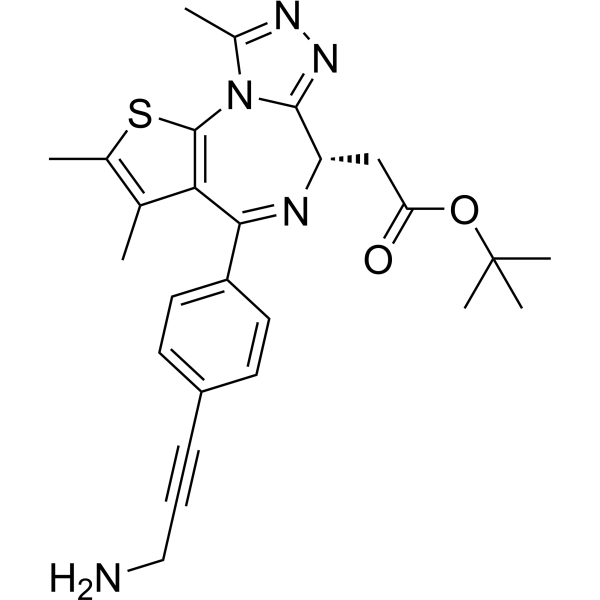
BRD4 degrader-3 is a potent bromodomain BRD4 degrader extracted from patent WO2020055976A1, example 1a, has IC50s of 15.5 and 12.3 nM for BRD4-BD1 and BRD4-BD2, respectively . PROTAC BRD4 Degrader-7 is a click chemistry reagent, it contains an Alkyne group and can undergo copper-catalyzed azide-alkyne cycloaddition (CuAAc) with molecules containing Azide groups.
|
-
-
- HY-114407
-
|
|
PROTACs
Epigenetic Reader Domain
|
Cancer
|
|
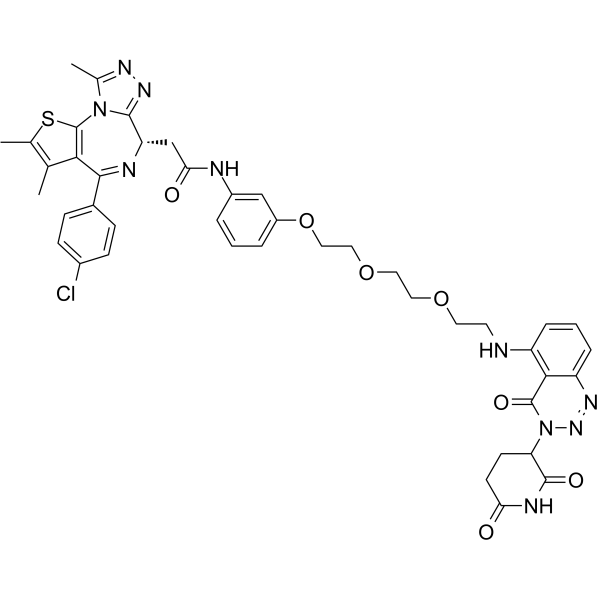
TD-428 is a PROTAC connected by ligands for Cereblon and BRD4. TD-428 is a highly specific BRD4 degrader with a DC50 of 0.32 nM . TD-428 is a BET PROTAC, which comprises TD-106 (a CRBN ligand) linked to JQ1 (a BET inhibitor). TD-428 efficiently induce BET protein degradation .
|
-
-
- HY-112718
-
-
-
- HY-174210
-
|
|
PROTACs
Epigenetic Reader Domain
|
Cancer
|
|
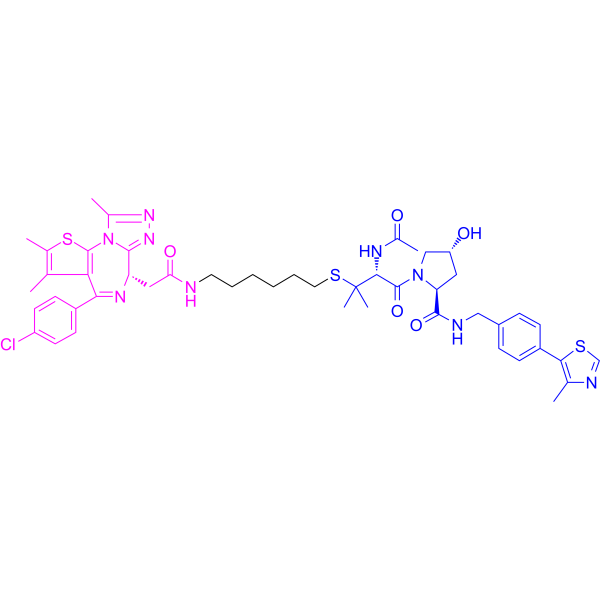
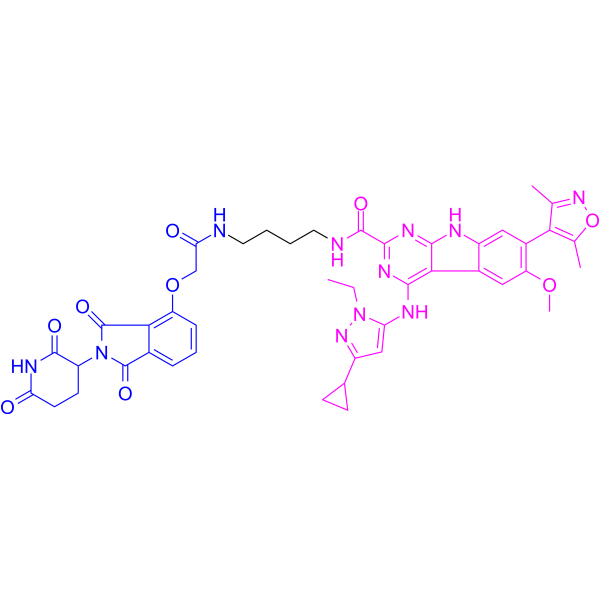
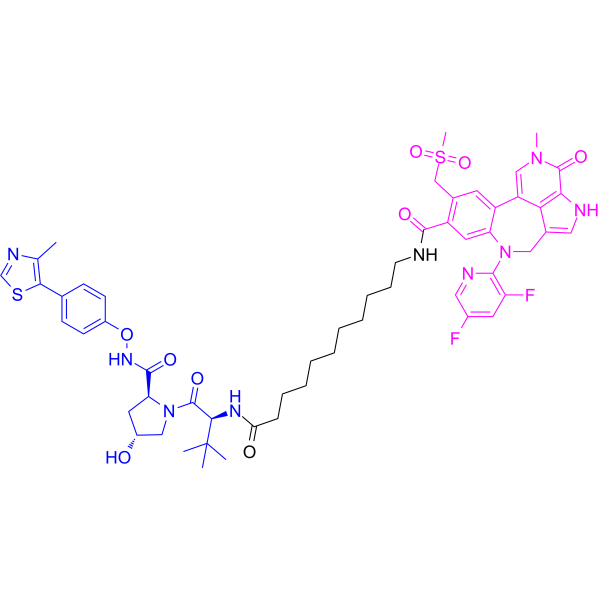
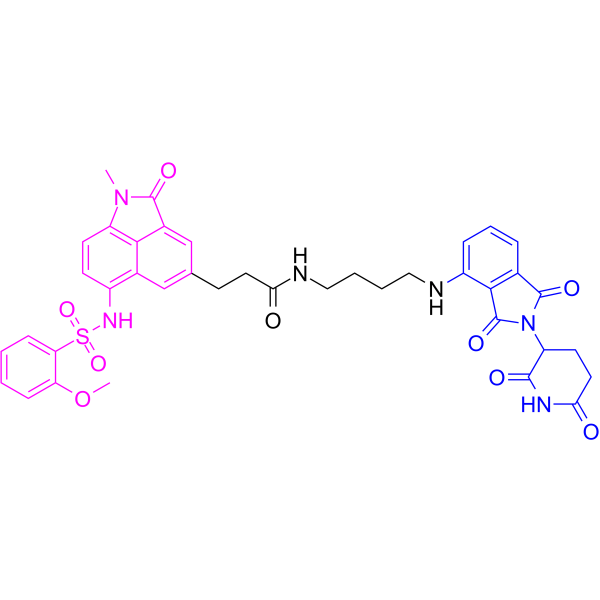
PROTAC BRD4 Degrader-31 is a BRD4 PROTAC degrader with DC50 s of 164 and 80 nM at 4 h and 24 h, respectively. PROTAC BRD4 Degrader-31 potently degrades BRD4 in cells with long acting degradation kinetics . Pink: BRD4 ligand (HY-78695); Blue: KLHDC2 ligand (HY-174218)
|
-

-
- HY-114406
-
|
|
Ligands for E3 Ligase
|
Cancer
|
|
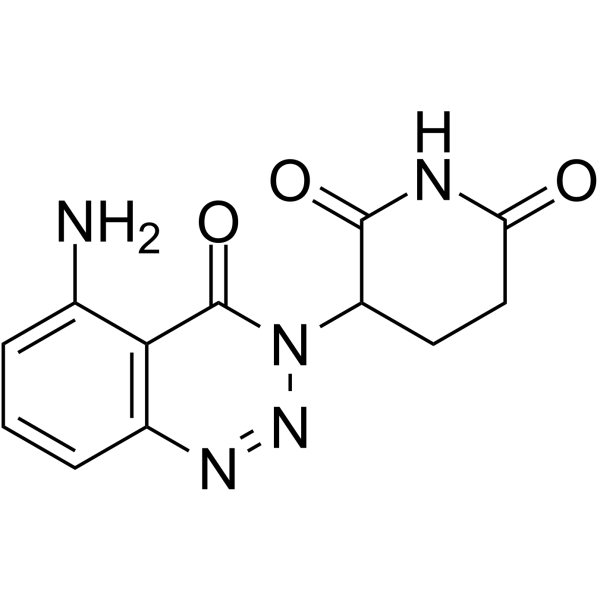
TD-106 is a cereblon (CRBN) modulator, which can be used for targeted protein degradation. BRD4 PROTACs with TD-106 induce BRD4 degradation .
|
-
-
- HY-103633
-
|
|
PROTACs
Epigenetic Reader Domain
|
Cancer
|
|
PROTAC BET Degrader-1 is a PROTAC connected by ligands for Cereblon and BET, decreasing BRD2, BRD3, and BRD4 protein levels at low concentration.
|
-
-
- HY-156566
-
|
|
PROTACs
Epigenetic Reader Domain
HSP
|
Cancer
|
|
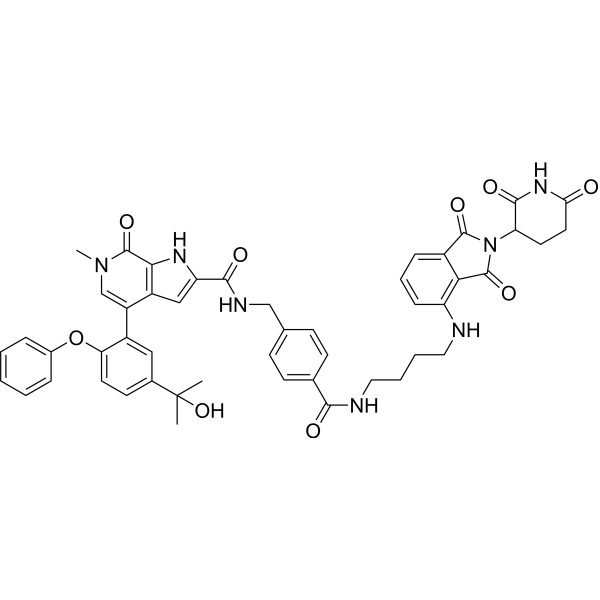
PROTAC BRD4 Degrader-21 is a BRD4-targeting PROTAC degrader with an IC50 value of 59 nM. PROTAC BRD4 Degrader-21 induces ubiquitination of BRD4, leading to its degradation via the proteasome. PROTAC BRD4 Degrader-21 binds to recombinant HSP90α protein with moderate affinity, having an IC50 of 100-1000 nM. PROTAC BRD4 Degrader-21 induces cancer cell death. PROTAC BRD4 Degrader-21 inhibits tumor growth in xenograft mouse models. PROTAC BRD4 Degrader-21 can be used for the research of acute myeloid leukemia, diffuse large B-cell lymphoma .
|
-
-
- HY-143328
-
|
|
PROTACs
Epigenetic Reader Domain
Apoptosis
|
Cancer
|
|
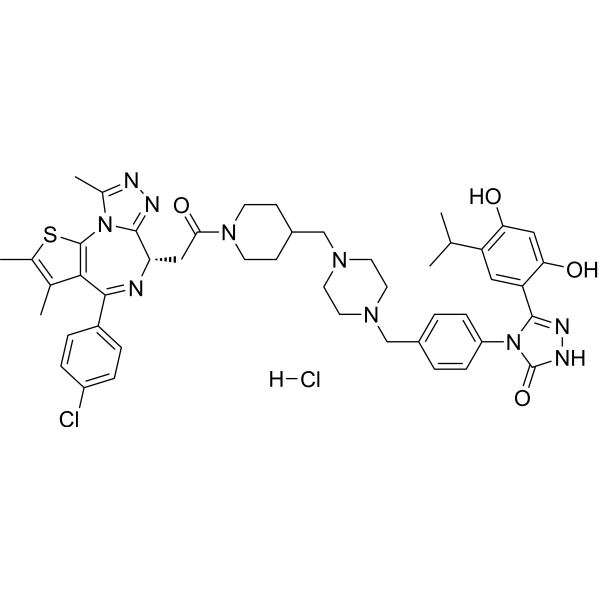
PROTAC BRD4 Degrader-17 (compound 13i) is a potent PROTAC BRD4 Degrader, with IC50 values of 29.54 nM (BRD4 (BD1)) and 3.82 nM (BRD4 (BD2)). PROTAC BRD4 Degrader-17 significantly attenuates G2/M progression associated Cyclin B1 expression. PROTAC BRD4 Degrader-17 significantly induces apoptosis in MV-4-11 cells .
|
-
-
- HY-131203
-
|
|
PROTACs
Epigenetic Reader Domain
Apoptosis
c-Myc
Caspase
|
Cancer
|
|
PROTAC BRD4 Degrader-6 (compound 32a) is a potent small-molecule BRD4PROTAC degrader with IC50 value of 2.7 nM for BRD4 BD1. PROTAC BRD4 Degrader-6 potently degrades BRD4 protein and inhibits the expression of c-Myc. PROTAC BRD4 Degrader-6 inhibits the proliferation of pancreatic cancer cell line BxPC3 and induces apoptosis. PROTAC BRD4 Degrader-6 can be used for human pancreatic cancer research (Pink:
Mivebresib (HY-100015); Black: linker, Azido-PEG1-CH2CO2H (HY-108369); Blue: Lenalidomide (HY-A0003)) .
|
-
-
- HY-133138
-
|
|
E3 Ligase Ligand-Linker Conjugates
|
Cancer
|
|
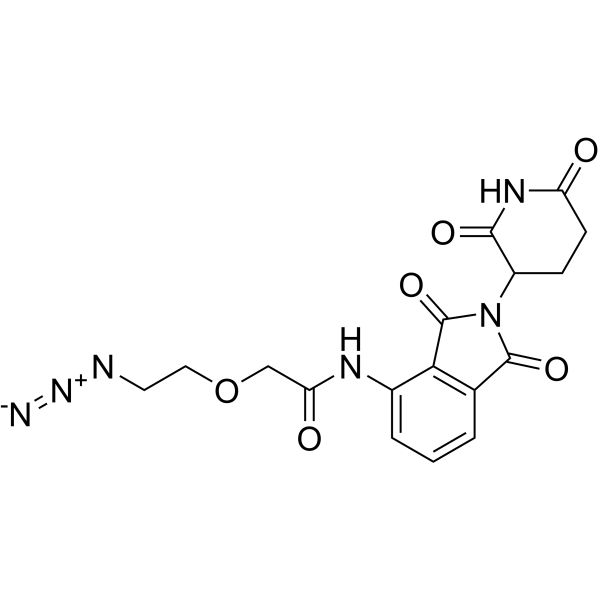
Pomalidomide-PEG1-azide is an E3 ligase lgand-linker conjugate. Pomalidomide-PEG1-azide incorporates the Pomalidomide based cereblon ligand and a linker. Pomalidomide-PEG1-azide can be used to synthesis PROTAC BRD4 Degrader-1 (HY-133131) . PROTAC BRD4 Degrader-1 is a PROTAC connected by ligands for Cereblon and BRD4 with an IC50 of 41.8 nM against BRD4 BD1. PROTAC BRD4 Degrader-1 can effectively degrade BRD4 protein and suppress c-Myc expression.
|
-
-
- HY-174811
-
|
|
PROTACs
Epigenetic Reader Domain
PD-1/PD-L1
|
Inflammation/Immunology
Cancer
|
|
PROTAC BRD4 Degrader-33 is an enzyme activated clickable BRD4 PROTAC degrader with favorable tumor microenvironment-response. PROTAC BRD4 Degrader-33 has superior tumor tissue penetration capabilities and efficiently inhibits PD-L1 protein expression. PROTAC BRD4 Degrader-33 shows potent anti-tumoral immunomodulation activity in 4T1 tumor-bearing mice model . Pink: BRD4 ligand (HY-174812); Blue: CRBN ligase ligand (HY-10984); Black: linker
|
-

-
- HY-107442
-
|
|
Epigenetic Reader Domain
Ligands for Target Protein for PROTAC
|
Cancer
|
|
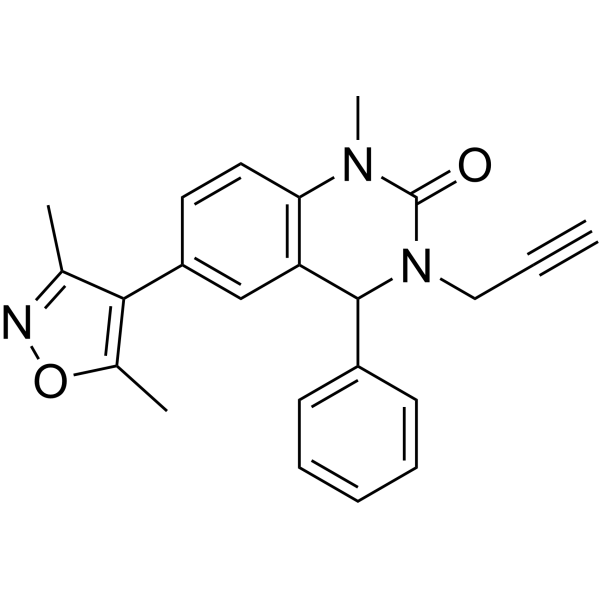
PROTAC BRD4-binding moiety 1 is a ligand for BRD4. PROTAC BRD4-binding moiety 1 binds to cereblon ligand via a linker to form PROTAC to degrade BRD4 (HY-133136) . PROTAC BRD4-binding moiety 1 is a click chemistry reagent, it contains an Alkyne group and can undergo copper-catalyzed azide-alkyne cycloaddition (CuAAc) with molecules containing Azide groups.
|
-
-
- HY-164995
-
|
|
PROTACs
Epigenetic Reader Domain
Drug-Linker Conjugates for ADC
|
Cancer
|
|
L1BC8 (compound 13a) is a BRD4 PROTAC degrader with anticancer effects. L1BC8 is also a drug-linker conjugate for ADC that can be used for the synthesis of ADCs. The resulting BRD4-degrader antibody conjugates exhibit potent and antigen-dependent BRD4 degradation and antiproliferation activities in cell-based experiments. (Pink: BRD4 ligand (HY-129939); Blue: VHL ligand (HY-125845); Black: linker (HY-171663)) .
|
-

-
- HY-160694
-
|
cBu-Cit-PROTAC BRD4 degrader-5
|
PROTAC-Linker Conjugates for PAC
Epigenetic Reader Domain
|
Cancer
|
|
cBu-Cit-GAL-02-221 is a PROTAC that degrades BRD4 by association with cBu-Cit. cBu-Cit-GAL-02-221 can effectively inhibit BRD4 in HER2 positive and negative breast cancer cell lines. cBu-Cit-GAL-02-221 has a single bond and can be conjugated to an ADC antibody to form a PAC .
|
-

-
- HY-175224
-
|
|
PROTACs
Epigenetic Reader Domain
|
Cancer
|
|
PROTAC BRD4 Degrader-36 is a BRD4 PROTAC degrader. PROTAC BRD4 Degrader-36 has a DC50 of 0.649 nM and a Dmax of 71% in PANC-1 cells. PROTAC BRD4 Degrader-36 is cytotoxic to PANC-1 cells (GI50: 0.103 μM). PROTAC BRD4 Degrader-36 can be used in the study of cancer. (Pink: PROTAC BRD4 ligand-1 (HY-129939); Blue + Black: E3 ligase ligand + linker (HY-175241)) .
|
-

-
- HY-155393
-
-
-
- HY-175240
-
|
|
PROTACs
Epigenetic Reader Domain
|
Cancer
|
|
PROTAC BRD4 Degrader-38 is a BRD4 PROTAC degrader with DC50s of 86 and 106 nM for the short and long isoforms of BRD4, respectively. PROTAC BRD4 Degrader-38 significantly induces the degradation of BRD4 by covalently engaging C232 of E3 ligase TRIM28 .Pink: BRD4 ligand (HY-78695); Blue: E3 ligase ligand (HY-203082); Black: linker (HY-40172)
|
-

-
- HY-161651A
-
|
|
Epigenetic Reader Domain
|
Cancer
|
|
BRD4 ligand 6 TFA is the TFA salt form of BRD4 ligand 6 (HY-161651). BRD4 ligand 6 TFA is a BRD4 ligand and can be used for synthesis of BRD4 PROTACs, such as PROTAC BRD4 Degrader-26 (HY-161650) .
|
-

-
- HY-123911
-
-
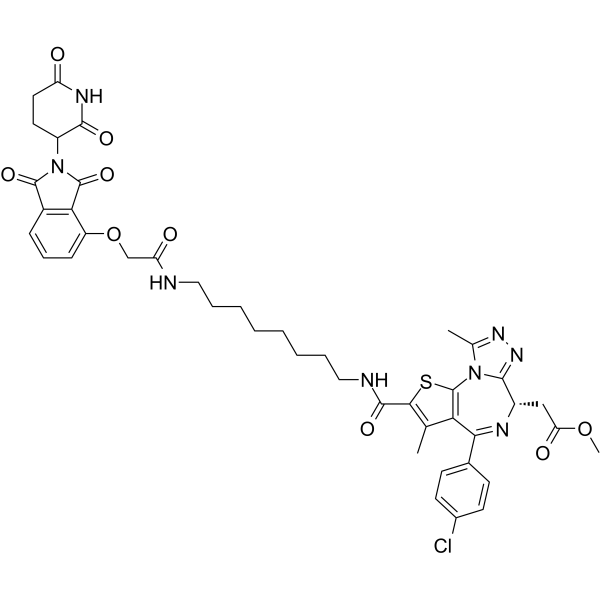
-
- HY-177730
-
|
|
PROTACs
Epigenetic Reader Domain
|
Cancer
|
|
PROTAC BRD4 Degrader-40 is a Bromodomain protein 4 (BRD4) PROTAC degrader. PROTAC BRD4 Degrader-40 can induce BRD4 degradation in cancer cells. PROTAC BRD4 Degrader-40 can be used for the research of cancer, such as leukemia . (Structure Note: Pink: BRD4 ligand (HY-78695); Blue: CRBN ligand (HY-163927))
|
-

-
- HY-177041
-
|
|
PROTACs
Epigenetic Reader Domain
|
Cancer
|
|
PROTAC BRD4 Degrader-35 (Compound 17) is a PROTAC degrader of BRD4. PROTAC BRD4 Degrader-35 can be studied in anticancer research. (Pink: BRD4 ligand (HY-78695); Black: linker; Blue: ligase) .
|
-

-
- HY-143327
-
|
|
PROTACs
Epigenetic Reader Domain
Apoptosis
|
Cancer
|
|
PROTAC BRD4 Degrader-16 is a potent PROTAC BRD4 Degrader, with IC50 values of 34.58 nM (BRD4 (BD1)) and 40.23 nM (BRD4 (BD2)). PROTAC BRD4 Degrader-16 ignificantly attenuates G2/M progression associated Cyclin B1 expression. PROTAC BRD4 Degrader-16 significantly induces apoptosis in MV-4-11 cells .
|
-
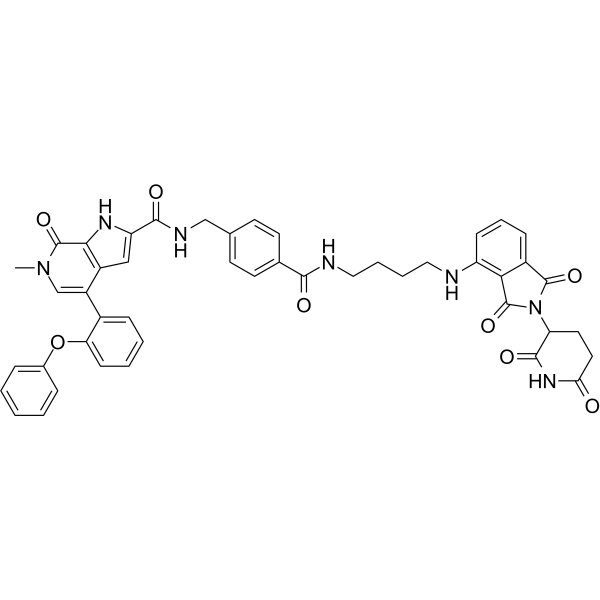
-
- HY-138637
-
|
|
PROTACs
Epigenetic Reader Domain
|
Cancer
|
|
PROTAC BRD4 Degrader-14 is a PROTAC connected by ligands for von Hippel-Lindau and BRD4, with IC50s of 1.8 nM and 1.7 nM for BRD4 BD1 and BD2, respectively. PROTAC BRD4 Degrader-14 is capable of potently degrading the BRD4 protein in PC3 prostate cancer cells .
|
-
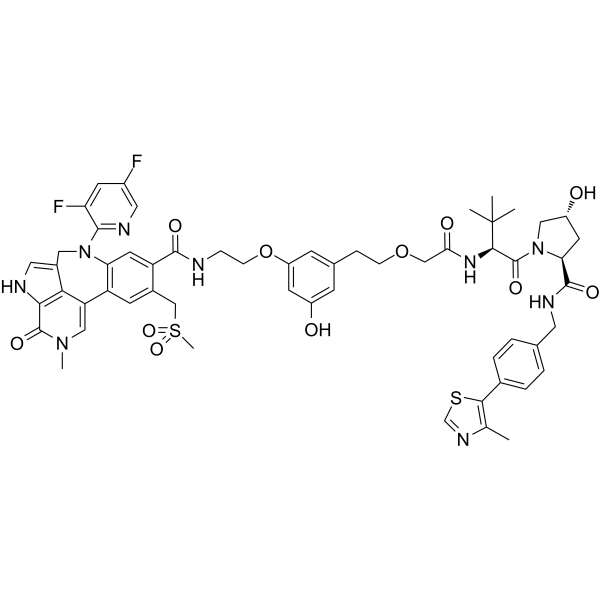
-
- HY-139294
-
|
|
PROTACs
Epigenetic Reader Domain
|
Cancer
|
|
PROTAC BRD4 Degrader-15 is a PROTAC connected by ligands for von Hippel-Lindau and BRD4, with IC50s of 7.2 nM and 8.1 nM for BRD4 BD1 and BD2, respectively. PROTAC BRD4 Degrader-15 is capable of potently degrading the BRD4 protein in PC3 prostate cancer cells .
|
-
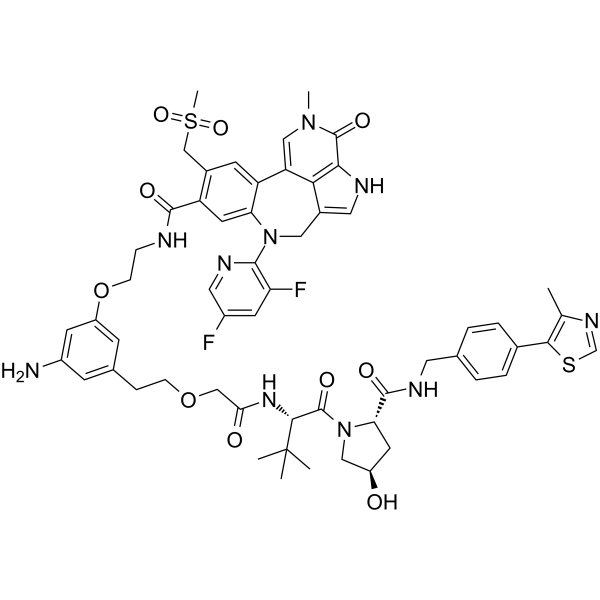
-
- HY-175767
-
|
|
PROTACs
Epigenetic Reader Domain
|
Cancer
|
|
PROTAC BRD4 Degrader-39 is a selective targeting Bromodomain protein 4 (BRD4) degrader with an DC50 value of 24.66 nM. PROTAC BRD4 Degrader-39 conjugates BRD PROTAC (ARV-771) (HY-100972) with carbohydrate. PROTAC BRD4 Degrader-39 selectively delivers to tumor cells with high GLUT1 expression, followed by GSH-triggered release of ARV-771 and degrades BRD4. PROTAC BRD4 Degrader-39 can inhibit tumor growth and show no significant toxicity. PROTAC BRD4 Degrader-39 can be used for the research of cancer, such as breast cancer . (Structure Note: Pink: BRD4 ligand (HY-78695); Blue: VHL ligand (HY-112078); Black: (HY-42427); BRD4 ligand-Linker: (HY-42429))
|
-

-
- HY-176449
-
|
|
PROTACs
Epigenetic Reader Domain
|
Cancer
|
|
PROTAC BRD4 Degrader-32 (Compound 22) is a BRD4 PROTAC degrader (DC50: 0.20 nM). PROTAC BRD4 Degrader-32 connects the BRD4-binding domain and CRBN-binding domain through a unique carbon-carbon linked linker to form a ternary complex, inducing ubiquitination of BRD4 for proteasomal degradation. PROTAC BRD4 Degrader-32 is promising for research of BRD4-related cancers (such as hematological malignancies). (Pink: GSK1324726A (HY-13960); Black: linker (HY-176450); Blue: Lenalidomide-5-Br (HY-W072954)) .
|
-

-
- HY-174920
-
|
|
PROTACs
Epigenetic Reader Domain
|
Cancer
|
|
PROTAC BRD4 Degrader-34 (Compound MZ2) is a selective BRD4 PROTAC degrader (pDC50 = 8.4). PROTAC BRD4 Degrader-34 can induce BD2 degradation mediated by VHL. PROTAC BRD4 Degrader-34 can be used for research on cancer. (Pink: BRD4-BD2 Ligand (HY-78695); Blue: VHL Ligand (HY-125845); Black: Linker (HY-130524)) .
|
-

-
- HY-175225
-
|
|
PROTACs
Epigenetic Reader Domain
|
Cancer
|
|
PROTAC BRD4 Degrader-37 (Compound TrimTAC-2) is a PROTAC BRD4 degrader. PROTAC BRD4 Degrader-37 has a DC50 of 36.4 nM and a Dmax of 73% in PANC-1 cells. PROTAC BRD4 Degrader-37 exhibits cytotoxicity against PANC-1 cells (GI50: 0.282 μM). PROTAC BRD4 Degrader-37 can be used in the research of tumors. (Pink: PROTAC BRD4 ligand-4 (HY-175242); Blue + Black: E3 ligase ligand + linker (HY-175241)) .
|
-

-
- HY-153820
-
-
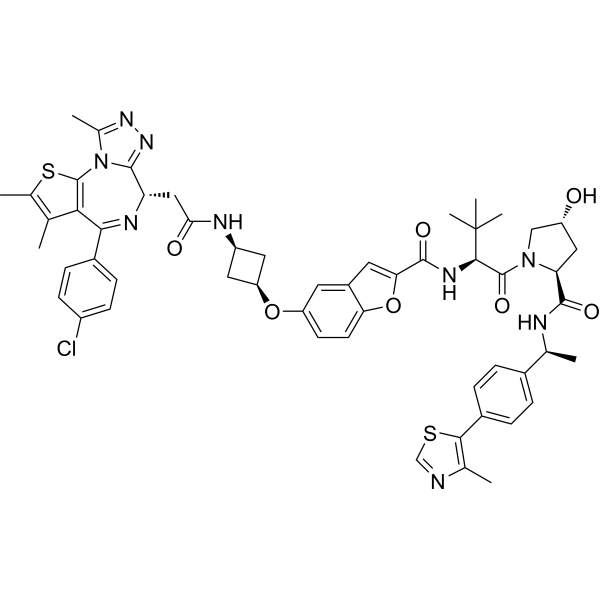
-
- HY-138635
-
|
|
PROTACs
Epigenetic Reader Domain
|
Cancer
|
|
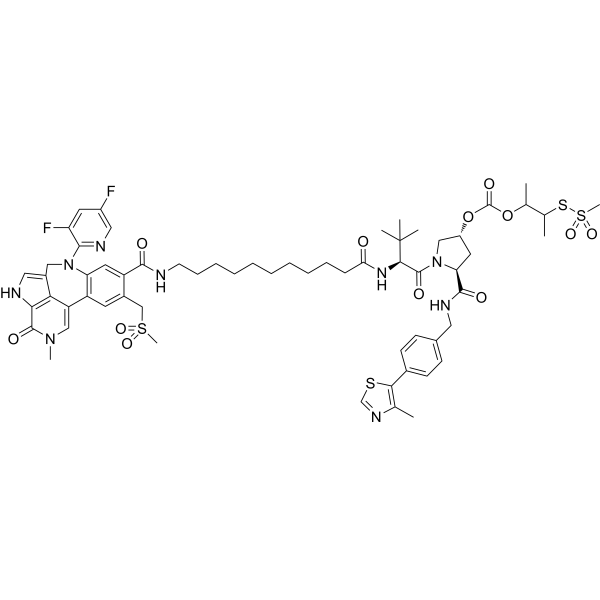
PROTAC BRD4 Degrader-12 (compound 9c) is a PROTAC connected by ligands for von Hippel-Lindau and BRD4. PROTAC BRD4 Degrader-12 can be conjugated with STEAP1 and CLL1 antibodies to degrade the BRD4 protein in PC3 prostate cancer cells, with a DC50 of 0.39 nM and 0.24 nM, respectively .
|
-
-
- HY-138633
-
|
|
PROTACs
Epigenetic Reader Domain
|
Cancer
|
|
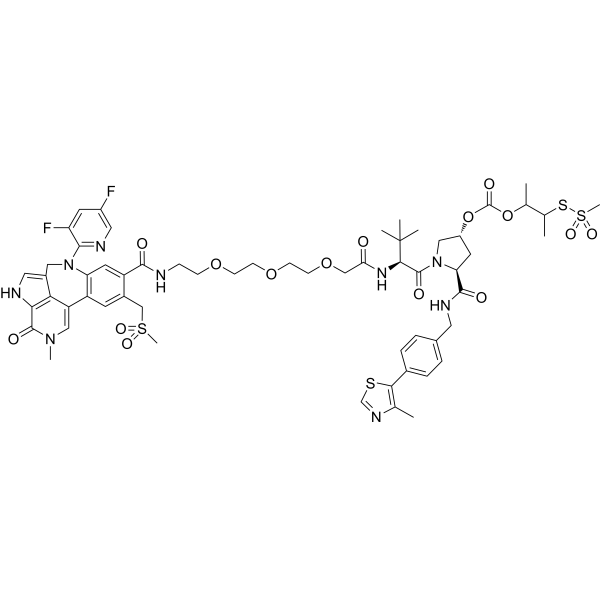
PROTAC BRD4 Degrader-10 (compound 8b) is a PROTAC connected by ligands for von Hippel-Lindau and BRD4. PROTAC BRD4 Degrader-10 can be conjugated with STEAP1 and CLL1 antibodies to degrade the BRD4 protein in PC3 prostate cancer cells, with a DC50 of 1.3 nM and 18 nM, respectively .
|
-
-
- HY-135558
-
-
-
- HY-161650
-
|
|
PROTACs
Epigenetic Reader Domain
|
Cancer
|
|
PROTAC BRD4 Degrader-26 (PROTAC-2) is a photo-regulated PROTAC, which degrades 80% BRD4 at 1 μM by using photocleavable linker. PROTAC BRD4 Degrader-26 will be deactivated by UV light. (Pink: ligand for target protein BRD4 ligand 6 (HY-161651); Black: linker (HY-161653); Blue: E3 ligase ligand Thalidomide 4-fluoride (HY-41547))
|
-

-
- HY-169358
-
|
|
PROTACs
Epigenetic Reader Domain
|
Cancer
|
|
L134 is a potent PROTAC BRD4 degrader with a DC50 value of 7.36 nM. L134 mediates the degradation of BRD4 via the ubiquitin-proteasome system in a DCAF11-dependent manner (Blue: JQ-1 (carboxylic acid) (HY-78695), Black: linker (HY-W004640); Pink: E3 ligase ligand, L321 (HY-169359)) .
|
-

-
- HY-130612
-
|
|
Epigenetic Reader Domain
PROTACs
|
Cancer
|
|
PROTAC BRD2/BRD4 degrader-1 (compound 15) is a potent and selective BET protein BRD4 and BRD2 degrader, connected by ligands for Cereblon and BET. PROTAC BRD2/BRD4 degrader-1 rapidly induces reversible, long-lasting, and unexpectedly selective removal of BRD4 and BRD2 over BRD3. It effectively inhibits solid tumors with low cytotoxic effect. PROTAC BRD2/BRD4 degrader-1 is composed of the BET inhibitor, a linker, and the ligand thalidomide for cereblon (CRBN)/cullin 4A .
|
-
-
- HY-169151
-
-

-
- HY-168546
-
-

-
- HY-161093
-
|
|
PROTACs
|
Cancer
|
|
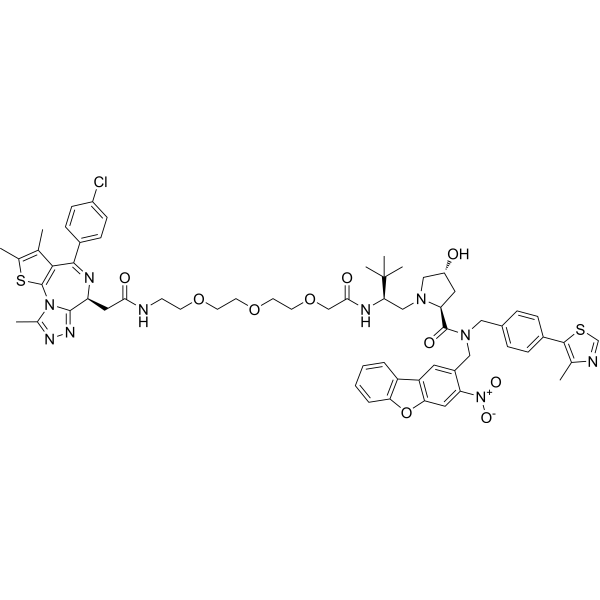
PROTAC BRD4 Degrader-23 (compound 17) is an
effective visible-light-controlled degrader. PROTAC BRD4 Degrader-23 can
inhibit tumor cell proliferation under 405 nm light irradiation .
|
-
-
- HY-172124
-
|
|
PROTACs
Epigenetic Reader Domain
|
Cancer
|
|
PROTAC BRD4 Degrader-29 (compound 7a) is a potent PROTACs degrader of BRD4, with the DC50 of 89.4 nM. PROTAC BRD4 Degrader-29 plays an important role in cancer research (Pink: ligand for target protein (HY-13030); Black: linker (HY-172125); Blue: E3 ligase ligand (HY-103597)) .
|
-

-
- HY-170808
-
|
|
PROTACs
Epigenetic Reader Domain
|
Cancer
|
|
PROTAC BRD4 Degrader-28 (Compound 4) is a PROTAC degrader targeting BRD4. PROTAC BRD4 Degrader-28 is promising for research of cancers (Pink: target protein ligand JQ-1 (carboxylic acid) (HY-78695); Black+ Blue: E3 ubiquitin ligase ligand-Linker conjugate Thalidomide-O-amido-C3-NH2 (HY-115560)) .
|
-

-
- HY-162875
-
|
|
PROTACs
Epigenetic Reader Domain
|
Cancer
|
|
PROTAC BRD4 Degrader-27 (compound 6b) is a PROTAC that selectively targets BRD4 (rather than BRD2/BRD3) and can also inhibit the expression of KLF5 transcription factor and exert anti-cancer activity. PROTAC BRD4 Degrader-27 is composed of E3 ubiquitinase ligand Thalidomide-4-OH (HY-103596) (red part), PROTAC Linker γ-Aminobutyric acid (HY-N0067) (black part) and PROTAC target protein ligand PROTAC BRD4 ligand-3 (HY-162876) (blue part), of which the active control of the target protein ligand is Mivebresib (HY-100015), and the conjugate of E3 ubiquitin ligase ligand + Linker is Pomalidomide 4'-alkylC3-acid (HY-131875) [1] .
|
-

- HY-149948
-
|
|
Epigenetic Reader Domain
PROTACs
|
Cancer
|
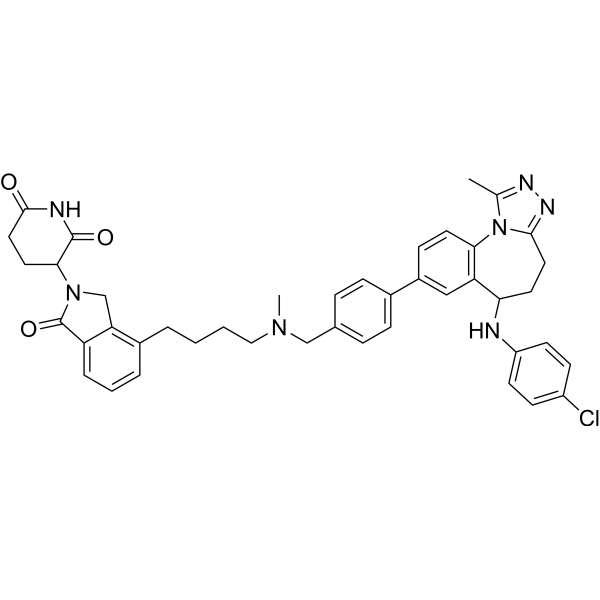
PROTAC BRD3/BRD4-L degrader-2 is a PROTAC molecule and can selectively degrade cellular BRD3 and BRD4-L with Ki values of 16.91 and 2.8 nM, respectively. PROTAC BRD3/BRD4-L degrader-2 also has robust antitumor activity in mouse xenograft models. PROTAC BRD3/BRD4-L degrader-2 can be used for the research of cancer .
|
-
- HY-161651
-
|
|
Epigenetic Reader Domain
|
Cancer
|
|
BRD4 ligand 6 is a BRD4 ligand and can be used for synthesis of BRD4 PROTACs, such as PROTAC BRD4 Degrader-26 (HY-161650) .
|
-

- HY-175610
-
|
|
PROTACs
FLT3
JAK
Epigenetic Reader Domain
|
Cancer
|
|
PROTAC FLT3/JAK2/BRD4 Degrader-1 is a PROTAC degrader that target FLT3, JAK2, and BRD4 with DC50 values of 5.23, 0.678, and 1.17 nM, respectively. PROTAC FLT3/JAK2/BRD4 Degrader-1 exhibits potent antiproliferative activity against MV4;11 cells (IC50 = 0.79 nM) and FLT3 mutant-transformed Ba/F3 cells. PROTAC FLT3/JAK2/BRD4 Degrader-1 induces apoptosis in MV4;11 cells. PROTAC FLT3/JAK2/BRD4 Degrader-1 demonstrates significant anti-tumor efficacy in the MV4;11 xenograft model established in NOD SCID mice. PROTAC FLT3/JAK2/BRD4 Degrader-1 can be used for the study of acute myeloid leukemia (AML). (Pink: FLT3/JAK2/BRD4 ligand (HY-175611), Blue: CRBN Ligand (HY-W087383), Black: Linker, E3 ligase ligand-linker conjugate (HY-W897939)) .
|
-

- HY-176369
-
-

- HY-111978
-
|
|
Epigenetic Reader Domain
|
Cancer
|
|
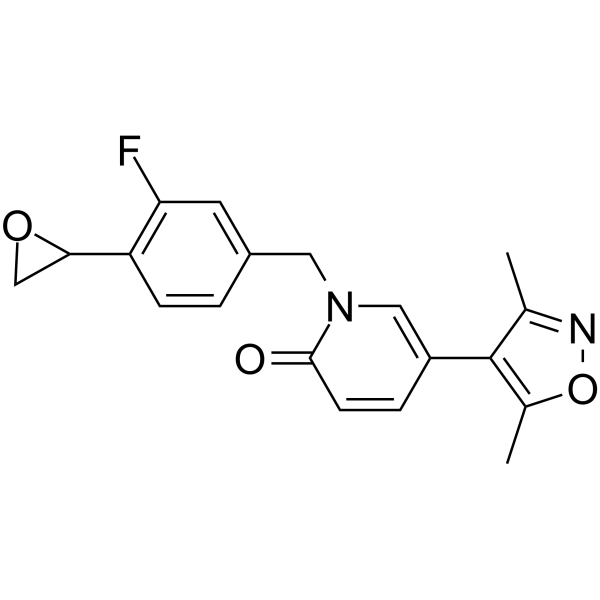
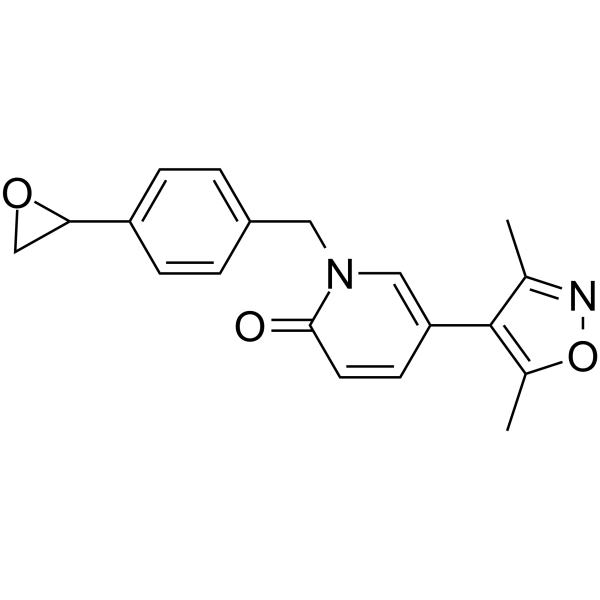
ZEN-3862 is a BET inhibitor with IC50s of 0.16 and 0.13 μM for BRD4(BD1) and BRD4(BD2) , respectively. ZEN-3862 can be used to form PROTACs to induce degradation of BRD4 .
|
-
- HY-111977
-
|
|
Epigenetic Reader Domain
|
Cancer
|
|
ZEN-3219 is a BET inhibitor with IC50s of 0.48, 0.16 and 0.47 μM for BRD4(BD1), BRD4(BD2) and BRD4(BD1BD2), respectively. ZEN-3219 can be used to form PROTACs to induce degradation of BRD4 .
|
-
- HY-111979
-
|
|
Epigenetic Reader Domain
|
Cancer
|
|
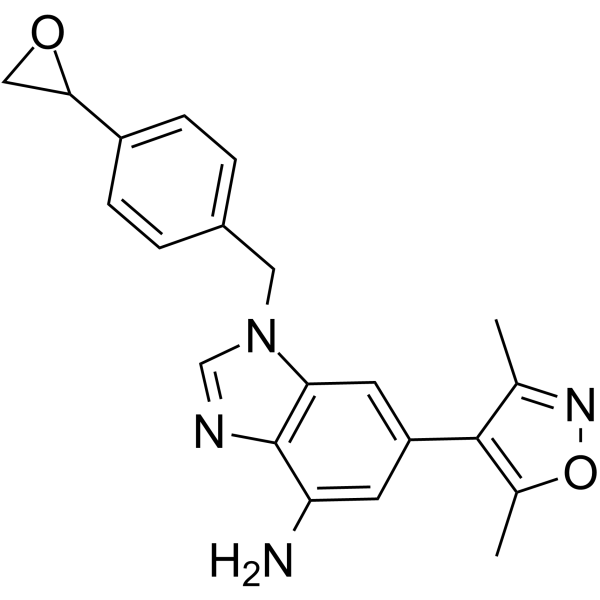
ZEN-3411 is a BET inhibitor with IC50s of 0.05, 0.05 and 0.06 μM for BRD4(BD1), BRD4(BD2) and BRD4(BD1BD2), respectively. ZEN-3411 can be used to form PROTACs to induce degradation of BRD4 .
|
-
- HY-130813
-
-
- HY-182801
-
|
|
PROTACs
Epigenetic Reader Domain
c-Myc
|
Cancer
|
|
PROTAC BRD4 Degrader-46 is a heterobifunctional BRD4 PROTAC degrader. PROTAC BRD4 Degrader-46 binds to both BRD4 and CRBN, thereby triggering ubiquitination and proteasomal degradation of BRD4. PROTAC BRD4 Degrader-46 downregulates the levels of downstream BRD2, BRD3 and MYC. PROTAC BRD4 Degrader-46 can be used in the research of cancers such as multiple myeloma .
|
-

- HY-176368
-
|
|
PROTAC Linkers
|
Cancer
|
|
NH2-PEG-phenol-PEG-COOtBu is a PEG-based PROTAC linker that can be used in the synthesis of PROTACs, such as PROTAC BRD4 Degrader-14 (HY-138637) .
|
-

- HY-181553
-
|
|
PROTACs
Epigenetic Reader Domain
|
Others
|
|
PROTAC BRD4 Degrader-44 is a BRD4 PROTAC degrader with a DC50 of 16 nM. PROTAC BRD4 Degrader-44 is applicable to studies on membrane-permeable PROTACs .
|
-

- HY-180150
-
|
|
Epigenetic Reader Domain
c-Myc
Bcl-2 Family
Apoptosis
|
Cancer
|
|
PROTAC BRD4 Degrader-42 (Compound P6) is a PROTAC-based BRD4 degrader with a DC50 of 1.11 μM. PROTAC BRD4 Degrader-42 promotes the ubiquitination and degradation of BRD4. PROTAC BRD4 Degrader-42 downregulates c-Myc expression and induces Apoptosis by upregulating BAD and BAX protein expression. PROTAC BRD4 Degrader-42 also exhibits anticancer activity against myeloid monocytic leukemia .
|
-

- HY-181553A
-
|
|
PROTACs
Epigenetic Reader Domain
|
Cancer
|
|
PROTAC BRD4 Degrader-45 is a PROTAC degrader targeting BRD4, with a DC50 of 43 nM. PROTAC BRD4 Degrader-45 is applicable to studies on membrane-permeable PROTACs .
|
-

- HY-174222
-
|
|
PROTAC Linkers
|
Cancer
|
|
4-Piperidineethanol-piperidine-Boc is a PROTAC linker can be used in the synthesis of PROTAC BRD4 Degrader-31 (HY-174210) .
|
-

- HY-179734
-
|
|
PROTACs
Epigenetic Reader Domain
Apoptosis
c-Myc
|
Cancer
|
|
PROTAC BRD4 Degrader-41 (Compound A5) is a BRD4 PROTAC degrader with a DC50 of 0.97 nM. PROTAC BRD4 Degrader-41 exhibits potent anti-proliferative activity against various types of cancer cells such as AML, lymphoma, breast cancer, ovarian cancer, and non-small cell lung cancer. PROTAC BRD4 Degrader-41 can induce G0/G1 phase arrest and apoptosis in MV4-11 cells. PROTAC BRD4 Degrader-41 downregulates the transcriptional level of c-Myc .
|
-

- HY-181164
-
|
|
PROTACs
Epigenetic Reader Domain
HIV
|
Infection
|
|
PROTAC BRD4 Degrader-43 is a BRD4 PROTAC degrader. PROTAC BRD4 Degrader-43 recruits the DCAF1-DDB1-Cul4A E3 ligase complex via a Vpr-derived peptide moiety to induce BRD4 ubiquitination and degradation through the ubiquitin-proteasome system. PROTAC BRD4 Degrader-43 exhibits potent HIV latency-reversing activity. PROTAC BRD4 Degrader-43 can be used for the research of HIV-1 latent infection . (Pink: BRD4 ligand (HY-13030); Blue: Cul4A-DDB1-DCAF1 ligand (HY-P11640); Black: conjugate of PEG linker + cell-penetrating peptide (HY-P2483))
|
-

- HY-169355
-
|
|
PROTACs
Epigenetic Reader Domain
|
Cancer
|
|
TrimTAC1 is a TRIM21-based PROTAC targeting BRD4. TrimTAC1 selectively degrads NUP98 FG-mEGFP-BRD4 BD2 nuclear condensates. TrimTAC1 does not degrade soluble mEGFP-BRD4 BD2 in A549 cells. (Pink: target protein ligand (+)-JQ-1 (HY-13030); Blue:E3 ligase ligand Acepromazine-OTs (HY-169356); Black: PROTAC linker (HY-W088456); E3 ligase ligand + linker: HY-169357) .
|
-

- HY-176035
-
|
|
PROTACs
Epigenetic Reader Domain
|
Cancer
|
|
MS479 is a BRD4 PROTAC degrader. MS479 binds BRD4-BD2 and GLP with high affinities (BRD4-BD2: Kd = 200 nM; GLP: Kd = 306 nM). MS479 can reduce the protein level of BRD4 short isoform. MS479 recruits the E3 ligase SPOP by directly binding its substrate GLP as a bridge protein. MS479 can be used to inhibit the proliferation of colorectal cancer cells. (Pink: BRD4 ligand (HY-78695); Blue: GLP ligand (HY-176036); Black: linker (HY-176037); GLP ligand+linker: HY-176038) .
|
-

- HY-174975
-
|
|
PROTACs
Epigenetic Reader Domain
|
Cancer
|
|
JY-21 is a BRD4 PROTAC degrader with a DC50 of 3.797 μM. JY-21 has a potent anticancer activity against MDA-MB-231 cells . Pink: BRD4 ligand (HY-78695); Blue: E3 ligase ligand (HY-174994); Black: linker (HY-151862)
|
-

- HY-175242
-
-

- HY-174812
-
-

- HY-173327
-
|
|
PROTACs
Epigenetic Reader Domain
|
Cancer
|
|
BRD4 degrader-6 is a dimeric BDR4 PROTAC degrader (DC50: < 0.1 μM). BRD4 degrader-6 promotes the ubiquitination and degradation of BDR4 and has anticancer activity .
|
-

- HY-130814
-
|
|
E3 Ligase Ligand-Linker Conjugates
Autophagy
Apoptosis
|
Cancer
|
|
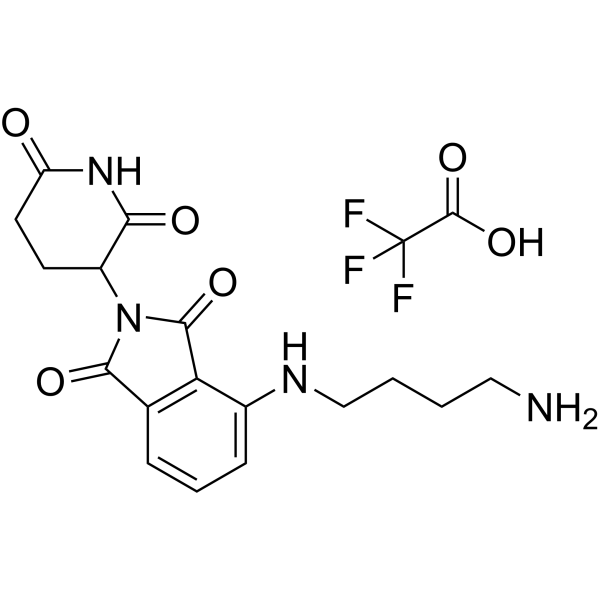
Thalidomide-NH-C4-NH2 TFA (compound 29c) is an E3 ligase ligand-linker conjugate, and incorporates the Thalidomide based cereblon ligand and a linker. Thalidomide-NH-C4-NH2 TFA is used in PROTAC BRD2/BRD4 degrader-1 (HY-130612). PROTAC BRD2/BRD4 degrader-1 is a potent and selective BET protein BRD4 and BRD2 degrader .
|
-
- HY-169152
-
|
|
Ligands for E3 Ligase
|
Others
|
|
DCAF1 ligand 1 is a DCAF1 ligand, which can be used for the synthesis of PROTACs, such as PROTAC BRD4-DCAF1 degrader-1 (HY-169152) .
|
-

- HY-168634
-
|
|
PROTACs
Epigenetic Reader Domain
|
Cancer
|
|
SJ46421 is a (+)-JQ-1 (HY-13030) based KLHDC2-BRD3 PROTAC protein degrader. SJ46421 induces cooperative ternary complexes with KLHDC2 and BRD3BD2, with an IC50 of 7.8 nM. SJ46421 selectively inhibits KLHDC2 substrate ubiquitylation. SJ46421 promotes polyubiquitylation of the BD2 domain from BRD2, BRD3, or BRD4. SJ46421 possesses poor cell permeability. (Pink: ligand for target protein (HY-13030); Black: linker (HY-20797); Blue: E3 ligase ligand (HY-168536)) .
|
-

- HY-175179
-
|
|
Epigenetic Reader Domain
E1/E2/E3 Enzyme
|
Cancer
|
|
LO-3-61, a JQ-1 (HY-13030) analog bearing a truncated fumaramide handle, is a PROTAC (proteolysis-targeting chimeras)-like BRD4 degrader. LO-3-61 degrades both the long and short isoforms of BRD4 CUL4DcAr16-dependently in cells. LO-3-61 shows selectivity for BRD3 and BRD4 degradation in MDA-MB-231 cells .
|
-

- HY-178510
-
|
|
PROTACs
Epigenetic Reader Domain
|
Cancer
|
|
JQ1-S(GlcNAc)Cq is a sugar-coated BRD4 PROTAC degrader. JQ1-S(GlcNAc)Cq can inhibit the formation of the ternary complex between CRBN and BRD4(BD1/BD2). JQ1-S(GlcNAc)Cq can be used for the research of cancer . (Structure Note: Pink: BRD4 ligand (HY-78695); Blue: CRBN ligand (HY-178514); Black: linker (HY-W105727); BRD4 ligand-Linker: (HY-178519))
|
-

- HY-W957152
-
|
|
E3 Ligase Ligand-Linker Conjugates
|
Cancer
|
|
Deoxy-thalidomide-C4-NH2 is a ligand-linker conjugate for the E3 ligase Cereblon (CRBN). Deoxy-thalidomide-C4-NH2 can be used in the synthesis of PROTAC BRD4 Degrader (HY-176449) .
|
-

- HY-181758
-
|
|
PROTACs
Epigenetic Reader Domain
Histone Acetyltransferase
c-Myc
Apoptosis
|
Cancer
|
|
PROTAC CBP/p300/BRD4 Degrader-1 is a dual-target PROTAC degrader with DC50 values of 8.8 pM (BRD4), 6.55 nM (CBP), and 1.05 nM (p300). PROTAC CBP/p300/BRD4 Degrader-1 induces CRBN- and proteasome-dependent degradation of BRD4 and CBP/p300, downregulates c-Myc and acetyl-H3K27, induces apoptosis. PROTAC CBP/p300/BRD4 Degrader-1 acts as an antiproliferative and antitumor agent, induces tumor growth inhibition in xenograft models. PROTAC CBP/p300/BRD4 Degrader-1 can be used for the research of prostate cancer and colorectal cancer .
|
-

- HY-162876
-
|
|
Ligands for Target Protein for PROTAC
|
Cancer
|
|
PROTAC BRD4 ligand-3 is a PROTAC target protein ligand (Ligands for Target Protein for PROTACs). PROTAC BRD4 ligand-3 can be used for synthesis PROTAC BRD4 Degrader-27 (HY-162875) .
|
-

- HY-175611
-
-

- HY-161368
-
-
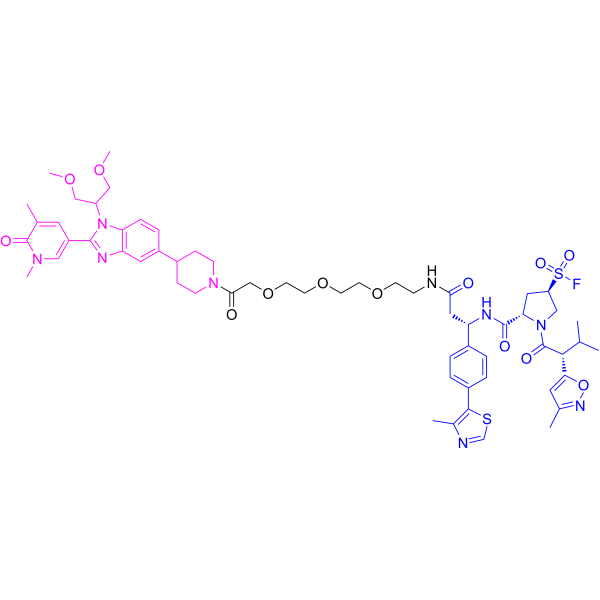
- HY-172126
-
-

- HY-172125
-
|
|
PROTAC Linkers
|
Cancer
|
|
AMPRO-222 is a PROTAC linker that can act as a linker of PROTAC PROTAC BRD4 Degrader-29 (HY-172124) .
|
-

- HY-157561
-
-
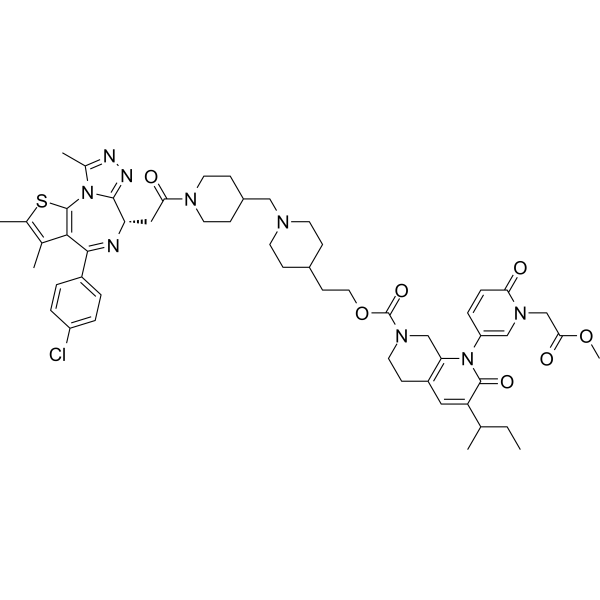
- HY-173433
-
|
|
Epigenetic Reader Domain
|
Cancer
|
|
JV8 is a BRD4 PROTAC degrader. JV8 promotes the ubiquitination and degradation of BRD4 and induces apoptosis. JV8 has antitumor activity in a mouse 4T1 orthotopic tumor model. (Pink: BRD4 ligand (HY-78695); Blue: E3 ligase VHL ligand (HY-173435); Black: Linker (HY-33366); E3 ligase VHL ligand-linker conjugate (HY-173436)) .
|
-

- HY-149328
-
|
|
PROTACs
|
Cancer
|
|
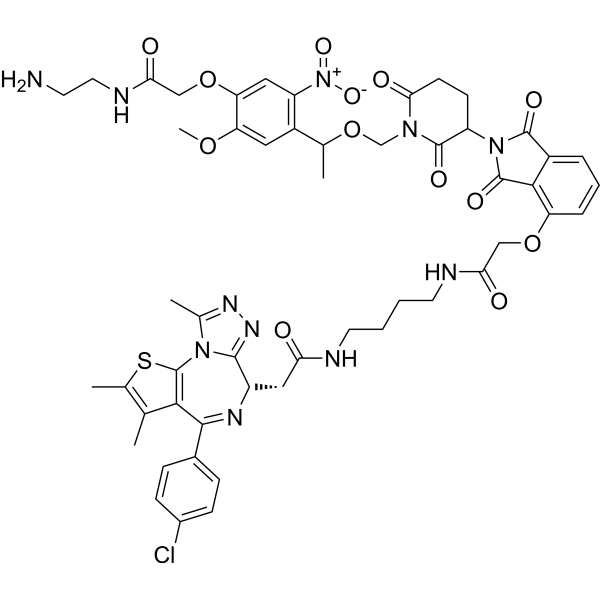
phoBET1 is a photocaged-PROTAC. phoBET1 can achieve BRD4 degradation and effectively suppress tumor growth .
|
-
- HY-180152
-
|
|
Ligands for Target Protein for PROTAC
Epigenetic Reader Domain
|
Cancer
|
|
BRD4 ligand 14 (Compound Y47) is a BRD4 inhibitor. BRD4 ligand 14 exhibits mild anticancer properties against acute myeloid leukemia by inhibiting BRD4. BRD4 ligand 14 can also be used as a ligand for target protein for PROTAC in the development and design of PROTAC BRD4 degraders, such as PROTAC BRD4 Degrader-42 (HY-180150) .
|
-

- HY-179735
-
|
|
Ligands for E3 Ligase
|
Cancer
|
|
CRBN ligand-192 is an E3 ligand that can be used for the synthesis of PROTACs, such as PROTAC BRD4 Degrader-41 (HY-179734). PROTAC BRD4 Degrader-41 is a potent BRD4 PROTAC degrader with anti-cancer activity .
|
-

- HY-107442R
-
|
|
Reference Standards
Epigenetic Reader Domain
Ligands for Target Protein for PROTAC
|
Cancer
|
|
PROTAC BRD4-binding moiety 1 (Standard) is the analytical standard of PROTAC BRD4-binding moiety 1 (HY-107442). This product is intended for research and analytical applications. PROTAC BRD4-binding moiety 1 is a ligand for BRD4. PROTAC BRD4-binding moiety 1 binds to cereblon ligand via a linker to form PROTAC to degrade BRD4 (HY-133136) . PROTAC BRD4-binding moiety 1 is a click chemistry reagent, it contains an Alkyne group and can undergo copper-catalyzed azide-alkyne cycloaddition (CuAAc) with molecules containing Azide groups.
|
-

- HY-180923
-
|
|
PROTACs
Epigenetic Reader Domain
|
Cancer
|
|
AB3145 is a selective Brd4 BromoTag PROTAC degrader (DC50: 120-140 pM). AB3145 promotes the ubiquitination and degradation of Brd4. AB3145 can be used in cancer research .
|
-

- HY-181867
-
|
|
PROTACs
Epigenetic Reader Domain
Apoptosis
|
Cancer
|
|
PROTAC BET Degrader-16 (Compound A10) is a BET PROTAC degrader with a DC50 of 0.31 nM against BRD4, and it preferentially targets BRD4 over other BET family members. PROTAC BET Degrader-16 degrades BRD2, BRD3 and BRD4 via the ubiquitin-proteasome system, a process that requires target binding and recruitment of the CRBN E3 ligase. PROTAC BET Degrader-16 induces cell cycle arrest and promotes apoptosis. PROTAC BET Degrader-16 exerts anti-tumor activity against acute myeloid leukemia .
|
-

- HY-180957
-
|
|
PROTACs
Epigenetic Reader Domain
|
Cancer
|
|
NEP108 is a GID4 E3 ligase-based BRD4 PROTAC degrader, with its DC50 value approximately 3.8 μM. NEP108 has a strong affinity for GID4, with a KD value of 0.22 μM, and the KD value of its trimeric complex is 2.85 μM. NEP108 can be used for cancer research .
|
-

- HY-184151
-
|
|
PROTACs
Epigenetic Reader Domain
|
Cancer
|
|
KBD-1 is a muscle-specific BRD4 PROTAC degrader with human KDs of 27.04 nM and 37.36 µM against BRD4 and KLHL4L, respectively. KBD-1 recruits the muscle-specific E3 ligase KLHL41, mediating Cullin-RING ligase (CRL)-dependent ubiquitination and proteasome degradation of BRD4. KBD-1 can be used for the research of myosarcoma .
|
-

- HY-181759
-
|
|
Ligands for Target Protein for PROTAC
Epigenetic Reader Domain
Histone Acetyltransferase
|
Cancer
|
|
CBP/p300/BRD4 ligand-1 is a small-molecule inhibitor targeting CBP, p300, and BRD4. CBP/p300/BRD4 ligand-1 competitively binds to the functional domains of target proteins without disrupting key interactions. CBP/p300/BRD4 ligand-1 can be used for the construction of dual-target PROTAC degraders (HY-181758) in studies related to prostate cancer and other cancers .
|
-

- HY-183575
-
|
|
PROTACs
Epigenetic Reader Domain
|
Cancer
|
|
JQ1-JX5 is a DCAF16-based BRD4 PROTAC degrader. JQ1-JX5 covalently modifies Cys58 of DCAF16, promotes ternary complex formation with BRD4, enables BRD4 ubiquitination and proteasomal degradation. JQ1-JX5 induces time-dependent degradation of BRD4 long and short isoforms in AGS cells with DC50 of 43.97 and 16.77 nM. JQ1-JX5 can be used for the research of cancer, such as acute myeloid leukemia .
|
-

- HY-181756
-
|
|
PROTACs
Epigenetic Reader Domain
|
Cancer
|
|
LGF308 is a PROTAC degrader of BRD4 that exhibits selective cytotoxicity toward cancer cells over normal cells. LGF308 mediates the formation of a ternary complex between BRD4 and DCAF11 to achieve BRD4 degradation. LGF308 induces tumor cell apoptosis by upregulating apoptosis-related proteins. LGF308 inhibits tumor cell proliferation and migration in breast cancer and triple-negative breast cancer cell lines. LGF308 can be used for the research of breast cancer .
|
-

- HY-W288798
-
|
|
Ligands for E3 Ligase
|
Cancer
|
|
DCAF11 ligand 2 is an E3 ligase ligand that can be used in the recruitment of DCAF11. DCAF11 ligand 2 can be connected to the BRD4 ligand (HY-78695) by a linker to synthesis of PROTAC BRD4 degrader LGF308 (HY-181756) .
|
-

- HY-181854
-
|
|
PROTACs
Epigenetic Reader Domain
Histone Acetyltransferase
c-Myc
Caspase
Apoptosis
|
Cancer
|
|
ZX079 is a dual BRD4 and CBP PROTAC degrader with a BRD4 DC50 value of 0.035 nM and a CBP DC50 value of < 0.02 nM. ZX079 induces dose- and time-dependent degradation of BRD4 and CBP proteins through recruitment of the cereblon E3 ligase. ZX079 induces apoptosis in MV4-11 and MOLM-13 cells, reduces tumor growth in an acute myeloid leukemia xenograft model. ZX079 can be used for the research of acute myeloid leukemia .
|
-

- HY-176450
-
|
|
|
Cancer
|
|
4-Aminobutyl 4-methylbenzenesulfonate is a PROTAC linker. 4-Aminobutyl 4-methylbenzenesulfonate can be used to synthesize PROTACs, such as PROTAC BRD4 Degrader-32 (HY-176449) .
|
-

- HY-163019
-
-
- HY-129937
-
|
|
PROTACs
Epigenetic Reader Domain
|
Cancer
|
|
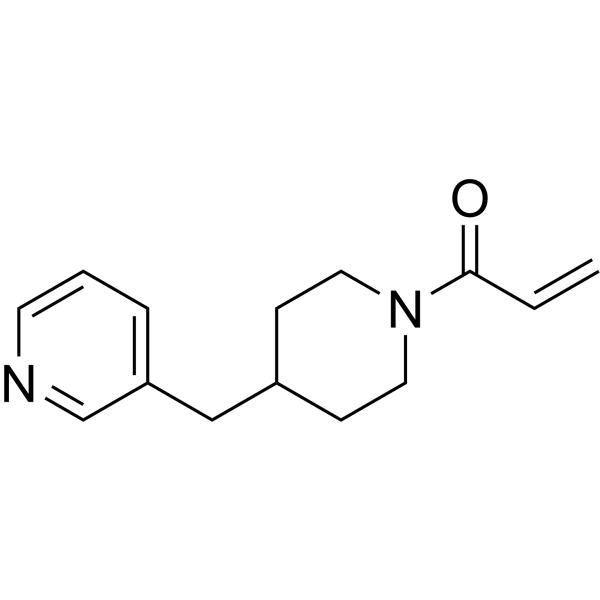
(S)-GNE-987 (compound 4), the GNE-987 (a chimeric BET degrader) hydroxy-proline epimer, abrogates binding to von Hippel-Lindau and does not degrade BRD4 protein. (S)-GNE-987 binds to the BRD4 BD1(IC50=4 nM) and BD2 (3.9 nM) bromodomains and can be used to design PROTAC-Antibody Conjugate (PAC) .
|
-
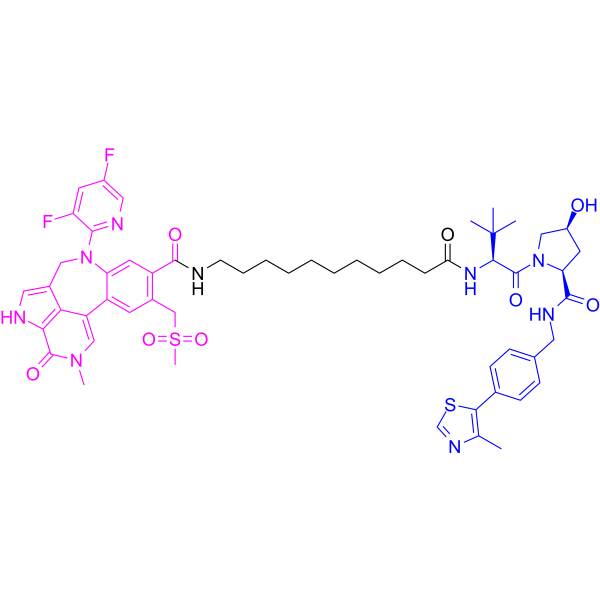
- HY-174218
-
|
|
Ligands for E3 Ligase
|
Cancer
|
|
KLHDC2 ligand 1 is an E3 ligase ligand. KLHDC2 ligand 1 can be used for synthesis of PROTAC BRD4 Degrader-31 (HY-174210) .
|
-

- HY-149878
-
|
|
PROTACs
Epigenetic Reader Domain
|
Cancer
|
|
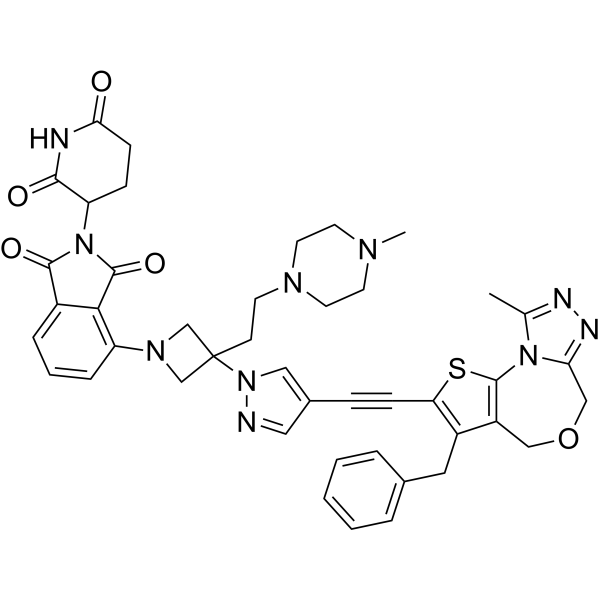
BD-9136 is a potent and highly selective BRD4 PROTAC depressant. BD-9136 has low-nanomolar degradation potencies against BRD4 , and its degradation selectivity for BRD4 is 1000 times that of BRD2 and BRD3 proteins. BD-9136 has antitumor activity .(Pink: Desmethyl-QCA276 (HY-44103); Black: 3-(2-(4-Methylpiperazin-1-yl)ethyl)azetidin-3-ol; Blue: Thalidomide-4-OH (HY-103596))
|
-
- HY-180153
-
|
|
PROTAC Linkers
|
Cancer
|
|
Piperidine-CO-C8-COOH is a PROTAC linker. Piperidine-CO-C8-COOH can be used to synthesize PROTAC BRD4 Degrader-42 (HY-180150) .
|
-

- HY-182577
-
|
|
PROTACs
Epigenetic Reader Domain
|
Cancer
|
|
CFT-743, a PROTAC-based heterobifunctional degrader and BET inhibtor, is a degrader of BRD4 bromodomain 1 (BD1) with a DC50 of 4.3 nM. CFT-743's antitumor activitiy is dependent on BET degradation and can be attenuated by Pomalidomide (HY-10984), which is a CRBN binding molecule. CFT-743 induces ubiquitination of BRD4 BD1. CFT-743 can be used for cancer research .
|
-

- HY-173256
-
|
|
Epigenetic Reader Domain
PROTACs
|
Cancer
|
|
Hyp-dBET1 is a PROTAC degrader targeting BRD4. Hyp-dBET1 has an IC50 value of 3.4 μM in MDA-MB-231 cells. Hyp-dBET1 can be activated by hypoxia and recruit the E3 ubiquitin ligase and degrade BRD4 through ubiquitin-proteasome system. Hyp-dBET1 can be used for anti-tumor study .
|
-

- HY-162240
-
|
|
PROTACs
Epigenetic Reader Domain
|
Cancer
|
|
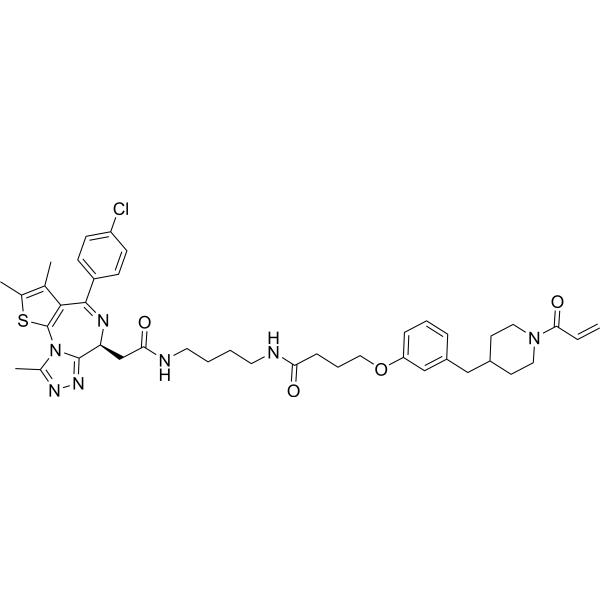
SJH1-51B is a SKP1-recruiting BRD4 PROTAC degrader. SJH1-51B binds to SKP1 in the SKP1-FBXO7-CUL1-RBX1 complex, but shows no or weak binding to monomeric SKP1. SJH1-51B induces proteasome- and SKP1-dependent degradation of BRD4, and this degradation process relies on the neddylation modification of Cullin-RING E3 ligase. SJH1-51B induces proteasome-mediated degradation of the short isoform of BRD4 in non-cancer cells, while it induces proteasome-mediated degradation of both the long and short isoforms of BRD4 in breast cancer cells. SJH1-51B can be used for breast cancer research .
|
-
- HY-138553A
-
-
- HY-179588
-
|
|
PROTACs
Epigenetic Reader Domain
c-Myc
|
Cancer
|
|
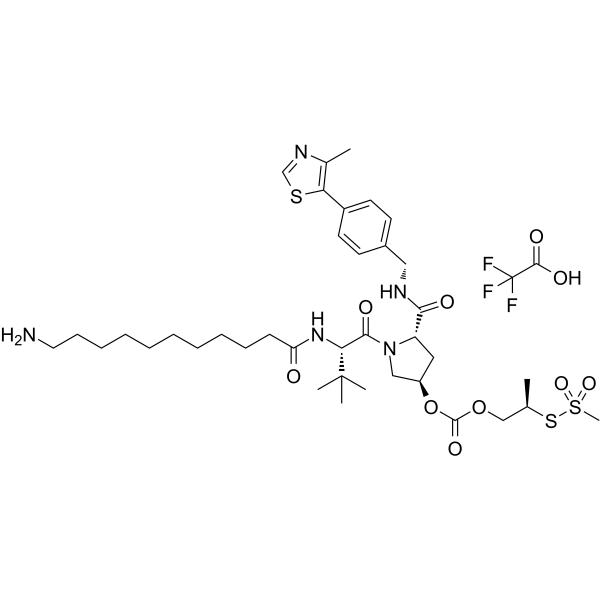
PROTAC BET Degrader-14 is a highly efficient PROTAC targeting BET (bromodomain and extra-terminal domain). PROTAC BET Degrader-14 can degrade all BET (BRD2, BRD3, BRD4) family proteins. PROTAC BET Degrader-14 potently degrades BET proteins in U2OS osteosarcoma cell lines (BRD4 DC50 = 130 nM) and KYSE180 esophageal squamous cell carcinoma cell lines (DC50 = 40 nM). PROTAC BET Degrader-14’s dependence on the ubiquitin-proteasome system. PROTAC BET Degrader-14 decreases levels of BET-regulated gene products c-Myc, RUNX2, and KRT14. PROTAC BET Degrader-14 can be used for the study of osteosarcoma .
|
-

- HY-173257
-
|
|
Epigenetic Reader Domain
PROTACs
|
Cancer
|
|
Cath-L-dBET1 is a PROTAC degrader targeting BRD4. Cath-L-dBET1 has an IC50 value of 2.8 μM in MDA-MB-231 cells. Cath-L-dBET1 can be activated by cathepsin L (Cath-L) and recruit the E3 ubiquitin ligase and degrade BRD4 through ubiquitin-proteasome system. Hyp-dBET1 can be used for anti-tumor study .
|
-

- HY-103633R
-
|
|
Reference Standards
PROTACs
Epigenetic Reader Domain
|
Cancer
|
|
PROTAC BET Degrader-1 (Standard) is the analytical standard of PROTAC BET Degrader-1 (HY-103633). This product is intended for research and analytical applications. PROTAC BET Degrader-1 is a PROTAC connected by ligands for Cereblon and BET, decreasing BRD2, BRD3, and BRD4 protein levels at low concentration.
|
-

- HY-131387
-
|
|
E3 Ligase Ligand-Linker Conjugates
|
Cancer
|
|
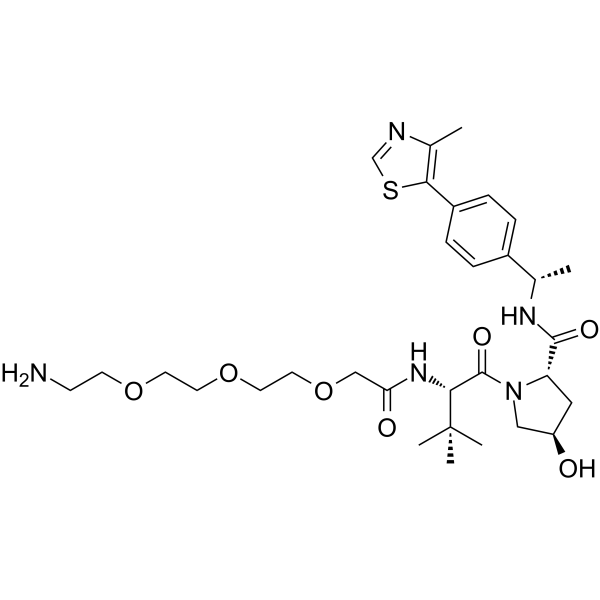
(S,R,S)-AHPC-Me-CO-CH2-PEG3-NH2 is a synthesized E3 ligase ligand-linker conjugate that incorporates the a VHL ligand and a linker. (S,R,S)-AHPC-Me-CO-CH2-PEG3-NH2 can be used in PROTAC BRD4 Degrader-5 (HY-133737) and PROTAC BRD4 Degrader-5-CO-PEG3-N3 (HY-133736) .
|
-
- HY-153519
-
|
|
Epigenetic Reader Domain
|
Cancer
|
|
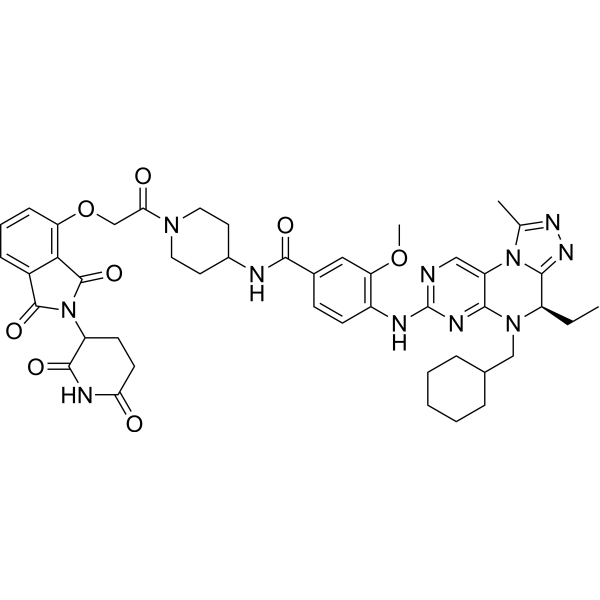
WWL0245 is a potent and seletive BRD4 PROTAC. WWL0245 selectively degrades BRD4 with sub-nanomolar DC50 (<1 nM) than BRD2/3 and PLK1 ( DC50>1 μM). WWL0245 shows excellent selective cytotoxicity in the BETi sensitive cancer cell lines, including AR-positive prostate cancer cell lines. WWL0245 is a promising drug candidate for AR-positive prostate cancer research and a valuable tool compound to study the biological function of BRD4 .
|
-
- HY-159777
-
-

- HY-42429
-
-

- HY-181495
-
|
|
Proteasome Cap Targeting Chimeras
PROTACs
Proteasome
Epigenetic Reader Domain
|
Cancer
|
|
RAJQ14 is a BRD4 PROTAC-like CAP-TAC (Proteasome Cap Targeting Chimeras) degrader. RAJQ14 binds to 19S proteasome cap subunits RPN1, RPN10, RPN13, and USP14 to recruit target proteins to the proteasome for ubiquitination-independent, proteasome-dependent degradation. RAJQ14 can be used for the research of cancer (Pink: BRD4 Ligand (HY-181496); Blue: Proteasome Ligand (HY-128978); Black: Linker).
|
-

- HY-161653
-
|
|
PROTAC Linkers
|
Cancer
|
|
Boc-NH-C3-O-Ph(NO2)-methylester-O-pyrrolidine-2,5-dione is a linker of PROTAC BRD4 Degrader-26 (HY-161650), and can be used for synthesis of PROTACs .
|
-

- HY-W877997
-
|
|
E3 Ligase Ligand-Linker Conjugates
Drug Derivative
|
Cancer
|
|
Pomalidomide 5'-pip-acid is an E3 ligase ligand-linker conjugate derived from the molecular glue Pomalidomide (HY-10984), which can be used to synthesize the dual-target PROTAC degrader PROTAC CBP/p300/BRD4 Degrader-1 (HY-181758) targeting CBP/p300 and BRD4. Pomalidomide 5'-pip-acid shows anti-proliferative activity against cancer cells with an IC50 of 2.73 nM. Pomalidomide 5'-pip-acid induces anti-proliferative effects in cancer cells. Pomalidomide 5'-pip-acid is applicable to research related to prostate cancer and colorectal cancer .
|
-

- HY-182370
-
|
|
PROTACs
Epigenetic Reader Domain
|
Inflammation/Immunology
|
|
TKP-5 is a PROTAC protein degrader targeting BRD4. TKP-5 can binds to BRD2, BRD3, BRD4 and BRDT, with Kd values of 150 nM, 100 nM and 150 nM for the first three proteins respectively. TKP-5 inhibits the production of thymic stromal lymphopoietin and suppresses the expression of IL-33 mRNA. TKP-5 is applicable to studies related to tape-stripping induced skin injury .
|
-

- HY-181189
-
|
|
E3 Ligase Ligand-Linker Conjugates
|
Cancer
|
|
Lenalidomide-C7-NH2 is a synthetic E3 ligase ligand-connector conjugate that can be used for the synthesis of PROTACs, such as GXF-111 (HY-153414). GXF-111 is a BRD3/BRD4-L PROTAC degrader with anti-tumor activity .
|
-

- HY-129917
-
|
|
PROTACs
Epigenetic Reader Domain
|
Cancer
|
|
KB02-JQ1 is a highly selective and PROTAC-based BRD4 degrader (molecular glue), but does not degrade BRD2 or BRD3. KB02-JQ1 promotes BRD4 degradation by covalently modifying DCAF16 (E3 ligase) and can improve the durability of protein degradation in biological systems. JQ1 binds ubiquitin E3 ligase ligand KB02 via a linker to form KB02-JQ1 .
|
-
- HY-176769
-
|
|
E3 Ligase Ligand-Linker Conjugates
|
Others
|
|
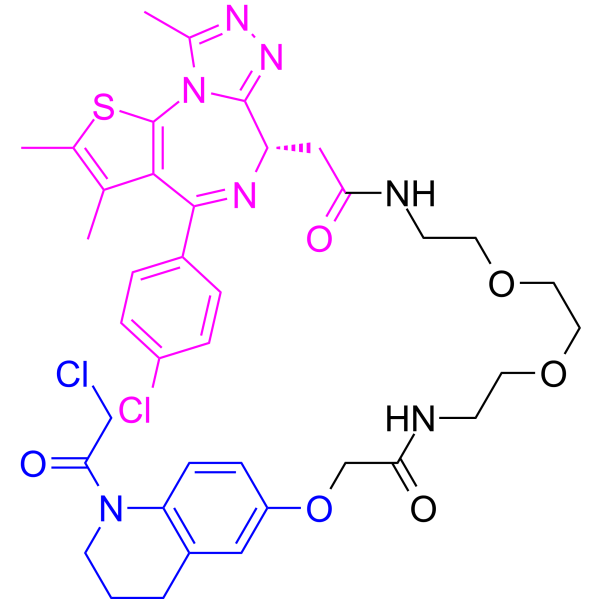
E3 Ligase Ligand-linker Conjugate 196 is an E3 ligase ligand-linker conjugate. E3 Ligase Ligand-linker Conjugate 196 can be used in the synthesis of PROTAC BRD4 Degrader-38 (HY-175240) .
|
-

- HY-132941
-
|
|
PROTACs
Epigenetic Reader Domain
c-Myc
Apoptosis
|
Cancer
|
|
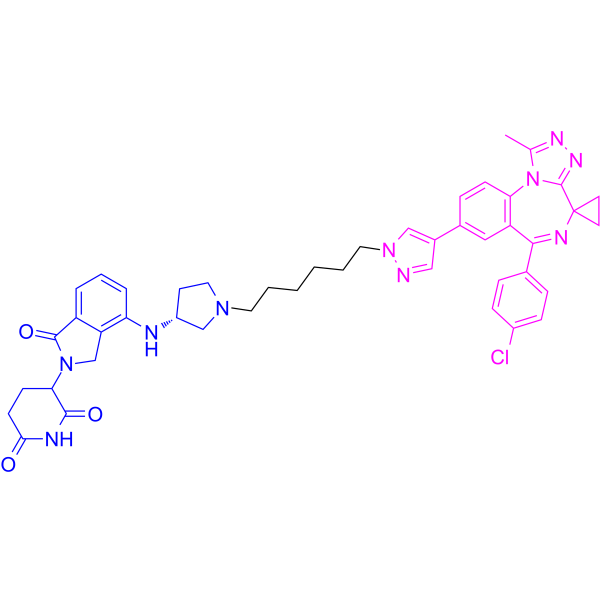
CFT-2718 is a selective CRBN-dependent BRD4 PROTAC degrader. CFT-2718 mediates rapid, selective BRD4 degradation, reduces total and phosphorylated Ser2 RPB1 levels, and reduces MYC protein levels. CFT-2718 can inhibit cancer cells proliferation and induce apoptosis. CFT-2718 reduces growth of lung cancer and pancreatic patient-derived xenograft models. CFT-2718 can be used for the research of cancer, such as small-cell lung cancer and pancreatic cancer .
|
-
- HY-78695
-
-
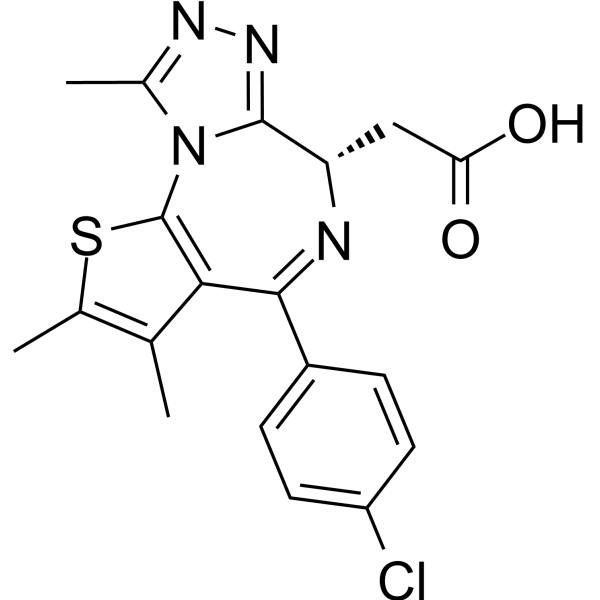
- HY-145264
-
|
|
Epigenetic Reader Domain
PROTACs
|
Cancer
|
|
OARV-771 is a VHL-based BET degrader (PROTAC) with improved cell permeability. OARV-771 shows DC50s of 6, 1, and 4 nM for Brd4, Brd2 and Brd3, respectively .
|
-
- HY-147046
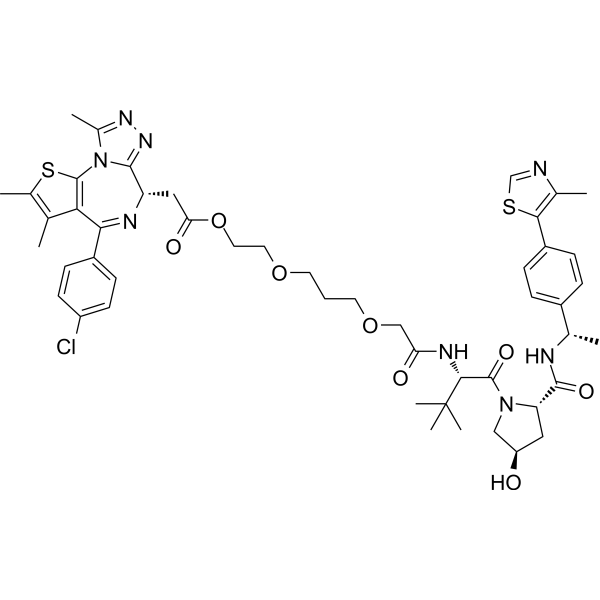
-
-
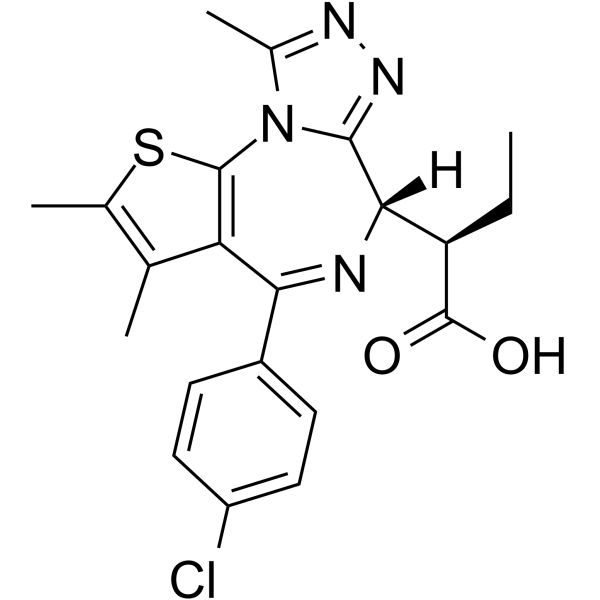
- HY-203082
-
|
|
Ligands for E3 Ligase
|
Others
|
|
4-[(1E)-2-Nitroethenyl]benzoic acid is an E3 ligase ligand. 4-[(1E)-2-Nitroethenyl]benzoic acid can be used for synthesis of PROTAC BRD4 Degrader-38 (HY-175240) .
|
-
![4-[(1E)-2-Nitroethenyl]benzoic acid](//file.medchemexpress.com/product_pic/hy-203082.gif)
- HY-174208
-
|
|
Ligands for E3 Ligase
|
Others
|
|
KLHDC2-IN-1 (Compound 6) is a ligand targeting the ubiquitin E3 ligase KLHDC2 (Kd: 160 nM). KLHDC2-IN-1 enables the synthesis of a PROTAC that can effectively degrade BRD4 in cells .
|
-

- HY-132991
-
ML 2-14
1 Publications Verification
|
PROTACs
Epigenetic Reader Domain
|
Cancer
|
|
ML 2-14 is a PROTAC targeting BRD4 with a C4 alkyl linker. ML 2-14 consists of the E3 ligase ligand EN219 (HY-115715) (bule part), the target protein ligand JQ-1 (HY-13030) (red part), and the PROTAC linker (balck part). ML 2-14 can effectively degrade BRD4 in 231MFP breast cancer cells, and this effect can be reversed by the proteasome inhibitor Bortezomib (HY-10227) and the E1 activase inhibitor TAK-243 (HY-100487) .
|
-
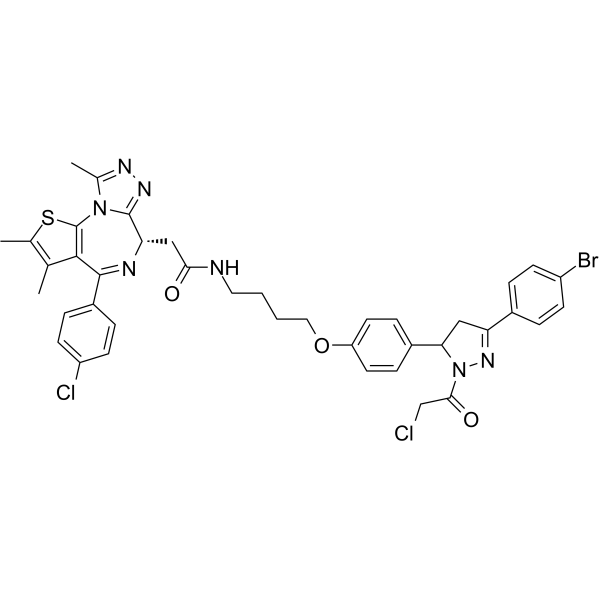
- HY-180909
-
-

- HY-175241
-
-

- HY-173255
-
|
|
PROTACs
Epigenetic Reader Domain
|
Cancer
|
|
DAO-dBET1 is a Dual-Action-Only PROTAC containing a PROTAC degrader, dBET1 (HY-101838). DAO-dBET1 is a potent BRD4 degrader with a DC50 value of 277 nM in the presence of CoCl2. DAO-dBET1 inhibits hypoxia and Cath-L trigger with an IC50 value of 281 nM .
|
-

- HY-182979
-
|
|
HSP
|
Cancer
|
|
HSP70 ligand 2 is an HSP70 ligand and serves as a ligand for PROTAC target proteins. HSP70 ligand 2 can be used to synthesize Hsp70TAC BRD4 Degrader-1 (HY-182958) and Hsp70TAC PD-1 Degrader-2 (HY-182959) .
|
-

- HY-122826
-
|
|
PROTACs
Epigenetic Reader Domain
|
Cancer
|
|
ZXH-3-26 is a PROTAC connected by ligands for Cereblon and BRD4 with a DC50/5h of 5 nM. The DC50/5h refers to half-maximal degradation after 5 hours of treatment of ~ 5 nM .
|
-
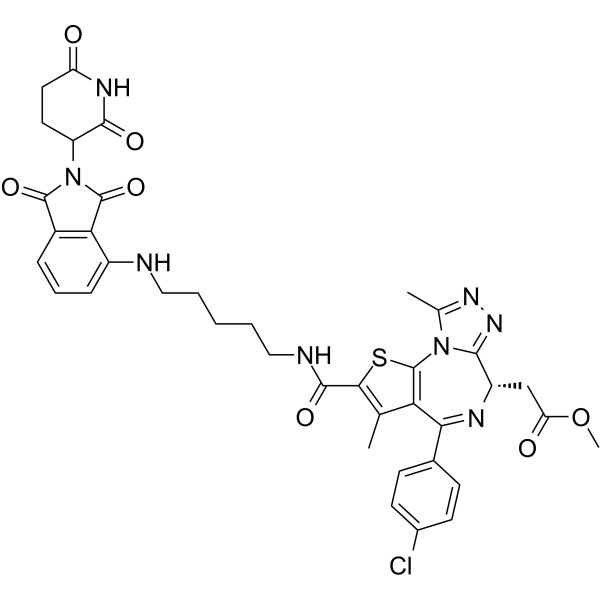
- HY-112429
-
HJB97
2 Publications Verification
|
Ligands for Target Protein for PROTAC
Epigenetic Reader Domain
|
Cancer
|
|
HJB97 is a high-affinity BET inhibitor with Ki values of 0.9 nM (BRD2 BD1), 0.27 nM (BRD2 BD2), 0.18 nM (BRD3 BD1), 0.21 nM (BRD3 BD2), 0.5 nM (BRD4 BD1), and 1.0 nM (BRD4 BD2) . HJB97 can serve as a ligand for target protein (Ligands for Target Protein for PROTAC) for the development of PROTAC BET degraders with antitumor activity . HJB97 can be used for the synthesis of BETd-260 (HY-101519).
|
-
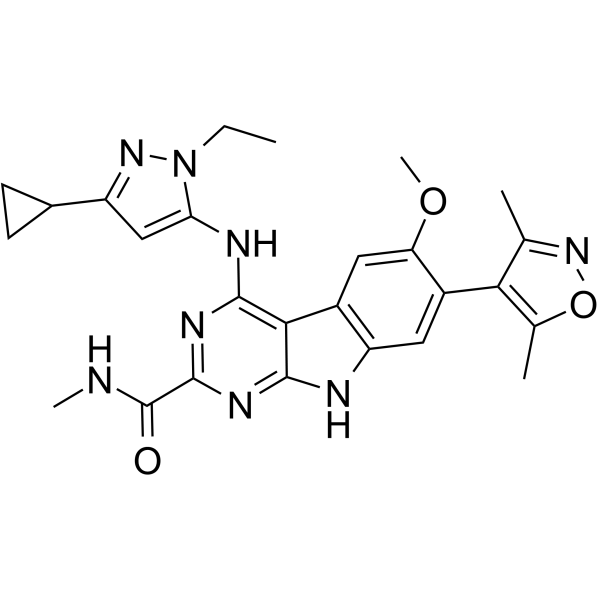
- HY-153414
-
|
|
Epigenetic Reader Domain
PROTACs
|
Cancer
|
|
GXF-111, a PROTAC molecule, can promote selective degradation of cellular BRD3 and BRD4-L. GXF-111 has binding affinities for BRD3 BD1 and BRD3 BD2 with Ki values of 11.97 nM and 2.35 nM, respectively. GXF-111 can be used for the research of cancer .
|
-
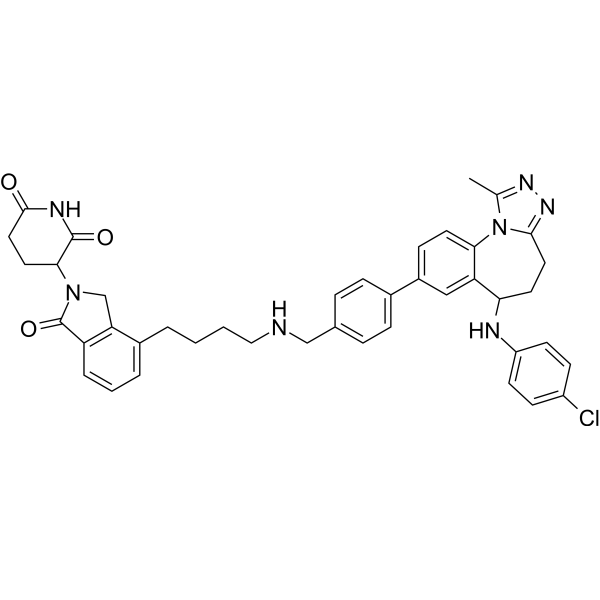
- HY-175354
-
|
|
PROTACs
Epigenetic Reader Domain
|
Cancer
|
|
PROTAC BET Degrader-13 (Compound 34) is a TRIM21-based PROTAC (TRIMTAC) degrader targeting BET. PROTAC BET Degrader-13 significantly degrades PML-eGFP-BRD4 fusion protein with a near-complete loss of EGFP+ nuclear puncta with an EC50 of 1.4 μM . Pink: BET ligand (HY-13030); Blue: E3 ligase ligand (HY-W1125585); Black: linker
|
-

- HY-174220
-
|
|
E3 Ligase Ligand-Linker Conjugates
|
Cancer
|
|
Boc-Dipiperidine-KLHDC2 ligand 1 is an E3 ligase ligand-linker conjugate that incorporates a KLHDC2 ligand (HY-174218). Boc-Dipiperidine-KLHDC2 ligand 1 can be used for synthesis of PROTAC BRD4 Degrader-31 (HY-174210) .
|
-

- HY-174813
-
|
|
E3 Ligase Ligand-Linker Conjugates
|
Others
|
|
Pomalidomide-PEG3-Cys is an E3 ligase ligand-linker conjugate that incorporates a CRBN ligand Pomalidomide (HY-10984) and 3-unit PEG linker. Pomalidomide-PEG3-Cys can be used for synthesis of PROTAC BRD4 Degrader-33 (HY-174811) .
|
-

- HY-174996
-
|
|
PROTACs
Epigenetic Reader Domain
Apoptosis
|
Cancer
|
|
NEP162 is a BRD4 PROTAC degrader with DC50s of 1.2 and 1.6 μM in SW480 and U2OS cells. NEP162 exhibits antiproliferative activity, effectively inhibits tumor growth and induces apoptosis. NEP162 can be used for the study of osteosarcoma, colorectal cancer and non-small cell lung cancer, etc. (Pink: BRD4 ligand : (HY-78695), Blue: E3 ligase Ligand (HY-D2259), BLACK: Linker, E3 ligase ligand-linker conjugate (HY-174997)) .
|
-

- HY-156774
-
|
|
PROTACs
Epigenetic Reader Domain
|
Others
|
|
CCW 28-3 is a PROTAC-based BRD4 degrader in a proteasome- and RNF4-dependent manner (Pink: JQ-1 (carboxylic acid) (HY-78695); Black: linker (HY-170384); Blue: RNF4 ligand CCW16 (HY-143346)) .
|
-

- HY-44103
-
|
PROTAC BRD4-binding moiety 4
|
Ligands for Target Protein for PROTAC
|
Cancer
|
|
Desmethyl-QCA276 (PROTAC BRD4-binding moiety 4), the QCA276-based moiety, binds to cereblon ligand via a linker to form PROTAC to degrade BET. QCA276 is a BET inhibitor with an IC50 of 10 nM, and with a Ki of 2.3 nM . Desmethyl-QCA276 is a click chemistry reagent, it contains an Alkyne group and can undergo copper-catalyzed azide-alkyne cycloaddition (CuAAc) with molecules containing Azide groups.
|
-
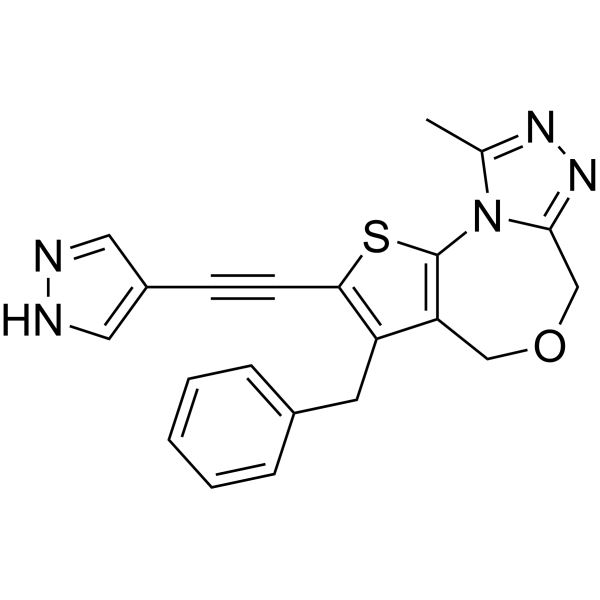
- HY-181735
-
|
|
Ligands for Target Protein for PROTAC
Epigenetic Reader Domain
|
Cancer
|
|
BET-IN-30 (Compound 11d) is a BTE family protein inhibitor, which can act as a BRD2/BRD3/BRD4 target protein ligand and be used for the synthesis of PROTACs, such as PROTAC BET Degrader-15 (HY-181729). BET-IN-30 exhibits potent anti-proliferative activity against acute myeloid leukemia (AML) cells such as MV4-11. BET-IN-30 can be used for the study of AML .
|
-

- HY-158764
-
|
|
PROTACs
Epigenetic Reader Domain
|
Cancer
|
|
PROTAC BET Degrader-12 (Compound 8b) is a PROTAC degrader for bromodomain and extra-terminal domain (BET)-containing proteins, which degrades the BRD3 and BRD4 in a DCAF11-dependent manner. PROTAC BET Degrader-12 inhibits cell viability of KBM7 with a DC50 of 305.2 nM. (Pink: ligand for target protein (+)-JQ-1 (HY-13030); Black: linker (HY-159077); Blue: ligand for E3 ligase (HY-159076))
|
-

- HY-157491
-
-
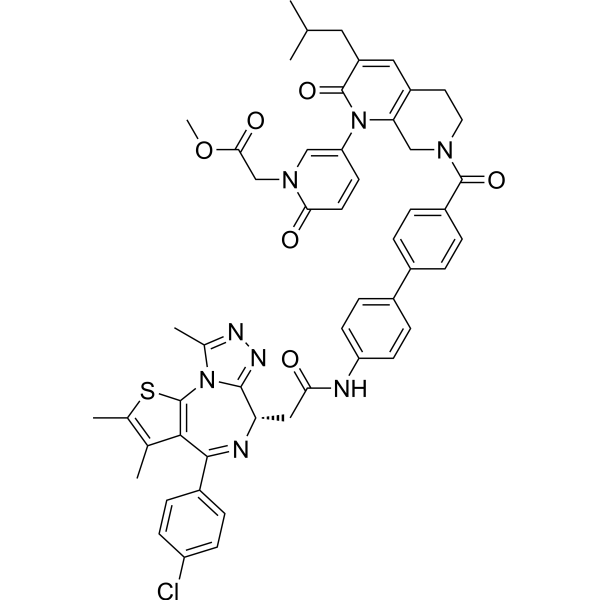
- HY-W879795
-
|
|
Ligands for E3 Ligase
|
Others
|
|
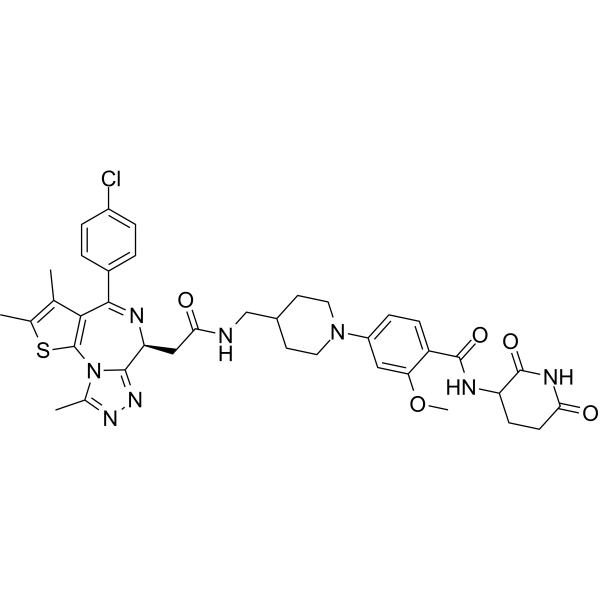
NH2-MeO-Ph-amide-(2,6-Dioxo-3-Pip) is a CRBN ligand. NH2-MeO-Ph-amide-(2,6-Dioxo-3-Pip) can be used to synthesize PROTAC BRD4 Degrader-22 (HY-155393) .
|
-

- HY-179589
-
|
|
Target Protein Ligand-Linker Conjugates
Epigenetic Reader Domain
|
Cancer
|
|
JQ-1 (carboxylic acid)-amine-PEG8-cyanogen is a Target Protein Ligand-Linker Conjugate that incorporates a ligand for BRD4 (HY-78695) and a PROTAC linker, which recruits E3 ligases. JQ-1 (carboxylic acid)-amine-PEG8-cyanogen can be used for the synthesis of PROTAC BET Degrader-14 (HY-179588 ) .
|
-

- HY-180889
-
|
|
PROTACs
Epigenetic Reader Domain
|
Neurological Disease
Inflammation/Immunology
|
|
PROTAC BRD3 degrader-1 (compound D072) is a potent and selective PROTAC BRD3 degrader. PROTAC BRD3 degrader-1 selectively degrades BRD3 in mice, leading to the downregulation of H3K18ac without affecting BRD2 or BRD4. PROTAC BRD3 degrader-1 reduces intraocular inflammation in the experimental autoimmune uveitis (EAU) mouse mode and inhibits proinflammatory microglia in both uveitis retina and LPS (HY-D1056) treated mouse microglia cell line BV2. PROTAC BRD3 degrader-1 can be used for uveitis research .
|
-

- HY-P11640
-
|
|
Ligands for E3 Ligase
HIV
|
Infection
|
|
Vpr (1-14) is a viral protein R and acts as an accessory protein of HIV-1. Vpr (1-14) can binds to Cul4A-DDB1-DCAF1 E3 ligase complex and can be used as an E3 ligase-binding component in PROTACs. Vpr (1-14) can be used to synthesize PROTAC BRD4 Degrader-43 (HY-181164) .
|
-

- HY-181729
-
|
|
PROTACs
Epigenetic Reader Domain
Apoptosis
c-Myc
CDK
PARP
|
Cancer
|
|
PROTAC BET Degrader-15 is a BET PROTAC degrader with DC50 values of <0.10 nM, <0.01 nM, and <0.01 nM against BRD2, BRD3, and BRD4, respectively. PROTAC BET Degrader-15 induces significant G2/M phase cell cycle arrest and triggers apoptosis. PROTAC BET Degrader-15 causes marked downregulation of c-Myc, accompanied by upregulation of the cell cycle inhibitory protein p21, downregulation of CDK6, and an increase in the apoptosis marker cleaved PARP. PROTAC BET Degrader-15 is applicable to the research of hematologic malignancies and lung cancer .
|
-

- HY-170900
-
|
|
PROTACs
Epigenetic Reader Domain
c-Myc
MDM-2/p53
|
Neurological Disease
Cancer
|
|
SJ44236 is a BET PROTAC degrader with activity against BRD2, BRD3 and BRD4 (DC50 = 127 pM). SJ44236 induces ubiquitination and proteasomal degradation by forming a ternary complex with BET proteins and CRBN-DDB1. SJ44236 downregulates c-Myc, upregulates p53 and reduces cancer cell viability. SJ44236 can be used for the research of leukemia and medulloblastoma .
|
-

- HY-181869
-
|
|
PROTACs
Epigenetic Reader Domain
Apoptosis
|
Cancer
|
PROTAC BET Degrader-17 is a potent BET protein PROTAC degrader. By recruiting the VHL E3 ligase, PROTAC BET Degrader-17 specifically degrades BRD2, BRD3 (DC50=0.09 nM) and BRD4 (IC50=4.3 nM). PROTAC BET Degrader-17 exhibits strong anti-tumor activity in acute myeloid leukemia (AML) studies; it not only inhibits cancer cell proliferation, induces cell cycle arrest and apoptosis, but also effectively suppresses tumor growth in xenograft mouse models. PROTAC BET Degrader-17 can be used to explore targeted therapies for acute myeloid leukemia .
|
-

- HY-174997
-
|
|
E3 Ligase Ligand-Linker Conjugates
|
Cancer
|
|
PFI-7-O-C4-piperazin is a E3 ligase ligand-linker conjugate that can be used for synthesis of PROTACs, such as NEP162 (HY-174996). The E3 ligase ligand (PFI-7) of NEP162 is a highly selective antagonist of GID4 (KD = 0.22 μM). NEP162 is a BRD4 PROTAC degrader with anti-tumor activity [1] .
|
-

- HY-161652
-
|
|
E3 Ligase Ligand-Linker Conjugates
|
Cancer
|
|
Thalidomide-NH-C3-O-Ph(NO2)-methylester-O-pyrrolidine-2,5-dione is the conjugate of a linker and a ligand for E3 ligase. Thalidomide-NH-C3-O-Ph(NO2)-methylester-O-pyrrolidine-2,5-dione can be used for synthesis of PROTAC BRD4 Degrader-26 (HY-161650) .
|
-

- HY-123941
-
|
dTAG-7
|
PROTACs
FKBP
Epigenetic Reader Domain
|
Others
|
|
FKBP12 PROTAC dTAG-7 (dTAG-7) is a heterobifunctional PROTAC degrader. FKBP12 PROTAC dTAG-7 targets FKBP12 F36V and BET BRD4. FKBP12 PROTAC dTAG-7 enables rapid and selective degradation of target proteins, and is suitable for cellular and in vivo studies to analyze protein functions and validate targets . (Pink: target protein ligand (HY-114420); Black: linker (HY-128844); Blue: CRBN Ligand (HY-103597); CRBN Ligand+linker: (HY-W722323))
|
-
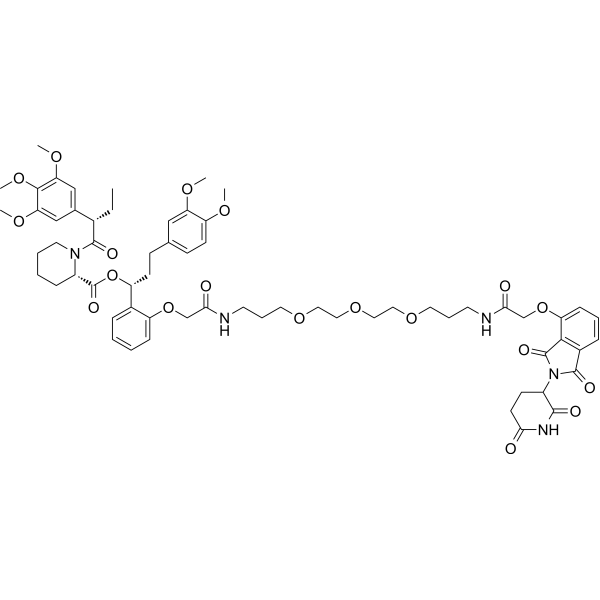
- HY-168635
-
|
|
PROTACs
Epigenetic Reader Domain
|
Cancer
|
|
SJ46420, a SJ46421 (HY-168634) pro-drug variant, is a potent and selective BRD3 PROTAC degrader. SJ46420 degrads BRD3 in a KLHDC2-dependent manner, thereby partially reducing the levels of BRD2 or BRD4 (Pink: ligand for target protein (HY-13030); Black: linker (HY-20797); Blue: E3 ligase ligand (HY-159973)) .
|
-

- HY-138634
-
|
|
Drug-Linker Conjugates for ADC
PROTACs
Epigenetic Reader Domain
|
Cancer
|
|
GNE-987 GSH linker-2 is a drug-linker conjugates for ADC. GNE-987 GSH linker-2 is a conjugation of PROTAC GNE-987 (HY-129937A) and ADC linker GSH linker-2 (HY-182740), and can be used to prepare antibody-drug conjugates (ADC) for BRD4 degradation. GNE-987 GSH linker-2 can be used for the research of cancer .
|
-
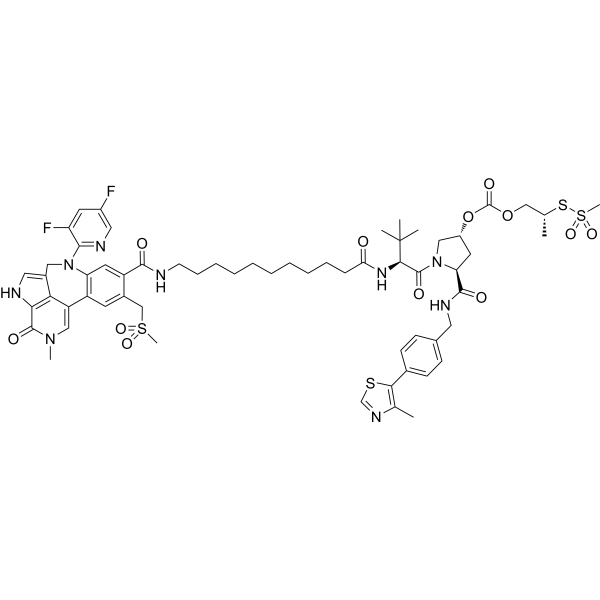
- HY-158331
-
|
|
PROTACs
Epigenetic Reader Domain
Apoptosis
|
Cancer
|
|
Gal-ARV-771, PROTAC prodrug, is a gal modified ARV-771 (HY-100972). Gal-ARV-771 can be activated in SA-β-Gal-expressed cancer senescent cells to release ARV-771. Gal-ARV-771 induces selective degradation of BRD4 protein by the ubiquitin-proteasome pathway in senescent cells. Gal-ARV-771 promotes apoptosis of senescent cancer cells .
|
-

- HY-181868
-
|
|
E3 Ligase Ligand-Linker Conjugates
|
Cancer
|
Lenalidomide-CO-C7-NH2 is a CRBN-dependent intermediate of BET PROTAC degrader. Consisting of the E3 ubiquitin ligase ligand Lenalidomide (HY-A0003) conjugated with a PROTAC linker, Lenalidomide-CO-C7-NH2 induces the protein degradation. By depleting BRD4, PROTAC BET Degrader-16 effectively inhibits cancer cell proliferation, induces cell cycle arrest and promotes apoptosis, thereby exhibiting significant anti-tumor activity in xenograft models. Lenalidomide-CO-C7-NH2 serves as an important tool molecule for the study of acute myeloid leukemia .
|
-

- HY-130984
-
|
|
PROTAC Linkers
|
Cancer
|
|
Azido-PEG1-CH2COO-Cl (compound 43a) is an alkyl/ether-based PROTAC linker. Azido-PEG1-CH2COO-Cl can be used in the synthesis of PROTAC BRD4 Degrader-1 (HY-133131) . Azido-PEG1-CH2COO-Cl is a click chemistry reagent, it contains an Azide group and can undergo copper-catalyzed azide-alkyne cycloaddition reaction (CuAAc) with molecules containing Alkyne groups. It can also undergo strain-promoted alkyne-azide cycloaddition (SPAAC) reactions with molecules containing DBCO or BCN groups.
|
-
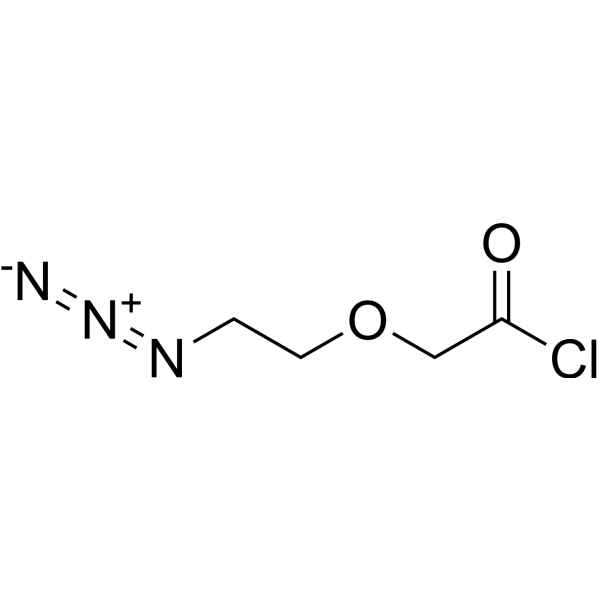
- HY-133139
-
|
|
E3 Ligase Ligand-Linker Conjugates
|
Cancer
|
|
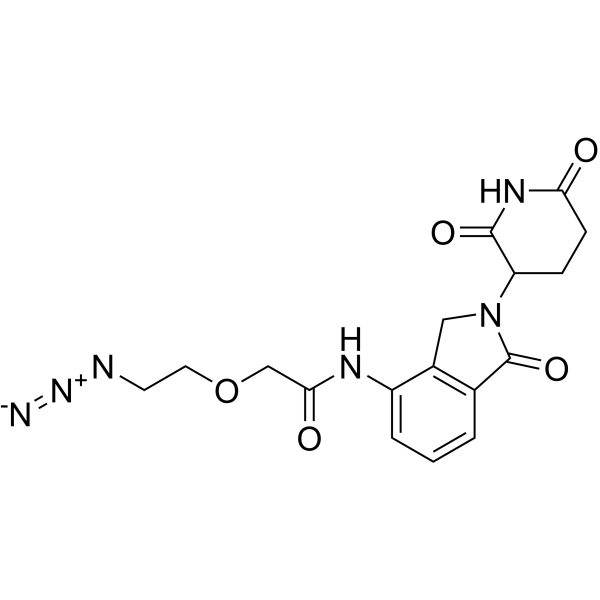
Lenalidomide-PEG1-azide is a E3 ligase lgand-linker conjugate. Lenalidomide-PEG1-azide incorporates the Lenalidomide based cereblon ligand and a linker.?Lenalidomide-PEG1-azide?can be used to design a PROTAC BRD4 Degrader-2 (HY-133136) . Lenalidomide-PEG1-azide is a click chemistry reagent, it contains an Azide group and can undergo copper-catalyzed azide-alkyne cycloaddition reaction (CuAAc) with molecules containing Alkyne groups. It can also undergo strain-promoted alkyne-azide cycloaddition (SPAAC) reactions with molecules containing DBCO or BCN groups.
|
-
- HY-170390
-
|
|
PROTACs
Epigenetic Reader Domain
|
Cancer
|
|
AB3067 is a PROTAC degrader for BET protein, that recruits two different E3 ligase Cereblon and VHL with good affinity (IC50=559 nM for VHL in live HEK293; IC50=190 nM for CRBN in live HEK293), and degrades BRD2, BRD3, BRD4 and CRBN with DC50 of 2.1~2.3, 1.6, 15 and 75 nM, respectively. AB3067 inhibits the proliferation of RKO cell with an EC50 of 111 nM . (Pink: ligand for target protein (HY-131633A); Black: linker (HY-170391); Blue: ligand for E3 ligase VHL (HY-112078) and CRBN(HY-W998346))
|
-

- HY-108369R
-
|
|
Reference Standards
PROTAC Linkers
|
Cancer
|
|
Azido-PEG1-CH2CO2H (Standard) is the analytical standard of Azido-PEG1-CH2CO2H (HY-108369). This product is intended for research and analytical applications. Azido-PEG1-CH2CO2H is a PROTAC linker, which refers to the alkyl/ether composition. Azido-PEG1-CH2CO2H can be used in the synthesis of PROTAC BRD4 Degrader-1 . Azido-PEG1-CH2CO2H is a click chemistry reagent, it contains an Azide group and can undergo copper-catalyzed azide-alkyne cycloaddition reaction (CuAAc) with molecules containing Alkyne groups. It can also undergo strain-promoted alkyne-azide cycloaddition (SPAAC) reactions with molecules containing DBCO or BCN groups.
|
-

- HY-145226
-
|
|
PROTACs
Epigenetic Reader Domain
|
Cancer
|
|
XY-06-007 is a selective and potent bump-and-hole (B&H)-PROTAC BRD4BD1L94V degrader. XY-06-007 shows a DC50, 6 h of 10 nM against BRD4BD1L94V with no degradation of off-targets. XY-06-007 demonstrates suitable pharmacokinetics for in vivo studies .
|
-
- HY-123844
-
dBET57
4 Publications Verification
|
PROTACs
Epigenetic Reader Domain
Apoptosis
|
Cancer
|
|
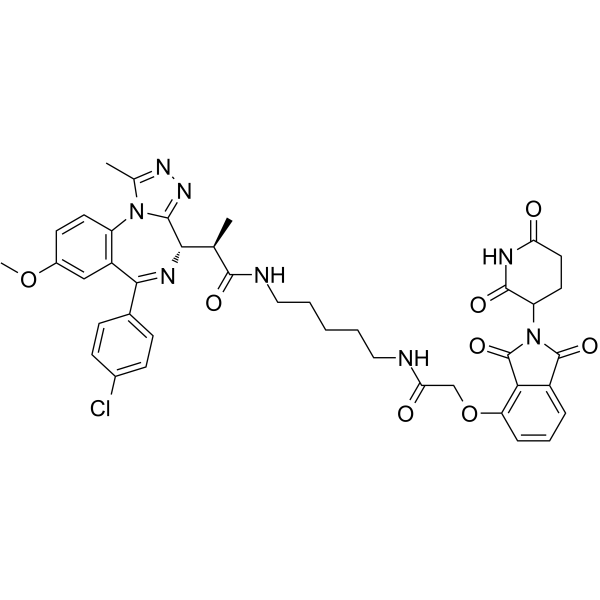
dBET57 is an effective and selective BRD4BD1 degrader based on PROTAC technology, with the ability to induce cell apoptosis and anti-tumor activity. dBET57 mediates the recruitment of the E3 ubiquitin ligase CRL4 Cereblon, showing a DC50/5h value of 500 nM for BRD4BD1 .
|
-
- HY-176724
-
|
|
Epigenetic Reader Domain
Reactive Oxygen Species (ROS)
HIF/HIF Prolyl-Hydroxylase
|
Cancer
|
|
ZnPc-O3-JQ1 is a light-triggered BRD4 degrader. Under illumination, ZnPc-O3-JQ1 generates reactive oxygen species (ROS) that degrades BRD4. The degradation of BRD4 results in downregulation of HIF-1α, thereby counteracting the photodynamic therapy (PDT) resistance induced by tumor hypoxia. ZnPc-O3-JQ1 exhibits both Type I and Type II PDT mechanisms. The structure of ZnPc-O3-JQ1 consists of three parts: BRD4 ligand (HY-78695); Linker (HY-W040165); Photosensitizer (HY-176725) .
|
-

- HY-180960
-
|
|
PROTACs
SWI/SNF Complex
|
Cancer
|
|
NEP202 is a SMARCA2 PROTAC degrader designed based on the GID4 E3 ligase. NEP168 can be used for cancer research .
|
-

| Cat. No. |
Product Name |
Target |
Research Area |
-
- HY-P11640
-
|
|
Ligands for E3 Ligase
HIV
|
Infection
|
|
Vpr (1-14) is a viral protein R and acts as an accessory protein of HIV-1. Vpr (1-14) can binds to Cul4A-DDB1-DCAF1 E3 ligase complex and can be used as an E3 ligase-binding component in PROTACs. Vpr (1-14) can be used to synthesize PROTAC BRD4 Degrader-43 (HY-181164) .
|
| Cat. No. |
Product Name |
|
Classification |
-
- HY-133736
-
|
|
|
Azide
PROTAC Synthesis
|
|
PROTAC BRD4 Degrader-5-CO-PEG3-N3 is a PROTAC-linker Conjugate for PAC, comprises the BRD4 degrader (MZ 1 (HY-107425) analog) and PEG-based linker. PROTAC BRD4 Degrader-5-CO-PEG3-N3 is a click chemistry reagent, it contains an Azide group and can undergo copper-catalyzed azide-alkyne cycloaddition reaction (CuAAc) with molecules containing Alkyne groups. It can also undergo strain-promoted alkyne-azide cycloaddition (SPAAC) reactions with molecules containing DBCO or BCN groups. PROTAC BRD4 Degrader-5-CO-PEG3-N3 can be used for the research of HER2-positive breast cancer .
|
-
- HY-136857
-
|
|
|
PROTAC Synthesis
|
|
BRD4 degrader-3 is a potent bromodomain BRD4 degrader extracted from patent WO2020055976A1, example 1a, has IC50s of 15.5 and 12.3 nM for BRD4-BD1 and BRD4-BD2, respectively . PROTAC BRD4 Degrader-7 is a click chemistry reagent, it contains an Alkyne group and can undergo copper-catalyzed azide-alkyne cycloaddition (CuAAc) with molecules containing Azide groups.
|
-
- HY-133139
-
|
|
|
Azide
PROTAC Synthesis
|
|
Lenalidomide-PEG1-azide is a E3 ligase lgand-linker conjugate. Lenalidomide-PEG1-azide incorporates the Lenalidomide based cereblon ligand and a linker.?Lenalidomide-PEG1-azide?can be used to design a PROTAC BRD4 Degrader-2 (HY-133136) . Lenalidomide-PEG1-azide is a click chemistry reagent, it contains an Azide group and can undergo copper-catalyzed azide-alkyne cycloaddition reaction (CuAAc) with molecules containing Alkyne groups. It can also undergo strain-promoted alkyne-azide cycloaddition (SPAAC) reactions with molecules containing DBCO or BCN groups.
|
-
- HY-133138
-
|
|
|
Azide
PROTAC Synthesis
|
|
Pomalidomide-PEG1-azide is an E3 ligase lgand-linker conjugate. Pomalidomide-PEG1-azide incorporates the Pomalidomide based cereblon ligand and a linker. Pomalidomide-PEG1-azide can be used to synthesis PROTAC BRD4 Degrader-1 (HY-133131) . PROTAC BRD4 Degrader-1 is a PROTAC connected by ligands for Cereblon and BRD4 with an IC50 of 41.8 nM against BRD4 BD1. PROTAC BRD4 Degrader-1 can effectively degrade BRD4 protein and suppress c-Myc expression.
|
-
- HY-107442
-
|
|
|
Alkynes
|
|
PROTAC BRD4-binding moiety 1 is a ligand for BRD4. PROTAC BRD4-binding moiety 1 binds to cereblon ligand via a linker to form PROTAC to degrade BRD4 (HY-133136) . PROTAC BRD4-binding moiety 1 is a click chemistry reagent, it contains an Alkyne group and can undergo copper-catalyzed azide-alkyne cycloaddition (CuAAc) with molecules containing Azide groups.
|
-
- HY-159777
-
|
|
|
Alkynes
|
|
CPI-203-PEG5-Alkyne is a conjugate of target protein ligase and linker. CPI-203-PEG5-Alkyne can be used for synthesis of PROTAC BRD4-DCAF1 degrader-1 (HY-169151) .
|
-
- HY-130984
-
|
|
|
PROTAC Synthesis
Azide
|
|
Azido-PEG1-CH2COO-Cl (compound 43a) is an alkyl/ether-based PROTAC linker. Azido-PEG1-CH2COO-Cl can be used in the synthesis of PROTAC BRD4 Degrader-1 (HY-133131) . Azido-PEG1-CH2COO-Cl is a click chemistry reagent, it contains an Azide group and can undergo copper-catalyzed azide-alkyne cycloaddition reaction (CuAAc) with molecules containing Alkyne groups. It can also undergo strain-promoted alkyne-azide cycloaddition (SPAAC) reactions with molecules containing DBCO or BCN groups.
|
Your information is safe with us. * Required Fields.
Inquiry Information
- Product Name:
- Cat. No.:
- Quantity:
- MCE Japan Authorized Agent:





![4-[(1E)-2-Nitroethenyl]benzoic acid](http://file.medchemexpress.com/product_pic/hy-203082.gif)





