Search Result
Results for "
chromogenic+substrate
" in MedChemExpress (MCE) Product Catalog:
24
Biochemical Assay Reagents
1
Isotope-Labeled Compounds
| Cat. No. |
Product Name |
Target |
Research Areas |
Chemical Structure |
-
- HY-W011411
-
|
|
Glycosidase
|
Others
|
|
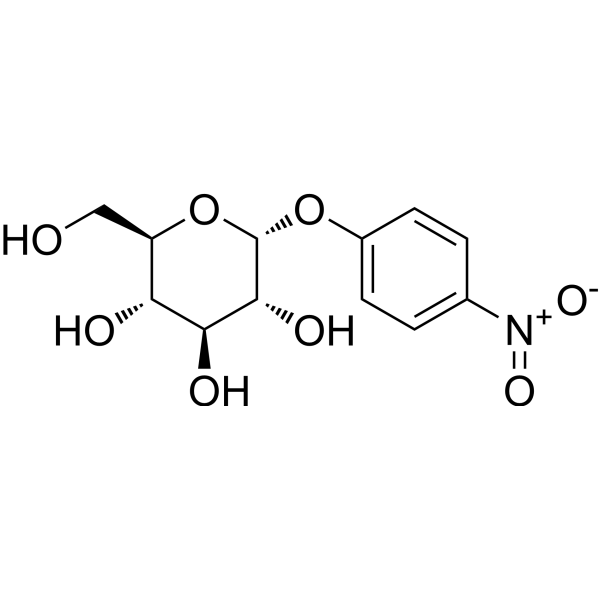
4-Nitrophenyl a-D-glucopyranoside is a chromogenic substrate for α-glucosidase. 4-Nitrophenyl a-D-glucopyranoside can be used to measure of α-glucosidase activity .
|
-
-
- HY-15928
-
|
p-Nitrophenyl phosphate disodium
|
Fluorescent Dye
|
Others
|
|
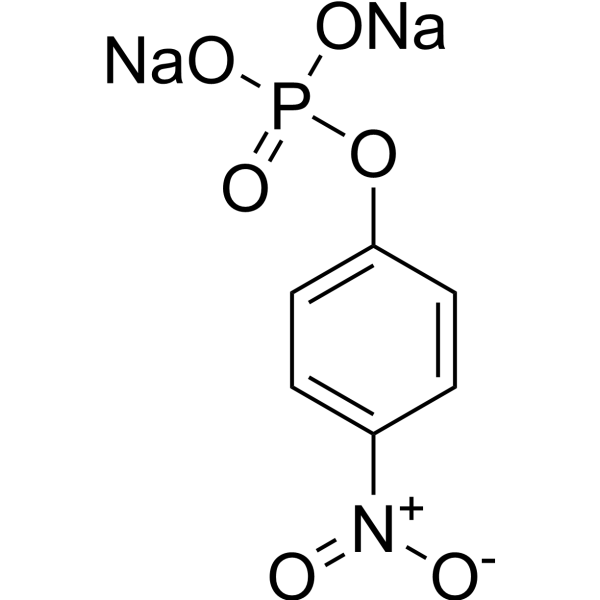
4-Nitrophenyl phosphate (p-Nitrophenyl phosphate) disodium is a non-proteinaceous chromogenic substrate for alkaline and acid phosphatases used in ELISA and conventional spectrophotometric assays.
|
-
-
- HY-101895
-
|
FDG
|
Fluorescent Dye
|
Others
|
|
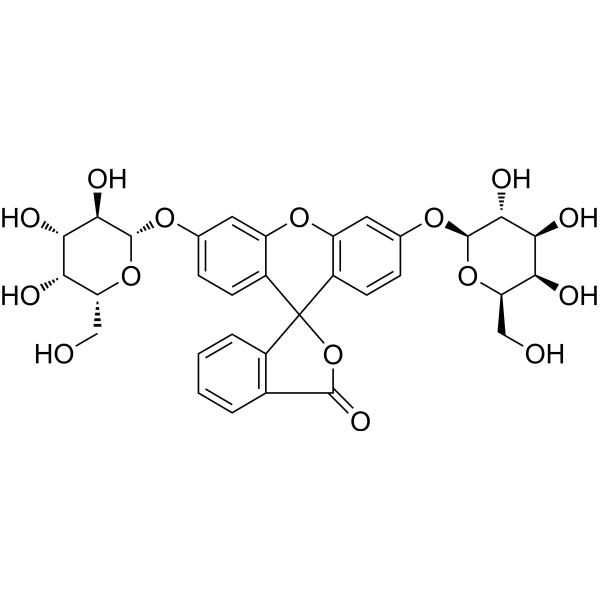
Fluorescein di(β-D-galactopyranoside) is a fluorogenic substrate for β-galactosidase (λex=485 nm, λem=535 nm).
|
-
-
- HY-D0995
-
|
MESG
|
Fluorescent Dye
|
Others
|
|
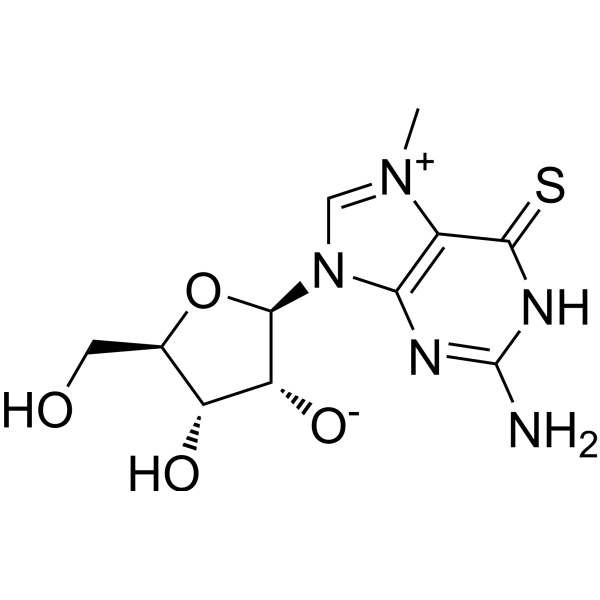
7-Methyl-6-thioguanosine (MESG) is a chromogenic substrate that can be converted to 7-methyl-6-thioguanine in the presence of purine nucleoside phosphorylase and inorganic phosphate. 7-Methyl-6-thioguanosine can be used to quantify inorganic phosphate. 7-Methyl-6-thioguanosine can also be used to determine the activities of purine nucleoside phosphorylase and protein phosphatases .
|
-
-
- HY-P2685
-
|
|
Fluorescent Dye
|
Others
|
|
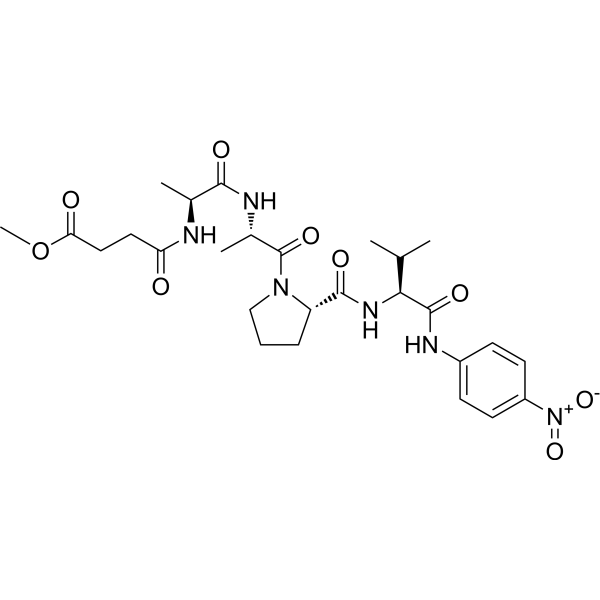
MeOSuc-Ala-Ala-Pro-Val-pNA is a sensitive chromogenic substrate for human leukocyte and porcine pancreatic elastase .
|
-
-
- HY-15909
-
|
BCIP p-toluidine salt; X-phosphate p-toluidine salt
|
Fluorescent Dye
|
Others
|
|
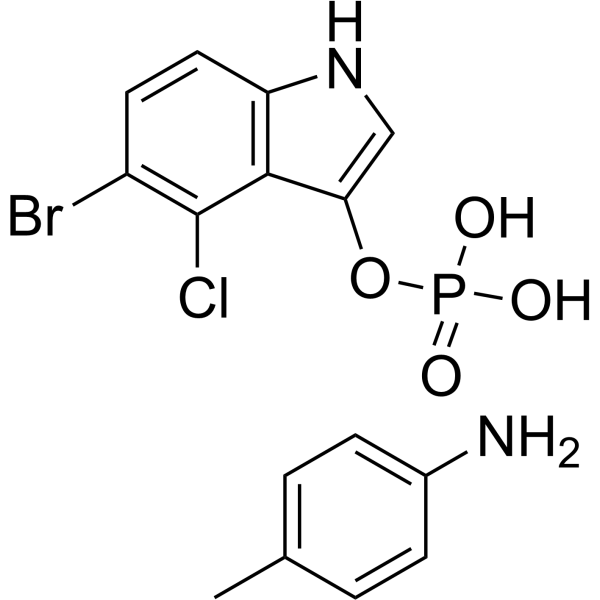
BCIP(BCIP p-toluidine salt; X-phosphate p-toluidine salt) is an artificial chromogenic substrate used for the sensitive colorimetric detection of alkaline phosphatase activity .
|
-
-
- HY-W013168
-
|
4-Nitrophenyl hexadecanoate; p-Nitrophenyl Palmitate; pNpp
|
Lipase
|
Others
|
|
4-Nitrophenyl palmitate (4-Nitrophenyl hexadecanoate) is a chromogenic substrate for lipases and esterases. Upon enzymatic hydrolysis, 4-Nitrophenyl palmitate releases p-nitrophenol, which can be quantified by colorimetric detection at 410 nm as a measure of enzymatic activity. 4-Nitrophenyl palmitate is used to characterize the activity of various bacterial and mammalian enzymes, including those from Burkholderia and porcine pancreatic lipase .
|
-

-
- HY-123275B
-
|
S-2238 acetate
|
Fluorescent Dye
|
Others
|
|
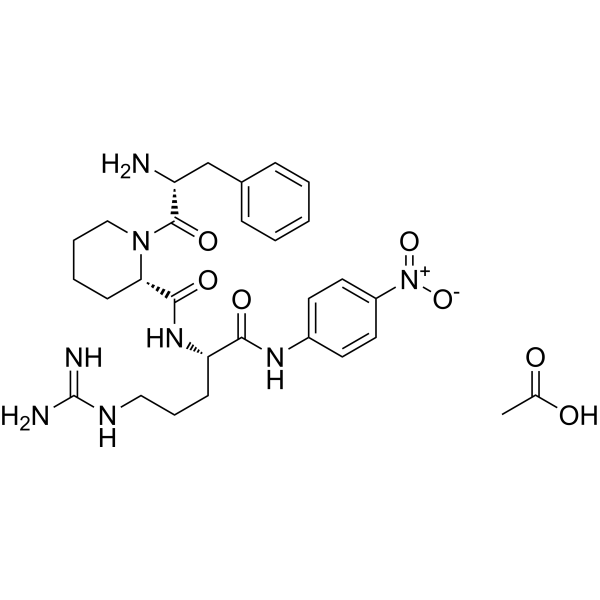
H-D-Phe-Pip-Arg-pNA (S-2238) acetate, a chromogenic substrate, is patterned after the N-terminal portion of the A alpha chain of fibrinogen, which is the natural substrate of thrombin. H-D-Phe-Pip-Arg-pNA acetate is specific for thrombin and is used to measure antithrombin-heparin cofactor (AT-III). The AT-III assay using H-D-Phe-Pip-Arg-pNA acetate is sensitive, accurate, and easy to perform .
|
-
-
- HY-123275A
-
|
S-2238 hydrochloride
|
Fluorescent Dye
|
Others
|
|
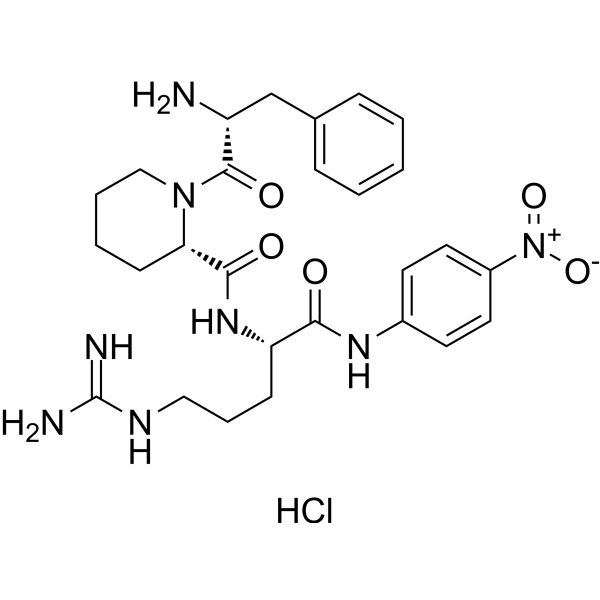
H-D-Phe-Pip-Arg-pNA (S-2238) hydrochloride, a chromogenic substrate, is patterned after the N-terminal portion of the A alpha chain of fibrinogen, which is the natural substrate of thrombin. H-D-Phe-Pip-Arg-pNA hydrochloride is specific for thrombin and is used to measure antithrombin-heparin cofactor (AT-III). The AT-III assay using H-D-Phe-Pip-Arg-pNA hydrochloride is sensitive, accurate, and easy to perform .
|
-
-
- HY-P3936
-
|
|
Fluorescent Dye
|
Others
|
|
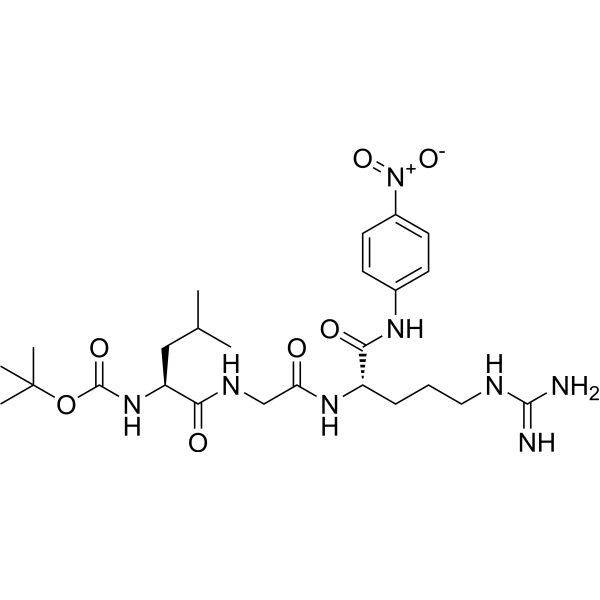
Endotoxin Substrate (Boc-LGR-pNA) is a chromogenic substrate can be used in quantitative assays of endotoxin .
|
-
-
- HY-W039892
-
|
pNPG_1
|
β-glucuronidase
|
Others
|
|
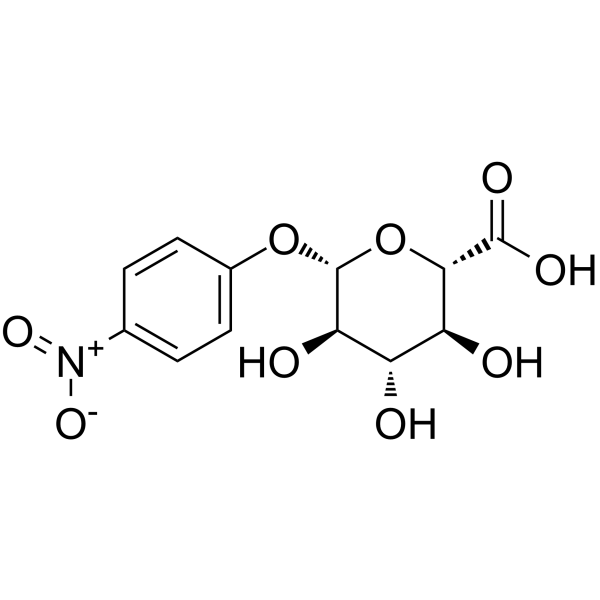
4-Nitrophenyl β-D-glucuronide (pNPG_1) is aderivative of 4-Nitrophenol. 4-Nitrophenyl β-D-glucuronide is the chromogenic substrate for β-glucuronidase .
|
-
-
- HY-114522
-
|
|
Biochemical Assay Reagents
|
Others
|
|
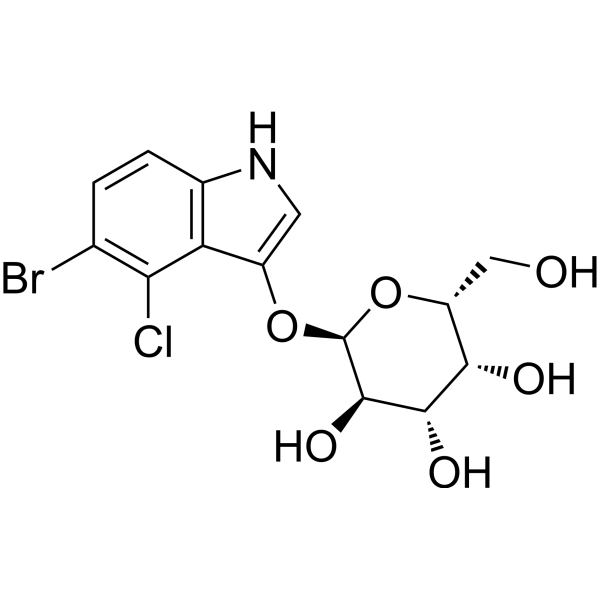
X-alpha-Gal is a chromogenic substrate that is used to screen colonies with high activity of β-galactopyranoside. X-alpha-Gal also detects α-galactosidase activity. X-alpha-Gal can be used in yeast two hybrid screening for MEL1 gene activation. X-alpha-Gal can be used with Matchmaker GAL4-based products to confirm protein interactions .
|
-
-
- HY-D0055
-
|
|
Cytochrome P450
|
Others
|
|
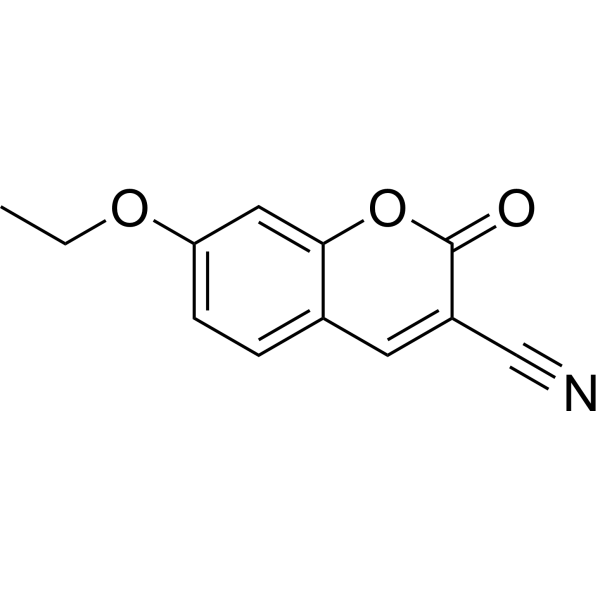
3-Cyano-7-ethoxycoumarin is a fluorescent cytochrome P-450 substrate that generates a blue fluorescent product upon enzymatic cleavage. 3-Cyano-7-ethoxycoumarin is used to detect the activity of mixed-function oxidases in isolated rat hepatocytes. 3-Cyano-7-ethoxycoumarin serves as a biological dye and indicator for research .
|
-
-
- HY-P4202
-
|
Suc-AEPF-pNA
|
Biochemical Assay Reagents
|
Others
|
|
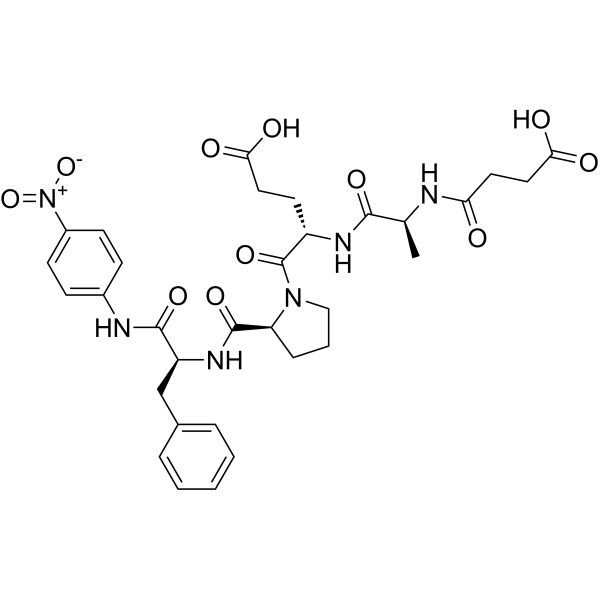
Suc-Ala-Glu-Pro-Phe-pNA (Suc-AEPF-pNA) is a chromogenic substrate for the peptidyl-prolyl isomerase Pin1. Suc-Ala-Glu-Pro-Phe-pNA is used to evaluate the inhibitory effect of target compounds on Pin1, the catalytic activity of Pin1, and other related assays .
|
-
-
- HY-W016188
-
|
|
Cholinesterase (ChE)
|
Others
|
|
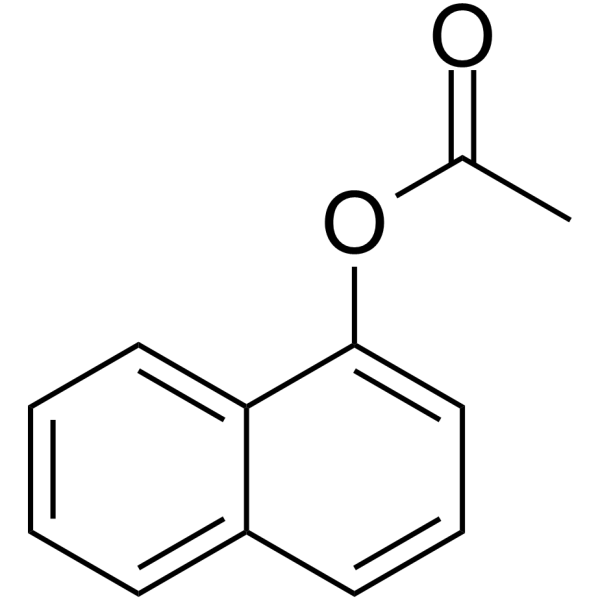
1-Naphthyl acetate is an attractive chromogenic substrate for the detection of erythrocyte acetylcholinesterase (AChE) activity. 1-Naphthyl acetate has the potential to detect organophosphorus pesticide (OP) poisoning .
|
-
-
- HY-15933
-
TOPS
1 Publications Verification
|
Biochemical Assay Reagents
|
Others
Metabolic Disease
|
|
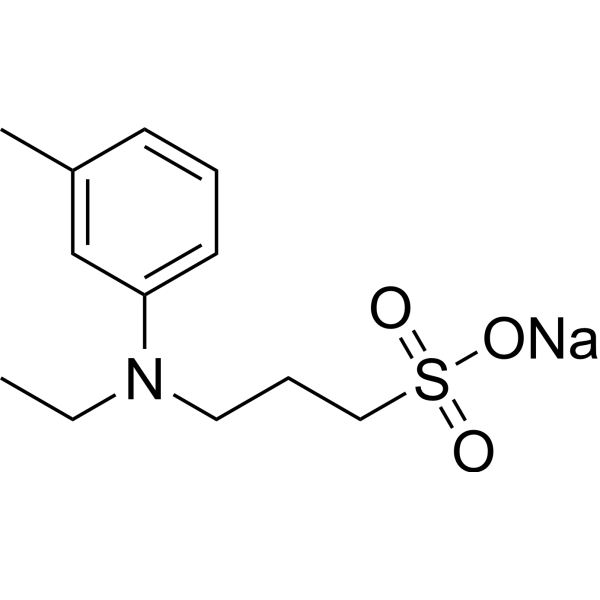
TOPS is a chromogenic substrate. TOPS undergoes an oxidative coupling reaction with 4-aminoantipyrine in the presence of H2O2 and nanocrystalline cobalt selenide. TOPS is used in studies related to uric acid detection .
|
-
-
- HY-16710
-
GPDA
1 Publications Verification
GPN; Glycylproline p-nitroanilide tosylate
|
Fluorescent Dye
|
Others
|
|
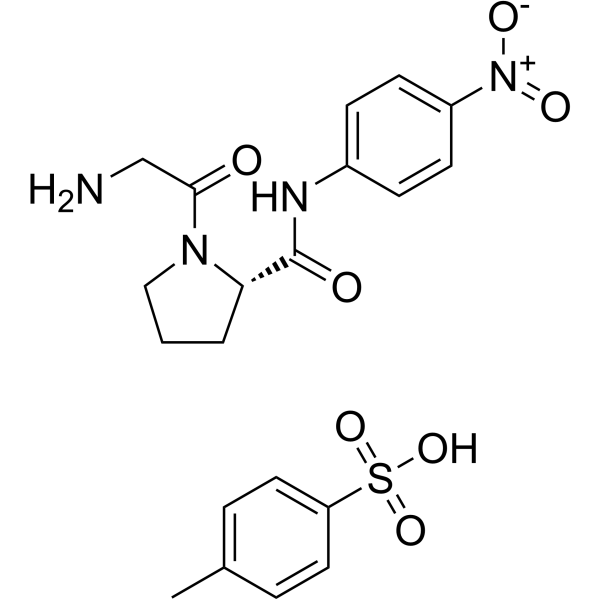
GPDA (GPN; Glycylproline p-nitroanilide tosylate) is a chromogenic substrate of prolyl dipeptidyl aminopeptidase. GPDA is used to detect the activity of prolyl dipeptidyl aminopeptidase in human serum .
|
-
-
- HY-P3949
-
|
|
Fluorescent Dye
|
Others
|
|
Fluorescent Substrate for Glu-Specific Proteases is a V8 protease-Specific chromogenic substrate .
|
-
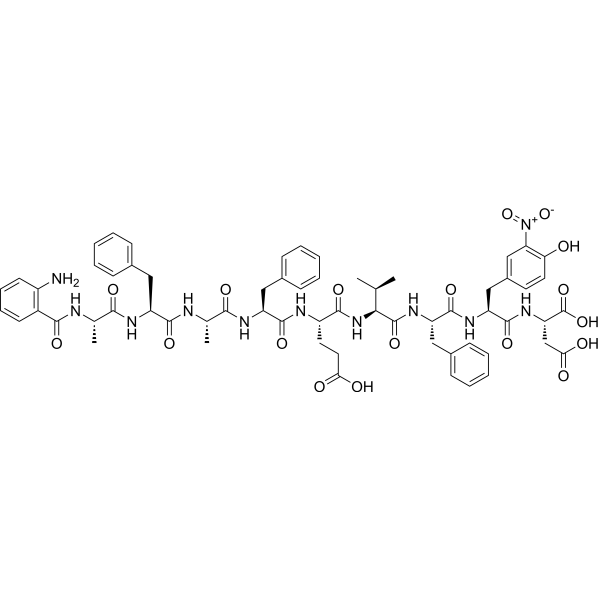
-
- HY-153829
-
-
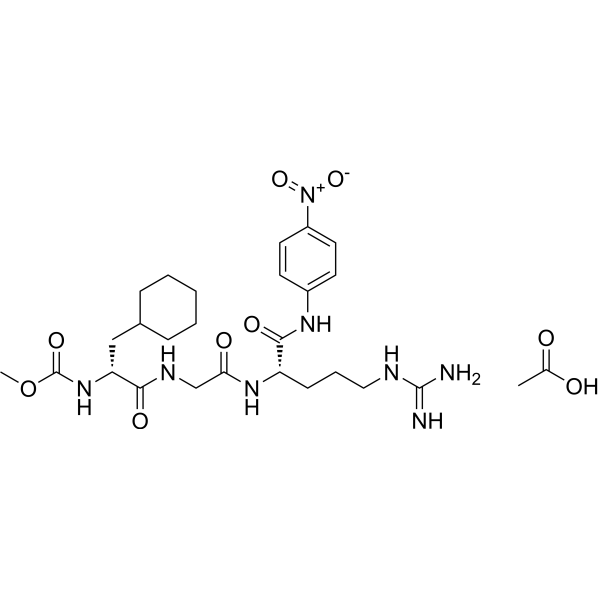
-
- HY-137878
-
|
PNP-α-NeuNAc
|
Biochemical Assay Reagents
|
Others
|
|
2-O-(p-Nitrophenyl)-α-D-N-acetylneuraminic acid (PNP-α-NeuNAc) is a classic chromogenic substrate for neuraminidase. 2-O-(p-Nitrophenyl)-α-D-N-acetylneuraminic acid releases p-nitrophenol upon enzymatic hydrolysis, allowing quantification of enzyme activity and inhibitory effects via spectrophotometry. 2-O-(p-Nitrophenyl)-α-D-N-acetylneuraminic acid (PNP-α-NeuNAc) acts as a sialyl donor in the process of enzyme-catalyzed trans-sialylation .
|
-

-
- HY-52112
-
BCDA
1 Publications Verification
5-bromo-4-chloroindoxyl acetate
|
Fluorescent Dye
|
Others
|
|
BCDA (5-bromo-4-chloroindoxyl acetate) is a chromogenic substrate of esterase used to potently detect the activity of esterase .
|
-
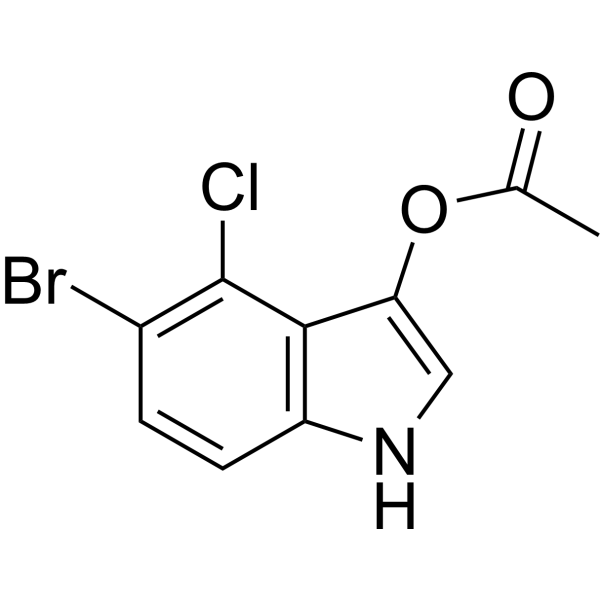
-
- HY-137799
-
|
|
Biochemical Assay Reagents
|
Others
|
|
NOBA is a synthetic chromogenic substrate that can be used to detect the enzyme activity of AplTX-II. NOBA can be used in the research of phospholipid hydrolysis .
|
-

-
- HY-W127769
-
|
Salmon-Gal
|
Fluorescent Dye
|
Others
|
|
Rose-β-D-Gal is a chromogenic substrate, is also a β-galactosidase substrate. Rose-β-D-Gal creates a pink/magenta color after the reaction and has been used for detection of β-gal activity .
|
-
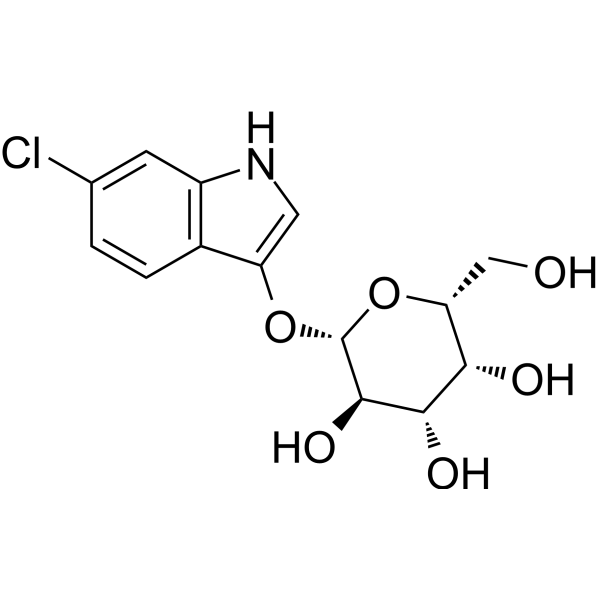
-
- HY-100045
-
|
4-Nitrophenylphosphorylcholine; 4-Nitrophenylphosphorylcholine; O-(4-Nitrophenylphosphoryl)choline
|
Endogenous Metabolite
|
Metabolic Disease
|
|
p-Nitrophenyl phosphorylcholine (4-Nitrophenylphosphorylcholine) is a chromogenic substrate that is used to measure phospholipase C (PLC) activity. Hydrolysis of p-nitrophenylphosphorylcholine by PLC results in the liberation of p-nitrophenol, which can be measured at 405 nm at pH 7.2-7.5.
|
-

-
- HY-D1213
-
|
Dipotassium nitrocatechol sulfate
|
Biochemical Assay Reagents
|
Others
|
|
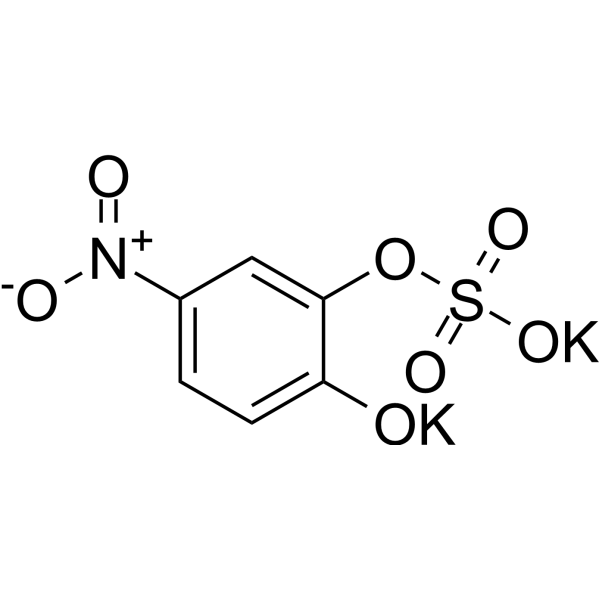
4-Nitrocatechol sulfate potassium salt (Dipotassium nitrocatechol sulfate) is an aromatic sulfate that can serve as a chromogenic substrate for sulfatase. 4-Nitrocatechol sulfate potassium salt can be used to determine the activities of glycosaminoglycan (GAG) degrading enzymes aryl sulfatase B and exonucleosidase .
|
-
-
- HY-W009454
-
|
4-Nitopheyl Sulfate potassium
|
Fluorescent Dye
|
Others
|
|
Potassium p-nitrophenyl sulfate (4-Nitophenyl Sulfate potassium) serves as a chromogenic substrate for arylsulfatases. Potassium p-nitrophenyl sulfate releases nitrophenol under the cleavage action of arylsulfatases, and the activity of arylsulfatases can be quantitatively determined via colorimetric detection at 400 nm. Potassium p-nitrophenyl sulfate is commonly used in enzyme inhibition assays and metabolite analog-related studies .
|
-

-
- HY-W015996
-
|
pNP-GalNAc
|
Fluorescent Dye
|
Others
|
|
4-Nitrophenyl-N-acetyl-α-D-galactosaminide (pNP-GalNAc) can be used as a chromogenic substrate for N-acetyl-D-galactosaminase. 4-Nitrophenyl-N-acetyl-α-D-galactosaminide is cleaved by N-acetyl-D-galactosaminase to generate a yellow solution. The enzyme activity is quantitatively determined by absorbance detection .
|
-

-
- HY-P10094
-
|
|
Fluorescent Dye
|
Others
|
|
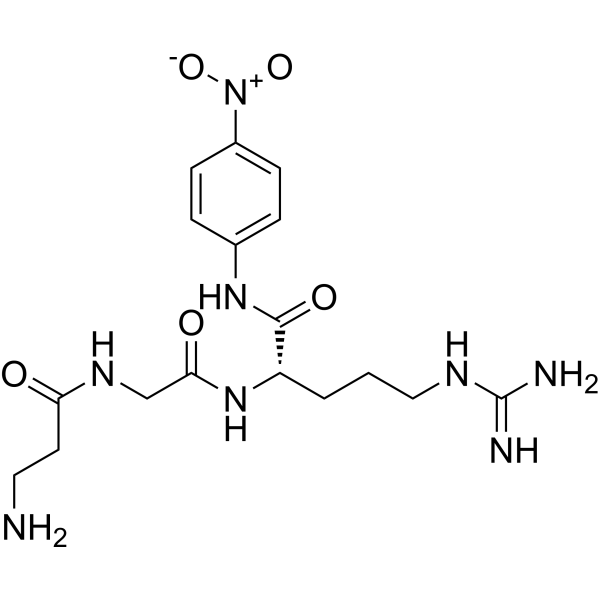
β-Ala-Gly-Arg-pNA is a chromogenic substrate of thrombin with pNA a strong absorbance at 405 nm .
|
-
-
- HY-P4460
-
|
|
Ser/Thr Protease
|
Cancer
|
|
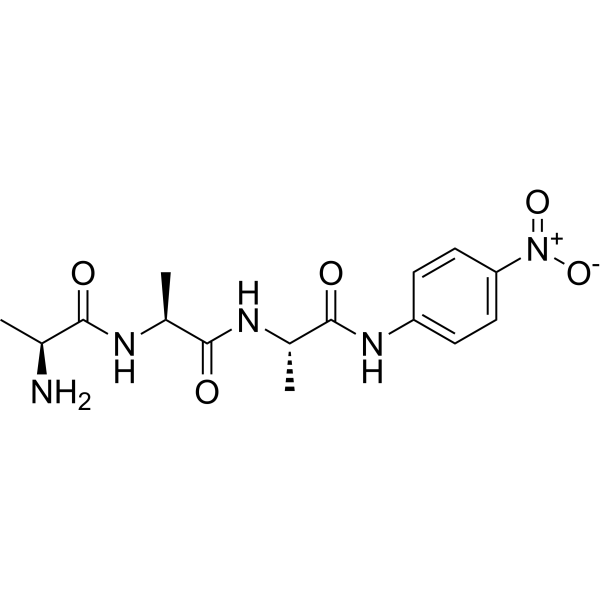
AAA-pNA is a chromogenic substrate of Tripeptidyl-peptidase II. AAA-pNA can be used to test Tripeptidyl-peptidase II activity .
|
-
-
- HY-P4518
-
|
|
Ser/Thr Protease
|
Others
|
|
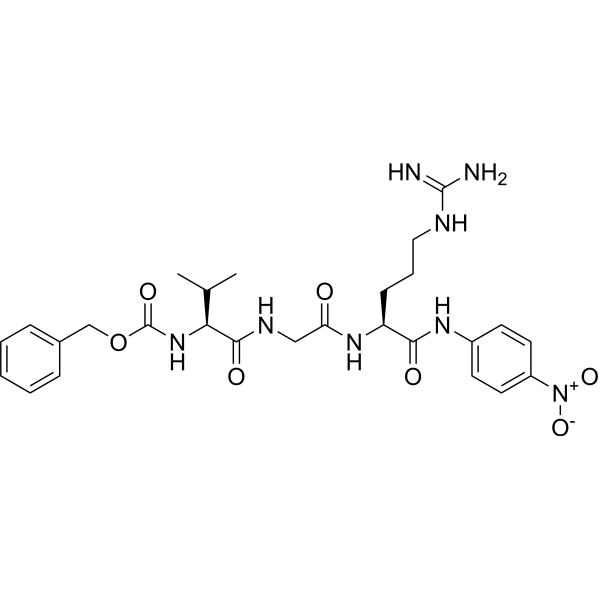
Z-Val-Gly-Arg-pNA is a chromogenic substrate for urokinase. Z-Val-Gly-Arg-pNA can be used for determination of urokinase activity .
|
-
-
- HY-P4453
-
|
|
Caspase
|
Cancer
|
|
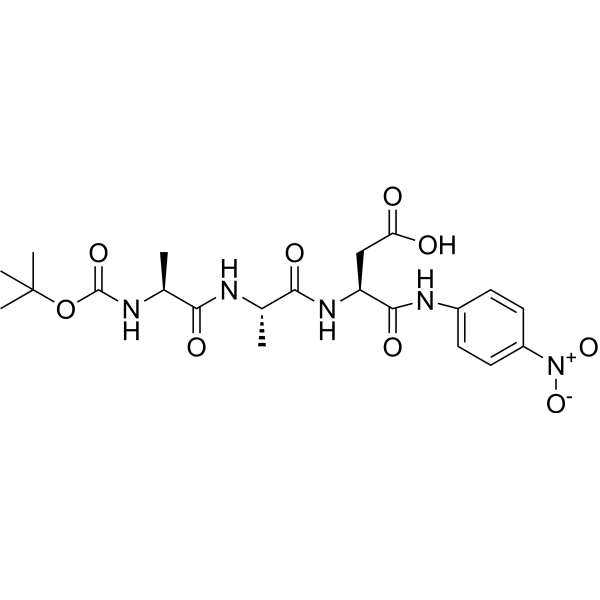
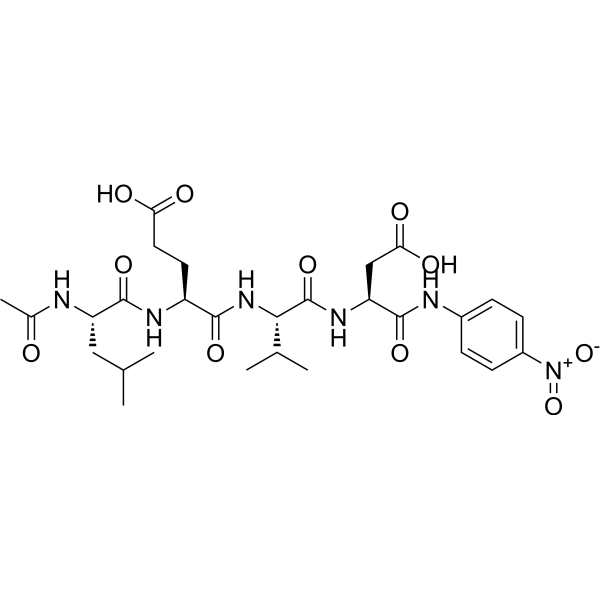
Boc-Ala-Ala-Asp-pNA is a chromogenic substrate of granzyme B. Boc-Ala-Ala-Asp-pNA can be used to test functional activity of granzyme B .
|
-
-
- HY-123275C
-
|
S-2238 dihydrochloride
|
Fluorescent Dye
|
Others
|
|
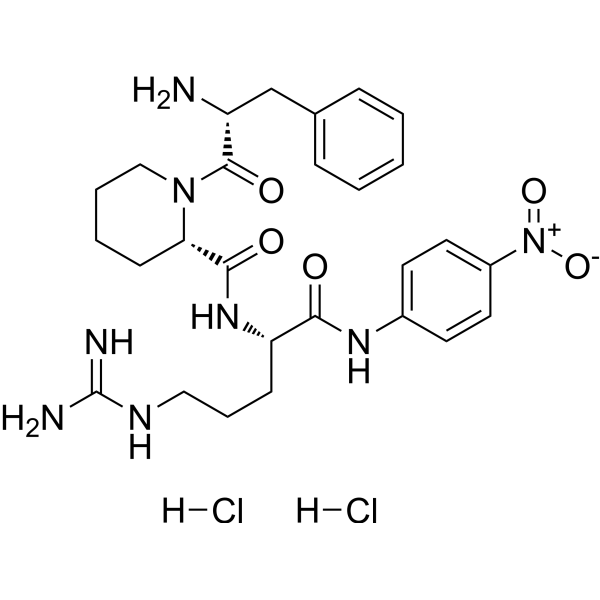
H-D-Phe-Pip-Arg-pNA (S-2238) dihydrochloride, a chromogenic substrate, is patterned after the N-terminal portion of the A alpha chain of fibrinogen, which is the natural substrate of thrombin. H-D-Phe-Pip-Arg-pNA dihydrochloride is specific for thrombin and is used to measure antithrombin-heparin cofactor (AT-III). The AT-III assay using H-D-Phe-Pip-Arg-pNA dihydrochloride is sensitive, accurate, and easy to perform .
|
-
-
- HY-W328317
-
-

-
- HY-W341421
-
-

-
- HY-P4484
-
|
|
Biochemical Assay Reagents
|
Others
|
|
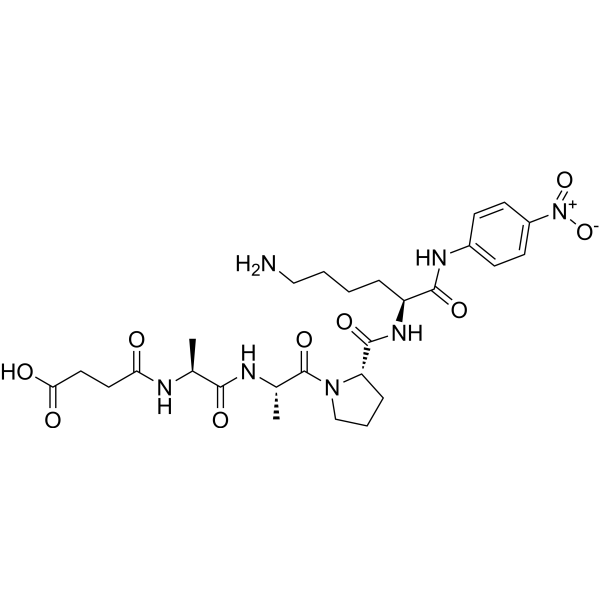
Suc-AAPK-pNA is a chromogenic substrate for the determination of serine/threonine kinase activity and enzyme kinetic parameters .
|
-
-
- HY-P3126
-
|
|
Factor Xa
|
Others
|
|
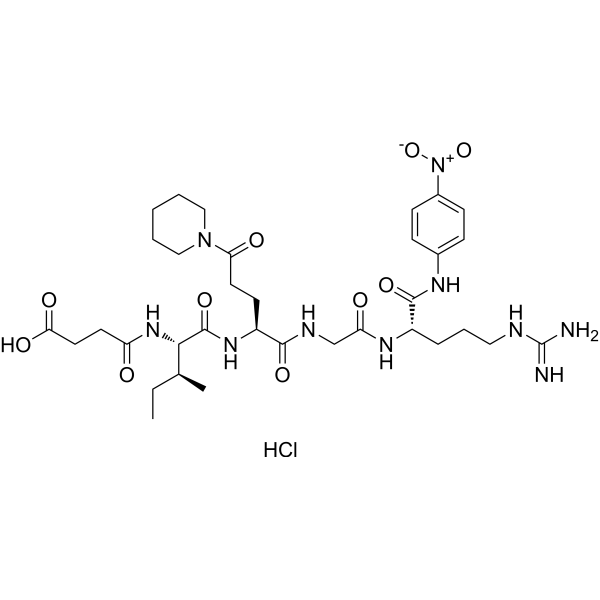
Suc-Ile-Glu(γ-pip)-Gly-Arg-pNA hydrochloride is a factor Xa specific chromogenic substrate .
|
-
-
- HY-P10145
-
-
-
- HY-P3934
-
|
|
HIV Protease
|
Infection
|
|
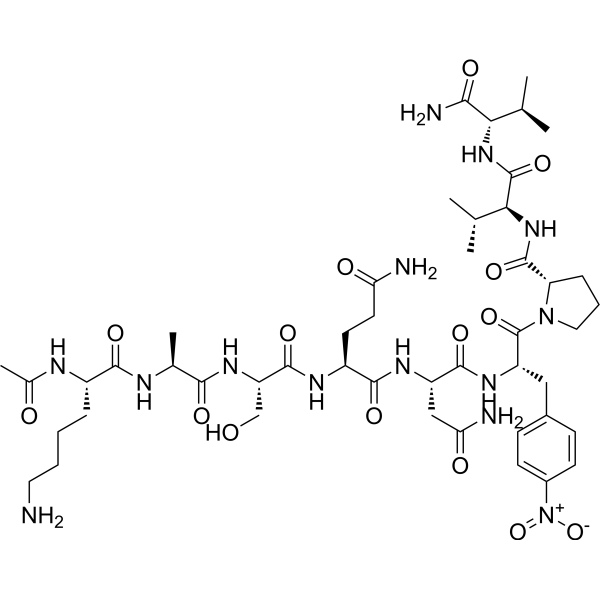
HIV Protease Substrate I is a chromogenic substrate of HIV-1 protease. HIV Protease Substrate I has the cleavage site of HIV protease .
|
-
-
- HY-123275
-
|
S-2238
|
Fluorescent Dye
|
Others
|
|
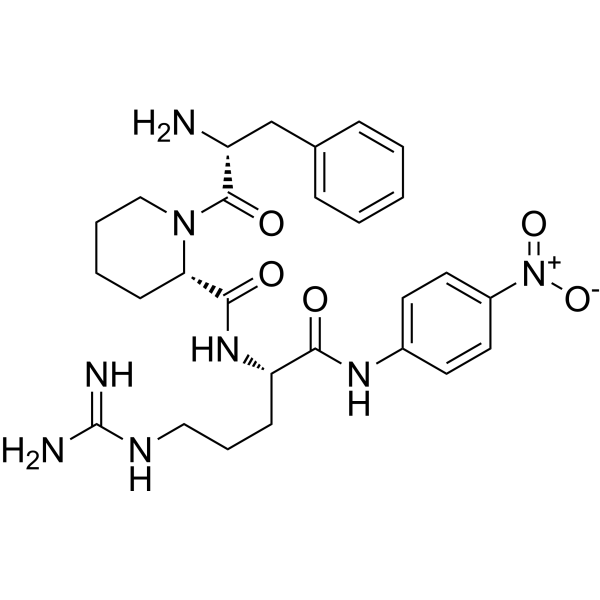
H-D-Phe-Pip-Arg-pNA (S-2238), a chromogenic substrate, is patterned after the N-terminal portion of the A alpha chain of fibrinogen, which is the natural substrate of thrombin. H-D-Phe-Pip-Arg-pNA is specific for thrombin and is used to measure antithrombin-heparin cofactor (AT-III). The AT-III assay using H-D-Phe-Pip-Arg-pNA is sensitive, accurate, and easy to perform .
|
-
-
- HY-P4039
-
|
|
HCV Protease
|
Infection
|
|
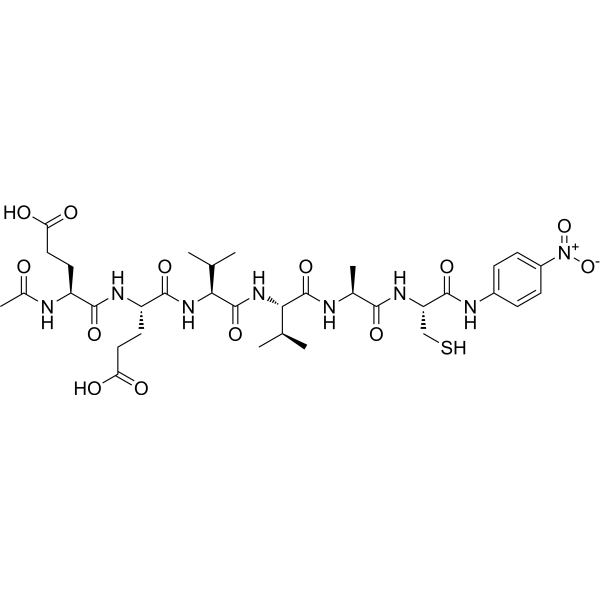
Ac-EEVVAC-pNA is a chromogenic substrate for a continuous spectrophotometric assay of HCV NS3 protease. The sequence EEVVAC is derived from the 5A-5B cleavage junction of the HCV polyprotein .
|
-
-
- HY-P4458
-
|
|
Ser/Thr Protease
|
Cancer
|
|
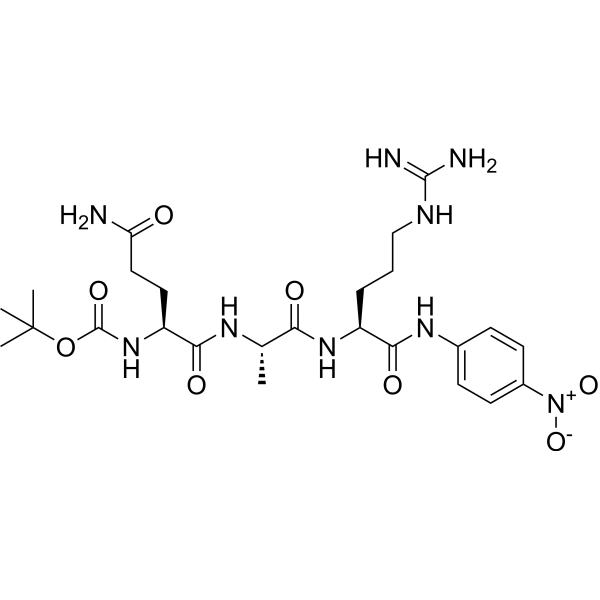
Boc-QAR-pNA is a chromogenic substrate of trypsin. Boc-QAR-pNA can be used to test trypsin activity .
|
-
-
- HY-P4482
-
|
|
Bacterial
|
Infection
|
|
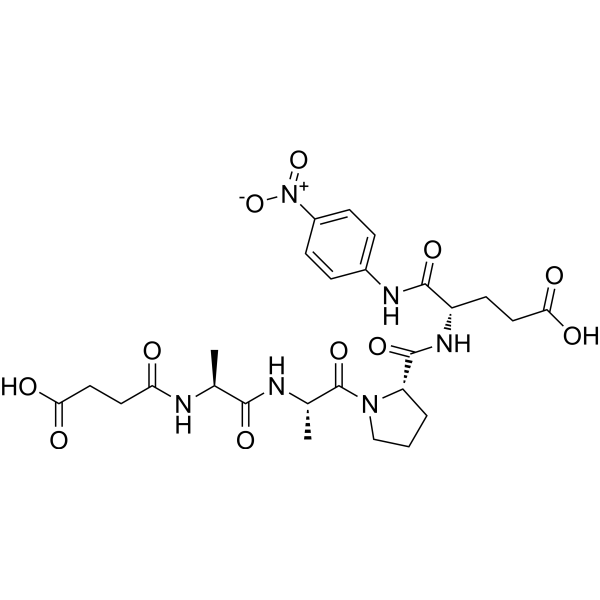
Suc-AAPE-pNA is a chromogenic substrate of glutamyl endopeptidase. Suc-AAPE-pNA can be used to test glutamyl endopeptidase activity .
|
-
-
- HY-P4470
-
|
|
Ser/Thr Protease
|
Cancer
|
|
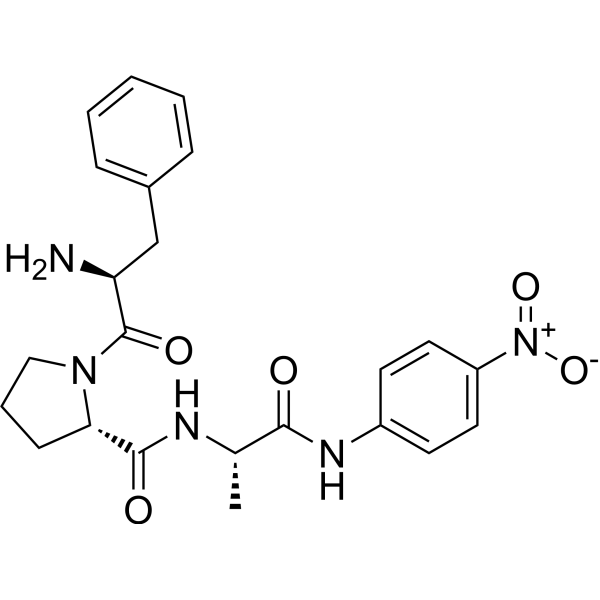
Phe-Pro-Ala-pNA is a chromogenic substrate of tripeptidyl peptidase. Phe-Pro-Ala-pNA can be used to test tripeptidyl peptidase activity .
|
-
-
- HY-P4464
-
|
|
Ser/Thr Protease
|
Cancer
|
|
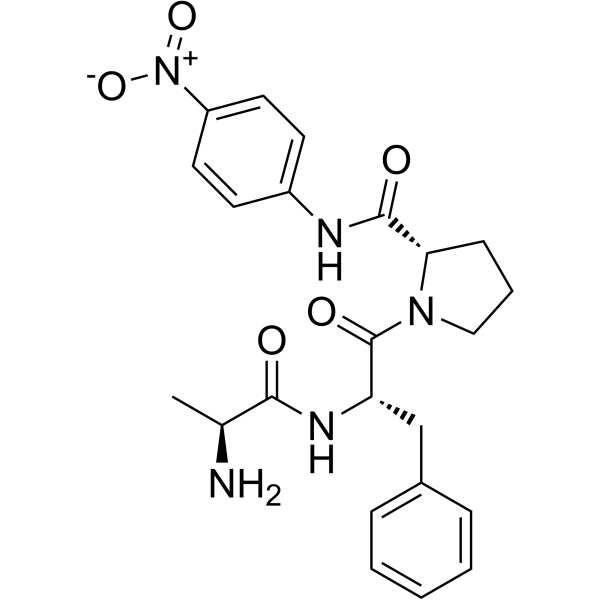
Ala-Phe-Pro-pNA is a chromogenic substrate of tripeptidyl peptidase. Ala-Phe-Pro-pNA can be used to test tripeptidyl peptidase activity .
|
-
-
- HY-138143
-
|
Chromozym-TH
|
Fluorescent Dye
|
Others
|
|
N-(p-Tosyl)-GPR-pNA acetate (Chromozym-TH) is a chromogenic substrate targeting the synthetic peptides Hirunorm IV and Hirunorm V and can be used to detect the dissociation constants (KI) of both peptides. Hirunorm IV and Hirunorm V are reversible inhibitors of amidolytic thrombin activity. By varying the peptide concentration at a fixed concentration of the chromogenic substrate N-(p-Tosyl)-GPR-pNA acetate, the dissociation constants determined were 0.134 nM (Hirunorm IV) and 0.245 nM (Hirunorm V) .
|
-

-
- HY-P4464A
-
|
|
Ser/Thr Protease
|
Cancer
|
|
Ala-Phe-Pro-pNA TFA is a chromogenic substrate of tripeptidyl peptidase. Ala-Phe-Pro-pNA TFA can be used to test tripeptidyl peptidase activity .
|
-

-
- HY-W016188R
-
|
|
Reference Standards
Cholinesterase (ChE)
|
Others
|
|
1-Naphthyl acetate is an attractive chromogenic substrate for the detection of erythrocyte acetylcholinesterase (AChE) activity. 1-Naphthyl acetate has the potential to detect organophosphorus pesticide (OP) poisoning .
|
-

-
- HY-138653
-
|
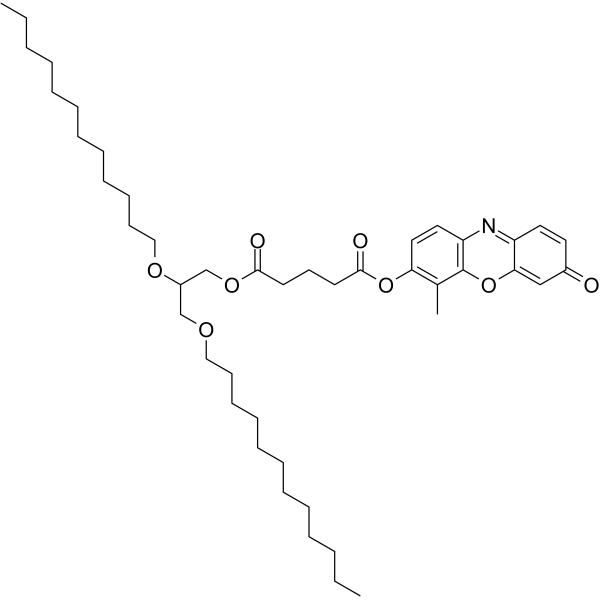
DGGR; 1,2-o-Dilauryl-rac-glycero-3-glutaric acid (6′-methylresorufin) ester
|
Lipase
|
Metabolic Disease
|
|
Lipase Substrate is a chromogenic substrate of lipase to detect activity . It is used in colorimetric methods to measure lipase activity. It produces a red-purple compound, methylresorufin, upon digestion by the lipase enzyme.
|
-
-
- HY-P6027A
-
|
|
Fluorescent Dye
|
Others
|
|
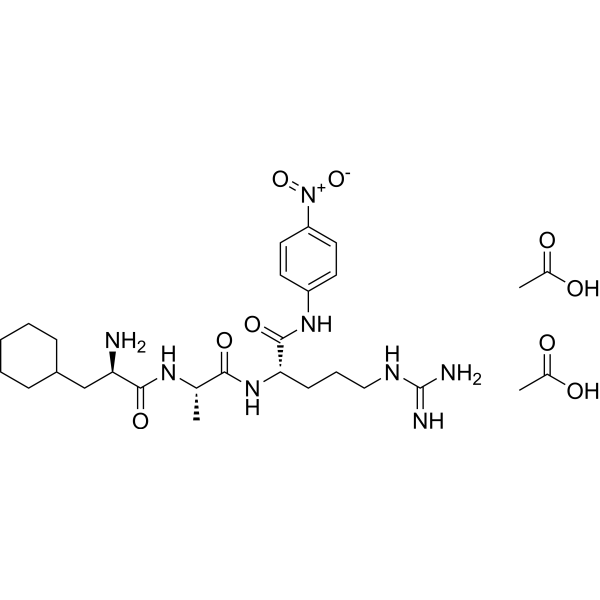
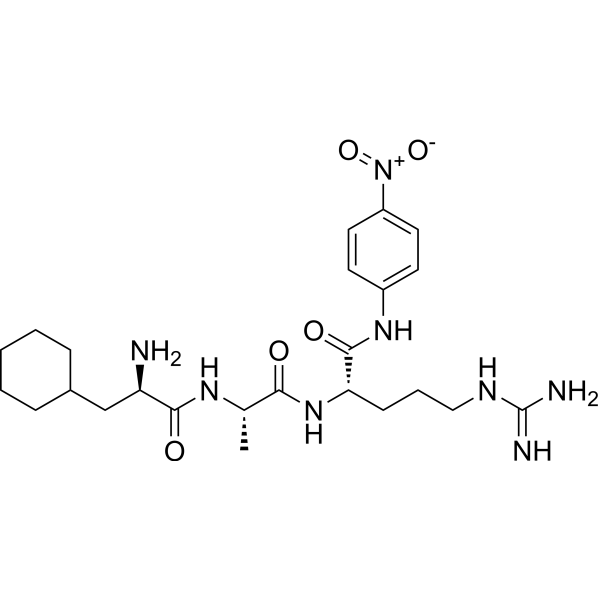
H-D-CHA-Ala-Arg-pNA diacetate is the diacetate form of H-D-CHA-Ala-Arg-pNA (HY-P6027). H-D-CHA-Ala-Arg-pNA diacetate is a chromogenic substrate for the amidolytic assay .
|
-
-
- HY-113245
-
|
|
Endogenous Metabolite
|
Others
|
|
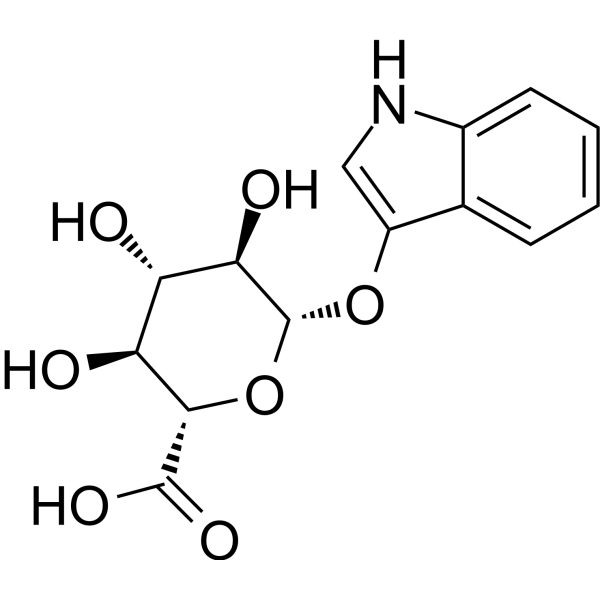
3-Indolyl-β-D-glucuronide, a chromogenic substrate for β-D-glucuronidase, employs in the detection and enumeration of E. coli, yielding a blue precipitate upon cleavage. 3-Indolyl-β-D-glucuronide in? patients' plasma act as a new indicator of renal failure .
|
-
- HY-D1026
-
|
3-Carboxyumbelliferyl-β-D-galactopyranoside
|
Fluorescent Dye
|
Others
|
|
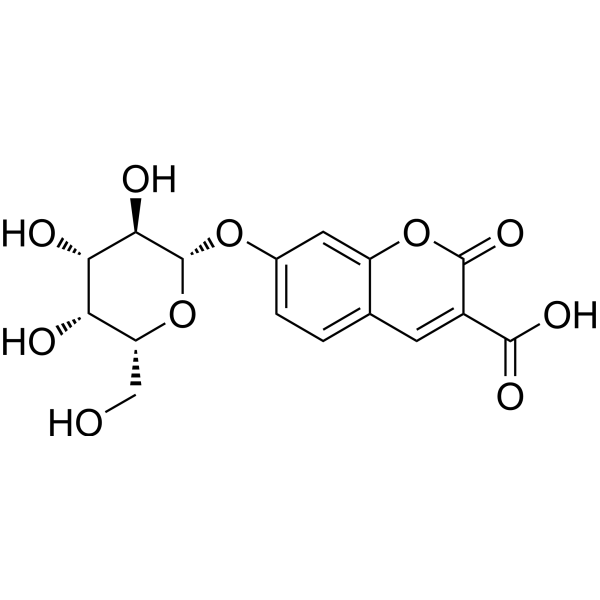
CUG (3-Carboxyumbelliferyl-β-D-galactopyranoside) is a fluorogenic substrate (λex=386, λem=445 nm, ε=32K).
|
-
- HY-W141825
-
|
|
Fluorescent Dye
|
Infection
Metabolic Disease
|
|
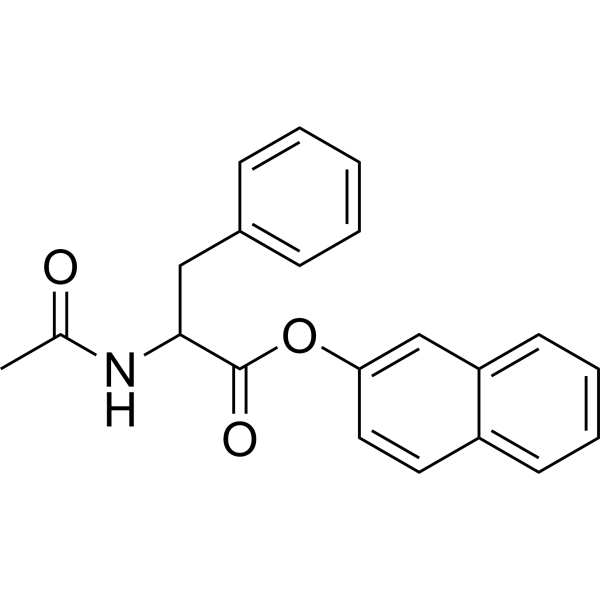
N-Acetyl-DL-phenylalanine β-naphthyl ester is an aromatic amino acid ester, which functions as a chromogenic substrate for chymotrypsin and microbial serine proteases such as subtilisin .
|
-
- HY-W357151
-
|
|
Fluorescent Dye
|
Others
|
|
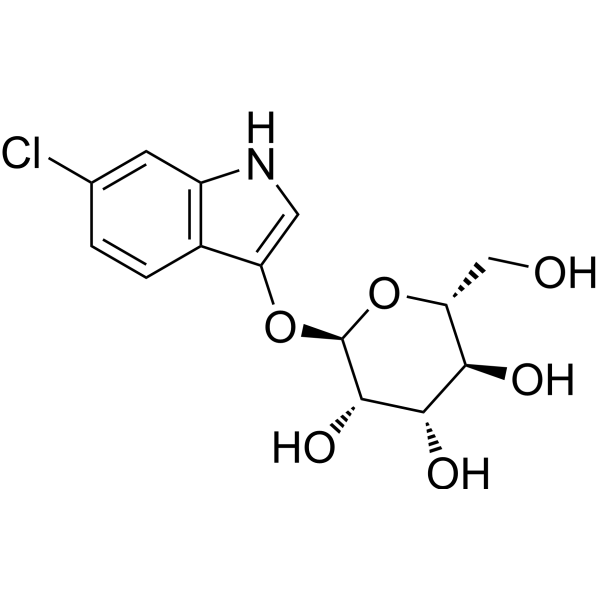
6-Chloro-3-indoxyl-α-D-mannopyranoside is a chromogenic substrate for α-mannosidase resulting in a salmon colored precipitate upon cleavage.
|
-
- HY-P0022A
-
-
- HY-137895
-
|
H-Arg-pNA 2HCl, 98%
|
Biochemical Assay Reagents
|
Others
|
|
L-Arginine p-nitroanilide dihydrochloride, 98% (H-Arg-pNA 2HCl, 98%) is a chromogenic substrate for cathepsin H and aminopeptidases.
|
-

- HY-P11392
-
-

- HY-114958
-
|
|
Fluorescent Dye
|
Others
|
|
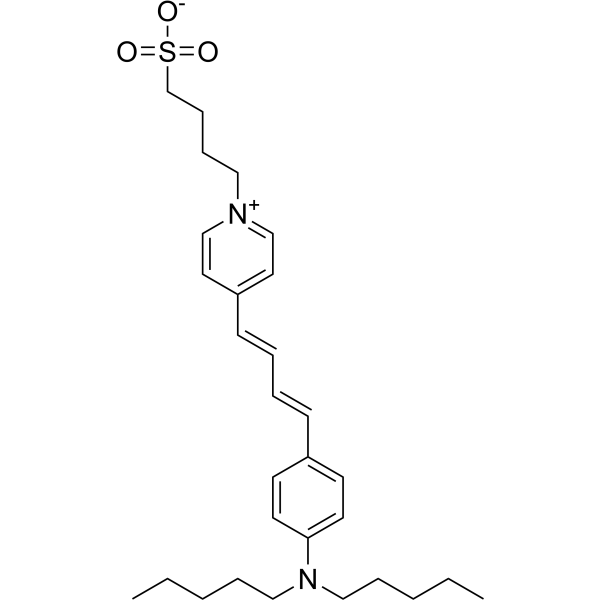
RH 421 is a voltage-sensitive styryl dye that can penetrate through the lipid bilayers. RH 421 is a chromogenic substrate for β-galactosidase .
|
-
- HY-D1676
-
|
|
Phosphatase
|
Others
|
|
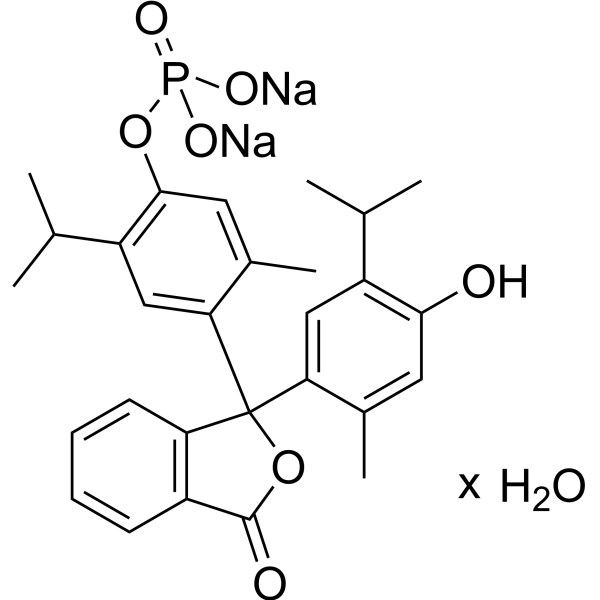
Thymolphthalein monophosphate disodium hydrate is a chromogenic substrate for the determination of acid phosphatase and alkaline phosphatase. Thymolphthalein is released during the reaction, increases the pH of the medium for easy detection, produces color and stops hydrolysis. Thymolphthalein monophosphate disodium hydrate can be used for the specific detection of prostatic phosphatase in serum .
|
-
- HY-137798
-
|
|
Fluorescent Dye
|
Others
|
|
Chromozym PL is a chromogenic substrate for plasmin, and the enzymatic reaction can be carried out in 0.1mL Tris-HCl buffer (50 mM, pH 7.8). 100 μM Chromozym PL was dissolved and prepared. After adding the hydrolase, the generation of p-nitroaniline (pNA) at 405 nm was continuously observed, and the hydrolysis products were calculated .
|
-

- HY-124324
-
|
p-Nitopheyl β-D-cellotioside
|
Fluorescent Dye
|
Others
|
|
4-Nitrophenyl β-D-cellotrioside (p-Nitopheyl β-D-cellotioside) is a chromogenic substrate for endoglucanases and cellulose biohydrolases. As a fluorescent dye, nitrophenyl β-D-Cellotrioside can be hydrolyzed by enzymes to release 4-nitrophenol, producing a yellow color. The activity of the enzyme can be quantitatively analyzed by monitoring the change in absorbance at 405 nm .
|
-

- HY-W713925
-
|
|
Endogenous Metabolite
|
Metabolic Disease
|
|
Diheptanoyl Thio-PC is a substrate for all phospholipase A2s (PLA2s) with the exception of cPLA2 and PAF-acetyl hydrolase (PAF-AH).1 Interaction of this compound with a PLA2 results in cleavage of the sn-2 fatty acid generating a free thiol on the lysophospholipid. This free thiol can be detected using chromogenic substrates such as DTNB (Ellman’s reagent) and DTP.
|
-

- HY-W345102
-
-
- HY-W116594
-
|
|
Fluorescent Dye
|
Infection
|
|
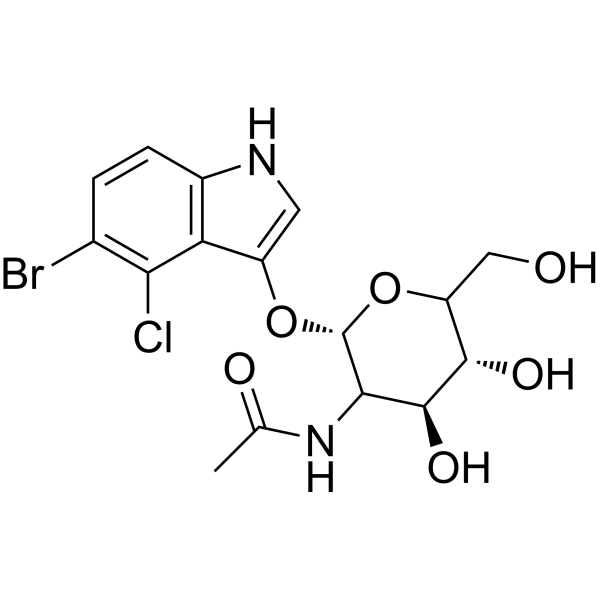
X-GalNAc is a chromogenic substrate for for N-acetyl-β-galactosidase, used to determine the presence or absence of a cloned DNA insert in bacteria growing on agar plates .
|
-
- HY-W411361
-
|
PCNPH
|
Fluorescent Dye
|
Cancer
|
|
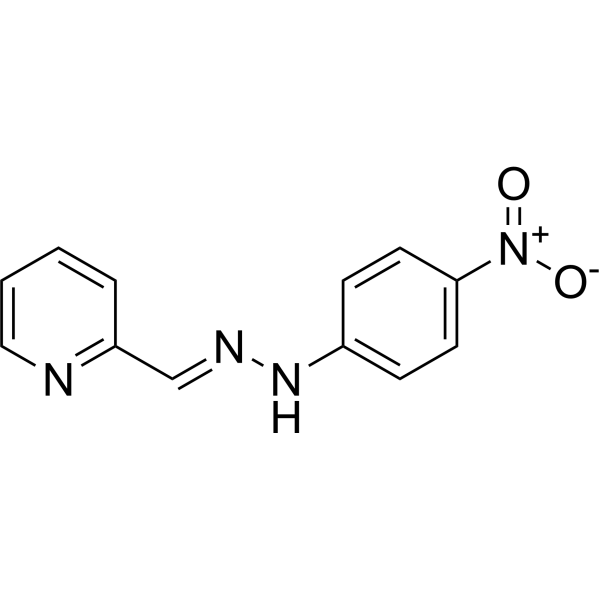
Pyridine-2-carboxaldehyde 4-nitrophenylhydrazone (PCNPH) is a chromogenic substrate to peroxidase enzymes. Pyridine-2-carboxaldehyde 4-nitrophenylhydrazone can form a purple indamine dye with peroxidase enzymes and peroxides .
|
-
- HY-W320032
-
|
|
Fluorescent Dye
|
Others
|
|
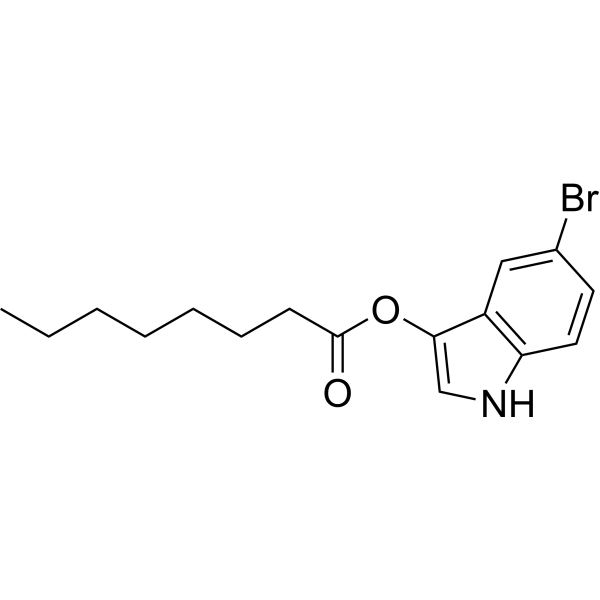
5-Bromo-1H-indol-3-yl octanoate is a chromogenic substrate for esterase with C8 activity. 5-Bromo-1H-indol-3-yl octanoate yields a blue precipitate when cleaved.
|
-
- HY-P4202A
-
|
Suc-AEPF-pNA TFA
|
Biochemical Assay Reagents
|
Others
|
|
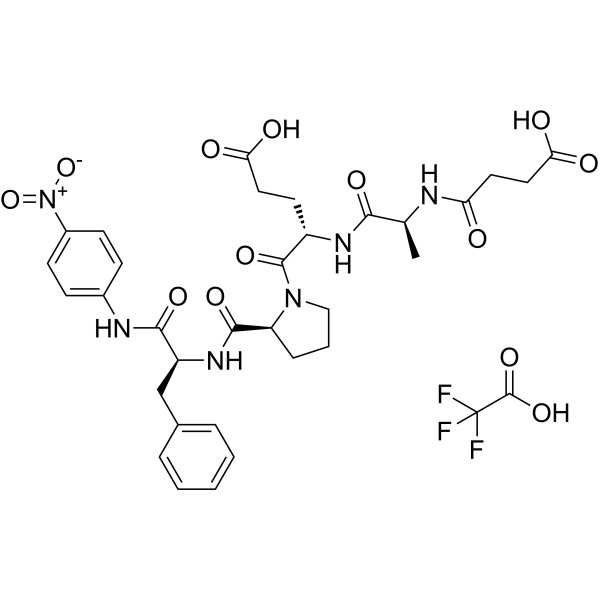
Suc-Ala-Glu-Pro-Phe-pNA (Suc-AEPF-pNA ) TFA is a chromogenic substrate for the peptidylprolyl isomerase Pin1. Suc-Ala-Glu-Pro-Phe-pNA TFA can be used to evaluate the inhibitory effect of the target compound on Pin1, and catalytic activity of Pin1, etc .
|
-
- HY-P0022
-
-
- HY-P10083
-
-
- HY-137228
-
-

- HY-P6027
-
|
|
Thrombin
|
Others
|
|
H-D-CHA-Ala-Arg-pNA is a chromogenic substrate for the amidolytic assay .
|
-
- HY-W013758
-
|
TMBZ-PS sodium
|
Biochemical Assay Reagents
|
Cancer
|
|
TMB-PS (TMBZ-PS) sodium is a chromogenic substrate for the detection and quantification of peroxidase activity .
|
-

- HY-W604882
-
|
Orthonitrophenyl-beta-D-fucopyranoside, 98%
|
Biochemical Assay Reagents
|
Others
|
|
Orthonitrophenyl-β-D-fucopyranoside, 98% is a chromogenic substrate used in various enzyme assays to detect the presence of fucosidase.
|
-

- HY-W290273
-
|
2-Nitrophenyl-beta-D-thiogalactopyranoside
|
Biochemical Assay Reagents
|
Others
|
|
2-Nitrophenyl-β-D-thiogalactopyranoside is a chromogenic substrate used to detect the presence of galactosidase in various biological and biochemical assays.
|
-

- HY-138821
-
|
|
Biochemical Assay Reagents
|
Others
|
|
BCIP (potassium) is a chromogenic substrate commonly used to detect the enzymatic activity of alkaline phosphatase. When dephosphorylated by alkaline phosphatase, BCIP produces a blue precipitate.
|
-

- HY-W011655
-
|
p-Nitrophenyl alpha-D-xylopyranoside
|
Biochemical Assay Reagents
|
Others
|
|
p-Nitrophenyl α-D-xylopyranoside (p-Nitrophenyl alpha-D-xylopyranoside) is a chromogenic substrate for α-xylosidase .
|
-

- HY-W291944
-
-

- HY-137785
-
|
|
Biochemical Assay Reagents
|
Others
|
|
2-Chloro-4-nitrophenyl-β-D-maltotrioside is a chromogenic substrate used in bioluminescent and fluorescent assays to detect α-amylase.
|
-

- HY-P4475
-
-
- HY-P10005
-
-
- HY-W330621
-
|
CNP-α-D-Glucopyaoside
|
Fluorescent Dye
|
Others
|
|
2-Chloro-4-nitrophenyl-α-D-glucopyranoside (CNP-α-D-Glucopyaoside) as a chromogenic substrate for the enzymatic activity assay of the enzyme that releases CNP from conjugated carbohydrates .
|
-

- HY-125744
-
|
|
Biochemical Assay Reagents
|
Others
|
|
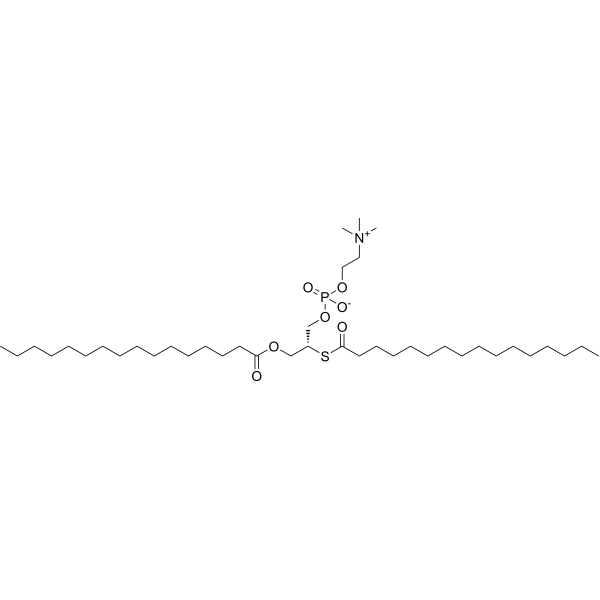
Palmitoyl thio-PC is a chromogenic substrate specific for PLA2 with a palmitoyl thioester at the sn-2 position. Palmitoyl thio-PC could be used to measure bee-venom sPLA2 activity in a phospholipid system .
|
-
- HY-W293502
-
|
2-Chloro-4-nitrophenyl-beta-D-galactopyranoside
|
Biochemical Assay Reagents
|
Others
|
|
2-Chloro-4-nitrophenyl-β-D-galactopyranoside is a chromogenic substrate used for testing enzyme activity. It is commonly used in molecular biology research to detect and measure the activity of β-galactosidase (biosynth: EC03318).
|
-

- HY-W101382
-
|
|
Biochemical Assay Reagents
|
Others
|
|
5-Bromo-6-chloro-3-indolyl-N-acetyl-β-D-glucosaminide, 98% is a chromogenic substrate used to measure β-galactosidase activity in food, enzyme substrates, and culture media.
|
-

- HY-137816
-
|
|
β-glucuronidase
|
Others
|
|
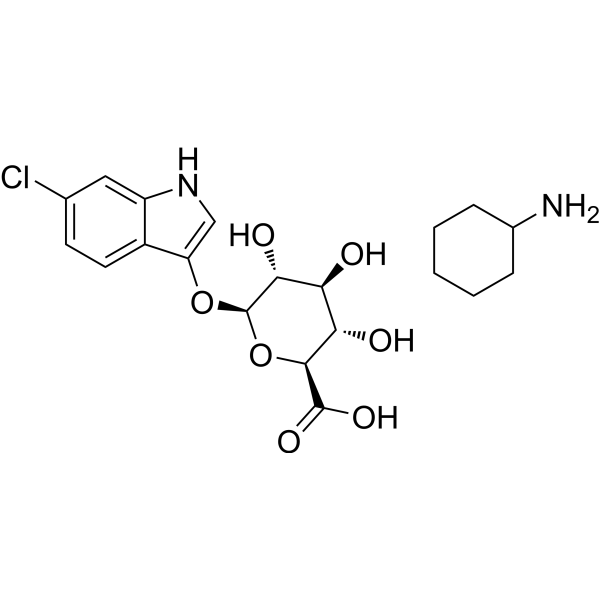
6-Chloro-3-indolyl-β-D-glucuronide cyclohexylammonium salt is a chromogenic substrate for β-glucuronidase. 6-Chloro-3-indolyl-β-D-glucuronide cyclohexylammonium salt produces a salmon colored precipitate upon cleavage .
|
-
- HY-W104635
-
|
6-Bromo-2-naphthyl-beta-D-galactopyranoside
|
Biochemical Assay Reagents
|
Others
|
|
6-Bromo-2-naphthyl-β-D-galactopyranoside is a chromogenic substrate commonly used to measure β-galactosidase enzyme activity in food, enzyme substrates, and culture media. Upon hydrolysis by β-galactosidase, it generates a yellow precipitate indicating the enzyme's presence.
|
-

- HY-P3480
-
|
|
Fluorescent Dye
|
Others
|
|
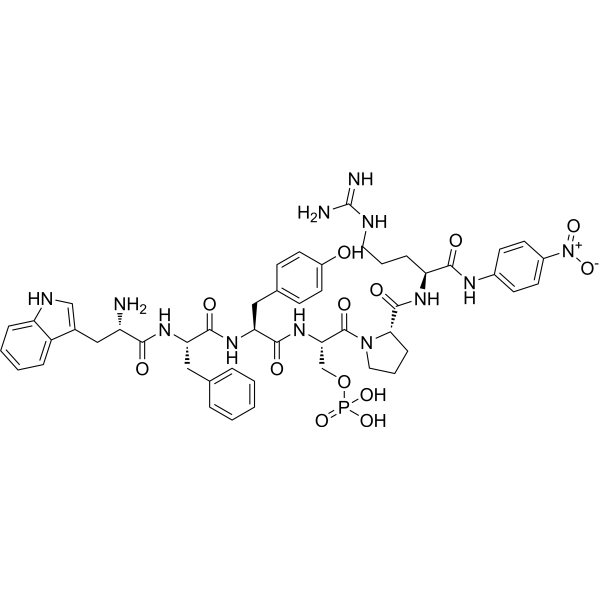
H-Trp-Phe-Tyr-Ser(PO3H2)-Pro-Arg-pNA is a chromogenic substrate for Pin1. Pin1 is an essential and conserved mitotic peptidyl-prolyl isomerase, and can recognize the phosphoserine-proline bonds present in mitotic phosphoproteins .
|
-
- HY-132239
-
|
5-Bromo-6-chloro-3-indolyl-beta-D-galactoside
|
Biochemical Assay Reagents
|
Others
|
|
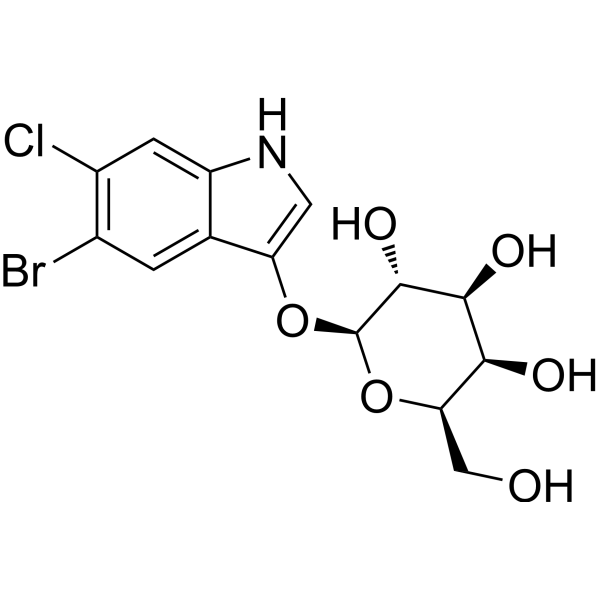
5-Bromo-6-chloro-3-indolyl β-D-Galactopyranoside (contains ca. 10% Ethyl Acetate) (5-Bromo-6-chloro-3-indolyl-beta-D-galactoside) is a chromogenic substrate of β-galactosidase (β-gal) .
|
-
- HY-W854392
-
|
|
Biochemical Assay Reagents
|
|
|
3-Carboxyumbelliferyl-β-D-glucuronide (dipotassium) is a chromogenic substrate with biological activity for enzyme activity detection. 3-Carboxyumbelliferyl-β-D-glucuronide (dipotassium) can be used to evaluate biological reactions associated with glycosidases. 3-Carboxyumbelliferyl-β-D-glucuronide (dipotassium) shows a wide range of application potentials in compound discovery and biomedical research.
|
-

- HY-W698964
-
|
|
Biochemical Assay Reagents
|
Metabolic Disease
|
|
2′-Hydroxy-5′-nitrohexadecanamide is a lysosomal hydrolase inhibitor and is a lipid containing pentadecanoic acid and a terminal nitrophenol in its structure. 2′-Hydroxy-5′-nitrohexadecanamide can cause intracellular lipid accumulation by inhibiting lysosomal hydrolase activity. Additionally, 2′-Hydroxy-5′-nitrohexadecanamide can be used to synthesize chromogenic substrates for measuring sphingolipase activity .
|
-

- HY-D1510
-
|
|
Biochemical Assay Reagents
|
Others
|
|
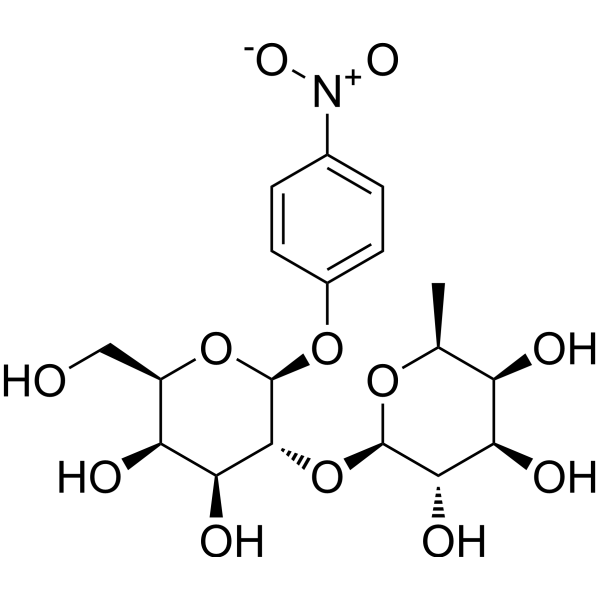
4-Nitrophenyl 2-O-(β-L-Fucopyranosyl)-β-D-Galactopyranoside is a synthetic chromogenic substrate and can be used in the assay of α-fucosidases which hydrolyze the glycosidic linkage Fuc α1-2Gal. The assay is based on the sequential action of α-fucosidase and an exogenously added exo-β-d-galactosidase to release the easily measurable p-nitrophenol moiety .
|
-
- HY-D1582
-
|
|
Fluorescent Dye
|
Others
|
|
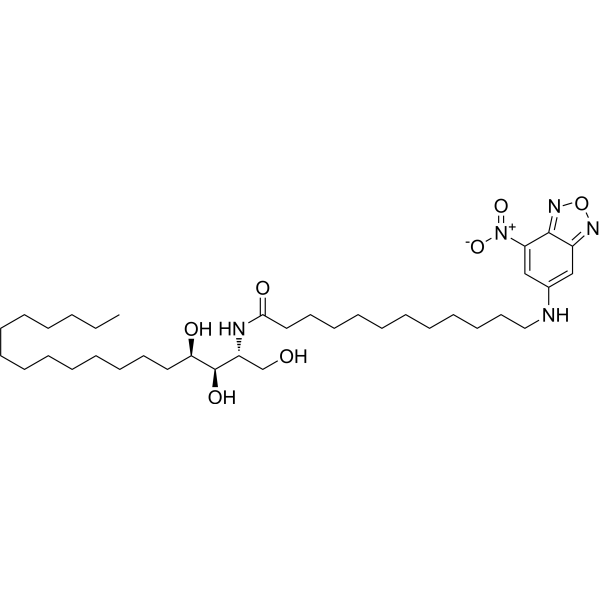
C12 NBD Phytoceramide, a ceramide analogue, is a fluorescent substrate, can be used to detect ceramidase activity .
|
-
- HY-W638077
-
-

- HY-W274294
-
|
|
Biochemical Assay Reagents
|
Others
|
|
H-Pro-Pna is a chromogenic substrate of peptidase and can be used to determine enzyme activity, such as leukotriene A4 hydrolase .
|
-

- HY-P10005A
-
-

- HY-W707394
-
-

- HY-W568087
-
|
|
Phospholipase
|
Others
|
|
5-Bromo-4-chloro-3-indoxyl myo-inositol-1-phosphate ammonium is a chromogenic substrate that can be used to detect the activity of phosphatidylinositol-specific phospholipase C (PI-PLC) .
|
-

- HY-W587779
-
|
|
Biochemical Assay Reagents
|
|
|
o-Nitrophenyl β-D-galactopyranoside-6-phosphate cyclohexylammonium is a chromogenic substrate with activity for β-galactosidase detection. The use of o-Nitrophenyl β-D-galactopyranoside-6-phosphate cyclohexylammonium can help researchers quickly identify and quantify β-galactosidase activity.
|
-

- HY-P2999B
-
|
|
Endogenous Metabolite
|
Metabolic Disease
|
|
β-N-Acetylglucosaminidase, Canavalia ensiformis (EC 3.2.1.52), can release terminally β-linked N-acetylglucosamine and N-acetylgalactosamine from a variety of substrates. The activity of β-N-Acetylglucosaminidase can be determined using the chromogenic substrate p-nitrophenyl-N-acetyl-β-D-glucosinolate. β-N-Acetylglucosaminidase degrades the terminal non-reducing N-acetyl-D-aminohexose residue.
|
-

- HY-P2999C
-
|
|
Endogenous Metabolite
|
Metabolic Disease
|
|
β-N-Acetylglucosaminidase, Human (EC 3.2.1.52), can release terminally β-linked N-acetylglucosamine and N-acetylgalactosamine from a variety of substrates. The activity of β-N-Acetylglucosaminidase can be determined using the chromogenic substrate p-nitrophenyl-N-acetyl-β-D-glucosinolate. β-N-Acetylglucosaminidase degrades the terminal non-reducing N-acetyl-D-aminohexose residue.
|
-

- HY-P2999A
-
|
|
Endogenous Metabolite
|
Metabolic Disease
|
|
β-N-Acetylglucosaminidase, Bovine (EC 3.2.1.52), can release terminally β-linked N-acetylglucosamine and N-acetylgalactosamine from a variety of substrates. The activity of β-N-Acetylglucosaminidase can be determined using the chromogenic substrate p-nitrophenyl-N-acetyl-β-D-glucosinolate. β-N-Acetylglucosaminidase degrades the terminal non-reducing N-acetyl-D-aminohexose residue.
|
-

- HY-15914
-
|
DCHBS
|
Fluorescent Dye
|
Others
|
|
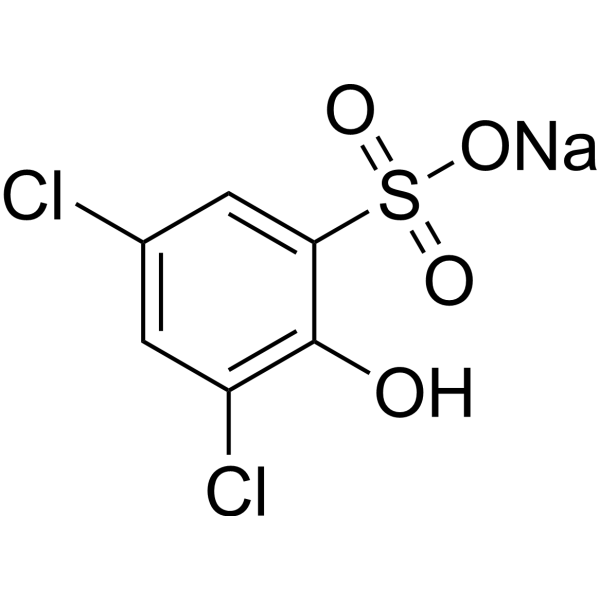
DHBS (3, 5-dichloro-2-hydroxybenzenesulfonate) is used in conjunction with 4-aminoantipyrine (4-AAP) (HY-W100990) and hydrogen peroxide (H2O2) for chromogenic quantitation of peroxidase in coupled enzymatic reactions. Component of Trinder reagent for use with peroxidase to measure generation of hydrogen peroxide in automated systems .
|
-
- HY-P3120
-
|
|
MMP
Fluorescent Dye
|
Others
|
|
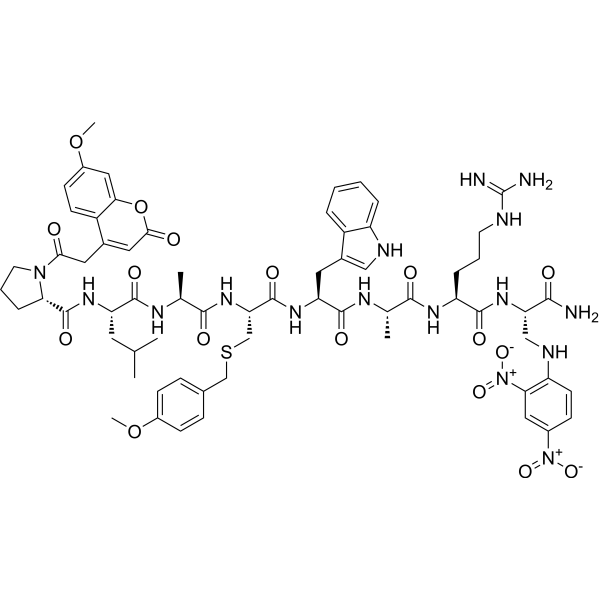
Mca-Pro-Leu-Ala-Cys(Mob)-Trp-Ala-Arg-Dap(Dnp)-NH2 is a fluorogenic substrate for matrix metalloproteinase-14 (MMP-14). Mca-Pro-Leu-Ala-Cys(Mob)-Trp-Ala-Arg-Dap(Dnp)-NH2, upon cleavage by MMP-14, releases 7-methoxycoumarin-4-acetyl (Mca) (Ex/Em = 328/420 nm).
|
-
- HY-P3098
-
|
|
MMP
|
Others
|
|
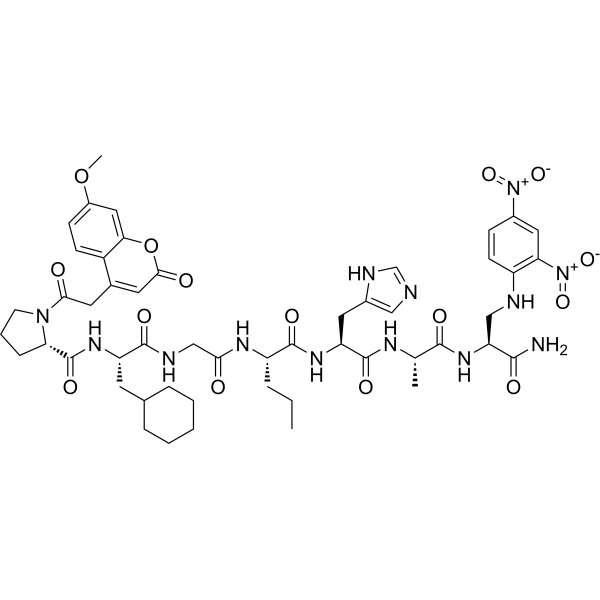
Mca-P-Cha-G-Nva-HA-Dap(DNP)-NH2 is a fluorogenic substrate for matrix metalloproteinase-1 (MMP-1), MMP-3, and MMP-26. Mca-P-Cha-G-Nva-HA-Dap(DNP)-NH2 can be used to quantify MMP-1, MMP-3 and MMP-26 activity .
|
-
- HY-D1634
-
|
|
Cathepsin
|
Others
|
|
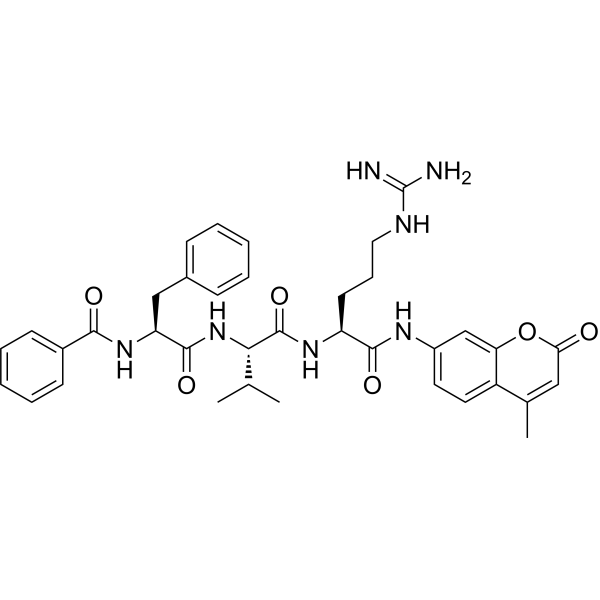
Bz-FVR-AMC is a fluorogenic substrate for procathepsin with a kcat/Km value of 1070 mM -1s -1. The high concentration of BZ-FVR-AMC inhibits the substrate .
|
-
- HY-D0831
-
|
|
Fluorescent Dye
|
Others
|
|
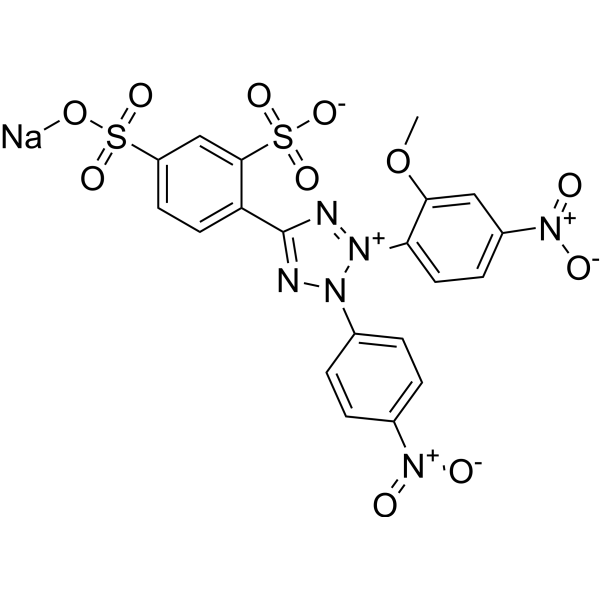
WST-8 is a water-soluble tetrazolium dye, WST-8 enhances sensitivity of the WST-8-based assay over the conventional MTS-based assay.
|
-
- HY-P2614
-
|
|
Caspase
|
Others
|
|
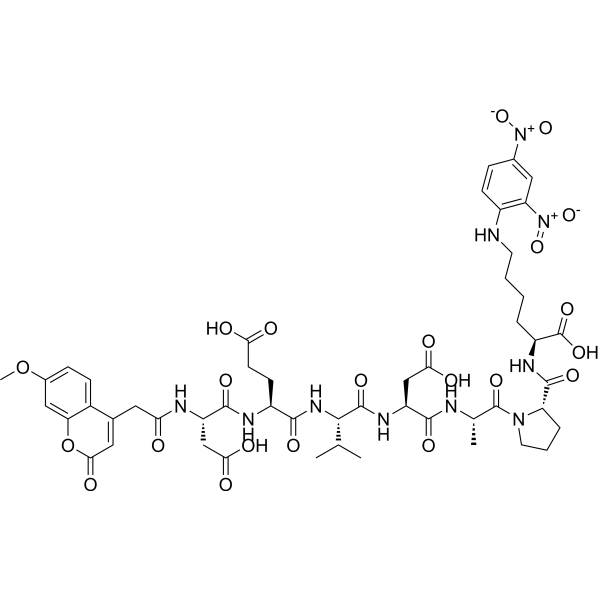
Mca-DEVDAP-K(Dnp)-OH is a fluorogenic substrate for caspase-3 .
|
-
- HY-P0019
-
-
- HY-15924
-
Thiazolyl Blue
Maximum Cited Publications
182 Publications Verification
MTT; Thiazolyl Blue Tetrazolium bromide; Methylthiazolyldiphenyl-tetrazolium bromide
|
Fluorescent Dye
|
Others
|
|
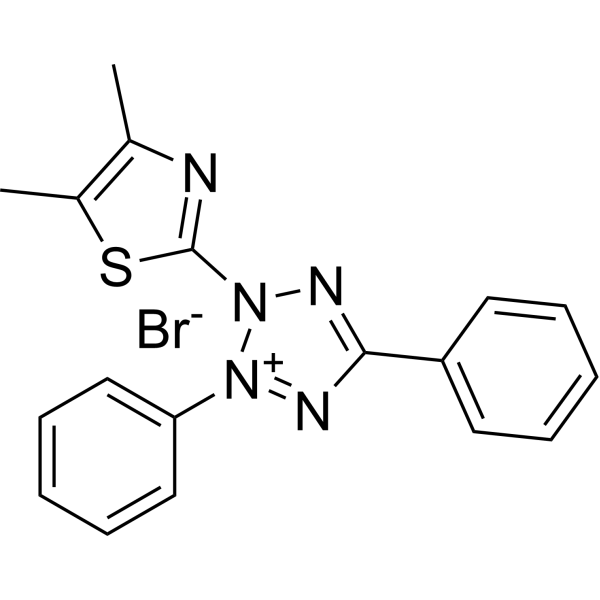
Thiazolyl Blue (MTT) is a cell-permeable and positively charged tetrazolium dye that is used to detect reductive metabolism in cells. Thiazolyl Blue is taken up by cells through the plasma membrane and then reduced to formazan by intracellular NAD (P) H-oxidoreductases. Thiazolyl Blue is frequently used in colorimetric assays to measure cell proliferation, cytotoxicity, and apoptosis .
|
-
- HY-D0994
-
|
4-MUP; MUP
|
Phosphatase
|
Others
|
|
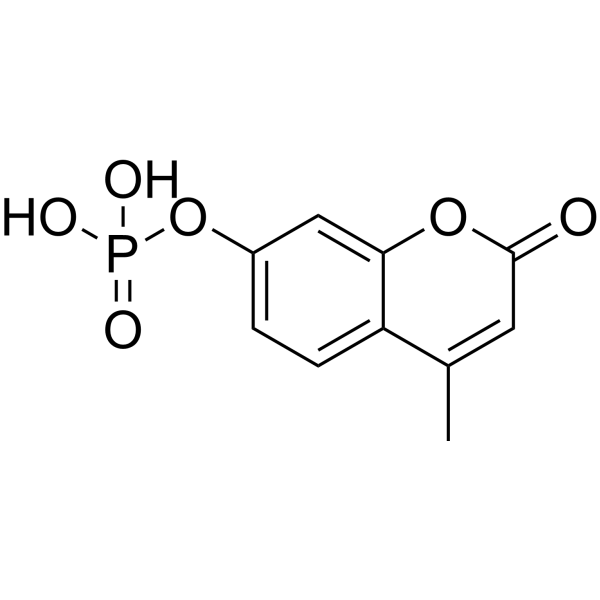
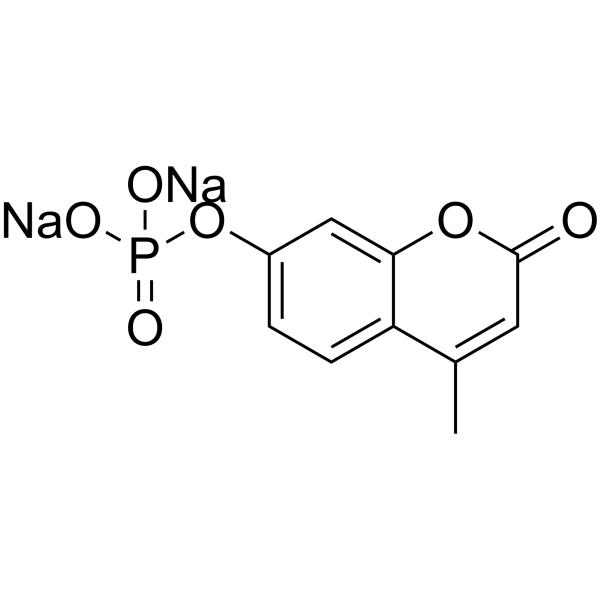
4-Methylumbelliferyl phosphate (4-MUP), an anionic organophosphate, is a acid and alkaline phosphatase fluorogenic substrate. 4-Methylumbelliferyl phosphate is also a nerve agent simulant .
|
-
- HY-N0116
-
|
Natural Black 1; Haematoxylin
|
Amyloid-β
|
Others
|
|
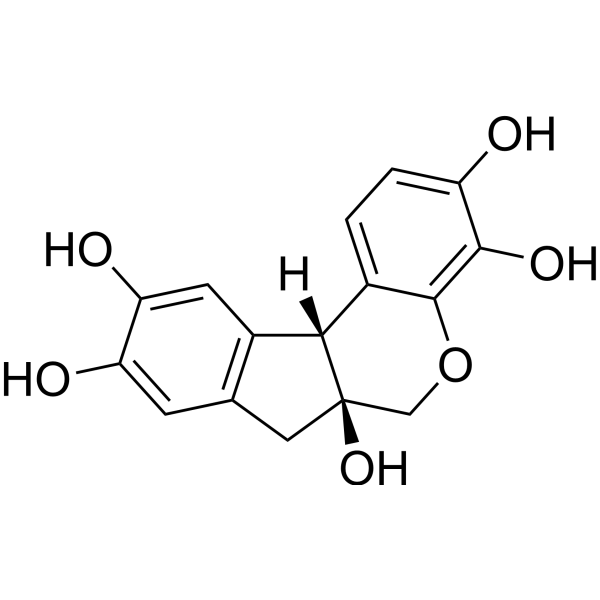
Hematoxylin (Natural Black 1), a naturally occurring flavonoid compound derived from Caesalpinia sappan Linn.. Hematoxylin is a nuclear stain in histology and is also a potent Aβ42 fibrillogenesis inhibitor with an IC50 of 1.6 μM.
|
-
- HY-P1003
-
|
|
Fluorescent Dye
|
Others
|
|
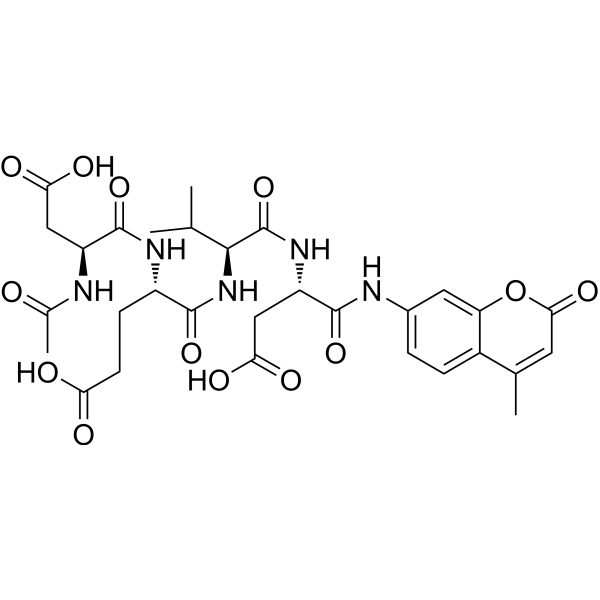
Ac-DEVD-AMC is a fluorescent substrate of caspase-3/caspase-7. When treating Ac-DEVD-AMC with cell lysate, Ac-DEVD-AMC releases amino-4-methylcoumarin (AMC) for fluorescence detection, with an excitation wavelength of 380 nm and an emission wavelength of 460 nm .
|
-
- HY-12591B
-
|
D-(-)-Luciferin potassium; Firefly luciferin potassium; Beetle Luciferin potassium
|
Fluorescent Dye
|
Others
|
|
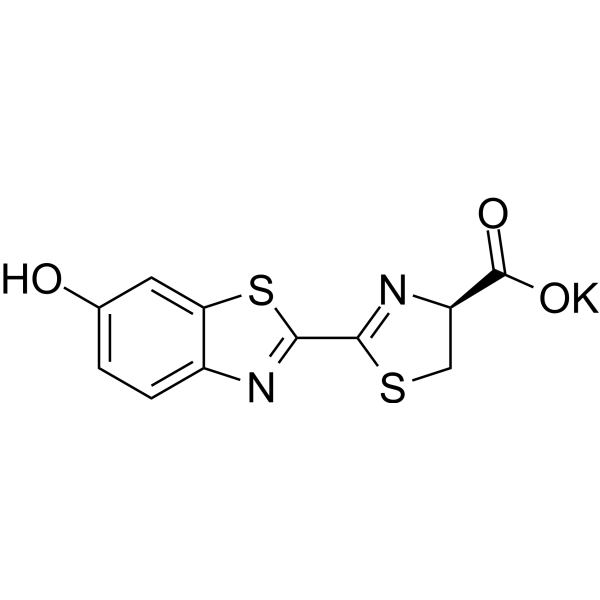
D-luciferin potassium is the natural substrate of the enzyme luciferase (Luc) that catalyzes the production of the typical yellowgreen light of fireflies. The 560 nm chemiluminescence from this reaction peaks within seconds, with light output that is proportional to luciferase concentration when the substrate luciferin is present in excess. The luciferase (luc) gene is a popular reporter gene for research and agent screening. Chemiluminescent techniques are virtually background-free, making the luc reporter gene ideal for detecting low-level gene expression. As little as 0.02 pg of luciferase can be reliably measured in a standard scintillation counter. In addition to its role as a reporter of gene expression, luciferase is commonly used in an extremely sensitive assay for ATP . We offer the firefly luciferase (HY-P1004A), luciferin free acid (HY-12591A), as well as its water-soluble sodium salts (HY-12591) and potassium salts (HY-12591B) .
|
-
- HY-12591
-
|
D-(-)-Luciferin sodium; Firefly luciferin sodium; Beetle Luciferin sodium
|
Fluorescent Dye
|
Others
|
|
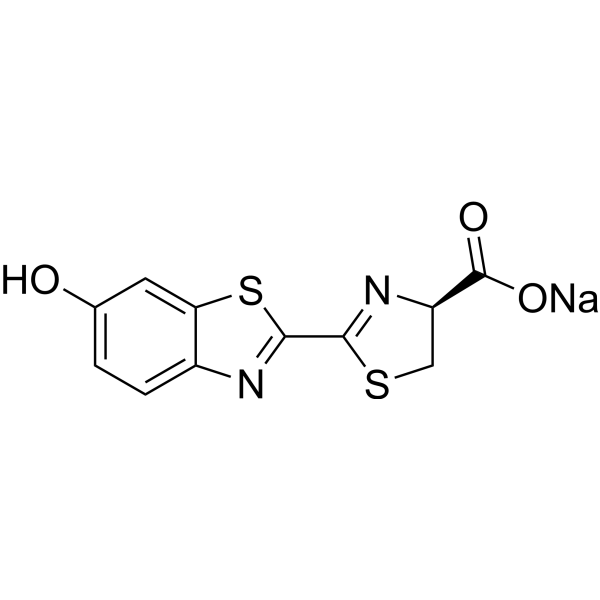
D-luciferin sodium is the natural substrate of the enzyme luciferase (Luc) that catalyzes the production of the typical yellowgreen light of fireflies. The 560 nm chemiluminescence from this reaction peaks within seconds, with light output that is proportional to luciferase concentration when the substrate luciferin is present in excess. The luciferase (luc) gene is a popular reporter gene for research and agent screening. Chemiluminescent techniques are virtually background-free, making the luc reporter gene ideal for detecting low-level gene expression. As little as 0.02 pg of luciferase can be reliably measured in a standard scintillation counter. In addition to its role as a reporter of gene expression, luciferase is commonly used in an extremely sensitive assay for ATP . We of er the firefly luciferase (HY-P1004A), luciferin free acid (HY-12591A), as well as its water-soluble sodium salts (HY-12591) and potassium salts (HY-12591B) .
|
-
- HY-15930C
-
|
BM blue monosulfate; Sure Blue TMB monosulfate
|
Fluorescent Dye
Reactive Oxygen Species (ROS)
|
Others
|
|
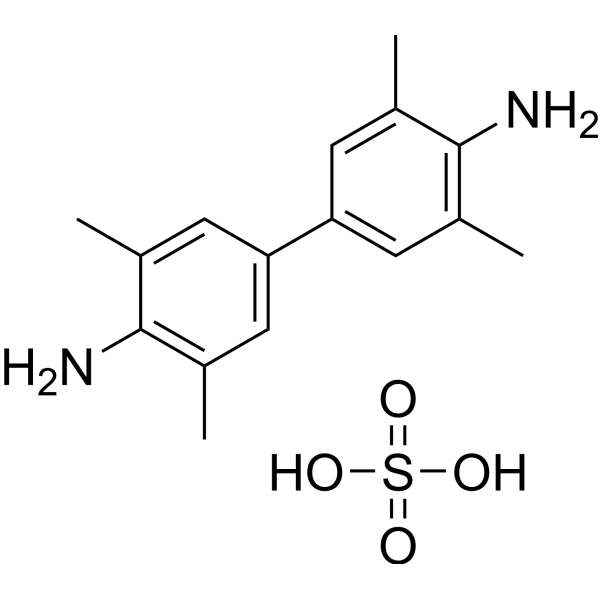
TMB monosulfate is the monosulfate form of TMB (HY-15930). TMB monosulfate is a non-toxic, non-mutagenic, colorless dye that is also used as a chromogenic agent in enzyme detection systems based on horseradish peroxidase (HRP). TMB monosulfate can function as a photoacoustic probe for reactive oxygen and nitrogen species (ROS/RNS), reacting with hypochlorite, hydrogen peroxide, singlet oxygen, and nitrogen dioxide to produce blue oxidation products. TMB monosulfate can detect the singlet oxygen produced by the outer membrane of Escherichia coli ATCC 25922 .
|
-
- HY-15934
-
X-GAL
5 Publications Verification
BCIG
|
Fluorescent Dye
Glycosidase
|
Others
|
|
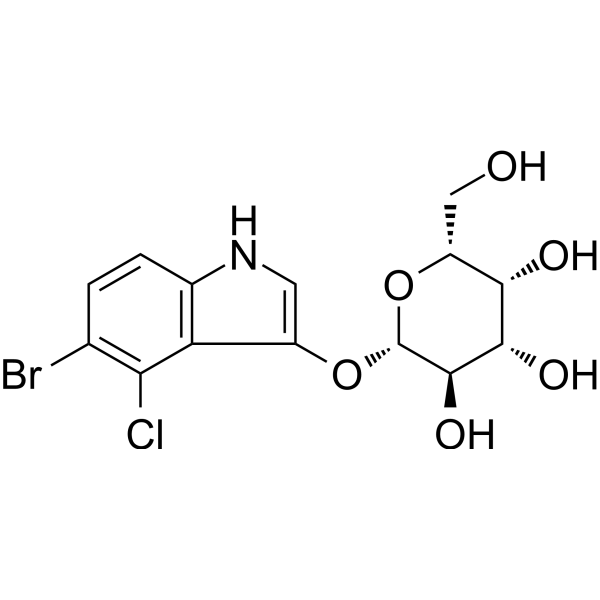
X-GAL (BCIG) is a widely used chromogenic β-galactosidase substrate. X-GAL is a colorless compound until cleaved by β-galactosidase, at which point X-GAL turns to an insoluble and detectable blue compound, making X-GAL particularly useful in techniques such as blue-white screening for cloning in bacteria. X-GAL can also be used for detection of β-galactosidase activity .
|
-
- HY-15925
-
|
NBT
|
Fluorescent Dye
|
Others
|
|
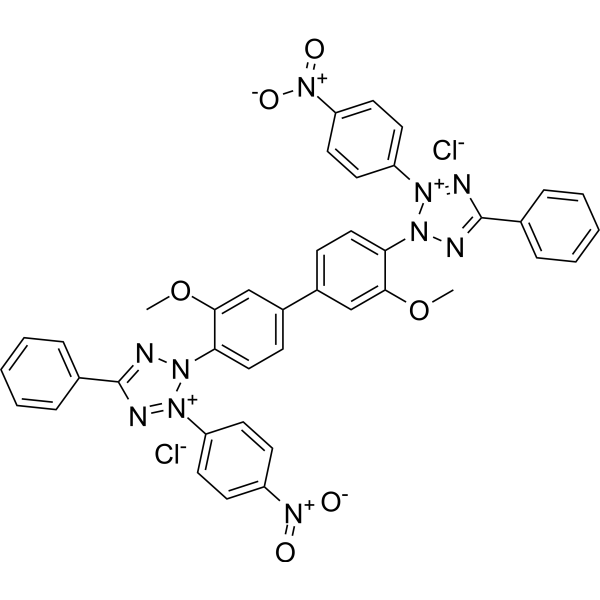
Nitro blue tetrazolium chloride (NBT) is a substrate for dehydrogenases; is used with the alkaline phosphatase substrate 5-Bromo-4-Chloro-3-Indolyl Phosphate (BCIP) in western blotting and immunohistological staining procedures .
|
-
- HY-15902
-
|
AzBTS-(NH4)2
|
Fluorescent Dye
|
Others
|
|
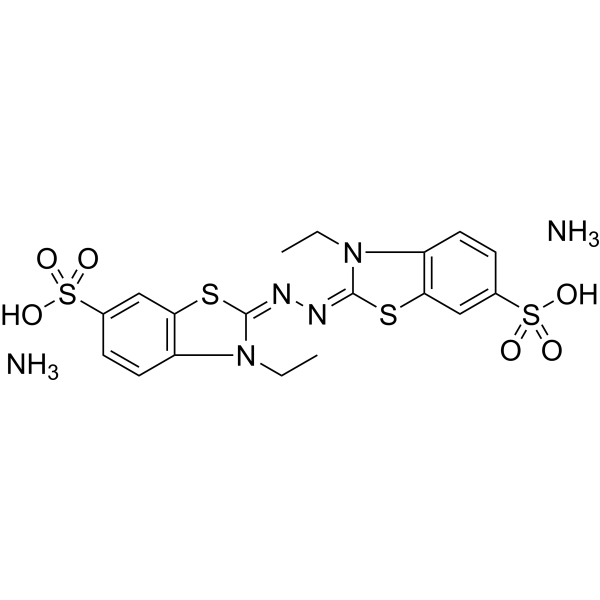
ABTS diammonium salt (AzBTS-(NH4)2) is a substrate for horseradish peroxidase (HRP) conjugate. ABTS diammonium salt can be used to evaluate antioxidant capacity .
|
-
- HY-15930R
-
|
BM blue (Standard); Sure Blue TMB (Standard)
|
Fluorescent Dye
Reactive Oxygen Species (ROS)
Reference Standards
|
Others
|
|
TMB (Standard) is the analytical standard of TMB. This product is intended for research and analytical applications. TMB is a non-toxic, non-mutagenic, colorless dye that is also used as a chromogenic agent in enzyme detection systems based on horseradish peroxidase (HRP). TMB can function as a photoacoustic probe for reactive oxygen and nitrogen species (ROS/RNS), reacting with hypochlorite, hydrogen peroxide, singlet oxygen, and nitrogen dioxide to produce blue oxidation products. TMB can detect the singlet oxygen produced by the outer membrane of Escherichia coli ATCC 25922 .
|
-

- HY-D1670
-
|
|
Fluorescent Dye
|
Others
|
|
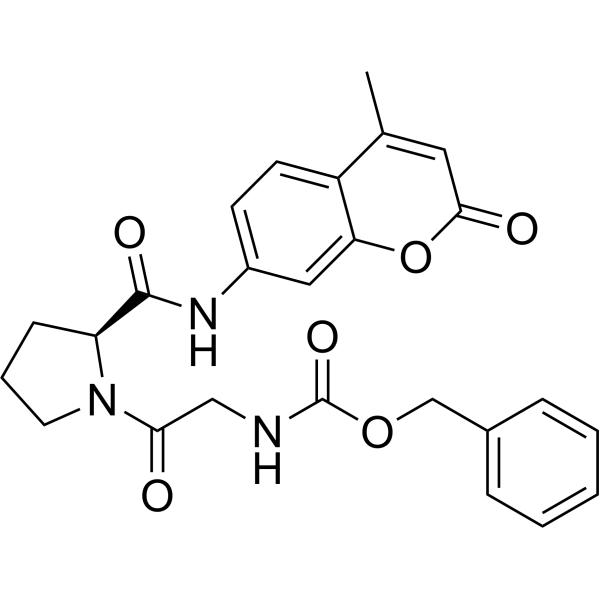
Z-Gly-Pro-AMC is a fluorogenic substrate. Z-Gly-Pro-AMC is hydrolyzed by prolyl endopeptidase to generate highly fluorescent 7-Amino-4-methylcoumarin (HY-D0027). (λex=380 nm, λem=465 nm) .
|
-
- HY-P0021
-
|
Chromozym Pca
|
Fluorescent Dye
|
Others
|
|
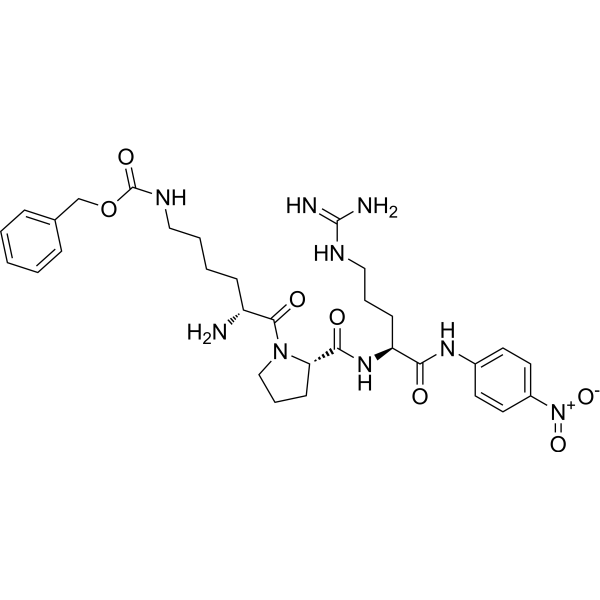
D-Lys(Z)-Pro-Arg-pNA (Chromozym Pca) is a chromogenic peptide substrate of activated protein C (APC) .
|
-
- HY-D0145
-
|
Resorufin ethyl ether
|
Cytochrome P450
NO Synthase
|
Others
|
|
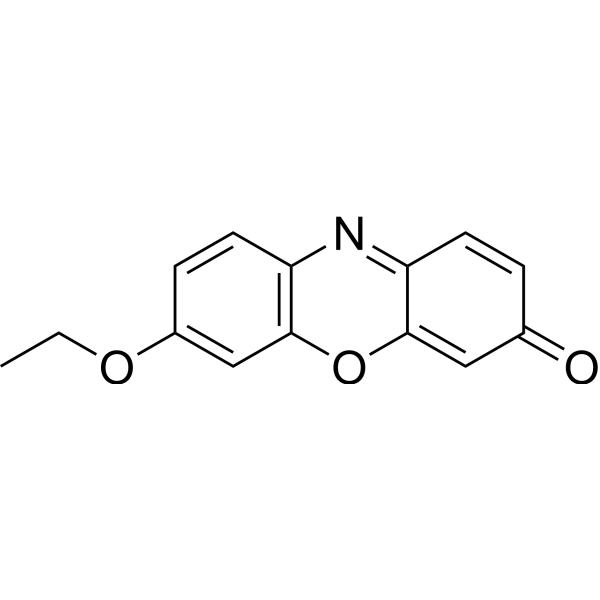
7-Ethoxyresorufin (Resorufin ethyl ether) is a fluorometric substrate and competitive inhibitor of cytochrome P450, especially CYP1A1. 7-Ethoxyresorufin also inhibits NO synthase .
|
-
- HY-P1448
-
-
- HY-D0935A
-
|
MUG
|
β-glucuronidase
Fluorescent Dye
|
Others
|
|
4-Methylumbelliferyl-β-D-glucuronide hydrate is a fluorogenic substrat (λex=362 nm, λem=445 nm). 4-Methylumbelliferyl-β-D-glucuronide hydrate has potential applications in detecting the activity of β-glucuronidase and the number of Escherichia coli .
|
-
- HY-P0021A
-
|
Spectrozyme PCa; Chromozym Pca diacetate
|
Fluorescent Dye
|
Others
|
|
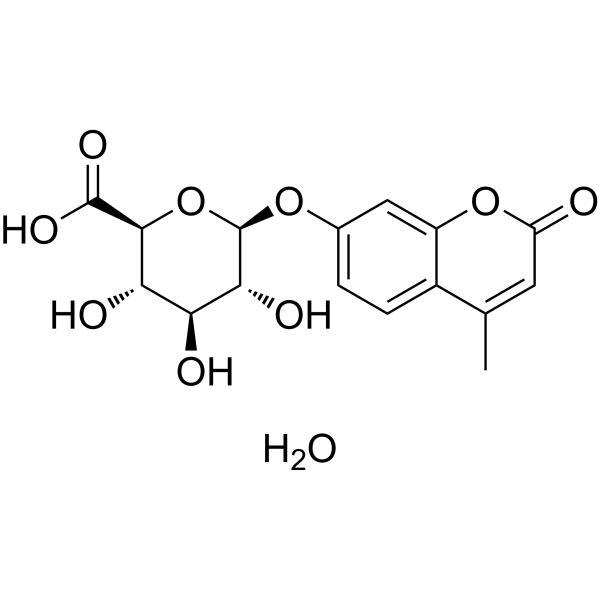
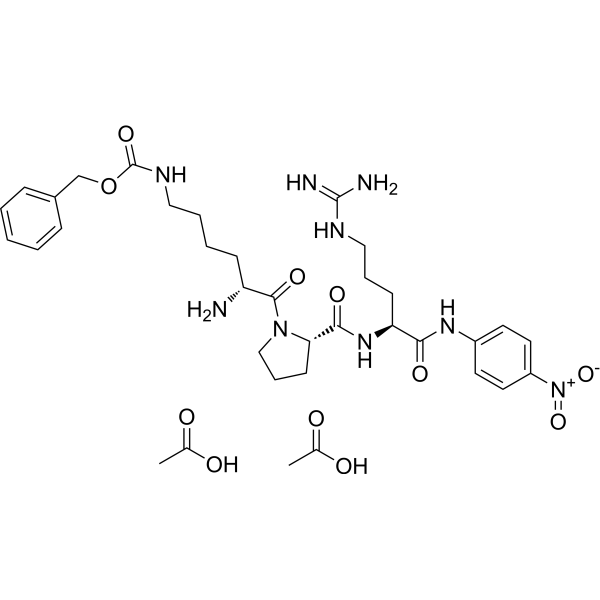
D-Lys(Z)-Pro-Arg-pNA diacetate is a chromogenic peptide substrate of activated protein C (APC) .
|
-
- HY-112641
-
|
|
Fluorescent Dye
|
Cancer
|
|
AkaLumine is a D-luciferin (HY-12591A) analogue with a Km of 2.06 μM for recombinant firefly luciferase (Fluc) protein. AkaLumine emits near-infrared (NIR) light (λmax=677 nm) in reactions with native Fluc. AkaLumine has high tissue-penetration and increases detection sensitivity from deep-tissue targets .
|
-

- HY-D1647
-
|
|
Phospholipase
|
Others
|
|
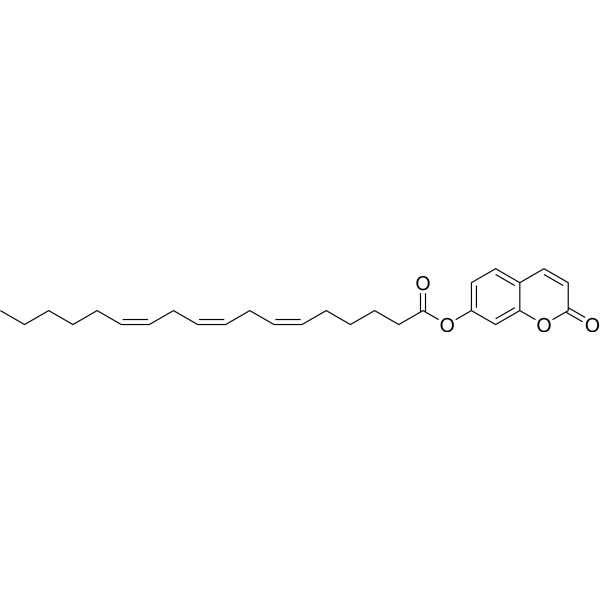
7-Hydroxycoumarinyl-γ-linolenate is a cytosolic phospholipase A2 (cPLA2) fluorogenic substrate. 7-Hydroxycoumarinyl-γ-linolenate can be used to monitor the enzymatic activity of cPLA2 .
|
-
- HY-P1093
-
|
|
Caspase
|
Others
|
|
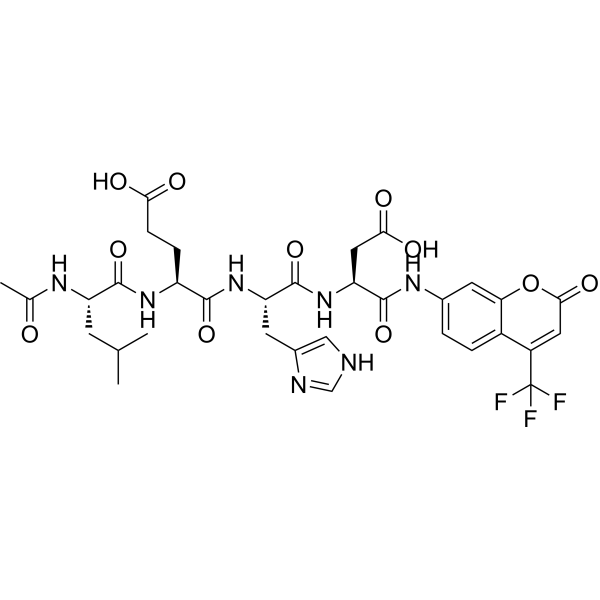
Ac-LEHD-AFC is a fluorescent substrate for caspase-9, can be used to assess the activity of caspase .
|
-
- HY-P2616
-
-
- HY-15930A
-
|
BM blue dihydrochloride; Sure Blue TMB dihydrochloride
|
Fluorescent Dye
Reactive Oxygen Species (ROS)
|
Others
|
|
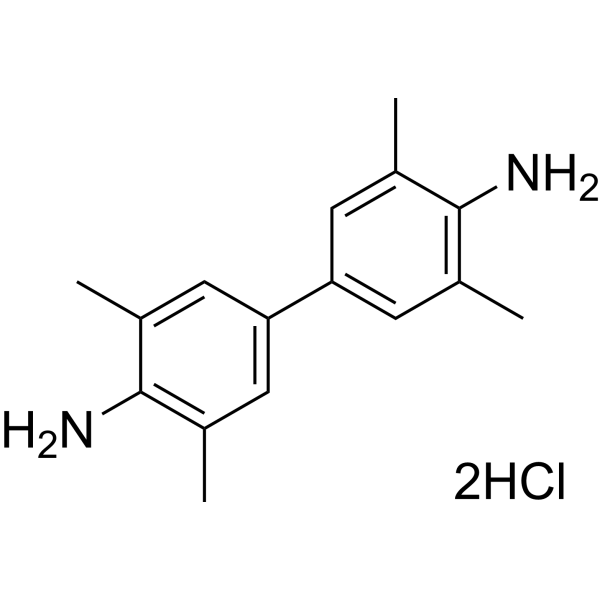
TMB dihydrochloride is the dihydrochloride form of TMB (HY-15930). TMB dihydrochloride is a non-toxic, non-mutagenic, colorless dye that is also used as a chromogenic agent in enzyme detection systems based on horseradish peroxidase (HRP). TMB dihydrochloride can function as a photoacoustic probe for reactive oxygen and nitrogen species (ROS/RNS), reacting with hypochlorite, hydrogen peroxide, singlet oxygen, and nitrogen dioxide to produce blue oxidation products. TMB dihydrochloride can detect the singlet oxygen produced by the outer membrane of Escherichia coli ATCC 25922 .
|
-
- HY-146248
-
|
|
SARS-CoV
Poly(ADP-ribose) Glycohydrolase (PARG)
Protease Activated Receptor (PAR)
|
Infection
|
|
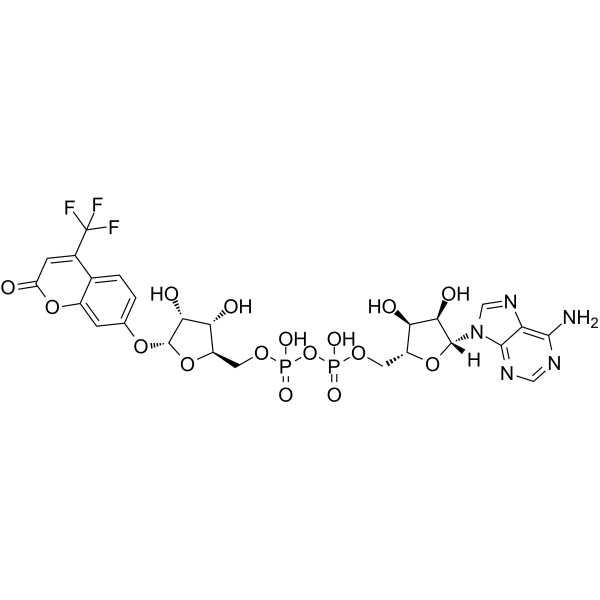
TFMU-ADPr is a selective reporter substrate of SARS-CoV-2 Macro1 (IC50=0.59 μM), with an excitation wavelength (λEx) of 385 nm, and an emission wavelength (λEm) of 502 nm (or 495 nm). TFMU-ADPr can also undergo enzymatic hydrolysis with Poly(ADP-ribose) Glycohydrolase (PARG) sourced from human, Tetrahymena thermophila and ADP-ribosylhydrolase 3 from human to release fluorophores, thereby directly reporting total poly (ADP-ribose) hydrolase activity. TFMU-ADPr binds to the ADPr-binding site of SARS-CoV-2 Macro1, and its TFMU moiety inserts into the narrow hydrophobic groove of this protein. TFMU-ADPr can thus be used to evaluate small-molecule inhibitors targeting PAR hydrolases under in vitro conditions, to investigate the regulatory mechanisms of ADP-ribosyl catabolic enzymes, or to detect PAR hydrolase activity in whole-cell lysate assays. TFMU-ADPr is also applicable to COVID-19-related research .
|
-
- HY-12591A
-
|
D-(-)-Luciferin; Firefly luciferin; Beetle Luciferin
|
Fluorescent Dye
|
Others
|
|
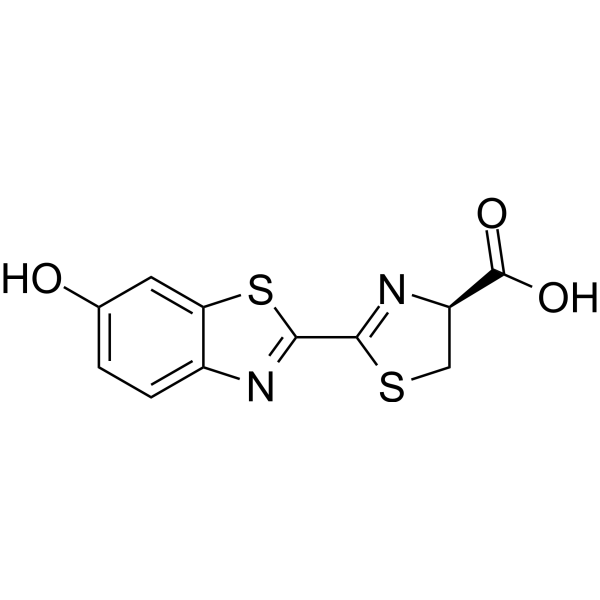
D-luciferin is the natural substrate of the enzyme luciferase (Luc) that catalyzes the production of the typical yellowgreen light of fireflies. The 560 nm chemiluminescence from this reaction peaks within seconds, with light output that is proportional to luciferase concentration when the substrate luciferin is present in excess. The luciferase (luc) gene is a popular reporter gene for research and agent screening. Chemiluminescent techniques are virtually background-free, making the luc reporter gene ideal for detecting low-level gene expression. As little as 0.02 pg of luciferase can be reliably measured in a standard scintillation counter. In addition to its role as a reporter of gene expression, luciferase is commonly used in an extremely sensitive assay for ATP . We of er the firefly luciferase (HY-P1004A), luciferin free acid (HY-12591A), as well as its water-soluble sodium salts (HY-12591) and potassium salts (HY-12591B) .
|
-
- HY-15931
-
|
TMBZ-PS
|
Fluorescent Dye
|
Others
|
|
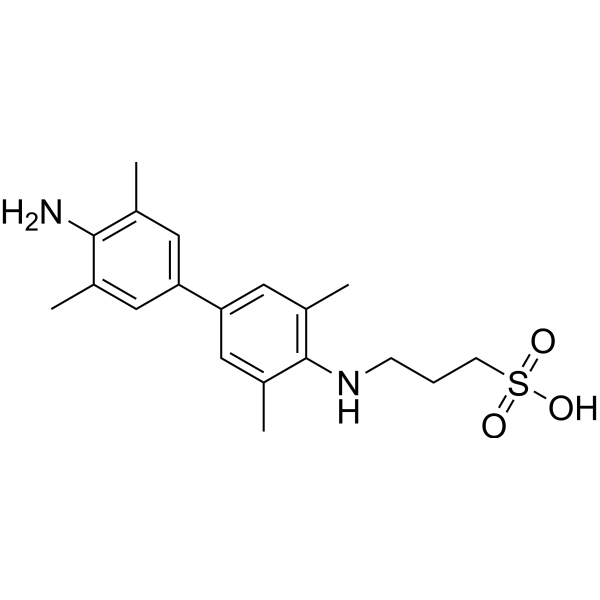
TMB-PS(102062-36-2) is N-(3-sulfopropyl)-3,3',5,5'-tetramenthylbenzidine sodium salt; White - pale yellow crystalline powder, soluble in water, can be used under neutral, acidic and alkaline conditions.
|
-
- HY-DY1086
-
|
MTT (solution); Thiazolyl Blue Tetrazolium bromide (solution); Methylthiazolyldiphenyl-tetrazolium bromide (solution)
|
Fluorescent Dye
|
Others
|
Thiazolyl Blue (solution) (MTT (solution)) is a cell-permeable and positively charged tetrazolium dye that is used to detect reductive metabolism in cells. Thiazolyl Blue is taken up by cells through the plasma membrane and then reduced to formazan by intracellular NAD (P) H-oxidoreductases. Thiazolyl Blue is frequently used in colorimetric assays to measure cell proliferation, cytotoxicity, and apoptosis .
Solvent and concentration: PBS: 5 mg/mL
|
-

- HY-111653
-
CycLuc1
2 Publications Verification
|
Reactive Oxygen Species (ROS)
|
Others
|
|
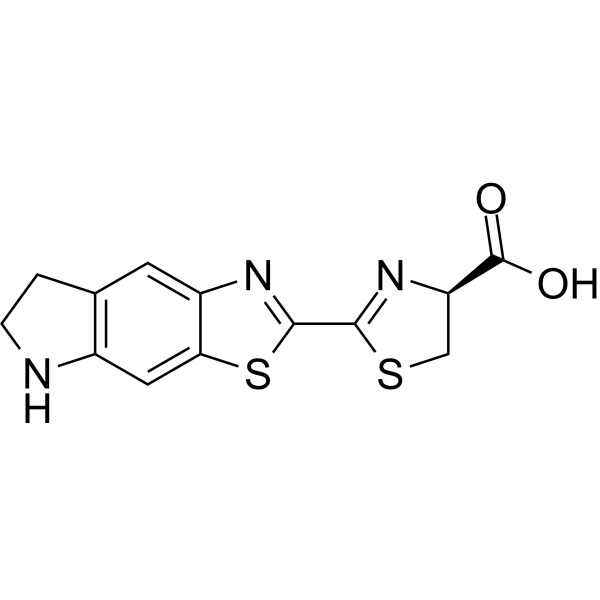
CycLuc1 is a blood-brain barrier permeable luciferase substrate that displays near-infrared (NIR) emission with a peak luminescence wavelength of 599 nm. CycLuc1 can be used for in vivo bioluminescence imaging .
|
-
- HY-D0994A
-
|
4-MUP disodium; MUP disodium
|
Phosphatase
|
Others
|
|
4-Methylumbelliferyl phosphate (4-MUP) disodium, an anionic organophosphate, is a acid and alkaline phosphatase fluorogenic substrate. 4-Methylumbelliferyl phosphate disodium is also a nerve agent simulant .
|
-
- HY-P0019A
-
|
|
Fluorescent Dye
Thrombin
|
Others
|
|
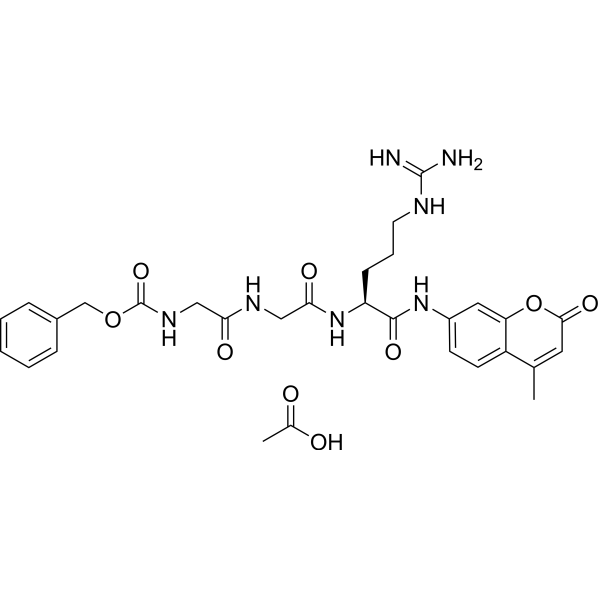
Z-Gly-Gly-Arg-AMC acetate is a thrombin-specific fluorogenic substrate for testing of thrombin generation in PRP and platelet-poor plasma (PPP) (Ex/Em = 390/480 nm) .
|
-
- HY-D0829
-
|
|
DNA Stain
|
Others
|
|
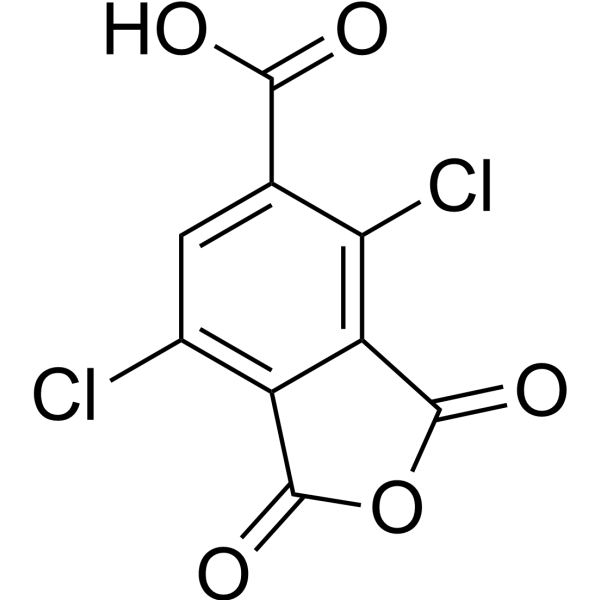
3,6-Dichlorotrimellitic anhydride is the key precursor that is used for preparing a variety of dichlorinated fluoresceins and rhodamines such as TET and HEX.
|
-
- HY-129096
-
IDT307
2 Publications Verification
|
Fluorescent Dye
|
Others
|
|
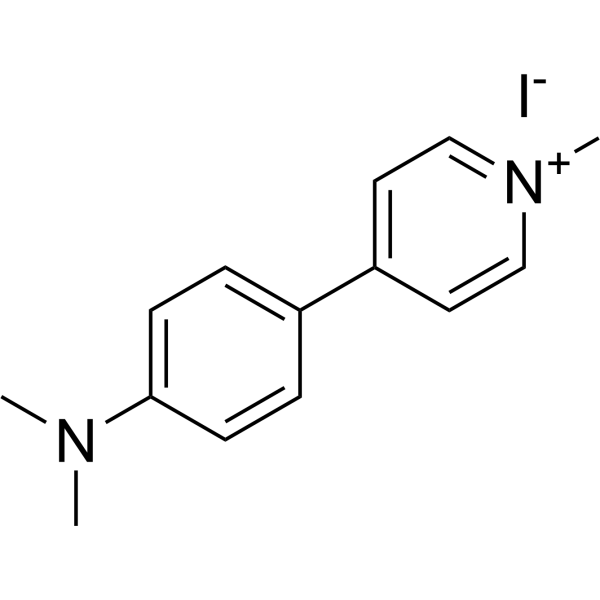
IDT307, an analog of the organic cation MPP+, is a specific fluorescent substrate for DAT (fluorescent substrate APP+) .
|
-
- HY-D0144
-
|
Methoxyresorufin
|
Cytochrome P450
|
Others
|
|
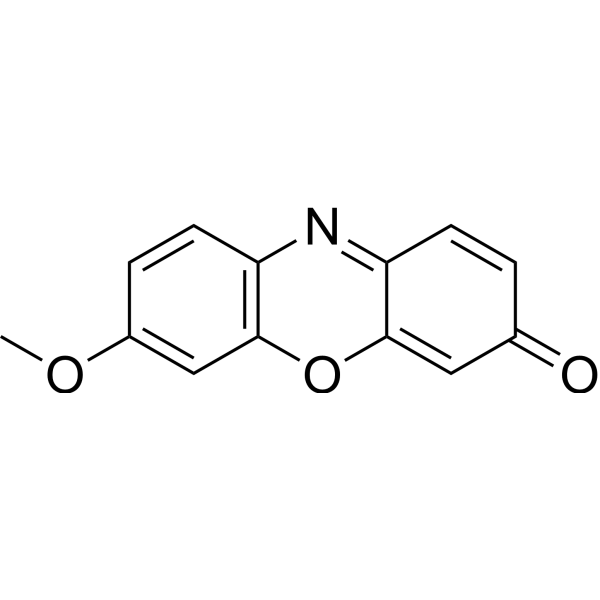
Resorufin methyl ether (Methoxyresorufin) is a cytochrome P450 fluorometric substrate . Resorufin methyl ether is a relatively specific substrate for CYP1A2 activity in rodents .
|
-
- HY-D1208
-
-
- HY-112641A
-
|
|
Fluorescent Dye
|
Cancer
|
|
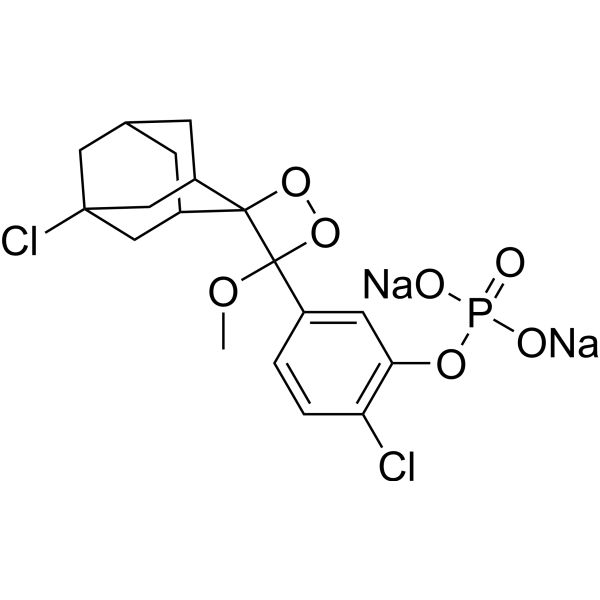
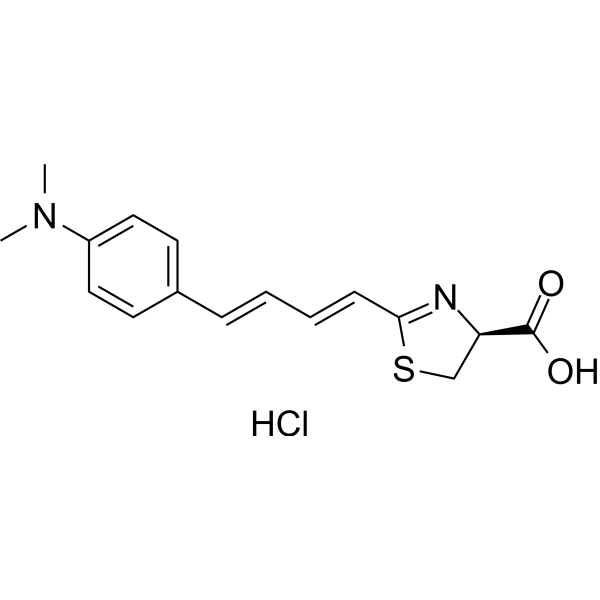
AkaLumine hydrochloride is a D-luciferin (HY-12591A) analogue with a Km of 2.06 μM for recombinant firefly luciferase (Fluc) protein. AkaLumine hydrochloride emits near-infrared (NIR) light (λmax=677 nm) in reactions with native Fluc. AkaLumine hydrochloride has high tissue-penetration and increases detection sensitivity from deep-tissue targets .
|
-
- HY-P3363
-
|
|
Caspase
|
Cancer
|
|
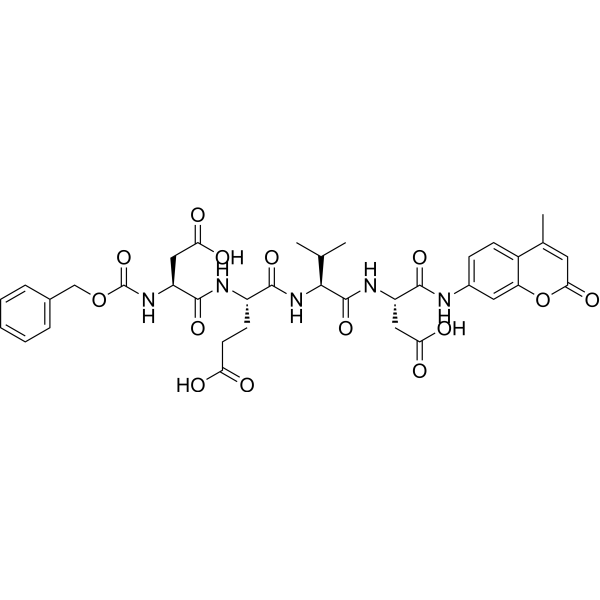
Z-DEVD-AMC is a selective caspase-3 substrate that can be measured by fluorescence spectrometry. AMC can be used as a fluorescence reference standard for AMC-based enzyme substrates including AMC-based caspase substrates .
|
-
- HY-15930
-
|
BM blue; Sure Blue TMB
|
Fluorescent Dye
MOFs
Reactive Oxygen Species (ROS)
|
Others
|
|
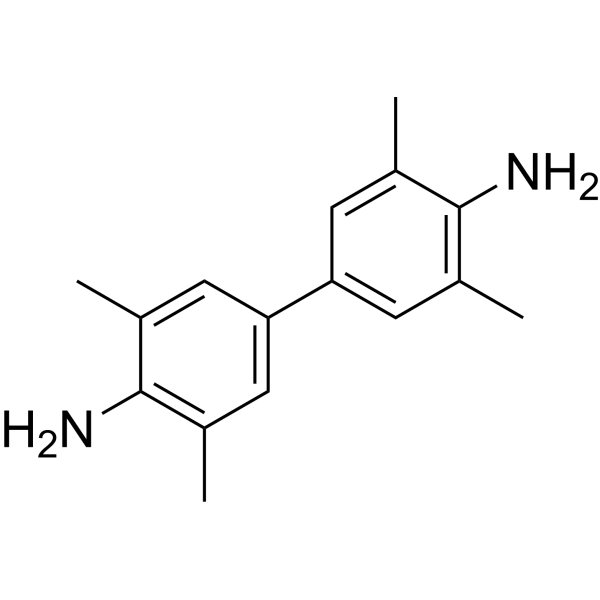
TMB is a non-toxic, non-mutagenic, colorless dye that is also used as a chromogenic agent in enzyme detection systems based on horseradish peroxidase (HRP). TMB can function as a photoacoustic probe for reactive oxygen and nitrogen species (ROS/RNS), reacting with hypochlorite, hydrogen peroxide, singlet oxygen, and nitrogen dioxide to produce blue oxidation products. TMB can detect the singlet oxygen produced by the outer membrane of Escherichia coli ATCC 25922 .
|
-
- HY-W127711
-
|
|
Phosphatase
Lipase
|
Metabolic Disease
Inflammation/Immunology
|
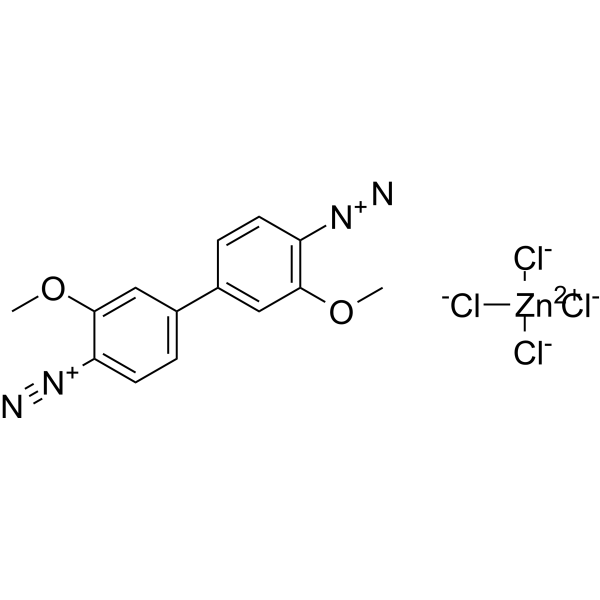
Fast Blue B Salt, Dye content ~95% is a diazo dye, primarily used as a chromogenic substrate in biochemical analysis. Fast Blue B Salt, Dye content ~95% is the coupling agent for the histochemical demonstration of proteases. Fast Blue B Salt, Dye content ~95% can be used for the detection of acid phosphatase in Clostridium perfringens, and also for the determination of lipase activity. Fast Blue B Salt, Dye content ~95% reacts directly with the active hydroxyl groups in phenolic compounds to determine the content of phenolic substances .
|
-
- HY-D1224A
-
|
CPRG sodium
|
Biochemical Assay Reagents
|
Others
|
|
Chlorophenol red-β-D-galactopyranoside (CPRG) sodium is an efficient and sensitive chromogenic substrate for β-galactosidase (HY-P2869), widely used in colorimetric assays. Chlorophenol red-β-D-galactopyranoside sodium itself appears pale yellow. When it is specifically hydrolyzed by β-galactosidase, it releases chlorophenol red. The released chlorophenol red turns purple-red under alkaline or neutral pH conditions. This color change from yellow to red can be quantitatively detected at wavelengths of 540-572 nm using visible spectrophotometry .
|
-

- HY-15927
-
|
|
Biochemical Assay Reagents
|
Metabolic Disease
|
|
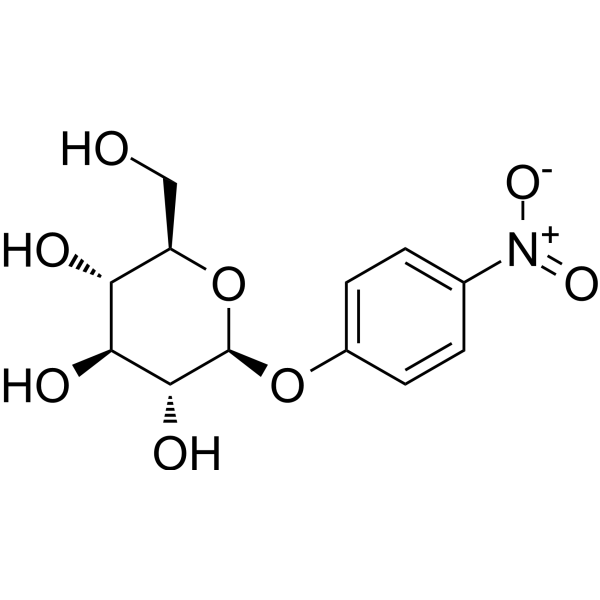
4-Nitrophenyl β-D-glucopyranoside is a chromogenic substrate for β-glucosidase. 4-Nitrophenyl β-D-glucopyranoside is converted to a colored product, p-nitrophenol that is easily detected spectrophotometrically at 405 nm when used in a β-glycosidase assay. 4-Nitrophenyl β-D-glucopyranoside is hydrolysed through intramolecular nucleophilic catalysis by the phosphate group in the 2-position. 4-Nitrophenyl β-D-glucopyranoside is promising for research of postmenopausal osteoporosis .
|
-
- HY-D1224
-
|
CPRG
|
Biochemical Assay Reagents
|
Others
|
|
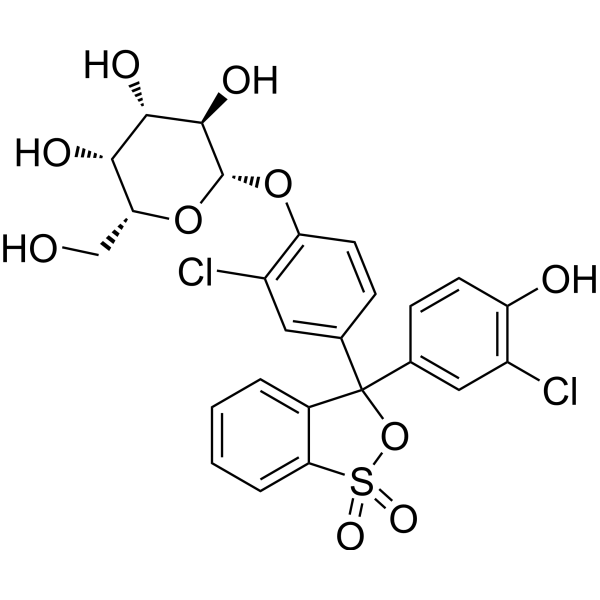
Chlorophenol red-β-D-galactopyranoside (CPRG) is an efficient and sensitive chromogenic substrate for β-galactosidase (HY-P2869), widely used in colorimetric assays. Chlorophenol red-β-D-galactopyranoside itself appears pale yellow. When it is specifically hydrolyzed by β-galactosidase, it releases chlorophenol red. The released chlorophenol red turns purple-red under alkaline or neutral pH conditions. This color change from yellow to red can be quantitatively detected at wavelengths of 540-572 nm using visible spectrophotometry .
|
-
- HY-137779
-
|
|
Biochemical Assay Reagents
|
Others
|
|
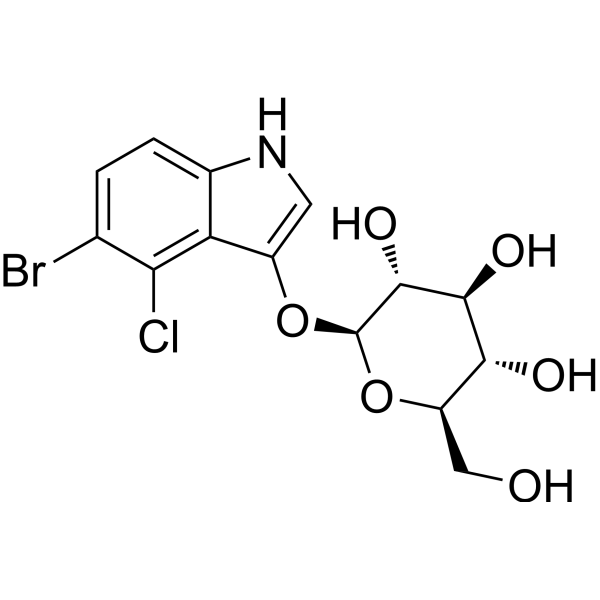
5-Bromo-4-chloro-3-indolyl β-D-glucopyranoside, a chromogenic substrate for the detection of β-galactosidase activity. It is commonly used in molecular biology techniques such as gene expression analysis and reporter gene analysis. When β-galactosidase cleaves X-Gluc, a blue precipitate is produced, which can be observed by microscopy or other detection methods. X-Gluc has high sensitivity and specificity for the detection of β-galactosidase activity, making it a widely used tool in molecular biology research.
|
-
- HY-137276
-
|
Bluo-Gal
|
Fluorescent Dye
Glycosidase
|
Others
|
|
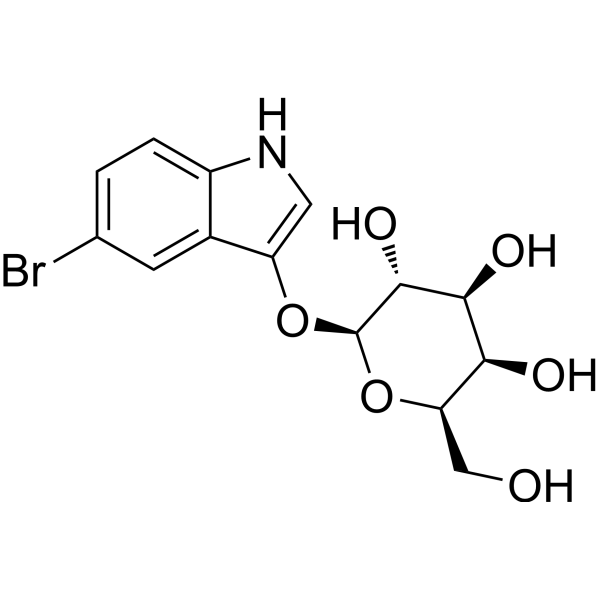
5-Bromo-3-indolyl β-D-galactopyranoside (Bluo-Gal) is a chromogenic substrate for β-galactosidase. 5-Bromo-3-indolyl β-D-galactopyranoside is hydrolyzed by the enzyme to generate a 5-bromoindole intermediate, which is further oxidized to form an insoluble blue precipitate. 5-Bromo-3-indolyl β-D-galactopyranoside can specifically recognize bacterial β-galactosidases (such as the product of the Escherichia coli lacZ gene) and reacts at pH 7.4, making it suitable for light and electron microscopic observations. 5-Bromo-3-indolyl β-D-galactopyranoside can be used in histochemical detection of reporter gene expression in transgenic organisms, such as the localization analysis of β-galactosidase activity in mouse embryos or muscle tissues .
|
-
- HY-W354821
-
|
4-MUD
|
Fluorescent Dye
|
Metabolic Disease
|
|
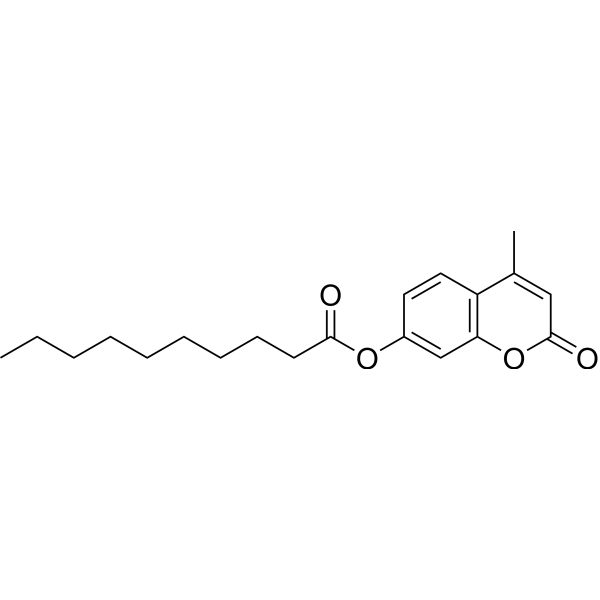
4-Methyl-2-oxo-2H-1-benzopyran-7-yl decanoate is a fluorogenic substrate used to follow the hydrolytic activity of carboxylesterases .
|
-
- HY-W357142
-
-
- HY-W010991
-
|
FAPGG
|
Angiotensin-converting Enzyme (ACE)
|
Others
|
|
N-[3-(2-Furyl)acryloyl]-Phe-Gly-Gly (FAPGG) is a specific substrate of angiotensin converting enzyme (ACE) with a Ki of 2.546×10 -4 M. It is used as a chromogenic probe for quantitative detection of ACE activity. N-[3-(2-Furyl)acryloyl]-Phe-Gly-Gly can be hydrolyzed by ACE to generate N-[3-(2-furyl)acryloyl]-Phe (FAP) and Gly-Gly, and the ACE inhibitory effect is monitored by photometry. FAPGG competitively binds to the active center of ACE and is a key tool for screening ACE inhibitors such as Captopril (HY-B0368) and Dioscorin. Its reversible mechanism of action supports hypertension research and drug development targeting the renin-angiotensin system .
|
-
![N-[3-(2-Furyl)acryloyl]-Phe-Gly-Gly](//file.medchemexpress.com/product_pic/hy-w010991.gif)
- HY-148073
-
|
|
Fluorescent Dye
Ser/Thr Protease
|
Others
|
|
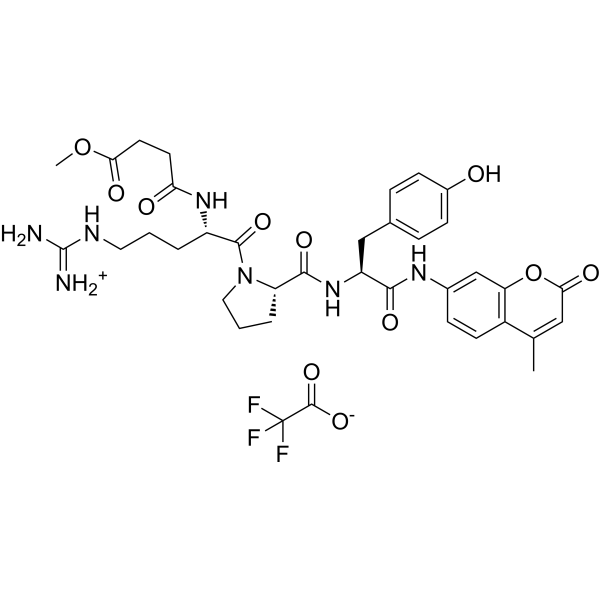
MeO-Succ-Arg-Pro-Tyr-AMC TFA is a fluorogenic peptide substrate for chymotrypsin-like proteases that detects protease activity . (measured at 460 nm)
|
-
| Cat. No. |
Product Name |
Type |
-
- HY-12591B
-
|
D-(-)-Luciferin potassium; Firefly luciferin potassium; Beetle Luciferin potassium
|
Fluorescent Dyes
|
|
D-luciferin potassium is the natural substrate of the enzyme luciferase (Luc) that catalyzes the production of the typical yellowgreen light of fireflies. The 560 nm chemiluminescence from this reaction peaks within seconds, with light output that is proportional to luciferase concentration when the substrate luciferin is present in excess. The luciferase (luc) gene is a popular reporter gene for research and agent screening. Chemiluminescent techniques are virtually background-free, making the luc reporter gene ideal for detecting low-level gene expression. As little as 0.02 pg of luciferase can be reliably measured in a standard scintillation counter. In addition to its role as a reporter of gene expression, luciferase is commonly used in an extremely sensitive assay for ATP . We offer the firefly luciferase (HY-P1004A), luciferin free acid (HY-12591A), as well as its water-soluble sodium salts (HY-12591) and potassium salts (HY-12591B) .
|
-
- HY-12591
-
|
D-(-)-Luciferin sodium; Firefly luciferin sodium; Beetle Luciferin sodium
|
Fluorescent Dyes
|
|
D-luciferin sodium is the natural substrate of the enzyme luciferase (Luc) that catalyzes the production of the typical yellowgreen light of fireflies. The 560 nm chemiluminescence from this reaction peaks within seconds, with light output that is proportional to luciferase concentration when the substrate luciferin is present in excess. The luciferase (luc) gene is a popular reporter gene for research and agent screening. Chemiluminescent techniques are virtually background-free, making the luc reporter gene ideal for detecting low-level gene expression. As little as 0.02 pg of luciferase can be reliably measured in a standard scintillation counter. In addition to its role as a reporter of gene expression, luciferase is commonly used in an extremely sensitive assay for ATP . We of er the firefly luciferase (HY-P1004A), luciferin free acid (HY-12591A), as well as its water-soluble sodium salts (HY-12591) and potassium salts (HY-12591B) .
|
-
- HY-15924
-
Thiazolyl Blue
Maximum Cited Publications
182 Publications Verification
MTT; Thiazolyl Blue Tetrazolium bromide; Methylthiazolyldiphenyl-tetrazolium bromide
|
Fluorescent Dyes
|
|
Thiazolyl Blue (MTT) is a cell-permeable and positively charged tetrazolium dye that is used to detect reductive metabolism in cells. Thiazolyl Blue is taken up by cells through the plasma membrane and then reduced to formazan by intracellular NAD (P) H-oxidoreductases. Thiazolyl Blue is frequently used in colorimetric assays to measure cell proliferation, cytotoxicity, and apoptosis .
|
-
- HY-12591A
-
|
D-(-)-Luciferin; Firefly luciferin; Beetle Luciferin
|
Fluorescent Dyes
|
|
D-luciferin is the natural substrate of the enzyme luciferase (Luc) that catalyzes the production of the typical yellowgreen light of fireflies. The 560 nm chemiluminescence from this reaction peaks within seconds, with light output that is proportional to luciferase concentration when the substrate luciferin is present in excess. The luciferase (luc) gene is a popular reporter gene for research and agent screening. Chemiluminescent techniques are virtually background-free, making the luc reporter gene ideal for detecting low-level gene expression. As little as 0.02 pg of luciferase can be reliably measured in a standard scintillation counter. In addition to its role as a reporter of gene expression, luciferase is commonly used in an extremely sensitive assay for ATP . We of er the firefly luciferase (HY-P1004A), luciferin free acid (HY-12591A), as well as its water-soluble sodium salts (HY-12591) and potassium salts (HY-12591B) .
|
-
- HY-15902
-
|
AzBTS-(NH4)2
|
Fluorescent Dyes
|
|
ABTS diammonium salt (AzBTS-(NH4)2) is a substrate for horseradish peroxidase (HRP) conjugate. ABTS diammonium salt can be used to evaluate antioxidant capacity .
|
-
- HY-15925
-
|
NBT
|
Fluorescent Dyes
|
|
Nitro blue tetrazolium chloride (NBT) is a substrate for dehydrogenases; is used with the alkaline phosphatase substrate 5-Bromo-4-Chloro-3-Indolyl Phosphate (BCIP) in western blotting and immunohistological staining procedures .
|
-
- HY-D0831
-
|
|
Fluorescent Dyes
|
|
WST-8 is a water-soluble tetrazolium dye, WST-8 enhances sensitivity of the WST-8-based assay over the conventional MTS-based assay.
|
-
- HY-15934
-
X-GAL
5 Publications Verification
BCIG
|
Fluorescent Dyes
|
|
X-GAL (BCIG) is a widely used chromogenic β-galactosidase substrate. X-GAL is a colorless compound until cleaved by β-galactosidase, at which point X-GAL turns to an insoluble and detectable blue compound, making X-GAL particularly useful in techniques such as blue-white screening for cloning in bacteria. X-GAL can also be used for detection of β-galactosidase activity .
|
-
- HY-112641A
-
|
|
Fluorescent Dyes
|
|
AkaLumine hydrochloride is a D-luciferin (HY-12591A) analogue with a Km of 2.06 μM for recombinant firefly luciferase (Fluc) protein. AkaLumine hydrochloride emits near-infrared (NIR) light (λmax=677 nm) in reactions with native Fluc. AkaLumine hydrochloride has high tissue-penetration and increases detection sensitivity from deep-tissue targets .
|
-
- HY-N0116
-
|
Natural Black 1; Haematoxylin
|
Fluorescent Dyes
|
|
Hematoxylin (Natural Black 1), a naturally occurring flavonoid compound derived from Caesalpinia sappan Linn.. Hematoxylin is a nuclear stain in histology and is also a potent Aβ42 fibrillogenesis inhibitor with an IC50 of 1.6 μM.
|
-
- HY-D1670
-
|
|
Fluorescent Dyes
|
|
Z-Gly-Pro-AMC is a fluorogenic substrate. Z-Gly-Pro-AMC is hydrolyzed by prolyl endopeptidase to generate highly fluorescent 7-Amino-4-methylcoumarin (HY-D0027). (λex=380 nm, λem=465 nm) .
|
-
- HY-15928
-
|
p-Nitrophenyl phosphate disodium
|
Fluorescent Dyes
|
|
4-Nitrophenyl phosphate (p-Nitrophenyl phosphate) disodium is a non-proteinaceous chromogenic substrate for alkaline and acid phosphatases used in ELISA and conventional spectrophotometric assays.
|
-
- HY-101895
-
|
FDG
|
Fluorescent Dyes
|
|
Fluorescein di(β-D-galactopyranoside) is a fluorogenic substrate for β-galactosidase (λex=485 nm, λem=535 nm).
|
-
- HY-111653
-
CycLuc1
2 Publications Verification
|
Fluorescent Dyes
|
|
CycLuc1 is a blood-brain barrier permeable luciferase substrate that displays near-infrared (NIR) emission with a peak luminescence wavelength of 599 nm. CycLuc1 can be used for in vivo bioluminescence imaging .
|
-
- HY-D0994
-
|
4-MUP; MUP
|
Fluorescent Dyes
|
|
4-Methylumbelliferyl phosphate (4-MUP), an anionic organophosphate, is a acid and alkaline phosphatase fluorogenic substrate. 4-Methylumbelliferyl phosphate is also a nerve agent simulant .
|
-
- HY-W010991
-
|
FAPGG
|
Fluorescent Dyes
|
|
N-[3-(2-Furyl)acryloyl]-Phe-Gly-Gly (FAPGG) is a specific substrate of angiotensin converting enzyme (ACE) with a Ki of 2.546×10 -4 M. It is used as a chromogenic probe for quantitative detection of ACE activity. N-[3-(2-Furyl)acryloyl]-Phe-Gly-Gly can be hydrolyzed by ACE to generate N-[3-(2-furyl)acryloyl]-Phe (FAP) and Gly-Gly, and the ACE inhibitory effect is monitored by photometry. FAPGG competitively binds to the active center of ACE and is a key tool for screening ACE inhibitors such as Captopril (HY-B0368) and Dioscorin. Its reversible mechanism of action supports hypertension research and drug development targeting the renin-angiotensin system .
|
-
- HY-P0019
-
|
|
Fluorescent Dyes
|
|
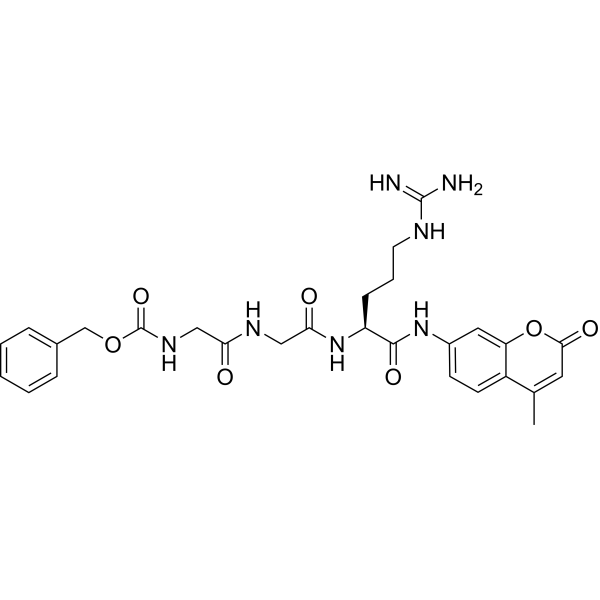
Z-Gly-Gly-Arg-AMC is a thrombin-specific fluorogenic substrate for testing of thrombin generation in PRP and platelet-poor plasma (PPP) (Ex/Em = 390/480 nm) .
|
-
- HY-15930
-
|
BM blue; Sure Blue TMB
|
Fluorescent Dyes
|
|
TMB is a non-toxic, non-mutagenic, colorless dye that is also used as a chromogenic agent in enzyme detection systems based on horseradish peroxidase (HRP). TMB can function as a photoacoustic probe for reactive oxygen and nitrogen species (ROS/RNS), reacting with hypochlorite, hydrogen peroxide, singlet oxygen, and nitrogen dioxide to produce blue oxidation products. TMB can detect the singlet oxygen produced by the outer membrane of Escherichia coli ATCC 25922 .
|
-
- HY-D0935A
-
|
MUG
|
Fluorescent Dyes
|
|
4-Methylumbelliferyl-β-D-glucuronide hydrate is a fluorogenic substrat (λex=362 nm, λem=445 nm). 4-Methylumbelliferyl-β-D-glucuronide hydrate has potential applications in detecting the activity of β-glucuronidase and the number of Escherichia coli .
|
-
- HY-W127711
-
|
|
Fluorescent Dyes
|
Fast Blue B Salt, Dye content ~95% is a diazo dye, primarily used as a chromogenic substrate in biochemical analysis. Fast Blue B Salt, Dye content ~95% is the coupling agent for the histochemical demonstration of proteases. Fast Blue B Salt, Dye content ~95% can be used for the detection of acid phosphatase in Clostridium perfringens, and also for the determination of lipase activity. Fast Blue B Salt, Dye content ~95% reacts directly with the active hydroxyl groups in phenolic compounds to determine the content of phenolic substances .
|
-
- HY-D0995
-
|
MESG
|
Fluorescent Dyes
|
|
7-Methyl-6-thioguanosine (MESG) is a chromogenic substrate that can be converted to 7-methyl-6-thioguanine in the presence of purine nucleoside phosphorylase and inorganic phosphate. 7-Methyl-6-thioguanosine can be used to quantify inorganic phosphate. 7-Methyl-6-thioguanosine can also be used to determine the activities of purine nucleoside phosphorylase and protein phosphatases .
|
-
- HY-D1224
-
|
CPRG
|
Fluorescent Dyes
|
|
Chlorophenol red-β-D-galactopyranoside (CPRG) is an efficient and sensitive chromogenic substrate for β-galactosidase (HY-P2869), widely used in colorimetric assays. Chlorophenol red-β-D-galactopyranoside itself appears pale yellow. When it is specifically hydrolyzed by β-galactosidase, it releases chlorophenol red. The released chlorophenol red turns purple-red under alkaline or neutral pH conditions. This color change from yellow to red can be quantitatively detected at wavelengths of 540-572 nm using visible spectrophotometry .
|
-
- HY-P2685
-
|
|
Fluorescent Dyes
|
|
MeOSuc-Ala-Ala-Pro-Val-pNA is a sensitive chromogenic substrate for human leukocyte and porcine pancreatic elastase .
|
-
- HY-15909
-
|
BCIP p-toluidine salt; X-phosphate p-toluidine salt
|
Fluorescent Dyes
|
|
BCIP(BCIP p-toluidine salt; X-phosphate p-toluidine salt) is an artificial chromogenic substrate used for the sensitive colorimetric detection of alkaline phosphatase activity .
|
-
- HY-W013168
-
|
4-Nitrophenyl hexadecanoate; p-Nitrophenyl Palmitate; pNpp
|
Fluorescent Dyes
|
|
4-Nitrophenyl palmitate (4-Nitrophenyl hexadecanoate) is a chromogenic substrate for lipases and esterases. Upon enzymatic hydrolysis, 4-Nitrophenyl palmitate releases p-nitrophenol, which can be quantified by colorimetric detection at 410 nm as a measure of enzymatic activity. 4-Nitrophenyl palmitate is used to characterize the activity of various bacterial and mammalian enzymes, including those from Burkholderia and porcine pancreatic lipase .
|
-
- HY-P1003
-
|
|
Fluorescent Dyes
|
|
Ac-DEVD-AMC is a fluorescent substrate of caspase-3/caspase-7. When treating Ac-DEVD-AMC with cell lysate, Ac-DEVD-AMC releases amino-4-methylcoumarin (AMC) for fluorescence detection, with an excitation wavelength of 380 nm and an emission wavelength of 460 nm .
|
-
- HY-15914
-
|
DCHBS
|
Fluorescent Dyes
|
|
DHBS (3, 5-dichloro-2-hydroxybenzenesulfonate) is used in conjunction with 4-aminoantipyrine (4-AAP) (HY-W100990) and hydrogen peroxide (H2O2) for chromogenic quantitation of peroxidase in coupled enzymatic reactions. Component of Trinder reagent for use with peroxidase to measure generation of hydrogen peroxide in automated systems .
|
-
- HY-15930A
-
|
BM blue dihydrochloride; Sure Blue TMB dihydrochloride
|
Fluorescent Dyes
|
|
TMB dihydrochloride is the dihydrochloride form of TMB (HY-15930). TMB dihydrochloride is a non-toxic, non-mutagenic, colorless dye that is also used as a chromogenic agent in enzyme detection systems based on horseradish peroxidase (HRP). TMB dihydrochloride can function as a photoacoustic probe for reactive oxygen and nitrogen species (ROS/RNS), reacting with hypochlorite, hydrogen peroxide, singlet oxygen, and nitrogen dioxide to produce blue oxidation products. TMB dihydrochloride can detect the singlet oxygen produced by the outer membrane of Escherichia coli ATCC 25922 .
|
-
- HY-D0055
-
|
|
Fluorescent Dyes
|
|
3-Cyano-7-ethoxycoumarin is a fluorescent cytochrome P-450 substrate that generates a blue fluorescent product upon enzymatic cleavage. 3-Cyano-7-ethoxycoumarin is used to detect the activity of mixed-function oxidases in isolated rat hepatocytes. 3-Cyano-7-ethoxycoumarin serves as a biological dye and indicator for research .
|
-
- HY-D0145
-
|
Resorufin ethyl ether
|
Fluorescent Dyes
|
|
7-Ethoxyresorufin (Resorufin ethyl ether) is a fluorometric substrate and competitive inhibitor of cytochrome P450, especially CYP1A1. 7-Ethoxyresorufin also inhibits NO synthase .
|
-
- HY-P4202
-
|
Suc-AEPF-pNA
|
Fluorescent Dyes
|
|
Suc-Ala-Glu-Pro-Phe-pNA (Suc-AEPF-pNA) is a chromogenic substrate for the peptidyl-prolyl isomerase Pin1. Suc-Ala-Glu-Pro-Phe-pNA is used to evaluate the inhibitory effect of target compounds on Pin1, the catalytic activity of Pin1, and other related assays .
|
-
- HY-P0019A
-
|
|
Fluorescent Dyes
|
|
Z-Gly-Gly-Arg-AMC acetate is a thrombin-specific fluorogenic substrate for testing of thrombin generation in PRP and platelet-poor plasma (PPP) (Ex/Em = 390/480 nm) .
|
-
- HY-P1093
-
|
|
Fluorescent Dyes
|
|
Ac-LEHD-AFC is a fluorescent substrate for caspase-9, can be used to assess the activity of caspase .
|
-
- HY-16710
-
GPDA
1 Publications Verification
GPN; Glycylproline p-nitroanilide tosylate
|
Fluorescent Dyes
|
|
GPDA (GPN; Glycylproline p-nitroanilide tosylate) is a chromogenic substrate of prolyl dipeptidyl aminopeptidase. GPDA is used to detect the activity of prolyl dipeptidyl aminopeptidase in human serum .
|
-
- HY-129096
-
IDT307
2 Publications Verification
|
Fluorescent Dyes
|
|
IDT307, an analog of the organic cation MPP+, is a specific fluorescent substrate for DAT (fluorescent substrate APP+) .
|
-
- HY-148073
-
|
|
Fluorescent Dyes
|
|
MeO-Succ-Arg-Pro-Tyr-AMC TFA is a fluorogenic peptide substrate for chymotrypsin-like proteases that detects protease activity . (measured at 460 nm)
|
-
- HY-52112
-
BCDA
1 Publications Verification
5-bromo-4-chloroindoxyl acetate
|
Fluorescent Dyes
|
|
BCDA (5-bromo-4-chloroindoxyl acetate) is a chromogenic substrate of esterase used to potently detect the activity of esterase .
|
-
- HY-W127769
-
|
Salmon-Gal
|
Fluorescent Dyes
|
|
Rose-β-D-Gal is a chromogenic substrate, is also a β-galactosidase substrate. Rose-β-D-Gal creates a pink/magenta color after the reaction and has been used for detection of β-gal activity .
|
-
- HY-100045
-
|
4-Nitrophenylphosphorylcholine; 4-Nitrophenylphosphorylcholine; O-(4-Nitrophenylphosphoryl)choline
|
Fluorescent Dyes
|
|
p-Nitrophenyl phosphorylcholine (4-Nitrophenylphosphorylcholine) is a chromogenic substrate that is used to measure phospholipase C (PLC) activity. Hydrolysis of p-nitrophenylphosphorylcholine by PLC results in the liberation of p-nitrophenol, which can be measured at 405 nm at pH 7.2-7.5.
|
-
- HY-D1213
-
|
Dipotassium nitrocatechol sulfate
|
Fluorescent Dyes
|
|
4-Nitrocatechol sulfate potassium salt (Dipotassium nitrocatechol sulfate) is an aromatic sulfate that can serve as a chromogenic substrate for sulfatase. 4-Nitrocatechol sulfate potassium salt can be used to determine the activities of glycosaminoglycan (GAG) degrading enzymes aryl sulfatase B and exonucleosidase .
|
-
- HY-P0021A
-
|
Spectrozyme PCa; Chromozym Pca diacetate
|
Fluorescent Dyes
|
|
D-Lys(Z)-Pro-Arg-pNA diacetate is a chromogenic peptide substrate of activated protein C (APC) .
|
-
- HY-D1634
-
|
|
Fluorescent Dyes
|
|
Bz-FVR-AMC is a fluorogenic substrate for procathepsin with a kcat/Km value of 1070 mM -1s -1. The high concentration of BZ-FVR-AMC inhibits the substrate .
|
-
- HY-D1208
-
|
|
Fluorescent Dyes
|
|
Alkaline phosphatase substrate is a chemiluminescent substrate for alkaline phosphatase. Alkaline phosphatase substrate can be used for enzyme-linked immunoassays .
|
-
- HY-146248
-
|
|
Fluorescent Dyes
|
|
TFMU-ADPr is a selective reporter substrate of SARS-CoV-2 Macro1 (IC50=0.59 μM), with an excitation wavelength (λEx) of 385 nm, and an emission wavelength (λEm) of 502 nm (or 495 nm). TFMU-ADPr can also undergo enzymatic hydrolysis with Poly(ADP-ribose) Glycohydrolase (PARG) sourced from human, Tetrahymena thermophila and ADP-ribosylhydrolase 3 from human to release fluorophores, thereby directly reporting total poly (ADP-ribose) hydrolase activity. TFMU-ADPr binds to the ADPr-binding site of SARS-CoV-2 Macro1, and its TFMU moiety inserts into the narrow hydrophobic groove of this protein. TFMU-ADPr can thus be used to evaluate small-molecule inhibitors targeting PAR hydrolases under in vitro conditions, to investigate the regulatory mechanisms of ADP-ribosyl catabolic enzymes, or to detect PAR hydrolase activity in whole-cell lysate assays. TFMU-ADPr is also applicable to COVID-19-related research .
|
-
- HY-W015996
-
|
pNP-GalNAc
|
Fluorescent Dyes
|
|
4-Nitrophenyl-N-acetyl-α-D-galactosaminide (pNP-GalNAc) can be used as a chromogenic substrate for N-acetyl-D-galactosaminase. 4-Nitrophenyl-N-acetyl-α-D-galactosaminide is cleaved by N-acetyl-D-galactosaminase to generate a yellow solution. The enzyme activity is quantitatively determined by absorbance detection .
|
-
- HY-15930C
-
|
BM blue monosulfate; Sure Blue TMB monosulfate
|
Fluorescent Dyes
|
|
TMB monosulfate is the monosulfate form of TMB (HY-15930). TMB monosulfate is a non-toxic, non-mutagenic, colorless dye that is also used as a chromogenic agent in enzyme detection systems based on horseradish peroxidase (HRP). TMB monosulfate can function as a photoacoustic probe for reactive oxygen and nitrogen species (ROS/RNS), reacting with hypochlorite, hydrogen peroxide, singlet oxygen, and nitrogen dioxide to produce blue oxidation products. TMB monosulfate can detect the singlet oxygen produced by the outer membrane of Escherichia coli ATCC 25922 .
|
-
- HY-P1448
-
-
- HY-P3120
-
|
|
Fluorescent Dyes
|
|
Mca-Pro-Leu-Ala-Cys(Mob)-Trp-Ala-Arg-Dap(Dnp)-NH2 is a fluorogenic substrate for matrix metalloproteinase-14 (MMP-14). Mca-Pro-Leu-Ala-Cys(Mob)-Trp-Ala-Arg-Dap(Dnp)-NH2, upon cleavage by MMP-14, releases 7-methoxycoumarin-4-acetyl (Mca) (Ex/Em = 328/420 nm).
|
-
- HY-P4039
-
|
|
Fluorescent Dyes
|
|
Ac-EEVVAC-pNA is a chromogenic substrate for a continuous spectrophotometric assay of HCV NS3 protease. The sequence EEVVAC is derived from the 5A-5B cleavage junction of the HCV polyprotein .
|
-
- HY-D1026
-
|
3-Carboxyumbelliferyl-β-D-galactopyranoside
|
Fluorescent Dyes
|
|
CUG (3-Carboxyumbelliferyl-β-D-galactopyranoside) is a fluorogenic substrate (λex=386, λem=445 nm, ε=32K).
|
- HY-D0829
-
|
|
Fluorescent Dyes
|
|
3,6-Dichlorotrimellitic anhydride is the key precursor that is used for preparing a variety of dichlorinated fluoresceins and rhodamines such as TET and HEX.
|
- HY-P3363
-
|
|
Fluorescent Dyes
|
|
Z-DEVD-AMC is a selective caspase-3 substrate that can be measured by fluorescence spectrometry. AMC can be used as a fluorescence reference standard for AMC-based enzyme substrates including AMC-based caspase substrates .
|
- HY-D1647
-
|
|
Fluorescent Dyes
|
|
7-Hydroxycoumarinyl-γ-linolenate is a cytosolic phospholipase A2 (cPLA2) fluorogenic substrate. 7-Hydroxycoumarinyl-γ-linolenate can be used to monitor the enzymatic activity of cPLA2 .
|
- HY-P2616
-
|
|
Fluorescent Dyes
|
|
Mca-YVADAP-Lys(Dnp)-OH is a fluorogenic substrate for caspase-1 and angiotensin-converting enzyme 2 (ACE2) .
|
- HY-W141825
-
|
|
Fluorescent Dyes
|
|
N-Acetyl-DL-phenylalanine β-naphthyl ester is an aromatic amino acid ester, which functions as a chromogenic substrate for chymotrypsin and microbial serine proteases such as subtilisin .
|
- HY-W357151
-
|
|
Fluorescent Dyes
|
|
6-Chloro-3-indoxyl-α-D-mannopyranoside is a chromogenic substrate for α-mannosidase resulting in a salmon colored precipitate upon cleavage.
|
- HY-114958
-
|
|
Fluorescent Dyes
|
|
RH 421 is a voltage-sensitive styryl dye that can penetrate through the lipid bilayers. RH 421 is a chromogenic substrate for β-galactosidase .
|
- HY-D1676
-
|
|
Fluorescent Dyes
|
|
Thymolphthalein monophosphate disodium hydrate is a chromogenic substrate for the determination of acid phosphatase and alkaline phosphatase. Thymolphthalein is released during the reaction, increases the pH of the medium for easy detection, produces color and stops hydrolysis. Thymolphthalein monophosphate disodium hydrate can be used for the specific detection of prostatic phosphatase in serum .
|
- HY-124324
-
|
p-Nitopheyl β-D-cellotioside
|
Fluorescent Dyes
|
|
4-Nitrophenyl β-D-cellotrioside (p-Nitopheyl β-D-cellotioside) is a chromogenic substrate for endoglucanases and cellulose biohydrolases. As a fluorescent dye, nitrophenyl β-D-Cellotrioside can be hydrolyzed by enzymes to release 4-nitrophenol, producing a yellow color. The activity of the enzyme can be quantitatively analyzed by monitoring the change in absorbance at 405 nm .
|
- HY-W713925
-
|
|
Fluorescent Dyes
|
|
Diheptanoyl Thio-PC is a substrate for all phospholipase A2s (PLA2s) with the exception of cPLA2 and PAF-acetyl hydrolase (PAF-AH).1 Interaction of this compound with a PLA2 results in cleavage of the sn-2 fatty acid generating a free thiol on the lysophospholipid. This free thiol can be detected using chromogenic substrates such as DTNB (Ellman’s reagent) and DTP.
|
- HY-15931
-
|
TMBZ-PS
|
Fluorescent Dyes
|
|
TMB-PS(102062-36-2) is N-(3-sulfopropyl)-3,3',5,5'-tetramenthylbenzidine sodium salt; White - pale yellow crystalline powder, soluble in water, can be used under neutral, acidic and alkaline conditions.
|
- HY-D0144
-
|
Methoxyresorufin
|
Fluorescent Dyes
|
|
Resorufin methyl ether (Methoxyresorufin) is a cytochrome P450 fluorometric substrate . Resorufin methyl ether is a relatively specific substrate for CYP1A2 activity in rodents .
|
- HY-P3098
-
|
|
Fluorescent Dyes
|
|
Mca-P-Cha-G-Nva-HA-Dap(DNP)-NH2 is a fluorogenic substrate for matrix metalloproteinase-1 (MMP-1), MMP-3, and MMP-26. Mca-P-Cha-G-Nva-HA-Dap(DNP)-NH2 can be used to quantify MMP-1, MMP-3 and MMP-26 activity .
|
- HY-15930R
-
|
BM blue (Standard); Sure Blue TMB (Standard)
|
Fluorescent Dyes
|
|
TMB (Standard) is the analytical standard of TMB. This product is intended for research and analytical applications. TMB is a non-toxic, non-mutagenic, colorless dye that is also used as a chromogenic agent in enzyme detection systems based on horseradish peroxidase (HRP). TMB can function as a photoacoustic probe for reactive oxygen and nitrogen species (ROS/RNS), reacting with hypochlorite, hydrogen peroxide, singlet oxygen, and nitrogen dioxide to produce blue oxidation products. TMB can detect the singlet oxygen produced by the outer membrane of Escherichia coli ATCC 25922 .
|
- HY-W354821
-
|
4-MUD
|
Fluorescent Dyes
|
|
4-Methyl-2-oxo-2H-1-benzopyran-7-yl decanoate is a fluorogenic substrate used to follow the hydrolytic activity of carboxylesterases .
|
- HY-W345102
-
|
|
Fluorescent Dyes
|
|
4-Methylumbelliferyl β-cellotrioside, a chromogenic substrate for β-glycosidases, is a cellulose fluorescent derivative .
|
- HY-W116594
-
|
|
Fluorescent Dyes
|
|
X-GalNAc is a chromogenic substrate for for N-acetyl-β-galactosidase, used to determine the presence or absence of a cloned DNA insert in bacteria growing on agar plates .
|
- HY-W411361
-
|
PCNPH
|
Fluorescent Dyes
|
|
Pyridine-2-carboxaldehyde 4-nitrophenylhydrazone (PCNPH) is a chromogenic substrate to peroxidase enzymes. Pyridine-2-carboxaldehyde 4-nitrophenylhydrazone can form a purple indamine dye with peroxidase enzymes and peroxides .
|
- HY-W320032
-
|
|
Fluorescent Dyes
|
|
5-Bromo-1H-indol-3-yl octanoate is a chromogenic substrate for esterase with C8 activity. 5-Bromo-1H-indol-3-yl octanoate yields a blue precipitate when cleaved.
|
- HY-P4202A
-
|
Suc-AEPF-pNA TFA
|
Fluorescent Dyes
|
|
Suc-Ala-Glu-Pro-Phe-pNA (Suc-AEPF-pNA ) TFA is a chromogenic substrate for the peptidylprolyl isomerase Pin1. Suc-Ala-Glu-Pro-Phe-pNA TFA can be used to evaluate the inhibitory effect of the target compound on Pin1, and catalytic activity of Pin1, etc .
|
- HY-W330621
-
|
CNP-α-D-Glucopyaoside
|
Fluorescent Dyes
|
|
2-Chloro-4-nitrophenyl-α-D-glucopyranoside (CNP-α-D-Glucopyaoside) as a chromogenic substrate for the enzymatic activity assay of the enzyme that releases CNP from conjugated carbohydrates .
|
- HY-112641
-
|
|
Fluorescent Dyes
|
|
AkaLumine is a D-luciferin (HY-12591A) analogue with a Km of 2.06 μM for recombinant firefly luciferase (Fluc) protein. AkaLumine emits near-infrared (NIR) light (λmax=677 nm) in reactions with native Fluc. AkaLumine has high tissue-penetration and increases detection sensitivity from deep-tissue targets .
|
- HY-P0021
-
|
Chromozym Pca
|
Fluorescent Dyes
|
|
D-Lys(Z)-Pro-Arg-pNA (Chromozym Pca) is a chromogenic peptide substrate of activated protein C (APC) .
|
- HY-D0994A
-
|
4-MUP disodium; MUP disodium
|
Fluorescent Dyes
|
|
4-Methylumbelliferyl phosphate (4-MUP) disodium, an anionic organophosphate, is a acid and alkaline phosphatase fluorogenic substrate. 4-Methylumbelliferyl phosphate disodium is also a nerve agent simulant .
|
- HY-D1582
-
|
|
Fluorescent Dyes
|
|
C12 NBD Phytoceramide, a ceramide analogue, is a fluorescent substrate, can be used to detect ceramidase activity .
|
- HY-P2614
-
|
|
Fluorescent Dyes
|
|
Mca-DEVDAP-K(Dnp)-OH is a fluorogenic substrate for caspase-3 .
|
- HY-W357142
-
|
|
Fluorescent Dyes
|
|
3-Acetylumbelliferyl β-D-Glucopyranoside is a fluorogenic substrate for β-glucosidase and can be used as a positive control substrates for β-D-glucosidase .
|
- HY-DY1086
-
|
MTT (solution); Thiazolyl Blue Tetrazolium bromide (solution); Methylthiazolyldiphenyl-tetrazolium bromide (solution)
|
Fluorescent Dyes
|
Thiazolyl Blue (solution) (MTT (solution)) is a cell-permeable and positively charged tetrazolium dye that is used to detect reductive metabolism in cells. Thiazolyl Blue is taken up by cells through the plasma membrane and then reduced to formazan by intracellular NAD (P) H-oxidoreductases. Thiazolyl Blue is frequently used in colorimetric assays to measure cell proliferation, cytotoxicity, and apoptosis .
Solvent and concentration: PBS: 5 mg/mL
|
| Cat. No. |
Product Name |
Type |
-
- HY-15927
-
|
|
Biochemical Assay Reagents
|
|
4-Nitrophenyl β-D-glucopyranoside is a chromogenic substrate for β-glucosidase. 4-Nitrophenyl β-D-glucopyranoside is converted to a colored product, p-nitrophenol that is easily detected spectrophotometrically at 405 nm when used in a β-glycosidase assay. 4-Nitrophenyl β-D-glucopyranoside is hydrolysed through intramolecular nucleophilic catalysis by the phosphate group in the 2-position. 4-Nitrophenyl β-D-glucopyranoside is promising for research of postmenopausal osteoporosis .
|
-
- HY-W127711
-
|
|
Biochemical Assay Reagents
|
Fast Blue B Salt, Dye content ~95% is a diazo dye, primarily used as a chromogenic substrate in biochemical analysis. Fast Blue B Salt, Dye content ~95% is the coupling agent for the histochemical demonstration of proteases. Fast Blue B Salt, Dye content ~95% can be used for the detection of acid phosphatase in Clostridium perfringens, and also for the determination of lipase activity. Fast Blue B Salt, Dye content ~95% reacts directly with the active hydroxyl groups in phenolic compounds to determine the content of phenolic substances .
|
-
- HY-15933
-
TOPS
1 Publications Verification
|
Biochemical Assay Reagents
|
|
TOPS is a chromogenic substrate. TOPS undergoes an oxidative coupling reaction with 4-aminoantipyrine in the presence of H2O2 and nanocrystalline cobalt selenide. TOPS is used in studies related to uric acid detection .
|
-
- HY-137878
-
|
PNP-α-NeuNAc
|
Biochemical Assay Reagents
|
|
2-O-(p-Nitrophenyl)-α-D-N-acetylneuraminic acid (PNP-α-NeuNAc) is a classic chromogenic substrate for neuraminidase. 2-O-(p-Nitrophenyl)-α-D-N-acetylneuraminic acid releases p-nitrophenol upon enzymatic hydrolysis, allowing quantification of enzyme activity and inhibitory effects via spectrophotometry. 2-O-(p-Nitrophenyl)-α-D-N-acetylneuraminic acid (PNP-α-NeuNAc) acts as a sialyl donor in the process of enzyme-catalyzed trans-sialylation .
|
-
- HY-D1208
-
|
|
Biochemical Assay Reagents
|
|
Alkaline phosphatase substrate is a chemiluminescent substrate for alkaline phosphatase. Alkaline phosphatase substrate can be used for enzyme-linked immunoassays .
|
-
- HY-137779
-
|
|
Biochemical Assay Reagents
|
|
5-Bromo-4-chloro-3-indolyl β-D-glucopyranoside, a chromogenic substrate for the detection of β-galactosidase activity. It is commonly used in molecular biology techniques such as gene expression analysis and reporter gene analysis. When β-galactosidase cleaves X-Gluc, a blue precipitate is produced, which can be observed by microscopy or other detection methods. X-Gluc has high sensitivity and specificity for the detection of β-galactosidase activity, making it a widely used tool in molecular biology research.
|
-
- HY-W328317
-
|
Azoic diazo No. 4, 90%
|
Biochemical Assay Reagents
|
|
Fast garnet GBC sulfate salt, 90% is a chromogenic substrate for alkaline phosphatase.
|
-
- HY-W341421
-
|
|
Biochemical Assay Reagents
|
|
3-Indoxyl butyrate is a chromogenic substrate for CES (carboxylesterase), producing a blue precipitate upon cleavage.
|
-
- HY-137895
-
|
H-Arg-pNA 2HCl, 98%
|
Biochemical Assay Reagents
|
|
L-Arginine p-nitroanilide dihydrochloride, 98% (H-Arg-pNA 2HCl, 98%) is a chromogenic substrate for cathepsin H and aminopeptidases.
|
-
- HY-D1224A
-
|
CPRG sodium
|
Biochemical Assay Reagents
|
|
Chlorophenol red-β-D-galactopyranoside (CPRG) sodium is an efficient and sensitive chromogenic substrate for β-galactosidase (HY-P2869), widely used in colorimetric assays. Chlorophenol red-β-D-galactopyranoside sodium itself appears pale yellow. When it is specifically hydrolyzed by β-galactosidase, it releases chlorophenol red. The released chlorophenol red turns purple-red under alkaline or neutral pH conditions. This color change from yellow to red can be quantitatively detected at wavelengths of 540-572 nm using visible spectrophotometry .
|
-
- HY-137228
-
-
- HY-W013758
-
|
TMBZ-PS sodium
|
Biochemical Assay Reagents
|
|
TMB-PS (TMBZ-PS) sodium is a chromogenic substrate for the detection and quantification of peroxidase activity .
|
-
- HY-W290273
-
|
2-Nitrophenyl-beta-D-thiogalactopyranoside
|
Biochemical Assay Reagents
|
|
2-Nitrophenyl-β-D-thiogalactopyranoside is a chromogenic substrate used to detect the presence of galactosidase in various biological and biochemical assays.
|
-
- HY-138821
-
|
|
Biochemical Assay Reagents
|
|
BCIP (potassium) is a chromogenic substrate commonly used to detect the enzymatic activity of alkaline phosphatase. When dephosphorylated by alkaline phosphatase, BCIP produces a blue precipitate.
|
-
- HY-W011655
-
|
p-Nitrophenyl alpha-D-xylopyranoside
|
Biochemical Assay Reagents
|
|
p-Nitrophenyl α-D-xylopyranoside (p-Nitrophenyl alpha-D-xylopyranoside) is a chromogenic substrate for α-xylosidase .
|
-
- HY-W291944
-
|
|
Biochemical Assay Reagents
|
|
5-Bromo-4-chloro-3-indolyl-α-L-fucopyranoside can be used as a chromogenic substrate for α-L-Fucosidase.
|
-
- HY-137785
-
|
|
Biochemical Assay Reagents
|
|
2-Chloro-4-nitrophenyl-β-D-maltotrioside is a chromogenic substrate used in bioluminescent and fluorescent assays to detect α-amylase.
|
-
- HY-W293502
-
|
2-Chloro-4-nitrophenyl-beta-D-galactopyranoside
|
Biochemical Assay Reagents
|
|
2-Chloro-4-nitrophenyl-β-D-galactopyranoside is a chromogenic substrate used for testing enzyme activity. It is commonly used in molecular biology research to detect and measure the activity of β-galactosidase (biosynth: EC03318).
|
-
- HY-W101382
-
|
|
Biochemical Assay Reagents
|
|
5-Bromo-6-chloro-3-indolyl-N-acetyl-β-D-glucosaminide, 98% is a chromogenic substrate used to measure β-galactosidase activity in food, enzyme substrates, and culture media.
|
-
- HY-W104635
-
|
6-Bromo-2-naphthyl-beta-D-galactopyranoside
|
Biochemical Assay Reagents
|
|
6-Bromo-2-naphthyl-β-D-galactopyranoside is a chromogenic substrate commonly used to measure β-galactosidase enzyme activity in food, enzyme substrates, and culture media. Upon hydrolysis by β-galactosidase, it generates a yellow precipitate indicating the enzyme's presence.
|
-
- HY-W854392
-
|
|
Biochemical Assay Reagents
|
|
3-Carboxyumbelliferyl-β-D-glucuronide (dipotassium) is a chromogenic substrate with biological activity for enzyme activity detection. 3-Carboxyumbelliferyl-β-D-glucuronide (dipotassium) can be used to evaluate biological reactions associated with glycosidases. 3-Carboxyumbelliferyl-β-D-glucuronide (dipotassium) shows a wide range of application potentials in compound discovery and biomedical research.
|
-
- HY-W698964
-
|
|
Biochemical Assay Reagents
|
|
2′-Hydroxy-5′-nitrohexadecanamide is a lysosomal hydrolase inhibitor and is a lipid containing pentadecanoic acid and a terminal nitrophenol in its structure. 2′-Hydroxy-5′-nitrohexadecanamide can cause intracellular lipid accumulation by inhibiting lysosomal hydrolase activity. Additionally, 2′-Hydroxy-5′-nitrohexadecanamide can be used to synthesize chromogenic substrates for measuring sphingolipase activity .
|
-
- HY-W638077
-
-
- HY-W587779
-
|
|
Biochemical Assay Reagents
|
|
o-Nitrophenyl β-D-galactopyranoside-6-phosphate cyclohexylammonium is a chromogenic substrate with activity for β-galactosidase detection. The use of o-Nitrophenyl β-D-galactopyranoside-6-phosphate cyclohexylammonium can help researchers quickly identify and quantify β-galactosidase activity.
|
| Cat. No. |
Product Name |
Target |
Research Area |
-
- HY-W010991
-
|
FAPGG
|
Angiotensin-converting Enzyme (ACE)
|
Others
|
|
N-[3-(2-Furyl)acryloyl]-Phe-Gly-Gly (FAPGG) is a specific substrate of angiotensin converting enzyme (ACE) with a Ki of 2.546×10 -4 M. It is used as a chromogenic probe for quantitative detection of ACE activity. N-[3-(2-Furyl)acryloyl]-Phe-Gly-Gly can be hydrolyzed by ACE to generate N-[3-(2-furyl)acryloyl]-Phe (FAP) and Gly-Gly, and the ACE inhibitory effect is monitored by photometry. FAPGG competitively binds to the active center of ACE and is a key tool for screening ACE inhibitors such as Captopril (HY-B0368) and Dioscorin. Its reversible mechanism of action supports hypertension research and drug development targeting the renin-angiotensin system .
|
-
- HY-P0019
-
-
- HY-P2685
-
|
|
Fluorescent Dye
|
Others
|
|
MeOSuc-Ala-Ala-Pro-Val-pNA is a sensitive chromogenic substrate for human leukocyte and porcine pancreatic elastase .
|
-
- HY-123275B
-
|
S-2238 acetate
|
Fluorescent Dye
|
Others
|
|
H-D-Phe-Pip-Arg-pNA (S-2238) acetate, a chromogenic substrate, is patterned after the N-terminal portion of the A alpha chain of fibrinogen, which is the natural substrate of thrombin. H-D-Phe-Pip-Arg-pNA acetate is specific for thrombin and is used to measure antithrombin-heparin cofactor (AT-III). The AT-III assay using H-D-Phe-Pip-Arg-pNA acetate is sensitive, accurate, and easy to perform .
|
-
- HY-123275A
-
|
S-2238 hydrochloride
|
Fluorescent Dye
|
Others
|
|
H-D-Phe-Pip-Arg-pNA (S-2238) hydrochloride, a chromogenic substrate, is patterned after the N-terminal portion of the A alpha chain of fibrinogen, which is the natural substrate of thrombin. H-D-Phe-Pip-Arg-pNA hydrochloride is specific for thrombin and is used to measure antithrombin-heparin cofactor (AT-III). The AT-III assay using H-D-Phe-Pip-Arg-pNA hydrochloride is sensitive, accurate, and easy to perform .
|
-
- HY-P1003
-
|
|
Fluorescent Dye
|
Others
|
|
Ac-DEVD-AMC is a fluorescent substrate of caspase-3/caspase-7. When treating Ac-DEVD-AMC with cell lysate, Ac-DEVD-AMC releases amino-4-methylcoumarin (AMC) for fluorescence detection, with an excitation wavelength of 380 nm and an emission wavelength of 460 nm .
|
-
- HY-P3936
-
|
|
Fluorescent Dye
|
Others
|
|
Endotoxin Substrate (Boc-LGR-pNA) is a chromogenic substrate can be used in quantitative assays of endotoxin .
|
-
- HY-P4202
-
|
Suc-AEPF-pNA
|
Biochemical Assay Reagents
|
Others
|
|
Suc-Ala-Glu-Pro-Phe-pNA (Suc-AEPF-pNA) is a chromogenic substrate for the peptidyl-prolyl isomerase Pin1. Suc-Ala-Glu-Pro-Phe-pNA is used to evaluate the inhibitory effect of target compounds on Pin1, the catalytic activity of Pin1, and other related assays .
|
-
- HY-P0019A
-
|
|
Fluorescent Dye
Thrombin
|
Others
|
|
Z-Gly-Gly-Arg-AMC acetate is a thrombin-specific fluorogenic substrate for testing of thrombin generation in PRP and platelet-poor plasma (PPP) (Ex/Em = 390/480 nm) .
|
-
- HY-P3949
-
|
|
Fluorescent Dye
|
Others
|
|
Fluorescent Substrate for Glu-Specific Proteases is a V8 protease-Specific chromogenic substrate .
|
-
- HY-148073
-
|
|
Fluorescent Dye
Ser/Thr Protease
|
Others
|
|
MeO-Succ-Arg-Pro-Tyr-AMC TFA is a fluorogenic peptide substrate for chymotrypsin-like proteases that detects protease activity . (measured at 460 nm)
|
-
- HY-137409
-
|
|
Peptides
|
Others
|
|
Suc-AAA-pNA is a hydrolyzable peptide substrate. Suc-AAA-pNA serves as a chromogenic substrate for porcine pancreatic elastase, and undergoes hydrolysis via a virtual transition state with a minor physical step and a dominant chemical step, thereby forming a stable reactant state .
|
-
- HY-P0021A
-
|
Spectrozyme PCa; Chromozym Pca diacetate
|
Fluorescent Dye
|
Others
|
|
D-Lys(Z)-Pro-Arg-pNA diacetate is a chromogenic peptide substrate of activated protein C (APC) .
|
-
- HY-P5278
-
|
|
Peptides
|
Others
|
|
Z-Gly-Arg-Thiobenzyl ester is a chromogenic substrate for plasmogen-activated serine proteases .
|
-
- HY-P10094
-
|
|
Fluorescent Dye
|
Others
|
|
β-Ala-Gly-Arg-pNA is a chromogenic substrate of thrombin with pNA a strong absorbance at 405 nm .
|
-
- HY-P4460
-
|
|
Ser/Thr Protease
|
Cancer
|
|
AAA-pNA is a chromogenic substrate of Tripeptidyl-peptidase II. AAA-pNA can be used to test Tripeptidyl-peptidase II activity .
|
-
- HY-P4518
-
|
|
Ser/Thr Protease
|
Others
|
|
Z-Val-Gly-Arg-pNA is a chromogenic substrate for urokinase. Z-Val-Gly-Arg-pNA can be used for determination of urokinase activity .
|
-
- HY-P4517
-
|
|
Peptides
|
Others
|
|
Z-Tyr-Lys-Arg-pNA is a chromogenic substrate. Z-Tyr-Lys-Arg-pNA can be used to detect the activity of subtilisin-type and yapsin-like proteases .
|
-
- HY-P4453
-
|
|
Caspase
|
Cancer
|
|
Boc-Ala-Ala-Asp-pNA is a chromogenic substrate of granzyme B. Boc-Ala-Ala-Asp-pNA can be used to test functional activity of granzyme B .
|
-
- HY-P4516
-
|
|
Peptides
|
Cancer
|
|
Z-Phe-Leu-Glu-pNA is a chromogenic substrate for glutamyl endopeptidases. Z-Phe-Leu-Glu-pNA has been used as a synthetic substrate in the study of proteolytic enzymes, including trypsin treatment, subtilisin and chymotrypsin. Z-Phe-Leu-Glu-pNA plays an important role in hormone disorders such as prostate cancer and breast cancer .
|
-
- HY-123275C
-
|
S-2238 dihydrochloride
|
Fluorescent Dye
|
Others
|
|
H-D-Phe-Pip-Arg-pNA (S-2238) dihydrochloride, a chromogenic substrate, is patterned after the N-terminal portion of the A alpha chain of fibrinogen, which is the natural substrate of thrombin. H-D-Phe-Pip-Arg-pNA dihydrochloride is specific for thrombin and is used to measure antithrombin-heparin cofactor (AT-III). The AT-III assay using H-D-Phe-Pip-Arg-pNA dihydrochloride is sensitive, accurate, and easy to perform .
|
-
- HY-P4484
-
|
|
Biochemical Assay Reagents
|
Others
|
|
Suc-AAPK-pNA is a chromogenic substrate for the determination of serine/threonine kinase activity and enzyme kinetic parameters .
|
-
- HY-P3126
-
|
|
Factor Xa
|
Others
|
|
Suc-Ile-Glu(γ-pip)-Gly-Arg-pNA hydrochloride is a factor Xa specific chromogenic substrate .
|
-
- HY-P10145
-
-
- HY-P3934
-
|
|
HIV Protease
|
Infection
|
|
HIV Protease Substrate I is a chromogenic substrate of HIV-1 protease. HIV Protease Substrate I has the cleavage site of HIV protease .
|
-
- HY-123275
-
|
S-2238
|
Fluorescent Dye
|
Others
|
|
H-D-Phe-Pip-Arg-pNA (S-2238), a chromogenic substrate, is patterned after the N-terminal portion of the A alpha chain of fibrinogen, which is the natural substrate of thrombin. H-D-Phe-Pip-Arg-pNA is specific for thrombin and is used to measure antithrombin-heparin cofactor (AT-III). The AT-III assay using H-D-Phe-Pip-Arg-pNA is sensitive, accurate, and easy to perform .
|
-
- HY-P1448
-
-
- HY-P3120
-
|
|
MMP
Fluorescent Dye
|
Others
|
|
Mca-Pro-Leu-Ala-Cys(Mob)-Trp-Ala-Arg-Dap(Dnp)-NH2 is a fluorogenic substrate for matrix metalloproteinase-14 (MMP-14). Mca-Pro-Leu-Ala-Cys(Mob)-Trp-Ala-Arg-Dap(Dnp)-NH2, upon cleavage by MMP-14, releases 7-methoxycoumarin-4-acetyl (Mca) (Ex/Em = 328/420 nm).
|
-
- HY-P4039
-
|
|
HCV Protease
|
Infection
|
|
Ac-EEVVAC-pNA is a chromogenic substrate for a continuous spectrophotometric assay of HCV NS3 protease. The sequence EEVVAC is derived from the 5A-5B cleavage junction of the HCV polyprotein .
|
-
- HY-P4458
-
|
|
Ser/Thr Protease
|
Cancer
|
|
Boc-QAR-pNA is a chromogenic substrate of trypsin. Boc-QAR-pNA can be used to test trypsin activity .
|
-
- HY-P4482
-
|
|
Bacterial
|
Infection
|
|
Suc-AAPE-pNA is a chromogenic substrate of glutamyl endopeptidase. Suc-AAPE-pNA can be used to test glutamyl endopeptidase activity .
|
-
- HY-P4470
-
|
|
Ser/Thr Protease
|
Cancer
|
|
Phe-Pro-Ala-pNA is a chromogenic substrate of tripeptidyl peptidase. Phe-Pro-Ala-pNA can be used to test tripeptidyl peptidase activity .
|
-
- HY-P4464
-
|
|
Ser/Thr Protease
|
Cancer
|
|
Ala-Phe-Pro-pNA is a chromogenic substrate of tripeptidyl peptidase. Ala-Phe-Pro-pNA can be used to test tripeptidyl peptidase activity .
|
-
- HY-P4464A
-
|
|
Ser/Thr Protease
|
Cancer
|
|
Ala-Phe-Pro-pNA TFA is a chromogenic substrate of tripeptidyl peptidase. Ala-Phe-Pro-pNA TFA can be used to test tripeptidyl peptidase activity .
|
-
- HY-P6027A
-
|
|
Fluorescent Dye
|
Others
|
|
H-D-CHA-Ala-Arg-pNA diacetate is the diacetate form of H-D-CHA-Ala-Arg-pNA (HY-P6027). H-D-CHA-Ala-Arg-pNA diacetate is a chromogenic substrate for the amidolytic assay .
|
-
- HY-P3363
-
|
|
Caspase
|
Cancer
|
|
Z-DEVD-AMC is a selective caspase-3 substrate that can be measured by fluorescence spectrometry. AMC can be used as a fluorescence reference standard for AMC-based enzyme substrates including AMC-based caspase substrates .
|
-
- HY-P2616
-
-
- HY-P0022A
-
-
- HY-P11392
-
-
- HY-137798
-
|
|
Fluorescent Dye
|
Others
|
|
Chromozym PL is a chromogenic substrate for plasmin, and the enzymatic reaction can be carried out in 0.1mL Tris-HCl buffer (50 mM, pH 7.8). 100 μM Chromozym PL was dissolved and prepared. After adding the hydrolase, the generation of p-nitroaniline (pNA) at 405 nm was continuously observed, and the hydrolysis products were calculated .
|
-
- HY-P3098
-
|
|
MMP
|
Others
|
|
Mca-P-Cha-G-Nva-HA-Dap(DNP)-NH2 is a fluorogenic substrate for matrix metalloproteinase-1 (MMP-1), MMP-3, and MMP-26. Mca-P-Cha-G-Nva-HA-Dap(DNP)-NH2 can be used to quantify MMP-1, MMP-3 and MMP-26 activity .
|
-
- HY-P4202A
-
|
Suc-AEPF-pNA TFA
|
Biochemical Assay Reagents
|
Others
|
|
Suc-Ala-Glu-Pro-Phe-pNA (Suc-AEPF-pNA ) TFA is a chromogenic substrate for the peptidylprolyl isomerase Pin1. Suc-Ala-Glu-Pro-Phe-pNA TFA can be used to evaluate the inhibitory effect of the target compound on Pin1, and catalytic activity of Pin1, etc .
|
-
- HY-P0022
-
-
- HY-P10083
-
-
- HY-P6027
-
|
|
Thrombin
|
Others
|
|
H-D-CHA-Ala-Arg-pNA is a chromogenic substrate for the amidolytic assay .
|
-
- HY-P4491
-
|
|
Peptides
|
Others
|
|
Suc-Leu-Leu-Val-Tyr-pNA is a chymotrypsin-like chromogenic substrate that can be used to detect chymotrypsin enzymatic activity .
|
-
- HY-P4475
-
-
- HY-P10005
-
-
- HY-P3480
-
|
|
Fluorescent Dye
|
Others
|
|
H-Trp-Phe-Tyr-Ser(PO3H2)-Pro-Arg-pNA is a chromogenic substrate for Pin1. Pin1 is an essential and conserved mitotic peptidyl-prolyl isomerase, and can recognize the phosphoserine-proline bonds present in mitotic phosphoproteins .
|
-
- HY-P0021
-
|
Chromozym Pca
|
Fluorescent Dye
|
Others
|
|
D-Lys(Z)-Pro-Arg-pNA (Chromozym Pca) is a chromogenic peptide substrate of activated protein C (APC) .
|
- HY-P2614
-
|
|
Caspase
|
Others
|
|
Mca-DEVDAP-K(Dnp)-OH is a fluorogenic substrate for caspase-3 .
|
- HY-P10005A
-
| Cat. No. |
Product Name |
Category |
Target |
Chemical Structure |
-
- HY-12591A
-
|
D-(-)-Luciferin; Firefly luciferin; Beetle Luciferin
|
Natural Products
Animals
Other Diseases
Disease Research Fields
Source Classification
|
Fluorescent Dye
|
|
D-luciferin is the natural substrate of the enzyme luciferase (Luc) that catalyzes the production of the typical yellowgreen light of fireflies. The 560 nm chemiluminescence from this reaction peaks within seconds, with light output that is proportional to luciferase concentration when the substrate luciferin is present in excess. The luciferase (luc) gene is a popular reporter gene for research and agent screening. Chemiluminescent techniques are virtually background-free, making the luc reporter gene ideal for detecting low-level gene expression. As little as 0.02 pg of luciferase can be reliably measured in a standard scintillation counter. In addition to its role as a reporter of gene expression, luciferase is commonly used in an extremely sensitive assay for ATP . We of er the firefly luciferase (HY-P1004A), luciferin free acid (HY-12591A), as well as its water-soluble sodium salts (HY-12591) and potassium salts (HY-12591B) .
|
-
-
- HY-N0116
-
-
-
- HY-113245
-
-
| Cat. No. |
Product Name |
Chemical Structure |
-
- HY-W707394
-
|
|
|
NOBA-d15 is the deuterium labeled NOBA (HY-137799). NOBA is a synthetic chromogenic substrate that can be used to detect the enzyme activity of AplTX-II. NOBA can be used in the research of phospholipid hydrolysis .
|
-
| Cat. No. |
Product Name |
|
Classification |
-
- HY-D0995
-
|
MESG
|
|
Nucleoside Analogs
Guanosine
|
|
7-Methyl-6-thioguanosine (MESG) is a chromogenic substrate that can be converted to 7-methyl-6-thioguanine in the presence of purine nucleoside phosphorylase and inorganic phosphate. 7-Methyl-6-thioguanosine can be used to quantify inorganic phosphate. 7-Methyl-6-thioguanosine can also be used to determine the activities of purine nucleoside phosphorylase and protein phosphatases .
|
Your information is safe with us. * Required Fields.
Inquiry Information
- Product Name:
- Cat. No.:
- Quantity:
- MCE Japan Authorized Agent:





![N-[3-(2-Furyl)acryloyl]-Phe-Gly-Gly](http://file.medchemexpress.com/product_pic/hy-w010991.gif)





