



Fast Blue B Salt, Dye content ~95%

Based on 1 Customer Validation
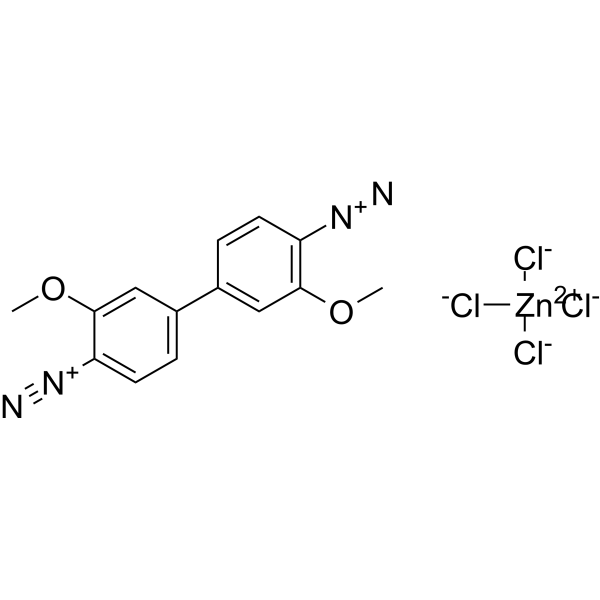
Fast Blue B Salt, Dye content ~95% is a diazo dye, primarily used as a chromogenic substrate in biochemical analysis. Fast Blue B Salt, Dye content ~95% is the coupling agent for the histochemical demonstration of proteases. Fast Blue B Salt, Dye content ~95% can be used for the detection of acid phosphatase in Clostridium perfringens, and also for the determination of lipase activity. Fast Blue B Salt, Dye content ~95% reacts directly with the active hydroxyl groups in phenolic compounds to determine the content of phenolic substances.
For research use only. We do not sell to patients.
- Purity : 99.74%
- CAS No.: 14263-94-6
- Formula: C14H12Cl4N4O2Zn
- Molecular Weight:475.46
-
Storage:
4°C, sealed storage, away from moisture and light
* In solvent : -80°C, 6 months; -20°C, 1 month (sealed storage, away from moisture and light)

To place orders, for customer services and technical support, please contact: MedChemExpress USA
Tel: 609-228-6898 E-mail: [email protected] [email protected]


-
 Biological Activity
-
Chemical Information
-
Solvent & Solubility
- Purity & Documentation
- References
-
 Help & FAQs


-
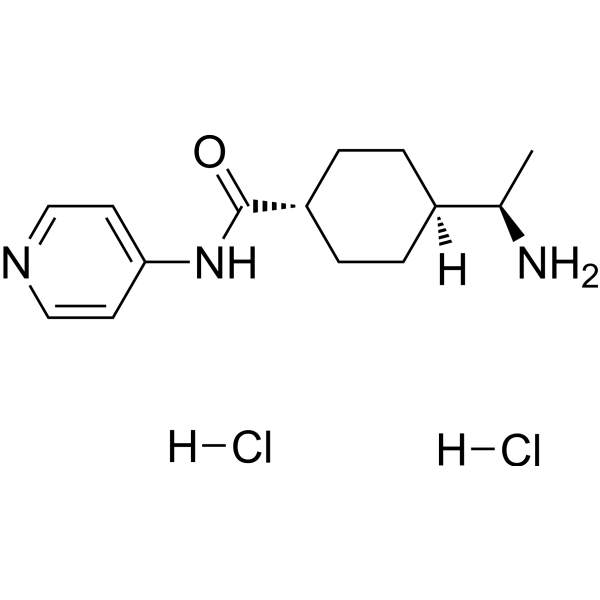
HY-10583
Y-27632 dihydrochlorideROCK Inhibitor -
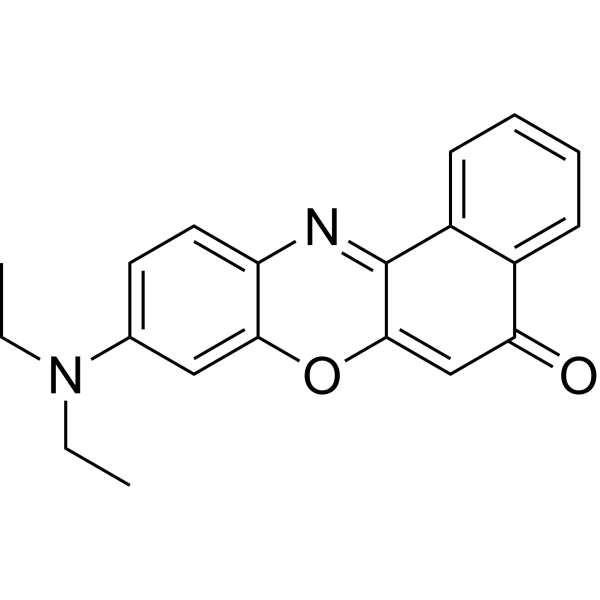
HY-D0718
Nile RedHydrophobic Fluorescent Stain -
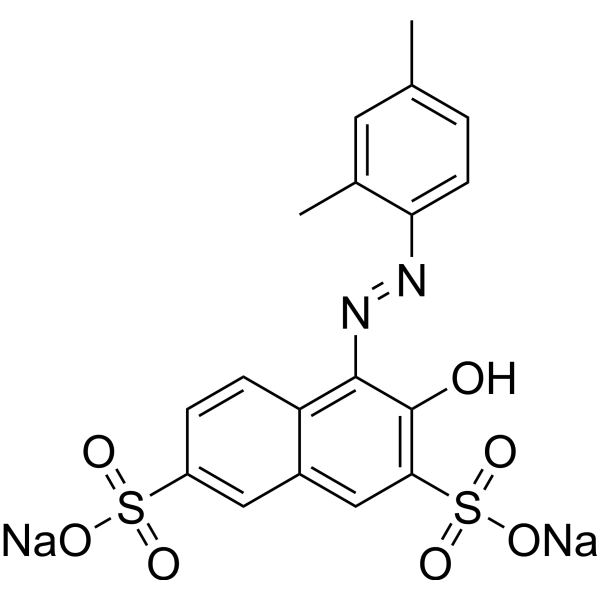
HY-129721
Acid Red 26Biochemical Assay Reagent -
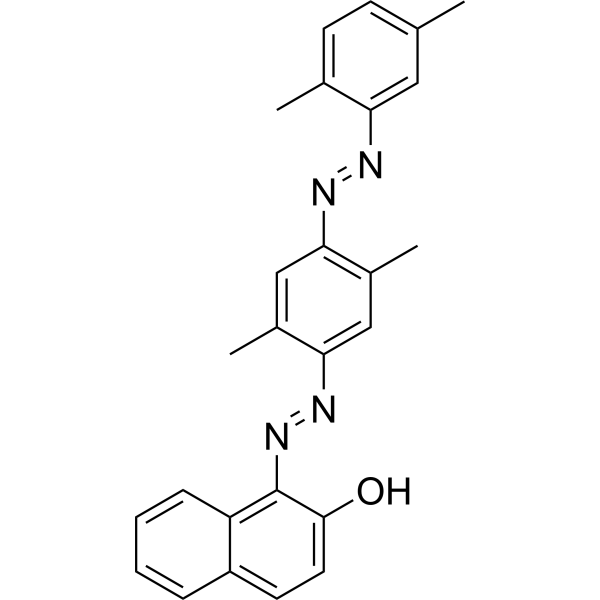
HY-D1168
Oil Red ODiazol Dye -
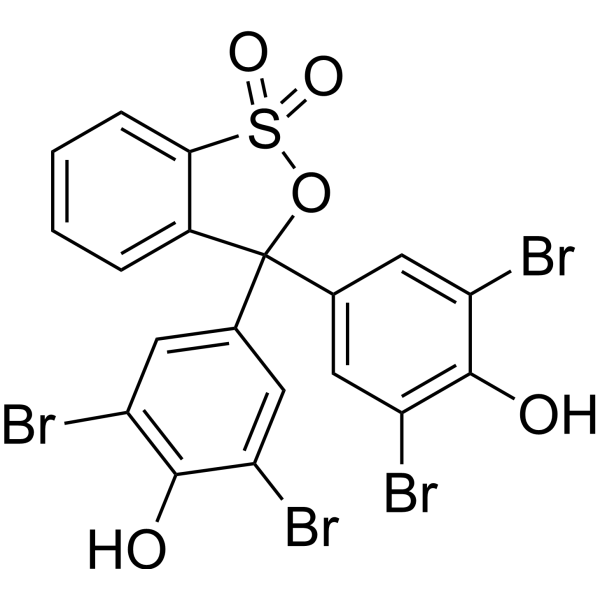
HY-B1571
Bromophenol bluepH Indicator -
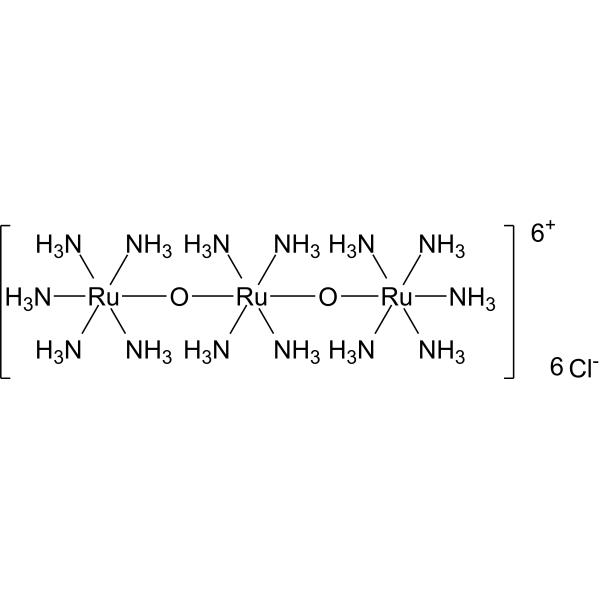
HY-103311
Ruthenium redDye -

HY-DY1008
Nile Red (solution)Hydrophobic Fluorescent Stain -
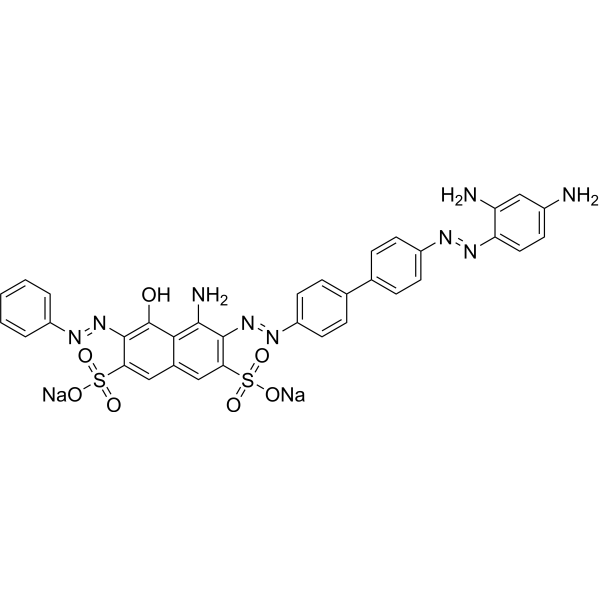
HY-D0256
Direct Black 38Azo Dye -
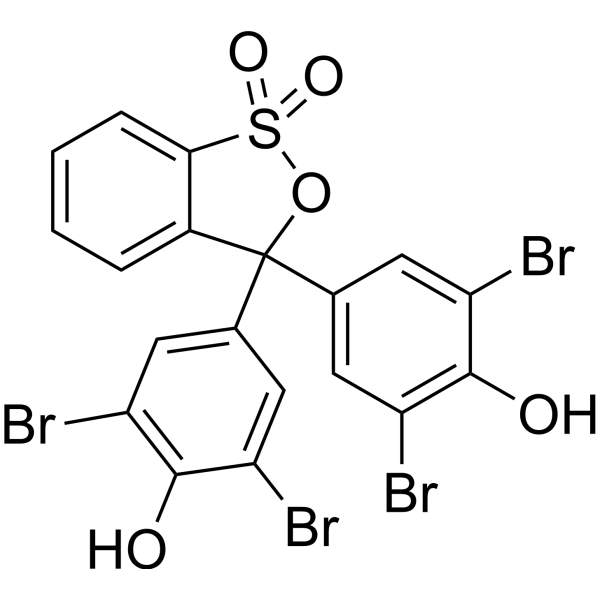
HY-W110798
Bromophenol blue indicator (3.0-4.6)Biochemical Assay Reagent -
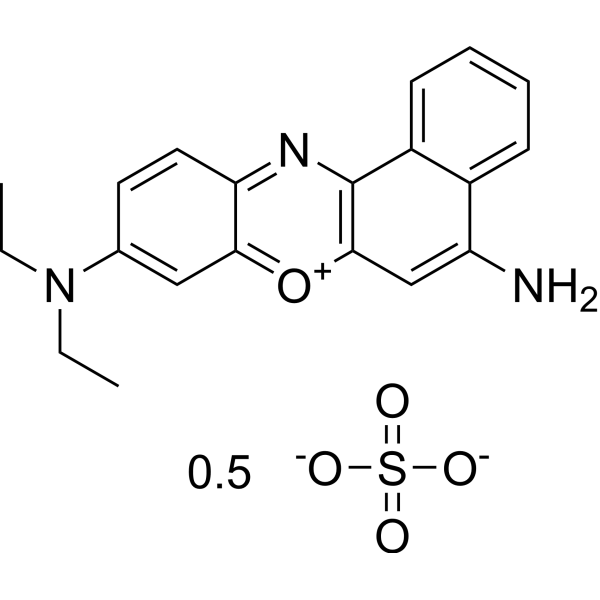
HY-101900
Nile Blue A sulfateMelanin and Lipofuscin Stain -
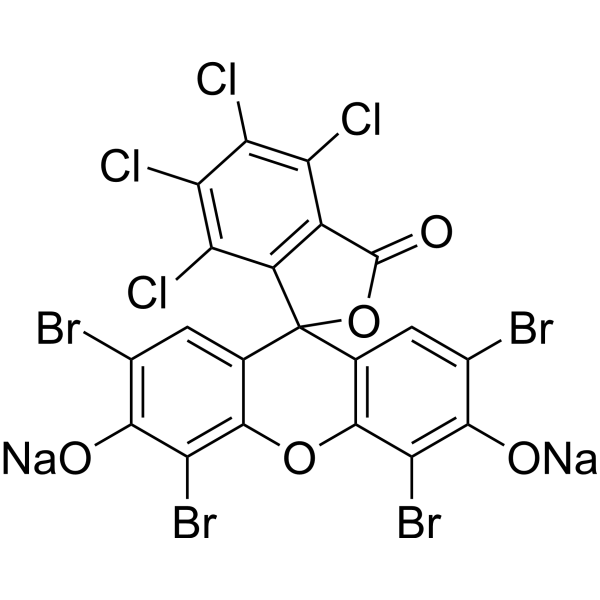
HY-116151B
Phloxine BBiochemical Assay Reagent


Biological Activity
Description
In Vitro
Lipase zymograms Assay
Lipase zymograms are obtained using a modified SDS-PAGE (10% of polyacrylamide) for alkaline proteases. The gels are prepared by mixing 2.5 mL acrylamide: bis-acrylamide, 2 mL substrate, 1 mL sodium taurocholate (10 mM), 2.5 mL 1.5 M Tris-HCl, pH 8.8, 2 mLdistilled water, and 9 μL TEMED. The mix is continuously shaken for 15 min, and 100 μL ammonium persulfate (1%) is added to complete the polymerization. The gels are stabilized for 15 min at 80 V, then the current increased to 120 V for 2 h at 4°C. Lipase activity is revealed with the addition of a Fast Blue B Salt solution (100 mM dissolved in DMSO). Brownish bands in the electrophoresis gel revealed activity of lipases after 10-15 min[1].
Fast Blue B Salt, Dye content ~95% can be used for the semiquantification of alkylresorcinols in rye and produces a color precipitate in the presence of acetone[3].
MedChemExpress (MCE) has not independently confirmed the accuracy of these methods. They are for reference only. .
Emission (Em)
420
Excitation (Ex)
365


Chemical Information
-
CAS No. 14263-94-6
-
Appearance Solid
-
Molecular Weight 475.46
-
Formula C14H12Cl4N4O2Zn
-
Color Light yellow to brown
-
SMILES
N#[N+]C1=C(OC)C=C(C2=CC=C(C(OC)=C2)[N+]#N)C=C1.[Cl-][Zn+2]([Cl-])([Cl-])[Cl-]
-
Shipping
Room temperature in continental US; may vary elsewhere.
-
Storage
4°C, sealed storage, away from moisture and light
* In solvent : -80°C, 6 months; -20°C, 1 month (sealed storage, away from moisture and light)


Solvent & Solubility
In Vitro:
DMSO : 100 mg/mL (210.32 mM; Need ultrasonic; Hygroscopic DMSO has a significant impact on the solubility of product, please use newly opened DMSO)
Please refer to the solubility information to select the appropriate solvent. Once prepared, please aliquot and store the solution to prevent product inactivation from repeated freeze-thaw cycles.
Storage method and period of stock solution: -80°C, 6 months; -20°C, 1 month (sealed storage, away from moisture and light). When stored at -80°C, please use it within 6 months. When stored at -20°C, please use it within 1 month.
Please refer to the solubility information to select the appropriate solvent. Once prepared, please aliquot and store the solution to prevent product inactivation from repeated freeze-thaw cycles.
Storage method and period of stock solution: -80°C, 6 months; -20°C, 1 month (sealed storage, away from moisture and light). When stored at -80°C, please use it within 6 months. When stored at -20°C, please use it within 1 month.
Concentration (start) × Volume (start) = Concentration (final) × Volume (final)
In Vivo:
Select the appropriate dissolution method based on your experimental animal and administration route.
- For the following dissolution methods, please ensure to first prepare a clear stock solution using an In Vitro approach and then sequentially add co-solvents:
- To ensure reliable experimental results, the clarified stock solution can be appropriately stored based on storage conditions. As for the working solution for In Vivo experiments, it is recommended to prepare freshly and use it on the same day.
- The percentages shown for the solvents indicate their volumetric ratio in the final prepared solution. If precipitation or phase separation occurs during preparation, heat and/or sonication can be used to aid dissolution.
Add each solvent one by one: 10% DMSO 90% (20% SBE-β-CD in Saline)
Solubility: ≥ 2.5 mg/mL (5.26 mM); Clear solution
This protocol yields a clear solution of ≥ 2.5 mg/mL (saturation unknown).
Taking 1 mL working solution as an example, add 100 μL DMSO stock solution (25.0 mg/mL) to 900 μL 20% SBE-β-CD in Saline, and mix evenly.
Preparation of 20% SBE-β-CD in Saline (4°C, storage for one week): 2 g SBE-β-CD powder is dissolved in 10 mL Saline, completely dissolve until clear.
In Vivo Dissolution Calculator
Please enter the basic information of animal experiments:
-
-
-
-
Recommended: Prepare an additional quantity of animals to account for potential losses during experiments.
Please enter your animal formula composition:
-
%DMSO +
Recommended: Keep the proportion of DMSO in working solution below 2% if your animal is weak.
-
%+
-
+%Tween-80 + +
-
%Saline +
The co-solvents required include: DMSO, . All of co-solvents are available by MedChemExpress (MCE). , Tween 80. All of co-solvents are available by MedChemExpress (MCE).
Working solution concentration: 0.22 mg/mL
Method for preparing stock solution: mg drug dissolved in μL DMSO. Stock solution concentration: mg/mL. * In solvent : -80°C, 6 months; -20°C, 1 month (sealed storage, away from moisture and light)
1. Take μL DMSO stock solution;
2. Add μL .
μL , mix evenly;
3. Then add μL Tween 80, mix evenly;
4. Then add μL
Please ensure that the stock solution in the first step is dissolved to a clear state, and add co-solvents in sequence. You can use ultrasonic heating (ultrasonic cleaner, recommended frequency 20-40 kHz), vortexing, etc. to assist dissolution.


Purity & Documentation
-
Data Sheet (274 KB)
-
SDS (558 KB)
- English - EN (558 KB)
- Français - FR (558 KB)
- Deutsch - DE (558 KB)
- Norwegian - NO (558 KB)
- Español - ES (558 KB)
- Swedish - SV (558 KB)
- Italian - IT (558 KB)
- Korean - KR (558 KB)
- Portuguese - PT (558 KB)
-
Handling Instructions (2659 KB)
References
[1]. Alvarez-González CA, et al. Development of digestive enzyme activity in larvae of spotted sand bass Paralabrax maculatofasciatus II: Electrophoretic analysis. Fish Physiol Biochem. 2010 Mar;36(1):29-37. [Content Brief]
[2]. Ravindranath V, et al. Optimization of Extraction Solvent and Fast Blue BB Assay for Comparative Analysis of Antioxidant Phenolics from Cucumis melo L. Plants (Basel). 2021;10(7):1379. Published 2021 Jul 6. [Content Brief]
[4]. Lojda, Z., et al. Fast Blue B in the histochemistry of proteases. Histochem J 15, 494-498 (1983).
[5]. Sartory DP, et al. Evaluation of acid phosphatase as a confirmation test for Clostridium perfringens isolated from water. Lett Appl Microbiol. 2006 Apr;42(4):418-24. [Content Brief]
[6]. Simões-Pires CA, et al. A TLC bioautographic method for the detection of alpha- and beta-glucosidase inhibitors in plant extracts. Phytochem Anal. 2009 Nov-Dec;20(6):511-5. [Content Brief]


Complete Stock Solution Preparation Table
Please refer to the solubility information to select the appropriate solvent. Once prepared, please aliquot and store the solution to prevent product inactivation from repeated freeze-thaw cycles.
Storage method and period of stock solution: -80°C, 6 months; -20°C, 1 month (sealed storage, away from moisture and light). When stored at -80°C, please use it within 6 months. When stored at -20°C, please use it within 1 month.
| Optional Solvent | Concentration Solvent Mass | 1 mg | 5 mg | 10 mg | 25 mg |
|---|---|---|---|---|---|
| DMSO | 1 mM | 2.1032 mL | 10.5161 mL | 21.0323 mL | 52.5807 mL |
| 5 mM | 0.4206 mL | 2.1032 mL | 4.2065 mL | 10.5161 mL | |
| 10 mM | 0.2103 mL | 1.0516 mL | 2.1032 mL | 5.2581 mL | |
| 15 mM | 0.1402 mL | 0.7011 mL | 1.4022 mL | 3.5054 mL | |
| 20 mM | 0.1052 mL | 0.5258 mL | 1.0516 mL | 2.6290 mL | |
| 25 mM | 0.0841 mL | 0.4206 mL | 0.8413 mL | 2.1032 mL | |
| 30 mM | 0.0701 mL | 0.3505 mL | 0.7011 mL | 1.7527 mL | |
| 40 mM | 0.0526 mL | 0.2629 mL | 0.5258 mL | 1.3145 mL | |
| 50 mM | 0.0421 mL | 0.2103 mL | 0.4206 mL | 1.0516 mL | |
| 60 mM | 0.0351 mL | 0.1753 mL | 0.3505 mL | 0.8763 mL | |
| 80 mM | 0.0263 mL | 0.1315 mL | 0.2629 mL | 0.6573 mL | |
| 100 mM | 0.0210 mL | 0.1052 mL | 0.2103 mL | 0.5258 mL |


Fast Blue B Salt, Dye content ~95% Related Classifications
HY-W127711 Related Classifications
 Powered by Bioz