



1-Naphthyl acetate

Based on 1 Customer Validation
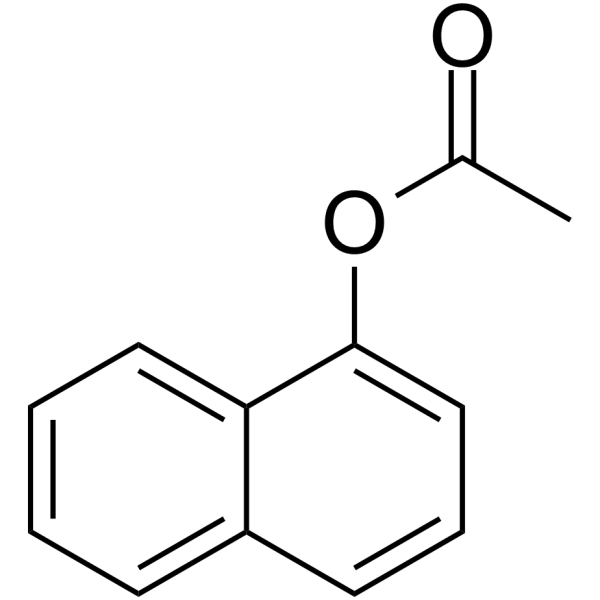
1-Naphthyl acetate is an attractive chromogenic substrate for the detection of erythrocyte acetylcholinesterase (AChE) activity. 1-Naphthyl acetate has the potential to detect organophosphorus pesticide (OP) poisoning.
For research use only. We do not sell to patients.
- Purity : 99.89%
- CAS No.: 830-81-9
- Formula: C12H10O2
- Molecular Weight:186.21
-
Storage:Powder -20°C, 3 years , 4°C, 2 years ; In solvent -80°C, 2 years , -20°C, 1 year

To place orders, for customer services and technical support, please contact: MedChemExpress USA
Tel: 609-228-6898 E-mail: [email protected] [email protected]


-
 Biological Activity
-
Chemical Information
-
Solvent & Solubility
- Purity & Documentation
- References
-
 Help & FAQs


-

HY-W016188R
1-Naphthyl acetate (Standard)AChE Substrate -
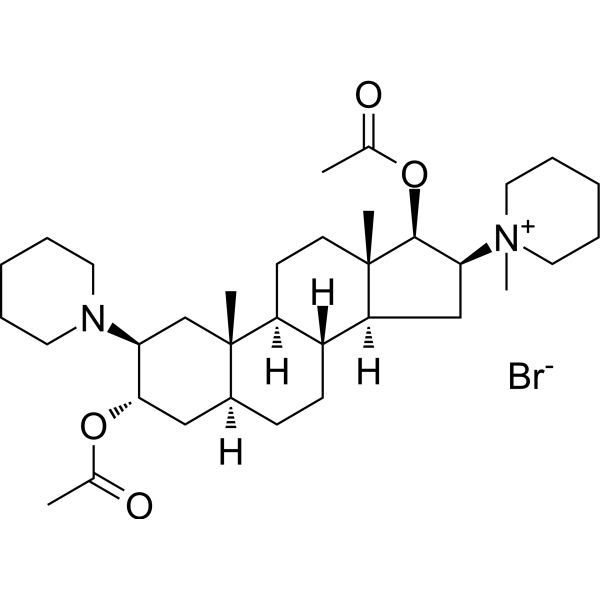
HY-B0118A
Vecuronium bromideNeuromuscular Blocking Agent -
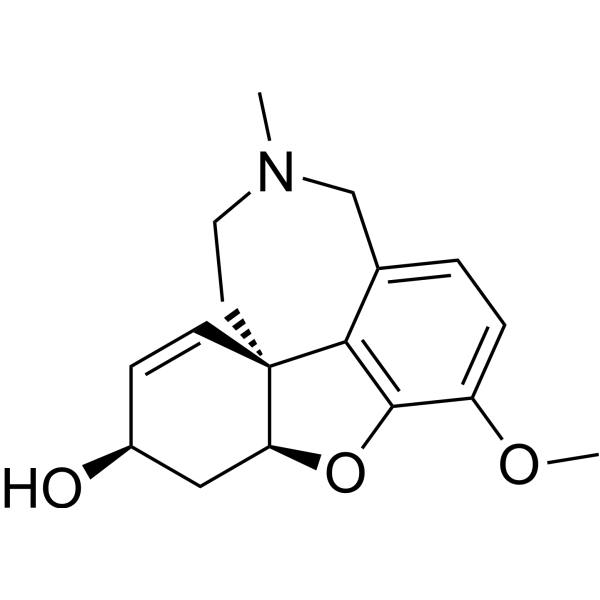
HY-76299
GalanthamineCholinesterase (ChE) Inhibitor -
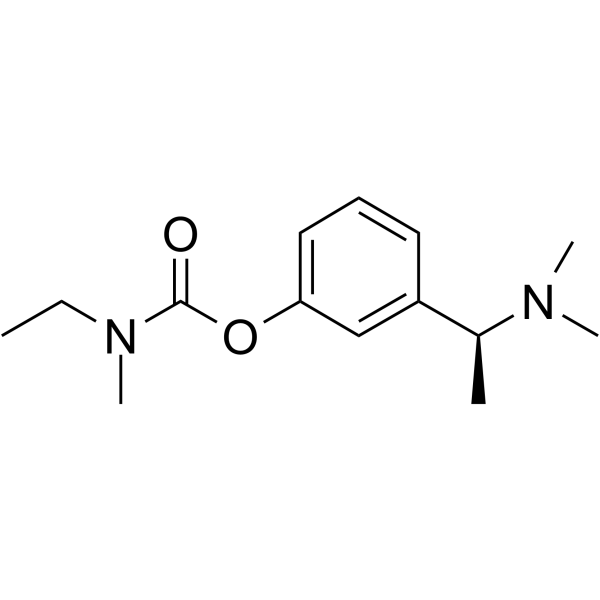
HY-17368
RivastigmineCholinesterase Inhibitor -
HY-W014449
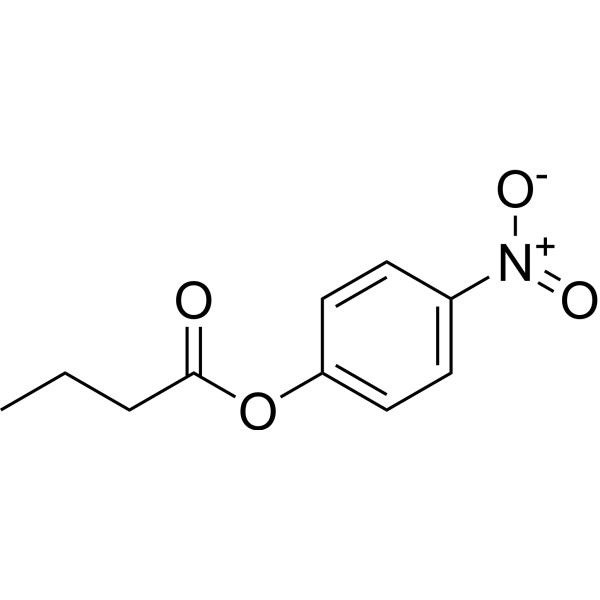
4-Nitrophenyl butyrateBiochemical Assay Reagent -
HY-11017
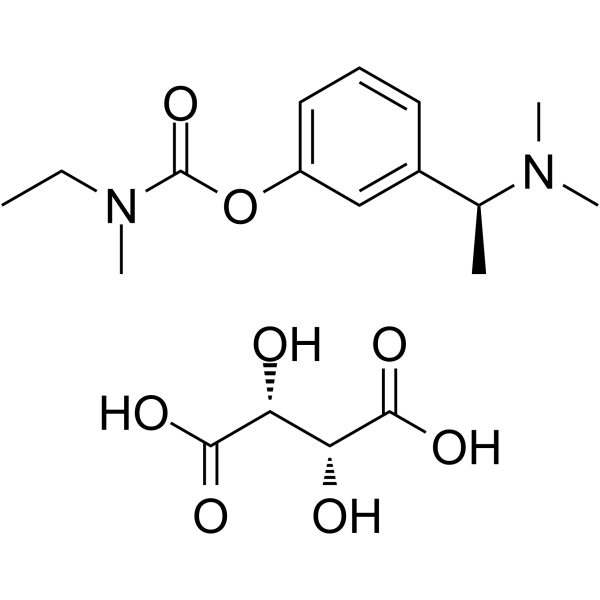
Rivastigmine tartrateCholinesterase Inhibitor -
HY-B1200
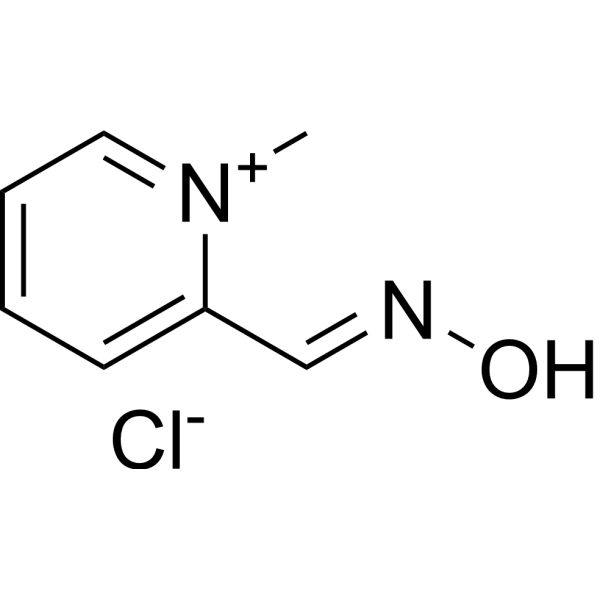
Pralidoxime chlorideAChE Reactivator -
HY-B1206
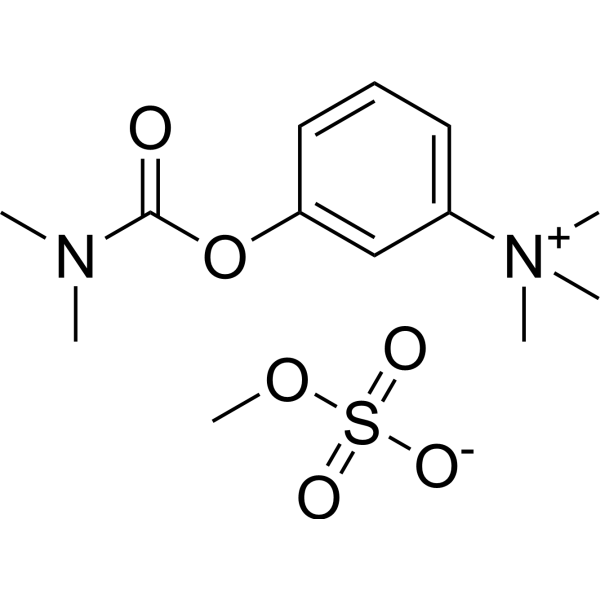
Neostigmine (methyl sulfate)Acetylcholinesterase Inhibitor -

HY-76299R
Galanthamine (Standard)Cholinesterase (ChE) Inhibitor -

HY-17368R
Rivastigmine (Standard)Cholinesterase Inhibitor -

HY-B1206R
Neostigmine (methyl sulfate) (Standard)Acetylcholinesterase Inhibitor -
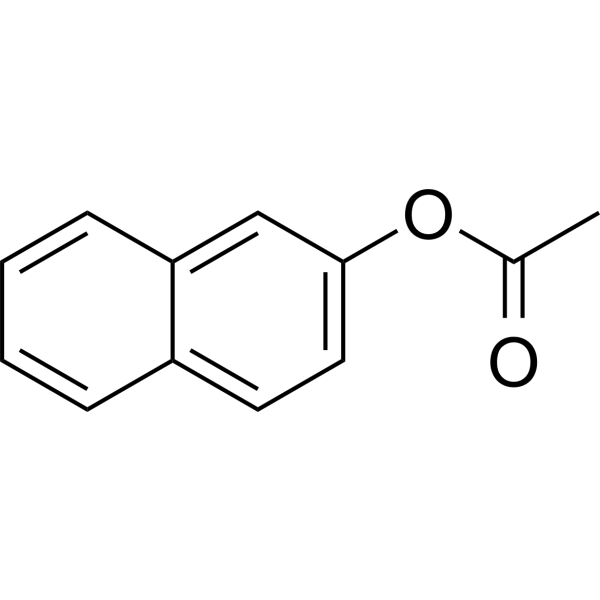
HY-131927
2-Naphthyl acetateBiochemical Assay Reagent


Biological Activity
Description
IC50 & Target
|
AChE |
In Vitro
1-Naphthyl acetate can be hydrolyzed by AChE into 1-Naphthol (HY-Y1309) and Acetic acid (HY-Y0319). 1-Naphthol can react with colorimetric reagents (such as Fast Blue RR (HY-W127771)) to generate colored products, which can be used for colorimetric analysis to quantitatively measure the activity of AChE[1].
1-Naphthyl acetate be used for quick detection of organophosphorus pesticide (OP) poisoning, that OP inhibits the activity of AChE, resulting in reduced hydrolysis of 1-Naphthyl acetate[1].
1-Naphthyl acetate can be hydrolyzed by intracellular esterases in plants cells to release acetic acid and 1-naphthol, leading to acidification of the extracellular medium. Acidification of the extracellular medium is considered to be one of the key factors in cell elongation. The acidified medium activates the proton pump on the cytoplasmic membrane, thereby promoting proton efflux and further reducing the cytoplasmic pH. The reduced cytoplasmic pH can activate the expansins in the cell wall, leading to cell wall relaxation, thereby promoting cell elongation[2].
MedChemExpress (MCE) has not independently confirmed the accuracy of these methods. They are for reference only. .


Chemical Information
-
CAS No. 830-81-9
-
Appearance Solid
-
Molecular Weight 186.21
-
Formula C12H10O2
-
Color Off-white to light yellow
-
SMILES
CC(OC1=C2C=CC=CC2=CC=C1)=O
-
Shipping
Room temperature in continental US; may vary elsewhere.
-
Storage
Powder -20°C 3 years 4°C 2 years In solvent -80°C 2 years -20°C 1 year


Solvent & Solubility
In Vitro:
DMSO : 100 mg/mL (537.03 mM; Need ultrasonic; Hygroscopic DMSO has a significant impact on the solubility of product, please use newly opened DMSO)
Please refer to the solubility information to select the appropriate solvent. Once prepared, please aliquot and store the solution to prevent product inactivation from repeated freeze-thaw cycles.
Storage method and period of stock solution: -80°C, 2 years; -20°C, 1 year. When stored at -80°C, please use it within 2 years. When stored at -20°C, please use it within 1 year.
Please refer to the solubility information to select the appropriate solvent. Once prepared, please aliquot and store the solution to prevent product inactivation from repeated freeze-thaw cycles.
Storage method and period of stock solution: -80°C, 2 years; -20°C, 1 year. When stored at -80°C, please use it within 2 years. When stored at -20°C, please use it within 1 year.
Concentration (start) × Volume (start) = Concentration (final) × Volume (final)
In Vivo:
Select the appropriate dissolution method based on your experimental animal and administration route.
- For the following dissolution methods, please ensure to first prepare a clear stock solution using an In Vitro approach and then sequentially add co-solvents:
- To ensure reliable experimental results, the clarified stock solution can be appropriately stored based on storage conditions. As for the working solution for In Vivo experiments, it is recommended to prepare freshly and use it on the same day.
- The percentages shown for the solvents indicate their volumetric ratio in the final prepared solution. If precipitation or phase separation occurs during preparation, heat and/or sonication can be used to aid dissolution.
Add each solvent one by one: 10% DMSO 40% PEG300 5% Tween-80 45% Saline
Solubility: ≥ 2.5 mg/mL (13.43 mM); Clear solution
This protocol yields a clear solution of ≥ 2.5 mg/mL (saturation unknown).
Taking 1 mL working solution as an example, add 100 μL DMSO stock solution (25.0 mg/mL) to 400 μL PEG300, and mix evenly; then add 50 μL Tween-80 and mix evenly; then add 450 μL Saline to adjust the volume to 1 mL.
Preparation of Saline: Dissolve 0.9 g sodium chloride in ddH₂O and dilute to 100 mL to obtain a clear Saline solution.
Add each solvent one by one: 10% DMSO 90% (20% SBE-β-CD in Saline)
Solubility: ≥ 2.5 mg/mL (13.43 mM); Clear solution
This protocol yields a clear solution of ≥ 2.5 mg/mL (saturation unknown).
Taking 1 mL working solution as an example, add 100 μL DMSO stock solution (25.0 mg/mL) to 900 μL 20% SBE-β-CD in Saline, and mix evenly.
Preparation of 20% SBE-β-CD in Saline (4°C, storage for one week): 2 g SBE-β-CD powder is dissolved in 10 mL Saline, completely dissolve until clear.
In Vivo Dissolution Calculator
Please enter the basic information of animal experiments:
-
-
-
-
Recommended: Prepare an additional quantity of animals to account for potential losses during experiments.
Please enter your animal formula composition:
-
%DMSO +
Recommended: Keep the proportion of DMSO in working solution below 2% if your animal is weak.
-
%+
-
+%Tween-80 + +
-
%Saline +
The co-solvents required include: DMSO, . All of co-solvents are available by MedChemExpress (MCE). , Tween 80. All of co-solvents are available by MedChemExpress (MCE).
Working solution concentration: 0.22 mg/mL
Method for preparing stock solution: mg drug dissolved in μL DMSO. Stock solution concentration: mg/mL.
1. Take μL DMSO stock solution;
2. Add μL .
μL , mix evenly;
3. Then add μL Tween 80, mix evenly;
4. Then add μL
Please ensure that the stock solution in the first step is dissolved to a clear state, and add co-solvents in sequence. You can use ultrasonic heating (ultrasonic cleaner, recommended frequency 20-40 kHz), vortexing, etc. to assist dissolution.


Purity & Documentation
-
Data Sheet (289 KB)
-
SDS (476 KB)
- English - EN (476 KB)
- Français - FR (476 KB)
- Deutsch - DE (476 KB)
- Norwegian - NO (476 KB)
- Español - ES (476 KB)
- Swedish - SV (476 KB)
- Italian - IT (476 KB)
- Korean - KR (476 KB)
- Portuguese - PT (476 KB)
-
Handling Instructions (2659 KB)
References
[1]. Chowdhary S, et al. 1-Naphthyl acetate: A chromogenic substrate for the detection of erythrocyte acetylcholinesterase activity. Biochimie. 2018 Nov;154:194-209. [Content Brief]
[2]. Salguero J, et al., 1-Naphthyl Acetate-Dependent Medium Acidification by Zea mays L. Coleoptile Segments. Plant Physiol. 1991 Apr;95(4):1174-80. [Content Brief]


Complete Stock Solution Preparation Table
Please refer to the solubility information to select the appropriate solvent. Once prepared, please aliquot and store the solution to prevent product inactivation from repeated freeze-thaw cycles.
Storage method and period of stock solution: -80°C, 2 years; -20°C, 1 year. When stored at -80°C, please use it within 2 years. When stored at -20°C, please use it within 1 year.
| Optional Solvent | Concentration Solvent Mass | 1 mg | 5 mg | 10 mg | 25 mg |
|---|---|---|---|---|---|
| DMSO | 1 mM | 5.3703 mL | 26.8514 mL | 53.7028 mL | 134.2570 mL |
| 5 mM | 1.0741 mL | 5.3703 mL | 10.7406 mL | 26.8514 mL | |
| 10 mM | 0.5370 mL | 2.6851 mL | 5.3703 mL | 13.4257 mL | |
| 15 mM | 0.3580 mL | 1.7901 mL | 3.5802 mL | 8.9505 mL | |
| 20 mM | 0.2685 mL | 1.3426 mL | 2.6851 mL | 6.7129 mL | |
| 25 mM | 0.2148 mL | 1.0741 mL | 2.1481 mL | 5.3703 mL | |
| 30 mM | 0.1790 mL | 0.8950 mL | 1.7901 mL | 4.4752 mL | |
| 40 mM | 0.1343 mL | 0.6713 mL | 1.3426 mL | 3.3564 mL | |
| 50 mM | 0.1074 mL | 0.5370 mL | 1.0741 mL | 2.6851 mL | |
| 60 mM | 0.0895 mL | 0.4475 mL | 0.8950 mL | 2.2376 mL | |
| 80 mM | 0.0671 mL | 0.3356 mL | 0.6713 mL | 1.6782 mL | |
| 100 mM | 0.0537 mL | 0.2685 mL | 0.5370 mL | 1.3426 mL |


1-Naphthyl acetate Related Classifications
HY-W016188 Related Classifications
 Powered by Bioz