208 Results for "

β-catenin,structure-activity relationship

" in MedChemExpress (MCE) Product Catalog:
Products (208)

208 Results for "β-catenin,structure-activity relationship" in MCE Product Catalog:

1
1 Cited Publications
Cat. No.: HY-W127832
CAS No.: 123148-15-2
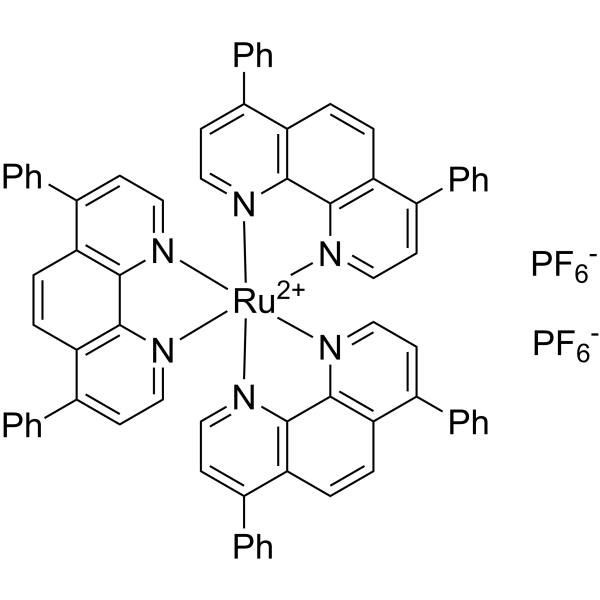
Ru(dpp)3(PF6)2 is a ruthenium (II) polypyridine complex and oxygen-sensing luminophore with excellent photostability and bright orange emission properties based on metal-to-ligand charge transfer (MLCT). Ru(dpp)3(PF6)2 undergoes oxygen-induced collisional luminescence quenching following the Stern-Volmer relationship, and can also engage in Förster-type resonance energy transfer with closed-form BTF6. Featuring excellent photophysical and electrochemical properties, Ru(dpp)3(PF6)2 is applied in studies on quenching-type oxygen sensors based on fluorinated ORMOSIL/xerogels and solid-state light-emitting devices .
loading...
    loading...
Cat. No.: HY-W416291
CAS No.: 26763-19-9
Synonyms: Poly(A)
Target:  

mRNA

Research Areas:  

Cancer

Polyadenylic acid potassium (Poly(A)) is a polyribonucleotide. Polyadenylic acid potassium constitutes the 3'-poly(A) tail of eukaryotic mRNAs, governing mRNA maturation, stability, and translation initiation. Polyadenylic acid potassium serves as a target for studying nucleic acid structure-function relationships, with small molecules binding its tail influencing mRNA function and protein production. Polyadenylic acid (potassium) can be used for the research of cancer .
loading...
    loading...
Cat. No.: HY-124424
CAS No.: 333415-38-6
Purity:  99.71%
Target:  

Potassium Channel

Research Areas:  

Others Neurological Disease

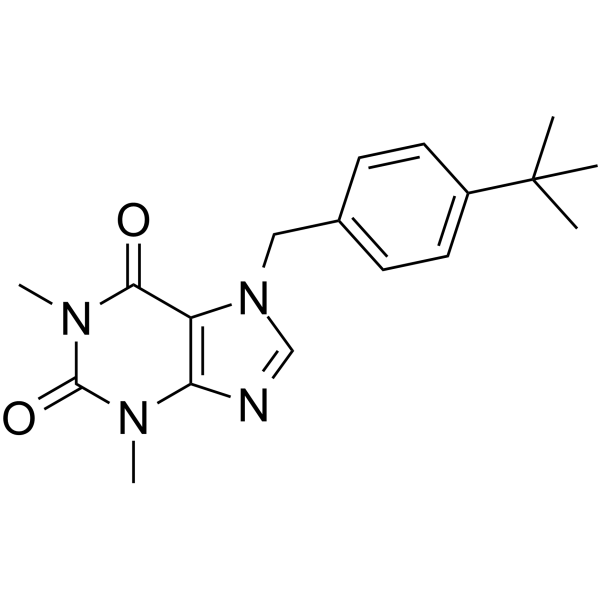
VU0071063 is a potent and specific Kir6.2/SUR1 opener (EC50=7.44 μM) and can be used for investigating Kir6.2/SUR1 expressed in the pancreas and brain. VU0071063 inhibits insulin secretion by inducing hyperpolarization of β-cell membrane potential. VU0071063 chemotype has a very steep structure-activity relationships .
loading...
    loading...
Cat. No.: HY-W100491
CAS No.: 935-92-2
Target:  

Drug Derivative

Research Areas:  

Cancer

Trimethylbenzoquinone (Compound 5) is a methylated benzoquinone. Trimethylbenzoquinone exhibits moderate cytotoxicity against K562 cells, with its IC50 being 0.75 μM. Trimethylbenzoquinone is completely unable to cause inter-strand DNA cross-linking and cannot alkylate DNA guanines. Trimethylbenzoquinone can be used to study the relationship between the nitrogen heterocyclic group and DNA cross-linking .
loading...
    loading...
Cat. No.: HY-W100959
CAS No.: 527-17-3
Synonyms: Tetramethylquinone
Target:  

Drug Derivative

Research Areas:  

Others

Duroquinone (Tetramethylquinone) is a model compound of amphiphilic quinone, which can be used as an oxidative-reductive activity probe. Duroquinone can be easily reduced by biological systems to hydrogen peroxide (DQH₂) or semi-quinone free radicals (DQ•⁻). Duroquinone can freely pass through the cell membrane, facilitating the study of the electron transfer process inside and outside the cells. Duroquinone can be used to investigate the relationship between metabolism in the pulmonary circulation and endothelial cells .
loading...
    loading...
Cat. No.: HY-174790
Target:  

mRNA

Research Areas:  

Cancer

Firefly Luciferase mRNA is a reporter mRNA that can be transfected into cells to express firefly luciferase protein. Firefly Luciferase mRNA induces cytotoxicity in cancer cells at low concentrations. In cancer cells, the expression level of luciferase shows a non-linear relationship with the dose of Firefly Luciferase mRNA. When combined with the H2S-responsive bioluminescent probe (H-Luc), Firefly Luciferase mRNA enables bioluminescence-based detection of endogenous hydrogen sulfide in non-transgenic NAFLD cell models and NAFLD mouse models. Firefly Luciferase mRNA can be used in studies related to non-alcoholic fatty liver disease .
loading...
    loading...
Cat. No.: HY-112319
CAS No.: 1312518-84-5
(R,S)-MK-8457 is a stereoisomer of MK-8457. MK-8457 is a dual inhibitor of Syk and ZAP70 .
loading...
    loading...
Cat. No.: HY-W011231
CAS No.: 74936-72-4
Target:  

Calcium Channel

Research Areas:  

Cardiovascular Disease

DHP-050 is a Felodipine (HY-B0309) analog. DHP-050 can be used to study the structure-activity relationship of 1,4-dihydropyridine (DHP) compounds .
loading...
    loading...
Cat. No.: HY-W008003
CAS No.: 615-16-7
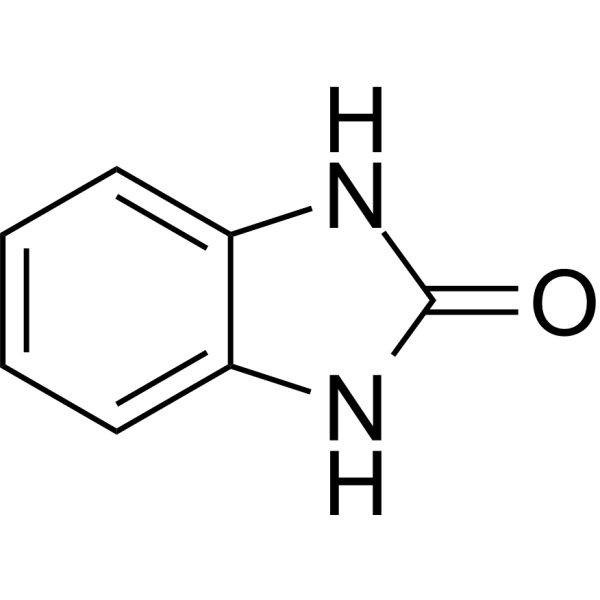
2-Hydroxybenzimidazole is an inactive compound targeting CYP1A1 and is mainly used as a control compound in the structure-activity relationship study of benzimidazole derivatives. 2-Hydroxybenzimidazole does not have the ability to induce CYP1A1 expression like its thiol or amino substituted derivatives .
loading...
    loading...
Cat. No.: HY-145860
Research Areas:  

Cancer

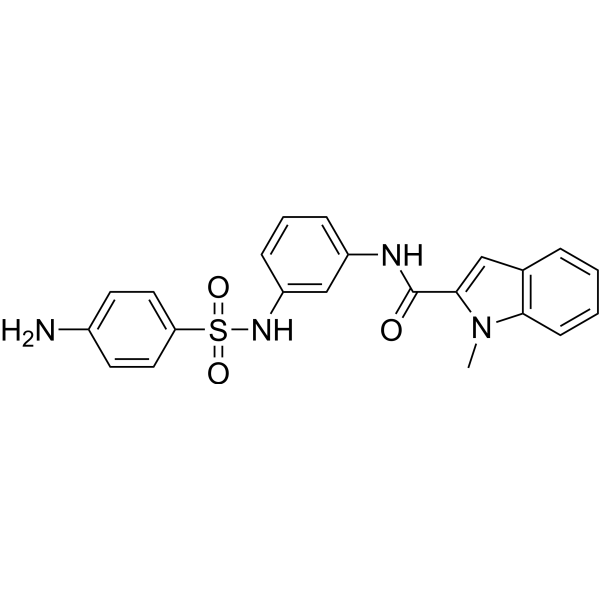
PHGDH-IN-2 is a potent and NAD + competitive PHGDH inhibitor with an IC50 of 5.2 µM. PHGDH-IN-2 inhibits the serine synthetic pathway in MDA-MB-468 cells. PHGDH-IN-2 inhibits the growth of PHGDH-dependent cancer cells .
loading...
    loading...
Cat. No.: HY-114652
CAS No.: 26148-68-5
Purity:  ≥99.0%
Synonyms: 2-Amino-α-carboline; AαC
Target:  

Endogenous Metabolite

Research Areas:  

Cancer

AalphaC (AαC) is a potential carcinogen with carcinogenic activity. AalphaC is an important biomarker in tobacco smoke and is associated with tobacco smoke exposure. Urinary concentrations of AalphaC are significantly higher in dedicated smokers than in non-smokers, indicating its importance in monitoring tobacco exposure. AalphaC levels increase significantly with increasing serum nicotine levels, indicating its close relationship with tobacco use. In addition, consuming high-temperature cooked beef significantly increases the amount of AalphaC in urine, while consuming vegetables is associated with a decrease in AalphaC concentrations. Smoking half a pack of cigarettes is associated with a significant increase in the amount of AalphaC, which further confirms the biological activity of AalphaC and its association with dietary habits .
loading...
    loading...
Cat. No.: HY-177795
CAS No.: 6868-73-1
Synonyms: 3,6-Diketo-LCA
Target:  

Drug Derivative

Research Areas:  

Others

5β-Cholanic acid-3,6-dione (3,6-Diketo-LCA) is a similar substance to Lithocholic acid (LCA) (HY-B0172). 5β-Cholanic acid-3,6-dione cannot activate the Vitamin D receptor (VDR), and can be used as a negative control for studying the relationship between LCA derivatives and VDR .
loading...
    loading...
Cat. No.: HY-176545
CAS No.: 642463-22-7
Target:  

HDAC Sirtuin

Research Areas:  

Others

Z-MAL is a highly efficient and broad-spectrum HDAC substrate. Z-MAL exhibits high conversion activity for class I, II histone deacetylases, and class III SIRT1. Z-MAL can be used in studies on the structure-activity relationship, subtype selectivity, and inhibitor screening of HDAC .
loading...
    loading...
Cat. No.: HY-146260
CAS No.: 1453082-52-4
Target:  

PI3K

Research Areas:  

Cancer

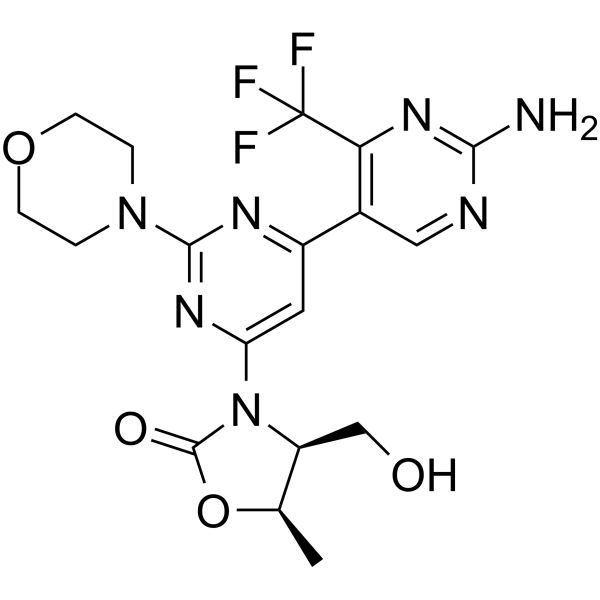
NVP-CLR457 (compound 40) is an orally active, potent and balanced pan-class I PI3K inhibitor. NVP-CLR457 shows a clear dose-dependent PK/PD/efficacy relationship. NVP-CLR457 has antitumor activity .
loading...
    loading...
Cat. No.: HY-175504
CAS No.: 932544-59-7
Target:  

Dopamine Receptor PERK

Research Areas:  

Neurological Disease

MLS6357 is a D3 dopamine receptor (D3R)-selective positive allosteric modulator (PAM)-antagonist. MLS6357 exhibits antagonist activity in the D3R-mediated and the BRET-based β-arrestin recruitment assay with IC50s of 13 and 14 μM, and no activity for other DAR subtypes (D1R/D2R/D4R/D5R) (IC50 > 100 μM). MLS6357 is also an antagonist in the D3R-mediated Go-BRET assay with an IC50 of 17 μM. MLS6357 can be used for the study of neuropsychiatric disorders, including substance use disorder .
loading...
    loading...
Cat. No.: HY-139898
CAS No.: 1217341-48-4
Target:  

Taste Receptor

Research Areas:  

Others

S7958 is a selective and orally active antagonist of the TAS2R8 bitter taste receptor, with its IC50 being 0.06 μM. S7958 only has a weak inhibitory effect on TASR8 and TAS2R39, and has no significant impact on other receptors. S7958 significantly inhibits the perception of bitterness caused by substances such as coffee and drug active ingredients (API) by selectively antagonizing the human bitter taste receptor TAS2R8. S7958 can be used in the medical field to improve the research on the bitterness of oral preparations .
loading...
    loading...
Cat. No.: HY-178908
Target:  

FLT3 Apoptosis

Research Areas:  

Cancer

FLT3-IN-35 (Compound 4K) is an orally active, covalent, irreversible FLT3 inhibitor. FLT3-IN-35 inhibits the phosphorylation of FLT3 and its downstream signaling factors, as well as induces cell cycle arrest and apoptosis. FLT3-IN-35 inhibits the phosphorylation of FLT3 and its downstream signaling factors, as well as induced cell cycle arrest and apoptosis. FLT3-IN-35 can be used for the study of acute myeloid leukemia (AML) .
loading...
    loading...
Cat. No.: HY-178777
CAS No.: 3084696-50-1
Target:  

PROTACs BCL6

Research Areas:  

Cancer

BCL6-760 is an orally active BCL-6 PROTAC degrader with an EC50 of 0.8 nM. BCL6-760 only degrades BCL6 and has no effect on other CRBN substrates. BCL6-760 demonstrates significant efficacy in the orthotopic xenograft mouse model of OCI-LY-1 tumors. BCL6-760 can be used in the research of diffuse Large B-cell Lymphoma (DLBCL) (Pink: BCL-6 ligand (HY-179317); Blue: CRBN ligand (HY-179305); Black: Linker) .
loading...
    loading...
Cat. No.: HY-P1704
CAS No.: 63798-73-2
Synonyms: 11-Demethylcyclosporin A
Cyclosporin E (11-Demethylcyclosporin A) is a cyclic oligopeptide that can be isolated from fungi such as TTrichoderma polysporum and other imperfect fungi. Cyclosporin E belongs to the Cyclosporins family. Cyclosporin E can be used for studying the structure-activity relationships and molecular dynamic properties of cyclosporin compounds. As a structural control compound, Cyclosporin E holds significant research value in the fields of medicinal chemistry and biophysics .
loading...
    loading...
Cat. No.: HY-168772
CAS No.: 76397-13-2
Synonyms: H-Gly-Pro-OH TFA
Research Areas:  

Others

Glycyl-L-Proline TFA (H-Gly-Pro-OH TFA) is a dipeptide, which is composed of a glycine and a L-proline. Glycyl-L-Proline TFA can be used in research about the co-relationship between transmembrane potential/proton gradient and intestinal transport .
loading...
    loading...

