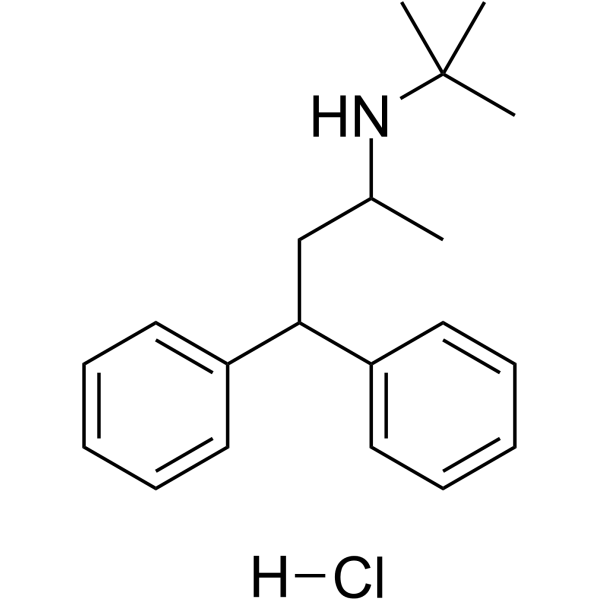
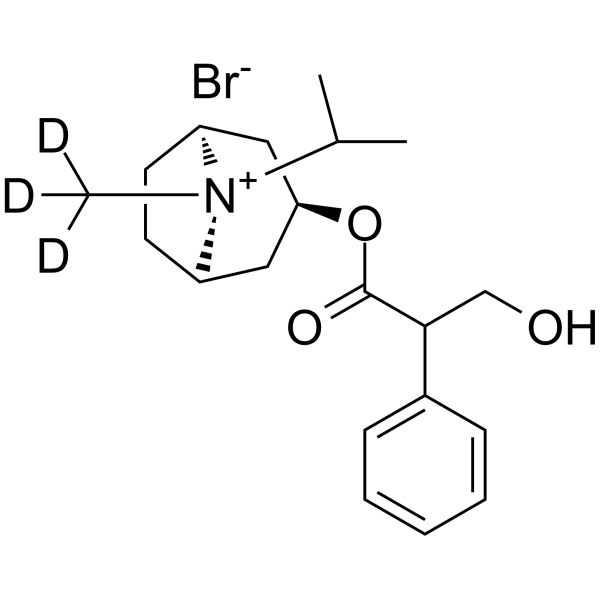
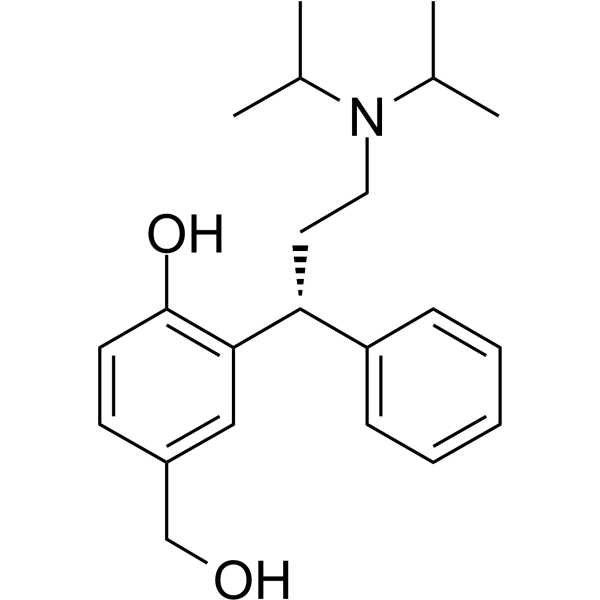
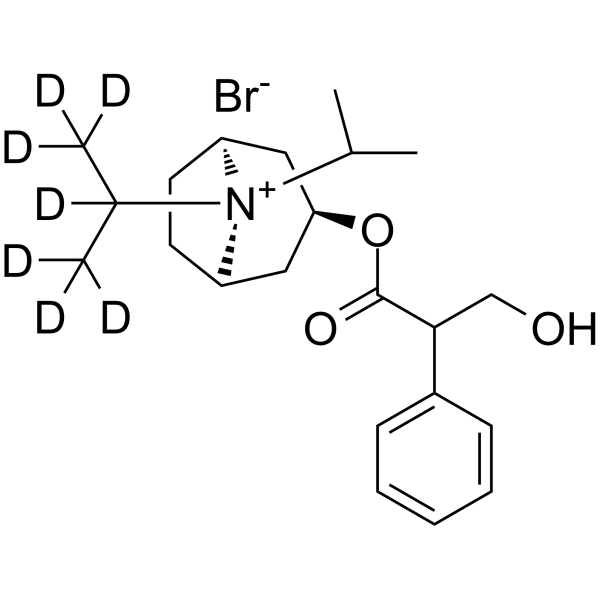
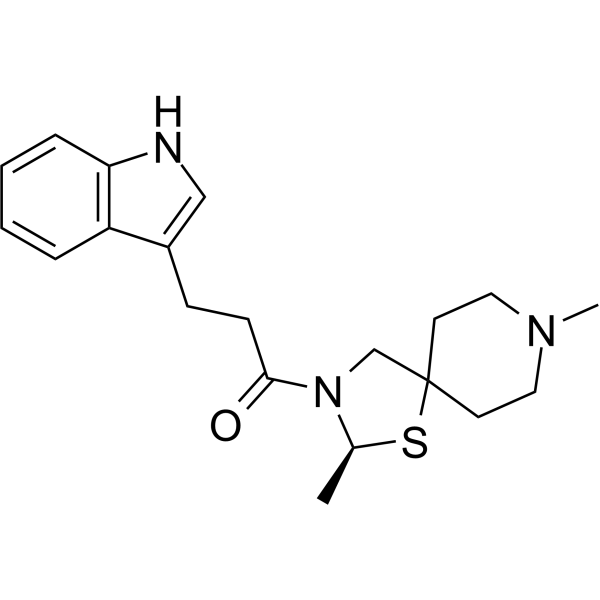
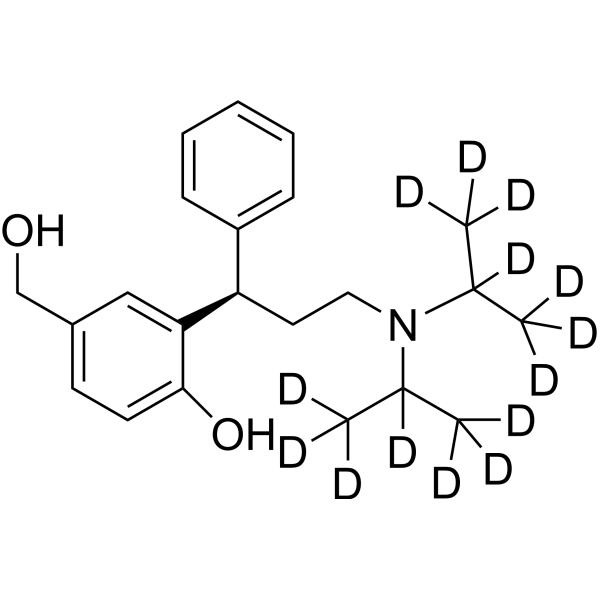
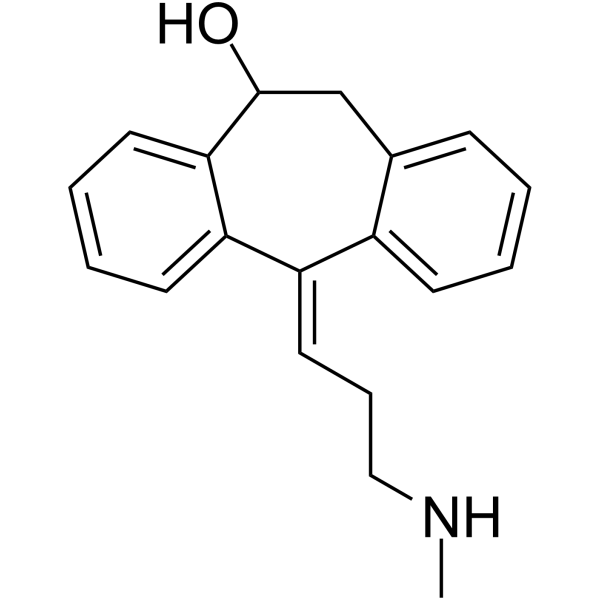
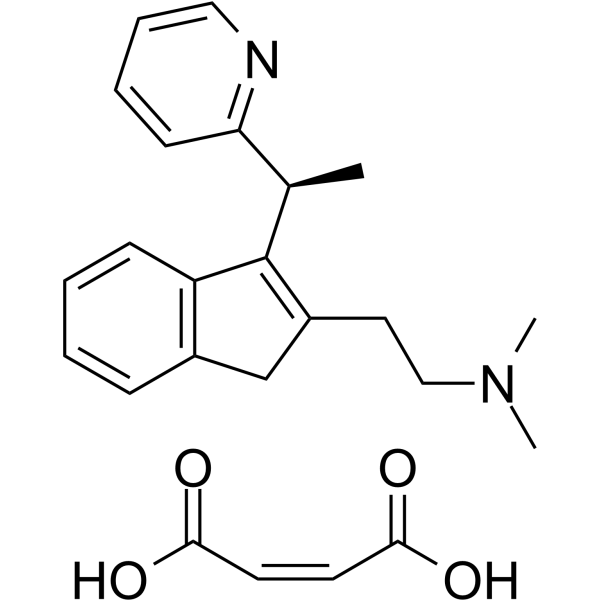
1. Search Result
Search Result
Results for "

muscarinic+receptor
" in MedChemExpress (MCE) Product Catalog:

197

Inhibitors & Agonists

2

Peptides

19

Natural
Products

28

Isotope-Labeled Compounds

1

Antibodies

1

Click Chemistry

Cat. No. Product Name Target Research Areas Chemical Structure
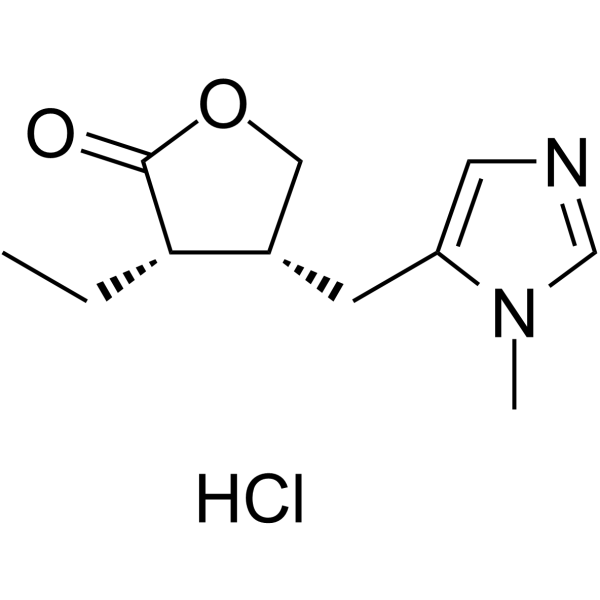
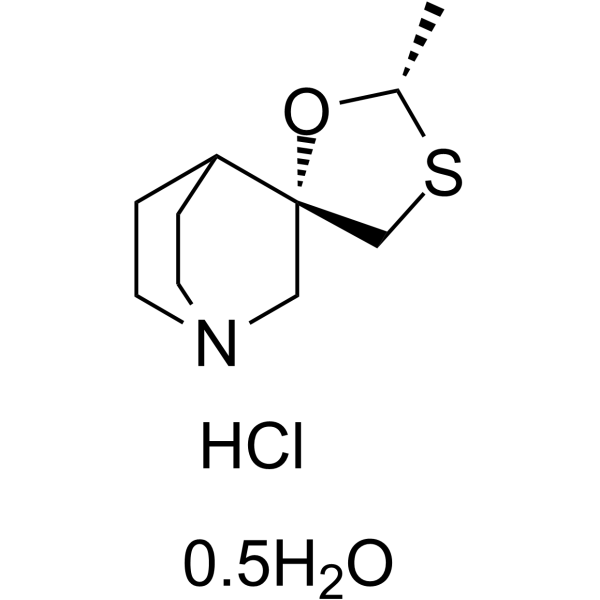
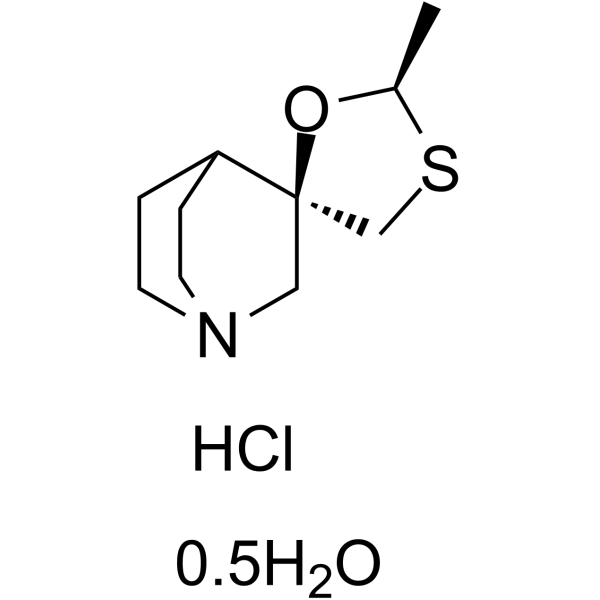
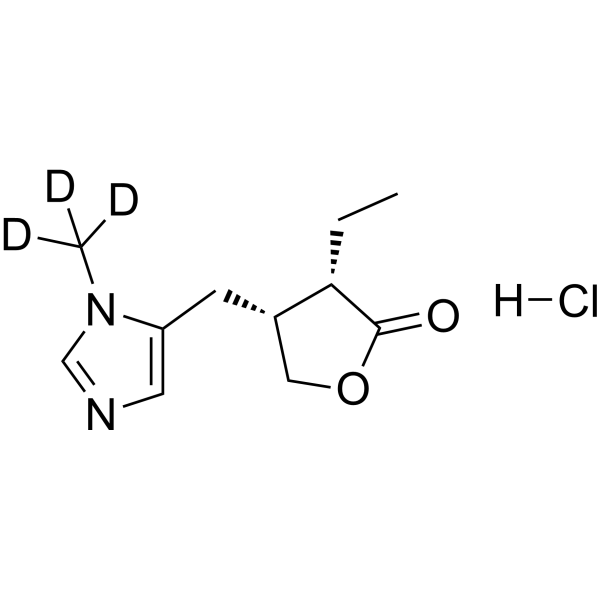
  • HY-B0726
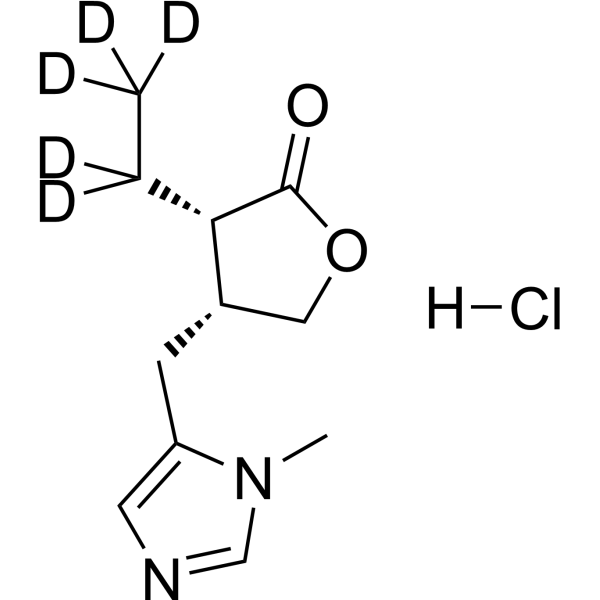
    Pilocarpine Hydrochloride
    Maximum Cited Publications
    41 Publications Verification

    mAChR Cardiovascular Disease Neurological Disease Cancer
    Pilocarpine Hydrochloride is a potent M3-type muscarinic acetylcholine receptor (M3 muscarinic receptor) agonist.
    Pilocarpine Hydrochloride
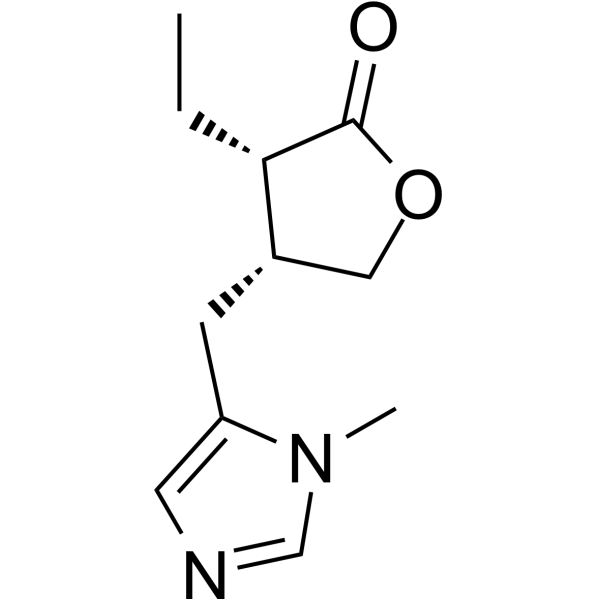
  • HY-B0726A
    Pilocarpine
    Maximum Cited Publications
    41 Publications Verification

    mAChR Neurological Disease Cancer
    Pilocarpine is a selective M3-type muscarinic acetylcholine receptor (M3 muscarinic receptor) agonist.
    Pilocarpine
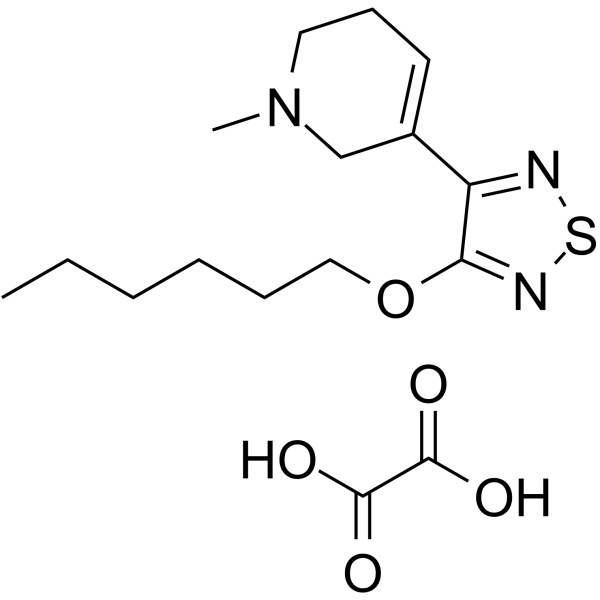
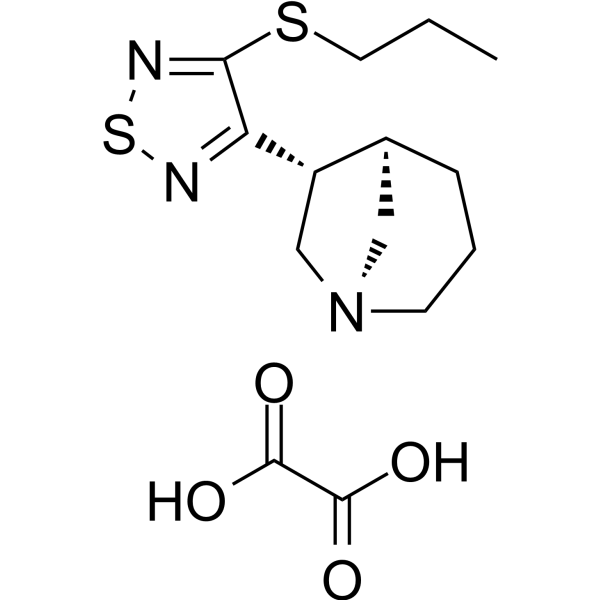
  • HY-13410
    Xanomeline oxalate
    5+ Cited Publications

    LY246708 oxalate

    mAChR Neurological Disease
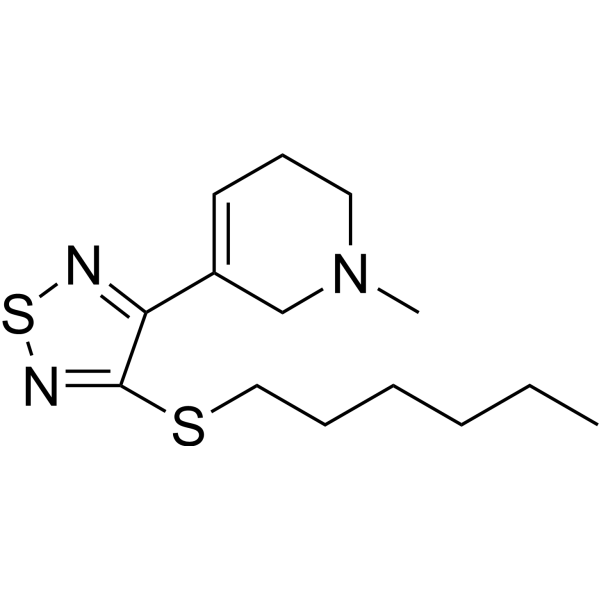
    Xanomeline oxalate (LY246708 oxalate) is a potent and selective muscarinic receptor agonist (SMRA) and stimulates phosphoinositide hydrolysis in vivo. Xanomeline oxalate can be used for the research of Alzheimer’s disease .
    Xanomeline oxalate
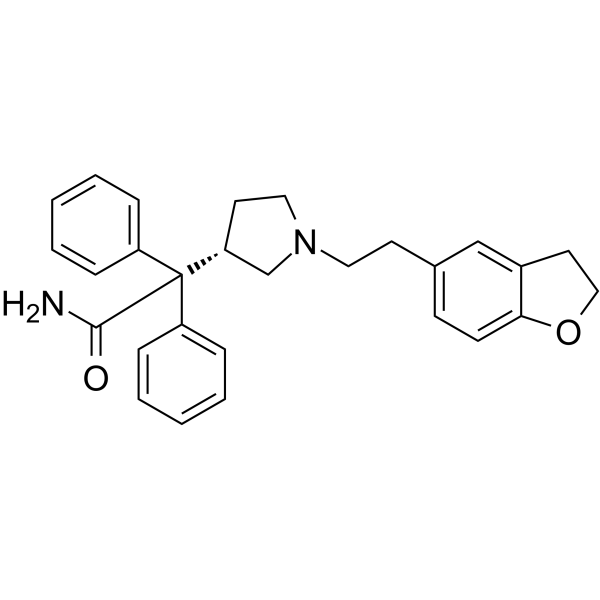
  • HY-A0033
    Darifenacin
    5+ Cited Publications

    UK-88525

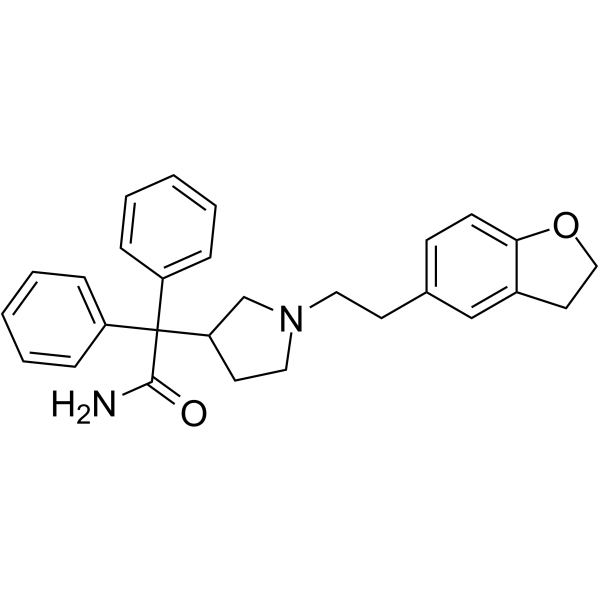
    mAChR p38 MAPK Akt Neurological Disease Metabolic Disease Cancer
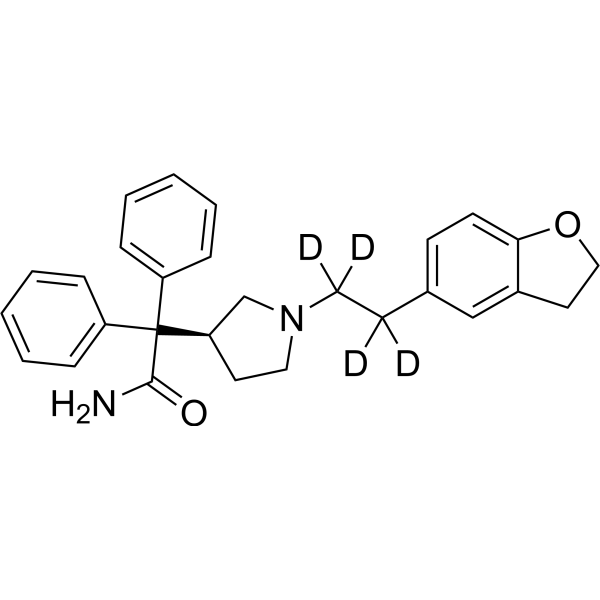
    Darifenacin (UK-88525) is a selective and orally active M3 muscarinic receptor (M3R) antagonist with a pKi of 8.9. Darifenacin binds >20-fold more specifically to M3R than to other muscarinic receptors. Darifenacin can be used in the study of urinary incontinence and other symptoms of overactive bladder. Darifenacin inhibits tumor growth in colorectal cancer cells and has anti-tumor effects .
    Darifenacin
  • HY-N0471
    L-Hyoscyamine
    2 Publications Verification

    Hyoscyamine

    mAChR Neurological Disease
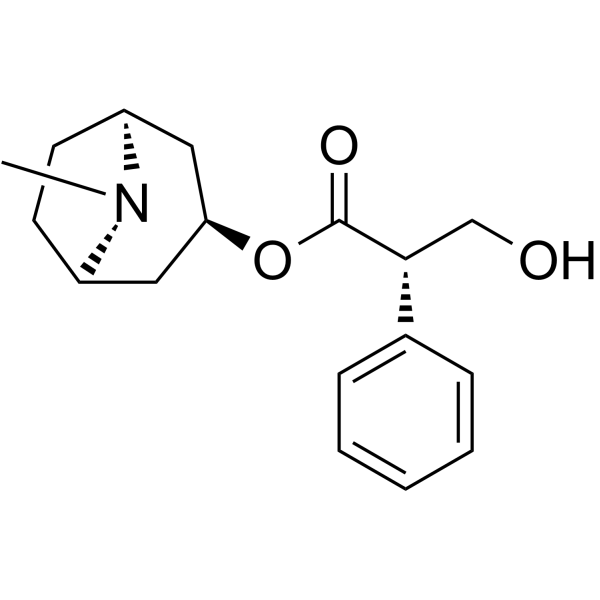
    L-Hyoscyamine (Daturine), a natural plant tropane alkaloid, is a potent and competitive muscarinic receptor (MR) antagonist. L-Hyoscyamine is a levo-isomer to Atropine (HY-B1205) .
    L-Hyoscyamine
  • HY-13204A

    KL 373

    mAChR Neurological Disease
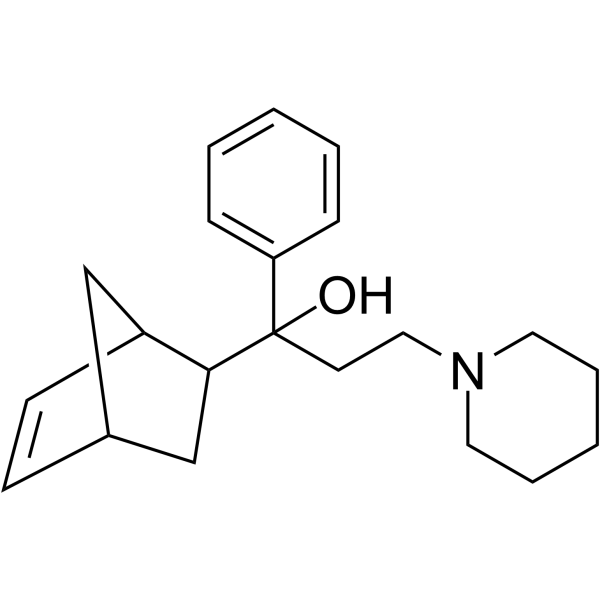
    Biperiden (KL 373) is a non-selective muscarinic receptor antagonist that competitively binds to M1 muscarinic receptors, thereby inhibiting acetylcholine and enhancing dopamine signaling in the central nervous system. Biperiden has the potential for the research of Parkinson's disease and other related psychiatric disorders .
    Biperiden
  • HY-A0012
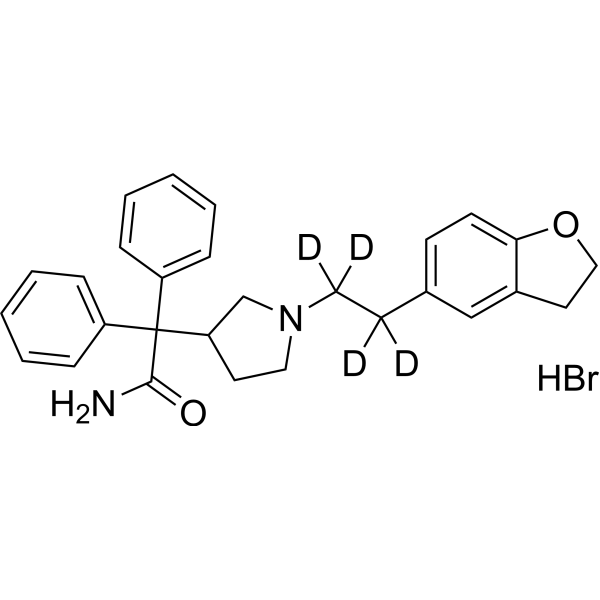
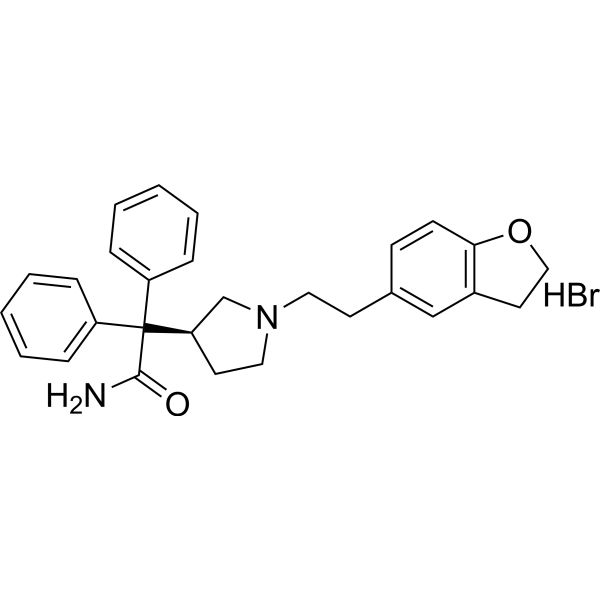
    Darifenacin hydrobromide
    5+ Cited Publications

    UK-88525 hydrobromide

    mAChR p38 MAPK Akt Neurological Disease Metabolic Disease Cancer
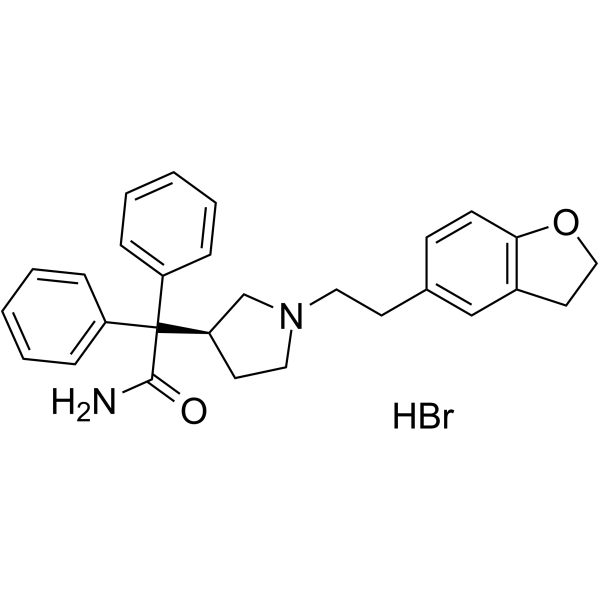
    Darifenacin (UK-88525) hydrobromide is a selective and orally active M3 muscarinic receptor (M3R) antagonist with a pKi of 8.9. Darifenacin hydrobromide binds >20-fold more specifically to M3R than to other muscarinic receptors. Darifenacin hydrobromide can be used in the study of urinary incontinence and other symptoms of overactive bladder. Darifenacin hydrobromide inhibits tumor growth in colorectal cancer cells and has anti-tumor effects .
    Darifenacin hydrobromide
  • HY-17465
    Glycopyrrolate
    2 Publications Verification

    Glycopyrronium bromide; Glycopyrrolate bromide

    mAChR Cardiovascular Disease Neurological Disease Cancer
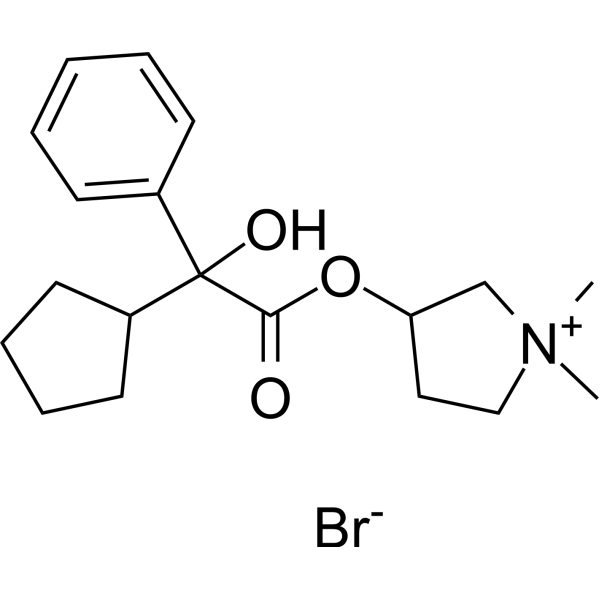
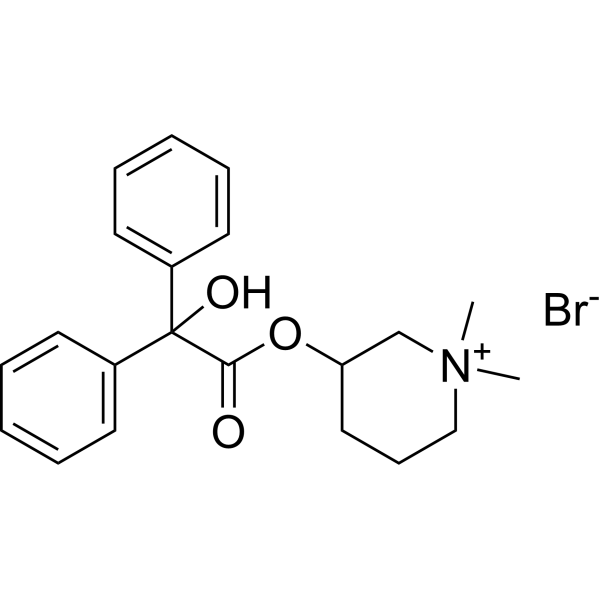
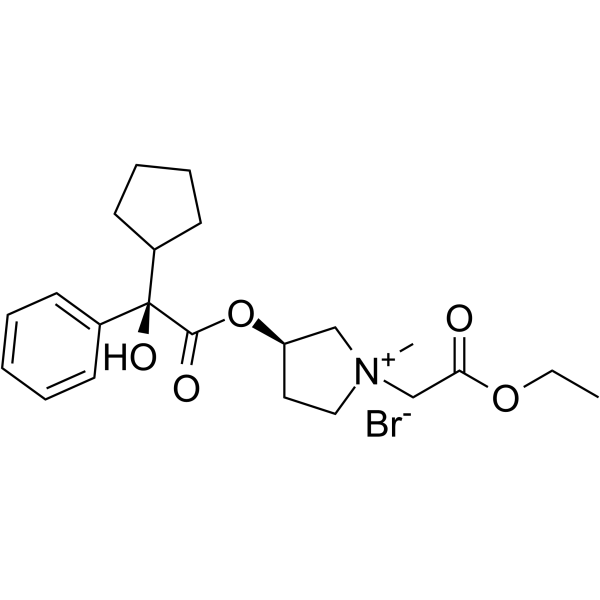
    Glycopyrrolate (Glycopyrronium bromide), a quaternary ammonium derivative, is a muscarinic receptor antagonist. Glycopyrrolate has bronchoprotective effect and produces a beneficial effect on blood pressure. Glycopyrrolate can be used for the research of bronchial diseases .
    Glycopyrrolate
  • HY-B1006
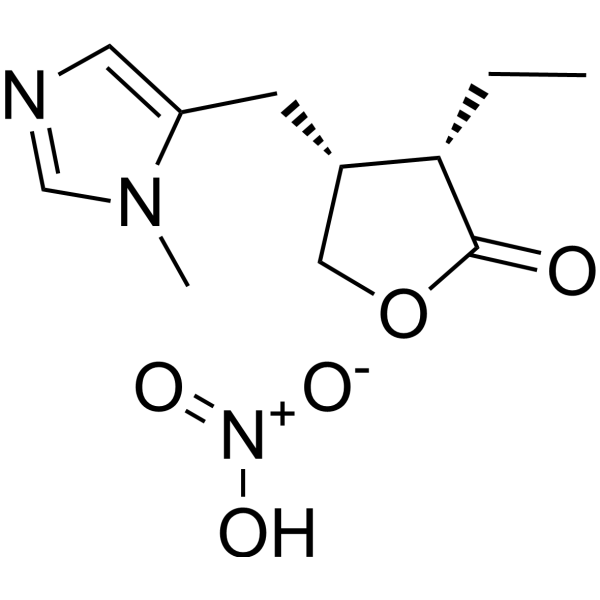
    Pilocarpine nitrate
    Maximum Cited Publications
    41 Publications Verification

    mAChR Neurological Disease Cancer
    Pilocarpine nitrate is a potent M3-type muscarinic acetylcholine receptor (M3 muscarinic receptor) agonist.
    Pilocarpine nitrate
  • HY-B1277
    Trihexyphenidyl hydrochloride
    3 Publications Verification

    mAChR Cholinesterase (ChE) Neurological Disease
    Trihexyphenidyl hydrochloride is a selective and orally active M1 muscarinic receptor antagonist with an IC50 of 3.7 nM for rat cerebral cortex M1 muscarinic receptors. Trihexyphenidyl hydrochloride modulates cholinergic activity, countering acetylcholine supersensitivity in neural pathways. Trihexyphenidyl hydrochloride improves movement disorder, inhibits McN-A-343 (HY-107648)-induced pressor responses, vagally-induced bradycardia and vasodilatation. Trihexyphenidyl hydrochloride can be used for the research of Parkinson's disease. .
    Trihexyphenidyl hydrochloride
  • HY-A0034
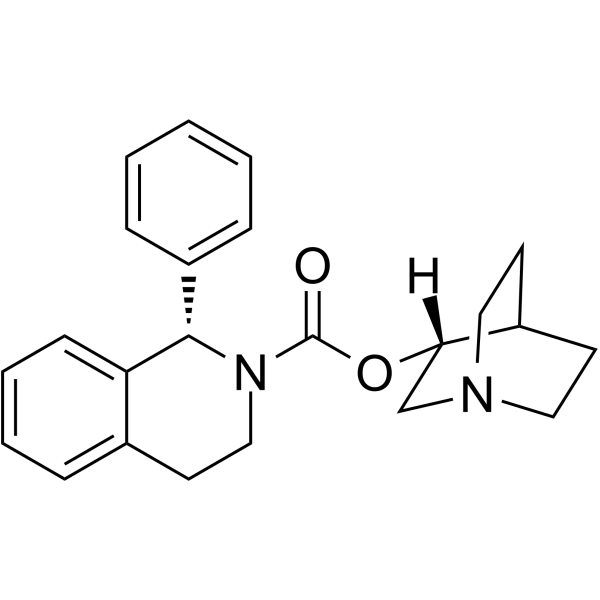
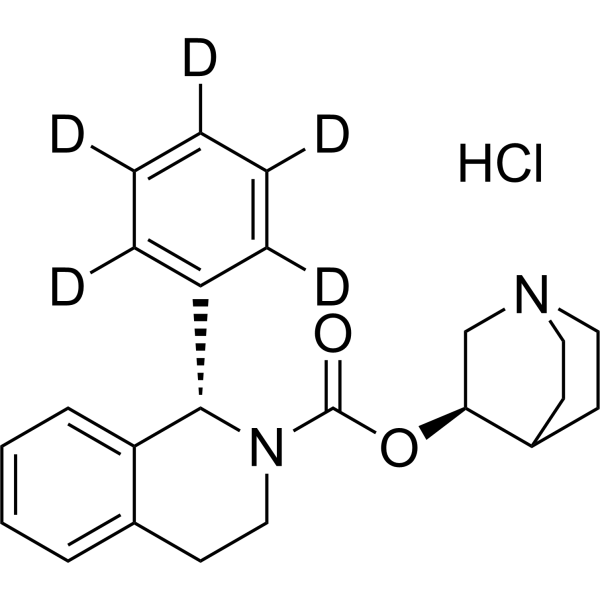
    Solifenacin
    3 Publications Verification

    YM905 free base

    mAChR Neurological Disease Cancer
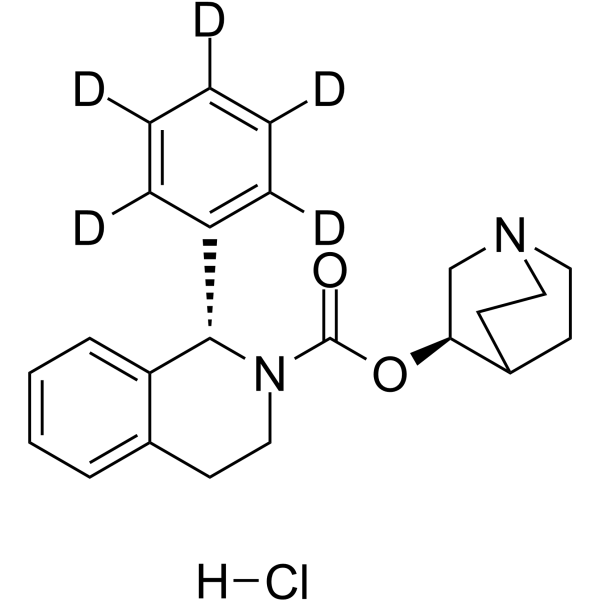
    Solifenacin (YM905 free base) is a novel muscarinic receptor antagonist with pKis of 7.6, 6.9 and 8.0 for M1, M2 and M3 receptors, respectively.
    Solifenacin
  • HY-105296
    Blarcamesine
    3 Publications Verification

    Sigma Receptor mAChR Cancer
    Blarcamesine is an orally bioavailable Sigma-1 receptor agonist and muscarinic receptor modulator, with anticonvulsant, anti-amnesic, neuroprotective and antidepressant properties. Blarcamesine ameliorates neurologic impairments in a mouse model of Rett syndrome .
    Blarcamesine
  • HY-B0461

    mAChR Neurological Disease
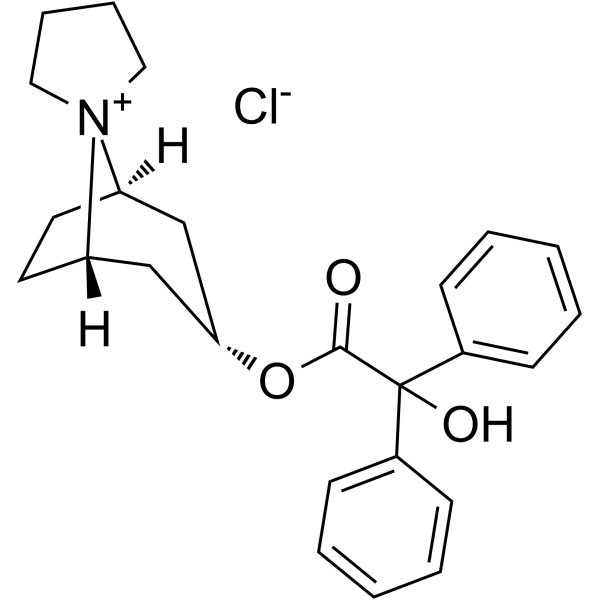
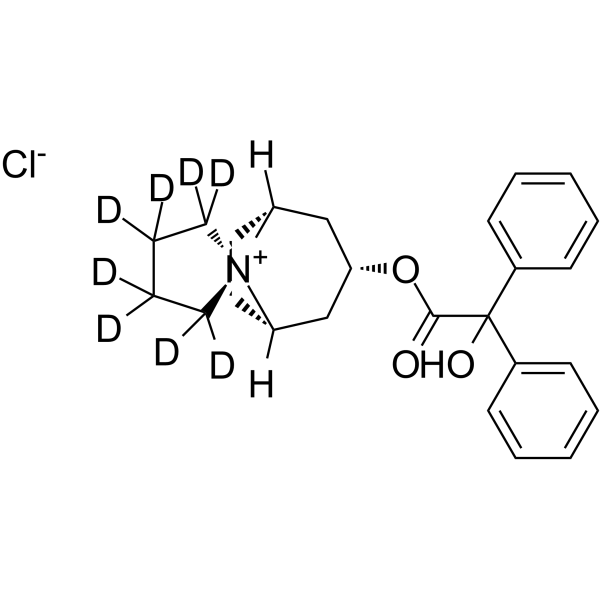
    Trospium chloride is an orally active, specific and competitive antagonist of muscarinic cholinergic receptors (mAChRs), with antimuscarinic activity. Trospium chloride binds to muscarinic receptors M1, M2 and M3 with high affinity, but not nicotinic, cholinergic receptors .
    Trospium chloride
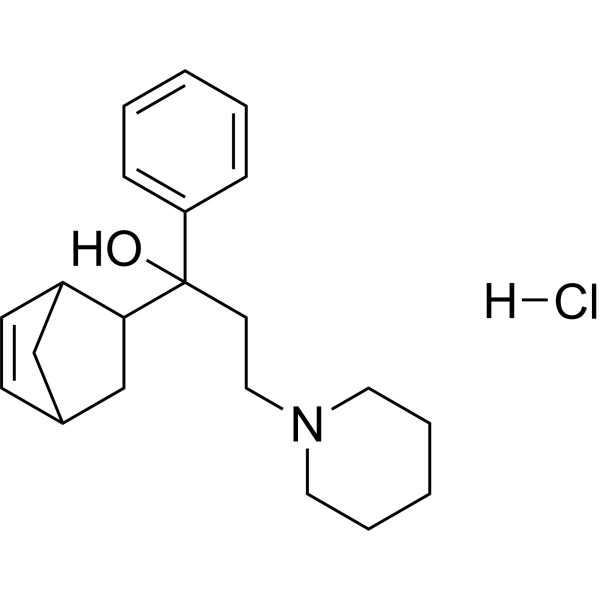
  • HY-13204

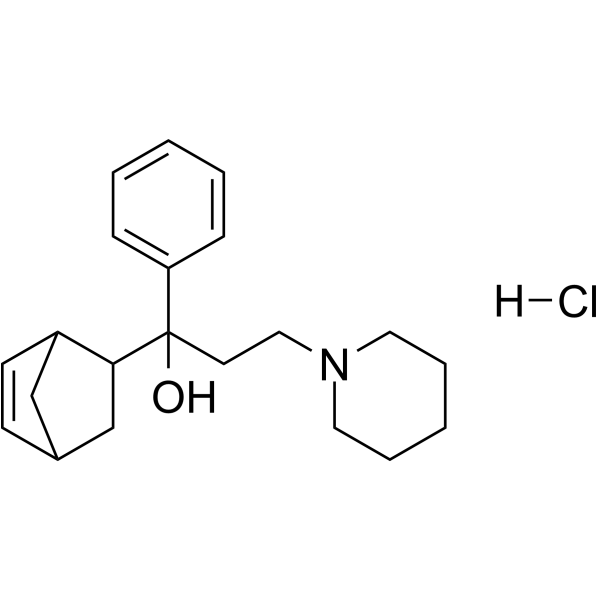
    KL 373 hydrochloride

    mAChR Neurological Disease
    Biperiden (KL 373) hydrochloride is a non-selective muscarinic receptor antagonist that competitively binds to M1 muscarinic receptors, thereby inhibiting acetylcholine and enhancing dopamine signaling in the central nervous system. Biperiden hydrochloride has the potential for the research of Parkinson's disease and other related psychiatric disorders .
    Biperiden hydrochloride
  • HY-A0002
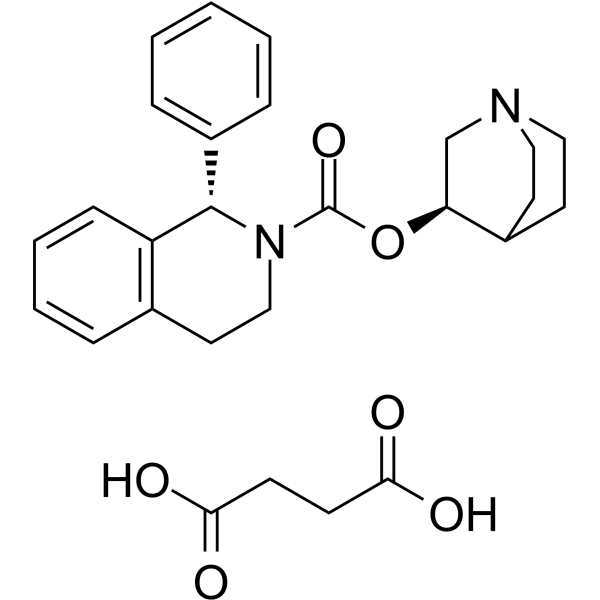
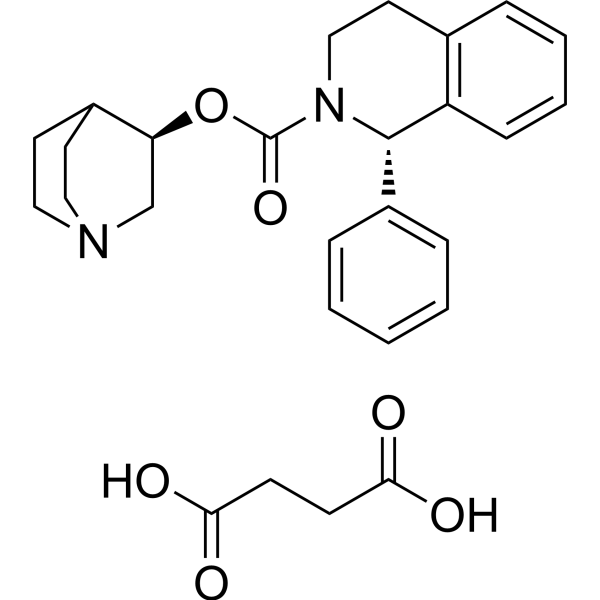
    Solifenacin Succinate
    3 Publications Verification

    YM905

    mAChR Neurological Disease Cancer
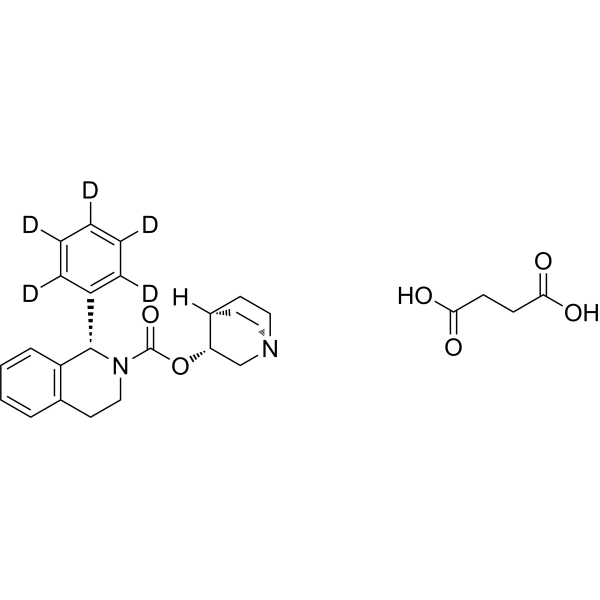
    Solifenacin Succinate (YM905) is a novel muscarinic receptor antagonist with pKis of 7.6, 6.9 and 8.0 for M1, M2 and M3 receptors, respectively.
    Solifenacin Succinate
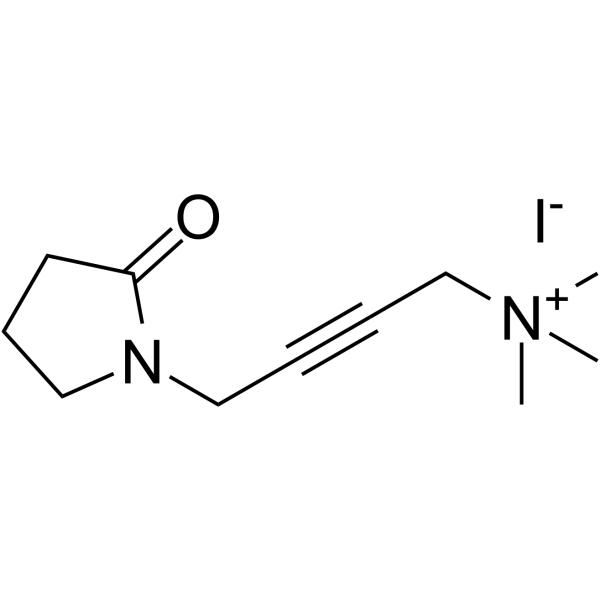
  • HY-101372A

    mAChR Neurological Disease
    Oxotremorine M iodide is a potent and non-selective muscarinic acetylcholine receptor (mAChR) agonist. Oxotremorine M iodide potentiates NMDA receptors by muscarinic receptor dependent and independent mechanisms .
    Oxotremorine M iodide
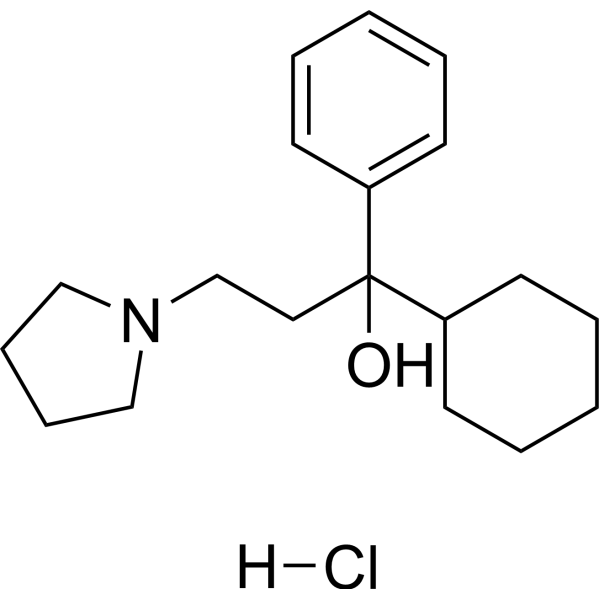
  • HY-B1487

    Tricyclamol hydrochloride; (±)-Procyclidine hydrochloride

    iGluR mAChR Neurological Disease
    Procyclidine (Tricyclamol, (±)-Procyclidine) hydrochloride , an anticholinergic agent, is a muscarinic receptor antagonist that also has the properties of an N-methyl-D-aspartate (NMDA) antagonist. Procyclidine hydrochloride can be used in studies of Parkinson's disease and related psychiatric disorders such as Soman-induced epilepsy .
    Procyclidine hydrochloride
  • HY-107646

    mAChR Neurological Disease
    PD 102807 is a M4 muscarinic receptor antagonist with an IC50 of 90.7 nM. PD 102807 inhibits M1, M2, M3, M5 muscarinic receptor with IC50s of 6558.7, 3440.7, 950.0, and 7411.7 nM, respectively . Antidyskinetic effect.
    PD 102807
  • HY-101086
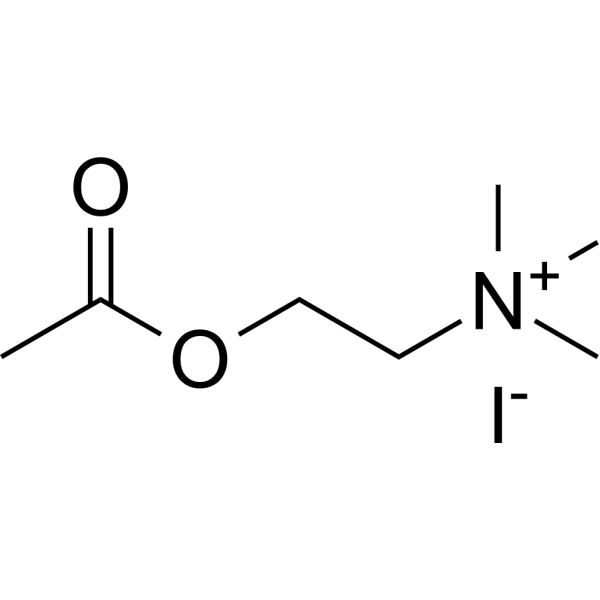
    Acetylcholine iodide
    20+ Cited Publications

    ACh iodide

    Endogenous Metabolite mAChR Neurological Disease Endocrinology
    Acetylcholine iodide is a muscarinic receptor modulator. Acetylcholine iodide specifically binds to muscarinic receptors, inhibits sodium absorption, and induces chloride secretion. Acetylcholine iodide changes intestinal ion transport, enhances intestinal secretory function, induces or maintains mammary gland development and lactation. Acetylcholine iodide can be used for intestinal ion transport regulation and mammary gland physiological function research .
    Acetylcholine iodide
  • HY-B1621A

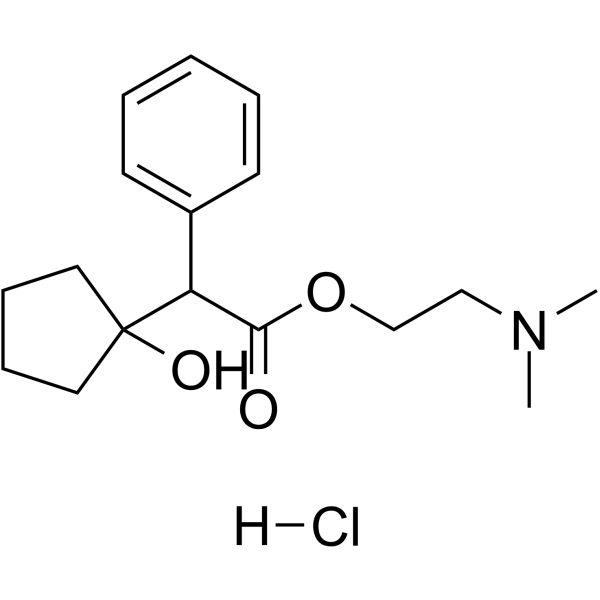
    DL-Cyclopentolate hydrochloride

    mAChR Neurological Disease
    Cyclopentolate (DL-Cyclopentolate) hydrochloride is an Atropine-like muscarinic receptors antagonist with a pKB value of 7.8 (on the circular ciliary muscle). Cyclopentolate hydrochloride is an anti-muscarinic agent commonly used in the ophthalmologic practice .
    Cyclopentolate hydrochloride
  • HY-120081A
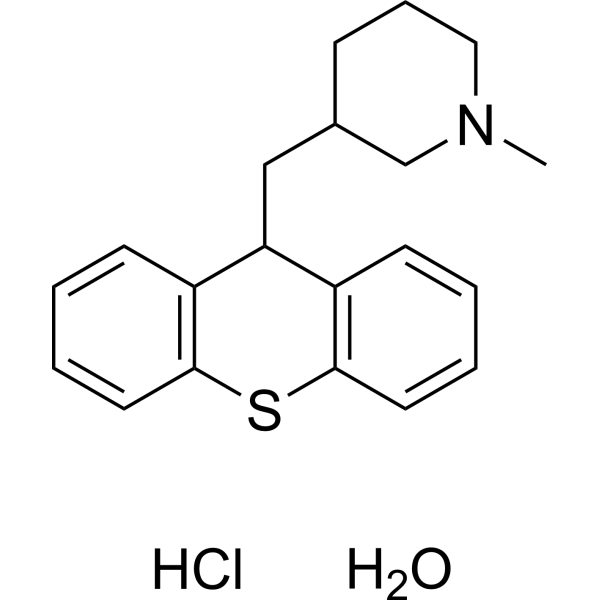
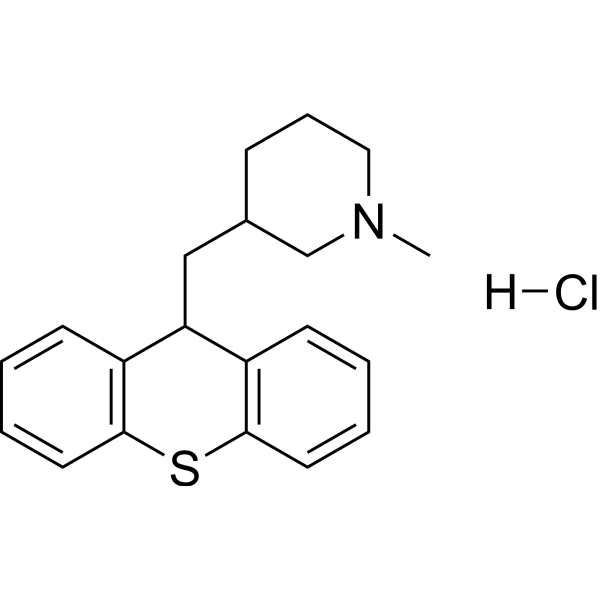
    Metixene hydrochloride hydrate
    2 Publications Verification

    mAChR Neurological Disease
    Metixene (Piperidine) hydrochloride hydrate is an anticholinergic and antiparkinsonian agent. Metixene hydrochloride hydrate potently inhibits binding of quinuclidinyl benzilate (QNB) with the muscarinic receptor, IC50 and Ki values of 55 nM and 15 nM, respectively. Metixene hydrochloride hydrate can be used for the research of parkinsonian .
    Metixene hydrochloride hydrate
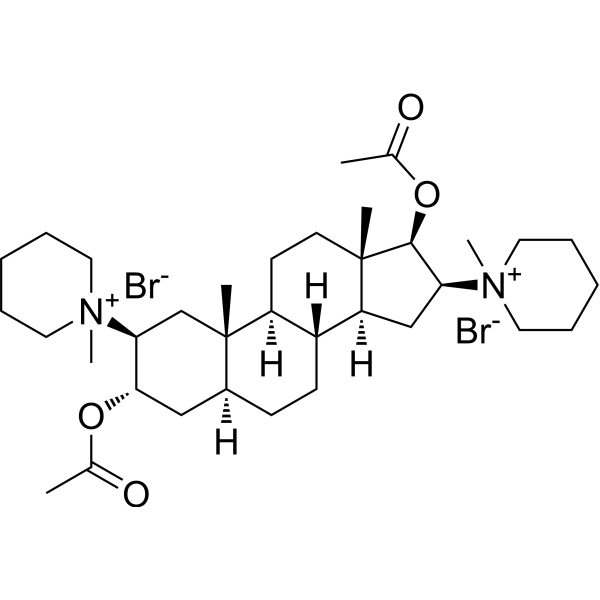
  • HY-B0429

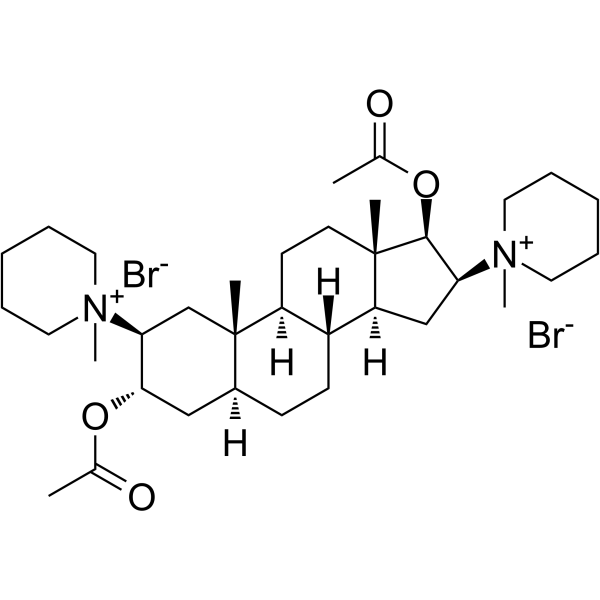
    nAChR Neurological Disease
    Pancuronium dibromide, a bis-quaternary steroid, is a neuromuscular relaxant. Pancuronium dibromide inhibits neuromuscular transmission by competing with acetylcholine for binding sites on nACh receptors. Pancuronium dibromide also inhibits cardiac muscarinic receptors and has a sympathomimetic action .
    Pancuronium dibromide
  • HY-N5016

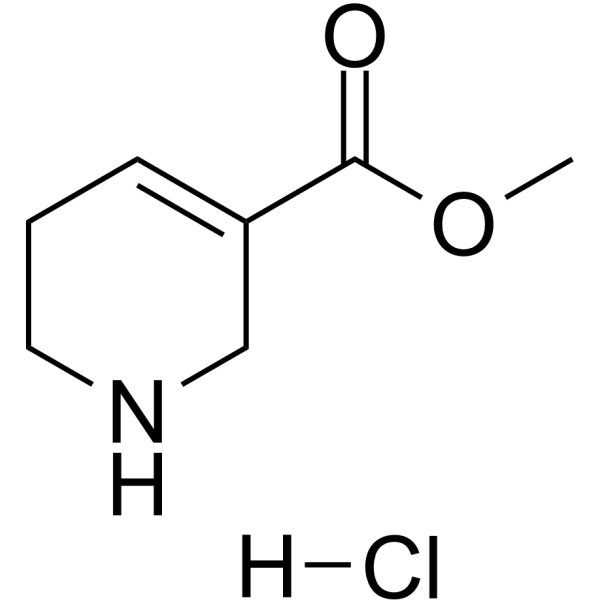
    mAChR Cardiovascular Disease
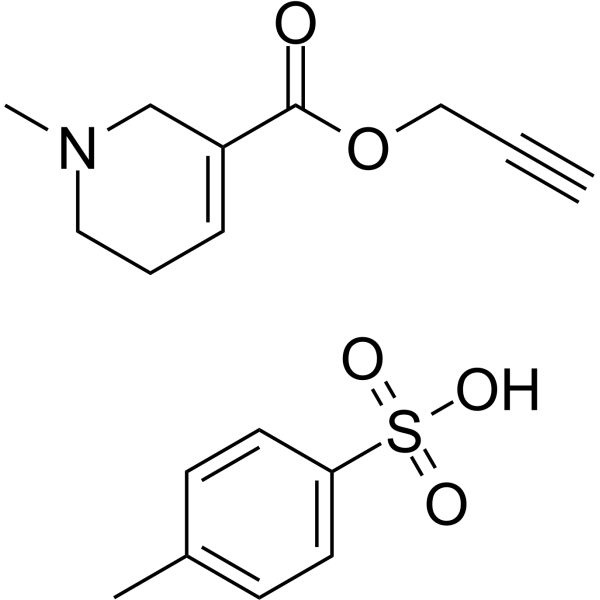
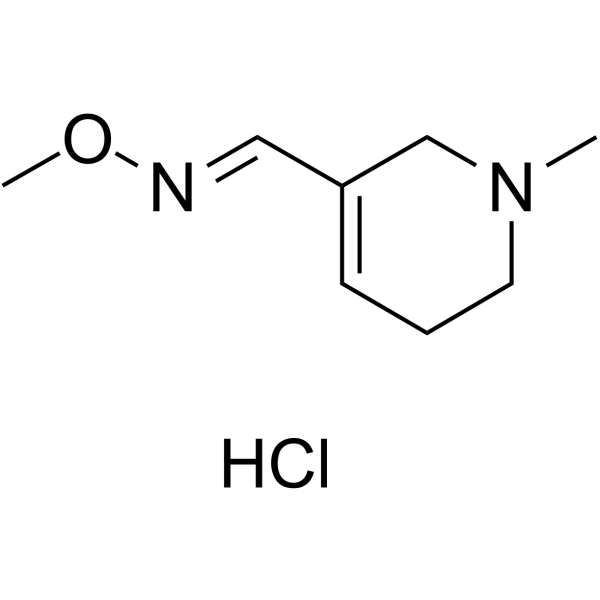
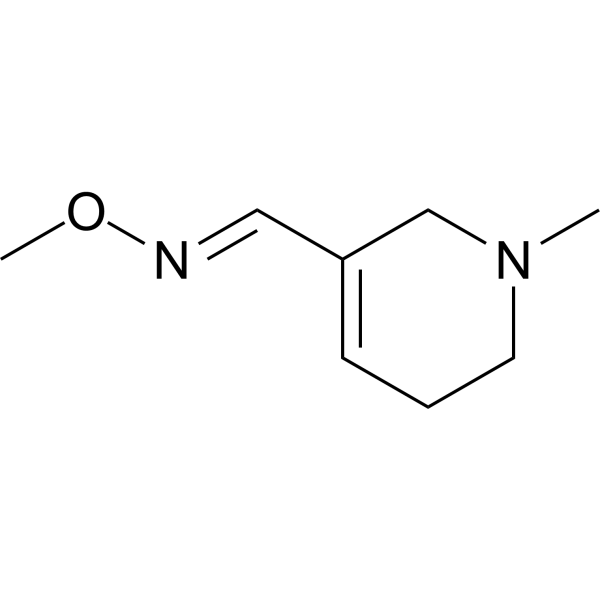
    Guvacoline hydrochloride, a pyridine alkaloid found in Areca triandra, can act as a weak full agonist of atrial and ileal muscarinic receptors .
    Guvacoline hydrochloride
  • HY-116294A
    Methoctramine tetrahydrochloride
    1 Publications Verification

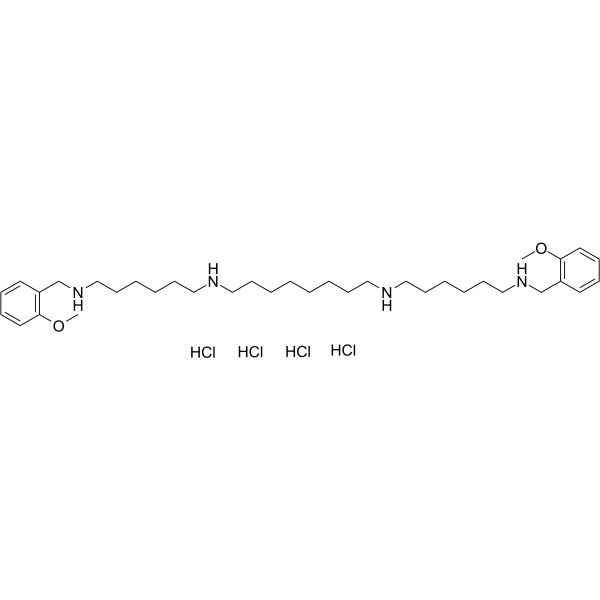
    mAChR Cardiovascular Disease
    Methoctramine tetrahydrochloride is a potent and cardioselectivity antagonist of M2 muscarinic receptor. Methoctramine tetrahydrochloride can inhibit Muscarine (HY-121404)-induced bradycardia in vivo. Methoctramine tetrahydrochloride can be used in the study of cardiovascular diseases .
    Methoctramine tetrahydrochloride
  • HY-22437
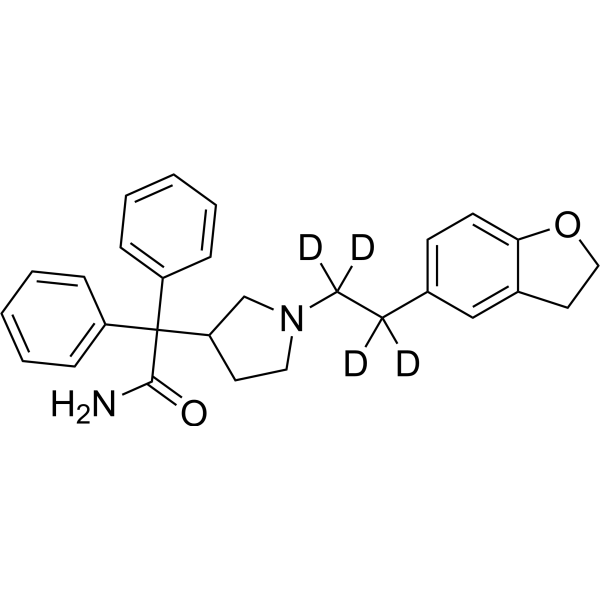
    (±)-Darifenacin
    1 Publications Verification

    (±)-UK-88525

    mAChR Neurological Disease Cancer
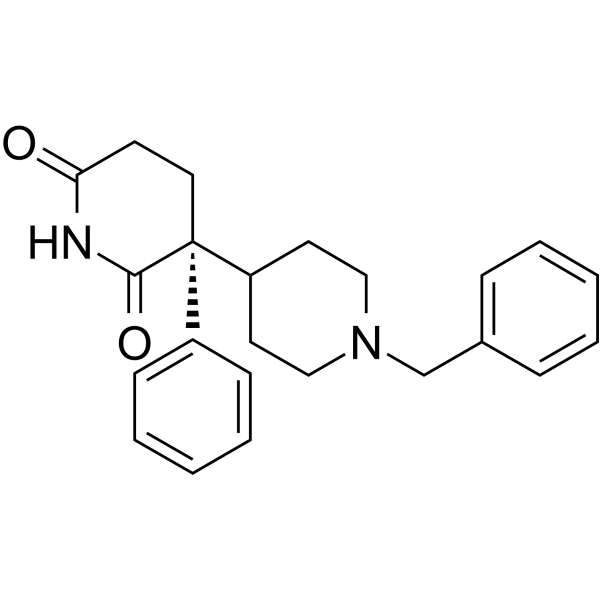
    (±)-Darifenacin is the racemate of Darifenacin. Darifenacin is a selective M3 muscarinic receptor antagonist .
    (±)-Darifenacin
  • HY-105545

    (+)-Benzetimide; (S)-(+)-Dexetimide; Dexbenzetimide

    mAChR Neurological Disease
    Dexetimide ((+)-Benzetimide; (S)-(+)-Dexetimide; Dexbenzetimide) is a piperidine anticholinergic and a high-affinity muscarinic receptor antagonist. Dexetimide can be used in studies of parkinson's disease .
    Dexetimide
  • HY-I0230
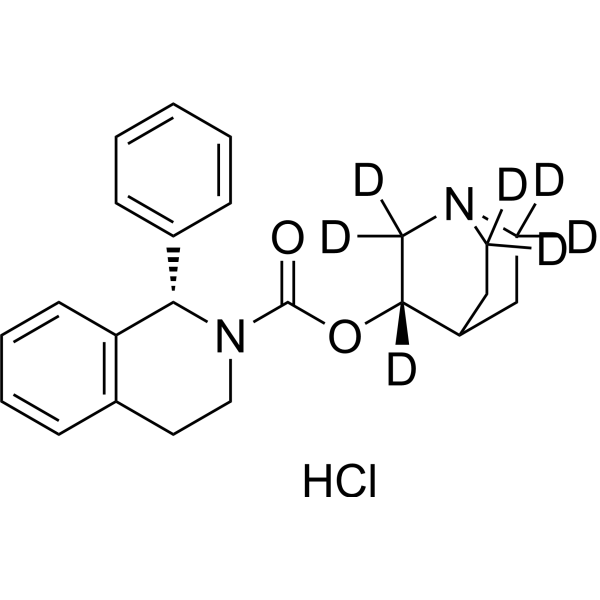
    Solifenacin hydrochloride
    3 Publications Verification

    YM905 hydrochloride

    mAChR Neurological Disease Cancer
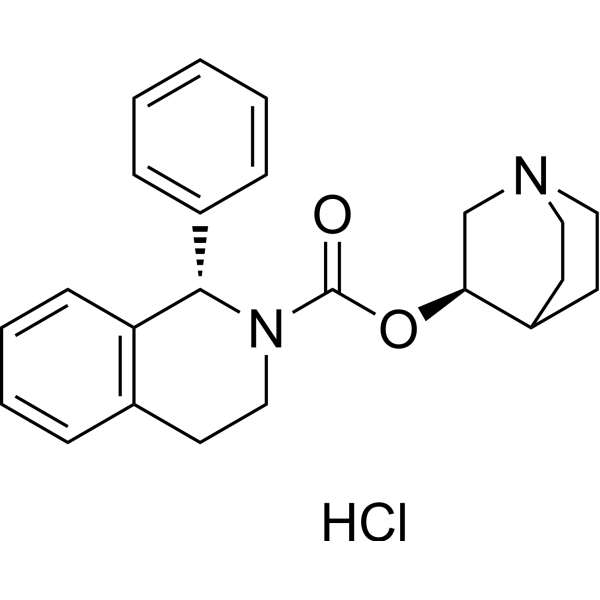
    Solifenacin hydrochloride (YM905 hydrochloride) is a muscarinic receptor antagonist, with pKis of 7.6, 6.9 and 8.0 for M1, M2 and M3 receptors, respectively.
    Solifenacin hydrochloride
  • HY-B1388

    Homatropine methobromide

    mAChR Infection Neurological Disease
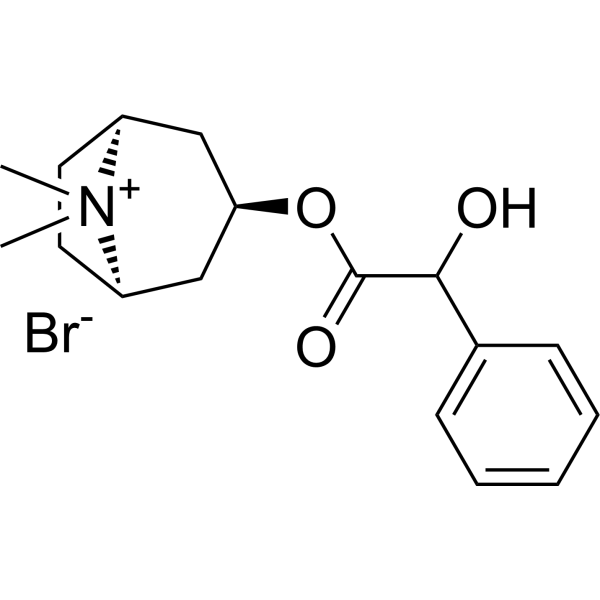
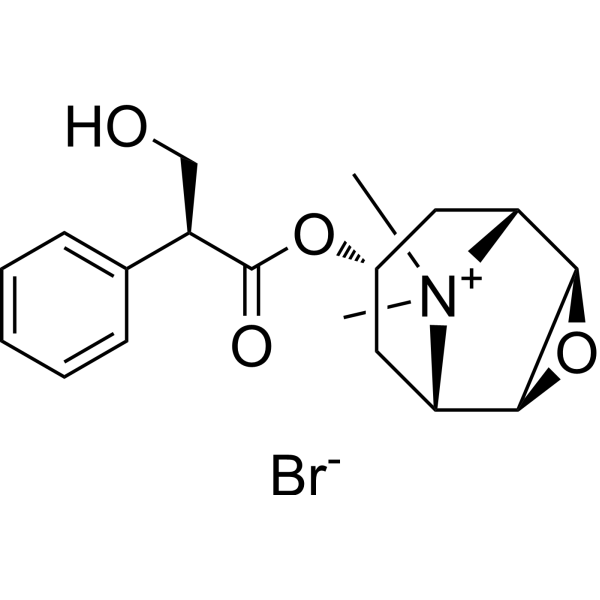
    Homatropine methylbromide (Homatropine methobromide) is muscarinic AChR antagonist, inhibits endothelial and smooth muscle muscarinic receptors of WKY-E and SHR-E with IC50 of 162.5 nM and 170.3 nM, respectively.
    Homatropine (methylbromide)
  • HY-14825A

    SVT-40776 D-tartrate

    mAChR Inflammation/Immunology
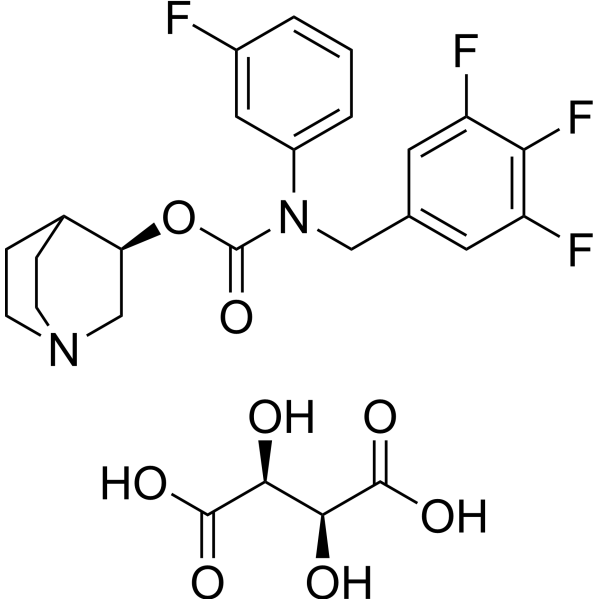
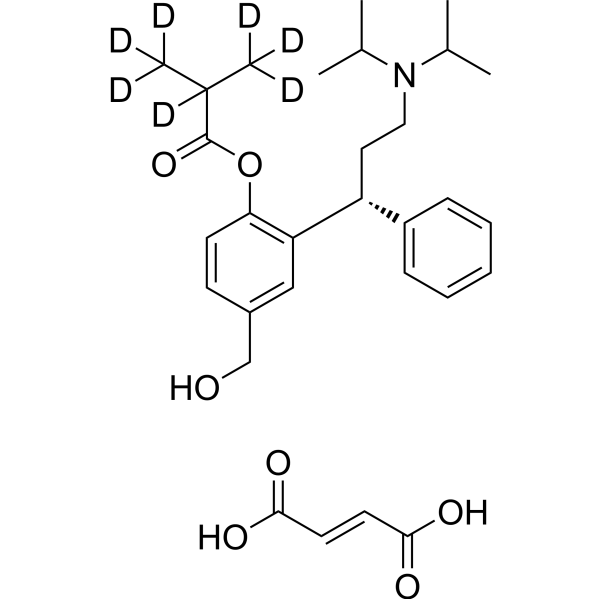
    Tarafenacin (SVT-40776) D-tartrate is an orally active, selective M3 muscarinic receptor (M3 muscarinic receptor) antagonist with 203-fold selectivity over the M2 muscarinic receptor. Tarafenacin D-tartrate does not affect atrial contraction, arterial blood pressure or arterial pressure at high doses. Tarafenacin D-tartrate can be used in the research of overactive bladder .
    Tarafenacin D-tartrate
  • HY-100336
    AC260584
    1 Publications Verification

    mAChR Neurological Disease
    AC260584 is an M1 muscarinic receptor allosteric agonist with a pEC50 of 7.6.
    AC260584
  • HY-N0471A
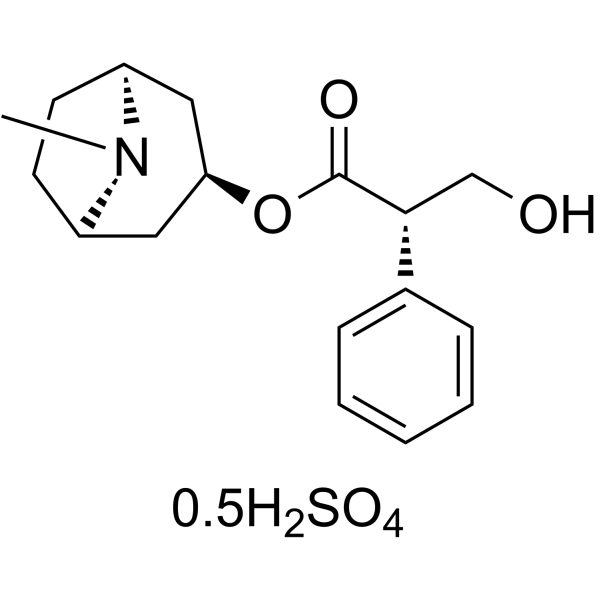
    L-Hyoscyamine sulfate
    2 Publications Verification

    Daturine sulfate

    mAChR Neurological Disease
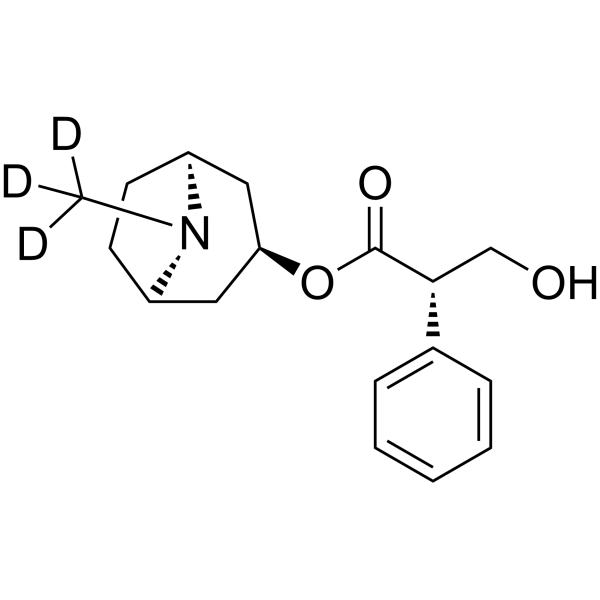
    L-Hyoscyamine sulfate (Daturine sulfate), a natural plant tropane alkaloid, is a potent and competitive muscarinic receptor (MR) antagonist. L-Hyoscyamine sulfate is a levo-isomer to Atropine (HY-B1205) .
    L-Hyoscyamine sulfate
  • HY-N7247

    mAChR Metabolic Disease
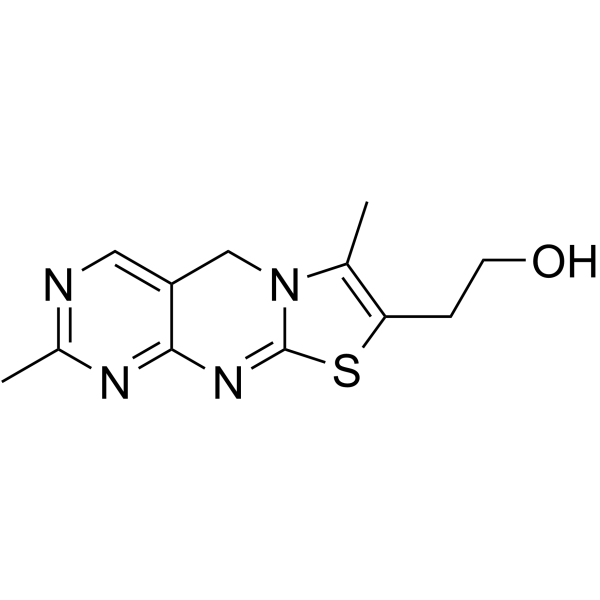
    Thiochrome, a natural oxidation product and metabolite of thiamine, is a selective M4 muscarinic receptor of acetylcholine (ACh) affinity enhancer. Thiochrome has neutral cooperativity with ACh at M1 to M3 receptors .
    Thiochrome
  • HY-172418

    mAChR Neurological Disease
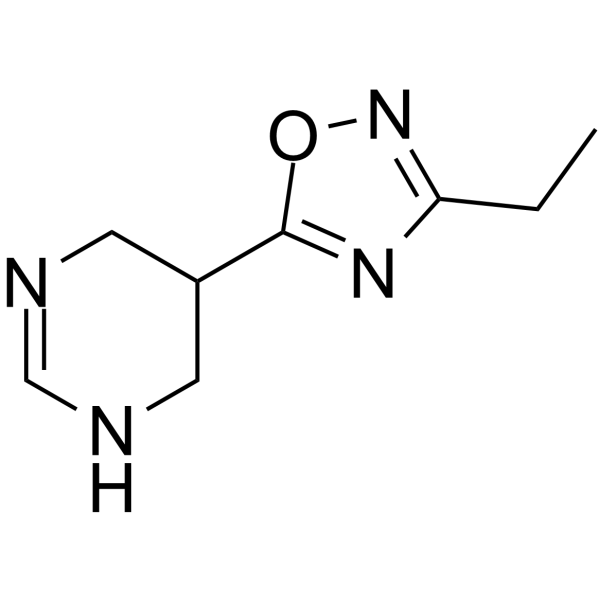
    Betovumeline is the agonist for muscarinic receptor and can be used for researchs of neurological disorders .
    Betovumeline
  • HY-137311

    Calcium Channel Phospholipase mAChR Neurological Disease
    (S)-Albuterol hydrochloride is a muscarinic receptor and phospholipase C activator. (S)-Albuterol hydrochloride increases intracellular free calcium in airway smooth muscle .
    (S)-Albuterol hydrochloride
  • HY-B1277A

    mAChR Cholinesterase (ChE) Cardiovascular Disease Neurological Disease
    Trihexyphenidyl is a selective and orally active M1 muscarinic receptor antagonist with an IC50 of 3.7 nM for rat cerebral cortex M1 muscarinic receptors. Trihexyphenidyl modulates cholinergic activity, countering acetylcholine supersensitivity in neural pathways. Trihexyphenidyl improves movement disorder, inhibits McN-A-343 (HY-107648)-induced pressor responses, vagally-induced bradycardia and vasodilatation. Trihexyphenidyl can be used for the research of Parkinson's disease. .
    Trihexyphenidyl
  • HY-120081

    mAChR Neurological Disease
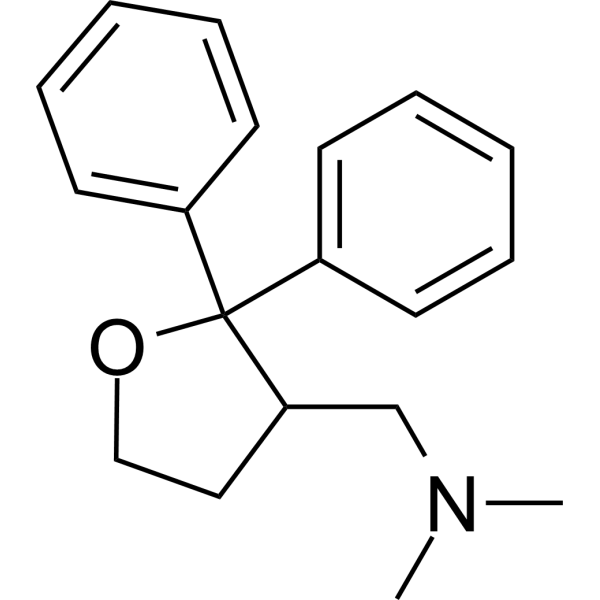
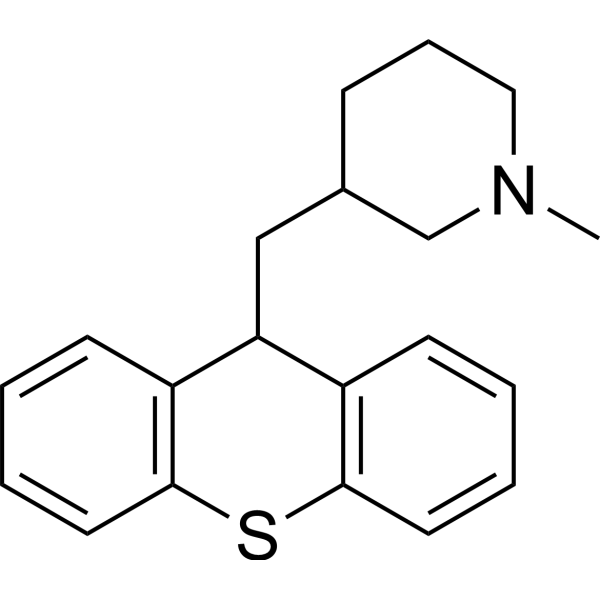
    Metixene (Piperidine) is an anticholinergic and antiparkinsonian agent. Metixene potently inhibits binding of quinuclidinyl benzilate (QNB) with the muscarinic receptor, IC50 and Ki values of 55 nM and 15 nM, respectively. Metixene can be used for the research of parkinsonian .
    Metixene
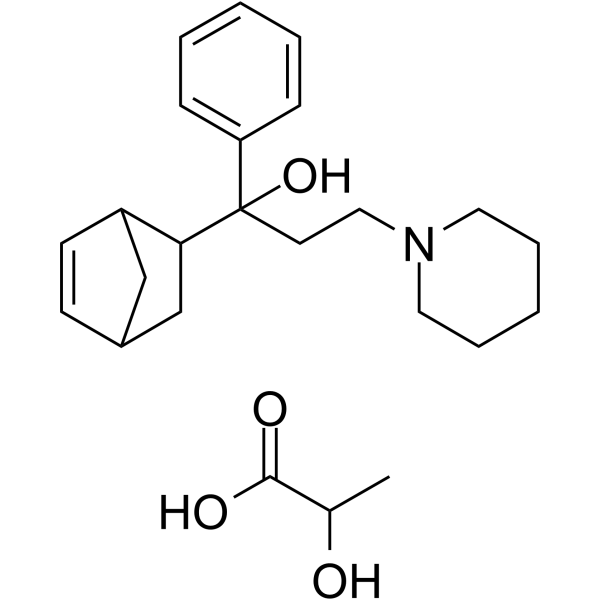
  • HY-13204B

    KL 373 lactate

    mAChR Neurological Disease
    Biperiden (KL 373) lactate is an orally active non-selective muscarinic receptor antagonist that competitively binds to M1 muscarinic receptors. Biperiden (KL 373) lactate inhibits acetylcholine and enhances dopamine signaling in the central nervous system. Biperiden (KL 373) lactate has the potential for the research of Parkinson's disease and other related psychiatric disorders .
    Biperiden lactate
  • HY-13204R

    KL 373 hydrochloride (Standard)

    Reference Standards mAChR Neurological Disease
    Biperiden (hydrochloride) (Standard) is the analytical standard of Biperiden (hydrochloride). This product is intended for research and analytical applications. Biperiden (KL 373) hydrochloride is a non-selective muscarinic receptor antagonist that competitively binds to M1 muscarinic receptors, thereby inhibiting acetylcholine and enhancing dopamine signaling in the central nervous system. Biperiden hydrochloride has the potential for the research of Parkinson's disease and other related psychiatric disorders .
    Biperiden hydrochloride (Standard)
  • HY-N0471C

    Daturine sulfate hydrate

    mAChR Neurological Disease
    L-Hyoscyamine sulfate hydrate, a natural plant tropane alkaloid, is a potent and competitive muscarinic receptor (MR) antagonist. L-Hyoscyamine sulfate hydrate is a levo-isomer to Atropine (HY-B1205) .
    L-Hyoscyamine sulfate hydrate
  • HY-B1621

    DL-Cyclopentolate

    mAChR Neurological Disease
    Cyclopentolate (DL-Cyclopentolate) is an Atropine-like muscarinic receptors antagonist with a pKB value of 7.8 (on the circular ciliary muscle). Cyclopentolate is an anti-muscarinic agent commonly used in the ophthalmologic practice .
    Cyclopentolate
  • HY-B0726R

    Reference Standards mAChR Neurological Disease Cancer
    Pilocarpine (Hydrochloride) (Standard) is the analytical standard of Pilocarpine (Hydrochloride). This product is intended for research and analytical applications. Pilocarpine Hydrochloride is a potent M3-type muscarinic acetylcholine receptor (M3 muscarinic receptor) agonist.
    Pilocarpine Hydrochloride (Standard)
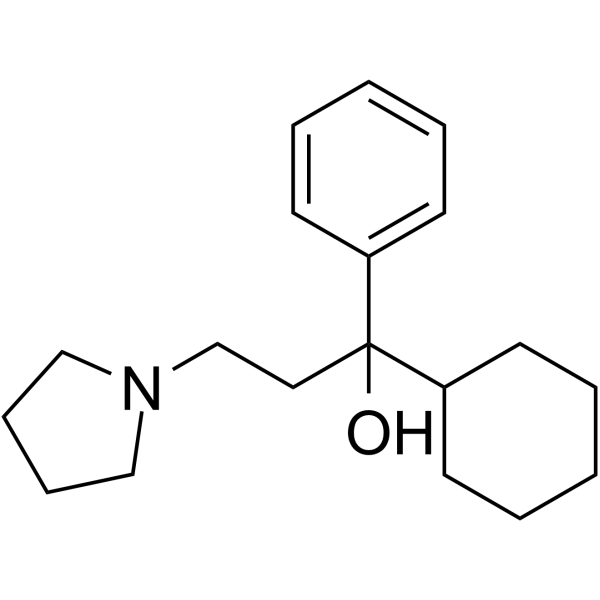
  • HY-B1487A

    Tricyclamol; (±)-Procyclidine

    mAChR iGluR Neurological Disease
    Procyclidine (Tricyclamol; (±)-Procyclidine), an anticholinergic agent, is a muscarinic receptor antagonist that also has the properties of an N-methyl-D-aspartate (NMDA) antagonist. Procyclidine can be used in studies of Parkinson's disease and related psychiatric disorders such as Soman-induced epilepsy .
    Procyclidine
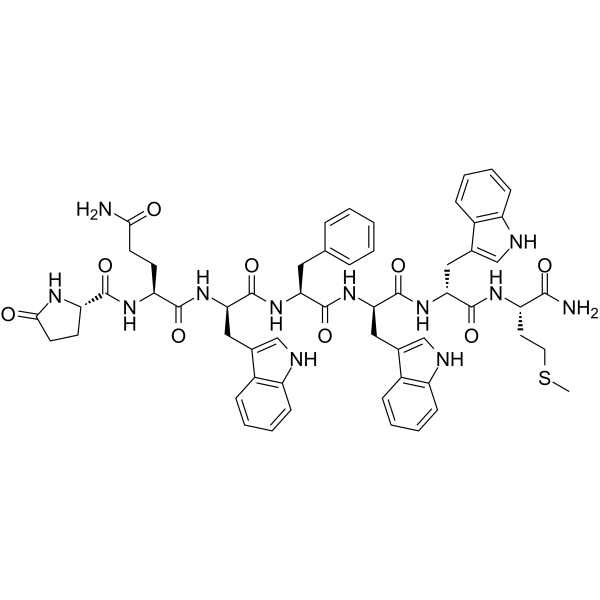
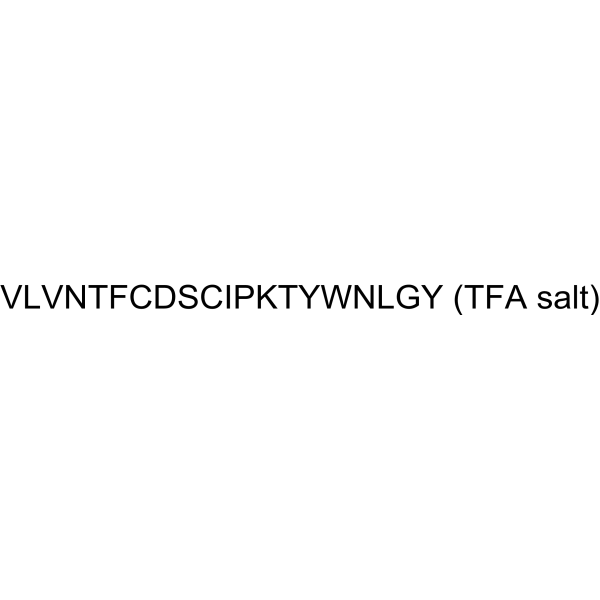
  • HY-P1376

    mAChR Adrenergic Receptor Endocrinology
    G-Protein antagonist peptide is the substance P-related peptide that inhibits binding of G proteins to their receptors. G-Protein antagonist peptide competitively and reversibly inhibits M2 muscarinic receptor activation of Gi or Go and inhibits Gs activation by β-adrenoceptors.
    G-Protein antagonist peptide
  • HY-134971

    mAChR Neurological Disease
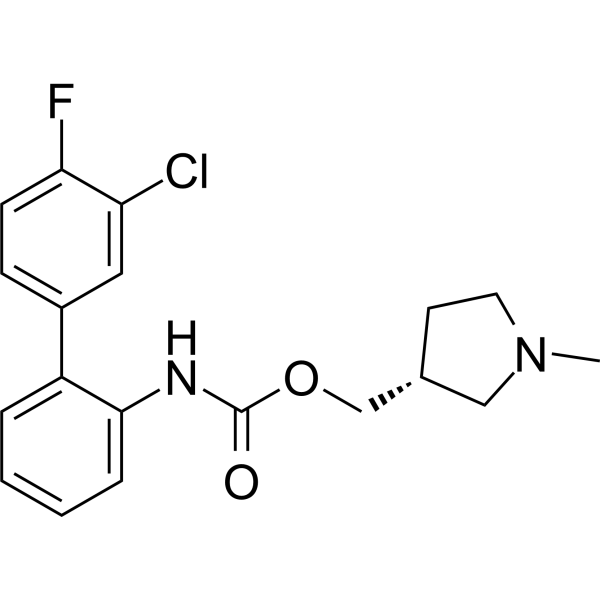
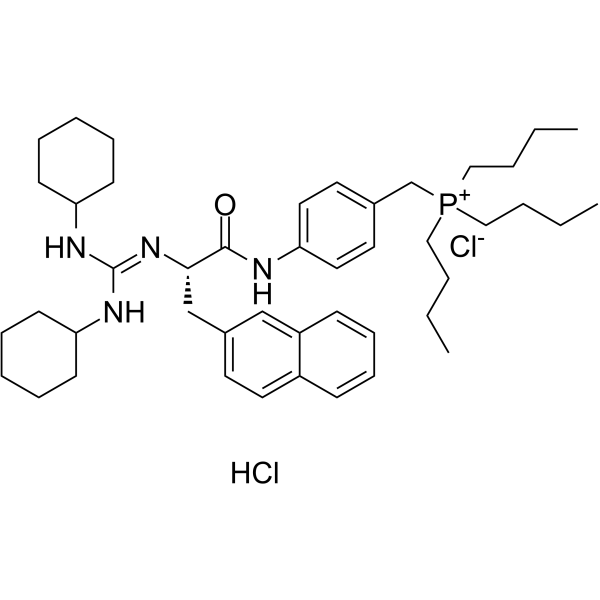
    AE9C90CB, muscarinic receptor antagonist, has greater affinity for M3 muscarinic receptors with pKi of 9.90 and was 20-fold more selective for M3 than for M2 muscarinic receptors .
    AE9C90CB
  • HY-120792

    mAChR Others
    DAU 5884 is a muscarinic receptor antagonist with activity that discriminates between different muscarinic receptor subtypes. DAU 5884 discriminates between M4 and M2 receptor sites and is a highly potent M1-selective antagonist with specific activity at different muscarinic receptors characterized by radioligand binding studies and functional assays.
    DAU 5884
  • HY-109196

    DA-8010

    mAChR Neurological Disease
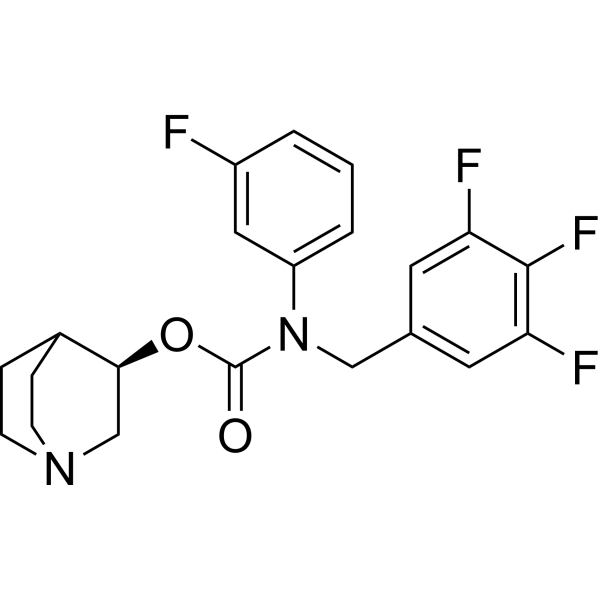
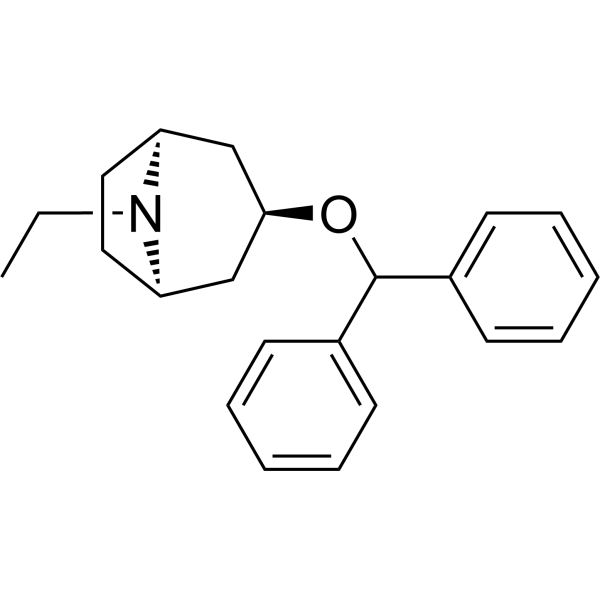
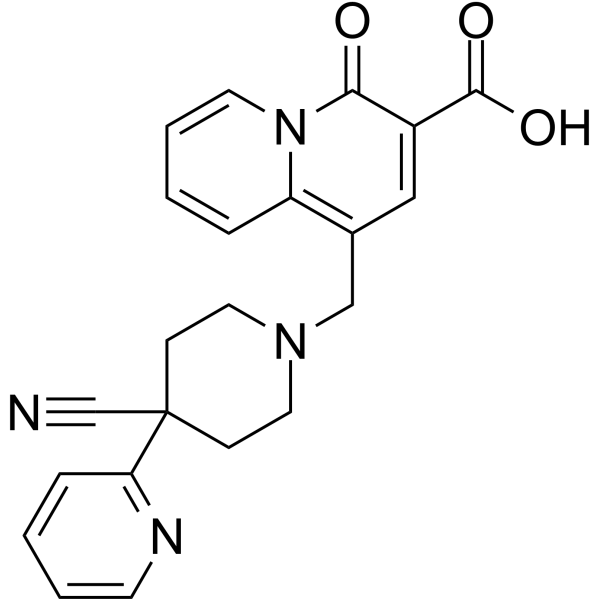
    Velufenacin is a muscarinic receptor antagonist .
    Velufenacin
  • HY-14825

    SVT-40776

    mAChR Inflammation/Immunology
    Tarafenacin (SVT-40776) is an orally active, selective M3 muscarinic receptor (M3 muscarinic receptor) antagonist with 203-fold selectivity over the M2 muscarinic receptor. Tarafenacin does not affect atrial contraction, arterial blood pressure or arterial pressure at high doses. Tarafenacin can be used in the research of overactive bladder .
    Tarafenacin
  • HY-U00230

    CDD0102A

    mAChR Neurological Disease
    CDD0102 is a potent M1 Muscarinic receptor agonist.
    CDD0102
  • HY-134081

    mAChR Others
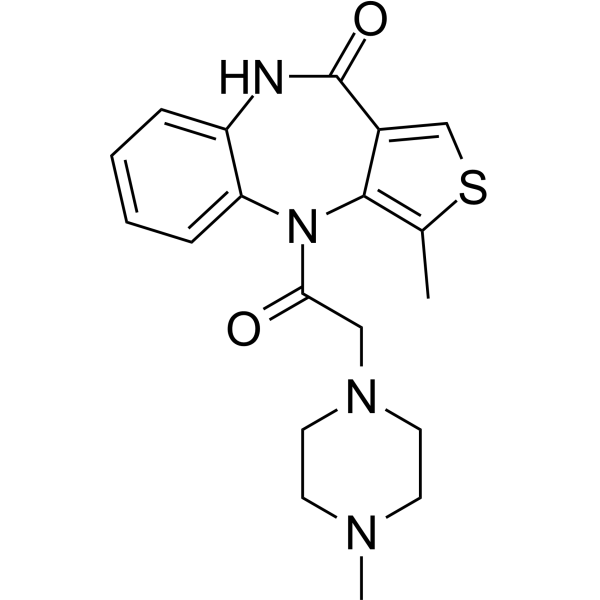
    Desiodomethyl 4-DAMP is a muscarinic receptor antagonist .
    Desiodomethyl 4-DAMP
  • HY-19652A

    Esoxybutynin hydrochloride

    mAChR Neurological Disease
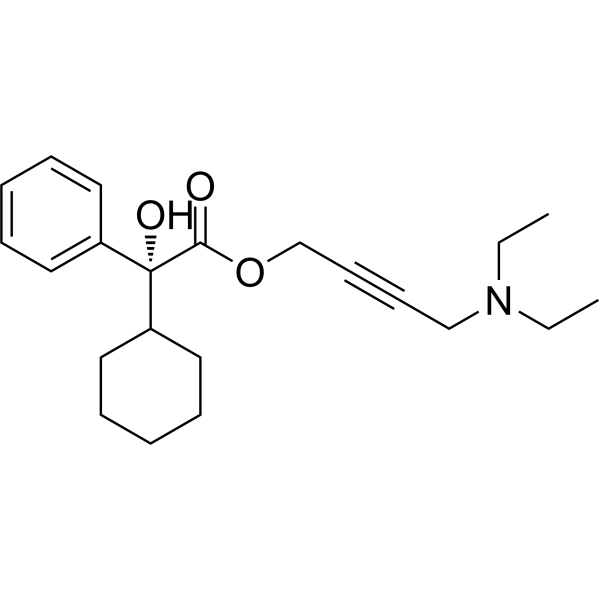
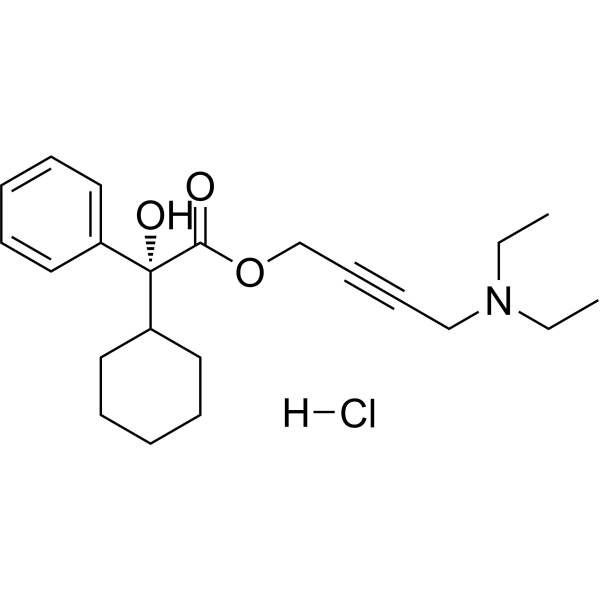
    (S)-Oxybutynin (Esoxybutynin) hydrochloride is a potent muscarinic receptor antagonist .
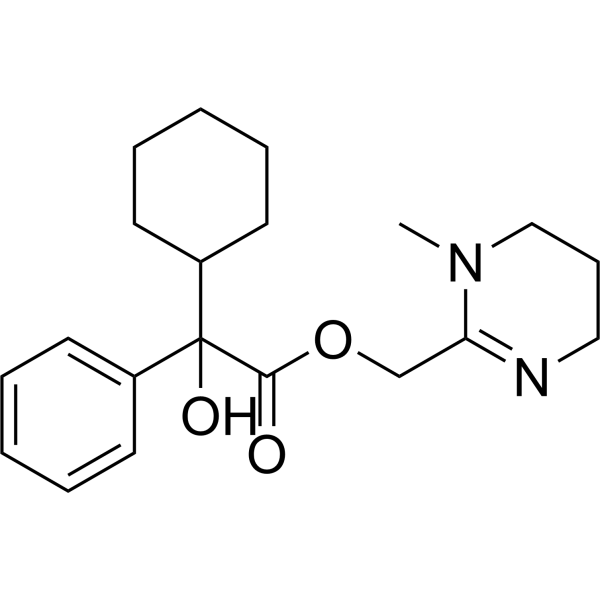
    (S)-Oxybutynin hydrochloride

Inquiry Online

Your information is safe with us. * Required Fields.

Salutation


Country or Region *

Applicant Name *


Organization Name *

Department *


Email Address *


Product Name *

Cat. No.


Requested quantity *

Phone Number *


Remarks

Inquiry Online

Inquiry Information

Product Name:
Cat. No.:
Quantity:
MCE Japan Authorized Agent: