



Mepenzolate bromide
Based on 9 publication(s) in Google Scholar
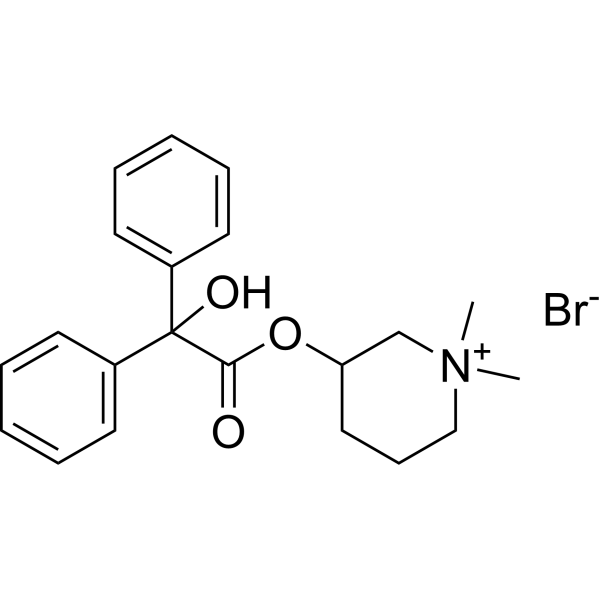
Mepenzolate bromide is an orally administered muscarinic receptor antagonist with Kis of 0.68 and 2.6 nM for hM2R and hM3R, respectively. Mepenzolate bromide can be used to suppress the gastrointestinal hypermotility associated with irritable bowel syndrome.Mepenzolate bromide is a GPR109A inhibitor.
For research use only. We do not sell to patients.
- Purity : 99.91%
- CAS No.: 76-90-4
- Formula: C21H26BrNO3
- Molecular Weight:420.34
-
Storage:
4°C, sealed storage, away from moisture
* In solvent : -80°C, 6 months; -20°C, 1 month (sealed storage, away from moisture)

To place orders, for customer services and technical support, please contact: MedChemExpress USA
Tel: 609-228-6898 E-mail: [email protected] [email protected]


-
 Biological Activity
-
Chemical Information
-
Solvent & Solubility
- Purity & Documentation
- References
-
 Help & FAQs


Publications Citing Use of MedChemExpress (MCE) Mepenzolate bromide
More- Cancer Cell. 2024 Oct 14;42(10):1729-1746.e8. [Abstract]
- Cell Host Microbe. 2026 Jul 8;34(7):1333-1349.e10. [Abstract]
- Adv Sci (Weinh). 2025 Aug 7:e02624. [Abstract]
- Int J Biol Sci. 2026 Jul 20;22(12):6752-6766.
- Aging Cell. 2024 Nov;23(11):e14294. [Abstract]
- Cancer Sci. 2026 Jun 11. [Abstract]
- Brain Res Bull. 2025 Nov:232:111595. [Abstract]
- J Proteome Res. 2025 Apr 4;24(4):2063-2080. [Abstract]
- SSRN. 2024 Apr 19.
 Customer Validation & Images

-
In Vivo Efficacy Study
-
WB
-
IF
-
Histological Imaging/Staining
-
IHC


Biological Activity
Description
IC50 & Target
mAChR[1]
Cellular Effect
|
Cell Line

|
Type | Value | Description | References |
|---|---|---|---|---|
| HEK293 | IC50 |
64.9 μM
Compound: Mepensolate
|
Inhibition of 4-(4-(dimethylamino)styryl)-N-methylpyridinium uptake at human OCT1 expressed in HEK293 cells by confocal microscopy
Inhibition of 4-(4-(dimethylamino)styryl)-N-methylpyridinium uptake at human OCT1 expressed in HEK293 cells by confocal microscopy
|
[PMID: 18788725] |
In Vitro
Mepenzolate not only exerts an anti-inflammatory effect via a muscarinic receptor-independent mechanism, but also a bronchodilatory effect via a muscarinic receptor-dependent mechanism. Mepenzolate is a subtype-non-specific muscarinic antagonist whose bronchodilatory effect and inhibitory effect on intestinal motility can be explained by its antagonistic action on M3R[1].
MedChemExpress (MCE) has not independently confirmed the accuracy of these methods. They are for reference only.
In Vivo
Mepenzolate bromide is a muscarinic antagonist. Intratracheal administration or inhalation of Mepenzolate bromide decreases the severity of elastase-induced airspace enlargement and respiratory dysfunction. Mepenzolate bromide may be an effective therapeutic for the treatment of chronic obstructive pulmonary disease (COPD) due to its anti-inflammatory and bronchodilatory activities[3].
MedChemExpress (MCE) has not independently confirmed the accuracy of these methods. They are for reference only.
-
Animal Model:Adult male Wistar rats, weighing 150-200 g[2]
-
Dosage:5 mg/kg
-
Administration:Intraperitoneal injection
-
Result:Abolished the protective effect of niacin against iodoacetamide-induced rise in colon wet weight as well as the colonic levels of both MPO and VEGF.
-
Animal Model:ICR mice (4-6 weeks old, male) and DBA/2 mice (5 weeks old, female)[3]
-
Dosage:0.04, 0.38, 3.8, 38 μg/kg; 45.2 and 226 μg per chamber
-
Administration:"0.04, 0.38, 3.8, 38 μg/kg administered intratracheally once daily for 14 days
45.2 and 226 μg per chamber by inhalation once daily for 14 days" -
Result:The simultaneous daily intratracheal administration suppressed this enlargement in a dose-dependent manner.
The inhalation route was similar to those observed with the intratracheal mode of administration.


Chemical Information
-
CAS No. 76-90-4
-
Appearance Solid
-
Molecular Weight 420.34
-
Formula C21H26BrNO3
-
Color White to off-white
-
SMILES
C[N+]1(C)CC(OC(C(C2=CC=CC=C2)(O)C3=CC=CC=C3)=O)CCC1.[Br-]
-
Shipping
Room temperature in continental US; may vary elsewhere.
-
Storage
4°C, sealed storage, away from moisture
* In solvent : -80°C, 6 months; -20°C, 1 month (sealed storage, away from moisture)


Publications (9)
-
Journal Impact Factor
-
Most Recent
-
Cancer Cell
Fusobacterium nucleatum facilitates anti-PD-1 therapy in microsatellite stable colorectal cancer. [Abstract]2024 Oct 14;42(10):1729-1746.e8. PMID: 39303724 -
Cell Host Microbe
Oat-β-glucan potentiates anti-PD-1 efficacy through Faecalibacterium prausnitzii-derived butyrate and indole-3-propionic acid. [Abstract]2026 Jul 8;34(7):1333-1349.e10. PMID: 42214334 -
Adv Sci (Weinh)
The Probiotic Parabacteroides johnsonii Ameliorates Metabolic Disorders Through Promoting BCAAs to BSCFAs Conversion. [Abstract]2025 Aug 7:e02624. PMID: 40772426 -
-
Aging Cell
β-Hydroxybutyrate enhances chondrocyte mitophagy and reduces cartilage degeneration in osteoarthritis via the HCAR2/AMPK/PINK1/Parkin pathway. [Abstract]2024 Nov;23(11):e14294. PMID: 39126207
Mepenzolate bromide purchased from MedChemExpress. Usage Cited in: Aging Cell. 2024 Nov;23(11):e14294. [Abstract]
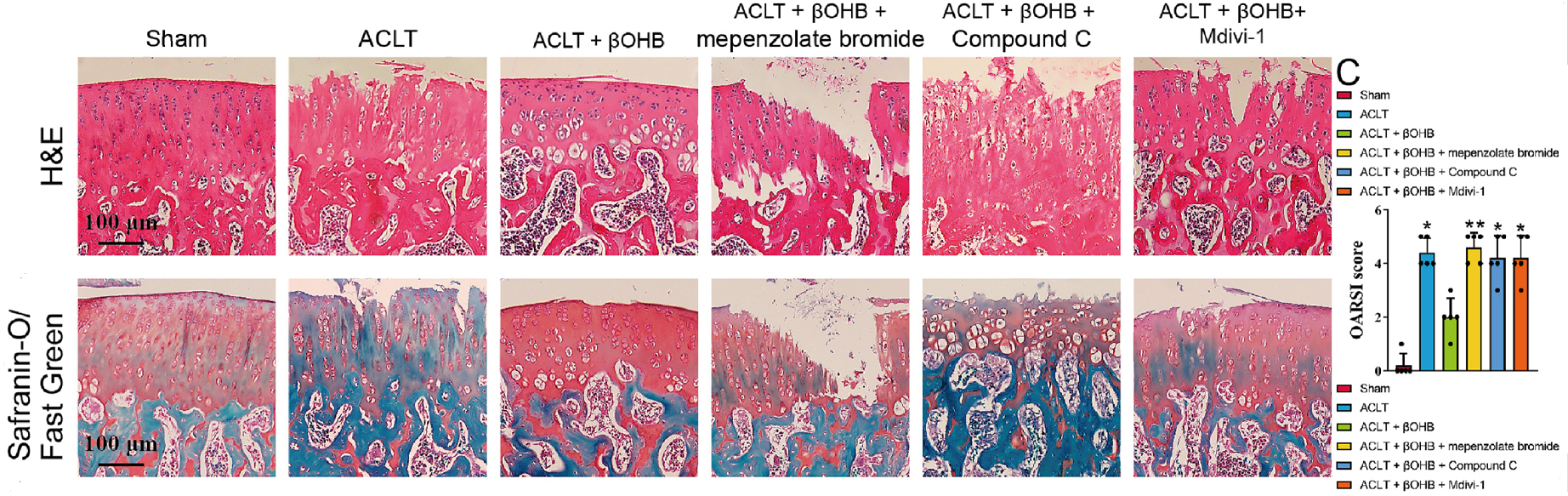
Mepenzolate bromide (10 mg/kg; i.a.) rendered βOHB unable to reverse the damage caused by ACLT in OA rats.
Mepenzolate bromide purchased from MedChemExpress. Usage Cited in: Aging Cell. 2024 Nov;23(11):e14294. [Abstract]
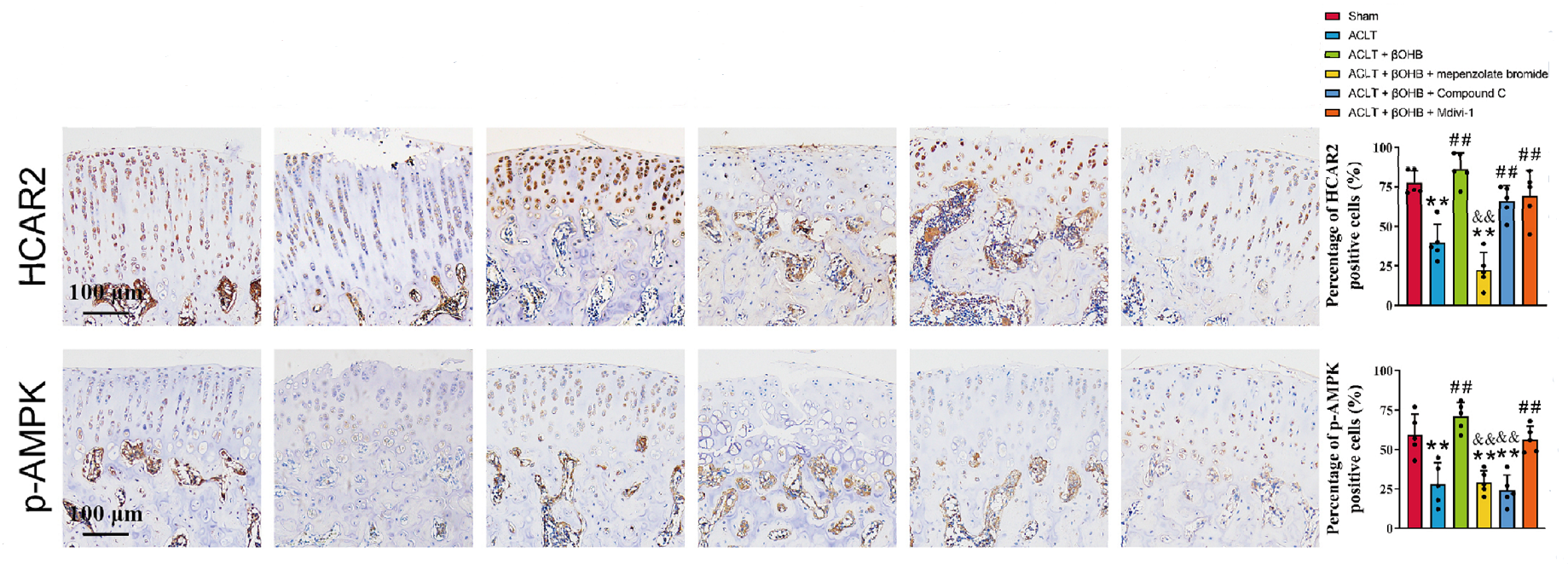
Mepenzolate bromide (10 mg/kg; i.a.) counteracted the pro-expression effects of βOHB on HCAR2 and p-AMPK in OA rats.
-
Cancer Sci
Ketogenic Diet and β-Hydroxybutyrate Suppress Bladder Cancer Growth and Enhance Anti-PD-L1 Immunotherapy Efficacy. [Abstract]2026 Jun 11. PMID: 42274090 -
Brain Res Bull
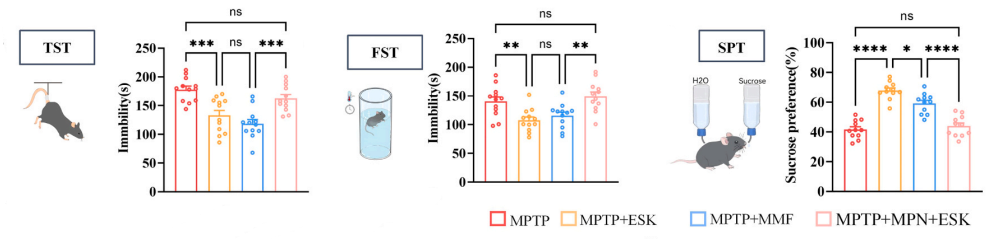
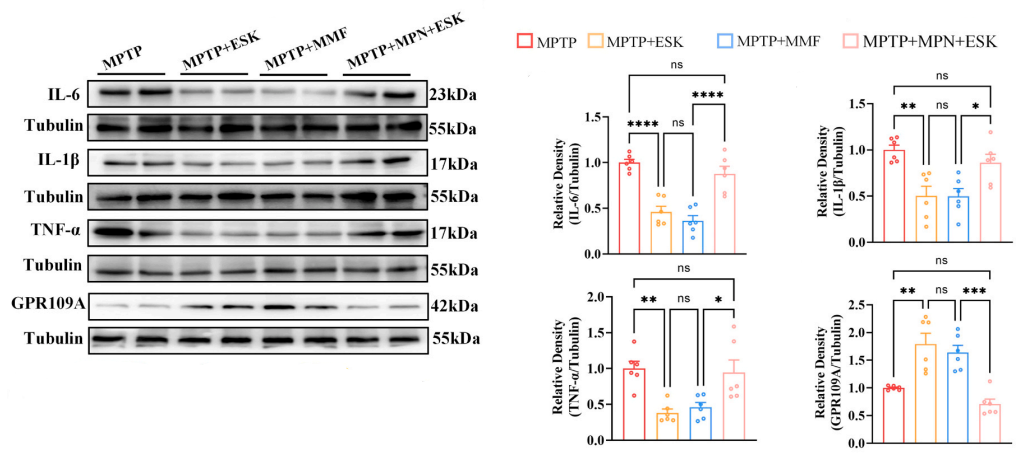
Esketamine relieves depressive-like behaviors in MPTP-induced Parkinson disease mice via GPR109A-dependent reduction of neuroinflammation. [Abstract]2025 Nov:232:111595. PMID: 41135741
Mepenzolate bromide purchased from MedChemExpress. Usage Cited in: Brain Res Bull. 2025 Nov:232:111595. [Abstract]
Mepenzolate bromide (MPN) (5 mg/kg; i.p.; once daily). Behavior test analysis showed the immobility time of MPTP-induced PD mice in the TST and FST, and SPT results demonstrated the percentage of sucrose preference across experimental groups.
Mepenzolate bromide purchased from MedChemExpress. Usage Cited in: Brain Res Bull. 2025 Nov:232:111595. [Abstract]
Mepenzolate bromide (MPN) (5 mg/kg; i.p.; once daily). mPFC immunoblots with quantification for IL-1β, IL-6, TNF-α, and GPR109A in MPTP-induced PD mice.
Mepenzolate bromide purchased from MedChemExpress. Usage Cited in: Brain Res Bull. 2025 Nov:232:111595. [Abstract]
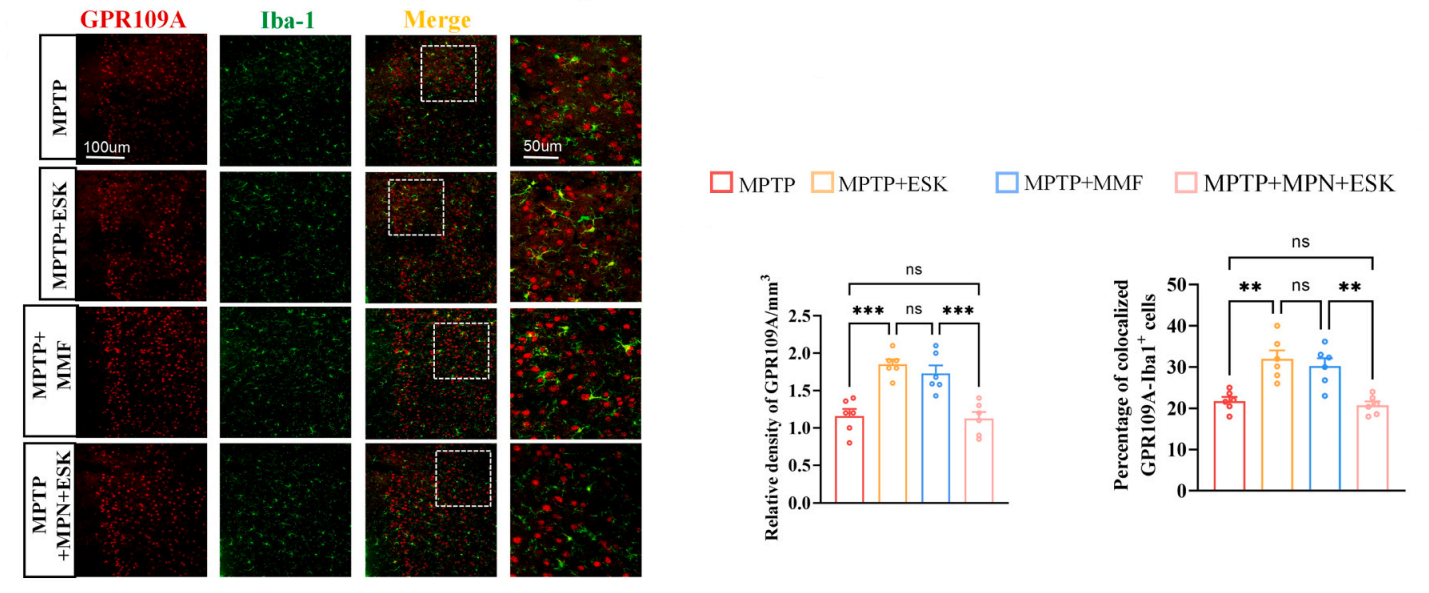
Mepenzolate bromide (MPN) (5 mg/kg; i.p.; once daily). mPFC immunofluorescence for GPR109A (red) and Iba1 (green) in MPTP-induced PD mice.
-
J Proteome Res
3-Hydroxybutyrate Promotes Myoblast Proliferation and Differentiation through Energy Metabolism and GPR109a-Mediated Ca2+-NFAT Signaling Pathways. [Abstract]2025 Apr 4;24(4):2063-2080. PMID: 40099866 -


Solvent & Solubility
In Vitro:
DMSO : 175 mg/mL (416.33 mM; Need ultrasonic; Hygroscopic DMSO has a significant impact on the solubility of product, please use newly opened DMSO)
H2O : 10 mg/mL (23.79 mM; ultrasonic and warming and heat to 60°C)
Please refer to the solubility information to select the appropriate solvent. Once prepared, please aliquot and store the solution to prevent product inactivation from repeated freeze-thaw cycles.
Storage method and period of stock solution: -80°C, 6 months; -20°C, 1 month (sealed storage, away from moisture). When stored at -80°C, please use it within 6 months. When stored at -20°C, please use it within 1 month.
* Note: If you choose water as the stock solution, please dilute it to the working solution, then filter and sterilize it with a 0.22 μm filter before use.
Please refer to the solubility information to select the appropriate solvent. Once prepared, please aliquot and store the solution to prevent product inactivation from repeated freeze-thaw cycles.
Storage method and period of stock solution: -80°C, 6 months; -20°C, 1 month (sealed storage, away from moisture). When stored at -80°C, please use it within 6 months. When stored at -20°C, please use it within 1 month.
* Note: If you choose water as the stock solution, please dilute it to the working solution, then filter and sterilize it with a 0.22 μm filter before use.
Concentration (start) × Volume (start) = Concentration (final) × Volume (final)
In Vivo:
Select the appropriate dissolution method based on your experimental animal and administration route.
- For the following dissolution methods, please ensure to first prepare a clear stock solution using an In Vitro approach and then sequentially add co-solvents:
- To ensure reliable experimental results, the clarified stock solution can be appropriately stored based on storage conditions. As for the working solution for In Vivo experiments, it is recommended to prepare freshly and use it on the same day.
- The percentages shown for the solvents indicate their volumetric ratio in the final prepared solution. If precipitation or phase separation occurs during preparation, heat and/or sonication can be used to aid dissolution.
Add each solvent one by one: 10% DMSO 40% PEG300 5% Tween-80 45% Saline
Solubility: ≥ 2.08 mg/mL (4.95 mM); Clear solution
This protocol yields a clear solution of ≥ 2.08 mg/mL (saturation unknown).
Taking 1 mL working solution as an example, add 100 μL DMSO stock solution (20.8 mg/mL) to 400 μL PEG300, and mix evenly; then add 50 μL Tween-80 and mix evenly; then add 450 μL Saline to adjust the volume to 1 mL.
Preparation of Saline: Dissolve 0.9 g sodium chloride in ddH₂O and dilute to 100 mL to obtain a clear Saline solution.
Add each solvent one by one: 10% DMSO 90% (20% SBE-β-CD in Saline)
Solubility: ≥ 2.08 mg/mL (4.95 mM); Clear solution
This protocol yields a clear solution of ≥ 2.08 mg/mL (saturation unknown).
Taking 1 mL working solution as an example, add 100 μL DMSO stock solution (20.8 mg/mL) to 900 μL 20% SBE-β-CD in Saline, and mix evenly.
Preparation of 20% SBE-β-CD in Saline (4°C, storage for one week): 2 g SBE-β-CD powder is dissolved in 10 mL Saline, completely dissolve until clear.
For the following dissolution methods, please prepare the working solution directly:
It is recommended to prepare fresh solutions and use them promptly within a short period of time.
The percentages shown for the solvents indicate their volumetric ratio in the final prepared solution. If precipitation or phase separation occurs during preparation, heat and/or sonication can be used to aid dissolution.
Add each solvent one by one: Saline
Solubility: 10 mg/mL (23.79 mM); Clear solution; Need ultrasonic and warming and heat to 60°C
In Vivo Dissolution Calculator
Please enter the basic information of animal experiments:
-
-
-
-
Recommended: Prepare an additional quantity of animals to account for potential losses during experiments.
Please enter your animal formula composition:
-
%DMSO +
Recommended: Keep the proportion of DMSO in working solution below 2% if your animal is weak.
-
%+
-
+%Tween-80 + +
-
%Saline +
The co-solvents required include: DMSO, . All of co-solvents are available by MedChemExpress (MCE). , Tween 80. All of co-solvents are available by MedChemExpress (MCE).
Working solution concentration: 0.22 mg/mL
Method for preparing stock solution: mg drug dissolved in μL DMSO. Stock solution concentration: mg/mL. * In solvent : -80°C, 6 months; -20°C, 1 month (sealed storage, away from moisture)
1. Take μL DMSO stock solution;
2. Add μL .
μL , mix evenly;
3. Then add μL Tween 80, mix evenly;
4. Then add μL
Please ensure that the stock solution in the first step is dissolved to a clear state, and add co-solvents in sequence. You can use ultrasonic heating (ultrasonic cleaner, recommended frequency 20-40 kHz), vortexing, etc. to assist dissolution.


Purity & Documentation
-
Data Sheet (279 KB)
-
SDS (393 KB)
- English - EN (393 KB)
- Français - FR (393 KB)
- Deutsch - DE (393 KB)
- Norwegian - NO (393 KB)
- Español - ES (393 KB)
- Swedish - SV (393 KB)
- Italian - IT (393 KB)
- Korean - KR (393 KB)
- Portuguese - PT (393 KB)
-
Handling Instructions (2659 KB)
References
[1]. Yasunobu Yamashita,et al.Synthesis and biological comparison of enantiomers of mepenzolate bromide, a muscarinic receptor antagonist with bronchodilatory and anti-inflammatory activities. Bioorg Med Chem. 2014 Jul 1;22(13):3488-97. [Content Brief]
[2]. Hesham Aly Salem, et al. Effect of Niacin on Inflammation and Angiogenesis in a Murine Model of Ulcerative Colitis. Sci Rep. 2017 Aug 2;7(1):7139. [Content Brief]
[3]. Ken-Ichiro Tanaka, et al. Mepenzolate bromide displays beneficial effects in a mouse model of chronic obstructive pulmonary disease. Nat Commun. 2013;4:2686. [Content Brief]


Complete Stock Solution Preparation Table
Please refer to the solubility information to select the appropriate solvent. Once prepared, please aliquot and store the solution to prevent product inactivation from repeated freeze-thaw cycles.
Storage method and period of stock solution: -80°C, 6 months; -20°C, 1 month (sealed storage, away from moisture). When stored at -80°C, please use it within 6 months. When stored at -20°C, please use it within 1 month.
| Optional Solvent | Concentration Solvent Mass | 1 mg | 5 mg | 10 mg | 25 mg |
|---|---|---|---|---|---|
| H2O / DMSO | 1 mM | 2.3790 mL | 11.8951 mL | 23.7903 mL | 59.4757 mL |
| 5 mM | 0.4758 mL | 2.3790 mL | 4.7581 mL | 11.8951 mL | |
| 10 mM | 0.2379 mL | 1.1895 mL | 2.3790 mL | 5.9476 mL | |
| 15 mM | 0.1586 mL | 0.7930 mL | 1.5860 mL | 3.9650 mL | |
| 20 mM | 0.1190 mL | 0.5948 mL | 1.1895 mL | 2.9738 mL | |
| DMSO | 25 mM | 0.0952 mL | 0.4758 mL | 0.9516 mL | 2.3790 mL |
| 30 mM | 0.0793 mL | 0.3965 mL | 0.7930 mL | 1.9825 mL | |
| 40 mM | 0.0595 mL | 0.2974 mL | 0.5948 mL | 1.4869 mL | |
| 50 mM | 0.0476 mL | 0.2379 mL | 0.4758 mL | 1.1895 mL | |
| 60 mM | 0.0397 mL | 0.1983 mL | 0.3965 mL | 0.9913 mL | |
| 80 mM | 0.0297 mL | 0.1487 mL | 0.2974 mL | 0.7434 mL | |
| 100 mM | 0.0238 mL | 0.1190 mL | 0.2379 mL | 0.5948 mL |
* Note: If you choose water as the stock solution, please dilute it to the working solution, then filter and sterilize it with a 0.22 μm filter before use.


Mepenzolate bromide Related Classifications
HY-17585 Related Classifications
 Powered by Bioz