



Metixene hydrochloride
Based on 2 publication(s) in Google Scholar
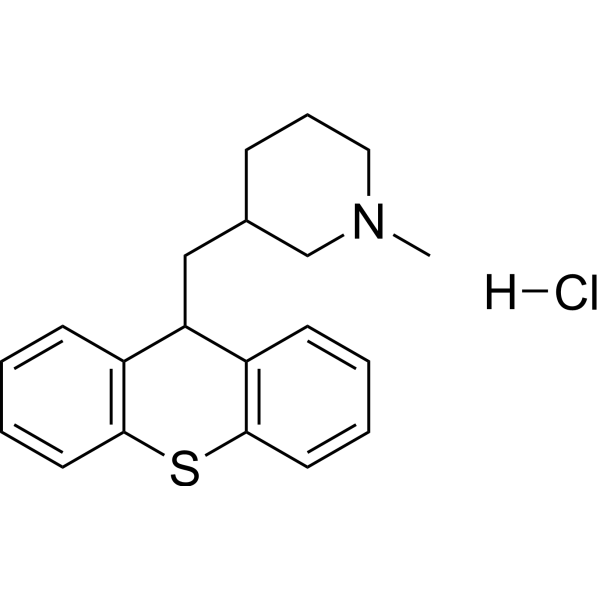
Metixene (Piperidine) hydrochloride hydrate is an anticholinergic and antiparkinsonian agent. Metixene hydrochloride potently inhibits binding of quinuclidinyl benzilate (QNB) with the muscarinic receptor, IC50 and Ki values of 55 nM and 15 nM, respectively. Metixene hydrochloride can be used for the research of parkinsonian.
For research use only. We do not sell to patients.
- CAS No.: 1553-34-0
- Formula: C20H24ClNS
- Molecular Weight:345.93
-
Storage:
Please store the product under the recommended conditions in the Certificate of Analysis.

To place orders, for customer services and technical support, please contact: MedChemExpress USA
Tel: 609-228-6898 E-mail: [email protected] [email protected]


-
 Biological Activity
-
Chemical Information
- Protocols
- Purity & Documentation
- References
-
 Help & FAQs


Publications Citing Use of MedChemExpress (MCE) Metixene hydrochloride
More

Biological Activity
Description
In Vitro
Metixene hydrochloride can potentially inhibit the binding of QNB with the muscarinic receptor, IC50 and Ki values of 55 nM and 15 nM, respectively[3].
MedChemExpress (MCE) has not independently confirmed the accuracy of these methods. They are for reference only. Further protocols information, click here.


Chemical Information
-
CAS No. 1553-34-0
-
Molecular Weight 345.93
-
Formula C20H24ClNS
-
SMILES
CN1CC(CC2C3=C(SC4=C2C=CC=C4)C=CC=C3)CCC1.[H]Cl
-
Shipping
Room temperature in continental US; may vary elsewhere.
-
Storage
Please store the product under the recommended conditions in the Certificate of Analysis.


Publications (2)
-
Journal Impact Factor
-
Most Recent
-
-
bioRxiv
2020 Jul 27:2020.05.23.112235. PMID: 32511370

Protocols
-
Cell Cytotoxicity Assay
Cytotoxicity assays are usually based on the assessment of cell membrane damage, which can also be indirectly detected by measuring cell viability. Detection methods include MTT assay, CKK-8 assay, LDH assay and ATP assay, etc.


Purity & Documentation
References
[1]. Syvälahti EK, et al. Effects of antiparkinsonian drugs on muscarinic receptor binding in rat brain, heart and lung. Pharmacol Toxicol. 1988 Feb;62(2):90-4. [Content Brief]
[3]. S L Levin, et al. Dualism in the effect of cholinolytics upon the human parotid gland deprived of parasympathetic control. Int J Clin Pharmacol Res. 1986;6(5):429-39. [Content Brief]

Calculators
Concentration (start) × Volume (start) = Concentration (final) × Volume (final)


Metixene hydrochloride Related Classifications
HY-120081B Related Classifications
 Powered by Bioz