



L-Hyoscyamine (Standard)

Based on 1 Customer Validation
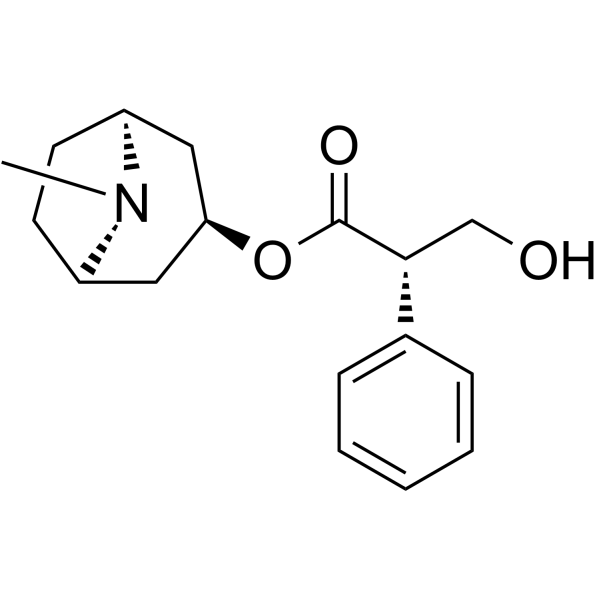
L-Hyoscyamine (Standard) is the analytical standard of L-Hyoscyamine. This product is intended for research and analytical applications. L-Hyoscyamine (Daturine), a natural plant tropane alkaloid, is a potent and competitive muscarinic receptor (MR) antagonist. L-Hyoscyamine is a levo-isomer to Atropine (HY-B1205).
Nur für Forschungszwecke. Wir verkaufen nicht an Patienten.
- Reinheit : 99.63%
- CAS. Nr.: 101-31-5
- Formel: C17H23NO3
- Molecular Weight:289.37
-
Speicherung:
Please store the product under the recommended conditions in the Certificate of Analysis.


To place orders, for customer services and technical support, please contact: MedChemExpress USA
Tel: 609-228-6898 E-mail: [email protected] [email protected]


-
 Product Information
-
Chemical Information
- Reinheit & Dokumentation
-
 Help & FAQs


-
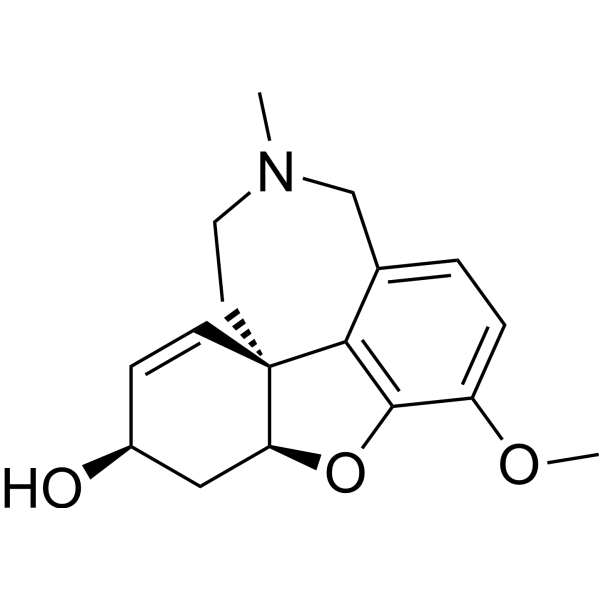
HY-76299
GalanthamineCholinesterase (ChE) Inhibitor -
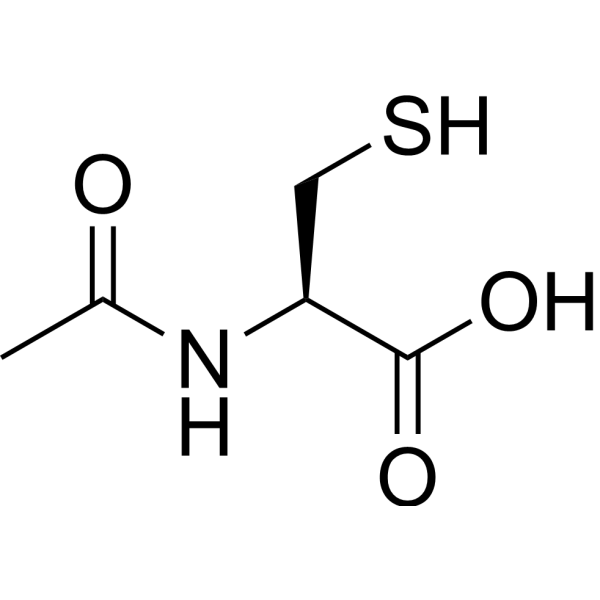
HY-B0215
AcetylcysteineMucolytic Agent -
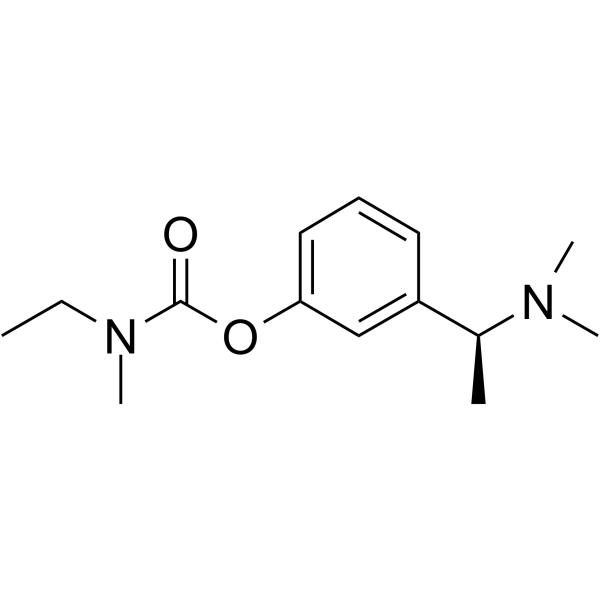
HY-17368
RivastigmineCholinesterase Inhibitor -
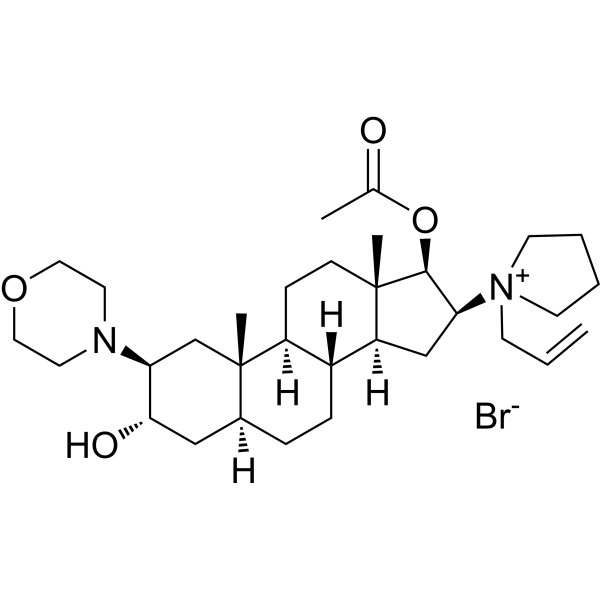
HY-17440
Rocuronium BromideMuscle Relaxant -
HY-N0471
L-HyoscyaminemAChR Antagonist -
HY-B0151
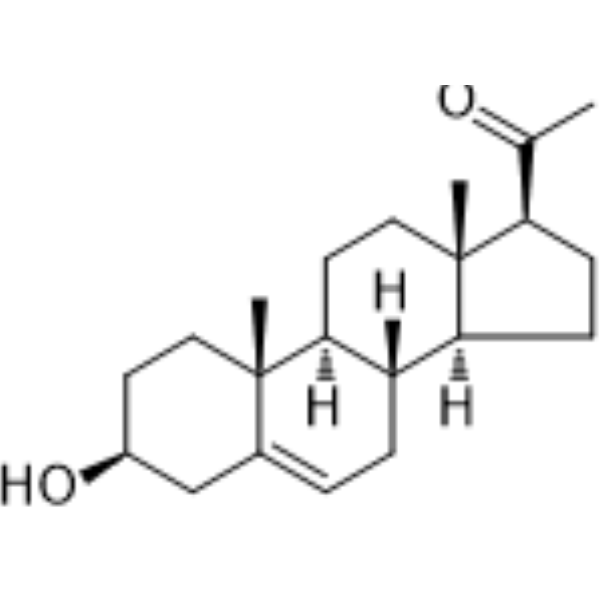
PregnenoloneCB1 Inhibitor -
HY-11017
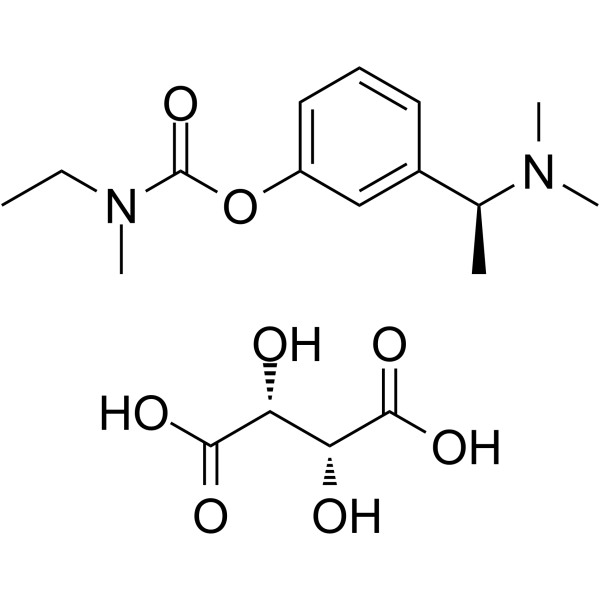
Rivastigmine tartrateCholinesterase Inhibitor -
HY-B0499A
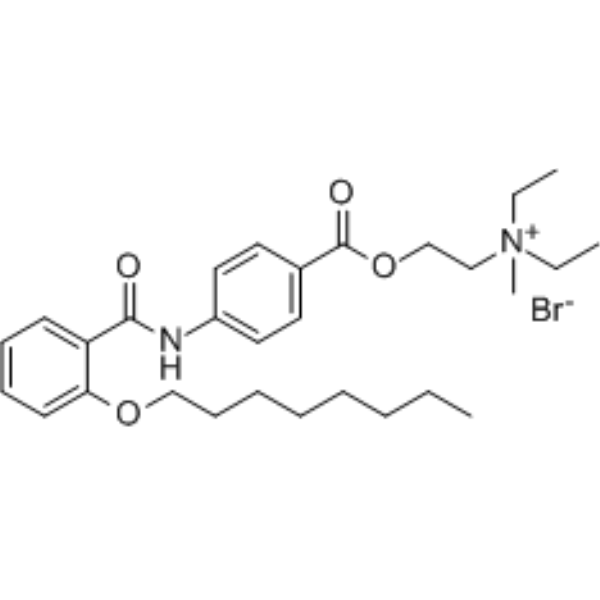
Otilonium bromidemAChR Inhibitor -

HY-76299R
Galanthamine (Standard)Cholinesterase (ChE) Inhibitor -

HY-B0215R
Acetylcysteine (Standard)Mucolytic Agent -

HY-17368R
Rivastigmine (Standard)Cholinesterase Inhibitor -
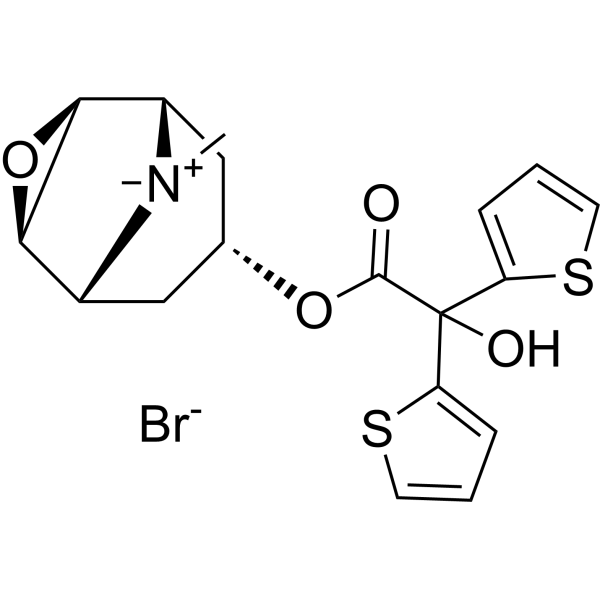
HY-17360
Tiotropium BromidemAChR Antagonist


Product Information
Information
Anwendung
The compound is the grade of analytical standard, which is the reference standard supplied assay. It is commonly used in qualitative, quantitative and methodological research experiments in HPLC, GC and MS.


Chemical Information
-
CAS. Nr. 101-31-5
-
Appearance Solid
-
Molecular Weight 289.37
-
Formel C17H23NO3
-
Color White to off-white
-
SMILES
CN1[C@@H]2C[C@@H](OC([C@@H](C3=CC=CC=C3)CO)=O)C[C@H]1CC2
-
Synonyms
Hyoscyamine (Standard)
-
Structure Classification
-
Initial Source
-
Versand
Room temperature in continental US; may vary elsewhere.
-
Speicherung
Please store the product under the recommended conditions in the Certificate of Analysis.


Reinheit & Dokumentation
-
SDS (420 KB)
- English - EN (420 KB)
- Français - FR (420 KB)
- Deutsch - DE (420 KB)
- Norwegian - NO (420 KB)
- Español - ES (420 KB)
- Swedish - SV (420 KB)
- Italian - IT (420 KB)
- Korean - KR (420 KB)
- Portuguese - PT (420 KB)
-
Handling Instructions (2659 KB)
Verweise
[1]. Lars Göran Axelsson, et al. Regulatory role of 5-HT and muscarinic receptor antagonists on the migrating myoelectric complex in rats. Eur J Pharmacol. 2003 Apr 25;467(1-3):211-8. [Content Brief]
[2]. Harald John, et al. Application of an enantioselective LC-ESI MS/MS procedure to determine R- and S-hyoscyamine following intravenous atropine administration in swine. Drug Test Anal. Mar-Apr 2012;4(3-4):194-8. [Content Brief]

Calculators
Konzentration (Stammlösung) × Volumen (Stammlösung) = Konzentration (Ziellösung) × Volumen (Ziellösung)


L-Hyoscyamine (Standard) Related Classifications
HY-N0471R Related Classifications
 Powered by Bioz