Search Result
Results for "
AMC
" in MedChemExpress (MCE) Product Catalog:
-
- HY-P1002
-
|
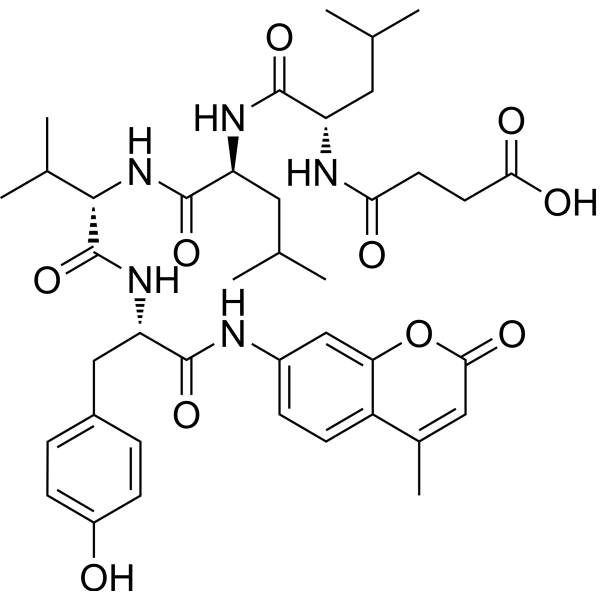
Suc-LLVY-AMC
|
Fluorescent Dye
Proteasome
|
Others
|
|
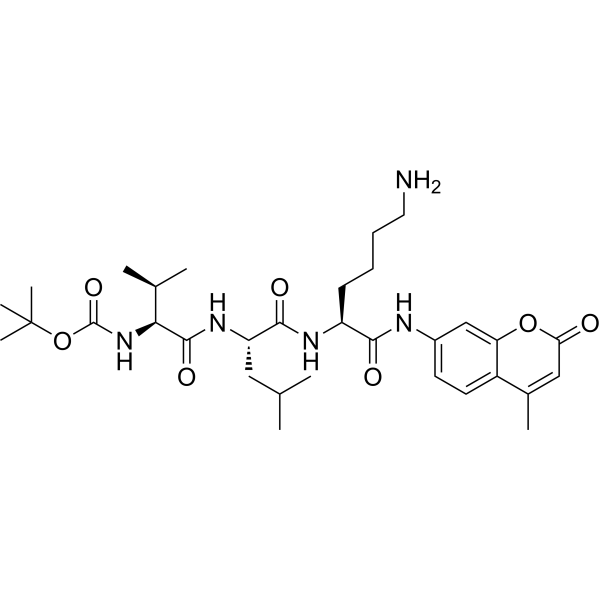
Suc-Leu-Leu-Val-Tyr-AMC is a membrane-permeable calpain-specific fluorogenic substrate (Ex/Em = 390/480 nm) .
|
-
-
- HY-D0027
-
|
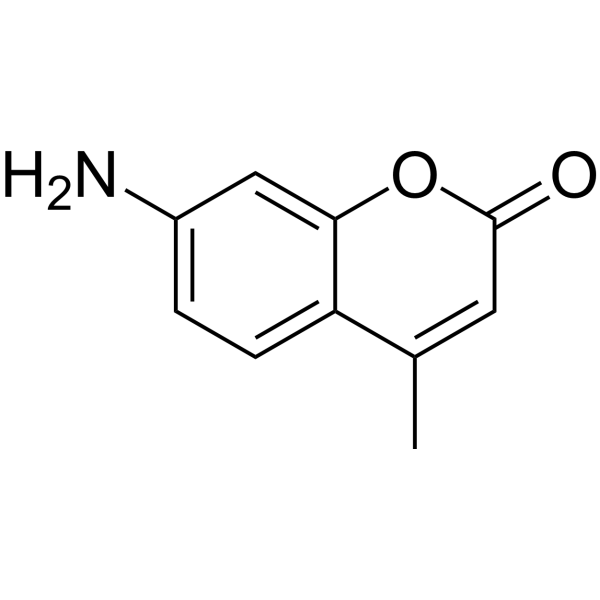
Coumarin 120; AMC
|
Fluorescent Dye
Antibiotic
Fungal
|
Infection
|
|
7-Amino-4-methylcoumarin belongs to the coumarin class, can be isolated from the endophytic fungus Xylaria sp. and has a broad spectrum of antibacterial activity. 7-Amino-4-methylcoumarin is also commonly used as an important laser dye that emits in the blue region, capable of analyzing glycoprotein monosaccharides and N-linked oligosaccharides, and is also utilized in tissue pathology analysis, enzyme activity measurement, and copper ion detection. The excitation wavelength and emission wavelength are 351 nm and 430 nm, respectively.
|
-
-
- HY-136626
-
|
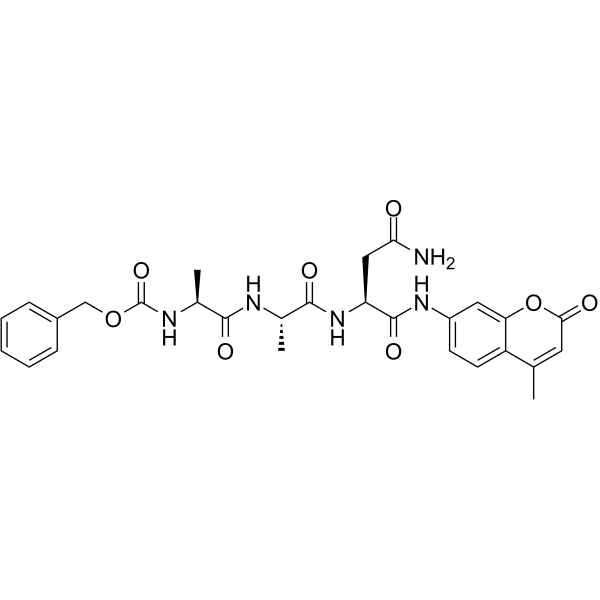
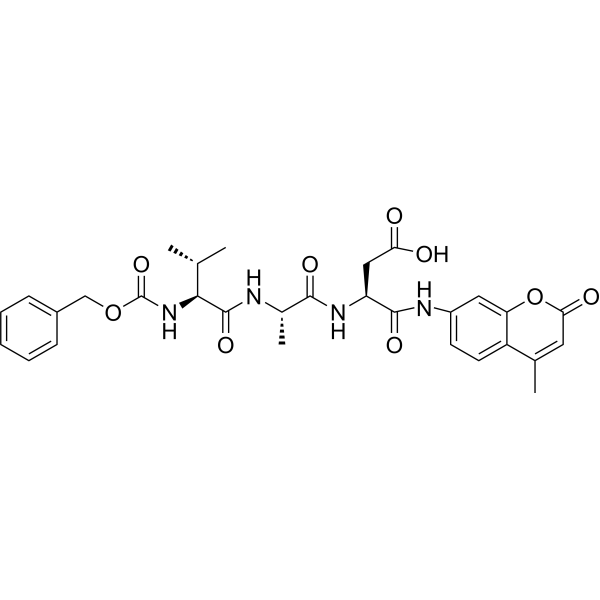
Cbz-Ala-Ala-Asn-AMC
|
Fluorescent Dye
|
Cancer
|
|
Z-Ala-Ala-Asn-AMC (Cbz-Ala-Ala-Asn-AMC) is the legumain substrate. Overexpressed legumain in 293 HEK-Leg cells potently cleaved CBZ-Ala-Ala-Asn-AMC .
|
-
-
- HY-123053
-
|
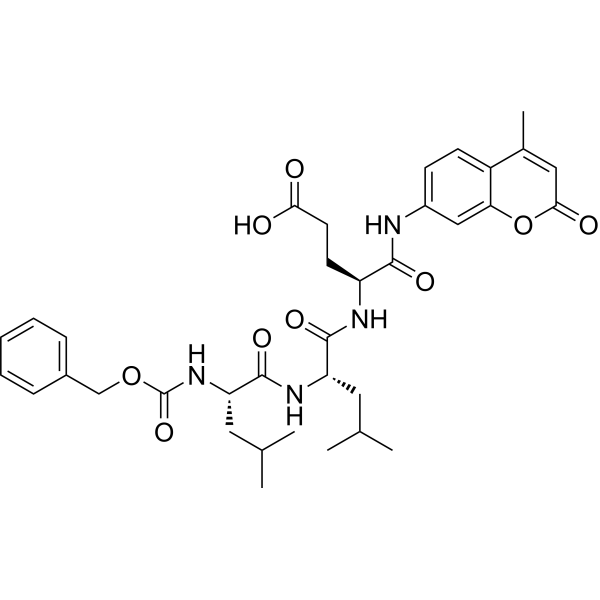
Z-LLE-AMC
|
Proteasome
|
Neurological Disease
|
|
Z-Leu-Leu-Glu-AMC (Z-LLE-AMC) is a peptide-AMC linked substrate used to measure the postacidic-like hydrolysing activity of proteasome. Z-Leu-Leu-Glu-AMC can be used for the research of parkinson's disease .
|
-
-
- HY-P1003
-
|
|
Fluorescent Dye
|
Others
|
|
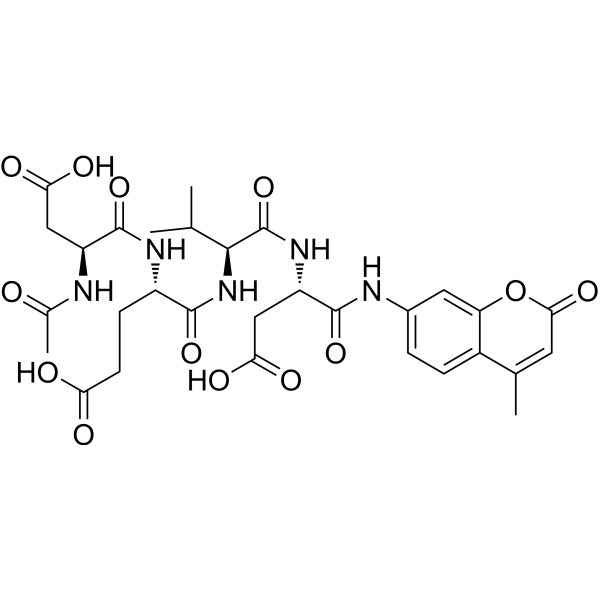
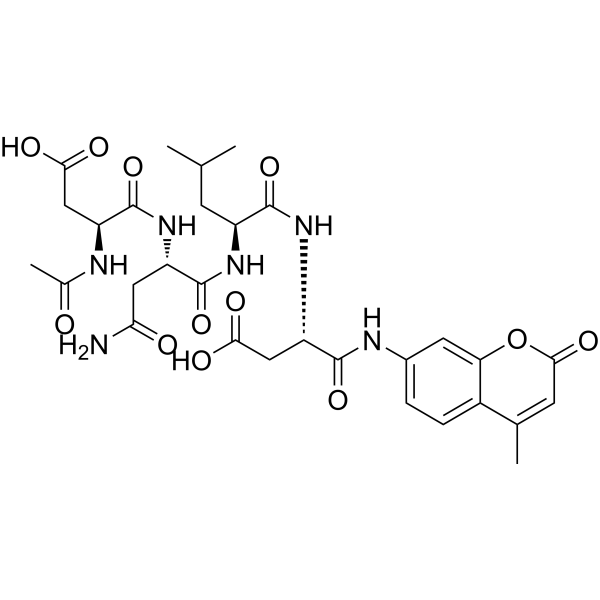
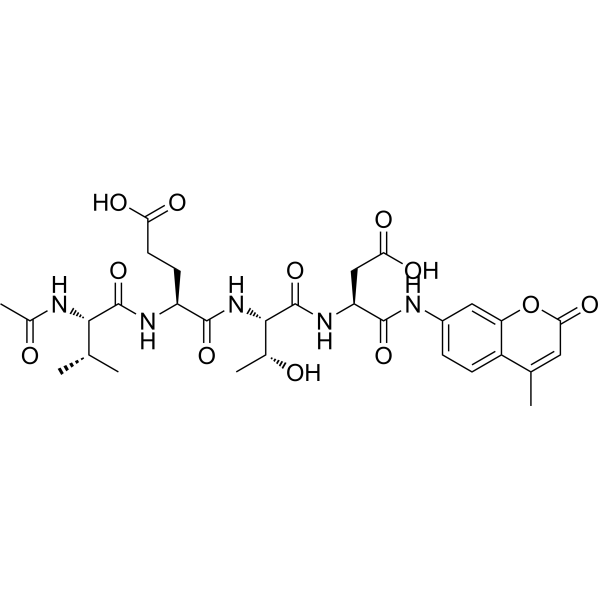
Ac-DEVD-AMC is a fluorescent substrate of caspase-3/caspase-7. When treating Ac-DEVD-AMC with cell lysate, Ac-DEVD-AMC releases amino-4-methylcoumarin (AMC) for fluorescence detection, with an excitation wavelength of 380 nm and an emission wavelength of 460 nm .
|
-
-
- HY-134434
-
|
|
Cathepsin
Fluorescent Dye
|
Others
|
|
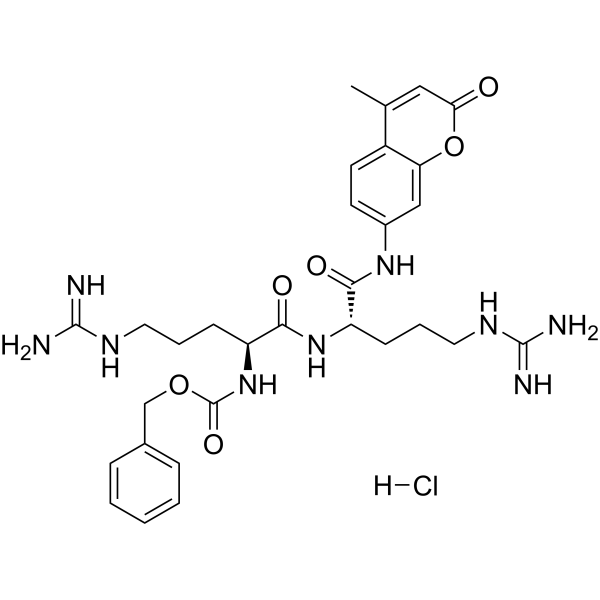
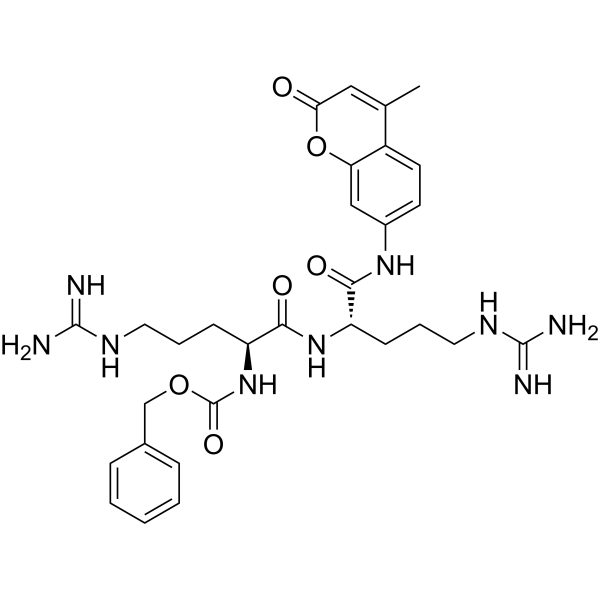
Z-Arg-Arg-AMC hydrochloride is a highly selective fluorescent Cathepsin B substrate. Z-Arg-Arg-AMC hydrochloride can be hydrolyzed by Cathepsin B to produce a fluorescent product for enzyme activity detection .
|
-
-
- HY-145983
-
|
|
FAP
Prolyl Endopeptidase (PREP)
|
Cancer
|
|
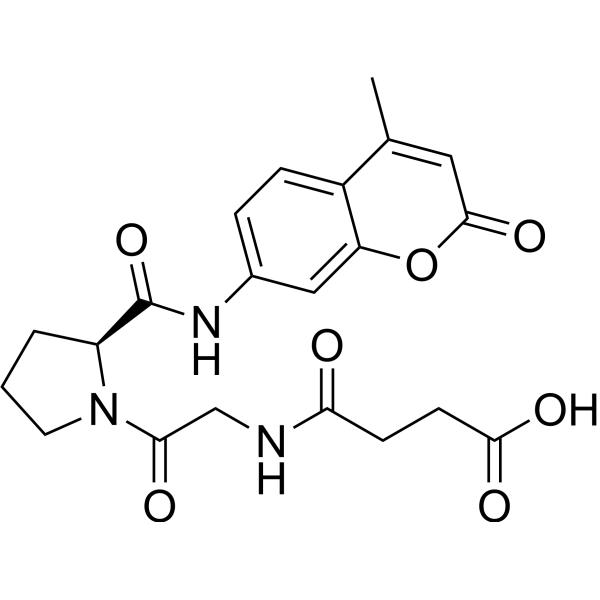
Suc-Gly-Pro-AMC is a fluorescent substrate. Suc-Gly-Pro-AMC is a fibroblast activation protein (FAP) specific substrate. Suc-Gly-Pro-AMC reacts with recombinant porcine prolyl oligopeptidase. Suc-Gly-Pro-AMC can be used to study the activity of FAP, prolyl endopeptidase (PREP). Suc-Gly-Pro-AMC is used in glioma research .
|
-
-
- HY-D1705
-
|
|
Proteasome
|
Inflammation/Immunology
|
|
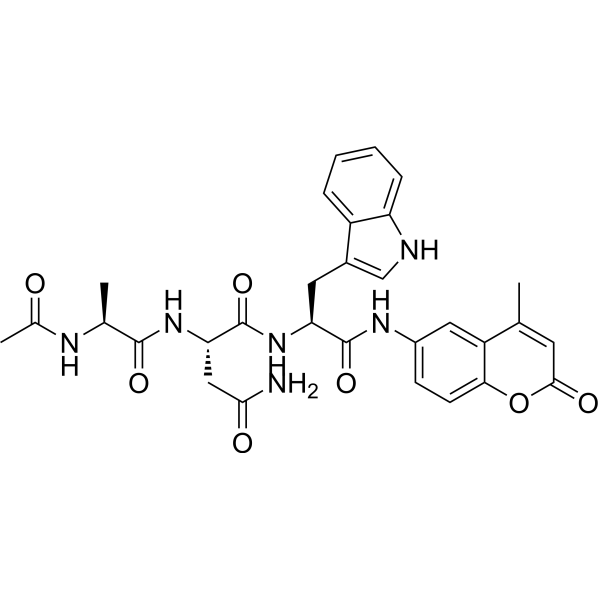
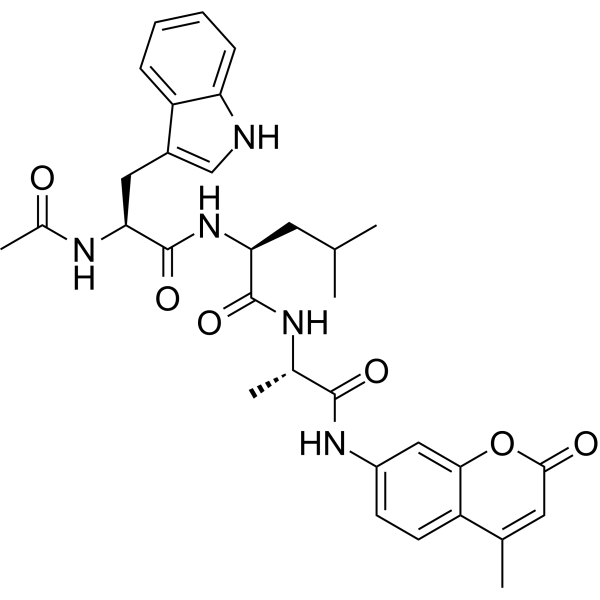
Ac-ANW-AMC is a fluorogenic substrate for immunoproteasome. Ac-ANW-AMC can be used to measure β5i activity (Ex=345 nm, Em=445 nm) .
|
-
-
- HY-P1759
-
|
Z-FR-AMC
|
Cathepsin
|
Others
|
|
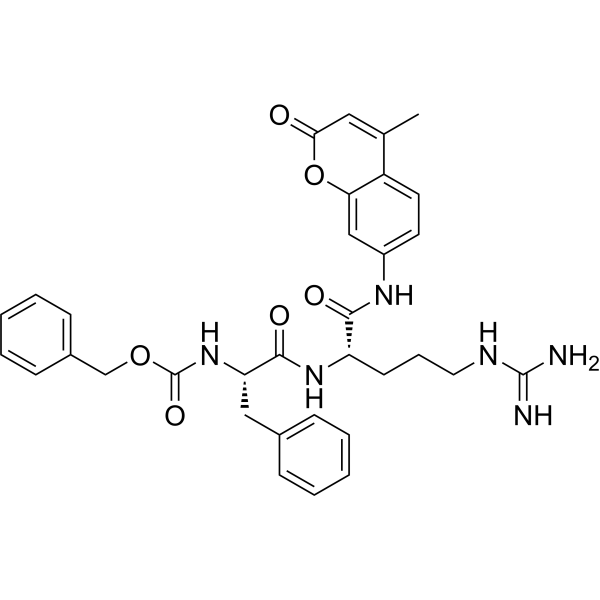
N-CBZ-Phe-Arg-AMC (Z-FR-AMC) is a cathepsin substrate used in assessment activity of lysosomal cathepsin enzymes .
|
-
-
- HY-137844
-
|
Leu-AMC hydrochloride
|
Fluorescent Dye
|
Others
|
|
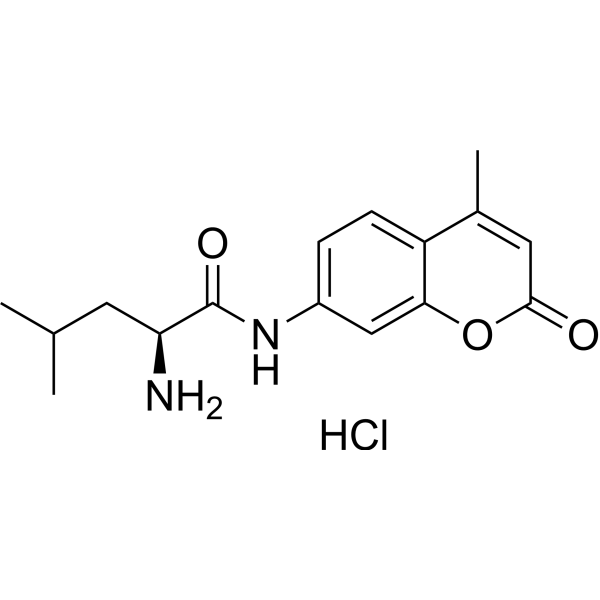
L-Leucine-7-amido-4-methylcoumarin (Leu-AMC) hydrochloride is a bright blue fluorogenic peptidyl substrate for LAP3 (leucine aminopeptidase). L-Leucine-7-amido-4-methylcoumarin hydrochloride can be used for leucine aminopeptidase inhibition assays in vitro .
|
-
-
- HY-115391
-
|
Boc-Leu-Arg-Arg-AMC
|
Biochemical Assay Reagents
|
Others
|
|
Boc-LRR-AMC (Boc-Leu-Arg-Arg-AMC) is a fluorogenic substrate, which can be utilized for detecting the trypsin-like activity of the 26S proteasome or the 20S proteasome core .
|
-

-
- HY-P0019A
-
|
|
Fluorescent Dye
Thrombin
|
Others
|
|
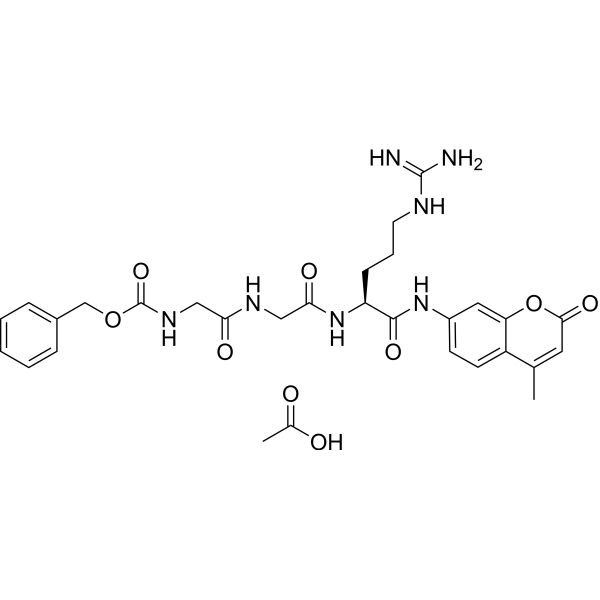
Z-Gly-Gly-Arg-AMC acetate is a thrombin-specific fluorogenic substrate for testing of thrombin generation in PRP and platelet-poor plasma (PPP) (Ex/Em = 390/480 nm) .
|
-
-
- HY-P1759B
-
|
Z-FR-AMC TFA
|
Cathepsin
|
Others
|
|
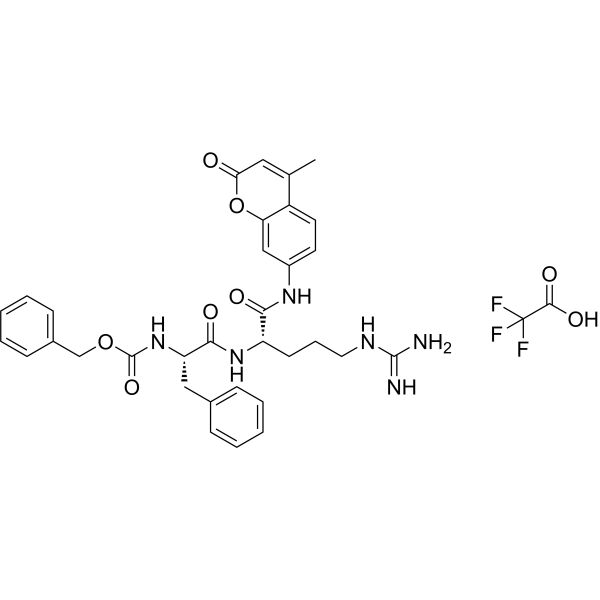
N-CBZ-Phe-Arg-AMC (Z-FR-AMC) TFA is a cathepsin substrate used in assessment activity of lysosomal cathepsin enzymes .
|
-
-
- HY-P2618
-
|
|
Kallikrein
|
Others
|
|
Pro-Phe-Arg-AMC acetate is a substrate for human glandular kallikrein 2. Pro-Phe-Arg-AMC acetate can be used for the quantitative detection of enzyme activity .
|
-

-
- HY-135070
-
|
Ac-Arg-Leu-Arg-AMC
|
Proteasome
|
Others
|
|
Ac-RLR-AMC (Ac-Arg-Leu-Arg-AMC) is a fluorogenic substrate for the 26S proteasome (Ex/Em: 380/440-460 nm). AMC is released upon cleavage, and its fluorescence can be used to quantify the trypsin-like activity of 26S proteasomes .
|
-

-
- HY-P2717
-
|
|
Caspase
|
Infection
|
|
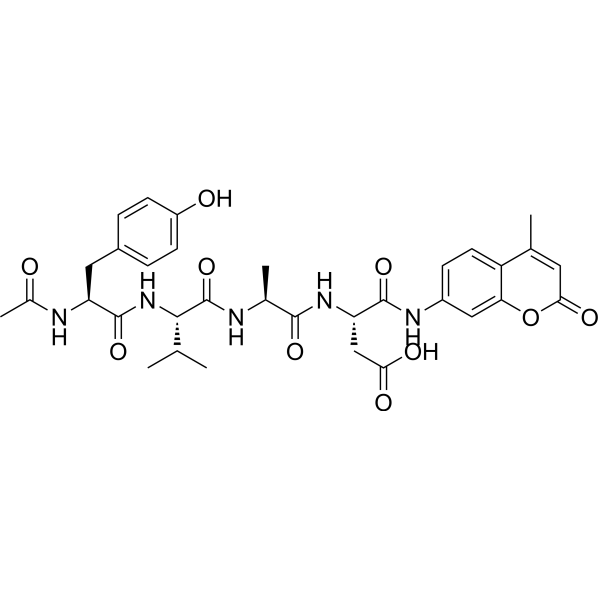
Ac-YVAD-AMC is an inhibitor for caspase. Ac-YVAD-AMC inhibits bacteria-induced cell death of hypersensitive response (HR) cells .
|
-
-
- HY-137199
-
|
|
Kallikrein
|
Others
|
|
Pro-Phe-Arg-AMC is a substrate for human glandular kallikrein 2. Pro-Phe-Arg-AMC can be used for the quantitative detection of enzyme activity .
|
-

-
- HY-P11212
-
|
|
Fluorescent Dye
|
Metabolic Disease
Cancer
|
|
Ac-RHKK(Ac)-AMC (Compound S1) is a fluorescent substrate for SITR6, that is based on p53 sequence. Ac-RHKK(Ac)-AMC mimics H3K56 deacetylation site and significantly increases the deacetylation signal with low signal-to-background ratio. Ac-RHKK(Ac)-AMC can be used for ageing and cancers research .
|
-

-
- HY-P4425
-
|
|
Biochemical Assay Reagents
|
Others
|
|
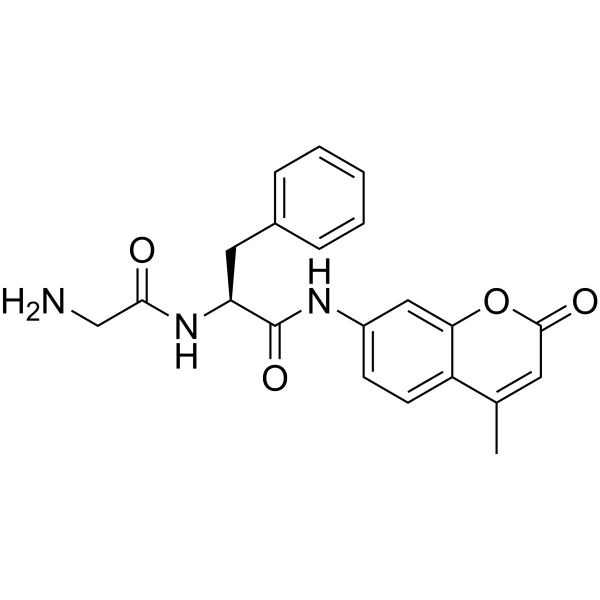
Gly-Phe-AMC is a fluorogenic peptide substrate consisting of a peptide sequence composed of glycine and phenylalanine, linked to the fluorophore AMC. Gly-Phe-AMC also serves as a cathepsin C substrate. Gly-Phe-AMC is widely used to detect the activity of various proteases .
|
-
-
- HY-P4547
-
|
AC-WEHD-AMC
|
Caspase
|
Others
|
|
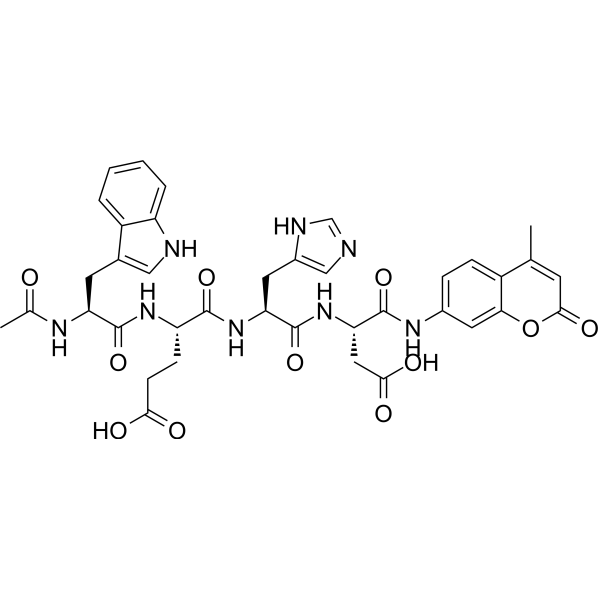
Ac-Trp-Glu-His-Asp-AMC (AC-WEHD-AMC) is a potent fluorogenic substrate of caspase-1 .
|
-
-
- HY-P2237
-
-
-
- HY-P1759A
-
|
Z-FR-AMC hydrochloride
|
Cathepsin
|
Others
|
|
N-CBZ-Phe-Arg-AMC (Z-FR-AMC) hydrochloride is a cathepsin substrate used in assessment activity of lysosomal cathepsin enzymes .
|
-

-
- HY-P2008
-
|
IEGR-AMC
|
Factor Xa
|
Cardiovascular Disease
|
|
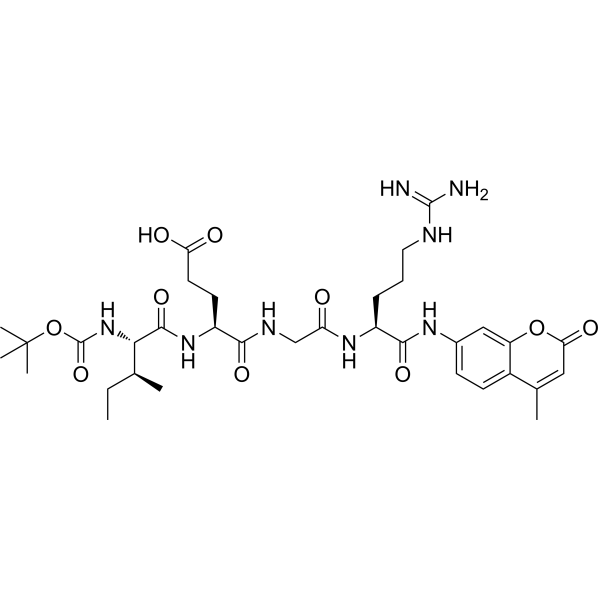
Boc-Ile-Glu-Gly-Arg-AMC (IEGR-AMC) is an activated factor X (FXa) specific fluorogenic peptide substrate used for Factor VIII determination .
|
-
-
- HY-P4217
-
|
|
Cathepsin
|
Others
|
|
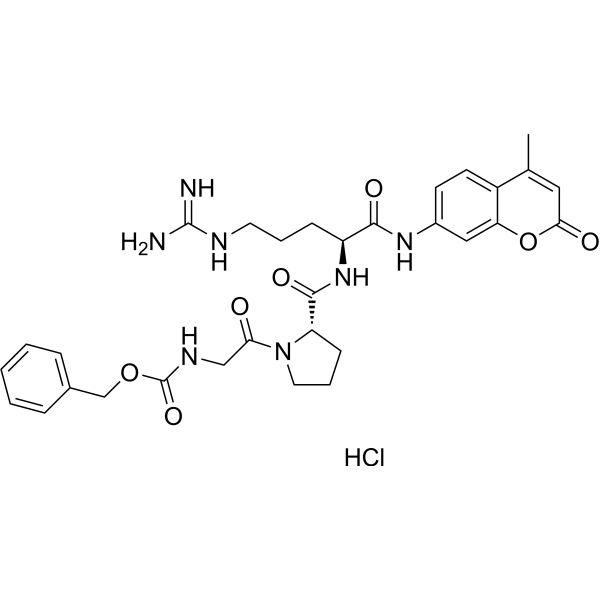
Z-Gly-Pro-Arg-AMC hydrochloride a fluorescent trypsin and cathepsin K substrate. Z-Gly-Pro-Arg-AMC hydrochloride can be used to determine trypsin and cathepsin K activity .
|
-
-
- HY-P4417
-
|
|
Fluorescent Dye
|
Others
|
|
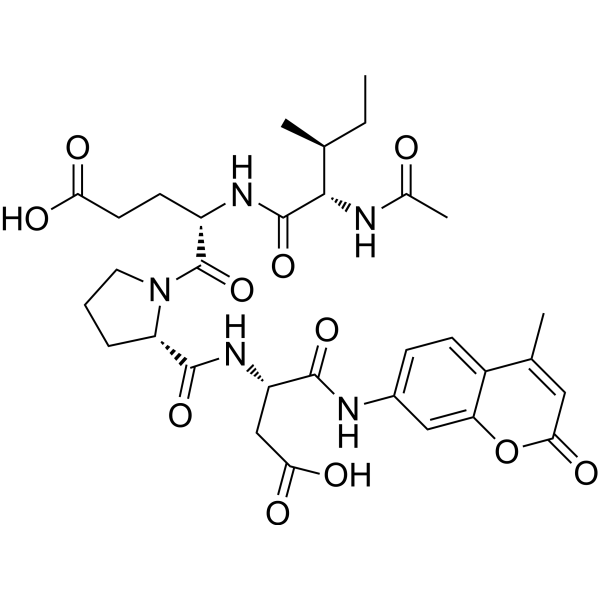
Ac-IEPD-AMC is a fluorogenic substrate for the determination of protease activity. Ac-IEPD-AMC undergoes hydrolysis and releases the fluorescent product 7-amino-4-methylcoumarin (AMC). AMC is fluorescent under UV light and can emit a fluorescent signal .
|
-
-
- HY-D1652
-
|
|
Caspase
|
Others
|
|
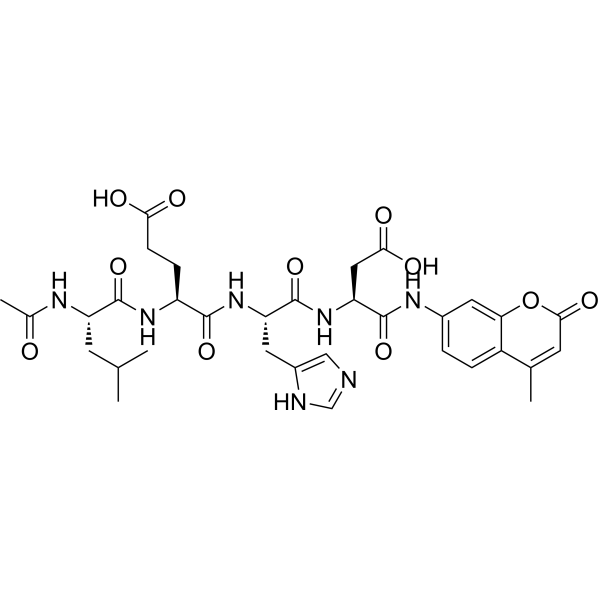
Ac-LEHD-AMC is a fluorogenic substrate for caspase-9 (Excitation: 341 nm; Emission: 441 nm). Caspase-9 can induce hydrolysis of Ac-LEHD-AMC, resulting in the release of AMC fluorophore and its fluorescence can be used to quantify caspase-9 activity .
|
-
-
- HY-134435
-
|
|
Fluorescent Dye
|
Others
|
|
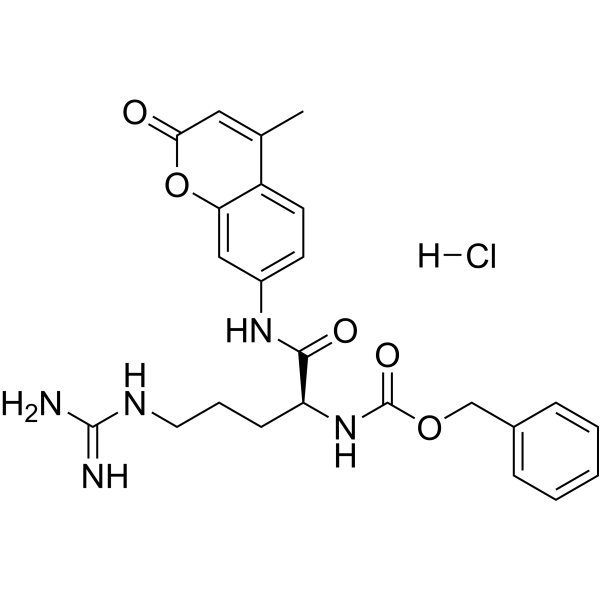
Z-Arg-AMC hydrochloride is a fluorogenic substrate for trypsin and papain. Z-Arg-AMC hydrochloride can be used to research activity of trypsin (Ex/Em=355/460 nm) .
|
-
-
- HY-D1634
-
|
|
Cathepsin
|
Others
|
|
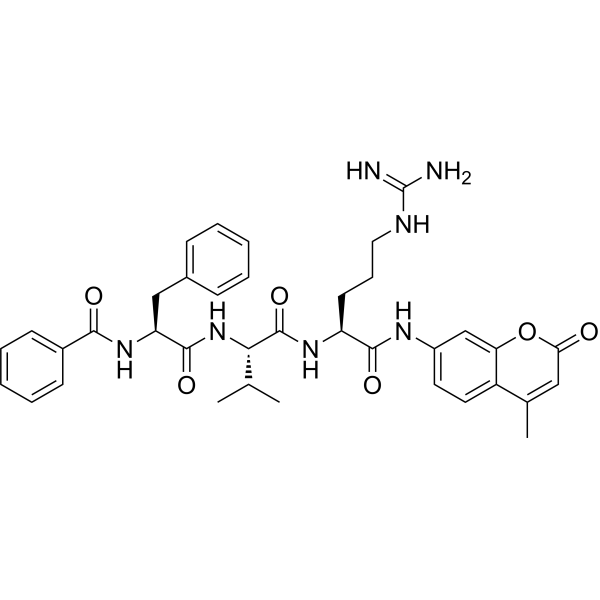
Bz-FVR-AMC is a fluorogenic substrate for procathepsin with a kcat/Km value of 1070 mM -1s -1. The high concentration of BZ-FVR-AMC inhibits the substrate .
|
-
-
- HY-P4419A
-
|
|
Fluorescent Dye
|
Others
|
|
Boc-Asp(OBzl)-Pro-Arg-AMC acetate is a fluorogenic substrate for the determination of protease activity. Boc-Asp(OBzl)-Pro-Arg-AMC acetate undergoes hydrolysis and releases the fluorescent product 7-amino-4-methylcoumarin (AMC). AMC is fluorescent under UV light and can emit a fluorescent signal .
|
-

-
- HY-120957
-
|
AMC-AA; 7-Amino-4-methyl coumarin-arachidonamide
|
Endogenous Metabolite
|
Metabolic Disease
|
|
AMC arachidonoyl amide (AMC-AA) is one of several fatty acid amides which can be used to measure fatty acid amide hydrolase (FAAH) activity.1 FAAH is a relatively unselective enzyme in that it accepts a variety of amide head groups other than the ethanolamine of its nominal endogenous substrate anandamide.2 Exposure of AMC-AA to FAAH activity results in the release of the fluorescent aminomethyl coumarin that absorbs at 360 nm and emits at 465 nm. This allows the fast and convenient measurement of FAAH activity using a simple cuvette or microplate fluorometer.
|
-

-
- HY-129867
-
|
Z-LLL-AMC
|
Proteasome
|
Others
|
|
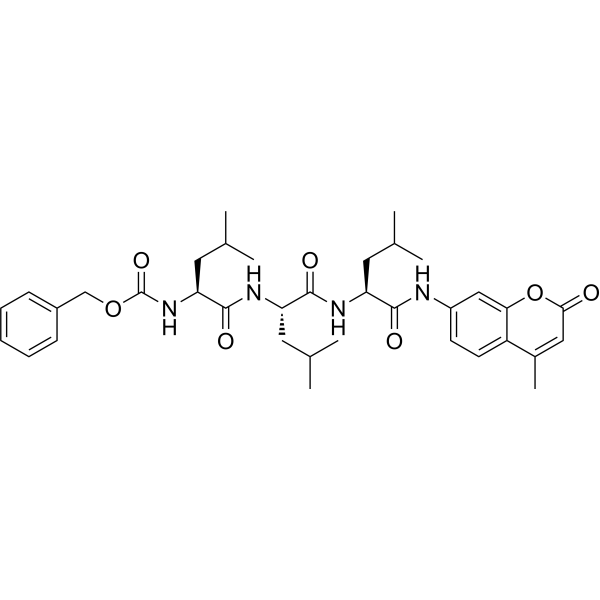
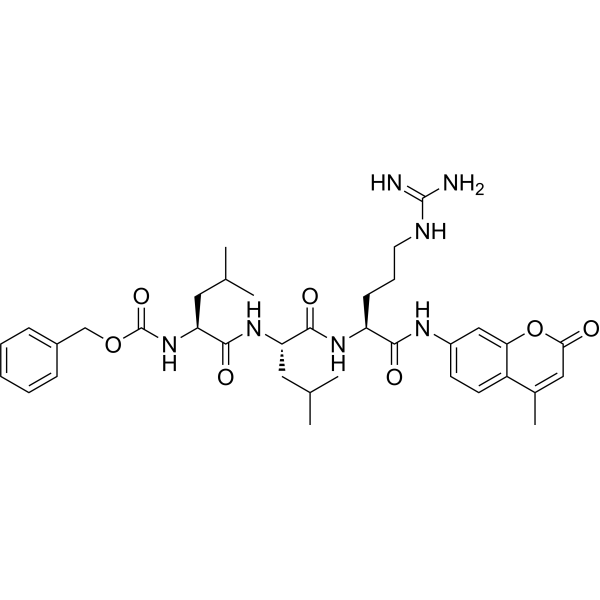
Z-Leu-Leu-Leu-AMC is a fluorogenic substrate for measuring the chymotrypsin-like protease activity of the 20S proteasome .
|
-
-
- HY-134961
-
|
Fluorogenic Proteasome Substrate; Z-ARR-AMC
|
Proteasome
|
Others
|
|
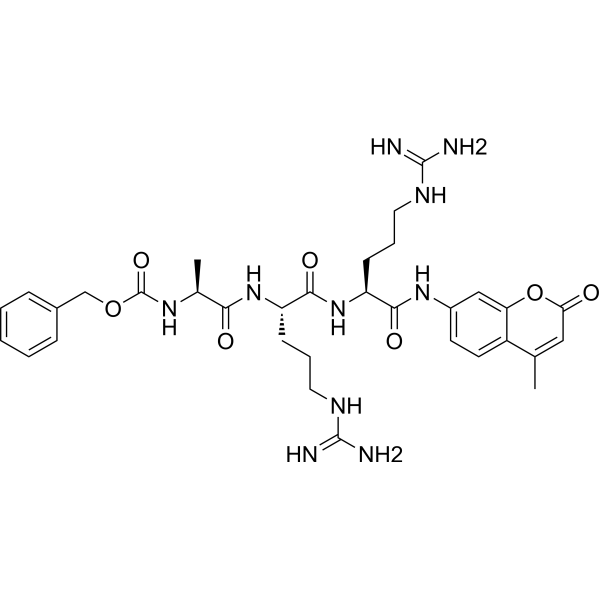
Z-Ala-Arg-Arg-AMC (Fluorogenic Proteasome Substrate) is a fluorogenic substrate for assaying trypsin-like activity of proteasome .
|
-
-
- HY-P4340A
-
|
|
Cathepsin
|
Others
|
|
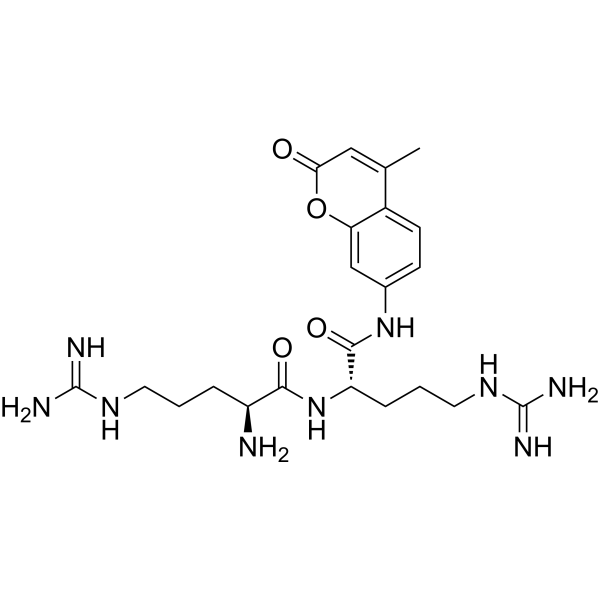
Arg-Arg-AMC acetate is the acetate salt form of Arg-Arg-AMC (HY-P4340). Arg-Arg-AMC acetate is a fluorescent substrate for cathepsin B and used in the cathepsin B activity assay .
|
-

-
- HY-P4548
-
|
Boc-RVRR-AMC
|
Furin
|
Others
|
|
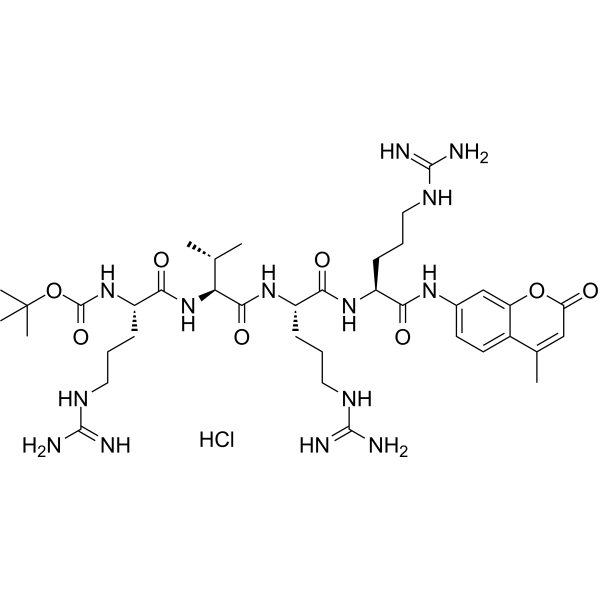
Boc-Arg-Val-Arg-Arg-AMC hydrochloride (Boc-RVRR-AMC) is a synthetic fluorogenic substrate that is efficiently cleaved by furin .
|
-
-
- HY-169491
-
|
|
Fluorescent Dye
|
Metabolic Disease
|
|
Pantothenate-AMC is a fluorogenic substrate used for detecting the enzymatic activity of vanin-1, an enzyme involved in the recycling of L-pantothenic acid. Upon enzymatic cleavage by vanin-1, 7-amino-7-methylcoumarin (AMC) is released, and its fluorescence can be used to quantify vanin-1 activity. The excitation/emission maxima of AMC are 340-360 nm and 440-460 nm, respectively .
|
-

-
- HY-P10144
-
|
|
Biochemical Assay Reagents
|
Others
|
|
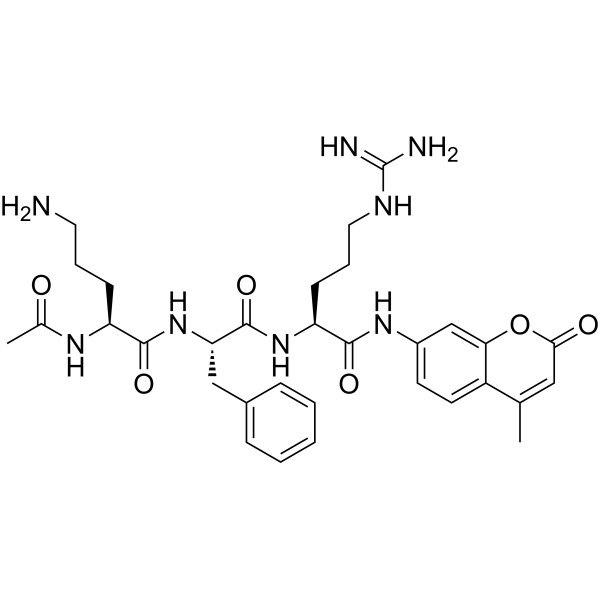
Ac-Orn-Phe-Arg-AMC is a potent fluorescent substrate of cd-Tryptase and β 1-Tryptase. Ac-Orn-Phe-Arg-AMC releases amino-4-methylcoumarin (AMC) for fluorescence detection .
|
-
-
- HY-P4360
-
|
|
Fluorescent Dye
|
Others
|
|
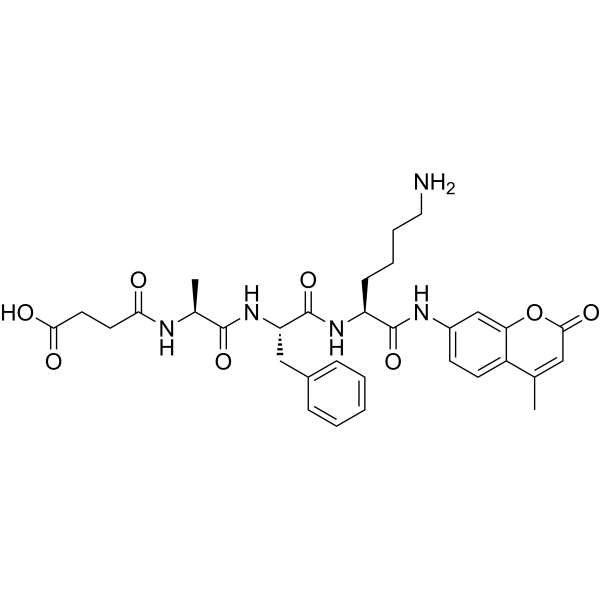
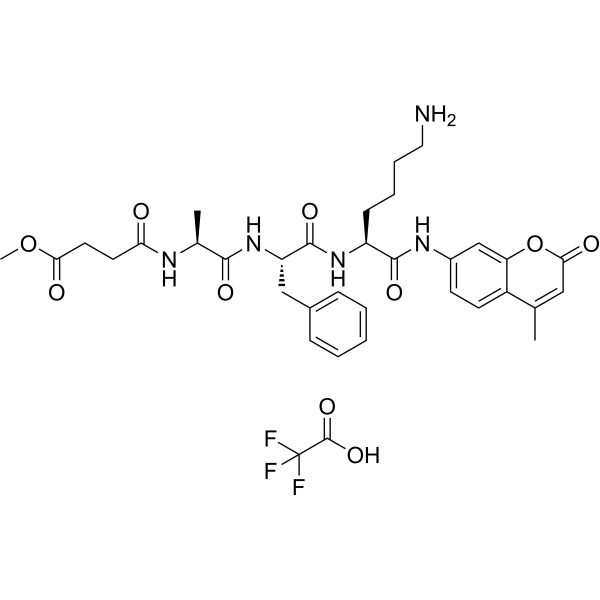
Suc-Ala-Phe-Lys-AMC is a highly sensitive fluorogenic substrate for plasmin. Suc-Ala-Phe-Lys-AMC is also used for assaying gingipain K .
|
-
-
- HY-P5378A
-
|
Cathepsin S substrate TFA
|
Ser/Thr Protease
|
Others
|
|
Ac-KQKLR-AMC TFA is a substrate peptide of Cathepsin S fluorescently labeled with AMC (Ex/Em=354 nm/442 nm). Ac-KQKLR-AMC TFA can be used to measure Cathepsin S activity) .
|
-

-
- HY-P4417A
-
|
|
Fluorescent Dye
|
Others
|
|
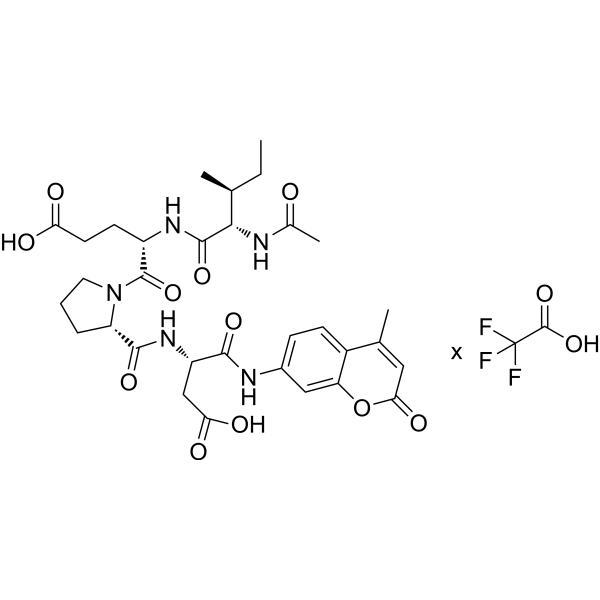
Ac-IEPD-AMC TFA is a fluorescent substrate used to measure protease activity. Ac-IEPD-AMC undergoes hydrolysis and releases the fluorescent product 7-amino-4-methylcoumarin (AMC). AMC fluoresces under UV light irradiation and can emit fluorescent signals .
|
-
-
- HY-P4323A
-
|
|
Fluorescent Dye
|
Others
|
|
Boc-Gln-Arg-Arg-AMC acetate is a fluorogenic substrate for the determination of protease activity. Boc-Gln-Arg-Arg-AMC undergoes hydrolysis and releases the fluorescent product 7-amino-4-methylcoumarin (AMC). AMC is fluorescent under UV light and can emit a fluorescent signal .
|
-

-
- HY-P4449A
-
|
|
Caspase
|
Cancer
|
|
Ac-VRPR-AMC TFA is a fluorogenic metacaspase substrate. Ac-VRPR-AMC TFA can be used to assay metacaspase activity .
|
-

-
- HY-P4342
-
-
-
- HY-P4363
-
-
-
- HY-P3363
-
|
|
Caspase
|
Cancer
|
|
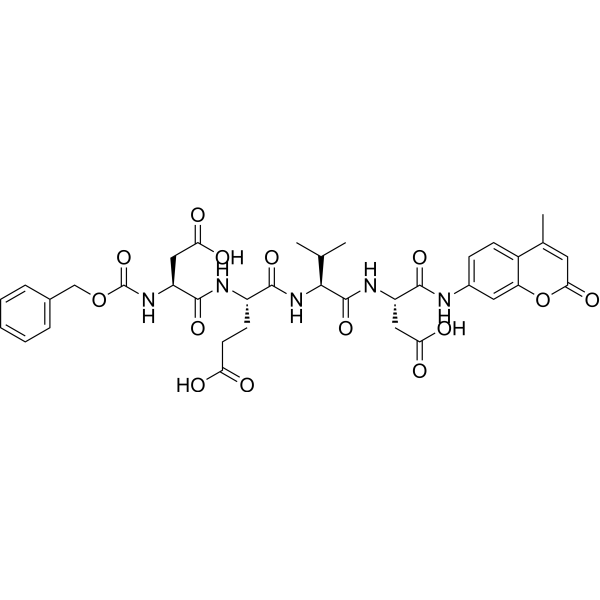
Z-DEVD-AMC is a selective caspase-3 substrate that can be measured by fluorescence spectrometry. AMC can be used as a fluorescence reference standard for AMC-based enzyme substrates including AMC-based caspase substrates .
|
-
-
- HY-P5378
-
|
Cathepsin S substrate
|
Ser/Thr Protease
|
Others
|
|
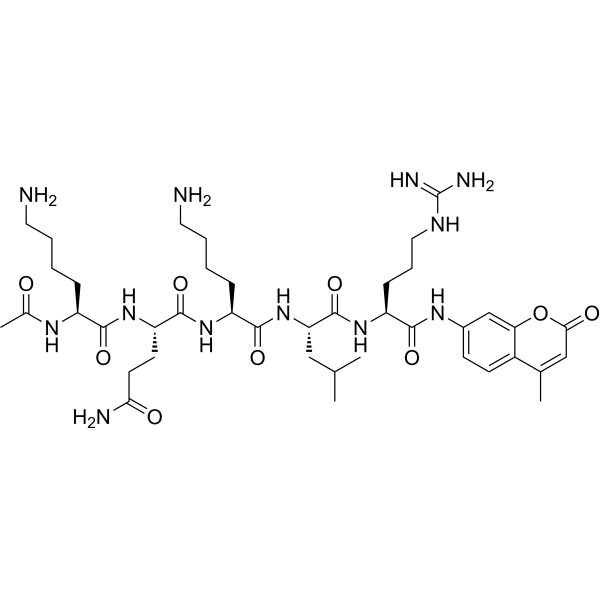
Ac-KQKLR-AMC is a substrate peptide of Cathepsin S fluorescently labeled with AMC (Ex/Em=354 nm/442 nm). Ac-KQKLR-AMC can be used to measure Cathepsin S activity) .
|
-
-
- HY-P11213
-
|
|
Fluorescent Dye
|
Metabolic Disease
Cancer
|
|
Ac-RYQK(Ac)-AMC (Compound S5) is a fluorescent substrate for SITR6, that is based on the H3 sequence. Ac-RYQK(Ac)-AMC mimics H3K56 deacetylation site and significantly increases the deacetylation signal with superior signal-to-background ratio. Ac-RYQK(Ac)-AMC can be used for ageing and cancers research .
|
-

-
- HY-P10355
-
|
|
Bacterial
|
Infection
|
|
Succinimide-AFK-AMC acetate is a marker for P. aeruginosa protease activity using cultured reference strains .
|
-

-
- HY-P3364
-
|
|
Fluorescent Dye
Sirtuin
HDAC
|
Others
|
|
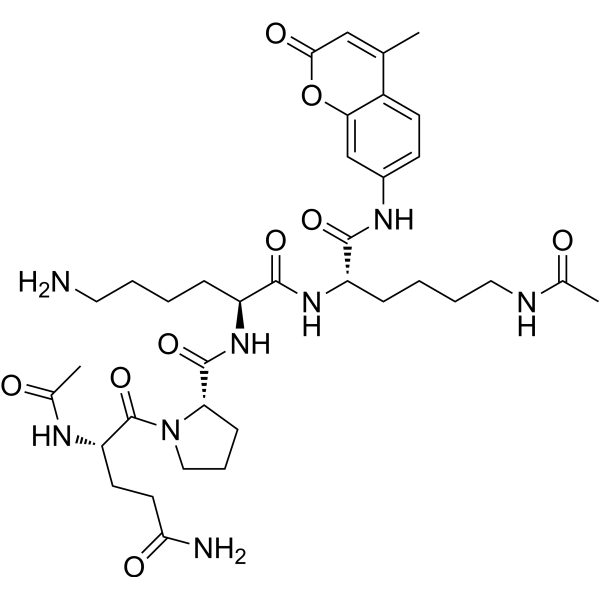
Ac-QPKK(Ac)-AMC is a p53-derived peptide conjugated with a fluorophore, which serves as a fluorescent peptide substrate for detecting the deacylase activity of zinc-dependent HDACs and sirtuins (Ex = 360 nm; Em = 460 nm) .
|
-
-
- HY-W142117
-
|
|
Fluorescent Dye
|
Others
|
|
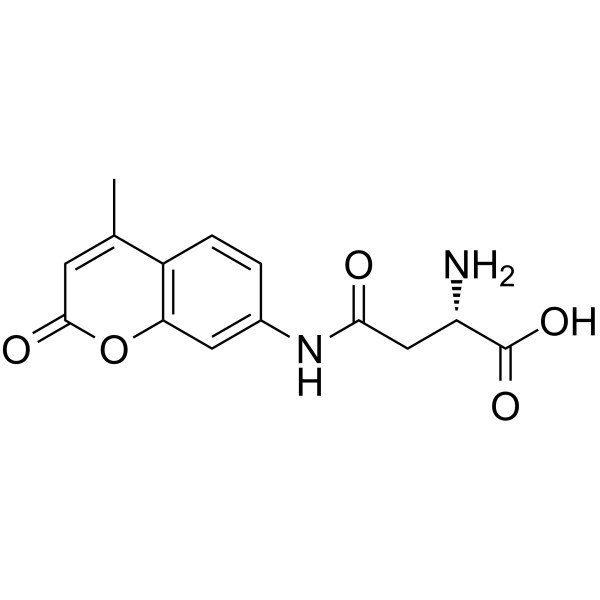
H-Asp(AMC)-OH, a amino acid derivative, is a fluorescent dye. H-Asp(AMC)-OH dose not inhibit glycine transport at a concentration of 0.25 mM .
|
-
-
- HY-P11406
-
|
|
Fluorescent Dye
|
Others
|
|
Ac-RSLK-AMC is a fluorogenic substrate, can be used to measure the enzymatic activities of site-1 protease (S1P) .
|
-

- HY-P4449
-
|
|
Caspase
|
Cancer
|
|
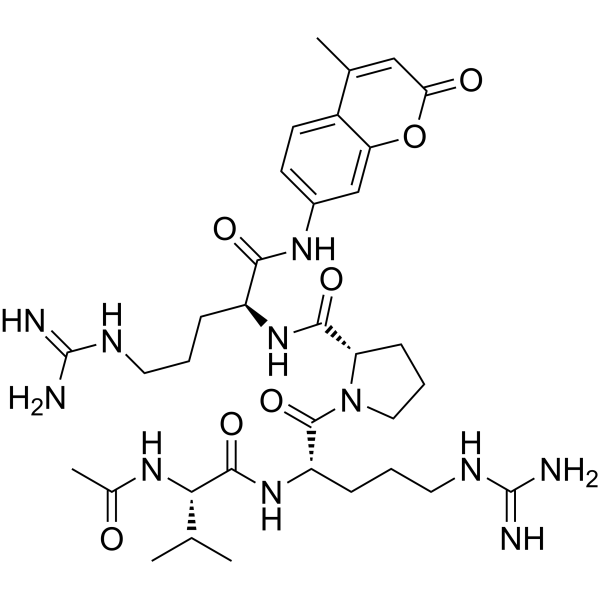
Ac-VRPR-AMC is a fluorogenic metacaspase substrate. Ac-VRPR-AMC can be used to tests metacaspase activity .
|
-
- HY-P4443
-
|
|
Fluorescent Dye
|
Others
|
|
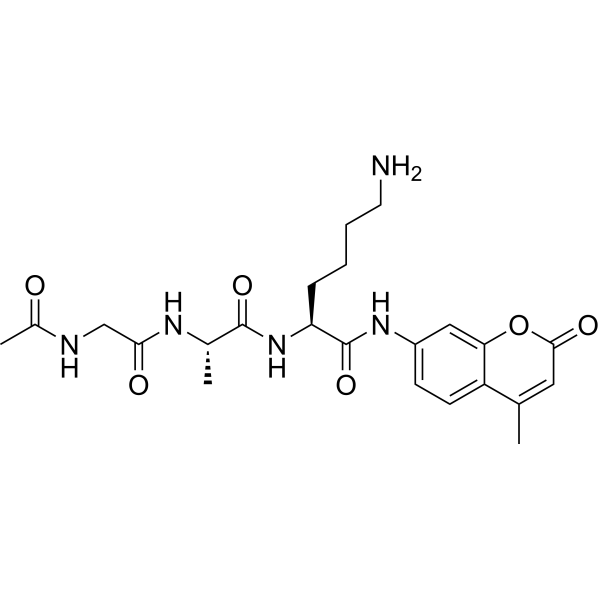
Ac-GAK-AMC is a fluorescent substrate that can be used to measure protease activity. AMC (7-amino-4-methylcoumarin) is a fluorescent group. In the presence of protease, the protease will hydrolyze Ac-GAK-AMC into a fluorescent product .
|
-
- HY-P3110
-
|
|
Fluorescent Dye
|
Others
|
|
Ac-WLA-AMC is a fluorogenic substrate of caspase-3. Ac-WLA-AMC is cleaved to release the fluorescent moiety 7-amino-4-methylcoumarin (AMC), which can be used to quantify the β5c subunit activity .
|
-
- HY-120659
-
|
|
Fluorescent Dye
|
Others
|
|
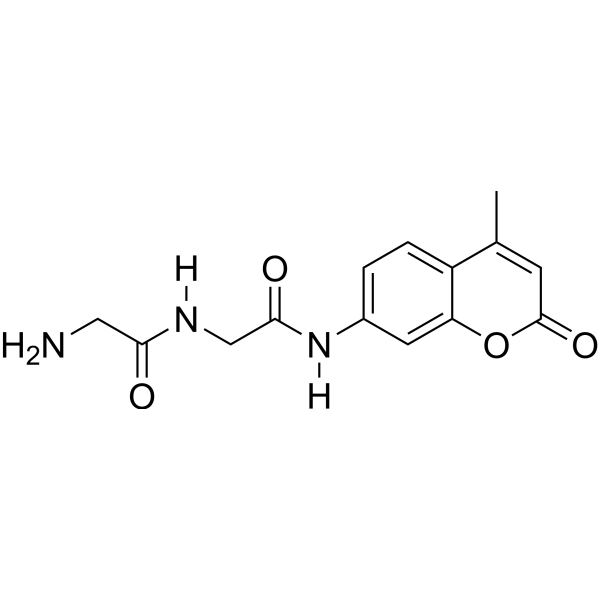
Gly-Gly-AMC is a fluorogenic peptide substrate. Gly-Gly-AMC can be used to assess bacterial protease activity of P. aeruginosa and S. aureus .
|
-
- HY-P10144A
-
|
|
Biochemical Assay Reagents
|
Others
|
|
Ac-Orn-Phe-Arg-AMC acetate is a potent fluorescent substrate of cd-Tryptase and β 1-Tryptase. Ac-Orn-Phe-Arg-AMC acetate releases amino-4-methylcoumarin (AMC) for fluorescence detection .
|
-

- HY-143285
-
|
|
Fluorescent Dye
|
Infection
|
|
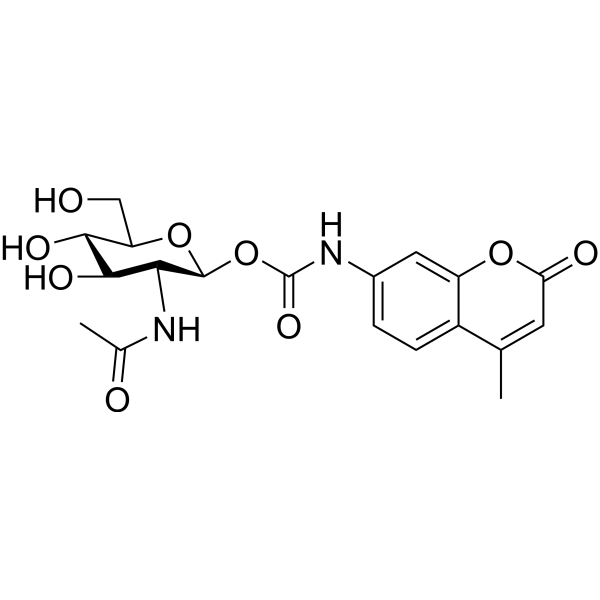
AMC-GlcNAc (compound 1) is a potent fluorogenic probe for detection and characterization of β-hexosaminidase enzyme activity. AMC-GlcNAc enables continuous monitoring by turn-on fluorescence and fluorescence signal is constant over a wide pH range (Ex=325 nm, Em=390 nm). AMC-GlcNAc enables ratiometric fluorescence detection with high sensitivity and low background, which can be used to screen for recombinant dispersin B activity in E. coli cell lysate .
|
-
- HY-137897
-
|
|
Proteasome
|
Others
|
|
Bz-VGR-AMC is a substrate for the trypsin-like activity of the 20S proteasome. Bz-VGR-AMC can be used to measure the trypsin-like (β2) activity of the 20S proteasome .
|
-

- HY-P4349
-
|
|
Biochemical Assay Reagents
Thrombin
|
Others
|
|
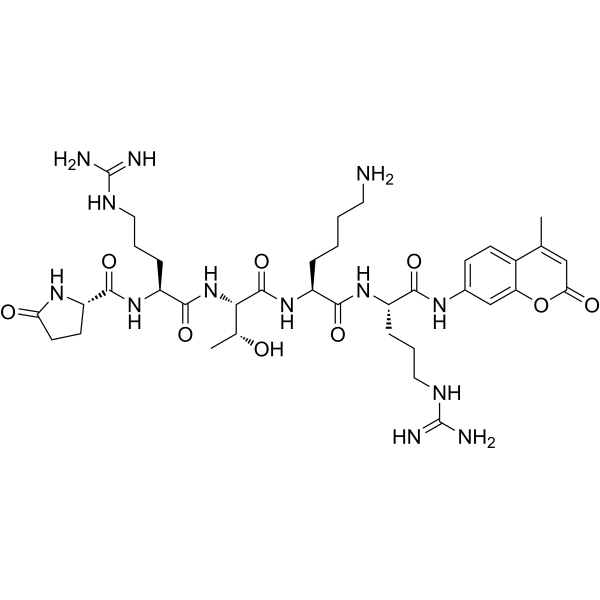
Pyr-Arg-Thr-Lys-Arg-AMC is a AMC peptide, and a fluorescent substrate. Pyr-Arg-Thr-Lys-Arg-AMC can be used to detect the activity of specific proteases, such as Furin, Trypsin, and Thrombin .
|
-
- HY-P4340
-
|
|
Cathepsin
|
Cancer
|
|
Arg-Arg-AMC is a highly selective substrate of Cathepsin B. Arg-Arg-AMC can be used to cathepsin B activity assay in cancer cells, while cathepsin B is assocaited with cell invasive and metastatic phenotype in numerous types of cancer .
|
-
- HY-137416
-
-
- HY-P2176A
-
|
Z-Leu-Arg-Gly-Gly-AMC TFA
|
Fluorescent Dye
|
Others
|
|
Z-LRGG-AMC TFA is the trifluoroacetate salt of Z-LRGG-AMC (HY-P2176). Z-LRGG-AMC TFA is a fluorogenic substrate for isopeptidase T. Upon cleavage of Z-LRGG-AMC TFA by isopeptidase T, 7-amino-4-methylcoumarin (AMC) is released, and its fluorescence can be used to quantify isopeptidase T activity (Ex/Em : 360/460 nm) .
|
-

- HY-P10317
-
|
|
Fluorescent Dye
|
Others
|
|
Suc-YVAD-AMC is used to measure the cysteine proteins of the proteasome.Suc-YVAD-AMC releases fluorescent AMC when cleaved by cysteine proteases to assess the enzymatic activity of the proteasome .
|
-

- HY-W753820A
-
|
Boc-Leu-Arg-Arg-AMC TFA
|
Biochemical Assay Reagents
|
Others
|
|
Boc-LRR-AMC TFA (Boc-Leu-Arg-Arg-AMC TFA) is the TFA salt form of Boc-LRR-AMC (HY-115391). Boc-LRR-AMC TFA is a fluorogenic substrate, which can be utilized for detecting the trypsin-like activity of the 26S proteasome or the 20S proteasome core .
|
-

- HY-P10958
-
|
|
Biochemical Assay Reagents
|
Others
|
|
EEKAR-AMC is a PsCaspase substrate. The EEKAR-AMC peptide can be cleaved by PsCaspase when incubated with metabolites from infected cells expressing PsTIR .
|
-

- HY-135070B
-
|
Ac-Arg-Leu-Arg-AMC TFA
|
Proteasome
|
Others
|
|
Ac-RLR-AMC (Ac-Arg-Leu-Arg-AMC) TFA is a fluorogenic substrate for the 26S proteasome (Ex/Em: 380/440-460 nm). AMC is released upon cleavage, and its fluorescence can be used to quantify the trypsin-like activity of 26S proteasomes .
|
-

- HY-W927376
-
|
|
Fluorescent Dye
|
Others
|
|
Boc-Val-Arg-AMC is a synthetic peptide compound. As a specific fluorescent substrate, Boc-Val-Arg-AMC can be specifically cleaved by specific enzymes, especially thrombin, to release a fluorescent molecule AMC (7-amino-4-methylcoumarin), which can be used to monitor thrombin activity. Boc-Val-Arg-AMC can be used to detect thrombin activity in plasma samples .
|
-

- HY-P10082
-
|
|
Caspase
|
Others
|
|
Ac-VETD-AMC is a synthetic peptide substrate for caspase 8. Ac-VETD-AMC also has potential to assess functional activity of recombinant phytaspase .
|
-
- HY-137164A
-
|
|
Fluorescent Dye
|
Others
|
|
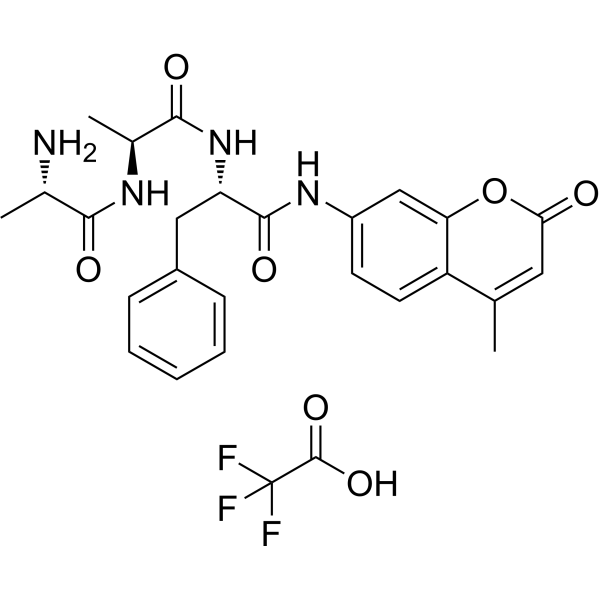
Ala-Ala-Phe-AMC TFA is the TFA salt form for Ala-Ala-Phe-AMC. Ala-Ala-Phe-AMC TFA is a fluorogenic substrate, which is used to for tripeptidyl peptidase II (TPPII) activity determination .
|
-
- HY-P2715
-
-

- HY-D1634A
-
|
|
Cathepsin
|
Others
|
|
Bz-FVR-AMC TFA is a fluorogenic substrate for procathepsin with a kcat/Km value of 1070 mM -1s -1. The high concentration of BZ-FVR-AMC inhibits the substrate .
|
-

- HY-P10240
-
-

- HY-P10198
-
-
- HY-P10060
-
-
- HY-P5976
-
|
Renin Substrate I
|
Renin
|
Others
|
|
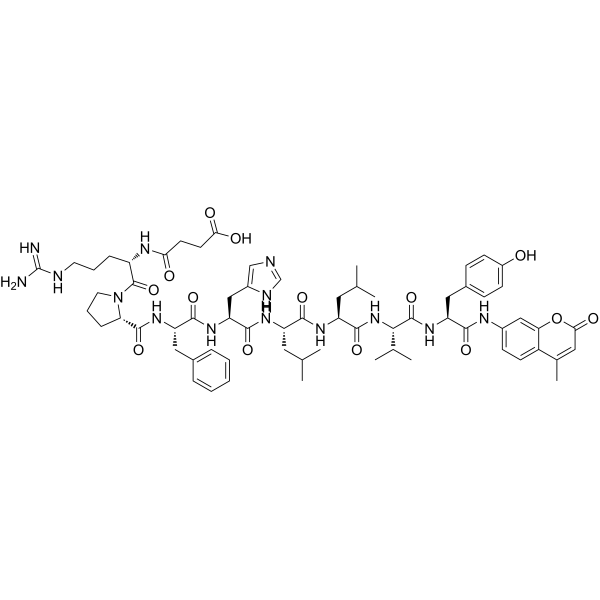
Suc-Arg-Pro-Phe-His-Leu-Leu-Val-Tyr-AMC (Renin Substrate I) is a renin substrate
|
-
- HY-114568
-
-

- HY-28325
-
|
|
Reactive Oxygen Species (ROS)
p38 MAPK
|
Cancer
|
|
AMC-04 is an unfolded protein response (UPR) activator, which activates UPR pathway through ROS and p38 MAPK signaling and induces apoptotic cell death. AMC-04 can be used for cancer research .
|
-
- HY-P2176
-
|
Z-Leu-Arg-Gly-Gly-AMC
|
Biochemical Assay Reagents
|
Others
|
|
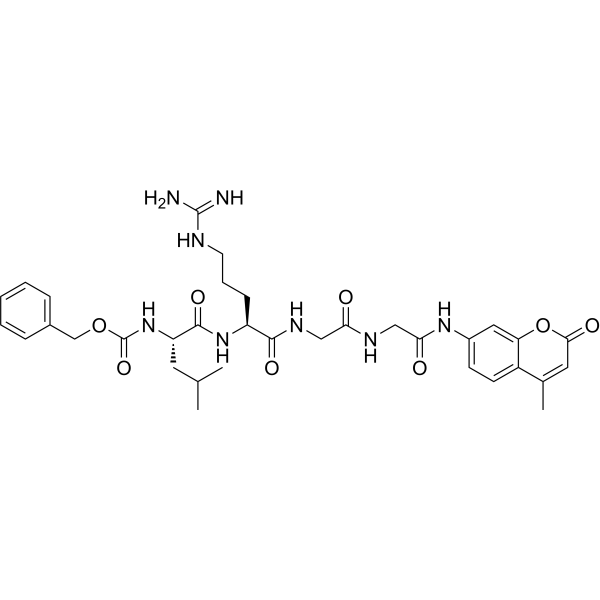
Z-LRGG-AMC (Z-Leu-Arg-Gly-Gly-AMC) is a fluorescent substrate that hydrolyzes and releases free fluorescent 7-amino-4-methylcoumarin (AMC). Detection wavelength of AMC: Ex/Em=360/460 nm .
|
-
- HY-P10142
-
|
|
Fluorescent Dye
|
Others
|
|
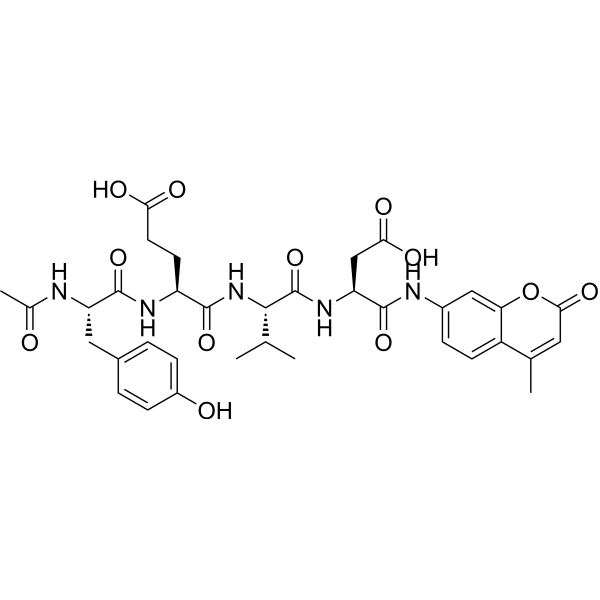
Ac-YEVD-AMC is a fluorescent substrate of caspase-1/11. Ac-YEVD-AMC releases amino-4-methylcoumarin (AMC) for fluorescence detection when treating with cell lysate .
|
-
- HY-P4427
-
|
|
Fluorescent Dye
|
Others
|
|
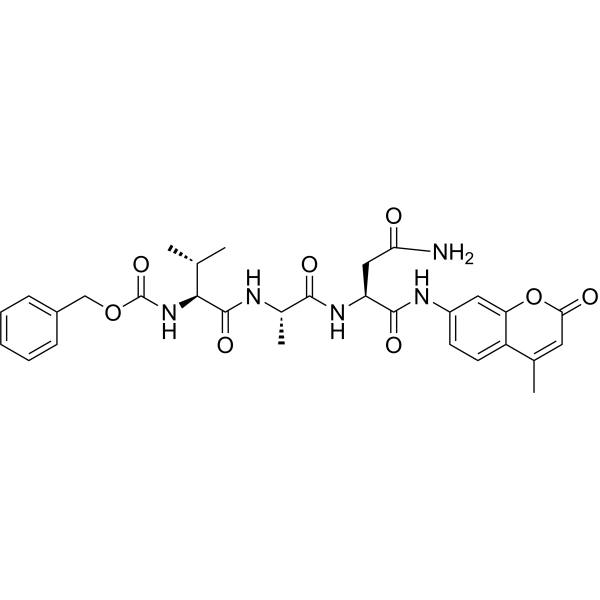
Z-VAN-AMC is a fluorogenic substrate. Z-VAN-AMC can be hydrolysed by a phytophagous mite of legumain-like activity .
|
-
- HY-P10162A
-
|
|
Caspase
|
Others
|
|
Ac-DMQD-AMC TFA is a fluorogenic substrate for caspase-3 or caspase-10. Similar to Ac-DEVD-AMC, it releases the AMC (7-amino-4-methylcoumarin) fluorophore, resulting in fluorescence. Ac-DMQD-AMC TFA can be used to measure caspase activity in in vitro apoptosis monitoring .
|
-

- HY-P5202
-
|
|
Amino Acid Derivatives
|
Others
|
|
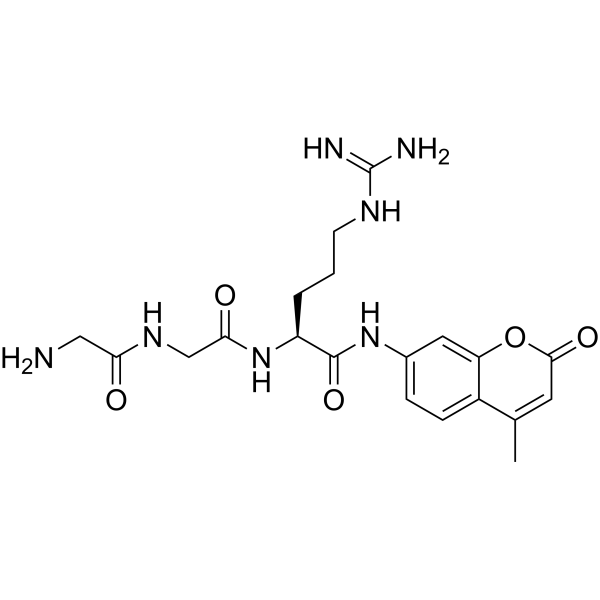
H-Gly-Gly-Arg-AMC is a fluorogenic peptidyl-AMC substrate containing C-terminal 7-amino-4-methylcoumarin (AMC). H-Gly-Gly-Arg-AMC is a suitable for monitoring continuous thrombin generation (TGT) .
|
-
- HY-P10147
-
|
|
Caspase
|
Cancer
|
|
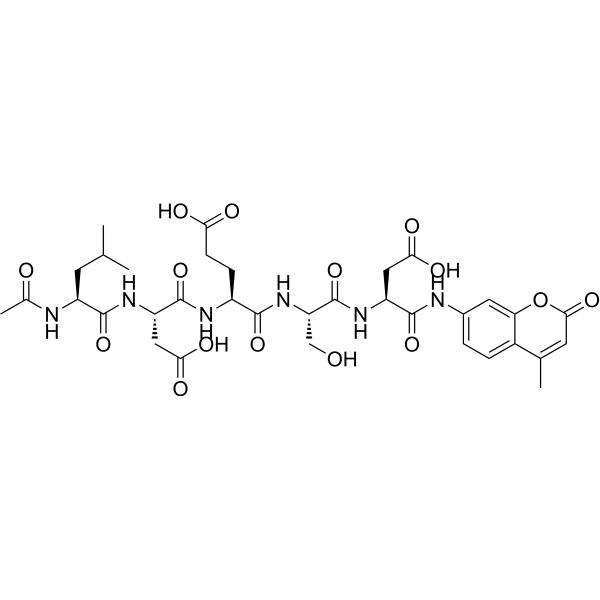
Ac-LDESD-AMC is a caspase-2 inhibitor. Ac-LDESD-AMC has a peptide sequence of Leu-Asp-Glu-Ser-Asp .
|
-
- HY-P4408
-
|
|
Fluorescent Dye
|
Others
|
|
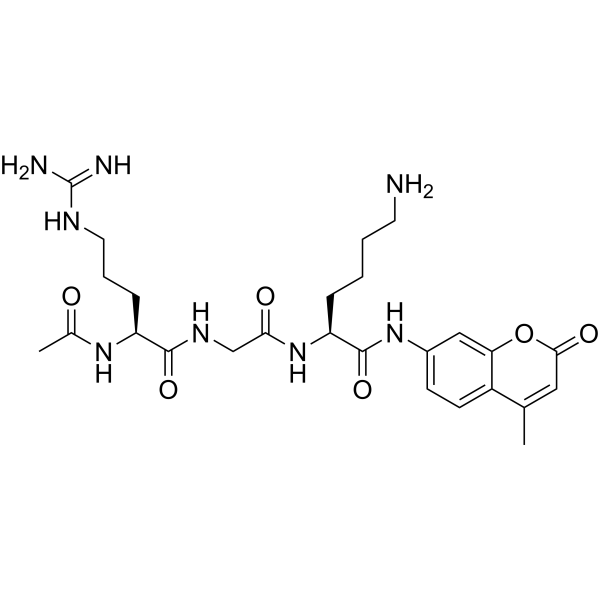
Ac-Arg-Gly-Lys-AMC is a fluorogenic substrate for the determination of protease activity. Ac-Arg-Gly-Lys-AMC undergoes hydrolysis and releases the fluorescent product 7-amino-4-methylcoumarin (AMC). AMC is fluorescent under UV light and can emit a fluorescent signal .
|
-
- HY-P4323
-
|
|
Fluorescent Dye
|
Others
|
|
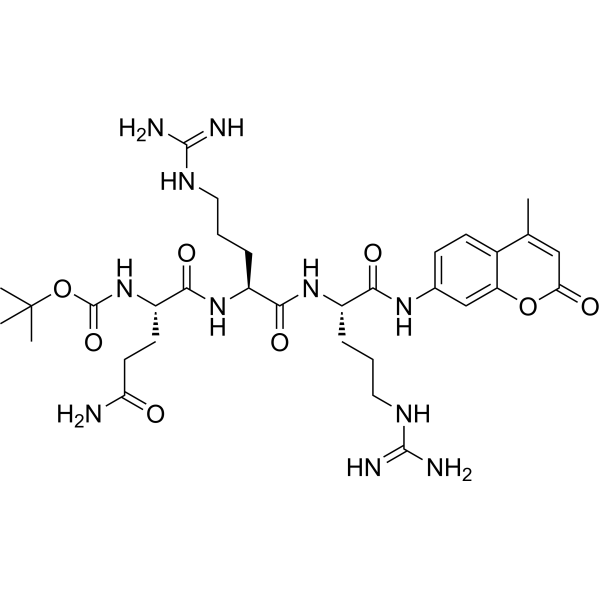
Boc-Gln-Arg-Arg-AMC is a fluorogenic substrate for the determination of protease activity. Boc-Gln-Arg-Arg-AMC undergoes hydrolysis and releases the fluorescent product 7-amino-4-methylcoumarin (AMC). AMC is fluorescent under UV light and can emit a fluorescent signal .
|
-
- HY-D1503
-
-
- HY-P3362
-
|
|
Fluorescent Dye
|
Others
|
|
Ac-IETD-AMC is a fluorogenic caspase-8/granzyme B substrate containing the acetyl (Ac) moiety. Ac-IETD-AMC is frequently used to measure caspase-8 activity .
|
-
- HY-P10162
-
|
|
Caspase
|
Cancer
|
|
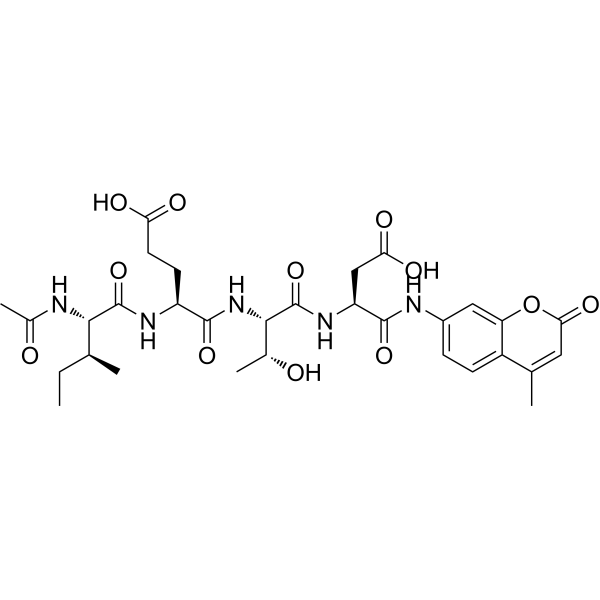
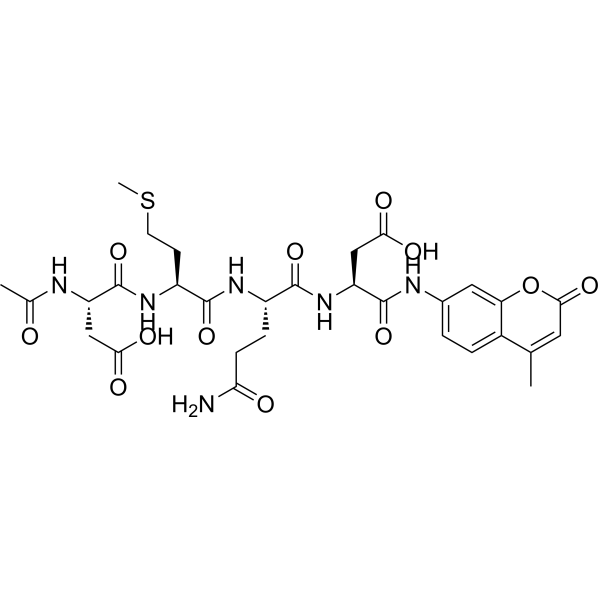
Ac-DMQD-AMC is an inhibitor of caspase-3. Ac-DMQD-AMC is an aromatic amine using aminium-based coupling reagent HATU in the presence of 2,4,6-trimethylpyridine (TMP) .
|
-
- HY-P4416
-
|
|
Fluorescent Dye
|
Others
|
|
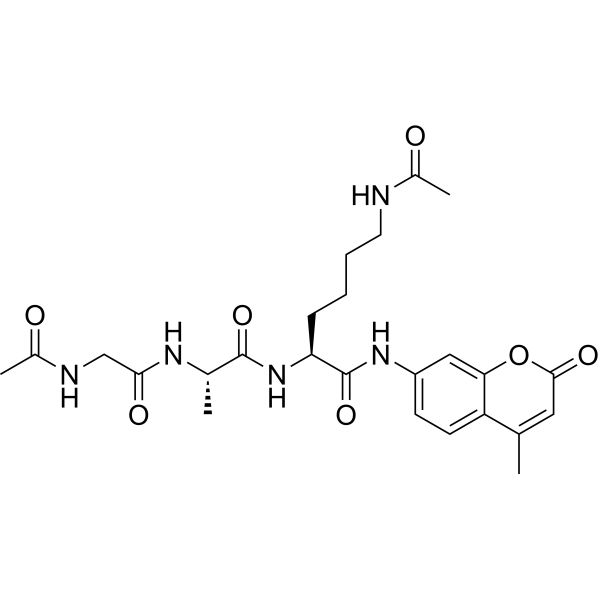
Ac-Gly-Ala-Lys(Ac)-AMC is a fluorogenic substrate for the determination of protease activity. Ac-Gly-Ala-Lys(Ac)-AMC undergoes hydrolysis and releases the fluorescent product 7-amino-4-methylcoumarin (AMC). AMC is fluorescent under UV light and can emit a fluorescent signal .
|
-
- HY-P4345
-
-
- HY-P4392
-
-
- HY-P4367
-
|
|
Fluorescent Dye
|
Others
|
|
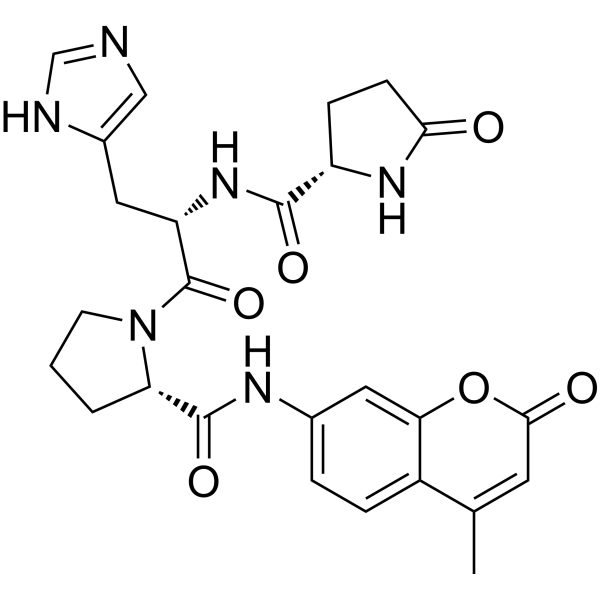
TRH-AMC is a fluorogenic substrate used in a coupled assay for thyrotropin-releasing hormone(TRH)-degrading ectoenzyme .
|
-
- HY-D0002
-
|
Coumarin 120 hydrogensulfate; AMC hydrogensulfate
|
Fluorescent Dye
|
Others
|
|
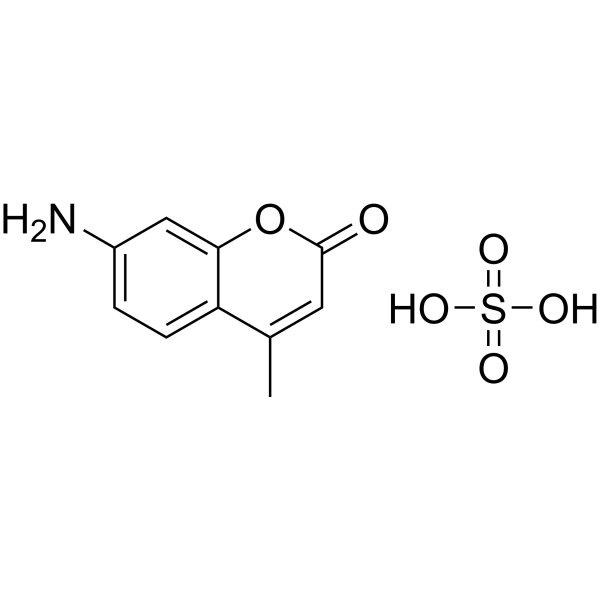
7-Amino-4-methylcoumarin hydrogensulfate (Coumarin 120 hydrogensulfate; AMC hydrogensulfate) is a multifunctional dye. Dyes are important tools in biological experiments. They can help researchers observe and analyze cell structures, track biomolecules, evaluate cell functions, distinguish cell types, detect biomolecules, study tissue pathology and monitor microorganisms. Their applications range from basic scientific research to clinical A wide range of diagnostics. Dyes are also widely used in traditional fields such as textile dyeing, as well as in emerging fields such as functional textile processing, food pigments and dye-sensitized solar cells.
|
-
- HY-W344383
-
|
|
Ser/Thr Protease
|
Others
|
|
Boc-Phe-Ser-Arg-AMC is a trypsin peptide substrate containing a Boc protecting group. Boc-Phe-Ser-Arg-AMC can be degraded by trypsin, releasing AMC (HY-D0027) which has fluorescence activity. Boc-Phe-Ser-Arg-AMC can be used to assess the activity of trypsin .
|
-

- HY-D0027R
-
|
Coumarin 120 (Standard); AMC (Standard)
|
Fluorescent Dye
Antibiotic
Fungal
Reference Standards
|
Infection
|
|
7-Amino-4-methylcoumarin (Standard) is the analytical standard of 7-Amino-4-methylcoumarin. This product is intended for research and analytical applications. 7-Amino-4-methylcoumarin belongs to the coumarin class, can be isolated from the endophytic fungus Xylaria sp. and has a broad spectrum of antibacterial activity. 7-Amino-4-methylcoumarin is also commonly used as an important laser dye that emits in the blue region, capable of analyzing glycoprotein monosaccharides and N-linked oligosaccharides, and is also utilized in tissue pathology analysis, enzyme activity measurement, and copper ion detection. The excitation wavelength and emission wavelength are 351 nm and 430 nm, respectively. [4]
|
-

- HY-P11427
-
-

- HY-P11367
-
|
|
Fluorescent Dye
Ser/Thr Protease
|
Infection
Metabolic Disease
|
|
Boc-Ala-Gly-Pro-Arg-AMC is a synthetic fluorescent substrate, widely used for the detection of protease activity. Boc-Ala-Gly-Pro-Arg-AMC can be used to detect the activity of serine proteases and the oligopeptide enzyme B of Trypanosoma brucei .
|
-

- HY-P3364A
-
|
|
Fluorescent Dye
Sirtuin
HDAC
|
Others
|
|
Ac-QPKK(Ac)-AMC acetate is a p53-derived peptide conjugated with a fluorophore, which serves as a fluorescent peptide substrate for detecting the deacylase activity of zinc-dependent HDACs and sirtuins (Ex = 360 nm; Em = 460 nm) .
|
-

- HY-180934
-
|
|
HDAC
Proteasome
Microtubule/Tubulin
|
Cancer
|
|
AMC-3-030 is a selective and potent dual inhibitor targeting HDAC6 and chymotrypsin-like proteasome with IC50 values of 884 and 4.17 nM. AMC-3-030 has a proliferation inhibitory effect. AMC-3-030 can reduce α-tubulin and β-actin levels. AMC-3-030 can be used for research of multiple myeloma .
|
-

- HY-137838
-
|
|
Fluorescent Dye
Tyrosine Hydroxylase
|
Infection
|
|
H-Tyr-AMC is a fluorogenic substrate for tyrosine aminopeptidases. H-Tyr-AMC is an inhibitor of tobacco and potato hydroxycinnamoyl-CoA:tyramine N-(hydroxycinnamoyl)transferase (THT) with Ki values of 0.72 μM (tobacco) and 0.42 μM (potato) .
|
-

- HY-D0027S1
-
|
Coumarin 120-d4; AMC-d4
|
Isotope-Labeled Compounds
Fluorescent Dye
Antibiotic
Fungal
|
Infection
|
|
7-Amino-4-methylcoumarin-d4 (Coumarin 120-d4) is the deuterium labeled 7-Amino-4-methylcoumarin (HY-D0027). 7-Amino-4-methylcoumarin belongs to the coumarin class, can be isolated from the endophytic fungus Xylaria sp. and has a broad spectrum of antibacterial activity. 7-Amino-4-methylcoumarin is also commonly used as an important laser dye that emits in the blue region, capable of analyzing glycoprotein monosaccharides and N-linked oligosaccharides, and is also utilized in tissue pathology analysis, enzyme activity measurement, and copper ion detection. The excitation wavelength and emission wavelength are 351 nm and 430 nm, respectively .
|
-

- HY-P1448
-
-
- HY-134432A
-
|
|
Ser/Thr Protease
|
Others
|
|
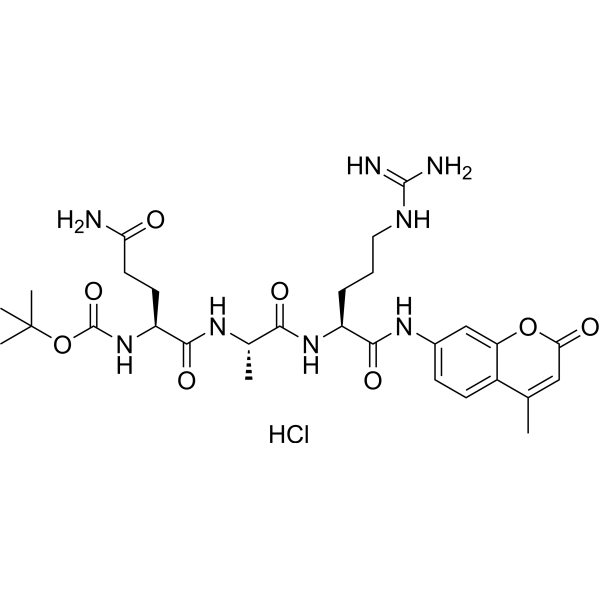
Boc-Gln-Ala-Arg-AMC hydrochloride is a fluorogenic substrate for trypsin. Boc-Gln-Ala-Arg-AMC hydrochloride can also be used for measuring the proteolytic activity of TMPRSS2 .
|
-
- HY-134432B
-
|
|
Ser/Thr Protease
|
Others
|
|
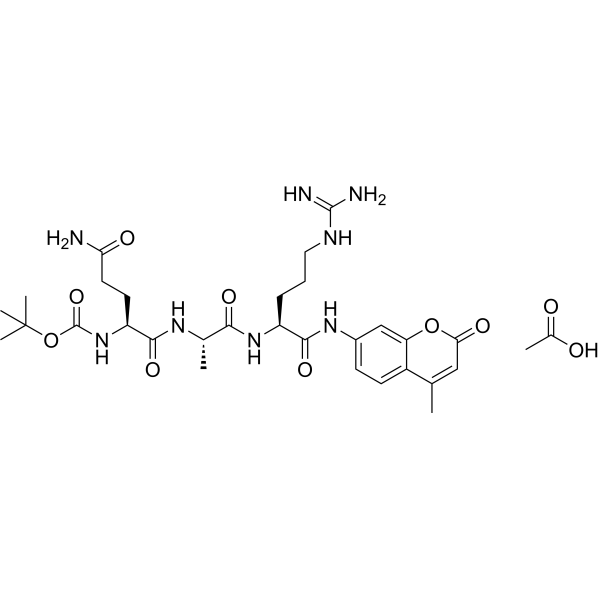
Boc-Gln-Ala-Arg-AMC acetate is a fluorogenic substrate for trypsin. Boc-Gln-Ala-Arg-AMC acetate can also be used for measuring the proteolytic activity of TMPRSS2 .
|
-
- HY-P4426
-
|
|
Fluorescent Dye
|
Others
|
|
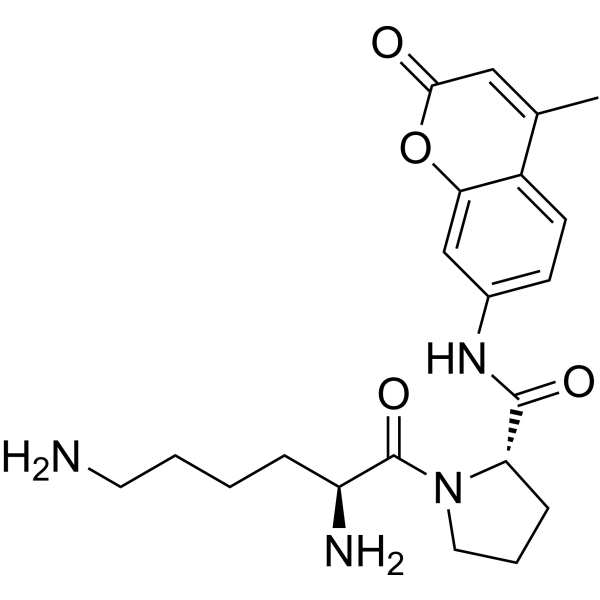
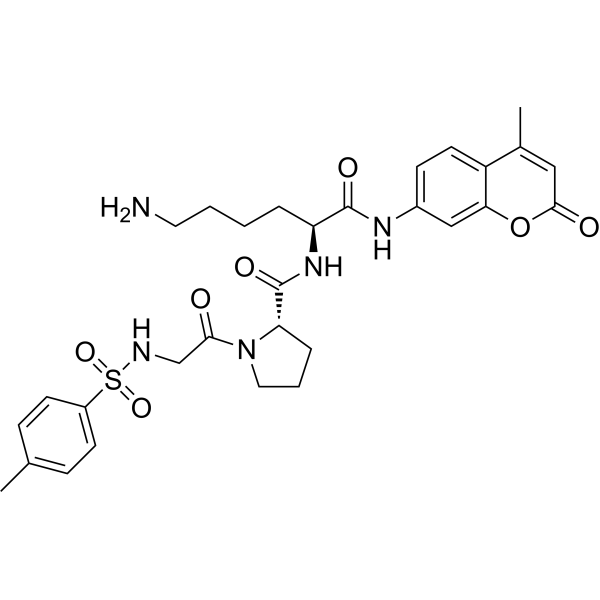
Lys-Pro-AMC is a fluorogenic substrate for the detection and measurement of the activity of specific enzymes .
|
-
- HY-P4419
-
|
|
Fluorescent Dye
|
Others
|
|
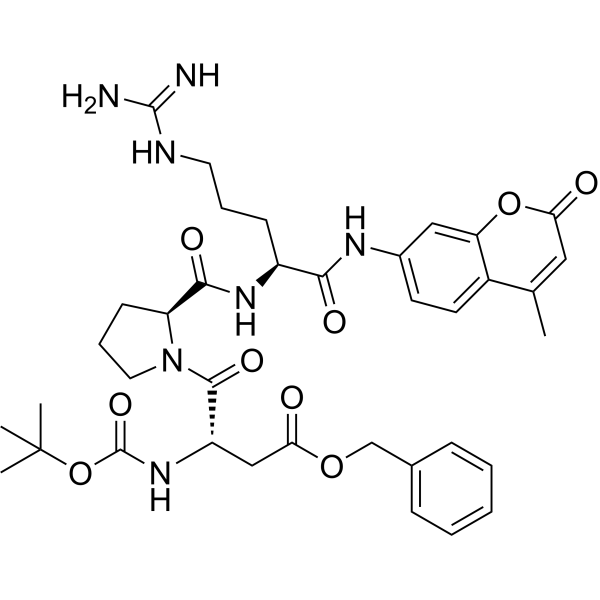
Boc-Asp(OBzl)-Pro-Arg-AMC is a fluorogenic substrate for the determination of protease activity. Boc-Asp(OBzl)-Pro-Arg-AMC undergoes hydrolysis and releases the fluorescent product 7-amino-4-methylcoumarin (AMC). The excitation and emission wavelengths are 351 nm and 430 nm, respectively .
|
-
- HY-P4349A
-
|
|
Biochemical Assay Reagents
Thrombin
|
Others
|
|
Pyr-Arg-Thr-Lys-Arg-AMC TFA is a AMC peptide, and a fluorescent substrate. Pyr-Arg-Thr-Lys-Arg-AMC TFA can be used to detect the activity of specific proteases, such as Furin, Trypsin, and Thrombin .
|
-

- HY-P4369
-
-
- HY-P0019B
-
|
|
Fluorescent Dye
Thrombin
|
Others
|
|
Z-Gly-Gly-Arg-AMC TFA is the TFA salt form of Z-Gly-Gly-Arg-AMC (HY-P0019). Z-Gly-Gly-Arg-AMC TFA is a thrombin-specific fluorogenic substrate for testing of thrombin generation in PRP and platelet-poor plasma (PPP) (Ex/Em = 390/480 nm) .
|
-

- HY-P4359
-
|
|
PIN1
|
Others
|
|
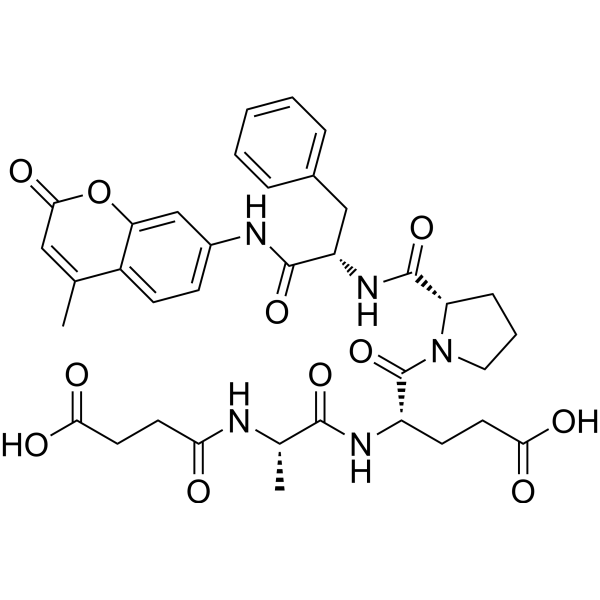
Suc-AEPF-AMC is a peptide substrate of Pin1 and Par14 peptidyl prolyl isomerase .
|
-
- HY-128919
-
|
|
HDAC
|
Others
|
|
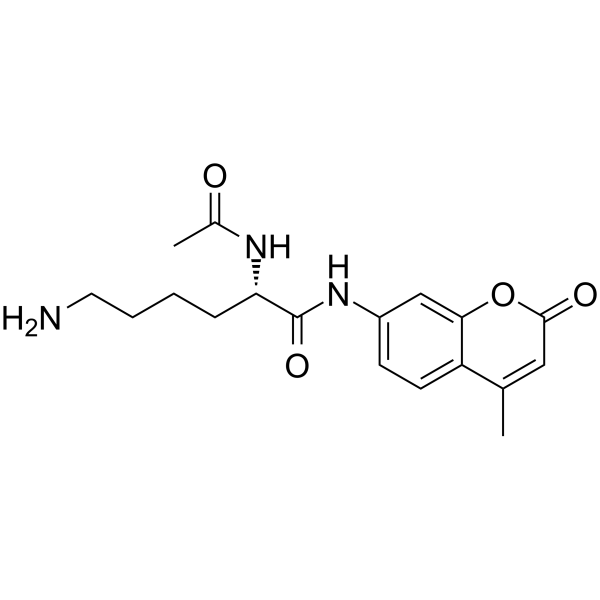
Ac-Lys-AMC (Hexanamide), also termed MAL, is a fluorescent substrate for histone deacetylase HDACs .
|
-
- HY-P4341
-
|
|
PAI-1
Fluorescent Dye
|
Others
|
|
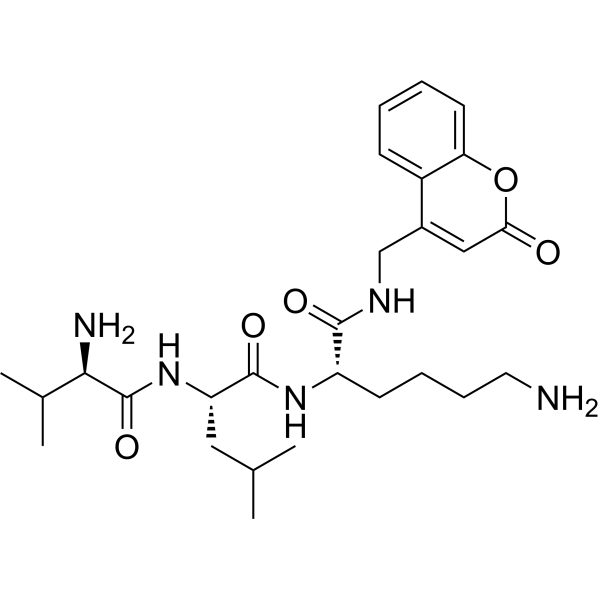
D-Val-Leu-Lys-AMC is a selective fluorogenic peptide substrate of plasmin. D-Val-Leu-Lys-AMC can be used for the quantification of enzymatic activity of plasmin. Ex: 360-380 nm, Em: 440-460 nm .
|
-
- HY-D1670
-
|
|
Fluorescent Dye
|
Others
|
|
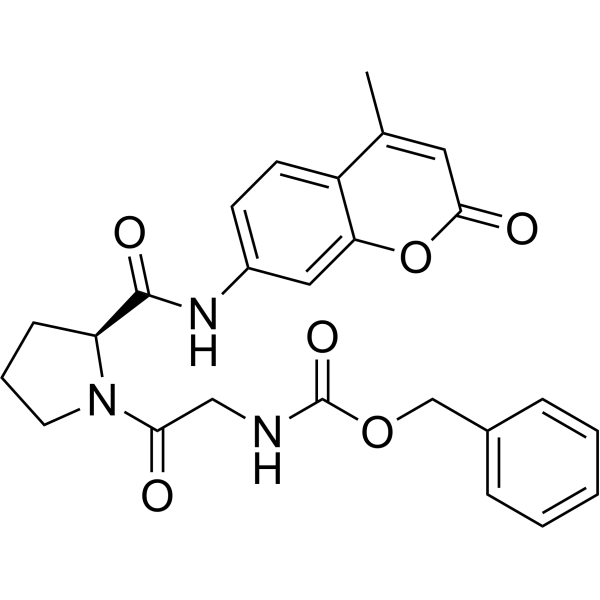
Z-Gly-Pro-AMC is a fluorogenic substrate. Z-Gly-Pro-AMC is hydrolyzed by prolyl endopeptidase to generate highly fluorescent 7-Amino-4-methylcoumarin (HY-D0027). (λex=380 nm, λem=465 nm) .
|
-
- HY-136542
-
-
- HY-P4344
-
|
|
MetAP
|
Others
|
|
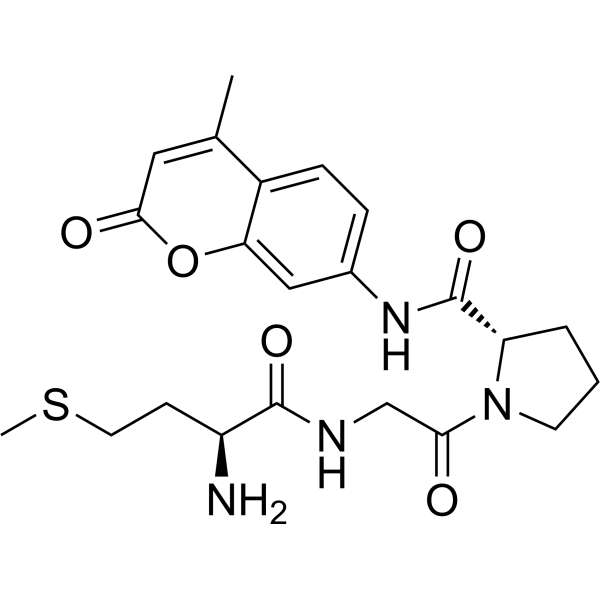
Met-Gly-Pro-AMC is a fluorescent peptide substrate of MetAP2 .
|
-
- HY-123051
-
-
- HY-137337
-
|
|
Fluorescent Dye
|
Others
|
|
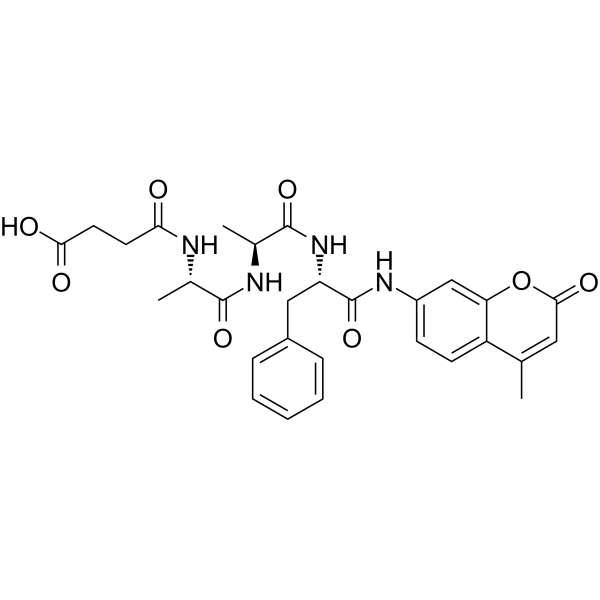
Suc-Ala-Ala-Phe-AMC is a fluorogenic chymotrypsin substrate, can be hydrolyzed by endopeptidase. Suc-Ala-Ala-Phe-AMC has been used in both in vivo assays of the acrosome reaction and in vitro enzyme assays .
|
-
- HY-P4338
-
|
|
PAI-1
|
Others
|
|
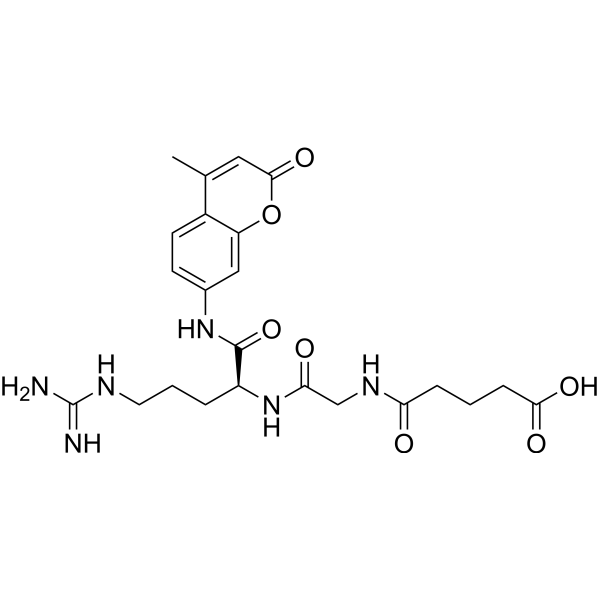
Glutaryl-Gly-Arg-AMC is a peptide substrate of urokinase plasminogen activator (uPA) .
|
-
- HY-137834A
-
-
- HY-P4209A
-
|
|
Virus Protease
|
Others
|
|
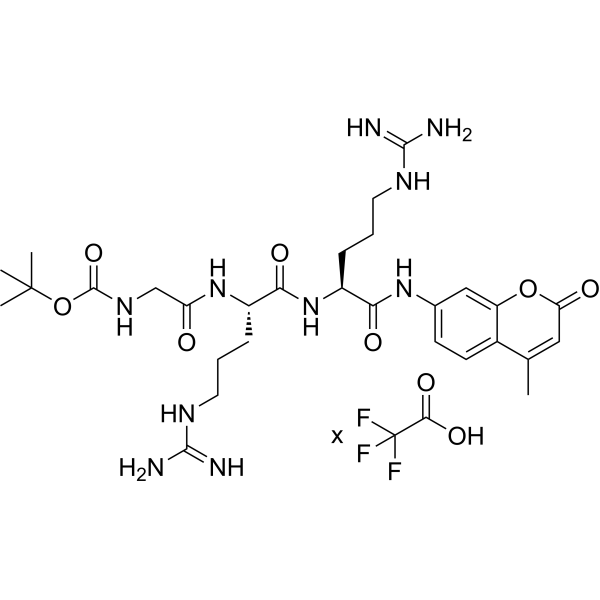
Boc-GRR-AMC (TFA) is a tri-peptide Substrate. Boc-GRR-AMC can be used for a fluorogenic West Nile virus (WNV) substrate, profiling the substrate specificity for the NS2B-NS3 proteases or determining the pH optimum of LdMC activity .
|
-
- HY-P4331
-
|
|
Fluorescent Dye
Ser/Thr Protease
|
Cardiovascular Disease
|
|
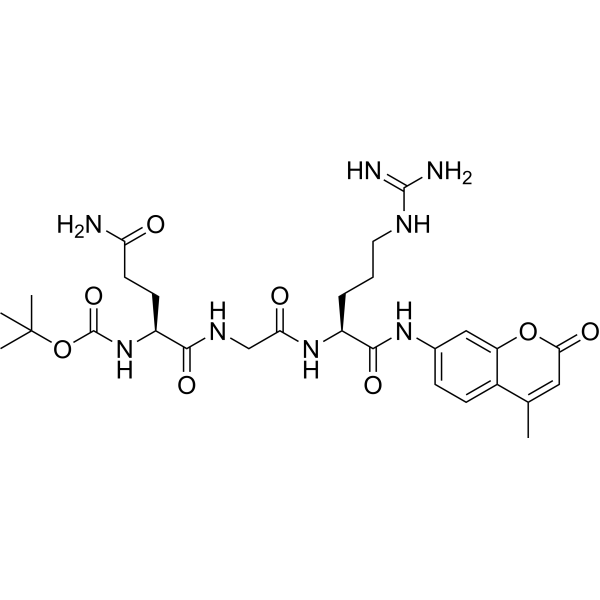
Boc-Gln-Gly-Arg-AMC is a fluorogenic substrate for kallikrein (PKa), coagulation factor XIIa (FXIIa) and coagulation factor XIa (FXIa). Boc-Gln-Gly-Arg-AMC enables fluorescence-based activity assays for PKa, FXIIa and FXIa .
|
-
- HY-P4426A
-
|
|
Fluorescent Dye
|
Others
|
|
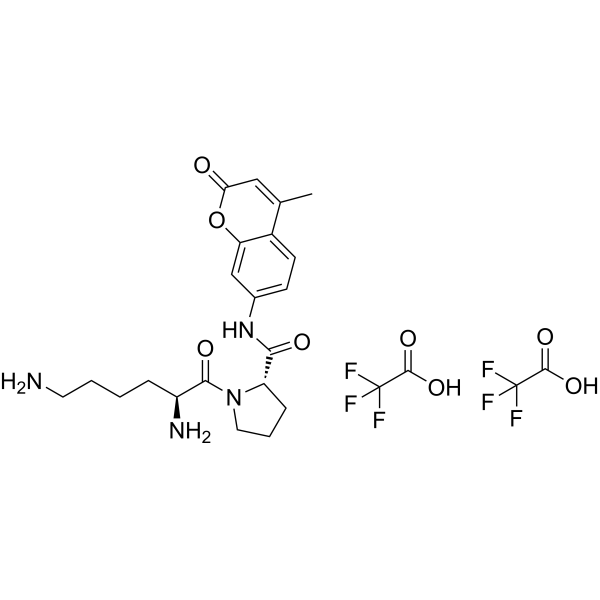
Lys-Pro-AMC diTFA is a fluorogenic substrate for the detection and measurement of the activity of specific enzymes .
|
-
- HY-P4362
-
|
|
Elastase
|
Others
|
|
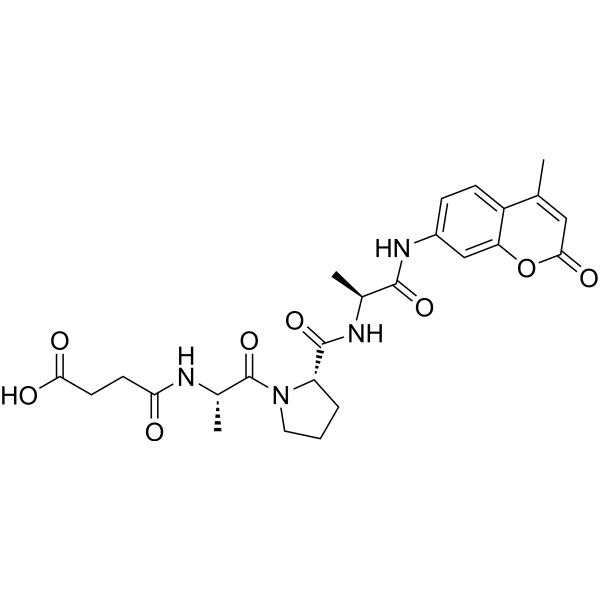
Suc-Ala-Pro-Ala-AMC is a tripeptide substrate of elastase .
|
-
- HY-P4348
-
|
|
Proteasome
|
Others
|
|
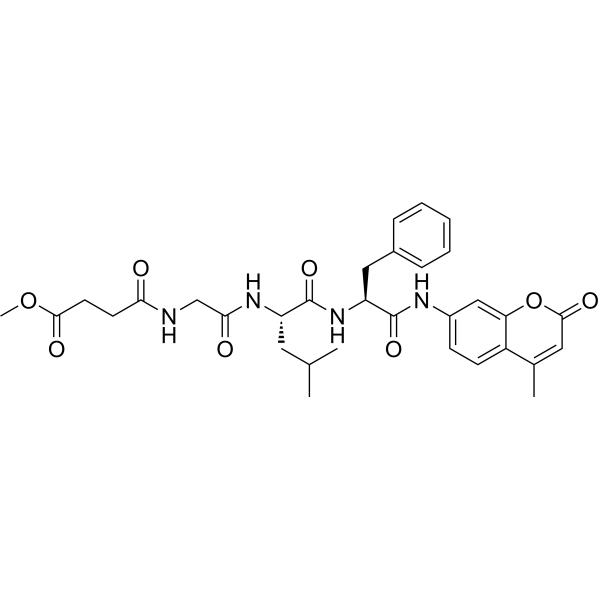
MeOSuc-Gly-Leu-Phe-AMC is a peptide substrate of proteasomal .
|
-
- HY-P4126
-
|
|
Elastase
|
Others
|
|
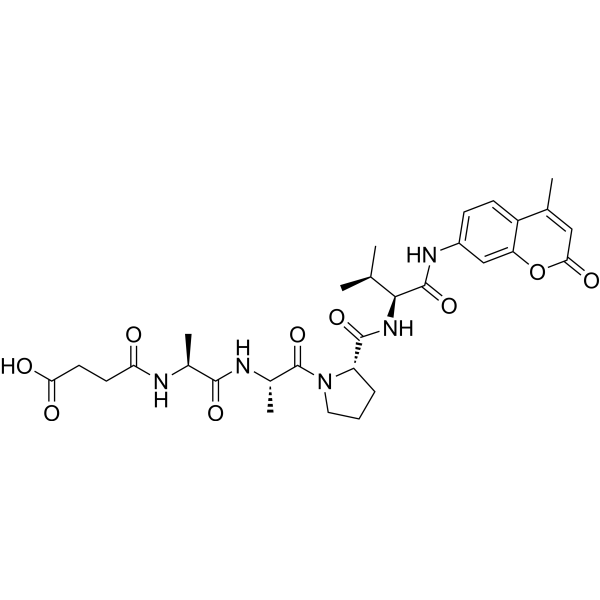
Suc-Ala-Ala-Pro-Val-AMC is a fluorescent substrate for elastase. Suc-Ala-Ala-Pro-Val-AMC can be hydrolyzed by these elastases to release the fluorescent substance 7-amino-4-methylcoumarin. Suc-Ala-Ala-Pro-Val-AMC is used for in vitro elastase activity assays and can also be applied in studies related to chronic wounds .
|
-
- HY-P4366
-
-
- HY-P4390
-
-
- HY-P2016
-
|
|
Proteasome
|
Others
|
|
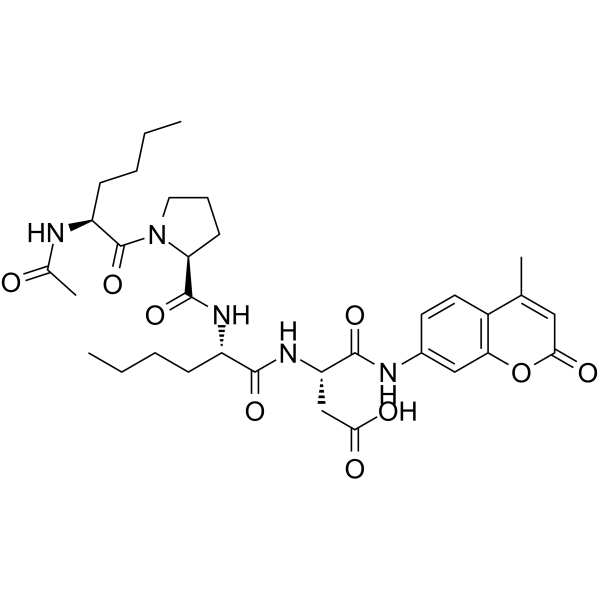
Ac-Nle-Pro-Nle-Asp-AMC is a specific substrate for 26S proteasome. Ac-Nle-Pro-Nle-Asp-AMC can be used for the 26S proteasome caspase-like activity analysis .
|
-
- HY-142021
-
|
|
Cathepsin
Parasite
|
Infection
Inflammation/Immunology
|
|
Z-Leu-Arg-AMC is a fluorogenic peptide substrate for cysteine proteases (e.g., Cathepsin) (Ex=350 nm,Em=460 nm). Z-Leu-Arg-AMC is preferentially cleaved by Cathepsin K and S under weakly acidic conditions, while its hydrolysis relies on residual Cathepsin S activity at neutral pH. Z-Leu-Arg-AMC serves as a substrate for recombinant Sphenophorus levis Cathepsin L, falcipain-2, falcipain-3, berghepain-2, knowlepain-2, vivapain-2, as well as falcipain-2 chimeras and constructs. It enables quantitative detection of cysteine protease activity in human inflammatory bronchoalveolar lavage fluid via fluorescence generation. Z-Leu-Arg-AMC can be used in research related to pulmonary inflammatory diseases and malaria .
|
-
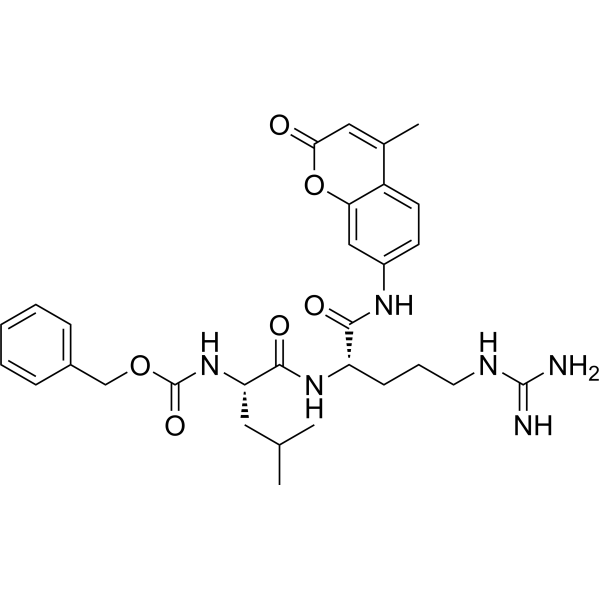
- HY-P4341A
-
|
|
PAI-1
Fluorescent Dye
|
Others
|
|
D-Val-Leu-Lys-AMC TFA is a selective fluorogenic peptide substrate of plasmin. D-Val-Leu-Lys-AMC TFA can be used for the quantification of enzymatic activity of plasmin. Ex: 360-380 nm, Em: 440-460 nm .
|
-

- HY-P4339
-
|
|
Fluorescent Dye
|
Others
|
|
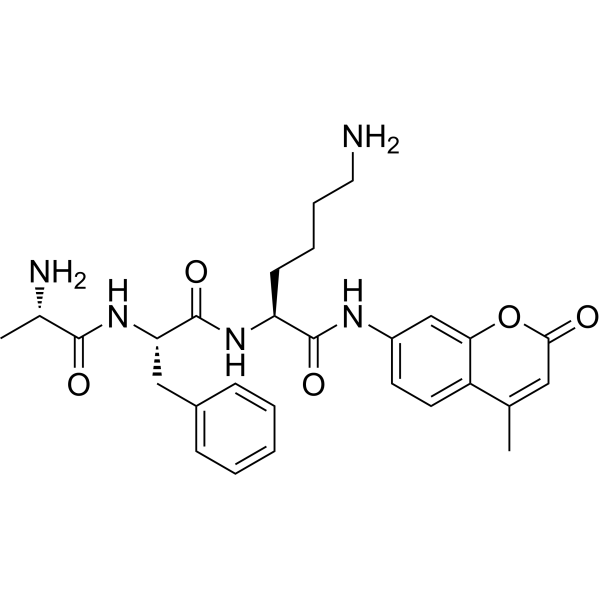
Ala-Phe-Lys-AMC is a fluorogenic substrate, which can be used for residual plasmin activity assay .
|
-
- HY-P5280
-
|
|
Ser/Thr Protease
|
Others
|
|
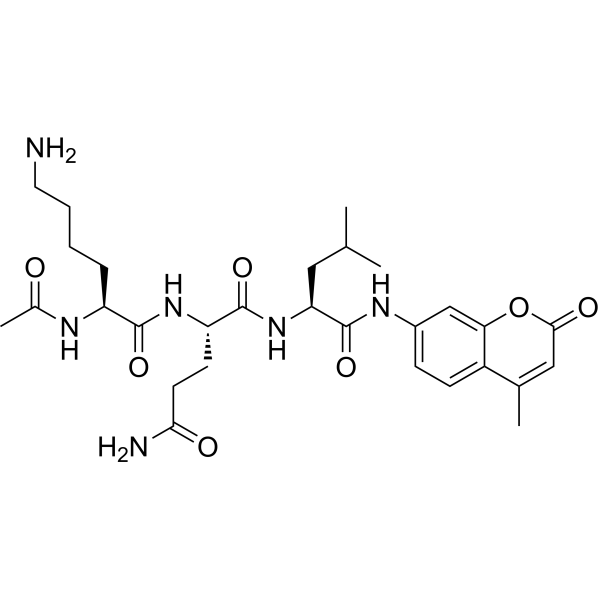
Ac-KQL-AMC is a fluorogenic substrate that can be used to quantify Trypsin-like activity, resulting in detectable fluorescence when cleaved by the proteasome .
|
-
- HY-P4312
-
-
- HY-P4350
-
|
|
Elastase
|
Others
|
|
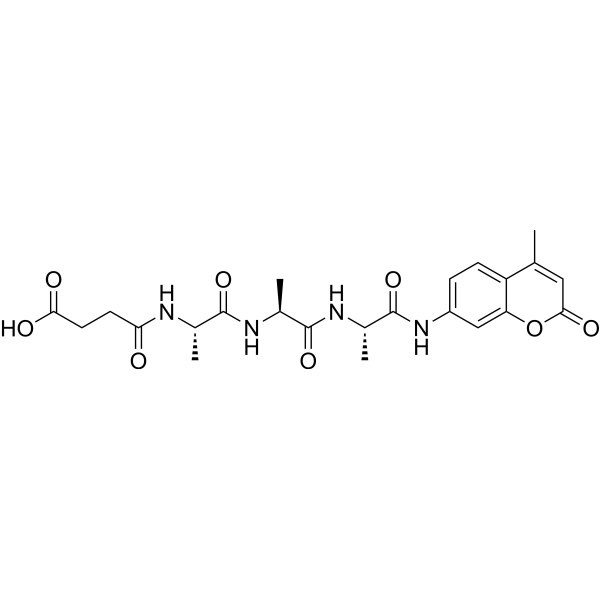
Suc-Ala-Ala-Ala-AMC is a peptide substrate of elastase or elastase-like .
|
-
- HY-P2462
-
|
|
HDAC
|
Others
|
|
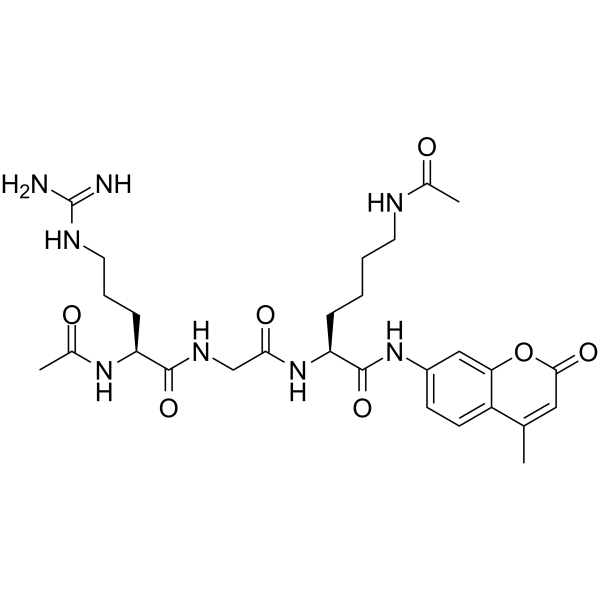
Ac-Arg-Gly-Lys(Ac)-AMC is a substrate for HDAC .
|
-
- HY-P4319
-
|
|
Fluorescent Dye
|
Others
|
|
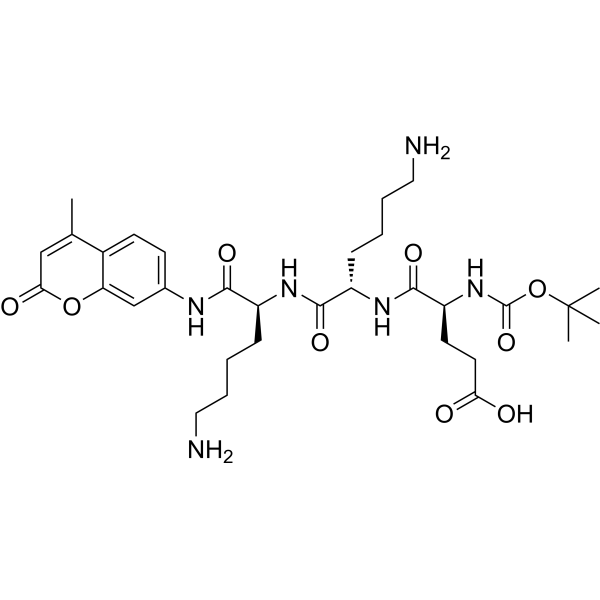
Boc-Glu-Lys-Lys-AMC is a sensitive fluorogenic substrate for urokinase-activated plasmin .
|
-
- HY-136865
-
|
|
Fluorescent Dye
|
Others
|
|
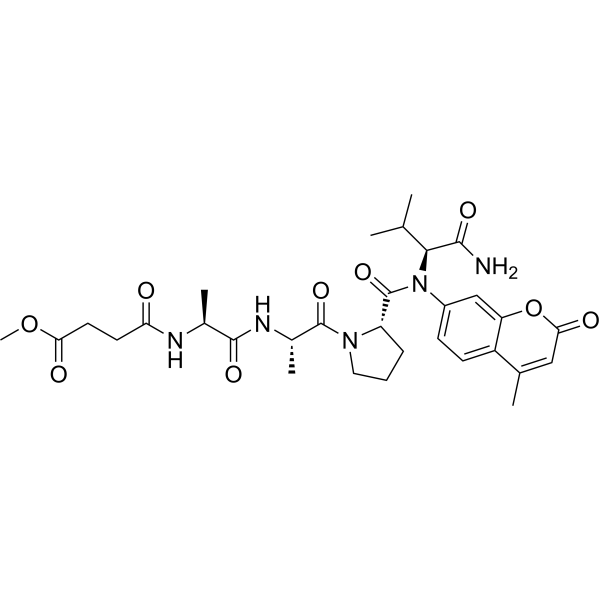
MeOSuc-AAPV-AMC is a fluorogenic substrate for human leukocyte and porcine pancreatic elastase (Km: 362 μM, Ex=380 nm, Em=460 nm) .
|
-
- HY-137164
-
|
|
Endogenous Metabolite
|
Others
|
|
Ala-Ala-Phe-AMC serves as a fluorogenic substrate that exhibits positively charged properties, making it suitable for assessing proteolytic activity.
|
-

- HY-W250725
-
|
|
Fluorescent Dye
|
Neurological Disease
|
|
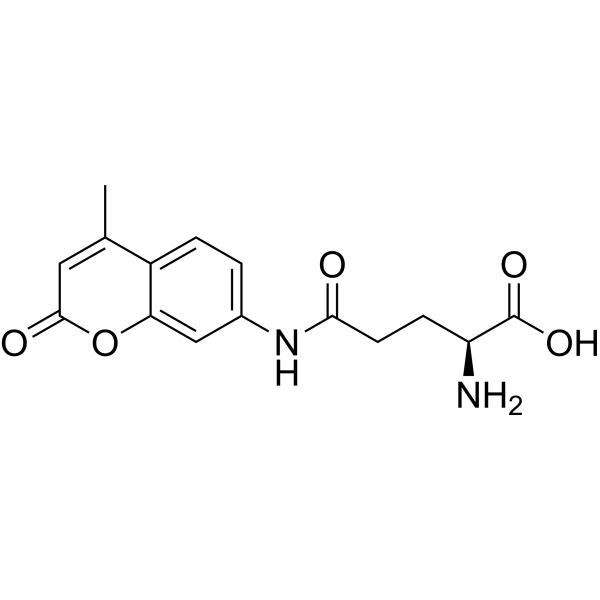
H-GLU-AMC-OH is an amino acid derivative that can be used as A fluorescent peptide substrate for the determination of aminopeptidase A enzyme activity .
|
-

- HY-W719799
-
-

- HY-P4347
-
-
- HY-123052
-
-
- HY-138159
-
-
- HY-P10485
-
-

- HY-137367
-
|
|
Cathepsin
|
Infection
|
|
Z-Val-Val-Arg-AMC is a fluorescent peptide substrate that can be used to test the activity of cathepsins .
|
-

- HY-P2065
-
|
|
Fluorescent Dye
|
Others
|
|
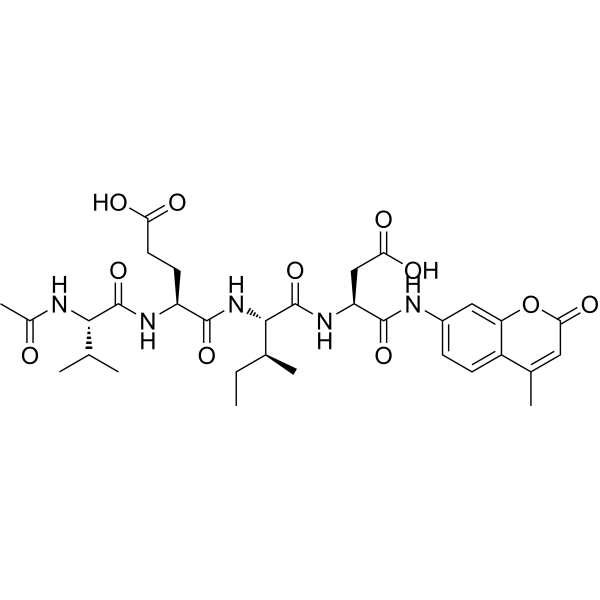
Ac-VEID-AMC is a fluorescent substrate for the determination of caspase-6 and related cysteine protease activities (Ex=340-360 nm, Em=440-460 nm) .
|
-
- HY-135172
-
|
|
Fluorescent Dye
|
Others
|
|
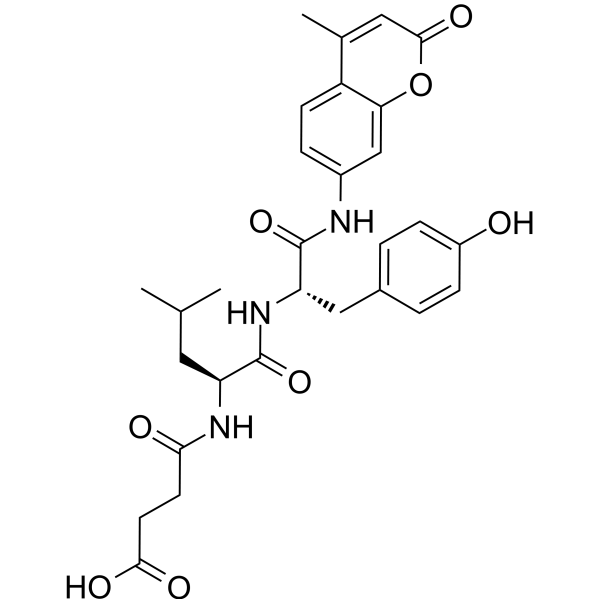
Suc-Leu-Tyr-AMC is a fluorometric peptide substrate for µ-calpain and m-calpain. The excitation wavelength is 360 nm and the emission wavelength is 460 nm .
|
-
- HY-D1534
-
-
- HY-137784
-
|
|
Fluorescent Dye
|
Others
|
|
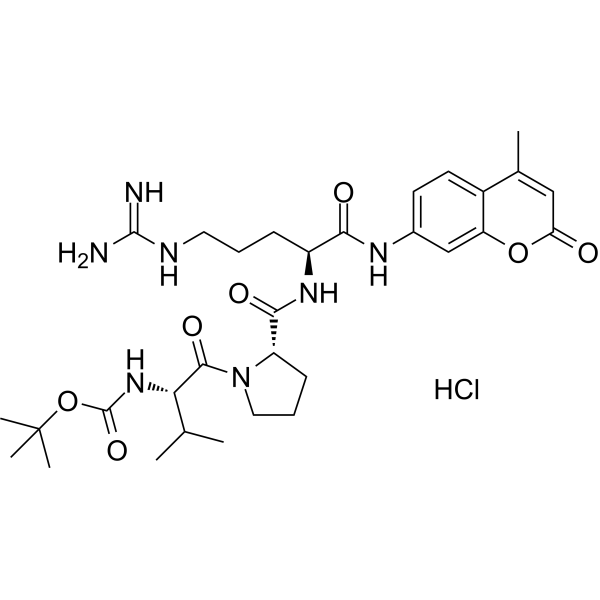
Boc-Val-Pro-Arg-AMC hydrochloride is a sensitive fluorogenic substrate for measuring trypsin-like serine proteases activity .
|
-
- HY-137834
-
|
|
Fluorescent Dye
|
Others
|
|
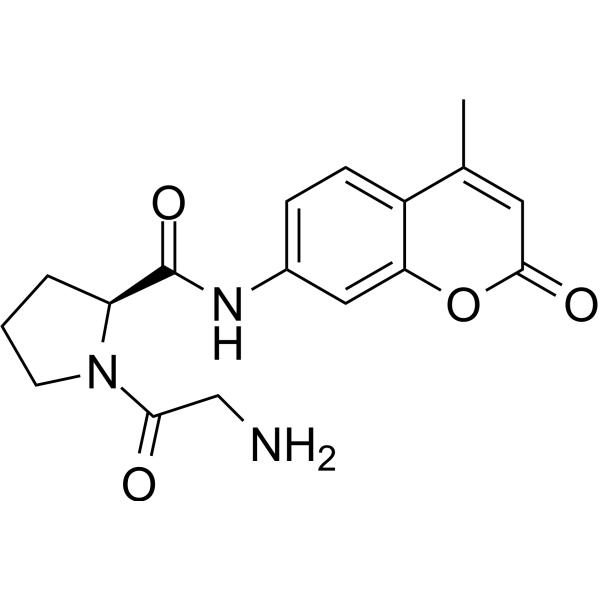
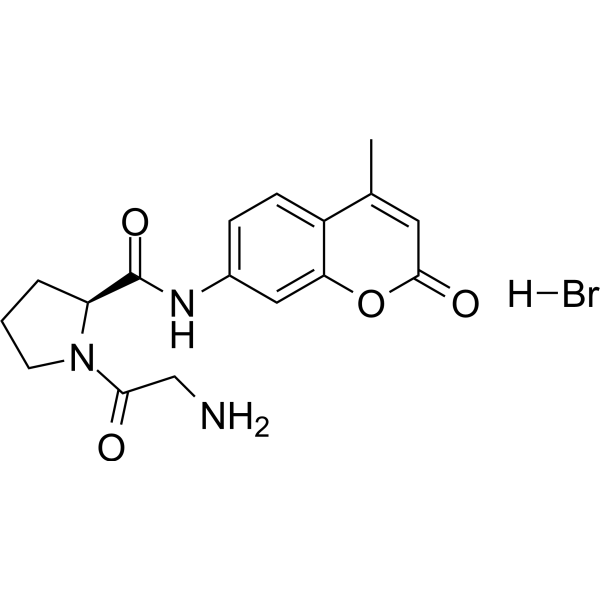
Gly-Pro-AMC hydrobromide is a fluorescent dye, it can be used as a specific fluorescent substrate for detecting Dipeptidyl peptidase IV (DPP-IV) activity .
|
-
- HY-P4428
-
|
|
Fluorescent Dye
|
Others
|
|
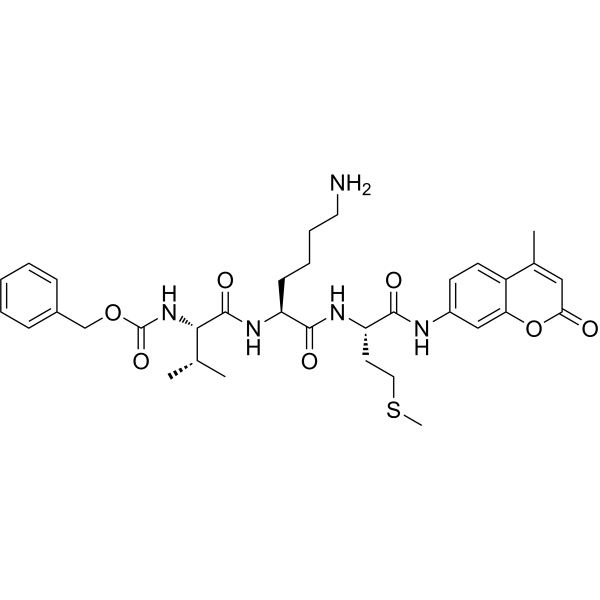
Z-Val-Lys-Met-AMC is a fluorescent substrate that can be used to detect the β-secretase activity of cathepsin B .
|
-
- HY-P4346
-
|
|
Elastase
|
Others
|
|
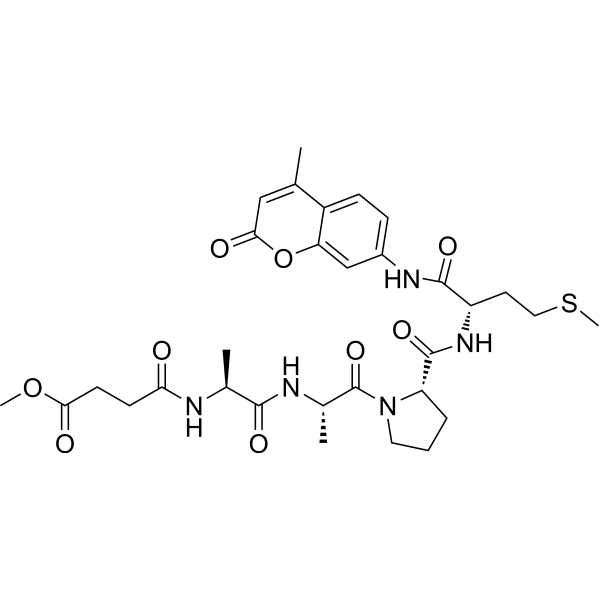
MeOSuc-Ala-Ala-Pro-Met-AMC is a peptide substrate of elastases and chymotrypsin-like serine peptidases .
|
-
- HY-155667A
-
|
|
Cathepsin
|
Others
|
|
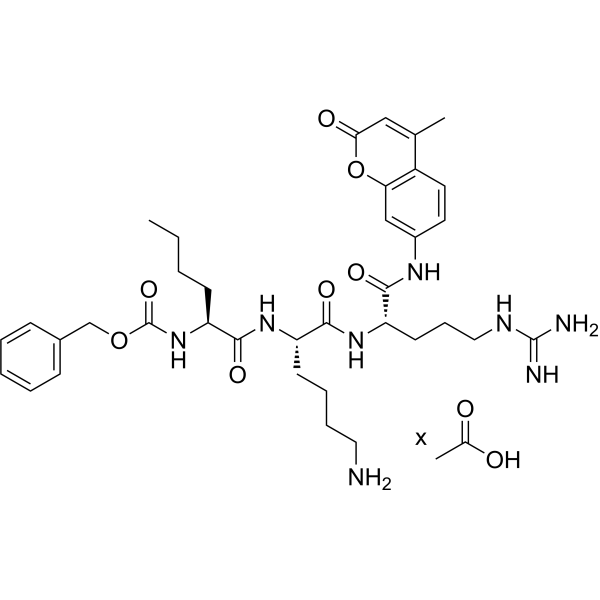
Z-Nle-Lys-Arg-AMC acetate is a fluorogenic peptide substrate that specifically monitors cathepsin B activity over a broad pH range .
|
-
- HY-155667
-
|
|
Cathepsin
Fluorescent Dye
|
Others
|
|
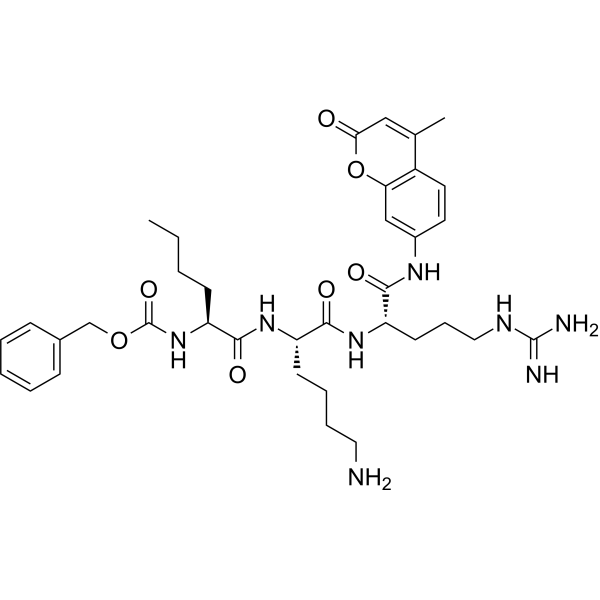
Z-Nle-Lys-Arg-AMC is a fluorogenic peptide substrate that specifically monitors cathepsin B activity over a broad pH range .
|
-
- HY-P3791
-
|
|
Fluorescent Dye
|
Others
|
|
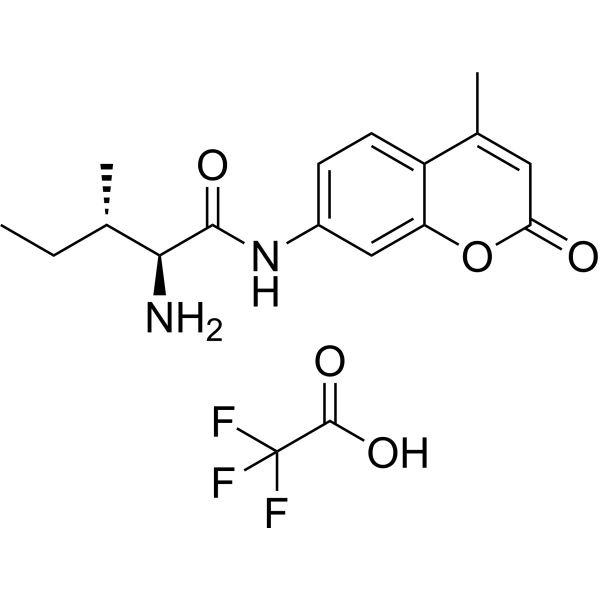
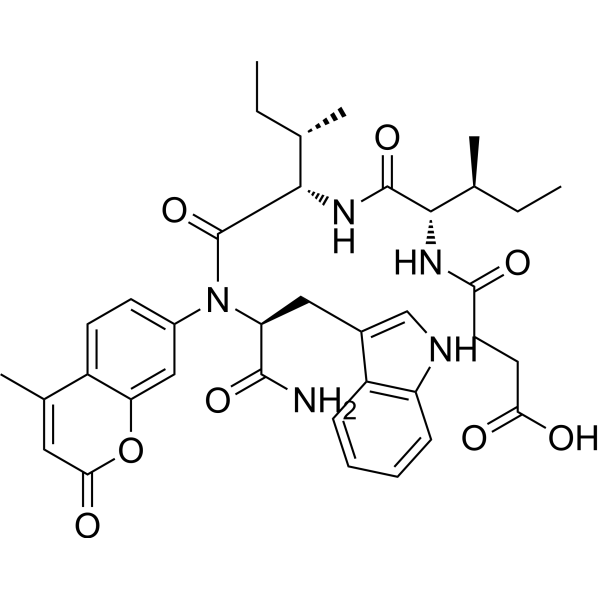
N-Succinyl-Ile-Ile-Trp-AMC is a peptide-based fluorescent substrate or probe for carboxypeptidase Y (CPY) .
|
-
- HY-P4399
-
|
|
Bacterial
ClpP
|
Others
|
|
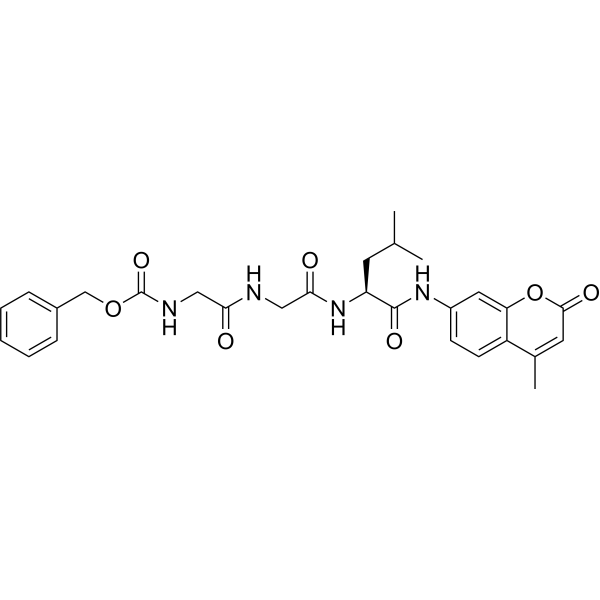
Z-Gly-Gly-Leu-AMC is the substrate of ClpP1 and ClpP2, to detect the enzymatic activity in the presence of the activating peptide Z-Leu-Leu .
|
-
- HY-P4388A
-
|
|
SARS-CoV
|
Infection
|
|
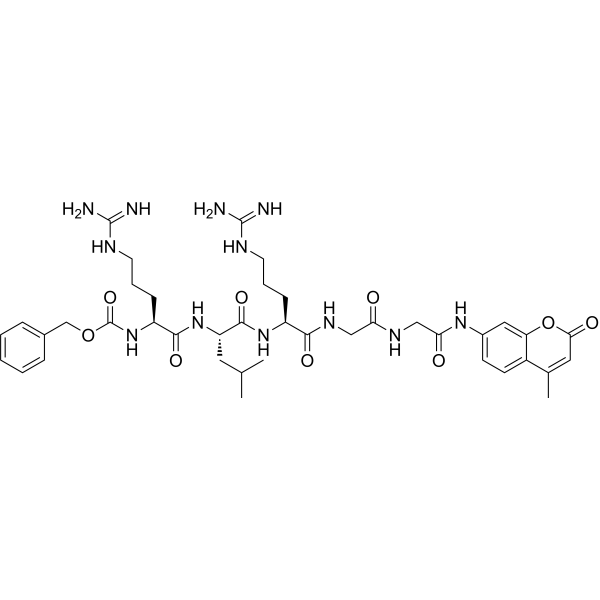
Z-Arg-Leu-Arg-Gly-Gly-AMC acetate is a peptide substrate for SARS-CoV PL pro .
|
-

- HY-P4388
-
|
|
SARS-CoV
|
Infection
|
|
Z-Arg-Leu-Arg-Gly-Gly-AMC is a peptide substrate of SARS-CoV PL pro .
|
-
- HY-P4428A
-
|
|
Fluorescent Dye
|
Others
|
|
Z-Val-Lys-Met-AMC TFA is a fluorescent substrate that can be used to detect the β-secretase activity of cathepsin B .
|
-

- HY-P0019
-
-
- HY-P4310
-
|
|
Ser/Thr Protease
|
Others
|
|
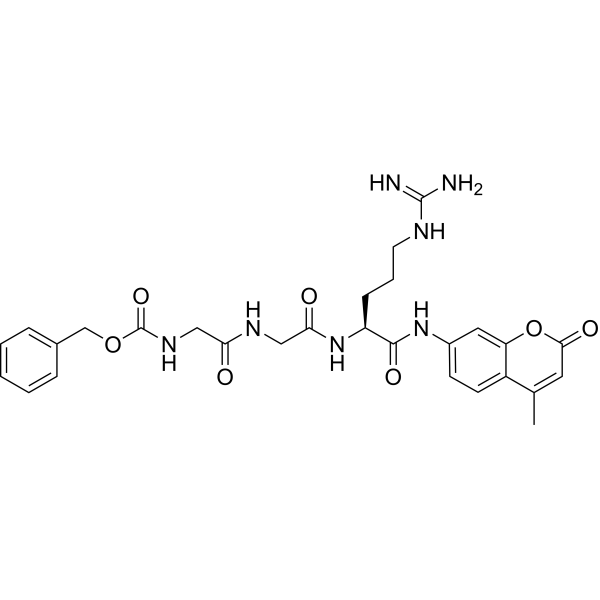
Boc-Val-Leu-Lys-AMC is a sensitive, fluorogenic, and specific substrate of plasmin, as well as acrosin from the ascidian Halocynthia roretzi, porcine calpain isozymes I and II, and papain .
|
-
- HY-148073
-
|
|
Fluorescent Dye
Ser/Thr Protease
|
Others
|
|
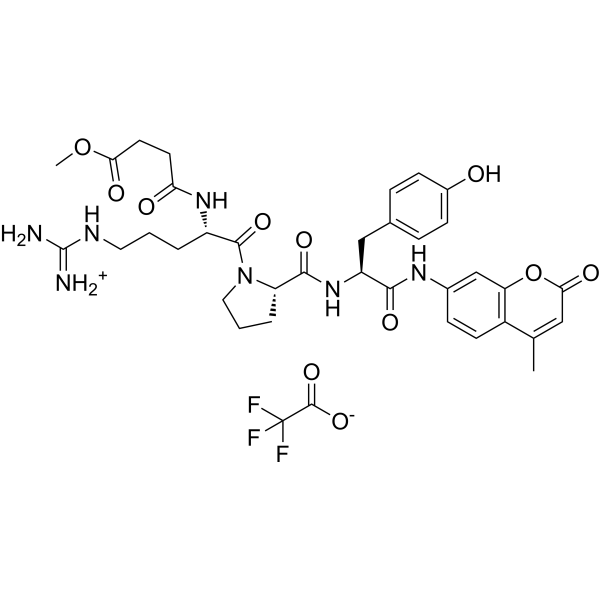
MeO-Succ-Arg-Pro-Tyr-AMC TFA is a fluorogenic peptide substrate for chymotrypsin-like proteases that detects protease activity . (measured at 460 nm)
|
-
- HY-DY1060
-
|
|
Proteasome
Fluorescent Dye
|
Others
|
Suc-Leu-Leu-Val-Tyr-AMC (solution) is a membrane-permeable calpain-specific fluorogenic substrate (Ex/Em = 390/480 nm) .
Solvent and concentration: DMSO: 20 mM
|
-

- HY-D0991
-
|
|
Fluorescent Dye
|
Others
|
|
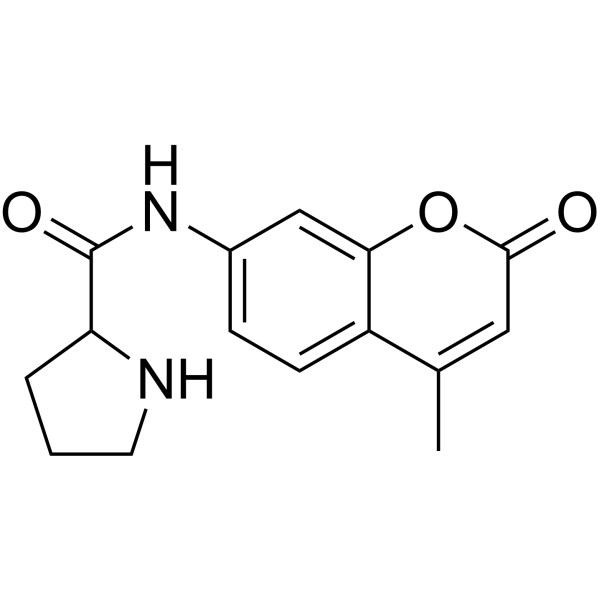
Pro-AMC is a multifunctional dye. Dyes are important tools in biological experiments. They can help researchers observe and analyze cell structures, track biomolecules, evaluate cell functions, distinguish cell types, detect biomolecules, study tissue pathology and monitor microorganisms. Their applications range from basic scientific research to clinical A wide range of diagnostics. Dyes are also widely used in traditional fields such as textile dyeing, as well as in emerging fields such as functional textile processing, food pigments and dye-sensitized solar cells.
|
-
- HY-P4333
-
|
|
Fluorescent Dye
|
Cardiovascular Disease
|
|
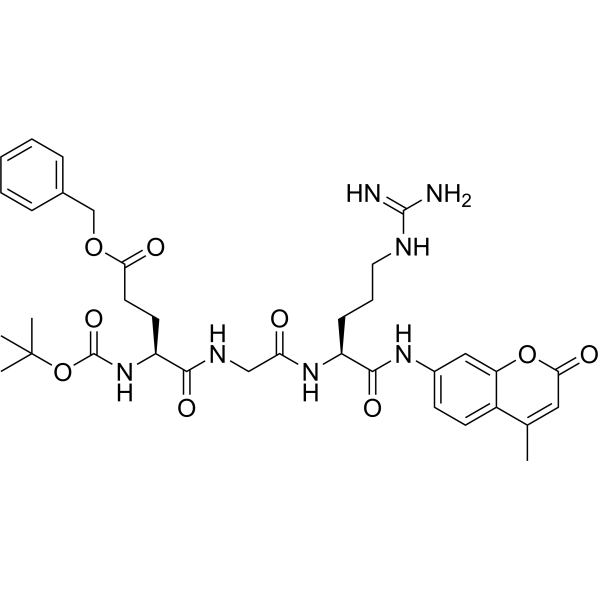
Boc-Glu(OBzl)-Gly-Arg-AMC is a fluorogenic substrate for factors IXa and XIIa. The cleavage of the amide bond between arginine and the methylcoumarin amide group releases fluorescent 7-Amino-4-methylcoumarin (HY-D0027) .
|
-
- HY-P4332
-
|
|
Fluorescent Dye
Ser/Thr Protease
|
Cardiovascular Disease
|
|
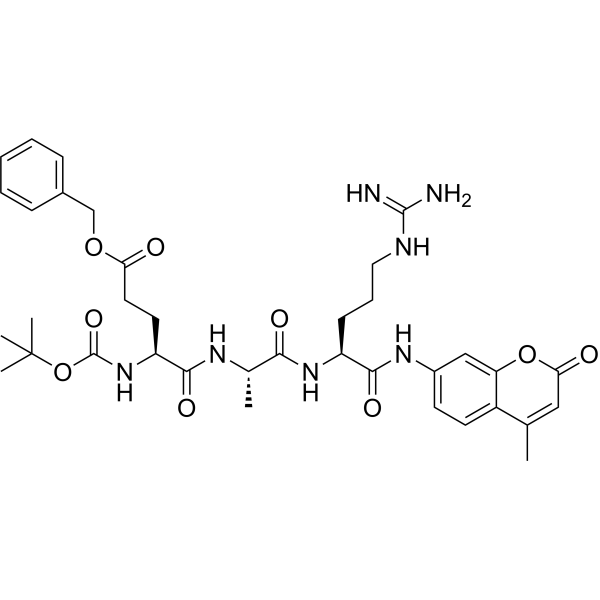
Boc-Glu(OBzl)-Ala-Arg-AMC is a fluorogenic substrate for coagulation factor XIa and trypsin. The cleavage of the amide bond between arginine and the methylcoumarin amide group releases fluorescent 7-Amino-4-methylcoumarin (HY-D0027) .
|
-
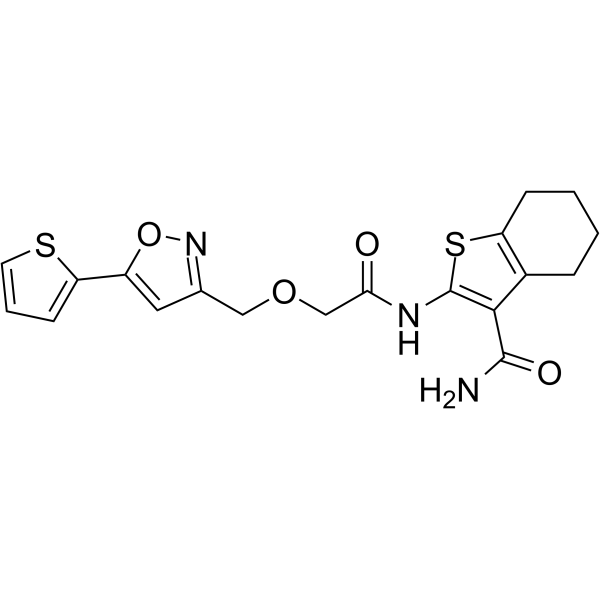
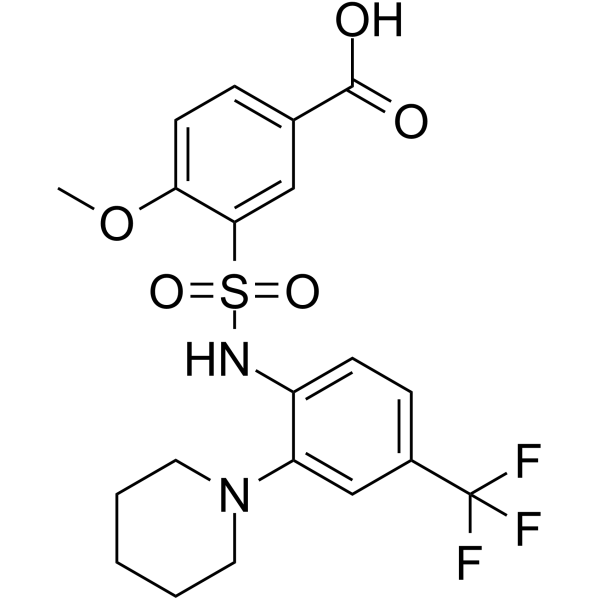
- HY-124855
-
STD1T
1 Publications Verification
|
Deubiquitinase
|
Cancer
|
|
STD1T is a deubiquitinase USP2a inhibitor with an IC50 of 3.3 μM in Ub-AMC Assay .
|
-
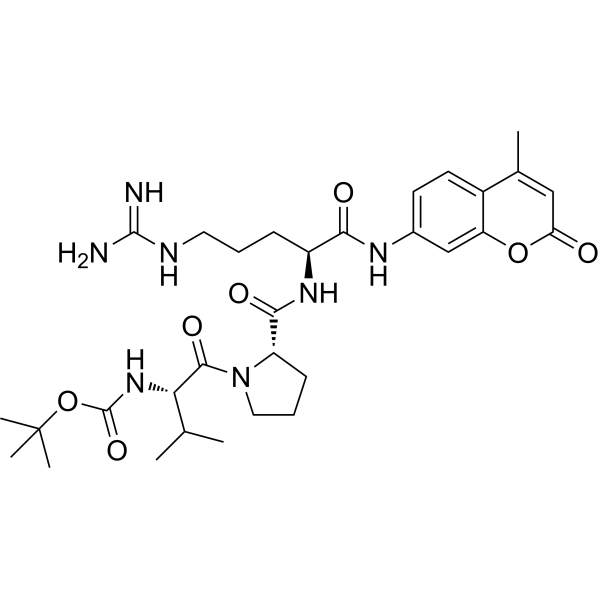
- HY-P4326
-
|
|
Fluorescent Dye
|
Others
|
|
Boc-Val-Pro-Arg-MCA is a sensitive fluorogenic substrate for measuring trypsin-like serine proteases activity .
|
-
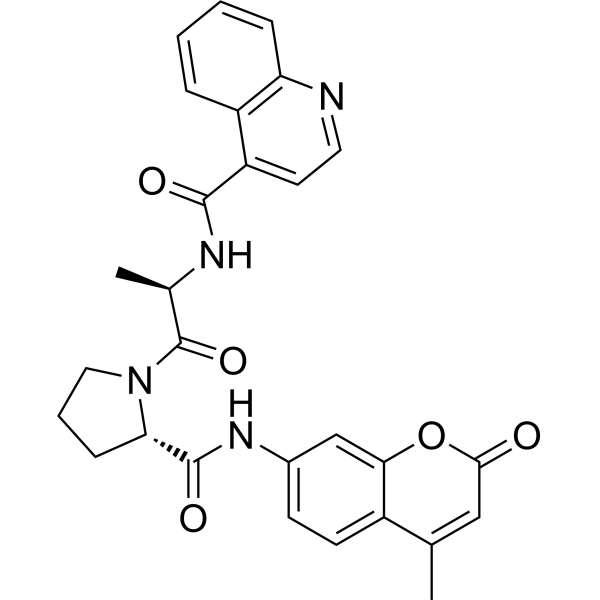
- HY-160289
-
|
|
FAP
|
Cancer
|
|
ARI-3144 is an excellent and specific substrate for fibroblast activation protein (FAP). ARI-3144 is usually coupled with the fluorophore 7-Amino-4-methylcoumarin (HY-D0027) (AMC) for detection and quantification of FAP .
|
-
- HY-N13891
-
|
|
Antibiotic
Bacterial
Apoptosis
|
Infection
Cancer
|
|
Arisostatin A, a microbial secondary metabolite, is an antibiotic against Gram-positive bacteria and shown to possess potent anti-tumor properties. Arisostatin A induces apoptosis through the activation of caspase-3 and reactive oxygen species (ROS) generation in AMC-HN-4 cells .
|
-

- HY-150504
-
|
|
Aminopeptidase
|
Inflammation/Immunology
|
|
ERAP2-IN-1 (compound 61) is an uncompetitive ERAP2 inhibitor. ERAP2-IN-1 specifically inhibits the ERAP2 peptide hydrolysis activity, inhibiting Arg-AMC hydrolysis with an IC50 of 27 μM and model peptide hydrolysis with an IC50 of 44 μM .
|
-
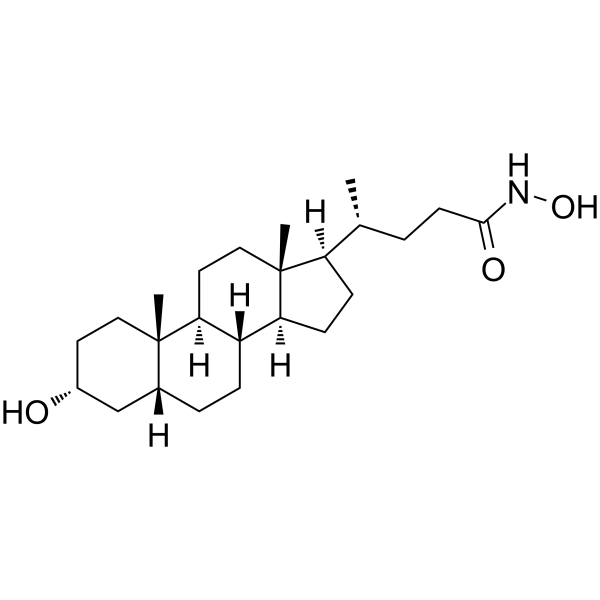
- HY-120458
-
LCAHA
1 Publications Verification
LCA hydroxyamide
|
Deubiquitinase
|
Cancer
|
|
LCAHA (LCA hydroxyamide) is a deubiquitinase USP2a inhibitor with IC50s of 9.7 μM and 3.7μM in Ub-AMC Assay and Di-Ub Assay, respectively. LCAHA destabilizes Cyclin D1 and induces G0/G1 arrest by inhibiting deubiquitinase USP2a .
|
-
- HY-130082
-
|
|
ADC Payload
Microtubule/Tubulin
|
Cancer
|
|
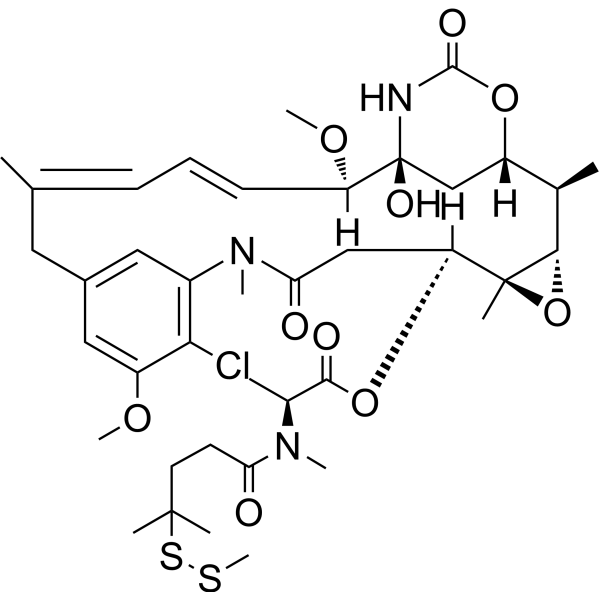
DM4-SMe is a metabolite of antibody-maytansin conjugates (AMCs) and a tubulin inhibitor, and also a cytotoxic moiety of antibody-drug conjugates (ADCs), which can be linked to antibody through disulfide bond or stable thioether bond. DM4-SMe inhibits KB cells with an IC50 of 0.026 nM. DM4-SMe is a highly toxic metabolite that can be oxidized and detoxified by human liver microsomes .
|
-
- HY-151871
-
|
|
Dipeptidyl Peptidase
HIV
|
Infection
|
|
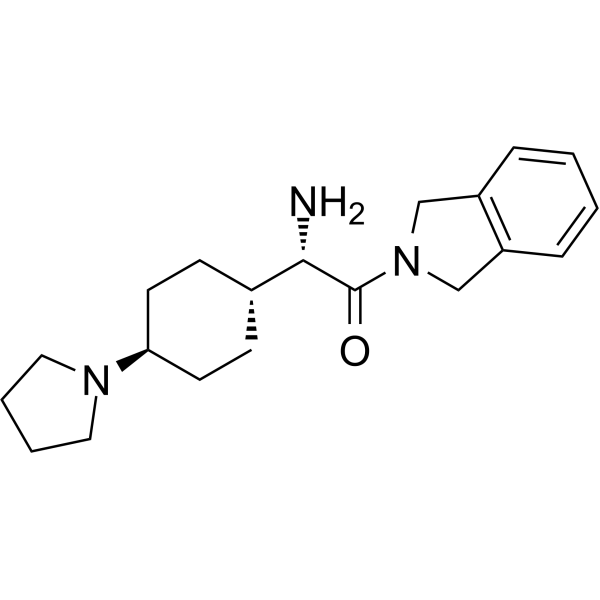
ICeD-2 is a inducer of cell death, can induce HIV-1 infected cell kill. ICeD-2-mediated HIV-1 infected cell kill is dependent on HIV-1 protease activity. ICeD-2 potently blocks hydrolysis of Gly-Pro-AMC by dipeptidyl peptidase DPP8 and DPP9. ICeD-2 shows strong stabilization of DPP9 in PBMCs .
|
-
- HY-N1181
-
-
- HY-151871A
-
|
|
HIV
Dipeptidyl Peptidase
Drug Isomer
|
Infection
|
|
cis-ICeD-2 is the cis isomer of ICeD-2 (HY-151871). ICeD-2 is a cell death inducer that induces cell death in HIV-1-infected cells. ICeD-2-mediated killing of HIV-1-infected cells is dependent on HIV-1 protease activity. ICeD-2 effectively blocks the hydrolysis of Gly-Pro-AMC by the dipeptidyl peptidases DPP8 and DPP9. ICeD-2 demonstrates strong stability against DPP9 in PBMCs. .
|
-

- HY-175597
-
|
|
ClpP
|
Infection
|
|
ClpP modulator-1 (Compound BC8a), a peptidomimetic, is an allosteric ClpP modulator. ClpP modulator-1 is a ClpP activator at low concentration with EC50s of 0.35 and 0.58 μM for for Neisseria meningitides ClpP (NmClpP) and Escherichia coli ClpP (EcClpP), resepectively. ClpP modulator-1 also inhibits peptidase activity at high concentration by competitively inhibiting substrate protein (LY-AMC) binding to ClpP C sites. ClpP modulator-1 has antibacterial activity. ClpP modulator-1 can be used for bacterial infections research .
|
-

- HY-N1181R
-
-

- HY-119323
-
|
|
Fluorescent Dye
|
Others
|
|
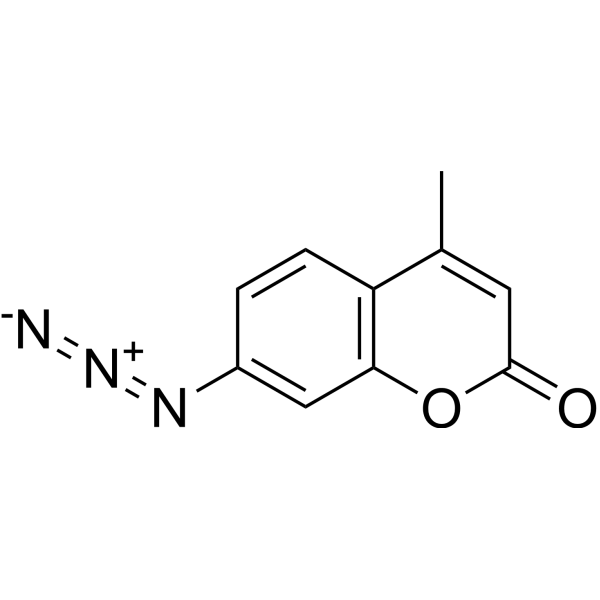
7-Azido-4-methylcoumarin is a selective coumarin-based fluorescent probe for hydrogen sulfide (H2S). In the presence of H2S, the aromatic azido group of 7-Azido-4-methylcoumarin is selectively reduced to produce the fluorescently active 7-amino-4-methylcoumarin (AMC). 7-Azido-4-methylcoumarin binds to the coumarin/phenol-binding site of BSA, the aglycone-binding site of UGT1A6, and the substrate-binding site of SULT1A1, respectively. 7-Azido-4-methylcoumarin retains its fluorescent properties after covalent binding, acts as a fluorescent H2S probe, and does not react with cysteine, homocysteine or glutathione (Ex/Em = 340/445 nm) .
|
-
-
- HY-P1002
-
|
Suc-LLVY-AMC
|
蛍光色素
|
|
Suc-Leu-Leu-Val-Tyr-AMC is a membrane-permeable calpain-specific fluorogenic substrate (Ex/Em = 390/480 nm) .
|
-
- HY-D0027
-
|
Coumarin 120; AMC
|
蛍光色素
|
|
7-Amino-4-methylcoumarin belongs to the coumarin class, can be isolated from the endophytic fungus Xylaria sp. and has a broad spectrum of antibacterial activity. 7-Amino-4-methylcoumarin is also commonly used as an important laser dye that emits in the blue region, capable of analyzing glycoprotein monosaccharides and N-linked oligosaccharides, and is also utilized in tissue pathology analysis, enzyme activity measurement, and copper ion detection. The excitation wavelength and emission wavelength are 351 nm and 430 nm, respectively.
|
-
- HY-D1670
-
|
|
蛍光色素
|
|
Z-Gly-Pro-AMC is a fluorogenic substrate. Z-Gly-Pro-AMC is hydrolyzed by prolyl endopeptidase to generate highly fluorescent 7-Amino-4-methylcoumarin (HY-D0027). (λex=380 nm, λem=465 nm) .
|
-
- HY-136865
-
|
|
蛍光色素
|
|
MeOSuc-AAPV-AMC is a fluorogenic substrate for human leukocyte and porcine pancreatic elastase (Km: 362 μM, Ex=380 nm, Em=460 nm) .
|
-
- HY-P0019
-
|
|
蛍光色素
|
|
Z-Gly-Gly-Arg-AMC is a thrombin-specific fluorogenic substrate for testing of thrombin generation in PRP and platelet-poor plasma (PPP) (Ex/Em = 390/480 nm) .
|
-
- HY-138159
-
|
|
蛍光色素
|
|
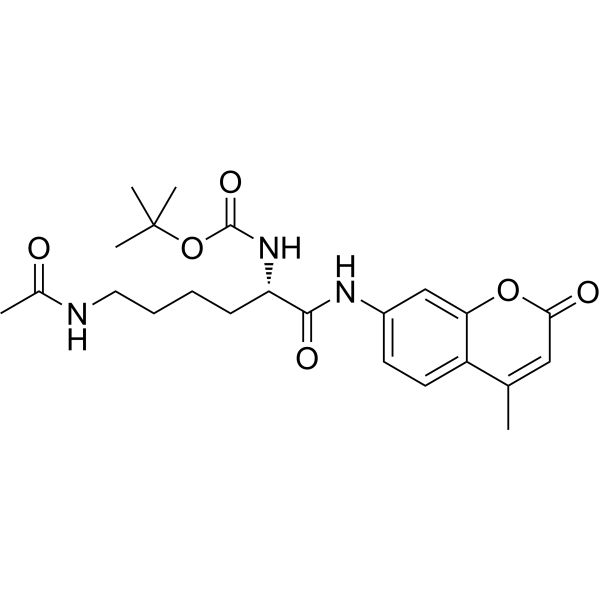
Boc-Lys(Ac)-AMC is a cell-permeable fluorometric HDAC substrate (Ex/Em = 355 nm/460 nm) .
|
-
- HY-P1003
-
|
|
蛍光色素
|
|
Ac-DEVD-AMC is a fluorescent substrate of caspase-3/caspase-7. When treating Ac-DEVD-AMC with cell lysate, Ac-DEVD-AMC releases amino-4-methylcoumarin (AMC) for fluorescence detection, with an excitation wavelength of 380 nm and an emission wavelength of 460 nm .
|
-
- HY-D1705
-
|
|
蛍光色素
|
|
Ac-ANW-AMC is a fluorogenic substrate for immunoproteasome. Ac-ANW-AMC can be used to measure β5i activity (Ex=345 nm, Em=445 nm) .
|
-
- HY-137834
-
|
|
蛍光色素
|
|
Gly-Pro-AMC hydrobromide is a fluorescent dye, it can be used as a specific fluorescent substrate for detecting Dipeptidyl peptidase IV (DPP-IV) activity .
|
-
- HY-137844
-
|
Leu-AMC hydrochloride
|
蛍光色素
|
|
L-Leucine-7-amido-4-methylcoumarin (Leu-AMC) hydrochloride is a bright blue fluorogenic peptidyl substrate for LAP3 (leucine aminopeptidase). L-Leucine-7-amido-4-methylcoumarin hydrochloride can be used for leucine aminopeptidase inhibition assays in vitro .
|
-
- HY-P0019A
-
|
|
蛍光色素
|
|
Z-Gly-Gly-Arg-AMC acetate is a thrombin-specific fluorogenic substrate for testing of thrombin generation in PRP and platelet-poor plasma (PPP) (Ex/Em = 390/480 nm) .
|
-
- HY-134432B
-
|
|
蛍光色素
|
|
Boc-Gln-Ala-Arg-AMC acetate is a fluorogenic substrate for trypsin. Boc-Gln-Ala-Arg-AMC acetate can also be used for measuring the proteolytic activity of TMPRSS2 .
|
-
- HY-123051
-
|
|
蛍光色素
|
|
Ac-WLA-AMC is a specific 20S constitutive proteasome β5 fluorogenic substrate .
|
-
- HY-148073
-
|
|
蛍光色素
|
|
MeO-Succ-Arg-Pro-Tyr-AMC TFA is a fluorogenic peptide substrate for chymotrypsin-like proteases that detects protease activity . (measured at 460 nm)
|
-
- HY-134435
-
|
|
蛍光色素
|
|
Z-Arg-AMC hydrochloride is a fluorogenic substrate for trypsin and papain. Z-Arg-AMC hydrochloride can be used to research activity of trypsin (Ex/Em=355/460 nm) .
|
-
- HY-D1634
-
|
|
蛍光色素
|
|
Bz-FVR-AMC is a fluorogenic substrate for procathepsin with a kcat/Km value of 1070 mM -1s -1. The high concentration of BZ-FVR-AMC inhibits the substrate .
|
-
- HY-P2065
-
|
|
蛍光色素
|
|
Ac-VEID-AMC is a fluorescent substrate for the determination of caspase-6 and related cysteine protease activities (Ex=340-360 nm, Em=440-460 nm) .
|
-
- HY-P1448
-
|
|
蛍光色素
|
|
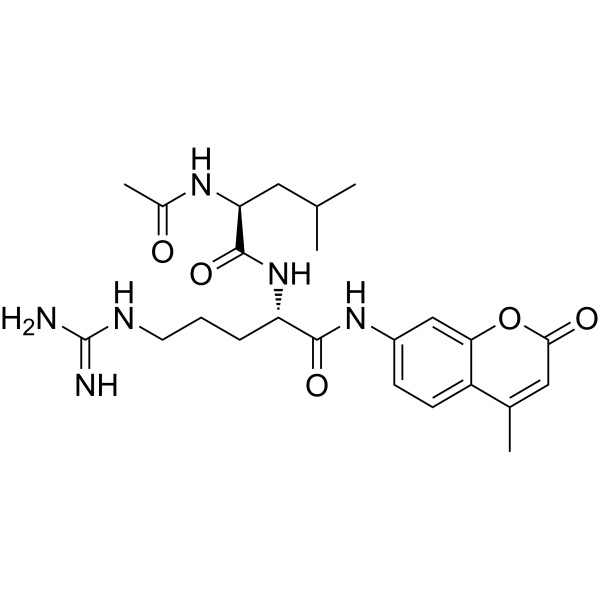
Ac-Leu-Arg-AMC is a fluorogenic peptide substrate.
|
-
- HY-P3363
-
|
|
蛍光色素
|
|
Z-DEVD-AMC is a selective caspase-3 substrate that can be measured by fluorescence spectrometry. AMC can be used as a fluorescence reference standard for AMC-based enzyme substrates including AMC-based caspase substrates .
|
-
- HY-W142117
-
|
|
蛍光色素
|
|
H-Asp(AMC)-OH, a amino acid derivative, is a fluorescent dye. H-Asp(AMC)-OH dose not inhibit glycine transport at a concentration of 0.25 mM .
|
-
- HY-137834A
-
|
|
蛍光色素
|
|
Gly-Pro-AMC is a biological active peptide. (This is a fluorescent dipeptidylaminopeptidase IV substrate, Abs/Em=353/442 nm.)
|
-
- HY-P3791
-
|
|
蛍光色素
|
|
N-Succinyl-Ile-Ile-Trp-AMC is a peptide-based fluorescent substrate or probe for carboxypeptidase Y (CPY) .
|
-
- HY-DY1060
-
|
|
蛍光色素
|
Suc-Leu-Leu-Val-Tyr-AMC (solution) is a membrane-permeable calpain-specific fluorogenic substrate (Ex/Em = 390/480 nm) .
Solvent and concentration: DMSO: 20 mM
|
-
- HY-D0991
-
|
|
蛍光色素
|
|
Pro-AMC is a multifunctional dye. Dyes are important tools in biological experiments. They can help researchers observe and analyze cell structures, track biomolecules, evaluate cell functions, distinguish cell types, detect biomolecules, study tissue pathology and monitor microorganisms. Their applications range from basic scientific research to clinical A wide range of diagnostics. Dyes are also widely used in traditional fields such as textile dyeing, as well as in emerging fields such as functional textile processing, food pigments and dye-sensitized solar cells.
|
-
- HY-P3110
-
|
|
蛍光色素
|
|
Ac-WLA-AMC is a fluorogenic substrate of caspase-3. Ac-WLA-AMC is cleaved to release the fluorescent moiety 7-amino-4-methylcoumarin (AMC), which can be used to quantify the β5c subunit activity .
|
-
- HY-143285
-
|
|
蛍光色素
|
|
AMC-GlcNAc (compound 1) is a potent fluorogenic probe for detection and characterization of β-hexosaminidase enzyme activity. AMC-GlcNAc enables continuous monitoring by turn-on fluorescence and fluorescence signal is constant over a wide pH range (Ex=325 nm, Em=390 nm). AMC-GlcNAc enables ratiometric fluorescence detection with high sensitivity and low background, which can be used to screen for recombinant dispersin B activity in E. coli cell lysate .
|
-
- HY-D1503
-
|
|
蛍光色素
|
|
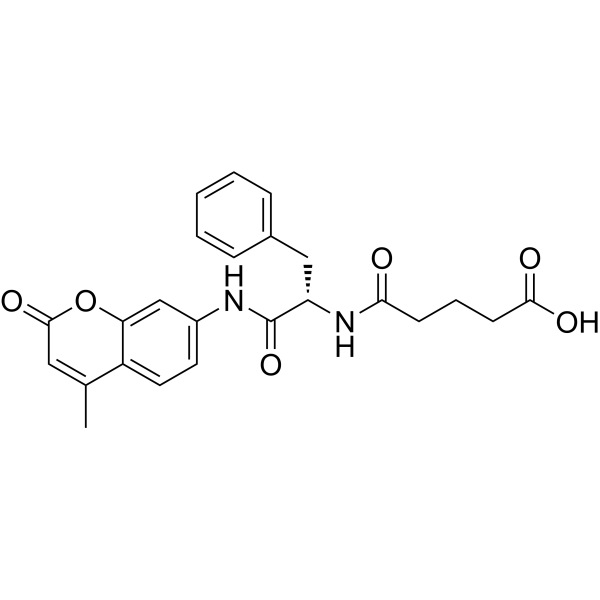
Glut-Phe-AMC is a fluorescent dye.
|
-
- HY-P3362
-
|
|
蛍光色素
|
|
Ac-IETD-AMC is a fluorogenic caspase-8/granzyme B substrate containing the acetyl (Ac) moiety. Ac-IETD-AMC is frequently used to measure caspase-8 activity .
|
-
- HY-D0002
-
|
Coumarin 120 hydrogensulfate; AMC hydrogensulfate
|
蛍光色素
|
|
7-Amino-4-methylcoumarin hydrogensulfate (Coumarin 120 hydrogensulfate; AMC hydrogensulfate) is a multifunctional dye. Dyes are important tools in biological experiments. They can help researchers observe and analyze cell structures, track biomolecules, evaluate cell functions, distinguish cell types, detect biomolecules, study tissue pathology and monitor microorganisms. Their applications range from basic scientific research to clinical A wide range of diagnostics. Dyes are also widely used in traditional fields such as textile dyeing, as well as in emerging fields such as functional textile processing, food pigments and dye-sensitized solar cells.
|
-
- HY-D0027R
-
|
Coumarin 120 (Standard); AMC (Standard)
|
蛍光色素
|
|
7-Amino-4-methylcoumarin (Standard) is the analytical standard of 7-Amino-4-methylcoumarin. This product is intended for research and analytical applications. 7-Amino-4-methylcoumarin belongs to the coumarin class, can be isolated from the endophytic fungus Xylaria sp. and has a broad spectrum of antibacterial activity. 7-Amino-4-methylcoumarin is also commonly used as an important laser dye that emits in the blue region, capable of analyzing glycoprotein monosaccharides and N-linked oligosaccharides, and is also utilized in tissue pathology analysis, enzyme activity measurement, and copper ion detection. The excitation wavelength and emission wavelength are 351 nm and 430 nm, respectively. [4]
|
-
- HY-P1759A
-
|
Z-FR-AMC hydrochloride
|
生化学アッセイ試薬
|
|
N-CBZ-Phe-Arg-AMC (Z-FR-AMC) hydrochloride is a cathepsin substrate used in assessment activity of lysosomal cathepsin enzymes .
|
-
- HY-137164
-
|
|
生化学アッセイ試薬
|
|
Ala-Ala-Phe-AMC serves as a fluorogenic substrate that exhibits positively charged properties, making it suitable for assessing proteolytic activity.
|
-
- HY-P1002
-
|
Suc-LLVY-AMC
|
Fluorescent Dye
Proteasome
|
Others
|
|
Suc-Leu-Leu-Val-Tyr-AMC is a membrane-permeable calpain-specific fluorogenic substrate (Ex/Em = 390/480 nm) .
|
-
- HY-136626
-
|
Cbz-Ala-Ala-Asn-AMC
|
Fluorescent Dye
|
Cancer
|
|
Z-Ala-Ala-Asn-AMC (Cbz-Ala-Ala-Asn-AMC) is the legumain substrate. Overexpressed legumain in 293 HEK-Leg cells potently cleaved CBZ-Ala-Ala-Asn-AMC .
|
-
- HY-123053
-
|
Z-LLE-AMC
|
Proteasome
|
Neurological Disease
|
|
Z-Leu-Leu-Glu-AMC (Z-LLE-AMC) is a peptide-AMC linked substrate used to measure the postacidic-like hydrolysing activity of proteasome. Z-Leu-Leu-Glu-AMC can be used for the research of parkinson's disease .
|
-
- HY-P1003
-
|
|
Fluorescent Dye
|
Others
|
|
Ac-DEVD-AMC is a fluorescent substrate of caspase-3/caspase-7. When treating Ac-DEVD-AMC with cell lysate, Ac-DEVD-AMC releases amino-4-methylcoumarin (AMC) for fluorescence detection, with an excitation wavelength of 380 nm and an emission wavelength of 460 nm .
|
-
- HY-134434
-
|
|
Cathepsin
Fluorescent Dye
|
Others
|
|
Z-Arg-Arg-AMC hydrochloride is a highly selective fluorescent Cathepsin B substrate. Z-Arg-Arg-AMC hydrochloride can be hydrolyzed by Cathepsin B to produce a fluorescent product for enzyme activity detection .
|
-
- HY-P1759
-
|
Z-FR-AMC
|
Cathepsin
|
Others
|
|
N-CBZ-Phe-Arg-AMC (Z-FR-AMC) is a cathepsin substrate used in assessment activity of lysosomal cathepsin enzymes .
|
-
- HY-115391
-
|
Boc-Leu-Arg-Arg-AMC
|
Biochemical Assay Reagents
|
Others
|
|
Boc-LRR-AMC (Boc-Leu-Arg-Arg-AMC) is a fluorogenic substrate, which can be utilized for detecting the trypsin-like activity of the 26S proteasome or the 20S proteasome core .
|
-
- HY-P0019A
-
|
|
Fluorescent Dye
Thrombin
|
Others
|
|
Z-Gly-Gly-Arg-AMC acetate is a thrombin-specific fluorogenic substrate for testing of thrombin generation in PRP and platelet-poor plasma (PPP) (Ex/Em = 390/480 nm) .
|
-
- HY-P1759B
-
|
Z-FR-AMC TFA
|
Cathepsin
|
Others
|
|
N-CBZ-Phe-Arg-AMC (Z-FR-AMC) TFA is a cathepsin substrate used in assessment activity of lysosomal cathepsin enzymes .
|
-
- HY-P2618
-
|
|
Kallikrein
|
Others
|
|
Pro-Phe-Arg-AMC acetate is a substrate for human glandular kallikrein 2. Pro-Phe-Arg-AMC acetate can be used for the quantitative detection of enzyme activity .
|
-
- HY-135070
-
|
Ac-Arg-Leu-Arg-AMC
|
Proteasome
|
Others
|
|
Ac-RLR-AMC (Ac-Arg-Leu-Arg-AMC) is a fluorogenic substrate for the 26S proteasome (Ex/Em: 380/440-460 nm). AMC is released upon cleavage, and its fluorescence can be used to quantify the trypsin-like activity of 26S proteasomes .
|
-
- HY-P2717
-
|
|
Caspase
|
Infection
|
|
Ac-YVAD-AMC is an inhibitor for caspase. Ac-YVAD-AMC inhibits bacteria-induced cell death of hypersensitive response (HR) cells .
|
-
- HY-137199
-
|
|
Kallikrein
|
Others
|
|
Pro-Phe-Arg-AMC is a substrate for human glandular kallikrein 2. Pro-Phe-Arg-AMC can be used for the quantitative detection of enzyme activity .
|
-
- HY-P11212
-
|
|
Fluorescent Dye
|
Metabolic Disease
Cancer
|
|
Ac-RHKK(Ac)-AMC (Compound S1) is a fluorescent substrate for SITR6, that is based on p53 sequence. Ac-RHKK(Ac)-AMC mimics H3K56 deacetylation site and significantly increases the deacetylation signal with low signal-to-background ratio. Ac-RHKK(Ac)-AMC can be used for ageing and cancers research .
|
-
- HY-P4425
-
|
|
Biochemical Assay Reagents
|
Others
|
|
Gly-Phe-AMC is a fluorogenic peptide substrate consisting of a peptide sequence composed of glycine and phenylalanine, linked to the fluorophore AMC. Gly-Phe-AMC also serves as a cathepsin C substrate. Gly-Phe-AMC is widely used to detect the activity of various proteases .
|
-
- HY-P4547
-
|
AC-WEHD-AMC
|
Caspase
|
Others
|
|
Ac-Trp-Glu-His-Asp-AMC (AC-WEHD-AMC) is a potent fluorogenic substrate of caspase-1 .
|
-
- HY-134432B
-
|
|
Ser/Thr Protease
|
Others
|
|
Boc-Gln-Ala-Arg-AMC acetate is a fluorogenic substrate for trypsin. Boc-Gln-Ala-Arg-AMC acetate can also be used for measuring the proteolytic activity of TMPRSS2 .
|
-
- HY-P4344
-
|
|
MetAP
|
Others
|
|
Met-Gly-Pro-AMC is a fluorescent peptide substrate of MetAP2 .
|
-
- HY-123051
-
-
- HY-P2237
-
-
- HY-P2008
-
|
IEGR-AMC
|
Factor Xa
|
Cardiovascular Disease
|
|
Boc-Ile-Glu-Gly-Arg-AMC (IEGR-AMC) is an activated factor X (FXa) specific fluorogenic peptide substrate used for Factor VIII determination .
|
-
- HY-P4217
-
|
|
Cathepsin
|
Others
|
|
Z-Gly-Pro-Arg-AMC hydrochloride a fluorescent trypsin and cathepsin K substrate. Z-Gly-Pro-Arg-AMC hydrochloride can be used to determine trypsin and cathepsin K activity .
|
-
- HY-P4417
-
|
|
Fluorescent Dye
|
Others
|
|
Ac-IEPD-AMC is a fluorogenic substrate for the determination of protease activity. Ac-IEPD-AMC undergoes hydrolysis and releases the fluorescent product 7-amino-4-methylcoumarin (AMC). AMC is fluorescent under UV light and can emit a fluorescent signal .
|
-
- HY-P4419A
-
|
|
Fluorescent Dye
|
Others
|
|
Boc-Asp(OBzl)-Pro-Arg-AMC acetate is a fluorogenic substrate for the determination of protease activity. Boc-Asp(OBzl)-Pro-Arg-AMC acetate undergoes hydrolysis and releases the fluorescent product 7-amino-4-methylcoumarin (AMC). AMC is fluorescent under UV light and can emit a fluorescent signal .
|
-
- HY-137811
-
|
Suc-Ala-Ala-Pro-Phe-AMC
|
ペプチド
|
Others
|
|
Suc-AAPF-AMC is an α-chymotrypsin fluorogenic substrate for the quantitative determination of chymotrypsin activity .
|
-
- HY-P4338
-
|
|
PAI-1
|
Others
|
|
Glutaryl-Gly-Arg-AMC is a peptide substrate of urokinase plasminogen activator (uPA) .
|
-
- HY-129867
-
|
Z-LLL-AMC
|
Proteasome
|
Others
|
|
Z-Leu-Leu-Leu-AMC is a fluorogenic substrate for measuring the chymotrypsin-like protease activity of the 20S proteasome .
|
-
- HY-134961
-
|
Fluorogenic Proteasome Substrate; Z-ARR-AMC
|
Proteasome
|
Others
|
|
Z-Ala-Arg-Arg-AMC (Fluorogenic Proteasome Substrate) is a fluorogenic substrate for assaying trypsin-like activity of proteasome .
|
-
- HY-P4340A
-
|
|
Cathepsin
|
Others
|
|
Arg-Arg-AMC acetate is the acetate salt form of Arg-Arg-AMC (HY-P4340). Arg-Arg-AMC acetate is a fluorescent substrate for cathepsin B and used in the cathepsin B activity assay .
|
-
- HY-P4548
-
|
Boc-RVRR-AMC
|
Furin
|
Others
|
|
Boc-Arg-Val-Arg-Arg-AMC hydrochloride (Boc-RVRR-AMC) is a synthetic fluorogenic substrate that is efficiently cleaved by furin .
|
-
- HY-P10144
-
|
|
Biochemical Assay Reagents
|
Others
|
|
Ac-Orn-Phe-Arg-AMC is a potent fluorescent substrate of cd-Tryptase and β 1-Tryptase. Ac-Orn-Phe-Arg-AMC releases amino-4-methylcoumarin (AMC) for fluorescence detection .
|
-
- HY-P4360
-
|
|
Fluorescent Dye
|
Others
|
|
Suc-Ala-Phe-Lys-AMC is a highly sensitive fluorogenic substrate for plasmin. Suc-Ala-Phe-Lys-AMC is also used for assaying gingipain K .
|
-
- HY-P4349A
-
|
|
Biochemical Assay Reagents
Thrombin
|
Others
|
|
Pyr-Arg-Thr-Lys-Arg-AMC TFA is a AMC peptide, and a fluorescent substrate. Pyr-Arg-Thr-Lys-Arg-AMC TFA can be used to detect the activity of specific proteases, such as Furin, Trypsin, and Thrombin .
|
-
- HY-P4331
-
|
|
Fluorescent Dye
Ser/Thr Protease
|
Cardiovascular Disease
|
|
Boc-Gln-Gly-Arg-AMC is a fluorogenic substrate for kallikrein (PKa), coagulation factor XIIa (FXIIa) and coagulation factor XIa (FXIa). Boc-Gln-Gly-Arg-AMC enables fluorescence-based activity assays for PKa, FXIIa and FXIa .
|
-
- HY-P4426A
-
|
|
Fluorescent Dye
|
Others
|
|
Lys-Pro-AMC diTFA is a fluorogenic substrate for the detection and measurement of the activity of specific enzymes .
|
-
- HY-P5378A
-
|
Cathepsin S substrate TFA
|
Ser/Thr Protease
|
Others
|
|
Ac-KQKLR-AMC TFA is a substrate peptide of Cathepsin S fluorescently labeled with AMC (Ex/Em=354 nm/442 nm). Ac-KQKLR-AMC TFA can be used to measure Cathepsin S activity) .
|
-
- HY-P4417A
-
|
|
Fluorescent Dye
|
Others
|
|
Ac-IEPD-AMC TFA is a fluorescent substrate used to measure protease activity. Ac-IEPD-AMC undergoes hydrolysis and releases the fluorescent product 7-amino-4-methylcoumarin (AMC). AMC fluoresces under UV light irradiation and can emit fluorescent signals .
|
-
- HY-P4323A
-
|
|
Fluorescent Dye
|
Others
|
|
Boc-Gln-Arg-Arg-AMC acetate is a fluorogenic substrate for the determination of protease activity. Boc-Gln-Arg-Arg-AMC undergoes hydrolysis and releases the fluorescent product 7-amino-4-methylcoumarin (AMC). AMC is fluorescent under UV light and can emit a fluorescent signal .
|
-
- HY-P4449A
-
|
|
Caspase
|
Cancer
|
|
Ac-VRPR-AMC TFA is a fluorogenic metacaspase substrate. Ac-VRPR-AMC TFA can be used to assay metacaspase activity .
|
-
- HY-P4342
-
-
- HY-P4363
-
-
- HY-P1448
-
-
- HY-P4209
-
|
|
ペプチド
|
Others
|
|
Boc-GRR-AMC is a tri-peptide Substrate. Boc-GRR-AMC can be used for a fluorogenic West Nile virus (WNV) substrate, profiling the substrate specificity for the NS2B-NS3 proteases or determining the pH optimum of LdMC activity .
|
-
- HY-137337
-
|
|
Fluorescent Dye
|
Others
|
|
Suc-Ala-Ala-Phe-AMC is a fluorogenic chymotrypsin substrate, can be hydrolyzed by endopeptidase. Suc-Ala-Ala-Phe-AMC has been used in both in vivo assays of the acrosome reaction and in vitro enzyme assays .
|
-
- HY-P3363
-
|
|
Caspase
|
Cancer
|
|
Z-DEVD-AMC is a selective caspase-3 substrate that can be measured by fluorescence spectrometry. AMC can be used as a fluorescence reference standard for AMC-based enzyme substrates including AMC-based caspase substrates .
|
-
- HY-P5378
-
|
Cathepsin S substrate
|
Ser/Thr Protease
|
Others
|
|
Ac-KQKLR-AMC is a substrate peptide of Cathepsin S fluorescently labeled with AMC (Ex/Em=354 nm/442 nm). Ac-KQKLR-AMC can be used to measure Cathepsin S activity) .
|
-
- HY-P11213
-
|
|
Fluorescent Dye
|
Metabolic Disease
Cancer
|
|
Ac-RYQK(Ac)-AMC (Compound S5) is a fluorescent substrate for SITR6, that is based on the H3 sequence. Ac-RYQK(Ac)-AMC mimics H3K56 deacetylation site and significantly increases the deacetylation signal with superior signal-to-background ratio. Ac-RYQK(Ac)-AMC can be used for ageing and cancers research .
|
-
- HY-P10355
-
|
|
Bacterial
|
Infection
|
|
Succinimide-AFK-AMC acetate is a marker for P. aeruginosa protease activity using cultured reference strains .
|
-
- HY-P3364
-
|
|
Fluorescent Dye
Sirtuin
HDAC
|
Others
|
|
Ac-QPKK(Ac)-AMC is a p53-derived peptide conjugated with a fluorophore, which serves as a fluorescent peptide substrate for detecting the deacylase activity of zinc-dependent HDACs and sirtuins (Ex = 360 nm; Em = 460 nm) .
|
-
- HY-W142117
-
|
|
Fluorescent Dye
|
Others
|
|
H-Asp(AMC)-OH, a amino acid derivative, is a fluorescent dye. H-Asp(AMC)-OH dose not inhibit glycine transport at a concentration of 0.25 mM .
|
- HY-P4359
-
|
|
PIN1
|
Others
|
|
Suc-AEPF-AMC is a peptide substrate of Pin1 and Par14 peptidyl prolyl isomerase .
|
- HY-P4341
-
|
|
PAI-1
Fluorescent Dye
|
Others
|
|
D-Val-Leu-Lys-AMC is a selective fluorogenic peptide substrate of plasmin. D-Val-Leu-Lys-AMC can be used for the quantification of enzymatic activity of plasmin. Ex: 360-380 nm, Em: 440-460 nm .
|
- HY-137834A
-
- HY-P2435
-
|
|
ペプチド
|
Others
|
|
Bz-Nle-Lys-Arg-Arg-AMC can be used for protease activity assay. In 0.1mL Tris-HCl buffer (50 mM, pH 7.8), Bz-Nle-Lys-Arg-Arg-AMC was hydrolyzed, and the release rate of AMC was observed .
|
- HY-P11406
-
|
|
Fluorescent Dye
|
Others
|
|
Ac-RSLK-AMC is a fluorogenic substrate, can be used to measure the enzymatic activities of site-1 protease (S1P) .
|
- HY-P4449
-
|
|
Caspase
|
Cancer
|
|
Ac-VRPR-AMC is a fluorogenic metacaspase substrate. Ac-VRPR-AMC can be used to tests metacaspase activity .
|
- HY-P4443
-
|
|
Fluorescent Dye
|
Others
|
|
Ac-GAK-AMC is a fluorescent substrate that can be used to measure protease activity. AMC (7-amino-4-methylcoumarin) is a fluorescent group. In the presence of protease, the protease will hydrolyze Ac-GAK-AMC into a fluorescent product .
|
- HY-P3110
-
|
|
Fluorescent Dye
|
Others
|
|
Ac-WLA-AMC is a fluorogenic substrate of caspase-3. Ac-WLA-AMC is cleaved to release the fluorescent moiety 7-amino-4-methylcoumarin (AMC), which can be used to quantify the β5c subunit activity .
|
- HY-P10144A
-
|
|
Biochemical Assay Reagents
|
Others
|
|
Ac-Orn-Phe-Arg-AMC acetate is a potent fluorescent substrate of cd-Tryptase and β 1-Tryptase. Ac-Orn-Phe-Arg-AMC acetate releases amino-4-methylcoumarin (AMC) for fluorescence detection .
|
- HY-137897
-
|
|
Proteasome
|
Others
|
|
Bz-VGR-AMC is a substrate for the trypsin-like activity of the 20S proteasome. Bz-VGR-AMC can be used to measure the trypsin-like (β2) activity of the 20S proteasome .
|
- HY-P4349
-
|
|
Biochemical Assay Reagents
Thrombin
|
Others
|
|
Pyr-Arg-Thr-Lys-Arg-AMC is a AMC peptide, and a fluorescent substrate. Pyr-Arg-Thr-Lys-Arg-AMC can be used to detect the activity of specific proteases, such as Furin, Trypsin, and Thrombin .
|
- HY-P4340
-
|
|
Cathepsin
|
Cancer
|
|
Arg-Arg-AMC is a highly selective substrate of Cathepsin B. Arg-Arg-AMC can be used to cathepsin B activity assay in cancer cells, while cathepsin B is assocaited with cell invasive and metastatic phenotype in numerous types of cancer .
|
- HY-137416
-
- HY-P4426
-
|
|
Fluorescent Dye
|
Others
|
|
Lys-Pro-AMC is a fluorogenic substrate for the detection and measurement of the activity of specific enzymes .
|
- HY-P4369
-
- HY-P2176A
-
|
Z-Leu-Arg-Gly-Gly-AMC TFA
|
Fluorescent Dye
|
Others
|
|
Z-LRGG-AMC TFA is the trifluoroacetate salt of Z-LRGG-AMC (HY-P2176). Z-LRGG-AMC TFA is a fluorogenic substrate for isopeptidase T. Upon cleavage of Z-LRGG-AMC TFA by isopeptidase T, 7-amino-4-methylcoumarin (AMC) is released, and its fluorescence can be used to quantify isopeptidase T activity (Ex/Em : 360/460 nm) .
|
- HY-P10317
-
|
|
Fluorescent Dye
|
Others
|
|
Suc-YVAD-AMC is used to measure the cysteine proteins of the proteasome.Suc-YVAD-AMC releases fluorescent AMC when cleaved by cysteine proteases to assess the enzymatic activity of the proteasome .
|
- HY-W753820A
-
|
Boc-Leu-Arg-Arg-AMC TFA
|
Biochemical Assay Reagents
|
Others
|
|
Boc-LRR-AMC TFA (Boc-Leu-Arg-Arg-AMC TFA) is the TFA salt form of Boc-LRR-AMC (HY-115391). Boc-LRR-AMC TFA is a fluorogenic substrate, which can be utilized for detecting the trypsin-like activity of the 26S proteasome or the 20S proteasome core .
|
- HY-P10958
-
|
|
Biochemical Assay Reagents
|
Others
|
|
EEKAR-AMC is a PsCaspase substrate. The EEKAR-AMC peptide can be cleaved by PsCaspase when incubated with metabolites from infected cells expressing PsTIR .
|
- HY-135070B
-
|
Ac-Arg-Leu-Arg-AMC TFA
|
Proteasome
|
Others
|
|
Ac-RLR-AMC (Ac-Arg-Leu-Arg-AMC) TFA is a fluorogenic substrate for the 26S proteasome (Ex/Em: 380/440-460 nm). AMC is released upon cleavage, and its fluorescence can be used to quantify the trypsin-like activity of 26S proteasomes .
|
- HY-P10082
-
|
|
Caspase
|
Others
|
|
Ac-VETD-AMC is a synthetic peptide substrate for caspase 8. Ac-VETD-AMC also has potential to assess functional activity of recombinant phytaspase .
|
- HY-137164A
-
|
|
Fluorescent Dye
|
Others
|
|
Ala-Ala-Phe-AMC TFA is the TFA salt form for Ala-Ala-Phe-AMC. Ala-Ala-Phe-AMC TFA is a fluorogenic substrate, which is used to for tripeptidyl peptidase II (TPPII) activity determination .
|
- HY-P2715
-
- HY-D1634A
-
|
|
Cathepsin
|
Others
|
|
Bz-FVR-AMC TFA is a fluorogenic substrate for procathepsin with a kcat/Km value of 1070 mM -1s -1. The high concentration of BZ-FVR-AMC inhibits the substrate .
|
- HY-P10240
-
- HY-P10198
-
- HY-P10060
-
- HY-P5976
-
|
Renin Substrate I
|
Renin
|
Others
|
|
Suc-Arg-Pro-Phe-His-Leu-Leu-Val-Tyr-AMC (Renin Substrate I) is a renin substrate
|
- HY-P2176
-
|
Z-Leu-Arg-Gly-Gly-AMC
|
Biochemical Assay Reagents
|
Others
|
|
Z-LRGG-AMC (Z-Leu-Arg-Gly-Gly-AMC) is a fluorescent substrate that hydrolyzes and releases free fluorescent 7-amino-4-methylcoumarin (AMC). Detection wavelength of AMC: Ex/Em=360/460 nm .
|
- HY-P10142
-
|
|
Fluorescent Dye
|
Others
|
|
Ac-YEVD-AMC is a fluorescent substrate of caspase-1/11. Ac-YEVD-AMC releases amino-4-methylcoumarin (AMC) for fluorescence detection when treating with cell lysate .
|
- HY-P4427
-
|
|
Fluorescent Dye
|
Others
|
|
Z-VAN-AMC is a fluorogenic substrate. Z-VAN-AMC can be hydrolysed by a phytophagous mite of legumain-like activity .
|
- HY-P10162A
-
|
|
Caspase
|
Others
|
|
Ac-DMQD-AMC TFA is a fluorogenic substrate for caspase-3 or caspase-10. Similar to Ac-DEVD-AMC, it releases the AMC (7-amino-4-methylcoumarin) fluorophore, resulting in fluorescence. Ac-DMQD-AMC TFA can be used to measure caspase activity in in vitro apoptosis monitoring .
|
- HY-P5202
-
|
|
Amino Acid Derivatives
|
Others
|
|
H-Gly-Gly-Arg-AMC is a fluorogenic peptidyl-AMC substrate containing C-terminal 7-amino-4-methylcoumarin (AMC). H-Gly-Gly-Arg-AMC is a suitable for monitoring continuous thrombin generation (TGT) .
|
- HY-P10147
-
|
|
Caspase
|
Cancer
|
|
Ac-LDESD-AMC is a caspase-2 inhibitor. Ac-LDESD-AMC has a peptide sequence of Leu-Asp-Glu-Ser-Asp .
|
- HY-P4408
-
|
|
Fluorescent Dye
|
Others
|
|
Ac-Arg-Gly-Lys-AMC is a fluorogenic substrate for the determination of protease activity. Ac-Arg-Gly-Lys-AMC undergoes hydrolysis and releases the fluorescent product 7-amino-4-methylcoumarin (AMC). AMC is fluorescent under UV light and can emit a fluorescent signal .
|
- HY-P4323
-
|
|
Fluorescent Dye
|
Others
|
|
Boc-Gln-Arg-Arg-AMC is a fluorogenic substrate for the determination of protease activity. Boc-Gln-Arg-Arg-AMC undergoes hydrolysis and releases the fluorescent product 7-amino-4-methylcoumarin (AMC). AMC is fluorescent under UV light and can emit a fluorescent signal .
|
- HY-P3362
-
|
|
Fluorescent Dye
|
Others
|
|
Ac-IETD-AMC is a fluorogenic caspase-8/granzyme B substrate containing the acetyl (Ac) moiety. Ac-IETD-AMC is frequently used to measure caspase-8 activity .
|
- HY-P10162
-
|
|
Caspase
|
Cancer
|
|
Ac-DMQD-AMC is an inhibitor of caspase-3. Ac-DMQD-AMC is an aromatic amine using aminium-based coupling reagent HATU in the presence of 2,4,6-trimethylpyridine (TMP) .
|
- HY-P4416
-
|
|
Fluorescent Dye
|
Others
|
|
Ac-Gly-Ala-Lys(Ac)-AMC is a fluorogenic substrate for the determination of protease activity. Ac-Gly-Ala-Lys(Ac)-AMC undergoes hydrolysis and releases the fluorescent product 7-amino-4-methylcoumarin (AMC). AMC is fluorescent under UV light and can emit a fluorescent signal .
|
- HY-P4345
-
- HY-P4392
-
- HY-P4367
-
|
|
Fluorescent Dye
|
Others
|
|
TRH-AMC is a fluorogenic substrate used in a coupled assay for thyrotropin-releasing hormone(TRH)-degrading ectoenzyme .
|
- HY-P4419
-
|
|
Fluorescent Dye
|
Others
|
|
Boc-Asp(OBzl)-Pro-Arg-AMC is a fluorogenic substrate for the determination of protease activity. Boc-Asp(OBzl)-Pro-Arg-AMC undergoes hydrolysis and releases the fluorescent product 7-amino-4-methylcoumarin (AMC). The excitation and emission wavelengths are 351 nm and 430 nm, respectively .
|
- HY-P0019B
-
|
|
Fluorescent Dye
Thrombin
|
Others
|
|
Z-Gly-Gly-Arg-AMC TFA is the TFA salt form of Z-Gly-Gly-Arg-AMC (HY-P0019). Z-Gly-Gly-Arg-AMC TFA is a thrombin-specific fluorogenic substrate for testing of thrombin generation in PRP and platelet-poor plasma (PPP) (Ex/Em = 390/480 nm) .
|
- HY-P4209A
-
|
|
Virus Protease
|
Others
|
|
Boc-GRR-AMC (TFA) is a tri-peptide Substrate. Boc-GRR-AMC can be used for a fluorogenic West Nile virus (WNV) substrate, profiling the substrate specificity for the NS2B-NS3 proteases or determining the pH optimum of LdMC activity .
|
- HY-P4362
-
|
|
Elastase
|
Others
|
|
Suc-Ala-Pro-Ala-AMC is a tripeptide substrate of elastase .
|
- HY-W344383
-
|
|
Ser/Thr Protease
|
Others
|
|
Boc-Phe-Ser-Arg-AMC is a trypsin peptide substrate containing a Boc protecting group. Boc-Phe-Ser-Arg-AMC can be degraded by trypsin, releasing AMC (HY-D0027) which has fluorescence activity. Boc-Phe-Ser-Arg-AMC can be used to assess the activity of trypsin .
|
- HY-P11427
-
- HY-P11367
-
|
|
Fluorescent Dye
Ser/Thr Protease
|
Infection
Metabolic Disease
|
|
Boc-Ala-Gly-Pro-Arg-AMC is a synthetic fluorescent substrate, widely used for the detection of protease activity. Boc-Ala-Gly-Pro-Arg-AMC can be used to detect the activity of serine proteases and the oligopeptide enzyme B of Trypanosoma brucei .
|
- HY-P3364A
-
|
|
Fluorescent Dye
Sirtuin
HDAC
|
Others
|
|
Ac-QPKK(Ac)-AMC acetate is a p53-derived peptide conjugated with a fluorophore, which serves as a fluorescent peptide substrate for detecting the deacylase activity of zinc-dependent HDACs and sirtuins (Ex = 360 nm; Em = 460 nm) .
|
- HY-P4348
-
|
|
Proteasome
|
Others
|
|
MeOSuc-Gly-Leu-Phe-AMC is a peptide substrate of proteasomal .
|
- HY-P4126
-
|
|
Elastase
|
Others
|
|
Suc-Ala-Ala-Pro-Val-AMC is a fluorescent substrate for elastase. Suc-Ala-Ala-Pro-Val-AMC can be hydrolyzed by these elastases to release the fluorescent substance 7-amino-4-methylcoumarin. Suc-Ala-Ala-Pro-Val-AMC is used for in vitro elastase activity assays and can also be applied in studies related to chronic wounds .
|
- HY-P4366
-
- HY-P4390
-
- HY-P2016
-
|
|
Proteasome
|
Others
|
|
Ac-Nle-Pro-Nle-Asp-AMC is a specific substrate for 26S proteasome. Ac-Nle-Pro-Nle-Asp-AMC can be used for the 26S proteasome caspase-like activity analysis .
|
- HY-P4341A
-
|
|
PAI-1
Fluorescent Dye
|
Others
|
|
D-Val-Leu-Lys-AMC TFA is a selective fluorogenic peptide substrate of plasmin. D-Val-Leu-Lys-AMC TFA can be used for the quantification of enzymatic activity of plasmin. Ex: 360-380 nm, Em: 440-460 nm .
|
- HY-P4339
-
|
|
Fluorescent Dye
|
Others
|
|
Ala-Phe-Lys-AMC is a fluorogenic substrate, which can be used for residual plasmin activity assay .
|
- HY-P5280
-
|
|
Ser/Thr Protease
|
Others
|
|
Ac-KQL-AMC is a fluorogenic substrate that can be used to quantify Trypsin-like activity, resulting in detectable fluorescence when cleaved by the proteasome .
|
- HY-P4312
-
- HY-P4350
-
|
|
Elastase
|
Others
|
|
Suc-Ala-Ala-Ala-AMC is a peptide substrate of elastase or elastase-like .
|
- HY-P2462
-
|
|
HDAC
|
Others
|
|
Ac-Arg-Gly-Lys(Ac)-AMC is a substrate for HDAC .
|
- HY-P4319
-
|
|
Fluorescent Dye
|
Others
|
|
Boc-Glu-Lys-Lys-AMC is a sensitive fluorogenic substrate for urokinase-activated plasmin .
|
- HY-136865
-
|
|
Fluorescent Dye
|
Others
|
|
MeOSuc-AAPV-AMC is a fluorogenic substrate for human leukocyte and porcine pancreatic elastase (Km: 362 μM, Ex=380 nm, Em=460 nm) .
|
- HY-W719799
-
- HY-P4347
-
- HY-P10485
-
- HY-137367
-
|
|
Cathepsin
|
Infection
|
|
Z-Val-Val-Arg-AMC is a fluorescent peptide substrate that can be used to test the activity of cathepsins .
|
- HY-P2065
-
|
|
Fluorescent Dye
|
Others
|
|
Ac-VEID-AMC is a fluorescent substrate for the determination of caspase-6 and related cysteine protease activities (Ex=340-360 nm, Em=440-460 nm) .
|
- HY-135172
-
|
|
Fluorescent Dye
|
Others
|
|
Suc-Leu-Tyr-AMC is a fluorometric peptide substrate for µ-calpain and m-calpain. The excitation wavelength is 360 nm and the emission wavelength is 460 nm .
|
- HY-137784
-
|
|
Fluorescent Dye
|
Others
|
|
Boc-Val-Pro-Arg-AMC hydrochloride is a sensitive fluorogenic substrate for measuring trypsin-like serine proteases activity .
|
- HY-P4428
-
|
|
Fluorescent Dye
|
Others
|
|
Z-Val-Lys-Met-AMC is a fluorescent substrate that can be used to detect the β-secretase activity of cathepsin B .
|
- HY-P4346
-
|
|
Elastase
|
Others
|
|
MeOSuc-Ala-Ala-Pro-Met-AMC is a peptide substrate of elastases and chymotrypsin-like serine peptidases .
|
- HY-P3791
-
|
|
Fluorescent Dye
|
Others
|
|
N-Succinyl-Ile-Ile-Trp-AMC is a peptide-based fluorescent substrate or probe for carboxypeptidase Y (CPY) .
|
- HY-P4399
-
|
|
Bacterial
ClpP
|
Others
|
|
Z-Gly-Gly-Leu-AMC is the substrate of ClpP1 and ClpP2, to detect the enzymatic activity in the presence of the activating peptide Z-Leu-Leu .
|
- HY-P4388A
-
|
|
SARS-CoV
|
Infection
|
|
Z-Arg-Leu-Arg-Gly-Gly-AMC acetate is a peptide substrate for SARS-CoV PL pro .
|
- HY-P4388
-
|
|
SARS-CoV
|
Infection
|
|
Z-Arg-Leu-Arg-Gly-Gly-AMC is a peptide substrate of SARS-CoV PL pro .
|
- HY-P4428A
-
|
|
Fluorescent Dye
|
Others
|
|
Z-Val-Lys-Met-AMC TFA is a fluorescent substrate that can be used to detect the β-secretase activity of cathepsin B .
|
- HY-P0019
-
- HY-P4310
-
|
|
Ser/Thr Protease
|
Others
|
|
Boc-Val-Leu-Lys-AMC is a sensitive, fluorogenic, and specific substrate of plasmin, as well as acrosin from the ascidian Halocynthia roretzi, porcine calpain isozymes I and II, and papain .
|
- HY-148073
-
|
|
Fluorescent Dye
Ser/Thr Protease
|
Others
|
|
MeO-Succ-Arg-Pro-Tyr-AMC TFA is a fluorogenic peptide substrate for chymotrypsin-like proteases that detects protease activity . (measured at 460 nm)
|
- HY-P4314
-
|
|
ペプチド
|
Others
|
|
Boc-Gly-Lys-Arg-AMC is a polypeptide that can be found by peptide screening. Peptide screening is a research tool that pools active peptides primarily by immunoassay. Peptide screening can be used for protein interaction, functional analysis, epitope screening, especially in the field of agent research and development .
|
- HY-P4314A
-
|
|
ペプチド
|
Others
|
|
Boc-Gly-Lys-Arg-AMC diacetate is a polypeptide that can be found by peptide screening. Peptide screening is a research tool that pools active peptides primarily by immunoassay. Peptide screening can be used for protein interaction, functional analysis, epitope screening, especially in the field of agent research and development .
|
- HY-P4333
-
|
|
Fluorescent Dye
|
Cardiovascular Disease
|
|
Boc-Glu(OBzl)-Gly-Arg-AMC is a fluorogenic substrate for factors IXa and XIIa. The cleavage of the amide bond between arginine and the methylcoumarin amide group releases fluorescent 7-Amino-4-methylcoumarin (HY-D0027) .
|
- HY-P4332
-
|
|
Fluorescent Dye
Ser/Thr Protease
|
Cardiovascular Disease
|
|
Boc-Glu(OBzl)-Ala-Arg-AMC is a fluorogenic substrate for coagulation factor XIa and trypsin. The cleavage of the amide bond between arginine and the methylcoumarin amide group releases fluorescent 7-Amino-4-methylcoumarin (HY-D0027) .
|
- HY-P4326
-
|
|
Fluorescent Dye
|
Others
|
|
Boc-Val-Pro-Arg-MCA is a sensitive fluorogenic substrate for measuring trypsin-like serine proteases activity .
|
| 製品番号 |
製品名 |
Category |
Target |
構造式 |
-
- HY-D0027S1
-
|
|
|
7-Amino-4-methylcoumarin-d4 (Coumarin 120-d4) is the deuterium labeled 7-Amino-4-methylcoumarin (HY-D0027). 7-Amino-4-methylcoumarin belongs to the coumarin class, can be isolated from the endophytic fungus Xylaria sp. and has a broad spectrum of antibacterial activity. 7-Amino-4-methylcoumarin is also commonly used as an important laser dye that emits in the blue region, capable of analyzing glycoprotein monosaccharides and N-linked oligosaccharides, and is also utilized in tissue pathology analysis, enzyme activity measurement, and copper ion detection. The excitation wavelength and emission wavelength are 351 nm and 430 nm, respectively .
|
-
-
- HY-119323
-
|
|
|
Azide
Labeling and Fluorescence Imaging
|
|
7-Azido-4-methylcoumarin is a selective coumarin-based fluorescent probe for hydrogen sulfide (H2S). In the presence of H2S, the aromatic azido group of 7-Azido-4-methylcoumarin is selectively reduced to produce the fluorescently active 7-amino-4-methylcoumarin (AMC). 7-Azido-4-methylcoumarin binds to the coumarin/phenol-binding site of BSA, the aglycone-binding site of UGT1A6, and the substrate-binding site of SULT1A1, respectively. 7-Azido-4-methylcoumarin retains its fluorescent properties after covalent binding, acts as a fluorescent H2S probe, and does not react with cysteine, homocysteine or glutathione (Ex/Em = 340/445 nm) .
|
入力情報は安全に管理されます. ※ 必須入力項目.
Inquiry Information
- 製品名:
- 製品番号:
- 数量:
- MCE 日本正規代理店:





