Search Result
Results for "
BACE-1 inhibitor
" in MedChemExpress (MCE) Product Catalog:
1
Biochemical Assay Reagents
| Cat. No. |
Product Name |
Target |
Research Areas |
Chemical Structure |
-
- HY-100740
-
|
AZD3293; LY3314814
|
Beta-secretase
|
Neurological Disease
|
|
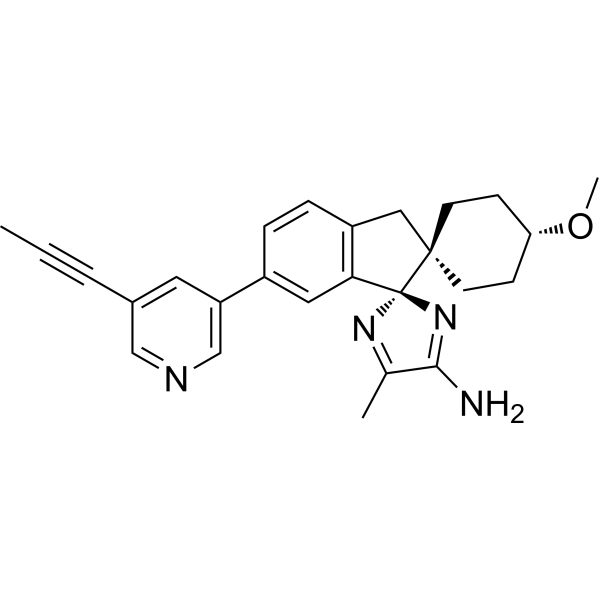
Lanabecestat (AZD3293; LY3314814) is a potent, orally active and blood-brain barrier penetrating BACE1 inhibitor with a Ki of 0.4 nM. Lanabecestat is used for the research of Alzheimer's disease .
|
-
-
- HY-16759
-
|
MK-8931
|
Beta-secretase
|
Neurological Disease
|
|
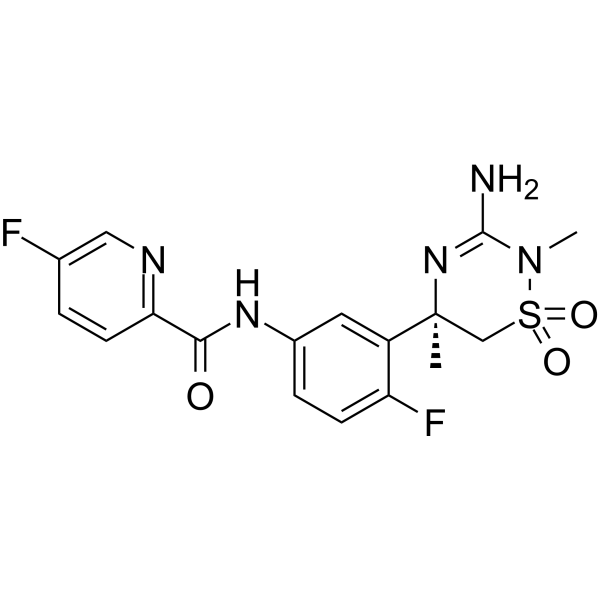
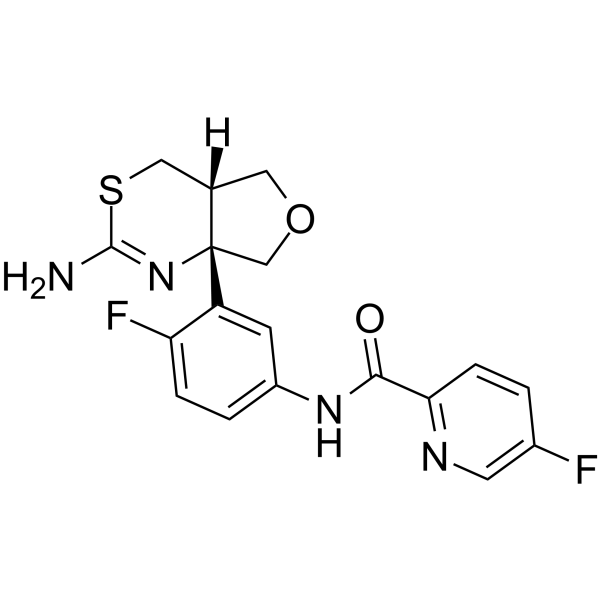
Verubecestat (MK-8931) is an orally active, high-affinity BACE1 and BACE2 inhibitor with Ki values of 2.2 nM and 0.38 nM. Verubecestat effectively reduces Aβ40 and has the potential for Alzheimer's Disease .
|
-
-
- HY-13240
-
|
|
Beta-secretase
|
Neurological Disease
|
|
LY2886721 is a potent, selective and orally active beta-site amyloid precursor protein cleaving enzyme 1 (BACE1) inhibitor with an IC50 of 20.3 nM for recombinant human BACE1. LY2886721 is selectivity against cathepsin D, pepsin, and renin, but lacking selectivity against BACE2 (IC50 of 10.2 nM). LY2886721 can across blood-brain barrier and has the potential for Alzheimer's disease treatment .
|
-
-
- HY-109055
-
|
E2609
|
Beta-secretase
|
Neurological Disease
|
|
Elenbecestat (E2609) is a potent, orally bioavailable and BBB-penetrant BACE-1 inhibitor. Elenbecestat has the potential for Alzheimer's disease (AD) research .
|
-
-
- HY-15908
-
|
Disodium bicinchoninate
|
Beta-secretase
|
Neurological Disease
Cancer
|
|
BCA (Disodium bicinchoninate) is an orally active and non-competitive Beta-site amyloid precursor protein cleaving enzyme 1 (BACE1) inhibitor with an IC50 value of 28 µM, a Ki value of 43 µM. BCA shows anticancer activity. BCA has the potential for the research of Alzheimer's disease (AD) .
|
-
-
- HY-119689
-
|
CNP520
|
Beta-secretase
|
Neurological Disease
|
|
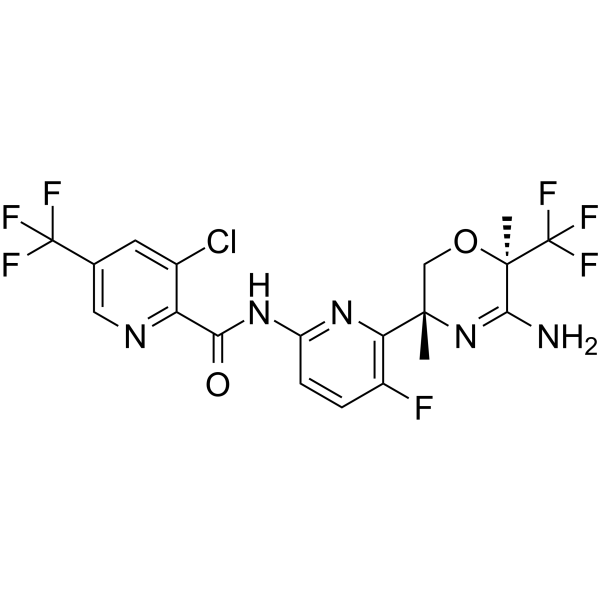
Umibecestat (CNP520) is a beta-site amyloid precursor protein cleaving enzyme-1 (BACE-1) inhibitor with IC50s of 11 nM and 10 nM for human BACE-1 and mouse BACE-1, respectively . Umibecestat can be used for the research of alzheimer's disease.
|
-
-
- HY-13438
-
|
|
Beta-secretase
|
Neurological Disease
|
|
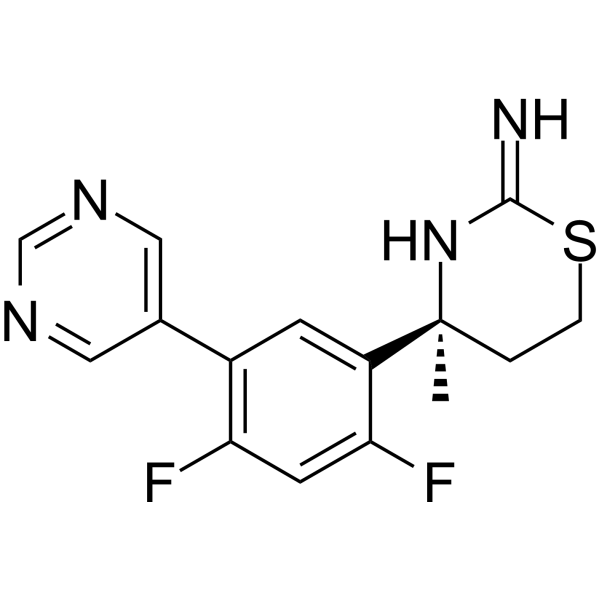
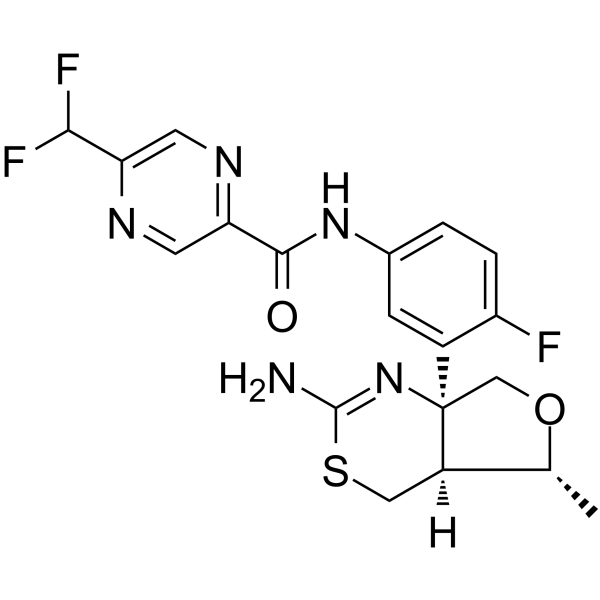
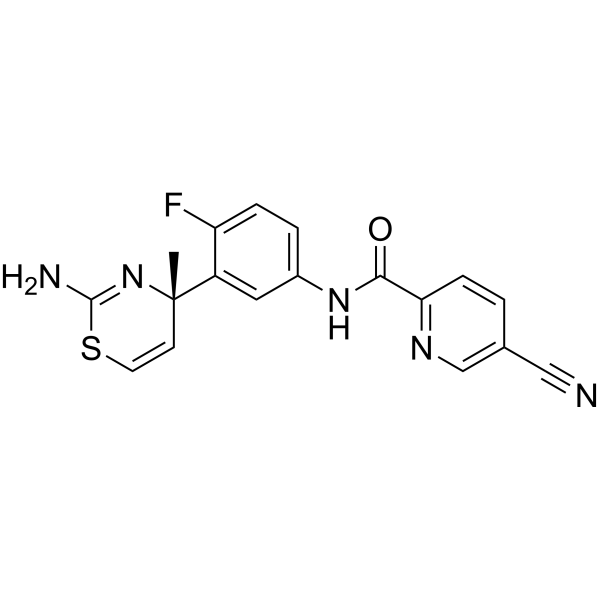
AZD3839 is an orally available, selective, reversible inhibitor of the β-site amyloid precursor protein cleaving enzyme BACE1 that can cross the blood-brain barrier. AZD3839 inhibits recombinant human BACE1 with a Ki=26.1 nM. AZD3839 inhibits A40 production in SH-SY5Y cells with an IC50 of 4.8 nM. AZD3839 binds to BACE1 and reduces the Aβ amyloid produced by the cleavage of amyloid precursor protein (APP) by BACE1 and γ-secretase. AZD3839 can be used in the field of Alzheimer's disease research .
|
-
-
- HY-109052
-
|
JNJ-54861911
|
Beta-secretase
|
Neurological Disease
|
|
Atabecestat (JNJ-54861911) is a potent brain-penetrant and orally active β-site amyloid precursor protein cleaving enzyme 1 (BACE1) inhibitor, achieves robust and high CSF Aβ reduction. Atabecestat s tolerated and displays a sustained pharmacokinetic (PK) and pharmacodynamic (PD) characteristics. Atabecestat has the potential for Alzheimer's Disease treatment .
|
-
-
- HY-10472
-
LY2811376
Maximum Cited Publications
12 Publications Verification
|
Beta-secretase
|
Neurological Disease
|
|
LY2811376 is the first orally available non-peptidic β-secretase (BACE1) inhibitor with IC50 of 239 nM-249 nM, that acts to decrease Aβ secretion with EC50 of 300 nM, and demonstrates to have 10-fold selectivity towards BACE1 over BACE2, and more than 50-fold inhibition over other aspartic proteases including cathepsin D, pepsin, or renin.
|
-
-
- HY-N0231
-
|
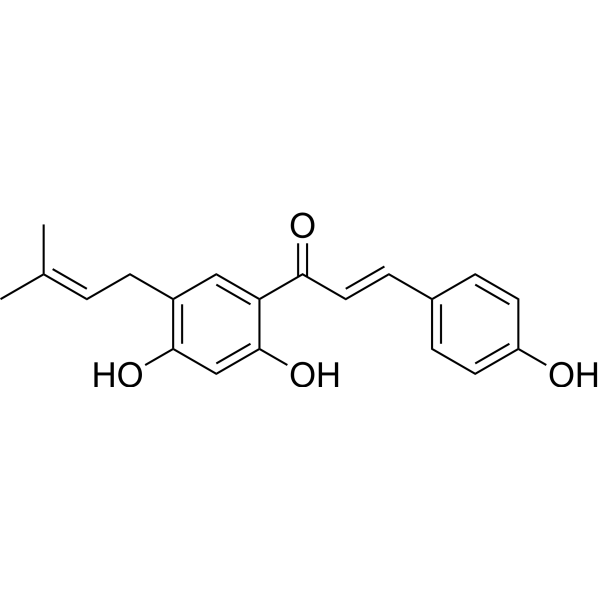
Broussochalcone B
|
Bacterial
Antibiotic
NF-κB
PERK
Akt
Autophagy
Apoptosis
|
Infection
Neurological Disease
Inflammation/Immunology
Cancer
|
|
Bavachalcone is a potent inducer of apoptosis. Bavachalcone exerts anticancer activity by promoting autophagy and apoptosis in HepG2 cells. Bavachalcone acts as an anti-neuroinflammatory and antidepressant through the NF-κB pathway. Bavachalcone inhibits osteoclasts by interfering with ERK and Akt signaling pathways and the expression of c-Fos and NFATc1. Bavachalcone exhibits a significant inhibitory effect on baculovirus-expressed BACE-1 in vitro .
|
-
-
- HY-124322
-
|
|
Beta-secretase
Amyloid-β
|
Neurological Disease
Inflammation/Immunology
|
|
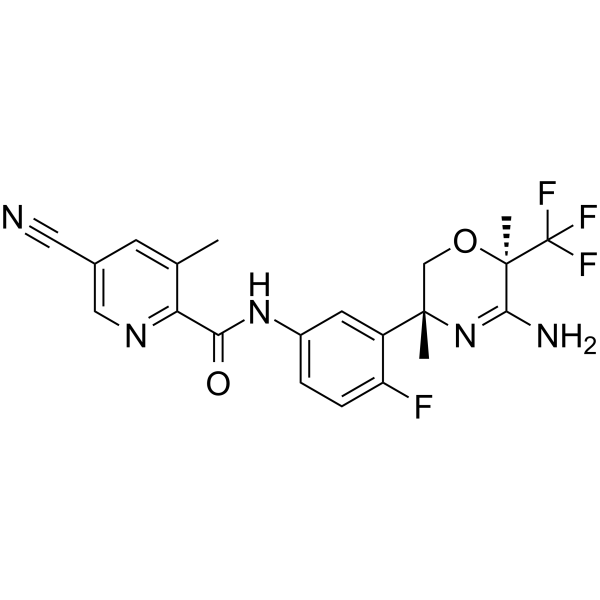
NB-360 is a potent, brain penetrable and orally active β‐secretase 1/2 (BACE1/BACE2) dual inhibitor with IC50 values of 5 and 6 nM. NB-360 can inhibit amyloid-β protein accumulation. NB-360 can be used for the researches of inflammation and neurological disease, such as Alzheimer's disease .
|
-
-
- HY-10133
-
|
|
Beta-secretase
|
Neurological Disease
|
|
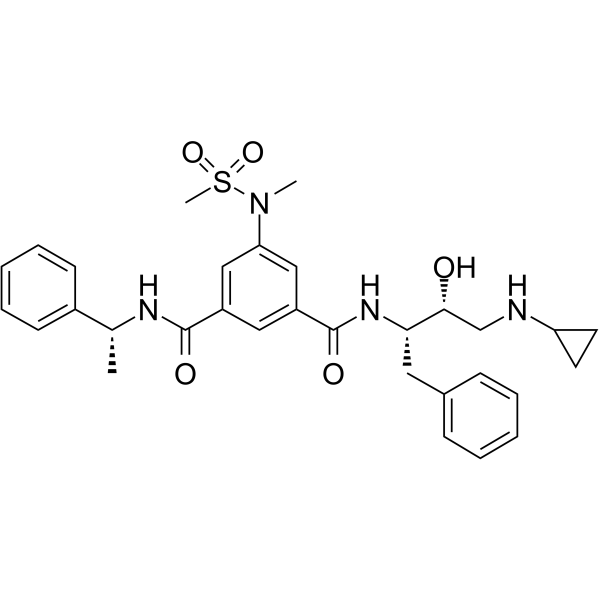
β-Secretase Inhibitor IV is a potent, cell-active BACE-1 inhibitor with IC50s of 15.6 and 16.3nM under BACE-1 concentrations of 2 nM and 100 pM, respectively.
|
-
-
- HY-112157
-
|
|
Beta-secretase
|
Neurological Disease
|
|
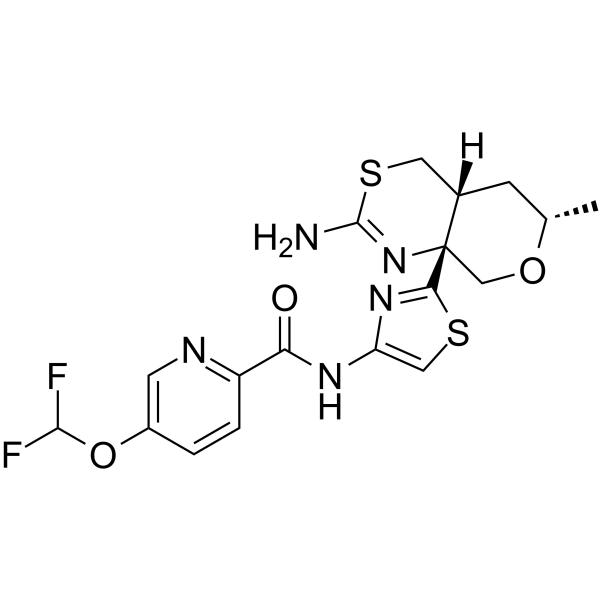
PF-06751979 is a potent, brain penetrant, β-site amyloid precursor protein cleaving enzyme 1 (BACE1) inhibitor with an IC50 of 7.3 nM in BACE1 binding assay.
|
-
-
- HY-N1280
-
|
|
Amyloid-β
|
Neurological Disease
|
|
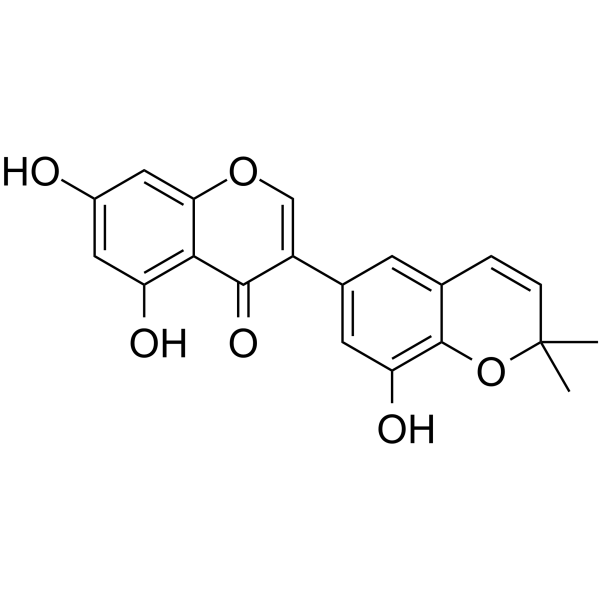
Semilicoisoflavone B, an isoflavone, mainly derived from Glycyrrhiza uralensis Fisch.. Semilicoisoflavone B reduces amyloid β (Aβ) secretion by inhibiting β-secretase-1 (BACE1) expression and activity. Semilicoisoflavone B decreases BACE1 expression mainly through increasing PPARγ expression and inhibiting STAT3 phosphorylation .
|
-
-
- HY-N2215
-
-
-
- HY-P1962
-
|
[Asn670, Sta671, Val672]-Amyloid β Peptide (662-675)
|
Beta-secretase
|
Neurological Disease
|
|
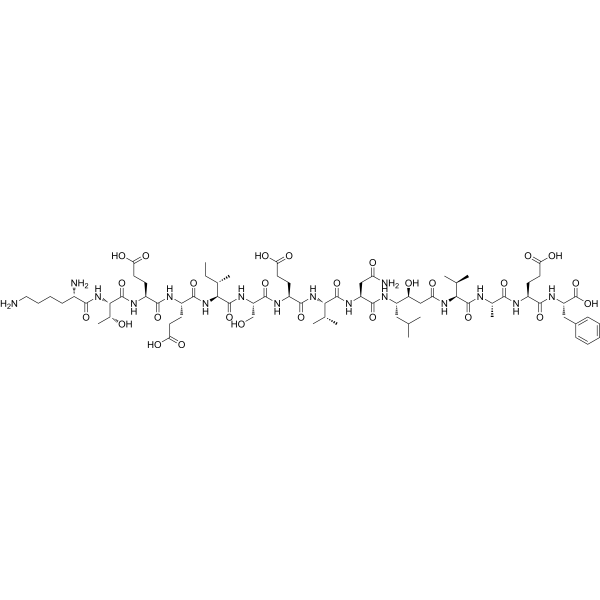
β-Secretase inhibitor ([Asn670, Sta671, Val672]-Amyloid β Peptide (662-675)) is a β-secretase and BACE1 inhibitor (IC50: 25 nM for β-secretase) .
|
-
-
- HY-W015515
-
-
-
- HY-N2284
-
|
|
Cholinesterase (ChE)
Beta-secretase
Phosphodiesterase (PDE)
|
Cancer
|
|
Sophoflavescenol is a prenylated flavonol, which shows great inhibitory activity with IC50 of 0.013 μM against Phosphodiesterase 5 (PDE5), and also inhibits RLAR, HRAR, AGE, BACE1, AChE and BChE with IC50s of 0.30 μM, 0.17 μM, 17.89 μg/mL, 10.98 μM, 8.37 μM and 8.21 μM, respectively.
|
-
-
- HY-100182
-
-
-
- HY-111383
-
-
-
- HY-108966
-
|
|
Beta-secretase
|
Inflammation/Immunology
|
|
Kushenol C, isolated from the roots of Sophora flavescens, shows anti-Inflammatory and anti-oxidative stress activities. Kushenol C inhibits BACE1 (β-site APP cleaving enzyme 1) with an IC50 of 5.45 µM .
|
-
-
- HY-W015515R
-
|
(S)-3,7-Dimethyloct-6-en-1-ol (Standard)
|
Reference Standards
ERK
Beta-secretase
γ-secretase
Cholinesterase (ChE)
TNF Receptor
|
Neurological Disease
Inflammation/Immunology
|
|
L-Citronellol ((S)-3,7-Dimethyloct-6-en-1-ol) is an analytical standard for L-Citronellol (HY-W015515). This product is intended for research and analytical applications. L-Citronellol is a natural product with anti-allergic and neuroprotective effects. L-Citronellol inhibits mast cell activation and the release of inflammatory factors by inhibiting the ERK pathway. L-Citronellol inhibits BACE1/PSEN1 and AChE, reduces TNF-α expression and lipid peroxidation, demonstrating the potential of multi-target anti-Alzheimer's disease (AD).
|
-
-
- HY-170938
-
|
|
Cholinesterase (ChE)
Monoamine Oxidase
Beta-secretase
COX
LOX-1
|
Neurological Disease
|
|
AChE-IN-82 (compound 49) is an acetylcholinesterase (AChE) inhibitor. AChE-IN-82 inhibits eeAChE, eqBChE, hMAO-A, hMAO-B, and BACE-1 with IC50s of 0.072, 9.81, 14.52, 0.024, 2.42 μM, respectively. AChE-IN-82 inhibits COX-1, COX-2 and 5-LOX with IC50s of 60.41, 0.187, 0.18 μM, respectively. AChE-IN-82 shows an excellent neuroprotective effect by significantly reducing oxidative stress induced by H2 O2 .
|
-
-
- HY-131068
-
-
-
- HY-112297
-
-
-
- HY-144741
-
-
-
- HY-12938
-
|
|
Beta-secretase
|
Neurological Disease
|
|
AMG-8718 is a potent, selective and orally active BACE1 inhibitor with IC50 values of 0.0007, 0.005 µM for BACE1 and BACE2, respectively. AMG-8718 significantly decreases Aβ40 levels in the CSF and brain .
|
-
-
- HY-126047
-
|
|
NF-κB
Beta-secretase
|
Neurological Disease
|
|
(S)-(-)-Anatabine is an NFκB/BACE-1 inhibitor with blood-brain barrier penetration. (S)-(-)-Anatabine inhibits NFκB activation via phosphorylation of its p65 subunit. (S)-(-)-Anatabine inhibits BACE-1 transcription and reduces BACE-1 protein levels. (S)-(-)-Anatabine lowers production of Aβ1-40 and Aβ1-42 by reducing β-cleavage of amyloid precursor protein without affecting α-cleavage. (S)-(-)-Anatabine can be used for the research of Alzheimer's disease .
|
-
-
- HY-164956
-
|
|
Cathepsin
Beta-secretase
|
Cancer
|
|
TB-9, a Tasiamide B (HY-N15154) derivative, is a potent cathepsin D, cathepsin E, and BACE1 inhibitor with IC50s of 0.0783 nM, 0.724 nM, and 54.2 nM, respectively .
|
-
-
- HY-P2713
-
|
|
Beta-secretase
|
Neurological Disease
|
|
OM99-2, an eight residue peptidomimetic, tight-binding inhibitor of human brain memapsin 2 with a Ki value of 9.58 nM . OM99-2 is significantly advanced the development of BACE1 inhibitor . OM99-2 has the potential for the research of the Alzheimer's disease .
|
-
-
- HY-10104
-
|
|
Beta-secretase
|
Neurological Disease
|
|
GRL-8234 is a potent β-secretase (BACE1) inhibitor with blood-brain barrier penetration (Ki = 1.8 nM). GRL-8234 can rescue age-related cognitive decline in Tg2576 mice. GRL-8234 can be used in the research related to Alzheimer's disease (AD) .
|
-
-
- HY-N3734
-
|
|
Beta-secretase
Phosphatase
|
Neurological Disease
|
|
Deoxyneocryptotanshinone, a natural tanshinone, is a high affinity BACE1 (Beta-secretase) inhibitor with an IC50 value of 11.53 μM. Deoxyneocryptotanshinone shows a promising dose-dependent inhibition of protein tyrosine phosphatase 1B (PTP1B) with an IC50 value of 133.5 μM. Deoxyneocryptotanshinone can be used for Alzheimer's disease research .
|
-
-
- HY-13438A
-
|
|
Beta-secretase
|
Cancer
|
|
AZD3839 fumarate is an orally available, selective, reversible inhibitor of the β-site amyloid precursor protein cleaving enzyme BACE1 that can cross the blood-brain barrier. AZD3839 fumarate inhibits recombinant human BACE1 with a Ki=26.1 nM. AZD3839 fumarate inhibits A40 production in SH-SY5Y cells with an IC50 of 4.8 nM. AZD3839 fumarate binds to BACE1 and reduces the Aβ amyloid produced by the cleavage of amyloid precursor protein (APP) by BACE1 and γ-secretase. AZD3839 fumarate can be used in the field of Alzheimer's disease research .
|
-
-
- HY-118098
-
-
-
- HY-16759B
-
|
MK-8931 tosylate
|
Beta-secretase
|
Neurological Disease
|
|
Verubecestat tosylate is an orally active, high-affinity BACE1 and BACE2 inhibitor with Ki values of 2.2 nM and 0.38 nM. Verubecestat tosylate effectively reduces Aβ40 and has the potential for Alzheimer's Disease .
|
-
-
- HY-160037
-
-
-
- HY-164958
-
|
|
Cathepsin
Beta-secretase
|
Cancer
|
|
TB-11 is a Cathepsin D inhibitor, with IC50s of 0.126 nM (Cathepsin D), 1.92 nM (Cathepsin E), 48.8 nM (BACE1), respectively. TB-11 can be used for tumor research .
|
-
-
- HY-149340
-
|
|
Cholinesterase (ChE)
|
Neurological Disease
|
|
PD07 is an orally active AChE inhibitor (IC50: 0.29 μM for hAChE). PD07 also inhibits ChEs, BACE1 (IC50: 13.42 μM), and Aβ1–42 aggregation in in vitro. PD07 is an antioxidant, and shows DPPH inhibitory activity (IC50: 26.46 μM). PD07 improves memory and cognition in Scopolamine (HY-N0296)-induced amnesia rats. PD07 can be used for research of Alzheimer’s disease .
|
-
-
- HY-P3426
-
|
|
Beta-secretase
|
Cancer
|
|
BACE1-IN-10 is a potent BACE1 Inhibitor. BACE1-IN-10 shows sub-micromolar activity against recombinant BACE1 (rBACE1) .
|
-
-
- HY-151348
-
|
|
Beta-secretase
|
Neurological Disease
|
|
BACE1-IN-11 is a BACE1 inhibitor. BACE1-IN-11 has the BACE1 inhibitory activity with an IC50 value of 72 μM. BACE1-IN-11 can be used for the research of Alzheimer’s disease (AD) .
|
-
-
- HY-145345
-
-
-
- HY-161359
-
|
|
Beta-secretase
|
Neurological Disease
|
|
BACE1-IN-14 (compound 27f) is a BACE1 inhibitor, with the EC50 values of 0.7 μM and 1.6 μM for BACE1 and BACE2. BACE1-IN-14 is can be used in Alzheimer's disease (AD) research .
|
-
-
- HY-147851
-
|
|
Beta-secretase
|
Neurological Disease
|
|
BACE1-IN-12 (compound 7g) is a potent and BBB-penetrated BACE1 inhibitor, with an IC50 of 8.9 µM. BACE1-IN-12 shows selective BuChE (butyrylcholinesterase) inhibitory activity with an IC50 of 3.2 µM. BACE1-IN-12 shows effective antioxidant effect with an IC50 of 10.2 μM (DPPH). BACE1-IN-12 might be served as a potential anti-Alzheimer agent .
|
-
-
- HY-128594
-
|
|
Beta-secretase
|
Neurological Disease
|
|
BACE1-IN-4 is a potent and highly selective BACE1 inhibitor, with an IC50 of 3.8 nM and a Ki of 1.9 nM, more selective at BACE1 over BACE2. Anti-Alzheimer’s disease .
|
-
-
- HY-153255
-
|
|
Beta-secretase
|
Neurological Disease
|
|
BACE1-IN-13 (Compound 36) is an orally active BACE1 inhibitor with an IC50 value of 2.9 nM. BACE1-IN-13 is highly potent in hAβ42 cell (IC50 = 1.3 nM). BACE1-IN-13 has cardiovascularly safty and elicits sustained Aβ42 reduction in mouse and dog animal models .
|
-
-
- HY-112444
-
-
-
- HY-130244
-
|
|
Beta-secretase
|
Neurological Disease
|
|
BACE1-IN-5 (Compound 15) is a β-site amyloid precursor protein cleaving enzyme 1 (BACE1) inhibitor with an IC50 of 9.1 nM, and also inhibits cellular amyloid-β (Aβ) with an IC50 of 0.82 nM. BACE1-IN-5 has a medicinal chemistry that improves hERG inhibition and P-gp efflux .
|
-
-
- HY-138013
-
|
|
Beta-secretase
|
Neurological Disease
|
|
PF-06663195 is a β-secretase (BACE1) inhibitor, with BACE1 CFA and BACE1 WCA IC50 values of 53 and 15 nM, respectively. PF-06663195 can be used for Alzheimer's disease research .
|
-
-
- HY-144739
-
-
-
- HY-173226
-
|
|
Beta-secretase
|
Neurological Disease
|
|
BACE1-IN-15 (Compound 72) is a selective inhibitor of beta-site amyloid precursor protein cleaving enzyme 1 (BACE-1) with oral activity and the ability to penetrate the blood-brain barrier. Its IC50 value is 121.65 nM (the IC50 value for BACE-2 is 480.92 nM). BACE1-IN-15 can be used in the research of the Alzheimer's disease field
|
-
- HY-159151
-
-
- HY-147758
-
|
|
Beta-secretase
Amyloid-β
|
Neurological Disease
|
|
BACE1/2-IN-1 (compound 34) is a potent BACE1 and BACE2 inhibitor, with an IC50 of 0.01 and 0.0053 μM, respectively. BACE1/2-IN-1 shows a combination of lower Pgp efflux ratio and improved passive permeability. BACE1/2-IN-1 displays reduced liver microsomal metabolic stability .
|
-
- HY-151260
-
|
|
Beta-secretase
Cholinesterase (ChE)
GSK-3
|
Neurological Disease
|
|
AChE/BACE1/GSK3β-IN-1 is an orally active triple inhibitor of AChE/BACE1/GSK3β. AChE/BACE1/GSK3β-IN-1 has effective inhibitory activity against AChE, BACE1 and GSK3β with IC50 values of 1.0 μM, 20 μM and 15 μM, respectively. AChE/BACE1/GSK3β-IN-1 has good blood-brain barrier penetrability, suitable bioavailability. AChE/BACE1/GSK3β-IN-1 can be used for the research of Alzheimer's disease (AD) .
|
-
- HY-P10799
-
-
- HY-139720
-
-
- HY-132895
-
-
- HY-178374
-
|
|
Beta-secretase
SARS-CoV
|
Infection
Neurological Disease
|
|
BACE-1/Mpro-IN-1 is a high brain-penetrant BACE-1 (IC50 = 0.26 μM) and SARS-CoV-2 Mpro (IC50 = 0.91 μM) dual inhibitor. BACE-1/Mpro-IN-1 binds to the aspartyl protease and cysteine protease as a mixed-type inhibitor. BACE-1/Mpro-IN-1 exhibits the most favorable docking score and a strong interaction profile. BACE-1/Mpro-IN-1 can be used for the study of COVID-19 exacerbated Neuroinflammation and Alzheimer’s disease .
|
-
- HY-176132
-
-
- HY-13240A
-
|
|
Beta-secretase
|
Neurological Disease
|
|
LY2886721 hydrochloride is a potent, selective and orally active beta-site amyloid precursor protein cleaving enzyme 1 (BACE1) inhibitor with an IC50 of 20.3 nM for recombinant human BACE1. LY2886721 hydrochloride is selectivity against cathepsin D, pepsin, and renin, but lacking selectivity against BACE2 (IC50 of 10.2 nM). LY2886721 hydrochloride can across blood-brain barrier and has the potential for Alzheimer's disease treatment .
|
-
- HY-100740B
-
|
LY3314814 camsylate; AZD3293 camsylate
|
Beta-secretase
|
Neurological Disease
|
|
Lanabecestat (AZD3293; LY3314814) camsylate is a potent, orally active and blood-brain barrier penetrating BACE1 inhibitor with a Ki of 0.4 nM. Lanabecestat camsylate is used for the research of Alzheimer's disease .
|
-
- HY-147658
-
|
|
Cholinesterase (ChE)
Beta-secretase
ROS Kinase
|
Neurological Disease
|
|
AChE/BChE/BACE-1-IN-1 (Compound 4k) is an orally active inhibitor of AChE, BChE, and BACE-1 with IC50 values of 0.058, 0.082 and 0.115 μM against hAChE, hBChE and hBACE-1, respectively. AChE/BChE/BACE-1-IN-1 shows considerable PAS-AChE binding capability, excellent brain permeation, potential disassembly of Aβ aggregates, and neuroprotective activity against Aβ-induced stress. AChE/BChE/BACE-1-IN-1 has remarkable antioxidant potential .
|
-
- HY-147659
-
|
|
Cholinesterase (ChE)
Beta-secretase
ROS Kinase
|
Neurological Disease
|
|
AChE/BChE/BACE-1-IN-2 (Compound 4o) is an orally active inhibitor of AChE, BChE, and BACE-1 with IC50 values of 0.069, 0.127 and 0.097 μM against hAChE, hBChE and hBACE-1, respectively. AChE/BChE/BACE-1-IN-2 shows considerable PAS-AChE binding capability, excellent brain permeation, potential disassembly of Aβ aggregates, and neuroprotective activity against Aβ-induced stress. AChE/BChE/BACE-1-IN-2 has remarkable antioxidant potential .
|
-
- HY-122080
-
|
|
Cholinesterase (ChE)
Beta-secretase
Amyloid-β
|
Neurological Disease
|
|
Memoquin is an anti-amyloid and anti-oxidant multi-target-directed ligand. Memoquin is an orally active inhibitor of BACE-1 and AChE with IC50 values of 108 and 1.55 nM, respectively. Memoquin is a cognitive enhancer that prevents the Aβ-induced neurotoxicity mediated by oxidative stress. Memoquin can be used for the research of Alzheimer’s disease (AD) .
|
-
- HY-112313
-
|
|
Beta-secretase
Amyloid-β
|
Neurological Disease
|
|
CTS-21166 is a blood-brain barrier-permeable and orally active BACE1 inhibitor. CTS-21166 reduces brain Aβ levels. CTS-21166 can be used in the research of Alzheimer's disease .
|
-
- HY-100740R
-
|
AZD3293 (Standard); LY3314814 (Standard)
|
Reference Standards
Beta-secretase
|
Neurological Disease
|
|
Lanabecestat (Standard) is the analytical standard of Lanabecestat. This product is intended for research and analytical applications. Lanabecestat (AZD3293) is a potent, orally active and blood-brain barrier penetrating BACE1 inhibitor with a Ki of 0.4 nM. Lanabecestat is used for the research of Alzheimer's disease .
|
-
- HY-N2215R
-
|
|
Reference Standards
Beta-secretase
|
Neurological Disease
|
|
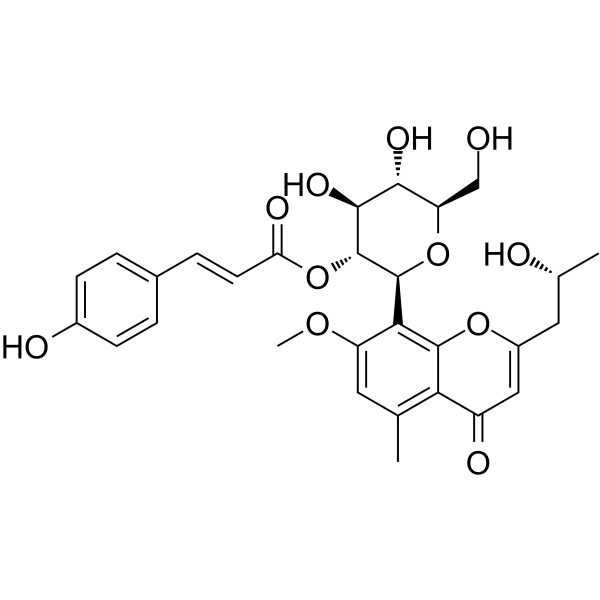
Aloeresin D (Standard) is the analytical standard of Aloeresin D. This product is intended for research and analytical applications. Aloeresin D is a chromone glycoside isolated from Aloe vera, inhibits β-Secretase (BACE1) activity, with an IC50 of 39 μM .
|
-
- HY-16759A
-
|
MK-8931 TFA
|
Beta-secretase
|
Neurological Disease
|
|
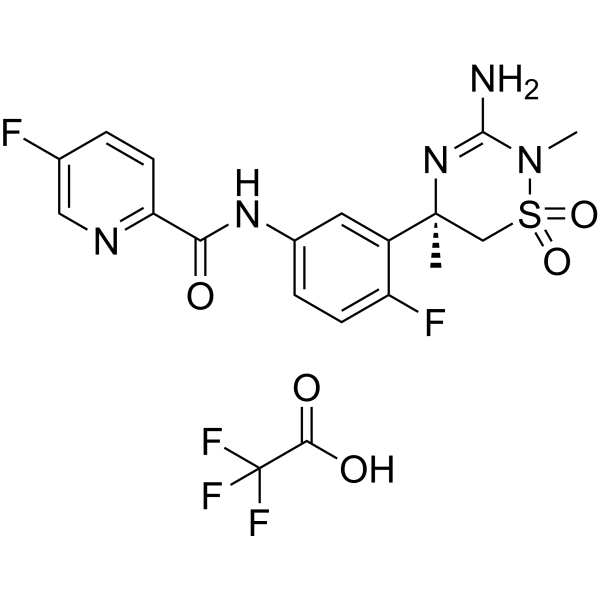
Verubecestat (MK-8931) TFA is an orally active, high-affinity BACE1 and BACE2 inhibitor with Ki values of 2.2 nM and 0.38 nM. Verubecestat TFA effectively reduces Aβ40 and has the potential for Alzheimer's Disease .
|
-
- HY-114234
-
|
|
Beta-secretase
Amyloid-β
|
Neurological Disease
|
|
TAK-070 hydrochloride hydrate is a noncompetitive and orally active BACE1 inhibitor (IC50 = 3.15 μM). TAK-070 hydrochloride hydrate can be used for research of Alzheimer’s disease (AD). TAK-070 hydrochloride hydrate inhibits brain levels of soluble Aβ, and improves cognitive impairments in AD model .
|
-
- HY-163514
-
|
|
Cholinesterase (ChE)
DYRK
|
Neurological Disease
|
|
hAChE-IN-8 (Compound S-12) is a orally effective and selective inhibitor of hAChE (IC50=0.486 μM). hAChE-IN-8 also inhibits BACE-1 (IC50=0.542 μM), and does not inhibit Dyrk1A (IC50>10 μM). hAChE-IN-8 can reduce Aβ aggregation, has good blood-brain barrier penetration. hAChE-IN-8 is mainly used in Alzheimer's disease research .
|
-
- HY-155304
-
|
|
Cholinesterase (ChE)
|
Neurological Disease
|
|
BuChE-IN-8 (compound 19c) is a butyrylcholinesterase (BuChE) inhibitor with an IC50 of 559 nM. BuChE-IN-8 possesses human β-secretase (BACE1) and Aβ40 aggregation inhibitory activities. BuChE-IN-8 has significant antiamnesic properties .
|
-
- HY-149211
-
|
|
Cholinesterase (ChE)
Beta-secretase
Amyloid-β
|
Neurological Disease
|
|
AChE/BChE-IN-12 (compound 10b), a 3,5-dimethoxy analogue, is a potent AChE, BChE, and β-secretase-1 (BACE-1) inhibitor, with IC50 values of 2.57, 3.26, and 10.65 μM, respectively. AChE/BChE-IN-12 crosses the blood-brain barrier via passive diffusion and inhibits the self-aggregation of amyloid-β monomers. AChE/BChE-IN-12 can be used for Alzheimer’s disease (AD) research .
|
-
- HY-P2713A
-
|
|
Beta-secretase
|
Neurological Disease
|
|
OM99-2 TFA, an eight residue peptidomimetic, tight-binding inhibitor of human brain memapsin 2 with a Ki value of 9.58 nM . OM99-2 TFA is significantly advanced the development of BACE1 inhibitor . OM99-2 has the potential for the research of the Alzheimer's disease .
|
-
- HY-155305
-
-
- HY-N0231R
-
|
Broussochalcone B (Standard)
|
Reference Standards
Bacterial
Antibiotic
NF-κB
PERK
Apoptosis
Autophagy
|
Infection
Neurological Disease
Inflammation/Immunology
Cancer
|
|
Bavachalcone (Standard) is the analytical standard of Bavachalcone. This product is intended for research and analytical applications. Bavachalcone is a potent inducer of apoptosis. Bavachalcone exerts anticancer activity by promoting autophagy and apoptosis in HepG2 cells. Bavachalcone acts as an anti-neuroinflammatory and antidepressant through the NF-κB pathway. Bavachalcone inhibits osteoclasts by interfering with ERK and Akt signaling pathways and the expression of c-Fos and NFATc1. Bavachalcone exhibits a significant inhibitory effect on baculovirus-expressed BACE-1 in vitro .
|
-
- HY-114234A
-
|
|
Beta-secretase
Amyloid-β
|
Neurological Disease
|
|
TAK-070 Free base is a noncompetitive and orally active BACE1 inhibitor (IC50: 3.15 μM). TAK-070 Free base can be used for research of Alzheimer’s disease (AD). TAK-070 Free base inhibits brain levels of soluble Aβ, and improves cognitive impairments in AD model .
|
-
- HY-163885
-
SSZ
1 Publications Verification
|
Cholinesterase (ChE)
Beta-secretase
γ-secretase
|
Neurological Disease
|
|
SSZ is a multi-target inhibitor, which targets multiple pathological mechanisms of Alzheimer's disease (AD). SSZ targets acetylcholinesterase, butyrylcholinesterase, β-site amyloid precursor protein cleavage enzyme 1 (BACE1), and γ-secretase. SSZ ameliorates Alzheimer’s diseases and exhibits neuroprotective effect in mice .
|
-
- HY-16759R
-
|
MK-8931 (Standard)
|
Beta-secretase
Reference Standards
|
Neurological Disease
|
|
Verubecestat (Standard) is the analytical standard of Verubecestat. This product is intended for research and analytical applications. Verubecestat (MK-8931) is an orally active, high-affinity BACE1 and BACE2 inhibitor with Ki values of 2.2 nM and 0.38 nM. Verubecestat effectively reduces Aβ40 and has the potential for Alzheimer's Disease .
|
-
- HY-157527
-
|
|
Cholinesterase (ChE)
Beta-secretase
|
Neurological Disease
|
|
hAChE-IN-7 (compound 5s) is a mixed inhibitor affecting both the catalytic active site (CAS) and peripheral anionic site (PAS) of hAChE. hAChE-IN-7 displays the balanced inhibitory effect on hAChE (IC50=69.8 nM) and hBuChE (IC50=68.0 nM), and exhibits inhibitory activity against β-secretase-1 (BACE-1) (IC50=3.6 μM). hAChE-IN-7 has the potential for Alzheimer's disease (AD) research .
|
-
- HY-155085
-
|
|
Monoamine Oxidase
Amyloid-β
Cholinesterase (ChE)
|
Neurological Disease
|
|
hAChE-IN-3 (compounds 5c) is a potent and blood-brain barrier permeable AChE, BuChE, MAO-B-IN-1 and BACE-1 inhibitor, with IC50 values of 0.44, 0.08, 5.15 and 0.38 μM, respectively. hAChE-IN-3 has antioxidant activity and metal chelating ability. In addition, hAChE-IN-3 can bind to peripheral anion sites, and affect β amyloid and reduce Alzheimer's-associated neurodegeneration. hAChE-IN-3 has the potential for the research of Alzheimer's disease .
|
-
- HY-100740C
-
|
(1α,1'S,4β)-AZD3293; (1α,1'S,4β)-LY3314814
|
Beta-secretase
|
Neurological Disease
|
|
(1α,1'S,4β)-Lanabecestat ((1α,1'S,4β)-AZD3293) a less active enantiomer of Lanabecestat. Lanabecestat is a potent, orally active and blood-brain barrier penetrating BACE1 inhibitor with a Ki of 0.4 nM .
|
-
- HY-18112
-
|
|
Beta-secretase
|
Neurological Disease
|
|
AZ-4217 is an inhibitor for β-site amyloid precursor protein cleavage enzyme 1 (BACE1), with IC50 of 160 pM in human SH-SY5Y cells. AZ-4217 reduces amyloid deposition in Tg2576 mouse models, and is used for Alzheimer’s Disease research .
|
-
- HY-129133
-
|
|
Drug Isomer
|
Others
|
|
cis-Miyabenol C is an isomer of the resveratrol trimer Miyabenol C, which can be isolated from grape herbs. Miyabenol C is an inhibitor of β-amyloid (Aβ) and amyloid β precursor protein (APP) in Alzheimer's disease model mice, and inhibit β-secretase activity without changing the protein level of β-secretase BACE1 .
|
-
- HY-103268
-
|
|
Potassium Channel
|
Neurological Disease
|
|
(Rac)-AZD3839 is an orally active beta-amyloid precursor protein cleaving enzyme (BACE1) inhibitor that is blood-brain barrier-permeable. (Rac)-AZD3839 has an affinity for the human ether-a-go-go related gene (hERG) ion channel. (Rac)-AZD3839 can be used in the research of Alzheimer's disease .
|
-
- HY-100740A
-
|
AZD-3293 hydrochloride; LY3314814 hydrochloride
|
Beta-secretase
|
Neurological Disease
|
|
Lanabecestat (AZD3293; LY3314814) hydrochloride is a potent BACE1 inhibitor that has been investigated for its potential as a modifying treatment for Alzheimer's disease. Lanabecestat (hydrochloride) demonstrated significant dose- and time-dependent reductions in concentrations of amyloid beta peptides in plasma, cerebrospinal fluid, and brain. Lanabecestat (hydrochloride) was also shown to produce reductions in Aβ neuritic plaque burden without demonstrating clinical benefits or slowing the progression of Alzheimer's disease pathophysiology.
|
-
- HY-N0249R
-
|
|
Reference Standards
Amyloid-β
|
Neurological Disease
|
|
Saikosaponin C (Standard) is the analytical standard of Saikosaponin C. This product is intended for research and analytical applications. Saikosaponin C is a bioactive component found in radix bupleuri, targets amyloid beta and tau in Alzheimer's disease. Saikosaponin C inhibits the secretion of both Aβ1-40 and Aβ1-42, and suppresses abnormal tau phosphorylation, but shows no effect on BACE1 activity and expression .
|
-
- HY-128774
-
|
|
Beta-secretase
|
Neurological Disease
|
|
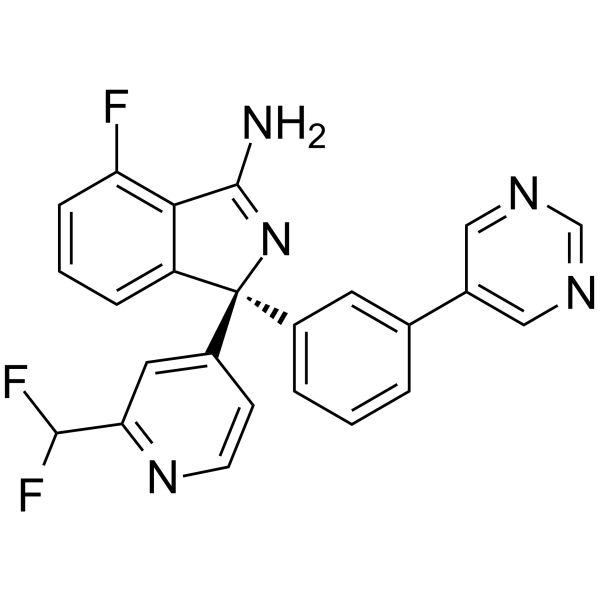
AM-6494 is a potent and orally active BACE1 (efficacious β-site amyloid precursor protein cleaving enzyme 1) inhibitor (IC50=0.4 nM) with in vivo selectivity over BACE2 (IC50=18.6 nM) . AM-6494 is a click chemistry reagent, it contains an Alkyne group and can undergo copper-catalyzed azide-alkyne cycloaddition (CuAAc) with molecules containing Azide groups.
|
-
- HY-115973
-
|
|
Cholinesterase (ChE)
|
Neurological Disease
|
|
AChE-IN-11 (compound 5C) is a triple inhibitor targeting AChE/MAO-B/BACE1 (IC50=7.9 μM, 9.9 μM, 8.3 μM, respectively) and a selective metal ion chelators. AChE-IN-11 exhibits mixed AChE inhibitory effects, binding to both CAS and PAS of AChE. AChE-IN-11 also exhibits good antioxidant activity (ORAC=2.5 eq) and potential neuroprotective effects in Alzheimer's disease .
|
-
- HY-11014
-
|
|
Beta-secretase
Cathepsin
|
Neurological Disease
|
|
NB-216 is an orally active and brain-penetrant BACE-1 inhibitor (IC50 = 17 nM). NB-216 has a strong inhibitory effect on cathepsin D (IC50 = 1 nM) and cathepsin E (IC50 = 0.4 nM). NB-216 can be used for the study of Alzheimer's disease .
|
-
- HY-100182R
-
|
|
Beta-secretase
Reference Standards
|
Neurological Disease
|
|
BACE1-IN-1 (Standard) is the analytical standard of BACE1-IN-1 (HY-100182). This product is intended for research and analytical applications. BACE1-IN-1 is a potent and highly brain penetrant BACE1 inhibitor with IC50s of 32 and 47 nM for human BACE1 and BACE2, respectively.
|
-
- HY-10133R
-
|
|
Beta-secretase
Reference Standards
|
Neurological Disease
|
|
β-Secretase Inhibitor IV (Standard) is the analytical standard of β-Secretase Inhibitor IV (HY-10133). This product is intended for research and analytical applications. β-Secretase Inhibitor IV is a potent, cell-active BACE-1 inhibitor with IC50s of 15.6 and 16.3nM under BACE-1 concentrations of 2 nM and 100 pM, respectively.
|
-
- HY-162933
-
|
|
Cholinesterase (ChE)
|
Metabolic Disease
|
|
AChE-IN-77 (5d) is a potent AChE and BACE1 inhibitor, with IC50 values of 29.46 µM ans 2.85 µM for AChE and BACE1 in vitro metal chelating ability against Fe 3+ .
|
-
- HY-N18261
-
|
|
Beta-secretase
|
Neurological Disease
|
|
8-geranyloxy-5-methoxypsoralen is a BACE1 inhibitor with an IC50 of 11.1 μM. 8-geranyloxy-5-methoxypsoralen potently inhibits BACE1 activity. 8-Geranyloxy-5-methoxypsoralen can be used for the research of Alzheimer's disease .
|
-
- HY-109055R
-
|
E2609 (Standard)
|
Reference Standards
Beta-secretase
|
Neurological Disease
|
|
Elenbecestat (Standard) is the analytical standard of Elenbecestat (HY-109055). This product is intended for research and analytical applications. Elenbecestat (E2609) is a potent, orally bioavailable and BBB-penetrant BACE-1 inhibitor. Elenbecestat has the potential for Alzheimer's disease (AD) research .
|
-
- HY-116580
-
|
|
Endogenous Metabolite
|
Neurological Disease
|
|
AZD-3289 is a potent BACE1 inhibitor with potential Alzheimer's disease inhibitory activity. The application of AZD-3289 is intended to slow the pathological progression of Alzheimer's disease by inhibiting the production of β-amyloid protein. The development of AZD-3289 responds to the need to reduce neurodegenerative changes associated with Alzheimer's disease. As a BACE1 inhibitor, AZD-3289 can effectively reduce the accumulation of β-amyloid peptide in the brain, which may improve cognitive function .
|
-
- HY-183375
-
|
|
|
Neurological Disease
|
|
AChE/BuChE/BACE-1-IN-1 is a blood-brain barrier-permeable multi-target inhibitor of AChE/BuChE/BACE, with IC50 values of 0.387 μM, 0.430 μM, and 0.531 μM against AChE, BuChE, and BACE-1, respectively. AChE/BuChE/BACE-1-IN-1 reduces the aggregation of β-amyloid protein (Aβ) and hyperphosphorylated tau protein (p-tau). AChE/BuChE/BACE-1-IN-1 can be used for the research of Alzheimer's disease .
|
-
- HY-10472R
-
|
|
Reference Standards
Beta-secretase
|
Neurological Disease
|
|
LY2811376 (Standard) is the analytical standard of LY2811376 (HY-10472). This product is intended for research and analytical applications. LY2811376 is the first orally available non-peptidic β-secretase (BACE1) inhibitor with IC50 of 239 nM-249 nM, that acts to decrease Aβ secretion with EC50 of 300 nM, and demonstrates to have 10-fold selectivity towards BACE1 over BACE2, and more than 50-fold inhibition over other aspartic proteases including cathepsin D, pepsin, or renin.
|
-
- HY-125405
-
|
|
Beta-secretase
Amyloid-β
|
Neurological Disease
|
|
AZ3971 is an orally active, blood-brain barrier permeable BACE1 inhibitor that does not affect the activity of γ-secretase. AZ3971 reduces the production of Aβ. AZ3971 can be used for the research of Alzheimer's disease .
|
-
- HY-182429
-
|
|
Beta-secretase
Cathepsin
Amyloid-β
|
Neurological Disease
|
|
NB-533 is an orally active and brain-penetrant BACE-1 inhibitor with a human IC50 of 0.002 μM. NB-533 also inhibits human cathepsin D with an IC50 of 0.001 μM. NB-533 inhibits amyloidogenic amyloid precursor protein (APP) processing and reduces Aβ40 release. NB-533 reduces brain levels of APP metabolite C99 and Aβ40 in transgenic mice. NB-533 can be used for the research of Alzheimer’s disease .
|
-
- HY-183796
-
|
|
Cholinesterase (ChE)
Beta-secretase
Amyloid-β
FAP
NOD-like Receptor (NLR)
NF-κB
|
Neurological Disease
|
|
GFAP/NF-κB/APOE/NLRP3-IN-1 (Compound 11a) is an orally active, blood-brain barrier-permeable multi-target inhibitor with an IC50 of 3.50 nM against Acetylcholinesterase. GFAP/NF-κB/APOE/NLRP3-IN-1 inhibits BACE-1 with an IC50 of 14.61 nM. GFAP/NF-κB/APOE/NLRP3-IN-1 inhibits Aβ1-42 aggregation with an IC50 of 8.63 μM. GFAP/NF-κB/APOE/NLRP3-IN-1 reduces the levels of GFAP, NLRP3 inflammasome, NF-κB and APOE. GFAP/NF-κB/APOE/NLRP3-IN-1 is applicable for the research of Alzheimer's disease and neuroblastoma .
|
-
- HY-W347202
-
|
|
COX
|
Neurological Disease
Inflammation/Immunology
|
|
N-Caffeoyl serotonin is a COX-2 inhibitor, with IC50 and Kᵢ values of 42.5 μM and 65.5 μM against COX-2, respectively. N-Caffeoyl serotonin exhibits weak inhibitory activity against BACE1, with an IC50 > 400 μM. N-Caffeoyl serotonin has free radical scavenging activity. N-Caffeoyl serotonin can be used in the research of allergic diseases and Alzheimer's disease .
|
-
- HY-N6865
-
-
- HY-N13064
-
|
|
Drug Derivative
Beta-secretase
Amyloid-β
|
Neurological Disease
|
|
2,2′,4,4′-Tetrahydroxychalcone (Compound 18) is a selective and potent BACE1 inhibitor with an IC50 of 0.62 μM. 2,2′,4,4′-Tetrahydroxychalcone is a derivative of Isoliquiritigenin (HY-N0102) found in Glycyrrhiza uralensis. 2,2′,4,4′-Tetrahydroxychalcone can block the β-cutting step of amyloid precursor protein (APP), thereby reducing the production of β-amyloid (Aβ) peptide. 2,2′,4,4′-Tetrahydroxychalcone can be used for research of Alzheimer’s disease .
|
-
- HY-N0631
-
Cornuside
Maximum Cited Publications
6 Publications Verification
|
p38 MAPK
NF-κB
JNK
Cholinesterase (ChE)
Acyltransferase
NO Synthase
Interleukin Related
TNF Receptor
Prostaglandin Receptor
ERK
COX
|
Neurological Disease
Inflammation/Immunology
|
|
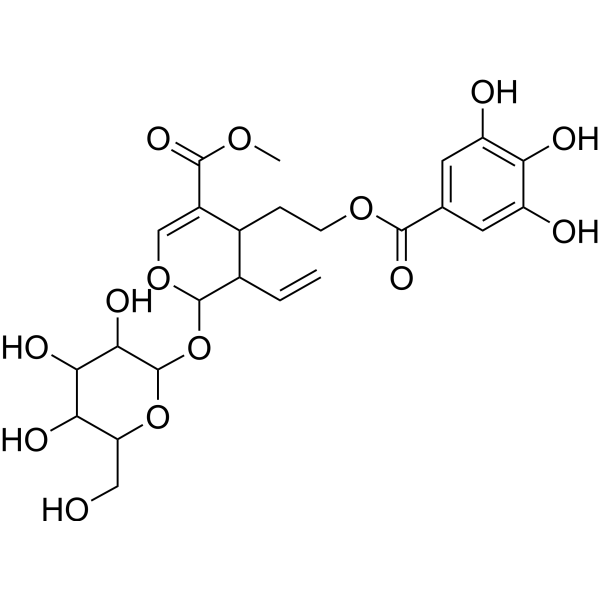
Cornuside is an iridoid glycoside with anti-allergic, anti-inflammatory, and neuroprotective activities. Cornuside exerts anti-allergic activity by downregulating the p38 MAPK, JNK, and NF-κB signaling pathways, and inhibits IgE-mediated histamine release from mast cells. Cornuside improves cognitive impairment in mice by inhibiting BACE1 activity (IC50 = 55.84 μg/mL) and enhancing ChAT activity. Cornuside inhibits LPS (HY-D1056)-induced inflammatory mediators, including iNOS, COX-2, PGE2, TNF-α, IL-6, and IL-1β, by suppressing NF-κB activation .
|
-
- HY-N0226
-
|
|
Cholinesterase (ChE)
Beta-secretase
|
Neurological Disease
Metabolic Disease
|
|
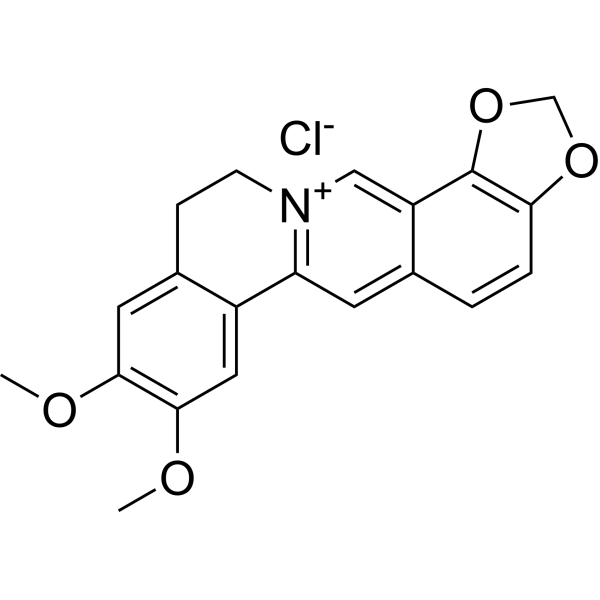
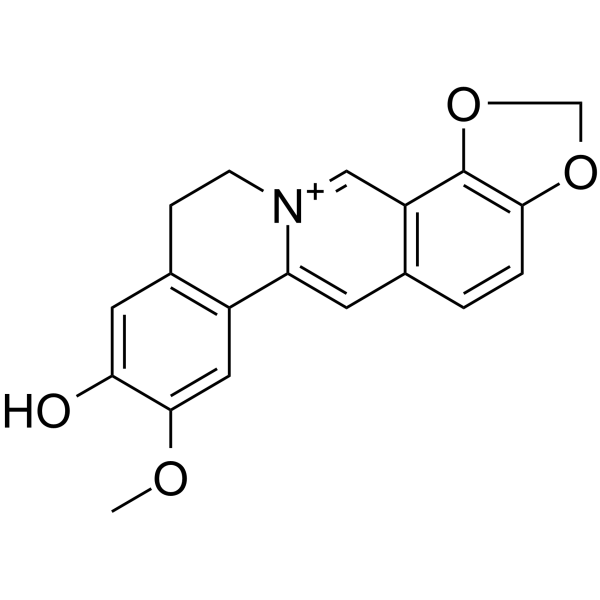
Epiberberine is an alkaloid isolated from Coptis chinensis, acts as a potent AChE and BChE inhibitor, and a non-competitive BACE1 inhibitor, with IC50s of 1.07, 6.03 and 8.55 μM, respectively. Epiberberine has antioxidant activity, with peroxynitrite ONOO - scavenging effect (IC50, 16.83 μM), and can be used for the research of Alzheimer disease . Epiberberine inhibits the early stage of differentiation of 3T3-L1 preadipocytes, downregulates the Raf/MEK1/2/ERK1/2 and AMPKα/Akt pathways . Epiberberinecan be used for the research of diabetic disease .
|
-
- HY-N0226A
-
|
|
Cholinesterase (ChE)
Beta-secretase
Reactive Oxygen Species (ROS)
|
Neurological Disease
Metabolic Disease
|
|
Epiberberine chloride is an alkaloid isolated from Coptis chinensis, acts as a potent AChE and BChE inhibitor, and a non-competitive BACE1 inhibitor, with IC50s of 1.07, 6.03 and 8.55 μM, respectively. Epiberberine chloride has antioxidant activity, with peroxynitrite ONOO - scavenging effect (IC50, 16.83 μM), and may protect against Alzheimer disease . Epiberberine chloride inhibits the early stage of differentiation of 3T3-L1 preadipocytes, downregulates the Raf/MEK1/2/ERK1/2 and AMPKα/Akt pathways . Epiberberine has the potential effect in the research of diabetic disease .
|
-
- HY-175661
-
|
|
Opioid Receptor
Beta-secretase
|
Neurological Disease
|
|
SRI-22136 is a Delta Opioid Receptor (DOR) antagonist that can cross blood-brain barrier with a IC50 of 0.42 nM. SRI-22136 does not have agonistic activity but antagonistic activity against DOR, MOR (IC50 = 370 nM), KOR (IC50 = 54 nM) and can avoid addiction/aversion effects. SRI-22136 can effectively inhibit the BACE1 activity induced by DADLE (a DOR agonist) (HY-105343) (IC50 = 120 nM). SRI-22136 prevents completely Alzheimer’s-like pathology in mouse model. SRI-22136 can used for the study of Alzheimer’s disease .
|
-
- HY-N0631R
-
|
|
Reference Standards
Prostaglandin Receptor
ERK
p38 MAPK
Acyltransferase
TNF Receptor
COX
Cholinesterase (ChE)
Interleukin Related
JNK
NO Synthase
NF-κB
|
Neurological Disease
Inflammation/Immunology
|
|
Cornuside (Standard) is the analytical standard of Cornuside (HY-N0631). This product is intended for research and analytical applications. Cornuside is an iridoid glycoside with anti-allergic, anti-inflammatory, and neuroprotective activities. Cornuside exerts anti-allergic activity by downregulating the p38 MAPK, JNK, and NF-κB signaling pathways, and inhibits IgE-mediated histamine release from mast cells. Cornuside improves cognitive impairment in mice by inhibiting BACE1 activity (IC50 = 55.84 μg/mL) and enhancing ChAT activity. Cornuside inhibits LPS (HY-D1056)-induced inflammatory mediators, including iNOS, COX-2, PGE2, TNF-α, IL-6, and IL-1β, by suppressing NF-κB activation.
|
-
- HY-100740CR
-
|
(1α,1'S,4β)-AZD3293 (Standard); (1α,1'S,4β)-LY3314814 (Standard)
|
Beta-secretase
Reference Standards
|
Neurological Disease
|
|
(1α,1'S,4β)-Lanabecestat (Standard) is the analytical standard of (1α,1'S,4β)-Lanabecestat (HY-100740C). This product is intended for research and analytical applications. (1α,1'S,4β)-Lanabecestat ((1α,1'S,4β)-AZD3293) a less active enantiomer of Lanabecestat. Lanabecestat is a potent, orally active and blood-brain barrier penetrating BACE1 inhibitor with a Ki of 0.4 nM .
|
-
- HY-N1255A
-
|
(-)-Scoulerine hydrochloride; Discretamine hydrochloride
|
Apoptosis
PI3K
Akt
mTOR
Adrenergic Receptor
GABA Receptor
Beta-secretase
Bcl-2 Family
|
Cancer
|
|
Scoulerine ((-)-Scoulerine; Discretamine) hydrochloride is a multi-target inhibitor with anti-tumor and antioxidant activities. Scoulerine hydrochloride mainly targets the PI3K/Akt/mTOR signaling axis and α1D-adrenergic receptor, disrupts microtubule structure, and induces cell cycle arrest and apoptosis. Scoulerine hydrochloride effectively inhibits mitochondrial dehydrogenase activity, targets GABA receptors and BACE1, and suppresses the proliferation, migration, invasion, epithelial-mesenchymal transition and stem cell properties of cancer cells. Scoulerine hydrochloride also exhibits multiple pharmacological activities including anti-Plasmodium falciparum, antibacterial, antiemetic and antitussive effects, and regulates endoplasmic reticulum stress and mitochondrial function (modulates Bax, Bcl-2 and cytochrome c). Scoulerine hydrochloride is applicable to research related to leukemia, ovarian cancer, and colorectal cancer .
|
-
- HY-N1255
-
|
(-)-Scoulerine; Discretamine
|
Bcl-2 Family
Apoptosis
mTOR
GABA Receptor
PI3K
Adrenergic Receptor
Beta-secretase
Akt
|
Cancer
|
|
Scoulerine ((-)-Scoulerine; Discretamine) hydrochloride is a multi-target inhibitor with anti-tumor and antioxidant activities. Scoulerine mainly targets the PI3K/Akt/mTOR signaling axis and α1D-adrenergic receptor, disrupts microtubule structure, and induces cell cycle arrest and apoptosis. Scoulerine effectively inhibits mitochondrial dehydrogenase activity, targets GABA receptors and BACE1, and suppresses the proliferation, migration, invasion, epithelial-mesenchymal transition and stem cell properties of cancer cells. Scoulerine also exhibits multiple pharmacological activities including anti-Plasmodium falciparum, antibacterial, antiemetic and antitussive effects, and regulates endoplasmic reticulum stress and mitochondrial function (modulates Bax, Bcl-2 and cytochrome c). Scoulerine is applicable to research related to leukemia, ovarian cancer, and colorectal cancer .
|
-
- HY-181160
-
|
|
JNK
Wnt
β-catenin
Amyloid-β
Reactive Oxygen Species (ROS)
Beclin1
GSK-3
Beta-secretase
|
Neurological Disease
|
|
JNK3/Wnt/β-catenin modulator-1 is a brain-penetrant JNK3 inhibitor and Wnt/β-catenin activator. JNK3/Wnt/β-catenin modulator-1 decreases Aβ1-42 production and reduced ROS generation. JNK3/Wnt/β-catenin modulator-1 inhibits the activation of JNK and Puma, promotes Beclin-1 expression, reduces GSK-3β and BACE1 expression and activates Wnt/β-catenin signaling. JNK3/Wnt/β-catenin modulator-1 improves cognitive and memory performance, attenuates histopathological brain damage, preserves structure of hippocampal pyramidal cells and cerebral cortical neurons. JNK3/Wnt/β-catenin modulator-1 can be used for the research of Alzheimer's disease .
|
-
| Cat. No. |
Product Name |
Type |
-
- HY-15908
-
|
Disodium bicinchoninate
|
Biochemical Assay Reagents
|
|
BCA (Disodium bicinchoninate) is an orally active and non-competitive Beta-site amyloid precursor protein cleaving enzyme 1 (BACE1) inhibitor with an IC50 value of 28 µM, a Ki value of 43 µM. BCA shows anticancer activity. BCA has the potential for the research of Alzheimer's disease (AD) .
|
| Cat. No. |
Product Name |
Target |
Research Area |
-
- HY-P1962
-
|
[Asn670, Sta671, Val672]-Amyloid β Peptide (662-675)
|
Beta-secretase
|
Neurological Disease
|
|
β-Secretase inhibitor ([Asn670, Sta671, Val672]-Amyloid β Peptide (662-675)) is a β-secretase and BACE1 inhibitor (IC50: 25 nM for β-secretase) .
|
-
- HY-P2713
-
|
|
Beta-secretase
|
Neurological Disease
|
|
OM99-2, an eight residue peptidomimetic, tight-binding inhibitor of human brain memapsin 2 with a Ki value of 9.58 nM . OM99-2 is significantly advanced the development of BACE1 inhibitor . OM99-2 has the potential for the research of the Alzheimer's disease .
|
-
- HY-P3426
-
|
|
Beta-secretase
|
Cancer
|
|
BACE1-IN-10 is a potent BACE1 Inhibitor. BACE1-IN-10 shows sub-micromolar activity against recombinant BACE1 (rBACE1) .
|
-
- HY-P10799
-
-
- HY-P2713A
-
|
|
Beta-secretase
|
Neurological Disease
|
|
OM99-2 TFA, an eight residue peptidomimetic, tight-binding inhibitor of human brain memapsin 2 with a Ki value of 9.58 nM . OM99-2 TFA is significantly advanced the development of BACE1 inhibitor . OM99-2 has the potential for the research of the Alzheimer's disease .
|
| Cat. No. |
Product Name |
Category |
Target |
Chemical Structure |
-
- HY-N0226A
-
-
-
- HY-N0631
-
Cornuside
Maximum Cited Publications
6 Publications Verification
|
Structural Classification
Iridoids
Cornaceae
Classification of Application Fields
Cornus officinalis Sieb. et Zucc.
Terpenoids
Phenols
Polyphenols
Plants
Inflammation/Immunology
Disease Research Fields
Source Classification
|
p38 MAPK
NF-κB
JNK
Cholinesterase (ChE)
Acyltransferase
NO Synthase
Interleukin Related
TNF Receptor
Prostaglandin Receptor
ERK
COX
|
|
Cornuside is an iridoid glycoside with anti-allergic, anti-inflammatory, and neuroprotective activities. Cornuside exerts anti-allergic activity by downregulating the p38 MAPK, JNK, and NF-κB signaling pathways, and inhibits IgE-mediated histamine release from mast cells. Cornuside improves cognitive impairment in mice by inhibiting BACE1 activity (IC50 = 55.84 μg/mL) and enhancing ChAT activity. Cornuside inhibits LPS (HY-D1056)-induced inflammatory mediators, including iNOS, COX-2, PGE2, TNF-α, IL-6, and IL-1β, by suppressing NF-κB activation .
|
-
-
- HY-N0226
-
-
-
- HY-N0231
-
-
-
- HY-N1255
-
|
(-)-Scoulerine; Discretamine
|
Alkaloids
Structural Classification
other families
Classification of Application Fields
Phenols
Polyphenols
Plants
Isoquinoline Alkaloids
Disease Research Fields
Source Classification
Cancer
|
Bcl-2 Family
Apoptosis
mTOR
GABA Receptor
PI3K
Adrenergic Receptor
Beta-secretase
Akt
|
|
Scoulerine ((-)-Scoulerine; Discretamine) hydrochloride is a multi-target inhibitor with anti-tumor and antioxidant activities. Scoulerine mainly targets the PI3K/Akt/mTOR signaling axis and α1D-adrenergic receptor, disrupts microtubule structure, and induces cell cycle arrest and apoptosis. Scoulerine effectively inhibits mitochondrial dehydrogenase activity, targets GABA receptors and BACE1, and suppresses the proliferation, migration, invasion, epithelial-mesenchymal transition and stem cell properties of cancer cells. Scoulerine also exhibits multiple pharmacological activities including anti-Plasmodium falciparum, antibacterial, antiemetic and antitussive effects, and regulates endoplasmic reticulum stress and mitochondrial function (modulates Bax, Bcl-2 and cytochrome c). Scoulerine is applicable to research related to leukemia, ovarian cancer, and colorectal cancer .
|
-
-
- HY-N1280
-
-
-
- HY-N2215
-
-
-
- HY-W015515
-
-
-
- HY-N2284
-
|
|
Flavonols
Flavonoids
Classification of Application Fields
Leguminosae
Phenols
Polyphenols
Sophora flavescens Aiton
Plants
Disease Research Fields
Source Classification
Cancer
|
Cholinesterase (ChE)
Beta-secretase
Phosphodiesterase (PDE)
|
|
Sophoflavescenol is a prenylated flavonol, which shows great inhibitory activity with IC50 of 0.013 μM against Phosphodiesterase 5 (PDE5), and also inhibits RLAR, HRAR, AGE, BACE1, AChE and BChE with IC50s of 0.30 μM, 0.17 μM, 17.89 μg/mL, 10.98 μM, 8.37 μM and 8.21 μM, respectively.
|
-
-
- HY-108966
-
-
-
- HY-W015515R
-
-
-
- HY-N6865
-
-
-
- HY-N3734
-
|
|
Terpenoids
Labiatae
Samanea saman (Jacq.) Merr.
Diterpenoids
Plants
|
Beta-secretase
Phosphatase
|
|
Deoxyneocryptotanshinone, a natural tanshinone, is a high affinity BACE1 (Beta-secretase) inhibitor with an IC50 value of 11.53 μM. Deoxyneocryptotanshinone shows a promising dose-dependent inhibition of protein tyrosine phosphatase 1B (PTP1B) with an IC50 value of 133.5 μM. Deoxyneocryptotanshinone can be used for Alzheimer's disease research .
|
-
-
- HY-N2215R
-
-
-
- HY-N0231R
-
-
-
- HY-129133
-
|
|
Vitis vinifera cv. Zalema
Phenols
Plants
Vitaceae
Source Classification
|
Drug Isomer
|
|
cis-Miyabenol C is an isomer of the resveratrol trimer Miyabenol C, which can be isolated from grape herbs. Miyabenol C is an inhibitor of β-amyloid (Aβ) and amyloid β precursor protein (APP) in Alzheimer's disease model mice, and inhibit β-secretase activity without changing the protein level of β-secretase BACE1 .
|
-
-
- HY-N0249R
-
-
-
- HY-N0631R
-
|
|
Structural Classification
Iridoids
Cornaceae
Cornus officinalis Sieb. et Zucc.
Terpenoids
Phenols
Polyphenols
Plants
Source Classification
|
Reference Standards
Prostaglandin Receptor
ERK
p38 MAPK
Acyltransferase
TNF Receptor
COX
Cholinesterase (ChE)
Interleukin Related
JNK
NO Synthase
NF-κB
|
|
Cornuside (Standard) is the analytical standard of Cornuside (HY-N0631). This product is intended for research and analytical applications. Cornuside is an iridoid glycoside with anti-allergic, anti-inflammatory, and neuroprotective activities. Cornuside exerts anti-allergic activity by downregulating the p38 MAPK, JNK, and NF-κB signaling pathways, and inhibits IgE-mediated histamine release from mast cells. Cornuside improves cognitive impairment in mice by inhibiting BACE1 activity (IC50 = 55.84 μg/mL) and enhancing ChAT activity. Cornuside inhibits LPS (HY-D1056)-induced inflammatory mediators, including iNOS, COX-2, PGE2, TNF-α, IL-6, and IL-1β, by suppressing NF-κB activation.
|
-
-
- HY-N18261
-
-
-
- HY-N13064
-
|
|
Structural Classification
Phenols
Polyphenols
Morus alba L.
Plants
Moraceae
Source Classification
|
Drug Derivative
Beta-secretase
Amyloid-β
|
|
2,2′,4,4′-Tetrahydroxychalcone (Compound 18) is a selective and potent BACE1 inhibitor with an IC50 of 0.62 μM. 2,2′,4,4′-Tetrahydroxychalcone is a derivative of Isoliquiritigenin (HY-N0102) found in Glycyrrhiza uralensis. 2,2′,4,4′-Tetrahydroxychalcone can block the β-cutting step of amyloid precursor protein (APP), thereby reducing the production of β-amyloid (Aβ) peptide. 2,2′,4,4′-Tetrahydroxychalcone can be used for research of Alzheimer’s disease .
|
-
-
- HY-N1255A
-
|
(-)-Scoulerine hydrochloride; Discretamine hydrochloride
|
Structural Classification
Alkaloids
Phenols
Polyphenols
Umbelliferae
Plants
Isoquinoline Alkaloids
Carphephorus corymbosus (Nutt.) Torr. & A.Gray
Source Classification
|
Apoptosis
PI3K
Akt
mTOR
Adrenergic Receptor
GABA Receptor
Beta-secretase
Bcl-2 Family
|
|
Scoulerine ((-)-Scoulerine; Discretamine) hydrochloride is a multi-target inhibitor with anti-tumor and antioxidant activities. Scoulerine hydrochloride mainly targets the PI3K/Akt/mTOR signaling axis and α1D-adrenergic receptor, disrupts microtubule structure, and induces cell cycle arrest and apoptosis. Scoulerine hydrochloride effectively inhibits mitochondrial dehydrogenase activity, targets GABA receptors and BACE1, and suppresses the proliferation, migration, invasion, epithelial-mesenchymal transition and stem cell properties of cancer cells. Scoulerine hydrochloride also exhibits multiple pharmacological activities including anti-Plasmodium falciparum, antibacterial, antiemetic and antitussive effects, and regulates endoplasmic reticulum stress and mitochondrial function (modulates Bax, Bcl-2 and cytochrome c). Scoulerine hydrochloride is applicable to research related to leukemia, ovarian cancer, and colorectal cancer .
|
-
| Cat. No. |
Product Name |
|
Classification |
-
- HY-159151
-
|
|
|
Azide
|
|
BACE1-IN-15 (compound 4j) is a potent inhibitor of BACE1 (β-secretase) that can inhibited the copper ion induced Aβ toxicity, with the EC50 of 0.68 μM .
|
-
- HY-128774
-
|
|
|
Alkynes
|
|
AM-6494 is a potent and orally active BACE1 (efficacious β-site amyloid precursor protein cleaving enzyme 1) inhibitor (IC50=0.4 nM) with in vivo selectivity over BACE2 (IC50=18.6 nM) . AM-6494 is a click chemistry reagent, it contains an Alkyne group and can undergo copper-catalyzed azide-alkyne cycloaddition (CuAAc) with molecules containing Azide groups.
|
Your information is safe with us. * Required Fields.
Inquiry Information
- Product Name:
- Cat. No.:
- Quantity:
- MCE Japan Authorized Agent:

