



Cornuside
Based on 7 publication(s) in Google Scholar
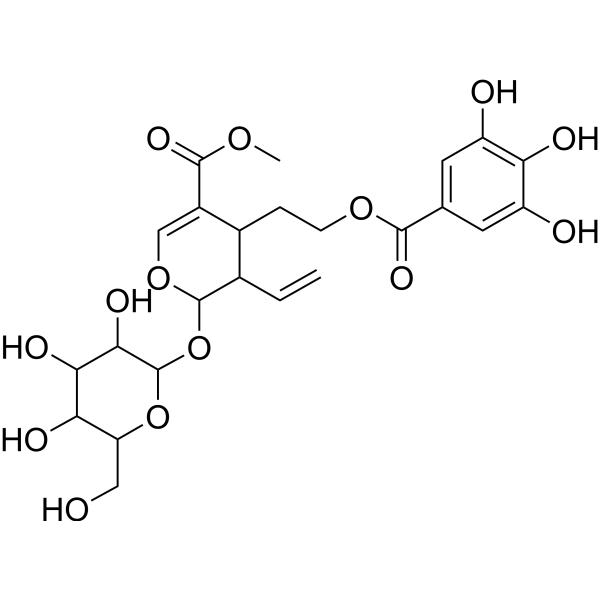
Cornuside is an iridoid glycoside with anti-allergic, anti-inflammatory, and neuroprotective activities. Cornuside exerts anti-allergic activity by downregulating the p38 MAPK, JNK, and NF-κB signaling pathways, and inhibits IgE-mediated histamine release from mast cells. Cornuside improves cognitive impairment in mice by inhibiting BACE1 activity (IC50 = 55.84 μg/mL) and enhancing ChAT activity. Cornuside inhibits LPS (HY-D1056)-induced inflammatory mediators, including iNOS, COX-2, PGE2, TNF-α, IL-6, and IL-1β, by suppressing NF-κB activation.
For research use only. We do not sell to patients.
- Purity : 99.99%
- CAS No.: 131189-57-6
- Formula: C24H30O14
- Molecular Weight:542.49
-
Storage:
4°C, protect from light
* In solvent : -80°C, 6 months; -20°C, 1 month (protect from light)

To place orders, for customer services and technical support, please contact: MedChemExpress USA
Tel: 609-228-6898 E-mail: [email protected] [email protected]


-
 Biological Activity
-
Chemical Information
-
Solvent & Solubility
- Protocols
- Purity & Documentation
- References
-
 Help & FAQs


-
HY-13653
(-)-Epigallocatechin GallateAnticancer Agent -
HY-127090
Muramyl dipeptideImmunoreactive Peptide -
HY-N0191
AndrographolideNF-κB Inhibitor -

HY-N0631R
Cornuside (Standard)Standard of Cornuside -
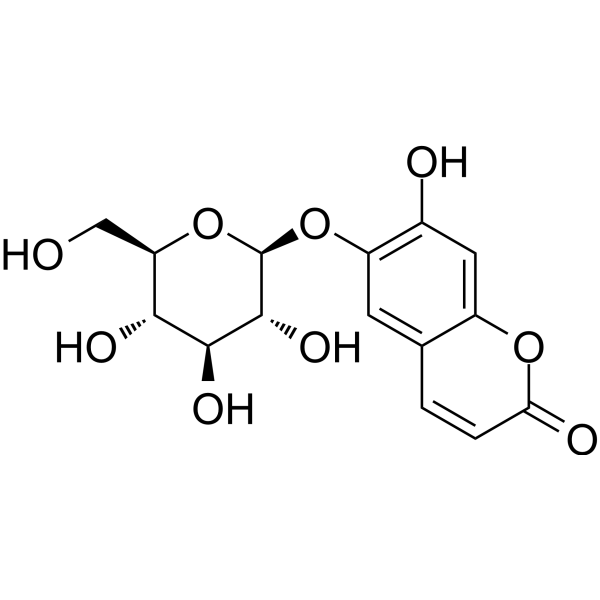
HY-N0188
Esculinp38 MAPK Inhibitor -

HY-N0191R
Andrographolide (Standard)NF-κB Inhibitor -
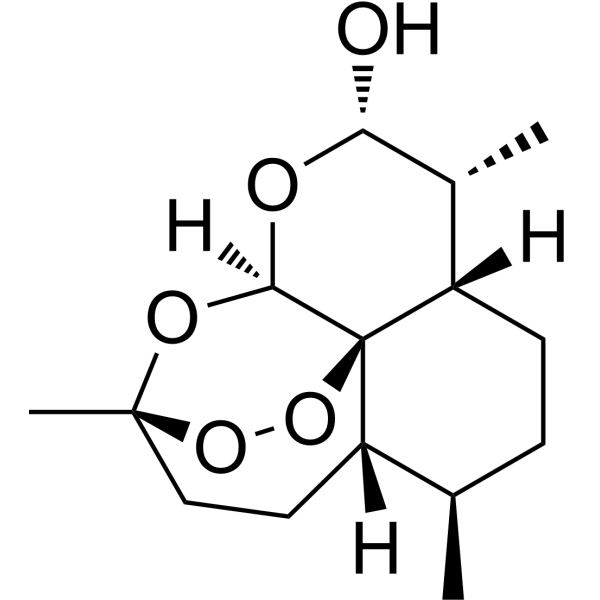
HY-N0176
DihydroartemisininAntimalarial Agent -
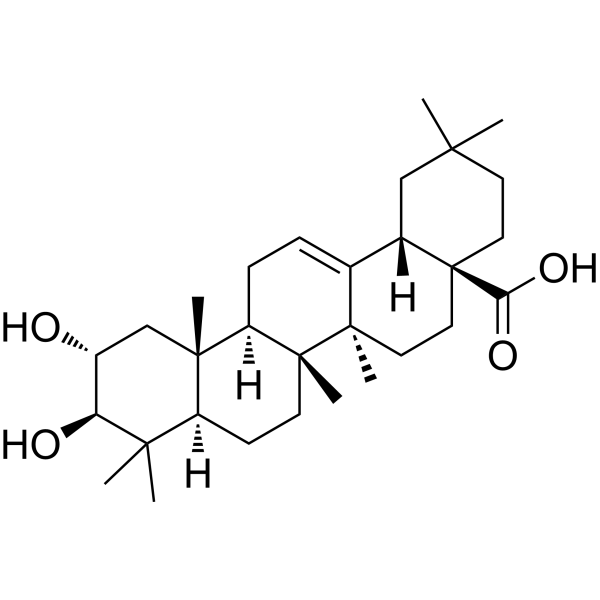
HY-N0629
Maslinic acidBacterial Inhibitor -
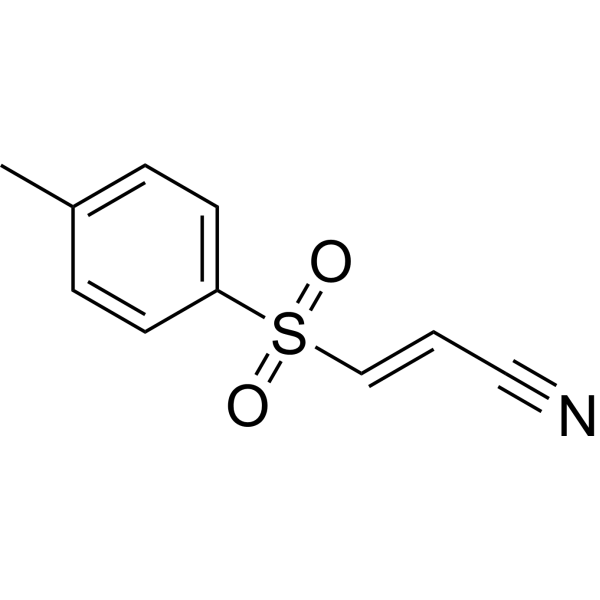
HY-13453
BAY 11-7082IκBα/NF-κB Inhibitor -
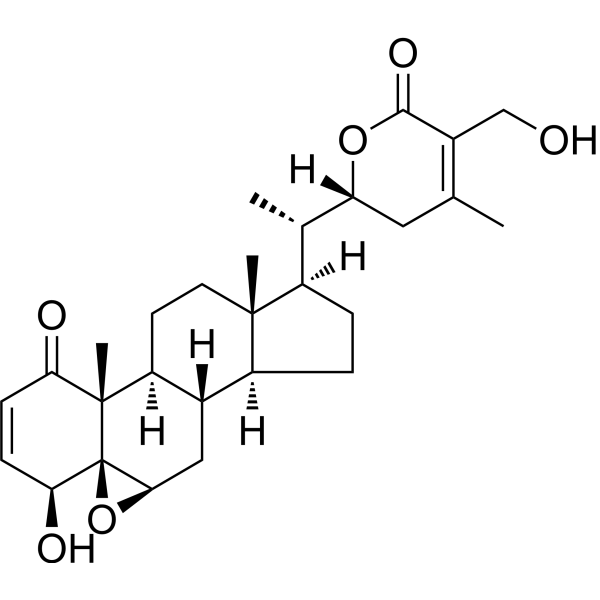
HY-N2065
Withaferin ANF-κB Inhibitor -
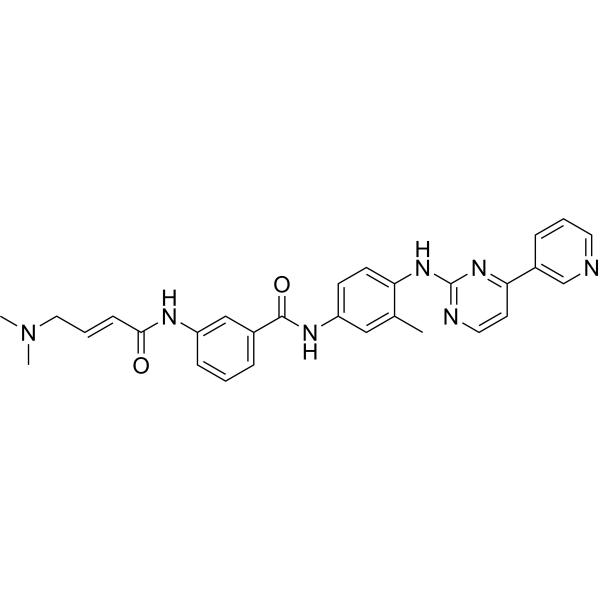
HY-13319
JNK-IN-8JNK Inhibitor -
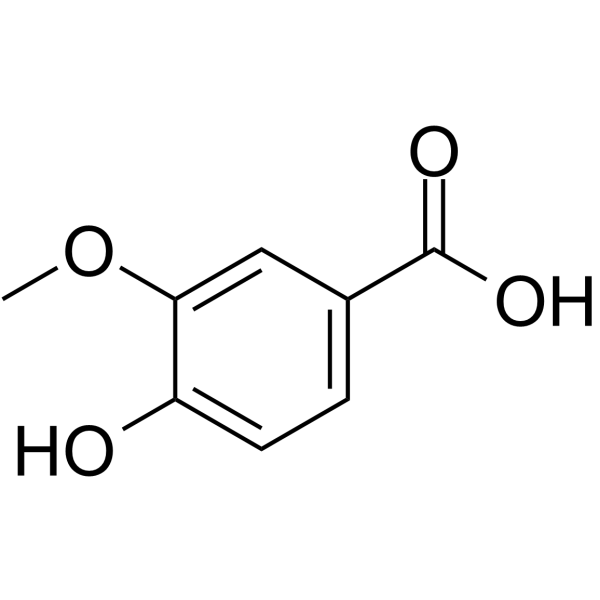
HY-N0708
Vanillic acidFlavouring Agent
Publications Citing Use of MedChemExpress (MCE) Cornuside
More- Phytomedicine. 2023 Nov:120:155077. [Abstract]
- Free Radic Biol Med. 2026 Jun:249:292-307. [Abstract]
- Drug Des Devel Ther. 2026 Jun 3:20:601517. [Abstract]
- Cells. 2026 Feb 3;15(3):287. [Abstract]
- Int Immunopharmacol. 2024 Jun 15:134:112183. [Abstract]
- Naunyn Schmiedebergs Arch Pharmacol. 2025 Feb 13. [Abstract]
- Tohoku J Exp Med. 2025 May 28;266(1):87-95. [Abstract]


Biological Activity
Description
|
p38 MAP kinase |
NF-κB |
JNK1 |
JNK2 |
AChE |
BChE |
iNOS |
IL-6 |
IL-1β |
COX-2 |
In Vitro
Cornuside exhibits free radical scavenging activity in a cell-free DPPH assay with an IC50 of 20 μM[1].
Cornuside protects SH-SY5Y cells from H2O2-induced damage by enhancing endogenous antioxidant defense systems[1].
Cornuside (3-30 μM; 30 min) dose-dependently inhibits anti-DNP IgE-mediated histamine release from rat peritoneal mast cells, with significant effects at 10 and 30 μM[2].
Cornuside (3-30 μM; 4 h) dose-dependently inhibits the production and secretion of TNF-α and IL-6 by PMA/A23187-stimulated human mast cells (HMC-1), with significant effects at 10 and 30 μM[2].
Cornuside (3-30 μM; 1 h pre-incubation, 18 h LPS stimulation) dose-dependently inhibits LPS-induced nitric oxide production in RAW 264.7 cells, with maximum inhibition of 67.6% at 30 μM after 18 hours of LPS stimulation[3].
Cornuside (3-30 μM; 1 h pre-incubation, 1 h LPS stimulation) dose-dependently inhibits LPS-induced nuclear translocation of the NF-κB p65 subunit in RAW 264.7 cells after 1 hour of LPS stimulation, with maximum inhibition at 30 μM[3].
MedChemExpress (MCE) has not independently confirmed the accuracy of these methods. They are for reference only.
-
Cell Line:human mast cells (HMC-1)
-
Concentration:3, 10 and 30 μM
-
Incubation Time:4 h (during PMA/A23187 stimulation)
-
Result:Inhibited protein expression and secretion of TNF-α and IL-6 in a dose-dependent manner, with significant inhibition observed at 10 μM and 30 μM.\n
Inhibited the activation of p38 and JNK in a dose-dependent manner.
Reduced NF-κB p65 levels in the nucleus while increasing NF-κB p65 levels in the cytosol of PMA/A23187-stimulated HMC-1 cells.
-
Cell Line:LPS-stimulated RAW 264.7 macrophage cell line
-
Concentration:3, 10, 30 μM
-
Incubation Time:1 h pre-incubation, followed by 18 h incubation with LPS
-
Result:Significantly attenuated LPS-induced PGE2 production in a dose-dependent manner.
-
Cell Line:LPS-stimulated RAW 264.7 macrophage cell line
-
Concentration:3, 10, 30 μM
-
Incubation Time:1 h pre-incubation, followed by 18 h incubation with LPS
-
Result:Concentration-dependently suppressed LPS-induced protein expressions of iNOS and COX-2.
-
Cell Line:LPS-stimulated RAW 264.7 macrophage cell line
-
Concentration:3, 10, 30 μM
-
Incubation Time:1 h pre-incubation, followed by 6 h incubation with LPS
-
Result:Concentration-dependently suppressed LPS-induced mRNA expressions of iNOS and COX-2, with levels correlated to protein expression changes.
-
Cell Line:LPS-stimulated RAW 264.7 macrophage cell line
-
Concentration:3, 10, 30 μM
-
Incubation Time:1 h pre-incubation, followed by 1 h incubation with LPS
-
Result:Dose-dependently inhibited LPS-induced translocation of the p65 subunit of NF-κB from the cytosol to the nucleus.\n
Increased cytoplasmic p65 levels to 80% of vehicle control and decreased nuclear p65 levels to 30% of LPS-only control at 30 μM.
Significantly blocked LPS-stimulated phosphorylation and degradation of IkB-α in a dose-dependent manner.\n
Reduced p-IkB-α levels to 20% of LPS-only control and restored IkB-α levels to 90-100% of vehicle control at 10 and 30 μM.\nSuppressed LPS-stimulated phosphorylations of ERK1/2, p38, and JNK1/2 in a concentration-dependent manner.\n
Reduced p-ERK1/2 levels to 40%, p-p38 levels to 10-15%, and p-JNK1/2 levels to 10-15% of LPS-only control at 30 μM.\n
Left non-phosphorylated ERK1/2, p38, and JNK1/2 expression unaffected.
In Vivo
Cornuside (50-200 mg/kg; p.o.; single administration) dose-dependently inhibits passive cutaneous anaphylaxis in mice and rats[2].
MedChemExpress (MCE) has not independently confirmed the accuracy of these methods. They are for reference only.
-
Animal Model:ICR mice (male, 20 g, scopolamine-induced amnesia)[1]
-
Dosage:3 mg/kg; 10 mg/kg; 30 mg/kg
-
Administration:p.o.; daily; day 4 to day 19
-
Result:Significantly improved the learning and memory impairments of mice in the Scopolamine model in water maze, dark avoidance and jumping platform experiments.
-
Animal Model:Male Sprague-Dawley and Institute of Cancer Research mice[2]
-
Dosage:50 mg/kg; 100 mg/kg; 200 mg/kg
-
Administration:p.o.; single dose 1 hour before antigen challenge
-
Result:Produced dose-dependent inhibition of passive cutaneous anaphylaxis.


Chemical Information
-
CAS No. 131189-57-6
-
Appearance Solid
-
Molecular Weight 542.49
-
Formula C24H30O14
-
Color White to off-white
-
SMILES
O=C(C1=CC(O)=C(O)C(O)=C1)OCCC(C(C(OC)=O)=COC2OC(C(C(O)C3O)O)OC3CO)C2C=C
-
Structure Classification
-
Initial Source
-
Shipping
Room temperature in continental US; may vary elsewhere.
-
Storage
4°C, protect from light
* In solvent : -80°C, 6 months; -20°C, 1 month (protect from light)


Publications (7)
-
Journal Impact Factor
-
Most Recent
-
Phytomedicine
Cornuside improves murine autoimmune hepatitis through inhibition of inflammatory responses. [Abstract]2023 Nov:120:155077. PMID: 37716032 -
Free Radic Biol Med
Cornuside alleviates microglia-mediated neuroinflammation to ameliorate chronic neuropathic pain-induced cognitive impairment via the Nrf2/Sirt3 signaling pathway. [Abstract]2026 Jun:249:292-307. PMID: 41831801 -
Drug Des Devel Ther
The Natural Compound Cornuside Protects Against Acute Liver Failure Induced by Lipopolysaccharide and D-Galactosamine. [Abstract]2026 Jun 3:20:601517. PMID: 42261449 -
Cells
Identification of Natural Compounds Triggering MRGPRX2-Mediated Calcium Flux and Degranulation in RBL-2H3 Cells. [Abstract]2026 Feb 3;15(3):287. PMID: 41677650 -
Int Immunopharmacol
Cornuside alleviates psoriasis-like skin lesions in mice by relieving inflammatory effects. [Abstract]2024 Jun 15:134:112183. PMID: 38705031 -
Naunyn Schmiedebergs Arch Pharmacol
2025 Feb 13. PMID: 39939490 -
Tohoku J Exp Med
Cornuside Ameliorates Diabetic Nephropathy Possibly by Regulating Angiogenesis and MAPK Signaling. [Abstract]2025 May 28;266(1):87-95. PMID: 39443135


Solvent & Solubility
In Vitro:
DMSO : 100 mg/mL (184.34 mM; Need ultrasonic; Hygroscopic DMSO has a significant impact on the solubility of product, please use newly opened DMSO)
Please refer to the solubility information to select the appropriate solvent. Once prepared, please aliquot and store the solution to prevent product inactivation from repeated freeze-thaw cycles.
Storage method and period of stock solution: -80°C, 6 months; -20°C, 1 month (protect from light). When stored at -80°C, please use it within 6 months. When stored at -20°C, please use it within 1 month.
Please refer to the solubility information to select the appropriate solvent. Once prepared, please aliquot and store the solution to prevent product inactivation from repeated freeze-thaw cycles.
Storage method and period of stock solution: -80°C, 6 months; -20°C, 1 month (protect from light). When stored at -80°C, please use it within 6 months. When stored at -20°C, please use it within 1 month.
Concentration (start) × Volume (start) = Concentration (final) × Volume (final)
In Vivo:
Select the appropriate dissolution method based on your experimental animal and administration route.
- For the following dissolution methods, please ensure to first prepare a clear stock solution using an In Vitro approach and then sequentially add co-solvents:
- To ensure reliable experimental results, the clarified stock solution can be appropriately stored based on storage conditions. As for the working solution for In Vivo experiments, it is recommended to prepare freshly and use it on the same day.
- The percentages shown for the solvents indicate their volumetric ratio in the final prepared solution. If precipitation or phase separation occurs during preparation, heat and/or sonication can be used to aid dissolution.
Add each solvent one by one: 10% DMSO 40% PEG300 5% Tween-80 45% Saline
Solubility: ≥ 2.5 mg/mL (4.61 mM); Clear solution
This protocol yields a clear solution of ≥ 2.5 mg/mL (saturation unknown).
Taking 1 mL working solution as an example, add 100 μL DMSO stock solution (25.0 mg/mL) to 400 μL PEG300, and mix evenly; then add 50 μL Tween-80 and mix evenly; then add 450 μL Saline to adjust the volume to 1 mL.
Preparation of Saline: Dissolve 0.9 g sodium chloride in ddH₂O and dilute to 100 mL to obtain a clear Saline solution.
Add each solvent one by one: 10% DMSO 90% (20% SBE-β-CD in Saline)
Solubility: ≥ 2.5 mg/mL (4.61 mM); Clear solution
This protocol yields a clear solution of ≥ 2.5 mg/mL (saturation unknown).
Taking 1 mL working solution as an example, add 100 μL DMSO stock solution (25.0 mg/mL) to 900 μL 20% SBE-β-CD in Saline, and mix evenly.
Preparation of 20% SBE-β-CD in Saline (4°C, storage for one week): 2 g SBE-β-CD powder is dissolved in 10 mL Saline, completely dissolve until clear.
In Vivo Dissolution Calculator
Please enter the basic information of animal experiments:
-
-
-
-
Recommended: Prepare an additional quantity of animals to account for potential losses during experiments.
Please enter your animal formula composition:
-
%DMSO +
Recommended: Keep the proportion of DMSO in working solution below 2% if your animal is weak.
-
%+
-
+%Tween-80 + +
-
%Saline +
The co-solvents required include: DMSO, . All of co-solvents are available by MedChemExpress (MCE). , Tween 80. All of co-solvents are available by MedChemExpress (MCE).
Working solution concentration: 0.22 mg/mL
Method for preparing stock solution: mg drug dissolved in μL DMSO. Stock solution concentration: mg/mL. * In solvent : -80°C, 6 months; -20°C, 1 month (protect from light)
1. Take μL DMSO stock solution;
2. Add μL .
μL , mix evenly;
3. Then add μL Tween 80, mix evenly;
4. Then add μL
Please ensure that the stock solution in the first step is dissolved to a clear state, and add co-solvents in sequence. You can use ultrasonic heating (ultrasonic cleaner, recommended frequency 20-40 kHz), vortexing, etc. to assist dissolution.


Purity & Documentation
-
Data Sheet (285 KB)
-
SDS (394 KB)
- English - EN (394 KB)
- Français - FR (394 KB)
- Deutsch - DE (394 KB)
- Norwegian - NO (394 KB)
- Español - ES (394 KB)
- Swedish - SV (394 KB)
- Italian - IT (394 KB)
- Korean - KR (394 KB)
- Portuguese - PT (394 KB)
-
Handling Instructions (2659 KB)
References
[1]. Wang ZX, et al. Cornuside ameliorates cognitive impairments in scopolamine induced AD mice: Involvement of neurotransmitter and oxidative stress. J Ethnopharmacol. 2022;293:115252. [Content Brief]
[2]. Li L, et al. Cornuside inhibits mast cell-mediated allergic response by down-regulating MAPK and NF-κB signaling pathways. Biochem Biophys Res Commun. 2016;473(2):408-414. [Content Brief]
[3]. Choi YH, et al. Cornuside suppresses lipopolysaccharide-induced inflammatory mediators by inhibiting nuclear factor-kappa B activation in RAW 264.7 macrophages. Biol Pharm Bull. 2011;34(7):959-966. [Content Brief]


Complete Stock Solution Preparation Table
Please refer to the solubility information to select the appropriate solvent. Once prepared, please aliquot and store the solution to prevent product inactivation from repeated freeze-thaw cycles.
Storage method and period of stock solution: -80°C, 6 months; -20°C, 1 month (protect from light). When stored at -80°C, please use it within 6 months. When stored at -20°C, please use it within 1 month.
| Optional Solvent | Concentration Solvent Mass | 1 mg | 5 mg | 10 mg | 25 mg |
|---|---|---|---|---|---|
| DMSO | 1 mM | 1.8434 mL | 9.2168 mL | 18.4335 mL | 46.0838 mL |
| 5 mM | 0.3687 mL | 1.8434 mL | 3.6867 mL | 9.2168 mL | |
| 10 mM | 0.1843 mL | 0.9217 mL | 1.8434 mL | 4.6084 mL | |
| 15 mM | 0.1229 mL | 0.6145 mL | 1.2289 mL | 3.0723 mL | |
| 20 mM | 0.0922 mL | 0.4608 mL | 0.9217 mL | 2.3042 mL | |
| 25 mM | 0.0737 mL | 0.3687 mL | 0.7373 mL | 1.8434 mL | |
| 30 mM | 0.0614 mL | 0.3072 mL | 0.6145 mL | 1.5361 mL | |
| 40 mM | 0.0461 mL | 0.2304 mL | 0.4608 mL | 1.1521 mL | |
| 50 mM | 0.0369 mL | 0.1843 mL | 0.3687 mL | 0.9217 mL | |
| 60 mM | 0.0307 mL | 0.1536 mL | 0.3072 mL | 0.7681 mL | |
| 80 mM | 0.0230 mL | 0.1152 mL | 0.2304 mL | 0.5760 mL | |
| 100 mM | 0.0184 mL | 0.0922 mL | 0.1843 mL | 0.4608 mL |


Cornuside Related Classifications
HY-N0631 Related Classifications
 Powered by Bioz