

Search Result
Results for "
Dual target inhibitor
" in MedChemExpress (MCE) Product Catalog:
2
Biochemical Assay Reagents
2
Isotope-Labeled Compounds
| Cat. No. |
Product Name |
Target |
Research Areas |
Chemical Structure |
-
- HY-113289
-
|
|
Akt
Androgen Receptor
Bacterial
Drug Metabolite
HSV
|
Infection
Cardiovascular Disease
Neurological Disease
Cancer
|
|
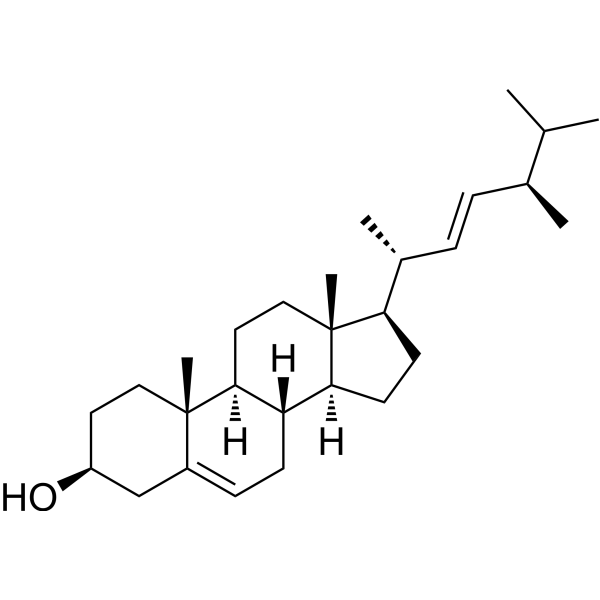
Brassicasterol is a metabolite of Ergosterol and has cardiovascular protective effects. Brassicasterol exerts anticancer effects in prostate cancer through dual targeting of AKT and androgen receptor signaling pathways. Brassicasterol inhibits HSV-1 (IC50=1.2 μM) and Mycobacterium tuberculosis. Brassicasterol also inhibits sterol δ 24-reductase, slowing the progression of atherosclerosis. Brassicasterol is also a cerebrospinal fluid biomarker for Alzheimer's disease .
|
-
-
- HY-128171
-
|
|
FLAP
Epoxide Hydrolase
|
Inflammation/Immunology
|
|
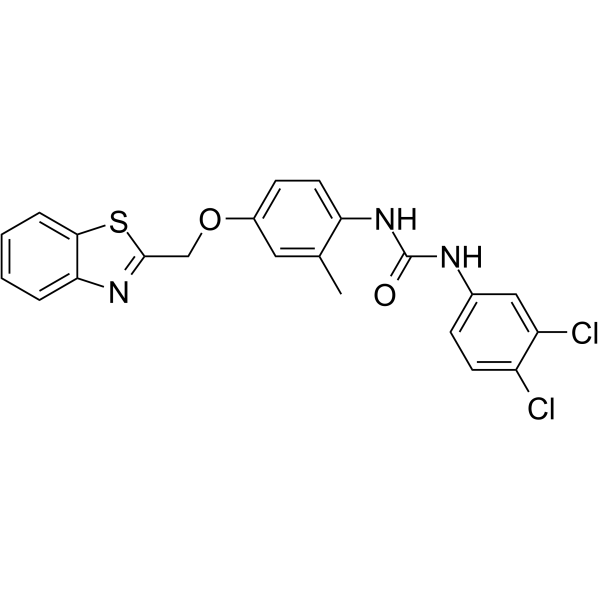
Diflapolin is a highly active dual 5-lipoxygenase-activating protein (FLAP)/soluble epoxide hydrolase (sEH) inhibitor with marked anti-inflammatory efficacy and high target selectivity. Diflapolin inhibits 5-LOX product formation in intact human monocytes and neutrophils with IC50s?of? 30 and 170?nM, respectively, and suppressed the activity of isolated sEH (IC50=20?nM) .
|
-
-
- HY-144315
-
|
Snail/HDAC-IN-1
|
HDAC
|
Cancer
|
|
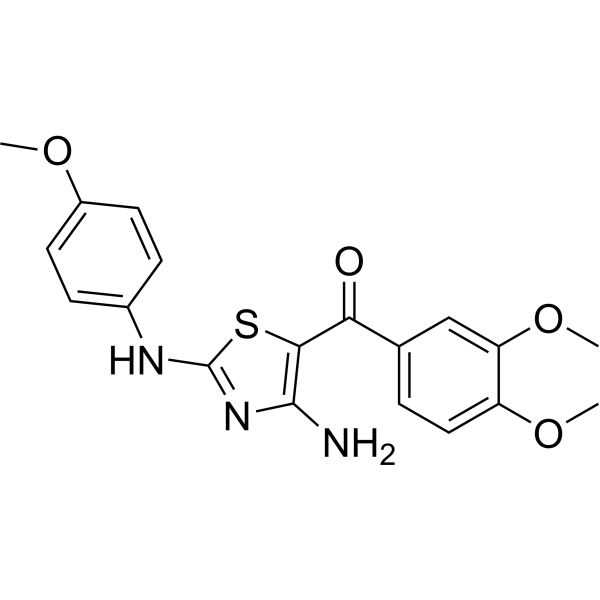
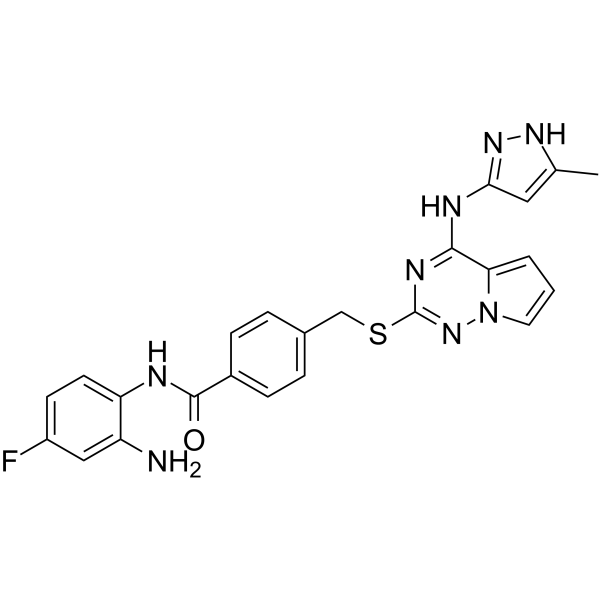
CYD19 is a potent Snail/HDAC dual target inhibitor. CYD19 displays potent inhibitory activity against HDAC1 with an IC50 of 0.405 μM and potent inhibition against Snail with a Kd of 0.18 μM. CYD19 increases histone H4 acetylation in HCT-116 cells and decreases the expression of Snail protein to induce cell apoptosis .
|
-
-
- HY-P99166
-
|
XMAB-20717
|
PD-1/PD-L1
CTLA-4
|
Inflammation/Immunology
Cancer
|
|
Vudalimab is a potent dual PD-1 and CTLA-4 inhibitor as a fully humanized bispecific monoclonal antibody. Vudalimab targets immune checkpoint receptors PD-1 and CTLA-4 and promotes tumor-selective T-cell activation .
|
-
-
- HY-12680
-
PRN694
3 Publications Verification
|
Itk
|
Inflammation/Immunology
|
|
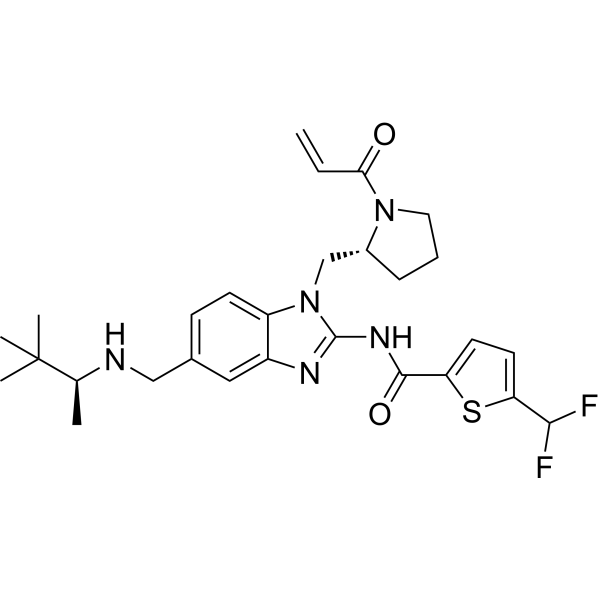
PRN694 is an irreversible, highly selective and potent covalent interleukin-2-inducible T-cell kinase (ITK) and resting lymphocyte kinase (RLK) dual inhibitor with IC50s of 0.3 nM and 1.4 nM, respectively. PRN694 exhibits extended target residence time on ITK and RLK, enabling durable attenuation of effector cells in vitro and in vivo .
|
-
-
- HY-172429
-
|
ORIC-114
|
EGFR
|
Neurological Disease
Cancer
|
|
Enozertinib (ORIC-114) is an orally active, CNS-penetrant, highly selective and irreversible dual EGFR/HER2 inhibitor that exhibits potent and targeted inhibition of exon 20 insertion mutations. Enozertinib exhibits high kinome selectivity for the EGFR family of receptors to reduce off-target kinase liabilities. Enozertinib induces tumor regression and demonstrates antitumor activity in central nervous system and non-small cell lung cancer (NSCLC) tumor models. Enozertinib can be used for the research of solid tumors and NSCLC .
|
-
-
- HY-159078
-
|
|
DNA/RNA Synthesis
|
Cancer
|
|
PolQi1 is a selective inhibitor targeting the Polθ domain of DNA polymerase. PolQi1 inhibits the Polθ-mediated microhomology end joining (TMEJ/alt-EJ) pathway, reducing insertion/deletion (Indels) and imprecise editing events during DNA repair. PolQi1 can enhance the efficiency and accuracy of homology-directed repair (HDR) or Prime editing, and reduce off-target effects; and in combination with DNA-PK inhibitor AZD-7648 (HY-111783), exert efficient genome editing capabilities with dual pathway regulation. PolQi1 can be mainly used in gene editing research (such as CRISPR-Cas9 or Prime editing system optimization) to improve the precision editing efficiency of difficult-to-edit cells (such as primary hepatocytes and mouse embryos) .
|
-
-
- HY-122909
-
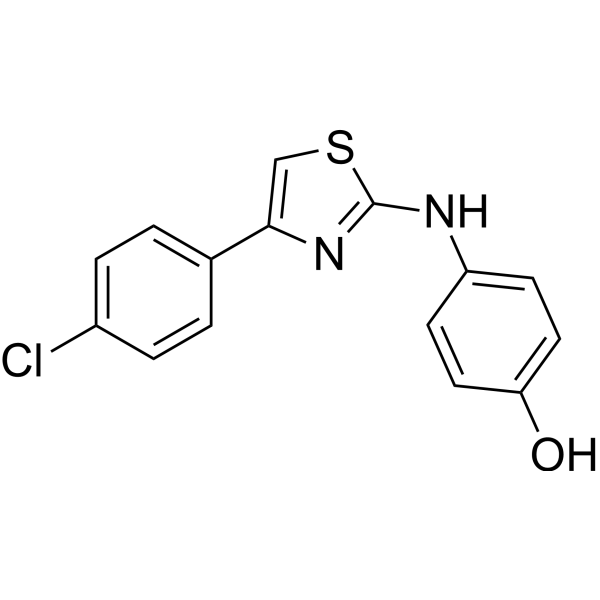
-
-
- HY-162312
-
|
|
Deubiquitinase
Apoptosis
|
Cancer
|
|
LLK203 is a potent USP2/USP8 dual-target inhibitor with IC50s of 0.89 μM and 0.52 μM, respectively. LLK203 leads a degradation of ERα and induces apoptosis of breast cancer MCF-7 cells. LLK203 demonstrates antitumor activities against the 4T1 tumor mice model .
|
-
-
- HY-174280
-
|
ITK kinase-IN-1
|
Itk
JAK
|
Inflammation/Immunology
|
|
Modzatinib (ITK kinase-IN-1) is an oral active, selective, covalent ITK/JAK3 dual-target inhibitor with IC50 values of 8 nM and 23 nM, respectively. Modzatinib exhibits anti-inflammatory activity and can be used in the research of autoimmune and inflammatory diseases .
|
-
-
- HY-172429A
-
|
ORIC-114 hemihydrate
|
EGFR
|
Neurological Disease
Cancer
|
|
Enozertinib (ORIC-114) hemihydrate is an orally active, CNS-penetrant, highly selective and irreversible dual EGFR/HER2 inhibitor that exhibits potent and targeted inhibition of exon 20 insertion mutations. Enozertinib hemihydrate exhibits high kinome selectivity for the EGFR family of receptors to reduce off-target kinase liabilities. Enozertinib hemihydrate induces tumor regression and demonstrates antitumor activity in central nervous system and non-small cell lung cancer (NSCLC) tumor models. Enozertinib hemihydrate can be used for the research of solid tumors and NSCLC .
|
-
-
- HY-177086
-
|
|
Indoleamine 2,3-Dioxygenase (IDO)
|
Cancer
|
|
IDO1/TDO-IN-9 (Compound 66) is a potent dual inhibitor targeting indoleamine 2,3-dioxygenase 1 (IDO1) and tryptophan 2,3-dioxygenase (TDO) with IC50s of <1 μM. IDO1/TDO-IN-9 inhibits the activity of IDO1 and TDO, blocking tryptophan degradation to kynurenine, restoring immune activity in the tumor microenvironment, and suppressing tumor growth. IDO1/TDO-IN-9 is promising for research of cancers .
|
-
-
- HY-162143
-
|
|
SphK
Akt
mTOR
|
Cancer
|
|
SKI-349 is a dual-targeted inhibitor of sphingosine kinase 1/2 (SPHK1/2) and microtubule assembly (MDA). SKI-349 has anticancer activity. SKI-349 can inhibit the vitality, invasion, and AKT/mTOR signaling pathway of liver cells .
|
-
-
- HY-126249
-
|
|
Aurora Kinase
Polo-like Kinase (PLK)
Apoptosis
|
Cancer
|
|
AAPK-25 is a potent and selective Aurora/PLK dual inhibitor with anti-tumor activity, which can cause mitotic delay and arrest cells in a prometaphase, reflecting by the biomarker histone H3 Ser10 phosphorylation and followed by a surge in apoptosis. AAPK-25 targets Aurora-A, -B, and -C with Kd values ranging from 23-289 nM, as well as PLK-1, -2, and -3 with Kd values ranging from 55-456 nM .
|
-
-
- HY-159591
-
|
|
Ras
Akt
ERK
|
Cancer
|
|
YK-8S is a dual-targeted K-Ras (G12D/G12C) covalent inhibitor. YK-8S shows no significant binding to wild-type K-Ras and other mutants (G12R, G13D, Q61R/K). YK-8S exhibits anti-proliferative activity against H358 (G12C) and AGS (G12D) cells. YK-8S inhibits the phosphorylation of p-AKT/p-ERK in BaF3/G12D and G12C cells. YK-8S can be used for pancreatic cancer, colorectal cancer and other tumors with high incidence of G12D .
|
-
-
- HY-126320
-
|
|
EGFR
c-Met/HGFR
|
Cancer
|
|
EGFR-IN-8 is a dual EGFR and c-Met inhibitor, compound 48. EGFR-IN-8 can be a promising candidate for further development to target EGFR TKI-resistant NSCLC .
|
-
-
- HY-157480
-
|
|
EGFR
Aurora Kinase
|
Cancer
|
|
EGFR/AURKB-IN-1 (compound 7) is a dual-targeted EGFR/AURKB inhibitor, and inhibits the phpsphorylations of L858R EGFR and AURKB with IC50s of 0.07 and 1.1, respectively. EGFR/AURKB-IN-1 occupies the hydrophobic region I or the αC-helix out pocket of EGFR and the back pocket of AURKB, inhibiting the growth, division and metastasis of tumor cells, thus can be used for cancer research .
|
-
-
- HY-169212
-
|
|
PI3K
Annexin A
ERK
VEGFR
STAT
Raf
FAK
Akt
Ras
|
Cancer
|
|
I194496 is a potent cystathionine γ-lyase (CSE) inhibitor, with an IC50 of 0.79 mM. I194496 can inhibit the growth of human TNBC cells via the dual targeting PI3K/Akt and Ras/Raf/ERK pathway and suppress the metastasis of human TNBC cells via down-regulating Anxa2/STAT3 and VEGF/FAK/Paxillin signaling pathways .
|
-
-
- HY-176165
-
|
|
CDK
Histone Methyltransferase
|
Cancer
|
|
CDK9/EZH2-IN-1 (Compound D16) is a CDK9/EZH2 dual-target inhibitor (IC50: 83.9/108.6 nM). CDK9/EZH2-IN-1 induces apoptosis and DNA double-strand breaks (DSBs). CDK9/EZH2-IN-1 inhibits the proliferation activity of MKN45, MDA-MB-453 and SW620 cancer cells (IC50 values are 136.3, 171.3 and 315.7 nM, respectively) .
|
-
-
- HY-176287
-
|
|
Dopamine Receptor
GSK-3
PKA
P-glycoprotein
|
Neurological Disease
|
|
ARN25657 is a dual-acting D3R/GSK-3β modulator. ARN25657 has both partial D3R agonist activity (EC50 = 15.2 nM, Ki =1.5 nM) and potent GSK-3β inhibitor activity (IC50 = 19.3 nM). ARN25657 exhibits excellent GSK-3β selectivity over FYN, PKA, and CDK5/p35. ARN25657 inhibits P-glycoprotein (P-gP)-mediated acetoxymethyl calcein efflux and improves in vitro ADME properties while maintaining a balanced dual-target profile. ARN25657 is useful for studying bipolar disorder and related neuropsychiatric disorders .
|
-
-
- HY-120826
-
|
|
Monoamine Oxidase
Adenosine Receptor
|
Neurological Disease
|
|
A2AAR/hMAO-B-IN-1 (compoudn 17) is a non-xanthine dual-target inhibitor targeting the A2A adenosine receptor (A2AAR) (IC50: 34.9 nM) andMAO-B (Ki: 39.5 nM, human). A2AAR/hMAO-B-IN-1 inhibits A2AAR-induced cAMP accumulation and exhibits competitive, reversible inhibition of MAO-B. A2AAR/hMAO-B-IN-1 can be used in the study of neurodegenerative diseases such as Parkinson's disease (PD) .
|
-
-
- HY-162519
-
|
LZ90
|
NAMPT
PD-1/PD-L1
Apoptosis
|
Metabolic Disease
Inflammation/Immunology
Cancer
|
|
LZFPN-90 (LZ90) is a dual NAMPT/PD-L1 targeting compound. LZFPN-90 inhibits PD-1/PD-L1 interaction and NAMPT activity. LZFPN-90 inhibits cell growth in a NAMPT-dependent manner and blocks the cell cycle, subsequently inducing apoptosis. LZFPN-90 exerted target-dependent antitumor activities, affecting metabolic processes and the immune system .
|
-
-
- HY-175973
-
|
|
Cholinesterase (ChE)
|
Neurological Disease
|
|
AChE/BChE-IN-30 (Compound 3g) is a Cholinesterase dual-target competitive inhibitor. AChE/BChE-IN-30 can inhibit AChE and BChE with IC50 values of 0.338 and 2.087 μM and Ki values of 0.045 and 0.789 μM. AChE/BChE-IN-30 can be used for the research of neurological disease, such as Alzheimer's disease .
|
-
-
- HY-146160
-
|
|
PARP
HDAC
|
Cancer
|
|
PARP-1/HDAC-IN-1 is a PARP-1/HDAC6 dual targeting inhibitor with IC50s of 68.90 nM and 510 nM, respectively. PARP-1/HDAC-IN-1 displays remarkable anticancer, anti-migration and anti-angiogenesis activities .
|
-
-
- HY-137561A
-
|
PLN-74809 hydrochloride
|
Integrin
|
Inflammation/Immunology
|
|
Bexotegrast hydrochloride (PLN-74809 hydrochloride) is a small molecule dual selective inhibitor with activity targeting αVβ1 and αVβ6. Bexotegrast hydrochloride is used for idiopathic pulmonary fibrosis (IPF) and primary sclerosing cholangitis (PSC). Bexotegrast hydrochloride inhibits the activation of TGF-β1 by blocking the function of these integrins, thereby preventing the growth of fibrous tissue in the lungs and bile ducts .
|
-
-
- HY-176877
-
|
|
Glucocorticoid Receptor
Interleukin Related
|
Inflammation/Immunology
|
|
Glucocorticoid receptor/IL-6-IN-2 (Compound 36) is a selective dual inhibitor targeting the glucocorticoid receptor (GR) and IL-6 signaling pathway (IC50 values of 40 nM and 19 nM, respectively). Glucocorticoid receptor/IL-6-IN-2 is promising for research of inflammatory diseases like rheumatoid arthritis and asthma .
|
-
-
- HY-177134
-
|
|
VEGFR
c-Met/HGFR
|
Cancer
|
|
Taligantinib (Compound Example 70) is an orally active and selective dual inhibitor targeting vascular endothelial growth factor receptor 2 (VEGFR-2) and hepatocyte growth factor receptor (c-Met). Taligantinib suppresses tumor angiogenesis and cell proliferation. Taligantinib is promising for research of solid tumors such as non-small cell lung cancer and hepatocellular carcinoma .
|
-
-
- HY-120107
-
|
|
Parasite
|
Inflammation/Immunology
|
|
OAT-177 is a potent dual inhibitor targeting acidic mammalian chitinase (AMCase) and chitotriosidase (CHIT1) with an IC50=14.2 nM for human AMCase and IC50=232 nM for human CHIT1. OAT-177 is promising for research of chronic inflammatory and fibrotic-related lung diseases such as asthma and idiopathic pulmonary fibrosis .
|
-
-
- HY-164454
-
|
|
Aurora Kinase
STAT
JAK
Mitosis
|
Inflammation/Immunology
|
|
AJI-100 is a dual-target inhibitor of Aurora kinase A and JAK2 with IC50 values of 12.7 nM and 18.5 nM, respectively. AJI-100 directly blocks Aurora kinase A to inhibit T cell mitosis and cell polarity, and inhibits JAK2 activation to inhibit STAT3 phosphorylation, thereby reducing the differentiation of TH1 and TH17 cells. AJI-100 can be used in studies on regulating immune responses and preventing graft-versus-host disease (GVHD) .
|
-
-
- HY-160557
-
|
|
Epigenetic Reader Domain
|
Cancer
|
|
PLK1/BRD4-IN-2 (compound 15) is a BI-2536 (HY-50698) analog and dual inhibitor that targets both Polo-like kinase 1 (PLK1) and BRD4bromodomain (BRD4-BD1 IC50=28 nM, PLK1 IC50=40 nM) .
|
-
-
- HY-161083
-
|
|
PARP
Histone Methyltransferase
|
Cancer
|
|
PARP/EZH2-IN-2 (compound 12e) is a dual target PARP1 and EZH2 inhibitor, with IC50 values of 6.89 and 27.34 nM, respectively. PARP/EZH2-IN-2 shows anticancer activity, with no toxicity to normal cells. PARP/EZH2-IN-2 achieves synthetic lethality indirectly by inhibiting EZH2 to increase the sensitivity to PARP1, and induces cell death by regulating excessive autophagy .
|
-
-
- HY-168554
-
|
|
PROTACs
STING
|
Inflammation/Immunology
|
|
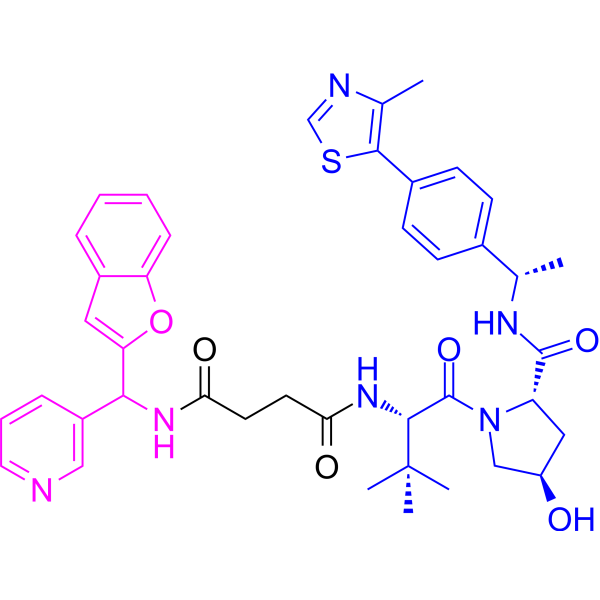
STING-IN-10 (P8) is a dual STING PROTAC degrader and inhibitor with a DC50 value of 2.58 μM in THP-1 cells. STING-IN-10 has anti-inflammatory activity .(Pink: Target protein ligand (HY-168676); Black: linker (HY-W123015); Blue: E3 ligase ligand (HY-126457))
|
-
-
- HY-179053
-
-
-
- HY-175656
-
|
|
LIM Kinase (LIMK)
|
Neurological Disease
Cancer
|
|
MDI-117740 is a dual LIMK1/2 inhibitor. MDI-117740 shows effective cellular target engagement with LIMK1 (pIC50 = 6.73) and LIMK2 (pIC50 = 7.18) in HEK293 cells. MDI-117740 exerts significant anti-migratory activity in MDA-MB-231 cells. MDI-117740 can be used for the study of cancers and neurodegenerative disorders .
|
-
-
- HY-178440
-
|
|
EGFR
COX
Apoptosis
|
Inflammation/Immunology
Cancer
|
|
EGFR/COX-2-IN-2 (Compound 10a) is a dual inhibitor targeting epidermal growth factor receptor (EGFR) (IC50= 6.0 μM) and cyclooxygenase-2 (COX-2) (IC50=50 μM). EGFR/COX-2-IN-2 induces S-phase cell cycle arrest and apoptosis. EGFR/COX-2-IN-2 is promising for research of cancers and inflammation-related diseases .
|
-
-
- HY-176876
-
|
|
Glucocorticoid Receptor
Interleukin Related
JAK
STAT
|
Inflammation/Immunology
|
|
Glucocorticoid receptor/IL-6-IN-1 (Compound 35) is a selective dual inhibitor targeting the glucocorticoid receptor (GR) and IL-6 signaling pathway (IC50 values of 120 nM and 59 nM, respectively). Glucocorticoid receptor/IL-6-IN-1 inhibits IL-6-induced JAK/STAT3 phosphorylation, blocking inflammatory cytokine transcription. Glucocorticoid receptor/IL-6-IN-1 is promising for research of inflammatory diseases like rheumatoid arthritis and asthma .
|
-
-
- HY-155222
-
|
|
Epigenetic Reader Domain
HDAC
|
Cancer
|
|
TW9 is a potent dual inhibitor simultaneously targeting BET and HDAC proteins with KDs of 0.069 μM, 0.231 μM for BRD4(1), BRD4(2), and an IC50 of 0.29 μM for HDAC1, respectively. TW9 is a newly generated adduct of the BET inhibitor (+)-JQ1 (HY-13030) and class I HDAC inhibitor CI994 (HY-50934). TW9 shows high potency in suppressing tumor growth in pancreatic ductal adenocarcinoma (PDAC). TW9 improves the efficacy of the chemotherapeutic agent Gemcitabine (HY-17026) .
|
-
-
- HY-174457
-
|
|
STAT
Carbonic Anhydrase
Ferroptosis
Apoptosis
Reactive Oxygen Species (ROS)
Caspase
Bcl-2 Family
|
Cancer
|
|
STAT3/CAIX-IN-1 is a dual-target inhibitor of STAT3 (Kd: 60.03 μM) and CAIX (IC50: 80.45 nM). STAT3/CAIX-IN-1 induces ferroptosis by increases the levels of reactive oxygen species (ROS) and lipid peroxides. STAT3/CAIX-IN-1 inhibits cell migration, induces apoptosis, and causes cell cycle arrest in MDA-MB-231 cells. STAT3/CAIX-IN-1 can be used for the study of triple-negative breast cancer (TNBC) .
|
-
-
- HY-178348
-
|
|
PARP
c-Met/HGFR
DNA/RNA Synthesis
|
Cancer
|
|
PARP1/c-Met-IN-2 is a highly potent, orally active, PARP1 (IC50 = 21.8 nM) and c-Met (IC50 = 30.2 nM) dual inhibitor. PARP1/c-Met-IN-2 can elevate the expression level of γH2AX, cause DNA damage. PARP1/c-Met-IN-2 exhibits remarkable anti-tumor efficacy in the Olaparib (HY-10162)-resistant HCT116 (HCT116OR) xenograft models. PARP1/c-Met-IN-2 can be used for the study of Colon Cancer .
|
-
-
- HY-129666
-
-
-
- HY-157965
-
|
|
VEGFR
FAK
|
Cancer
|
|
ZINC09875266 is a dual inhibitor targeting VEGFR2 and FAK that can be used in cancer research .
|
-
-
- HY-177908
-
|
|
STING
PI3K
|
Cancer
|
|
SH-273 is a dual targeting compound. SH-273 has dual function to stimulate STING function (EC50: 100 nM) and inhibits PI3Kγ (IC50: 7 nM). SH-273 can be used in the research of pancreatic cancer .
|
-
-
- HY-162952
-
|
|
Bcr-Abl
|
Cancer
|
|
cSRC/BCR-ABL1-IN-1 (compund 16a) is a dual-target cSRC/BCR-ABL1 kinase inhibitor .
|
-
-
- HY-10725
-
|
|
Factor Xa
|
Cardiovascular Disease
|
|
Tanogitran is a dual inhibitor targeting Factor Xa and thrombin (thrombin), with Ki values of 26 and 2.7 nM, respectively. Tanogitran exhibits anticoagulant activity and can be used for research in thrombotic diseases .
|
-
-
- HY-161145
-
|
|
EGFR
Apoptosis
Microtubule/Tubulin
|
Cancer
|
|
EGFR/microtubule-IN-1 (Compound 10c) is a dual inhibitor targeting EGFR and tubulin. The IC50 for inhibiting EGFR is 10.66 nM. EGFR/microtubule-IN-1 can reduce the phosphorylation levels of EGFR, AKT and ERK, hinder tubulin polymerization, and induce apoptosis .
|
-
-
- HY-145428
-
|
|
Notch
γ-secretase
|
Cancer
|
|
BT-GSI is a γ-secretase inhibitor (GSI) and a bone-targeted Notch inhibitor. BT-GSI has dual anti-myeloma and anti-resorptive properties, which can be used for the research of multiple myeloma and associated bone disease. BT-GSI inhibits tumor growth and osteolytic disease progression .
|
-
-
- HY-106056
-
|
D 16726
|
Estrogen Receptor/ERR
|
Cancer
|
|
Zindoxifene is a partial anti-estrogen. Zindoxifene works primarily by binding to estrogen receptors, thereby inhibiting the growth of estrogen-dependent tumor cells. Zindoxifene is able to exhibit the dual properties of estrogen agonists and antagonists and can be used in research and development to target estrogen-dependent tumors, such as prostate and breast cancer .
|
-
-
- HY-174211
-
|
|
JNK
|
Cancer
|
|
JNK-IN-23 (Compound K12) is an inhibitor of JNK. JNK-IN-23 inhibits the proliferation of MDA-MB-231 (GIC50: 30 nM). JNK-IN-23 blocks TNBC metastatic growth in vivo. JNK-IN-23 inhibits the growth of lung metastases by dual targeting of glutaminase-1 (GLS) and pyruvate dehydrogenase complex (PDHC) .
|
-
-
- HY-168475
-
|
|
Apoptosis
WDR5
HDAC
|
Cancer
|
|
DD0-2363 (Compound 32d) is a dual-target inhibitor of WDR5-MLL1/HDAC. DD0-2363 inhibits cells proliferation and induces apoptosis in acute myeloid leukemia cells. DD0-2363 has antitumor activity and can be used in the research of acute myeloid leukemia .
|
-
-
- HY-162349
-
|
|
HDAC
PARP
|
Cancer
|
|
PARP7/HDACs-IN-1 (compound 9l) is a dual-target inhibitor targeting PARP7/HDAC with anti-tumor activity. PARP7/HDACs-IN-1 inhibits different subtypes of PARPs and HDACs with IC50s of 83.3 nM (PARP1), 3.1 nM (PARP7), 35 nM (HDAC1), 30.3 nM (HDAC2), 35.4 nM (HDAC3), and 6.4 nM respectively. (HDAC6) . br/ .
|
-
- HY-175262
-
|
|
Bacterial
Cytochrome P450
|
Infection
|
|
Mtb-IN-12 (Compound 5m) is a dual-target inhibitor that can target the CYP125 (KD: 40 nM; KI: 0.1 μM) and CYP142 (KD: 160 nM; KI: 0.05 μM) enzymes of Mycobacterium tuberculosis. Mtb-IN-12 exhibits good inhibitory activity against both drug-sensitive strains and multidrug-resistant tuberculosis strains, with low toxicity to macrophages. Mtb-IN-12 can be used in the research of anti-tuberculosis drugs .
|
-
- HY-150755
-
-
- HY-163537
-
|
|
Cholinesterase (ChE)
|
Neurological Disease
|
|
AChE/BuChE-IN-5 (compound 5a) is a dual target inhibitor. AChE/BuChE-IN-5 has excellent nanomolar inhibitory activity on acetylcholinesterase (AChE) (IC50=46.9 nM) and butyryl cholinesterase (BuChE) (IC50=3.5 nM). AChE/BuChE-IN-5 can be used for Alzheimer's Disease research .
|
-
- HY-164455
-
|
|
STAT
JAK
Aurora Kinase
Mitosis
|
Inflammation/Immunology
|
|
AJI-214 is a dual-target inhibitor of Aurora kinase A and JAK2. AJI-214 directly blocks Aurora kinase A to inhibit T cell mitotic progression and cell polarity, and inhibits JAK2 activation to inhibit STAT3 phosphorylation, thereby reducing the differentiation of TH1 and TH17 cells. AJI-214 can be used in studies on regulating immune responses and preventing graft-versus-host disease (GVHD) .
|
-
- HY-162601
-
|
|
Histone Methyltransferase
HIF/HIF Prolyl-Hydroxylase
|
Cancer
|
|
D-01 is a dual-targeting inhibitor of HIF-1α and EZH2 (IC50: 4.86 μM and 0.99 μM respectively). D-01 inhibits the expression of H3K27me3 protein. D-01 inhibits the migration, clone and the invasion of A549 cells, and also inhibits tube formation of HUVECs. D-01 can be used for research of lung cancer .
|
-
- HY-168968S
-
|
|
EGFR
Histone Demethylase
|
Cancer
|
|
ZJY-54 is an orally active dual-target inhibitor of EGFR/LSD1, with IC50 values of 3.8 nM and 0.6 μM, respectively. ZJY-54 can inhibit the proliferation of non-small cell lung cancer cells, induce the accumulation of H3K4me2 and H3K9me2, and inhibit the phosphorylation of the EGFR signaling pathway. ZJY-54 has anti-tumor activity .
|
-
- HY-163439
-
|
|
Amylases
Glycosidase
|
Metabolic Disease
|
|
α-Amylase/α-Glucosidase-IN-12 (compound 10k) is a dual inhibitor targeting α-glucosidase and α-amylase with IC50 of 34.52 nM and 24.62 nM, respectively. α-Amylase/α-Glucosidase-IN-12 is an inhibitor designed based on triazolo[4,3-b][1,2,4]triazine and has the potential to be used in diabetes research .
|
-
- HY-163101
-
|
|
Platelet-activating Factor Receptor (PAFR)
Leukotriene Receptor
|
Inflammation/Immunology
|
|
CP-96021 is an orally active dual leukotriene D4 (LTD4) and platelet activating factor (PAF) receptor antagonist, featuring a guinea pig LTD4 receptor Ki of 34 nM and a rabbit PAF receptor Ki of 37 nM. CP-96021 blocks ligand binding to its target receptors, inhibits ligand-induced bronchoconstriction, and inhibits antigen-triggered airway obstructive effects. CP-96021 can be used for the research of asthma .
|
-
- HY-171027
-
|
|
Ligands for Target Protein for PROTAC
|
Cancer
|
|
PTP1B/TC-PTP IN-1 is a PTP1B and TC-PTP dual inhibitor. PTP1B/TC-PTP IN-1 can be used as a target protein ligand for the synthesis of DU-14 (PTP1B/TC-PTP PROTAC) (HY-164864) .
|
-
- HY-169509
-
|
|
PARP
Necroptosis
Topoisomerase
RIP kinase
Mixed Lineage Kinase
|
Cancer
|
|
Topoisomerase I/II Inhibitor 8 (Compound Ru7) is a dual catalytic inhibitor of Topoisomerase I/II, capable of inducing DNA damage and PARP-1 activation, which subsequently leads to the activation of RIPK1, RIPK3, and MLKL, ultimately triggering necroptosis. Topoisomerase I/II Inhibitor 8 demonstrates remarkable anticancer activity by effectively targeting the nuclei of cancer cells and inducing cell death through necroptosis, showing great clinical potential in circumventing drug resistance in cancer treatment .
|
-
- HY-163006
-
|
|
EGFR
c-Met/HGFR
|
Cancer
|
|
EGFR/c-Met-IN-1 (compound TS-41) is a dual-target inhibitor of EGFR/c-Met. The IC50 for inhibiting EGFR L858R and c-Met is 68.1 nM and 0.26 nM respectively. . EGFR/c-Met-IN-1 induces apoptosis and cell cycle arrest in A549-P cells, downregulating the phosphorylation of EGFR, c-Met, and downstream AKT. EGFR/c-Met-IN-1 inhibits tumor growth in vitro and in vivo .
|
-
- HY-149283
-
|
|
JAK
HDAC
Apoptosis
|
Cancer
|
|
JAK/HDAC-IN-2 is a potent 2-amino-4-phenylaminopyrimidine JAK/HDAC dual-target inhibitor. JAK/HDAC-IN-2 potently inhibits HDAC3/6 and JAK1/2 at nanomolar levels. JAK/HDAC-IN-2 has proapoptotic activity and inhibits histone deacetylation and STAT3 phosphorylation. JAK/HDAC-IN-2 presents remarkable antiproliferative activity in both hematological malignancies and solid cancers .
|
-
- HY-173081
-
|
|
SARS-CoV
|
Infection
|
|
4"-(2-(p-Chlorophenyl)acetoxyl)spiramycin (Compound 2d) is a broad-spectrum anti-coronaviral agent via targeting frameshifting element (FSE). 4"-(2-(p-Chlorophenyl)acetoxyl)spiramycin inhibits HCoV-OC43 and HCoV-229E with EC50 values of 0.85 μM and 1.45 μM. 4"-(2-(p-Chlorophenyl)acetoxyl)spiramycin shows a dual-target mechanism that acts on both viral FSE RNA and host DIS3L2 .
|
-
- HY-162803
-
|
|
Apoptosis
c-Met/HGFR
STAT
|
Cancer
|
|
c-Met-IN-24 (compound 3g) is a dual-target inhibitor of STAT-3 ( =4.7 μM) and c-MET ( =12.67 μM) with anticancer activity. c-Met-IN-24 arrests the G2/M cell cycle and induces apoptosis in SNB-75 cells. c-Met-IN-24 can be used in the study of central nervous system cancers .
|
-
- HY-178366
-
|
|
Influenza Virus
|
Infection
|
|
PAC/NP-IN-1 (Compound 30) is a dual-target anti-influenza agent that specifically binds to nucleoprotein (NP) and the C-terminal domain of PA protein (PAc). PAC/NP-IN-1 inhibits influenza A virus A/WSN/33 (H1N1) (EC50 = 3.63 μM, IC50 = 3.08 μM). PAC/NP-IN-1 can be used for the study of influenza infection .
|
-
- HY-138215
-
|
|
ERK
|
Cancer
|
|
ADTL-EI1712 is a potent, orally active, and selective dual-target inhibitor of ERK1 and ERK5, inhibition rates of ERK1/5 at 1 μM are 93.54% and 89.35%, respectively. ADTL-EI1712 can induce regulated cell death, a form of cell death that relies on the activation of genetically encoded machinery, to overcome compensatory mechanism in specific cancer cells in vitro and in vivo .
|
-
- HY-174130
-
|
|
Parasite
PI4K
PKG
|
Infection
|
|
PI4Kβ/PKG-IN-1 (Compound 19) is an orally active dual inhibitor targeting Plasmodium phosphatidylinositol 4-kinase beta (PI4Kβ) and cGMP-dependent protein kinase (PKG). PI4Kβ/PKG-IN-1 exhibits potent antiplasmodial activity. PI4Kβ/PKG-IN-1 is promising for research of malaria .
|
-
- HY-159513
-
|
|
Bcl-2 Family
Apoptosis
|
Cancer
|
|
Bcl-2/Mcl-1-IN-4 (compound 20) is a dual inhibitor targeting Bcl-2 (Ki=0.49 μM) and Mcl-1 (Ki=0.51 μM). Bcl-2/Mcl-1-IN-4 significantly inhibits cancer cell proliferation and effectively induces apoptosis in U937 cells. Bcl-2/Mcl-1-IN-4 can be used in cancer research .
|
-
- HY-151263
-
|
|
HDAC
G-quadruplex
|
Cancer
|
|
G4/HDAC-IN-1 (compound a6) is a G4/HDAC dual-targeting compound. G4/HDAC-IN-1 inhibits intracellular HDAC activity with an IC50 value of 1.1 μM, and induces G4 formation. G4/HDAC-IN-1 inhibits TNBC proliferation and tumor growth in TNBC xenograft model. G4/HDAC-IN-1 can be used for the research of cancer .
|
-
- HY-116191
-
|
|
PI3K
mTOR
|
Cancer
|
|
WJD008 is a potent dual phosphatidylinositol 3-kinase (PI3K)/mammalian target of rapamycin (mTOR) inhibitor with antiproliferative and anticlonogenic activity in tumor cells and transformed cells with PIK3CA mutant. WJD008 inhibits kinase activity of PI3K α and mTOR and abrogates insulin-like growth factor-I-activated PI3K-Akt-mTOR signaling cascade. WJD008 is promising for research of cancers .
|
-
- HY-163105
-
|
|
Microtubule/Tubulin
|
Cancer
|
|
Tubulin/NEDDylation-IN-1 (compound C11) is a dual inhibitor of tubulin (Microtubule/Tubulin)-NEDDylation (IC50 for tubulin=2.40 μM), which has strong anti-proliferative activity. Neddylation is a protein post-translational modification that covalently tags the ubiquitin-like protein NEDD8 to target proteins. Tubulin/NEDDylation-IN-1 forms hydrogen bonds with residues of tubulin and E1 NEDD8 activating enzyme (NAE) through methoxy and dithiocarbamate groups and inhibits NEDDylation and microtubulin in an ATP-dependent manner. tube polymerization .
|
-
- HY-179031
-
|
|
EGFR
VEGFR
Apoptosis
|
Cancer
|
|
EGFR/VEGFR2-IN-7 (Compound 3e) is a dual-target EGFR/VEGFR2 inhibitor, with IC50 values of 142 (EGFR) and 71 nM (VEGFR2). EGFR/VEGFR2-IN-7 exhibits broad-spectrum and potent anti-proliferative activity, especially being sensitive to breast cancer. EGFR/VEGFR2-IN-7 induces cell cycle arrest and apoptosis, inhibits cell migration and invasion. EGFR/VEGFR2-IN-7 can be used for research on breast cancer .
|
-
- HY-172617
-
|
|
BMI1
Microtubule/Tubulin
Apoptosis
|
Cancer
|
|
APD-94 is a dual inhibitor targeting tubulin and Bmi-1. APD-94 interfers tubulin normal polymerization. APD-94 suppresses the expression of Bmi-1. APD-94 causes cell cycle arrest at the G2/M phase in cancer cells and induces apoptosis, thus inhibiting cancer cell proliferation. APD-94 represses the growth of HT29 cell xenografts in NOD/SCID mice. APD-94 can be used for colorectal cancer study .
|
-
- HY-158328A
-
-
- HY-156094
-
|
|
HDAC
Histone Demethylase
Apoptosis
|
Cancer
|
|
JMJD3/HDAC-IN-1 (compound A5b) is a dual inhibitor targeting Jumonji domain-containing protein demethylase 3 (JMJD3) and histone deacetylase (HDAC1, IC50=16 nM). JMJD3/HDAC-IN-1 promotes hypermethylation of histone H3K27 and hyperacetylation of H3K9, and also cleaves caspase-7 and PARP to induce apoptosis. JMJD3/HDAC-IN-1 effectively inhibits cancer cell cloning, migration, and invasion .
|
-
- HY-178031
-
|
|
HIV
Reverse Transcriptase
|
Infection
|
|
HIV-1-IN-87 (Compound 11x) is a dual-site HIV-1 inhibitor targeting the non-nucleoside reverse transcriptase inhibitor binding pocket (NNIBP) and its adjacent site (NNIAS). HIV-1-IN-87 has potent antiviral activities against wild-type and mutant strains (such as L100I, K103N and Y181C) (EC50: 4.1-150 nM). HIV-1-IN-87 can be used for HIV-1 infections like acquired immune deficiency syndrome (AIDS) research .
|
-
- HY-170793
-
|
|
PD-1/PD-L1
VISTA
|
Cancer
|
|
PD-L1/VISTA-IN-1 (Compound P17) is an orally active dual-target inhibitor of PD-L1 and VISTA. PD-L1/VISTA-IN-1 can block the PD-1/PD-L1 interaction (IC50: 0.1492 μM) and the VISTA pathway (KD: 0.2723 μM), thereby reactivating T cells. PD-L1/VISTA-IN-1 has anti-tumor activity .
|
-
- HY-180992
-
|
|
Lactate Dehydrogenase
|
Metabolic Disease
|
|
Dual GO/LDHA-IN-1 is an orally available dual inhibitor targeting glycolate oxidase (GO) and lactate dehydrogenase A (LDHA), with Ki values of 390 nM and 40 nM, respectively. Dual GO/LDHA-IN-1 reduces hepatic LDHA levels, urinary oxalate excretion, and renal calcium-oxalate crystal deposition. Dual GO/LDHA-IN-1 is applicable for research on primary hyperoxaluria type 1 .
|
-
- HY-178455
-
|
|
Influenza Virus
|
Infection
|
|
Influenza virus-IN-10 is a dual-target antiviral agents for influenza that targets both PAC (KD = 8.9 μM) and NP (KD = 52.5 μM) simultaneously. Influenza virus-IN-10 exhibits an EC50 values of 1.64 μM) against influenza A virus (H1N1, A/WSN/33) and broad-spectrum activity against other influenza strains, including influenza B virus and multiple subtypes of influenza A .
|
-
- HY-P11225
-
|
MAP-04-02
|
Bacterial
|
Infection
|
DRAMP18563 (MAP-04-02) is a linear antimicrobial peptide that can act as a delivery vector to transport dual-ring peptide inhibitors that cannot penetrate the outer membrane of Gram-negative bacteria to their target sites. DRAMP18563 can be used to study the delivery strategies of dual-ring peptide inhibitors .
|
-
- HY-181140
-
|
|
CDK
PARP
|
Cancer
|
|
UNPD139734 is a CDK-1 inhibitor and PARP-1 inhibitor that forms stable complexes with each target protein. UNPD139734 serves as a lead compound for structural optimization to develop dual-target anticancer agents targeting CDK-1 and PARP-1. UNPD139734 can be used for the research of breast cancer .
|
-
- HY-181050
-
|
|
PROTACs
Src
Btk
Apoptosis
|
Cancer
|
|
DFCI-002-06 is an orally active dual-target HCK/BTK PROTAC degrader with DC₅₀ values for HCK and BTK of 1.3 and 4.5 nM respectively. DFCI-002-06 retains higher anti-tumor activity than the HCK/BTK dual-target inhibitor (HY-15805), inducing apoptosis in cancer cells. DFCI-002-06 can be used for the study of MYD88 mutant B-cell malignancies .
|
-
- HY-137203
-
-
- HY-180370
-
|
NitroSynapsin; YQW-036; NMI-6979
|
iGluR
Drug Derivative
|
Cardiovascular Disease
Neurological Disease
|
|
Nitromemantine (NitroSynapsin) is a nitrate derivative of Memantine (HY-B0591) and is a dual-functional NMDAR antagonist. Nitromemantine exhibits significant efficacy in rodent models of cerebral infarction through a dual mechanism of blocking channels and regulating receptors via NO/redox regulation. Nitromemantine can target ischemic neurons under hypoxic conditions and enhance its activity. Nitromemantine inhibits the current induced by NMDA, with its IC50 being 2.4 μM. Nitromemantine can be used for the study of cerebral ischemic stroke .
|
-
- HY-180819
-
|
|
Cholinesterase (ChE)
|
Neurological Disease
|
|
AChE/BChE-IN-33 (Compound 3N) is a dual-target inhibitor of AChE and BChE, with IC50 values of 12.81 and 44.54 nM respectively. AChE/BChE-IN-33 exhibits selective cytotoxicity against SH-SY5Y cells. AChE/BChE-IN-33 can be used for the study of Alzheimer's disease and neuroblastoma .
|
-
- HY-183701
-
|
|
NTPDase
CD73
|
Inflammation/Immunology
Cancer
|
|
CD73/NTPDase1-IN-1 is a dual NTPDase1 and CD73 inhibitor, with IC50 values of 2.20 μM and 1.70 μM against human targets, respectively. CD73/NTPDase1-IN-1 can be used in the research of diseases such as inflammation, immunity and tumors .
|
-
- HY-181694
-
|
|
Topoisomerase
HDAC
Apoptosis
Kinesin
RAD51
|
Cancer
|
|
SeSA-HCPT is an orally active dual-target inhibitor integrating Topo I and HDAC inhibition. SeSA-HCPT induces potent DNA damage, apoptosis, S-phase arrest in prostate cancer cells. SeSA-HCPT inhibits cancer cells proliferation and migration. SeSA-HCPT impairs homologous recombination by suppressing KIF4A-RAD51 signaling. SeSA-HCPT markedly inhibits CRPC tumor growth with minimal systemic toxicity .
|
-
- HY-181811
-
|
|
Cholinesterase (ChE)
GSK-3
|
Neurological Disease
|
|
PJ17 is a potent dual-target inhibitor of AChE and GSK-3β, with IC50 values of 8.84 μM and 4.19 μM, respectively. PJ17 shows no significant neurotoxic effect in primary cerebellar granule neuron cultures. PJ17 serves as a template for the design of multitarget drugs. PJ17 can be used for the research of Alzheimer's disease .
|
-
- HY-180673
-
|
|
SARS-CoV
Virus Protease
|
Infection
|
|
Mpro/RdRp-IN-1 (Compound 1) is a dual-target inhibitor against SARS-CoV-2, targeting RdRp (EC50 = 25.45) and Mpro (IC50 = 125.4 μM). Mpro/RdRp-IN-1 exhibits EC₅₀ for HCoV-OC43 of 4.79 μM, and the selectivity index (SI) is 10.89. Mpro/RdRp-IN-1 can be used for studying SARS-CoV-2 and HCoV-OC43 infections .
|
-
- HY-181759
-
|
|
Ligands for Target Protein for PROTAC
Epigenetic Reader Domain
Histone Acetyltransferase
|
Cancer
|
|
CBP/p300/BRD4 ligand-1 is a small-molecule inhibitor targeting CBP, p300, and BRD4. CBP/p300/BRD4 ligand-1 competitively binds to the functional domains of target proteins without disrupting key interactions. CBP/p300/BRD4 ligand-1 can be used for the construction of dual-target PROTAC degraders (HY-181758) in studies related to prostate cancer and other cancers .
|
-
- HY-181084
-
|
|
PROTACs
BCL6
Aquaporin
PARP
Caspase
CDK
|
Cancer
|
|
PROTAC BCL6/GSPT1 Degrader-1 is a dual-target PROTAC degrader that targets BCL6 and GSPT1. PROTAC BCL6/GSPT1 Degrader-1 inhibits cell proliferation, promotes DNA damage, and induces cell cycle arrest and apoptosis in diffuse large B-cell lymphoma. PROTAC BCL6/GSPT1 Degrader-1 can be used for research on tumors such as lymphoma .
|
-
- HY-180934
-
|
|
HDAC
Proteasome
Microtubule/Tubulin
|
Cancer
|
|
AMC-3-030 is a selective and potent dual inhibitor targeting HDAC6 and chymotrypsin-like proteasome with IC50 values of 884 and 4.17 nM. AMC-3-030 has a proliferation inhibitory effect. AMC-3-030 can reduce α-tubulin and β-actin levels. AMC-3-030 can be used for research of multiple myeloma .
|
-
- HY-179684
-
|
|
CGRP Receptor
5-HT Receptor
ERK
Epigenetic Reader Domain
|
Neurological Disease
|
|
PCC0105005 is a dual-target CGRP Receptor antagonist (IC50 = 1.01 nM) and a partial agonist of 5-HT1F Receptor (EC50 = 77.91 nM). PCC0105005 shows significant efficacy in the rat model of migraine. PCC0105005 significantly reduces the expression of CGRP and c-Fos proteins, and inhibits the phosphorylation levels of ERK and CREB. PCC0105005 can be used for research on migraine .
|
-
- HY-179518
-
|
|
Fungal
PKA
Ras
|
Infection
|
|
Antifungal agent 140 (compound 5p) is a potent antifungal agent with broad-spectrum antifungal activity. Antifungal agent 140 exerts a dual mechanism by targeting the Ras/cAMP/PKA pathway to inhibit hyphal formation and the ergosterol biosynthesis pathway. Antifungal agent 140 enhances survival, reduces fungal load in the kidneys, and strengthens host immune responses in a murine model of systemic candidiasis. Antifungal agent 140 can be used for research of resistant fungal infections .
|
-
- HY-181999
-
|
|
PARP
CDK
Protease Activated Receptor (PAR)
Wnt
β-catenin
Reactive Oxygen Species (ROS)
DNA/RNA Synthesis
|
Cancer
|
|
PC8 is a selective dual inhibitor of PARP1/CDK6, with an IC50 of 0.126 μM for PARP1 and 0.197 μM for CDK6. PC8 does not alter PARP1 expression, but reduces the expression of its downstream target PAR. PC8 inhibits the canonical Wnt/β-catenin signaling pathway. PC8 induces intracellular ROS accumulation and exacerbates DNA damage. PC8 inhibits the proliferation of triple-negative breast cancer (TNBC) cells. PC8 can be used for the research of triple-negative breast cancer .
|
-
- HY-123726
-
|
|
EGFR
|
Cancer
|
|
ErbB-1/ErbB-2 tyrosine kinase-IN-1 is a dual ErbB-1/ErbB-2 tyrosine kinase inhibitor with IC50 values of 0.027 μM and 0.026 μM. ErbB-1/ErbB-2 tyrosine kinase-IN-1 targets the ATP binding region of ErbB-1 and ErbB-2 tyrosine kinases. ErbB-1/ErbB-2 tyrosine kinase-IN-1 inhibits cancer cells proliferation .
|
-
- HY-12299G
-
|
Dual LCK/SRC inhibitor
|
Src
|
Cancer
|
|
WH-4-023 GMP is WH-4-023 (HY-12299) produced by using GMP guidelines. GMP small molecules works appropriately as an auxiliary reagent for cell therapy manufacture. WH-4-023 (Dual LCK/SRC inhibitor) is a Lck/Src dual target inhibitor with functions in stem cell maintenance and differentiation regulation. WH-4-023 blocks epithelial-mesenchymal transition, supports the self-renewal of porcine embryonic stem cells, and inhibits their differentiation into mesoderm and endoderm. WH-4-023 is a key component of 3i/LAF medium, and enables the stable establishment and long-term maintenance of porcine pre-gastrulation epiblast stem cell lines. Removal of WH-4-023 reduces the expression of pluripotency factors in porcine and human extended pluripotent stem cells. WH-4-023 can be applied to relevant studies such as non-small cell lung cancer resistant to EGFR-TKIs .
|
-
- HY-181519
-
|
|
DNA Alkylator/Crosslinker
Aldose Reductase
Glycosidase
|
Metabolic Disease
Inflammation/Immunology
|
|
ALR2/α-GLY-IN-1 is a potent dual-target inhibitor that targets aldose reductase ALR2 and α-glucosidase (IC50 values are 0.72 μM and 0.82 μM, respectively; Ki values are 1.67 μM and 1.37 μM, respectively). ALR2/α-GLY-IN-1 also acts as a DNA binder, which stably interacts with calf thymus double-stranded DNA through non-covalent interactions such as groove-binding mode and water-bridged hydrogen bonds. ALR2/α-GLY-IN-1 can be used in studies related to diabetes and its complications .
|
-
- HY-120089
-
|
|
FLT3
ERK
Akt
STAT
Apoptosis
|
Cancer
|
|
UNC1666 is an ATP-competitive dual-target Mer/Flt3 tyrosine kinase inhibitor with IC50 values of 0.55 nM and 0.69 nM, and Ki values of 0.16 nM and 0.67 nM, respectively. UNC1666 reduces the phosphorylation levels of Mer and Flt3, suppresses downstream pro-survival signaling pathways (Erk1/2, Akt and Stat), induces cell apoptosis, and decreases colony formation of acute myeloid leukemia cells. UNC1666 is applicable to research related to acute myeloid leukemia .
|
-
- HY-183373
-
|
|
EGFR
PARP
|
Cancer
|
|
EGFR/PARP-1-IN-1 is a dual EGFR and PARP-1 inhibitor with IC50 values of 64 nM and 12 nM, respectively. EGFR/PARP-1-IN-1 binds to the ATP-binding pocket of EGFR and interacts with the catalytic domain of PARP-1, inhibiting kinase and enzymatic activity via hydrogen bond formation with key residues in both targets. EGFR/PARP-1-IN-1 induces apoptosis through the endogenous mitochondrial pathway, arrests the cell cycle at the G2 phase, and inhibits cell proliferation. EGFR/PARP-1-IN-1 can be used for research on triple-negative breast cancer .
|
-
- HY-162319
-
|
|
Apoptosis
HDAC
Microtubule/Tubulin
Reactive Oxygen Species (ROS)
|
Cancer
|
|
Tubulin/HDAC-IN-4 (compound 9n) is a dual Tubulin and HDAC inhibitor with IC50 values of 0.73, 0.43, 0.62, 2.34 µM for HDAC1, HDAC2, HDAC6, HDAC7, respectively. Tubulin/HDAC-IN-4 inhibits the tubulin polymerization by targeting the colchicine binding site. Tubulin/HDAC-IN-4 induces apoptosis and cell cycle arrest at G2/M phase. Tubulin/HDAC-IN-4 induces a significant elevation of intracellular ROS levels. Tubulin/HDAC-IN-4 shows anti-angiogenesis activity and anticancer activity .
|
-
- HY-170651
-
|
|
CDK
HDAC
Apoptosis
|
Cancer
|
|
CDK4/6/HDAC-IN-1 (Compound N14) is a dual-targeting inhibitor of CDK4/6 and HDAC (IC50: CDK4 = 7.23 nM, CDK6 = 13.20 nM, HDAC1 = 55.66 nM, HDAC6 = 48.38 nM). CDK4/6/HDAC-IN-1 induces cell Apoptosis and G0/G1 phase arrest through HDAC-p21-CDK signaling pathway. CDK4/6/HDAC-IN-1 inhibits hepatocellular carcinoma .
|
-
- HY-173280
-
|
CHNQD-01228
|
Arf Family GTPase
BMX Kinase
|
Cancer
|
|
Brefeldin A 4-O-nicotinate (CHNQD-01228) is a dual inhibitor of Arf1 and BMX proteins. The IC50 value for the proliferation of T24 cells is 0.22 μM. It can also dose-dependently inhibit the migration and colony formation of T24 cells, induce G1 phase arrest and trigger Apoptosis. Brefeldin A 4-O-nicotinate exerts its anti-cancer activity by targeting the BMX protein to inhibit the AKT/p-AKT and STAT3/p-STAT3 signaling pathways, as well as by inhibiting the Arf1 protein to eliminate bladder cancer stem cells and activate anti-tumor immunity. Brefeldin A 4-O-nicotinate can be used in the research related to bladder cancer .
|
-
- HY-172919
-
|
|
Phosphodiesterase (PDE)
NAMPT
Apoptosis
|
Cancer
|
|
PDEδ/NAMPT IN-1 (Compound 17d) is a dual inhibitor targeting phosphodiesterase 6 (PDE6) (KD=0.410 nM) and nicotinamide phosphoribosyl transferase (NAMPT) (IC50=2.21 nM). PDEδ/NAMPT IN-1 blocks KRAS-related signal transduction and interferes with the synthesis of nicotinamide adenine dinucleotide (NAD +), inducing apoptosis in KRAS mutant pancreatic cancer cells. PDEδ/NAMPT IN-1 is promising for research of KRAS mutant pancreatic cancer .
|
-
- HY-124113
-
|
4′‐BR
|
Sirtuin
Apoptosis
Caspase
Lactate Dehydrogenase
GLUT
|
Metabolic Disease
Inflammation/Immunology
Cancer
|
|
4'-Bromo-resveratrol (4′‐BR) is a dual SIRT1/SIRT3 inhibitor with an IC50 of 0.2 mM for both targets. 4'-Bromo-resveratrol induces caspase-dependent apoptosis, induces G0/G1 cell cycle arrest, and inhiibits proliferation. 4'-Bromo-resveratrol reduces lactate production, glucose uptake, and NAD +/NADH ratio, and downregulates lactate dehydrogenase A and glucose transporter 1 (GLUT1). 4'-Bromo-resveratrol can be used for the research of melanoma .
|
-
- HY-162606
-
|
|
Monoamine Oxidase
Cholinesterase (ChE)
|
Neurological Disease
|
|
MAO-A/B-IN-3 (Compound 12) stands out as a key dual MAO-AChE inhibitor, displaying excellent multi-target efficacy against MAO-A, MAO-B, and AChE with IC50 values of 67 nM, 29 nM, and 1370 nM respectively. MAO-A/B-IN-3 is adept at altering the A site (hydrophobic ring) and C site (semicarbazone chain) within ketone amine-based MTDLs to bolster the inhibitory potential against MAO-A/B while notably diminishing activity against AChE. MAO-A/B-IN-3 is poised for research applications in the field of neurodegenerative diseases .
|
-
- HY-149617
-
|
|
Cytochrome P450
PD-1/PD-L1
|
Infection
|
|
CYP51/PD-L1-IN-4 (compound 14a-2) is a potent dual-target (CYP51/PD-L1) inhibitor, with IC50 values of 0.17 and 0.021 μM, respectively. CYP51/PD-L1-IN-4 exhibits excellent antifungal and antidrug-resistant fungal activity in vitro. CYP51/PD-L1-IN-4 can be used for fungal infections research .
|
-
- HY-N4150
-
|
Quercetagetin-7-O-glucoside
|
Phosphatase
Tau Protein
NF-κB
|
Neurological Disease
Metabolic Disease
Inflammation/Immunology
|
|
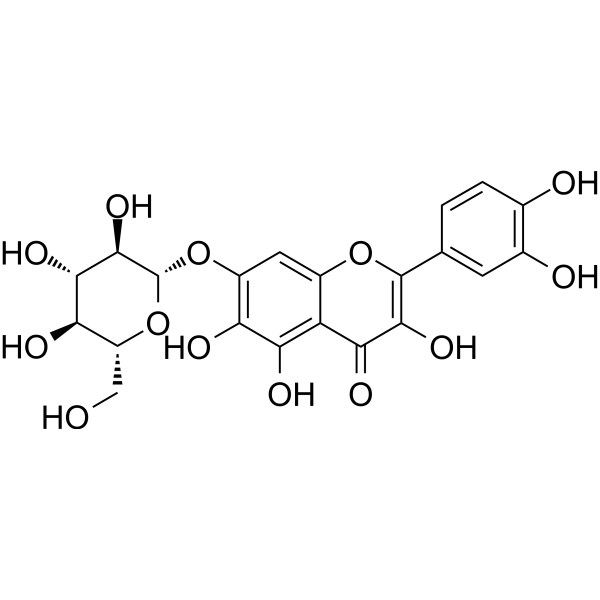
Quercetagitrin (Quercetagetin-7-O-glucoside) is a natural product that can be isolated from the African marigold (Tagetes erecta). Quercetagitrin has anti-inflammatory activity. Quercetagitrin inhibits Tau accumulation. Quercetagitrin can reverse neuroinflammation and cognitive deficits in P301S-Tau transgenic mouse model through inhibiting NF-κB activation. Quercetagitrin is a dual-target inhibitor of PTPN6 (IC50 = 1 μM) and PTPN9 (IC50 = 1.7 μM). Quercetagitrin enhances glucose uptake by mature C2C12 myoblasts. Quercetagitrin can be studied in research for Alzheimer’s disease and type 2 diabetes .
|
-
- HY-181965
-
|
|
Ras
ERK
p38 MAPK
|
Cancer
|
|
KRAS G12C-IN-78 is a selective SWII-binding KRASG12C dual inhibitor targeting both inactive and active states. KRAS G12C-IN-78 rapidly inhibits ERK1/2 phosphorylation, induces covalent adduct formation with endogenous KRASG12C, suppresses MAPK pathway gene expression, and inhibits cellular proliferation in KRASG12C mutant cells. KRAS G12C-IN-78 can be used for the research of KRASG12C mutant solid tumors, including pancreatic ductal adenocarcinoma and non-small cell lung cancer .
|
-
- HY-155227S
-
|
|
Isotope-Labeled Compounds
EGFR
Anaplastic lymphoma kinase (ALK)
BRK
Apoptosis
Mitochondrial Metabolism
|
Cancer
|
|
ALK/EGFR-IN-1-d5 (Compound (-)-9a) is a deuterated dual-target inhibitor of EGFR and ALK, with an IC50 of 1.08 nM for EGFR and an IC50 of 2.395 nM for ALK. ALK/EGFR-IN-1-d5 inhibits the phosphorylated proteins in the EGFR, ALK, and BRK signaling pathways, blocking the cell cycle, leading to a reduction in mitochondrial membrane potential and cell apoptosis (Apoptosis). ALK/EGFR-IN-1-d5 also significantly inhibits tumor growth in animal models and demonstrates good safety. ALK/EGFR-IN-1-d5 holds promise for research in the field of cancer treatment
|
-
- HY-180916
-
|
|
Carbonic Anhydrase
Reactive Oxygen Species (ROS)
NOD-like Receptor (NLR)
Apoptosis
|
Neurological Disease
|
|
CAII-IN-11 (Compound A1) is a dual-target compound that contains a hCA II inhibitor (IC₅₀ = 2 nM) portion and a NO donor portion. CAII-IN-11 also has inhibitory activity against hCA IX, hCA XII, and hCA I, with IC50 values of 6, 3, and 152 nM respectively. CAII-IN-11 significantly increases the intracellular cGMP level in human trabecular meshwork cells. CAII-IN-11 reduces the apoptosis of retinal ganglion cells by reducing oxidative stress (ROS levels), inhibiting astrocytes and the NLRP3 inflammasome activation. CAII-IN-11 has hypotensive activity in rabbit models and can be used for the study of glaucoma .
|
-
- HY-W023758
-
|
4-(4-Bromo-1H-pyrazol-5-yl)pyridine
|
DNA/RNA Synthesis
|
Cancer
|
|
HDGFRP2/PSIP1-IN-1 (compound BPP) is a dual inhibitor targeting the PWWP domain of hepatocarcinogenic growth factor-related protein 2 (HDGFRP2) and its homologous protein PSIP1, hinder the development and progression of diffuse intrinsic pontine glioma (DIPG). HDGFRP2/PSIP1-IN-1 binds to HDGFRP2 with a Kd value of 7 μM and a ligand efficiency of 0.47; it binds to the PSIP1 PWWP domain with a Kd value of 27 μM; meanwhile, it has a Kd value of 14 μM for HDGFRP3, indicating its effectiveness as an inhibitor of the HDGFRP2 PWWP subfamily .
|
-
- HY-179003
-
|
|
mTOR
Glutaminase
Reactive Oxygen Species (ROS)
Autophagy
Apoptosis
Ferroptosis
Glutathione Peroxidase
|
Cancer
|
|
mTOR/GLS1-IN-1 (Compoud 9d) is a potent dual targeted mTOR/GLS1 inhibitor. Has anti proliferative activity against various tumor cells. mTOR/GLS1-IN-1 dose dependently induces ROS accumulation, induces autophagosome formation, and induces apoptosis. mTOR/GLS1-IN-1 can increase Fe 2+, decrease GPX4, and induce ferroptosis. mTOR/GLS1-IN-1 can inhibit cell migration, invasion, and angiogenesis. mTOR/GLS1-IN-1 can be used in the research of cancer, such as breast cancer .
|
-
- HY-158310
-
|
|
SOS1
EGFR
Ras
|
Infection
Neurological Disease
Metabolic Disease
Cancer
|
|
SOS1/EGFR-IN-1 (compound SE-9) is a dual-target inhibitor for the prostate cancer. SOS1/EGFR-IN-1 inhibits effectively SOS1(IC50=42.13±1.55 nM) and EGFR(IC50=1.01±0.04 nM) by inhibiting their downstream effector molecules. SOS1/EGFR-IN-1 induces apoptosis and G1 phase cell cycle arrest, reducing angiogenesis and migration. SOS1/EGFR-IN-1 shows significant antitumor effects in prostate cancer cells PC-3 (IC50=0.45±0.03 μM) .
|
-
- HY-N4150R
-
|
Quercetagetin-7-O-glucoside (Standard)
|
Reference Standards
Phosphatase
Tau Protein
NF-κB
|
Metabolic Disease
Inflammation/Immunology
Cancer
|
|
Quercetagitrin (Standard) is the analytical standard of Quercetagitrin. This product is intended for research and analytical applications. Quercetagitrin (Quercetagetin-7-O-glucoside) is a natural product that can be isolated from the African marigold (Tagetes erecta). Quercetagitrin has anti-inflammatory activity. Quercetagitrin inhibits Tau accumulation. Quercetagitrin can reverse neuroinflammation and cognitive deficits in P301S-Tau transgenic mouse model through inhibiting NF-κB activation. Quercetagitrin is a dual-target inhibitor of PTPN6 (IC50 = 1 μM) and PTPN9 (IC50 = 1.7 μM). Quercetagitrin enhances glucose uptake by mature C2C12 myoblasts. Quercetagitrin can be studied in research for Alzheimer’s disease and type 2 diabetes .
|
-
- HY-178475
-
|
|
Carbonic Anhydrase
Glutathione Peroxidase
Ferroptosis
|
Cancer
|
|
CA IX/GPX4-IN-1 (Compound 22abcb) is a dual targeted inhibitor of CA IX and GPX4 activity. CA IX/GPX4-IN-1 can effectively kill SUM159PT cells (IC50 = 416 nM) by inducing iron death under hypoxic conditions. CA IX/GPX4-IN-1 has an IC50 of 663 nM to CA IX in SUM159PT-CAIX-FL cells. CA IX/GPX4-IN-1 can significantly inhibit tumor growth and can be reversed by ferroptosis inhibitors. CA IX/GPX4-IN-1 can be used for research on breast cancer and other cancers .
|
-
- HY-152254
-
|
|
FAAH
Cannabinoid Receptor
|
Infection
Neurological Disease
Inflammation/Immunology
Cancer
|
|
CB2R/FAAH modulator-3 (compound 27) is a dual targeting modulator that acts as a CB2R agonist and FAAH inhibitor. The Ki values for CB2R/FAAH modulator-3 are 20.1 and 67.6 nM for CB2R and CB1R, respectively, and the IC50 value for FAAH is 3.4 μM. CB2R/FAAH modulator-3 can be used in studies related to cancer, deleterious inflammatory cascades occurring in neurodegenerative diseases, and COVID-19 infection .
|
-
- HY-152253
-
|
|
FAAH
Cannabinoid Receptor
|
Infection
Neurological Disease
Inflammation/Immunology
Cancer
|
|
CB2R/FAAH modulator-2 (compound 26) is a dual targeting modulator that acts as a CB2R agonist and FAAH inhibitor. The Ki values for CB2R/FAAH modulator-2 are 10.8 and 152.9 nM for CB2R and CB1R, respectively, and the IC50 value for FAAH is 6.2 μM. CB2R/FAAH modulator-2 can be used in studies related to cancer, deleterious inflammatory cascades occurring in neurodegenerative diseases, and COVID-19 infection .
|
-
- HY-170947
-
|
|
STAT
Quinone Reductase
|
Cancer
|
|
Antitumor agent-195 (compound 16c) is a dual targeting agent of STAT3 and NQO1. Antitumor agent-195 significantly inhibits phosphorylation of STAT3 at Tyr705 at a concentration of 1 μM and effectively induce Apoptosis in MDAMB-231 and MDA-MB-468 breast cancer cells. Antitumor agent-195 as a NQO1 substrate strongly increases ROS generation and causes severe DNA damage in a dose-dependent manner. Antitumor agent-195 shows encouraging anti-tumor efficacy in the MDA-MB-231 xenograft model .
|
-
- HY-175713
-
|
|
Microtubule/Tubulin
Apoptosis
Reactive Oxygen Species (ROS)
|
Cancer
|
|
Tubulin/CDC5L-IN-1 is a Tubulin/CDC5L dual inhibitor. Tubulin/CDC5L-IN-1 targets to CDCL5 with a KD of 103.7 μM. Tubulin/CDC5L-IN-1 can inhibit multiple cancer cell proliferation and induce G2/M phase arrest. Tubulin/CDC5L-IN-1 induce cell apoptosis and ROS production. Tubulin/CDC5L-IN-1 exhibits antiangiogenic effects. Tubulin/CDC5L-IN-1 can be used for the research of cancer, such as colon carcinoma .
|
-
- HY-170779
-
|
|
FAP
|
Cancer
|
|
DOTA-NI-FAPI-04 is a FAP inhibitor (IC50 = 7.44 nM). By integrating FAP targeting with hypoxia-sensitive groups (nitroimidazole), DOTA-NI-FAPI-04 significantly enhances tumor uptake and retention capabilities. DOTA-NI-FAPI-04 chelates metallic isotopes (such as 68Ga and 177Lu) through DOTA to produce radioactive probes ([68Ga]Ga/DOTA-NI-FAPI-04 and [177Lu]Lu/DOTA-NI-FAPI-04), which can be used for research in tumor diagnostics and therapeutic agents. DOTA-NI-FAPI-04 holds dual targeting potential in the fields of cancer imaging, tumor microenvironment analysis, and radionuclide therapy, particularly suitable for scenarios where the tumor stroma and hypoxic regions synergistically interact .
|
-
- HY-145260
-
|
|
Epigenetic Reader Domain
Casein Kinase
Apoptosis
Autophagy
|
Cancer
|
|
BRD4/CK2-IN-1 is the first highly effective and oral active dual-target inhibitor of BRD4/CK2 (bromodomain-containing protein 4/casein kinase 2), with IC50s of 180 nM and 230 nM for BRD4 and CK2, respectively. BRD4/CK2-IN-1 has strong anticancer activity without obvious toxicities. BRD4/CK2-IN-1 induces apoptosis and autophagy-associated cell death in triple-negative breast cancer (TNBC)
|
-
- HY-148629
-
|
|
JNK
|
Neurological Disease
|
|
GDC-0134 (RG6000) is a modulator targeting dual leucine zipper kinase (DLK) that can cross the blood-brain barrier. By inhibiting the kinase activity of DLK, GDC-0134 blocks the activation of the downstream JNK signaling pathway, suppresses DLK-dependent retrograde signal transduction of axon-to-soma degeneration, and exerts neuroprotective activity. GDC-0134 reduces TDP-43 protein aggregation and decreases the degree of neuromuscular junction denervation in motor neurons. GDC-0134 can be used in the research of amyotrophic lateral sclerosis (ALS), Alzheimer's disease and other DLK-related neurodegenerative diseases .
|
-
- HY-183312
-
|
|
ATP Synthase
Reactive Oxygen Species (ROS)
Bcl-2 Family
Apoptosis
Ferroptosis
|
Cancer
|
|
Antitumor agent-217 is a dual mitochondria-targeted anticancer agent. Antitumor agent-217 exhibits potent and selective antiproliferative activity against bladder cancer cell line J82 (IC50 = 6.3 μM), and inhibits colony formation and migration of J82 cells. Antitumor agent-217 accumulates in mitochondria, alters mitochondrial morphology, reduces ATP production, increases ROS generation and decreases mitochondrial membrane potential. Antitumor agent-217 induces apoptosis (Apoptosis) and ferroptosis (Ferroptosis) in bladder cancer cells. Antitumor agent-217 can be used for the research of bladder cancer .
|
-
- HY-159519
-
|
|
Apoptosis
EGFR
|
Cancer
|
|
EGFR/HER2-IN-16 (compound 12K) is an effective dual-target inhibitor of EGFR (IC50=6.15 nM) and HER-2 (IC50=9.78 nM) with anti-tumor activity. EGFR/HER2-IN-16 can inhibit the migration of SK-BR-3 cells, arrest the cell cycle in the G0/G1 phase, and induce apoptosis. EGFR/HER2-IN-16 exhibits good anti-proliferative activity against tumor cell models and has little damage to healthy cells. EGFR/HER2-IN-16 can be used in breast cancer research .
|
-
- HY-153858
-
|
|
Raf
Discoidin Domain Receptor
MEK
TNF Receptor
Interleukin Related
JAK
STAT
Ras
|
Cancer
|
|
PHI-501 is a dual inhibitor targeting RAF/DDR. PHI-501 exhibits significant anti-proliferative effects in melanoma cell lines and significantly inhibits the colony formation of drug-resistant cells. PHI-501 strongly inhibits ERK and AKT phosphorylation. PHI-501 downregulates the gene sets in drug-resistant cells of TNFA-NFKB, IL6-JAK-STAT3, and KRAS signaling pathways as well as the epithelial-mesenchymal transition (EMT) signaling pathways. PHI-501 demonstrates significant anti-tumor effects in the SK-MEL3DR xenograft model. PHI-501 can be used for research on the problem of drug resistance in melanoma .
|
-
- HY-181691
-
|
|
JAK
Influenza Virus
|
Infection
|
JAK2-IN-20 is an orally active dual inhibitor targeting JAK2 kinase (IC50=49.17 nM) and influenza A virus PB2 protein (IC50=3.337 μM, Kd=2.82 μM). JAK2-IN-20 effectively blocks the JAK/STAT signaling pathway by reducing the phosphorylation levels of STAT1 and STAT3, thereby inhibiting viral replication and downregulating the expression of viral NP and PB2 proteins. In addition, JAK2-IN-20 significantly inhibits the mRNA expression of key inflammatory cytokines such as IL-6, TNF-α and IFN-β in inflammation and influenza infection models. JAK2-IN-20 serves as an important tool molecule for the study of influenza A virus infection and related pathologies .
|
-
- HY-P992391
-
|
IPH43
|
C-type Lectin-like Receptors (CTLRs)
Apoptosis
|
Cancer
|
|
IPH4301 is a monoclonal antibody targeting MICA/B, with dual activities of cytotoxicity and immunoregulation . IPH4301 blocks the interaction between MICA/B and NKG2D, inhibits their hydrolysis into soluble sMICA/B, and mediates antibody-dependent cellular cytotoxicity and antibody-dependent cellular phagocytosis against tumor cells expressing MICA/MICB. IPH4301 restores the expression and function of NKG2D on primary NK cells and T cells, reverses the immunosuppression induced by M2 macrophages, and enhances NK cell-mediated tumor cell apoptosis. IPH4301 can be used in research related to cancer and triple-negative breast cancer .
|
-
- HY-172920
-
|
|
Wnt
β-catenin
EGFR
ERK
COX
Akt
GSK-3
c-Myc
Apoptosis
Interleukin Related
JNK
|
Inflammation/Immunology
Cancer
|
|
Wnt/β-catenin-IN-6 is an orally active Wnt/β-catenin pathway inhibitor. Wnt/β-catenin-IN-6 blocks the AKT/GSK-3β/β-catenin signaling pathway, leading to reduced expression of Wnt target genes (c-Myc, c-Jun). Wnt/β-catenin-IN-6 reduces COX2 expression and IL-8 levels, highlighting its dual anti-inflammatory and antitumor effects. Wnt/β-catenin-IN-6 can induce apoptosis. Wnt/β-catenin-IN-6 serves as a tool for non-small cell lung cancer (NSCLC) research .
|
-
- HY-179020
-
|
|
PARP
VEGFR
DNA/RNA Synthesis
Apoptosis
Autophagy
|
Cancer
|
|
PARP/VEGFR3-IN-1 (Compound 18) is a dual PARP-VEGFR3 target inhibitor. Its IC50 values for PARP1, PARP2, and VEGFR3 are 0.0763, 0.0366, and 4.25 nM respectively. PARP/VEGFR3-IN-1 has no inhibitory effect on VEGFR1/2 and shows subtype selectivity. PARP/VEGFR3-IN-1 exhibits significant anti-proliferative activity in various cancer cells (leukemia, lung cancer, and triple-negative breast cancer). PARP/VEGFR3-IN-1 induces DNA damage and cell cycle arrest. PARP/VEGFR3-IN-1 triggers various forms of cell death by inducing apoptosis and autophagy. PARP/VEGFR3-IN-1 can be formulated into nanodelivery systems, significantly enhancing tumor targeting and therapeutic window .
|
-
- HY-178984
-
|
|
PI3K
Epigenetic Reader Domain
DNA/RNA Synthesis
Akt
c-Myc
AMPK
|
Cancer
|
|
PI3Kα-IN-28 (Compound 23) is an efficient dual targeted PI3K/BRD4 inhibitor. PI3Kα-IN-28 can inhibit the proliferation of various cells, such as KYSE180 and KYSE450 cells. PI3Kα-IN-28 can concentration dependently inhibit migration and colony formation, induce G0/G1 phase arrest, significantly inhibit DNA synthesis, and significantly increase the proportion of senescent cells. PI3Kα-IN-28 can inhibit the expression of p-AKT and c-Myc and activate the AMPK-p27 pathway. PI3Kα-IN-28 can be used for research on cancers such as esophageal cancer .
|
-
- HY-178907
-
|
|
Serotonin Transporter
5-HT Receptor
|
Neurological Disease
|
|
SERT/5-HT-IN-1 (compound D17) is an orally active and potent dual target inhibitor of SERT/5-HT3A (SERT IC50 = 1.5 nM, NET IC50 = 49 nM, DAT IC50 = 91 nM, 5-HT3A Ki = 12 nM). SERT/5-HT-IN-1 has an IC50 of 39 nM to 5-HT3A. SERT/5-HT-IN-1 has a lower risk of liver, kidney, and cardiac toxicity. SERT/5-HT-IN-1 can be used for research on depressive disorders .
|
-
- HY-149209
-
|
|
PROTACs
CDK
STAT
Early 2 Factor (E2F)
|
Cancer
|
|
LL-K8-22 is a potent, selective and durable PROTAC CDK8-cyclin C dual degrader, with DC50 values of 2.52 and 2.64 μM, respectively. LL-K8-22 also suppresses STAT1 Ser 727 phosphorylation. LL-K8-22 inhibits E2F- and MYC-driven carcinogenic transcriptional programs. LL-K8-22 can be used for triplenegative breast cancer (TNBC) research. (Pink: Ligand for target protein (HY-168683); Black: Linker (HY-Y0340); Blue: Ligand for E3 ligase (HY-N2427)) .
|
-
- HY-178163
-
|
|
Ferroptosis
Necroptosis
RIP kinase
Reactive Oxygen Species (ROS)
Mixed Lineage Kinase
|
Inflammation/Immunology
|
|
Zharp1-163 is a dual inhibitor of ferroptosis and necroptosis. Zharp1-163 effectively blocks ferroptosis by reducing reactive oxygen species (ROS) levels and inhibits necroptosis by potently and selectively targeting RIPK1 kinase activity (KD = 240 nM; IC50 = 406.1 nM). Zharp1-163 inhibits the cellular activation of RIPK1, RIPK3 and MLKL in response to necroptotic stimulation. Zharp1-163 markedly attenuates TNF-α (HY-P1875)-induced systemic inflammatory syndrome, including the prevention of TNF-α-induced mortality and hypothermia in mice. Zharp1-163 significantly alleviates acute kidney injury associated with both necroptosis and ferroptosis in models induced by Cisplatin (HY-17394) and ischemia-reperfusion. Zharp1-163 can be used for the study of diseases associated with cell death pathways, such as kidney disease .
|
-
- HY-163944
-
|
|
DNA/RNA Synthesis
Molecular Glues
CDK
Apoptosis
RAD51
ATM/ATR
PARP
|
Cancer
|
LL-K12-18 is a CDK12 kinase inhibitor and a dual-site molecular glue. LL-K12-18 inhibits human CDK12 with an IC50 value of 283.9 nM, and selectively degrades cyclin K via the ubiquitin-proteasome system by stabilizing the CDK12-DDB1 complex. LL-K12-18 downregulates DNA damage response genes, reduces the phosphorylation level of CTD Ser2 in RNA polymerase II, and modulates biomarkers such as ATM, RAD51, γ-H2AX and cleaved PARP, thereby effectively inducing apoptosis and inhibiting proliferation of breast cancer cells. LL-K12-18 exhibits high target selectivity and serves as a research tool for studies on triple-negative breast cancer .
|
-
- HY-N6893
-
|
|
NF-κB
NOD-like Receptor (NLR)
Apoptosis
Autophagy
|
Neurological Disease
Cancer
|
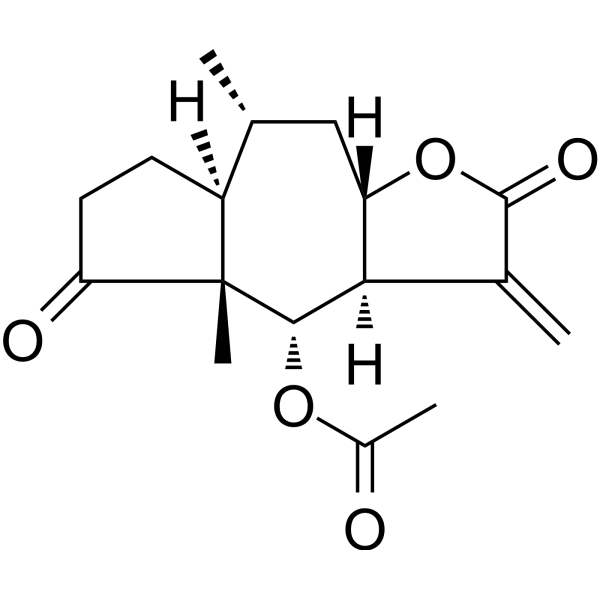
Ergolide is an orally active dual inhibitor targeting NF-κB/p65 and NLRP3. Ergolide blocks the NF-κB signaling pathway and the nuclear translocation of p65, and irreversibly binds to the NACHT domain of NLRP3 to inhibit inflammasome assembly. Ergolide significantly reduces the production of inflammatory mediators (e.g., NO, PGE2) and cytokines, induces cancer cell apoptosis, autophagy and ROS generation. Ergolide also enhances the anti-tumor effect of vincristine. Ergolide alleviates acute lung injury via an NLRP3-dependent mechanism, and effectively improves the survival rate and behavioral function of septic mice and inflammatory zebrafish models. Ergolide is used in the research of metastatic uveal melanoma, neurodegenerative diseases (such as Alzheimer's disease, Parkinson's disease), sepsis and acute lymphoblastic leukemia .
|
-
- HY-179433
-
|
|
PROTACs
Androgen Receptor
Estrogen Receptor/ERR
Src
|
Cancer
|
|
PROTAC AR Degrader-12 is a highly efficient PROTAC targeting AR coactivator binding site (AR-CBS). PROTAC AR Degrader-12 induces AR degradation in a ubiquitin proteasome system (UPS) pathway-dependent manner. PROTAC AR Degrader-12 inhibits tumor cell growth by affecting DNA replication and cell division PROTAC AR Degrader-12 could not only effectively degrade AR, but also potently inhibit the proliferation of MCF-7 and multiple mutant or resistant BC cells. PROTAC AR Degrader-12 effectively blocked estrogen receptor α (ERα) signaling through a dual mechanism involving ERα protein downregulation and suppression of its transcriptional activity. PROTAC AR Degrader-12 significantly inhibits the mRNA expression of FOXA1, GREB1, SRC, and PELP1. PROTAC AR Degrader-12 can be used for the study of breast cancer .
|
-
- HY-176283
-
|
|
Microtubule/Tubulin
Histone Demethylase
Apoptosis
Wee1
Bcl-2 Family
Caspase
|
Cancer
|
|
Tubulin/LSD1-IN-1 is an effective dual inhibitor of Tubulin polymerization and LSD1 (IC50 = 1.72 μM). Tubulin/LSD1-IN-1 has broad-spectrum antiproliferative activity against cancer cell lines. Tubulin/LSD1-IN-1 inhibits tubulin polymerization by targeting colchicine binding sites, thereby disrupting the microtubule network in gastric cancer cells. Tubulin/LSD1-IN-1 increases the methylation levels of H3K4me1/2 and H3K9me2/3, thereby achieving epigenetic regulation. Tubulin/LSD1-IN-1 induces G2/M arrest, promotes apoptosis, and effectively inhibits colony formation of gastric cancer cells .
|
-
- HY-176547
-
|
|
FGFR
Cytochrome P450
|
Endocrinology
|
|
FGFR2/3-IN-3 is a dual-target FGFR2/3 inhibitor with IC50s of 2.7 nM (TEL-FGFR2) and 3.9 nM (TEL-FGFR3), respectively. FGFR2/3-IN-3 has effective activity against both wild-type and mutant FGFR3. FGFR2/3-IN-3 has low CYP3A4 inhibitory effect and hERG toxicity. FGFR2/3-IN-3 improves the imbalance between chondrocyte proliferation and differentiation and promotes bone growth by inhibiting the signaling pathway mediated by mutant FGFR3. FGFR2/3-IN-3 shows a growth-promoting effect in a dwarfism mouse model and has the potential to study bone development disorder-related diseases such as achondroplasia (ACH) .
|
-
- HY-P10868
-
|
RLS-0071
|
Reactive Oxygen Species (ROS)
|
Infection
Inflammation/Immunology
|
|
Pegtarazimod (RLS-0071) is a dual-target anti-inflammatory peptide that exerts its effects by simultaneously regulating the complement system and neutrophil-associated inflammatory pathways. Pegtarazimod reduces ROS production both in vitro and in vivo, and decreases the level of neutrophil elastase, a marker of neutrophil extracellular traps (NETs), in vivo, thereby alleviating inflammatory responses. Pegtarazimod significantly improves the survival rate of mice in multiple in vivo models of acute graft-versus-host disease (aGVHD). Pegtarazimod inhibits the activation of the C1 complex, reduces the herpes zoster-like spread of herpes simplex virus type 1 skin infection, and improves the survival rate of infected mice . Pegtarazimod can be used in research related to acute graft-versus-host disease, acute pulmonary diseases, and skin herpes simplex virus type 1 infection .
|
-
- HY-159510
-
|
|
Apoptosis
VEGFR
Microtubule/Tubulin
Reactive Oxygen Species (ROS)
|
Cancer
|
|
VEGFR-2-IN-51 (compound 19) is an orally active dual-target inhibitor of VEGFR-2 (IC50=15.33 μM) and tubulin (IC50=0.76 μM) with anti-tumor activity. VEGFR-2-IN-51 induces tumor cell apoptosis by reducing mitochondrial membrane potential and increasing reactive oxygen species (ROS) levels. VEGFR-2-IN-51 exerts anti-angiogenic effects by blocking the VEGFR-2/PI3K/AKT signaling pathway. In addition, VEGFR-2-IN-51 has significant anti-proliferative activity against the gastric cancer cell line MGC-803 (IC50=0.005 μM) .
|
-
- HY-178485
-
|
|
PI3K
HDAC
Akt
Histone Methyltransferase
|
Cancer
|
|
SJY26 is a PI3K/HDAC dual-target inhibitor with IC50s of 0.59 nM (PI3Kα and PI3Kδ), 2.02 nM (PI3Kγ), 12.69 nM (PI3Kβ) and 114 nM (HDAC1). SJY26 exhibits potent broad-spectrum anti-proliferative activity, and is particularly sensitive to Jurkat and PC9R cells. SJY26 inhibited the migration of PC9R cells, arrested the cell cycle and induced cell apoptosis. SJY26 reduces AKT phosphorylation, and decreases histone H3 deacetylation (Ac-H3). SJY26 can be used for the studies of non-small cell lung cancer and leukemia .
|
-
- HY-178029
-
|
|
Ribosomal S6 Kinase (RSK)
Topoisomerase
Apoptosis
Autophagy
Reactive Oxygen Species (ROS)
|
Cancer
|
|
RSK2/TOP2-IN-1 is a RSK2/TOP2 dual inhibitor. RSK2/TOP2-IN-1 targets key tumor progression enzymes including ribosomal S6 kinase 2 and topoisomerases IIα/IIβ. RSK2/TOP2-IN-1 shows selectivity index > 2 against all squamous cell carcinoma (SCC) cell lines. RSK2/TOP2-IN-1 can induce cell apoptosis, autophagy and ROS production. RSK2/TOP2-IN-1 can be used for the research of cancer, such as squamous cell carcinoma .
|
-
- HY-172878
-
|
|
Small Interfering RNA (siRNA)
HDAC
Apoptosis
|
Cancer
|
|
HDAC/PSMD14-IN-1 (Compound 8B) is a thiolutin derivative. HDAC/PSMD14-IN-1 is a orally active dual-target inhibitor of PSMD14/HDAC1 (IC50 238.7 nM/141.2 nM, respectively). HDAC/PSMD14-IN-1 has good cytotoxicity against ESCC cell lines (IC50: 30-250 nM) and effectively reverses epithelial-mesenchymal transition (EMT). HDAC/PSMD14-IN-1 can induce apoptosis. HDAC/PSMD14-IN-1 has anti-tumor activity in a KYSE30 cell mouse xenograft model. HDAC/PSMD14-IN-1 can be used in anti-esophageal cancer research .
|
-
- HY-179049
-
|
|
EGFR
Microtubule/Tubulin
Akt
ERK
Autophagy
Atg8/LC3
p62
Ferroptosis
Reactive Oxygen Species (ROS)
|
Cancer
|
|
EGFR/tubulin-IN-1 (Compound 26) is a dual-target inhibitor of EGFR and tubulin. EGFR/tubulin-IN-1 significantly reduces the levels of p-EGFR, p-AKT, and p-ERK in cells, disrupting the microtubule structure of the cells. EGFR/tubulin-IN-1 significantly inhibits the proliferation of H1975 cells and significantly blocks the cells in the G2/M phase. EGFR/tubulin-IN-1 induces the expression of autophagy markers LC3B-II and Beclin-1, while down-regulating the expression of p62. EGFR/tubulin-IN-1 induces ferroptosis, with increased ROS content and depletion of glutathione (GSH). EGFR/tubulin-IN-1 inhibits epithelial-mesenchymal transition (EMT) and tumor metastasis. EGFR/tubulin-IN-1 has a significant tumor-suppressing effect in the H1975 transplanted tumor nude mouse model. EGFR/tubulin-IN-1 can be used for the study of non-small cell lung cancer .
|
-
- HY-174403
-
|
|
Bcl-2 Family
c-Myc
Apoptosis
Caspase
|
Cancer
|
|
c-MYC/BCL2 ligand 1 iodide is a dual-targeting c-MYC/Bcl-2 G4 ligand with Kd values of 0.90 μM (c-MYC G4) and 0.56 μM (Bcl-2 G4). c-MYC/BCL2 ligand 1 iodide inhibits c-MYC and Bcl-2 gene transcription by binding to G4-forming sequences and downregulates their protein expression. c-MYC/BCL2 ligand 1 iodide inhibits suppresses migration, induces caspase-dependent apoptosis, and triggers cell cycle G1 arrest in MCF-7 cells. c-MYC/BCL2 ligand 1 iodide significantly suppresses tumor growth in a 4T1 syngeneic model with no observable toxicity. c-MYC/BCL2 ligand 1 iodide can be used for the research of breast cancer.
|
-
- HY-183564
-
|
|
RIP kinase
Necroptosis
Interleukin Related
|
Inflammation/Immunology
|
|
RIPK1/RIPK3-PPI-IN-1 is an orally active dual-target inhibitor of RIPK1/RIPK3, with a Kd value of 2.4 nM for RIPK1 and 24 nM for RIPK3. RIPK1/RIPK3-PPI-IN-1 inhibits the phosphorylation of RIPK1, RIPK3 and MLKL, thereby suppressing necroptosis. RIPK1/RIPK3-PPI-IN-1 restores body temperature, improves survival rate, and reduces IL-1β/IL-6 levels in serum and multiple organs of Mus musculus, thus alleviating TNF-α-induced systemic inflammatory response syndrome. RIPK1/RIPK3-PPI-IN-1 can be used in research related to systemic inflammatory response syndrome .
|
-
- HY-P99014
-
|
ARGX-110
|
Fc Receptor (FcR)
NF-κB
|
Inflammation/Immunology
Cancer
|
|
Cusatuzumab (ARGX-110) is a selective competitive blocker targeting CD70 (with an equilibrium dissociation constant of 17 pM for binding to human CD70). Cusatuzumab also possesses enhanced antibody-dependent cell-mediated cytotoxicity (ADCC) activity. It is a humanized IgG1 monoclonal antibody, artificially synthesized through humanization and genetic engineering modifications (CH2 region mutation to enhance effector function). Cusatuzumab has a dual mechanism of action: firstly, it competitively blocks the interaction between CD70 and CD27, inhibiting the CD27-NF-κB signaling pathway, reducing regulatory T cell (Treg) activation and tumor cell proliferation; secondly, by enhancing binding to FcγRIIIa, it mediates ADCC and antibody-dependent cellular phagocytosis (ADCP), directly lysing CD70-positive tumor cells. Cusatuzumab can efficiently eliminate leukemia stem cells (LSCs), induce tumor cell differentiation and apoptosis, restore immune surveillance, and target CD70-positive tumors. Cusatuzumab is used in the study of acute myeloid leukemia (AML) .
|
-
- HY-175655
-
|
|
p38 MAPK
Cholinesterase (ChE)
Interleukin Related
|
Neurological Disease
Inflammation/Immunology
|
|
BChE/p38-α MAPK-IN-1 is a selective dual inhibitor of hBChE (IC50 = 772 nM) and p38α MAPK (IC50 = 191 nM). BChE/p38-α MAPK-IN-1 reduces the production of pro-inflammatory cytokines (IL-1β, IL-6, IL-8, TNF-α) in cells. BChE/p38-α MAPK-IN-1 improves Scopolamine (HY-N0296)-induced cognitive impairment, as well as alleviates LPS (HY-D1056)-induced spatial learning impairment and exerts anti-neuroinflammatory effects in mice. BChE/p38-α MAPK-IN-1 can be used for the study of Alzheimer’s disease (AD) by targeting both cholinergic deficit and neuroinflammation .
|
-
- HY-P991628
-
|
PF-08634404
|
PD-1/PD-L1
VEGFR
|
Cancer
|
|
SSGJ-707 (PF-08634404) is a bispecific antibody targeting VEGF and PD-1. SSGJ-707 exerts dual anti-tumor effects by neutralizing VEGF and blocking the PD-1 signaling pathway. SSGJ-707 can be combined with platinum-based chemotherapy to inhibit advanced non-small cell lung cancer (NSCLC), and its inhibitory effect is not limited by PD-L1 expression levels. In the HARMONi-2 trial, the objective response rate of SSGJ-707 correlates with the PD-L1 tumor proportion score, and the incidence of grade ≥3 adverse events is comparable to that of Inetetamab (HY-P99969). SSGJ-707 is being extensively investigated for a variety of malignancies including advanced NSCLC, colorectal cancer and small cell lung cancer .
|
-
- HY-172892
-
|
|
PI3K
Reactive Oxygen Species (ROS)
|
Cancer
|
|
PI3K-IN-59 (Compound 3d) is a PI3K inhibitor (IC50: 17.44 μM). PI3K-IN-59 has significant antiproliferative activity and exhibits potent inhibitory effects on breast cancer 4T1 cells (IC50: 3.70 μM) and colon cancer CT26 cells (IC50: 1.98 μM) as well as human breast cancer cells (IC50: 19.72 μM). PI3K-IN-59 exerts a dual anti-tumor mechanism by inhibiting PI3Kα enzymatic activity and triggering the Fenton reaction to generate hydroxyl radicals (•OH). PI3K-IN-59 shows promising anti-4T1 tumor effects and is suitable for synergistic targeting studies in breast and colon cancers .
|
-
- HY-117947
-
|
|
Histone Methyltransferase
|
Cancer
|
|
(R)-OR-S1 is an isomer of OR-S1. The dual ZH1/2 inhibitors OR-S1 and OR-S2 exhibit strong inhibitory activity against both EZH1 and EZH2. OR-S1 and OR-S2 are highly selective methyltransferase inhibitors against EZH1 and EZH2, and they have very similar molecular features. Therefore, we investigated the effect of OR-S1 on acute myeloid leukemia (AML). We found that OR-S1 was able to induce cell differentiation and apoptosis in AML cells. These findings encouraged us to investigate whether functional LT-HSCs could survive PRC2-targeted therapy with OR-S1 or OR-S1 combined with cytarabine. The results showed that OR-S1 did not cause significant myelosuppression, and BM cells treated with the combination therapy were able to undergo normal hematopoiesis even 4 months after treatment. Therefore, temporary inhibition of EZH1 and EZH2 is clinically tolerable, making this combination therapy suitable for AML patients. AML is generally believed to originate from myeloid progenitor cells that inherit a large number of biological properties.
|
-
- HY-163679
-
|
|
Estrogen Receptor/ERR
Cytochrome P450
PROTACs
Apoptosis
|
Cancer
|
|
PROTAC ERα Degrader-9 (Compound 18c) is a dual-targeting PROTAC degrader, which degrades estrogen receptor α (ERα) and aromatase (ARO). PROTAC ERα Degrader-9 binds to ERα with a Ki of 0.25 μM, inhibits ARO with an IC50 of 4.6 μM. PROTAC ERα Degrader-9 inhibits the proliferation of MCF-7 wildtype (IC50=0.54 μM) and ERα mutants MCF-7 EGFR (IC50=0.075 μM), MCF-7 D538G (IC50=0.31 μM), MCF-7 Y537S (IC50=2.3 μM), downregulates the expressions of ERS1 and MYC. PROTAC ERα Degrader-9 arrests the cell cycle at G2/M, induces apoptosis in MCF-7. PROTAC ERα Degrader-9 exhibits antitumor efficacy in mouse models. (Pink: ligand for target protein (HY-163680); Black: linker (HY-W007559); Blue: ligand for E3 ligase (HY-112078))
|
-
- HY-162275
-
|
|
Histone Demethylase
Histone Methyltransferase
STAT
|
Cancer
|
|
JMJD1C-IN-1 is an orally active and selective inhibitor of JMJD1C (IC50 = 0.59 μM, Kd = 1.96 μM). JMJD1C-IN-1 inhibits the binding of JMJD1C to H3K9me2 peptide substrate in the HTRF assay (IC50 = 1.47 μM). JMJD1C-IN-1 disrupts intratumoral regulatory T (Treg) cell fitness by dual mechanisms: promoting H3K9me2 accumulation to downregulate PD1 expression and reducing STAT3 demethylation to enhance STAT3 activation. JMJD1C-IN-1 demonstrates dose-dependent antitumor efficacy in multiple mouse tumor models (MCA205 fibrosarcoma, B16-F10 melanoma, LLC lung cancer, Hepa1-6 hepatocellular carcinoma, CT26 colorectal cancer). JMJD1C-IN-1 can be used for the study of tumor immunotherapy by selectively targeting intratumoral Treg cells .
|
-
- HY-13689G
-
|
|
PKC
Histone Methyltransferase
DNA Methyltransferase
DNA/RNA Synthesis
|
Inflammation/Immunology
|
|
Go 6983 GMP is Go 6983 (HY-13689) produced by using GMP guidelines. GMP small molecules works appropriately as an auxiliary reagent for cell therapy manufacture. Go 6983 is a dual inhibitor targeting Suv39h1/2 (KMT1A/KMT1B) and PKC, as well as a transcriptional activator capable of inducing DNA hypomethylation. Go 6983 stimulates the transcription of Prdm14 by reducing Suv39h1/2 protein levels, decreasing histone modifications in the Prdm14 promoter region, and increasing the recruitment of RNA polymerase II. Go 6983 induces genome-wide DNA hypomethylation by inhibiting de novo methyltransferase expression and increasing Tet1/Tet2 levels, thereby promoting self-renewal and pluripotency maintenance of stem cells. Meanwhile, Go 6983 can block PKC-mediated signaling pathways to reduce the expression of EMT-related genes and eliminate the upregulation of antioxidant genes downstream of NRF2. Go 6983 is mainly used in mechanism studies related to myocardial ischemia/reperfusion injury .
|
-
- HY-182905
-
|
|
Somatostatin Receptor
G protein-coupled Bile Acid Receptor 1
|
Metabolic Disease
|
|
SSTR5/TGR5-modulator-1 is an orally active and dual-target small molecule, balanced in vitro activity at human TGR5 and human SSTR5. SSTR5/TGR5-modulator-1 activates human TGR5 to promote cAMP accumulation. SSTR5/TGR5-modulator-1 blocks human SSTR5 to inhibit agonist-induced calcium mobilization. SSTR5/TGR5-modulator-1 improves glucose tolerance in mice. SSTR5/TGR5-modulator-1 alleviates gallbladder filling in mice at pharmacologically relevant doses. SSTR5/TGR5-modulator-1 has suboptimal physicochemical and metabolic properties.SSTR5/TGR5-modulator-1 can be used for the research of type 2 diabetes mellitus .
|
-
- HY-P992056
-
|
|
Autophagy
|
Cancer
|
|
Anti-Human/Mouse LY6E Antibody (9B12) is a high-affinity, multi-target antibody that binds specifically to LY6E. Anti-Human/Mouse LY6E Antibody (9B12) binds specifically to cell-surface LY6E and enters lysosomes via lipid raft-dependent endocytosis, thereby effectively inhibiting the growth of various LY6E-expressing solid tumors (such as breast cancer and lung cancer) in both in vitro and in vivo models. Anti-Human/Mouse LY6E Antibody (9B12) exerts a dual mechanism of action: on one hand, it blocks the interaction between PILRα and CD8α, specifically reduces the survival rate of peripheral CD8 + T cells and induces their activation, breaking the state of cellular quiescence; on the other hand, it recognizes and immunoprecipitates IDE under both non-denaturing and denaturing conditions, which is applicable to studies on the subcellular localization and protein interactions of IDE. The regulatory effect of Anti-Human/Mouse LY6E Antibody (9B12) on CD8 + T cells strictly depends on the presence of PILRα, and it does not affect CD4 + T cells or T cell development in the thymus, exhibiting high specificity .
|
-
| Cat. No. |
Product Name |
Type |
-
- HY-12299G
-
|
Dual LCK/SRC inhibitor
|
Fluorescent Dyes
|
|
WH-4-023 GMP is WH-4-023 (HY-12299) produced by using GMP guidelines. GMP small molecules works appropriately as an auxiliary reagent for cell therapy manufacture. WH-4-023 (Dual LCK/SRC inhibitor) is a Lck/Src dual target inhibitor with functions in stem cell maintenance and differentiation regulation. WH-4-023 blocks epithelial-mesenchymal transition, supports the self-renewal of porcine embryonic stem cells, and inhibits their differentiation into mesoderm and endoderm. WH-4-023 is a key component of 3i/LAF medium, and enables the stable establishment and long-term maintenance of porcine pre-gastrulation epiblast stem cell lines. Removal of WH-4-023 reduces the expression of pluripotency factors in porcine and human extended pluripotent stem cells. WH-4-023 can be applied to relevant studies such as non-small cell lung cancer resistant to EGFR-TKIs .
|
-
- HY-13689G
-
|
|
Fluorescent Dyes
|
|
Go 6983 GMP is Go 6983 (HY-13689) produced by using GMP guidelines. GMP small molecules works appropriately as an auxiliary reagent for cell therapy manufacture. Go 6983 is a dual inhibitor targeting Suv39h1/2 (KMT1A/KMT1B) and PKC, as well as a transcriptional activator capable of inducing DNA hypomethylation. Go 6983 stimulates the transcription of Prdm14 by reducing Suv39h1/2 protein levels, decreasing histone modifications in the Prdm14 promoter region, and increasing the recruitment of RNA polymerase II. Go 6983 induces genome-wide DNA hypomethylation by inhibiting de novo methyltransferase expression and increasing Tet1/Tet2 levels, thereby promoting self-renewal and pluripotency maintenance of stem cells. Meanwhile, Go 6983 can block PKC-mediated signaling pathways to reduce the expression of EMT-related genes and eliminate the upregulation of antioxidant genes downstream of NRF2. Go 6983 is mainly used in mechanism studies related to myocardial ischemia/reperfusion injury .
|
| Cat. No. |
Product Name |
Type |
-
- HY-12299G
-
|
Dual LCK/SRC inhibitor
|
Biochemical Assay Reagents
|
|
WH-4-023 GMP is WH-4-023 (HY-12299) produced by using GMP guidelines. GMP small molecules works appropriately as an auxiliary reagent for cell therapy manufacture. WH-4-023 (Dual LCK/SRC inhibitor) is a Lck/Src dual target inhibitor with functions in stem cell maintenance and differentiation regulation. WH-4-023 blocks epithelial-mesenchymal transition, supports the self-renewal of porcine embryonic stem cells, and inhibits their differentiation into mesoderm and endoderm. WH-4-023 is a key component of 3i/LAF medium, and enables the stable establishment and long-term maintenance of porcine pre-gastrulation epiblast stem cell lines. Removal of WH-4-023 reduces the expression of pluripotency factors in porcine and human extended pluripotent stem cells. WH-4-023 can be applied to relevant studies such as non-small cell lung cancer resistant to EGFR-TKIs .
|
-
- HY-13689G
-
|
|
Biochemical Assay Reagents
|
|
Go 6983 GMP is Go 6983 (HY-13689) produced by using GMP guidelines. GMP small molecules works appropriately as an auxiliary reagent for cell therapy manufacture. Go 6983 is a dual inhibitor targeting Suv39h1/2 (KMT1A/KMT1B) and PKC, as well as a transcriptional activator capable of inducing DNA hypomethylation. Go 6983 stimulates the transcription of Prdm14 by reducing Suv39h1/2 protein levels, decreasing histone modifications in the Prdm14 promoter region, and increasing the recruitment of RNA polymerase II. Go 6983 induces genome-wide DNA hypomethylation by inhibiting de novo methyltransferase expression and increasing Tet1/Tet2 levels, thereby promoting self-renewal and pluripotency maintenance of stem cells. Meanwhile, Go 6983 can block PKC-mediated signaling pathways to reduce the expression of EMT-related genes and eliminate the upregulation of antioxidant genes downstream of NRF2. Go 6983 is mainly used in mechanism studies related to myocardial ischemia/reperfusion injury .
|
| Cat. No. |
Product Name |
Target |
Research Area |
-
- HY-P10868
-
|
RLS-0071
|
Reactive Oxygen Species (ROS)
|
Infection
Inflammation/Immunology
|
|
Pegtarazimod (RLS-0071) is a dual-target anti-inflammatory peptide that exerts its effects by simultaneously regulating the complement system and neutrophil-associated inflammatory pathways. Pegtarazimod reduces ROS production both in vitro and in vivo, and decreases the level of neutrophil elastase, a marker of neutrophil extracellular traps (NETs), in vivo, thereby alleviating inflammatory responses. Pegtarazimod significantly improves the survival rate of mice in multiple in vivo models of acute graft-versus-host disease (aGVHD). Pegtarazimod inhibits the activation of the C1 complex, reduces the herpes zoster-like spread of herpes simplex virus type 1 skin infection, and improves the survival rate of infected mice . Pegtarazimod can be used in research related to acute graft-versus-host disease, acute pulmonary diseases, and skin herpes simplex virus type 1 infection .
|
-
- HY-P11225
-
|
MAP-04-02
|
Bacterial
|
Infection
|
DRAMP18563 (MAP-04-02) is a linear antimicrobial peptide that can act as a delivery vector to transport dual-ring peptide inhibitors that cannot penetrate the outer membrane of Gram-negative bacteria to their target sites. DRAMP18563 can be used to study the delivery strategies of dual-ring peptide inhibitors .
|
| Cat. No. |
Product Name |
Target |
Research Area |
Image |
-
- HY-P99014
-
|
ARGX-110
|
Fc Receptor (FcR)
NF-κB
|
Inflammation/Immunology
Cancer
|
|
Cusatuzumab (ARGX-110) is a selective competitive blocker targeting CD70 (with an equilibrium dissociation constant of 17 pM for binding to human CD70). Cusatuzumab also possesses enhanced antibody-dependent cell-mediated cytotoxicity (ADCC) activity. It is a humanized IgG1 monoclonal antibody, artificially synthesized through humanization and genetic engineering modifications (CH2 region mutation to enhance effector function). Cusatuzumab has a dual mechanism of action: firstly, it competitively blocks the interaction between CD70 and CD27, inhibiting the CD27-NF-κB signaling pathway, reducing regulatory T cell (Treg) activation and tumor cell proliferation; secondly, by enhancing binding to FcγRIIIa, it mediates ADCC and antibody-dependent cellular phagocytosis (ADCP), directly lysing CD70-positive tumor cells. Cusatuzumab can efficiently eliminate leukemia stem cells (LSCs), induce tumor cell differentiation and apoptosis, restore immune surveillance, and target CD70-positive tumors. Cusatuzumab is used in the study of acute myeloid leukemia (AML) .
|
-
(5)
-
- HY-P991628
-
|
PF-08634404
|
PD-1/PD-L1
VEGFR
|
Cancer
|
|
SSGJ-707 (PF-08634404) is a bispecific antibody targeting VEGF and PD-1. SSGJ-707 exerts dual anti-tumor effects by neutralizing VEGF and blocking the PD-1 signaling pathway. SSGJ-707 can be combined with platinum-based chemotherapy to inhibit advanced non-small cell lung cancer (NSCLC), and its inhibitory effect is not limited by PD-L1 expression levels. In the HARMONi-2 trial, the objective response rate of SSGJ-707 correlates with the PD-L1 tumor proportion score, and the incidence of grade ≥3 adverse events is comparable to that of Inetetamab (HY-P99969). SSGJ-707 is being extensively investigated for a variety of malignancies including advanced NSCLC, colorectal cancer and small cell lung cancer .
|
-
(5)
-
- HY-P99166
-
|
XMAB-20717
|
PD-1/PD-L1
CTLA-4
|
Inflammation/Immunology
Cancer
|
|
Vudalimab is a potent dual PD-1 and CTLA-4 inhibitor as a fully humanized bispecific monoclonal antibody. Vudalimab targets immune checkpoint receptors PD-1 and CTLA-4 and promotes tumor-selective T-cell activation .
|
-
(5)
-
- HY-P992391
-
|
IPH43
|
C-type Lectin-like Receptors (CTLRs)
Apoptosis
|
Cancer
|
|
IPH4301 is a monoclonal antibody targeting MICA/B, with dual activities of cytotoxicity and immunoregulation . IPH4301 blocks the interaction between MICA/B and NKG2D, inhibits their hydrolysis into soluble sMICA/B, and mediates antibody-dependent cellular cytotoxicity and antibody-dependent cellular phagocytosis against tumor cells expressing MICA/MICB. IPH4301 restores the expression and function of NKG2D on primary NK cells and T cells, reverses the immunosuppression induced by M2 macrophages, and enhances NK cell-mediated tumor cell apoptosis. IPH4301 can be used in research related to cancer and triple-negative breast cancer .
|
-
(5)
-
- HY-P992056
-
|
|
Autophagy
|
Cancer
|
|
Anti-Human/Mouse LY6E Antibody (9B12) is a high-affinity, multi-target antibody that binds specifically to LY6E. Anti-Human/Mouse LY6E Antibody (9B12) binds specifically to cell-surface LY6E and enters lysosomes via lipid raft-dependent endocytosis, thereby effectively inhibiting the growth of various LY6E-expressing solid tumors (such as breast cancer and lung cancer) in both in vitro and in vivo models. Anti-Human/Mouse LY6E Antibody (9B12) exerts a dual mechanism of action: on one hand, it blocks the interaction between PILRα and CD8α, specifically reduces the survival rate of peripheral CD8 + T cells and induces their activation, breaking the state of cellular quiescence; on the other hand, it recognizes and immunoprecipitates IDE under both non-denaturing and denaturing conditions, which is applicable to studies on the subcellular localization and protein interactions of IDE. The regulatory effect of Anti-Human/Mouse LY6E Antibody (9B12) on CD8 + T cells strictly depends on the presence of PILRα, and it does not affect CD4 + T cells or T cell development in the thymus, exhibiting high specificity .
|
-
(5)
| Cat. No. |
Product Name |
Category |
Target |
Chemical Structure |
-
- HY-113289
-
-
-
- HY-N4150
-
-
-
- HY-N6893
-
|
|
Phyllodium pulchellum (L.) Desv.
Structural Classification
Classification of Application Fields
Ketones, Aldehydes, Acids
Plants
Compositae
Inflammation/Immunology
Disease Research Fields
Piptanthus nepalensis (Hook.) D. Don
Source Classification
|
NF-κB
NOD-like Receptor (NLR)
Apoptosis
Autophagy
|
Ergolide is an orally active dual inhibitor targeting NF-κB/p65 and NLRP3. Ergolide blocks the NF-κB signaling pathway and the nuclear translocation of p65, and irreversibly binds to the NACHT domain of NLRP3 to inhibit inflammasome assembly. Ergolide significantly reduces the production of inflammatory mediators (e.g., NO, PGE2) and cytokines, induces cancer cell apoptosis, autophagy and ROS generation. Ergolide also enhances the anti-tumor effect of vincristine. Ergolide alleviates acute lung injury via an NLRP3-dependent mechanism, and effectively improves the survival rate and behavioral function of septic mice and inflammatory zebrafish models. Ergolide is used in the research of metastatic uveal melanoma, neurodegenerative diseases (such as Alzheimer's disease, Parkinson's disease), sepsis and acute lymphoblastic leukemia .
|
-
-
- HY-N4150R
-
|
Quercetagetin-7-O-glucoside (Standard)
|
Flavonols
Structural Classification
Flavonoids
Erythrina melanacantha Taub. ex Harms
Phenols
Polyphenols
Plants
Compositae
Source Classification
|
Reference Standards
Phosphatase
Tau Protein
NF-κB
|
|
Quercetagitrin (Standard) is the analytical standard of Quercetagitrin. This product is intended for research and analytical applications. Quercetagitrin (Quercetagetin-7-O-glucoside) is a natural product that can be isolated from the African marigold (Tagetes erecta). Quercetagitrin has anti-inflammatory activity. Quercetagitrin inhibits Tau accumulation. Quercetagitrin can reverse neuroinflammation and cognitive deficits in P301S-Tau transgenic mouse model through inhibiting NF-κB activation. Quercetagitrin is a dual-target inhibitor of PTPN6 (IC50 = 1 μM) and PTPN9 (IC50 = 1.7 μM). Quercetagitrin enhances glucose uptake by mature C2C12 myoblasts. Quercetagitrin can be studied in research for Alzheimer’s disease and type 2 diabetes .
|
-
| Cat. No. |
Product Name |
Chemical Structure |
-
- HY-168968S
-
|
|
|
ZJY-54 is an orally active dual-target inhibitor of EGFR/LSD1, with IC50 values of 3.8 nM and 0.6 μM, respectively. ZJY-54 can inhibit the proliferation of non-small cell lung cancer cells, induce the accumulation of H3K4me2 and H3K9me2, and inhibit the phosphorylation of the EGFR signaling pathway. ZJY-54 has anti-tumor activity .
|
-
-
- HY-155227S
-
|
|
|
ALK/EGFR-IN-1-d5 (Compound (-)-9a) is a deuterated dual-target inhibitor of EGFR and ALK, with an IC50 of 1.08 nM for EGFR and an IC50 of 2.395 nM for ALK. ALK/EGFR-IN-1-d5 inhibits the phosphorylated proteins in the EGFR, ALK, and BRK signaling pathways, blocking the cell cycle, leading to a reduction in mitochondrial membrane potential and cell apoptosis (Apoptosis). ALK/EGFR-IN-1-d5 also significantly inhibits tumor growth in animal models and demonstrates good safety. ALK/EGFR-IN-1-d5 holds promise for research in the field of cancer treatment
|
-
| Cat. No. |
Product Name |
|
Classification |
-
- HY-178475
-
|
|
|
Alkynes
|
|
CA IX/GPX4-IN-1 (Compound 22abcb) is a dual targeted inhibitor of CA IX and GPX4 activity. CA IX/GPX4-IN-1 can effectively kill SUM159PT cells (IC50 = 416 nM) by inducing iron death under hypoxic conditions. CA IX/GPX4-IN-1 has an IC50 of 663 nM to CA IX in SUM159PT-CAIX-FL cells. CA IX/GPX4-IN-1 can significantly inhibit tumor growth and can be reversed by ferroptosis inhibitors. CA IX/GPX4-IN-1 can be used for research on breast cancer and other cancers .
|
-
- HY-159519
-
|
|
|
Azide
|
|
EGFR/HER2-IN-16 (compound 12K) is an effective dual-target inhibitor of EGFR (IC50=6.15 nM) and HER-2 (IC50=9.78 nM) with anti-tumor activity. EGFR/HER2-IN-16 can inhibit the migration of SK-BR-3 cells, arrest the cell cycle in the G0/G1 phase, and induce apoptosis. EGFR/HER2-IN-16 exhibits good anti-proliferative activity against tumor cell models and has little damage to healthy cells. EGFR/HER2-IN-16 can be used in breast cancer research .
|
| Cat. No. |
Product Name |
|
Classification |
-
- HY-113289
-
|
|
|
Cholesterol
|
|
Brassicasterol is a metabolite of Ergosterol and has cardiovascular protective effects. Brassicasterol exerts anticancer effects in prostate cancer through dual targeting of AKT and androgen receptor signaling pathways. Brassicasterol inhibits HSV-1 (IC50=1.2 μM) and Mycobacterium tuberculosis. Brassicasterol also inhibits sterol δ 24-reductase, slowing the progression of atherosclerosis. Brassicasterol is also a cerebrospinal fluid biomarker for Alzheimer's disease .
|
| Cat. No. |
Product Name |
Target |
Research Areas |
Chemical Structure |
-
- HY-12299G
-
|
Dual LCK/SRC inhibitor
|
Src
|
Cancer
|
|
WH-4-023 GMP is WH-4-023 (HY-12299) produced by using GMP guidelines. GMP small molecules works appropriately as an auxiliary reagent for cell therapy manufacture. WH-4-023 (Dual LCK/SRC inhibitor) is a Lck/Src dual target inhibitor with functions in stem cell maintenance and differentiation regulation. WH-4-023 blocks epithelial-mesenchymal transition, supports the self-renewal of porcine embryonic stem cells, and inhibits their differentiation into mesoderm and endoderm. WH-4-023 is a key component of 3i/LAF medium, and enables the stable establishment and long-term maintenance of porcine pre-gastrulation epiblast stem cell lines. Removal of WH-4-023 reduces the expression of pluripotency factors in porcine and human extended pluripotent stem cells. WH-4-023 can be applied to relevant studies such as non-small cell lung cancer resistant to EGFR-TKIs .
|
-
-
- HY-13689G
-
|
|
PKC
Histone Methyltransferase
DNA Methyltransferase
DNA/RNA Synthesis
|
Inflammation/Immunology
|
|
Go 6983 GMP is Go 6983 (HY-13689) produced by using GMP guidelines. GMP small molecules works appropriately as an auxiliary reagent for cell therapy manufacture. Go 6983 is a dual inhibitor targeting Suv39h1/2 (KMT1A/KMT1B) and PKC, as well as a transcriptional activator capable of inducing DNA hypomethylation. Go 6983 stimulates the transcription of Prdm14 by reducing Suv39h1/2 protein levels, decreasing histone modifications in the Prdm14 promoter region, and increasing the recruitment of RNA polymerase II. Go 6983 induces genome-wide DNA hypomethylation by inhibiting de novo methyltransferase expression and increasing Tet1/Tet2 levels, thereby promoting self-renewal and pluripotency maintenance of stem cells. Meanwhile, Go 6983 can block PKC-mediated signaling pathways to reduce the expression of EMT-related genes and eliminate the upregulation of antioxidant genes downstream of NRF2. Go 6983 is mainly used in mechanism studies related to myocardial ischemia/reperfusion injury .
|
-
Your information is safe with us. * Required Fields.
Inquiry Information
- Product Name:
- Cat. No.:
- Quantity:
- MCE Japan Authorized Agent:

