



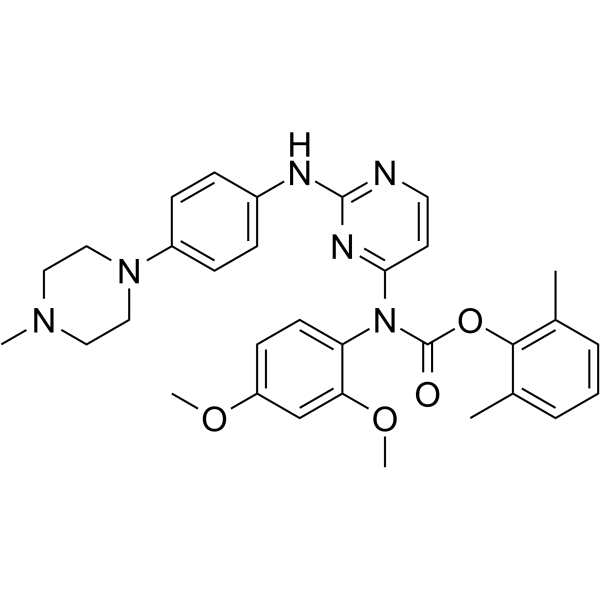
WH-4-023 GMP is WH-4-023 (HY-12299) produced by using GMP guidelines. GMP small molecules works appropriately as an auxiliary reagent for cell therapy manufacture. WH-4-023 (Dual LCK/SRC inhibitor) is a Lck/Src dual target inhibitor with functions in stem cell maintenance and differentiation regulation. WH-4-023 blocks epithelial-mesenchymal transition, supports the self-renewal of porcine embryonic stem cells, and inhibits their differentiation into mesoderm and endoderm. WH-4-023 is a key component of 3i/LAF medium, and enables the stable establishment and long-term maintenance of porcine pre-gastrulation epiblast stem cell lines. Removal of WH-4-023 reduces the expression of pluripotency factors in porcine and human extended pluripotent stem cells. WH-4-023 can be applied to relevant studies such as non-small cell lung cancer resistant to EGFR-TKIs.
For research use only. We do not sell to patients.
- CAS No.: 837422-57-8
- Formula: C32H36N6O4
- Molecular Weight:568.67
-
Storage:
Please store the product under the recommended conditions in the Certificate of Analysis.


To place orders, for customer services and technical support, please contact: MedChemExpress USA
Tel: 609-228-6898 E-mail: [email protected] [email protected]


-
 Biological Activity
-
Chemical Information
- Protocols
- Purity & Documentation
- References
-
 Help & FAQs


-
HY-12299
WH-4-023Src Inhibitor -
HY-13805
PP2Src Inhibitor -
HY-101053
Src Inhibitor 1Src Inhibitor -
HY-59047
TolimidoneSrc Activator -
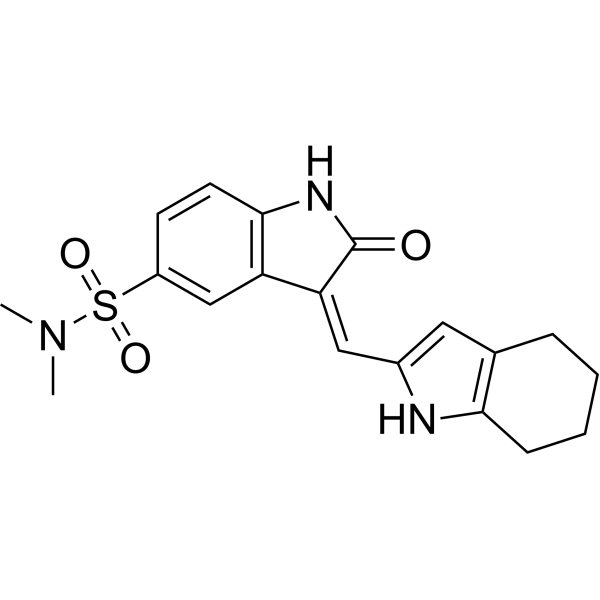
HY-B0789
SU6656Src Inhibitor -
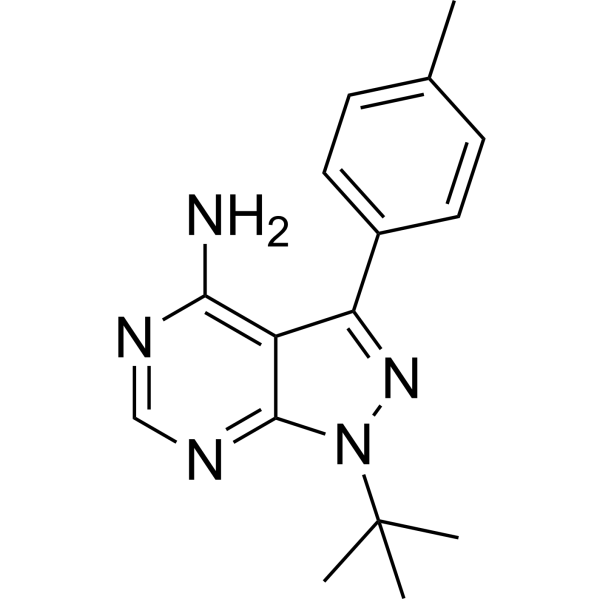
HY-13804
PP1Src Inhibitor -
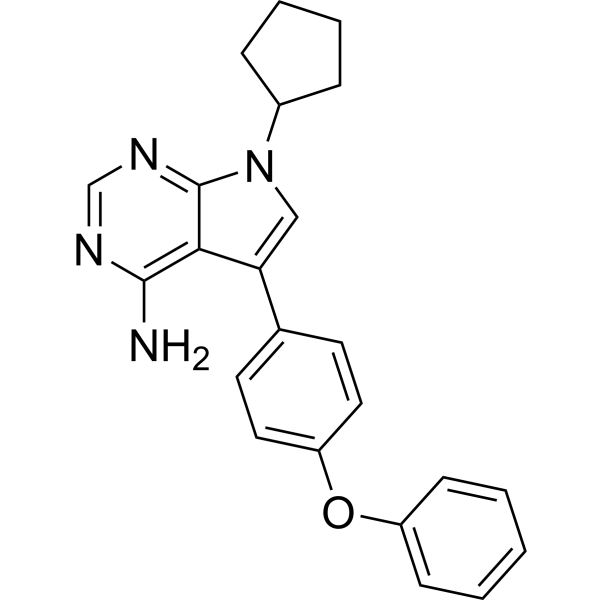
HY-108318
RK-24466Lck Inhibitor -

HY-13805R
PP2 (Standard)Src Inhibitor -
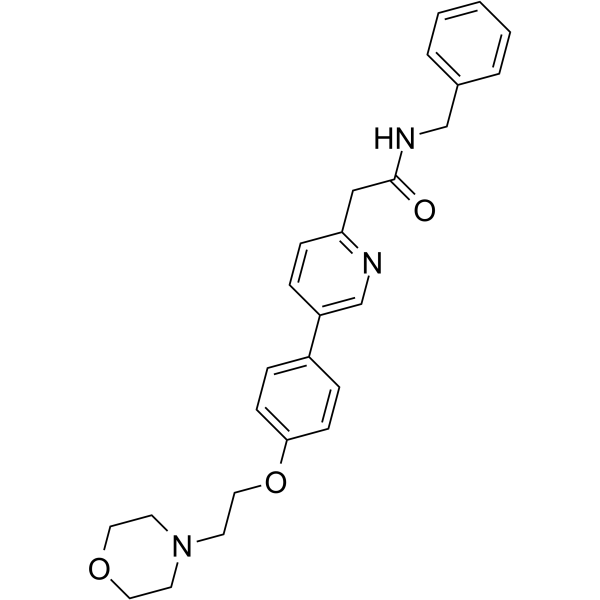
HY-10340
TirbanibulinSrc Inhibitor -
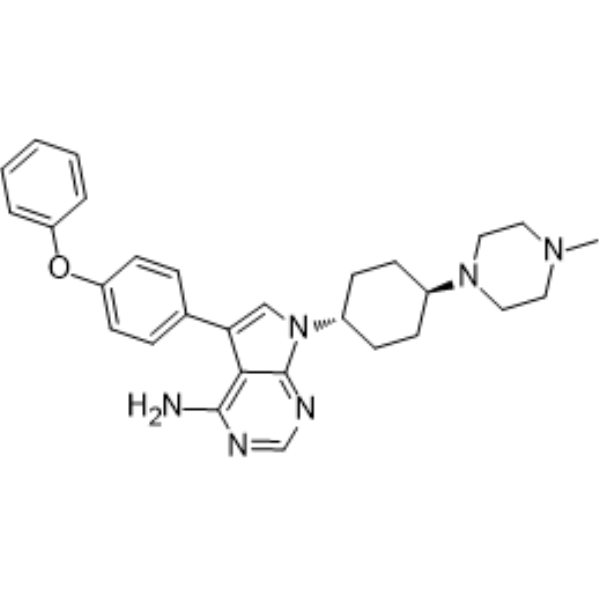
HY-15764
A 419259Src Inhibitor -
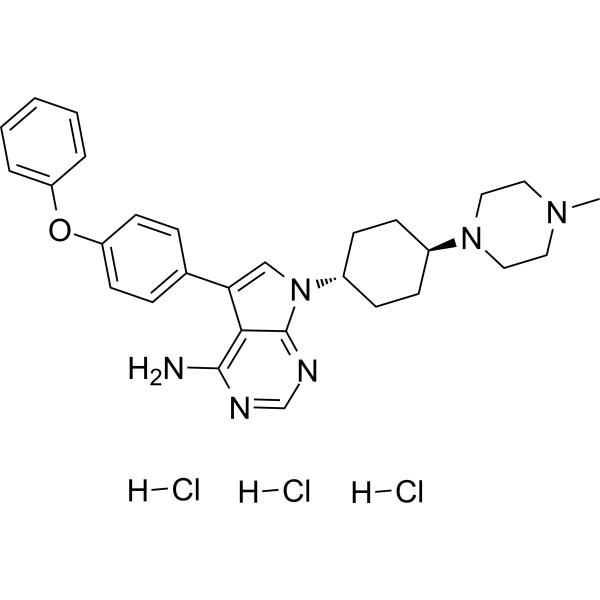
HY-15764A
A 419259 trihydrochlorideSrc Inhibitor -
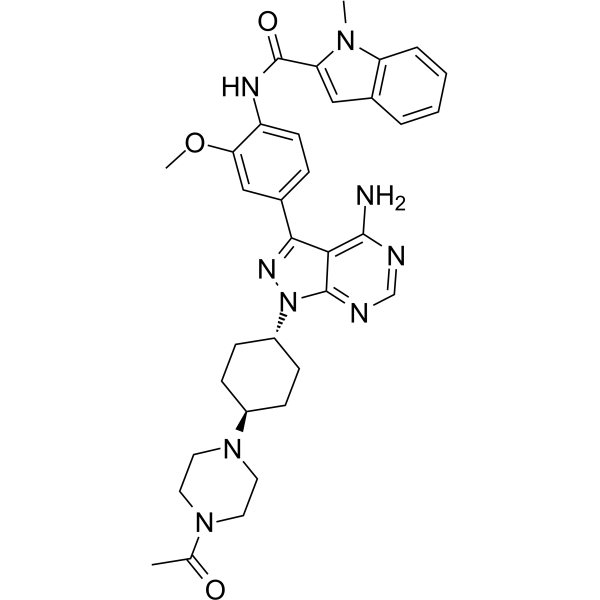
HY-11011
A-770041Lck Inhibitor


Biological Activity
Description
IC50 & Target
|
Lck |
Cellular Effect
|
Cell Line

|
Type | Value | Description | References |
|---|---|---|---|---|
| T-cell | IC50 |
1.9 μM
Compound: 28
|
Inhibition of anti-CD3/CD28-induced IL2 secretion in human T cells
Inhibition of anti-CD3/CD28-induced IL2 secretion in human T cells
|
[PMID: 16884310] |
In Vitro
WH-4-023 (GMP) (>30 passages) supports long-term undifferentiated maintenance of doxycycline-independent porcine induced pluripotent stem cells (pEPSCiPS) when included in pEPSCM, with cells retaining pluripotency marker expression matching porcine blastocysts through >30 passages[1].
WH-4-023 (GMP) is required to maintain pluripotency factor expression in porcine and human expanded potential stem cells, though it supports lower pluripotency gene expression in hEPSCs than the alternative SRC inhibitor A419259 (HY-15764)[1].
WH-4-023 (GMP) (48 h) inhibits ERRα protein expression and suppresses activation of the Src/Erk signaling cascade in PC-9, PC-9/GR, H1975, and PC-9/OR human NSCLC cell lines[2].
WH-4-023 (GMP) (48 h) inhibits SP1 nuclear translocation in PC-9, PC-9/GR, H1975, and PC-9/OR human NSCLC cell lines[2].
WH-4-023 (GMP) downregulates ERRα mRNA expression in PC-9, PC-9/GR, H1975, and PC-9/OR human NSCLC cell lines[2].
WH-4-023 (GMP) (0.3 μM; 50+ passages) enables establishment and long-term maintenance of pESC-FIW cells (derived from in vitro porcine blastocysts) with enhanced proliferation, single-cell clonal efficiency, and stable pluripotency, while preventing EMT-associated spontaneous differentiation[3].
MedChemExpress (MCE) has not independently confirmed the accuracy of these methods. They are for reference only. Further protocols information, click here.
-
Cell Line:pESC-FIW cells
-
Concentration:0.3 μM
-
Incubation Time:48 h
-
Result:Resulted long-term maintenance of pESC-FIW cells.
Prevented EMT-associated spontaneous differentiation.


Chemical Information
-
CAS No. 837422-57-8
-
Molecular Weight 568.67
-
Formula C32H36N6O4
-
SMILES
O=C(OC1=C(C)C=CC=C1C)N(C2=CC=C(OC)C=C2OC)C3=NC(NC4=CC=C(N5CCN(C)CC5)C=C4)=NC=C3
-
Synonyms
Dual LCK/SRC inhibitor (GMP)
-
Shipping
Room temperature in continental US; may vary elsewhere.
-
Storage
Please store the product under the recommended conditions in the Certificate of Analysis.

Protocols
-
Totipotent stem cell culture
Totipotent stem cells are all the cells from the fertilized egg to the 32-cell stage of oogenesis, with unlimited potential for differentiation into cells of various tissues and organs and formation of complete individual.
-
RNA extraction experimental
By lysing cells, releasing RNA, and removing impurities such as proteins and DNA, high-purity RNA products are finally obtained. The commonly used traditional method is the guanidine isothiocyanate/phenol/chloroform method (Trizol), which is suitable for a variety of animal materials including animal tissues, microorganisms, cultured cells, etc., and most plant materials.
-
Human iPSC generation/reprogramming culture
Human iPSC reprogramming converts somatic cells into pluripotent cells by introducing defined transcription factors; classic human studies used OCT3/4, SOX2, KLF4, and c-MYC, or OCT4, SOX2, NANOG, and LIN28, and judged reprogramming by embryonic-stem-cell-like morphology, pluripotency-marker expression, normal karyotype, and differentiation into derivatives of the three germ layers. This protocol is framed around non-integrating reprogramming culture, with Sendai virus, episomal plasmids, or synthetic modified mRNA as literature-supported delivery options; Sendai virus is an RNA vector reported to avoid host-genome integration, episomal vectors can generate integration-free human iPSCs, and modified mRNA can reprogram human cells while avoiding genomic modification.
-
hPSC maintenance and expansion
This protocol maintains and expands human pluripotent stem cells under feeder-free, chemically defined conditions using E8 medium and vitronectin-coated culture surfaces; the readout is sustained adherent colony growth with undifferentiated morphology and retained pluripotency-marker expression during serial passaging. E8-based hPSC culture relies on defined soluble factors and matrix-dependent adhesion rather than feeder cells; vitronectin supports hPSC attachment through integrin-mediated interactions, and EDTA passaging dissociates colonies as small aggregates without enzymatic digestion, centrifugation, or routine ROCK-inhibitor treatment.
-
CRISPR-Cas9 editing of human pluripotent stem cells
CRISPR-Cas9 editing of human pluripotent stem cells uses a guide RNA to direct Cas9 to a genomic target, where Cas9 creates a double-strand break that is repaired mainly by non-homologous end joining for knockout mutations or by homology-directed repair when a donor template is supplied for precise knock-in or sequence correction. The readout is generated by genotyping edited bulk populations or single-cell-derived clones, using PCR, sequencing, restriction-based assays, reporter fluorescence, or allele-specific analysis to distinguish unedited alleles, indels, precise donor-mediated edits, biallelic deletions, and unwanted on-target lesions.


Purity & Documentation
References
[1]. Gao X, et al. Establishment of porcine and human expanded potential stem cells. Nat Cell Biol. 2019;21(6):687-699. [Content Brief]
[2]. Pan Z, et al. Cholesterol promotes EGFR-TKIs resistance in NSCLC by inducing EGFR/Src/Erk/SP1 signaling-mediated ERRα re-expression. Mol Cancer. 2022;21(1):77. Published 2022 Mar 18. [Content Brief]
[3]. Choi H, et al. Establishment of porcine embryonic stem cells in simplified serum free media and feeder free expansion. Stem Cell Res Ther. 2024;15(1):245. Published 2024 Aug 7. [Content Brief]
[4]. Zhi M, et al. Generation and characterization of stable pig pregastrulation epiblast stem cell lines. Cell Res. 2022;32(4):383-400. [Content Brief]

Calculators
Concentration (start) × Volume (start) = Concentration (final) × Volume (final)


WH-4-023 (GMP) Related Classifications
HY-12299G Related Classifications
 Powered by Bioz
Keywords
- WH-4-023 (GMP)
- 837422-57-8
- Dual LCK/SRC inhibitor (GMP)
- Src
- epithelial-mesenchymal transition
- non-small cell lung cancer
- human expanded potential stem cells
- EGFR-TKIs resistance
- porcine expanded potential stem cells
- PC-9
- pig pregastrulation epiblast stem cells
- porcine embryonic stem cells
- H1975
- SRC
- Inhibitor
- inhibitor
- inhibit