



WH-4-023
Based on 8 publication(s) in Google Scholar
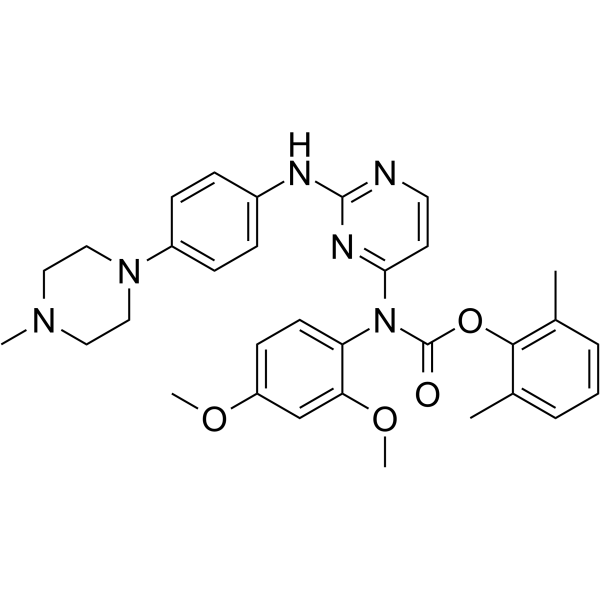
WH-4-023 is a potent and selective dual Lck/Src inhibitor with IC50 of 2 nM/6 nM for Lck and Src kinase respectively; little inhibition on p38α and KDR.
For research use only. We do not sell to patients.
- Purity : 99.87%
- CAS No.: 837422-57-8
- Formula: C32H36N6O4
- Molecular Weight:568.67
-
Storage:Powder -20°C, 3 years , 4°C, 2 years ; In solvent -80°C, 2 years , -20°C, 1 year

To place orders, for customer services and technical support, please contact: MedChemExpress USA
Tel: 609-228-6898 E-mail: [email protected] [email protected]


-
 Biological Activity
-
Chemical Information
-
Solvent & Solubility
- Purity & Documentation
- References
-
 Help & FAQs


-
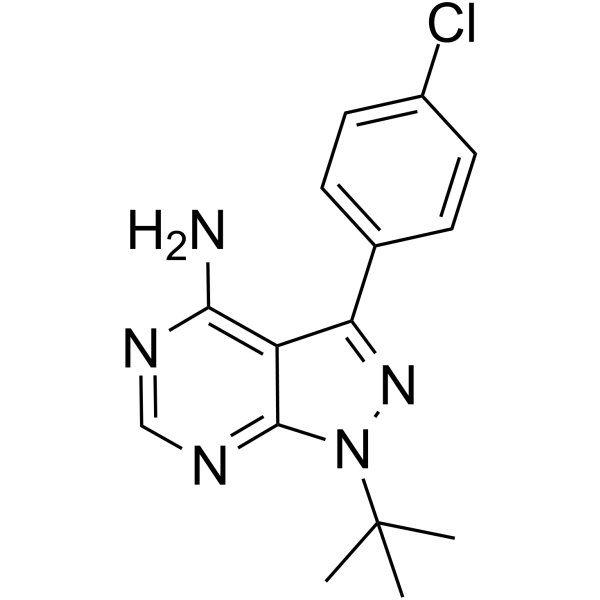
HY-13805
PP2Src Inhibitor -
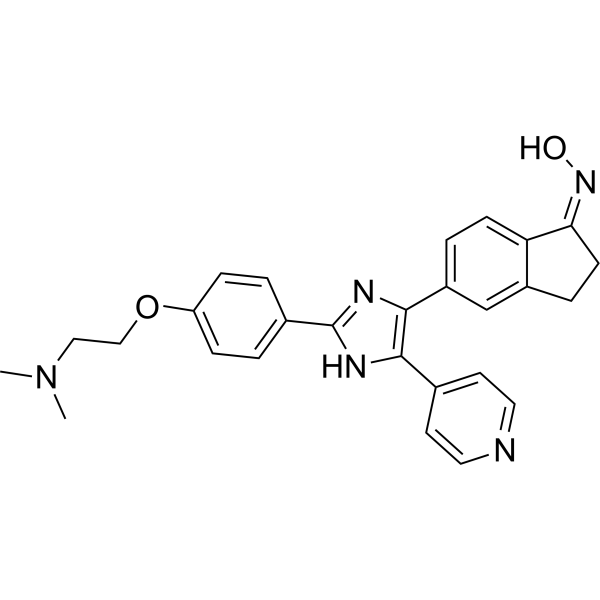
HY-10966
SB-590885BRAF/c-Raf Inhibitor -
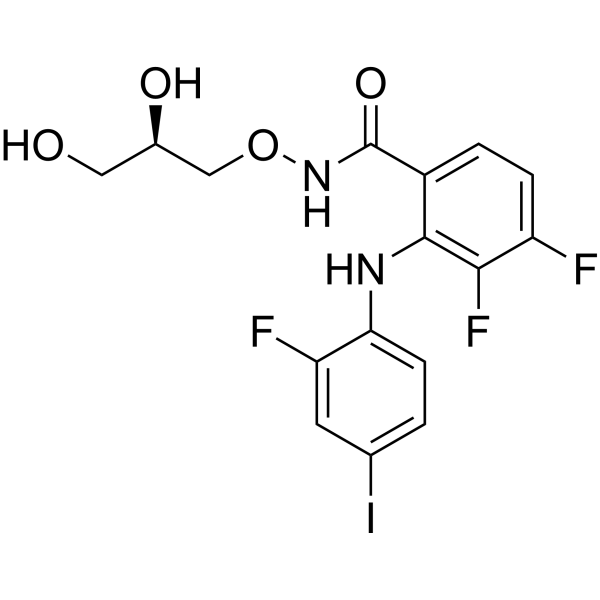
HY-10254
MirdametinibMEK Inhibitor -
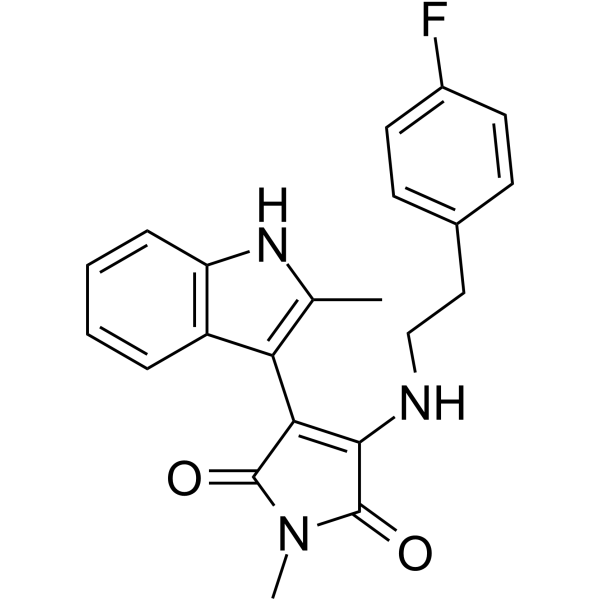
HY-12292
IM-12GSK-3β Inhibitor -
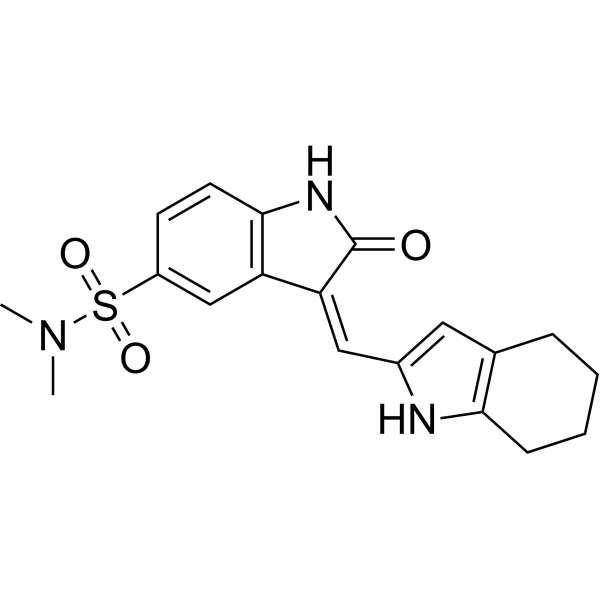
HY-B0789
SU6656Src Inhibitor -
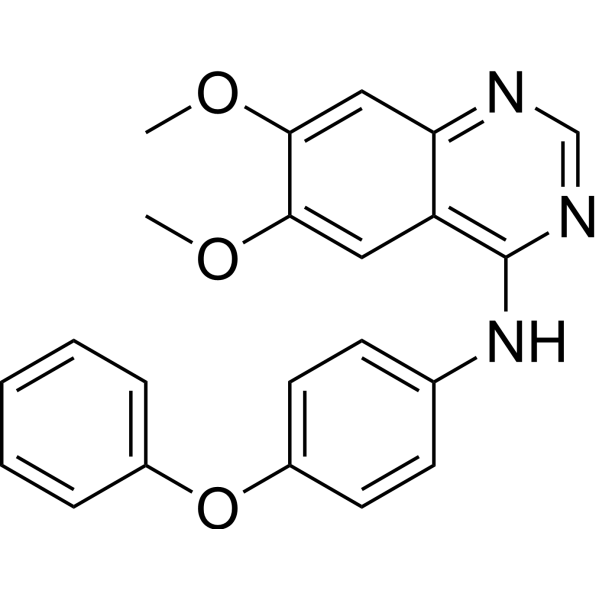
HY-101053
Src Inhibitor 1Src Inhibitor -
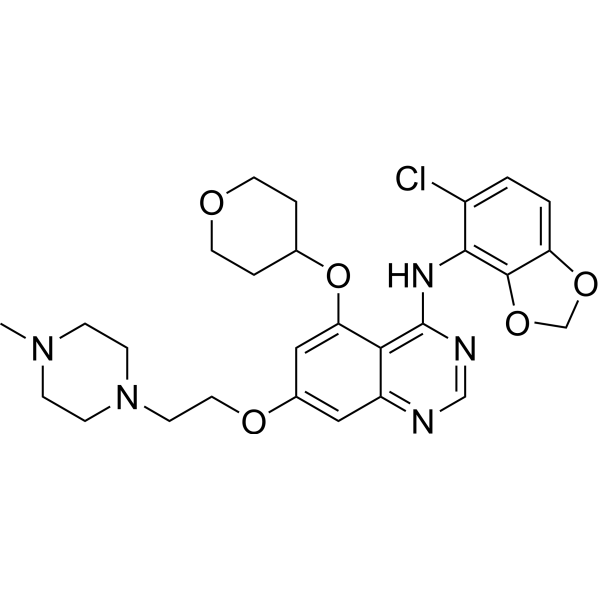
HY-10234
SaracatinibSrc Inhibitor -
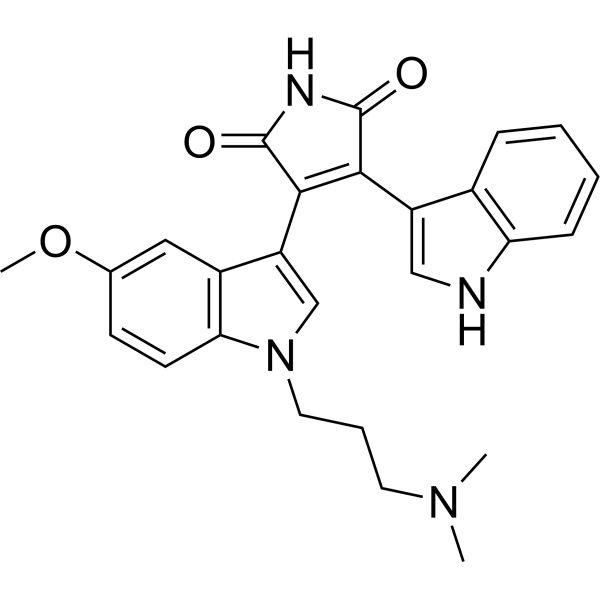
HY-13689
Go 6983PKC Inhibitor -
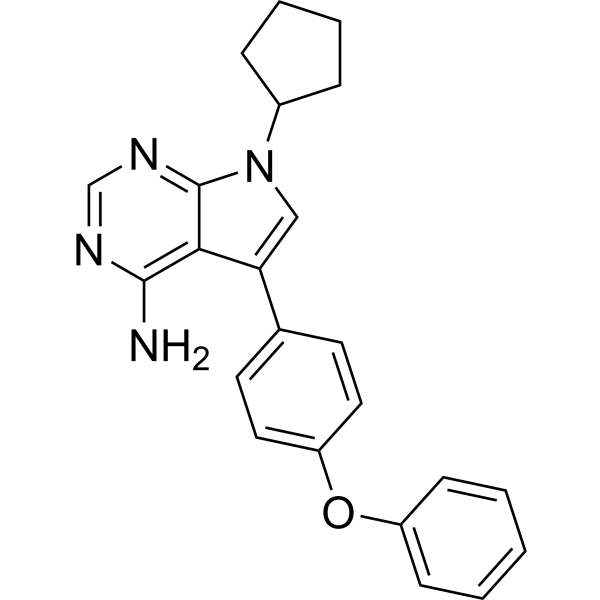
HY-108318
RK-24466Lck Inhibitor -
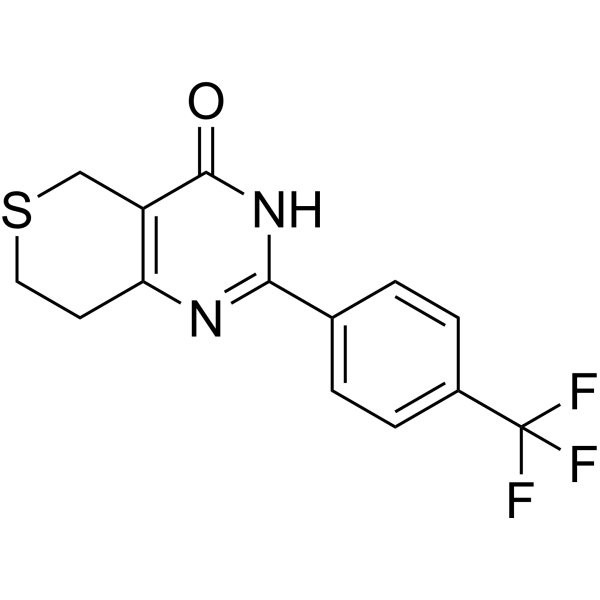
HY-15147
XAV-939Tankyrase Inhibitor -
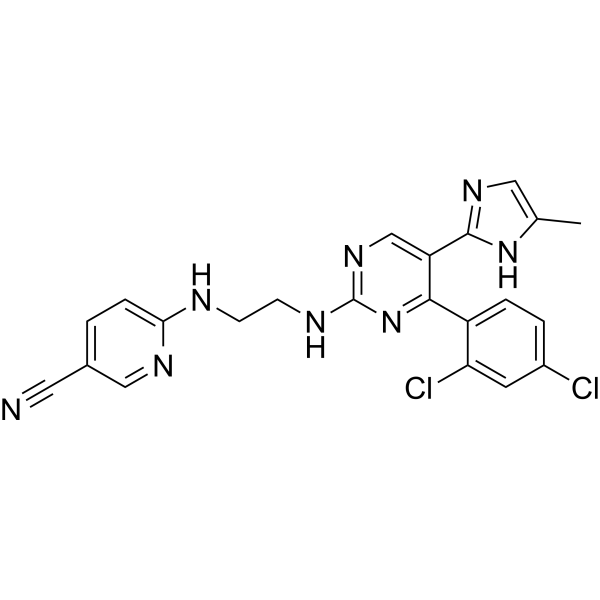
HY-10182
LaduviglusibGSK-3 Inhibitor -
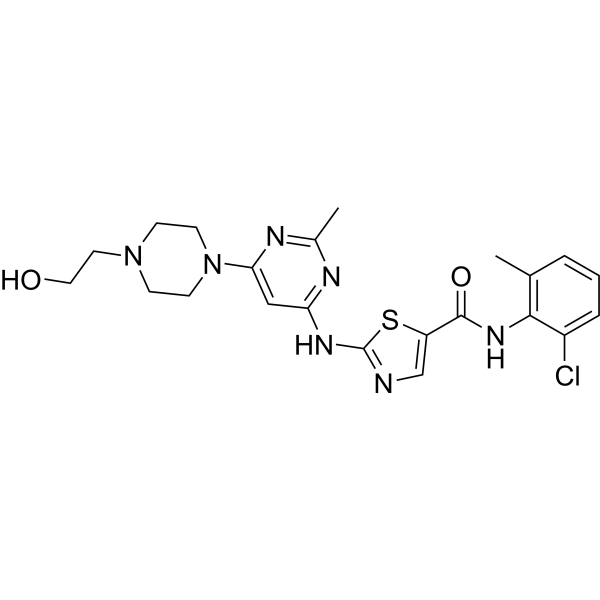
HY-10181
DasatinibSrc/Bcr-Abl Inhibitor
Publications Citing Use of MedChemExpress (MCE) WH-4-023
More- Mol Cancer. 2022 Mar 18;21(1):77. [Abstract]
- Cell Stem Cell. 2025 Oct 2;32(10):1509-1527.e9. [Abstract]
- NPJ Precis Oncol. 2026 Aug 12.
- Cell Mol Gastroenterol Hepatol. 2021;11(3):683-696. [Abstract]
- EMBO Mol Med. 2026 Aug;18(8):3200-3225.
- FEBS J. 2026 Sep 30.
- J Biol Chem. 2023 Dec;299(12):105462. [Abstract]
- Methods Mol Biol. 2024:2767:1-18. [Abstract]
 Customer Validation & Images

-
WB
-
RT-PCR


Biological Activity
Description
IC50 & Target
IC50: 2 nM (Lck), 6 nM (Src)[1]
Cellular Effect
|
Cell Line

|
Type | Value | Description | References |
|---|---|---|---|---|
| T-cell | IC50 |
1.9 μM
Compound: 28
|
Inhibition of anti-CD3/CD28-induced IL2 secretion in human T cells
Inhibition of anti-CD3/CD28-induced IL2 secretion in human T cells
|
[PMID: 16884310] |
In Vitro


Chemical Information
-
CAS No. 837422-57-8
-
Appearance Solid
-
Molecular Weight 568.67
-
Formula C32H36N6O4
-
Color White to off-white
-
SMILES
O=C(OC1=C(C)C=CC=C1C)N(C2=CC=C(OC)C=C2OC)C3=NC(NC4=CC=C(N5CCN(C)CC5)C=C4)=NC=C3
-
Synonyms
Dual LCK/SRC inhibitor
-
Shipping
Room temperature in continental US; may vary elsewhere.
-
Storage
Powder -20°C 3 years 4°C 2 years In solvent -80°C 2 years -20°C 1 year


Publications (8)
-
Journal Impact Factor
-
Most Recent
-
Mol Cancer
Cholesterol promotes EGFR-TKIs resistance in NSCLC by inducing EGFR/Src/Erk/SP1 signaling-mediated ERRα re-expression. [Abstract]2022 Mar 18;21(1):77. PMID: 35303882
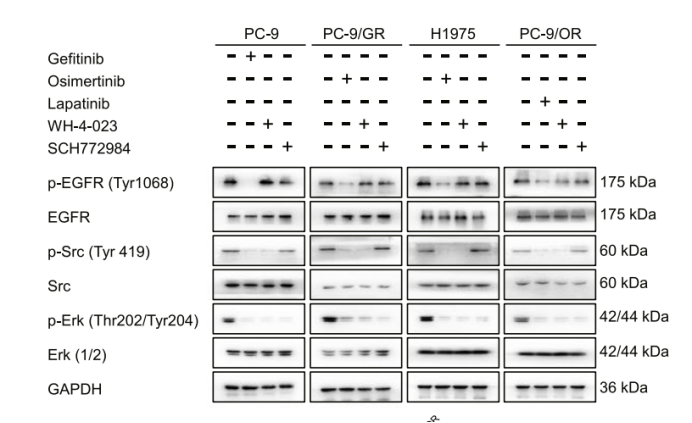
WH-4-023 purchased from MedChemExpress. Usage Cited in: Mol Cancer. 2022 Mar 18;21(1):77. [Abstract]
Cells were treated with gefitinib, osimertinib, lapatinib, WH-4-023 or SCH772984 for 48 h, Western blot assay showed the proteins level.
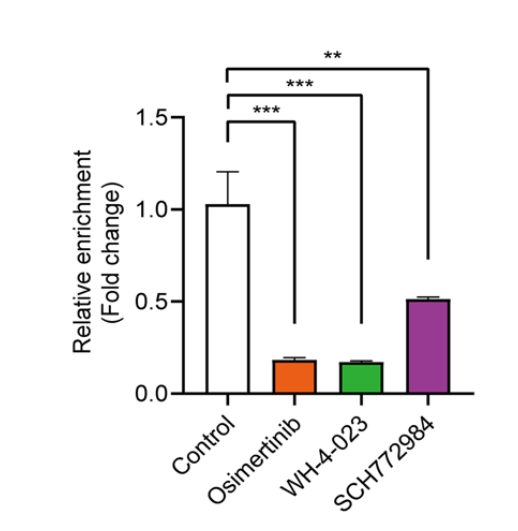
WH-4-023 purchased from MedChemExpress. Usage Cited in: Mol Cancer. 2022 Mar 18;21(1):77. [Abstract]
CHIP-qPCR analysis was performed after cells treated with osimertinib, SCH772984, WH-4-023 for 48 h in H1975 cells.
-
Cell Stem Cell
An inducible model of human post-implantation development derived from primed and naive stem cells. [Abstract]2025 Oct 2;32(10):1509-1527.e9. PMID: 40885193 -
-
Cell Mol Gastroenterol Hepatol
2021;11(3):683-696. PMID: 33075564 -
-
-
J Biol Chem
c-Src regulates δ-secretase activation and truncated Tau production by phosphorylating the E3 ligase Traf6. [Abstract]2023 Dec;299(12):105462. PMID: 37977223 -
Methods Mol Biol
2024:2767:1-18. PMID: 37351840


Solvent & Solubility
In Vitro:
DMSO : 25 mg/mL (43.96 mM; Need ultrasonic; Hygroscopic DMSO has a significant impact on the solubility of product, please use newly opened DMSO)
Please refer to the solubility information to select the appropriate solvent. Once prepared, please aliquot and store the solution to prevent product inactivation from repeated freeze-thaw cycles.
Storage method and period of stock solution: -80°C, 2 years; -20°C, 1 year. When stored at -80°C, please use it within 2 years. When stored at -20°C, please use it within 1 year.
Please refer to the solubility information to select the appropriate solvent. Once prepared, please aliquot and store the solution to prevent product inactivation from repeated freeze-thaw cycles.
Storage method and period of stock solution: -80°C, 2 years; -20°C, 1 year. When stored at -80°C, please use it within 2 years. When stored at -20°C, please use it within 1 year.
Concentration (start) × Volume (start) = Concentration (final) × Volume (final)
In Vivo:
Select the appropriate dissolution method based on your experimental animal and administration route.
- For the following dissolution methods, please ensure to first prepare a clear stock solution using an In Vitro approach and then sequentially add co-solvents:
- To ensure reliable experimental results, the clarified stock solution can be appropriately stored based on storage conditions. As for the working solution for In Vivo experiments, it is recommended to prepare freshly and use it on the same day.
- The percentages shown for the solvents indicate their volumetric ratio in the final prepared solution. If precipitation or phase separation occurs during preparation, heat and/or sonication can be used to aid dissolution.
Add each solvent one by one: 10% DMSO 40% PEG300 5% Tween-80 45% Saline
Solubility: ≥ 0.77 mg/mL (1.35 mM); Clear solution
This protocol yields a clear solution of ≥ 0.77 mg/mL (saturation unknown).
Taking 1 mL working solution as an example, add 100 μL DMSO stock solution (7.7 mg/mL) to 400 μL PEG300, and mix evenly; then add 50 μL Tween-80 and mix evenly; then add 450 μL Saline to adjust the volume to 1 mL.
Preparation of Saline: Dissolve 0.9 g sodium chloride in ddH₂O and dilute to 100 mL to obtain a clear Saline solution.
In Vivo Dissolution Calculator
Please enter the basic information of animal experiments:
-
-
-
-
Recommended: Prepare an additional quantity of animals to account for potential losses during experiments.
Please enter your animal formula composition:
-
%DMSO +
Recommended: Keep the proportion of DMSO in working solution below 2% if your animal is weak.
-
%+
-
+%Tween-80 + +
-
%Saline +
The co-solvents required include: DMSO, . All of co-solvents are available by MedChemExpress (MCE). , Tween 80. All of co-solvents are available by MedChemExpress (MCE).
Working solution concentration: 0.22 mg/mL
Method for preparing stock solution: mg drug dissolved in μL DMSO. Stock solution concentration: mg/mL.
1. Take μL DMSO stock solution;
2. Add μL .
μL , mix evenly;
3. Then add μL Tween 80, mix evenly;
4. Then add μL
Please ensure that the stock solution in the first step is dissolved to a clear state, and add co-solvents in sequence. You can use ultrasonic heating (ultrasonic cleaner, recommended frequency 20-40 kHz), vortexing, etc. to assist dissolution.


Purity & Documentation
-
Data Sheet (278 KB)
-
SDS (393 KB)
- English - EN (393 KB)
- Français - FR (393 KB)
- Deutsch - DE (393 KB)
- Norwegian - NO (393 KB)
- Español - ES (393 KB)
- Swedish - SV (393 KB)
- Italian - IT (393 KB)
- Korean - KR (393 KB)
- Portuguese - PT (393 KB)
-
Handling Instructions (2659 KB)
References


Complete Stock Solution Preparation Table
Please refer to the solubility information to select the appropriate solvent. Once prepared, please aliquot and store the solution to prevent product inactivation from repeated freeze-thaw cycles.
Storage method and period of stock solution: -80°C, 2 years; -20°C, 1 year. When stored at -80°C, please use it within 2 years. When stored at -20°C, please use it within 1 year.
| Optional Solvent | Concentration Solvent Mass | 1 mg | 5 mg | 10 mg | 25 mg |
|---|---|---|---|---|---|
| DMSO | 1 mM | 1.7585 mL | 8.7924 mL | 17.5849 mL | 43.9622 mL |
| 5 mM | 0.3517 mL | 1.7585 mL | 3.5170 mL | 8.7924 mL | |
| 10 mM | 0.1758 mL | 0.8792 mL | 1.7585 mL | 4.3962 mL | |
| 15 mM | 0.1172 mL | 0.5862 mL | 1.1723 mL | 2.9308 mL | |
| 20 mM | 0.0879 mL | 0.4396 mL | 0.8792 mL | 2.1981 mL | |
| 25 mM | 0.0703 mL | 0.3517 mL | 0.7034 mL | 1.7585 mL | |
| 30 mM | 0.0586 mL | 0.2931 mL | 0.5862 mL | 1.4654 mL | |
| 40 mM | 0.0440 mL | 0.2198 mL | 0.4396 mL | 1.0991 mL |


WH-4-023 Related Classifications
HY-12299 Related Classifications
 Powered by Bioz