



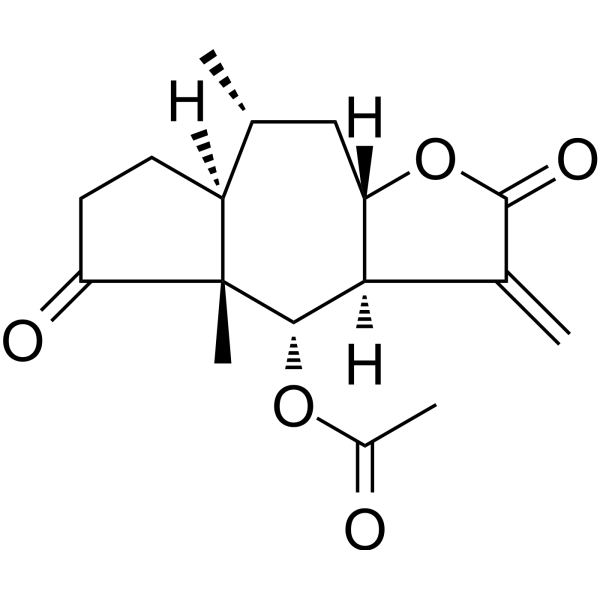
Ergolide
Based on 3 publication(s) in Google Scholar
Ergolide is an orally active dual inhibitor targeting NF-κB/p65 and NLRP3. Ergolide blocks the NF-κB signaling pathway and the nuclear translocation of p65, and irreversibly binds to the NACHT domain of NLRP3 to inhibit inflammasome assembly. Ergolide significantly reduces the production of inflammatory mediators (e.g., NO, PGE2) and cytokines, induces cancer cell apoptosis, autophagy and ROS generation. Ergolide also enhances the anti-tumor effect of vincristine. Ergolide alleviates acute lung injury via an NLRP3-dependent mechanism, and effectively improves the survival rate and behavioral function of septic mice and inflammatory zebrafish models. Ergolide is used in the research of metastatic uveal melanoma, neurodegenerative diseases (such as Alzheimer's disease, Parkinson's disease), sepsis and acute lymphoblastic leukemia.
For research use only. We do not sell to patients.
- Purity : 99.48%
- CAS No.: 54999-07-4
- Formula: C17H22O5
- Molecular Weight:306.35
-
Storage:
4°C, protect from light
* In solvent : -80°C, 6 months; -20°C, 1 month (protect from light)

To place orders, for customer services and technical support, please contact: MedChemExpress USA
Tel: 609-228-6898 E-mail: [email protected] [email protected]


-
 Biological Activity
-
Chemical Information
-
Solvent & Solubility
- Protocols
- Purity & Documentation
- References
-
 Help & FAQs


Publications Citing Use of MedChemExpress (MCE) Ergolide
More Customer Validation & Images

-
ELISA

-
WB

-
Cell Proliferation/Viability Assay

-
RT-PCR


Biological Activity
Description
IC50 & Target
|
p65 |
NLRP3 |
Cellular Effect
|
Cell Line

|
Type | Value | Description | References |
|---|---|---|---|---|
| RAW264.7 | IC50 |
0.07 μM
Compound: 11
|
Antiinflammatory activity in mouse RAW264.7 cells assessed as inhibition of LPS-induced NO production pretreated for 30 mins before LPS challenge measured 24 hrs after LPS challenge by Griess reaction method
Antiinflammatory activity in mouse RAW264.7 cells assessed as inhibition of LPS-induced NO production pretreated for 30 mins before LPS challenge measured 24 hrs after LPS challenge by Griess reaction method
|
[PMID: 21924800] |
| RAW264.7 | IC50 |
3.9 μM
Compound: 16
|
Antiinflammatory action in mouse RAW264.7 cells assessed as inhibition of LPS-induced nitric oxide production treated 30 mins before LPS challenge measured after 24 hrs by griess reaction
Antiinflammatory action in mouse RAW264.7 cells assessed as inhibition of LPS-induced nitric oxide production treated 30 mins before LPS challenge measured after 24 hrs by griess reaction
|
[PMID: 21894898] |
In Vitro
Ergolide (0.5-10 μM; 96 h) inhibits the metabolism/viability of OMM2.5 metastatic uveal melanoma cells with an IC50 of 2.9 μM, and suppresses the long-term proliferation of both primary (Mel285, Mel270) and metastatic (OMM2.5) uveal melanoma cells[1].
Ergolide (2.5 μM; 24 h) induces reverse differential expression of BCCIP and CHID1 in OMM2.5 cells and their secreted extracellular vesicles (EVs), upregulating these proteins inside the cells while downregulating them in EVs[1].
Ergolide (5 μM; 24 h) reduces the production of nitrite, TNFα, IL-6 and MCP1 induced by LTA and LPS in BV2 microglia[2].
Ergolide (5, 10 μM; 24 h) reduces the viability and enhances the cytotoxicity of human SH-SY5Y neuroblastoma cells; at a concentration of 5 μM, it exacerbates tBHP-induced ROS production in mouse N2a cells and fails to protect SH-SY5Y cells against H2O2-induced cell death[2].
Ergolide (1-5 μM; 30 min) dose-dependently inhibits pyroptosis in mouse bone marrow-derived macrophages (BMDMs) treated with LPS + ATP[3].
Ergolide (0.5-10 μM; 18 h) reduces the expressions of iNOS, COX-2 proteins and iNOS mRNA in LPS/IFN--stimulated RAW 264.7 macrophages in a concentration-dependent manner, and inhibits IκB-α degradation after 18 h of incubation[4].
Ergolide (0-6 μM; 48 h) induces G0/G1 cell cycle arrest in Nalm6 and MOLT-4 acute lymphoblastic leukemia cell lines at 48 h, and upregulates the expression of cell cycle inhibitory genes p21 and p27, with no effect on non-tumorigenic PBMC[5].
Ergolide (2-4 μM; 24-48 h) induces ROS-dependent autophagy in MOLT-4 acute lymphoblastic leukemia cells at 24 h by upregulating autophagy-related genes and genes in the Sirt1-Bnip3-FoxO3a pathway; in addition, autophagy acts as a survival pathway, and inhibition of autophagy enhances Ergolide-induced apoptosis[5].
MedChemExpress (MCE) has not independently confirmed the accuracy of these methods. They are for reference only.
-
Cell Line:RAW 264.7 macrophages (LPS/IFN-γ-stimulated)
-
Concentration:0.5-10 μM
-
Incubation Time:18 h
-
Result:Decreased iNOS protein levels in a concentration-dependent manner, with significant inhibition observed at 2, 5, and 10 μM.\n
Decreased COX-2 protein levels in a concentration-dependent manner, with significant inhibition observed at 2, 5, and 10 μM.
-
Cell Line:Human leukemic cell lines (Nalm6, MOLT-4); non-tumorous PBMC
-
Concentration:0-6 μM (cell cycle analysis); 4 μM (qRT-PCR for gene expression)
-
Incubation Time:48 h (cell cycle analysis; qRT-PCR for gene expression)
-
Result:Induced G0/G1 phase arrest in Nalm6 and MOLT-4 cells, with no significant arrest in non-tumorous PBMC.
Increased mRNA expression of p21 and p27 in Nalm6 and MOLT-4 cells:
Nalm6 p21: ~4.5-fold change,
Nalm6 p27: ~2.8-fold change,
MOLT-4 p21: ~3.2-fold change,
MOLT-4 p27: ~2.7-fold change.
Increased Sub-G1 population (apoptotic cells) in Nalm6 and MOLT-4 cells.
-
Cell Line:Human leukemic cell lines (Nalm6, MOLT-4)
-
Concentration:2-6 μM (8 h ROS measurement; 48 h apoptosis analysis); 4-6 μM with 10 mM NAC pre-treatment (8 h ROS measurement, 48 h cell death assay); 6 μM (48 h Bax/Bcl-2 gene expression)
-
Incubation Time:8 h (ROS measurement); 48 h (apoptosis analysis, cell death assay, gene expression)
-
Result:Dose-dependently increased ROS levels in Nalm6 (up to 2-fold) and MOLT-4 (up to 4-fold) cells; NAC pre-treatment abrogated ergolide-induced ROS accumulation and reduced cell death in MOLT-4 cells.
Dose-dependently increased apoptotic cell death:
Nalm6: ~80% cell death at 6 μM,
MOLT-4: ~40% cell death at 6 μM.
Increased Bax mRNA expression (~3.8-fold change) and decreased Bcl-2 mRNA expression (~0.3-fold change) in Nalm6 cells treated with 6 μM ergolide; similar changes observed in MOLT-4 cells.
In Vivo
Ergolide (incubated in embryo culture medium; pre-treatment for 23.5 h + 30 min) increases the survival rate, restores sensorimotor function, and reduces the expression of il-1β in LPS-stimulated zebrafish larvae; however, it fails to alleviate pentylenetetrazol (PTZ)-induced epileptiform hyperactivity in zebrafish larvae at 15 mM[2].
Ergolide (5-10 mg/kg; p.o.; once every 2 days; for 7 consecutive days) dose-dependently improves the survival rate of male C57BL/6J mice with sepsis, alleviates LPS-induced acute lung injury in wild-type mice in an NLRP3-dependent manner, but no protective effect is observed in NLRP3-knockout mice[3].
MedChemExpress (MCE) has not independently confirmed the accuracy of these methods. They are for reference only.
-
Animal Model:WT-Tü Zebrafish (4-5 days post-fertilisation larvae; LPS-induced systemic inflammation model)[2]
-
Dosage:3 μM; 5 μM
-
Administration:incubated in embryo media; 24 h total
-
Result:Significantly increased the survival rate of LPS-challenged larvae compared to LPS alone at 5 μM.
Significantly restored the LPS-impaired touch startle response, increasing the proportion of larvae exhibiting an escape-like reflex movement at 5 μM.
Significantly reduced LPS-induced upregulation of il-1β mRNA expression in larvae at 5 μM, but did not alter LPS-induced increases in tnfα or il-8 mRNA expression.
Significantly increased tnfα mRNA expression in unchallenged larvae at 5 μM.
-
Animal Model:C57BL/6J (male) mice[3]
-
Dosage:5 mg/kg; 10 mg/kg
-
Administration:i.g.; every 2 days; 7 days
-
Result:Showed a higher survival rate in the 10 mg/kg group than the 5 mg/kg group.
Prevented all mice from dying within 48 hours, with a portion surviving through the 72-hour observation period in both treated groups.
-
Animal Model:C57BL/6J wild-type (male) mice; C57BL/6-Nlrp3-/- (NLRP3 knockout, male) mice[3]
-
Dosage:10 mg/kg
-
Administration:i.g.; every 2 days; 7 days
-
Result:Significantly reduced LPS-induced lung injury scores, myeloperoxidase (MPO) activity in lung tissue, lung wet/dry weight ratio, total cell count, total protein concentration, and neutrophil count in BALF, as well as IL-1β levels in serum and BALF in wild-type mice.
Reduced the expression of mature IL-1β and cleaved caspase-1 (P20) in wild-type mouse lung tissue.
Produced no significant beneficial effects in NLRP3 knockout mice.
- Annexin V plus membrane-impermeant dye apoptosis staining
- ROS/oxidative-stress fluorescent staining
- Research Protocol for Inflammation-related Diseases
- Alzheimer’s Disease Modeling
- Cytoplasmic-Nuclear Fractionated Protein Extraction
- Detection of Apoptosis
- TUNEL staining for apoptotic DNA fragmentation
- LPS-Induced Endotoxemia/Systemic Inflammation
- Human pluripotent stem cell midbrain dopaminergic neuron differentiation
- Autophagy
- Apoptosis Solutions
- Lysosome and acidic-vesicle live-cell staining
- Inhalation Toxicity Study
- Macroautophagy Solutions
- Pyroptosis Solutions


Chemical Information
-
CAS No. 54999-07-4
-
Appearance Solid
-
Molecular Weight 306.35
-
Formula C17H22O5
-
Color White to off-white
-
SMILES
CC(O[C@@H]1[C@]2([C@](CCC2=O)([H])[C@H](C)C[C@@](O3)([H])[C@@]1([H])C(C3=O)=C)C)=O
-
Structure Classification
-
Shipping
Room temperature in continental US; may vary elsewhere.
-
Storage
4°C, protect from light
* In solvent : -80°C, 6 months; -20°C, 1 month (protect from light)


Publications (3)
-
Journal Impact Factor
-
Most Recent
-
Int J Mol Sci
Ergolide Regulates Microglial Activation and Inflammatory-Mediated Dysfunction: A Role for the Cysteinyl Leukotriene Pathway. [Abstract]2025 May 23;26(11):5050. PMID: 40507859
Ergolide purchased from MedChemExpress. Usage Cited in: Int J Mol Sci. 2025 May 23;26(11):5050. [Abstract]
Nitrite, IL-6, TNFα, and MCP1 (ELISA) were measured in a supernatant of BV2 cells treated with LTA (5 µg/mL) in the presence of Ergolide (5 µM) or DMSO (0.025%; 24 h).
Ergolide purchased from MedChemExpress. Usage Cited in: Int J Mol Sci. 2025 May 23;26(11):5050. [Abstract]
BV2 cells were pre-treated with Ergolide for 30 min and stimulated with LPS (200 ng/mL) for a further 30 min. Expression of p-JNK 46 kDa and 54 kDa and p-p38 was assessed by Western immunoblot as a proportion of GAPDH expression.
Ergolide purchased from MedChemExpress. Usage Cited in: Int J Mol Sci. 2025 May 23;26(11):5050. [Abstract]
BV2 cells were exposed to LTD4 (0.01, 0.1, or 1 µM), in the presence of either Ergolide (5 μM) or a vehicle for 24 h. Cytotoxicity was assessed by supernatant expression of LDH.
Ergolide purchased from MedChemExpress. Usage Cited in: Int J Mol Sci. 2025 May 23;26(11):5050. [Abstract]
Larvae at 5 dpf were incubated with Ergolide (5 µM) or DMSO (0.025%) for 30 min prior to further application of LPS (50 µg/mL) for 4 h. Expression of tnfα, il-8, il-1β, and cysltr1 and cysltr2.
-
Int Immunopharmacol
2024 Jan 25:127:111355. PMID: 38157693 -


Solvent & Solubility
In Vitro:
DMSO : 50 mg/mL (163.21 mM; Need ultrasonic; Hygroscopic DMSO has a significant impact on the solubility of product, please use newly opened DMSO)
Please refer to the solubility information to select the appropriate solvent. Once prepared, please aliquot and store the solution to prevent product inactivation from repeated freeze-thaw cycles.
Storage method and period of stock solution: -80°C, 6 months; -20°C, 1 month (protect from light). When stored at -80°C, please use it within 6 months. When stored at -20°C, please use it within 1 month.
Please refer to the solubility information to select the appropriate solvent. Once prepared, please aliquot and store the solution to prevent product inactivation from repeated freeze-thaw cycles.
Storage method and period of stock solution: -80°C, 6 months; -20°C, 1 month (protect from light). When stored at -80°C, please use it within 6 months. When stored at -20°C, please use it within 1 month.
Concentration (start) × Volume (start) = Concentration (final) × Volume (final)
In Vivo:
Select the appropriate dissolution method based on your experimental animal and administration route.
- For the following dissolution methods, please ensure to first prepare a clear stock solution using an In Vitro approach and then sequentially add co-solvents:
- To ensure reliable experimental results, the clarified stock solution can be appropriately stored based on storage conditions. As for the working solution for In Vivo experiments, it is recommended to prepare freshly and use it on the same day.
- The percentages shown for the solvents indicate their volumetric ratio in the final prepared solution. If precipitation or phase separation occurs during preparation, heat and/or sonication can be used to aid dissolution.
In Vivo Dissolution Calculator
Please enter the basic information of animal experiments:
-
-
-
-
Recommended: Prepare an additional quantity of animals to account for potential losses during experiments.
Please enter your animal formula composition:
-
%DMSO +
Recommended: Keep the proportion of DMSO in working solution below 2% if your animal is weak.
-
%+
-
+%Tween-80 + +
-
%Saline +
The co-solvents required include: DMSO, . All of co-solvents are available by MedChemExpress (MCE). , Tween 80. All of co-solvents are available by MedChemExpress (MCE).
Working solution concentration: 0.22 mg/mL
Method for preparing stock solution: mg drug dissolved in μL DMSO. Stock solution concentration: mg/mL. * In solvent : -80°C, 6 months; -20°C, 1 month (protect from light)
1. Take μL DMSO stock solution;
2. Add μL .
μL , mix evenly;
3. Then add μL Tween 80, mix evenly;
4. Then add μL
Please ensure that the stock solution in the first step is dissolved to a clear state, and add co-solvents in sequence. You can use ultrasonic heating (ultrasonic cleaner, recommended frequency 20-40 kHz), vortexing, etc. to assist dissolution.


Purity & Documentation
-
Data Sheet (291 KB)
-
SDS (251 KB)
- English - EN (251 KB)
- Français - FR (251 KB)
- Deutsch - DE (251 KB)
- Norwegian - NO (251 KB)
- Español - ES (251 KB)
- Swedish - SV (251 KB)
- Italian - IT (251 KB)
- Korean - KR (251 KB)
- Portuguese - PT (251 KB)
-
Handling Instructions (2659 KB)
References
[2]. Galvin DM, et al. Ergolide Regulates Microglial Activation and Inflammatory-Mediated Dysfunction: A Role for the Cysteinyl Leukotriene Pathway. Int J Mol Sci. 2025;26(11):5050. Published 2025 May 23. [Content Brief]
[3]. Ren M, et al. Ergolide covalently binds NLRP3 and inhibits NLRP3 inflammasome-mediated pyroptosis. Int Immunopharmacol. 2023;120:110292. [Content Brief]
[4]. Whan Han J, et al. Ergolide, sesquiterpene lactone from Inula britannica, inhibits inducible nitric oxide synthase and cyclo-oxygenase-2 expression in RAW 264.7 macrophages through the inactivation of NF-kappaB. Br J Pharmacol. 2001;133(4):503-512. [Content Brief]
[5]. Yami A, et al. Ergolide, a potent sesquiterpene lactone induces cell cycle arrest along with ROS-dependent apoptosis and potentiates vincristine cytotoxicity in ALL cell lines. J Ethnopharmacol. 2020;253:112504. [Content Brief]


Complete Stock Solution Preparation Table
Please refer to the solubility information to select the appropriate solvent. Once prepared, please aliquot and store the solution to prevent product inactivation from repeated freeze-thaw cycles.
Storage method and period of stock solution: -80°C, 6 months; -20°C, 1 month (protect from light). When stored at -80°C, please use it within 6 months. When stored at -20°C, please use it within 1 month.
| Optional Solvent | Concentration Solvent Mass | 1 mg | 5 mg | 10 mg | 25 mg |
|---|---|---|---|---|---|
| DMSO | 1 mM | 3.2642 mL | 16.3212 mL | 32.6424 mL | 81.6060 mL |
| 5 mM | 0.6528 mL | 3.2642 mL | 6.5285 mL | 16.3212 mL | |
| 10 mM | 0.3264 mL | 1.6321 mL | 3.2642 mL | 8.1606 mL | |
| 15 mM | 0.2176 mL | 1.0881 mL | 2.1762 mL | 5.4404 mL | |
| 20 mM | 0.1632 mL | 0.8161 mL | 1.6321 mL | 4.0803 mL | |
| 25 mM | 0.1306 mL | 0.6528 mL | 1.3057 mL | 3.2642 mL | |
| 30 mM | 0.1088 mL | 0.5440 mL | 1.0881 mL | 2.7202 mL | |
| 40 mM | 0.0816 mL | 0.4080 mL | 0.8161 mL | 2.0402 mL | |
| 50 mM | 0.0653 mL | 0.3264 mL | 0.6528 mL | 1.6321 mL | |
| 60 mM | 0.0544 mL | 0.2720 mL | 0.5440 mL | 1.3601 mL | |
| 80 mM | 0.0408 mL | 0.2040 mL | 0.4080 mL | 1.0201 mL | |
| 100 mM | 0.0326 mL | 0.1632 mL | 0.3264 mL | 0.8161 mL |


Ergolide Related Classifications
HY-N6893 Related Classifications
 Powered by Bioz