1. Search Result
Search Result
Results for "

MDM-2/p53

" in MedChemExpress (MCE) Product Catalog:

147

Inhibitors & Agonists

2

Screening Libraries

12

Peptides

2

Natural
Products

2

Recombinant Proteins

4

Isotope-Labeled Compounds

4

Antibodies

Targets Recommended:
Cat. No. Product Name Target Research Areas Chemical Structure
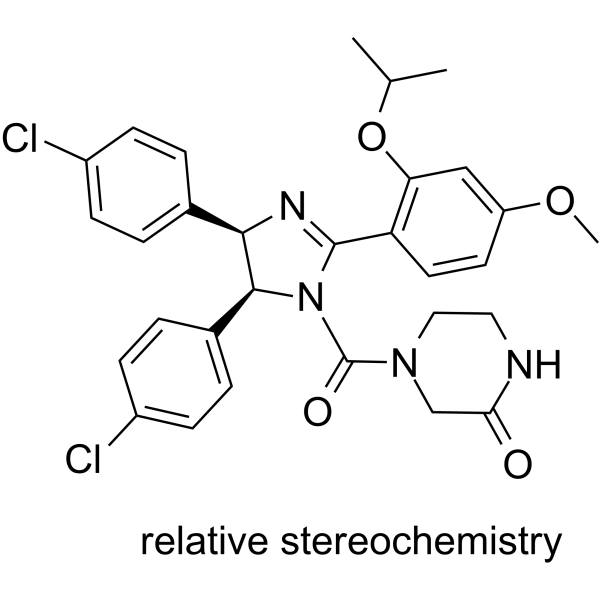
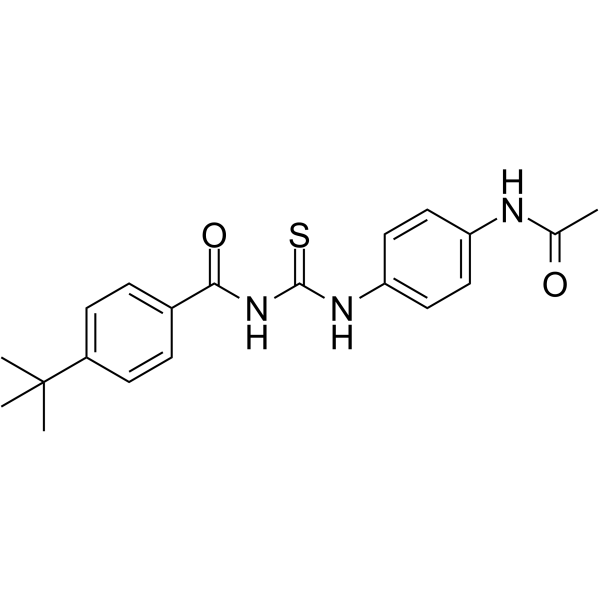
  • HY-50696
    Nutlin-3
    40+ Cited Publications

    MDM-2/p53 E1/E2/E3 Enzyme Cancer
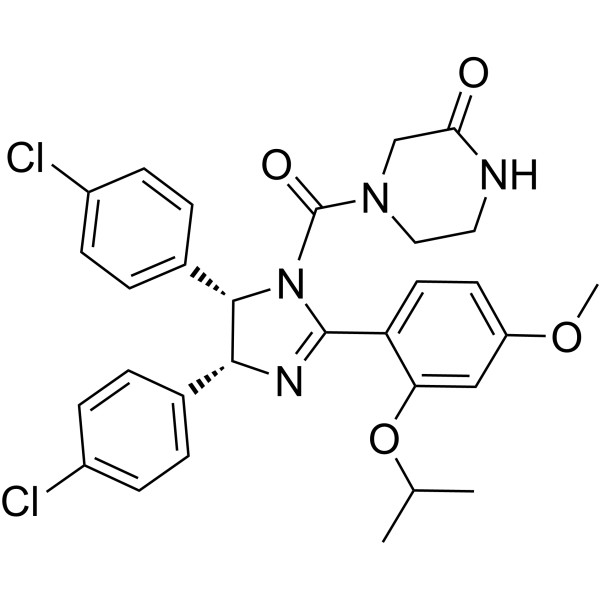
    Nutlin-3 is a commercial available p53-MDM2 inhibitor, with Ki of 90 nM.
    Nutlin-3
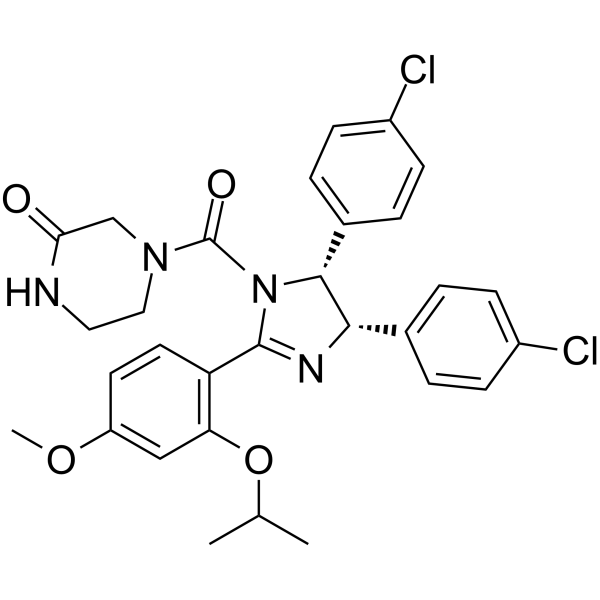
  • HY-10029
    Nutlin-3a
    Maximum Cited Publications
    69 Publications Verification

    Rebemadlin

    MDM-2/p53 E1/E2/E3 Enzyme Autophagy Apoptosis Cancer
    Nutlin-3a (Rebemadlin), an active enantiomer of Nutlin-3, is a potent murine double minute (MDM2) inhibitor (IC50=90 nM). Nutlin-3a inhibits MDM2-p53 interactions and stabilizes the p53 protein, and induces cell autophagy and apoptosis. Nutlin-3a has the potential for the study of TP53 wild-type ovarian carcinomas [2].
    Nutlin-3a
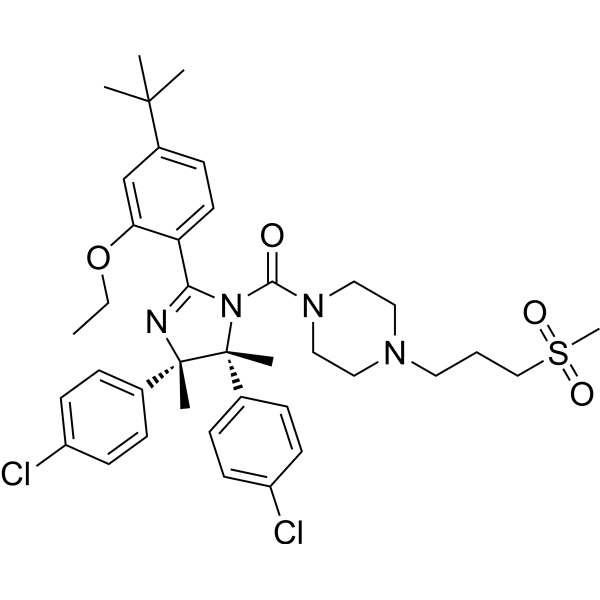
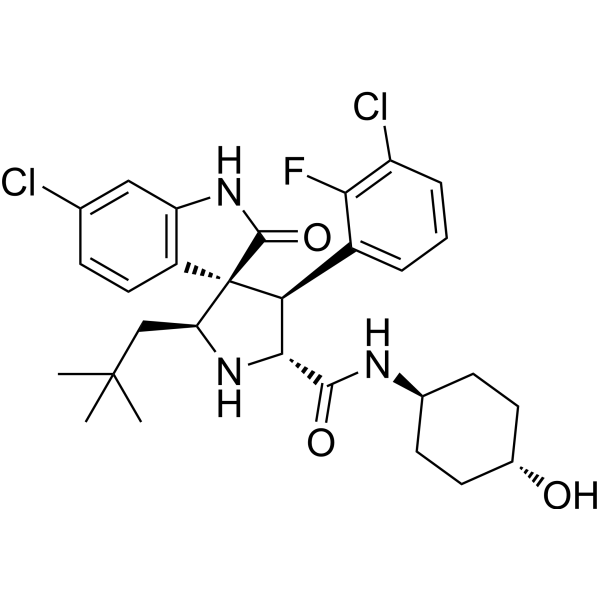
  • HY-152859

    BI 907828

    E1/E2/E3 Enzyme MDM-2/p53 Cancer
    Brigimadlin (BI 907828) is an orally active E3 ubiquitin-protein ligase MDM-2 inhibitor, preventing MDM-2 from negatively regulating the tumor suppressor p53. Brigimadlin can be used for antineoplastic research [2] .
    Brigimadlin
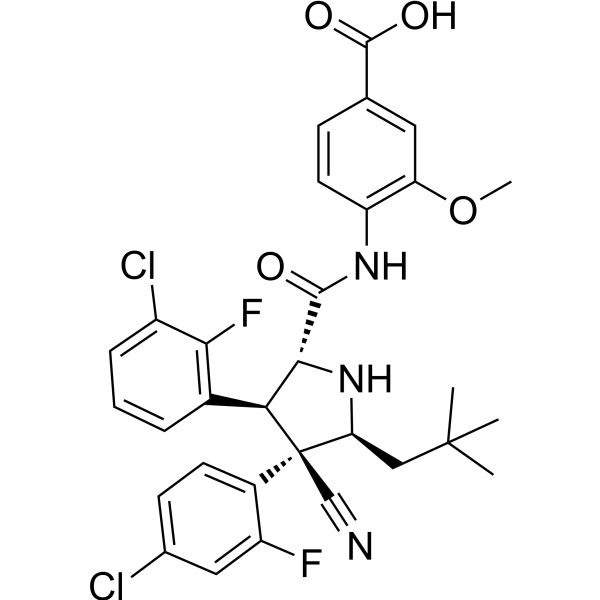
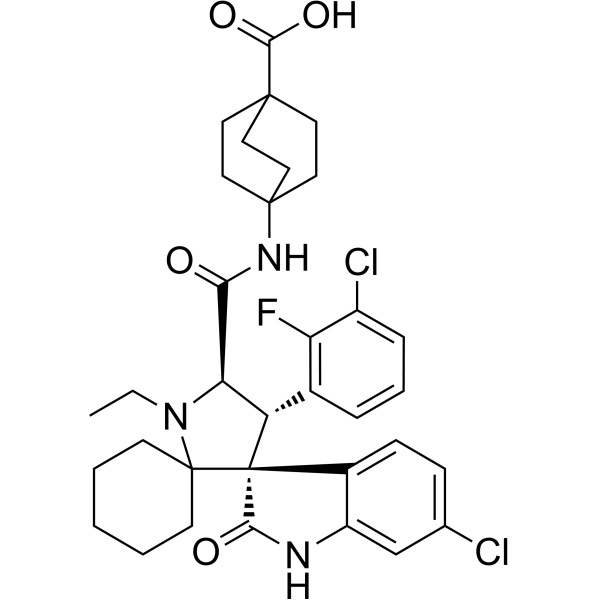
  • HY-101518
    Alrizomadlin
    4 Publications Verification

    APG-115; AA-115

    MDM-2/p53 E1/E2/E3 Enzyme Apoptosis Cancer
    Alrizomadlin (APG-115) is an orally active MDM2 protein inhibitor binding to MDM2 protein with IC50 and Ki values of 3.8 nM and 1 nM, respectively . Alrizomadlin blocks the interaction of MDM2 and p53 and induces cell-cycle arrest and apoptosis in a p53-dependent manner [2] .
    Alrizomadlin
  • HY-10959
    RG7112
    20+ Cited Publications

    RO5045337

    MDM-2/p53 E1/E2/E3 Enzyme Neurological Disease Cancer
    RG7112 is a potent, selective, orally active and blood-brain barrier crossed MDM2-p53 inhibitor, with an IC50 of 18 nM and a KD of 11 nM for binding to MDM2 .
    RG7112
  • HY-12296
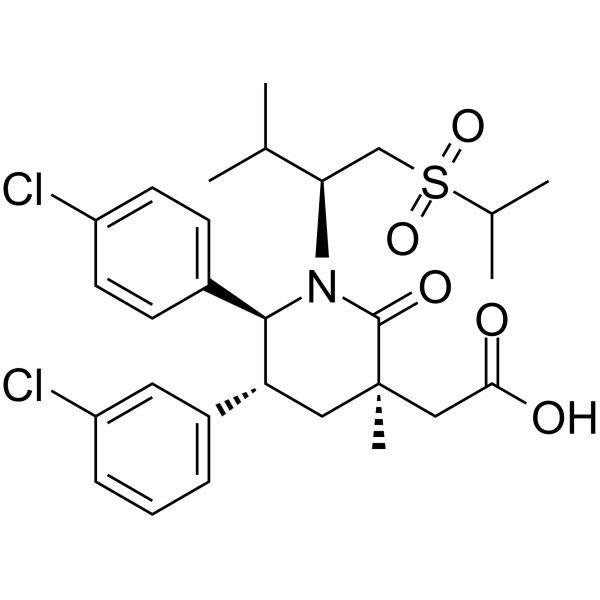
    Navtemadlin
    25+ Cited Publications

    AMG 232; KRT-232

    MDM-2/p53 E1/E2/E3 Enzyme Cancer
    Navtemadlin (AMG 232) is a potent, selective and orally available inhibitor of p53-MDM2 interaction, with an IC50 of 0.6 nM. Navtemadlin binds to MDM2 with a Kd of 0.045 nM [2].
    Navtemadlin
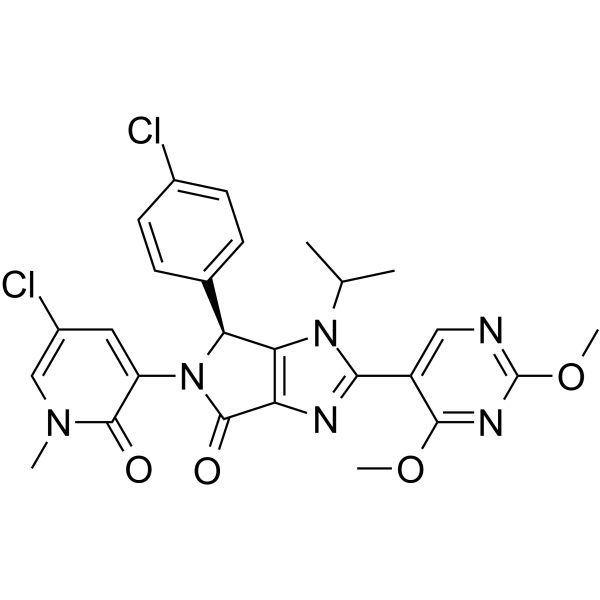
  • HY-170451
    Seldegamadlin
    1 Publications Verification

    KT-253

    PROTACs MDM-2/p53 Apoptosis Cancer
    Seldegamadlin (KT-253) is a selective p53 stabilizer and a MDM2 PROTAC degrader (DC50 = 0.4 nM). Seldegamadlin inhibits the proliferation of cancer cell RS4;11 with an IC50 of 0.3 nM, arrests the cell cycle at G2/M phase, and induces apoptosis. Seldegamadlin upregulates p53 activity and overcomes the p53-MDM2 feedback loop. Seldegamadlin can be used for the study of hematologic and solid tumors, such as acute myeloid leukemia (AML) and acute lymphoblastic leukemia (ALL) [2] .
    Seldegamadlin
  • HY-18658
    Siremadlin
    10+ Cited Publications

    NVP-HDM201; HDM201

    MDM-2/p53 E1/E2/E3 Enzyme Cancer
    Siremadlin (NVP-HDM201) is a potent, orally bioavailable and highly specific p53-MDM2 interaction inhibitor.
    Siremadlin
  • HY-18986
    SAR405838
    3 Publications Verification

    MI-77301

    MDM-2/p53 E1/E2/E3 Enzyme Apoptosis Cancer
    SAR405838 (MI-77301), an analog of MI-773, is a highly potent and selective MDM2-p53 interaction inhibitor. SAR405838 binds to MDM2 with a Ki of 0.88 nM. SAR405838 induces apoptosis and has potent antitumor activity [2].
    SAR405838
  • HY-P4210
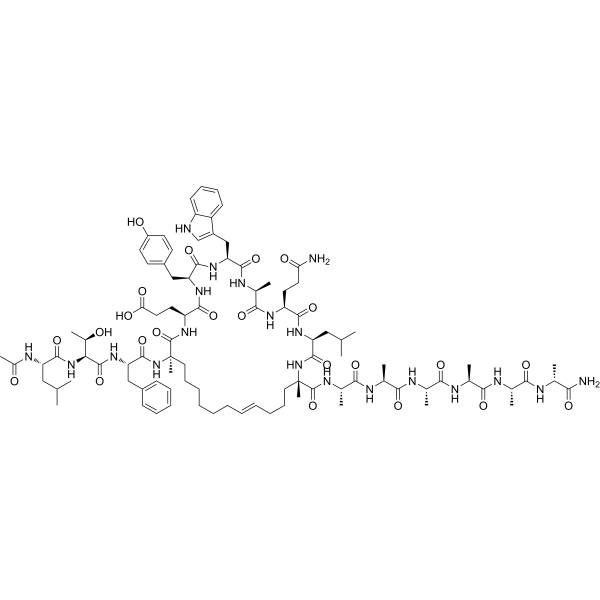
    Sulanemadlin
    2 Publications Verification

    ALRN-6924; MP-4897

    MDM-2/p53 Cancer
    Sulanemadlin (ALRN-6924) is a potent and cell-permeating p53-based peptidomimetic macrocycles. Sulanemadlin is a inhibitor of the p53-MDM2, p53-MDMX, or both p53 and MDM2 and MDMX protein-protein interactions. Sulanemadlin can be used for cancers research .
    Sulanemadlin
  • HY-70027A

    MDM-2/p53 E1/E2/E3 Enzyme Cancer
    p53 and MDM2 proteins-interaction-inhibitor dihydrochloride (Compound 32) is an inhibitor of the interaction between p53 and MDM2. p53 and MDM2 proteins-interaction-inhibitor dihydrochloride has potential applications in cancer research .
    p53 and MDM2 proteins-interaction-inhibitor dihydrochloride
  • HY-19726
    NSC59984
    2 Publications Verification

    MDM-2/p53 Cancer
    NSC59984 induces mutant p53 protein degradation via MDM2 and the ubiquitin-proteasome pathway . NSC59984 acts by targeting GOF-mutant p53 and stimulates p73 to restore the p53 pathway signaling [2].
    NSC59984
  • HY-176083

    MDM-2/p53 Caspase Apoptosis Cancer
    ASTX295 is an orally active and selective MDM2 antagonist with an IC50 of <1 nM. ASTX295 inhibits the MDM2-p53 interaction, activates wild-type TP53, and thereby induces the expression of relevant transcriptional targets, leading to cell death. ASTX295 drives the transition of pancreatic cancer cells from senescence to apoptosis and regulates p53 and DNA damage biomarkers. ASTX295 can be used for the research of hematologic malignancies and pancreatic cancer [2].
    ASTX295
  • HY-17493
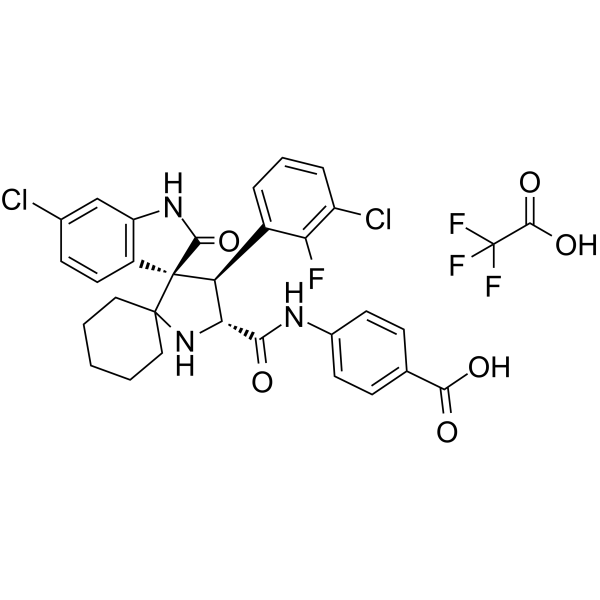
    MI-773
    5+ Cited Publications

    MDM-2/p53 Apoptosis Neurological Disease Cancer
    MI-773 is an orally active, selective MDM2-p53 interaction inhibitor with a Ki of 0.88 nM for MDM2. MI-773 blocks the MDM2-TP53 interaction. MI-773 potently activates p53. MI-773 induces Apoptosis. MI-773 causes tumor regression in xenograft models of adenoid cystic carcinoma. MI-773 exhibits anticancer effects in neuroblastoma. MI-773 TFA can be used for the research of adenoid cystic carcinoma [2].
    MI-773
  • HY-13423
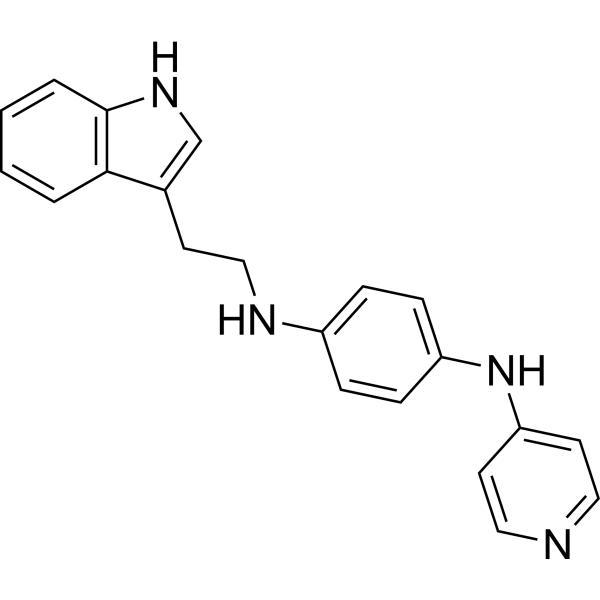
    Tenovin-1
    5 Publications Verification

    MDM-2/p53 Dihydroorotate Dehydrogenase Sirtuin Autophagy Cancer
    Tenovin-1, a p53 activator, protects p53 from MDM2-mediated degradation. Tenovin-1 acts through inhibition of the protein-deacetylating activities of SirT1 and SirT2. Tenovin-1 is also a dihydroorotate dehydrogenase (DHODH) inhibitor [2].
    Tenovin-1
  • HY-128841
    PROTAC MDM2 Degrader-2
    1 Publications Verification

    PROTACs MDM-2/p53 E1/E2/E3 Enzyme Cancer
    PROTAC MDM2 Degrader-2 is an MDM2 PROTAC degrader. PROTAC MDM2 Degrader-2 can induce the self-ubiquitination and degradation of MDM2, thereby upregulating the level of p53 protein. PROTAC MDM2 Degrader-2 has anti-tumor activity and can be used in the study of cancer .
    PROTAC MDM2 Degrader-2
  • HY-153215

    Ligands for E3 Ligase Cancer
    MEL24 is an Mdm2 E3 ligase inhibitor that reduces cell survival and increases sensitivity to DNA damaging agents in a p53-dependent manner for in vitro antitumor studies .
    MEL24
  • HY-158684

    PROTACs MDM-2/p53 Apoptosis Cancer
    YX-02-030 is a VHL-dependent MDM2 PROTAC degrader with a Kd of 35 nM. YX-02-030 recruits the VHL E3 ligase to form a ternary complex, leading to ubiquitination and proteasome-mediated degradation of MDM2. YX-02-030 inhibits MDM2-p53 and VHL-HIF1α binding with IC50 values of 63 and 1350 nM. YX-02-030 activates TAp73, upregulates p53 family target genes and induces apoptosis. YX-02-030 demonstrates on-target efficacy in TNBC xenograft-bearing mice, extending survival without normal cell toxicity .
    YX-02-030
  • HY-120086
    RO-5963
    1 Publications Verification

    MDM-2/p53 E1/E2/E3 Enzyme Cancer
    RO-5963 is a dual p53-MDM2 and p53-MDMX inhibitor with IC50s of ~17 nM and ~24 nM, respectively .
    RO-5963
  • HY-70027

    MDM-2/p53 E1/E2/E3 Enzyme Cancer
    p53 and MDM2 protein-interaction inhibitor (chiral) (Compound 32) is an inhibitor of the interaction between p53 and MDM2. p53 and MDM2 protein-interaction inhibitor (chiral) has potential applications in cancer research .
    p53 and MDM2 proteins-interaction-inhibitor (chiral)
  • HY-125858
    MI-1061
    3 Publications Verification

    MDM-2/p53 E1/E2/E3 Enzyme Apoptosis Cancer
    MI-1061 is a potent, orally bioavailable, and chemically stable MDM2 (MDM2-p53 interaction) inhibitor (IC50=4.4 nM; Ki=0.16 nM). MI-1061 potently activates p53 and induces apoptosis in the SJSA-1 xenograft tumor tissue in mice. Anti-tumor activity .
    MI-1061
  • HY-141584

    MDM-2/p53 Cancer
    ATSP-7041, a selective dual peptide inhibitor of MDM2 and MDMX, effectively reactivates the p53 tumor suppressor pathway in a mechanism-dependent manner in p53-positive cancers .
    ATSP-7041
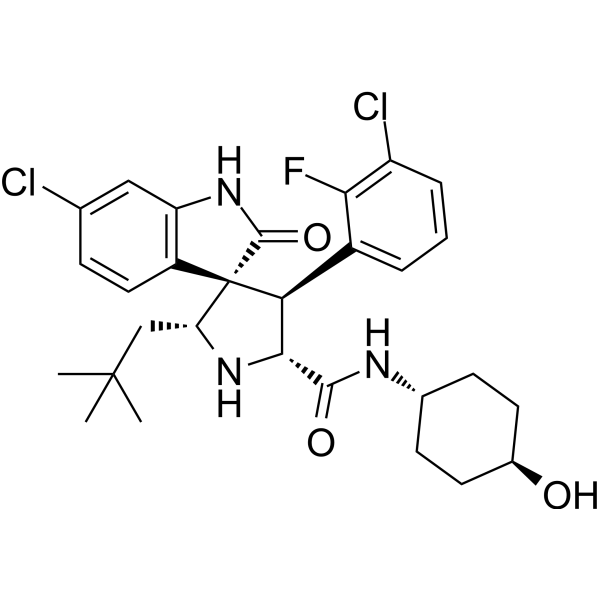
  • HY-16999

    MDM-2/p53 E1/E2/E3 Enzyme Apoptosis Cancer
    RO8994 (Compound 4) is an orally active, highly potent and selective spiroindolinone p53-MDM2 inhibitor with an IC50 value of 5 nM (HTRF binding assays) and 20 nM (MTT proliferation assays). RO8994 induces up-regulation of p53 expression and Apoptosis in wild-type p53 cancer cells. RO8994 also inhibits tumor growth in the tumor xenograft model [2] .
    RO8994
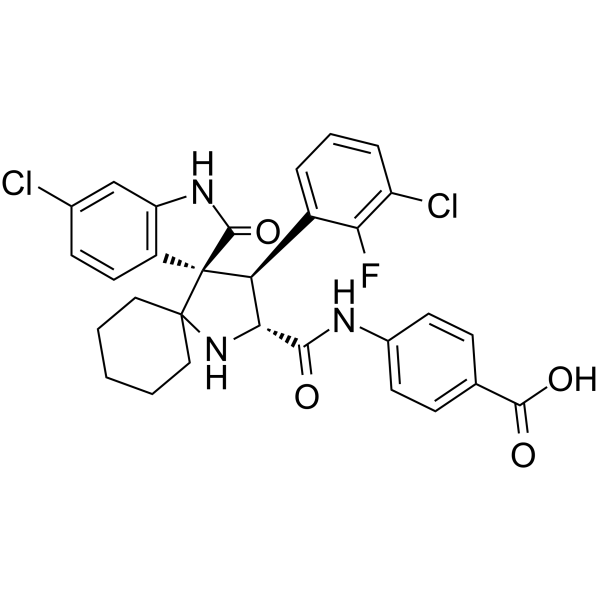
  • HY-120084
    BTX161
    1 Publications Verification

    Casein Kinase Cancer
    BTX161, a thalidomide analog, is an effective CKIα degrader. BTX161 mediates human AML cell CKIα degradation more effectively than lenalidomide and activates the DNA damage response (DDR) and p53, while stabilizing p53 antagonist MDM2.
    BTX161
  • HY-148833

    MDM-2/p53 Cancer
    MDM2-p53-IN-16 is a MDM2-p53 complex inhibitor with an IC50 value of 4.3 nM to dissociate human p53/MDM2 complex. MDM2-p53-IN-16 reactivates p53, and induces Glioblastoma Multiforme (GBM) cell apoptosis and cell-cycle arrest. MDM2-p53-IN-16 can be used for the cancer research .
    MDM2-p53-IN-16
  • HY-P1755

    MDM-2/p53 Cancer
    p53 (17-26) is a peptide derived from the P53 MDM2 binding domain, with a Kd of 50 nM for MDM2. p53 (17-26) causes cell lysis by damaging cancer cells and nuclear membranes, and induces cancer cell necrosis. p53 (17-26) exhibits antitumor activity and is applicable to research related to pancreatic cancer [2].
    p53 (17-26)
  • HY-169240

    MDM-2/p53 Cancer
    MX69-102 (compound MX69-102) is an MDM-2/p53 inhibitor, inducing MDM2 degradation, resulting in p53 activation and cancer cell apoptosis. MX69-102 shows effective inhibition on xenografted human MDM2-overexpressing ALL in SCID mice. .
    MX69-102
  • HY-W340313

    MDM-2/p53 E1/E2/E3 Enzyme Cancer
    p53-MDM2-IN-4 (Example 4) is an inhibitor of p53-MDM2/X protein interaction, with a Ki value of 3.079 μM. p53-MDM2-IN-4 can be used in anti-tumor research .
    p53-MDM2-IN-4
  • HY-W340839

    MDM-2/p53 E1/E2/E3 Enzyme Cancer
    p53-MDM2-IN-1 (Example 30) is an inhibitor of p53-MDM2/X protein interaction with an Ki value of 23.35 µM. p53-MDM2-IN-1 can be used for anti-tumor research .
    p53-MDM2-IN-1
  • HY-15676A

    RG7388 (enantiomer)

    MDM-2/p53 Drug Isomer Apoptosis Cancer
    Idasanutlin enantiomer is the isomer of Idasanutlin (HY-15676), and can be used as an experimental control. Idasanutlin (RG7388) is a potent and selective MDM2 antagonist, inhibiting p53-MDM2 binding, with an IC50 of 6 nM.
    Idasanutlin (enantiomer)
  • HY-128840

    PROTACs MDM-2/p53 Cancer
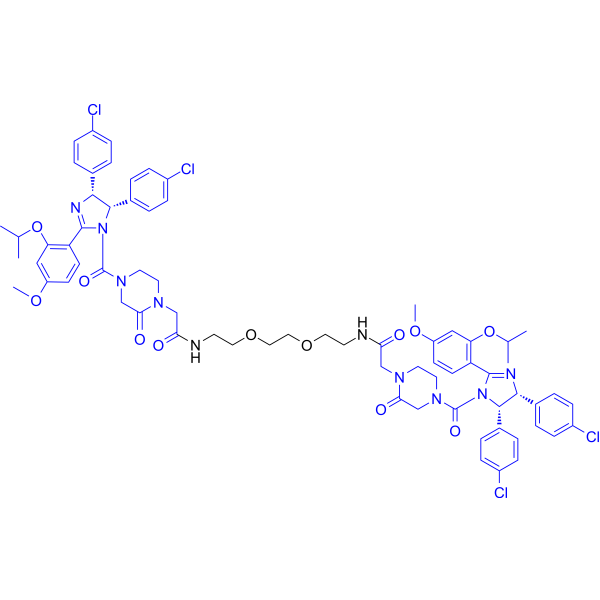
    PROTAC MDM2 Degrader-1 (Compound 15a) is a MDM2 PROTAC degrader. The structures of both Linker ends of PROTAC MDM2 Degrader-1 are MDM2 ligands. PROTAC MDM2 Degrader-1 can not only block the binding of p53-MDM2, but also degrade the target MDM2 protein by utilizing the function of the E3 ligase of MDM2 itself, thus exerting an anti-tumor effect .
    PROTAC MDM2 Degrader-1
  • HY-76667

    MDM-2/p53 Biochemical Assay Reagents Drug Intermediate Others
    3-(Boc-amino) propyl bromide is an alkylating reagent used for the N-alkylation of benzopyranotriazolopyrimidine-based MDM2-p53 protein-protein inhibitor 4 to prepare Compound 13 .
    3-(Boc-amino)propyl bromide
  • HY-148106

    Ligands for E3 Ligase Cancer
    MEL23 is a MDM2 E3 ligase inhibitor that blocks the E3 ligase activity of the MDM2-MDMX complex. MEL23 inhibits Mdm2 and p53 ubiquitination in cells, reduce viability of cells with wild-type p53. MEL23 stabilizes MDM2 via a mechanism independent of p53 transcription .
    MEL23
  • HY-P1755F

    MDM-2/p53 Cancer
    p53 (17-26), FITC labeled is a biological active peptide. p53 (17-26) is a peptide derived from the P53 MDM2 binding domain, with a Kd of 50 nM for MDM2. p53 (17-26) causes cell lysis by damaging cancer cells and nuclear membranes, and induces cancer cell necrosis. p53 (17-26) exhibits antitumor activity and is applicable to research related to pancreatic cancer.
    p53 (17-26), FITC labeled
  • HY-123950

    MDM-2/p53 Apoptosis Cancer
    MMRi64 disrupts Mdm2-MdmX interactions. MMRi64 downregulates Mdm2 and MdmX in leukemia cells. MMRi64 induces p53 accumulation, and induces the apoptotic arm of the p53 pathway in leukemia/lymphoma cells. MMRi64 can be used for cancer research .
    MMRi64
  • HY-70028

    MDM-2/p53 E1/E2/E3 Enzyme Cancer
    p53 and MDM2 proteins-interaction-inhibitor (racemic) (Compound 2j) is an inhibitor of the interaction between p53 and MDM2 proteins.
    p53 and MDM2 proteins-interaction-inhibitor (racemic)
  • HY-100765

    MDM-2/p53 E1/E2/E3 Enzyme Cancer
    BI-0252 is an orally active, selective MDM2-p53 inhibitor with an IC50 of 4 nM. BI-0252 can induce tumor regressions in all animals of a mouse SJSA-1 xenograft, with concomitant induction of the tumor protein p53 (TP53) target genes and markers of apoptosis .
    BI-0252
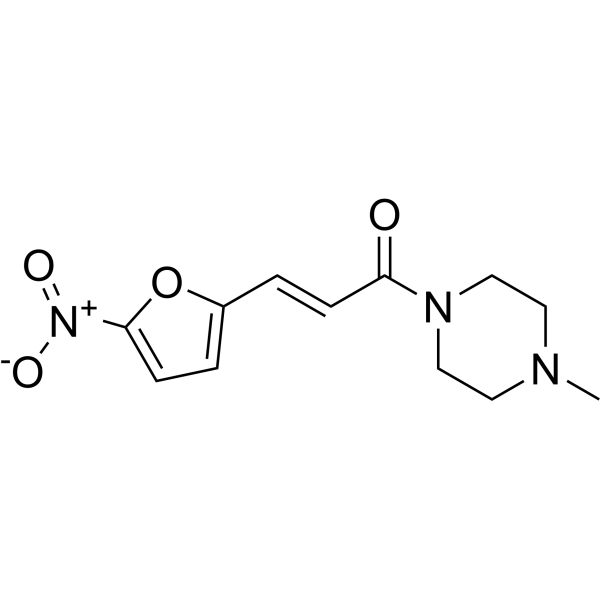
  • HY-14967
    NSC 66811
    1 Publications Verification

    MDM-2/p53 Cancer
    NSC 66811 is a MDM2-p53 inhibitor, with a Ki of 120 nM for binding to MDM2 .
    NSC 66811
  • HY-158685

    MDM-2/p53 Cancer
    RG7112D is a potent MDM2 inhibitor with IC50s of 11 nM and >10000 nM and for MDM2-p53 and VHL-HIF1α by binding HTRF assay, respectively. RG7112D is coupled by an amide bond to VHL-Amine, resulting in a bi-functional molecule, YX-02-030. YX-02-03, a MDM2-PROTAC, potently inhibits MDM2-p53 binding (HTRF IC50=63nM). RG7112D can stabilize MDM2 protein and increase p53 protein levels .
    RG7112D
  • HY-124791

    MDM-2/p53 PARP Cancer
    MMRi6 is a Mdm2-MdmX RING domain inhibitor that can disrupt Mdm2-MdmX RING-RING interaction in vitro. MMRi6 inhibits MdmX-stimulated Mdm2 autoubiquitination and Mdm2-MdmX-mediated p53 polyubiquitination in vitro without affecting NEDD4-1 autoubiquitination. MMRi6 induces p53 stabilization and accumulation and induces PARP cleavage in wt-p53 Emu-myc lymphoma cells. MMRi6 inhibits the growth of wt-p53 and p53-null Emu-myc lymphoma cells with IC50s of approximately 0.5 μM and 3 μM, respectively. MMRi6 can be used for the study of leukemia/lymphoma .
    MMRi6
  • HY-P1755A

    MDM-2/p53 Cancer
    p53 (17-26) acetate is a peptide derived from the P53 MDM2 binding domain, with a Kd of 50 nM for MDM2. p53 (17-26) acetate causes cell lysis by damaging cancer cells and nuclear membranes, and induces cancer cell necrosis. p53 (17-26) acetate exhibits antitumor activity and is applicable to research related to pancreatic cancer [2].
    p53 (17-26) acetate
  • HY-P11256

    MDM-2/p53 Cancer
    pDI is a peptide. pDI inhibits MDM2-p53 and MDMX-p53 interactions with IC50s of 10 and 100 nM respectively. pDI can be used in the research of colorectal cancer .
    pDI
  • HY-149988

    MDM-2/p53 Cancer
    UNP-6457 is a potent active MDM2-p53 interaction inhibitor with an IC50 values of 8.9 nM .
    UNP-6457
  • HY-12287
    YH239-EE
    1 Publications Verification

    MDM-2/p53 E1/E2/E3 Enzyme Apoptosis Cancer
    YH239-EE, ethyl ester of the free carboxylic acid compound YH239, is a potent p53-MDM2 antagonizing and apoptosis-inducing agent.
    YH239-EE
  • HY-133760

    MDM-2/p53 Cancer
    MI-888 is an orally active MDM2 inhibitor with a Ki of 0.44 nM. MI-888 can inhibit the MDM2-p53 interaction. MI-888 has favorable pharmacokinetic properties and anti-tumor activity .
    MI-888
  • HY-10029A

    (Rac)-Rebemadlin

    MDM-2/p53 Autophagy Apoptosis E1/E2/E3 Enzyme Cancer
    (Rac)-Nutlin-3 (Rebemadlin), an active enantiomer of Nutlin-3, is a potent murine double minute (MDM2) inhibitor (IC50=90 nM). (Rac)-Nutlin-3 inhibits MDM2-p53 interactions and stabilizes the p53 protein, and induces cell autophagy and apoptosis. (Rac)-Nutlin-3 has the potential for the study of TP53 wild-type ovarian carcinomas [2].
    (Rac)-Nutlin-3
  • HY-169327

    PROTACs MDM-2/p53 Cancer
    MD-265 is a PROTAC degrader that can break down MDM2, leading to activation of p53 in cancer cells carrying wild-type p53. MD-265 achieves complete tumor regression and improves long-term survival of mice with leukemia .
    MD-265
  • HY-163661

    Apoptosis Autophagy MDM-2/p53 Cancer
    p53-MDM2-IN-5 (compound 5a) is a potent p53-MDM2 inhibitor. p53-MDM2-IN-5 induces apoptosis, autophagy and DNA damage. p53-MDM2-IN-5 induces cell cycle arrest at S and G2/M phases. p53-MDM2-IN-5 shows anti-tumor activity .
    p53-MDM2-IN-5
  • HY-151172

    MDM-2/p53 Apoptosis Cancer
    MDM2-p53-IN-15 is a MDM2-p53 inhibitor with an IC50 value of 26.1 nM. MDM2-p53-IN-15 inhibits the proliferation of various cancer cells and induces cell apoptosis. MDM2-p53-IN-15 can be used for the research of cancer .
    MDM2-p53-IN-15
  • HY-162927

    MDM-2/p53 Apoptosis Cancer
    p53-MDM2-IN-6 (Compound 10a), a LSM-83177 hydrazone analog, is a potent p53-MDM2 inhibitor with an IC50 value of 11.08 µg/mL. p53-MDM2-IN-6 arrests the cell cycle in the S phase and induces early and late Apoptosis with antiproliferative activity against HT29 cell lines with an IC50 value of 10.44 µg/mL. p53-MDM2-IN-6 inhibits p53-MDM2 interaction with increment in p-53 level and decrease the expression of GST enzymes. p53-MDM2-IN-6 is promising for research of colorectal cancer .
    p53-MDM2-IN-6

Inquiry Online

Your information is safe with us. * Required Fields.

Salutation


Country or Region *

Applicant Name *


Organization Name *

Department *


Email Address *


Product Name *

Cat. No.


Requested quantity *

Phone Number *


Remarks

Inquiry Online

Inquiry Information

Product Name:
Cat. No.:
Quantity:
MCE Japan Authorized Agent:

