



7,3',4'-Tri-O-methylluteolin
Based on 1 publication(s) in Google Scholar
7,3',4'-Tri-O-methylluteolin (5-Hydroxy-3',4',7-trimethoxyflavone) is a flavonoid with multiple biological activities. 7,3',4'-Tri-O-methylluteolin inhibits soybean lipoxygenase (LOX), with an IC50 value of 23.97 µg/mL. 7,3',4'-Tri-O-methylluteolin possesses anti-inflammatory effects in Lipopolysaccharides (HY-D1056) (LPS)-induced RAW 264.7 macrophages. 7,3',4'-Tri-O-methylluteolin inhibits the binding of MDM2 with p53 and induces apoptosis in MCF-7 breast cancer cells. 7,3',4'-Tri-O-methylluteolin also has antioxidant, antifungal and antitrypanosomal activities.
For research use only. We do not sell to patients.
- Purity: 99.20%
- CAS No.: 29080-58-8
- Formula: C18H16O6
- Molecular Weight:328.32
-
Storage:
4°C, protect from light
* In solvent : -80°C, 6 months; -20°C, 1 month (protect from light)

To place orders, for customer services and technical support, please contact: MedChemExpress USA
Tel: 609-228-6898 E-mail: [email protected] [email protected]


-
 Biological Activity
-
Chemical Information
-
Solvent & Solubility
- Purity & Documentation
- References
-
 Help & FAQs


-
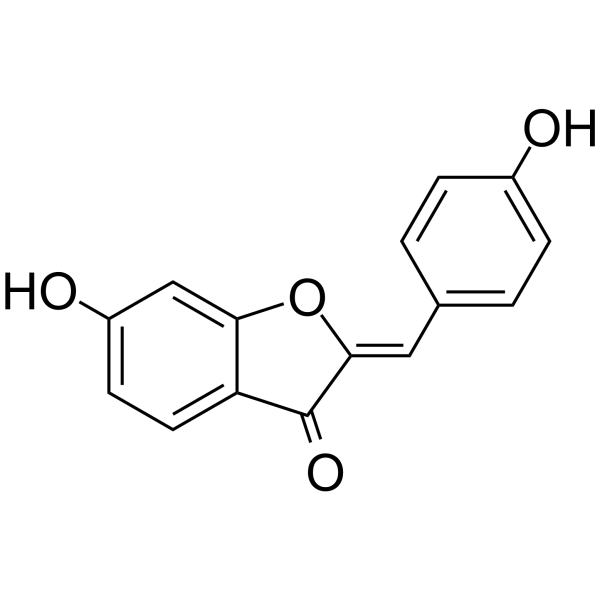
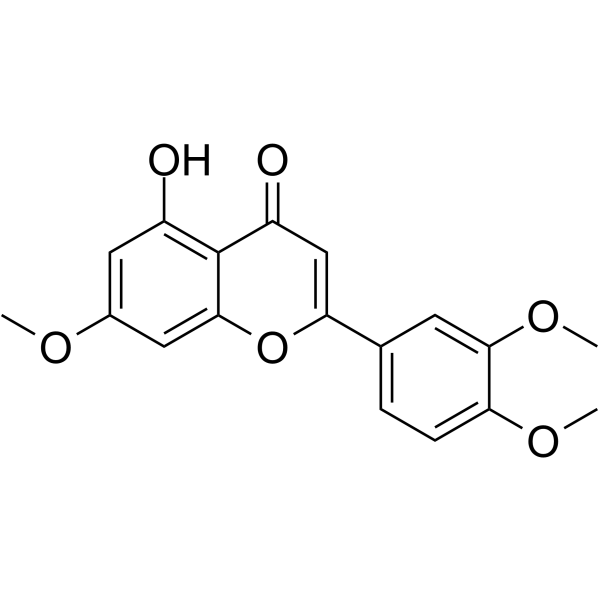
HY-102040
Hispidol -
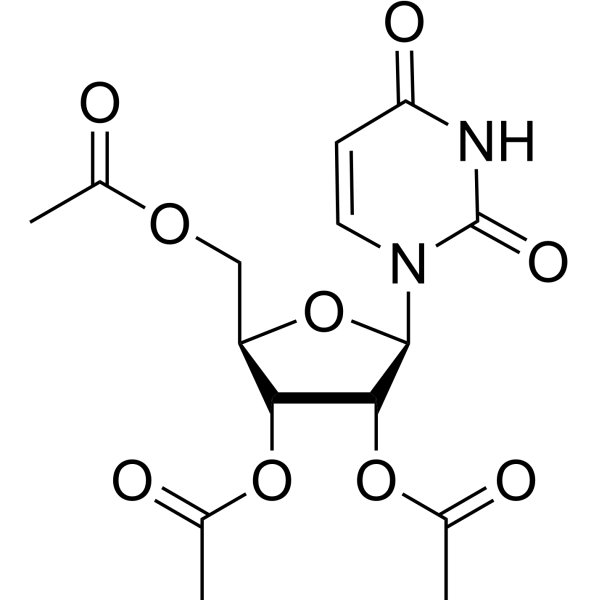
HY-14905
Uridine triacetate -
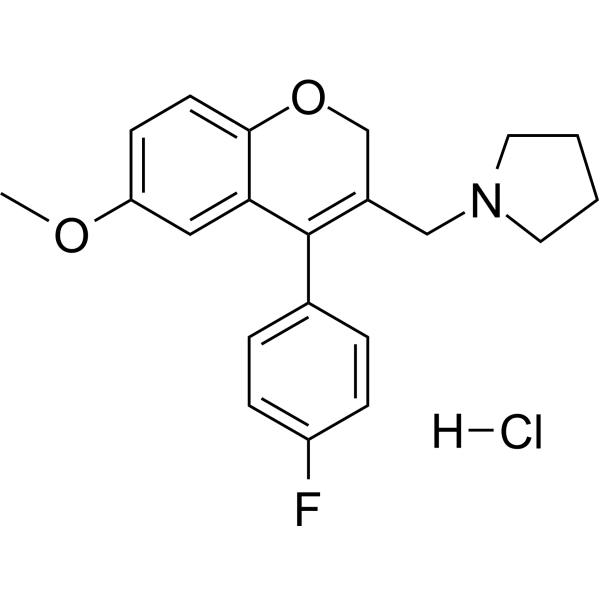
HY-107390A
AX-024 hydrochloride -
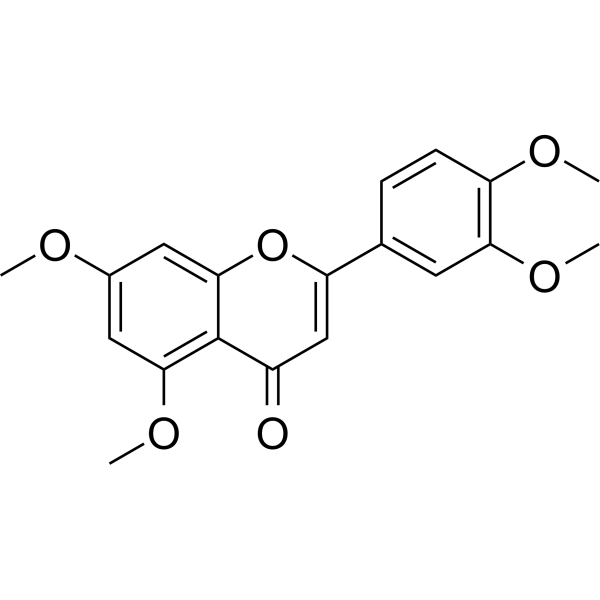
HY-N7030
5,7,3',4'-Tetramethoxyflavone -
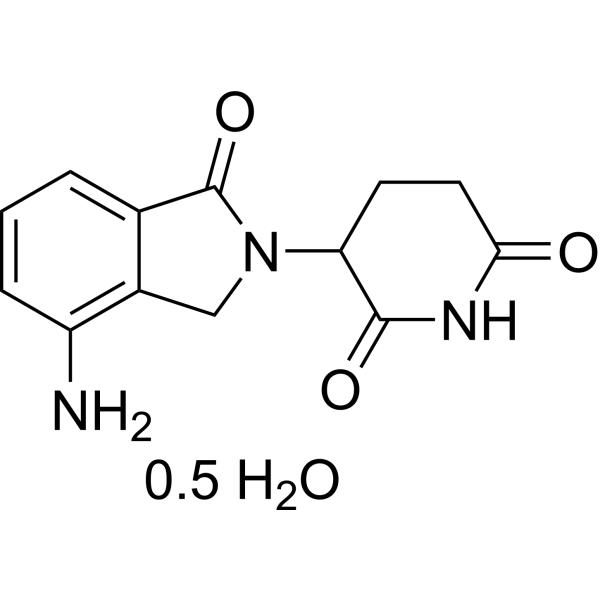
HY-A0003B
Lenalidomide hemihydrate -
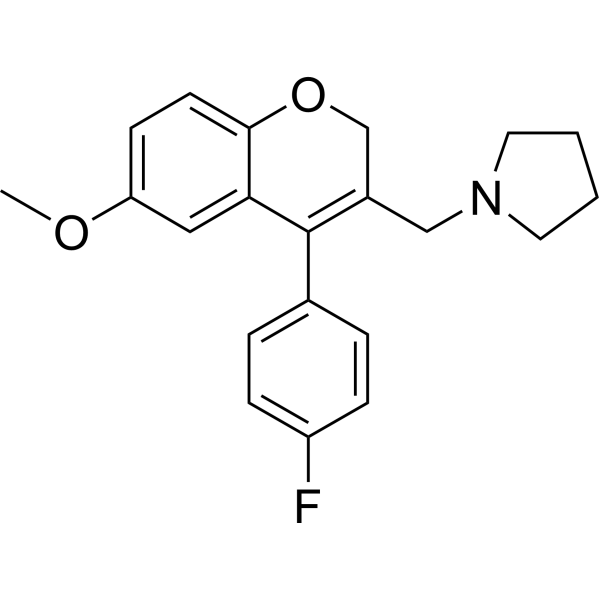
HY-107390
AX-024 -
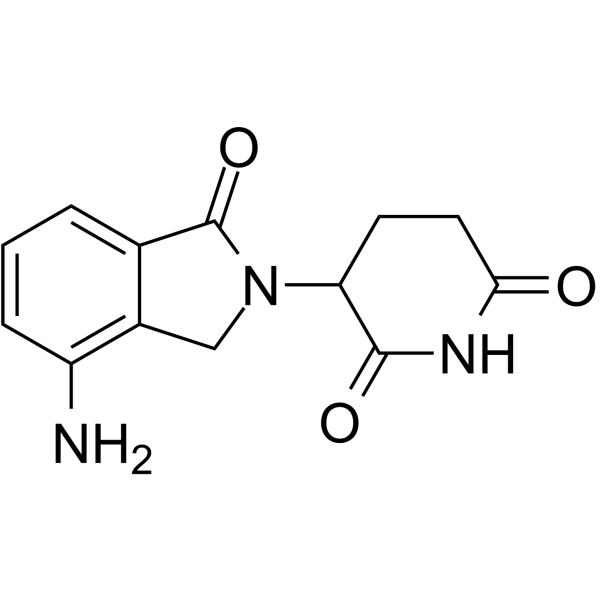
HY-A0003
Lenalidomide -
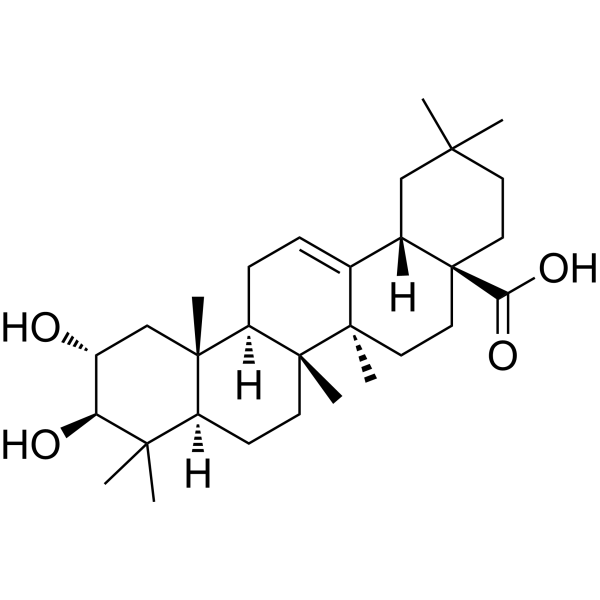
HY-N0629
Maslinic acid -
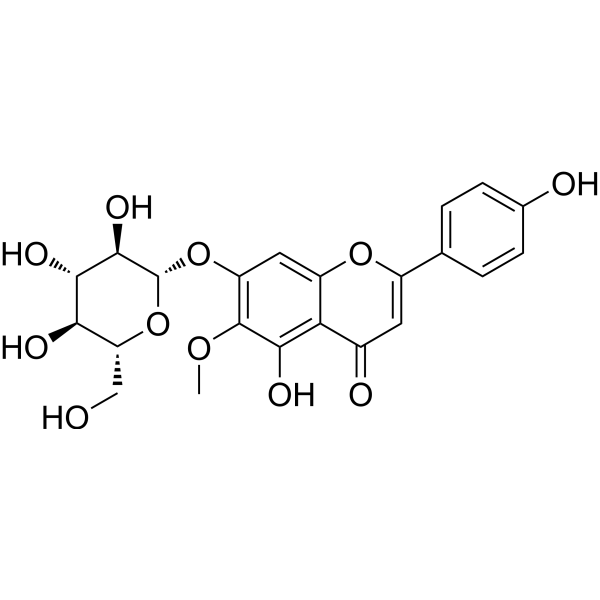
HY-N1949
Homoplantaginin -
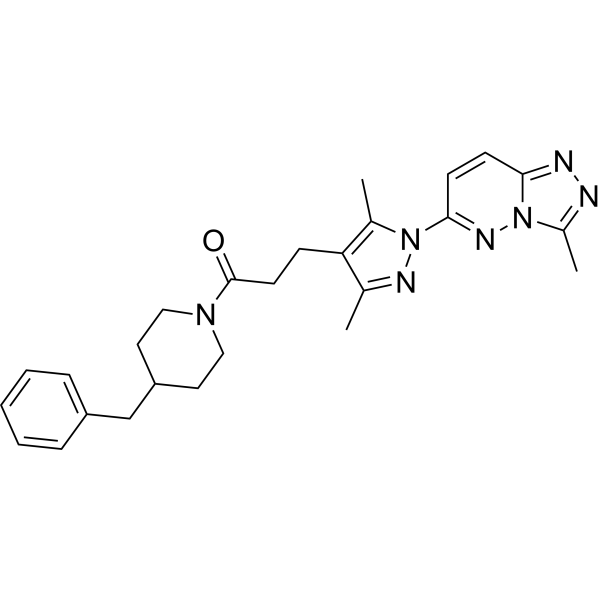
HY-120934
C25-140 -

HY-A0003R
Lenalidomide (Standard) -
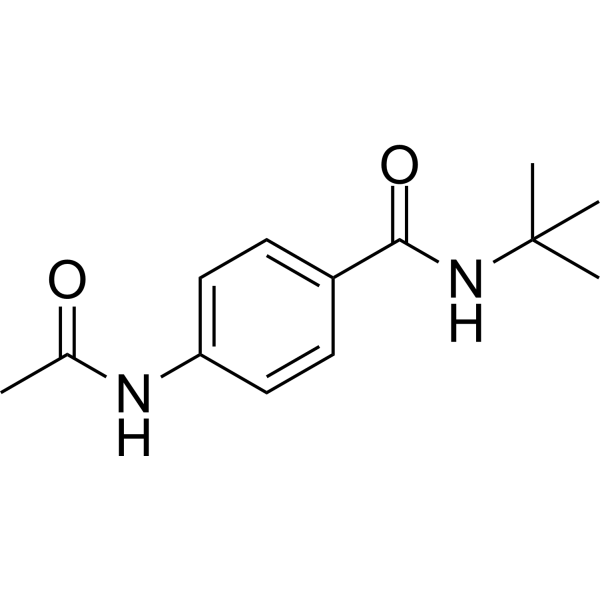
HY-100376
CPI-1189
Publications Citing Use of MedChemExpress (MCE) 7,3',4'-Tri-O-methylluteolin
MoreAll Parasite Isoforms
More

Biological Activity
Description
IC50 & Target
[1]|
IL-6 |
IL-1β |
COX-2 |
Cellular Effect
|
Cell Line

|
Type | Value | Description | References |
|---|---|---|---|---|
| HepG2 | IC50 |
15 μM
Compound: 6
|
Antiproliferative activity against human HepG2 cells after 48 hrs by MTT assay
Antiproliferative activity against human HepG2 cells after 48 hrs by MTT assay
|
[PMID: 23800391] |
| KB | IC50 |
19.4 μg/mL
Compound: 5
|
Cytotoxicity against human KB cells
Cytotoxicity against human KB cells
|
[PMID: 8759170] |
| MCF7 | IC50 |
10 μM
Compound: 6
|
Antiproliferative activity against human MCF7 cells after 48 hrs by MTT assay
Antiproliferative activity against human MCF7 cells after 48 hrs by MTT assay
|
[PMID: 23800391] |
| Neutrophil | IC50 |
<=12.51 μM
Compound: 58
|
Inhibition of fMLF/CB-induced human Neutrophil activation assessed as reduction in superoxide anion generation pre-incubated for 2 mins prior to CB induction for 3 mins followed by fMLF addition by spectrophotometric analysis
Inhibition of fMLF/CB-induced human Neutrophil activation assessed as reduction in superoxide anion generation pre-incubated for 2 mins prior to CB induction for 3 mins followed by fMLF addition by spectrophotometric analysis
|
[PMID: 37683361] |
| Vero | IC50 |
125 μM
Compound: 6
|
Antiproliferative activity against african green monkey Vero cells after 48 hrs by MTT assay
Antiproliferative activity against african green monkey Vero cells after 48 hrs by MTT assay
|
[PMID: 23800391] |
| WI-38 | IC50 |
105 μM
Compound: 6
|
Antiproliferative activity against human WI38 cells after 48 hrs by MTT assay
Antiproliferative activity against human WI38 cells after 48 hrs by MTT assay
|
[PMID: 23800391] |
In Vitro
In LPS (1 µg/mL)-induced RAW 264.7 macrophages, 7,3',4'-Tri-O-methylluteolin (5-Hydroxy-3',4',7-trimethoxyflavone) (1-40 µg/mL) significantly inhibits nitric oxide production and demonstrats slight reduction in prostaglandin-E2 level at tested concentrations. 7,3',4'-Tri-O-methylluteolin reduces the production of pro-inflammatory cytokines, such as TNF-α, IL-6, and IL-1β[1].
7,3',4'-Tri-O-methylluteolin (40 µg/mL; 24 h) significantly induces reduction in the mRNA expressions of iNOS synthase and COX-2 in RAW 264.7 cells[1].
7,3',4'-Tri-O-methylluteolin has antioxidant effects and can scavenge free radicals, superoxides, and hydroxyl radicals[2].
7,3',4'-Tri-O-methylluteolin (5-15 μg/mL; 24-48 h) induces cytotoxicity in the treated cells, which correspondingly resulted in the IC50 values of 12 μg/mL and 8 μg/mL after 24 and 48 h treatment[3].
7,3',4'-Tri-O-methylluteolin (8-12 μg/mL; 24-48 h) induces apoptosis in MCF-7 cells. 7,3',4'-Tri-O-methylluteolin induces the phosphatidylserine translocation, DNA damage and the significant elevation of cellular ROS[3].
7,3',4'-Tri-O-methylluteolin (8-12 μg/mL; 24-48 h) encourages apoptosis through the modulation of apoptotic markers, such as p53, Bcl-2, Bax, and cleaved PARP. 7,3',4'-Tri-O-methylluteolin shifts the Bax:Bcl-2 ratio[3].
7,3',4'-Tri-O-methylluteolin shows activities against Candida albicans, Candida krusei and Candida galabrata[4].
7,3',4'-Tri-O-methylluteolin inhibits Trypanosoma brucei with a MIC value of 19.0 μM[5].
MedChemExpress (MCE) has not independently confirmed the accuracy of these methods. They are for reference only.
-
Cell Line:MCF-7 cells
-
Concentration:5 μg/mL, 6 μg/mL, 7 μg/mL, 8 μg/mL, 9 μg/mL, 10 μg/mL, 11 μg/mL, 12 μg/mL, 13 μg/mL, 14 μg/mL, 15 μg/mL
-
Incubation Time:24 and 48 h
-
Result:Showed anti-proliferative effects in MCF-7 cells.
-
Cell Line:MCF-7 cells
-
Concentration:8 μg/mL,12 μg/mL
-
Incubation Time:24 and 48 h
-
Result:Clearly showed typical apoptotic features, such as cell shrinkage, membrane blebbing, distorted nuclei, chromatin fragmentation, and formation of pyknotic bodies of condensed chromatin, comparatively with a bright green/yellow and orange/red staining.
-
Cell Line:MCF-7 cells
-
Concentration:8 μg/mL,12 μg/mL
-
Incubation Time:24 and 48 h
-
Result:The up-regulation of pro-apoptotic proteins Bax and PARP cleavage and down-regulation of anti-apoptotic protein Bcl-2.
-
Cell Line:MCF-7 cells
-
Concentration:8 μg/mL,12 μg/mL
-
Incubation Time:24 and 48 h
-
Result:Showed a several-fold increase in the transcripts of p53, p21, and Bax in a time-dependent manner.
-
Cell Line:RAW 264.7 cells treated with LPS (1 µg/mL)
-
Concentration:40 µg/mL
-
Incubation Time:24 h
-
Result:Significantly induced reduction in the mRNA expressions of inducible nitric oxide (iNOS) synthase and COX-2.


Chemical Information
-
CAS No. 29080-58-8
-
Appearance Solid
-
Molecular Weight 328.32
-
Formula C18H16O6
-
Color White to yellow
-
SMILES
OC1=C2C(OC(C3=CC=C(OC)C(OC)=C3)=CC2=O)=CC(OC)=C1
-
Synonyms
5-Hydroxy-3',4',7-trimethoxyflavone
-
Structure Classification
-
Initial Source
-
Shipping
Room temperature in continental US; may vary elsewhere.
-
Storage
4°C, protect from light
* In solvent : -80°C, 6 months; -20°C, 1 month (protect from light)


Publications (1)
-
Journal Impact Factor
-
Most Recent


Solvent & Solubility
In Vitro:
DMSO : 20 mg/mL (60.92 mM; Need ultrasonic; Hygroscopic DMSO has a significant impact on the solubility of product, please use newly opened DMSO)
Please refer to the solubility information to select the appropriate solvent. Once prepared, please aliquot and store the solution to prevent product inactivation from repeated freeze-thaw cycles.
Storage method and period of stock solution: -80°C, 6 months; -20°C, 1 month (protect from light). When stored at -80°C, please use it within 6 months. When stored at -20°C, please use it within 1 month.
Please refer to the solubility information to select the appropriate solvent. Once prepared, please aliquot and store the solution to prevent product inactivation from repeated freeze-thaw cycles.
Storage method and period of stock solution: -80°C, 6 months; -20°C, 1 month (protect from light). When stored at -80°C, please use it within 6 months. When stored at -20°C, please use it within 1 month.
Concentration (start) × Volume (start) = Concentration (final) × Volume (final)
In Vivo:
Select the appropriate dissolution method based on your experimental animal and administration route.
- For the following dissolution methods, please ensure to first prepare a clear stock solution using an In Vitro approach and then sequentially add co-solvents:
- To ensure reliable experimental results, the clarified stock solution can be appropriately stored based on storage conditions. As for the working solution for In Vivo experiments, it is recommended to prepare freshly and use it on the same day.
- The percentages shown for the solvents indicate their volumetric ratio in the final prepared solution. If precipitation or phase separation occurs during preparation, heat and/or sonication can be used to aid dissolution.
Add each solvent one by one: 10% DMSO 90% (20% SBE-β-CD in Saline)
Solubility: 2 mg/mL (6.09 mM); Suspended solution; Need ultrasonic
This protocol yields a suspended solution of 2 mg/mL. Suspended solution can be used for oral and intraperitoneal injection.
Taking 1 mL working solution as an example, add 100 μL DMSO stock solution (20.0 mg/mL) to 900 μL 20% SBE-β-CD in Saline, and mix evenly.
Preparation of 20% SBE-β-CD in Saline (4°C, storage for one week): 2 g SBE-β-CD powder is dissolved in 10 mL Saline, completely dissolve until clear.
In Vivo Dissolution Calculator
Please enter the basic information of animal experiments:
-
-
-
-
Recommended: Prepare an additional quantity of animals to account for potential losses during experiments.
Please enter your animal formula composition:
-
%DMSO +
Recommended: Keep the proportion of DMSO in working solution below 2% if your animal is weak.
-
%+
-
+%Tween-80 + +
-
%Saline +
The co-solvents required include: DMSO, . All of co-solvents are available by MedChemExpress (MCE). , Tween 80. All of co-solvents are available by MedChemExpress (MCE).
Working solution concentration: 0.22 mg/mL
Method for preparing stock solution: mg drug dissolved in μL DMSO. Stock solution concentration: mg/mL. * In solvent : -80°C, 6 months; -20°C, 1 month (protect from light)
1. Take μL DMSO stock solution;
2. Add μL .
μL , mix evenly;
3. Then add μL Tween 80, mix evenly;
4. Then add μL
Please ensure that the stock solution in the first step is dissolved to a clear state, and add co-solvents in sequence. You can use ultrasonic heating (ultrasonic cleaner, recommended frequency 20-40 kHz), vortexing, etc. to assist dissolution.


Purity & Documentation
-
Data Sheet (282 KB)
-
SDS (394 KB)
- English - EN (394 KB)
- Français - FR (394 KB)
- Deutsch - DE (394 KB)
- Norwegian - NO (394 KB)
- Español - ES (394 KB)
- Swedish - SV (394 KB)
- Italian - IT (394 KB)
- Korean - KR (394 KB)
- Portuguese - PT (394 KB)
-
Handling Instructions (2659 KB)
References
[2]. Sudha A, et al. In vitro, fluorescence-quenching and computational studies on the interaction between lipoxygenase and 5-hydroxy-3',4',7-trimethoxyflavone from Lippia nodiflora L. J Recept Signal Transduct Res. 2015;35(6):569-77. [Content Brief]
[3]. Sudha A, et al. Antiproliferative and apoptosis-induction studies of 5-hydroxy 3',4',7-trimethoxyflavone in human breast cancer cells MCF-7: an in vitro and in silico approach. J Recept Signal Transduct Res. 2018 Jun;38(3):179-190. [Content Brief]


Complete Stock Solution Preparation Table
Please refer to the solubility information to select the appropriate solvent. Once prepared, please aliquot and store the solution to prevent product inactivation from repeated freeze-thaw cycles.
Storage method and period of stock solution: -80°C, 6 months; -20°C, 1 month (protect from light). When stored at -80°C, please use it within 6 months. When stored at -20°C, please use it within 1 month.
| Optional Solvent | Concentration Solvent Mass | 1 mg | 5 mg | 10 mg | 25 mg |
|---|---|---|---|---|---|
| DMSO | 1 mM | 3.0458 mL | 15.2290 mL | 30.4581 mL | 76.1452 mL |
| 5 mM | 0.6092 mL | 3.0458 mL | 6.0916 mL | 15.2290 mL | |
| 10 mM | 0.3046 mL | 1.5229 mL | 3.0458 mL | 7.6145 mL | |
| 15 mM | 0.2031 mL | 1.0153 mL | 2.0305 mL | 5.0763 mL | |
| 20 mM | 0.1523 mL | 0.7615 mL | 1.5229 mL | 3.8073 mL | |
| 25 mM | 0.1218 mL | 0.6092 mL | 1.2183 mL | 3.0458 mL | |
| 30 mM | 0.1015 mL | 0.5076 mL | 1.0153 mL | 2.5382 mL | |
| 40 mM | 0.0761 mL | 0.3807 mL | 0.7615 mL | 1.9036 mL | |
| 50 mM | 0.0609 mL | 0.3046 mL | 0.6092 mL | 1.5229 mL | |
| 60 mM | 0.0508 mL | 0.2538 mL | 0.5076 mL | 1.2691 mL |


7,3',4'-Tri-O-methylluteolin Related Classifications
HY-N7012 Related Classifications
 Powered by Bioz