Search Result
Results for "
DNA/RNA Synthesis
" in MedChemExpress (MCE) Product Catalog:
5
Biochemical Assay Reagents
37
Isotope-Labeled Compounds
| Cat. No. |
Product Name |
Target |
Research Areas |
Chemical Structure |
-
- HY-B0152
-
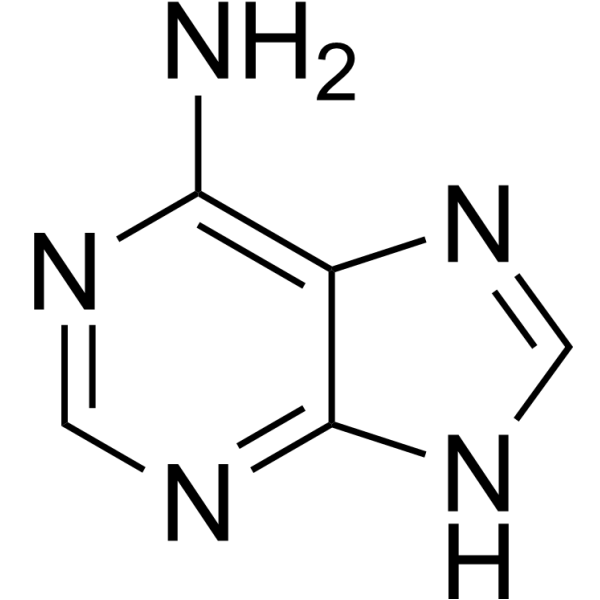
Adenine
Maximum Cited Publications
22 Publications Verification
|
DNA/RNA Synthesis
Endogenous Metabolite
|
Infection
Cancer
|
|
Adenine (6-Aminopurine), a purine, is one of the four nucleobases in the nucleic acid of DNA.
Adenine acts as a chemical component of DNA and RNA. Adenine also plays an important role in biochemistry involved in cellular respiration, the form of both ATP and the cofactors (NAD and FAD), and protein synthesis .
|
-
-
- HY-104077
-
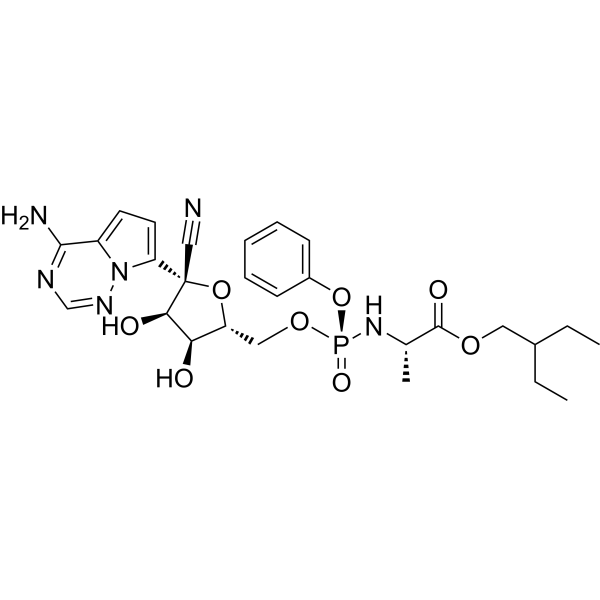
Remdesivir
Maximum Cited Publications
214 Publications Verification
GS-5734
|
DNA/RNA Synthesis
SARS-CoV
|
Infection
|
|
Remdesivir (GS-5734) is a nucleoside analogue with effective antiviral activity. Remdesivir can inhibit the synthesis of viral DNA or RNA. Remdesivir can be used for the research of infection, such as SARS-CoV and MHV infection .
|
-
-
- HY-13624A
-
-
-
- HY-P1923
-
|
L-ASNase
|
Apoptosis
DNA/RNA Synthesis
|
Cancer
|
|
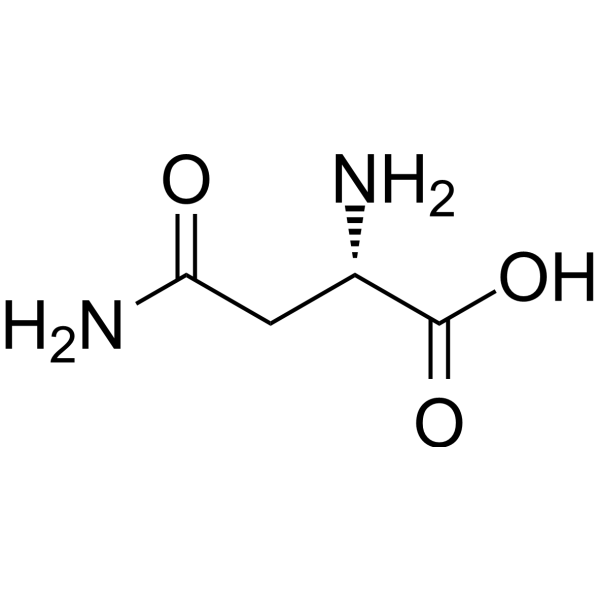
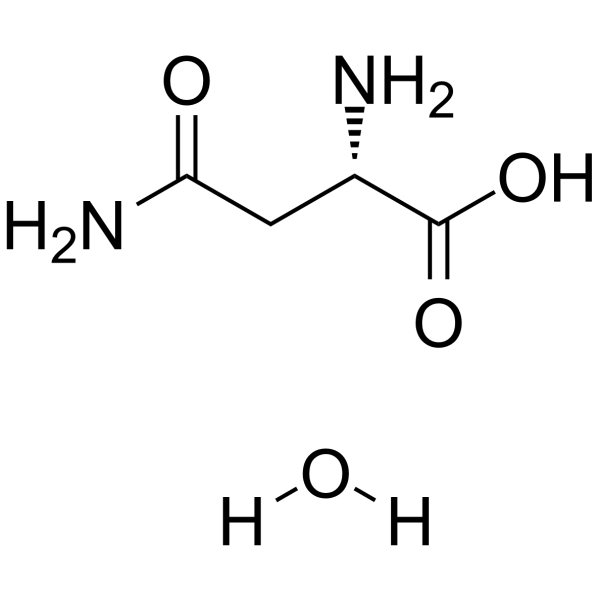
L-Asparaginase (L-ASNase) is a deamidating enzyme that catalyses the hydrolysis of L-asparagine and L-glutamine, and can be used for the research of acute lymphoblastic leukemia. L-Asparaginase depletes L-asparagine from plasma resulting in inhibition of RNA and DNA synthesis with the subsequent blastic cell apoptosis .
|
-
-
- HY-B1906
-
|
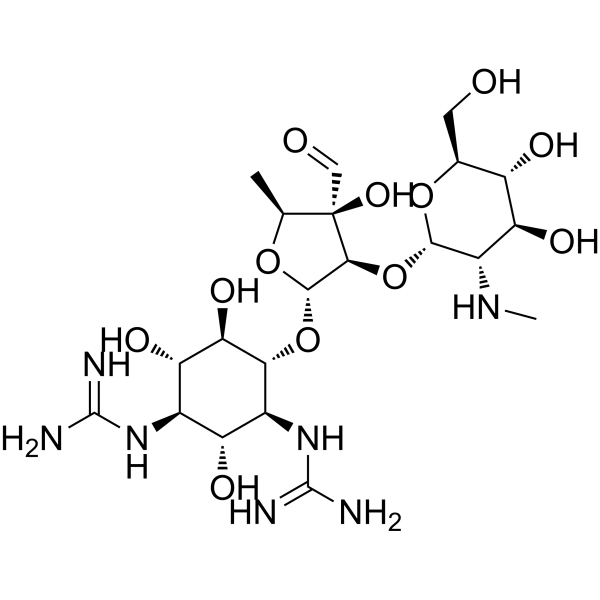
Agrept; Agrimycin; Streptomycin A
|
Environmental Pollutants
Antibiotic
Bacterial
|
Infection
Neurological Disease
|
|
Streptomycin (Agrept) is an effective antibiotic against M. tuberculosis, is used for the research of tuberculosis (TB). Streptomycin also is a bacteriocidal agent that can be used for the research of a number of bacterial infections. Streptomycin can bind strongly to nucleic acids, interferes and blocks protein synthesis while permitting continued RNA and DNA synthesis. Streptomycin, as a common antibiotic used in culture media, also is a blocker of stretch-activated and mechanosensitive ion channels in neurons and cardiac myocytes .
|
-
-
- HY-13234
-
|
|
Bacterial
Antibiotic
DNA/RNA Synthesis
|
Infection
Cancer
|
|
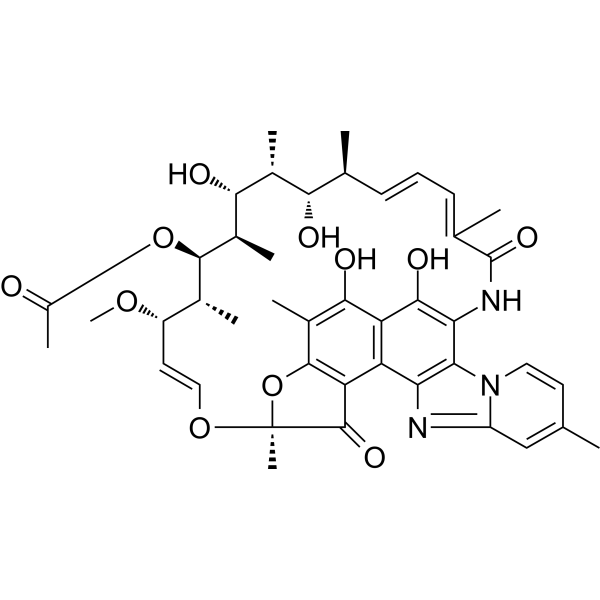
Rifaximin, a gastrointestinal-selective antibiotic, binds the β-subunit of bacterial DNA-dependent RNA polymerase, resulting in inhibition of bacterial RNA synthesis. Rifaximin susceptibility is higher against Gram-positive strains (MIC: 0.03-5 mg/ml) compared to Gram-negative bacteria (MIC: 8-50 mg/mL) .
|
-
-
- HY-17381A
-
|
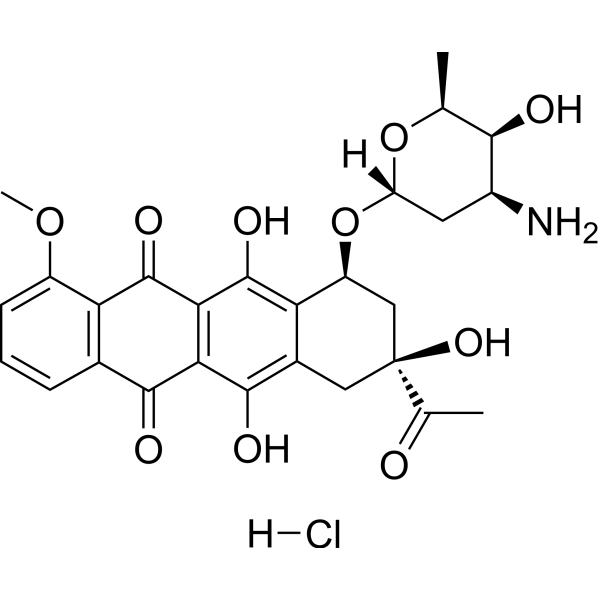
4-Demethoxydaunorubicin
|
Topoisomerase
Bacterial
Fungal
Autophagy
c-Myc
DNA/RNA Synthesis
Antibiotic
|
Infection
Cancer
|
|
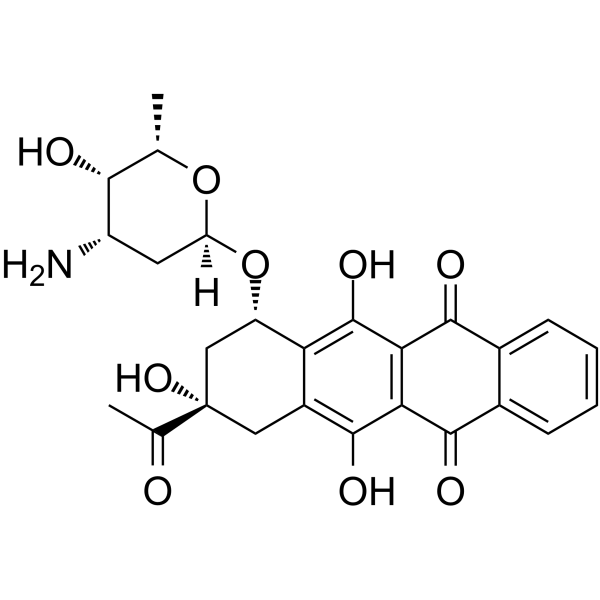
Idarubicin is an orally active and potent anthracycline antileukemic agent. Idarubicin inhibits the topoisomerase II interfering with the replication of DNA and RNA transcription. Idarubicin shows induction of DNA damage. Idarubicin inhibits DNA synthesis and of c-myc expression. Idarubicin inhibits the growth of bacteria and yeasts .
|
-
-
- HY-W008990
-
|
5'-Xanthylic acid sodium salt
|
DNA/RNA Synthesis
|
Metabolic Disease
|
|
Xanthosine 5'-monophosphate sodium salt (5'-Xanthylic acid sodium salt) is an intermediate in purine metabolism. Xanthosine 5'-monophosphate sodium salt can be used for genetic code, nucleic acid structure, and DNA, RNA and protein synthesis research .
|
-
-
- HY-13624
-
|
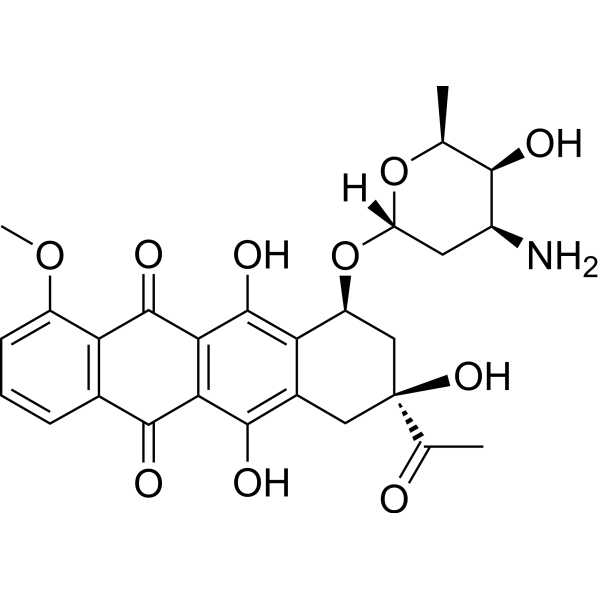
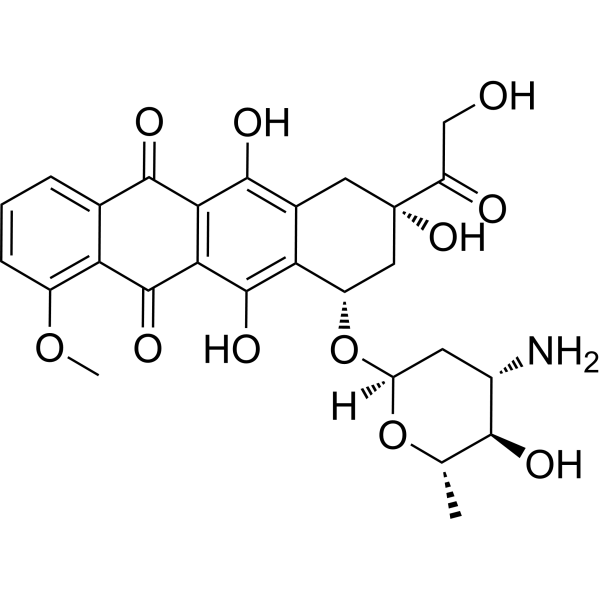
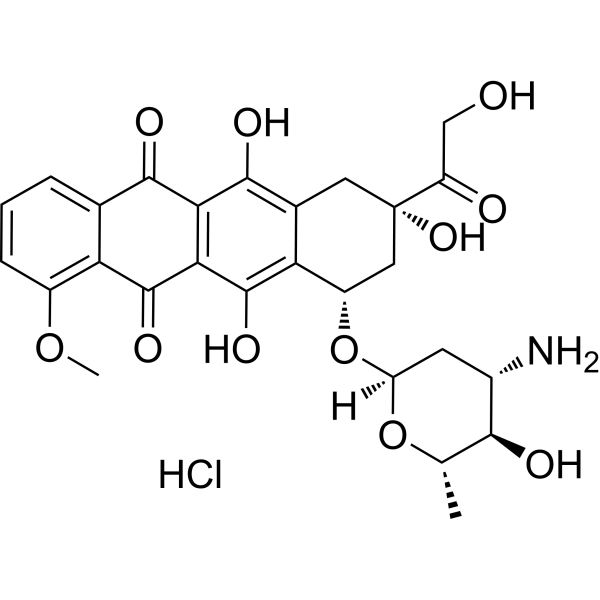
4'-Epidoxorubicin
|
DNA/RNA Synthesis
Topoisomerase
Apoptosis
Antibiotic
|
Cancer
|
|
Epirubicin (4'-Epidoxorubicin), a semisynthetic L-arabino derivative of doxorubicin, has an antineoplastic agent by inhibiting Topoisomerase . Epirubicin inhibits DNA and RNA synthesis. Epirubicin is a Forkhead box protein p3 (Foxp3) inhibitor and inhibits regulatory T cell activity .
|
-
-
- HY-100126
-
|
7-Deazaadenosine
|
Bacterial
DNA/RNA Synthesis
Influenza Virus
Antibiotic
|
Infection
|
|
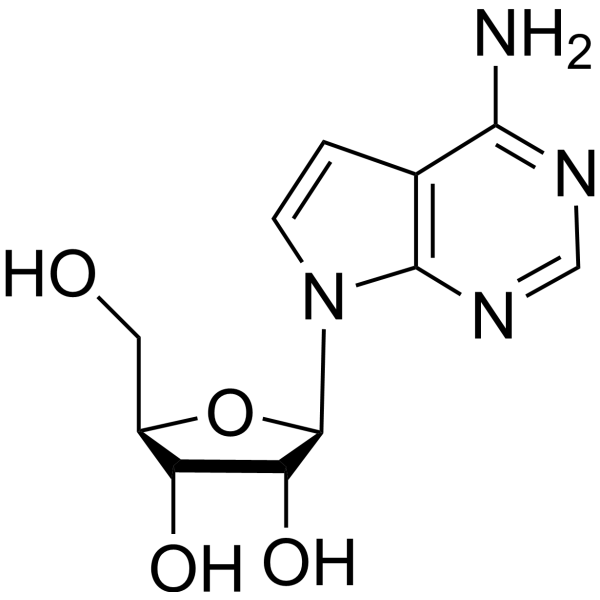
Tubercidin (7-Deazaadenosine) is an antibiotic obtained from Streptomyces tubercidicus. Tubercidin inhibits the growth of Streptococcus faecalis (8043) with an IC50 of 0.02 μM . Tubercidin inhibits polymerases by incorporating DNA or RNA, thereby inhibiting DNA replication, RNA and protein synthesis . Tubercidin is a weak inhibitor of adenosine phosphorylase, and interferes with the phosphorylation of adenosine and AMP . Tubercidin has antiviral activity .
|
-
-
- HY-B0152B
-
|
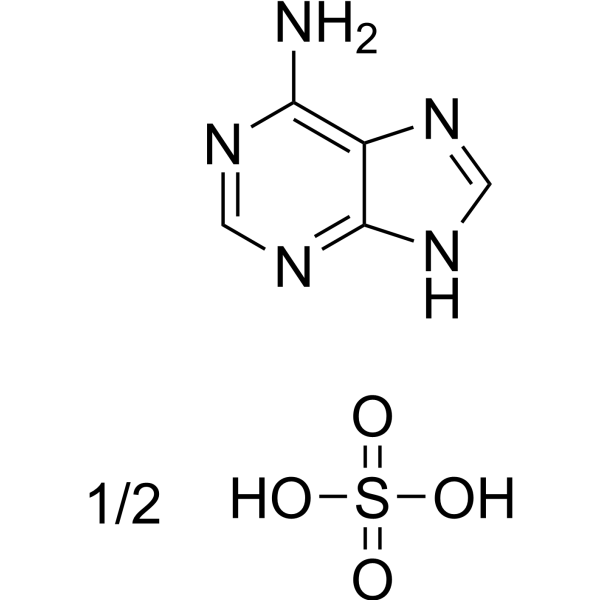
6-Aminopurine hemisulfate; Vitamin B4 hemisulfate
|
DNA/RNA Synthesis
Endogenous Metabolite
|
Cancer
|
|
Adenine hemisulfate (6-Aminopurine hemisulfate), a purine, is one of the four nucleobases in the nucleic acid of DNA. Adenine hemisulfate acts as a chemical component of DNA and RNA. Adenine hemisulfate also plays an important role in biochemistry involved in cellular respiration, the form of both ATP and the cofactors (NAD and FAD), and protein synthesis .
|
-
-
- HY-B1099
-
|
|
DNA/RNA Synthesis
Topoisomerase
Parasite
|
Infection
|
|
Hycanthone is a thioxanthenone DNA intercalator and inhibits RNA synthesis as well as the DNA topoisomerases I and II. Hycanthone inhibits nucleic acid biosynthesis and inhibits apurinic endonuclease-1 (APE1) by direct protein binding with a KD of 10 nM. Hycanthone is a bioactive metabolite of Lucanthone (HY-B2098) and has anti-schistosomal agent .
|
-
-
- HY-B0152S1
-
|
Adenine-8-C13; 9H-Purin-6-amine-8-13C
|
DNA/RNA Synthesis
Endogenous Metabolite
|
Cancer
|
|
Adenine- 13C is the 13C labeled Adenine . Adenine (6-Aminopurine), a purine, is one of the four nucleobases in the nucleic acid of DNA. Adenine acts as a chemical component of DNA and RNA. Adenine also plays an important role in biochemistry involved in cellular respiration, the form of both ATP and the cofactors (NAD and FAD), and protein synthesis .
|
-
-
- HY-13744
-
|
RFS 2000; 9-Nitrocamptothecin
|
Topoisomerase
|
Cancer
|
|
Rubitecan (RFS 2000), a Camptothecin derivative, is an orally active topoisomerase I inhibitor with broad antitumor activity, and induces protein-linked DNA single-strand breaks, thereby blocking DNA and RNA synthesis in dividing cells .
|
-
-
- HY-153013
-
|
|
Drug-Linker Conjugates for ADC
|
Cancer
|
|
SN38-COOH is used for the synthesis of antibody-drug conjugates (ADCs). SN-38 is an active metabolite of the Topoisomerase I inhibitor Irinotecan. SN-38 inhibits DNA and RNA synthesis .
|
-
-
- HY-17026E
-
|
dFdCTP trisodium
|
Drug Metabolite
DNA/RNA Synthesis
Apoptosis
|
Cancer
|
|
Gemcitabine triphosphate (dFdCTP) trisodium is the active metabolite of Gemcitabine (HY-17026). The mechanism of Gemcitabine triphosphate trisodium cell-killing is its competition with cytidine triphosphate during DNA replication, which results in the inhibition of chain elongation. Gemcitabine triphosphate trisodium shows a Ki of 11.2 μM against DNA polymerase α and 14.4 μM against DNA polymerase ε. Gemcitabine triphosphate trisodium partially inhibits dCMP deaminase and acts as a substrate for DNA synthesis to incorporate into cellular DNA and RNA. Gemcitabine triphosphate trisodium disrupts DNA and RNA synthesis, arrests cell cycle in G0/G1 and S phases, triggers apoptosis, reduces tumor cell proliferation. Gemcitabine triphosphate trisodium can be used for the research of pancreatic cancer and non-small cell lung cancer .
|
-
-
- HY-N6961
-
|
|
Dihydroorotate Dehydrogenase
DNA/RNA Synthesis
Parasite
|
Infection
Inflammation/Immunology
Cancer
|
|
Lapachol, a natural naphthoquinone, is an orally active, potent DHODH inhibitor. Lapachol has immunosuppressive activity on lymphocytes through its direct ability to block DHODH activity and inhibit pyrimidine synthesis. Lapachol is a vitamin K antagonist with antitumor activity and can inhibit DNA and RNA synthesis in neoplastic cells. Lapachol has anti-Leishmania activity .
|
-
-
- HY-B1002
-
|
|
Bacterial
Antibiotic
DNA/RNA Synthesis
|
Infection
|
|
Oxolinic acid is an antibiotic against both Gram-negative and Gram-positive bacteria. Oxolinic acid can be used for the research of acute and chronic urinary tract infections. Oxolinic acid is a DNA/RNA synthesis inhibitor. Oxolinic acid acts a dopamine uptake inhibitor and stimulants locomotor effect in mice .
|
-
-
- HY-138577
-
|
|
Phosphoramidites
DNA/RNA Synthesis
Nucleoside Antimetabolite/Analog
|
Cancer
|
|
2'-F-Bz-dC Phosphoramidite can be used in the synthesis of oligoribonucleotide (such as DNA and RNA). 2'-F-Bz-dC Phosphoramidite also used for synthesis antiviral agent to inhibit the replication of virus. 2'-F-Bz-dC Phosphoramidite contains a phosphorothioate backbone, to synthesise antisense oligonucleotide analogs to induce apoptosis in cancer cells .
|
-
-
- HY-17026A
-
|
dFdCTP
|
Drug Metabolite
DNA/RNA Synthesis
Apoptosis
|
Cancer
|
|
Gemcitabine triphosphate (dFdCTP) is the active metabolite of Gemcitabine (HY-17026). The mechanism of Gemcitabine triphosphate cell-killing is its competition with cytidine triphosphate during DNA replication, which results in the inhibition of chain elongation. Gemcitabine triphosphate shows a Ki of 11.2 μM against DNA polymerase α and 14.4 μM against DNA polymerase ε. Gemcitabine triphosphate partially inhibits dCMP deaminase and acts as a substrate for DNA synthesis to incorporate into cellular DNA and RNA. Gemcitabine triphosphate disrupts DNA and RNA synthesis, arrests cell cycle in G0/G1 and S phases, triggers apoptosis, reduces tumor cell proliferation. Gemcitabine triphosphate can be used for the research of pancreatic cancer and non-small cell lung cancer .
|
-
-
- HY-B0152A
-
|
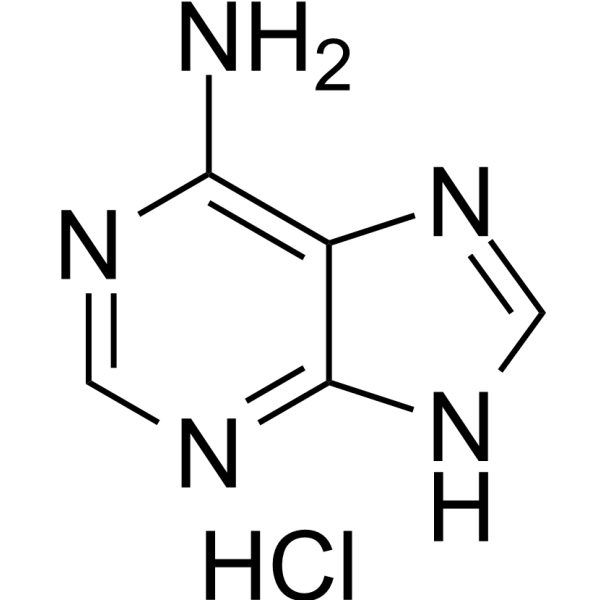
6-Aminopurine hydrochloride; Vitamin B4 hydrochloride
|
DNA/RNA Synthesis
Endogenous Metabolite
|
Cancer
|
|
Adenine hydrochloride (6-Aminopurine hydrochloride), a purine, is one of the four nucleobases in the nucleic acid of DNA. Adenine hydrochloride acts as a chemical component of DNA and RNA. Adenine hydrochloride also plays an important role in biochemistry involved in cellular respiration, the form of both ATP and the cofactors (NAD and FAD), and protein synthesis .
|
-
-
- HY-W008915
-
|
CDP
|
DNA/RNA Synthesis
|
Metabolic Disease
|
|
Cytidine 5'-diphosphate trisodium salt (CDP) is produced by the transfer of phosphoryl group from ATP to cytidine monophosphate (CMP) catalyzed by uridine monophosphate kinase (UMPK). Cytidine 5′-diphosphate can be used to produce Cytidine triphosphate (CTP) for synthesis of DNA and RNA .
|
-
-
- HY-137697D
-
|
|
HIV
DNA/RNA Synthesis
Nucleoside Antimetabolite/Analog
Drug Metabolite
HIV Protease
|
Infection
|
|
ddCTP trilithium solution (100 mM) is a chain-terminating dideoxynucleotide. ddCTP trilithium is a type of chain-terminating deoxynucleotide. ddCTP trilithium can be incorporated into the extension primer chain that lacks the 3'-hydroxyl group, thereby terminating primer extension, viral genome replication, and DNA synthesis. ddCTP trilithium can distinguish almost identical RNA through distinguishable extension products in primer extension inhibition experiments. ddCTP trilithium is the active metabolite of Zalcitabine (HY-17392), which can competitively inhibit HIV reverse transcriptase, terminate the synthesis of viral DNA chains, and thereby inhibit HIV replication .
|
-
-
- HY-N8533
-
|
|
DNA/RNA Synthesis
|
Infection
Cancer
|
|
Sodium Camptothecin is a plant alkaloid, with antitumor activity. Sodium Camptothecin is a reversible inhibitor of RNA synthesis. Sodium Camptothecin is an effective inhibitor of adenovirus replication. Sodium Camptothecin inhibits DNA synthesis and causes breaks in intracellular preformed viral DNA .
|
-
-
- HY-19743
-
-
-
- HY-W570884
-
-
-
- HY-160957
-
|
|
DNA/RNA Synthesis
|
Others
|
|
Cap A (Acetonitrile/Acetic Anhydride, 80/20 v/v) is a capping reagent that can be used in DNA/RNA synthesis .
|
-
-
- HY-16637S1
-
-
-
- HY-U00279
-
|
|
DNA/RNA Synthesis
|
Cancer
|
|
Nitracrine inhibits RNA synthesis and covalently, reversibly binds to DNA but also forms covalent adducts with DNA in vivo. Nitracrine, a 1-nitroacridine derivative, is a potent hypoxia-selective agent in vitro and antitumor agent. Nitracrine has cytotoxicity towards most cells .
|
-
-
- HY-136650A
-
|
F-ara-ATP trisodium
|
Nucleoside Antimetabolite/Analog
Drug Metabolite
DNA/RNA Synthesis
Apoptosis
|
Cancer
|
|
Fludarabine triphosphate (F-ara-ATP) trisodium, the active metabolite of Fludarabine (HY-B0069), is a potent, noncompetitive and specific inhibitor of DNA primase, with an IC50 of 2.3 μM and a Ki of 6.1 μM. Fludarabine triphosphate trisodium inhibits DNA synthesis by blocking DNA primase and primer RNA formation. Fludarabine triphosphate trisodium inhibits ribonucleotide reductase and DNA polymerase and ultimately leads to cellular apoptosis .
|
-
-
- HY-44358
-
|
|
Drug Metabolite
DNA/RNA Synthesis
SARS-CoV
|
Infection
|
|
Remdesivir nucleoside monophosphate is a metabolite of Remdesivir (HY-104077). Remdesivir is a nucleoside analogue with effective antiviral activity. Remdesivir can inhibit the synthesis of viral DNA or RNA. Remdesivir can be used for the research of infection, such as SARS-CoV and MHV infection .
|
-
-
- HY-137697
-
|
|
Nucleoside Antimetabolite/Analog
DNA/RNA Synthesis
HIV Protease
HIV
Drug Metabolite
|
Infection
|
|
ddCTP is a type of chain-terminating deoxynucleotide. ddCTP can be incorporated into the extension primer chain that lacks the 3'-hydroxyl group, thereby terminating primer extension, viral genome replication, and DNA synthesis. ddCTP can distinguish almost identical RNA through distinguishable extension products in primer extension inhibition experiments. ddCTP is the active metabolite of Zalcitabine (HY-17392), which can competitively inhibit HIV reverse transcriptase, terminate the synthesis of viral DNA chains, and thereby inhibit HIV replication .
|
-
-
- HY-B1906R
-
|
Agrept (Standard); Agrimycin (Standard); Streptomycin A (Standard)
|
Reference Standards
Antibiotic
Bacterial
|
Infection
Neurological Disease
|
|
Streptomycin (Standard) is the analytical standard of Streptomycin. This product is intended for research and analytical applications. Streptomycin (Agrept) is an effective antibiotic against M. tuberculosis, is used for the research of tuberculosis (TB). Streptomycin also is a bacteriocidal agent that can be used for the research of a number of bacterial infections. Streptomycin can bind strongly to nucleic acids, interferes and blocks protein synthesis while permitting continued RNA and DNA synthesis. Streptomycin, as a common antibiotic used in culture media, also is a blocker of stretch-activated and mechanosensitive ion channels in neurons and cardiac myocytes .
|
-
-
- HY-138581
-
-
-
- HY-105387
-
-
-
- HY-B2067
-
-
-
- HY-B0152S
-
|
6-Aminopurine-d1; Vitamin B4-d1
|
DNA/RNA Synthesis
Endogenous Metabolite
|
Cancer
|
|
Adenine-d is the deuterium labeled Adenine. Adenine (6-Aminopurine), a purine, is one of the four nucleobases in the nucleic acid of DNA. Adenine acts as a chemical component of DNA and RNA. Adenine also plays an important role in biochemistry involved in cellular respiration, the form of both ATP and the cofactors (NAD and FAD), and protein synthesis .
|
-
-
- HY-B0152R
-
|
|
Reference Standards
DNA/RNA Synthesis
Endogenous Metabolite
|
Cancer
|
|
Adenine (Standard) is the analytical standard of Adenine. This product is intended for research and analytical applications. Adenine (6-Aminopurine), a purine, is one of the four nucleobases in the nucleic acid of DNA. Adenine acts as a chemical component of DNA and RNA. Adenine also plays an important role in biochemistry involved in cellular respiration, the form of both ATP and the cofactors (NAD and FAD), and protein synthesis .
|
-
-
- HY-16637S3
-
-
-
- HY-16637S
-
-
-
- HY-103396
-
|
CI-898 glucuronate
|
Antifolate
Bacterial
|
Infection
Cancer
|
|
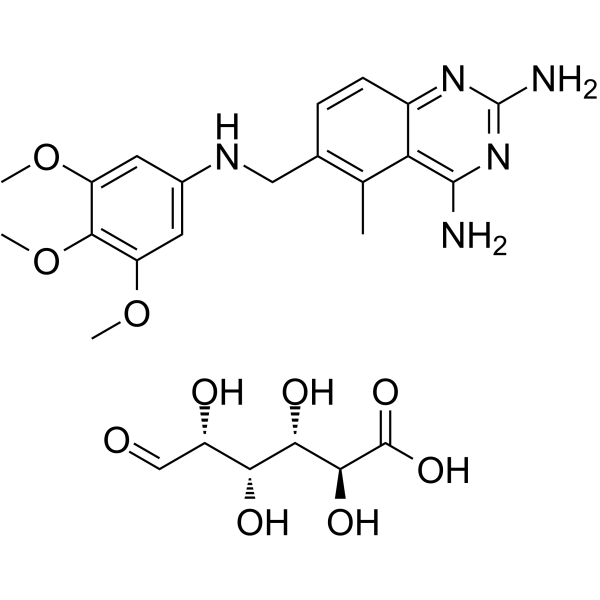
Trimetrexate glucuronate (NSC 352122) is a folic acid antagonist. Trimetrexate glucuronate affects DNA and RNA synthesis by inhibiting dihydrofolate reductase and preventing the synthesis of purine nucleotides and thymidylate. Trimetrexate glucuronate has potential antitumour activity and can also be used to inhibit Pneumocystis carinii pneumonia .
|
-
-
- HY-W015213
-
|
|
Endogenous Metabolite
DNA/RNA Synthesis
|
Metabolic Disease
|
|
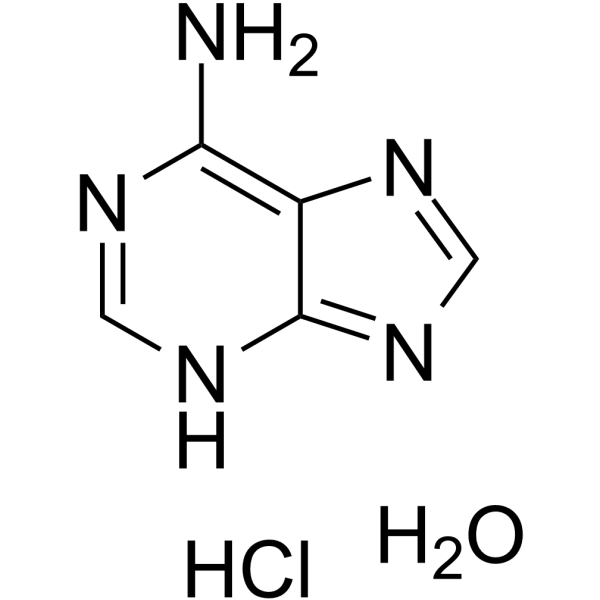
Adenine monohydrochloride hemihydrate is a hydrochloride derivative of Adenine. Adenine (6-Aminopurine), a purine, is one of the four nucleobases in the nucleic acid of DNA. Adenine acts as a chemical component of DNA and RNA. Adenine also plays an important role in biochemistry involved in cellular respiration, the form of both ATP and the cofactors (NAD and FAD), and protein synthesis .
|
-
-
- HY-104077R
-
|
GS-5734 (Standard)
|
Reference Standards
DNA/RNA Synthesis
SARS-CoV
|
Infection
|
|
Remdesivir (Standard) (GS-5734 (Standard)) is a nucleoside analogue with effective antiviral activity. Remdesivir (Standard) can inhibit the synthesis of viral DNA or RNA. Remdesivir (Standard) can be used for the research of infection, such as SARS-CoV and MHV infection .
|
-
-
- HY-112060
-
-
-
- HY-W704973
-
|
|
DNA/RNA Synthesis
|
Cancer
|
|
F-ara-EdU is a low-toxic, highly stable probe for DNA synthesis that is used as a marker for cell proliferation and DNA replication by binding to DNA or RNA in cells. F-ara-EdU can also be used to detect the rate of DNA synthesis within cells, as well as to study the mechanisms of DNA repair and damage .
|
-
-
- HY-136650
-
|
F-ara-ATP
|
Nucleoside Antimetabolite/Analog
Drug Metabolite
DNA/RNA Synthesis
Apoptosis
|
Cancer
|
|
Fludarabine triphosphate (F-ara-ATP), the active metabolite of Fludarabine (HY-B0069), is a potent, noncompetitive and specific inhibitor of DNA primase, with an IC50 of 2.3 μM and a Ki of 6.1 μM. Fludarabine triphosphate inhibits DNA synthesis by blocking DNA primase and primer RNA formation. Fludarabine triphosphate inhibits ribonucleotide reductase and DNA polymerase and ultimately leads to cellular apoptosis .
|
-
-
- HY-W004056
-
-
-
- HY-B2067S
-
|
|
Isotope-Labeled Compounds
Fungal
DNA/RNA Synthesis
|
Infection
|
|
Cymoxanil-d3 is the deuterium labeled Cymoxanil (HY-B2067). Cymoxanil is a fungicidal cyanooxime against plant diseases caused by fungi belonging to the Perenosporales. Cymoxanil affects growth, DNA and RNA synthesis in Phytophthora .
|
-
-
- HY-B2067R
-
|
|
Reference Standards
Fungal
DNA/RNA Synthesis
|
Infection
|
|
Cymoxanil (Standard) is the analytical standard of Cymoxanil (HY-B2067). This product is intended for research and analytical applications. Cymoxanil is a fungicidal cyanooxime against plant diseases caused by fungi belonging to the Perenosporales. Cymoxanil affects growth, DNA and RNA synthesis in Phytophthora.
|
-
-
- HY-125930
-
|
|
Topoisomerase
DNA/RNA Synthesis
|
Cancer
|
|
T-2513 is a selective topoisomerase I inhibitor. T-2513 binds covalently to and stabilizes the topoisomerase I-DNA complex and inhibits DNA replication and RNA synthesis, ultimately leading to cell death .
|
-
- HY-137697B
-
|
|
HIV
DNA/RNA Synthesis
Nucleoside Antimetabolite/Analog
Drug Metabolite
HIV Protease
|
Infection
|
|
ddCTP trilithium is a type of chain-terminating deoxynucleotide. ddCTP trilithium can be incorporated into the extension primer chain that lacks the 3'-hydroxyl group, thereby terminating primer extension, viral genome replication, and DNA synthesis. ddCTP trilithium can distinguish almost identical RNA through distinguishable extension products in primer extension inhibition experiments. ddCTP trilithium is the active metabolite of Zalcitabine (HY-17392), which can competitively inhibit HIV reverse transcriptase, terminate the synthesis of viral DNA chains, and thereby inhibit HIV replication .
|
-
- HY-Y1749
-
|
|
Drug Intermediate
|
Others
|
|
2-Chlorophenothiazine is a phenothiazine derivative. 2-Chlorophenothiazine has the activity of inhibiting DNA, RNA and protein synthesis. 2-Chlorophenothiazine is an intermediate in the synthesis of Chlorpromazine (HY-12708) and Perphenazine (HY-A0077) .
|
-
- HY-119182
-
|
NSC 300288
|
DNA/RNA Synthesis
|
Cancer
|
|
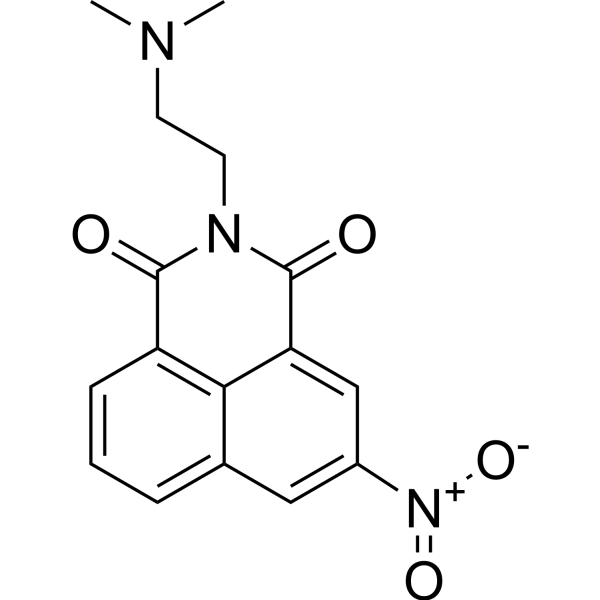
Mitonafide (NSC 300288) is a cytostatic agent. Mitonafide binds to double-stranded DNA through intercalation, and inhibits DNA and RNA synthesis. Mitonafide is an antitumor agent that can be used in the research of cancers, such as non-small cell lung cancer (NSCLC), leukemia .
|
-
- HY-E70091
-
|
|
DNA/RNA Synthesis
|
Others
|
|
T4 RNA ligase is an ATP-dependent RNA ligase that can catalyze the formation of phosphodiester bonds between the 5'-P end and the 3'-OH end of single-stranded RNA, single-stranded DNA or single nucleotides between molecules or within molecules. T4 RNA ligase is used for enzymatic low ribonucleotide synthesis and 3′ end labeling of RNA. It is mainly used for RNA and RNA, but can also be used for RNA and single nucleotides .
|
-
- HY-126877
-
|
|
HSV
|
Infection
|
|
3-Deaza-2 '-deoxyadenosine is a nucleoside analog synthesized from 2' -deoxyadenosine. 3-Deaza-2 '-deoxyadenosine inhibits RNA synthesis by binding to ribose fragments of ribonucleotides, thereby preventing the formation of enzyme-substrate complexes, thereby preventing chain elongation, It can also inhibit DNA synthesis by binding deoxyribose fragments of DNA and preventing DNA polymerase from adding nucleotides to the growth chain. 3-Deaza-2 '-deoxyadenosine has antiviral activity .
|
-
- HY-B0152BR
-
|
6-Aminopurine hemisulfate (Standard); Vitamin B4 hemisulfate (Standard)
|
DNA/RNA Synthesis
Endogenous Metabolite
Reference Standards
|
Cancer
|
|
Adenine (hemisulfate) (Standard) is the analytical standard of Adenine (hemisulfate). This product is intended for research and analytical applications. Adenine hemisulfate (6-Aminopurine hemisulfate), a purine, is one of the four nucleobases in the nucleic acid of DNA. Adenine hemisulfate acts as a chemical component of DNA and RNA. Adenine hemisulfate also plays an important role in biochemistry involved in cellular respiration, the form of both ATP and the cofactors (NAD and FAD), and protein synthesis .
|
-
- HY-125930A
-
|
|
Topoisomerase
DNA/RNA Synthesis
|
Cancer
|
|
T-2513 hydrochloride is a selective topoisomerase I inhibitor. T-2513 hydrochloride binds covalently to and stabilizes the topoisomerase I-DNA complex and inhibits DNA replication and RNA synthesis, ultimately leading to cell death .
|
-
- HY-152980
-
|
|
Nucleoside Antimetabolite/Analog
|
Others
|
|
4-Chloro-7-(2-deoxy-β-D-erythro-pentofuranosyl)-7H-pyrrolo[2,3-d]pyrimidine is a pyrimidine nucleoside analog. Pyrimidine nucleoside analogs have a wide range of biochemical and anticancer activities. These include DNA synthesis inhibition, RNA synthesis inhibition, antiviral effects, and immunomodulatory effects .
|
-
- HY-154046
-
|
|
Nucleoside Antimetabolite/Analog
|
Others
|
|
4,6-Diamino-1-(2-deoxy-beta-D-ribofuranosyl)-1H-pyrazolo[3,4-d]pyrimidine is a pyrimidine nucleoside analog. Pyrimidine nucleoside analogs have a wide range of biochemical and anticancer activities. These include DNA synthesis inhibition, RNA synthesis inhibition, antiviral effects, and immunomodulatory effects .
|
-
- HY-152990
-
|
|
Nucleoside Antimetabolite/Analog
|
Others
|
|
Methyl 1,2,3,4-tetrahydro-α-hydroxy-2,4-dioxo-1-β-D-ribofuranosyl-5-pyrimidineacetate is a pyrimidine nucleoside analog. Pyrimidine nucleoside analogs have a wide range of biochemical and anticancer activities. These include DNA synthesis inhibition, RNA synthesis inhibition, antiviral effects, and immunomodulatory effects .
|
-
- HY-154122
-
|
|
Nucleoside Antimetabolite/Analog
|
Others
|
|
6-Amino-4-methoxy-1-(2-deoxy-a-D-ribofuranosyl)-1H-pyrazolo[3,4-d]pyrimidine is a pyrimidine nucleoside analog. Pyrimidine nucleoside analogs have a wide range of biochemical and anticancer activities. These include DNA synthesis inhibition, RNA synthesis inhibition, antiviral effects, and immunomodulatory effects .
|
-
- HY-152987
-
|
|
Nucleoside Antimetabolite/Analog
|
Others
|
|
7-(2-Deoxy-β-D-erythro-pentofuranosyl)-5-fluoro-7H-pyrrolo[2,3-d]pyrimidin-4-amine is a pyrimidine nucleoside analog. Pyrimidine nucleoside analogs have a wide range of biochemical and anticancer activities. These include DNA synthesis inhibition, RNA synthesis inhibition, antiviral effects, and immunomodulatory effects .
|
-
- HY-152986
-
|
|
Nucleoside Antimetabolite/Analog
|
Others
|
|
4-Chloro-7-(2-deoxy-β-D-erythro-pentofuranosyl)-5-iodo-7H-pyrrolo[2,3-d]pyrimidine is a pyrimidine nucleoside analog. Pyrimidine nucleoside analogs have a wide range of biochemical and anticancer activities. These include DNA synthesis inhibition, RNA synthesis inhibition, antiviral effects, and immunomodulatory effects .
|
-
- HY-154002
-
|
|
Nucleoside Antimetabolite/Analog
|
Others
|
|
4-Amino-5-cyano-1-(2-deoxy-β-D-ribofuranosyl)-7H-pyrrolo[2,3-d]pyrimidine is a pyrimidine nucleoside analog. Pyrimidine nucleoside analogs have a wide range of biochemical and anticancer activities. These include DNA synthesis inhibition, RNA synthesis inhibition, antiviral effects, and immunomodulatory effects .
|
-
- HY-154047
-
|
|
Nucleoside Antimetabolite/Analog
|
Others
|
|
6-Amino-4-hydrozino-1-(2-deoxy-β-D-ribofuranosyl)-1H-pyrazolo[3,4-d]pyrimidine is a pyrimidine nucleoside analog. Pyrimidine nucleoside analogs have a wide range of biochemical and anticancer activities. These include DNA synthesis inhibition, RNA synthesis inhibition, antiviral effects, and immunomodulatory effects .
|
-
- HY-154008
-
|
|
Nucleoside Antimetabolite/Analog
|
Others
|
|
6-Amino-4-methoxy-1-(2-deoxy-β-D-ribofuranosyl)-1H-pyrazolo[3,4-d]pyrimidine is a pyrimidine nucleoside analog. Pyrimidine nucleoside analogs have a wide range of biochemical and anticancer activities. These include DNA synthesis inhibition, RNA synthesis inhibition, antiviral effects, and immunomodulatory effects .
|
-
- HY-154005
-
|
|
Nucleoside Antimetabolite/Analog
|
Others
|
|
4-Amino-6-bromo-5-cyano-1-(beta-D-ribofuranosyl)-7H-pyrrolo[2.3-d]pyrimidine is a pyrimidine nucleoside analog. Pyrimidine nucleoside analogs have a wide range of biochemical and anticancer activities. These include DNA synthesis inhibition, RNA synthesis inhibition, antiviral effects, and immunomodulatory effects .
|
-
- HY-152977
-
|
|
Nucleoside Antimetabolite/Analog
|
Others
|
|
4-Chloro-7-(2-deoxy-3,5-bis-O-(p-toluoyl)-β-D-ribofuranosyl)-7H-pyrrolo[2,3-d]pyrimidine is a pyrimidine nucleoside analog. Pyrimidine nucleoside analogs have a wide range of biochemical and anticancer activities. These include DNA synthesis inhibition, RNA synthesis inhibition, antiviral effects, and immunomodulatory effects .
|
-
- HY-N15147
-
|
|
DNA/RNA Synthesis
|
Cardiovascular Disease
Neurological Disease
Metabolic Disease
Inflammation/Immunology
Cancer
|
|
Panax saponin C is a ginsenoside found in Ginseng with biological activities including regulatory effects on immunomodulation, protection functions in the central nervous and cardiovascular systems, anti-diabetic, anti-aging, anti-carcinogenic, anti-fatigue, anti-pyretic, anti-stress, boosting physical vitality, and promotion of DNA, RNA, and protein synthesis activities .
|
-
- HY-124116
-
|
|
DNA/RNA Synthesis
|
Cancer
|
|
PD 121373 is a DNA complexing agent with antitumor activity. PD 121373 can bind tightly to DNA and RNA and inhibit the synthesis of DNA and RNA. The IC50 values of PD 121373 for inhibiting DNA and RNA synthesis in L1210 cells are 0.5 μM and 0.3 μM, respectively .
|
-
- HY-152981
-
|
|
Nucleoside Antimetabolite/Analog
|
Others
|
|
Di-O-Toluoyl-1,2-dideoxy-D-ribose-6-chloro-7-iodo-7-deazapurine is a purine nucleoside analog. Purine nucleoside analogs have broad antitumor activity targeting indolent lymphoid malignancies. Anticancer mechanisms in this process rely on inhibition of DNA synthesis, induction of apoptosis, etc .
|
-
- HY-165494
-
|
|
Antibiotic
Fungal
|
Infection
|
|
Oudemansin A is an antibiotic. Oudemansin A acts on fungi to inhibit protein, RNA and DNA synthesis .
|
-
- HY-N13898
-
|
|
DNA/RNA Synthesis
|
Cancer
|
|
Alldimycin A is an anthracycline compound that inhibits RNA and DNA syntheses. Alldimycin A inhibits the growth, DNA and RNA synthesis of murine leukemic L1210, with IC50 values of 0.05 μg/mL, 0.92 μg/mL, and 0.47 μg/mL, respectively .
|
-
- HY-N14898
-
-
- HY-122123
-
|
|
Bacterial
Antibiotic
|
Infection
|
|
S-6123 is a potent antimicrobial compound of the oxazolidinone series. S-6123 inhibits ribosomal protein synthesis without inhibiting DNA or RNA synthesis .
|
-
- HY-135130
-
|
(-)-BABX
|
Bacterial
|
Infection
|
|
Bischloroanthrabenzoxocinone is a potent Type II fatty acid synthesis (FASII) inhibitor. Bischloroanthrabenzoxocinone inhibits fatty acid synthesis. Bischloroanthrabenzoxocinone shows antibacterial activities and inhibits phospholipid, DNA, RNA, protein, and cell wall synthesis .
|
-
- HY-129234
-
-
- HY-N7821
-
|
Aphidicolin 17-monoacetate
|
DNA/RNA Synthesis
|
Cancer
|
|
Aphidicolin 17-acetate is a selective eukaryotic DNA polymerase α inhibitor. Aphidicolin 17-acetate does not inhibit DNA polymerase β and γ. Aphidicolin 17-acetate markedly inhibits the in vivo DNA synthesis of sea urchin embryos and HeLa cells but not RNA and protein syntheses .
|
-
- HY-N15068
-
-
- HY-121234
-
|
|
Bacterial
DNA/RNA Synthesis
|
Infection
|
|
Botryodiplodin is a mycotoxin isolated from Penicillium roqueforti. Botryodiplodin inhibits the growth of some Gram-positive and Gram-negative bacteria and can also induce DNA-protein cross-links in mammalian cells, inhibiting the synthesis of DNA, RNA, and protein .
|
-
- HY-10982A
-
|
AS1413 dihydrochloride
|
Topoisomerase
|
Others
|
|
Amonafide dihydrochloride (AS1413 dihydrochloride) is a topoisomerase II (Topo II) inhibitor and DNA intercalator with activity in inducing apoptotic signaling. Amonafide dihydrochloride can inhibit the binding of Topo II to DNA, thereby preventing the synthesis of DNA and RNA. Amonafide dihydrochloride maintains cytotoxic activity in the presence of P-glycoprotein-mediated multidrug resistance (MDR) .
|
-
- HY-100126R
-
|
7-Deazaadenosine (Standard)
|
Reference Standards
Bacterial
DNA/RNA Synthesis
Influenza Virus
Antibiotic
|
Infection
|
|
Tubercidin (Standard) is the analytical standard of Tubercidin. This product is intended for research and analytical applications. Tubercidin (7-Deazaadenosine) is an antibiotic obtained from Streptomyces tubercidicus. Tubercidin inhibits the growth of Streptococcus faecalis (8043) with an IC50 of 0.02 μM[1]. Tubercidin inhibits polymerases by incorporating DNA or RNA, thereby inhibiting DNA replication, RNA and protein synthesis[2]. Tubercidin is a weak inhibitor of adenosine phosphorylase, and interferes with the phosphorylation of adenosine and AMP[1]. Tubercidin has antiviral activity[2].
|
-
- HY-U00279A
-
|
|
DNA/RNA Synthesis
|
Cancer
|
|
Nitracrine dihydrochloride hydrate inhibits RNA synthesis and covalently, reversibly binds to DNA but also forms covalent adducts with DNA in vivo. Nitracrine dihydrochloride hydrate, a 1-nitroacridine derivative, is a potent hypoxia-selective agent in vitro and antitumor agent. Nitracrine dihydrochloride hydrate has cytotoxicity towards most cells .
|
-
- HY-B0152AR
-
|
6-Aminopurine hydrochloride (Standard); Vitamin B4 hydrochloride (Standard)
|
Reference Standards
DNA/RNA Synthesis
Endogenous Metabolite
|
Cancer
|
|
Adenine (hydrochloride) (Standard) is the analytical standard of Adenine (hydrochloride). This product is intended for research and analytical applications. Adenine hydrochloride (6-Aminopurine hydrochloride), a purine, is one of the four nucleobases in the nucleic acid of DNA. Adenine hydrochloride acts as a chemical component of DNA and RNA. Adenine hydrochloride also plays an important role in biochemistry involved in cellular respiration, the form of both ATP and the cofactors (NAD and FAD), and protein synthesis[1][2][3].
|
-
- HY-16637S2
-
|
(Rac)-Vitamin B9-13C5,15N; (Rac)-Vitamin M-13C5,15N
|
Isotope-Labeled Compounds
DNA/RNA Synthesis
Endogenous Metabolite
|
Cancer
|
|
(Rac)-Folic acid- 13C5, 15N is the 13C-labeled and 15N-labeled Folic acid. Folic acid (Vitamin M; Vitamin B9) is a B vitamin; is necessary for the production and maintenance of new cells, for DNA synthesis and RNA synthesis.
|
-
- HY-104077A
-
|
GS-5734 maleate
|
DNA/RNA Synthesis
SARS-CoV
|
Infection
|
|
Remdesivir maleate (GS-5734 maleate) is a nucleoside analogue with effective antiviral activity. Remdesivir maleate can inhibit the synthesis of viral DNA or RNA. Remdesivir maleate can be used for the research of infection, such as SARS-CoV and MHV infection .
|
-
- HY-N14764
-
|
|
DNA/RNA Synthesis
Antibiotic
Bacterial
|
Infection
Cancer
|
|
2-Hydroxyaclacinomycin A is an anthracycline antibiotic. 2-Hydroxyaclacinomycin A has the activity of inhibiting leukemia L-1210 cells, and the IC50 for RNA and DNA synthesis is 0.10 μg/mL and 0.95 μg/mL, respectively .
|
-
- HY-119182R
-
|
NSC 300288 (Standard)
|
DNA/RNA Synthesis
Reference Standards
|
Cancer
|
|
Mitonafide (Standard) is the analytical standard of Mitonafide. This product is intended for research and analytical applications. Mitonafide (NSC 300288) is a cytostatic agent. Mitonafide binds to double-stranded DNA through intercalation, and inhibits DNA and RNA synthesis. Mitonafide is an antitumor agent that can be used in the research of cancers, such as non-small cell lung cancer (NSCLC), leukemia .
|
-
- HY-149877
-
|
|
DNA/RNA Synthesis
Dihydroorotate Dehydrogenase
|
Cancer
|
|
hDHODH-IN-12 is a potent DHODH inhibitor with an IC50 value of 0.421 μM. DHODH is the rate-limiting enzyme in the de novo synthesis of pyrimidine which is essential in DNA/RNA Synthesis. hDHODH-IN-12 is present in the inner membrane of human mitochondria.hDHODH-IN-12 can be used for the research of lung cancer .
|
-
- HY-B1099R
-
|
|
DNA/RNA Synthesis
Topoisomerase
Parasite
Reference Standards
|
Infection
|
|
Hycanthone (Standard) is the analytical standard of Hycanthone. This product is intended for research and analytical applications. Hycanthone is a thioxanthenone DNA intercalator and inhibits RNA synthesis as well as the DNA topoisomerases I and II. Hycanthone inhibits nucleic acid biosynthesis and inhibits apurinic endonuclease-1 (APE1) by direct protein binding with a KD of 10 nM. Hycanthone is a bioactive metabolite of Lucanthone (HY-B2098) and has anti-schistosomal agent .
|
-
- HY-B0067B
-
|
(R)-SM-5887
|
Topoisomerase
|
Cancer
|
|
(R)-Amrubicin ((R)-SM-5887) is an anthracycline that effectively treats lung cancer by intercalating into DNA and inhibiting topoisomerase II activity, which consequently hampers DNA replication as well as RNA and protein synthesis, leading to cell growth inhibition and apoptosis. This compound exhibits superior anti-tumor efficacy compared to traditional anthracycline drugs while lacking the cumulative cardiac toxicity typically associated with this drug class.
|
-
- HY-103396R
-
|
CI-898 glucuronate (Standard)
|
Reference Standards
Antifolate
Bacterial
|
Infection
Cancer
|
|
Trimetrexate (glucuronate) (Standard) is the analytical standard of Trimetrexate (glucuronate). This product is intended for research and analytical applications. Trimetrexate glucuronate (NSC 352122) is a folic acid antagonist. Trimetrexate glucuronate affects DNA and RNA synthesis by inhibiting dihydrofolate reductase and preventing the synthesis of purine nucleotides and thymidylate. Trimetrexate glucuronate has potential antitumour activity and can also be used to inhibit Pneumocystis carinii pneumonia .
|
-
- HY-106872
-
|
9-Cl-TIBO
|
Reverse Transcriptase
HIV
DNA/RNA Synthesis
|
Infection
|
|
R82913 (9-Cl-TIBO) is a potent and high selective inhibitor of HIV-1 reverse transcriptase with antiviral activity on both an RNA template (negative strand synthesis) and a DNA template (positive strand synthesis). R82913 inhibits the replication of different strains of HIV-I in CEM cells with a median IC50 value of of 0.15 μM .
|
-
- HY-13234R
-
|
|
Reference Standards
Bacterial
Antibiotic
DNA/RNA Synthesis
|
Infection
Cancer
|
|
Rifaximin (Standard) is the analytical standard of Rifaximin. This product is intended for research and analytical applications. Rifaximin, a gastrointestinal-selective antibiotic, binds the β-subunit of bacterial DNA-dependent RNA polymerase, resulting in inhibition of bacterial RNA synthesis. Rifaximin susceptibility is higher against Gram-positive strains (MIC: 0.03-5 mg/ml) compared to Gram-negative bacteria (MIC: 8-50 mg/mL) .
|
-
- HY-W712567
-
|
6-Aminopurine-15N5 hydrochloride; Vitamin B4-15N5 hydrochloride
|
Isotope-Labeled Compounds
|
Infection
Cancer
|
|
Adenine- 15N5 (6-Aminopurine- 15N5) hydrochloride is the 15N-labeled Adenine hydrochloride (HY-B0152A) . Adenine hydrochloride (6-Aminopurine hydrochloride), a purine, is one of the four nucleobases in the nucleic acid of DNA. Adenine hydrochloride acts as a chemical component of DNA and RNA. Adenine hydrochloride also plays an important role in biochemistry involved in cellular respiration, the form of both ATP and the cofactors (NAD and FAD), and protein synthesis.
|
-
- HY-W015213S
-
|
|
Isotope-Labeled Compounds
Endogenous Metabolite
DNA/RNA Synthesis
|
Metabolic Disease
|
|
Adenine monohydrochloride hemihydrate- 15N5 is the 15N labeled Adenine monohydrochloride hemihydrate (HY-W015213). Adenine monohydrochloride hemihydrate is a hydrochloride derivative of Adenine. Adenine (6-Aminopurine), a purine, is one of the four nucleobases in the nucleic acid of DNA. Adenine acts as a chemical component of DNA and RNA. Adenine also plays an important role in biochemistry involved in cellular respiration, the form of both ATP and the cofactors (NAD and FAD), and protein synthesis .
|
-
- HY-182258
-
|
|
DNA/RNA Synthesis
|
Cancer
|
|
Ulicyclamide is a cytotoxic cyclic peptide found in the tunicate Lissoclinum patella.Ulicyclamide inhibits DNA and RNA synthesis in leukemia cells. Ulicyclamide can be used for the research of leukemia .
|
-
- HY-106795
-
|
|
DNA/RNA Synthesis
|
Cancer
|
|
502U83 is an anti-cancer agent. 502U83 can inhibit DNA and RNA synthesis (IC50 ≈ 30 µM). 502U83 can be used for research on cancers such as leukemia .
|
-
- HY-Y1749R
-
|
|
Reference Standards
Drug Intermediate
|
Others
|
|
2-Chlorophenothiazine (Standard) is the analytical standard of 2-Chlorophenothiazine. This product is intended for research and analytical applications. 2-Chlorophenothiazine is a phenothiazine derivative. 2-Chlorophenothiazine has the activity of inhibiting DNA, RNA and protein synthesis. 2-Chlorophenothiazine is an intermediate in the synthesis of Chlorpromazine (HY-12708) and Perphenazine (HY-A0077) .
|
-
- HY-181107
-
|
|
Bacterial
DNA/RNA Synthesis
Cytochrome P450
|
Infection
|
|
DNA Gyrase/ribosomes-IN-1 is a bacterial ribosome and DNA gyrase inhibitor, with IC50 values of 1.11 μM and 3.31 μM, respectively. DNA Gyrase/ribosomes-IN-1 also inhibits CYP3A4, with an IC50 of 18.5 μM, and exhibits stability in mouse plasma and liver microsomes. DNA Gyrase/ribosomes-IN-1 inhibits bacterial protein synthesis by interacting with ribosomal RNA and associated sites. DNA Gyrase/ribosomes-IN-1 suppresses bacterial DNA replication by interacting with the gyrase complex. DNA Gyrase/ribosomes-IN-1 restores activity against macrolide-resistant, erm-mediated Gram-positive pathogens and enhances activity against Gram-negative bacteria such as Haemophilus influenzae and Moraxella catarrhalis. DNA Gyrase/ribosomes-IN-1 can be used in research on community-acquired bacterial pneumonia .
|
-
- HY-137697A
-
|
|
Drug Metabolite
HIV
Nucleoside Antimetabolite/Analog
HIV Protease
DNA/RNA Synthesis
|
Infection
|
|
ddCTP tetrasodium is a type of chain-terminating deoxynucleotide. ddCTP tetrasodium can be incorporated into the extension primer chain that lacks the 3'-hydroxyl group, thereby terminating primer extension, viral genome replication, and DNA synthesis. ddCTP tetrasodium can distinguish almost identical RNA through distinguishable extension products in primer extension inhibition experiments. ddCTP tetrasodium is the active metabolite of Zalcitabine (HY-17392), which can competitively inhibit HIV reverse transcriptase, terminate the synthesis of viral DNA chains, and thereby inhibit HIV replication .
|
-
- HY-B0152S7
-
|
6-Aminopurine-15N5 hydrochloride hydrate; Vitamin B4-15N5 hydrochloride hydrate
|
Isotope-Labeled Compounds
DNA/RNA Synthesis
|
Cancer
|
|
Adenine- 15N5 (6-Aminopurine- 15N5) hydrochloride hydrate is the 15N-labeled Adenine (HY-B0152). Adenine (6-Aminopurine), a purine, is one of the four nucleobases in the nucleic acid of DNA. Adenine acts as a chemical component of DNA and RNA. Adenine also plays an important role in biochemistry involved in cellular respiration, the form of both ATP and the cofactors (NAD and FAD), and protein synthesis .
|
-
- HY-182477
-
|
|
Antibiotic
Bacterial
Fungal
|
Infection
|
|
Siccayne, found in the marine basidiomycete Halocyphina villosa and deuteromycete Helminthosporium siccans, is an antibiotic. Siccayne interferes with nucleotide incorporation into DNA and RNA, precursor transport enzymatic reactions, and essential macromolecule synthesis. Siccayne inhibits Gram-positive bacteria and some fungi. Siccayne can be used for research on infections caused by bacteria and fungi .
|
-
- HY-105846
-
|
|
DNA/RNA Synthesis
Bacterial
Antibiotic
|
Cancer
|
|
Nogalamycin is an anthracyclinone antibiotic. Nogalamycin is a potent antibiotic against Gram-positive bacteria, also has cytotoxicity against certain tumor cells. Nogalamycin is produced by Streptomyces nogalater var. Nogalater. Nogalamycin selectively inhibits RNA synthesis after binding to DNA template. Nogalamycin can be used for researching anticancer .
|
-
- HY-W661499
-
|
|
Phosphatase
Apoptosis
Reactive Oxygen Species (ROS)
Caspase
|
Cancer
|
|
Orellanine, a nephrotoxic alkaloid found in Cortinarius orellanus, is an orally active and selective non-competitive inhibitor of alkaline phosphatase. Orellanine chelates iron, generates reactive oxygen species (ROS), induces DNA scission, forms ortho-semiquinone radicals, downregulates antioxidant defenses, and inhibits mitochondrial function. Orellanine induces caspase 8/9-mediated apoptosis. Orellanine inhibits synthesis of proteins, RNA, DNA, and mitochondrial protein synthesis, with metabolic activation required for cell-free protein synthesis inhibition. Orellanine can be used for the research of metastatic clear cell renal cell carcinoma, acute renal failure, chronic renal insufficiency, and kidney damage .
|
-
- HY-W008915R
-
|
CDP (Standard)
|
Reference Standards
DNA/RNA Synthesis
|
Metabolic Disease
|
|
Cytidine 5'-diphosphate (trisodium salt) (Standard) is the analytical standard of Cytidine 5'-diphosphate (trisodium salt). This product is intended for research and analytical applications. Cytidine 5'-diphosphate trisodium salt (CDP) is produced by the transfer of phosphoryl group from ATP to cytidine monophosphate (CMP) catalyzed by uridine monophosphate kinase (UMPK). Cytidine 5′-diphosphate can be used to produce Cytidine triphosphate (CTP) for synthesis of DNA and RNA[1][2].
|
-
- HY-B0152S4
-
|
6-Aminopurine-15N5; Vitamin B4-15N5
|
Isotope-Labeled Compounds
DNA/RNA Synthesis
Endogenous Metabolite
|
Cancer
|
|
Adenine- 15N5 (6-Aminopurine- 15N5; Vitamin B4- 15N5) is 15N labeled Adenine (HY-B0152). Adenine (6-Aminopurine), a purine, is one of the four nucleobases in the nucleic acid of DNA.
Adenine acts as a chemical component of DNA and RNA. Adenine also plays an important role in biochemistry involved in cellular respiration, the form of both ATP and the cofactors (NAD and FAD), and protein synthesis.
|
-
- HY-B0152S3
-
|
6-Aminopurine-13C5; Vitamin B4-13C5
|
Isotope-Labeled Compounds
DNA/RNA Synthesis
Endogenous Metabolite
|
Cancer
|
|
Adenine- 13C5 (6-Aminopurine- 13C5; Vitamin B4- 13C5) is 13C-labeled Adenine (HY-B0152). Adenine (6-Aminopurine), a purine, is one of the four nucleobases in the nucleic acid of DNA.
Adenine acts as a chemical component of DNA and RNA. Adenine also plays an important role in biochemistry involved in cellular respiration, the form of both ATP and the cofactors (NAD and FAD), and protein synthesis.
|
-
- HY-121360
-
|
|
DNA/RNA Synthesis
Reactive Oxygen Species (ROS)
|
Cancer
|
|
Cylindrospermopsin, a cyanotoxin, is a polycyclic uracil derivative containing guanidine and sulfate groups, which can inhibit protein synthesis and covalently modify DNA or RNA. Cylindrospermopsin induces hepatocellular hypertrophy, renal cellular hypertrophy, intracellular reactive oxygen species (ROS), DNA strand breaks, mitochondrial hyperpolarisation, ultrastructural damage, and altered gene expression in liver, kidney, and intestinal cells. Cylindrospermopsin can be used in research including hepatocellular carcinoma and water quality testing .
|
-
- HY-W015213R
-
|
|
Endogenous Metabolite
Reference Standards
DNA/RNA Synthesis
|
Metabolic Disease
|
|
Adenine monohydrochloride hemihydrate (Standard) is the analytical standard of Adenine monohydrochloride hemihydrate (HY-W015213). This product is intended for research and analytical applications. Adenine monohydrochloride hemihydrate is a hydrochloride derivative of Adenine. Adenine (6-Aminopurine), a purine, is one of the four nucleobases in the nucleic acid of DNA. Adenine acts as a chemical component of DNA and RNA. Adenine also plays an important role in biochemistry involved in cellular respiration, the form of both ATP and the cofactors (NAD and FAD), and protein synthesis .
|
-
- HY-104077S2
-
|
|
Isotope-Labeled Compounds
DNA/RNA Synthesis
SARS-CoV
|
Infection
|
|
Remdesivir impurity 9-d4 is deuterium labeled Remdesivir (HY-104077). Remdesivir (GS-5734) is a nucleoside analogue with effective antiviral activity. Remdesivir can inhibit the synthesis of viral DNA or RNA. Remdesivir can be used for the research of infection, such as SARS-CoV and MHV infection .
|
-
- HY-U00279B
-
|
|
DNA/RNA Synthesis
|
Cancer
|
|
Nitracrine hydrochloride is a platinum-based antineoplastic drug with selective toxicity to hypoxic cells. Nitracrine hydrochloride exhibits significant cytotoxicity against the Chinese hamster ovary cell line AA8 under hypoxic conditions. Nitracrine hydrochloride exerts its effect by binding to the insertion of DNA and forming covalent adducts. The cytotoxicity of Nitracrine hydrochloride under hypoxic conditions is related to its reductive metabolism to form alkylated substances. At the same time, it may enhance the reactivity to DNA through the insertion of DNA, thereby improving the efficacy. Nitracrine hydrochloride can also inhibit RNA synthesis, contributing to its anti-tumor effect .
|
-
- HY-113225
-
|
GTP
|
Endogenous Metabolite
DNA/RNA Synthesis
Apoptosis
Mitosis
|
Cancer
|
|
Guanosine triphosphate (GTP) is a critical nucleotide and regulator of cellular metabolism. Guanosine triphosphate promotes ribosomal DNA localization, pre-rRNA transcription and ribosome biogenesis by binding to RNA polymerase I and GPN proteins (GPN1/3). Guanosine triphosphate links MYC-dependent ribosome biogenesis to nucleotide sufficiency, acts as a metabolic gatekeeper supporting protein synthesis, DNA/RNA synthesis and cellular signal transduction, while also participating in the physiological activities of pancreatic β-cells and serving as an oxidative substrate for reactive oxygen species. In small cell lung cancer with high MYC expression, Guanosine triphosphate accumulates through the IMPDH-driven synthetic pathway, thereby affecting apoptosis and mitotic processes. Guanosine triphosphate is used in the research of small cell lung cancer, hepatoblastoma and cellular metabolism .
|
-
- HY-N6961R
-
|
|
Reference Standards
Dihydroorotate Dehydrogenase
DNA/RNA Synthesis
Parasite
|
Infection
Inflammation/Immunology
Cancer
|
|
Lapachol (Standard) is the analytical standard of Lapachol. This product is intended for research and analytical applications. Lapachol, a natural naphthoquinone, is an orally active, potent DHODH inhibitor. Lapachol has immunosuppressive activity on lymphocytes through its direct ability to block DHODH activity and inhibit pyrimidine synthesis. Lapachol is a vitamin K antagonist with antitumor activity and can inhibit DNA and RNA synthesis in neoplastic cells. Lapachol has anti-Leishmania activity .
|
-
- HY-B1002S
-
|
|
Isotope-Labeled Compounds
Bacterial
Antibiotic
DNA/RNA Synthesis
|
Infection
|
|
Oxolinic acid-d5 is the deuterium labeled Oxolinic acid. Oxolinic acid is an antibiotic against both Gram-negative and Gram-positive bacteria. Oxolinic acid can be used for the research of acute and chronic urinary tract infections. Oxolinic acid is a DNA/RNA synthesis inhibitor. Oxolinic acid acts a dopamine uptake inhibitor and stimulants locomotor effect in mice .
|
-
- HY-P11686
-
|
|
DNA/RNA Synthesis
|
Others
|
|
Fmoc-PNA-G(Boc)-OH is a synthetic peptide nucleic acid (PNA) modified with Fmoc and Boc protecting groups, designed for precise synthesis and targeted binding to complementary DNA or RNA sequences. Fmoc-PNA-G(Boc)-OH serves as a versatile tool in molecular biology, offering robustness, specificity, and applicability across various research and diagnostic fields.
|
-
- HY-104077S
-
|
GS-5734-d5
|
Isotope-Labeled Compounds
DNA/RNA Synthesis
SARS-CoV
|
Infection
|
|
Remdesivir-d5 (GS-5734-d5) is a deuterium labeled Remdesivir (HY-104077). Remdesivir (GS-5734) is a nucleoside analogue with effective antiviral activity. Remdesivir can inhibit the synthesis of viral DNA or RNA. Remdesivir can be used for the research of infection, such as SARS-CoV and MHV infection .
|
-
- HY-104077S1
-
|
GS-5734-d4
|
DNA/RNA Synthesis
Isotope-Labeled Compounds
SARS-CoV
|
Infection
|
|
Remdesivir-d4 (GS-5734-d4) is deuterium labeled Remdesivir (HY-104077). Remdesivir (GS-5734) is a nucleoside analogue with effective antiviral activity. Remdesivir can inhibit the synthesis of viral DNA or RNA. Remdesivir can be used for the research of infection, such as SARS-CoV and MHV infection .
|
-
- HY-13624AR
-
|
4'-Epidoxorubicin hydrochloride (Standard)
|
Reference Standards
DNA/RNA Synthesis
Topoisomerase
Apoptosis
Antibiotic
|
Cancer
|
|
Epirubicin (hydrochloride) (Standard) is the analytical standard of Epirubicin (hydrochloride). This product is intended for research and analytical applications. Epirubicin hydrochloride (4'-Epidoxorubicin hydrochloride), a semisynthetic L-arabino derivative of doxorubicin, has an antineoplastic agent by inhibiting Topoisomerase . Epirubicin hydrochloride inhibits DNA and RNA synthesis. Epirubicin hydrochloride is a Forkhead box protein p3 (Foxp3) inhibitor and inhibits regulatory T cell activity .
|
-
- HY-13704S
-
|
NK012-d3
|
Topoisomerase
ADC Payload
Autophagy
|
Cancer
|
|
SN-38-d3 is the deuterium labeled SN-38. SN-38 (NK012) is an active metabolite of the Topoisomerase I inhibitor Irinotecan. SN-38 (NK012) inhibits DNA and RNA synthesis with IC50s of 0.077 and 1.3 μM, respectively .
|
-
- HY-13704
-
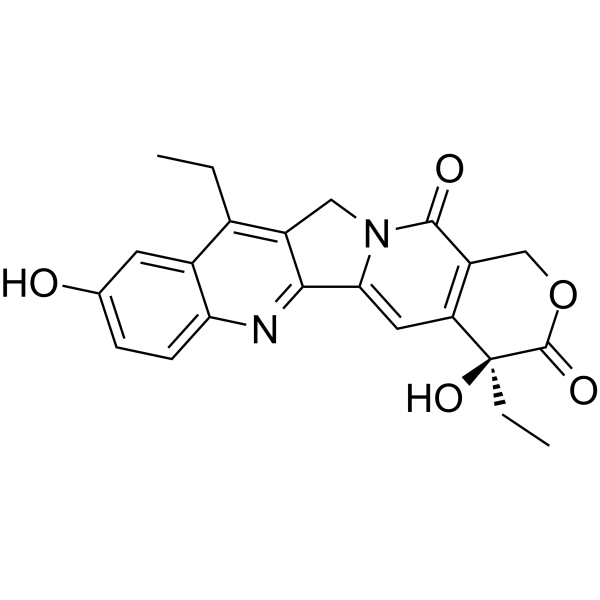
SN-38
Maximum Cited Publications
70 Publications Verification
7-Ethyl-10-hydroxycamptothecin
|
Drug Metabolite
Topoisomerase
ADC Payload
Autophagy
|
Infection
Cancer
|
|
SN-38 is an active metabolite of the Topoisomerase I inhibitor Irinotecan. SN-38 can bind to RPL15. SN-38 inhibits DNA and RNA synthesis with IC50s of 0.077 and 1.3 μM, respectively. SN-38 is a payload of sacituzumab govitecan (HY -132254) .
|
-
- HY-N0157C
-
|
6-Carboxyuracil potassium; Vitamin B13 potassium
|
Endogenous Metabolite
DNA/RNA Synthesis
|
Metabolic Disease
|
|
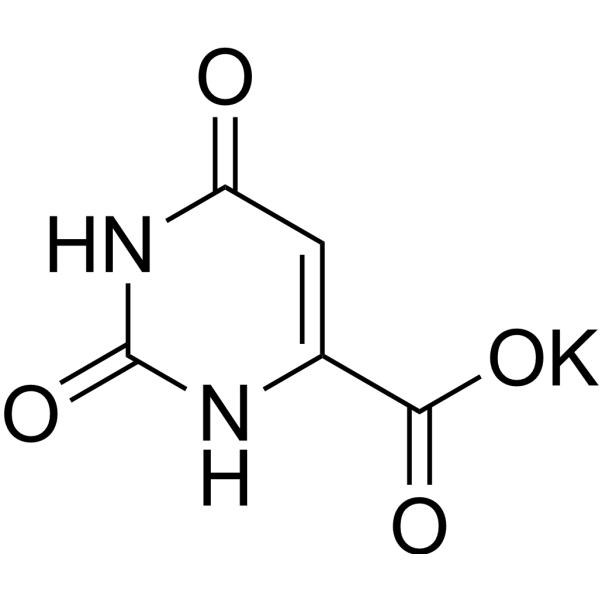
Orotic acid potassium (Vitamin B13 potassium) is a precursor of pyrimidine bases and is involved in the synthesis of DNA and RNA. Orotic acid potassium stimulates the growth of animals, plants and microorganisms, participates in carbohydrate metabolism, and is necessary for the growth and life activities of organisms. Orotic acid potassium is a measurement indicator in routine newborn screening for urea cycle abnormalities. Orotic acid potassium can cause hepatic steatosis and hepatomegaly in rats .
|
-
- HY-B1002R
-
|
|
Reference Standards
Bacterial
Antibiotic
DNA/RNA Synthesis
|
Infection
|
|
Oxolinic acid (Standard) is the analytical standard of Oxolinic acid. This product is intended for research and analytical applications. Oxolinic acid is an antibiotic against both Gram-negative and Gram-positive bacteria. Oxolinic acid can be used for the research of acute and chronic urinary tract infections. Oxolinic acid is a DNA/RNA synthesis inhibitor. Oxolinic acid acts a dopamine uptake inhibitor and stimulants locomotor effect in mice .
|
-
- HY-W004056R
-
|
|
DNA/RNA Synthesis
Reference Standards
Bacterial
|
Infection
|
|
4-Methoxyphenethyl alcohol (Standard) is the analytical standard of 4-Methoxyphenethyl alcohol (HY-W004056). This product is intended for research and analytical applications. 4-Methoxyphenethyl alcohol, an aromatic alcohol, is the major component in the anise-like odour produced by Amorphophallus. 4-Methoxyphenethyl alcohol can inhibits the protein, RNA and DNA synthesis in Escherichia coli .
|
-
- HY-13062A
-
|
Daunomycin; RP 13057; Rubidomycin
|
Topoisomerase
DNA/RNA Synthesis
ADC Payload
Autophagy
Bacterial
Antibiotic
Apoptosis
|
Infection
Neurological Disease
Cancer
|
|
Daunorubicin (Daunomycin) is a topoisomerase II inhibitor with potent anti-tumor activity. Daunorubicin inhibits DNA and RNA synthesis. Daunorubicin is a cytotoxin that inhibits cancer cell viability and induces apoptosis and necrosis. Daunorubicin is also an anthracycline antibiotic. Daunorubicin can be used in the research of infection and variety of cancers, including leukemia, non-Hodgkin lymphomas, Ewing's sarcoma, Wilms' tumor .
|
-
- HY-13062
-
|
Daunomycin hydrochloride; RP 13057 hydrochloride; Rubidomycin hydrochloride
|
Topoisomerase
DNA/RNA Synthesis
ADC Payload
Bacterial
Autophagy
Apoptosis
Antibiotic
|
Infection
Neurological Disease
Cancer
|
|
Daunorubicin (Daunomycin) hydrochloride is a topoisomerase II inhibitor with potent anti-tumor activity. Daunorubicin hydrochloride inhibits DNA and RNA synthesis. Daunorubicin hydrochloride is a cytotoxin that inhibits cancer cell viability and induces apoptosis and necrosis. Daunorubicin hydrochloride is also an anthracycline antibiotic. Daunorubicin hydrochloride can be used in the research of infection and variety of cancers, including leukemia, non-Hodgkin lymphomas, Ewing's sarcoma, Wilms' tumor .
|
-
- HY-23789
-
|
2'-O-MOE-rG
|
Nucleoside Antimetabolite/Analog
DNA/RNA Synthesis
|
Others
|
|
2′-O-(2-Methoxyethyl)guanosine (2'-O-MOE-rG) is a 2'-O-methoxyethyl-modified nucleoside analogue and an important intermediate in the synthesis of nucleic acid drugs. 2′-O-(2-Methoxyethyl)guanosine neither effectively phosphorylated by cytosolic nucleoside kinases, nor are they incorporated into cellular DNA or RNA .
|
-
- HY-105111
-
|
|
Parasite
Angiotensin-converting Enzyme (ACE)
HSV
DNA/RNA Synthesis
|
Cardiovascular Disease
Metabolic Disease
|
|
P-536 is a ACE inhibitor that also inhibits herpes simplex virus HSV-1 thymidine kinase and Trypanosoma cruzi RNA polymerase. By inhibiting the renin-angiotensin system, downregulating the expression of AT1R and NOX4, and reducing oxidative stress (decreasing plasma hydrogen peroxide (H2O2) and 8-isoprostaglandin levels), P-536 effectively reduces systolic blood pressure and improves vascular reactivity. P-536 also inhibits the replication of DNA/RNA viruses such as HSV-1 by blocking nucleotide metabolism and nucleic acid synthesis, competitively inhibits RNA synthesis in Trypanosoma cruzi, and inhibits amastigote replication, thereby impeding its growth. P-536 is suitable for research on hypertension, insulin resistance, and Chagas disease .
|
-
- HY-185183
-
|
|
Enterovirus
DNA/RNA Synthesis
|
Infection
|
|
DTriP-22 is a highly potent and low-toxicity inhibitor of enterovirus 71 3D polymerase (EV71 3D polymerase). DTriP-22 exhibits broad-spectrum anti-RNA virus activity (particularly against picornaviruses) beyond EV71, but shows no activity against DNA viruses. DTriP-22 acts at the early stage of viral replication and exerts its function by specifically inhibiting viral RNA synthesis. DTriP-22 can be used in anti-enterovirus research .
|
-
- HY-W844796
-
|
(S)-2-Amino-5-methylhex-5-enoic acid
|
Bacterial
Amino Acid Derivatives
|
Infection
|
|
2-Amino-5-methyl-5-hexenoic acid ((S)-2-Amino-5-methylhex-5-enoic acid) is a Methionine analog that competes with methionine and resulting in inhibition of cell growth. 2-Amino-5-methyl-5-hexenoic acid inhibits protein synthesis but not DNA or RNA synthesis in S. typhimurium TA1535 and E. coli K-12 .
X
|
-
- HY-113225S2
-
|
GTP-13C dilithium
|
Isotope-Labeled Compounds
Endogenous Metabolite
Mitosis
Apoptosis
DNA/RNA Synthesis
|
Infection
Cancer
|
|
Guanosine triphosphate- 13C (GTP- 13C) dilithium is 13C-labeled Guanosine triphosphate (HY-113225). Guanosine triphosphate (GTP) is a critical nucleotide and regulator of cellular metabolism. Guanosine triphosphate promotes ribosomal DNA localization, pre-rRNA transcription and ribosome biogenesis by binding to RNA polymerase I and GPN proteins (GPN1/3). Guanosine triphosphate links MYC-dependent ribosome biogenesis to nucleotide sufficiency, acts as a metabolic gatekeeper supporting protein synthesis, DNA/RNA synthesis and cellular signal transduction, while also participating in the physiological activities of pancreatic β-cells and serving as an oxidative substrate for reactive oxygen species. In small cell lung cancer with high MYC expression, Guanosine triphosphate accumulates through the IMPDH-driven synthetic pathway, thereby affecting apoptosis and mitotic processes. Guanosine triphosphate is used in the research of small cell lung cancer, hepatoblastoma and cellular metabolism .
|
-
- HY-N0656
-
|
|
Bacterial
DNA/RNA Synthesis
Nuclear Factor of activated T Cells (NFAT)
Apoptosis
|
Infection
Inflammation/Immunology
Cancer
|
|
Usnic acid is a secondary metabolite of lichens with a unique dibenzofuran skeleton. Usnic acid inhibits DNA/RNA synthesis and has antibacterial activity. Usnic acid induces cell cycle arrest and apoptosis and has anticancer activity. Usnic acid inhibits RANKL-mediated osteoclast formation and function by reducing the transcriptional and translational expression of NFATc1. Usnic acid has antioxidant and anti-inflammatory activities by inhibiting lipid peroxidation and myeloperoxidase .
|
-
- HY-N0656R
-
-
- HY-13704R
-
|
7-Ethyl-10-hydroxycamptothecin (Standard)
|
Drug Metabolite
Reference Standards
Topoisomerase
ADC Payload
Autophagy
|
Cancer
|
|
SN-38 (Standard) is the analytical standard of SN-38. This product is intended for research and analytical applications. SN-38 is an active metabolite of the Topoisomerase I inhibitor Irinotecan. SN-38 inhibits DNA and RNA synthesis with IC50s of 0.077 and 1.3 μM, respectively. SN-38 is a payload of sacituzumab govitecan (HY -132254) .
|
-
- HY-107813R
-
|
BAY 41-6551 sulfate (Standard)
|
Reference Standards
Bacterial
Antibiotic
|
Infection
Cancer
|
|
Streptomycin (Standard) is the analytical standard of Streptomycin. This product is intended for research and analytical applications. Streptomycin (Agrept) is an effective antibiotic against M. tuberculosis, is used for the research of tuberculosis (TB). Streptomycin also is a bacteriocidal agent that can be used for the research of a number of bacterial infections. Streptomycin can bind strongly to nucleic acids, interferes and blocks protein synthesis while permitting continued RNA and DNA synthesis. Streptomycin, as a common antibiotic used in culture media, also is a blocker of stretch-activated and mechanosensitive ion channels in neurons and cardiac myocytes .
|
-
- HY-W020958
-
|
Tris(acetylacetonato)ruthenium (III)
|
Caspase
Apoptosis
|
Cancer
|
|
Ru (acac) 3 (Tris (acetylacetonato) ruthenium (III)) is a caspase-3 activator and Apoptosis inducer. Ru (acac) 3 exerts growth inhibitory effects on various cell lines in vitro by inhibiting DNA/RNA synthesis and inducing mild reversible S-phase cell cycle arrest. Ru (acac) 3 is commonly used in research related to ovarian cancer, osteosarcoma, cervical cancer, melanoma, and other fields .
|
-
- HY-108876
-
|
Daunomycincitrate; RP 13057citrate; Rubidomycincitrate
|
Topoisomerase
DNA/RNA Synthesis
ADC Payload
Autophagy
Bacterial
Antibiotic
Apoptosis
|
Infection
Neurological Disease
Cancer
|
|
Daunorubicin (Daunomycin) citrate is a topoisomerase II inhibitor with potent anti-tumor activity. Daunorubicin citrate inhibits DNA and RNA synthesis. Daunorubicin citrate is a cytotoxin that inhibits cancer cell viability and induces apoptosis and necrosis. Daunorubicin citrate is also an anthracycline antibiotic. Daunorubicin citrate can be used in the research of infection and variety of cancers, including leukemia, non-Hodgkin lymphomas, Ewing's sarcoma, Wilms' tumor .
|
-
- HY-113225S1
-
|
GTP-13C10,15N5 tetraammonium
|
Endogenous Metabolite
Mitosis
Apoptosis
DNA/RNA Synthesis
|
Cancer
|
|
Guanosine triphosphate- 13C10, 15N5 tetraammonium is the 13C and 15N labeled Guanosine triphosphate tetraammonium. Guanosine triphosphate tetraammonium (GTP) is a critical nucleotide and regulator of cellular metabolism. Guanosine triphosphate tetraammonium promotes ribosomal DNA localization, pre-rRNA transcription and ribosome biogenesis by binding to RNA polymerase I and GPN proteins (GPN1/3). Guanosine triphosphate tetraammonium links MYC-dependent ribosome biogenesis to nucleotide sufficiency, acts as a metabolic gatekeeper supporting protein synthesis, DNA/RNA synthesis and cellular signal transduction, while also participating in the physiological activities of pancreatic β-cells and serving as an oxidative substrate for reactive oxygen species. In small cell lung cancer with high MYC expression, Guanosine triphosphate tetraammonium accumulates through the IMPDH-driven synthetic pathway, thereby affecting apoptosis and mitotic processes. Guanosine triphosphate tetraammonium is used in the research of small cell lung cancer, hepatoblastoma and cellular metabolism .
|
-
- HY-113225S5
-
|
GTP-13C10 dilithium
|
Isotope-Labeled Compounds
Endogenous Metabolite
Mitosis
Apoptosis
DNA/RNA Synthesis
|
Infection
Cancer
|
|
Guanosine triphosphate- 13C10 (GTP- 13C10) dilithium is 13C-labeled Guanosine triphosphate (HY-113225). Guanosine triphosphate dilithium (GTP) is a critical nucleotide and regulator of cellular metabolism. Guanosine triphosphate dilithium promotes ribosomal DNA localization, pre-rRNA transcription and ribosome biogenesis by binding to RNA polymerase I and GPN proteins (GPN1/3). Guanosine triphosphate dilithium links MYC-dependent ribosome biogenesis to nucleotide sufficiency, acts as a metabolic gatekeeper supporting protein synthesis, DNA/RNA synthesis and cellular signal transduction, while also participating in the physiological activities of pancreatic β-cells and serving as an oxidative substrate for reactive oxygen species. In small cell lung cancer with high MYC expression, Guanosine triphosphate dilithium accumulates through the IMPDH-driven synthetic pathway, thereby affecting apoptosis and mitotic processes. Guanosine triphosphate dilithium is used in the research of small cell lung cancer, hepatoblastoma and cellular metabolism .
|
-
- HY-113225S3
-
|
GTP-15N5 dilithium
|
Isotope-Labeled Compounds
Endogenous Metabolite
Mitosis
Apoptosis
DNA/RNA Synthesis
|
Infection
Cancer
|
|
Guanosine triphosphate- 15N5 (GTP- 15N5) dilithium is 15N labeled Guanosine triphosphate (HY-113225). Guanosine triphosphate dilithium (GTP) is a critical nucleotide and regulator of cellular metabolism. Guanosine triphosphate dilithium promotes ribosomal DNA localization, pre-rRNA transcription and ribosome biogenesis by binding to RNA polymerase I and GPN proteins (GPN1/3). Guanosine triphosphate dilithium links MYC-dependent ribosome biogenesis to nucleotide sufficiency, acts as a metabolic gatekeeper supporting protein synthesis, DNA/RNA synthesis and cellular signal transduction, while also participating in the physiological activities of pancreatic β-cells and serving as an oxidative substrate for reactive oxygen species. In small cell lung cancer with high MYC expression, Guanosine triphosphate dilithium accumulates through the IMPDH-driven synthetic pathway, thereby affecting apoptosis and mitotic processes. Guanosine triphosphate dilithium is used in the research of small cell lung cancer, hepatoblastoma and cellular metabolism .
|
-
- HY-W024881
-
|
2,3,3-Trimethylindolenine-5-sulfonic acid potassium salt
|
Drug Intermediate
|
Others
|
|
Potassium 2,3,3-trimethylindole-5-sulfonate (2,3,3-Trimethylindolenine-5-sulfonic acid potassium salt) is an indole derivative containing a sodium sulfonate group and is commonly used as a key intermediate in dye synthesis. Potassium 2,3,3-trimethylindole-5-sulfonate can be coupled to peptides, proteins, nucleic acids, RNA, DNA, carbohydrates, polymers, and small molecules via the sulfonyl substituent .
|
-
- HY-16680
-
|
Helioxanthin analogue 8-1
|
HBV
|
Infection
|
|
Helioxanthin 8-1(Helioxanthin analogue 8-1) is an anti-HBV agent. Helioxanthin 8-1 exhibits anti-hepatitis B virus activity in both in vitro human hepatitis B virus models and animal models. Helioxanthin 8-1 inhibits the synthesis of duck hepatitis B virus (DHBV) DNA, covalently closed circular DNA, RNA and proteins, thereby blocking DHBV replication. Helioxanthin 8-1 shows higher cytotoxicity in virus-induced cells than in non-induced cells. Helioxanthin 8-1 can be used in studies related to hepatitis B virus infection .
|
-
- HY-B0152S2
-
|
6-Aminopurine-13C5,15N5; Vitamin B4-13C5,15N5
|
Isotope-Labeled Compounds
DNA/RNA Synthesis
Endogenous Metabolite
|
Cancer
|
|
Adenine- 13C5,15C5 (6-Aminopurine- 13C5,15C5; Vitamin B4- 13C5,15C5) is 13C-labeled Adenine (HY-B0152). Adenine (6-Aminopurine), a purine, is one of the four nucleobases in the nucleic acid of DNA. Adenine acts as a chemical component of DNA and RNA. Adenine also plays an important role in biochemistry involved in cellular respiration, the form of both ATP and the cofactors (NAD and FAD), and protein synthesis.
|
-
- HY-180469
-
|
|
Drug Metabolite
DNA/RNA Synthesis
|
Infection
Cancer
|
|
N-Desmethyl clindamycin hydrochloride is the main metabolite of Clindamycin (HY-B1455). N-Desmethyl clindamycin hydrochloride shows potent cytotoxicity against L1210, KB,RPMI 6410 and RPMI 1788 cancer cells with LD50 values of 0.07, 0.29, 0.13 and 0.32 μM. N-Desmethyl clindamycin hydrochloride can inhibit cell DNA, RNA and protein synthesis. N-Desmethyl clindamycin hydrochloride can be used for the research of infection and cancer .
|
-
- HY-W654130
-
|
Daunomycin-13C,d3; RP 13057-13C,d3; Rubidomycin-13C,d3
|
Isotope-Labeled Compounds
Bacterial
ADC Payload
Apoptosis
Antibiotic
Topoisomerase
Autophagy
DNA/RNA Synthesis
|
Infection
|
|
Daunorubicin- 13C,d3 is 13C and deuterium labeled Daunorubicin. Daunorubicin (Daunomycin) is a topoisomerase II inhibitor with potent anti-tumor activity. Daunorubicin inhibits DNA and RNA synthesis. Daunorubicin is a cytotoxin that inhibits cancer cell viability and induces apoptosis and necrosis. Daunorubicin is also an anthracycline antibiotic. Daunorubicin can be used in the research of infection and variety of cancers, including leukemia, non-Hodgkin lymphomas, Ewing's sarcoma, Wilms' tumor .
|
-
- HY-13062R
-
|
Daunomycin hydrochloride (Standard); RP 13057 hydrochloride (Standard); Rubidomycin hydrochloride (Standard)
|
Reference Standards
Topoisomerase
DNA/RNA Synthesis
ADC Payload
Bacterial
Autophagy
Apoptosis
Antibiotic
|
Infection
Neurological Disease
Cancer
|
|
Daunorubicin (hydrochloride) (Standard) is the analytical standard of Daunorubicin (hydrochloride). This product is intended for research and analytical applications. Daunorubicin (Daunomycin) hydrochloride is a topoisomerase II inhibitor with potent anti-tumor activity. Daunorubicin hydrochloride inhibits DNA and RNA synthesis. Daunorubicin hydrochloride is a cytotoxin that inhibits cancer cell viability and induces apoptosis and necrosis. Daunorubicin hydrochloride is also an anthracycline antibiotic. Daunorubicin hydrochloride can be used in the research of infection and variety of cancers, including leukemia, non-Hodgkin lymphomas, Ewing's sarcoma, Wilms' tumor .
|
-
- HY-113225S4
-
|
GTP-15N5,d14 dilithium
|
Isotope-Labeled Compounds
Endogenous Metabolite
Mitosis
Apoptosis
DNA/RNA Synthesis
|
Infection
Cancer
|
|
Guanosine triphosphate- 15N5,d14 (GTP- 15N5,d14) dilithium is deuterium and 15N labeled Guanosine triphosphate (HY-113225). Guanosine triphosphate dilithium (GTP) is a critical nucleotide and regulator of cellular metabolism. Guanosine triphosphate dilithium promotes ribosomal DNA localization, pre-rRNA transcription and ribosome biogenesis by binding to RNA polymerase I and GPN proteins (GPN1/3). Guanosine triphosphate dilithium links MYC-dependent ribosome biogenesis to nucleotide sufficiency, acts as a metabolic gatekeeper supporting protein synthesis, DNA/RNA synthesis and cellular signal transduction, while also participating in the physiological activities of pancreatic β-cells and serving as an oxidative substrate for reactive oxygen species. In small cell lung cancer with high MYC expression, Guanosine triphosphate dilithium accumulates through the IMPDH-driven synthetic pathway, thereby affecting apoptosis and mitotic processes. Guanosine triphosphate dilithium is used in the research of small cell lung cancer, hepatoblastoma and cellular metabolism .
|
-
- HY-B1907A
-
|
Rifamycin SV
|
Antibiotic
Bacterial
DNA/RNA Synthesis
|
Infection
|
|
Rifamycin (Rifamycin SV) is an orally active ansamycin antibiotic. Rifamycin inhibits DNA-dependent RNA synthesis. Rifamycin has antibacterial activity against Mycobacterium tuberculosis. Rifamycin interferes with hepatic bile acid metabolism. Rifamycin has anti-inflammatory effects. Rifamycin can be used in the study of Mycobacterium tuberculosis, Bacteroides fragilis infection, and Lipopolysaccharide (HY-D1056B3)-induced inflammation .
|
-
- HY-B1907
-
|
Rifamycin SV sodium
|
Antibiotic
Bacterial
DNA/RNA Synthesis
|
Infection
Inflammation/Immunology
|
|
Rifamycin sodium (Rifamycin SV monosodium) is an orally active ansamycin antibiotic. Rifamycin sodium inhibits DNA-dependent RNA synthesis. Rifamycin sodium has antibacterial activity against Mycobacterium tuberculosis. Rifamycin sodium interferes with hepatic bile acid metabolism. Rifamycin sodium has anti-inflammatory effects. Rifamycin sodium can be used in the study of Mycobacterium tuberculosis, Bacteroides fragilis infection, and Lipopolysaccharide (HY-D1056B3)-induced inflammation .
|
-
- HY-N2513R
-
|
|
Reference Standards
Lipoxygenase
DNA/RNA Synthesis
|
Cancer
|
|
β-Boswellic acid (Standard) is the analytical standard of β-Boswellic acid. This product is intended for research and analytical applications. β-Boswellic acid is isolated from the gum resin of Boswellia serrata. β-Boswellic acid is a nonreducing-type inhibitor of the 5-lipoxygenase (5-LO) product formation either interacting directly with the 5-LO or blocking its translocation . β-Boswellic acid inhibits the synthesis of DNA, RNA and protein in human leukemia HL-60 cells .
|
-
- HY-145726A
-
|
|
TNF Receptor
|
Cardiovascular Disease
Inflammation/Immunology
|
|
ISIS 104838 sodium is an antisense oligonucleotide targeting TNF-α. ISIS 104838 sodium specifically binds to human TNF-α mRNA via Watson-Crick base pairing to form a DNA:RNA hybrid duplex, thereby recruiting the ubiquitously expressed intracellular enzyme RNase H to degrade the target mRNA and inhibit TNF-α protein synthesis at the transcriptional level. ISIS 104838 sodium induces moderate, self-limiting thrombocytopenia in cynomolgus monkeys. ISIS 104838 sodium can be used for the study of inflammatory diseases .
|
-
- HY-145726
-
|
|
TNF Receptor
|
Cardiovascular Disease
Inflammation/Immunology
|
|
ISIS 104838 is an antisense oligonucleotide targeting TNF-α. ISIS 104838 specifically binds to human TNF-α mRNA via Watson-Crick base pairing to form a DNA:RNA hybrid duplex, thereby recruiting the ubiquitously expressed intracellular enzyme RNase H to degrade the target mRNA and inhibit TNF-α protein synthesis at the transcriptional level. ISIS 104838 induces moderate, self-limiting thrombocytopenia in cynomolgus monkeys. ISIS 104838 can be used for the study of inflammatory diseases .
|
-
- HY-113225B
-
|
GTP tritris
|
Endogenous Metabolite
Exosomes
|
Cancer
|
|
Guanosine triphosphate tritris (GTP tritris) serves as a vital enhancer of myogenic cell differentiation and plays a critical role in modulating miRNA-myogenic regulator factors. It also facilitates the release of exosomes enriched with guanosine and guanosine-derived molecules, and is regarded as an activated precursor for RNA synthesis. In mitochondrial function, GTP participates in the import of proteins into the matrix, which is essential for various regulated pathways, and is involved in initiating peptide synthesis through the binding of formylmethionyl-tRNA to the ribosome, as well as polypeptide chain elongation. Additionally, GTP acts as a phosphate and pyrophosphate carrier that channels chemical energy into specific biosynthetic pathways. It activates signal transducing G proteins that regulate cellular processes such as proliferation and differentiation, and its hydrolysis by small GTPases, including Ras and Rho, is integral to both proliferation and apoptosis. Furthermore, the small GTPase Rab is instrumental in vesicle docking, fusion, and formation. Beyond signal transduction, GTP is an energy-rich precursor in the enzymatic biosynthesis of DNA and RNA.
|
-
- HY-W013403
-
|
|
IFNAR
|
Infection
|
|
2'-Deoxy-2'-fluorouridine is a derivative of the pyrimidine nucleoside uridine. 2'-Deoxy-2'-fluorouridine is a nucleoside analog that inhibits the replication of wild-type viruses by binding to the viral RNA. Hepatitis C polyU/UC RNA strands containing 2'-Deoxy-2'-fluorouridine, bind to RIG-I but do not activate RIG-I signaling in a reporter assay using Huh7 cells. 2'-Deoxy-2'-fluorouridine also has been used as a starting material in the synthesis of respiratory syncytial virus (RSV) polymerase inhibitors. 2'-Deoxy-2'-fluorouridine can incorporate into DNA and RNA in rat and woodchuck model upon administration. 2'-Deoxy-2'-fluorouridine can be studied in anti-viral research .
|
-
- HY-B1907R
-
|
Rifamycin SV sodium (Standard)
|
Reference Standards
Bacterial
Antibiotic
|
Infection
|
|
Rifamycin (sodium) (Standard) is the analytical standard of Rifamycin (sodium). This product is intended for research and analytical applications. Rifamycin sodium (Rifamycin SV sodium) is an orally active ansamycin antibiotic. Rifamycin sodium inhibits DNA-dependent RNA synthesis. Rifamycin sodium has antibacterial activity against Mycobacterium tuberculosis. Rifamycin sodium interferes with hepatic bile acid metabolism. Rifamycin sodium has anti-inflammatory effects. Rifamycin sodium can be used in the study of Mycobacterium tuberculosis, Bacteroides fragilis infection, and Lipopolysaccharide (HY-D1056B3)-induced inflammation .
|
-
- HY-N0667
-
|
(-)-Asparagine; Asn; Asparamide
|
Endogenous Metabolite
Apoptosis
DNA/RNA Synthesis
|
Inflammation/Immunology
|
|
L-Asparagine is an essential amino acid for leukemic cells and a substrate for L-Asparaginase. L-Asparaginase is a potent anti-leukemic enzyme that promotes asparagine (Asn) and glutamine (Gln) depletion and inhibits protein biosynthesis in lymphoblasts. Removal of L-asparagine from plasma by L-Asparaginase results in inhibition of RNA and DNA synthesis and subsequent apoptosis. L-Asparaginase has cell-killing ability in vitro and in vivo, and selectively inhibits the growth of cancer cells with low asparagine synthetase (AASNS) expression. L-Asparagine can be used as a biomarker and sensor for the study of childhood acute lymphoblastic leukemia .
|
-
- HY-W017443
-
|
|
Endogenous Metabolite
Apoptosis
DNA/RNA Synthesis
|
Neurological Disease
Metabolic Disease
Inflammation/Immunology
Cancer
|
|
L-Asparagine monohydrate is an essential amino acid for leukemic cells and a substrate for L-Asparaginase. L-Asparaginase is a potent anti-leukemic enzyme that promotes asparagine (Asn) and glutamine (Gln) depletion and inhibits protein biosynthesis in lymphoblasts. Removal of L-asparagine from plasma by L-Asparaginase results in inhibition of RNA and DNA synthesis and subsequent apoptosis. L-Asparaginase has cell-killing ability in vitro and in vivo, and selectively inhibits the growth of cancer cells with low asparagine synthetase (AASNS) expression. L-Asparagine monohydrate can be used as a biomarker and sensor for the study of childhood acute lymphoblastic leukemia .
|
-
- HY-129262
-
|
|
Antibiotic
Bacterial
|
Infection
|
|
Deoxypheganomycin D is a specific antimycobacterial inhibitor with no cross-resistance to other antibiotics such as Paromomycin (HY-B0956), Capreomycin (HY-P3270), Viomycin (HY-A0155), Streptothricin (HY-129065), Kanamycin (HY-16566), and Streptomycin (HY-B1906). Deoxypheganomycin D (28 μM) partially inhibits the growth of Mycobacterium 607, with no significant inhibitory effects on DNA, RNA, or protein synthesis. Deoxypheganomycin D (7 μM) affects leucine influx, not thymidine, and has the opposite effect on efflux. The effects of Deoxypheganomycin D may be related to cell membrane and specific mycobacterial lipid components.
|
-
- HY-N2513
-
|
|
Lipoxygenase
DNA/RNA Synthesis
|
Cancer
|
|
β-Boswellic acid is isolated from the gum resin of Boswellia serrata with anticancer, antioxidant activity, anti-inflammatory activity and anti-arthritic pain.β-Boswellic acid is an orally active nonreducing-type inhibitor of the 5-lipoxygenase (5-LO) product formation either interacting directly with the 5-LO or blocking its translocation. β-Boswellic acid inhibits the synthesis of DNA, RNA and protein in human leukemia HL-60 cells with IC50 values ranging from 0.6 to 7.1 μM. β-Boswellic acid is promising for research of diabetes, inflammatory and arthritic diseases .
|
-
- HY-W013403S
-
|
|
IFNAR
|
Infection
|
|
2'-Deoxy-2'-fluorouridine-d2 is the deuterium labeled 2'-Deoxy-2'-fluorouridine . 2'-Deoxy-2'-fluorouridine is a derivative of the pyrimidine nucleoside uridine. 2'-Deoxy-2'-fluorouridine is a nucleoside analog that inhibits the replication of wild-type viruses by binding to the viral RNA. Hepatitis C polyU/UC RNA strands containing 2'-Deoxy-2'-fluorouridine, bind to RIG-I but do not activate RIG-I signaling in a reporter assay using Huh7 cells. 2'-Deoxy-2'-fluorouridine also has been used as a starting material in the synthesis of respiratory syncytial virus (RSV) polymerase inhibitors. 2'-Deoxy-2'-fluorouridine can incorporate into DNA and RNA in rat and woodchuck model upon administration. 2'-Deoxy-2'-fluorouridine can be studied in anti-viral research .
|
-
- HY-164184
-
|
|
Apoptosis
Caspase
HSP
Early 2 Factor (E2F)
DNA/RNA Synthesis
|
Cancer
|
|
Ly101-4B is an apoptosis inducer and multi-target inhibitor with antiproliferative, antitumor and cycytotoxic effects. Ly101-4B reduces HSF1 expression, inhibits microRNA-214 synthesis, downregulates HSP27, HSP70 and HSP90 expression, while suppressing E2F-dependent transcriptional activity and downregulating its target genes. Ly101-4B induces caspase 3/7-mediated apoptosis by reducing DNA synthesis, inhibiting the cell cycle and G1/S phase transition, without affecting RNA synthesis or inducing necrosis. Ly101-4B is selective for pancreatic ductal adenocarcinoma cells with different genotypes and varying degrees of E2F dependence. Ly101-4B can be used in research related to epithelial ovarian cancer and pancreatic ductal adenocarcinoma .
|
-
- HY-W039442
-
|
|
Nucleoside Antimetabolite/Analog
|
Infection
Cancer
|
|
2′-Deoxy-2′-fluoroadenosine is a fluorinated deoxyadenosine with antitumor and antiviral activity, able to interfere with viral or cancer cell replication by being incorporated into DNA. 2′-Deoxy-2′-fluoroadenosine can be used for the synthesis of 2′-Deoxy-2′-fluoro-modified oligonucleotides hybridized with RNA. 2′-Deoxy-2′-fluoroadenosine can be cleaved efficiently by E. coli purine nucleoside phosphorylase (PNP) to the toxic agent 2-fluoroadenine (FAde). 2′-Deoxy-2′-fluoroadenosine shows excellent in vivo activity against tumors expressing E. coli PNP .
|
-
- HY-P2310
-
|
|
Bacterial
Parasite
Apoptosis
HIV
HSV
CMV
TNF Receptor
NOD-like Receptor (NLR)
DNA/RNA Synthesis
Influenza Virus
|
Cardiovascular Disease
Infection
|
|
Defensin HNP-1 human is a type of human neutrophil peptide (HNPs). Defensin HNP-1 human possesses immunomodulatory functions and can delay the apoptosis of neutrophils. Defensin HNP-1 human inhibits DNA/RNA/protein synthesis and interferes with metabolic pathways, thus exhibiting broad antibacterial activity. Defensin HNP-1 human has direct inactivation effects on HIV, HSV-1, HSV-2, CMV, influenza virus, etc. Defensin HNP-1 human has antileishmanial activity. Defensin HNP-1 human is involved in endothelial cell dysfunction during the early development of atherosclerosis .
|
-
- HY-N0667S5
-
|
|
Isotope-Labeled Compounds
Endogenous Metabolite
Apoptosis
DNA/RNA Synthesis
|
Inflammation/Immunology
|
|
L-Asparagine-d3 hydrate is the deuterium labeled L-Asparagine (HY-N0667). L-Asparagine is an essential amino acid for leukemic cells and a substrate for L-Asparaginase. L-Asparaginase is a potent anti-leukemic enzyme that promotes asparagine (Asn) and glutamine (Gln) depletion and inhibits protein biosynthesis in lymphoblasts. Removal of L-asparagine from plasma by L-Asparaginase results in inhibition of RNA and DNA synthesis and subsequent apoptosis. L-Asparaginase has cell-killing ability in vitro and in vivo, and selectively inhibits the growth of cancer cells with low asparagine synthetase (AASNS) expression. L-Asparagine can be used as a biomarker and sensor for the study of childhood acute lymphoblastic leukemia .
|
-
- HY-N0667S1
-
|
|
Isotope-Labeled Compounds
Endogenous Metabolite
Apoptosis
DNA/RNA Synthesis
|
Inflammation/Immunology
|
|
L-Asparagine- 15N2,d8 is the 15N- and deuterium labeled L-Asparagine (HY-N0667). L-Asparagine is an essential amino acid for leukemic cells and a substrate for L-Asparaginase. L-Asparaginase is a potent anti-leukemic enzyme that promotes asparagine (Asn) and glutamine (Gln) depletion and inhibits protein biosynthesis in lymphoblasts. Removal of L-asparagine from plasma by L-Asparaginase results in inhibition of RNA and DNA synthesis and subsequent apoptosis. L-Asparaginase has cell-killing ability in vitro and in vivo, and selectively inhibits the growth of cancer cells with low asparagine synthetase (AASNS) expression. L-Asparagine can be used as a biomarker and sensor for the study of childhood acute lymphoblastic leukemia .
|
-
- HY-N0667R
-
|
(-)-Asparagine (Standard); Asn (Standard); Asparamide (Standard)
|
Reference Standards
Endogenous Metabolite
Apoptosis
DNA/RNA Synthesis
|
Inflammation/Immunology
|
|
L-Asparagine (Standard) is the analytical standard of L-Asparagine (HY-N0667). This product is intended for research and analytical applications. L-Asparagine is an essential amino acid for leukemic cells and a substrate for L-Asparaginase. L-Asparaginase is a potent anti-leukemic enzyme that promotes asparagine (Asn) and glutamine (Gln) depletion and inhibits protein biosynthesis in lymphoblasts. Removal of L-asparagine from plasma by L-Asparaginase results in inhibition of RNA and DNA synthesis and subsequent apoptosis. L-Asparaginase has cell-killing ability in vitro and in vivo, and selectively inhibits the growth of cancer cells with low asparagine synthetase (AASNS) expression. L-Asparagine can be used as a biomarker and sensor for the study of childhood acute lymphoblastic leukemia .
|
-
- HY-N0667S4
-
|
(-)-Asparagine-4-13C monohydrate; Asn-4-13C monohydrate; Asparamide-4-13C monohydrate
|
Isotope-Labeled Compounds
Endogenous Metabolite
Apoptosis
DNA/RNA Synthesis
|
Inflammation/Immunology
|
|
L-Asparagine-4- 13C monohydrate is the 13C-labeled L-Asparagine monohydrate (HY-W017443).L-Asparagine monohydrate is an essential amino acid for leukemic cells and a substrate for L-Asparaginase. L-Asparaginase is a potent anti-leukemic enzyme that promotes asparagine (Asn) and glutamine (Gln) depletion and inhibits protein biosynthesis in lymphoblasts. Removal of L-asparagine from plasma by L-Asparaginase results in inhibition of RNA and DNA synthesis and subsequent apoptosis. L-Asparaginase has cell-killing ability in vitro and in vivo, and selectively inhibits the growth of cancer cells with low asparagine synthetase (AASNS) expression. L-Asparagine monohydrate can be used as a biomarker and sensor for the study of childhood acute lymphoblastic leukemia .
|
-
- HY-W017443R
-
|
|
Reference Standards
Endogenous Metabolite
Apoptosis
DNA/RNA Synthesis
|
Neurological Disease
Metabolic Disease
Inflammation/Immunology
Cancer
|
|
L-Asparagine monohydrate (Standard) is the analytical standard of L-Asparagine monohydrate (HY-W017443). This product is intended for research and analytical applications. L-Asparagine monohydrate is an essential amino acid for leukemic cells and a substrate for L-Asparaginase. L-Asparaginase is a potent anti-leukemic enzyme that promotes asparagine (Asn) and glutamine (Gln) depletion and inhibits protein biosynthesis in lymphoblasts. Removal of L-asparagine from plasma by L-Asparaginase results in inhibition of RNA and DNA synthesis and subsequent apoptosis. L-Asparaginase has cell-killing ability in vitro and in vivo, and selectively inhibits the growth of cancer cells with low asparagine synthetase (AASNS) expression. L-Asparagine monohydrate can be used as a biomarker and sensor for the study of childhood acute lymphoblastic leukemia .
|
-
- HY-N0667S2
-
|
(-)-Asparagine-15N2 monohydrate; Asn-15N2 monohydrate; Asparamide-15N2 monohydrate
|
Isotope-Labeled Compounds
Endogenous Metabolite
Apoptosis
DNA/RNA Synthesis
|
Inflammation/Immunology
|
|
L-Asparagine- 15N2 monohydrate is the 15N-labeled L-Asparagine monohydrate (HY-W017443). L-Asparagine monohydrate is an essential amino acid for leukemic cells and a substrate for L-Asparaginase. L-Asparaginase is a potent anti-leukemic enzyme that promotes asparagine (Asn) and glutamine (Gln) depletion and inhibits protein biosynthesis in lymphoblasts. Removal of L-asparagine from plasma by L-Asparaginase results in inhibition of RNA and DNA synthesis and subsequent apoptosis. L-Asparaginase has cell-killing ability in vitro and in vivo, and selectively inhibits the growth of cancer cells with low asparagine synthetase (AASNS) expression. L-Asparagine monohydrate can be used as a biomarker and sensor for the study of childhood acute lymphoblastic leukemia .
|
-
- HY-W017443S1
-
|
|
Isotope-Labeled Compounds
Endogenous Metabolite
Apoptosis
DNA/RNA Synthesis
|
Neurological Disease
Metabolic Disease
Inflammation/Immunology
Cancer
|
|
L-Asparagine-amide- 15N monohydrate is the 15N-labeled L-Asparagine monohydrate (HY-W017443). L-Asparagine monohydrate is an essential amino acid for leukemic cells and a substrate for L-Asparaginase. L-Asparaginase is a potent anti-leukemic enzyme that promotes asparagine (Asn) and glutamine (Gln) depletion and inhibits protein biosynthesis in lymphoblasts. Removal of L-asparagine from plasma by L-Asparaginase results in inhibition of RNA and DNA synthesis and subsequent apoptosis. L-Asparaginase has cell-killing ability in vitro and in vivo, and selectively inhibits the growth of cancer cells with low asparagine synthetase (AASNS) expression. L-Asparagine monohydrate can be used as a biomarker and sensor for the study of childhood acute lymphoblastic leukemia .
|
-
- HY-P2310A
-
|
|
Bacterial
Parasite
Apoptosis
HIV
HSV
CMV
TNF Receptor
Interleukin Related
NOD-like Receptor (NLR)
DNA/RNA Synthesis
Influenza Virus
|
Cardiovascular Disease
Infection
|
|
Defensin HNP-1 human TFA is a type of human neutrophil peptide (HNPs). Defensin HNP-1 human TFA possesses immunomodulatory functions and can delay the apoptosis of neutrophils. Defensin HNP-1 human TFA inhibits DNA/RNA/protein synthesis and interferes with metabolic pathways, thus exhibiting broad antibacterial activity. Defensin HNP-1 human TFA has direct inactivation effects on HIV, HSV-1, HSV-2, CMV, influenza virus, etc. Defensin HNP-1 human TFA has antileishmanial activity. Defensin HNP-1 human TFA is involved in endothelial cell dysfunction during the early development of atherosclerosis .
|
-
- HY-W017443S4
-
|
|
Isotope-Labeled Compounds
Endogenous Metabolite
Apoptosis
DNA/RNA Synthesis
|
Neurological Disease
Metabolic Disease
Inflammation/Immunology
Cancer
|
|
L-Asparagine-1,2,3,4- 13C4 monohydrate is the 13C labeled labeled L-Asparagine monohydrate (HY-W017443). L-Asparagine monohydrate is an essential amino acid for leukemic cells and a substrate for L-Asparaginase. L-Asparaginase is a potent anti-leukemic enzyme that promotes asparagine (Asn) and glutamine (Gln) depletion and inhibits protein biosynthesis in lymphoblasts. Removal of L-asparagine from plasma by L-Asparaginase results in inhibition of RNA and DNA synthesis and subsequent apoptosis. L-Asparaginase has cell-killing ability in vitro and in vivo, and selectively inhibits the growth of cancer cells with low asparagine synthetase (AASNS) expression. L-Asparagine monohydrate can be used as a biomarker and sensor for the study of childhood acute lymphoblastic leukemia .
|
-
- HY-N0667S3
-
|
(-)-Asparagine-13C4 monohydrate; Asn-13C4 monohydrate; Asparamide-13C4 monohydrate
|
Isotope-Labeled Compounds
Endogenous Metabolite
Apoptosis
DNA/RNA Synthesis
|
Inflammation/Immunology
|
|
L-Asparagine- 13C4 monohydrate is the 13C-labeled L-Asparagine monohydrate (HY-W017443). L-Asparagine monohydrate is an essential amino acid for leukemic cells and a substrate for L-Asparaginase. L-Asparaginase is a potent anti-leukemic enzyme that promotes asparagine (Asn) and glutamine (Gln) depletion and inhibits protein biosynthesis in lymphoblasts. Removal of L-asparagine from plasma by L-Asparaginase results in inhibition of RNA and DNA synthesis and subsequent apoptosis. L-Asparaginase has cell-killing ability in vitro and in vivo, and selectively inhibits the growth of cancer cells with low asparagine synthetase (AASNS) expression. L-Asparagine monohydrate can be used as a biomarker and sensor for the study of childhood acute lymphoblastic leukemia .
|
-
- HY-W017443S
-
|
|
Isotope-Labeled Compounds
Endogenous Metabolite
Apoptosis
DNA/RNA Synthesis
|
Neurological Disease
Metabolic Disease
Inflammation/Immunology
Cancer
|
|
L-Asparagine- 13C4, 15N2 monohydrateis the 13C-labeled and 15N-labeled L-Asparagine monohydrate (HY-W017443). L-Asparagine monohydrate is an essential amino acid for leukemic cells and a substrate for L-Asparaginase. L-Asparaginase is a potent anti-leukemic enzyme that promotes asparagine (Asn) and glutamine (Gln) depletion and inhibits protein biosynthesis in lymphoblasts. Removal of L-asparagine from plasma by L-Asparaginase results in inhibition of RNA and DNA synthesis and subsequent apoptosis. L-Asparaginase has cell-killing ability in vitro and in vivo, and selectively inhibits the growth of cancer cells with low asparagine synthetase (AASNS) expression. L-Asparagine monohydrate can be used as a biomarker and sensor for the study of childhood acute lymphoblastic leukemia .
|
-
- HY-W017443S3
-
|
|
Isotope-Labeled Compounds
Endogenous Metabolite
Apoptosis
DNA/RNA Synthesis
|
Neurological Disease
Metabolic Disease
Inflammation/Immunology
Cancer
|
|
L-Asparagine- 15N2,d3 monohydrate is the deuterium and 15N-labeled L-Asparagine monohydrate (HY-W017443). L-Asparagine monohydrate is an essential amino acid for leukemic cells and a substrate for L-Asparaginase. L-Asparaginase is a potent anti-leukemic enzyme that promotes asparagine (Asn) and glutamine (Gln) depletion and inhibits protein biosynthesis in lymphoblasts. Removal of L-asparagine from plasma by L-Asparaginase results in inhibition of RNA and DNA synthesis and subsequent apoptosis. L-Asparaginase has cell-killing ability in vitro and in vivo, and selectively inhibits the growth of cancer cells with low asparagine synthetase (AASNS) expression. L-Asparagine monohydrate can be used as a biomarker and sensor for the study of childhood acute lymphoblastic leukemia .
|
-
- HY-N0667S
-
|
|
Isotope-Labeled Compounds
Endogenous Metabolite
Apoptosis
DNA/RNA Synthesis
|
Inflammation/Immunology
|
|
L-Asparagine- 13C4, 15N2,d8 is the 13C-labeled and 15N-labeled L-Asparagine (HY-N0667). L-Asparagine is an essential amino acid for leukemic cells and a substrate for L-Asparaginase. L-Asparaginase is a potent anti-leukemic enzyme that promotes asparagine (Asn) and glutamine (Gln) depletion and inhibits protein biosynthesis in lymphoblasts. Removal of L-asparagine from plasma by L-Asparaginase results in inhibition of RNA and DNA synthesis and subsequent apoptosis. L-Asparaginase has cell-killing ability in vitro and in vivo, and selectively inhibits the growth of cancer cells with low asparagine synthetase (AASNS) expression. L-Asparagine can be used as a biomarker and sensor for the study of childhood acute lymphoblastic leukemia .
|
-
- HY-N0667S7
-
|
(-)-Asparagine-13C4,15N2; Asn-13C4,15N2; Asparamide-13C4,15N2
|
Isotope-Labeled Compounds
Endogenous Metabolite
Apoptosis
DNA/RNA Synthesis
|
Inflammation/Immunology
|
|
L-Asparagine- 13C4, 15N2 ((-)-Asparagine- 13C4, 15N2) is the 13C and 15N-labeled L-Asparagine (HY-N0667). L-Asparagine is an essential amino acid for leukemic cells and a substrate for L-Asparaginase. L-Asparaginase is a potent anti-leukemic enzyme that promotes asparagine (Asn) and glutamine (Gln) depletion and inhibits protein biosynthesis in lymphoblasts. Removal of L-asparagine from plasma by L-Asparaginase results in inhibition of RNA and DNA synthesis and subsequent apoptosis. L-Asparaginase has cell-killing ability in vitro and in vivo, and selectively inhibits the growth of cancer cells with low asparagine synthetase (AASNS) expression. L-Asparagine can be used as a biomarker and sensor for the study of childhood acute lymphoblastic leukemia .
|
-
- HY-W017443S2
-
|
|
Isotope-Labeled Compounds
Endogenous Metabolite
Apoptosis
DNA/RNA Synthesis
|
Neurological Disease
Metabolic Disease
Inflammation/Immunology
Cancer
|
|
L-Asparagine- 13C4, 15N2,d3 monohydrate is the deuterium, 13C-, and 15N-labeled L-Asparagine monohydrate (HY-W017443). L-Asparagine monohydrate is an essential amino acid for leukemic cells and a substrate for L-Asparaginase. L-Asparaginase is a potent anti-leukemic enzyme that promotes asparagine (Asn) and glutamine (Gln) depletion and inhibits protein biosynthesis in lymphoblasts. Removal of L-asparagine from plasma by L-Asparaginase results in inhibition of RNA and DNA synthesis and subsequent apoptosis. L-Asparaginase has cell-killing ability in vitro and in vivo, and selectively inhibits the growth of cancer cells with low asparagine synthetase (AASNS) expression. L-Asparagine monohydrate can be used as a biomarker and sensor for the study of childhood acute lymphoblastic leukemia .
|
-
- HY-W001952
-
|
|
Fluorescent Dye
Drug Intermediate
|
Others
|
|
6-Bromo-2-naphthol is an RTP (real-time polymerase chain reaction) probe that forms a 1:1 or 2:1 complex with β-cyclodextrin (β-CD). 6-Bromo-2-naphthol is capable of real-time monitoring of PCR reactions and quantification of specific nucleic acid sequences. RTP probes are a class of small DNA or RNA sequences labeled with fluorescent dyes and quencher molecules, which can be widely used in gene expression analysis, SNP genotyping, and pathogen detection. 6-Bromo-2-naphthol embeds into the cyclodextrin cavity through hydrophobic interactions, inhibits the oxygen quenching effect, and emits a phosphorescent signal at room temperature. 6-Bromo-2-naphthol can also be used as an intermediate for the synthesis of antibacterial azo dyes, and its derivatives show antibacterial activity against Staphylococcus aureus, Escherichia coli and other bacteria .
|
-
-
-
HY-L155
-
|
|
535 compounds
|
|
Mitochondria, as the main place of energy supply in life, is essential to maintain normal life activities. Mitochondrial dysfunction is associated with common diseases, such as cardiovascular diseases, neurodegenerative diseases, diabetes and cancer. The heart, brain and liver rely heavily on mitochondrial function as the main organs for drug metabolism. In addition, mitochondria is also a target of many drugs, some of which induce organotoxicity by inducing mitochondrial toxicity.
MCE contains 535 mitochondrial toxic compounds, which can be used as tool compounds for drug development and disease mechanism research.
|
-
-
HY-L004
-
|
|
3,313 compounds
|
|
DNA is prone to numerous forms of damage that can injure cells and impair fitness. Cells have developed an array of mechanisms to repair these injuries. Proliferating cells are especially vulnerable to DNA damage due to the added demands of cellular growth and division. Cell cycle checkpoints represent integral components of DNA repair that coordinate cooperation between the machinery of the cell cycle and several biochemical pathways that respond to damage and restore DNA structure. By delaying progression through the cell cycle, checkpoints provide more time for repair before the critical phases of DNA replication, when the genome is replicated, and of mitosis, when the genome is segregated. Loss or attenuation of checkpoint function may increase spontaneous and induced gene mutations and chromosomal aberrations by reducing the efficiency of DNA repair.
MCE owns a unique collection of 3,313 cell cycle/DNA damage-related compounds which can be used in the research of the same.
|
| Cat. No. |
Product Name |
Type |
-
- HY-23789
-
|
2'-O-MOE-rG
|
Biochemical Assay Reagents
|
|
2′-O-(2-Methoxyethyl)guanosine (2'-O-MOE-rG) is a 2'-O-methoxyethyl-modified nucleoside analogue and an important intermediate in the synthesis of nucleic acid drugs. 2′-O-(2-Methoxyethyl)guanosine neither effectively phosphorylated by cytosolic nucleoside kinases, nor are they incorporated into cellular DNA or RNA .
|
-
- HY-137697
-
|
|
Biochemical Assay Reagents
|
|
ddCTP is a type of chain-terminating deoxynucleotide. ddCTP can be incorporated into the extension primer chain that lacks the 3'-hydroxyl group, thereby terminating primer extension, viral genome replication, and DNA synthesis. ddCTP can distinguish almost identical RNA through distinguishable extension products in primer extension inhibition experiments. ddCTP is the active metabolite of Zalcitabine (HY-17392), which can competitively inhibit HIV reverse transcriptase, terminate the synthesis of viral DNA chains, and thereby inhibit HIV replication .
|
-
- HY-W020958
-
|
Tris(acetylacetonato)ruthenium (III)
|
Biochemical Assay Reagents
|
|
Ru (acac) 3 (Tris (acetylacetonato) ruthenium (III)) is a caspase-3 activator and Apoptosis inducer. Ru (acac) 3 exerts growth inhibitory effects on various cell lines in vitro by inhibiting DNA/RNA synthesis and inducing mild reversible S-phase cell cycle arrest. Ru (acac) 3 is commonly used in research related to ovarian cancer, osteosarcoma, cervical cancer, melanoma, and other fields .
|
-
- HY-W001952
-
|
|
Biochemical Assay Reagents
|
|
6-Bromo-2-naphthol is an RTP (real-time polymerase chain reaction) probe that forms a 1:1 or 2:1 complex with β-cyclodextrin (β-CD). 6-Bromo-2-naphthol is capable of real-time monitoring of PCR reactions and quantification of specific nucleic acid sequences. RTP probes are a class of small DNA or RNA sequences labeled with fluorescent dyes and quencher molecules, which can be widely used in gene expression analysis, SNP genotyping, and pathogen detection. 6-Bromo-2-naphthol embeds into the cyclodextrin cavity through hydrophobic interactions, inhibits the oxygen quenching effect, and emits a phosphorescent signal at room temperature. 6-Bromo-2-naphthol can also be used as an intermediate for the synthesis of antibacterial azo dyes, and its derivatives show antibacterial activity against Staphylococcus aureus, Escherichia coli and other bacteria .
|
-
- HY-N0157C
-
|
6-Carboxyuracil potassium; Vitamin B13 potassium
|
Biochemical Assay Reagents
|
|
Orotic acid potassium (Vitamin B13 potassium) is a precursor of pyrimidine bases and is involved in the synthesis of DNA and RNA. Orotic acid potassium stimulates the growth of animals, plants and microorganisms, participates in carbohydrate metabolism, and is necessary for the growth and life activities of organisms. Orotic acid potassium is a measurement indicator in routine newborn screening for urea cycle abnormalities. Orotic acid potassium can cause hepatic steatosis and hepatomegaly in rats .
|
| Cat. No. |
Product Name |
Target |
Research Area |
-
- HY-P2310
-
|
|
Bacterial
Parasite
Apoptosis
HIV
HSV
CMV
TNF Receptor
NOD-like Receptor (NLR)
DNA/RNA Synthesis
Influenza Virus
|
Cardiovascular Disease
Infection
|
|
Defensin HNP-1 human is a type of human neutrophil peptide (HNPs). Defensin HNP-1 human possesses immunomodulatory functions and can delay the apoptosis of neutrophils. Defensin HNP-1 human inhibits DNA/RNA/protein synthesis and interferes with metabolic pathways, thus exhibiting broad antibacterial activity. Defensin HNP-1 human has direct inactivation effects on HIV, HSV-1, HSV-2, CMV, influenza virus, etc. Defensin HNP-1 human has antileishmanial activity. Defensin HNP-1 human is involved in endothelial cell dysfunction during the early development of atherosclerosis .
|
-
- HY-P2310A
-
|
|
Bacterial
Parasite
Apoptosis
HIV
HSV
CMV
TNF Receptor
Interleukin Related
NOD-like Receptor (NLR)
DNA/RNA Synthesis
Influenza Virus
|
Cardiovascular Disease
Infection
|
|
Defensin HNP-1 human TFA is a type of human neutrophil peptide (HNPs). Defensin HNP-1 human TFA possesses immunomodulatory functions and can delay the apoptosis of neutrophils. Defensin HNP-1 human TFA inhibits DNA/RNA/protein synthesis and interferes with metabolic pathways, thus exhibiting broad antibacterial activity. Defensin HNP-1 human TFA has direct inactivation effects on HIV, HSV-1, HSV-2, CMV, influenza virus, etc. Defensin HNP-1 human TFA has antileishmanial activity. Defensin HNP-1 human TFA is involved in endothelial cell dysfunction during the early development of atherosclerosis .
|
-
- HY-P11686
-
|
|
DNA/RNA Synthesis
|
Others
|
|
Fmoc-PNA-G(Boc)-OH is a synthetic peptide nucleic acid (PNA) modified with Fmoc and Boc protecting groups, designed for precise synthesis and targeted binding to complementary DNA or RNA sequences. Fmoc-PNA-G(Boc)-OH serves as a versatile tool in molecular biology, offering robustness, specificity, and applicability across various research and diagnostic fields.
|
| Cat. No. |
Product Name |
Category |
Target |
Chemical Structure |
-
- HY-13704
-
-
-
- HY-B0152
-
-
-
- HY-13062
-
-
-
- HY-B1906
-
|
Agrept; Agrimycin; Streptomycin A
|
Microorganisms
Source Classification
|
Environmental Pollutants
Antibiotic
Bacterial
|
|
Streptomycin (Agrept) is an effective antibiotic against M. tuberculosis, is used for the research of tuberculosis (TB). Streptomycin also is a bacteriocidal agent that can be used for the research of a number of bacterial infections. Streptomycin can bind strongly to nucleic acids, interferes and blocks protein synthesis while permitting continued RNA and DNA synthesis. Streptomycin, as a common antibiotic used in culture media, also is a blocker of stretch-activated and mechanosensitive ion channels in neurons and cardiac myocytes .
|
-
-
- HY-N0667
-
-
-
- HY-13062A
-
-
-
- HY-B1907
-
-
-
- HY-121360
-
|
|
Microorganisms
Source Classification
|
DNA/RNA Synthesis
Reactive Oxygen Species (ROS)
|
|
Cylindrospermopsin, a cyanotoxin, is a polycyclic uracil derivative containing guanidine and sulfate groups, which can inhibit protein synthesis and covalently modify DNA or RNA. Cylindrospermopsin induces hepatocellular hypertrophy, renal cellular hypertrophy, intracellular reactive oxygen species (ROS), DNA strand breaks, mitochondrial hyperpolarisation, ultrastructural damage, and altered gene expression in liver, kidney, and intestinal cells. Cylindrospermopsin can be used in research including hepatocellular carcinoma and water quality testing .
|
-
-
- HY-100126
-
-
-
- HY-B0152B
-
-
-
- HY-N2513
-
-
-
- HY-13744
-
-
-
- HY-17026E
-
|
dFdCTP trisodium
|
Structural Classification
Natural Products
Classification of Application Fields
Endogenous metabolite
Disease Research Fields
Source Classification
Cancer
|
Drug Metabolite
DNA/RNA Synthesis
Apoptosis
|
|
Gemcitabine triphosphate (dFdCTP) trisodium is the active metabolite of Gemcitabine (HY-17026). The mechanism of Gemcitabine triphosphate trisodium cell-killing is its competition with cytidine triphosphate during DNA replication, which results in the inhibition of chain elongation. Gemcitabine triphosphate trisodium shows a Ki of 11.2 μM against DNA polymerase α and 14.4 μM against DNA polymerase ε. Gemcitabine triphosphate trisodium partially inhibits dCMP deaminase and acts as a substrate for DNA synthesis to incorporate into cellular DNA and RNA. Gemcitabine triphosphate trisodium disrupts DNA and RNA synthesis, arrests cell cycle in G0/G1 and S phases, triggers apoptosis, reduces tumor cell proliferation. Gemcitabine triphosphate trisodium can be used for the research of pancreatic cancer and non-small cell lung cancer .
|
-
-
- HY-N6961
-
-
-
- HY-W017443
-
-
-
- HY-17026A
-
|
dFdCTP
|
Structural Classification
Natural Products
Classification of Application Fields
Endogenous metabolite
Disease Research Fields
Source Classification
Cancer
|
Drug Metabolite
DNA/RNA Synthesis
Apoptosis
|
|
Gemcitabine triphosphate (dFdCTP) is the active metabolite of Gemcitabine (HY-17026). The mechanism of Gemcitabine triphosphate cell-killing is its competition with cytidine triphosphate during DNA replication, which results in the inhibition of chain elongation. Gemcitabine triphosphate shows a Ki of 11.2 μM against DNA polymerase α and 14.4 μM against DNA polymerase ε. Gemcitabine triphosphate partially inhibits dCMP deaminase and acts as a substrate for DNA synthesis to incorporate into cellular DNA and RNA. Gemcitabine triphosphate disrupts DNA and RNA synthesis, arrests cell cycle in G0/G1 and S phases, triggers apoptosis, reduces tumor cell proliferation. Gemcitabine triphosphate can be used for the research of pancreatic cancer and non-small cell lung cancer .
|
-
-
- HY-B0152A
-
-
-
- HY-W008915
-
-
-
- HY-113225
-
-
-
- HY-N0656
-
-
-
- HY-13704R
-
-
-
- HY-N8533
-
-
-
- HY-B1906R
-
|
Agrept (Standard); Agrimycin (Standard); Streptomycin A (Standard)
|
Microorganisms
Source Classification
|
Reference Standards
Antibiotic
Bacterial
|
|
Streptomycin (Standard) is the analytical standard of Streptomycin. This product is intended for research and analytical applications. Streptomycin (Agrept) is an effective antibiotic against M. tuberculosis, is used for the research of tuberculosis (TB). Streptomycin also is a bacteriocidal agent that can be used for the research of a number of bacterial infections. Streptomycin can bind strongly to nucleic acids, interferes and blocks protein synthesis while permitting continued RNA and DNA synthesis. Streptomycin, as a common antibiotic used in culture media, also is a blocker of stretch-activated and mechanosensitive ion channels in neurons and cardiac myocytes .
|
-
-
- HY-B0152R
-
-
-
- HY-N0667R
-
-
-
- HY-W015213
-
-
-
- HY-W661499
-
|
|
Structural Classification
Natural Products
Microorganisms
Source Classification
|
Phosphatase
Apoptosis
Reactive Oxygen Species (ROS)
Caspase
|
|
Orellanine, a nephrotoxic alkaloid found in Cortinarius orellanus, is an orally active and selective non-competitive inhibitor of alkaline phosphatase. Orellanine chelates iron, generates reactive oxygen species (ROS), induces DNA scission, forms ortho-semiquinone radicals, downregulates antioxidant defenses, and inhibits mitochondrial function. Orellanine induces caspase 8/9-mediated apoptosis. Orellanine inhibits synthesis of proteins, RNA, DNA, and mitochondrial protein synthesis, with metabolic activation required for cell-free protein synthesis inhibition. Orellanine can be used for the research of metastatic clear cell renal cell carcinoma, acute renal failure, chronic renal insufficiency, and kidney damage .
|
-
-
- HY-W008915R
-
-
-
- HY-W004056
-
-
-
- HY-N0656R
-
-
-
- HY-B0152BR
-
|
6-Aminopurine hemisulfate (Standard); Vitamin B4 hemisulfate (Standard)
|
Structural Classification
Natural Products
Endogenous metabolite
Source Classification
|
DNA/RNA Synthesis
Endogenous Metabolite
Reference Standards
|
|
Adenine (hemisulfate) (Standard) is the analytical standard of Adenine (hemisulfate). This product is intended for research and analytical applications. Adenine hemisulfate (6-Aminopurine hemisulfate), a purine, is one of the four nucleobases in the nucleic acid of DNA. Adenine hemisulfate acts as a chemical component of DNA and RNA. Adenine hemisulfate also plays an important role in biochemistry involved in cellular respiration, the form of both ATP and the cofactors (NAD and FAD), and protein synthesis .
|
-
-
- HY-N6961R
-
-
-
- HY-13062R
-
|
Daunomycin hydrochloride (Standard); RP 13057 hydrochloride (Standard); Rubidomycin hydrochloride (Standard)
|
Quinones
Structural Classification
Microorganisms
Anthraquinones
Phenols
Polyphenols
Source Classification
|
Reference Standards
Topoisomerase
DNA/RNA Synthesis
ADC Payload
Bacterial
Autophagy
Apoptosis
Antibiotic
|
|
Daunorubicin (hydrochloride) (Standard) is the analytical standard of Daunorubicin (hydrochloride). This product is intended for research and analytical applications. Daunorubicin (Daunomycin) hydrochloride is a topoisomerase II inhibitor with potent anti-tumor activity. Daunorubicin hydrochloride inhibits DNA and RNA synthesis. Daunorubicin hydrochloride is a cytotoxin that inhibits cancer cell viability and induces apoptosis and necrosis. Daunorubicin hydrochloride is also an anthracycline antibiotic. Daunorubicin hydrochloride can be used in the research of infection and variety of cancers, including leukemia, non-Hodgkin lymphomas, Ewing's sarcoma, Wilms' tumor .
|
-
-
- HY-N2513R
-
-
-
- HY-W017443R
-
|
|
Structural Classification
Amino acids
Endogenous metabolite
Source Classification
|
Reference Standards
Endogenous Metabolite
Apoptosis
DNA/RNA Synthesis
|
|
L-Asparagine monohydrate (Standard) is the analytical standard of L-Asparagine monohydrate (HY-W017443). This product is intended for research and analytical applications. L-Asparagine monohydrate is an essential amino acid for leukemic cells and a substrate for L-Asparaginase. L-Asparaginase is a potent anti-leukemic enzyme that promotes asparagine (Asn) and glutamine (Gln) depletion and inhibits protein biosynthesis in lymphoblasts. Removal of L-asparagine from plasma by L-Asparaginase results in inhibition of RNA and DNA synthesis and subsequent apoptosis. L-Asparaginase has cell-killing ability in vitro and in vivo, and selectively inhibits the growth of cancer cells with low asparagine synthetase (AASNS) expression. L-Asparagine monohydrate can be used as a biomarker and sensor for the study of childhood acute lymphoblastic leukemia .
|
-
-
- HY-N15147
-
|
|
Panax ginseng C. A. Meyer
Natural Products
Plants
Araliaceae
Source Classification
|
DNA/RNA Synthesis
|
|
Panax saponin C is a ginsenoside found in Ginseng with biological activities including regulatory effects on immunomodulation, protection functions in the central nervous and cardiovascular systems, anti-diabetic, anti-aging, anti-carcinogenic, anti-fatigue, anti-pyretic, anti-stress, boosting physical vitality, and promotion of DNA, RNA, and protein synthesis activities .
|
-
-
- HY-165494
-
-
-
- HY-N13898
-
-
-
- HY-N14898
-
-
-
- HY-129234
-
-
-
- HY-N7821
-
-
-
- HY-N15068
-
-
-
- HY-100126R
-
-
-
- HY-B0152AR
-
|
6-Aminopurine hydrochloride (Standard); Vitamin B4 hydrochloride (Standard)
|
Structural Classification
Natural Products
Endogenous metabolite
Source Classification
|
Reference Standards
DNA/RNA Synthesis
Endogenous Metabolite
|
|
Adenine (hydrochloride) (Standard) is the analytical standard of Adenine (hydrochloride). This product is intended for research and analytical applications. Adenine hydrochloride (6-Aminopurine hydrochloride), a purine, is one of the four nucleobases in the nucleic acid of DNA. Adenine hydrochloride acts as a chemical component of DNA and RNA. Adenine hydrochloride also plays an important role in biochemistry involved in cellular respiration, the form of both ATP and the cofactors (NAD and FAD), and protein synthesis[1][2][3].
|
-
-
- HY-N14764
-
-
-
- HY-B1907R
-
|
Rifamycin SV sodium (Standard)
|
Structural Classification
Microorganisms
Antibiotics
Antibacterial
Disease Research
Other Antibiotics
Source Classification
|
Reference Standards
Bacterial
Antibiotic
|
|
Rifamycin (sodium) (Standard) is the analytical standard of Rifamycin (sodium). This product is intended for research and analytical applications. Rifamycin sodium (Rifamycin SV sodium) is an orally active ansamycin antibiotic. Rifamycin sodium inhibits DNA-dependent RNA synthesis. Rifamycin sodium has antibacterial activity against Mycobacterium tuberculosis. Rifamycin sodium interferes with hepatic bile acid metabolism. Rifamycin sodium has anti-inflammatory effects. Rifamycin sodium can be used in the study of Mycobacterium tuberculosis, Bacteroides fragilis infection, and Lipopolysaccharide (HY-D1056B3)-induced inflammation .
|
-
-
- HY-W015213R
-
|
|
Structural Classification
Natural Products
Endogenous metabolite
Source Classification
|
Endogenous Metabolite
Reference Standards
DNA/RNA Synthesis
|
|
Adenine monohydrochloride hemihydrate (Standard) is the analytical standard of Adenine monohydrochloride hemihydrate (HY-W015213). This product is intended for research and analytical applications. Adenine monohydrochloride hemihydrate is a hydrochloride derivative of Adenine. Adenine (6-Aminopurine), a purine, is one of the four nucleobases in the nucleic acid of DNA. Adenine acts as a chemical component of DNA and RNA. Adenine also plays an important role in biochemistry involved in cellular respiration, the form of both ATP and the cofactors (NAD and FAD), and protein synthesis .
|
-
-
- HY-W004056R
-
-
| Cat. No. |
Product Name |
Chemical Structure |
-
- HY-B0152S1
-
2 Publications Verification
|
|
Adenine- 13C is the 13C labeled Adenine . Adenine (6-Aminopurine), a purine, is one of the four nucleobases in the nucleic acid of DNA. Adenine acts as a chemical component of DNA and RNA. Adenine also plays an important role in biochemistry involved in cellular respiration, the form of both ATP and the cofactors (NAD and FAD), and protein synthesis .
|
-
-
- HY-13704S
-
|
|
|
SN-38-d3 is the deuterium labeled SN-38. SN-38 (NK012) is an active metabolite of the Topoisomerase I inhibitor Irinotecan. SN-38 (NK012) inhibits DNA and RNA synthesis with IC50s of 0.077 and 1.3 μM, respectively .
|
-
-
- HY-N0667S2
-
1 Publications Verification
|
|
L-Asparagine- 15N2 monohydrate is the 15N-labeled L-Asparagine monohydrate (HY-W017443). L-Asparagine monohydrate is an essential amino acid for leukemic cells and a substrate for L-Asparaginase. L-Asparaginase is a potent anti-leukemic enzyme that promotes asparagine (Asn) and glutamine (Gln) depletion and inhibits protein biosynthesis in lymphoblasts. Removal of L-asparagine from plasma by L-Asparaginase results in inhibition of RNA and DNA synthesis and subsequent apoptosis. L-Asparaginase has cell-killing ability in vitro and in vivo, and selectively inhibits the growth of cancer cells with low asparagine synthetase (AASNS) expression. L-Asparagine monohydrate can be used as a biomarker and sensor for the study of childhood acute lymphoblastic leukemia .
|
-
-
- HY-104077S1
-
|
|
|
Remdesivir-d4 (GS-5734-d4) is deuterium labeled Remdesivir (HY-104077). Remdesivir (GS-5734) is a nucleoside analogue with effective antiviral activity. Remdesivir can inhibit the synthesis of viral DNA or RNA. Remdesivir can be used for the research of infection, such as SARS-CoV and MHV infection .
|
-
-
- HY-16637S1
-
|
|
|
Folic acid-d4 is the deuterium labeled Folic acid. Folic acid (Vitamin M; Vitamin B9) is a B vitamin; is necessary for the production and maintenance of new cells, for DNA synthesis and RNA synthesis.
|
-
-
- HY-N0667S5
-
1 Publications Verification
|
|
L-Asparagine-d3 hydrate is the deuterium labeled L-Asparagine (HY-N0667). L-Asparagine is an essential amino acid for leukemic cells and a substrate for L-Asparaginase. L-Asparaginase is a potent anti-leukemic enzyme that promotes asparagine (Asn) and glutamine (Gln) depletion and inhibits protein biosynthesis in lymphoblasts. Removal of L-asparagine from plasma by L-Asparaginase results in inhibition of RNA and DNA synthesis and subsequent apoptosis. L-Asparaginase has cell-killing ability in vitro and in vivo, and selectively inhibits the growth of cancer cells with low asparagine synthetase (AASNS) expression. L-Asparagine can be used as a biomarker and sensor for the study of childhood acute lymphoblastic leukemia .
|
-
-
- HY-B0152S
-
|
|
|
Adenine-d is the deuterium labeled Adenine. Adenine (6-Aminopurine), a purine, is one of the four nucleobases in the nucleic acid of DNA. Adenine acts as a chemical component of DNA and RNA. Adenine also plays an important role in biochemistry involved in cellular respiration, the form of both ATP and the cofactors (NAD and FAD), and protein synthesis .
|
-
-
- HY-B0152S4
-
|
|
|
Adenine- 15N5 (6-Aminopurine- 15N5; Vitamin B4- 15N5) is 15N labeled Adenine (HY-B0152). Adenine (6-Aminopurine), a purine, is one of the four nucleobases in the nucleic acid of DNA.
Adenine acts as a chemical component of DNA and RNA. Adenine also plays an important role in biochemistry involved in cellular respiration, the form of both ATP and the cofactors (NAD and FAD), and protein synthesis.
|
-
-
- HY-104077S
-
2 Publications Verification
|
|
Remdesivir-d5 (GS-5734-d5) is a deuterium labeled Remdesivir (HY-104077). Remdesivir (GS-5734) is a nucleoside analogue with effective antiviral activity. Remdesivir can inhibit the synthesis of viral DNA or RNA. Remdesivir can be used for the research of infection, such as SARS-CoV and MHV infection .
|
-
-
- HY-113225S2
-
|
|
|
Guanosine triphosphate- 13C (GTP- 13C) dilithium is 13C-labeled Guanosine triphosphate (HY-113225). Guanosine triphosphate (GTP) is a critical nucleotide and regulator of cellular metabolism. Guanosine triphosphate promotes ribosomal DNA localization, pre-rRNA transcription and ribosome biogenesis by binding to RNA polymerase I and GPN proteins (GPN1/3). Guanosine triphosphate links MYC-dependent ribosome biogenesis to nucleotide sufficiency, acts as a metabolic gatekeeper supporting protein synthesis, DNA/RNA synthesis and cellular signal transduction, while also participating in the physiological activities of pancreatic β-cells and serving as an oxidative substrate for reactive oxygen species. In small cell lung cancer with high MYC expression, Guanosine triphosphate accumulates through the IMPDH-driven synthetic pathway, thereby affecting apoptosis and mitotic processes. Guanosine triphosphate is used in the research of small cell lung cancer, hepatoblastoma and cellular metabolism .
|
-
-
- HY-113225S5
-
|
|
|
Guanosine triphosphate- 13C10 (GTP- 13C10) dilithium is 13C-labeled Guanosine triphosphate (HY-113225). Guanosine triphosphate dilithium (GTP) is a critical nucleotide and regulator of cellular metabolism. Guanosine triphosphate dilithium promotes ribosomal DNA localization, pre-rRNA transcription and ribosome biogenesis by binding to RNA polymerase I and GPN proteins (GPN1/3). Guanosine triphosphate dilithium links MYC-dependent ribosome biogenesis to nucleotide sufficiency, acts as a metabolic gatekeeper supporting protein synthesis, DNA/RNA synthesis and cellular signal transduction, while also participating in the physiological activities of pancreatic β-cells and serving as an oxidative substrate for reactive oxygen species. In small cell lung cancer with high MYC expression, Guanosine triphosphate dilithium accumulates through the IMPDH-driven synthetic pathway, thereby affecting apoptosis and mitotic processes. Guanosine triphosphate dilithium is used in the research of small cell lung cancer, hepatoblastoma and cellular metabolism .
|
-
-
- HY-113225S3
-
|
|
|
Guanosine triphosphate- 15N5 (GTP- 15N5) dilithium is 15N labeled Guanosine triphosphate (HY-113225). Guanosine triphosphate dilithium (GTP) is a critical nucleotide and regulator of cellular metabolism. Guanosine triphosphate dilithium promotes ribosomal DNA localization, pre-rRNA transcription and ribosome biogenesis by binding to RNA polymerase I and GPN proteins (GPN1/3). Guanosine triphosphate dilithium links MYC-dependent ribosome biogenesis to nucleotide sufficiency, acts as a metabolic gatekeeper supporting protein synthesis, DNA/RNA synthesis and cellular signal transduction, while also participating in the physiological activities of pancreatic β-cells and serving as an oxidative substrate for reactive oxygen species. In small cell lung cancer with high MYC expression, Guanosine triphosphate dilithium accumulates through the IMPDH-driven synthetic pathway, thereby affecting apoptosis and mitotic processes. Guanosine triphosphate dilithium is used in the research of small cell lung cancer, hepatoblastoma and cellular metabolism .
|
-
-
- HY-W017443S
-
|
|
|
L-Asparagine- 13C4, 15N2 monohydrateis the 13C-labeled and 15N-labeled L-Asparagine monohydrate (HY-W017443). L-Asparagine monohydrate is an essential amino acid for leukemic cells and a substrate for L-Asparaginase. L-Asparaginase is a potent anti-leukemic enzyme that promotes asparagine (Asn) and glutamine (Gln) depletion and inhibits protein biosynthesis in lymphoblasts. Removal of L-asparagine from plasma by L-Asparaginase results in inhibition of RNA and DNA synthesis and subsequent apoptosis. L-Asparaginase has cell-killing ability in vitro and in vivo, and selectively inhibits the growth of cancer cells with low asparagine synthetase (AASNS) expression. L-Asparagine monohydrate can be used as a biomarker and sensor for the study of childhood acute lymphoblastic leukemia .
|
-
-
- HY-16637S3
-
|
|
|
Folic acid- 13C5 is the 13C-labeled Folic acid. Folic acid (Vitamin M; Vitamin B9) is a B vitamin; is necessary for the production and maintenance of new cells, for DNA synthesis and RNA synthesis.
|
-
-
- HY-16637S
-
|
|
|
Folic acid-d2 (Vitamin B9-d2) is the deuterium labeled Folic acid. Folic acid (Vitamin M; Vitamin B9) is a B vitamin; is necessary for the production and maintenance of new cells, for DNA synthesis and RNA synthesis.
|
-
-
- HY-B0152S3
-
|
|
|
Adenine- 13C5 (6-Aminopurine- 13C5; Vitamin B4- 13C5) is 13C-labeled Adenine (HY-B0152). Adenine (6-Aminopurine), a purine, is one of the four nucleobases in the nucleic acid of DNA.
Adenine acts as a chemical component of DNA and RNA. Adenine also plays an important role in biochemistry involved in cellular respiration, the form of both ATP and the cofactors (NAD and FAD), and protein synthesis.
|
-
-
- HY-N0667S3
-
|
|
|
L-Asparagine- 13C4 monohydrate is the 13C-labeled L-Asparagine monohydrate (HY-W017443). L-Asparagine monohydrate is an essential amino acid for leukemic cells and a substrate for L-Asparaginase. L-Asparaginase is a potent anti-leukemic enzyme that promotes asparagine (Asn) and glutamine (Gln) depletion and inhibits protein biosynthesis in lymphoblasts. Removal of L-asparagine from plasma by L-Asparaginase results in inhibition of RNA and DNA synthesis and subsequent apoptosis. L-Asparaginase has cell-killing ability in vitro and in vivo, and selectively inhibits the growth of cancer cells with low asparagine synthetase (AASNS) expression. L-Asparagine monohydrate can be used as a biomarker and sensor for the study of childhood acute lymphoblastic leukemia .
|
-
-
- HY-B2067S
-
|
|
|
Cymoxanil-d3 is the deuterium labeled Cymoxanil (HY-B2067). Cymoxanil is a fungicidal cyanooxime against plant diseases caused by fungi belonging to the Perenosporales. Cymoxanil affects growth, DNA and RNA synthesis in Phytophthora .
|
-
-
- HY-B0152S7
-
|
|
|
Adenine- 15N5 (6-Aminopurine- 15N5) hydrochloride hydrate is the 15N-labeled Adenine (HY-B0152). Adenine (6-Aminopurine), a purine, is one of the four nucleobases in the nucleic acid of DNA. Adenine acts as a chemical component of DNA and RNA. Adenine also plays an important role in biochemistry involved in cellular respiration, the form of both ATP and the cofactors (NAD and FAD), and protein synthesis .
|
-
-
- HY-B1002S
-
|
|
|
Oxolinic acid-d5 is the deuterium labeled Oxolinic acid. Oxolinic acid is an antibiotic against both Gram-negative and Gram-positive bacteria. Oxolinic acid can be used for the research of acute and chronic urinary tract infections. Oxolinic acid is a DNA/RNA synthesis inhibitor. Oxolinic acid acts a dopamine uptake inhibitor and stimulants locomotor effect in mice .
|
-
-
- HY-113225S1
-
|
|
|
Guanosine triphosphate- 13C10, 15N5 tetraammonium is the 13C and 15N labeled Guanosine triphosphate tetraammonium. Guanosine triphosphate tetraammonium (GTP) is a critical nucleotide and regulator of cellular metabolism. Guanosine triphosphate tetraammonium promotes ribosomal DNA localization, pre-rRNA transcription and ribosome biogenesis by binding to RNA polymerase I and GPN proteins (GPN1/3). Guanosine triphosphate tetraammonium links MYC-dependent ribosome biogenesis to nucleotide sufficiency, acts as a metabolic gatekeeper supporting protein synthesis, DNA/RNA synthesis and cellular signal transduction, while also participating in the physiological activities of pancreatic β-cells and serving as an oxidative substrate for reactive oxygen species. In small cell lung cancer with high MYC expression, Guanosine triphosphate tetraammonium accumulates through the IMPDH-driven synthetic pathway, thereby affecting apoptosis and mitotic processes. Guanosine triphosphate tetraammonium is used in the research of small cell lung cancer, hepatoblastoma and cellular metabolism .
|
-
-
- HY-W654130
-
|
|
|
Daunorubicin- 13C,d3 is 13C and deuterium labeled Daunorubicin. Daunorubicin (Daunomycin) is a topoisomerase II inhibitor with potent anti-tumor activity. Daunorubicin inhibits DNA and RNA synthesis. Daunorubicin is a cytotoxin that inhibits cancer cell viability and induces apoptosis and necrosis. Daunorubicin is also an anthracycline antibiotic. Daunorubicin can be used in the research of infection and variety of cancers, including leukemia, non-Hodgkin lymphomas, Ewing's sarcoma, Wilms' tumor .
|
-
-
- HY-113225S4
-
|
|
|
Guanosine triphosphate- 15N5,d14 (GTP- 15N5,d14) dilithium is deuterium and 15N labeled Guanosine triphosphate (HY-113225). Guanosine triphosphate dilithium (GTP) is a critical nucleotide and regulator of cellular metabolism. Guanosine triphosphate dilithium promotes ribosomal DNA localization, pre-rRNA transcription and ribosome biogenesis by binding to RNA polymerase I and GPN proteins (GPN1/3). Guanosine triphosphate dilithium links MYC-dependent ribosome biogenesis to nucleotide sufficiency, acts as a metabolic gatekeeper supporting protein synthesis, DNA/RNA synthesis and cellular signal transduction, while also participating in the physiological activities of pancreatic β-cells and serving as an oxidative substrate for reactive oxygen species. In small cell lung cancer with high MYC expression, Guanosine triphosphate dilithium accumulates through the IMPDH-driven synthetic pathway, thereby affecting apoptosis and mitotic processes. Guanosine triphosphate dilithium is used in the research of small cell lung cancer, hepatoblastoma and cellular metabolism .
|
-
-
- HY-W017443S1
-
|
|
|
L-Asparagine-amide- 15N monohydrate is the 15N-labeled L-Asparagine monohydrate (HY-W017443). L-Asparagine monohydrate is an essential amino acid for leukemic cells and a substrate for L-Asparaginase. L-Asparaginase is a potent anti-leukemic enzyme that promotes asparagine (Asn) and glutamine (Gln) depletion and inhibits protein biosynthesis in lymphoblasts. Removal of L-asparagine from plasma by L-Asparaginase results in inhibition of RNA and DNA synthesis and subsequent apoptosis. L-Asparaginase has cell-killing ability in vitro and in vivo, and selectively inhibits the growth of cancer cells with low asparagine synthetase (AASNS) expression. L-Asparagine monohydrate can be used as a biomarker and sensor for the study of childhood acute lymphoblastic leukemia .
|
-
-
- HY-N0667S7
-
|
|
|
L-Asparagine- 13C4, 15N2 ((-)-Asparagine- 13C4, 15N2) is the 13C and 15N-labeled L-Asparagine (HY-N0667). L-Asparagine is an essential amino acid for leukemic cells and a substrate for L-Asparaginase. L-Asparaginase is a potent anti-leukemic enzyme that promotes asparagine (Asn) and glutamine (Gln) depletion and inhibits protein biosynthesis in lymphoblasts. Removal of L-asparagine from plasma by L-Asparaginase results in inhibition of RNA and DNA synthesis and subsequent apoptosis. L-Asparaginase has cell-killing ability in vitro and in vivo, and selectively inhibits the growth of cancer cells with low asparagine synthetase (AASNS) expression. L-Asparagine can be used as a biomarker and sensor for the study of childhood acute lymphoblastic leukemia .
|
-
-
- HY-16637S2
-
|
|
|
(Rac)-Folic acid- 13C5, 15N is the 13C-labeled and 15N-labeled Folic acid. Folic acid (Vitamin M; Vitamin B9) is a B vitamin; is necessary for the production and maintenance of new cells, for DNA synthesis and RNA synthesis.
|
-
-
- HY-W712567
-
|
|
|
Adenine- 15N5 (6-Aminopurine- 15N5) hydrochloride is the 15N-labeled Adenine hydrochloride (HY-B0152A) . Adenine hydrochloride (6-Aminopurine hydrochloride), a purine, is one of the four nucleobases in the nucleic acid of DNA. Adenine hydrochloride acts as a chemical component of DNA and RNA. Adenine hydrochloride also plays an important role in biochemistry involved in cellular respiration, the form of both ATP and the cofactors (NAD and FAD), and protein synthesis.
|
-
-
- HY-W015213S
-
|
|
|
Adenine monohydrochloride hemihydrate- 15N5 is the 15N labeled Adenine monohydrochloride hemihydrate (HY-W015213). Adenine monohydrochloride hemihydrate is a hydrochloride derivative of Adenine. Adenine (6-Aminopurine), a purine, is one of the four nucleobases in the nucleic acid of DNA. Adenine acts as a chemical component of DNA and RNA. Adenine also plays an important role in biochemistry involved in cellular respiration, the form of both ATP and the cofactors (NAD and FAD), and protein synthesis .
|
-
-
- HY-104077S2
-
|
|
|
Remdesivir impurity 9-d4 is deuterium labeled Remdesivir (HY-104077). Remdesivir (GS-5734) is a nucleoside analogue with effective antiviral activity. Remdesivir can inhibit the synthesis of viral DNA or RNA. Remdesivir can be used for the research of infection, such as SARS-CoV and MHV infection .
|
-
-
- HY-B0152S2
-
|
|
|
Adenine- 13C5,15C5 (6-Aminopurine- 13C5,15C5; Vitamin B4- 13C5,15C5) is 13C-labeled Adenine (HY-B0152). Adenine (6-Aminopurine), a purine, is one of the four nucleobases in the nucleic acid of DNA. Adenine acts as a chemical component of DNA and RNA. Adenine also plays an important role in biochemistry involved in cellular respiration, the form of both ATP and the cofactors (NAD and FAD), and protein synthesis.
|
-
-
- HY-W013403S
-
|
|
|
2'-Deoxy-2'-fluorouridine-d2 is the deuterium labeled 2'-Deoxy-2'-fluorouridine . 2'-Deoxy-2'-fluorouridine is a derivative of the pyrimidine nucleoside uridine. 2'-Deoxy-2'-fluorouridine is a nucleoside analog that inhibits the replication of wild-type viruses by binding to the viral RNA. Hepatitis C polyU/UC RNA strands containing 2'-Deoxy-2'-fluorouridine, bind to RIG-I but do not activate RIG-I signaling in a reporter assay using Huh7 cells. 2'-Deoxy-2'-fluorouridine also has been used as a starting material in the synthesis of respiratory syncytial virus (RSV) polymerase inhibitors. 2'-Deoxy-2'-fluorouridine can incorporate into DNA and RNA in rat and woodchuck model upon administration. 2'-Deoxy-2'-fluorouridine can be studied in anti-viral research .
|
-
-
- HY-N0667S1
-
|
|
|
L-Asparagine- 15N2,d8 is the 15N- and deuterium labeled L-Asparagine (HY-N0667). L-Asparagine is an essential amino acid for leukemic cells and a substrate for L-Asparaginase. L-Asparaginase is a potent anti-leukemic enzyme that promotes asparagine (Asn) and glutamine (Gln) depletion and inhibits protein biosynthesis in lymphoblasts. Removal of L-asparagine from plasma by L-Asparaginase results in inhibition of RNA and DNA synthesis and subsequent apoptosis. L-Asparaginase has cell-killing ability in vitro and in vivo, and selectively inhibits the growth of cancer cells with low asparagine synthetase (AASNS) expression. L-Asparagine can be used as a biomarker and sensor for the study of childhood acute lymphoblastic leukemia .
|
-
-
- HY-N0667S4
-
|
|
|
L-Asparagine-4- 13C monohydrate is the 13C-labeled L-Asparagine monohydrate (HY-W017443).L-Asparagine monohydrate is an essential amino acid for leukemic cells and a substrate for L-Asparaginase. L-Asparaginase is a potent anti-leukemic enzyme that promotes asparagine (Asn) and glutamine (Gln) depletion and inhibits protein biosynthesis in lymphoblasts. Removal of L-asparagine from plasma by L-Asparaginase results in inhibition of RNA and DNA synthesis and subsequent apoptosis. L-Asparaginase has cell-killing ability in vitro and in vivo, and selectively inhibits the growth of cancer cells with low asparagine synthetase (AASNS) expression. L-Asparagine monohydrate can be used as a biomarker and sensor for the study of childhood acute lymphoblastic leukemia .
|
-
-
- HY-W017443S4
-
|
|
|
L-Asparagine-1,2,3,4- 13C4 monohydrate is the 13C labeled labeled L-Asparagine monohydrate (HY-W017443). L-Asparagine monohydrate is an essential amino acid for leukemic cells and a substrate for L-Asparaginase. L-Asparaginase is a potent anti-leukemic enzyme that promotes asparagine (Asn) and glutamine (Gln) depletion and inhibits protein biosynthesis in lymphoblasts. Removal of L-asparagine from plasma by L-Asparaginase results in inhibition of RNA and DNA synthesis and subsequent apoptosis. L-Asparaginase has cell-killing ability in vitro and in vivo, and selectively inhibits the growth of cancer cells with low asparagine synthetase (AASNS) expression. L-Asparagine monohydrate can be used as a biomarker and sensor for the study of childhood acute lymphoblastic leukemia .
|
-
-
- HY-N0667S
-
|
|
|
L-Asparagine- 13C4, 15N2,d8 is the 13C-labeled and 15N-labeled L-Asparagine (HY-N0667). L-Asparagine is an essential amino acid for leukemic cells and a substrate for L-Asparaginase. L-Asparaginase is a potent anti-leukemic enzyme that promotes asparagine (Asn) and glutamine (Gln) depletion and inhibits protein biosynthesis in lymphoblasts. Removal of L-asparagine from plasma by L-Asparaginase results in inhibition of RNA and DNA synthesis and subsequent apoptosis. L-Asparaginase has cell-killing ability in vitro and in vivo, and selectively inhibits the growth of cancer cells with low asparagine synthetase (AASNS) expression. L-Asparagine can be used as a biomarker and sensor for the study of childhood acute lymphoblastic leukemia .
|
-
-
- HY-W017443S2
-
|
|
|
L-Asparagine- 13C4, 15N2,d3 monohydrate is the deuterium, 13C-, and 15N-labeled L-Asparagine monohydrate (HY-W017443). L-Asparagine monohydrate is an essential amino acid for leukemic cells and a substrate for L-Asparaginase. L-Asparaginase is a potent anti-leukemic enzyme that promotes asparagine (Asn) and glutamine (Gln) depletion and inhibits protein biosynthesis in lymphoblasts. Removal of L-asparagine from plasma by L-Asparaginase results in inhibition of RNA and DNA synthesis and subsequent apoptosis. L-Asparaginase has cell-killing ability in vitro and in vivo, and selectively inhibits the growth of cancer cells with low asparagine synthetase (AASNS) expression. L-Asparagine monohydrate can be used as a biomarker and sensor for the study of childhood acute lymphoblastic leukemia .
|
-
-
- HY-W017443S3
-
|
|
|
L-Asparagine- 15N2,d3 monohydrate is the deuterium and 15N-labeled L-Asparagine monohydrate (HY-W017443). L-Asparagine monohydrate is an essential amino acid for leukemic cells and a substrate for L-Asparaginase. L-Asparaginase is a potent anti-leukemic enzyme that promotes asparagine (Asn) and glutamine (Gln) depletion and inhibits protein biosynthesis in lymphoblasts. Removal of L-asparagine from plasma by L-Asparaginase results in inhibition of RNA and DNA synthesis and subsequent apoptosis. L-Asparaginase has cell-killing ability in vitro and in vivo, and selectively inhibits the growth of cancer cells with low asparagine synthetase (AASNS) expression. L-Asparagine monohydrate can be used as a biomarker and sensor for the study of childhood acute lymphoblastic leukemia .
|
-
| Cat. No. |
Product Name |
|
Classification |
-
- HY-W704973
-
|
|
|
Alkynes
|
|
F-ara-EdU is a low-toxic, highly stable probe for DNA synthesis that is used as a marker for cell proliferation and DNA replication by binding to DNA or RNA in cells. F-ara-EdU can also be used to detect the rate of DNA synthesis within cells, as well as to study the mechanisms of DNA repair and damage .
|
| Cat. No. |
Product Name |
|
Classification |
-
- HY-B0152
-
Adenine
Maximum Cited Publications
22 Publications Verification
|
|
Freeze-drying Protective Agents
|
|
Adenine (6-Aminopurine), a purine, is one of the four nucleobases in the nucleic acid of DNA.
Adenine acts as a chemical component of DNA and RNA. Adenine also plays an important role in biochemistry involved in cellular respiration, the form of both ATP and the cofactors (NAD and FAD), and protein synthesis .
|
-
- HY-N0667
-
|
(-)-Asparagine; Asn; Asparamide
|
|
Freeze-drying Protective Agents
Solubilizing Agents
|
|
L-Asparagine is an essential amino acid for leukemic cells and a substrate for L-Asparaginase. L-Asparaginase is a potent anti-leukemic enzyme that promotes asparagine (Asn) and glutamine (Gln) depletion and inhibits protein biosynthesis in lymphoblasts. Removal of L-asparagine from plasma by L-Asparaginase results in inhibition of RNA and DNA synthesis and subsequent apoptosis. L-Asparaginase has cell-killing ability in vitro and in vivo, and selectively inhibits the growth of cancer cells with low asparagine synthetase (AASNS) expression. L-Asparagine can be used as a biomarker and sensor for the study of childhood acute lymphoblastic leukemia .
|
-
- HY-138577
-
|
|
|
Phosphoramidites
Cytosine
|
|
2'-F-Bz-dC Phosphoramidite can be used in the synthesis of oligoribonucleotide (such as DNA and RNA). 2'-F-Bz-dC Phosphoramidite also used for synthesis antiviral agent to inhibit the replication of virus. 2'-F-Bz-dC Phosphoramidite contains a phosphorothioate backbone, to synthesise antisense oligonucleotide analogs to induce apoptosis in cancer cells .
|
-
- HY-W039442
-
|
|
|
Nucleoside Analogs
Adenosine
|
|
2′-Deoxy-2′-fluoroadenosine is a fluorinated deoxyadenosine with antitumor and antiviral activity, able to interfere with viral or cancer cell replication by being incorporated into DNA. 2′-Deoxy-2′-fluoroadenosine can be used for the synthesis of 2′-Deoxy-2′-fluoro-modified oligonucleotides hybridized with RNA. 2′-Deoxy-2′-fluoroadenosine can be cleaved efficiently by E. coli purine nucleoside phosphorylase (PNP) to the toxic agent 2-fluoroadenine (FAde). 2′-Deoxy-2′-fluoroadenosine shows excellent in vivo activity against tumors expressing E. coli PNP .
|
-
- HY-W008915
-
|
CDP
|
|
Nucleotide Analogs
|
|
Cytidine 5'-diphosphate trisodium salt (CDP) is produced by the transfer of phosphoryl group from ATP to cytidine monophosphate (CMP) catalyzed by uridine monophosphate kinase (UMPK). Cytidine 5′-diphosphate can be used to produce Cytidine triphosphate (CTP) for synthesis of DNA and RNA .
|
-
- HY-113225
-
|
GTP
|
|
Nucleotide Analogs
|
|
Guanosine triphosphate (GTP) is a critical nucleotide and regulator of cellular metabolism. Guanosine triphosphate promotes ribosomal DNA localization, pre-rRNA transcription and ribosome biogenesis by binding to RNA polymerase I and GPN proteins (GPN1/3). Guanosine triphosphate links MYC-dependent ribosome biogenesis to nucleotide sufficiency, acts as a metabolic gatekeeper supporting protein synthesis, DNA/RNA synthesis and cellular signal transduction, while also participating in the physiological activities of pancreatic β-cells and serving as an oxidative substrate for reactive oxygen species. In small cell lung cancer with high MYC expression, Guanosine triphosphate accumulates through the IMPDH-driven synthetic pathway, thereby affecting apoptosis and mitotic processes. Guanosine triphosphate is used in the research of small cell lung cancer, hepatoblastoma and cellular metabolism .
|
-
- HY-137697D
-
|
|
|
Nucleotide Analogs
|
|
ddCTP trilithium solution (100 mM) is a chain-terminating dideoxynucleotide. ddCTP trilithium is a type of chain-terminating deoxynucleotide. ddCTP trilithium can be incorporated into the extension primer chain that lacks the 3'-hydroxyl group, thereby terminating primer extension, viral genome replication, and DNA synthesis. ddCTP trilithium can distinguish almost identical RNA through distinguishable extension products in primer extension inhibition experiments. ddCTP trilithium is the active metabolite of Zalcitabine (HY-17392), which can competitively inhibit HIV reverse transcriptase, terminate the synthesis of viral DNA chains, and thereby inhibit HIV replication .
|
-
- HY-W570884
-
|
|
|
Phosphoramidites
Cytosine
|
|
5-Me-dC(Ac) amidite is an acetyl (Ac)-modified nucleotide commonly used in the synthesis of modified oligonucleotides.
|
-
- HY-145726
-
|
|
|
Antisense Oligonucleotides
|
|
ISIS 104838 is an antisense oligonucleotide targeting TNF-α. ISIS 104838 specifically binds to human TNF-α mRNA via Watson-Crick base pairing to form a DNA:RNA hybrid duplex, thereby recruiting the ubiquitously expressed intracellular enzyme RNase H to degrade the target mRNA and inhibit TNF-α protein synthesis at the transcriptional level. ISIS 104838 induces moderate, self-limiting thrombocytopenia in cynomolgus monkeys. ISIS 104838 can be used for the study of inflammatory diseases .
|
-
- HY-137697
-
|
|
|
Nucleotide Analogs
|
|
ddCTP is a type of chain-terminating deoxynucleotide. ddCTP can be incorporated into the extension primer chain that lacks the 3'-hydroxyl group, thereby terminating primer extension, viral genome replication, and DNA synthesis. ddCTP can distinguish almost identical RNA through distinguishable extension products in primer extension inhibition experiments. ddCTP is the active metabolite of Zalcitabine (HY-17392), which can competitively inhibit HIV reverse transcriptase, terminate the synthesis of viral DNA chains, and thereby inhibit HIV replication .
|
-
- HY-138581
-
|
|
|
Phosphoramidites
Adenine
|
|
DMT-dA(PAc) Phosphoramidite is a dIPhosphoramidite and can be used for DNA or RNA synthesis.
|
-
- HY-145726A
-
|
|
|
Antisense Oligonucleotides
|
|
ISIS 104838 sodium is an antisense oligonucleotide targeting TNF-α. ISIS 104838 sodium specifically binds to human TNF-α mRNA via Watson-Crick base pairing to form a DNA:RNA hybrid duplex, thereby recruiting the ubiquitously expressed intracellular enzyme RNase H to degrade the target mRNA and inhibit TNF-α protein synthesis at the transcriptional level. ISIS 104838 sodium induces moderate, self-limiting thrombocytopenia in cynomolgus monkeys. ISIS 104838 sodium can be used for the study of inflammatory diseases .
|
-
- HY-152980
-
|
|
|
Nucleoside Analogs
|
|
4-Chloro-7-(2-deoxy-β-D-erythro-pentofuranosyl)-7H-pyrrolo[2,3-d]pyrimidine is a pyrimidine nucleoside analog. Pyrimidine nucleoside analogs have a wide range of biochemical and anticancer activities. These include DNA synthesis inhibition, RNA synthesis inhibition, antiviral effects, and immunomodulatory effects .
|
-
- HY-154046
-
|
|
|
Nucleoside Analogs
|
|
4,6-Diamino-1-(2-deoxy-beta-D-ribofuranosyl)-1H-pyrazolo[3,4-d]pyrimidine is a pyrimidine nucleoside analog. Pyrimidine nucleoside analogs have a wide range of biochemical and anticancer activities. These include DNA synthesis inhibition, RNA synthesis inhibition, antiviral effects, and immunomodulatory effects .
|
-
- HY-152990
-
|
|
|
Nucleoside Analogs
|
|
Methyl 1,2,3,4-tetrahydro-α-hydroxy-2,4-dioxo-1-β-D-ribofuranosyl-5-pyrimidineacetate is a pyrimidine nucleoside analog. Pyrimidine nucleoside analogs have a wide range of biochemical and anticancer activities. These include DNA synthesis inhibition, RNA synthesis inhibition, antiviral effects, and immunomodulatory effects .
|
-
- HY-154122
-
|
|
|
Nucleoside Analogs
|
|
6-Amino-4-methoxy-1-(2-deoxy-a-D-ribofuranosyl)-1H-pyrazolo[3,4-d]pyrimidine is a pyrimidine nucleoside analog. Pyrimidine nucleoside analogs have a wide range of biochemical and anticancer activities. These include DNA synthesis inhibition, RNA synthesis inhibition, antiviral effects, and immunomodulatory effects .
|
-
- HY-152987
-
|
|
|
Nucleoside Analogs
|
|
7-(2-Deoxy-β-D-erythro-pentofuranosyl)-5-fluoro-7H-pyrrolo[2,3-d]pyrimidin-4-amine is a pyrimidine nucleoside analog. Pyrimidine nucleoside analogs have a wide range of biochemical and anticancer activities. These include DNA synthesis inhibition, RNA synthesis inhibition, antiviral effects, and immunomodulatory effects .
|
-
- HY-152986
-
|
|
|
Nucleoside Analogs
|
|
4-Chloro-7-(2-deoxy-β-D-erythro-pentofuranosyl)-5-iodo-7H-pyrrolo[2,3-d]pyrimidine is a pyrimidine nucleoside analog. Pyrimidine nucleoside analogs have a wide range of biochemical and anticancer activities. These include DNA synthesis inhibition, RNA synthesis inhibition, antiviral effects, and immunomodulatory effects .
|
-
- HY-154002
-
|
|
|
Nucleoside Analogs
|
|
4-Amino-5-cyano-1-(2-deoxy-β-D-ribofuranosyl)-7H-pyrrolo[2,3-d]pyrimidine is a pyrimidine nucleoside analog. Pyrimidine nucleoside analogs have a wide range of biochemical and anticancer activities. These include DNA synthesis inhibition, RNA synthesis inhibition, antiviral effects, and immunomodulatory effects .
|
-
- HY-154047
-
|
|
|
Nucleoside Analogs
|
|
6-Amino-4-hydrozino-1-(2-deoxy-β-D-ribofuranosyl)-1H-pyrazolo[3,4-d]pyrimidine is a pyrimidine nucleoside analog. Pyrimidine nucleoside analogs have a wide range of biochemical and anticancer activities. These include DNA synthesis inhibition, RNA synthesis inhibition, antiviral effects, and immunomodulatory effects .
|
-
- HY-154008
-
|
|
|
Nucleoside Analogs
|
|
6-Amino-4-methoxy-1-(2-deoxy-β-D-ribofuranosyl)-1H-pyrazolo[3,4-d]pyrimidine is a pyrimidine nucleoside analog. Pyrimidine nucleoside analogs have a wide range of biochemical and anticancer activities. These include DNA synthesis inhibition, RNA synthesis inhibition, antiviral effects, and immunomodulatory effects .
|
-
- HY-154005
-
|
|
|
Nucleoside Analogs
|
|
4-Amino-6-bromo-5-cyano-1-(beta-D-ribofuranosyl)-7H-pyrrolo[2.3-d]pyrimidine is a pyrimidine nucleoside analog. Pyrimidine nucleoside analogs have a wide range of biochemical and anticancer activities. These include DNA synthesis inhibition, RNA synthesis inhibition, antiviral effects, and immunomodulatory effects .
|
-
- HY-152977
-
|
|
|
Nucleoside Analogs
|
|
4-Chloro-7-(2-deoxy-3,5-bis-O-(p-toluoyl)-β-D-ribofuranosyl)-7H-pyrrolo[2,3-d]pyrimidine is a pyrimidine nucleoside analog. Pyrimidine nucleoside analogs have a wide range of biochemical and anticancer activities. These include DNA synthesis inhibition, RNA synthesis inhibition, antiviral effects, and immunomodulatory effects .
|
-
- HY-152981
-
|
|
|
Nucleoside Analogs
|
|
Di-O-Toluoyl-1,2-dideoxy-D-ribose-6-chloro-7-iodo-7-deazapurine is a purine nucleoside analog. Purine nucleoside analogs have broad antitumor activity targeting indolent lymphoid malignancies. Anticancer mechanisms in this process rely on inhibition of DNA synthesis, induction of apoptosis, etc .
|
Your information is safe with us. * Required Fields.
Inquiry Information
- Product Name:
- Cat. No.:
- Quantity:
- MCE Japan Authorized Agent:

