



Rifamycin sodium

Based on 1 Customer Validation
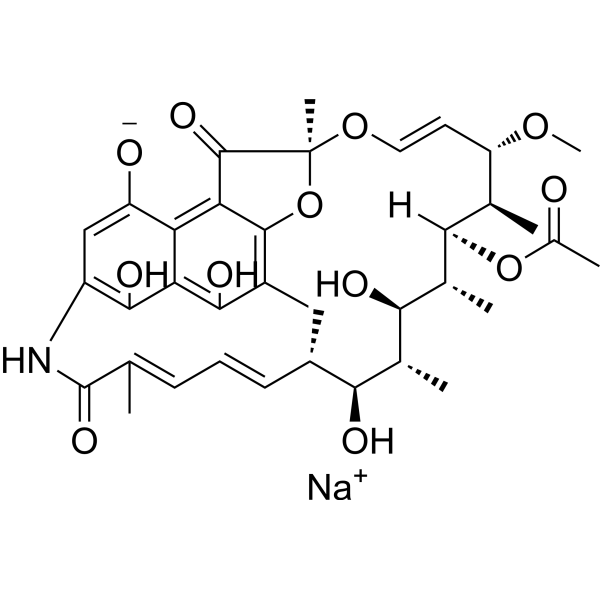
Rifamycin sodium (Rifamycin SV monosodium) is an orally active ansamycin antibiotic. Rifamycin sodium inhibits DNA-dependent RNA synthesis. Rifamycin sodium has antibacterial activity against Mycobacterium tuberculosis. Rifamycin sodium interferes with hepatic bile acid metabolism. Rifamycin sodium has anti-inflammatory effects. Rifamycin sodium can be used in the study of Mycobacterium tuberculosis, Bacteroides fragilis infection, and Lipopolysaccharide (HY-D1056B3)-induced inflammation.
For research use only. We do not sell to patients.
- Purity : 99.56%
- CAS No.: 14897-39-3
- Formula: C37H46NNaO12
- Molecular Weight:719.75
-
Storage:
-20°C, sealed storage, away from moisture
* In solvent : -80°C, 6 months; -20°C, 1 month (sealed storage, away from moisture)

To place orders, for customer services and technical support, please contact: MedChemExpress USA
Tel: 609-228-6898 E-mail: [email protected] [email protected]


-
 Biological Activity
-
Chemical Information
-
Solvent & Solubility
- Protocols
- Purity & Documentation
- References
-
 Help & FAQs


-
HY-B0318
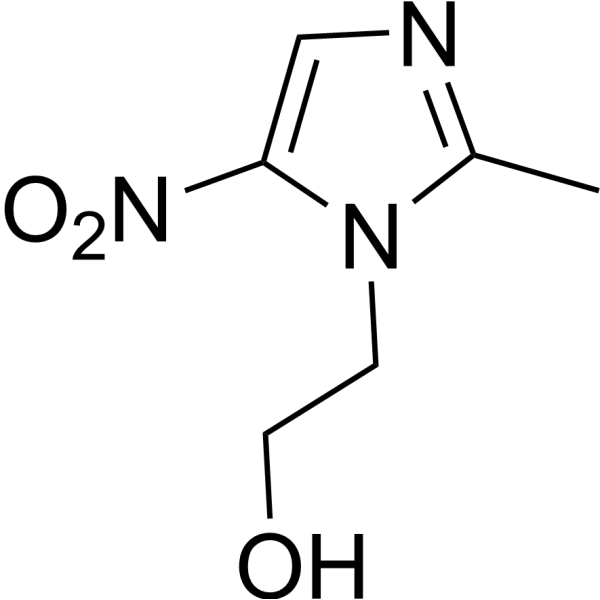
MetronidazoleAntibiotic -
HY-B0220
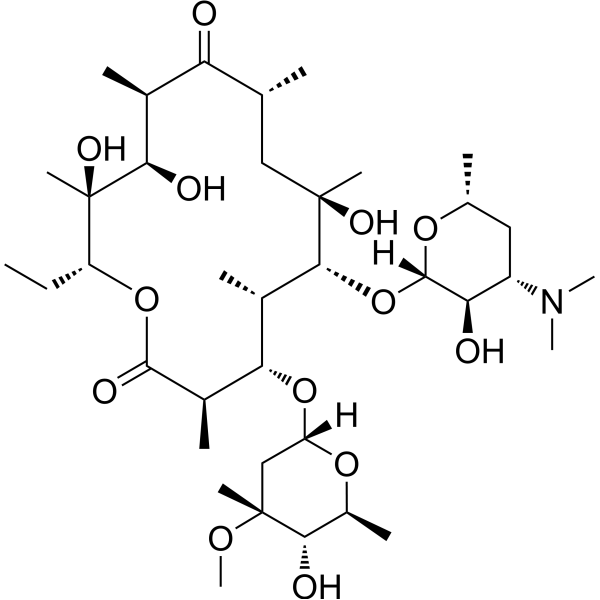
ErythromycinAntibiotic -
HY-13678
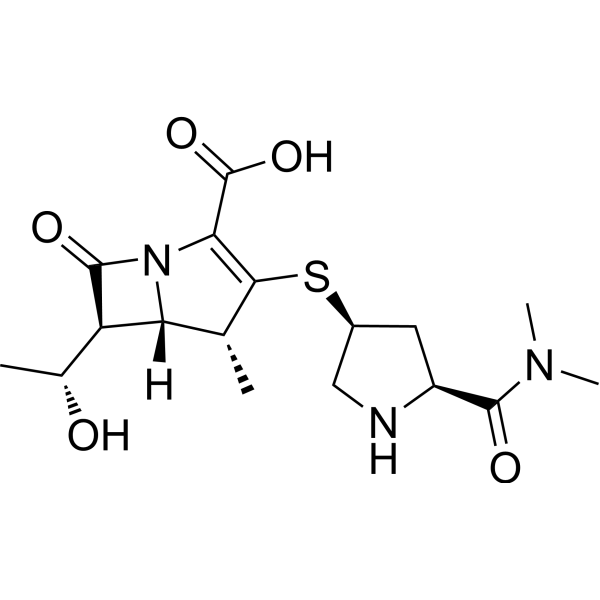
MeropenemAntimicrobial Agent -
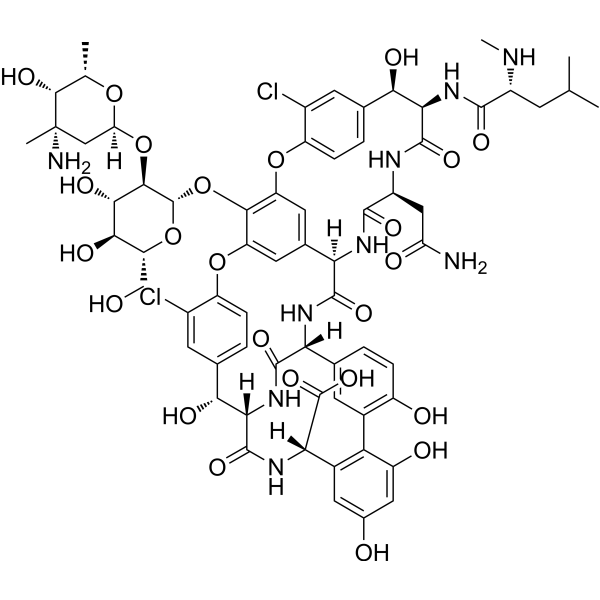
HY-B0671
VancomycinAntibiotic -
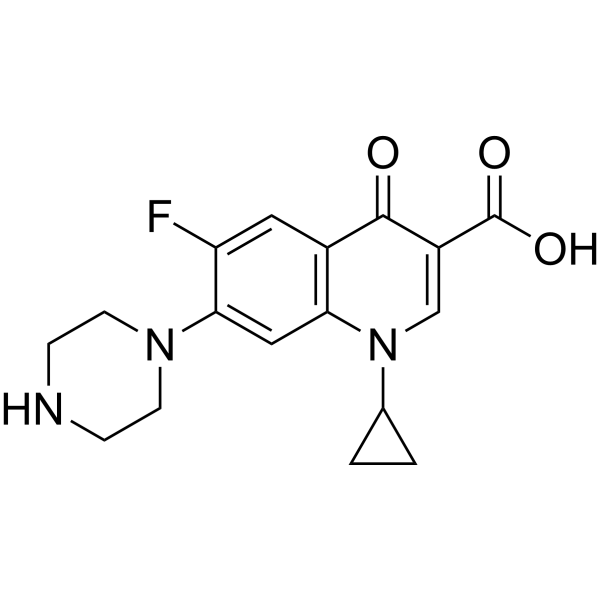
HY-B0356
CiprofloxacinTopoisomerase IV Inhibitor -
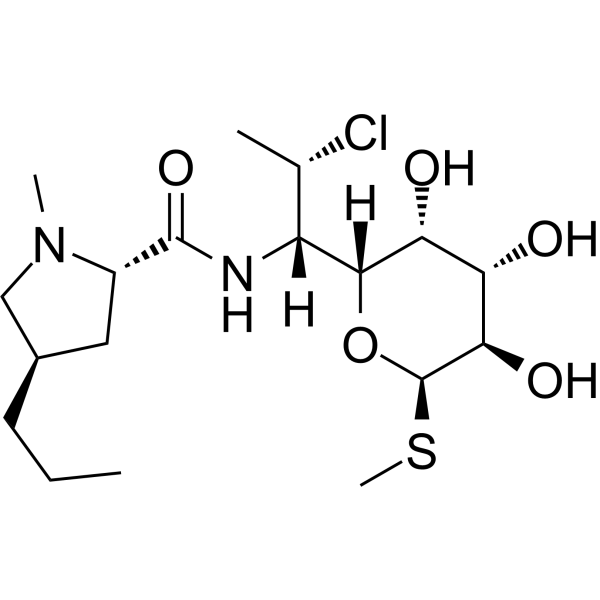
HY-B1455
ClindamycinLincosamide Antibiotic -
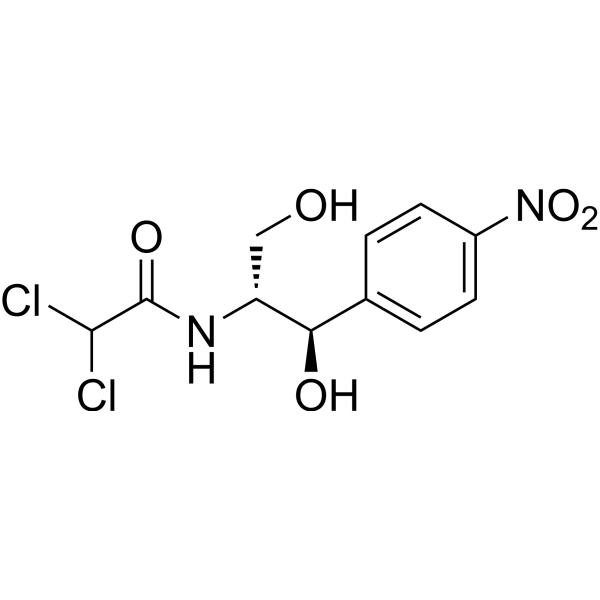
HY-B0239
ChloramphenicolHIF-1α Inhibitor -
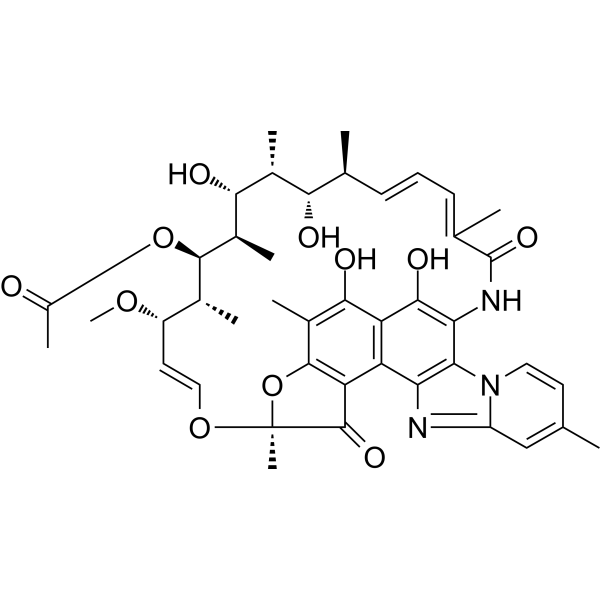
HY-13234
RifaximinGastrointestinal Antibiotic -
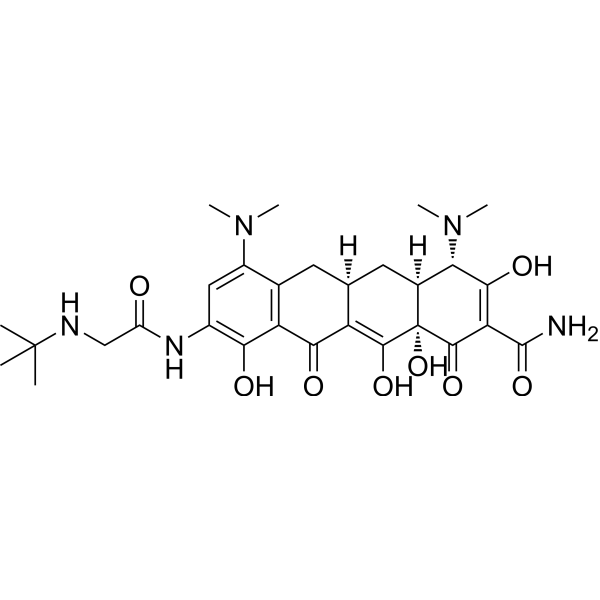
HY-B0117
TigecyclineBacterial Inhibitor -
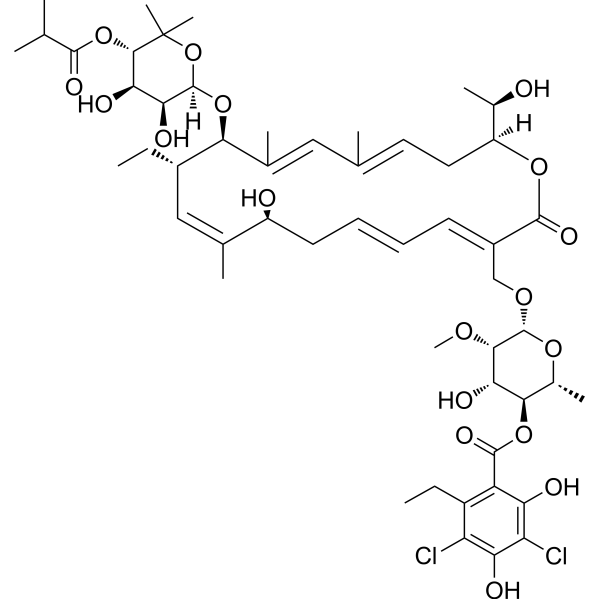
HY-17580
FidaxomicinAntibacterial Agent -

HY-B1907R
Rifamycin sodium (Standard)Ansamycin Antibiotic -

HY-B0318R
Metronidazole (Standard)Antibiotic


Biological Activity
Description
In Vitro
Rifamycin (10 μM; 30 s) sodium mainly inhibits sodium-independent Taurocholate (HY-N0545) uptake in short-term cultured rat hepatocytes[2].
Rifamycin (10-100 μM; 15 min) sodium effectively inhibits Oatp2-mediated Taurocholate uptake in Xenopus oocytes expressing Na+/Ntcp[2].
Rifamycin (1-100 μM; 24 h) sodium inhibits the synthesis of cytokines and chemokines from lipopolysaccharide-activated monocytes and macrophages[3].
Rifamycin sodium (0.16 μg/ml; 2 weeks of culture) inhibits the growth of M. tuberculosis and its drug-resistant mutants in TB broth containing 10% serum albumin[4].
MedChemExpress (MCE) has not independently confirmed the accuracy of these methods. They are for reference only.
In Vivo
Rifamycin (12.5-25 mg/kg; peritoneal lavage) sodium can improve the survival rate of rats with experimental intraperitoneal infection and significantly reduce the number of intraperitoneal bacteria and adhesion formation[6].
Rifamycin (5-40 mg/kg; esophageal gavage; once a day, 5 days a week; 4 weeks) sodium shortens oral treatment duration in a mouse model of Mycobacterium ulcerans disease[8].
Rifamycin (0.1 mL; intraaural administration; twice daily; 10 days) sodium does not cause hearing loss in adult or weanling rats[9].
Rifamycin (1 mg i.v. bolus followed by 4 mg i.v. infusion; 70 min) sodium interferes with three major steps of Bile acid metabolism in rats with intravenous Sodium cholate (HY-N0324A) infusion, resulting in a significant decrease in bile acid uptake and excretion[10].
Rifamycin (10-160 mg/kg; s.c.; single dose) sodium is approximately 11 times less effective than Metronidazole (HY-B0318) in a mouse Bacteroides fragilis thigh infection model[11].
MedChemExpress (MCE) has not independently confirmed the accuracy of these methods. They are for reference only.
-
Animal Model:Male Wistar rats (weight 200-250 g), cecal ligation puncture (CLP)-induced intra-abdominal infection model[6]
-
Dosage:25 mg/kg, 12.5 mg/kg
-
Administration:Peritoneal lavage
-
Result:Improved survival from 50% in the control group to 91.7% in the 25 mg/kg group and 100% in the 12.5 mg/kg group.
Significantly reduced adhesion formation.
Showed a greater reduction in bacterial counts in peritoneal fluid (25 mg/kg).


Chemical Information
-
CAS No. 14897-39-3
-
Appearance Solid
-
Molecular Weight 719.75
-
Formula C37H46NNaO12
-
Color Brown to red
-
SMILES
O=C1C2=C(C([O-])=CC(NC(/C(C)=C\C=C\[C@H](C)[C@H](O)[C@@H](C)[C@@H](O)[C@H]3C)=O)=C4O)C4=C(O)C(C)=C2O[C@@]1(O/C=C/[C@@H]([C@H]([C@@]3([H])OC(C)=O)C)OC)C.[Na+]
-
Synonyms
Rifamycin SV sodium
-
Structure Classification
-
Initial Source
fermentation of A. mediterranei or its mutants
-
Shipping
Room temperature in continental US; may vary elsewhere.
-
Storage
-20°C, sealed storage, away from moisture
* In solvent : -80°C, 6 months; -20°C, 1 month (sealed storage, away from moisture)


Solvent & Solubility
In Vitro:
DMSO : 175 mg/mL (243.14 mM; Need ultrasonic; Hygroscopic DMSO has a significant impact on the solubility of product, please use newly opened DMSO)
Please refer to the solubility information to select the appropriate solvent. Once prepared, please aliquot and store the solution to prevent product inactivation from repeated freeze-thaw cycles.
Storage method and period of stock solution: -80°C, 6 months; -20°C, 1 month (sealed storage, away from moisture). When stored at -80°C, please use it within 6 months. When stored at -20°C, please use it within 1 month.
Please refer to the solubility information to select the appropriate solvent. Once prepared, please aliquot and store the solution to prevent product inactivation from repeated freeze-thaw cycles.
Storage method and period of stock solution: -80°C, 6 months; -20°C, 1 month (sealed storage, away from moisture). When stored at -80°C, please use it within 6 months. When stored at -20°C, please use it within 1 month.
Concentration (start) × Volume (start) = Concentration (final) × Volume (final)
In Vivo:
Select the appropriate dissolution method based on your experimental animal and administration route.
- For the following dissolution methods, please ensure to first prepare a clear stock solution using an In Vitro approach and then sequentially add co-solvents:
- To ensure reliable experimental results, the clarified stock solution can be appropriately stored based on storage conditions. As for the working solution for In Vivo experiments, it is recommended to prepare freshly and use it on the same day.
- The percentages shown for the solvents indicate their volumetric ratio in the final prepared solution. If precipitation or phase separation occurs during preparation, heat and/or sonication can be used to aid dissolution.
Add each solvent one by one: 10% DMSO 40% PEG300 5% Tween-80 45% Saline
Solubility: ≥ 2.08 mg/mL (2.89 mM); Clear solution
This protocol yields a clear solution of ≥ 2.08 mg/mL (saturation unknown).
Taking 1 mL working solution as an example, add 100 μL DMSO stock solution (20.8 mg/mL) to 400 μL PEG300, and mix evenly; then add 50 μL Tween-80 and mix evenly; then add 450 μL Saline to adjust the volume to 1 mL.
Preparation of Saline: Dissolve 0.9 g sodium chloride in ddH₂O and dilute to 100 mL to obtain a clear Saline solution.
Add each solvent one by one: 10% DMSO 90% (20% SBE-β-CD in Saline)
Solubility: ≥ 2.08 mg/mL (2.89 mM); Clear solution
This protocol yields a clear solution of ≥ 2.08 mg/mL (saturation unknown).
Taking 1 mL working solution as an example, add 100 μL DMSO stock solution (20.8 mg/mL) to 900 μL 20% SBE-β-CD in Saline, and mix evenly.
Preparation of 20% SBE-β-CD in Saline (4°C, storage for one week): 2 g SBE-β-CD powder is dissolved in 10 mL Saline, completely dissolve until clear.
In Vivo Dissolution Calculator
Please enter the basic information of animal experiments:
-
-
-
-
Recommended: Prepare an additional quantity of animals to account for potential losses during experiments.
Please enter your animal formula composition:
-
%DMSO +
Recommended: Keep the proportion of DMSO in working solution below 2% if your animal is weak.
-
%+
-
+%Tween-80 + +
-
%Saline +
The co-solvents required include: DMSO, . All of co-solvents are available by MedChemExpress (MCE). , Tween 80. All of co-solvents are available by MedChemExpress (MCE).
Working solution concentration: 0.22 mg/mL
Method for preparing stock solution: mg drug dissolved in μL DMSO. Stock solution concentration: mg/mL. * In solvent : -80°C, 6 months; -20°C, 1 month (sealed storage, away from moisture)
1. Take μL DMSO stock solution;
2. Add μL .
μL , mix evenly;
3. Then add μL Tween 80, mix evenly;
4. Then add μL
Please ensure that the stock solution in the first step is dissolved to a clear state, and add co-solvents in sequence. You can use ultrasonic heating (ultrasonic cleaner, recommended frequency 20-40 kHz), vortexing, etc. to assist dissolution.


Purity & Documentation
-
Data Sheet (287 KB)
-
SDS (393 KB)
- English - EN (393 KB)
- Français - FR (393 KB)
- Deutsch - DE (393 KB)
- Norwegian - NO (393 KB)
- Español - ES (393 KB)
- Swedish - SV (393 KB)
- Italian - IT (393 KB)
- Korean - KR (393 KB)
- Portuguese - PT (393 KB)
-
Handling Instructions (2659 KB)
References
[1]. Floss HG, et al. Rifamycin-mode of action, resistance, and biosynthesis. Chem Rev. 2005 Feb;105(2):621-32. [Content Brief]
[2]. Fattinger K, et al. Rifamycin SV and rifampicin exhibit differential inhibition of the hepatic rat organic anion transporting polypeptides, Oatp1 and Oatp2. Hepatology. 2000 Jul;32(1):82-6. [Content Brief]
[3]. Rosette C, et al. Anti-inflammatory and immunomodulatory activities of rifamycin SV. Int J Antimicrob Agents. 2013 Aug;42(2):182-6. [Content Brief]
[5]. Saito K, et al. Rifamycin action on RNA polymerase in antibiotic-tolerant Mycobacterium tuberculosis results in differentially detectable populations. Proc Natl Acad Sci U S A. 2017 Jun 13;114(24):E4832-E4840. [Content Brief]
[6]. Jallouli M, et al. Rifamycin lavage in the treatment of experimental intra-abdominal infection. J Surg Res. 2009 Aug;155(2):191-4. [Content Brief]
[7]. Zhang M, et al. Treatment of tuberculosis with rifamycin-containing regimens in immune-deficient mice. Am J Respir Crit Care Med. 2011 May 1;183(9):1254-61. [Content Brief]
[8]. Omansen TF, et al. High-Dose Rifamycins Enable Shorter Oral Treatment in a Murine Model of Mycobacterium ulcerans Disease. Antimicrob Agents Chemother. 2019 Jan 29;63(2):e01478-18. [Content Brief]
[10]. Okolicsanyi L, et al. Influence of rifamycin SV on bile acid metabolism in rats. Naunyn Schmiedebergs Arch Pharmacol. 1980 Aug;313(2):171-4. [Content Brief]


Complete Stock Solution Preparation Table
Please refer to the solubility information to select the appropriate solvent. Once prepared, please aliquot and store the solution to prevent product inactivation from repeated freeze-thaw cycles.
Storage method and period of stock solution: -80°C, 6 months; -20°C, 1 month (sealed storage, away from moisture). When stored at -80°C, please use it within 6 months. When stored at -20°C, please use it within 1 month.
| Optional Solvent | Concentration Solvent Mass | 1 mg | 5 mg | 10 mg | 25 mg |
|---|---|---|---|---|---|
| DMSO | 1 mM | 1.3894 mL | 6.9469 mL | 13.8937 mL | 34.7343 mL |
| 5 mM | 0.2779 mL | 1.3894 mL | 2.7787 mL | 6.9469 mL | |
| 10 mM | 0.1389 mL | 0.6947 mL | 1.3894 mL | 3.4734 mL | |
| 15 mM | 0.0926 mL | 0.4631 mL | 0.9262 mL | 2.3156 mL | |
| 20 mM | 0.0695 mL | 0.3473 mL | 0.6947 mL | 1.7367 mL | |
| 25 mM | 0.0556 mL | 0.2779 mL | 0.5557 mL | 1.3894 mL | |
| 30 mM | 0.0463 mL | 0.2316 mL | 0.4631 mL | 1.1578 mL | |
| 40 mM | 0.0347 mL | 0.1737 mL | 0.3473 mL | 0.8684 mL | |
| 50 mM | 0.0278 mL | 0.1389 mL | 0.2779 mL | 0.6947 mL | |
| 60 mM | 0.0232 mL | 0.1158 mL | 0.2316 mL | 0.5789 mL | |
| 80 mM | 0.0174 mL | 0.0868 mL | 0.1737 mL | 0.4342 mL | |
| 100 mM | 0.0139 mL | 0.0695 mL | 0.1389 mL | 0.3473 mL |


Rifamycin sodium Related Classifications
HY-B1907 Related Classifications
 Powered by Bioz