



β-Boswellic acid
Based on 3 publication(s) in Google Scholar
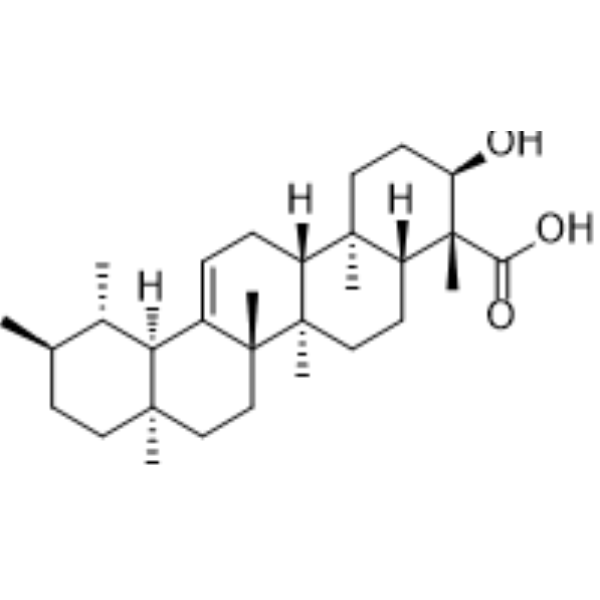
β-Boswellic acid is isolated from the gum resin of Boswellia serrata with anticancer, antioxidant activity, anti-inflammatory activity and anti-arthritic pain.β-Boswellic acid is an orally active nonreducing-type inhibitor of the 5-lipoxygenase (5-LO) product formation either interacting directly with the 5-LO or blocking its translocation. β-Boswellic acid inhibits the synthesis of DNA, RNA and protein in human leukemia HL-60 cells with IC50 values ranging from 0.6 to 7.1 μM. β-Boswellic acid is promising for research of diabetes, inflammatory and arthritic diseases.
For research use only. We do not sell to patients.
- Purity : 99.89%
- CAS No.: 631-69-6
- Formula: C30H48O3
- Molecular Weight:456.70
-
Storage:Powder -20°C, 3 years ; In solvent -80°C, 6 months , -20°C, 1 month

To place orders, for customer services and technical support, please contact: MedChemExpress USA
Tel: 609-228-6898 E-mail: [email protected] [email protected]


-
 Biological Activity
-
Chemical Information
-
Solvent & Solubility
- Protocols
- Purity & Documentation
- References
-
 Help & FAQs


-
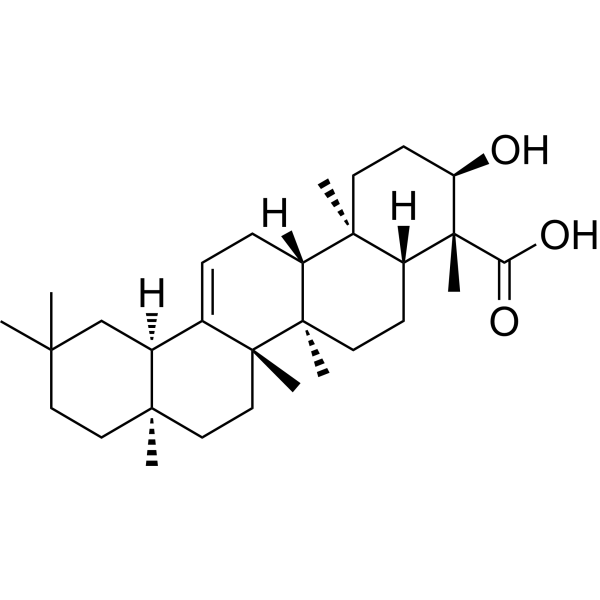
HY-N0611
alpha-Boswellic acidAnti-inflammatory agent -
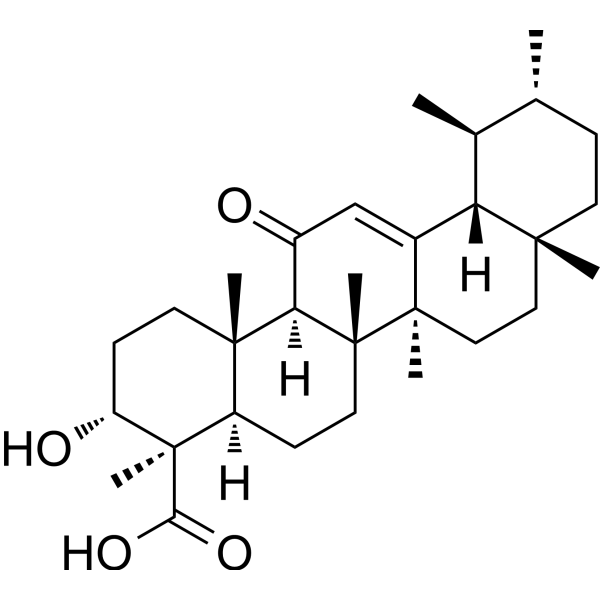
HY-N2056
11-Keto-beta-boswellic acidAnti-inflammatory Agent -
HY-N0892
AKBANrf2 Activator -
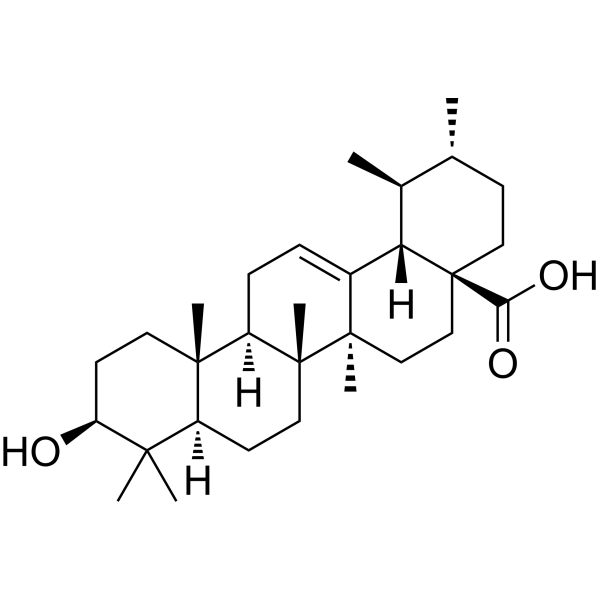
HY-N0140
Ursolic acidAutophagy Inducer -
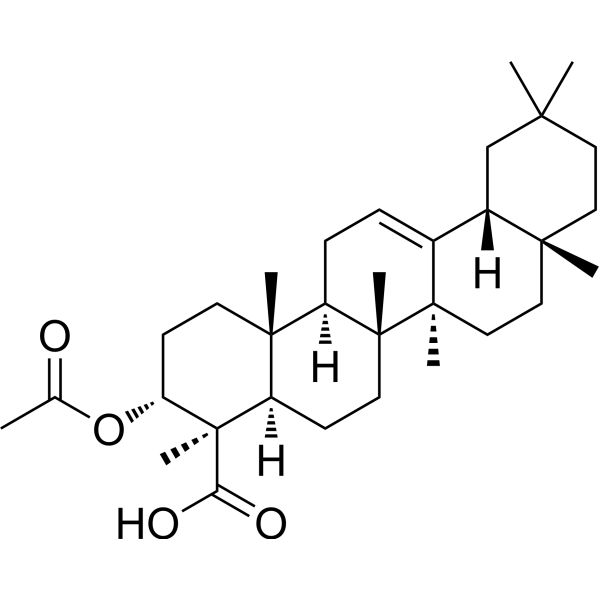
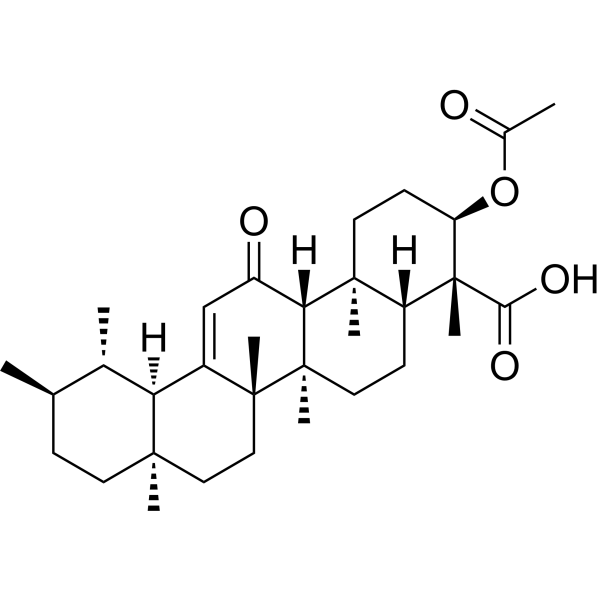
HY-N3037
3-O-Acetyl-α-boswellic acidT cell Function Suppressor -
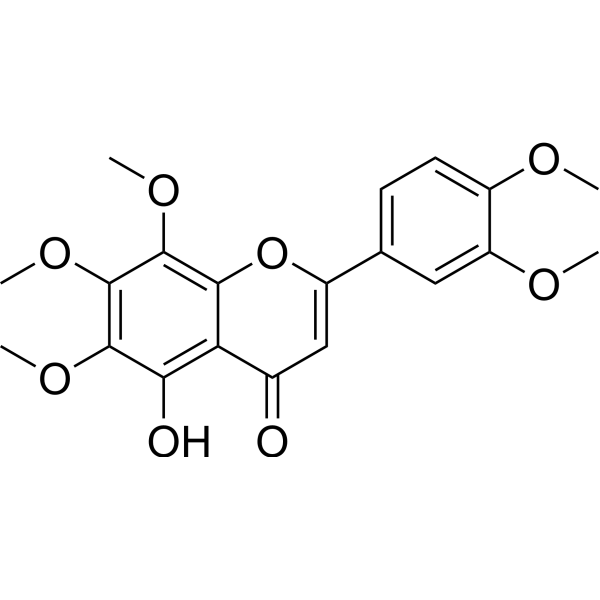
HY-N1942
5-O-Demethylnobiletin5-LOX Inhibitor -
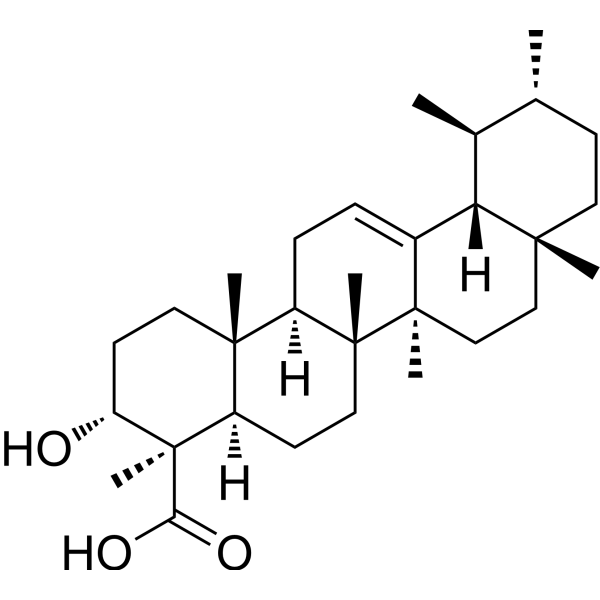
HY-N2513R
β-Boswellic acid (Standard) -
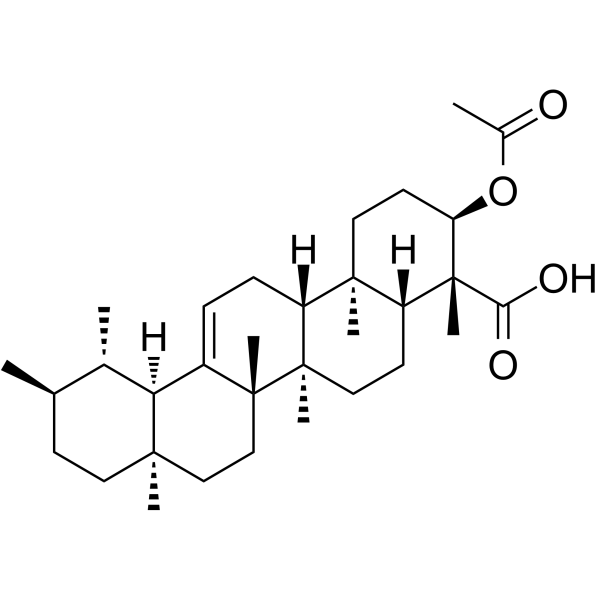
HY-N2075
3-Acetyl-beta-boswellic acidNatural Product -
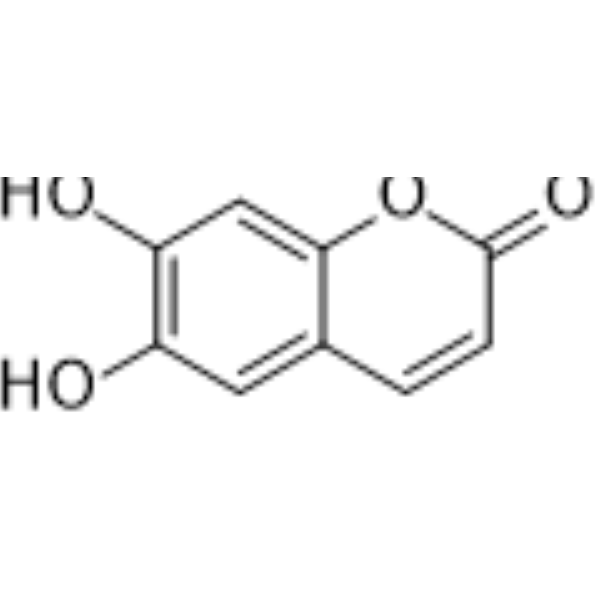
HY-N0284
EsculetinPI3K Inhibitor -
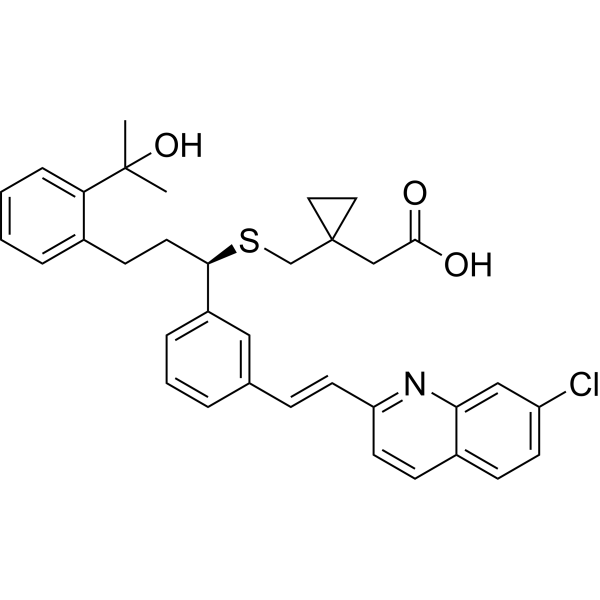
HY-13315A
MontelukastCysLT1 Antagonist -
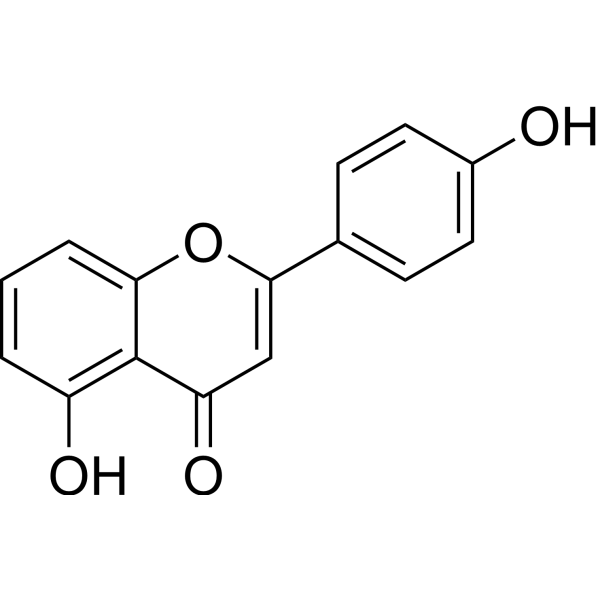
HY-N1881
4',5-DihydroxyflavoneColA Inhibitor -

HY-13315AR
Montelukast (Standard)CysLT1 Antagonist
Publications Citing Use of MedChemExpress (MCE) β-Boswellic acid
MoreAll DNA/RNA Synthesis Isoforms
More

Biological Activity
Description
IC50 & Target
|
5-LO |
Cellular Effect
|
Cell Line

|
Type | Value | Description | References |
|---|---|---|---|---|
| A549 | IC50 |
5 μM
Compound: 1
|
Inhibition of microsomal PGES1 isolated from IL-1beta-stimulated human A549 cells preincubated for 15 mins followed by substrate addition measured after 1 min by RP-HPLC analysis
Inhibition of microsomal PGES1 isolated from IL-1beta-stimulated human A549 cells preincubated for 15 mins followed by substrate addition measured after 1 min by RP-HPLC analysis
|
[PMID: 24844534] |
| HeLa | IC50 |
35 μM
Compound: 1, BA
|
Cytotoxicity against human HeLa cells after 48 hrs by MTT assay
Cytotoxicity against human HeLa cells after 48 hrs by MTT assay
|
[PMID: 21334793] |
| HL-60 | IC50 |
15 μM
Compound: 1, BA
|
Anticancer activity against human HL60 cells after 48 hrs by MTT assay
Anticancer activity against human HL60 cells after 48 hrs by MTT assay
|
[PMID: 22123322] |
| HL-60 | IC50 |
24 μM
Compound: 1, BA
|
Cytotoxicity against human HL60 cells after 48 hrs by MTT assay
Cytotoxicity against human HL60 cells after 48 hrs by MTT assay
|
[PMID: 21334793] |
| Sf21 | IC50 |
>40 μM
Compound: 26
|
Inhibition of human recombinant COX2 expressed in baculovirus infected sf21 cells assessed as decrease in PGE2 formation using arachidonic acid as substrate preincubated for 10 mins followed by substrate addition measured after 45 mins by LC-MS analysis
Inhibition of human recombinant COX2 expressed in baculovirus infected sf21 cells assessed as decrease in PGE2 formation using arachidonic acid as substrate preincubated for 10 mins followed by substrate addition measured after 45 mins by LC-MS analysis
|
[PMID: 31774676] |
In Vitro
β-Boswellic acid (0-34 μM, 120 min) inhibits DNA, RNA and protein synthesis of HL-60 cells in a dose-dependent manner[2].
MedChemExpress (MCE) has not independently confirmed the accuracy of these methods. They are for reference only.
In Vivo
MedChemExpress (MCE) has not independently confirmed the accuracy of these methods. They are for reference only.
-
Animal Model:STZ-induced diabetic rats[4]
-
Dosage:1-20 mg/kg
-
Administration:p.o., daily for 21 days
-
Result:Produced a significant antihyperglycemic effect on the 5th day onward in STZ-induced diabetic rats and significantly lowered the blood glucose level.


Chemical Information
-
CAS No. 631-69-6
-
Appearance Solid
-
Molecular Weight 456.70
-
Formula C30H48O3
-
Color White to yellow
-
SMILES
C[C@]12[C@@](CC=C3[C@]2(CC[C@]4(C)[C@@]3([H])[C@H]([C@H](C)CC4)C)C)([H])[C@@]5([C@@]([C@](C)([C@H](O)CC5)C(O)=O)([H])CC1)C
-
Structure Classification
-
Initial Source
-
Shipping
Room temperature in continental US; may vary elsewhere.
-
Storage
Powder -20°C 3 years In solvent -80°C 6 months -20°C 1 month


Publications (3)
-
Journal Impact Factor
-
Most Recent
-
Phytomedicine
Xihuang Pill ameliorates the immune microenvironment of TNBC by activation of AMPKα-ACC signaling-mediated lipid metabolic reprogramming. [Abstract]2026 Jul 25:157:158311. PMID: 42172981 -
3 Biotech
Mitochondria-mediated pyroptosis: anti-glioblastoma mechanism of the frankincense-derived compound β-boswellic acid. [Abstract]2026 Feb;16(2):73. PMID: 41550484 -
PLoS One
Assessing the efficacy of frankincense extract as a root canal irrigant against Enterococcus faecalis. [Abstract]2025 Apr 9;20(4):e0321458. PMID: 40202962


Solvent & Solubility
In Vitro:
DMSO : 100 mg/mL (218.96 mM; Need ultrasonic; Hygroscopic DMSO has a significant impact on the solubility of product, please use newly opened DMSO)
Please refer to the solubility information to select the appropriate solvent. Once prepared, please aliquot and store the solution to prevent product inactivation from repeated freeze-thaw cycles.
Storage method and period of stock solution: -80°C, 6 months; -20°C, 1 month. When stored at -80°C, please use it within 6 months. When stored at -20°C, please use it within 1 month.
Please refer to the solubility information to select the appropriate solvent. Once prepared, please aliquot and store the solution to prevent product inactivation from repeated freeze-thaw cycles.
Storage method and period of stock solution: -80°C, 6 months; -20°C, 1 month. When stored at -80°C, please use it within 6 months. When stored at -20°C, please use it within 1 month.
Concentration (start) × Volume (start) = Concentration (final) × Volume (final)
In Vivo:
Select the appropriate dissolution method based on your experimental animal and administration route.
- For the following dissolution methods, please ensure to first prepare a clear stock solution using an In Vitro approach and then sequentially add co-solvents:
- To ensure reliable experimental results, the clarified stock solution can be appropriately stored based on storage conditions. As for the working solution for In Vivo experiments, it is recommended to prepare freshly and use it on the same day.
- The percentages shown for the solvents indicate their volumetric ratio in the final prepared solution. If precipitation or phase separation occurs during preparation, heat and/or sonication can be used to aid dissolution.
Add each solvent one by one: 10% DMSO 40% PEG300 5% Tween-80 45% Saline
Solubility: ≥ 2.5 mg/mL (5.47 mM); Clear solution
This protocol yields a clear solution of ≥ 2.5 mg/mL (saturation unknown).
Taking 1 mL working solution as an example, add 100 μL DMSO stock solution (25.0 mg/mL) to 400 μL PEG300, and mix evenly; then add 50 μL Tween-80 and mix evenly; then add 450 μL Saline to adjust the volume to 1 mL.
Preparation of Saline: Dissolve 0.9 g sodium chloride in ddH₂O and dilute to 100 mL to obtain a clear Saline solution.
Add each solvent one by one: 10% DMSO 90% (20% SBE-β-CD in Saline)
Solubility: ≥ 2.5 mg/mL (5.47 mM); Clear solution
This protocol yields a clear solution of ≥ 2.5 mg/mL (saturation unknown).
Taking 1 mL working solution as an example, add 100 μL DMSO stock solution (25.0 mg/mL) to 900 μL 20% SBE-β-CD in Saline, and mix evenly.
Preparation of 20% SBE-β-CD in Saline (4°C, storage for one week): 2 g SBE-β-CD powder is dissolved in 10 mL Saline, completely dissolve until clear.
In Vivo Dissolution Calculator
Please enter the basic information of animal experiments:
-
-
-
-
Recommended: Prepare an additional quantity of animals to account for potential losses during experiments.
Please enter your animal formula composition:
-
%DMSO +
Recommended: Keep the proportion of DMSO in working solution below 2% if your animal is weak.
-
%+
-
+%Tween-80 + +
-
%Saline +
The co-solvents required include: DMSO, . All of co-solvents are available by MedChemExpress (MCE). , Tween 80. All of co-solvents are available by MedChemExpress (MCE).
Working solution concentration: 0.22 mg/mL
Method for preparing stock solution: mg drug dissolved in μL DMSO. Stock solution concentration: mg/mL.
1. Take μL DMSO stock solution;
2. Add μL .
μL , mix evenly;
3. Then add μL Tween 80, mix evenly;
4. Then add μL
Please ensure that the stock solution in the first step is dissolved to a clear state, and add co-solvents in sequence. You can use ultrasonic heating (ultrasonic cleaner, recommended frequency 20-40 kHz), vortexing, etc. to assist dissolution.


Purity & Documentation
-
Data Sheet (277 KB)
-
SDS (392 KB)
- English - EN (392 KB)
- Français - FR (392 KB)
- Deutsch - DE (392 KB)
- Norwegian - NO (392 KB)
- Español - ES (392 KB)
- Swedish - SV (392 KB)
- Italian - IT (392 KB)
- Korean - KR (392 KB)
- Portuguese - PT (392 KB)
-
Handling Instructions (2659 KB)
References
[1]. Safayhi H, et al. Boswellic acids: novel, specific, nonredox inhibitors of 5-lipoxygenase. J Pharmacol Exp Ther. 1992 Jun;261(3):1143-6. [Content Brief]
[2]. Shao Y, et al. Inhibitory activity of boswellic acids from Boswellia serrata against human leukemia HL-60 cellsin culture. Planta Med. 1998 May;64(4):328-31 [Content Brief]
[3]. Huang MT, et al. Anti-tumor and anti-carcinogenic activities of triterpenoid, beta-boswellic acid. Biofactors. 2000;13(1-4):225-30. [Content Brief]
[4]. Khan A, et al. Anti-diabetic potential of β-boswellic acid and 11-keto-β-boswellic acid: Mechanistic insights from computational and biochemical approaches. Biomed Pharmacother. 2022 Mar;147:112669. [Content Brief]


Complete Stock Solution Preparation Table
Please refer to the solubility information to select the appropriate solvent. Once prepared, please aliquot and store the solution to prevent product inactivation from repeated freeze-thaw cycles.
Storage method and period of stock solution: -80°C, 6 months; -20°C, 1 month. When stored at -80°C, please use it within 6 months. When stored at -20°C, please use it within 1 month.
| Optional Solvent | Concentration Solvent Mass | 1 mg | 5 mg | 10 mg | 25 mg |
|---|---|---|---|---|---|
| DMSO | 1 mM | 2.1896 mL | 10.9481 mL | 21.8962 mL | 54.7405 mL |
| 5 mM | 0.4379 mL | 2.1896 mL | 4.3792 mL | 10.9481 mL | |
| 10 mM | 0.2190 mL | 1.0948 mL | 2.1896 mL | 5.4741 mL | |
| 15 mM | 0.1460 mL | 0.7299 mL | 1.4597 mL | 3.6494 mL | |
| 20 mM | 0.1095 mL | 0.5474 mL | 1.0948 mL | 2.7370 mL | |
| 25 mM | 0.0876 mL | 0.4379 mL | 0.8758 mL | 2.1896 mL | |
| 30 mM | 0.0730 mL | 0.3649 mL | 0.7299 mL | 1.8247 mL | |
| 40 mM | 0.0547 mL | 0.2737 mL | 0.5474 mL | 1.3685 mL | |
| 50 mM | 0.0438 mL | 0.2190 mL | 0.4379 mL | 1.0948 mL | |
| 60 mM | 0.0365 mL | 0.1825 mL | 0.3649 mL | 0.9123 mL | |
| 80 mM | 0.0274 mL | 0.1369 mL | 0.2737 mL | 0.6843 mL | |
| 100 mM | 0.0219 mL | 0.1095 mL | 0.2190 mL | 0.5474 mL |


β-Boswellic acid Related Classifications
HY-N2513 Related Classifications
 Powered by Bioz