Search Result
Results for "
AMPA receptors
" in MedChemExpress (MCE) Product Catalog:
22
Isotope-Labeled Compounds
| Cat. No. |
Nombre del producto |
Target |
Áreas de investigación |
Chemical Structure |
-
- HY-15068
-
NBQX
Maximum Cited Publications
20 Publications Verification
FG9202
|
iGluR
|
Neurological Disease
|
|
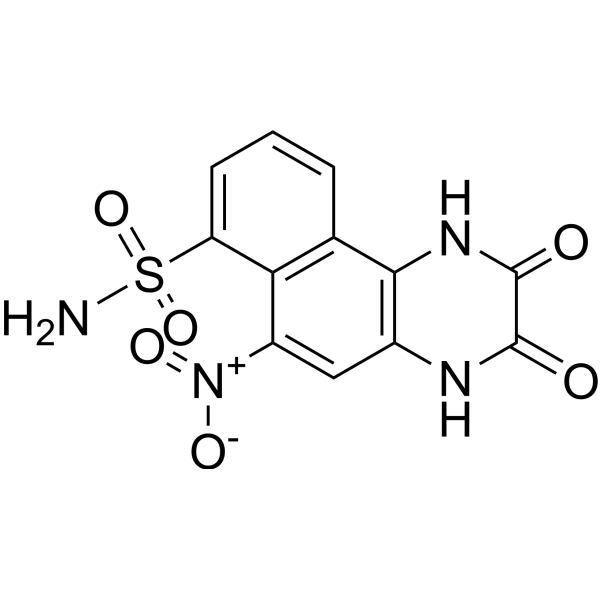
NBQX (FG9202) is a highly selective and competitive AMPA receptor antagonist. NBQX has neuroprotective and anticonvulsant activity .
|
-
-
- HY-108599
-
|
FR236924
|
PKC
CaMK
Phosphatase
Apoptosis
|
Neurological Disease
|
|
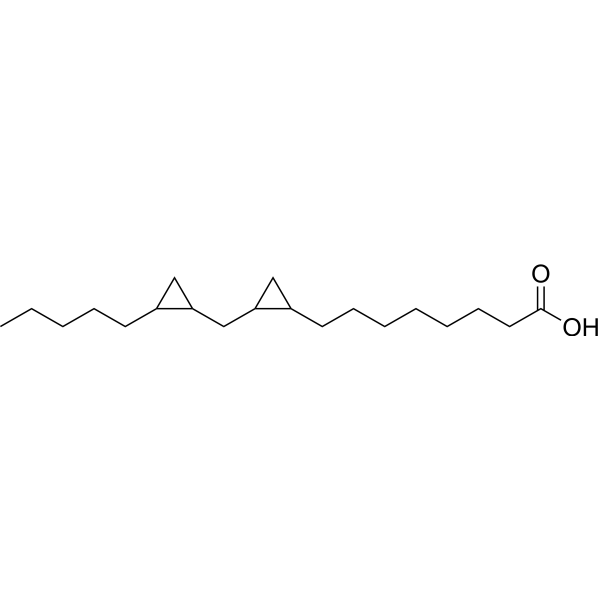
DCP-LA (FR236924), a linoleic acid derivative, selectively and directly activates PKCε. DCP-LA activates Ca( 2+)/calmodulin-dependent protein kinase II (CaMKII) and inhibits protein phosphatase-1 (PP-1) to stimulate AMPA receptor exocytosis. DCP-LA inhibits activation of caspase-3/-9 and protects neurons at least in part from oxidative stress-induced apoptosis .
|
-
-
- HY-100815A
-
|
L-AMPA
|
iGluR
|
Neurological Disease
|
|
(S)-AMPA (L-AMPA), an active S-enantiomer of AMPA, is a potent and selective AMPA receptor agonist .
|
-
-
- HY-15067
-
|
FG 9041
|
iGluR
|
Cancer
|
|
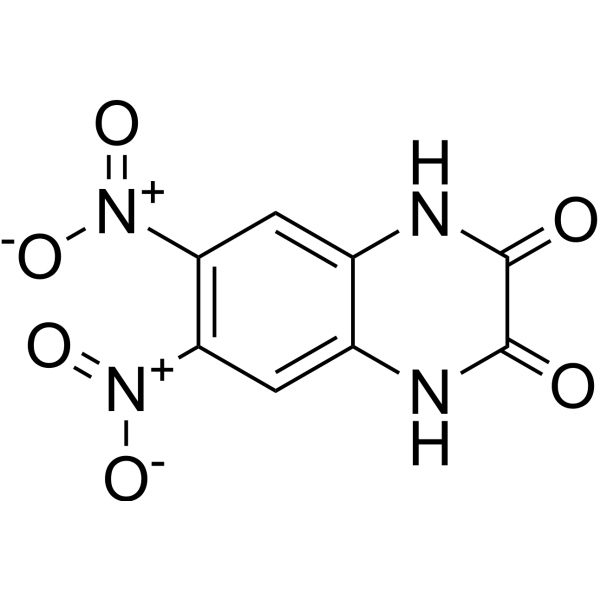
DNQX (FG 9041), a quinoxaline derivative, is a selective, potent competitive non-NMDA glutamate receptor antagonist (IC50s = 0.5, 2 and 40 μM for AMPA, kainate and NMDA receptors, respectively) .
|
-
-
- HY-115864
-
|
TAK-653; NBI-1065845
|
iGluR
Lipoxygenase
|
Neurological Disease
|
|
Osavampator (TAK-653) is a AMPA receptor positive allosteric modulator. Osavampator selectively binds to AMPA-R in a glutamate-dependent manner and induces Ca2+ influx in hGluA1i CHO cells (EC50 = 3.3 μM). Osavampator improves learning and memory in many models. Osavampator is can be used for the research of depressive disorders .
|
-
-
- HY-100815B
-
|
(±)-AMPA
|
iGluR
|
Neurological Disease
|
|
(RS)-AMPA ((±)-AMPA) is a glutamate analogue and a potent and selective excitatory neurotransmitter L-glutamic acid agonist. (RS)-AMPA does not interfere with binding sites for kainic acid or NMDA receptors .
|
-
-
- HY-15068A
-
NBQX disodium
Maximum Cited Publications
20 Publications Verification
FG9202 disodium
|
iGluR
|
Neurological Disease
|
|
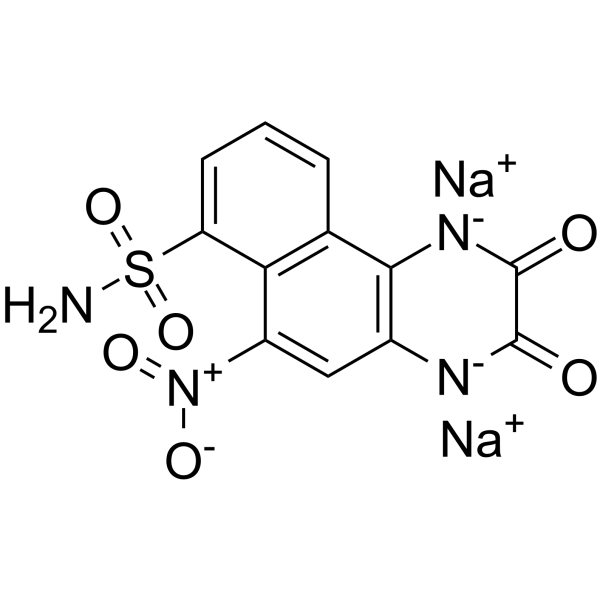
NBQX disodium (FG9202 disodium) is a highly selective and competitive AMPA receptor antagonist. NBQX disodium has neuroprotective and anticonvulsant activity .
|
-
-
- HY-10933
-
CX516
2 Publications Verification
BDP 12
|
iGluR
|
Neurological Disease
|
|
CX516 (BDP 12) is an ampakine and acts as an AMPA receptor positive allosteric modulator for the research of Alzheimer's disease, schizophrenia and mild cognitive impairment (MCI) .
|
-
-
- HY-101165
-
|
|
iGluR
GABA Receptor
|
Neurological Disease
|
|
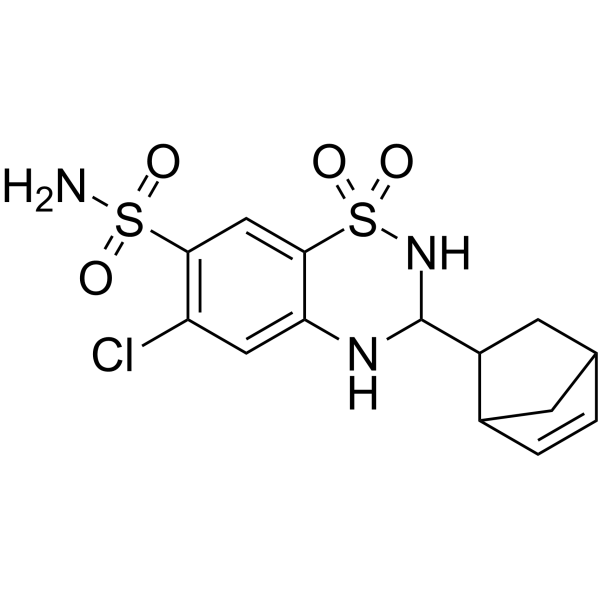
Cyclothiazide is a positive allosteric modulator of ionotropic AMPA-type glutamate receptors. Cyclothiazide inhibits GABAA receptors. Cyclothiazide is frequently used to produce a fast inhibition of AMPA receptor desensitization and a much slower potentiation of the AMPA current. Cyclothiazide can potentiate responses to kainate in hippocampal neurons. Cyclothiazide has effects on glutamatergic neurotransmission. Cyclothiazide also induces epileptiform EEG activity accompanying behavioral seizures .
|
-
-
- HY-118424
-
|
|
iGluR
|
Neurological Disease
Metabolic Disease
|
|
JNJ-55511118 is a selective TARP γ-8 binding AMPA receptor modulator with oral bioavailability and blood-brain barrier permeability, with a Ki of 26 nM. JNJ-55511118 reduces voluntary intake of sweetened alcohol in male mice. In rodent models, JNJ-55511118 inhibits hippocampal neurotransmission, reduces specific electroencephalogram frequency bands, induces transient hyperlocomotion, impairs learning and memory abilities, and exerts anticonvulsant effects. JNJ-55511118 is applicable to research related to alcohol use disorder and seizures .
|
-
-
- HY-101528
-
|
|
iGluR
|
Neurological Disease
|
|
IDRA 21 is a positive and orally active modulator of the AMPA receptor. IDRA 21 facilitates excitatory neurotransmission via GluR1/2 receptors. IDRA 21 has the potential for the research of cognitive/memory disorders, including those associated with aging .
|
-
-
- HY-12509
-
|
|
iGluR
|
Neurological Disease
|
|
PEPA is an AMPA receptor allosteric potentiator. PEPA shows preferential action of PEPA on the flop form of AMPA receptors. PEPA is a more potent suppressor of desensitization of receptors containing GluR3 and GluR4 as opposed to those containing GluR1. PEPA has antianxiety effects .
|
-
-
- HY-175443
-
|
|
iGluR
|
Neurological Disease
|
|
AMPA-IN-3 is an AMPA receptor inhibitor. AMPA-IN-3 inhibits TARP J2-dependent AMPA receptor activity with a pIC50 value of 10.7. A AMPA-IN-3 can be used for the research of neurological disease .
|
-
-
- HY-12506A
-
|
1-Naphthylacetyl spermine trihydrochloride
|
iGluR
|
Neurological Disease
|
|
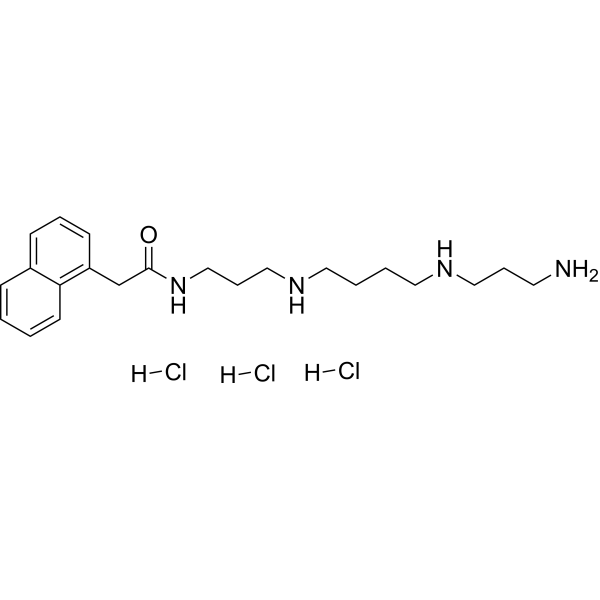
Naspm trihydrochloride (1-Naphthylacetyl spermine trihydrochloride), a synthetic analogue of Joro spider toxin, is a calcium permeable AMPA (CP-AMPA) receptors antagonist.
|
-
-
- HY-12506
-
|
1-Naphthylacetyl spermine
|
iGluR
|
Neurological Disease
|
|
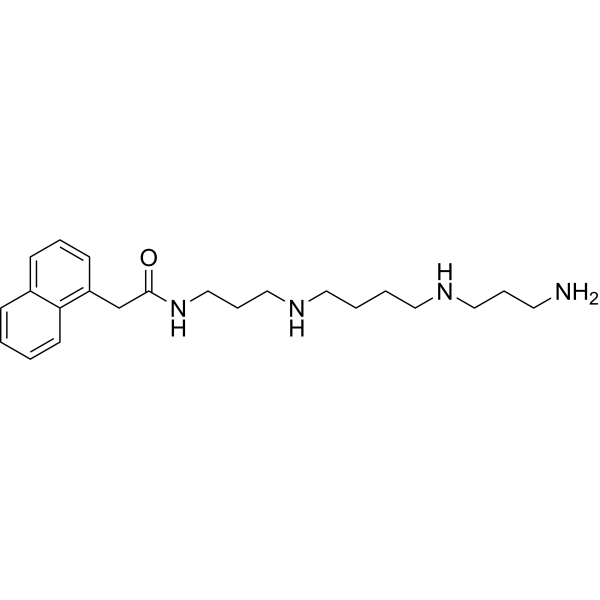
Naspm (1-Naphthyl acetyl spermine), a synthetic analogue of Joro spider toxin, is a calcium permeable AMPA (CP-AMPA) receptors antagonist.
|
-
-
- HY-10934
-
|
LY451395
|
iGluR
|
Neurological Disease
|
|
Mibampator (LY451395) is a potent and highly selective potentiator of the AMPA receptors.
|
-
-
- HY-171844
-
|
|
iGluR
|
Neurological Disease
Inflammation/Immunology
|
|
CX1739 is an orally active, blood-brain barrier permeable, low-efficacy AMPA-glutamate receptor (AMPAR) potentiator. CX1739 enhances excitatory neurotransmission by potentiating glutamate-induced excitatory currents and promoting in vivo long-term potentiation. CX1739 eliminates amphetamine-induced locomotor activity, reverses opioid-, pentobarbital- and ethanol-induced respiratory depression, and exerts pro-cognitive effects in animals. CX1739 impairs motor function recovery and increases the risk of post-injury complications. CX1739 can be used in research related to attention-deficit/hyperactivity disorder, dementia, respiratory depression and spinal cord injury .
|
-
-
- HY-139897
-
|
|
iGluR
|
Neurological Disease
|
|
CX 717 is a positive allosteric modulator of AMPA receptor. Antidepressant-like effect. CX 717 can be used for the research of adult attention deficit hyperactivity disorder (ADHD) .
|
-
-
- HY-125931
-
|
DM232
|
iGluR
|
Neurological Disease
Inflammation/Immunology
|
|
Unifiram (DM232) is a AMPA receptor activator and cognitive enhancer. Unifiram activates the AMPA-mediated neurotransmission system. Unifiram reverses NBQX-induced amnesia in the passive avoidance test in mice. Unifiram reverses the antagonistic effect of kynurenic acid on NMDA-mediated [ 3H]NA release in rat hippocampal slices. Unifiram enhances excitatory synaptic transmission in the rat hippocampus in vitro. Unifiram can be used in studies related to amnesia and cognitive dysfunction, including age-related memory decline, neurodegenerative diseases such as Alzheimer's disease or Parkinson's disease, multiple sclerosis, schizophrenia, and attention deficit hyperactivity disorder .
|
-
-
- HY-100785
-
-
-
- HY-P2259
-
|
|
iGluR
HIV Integrase
Adenosine Receptor
|
Cardiovascular Disease
Neurological Disease
|
|
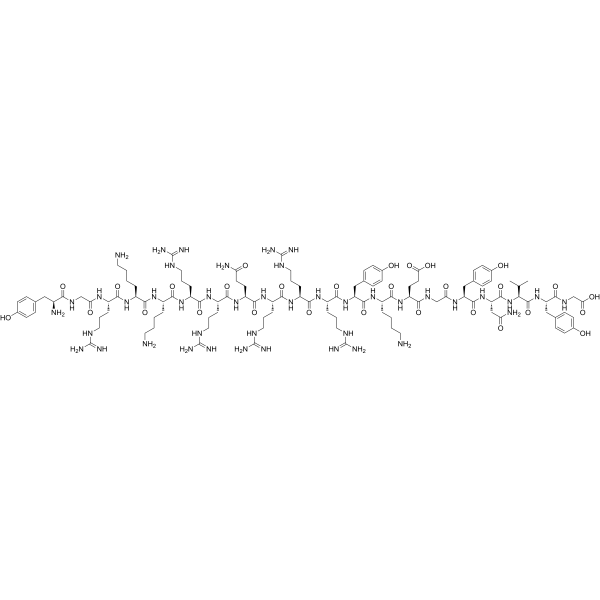
TAT-GluA2 3Y is a blood-brain barrier-permeable AMPA receptor inhibitory peptide that crosses cell membranes via the HIV-1 TAT protein domain. TAT-GluA2 3Y blocks the endocytosis of AMPA receptors, including the internalization of GluA1/GluA2 subunits, by disrupting interactions with the AP2, Brag2 and Syt3-GluA2 complexes, while also inhibiting long-term depression. TAT-GluA2 3Y blocks hypoxia-mediated AMPAR internalization, alleviates A1R-induced persistent synaptic inhibition, and reduces cerebral ischemic volume, neurological deficits and spatial memory deficits. TAT-GluA2 3Y blocks the effect of NLRP3 deficiency on fear generalization, inhibits amphetamine-induced behavioral/neurochemical sensitization, weakens the unconditioned stimulus-conditioned stimulus association of morphine, and promotes the extinction of morphine CPP. TAT-GluA2 3Y can be used in studies related to fear generalization, ischemic stroke, hypoxia, drug addiction and opioid addiction .
|
-
-
- HY-107520
-
|
|
Drug Derivative
|
Neurological Disease
|
|
MNI-caged-L-glutamate is an inert photolabile glutamate precursor. MNI-caged-L-glutamate does not modulate NMDA and AMPA receptor function in cultured neurones. MNI-caged-L-glutamate can be used for research on neurotransmitters .
|
-
-
- HY-177873
-
|
|
iGluR
|
Neurological Disease
|
|
AMPA receptor modulator-10 (Compound 9a) is an orally active AMPA receptor (AMPAR) positive allosteric modulator. AMPA receptor modulator-10 exhibits potent activity (pEC50 = 5.0) on the GluA2 subtype of AMPAR, significantly enhancing glutamate-induced calcium influx and current responses. AMPA receptor modulator-10 can reverse the memory impairment induced by Scopolamine (HY-N0296) and enhance cognitive function. AMPA receptor modulator-10 can be used for the research of neurological disease, such as schizophrenia .
|
-
-
- HY-112781
-
|
PF-04958242
|
iGluR
|
Neurological Disease
|
|
Pesampator (PF-04958242) is a potent and highly selective positive allosteric modulator of AMPA receptor (an AMPA potentiator) with an EC50 of 310 nM and a Ki of 170 nM .
|
-
-
- HY-122742
-
|
|
iGluR
|
Neurological Disease
|
|
HBT1 is an effective AMPA receptor AMPA-R potentiator. HBT1 specifically binds to the ligand-binding domain (LBD) of AMPAR and enhances receptor activity only when AMPA is present., HBT1 has almost no agonistic effect (i.e., reaching the optimal concentration, and then the efficacy decreases as the concentration continues to increase) compared with traditional AMPA-R potentiator, avoiding the bell-shaped reaction of brain-derived neurotrophic factor (BDNF) production in primary neurons. HBT1 can be applicable to a wider range of neurological and psychiatric diseases (such as depression, Alzheimer's disease, etc.) .
|
-
-
- HY-18663
-
|
|
iGluR
|
Neurological Disease
|
|
CP-465022 is a potent, and selective noncompetitive AMPA receptor antagonist with anticonvulsant activity. CP-465022 is against Kainate-induced response with an IC50 of 25 nM in rat cortical neurons. CP-465022 provides a new tool to investigate the role of AMPA receptors in physiological and pathophysiological processes .
|
-
-
- HY-108707
-
|
|
iGluR
|
Neurological Disease
|
|
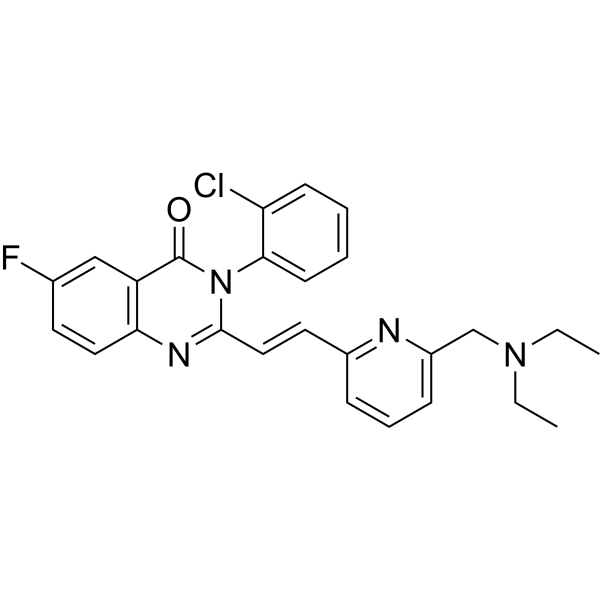
LY3130481 is an orally available AMPA receptor antagonist, selectively inhibiting the IC50 value of AMPA/TARP γ-8 at 65 nM. LY3130481 has anticonvulsant, antiepileptic, and pain-relieving effects .
|
-
-
- HY-103230
-
-
-
- HY-10937
-
-
-
- HY-10935
-
|
|
iGluR
|
Neurological Disease
|
|
LY450108 is a potent AMPA receptor potentiator. LY450108 has the potential for depression and Parkinson's disease research .
|
-
-
- HY-15072
-
|
YM 872
|
iGluR
|
Metabolic Disease
|
|
Zonampanel (YM 872) is a selective antagonist of the glutamate receptor subtype, α-amino-3-hydroxy-5-methylisoxazole-4-propionic acid (AMPA) receptor.
|
-
-
- HY-103233
-
|
FG 9041 disodium salt
|
iGluR
|
Cancer
|
|
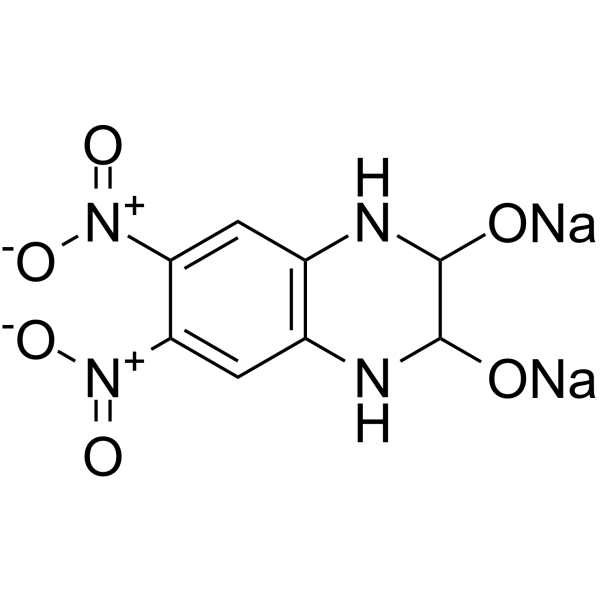
DNQX (FG 9041) disodium salt, a quinoxaline derivative, is a selective, potent competitive non-NMDA glutamate receptor antagonist (IC50s = 0.5, 2 and 40 μM for AMPA, kainate and NMDA receptors, respectively) .
|
-
-
- HY-16713A
-
|
(5S)-Fluorowillardiine hydrochloride; (S)-5-Fluorowillardiine hydrochloride
|
iGluR
|
Neurological Disease
|
|
(S)-(-)-5-Fluorowillardiine ((5S)-Fluorowillardiine; (S)-5-Fluorowillardiine) hydrochloride is a potent, highly selective non-NMDA ionotropic glutamate receptor (iGluR, AMPA/Kainate receptor) agonist . (S)-(-)-5-Fluorowillardiine hydrochloride activates high-affinity AMPA-preferring receptors (EC50 = 0.70 μM) and low-affinity kainate-preferring receptors (EC50 = 170 μM), thereby inducing biphasic dose-dependent neurotoxicity/excitotoxicity. (S)-(-)-5-Fluorowillardiine hydrochloride is applicable to research related to schizophrenia, temporal lobe epilepsy, and bipolar disorder .
|
-
-
- HY-15071
-
|
|
iGluR
|
Neurological Disease
|
|
YM90K is a potent and selective AMPA receptor antagonist with a Ki of 84 nM. YM90K is less potent in inhibiting kainate (Ki of 2.2 μM) and NMDA (Ki of 37 μM) receptors. YM90K has neuroprotective actions .
|
-
-
- HY-12508
-
|
|
iGluR
|
Neurological Disease
|
|
CMPDA is a positive allosteric modulator of AMPA receptors with EC50s of 45.4 ± 4.2 nM/63.4 ± 5.6 nM for GluA2i/GluA2o receptor.
|
-
-
- HY-18689
-
|
|
iGluR
|
Neurological Disease
|
|
SYM2206 is a potent and non-competitive AMPA receptor antagonist, with an IC50 of 1.6 μM. SYM2206 blocks Nav1.6-mediated persistent currents .
|
-
-
- HY-107606A
-
|
|
iGluR
|
Neurological Disease
|
|
UBP301 hydrochloride is a potent and selective antagonist of kainate receptor with IC50 and KD of 164 μM and 5.94 μM, respectively. UBP301 hydrochloride has ~30-fold selectivity of kainate receptor over AMPA receptor. UBP301 hydrochloride is the derivative of willardiine .
|
-
-
- HY-136275
-
|
|
iGluR
|
Others
|
|
AMPA receptor modulator-2 (Example 134) is a AMPA receptor modulator, with a pIC50 of 10.1 for TARPγ8 dependent AMPA receptor . pIC50 = -lgIC50.
|
-
-
- HY-101216
-
-
-
- HY-19433A
-
|
|
iGluR
|
Neurological Disease
|
|
(S)-ATPO is the (S)-enantiomer of ATPO, which is a competitive antagonist at GluR1-4 (AMPA-preferring) receptors .
|
-
-
- HY-103232
-
|
|
mGluR
|
Neurological Disease
|
IEM-1925 bromide is an orally active glutamate receptor antagonist, increases the latent period and decreases the duration of status epilepticus in rats in a lithium-pilocarpine model of epilepsy .
|
-
-
- HY-101363
-
|
Piperonylic acid piperidide
|
iGluR
|
Neurological Disease
|
|
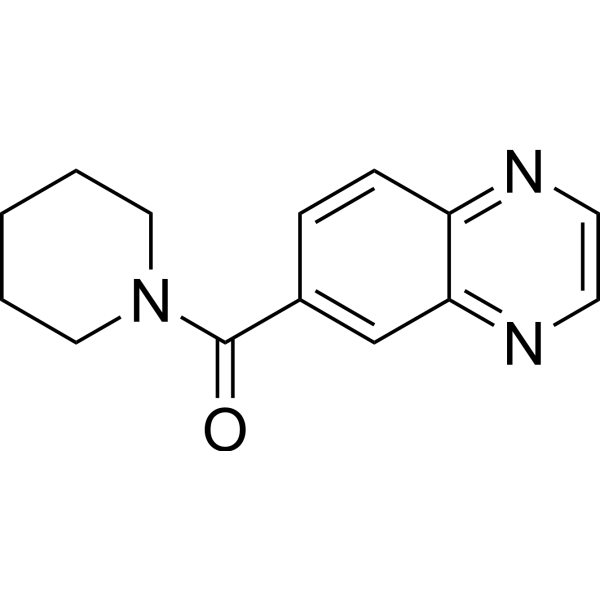
1-BCP (Piperonylic acid piperidide) is a centrally active agent that modulates AMPA receptor gated currents. 1-BCP is a memory-enhancing agent .
|
-
-
- HY-105860
-
|
BGG 492
|
iGluR
|
Neurological Disease
|
|
Selurampanel (BGG 492) is an orally active and competitive AMPA receptor antagonist with an IC50 of 190 nM. Selurampanel has reasonable blood-brain barrier penetration. Selurampanel can be used for epilepsy research .
|
-
-
- HY-103235
-
|
|
iGluR
|
Neurological Disease
|
|
NPEC- caged-(S)-AMPA, a caged neurotransmitter analog, is a NPEC photoprotecting group caged the (S)-AMPA (HY-100815A) to make caged ligands specific for glutamate receptor sub-types. NPEC- caged-(S)-AMPA selectively activates AMPA receptor .
|
-
-
- HY-145761
-
|
|
iGluR
|
Neurological Disease
|
|
AMPA-IN-1 is a potent inhibitor of AMPA receptor. AMPA receptors are receptors that are widely expressed in the brain, and play a central role in the regulation of fast excitatory synaptic transmission and synaptic plasticity. AMPA-IN-1 has the potential for the research of various central diseases including epilepsy (extracted from patent WO2017082288A1, compound 14) .
|
-
-
- HY-155628
-
|
|
iGluR
|
Others
|
|
AMPA receptor modulator-6 is an AMPA receptor positive allosteric modulator (PAM). AMPA receptor modulator-6 can be used in the study of neurological diseases .
|
-
-
- HY-100815C
-
|
(±)-AMPA hydrobromide
|
iGluR
|
Neurological Disease
|
|
(RS)-AMPA hydrobromide ((±)-AMPA hydrobromide) is a glutamate analogue and a potent and selective excitatory neurotransmitter L-glutamic acid agonist. (RS)-AMPA hydrobromide does not interfere with binding sites for kainic acid or NMDA receptors .
|
-
-
- HY-14451
-
|
|
iGluR
|
Neurological Disease
|
|
PF-4778574 is a positive allosteric modulation of AMPA receptor with EC50 of 45 to 919 nM in differenct cells.
|
-
-
- HY-114975
-
|
|
iGluR
|
Neurological Disease
|
|
EGIS-8332 is a non-competitive AMPA receptor antagonist. EGIS-8332 inhibits AMPA currents in rat cerebellar Purkinje cells and inhibited the AMPA- and Quisqualate-induced excitotoxicity in primary cultures of telencephalon neurons (IC50 = 5.1-9.0 μM). EGIS-8332 exhibits anticonvulsant and neuroprotective effects. EGIS-8332 can be used for the research of neurological disease .
|
-
-
- HY-114576
-
|
Nooglutyl; ONK-10
|
iGluR
Dopamine Receptor
|
Neurological Disease
|
|
Nooglutil (Nooglutyl; ONK-10) is a positive modulator of AMPA-type glutamate receptors (AMPARs). Nooglutil also regulates dopamine D2 receptor function to exert anxiolytic effects. Nooglutil is promising for research of neurodegenerative disorders (e.g., Alzheimer’s disease) .
|
-
- HY-161090
-
|
|
iGluR
|
Neurological Disease
|
|
AMPA receptor modulator-7 (compound 36) is a modulator of AMPA receptor. AMPA receptor modulator-7 has oral activity and can penetrate the blood-brain barrier .
|
-
- HY-106039
-
|
|
iGluR
|
Neurological Disease
|
|
LY 215490 is a selective, competitive AMPA receptor antagonist against AMPA, CGSl9755 and kainate with IC50 values of 4.8, 26.4 and 247 μM, respectively. LY 215490 shows neuroprotective effects in focal ischaemia .
|
-
- HY-120811
-
|
|
iGluR
|
Neurological Disease
|
|
PF-04701475 is a potent AMPA receptor potentiator with an EC50 of 123 nM. PF-04701475 can be used for the study of neurological disorders .
|
-
- HY-124539
-
|
|
iGluR
|
Neurological Disease
|
|
ZK 187638 is an AMPA receptor antagonist. ZK 187638 antagonizes the kainate-induced currents in cultured hippocampal neurons with an IC50 of 3.4 μM in a noncompetitive fashion .
|
-
- HY-100815E
-
|
(±)-AMPA hydrochloride
|
iGluR
|
Neurological Disease
|
|
(RS)-AMPA hydrochloride ((±)-AMPA hydrochloride) is a glutamate analogue and a potent and selective excitatory neurotransmitter L-glutamic acid agonist. (RS)-AMPA hydrochloride hydrobromide does not interfere with binding sites for kainic acid or NMDA receptors .
|
-
- HY-101165R
-
|
|
Reference Standards
iGluR
GABA Receptor
|
Neurological Disease
|
|
Cyclothiazide (Standard) is the analytical standard of Cyclothiazide. This product is intended for research and analytical applications. Cyclothiazide is a positive allosteric modulator of ionotropic AMPA-type glutamate receptors. Cyclothiazide inhibits GABAA receptors. Cyclothiazide is frequently used to produce a fast inhibition of AMPA receptor desensitization and a much slower potentiation of the AMPA current. Cyclothiazide can potentiate responses to kainate in hippocampal neurons. Cyclothiazide has effects on glutamatergic neurotransmission. Cyclothiazide also induces epileptiform EEG activity accompanying behavioral seizures .
|
-
- HY-122164
-
|
|
iGluR
|
Neurological Disease
|
|
LY-503430 is an orally active AMPA receptor positive allosteric modulator (PAM). LY-503430 can be used for the study of Parkinson's disease .
|
-
- HY-107606
-
|
|
iGluR
|
Neurological Disease
|
|
UBP301 is a potent and selective antagonist of kainate receptor with IC50 and KD of 164 μM and 5.94 μM, respectively. UBP301 has ∼30-fold selectivity of kainate receptor over AMPA receptor. UBP301 is the derivative of willardiine .
|
-
- HY-103231
-
|
|
iGluR
|
Neurological Disease
|
|
(S)-CPW 399 is a subtype-selective full agonist of AMPA receptors, with a 20-fold higher selectivity for GluA1 and GluA2 subunits over GluA3 and GluA4 subunits. (S)-CPW 399 can significantly increase the spontaneous firing rate (FR) of LC noradrenergic neurons by activating AMPA receptors containing GluA1 subunits. (S)-CPW 399 can be used for the study of neurological diseases .
|
-
- HY-149975
-
|
|
iGluR
|
Neurological Disease
|
|
AMPA receptor modulator-4, a 3,4-dihydro-2H-1,2,4-benzothiadiazine 1,1-dioxide (BTD), is an orally active positive allosteric modulator of the AMPA receptors (AMPAR PAMs). AMPA receptor modulator-4 can cross the blood-brain barrier. AMPA receptor modulator-4 increases the cognition performance and improves working memory performance in mice .
|
-
- HY-15078
-
|
(R)-SPD502
|
iGluR
|
Neurological Disease
|
|
NS1219 ((R)-SPD502) is the isomer of NS 1209 HY-15074. NS1209 is a selective AMPA receptor antagonist with neuroprotective activity. NS1209 can be used for the research of stroke, neuropathic pain and epilepsy .
|
-
- HY-120020
-
|
|
iGluR
|
Others
|
|
LY-395153 is an AMPA receptor enhancer with the activity of binding to AMPA receptors. LY-395153 can bind to natural and recombinant AMPA receptors, and its binding is affected by AMPA receptor agonists and can be competitively or non-competitively inhibited by some compounds. It is a useful probe for marking unique regulatory sites of AMPA receptors.
|
-
- HY-154798
-
|
|
iGluR
|
Neurological Disease
|
|
AMPA receptor modulator-5 (Example 217) is an AMPA receptor modulator. AMPA receptor modulator-5 can be used for research of neurological disease .
|
-
- HY-108599R
-
|
FR236924 (Standard)
|
Reference Standards
PKC
CaMK
Phosphatase
Apoptosis
|
Neurological Disease
|
|
DCP-LA (Standard) is the analytical standard of DCP-LA. This product is intended for research and analytical applications. DCP-LA (FR236924), a linoleic acid derivative, selectively and directly activates PKCε. DCP-LA activates Ca(2+)/calmodulin-dependent protein kinase II (CaMKII) and inhibits protein phosphatase-1 (PP-1) to stimulate AMPA receptor exocytosis. DCP-LA inhibits activation of caspase-3/-9 and protects neurons at least in part from oxidative stress-induced apoptosis[1][2][3].
|
-
- HY-136905
-
|
|
iGluR
|
Others
|
|
AMPA receptor antagonist-2 (example 23) is an AMPA receptor antagonist .
|
-
- HY-100815
-
|
|
iGluR
|
Neurological Disease
|
|
(R)-AMPA is an inactive AMPA receptor ligand that inhibits the release of excitatory amino acids from neurons. (R)-AMPA is inactive in experiments that enhance the release of [3H]D-aspartate induced by electrical stimulation. (R)-AMPA is inhibited by competitive and noncompetitive AMPA receptor selective antagonists in response to AMPA and glutamate .
|
-
- HY-145959
-
|
|
iGluR
|
Neurological Disease
|
|
AMPA receptor antagonist-3 is an AMPA receptor antagonist extracted from patent US20070027143A1. AMPA receptor antagonist-3 can be used for the research of central nervous system disorders .
|
-
- HY-122150
-
|
|
iGluR
|
Neurological Disease
|
|
AMPA receptor modulator-3 is an allosteric AMPA receptor modulator (EC50: 4.4 μM). AMPA receptor modulator-3 can be used in the research of mammalian nervous system, such as learning and memory .
|
-
- HY-124906
-
|
|
iGluR
|
Neurological Disease
|
|
JAMI1001A is a positive allosteric modulator of AMPA receptor. JAMI1001A efficaciously modulates AMPA receptor deactivation and desensitization of both flip and flop receptor isoforms .
|
-
- HY-100815BR
-
|
(±)-AMPA (Standard)
|
Reference Standards
iGluR
|
Neurological Disease
|
|
(RS)-AMPA (Standard) is the analytical standard of (RS)-AMPA. This product is intended for research and analytical applications. (RS)-AMPA ((±)-AMPA) is a glutamate analogue and a potent and selective excitatory neurotransmitter L-glutamic acid agonist. (RS)-AMPA does not interfere with binding sites for kainic acid or NMDA receptors .
|
-
- HY-129030
-
|
|
iGluR
|
Neurological Disease
|
|
BDZ-g is a potent, selective antagonist of AMPA receptor. BDZ-g has the potential for the research of various neurological disorders involving excessive activity of AMPA receptors .
|
-
- HY-100815D
-
|
(±)-AMPA monohydrate
|
iGluR
|
Neurological Disease
|
|
(RS)-AMPA monohydrate ((±)-AMPA monohydrate) is a glutamate analogue and a potent and selective excitatory neurotransmitter L-glutamic acid agonist. (RS)-AMPA monohydrate does not interfere with binding sites for kainic acid or NMDA receptors .
|
-
- HY-15070
-
-
- HY-118814
-
|
|
iGluR
|
Neurological Disease
|
|
YM928 is an orally active and noncompetitive α-Amino-3-hydroxy-5-methyl-4-isoxazolepropionic acid (AMPA) receptor antagonist. YM928 inhibits AMPA receptor-mediated toxicity in primary rat hippocampal cultures with an IC50 value of 2 μM. YM928 blocks AMPA-induced intracellular calcium influx with an IC50 value of 3 μM and antagonizes AMPA-induced inward currents with an IC50 value of 1 μM. YM928 is promising for research of neurological disorders .
|
-
- HY-169806
-
|
|
iGluR
|
Neurological Disease
|
|
Methalthiazide enhances the activity of natural stimulators of AMPA receptors and can be used in the study of schizophrenia .
|
-
- HY-123904
-
|
|
iGluR
|
Neurological Disease
|
|
UoS12258 is a selective positive allosteric modulator of AMPA receptor. UoS12258 enhances AMPA receptor‐mediated synaptic transmission. UoS12258 improves performance in cognition rat models, including Scopolamine (HY-N0296)‐impaired rats and water maze learning and retention in aged rats .
|
-
- HY-18663B
-
|
|
iGluR
|
Neurological Disease
|
|
CP-465022 hydrochloride is a potent, and selective noncompetitive AMPA receptor antagonist with anticonvulsant activity. CP-465022 is against Kainate-induced response with an IC50 of 25 nM in rat cortical neurons. CP-465022 provides a new tool to investigate the role of AMPA receptors in physiological and pathophysiological processes .
|
-
- HY-18663A
-
|
|
iGluR
|
Neurological Disease
|
|
CP-465022 Maleate is a potent, and selective noncompetitive AMPA receptor antagonist with anticonvulsant activity. CP-465022 is against Kainate-induced response with an IC50 of 25 nM in rat cortical neurons. CP-465022 provides a new tool to investigate the role of AMPA receptors in physiological and pathophysiological processes .
|
-
- HY-P1057
-
|
|
iGluR
|
Neurological Disease
|
|
Pep4c is an inactive control peptide for Pep2m (HY-P1058). Pep4c lacks functional activity to disrupt Protein Interacting with C Kinase 1 (PICK1)-AMPA receptor (GluA2) or N-ethylmaleimide-sensitive factor (NSF)-GluA2 interactions. Pep4c is used as a negative control in experiments to validate the specificity of Pep2m's effects on AMPA receptor trafficking and synaptic plasticity [1] [2] [3] [4] [5] [6].
|
-
- HY-15082
-
|
BIIR 561
|
iGluR
Sodium Channel
|
Neurological Disease
|
|
Irampanel (BIIR 561) is an AMPA receptor and voltage-dependent sodium channel blocker. Irampanel inhibits kainate-induced currents in rat cortical neurons .
|
-
- HY-107603
-
|
|
MOFs
iGluR
|
Neurological Disease
|
|
NS3763 is a selective and noncompetitive GLUK5 receptor antagonist with an IC50 of 1.6 µM. NS3763 does not show significant antagonistic properties on GLUK6, AMPA or NMDA receptors .
|
-
- HY-117176
-
|
|
iGluR
|
Neurological Disease
|
|
KRP-199 (compound 14h) is an α-amino-3-hydroxy-5-methylisoxazolepropionic acid receptor (AMPA-R) antagonist (Ki=16 nM) with high potency and selectivity for AMPA-R in vitro and good neuroprotective effects in vivo. KRP-199 can be used in the study of neurodegenerative diseases .
|
-
- HY-107518
-
|
(R,S)-3,4-DCPG
|
iGluR
|
Neurological Disease
|
|
(R,S)-3,4-Dicarboxyphenylglycine ((RS)-3,4-DCPG) is an AMPA receptor antagonist. (R,S)-3,4-Dicarboxyphenylglycine antagonizes AMPA-mediated depolarization of motor neurons in neonatal rats. (R,S)-3,4-Dicarboxyphenylglycine can be used in the study of neurological diseases .
|
-
- HY-16713
-
|
(5S)-Fluorowillardiine; (S)-5-Fluorowillardiine
|
iGluR
|
Neurological Disease
|
|
(S)-(-)-5-Fluorowillardiine ((5S)-Fluorowillardiine; (S)-5-Fluorowillardiine) is a potent, highly selective non-NMDA ionotropic glutamate receptor (iGluR, AMPA/Kainate receptor) agonist . (S)-(-)-5-Fluorowillardiine activates high-affinity AMPA-preferring receptors (EC50 = 0.70 μM) and low-affinity kainate-preferring receptors (EC50 = 170 μM), thereby inducing biphasic dose-dependent neurotoxicity/excitotoxicity. (S)-(-)-5-Fluorowillardiine is applicable to research related to schizophrenia, temporal lobe epilepsy, and bipolar disorder .
|
-
- HY-15068R
-
|
FG9202 (Standard)
|
iGluR
Reference Standards
|
Neurological Disease
|
|
NBQX (Standard) is the analytical standard of NBQX. This product is intended for research and analytical applications. NBQX (FG9202) is a highly selective and competitive AMPA receptor antagonist. NBQX has neuroprotective and anticonvulsant activity .
|
-
- HY-100785A
-
|
γDGG acetate; γ-D-Glutamylglycine acetate
|
iGluR
|
Neurological Disease
|
|
gamma-DGG acetate (γDGG acetate) is a competitive AMPA receptor blocker. gamma-DGG acetate is also a reversible Excitatory post-synaptic potentials (e.p.s.p.s) antagonist .
|
-
- HY-183324
-
|
|
iGluR
Dopamine Transporter
|
Neurological Disease
|
|
AMPA receptor modulator-12 is an orally acrive AMPA receptor positive allosteric modulator. AMPA receptor modulator-12 also exhibits moderate binding affinity for the human dopamine transporter with a Kd of 1.57 μM. AMPA receptor modulator-12 enhances AMPA receptor-mediated ion currents, delays channel deactivation. AMPA receptor modulator-12 prolongs sleep latency, reduces sleep duration, extends forced swimming time, improves rotarod endurance, and alleviates acute sleep deprivation-related behavioral deficits. AMPA receptor modulator-12 does not increase spontaneous locomotion. AMPA receptor modulator-12 can be used for the research of narcolepsy and fatigue-related conditions .
|
-
- HY-204388
-
|
|
iGluR
Calcium Channel
|
Neurological Disease
|
|
TAK-137 is an AMPA receptor potentiator with weak agonistic effect. TAK-137 binds to the AMPA receptor ligand binding domain in a glutamate-dependent manner. TAK-137 potentiates AMPA-induced currents and Ca 2+ influx. TAK-137 can be used for the research of neurological disease .
|
-
- HY-116244
-
|
|
iGluR
|
Cardiovascular Disease
Neurological Disease
|
|
Ro 48-8587 is a selective AMPA receptor antagonist with an IC50 of 8 nM. Ro 48-8587 functionally inhibits AMPA receptor activity, blocks AMPA-induced depolarization of rat cortical wedges. Ro 48-8587 can be used for the research of ischaemia and seizures .
|
-
- HY-186183
-
|
|
iGluR
|
Cardiovascular Disease
Neurological Disease
Inflammation/Immunology
|
|
Normethyl-ZCAN262 (Normethyl-262) is a blood-brain barrier-permeable selective GluR2/AMPAR receptor modulator. Normethyl-ZCAN262 inhibits AMPA-mediated neurotoxicity, the formation of the GAPDH-GluR2 complex, and GluR2/AMPAR neurotoxicity. Normethyl-ZCAN262 enables in vivo imaging of brain AMPA receptors and is used in research related to multiple sclerosis, amyotrophic lateral sclerosis, neuroinflammation, stroke, epilepsy, Parkinson's disease, Alzheimer's disease, dementia, and Huntington's disease .
|
-
- HY-139350
-
|
|
iGluR
|
Neurological Disease
|
|
AMPA receptor antagonist-1 (Example 143) is an AMPA receptor antagonist. AMPA receptor antagonist-1 can be used in the research of neurological disorders .
|
-
- HY-17670
-
|
|
iGluR
|
Neurological Disease
|
|
AMPA receptor modulator-11 (example 210) is a positive allosteric AMPA receptor modulator. AMPA receptor modulator-11 can be used for research on depression, schizophrenia, Alzheimer's disease or attention deficit hyperactivity disorder (ADHD) .
|
-
- HY-15080
-
|
LY 293606
|
iGluR
|
Cardiovascular Disease
Neurological Disease
|
|
GYKI 53405 (LY 293606) is a non-competitive, orally active AMPA receptor antagonist. GYKI 53405 shows no significant binding affinity for GABAA, GABAB or benzodiazepine receptors. GYKI 53405 increases self-grooming behavior, induces wet dog-like shakes, reduces spontaneous activity, produces anxiolytic-like behavior, reverses the anxiogenic effect induced by mCPP, inhibits locomotor activity, suppresses sound-induced and maximal electroshock-induced seizures, prolongs survival in global cerebral ischemia models, and exhibits sustained anticonvulsant effects at doses below the sedation threshold. GYKI 53405 can be used in research related to absence epilepsy, anxiety disorders and global cerebral ischemia .
|
-
- HY-P1058
-
|
|
iGluR
|
Neurological Disease
|
|
Pep2m is a peptide receptor inhibitor. Pep2m inhibits the interaction between the C-terminus of the AMPA-type glutamate receptor (GluA2) subunit and N-ethylmaleimide-sensitive fusion protein (NSF). Pep2m prevents synaptic long-term depression (LTD). Pep2m can reduce postsynaptic currents in neurons, AMPA-mediated currents in cultured hippocampal neurons, and AMPA receptor surface expression [1] [2] [3] [4] [5].
|
-
- HY-P1056
-
|
|
iGluR
|
Neurological Disease
|
|
pep2-SVKI is a selective peptide inhibitor. pep2-SVKI inhibits the binding of AMPA-type glutamate receptor (GluA2) (C-terminal PDZ site) to glutamate receptor interacting protein (GRIP), AMPA receptor binding protein (ABP), and C-kinase interacting protein (PICK1). pep2-SVKI increases the amplitude of AMPA receptor-mediated currents and blocks long-term depression (LTD). pep2-SVKI can be used to study neurological diseases .
|
-
- HY-P1059
-
|
|
iGluR
|
Neurological Disease
|
|
Pep2-AVKI is a selective peptide inhibitor of the binding of the AMPA receptor subunit (GluR2) at the C-terminal PDZ site to C-kinase (PICK1). Pep2-AVKI does not affect the binding of (AMPA-type glutamate receptor) GluA2 to GRIP or ABP. Pep2-AVKI does not increase the amplitude of AMPA currents. pep2-AVKI can be used to study neurological diseases .
|
-
- HY-108707R
-
|
|
Reference Standards
iGluR
|
Neurological Disease
|
|
LY3130481 (Standard) is the analytical standard of LY3130481 (HY-108707). This product is intended for research and analytical applications. LY3130481 is an orally available AMPA receptor antagonist, selectively inhibiting the IC50 value of AMPA/TARP γ-8 at 65 nM. LY3130481 has anticonvulsant, antiepileptic, and pain-relieving effects .
|
-
- HY-P11848
-
|
|
iGluR
Apoptosis
Reactive Oxygen Species (ROS)
|
Cardiovascular Disease
Neurological Disease
|
|
P3LC7LC-P is a blood-brain barrier-permeable BRAG2 ligand with a KD of 6.14 μM. P3LC7LC-P binds to BRAG2, thereby disrupting its interaction with the GluA2 subunit of the AMPA receptor and inhibiting glutamate-induced GluA2 endocytosis. P3LC7LC-P exerts neuroprotective effects in oxygen-glucose deprivation-induced and glutamate-induced neurotoxicity models, reduces ROS accumulation and inhibits apoptosis, and reduces cerebral infarct size in a rat model of transient middle cerebral artery occlusion. P3LC7LC-P can be used for the research of ischemic stroke .
|
-
- HY-15083
-
|
BIIR-561-CL
|
iGluR
Sodium Channel
|
Neurological Disease
|
|
Irampanel hydrochloride (BIIR 561-CL) is an AMPA receptor and voltage-dependent sodium channel blocker. Irampanel hydrochloride inhibits Kainic acid (HY-N2309)-induced currents in rat cortical neurons .
|
-
- HY-101216R
-
|
|
Reference Standards
iGluR
|
Neurological Disease
|
|
Org-26576 (Standard) is the analytical standard of Org-26576 (HY-101216). This product is intended for research and analytical applications. Org-26576 is a AMPA receptor positive allosteric modulator.
|
-
- HY-15066
-
|
FG9065
|
iGluR
|
Neurological Disease
|
|
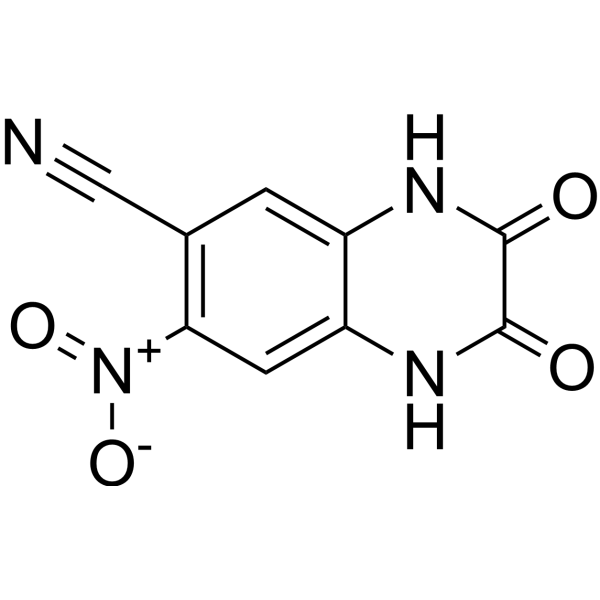
CNQX (FG9065) is a potent and competitive AMPA/kainate receptor antagonist with IC50s of 0.3 μM and 1.5 μM, respectively. CNQX is a competitive non-NMDA receptor antagonist . CNQX blocks the expression of fear-potentiated startle in rats .
|
-
- HY-107605
-
|
|
iGluR
|
Neurological Disease
|
|
UBP296 is a potent and selective antagonist of GLUK5-containing kainate receptor in the spinal cord. UBP296 reversibly blocks ATPA-induced depressions of synaptic transmission, and affects AMPA receptor-mediated synaptic transmission directly in rat hippocampal slices .
|
-
- HY-121964
-
|
|
iGluR
|
Neurological Disease
|
|
Cis-piperidine-2,3-dicarboxylic acid is a non-specific antagonist of NMDA, AMPA and kainate ionotropic receptors and a partial agonist for NMDA receptors. Cis-piperidine-2,3-dicarboxylic acid can be used in blocking general excitatory synaptic transmissions .
|
-
- HY-15076
-
|
NS-1209 sodium
|
iGluR
|
Neurological Disease
|
|
SPD-502 sodium is a novel glutamate antagonist with potential neuroprotective properties, particularly in brain ischemia. It selectively targets the AMPA receptor, showing high affinity (IC50 = 0.043 μM) and competitive inhibition of AMPA-induced effects in rat cortical membranes and cultured mouse cortical neurons. In vivo, SPD-502 sodium effectively blocks AMPA-evoked spike activity in the hippocampus after intravenous administration, significantly increasing the seizure threshold in mice and demonstrating robust protection against ischemia-induced damage to hippocampal neurons in gerbils. These findings suggest SPD-502 sodium may be promising for studying neurodegenerative conditions associated with glutamate excitotoxicity .
|
-
- HY-15074
-
|
NS-1209
|
iGluR
|
Neurological Disease
|
|
SPD-502 is a novel glutamate antagonist with potential neuroprotective properties, particularly in brain ischemia. It selectively targets the AMPA receptor, showing high affinity (IC50 = 0.043 μM) and competitive inhibition of AMPA-induced effects in rat cortical membranes and cultured mouse cortical neurons. In vivo, SPD-502 effectively blocks AMPA-evoked spike activity in the hippocampus after intravenous administration, significantly increasing the seizure threshold in mice and demonstrating robust protection against ischemia-induced damage to hippocampal neurons in gerbils. These findings suggest SPD-502 may be promising for studying neurodegenerative conditions associated with glutamate excitotoxicity .
|
-
- HY-W015309S1
-
|
|
Isotope-Labeled Compounds
iGluR
|
Neurological Disease
|
|
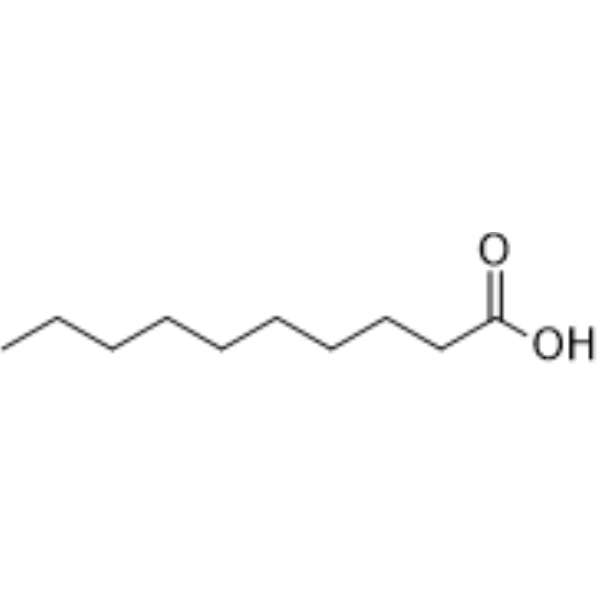
Decanoic acid-d199 is the deuterium labeled Decanoic acid. Decanoic acid, a component of medium chain triclycerides, is a brain-penetrant and non-competitive inhibitor of AMPA receptor. Decanoic acid has antiseizure effects .
|
-
- HY-W015309S3
-
|
|
iGluR
|
Neurological Disease
|
|
Decanoic acid-d5 is the deuterium labeled Decanoic acid. Decanoic acid, a component of medium chain triclycerides, is a brain-penetrant and non-competitive inhibitor of AMPA receptor. Decanoic acid has antiseizure effects .
|
-
- HY-W015309S
-
|
|
iGluR
|
Neurological Disease
|
|
Decanoic acid-d3 is the deuterium labeled Decanoic acid. Decanoic acid, a component of medium chain triclycerides, is a brain-penetrant and non-competitive inhibitor of AMPA receptor. Decanoic acid has antiseizure effects .
|
-
- HY-W015309S2
-
|
|
Isotope-Labeled Compounds
iGluR
|
Neurological Disease
|
|
Decanoic acid-d2 is the deuterium labeled Decanoic acid. Decanoic acid, a component of medium chain triclycerides, is a brain-penetrant and non-competitive inhibitor of AMPA receptor. Decanoic acid has antiseizure effects .
|
-
- HY-106467B
-
|
|
iGluR
|
Neurological Disease
|
|
Caroverine hydrochloride is a potent, competitive and reversible antagonist of NMDA and AMPA glutamate receptor. Caroverine hydrochloride is also an antioxidant and calcium-blocking agent that exhibits vasorelaxant action. Caroverine hydrochloride can be used for the research of inner ear tinnitus .
|
-
- HY-136844
-
|
GYKI 53655
|
iGluR
|
Neurological Disease
|
|
LY 300168 (GYKI 53655) is a non-competitive, blood-brain-barrier permeable AMPA receptor antagonist. LY 300168 attenuates hippocampal injury. LY 300168 blocks the sound-induced clonic and tonic convulsions .
|
-
- HY-106467
-
|
|
iGluR
|
Neurological Disease
|
|
Caroverine is a potent, competitive and reversible antagonist of NMDA and AMPA glutamate receptor. Caroverine is also an antioxidant and calcium-blocking agent that exhibits vasorelaxant action. Caroverine can be used for the research of inner ear tinnitus .
|
-
- HY-15067R
-
|
FG 9041 (Standard)
|
iGluR
Reference Standards
|
Cancer
|
|
DNQX (Standard) is the analytical standard of DNQX. This product is intended for research and analytical applications. DNQX (FG 9041), a quinoxaline derivative, is a selective, potent competitive non-NMDA glutamate receptor antagonist (IC50s = 0.5, 2 and 40 μM for AMPA, kainate and NMDA receptors, respectively) .
|
-
- HY-100547
-
|
|
iGluR
|
Neurological Disease
|
|
IEM-1754, a dicationic adamantane derivative, is a potent blocker of open channels of native ionotropic glutamate receptors including quisqualate-sensitive receptors in insect muscles, NMDAR in cultured rat cortical neurons, and AMPAR in freshly isolated hippocampal cells. IEM-1754 shows anticonvulsant potency in vivo .
|
-
- HY-107520A
-
|
|
Drug Derivative
|
Neurological Disease
|
|
MNI-caged-L-glutamate TFA is an inert photolabile glutamate precursor. MNI-caged-L-glutamate TFA does not modulate NMDA and AMPA receptor function in cultured neurones. MNI-caged-L-glutamate TFA can be used for research on neurotransmitters .
|
-
- HY-15066A
-
|
FG9065 disodium
|
iGluR
|
Neurological Disease
|
|
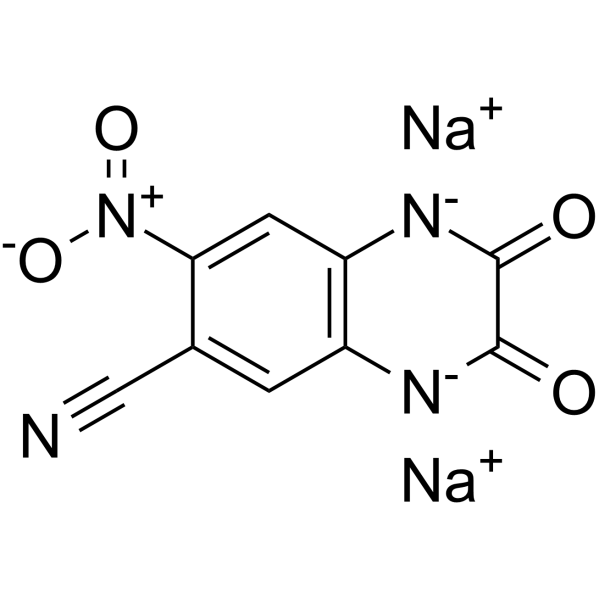
CNQX disodium (FG9065 disodium) is a potent and competitive AMPA/kainate receptor antagonist with IC50s of 0.3 μM and 1.5 μM, respectively. CNQX disodium is a competitive non-NMDA receptor antagonist . CNQX disodium blocks the expression of fear-potentiated startle in rats .
|
-
- HY-B0122
-
-
- HY-103230R
-
|
|
Reference Standards
iGluR
|
Neurological Disease
|
|
IEM-1460 (Standard) is the analytical standard of IEM-1460 (HY-103230). This product is intended for research and analytical applications. IEM-1460 blocks both AMPA and NMDA glutamate receptor with anticonvulsant effect in vivo .
|
-
- HY-15068AR
-
|
FG9202 disodium (Standard)
|
iGluR
Reference Standards
|
Neurological Disease
|
|
NBQX (disodium) (Standard) is the analytical standard of NBQX (disodium). This product is intended for research and analytical applications. NBQX disodium (FG9202 disodium) is a highly selective and competitive AMPA receptor antagonist. NBQX disodium has neuroprotective and anticonvulsant activity .
|
-
- HY-B0122A
-
|
McN 4853 lithium; RWJ 17021 lithium
|
iGluR
GABA Receptor
Sodium Channel
Calcium Channel
Potassium Channel
Carbonic Anhydrase
|
Neurological Disease
|
|
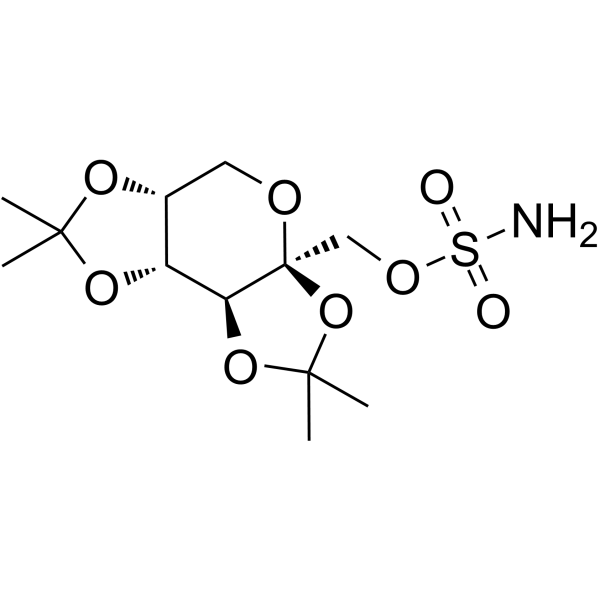
Topiramate (McN 4853) lithium is a broad-spectrum antiepileptic agent. Topiramate lithium is a GluR5 receptor antagonist. Topiramate produces its antiepileptic effects through enhancement of GABAergic activity, inhibition of kainate/AMPA receptors, inhibition of voltage-sensitive sodium and calcium channels, increases in potassium conductance, and inhibition of carbonic anhydrase .
|
-
- HY-108497
-
|
|
Somatostatin Receptor
|
Neurological Disease
Cancer
|
|
L-803087 is a potent and selective somatostatin sst4 receptor agonist with a Ki of 0.7 nM. L-803087 is >280-fold higher than other somatostatin receptors. L-803087 facilitates AMPA-mediated hippocampal synaptic responses in vitro and increases kainate-induced seizures in mice .
|
-
- HY-108497A
-
|
|
Somatostatin Receptor
|
Neurological Disease
Cancer
|
|
L-803087 TFA is a potent and selective somatostatin sst4 receptor agonist with a Ki of 0.7 nM. L-803087 TFA is >280-fold more selective for sst4 receptor than other somatostatin receptors. L-803087 TFA facilitates AMPA-mediated hippocampal synaptic responses in vitro and increases kainate-induced seizures in mice .
|
-
- HY-10933S
-
|
BDP 12-d10
|
Isotope-Labeled Compounds
iGluR
|
Neurological Disease
|
|
CX516-d10 is the deuterium labeled CX516. CX516 (BDP 12) is an ampakine and acts as an AMPA receptor positive allosteric modulator for the research of Alzheimer's disease, schizophrenia and mild cognitive impairment (MCI) .
|
-
- HY-165475
-
|
|
iGluR
|
Neurological Disease
|
|
TDPAM02 is a positive allosteric modulator of AMPA receptor GluA2. TDPAM02 can specifically bind to the ligand-binding domain (LBD) of GluA2 and shows an IC50 of 1.4 nM for the GluA2 flop subtype. TDPAM02 can stabilize the activated conformation of GluA2 receptors, delay the receptor deactivation or desensitization process, maintaining the rapid excitatory synaptic transmission in the central nervous system .
|
-
- HY-165474
-
|
|
iGluR
|
Neurological Disease
|
|
TDPAM01 is a positive allosteric modulator of AMPA receptor GluA2. TDPAM01 can specifically bind to the ligand-binding domain (LBD) of GluA2 and shows an IC50 of 13.4 nM for the GluA2 flop subtype. TDPAM01 can stabilize the activated conformation of GluA2 receptors, delay the receptor deactivation or desensitization process, maintaining the rapid excitatory synaptic transmission in the central nervous system .
|
-
- HY-124160
-
|
|
iGluR
|
Neurological Disease
|
|
JNJ-56022486 is an orally active and potent negative AMPA receptor modulator (Ki=19 nM) selective for?TARP-γ8. JNJ-56022486 is also a TARP-γ8 receptor antagonist, with blood?brain?barrier (BBB) permeability. JNJ-56022486 can be used for research of Epilepsy .
|
-
- HY-15066R
-
|
FG9065 (Standard)
|
iGluR
Reference Standards
|
Neurological Disease
|
|
CNQX (Standard) is the analytical standard of CNQX. This product is intended for research and analytical applications. CNQX (FG9065) is a potent and competitive AMPA/kainate receptor antagonist with IC50s of 0.3 μM and 1.5 μM, respectively. CNQX is a competitive non-NMDA receptor antagonist . CNQX blocks the expression of fear-potentiated startle in rats .
|
-
- HY-14608
-
|
|
Environmental Pollutants
Endogenous Metabolite
iGluR
Ferroptosis
Apoptosis
|
Neurological Disease
|
|
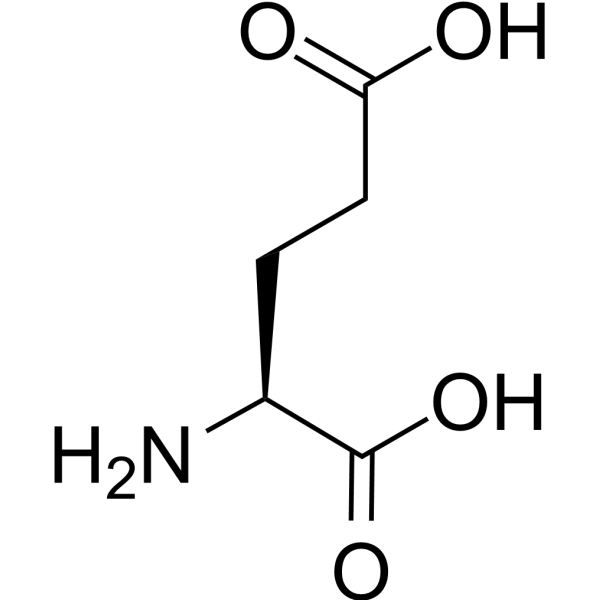
L-Glutamic acid is an excitatory amino acid neurotransmitter that acts as an agonist for all subtypes of glutamate receptors (metabolic rhodophylline, NMDA, and AMPA). L-Glutamic acid has an agonist effect on the release of DA from dopaminergic nerve endings. L-Glutamic acid can be used in the study of neurological diseases. L-Glutamic acid acts at ionotropic and metabotropic glutamate receptors .
|
-
- HY-14608S8
-
|
|
Endogenous Metabolite
iGluR
Ferroptosis
Apoptosis
|
Neurological Disease
|
|
L-Glutamic acid-d3 is the deuterium labeled L-Glutamic acid. L-Glutamic acid acts as an excitatory transmitter and an agonist at all subtypes of glutamate receptors (metabotropic, kainate, NMDA, and AMPA). L-Glutamic acid shows a direct activating effect on the release of DA from dopaminergic terminals.
|
-
- HY-101363R
-
|
Piperonylic acid piperidide (Standard)
|
Reference Standards
iGluR
|
Neurological Disease
|
|
1-BCP (Standard) is the analytical standard of 1-BCP. This product is intended for research and analytical applications. 1-BCP (Piperonylic acid piperidide) is a centrally active agent that modulates AMPA receptor gated currents. 1-BCP is a memory-enhancing agent .
|
-
- HY-14608S
-
|
|
Endogenous Metabolite
iGluR
Ferroptosis
Apoptosis
|
Neurological Disease
|
|
L-Glutamic acid- 13C is the 13C-labeled L-Glutamic acid. L-Glutamic acid acts as an excitatory transmitter and an agonist at all subtypes of glutamate receptors (metabotropic, kainate, NMDA, and AMPA). L-Glutamic acid shows a direct activating effect on the release of DA from dopaminergic terminals.
|
-
- HY-14608S7
-
|
|
Endogenous Metabolite
iGluR
Ferroptosis
Apoptosis
|
Neurological Disease
|
|
L-Glutamic acid-d5 is the deuterium labeled L-Glutamic acid. L-Glutamic acid acts as an excitatory transmitter and an agonist at all subtypes of glutamate receptors (metabotropic, kainate, NMDA, and AMPA). L-Glutamic acid shows a direct activating effect on the release of DA from dopaminergic terminals.
|
-
- HY-110175
-
CX614
1 Publications Verification
|
iGluR
|
Neurological Disease
|
|
CX614 is a positive variant modulator of AMPA receptors that enhances excitatory postsynaptic potentials (amplitude and duration) by blocking and slowing the inactivation of responses to glutamate and automatically evokes excitatory postsynaptic currents in neuronal cultures. CX614 can be used in the study of psychiatric disorders such as depression .
|
-
- HY-110234
-
|
McN 4853 D12 ; RWJ 17021 D12
|
iGluR
GABA Receptor
Sodium Channel
Calcium Channel
Potassium Channel
Carbonic Anhydrase
|
Neurological Disease
|
|
Topiramate D12 (McN 4853 D12) is a deuterium labeled Topiramate. Topiramate is a broad-spectrum antiepileptic agent. Topiramate is a GluR5 receptor antagonist. Topiramate produces its antiepileptic effects through enhancement of GABAergic activity, inhibition of kainate/AMPA receptors, inhibition of voltage-sensitive sodium and calcium channels, increases in potassium conductance, and inhibition of carbonic anhydrase .
|
-
- HY-101528R
-
|
|
iGluR
Reference Standards
|
Neurological Disease
|
|
IDRA 21 (Standard) is the analytical standard of IDRA 21 (HY-101528). This product is intended for research and analytical applications. IDRA 21 is a positive and orally active modulator of the AMPA receptor. IDRA 21 facilitates excitatory neurotransmission via GluR1/2 receptors. IDRA 21 has the potential for the research of cognitive/memory disorders, including those associated with aging .
|
-
- HY-14608S2
-
|
|
Endogenous Metabolite
iGluR
Ferroptosis
Apoptosis
|
Neurological Disease
|
|
L-Glutamic acid- 15N is the 15N-labeled L-Glutamic acid. L-Glutamic acid acts as an excitatory transmitter and an agonist at all subtypes of glutamate receptors (metabotropic, kainate, NMDA, and AMPA). L-Glutamic acid shows a direct activating effect on the release of DA from dopaminergic terminals .
|
-
- HY-14608S5
-
|
|
Endogenous Metabolite
iGluR
Ferroptosis
Apoptosis
|
Neurological Disease
|
|
L-Glutamic acid- 13C5 is the 13C-labeled L-Glutamic acid. L-Glutamic acid acts as an excitatory transmitter and an agonist at all subtypes of glutamate receptors (metabotropic, kainate, NMDA, and AMPA). L-Glutamic acid shows a direct activating effect on the release of DA from dopaminergic terminals.
|
-
- HY-10936
-
|
|
iGluR
|
Neurological Disease
|
|
S 18986 is a selective, orally active, brain penetrant positive allosteric modulator of AMPA-type receptors. S 18986 shows cognitive enhancing properties in rodents. S 18986 activates the release of noradrenaline and acetylcholine in rat hippocampus and enhances rat memory in object-recognition tests .
|
-
- HY-19435A
-
|
|
iGluR
Cytochrome P450
|
Neurological Disease
|
|
GYKI-47261 dihydrochloride is a competitive, orally active, and selective AMPA receptor antagonist with an IC50 of 2.5 μM. GYKI-47261 has broad spectrum anticonvulsive activity and neuroprotective effects. GYKI-47261 dihydrochloride is also a potent inducer of CYP2E1 .
|
-
- HY-19435
-
|
|
iGluR
Cytochrome P450
|
Neurological Disease
|
|
GYKI-47261 is a competitive, orally active, and selective AMPA receptor antagonist with an IC50 of 2.5 μM. GYKI-47261 has broad spectrum anticonvulsive activity and neuroprotective effects. GYKI-47261 is also a potent inducer of CYP2E1 .
|
-
- HY-103234
-
|
|
iGluR
|
Neurological Disease
|
|
GYKI 52466 is an orally active, highly selective and noncompetitive AMPA/kainate receptor antagonist with the IC50 values of 7.5 and 11μM, respectively. GYKI 52466 has good blood brain barrier permeability and anticonvulsant effect. GYKI 52466 can be used in Parkinson's disease research .
|
-
- HY-103234B
-
|
|
iGluR
|
Neurological Disease
|
|
GYKI 52466 hydrochloride is an orally active, highly selective and noncompetitive AMPA/kainate receptor antagonist with the IC50 values of 7.5 and 11μM, respectively. GYKI 52466 hydrochloride has good blood brain barrier permeability and anticonvulsant effect. GYKI 52466 hydrochloride can be used in Parkinson's disease research .
|
-
- HY-109046
-
|
CX-1632; S-47445
|
iGluR
mTOR
|
Neurological Disease
|
|
Tulrampator (S-47445) is an orally active selective AMPA receptor modulator. Tulrampator possesses procognitive, enhancing synaptic plasticity, anti-depressant-anxiolytic-like, procognitive and potential neuroprotective properties. Tulrampator can be used for research of alzheimer’s disease and in major depressive disorder .
|
-
- HY-103234A
-
|
|
iGluR
|
Neurological Disease
|
|
GYKI 52466 dihydrochloride is an orally active, highly selective and noncompetitive AMPA/kainate receptor antagonist with the IC50 values of 7.5 and 11μM, respectively. GYKI 52466 dihydrochloride has good blood brain barrier permeability and anticonvulsant effect. GYKI 52466 dihydrochloride can be used in Parkinson's disease research .
|
-
- HY-103229
-
|
|
iGluR
|
Neurological Disease
|
|
Cl-HIBO is a highly subtype-selective GluR1/2 agonist (EC50=4.7 and 1.7 μM, respectively). Cl-HIBO is a potent AMPA receptor agonist (IC50=0.22 μM). Cl-HIBO has desensitizing properties .
|
-
- HY-14608S10
-
|
|
Apoptosis
iGluR
Ferroptosis
Endogenous Metabolite
|
Neurological Disease
|
|
L-Glutamic acid- 13C2 is the 13C labeled L-Glutamic acid . L-Glutamic acid acts as an excitatory transmitter and an agonist at all subtypes of glutamate receptors (metabotropic, kainate, NMDA, and AMPA). L-Glutamic acid shows a direct activating effect on the release of DA from dopaminergic terminals .
|
-
- HY-B0122S1
-
-
- HY-W419700
-
|
|
Endogenous Metabolite
iGluR
Ferroptosis
Apoptosis
|
Neurological Disease
|
|
L-Glutamic acid ammonium is an excitatory amino acid neurotransmitter that acts as an agonist for all subtypes of glutamate receptors (metabolic rhodophylline, NMDA, and AMPA). L-Glutamic acid ammonium has an agonist effect on the release of DA from dopaminergic nerve endings. L-Glutamic acid can be used in the study of neurological diseases. L-Glutamic acid ammonium acts at ionotropic and?metabotropic glutamate receptors .
|
-
- HY-B0122R
-
|
McN 4853 (Standard); RWJ 17021 (Standard)
|
Reference Standards
iGluR
GABA Receptor
Sodium Channel
Calcium Channel
Potassium Channel
Carbonic Anhydrase
|
Neurological Disease
|
|
Topiramate (Standard) is the analytical standard of Topiramate. This product is intended for research and analytical applications. Topiramate (McN 4853) is a broad-spectrum antiepileptic agent. Topiramate is a GluR5 receptor antagonist. Topiramate produces its antiepileptic effects through enhancement of GABAergic activity, inhibition of kainate/AMPA receptors, inhibition of voltage-sensitive sodium and calcium channels, increases in potassium conductance, and inhibition of carbonic anhydrase .
|
-
- HY-14608A
-
|
|
Environmental Pollutants
iGluR
Apoptosis
Ferroptosis
Endogenous Metabolite
|
Neurological Disease
|
|
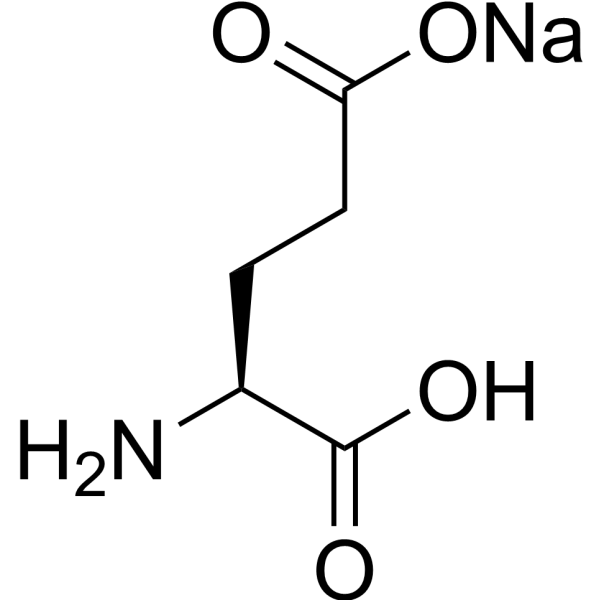
L-Glutamic acid monosodium salt is an excitatory amino acid neurotransmitter that acts as an agonist for all subtypes of glutamate receptors (metabolic rhodophylline, NMDA, and AMPA). L-Glutamic acid monosodium salt has an agonist effect on the release of DA from dopaminergic nerve endings. L-Glutamic acid monosodium salt can be used in the study of neurological diseases. L-Glutamic acid monosodium salt acts at ionotropic and metabotropic glutamate receptors .
|
-
- HY-P1055
-
|
|
iGluR
|
Neurological Disease
|
|
Pep2-SVKE is an inactive control peptide for pep2-SVKI (HY-P1056). Pep2-SVKE is an inhibitory peptide corresponding to the last 10 amino acids of the C-terminus of the GluR2 AMPA receptor subunit. Pep2-SVKE does not block AMPA-mediated [ 3H]DA exocytosis. Pep2-SVKE does not bind to GRIP or PICK43 and does not block retention of PICK1 by GST-GluR2 and LTD [1] [2] [3] [4] [5].
|
-
- HY-14608S1
-
|
|
Endogenous Metabolite
iGluR
Ferroptosis
Apoptosis
|
Neurological Disease
|
|
L-Glutamic acid-1- 13C is the 13C-labeled L-Glutamic acid. L-Glutamic acid acts as an excitatory transmitter and an agonist at all subtypes of glutamate receptors (metabotropic, kainate, NMDA, and AMPA). L-Glutamic acid shows a direct activating effect on the release of DA from dopaminergic terminals.
|
-
- HY-106467BR
-
|
|
Reference Standards
iGluR
|
Neurological Disease
|
|
Caroverine (hydrochloride) (Standard) is the analytical standard of Caroverine (hydrochloride). This product is intended for research and analytical applications. Caroverine hydrochloride is a potent, competitive and reversible antagonist of NMDA and AMPA glutamate receptor. Caroverine hydrochloride is also an antioxidant and calcium-blocking agent that exhibits vasorelaxant action. Caroverine hydrochloride can be used for the research of inner ear tinnitus .
|
-
- HY-14608S6
-
-
- HY-W016145
-
|
|
Endogenous Metabolite
iGluR
Ferroptosis
Apoptosis
|
Neurological Disease
Metabolic Disease
Inflammation/Immunology
Cancer
|
|
L-Glutamic acid monosodium hydrate is an excitatory amino acid neurotransmitter that acts as an agonist for all subtypes of glutamate receptors (metabolic rhodophylline, NMDA, and AMPA). L-Glutamic acid monosodium hydrate has an agonist effect on the release of DA from dopaminergic nerve endings. L-Glutamic acid monosodium hydrate can be used in the study of neurological diseases. L-Glutamic acid monosodium hydrate acts at ionotropic and?metabotropic glutamate receptors .
|
-
- HY-112699
-
|
|
iGluR
|
Neurological Disease
|
|
AMPA receptor modulator-1 is a potent, orally active and selective AMPAR regulatory protein TARP γ-8 negative modulator with a pIC50 of 9.7, more selective over GluA1/γ-2 (pIC50=5) .
|
-
- HY-105476
-
|
|
Antibiotic
Fungal
iGluR
|
Infection
Neurological Disease
|
|
TAN 950A is antifungal amino acid antibiotic. TAN 950A has affinity for three excitatory amino acid (EAA) receptor and can inhibit [3H]AMPA, [3H]kainite and [3H]CPP binding competitively. TAN 950A can be used for the researches of infection and neurological disease .
|
-
- HY-14608S3
-
-
- HY-14608S9
-
-
- HY-P3340
-
|
|
iGluR
|
Neurological Disease
|
|
Leptin (116-130) is a bioactive leptin fragment. Leptin (116-130) promotes AMPA receptor trafficking to synapses and facilitate activity-dependent hippocampal synaptic plasticity. Leptin (116-130) prevents hippocampal synaptic disruption and neuronal cell death in models of amyloid toxicity. Leptin (116-130) has the potential for the research of Alzheimer's disease (AD) .
|
-
- HY-W016145S
-
|
|
Isotope-Labeled Compounds
Endogenous Metabolite
iGluR
Ferroptosis
Apoptosis
|
Neurological Disease
Metabolic Disease
Inflammation/Immunology
Cancer
|
|
L-Glutamic acid- 13C5 hydrate salt is the 13C labeled L-Glutamic acid hydrate salt. L-Glutamic acid monosodium hydrate is an excitatory amino acid neurotransmitter that acts as an agonist for all subtypes of glutamate receptors (metabolic rhodophylline, NMDA, and AMPA). L-Glutamic acid monosodium hydrate has an agonist effect on the release of DA from dopaminergic nerve endings. L-Glutamic acid monosodium hydrate can be used in the study of neurological diseases. L-Glutamic acid monosodium hydrate acts at ionotropic and?metabotropic glutamate receptors.
|
-
- HY-100781
-
|
D-APB; D-2-Amino-4-phosphonobutyric acid
|
iGluR
|
Neurological Disease
|
|
D-AP4 (D-APB; D-2-Amino-4-phosphonobutyric acid), a phosphono analogue of glutamate, is an NMDA broad spectrum excitatory amino acid receptor antagonist. D-AP4 also is an agonist for a quisqualate-sensitized AP6 site in hippocampus. D-AP4 inhibits AMPA receptor-stimulated 57Co 2+ influx in cultured cerebellar granule cells (IC50 ≥ 100 μM) .
|
-
- HY-108497R
-
|
|
Reference Standards
Somatostatin Receptor
|
Neurological Disease
Cancer
|
|
L-803087 (Standard) is the analytical standard of L-803087 (HY-108497). This product is intended for research and analytical applications. L-803087 is a potent and selective somatostatin sst4 receptor agonist with a Ki of 0.7 nM. L-803087 is >280-fold higher than other somatostatin receptors. L-803087 facilitates AMPA-mediated hippocampal synaptic responses in vitro and increases kainate-induced seizures in mice .
|
-
- HY-14608S4
-
-
- HY-19432
-
|
|
iGluR
|
Neurological Disease
|
|
UBP-282 is a potent, selective and competitive AMPA and kainate receptor antagonist. UBP-282 inhibits the fast component of the dorsal root-evoked ventral root potential (fDR-VRP) with an IC50 value of 10.3 μM. UBP-282 antagonizes kainate-induced depolarisations of dorsal roots with a pA2 value of 4.96 .
|
-
- HY-P3355
-
|
|
iGluR
|
Neurological Disease
|
|
p-fin4 is a peptide inhibitor of STEP Phosphatase-GluA2 AMPA receptor interaction with a Ki of 0.4 μM. p-fin4 restores the memory deficits and displays anxiolytic and antidepressant effects in a scopolamine-treated rat model. p-fin4 is a promising lead compound for novel cognitive enhancers and/or behavioral modulators .
|
-
- HY-15079
-
|
GYKI-53773; LY-300164
|
iGluR
Apoptosis
|
Neurological Disease
Cancer
|
|
Talampanel (LY300164) is an orally and selective α-amino-3-hydroxy-5-methyl-4-isoxazolepropionate (AMPA) receptor antagonis with anti-seizure activity . Talampanel (IVAX) has neuroprotective effects in rodent stroke models . Talampanel attenuates caspase-3 dependent apoptosis in mouse brain .
|
-
- HY-14608S12
-
|
L-Glutamic acid-14C
|
iGluR
Ferroptosis
Apoptosis
|
Neurological Disease
|
|
L-Glutamic acid-14C is L-Glutamic acid (HY-14608) labeled with the radioactive isotope carbon-14. L-Glutamic acid is an excitatory amino acid neurotransmitter and an agonist for all subtypes of glutamate receptors (metabotropic, NMDA, and AMPA). L-Glutamic acid acts as an agonist in the release of DA from dopaminergic nerve terminals and can be used in the study of neurological diseases .
|
-
- HY-B0122S
-
-
- HY-110234R
-
|
McN 4853 D12 (Standard); RWJ 17021 D12 (Standard)
|
Reference Standards
iGluR
GABA Receptor
Sodium Channel
Calcium Channel
Potassium Channel
Carbonic Anhydrase
|
Neurological Disease
|
|
Topiramate D12 (Standard) is the analytical standard of Topiramate D12. This product is intended for research and analytical applications. Topiramate D12 (McN 4853 D12) is a deuterium labeled Topiramate. Topiramate is a broad-spectrum antiepileptic agent. Topiramate is a GluR5 receptor antagonist. Topiramate produces its antiepileptic effects through enhancement of GABAergic activity, inhibition of kainate/AMPA receptors, inhibition of voltage-sensitive sodium and calcium channels, increases in potassium conductance, and inhibition of carbonic anhydrase .
|
-
- HY-103234AR
-
|
|
Reference Standards
iGluR
|
Neurological Disease
|
|
GYKI 52466 (dihydrochloride) (Standard) is the analytical standard of GYKI 52466 (dihydrochloride). This product is intended for research and analytical applications. GYKI 52466 dihydrochloride is an orally active, highly selective and noncompetitive AMPA/kainate receptor antagonist with the IC50 values of 7.5 and 11μM, respectively. GYKI 52466 dihydrochloride has good blood brain barrier permeability and anticonvulsant effect. GYKI 52466 dihydrochloride can be used in Parkinson's disease research .
|
-
- HY-116330A
-
|
Hyperforin DCHA
|
TRP Channel
Calcium Channel
|
Neurological Disease
Cancer
|
|
Hyperforin dicyclohexylammonium salt (Hyperforin DCHA) is a transient receptor canonical 6 (TRPC6) channels activator. Hyperforin dicyclohexylammonium salt modulates Ca 2+ levels by activating Ca 2+-conducting non-selective canonical TRPC6 channels. Hyperforin dicyclohexylammonium salt also shows diverse pharmacological activities including anti-depression, anti-tumor, anti-dementia, anti-diabetes. Hyperforin dicyclohexylammonium salt modulates γδ T cells to secret IL-17α, improves Imiquimod (HY-B0180)-induced psoriasis-like mice model .
|
-
- HY-116330AR
-
|
Hyperforin DCHA (Standard)
|
Reference Standards
TRP Channel
Calcium Channel
|
Neurological Disease
|
|
Hyperforin dicyclohexylammonium salt (Standard) is the analytical standard of Hyperforin dicyclohexylammonium salt. This product is intended for research and analytical applications. Hyperforin dicyclohexylammonium salt (Hyperforin DCHA) is a transient receptor canonical 6 (TRPC6) channels activator. Hyperforin dicyclohexylammonium salt modulates Ca 2+ levels by activating Ca 2+-conducting non-selective canonical TRPC6 channels. Hyperforin dicyclohexylammonium salt also shows diverse pharmacological activities including anti-depression, anti-tumor, anti-dementia, anti-diabetes. Hyperforin dicyclohexylammonium salt modulates γδ T cells to secret IL-17α, improves Imiquimod (HY-B0180)-induced psoriasis-like mice model .
|
-
- HY-161665
-
|
|
iGluR
|
Neurological Disease
|
|
BDZ-P7 inhibits AMPA receptor GluA2, GluA1/2, GluA2/3, and GluA1 subunit with IC50s of 3.03 μM, 3.14 μM, 3.19 μM, 3.2 μM. BDZ-P7 has neuroprotective effect and reinstates locomotor abilities in a mouse model of Parkinson’s disease .
|
-
- HY-109046R
-
|
CX-1632 (Standard); S-47445 (Standard)
|
Reference Standards
iGluR
mTOR
|
Neurological Disease
|
|
Tulrampator (Standard) is the analytical standard of Tulrampator (HY-109046). This product is intended for research and analytical applications. Tulrampator (S-47445) is an orally active selective AMPA receptor modulator. Tulrampator possesses procognitive, enhancing synaptic plasticity, anti-depressant-anxiolytic-like, procognitive and potential neuroprotective properties. Tulrampator can be used for research of alzheimer’s disease and in major depressive disorder .
|
-
- HY-P5487
-
|
|
iGluR
|
Others
|
|
GluR23Y is a biological active peptide. (This GluR23Y peptide was used in ELISA cell-surface assay for the insulin-stimulated endocytosis of native AMPA receptors in cultured hippocampal neurons. GluR23Y prevented any insulin-induced reduction. The blockade of insulin action was observed when the GluR23Y peptide was delivered into neurons by fusing it to the membrane transduction domain of HIV-1.)
|
-
- HY-17550
-
|
DM-235
|
iGluR
|
Neurological Disease
|
|
Sunifiram (DM-235) is an ampakine-like compound and an agonist of AMPA receptor with oral activity. Sunifiram can increase the release of acetylcholine in the rat cerebral cortex and exhibits potent cognitive enhancement effects with better nootropic activity compared to piracetam (HY-B0585). Sunifiram is promising for research in neurodegenerative diseases such as mild cognitive impairment (MCI) and Alzheimer's disease (AD) .
|
-
- HY-103298
-
|
|
Endogenous Metabolite
|
Neurological Disease
|
|
MNI-caged kainate is a photoprotected neuroactive amino acid with the activity to generate large inward currents. MNI-caged kainate can be released at the resting membrane potential of Purkinje cells and generate significant inward currents. The release of MNI-caged kainate results in approximately 40% of the current being generated through AMPA receptor activation. MNI-caged kainate is used to study fast synaptic receptor mechanisms. The photorelease time of MNI-caged kainate is in the sub-microsecond range, making it suitable for investigating the mechanisms of fast synaptic transmission .
|
-
- HY-144224S
-
|
|
Isotope-Labeled Compounds
Opioid Receptor
iGluR
MMP
PI3K
Akt
NF-κB
|
Neurological Disease
Inflammation/Immunology
Cancer
|
|
Tianeptine-d6 hydrochloride is the deuterium labeled Tianeptine hydrochloride. Tianeptine hydrochloride is an atypical antidepressant. Tianeptine hydrochloride is a moderate-intensity agonist of the μ-opioid receptor (MOR), and to a lesser extent, is an agonist of the δ-opioid receptor (DOR). Tianeptine hydrochloride is a glutamate modulator that can enhance AMPA receptor and antagonize NMDA receptor. Tianeptine hydrochloride increases sensitivity of the α1 adrenergic receptor, which only manifests in chronic treatment. Tianeptine hydrochloride exerts neuroprotective effects under stress/inflammation-induced conditions, exhibiting anti-inflammatory and antioxidant properties. Tianeptine hydrochloride inhibits MMP-9 by suppressing the PI3K/Akt-mediated NF-κB pathway. Tianeptine hydrochloride can be used to alleviate symptoms of depression and anxiety, but does not cause sedative effects.
|
-
- HY-90003A
-
|
|
Opioid Receptor
iGluR
MMP
PI3K
Akt
NF-κB
|
Neurological Disease
Inflammation/Immunology
|
|
Tianeptine sodium salt is an atypical antidepressant. Tianeptine sodium salt is a moderate-intensity agonist of the μ-opioid receptor (MOR), and to a lesser extent, is an agonist of the δ-opioid receptor (DOR). Tianeptine sodium salt is a glutamate modulator that can enhance AMPA receptor and antagonize NMDA receptor. Tianeptine sodium salt increases sensitivity of the α1 adrenergic receptor, which only manifests in chronic treatment. Tianeptine sodium salt exerts neuroprotective effects under stress/inflammation-induced conditions, exhibiting anti-inflammatory and antioxidant properties. Tianeptine sodium salt inhibits MMP-9 by suppressing the PI3K/Akt-mediated NF-κB pathway. Tianeptine sodium salt can be used to alleviate symptoms of depression and anxiety, but does not cause sedative effects .
|
-
- HY-90003
-
|
|
Opioid Receptor
iGluR
MMP
PI3K
Akt
NF-κB
|
Neurological Disease
Inflammation/Immunology
|
|
Tianeptine is an atypical antidepressant. Tianeptine is a moderate-intensity agonist of the μ-opioid receptor (MOR), and to a lesser extent, is an agonist of the δ-opioid receptor (DOR). Tianeptine is a glutamate modulator that can enhance AMPA receptor and antagonize NMDA receptor. tianeptine increases sensitivity of the α1 adrenergic receptor, which only manifests in chronic treatment. Tianeptine exerts neuroprotective effects under stress/inflammation-induced conditions, exhibiting anti-inflammatory and antioxidant properties. Tianeptine inhibits MMP-9 by suppressing the PI3K/Akt-mediated NF-κB pathway. Tianeptine can be used to alleviate symptoms of depression and anxiety, but does not cause sedative effects .
|
-
- HY-14608AR
-
|
|
Reference Standards
iGluR
Apoptosis
Ferroptosis
Endogenous Metabolite
|
Neurological Disease
|
|
L-Glutamic acid (monosodium salt) (Standard) is the analytical standard of L-Glutamic acid (monosodium salt). This product is intended for research and analytical applications. L-Glutamic acid monosodium salt is an excitatory amino acid neurotransmitter that acts as an agonist for all subtypes of glutamate receptors (metabolic rhodophylline, NMDA, and AMPA). L-Glutamic acid monosodium salt has an agonist effect on the release of DA from dopaminergic nerve endings. L-Glutamic acid monosodium salt can be used in the study of neurological diseases .
|
-
- HY-13456
-
|
|
iGluR
|
Neurological Disease
|
|
LY-404187 is a potent, selective and centrally active positive allosteric modulator of AMPA receptors, with the EC50s of 5.65, 0.15, 1.44, 1.66 and 0.21 µM for GluR1i, GluR2i, GluR2o, GluR3i and GluR4i, respectively. LY-404187 has therapeutic potential in a number of psychiatric disorders and neurodegenerative diseases .
|
-
- HY-P3354
-
|
|
iGluR
|
Neurological Disease
|
|
p3Ysh-3 is a peptide inhibitor of STEP Phosphatase-GluA2 AMPA receptor interaction with a Ki of 1.09 μM. p3Ysh-3 restores the memory deficits and displays anxiolytic and antidepressant effects in a scopolamine-treated rat model. p3Ysh-3 is a promising lead compound for novel cognitive enhancers and/or behavioral modulators .
|
-
- HY-90003S
-
|
|
Isotope-Labeled Compounds
Opioid Receptor
iGluR
MMP
PI3K
Akt
NF-κB
|
Neurological Disease
Inflammation/Immunology
|
|
Tianeptine-d12 is a deuterated analog of Tianeptine (HY-90003).Tianeptine is an atypical antidepressant. Tianeptine is a moderate-intensity agonist of the μ-opioid receptor (MOR), and to a lesser extent, is an agonist of the δ-opioid receptor (DOR). Tianeptine is a glutamate modulator that can enhance AMPA receptor and antagonize NMDA receptor. Tianeptine increases sensitivity of the α1 adrenergic receptor, which only manifests in chronic treatment. Tianeptine exerts neuroprotective effects under stress/inflammation-induced conditions, exhibiting anti-inflammatory and antioxidant properties. Tianeptine inhibits MMP-9 by suppressing the PI3K/Akt-mediated NF-κB pathway. Tianeptine can be used to alleviate symptoms of depression and anxiety, but does not cause sedative effects.
|
-
- HY-90003AR
-
|
|
Reference Standards
Opioid Receptor
iGluR
MMP
PI3K
Akt
NF-κB
|
Neurological Disease
Inflammation/Immunology
|
|
Tianeptine sodium salt (Standard) is the analytical standard of Tianeptine sodium salt (HY-90003A). This product is intended for research and analytical applications. Tianeptine sodium salt is an atypical antidepressant. Tianeptine sodium salt is a moderate-intensity agonist of the μ-opioid receptor (MOR), and to a lesser extent, is an agonist of the δ-opioid receptor (DOR). Tianeptine sodium salt is a glutamate modulator that can enhance AMPA receptor and antagonize NMDA receptor. Tianeptine sodium salt increases sensitivity of the α1 adrenergic receptor, which only manifests in chronic treatment. Tianeptine sodium salt exerts neuroprotective effects under stress/inflammation-induced conditions, exhibiting anti-inflammatory and antioxidant properties. Tianeptine sodium salt inhibits MMP-9 by suppressing the PI3K/Akt-mediated NF-κB pathway. Tianeptine sodium salt can be used to alleviate symptoms of depression and anxiety, but does not cause sedative effects.
|
-
- HY-W015309
-
|
|
Environmental Pollutants
Endogenous Metabolite
iGluR
Glutaminase
c-Met/HGFR
Tyrosinase
|
Neurological Disease
Metabolic Disease
Cancer
|
|
Decanoic acid is a key component of the medium-chain triglyceride (MCT) found in coconut oil. Decanoic acid is a brain-penetrant and non-competitive inhibitor of AMPA receptor showing antiseizure activity in rats. Decanoic acid reduces tyrosinase activity and inhibits melanosome maturation. Decanoic acid suppresses the phosphorylation of c-Met and induced apoptosis in hepatocellular carcinoma (HCC) cells by inhibiting the expression of various oncogenic proteins, which is promising for research in the field of mTORC1 signaling, HCC and epilepsy .
|
-
- HY-17550R
-
|
DM-235 (Standard)
|
Reference Standards
iGluR
|
Neurological Disease
|
|
Sunifiram (Standard) is the analytical standard of Sunifiram. This product is intended for research and analytical applications. Sunifiram (DM-235) is an ampakine-like compound and an agonist of AMPA receptor with oral activity. Sunifiram can increase the release of acetylcholine in the rat cerebral cortex and exhibits potent cognitive enhancement effects with better nootropic activity compared to piracetam (HY-B0585). Sunifiram is promising for research in neurodegenerative diseases such as mild cognitive impairment (MCI) and Alzheimer's disease (AD) .
|
-
- HY-12499
-
|
(-)-Willardiine
|
iGluR
|
Neurological Disease
|
|
(S)-Willardiine ((-)-Willardiine) is a subtype-selective glutamate receptor agonist and the active isomer of Willardiine. Willardiine binds to and activates hGluR1, hGluR2, hGluR4 and hGluR5, with Ki values of 3.6 nM and 0.24 nM for hGluR4 and hGluR5, respectively. (S)-Willardiine is used to investigate the distribution and physiological functions of glutamate receptor subunits in the central nervous system .
|
-
- HY-W015309R
-
|
|
Reference Standards
iGluR
Tyrosinase
c-Met/HGFR
Glutaminase
|
Neurological Disease
Metabolic Disease
Cancer
|
|
Decanoic acid (Standard) is the analytical standard of Decanoic acid. This product is intended for research and analytical applications. Decanoic acid is a key component of the medium-chain triglyceride (MCT) found in coconut oil. Decanoic acid is a brain-penetrant and non-competitive inhibitor of AMPA receptor showing antiseizure activity in rats. Decanoic acid reduces tyrosinase activity and inhibits melanosome maturation. Decanoic acid suppresses the phosphorylation of c-Met and induced apoptosis in hepatocellular carcinoma (HCC) cells by inhibiting the expression of various oncogenic proteins, which is promising for research in the field of mTORC1 signaling, HCC and epilepsy .
|
-
- HY-168966
-
|
|
Phosphodiesterase (PDE)
iGluR
|
Neurological Disease
|
|
JNJ-54082730 (Compound 1) is the orally active inhibitor for phosphodiesterase (PDE) that inhibits PDE2A, PDE3B, and PDE10A2 with IC50s of 0.95 nM, 6.17 μM (pIC50=5.21) and 87.1 nM (pIC50=7.06), respectively. JNJ-54082730 modulates the activity of AMPA receptor, enhance the synaptic plasticity and promotes the learning and memory function in rats models. JNJ-54082730 can cross blood-brain barrier .
|
-
- HY-W266188
-
|
|
Isotope-Labeled Compounds
iGluR
Tyrosinase
c-Met/HGFR
Glutaminase
|
Neurological Disease
Metabolic Disease
Cancer
|
|
Decanoic acid- 13C is the 13C-labeled Decanoic acid (HY-W015309). Decanoic acid is a key component of the medium-chain triglyceride (MCT) found in coconut oil. Decanoic acid is a brain-penetrant and non-competitive inhibitor of AMPA receptor showing antiseizure activity in rats. Decanoic acid reduces tyrosinase activity and inhibits melanosome maturation. Decanoic acid suppresses the phosphorylation of c-Met and induced apoptosis in hepatocellular carcinoma (HCC) cells by inhibiting the expression of various oncogenic proteins, which is promising for research in the field of mTORC1 signaling, HCC and epilepsy .
|
-
- HY-180197
-
|
|
PKC
iGluR
Reactive Oxygen Species (ROS)
|
Cardiovascular Disease
Neurological Disease
|
|
PICK1 PDZ-IN-1 (Compound 6b) is a selective and brain-penetrant protein interacting with C kinase 1 (PICK1) PDZ domain inhibitor with a Ki of 27.73 μM. PICK1 PDZ-IN-1 can competitively inhibit the interaction between PICK1 and the GluA2 subunit of AMPA receptors. PICK1 PDZ-IN-1 can increase the survival rate of HT22 cells and primary cortical neuron cells induced by glutamate and inhibit ROS production. PICK1 PDZ-IN-1 exhibits neuroprotective effect and reduces the area of cerebral infarction. PICK1 PDZ-IN-1 can be used for the research of ischemic stroke .
|
-
- HY-Y1055A
-
|
|
Endogenous Metabolite
DNA/RNA Synthesis
|
Infection
Neurological Disease
Cancer
|
|
Guanine hydrochloride is one of the fundamental components of nucleic acids (DNA and RNA). Guanine hydrochloride is a purine derivative, consisting of a fused pyrimidine-imidazole ring system with conjugated double bonds. Guanine hydrochloride has the potential to serve as a large-capacity N pool. Guanine hydrochloride has cytotoxic, antinociceptive and neuroprotective effects .
|
-
- HY-14608R
-
|
|
Reference Standards
Endogenous Metabolite
iGluR
Ferroptosis
Apoptosis
|
Neurological Disease
|
L-Glutamic acid (Standard) is the analytical standard of L-Glutamic acid. This product is intended for research and analytical applications. L-Glutamic acid is an excitatory amino acid neurotransmitter that acts as an agonist for all subtypes of glutamate receptors (metabolic rhodophylline, NMDA, and AMPA). L-Glutamic acid has an agonist effect on the release of DA from dopaminergic nerve endings. L-Glutamic acid can be used in the study of neurological diseases .
IC50 & Target:DA .
In Vitro: L-Glutamic acid (120, 500, 750, 1000 mg/dL) can reduce the harmful effect of lithium on the embryonic development of Xenopus Xenopus .
L-Glutamic acid (2, 5, 10, 20 mM, 24-48 h) can induce neuroexcitotoxicity in neuroblastoma .
In Vivo: L-Glutamic acid (3 g/kg, subcutaneous injection) can promote excitotoxic degeneration of retinal ganglion cells in mice .
L-Glutamic acid (750 mg/kg, intraperitoneal injection) can reduce and inhibit oxidative stress induced by chlorpyrifos (CPF) in rats .
|
-
- HY-N0660R
-
|
|
Reference Standards
ERK
p38 MAPK
Akt
PI3K
11β-HSD
STING
VEGFR
Ferroptosis
Autophagy
Apoptosis
Keap1-Nrf2
Caspase
PARP
AMPK
|
Neurological Disease
Metabolic Disease
Inflammation/Immunology
Cancer
|
|
Jujuboside B (Standard) is the analytical standard of Jujuboside B. This product is intended for research and analytical applications. Jujuboside B is a bioactive saponin component isolated from Ziziphi Spinosae Semen (sour jujube seed), with oral efficacy and blood-brain barrier permeability. Jujuboside B induces acute leukemia cell death and drives necroptosis apoptosis by activating the RIPK1/RIPK3/MLKL pathway. Jujuboside B upregulates the expression of NOXA, PARP and caspase-3, activates AMPK, inhibits the proliferation of breast cancer cells, and induces cell apoptosis and autophagy. Jujuboside B inhibits angiogenesis and tumor growth by blocking the VEGFR-2 signaling pathway. Jujuboside B alleviates liver injury in mice by regulating the Nrf2-STING signaling pathway . Jujuboside B alleviates liver injury by regulating anti-inflammatory responses and downregulating the expression of 11β-HSD2. Jujuboside B induces ferroptosis and overcomes radioresistance in non-small cell lung cancer via the PPARγ-ATF3-Gpx4 signaling pathway. Jujuboside B exerts inhibitory effects on platelet aggregation. Jujuboside B inhibits febrile seizures by suppressing the activity of AMPA receptors. Jujuboside B reverses chronic unpredictable mild stress-promoted tumor progression by blocking the PI3K/Akt and MAPK/ERK pathways and dephosphorylating CREB signaling. Jujuboside B is applicable to related studies on acute leukemia, breast cancer, PM2.5-induced lung injury, hepatotoxicity, liver injury, colorectal cancer, non-small cell lung cancer, thromboembolic diseases, cardiovascular diseases associated with high platelet aggregation, febrile seizures, and depressive-like phenotypes.
|
-
- HY-N0660
-
|
|
Apoptosis
PARP
Caspase
AMPK
Autophagy
VEGFR
Keap1-Nrf2
STING
11β-HSD
Ferroptosis
PI3K
Akt
p38 MAPK
ERK
|
Neurological Disease
Metabolic Disease
Inflammation/Immunology
Cancer
|
|
Jujuboside B is a bioactive saponin component isolated from Ziziphi Spinosae Semen (sour jujube seed), with oral efficacy and blood-brain barrier permeability. Jujuboside B induces acute leukemia cell death and drives necroptosis apoptosis by activating the RIPK1/RIPK3/MLKL pathway. Jujuboside B upregulates the expression of NOXA, PARP and caspase-3, activates AMPK, inhibits the proliferation of breast cancer cells, and induces cell apoptosis and autophagy. Jujuboside B inhibits angiogenesis and tumor growth by blocking the VEGFR-2 signaling pathway. Jujuboside B alleviates liver injury in mice by regulating the Nrf2-STING signaling pathway . Jujuboside B alleviates liver injury by regulating anti-inflammatory responses and downregulating the expression of 11β-HSD2. Jujuboside B induces ferroptosis and overcomes radioresistance in non-small cell lung cancer via the PPARγ-ATF3-Gpx4 signaling pathway. Jujuboside B exerts inhibitory effects on platelet aggregation. Jujuboside B inhibits febrile seizures by suppressing the activity of AMPA receptors. Jujuboside B reverses chronic unpredictable mild stress-promoted tumor progression by blocking the PI3K/Akt and MAPK/ERK pathways and dephosphorylating CREB signaling. Jujuboside B is applicable to related studies on acute leukemia, breast cancer, PM2.5-induced lung injury, hepatotoxicity, liver injury, colorectal cancer, non-small cell lung cancer, thromboembolic diseases, cardiovascular diseases associated with high platelet aggregation, febrile seizures, and depressive-like phenotypes .
|
-
| Cat. No. |
Nombre del producto |
Target |
Research Area |
-
- HY-P2259
-
|
|
iGluR
HIV Integrase
Adenosine Receptor
|
Cardiovascular Disease
Neurological Disease
|
|
TAT-GluA2 3Y is a blood-brain barrier-permeable AMPA receptor inhibitory peptide that crosses cell membranes via the HIV-1 TAT protein domain. TAT-GluA2 3Y blocks the endocytosis of AMPA receptors, including the internalization of GluA1/GluA2 subunits, by disrupting interactions with the AP2, Brag2 and Syt3-GluA2 complexes, while also inhibiting long-term depression. TAT-GluA2 3Y blocks hypoxia-mediated AMPAR internalization, alleviates A1R-induced persistent synaptic inhibition, and reduces cerebral ischemic volume, neurological deficits and spatial memory deficits. TAT-GluA2 3Y blocks the effect of NLRP3 deficiency on fear generalization, inhibits amphetamine-induced behavioral/neurochemical sensitization, weakens the unconditioned stimulus-conditioned stimulus association of morphine, and promotes the extinction of morphine CPP. TAT-GluA2 3Y can be used in studies related to fear generalization, ischemic stroke, hypoxia, drug addiction and opioid addiction .
|
-
- HY-P1057
-
|
|
iGluR
|
Neurological Disease
|
|
Pep4c is an inactive control peptide for Pep2m (HY-P1058). Pep4c lacks functional activity to disrupt Protein Interacting with C Kinase 1 (PICK1)-AMPA receptor (GluA2) or N-ethylmaleimide-sensitive factor (NSF)-GluA2 interactions. Pep4c is used as a negative control in experiments to validate the specificity of Pep2m's effects on AMPA receptor trafficking and synaptic plasticity [1] [2] [3] [4] [5] [6].
|
-
- HY-P1367
-
|
|
Peptides
|
Neurological Disease
|
|
Pep1-TGL is a synthetic peptide containing the TGL motif from the C-terminus of the AMPA receptor GluA1 subunit .
|
-
- HY-P1055
-
|
|
iGluR
|
Neurological Disease
|
|
Pep2-SVKE is an inactive control peptide for pep2-SVKI (HY-P1056). Pep2-SVKE is an inhibitory peptide corresponding to the last 10 amino acids of the C-terminus of the GluR2 AMPA receptor subunit. Pep2-SVKE does not block AMPA-mediated [ 3H]DA exocytosis. Pep2-SVKE does not bind to GRIP or PICK43 and does not block retention of PICK1 by GST-GluR2 and LTD [1] [2] [3] [4] [5].
|
-
- HY-P3340
-
|
|
iGluR
|
Neurological Disease
|
|
Leptin (116-130) is a bioactive leptin fragment. Leptin (116-130) promotes AMPA receptor trafficking to synapses and facilitate activity-dependent hippocampal synaptic plasticity. Leptin (116-130) prevents hippocampal synaptic disruption and neuronal cell death in models of amyloid toxicity. Leptin (116-130) has the potential for the research of Alzheimer's disease (AD) .
|
-
- HY-P3355
-
|
|
iGluR
|
Neurological Disease
|
|
p-fin4 is a peptide inhibitor of STEP Phosphatase-GluA2 AMPA receptor interaction with a Ki of 0.4 μM. p-fin4 restores the memory deficits and displays anxiolytic and antidepressant effects in a scopolamine-treated rat model. p-fin4 is a promising lead compound for novel cognitive enhancers and/or behavioral modulators .
|
-
- HY-P5487
-
|
|
iGluR
|
Others
|
|
GluR23Y is a biological active peptide. (This GluR23Y peptide was used in ELISA cell-surface assay for the insulin-stimulated endocytosis of native AMPA receptors in cultured hippocampal neurons. GluR23Y prevented any insulin-induced reduction. The blockade of insulin action was observed when the GluR23Y peptide was delivered into neurons by fusing it to the membrane transduction domain of HIV-1.)
|
-
- HY-P3354
-
|
|
iGluR
|
Neurological Disease
|
|
p3Ysh-3 is a peptide inhibitor of STEP Phosphatase-GluA2 AMPA receptor interaction with a Ki of 1.09 μM. p3Ysh-3 restores the memory deficits and displays anxiolytic and antidepressant effects in a scopolamine-treated rat model. p3Ysh-3 is a promising lead compound for novel cognitive enhancers and/or behavioral modulators .
|
-
- HY-P1058
-
|
|
iGluR
|
Neurological Disease
|
|
Pep2m is a peptide receptor inhibitor. Pep2m inhibits the interaction between the C-terminus of the AMPA-type glutamate receptor (GluA2) subunit and N-ethylmaleimide-sensitive fusion protein (NSF). Pep2m prevents synaptic long-term depression (LTD). Pep2m can reduce postsynaptic currents in neurons, AMPA-mediated currents in cultured hippocampal neurons, and AMPA receptor surface expression [1] [2] [3] [4] [5].
|
-
- HY-P1056
-
|
|
iGluR
|
Neurological Disease
|
|
pep2-SVKI is a selective peptide inhibitor. pep2-SVKI inhibits the binding of AMPA-type glutamate receptor (GluA2) (C-terminal PDZ site) to glutamate receptor interacting protein (GRIP), AMPA receptor binding protein (ABP), and C-kinase interacting protein (PICK1). pep2-SVKI increases the amplitude of AMPA receptor-mediated currents and blocks long-term depression (LTD). pep2-SVKI can be used to study neurological diseases .
|
-
- HY-P1059
-
|
|
iGluR
|
Neurological Disease
|
|
Pep2-AVKI is a selective peptide inhibitor of the binding of the AMPA receptor subunit (GluR2) at the C-terminal PDZ site to C-kinase (PICK1). Pep2-AVKI does not affect the binding of (AMPA-type glutamate receptor) GluA2 to GRIP or ABP. Pep2-AVKI does not increase the amplitude of AMPA currents. pep2-AVKI can be used to study neurological diseases .
|
-
- HY-P11848
-
|
|
iGluR
Apoptosis
Reactive Oxygen Species (ROS)
|
Cardiovascular Disease
Neurological Disease
|
|
P3LC7LC-P is a blood-brain barrier-permeable BRAG2 ligand with a KD of 6.14 μM. P3LC7LC-P binds to BRAG2, thereby disrupting its interaction with the GluA2 subunit of the AMPA receptor and inhibiting glutamate-induced GluA2 endocytosis. P3LC7LC-P exerts neuroprotective effects in oxygen-glucose deprivation-induced and glutamate-induced neurotoxicity models, reduces ROS accumulation and inhibits apoptosis, and reduces cerebral infarct size in a rat model of transient middle cerebral artery occlusion. P3LC7LC-P can be used for the research of ischemic stroke .
|
| Cat. No. |
Nombre del producto |
Category |
Target |
Chemical Structure |
-
- HY-14608
-
-
-
- HY-14608A
-
-
-
- HY-W015309
-
-
-
- HY-116330A
-
|
Hyperforin DCHA
|
Productos naturales
Guttiferae
Hyperlcurn perforatum L.
Plants
Source Classification
|
TRP Channel
Calcium Channel
|
|
Hyperforin dicyclohexylammonium salt (Hyperforin DCHA) is a transient receptor canonical 6 (TRPC6) channels activator. Hyperforin dicyclohexylammonium salt modulates Ca 2+ levels by activating Ca 2+-conducting non-selective canonical TRPC6 channels. Hyperforin dicyclohexylammonium salt also shows diverse pharmacological activities including anti-depression, anti-tumor, anti-dementia, anti-diabetes. Hyperforin dicyclohexylammonium salt modulates γδ T cells to secret IL-17α, improves Imiquimod (HY-B0180)-induced psoriasis-like mice model .
|
-
-
- HY-14608R
-
|
|
Structural Classification
Microorganisms
Disease markers
Endocrine diseases
Amino acids
Nervous System Disorder
Endogenous metabolite
Cardiovascular System Disorder
Cancer
Source Classification
|
Reference Standards
Endogenous Metabolite
iGluR
Ferroptosis
Apoptosis
|
L-Glutamic acid (Standard) is the analytical standard of L-Glutamic acid. This product is intended for research and analytical applications. L-Glutamic acid is an excitatory amino acid neurotransmitter that acts as an agonist for all subtypes of glutamate receptors (metabolic rhodophylline, NMDA, and AMPA). L-Glutamic acid has an agonist effect on the release of DA from dopaminergic nerve endings. L-Glutamic acid can be used in the study of neurological diseases .
IC50 & Target:DA .
In Vitro: L-Glutamic acid (120, 500, 750, 1000 mg/dL) can reduce the harmful effect of lithium on the embryonic development of Xenopus Xenopus .
L-Glutamic acid (2, 5, 10, 20 mM, 24-48 h) can induce neuroexcitotoxicity in neuroblastoma .
In Vivo: L-Glutamic acid (3 g/kg, subcutaneous injection) can promote excitotoxic degeneration of retinal ganglion cells in mice .
L-Glutamic acid (750 mg/kg, intraperitoneal injection) can reduce and inhibit oxidative stress induced by chlorpyrifos (CPF) in rats .
|
-
-
- HY-N0660
-
|
|
Cardiovascular Disease
Triterpenes
Structural Classification
other families
Classification of Application Fields
Terpenoids
Plants
Disease Research Fields
Source Classification
|
Apoptosis
PARP
Caspase
AMPK
Autophagy
VEGFR
Keap1-Nrf2
STING
11β-HSD
Ferroptosis
PI3K
Akt
p38 MAPK
ERK
|
|
Jujuboside B is a bioactive saponin component isolated from Ziziphi Spinosae Semen (sour jujube seed), with oral efficacy and blood-brain barrier permeability. Jujuboside B induces acute leukemia cell death and drives necroptosis apoptosis by activating the RIPK1/RIPK3/MLKL pathway. Jujuboside B upregulates the expression of NOXA, PARP and caspase-3, activates AMPK, inhibits the proliferation of breast cancer cells, and induces cell apoptosis and autophagy. Jujuboside B inhibits angiogenesis and tumor growth by blocking the VEGFR-2 signaling pathway. Jujuboside B alleviates liver injury in mice by regulating the Nrf2-STING signaling pathway . Jujuboside B alleviates liver injury by regulating anti-inflammatory responses and downregulating the expression of 11β-HSD2. Jujuboside B induces ferroptosis and overcomes radioresistance in non-small cell lung cancer via the PPARγ-ATF3-Gpx4 signaling pathway. Jujuboside B exerts inhibitory effects on platelet aggregation. Jujuboside B inhibits febrile seizures by suppressing the activity of AMPA receptors. Jujuboside B reverses chronic unpredictable mild stress-promoted tumor progression by blocking the PI3K/Akt and MAPK/ERK pathways and dephosphorylating CREB signaling. Jujuboside B is applicable to related studies on acute leukemia, breast cancer, PM2.5-induced lung injury, hepatotoxicity, liver injury, colorectal cancer, non-small cell lung cancer, thromboembolic diseases, cardiovascular diseases associated with high platelet aggregation, febrile seizures, and depressive-like phenotypes .
|
-
-
- HY-14608AR
-
-
-
- HY-116330AR
-
|
Hyperforin DCHA (Standard)
|
Structural Classification
Productos naturales
Guttiferae
Hyperlcurn perforatum L.
Plants
Source Classification
|
Reference Standards
TRP Channel
Calcium Channel
|
|
Hyperforin dicyclohexylammonium salt (Standard) is the analytical standard of Hyperforin dicyclohexylammonium salt. This product is intended for research and analytical applications. Hyperforin dicyclohexylammonium salt (Hyperforin DCHA) is a transient receptor canonical 6 (TRPC6) channels activator. Hyperforin dicyclohexylammonium salt modulates Ca 2+ levels by activating Ca 2+-conducting non-selective canonical TRPC6 channels. Hyperforin dicyclohexylammonium salt also shows diverse pharmacological activities including anti-depression, anti-tumor, anti-dementia, anti-diabetes. Hyperforin dicyclohexylammonium salt modulates γδ T cells to secret IL-17α, improves Imiquimod (HY-B0180)-induced psoriasis-like mice model .
|
-
-
- HY-W015309R
-
|
|
Structural Classification
Microorganisms
Ketones, Aldehydes, Acids
Endogenous metabolite
Source Classification
|
Reference Standards
iGluR
Tyrosinase
c-Met/HGFR
Glutaminase
|
|
Decanoic acid (Standard) is the analytical standard of Decanoic acid. This product is intended for research and analytical applications. Decanoic acid is a key component of the medium-chain triglyceride (MCT) found in coconut oil. Decanoic acid is a brain-penetrant and non-competitive inhibitor of AMPA receptor showing antiseizure activity in rats. Decanoic acid reduces tyrosinase activity and inhibits melanosome maturation. Decanoic acid suppresses the phosphorylation of c-Met and induced apoptosis in hepatocellular carcinoma (HCC) cells by inhibiting the expression of various oncogenic proteins, which is promising for research in the field of mTORC1 signaling, HCC and epilepsy .
|
-
-
- HY-N0660R
-
|
|
Triterpenes
Structural Classification
other families
Terpenoids
Plants
Source Classification
|
Reference Standards
ERK
p38 MAPK
Akt
PI3K
11β-HSD
STING
VEGFR
Ferroptosis
Autophagy
Apoptosis
Keap1-Nrf2
Caspase
PARP
AMPK
|
|
Jujuboside B (Standard) is the analytical standard of Jujuboside B. This product is intended for research and analytical applications. Jujuboside B is a bioactive saponin component isolated from Ziziphi Spinosae Semen (sour jujube seed), with oral efficacy and blood-brain barrier permeability. Jujuboside B induces acute leukemia cell death and drives necroptosis apoptosis by activating the RIPK1/RIPK3/MLKL pathway. Jujuboside B upregulates the expression of NOXA, PARP and caspase-3, activates AMPK, inhibits the proliferation of breast cancer cells, and induces cell apoptosis and autophagy. Jujuboside B inhibits angiogenesis and tumor growth by blocking the VEGFR-2 signaling pathway. Jujuboside B alleviates liver injury in mice by regulating the Nrf2-STING signaling pathway . Jujuboside B alleviates liver injury by regulating anti-inflammatory responses and downregulating the expression of 11β-HSD2. Jujuboside B induces ferroptosis and overcomes radioresistance in non-small cell lung cancer via the PPARγ-ATF3-Gpx4 signaling pathway. Jujuboside B exerts inhibitory effects on platelet aggregation. Jujuboside B inhibits febrile seizures by suppressing the activity of AMPA receptors. Jujuboside B reverses chronic unpredictable mild stress-promoted tumor progression by blocking the PI3K/Akt and MAPK/ERK pathways and dephosphorylating CREB signaling. Jujuboside B is applicable to related studies on acute leukemia, breast cancer, PM2.5-induced lung injury, hepatotoxicity, liver injury, colorectal cancer, non-small cell lung cancer, thromboembolic diseases, cardiovascular diseases associated with high platelet aggregation, febrile seizures, and depressive-like phenotypes.
|
-
| Cat. No. |
Nombre del producto |
Chemical Structure |
-
- HY-14608S5
-
1 Publications Verification
|
|
L-Glutamic acid- 13C5 is the 13C-labeled L-Glutamic acid. L-Glutamic acid acts as an excitatory transmitter and an agonist at all subtypes of glutamate receptors (metabotropic, kainate, NMDA, and AMPA). L-Glutamic acid shows a direct activating effect on the release of DA from dopaminergic terminals.
|
-
-
- HY-14608S7
-
|
|
|
L-Glutamic acid-d5 is the deuterium labeled L-Glutamic acid. L-Glutamic acid acts as an excitatory transmitter and an agonist at all subtypes of glutamate receptors (metabotropic, kainate, NMDA, and AMPA). L-Glutamic acid shows a direct activating effect on the release of DA from dopaminergic terminals.
|
-
-
- HY-14608S8
-
|
|
|
L-Glutamic acid-d3 is the deuterium labeled L-Glutamic acid. L-Glutamic acid acts as an excitatory transmitter and an agonist at all subtypes of glutamate receptors (metabotropic, kainate, NMDA, and AMPA). L-Glutamic acid shows a direct activating effect on the release of DA from dopaminergic terminals.
|
-
-
- HY-14608S3
-
|
|
|
L-Glutamic acid- 13C5, 15N is the 13C- and 15N-labeled L-Glutamic acid. L-Glutamic acid acts as an excitatory transmitter and an agonist at all subtypes of glutamate receptors (metabotropic, kainate, NMDA, and AMPA). L-Glutamic acid shows a direct activating effect on the release of DA from dopaminergic terminals.
|
-
-
- HY-W015309S1
-
|
|
|
Decanoic acid-d199 is the deuterium labeled Decanoic acid. Decanoic acid, a component of medium chain triclycerides, is a brain-penetrant and non-competitive inhibitor of AMPA receptor. Decanoic acid has antiseizure effects .
|
-
-
- HY-14608S
-
|
|
|
L-Glutamic acid- 13C is the 13C-labeled L-Glutamic acid. L-Glutamic acid acts as an excitatory transmitter and an agonist at all subtypes of glutamate receptors (metabotropic, kainate, NMDA, and AMPA). L-Glutamic acid shows a direct activating effect on the release of DA from dopaminergic terminals.
|
-
-
- HY-14608S2
-
|
|
|
L-Glutamic acid- 15N is the 15N-labeled L-Glutamic acid. L-Glutamic acid acts as an excitatory transmitter and an agonist at all subtypes of glutamate receptors (metabotropic, kainate, NMDA, and AMPA). L-Glutamic acid shows a direct activating effect on the release of DA from dopaminergic terminals .
|
-
-
- HY-14608S1
-
|
|
|
L-Glutamic acid-1- 13C is the 13C-labeled L-Glutamic acid. L-Glutamic acid acts as an excitatory transmitter and an agonist at all subtypes of glutamate receptors (metabotropic, kainate, NMDA, and AMPA). L-Glutamic acid shows a direct activating effect on the release of DA from dopaminergic terminals.
|
-
-
- HY-14608S6
-
|
|
|
L-Glutamic acid-5- 13C is the 13C-labeled L-Glutamic acid. L-Glutamic acid acts as an excitatory transmitter and an agonist at all subtypes of glutamate receptors (metabotropic, kainate, NMDA, and AMPA). L-Glutamic acid shows a direct activating effect on the release of DA from dopaminergic terminals.
|
-
-
- HY-W266188
-
|
|
|
Decanoic acid- 13C is the 13C-labeled Decanoic acid (HY-W015309). Decanoic acid is a key component of the medium-chain triglyceride (MCT) found in coconut oil. Decanoic acid is a brain-penetrant and non-competitive inhibitor of AMPA receptor showing antiseizure activity in rats. Decanoic acid reduces tyrosinase activity and inhibits melanosome maturation. Decanoic acid suppresses the phosphorylation of c-Met and induced apoptosis in hepatocellular carcinoma (HCC) cells by inhibiting the expression of various oncogenic proteins, which is promising for research in the field of mTORC1 signaling, HCC and epilepsy .
|
-
-
- HY-W015309S3
-
|
|
|
Decanoic acid-d5 is the deuterium labeled Decanoic acid. Decanoic acid, a component of medium chain triclycerides, is a brain-penetrant and non-competitive inhibitor of AMPA receptor. Decanoic acid has antiseizure effects .
|
-
-
- HY-14608S4
-
|
|
|
L-Glutamic acid- 13C5, 15N,d5 is the deuterium, 13C-, and 15-labeled L-Glutamic acid. L-Glutamic acid acts as an excitatory transmitter and an agonist at all subtypes of glutamate receptors (metabotropic, kainate, NMDA, and AMPA). L-Glutamic acid shows a direct activating effect on the release of DA from dopaminergic terminals.
|
-
-
- HY-W015309S
-
|
|
|
Decanoic acid-d3 is the deuterium labeled Decanoic acid. Decanoic acid, a component of medium chain triclycerides, is a brain-penetrant and non-competitive inhibitor of AMPA receptor. Decanoic acid has antiseizure effects .
|
-
-
- HY-14608S10
-
|
|
|
L-Glutamic acid- 13C2 is the 13C labeled L-Glutamic acid . L-Glutamic acid acts as an excitatory transmitter and an agonist at all subtypes of glutamate receptors (metabotropic, kainate, NMDA, and AMPA). L-Glutamic acid shows a direct activating effect on the release of DA from dopaminergic terminals .
|
-
-
- HY-B0122S
-
|
|
|
Topiramate-13C6 (McN 4853-13C6) is the 13C labeled isotope of Topiramate (HY-B0122). Topiramate (McN 4853) is a broad-spectrum antiepileptic agent. Topiramate is a GluR5 receptor antagonist. Topiramate produces its antiepileptic effects through enhancement of GABAergic activity, inhibition of kainate/AMPA receptors, inhibition of voltage-sensitive sodium and calcium channels, increases in potassium conductance, and inhibition of carbonic anhydrase .
|
-
-
- HY-90003S
-
|
|
|
Tianeptine-d12 is a deuterated analog of Tianeptine (HY-90003).Tianeptine is an atypical antidepressant. Tianeptine is a moderate-intensity agonist of the μ-opioid receptor (MOR), and to a lesser extent, is an agonist of the δ-opioid receptor (DOR). Tianeptine is a glutamate modulator that can enhance AMPA receptor and antagonize NMDA receptor. Tianeptine increases sensitivity of the α1 adrenergic receptor, which only manifests in chronic treatment. Tianeptine exerts neuroprotective effects under stress/inflammation-induced conditions, exhibiting anti-inflammatory and antioxidant properties. Tianeptine inhibits MMP-9 by suppressing the PI3K/Akt-mediated NF-κB pathway. Tianeptine can be used to alleviate symptoms of depression and anxiety, but does not cause sedative effects.
|
-
-
- HY-W015309S2
-
|
|
|
Decanoic acid-d2 is the deuterium labeled Decanoic acid. Decanoic acid, a component of medium chain triclycerides, is a brain-penetrant and non-competitive inhibitor of AMPA receptor. Decanoic acid has antiseizure effects .
|
-
-
- HY-10933S
-
|
|
|
CX516-d10 is the deuterium labeled CX516. CX516 (BDP 12) is an ampakine and acts as an AMPA receptor positive allosteric modulator for the research of Alzheimer's disease, schizophrenia and mild cognitive impairment (MCI) .
|
-
-
- HY-B0122S1
-
|
|
|
Topiramate- 13C (McN 4853- 13C) is 13C labeled Topiramate. Topiramate (McN 4853) is a broad-spectrum antiepileptic agent. Topiramate is a GluR5 receptor antagonist. Topiramate produces its antiepileptic effects through enhancement of GABAergic activity, inhibition of kainate/AMPA receptors, inhibition of voltage-sensitive sodium and calcium channels, increases in potassium conductance, and inhibition of carbonic anhydrase .
|
-
-
- HY-14608S9
-
|
|
|
L-Glutamic acid- 15N,d5 is the deuterium and 15N-labeled L-Glutamic acid. L-Glutamic acid acts as an excitatory transmitter and an agonist at all subtypes of glutamate receptors (metabotropic, kainate, NMDA, and AMPA). L-Glutamic acid shows a direct activating effect on the release of DA from dopaminergic terminals.
|
-
-
- HY-W016145S
-
|
|
|
L-Glutamic acid- 13C5 hydrate salt is the 13C labeled L-Glutamic acid hydrate salt. L-Glutamic acid monosodium hydrate is an excitatory amino acid neurotransmitter that acts as an agonist for all subtypes of glutamate receptors (metabolic rhodophylline, NMDA, and AMPA). L-Glutamic acid monosodium hydrate has an agonist effect on the release of DA from dopaminergic nerve endings. L-Glutamic acid monosodium hydrate can be used in the study of neurological diseases. L-Glutamic acid monosodium hydrate acts at ionotropic and?metabotropic glutamate receptors.
|
-
-
- HY-144224S
-
|
|
|
Tianeptine-d6 hydrochloride is the deuterium labeled Tianeptine hydrochloride. Tianeptine hydrochloride is an atypical antidepressant. Tianeptine hydrochloride is a moderate-intensity agonist of the μ-opioid receptor (MOR), and to a lesser extent, is an agonist of the δ-opioid receptor (DOR). Tianeptine hydrochloride is a glutamate modulator that can enhance AMPA receptor and antagonize NMDA receptor. Tianeptine hydrochloride increases sensitivity of the α1 adrenergic receptor, which only manifests in chronic treatment. Tianeptine hydrochloride exerts neuroprotective effects under stress/inflammation-induced conditions, exhibiting anti-inflammatory and antioxidant properties. Tianeptine hydrochloride inhibits MMP-9 by suppressing the PI3K/Akt-mediated NF-κB pathway. Tianeptine hydrochloride can be used to alleviate symptoms of depression and anxiety, but does not cause sedative effects.
|
-
Your information is safe with us. * Required Fields.
Inquiry Information
- Nombre del producto:
- Cat. No.:
- Cantidad:
- MCE Japan Authorized Agent:

