



JNJ-55511118

Based on 1 Customer Validation
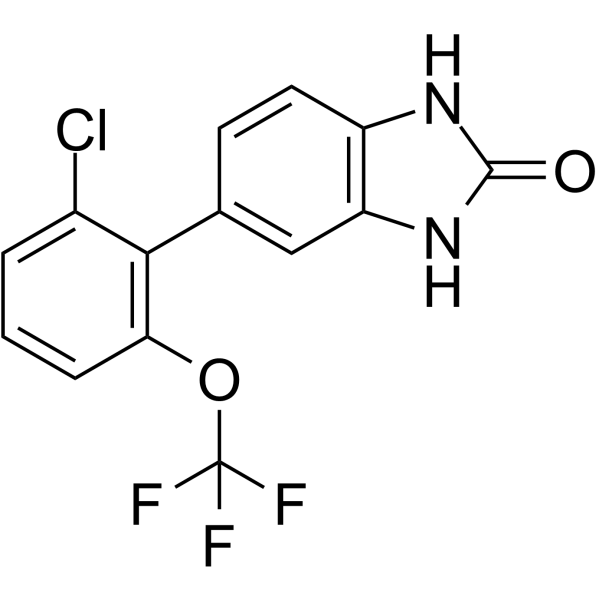
JNJ-55511118 is a selective TARP γ-8 binding AMPA receptor modulator with oral bioavailability and blood-brain barrier permeability, with a Ki of 26 nM. JNJ-55511118 reduces voluntary intake of sweetened alcohol in male mice. In rodent models, JNJ-55511118 inhibits hippocampal neurotransmission, reduces specific electroencephalogram frequency bands, induces transient hyperlocomotion, impairs learning and memory abilities, and exerts anticonvulsant effects. JNJ-55511118 is applicable to research related to alcohol use disorder and seizures.
For research use only. We do not sell to patients.
- Purity : 99.85%
- CAS No.: 2036081-86-2
- Formula: C14H8ClF3N2O2
- Molecular Weight:328.67
-
Storage:Powder -20°C, 3 years , 4°C, 2 years ; In solvent -80°C, 6 months , -20°C, 1 month

To place orders, for customer services and technical support, please contact: MedChemExpress USA
Tel: 609-228-6898 E-mail: [email protected] [email protected]


-
 Biological Activity
-
Chemical Information
-
Solvent & Solubility
- Protocols
- Purity & Documentation
- References
-
 Help & FAQs


-
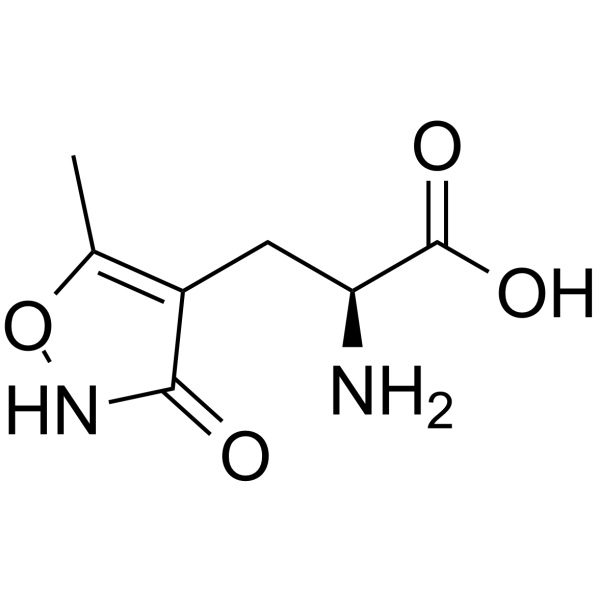
HY-100815A
(S)-AMPAAMPA Receptor Agonist -
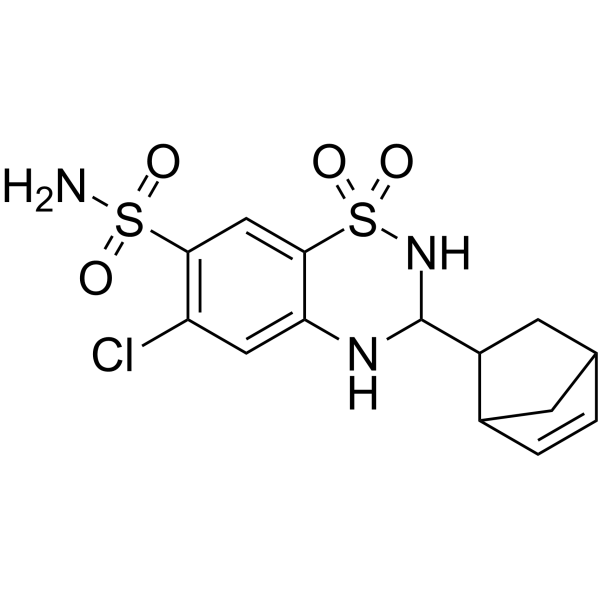
HY-101165
CyclothiazideAMPA Receptors PAM -
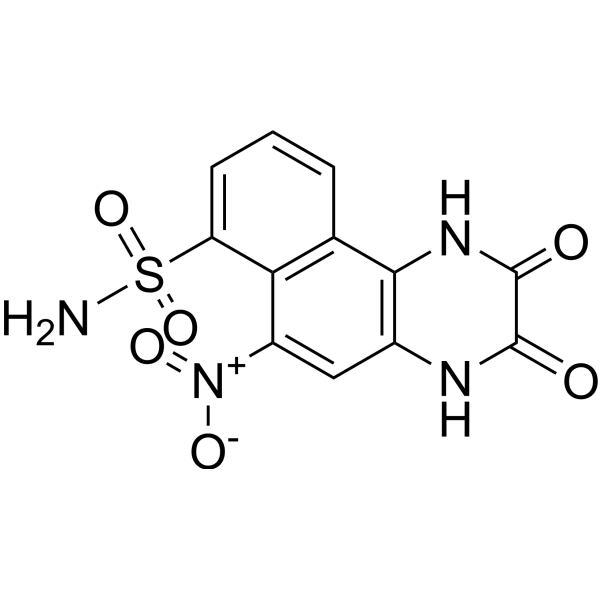
HY-15068
NBQXAMPA Receptor Antagonist -
HY-15068A
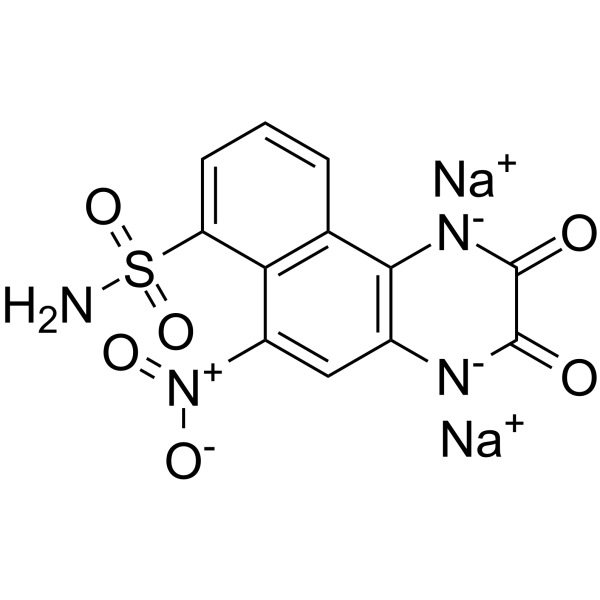
NBQX disodiumAMPA Receptor Antagonist -
HY-15066A
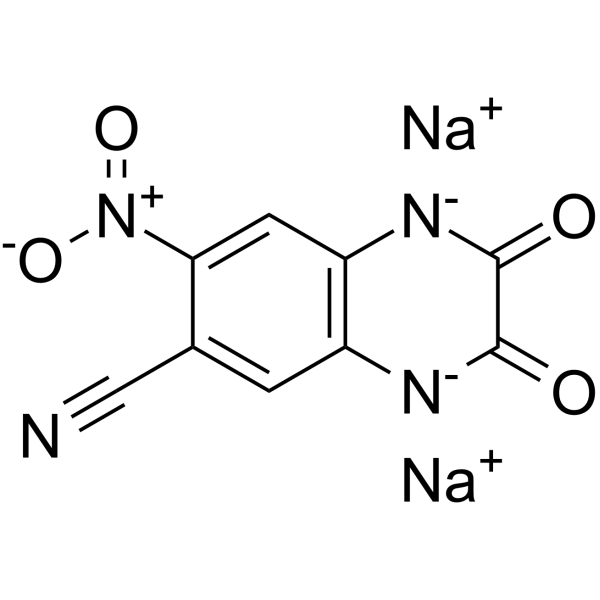
CNQX disodiumiGluR Antagonist -
HY-103230
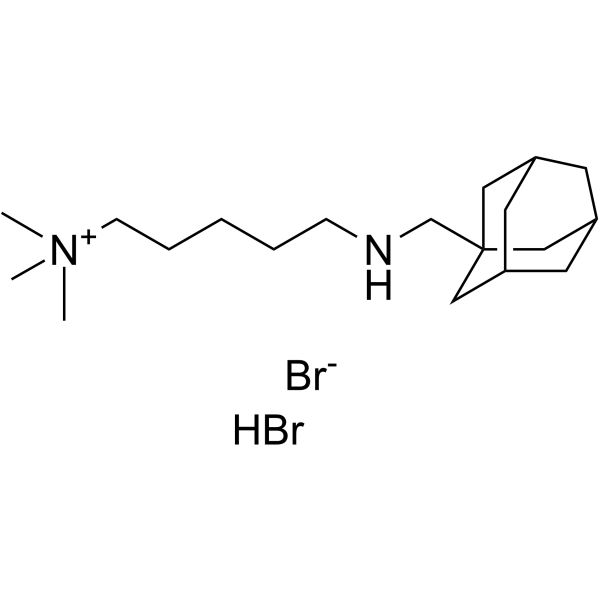
IEM-1460 -
HY-110175
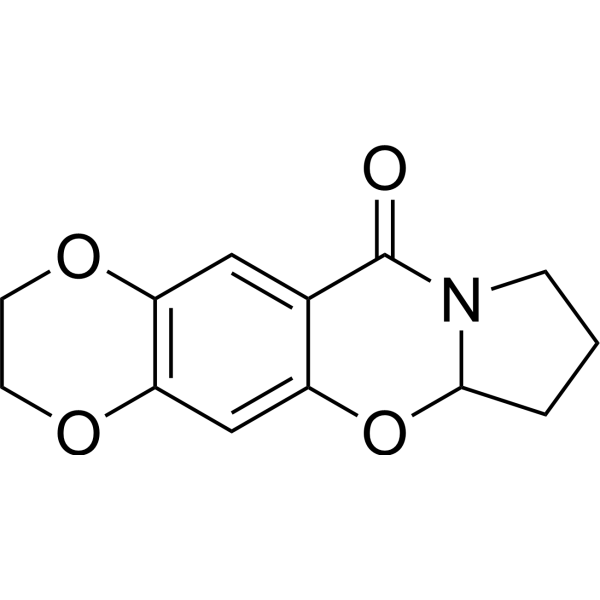
CX614AMPA Receptor Modulator -
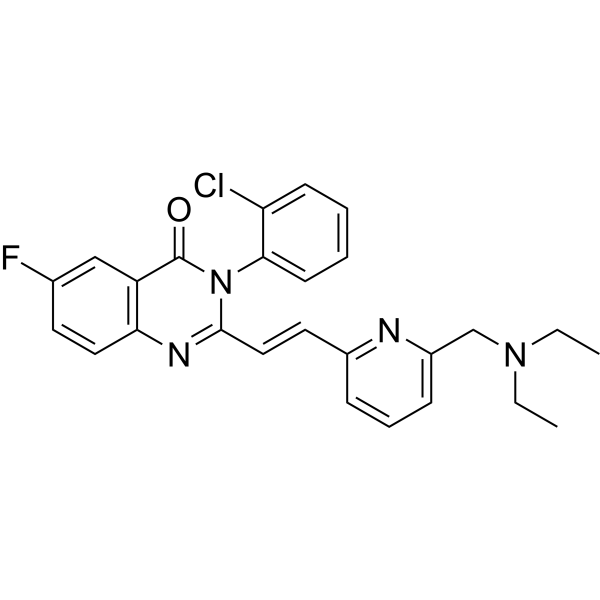
HY-18663
CP-465022AMPA Receptor Antagonist -
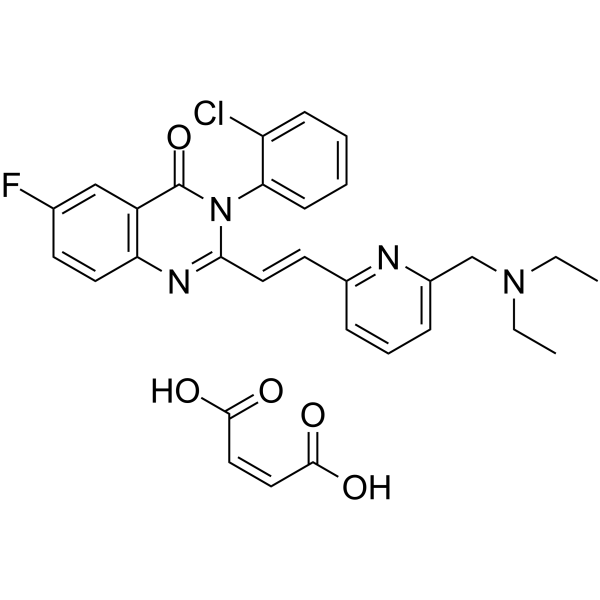
HY-18663A
CP-465022 maleateAMPA Receptor Antagonist -
HY-101528
IDRA 21AMPA Modulator -
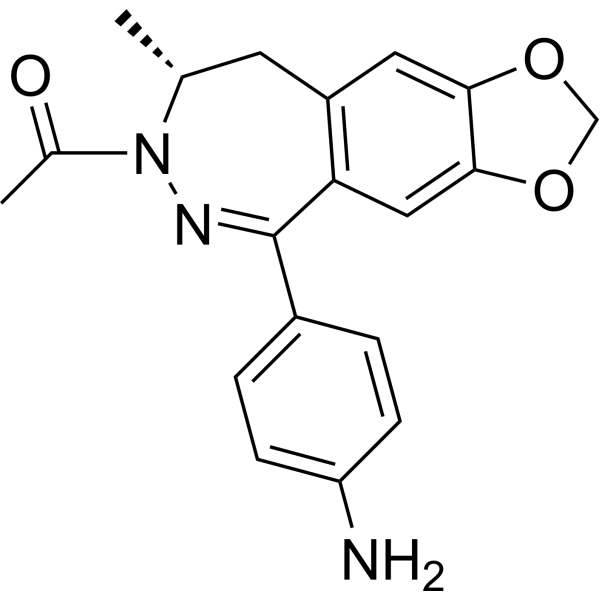
HY-15079
TalampanelAMPA receptor antagonist -
HY-15071
YM90KAMPA Receptor Antagonist
All iGluR Isoforms
More

Biological Activity
Description
IC50 & Target
[2]|
AMPA Receptor 26 nM (Ki) |
In Vitro
JNJ-55511118 is a potent, selective negative modulator of TARP-γ8-containing AMPA receptors, with a mean pIC50 value ranging from 7.42 to 8.33 across human, rat, mouse, monkey, and canine GluA-γ8 combinations, and it shows no activity against TARP-containing AMPA receptors without γ8 or TARP-free AMPA receptors[2].
JNJ-55511118 (1 μM; 50-60 s) partially inhibits glutamate-evoked currents in heterologously expressed TARP-γ8-containing AMPA receptors by accelerating desensitization and inactivation processes[2].
JNJ-55511118 exerts weak antagonistic activity against human 5-HT2B receptors (IC50 = 6 μM)[2].
MedChemExpress (MCE) has not independently confirmed the accuracy of these methods. They are for reference only.
In Vivo
JNJ-55511118 (i.v./p.o., 0-10 mg/kg, single administration) dose-dependently suppresses population spikes in the hippocampal CA1 region in anesthetized rats, with an ED50 of 0.4 mg/kg for intravenous injection. It also dose-dependently reduces cortical electroencephalogram power across multiple frequency bands in freely moving rats, and transient hyperactivity occurs at the oral dose of 10 mg/kg[2].
JNJ-55511118 (p.o.; single dose, 0-40 mg/kg) exerts potent, near-complete seizure protection in corneal and amygdala-kindled mouse models, with an oral ED50 of 3.7 mg/kg. It produces partially dose-dependent seizure protection in the 6 Hz psychomotor seizure model of *Mus musculus*, with ED50 values of 18.3 mg/kg p.o. (32 mA) and 6.5 mg/kg p.o. (44 mA), respectively, and elevates the convulsive threshold of mice to PTZ[2].
MedChemExpress (MCE) has not independently confirmed the accuracy of these methods. They are for reference only.
-
Animal Model:C57BL/6J (male/female)[1]
-
Dosage:1 mg/kg; 10 mg/kg
-
Administration:p.o.; single dose
-
Result:Reduced alcohol-reinforced response rate from 10 to 60 minutes post-administration compared to vehicle.
Reduced total active lever presses, number of alcohol reinforcers earned, and alcohol intake (g/kg/1h) compared to vehicle.
Decreased percentage of responses on the active lever from 92.4 (vehicle) to 76.5 ± 5 (1 mg/kg) and 75.7 (10 mg/kg).
Increased inactive lever responding at 10 mg/kg dose.
Showed no effect on open-field ambulatory distance in alcohol-exposed or sucrose-exposed mice at 1 mg/kg dose.
Showed no effect on sucrose-only self-administration parameters.
Showed no effect on alcohol-reinforced response rate, total active lever presses, number of alcohol reinforcers earned, or alcohol intake (g/kg/1h).
Reduced percentage of responses on the active lever from 92 (vehicle) to 79.9 at 10 mg/kg dose.
Increased inactive lever responding at 10 mg/kg dose.
Showed no effect on sucrose-only self-administration parameters.
-
Animal Model:Sprague-Dawley (male, 300-450 grams)[2]
-
Dosage:0, 0.25, 0.5, 1, 2, 3, 4, 8, 10 mg/kg
-
Administration:i.v./p.o., single dose
-
Result:Caused rapid, dose-dependent inhibition of evoked population spike amplitude.
Fitted an ED50 of 0.4 mg/kg i.v.
for inhibition.
Achieved near-complete inhibition of population spikes at 8 mg/kg.
Reached an EC50 of 591 ng/mL for population spike inhibition based on brain concentration, which closely matched the EC50 for target occupancy (545 ng/mL).
Caused dose-dependent decrease in wake-state EEG power across theta (4-10 Hz), alpha (10-15 Hz), and beta (15-30 Hz) bands; at 10 mg/kg, power was reduced to 81.2%, 70.6%, and 63.8% of vehicle control, respectively.
Induced a small, significant decrease in delta (1-4 Hz) power only at 1 mg/kg.
Caused significant, transient increase in locomotor activity for approximately 1 hour post-dose at 10 mg/kg.
Induced dose-dependent increase in latency to REM and NREM sleep.
Caused dose-dependent decreases in absolute EEG power during NREM and REM sleep.
-
Animal Model:albino CF1 (male)[2]
-
Dosage:0-40 mg/kg
-
Administration:p.o.; single dose
-
Result:Provided near-complete seizure protection at doses ≥5 mg/kg p.o.: 25/32 animals at these doses had Racine scores of 0, compared to 0/8 vehicle-treated animals.
Fitted an ED50 of 3.7 mg/kg p.o.
for seizure protection, with an EC50 of 938 ng/mL based on brain concentration.
Provided partial seizure protection: at doses ≥10 mg/kg p.o., 12/32 animals were protected in the 32 mA model, and 11/40 animals were protected in the 44 mA model.
Fitted an ED50 of 18.3 mg/kg p.o.
for the 32 mA model (76% maximum protection, EC50 4644 ng/mL plasma concentration) and 6.5 mg/kg p.o.
for the 44 mA model (22% maximum protection, EC50 2533 ng/mL plasma concentration).
Significantly increased the PTZ threshold for clonus from 33.3 mg/kg to 49.5 mg/kg.
Significantly increased the PTZ threshold for twitch from 30.7 g/kg to 42.4 mg/kg.
Protected 11/12 rats from seizure, compared to 1/12 rats protected with vehicle.
Significantly reduced mean afterdischarge duration from 92 seconds (vehicle) to 35 seconds.


Chemical Information
-
CAS No. 2036081-86-2
-
Appearance Solid
-
Molecular Weight 328.67
-
Formula C14H8ClF3N2O2
-
Color White to off-white
-
SMILES
O=C1NC2=C(N1)C=C(C3=C(OC(F)(F)F)C=CC=C3Cl)C=C2
-
Shipping
Room temperature in continental US; may vary elsewhere.
-
Storage
Powder -20°C 3 years 4°C 2 years In solvent -80°C 6 months -20°C 1 month


Solvent & Solubility
In Vitro:
DMSO : ≥ 100 mg/mL (304.26 mM; Hygroscopic DMSO has a significant impact on the solubility of product, please use newly opened DMSO)
* "≥" means soluble, but saturation unknown.
Please refer to the solubility information to select the appropriate solvent. Once prepared, please aliquot and store the solution to prevent product inactivation from repeated freeze-thaw cycles.
Storage method and period of stock solution: -80°C, 6 months; -20°C, 1 month. When stored at -80°C, please use it within 6 months. When stored at -20°C, please use it within 1 month.
Please refer to the solubility information to select the appropriate solvent. Once prepared, please aliquot and store the solution to prevent product inactivation from repeated freeze-thaw cycles.
Storage method and period of stock solution: -80°C, 6 months; -20°C, 1 month. When stored at -80°C, please use it within 6 months. When stored at -20°C, please use it within 1 month.
Concentration (start) × Volume (start) = Concentration (final) × Volume (final)
In Vivo:
Select the appropriate dissolution method based on your experimental animal and administration route.
- For the following dissolution methods, please ensure to first prepare a clear stock solution using an In Vitro approach and then sequentially add co-solvents:
- To ensure reliable experimental results, the clarified stock solution can be appropriately stored based on storage conditions. As for the working solution for In Vivo experiments, it is recommended to prepare freshly and use it on the same day.
- The percentages shown for the solvents indicate their volumetric ratio in the final prepared solution. If precipitation or phase separation occurs during preparation, heat and/or sonication can be used to aid dissolution.
Add each solvent one by one: 10% DMSO 40% PEG300 5% Tween-80 45% Saline
Solubility: ≥ 2.5 mg/mL (7.61 mM); Clear solution
This protocol yields a clear solution of ≥ 2.5 mg/mL (saturation unknown).
Taking 1 mL working solution as an example, add 100 μL DMSO stock solution (25.0 mg/mL) to 400 μL PEG300, and mix evenly; then add 50 μL Tween-80 and mix evenly; then add 450 μL Saline to adjust the volume to 1 mL.
Preparation of Saline: Dissolve 0.9 g sodium chloride in ddH₂O and dilute to 100 mL to obtain a clear Saline solution.
Add each solvent one by one: 10% DMSO 90% (20% SBE-β-CD in Saline)
Solubility: ≥ 2.5 mg/mL (7.61 mM); Clear solution
This protocol yields a clear solution of ≥ 2.5 mg/mL (saturation unknown).
Taking 1 mL working solution as an example, add 100 μL DMSO stock solution (25.0 mg/mL) to 900 μL 20% SBE-β-CD in Saline, and mix evenly.
Preparation of 20% SBE-β-CD in Saline (4°C, storage for one week): 2 g SBE-β-CD powder is dissolved in 10 mL Saline, completely dissolve until clear.
In Vivo Dissolution Calculator
Please enter the basic information of animal experiments:
-
-
-
-
Recommended: Prepare an additional quantity of animals to account for potential losses during experiments.
Please enter your animal formula composition:
-
%DMSO +
Recommended: Keep the proportion of DMSO in working solution below 2% if your animal is weak.
-
%+
-
+%Tween-80 + +
-
%Saline +
The co-solvents required include: DMSO, . All of co-solvents are available by MedChemExpress (MCE). , Tween 80. All of co-solvents are available by MedChemExpress (MCE).
Working solution concentration: 0.22 mg/mL
Method for preparing stock solution: mg drug dissolved in μL DMSO. Stock solution concentration: mg/mL.
1. Take μL DMSO stock solution;
2. Add μL .
μL , mix evenly;
3. Then add μL Tween 80, mix evenly;
4. Then add μL
Please ensure that the stock solution in the first step is dissolved to a clear state, and add co-solvents in sequence. You can use ultrasonic heating (ultrasonic cleaner, recommended frequency 20-40 kHz), vortexing, etc. to assist dissolution.


Purity & Documentation
-
Data Sheet (284 KB)
-
SDS (393 KB)
- English - EN (393 KB)
- Français - FR (393 KB)
- Deutsch - DE (393 KB)
- Norwegian - NO (393 KB)
- Español - ES (393 KB)
- Swedish - SV (393 KB)
- Italian - IT (393 KB)
- Korean - KR (393 KB)
- Portuguese - PT (393 KB)
-
Handling Instructions (2659 KB)
References
[1]. Hoffman JL, et al. Inhibition of AMPA receptors (AMPARs) containing transmembrane AMPAR regulatory protein γ-8 with JNJ-55511118 shows preclinical efficacy in reducing chronic repetitive alcohol self-administration. Alcohol Clin Exp Res. 2021;45(7):1424-1435. [Content Brief]
[2]. Maher MP, et al. Discovery and Characterization of AMPA Receptor Modulators Selective for TARP-γ8. J Pharmacol Exp Ther. 2016;357(2):394-414. [Content Brief]


Complete Stock Solution Preparation Table
Please refer to the solubility information to select the appropriate solvent. Once prepared, please aliquot and store the solution to prevent product inactivation from repeated freeze-thaw cycles.
Storage method and period of stock solution: -80°C, 6 months; -20°C, 1 month. When stored at -80°C, please use it within 6 months. When stored at -20°C, please use it within 1 month.
| Optional Solvent | Concentration Solvent Mass | 1 mg | 5 mg | 10 mg | 25 mg |
|---|---|---|---|---|---|
| DMSO | 1 mM | 3.0426 mL | 15.2128 mL | 30.4257 mL | 76.0641 mL |
| 5 mM | 0.6085 mL | 3.0426 mL | 6.0851 mL | 15.2128 mL | |
| 10 mM | 0.3043 mL | 1.5213 mL | 3.0426 mL | 7.6064 mL | |
| 15 mM | 0.2028 mL | 1.0142 mL | 2.0284 mL | 5.0709 mL | |
| 20 mM | 0.1521 mL | 0.7606 mL | 1.5213 mL | 3.8032 mL | |
| 25 mM | 0.1217 mL | 0.6085 mL | 1.2170 mL | 3.0426 mL | |
| 30 mM | 0.1014 mL | 0.5071 mL | 1.0142 mL | 2.5355 mL | |
| 40 mM | 0.0761 mL | 0.3803 mL | 0.7606 mL | 1.9016 mL | |
| 50 mM | 0.0609 mL | 0.3043 mL | 0.6085 mL | 1.5213 mL | |
| 60 mM | 0.0507 mL | 0.2535 mL | 0.5071 mL | 1.2677 mL | |
| 80 mM | 0.0380 mL | 0.1902 mL | 0.3803 mL | 0.9508 mL | |
| 100 mM | 0.0304 mL | 0.1521 mL | 0.3043 mL | 0.7606 mL |


JNJ-55511118 Related Classifications
HY-118424 Related Classifications
 Powered by Bioz