



Guanine hydrochloride
Based on 3 publication(s) in Google Scholar
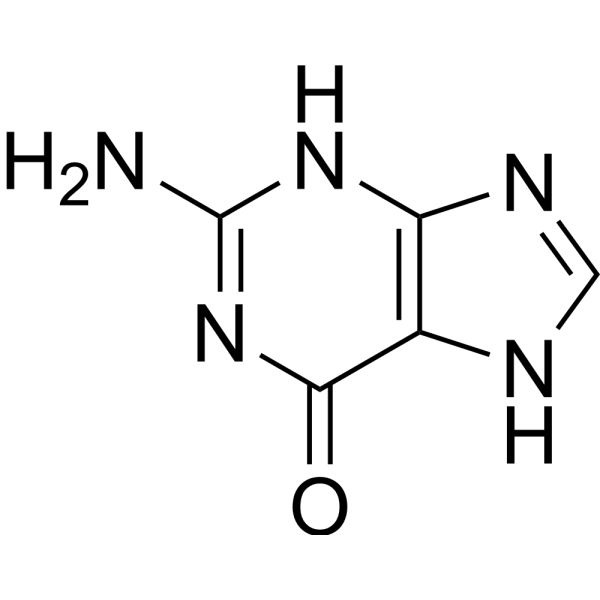
Guanine hydrochloride is one of the fundamental components of nucleic acids (DNA and RNA). Guanine hydrochloride is a purine derivative, consisting of a fused pyrimidine-imidazole ring system with conjugated double bonds. Guanine hydrochloride has the potential to serve as a large-capacity N pool. Guanine hydrochloride has cytotoxic, antinociceptive and neuroprotective effects.
For research use only. We do not sell to patients.
- Purity : 98.78%
- CAS No.: 635-39-2
- Formula: C5H6ClN5O
- Molecular Weight:187.59
-
Storage:
4°C, sealed storage, away from moisture
* In solvent : -80°C, 6 months; -20°C, 1 month (sealed storage, away from moisture)


To place orders, for customer services and technical support, please contact: MedChemExpress USA
Tel: 609-228-6898 E-mail: [email protected] [email protected]


-
 Biological Activity
-
Chemical Information
-
Solvent & Solubility
- Purity & Documentation
- References
-
 Help & FAQs



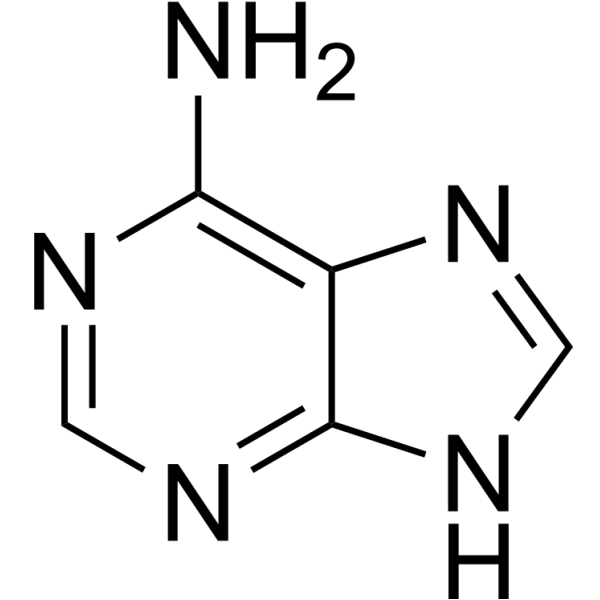
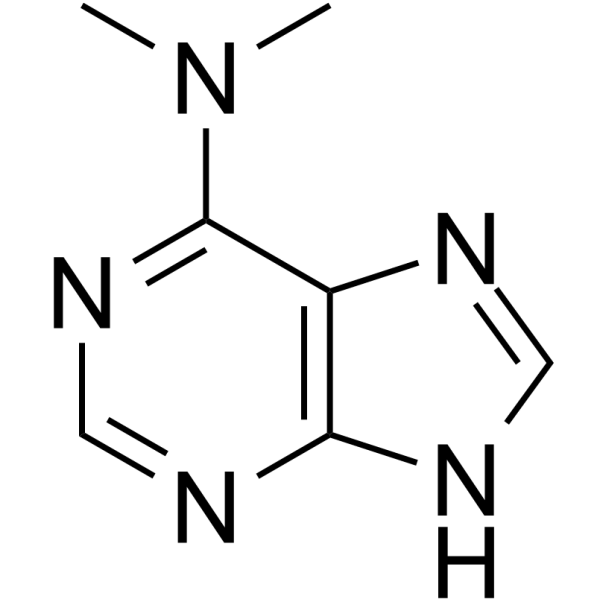
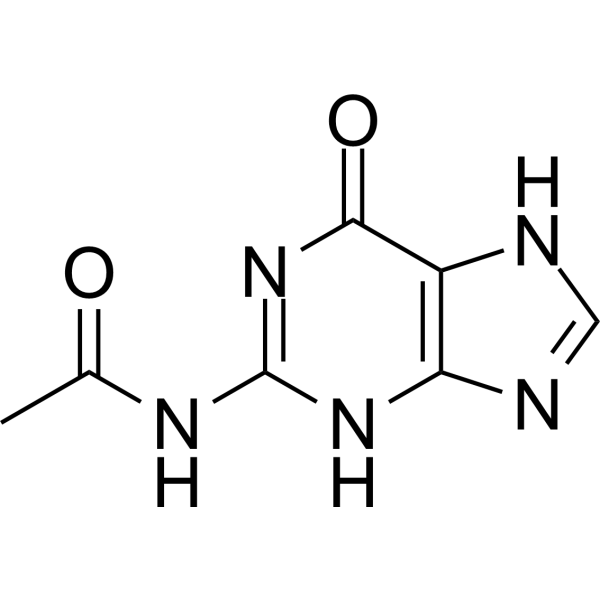
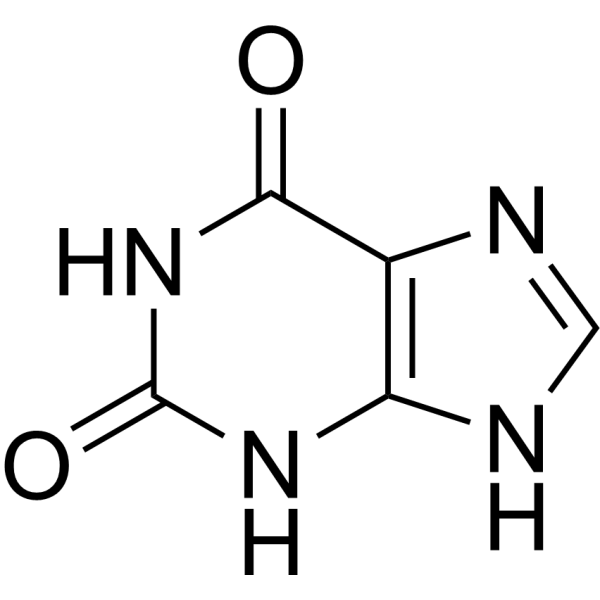
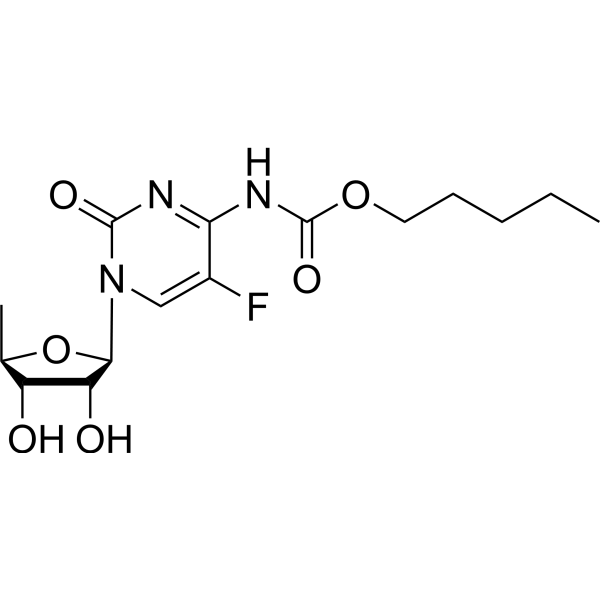
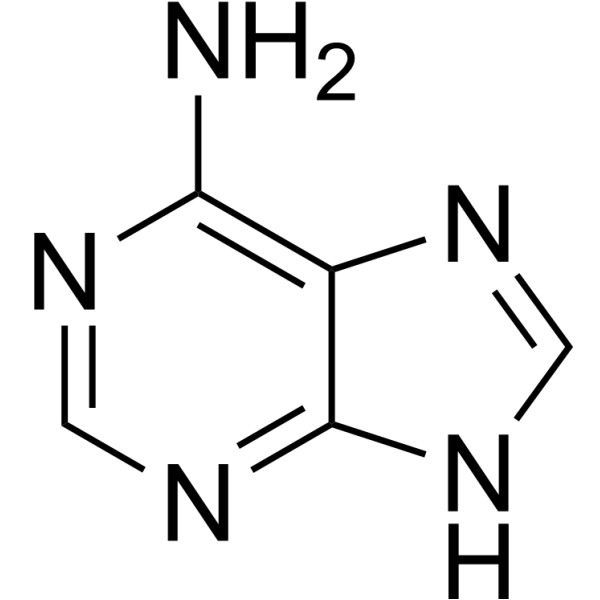
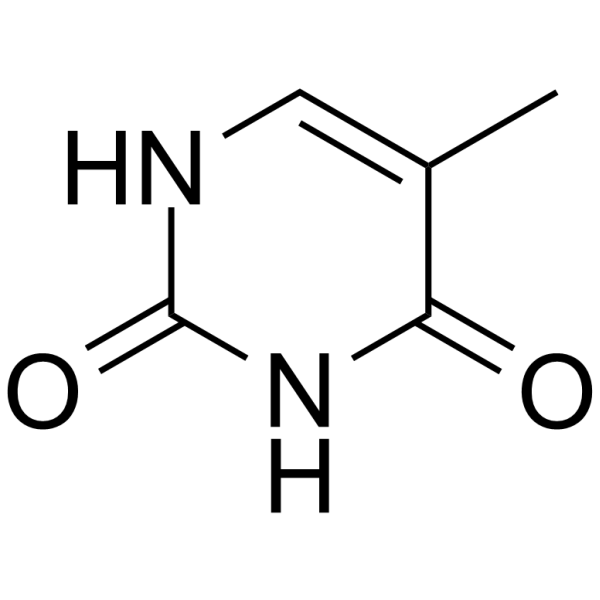

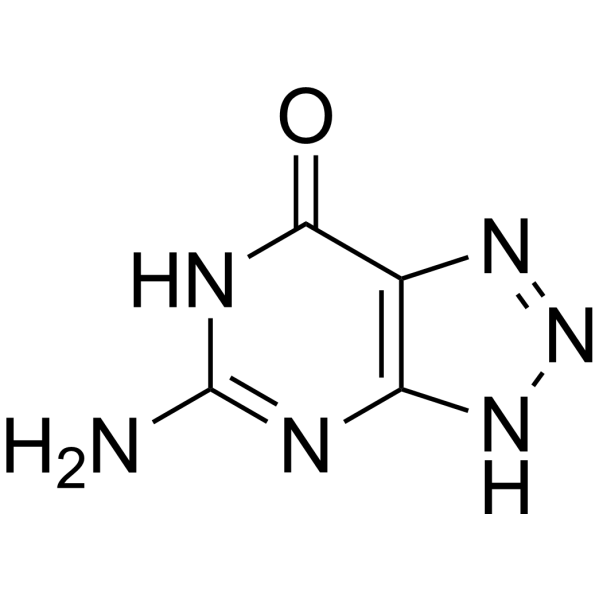
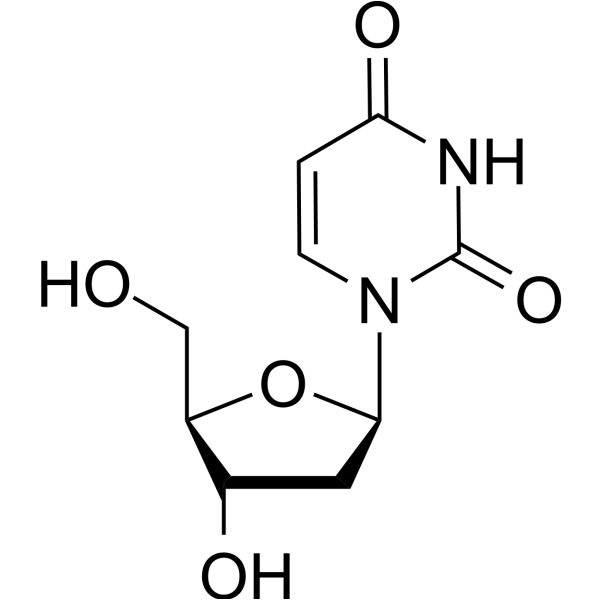
Publications Citing Use of MedChemExpress (MCE) Guanine hydrochloride
MoreAll Endogenous Metabolite Isoforms
MoreAll DNA/RNA Synthesis Isoforms
More

Biological Activity
Description
IC50 & Target
[1]|
Human Endogenous Metabolite |
Microbial Metabolite |
Fungal Metabolite |
In Vitro
Guanine (1 h) hydrochloride inhibits Shigella dysenteriae type 1 Shiga toxin A subunit in African green monkey Vero cells, with IC50 of 11.5 μM[2].
Guanine (24 h) hydrochloride shows cytotoxicity against African green monkey Vero cells, with CC50 of 136.5 μM[2].
Guanine (10 μM, 16-40 h) hydrochloride partially antagonizes the cytostatic effect of Mycophenolic acid (HY-B0421) on LAN5 cells[3].
MedChemExpress (MCE) has not independently confirmed the accuracy of these methods. They are for reference only.
In Vivo
Guanine (200-600 nmol; i.t.) hydrochloride produces A1 adenosine receptor-mediated antinociception against intraplantar glutamate-, Capsaicin (HY-10448)-, and Acetic acid (HY-Y0319)-induced pain in mice, with ID50 values of 107, 84, and 48 nmol and maximal inhibitions of 48%, 58%, and 56%, respectively[4].
Guanine (200-600 nmol; i.t.) hydrochloride produces dose-dependent antinociception against tail-flick test thermal nociception in mice, with peak efficacy at 400 nmol yielding ~78% MPE[4].
Guanine (200-600 nmol; i.t.) hydrochloride dose-dependently increases CSF levels of inosine, xanthine, and uric acid, with a significant increase in AMP at the highest dose[4].
MedChemExpress (MCE) has not independently confirmed the accuracy of these methods. They are for reference only.
-
Animal Model:Swiss albino (male, 3-4 months of age, 30-40 g)[4]
-
Dosage:200 nmol; 400 nmol; 600 nmol
-
Administration:i.t.
-
Result:Produced dose-dependent antinociception with maximal inhibition of 48% (ID50 = 107 nmol), 58% (ID50 = 84 nmol), and 56% (ID50 = 48 nmol); 200-600 nmol elicited significant MPE (56%-78%).
Dose-dependently elevated CSF inosine (200 nmol: 5.12 μM; 400 nmol: 11.43 μM; 600 nmol: 13.60 μM), AMP (600 nmol: 1.49 μM), xanthine (400 nmol: 7.20 μM; 600 nmol: 8.38 μM) and uric acid (200 nmol: 6.85 μM; 400 nmol: 6.57 μM; 600 nmol: 5.54 μM) levels.
-
Animal Model:Swiss albino (male, 3-4 months of age, 30-40 g)[4]
-
Dosage:600 nmol
-
Administration:i.t.
-
Result:Significantly reduced the duration of biting behaviour induced by spinal glutamate.
Significantly reduced the duration of biting behaviour induced by spinal AMPA.


Chemical Information
-
CAS No. 635-39-2
-
Appearance Solid
-
Molecular Weight 187.59
-
Formula C5H6ClN5O
-
Color White to off-white
-
SMILES
O=C1N=C(N)NC2=C1NC=N2.Cl
-
Shipping
Room temperature in continental US; may vary elsewhere.
-
Storage
4°C, sealed storage, away from moisture
* In solvent : -80°C, 6 months; -20°C, 1 month (sealed storage, away from moisture)


Publications (3)
-
Journal Impact Factor
-
Most Recent
-
Talanta
A simple, rapid and sensitive HILIC LC-MS/MS method for simultaneous determination of 16 purine metabolites in plasma and urine. [Abstract]2024 Jan 15:267:125171. PMID: 37696233 -
BMC Neurol
Integrative analysis of purine metabolites and gut microbiota in patients with neuromyelitis optica spectrum disorders after mycophenolate mofetil treatment. [Abstract]2023 Dec 16;23(1):444. PMID: 38102573 -


Solvent & Solubility
In Vitro:
DMSO : 50 mg/mL (266.54 mM; ultrasonic and warming and heat to 60°C; Hygroscopic DMSO has a significant impact on the solubility of product, please use newly opened DMSO)
Please refer to the solubility information to select the appropriate solvent. Once prepared, please aliquot and store the solution to prevent product inactivation from repeated freeze-thaw cycles.
Storage method and period of stock solution: -80°C, 6 months; -20°C, 1 month (sealed storage, away from moisture). When stored at -80°C, please use it within 6 months. When stored at -20°C, please use it within 1 month.
Please refer to the solubility information to select the appropriate solvent. Once prepared, please aliquot and store the solution to prevent product inactivation from repeated freeze-thaw cycles.
Storage method and period of stock solution: -80°C, 6 months; -20°C, 1 month (sealed storage, away from moisture). When stored at -80°C, please use it within 6 months. When stored at -20°C, please use it within 1 month.
Concentration (start) × Volume (start) = Concentration (final) × Volume (final)


Purity & Documentation
-
Data Sheet (281 KB)
-
SDS (394 KB)
- English - EN (394 KB)
- Français - FR (394 KB)
- Deutsch - DE (394 KB)
- Norwegian - NO (394 KB)
- Español - ES (394 KB)
- Swedish - SV (394 KB)
- Italian - IT (394 KB)
- Korean - KR (394 KB)
- Portuguese - PT (394 KB)
-
Handling Instructions (2659 KB)
References
[1]. Mojzeš P, et al. Guanine, a high-capacity and rapid-turnover nitrogen reserve in microalgal cells. Proc Natl Acad Sci U S A. 2020;117(51):32722-32730. [Content Brief]
[2]. Chauhan V, et al. In Silico Discovery and Validation of Amide Based Small Molecule Targeting the Enzymatic Site of Shiga Toxin. J Med Chem. 2016;59(23):10763-10773. [Content Brief]
[3]. Messina E, et al. Guanine nucleotide depletion triggers cell cycle arrest and apoptosis in human neuroblastoma cell lines. Int J Cancer. 2004;108(6):812-817. [Content Brief]
[4]. de Oliveira ED, et al. Mechanisms involved in the antinociception induced by spinal administration of inosine or guanine in mice. Eur J Pharmacol. 2016;772:71-82. [Content Brief]


Complete Stock Solution Preparation Table
Please refer to the solubility information to select the appropriate solvent. Once prepared, please aliquot and store the solution to prevent product inactivation from repeated freeze-thaw cycles.
Storage method and period of stock solution: -80°C, 6 months; -20°C, 1 month (sealed storage, away from moisture). When stored at -80°C, please use it within 6 months. When stored at -20°C, please use it within 1 month.
| Optional Solvent | Concentration Solvent Mass | 1 mg | 5 mg | 10 mg | 25 mg |
|---|---|---|---|---|---|
| DMSO | 1 mM | 5.3308 mL | 26.6539 mL | 53.3077 mL | 133.2694 mL |
| 5 mM | 1.0662 mL | 5.3308 mL | 10.6615 mL | 26.6539 mL | |
| 10 mM | 0.5331 mL | 2.6654 mL | 5.3308 mL | 13.3269 mL | |
| 15 mM | 0.3554 mL | 1.7769 mL | 3.5538 mL | 8.8846 mL | |
| 20 mM | 0.2665 mL | 1.3327 mL | 2.6654 mL | 6.6635 mL | |
| 25 mM | 0.2132 mL | 1.0662 mL | 2.1323 mL | 5.3308 mL | |
| 30 mM | 0.1777 mL | 0.8885 mL | 1.7769 mL | 4.4423 mL | |
| 40 mM | 0.1333 mL | 0.6663 mL | 1.3327 mL | 3.3317 mL | |
| 50 mM | 0.1066 mL | 0.5331 mL | 1.0662 mL | 2.6654 mL | |
| 60 mM | 0.0888 mL | 0.4442 mL | 0.8885 mL | 2.2212 mL | |
| 80 mM | 0.0666 mL | 0.3332 mL | 0.6663 mL | 1.6659 mL | |
| 100 mM | 0.0533 mL | 0.2665 mL | 0.5331 mL | 1.3327 mL |


Guanine hydrochloride Related Classifications
HY-Y1055A Related Classifications
 Powered by Bioz