



CX516
Based on 2 publication(s) in Google Scholar
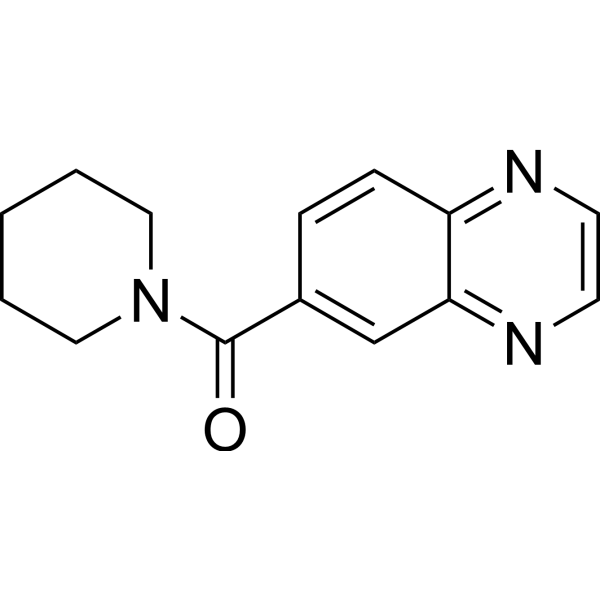
CX516 (BDP 12) is an ampakine and acts as an AMPA receptor positive allosteric modulator for the research of Alzheimer's disease, schizophrenia and mild cognitive impairment (MCI).
Nur für Forschungszwecke. Wir verkaufen nicht an Patienten.
- Reinheit : 99.94%
- CAS. Nr.: 154235-83-3
- Formel: C14H15N3O
- Molecular Weight:241.29
-
Speicherung:Powder -20°C, 3 years , 4°C, 2 years ; In solvent -80°C, 2 years , -20°C, 1 year

To place orders, for customer services and technical support, please contact: MedChemExpress USA
Tel: 609-228-6898 E-mail: [email protected] [email protected]


-
 Biologische Aktivität
-
Chemical Information
-
Lösungsmittel & Löslichkeit
- Protokoll
- Reinheit & Dokumentation
- Verweise
-
 Help & FAQs


-
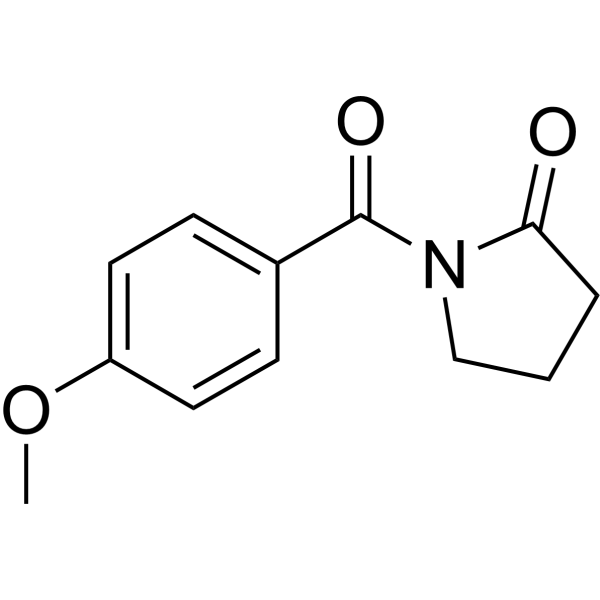
HY-10932
AniracetamNootropics and Neuroprotective Agent -
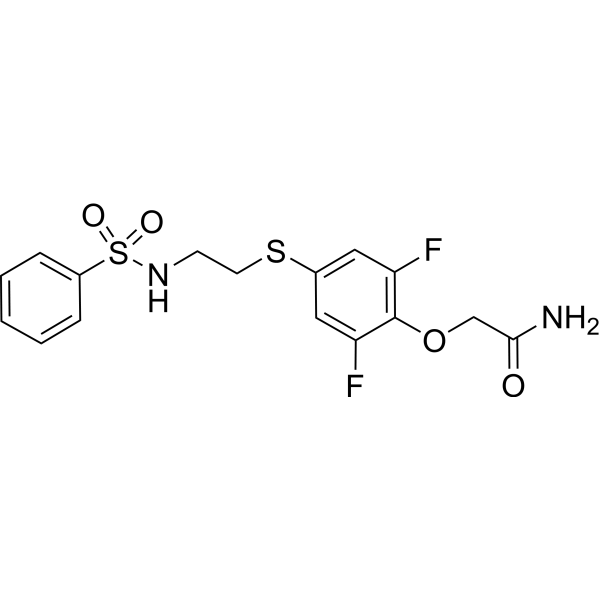
HY-12509
PEPAAMPA Allosteric Modulator -
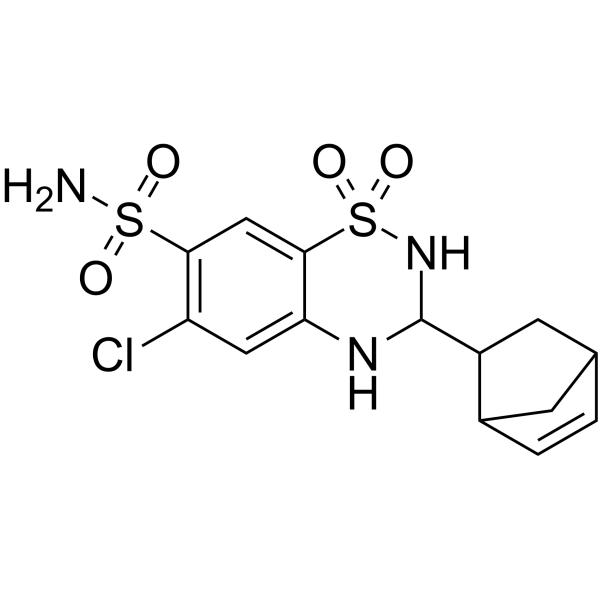
HY-101165
CyclothiazideAMPA Receptors PAM -
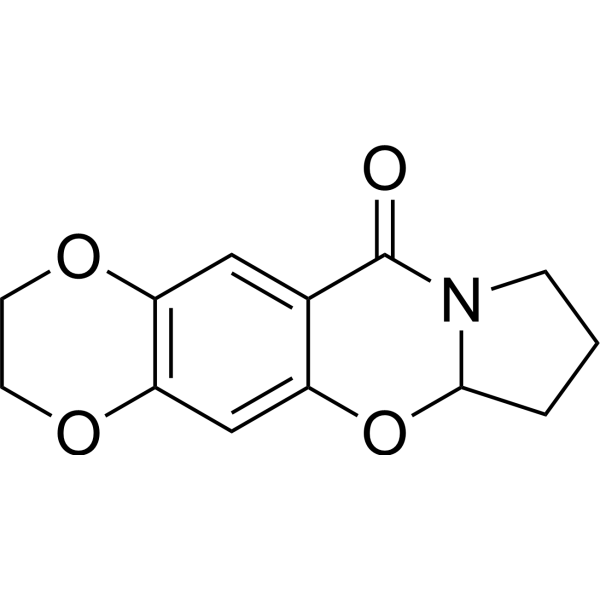
HY-110175
CX614AMPA Receptor Modulator -
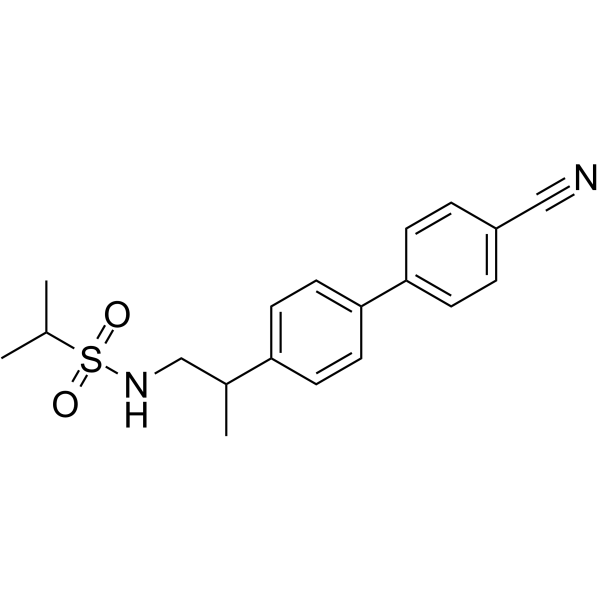
HY-13456
LY-404187AMPA Modulator -
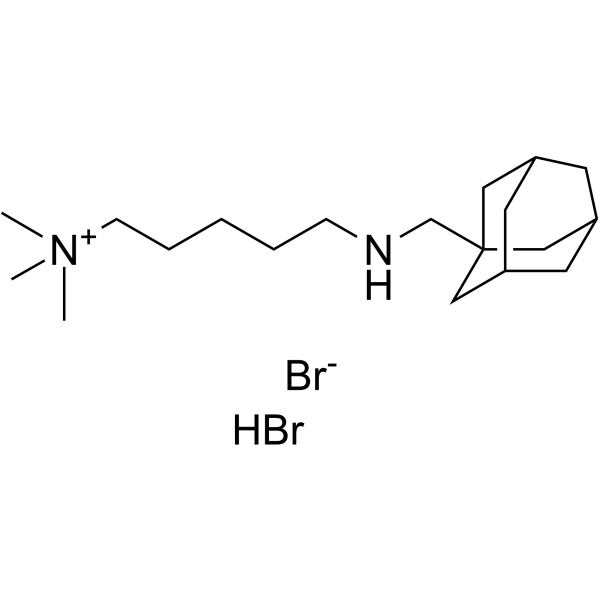
HY-103230
IEM-1460 -
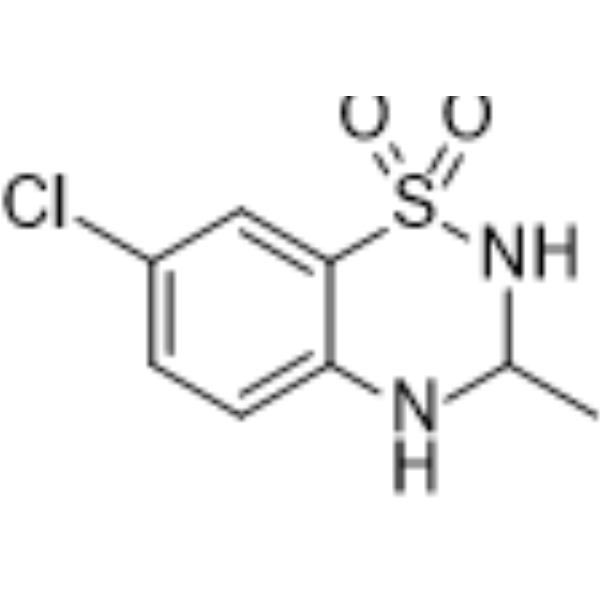
HY-101528
IDRA 21AMPA Modulator -
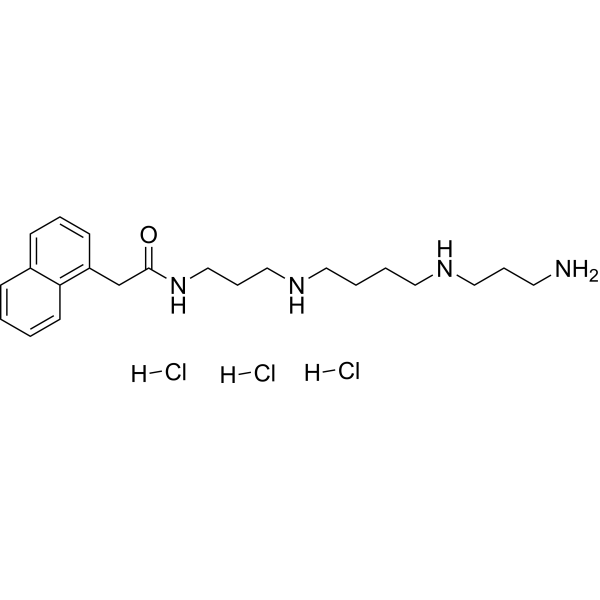
HY-12506A
Naspm trihydrochlorideCP-AMPA Receptors Antagonist -
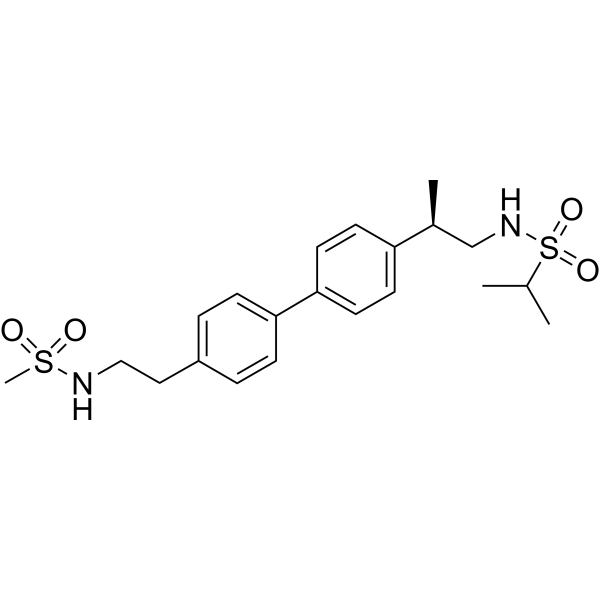
HY-10934
MibampatoriGluR Activator -
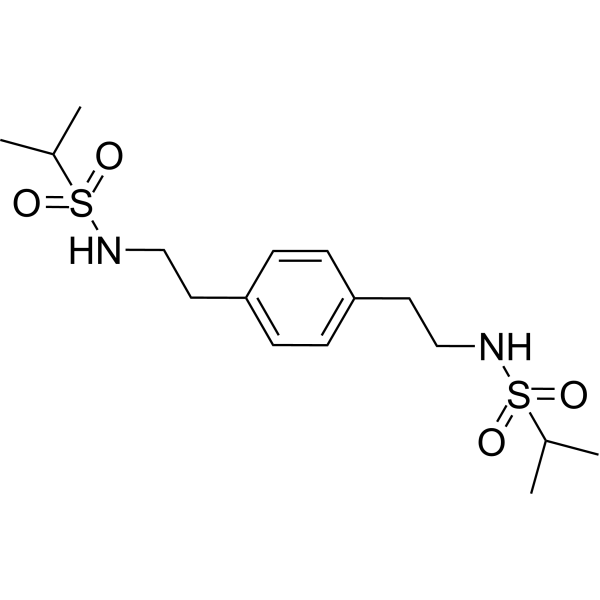
HY-12508
CMPDAiGluR Agonist -
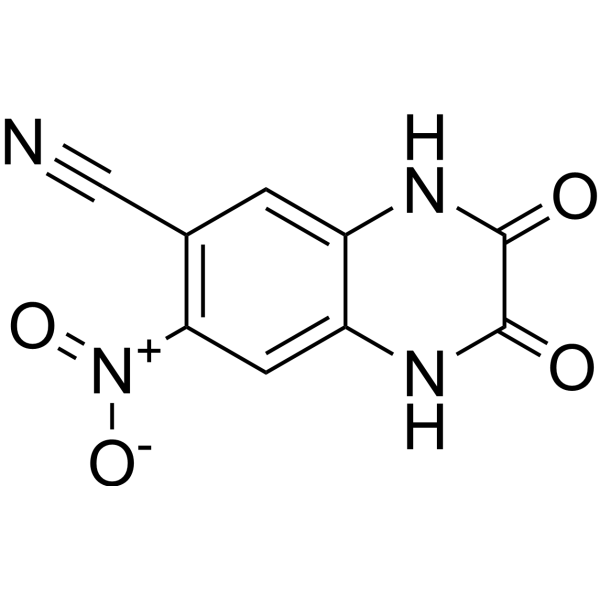
HY-15066
CNQXAMPA Antagonist -
HY-15162
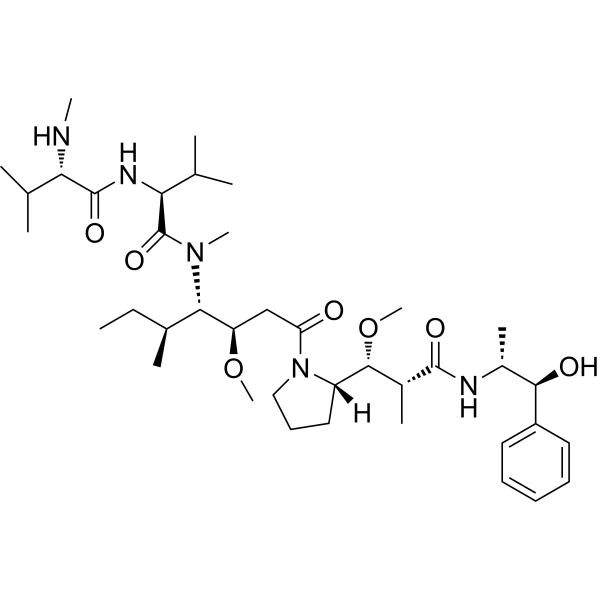
Monomethyl auristatin EAntimitotic Agent
Publications Citing Use of MedChemExpress (MCE) CX516
MoreAlle iGluR Isoform-spezifische Produkte anzeigen
More

Biologische Aktivität
Beschreibung
IC50 & Target
AMPA receptor[1]
Cellular Effect
|
Cell Line

|
Type | Value | Description | References |
|---|---|---|---|---|
| HEK293 | EC50 |
>1000 μM
Compound: 4 (CX-516)
|
Tested for potentiation towards human iGluR4 receptor expressed in HEK293 cells
Tested for potentiation towards human iGluR4 receptor expressed in HEK293 cells
|
[PMID: 11087558] |
In Vivo
MedChemExpress (MCE) has not independently confirmed the accuracy of these methods. They are for reference only.
-
Animal Model:Male Lister Hooded rats (56-63 postnatal day)[1]
-
Dosage:5, 10, 20, and 40 mg/kg
-
Administration:Subcutaneously
-
Result:Two doses (10 and 20 mg/kg) were highly significant in improving the extradimensional shift deficit induced by either treatment regimes.
Two doses (5 and 40 mg/kg) was ineffective at reversing the extradimensional impairment induced by the sub-chronic postnatal phencyclidine treatment regime.
Clinical Trial
| NCT Number | Sponsor | Condition | Start Date |
Phase
|
|---|---|---|---|---|
| NCT01329991 | Plexxikon| | 2011-05 | PHASE1 |


Chemical Information
-
CAS. Nr. 154235-83-3
-
Appearance Solid
-
Molecular Weight 241.29
-
Formel C14H15N3O
-
Color White to light yellow
-
SMILES
O=C(N1CCCCC1)C2=CC3=NC=CN=C3C=C2
-
Synonyms
BDP 12
-
Versand
Room temperature in continental US; may vary elsewhere.
-
Speicherung
Powder -20°C 3 years 4°C 2 years In solvent -80°C 2 years -20°C 1 year


Publications (2)
-
Journal Impact Factor
-
Most Recent
-
Toxicol Appl Pharmacol
AMPAkine CX516 alleviated chronic ethanol exposure-induced neurodegeneration and depressive-like behavior in mice. [Abstract]2022 Mar 15:439:115924. PMID: 35181401 -
Pharmacol Biochem Behav
Chronic administration of caffeine, modafinil, AVL-3288 and CX516 induces time-dependent complex effects on cognition and mood in an animal model of sleep deprivation. [Abstract]2024 Aug:241:173793. PMID: 38823543


Lösungsmittel & Löslichkeit
In Vitro:
DMSO : 175 mg/mL (725.27 mM; Need ultrasonic; Hygroscopic DMSO has a significant impact on the solubility of product, please use newly opened DMSO)
H2O : 6.67 mg/mL (27.64 mM; ultrasonic and warming and heat to 60°C)
Please refer to the solubility information to select the appropriate solvent. Once prepared, please aliquot and store the solution to prevent product inactivation from repeated freeze-thaw cycles.
Storage method and period of stock solution: -80°C, 2 years; -20°C, 1 year. When stored at -80°C, please use it within 2 years. When stored at -20°C, please use it within 1 year.
* Note: If you choose water as the stock solution, please dilute it to the working solution, then filter and sterilize it with a 0.22 μm filter before use.
Please refer to the solubility information to select the appropriate solvent. Once prepared, please aliquot and store the solution to prevent product inactivation from repeated freeze-thaw cycles.
Storage method and period of stock solution: -80°C, 2 years; -20°C, 1 year. When stored at -80°C, please use it within 2 years. When stored at -20°C, please use it within 1 year.
* Note: If you choose water as the stock solution, please dilute it to the working solution, then filter and sterilize it with a 0.22 μm filter before use.
Konzentration (Stammlösung) × Volumen (Stammlösung) = Konzentration (Ziellösung) × Volumen (Ziellösung)
In Vivo:
Select the appropriate dissolution method based on your experimental animal and administration route.
- For the following dissolution methods, please ensure to first prepare a clear stock solution using an In Vitro approach and then sequentially add co-solvents:
- To ensure reliable experimental results, the clarified stock solution can be appropriately stored based on storage conditions. As for the working solution for In Vivo experiments, it is recommended to prepare freshly and use it on the same day.
- The percentages shown for the solvents indicate their volumetric ratio in the final prepared solution. If precipitation or phase separation occurs during preparation, heat and/or sonication can be used to aid dissolution.
Add each solvent one by one: 10% DMSO 40% PEG300 5% Tween-80 45% Saline
Solubility: ≥ 2.75 mg/mL (11.40 mM); Clear solution
This protocol yields a clear solution of ≥ 2.75 mg/mL (saturation unknown).
Taking 1 mL working solution as an example, add 100 μL DMSO stock solution (27.5 mg/mL) to 400 μL PEG300, and mix evenly; then add 50 μL Tween-80 and mix evenly; then add 450 μL Saline to adjust the volume to 1 mL.
Preparation of Saline: Dissolve 0.9 g sodium chloride in ddH₂O and dilute to 100 mL to obtain a clear Saline solution.
Add each solvent one by one: 10% DMSO 90% (20% SBE-β-CD in Saline)
Solubility: ≥ 2.75 mg/mL (11.40 mM); Clear solution
This protocol yields a clear solution of ≥ 2.75 mg/mL (saturation unknown).
Taking 1 mL working solution as an example, add 100 μL DMSO stock solution (27.5 mg/mL) to 900 μL 20% SBE-β-CD in Saline, and mix evenly.
Preparation of 20% SBE-β-CD in Saline (4°C, storage for one week): 2 g SBE-β-CD powder is dissolved in 10 mL Saline, completely dissolve until clear.
In Vivo Dissolution Calculator
Please enter the basic information of animal experiments:
-
-
-
-
Recommended: Prepare an additional quantity of animals to account for potential losses during experiments.
Please enter your animal formula composition:
-
%DMSO +
Recommended: Keep the proportion of DMSO in working solution below 2% if your animal is weak.
-
%+
-
+%Tween-80 + +
-
%Saline +
The co-solvents required include: DMSO, . All of co-solvents are available by MedChemExpress (MCE). , Tween 80. All of co-solvents are available by MedChemExpress (MCE).
Working solution concentration: 0.22 mg/mL
Method for preparing stock solution: mg drug dissolved in μL DMSO. Stock solution concentration: mg/mL.
1. Take μL DMSO stock solution;
2. Add μL .
μL , mix evenly;
3. Then add μL Tween 80, mix evenly;
4. Then add μL
Please ensure that the stock solution in the first step is dissolved to a clear state, and add co-solvents in sequence. You can use ultrasonic heating (ultrasonic cleaner, recommended frequency 20-40 kHz), vortexing, etc. to assist dissolution.


Reinheit & Dokumentation
-
Data Sheet (274 KB)
-
SDS (392 KB)
- English - EN (392 KB)
- Français - FR (392 KB)
- Deutsch - DE (392 KB)
- Norwegian - NO (392 KB)
- Español - ES (392 KB)
- Swedish - SV (392 KB)
- Italian - IT (392 KB)
- Korean - KR (392 KB)
- Portuguese - PT (392 KB)
-
Handling Instructions (2659 KB)
Verweise


Complete Stock Solution Preparation Table
Please refer to the solubility information to select the appropriate solvent. Once prepared, please aliquot and store the solution to prevent product inactivation from repeated freeze-thaw cycles.
Storage method and period of stock solution: -80°C, 2 years; -20°C, 1 year. When stored at -80°C, please use it within 2 years. When stored at -20°C, please use it within 1 year.
| Optional Solvent | Concentration Solvent Mass | 1 mg | 5 mg | 10 mg | 25 mg |
|---|---|---|---|---|---|
| H2O / DMSO | 1 mM | 4.1444 mL | 20.7220 mL | 41.4439 mL | 103.6098 mL |
| 5 mM | 0.8289 mL | 4.1444 mL | 8.2888 mL | 20.7220 mL | |
| 10 mM | 0.4144 mL | 2.0722 mL | 4.1444 mL | 10.3610 mL | |
| 15 mM | 0.2763 mL | 1.3815 mL | 2.7629 mL | 6.9073 mL | |
| 20 mM | 0.2072 mL | 1.0361 mL | 2.0722 mL | 5.1805 mL | |
| 25 mM | 0.1658 mL | 0.8289 mL | 1.6578 mL | 4.1444 mL | |
| DMSO | 30 mM | 0.1381 mL | 0.6907 mL | 1.3815 mL | 3.4537 mL |
| 40 mM | 0.1036 mL | 0.5180 mL | 1.0361 mL | 2.5902 mL | |
| 50 mM | 0.0829 mL | 0.4144 mL | 0.8289 mL | 2.0722 mL | |
| 60 mM | 0.0691 mL | 0.3454 mL | 0.6907 mL | 1.7268 mL | |
| 80 mM | 0.0518 mL | 0.2590 mL | 0.5180 mL | 1.2951 mL | |
| 100 mM | 0.0414 mL | 0.2072 mL | 0.4144 mL | 1.0361 mL |
* Note: If you choose water as the stock solution, please dilute it to the working solution, then filter and sterilize it with a 0.22 μm filter before use.


CX516 Related Classifications
HY-10933 Related Classifications
 Powered by Bioz