Search Result
Results for "
phospholipid membrane
" in MedChemExpress (MCE) Product Catalog:
131
Biochemical Assay Reagents
25
Isotope-Labeled Compounds
| Cat. No. |
Product Name |
Target |
Research Areas |
Chemical Structure |
-
- HY-N0729
-
|
|
Environmental Pollutants
Endogenous Metabolite
|
Cardiovascular Disease
Metabolic Disease
Cancer
|
|
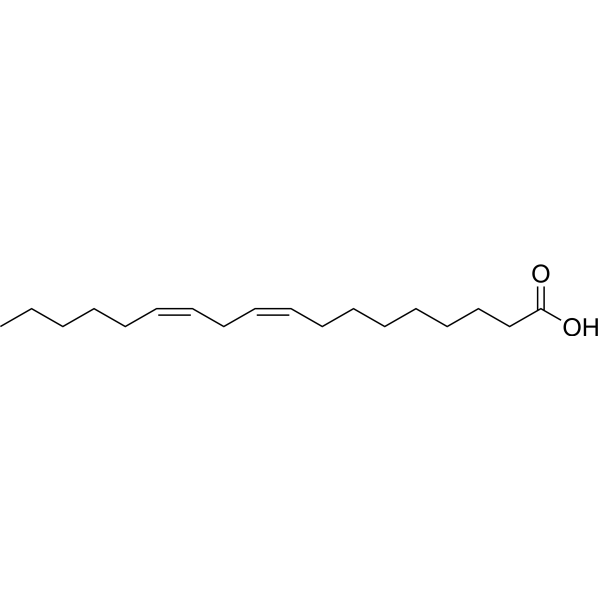
Linoleic acid is a common polyunsaturated (PUFA) found in plant-based oils, nuts and seeds. Linoleic acid is a part of membrane phospholipids, and functions as a structural component to maintain a certain level of membrane fluidity of the transdermal water barrier of the epidermis. Linoleic acid induces red blood cells and hemoglobin damage via oxidative mechanism .
|
-
-
- HY-D0080
-
Laurdan
Maximum Cited Publications
23 Publications Verification
|
Fluorescent Dye
|
Others
|
|
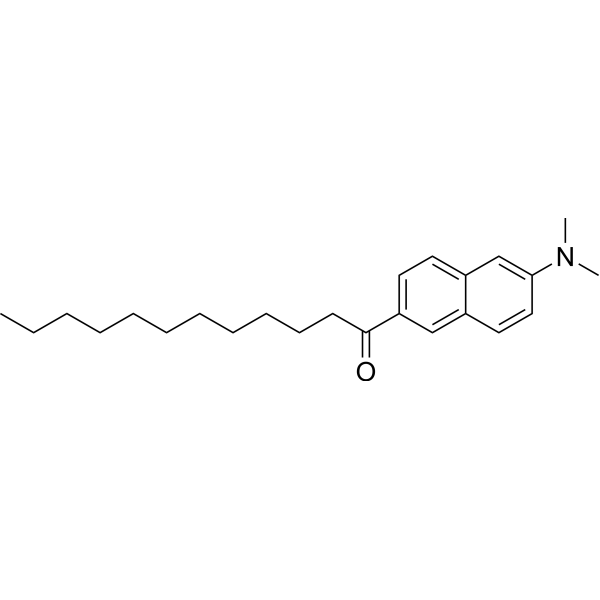
Laurdan is a membrane-permeable fluorescent probe that displays spectral sensitivity to the phospholipid phase of the cell membrane to which it is bound. Quantitation of generalized polarization (GP) of Laurdan can be used to identify phospholipid phase (Ex/Em = 370/440-490 nm).
|
-
-
- HY-A0089
-
|
Polymyxin E sulfate
|
Bacterial
Autophagy
Antibiotic
|
Infection
|
|
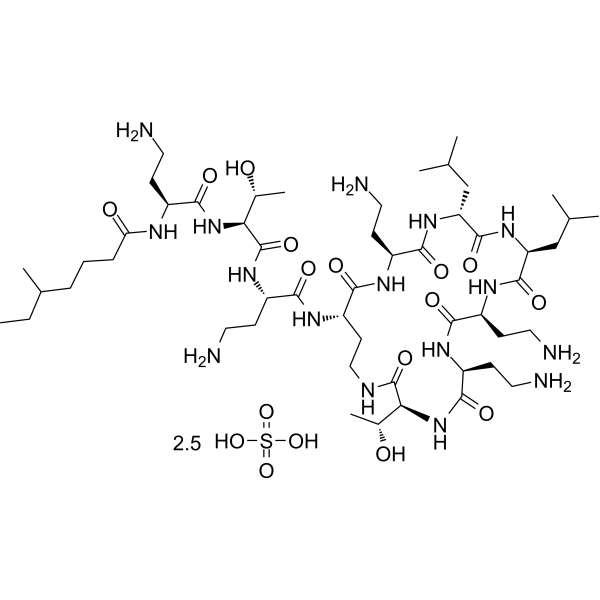
Colistin sulfate is a polypeptide antibiotic which inhibits gram-negative bacteria by binding to lipopolysaccharides and phospholipids in the outer cell membrane of gram-negative bacteria.
|
-
-
- HY-113424A
-
|
DOPC
|
Liposome
Endogenous Metabolite
|
Others
|
|
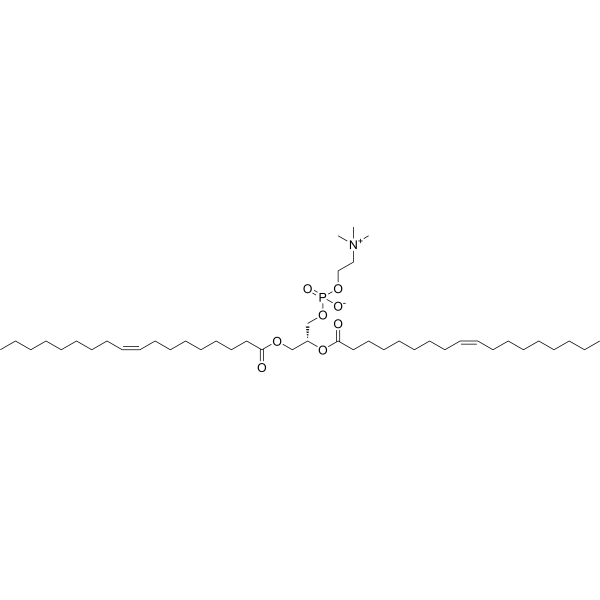
1,2-Dioleoyl-sn-glycero-3-phosphocholine (DOPC) is a phospholipid and is commonly used alone, or with other components, in the generation of micelles, liposomes, and other types of artificial membranes.
|
-
-
- HY-130462
-
|
POPC
|
Liposome
|
Others
|
|
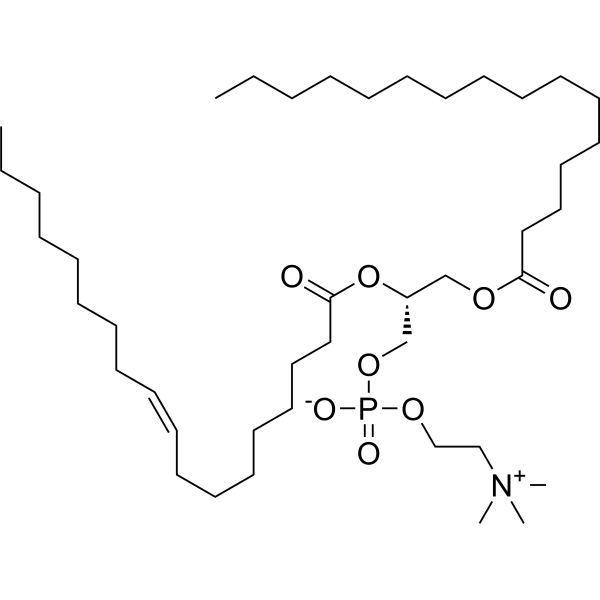
1-Palmitoyl-2-oleoyl-sn-glycero-3-PC (POPC), a phospholipid, is a major component of biological membranes. 1-Palmitoyl-2-oleoyl-sn-glycero-3-PC is used for the preparation of liposomes and studying the properties of lipid bilayers .
|
-
-
- HY-B2235
-
|
Polyene phosphatidylcholine
|
Environmental Pollutants
Endogenous Metabolite
|
Others
|
|
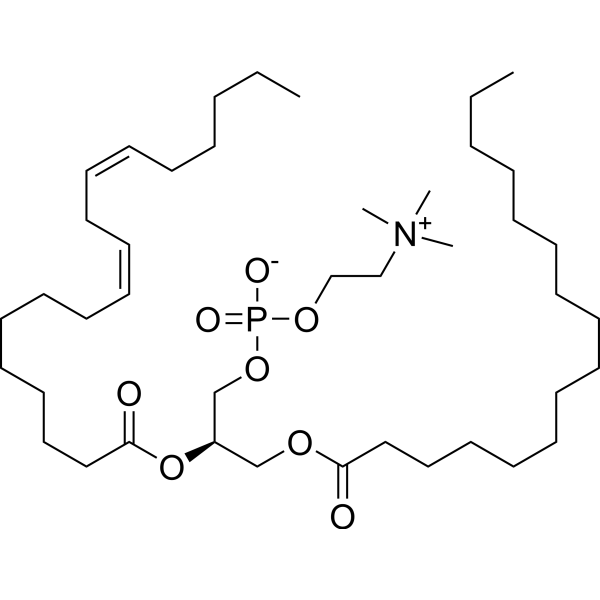
Lecithin is regarded as a safe, conventional phospholipid source. Phospholipids are reported to alter the fatty acid composition and microstructure of the membranes in animal cells.
|
-
-
- HY-P1902
-
|
|
Apoptosis
|
Cardiovascular Disease
|
|
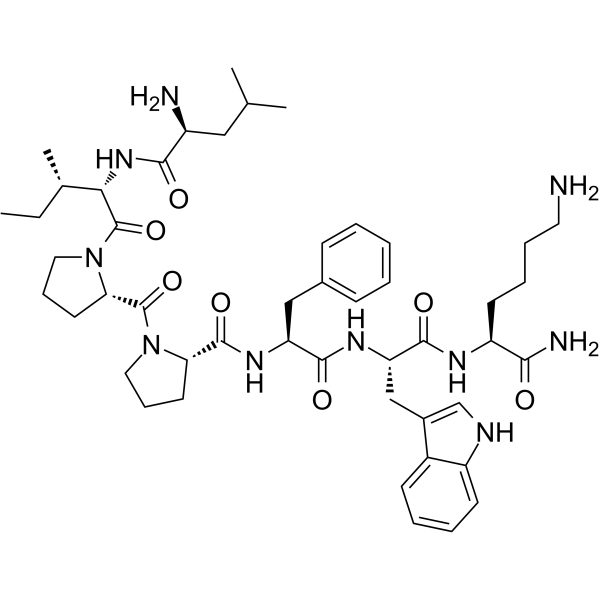
Cardiotoxin Analog (CTX) IV (6-12) is a membrane active peptide that specifically targets negatively charged phospholipid membranes (such as phosphatidylserine and phosphatidylinositol). Cardiotoxin Analog (CTX) IV (6-12) was discovered in the venom of the Taiwan cobra. Cardiotoxin Analog (CTX) IV (6-12) is a chemically synthesized snake venom cardiotoxin that binds to cell membranes and embeds into lipid bilayers through hydrophobic interactions and electrostatic attraction, thereby destroying the stability of membrane structure. Cardiotoxin Analog (CTX) IV (6-12) can induce membrane lipid disorder and cell lysis, exhibiting hemolysis and cytotoxicity .
|
-
-
- HY-D0986
-
|
|
Fluorescent Dye
|
Others
|
|
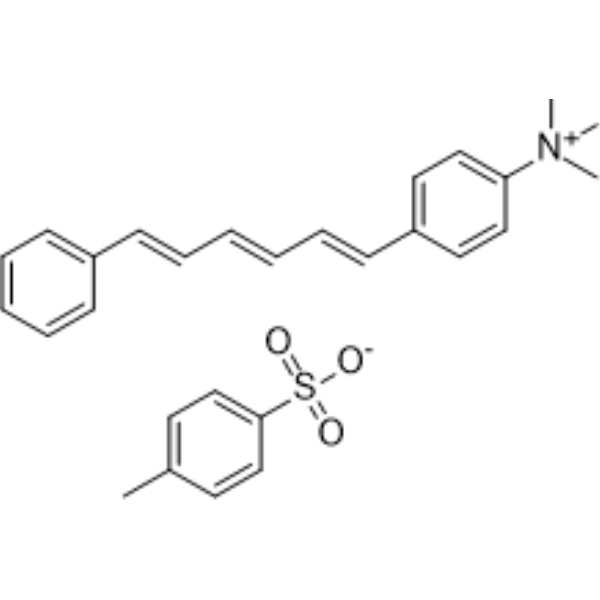
TMA-DPH is a hydrophobic fluorescent membrane probe (Ex=355 nm; Em=430 nm). TMA-DPH is able to anchor on the cell surface and localize to different regions of the phospholipid bilayer. By analyzing the fluorescence polarization values of TMA-DPH in the plasma membrane and membrane substructures, the fluidity of the cell membrane can be determined .
|
-
-
- HY-B1248
-
|
|
Environmental Pollutants
Antibiotic
Necroptosis
Bacterial
Apoptosis
|
Infection
|
|
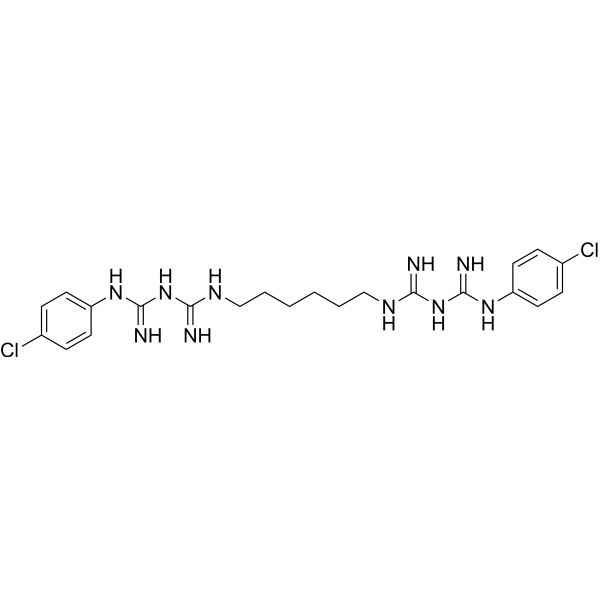
Chlorhexidine is a orally active cationic antimicrobial agent that targets microbial cell membranes. Chlorhexidine binds to cell membrane phospholipids non-specifically, destroys membrane structure and induces leakage of cell contents. Chlorhexidine has broad-spectrum bactericidal activity against both Gram-positive and Gram-negative bacteria. Chlorhexidine can interfere with membrane permeability, cause protein precipitation and energy metabolism disorders, such as rapid inhibition of microbial growth and induction of cell death (necrosis or apoptosis) .
|
-
-
- HY-N0729S2
-
|
|
Endogenous Metabolite
|
Cardiovascular Disease
Metabolic Disease
|
|
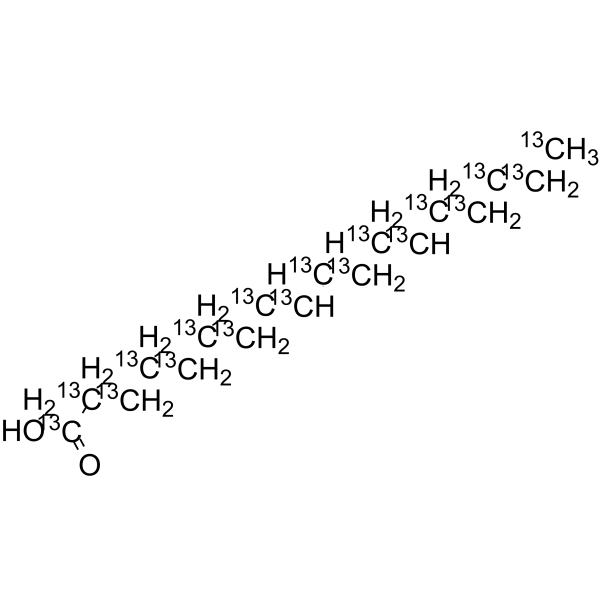
Linoleic acid- 13C18 is the 13C labeled Linoleic acid. Linoleic acid is a common polyunsaturated (PUFA) found in plant-based oils, nuts and seeds. Linoleic acid is a part of membrane phospholipids, and functions as a structural component to maintain a certain level of membrane fluidity of the transdermal water barrier of the epidermis. Linoleic acid induces red blood cells and hemoglobin damage via oxidative mechanism .
|
-
-
- HY-W013699
-
|
|
Environmental Pollutants
Antibiotic
Necroptosis
Bacterial
Apoptosis
|
Infection
|
|
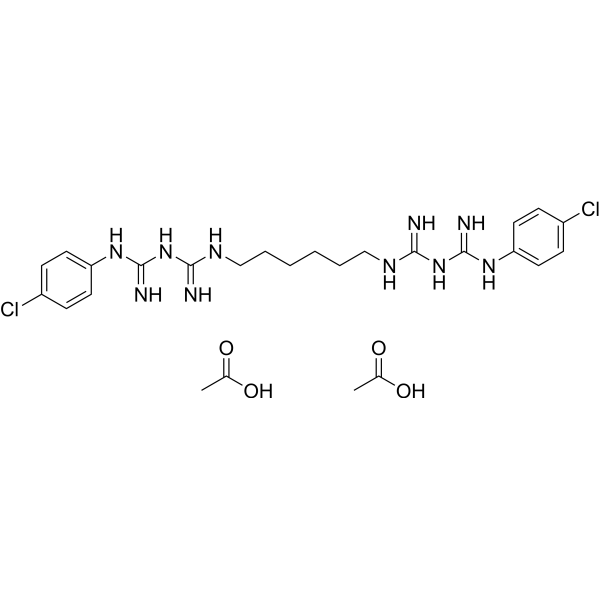
Chlorhexidine diacetate is a orally active cationic antimicrobial agent that targets microbial cell membranes. Chlorhexidine diacetate binds to cell membrane phospholipids non-specifically, destroys membrane structure and induces leakage of cell contents. Chlorhexidine diacetate has broad-spectrum bactericidal activity against both Gram-positive and Gram-negative bacteria. Chlorhexidine diacetate can interfere with membrane permeability, cause protein precipitation and energy metabolism disorders, such as rapid inhibition of microbial growth and induction of cell death (necrosis or apoptosis) .
|
-
-
- HY-W040268
-
|
|
Endogenous Metabolite
|
Others
|
|
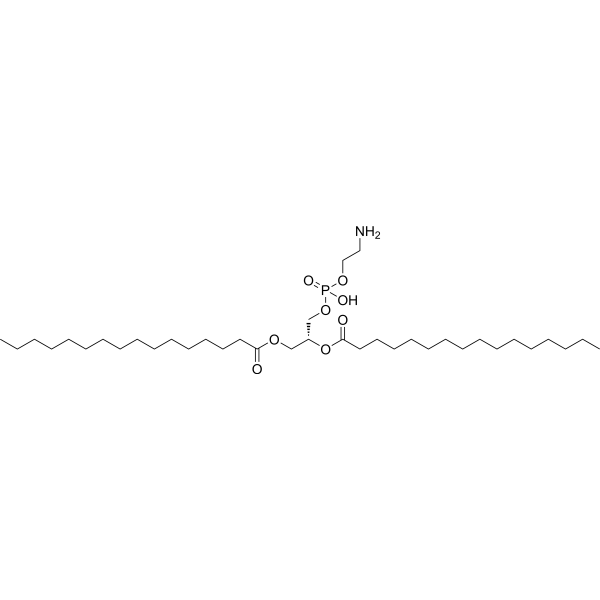
1,2-Dipalmitoyl-sn-glycero-3-phosphoethanolamine is a phospholipid that is a major component of the lipid bilayer that surrounds cells and provides stability to the membrane .
|
-
-
- HY-143202
-
|
|
Liposome
Biochemical Assay Reagents
|
Others
|
|
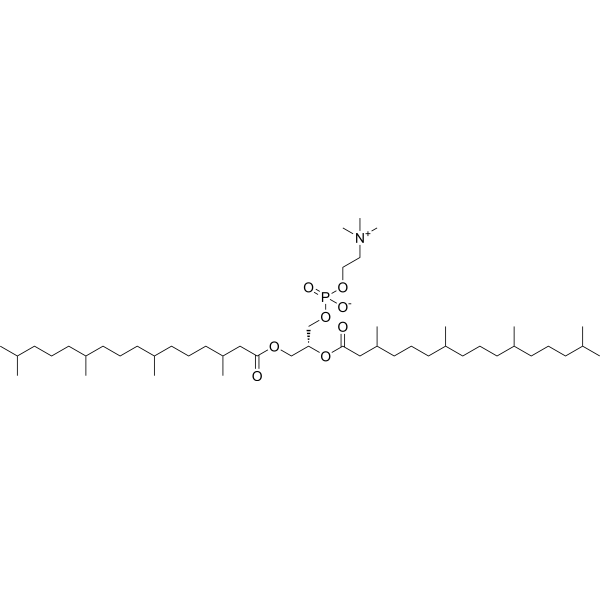
DPhPC is a phospholipid compound characterized by high mechanical and chemical stability, broad temperature phase stability, and high electrical resistance. DPhPC readily forms unilamellar vesicles and solid-supported bilayers. DPhPC is commonly used as a component of nanoliposomal drug carriers or as a model membrane material for studies on membrane proteins/ion channels .
|
-
-
- HY-162543
-
|
18:1 Lissamine rhodamine PE
|
Fluorescent Dye
|
Others
|
|
18:1 Liss Rhod (18:1 Lissamine rhodamine) PE is a fluorescent phospholipid and fluorescent probe.18:1 Liss Rhod PE admixes into phospholipid inks for large-scale monitoring of dip-pen nanolithography-generated lithographic structures via fluorescence microscopy.18:1 Liss Rhod PE undergoes phase separation or self-quenching under certain conditions in thin lipid membrane stacks .
|
-

-
- HY-P1902A
-
|
|
Apoptosis
|
Cardiovascular Disease
|
|
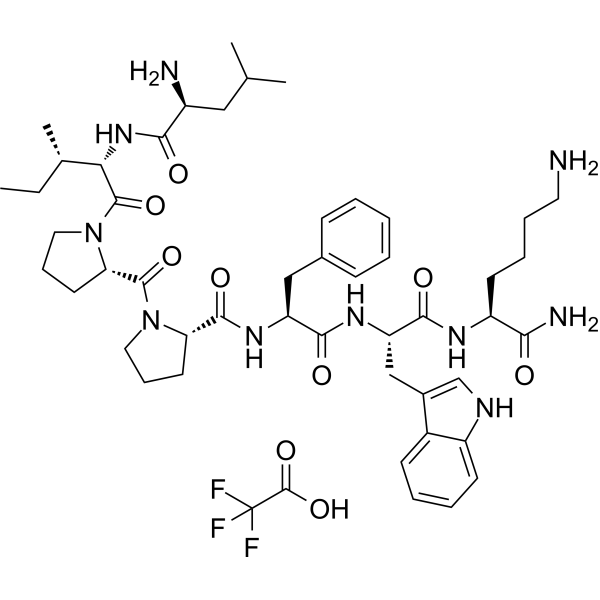
Cardiotoxin Analog (CTX) IV (6-12) TFA is a membrane active peptide that specifically targets negatively charged phospholipid membranes (such as phosphatidylserine and phosphatidylinositol). Cardiotoxin Analog (CTX) IV (6-12) TFA was discovered in the venom of the Taiwan cobra. Cardiotoxin Analog (CTX) IV (6-12) TFA is a chemically synthesized snake venom cardiotoxin that binds to cell membranes and embeds into lipid bilayers through hydrophobic interactions and electrostatic attraction, thereby destroying the stability of membrane structure. Cardiotoxin Analog (CTX) IV (6-12) TFA can induce membrane lipid disorder and cell lysis, exhibiting hemolysis and cytotoxicity .
|
-
-
- HY-DY1057
-
|
|
Fluorescent Dye
|
Others
|
TMA-DPH (solution) is a hydrophobic fluorescent membrane probe (Ex=355 nm; Em=430 nm). TMA-DPH is able to anchor on the cell surface and localize to different regions of the phospholipid bilayer. By analyzing the fluorescence polarization values of TMA-DPH in the plasma membrane and membrane substructures, the fluidity of the cell membrane can be determined .
Solvent and concentration: DMSO: 10 mM
|
-

-
- HY-B1145
-
|
|
Environmental Pollutants
Antibiotic
Apoptosis
Bacterial
Necroptosis
|
Infection
|
|
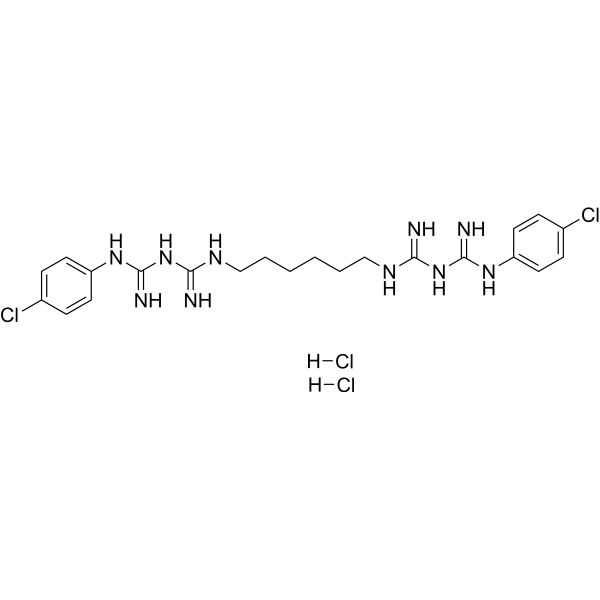
Chlorhexidine dihydrochloride is a orally active cationic antimicrobial agent that targets microbial cell membranes. Chlorhexidine dihydrochloride binds to cell membrane phospholipids non-specifically, destroys membrane structure and induces leakage of cell contents. Chlorhexidine dihydrochloride has broad-spectrum bactericidal activity against both Gram-positive and Gram-negative bacteria. Chlorhexidine dihydrochloride can interfere with membrane permeability, cause protein precipitation and energy metabolism disorders, such as rapid inhibition of microbial growth and induction of cell death (necrosis or apoptosis) .
|
-
-
- HY-N1136
-
|
|
Bacterial
|
Infection
|
|
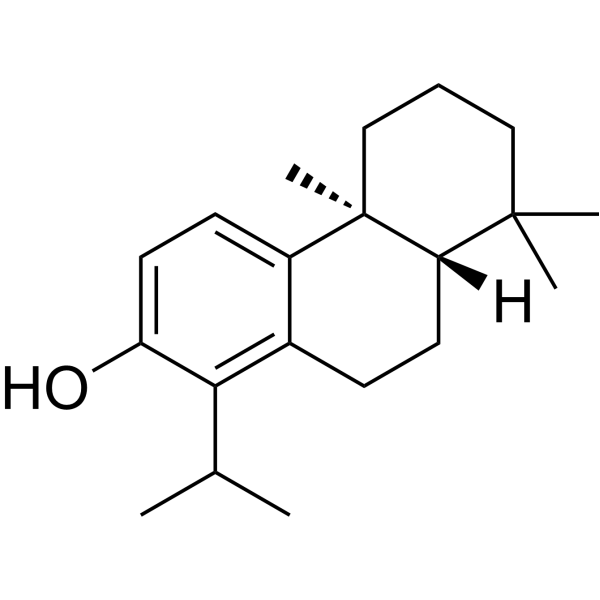
(+)-Totarol is a diterpenoid membrane-disrupting agent and membrane structure regulator found in plants of the genus Podocarpus spp. (+)-Totarol inserts into phospholipid model membranes, disrupts phospholipid packing, and impairs the functional integrity of membranes. (+)-Totarol exhibits antibacterial activity against a variety of bacterial species and β-lactam-resistant strains, and its action is associated with changes in membrane physical properties. (+)-Totarol can be used in studies related to bacterial infections .
|
-
-
- HY-D1602
-
|
|
Fluorescent Dye
|
Others
|
|
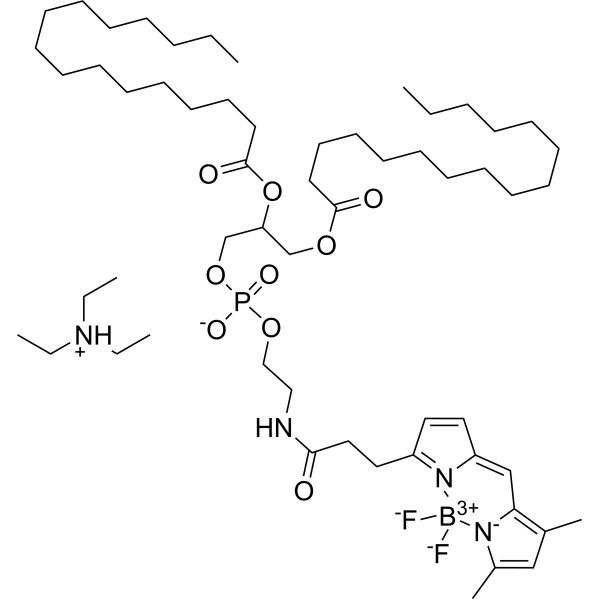
BODIPY FL DHPE is a green-fluorescent phospholipid probe. BODIPY FL DHPE labels lipid 1,2-dihexadecanoyl-sn-glycero-phosphoethanolamine (DHPE), labeled liposomes can be internalized by membrane fusion. BODIPY FL DHPE can be used for investigations of membrane surface and membrane fusion. (λex=505 nm, λem=511 nm) .
|
-
-
- HY-DY1025
-
|
|
Fluorescent Dye
|
Others
|
Laurdan (solution) is a membrane-permeable fluorescent probe that displays spectral sensitivity to the phospholipid phase of the cell membrane to which it is bound. Quantitation of generalized polarization (GP) of Laurdan can be used to identify phospholipid phase.
Solvent and concentration: DMSO: 5 mM
|
-

-
- HY-101541
-
|
Methyl docosahexaenoate; all cis-DHA methyl ester
|
Drug Intermediate
|
Neurological Disease
|
|
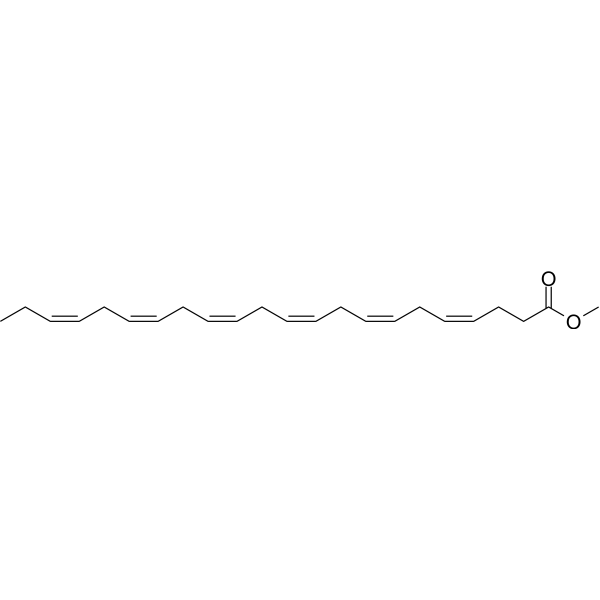
Docosahexaenoic Acid methyl ester is a methylated docosahexaenoic acid analog which can be intercalated into membrane phospholipids without being oxidized or hydrolyzed.
|
-
-
- HY-112747
-
|
LPI; PE (soy)
|
Phospholipase
|
Infection
|
|
Soy PE (LPI) is the most abundant phospholipid in prokaryotes and the second most abundant found in the membrane of mammalian, plant, and yeast cells, comprising approximately 25% of total mammalian phospholipids. In the brain, phosphatidylethanolamine comprises almost half of the total phospholipids. It is synthesized mainly through the cytidine diphosphate-ethanolamine and phosphatidylserine decarboxylation pathways, which occur in the endoplasmic reticulum (ER) and mitochondrial membranes, respectively. It is a precursor in the synthesis of phosphatidylcholine and arachidonoyl ethanolamide and is a source of ethanolamine used in various cellular functions. In E.coli, phosphatidylethanolamine deficiency prevents proper assembly of lactose permease, suggesting a role as a lipid chaperone. It is a cofactor in the propagation of prions in vitro and can convert recombinant mammalian proteins into infectious molecules even in the absence of RNA. This product contains phosphatidylethanolamine molecular species with variable fatty acyl chain lengths at the sn-1 and sn-2 positions .
|
-

-
- HY-A0089R
-
|
Polymyxin E sulfate (Standard)
|
Reference Standards
Bacterial
Autophagy
Antibiotic
|
Infection
|
|
Colistin (sulfate) (Standard) is the analytical standard of Colistin (sulfate). This product is intended for research and analytical applications. Colistin sulfate is a polypeptide antibiotic which inhibits gram-negative bacteria by binding to lipopolysaccharides and phospholipids in the outer cell membrane of gram-negative bacteria.
|
-

-
- HY-W440986
-
|
DSPS sodium
|
Liposome
|
Others
|
|
Distearoylphosphatidylserine sodium is an anionic phospholipid with stearic acid tails (18:0) and contains a carboxylic acid (COOH) and amine (NH2) in their head group. It has been used in the preparation of lipid-mixing vesicles, liposome, or artificial membrane. Due to the medium size of fatty acid chain, DLPS is used to form thinner membranes/walls.
|
-

-
- HY-148979
-
|
SAPE
|
Biochemical Assay Reagents
|
Others
|
|
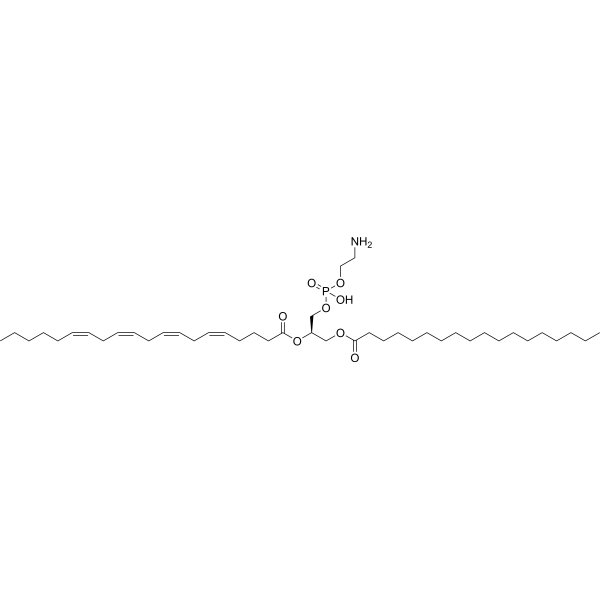
1-Stearoyl-2-arachidonoyl-sn-glycero-3-phosphorylethanolamine (SAPE) is a naturally-occurring phospholipid that can be found in inner mitochondrial membrane (MITO) .
|
-
-
- HY-D2100B
-
|
|
Fluorescent Dye
|
Others
|
|
Cy5-DSPE chloride is a far-infrared fluorescent phospholipid (λex/λem = 600/665 nm). Cy5-DSPE chloride is used to label liposomes, membranes and lipid nanoparticles, and can be applied to tracking and imaging studies of liposomes .
|
-

-
- HY-W587552
-
|
|
Liposome
Endogenous Metabolite
|
|
|
1,3-Diolein is a phospholipid compound that has the activity of regulating cell membrane fluidity and signal transduction. 1,3-Diolein is widely used in cell biology research to study lipid-mediated signal transduction pathways and membrane protein interactions. 1,3-Diolein can also serve as a functional carrier in compound delivery systems to help improve the bioavailability of compounds.
|
-

-
- HY-113209
-
|
8-iso-PGF2α
|
Endogenous Metabolite
|
Others
|
|
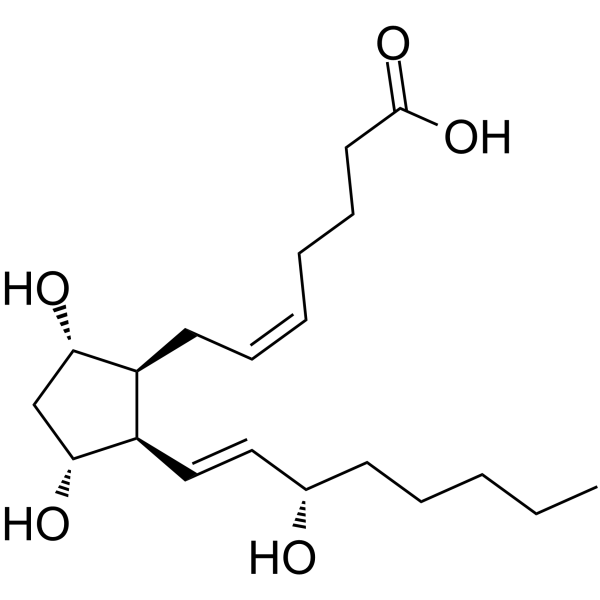
8-Isoprostaglandin F2α is an isoprostane produced by the non-enzymatic peroxidation of arachidonic acid in membrane phospholipids. 8-Isoprostaglandin F2α is present in human plasma in two distinct forms - esterified in phospholipids and as the free acid. 8-Isoprostaglandin F2α is a weak TP receptor agonist in vascular smooth muscle.
|
-
-
- HY-W590683
-
|
|
Liposome
|
Others
|
|
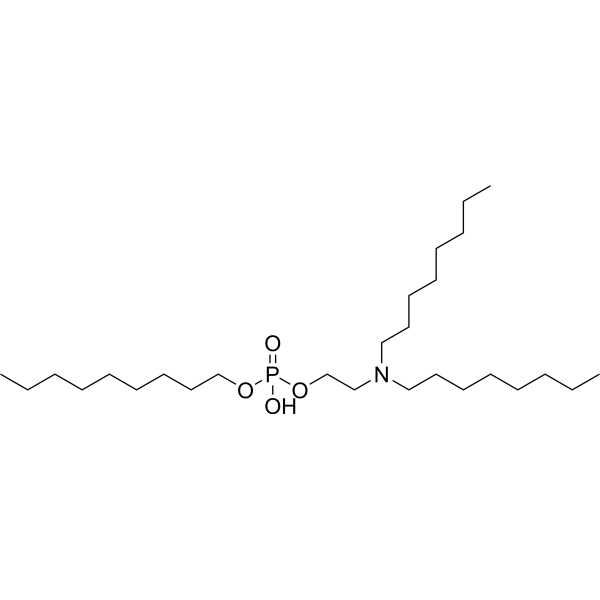
9A1P9 is a multi-tail ionizable cationic phospholipid. 9A1P9 induces membrane destabilization. 9A1P9 can be used for mRNA delivery t .
|
-
-
- HY-D1630
-
|
|
Fluorescent Dye
|
Others
|
|
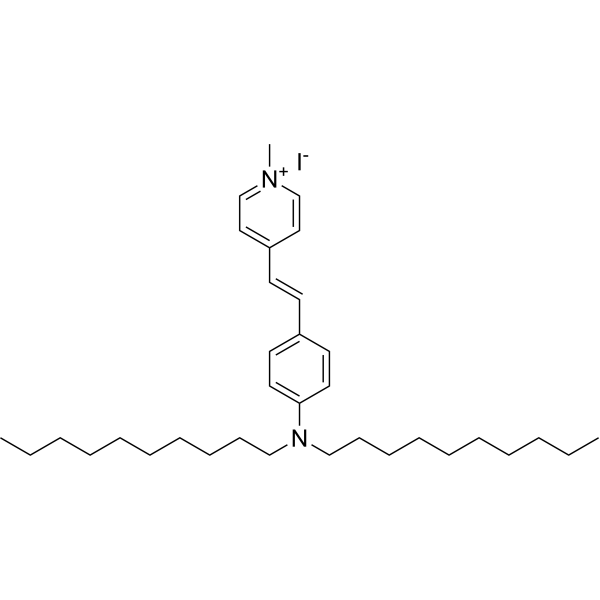
4-Di-10-ASP is a fluorescent lipophilic tracer (Excitation 485 nm; Emission 620 nm). 4-Di-10-ASP can be used to stain phospholipid membranes in a specific manner .
|
-
-
- HY-N0729S
-
|
|
Isotope-Labeled Compounds
Endogenous Metabolite
|
Cardiovascular Disease
Metabolic Disease
|
|
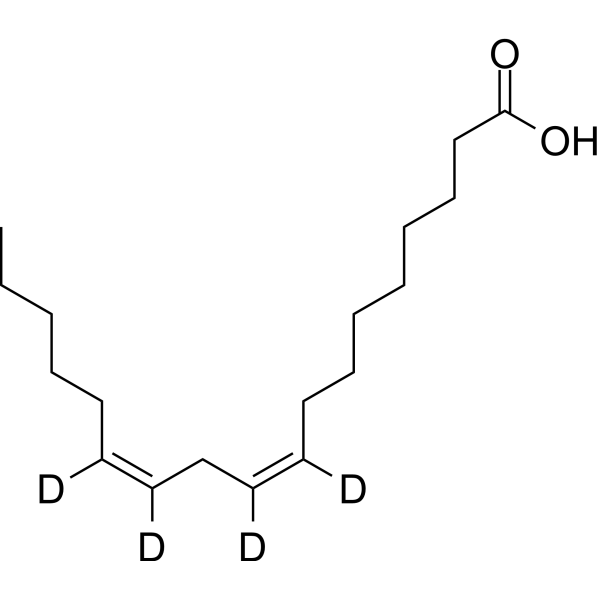
Linoleic Acid-d4 is the deuterium labeled Linoleic acid. Linoleic acid is a common polyunsaturated (PUFA) found in plant-based oils, nuts and seeds. Linoleic acid is a part of membrane phospholipids, and functions as a structural component to maintain a certain level of membrane fluidity of the transdermal water barrier of the epidermis. Linoleic acid induces red blood cells and hemoglobin damage via oxidative mechanism .
|
-
-
- HY-D2100
-
|
|
Fluorescent Dye
|
Others
|
|
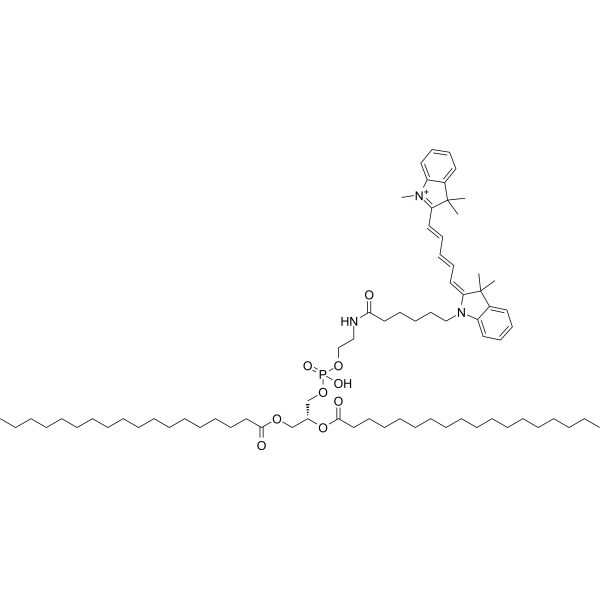
Cy5-DSPE is a far-infrared fluorescent phospholipid (λex/λem = 600/665 nm). Cy5-DSPE is used to label liposomes, membranes and lipid nanoparticles, and can be applied to tracking and imaging studies of liposomes .
|
-
-
- HY-142988
-
|
1S-2M-PC
|
Liposome
|
Others
|
|
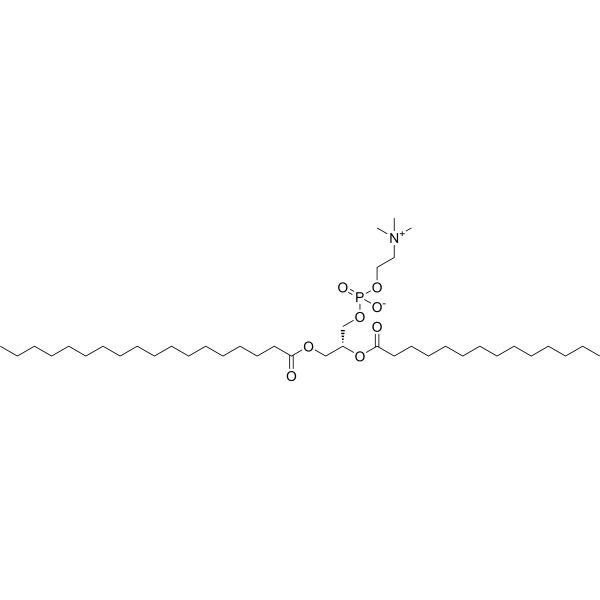
1-Stearoyl-2-myristoyl-sn-glycero-3-PC (1S-2M-PC) belongs to the class of asymmetric phospholipids. 1-Stearoyl-2-myristoyl-sn-glycero-3-PC is abundant in biological membranes .
|
-
-
- HY-142991
-
|
POPG
|
Liposome
|
Others
|
|
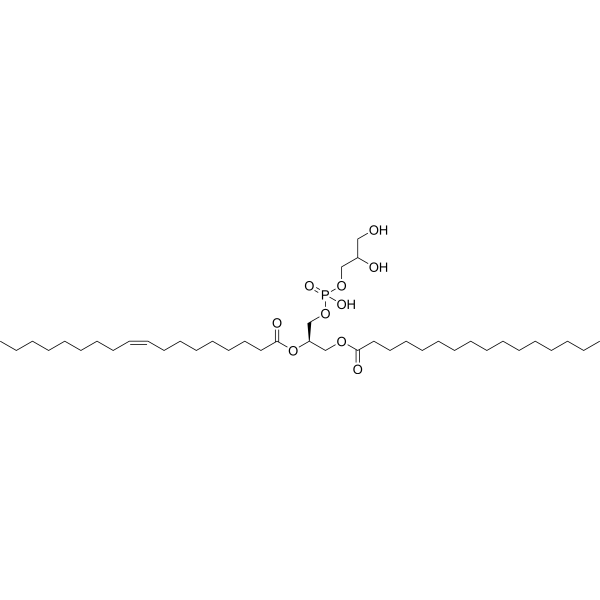
1-Palmitoyl-2-oleoyl-sn-glycero-3-phosphatidylglycerol (POPG) is an anionic phosphatidylglycerol that often serves as a key component to co-construct model phospholipid bilayers with phosphatidylcholine (e.g., at a 3:1 POPC:POPG ratio) for investigating the structure and dynamics of transmembrane proteins. 1-Palmitoyl-2-oleoyl-sn-glycero-3-phosphatidylglycerol acts as a fundamental material for mimicking the physicochemical properties of biological membranes and enables the elucidation of membrane protein interaction mechanisms .
|
-
-
- HY-171158
-
|
|
Liposome
|
Cancer
|
|
Glycerophosphoglycerol is a precursor for phospholipid biosynthesis. Glycerophosphoglycerol supports tumor cell membrane reconstruction and proliferation by promoting phospholipid synthesis. Glycerophosphoglycerol is promising for research of breast cancers .
|
-

-
- HY-157721
-
|
DBPC
|
Liposome
|
Others
|
|
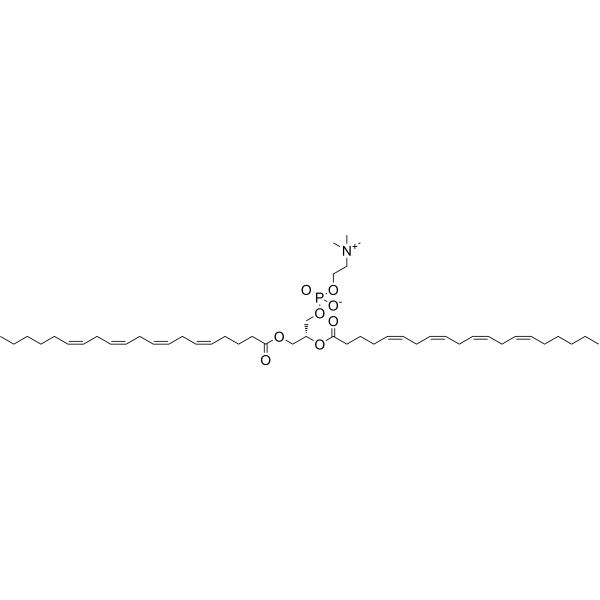
1,2-Dibehenoyl-sn-glycero-3-phosphocholine (DBPC) is a phospholipid found in cell membranes. 1, 2-dibehenoyl-SN-glycero-3-phosphocholine can be used to generate micelles, liposomes, and other types of artificial membranes .
|
-
-
- HY-131652
-
|
16:0 Diether PC
|
Liposome
|
Metabolic Disease
|
|
1,2-Di-O-hexadecyl-sn-glycero-3-phosphocholine (16:0 Diether PC) is a synthetic ether-linked phospholipid containing hexadecyl groups at the sn-1 and sn-2 positions. It is commonly used in the generation of liposomes and artificial membranes to study membrane dynamics.
|
-

-
- HY-W322575
-
|
DHPC
|
Liposome
|
Others
|
|
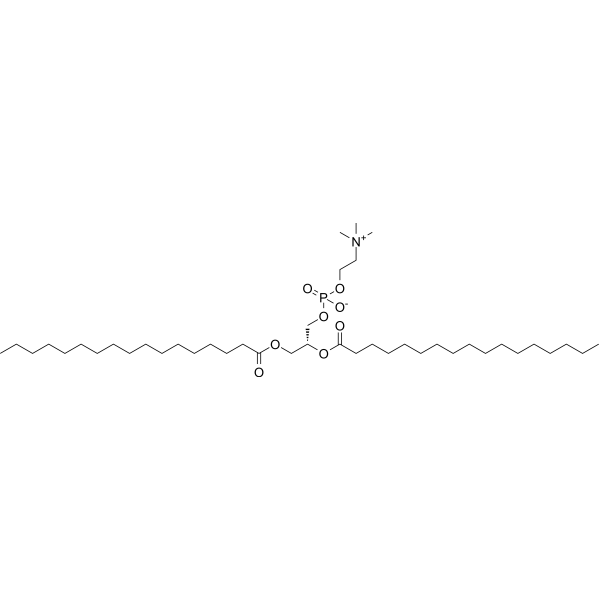
1,2-Diheptadecanoyl-sn-glycero-3-phosphorylcholine (DHPC) is a biologically active phospholipid compound and a derivative of phosphatidylcholine (PC) . It can be used in the generation of micelles, liposomes, and other types of artificial membranes.
|
-
-
- HY-W142596
-
|
|
Liposome
|
Others
|
|
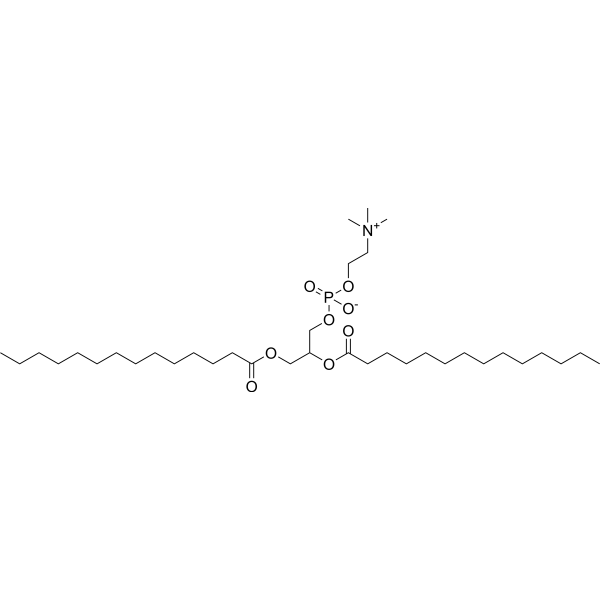
1,2-DImyristoyl-rac-glycero-3-phosphocholine (DMPC), a zwitterionic phospholipid, is chosen as a simple eukaryotic cell membrane, mimicking the neutral charge of the surface membrane of eukaryotic plasma membranes .
|
-
-
- HY-130462R
-
|
POPC (Standard)
|
Liposome
Reference Standards
|
Others
|
|
1-Palmitoyl-2-oleoyl-sn-glycero-3-PC (Standard) is the analytical standard of 1-Palmitoyl-2-oleoyl-sn-glycero-3-PC. This product is intended for research and analytical applications. 1-Palmitoyl-2-oleoyl-sn-glycero-3-PC (POPC), a phospholipid, is a major component of biological membranes. 1-Palmitoyl-2-oleoyl-sn-glycero-3-PC is used for the preparation of liposomes and studying the properties of lipid bilayers .
|
-

-
- HY-P11430
-
|
|
Biochemical Assay Reagents
|
Infection
|
|
UBI (31-38) is a Ubiquicidin-derived octapeptide and anti-bacterial agent. UBI (31-38) selectively interacts with anionic phospholipid membranes and restricts lipid lateral motion. UBI (31-38) induces anionic vesicle aggregation via electrostatic repulsion screening, and undergoes conformational changes in membrane-mimicking environments. UBI (31-38) can be used for the research of infection imaging probes .
|
-

-
- HY-N0729S4
-
|
|
Isotope-Labeled Compounds
|
Cardiovascular Disease
Metabolic Disease
|
|
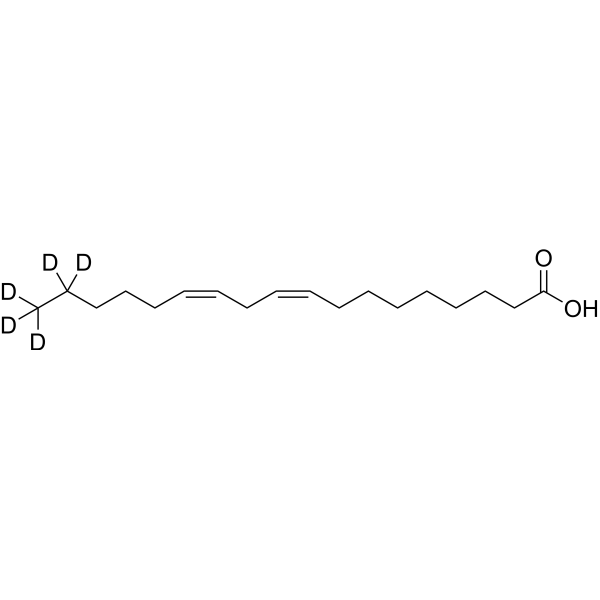
Linoleic Acid-d5 is the deuterium labeled Linoleic acid. Linoleic acid is a common polyunsaturated (PUFA) found in plant-based oils, nuts and seeds. Linoleic acid is a part of membrane phospholipids, and functions as a structural component to maintain a certain level of membrane fluidity of the transdermal water barrier of the epidermis. Linoleic acid induces red blood cells and hemoglobin damage via oxidative mechanism .
|
-
-
- HY-B1145S
-
|
|
Isotope-Labeled Compounds
Antibiotic
Bacterial
Necroptosis
Apoptosis
|
Infection
|
|
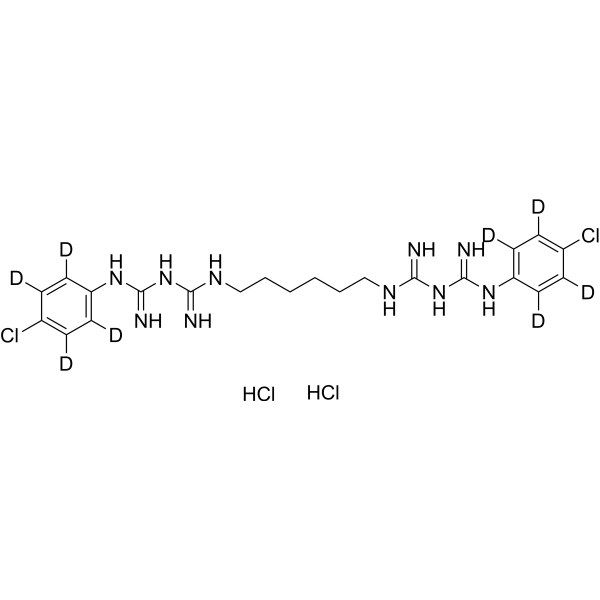
Chlorhexidine-d8 (dihydrochloride) is the deuterium labeled Chlorhexidine dihydrochloride (HY-B1145). Chlorhexidine dihydrochloride is a orally active cationic antimicrobial agent that targets microbial cell membranes. Chlorhexidine dihydrochloride binds to cell membrane phospholipids non-specifically, destroys membrane structure and induces leakage of cell contents. Chlorhexidine dihydrochloride has broad-spectrum bactericidal activity against both Gram-positive and Gram-negative bacteria. Chlorhexidine dihydrochloride can interfere with membrane permeability, cause protein precipitation and energy metabolism disorders, such as rapid inhibition of microbial growth and induction of cell death (necrosis or apoptosis) .
|
-
-
- HY-W343736
-
|
1,3-DPPE; 1,3-Dipalmitoyl-sn-glycero-2-PE
|
Liposome
|
Cancer
|
|
1,3-Dipalmitoyl-glycero-2-phosphoethanolamine is a phospholipid containing the saturated long-chain (16:0) stearic acid inserted at the sn-1 and sn-3 positions and PE at the sn-2 site. It can be used in the generation of micelles, liposomes, and other types of artificial membranes.
|
-

-
- HY-W440982A
-
|
(Rac)-PC(18:0/18:1); (Rac)-2-Oleoyl-1-stearoyl-sn-glycero-3-phosphocholine
|
Liposome
|
Others
|
|
(Rac)-SOPC ((Rac)-PC(18:0/18:1)) ((Rac)-2-Oleoyl-1-stearoyl-sn-glycero-3-phosphocholine) is the racemate of SOPC (HY-W440982). SOPC is an asymmetrical phospholipid with saturated fatty acid (stearic acid/18:0) at sn-1 position and unsaturated fatty acid (oleic acid/18:1) at sn-2 position. SOPC can stabilize the outer segment membrane of frog rods .
|
-

-
- HY-101541S
-
|
Methyl docosahexaenoate-d5; all cis-DHA methyl ester-d5
|
Isotope-Labeled Compounds
|
Neurological Disease
|
|
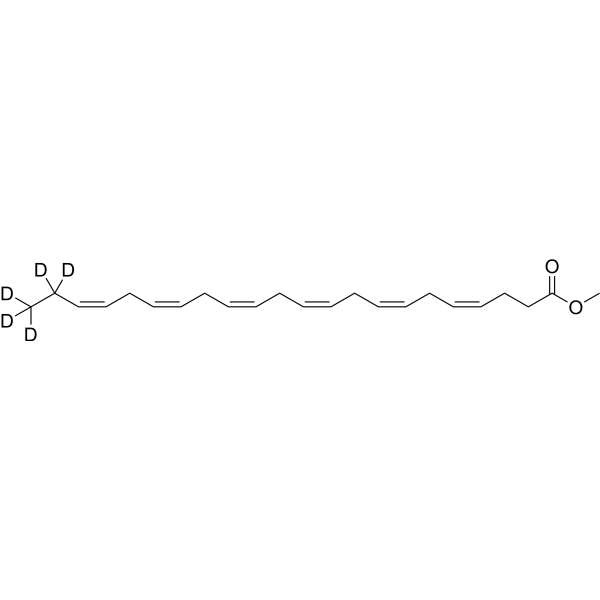
Docosahexaenoic acid-d5 methyl ester is the deuterium labeled Docosahexaenoic Acid methyl ester. Docosahexaenoic Acid methyl ester is a methylated docosahexaenoic acid analog which can be intercalated into membrane phospholipids without being oxidized or hydrolyzed .
|
-
-
- HY-N0729S3
-
|
|
Endogenous Metabolite
|
Cardiovascular Disease
Metabolic Disease
|
|
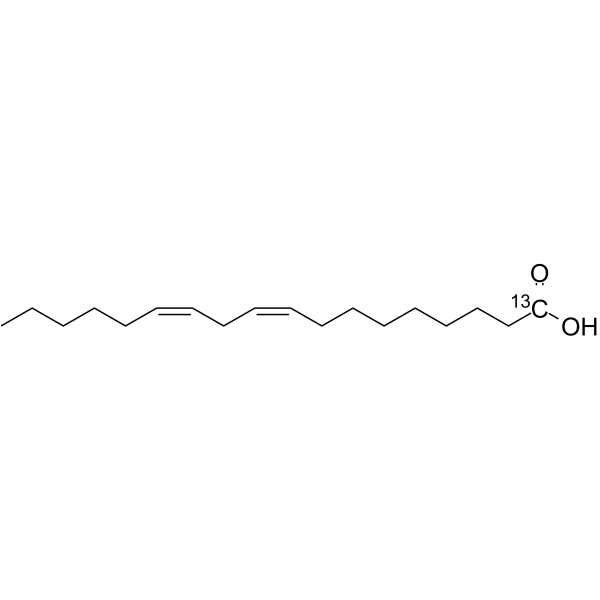
Linoleic acid- 13C1 is the 13C labeled Linoleic acid. Linoleic acid is a common polyunsaturated (PUFA) found in plant-based oils, nuts and seeds. Linoleic acid is a part of membrane phospholipids, and functions as a structural component to maintain a certain level of membrane fluidity of the transdermal water barrier of the epidermis. Linoleic acid induces red blood cells and hemoglobin damage via oxidative mechanism .
|
-
-
- HY-N5034A
-
|
Monoaminoethyl phosphate calcium; NSC 254167 calcium; O-Phosphoethanolamine calcium
|
Liposome
|
Others
|
|
Phosphoethanolamine (calcium) (Monoaminoethyl phosphate (calcium); NSC 254167 (calcium); O-Phosphoethanolamine (calcium)) is a precursor to phosphatidylethanolamine and can be used in the synthesis of phosphatidylcholine. Phosphoethanolamine (calcium) is used in the study of phospholipid metabolism and cell membrane structure .
|
-

-
- HY-W440985
-
|
1,2-dilauroyl-sn-glycero-3-phospho-L-serine
|
Liposome
|
Cancer
|
|
DLPS is an anionic phospholipid with lauric acid tails (12:0) and contains a carboxylic acid (COOH) and amine (NH2) in their head group. It has been used in the preparation of lipid-mixing vesicles, liposome, or artificial membrane. Due to the medium size of fatty acid chain, DLPS is used to form thinner membranes/walls.
|
-

-
- HY-W591449
-
|
|
Liposome
|
Cancer
|
|
DOPE-PEG2000-Azide is a liposome to simulate biological phospholipid membrane. Liposomes are the main component of vesicles with concentric phospholipid bilayer membranes, which can be used to construct drug delivery systems for anti-cancer and anti-infection fields. Highly polar water-soluble payloads can be trapped in the internal aqueous space of liposomes, while lipophilic payloads can partition into and become part of the lipid bilayer. Especially for delivering antisense oligonucleotides, it can overcome problems such as inefficient cellular uptake and rapid loss in the body .
|
-

- HY-W800733
-
|
1,2-Dilauroyl-sn-glycero-3-phosphorylglycerol; PG(12:0/12:0)
|
Liposome
|
Cancer
|
|
DLPG is a phospholipid containing lauric acid (12 chain fatty acid) inserted at the sn-1 and sn-2 positions. Its phosphate group is attached to glycerol. It is used in the generation of micelles, liposomes, and other artificial membranes.
|
-

- HY-W590536
-
|
1-Palmitoyl-2-Lauroyl-sn-glycero-3-Phosphatidylcholine; 1-Palmitoyl-2-Lauroyl-sn-glycero-3-Phosphocholine
|
Liposome
|
Cancer
|
|
1,2-PLPC is a phospholipid containing palmitoyl (16:0) and lauryl (12:0) acyl substituents at the sn-1 and sn-2 positions, respectively. It can be used in the generation of micelles, liposomes, and other types of artificial membranes.
|
-

- HY-B1248A
-
|
|
Antibiotic
Bacterial
Necroptosis
Apoptosis
|
Infection
|
|
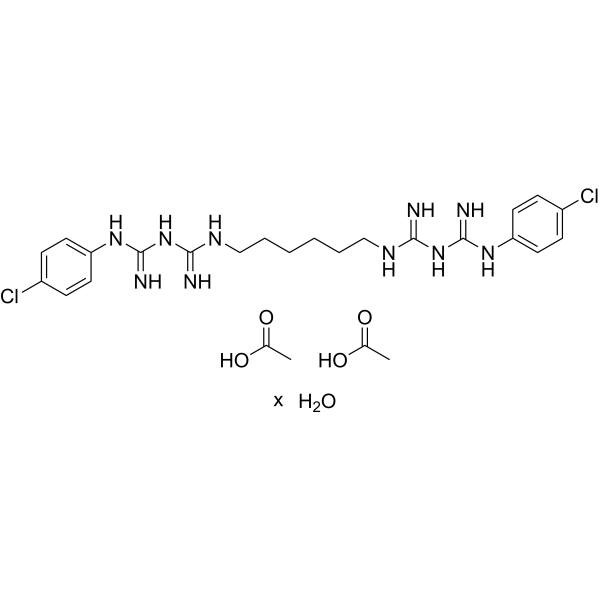
Chlorhexidine acetate hydrate is a orally active cationic antimicrobial agent that targets microbial cell membranes. Chlorhexidine acetate hydrate binds to cell membrane phospholipids non-specifically, destroys membrane structure and induces leakage of cell contents. Chlorhexidine acetate hydrate has broad-spectrum bactericidal activity against both Gram-positive and Gram-negative bacteria. Chlorhexidine acetate hydrate can interfere with membrane permeability, cause protein precipitation and energy metabolism disorders, such as rapid inhibition of microbial growth and induction of cell death (necrosis or apoptosis) .
|
-
- HY-N0729S5
-
|
Deulinoleic acid
|
Endogenous Metabolite
|
Metabolic Disease
|
|
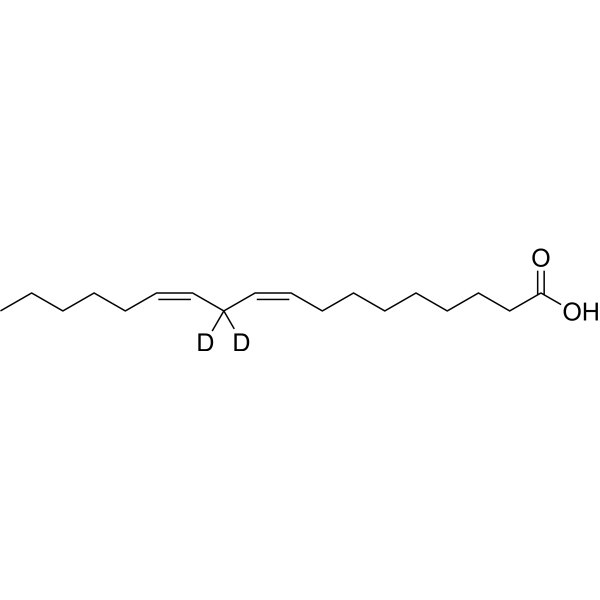
Linoleic Acid-d2 is the deuterium labeled Linoleic acid. Linoleic acid is a common polyunsaturated (PUFA) found in plant-based oils, nuts and seeds. Linoleic acid is a part of membrane phospholipids, and functions as a structural component to maintain a certain level of membrane fluidity of the transdermal water barrier of the epidermis. Linoleic acid induces red blood cells and hemoglobin damage via oxidative mechanism .
|
-
- HY-N0729S1
-
|
|
Isotope-Labeled Compounds
Endogenous Metabolite
|
Cardiovascular Disease
Metabolic Disease
|
|
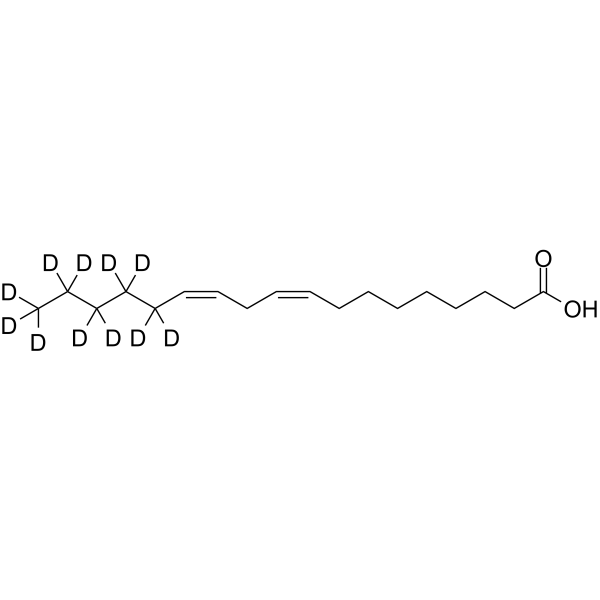
Linoleic acid-d11 is the deuterium labeled Linoleic acid. Linoleic acid is a common polyunsaturated (PUFA) found in plant-based oils, nuts and seeds. Linoleic acid is a part of membrane phospholipids, and functions as a structural component to maintain a certain level of membrane fluidity of the transdermal water barrier of the epidermis. Linoleic acid induces red blood cells and hemoglobin damage via oxidative mechanism .
|
-
- HY-D2980
-
|
|
Biochemical Assay Reagents
|
Others
|
|
DSPE-PEG45-BG is a SNAP-tag reactive phospholipid-anchored molecule that enables targeted localization and spatiotemporal controlled immobilization of proteins on phospholipid membranes. DSPE-PEG45-BG can be applied to any SNAP-tag fusion protein .
|
-

- HY-153725
-
|
|
Liposome
|
Cancer
|
|
17:1 Lyso PC is a liposome to simulate biological phospholipid membrane. Liposomes are the main component of vesicles with concentric phospholipid bilayer membranes, which can be used to construct drug delivery systems for anti-cancer and anti-infection fields. Highly polar water-soluble payloads can be trapped in the internal aqueous space of liposomes, while lipophilic payloads can partition into and become part of the lipid bilayer. Especially for delivering antisense oligonucleotides, it can overcome problems such as inefficient cellular uptake and rapid loss in the body .
|
-

- HY-134174
-
|
|
Liposome
|
Cancer
|
|
1-Palmitoyl-2-oleoyl-sn-glycero-3-phosphate is a phospholipid containing saturated palmitic acid (16:0) and monounsaturated oleic acid (18:1) inserted at the sn-1 and sn-2 positions, respectively. It can be used in the generation of micelles, liposomes, and other types of artificial membranes.
|
-

- HY-157641A
-
|
|
Biochemical Assay Reagents
|
Others
|
|
(2S)-18:1 Lyso PC is the (2S)-enantiomer of lysophosphatidylcholine (Lyso PC). LysoPC is a class of phospholipids, which are essential components of cell membranes.
|
-

- HY-W838254
-
|
|
PKC
Endogenous Metabolite
|
Others
|
|
1,2-Dipentadecanoyl-sn-glycero-3-phospho-(1'-rac-glycerol) sodium functions as an activator for the protein kinase C family and is an anionic phospholipid found in mitochondrial and microsomal membranes, playing a crucial role in the composition of lung surfactant, particularly within the membranes of lamellar bodies in the lungs.
|
-

- HY-101541R
-
|
Methyl docosahexaenoate (Standard); all cis-DHA methyl ester (Standard)
|
Drug Intermediate
Reference Standards
|
Neurological Disease
|
|
Docosahexaenoic acid methyl ester (Standard) is the analytical standard of Docosahexaenoic acid methyl ester. This product is intended for research and analytical applications. Docosahexaenoic Acid methyl ester is a methylated docosahexaenoic acid analog which can be intercalated into membrane phospholipids without being oxidized or hydrolyzed.
|
-

- HY-W339206
-
|
|
Endogenous Metabolite
|
Others
|
|
1,2-Dinonanoyl-sn-glycero-3-phosphocholine, a specific phosphatidylcholine, features fatty acyl configurations that can influence the physical properties of membranes, making it a key component for generating eicosanoids. As a phospholipid abundant in membranes, it has fatty acids attached to glycerol at the sn-1 and sn-2 positions via ester bonds.
|
-

- HY-147170
-
|
|
Fluorescent Dye
|
Others
|
|
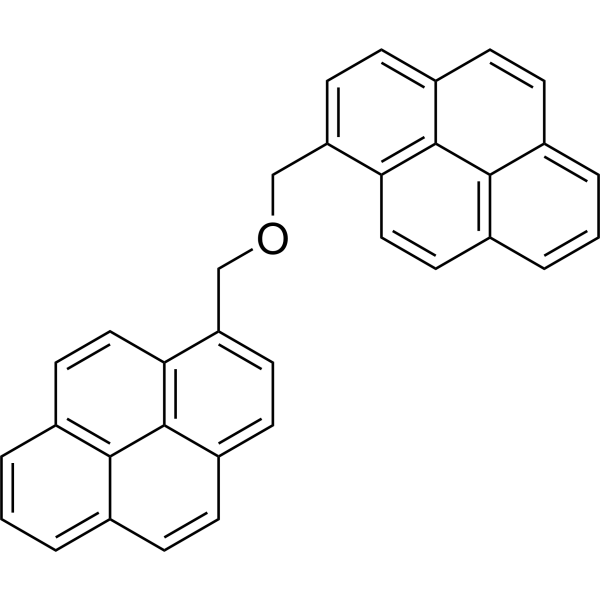
(1,1'-Dipyrenyl)dimethyl ether exhibits intramolecular excimer fluorescence in competition with fluorescence from the locally excited pyrene chromophore. (1,1'-Dipyrenyl)dimethyl ether is soluble in synthetic phospholipid membranes .
|
-
- HY-W800732
-
|
Dilinoleoyllecithin
|
Liposome
|
Others
|
|
1,2-Dilinoleoyl-sn-glycero-3-PC (Dilinoleoyllecithin) is a phospholipid. 1,2-Dilinoleoyl-sn-glycero-3-PC can be used in the manufacture of artificial membranes .
|
-

- HY-P10970
-
|
|
Bacterial
|
Infection
|
|
RT2 is a tryptophan-rich cationic amphipathic antibacterial peptide, with main targets including lipopolysaccharide (LPS) on the bacterial surface and intracellular DNA. RT2 binds to bacterial surface LPS, and interacts with cytoplasmic membrane phospholipids, enabling it to rapidly penetrate the bacterial cell membrane and enter the cell, and then bind to components such as DNA in the cytoplasmic membrane, thereby exerting antibacterial effects. RT2 is promising for research of acute and chronic infections caused by planktonic bacteria .
|
-

- HY-W587499
-
|
|
Liposome
|
Cancer
|
|
2-Arachidonoyl-sn-glycero-3-phosphocholine is a phospholipid molecule that is a major component of the plasma membrane. It is a phospholipid molecule that is involved in the regulation of membrane fluidity, signal transduction, cell-cell communication, and mediator of inflammation.
|
-

- HY-P11180
-
|
|
Antibiotic
Bacterial
|
Infection
|
|
Clavanin A is a peptide Antibiotic and membrane permeabilizer. Clavanin A permeabilizes cytoplasmic membranes and unilamellar lipid bilayers, and dissipates membrane potential. Clavanin A inserts into phospholipid monolayers via hydrophobic interactions under physiologically relevant surface pressures. Clavanin A exhibits antibacterial activity against Micrococcus flavus. Clavanin A can be used in studies related to Micrococcus flavus infection .
|
-

- HY-P11180A
-
|
|
Antibiotic
Bacterial
|
Infection
|
|
Clavanin A acetate is a peptide Antibiotic and membrane permeabilizer. Clavanin A acetate permeabilizes cytoplasmic membranes and unilamellar lipid bilayers, and dissipates membrane potential. Clavanin A acetate inserts into phospholipid monolayers via hydrophobic interactions under physiologically relevant surface pressures. Clavanin A acetate exhibits antibacterial activity against Micrococcus flavus. Clavanin A acetate can be used in studies related to Micrococcus flavus infection .
|
-

- HY-185564
-
|
|
Biochemical Assay Reagents
|
Others
|
|
F6OM, a nonionic fluorinated octyl maltoside derivative, is a surfactant. F6OM readily interacts with and completely solubilizes phospholipid vesicles via a heterogeneous solubilization mechanism, without compromising membrane order at subsolubilizing concentrations. F6OM promotes bilayer insertion of an integral membrane enzyme in the absence of micelles to support functional refolding of integral membrane proteins. F6OM can be used for membrane-protein applications .
|
-

- HY-164217
-
|
|
Drug Derivative
|
Others
|
|
β-D-Glucuronylmonomethylauristatin E is a derivative of MMAE (HY-15162). β-D-Glucuronylmonomethylauristatin E does not interact with pure phospholipid membranes, but can be effectively solubilized by micelles .
|
-

- HY-W440988E
-
|
|
Biochemical Assay Reagents
|
Others
|
|
DOPE-mPEG10000 is a PEGylated phospholipid containing DOPE. DOPE-mPEG10000 combines the membrane fusion capabilities of DOPE with the stealth properties of PEG, playing a crucial role in mRNA vaccines, long-circulating liposomes, and drug delivery systems.
|
-

- HY-W440988H
-
|
|
Biochemical Assay Reagents
|
Others
|
|
DOPE-mPEG20000 is a PEGylated phospholipid containing DOPE. DOPE-mPEG20000 combines the membrane fusion capabilities of DOPE with the stealth properties of PEG, playing a crucial role in mRNA vaccines, long-circulating liposomes, and drug delivery systems.
|
-

- HY-W440988I
-
|
|
Biochemical Assay Reagents
|
Others
|
|
DOPE-mPEG30000 is a PEGylated phospholipid containing DOPE. DOPE-mPEG30000 combines the membrane fusion capabilities of DOPE with the stealth properties of PEG, playing a crucial role in mRNA vaccines, long-circulating liposomes, and drug delivery systems.
|
-

- HY-W440988A
-
|
|
Biochemical Assay Reagents
|
Others
|
|
DOPE-mPEG350 is a PEGylated phospholipid containing DOPE. DOPE-mPEG350 combines the membrane fusion capabilities of DOPE with the stealth properties of PEG, playing a crucial role in mRNA vaccines, long-circulating liposomes, and drug delivery systems.
|
-

- HY-W440988B
-
|
|
Biochemical Assay Reagents
|
Others
|
|
DOPE-mPEG500 is a PEGylated phospholipid containing DOPE. DOPE-mPEG500 combines the membrane fusion capabilities of DOPE with the stealth properties of PEG, playing a crucial role in mRNA vaccines, long-circulating liposomes, and drug delivery systems.
|
-

- HY-W440988C
-
|
|
Biochemical Assay Reagents
|
Others
|
|
DOPE-mPEG550 is a PEGylated phospholipid containing DOPE. DOPE-mPEG550 combines the membrane fusion capabilities of DOPE with the stealth properties of PEG, playing a crucial role in mRNA vaccines, long-circulating liposomes, and drug delivery systems.
|
-

- HY-174972I
-
|
|
Biochemical Assay Reagents
|
Others
|
|
mPEG20000-DPPE is a PEGylated phospholipid containing DPPE. DOPE-mPEG750 combines the membrane fusion capability of DPPE with the stealth properties of PEG, and can be used for applications such as constructing targeted drug delivery systems and liposome preparation.
|
-

- HY-W440988D
-
|
|
Biochemical Assay Reagents
|
Others
|
|
DOPE-mPEG750 is a PEGylated phospholipid containing DOPE. DOPE-mPEG750 combines the membrane fusion capabilities of DOPE with the stealth properties of PEG, playing a crucial role in mRNA vaccines, long-circulating liposomes, and drug delivery systems.
|
-

- HY-W1052148C
-
|
|
Biochemical Assay Reagents
|
Others
|
|
mPEG550-DMG is a PEGylated phospholipid containing DMG. mPEG550-DMG combines the membrane fusion capability of DMG with the stealth properties of PEG, and can be used for applications such as constructing targeted drug delivery systems and liposome preparation.
|
-

- HY-112764C
-
|
|
Biochemical Assay Reagents
|
Others
|
|
mPEG500-DMG is a PEGylated phospholipid containing DMG. mPEG500-DMG combines the membrane fusion capability of DMG with the stealth properties of PEG, and can be used for applications such as constructing targeted drug delivery systems and liposome preparation.
|
-

- HY-W591381E
-
|
|
Biochemical Assay Reagents
|
Others
|
|
mPEG1000-DSG is a PEGylated phospholipid containing DSG. mPEG1000-DSG combines the membrane fusion capability of DSG with the stealth properties of PEG, and can be used for applications such as constructing targeted drug delivery systems and liposome preparation.
|
-

- HY-112764E
-
|
|
Biochemical Assay Reagents
|
Others
|
|
mPEG30000-DMG is a PEGylated phospholipid containing DMG. mPEG30000-DMG combines the membrane fusion capability of DMG with the stealth properties of PEG, and can be used for applications such as constructing targeted drug delivery systems and liposome preparation.
|
-

- HY-W591381B
-
|
|
Biochemical Assay Reagents
|
Others
|
|
mPEG500-DSG is a PEGylated phospholipid containing DSG. mPEG500-DSG combines the membrane fusion capability of DSG with the stealth properties of PEG, and can be used for applications such as constructing targeted drug delivery systems and liposome preparation.
|
-

- HY-W1052192B
-
|
|
Biochemical Assay Reagents
|
Others
|
|
mPEG20000-DMPE is a PEGylated phospholipid containing DMPE. mPEG20000-DMPE combines the membrane fusion capability of DMPE with the stealth properties of PEG, and can be used for applications such as constructing targeted drug delivery systems and liposome preparation.
|
-

- HY-W1049054C
-
|
|
Biochemical Assay Reagents
|
Others
|
|
mPEG20000-DMG is a PEGylated phospholipid containing DMG. mPEG20000-DMG combines the membrane fusion capability of DMG with the stealth properties of PEG, and can be used for applications such as constructing targeted drug delivery systems and liposome preparation.
|
-

- HY-W591381C
-
|
|
Biochemical Assay Reagents
|
Others
|
|
mPEG550-DSG is a PEGylated phospholipid containing DSG. mPEG550-DSG combines the membrane fusion capability of DSG with the stealth properties of PEG, and can be used for applications such as constructing targeted drug delivery systems and liposome preparation.
|
-

- HY-W1052192C
-
|
|
Biochemical Assay Reagents
|
Others
|
|
mPEG30000-DMPE is a PEGylated phospholipid containing DMPE. mPEG30000-DMPE combines the membrane fusion capability of DMPE with the stealth properties of PEG, and can be used for applications such as constructing targeted drug delivery systems and liposome preparation.
|
-

- HY-112764D
-
|
|
Biochemical Assay Reagents
|
Others
|
|
mPEG750-DMG is a PEGylated phospholipid containing DMG. mPEG750-DMG combines the membrane fusion capability of DMG with the stealth properties of PEG, and can be used for applications such as constructing targeted drug delivery systems and liposome preparation.
|
-

- HY-174972C
-
|
|
Biochemical Assay Reagents
|
Others
|
|
mPEG500-DPPE is a PEGylated phospholipid containing DPPE. mPEG500-DPPE combines the membrane fusion capability of DPPE with the stealth properties of PEG, and can be used for applications such as constructing targeted drug delivery systems and liposome preparation.
|
-

- HY-174972H
-
|
|
Biochemical Assay Reagents
|
Others
|
|
mPEG10000-DPPE is a PEGylated phospholipid containing DPPE. mPEG10000-DPPE combines the membrane fusion capability of DPPE with the stealth properties of PEG, and can be used for applications such as constructing targeted drug delivery systems and liposome preparation.
|
-

- HY-W1052148D
-
|
|
Biochemical Assay Reagents
|
Others
|
|
mPEG1000-DMG is a PEGylated phospholipid containing DMG. mPEG1000-DMG combines the membrane fusion capability of DMG with the stealth properties of PEG, and can be used for applications such as constructing targeted drug delivery systems and liposome preparation.
|
-

- HY-W1048624C
-
|
|
Biochemical Assay Reagents
|
Others
|
|
mPEG20000-DSG is a PEGylated phospholipid containing DSG. mPEG20000-DSG combines the membrane fusion capability of DSG with the stealth properties of PEG, and can be used for applications such as constructing targeted drug delivery systems and liposome preparation.
|
-

- HY-W591381H
-
|
|
Biochemical Assay Reagents
|
Others
|
|
mPEG30000-DSG is a PEGylated phospholipid containing DSG. mPEG30000-DSG combines the membrane fusion capability of DSG with the stealth properties of PEG, and can be used for applications such as constructing targeted drug delivery systems and liposome preparation.
|
-

- HY-174972E
-
|
|
Biochemical Assay Reagents
|
Others
|
|
mPEG750-DPPE is a PEGylated phospholipid containing DPPE. mPEG750-DPPE combines the membrane fusion capability of DPPE with the stealth properties of PEG, and can be used for applications such as constructing targeted drug delivery systems and liposome preparation.
|
-

- HY-174972J
-
|
|
Biochemical Assay Reagents
|
Others
|
|
mPEG30000-DPPE is a PEGylated phospholipid containing DPPE. mPEG30000-DPPE combines the membrane fusion capability of DPPE with the stealth properties of PEG, and can be used for applications such as constructing targeted drug delivery systems and liposome preparation.
|
-

- HY-112764B
-
|
|
Biochemical Assay Reagents
|
Others
|
|
mPEG350-DMG is a PEGylated phospholipid containing DMG. mPEG350-DMG combines the membrane fusion capability of DMG with the stealth properties of PEG, and can be used for applications such as constructing targeted drug delivery systems and liposome preparation.
|
-

- HY-W591381D
-
|
|
Biochemical Assay Reagents
|
Others
|
|
mPEG750-DSG is a PEGylated phospholipid containing DSG. mPEG750-DSG combines the membrane fusion capability of DSG with the stealth properties of PEG, and can be used for applications such as constructing targeted drug delivery systems and liposome preparation.
|
-

- HY-W1052192A
-
|
|
Biochemical Assay Reagents
|
Others
|
|
mPEG10000-DMPE is a PEGylated phospholipid containing DMPE. mPEG10000-DMPE combines the membrane fusion capability of DMPE with the stealth properties of PEG, and can be used for applications such as constructing targeted drug delivery systems and liposome preparation.
|
-

- HY-W1048624B
-
|
|
Biochemical Assay Reagents
|
Others
|
|
mPEG10000-DSG is a PEGylated phospholipid containing DSG. mPEG10000-DSG combines the membrane fusion capability of DSG with the stealth properties of PEG, and can be used for applications such as constructing targeted drug delivery systems and liposome preparation.
|
-

- HY-174972B
-
|
|
Biochemical Assay Reagents
|
Others
|
|
mPEG350-DPPE is a PEGylated phospholipid containing DPPE. mPEG350-DPPE combines the membrane fusion capability of DPPE with the stealth properties of PEG, and can be used for applications such as constructing targeted drug delivery systems and liposome preparation.
|
-

- HY-W1048624A
-
|
|
Biochemical Assay Reagents
|
Others
|
|
mPEG5000-DSG is a PEGylated phospholipid containing DSG. mPEG5000-DSG combines the membrane fusion capability of DSG with the stealth properties of PEG, and can be used for applications such as constructing targeted drug delivery systems and liposome preparation.
|
-

- HY-158145
-
|
|
Phospholipase
|
Cancer
|
|
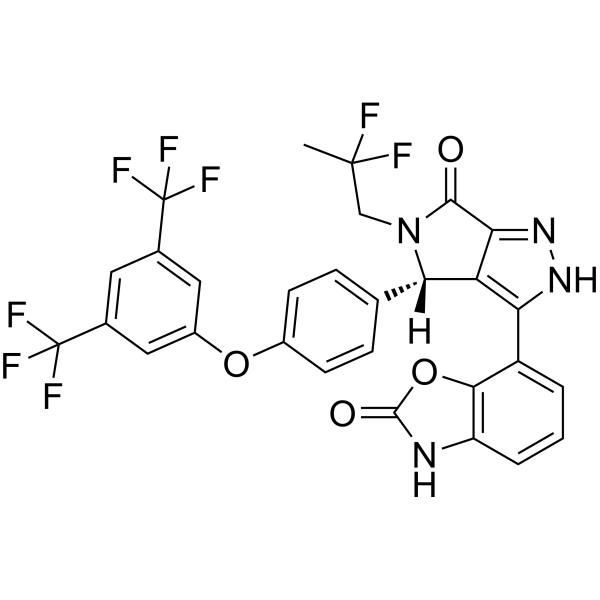
DS55980254 is the orally active inhibitor for phosphatidylserine synthase 1 (PTDSS1) that blocks the synthesis of intracellular phosphatidylserine. PTDSS1 deficiency affects the balance of cell membrane phospholipid components, and activates B cell receptor (BCR) signaling pathway .
|
-
- HY-174972D
-
|
|
Biochemical Assay Reagents
|
Others
|
|
mPEG550-DPPE is a PEGylated phospholipid containing DPPE. mPEG550-DPPE combines the membrane fusion capability of DPPE with the stealth properties of PEG, and can be used for applications such as constructing targeted drug delivery systems and liposome preparation.
|
-

- HY-W1052148B
-
|
|
Biochemical Assay Reagents
|
Others
|
|
mPEG10000-DMG is a PEGylated phospholipid containing DMG. mPEG10000-DMG combines the membrane fusion capability of DMG with the stealth properties of PEG, and can be used for applications such as constructing targeted drug delivery systems and liposome preparation.
|
-

- HY-W591381A
-
|
|
Biochemical Assay Reagents
|
Others
|
|
mPEG350-DSG is a PEGylated phospholipid containing DSG. mPEG350-DSG combines the membrane fusion capability of DSG with the stealth properties of PEG, and can be used for applications such as constructing targeted drug delivery systems and liposome preparation.
|
-

- HY-D2100A
-
|
|
Fluorescent Dye
|
Others
|
|
Cy5-DSPE chloride ammonium is a far-infrared fluorescent phospholipid (λex/λem = 600/665 nm). Cy5-DSPE chloride ammonium is used to label liposomes, membranes and lipid nanoparticles, and can be applied to tracking and imaging studies of liposomes .
|
-
- HY-143202S1
-
|
|
Isotope-Labeled Compounds
|
Others
|
|
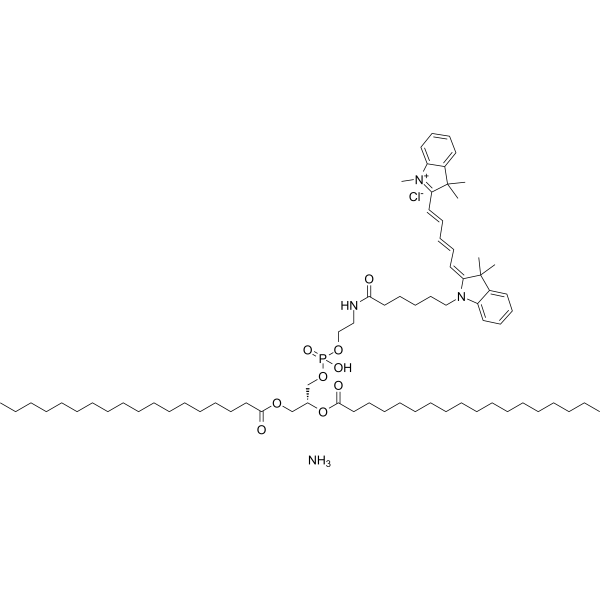
DPhPC-d78 is the deuterium labeled DPhPC (HY-143202). DPhPC is a phospholipid compound characterized by high mechanical and chemical stability, broad temperature phase stability, and high electrical resistance. DPhPC readily forms unilamellar vesicles and solid-supported bilayers. DPhPC is commonly used as a component of nanoliposomal drug carriers or as a model membrane material for studies on membrane proteins/ion channels .
|
-

- HY-B1248R
-
|
|
Reference Standards
Antibiotic
Bacterial
Necroptosis
Apoptosis
|
Infection
|
|
Chlorhexidine (Standard) is the analytical standard of Chlorhexidine (HY-B1248). This product is intended for research and analytical applications. Chlorhexidine is a orally active cationic antimicrobial agent that targets microbial cell membranes. Chlorhexidine binds to cell membrane phospholipids non-specifically, destroys membrane structure and induces leakage of cell contents. Chlorhexidine has broad-spectrum bactericidal activity against both Gram-positive and Gram-negative bacteria. Chlorhexidine can interfere with membrane permeability, cause protein precipitation and energy metabolism disorders, such as rapid inhibition of microbial growth and induction of cell death (necrosis or apoptosis) .
|
-

- HY-B1145R
-
|
|
Reference Standards
Antibiotic
Bacterial
Necroptosis
Apoptosis
|
Infection
|
|
Chlorhexidine dihydrochloride (Standard) is the analytical standard of Chlorhexidine dihydrochloride (HY-B1145). This product is intended for research and analytical applications. Chlorhexidine dihydrochloride is a orally active cationic antimicrobial agent that targets microbial cell membranes. Chlorhexidine dihydrochloride binds to cell membrane phospholipids non-specifically, destroys membrane structure and induces leakage of cell contents. Chlorhexidine dihydrochloride has broad-spectrum bactericidal activity against both Gram-positive and Gram-negative bacteria. Chlorhexidine dihydrochloride can interfere with membrane permeability, cause protein precipitation and energy metabolism disorders, such as rapid inhibition of microbial growth and induction of cell death (necrosis or apoptosis) .
|
-

- HY-W013699R
-
|
|
Reference Standards
Antibiotic
Bacterial
Necroptosis
Apoptosis
|
Infection
|
|
Chlorhexidine diacetate (Standard) is the analytical standard of Chlorhexidine diacetate (HY-W013699). This product is intended for research and analytical applications. Chlorhexidine diacetate is a orally active cationic antimicrobial agent that targets microbial cell membranes. Chlorhexidine diacetate binds to cell membrane phospholipids non-specifically, destroys membrane structure and induces leakage of cell contents. Chlorhexidine diacetate has broad-spectrum bactericidal activity against both Gram-positive and Gram-negative bacteria. Chlorhexidine diacetate can interfere with membrane permeability, cause protein precipitation and energy metabolism disorders, such as rapid inhibition of microbial growth and induction of cell death (necrosis or apoptosis) .
|
-

- HY-W738281
-
|
|
Isotope-Labeled Compounds
Antibiotic
Bacterial
Necroptosis
Apoptosis
|
Infection
|
|
Chlorhexidine-d8 is deuterium-labeled Chlorhexidine (HY-B1248) . Chlorhexidine is a orally active cationic antimicrobial agent that targets microbial cell membranes. Chlorhexidine binds to cell membrane phospholipids non-specifically, destroys membrane structure and induces leakage of cell contents. Chlorhexidine has broad-spectrum bactericidal activity against both Gram-positive and Gram-negative bacteria. Chlorhexidine can interfere with membrane permeability, cause protein precipitation and energy metabolism disorders, such as rapid inhibition of microbial growth and induction of cell death (necrosis or apoptosis) .
|
-

- HY-142980
-
|
Dioleoylphosphatidylglycerol
|
Liposome
|
Inflammation/Immunology
|
|
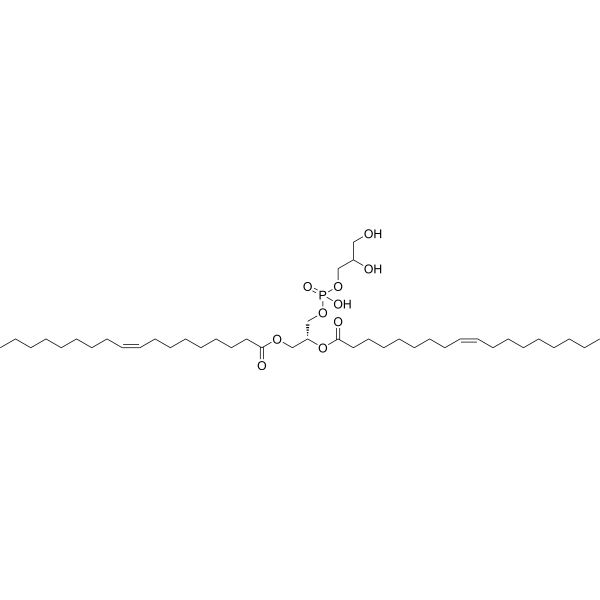
DOPG (Dioleoylphosphatidylglycerol) is a negatively charged phosphatidylglycerol phospholipid. DOPG is abundant in prokaryotic cell membranes and mitochondria, and has a low phase transition temperature and a tendency to form stable vesicles. DOPG inhibits the production of inflammatory mediators in macrophages in response to heat shock protein B4 (HSPB4)-activated toll-like receptor 2 (TLR2). DOPG is applicable to studies of membrane biology, drug-membrane interactions (especially in systems targeting negatively charged membranes), construction of drug delivery carriers, as well as research on sterile corneal inflammation and wound healing promotion .
|
-
- HY-B0608
-
|
|
Environmental Pollutants
Antibiotic
Bacterial
Necroptosis
Apoptosis
|
Infection
|
|
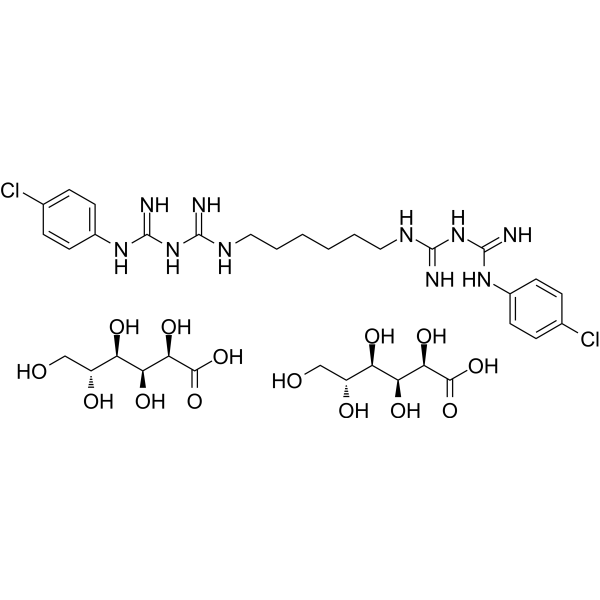
Chlorhexidine digluconate (20% in water) is a orally active cationic antimicrobial agent that targets microbial cell membranes. Chlorhexidine digluconate (20% in water) binds to cell membrane phospholipids non-specifically, destroys membrane structure and induces leakage of cell contents. Chlorhexidine digluconate (20% in water) has broad-spectrum bactericidal activity against both Gram-positive and Gram-negative bacteria. Chlorhexidine digluconate (20% in water) can interfere with membrane permeability, cause protein precipitation and energy metabolism disorders, such as rapid inhibition of microbial growth and induction of cell death (necrosis or apoptosis) .
|
-
- HY-183174B
-
|
|
Biochemical Assay Reagents
|
Others
|
|
DSG-PEG3400-Galactose is a conjugate composed of DSG, a PEG chain, and terminal galactose. DSG-PEG3400-Galactose combines the membrane compatibility of phospholipids with the targeted recognition capabilities of galactose, making it suitable for research in biomaterial construction and drug delivery.
|
-

- HY-183174A
-
|
|
Biochemical Assay Reagents
|
Others
|
|
DSG-PEG1000-Galactose is a conjugate composed of DSG, a PEG chain, and terminal galactose. DSG-PEG1000-Galactose combines the membrane compatibility of phospholipids with the targeted recognition capabilities of galactose, making it suitable for research in biomaterial construction and drug delivery.
|
-

- HY-182947C
-
|
|
Biochemical Assay Reagents
|
Others
|
|
DSG-PEG5000-Mannose is a conjugate composed of DSG, a PEG chain, and terminal mannose. DSG-PEG5000-Mannose combines the membrane compatibility of phospholipids with the targeted recognition capabilities of mannose, making it suitable for research in biomaterial construction and drug delivery.
|
-

- HY-165473
-
|
|
Calcium Channel
|
Cancer
|
|
Hexadecylphosphoserine is a phospholipid molecule that contains a long-chain alkyl (hexadecyl) and a phosphoserine group, giving it a high affinity for the cell membrane. Hexadecylphosphoserine can exert antitumor activity by modulating [Ca ++]i and its related signaling pathways, making it useful for research in the field of breast cancer .
|
-

- HY-182947A
-
|
|
Biochemical Assay Reagents
|
Others
|
|
DSG-PEG2000-Mannose is a conjugate composed of DSG, a PEG chain, and terminal mannose. DSG-PEG2000-Mannose combines the membrane compatibility of phospholipids with the targeted recognition capabilities of mannose, making it suitable for research in biomaterial construction and drug delivery.
|
-

- HY-183174C
-
|
|
Biochemical Assay Reagents
|
Others
|
|
DSG-PEG5000-Galactose is a conjugate composed of DSG, a PEG chain, and terminal galactose. DSG-PEG5000-Galactose combines the membrane compatibility of phospholipids with the targeted recognition capabilities of galactose, making it suitable for research in biomaterial construction and drug delivery.
|
-

- HY-168374D
-
|
|
Biochemical Assay Reagents
|
Others
|
|
DSPE-PEG10000-Mannose is a conjugate composed of DSPE, a PEG chain, and terminal mannose. DSPE-PEG10000-Mannose combines the membrane compatibility of phospholipids with the targeted recognition capabilities of mannose, making it suitable for research in biomaterial construction and drug delivery.
|
-

- HY-183174D
-
|
|
Biochemical Assay Reagents
|
Others
|
|
DSG-PEG10000-Galactose is a conjugate composed of DSG, a PEG chain, and terminal galactose. DSG-PEG10000-Galactose combines the membrane compatibility of phospholipids with the targeted recognition capabilities of galactose, making it suitable for research in biomaterial construction and drug delivery.
|
-

- HY-182947D
-
|
|
Biochemical Assay Reagents
|
Others
|
|
DSG-PEG10000-Mannose is a conjugate composed of DSG, a PEG chain, and terminal mannose. DSG-PEG10000-Mannose combines the membrane compatibility of phospholipids with the targeted recognition capabilities of mannose, making it suitable for research in biomaterial construction and drug delivery.
|
-

- HY-182947B
-
|
|
Biochemical Assay Reagents
|
Others
|
|
DSG-PEG3400-Mannose is a conjugate composed of DSG, a PEG chain, and terminal mannose. DSG-PEG3400-Mannose combines the membrane compatibility of phospholipids with the targeted recognition capabilities of mannose, making it suitable for research in biomaterial construction and drug delivery.
|
-

- HY-W040185
-
|
1,2-DPPA sodium; PA(14:0/14:0) sodium; 1,2-Dimyristoyl-sn-glycero-3-phosphate sodium
|
Liposome
|
Metabolic Disease
|
|
1,2-Dimyristoyl-sn-glycero-3-phosphate monosodium is a phospholipid containing the long-chain (14:0) myristic acid inserted at the sn-1 and sn-2 positions. It can be used in the generation of micelles, liposomes, and other types of artificial membranes.
|
-

- HY-182947
-
|
|
Biochemical Assay Reagents
|
Others
|
|
DSG-PEG1000-Mannose is a conjugate composed of DSG, a PEG chain, and terminal mannose. DSG-PEG1000-Mannose combines the membrane compatibility of phospholipids with the targeted recognition capabilities of mannose, making it suitable for research in biomaterial construction and drug delivery.
|
-

- HY-168374C
-
|
|
Biochemical Assay Reagents
|
Others
|
|
DSPE-PEG3400-Mannose is a conjugate composed of DSPE, a PEG chain, and terminal mannose. DSPE-PEG3400-Mannose combines the membrane compatibility of phospholipids with the targeted recognition capabilities of mannose, making it suitable for research in biomaterial construction and drug delivery.
|
-

- HY-183174
-
|
|
Biochemical Assay Reagents
|
Others
|
|
DSG-PEG1000-Galactose is a conjugate composed of DSG, a PEG chain, and terminal galactose. DSG-PEG1000-Galactose combines the membrane compatibility of phospholipids with the targeted recognition capabilities of galactose, making it suitable for research in biomaterial construction and drug delivery.
|
-

- HY-168374B
-
|
|
Biochemical Assay Reagents
|
Others
|
|
DSPE-PEG5000-Mannose is a conjugate composed of DSPE, a PEG chain, and terminal mannose. DSPE-PEG5000-Mannose combines the membrane compatibility of phospholipids with the targeted recognition capabilities of mannose, making it suitable for research in biomaterial construction and drug delivery.
|
-

- HY-P5712
-
|
Gramicidin soviet
|
Antibiotic
Bacterial
Na+/K+ ATPase
|
Infection
|
|
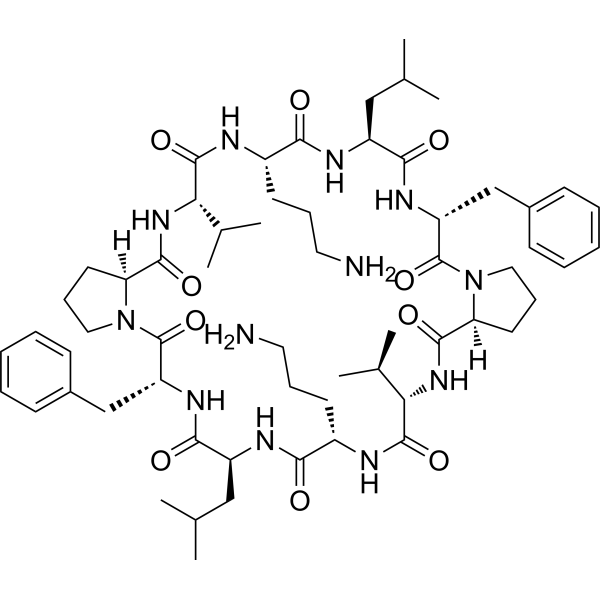
Gramicidin S (Gramicidin soviet) is a cationic cyclic peptide antibiotic that selectively targets bacterial cell membranes and has anticancer activity. Gramicidin S also exerts antibacterial activity by destroying membrane integrity and interfering with membrane protein function. Gramicidin S inserts into the phospholipid bilayer through hydrophobic amino acid residues, specifically binds to negatively charged membrane lipids and disrupts membrane structure, thereby inhibiting cell division and cell wall synthesis, and ultimately causing bacterial death. Gramicidin S also inhibits ion channels, with IC50s of 41 μM, 24 μM, and 3 μM for Na +/K +-ATPase, tobacco leaf plasma membrane Mg 2+/K +-ATPase, and rat heart plasma membrane Ca 2+-ATPase, respectively .
|
-
- HY-148123
-
|
|
Biochemical Assay Reagents
|
Neurological Disease
|
|
Glycerophospholipids and cephalins are a class of phospholipid compounds and important components of neural membranes. Glycerophospholipids and cephalins are hydrolysis substrates of phospholipase (such as PLA2, PLC, and PLD). After complete hydrolysis, they produce 1 mol of glycerol, phosphate, ethanolamine, and 2 mol of fatty acids, respectively. Glycerophospholipids and cephalins can maintain membrane structure, fluidity, and ion permeability, and serve as precursors of second messengers such as arachidonic acid and diacylglycerol. Glycerophospholipids and cephalins can regulate signal transduction, cell apoptosis, and membrane transport, and are used in the study of neurodegenerative diseases (such as Alzheimer's disease) .
|
-
- HY-203233
-
|
|
Fluorescent Dye
|
Others
|
|
Rhodamine-DHPE is a fluorescently labeled phosphatidylethanolamine lipid that labels phospholipid bilayers. Rhodamine-DHPE serves as a fluorescence quenching substrate and membrane stain. The fluorescence lifetime of Rhodamine-DHPE decreases significantly in the presence of Cu 2+-PS complexes. Rhodamine-DHPE effectively stains the membranes of human red blood cells and mouse fibroblasts, and supports lifetime-resolved imaging via pump-probe fluorescence microscopy .
|
-

- HY-N0729R
-
|
|
Reference Standards
Endogenous Metabolite
|
Cardiovascular Disease
Metabolic Disease
Cancer
|
|
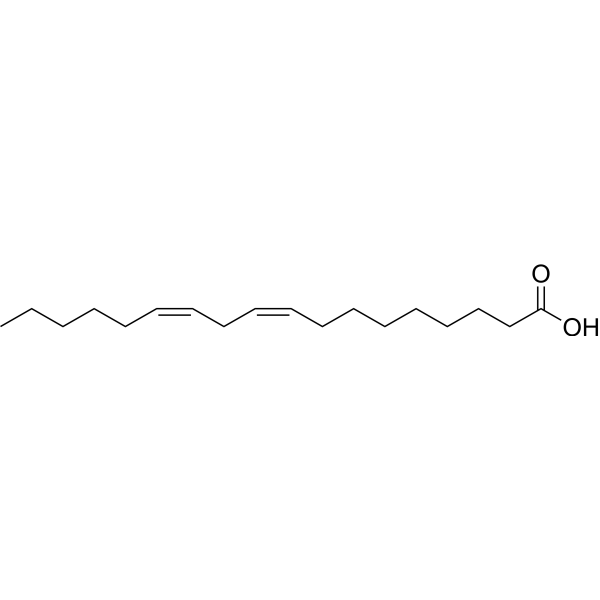
Linoleic acid (Standard) is the analytical standard of Linoleic acid (HY-N0729). This product is intended for research and analytical applications. Linoleic acid is a common polyunsaturated (PUFA) found in plant-based oils, nuts and seeds. Linoleic acid is a part of membrane phospholipids, and functions as a structural component to maintain a certain level of membrane fluidity of the transdermal water barrier of the epidermis. Linoleic acid induces red blood cells and hemoglobin damage via oxidative mechanism .
|
-
- HY-182903D
-
|
|
Biochemical Assay Reagents
|
Others
|
|
DMG-PEG10000-Mannose is a conjugate composed of dimyristoylglycerol (DMG), a PEG chain, and terminal mannose. DMG-PEG10000-Mannose combines the membrane compatibility of phospholipids with the targeted recognition capabilities of mannose, making it suitable for research in biomaterial construction and drug delivery.
|
-

- HY-183171
-
|
|
Biochemical Assay Reagents
|
Others
|
|
DSG-PEG1000-CHO is a conjugate composed of DSG, a PEG chain, and a terminal aldehyde group (-CHO). DSG-PEG1000-CHO combines the membrane compatibility of phospholipids with the flexibility of hydroxyl modification, making it suitable for research in biomaterial construction and drug delivery.
|
-

- HY-182903C
-
|
|
Biochemical Assay Reagents
|
Others
|
|
DMG-PEG5000-Mannose is a conjugate composed of dimyristoylglycerol (DMG), a PEG chain, and terminal mannose. DMG-PEG5000-Mannose combines the membrane compatibility of phospholipids with the targeted recognition capabilities of mannose, making it suitable for research in biomaterial construction and drug delivery.
|
-

- HY-183171B
-
|
|
Biochemical Assay Reagents
|
Others
|
|
DSG-PEG5000-CHO is a conjugate composed of DSG, a PEG chain, and a terminal aldehyde group (-CHO). DSG-PEG5000-CHO combines the membrane compatibility of phospholipids with the flexibility of hydroxyl modification, making it suitable for research in biomaterial construction and drug delivery.
|
-

- HY-183170A
-
|
|
Biochemical Assay Reagents
|
Others
|
|
DSG-PEG2000-Biotin is a conjugate composed of DSG, PEG chains, and biotin. DSG-PEG2000-Biotin combines the membrane compatibility of phospholipids with the high affinity of biotin for avidin/streptavidin, enabling applications such as targeted drug delivery systems and nanoparticle modification.
|
-

- HY-183170C
-
|
|
Biochemical Assay Reagents
|
Others
|
|
DSG-PEG5000-Biotin is a conjugate composed of DSG, PEG chains, and biotin. DSG-PEG5000-Biotin combines the membrane compatibility of phospholipids with the high affinity of biotin for avidin/streptavidin, enabling applications such as targeted drug delivery systems and nanoparticle modification.
|
-

- HY-183170
-
|
|
Biochemical Assay Reagents
|
Others
|
|
DSG-PEG1000-Biotin is a conjugate composed of DSG, PEG chains, and biotin. DSG-PEG1000-Biotin combines the membrane compatibility of phospholipids with the high affinity of biotin for avidin/streptavidin, enabling applications such as targeted drug delivery systems and nanoparticle modification.
|
-

- HY-183170B
-
|
|
Biochemical Assay Reagents
|
Others
|
|
DSG-PEG3400-Biotin is a conjugate composed of DSG, PEG chains, and biotin. DSG-PEG3400-Biotin combines the membrane compatibility of phospholipids with the high affinity of biotin for avidin/streptavidin, enabling applications such as targeted drug delivery systems and nanoparticle modification.
|
-

- HY-183171C
-
|
|
Biochemical Assay Reagents
|
Others
|
|
DSG-PEG3400-CHO is a conjugate composed of DSG, a PEG chain, and a terminal aldehyde group (-CHO). DSG-PEG3400-CHO combines the membrane compatibility of phospholipids with the flexibility of hydroxyl modification, making it suitable for research in biomaterial construction and drug delivery.
|
-

- HY-182903A
-
|
|
Biochemical Assay Reagents
|
Others
|
|
DMG-PEG2000-Mannose is a conjugate composed of dimyristoylglycerol (DMG), a PEG chain, and terminal mannose. DMG-PEG2000-Mannose combines the membrane compatibility of phospholipids with the targeted recognition capabilities of mannose, making it suitable for research in biomaterial construction and drug delivery.
|
-

- HY-183171A
-
|
|
Biochemical Assay Reagents
|
Others
|
|
DSG-PEG2000-CHO is a conjugate composed of DSG, a PEG chain, and a terminal aldehyde group (-CHO). DSG-PEG2000-CHO combines the membrane compatibility of phospholipids with the flexibility of hydroxyl modification, making it suitable for research in biomaterial construction and drug delivery.
|
-

- HY-182903
-
|
|
Biochemical Assay Reagents
|
Others
|
|
DMG-PEG1000-Mannose is a conjugate composed of dimyristoylglycerol (DMG), a PEG chain, and terminal mannose. DMG-PEG1000-Mannose combines the membrane compatibility of phospholipids with the targeted recognition capabilities of mannose, making it suitable for research in biomaterial construction and drug delivery.
|
-

- HY-183171D
-
|
|
Biochemical Assay Reagents
|
Others
|
|
DSG-PEG10000-CHO is a conjugate composed of DSG, a PEG chain, and a terminal aldehyde group (-CHO). DSG-PEG10000-CHO combines the membrane compatibility of phospholipids with the flexibility of hydroxyl modification, making it suitable for research in biomaterial construction and drug delivery.
|
-

- HY-182903B
-
|
|
Biochemical Assay Reagents
|
Others
|
|
DMG-PEG3400-Mannose is a conjugate composed of dimyristoylglycerol (DMG), a PEG chain, and terminal mannose. DMG-PEG3400-Mannose combines the membrane compatibility of phospholipids with the targeted recognition capabilities of mannose, making it suitable for research in biomaterial construction and drug delivery.
|
-

- HY-179542
-
|
|
Drug Derivative
|
Others
|
|
PtdIns-(4)-P1-(1,2-dihexanoyl) sodium is a synthetic phosphatidylinositol (PtdIns) derivative. PtdIns-(4)-P1-(1,2-dihexanoyl) sodium can be used as a membrane phospholipid model in in vitro enzymology studies .
|
-

- HY-113209S1
-
|
8-iso-PGF2α-d9
|
Endogenous Metabolite
|
Others
|
|
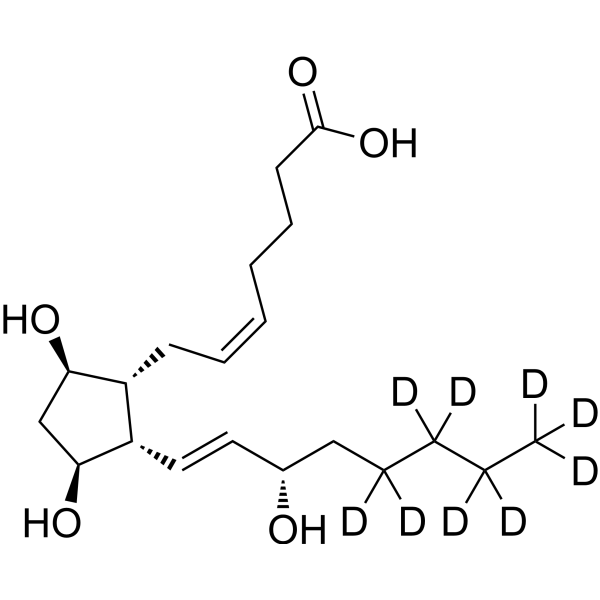
8-iso Prostaglandin F2α-d9 is the deuterium labeled 8-Isoprostaglandin F2α. 8-Isoprostaglandin F2α is an isoprostane produced by the non-enzymatic peroxidation of arachidonic acid in membrane phospholipids. 8-Isoprostaglandin F2α is present in human plasma in two distinct forms - esterified in phospholipids and as the free acid. 8-Isoprostaglandin F2α is a weak TP receptor agonist in vascular smooth muscle.
|
-
- HY-113209R
-
|
8-iso-PGF2α (Standard)
|
Reference Standards
Endogenous Metabolite
|
Others
|
|
8-Isoprostaglandin F2α (Standard) is the analytical standard of 8-Isoprostaglandin F2α. This product is intended for research and analytical applications. 8-Isoprostaglandin F2α is an isoprostane produced by the non-enzymatic peroxidation of arachidonic acid in membrane phospholipids. 8-Isoprostaglandin F2α is present in human plasma in two distinct forms - esterified in phospholipids and as the free acid. 8-Isoprostaglandin F2α is a weak TP receptor agonist in vascular smooth muscle.
|
-

- HY-113209S2
-
|
8-iso-PGF2α-13C5
|
Endogenous Metabolite
Isotope-Labeled Compounds
|
Others
|
|
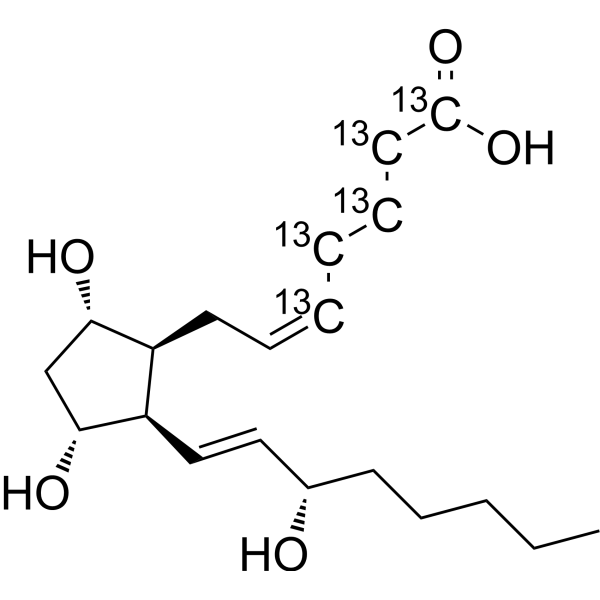
8-Isoprostaglandin F2α- 13C5 is 13C labeled 8-Isoprostaglandin F2α (HY-113209). 8-Isoprostaglandin F2α is an isoprostane produced by the non-enzymatic peroxidation of arachidonic acid in membrane phospholipids. 8-Isoprostaglandin F2α is present in human plasma in two distinct forms - esterified in phospholipids and as the free acid. 8-Isoprostaglandin F2α is a weak TP receptor agonist in vascular smooth muscle.
|
-
- HY-141636
-
|
1-Palmitoyl-2-arachidonoyl-sn-glycero-3-phosphocholine; PAPC; PC(16:0/20:4)
|
Endogenous Metabolite
Biochemical Assay Reagents
|
Cardiovascular Disease
|
|
1-Palmitoyl-2-arachidonoyl-sn-glycero-3-PC (PAPC) is a phospholipid containing palmitic acid (16:0) and arachidonic acid (20:4) at the sn-1 and sn-2 positions, respectively, that is found in biological membranes. PAPC is oxidized in vivo, and its oxidation products are involved in chronic inflammation and vascular disease. PAPC has been used to study signaling of oxidized phospholipids. Levels of PAPC are decreased in isolated human multiple myeloma cells.
|
-

- HY-P10644
-
|
|
Fluorescent Dye
|
Cancer
|
|
CPP9 is a small, amphipathic, cyclic cell penetrating peptide (CPP). CPPs bind directly to the plasma membrane phospholipids and enter mammalian cells via endocytosis, followed by efficient release from the endosome. CPP9 can be used for intracellular delivery of therapeutic agents and chemical probes .
|
-

- HY-183196
-
|
|
Biochemical Assay Reagents
|
Others
|
|
DMG-PEG1000-Galactose is a conjugate composed of dimyristic glycerol (DMG), a PEG chain, and terminal galactose. DMG-PEG1000-Galactose combines the membrane compatibility of phospholipids with the targeted recognition capabilities of galactose, making it suitable for research in biomaterial construction and drug delivery.
|
-

- HY-157618
-
|
|
Bacterial
|
Others
|
|
18:0-18:1 PG sodium is a hydrogenated phospholipid that contributes to the stability of photosystem I and II protein complexes and plays a role in bacterial defense mechanisms, featuring two extra methylene groups in its saturated sn-1 chain, and is present in the thylakoid membranes of higher plants and cyanobacteria.
|
-

- HY-183196D
-
|
|
Biochemical Assay Reagents
|
Others
|
|
DMG-PEG10000-Galactose is a conjugate composed of dimyristic glycerol (DMG), a PEG chain, and terminal galactose. DMG-PEG10000-Galactose combines the membrane compatibility of phospholipids with the targeted recognition capabilities of galactose, making it suitable for research in biomaterial construction and drug delivery.
|
-

- HY-183196C
-
|
|
Biochemical Assay Reagents
|
Others
|
|
DMG-PEG5000-Galactose is a conjugate composed of dimyristic glycerol (DMG), a PEG chain, and terminal galactose. DMG-PEG5000-Galactose combines the membrane compatibility of phospholipids with the targeted recognition capabilities of galactose, making it suitable for research in biomaterial construction and drug delivery.
|
-

- HY-183196A
-
|
|
Biochemical Assay Reagents
|
Others
|
|
DMG-PEG2000-Galactose is a conjugate composed of dimyristic glycerol (DMG), a PEG chain, and terminal galactose. DMG-PEG2000-Galactose combines the membrane compatibility of phospholipids with the targeted recognition capabilities of galactose, making it suitable for research in biomaterial construction and drug delivery.
|
-

- HY-N5034R
-
|
Monoaminoethyl phosphate (Standard); NSC 254167 (Standard); O-Phosphoethanolamine (Standard)
|
Reference Standards
Endogenous Metabolite
|
Metabolic Disease
Cancer
|
|
Phosphorylethanolamine (Standard) is the analytical standard of Phosphorylethanolamine. This product is intended for research and analytical applications. Phosphorylethanolamine (Monoaminoethyl phosphate) is present in most animal tissues and is also present in various human extracranial tumors. Phosphorylethanolamine is considered as the intermediate product of phospholipid metabolism. Phosphorylethanolamine is essential for the formation and maintenance of the cell membrane .
|
-
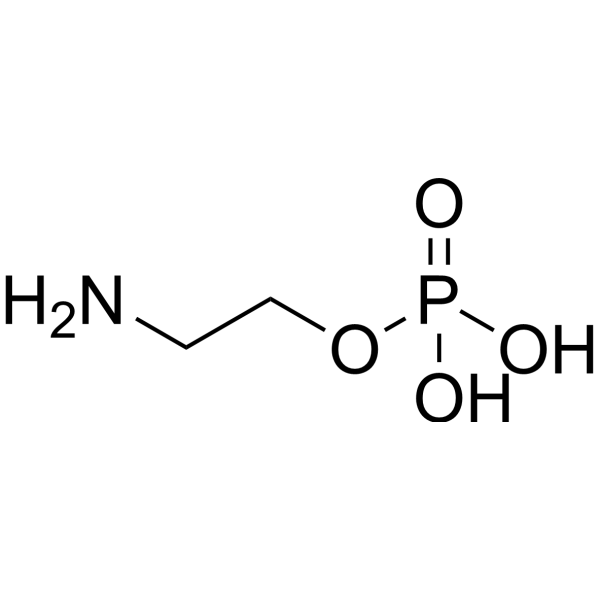
- HY-165473A
-
|
|
Calcium Channel
|
Cancer
|
|
Hexadecylphosphoserine TFA is a phospholipid molecule that contains a long-chain alkyl (hexadecyl) and a phosphoserine group, giving it a high affinity for the cell membrane. Hexadecylphosphoserine TFA can exert antitumor activity by modulating [Ca ++]i and its related signaling pathways, making it useful for research in the field of breast cancer .
|
-

- HY-P2624
-
|
|
PAK
|
Metabolic Disease
|
|
st-Ht31 is a membrane-permeable peptide inhibitor of protein kinase A (PKA) anchoring. st-Ht31 induces robust cholesterol/phospholipid efflux. st-Ht31 completely reverses foam cell formation and restores the metabolic health of macrophage .
|
-
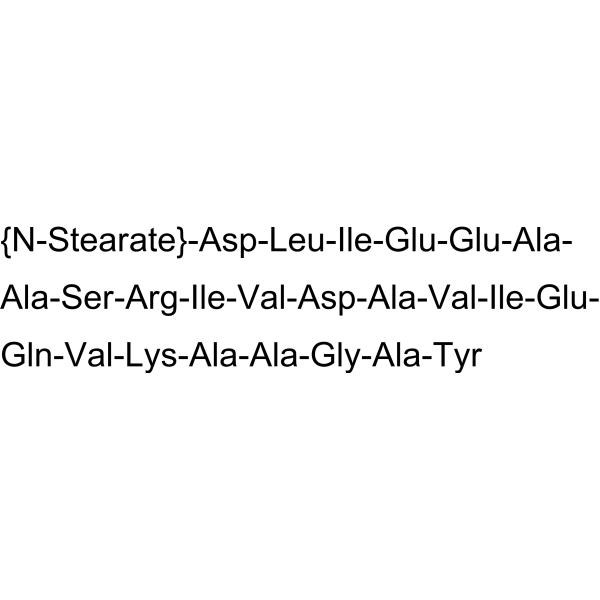
- HY-130671A
-
|
(R)-1,2-Dipalmitoyl-sn-glycero-3-phosphoglycerol sodium
|
Liposome
|
Others
|
|
L-DPPG ((R)-1,2-Dipalmitoyl-sn-glycero-3-phosphoglycerol sodium) is a phospholipid targeting biological membranes. L-DPPG interacts with lipid bilayers through hydrophobic and electrostatic interactions. L-DPPG is used in research on drug delivery systems .
|
-

- HY-165180
-
|
Psychosine 3′-O-sulfate sodium; Psychosine 3′-sulfate sodium
|
Biochemical Assay Reagents
Factor Xa
|
Metabolic Disease
|
|
Lyso-sulfatide (bovine) sodium is a phospholipid component derived from sphingolipid catabolism and a potent factor Xa inhibitor and anticoagulant. Lyso-sulfatide (bovine) sodium binds directly to factor Xa and inhibits prothrombin activation mediated by the prothrombinase complex, thereby prolonging factor Xa-induced plasma clotting time and suppressing thrombin generation. Lyso-sulfatide (bovine) sodium serves as a reliable lipid membrane mimic for studying cell membrane structure, function, and molecular interactions .
|
-

- HY-166257
-
|
Psychosine 3′-O-sulfate; Psychosine 3′-sulfate
|
Biochemical Assay Reagents
Factor Xa
|
Metabolic Disease
|
|
Lyso-sulfatide (bovine) is a phospholipid component derived from sphingolipid catabolism and a potent factor Xa inhibitor and anticoagulant. Lyso-sulfatide (bovine) binds directly to factor Xa and inhibits prothrombin activation mediated by the prothrombinase complex, thereby prolonging factor Xa-induced plasma clotting time and suppressing thrombin generation. Lyso-sulfatide (bovine) serves as a reliable lipid membrane mimic for studying cell membrane structure, function, and molecular interactions .
|
-

- HY-183172A
-
|
|
Biochemical Assay Reagents
|
Others
|
|
DSG-PEG2000-Alkyne is a conjugate composed of DSG, a PEG chain, and a terminal alkyne group. DSG-PEG2000-Alkyne combines the membrane compatibility of phospholipids with the high reactivity of the alkyne group in click chemistry, making it suitable for research in biomaterial construction and drug delivery.
|
-

- HY-183172B
-
|
|
Biochemical Assay Reagents
|
Others
|
|
DSG-PEG3400-Alkyne is a conjugate composed of DSG, a PEG chain, and a terminal alkyne group. DSG-PEG3400-Alkyne combines the membrane compatibility of phospholipids with the high reactivity of the alkyne group in click chemistry, making it suitable for research in biomaterial construction and drug delivery.
|
-

- HY-183398B
-
|
|
Biochemical Assay Reagents
|
Others
|
|
DMG-PEG3400-CHO is a conjugate composed of dimyristic glycerol (DMG), a PEG chain, and a terminal aldehyde group (-CHO). DMG-PEG3400-CHO combines the membrane compatibility of phospholipids with the flexibility of hydroxyl modification, making it suitable for research in biomaterial construction and drug delivery.
|
-

- HY-183132B
-
|
|
Biochemical Assay Reagents
|
Others
|
|
DSG-PEG3400-OH is a conjugate composed of dimyristic glycerol (DMG), a PEG chain, and terminal hydroxyl groups (-OH). DSG-PEG3400-OH combines the membrane compatibility of phospholipids with the flexibility of hydroxyl modification, making it suitable for research in biomaterial construction and drug delivery.
|
-

- HY-183132D
-
|
|
Biochemical Assay Reagents
|
Others
|
|
DSG-PEG10000-OH is a conjugate composed of dimyristic glycerol (DMG), a PEG chain, and terminal hydroxyl groups (-OH). DSG-PEG10000-OH combines the membrane compatibility of phospholipids with the flexibility of hydroxyl modification, making it suitable for research in biomaterial construction and drug delivery.
|
-

- HY-183172D
-
|
|
Biochemical Assay Reagents
|
Others
|
|
DSG-PEG10000-Alkyne is a conjugate composed of DSG, a PEG chain, and a terminal alkyne group. DSG-PEG10000-Alkyne combines the membrane compatibility of phospholipids with the high reactivity of the alkyne group in click chemistry, making it suitable for research in biomaterial construction and drug delivery.
|
-

- HY-P2733B
-
|
GPO, Aerococcus viridans
|
Endogenous Metabolite
|
Metabolic Disease
|
|
Glycerol-3-phosphate oxidase, Aerococcus viridans (GPO, Aerococcus viridans) is a key intermediate in glycerol metabolism. Glycerol-3-phosphate oxidase is the skeleton of phospholipids in membrane lipids, and also a substrate of respiratory chain. Glycerol-3-phosphate oxidase produces electrons through oxidation .
|
-

- HY-183398D
-
|
|
Biochemical Assay Reagents
|
Others
|
|
DMG-PEG10000-CHO is a conjugate composed of dimyristic glycerol (DMG), a PEG chain, and a terminal aldehyde group (-CHO). DMG-PEG10000-CHO combines the membrane compatibility of phospholipids with the flexibility of hydroxyl modification, making it suitable for research in biomaterial construction and drug delivery.
|
-

- HY-183398C
-
|
|
Biochemical Assay Reagents
|
Others
|
|
DMG-PEG5000-CHO is a conjugate composed of dimyristic glycerol (DMG), a PEG chain, and a terminal aldehyde group (-CHO). DMG-PEG5000-CHO combines the membrane compatibility of phospholipids with the flexibility of hydroxyl modification, making it suitable for research in biomaterial construction and drug delivery.
|
-

- HY-179541
-
|
|
Drug Derivative
|
Others
|
|
PtdIns-(5)-P1-(1,2-dioctanoyl) ammonium is a synthetic phosphatidylinositol (PtdIns) derivative. PtdIns-(5)-P1-(1,2-dioctanoyl) ammonium can be used as a membrane phospholipid model in in vitro enzymology studies .
|
-

- HY-183172C
-
|
|
Biochemical Assay Reagents
|
Others
|
|
DSG-PEG5000-Alkyne is a conjugate composed of DSG, a PEG chain, and a terminal alkyne group. DSG-PEG5000-Alkyne combines the membrane compatibility of phospholipids with the high reactivity of the alkyne group in click chemistry, making it suitable for research in biomaterial construction and drug delivery.
|
-

- HY-183398
-
|
|
Biochemical Assay Reagents
|
Others
|
|
DMG-PEG1000-CHO is a conjugate composed of dimyristic glycerol (DMG), a PEG chain, and a terminal aldehyde group (-CHO). DMG-PEG1000-CHO combines the membrane compatibility of phospholipids with the flexibility of hydroxyl modification, making it suitable for research in biomaterial construction and drug delivery.
|
-

- HY-113925
-
|
1,2-DLPA Sodium; (2R)-2,3-bis(dodecanoyloxy)propyl hydrogen phosphate sodium
|
Liposome
|
Metabolic Disease
|
|
1,2-Dilauroyl-sn-glycero-3-phosphate (1,2-DLPA) sodium is a phospholipid containing the medium-chain (12:0) lauric acid inserted at the sn-1 and sn-2 positions. It can be used in the generation of micelles, liposomes, and other types of artificial membranes.
|
-

- HY-183132
-
|
|
Biochemical Assay Reagents
|
Others
|
|
DSG-PEG1000-OH is a conjugate composed of dimyristic glycerol (DMG), a PEG chain, and terminal hydroxyl groups (-OH). DSG-PEG1000-OH combines the membrane compatibility of phospholipids with the flexibility of hydroxyl modification, making it suitable for research in biomaterial construction and drug delivery.
|
-

- HY-183132C
-
|
|
Biochemical Assay Reagents
|
Others
|
|
DSG-PEG1000-OH is a conjugate composed of dimyristic glycerol (DMG), a PEG chain, and terminal hydroxyl groups (-OH). DMG-PEG1000-Glucose combines the membrane compatibility of phospholipids with the flexibility of hydroxyl modification, making it suitable for research in biomaterial construction and drug delivery.
|
-

- HY-183172
-
|
|
Biochemical Assay Reagents
|
Others
|
|
DSG-PEG1000-Alkyne is a conjugate composed of DSG, a PEG chain, and a terminal alkyne group. DSG-PEG1000-Alkyne combines the membrane compatibility of phospholipids with the high reactivity of the alkyne group in click chemistry, making it suitable for research in biomaterial construction and drug delivery.
|
-

- HY-183132A
-
|
|
Biochemical Assay Reagents
|
Others
|
|
DSG-PEG2000-OH is a conjugate composed of dimyristic glycerol (DMG), a PEG chain, and terminal hydroxyl groups (-OH). DSG-PEG2000-OH combines the membrane compatibility of phospholipids with the flexibility of hydroxyl modification, making it suitable for research in biomaterial construction and drug delivery.
|
-

- HY-183398A
-
|
|
Biochemical Assay Reagents
|
Others
|
|
DMG-PEG2000-CHO is a conjugate composed of dimyristic glycerol (DMG), a PEG chain, and a terminal aldehyde group (-CHO). DMG-PEG2000-CHO combines the membrane compatibility of phospholipids with the flexibility of hydroxyl modification, making it suitable for research in biomaterial construction and drug delivery.
|
-

- HY-103300
-
|
|
Endogenous Metabolite
|
Infection
|
|
NPE-caged-proton is a reagent that releases protons under UV light and has the activity of activating the fusion protein GP64 under weak acidic conditions. NPE-caged-proton can promote the binding of enveloped viruses to liposome membranes with acidic phospholipids in an environment of pH 4.0 to 5.5, thereby initiating membrane fusion. The ultraviolet unblocking effect of NPE-caged-proton can lower the environmental pH, thereby triggering the process of viral membrane fusion. When studying the interaction between viruses and cell membranes, NPE-caged-proton provides a valuable tool for revealing the subtle behaviors of viruses in different chemical and biochemical environments .
|
-

- HY-P10035
-
|
|
Amyloid-β
|
Neurological Disease
|
|
β Amyloid(28-35) human is a β-amyloid peptide (Abeta), a lipid-induced amyloid core fragment. β Amyloid oligomers are neurotoxic, and β Amyloid(28-35) human can interact with neuronal membranes, regulate secondary structure and neurotoxicity, and cause Alzheimer's disease. β Amyloid(28-35) human has anisotropic effects on the acidic phospholipid DPH, resulting in enhanced internal fluidity of lipid membrane bilayers .
|
-
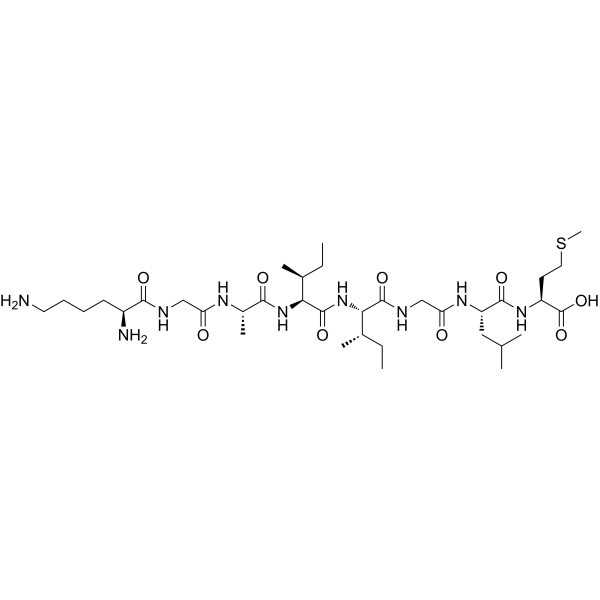
- HY-164160
-
|
DPPS
|
Biochemical Assay Reagents
|
|
|
1,2-Dipalmitoyl-rac-glycero-3-phospho-L-serine (DPPS) is a phospholipid compound with good membrane-forming ability. 1,2-Dipalmitoyl-rac-glycero-3-phospho-L-serine can form stable and well-defined bilayers, which are suitable for the study of membrane dynamics. 1,2-Dipalmitoyl-rac-glycero-3-phospho-L-serine is often used to prepare liposomes for various applications in the biomedical field.
|
-

- HY-W250118
-
|
|
Liposome
Autophagy
|
Neurological Disease
Metabolic Disease
|
|
Cephalin form bovine brain is an orally active phospholipid widely present in organisms.Cephalin form bovine brain participates in the formation of autophagosome membrane as a lipid anchor of autophagy-related protein Atg8/LC3. Cephalin form bovine brain enhances Autophagic flux, promotes cell differentiation, regulates lipid droplet fusion, delays aging, and also affects lipid metabolism and membrane integrity .
|
-

- HY-126967A
-
|
1-P-GPA
|
Liposome
|
Cardiovascular Disease
|
|
1-Palmitoyl-sn-glycerol 3-phosphate (1-P-GPA) is a phospholipid and lipid membrane precursor. 1-Palmitoyl-sn-glycerol 3-phosphate integrates into POPC liposomes, causing significant changes in membrane curvature. 1-Palmitoyl-sn-glycerol 3-phosphate induces platelet aggregation, but its activity is 30-fold lower than that of 1-hexadecyl-sn-glyceryl-3-phosphate .
|
-
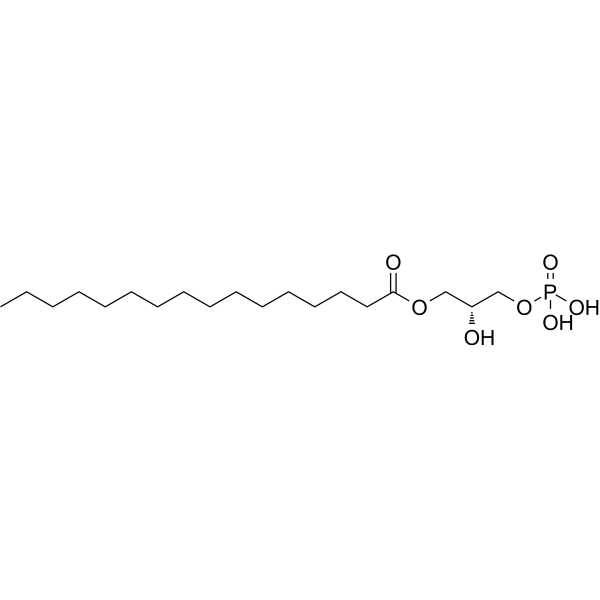
- HY-W337335
-
|
1-P-GPA sodium salt
|
Liposome
|
Metabolic Disease
Inflammation/Immunology
|
|
Palmitoyl-sn-glycerol 3-phosphate (1-P-GPA) sodium salt is a type of phospholipid and a precursor of lipid membranes. 1-Palmitoyl-sn-glycerol 3-phosphate sodium salt can be incorporated into POPC liposomes, resulting in significant changes in membrane curvature. 1-Palmitoyl-sn-glycerol 3-phosphate sodium salt can induce platelet aggregation, but its activity is 30 times lower than that of 1-hexadecyl-sn-glyceryl-3-phosphate .
|
-
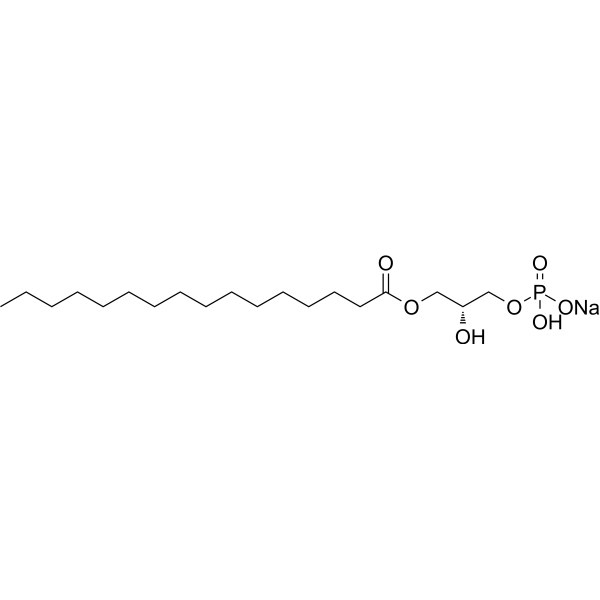
- HY-183159B
-
|
|
Biochemical Assay Reagents
|
Others
|
|
DSG-PEG3400-Glucose is a conjugate composed of DSG, a PEG chain, and terminal glucose. DSG-PEG3400-Glucose combines the membrane compatibility of phospholipids with glucose as an active site for sugar recognition or subsequent coupling reactions, making it suitable for research in biomaterial construction and drug delivery.
|
-

- HY-183159C
-
|
|
Biochemical Assay Reagents
|
Others
|
|
DSG-PEG5000-Glucose is a conjugate composed of DSG, a PEG chain, and terminal glucose. DSG-PEG5000-Glucose combines the membrane compatibility of phospholipids with glucose as an active site for sugar recognition or subsequent coupling reactions, making it suitable for research in biomaterial construction and drug delivery.
|
-

- HY-183159
-
|
|
Biochemical Assay Reagents
|
Others
|
|
DSG-PEG1000-Glucose is a conjugate composed of DSG, a PEG chain, and terminal glucose. DSG-PEG1000-Glucose combines the membrane compatibility of phospholipids with glucose as an active site for sugar recognition or subsequent coupling reactions, making it suitable for research in biomaterial construction and drug delivery.
|
-

- HY-W1052981A
-
|
|
Biochemical Assay Reagents
|
Others
|
|
DSPE-PEG5000-Glucose is a conjugate composed of DSPE, a PEG chain, and terminal glucose. DSPE-PEG5000-Glucose combines the membrane compatibility of phospholipids with glucose as an active site for sugar recognition or subsequent coupling reactions, making it suitable for research in biomaterial construction and drug delivery.
|
-

- HY-W1052981D
-
|
|
Biochemical Assay Reagents
|
Others
|
|
DSPE-PEG3400-Glucose is a conjugate composed of DSPE, a PEG chain, and terminal glucose. DSPE-PEG3400-Glucose combines the membrane compatibility of phospholipids with glucose as an active site for sugar recognition or subsequent coupling reactions, making it suitable for research in biomaterial construction and drug delivery.
|
-

- HY-W1052981B
-
|
|
Biochemical Assay Reagents
|
Others
|
|
DSPE-PEG10000-Glucose is a conjugate composed of DSPE, a PEG chain, and terminal glucose. DSPE-PEG10000-Glucose combines the membrane compatibility of phospholipids with glucose as an active site for sugar recognition or subsequent coupling reactions, making it suitable for research in biomaterial construction and drug delivery.
|
-

- HY-183159D
-
|
|
Biochemical Assay Reagents
|
Others
|
|
DSG-PEG10000-Glucose is a conjugate composed of DSG, a PEG chain, and terminal glucose. DSG-PEG10000-Glucose combines the membrane compatibility of phospholipids with glucose as an active site for sugar recognition or subsequent coupling reactions, making it suitable for research in biomaterial construction and drug delivery.
|
-

- HY-W1052981E
-
|
|
Biochemical Assay Reagents
|
Others
|
|
DSPE-PEG1000-Glucose is a conjugate composed of DSPE, a PEG chain, and terminal glucose. DSPE-PEG1000-Glucose combines the membrane compatibility of phospholipids with glucose as an active site for sugar recognition or subsequent coupling reactions, making it suitable for research in biomaterial construction and drug delivery.
|
-

- HY-W1052981
-
|
|
Biochemical Assay Reagents
|
Others
|
|
DSPE-PEG2000-Glucose is a conjugate composed of DSPE, a PEG chain, and terminal glucose. DSPE-PEG2000-Glucose combines the membrane compatibility of phospholipids with glucose as an active site for sugar recognition or subsequent coupling reactions, making it suitable for research in biomaterial construction and drug delivery.
|
-

- HY-183159A
-
|
|
Biochemical Assay Reagents
|
Others
|
|
DSG-PEG2000-Glucose is a conjugate composed of DSG, a PEG chain, and terminal glucose. DSG-PEG2000-Glucose combines the membrane compatibility of phospholipids with glucose as an active site for sugar recognition or subsequent coupling reactions, making it suitable for research in biomaterial construction and drug delivery.
|
-

- HY-141571
-
|
Dioleoylphosphatidylglycerol sodium
|
Liposome
|
Others
|
|
DOPG sodium is a naturally occurring anionic phospholipid, containing oleic acid (18:1) inserted at the sn-1 and sn-2 positions. DOPG can form a lipid bilayer in an aqueous solution and is used in the generation of micelles, liposomes, and other artificial membranes. DOPG also exhibits anti-inflammatory properties .
|
-
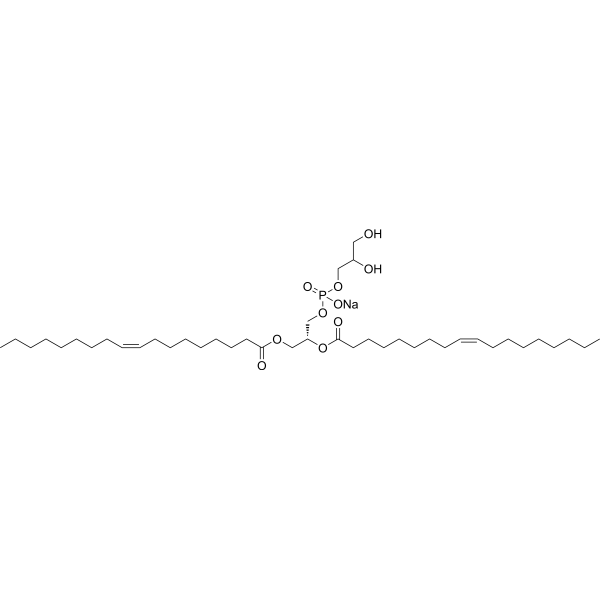
- HY-183191
-
|
|
Biochemical Assay Reagents
|
Others
|
|
DMG-PEG1000-Alkyne is a conjugate composed of dimyristic glycerol (DMG), a PEG chain, and a terminal alkyne group. DMG-PEG1000-Alkyne combines the membrane compatibility of phospholipids with the high reactivity of the alkyne group in click chemistry, making it suitable for research in biomaterial construction and drug delivery.
|
-

- HY-141614
-
|
Phosphatidylcholine Diarachidoyl; 1,2-DAPC; L-α-Diarachidonoyl lecithin
|
Liposome
|
Metabolic Disease
|
|
1,2-Diarachidoyl-sn-glycero-3-phosphocholine (1,2-DAPC) is a phospholipid containing the saturated long-chain (20:0) arachidic acid inserted at the sn-1 and sn-2 positions. It can be used in the generation of micelles, liposomes, and other types of artificial membranes.
|
-

- HY-183191D
-
|
|
Biochemical Assay Reagents
|
Others
|
|
DMG-PEG10000-Alkyne is a conjugate composed of dimyristic glycerol (DMG), a PEG chain, and a terminal alkyne group. DMG-PEG10000-Alkyne combines the membrane compatibility of phospholipids with the high reactivity of the alkyne group in click chemistry, making it suitable for research in biomaterial construction and drug delivery.
|
-

- HY-P2817
-
|
PLCs
|
Phospholipase
|
Infection
Metabolic Disease
|
|
Phospholipase C (PLCs) is a class of phospholipases. Phospholipase C participates in cellular signaling and regulation by virtue of its ability to hydrolyze membrane phospholipids into di-acyl-glycerol (DAG) and inositol triphosphate (IP3), which further causes the activation of other signaling pathways involved in various processes, including immune response .
|
-

- HY-E70616
-
|
|
Bacterial
|
Infection
|
|
Secreted Phospholipase A2-IIA, Human (EC 3.1.1.4), belongs to the family of antimicrobial peptides, hydrolyzes phospholipids to liberate lysophospholipids and fatty acids. Secreted Phospholipase A2-IIA, Human (EC 3.1.1.4) efficiently hydrolyzes bacterial membranes .
|
-

- HY-183191B
-
|
|
Biochemical Assay Reagents
|
Others
|
|
DMG-PEG3400-Alkyne is a conjugate composed of dimyristic glycerol (DMG), a PEG chain, and a terminal alkyne group. DMG-PEG3400-Alkyne combines the membrane compatibility of phospholipids with the high reactivity of the alkyne group in click chemistry, making it suitable for research in biomaterial construction and drug delivery.
|
-

- HY-P2733A
-
|
GPO, Pedio coccus sp.
|
Endogenous Metabolite
|
Metabolic Disease
|
|
Glycerol-3-phosphate oxidase, Pedio coccus sp. (GPO, Pedio coccus sp.) is a key intermediate in glycerol metabolism. Glycerol-3-phosphate oxidase is the skeleton of phospholipids in membrane lipids, and also a substrate in the respiratory chain. Glycerol-3-phosphate oxidase produces electrons through oxidation .
|
-

- HY-P10455
-
|
|
Bacterial
|
Infection
|
|
Cys-Pexiganan TFA is an amphiphilic antimicrobial peptide. Cys-Pexiganan TFA exhibits antibacterial activities against Staphylococcus aureus and Pseudomonas aeruginosa, with MIC of 16 μg/mL and 64.0 μg/mL. Cys-Pexiganan TFA interacts with anionic phospholipids and DNA of microbial cell membranes, disintegrates the cells and leads to cell death .
|
-

- HY-183191C
-
|
|
Biochemical Assay Reagents
|
Others
|
|
DMG-PEG5000-Alkyne is a conjugate composed of dimyristic glycerol (DMG), a PEG chain, and a terminal alkyne group. DMG-PEG5000-Alkyne combines the membrane compatibility of phospholipids with the high reactivity of the alkyne group in click chemistry, making it suitable for research in biomaterial construction and drug delivery.
|
-

- HY-183191A
-
|
|
Biochemical Assay Reagents
|
Others
|
|
DMG-PEG2000-Alkyne is a conjugate composed of dimyristic glycerol (DMG), a PEG chain, and a terminal alkyne group. DMG-PEG2000-Alkyne combines the membrane compatibility of phospholipids with the high reactivity of the alkyne group in click chemistry, making it suitable for research in biomaterial construction and drug delivery.
|
-

- HY-183195C
-
|
|
Biochemical Assay Reagents
|
Others
|
|
DMG-PEG5000-DBCO is a conjugate composed of dimyristic glycerol (DMG), a PEG chain, and a terminal dibenzocyclooctylene (DBCO). DMG-PEG5000-DBCO combines the membrane compatibility of phospholipids with the high reactivity of the DBCO group in copper-free click chemistry, making it suitable for research in biomaterial construction and drug delivery.
|
-

- HY-183195B
-
|
|
Biochemical Assay Reagents
|
Others
|
|
DMG-PEG2000-DBCO is a conjugate composed of dimyristic glycerol (DMG), a PEG chain, and a terminal dibenzocyclooctylene (DBCO). DMG-PEG2000-DBCO combines the membrane compatibility of phospholipids with the high reactivity of the DBCO group in copper-free click chemistry, making it suitable for research in biomaterial construction and drug delivery.
|
-

- HY-183156D
-
|
|
Biochemical Assay Reagents
|
Others
|
|
DMG-PEG10000-Glucose is a conjugate composed of dimyristic glycerol (DMG), a PEG chain, and terminal glucose. DMG-PEG10000-Glucose combines the membrane compatibility of phospholipids with glucose as an active site for sugar recognition or subsequent coupling reactions, making it suitable for research in biomaterial construction and drug delivery.
|
-

- HY-P2624A
-
|
|
PAK
|
Metabolic Disease
|
|
st-Ht31 ammonium is a membrane-permeable peptide inhibitor of?protein kinase A (PKA) anchoring. st-Ht31 ammonium induces robust cholesterol/phospholipid efflux. st-Ht31 ammonium completely reverses foam cell formation and restores the metabolic health of macrophage .
|
-
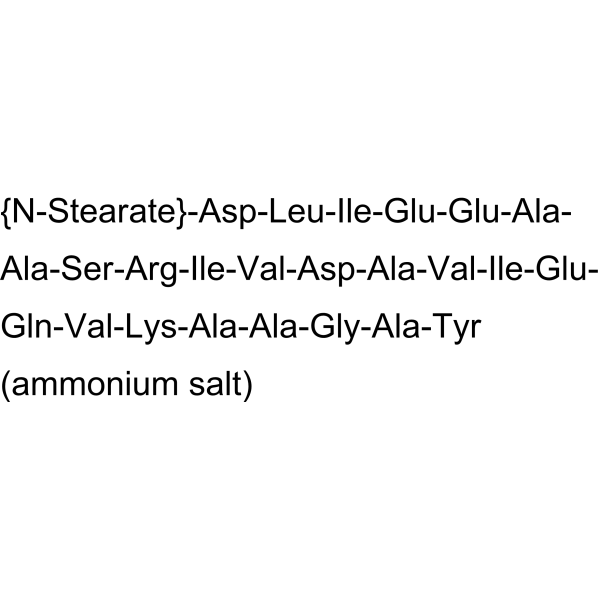
- HY-183195D
-
|
|
Biochemical Assay Reagents
|
Others
|
|
DMG-PEG10000-DBCO is a conjugate composed of dimyristic glycerol (DMG), a PEG chain, and a terminal dibenzocyclooctylene (DBCO). DMG-PEG10000-DBCO combines the membrane compatibility of phospholipids with the high reactivity of the DBCO group in copper-free click chemistry, making it suitable for research in biomaterial construction and drug delivery.
|
-

- HY-183195A
-
|
|
Biochemical Assay Reagents
|
Others
|
|
DMG-PEG2000-DBCO is a conjugate composed of dimyristic glycerol (DMG), a PEG chain, and a terminal dibenzocyclooctylene (DBCO). DMG-PEG2000-DBCO combines the membrane compatibility of phospholipids with the high reactivity of the DBCO group in copper-free click chemistry, making it suitable for research in biomaterial construction and drug delivery.
|
-

- HY-183156A
-
|
|
Biochemical Assay Reagents
|
Others
|
|
DMG-PEG2000-Glucose is a conjugate composed of dimyristic glycerol (DMG), a PEG chain, and terminal glucose. DMG-PEG2000-Glucose combines the membrane compatibility of phospholipids with glucose as an active site for sugar recognition or subsequent coupling reactions, making it suitable for research in biomaterial construction and drug delivery.
|
-

- HY-183156
-
|
|
Biochemical Assay Reagents
|
Others
|
|
DMG-PEG1000-Glucose is a conjugate composed of dimyristic glycerol (DMG), a PEG chain, and terminal glucose. DMG-PEG1000-Glucose combines the membrane compatibility of phospholipids with glucose as an active site for sugar recognition or subsequent coupling reactions, making it suitable for research in biomaterial construction and drug delivery.
|
-

- HY-183156B
-
|
|
Biochemical Assay Reagents
|
Others
|
|
DMG-PEG3400-Glucose is a conjugate composed of dimyristic glycerol (DMG), a PEG chain, and terminal glucose. DMG-PEG3400-Glucose combines the membrane compatibility of phospholipids with glucose as an active site for sugar recognition or subsequent coupling reactions, making it suitable for research in biomaterial construction and drug delivery.
|
-

- HY-183156C
-
|
|
Biochemical Assay Reagents
|
Others
|
|
DMG-PEG5000-Glucose is a conjugate composed of dimyristic glycerol (DMG), a PEG chain, and terminal glucose. DMG-PEG5000-Glucose combines the membrane compatibility of phospholipids with glucose as an active site for sugar recognition or subsequent coupling reactions, making it suitable for research in biomaterial construction and drug delivery.
|
-

- HY-157689
-
|
20:1(Cis)PC
|
Biochemical Assay Reagents
|
|
|
1,2-Dieicosenoyl-sn-glycero-3-phosphocholine (20:1(Cis)PC) is a phospholipid that has the activity of promoting the binding of proteins to liposomes. 1,2-Dieicosenoyl-sn-glycero-3-phosphocholine can serve as a component of biological membranes and enhance the fluidity of cell membranes. 1,2-Dieicosenoyl-sn-glycero-3-phosphocholine also plays an important role in compound delivery systems, improving the biocompatibility and targeting of compounds.
|
-

- HY-151994S
-
|
|
Isotope-Labeled Compounds
Endogenous Metabolite
|
Others
|
|
1,3-Diolein-d66 is deuterium labeled 1,3-Diolein. 1,3-Diolein is a phospholipid compound that has the activity of regulating cell membrane fluidity and signal transduction. 1,3-Diolein is widely used in cell biology research to study lipid-mediated signal transduction pathways and membrane protein interactions. 1,3-Diolein can also serve as a functional carrier in compound delivery systems to help improve the bioavailability of compounds .
|
-

- HY-W591461
-
|
|
Liposome
|
Cancer
|
|
DSPE-PEG-COOH, MW 2000 is a phospholipid polyPEG which can be used to prepare liposomes or nanoparticles. The terminal carboxylic acid can react with primary amine groups to form a stable amide bond.
|
-

- HY-W440991
-
|
DOPE-PEG2000-NH2
|
Liposome
|
Cancer
|
|
DOPE-PEG-Amine (MW 2000) is a polydisperse PEG covalently attached to a phospholipid. The polymer is an amphiphilic molecule with hydrophobic fatty acid chains and hydrophilic PEG head which enables lipid bilayer or micelle formation in water. The phospholipid PEG can be used to prepare liposome or nanoparticles for targeted drug delivery and is reactive with alkyne to form a triazole ring.
|
-

- HY-138913
-
|
|
Liposome
|
Cancer
|
|
2H-Cho-Arg (TFA) is a steroid-based cationic lipid that contains a 2H-cholesterol skeleton coupled to an L-arginine head group and can be used to facilitate gene transfection.
|
-

- HY-W590535
-
|
1,2-DNPC;
1,2-Dinonadecanoyl-sn-glycero-3-phosphocholine
|
Liposome
|
Cancer
|
|
19:0 PC is a saturated phospholipid that has been used as a standard for the quantification of phosphatidylcholines in human synovial fluid. It has also been used to study dynamics of lipid bilayer phase transition.
|
-

- HY-W440711
-
|
|
Liposome
|
Cancer
|
|
Cholesterol-PEG-Biotin (MW 2000) is a pegylated lipids which has strong binding to avidin or streptavidin.
|
-

- HY-W800777
-
|
|
Liposome
|
Cancer
|
|
6-(3-Hydroxypropylamino)hexyl 2-hexyldecanoate is an ionizable lipid which can be used to make ALC-0315. The lipid has an ester bond adjacent to C6 relative to the amine nitrogen. The introduction of ester linkages can improve the clearance of the lipid in the liver.
|
-

- HY-W591913
-
|
|
Liposome
|
Cancer
|
|
Cholesterol-PEG2000-methoxy is a PEG derivative which self-assembles in water to form micelle-like structure. The cholesterol tail can be used to encapsulate hydrophobic drugs while the PEG chain ehances the water solubility of the micelles.
|
-

- HY-115435
-
|
DMPS-Na; Dimyristoyl phosphatidylserine sodium
|
Liposome
|
Cancer
|
|
1,2-Dimyristoyl-sn-glycero-3-phospho-L-serine sodium is an anionic phospholipid with myristic acid tails (14:0) and contains a carboxylic acid (COOH) and amine (NH2) in their head group. It has been used in the preparation of liposome.
|
-

- HY-W800734
-
|
MPPC; PC(14:0/16:0)
|
Liposome
|
Cancer
|
|
1-Myristoyl-2-palmitoyl-sn-glycero-3-phosphocholine (MPPC) is an asymmetrical phosphatidylcholine containing a myristic acid (14:0) at the sn-1 position and a palmitic acid (16:0) at the sn-2 position. It is commonly used in the generation of micelles, liposomes, and other types of artificial membranes.
|
-

- HY-W440706
-
|
|
Liposome
|
Cancer
|
|
Cholesterol-PEG2000-alcohol is a pegylated lipids which can be used for preparation of liposome or nanoparticle. The lipophilic moiety can encapsulate hydrophobic drugs whereas the hydrophilic PEG chain helps the overal water solubility of the micelles. The amine can react with an activated NHS ester to form a stable amide bond.
|
-

- HY-W440698
-
|
|
Liposome
|
Cancer
|
|
Cholesterol-PEG2000-Acid is a polydisperse PEG derivative which can be used to create liposome as drug carrier for delivering therapeutic agents into tissues.
|
-

- HY-W800790
-
|
|
Liposome
|
Cancer
|
|
18:1 Caproylamine PE is a amine-functionalized lipid with a phosphoethanolamine linked to two oleic acid tails.
|
-

- HY-W591332
-
|
|
Liposome
|
Cancer
|
|
mPEG2000-DMPE is a PEGylated 1,2-Dimyristoyl-sn-glycero-3-phosphoethanolamine (14:0 PE) compound with a methyl group at the other end of the PEG chain. The PEG polymer exhibits amphiphatic behavior and helps to form stable micelles in an aqueous solution. It can be used to prepare nanoparticles or liposomes for targeted drug delivery applications.
|
-

- HY-W800784
-
|
|
Liposome
|
Cancer
|
|
23:2 Diyne PE [DC(8,9)PE] is a phospholipase-mediated hydrolyzed phosphocoline with palmitic acid (16:0) and Pentacosa-10,12-diynoic acid for tails.
|
-
![23:2 Diyne PE [DC(8,9)PE]](//file.medchemexpress.com/product_pic/hy-w800784.gif)
- HY-W140488
-
|
10:0 PE
|
Liposome
|
Cancer
|
|
1,2-Didecanoyl-sn-glycero-3-phosphoethanolamine, a phospholipid, showes very promising P-gp inhibitory results at a concentration of 0.3 mM.
|
-

- HY-W800798
-
|
1,2-dipalmitoyl-sn-glycero-3-phosphoethanolamine-N-(cyanur)
|
Liposome
|
Cancer
|
|
16:0 Cyanur PE is a cyanur-functionalized lipid attached to a phosphoethanolamine linked to two palmitic acid groups.
|
-

- HY-W440724
-
|
|
Liposome
|
Cancer
|
|
Cholesterol-PEG3400-Thiol is an amphiphatic PEG derivative which forms micelles in water and can be used to prepare liposomes or nanoparticles for drug delivery system. The thiol moiety is reactive with maleimide to form a stable thioether bond.
|
-

- HY-W800794
-
|
DPPE-NG; 1,2-dipalmitoyl-sn-glycero-3-phosphoethanolamine-N-(glutaryl)
|
Liposome
|
Cancer
|
|
16:0 Glutaryl PE is is a carboxylic acid-functionalized lipid with a three carbon linker to a phosphoethanolamine bound to two palmitic acid tails.
|
-

- HY-W440995
-
|
|
Liposome
|
Cancer
|
|
DOPE-PEG2000-Mal is a phospholipid polyPEG which can be used to prepare liposomes or nanoparticles. It is also reactive with thiol at pH 6.5 tp 7.5 to form a stable thioether bond.
|
-

- HY-W440820
-
|
|
Liposome
|
Cancer
|
|
Bis(bis(2-carboxyethyl)aminopropyl)methylamine is a symmetrical branched linker featuring three tertiary amines and four carboxylic acids. Each carboxylic acid is open to forming esters or amides. It can be used in developing lipid nanoparticles.
|
-

- HY-W800786
-
|
N-MCC-PE
|
Liposome
|
Cancer
|
|
16:0 PE MCC is a maleimide-functionalized thiol-reactive lipid with a phosphoethanolamine linked to two palmitic acid tails and a maleimide group.
|
-

- HY-W800792
-
|
1,2-dioleoyl-sn-glycero-3-phosphoethanolamine-N-(succinyl)
|
Liposome
|
Cancer
|
|
18:1 Succinyl PE is a carboxylic acid-functionalized lipid with a two carbon linker to a phosphoethanolamine bound to two oleic acid tails.
|
-

- HY-W800793
-
|
1,2-dipalmitoyl-sn-glycero-3-phosphoethanolamine-N-(succinyl)
|
Liposome
|
Cancer
|
|
16:0 Succinyl PE is a carboxylic acid-functionalized lipid with a two carbon linker to a phosphoethanolamine bound to two palmitic acid tails.
|
-

- HY-W800805
-
|
|
Liposome
|
Cancer
|
|
DOPE-Mal is a synthetic analog of naturally-occurring PE containing 18:1 fatty acids at the sn-1 and sn-2 positions with a terminal maliemide group. The maleimide group will react with a thiol group to form a covalent bond. The hydrophilic PEG spacer increases solubility in aqueous media.
|
-

- HY-W800797
-
|
1,2-dipalmitoyl-sn-glycero-3-phosphoethanolamine-N-(biotinyl)
|
Liposome
|
Cancer
|
|
16:0 Biotinyl PE is a biotin-functionalized lipid attached to a phosphoethanolamine linked to two palmitic acid groups.
|
-

- HY-W440981
-
|
1-Stearoyl-2-palmitoyl-sn-glycero-3-phosphocholine
|
Liposome
|
Cancer
|
|
SPPC is a phospholipid with different length of fatty acid. The sn-1 position contains a stearic acid (18:0) while the sn-2 position is occupied by a palmitic acid (16:0).
|
-

- HY-W800785
-
|
1-palMitoyl-2-(10,12-tricosadiynoyl)-sn-glycero-3-phosphocholine
|
Liposome
|
Cancer
|
|
16:0-23:2 Diyne PC is a phospholipase-mediated hydrolyzed phosphocoline with palmitic acid (16:0) and Pentacosa-10,12-diynoic acid for tails.
|
-

- HY-W440719
-
|
|
Liposome
|
Cancer
|
|
Cholesterol-PEG2000-MAL is a PEG derivative and can be used to prepare liposome or nanoparticle due to its ability to self-assemble in water. The maleimide moiety is reactive with thiol molecule to form a covalent thioether bond.
|
-

- HY-W590593
-
|
|
Liposome
|
Cancer
|
|
mPEG-Cholesterol,MW 2000 is a PEG derivative which self-assembles in water to form micelle-like structure. The cholesterol tail can be used to encapsulate hydrophobic drugs while the PEG chain ehances the water solubility of the micelles.
|
-

- HY-W440727
-
|
|
Liposome
|
Cancer
|
|
Cholesterol-PEG2000-Vinylsulfone is a thiol reactive polyPEG via thiol-ene reaction to form a thioether bond. It can self-assemble in water and is used to prepare liposome as drug vehicle for targeted delivery into tissues.
|
-

- HY-W800843
-
|
|
Liposome
|
Cancer
|
|
tert-Butyl 3-(7-((undecan-3-yloxy)carbonyl)heptylamino)propylcarbamate is an aminolipid featuring a Boc-protected primary amine, a propylamine spacer attached to an octanoate chain and a C11 chain.
|
-

- HY-W440958
-
|
PSPC; PC(16:0-18:0)
|
Liposome
|
Cancer
|
|
1-Palmitoyl-2-stearoyl-sn-glycero-3-phosphocholine is an assymetrical phospholipid containing saturated palmitic and stearic acid at the sn-1 and sn-2 position respectively. The phosphate group is attached to choline.
|
-

- HY-W590538
-
|
|
Liposome
|
Cancer
|
|
HAPC-Chol is a cationic cholesterol that can be used as a component of lipoplexes complexes.
|
-

- HY-W800778
-
|
|
Liposome
|
Cancer
|
|
Bis(2-butyloctyl) 10-oxononadecanedioate is an ionizable lipid-like compound containing four hydrophobic tails bound by esters. It can be used to build lipids for mRNA encapsulation and delivery.
|
-

- HY-W800791
-
|
|
Liposome
|
Cancer
|
|
16:0 Caproylamine PE is an amide-functionalized lipid with a phosphoethanolamine linked to two palmitic acid tails.
|
-

- HY-W340832
-
|
|
Liposome
|
Cancer
|
|
18:1 Biotinyl Cap PE is a fluorescent lipid, which features a head group that has been altered to include biotinyl cap PE.
|
-

- HY-W800795
-
|
DOPE-NG; 1,2-dioleoyl-sn-glycero-3-phosphoethanolamine-N-(dodecanoyl)
|
Liposome
|
Cancer
|
|
18:1 Dodecanyl PE is a carboxylic acid-functionalized lipid with a ten carbon linker to a phosphoethanolamine bound to two oleic acid tails.
|
-

- HY-W800788
-
|
|
Liposome
|
Cancer
|
|
18:1 MPB PE is a maleimide-functionalized thiol-reactive lipid with a phosphoethanolamine linked to two oleic acid tails and a phenyl maleimide group.
|
-

- HY-W440957
-
|
PC(16:0/14:0); 1-palmitoyl-2-myristoyl-sn-glycero-3-phosphocholine
|
Liposome
|
Cancer
|
|
PMPC is a phosphatidylcholine with asymmetrical fatty acid. Palmitic acid occupies sn-1 position while myristic acid is placed at the sn-2 position.
|
-

- HY-W440690
-
|
|
Liposome
|
Cancer
|
|
Cholesterol-PEG2000-amine is a pegylated lipids which can be used for preparation of liposome or nanoparticle. The lipophilic moiety can encapsulate hydrophobic drugs whereas the hydrophilic PEG chain helps the overal water solubility of the micelles.
|
-

- HY-W590555
-
|
|
Liposome
|
Cancer
|
|
Thiol-PEG2000-DMG is a phospholipid polyPEG which can be used to prepare liposomes or nanoparticles. The terminal thiol group reacts with maleimide, OPSS, vinylsulfone and transition metal surfaces including gold, silver, etc.
|
-

- HY-141615
-
|
PDME; 16:0 Dimethyl PE
|
Liposome
|
Cancer
|
|
1,2-Dipalmitoyl-sn-glycero-3-phospho-N,N-dimethylethanolamine has been used in the generation of liposomes and monolayers for use in the study of membrane permeability and monolayer viscosity, respectively.
|
-

- HY-W800796
-
|
1,2-dioleoyl-sn-glycero-3-phosphoethanolamine-N-(biotinyl)
|
Liposome
|
Cancer
|
|
18:1 Biotinyl PE is a biotin-functionalized lipid attached to a phosphoethanolamine linked to two oleic acid groups.
|
-

- HY-W800825
-
|
|
Liposome
|
Cancer
|
|
Octadecanedioic Acid Mono-L-carnitine ester is a cationic lipid which may be used in combination with other lipids in the formation of lipid nanoparticles (LNPs). Its terminal carboxylic acid can react with primary amine groups in the presence of activators (e.g. HATU) to form a stable amide bond.
|
-

- HY-W800789
-
|
|
Liposome
|
Cancer
|
|
16:0 MPB PE is a maleimide-functionalized thiol-reactive lipid with a phosphoethanolamine linked to two palmitic acid tails and a phenyl maleimide group.
|
-

- HY-W441005
-
|
|
Liposome
|
Cancer
|
|
Amino-Gly-Gly-DSPE (hydrochloride) is a specially modified phospholipid that has been used to synthesize liposomes. The terminal amine is reactive with an NHS ester compound or carboxylic acid molecule in the presence of activator, such as HATU or EDC.
|
-

- HY-W800787
-
|
|
Liposome
|
Cancer
|
|
18:1 PE MCC is a maleimide-functionalized thiol-reactive lipid with a phosphoethanolamine linked to two oleic acid tails and a maleimide group.
|
-

- HY-W590538A
-
|
|
Liposome
|
Others
|
|
HAPC-Chol is a cationic cholesterol that can be used as a component of lipoplexes complexes .
|
-

- HY-W339838
-
|
14:0 Lyso PG
|
Liposome
|
Cancer
|
|
1-Myristoyl-2-hydroxy-sn-glycero-3-PG sodium is a lysophospholipid containing myristic acid (14:0) at the sn-1 position. It has been used in the generation of micelles, liposomes, and other types of artificial membranes, including lipid-based drug carrier systems.
|
-

- HY-175069
-
|
PA(18:1/18:1) ammonium salt; 1,2-DOPA ammonium salt
|
Liposome
|
Others
|
|
1,2-Dioleoyl-sn-glycero-3-PA (ammonium salt) is a phospholipid with long-chain fatty acid oleic acid inserted at the sn-1 and sn-2 positions. 1,2-Dioleoyl-sn-glycero-3-PA (ammonium salt) can be used to synthsize artificial membranes such as liposomes .
|
-

- HY-130671B
-
|
(S,S)-1,2-Dipalmitoyl-sn-glycero-3-phosphoglycerol sodium
|
Liposome
|
Others
|
|
(S,S)-DPPG is an enantiomeric isomer of L-DPPG. L-DPPG ((R)-1,2-Dipalmitoyl-sn-glycero-3-phosphoglycerol (sodium)) is a phospholipid targeting biological membranes. L-DPPG interacts with lipid bilayers through hydrophobic and electrostatic interactions. L-DPPG is used in research on drug delivery systems .
|
-

- HY-N5034
-
|
Monoaminoethyl phosphate; NSC 254167; O-Phosphoethanolamine
|
Endogenous Metabolite
|
Neurological Disease
Metabolic Disease
Cancer
|
|
Phosphorylethanolamine (Monoaminoethyl phosphate) is a membrane phospholipid and an important precursor of Phosphatidylcholine (HY-B2233B). It is found in most animal tissues and various human extracranial tumors, playing a critical role in membrane integrity, cell division, mitochondrial respiratory function, and more. Studies have shown that changes in the abundance of Phosphorylethanolamine are associated with Alzheimer's disease and Parkinson's disease. Lowering the ratio of Phosphorylethanolamine to Phosphatidylcholine in the liver can improve insulin signaling. Phosphorylethanolamine holds promise for research in the fields of cancer, neurodegenerative disorders, and metabolic diseases .
|
-
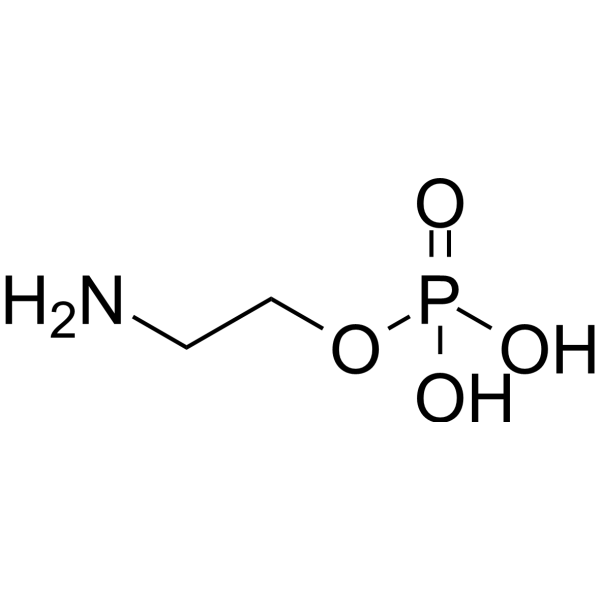
- HY-167813
-
|
|
Biochemical Assay Reagents
|
|
|
1-O-Palmityl-2-O-methyl-rac-glycero-3-phosphocholine is a synthetic phospholipid analogue with activity in studying lipid interactions and membrane asymmetry. 1-O-Palmityl-2-O-methyl-rac-glycero-3-phosphocholine is used to explore the overall stability of lipid bilayers. 1-O-Palmityl-2-O-methyl-rac-glycero-3-phosphocholine is of great significance for the study of membrane structure and function.
|
-

- HY-W339834
-
|
|
Acyltransferase
Endogenous Metabolite
Liposome
|
Others
|
|
1-Stearoyl-sn-glycerol 3-phosphate sodium is a bioactive phospholipid that plays a crucial role in modulating cellular processes such as motility, proliferation, invasion, survival, and growth factor production, primarily through its interaction with G protein-coupled receptors (GPCRs). Typically found at low concentrations in plasma (~100nM), this compound is synthesized during the formation of membrane phospholipids and is derived from various cell types, including activated platelets, epithelial cells, leukocytes, neuronal cells, and tumor cells. Its unique structure includes stearic acid at the sn-1 position alongside a hydroxyl group at the sn-2 position.
|
-

- HY-130463
-
|
PG(16:0/18:1); 1-Palmitoyl-2-oleoyl-sn-glycero-3-phospho-(1'-rac-glycerol)
|
Liposome
Biochemical Assay Reagents
Neurotensin Receptor
|
Neurological Disease
|
|
POPG sodium salt is a negatively charged phospholipid. POPG sodium salt affects the interactions of membrane proteins with other molecules by changing the charge characteristics of the lipid environment. POPG sodium salt increases the apparent affinity of Gαq and Gβ1γ1 for activated NTS1. POPG sodium salt can interact with the positive charge of peptides. POPG sodium salt can be used in Parkinson's disease research .
|
-
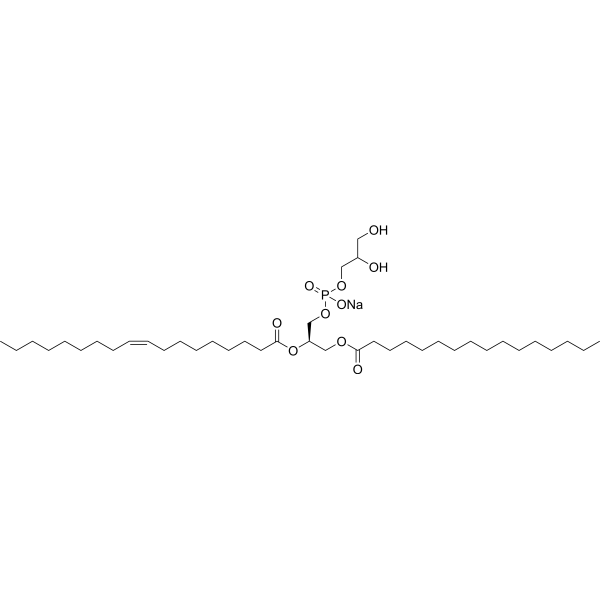
- HY-113424AS1
-
|
1,2-Dioleoyl-sn-glycero-3-phosphocholine-d31
|
Isotope-Labeled Compounds
|
Others
|
|
DOPC-d31 (1,2-Dioleoyl-sn-glycero-3-phosphocholine-d31) is the deuterium labeled DOPC (HY-113424A). 1,2-Dioleoyl-sn-glycero-3-phosphocholine (DOPC) is a phospholipid and is commonly used alone, or with other components, in the generation of micelles, liposomes, and other types of artificial membranes.
|
-

- HY-W040268S1
-
|
|
Isotope-Labeled Compounds
Endogenous Metabolite
|
Others
|
|
1,2-Dipalmitoyl-sn-glycero-3-phosphoethanolamine-d9 is deuterium labeled 1,2-Dipalmitoyl-sn-glycero-3-phosphoethanolamine. 1,2-Dipalmitoyl-sn-glycero-3-phosphoethanolamine is a phospholipid that is a major component of the lipid bilayer that surrounds cells and provides stability to the membrane .
|
-

- HY-W040268S
-
|
|
Isotope-Labeled Compounds
Endogenous Metabolite
|
Others
|
|
1,2-Dipalmitoyl-sn-glycero-3-phosphoethanolamine-d62 is deuterium labeled 1,2-Dipalmitoyl-sn-glycero-3-phosphoethanolamine. 1,2-Dipalmitoyl-sn-glycero-3-phosphoethanolamine is a phospholipid that is a major component of the lipid bilayer that surrounds cells and provides stability to the membrane .
|
-
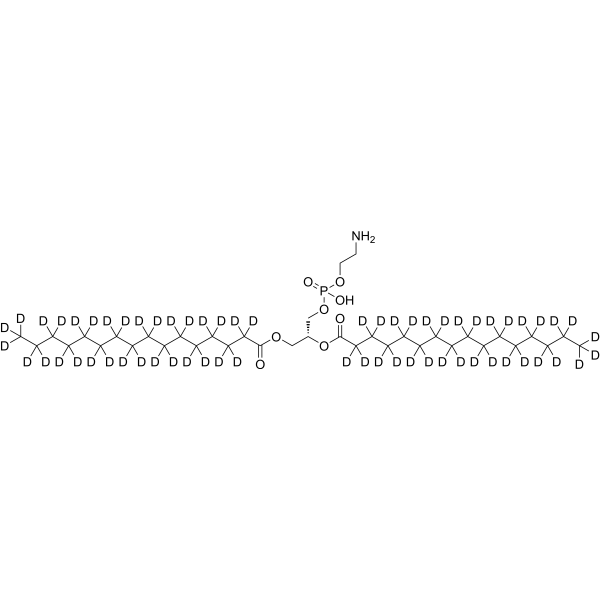
- HY-134174A
-
|
16:0-18:1 PA
|
Biochemical Assay Reagents
|
|
|
1-Palmitoyl-2-oleoyl-sn-glycero-3-phosphate sodium (16:0-18:1 PA) is a phospholipid with activities in regulating biological membrane fluidity and participating in cell signal transduction. 1-Palmitoyl-2-oleoyl-sn-glycero-3-phosphate sodium can be used to study the effects on the activity of chloroplast envelope monogalactosyldiacylglycerol (MGDG) synthase. 1-Palmitoyl-2-oleoyl-sn-glycero-3-phosphate sodium plays an important role in cell membrane integrity and function.
|
-

- HY-W014118
-
|
|
Environmental Pollutants
|
Inflammation/Immunology
Cancer
|
|
α-Hexylcinnamaldehyde is an O-acetyltransferase (OAT) inhibitor. α-Hexylcinnamaldehyde inhibits OAT-mediated bioactivation of nitroarene mutagens, exerts antimutagenic activity through demutagenic and bioantimutagenic mechanisms, and interferes with ATP-binding cassette (ABC) transporter function to reduce substrate efflux. α-Hexylcinnamaldehyde alters membrane permeability, fluidizes phospholipid membranes, exerts antioxidant effects, and enhances the antiproliferative effect of Doxorubicin on human cancer cells. α-Hexylcinnamaldehyde can be used in the research of colorectal adenocarcinoma, T-cell leukemia, and multidrug-resistant cancers .
|
-
- HY-186196
-
|
|
Ferroptosis
Reactive Oxygen Species (ROS)
|
Cancer
|
|
Fentomycin-1 is a ferroptosis inducer. Fentomycin-1 activates lysosomal iron 2+ under acidic conditions with hydrogen peroxide to form a reactive iron-oxo species, which induces oxidative degradation, oxidation, and lipolysis of membrane phospholipids, triggering ferroptosis. Fentomycin-1 can be used for the research of pancreatic ductal adenocarcinoma, breast cancer metastasis, and melanoma .
|
-

- HY-W020246
-
|
TMTM
|
Squalene Monooxygenase
Bacterial
|
Infection
Inflammation/Immunology
|
|
Tetramethylthiuram monosulfide (TMTM) is an orally active microsomal monooxygenases inhibitor. Tetramethylthiuram monosulfide is used as an accelerator and activator in the processing of natural rubber and butyl rubber. Tetramethylthiuram monosulfide reduces palmitic acid incorporation into microsomal phospholipids, disrupts microsomal membrane integrity, and impairs electron transport during oxygenation. Tetramethylthiuram monosulfide can be used for the research of fungal infection, bacterial infection and allergic contact dermatitis .
|
-
- HY-P0270
-
|
Magainin II
|
Bacterial
Antibiotic
Fungal
|
Infection
|
|
Magainin 2 (Magainin II) is an antimicrobial peptide (AMP) isolated from the skin of the African clawed frog Xenopus laevis. Magainin 2 displays antibiotic activity against numerous gram-negative and gram-positive bacteria. Magainin 2 also is active against protozoa . Magainin 2 exerts its cytotoxicity effects by preferential interactions with anionic phospholipids abundant in bacterial membranes .
|
-

- HY-W035091
-
|
|
Biochemical Assay Reagents
|
Cardiovascular Disease
Neurological Disease
|
|
Tetrachloroauric acid is an Au (III) compound and bilayer disruptor that can be used to damage red blood cells. Tetrachloroauric acid specifically disrupts the bilayer structure of representative phospholipids (dimyristoylphosphatidylcholine and dimyristoylphosphatidylethanolamine) in human red blood cell membranes, and induces morphological changes in intact human red blood cells. Tetrachloroauric acid causes downregulation of MT I-II and GFAP expression in the mouse brain following chronic treatment. Tetrachloroauric acid is being used in studies related to neurotoxicity and hematotoxicity, including analyses of human red blood cells and molecular models of red blood cell membranes, as well as immunohistochemical evaluation of the mouse brain .
|
-

- HY-W414697
-
|
D-Ribo-phytosphingosine (C17 base)
|
Bacterial
|
Others
|
|
4-Hydroxysphinganine C17 base (D-Ribo-phytosphingosine C17 base), also known as D-ribo-phytosphingosine or PHS, is a crucial compound present in the membranes of fungi, plants, bacteria, marine organisms, and mammalian tissues. It plays a vital role in preserving the structural integrity of membranes, regulating cellular growth, and mediating the heat stress response in yeast. Additionally, PHS serves as a precursor for the synthesis of important lipid mediators such as PHS 1-phosphate, inositol phosphorylceramide, and KRN7000 (the α-anomer of galactosylceramide). Furthermore, this phospholipid promotes keratinocyte differentiation, making it a valuable active ingredient in cosmetic formulations.
|
-

- HY-148971A
-
|
Phosphatidylinositol tris-3,4,5-phosphate, 1,2-dipalmitoyl sodium
|
Drug Derivative
|
Others
|
|
PtdIns-(345)-P3 (12-dipalmitoyl) sodium (Phosphatidylinositol tris-3,4,5-phosphate, 1,2-dipalmitoyl sodium) is a phosphatidylinositol 3,4,5-trisphosphate (PIP3) analog. PtdIns-(345)-P3 (12-dipalmitoyl) sodium can be incorporated in liposomes establish a backdrop of membrane phospholipids that closely mirrors in vivo conditions .
|
-

- HY-E70853
-
|
|
PKC
|
Cancer
|
|
PKCδ is a PKC isoform. PKCδ is expressed ubiquitously among cells and tissues. It is activated by diacylglycerol produced by receptor-mediated hydrolysis of membrane inositol phospholipids as well as by tumor-promoting phorbol ester through the binding of these compounds to the C1 region in its regulatory domain. PKCδ Recombinant Human Active Protein Kinase is a recombinant PKCδ protein that can be used to study PKCδ-related functions .
|
-

- HY-W040268R
-
|
|
Endogenous Metabolite
Reference Standards
|
Others
|
|
1,2-Dipalmitoyl-sn-glycero-3-phosphoethanolamine (Standard) is the analytical standard of 1,2-Dipalmitoyl-sn-glycero-3-phosphoethanolamine (HY-W040268). This product is intended for research and analytical applications. 1,2-Dipalmitoyl-sn-glycero-3-phosphoethanolamine is a phospholipid that is a major component of the lipid bilayer that surrounds cells and provides stability to the membrane .
|
-

- HY-141570
-
|
|
Phospholipase
|
Others
|
|
Lyso-PAF C-16 is a precursor and metabolite of 1-O-hexadecyl-2-acetyl-sn-glycero-3-phosphocholine (PAF C-16). Lyso-PAF C-16 is a substrate for either PAF C-16 formation by the remodeling pathway or selective acylation with arachidonic acid by a CoA-independent transacylase .
|
-
- HY-125854
-
|
|
Liposome
Cholinesterase (ChE)
Monoamine Oxidase
Apoptosis
|
Neurological Disease
Metabolic Disease
Inflammation/Immunology
|
|
Phosphatidylcholines, egg are a type of phosphatidylcholine that can be isolated and extracted from eggs, primarily present in egg yolks. As a major phospholipid component of cell membranes, Phosphatidylcholines, egg play a key role in providing nutrition and protection to the body. Phosphatidylcholines, egg can inhibit oxidative stress and neurotoxicity, exerting neuroprotective effects. Additionally, Phosphatidylcholines, egg can suppress the lymphatic absorption of cholesterol in the intestine and are also used in research on intestinal lipid absorption .
|
-

- HY-125940
-
|
1,2-Dipalmitoyl-sn-glycero-3-phosphoglycerol sodium
|
Liposome
|
Others
|
|
DPPG (1,2-Dipalmitoyl-sn-glycero-3-phosphoglycerol sodium) is a phospholipid that contains long-chain (16:0) palmitic acid inserted at the sn-1 and sn-2 positions, and it serves as an active component to prevent BaP molecules from entering the water subphase. DPPG is used to prepare micelles, liposomes, and other types of artificial membranes that can resist damage from UV radiation .
|
-
- HY-W014118R
-
|
|
Reference Standards
Environmental Pollutants
|
Cancer
|
|
α-Hexylcinnamaldehyde (Standard) is the analytical standard of α-Hexylcinnamaldehyde. This product is intended for research and analytical applications. α-Hexylcinnamaldehyde is an O-acetyltransferase (OAT) inhibitor. α-Hexylcinnamaldehyde inhibits OAT-mediated bioactivation of nitroarene mutagens, exerts antimutagenic activity through demutagenic and bioantimutagenic mechanisms, and interferes with ATP-binding cassette (ABC) transporter function to reduce substrate efflux. α-Hexylcinnamaldehyde alters membrane permeability, fluidizes phospholipid membranes, exerts antioxidant effects, and enhances the antiproliferative effect of Doxorubicin on human cancer cells. α-Hexylcinnamaldehyde can be used in the research of colorectal adenocarcinoma, T-cell leukemia, and multidrug-resistant cancers .
|
-

- HY-125623
-
|
|
Fluorescent Dye
|
Others
|
|
MitoPerOx is a mitochondrial-targeted, lipid peroxidation-indicating fluorescent probe with BODIPY581/591 fluorophores. The triphenylphosphine cation (TPP+) of MitoPerOx can be selectively enriched in mitochondria (depending on membrane potential) and can be used to detect lipid peroxidation in the inner mitochondrial membrane. Under the action of lipid peroxides, the BODIPY581/591 fluorophores of MitoPerOx shift their emission wavelength from 590 nm (reduced state) to 520 nm (oxidized state), and ratiometric detection can be performed at an excitation wavelength of 488 nm. MitoPerOx can specifically monitor the peroxidation of mitochondrial phospholipids (especially cardiolipin) and is used in the study of oxidative stress-related diseases (such as aging, neurodegenerative diseases, and mitochondrial dysfunction)[1][2].
|
-
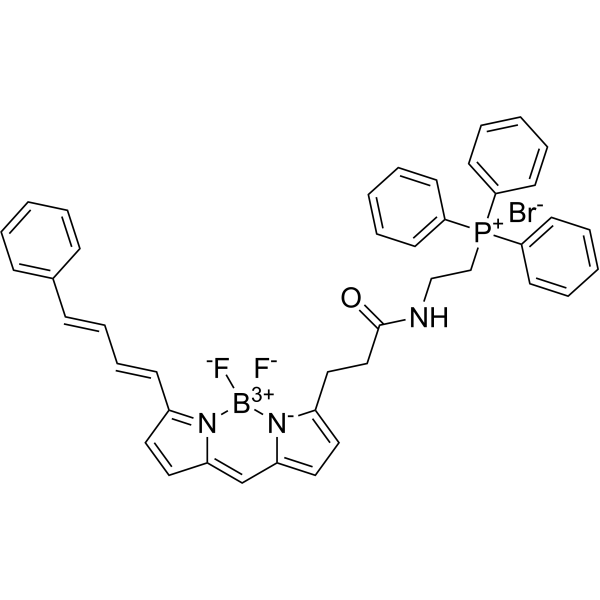
- HY-161948
-
|
|
Ferroptosis
|
Cancer
|
|
Ferroptosis inducer-4 (Compound 5) is a ferroptosis (Ferroptosis) inducer with a structure featuring terminal double bonds introduced at the sn-2 position of phospholipids. Ferroptosis inducer-4 exhibits significant cytotoxicity towards HT-1080 cells, with an IC50 of 18 μM. This cytotoxic mechanism involves the generation of lipid peroxides and oxidative damage to the cell membrane triggered by the terminal double bonds. Ferroptosis inducer-4 can be used for research on ferroptosis regulation .
|
-

- HY-W099547
-
|
|
Liposome
|
Others
|
|
Dihexadecyl hydrogen phosphateIt is an organic compound belonging to phospholipids. It's often used as an emulsifier, which means it helps mix two substances together that don't usually mix well, such as oil and water. Dihexadecyl hydrogen phosphateIt has several applications in the food industry, especially in the production of processed foods where it improves texture and stability. Additionally, it has applications in the pharmaceutical industry where it can be used ain the generation of micelles, liposomes, and other types of artificial membranes.
|
-

- HY-W127459
-
|
D-DPPC, 95%
|
Liposome
|
Others
|
|
2,3-Dipalmitoyl-sn-glycero-1-phosphocholine, 95% (D-DPPC, 95%) is a chiral phospholipid that serves as a membrane-forming lipid component for bicelle assembly. 2,3-Dipalmitoyl-sn-glycero-1-phosphocholine, 95% can form bicelle assemblies with DHPC, which induce an induced circular dichroism (ICD) signal in the chiral probe DPH, with a polarity opposite to that induced by chiral L-DPPC/DHPC bicelles .
|
-
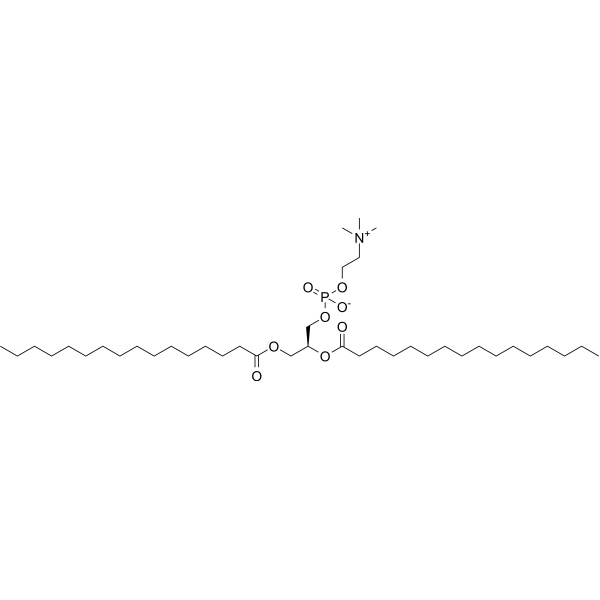
- HY-P2733
-
|
GPO
|
Endogenous Metabolite
Bacterial
|
Infection
Metabolic Disease
|
|
Glycerol-3-phosphate oxidase, E. coli (GPO) is a key intermediate in glycerol metabolism. Glycerol-3-phosphate oxidase, E. coli is the skeleton of phospholipids in membrane lipids, and also a substrate in the respiratory chain. Glycerol-3-phosphate oxidase, E. coli produces electrons through oxidation. Glycerol-3-phosphate oxidase, E. coli is an enzyme with important functions in the field of biochemistry, and is widely used in medical testing and scientific research .
|
-
- HY-W127459A
-
|
D-DPPC, 99%
|
Liposome
|
Others
|
|
2,3-Dipalmitoyl-sn-glycero-1-phosphocholine, 99% (D-DPPC, 99%) is a chiral phospholipid that serves as a membrane-forming lipid component for bicelle assembly. 2,3-Dipalmitoyl-sn-glycero-1-phosphocholine, 99% can form bicelle assemblies with DHPC, which induce an induced circular dichroism (ICD) signal in the chiral probe DPH, with a polarity opposite to that induced by chiral L-DPPC/DHPC bicelles .
|
-

- HY-126359
-
|
SLPC; 18:0-18:2 PC
|
Endogenous Metabolite
|
Cardiovascular Disease
Metabolic Disease
|
|
1-Stearoyl-2-linoleoyl-sn-glycero-3-phosphocholine (SLPC; 18:0-18:2 PC) is an endogenous phospholipid marker molecule in the glycerophospholipid metabolic pathway. 1-Stearoyl-2-linoleoyl-sn-glycero-3-phosphocholine is a core component of the phospholipid bilayer of biological membranes and a key responsive lipid for radiation injury and cardiometabolic diseases. 1-Stearoyl-2-linoleoyl-sn-glycero-3-phosphocholine constitutes the phospholipid bilayers of cell membranes and high-density lipoprotein (HDL), and regulates the core activity of lipoprotein functional homeostasis. The content of 1-Stearoyl-2-linoleoyl-sn-glycero-3-phosphocholine in mouse serum shows a significant dose-dependent decrease with increasing ionizing radiation dose, and its level in human HDL also decreases significantly in metabolic syndrome. 1-Stearoyl-2-linoleoyl-sn-glycero-3-phosphocholine can serve as a biological dosimeter marker for ionizing radiation injury, and is used for rapid and accurate assessment of radiation absorbed dose in exposed individuals. 1-Stearoyl-2-linoleoyl-sn-glycero-3-phosphocholine can also act as a lipidomics research target for cardiometabolic diseases such as lipid metabolic syndrome and early-onset coronary heart disease .
|
-
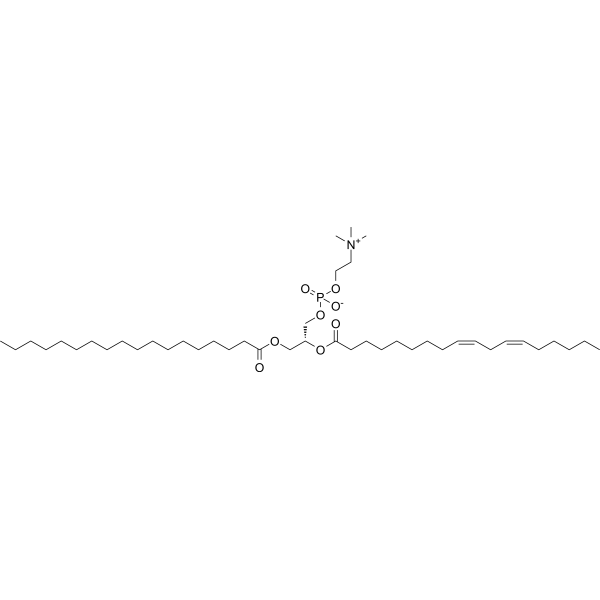
- HY-DY1073
-
|
|
Fluorescent Dye
|
Others
|
MitoPerOx (solution) is a mitochondrial-targeted, lipid peroxidation-indicating fluorescent probe with BODIPY581/591 fluorophores. The triphenylphosphine cation (TPP+) of MitoPerOx can be selectively enriched in mitochondria (depending on membrane potential) and can be used to detect lipid peroxidation in the inner mitochondrial membrane. Under the action of lipid peroxides, the BODIPY581/591 fluorophores of MitoPerOx shift their emission wavelength from 590 nm (reduced state) to 520 nm (oxidized state) , and ratiometric detection can be performed at an excitation wavelength of 488 nm. MitoPerOx can specifically monitor the peroxidation of mitochondrial phospholipids (especially cardiolipin) and is used in the study of oxidative stress-related diseases (such as aging, neurodegenerative diseases, and mitochondrial dysfunction) .
Solvent and concentration: DMSO: 2 mM
|
-

- HY-141636S
-
|
1-Palmitoyl-2-arachidonoyl-sn-glycero-3-phosphocholine-d9-1; PAPC-d9-1; PC(16:0/20:4)-d9-1
|
Isotope-Labeled Compounds
Endogenous Metabolite
|
Cardiovascular Disease
|
|
1-PalMitoyl-2-arachidoyllecithin-d9-1 (1-Palmitoyl-2-arachidonoyl-sn-glycero-3-phosphocholine-d9-1) is deuterium labeled 1-PalMitoyl-2-arachidoyllecithin. 1-Palmitoyl-2-arachidonoyl-sn-glycero-3-PC (PAPC) is a phospholipid containing palmitic acid (16:0) and arachidonic acid (20:4) at the sn-1 and sn-2 positions, respectively, that is found in biological membranes. PAPC is oxidized in vivo, and its oxidation products are involved in chronic inflammation and vascular disease. PAPC has been used to study signaling of oxidized phospholipids. Levels of PAPC are decreased in isolated human multiple myeloma cells .
|
-

- HY-W714524
-
|
16:0-18:1 PS (POPS)
|
Liposome
|
Others
|
|
2-Oleoyl-1-palmitoyl-sn-glycero-3-phospho-L-serine sodium (16:0-18:1 PS (POPS)) is an anionic phospholipid with oleic acid (18:1) and palmitic acid (16:0) tails containing a carboxylic acid (COOH) and amine (NH2) in their head group. 2-Oleoyl-1-palmitoyl-sn-glycero-3-phospho-L-serine sodium has been used in the preparation of lipid-mixing vesicles, liposomes, and artificial membranes .
|
-

- HY-118431
-
|
|
Biochemical Assay Reagents
|
Others
|
|
DMABA NHS ester can chemically react with the primary amine groups of the major phospholipid component of the cell membrane, Phosphatidylethanolamine (PE). Through precursor ion scanning, all PE subclasses labeled with DMABA can be detected. DMABA NHS ester can be used in combination with isotope-labeled compounds such as DMABA-d6 NHS ester, DMABA-d10 NHS ester, and DMABA-d4 NHS ester to observe changes in the distribution of PE lipids and the formation of novel PE lipid products .
|
-
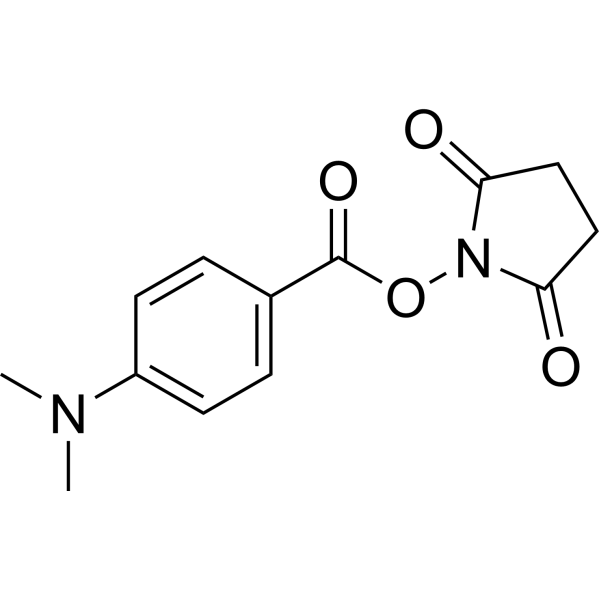
- HY-W009756
-
|
|
Fluorescent Dye
|
Others
|
|
N-Phenyl-1-naphthylamine is a dye that fluoresces strongly when bound to the inner phospholipid bilayer of Gram-negative bacteria. N-Phenyl-1-naphthylamine can be used to measure outer membrane permeability. N-Phenylnaphthalen-1-amine is a fluorescence probe for odorant-binding proteins (OBP) with a dissociation constant of 1.67 μM. N-Phenylnaphthalen-1-amine exhibits an excitation wavelength of 337 nM and an emission wavelength of 407 nM .
|
-

- HY-W355700
-
|
|
Drug Metabolite
|
Infection
|
|
1-oleoyl-sn-glycero-3-phosphoethanolamine (LysoPE 18:1) is a lysophosphatidylethanolamine molecule involved in phospholipid metabolism, targeting cell membrane receptors (such as G protein-coupled receptors) to regulate cell signaling pathways. 1-oleoyl-sn-glycero-3-phosphoethanolamine may activate mitogen-activated protein kinase (MAPK) signaling, promote cell migration, regulate inflammatory responses and lipid metabolism, and has both pro-inflammatory and anti-inflammatory activities. 1-oleoyl-sn-glycero-3-phosphoethanolamine is mainly used in the screening of biomarkers for metabolic diseases (such as non-alcoholic fatty liver disease and obesity), as well as the study of the mechanism of lysophospholipids in cell membrane homeostasis and signal transduction .
|
-
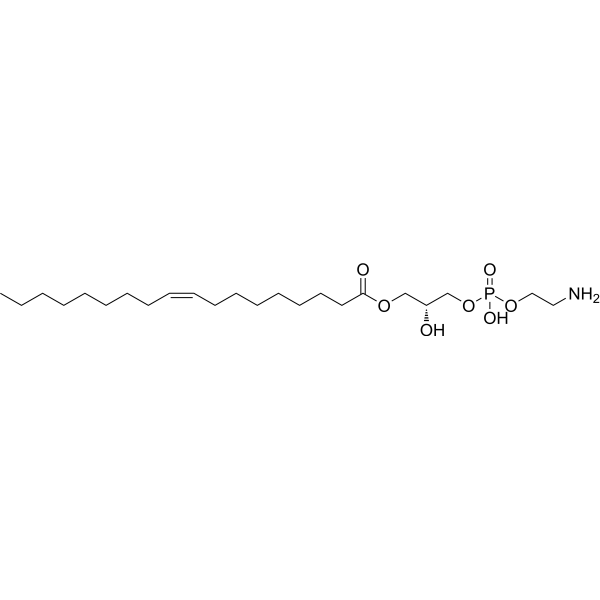
- HY-D3381
-
|
|
Fluorescent Dye
|
Others
|
|
MitoCLox is a mitochondria-targeted ratiometric fluorescent probe for measuring mitochondrial inner membrane lipid peroxidation .
|
-

- HY-130462S
-
|
POPC-d31
|
Isotope-Labeled Compounds
|
Others
|
|
1-Palmitoyl-2-oleoyl-sn-glycero-3-PC-d31 is deuterium labeled 1-Palmitoyl-2-oleoyl-sn-glycero-3-PC. 1-Palmitoyl-2-oleoyl-sn-glycero-3-PC (POPC), a phospholipid, is a major component of biological membranes. 1-Palmitoyl-2-oleoyl-sn-glycero-3-PC is used for
|
-

- HY-167548
-
|
|
PKC
Potassium Channel
|
Others
|
|
L-α-Phosphatidylinositol-4,5-bisphosphate ammonium is a key signaling lipid. L-α-Phosphatidylinositol-4,5-bisphosphate ammonium is an activator of PKC in the presence of calcium ions and phospholipid serine. L-α-Phosphatidylinositol-4,5-bisphosphate ammonium is also an antagonist of the KIR3.4 (ATP-sensitive potassium, KATP) channel. L-α-Phosphatidylinositol-4,5-bisphosphate ammonium can be used in research related to signal transduction, ion channel regulation, and membrane transport.
|
-

- HY-130462S1
-
|
POPC-d82
|
Isotope-Labeled Compounds
|
Others
|
|
1-Palmitoyl-2-oleoyl-sn-glycero-3-PC-d82 is deuterium labeled 1-Palmitoyl-2-oleoyl-sn-glycero-3-PC. 1-Palmitoyl-2-oleoyl-sn-glycero-3-PC (POPC), a phospholipid, is a major component of biological membranes. 1-Palmitoyl-2-oleoyl-sn-glycero-3-PC is used for
|
-
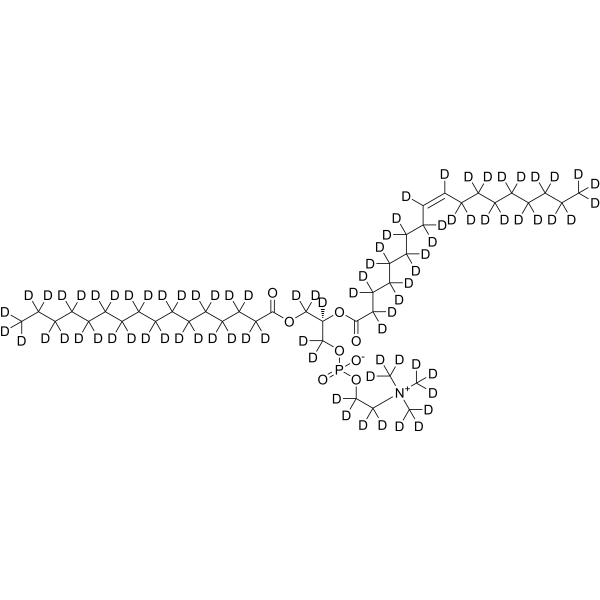
- HY-164579
-
|
|
Liposome
|
Others
|
|
NH2-GG-DSPE is a lipid compound that can be used for liposome preparation. Liposomes are the main component of vesicles with concentric phospholipid bilayer membranes, which can be used to construct drug delivery systems for anti-cancer and anti-infection fields. Highly polar water-soluble loads can be captured in the internal aqueous space of liposomes, while lipophilic loads can be distributed into the lipid bilayer and become part of the lipid bilayer. Especially for the delivery of antisense oligonucleotides, it can overcome the problems of inefficient cellular uptake and rapid loss in the body.
|
-

- HY-40118
-
|
Boc-L-proline methyl ester
|
Liposome
|
Others
|
|
Boc-Pro-OMe (Boc-L-proline methyl ester) is a lipid compound that can be used for liposome preparation. Liposomes are the main component of vesicles with concentric phospholipid bilayer membranes, which can be used to construct drug delivery systems for anti-cancer and anti-infection fields. Highly polar water-soluble loads can be captured in the internal aqueous space of liposomes, while lipophilic loads can be distributed into the lipid bilayer and become part of the lipid bilayer. Especially for the delivery of antisense oligonucleotides, it can overcome the problems of inefficient cellular uptake and rapid loss in the body.
|
-

- HY-W714524A
-
|
16:0-18:1 PS (POPS) free acid
|
Liposome
|
Others
|
|
2-Oleoyl-1-palmitoyl-sn-glycero-3-phospho-L-serine (16:0-18:1 PS (POPS) free acid) is an anionic phospholipid with oleic acid (18:1) and palmitic acid (16:0) tails containing a carboxylic acid (COOH) and amine (NH2) in their head group. 2-Oleoyl-1-palmitoyl-sn-glycero-3-phospho-L-serine has been used in the preparation of lipid-mixing vesicles, liposomes, and artificial membranes .
|
-

- HY-108496
-
|
S1P
|
Endogenous Metabolite
LPL Receptor
|
Inflammation/Immunology
Endocrinology
Cancer
|
|
Sphingosine-1-phosphate (S1P) is an agonist of S1P1-5 receptors and a ligand of GPR3, GPR6 and GPR12. Sphingosine-1-phosphate is an intracellular second messenger and mobilizes Ca 2+ as an extracellular ligand for G protein-coupled receptors . Sphingosine-1-phosphate is an important lipid mediator generated from Sphingomyelin (HY-113498) or other membrane phospholipids . Sphingosine-1-phosphate stimulates the DNA synthesis, cell proliferation and migration .
|
-
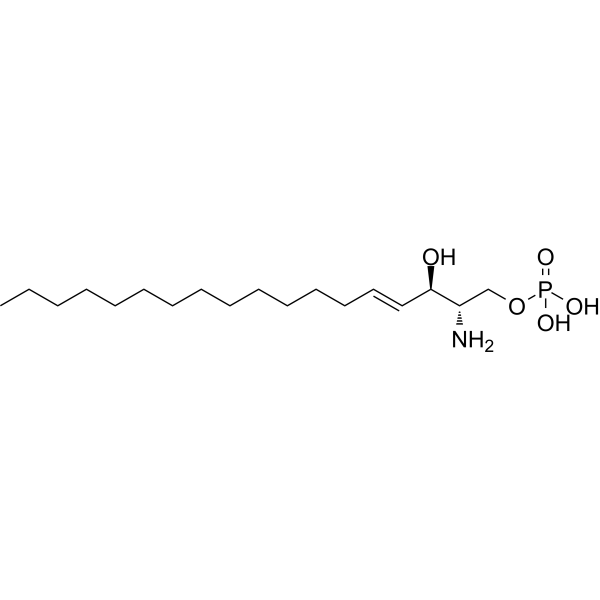
- HY-167809
-
|
|
Biochemical Assay Reagents
|
|
|
1-Palmitoyl-2-cholesterylcarbonoyl-sn-glycero-3-phosphocholine is a sterol-modified phospholipid with the activity of maintaining the stability of membrane bilayer structure and enhancing the liposome-mediated compound delivery process. 1-Palmitoyl-2-cholesterylcarbonoyl-sn-glycero-3-phosphocholine is widely used in biomedical applications to improve the delivery efficiency of compounds. 1-Palmitoyl-2-cholesterylcarbonoyl-sn-glycero-3-phosphocholine can also improve the release and distribution of compounds in cells.
|
-

- HY-112839
-
|
|
Endogenous Metabolite
|
|
|
1-Myristoyl-2-(4-nitrophenylsuccinyl)-sn-glycero-3-phosphocholine is a synthetic phospholipid with the activity of inhibiting cell proliferation. 1-Myristoyl-2-(4-nitrophenylsuccinyl)-sn-glycero-3-phosphocholine can be used as a compound carrier to increase the bioavailability of the compound. 1-Myristoyl-2-(4-nitrophenylsuccinyl)-sn-glycero-3-phosphocholine also plays an important role in cell membrane research and provides an effective tool for understanding cell signal transduction.
|
-

- HY-D1736
-
|
|
Fluorescent Dye
|
Others
|
|
BODIPY FL-C16 is a BODIPY-labeled analog of Palmitic acid (HY-N0830), which serves as a fluorescent lipid tracer. BODIPY FL-C16 also acts as a ligand for liver fatty acid-binding protein (L-FABP) and intestinal fatty acid-binding protein (I-FABP) , with Kd values of 270 nM and 330 nM, respectively. BODIPY FL-C16 is rapidly taken up by cells, and after metabolic conversion to phospholipids, it is incorporated into the membrane structures of intracellular organelles and extracellular vesicles .
|
-

- HY-B1513
-
|
|
Environmental Pollutants
SARS-CoV
Microtubule/Tubulin
|
Infection
Metabolic Disease
Cancer
|
|
α-Cyclodextrin (α-CD) is a soluble fiber derived from corn. α-Cyclodextrin can deplete sphingolipids and phospholipids from cell membranes. α-Cyclodextrin interacts with tubulin. α-Cyclodextrin improves defenses against SARS-CoV-2 infection. α-Cyclodextrin enhances the anticancer efficacy of Crcumin (HY-N0005) against breast, lung and cervical cancer. α-Cyclodextrin has beneficial effects on body weight and blood lipids .
|
-
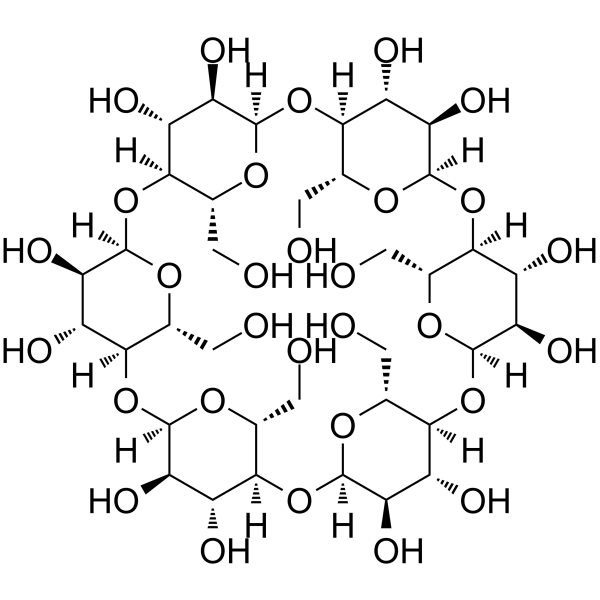
- HY-108496S
-
|
S1P-d7
|
Endogenous Metabolite
LPL Receptor
|
Endocrinology
|
|
Sphingosine-1-phosphate-d7 is the deuterium labeled Sphingosine-1-phosphate. Sphingosine-1-phosphate (S1P) is an agonist of S1P1-5 receptors and a ligand of GPR3, GPR6 and GPR12.?Sphingosine-1-phosphate is an intracellular second messenger and mobilizes Ca2+ as an extracellular ligand for G protein-coupled receptors . Sphingosine-1-phosphate is an important lipid mediator generated from Sphingomyelin (HY-113498) or other membrane phospholipids .
|
-
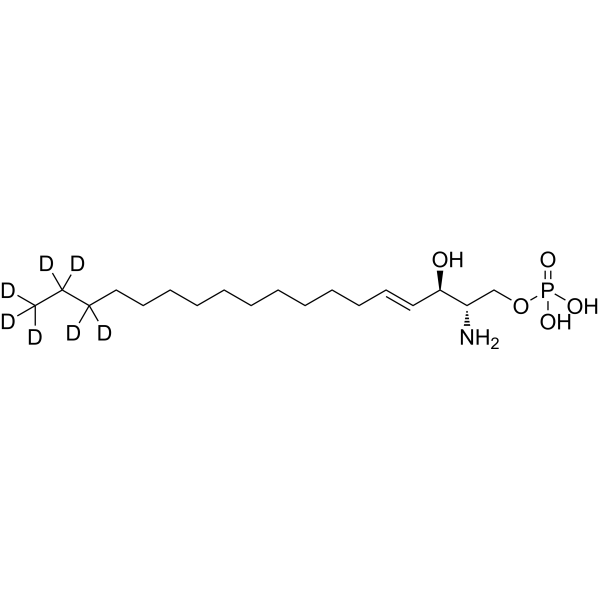
- HY-A0245R
-
|
|
Reference Standards
VD/VDR
|
Metabolic Disease
|
|
1-Palmitoyl-2-oleoyl-sn-glycero-3-PC (Standard) is the analytical standard of 1-Palmitoyl-2-oleoyl-sn-glycero-3-PC. This product is intended for research and analytical applications. 1-Palmitoyl-2-oleoyl-sn-glycero-3-PC (POPC), a phospholipid, is a major component of biological membranes. 1-Palmitoyl-2-oleoyl-sn-glycero-3-PC is used for the preparation of liposomes and studying the properties of lipid bilayers .
|
-

- HY-A0183
-
|
phospholipids, phosphatidylserines; Serine glycerophosphatides
|
Akt
TGF-β Receptor
|
Inflammation/Immunology
|
|
Phosphatidylserine (Phospholipids) is a well-conserved anti-inflammatory and immunosuppressive signal. Phosphatidylserine is involved in membrane translocation and the activation of protein kinase C, participating in Akt signaling through its interaction with PIP3. The local exposure of Phosphatidylserine can interact with complement and other proteins, promoting microglial phagocytosis during critical periods of synaptic refinement. Phosphatidylserine can promote blood coagulation in the extracellular environment and acts as a "eat me" signal to clear out apoptotic cells. Phosphatidylserine can suppress inflammation in tissues by inducing TGF-β secretion and inhibiting immune responses .
|
-
- HY-DY1102
-
|
|
Fluorescent Dye
|
Others
|
BODIPY FL-C16 (solution) is a BODIPY-labeled analog of Palmitic acid (HY-N0830), which serves as a fluorescent lipid tracer. BODIPY FL-C16 (solution) also acts as a ligand for liver fatty acid-binding protein (L-FABP) and intestinal fatty acid-binding protein (I-FABP) , with Kd values of 270 nM and 330 nM, respectively. BODIPY FL-C16 (solution) is rapidly taken up by cells, and after metabolic conversion to phospholipids, it is incorporated into the membrane structures of intracellular organelles and extracellular vesicles .
Solvent and concentration: DMSO: 5 mM
|
-

- HY-157678
-
|
18:2 PS sodium
|
Liposome
|
Others
|
|
1,2-Dilinoleoyl-sn-glycero-3-phospho-L-serine sodium (18:2 PS sodium) is a lipid compound that can be used for liposome preparation. Liposomes are the main component of vesicles with concentric phospholipid bilayer membranes, which can be used to construct drug delivery systems for anti-cancer and anti-infection fields. Highly polar water-soluble loads can be captured in the internal aqueous space of liposomes, while lipophilic loads can be distributed into the lipid bilayer and become part of the lipid bilayer. Especially for the delivery of antisense oligonucleotides, it can overcome the problems of inefficient cellular uptake and rapid loss in the body.
|
-

- HY-179554
-
|
PI(4,5)P2-fluorescein triethylammonium
|
Fluorescent Dye
|
Others
|
|
PtdIns-(4,5)-P2-fluorescein (PI(4,5)P2-fluorescein) triethylammonium is a fluorescently labeled phosphatidylinositol-4,5-bisphosphate, which is a marked form of an important phospholipid signaling molecule (PIP2) on the cell membrane. PtdIns-(4,5)-P2-fluorescein triethylammonium can be used to detect proteins that interact with phosphatidylinositol-4,5-bisphosphate, such as PI3K, PTEN, and PH domain proteins, etc .
|
-

- HY-130462S3
-
|
POPC-d64
|
Isotope-Labeled Compounds
|
Others
|
|
1-Palmitoyl-2-oleoyl-sn-glycero-3-PC-d62 (POPC-d64) is deuterium labeled 1-Palmitoyl-2-oleoyl-sn-glycero-3-PC. 1-Palmitoyl-2-oleoyl-sn-glycero-3-PC (POPC), a phospholipid, is a major component of biological membranes. 1-Palmitoyl-2-oleoyl-sn-glycero-3-PC is used for the preparation of liposomes and studying the properties of lipid bilayers .
|
-

- HY-157624
-
|
18:0-22:6 PE
|
Liposome
|
Others
|
|
1-Stearoyl-2-docosahexaenoyl-sn-glycero-3-phosphoethanolamine (18:0-22:6 PE) is a lipid compound that can be used for liposome preparation. Liposomes are the main component of vesicles with concentric phospholipid bilayer membranes, which can be used to construct drug delivery systems for anti-cancer and anti-infection fields. Highly polar water-soluble loads can be captured in the internal aqueous space of liposomes, while lipophilic loads can be distributed into the lipid bilayer and become part of the lipid bilayer. Especially for the delivery of antisense oligonucleotides, it can overcome the problems of inefficient cellular uptake and rapid loss in the body.
|
-

- HY-134508
-
|
|
mTOR
|
Neurological Disease
Cancer
|
|
C24-Ceramide is an orally active competitive binding agonist of PIP4K2C (mTOR complex regulator), thereby activating the mTOR signaling pathway. At the same time, C24-Ceramide changes the membrane morphology by inducing the formation of a partially interlocked gel phase in the phospholipid bilayer. C24-Ceramide can promote the proliferation and migration of keratinocytes to accelerate skin wound healing and drive the proliferation and metastasis of gallbladder cancer cells. The level of C24-Ceramide in serum can be used as a diagnostic marker for gallbladder cancer .
|
-
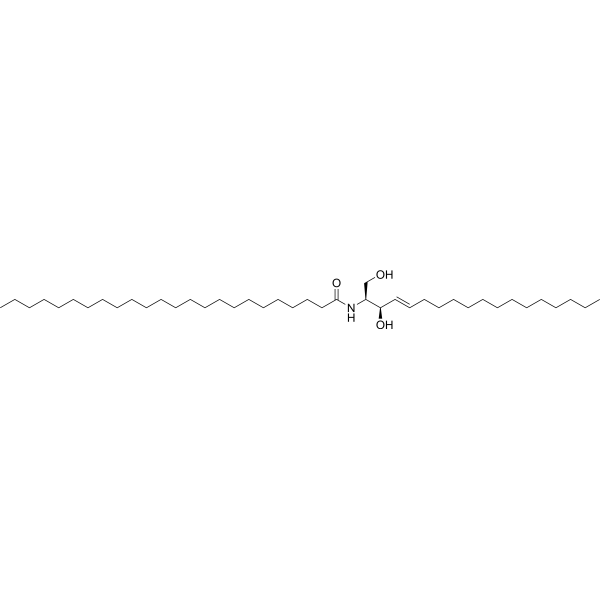
- HY-165029
-
|
PLPC
|
Liposome
|
Others
|
|
1-Palmitoyl-2-linoleoyl-sn-glycero-3-PC (PLPC) is a phospholipid used as a major component in lipid bilayer system models. 1-Palmitoyl-2-linoleoyl-sn-glycero-3-PC can serve as an untreated control, mixed with oxidized lipids such as 1-palmitoyl-2-(13-hydroxy-9,11-octadecanedienoyl)-lecithin (OHPLPC) and 1-palmitoyl-2-(13-hydroperoxy-9,11-octadecanedienoyl)-lecithin (HpPLPC), to study the effects of oxidation on membrane properties .
|
-

- HY-W251428
-
|
Egg PG
|
Biochemical Assay Reagents
|
Others
|
|
Phosphatidylglycerols (PG) is a selective inhibitor targeting the TLR4 accessory protein CD14/MD-2 complex, inhibiting LPS or virus (such as RSV)-mediated inflammatory signaling pathways through competitive binding. Phosphatidylglycerols directly bind to viral particles to block infection, inhibit COX-2 expression to reduce the release of inflammatory factors (IL-6, IL-8), and improve oxidative stress by regulating mitochondrial membrane phospholipid remodeling. Phosphatidylglycerols can be taken orally or by inhalation and can be used in the study of chronic inflammatory diseases (such as atherosclerosis) and respiratory viral infections (such as RSV) .
|
-
- HY-130462S4
-
|
POPC-d9
|
Isotope-Labeled Compounds
|
Others
|
|
1-Palmitoyl-2-oleoyl-sn-glycero-3-PC-d9 (POPC-d9) is the deuterium labeled 1-Palmitoyl-2-oleoyl-sn-glycero-3-PC (HY-130462). 1-Palmitoyl-2-oleoyl-sn-glycero-3-PC (POPC), a phospholipid, is a major component of biological membranes. 1-Palmitoyl-2-oleoyl-sn-glycero-3-PC is used for the preparation of liposomes and studying the properties of lipid bilayers .
|
-

- HY-124617
-
|
|
Apoptosis
Bacterial
|
Infection
Cancer
|
|
AMXT-1501 is a Bacterial agent and polyamine transport system inhibitor. AMXT-1501 targets membrane phospholipids and exhibits antibacterial activity against a variety of Gram-positive and Gram-negative multidrug-resistant bacteria . AMXT-1501 inhibits capsular biosynthesis in Streptococcus pneumoniae . AMXT-1501 targets ornithine decarboxylase and polyamines to inhibit the proliferation of neuroblastoma cells . AMXT-1501 in combination with DFMO (HY-B0744) induces Apoptosis in neuroblastoma cells. AMXT-1501 is applicable to research related to multidrug-resistant bacterial infections, pneumococcal infections, Streptococcus pneumoniae infections, and neuroblastoma .
|
-
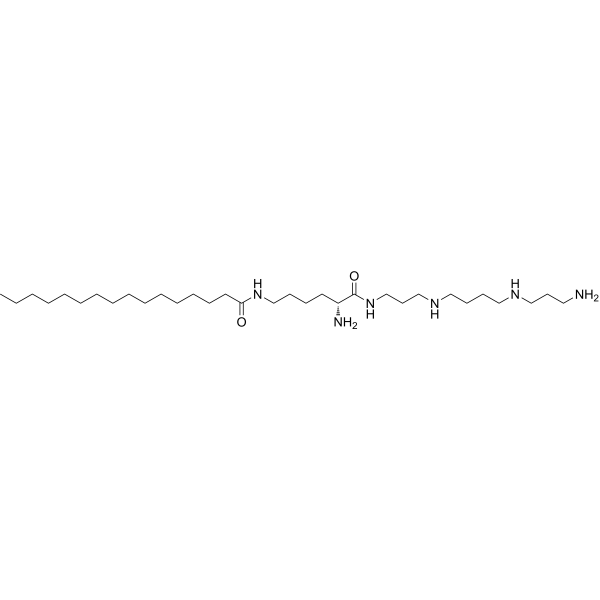
- HY-130462S2
-
|
POPC-13C16
|
Isotope-Labeled Compounds
Liposome
|
Others
|
|
1-Palmitoyl-2-oleoyl-sn-glycero-3-PC- 13C16 (POPC- 13C16) is 13C labeled 1-Palmitoyl-2-oleoyl-sn-glycero-3-PC. 1-Palmitoyl-2-oleoyl-sn-glycero-3-PC (POPC), a phospholipid, is a major component of biological membranes. 1-Palmitoyl-2-oleoyl-sn-glycero-3-PC is used for the preparation of liposomes and studying the properties of lipid bilayers .
|
-

- HY-130462S5
-
|
POPC-d62
|
Isotope-Labeled Compounds
|
Others
|
|
1-Palmitoyl-2-oleoyl-sn-glycero-3-PC-d62 (POPC-d62) is the deuterium labeled 1-Palmitoyl-2-oleoyl-sn-glycero-3-PC (HY-130462). 1-Palmitoyl-2-oleoyl-sn-glycero-3-PC (POPC), a phospholipid, is a major component of biological membranes. 1-Palmitoyl-2-oleoyl-sn-glycero-3-PC is used for the preparation of liposomes and studying the properties of lipid bilayers .
|
-

- HY-165975
-
|
(2S)-3-Keto-C6-dihydrosphingosine hydrochloride
|
Liposome
|
Others
|
|
(2S)-3-Keto sphinganine (d6:0) ((2S)-3-Keto-C6-dihydrosphingosine) hydrochloride is a lipid compound that can be used for liposome preparation. Liposomes are the main component of vesicles with concentric phospholipid bilayer membranes, which can be used to construct drug delivery systems for anti-cancer and anti-infection fields. Highly polar water-soluble loads can be captured in the internal aqueous space of liposomes, while lipophilic loads can be distributed into the lipid bilayer and become part of the lipid bilayer. Especially for the delivery of antisense oligonucleotides, it can overcome the problems of inefficient cellular uptake and rapid loss in the body.
|
-

- HY-124617A
-
|
|
Apoptosis
Bacterial
|
Infection
Inflammation/Immunology
Cancer
|
|
AMXT-1501 tetrahydrochloride is a Bacterial agent and polyamine transport system inhibitor. AMXT-1501 tetrahydrochloride targets membrane phospholipids and exhibits antibacterial activity against a variety of Gram-positive and Gram-negative multidrug-resistant bacteria . AMXT-1501 tetrahydrochloride inhibits capsular biosynthesis in Streptococcus pneumoniae . AMXT-1501 tetrahydrochloride targets ornithine decarboxylase and polyamines to inhibit the proliferation of neuroblastoma cells . AMXT-1501 tetrahydrochloride in combination with DFMO (HY-B0744) induces Apoptosis in neuroblastoma cells. AMXT-1501 tetrahydrochloride is applicable to research related to multidrug-resistant bacterial infections, pneumococcal infections, Streptococcus pneumoniae infections, and neuroblastoma .
|
-
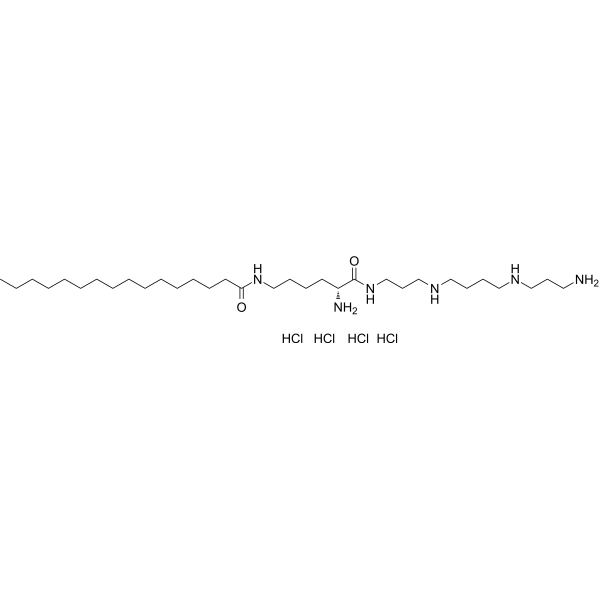
- HY-W355700S
-
|
|
Isotope-Labeled Compounds
|
Infection
|
|
1-Oleoyl-2-hydroxy-sn-glycero-3-phosphoethanolamine-d31 is the deuterium labeled 1-Oleoyl-2-hydroxy-sn-glycero-3-phosphoethanolamine (HY-W355700). 1-oleoyl-sn-glycero-3-phosphoethanolamine (LysoPE 18:1) is a lysophosphatidylethanolamine molecule involved in phospholipid metabolism, targeting cell membrane receptors (such as G protein-coupled receptors) to regulate cell signaling pathways. 1-oleoyl-sn-glycero-3-phosphoethanolamine may activate mitogen-activated protein kinase (MAPK) signaling, promote cell migration, regulate inflammatory responses and lipid metabolism, and has both pro-inflammatory and anti-inflammatory activities. 1-oleoyl-sn-glycero-3-phosphoethanolamine is mainly used in the screening of biomarkers for metabolic diseases (such as non-alcoholic fatty liver disease and obesity), as well as the study of the mechanism of lysophospholipids in cell membrane homeostasis and signal transduction .
|
-

- HY-145539
-
|
|
Liposome
|
Others
|
|
1,2-Dipalmitoyl-sn-glycero-3-PS sodium is a phosphatidylserine phospholipid. 1,2-Dipalmitoyl-sn-glycero-3-PS sodium is used for the preparation of phospholipid bilayers .
|
-
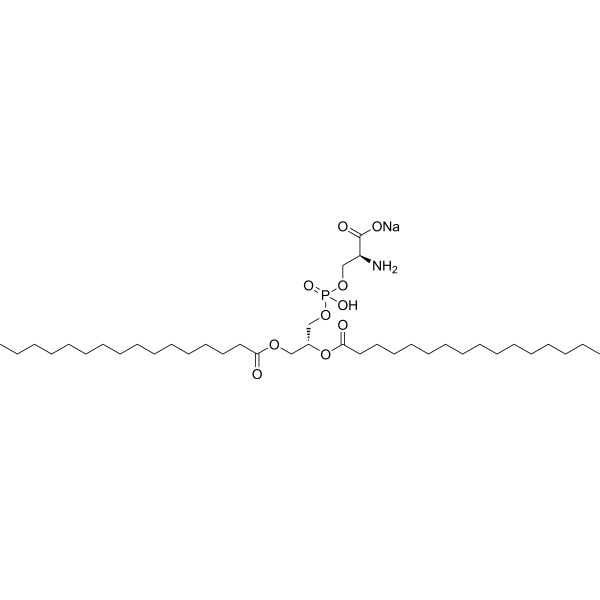
- HY-145539A
-
|
|
Liposome
|
Others
|
|
1,2-Dipalmitoyl-sn-glycero-3-PS is a phosphatidylserine phospholipid. 1,2-Dipalmitoyl-sn-glycero-3-PS is used for the preparation of phospholipid bilayers .
|
-

- HY-W040255
-
|
PGPC
|
Ferroptosis
FABP
Caspase
Interleukin Related
Apoptosis
|
Inflammation/Immunology
|
|
1-Palmitoyl-2-glutaryl-sn-glycero-3-phosphocholine is an oxidized phospholipid. 1-Palmitoyl-2-glutaryl-sn-glycero-3-phosphocholine reduces the viability of HUVECs, increases the levels of ferrous ions and lipid peroxidation, promotes the production of superoxide anions, and decreases the levels of glutathione and GPX4 in cells. 1-Palmitoyl-2-glutaryl-sn-glycero-3-phosphocholine upregulates the mRNA and protein levels of FABP3 in HUVECs, impairs mitochondrial membrane potential, and induces ferroptosis-related changes as well as mitochondrial dysfunction and damage. 1-Palmitoyl-2-glutaryl-sn-glycero-3-phosphocholine activates caspase-11 and promotes the continuous release of IL-1β from macrophages and dendritic cells. 1-Palmitoyl-2-glutaryl-sn-glycero-3-phosphocholine inhibits the proliferation of aortic smooth muscle cells and induces apoptosis in these cells. 1-Palmitoyl-2-glutaryl-sn-glycero-3-phosphocholine is applicable to relevant research on atherosclerosis .
|
-

- HY-Y1805
-
-

-
-
HY-L043
-
|
|
1,266 compounds
|
|
Lipids are a diverse and ubiquitous group of compounds which have many key biological functions, such as acting as structural components of cell membranes, serving as energy storage sources and participating in signaling pathways. Several studies suggest that bioactive lipids have effects on the treatment of some mental illnesses and metabolic syndrome. For example, DHA and EPA are important for monoaminergic neurotransmission, brain development and synaptic functioning, and are also correlated with a reduced risk of cancer and cardiovascular disease in clinical and animal studies.
MCE supplies a unique collection of 1,266 lipid and lipid derivative related compounds including triglycerides, phospholipids, sphingolipids, steroids and their structural analogues or derivatives. MCE lipid compound library can be used for research in bioactive lipids, and high throughput screening (HTS) and high content screening (HCS).
|
| Cat. No. |
Product Name |
Type |
-
- HY-D0080
-
Laurdan
Maximum Cited Publications
23 Publications Verification
|
Fluorescent Dyes
|
|
Laurdan is a membrane-permeable fluorescent probe that displays spectral sensitivity to the phospholipid phase of the cell membrane to which it is bound. Quantitation of generalized polarization (GP) of Laurdan can be used to identify phospholipid phase (Ex/Em = 370/440-490 nm).
|
-
- HY-D0986
-
|
|
Fluorescent Dyes
|
|
TMA-DPH is a hydrophobic fluorescent membrane probe (Ex=355 nm; Em=430 nm). TMA-DPH is able to anchor on the cell surface and localize to different regions of the phospholipid bilayer. By analyzing the fluorescence polarization values of TMA-DPH in the plasma membrane and membrane substructures, the fluidity of the cell membrane can be determined .
|
-
- HY-125623
-
|
|
Fluorescent Dyes
|
|
MitoPerOx is a mitochondrial-targeted, lipid peroxidation-indicating fluorescent probe with BODIPY581/591 fluorophores. The triphenylphosphine cation (TPP+) of MitoPerOx can be selectively enriched in mitochondria (depending on membrane potential) and can be used to detect lipid peroxidation in the inner mitochondrial membrane. Under the action of lipid peroxides, the BODIPY581/591 fluorophores of MitoPerOx shift their emission wavelength from 590 nm (reduced state) to 520 nm (oxidized state), and ratiometric detection can be performed at an excitation wavelength of 488 nm. MitoPerOx can specifically monitor the peroxidation of mitochondrial phospholipids (especially cardiolipin) and is used in the study of oxidative stress-related diseases (such as aging, neurodegenerative diseases, and mitochondrial dysfunction)[1][2].
|
-
- HY-W009756
-
|
|
Fluorescent Dyes
|
|
N-Phenyl-1-naphthylamine is a dye that fluoresces strongly when bound to the inner phospholipid bilayer of Gram-negative bacteria. N-Phenyl-1-naphthylamine can be used to measure outer membrane permeability. N-Phenylnaphthalen-1-amine is a fluorescence probe for odorant-binding proteins (OBP) with a dissociation constant of 1.67 μM. N-Phenylnaphthalen-1-amine exhibits an excitation wavelength of 337 nM and an emission wavelength of 407 nM .
|
-
- HY-D1736
-
|
|
Fluorescent Dyes
|
|
BODIPY FL-C16 is a BODIPY-labeled analog of Palmitic acid (HY-N0830), which serves as a fluorescent lipid tracer. BODIPY FL-C16 also acts as a ligand for liver fatty acid-binding protein (L-FABP) and intestinal fatty acid-binding protein (I-FABP) , with Kd values of 270 nM and 330 nM, respectively. BODIPY FL-C16 is rapidly taken up by cells, and after metabolic conversion to phospholipids, it is incorporated into the membrane structures of intracellular organelles and extracellular vesicles .
|
-
- HY-DY1057
-
|
|
Fluorescent Dyes
|
TMA-DPH (solution) is a hydrophobic fluorescent membrane probe (Ex=355 nm; Em=430 nm). TMA-DPH is able to anchor on the cell surface and localize to different regions of the phospholipid bilayer. By analyzing the fluorescence polarization values of TMA-DPH in the plasma membrane and membrane substructures, the fluidity of the cell membrane can be determined .
Solvent and concentration: DMSO: 10 mM
|
-
- HY-D1602
-
|
|
Fluorescent Dyes
|
|
BODIPY FL DHPE is a green-fluorescent phospholipid probe. BODIPY FL DHPE labels lipid 1,2-dihexadecanoyl-sn-glycero-phosphoethanolamine (DHPE), labeled liposomes can be internalized by membrane fusion. BODIPY FL DHPE can be used for investigations of membrane surface and membrane fusion. (λex=505 nm, λem=511 nm) .
|
-
- HY-DY1025
-
|
|
Fluorescent Dyes
|
Laurdan (solution) is a membrane-permeable fluorescent probe that displays spectral sensitivity to the phospholipid phase of the cell membrane to which it is bound. Quantitation of generalized polarization (GP) of Laurdan can be used to identify phospholipid phase.
Solvent and concentration: DMSO: 5 mM
|
-
- HY-DY1073
-
|
|
Fluorescent Dyes
|
MitoPerOx (solution) is a mitochondrial-targeted, lipid peroxidation-indicating fluorescent probe with BODIPY581/591 fluorophores. The triphenylphosphine cation (TPP+) of MitoPerOx can be selectively enriched in mitochondria (depending on membrane potential) and can be used to detect lipid peroxidation in the inner mitochondrial membrane. Under the action of lipid peroxides, the BODIPY581/591 fluorophores of MitoPerOx shift their emission wavelength from 590 nm (reduced state) to 520 nm (oxidized state) , and ratiometric detection can be performed at an excitation wavelength of 488 nm. MitoPerOx can specifically monitor the peroxidation of mitochondrial phospholipids (especially cardiolipin) and is used in the study of oxidative stress-related diseases (such as aging, neurodegenerative diseases, and mitochondrial dysfunction) .
Solvent and concentration: DMSO: 2 mM
|
-
- HY-D2100B
-
|
|
Fluorescent Dyes
|
|
Cy5-DSPE chloride is a far-infrared fluorescent phospholipid (λex/λem = 600/665 nm). Cy5-DSPE chloride is used to label liposomes, membranes and lipid nanoparticles, and can be applied to tracking and imaging studies of liposomes .
|
-
- HY-D1630
-
|
|
Fluorescent Dyes
|
|
4-Di-10-ASP is a fluorescent lipophilic tracer (Excitation 485 nm; Emission 620 nm). 4-Di-10-ASP can be used to stain phospholipid membranes in a specific manner .
|
-
- HY-D2100
-
|
|
Fluorescent Dyes
|
|
Cy5-DSPE is a far-infrared fluorescent phospholipid (λex/λem = 600/665 nm). Cy5-DSPE is used to label liposomes, membranes and lipid nanoparticles, and can be applied to tracking and imaging studies of liposomes .
|
-
- HY-D2980
-
|
|
Fluorescent Dyes
|
|
DSPE-PEG45-BG is a SNAP-tag reactive phospholipid-anchored molecule that enables targeted localization and spatiotemporal controlled immobilization of proteins on phospholipid membranes. DSPE-PEG45-BG can be applied to any SNAP-tag fusion protein .
|
-
- HY-147170
-
|
|
Fluorescent Dyes
|
|
(1,1'-Dipyrenyl)dimethyl ether exhibits intramolecular excimer fluorescence in competition with fluorescence from the locally excited pyrene chromophore. (1,1'-Dipyrenyl)dimethyl ether is soluble in synthetic phospholipid membranes .
|
-
- HY-D2100A
-
|
|
Fluorescent Dyes
|
|
Cy5-DSPE chloride ammonium is a far-infrared fluorescent phospholipid (λex/λem = 600/665 nm). Cy5-DSPE chloride ammonium is used to label liposomes, membranes and lipid nanoparticles, and can be applied to tracking and imaging studies of liposomes .
|
-
- HY-203233
-
|
|
Fluorescent Dyes
|
|
Rhodamine-DHPE is a fluorescently labeled phosphatidylethanolamine lipid that labels phospholipid bilayers. Rhodamine-DHPE serves as a fluorescence quenching substrate and membrane stain. The fluorescence lifetime of Rhodamine-DHPE decreases significantly in the presence of Cu 2+-PS complexes. Rhodamine-DHPE effectively stains the membranes of human red blood cells and mouse fibroblasts, and supports lifetime-resolved imaging via pump-probe fluorescence microscopy .
|
-
- HY-D3381
-
|
|
Fluorescent Dyes
|
|
MitoCLox is a mitochondria-targeted ratiometric fluorescent probe for measuring mitochondrial inner membrane lipid peroxidation .
|
-
- HY-DY1102
-
|
|
Fluorescent Dyes
|
BODIPY FL-C16 (solution) is a BODIPY-labeled analog of Palmitic acid (HY-N0830), which serves as a fluorescent lipid tracer. BODIPY FL-C16 (solution) also acts as a ligand for liver fatty acid-binding protein (L-FABP) and intestinal fatty acid-binding protein (I-FABP) , with Kd values of 270 nM and 330 nM, respectively. BODIPY FL-C16 (solution) is rapidly taken up by cells, and after metabolic conversion to phospholipids, it is incorporated into the membrane structures of intracellular organelles and extracellular vesicles .
Solvent and concentration: DMSO: 5 mM
|
| Cat. No. |
Product Name |
Type |
-
- HY-113424A
-
|
DOPC
|
Biochemical Assay Reagents
|
|
1,2-Dioleoyl-sn-glycero-3-phosphocholine (DOPC) is a phospholipid and is commonly used alone, or with other components, in the generation of micelles, liposomes, and other types of artificial membranes.
|
-
- HY-130462
-
|
POPC
|
Biochemical Assay Reagents
|
|
1-Palmitoyl-2-oleoyl-sn-glycero-3-PC (POPC), a phospholipid, is a major component of biological membranes. 1-Palmitoyl-2-oleoyl-sn-glycero-3-PC is used for the preparation of liposomes and studying the properties of lipid bilayers .
|
-
- HY-143202
-
|
|
Biochemical Assay Reagents
|
|
DPhPC is a phospholipid compound characterized by high mechanical and chemical stability, broad temperature phase stability, and high electrical resistance. DPhPC readily forms unilamellar vesicles and solid-supported bilayers. DPhPC is commonly used as a component of nanoliposomal drug carriers or as a model membrane material for studies on membrane proteins/ion channels .
|
-
- HY-W250118
-
|
|
Biochemical Assay Reagents
|
|
Cephalin form bovine brain is an orally active phospholipid widely present in organisms.Cephalin form bovine brain participates in the formation of autophagosome membrane as a lipid anchor of autophagy-related protein Atg8/LC3. Cephalin form bovine brain enhances Autophagic flux, promotes cell differentiation, regulates lipid droplet fusion, delays aging, and also affects lipid metabolism and membrane integrity .
|
-
- HY-148123
-
|
|
Biochemical Assay Reagents
|
|
Glycerophospholipids and cephalins are a class of phospholipid compounds and important components of neural membranes. Glycerophospholipids and cephalins are hydrolysis substrates of phospholipase (such as PLA2, PLC, and PLD). After complete hydrolysis, they produce 1 mol of glycerol, phosphate, ethanolamine, and 2 mol of fatty acids, respectively. Glycerophospholipids and cephalins can maintain membrane structure, fluidity, and ion permeability, and serve as precursors of second messengers such as arachidonic acid and diacylglycerol. Glycerophospholipids and cephalins can regulate signal transduction, cell apoptosis, and membrane transport, and are used in the study of neurodegenerative diseases (such as Alzheimer's disease) .
|
-
- HY-148979
-
|
SAPE
|
Biochemical Assay Reagents
|
|
1-Stearoyl-2-arachidonoyl-sn-glycero-3-phosphorylethanolamine (SAPE) is a naturally-occurring phospholipid that can be found in inner mitochondrial membrane (MITO) .
|
-
- HY-142980
-
|
Dioleoylphosphatidylglycerol
|
Biochemical Assay Reagents
|
|
DOPG (Dioleoylphosphatidylglycerol) is a negatively charged phosphatidylglycerol phospholipid. DOPG is abundant in prokaryotic cell membranes and mitochondria, and has a low phase transition temperature and a tendency to form stable vesicles. DOPG inhibits the production of inflammatory mediators in macrophages in response to heat shock protein B4 (HSPB4)-activated toll-like receptor 2 (TLR2). DOPG is applicable to studies of membrane biology, drug-membrane interactions (especially in systems targeting negatively charged membranes), construction of drug delivery carriers, as well as research on sterile corneal inflammation and wound healing promotion .
|
-
- HY-D2100
-
|
|
Biochemical Assay Reagents
|
|
Cy5-DSPE is a far-infrared fluorescent phospholipid (λex/λem = 600/665 nm). Cy5-DSPE is used to label liposomes, membranes and lipid nanoparticles, and can be applied to tracking and imaging studies of liposomes .
|
-
- HY-142988
-
|
1S-2M-PC
|
Biochemical Assay Reagents
|
|
1-Stearoyl-2-myristoyl-sn-glycero-3-PC (1S-2M-PC) belongs to the class of asymmetric phospholipids. 1-Stearoyl-2-myristoyl-sn-glycero-3-PC is abundant in biological membranes .
|
-
- HY-142991
-
|
POPG
|
Biochemical Assay Reagents
|
|
1-Palmitoyl-2-oleoyl-sn-glycero-3-phosphatidylglycerol (POPG) is an anionic phosphatidylglycerol that often serves as a key component to co-construct model phospholipid bilayers with phosphatidylcholine (e.g., at a 3:1 POPC:POPG ratio) for investigating the structure and dynamics of transmembrane proteins. 1-Palmitoyl-2-oleoyl-sn-glycero-3-phosphatidylglycerol acts as a fundamental material for mimicking the physicochemical properties of biological membranes and enables the elucidation of membrane protein interaction mechanisms .
|
-
- HY-W142596
-
|
|
Biochemical Assay Reagents
|
|
1,2-DImyristoyl-rac-glycero-3-phosphocholine (DMPC), a zwitterionic phospholipid, is chosen as a simple eukaryotic cell membrane, mimicking the neutral charge of the surface membrane of eukaryotic plasma membranes .
|
-
- HY-130462R
-
|
POPC (Standard)
|
Biochemical Assay Reagents
|
|
1-Palmitoyl-2-oleoyl-sn-glycero-3-PC (Standard) is the analytical standard of 1-Palmitoyl-2-oleoyl-sn-glycero-3-PC. This product is intended for research and analytical applications. 1-Palmitoyl-2-oleoyl-sn-glycero-3-PC (POPC), a phospholipid, is a major component of biological membranes. 1-Palmitoyl-2-oleoyl-sn-glycero-3-PC is used for the preparation of liposomes and studying the properties of lipid bilayers .
|
-
- HY-164160
-
|
DPPS
|
Biochemical Assay Reagents
|
|
1,2-Dipalmitoyl-rac-glycero-3-phospho-L-serine (DPPS) is a phospholipid compound with good membrane-forming ability. 1,2-Dipalmitoyl-rac-glycero-3-phospho-L-serine can form stable and well-defined bilayers, which are suitable for the study of membrane dynamics. 1,2-Dipalmitoyl-rac-glycero-3-phospho-L-serine is often used to prepare liposomes for various applications in the biomedical field.
|
-
- HY-W440988E
-
|
|
Biochemical Assay Reagents
|
|
DOPE-mPEG10000 is a PEGylated phospholipid containing DOPE. DOPE-mPEG10000 combines the membrane fusion capabilities of DOPE with the stealth properties of PEG, playing a crucial role in mRNA vaccines, long-circulating liposomes, and drug delivery systems.
|
-
- HY-W440988H
-
|
|
Biochemical Assay Reagents
|
|
DOPE-mPEG20000 is a PEGylated phospholipid containing DOPE. DOPE-mPEG20000 combines the membrane fusion capabilities of DOPE with the stealth properties of PEG, playing a crucial role in mRNA vaccines, long-circulating liposomes, and drug delivery systems.
|
-
- HY-W440988I
-
|
|
Biochemical Assay Reagents
|
|
DOPE-mPEG30000 is a PEGylated phospholipid containing DOPE. DOPE-mPEG30000 combines the membrane fusion capabilities of DOPE with the stealth properties of PEG, playing a crucial role in mRNA vaccines, long-circulating liposomes, and drug delivery systems.
|
-
- HY-W440988A
-
|
|
Biochemical Assay Reagents
|
|
DOPE-mPEG350 is a PEGylated phospholipid containing DOPE. DOPE-mPEG350 combines the membrane fusion capabilities of DOPE with the stealth properties of PEG, playing a crucial role in mRNA vaccines, long-circulating liposomes, and drug delivery systems.
|
-
- HY-W440988B
-
|
|
Biochemical Assay Reagents
|
|
DOPE-mPEG500 is a PEGylated phospholipid containing DOPE. DOPE-mPEG500 combines the membrane fusion capabilities of DOPE with the stealth properties of PEG, playing a crucial role in mRNA vaccines, long-circulating liposomes, and drug delivery systems.
|
-
- HY-W440988C
-
|
|
Biochemical Assay Reagents
|
|
DOPE-mPEG550 is a PEGylated phospholipid containing DOPE. DOPE-mPEG550 combines the membrane fusion capabilities of DOPE with the stealth properties of PEG, playing a crucial role in mRNA vaccines, long-circulating liposomes, and drug delivery systems.
|
-
- HY-174972I
-
|
|
Biochemical Assay Reagents
|
|
mPEG20000-DPPE is a PEGylated phospholipid containing DPPE. DOPE-mPEG750 combines the membrane fusion capability of DPPE with the stealth properties of PEG, and can be used for applications such as constructing targeted drug delivery systems and liposome preparation.
|
-
- HY-W440988D
-
|
|
Biochemical Assay Reagents
|
|
DOPE-mPEG750 is a PEGylated phospholipid containing DOPE. DOPE-mPEG750 combines the membrane fusion capabilities of DOPE with the stealth properties of PEG, playing a crucial role in mRNA vaccines, long-circulating liposomes, and drug delivery systems.
|
-
- HY-W1052148C
-
|
|
Biochemical Assay Reagents
|
|
mPEG550-DMG is a PEGylated phospholipid containing DMG. mPEG550-DMG combines the membrane fusion capability of DMG with the stealth properties of PEG, and can be used for applications such as constructing targeted drug delivery systems and liposome preparation.
|
-
- HY-112764C
-
|
|
Biochemical Assay Reagents
|
|
mPEG500-DMG is a PEGylated phospholipid containing DMG. mPEG500-DMG combines the membrane fusion capability of DMG with the stealth properties of PEG, and can be used for applications such as constructing targeted drug delivery systems and liposome preparation.
|
-
- HY-W591381E
-
|
|
Biochemical Assay Reagents
|
|
mPEG1000-DSG is a PEGylated phospholipid containing DSG. mPEG1000-DSG combines the membrane fusion capability of DSG with the stealth properties of PEG, and can be used for applications such as constructing targeted drug delivery systems and liposome preparation.
|
-
- HY-112764E
-
|
|
Biochemical Assay Reagents
|
|
mPEG30000-DMG is a PEGylated phospholipid containing DMG. mPEG30000-DMG combines the membrane fusion capability of DMG with the stealth properties of PEG, and can be used for applications such as constructing targeted drug delivery systems and liposome preparation.
|
-
- HY-W591381B
-
|
|
Biochemical Assay Reagents
|
|
mPEG500-DSG is a PEGylated phospholipid containing DSG. mPEG500-DSG combines the membrane fusion capability of DSG with the stealth properties of PEG, and can be used for applications such as constructing targeted drug delivery systems and liposome preparation.
|
-
- HY-W1052192B
-
|
|
Biochemical Assay Reagents
|
|
mPEG20000-DMPE is a PEGylated phospholipid containing DMPE. mPEG20000-DMPE combines the membrane fusion capability of DMPE with the stealth properties of PEG, and can be used for applications such as constructing targeted drug delivery systems and liposome preparation.
|
-
- HY-W1049054C
-
|
|
Biochemical Assay Reagents
|
|
mPEG20000-DMG is a PEGylated phospholipid containing DMG. mPEG20000-DMG combines the membrane fusion capability of DMG with the stealth properties of PEG, and can be used for applications such as constructing targeted drug delivery systems and liposome preparation.
|
-
- HY-W591381C
-
|
|
Biochemical Assay Reagents
|
|
mPEG550-DSG is a PEGylated phospholipid containing DSG. mPEG550-DSG combines the membrane fusion capability of DSG with the stealth properties of PEG, and can be used for applications such as constructing targeted drug delivery systems and liposome preparation.
|
-
- HY-W1052192C
-
|
|
Biochemical Assay Reagents
|
|
mPEG30000-DMPE is a PEGylated phospholipid containing DMPE. mPEG30000-DMPE combines the membrane fusion capability of DMPE with the stealth properties of PEG, and can be used for applications such as constructing targeted drug delivery systems and liposome preparation.
|
-
- HY-112764D
-
|
|
Biochemical Assay Reagents
|
|
mPEG750-DMG is a PEGylated phospholipid containing DMG. mPEG750-DMG combines the membrane fusion capability of DMG with the stealth properties of PEG, and can be used for applications such as constructing targeted drug delivery systems and liposome preparation.
|
-
- HY-174972C
-
|
|
Biochemical Assay Reagents
|
|
mPEG500-DPPE is a PEGylated phospholipid containing DPPE. mPEG500-DPPE combines the membrane fusion capability of DPPE with the stealth properties of PEG, and can be used for applications such as constructing targeted drug delivery systems and liposome preparation.
|
-
- HY-174972H
-
|
|
Biochemical Assay Reagents
|
|
mPEG10000-DPPE is a PEGylated phospholipid containing DPPE. mPEG10000-DPPE combines the membrane fusion capability of DPPE with the stealth properties of PEG, and can be used for applications such as constructing targeted drug delivery systems and liposome preparation.
|
-
- HY-W1052148D
-
|
|
Biochemical Assay Reagents
|
|
mPEG1000-DMG is a PEGylated phospholipid containing DMG. mPEG1000-DMG combines the membrane fusion capability of DMG with the stealth properties of PEG, and can be used for applications such as constructing targeted drug delivery systems and liposome preparation.
|
-
- HY-W1048624C
-
|
|
Biochemical Assay Reagents
|
|
mPEG20000-DSG is a PEGylated phospholipid containing DSG. mPEG20000-DSG combines the membrane fusion capability of DSG with the stealth properties of PEG, and can be used for applications such as constructing targeted drug delivery systems and liposome preparation.
|
-
- HY-W591381H
-
|
|
Biochemical Assay Reagents
|
|
mPEG30000-DSG is a PEGylated phospholipid containing DSG. mPEG30000-DSG combines the membrane fusion capability of DSG with the stealth properties of PEG, and can be used for applications such as constructing targeted drug delivery systems and liposome preparation.
|
-
- HY-174972E
-
|
|
Biochemical Assay Reagents
|
|
mPEG750-DPPE is a PEGylated phospholipid containing DPPE. mPEG750-DPPE combines the membrane fusion capability of DPPE with the stealth properties of PEG, and can be used for applications such as constructing targeted drug delivery systems and liposome preparation.
|
-
- HY-174972J
-
|
|
Biochemical Assay Reagents
|
|
mPEG30000-DPPE is a PEGylated phospholipid containing DPPE. mPEG30000-DPPE combines the membrane fusion capability of DPPE with the stealth properties of PEG, and can be used for applications such as constructing targeted drug delivery systems and liposome preparation.
|
-
- HY-112764B
-
|
|
Biochemical Assay Reagents
|
|
mPEG350-DMG is a PEGylated phospholipid containing DMG. mPEG350-DMG combines the membrane fusion capability of DMG with the stealth properties of PEG, and can be used for applications such as constructing targeted drug delivery systems and liposome preparation.
|
-
- HY-W591381D
-
|
|
Biochemical Assay Reagents
|
|
mPEG750-DSG is a PEGylated phospholipid containing DSG. mPEG750-DSG combines the membrane fusion capability of DSG with the stealth properties of PEG, and can be used for applications such as constructing targeted drug delivery systems and liposome preparation.
|
-
- HY-W1052192A
-
|
|
Biochemical Assay Reagents
|
|
mPEG10000-DMPE is a PEGylated phospholipid containing DMPE. mPEG10000-DMPE combines the membrane fusion capability of DMPE with the stealth properties of PEG, and can be used for applications such as constructing targeted drug delivery systems and liposome preparation.
|
-
- HY-W1048624B
-
|
|
Biochemical Assay Reagents
|
|
mPEG10000-DSG is a PEGylated phospholipid containing DSG. mPEG10000-DSG combines the membrane fusion capability of DSG with the stealth properties of PEG, and can be used for applications such as constructing targeted drug delivery systems and liposome preparation.
|
-
- HY-174972B
-
|
|
Biochemical Assay Reagents
|
|
mPEG350-DPPE is a PEGylated phospholipid containing DPPE. mPEG350-DPPE combines the membrane fusion capability of DPPE with the stealth properties of PEG, and can be used for applications such as constructing targeted drug delivery systems and liposome preparation.
|
-
- HY-W1048624A
-
|
|
Biochemical Assay Reagents
|
|
mPEG5000-DSG is a PEGylated phospholipid containing DSG. mPEG5000-DSG combines the membrane fusion capability of DSG with the stealth properties of PEG, and can be used for applications such as constructing targeted drug delivery systems and liposome preparation.
|
-
- HY-174972D
-
|
|
Biochemical Assay Reagents
|
|
mPEG550-DPPE is a PEGylated phospholipid containing DPPE. mPEG550-DPPE combines the membrane fusion capability of DPPE with the stealth properties of PEG, and can be used for applications such as constructing targeted drug delivery systems and liposome preparation.
|
-
- HY-W1052148B
-
|
|
Biochemical Assay Reagents
|
|
mPEG10000-DMG is a PEGylated phospholipid containing DMG. mPEG10000-DMG combines the membrane fusion capability of DMG with the stealth properties of PEG, and can be used for applications such as constructing targeted drug delivery systems and liposome preparation.
|
-
- HY-W591381A
-
|
|
Biochemical Assay Reagents
|
|
mPEG350-DSG is a PEGylated phospholipid containing DSG. mPEG350-DSG combines the membrane fusion capability of DSG with the stealth properties of PEG, and can be used for applications such as constructing targeted drug delivery systems and liposome preparation.
|
-
- HY-183174B
-
|
|
Biochemical Assay Reagents
|
|
DSG-PEG3400-Galactose is a conjugate composed of DSG, a PEG chain, and terminal galactose. DSG-PEG3400-Galactose combines the membrane compatibility of phospholipids with the targeted recognition capabilities of galactose, making it suitable for research in biomaterial construction and drug delivery.
|
-
- HY-183174A
-
|
|
Biochemical Assay Reagents
|
|
DSG-PEG1000-Galactose is a conjugate composed of DSG, a PEG chain, and terminal galactose. DSG-PEG1000-Galactose combines the membrane compatibility of phospholipids with the targeted recognition capabilities of galactose, making it suitable for research in biomaterial construction and drug delivery.
|
-
- HY-182947C
-
|
|
Biochemical Assay Reagents
|
|
DSG-PEG5000-Mannose is a conjugate composed of DSG, a PEG chain, and terminal mannose. DSG-PEG5000-Mannose combines the membrane compatibility of phospholipids with the targeted recognition capabilities of mannose, making it suitable for research in biomaterial construction and drug delivery.
|
- HY-182947A
-
|
|
Biochemical Assay Reagents
|
|
DSG-PEG2000-Mannose is a conjugate composed of DSG, a PEG chain, and terminal mannose. DSG-PEG2000-Mannose combines the membrane compatibility of phospholipids with the targeted recognition capabilities of mannose, making it suitable for research in biomaterial construction and drug delivery.
|
- HY-183174C
-
|
|
Biochemical Assay Reagents
|
|
DSG-PEG5000-Galactose is a conjugate composed of DSG, a PEG chain, and terminal galactose. DSG-PEG5000-Galactose combines the membrane compatibility of phospholipids with the targeted recognition capabilities of galactose, making it suitable for research in biomaterial construction and drug delivery.
|
- HY-168374D
-
|
|
Biochemical Assay Reagents
|
|
DSPE-PEG10000-Mannose is a conjugate composed of DSPE, a PEG chain, and terminal mannose. DSPE-PEG10000-Mannose combines the membrane compatibility of phospholipids with the targeted recognition capabilities of mannose, making it suitable for research in biomaterial construction and drug delivery.
|
- HY-183174D
-
|
|
Biochemical Assay Reagents
|
|
DSG-PEG10000-Galactose is a conjugate composed of DSG, a PEG chain, and terminal galactose. DSG-PEG10000-Galactose combines the membrane compatibility of phospholipids with the targeted recognition capabilities of galactose, making it suitable for research in biomaterial construction and drug delivery.
|
- HY-182947D
-
|
|
Biochemical Assay Reagents
|
|
DSG-PEG10000-Mannose is a conjugate composed of DSG, a PEG chain, and terminal mannose. DSG-PEG10000-Mannose combines the membrane compatibility of phospholipids with the targeted recognition capabilities of mannose, making it suitable for research in biomaterial construction and drug delivery.
|
- HY-182947B
-
|
|
Biochemical Assay Reagents
|
|
DSG-PEG3400-Mannose is a conjugate composed of DSG, a PEG chain, and terminal mannose. DSG-PEG3400-Mannose combines the membrane compatibility of phospholipids with the targeted recognition capabilities of mannose, making it suitable for research in biomaterial construction and drug delivery.
|
- HY-182947
-
|
|
Biochemical Assay Reagents
|
|
DSG-PEG1000-Mannose is a conjugate composed of DSG, a PEG chain, and terminal mannose. DSG-PEG1000-Mannose combines the membrane compatibility of phospholipids with the targeted recognition capabilities of mannose, making it suitable for research in biomaterial construction and drug delivery.
|
- HY-168374C
-
|
|
Biochemical Assay Reagents
|
|
DSPE-PEG3400-Mannose is a conjugate composed of DSPE, a PEG chain, and terminal mannose. DSPE-PEG3400-Mannose combines the membrane compatibility of phospholipids with the targeted recognition capabilities of mannose, making it suitable for research in biomaterial construction and drug delivery.
|
- HY-183174
-
|
|
Biochemical Assay Reagents
|
|
DSG-PEG1000-Galactose is a conjugate composed of DSG, a PEG chain, and terminal galactose. DSG-PEG1000-Galactose combines the membrane compatibility of phospholipids with the targeted recognition capabilities of galactose, making it suitable for research in biomaterial construction and drug delivery.
|
- HY-168374B
-
|
|
Biochemical Assay Reagents
|
|
DSPE-PEG5000-Mannose is a conjugate composed of DSPE, a PEG chain, and terminal mannose. DSPE-PEG5000-Mannose combines the membrane compatibility of phospholipids with the targeted recognition capabilities of mannose, making it suitable for research in biomaterial construction and drug delivery.
|
- HY-182903D
-
|
|
Biochemical Assay Reagents
|
|
DMG-PEG10000-Mannose is a conjugate composed of dimyristoylglycerol (DMG), a PEG chain, and terminal mannose. DMG-PEG10000-Mannose combines the membrane compatibility of phospholipids with the targeted recognition capabilities of mannose, making it suitable for research in biomaterial construction and drug delivery.
|
- HY-183171
-
|
|
Biochemical Assay Reagents
|
|
DSG-PEG1000-CHO is a conjugate composed of DSG, a PEG chain, and a terminal aldehyde group (-CHO). DSG-PEG1000-CHO combines the membrane compatibility of phospholipids with the flexibility of hydroxyl modification, making it suitable for research in biomaterial construction and drug delivery.
|
- HY-182903C
-
|
|
Biochemical Assay Reagents
|
|
DMG-PEG5000-Mannose is a conjugate composed of dimyristoylglycerol (DMG), a PEG chain, and terminal mannose. DMG-PEG5000-Mannose combines the membrane compatibility of phospholipids with the targeted recognition capabilities of mannose, making it suitable for research in biomaterial construction and drug delivery.
|
- HY-183171B
-
|
|
Biochemical Assay Reagents
|
|
DSG-PEG5000-CHO is a conjugate composed of DSG, a PEG chain, and a terminal aldehyde group (-CHO). DSG-PEG5000-CHO combines the membrane compatibility of phospholipids with the flexibility of hydroxyl modification, making it suitable for research in biomaterial construction and drug delivery.
|
- HY-183170A
-
|
|
Biochemical Assay Reagents
|
|
DSG-PEG2000-Biotin is a conjugate composed of DSG, PEG chains, and biotin. DSG-PEG2000-Biotin combines the membrane compatibility of phospholipids with the high affinity of biotin for avidin/streptavidin, enabling applications such as targeted drug delivery systems and nanoparticle modification.
|
- HY-183170C
-
|
|
Biochemical Assay Reagents
|
|
DSG-PEG5000-Biotin is a conjugate composed of DSG, PEG chains, and biotin. DSG-PEG5000-Biotin combines the membrane compatibility of phospholipids with the high affinity of biotin for avidin/streptavidin, enabling applications such as targeted drug delivery systems and nanoparticle modification.
|
- HY-183170
-
|
|
Biochemical Assay Reagents
|
|
DSG-PEG1000-Biotin is a conjugate composed of DSG, PEG chains, and biotin. DSG-PEG1000-Biotin combines the membrane compatibility of phospholipids with the high affinity of biotin for avidin/streptavidin, enabling applications such as targeted drug delivery systems and nanoparticle modification.
|
- HY-183170B
-
|
|
Biochemical Assay Reagents
|
|
DSG-PEG3400-Biotin is a conjugate composed of DSG, PEG chains, and biotin. DSG-PEG3400-Biotin combines the membrane compatibility of phospholipids with the high affinity of biotin for avidin/streptavidin, enabling applications such as targeted drug delivery systems and nanoparticle modification.
|
- HY-183171C
-
|
|
Biochemical Assay Reagents
|
|
DSG-PEG3400-CHO is a conjugate composed of DSG, a PEG chain, and a terminal aldehyde group (-CHO). DSG-PEG3400-CHO combines the membrane compatibility of phospholipids with the flexibility of hydroxyl modification, making it suitable for research in biomaterial construction and drug delivery.
|
- HY-182903A
-
|
|
Biochemical Assay Reagents
|
|
DMG-PEG2000-Mannose is a conjugate composed of dimyristoylglycerol (DMG), a PEG chain, and terminal mannose. DMG-PEG2000-Mannose combines the membrane compatibility of phospholipids with the targeted recognition capabilities of mannose, making it suitable for research in biomaterial construction and drug delivery.
|
- HY-183171A
-
|
|
Biochemical Assay Reagents
|
|
DSG-PEG2000-CHO is a conjugate composed of DSG, a PEG chain, and a terminal aldehyde group (-CHO). DSG-PEG2000-CHO combines the membrane compatibility of phospholipids with the flexibility of hydroxyl modification, making it suitable for research in biomaterial construction and drug delivery.
|
- HY-182903
-
|
|
Biochemical Assay Reagents
|
|
DMG-PEG1000-Mannose is a conjugate composed of dimyristoylglycerol (DMG), a PEG chain, and terminal mannose. DMG-PEG1000-Mannose combines the membrane compatibility of phospholipids with the targeted recognition capabilities of mannose, making it suitable for research in biomaterial construction and drug delivery.
|
- HY-183171D
-
|
|
Biochemical Assay Reagents
|
|
DSG-PEG10000-CHO is a conjugate composed of DSG, a PEG chain, and a terminal aldehyde group (-CHO). DSG-PEG10000-CHO combines the membrane compatibility of phospholipids with the flexibility of hydroxyl modification, making it suitable for research in biomaterial construction and drug delivery.
|
- HY-182903B
-
|
|
Biochemical Assay Reagents
|
|
DMG-PEG3400-Mannose is a conjugate composed of dimyristoylglycerol (DMG), a PEG chain, and terminal mannose. DMG-PEG3400-Mannose combines the membrane compatibility of phospholipids with the targeted recognition capabilities of mannose, making it suitable for research in biomaterial construction and drug delivery.
|
- HY-183196
-
|
|
Biochemical Assay Reagents
|
|
DMG-PEG1000-Galactose is a conjugate composed of dimyristic glycerol (DMG), a PEG chain, and terminal galactose. DMG-PEG1000-Galactose combines the membrane compatibility of phospholipids with the targeted recognition capabilities of galactose, making it suitable for research in biomaterial construction and drug delivery.
|
- HY-183196D
-
|
|
Biochemical Assay Reagents
|
|
DMG-PEG10000-Galactose is a conjugate composed of dimyristic glycerol (DMG), a PEG chain, and terminal galactose. DMG-PEG10000-Galactose combines the membrane compatibility of phospholipids with the targeted recognition capabilities of galactose, making it suitable for research in biomaterial construction and drug delivery.
|
- HY-183196C
-
|
|
Biochemical Assay Reagents
|
|
DMG-PEG5000-Galactose is a conjugate composed of dimyristic glycerol (DMG), a PEG chain, and terminal galactose. DMG-PEG5000-Galactose combines the membrane compatibility of phospholipids with the targeted recognition capabilities of galactose, making it suitable for research in biomaterial construction and drug delivery.
|
- HY-183196A
-
|
|
Biochemical Assay Reagents
|
|
DMG-PEG2000-Galactose is a conjugate composed of dimyristic glycerol (DMG), a PEG chain, and terminal galactose. DMG-PEG2000-Galactose combines the membrane compatibility of phospholipids with the targeted recognition capabilities of galactose, making it suitable for research in biomaterial construction and drug delivery.
|
- HY-183172A
-
|
|
Biochemical Assay Reagents
|
|
DSG-PEG2000-Alkyne is a conjugate composed of DSG, a PEG chain, and a terminal alkyne group. DSG-PEG2000-Alkyne combines the membrane compatibility of phospholipids with the high reactivity of the alkyne group in click chemistry, making it suitable for research in biomaterial construction and drug delivery.
|
- HY-183172B
-
|
|
Biochemical Assay Reagents
|
|
DSG-PEG3400-Alkyne is a conjugate composed of DSG, a PEG chain, and a terminal alkyne group. DSG-PEG3400-Alkyne combines the membrane compatibility of phospholipids with the high reactivity of the alkyne group in click chemistry, making it suitable for research in biomaterial construction and drug delivery.
|
- HY-183398B
-
|
|
Biochemical Assay Reagents
|
|
DMG-PEG3400-CHO is a conjugate composed of dimyristic glycerol (DMG), a PEG chain, and a terminal aldehyde group (-CHO). DMG-PEG3400-CHO combines the membrane compatibility of phospholipids with the flexibility of hydroxyl modification, making it suitable for research in biomaterial construction and drug delivery.
|
- HY-183132B
-
|
|
Biochemical Assay Reagents
|
|
DSG-PEG3400-OH is a conjugate composed of dimyristic glycerol (DMG), a PEG chain, and terminal hydroxyl groups (-OH). DSG-PEG3400-OH combines the membrane compatibility of phospholipids with the flexibility of hydroxyl modification, making it suitable for research in biomaterial construction and drug delivery.
|
- HY-183132D
-
|
|
Biochemical Assay Reagents
|
|
DSG-PEG10000-OH is a conjugate composed of dimyristic glycerol (DMG), a PEG chain, and terminal hydroxyl groups (-OH). DSG-PEG10000-OH combines the membrane compatibility of phospholipids with the flexibility of hydroxyl modification, making it suitable for research in biomaterial construction and drug delivery.
|
- HY-183172D
-
|
|
Biochemical Assay Reagents
|
|
DSG-PEG10000-Alkyne is a conjugate composed of DSG, a PEG chain, and a terminal alkyne group. DSG-PEG10000-Alkyne combines the membrane compatibility of phospholipids with the high reactivity of the alkyne group in click chemistry, making it suitable for research in biomaterial construction and drug delivery.
|
- HY-183398D
-
|
|
Biochemical Assay Reagents
|
|
DMG-PEG10000-CHO is a conjugate composed of dimyristic glycerol (DMG), a PEG chain, and a terminal aldehyde group (-CHO). DMG-PEG10000-CHO combines the membrane compatibility of phospholipids with the flexibility of hydroxyl modification, making it suitable for research in biomaterial construction and drug delivery.
|
- HY-183398C
-
|
|
Biochemical Assay Reagents
|
|
DMG-PEG5000-CHO is a conjugate composed of dimyristic glycerol (DMG), a PEG chain, and a terminal aldehyde group (-CHO). DMG-PEG5000-CHO combines the membrane compatibility of phospholipids with the flexibility of hydroxyl modification, making it suitable for research in biomaterial construction and drug delivery.
|
- HY-183172C
-
|
|
Biochemical Assay Reagents
|
|
DSG-PEG5000-Alkyne is a conjugate composed of DSG, a PEG chain, and a terminal alkyne group. DSG-PEG5000-Alkyne combines the membrane compatibility of phospholipids with the high reactivity of the alkyne group in click chemistry, making it suitable for research in biomaterial construction and drug delivery.
|
- HY-183398
-
|
|
Biochemical Assay Reagents
|
|
DMG-PEG1000-CHO is a conjugate composed of dimyristic glycerol (DMG), a PEG chain, and a terminal aldehyde group (-CHO). DMG-PEG1000-CHO combines the membrane compatibility of phospholipids with the flexibility of hydroxyl modification, making it suitable for research in biomaterial construction and drug delivery.
|
- HY-183132
-
|
|
Biochemical Assay Reagents
|
|
DSG-PEG1000-OH is a conjugate composed of dimyristic glycerol (DMG), a PEG chain, and terminal hydroxyl groups (-OH). DSG-PEG1000-OH combines the membrane compatibility of phospholipids with the flexibility of hydroxyl modification, making it suitable for research in biomaterial construction and drug delivery.
|
- HY-183132C
-
|
|
Biochemical Assay Reagents
|
|
DSG-PEG1000-OH is a conjugate composed of dimyristic glycerol (DMG), a PEG chain, and terminal hydroxyl groups (-OH). DMG-PEG1000-Glucose combines the membrane compatibility of phospholipids with the flexibility of hydroxyl modification, making it suitable for research in biomaterial construction and drug delivery.
|
- HY-183172
-
|
|
Biochemical Assay Reagents
|
|
DSG-PEG1000-Alkyne is a conjugate composed of DSG, a PEG chain, and a terminal alkyne group. DSG-PEG1000-Alkyne combines the membrane compatibility of phospholipids with the high reactivity of the alkyne group in click chemistry, making it suitable for research in biomaterial construction and drug delivery.
|
- HY-183132A
-
|
|
Biochemical Assay Reagents
|
|
DSG-PEG2000-OH is a conjugate composed of dimyristic glycerol (DMG), a PEG chain, and terminal hydroxyl groups (-OH). DSG-PEG2000-OH combines the membrane compatibility of phospholipids with the flexibility of hydroxyl modification, making it suitable for research in biomaterial construction and drug delivery.
|
- HY-183398A
-
|
|
Biochemical Assay Reagents
|
|
DMG-PEG2000-CHO is a conjugate composed of dimyristic glycerol (DMG), a PEG chain, and a terminal aldehyde group (-CHO). DMG-PEG2000-CHO combines the membrane compatibility of phospholipids with the flexibility of hydroxyl modification, making it suitable for research in biomaterial construction and drug delivery.
|
- HY-183159B
-
|
|
Biochemical Assay Reagents
|
|
DSG-PEG3400-Glucose is a conjugate composed of DSG, a PEG chain, and terminal glucose. DSG-PEG3400-Glucose combines the membrane compatibility of phospholipids with glucose as an active site for sugar recognition or subsequent coupling reactions, making it suitable for research in biomaterial construction and drug delivery.
|
- HY-183159C
-
|
|
Biochemical Assay Reagents
|
|
DSG-PEG5000-Glucose is a conjugate composed of DSG, a PEG chain, and terminal glucose. DSG-PEG5000-Glucose combines the membrane compatibility of phospholipids with glucose as an active site for sugar recognition or subsequent coupling reactions, making it suitable for research in biomaterial construction and drug delivery.
|
- HY-183159
-
|
|
Biochemical Assay Reagents
|
|
DSG-PEG1000-Glucose is a conjugate composed of DSG, a PEG chain, and terminal glucose. DSG-PEG1000-Glucose combines the membrane compatibility of phospholipids with glucose as an active site for sugar recognition or subsequent coupling reactions, making it suitable for research in biomaterial construction and drug delivery.
|
- HY-W1052981A
-
|
|
Biochemical Assay Reagents
|
|
DSPE-PEG5000-Glucose is a conjugate composed of DSPE, a PEG chain, and terminal glucose. DSPE-PEG5000-Glucose combines the membrane compatibility of phospholipids with glucose as an active site for sugar recognition or subsequent coupling reactions, making it suitable for research in biomaterial construction and drug delivery.
|
- HY-W1052981D
-
|
|
Biochemical Assay Reagents
|
|
DSPE-PEG3400-Glucose is a conjugate composed of DSPE, a PEG chain, and terminal glucose. DSPE-PEG3400-Glucose combines the membrane compatibility of phospholipids with glucose as an active site for sugar recognition or subsequent coupling reactions, making it suitable for research in biomaterial construction and drug delivery.
|
- HY-W1052981B
-
|
|
Biochemical Assay Reagents
|
|
DSPE-PEG10000-Glucose is a conjugate composed of DSPE, a PEG chain, and terminal glucose. DSPE-PEG10000-Glucose combines the membrane compatibility of phospholipids with glucose as an active site for sugar recognition or subsequent coupling reactions, making it suitable for research in biomaterial construction and drug delivery.
|
- HY-183159D
-
|
|
Biochemical Assay Reagents
|
|
DSG-PEG10000-Glucose is a conjugate composed of DSG, a PEG chain, and terminal glucose. DSG-PEG10000-Glucose combines the membrane compatibility of phospholipids with glucose as an active site for sugar recognition or subsequent coupling reactions, making it suitable for research in biomaterial construction and drug delivery.
|
- HY-W1052981E
-
|
|
Biochemical Assay Reagents
|
|
DSPE-PEG1000-Glucose is a conjugate composed of DSPE, a PEG chain, and terminal glucose. DSPE-PEG1000-Glucose combines the membrane compatibility of phospholipids with glucose as an active site for sugar recognition or subsequent coupling reactions, making it suitable for research in biomaterial construction and drug delivery.
|
- HY-W1052981
-
|
|
Biochemical Assay Reagents
|
|
DSPE-PEG2000-Glucose is a conjugate composed of DSPE, a PEG chain, and terminal glucose. DSPE-PEG2000-Glucose combines the membrane compatibility of phospholipids with glucose as an active site for sugar recognition or subsequent coupling reactions, making it suitable for research in biomaterial construction and drug delivery.
|
- HY-183159A
-
|
|
Biochemical Assay Reagents
|
|
DSG-PEG2000-Glucose is a conjugate composed of DSG, a PEG chain, and terminal glucose. DSG-PEG2000-Glucose combines the membrane compatibility of phospholipids with glucose as an active site for sugar recognition or subsequent coupling reactions, making it suitable for research in biomaterial construction and drug delivery.
|
- HY-141571
-
|
Dioleoylphosphatidylglycerol sodium
|
Biochemical Assay Reagents
|
|
DOPG sodium is a naturally occurring anionic phospholipid, containing oleic acid (18:1) inserted at the sn-1 and sn-2 positions. DOPG can form a lipid bilayer in an aqueous solution and is used in the generation of micelles, liposomes, and other artificial membranes. DOPG also exhibits anti-inflammatory properties .
|
- HY-183191
-
|
|
Biochemical Assay Reagents
|
|
DMG-PEG1000-Alkyne is a conjugate composed of dimyristic glycerol (DMG), a PEG chain, and a terminal alkyne group. DMG-PEG1000-Alkyne combines the membrane compatibility of phospholipids with the high reactivity of the alkyne group in click chemistry, making it suitable for research in biomaterial construction and drug delivery.
|
- HY-183191D
-
|
|
Biochemical Assay Reagents
|
|
DMG-PEG10000-Alkyne is a conjugate composed of dimyristic glycerol (DMG), a PEG chain, and a terminal alkyne group. DMG-PEG10000-Alkyne combines the membrane compatibility of phospholipids with the high reactivity of the alkyne group in click chemistry, making it suitable for research in biomaterial construction and drug delivery.
|
- HY-183191B
-
|
|
Biochemical Assay Reagents
|
|
DMG-PEG3400-Alkyne is a conjugate composed of dimyristic glycerol (DMG), a PEG chain, and a terminal alkyne group. DMG-PEG3400-Alkyne combines the membrane compatibility of phospholipids with the high reactivity of the alkyne group in click chemistry, making it suitable for research in biomaterial construction and drug delivery.
|
- HY-183191C
-
|
|
Biochemical Assay Reagents
|
|
DMG-PEG5000-Alkyne is a conjugate composed of dimyristic glycerol (DMG), a PEG chain, and a terminal alkyne group. DMG-PEG5000-Alkyne combines the membrane compatibility of phospholipids with the high reactivity of the alkyne group in click chemistry, making it suitable for research in biomaterial construction and drug delivery.
|
- HY-183191A
-
|
|
Biochemical Assay Reagents
|
|
DMG-PEG2000-Alkyne is a conjugate composed of dimyristic glycerol (DMG), a PEG chain, and a terminal alkyne group. DMG-PEG2000-Alkyne combines the membrane compatibility of phospholipids with the high reactivity of the alkyne group in click chemistry, making it suitable for research in biomaterial construction and drug delivery.
|
- HY-183195C
-
|
|
Biochemical Assay Reagents
|
|
DMG-PEG5000-DBCO is a conjugate composed of dimyristic glycerol (DMG), a PEG chain, and a terminal dibenzocyclooctylene (DBCO). DMG-PEG5000-DBCO combines the membrane compatibility of phospholipids with the high reactivity of the DBCO group in copper-free click chemistry, making it suitable for research in biomaterial construction and drug delivery.
|
- HY-183195B
-
|
|
Biochemical Assay Reagents
|
|
DMG-PEG2000-DBCO is a conjugate composed of dimyristic glycerol (DMG), a PEG chain, and a terminal dibenzocyclooctylene (DBCO). DMG-PEG2000-DBCO combines the membrane compatibility of phospholipids with the high reactivity of the DBCO group in copper-free click chemistry, making it suitable for research in biomaterial construction and drug delivery.
|
- HY-183156D
-
|
|
Biochemical Assay Reagents
|
|
DMG-PEG10000-Glucose is a conjugate composed of dimyristic glycerol (DMG), a PEG chain, and terminal glucose. DMG-PEG10000-Glucose combines the membrane compatibility of phospholipids with glucose as an active site for sugar recognition or subsequent coupling reactions, making it suitable for research in biomaterial construction and drug delivery.
|
- HY-183195D
-
|
|
Biochemical Assay Reagents
|
|
DMG-PEG10000-DBCO is a conjugate composed of dimyristic glycerol (DMG), a PEG chain, and a terminal dibenzocyclooctylene (DBCO). DMG-PEG10000-DBCO combines the membrane compatibility of phospholipids with the high reactivity of the DBCO group in copper-free click chemistry, making it suitable for research in biomaterial construction and drug delivery.
|
- HY-183195A
-
|
|
Biochemical Assay Reagents
|
|
DMG-PEG2000-DBCO is a conjugate composed of dimyristic glycerol (DMG), a PEG chain, and a terminal dibenzocyclooctylene (DBCO). DMG-PEG2000-DBCO combines the membrane compatibility of phospholipids with the high reactivity of the DBCO group in copper-free click chemistry, making it suitable for research in biomaterial construction and drug delivery.
|
- HY-183156A
-
|
|
Biochemical Assay Reagents
|
|
DMG-PEG2000-Glucose is a conjugate composed of dimyristic glycerol (DMG), a PEG chain, and terminal glucose. DMG-PEG2000-Glucose combines the membrane compatibility of phospholipids with glucose as an active site for sugar recognition or subsequent coupling reactions, making it suitable for research in biomaterial construction and drug delivery.
|
- HY-183156
-
|
|
Biochemical Assay Reagents
|
|
DMG-PEG1000-Glucose is a conjugate composed of dimyristic glycerol (DMG), a PEG chain, and terminal glucose. DMG-PEG1000-Glucose combines the membrane compatibility of phospholipids with glucose as an active site for sugar recognition or subsequent coupling reactions, making it suitable for research in biomaterial construction and drug delivery.
|
- HY-183156B
-
|
|
Biochemical Assay Reagents
|
|
DMG-PEG3400-Glucose is a conjugate composed of dimyristic glycerol (DMG), a PEG chain, and terminal glucose. DMG-PEG3400-Glucose combines the membrane compatibility of phospholipids with glucose as an active site for sugar recognition or subsequent coupling reactions, making it suitable for research in biomaterial construction and drug delivery.
|
- HY-183156C
-
|
|
Biochemical Assay Reagents
|
|
DMG-PEG5000-Glucose is a conjugate composed of dimyristic glycerol (DMG), a PEG chain, and terminal glucose. DMG-PEG5000-Glucose combines the membrane compatibility of phospholipids with glucose as an active site for sugar recognition or subsequent coupling reactions, making it suitable for research in biomaterial construction and drug delivery.
|
- HY-157689
-
|
20:1(Cis)PC
|
Biochemical Assay Reagents
|
|
1,2-Dieicosenoyl-sn-glycero-3-phosphocholine (20:1(Cis)PC) is a phospholipid that has the activity of promoting the binding of proteins to liposomes. 1,2-Dieicosenoyl-sn-glycero-3-phosphocholine can serve as a component of biological membranes and enhance the fluidity of cell membranes. 1,2-Dieicosenoyl-sn-glycero-3-phosphocholine also plays an important role in compound delivery systems, improving the biocompatibility and targeting of compounds.
|
- HY-167813
-
|
|
Biochemical Assay Reagents
|
|
1-O-Palmityl-2-O-methyl-rac-glycero-3-phosphocholine is a synthetic phospholipid analogue with activity in studying lipid interactions and membrane asymmetry. 1-O-Palmityl-2-O-methyl-rac-glycero-3-phosphocholine is used to explore the overall stability of lipid bilayers. 1-O-Palmityl-2-O-methyl-rac-glycero-3-phosphocholine is of great significance for the study of membrane structure and function.
|
- HY-134174A
-
|
16:0-18:1 PA
|
Biochemical Assay Reagents
|
|
1-Palmitoyl-2-oleoyl-sn-glycero-3-phosphate sodium (16:0-18:1 PA) is a phospholipid with activities in regulating biological membrane fluidity and participating in cell signal transduction. 1-Palmitoyl-2-oleoyl-sn-glycero-3-phosphate sodium can be used to study the effects on the activity of chloroplast envelope monogalactosyldiacylglycerol (MGDG) synthase. 1-Palmitoyl-2-oleoyl-sn-glycero-3-phosphate sodium plays an important role in cell membrane integrity and function.
|
- HY-125940
-
|
1,2-Dipalmitoyl-sn-glycero-3-phosphoglycerol sodium
|
Biochemical Assay Reagents
|
|
DPPG (1,2-Dipalmitoyl-sn-glycero-3-phosphoglycerol sodium) is a phospholipid that contains long-chain (16:0) palmitic acid inserted at the sn-1 and sn-2 positions, and it serves as an active component to prevent BaP molecules from entering the water subphase. DPPG is used to prepare micelles, liposomes, and other types of artificial membranes that can resist damage from UV radiation .
|
- HY-W099547
-
|
|
Biochemical Assay Reagents
|
|
Dihexadecyl hydrogen phosphateIt is an organic compound belonging to phospholipids. It's often used as an emulsifier, which means it helps mix two substances together that don't usually mix well, such as oil and water. Dihexadecyl hydrogen phosphateIt has several applications in the food industry, especially in the production of processed foods where it improves texture and stability. Additionally, it has applications in the pharmaceutical industry where it can be used ain the generation of micelles, liposomes, and other types of artificial membranes.
|
- HY-W127459
-
|
D-DPPC, 95%
|
Biochemical Assay Reagents
|
|
2,3-Dipalmitoyl-sn-glycero-1-phosphocholine, 95% (D-DPPC, 95%) is a chiral phospholipid that serves as a membrane-forming lipid component for bicelle assembly. 2,3-Dipalmitoyl-sn-glycero-1-phosphocholine, 95% can form bicelle assemblies with DHPC, which induce an induced circular dichroism (ICD) signal in the chiral probe DPH, with a polarity opposite to that induced by chiral L-DPPC/DHPC bicelles .
|
- HY-W127459A
-
|
D-DPPC, 99%
|
Biochemical Assay Reagents
|
|
2,3-Dipalmitoyl-sn-glycero-1-phosphocholine, 99% (D-DPPC, 99%) is a chiral phospholipid that serves as a membrane-forming lipid component for bicelle assembly. 2,3-Dipalmitoyl-sn-glycero-1-phosphocholine, 99% can form bicelle assemblies with DHPC, which induce an induced circular dichroism (ICD) signal in the chiral probe DPH, with a polarity opposite to that induced by chiral L-DPPC/DHPC bicelles .
|
- HY-167548
-
|
|
Biochemical Assay Reagents
|
|
L-α-Phosphatidylinositol-4,5-bisphosphate ammonium is a key signaling lipid. L-α-Phosphatidylinositol-4,5-bisphosphate ammonium is an activator of PKC in the presence of calcium ions and phospholipid serine. L-α-Phosphatidylinositol-4,5-bisphosphate ammonium is also an antagonist of the KIR3.4 (ATP-sensitive potassium, KATP) channel. L-α-Phosphatidylinositol-4,5-bisphosphate ammonium can be used in research related to signal transduction, ion channel regulation, and membrane transport.
|
- HY-167809
-
|
|
Biochemical Assay Reagents
|
|
1-Palmitoyl-2-cholesterylcarbonoyl-sn-glycero-3-phosphocholine is a sterol-modified phospholipid with the activity of maintaining the stability of membrane bilayer structure and enhancing the liposome-mediated compound delivery process. 1-Palmitoyl-2-cholesterylcarbonoyl-sn-glycero-3-phosphocholine is widely used in biomedical applications to improve the delivery efficiency of compounds. 1-Palmitoyl-2-cholesterylcarbonoyl-sn-glycero-3-phosphocholine can also improve the release and distribution of compounds in cells.
|
- HY-134508
-
|
|
Biochemical Assay Reagents
|
|
C24-Ceramide is an orally active competitive binding agonist of PIP4K2C (mTOR complex regulator), thereby activating the mTOR signaling pathway. At the same time, C24-Ceramide changes the membrane morphology by inducing the formation of a partially interlocked gel phase in the phospholipid bilayer. C24-Ceramide can promote the proliferation and migration of keratinocytes to accelerate skin wound healing and drive the proliferation and metastasis of gallbladder cancer cells. The level of C24-Ceramide in serum can be used as a diagnostic marker for gallbladder cancer .
|
- HY-W251428
-
|
Egg PG
|
Biochemical Assay Reagents
|
|
Phosphatidylglycerols (PG) is a selective inhibitor targeting the TLR4 accessory protein CD14/MD-2 complex, inhibiting LPS or virus (such as RSV)-mediated inflammatory signaling pathways through competitive binding. Phosphatidylglycerols directly bind to viral particles to block infection, inhibit COX-2 expression to reduce the release of inflammatory factors (IL-6, IL-8), and improve oxidative stress by regulating mitochondrial membrane phospholipid remodeling. Phosphatidylglycerols can be taken orally or by inhalation and can be used in the study of chronic inflammatory diseases (such as atherosclerosis) and respiratory viral infections (such as RSV) .
|
- HY-145539
-
|
|
Biochemical Assay Reagents
|
|
1,2-Dipalmitoyl-sn-glycero-3-PS sodium is a phosphatidylserine phospholipid. 1,2-Dipalmitoyl-sn-glycero-3-PS sodium is used for the preparation of phospholipid bilayers .
|
- HY-W040255
-
|
PGPC
|
Biochemical Assay Reagents
|
|
1-Palmitoyl-2-glutaryl-sn-glycero-3-phosphocholine is an oxidized phospholipid. 1-Palmitoyl-2-glutaryl-sn-glycero-3-phosphocholine reduces the viability of HUVECs, increases the levels of ferrous ions and lipid peroxidation, promotes the production of superoxide anions, and decreases the levels of glutathione and GPX4 in cells. 1-Palmitoyl-2-glutaryl-sn-glycero-3-phosphocholine upregulates the mRNA and protein levels of FABP3 in HUVECs, impairs mitochondrial membrane potential, and induces ferroptosis-related changes as well as mitochondrial dysfunction and damage. 1-Palmitoyl-2-glutaryl-sn-glycero-3-phosphocholine activates caspase-11 and promotes the continuous release of IL-1β from macrophages and dendritic cells. 1-Palmitoyl-2-glutaryl-sn-glycero-3-phosphocholine inhibits the proliferation of aortic smooth muscle cells and induces apoptosis in these cells. 1-Palmitoyl-2-glutaryl-sn-glycero-3-phosphocholine is applicable to relevant research on atherosclerosis .
|
| Cat. No. |
Product Name |
Target |
Research Area |
-
- HY-P1902
-
|
|
Apoptosis
|
Cardiovascular Disease
|
|
Cardiotoxin Analog (CTX) IV (6-12) is a membrane active peptide that specifically targets negatively charged phospholipid membranes (such as phosphatidylserine and phosphatidylinositol). Cardiotoxin Analog (CTX) IV (6-12) was discovered in the venom of the Taiwan cobra. Cardiotoxin Analog (CTX) IV (6-12) is a chemically synthesized snake venom cardiotoxin that binds to cell membranes and embeds into lipid bilayers through hydrophobic interactions and electrostatic attraction, thereby destroying the stability of membrane structure. Cardiotoxin Analog (CTX) IV (6-12) can induce membrane lipid disorder and cell lysis, exhibiting hemolysis and cytotoxicity .
|
-
- HY-P1902A
-
|
|
Apoptosis
|
Cardiovascular Disease
|
|
Cardiotoxin Analog (CTX) IV (6-12) TFA is a membrane active peptide that specifically targets negatively charged phospholipid membranes (such as phosphatidylserine and phosphatidylinositol). Cardiotoxin Analog (CTX) IV (6-12) TFA was discovered in the venom of the Taiwan cobra. Cardiotoxin Analog (CTX) IV (6-12) TFA is a chemically synthesized snake venom cardiotoxin that binds to cell membranes and embeds into lipid bilayers through hydrophobic interactions and electrostatic attraction, thereby destroying the stability of membrane structure. Cardiotoxin Analog (CTX) IV (6-12) TFA can induce membrane lipid disorder and cell lysis, exhibiting hemolysis and cytotoxicity .
|
-
- HY-P5712
-
|
Gramicidin soviet
|
Antibiotic
Bacterial
Na+/K+ ATPase
|
Infection
|
|
Gramicidin S (Gramicidin soviet) is a cationic cyclic peptide antibiotic that selectively targets bacterial cell membranes and has anticancer activity. Gramicidin S also exerts antibacterial activity by destroying membrane integrity and interfering with membrane protein function. Gramicidin S inserts into the phospholipid bilayer through hydrophobic amino acid residues, specifically binds to negatively charged membrane lipids and disrupts membrane structure, thereby inhibiting cell division and cell wall synthesis, and ultimately causing bacterial death. Gramicidin S also inhibits ion channels, with IC50s of 41 μM, 24 μM, and 3 μM for Na +/K +-ATPase, tobacco leaf plasma membrane Mg 2+/K +-ATPase, and rat heart plasma membrane Ca 2+-ATPase, respectively .
|
-
- HY-P0270
-
|
Magainin II
|
Bacterial
Antibiotic
Fungal
|
Infection
|
|
Magainin 2 (Magainin II) is an antimicrobial peptide (AMP) isolated from the skin of the African clawed frog Xenopus laevis. Magainin 2 displays antibiotic activity against numerous gram-negative and gram-positive bacteria. Magainin 2 also is active against protozoa . Magainin 2 exerts its cytotoxicity effects by preferential interactions with anionic phospholipids abundant in bacterial membranes .
|
-
- HY-P10644A
-
|
|
Peptides
|
Cancer
|
|
CPP9 TFA is a small, amphipathic, cyclic cell penetrating peptide (CPP). CPPs bind directly to the plasma membrane phospholipids and enter mammalian cells via endocytosis, followed by efficient release from the endosome. CPP9 TFA can be used for intracellular delivery of therapeutic agents and chemical probes .
|
-
- HY-P10649A
-
|
|
Peptides
|
Cancer
|
|
CPP12 TFA is a small, amphipathic, cyclic cell-penetrating peptide (CPP). CPP12 TFA binds directly to plasma membrane phospholipids, enters mammalian cells via endocytosis, and then efficiently escapes from endosomes. CPP12 TFA can be used for the intracellular delivery of drugs and chemical probes .
|
-
- HY-P10649
-
|
|
Peptides
|
Cancer
|
|
CPP12 is a small, amphipathic, cyclic cell-penetrating peptide (CPP). CPP12 binds directly to plasma membrane phospholipids, enters mammalian cells via endocytosis, and then efficiently escapes from endosomes. CPP12 can be used for the intracellular delivery of drugs and chemical probes .
|
-
- HY-P11430
-
|
|
Biochemical Assay Reagents
|
Infection
|
|
UBI (31-38) is a Ubiquicidin-derived octapeptide and anti-bacterial agent. UBI (31-38) selectively interacts with anionic phospholipid membranes and restricts lipid lateral motion. UBI (31-38) induces anionic vesicle aggregation via electrostatic repulsion screening, and undergoes conformational changes in membrane-mimicking environments. UBI (31-38) can be used for the research of infection imaging probes .
|
-
- HY-P2624A
-
|
|
PAK
|
Metabolic Disease
|
|
st-Ht31 ammonium is a membrane-permeable peptide inhibitor of?protein kinase A (PKA) anchoring. st-Ht31 ammonium induces robust cholesterol/phospholipid efflux. st-Ht31 ammonium completely reverses foam cell formation and restores the metabolic health of macrophage .
|
-
- HY-P10644
-
|
|
Fluorescent Dye
|
Cancer
|
|
CPP9 is a small, amphipathic, cyclic cell penetrating peptide (CPP). CPPs bind directly to the plasma membrane phospholipids and enter mammalian cells via endocytosis, followed by efficient release from the endosome. CPP9 can be used for intracellular delivery of therapeutic agents and chemical probes .
|
-
- HY-P2624
-
|
|
PAK
|
Metabolic Disease
|
|
st-Ht31 is a membrane-permeable peptide inhibitor of protein kinase A (PKA) anchoring. st-Ht31 induces robust cholesterol/phospholipid efflux. st-Ht31 completely reverses foam cell formation and restores the metabolic health of macrophage .
|
-
- HY-40118
-
|
Boc-L-proline methyl ester
|
Liposome
|
Others
|
|
Boc-Pro-OMe (Boc-L-proline methyl ester) is a lipid compound that can be used for liposome preparation. Liposomes are the main component of vesicles with concentric phospholipid bilayer membranes, which can be used to construct drug delivery systems for anti-cancer and anti-infection fields. Highly polar water-soluble loads can be captured in the internal aqueous space of liposomes, while lipophilic loads can be distributed into the lipid bilayer and become part of the lipid bilayer. Especially for the delivery of antisense oligonucleotides, it can overcome the problems of inefficient cellular uptake and rapid loss in the body.
|
-
- HY-P10970
-
|
|
Bacterial
|
Infection
|
|
RT2 is a tryptophan-rich cationic amphipathic antibacterial peptide, with main targets including lipopolysaccharide (LPS) on the bacterial surface and intracellular DNA. RT2 binds to bacterial surface LPS, and interacts with cytoplasmic membrane phospholipids, enabling it to rapidly penetrate the bacterial cell membrane and enter the cell, and then bind to components such as DNA in the cytoplasmic membrane, thereby exerting antibacterial effects. RT2 is promising for research of acute and chronic infections caused by planktonic bacteria .
|
-
- HY-P10035
-
|
|
Amyloid-β
|
Neurological Disease
|
|
β Amyloid(28-35) human is a β-amyloid peptide (Abeta), a lipid-induced amyloid core fragment. β Amyloid oligomers are neurotoxic, and β Amyloid(28-35) human can interact with neuronal membranes, regulate secondary structure and neurotoxicity, and cause Alzheimer's disease. β Amyloid(28-35) human has anisotropic effects on the acidic phospholipid DPH, resulting in enhanced internal fluidity of lipid membrane bilayers .
|
-
- HY-P10455
-
|
|
Bacterial
|
Infection
|
|
Cys-Pexiganan TFA is an amphiphilic antimicrobial peptide. Cys-Pexiganan TFA exhibits antibacterial activities against Staphylococcus aureus and Pseudomonas aeruginosa, with MIC of 16 μg/mL and 64.0 μg/mL. Cys-Pexiganan TFA interacts with anionic phospholipids and DNA of microbial cell membranes, disintegrates the cells and leads to cell death .
|
-
- HY-P11180
-
|
|
Antibiotic
Bacterial
|
Infection
|
|
Clavanin A is a peptide Antibiotic and membrane permeabilizer. Clavanin A permeabilizes cytoplasmic membranes and unilamellar lipid bilayers, and dissipates membrane potential. Clavanin A inserts into phospholipid monolayers via hydrophobic interactions under physiologically relevant surface pressures. Clavanin A exhibits antibacterial activity against Micrococcus flavus. Clavanin A can be used in studies related to Micrococcus flavus infection .
|
-
- HY-P11180A
-
|
|
Antibiotic
Bacterial
|
Infection
|
|
Clavanin A acetate is a peptide Antibiotic and membrane permeabilizer. Clavanin A acetate permeabilizes cytoplasmic membranes and unilamellar lipid bilayers, and dissipates membrane potential. Clavanin A acetate inserts into phospholipid monolayers via hydrophobic interactions under physiologically relevant surface pressures. Clavanin A acetate exhibits antibacterial activity against Micrococcus flavus. Clavanin A acetate can be used in studies related to Micrococcus flavus infection .
|
| Cat. No. |
Product Name |
Category |
Target |
Chemical Structure |
-
- HY-N0729
-
-
-
- HY-108496
-
-
-
- HY-A0089
-
-
-
- HY-113424A
-
-
-
- HY-130462
-
-
-
- HY-N5034
-
|
Monoaminoethyl phosphate; NSC 254167; O-Phosphoethanolamine
|
Natural Products
Immune System Disorder
Microorganisms
Classification of Application Fields
Disease markers
Metabolic Disease
Endogenous metabolite
Disease Research Fields
|
Endogenous Metabolite
|
|
Phosphorylethanolamine (Monoaminoethyl phosphate) is a membrane phospholipid and an important precursor of Phosphatidylcholine (HY-B2233B). It is found in most animal tissues and various human extracranial tumors, playing a critical role in membrane integrity, cell division, mitochondrial respiratory function, and more. Studies have shown that changes in the abundance of Phosphorylethanolamine are associated with Alzheimer's disease and Parkinson's disease. Lowering the ratio of Phosphorylethanolamine to Phosphatidylcholine in the liver can improve insulin signaling. Phosphorylethanolamine holds promise for research in the fields of cancer, neurodegenerative disorders, and metabolic diseases .
|
-
-
- HY-B2235
-
-
-
- HY-P1902
-
|
|
Cardiovascular Disease
Natural Products
Animals
Disease Research Fields
Source Classification
|
Apoptosis
|
|
Cardiotoxin Analog (CTX) IV (6-12) is a membrane active peptide that specifically targets negatively charged phospholipid membranes (such as phosphatidylserine and phosphatidylinositol). Cardiotoxin Analog (CTX) IV (6-12) was discovered in the venom of the Taiwan cobra. Cardiotoxin Analog (CTX) IV (6-12) is a chemically synthesized snake venom cardiotoxin that binds to cell membranes and embeds into lipid bilayers through hydrophobic interactions and electrostatic attraction, thereby destroying the stability of membrane structure. Cardiotoxin Analog (CTX) IV (6-12) can induce membrane lipid disorder and cell lysis, exhibiting hemolysis and cytotoxicity .
|
-
-
- HY-A0183
-
|
phospholipids, phosphatidylserines; Serine glycerophosphatides
|
Animals
Source Classification
|
Akt
TGF-β Receptor
|
|
Phosphatidylserine (Phospholipids) is a well-conserved anti-inflammatory and immunosuppressive signal. Phosphatidylserine is involved in membrane translocation and the activation of protein kinase C, participating in Akt signaling through its interaction with PIP3. The local exposure of Phosphatidylserine can interact with complement and other proteins, promoting microglial phagocytosis during critical periods of synaptic refinement. Phosphatidylserine can promote blood coagulation in the extracellular environment and acts as a "eat me" signal to clear out apoptotic cells. Phosphatidylserine can suppress inflammation in tissues by inducing TGF-β secretion and inhibiting immune responses .
|
-
-
- HY-W040268
-
-
-
- HY-P1902A
-
|
|
Structural Classification
Pyrrole Alkaloids
Animals
Other Diseases
Disease Research Fields
Source Classification
|
Apoptosis
|
|
Cardiotoxin Analog (CTX) IV (6-12) TFA is a membrane active peptide that specifically targets negatively charged phospholipid membranes (such as phosphatidylserine and phosphatidylinositol). Cardiotoxin Analog (CTX) IV (6-12) TFA was discovered in the venom of the Taiwan cobra. Cardiotoxin Analog (CTX) IV (6-12) TFA is a chemically synthesized snake venom cardiotoxin that binds to cell membranes and embeds into lipid bilayers through hydrophobic interactions and electrostatic attraction, thereby destroying the stability of membrane structure. Cardiotoxin Analog (CTX) IV (6-12) TFA can induce membrane lipid disorder and cell lysis, exhibiting hemolysis and cytotoxicity .
|
-
-
- HY-B1513
-
-
-
- HY-P0270
-
-
-
- HY-N1136
-
|
|
Infection
Animals
Classification of Application Fields
Terpenoids
Diterpenoids
Disease Research Fields
Source Classification
|
Bacterial
|
|
(+)-Totarol is a diterpenoid membrane-disrupting agent and membrane structure regulator found in plants of the genus Podocarpus spp. (+)-Totarol inserts into phospholipid model membranes, disrupts phospholipid packing, and impairs the functional integrity of membranes. (+)-Totarol exhibits antibacterial activity against a variety of bacterial species and β-lactam-resistant strains, and its action is associated with changes in membrane physical properties. (+)-Totarol can be used in studies related to bacterial infections .
|
-
-
- HY-A0089R
-
-
-
- HY-W337335
-
-
-
- HY-W014118
-
|
|
Classification of Application Fields
Ketones, Aldehydes, Acids
Endogenous metabolite
Disease Research Fields
Source Classification
Cancer
|
Environmental Pollutants
|
|
α-Hexylcinnamaldehyde is an O-acetyltransferase (OAT) inhibitor. α-Hexylcinnamaldehyde inhibits OAT-mediated bioactivation of nitroarene mutagens, exerts antimutagenic activity through demutagenic and bioantimutagenic mechanisms, and interferes with ATP-binding cassette (ABC) transporter function to reduce substrate efflux. α-Hexylcinnamaldehyde alters membrane permeability, fluidizes phospholipid membranes, exerts antioxidant effects, and enhances the antiproliferative effect of Doxorubicin on human cancer cells. α-Hexylcinnamaldehyde can be used in the research of colorectal adenocarcinoma, T-cell leukemia, and multidrug-resistant cancers .
|
-
-
- HY-126359
-
|
SLPC; 18:0-18:2 PC
|
Structural Classification
Classification of Application Fields
Metabolic Disease
Endogenous metabolite
Disease Research Fields
Lipid
Source Classification
|
Endogenous Metabolite
|
|
1-Stearoyl-2-linoleoyl-sn-glycero-3-phosphocholine (SLPC; 18:0-18:2 PC) is an endogenous phospholipid marker molecule in the glycerophospholipid metabolic pathway. 1-Stearoyl-2-linoleoyl-sn-glycero-3-phosphocholine is a core component of the phospholipid bilayer of biological membranes and a key responsive lipid for radiation injury and cardiometabolic diseases. 1-Stearoyl-2-linoleoyl-sn-glycero-3-phosphocholine constitutes the phospholipid bilayers of cell membranes and high-density lipoprotein (HDL), and regulates the core activity of lipoprotein functional homeostasis. The content of 1-Stearoyl-2-linoleoyl-sn-glycero-3-phosphocholine in mouse serum shows a significant dose-dependent decrease with increasing ionizing radiation dose, and its level in human HDL also decreases significantly in metabolic syndrome. 1-Stearoyl-2-linoleoyl-sn-glycero-3-phosphocholine can serve as a biological dosimeter marker for ionizing radiation injury, and is used for rapid and accurate assessment of radiation absorbed dose in exposed individuals. 1-Stearoyl-2-linoleoyl-sn-glycero-3-phosphocholine can also act as a lipidomics research target for cardiometabolic diseases such as lipid metabolic syndrome and early-onset coronary heart disease .
|
-
-
- HY-113209
-
-
-
- HY-N0729R
-
-
-
- HY-N5034R
-
-
-
- HY-130462R
-
|
POPC (Standard)
|
Structural Classification
Natural Products
Microorganisms
Plants
Source Classification
|
Liposome
Reference Standards
|
|
1-Palmitoyl-2-oleoyl-sn-glycero-3-PC (Standard) is the analytical standard of 1-Palmitoyl-2-oleoyl-sn-glycero-3-PC. This product is intended for research and analytical applications. 1-Palmitoyl-2-oleoyl-sn-glycero-3-PC (POPC), a phospholipid, is a major component of biological membranes. 1-Palmitoyl-2-oleoyl-sn-glycero-3-PC is used for the preparation of liposomes and studying the properties of lipid bilayers .
|
-
-
- HY-126967A
-
-
-
- HY-W440982A
-
|
(Rac)-PC(18:0/18:1); (Rac)-2-Oleoyl-1-stearoyl-sn-glycero-3-phosphocholine
|
Structural Classification
Animals
Lipid
Source Classification
|
Liposome
|
|
(Rac)-SOPC ((Rac)-PC(18:0/18:1)) ((Rac)-2-Oleoyl-1-stearoyl-sn-glycero-3-phosphocholine) is the racemate of SOPC (HY-W440982). SOPC is an asymmetrical phospholipid with saturated fatty acid (stearic acid/18:0) at sn-1 position and unsaturated fatty acid (oleic acid/18:1) at sn-2 position. SOPC can stabilize the outer segment membrane of frog rods .
|
-
-
- HY-157641A
-
|
|
Lipid
|
Biochemical Assay Reagents
|
|
(2S)-18:1 Lyso PC is the (2S)-enantiomer of lysophosphatidylcholine (Lyso PC). LysoPC is a class of phospholipids, which are essential components of cell membranes.
|
-
-
- HY-113209R
-
-
-
- HY-W014118R
-
|
|
Ketones, Aldehydes, Acids
Endogenous metabolite
Source Classification
|
Reference Standards
Environmental Pollutants
|
|
α-Hexylcinnamaldehyde (Standard) is the analytical standard of α-Hexylcinnamaldehyde. This product is intended for research and analytical applications. α-Hexylcinnamaldehyde is an O-acetyltransferase (OAT) inhibitor. α-Hexylcinnamaldehyde inhibits OAT-mediated bioactivation of nitroarene mutagens, exerts antimutagenic activity through demutagenic and bioantimutagenic mechanisms, and interferes with ATP-binding cassette (ABC) transporter function to reduce substrate efflux. α-Hexylcinnamaldehyde alters membrane permeability, fluidizes phospholipid membranes, exerts antioxidant effects, and enhances the antiproliferative effect of Doxorubicin on human cancer cells. α-Hexylcinnamaldehyde can be used in the research of colorectal adenocarcinoma, T-cell leukemia, and multidrug-resistant cancers .
|
-
-
- HY-W040268R
-
-
| Cat. No. |
Product Name |
Chemical Structure |
-
- HY-N0729S2
-
|
|
|
Linoleic acid- 13C18 is the 13C labeled Linoleic acid. Linoleic acid is a common polyunsaturated (PUFA) found in plant-based oils, nuts and seeds. Linoleic acid is a part of membrane phospholipids, and functions as a structural component to maintain a certain level of membrane fluidity of the transdermal water barrier of the epidermis. Linoleic acid induces red blood cells and hemoglobin damage via oxidative mechanism .
|
-
-
- HY-108496S
-
|
|
|
Sphingosine-1-phosphate-d7 is the deuterium labeled Sphingosine-1-phosphate. Sphingosine-1-phosphate (S1P) is an agonist of S1P1-5 receptors and a ligand of GPR3, GPR6 and GPR12.?Sphingosine-1-phosphate is an intracellular second messenger and mobilizes Ca2+ as an extracellular ligand for G protein-coupled receptors . Sphingosine-1-phosphate is an important lipid mediator generated from Sphingomyelin (HY-113498) or other membrane phospholipids .
|
-
-
- HY-N0729S
-
|
|
|
Linoleic Acid-d4 is the deuterium labeled Linoleic acid. Linoleic acid is a common polyunsaturated (PUFA) found in plant-based oils, nuts and seeds. Linoleic acid is a part of membrane phospholipids, and functions as a structural component to maintain a certain level of membrane fluidity of the transdermal water barrier of the epidermis. Linoleic acid induces red blood cells and hemoglobin damage via oxidative mechanism .
|
-
-
- HY-130462S
-
|
|
|
1-Palmitoyl-2-oleoyl-sn-glycero-3-PC-d31 is deuterium labeled 1-Palmitoyl-2-oleoyl-sn-glycero-3-PC. 1-Palmitoyl-2-oleoyl-sn-glycero-3-PC (POPC), a phospholipid, is a major component of biological membranes. 1-Palmitoyl-2-oleoyl-sn-glycero-3-PC is used for
|
-
-
- HY-N0729S4
-
|
|
|
Linoleic Acid-d5 is the deuterium labeled Linoleic acid. Linoleic acid is a common polyunsaturated (PUFA) found in plant-based oils, nuts and seeds. Linoleic acid is a part of membrane phospholipids, and functions as a structural component to maintain a certain level of membrane fluidity of the transdermal water barrier of the epidermis. Linoleic acid induces red blood cells and hemoglobin damage via oxidative mechanism .
|
-
-
- HY-B1145S
-
|
|
|
Chlorhexidine-d8 (dihydrochloride) is the deuterium labeled Chlorhexidine dihydrochloride (HY-B1145). Chlorhexidine dihydrochloride is a orally active cationic antimicrobial agent that targets microbial cell membranes. Chlorhexidine dihydrochloride binds to cell membrane phospholipids non-specifically, destroys membrane structure and induces leakage of cell contents. Chlorhexidine dihydrochloride has broad-spectrum bactericidal activity against both Gram-positive and Gram-negative bacteria. Chlorhexidine dihydrochloride can interfere with membrane permeability, cause protein precipitation and energy metabolism disorders, such as rapid inhibition of microbial growth and induction of cell death (necrosis or apoptosis) .
|
-
-
- HY-101541S
-
|
|
|
Docosahexaenoic acid-d5 methyl ester is the deuterium labeled Docosahexaenoic Acid methyl ester. Docosahexaenoic Acid methyl ester is a methylated docosahexaenoic acid analog which can be intercalated into membrane phospholipids without being oxidized or hydrolyzed .
|
-
-
- HY-N0729S3
-
|
|
|
Linoleic acid- 13C1 is the 13C labeled Linoleic acid. Linoleic acid is a common polyunsaturated (PUFA) found in plant-based oils, nuts and seeds. Linoleic acid is a part of membrane phospholipids, and functions as a structural component to maintain a certain level of membrane fluidity of the transdermal water barrier of the epidermis. Linoleic acid induces red blood cells and hemoglobin damage via oxidative mechanism .
|
-
-
- HY-N0729S5
-
|
|
|
Linoleic Acid-d2 is the deuterium labeled Linoleic acid. Linoleic acid is a common polyunsaturated (PUFA) found in plant-based oils, nuts and seeds. Linoleic acid is a part of membrane phospholipids, and functions as a structural component to maintain a certain level of membrane fluidity of the transdermal water barrier of the epidermis. Linoleic acid induces red blood cells and hemoglobin damage via oxidative mechanism .
|
-
-
- HY-N0729S1
-
|
|
|
Linoleic acid-d11 is the deuterium labeled Linoleic acid. Linoleic acid is a common polyunsaturated (PUFA) found in plant-based oils, nuts and seeds. Linoleic acid is a part of membrane phospholipids, and functions as a structural component to maintain a certain level of membrane fluidity of the transdermal water barrier of the epidermis. Linoleic acid induces red blood cells and hemoglobin damage via oxidative mechanism .
|
-
-
- HY-W738281
-
|
|
|
Chlorhexidine-d8 is deuterium-labeled Chlorhexidine (HY-B1248) . Chlorhexidine is a orally active cationic antimicrobial agent that targets microbial cell membranes. Chlorhexidine binds to cell membrane phospholipids non-specifically, destroys membrane structure and induces leakage of cell contents. Chlorhexidine has broad-spectrum bactericidal activity against both Gram-positive and Gram-negative bacteria. Chlorhexidine can interfere with membrane permeability, cause protein precipitation and energy metabolism disorders, such as rapid inhibition of microbial growth and induction of cell death (necrosis or apoptosis) .
|
-
-
- HY-113209S1
-
|
|
|
8-iso Prostaglandin F2α-d9 is the deuterium labeled 8-Isoprostaglandin F2α. 8-Isoprostaglandin F2α is an isoprostane produced by the non-enzymatic peroxidation of arachidonic acid in membrane phospholipids. 8-Isoprostaglandin F2α is present in human plasma in two distinct forms - esterified in phospholipids and as the free acid. 8-Isoprostaglandin F2α is a weak TP receptor agonist in vascular smooth muscle.
|
-
-
- HY-113209S2
-
|
|
|
8-Isoprostaglandin F2α- 13C5 is 13C labeled 8-Isoprostaglandin F2α (HY-113209). 8-Isoprostaglandin F2α is an isoprostane produced by the non-enzymatic peroxidation of arachidonic acid in membrane phospholipids. 8-Isoprostaglandin F2α is present in human plasma in two distinct forms - esterified in phospholipids and as the free acid. 8-Isoprostaglandin F2α is a weak TP receptor agonist in vascular smooth muscle.
|
-
-
- HY-W040268S1
-
|
|
|
1,2-Dipalmitoyl-sn-glycero-3-phosphoethanolamine-d9 is deuterium labeled 1,2-Dipalmitoyl-sn-glycero-3-phosphoethanolamine. 1,2-Dipalmitoyl-sn-glycero-3-phosphoethanolamine is a phospholipid that is a major component of the lipid bilayer that surrounds cells and provides stability to the membrane .
|
-
-
- HY-W040268S
-
|
|
|
1,2-Dipalmitoyl-sn-glycero-3-phosphoethanolamine-d62 is deuterium labeled 1,2-Dipalmitoyl-sn-glycero-3-phosphoethanolamine. 1,2-Dipalmitoyl-sn-glycero-3-phosphoethanolamine is a phospholipid that is a major component of the lipid bilayer that surrounds cells and provides stability to the membrane .
|
-
-
- HY-141636S
-
|
|
|
1-PalMitoyl-2-arachidoyllecithin-d9-1 (1-Palmitoyl-2-arachidonoyl-sn-glycero-3-phosphocholine-d9-1) is deuterium labeled 1-PalMitoyl-2-arachidoyllecithin. 1-Palmitoyl-2-arachidonoyl-sn-glycero-3-PC (PAPC) is a phospholipid containing palmitic acid (16:0) and arachidonic acid (20:4) at the sn-1 and sn-2 positions, respectively, that is found in biological membranes. PAPC is oxidized in vivo, and its oxidation products are involved in chronic inflammation and vascular disease. PAPC has been used to study signaling of oxidized phospholipids. Levels of PAPC are decreased in isolated human multiple myeloma cells .
|
-
-
- HY-130462S1
-
|
|
|
1-Palmitoyl-2-oleoyl-sn-glycero-3-PC-d82 is deuterium labeled 1-Palmitoyl-2-oleoyl-sn-glycero-3-PC. 1-Palmitoyl-2-oleoyl-sn-glycero-3-PC (POPC), a phospholipid, is a major component of biological membranes. 1-Palmitoyl-2-oleoyl-sn-glycero-3-PC is used for
|
-
-
- HY-130462S3
-
|
|
|
1-Palmitoyl-2-oleoyl-sn-glycero-3-PC-d62 (POPC-d64) is deuterium labeled 1-Palmitoyl-2-oleoyl-sn-glycero-3-PC. 1-Palmitoyl-2-oleoyl-sn-glycero-3-PC (POPC), a phospholipid, is a major component of biological membranes. 1-Palmitoyl-2-oleoyl-sn-glycero-3-PC is used for the preparation of liposomes and studying the properties of lipid bilayers .
|
-
-
- HY-130462S2
-
|
|
|
1-Palmitoyl-2-oleoyl-sn-glycero-3-PC- 13C16 (POPC- 13C16) is 13C labeled 1-Palmitoyl-2-oleoyl-sn-glycero-3-PC. 1-Palmitoyl-2-oleoyl-sn-glycero-3-PC (POPC), a phospholipid, is a major component of biological membranes. 1-Palmitoyl-2-oleoyl-sn-glycero-3-PC is used for the preparation of liposomes and studying the properties of lipid bilayers .
|
-
-
- HY-143202S1
-
|
|
|
DPhPC-d78 is the deuterium labeled DPhPC (HY-143202). DPhPC is a phospholipid compound characterized by high mechanical and chemical stability, broad temperature phase stability, and high electrical resistance. DPhPC readily forms unilamellar vesicles and solid-supported bilayers. DPhPC is commonly used as a component of nanoliposomal drug carriers or as a model membrane material for studies on membrane proteins/ion channels .
|
-
-
- HY-151994S
-
|
|
|
1,3-Diolein-d66 is deuterium labeled 1,3-Diolein. 1,3-Diolein is a phospholipid compound that has the activity of regulating cell membrane fluidity and signal transduction. 1,3-Diolein is widely used in cell biology research to study lipid-mediated signal transduction pathways and membrane protein interactions. 1,3-Diolein can also serve as a functional carrier in compound delivery systems to help improve the bioavailability of compounds .
|
-
-
- HY-113424AS1
-
|
|
|
DOPC-d31 (1,2-Dioleoyl-sn-glycero-3-phosphocholine-d31) is the deuterium labeled DOPC (HY-113424A). 1,2-Dioleoyl-sn-glycero-3-phosphocholine (DOPC) is a phospholipid and is commonly used alone, or with other components, in the generation of micelles, liposomes, and other types of artificial membranes.
|
-
-
- HY-130462S4
-
|
|
|
1-Palmitoyl-2-oleoyl-sn-glycero-3-PC-d9 (POPC-d9) is the deuterium labeled 1-Palmitoyl-2-oleoyl-sn-glycero-3-PC (HY-130462). 1-Palmitoyl-2-oleoyl-sn-glycero-3-PC (POPC), a phospholipid, is a major component of biological membranes. 1-Palmitoyl-2-oleoyl-sn-glycero-3-PC is used for the preparation of liposomes and studying the properties of lipid bilayers .
|
-
-
- HY-130462S5
-
|
|
|
1-Palmitoyl-2-oleoyl-sn-glycero-3-PC-d62 (POPC-d62) is the deuterium labeled 1-Palmitoyl-2-oleoyl-sn-glycero-3-PC (HY-130462). 1-Palmitoyl-2-oleoyl-sn-glycero-3-PC (POPC), a phospholipid, is a major component of biological membranes. 1-Palmitoyl-2-oleoyl-sn-glycero-3-PC is used for the preparation of liposomes and studying the properties of lipid bilayers .
|
-
-
- HY-W355700S
-
|
|
|
1-Oleoyl-2-hydroxy-sn-glycero-3-phosphoethanolamine-d31 is the deuterium labeled 1-Oleoyl-2-hydroxy-sn-glycero-3-phosphoethanolamine (HY-W355700). 1-oleoyl-sn-glycero-3-phosphoethanolamine (LysoPE 18:1) is a lysophosphatidylethanolamine molecule involved in phospholipid metabolism, targeting cell membrane receptors (such as G protein-coupled receptors) to regulate cell signaling pathways. 1-oleoyl-sn-glycero-3-phosphoethanolamine may activate mitogen-activated protein kinase (MAPK) signaling, promote cell migration, regulate inflammatory responses and lipid metabolism, and has both pro-inflammatory and anti-inflammatory activities. 1-oleoyl-sn-glycero-3-phosphoethanolamine is mainly used in the screening of biomarkers for metabolic diseases (such as non-alcoholic fatty liver disease and obesity), as well as the study of the mechanism of lysophospholipids in cell membrane homeostasis and signal transduction .
|
-
| Cat. No. |
Product Name |
|
Classification |
-
- HY-183172A
-
|
|
|
Alkynes
|
|
DSG-PEG2000-Alkyne is a conjugate composed of DSG, a PEG chain, and a terminal alkyne group. DSG-PEG2000-Alkyne combines the membrane compatibility of phospholipids with the high reactivity of the alkyne group in click chemistry, making it suitable for research in biomaterial construction and drug delivery.
|
-
- HY-183172B
-
|
|
|
Alkynes
|
|
DSG-PEG3400-Alkyne is a conjugate composed of DSG, a PEG chain, and a terminal alkyne group. DSG-PEG3400-Alkyne combines the membrane compatibility of phospholipids with the high reactivity of the alkyne group in click chemistry, making it suitable for research in biomaterial construction and drug delivery.
|
-
- HY-183172D
-
|
|
|
Alkynes
|
|
DSG-PEG10000-Alkyne is a conjugate composed of DSG, a PEG chain, and a terminal alkyne group. DSG-PEG10000-Alkyne combines the membrane compatibility of phospholipids with the high reactivity of the alkyne group in click chemistry, making it suitable for research in biomaterial construction and drug delivery.
|
-
- HY-183172C
-
|
|
|
Alkynes
|
|
DSG-PEG5000-Alkyne is a conjugate composed of DSG, a PEG chain, and a terminal alkyne group. DSG-PEG5000-Alkyne combines the membrane compatibility of phospholipids with the high reactivity of the alkyne group in click chemistry, making it suitable for research in biomaterial construction and drug delivery.
|
-
- HY-183172
-
|
|
|
Alkynes
|
|
DSG-PEG1000-Alkyne is a conjugate composed of DSG, a PEG chain, and a terminal alkyne group. DSG-PEG1000-Alkyne combines the membrane compatibility of phospholipids with the high reactivity of the alkyne group in click chemistry, making it suitable for research in biomaterial construction and drug delivery.
|
-
- HY-183191
-
|
|
|
Alkynes
|
|
DMG-PEG1000-Alkyne is a conjugate composed of dimyristic glycerol (DMG), a PEG chain, and a terminal alkyne group. DMG-PEG1000-Alkyne combines the membrane compatibility of phospholipids with the high reactivity of the alkyne group in click chemistry, making it suitable for research in biomaterial construction and drug delivery.
|
-
- HY-183191D
-
|
|
|
Alkynes
|
|
DMG-PEG10000-Alkyne is a conjugate composed of dimyristic glycerol (DMG), a PEG chain, and a terminal alkyne group. DMG-PEG10000-Alkyne combines the membrane compatibility of phospholipids with the high reactivity of the alkyne group in click chemistry, making it suitable for research in biomaterial construction and drug delivery.
|
-
- HY-183191B
-
|
|
|
Alkynes
|
|
DMG-PEG3400-Alkyne is a conjugate composed of dimyristic glycerol (DMG), a PEG chain, and a terminal alkyne group. DMG-PEG3400-Alkyne combines the membrane compatibility of phospholipids with the high reactivity of the alkyne group in click chemistry, making it suitable for research in biomaterial construction and drug delivery.
|
-
- HY-183191C
-
|
|
|
Alkynes
|
|
DMG-PEG5000-Alkyne is a conjugate composed of dimyristic glycerol (DMG), a PEG chain, and a terminal alkyne group. DMG-PEG5000-Alkyne combines the membrane compatibility of phospholipids with the high reactivity of the alkyne group in click chemistry, making it suitable for research in biomaterial construction and drug delivery.
|
-
- HY-183191A
-
|
|
|
Alkynes
|
|
DMG-PEG2000-Alkyne is a conjugate composed of dimyristic glycerol (DMG), a PEG chain, and a terminal alkyne group. DMG-PEG2000-Alkyne combines the membrane compatibility of phospholipids with the high reactivity of the alkyne group in click chemistry, making it suitable for research in biomaterial construction and drug delivery.
|
-
- HY-183195C
-
|
|
|
DBCO
|
|
DMG-PEG5000-DBCO is a conjugate composed of dimyristic glycerol (DMG), a PEG chain, and a terminal dibenzocyclooctylene (DBCO). DMG-PEG5000-DBCO combines the membrane compatibility of phospholipids with the high reactivity of the DBCO group in copper-free click chemistry, making it suitable for research in biomaterial construction and drug delivery.
|
-
- HY-183195B
-
|
|
|
DBCO
|
|
DMG-PEG2000-DBCO is a conjugate composed of dimyristic glycerol (DMG), a PEG chain, and a terminal dibenzocyclooctylene (DBCO). DMG-PEG2000-DBCO combines the membrane compatibility of phospholipids with the high reactivity of the DBCO group in copper-free click chemistry, making it suitable for research in biomaterial construction and drug delivery.
|
-
- HY-183195D
-
|
|
|
DBCO
|
|
DMG-PEG10000-DBCO is a conjugate composed of dimyristic glycerol (DMG), a PEG chain, and a terminal dibenzocyclooctylene (DBCO). DMG-PEG10000-DBCO combines the membrane compatibility of phospholipids with the high reactivity of the DBCO group in copper-free click chemistry, making it suitable for research in biomaterial construction and drug delivery.
|
-
- HY-183195A
-
|
|
|
DBCO
|
|
DMG-PEG2000-DBCO is a conjugate composed of dimyristic glycerol (DMG), a PEG chain, and a terminal dibenzocyclooctylene (DBCO). DMG-PEG2000-DBCO combines the membrane compatibility of phospholipids with the high reactivity of the DBCO group in copper-free click chemistry, making it suitable for research in biomaterial construction and drug delivery.
|
| Cat. No. |
Product Name |
|
Classification |
-
- HY-113424A
-
|
DOPC
|
|
Phospholipids
|
|
1,2-Dioleoyl-sn-glycero-3-phosphocholine (DOPC) is a phospholipid and is commonly used alone, or with other components, in the generation of micelles, liposomes, and other types of artificial membranes.
|
-
- HY-130462
-
|
POPC
|
|
Phospholipids
|
|
1-Palmitoyl-2-oleoyl-sn-glycero-3-PC (POPC), a phospholipid, is a major component of biological membranes. 1-Palmitoyl-2-oleoyl-sn-glycero-3-PC is used for the preparation of liposomes and studying the properties of lipid bilayers .
|
-
- HY-125854
-
|
|
|
Phospholipids
|
|
Phosphatidylcholines, egg are a type of phosphatidylcholine that can be isolated and extracted from eggs, primarily present in egg yolks. As a major phospholipid component of cell membranes, Phosphatidylcholines, egg play a key role in providing nutrition and protection to the body. Phosphatidylcholines, egg can inhibit oxidative stress and neurotoxicity, exerting neuroprotective effects. Additionally, Phosphatidylcholines, egg can suppress the lymphatic absorption of cholesterol in the intestine and are also used in research on intestinal lipid absorption .
|
-
- HY-130463
-
|
PG(16:0/18:1); 1-Palmitoyl-2-oleoyl-sn-glycero-3-phospho-(1'-rac-glycerol)
|
|
Phospholipids
|
|
POPG sodium salt is a negatively charged phospholipid. POPG sodium salt affects the interactions of membrane proteins with other molecules by changing the charge characteristics of the lipid environment. POPG sodium salt increases the apparent affinity of Gαq and Gβ1γ1 for activated NTS1. POPG sodium salt can interact with the positive charge of peptides. POPG sodium salt can be used in Parkinson's disease research .
|
-
- HY-141571
-
|
Dioleoylphosphatidylglycerol sodium
|
|
Phospholipids
|
|
DOPG sodium is a naturally occurring anionic phospholipid, containing oleic acid (18:1) inserted at the sn-1 and sn-2 positions. DOPG can form a lipid bilayer in an aqueous solution and is used in the generation of micelles, liposomes, and other artificial membranes. DOPG also exhibits anti-inflammatory properties .
|
-
- HY-W040268
-
|
|
|
Phospholipids
|
|
1,2-Dipalmitoyl-sn-glycero-3-phosphoethanolamine is a phospholipid that is a major component of the lipid bilayer that surrounds cells and provides stability to the membrane .
|
-
- HY-143202
-
|
|
|
Phospholipids
|
|
DPhPC is a phospholipid compound characterized by high mechanical and chemical stability, broad temperature phase stability, and high electrical resistance. DPhPC readily forms unilamellar vesicles and solid-supported bilayers. DPhPC is commonly used as a component of nanoliposomal drug carriers or as a model membrane material for studies on membrane proteins/ion channels .
|
-
- HY-W250118
-
|
|
|
Phospholipids
|
|
Cephalin form bovine brain is an orally active phospholipid widely present in organisms.Cephalin form bovine brain participates in the formation of autophagosome membrane as a lipid anchor of autophagy-related protein Atg8/LC3. Cephalin form bovine brain enhances Autophagic flux, promotes cell differentiation, regulates lipid droplet fusion, delays aging, and also affects lipid metabolism and membrane integrity .
|
-
- HY-141570
-
|
|
|
Phospholipids
|
|
Lyso-PAF C-16 is a precursor and metabolite of 1-O-hexadecyl-2-acetyl-sn-glycero-3-phosphocholine (PAF C-16). Lyso-PAF C-16 is a substrate for either PAF C-16 formation by the remodeling pathway or selective acylation with arachidonic acid by a CoA-independent transacylase .
|
-
- HY-134508
-
|
|
|
Phospholipids
|
|
C24-Ceramide is an orally active competitive binding agonist of PIP4K2C (mTOR complex regulator), thereby activating the mTOR signaling pathway. At the same time, C24-Ceramide changes the membrane morphology by inducing the formation of a partially interlocked gel phase in the phospholipid bilayer. C24-Ceramide can promote the proliferation and migration of keratinocytes to accelerate skin wound healing and drive the proliferation and metastasis of gallbladder cancer cells. The level of C24-Ceramide in serum can be used as a diagnostic marker for gallbladder cancer .
|
-
- HY-162543
-
|
18:1 Lissamine rhodamine PE
|
|
Phospholipids
|
|
18:1 Liss Rhod (18:1 Lissamine rhodamine) PE is a fluorescent phospholipid and fluorescent probe.18:1 Liss Rhod PE admixes into phospholipid inks for large-scale monitoring of dip-pen nanolithography-generated lithographic structures via fluorescence microscopy.18:1 Liss Rhod PE undergoes phase separation or self-quenching under certain conditions in thin lipid membrane stacks .
|
-
- HY-125940
-
|
1,2-Dipalmitoyl-sn-glycero-3-phosphoglycerol sodium
|
|
Phospholipids
|
|
DPPG (1,2-Dipalmitoyl-sn-glycero-3-phosphoglycerol sodium) is a phospholipid that contains long-chain (16:0) palmitic acid inserted at the sn-1 and sn-2 positions, and it serves as an active component to prevent BaP molecules from entering the water subphase. DPPG is used to prepare micelles, liposomes, and other types of artificial membranes that can resist damage from UV radiation .
|
-
- HY-B1513
-
|
|
|
Others
|
|
α-Cyclodextrin (α-CD) is a soluble fiber derived from corn. α-Cyclodextrin can deplete sphingolipids and phospholipids from cell membranes. α-Cyclodextrin interacts with tubulin. α-Cyclodextrin improves defenses against SARS-CoV-2 infection. α-Cyclodextrin enhances the anticancer efficacy of Crcumin (HY-N0005) against breast, lung and cervical cancer. α-Cyclodextrin has beneficial effects on body weight and blood lipids .
|
-
- HY-W355700
-
|
|
|
Phospholipids
|
|
1-oleoyl-sn-glycero-3-phosphoethanolamine (LysoPE 18:1) is a lysophosphatidylethanolamine molecule involved in phospholipid metabolism, targeting cell membrane receptors (such as G protein-coupled receptors) to regulate cell signaling pathways. 1-oleoyl-sn-glycero-3-phosphoethanolamine may activate mitogen-activated protein kinase (MAPK) signaling, promote cell migration, regulate inflammatory responses and lipid metabolism, and has both pro-inflammatory and anti-inflammatory activities. 1-oleoyl-sn-glycero-3-phosphoethanolamine is mainly used in the screening of biomarkers for metabolic diseases (such as non-alcoholic fatty liver disease and obesity), as well as the study of the mechanism of lysophospholipids in cell membrane homeostasis and signal transduction .
|
-
- HY-W099547
-
|
|
|
Phospholipids
|
|
Dihexadecyl hydrogen phosphateIt is an organic compound belonging to phospholipids. It's often used as an emulsifier, which means it helps mix two substances together that don't usually mix well, such as oil and water. Dihexadecyl hydrogen phosphateIt has several applications in the food industry, especially in the production of processed foods where it improves texture and stability. Additionally, it has applications in the pharmaceutical industry where it can be used ain the generation of micelles, liposomes, and other types of artificial membranes.
|
-
- HY-W440986
-
|
DSPS sodium
|
|
Phospholipids
|
|
Distearoylphosphatidylserine sodium is an anionic phospholipid with stearic acid tails (18:0) and contains a carboxylic acid (COOH) and amine (NH2) in their head group. It has been used in the preparation of lipid-mixing vesicles, liposome, or artificial membrane. Due to the medium size of fatty acid chain, DLPS is used to form thinner membranes/walls.
|
-
- HY-142980
-
|
Dioleoylphosphatidylglycerol
|
|
Phospholipids
|
|
DOPG (Dioleoylphosphatidylglycerol) is a negatively charged phosphatidylglycerol phospholipid. DOPG is abundant in prokaryotic cell membranes and mitochondria, and has a low phase transition temperature and a tendency to form stable vesicles. DOPG inhibits the production of inflammatory mediators in macrophages in response to heat shock protein B4 (HSPB4)-activated toll-like receptor 2 (TLR2). DOPG is applicable to studies of membrane biology, drug-membrane interactions (especially in systems targeting negatively charged membranes), construction of drug delivery carriers, as well as research on sterile corneal inflammation and wound healing promotion .
|
-
- HY-115435
-
|
DMPS-Na; Dimyristoyl phosphatidylserine sodium
|
|
Phospholipids
|
|
1,2-Dimyristoyl-sn-glycero-3-phospho-L-serine sodium is an anionic phospholipid with myristic acid tails (14:0) and contains a carboxylic acid (COOH) and amine (NH2) in their head group. It has been used in the preparation of liposome.
|
-
- HY-W440719
-
|
|
|
Pegylated Lipids
|
|
Cholesterol-PEG2000-MAL is a PEG derivative and can be used to prepare liposome or nanoparticle due to its ability to self-assemble in water. The maleimide moiety is reactive with thiol molecule to form a covalent thioether bond.
|
-
- HY-W714524
-
|
16:0-18:1 PS (POPS)
|
|
Phospholipids
|
|
2-Oleoyl-1-palmitoyl-sn-glycero-3-phospho-L-serine sodium (16:0-18:1 PS (POPS)) is an anionic phospholipid with oleic acid (18:1) and palmitic acid (16:0) tails containing a carboxylic acid (COOH) and amine (NH2) in their head group. 2-Oleoyl-1-palmitoyl-sn-glycero-3-phospho-L-serine sodium has been used in the preparation of lipid-mixing vesicles, liposomes, and artificial membranes .
|
-
- HY-165029
-
|
PLPC
|
|
Cationic Lipids
|
|
1-Palmitoyl-2-linoleoyl-sn-glycero-3-PC (PLPC) is a phospholipid used as a major component in lipid bilayer system models. 1-Palmitoyl-2-linoleoyl-sn-glycero-3-PC can serve as an untreated control, mixed with oxidized lipids such as 1-palmitoyl-2-(13-hydroxy-9,11-octadecanedienoyl)-lecithin (OHPLPC) and 1-palmitoyl-2-(13-hydroperoxy-9,11-octadecanedienoyl)-lecithin (HpPLPC), to study the effects of oxidation on membrane properties .
|
-
- HY-145539
-
|
|
|
Phospholipids
|
|
1,2-Dipalmitoyl-sn-glycero-3-PS sodium is a phosphatidylserine phospholipid. 1,2-Dipalmitoyl-sn-glycero-3-PS sodium is used for the preparation of phospholipid bilayers .
|
-
- HY-W590683
-
|
|
|
Cationic Lipids
|
|
9A1P9 is a multi-tail ionizable cationic phospholipid. 9A1P9 induces membrane destabilization. 9A1P9 can be used for mRNA delivery t .
|
-
- HY-D2100
-
|
|
|
Fluorescent Lipids
|
|
Cy5-DSPE is a far-infrared fluorescent phospholipid (λex/λem = 600/665 nm). Cy5-DSPE is used to label liposomes, membranes and lipid nanoparticles, and can be applied to tracking and imaging studies of liposomes .
|
-
- HY-W040185
-
|
1,2-DPPA sodium; PA(14:0/14:0) sodium; 1,2-Dimyristoyl-sn-glycero-3-phosphate sodium
|
|
Phospholipids
|
|
1,2-Dimyristoyl-sn-glycero-3-phosphate monosodium is a phospholipid containing the long-chain (14:0) myristic acid inserted at the sn-1 and sn-2 positions. It can be used in the generation of micelles, liposomes, and other types of artificial membranes.
|
-
- HY-141636
-
|
1-Palmitoyl-2-arachidonoyl-sn-glycero-3-phosphocholine; PAPC; PC(16:0/20:4)
|
|
Phospholipids
|
|
1-Palmitoyl-2-arachidonoyl-sn-glycero-3-PC (PAPC) is a phospholipid containing palmitic acid (16:0) and arachidonic acid (20:4) at the sn-1 and sn-2 positions, respectively, that is found in biological membranes. PAPC is oxidized in vivo, and its oxidation products are involved in chronic inflammation and vascular disease. PAPC has been used to study signaling of oxidized phospholipids. Levels of PAPC are decreased in isolated human multiple myeloma cells.
|
-
- HY-W440690
-
|
|
|
Pegylated Lipids
|
|
Cholesterol-PEG2000-amine is a pegylated lipids which can be used for preparation of liposome or nanoparticle. The lipophilic moiety can encapsulate hydrophobic drugs whereas the hydrophilic PEG chain helps the overal water solubility of the micelles.
|
-
- HY-134174A
-
|
16:0-18:1 PA
|
|
Phospholipids
|
|
1-Palmitoyl-2-oleoyl-sn-glycero-3-phosphate sodium (16:0-18:1 PA) is a phospholipid with activities in regulating biological membrane fluidity and participating in cell signal transduction. 1-Palmitoyl-2-oleoyl-sn-glycero-3-phosphate sodium can be used to study the effects on the activity of chloroplast envelope monogalactosyldiacylglycerol (MGDG) synthase. 1-Palmitoyl-2-oleoyl-sn-glycero-3-phosphate sodium plays an important role in cell membrane integrity and function.
|
-
- HY-142988
-
|
1S-2M-PC
|
|
Phospholipids
|
|
1-Stearoyl-2-myristoyl-sn-glycero-3-PC (1S-2M-PC) belongs to the class of asymmetric phospholipids. 1-Stearoyl-2-myristoyl-sn-glycero-3-PC is abundant in biological membranes .
|
-
- HY-142991
-
|
POPG
|
|
Phospholipids
|
|
1-Palmitoyl-2-oleoyl-sn-glycero-3-phosphatidylglycerol (POPG) is an anionic phosphatidylglycerol that often serves as a key component to co-construct model phospholipid bilayers with phosphatidylcholine (e.g., at a 3:1 POPC:POPG ratio) for investigating the structure and dynamics of transmembrane proteins. 1-Palmitoyl-2-oleoyl-sn-glycero-3-phosphatidylglycerol acts as a fundamental material for mimicking the physicochemical properties of biological membranes and enables the elucidation of membrane protein interaction mechanisms .
|
-
- HY-171158
-
|
|
|
Phospholipids
|
|
Glycerophosphoglycerol is a precursor for phospholipid biosynthesis. Glycerophosphoglycerol supports tumor cell membrane reconstruction and proliferation by promoting phospholipid synthesis. Glycerophosphoglycerol is promising for research of breast cancers .
|
-
- HY-157721
-
|
DBPC
|
|
Phospholipids
|
|
1,2-Dibehenoyl-sn-glycero-3-phosphocholine (DBPC) is a phospholipid found in cell membranes. 1, 2-dibehenoyl-SN-glycero-3-phosphocholine can be used to generate micelles, liposomes, and other types of artificial membranes .
|
-
- HY-131652
-
|
16:0 Diether PC
|
|
Phospholipids
|
|
1,2-Di-O-hexadecyl-sn-glycero-3-phosphocholine (16:0 Diether PC) is a synthetic ether-linked phospholipid containing hexadecyl groups at the sn-1 and sn-2 positions. It is commonly used in the generation of liposomes and artificial membranes to study membrane dynamics.
|
-
- HY-W322575
-
|
DHPC
|
|
Phospholipids
|
|
1,2-Diheptadecanoyl-sn-glycero-3-phosphorylcholine (DHPC) is a biologically active phospholipid compound and a derivative of phosphatidylcholine (PC) . It can be used in the generation of micelles, liposomes, and other types of artificial membranes.
|
-
- HY-W591461
-
|
|
|
Pegylated Lipids
|
|
DSPE-PEG-COOH, MW 2000 is a phospholipid polyPEG which can be used to prepare liposomes or nanoparticles. The terminal carboxylic acid can react with primary amine groups to form a stable amide bond.
|
-
- HY-W440711
-
|
|
|
Pegylated Lipids
|
|
Cholesterol-PEG-Biotin (MW 2000) is a pegylated lipids which has strong binding to avidin or streptavidin.
|
-
- HY-W440706
-
|
|
|
Pegylated Lipids
|
|
Cholesterol-PEG2000-alcohol is a pegylated lipids which can be used for preparation of liposome or nanoparticle. The lipophilic moiety can encapsulate hydrophobic drugs whereas the hydrophilic PEG chain helps the overal water solubility of the micelles. The amine can react with an activated NHS ester to form a stable amide bond.
|
-
- HY-W800793
-
|
1,2-dipalmitoyl-sn-glycero-3-phosphoethanolamine-N-(succinyl)
|
|
Phospholipids
|
|
16:0 Succinyl PE is a carboxylic acid-functionalized lipid with a two carbon linker to a phosphoethanolamine bound to two palmitic acid tails.
|
-
- HY-W800797
-
|
1,2-dipalmitoyl-sn-glycero-3-phosphoethanolamine-N-(biotinyl)
|
|
Phospholipids
|
|
16:0 Biotinyl PE is a biotin-functionalized lipid attached to a phosphoethanolamine linked to two palmitic acid groups.
|
-
- HY-W440981
-
|
1-Stearoyl-2-palmitoyl-sn-glycero-3-phosphocholine
|
|
Phospholipids
|
|
SPPC is a phospholipid with different length of fatty acid. The sn-1 position contains a stearic acid (18:0) while the sn-2 position is occupied by a palmitic acid (16:0).
|
-
- HY-141615
-
|
PDME; 16:0 Dimethyl PE
|
|
Phospholipids
|
|
1,2-Dipalmitoyl-sn-glycero-3-phospho-N,N-dimethylethanolamine has been used in the generation of liposomes and monolayers for use in the study of membrane permeability and monolayer viscosity, respectively.
|
-
- HY-W339838
-
|
14:0 Lyso PG
|
|
Phospholipids
|
|
1-Myristoyl-2-hydroxy-sn-glycero-3-PG sodium is a lysophospholipid containing myristic acid (14:0) at the sn-1 position. It has been used in the generation of micelles, liposomes, and other types of artificial membranes, including lipid-based drug carrier systems.
|
-
- HY-157624
-
|
18:0-22:6 PE
|
|
Phospholipids
|
|
1-Stearoyl-2-docosahexaenoyl-sn-glycero-3-phosphoethanolamine (18:0-22:6 PE) is a lipid compound that can be used for liposome preparation. Liposomes are the main component of vesicles with concentric phospholipid bilayer membranes, which can be used to construct drug delivery systems for anti-cancer and anti-infection fields. Highly polar water-soluble loads can be captured in the internal aqueous space of liposomes, while lipophilic loads can be distributed into the lipid bilayer and become part of the lipid bilayer. Especially for the delivery of antisense oligonucleotides, it can overcome the problems of inefficient cellular uptake and rapid loss in the body.
|
-
- HY-W142596
-
|
|
|
Phospholipids
|
|
1,2-DImyristoyl-rac-glycero-3-phosphocholine (DMPC), a zwitterionic phospholipid, is chosen as a simple eukaryotic cell membrane, mimicking the neutral charge of the surface membrane of eukaryotic plasma membranes .
|
-
- HY-W440995
-
|
|
|
Pegylated Lipids
|
|
DOPE-PEG2000-Mal is a phospholipid polyPEG which can be used to prepare liposomes or nanoparticles. It is also reactive with thiol at pH 6.5 tp 7.5 to form a stable thioether bond.
|
-
- HY-W440958
-
|
PSPC; PC(16:0-18:0)
|
|
Phospholipids
|
|
1-Palmitoyl-2-stearoyl-sn-glycero-3-phosphocholine is an assymetrical phospholipid containing saturated palmitic and stearic acid at the sn-1 and sn-2 position respectively. The phosphate group is attached to choline.
|
-
- HY-W343736
-
|
1,3-DPPE; 1,3-Dipalmitoyl-sn-glycero-2-PE
|
|
Phospholipids
|
|
1,3-Dipalmitoyl-glycero-2-phosphoethanolamine is a phospholipid containing the saturated long-chain (16:0) stearic acid inserted at the sn-1 and sn-3 positions and PE at the sn-2 site. It can be used in the generation of micelles, liposomes, and other types of artificial membranes.
|
-
- HY-W440982A
-
|
(Rac)-PC(18:0/18:1); (Rac)-2-Oleoyl-1-stearoyl-sn-glycero-3-phosphocholine
|
|
Phospholipids
|
|
(Rac)-SOPC ((Rac)-PC(18:0/18:1)) ((Rac)-2-Oleoyl-1-stearoyl-sn-glycero-3-phosphocholine) is the racemate of SOPC (HY-W440982). SOPC is an asymmetrical phospholipid with saturated fatty acid (stearic acid/18:0) at sn-1 position and unsaturated fatty acid (oleic acid/18:1) at sn-2 position. SOPC can stabilize the outer segment membrane of frog rods .
|
-
- HY-157618
-
|
|
|
Phospholipids
|
|
18:0-18:1 PG sodium is a hydrogenated phospholipid that contributes to the stability of photosystem I and II protein complexes and plays a role in bacterial defense mechanisms, featuring two extra methylene groups in its saturated sn-1 chain, and is present in the thylakoid membranes of higher plants and cyanobacteria.
|
-
- HY-141614
-
|
Phosphatidylcholine Diarachidoyl; 1,2-DAPC; L-α-Diarachidonoyl lecithin
|
|
Phospholipids
|
|
1,2-Diarachidoyl-sn-glycero-3-phosphocholine (1,2-DAPC) is a phospholipid containing the saturated long-chain (20:0) arachidic acid inserted at the sn-1 and sn-2 positions. It can be used in the generation of micelles, liposomes, and other types of artificial membranes.
|
- HY-W440985
-
|
1,2-dilauroyl-sn-glycero-3-phospho-L-serine
|
|
Phospholipids
|
|
DLPS is an anionic phospholipid with lauric acid tails (12:0) and contains a carboxylic acid (COOH) and amine (NH2) in their head group. It has been used in the preparation of lipid-mixing vesicles, liposome, or artificial membrane. Due to the medium size of fatty acid chain, DLPS is used to form thinner membranes/walls.
|
- HY-W591449
-
|
|
|
Pegylated Lipids
|
|
DOPE-PEG2000-Azide is a liposome to simulate biological phospholipid membrane. Liposomes are the main component of vesicles with concentric phospholipid bilayer membranes, which can be used to construct drug delivery systems for anti-cancer and anti-infection fields. Highly polar water-soluble payloads can be trapped in the internal aqueous space of liposomes, while lipophilic payloads can partition into and become part of the lipid bilayer. Especially for delivering antisense oligonucleotides, it can overcome problems such as inefficient cellular uptake and rapid loss in the body .
|
- HY-W800733
-
|
1,2-Dilauroyl-sn-glycero-3-phosphorylglycerol; PG(12:0/12:0)
|
|
Phospholipids
|
|
DLPG is a phospholipid containing lauric acid (12 chain fatty acid) inserted at the sn-1 and sn-2 positions. Its phosphate group is attached to glycerol. It is used in the generation of micelles, liposomes, and other artificial membranes.
|
- HY-W590536
-
|
1-Palmitoyl-2-Lauroyl-sn-glycero-3-Phosphatidylcholine; 1-Palmitoyl-2-Lauroyl-sn-glycero-3-Phosphocholine
|
|
Phospholipids
|
|
1,2-PLPC is a phospholipid containing palmitoyl (16:0) and lauryl (12:0) acyl substituents at the sn-1 and sn-2 positions, respectively. It can be used in the generation of micelles, liposomes, and other types of artificial membranes.
|
- HY-157725
-
|
|
|
Phospholipids
|
|
C18:1 LPA, a bioactive lipid derived from membrane phospholipids, plays a crucial role in various cellular processes and is found in blood plasma, where it is linked to neurological disorders, inflammation, and cancer.
|
- HY-113925
-
|
1,2-DLPA Sodium; (2R)-2,3-bis(dodecanoyloxy)propyl hydrogen phosphate sodium
|
|
Phospholipids
|
|
1,2-Dilauroyl-sn-glycero-3-phosphate (1,2-DLPA) sodium is a phospholipid containing the medium-chain (12:0) lauric acid inserted at the sn-1 and sn-2 positions. It can be used in the generation of micelles, liposomes, and other types of artificial membranes.
|
- HY-W591332
-
|
|
|
Pegylated Lipids
|
|
mPEG2000-DMPE is a PEGylated 1,2-Dimyristoyl-sn-glycero-3-phosphoethanolamine (14:0 PE) compound with a methyl group at the other end of the PEG chain. The PEG polymer exhibits amphiphatic behavior and helps to form stable micelles in an aqueous solution. It can be used to prepare nanoparticles or liposomes for targeted drug delivery applications.
|
- HY-W800794
-
|
DPPE-NG; 1,2-dipalmitoyl-sn-glycero-3-phosphoethanolamine-N-(glutaryl)
|
|
Phospholipids
|
|
16:0 Glutaryl PE is is a carboxylic acid-functionalized lipid with a three carbon linker to a phosphoethanolamine bound to two palmitic acid tails.
|
- HY-W440957
-
|
PC(16:0/14:0); 1-palmitoyl-2-myristoyl-sn-glycero-3-phosphocholine
|
|
Phospholipids
|
|
PMPC is a phosphatidylcholine with asymmetrical fatty acid. Palmitic acid occupies sn-1 position while myristic acid is placed at the sn-2 position.
|
- HY-W590555
-
|
|
|
Pegylated Lipids
|
|
Thiol-PEG2000-DMG is a phospholipid polyPEG which can be used to prepare liposomes or nanoparticles. The terminal thiol group reacts with maleimide, OPSS, vinylsulfone and transition metal surfaces including gold, silver, etc.
|
- HY-W800787
-
|
|
|
Phospholipids
|
|
18:1 PE MCC is a maleimide-functionalized thiol-reactive lipid with a phosphoethanolamine linked to two oleic acid tails and a maleimide group.
|
- HY-134174
-
|
|
|
Phospholipids
|
|
1-Palmitoyl-2-oleoyl-sn-glycero-3-phosphate is a phospholipid containing saturated palmitic acid (16:0) and monounsaturated oleic acid (18:1) inserted at the sn-1 and sn-2 positions, respectively. It can be used in the generation of micelles, liposomes, and other types of artificial membranes.
|
- HY-W800732
-
|
Dilinoleoyllecithin
|
|
Phospholipids
|
|
1,2-Dilinoleoyl-sn-glycero-3-PC (Dilinoleoyllecithin) is a phospholipid. 1,2-Dilinoleoyl-sn-glycero-3-PC can be used in the manufacture of artificial membranes .
|
- HY-130671A
-
|
(R)-1,2-Dipalmitoyl-sn-glycero-3-phosphoglycerol sodium
|
|
Phospholipids
|
|
L-DPPG ((R)-1,2-Dipalmitoyl-sn-glycero-3-phosphoglycerol sodium) is a phospholipid targeting biological membranes. L-DPPG interacts with lipid bilayers through hydrophobic and electrostatic interactions. L-DPPG is used in research on drug delivery systems .
|
- HY-157689
-
|
20:1(Cis)PC
|
|
Phospholipids
|
|
1,2-Dieicosenoyl-sn-glycero-3-phosphocholine (20:1(Cis)PC) is a phospholipid that has the activity of promoting the binding of proteins to liposomes. 1,2-Dieicosenoyl-sn-glycero-3-phosphocholine can serve as a component of biological membranes and enhance the fluidity of cell membranes. 1,2-Dieicosenoyl-sn-glycero-3-phosphocholine also plays an important role in compound delivery systems, improving the biocompatibility and targeting of compounds.
|
- HY-W440991
-
|
DOPE-PEG2000-NH2
|
|
Pegylated Lipids
|
|
DOPE-PEG-Amine (MW 2000) is a polydisperse PEG covalently attached to a phospholipid. The polymer is an amphiphilic molecule with hydrophobic fatty acid chains and hydrophilic PEG head which enables lipid bilayer or micelle formation in water. The phospholipid PEG can be used to prepare liposome or nanoparticles for targeted drug delivery and is reactive with alkyne to form a triazole ring.
|
- HY-138913
-
|
|
|
Cholesterol
|
|
2H-Cho-Arg (TFA) is a steroid-based cationic lipid that contains a 2H-cholesterol skeleton coupled to an L-arginine head group and can be used to facilitate gene transfection.
|
- HY-W340832
-
|
|
|
Phospholipids
|
|
18:1 Biotinyl Cap PE is a fluorescent lipid, which features a head group that has been altered to include biotinyl cap PE.
|
- HY-W590535
-
|
1,2-DNPC;
1,2-Dinonadecanoyl-sn-glycero-3-phosphocholine
|
|
Phospholipids
|
|
19:0 PC is a saturated phospholipid that has been used as a standard for the quantification of phosphatidylcholines in human synovial fluid. It has also been used to study dynamics of lipid bilayer phase transition.
|
- HY-W800777
-
|
|
|
Cationic Lipids
|
|
6-(3-Hydroxypropylamino)hexyl 2-hexyldecanoate is an ionizable lipid which can be used to make ALC-0315. The lipid has an ester bond adjacent to C6 relative to the amine nitrogen. The introduction of ester linkages can improve the clearance of the lipid in the liver.
|
- HY-W591913
-
|
|
|
Pegylated Lipids
|
|
Cholesterol-PEG2000-methoxy is a PEG derivative which self-assembles in water to form micelle-like structure. The cholesterol tail can be used to encapsulate hydrophobic drugs while the PEG chain ehances the water solubility of the micelles.
|
- HY-W800734
-
|
MPPC; PC(14:0/16:0)
|
|
Phospholipids
|
|
1-Myristoyl-2-palmitoyl-sn-glycero-3-phosphocholine (MPPC) is an asymmetrical phosphatidylcholine containing a myristic acid (14:0) at the sn-1 position and a palmitic acid (16:0) at the sn-2 position. It is commonly used in the generation of micelles, liposomes, and other types of artificial membranes.
|
- HY-W440698
-
|
|
|
Pegylated Lipids
|
|
Cholesterol-PEG2000-Acid is a polydisperse PEG derivative which can be used to create liposome as drug carrier for delivering therapeutic agents into tissues.
|
- HY-W800784
-
|
|
|
Phospholipids
|
|
23:2 Diyne PE [DC(8,9)PE] is a phospholipase-mediated hydrolyzed phosphocoline with palmitic acid (16:0) and Pentacosa-10,12-diynoic acid for tails.
|
- HY-W140488
-
|
10:0 PE
|
|
Phospholipids
|
|
1,2-Didecanoyl-sn-glycero-3-phosphoethanolamine, a phospholipid, showes very promising P-gp inhibitory results at a concentration of 0.3 mM.
|
- HY-W800798
-
|
1,2-dipalmitoyl-sn-glycero-3-phosphoethanolamine-N-(cyanur)
|
|
Phospholipids
|
|
16:0 Cyanur PE is a cyanur-functionalized lipid attached to a phosphoethanolamine linked to two palmitic acid groups.
|
- HY-W440724
-
|
|
|
Pegylated Lipids
|
|
Cholesterol-PEG3400-Thiol is an amphiphatic PEG derivative which forms micelles in water and can be used to prepare liposomes or nanoparticles for drug delivery system. The thiol moiety is reactive with maleimide to form a stable thioether bond.
|
- HY-W440820
-
|
|
|
Cationic Lipids
|
|
Bis(bis(2-carboxyethyl)aminopropyl)methylamine is a symmetrical branched linker featuring three tertiary amines and four carboxylic acids. Each carboxylic acid is open to forming esters or amides. It can be used in developing lipid nanoparticles.
|
- HY-W800786
-
|
N-MCC-PE
|
|
Phospholipids
|
|
16:0 PE MCC is a maleimide-functionalized thiol-reactive lipid with a phosphoethanolamine linked to two palmitic acid tails and a maleimide group.
|
- HY-W800785
-
|
1-palMitoyl-2-(10,12-tricosadiynoyl)-sn-glycero-3-phosphocholine
|
|
Phospholipids
|
|
16:0-23:2 Diyne PC is a phospholipase-mediated hydrolyzed phosphocoline with palmitic acid (16:0) and Pentacosa-10,12-diynoic acid for tails.
|
- HY-W590593
-
|
|
|
Pegylated Lipids
|
|
mPEG-Cholesterol,MW 2000 is a PEG derivative which self-assembles in water to form micelle-like structure. The cholesterol tail can be used to encapsulate hydrophobic drugs while the PEG chain ehances the water solubility of the micelles.
|
- HY-W800843
-
|
|
|
Cationic Lipids
|
|
tert-Butyl 3-(7-((undecan-3-yloxy)carbonyl)heptylamino)propylcarbamate is an aminolipid featuring a Boc-protected primary amine, a propylamine spacer attached to an octanoate chain and a C11 chain.
|
- HY-W590538
-
|
|
|
Cholesterol
|
|
HAPC-Chol is a cationic cholesterol that can be used as a component of lipoplexes complexes.
|
- HY-W800778
-
|
|
|
Cationic Lipids
|
|
Bis(2-butyloctyl) 10-oxononadecanedioate is an ionizable lipid-like compound containing four hydrophobic tails bound by esters. It can be used to build lipids for mRNA encapsulation and delivery.
|
- HY-W800791
-
|
|
|
Phospholipids
|
|
16:0 Caproylamine PE is an amide-functionalized lipid with a phosphoethanolamine linked to two palmitic acid tails.
|
- HY-W800795
-
|
DOPE-NG; 1,2-dioleoyl-sn-glycero-3-phosphoethanolamine-N-(dodecanoyl)
|
|
Phospholipids
|
|
18:1 Dodecanyl PE is a carboxylic acid-functionalized lipid with a ten carbon linker to a phosphoethanolamine bound to two oleic acid tails.
|
- HY-W800788
-
|
|
|
Phospholipids
|
|
18:1 MPB PE is a maleimide-functionalized thiol-reactive lipid with a phosphoethanolamine linked to two oleic acid tails and a phenyl maleimide group.
|
- HY-W800825
-
|
|
|
Cationic Lipids
|
|
Octadecanedioic Acid Mono-L-carnitine ester is a cationic lipid which may be used in combination with other lipids in the formation of lipid nanoparticles (LNPs). Its terminal carboxylic acid can react with primary amine groups in the presence of activators (e.g. HATU) to form a stable amide bond.
|
- HY-W800789
-
|
|
|
Phospholipids
|
|
16:0 MPB PE is a maleimide-functionalized thiol-reactive lipid with a phosphoethanolamine linked to two palmitic acid tails and a phenyl maleimide group.
|
- HY-W441005
-
|
|
|
Phospholipids
|
|
Amino-Gly-Gly-DSPE (hydrochloride) is a specially modified phospholipid that has been used to synthesize liposomes. The terminal amine is reactive with an NHS ester compound or carboxylic acid molecule in the presence of activator, such as HATU or EDC.
|
- HY-W590538A
-
|
|
|
Cationic Lipids
|
|
HAPC-Chol is a cationic cholesterol that can be used as a component of lipoplexes complexes .
|
- HY-130671B
-
|
(S,S)-1,2-Dipalmitoyl-sn-glycero-3-phosphoglycerol sodium
|
|
Phospholipids
|
|
(S,S)-DPPG is an enantiomeric isomer of L-DPPG. L-DPPG ((R)-1,2-Dipalmitoyl-sn-glycero-3-phosphoglycerol (sodium)) is a phospholipid targeting biological membranes. L-DPPG interacts with lipid bilayers through hydrophobic and electrostatic interactions. L-DPPG is used in research on drug delivery systems .
|
- HY-175069
-
|
PA(18:1/18:1) ammonium salt; 1,2-DOPA ammonium salt
|
|
Phospholipids
|
|
1,2-Dioleoyl-sn-glycero-3-PA (ammonium salt) is a phospholipid with long-chain fatty acid oleic acid inserted at the sn-1 and sn-2 positions. 1,2-Dioleoyl-sn-glycero-3-PA (ammonium salt) can be used to synthsize artificial membranes such as liposomes .
|
- HY-160067
-
|
|
|
Aptamers
|
|
T18.3 aptamer sodium is an anticoagulant RNA aptamer targeting FV/Va and eliminates the interaction of FV/FVa with phospholipid membranes. T18.3 aptamer sodium exhibits clinically relevant anticoagulant activity in plasma and whole blood and acts synergistically with low molecular weight heparin. The anticoagulant activity of T18.3 aptamer sodium is effectively and rapidly reversed by protamine sulfate .
|
- HY-W587499
-
|
|
|
Phospholipids
|
|
2-Arachidonoyl-sn-glycero-3-phosphocholine is a phospholipid molecule that is a major component of the plasma membrane. It is a phospholipid molecule that is involved in the regulation of membrane fluidity, signal transduction, cell-cell communication, and mediator of inflammation.
|
- HY-W440727
-
|
|
|
Pegylated Lipids
|
|
Cholesterol-PEG2000-Vinylsulfone is a thiol reactive polyPEG via thiol-ene reaction to form a thioether bond. It can self-assemble in water and is used to prepare liposome as drug vehicle for targeted delivery into tissues.
|
- HY-157678
-
|
18:2 PS sodium
|
|
Phospholipids
|
|
1,2-Dilinoleoyl-sn-glycero-3-phospho-L-serine sodium (18:2 PS sodium) is a lipid compound that can be used for liposome preparation. Liposomes are the main component of vesicles with concentric phospholipid bilayer membranes, which can be used to construct drug delivery systems for anti-cancer and anti-infection fields. Highly polar water-soluble loads can be captured in the internal aqueous space of liposomes, while lipophilic loads can be distributed into the lipid bilayer and become part of the lipid bilayer. Especially for the delivery of antisense oligonucleotides, it can overcome the problems of inefficient cellular uptake and rapid loss in the body.
|
Your information is safe with us. * Required Fields.
Inquiry Information
- Product Name:
- Cat. No.:
- Quantity:
- MCE Japan Authorized Agent:





![23:2 Diyne PE [DC(8,9)PE]](http://file.medchemexpress.com/product_pic/hy-w800784.gif)





