



Cardiotoxin Analog (CTX) IV (6-12) TFA
Based on 11 publication(s) in Google Scholar
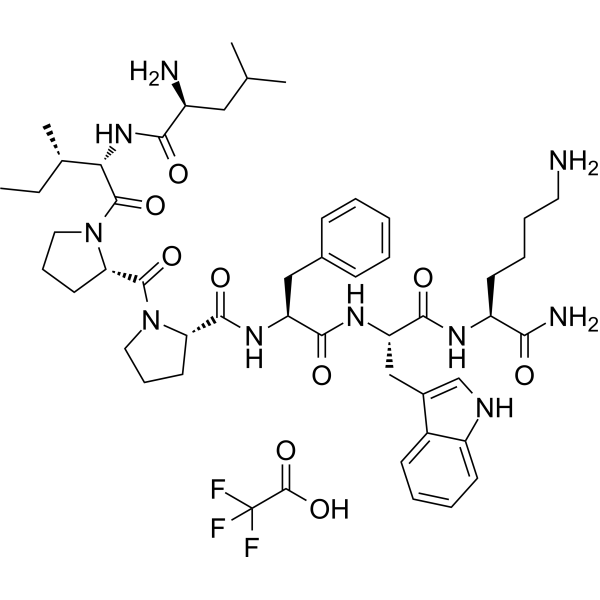
Cardiotoxin Analog (CTX) IV (6-12) TFA is a membrane active peptide that specifically targets negatively charged phospholipid membranes (such as phosphatidylserine and phosphatidylinositol). Cardiotoxin Analog (CTX) IV (6-12) TFA was discovered in the venom of the Taiwan cobra. Cardiotoxin Analog (CTX) IV (6-12) TFA is a chemically synthesized snake venom cardiotoxin that binds to cell membranes and embeds into lipid bilayers through hydrophobic interactions and electrostatic attraction, thereby destroying the stability of membrane structure. Cardiotoxin Analog (CTX) IV (6-12) TFA can induce membrane lipid disorder and cell lysis, exhibiting hemolysis and cytotoxicity.
For research use only. We do not sell to patients.
- Purity : 99.58%
- CAS No.: 2918768-05-3
- Formula: C50H71F3N10O9
- Molecular Weight:1013.16
-
Storage:
Sealed storage, away from moisture.
Powder -80°C, 2 years , -20°C, 1 year* In solvent : -80°C, 6 months; -20°C, 1 month (sealed storage, away from moisture)

To place orders, for customer services and technical support, please contact: MedChemExpress USA
Tel: 609-228-6898 E-mail: [email protected] [email protected]


-
 Biological Activity
-
Chemical Information
-
Solvent & Solubility
- Protocols
- Purity & Documentation
- References
-
 Help & FAQs


Publications Citing Use of MedChemExpress (MCE) Cardiotoxin Analog (CTX) IV (6-12) TFA
More- Adv Sci (Weinh). 2025 Aug 31:e12354. [Abstract]
- Cell Death Dis. 2022 Sep 29;13(9):838. [Abstract]
- Mol Ther. 2026 Jan 2:S1525-0016(25)01139-6. [Abstract]
- Mol Ther. 2025 May 6:S1525-0016(25)00360-0. [Abstract]
- Cell Death Discov. 2022 Apr 30;8(1):236. [Abstract]
- Int J Surg. 2026 Feb 19;112(4):9427-9447. [Abstract]
- Antioxidants (Basel). 2024 Sep 1;13(9):1069. [Abstract]
- Antioxidants (Basel). 2023 Sep 13;12(9):1754. [Abstract]
- Commun Biol. 2022 Nov 9;5(1):1201. [Abstract]
- Int J Mol Sci. 2023 Mar 5;24(5):4995. [Abstract]
- Comp Biochem Physiol Part D Genomics Proteomics. 2026 Jun 9:60:101899. [Abstract]
 Customer Validation & Images

-
WB
-
Histological Imaging/Staining
-
IF
-
RT-PCR
-
WB


Biological Activity
Description
In Vitro
Cardiotoxin Analog (CTX) IV (6-12) TFA (10 μM; real-time monitoring) shows that after binding to phosphatidylserine (PS)/phosphatidylinositol (PI) vesicles, the fluorescence emission peak blue-shifted to 335 nm and the intensity increases significantly, indicating specific binding to negatively charged lipid membranes[1].
Cardiotoxin Analog (CTX) IV (6-12) TFA (25 μM; incubation at 37°C) causes complete hemolysis of erythrocytes, possibly inducing cell lysis by disrupting membrane structure[1].
Cardiotoxin Analog (CTX) IV (6-12) TFA-derived peptide (5-6 μM; 25°C) shifts and enhances its tryptophan fluorescence peak when it bound to negatively charged lipids, which may be related to its binding to the membrane through the N-terminal hydrophobic loop (position 6-12)[1].
MedChemExpress (MCE) has not independently confirmed the accuracy of these methods. They are for reference only. Further protocols information, click here.
In Vivo
Please do not refer to only one article to determine the experimental conditions. It is recommended to determine the optimal experimental conditions (animal strain, age, dosage, frequency and cycle, detection time and indicators, etc.) through preliminary experiments before the formal experiment.
Cardiotoxin (i.m.) induces muscle injury at days 1 to 2 after injection, where inflammatory cells infiltrate and SCs are activated to proliferate. Myoblast differentiation typically occurs at days 3-5. The new fibers with a central nucleus begin to form at days 5-7. The major muscle structures are restored at days 10-14. The damaged muscles have almost completely recovered at day 28[3][4][5].
Cardiotoxin induces muscle injury and regeneration, as the destruction, repair and remodeling phase were clearly distinguishable at day 2, day 5 and day 12, respectively[6].
Administration: Cardiotoxin (10 μM, 20 μL) • i.m. • single dose;
2.Mice: C57BL/6 mice • male •10-week-old
Administration: Cardiotoxin (10 μM, 150 μL) • i.m. • single dose;
3.Mice: C3H/HeNJcl mice • male •8-week-old
Administration: Cardiotoxin (10 μM, 50 μL) • i.m. • single dose;
Increased Pax7, MyoD, MyoG, and MyHC level.
Histology analysis: Myofibrinolysis, inflammatory infiltration, new myofibril formation, and basic myofibril repair completed (H&E staining).
MedChemExpress (MCE) has not independently confirmed the accuracy of these methods. They are for reference only.


Chemical Information
-
CAS No. 2918768-05-3
-
Appearance Solid
-
Molecular Weight 1013.16
-
Formula C50H71F3N10O9
-
Color White to off-white
-
Sequence
Leu-Ile-Pro-Pro-Phe-Trp-Lys-NH2
-
Sequence Shortening
LIPPFWK-NH2
-
Structure Classification
-
Initial Source
the venom of Taiwan Cobra
-
Shipping
Room temperature in continental US; may vary elsewhere.
-
Storage
Sealed storage, away from moisture
Powder -80°C 2 years -20°C 1 year * In solvent : -80°C, 6 months; -20°C, 1 month (sealed storage, away from moisture)


Publications (11)
-
Journal Impact Factor
-
Most Recent
-
Adv Sci (Weinh)
RPS27L Enhances Myogenesis and Muscle Mass by Targeting IGF1 Through Liquid-Liquid Phase Separation. [Abstract]2025 Aug 31:e12354. PMID: 40886325
Cardiotoxin Analog (CTX) IV (6-12) TFA purchased from MedChemExpress. Usage Cited in: Adv Sci (Weinh). 2025 Aug 31:e12354. [Abstract]
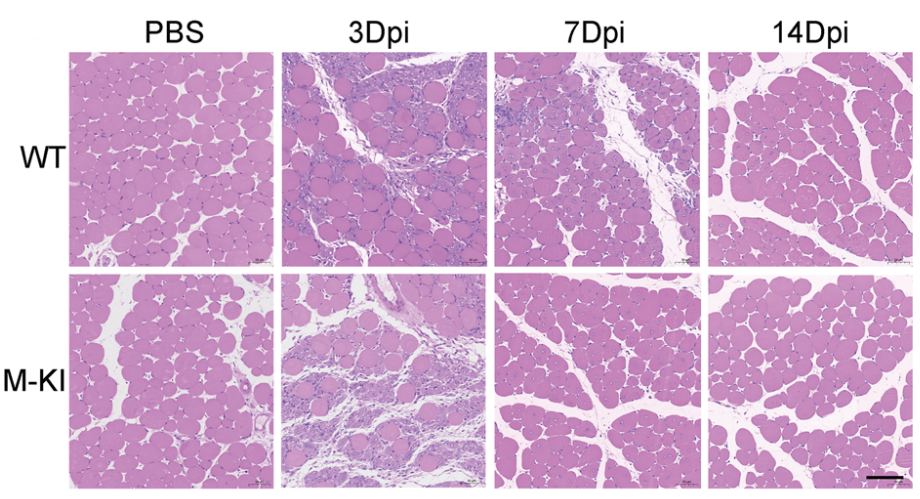
Representative H&E‐stained sections of Cardiotoxin Analog (CTX) IV (6-12) (10 µM; 100 µL; i.m.)‐injured muscle regeneration at multiple time points in M─KI and WT mice. The scale bars represent 100 µm.
Cardiotoxin Analog (CTX) IV (6-12) TFA purchased from MedChemExpress. Usage Cited in: Adv Sci (Weinh). 2025 Aug 31:e12354. [Abstract]
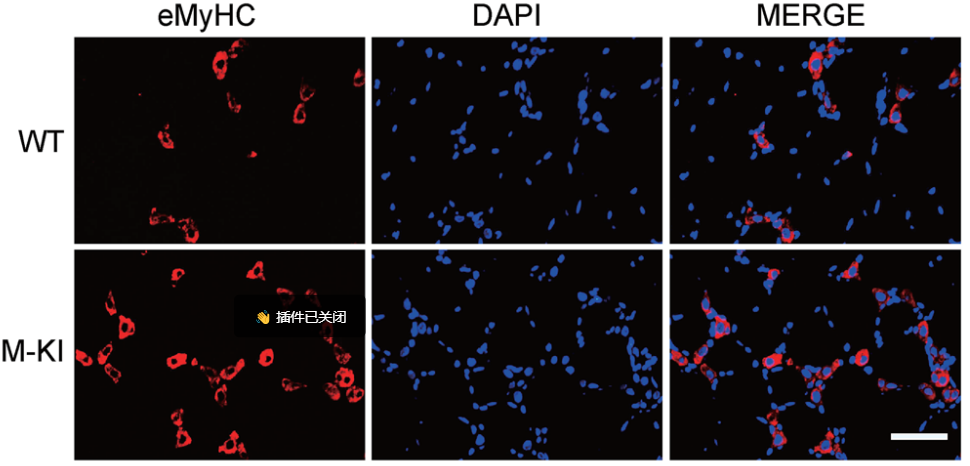
Representative immunofluorescence images of eMyHC (red) in Cardiotoxin Analog (CTX) IV (6-12) (10 µM; 100 µL; i.m.)‐injured muscles at 14 Dpi. The scale bars represent 100 µm.
Cardiotoxin Analog (CTX) IV (6-12) TFA purchased from MedChemExpress. Usage Cited in: Adv Sci (Weinh). 2025 Aug 31:e12354. [Abstract]
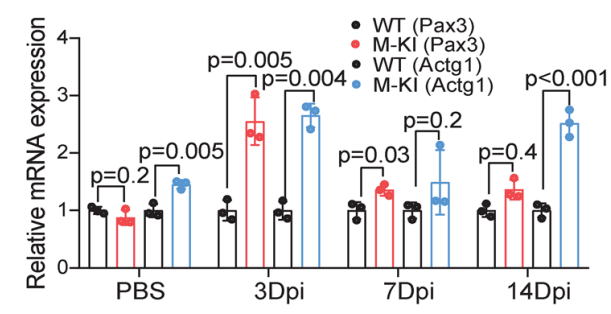
Quantitative analysis of migration markers in Cardiotoxin Analog (CTX) IV (6-12) (10 µM; 100 µL; i.m.)‐injured regenerating muscles was performed at the mRNA level (RT‐qPCR).
Cardiotoxin Analog (CTX) IV (6-12) TFA purchased from MedChemExpress. Usage Cited in: Adv Sci (Weinh). 2025 Aug 31:e12354. [Abstract]
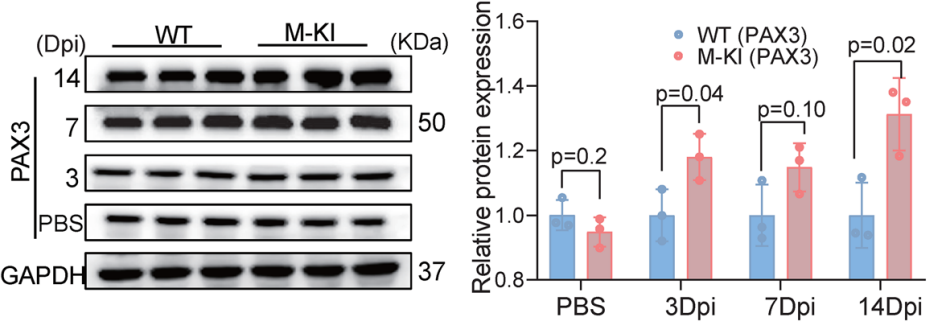
Quantitative analysis of migration markers in Cardiotoxin Analog (CTX) IV (6-12) (10 µM; 100 µL; i.m.)‐injured regenerating muscles was performed at protein (Western blot) levels.
-
Cell Death Dis
Retinoic acid and RARγ maintain satellite cell quiescence through regulation of translation initiation. [Abstract]2022 Sep 29;13(9):838. PMID: 36175396 -
Mol Ther
CTRP1 regulates skeletal muscle differentiation through quality control of mitochondrial dynamics and function. [Abstract]2026 Jan 2:S1525-0016(25)01139-6. PMID: 41485053
Cardiotoxin Analog (CTX) IV (6-12) TFA purchased from MedChemExpress. Usage Cited in: Mol Ther. 2026 Jan 2:S1525-0016(25)01139-6. [Abstract]
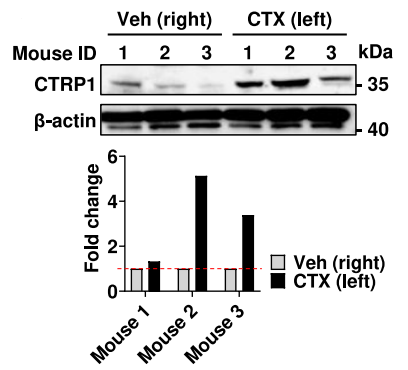
CTRP1 protein levels were analyzed by immunoblotting in the triceps surae of 7-week-old WT mice 5 days after injection with 10 μM Cardiotoxin Analog (CTX) IV (6-12) (i.m.) (top, n = 3). CTRP1 protein levels in the CTX-injected gastrocnemius muscle (left hindlimb) were compared with those in the contralateral control gastrocnemius muscle injected with the vehicle alone (right hindlimb) and normalized using β-actin as a loading control (bottom). CTRP1 protein expression increased approximately 3.3-fold in the gastrocnemius muscle on day 5 post-CTX injection compared to that in the contralateral vehicle (Veh)-injected muscle.
-
Mol Ther
2025 May 6:S1525-0016(25)00360-0. PMID: 40336196 -
Cell Death Discov
Disturbance of calcium homeostasis and myogenesis caused by TET2 deletion in muscle stem cells. [Abstract]2022 Apr 30;8(1):236. PMID: 35490157 -
Int J Surg
Systemic cachexia and muscle-bone crosstalk drive depression-related joint remodeling and pain. [Abstract]2026 Feb 19;112(4):9427-9447. PMID: 41711199 -
Antioxidants (Basel)
Aerobic Exercise Protects against Cardiotoxin-Induced Skeletal Muscle Injury in a DDAH1-Dependent Manner. [Abstract]2024 Sep 1;13(9):1069. PMID: 39334728 -
Antioxidants (Basel)
2023 Sep 13;12(9):1754. PMID: 37760057 -
Commun Biol
Tcf12 is required to sustain myogenic genes synergism with MyoD by remodelling the chromatin landscape. [Abstract]2022 Nov 9;5(1):1201. PMID: 36352000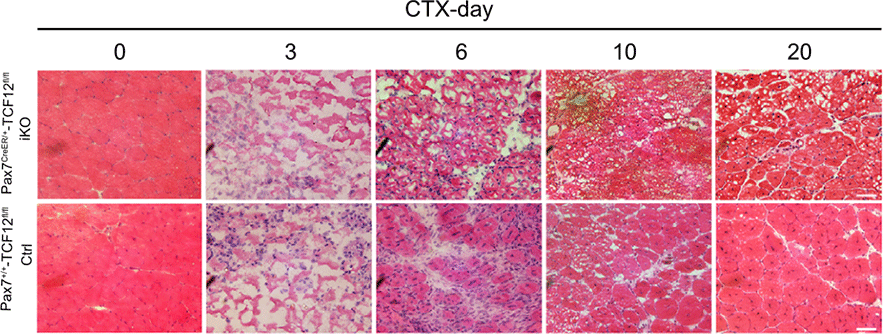
Cardiotoxin Analog (CTX) IV (6-12) TFA purchased from MedChemExpress. Usage Cited in: Commun Biol. 2022 Nov 9;5(1):1201. [Abstract]
CTX (Cardiotoxin Analog) (10.13 mg/kg; inject into the tibialis anterior (TA) muscle of mice) induces muscle regeneration. H&E staining of the injured TA muscles collected from the designated time points after CTX injection to visualise the degree of regeneration. At d10 after injury, the TA muscle is composed of degenerating myofibers, fibrotic tissues and inflammatory cells.
-
Int J Mol Sci
MicroRNA-200c-5p Regulates Migration and Differentiation of Myoblasts via Targeting Adamts5 in Skeletal Muscle Regeneration and Myogenesis. [Abstract]2023 Mar 5;24(5):4995. PMID: 36902425 -
Comp Biochem Physiol Part D Genomics Proteomics
Genome-wide characterisation of the myosin light chain gene family in Chinese perch (Siniperca chuatsi) and its expression patterns in muscle fibre types and injury response. [Abstract]2026 Jun 9:60:101899. PMID: 42284893


Solvent & Solubility
In Vitro:
H2O : 50 mg/mL (49.35 mM; Need ultrasonic)
Please refer to the solubility information to select the appropriate solvent. Once prepared, please aliquot and store the solution to prevent product inactivation from repeated freeze-thaw cycles.
Storage method and period of stock solution: -80°C, 6 months; -20°C, 1 month (sealed storage, away from moisture). When stored at -80°C, please use it within 6 months. When stored at -20°C, please use it within 1 month.
* Note: If you choose water as the stock solution, please dilute it to the working solution, then filter and sterilize it with a 0.22 μm filter before use.
Please refer to the solubility information to select the appropriate solvent. Once prepared, please aliquot and store the solution to prevent product inactivation from repeated freeze-thaw cycles.
Storage method and period of stock solution: -80°C, 6 months; -20°C, 1 month (sealed storage, away from moisture). When stored at -80°C, please use it within 6 months. When stored at -20°C, please use it within 1 month.
* Note: If you choose water as the stock solution, please dilute it to the working solution, then filter and sterilize it with a 0.22 μm filter before use.
Concentration (start) × Volume (start) = Concentration (final) × Volume (final)
In Vivo:
For the following dissolution methods, please prepare the working solution directly:
It is recommended to prepare fresh solutions and use them promptly within a short period of time.
The percentages shown for the solvents indicate their volumetric ratio in the final prepared solution. If precipitation or phase separation occurs during preparation, heat and/or sonication can be used to aid dissolution.
Add each solvent one by one: PBS
Solubility: 100 mg/mL (98.70 mM); Clear solution; Need ultrasonic

Protocols
-
Cell Cytotoxicity Assay
Cytotoxicity assays are usually based on the assessment of cell membrane damage, which can also be indirectly detected by measuring cell viability. Detection methods include MTT assay, CKK-8 assay, LDH assay and ATP assay, etc.
-
Mammalian live/dead viability and cytotoxicity staining
Live/dead viability and cytotoxicity staining assays are based on the simultaneous detection of intracellular esterase activity in metabolically active (viable) cells and membrane integrity loss in non-viable cells. In commonly used dual-staining approaches, membrane-permeant fluorogenic substrates are converted by intracellular esterases into fluorescent products in live cells, while impermeant DNA-binding dyes selectively enter cells with compromised plasma membranes and label nucleic acids in dead or dying cells, enabling discrimination between viable and non-viable populations by fluorescence microscopy or flow cytometry.
-
Protein Extraction
Protein extraction uses physical, chemical or biological methods, such as ultrasonic disruption, salting out, cell lysis, electrophoresis, etc., to destroy the cell membrane structure and to separate the proteins from different components according to their characteristics.
-
Cell Viability Determination by MTT Colorimetric Assay
The following protocol uses the MTT colorimetric assay as a classic literature-established method for assessing cell viability/metabolic activity in cultured mammalian cells. MTT[3-(4,5-dimethylthiazol-2-yl)-2,5-diphenyltetrazolium bromide] is reduced by metabolically active cells to a colored formazan product; the amount of formazan is quantified spectrophotometrically and provides an indirect measure of metabolically active viable cells. Importantly, MTT reduction reflects cellular oxidoreductase/metabolic activity rather than an absolute direct count of living cells, so changes in cellular metabolism can alter the signal independently of cell number.


Purity & Documentation
-
Data Sheet (290 KB)
-
SDS (252 KB)
- English - EN (252 KB)
- Français - FR (252 KB)
- Deutsch - DE (252 KB)
- Norwegian - NO (252 KB)
- Español - ES (252 KB)
- Swedish - SV (252 KB)
- Italian - IT (252 KB)
- Korean - KR (252 KB)
- Portuguese - PT (252 KB)
-
Handling Instructions (2659 KB)
References
[1]. Kaneda N, et al. The amino acid sequence of cardiotoxin-analogue IV from the venom of Naja naja atra. FEBS Lett. 1976 Nov;70(1):217-22. [Content Brief]
[2]. Dufourcq J, et al. Structure-function relationships for cardiotoxins interacting with phospholipids. Toxicon. 1982;20(1):165-74. [Content Brief]
[3]. Aoki Y, et al. Highly efficient in vivo delivery of PMO into regenerating myotubes and rescue in laminin-α2 chain-null congenital muscular dystrophy mice. Hum Mol Genet. 2013 Dec 15;22(24):4914-28. [Content Brief]
[4]. Randazzo D, et al. Persistent upregulation of the β-tubulin tubb6, linked to muscle regeneration, is a source of microtubule disorganization in dystrophic muscle. Hum Mol Genet. 2019 Apr 1;28(7):1117-1135. [Content Brief]
[5]. Fan W, et al. Hsp70 Interacts with Mitogen-Activated Protein Kinase (MAPK)-Activated Protein Kinase 2 To Regulate p38MAPK Stability and Myoblast Differentiation during Skeletal Muscle Regeneration. Mol Cell Biol. 2018 Nov 28;38(24):e00211-18. [Content Brief]
[6]. Dalle S, et al. Cardiotoxin-induced skeletal muscle injury elicits profound changes in anabolic and stress signaling, and muscle fiber type composition. J Muscle Res Cell Motil. 2020 Dec;41(4):375-387. [Content Brief]
[7]. Liu Y, et al. MicroRNA-200c-5p Regulates Migration and Differentiation of Myoblasts via Targeting Adamts5 in Skeletal Muscle Regeneration and Myogenesis. Int J Mol Sci. 2023 Mar 5;24(5):4995. [Content Brief]
[8]. Mahdy MA, et al. Comparative study of muscle regeneration following cardiotoxin and glycerol injury. Ann Anat. 2015 Nov;202:18-27. [Content Brief]
[9]. Wang Y, et al. Skeletal Muscle Regeneration in Cardiotoxin-Induced Muscle Injury Models. Int J Mol Sci. 2022 Nov 2;23(21):13380. [Content Brief]


Complete Stock Solution Preparation Table
Please refer to the solubility information to select the appropriate solvent. Once prepared, please aliquot and store the solution to prevent product inactivation from repeated freeze-thaw cycles.
Storage method and period of stock solution: -80°C, 6 months; -20°C, 1 month (sealed storage, away from moisture). When stored at -80°C, please use it within 6 months. When stored at -20°C, please use it within 1 month.
| Optional Solvent | Concentration Solvent Mass | 1 mg | 5 mg | 10 mg | 25 mg |
|---|---|---|---|---|---|
| H2O | 1 mM | 0.9870 mL | 4.9351 mL | 9.8701 mL | 24.6753 mL |
| 5 mM | 0.1974 mL | 0.9870 mL | 1.9740 mL | 4.9351 mL | |
| 10 mM | 0.0987 mL | 0.4935 mL | 0.9870 mL | 2.4675 mL | |
| 15 mM | 0.0658 mL | 0.3290 mL | 0.6580 mL | 1.6450 mL | |
| 20 mM | 0.0494 mL | 0.2468 mL | 0.4935 mL | 1.2338 mL | |
| 25 mM | 0.0395 mL | 0.1974 mL | 0.3948 mL | 0.9870 mL | |
| 30 mM | 0.0329 mL | 0.1645 mL | 0.3290 mL | 0.8225 mL | |
| 40 mM | 0.0247 mL | 0.1234 mL | 0.2468 mL | 0.6169 mL |
* Note: If you choose water as the stock solution, please dilute it to the working solution, then filter and sterilize it with a 0.22 μm filter before use.


Cardiotoxin Analog (CTX) IV (6-12) TFA Related Classifications
HY-P1902A Related Classifications
 Powered by Bioz
Keywords