
1. Search Result
Search Result
Results for "

β-amyloid

" in MedChemExpress (MCE) Product Catalog:

216

Inhibitors & Agonists

9

Fluorescent Dyes

3

Biochemical Assay Reagents

115

Peptides

6

Inhibitory Antibodies

24

Natural
Products

8

Isotope-Labeled Compounds

10

Antibodies

1

Click Chemistry

3

GMP Molecules

Targets Recommended:
Cat. No. Product Name Target Research Areas Chemical Structure
  • HY-P1363B

    Amyloid-β Neurological Disease
    β-Amyloid (1-42), human, HFIP-treated, a 42-amino acid peptide that has been treated with HFIP from β-Amyloid (1-42), human (HY-P1363A), is a brain-penetrant amyloid protein fragment, which can be used in research on Alzheimer's disease and Down’s syndrome. β-Amyloid (1-42), human, HFIP-treated remaining as a monomer exhibits antioxidant and neuroprotective effects. β-Amyloid (1-42), human, HFIP-treated, after being dissolved in DMSO to form the stock solution, on the one hand, can form soluble oligomers (AβOs) when incubated at 4°C, which have synaptic toxicity and neurotoxicity; on the other hand, it can be incubated at 37°C to form insoluble fibrils, with lower neurotoxicity, and participating in the oxidative damage process. Aβ42 oligomers bind to various neuronal surface receptors (such as PrPc, mGluR5, NMDA receptors, etc.), triggering oxidative stress, calcium homeostasis imbalance, and synaptic toxicity via activating downstream signaling pathways, leading to neuronal dysfunction and death .
    β-Amyloid (1-42), human, HFIP-treated
  • HY-P1363A
    β-Amyloid (1-42), human
    20+ Cited Publications

    amyloid β-peptide (1-42) (human)

    Amyloid-β Neurological Disease
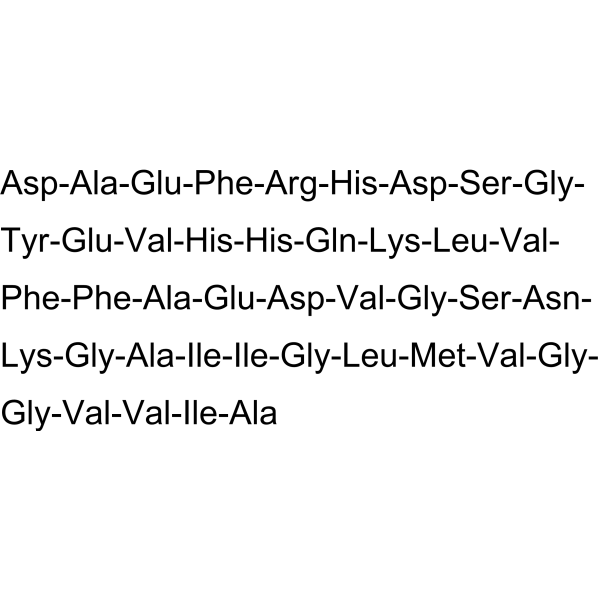
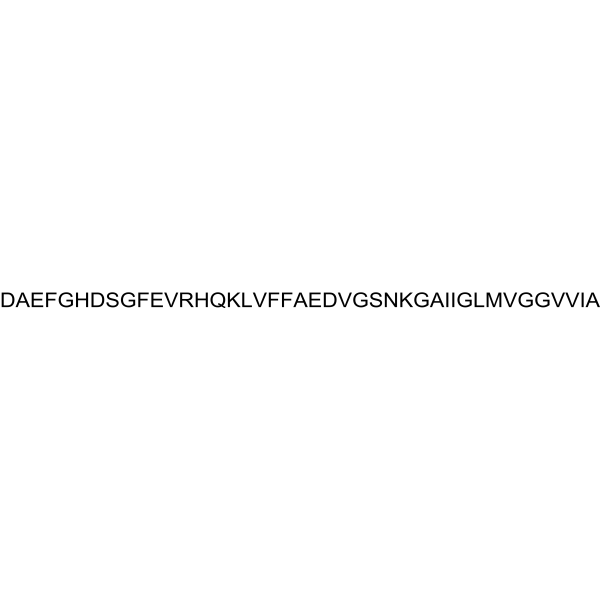
    β-Amyloid (1-42) (Amyloid β-peptide (1-42)), human, a 42-amino acid peptide that has not been treated with HFIP, is a brain-penetrant amyloid protein fragment, which can be used in research on Alzheimer's disease and Down’s syndrome. β-Amyloid (1-42), human remaining as a monomer exhibits antioxidant and neuroprotective effects. β-Amyloid (1-42), human, after being monomericized by HFIP and dissolved in DMSO to form the stock solution, on the one hand, can form soluble oligomers (AβOs) when incubated at 4 °C, which have synaptic toxicity and neurotoxicity; on the other hand, it can be incubated at 37 °C to form insoluble fibrils, with lower neurotoxicity, and participating in the oxidative damage process. Aβ42 oligomers bind to various neuronal surface receptors (such as PrPc, mGluR5, NMDA receptors, etc.), triggering oxidative stress, calcium homeostasis imbalance, and synaptic toxicity via activating downstream signaling pathways, leading to neuronal dysfunction and death .
    β-Amyloid (1-42), human
  • HY-P1363
    β-Amyloid (1-42), human TFA
    20+ Cited Publications

    amyloid β-peptide (1-42) (human) TFA

    Amyloid-β Neurological Disease
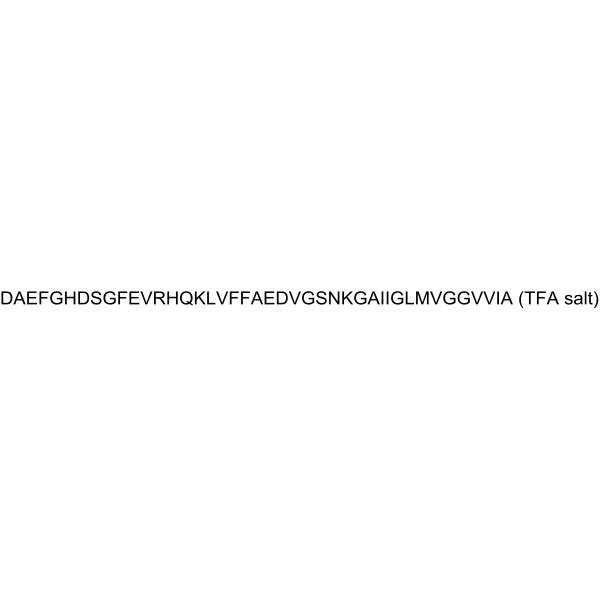
    β-Amyloid (1-42) (Amyloid β-peptide (1-42), human TFA, a 42-amino acid peptide that has not been treated with HFIP, is a brain-penetrant amyloid protein fragment, which can be used in research on Alzheimer's disease and Down’s syndrome. β-Amyloid (1-42), human TFA remaining as a monomer exhibits antioxidant and neuroprotective effects. β-Amyloid (1-42), human TFA, after being monomericized by HFIP and dissolved in DMSO to form the stock solution, on the one hand, can form soluble oligomers (AβOs) when incubated at 4 °C, which have synaptic toxicity and neurotoxicity; on the other hand, it can be incubated at 37 °C to form insoluble fibrils, with lower neurotoxicity, and participating in the oxidative damage process. Aβ42 oligomers bind to various neuronal surface receptors (such as PrPc, mGluR5, NMDA receptors, etc.), triggering oxidative stress, calcium homeostasis imbalance, and synaptic toxicity via activating downstream signaling pathways, leading to neuronal dysfunction and death .
    β-Amyloid (1-42), human TFA
  • HY-P0128
    β-Amyloid (25-35)
    Maximum Cited Publications
    42 Publications Verification

    amyloid beta-peptide (25-35); Aβ25-35; β-amyloid peptide (25-35)

    Amyloid-β Neurological Disease
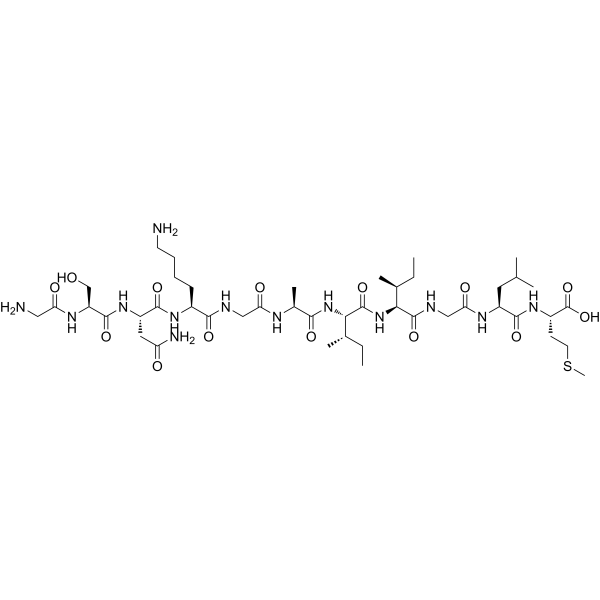
    β-Amyloid (25-35) (Amyloid beta-peptide (25-35)) is the fragment Aβ(25-35) of the Alzheimer's amyloid β-peptide, has shown neurotoxic activities in cultured cells .
    β-Amyloid (25-35)
  • HY-P1388
    β-Amyloid (1-42), (rat/mouse)
    5+ Cited Publications

    amyloid β-peptide (1-42) (rat/mouse)

    Amyloid-β Neurological Disease
    β-Amyloid (1-42), (rat/mouse) is a 42-aa peptide, shows cytotoxic effect on acute hippocampal slices, and used in the research of Alzheimer's disease.
    β-Amyloid (1-42), (rat/mouse)
  • HY-14176
    Compound E
    15+ Cited Publications

    γ-Secretase-IN-1

    γ-secretase Cancer
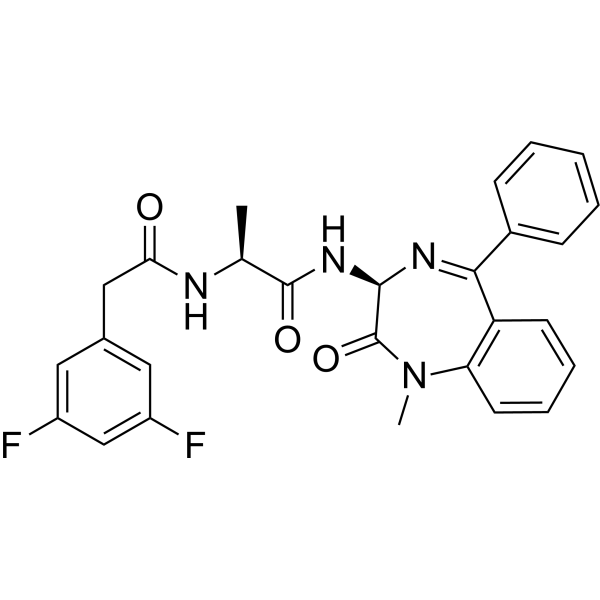
    Compound E is a γ-secretase inhibitor. Compound E blocks β-amyloid(40), β-amyloid(42), and Notch γ-secretase cleavage with IC50s of 0.24, 0.37, 0.32 nM, respectively.
    Compound E
  • HY-P1362
    β-Amyloid (42-1), human
    1 Publications Verification

    amyloid β Peptide (42-1)(human)

    Amyloid-β Neurological Disease
    β-Amyloid (42-1), human is the inactive form of Amyloid β Peptide (1-42). Its active form, β-Amyloid (1-42), may play a key role in the pathogenesis of Alzheimer's disease .
    β-Amyloid (42-1), human
  • HY-P0265A
    β-Amyloid (1-40) (human) TFA
    5+ Cited Publications

    amyloid β-Peptide (1-40) (human) TFA; Aβ40 (human) TFA; Aβ(1-40) (human) TFA

    Amyloid-β Neurological Disease
    β-Amyloid (1-40) TFA is a primary protein in plaques found in the brains of patients with Alzheimer's disease .
    β-Amyloid (1-40) (human) TFA
  • HY-P0128A
    β-Amyloid (25-35), HFIP-treated
    Maximum Cited Publications
    42 Publications Verification

    amyloid beta-peptide (25-35), HFIP-treated; Aβ25-35, HFIP-treated; β-amyloid peptide (25-35), HFIP-treated

    Amyloid-β Neurological Disease
    β-Amyloid (25-35) (Amyloid beta-peptide (25-35)), HFIP-treated is a β-Amyloid (25-35) (HY-P0128) treated with HFIP. β-Amyloid (25-35) (Amyloid beta-peptide (25-35)) is the fragment Aβ(25-35) of the Alzheimer's amyloid β-peptide, has shown neurotoxic activities in cultured cells .
    β-Amyloid (25-35), HFIP-treated
  • HY-P1363F3

    5-FAM-amyloid β-peptide (1-42) (human) Tris

    Amyloid-β Neurological Disease
    5-FAM-β-Amyloid (1-42), human (5-FAM-Amyloid β-peptide (1-42) (human) TFA is a5-FAM labeled β-Amyloid (1-42), human TFA (HY-P1363).
    5-FAM-β-Amyloid (1-42), human Tris
  • HY-P0265C

    Amyloid-β Neurological Disease
    β-Amyloid (1-40), HFIP-treated is a β-Amyloid (1-40) (HY-P0265A) treated with HFIP. β-Amyloid (1-40) is a primary protein in plaques found in the brains of patients with Alzheimer's disease .
    β-Amyloid (1-40), HFIP-treated TFA
  • HY-117259
    Valiltramiprosate
    1 Publications Verification

    ALZ-801

    Amyloid-β Neurological Disease
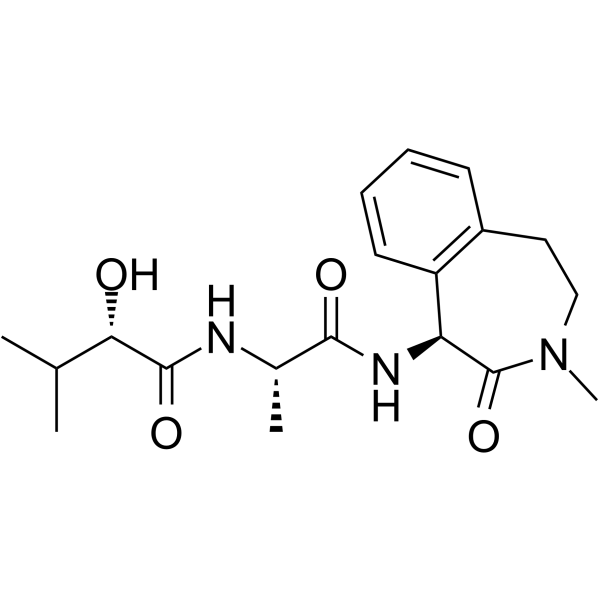
    ALZ-801 is a potent and orally available small-molecule β-amyloid (Aβ) anti-oligomer and aggregation inhibitor, valine-conjugated proagent of Tramiprosate with substantially improved PK properties and gastrointestinal tolerability compared with the parent compound . ALZ-801 is an advanced and markedly improved candidate for the treatment of alzheimer’s disease .
    Valiltramiprosate
  • HY-P1466

    amyloid β-Protein (1-16)

    Amyloid-β Neurological Disease
    β-Amyloid (1-16) is a β-Amyloid protein fragment involved in metal binding. Beta-amyloid is a peptide that forms amyloid plaques in the brains of Alzheimer's disease (AD) patients.
    β-Amyloid (1-16)
  • HY-P1903

    Amyloid-β Neurological Disease
    β-Amyloid (35-42) is a peptide consisting of amino acid of 35 to 42 of beta amyloid protein.
    β-Amyloid (35-42)
  • HY-P5124

    KLVFF

    Amyloid-β Neurological Disease
    β-Amyloid peptide(16-20) is a amino acid sequences (KLVFF) of Amyloid-β (Abeta). β-Amyloid peptide(16-20) is an effective inhibitor of Abeta fibril formation, with RG-/-GR-NH2 residues added at N- and C-terminal ends to aid solubility) .
    β-Amyloid peptide(16-20)
  • HY-P3688A

    Aβ (1-38) TFA; Aβ38 TFA

    Amyloid-β Neurological Disease
    β-Amyloid (1-38) (Aβ (1-38)) TFA is a β-Amyloid (Aβ) peptide. β-Amyloid (1-38) TFA interferes with the conversion of Aβ(1-42) to a β-sheet-rich aggregate. β-Amyloid (1-38)TFA reverses the negative impact of Aβ(1-42) on long-term potentiation in acute hippocampal slices and on membrane conductance in primary neurons, and mitigates an Aβ(1-42) phenotype in Caenorhabditis elegans .
    β-Amyloid (1-38) TFA
  • HY-P0128F

    Amyloid-β Neurological Disease
    FITC-β-Amyloid (25-35) is a FITC (HY-66019) labeled β-Amyloid (25-35) (HY-P0128)
    FITC-β-Amyloid (25-35)
  • HY-P1388A

    amyloid β-peptide (1-42) (rat/mouse) TFA

    Amyloid-β Neurological Disease
    β-Amyloid (1-42), (rat/mouse) TFA is a 42-aa peptide, shows cytotoxic effect on acute hippocampal slices, and used in the research of Alzheimer's disease.
    β-Amyloid (1-42), (rat/mouse) TFA
  • HY-P1363F1

    Biotin-amyloid β-peptide (1-42) (human) TFA

    Amyloid-β Neurological Disease
    Biotin-β-Amyloid (1-42), human TFA (Biotin-Amyloid β-Peptide (1-42) (human) TFA) is the botin labeled β-Amyloid (1-42), human TFA (HY-P1363). β-Amyloid (1-42), human TFA is a 42-amino acid peptide which plays a key role in the pathogenesis of Alzheimer disease .
    Biotin-β-Amyloid (1-42), human TFA
  • HY-103374

    (-)-Eseroline phenylcarbamate; (-)-Phenserine

    Cholinesterase (ChE) Amyloid-β Neurological Disease
    Phenserine ((-)-Eseroline phenylcarbamate) is a derivative of Physostigmine (HY-N6608) and is a potent, noncompetitive, long-acting and selective AChE inhibitor. Phenserine reduces β-amyloid precursor protein (APP) and β-amyloid peptide (Aβ) formation. Phenserine improves cognitive performance and attenuates the progression of Alzheimer's disease .
    Phenserine
  • HY-P2550A

    Amyloid-β Neurological Disease
    β-Amyloid (1-40), FAM-labeled TFA is a FAM fluorescently-labelled β-Amyloid (1-40) peptide (λex= 492 nm and λem= 518 nm).
    β-Amyloid (1-40), FAM-labeled TFA
  • HY-P1387

    Amyloid-β Apoptosis Neurological Disease
    β-Amyloid (1-40) (rat) is a rat form of the amyloid β-peptide, which accumulates as an insoluble extracellular deposit around neurons, giving rise to the senile plaques associated with Alzheimer's disease (AD). β-Amyloid (1-40) (rat) increases 45Ca 2+ influx, induces neurodegeneration in the rat hippocampal neurons of the CA1 subfield. β-Amyloid (1-40) (rat) induces apoptosis. β-Amyloid (1-40) (rat) can be used for the research of Alzheimer's disease .
    β-Amyloid (1-40) (rat)
  • HY-P2283

    Amyloid-β Neurological Disease
    β-Amyloid (1-37) (human) correlates moderately with Mini-Mental State Examination (MMSE) scores in Alzheimer disease. β-Amyloid (1-37) (human) possesses an added diagnostic value .
    β-Amyloid (1-37) (human)
  • HY-P1378A

    Amyloid-β Neurological Disease
    β-Amyloid (1-43)(human) TFA is more prone to aggregation and has higher toxic properties than the long-known Aβ1-42. β-Amyloid (1-43)(human) TFA shows a correlation with both sAPPα and sAPPβ. β-Amyloid (1-43)(human) TFA could be considered an added Alzheimer's disease (AD) biomarker together with the others already in use .
    β-Amyloid (1-43)(human) TFA
  • HY-P1046

    amyloid β-Protein (1-15)

    Amyloid-β Neurological Disease
    β-Amyloid (1-15) is a fragment of β-Amyloid peptide. Beta-amyloid is a peptide that forms amyloid plaques in the brains of Alzheimer's disease (AD) patients.
    β-Amyloid (1-15)
  • HY-P10040

    Amyloid-β Neurological Disease
    (Gln22)β-Amyloid (1-40) human is an amyloid beta protein (Aβ)-containing peptide used in Alzheimer's disease research .
    (Gln22)β-Amyloid (1-40) human
  • HY-100275

    Amyloid-β Neurological Disease
    MK-3328 is a β-Amyloid ligand, which exhibits high binding potency with an IC50 of 10.5 nM. MK-3328 is capable of being labelled with 18F for positron emission tomography (PET) imaging .
    MK-3328
  • HY-P1047

    [Pro18, Asp21] β-amyloid (17-21)

    Amyloid-β Neurological Disease
    β-Sheet Breaker Peptide iAβ5 is an effective brain amyloid-β (Abeta) degrader. Abeta deposits are associated with Alzheimer's disease (AD), and the related toxicity arises from its β-sheet conformation and aggregation. β-Sheet Breaker Peptide iAβ5 can repeatedly induce the degradation of fibrillary amyloid deposits in vivo. Therefore, β-Sheet Breaker Peptide iAβ5 can prevent and/or reverse neuronal contraction caused by Abeta and reduce the range of interleukin IL-1beta positive microglial-like cells around Abeta deposits. β-Sheet Breaker Peptide iAβ5 can reduce the size and/or number of brain amyloid plaques in AD. β-Sheet Breaker Peptide iAβ5 is labeled with a hydrophobic benzyl alcohol (HBA) tag and shows a bright blue color under acidic conditions, which can be used for quantitative determination.
    β-Sheet Breaker Peptide iAβ5
  • HY-P2550

    Amyloid-β Neurological Disease
    β-Amyloid (1-40), FAM-labeled is a FAM fluorescently-labelled β-Amyloid (1-40) peptide (λex= 492 nm and λem= 518 nm) .
    β-Amyloid (1-40), FAM-labeled
  • HY-P1362F

    Cy5-amyloid β Peptide (42-1)(human) Tris

    Amyloid-β Neurological Disease
    Cy5-β-Amyloid (42-1), human is a Cy5 fluorescently-labelled β-Amyloid (42-1, human) peptide (λex= 633 nm and λem= 670 nm) .
    Cy5-β-Amyloid (42-1), human Tris
  • HY-P4867A

    Amyloid-β Neurological Disease
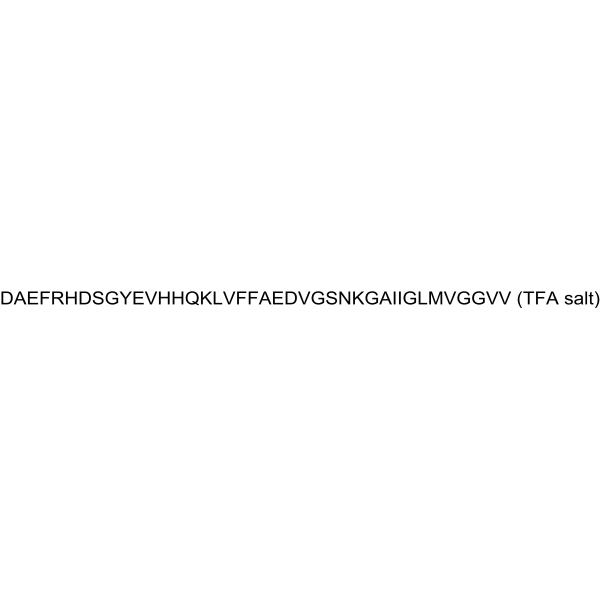
    β Amyloid (1-42) (scrambled) TFA is a negative control of β-Amyloid (1-42), human TFA (HY-P1363) .
    β Amyloid (1-42) (scrambled) TFA
  • HY-P1468

    amyloid β-Protein (1-28)

    Amyloid-β Neurological Disease
    β-Amyloid (1-28) is a β-Amyloid protein fragment involved in metal binding. Beta-amyloid is a peptide that forms amyloid plaques in the brains of Alzheimer's disease (AD) patients.
    β-Amyloid (1-28)
  • HY-W117986

    Amyloid-β Reactive Oxygen Species (ROS) Caspase Neurological Disease
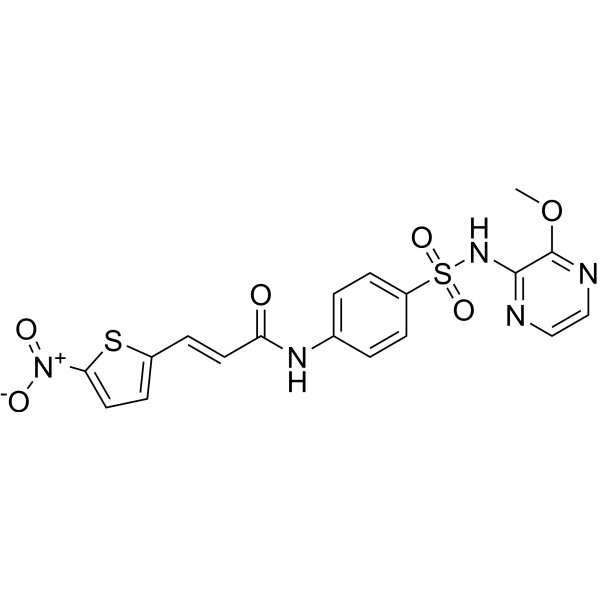
    Aβ aggregation-IN-1 (Compound 1b) is a β-amyloid aggregation inhibitor/depolymerizer, with IC50 values of 3.92 μM and 7.19 μM, respectively. Aβ aggregation-IN-1 inhibits the activation of preformed β-amyloid fibrils, reactive oxygen species (ROS) and Caspase-3. Aβ aggregation-IN-1 can be used in research related to Alzheimer's disease .
    Aβ aggregation-IN-1
  • HY-P1891

    Amyloid-β Neurological Disease
    β-Amyloid (22-40) is a peptide fragment of β-Amyloid.
    β-Amyloid (22-40)
  • HY-P1378

    Amyloid-β Neurological Disease
    β-Amyloid (1-43)(human) is more prone to aggregation and has higher toxic properties than the long-known Aβ1-42. β-Amyloid (1-43)(human) shows a correlation with both sAPPα and sAPPβ. β-Amyloid (1-43)(human) could be considered an added Alzheimer's disease (AD) biomarker together with the others already in use .
    β-Amyloid (1-43)(human)
  • HY-P1517

    Amyloid-β Neurological Disease
    β-Amyloid (31-35) is the shortest sequence of native Amyloid-β peptide that retains neurotoxic activity.
    β-Amyloid (31-35)
  • HY-P3688

    Aβ (1-38); Aβ38

    Amyloid-β Neurological Disease
    β-Amyloid (1-38) (Aβ (1-38)) is a β-Amyloid (Aβ) peptide. β-Amyloid (1-38) interferes with the conversion of Aβ(1-42) to a β-sheet-rich aggregate. β-Amyloid (1-38) reverses the negative impact of Aβ(1-42) on long-term potentiation in acute hippocampal slices and on membrane conductance in primary neurons, and mitigates an Aβ(1-42) phenotype in Caenorhabditis elegans .
    β-Amyloid (1-38)
  • HY-P1894

    Amyloid-β Neurological Disease
    β-Amyloid Protein Precursor 770 (135-155) is a peptide of amyloid precursor protein isoform (APP 770). APP 770 produces Aβ40/42 .
    β-Amyloid Protein Precursor 770 (135-155)
  • HY-P1879

    Amyloid-β Neurological Disease
    β-Amyloid (18-28) is a peptide fragment of β-Amyloid.
    β-Amyloid (18-28)
  • HY-P4867

    Amyloid-β Neurological Disease
    β Amyloid (1-42) (scrambled) is a negative control of β-Amyloid (1-42), human (HY-P1363A) .
    β Amyloid (1-42) (scrambled)
  • HY-P1053

    Amyloid-β Neurological Disease
    β-Amyloid (10-20) is a fragment of Amyloid-β peptide and maybe used in the research of neurological disease .
    β-Amyloid (10-20)
  • HY-P2549

    Fluorescent Dye Neurological Disease
    Biotin-β-Amyloid (1-40) is a N-terminal-labelled biotinylated amyloid-β-(1-40) peptide.
    Biotin-β-Amyloid (1-40)
  • HY-P1787

    Amyloid-β Neurological Disease
    β-Amyloid (4-10) is an epitope for the polyclonal anti-Aβ(1-42) antibody, reduces amyloid deposition in a transgenic Alzheimer disease mouse model .
    β-Amyloid (4-10)
  • HY-P1051

    amyloid β-Protein (12-28)

    Amyloid-β Neurological Disease
    β-Amyloid (12-28) (Amyloid β-Protein (12-28)) is a peptide fragment of β-amyloid protein (β1-42). β1-42, a 42 amino acid protein , is the major component of senile plaque cores. β-Amyloid (12-28) shows aggregation properties. β-Amyloid (12-28) has the potential for Alzheimer’s disease research .
    β-Amyloid (12-28)
  • HY-P1363S

    amyloid β-peptide-15N (1-42) (human) TFA

    Amyloid-β Neurological Disease
    β-Amyloid- 15N (1-42), human (TFA) is the 15N-labledβ-Amyloid (1-42) (TFA). β-Amyloid (1-42), human TFA (Amyloid β-Peptide (1-42) (human) TFA) is a 42-amino acid peptide which plays a key role in the pathogenesis of Alzheimer disease .
    β-Amyloid-15N (1-42), human TFA
  • HY-P0128F1

    Amyloid-β Neurological Disease
    FITC-β-Ala-β-Amyloid (25-35) is a fluorescent product labeled by FITC that can be used in Alzheimer's disease research .
    FITC-β-Ala-β-Amyloid (25-35)
  • HY-P2562

    Amyloid-β Neurological Disease
    β-Amyloid (1-38), mouse, rat is composed of 38 aa (1-38 residues of the Aβ peptide) and is the primary component of the amyloid plaques of Alzheimer’s disease .
    β-Amyloid (1-38), mouse, rat
  • HY-P1522

    amyloid beta-protein(29-40)

    Amyloid-β Neurological Disease
    β-Amyloid (29-40) is a fragment of Amyloid-β peptide.
    β-Amyloid (29-40)
  • HY-P1362A

    amyloid β Peptide (42-1)(human) TFA

    Amyloid-β Neurological Disease
    β-Amyloid (42-1), human TFA is the inactive form of Amyloid β Peptide (1-42). β-Amyloid (42-1), human TFA is a 42-amino acid peptide which plays a key role in the pathogenesis of Alzheimer disease .
    β-Amyloid (42-1), human TFA
  • HY-P1894A

    Amyloid-β Neurological Disease
    β-Amyloid Protein Precursor 770 (135-155) TFA is a peptide of amyloid precursor protein isoform (APP 770). APP 770 produces Aβ40/42 .
    β-Amyloid Protein Precursor 770 (135-155) TFA

Inquiry Online

Your information is safe with us. * Required Fields.

Salutation


Country or Region *

Applicant Name *


Organization Name *

Department *


Email Address *


Product Name *

Cat. No.


Requested quantity *

Phone Number *


Remarks

Inquiry Online

Inquiry Information

Product Name:
Cat. No.:
Quantity:
MCE Japan Authorized Agent:

