



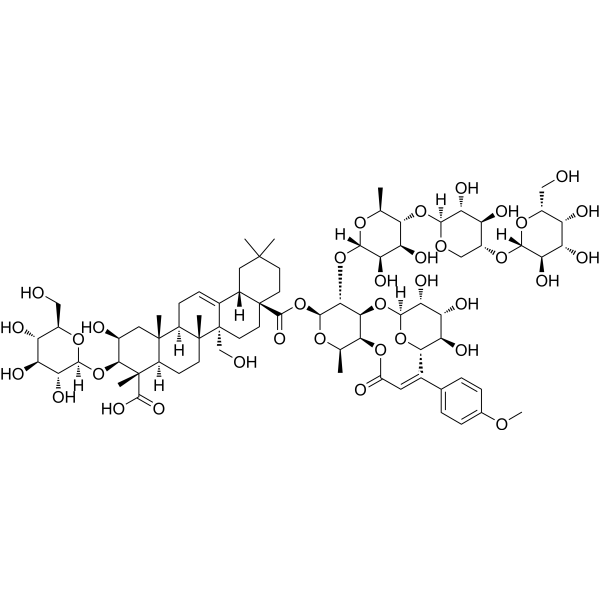
Onjisaponin B
Based on 2 publication(s) in Google Scholar
Onjisaponin B is an orally active natural product derived from Polygala tenuifolia. Onjisaponin B inhibits NF-κB p65. Onjisaponin B enhances autophagy and accelerates the degradation of mutant α-synuclein and huntingtin. Onjisaponin B reduces β-amyloid (Aβ) production. Onjisaponin B reduces radiation-induced cell apoptosis. Onjisaponin B has anti-oxidant and anti-inflammatory activities. Onjisaponin B can be used for neurological disease and radiation injury study, and its metabolite tenuifolin (TF) can enter the brain through the BBB.
Para uso exclusivo en investigación. No vendemos a pacientes.
- Pureza : 99.31%
- No. CAS: 35906-36-6
- Fòrmula: C75H112O35
- Peso molecular:1573.67
-
Almacenamiento:Powder -20°C, 3 years , 4°C, 2 years ; In solvent -80°C, 6 months , -20°C, 1 month

To place orders, for customer services and technical support, please contact: MedChemExpress USA
Tel: 609-228-6898 E-mail: [email protected] [email protected]


-
 Actividad biológica
-
Chemical Information
-
Solvente y solubilidad
- Protocolo
- Pureza y Documentación
- Referencias
-
 Help & FAQs





Publications Citing Use of MedChemExpress (MCE) Onjisaponin B
MoreVer todos los productos específicos de isoformas Caspase
More

Actividad biológica
Descripciòn
In Vitro
Onjisaponin B (3-50 μM, 8-24 h) activates autophagy through an Atg7, AMPK-mTOR dependent manner in PC-12 cells[1].
Onjisaponin B (6.25-50 μM, 16-24 h) enhances the clearance of mutant huntingtin and A53T α-synuclein, lowers the toxicity and acts as a neuroprotective agent in PC-12 cells, and reduces oligomerization of α-synuclein in HeLa cells[1].
Onjisaponin B (0.01-10 μM) reducesβ-amyloid (Aβ) production with an IC50 of 10 μM without affecting BACE1 or γ-secretase activity in 293T cells[3].
Onjisaponin B (20 μg/mL, 8-50 h) inhibits the activation of Cas3 through p65, reducing radiation-induced cell apoptosis and helping to prevent radiation injury in TC, V79 and MTEC-1 cells[4].
MedChemExpress (MCE) has not independently confirmed the accuracy of these methods. They are for reference only. Further protocols information, click here.
-
Cell Line:PC-12 cells transfected with GFP-LC3 plasmids
-
Concentration:6.25, 12.5, 25, 50 μM
-
Incubation Time:24 h
-
Result:Increased the formation of GFP-LC3 puncta formation in a dose-dependent manner.
-
Cell Line:PC-12 cells transfected transiently with EGFP-HDQ 74 or myc-tagged mutant A53T α-synuclein
-
Concentration:25 μM or 50 μM
-
Incubation Time:48 h or 24 h
-
Result:Reduced toxicity in PC-12 cells expressing either mutant huntingtin or A53T α-synuclein.
-
Cell Line:TC cells(thymocytes), V79 cells, MTEC-1 cells
-
Concentration:20 μg/mL
-
Incubation Time:8, 50, 26 h (incubated 2 hours then irradiated with radiation (TC cells: 6 h, V79 cells: 48 h, MTEC-1 cells: 24 h))
-
Result:Reduced apoptosis caused by radiotherapy.
-
Cell Line:PC-12 cells
-
Concentration:3, 6.25, 12.5, 25, 50 μM
-
Incubation Time:8, 16, 24 h
-
Result:Increased the rate of LC3-II formation with the presence of protease inhibitors.
No obvious cytotoxicity observed.
Activated the phosphorylation of AMPK in a time- and dose-dependent manner, and the activation was accompanied by a concomitant reduction in its downstream p70S6K phosphorylation.
-
Cell Line:V79 cells
-
Concentration:20 μg/mL
-
Incubation Time:2 hours prior to irradiation
-
Result:Down regulated the expression levels of the activation products p-p65 and c-Cas3 induced by irradiation.
The ability to down-regulate p-p65 and c-Cas3 proteins was reduced, or even reversed in V79 cells transfected with p65 shRNA plasmid.
In Vivo
Onjisaponin B (20-40 mg/kg; i.g.; daily for 12 days) ameliorates dopaminergic (DA) neurodegeneration in a MPTP (HY-15608)-induced mouse model of Parkinson’s disease (PD) through anti-oxidant and anti-inflammatory activities mediated via the RhoA/ROCK2 signaling pathway[2].
Onjisaponin B (10 mg/kg; p.o.; daily from 4 to 7 months of age) reduces β-amyloid production and improve cognitive impairments in transgenic mice[3].
Onjisaponin B (2.5 mg/kg; p.o.; 4 days prior to irradiation) significantly reduces pathological changes and apoptosis and the nuclear translocation of p65 in the lung tissue of p65+/- mice following radiation[4].
MedChemExpress (MCE) has not independently confirmed the accuracy of these methods. They are for reference only.
-
Animal Model:C57BL/6J-Relaem1Smoc mice (p65+/- mice)[4]
-
Dosage:2.5 mg/kg
-
Administration:Oral gavage (p.o.); 4 days prior to irradiation
-
Result:Inhibited p65 and cas3 activation caused by p65, and significantly reduced pathological changes and apoptosis (caused by down-regulation of p65) and the nuclear translocation of p65 in the lung tissue of p65+/- mice following radiation, but not in the thymus.
-
Animal Model:C57BL/6J mice (male, 12 weeks old)[2]
-
Dosage:20, 40 mg/kg
-
Administration:Intragastric gavage (i.g.); daily for 12 days
-
Result:Had a neuroprotective effect on MPTP (HY-15608) induced Parkinson’s disease (PD) model mice.
Recovered MPTP-induced motor impairment.
Reduced the number of ionized calcium-binding adapter molecule 1 (IBA-1)-positive cells, suppressed microglial activation induced by MPTP.
Inhibited the secretion of IL-1β, TNF-α, and IL-6.
Decreased MDA levels but increased SOD levels, exerted antioxidant abilities in PD model mice.
-
Animal Model:APPswe/PS1ΔE9 (APP/PS1) double-transgenic mice[3]
-
Dosage:10 mg/kg (200 μL (1 mg/mL) per 20 g body weight)
-
Administration:Oral gavage (p.o.); daily from 4 to 7 months of age
-
Result:No obvious toxic effects in mice.
Did not alter mouse locomotor activity.
Ameliorated cognitive impairments in amyloid precursor protein (APP)/ presenilin 1 (PS1) mice.
Showed significantly lower numbers of 6E10-positive Aβ plaque and reduced plaque area.


Chemical Information
-
No. CAS 35906-36-6
-
Appearance Solid
-
Peso molecular 1573.67
-
Fòrmula C75H112O35
-
Color White to off-white
-
SMILES
OC[C@](C1=CC[C@]2([H])[C@]3(C[C@H](O)[C@@H]4O[C@]([C@@H]([C@@H](O)[C@@H]5O)O)([H])O[C@@H]5CO)C)(CC[C@]6(C(O[C@H](O[C@H](C)[C@H](OC(/C=C/C7=CC=C(OC)C=C7)=O)[C@@H]8O[C@@](O[C@@H](C)[C@H](O)[C@H]9O)([H])[C@@H]9O)[C@@H]8O[C@@](O[C@@H](C)[C@H](O[C@@](OC[C@@H](O[C@]([C@@H]([C@@H](O)[C@H]%10O)O)([H])O[C@@H]%10CO)[C@@H]%11O)([H])[C@@H]%11O)[C@H]%12O)([H])[C@@H]%12O)=O)[C@@]1([H])CC(C)(C)CC6)[C@@]2(CC[C@@]3([H])[C@]4(C)C(O)=O)C
-
Synonyms
Senegin III
-
Structure Classification
-
Initial Source
-
Envío
Room temperature in continental US; may vary elsewhere.
-
Almacenamiento
Powder -20°C 3 years 4°C 2 years In solvent -80°C 6 months -20°C 1 month


Publications (2)
-
Journal Impact Factor
-
Most Recent
-
EMBO Mol Med
Reelin-LRP8 signaling mediates brain dissemination of breast cancer cells via abluminal migration. [Abstract]2025 Jun 12. PMID: 40506610 -
Biochem Biophys Res Commun
Engineered MAP30ER: A plant toxin-derived platform for EGFR-Targeted delivery of protein and chemotherapeutic payloads. [Abstract]2025 Aug 30:776:152184. PMID: 40517671


Solvente y solubilidad
In Vitro:
DMSO : 100 mg/mL (63.55 mM; Need ultrasonic; Hygroscopic DMSO has a significant impact on the solubility of product, please use newly opened DMSO)
Please refer to the solubility information to select the appropriate solvent. Once prepared, please aliquot and store the solution to prevent product inactivation from repeated freeze-thaw cycles.
Storage method and period of stock solution: -80°C, 6 months; -20°C, 1 month. When stored at -80°C, please use it within 6 months. When stored at -20°C, please use it within 1 month.
Please refer to the solubility information to select the appropriate solvent. Once prepared, please aliquot and store the solution to prevent product inactivation from repeated freeze-thaw cycles.
Storage method and period of stock solution: -80°C, 6 months; -20°C, 1 month. When stored at -80°C, please use it within 6 months. When stored at -20°C, please use it within 1 month.
Concentration (start) × Volume (start) = Concentration (final) × Volume (final)
In Vivo:
Select the appropriate dissolution method based on your experimental animal and administration route.
- For the following dissolution methods, please ensure to first prepare a clear stock solution using an In Vitro approach and then sequentially add co-solvents:
- To ensure reliable experimental results, the clarified stock solution can be appropriately stored based on storage conditions. As for the working solution for In Vivo experiments, it is recommended to prepare freshly and use it on the same day.
- The percentages shown for the solvents indicate their volumetric ratio in the final prepared solution. If precipitation or phase separation occurs during preparation, heat and/or sonication can be used to aid dissolution.
Add each solvent one by one: 10% DMSO 40% PEG300 5% Tween-80 45% Saline
Solubility: ≥ 2.5 mg/mL (1.59 mM); Clear solution
This protocol yields a clear solution of ≥ 2.5 mg/mL (saturation unknown).
Taking 1 mL working solution as an example, add 100 μL DMSO stock solution (25.0 mg/mL) to 400 μL PEG300, and mix evenly; then add 50 μL Tween-80 and mix evenly; then add 450 μL Saline to adjust the volume to 1 mL.
Preparation of Saline: Dissolve 0.9 g sodium chloride in ddH₂O and dilute to 100 mL to obtain a clear Saline solution.
In Vivo Dissolution Calculator
Please enter the basic information of animal experiments:
-
-
-
-
Recommended: Prepare an additional quantity of animals to account for potential losses during experiments.
Please enter your animal formula composition:
-
%DMSO +
Recommended: Keep the proportion of DMSO in working solution below 2% if your animal is weak.
-
%+
-
+%Tween-80 + +
-
%Saline +
The co-solvents required include: DMSO, . All of co-solvents are available by MedChemExpress (MCE). , Tween 80. All of co-solvents are available by MedChemExpress (MCE).
Working solution concentration: 0.22 mg/mL
Method for preparing stock solution: mg drug dissolved in μL DMSO. Stock solution concentration: mg/mL.
1. Take μL DMSO stock solution;
2. Add μL .
μL , mix evenly;
3. Then add μL Tween 80, mix evenly;
4. Then add μL
Please ensure that the stock solution in the first step is dissolved to a clear state, and add co-solvents in sequence. You can use ultrasonic heating (ultrasonic cleaner, recommended frequency 20-40 kHz), vortexing, etc. to assist dissolution.

Protocolo
-
Detection of Apoptosis
Apoptosis, also called programmed cell death, is generally characterized by distinct morphological characteristics.
-
TUNEL staining for apoptotic DNA fragmentation
TUNEL staining detects DNA strand breaks by using terminal deoxynucleotidyl transferase to add labeled nucleotides to exposed 3′-OH DNA termini, generating either microscopic staining in fixed cells or tissue sections, or fluorescence/cytometric signal in cell suspensions. TUNEL positivity reflects DNA fragmentation but should not be interpreted alone as definitive apoptosis, because TUNEL can also label necrotic, autolytic, mechanically damaged, or DNA-repair-associated DNA breaks.
-
Annexin V plus membrane-impermeant dye apoptosis staining
Annexin V-based apoptosis assays rely on the detection of phosphatidylserine (PS) externalization from the inner leaflet of the plasma membrane to the outer leaflet, an early biochemical hallmark of apoptosis. Fluorescently labeled Annexin V binds PS in a calcium-dependent manner, enabling identification of early apoptotic cells by flow cytometry or fluorescence microscopy. When combined with a membrane-impermeant DNA-binding dye (e. g. , propidium iodide), this approach allows discrimination between viable (Annexin V−/dye−), early apoptotic (Annexin V+/dye−), and late apoptotic or necrotic (Annexin V+/dye+) cell populations by assessing membrane integrity and PS exposure.
-
Autophagy
Autophagy is a process in which eukaryotic cells use lysosomes to degrade their own cytoplasmic proteins and damaged organelles under the regulation of autophagy related gene (Atg). Microtubule-associated proteins light chain 3 (LC3) is recognized as autophagy marker, which transfers from cytoplasmic LC3 (LC3-I) to membrane type (LC3-II). LC3-II/I ratio could be detected by Western Blot and fluorescence microscopy.
-
Apoptosis Solutions
Apoptosis is a regulated, generally non-lytic cell-death pathway that removes unwanted, damaged, infected, or abnormal cells through coordinated morphological changes, caspase activation, DNA fragmentation, and membrane remodeling. The intrinsic apoptosis pathway is controlled mainly by mitochondrial outer membrane permeabilization, BCL-2 family proteins, cytochrome c release, apoptosome formation, caspase-9 activation, and downstream executioner caspase-3/7 activation. The extrinsic apoptosis pathway is initiated by death receptors such as Fas, TNFR, and TRAIL receptors, which recruit adaptor proteins and activate caspase-8 before engaging executioner caspases or mitochondrial amplification through BID cleavage. Apoptosis is linked to many phenotypes, including cancer cell killing, tissue homeostasis, immune regulation, neurodegeneration, infection response, and treatment-induced cytotoxicity; unresolved questions include how apoptosis interacts with necroptosis, pyroptosis, ferroptos
-
Research Protocol for Inflammation-related Diseases
The NLRP3 inflammasome is a cytosolic innate immune signaling platform that integrates priming signals and danger-signal activation to promote caspase-1 activation, maturation of IL-1β and IL-18, and gasdermin D-mediated pyroptotic cell death. The core experimental logic is to determine whether inflammatory disease phenotypes are driven by increased NLRP3 expression, ASC-containing inflammasome assembly, caspase-1 cleavage, GSDMD cleavage, and extracellular release of IL-1β/IL-18 rather than by nonspecific cell injury alone. The pathway is strongly linked to inflammation-related disease phenotypes because monosodium urate crystals activate NALP3/NLRP3 inflammasome signaling in gout-like crystal inflammation, cholesterol crystals activate NLRP3 inflammasomes in atherogenesis models, and DSS-induced intestinal inflammation has been reported to involve NLRP3 inflammasome activity. However, experimental colitis studies also show context-dependent protective effects of NLRP3 inflammasome co
-
Lysosome and acidic-vesicle live-cell staining
Lysosome and acidic-vesicle live-cell staining detects acidic intracellular compartments by using membrane-permeant acidotropic probes that accumulate in low-pH vesicles, including lysosomes, late endosomes, autolysosomes, and acidic phagosomes. LysoTracker staining is commonly used as an intensity-based readout of acidic lysosomal compartment abundance or enlargement, while acridine orange produces green fluorescence in less concentrated compartments and red fluorescence after concentration-dependent accumulation in acidic vesicular organelles. Loss or reduction of acridine-orange red signal can be used as a readout of lysosomal membrane permeabilization or reduced acidic-vesicle integrity. This protocol is designed for live cultured cells and can be adapted for fluorescence microscopy, high-content imaging, plate-reader readout, or flow cytometry when the selected literature supports the readout. Because these dyes report acidotropic accumulation rather than lysosome identity alone,
-
Research Protocol for Neurological Diseases
PINK1/Parkin-mediated mitophagy pathway is a mitochondrial quality-control signaling axis in which mitochondrial depolarization stabilizes PINK1 on damaged mitochondria, activates Parkin recruitment and E3 ubiquitin ligase activity, promotes ubiquitination of outer mitochondrial membrane proteins, recruits selective autophagy adaptors, and drives lysosomal degradation of damaged mitochondria. In neurological disease research, this pathway is experimentally important because neurons, especially dopaminergic neurons, are highly dependent on mitochondrial integrity, and defective mitochondrial turnover can lead to mitochondrial dysfunction, oxidative stress, impaired neuronal survival, α-synuclein accumulation, and neuroinflammatory damage-associated signals. The genetic disease link is strongest in Parkinson’s disease because mutations in PRKN/parkin cause autosomal recessive juvenile parkinsonism, mutations in PINK1 cause hereditary early-onset Parkinson’s disease, and Drosophila studie
-
Macroautophagy Solutions
Macroautophagy is a conserved lysosome-dependent degradation pathway in which cytoplasmic material is sequestered into double-membrane autophagosomes and delivered to lysosomes for degradation and recycling. The pathway supports cellular homeostasis during nutrient limitation, organelle stress, protein-aggregate accumulation, infection, differentiation, and tissue remodeling by coupling cargo sequestration, autophagosome maturation, lysosomal fusion, and degradation of cargo-derived macromolecules. The core molecular sequence includes initiation by nutrient- and stress-regulated autophagy machinery, autophagosome nucleation, LC3/ATG8-family conjugation to autophagosomal membranes, cargo selection through receptors such as SQSTM1/p62, autophagosome-lysosome fusion, and lysosomal degradation. LC3 was identified as a mammalian homolog of yeast Atg8 that localizes to autophagosomal membranes after processing, and p62/SQSTM1 was shown to connect ubiquitinated cargo with autophagic degradati
-
Amyloid: Congo Red Amyloid Staining
Congo red amyloid staining is a histochemical method used to detect extracellular amyloid deposits in tissue sections based on the affinity of Congo red dye for β-pleated sheet-rich protein aggregates. When bound to amyloid, Congo red produces characteristic apple-green birefringence under polarized light microscopy, which is widely regarded as a diagnostic feature of amyloid deposition in histopathology. The diagnostic principle relies on the combination of dye binding (congophilia) and optical anisotropy under polarized illumination, which distinguishes amyloid from most non-amyloid eosinophilic extracellular deposits in routine histological evaluation. Amyloid identification by Congo red staining remains a cornerstone in diagnostic pathology despite the availability of adjunct methods such as immunohistochemistry and mass spectrometry, particularly because of its ability to localize deposits directly within tissue architecture. The specificity of Congo red-positive deposits is incre
-
Alzheimer’s Disease Modeling
Alzheimer’s Disease (AD) is a neurodegenerative disorder characterized by a progressive decline in cognitive functions and loss of specific types of neurons and synapses. Alzheimer's symptoms can be simulated in mice by injecting drugs (such as Aβ) or genetically modified.


Pureza y Documentación
-
Ficha de datos (291 KB)
-
SDS (251 KB)
- English - EN (251 KB)
- Français - FR (251 KB)
- Deutsch - DE (251 KB)
- Norwegian - NO (251 KB)
- Español - ES (251 KB)
- Swedish - SV (251 KB)
- Italian - IT (251 KB)
- Korean - KR (251 KB)
- Portuguese - PT (251 KB)
-
Instrucciones de manejo (2659 KB)
Referencias
[1]. Wu AG, et al. Onjisaponin B derived from Radix Polygalae enhances autophagy and accelerates the degradation of mutant α-synuclein and huntingtin in PC-12 cells. Int J Mol Sci. 2013 Nov 15;14(11):22618-41. [Content Brief]
[2]. Peng F, et al. The onjisaponin B metabolite tenuifolin ameliorates dopaminergic neurodegeneration in a mouse model of Parkinson's disease. Neuroreport. 2020 Apr 8;31(6):456-465. [Content Brief]
[3]. Li X, et al. Traditional Chinese Nootropic Medicine Radix Polygalae and Its Active Constituent Onjisaponin B Reduce β-Amyloid Production and Improve Cognitive Impairments. PLoS One. 2016 Mar 8;11(3):e0151147. [Content Brief]
[4]. Wang TY, et al. Targeting p65 to inhibit Cas3 transcription by Onjisaponin B for radiation damage therapy in p65+/- mice. Phytomedicine. 2022 Sep;104:154317. [Content Brief]


Complete Stock Solution Preparation Table
Please refer to the solubility information to select the appropriate solvent. Once prepared, please aliquot and store the solution to prevent product inactivation from repeated freeze-thaw cycles.
Storage method and period of stock solution: -80°C, 6 months; -20°C, 1 month. When stored at -80°C, please use it within 6 months. When stored at -20°C, please use it within 1 month.
| Optional Solvent | Concentration Solvent Mass | 1 mg | 5 mg | 10 mg | 25 mg |
|---|---|---|---|---|---|
| DMSO | 1 mM | 0.6355 mL | 3.1773 mL | 6.3546 mL | 15.8864 mL |
| 5 mM | 0.1271 mL | 0.6355 mL | 1.2709 mL | 3.1773 mL | |
| 10 mM | 0.0635 mL | 0.3177 mL | 0.6355 mL | 1.5886 mL | |
| 15 mM | 0.0424 mL | 0.2118 mL | 0.4236 mL | 1.0591 mL | |
| 20 mM | 0.0318 mL | 0.1589 mL | 0.3177 mL | 0.7943 mL | |
| 25 mM | 0.0254 mL | 0.1271 mL | 0.2542 mL | 0.6355 mL | |
| 30 mM | 0.0212 mL | 0.1059 mL | 0.2118 mL | 0.5295 mL | |
| 40 mM | 0.0159 mL | 0.0794 mL | 0.1589 mL | 0.3972 mL | |
| 50 mM | 0.0127 mL | 0.0635 mL | 0.1271 mL | 0.3177 mL | |
| 60 mM | 0.0106 mL | 0.0530 mL | 0.1059 mL | 0.2648 mL |


Onjisaponin B Related Classifications
HY-N2099 Related Classifications
 Powered by Bioz