Search Result
Results for "
serum albumins
" in MedChemExpress (MCE) Product Catalog:
89
Biochemical Assay Reagents
3
Isotope-Labeled Compounds
| Cat. No. |
Product Name |
Target |
Research Areas |
Chemical Structure |
-
- HY-D0842A
-
|
Albumin bovine serum (Low Endotoxin,Fatty acid free); BSA (Low Endotoxin,Fatty acid free)
|
Biochemical Assay Reagents
Nucleoside Antimetabolite/Analog
|
Inflammation/Immunology
|
|
Bovine Serum Albumin (Low Endotoxin,Fatty acid free) (BSA) is a 583 amino acid globular protein and oligonucleotide binding protein composed of three homologous full α domains. Bovine Serum Albumin (Low Endotoxin,Fatty acid free) (BSA) blocks the overall binding of oligonucleotides to cells. Bovine Serum Albumin (Low Endotoxin,Fatty acid free) (BSA) regulates the development of hamster embryos and induces arthritis .
|
-

-
- HY-D0842
-
|
Albumin bovine serum; BSA
|
Biochemical Assay Reagents
|
Inflammation/Immunology
|
|
Bovine Serum Albumin (BSA) is a 583-residue protein consisting of three homologous all-α domains, organized in a heart-shaped structure. BSA is a globular protein that is used in numerous biochemical applications.
|
-

-
- HY-P1956
-
|
HSA
|
NF-κB
NO Synthase
|
Cardiovascular Disease
Inflammation/Immunology
Cancer
|
Human serum albumin (HSA) is the most abundant protein in plasma and is a major determinant of plasma oncotic pressure. Human serum albumin exhibits antioxidant, anticoagulant, anti-inflammatory, anti-platelet aggregation activities as well as colloid osmotic action. Human serum albumin can block the inhibitory effect of GML on human T cells, providing protective function for T cells. Human serum albumin is also associated with cardiovascular diseases and can partially prevent the LPS (HY-D1056) induced oxidative stress, as well as the upregulation of NF-κB, NF-κB, and peroxynitrite (ONOO −) in the vascular wall, contributing to the reduction of blood pressure .
This product is recombinant Human Serum Albumin expressed in a microbial expression system.
|
-

-
- HY-P1956A
-
|
HSA (Cell culture grade, Endotoxin<0.125 EU/mg)
|
NF-κB
NO Synthase
|
Cardiovascular Disease
Inflammation/Immunology
|
Human serum albumin (Cell culture grade, Endotoxin<0.125 EU/mg) (HSA) is the most abundant protein in plasma and is a major determinant of plasma oncotic pressure. Human serum albumin (Cell culture grade, Endotoxin<0.125 EU/mg) exhibits antioxidant, anticoagulant, anti-inflammatory, anti-platelet aggregation activities as well as colloid osmotic action. Human serum albumin (Cell culture grade, Endotoxin<0.125 EU/mg) can block the inhibitory effect of GML on human T cells, providing protective function for T cells. Human serum albumin (Cell culture grade, Endotoxin<0.125 EU/mg) is also associated with cardiovascular diseases and can partially prevent the LPS (HY-D1056) induced oxidative stress, as well as the upregulation of NF-κB, iNOS, and peroxynitrite (ONOO −) in the vascular wall, contributing to the reduction of blood pressure. Human serum albumin (Cell culture grade, Endotoxin<0.125 EU/mg) can be used for in vitro cell culture .
This product is human serum albumin recombinantly expressed in an Escherichia coli expression system.
|
-

-
- HY-NP141
-
|
4-Hydroxy-3-nitrophenylacetyl-bovine serum albumin
|
Biochemical Assay Reagents
|
Inflammation/Immunology
|
|
NP-BSA (4-Hydroxy-3-nitrophenylacetyl-bovine serum albumin) is an antigen-adjuvant conjugate of 4-Hydroxy-3-nitrophenylacetyl (NP) conjugated to bovine serum albumin (BSA), which is an immune complex. NP-BSA is taken up, processed, and presented by antigen-presenting cells to stimulate T-cell proliferation and the production of antigen-specific antibodies. NP-BSA can be used in the research of immunological vaccines .
|
-

-
- HY-P99796
-
|
ATN-103; PF-5230896
|
TNF Receptor
|
Inflammation/Immunology
|
|
Ozoralizumab (ATN-103) is an anti-TNFα humanized antibody. Ozoralizumab is a humanized trivalent nanobody compound that consists of two anti-human TNFα nanobodies and an anti-human serum albumin (HSA) nanobody. Ozoralizumab can be used in research of arthritis .
|
-

-
- HY-P4070
-
|
|
Insulin Receptor
|
Metabolic Disease
|
|
Insulin icodec is an Insulin (HY-P0035) analog that strongly but reversibly binds to albumin. Insulin icodec has long plasma half-life. Insulin icodec modulates insulin receptor activity, controls blood glucose levels, reduces HbA1c levels, and binds reversibly to human serum albumin. Insulin icodec can be used for the research of type 2 diabetes mellitus .
|
-

-
- HY-NP002B
-
|
|
Biochemical Assay Reagents
|
Inflammation/Immunology
|
|
Rabbit Serum Albumin is a plasma protein derived from rabbits. Rabbit Serum Albumin can hydrolyze the carbamate pesticide carbaryl and induce fever in rabbits. Rabbit Serum Albumin can be used for biochemical and immunological research, including vaccine developing .
|
-

-
- HY-159181
-
|
|
Biochemical Assay Reagents
|
Others
|
|
p-NCS-Bz-DOTA-GA is a bifunctional chelator. p-NCS-Bz-DOTA-GA can be used as a versatile linker in targeted molecular imaging for both PET/SPECT and MRI applications .
|
-

-
- HY-NP0204
-
|
|
ELOVL
Apoptosis
NOD-like Receptor (NLR)
Caspase
Tau Protein
|
Neurological Disease
Inflammation/Immunology
|
|
Mouse Serum Albumin is most abundant protein in plasma, which leaks into the brain parenchyma when the blood-brain barrier (BBB) is impaired. Mouse Serum Albumin induces astrocytes to A1 phenotype to remarkably increase levels of Elovl1. Mouse Serum Albumin promotes VLSFAs secretion and causes neuronal lippoapoptosis through endoplasmic reticulum stress response pathway. MSA-activated microglia triggeres remarkable tau phosphorylation at multiple sites (Ser202/Thr205) through NLRP3 inflammasome pathway. Mouse Serum Albumin decreases the spatial learning and memory abilities in mice. Mouse Serum Albumin can be used for the study of neurodegenerative diseases like Alzheimer’s disease (AD) and frontotemporal dementia (FTD) .
|
-

-
- HY-P99397
-
|
ALX 0761; M 1095
|
Interleukin Related
MMP
|
Inflammation/Immunology
|
|
Sonelokimab (ALX 0761) is a trivalent bispecific nanobody composed of camel derived humanized IL-17F antibodies, IL-17A/F antibodies, and serum albumin VHH antibodies. Sonelokimab can prolong the plasma half-life by binding to human serum albumin. Sonelokimab can be used for research on rheumatoid arthritis and psoriasis .
|
-

-
- HY-150097
-
|
|
Biochemical Assay Reagents
|
Metabolic Disease
Inflammation/Immunology
Cancer
|
|
Recombinant Human Serum Albumin (rHSA) is a non-glycosylated monomeric plasma protein that acts as a core factor for maintaining plasma colloid osmotic pressure. Recombinant Human Serum Albumin (rHSA) possesses multiple physiological functions including carrier, metabolic regulation, detoxification, antioxidation and enzyme mimicking. Recombinant Human Serum Albumin (rHSA) not only scavenges reactive oxygen and nitrogen species via specific residues and binds a variety of endogenous and exogenous compounds to maintain redox homeostasis, but also serves as a biomarker for multiple diseases such as cancer and inflammation. Recombinant Human Serum Albumin (rHSA) broadly supports the development of implantable materials, surgical adhesives and ligand capture, and can be used for research on critical illnesses including hypovolemia, liver failure, severe sepsis and various types of trauma resuscitation .
|
-
-
- HY-NP002D
-
|
|
Biochemical Assay Reagents
|
Others
|
|
Bovine Serum Albumin (Biotinylated) is a biotinylated bovine serum albumin that selectively binds to different vascular subsets in lymphoid tissue. Bovine Serum Albumin (Biotinylated) can be used as a histochemical probe, and a targeting ligand for drug delivery .
|
-

-
- HY-D0022
-
|
5-AF
|
Fluorescent Dye
|
Others
|
|
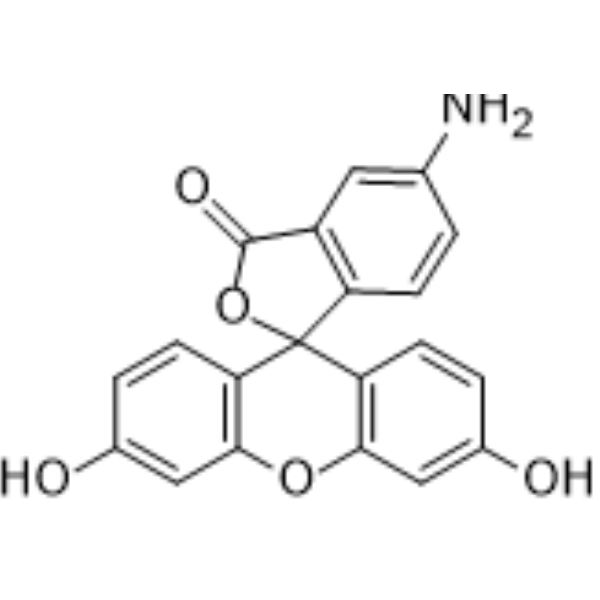
5-Aminofluorescein (5-AF) is a fluorescence marker, covalently bound to human serum albumin. The excitation wavelength is 495 nm and the emission wavelength is 535 nm .
|
-
-
- HY-NP002J
-
|
|
Biochemical Assay Reagents
|
Others
|
|
Horse Serum Albumin is an abundant, multifunctional mammalian plasma protein and transport molecule. Horse Serum Albumin acts as an allergen, exhibits high cross-reactivity with serum albumins from other mammals, and contains epitope regions recognizable by antibodies. Horse Serum Albumin binds a variety of metabolites, drugs, nutrients, metals and other molecules .
|
-

-
- HY-P990735
-
|
|
Interleukin Related
|
Inflammation/Immunology
|
|
Donzakimig is a trispecific anti-IL-13/IL-22/HSA antibody. Donzakimig adopts a Fab-scFv-scFv structural format (without an Fc region), in which the Fab domain is linked to the scFv domains via a S (G4S)2 linker. Donzakimig binds to and inhibits the activities of IL-13 and IL-22, thereby blocking the signal transduction of these two cytokines. Donzakimig can extend its serum half-life by binding to human serum albumin, enhancing its in vivo stability and achieving long-acting efficacy. Donzakimig can be used in research on moderate-to-severe atopic dermatitis, moderate-to-severe asthma (especially eosinophilic type), psoriasis, inflammatory bowel disease, and other conditions .
|
-

-
- HY-NP002L
-
|
|
Biochemical Assay Reagents
|
Others
|
|
Canine Serum Albumin is a plasma protein derived from dogs. Canine Serum Albumin exhibits greater flexibility than human serum albumin and bovine serum albumin. Serum albumin is a multifunctional protein with exceptional ligand-binding capacity, which enables it to act as a transport molecule for various metabolites, drugs, nutrients, metals and other molecules .
|
-

-
- HY-NP181
-
|
|
Biochemical Assay Reagents
|
Others
|
|
Testosterone/BSA, a conjugate of Testosterone (HY-113415) and bovine serum albumin (BSA), acts as a nuclear transporter and cytoplasmic accumulator. Testosterone/BSA can enter the nuclei of rat testicular spermatocytes, spermatids and rat liver endothelial cells, while the antigenicity of BSA remains intact. Testosterone/BSA accumulates in the cytoplasm of rat hepatocytes in granular form. Testosterone/BSA can be used to investigate the membrane-initiated or non-genomic activities of steroid hormones .
|
-

-
- HY-P99385
-
|
ALX-0061
|
Interleukin Related
|
Inflammation/Immunology
|
|
Vobarilizumab (ALX-0061) is a humanized bispecific anti-IL-6R and anti-human serum albumin (ALB) monoclonal antibody (mAb) (Kd: 0.19 pM). Vobarilizumab consists of an anti-IL-6R domain and an anti-human serum albumin domain. Vobarilizumab can be used in the research of inflammatory autoimmune diseases, such as rheumatoid arthritis .
|
-

-
- HY-NP001
-
|
CBSA
|
Biochemical Assay Reagents
|
Neurological Disease
|
|
Cationic Bovine Serum Albumin is a bovine serum albumin (BSA) modified with excess ethylenediamine, which has enhanced immunogenicity compared to native BSA. Positively charged primary amines block all negatively charged carboxyl groups, making Cationic Bovine Serum Albumin a cationic protein. Cationic Bovine Serum Albumin has remarkable neuroprotective effects on ischemic stroke when in combination with Tanshinone IIA (HY-N0135) .
|
-
-
- HY-NP002
-
|
|
Biochemical Assay Reagents
|
Others
|
|
BSA Standard Solution (5 mg/mL) is a bovine serum albumin solution commonly used as a standard for total serum protein detection. BSA Standard Solution (5 mg/mL) can be used for drawing standard curves and calibrating experiments in total protein assays. BSA Standard Solution (5 mg/mL) is also suitable for various biological experiments, including PCR detection inhibition, antibody desalting, chromatography control, SDS-PAGE electrophoresis, and calibration of UV spectrophotometers .
|
-
-
- HY-NP002E
-
|
|
Biochemical Assay Reagents
|
Others
|
|
Porcine Serum Albumin is a serum albumin protein that contains a flexible C-terminal region. Porcine Serum Albumin can serve both as a pork allergen and as a biomarker for detecting pork .
|
-

-
- HY-18257
-
|
|
Antibiotic
Bacterial
Dengue Virus
Amyloid-β
HIV Integrase
|
Infection
Neurological Disease
Inflammation/Immunology
|
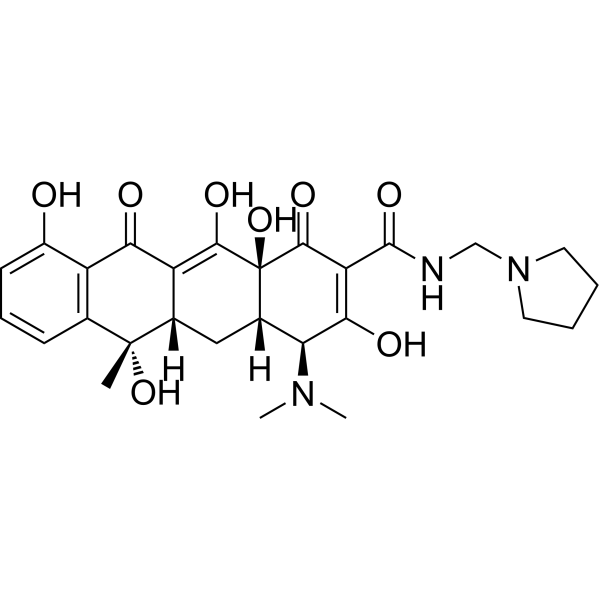
Rolitetracycline is a highly soluble, broad-spectrum antibiotic derived from tetracycline. Rolitetracycline binds to and stabilizes bovine serum albumin, and also inhibits HIV-1 integrase, blocks Aβ fibril formation and suppresses dengue virus proliferation. Rolitetracycline mediates the inhibition of Aβ fibrils via a specific three-dimensional pharmacophore conformation, and exerts bacteriostatic and bactericidal activities. Rolitetracycline acts synergistically with Penicillin G (HY-N7139) or Cephalothin (HY-B1275A) to alter the effects on microbial growth. Rolitetracycline serves as an important tool compound for the study of bacterial infections (urinary tract infections, sepsis), HIV-1 and dengue virus infections, as well as Alzheimer's disease .
|
-
-
- HY-N6678
-
|
|
Drug Metabolite
|
Metabolic Disease
|
|
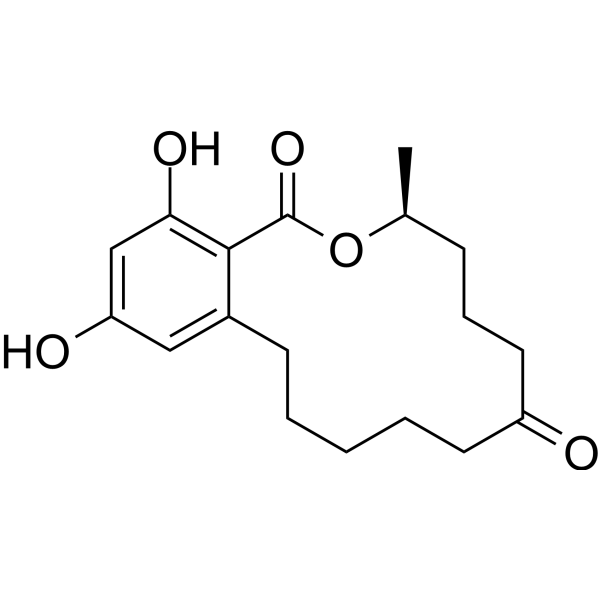
Zearalanone is a reductive metabolite of Zearalenone (HY-103447). Zearalanone binds to serum albumin across multiple species. Zearalanone enhances the binding affinity of Warfarin (HY-B0687) to serum albumin .
|
-
-
- HY-W087928
-
|
|
Biochemical Assay Reagents
|
Others
|
|
Bromocresol purple is a pH indicator, whose color changes from yellow to purple when the pH increases from 5.2 to 6.8. Bromocresol purple can be used for detecting yeast cells with plasma membrane damage and measuring serum albumin concentrations .
|
-

-
- HY-NP051
-
|
|
Biochemical Assay Reagents
|
Others
|
|
Bovine Serum Albumin-FITC is a bovine Serum albumin conjugated to FITC (Ex=495 nm; Em=525 nm). Bovine Serum Albumin-FITC can be used as a fluorescent marker to label or detect specific antigens, molecules or cellular structures .
|
-

-
- HY-NP002I
-
|
|
Biochemical Assay Reagents
|
Others
|
|
Sheep Serum Albumin is a plasma protein derived from sheep. Sheep serum albumin is a 583 amino acid residues long multidomain monomeric protein which is rich in cysteine and low in tryptophan content. Sheep Serum Albumin can be used as a potential biomarker of age-related decline .
|
-

-
- HY-NP062
-
|
BSA-Cy5.5
|
Fluorescent Dye
|
Others
|
|
Bovine Serum Albumin-Cy5.5 is Cy5.5-labeled Bovine Serum Albumin (BSA) (HY-D0842). Bovine Serum Albumin-Cy5.5 can be used in fields such as bioimaging, molecular tracing, drug delivery research, and in vitro and in vivo fluorescence detection (Ex/Em = 680/710 nm) .
|
-

-
- HY-NP041
-
|
BSA-PE
|
Biochemical Assay Reagents
|
Others
|
|
Bovine Serum Albumin-PE (BSA-PE) is a biochemical reagent conjugated to fluorescein PE (Ex=565 nm; Em=578 nm). Bovine Serum Albumin-PE can be used to label or detect specific antigens, molecules or cellular structures .
|
-

-
- HY-W134328E
-
|
Dextran blue (MW 70000)
|
Biochemical Assay Reagents
|
Others
|
|
Blue dextran (MW 70000) (Dextran blue (MW 70000)) is a conjugate of dextran and Cibacron Blue 3G-A ligand, mainly used for purification of human serum albumin .
|
-

-
- HY-N2452
-
|
|
GLP Receptor
|
Cardiovascular Disease
Infection
Metabolic Disease
|
|
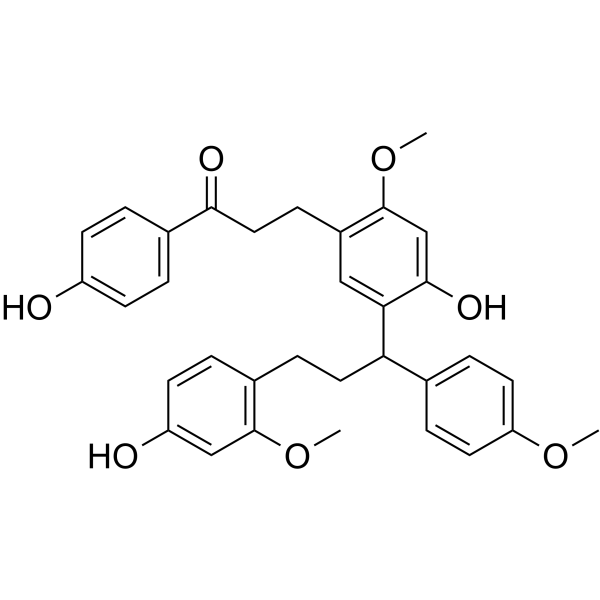
Cochinchinenin C is a GLP-1R agonist that binds to the extracellular domain of the receptor via hydrophobic interactions and hydrogen bonds, and promotes glucose-dependent insulin secretion from pancreatic β-cells. Cochinchinenin C also increases intracellular cAMP and ATP levels. At low concentrations, Cochinchinenin C binds to human serum albumin, alters its microenvironment, and induces dominant static fluorescence quenching. Cochinchinenin C shows almost no cytotoxicity to pancreatic β-cells, and exerts a synergistic effect with Loureirin A (HY-N1505) when binding to human serum albumin. Cochinchinenin C has been widely used in studies of type 2 diabetes, Helicobacter pylori infection, thrombotic diseases, and other conditions .
|
-
-
- HY-NP002K
-
|
|
Biochemical Assay Reagents
|
Others
|
|
Rat Serum Albumin is a plasma protein derived from rat. Serum albumin is a multifunctional protein with extraordinary ligand binding capacity, making it a transporter molecule for a diverse range of metabolites, drugs, nutrients, metals and other molecules .
|
-

-
- HY-NP002O
-
|
|
Biochemical Assay Reagents
|
Others
|
|
Cynomolgus Monkey serum albumin is a plasma protein derived from cynomolgus monkey. Serum albumin is a multifunctional protein with extraordinary ligand binding capacity, making it a transporter molecule for a diverse range of metabolites, drugs, nutrients, metals and other molecules.
|
-

-
- HY-NP002A
-
|
|
Biochemical Assay Reagents
|
Others
|
|
Goat Serum Albumin is a plasma protein derived from goats. Goat Serum Albumin is a versatile protein commonly used in various life sciences research applications, including immunoassays and the production and purification of monoclonal antibodies .
|
-

-
- HY-N8671
-
|
|
Amyloid-β
Apoptosis
Reactive Oxygen Species (ROS)
SARS-CoV
|
Infection
Neurological Disease
|
|
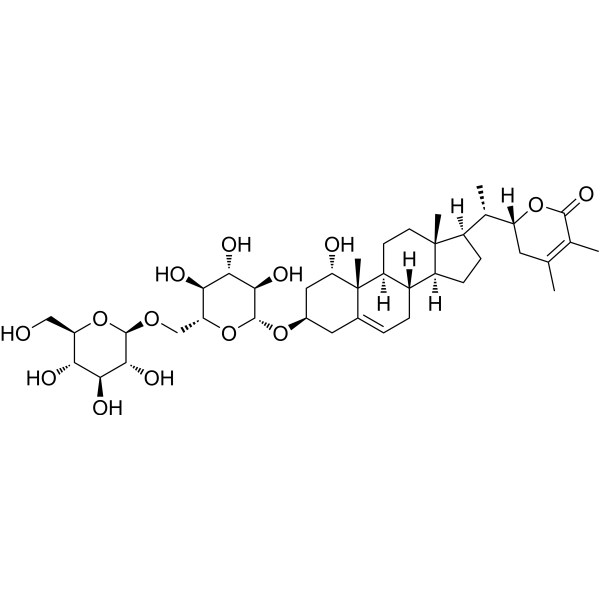
Withanoside V is a blood-brain barrier-permeable withanolide derivative . Withanoside V binds strongly to Sudlow I (domain IIA) of human serum albumin (HSA) to form a stable complex and alter the secondary structure of albumin, thereby increasing helix content and reducing β-sheet and random coil. Withanoside V binds to Aβ (1-42) to block the interaction between monomers and subsequent aggregation. Withanoside V inhibits the viability of neuroblastoma cells, reduces the number of apoptotic cells induced by Aβ (1-42), and decreases ROS production. Withanoside V inhibits SARS-CoV-2 Mpro. Withanoside V can be used for research on Alzheimer's disease and coronavirus disease 2019 .
|
-
-
- HY-W134328C
-
|
Dextran blue (MW 20000)
|
Biochemical Assay Reagents
|
Others
|
|
Blue dextran (MW 20000) (Dextran blue (MW 20000)) is a conjugate of dextran and Cibacron Blue 3G-A ligand, mainly used for purification of human serum albumin .
|
-

-
- HY-W856375A
-
|
|
Fluorescent Dye
|
Others
|
|
BSPOTPE is the mixture of (E)-BSPOTPE (HY-W856375) and (Z)-BSPOTPE. BSPOTPE binds Human serum albumin (HSA) (HY-P1956), exhibits aggregation-induced emission (AIE) phenomenon. BSPOTPE shows selectivity for albumin (such as HSA and BSA), but has no obvious fluorescence response to other proteins and DNA. BSPOTPE can be used as fluorescent probe for HSA .
|
-

-
- HY-NP002H
-
|
|
Biochemical Assay Reagents
|
Others
|
|
Porcine Serum Albumin (globulin free) is a serum albumin protein containing a flexible C-terminal region. Porcine Serum Albumin (globulin free) induces the production of anti-PSA IgG antibodies in rats and triggers severe immune responses upon secondary administration .
|
-

-
- HY-D0112
-
|
|
Fluorescent Dye
|
Others
|
|
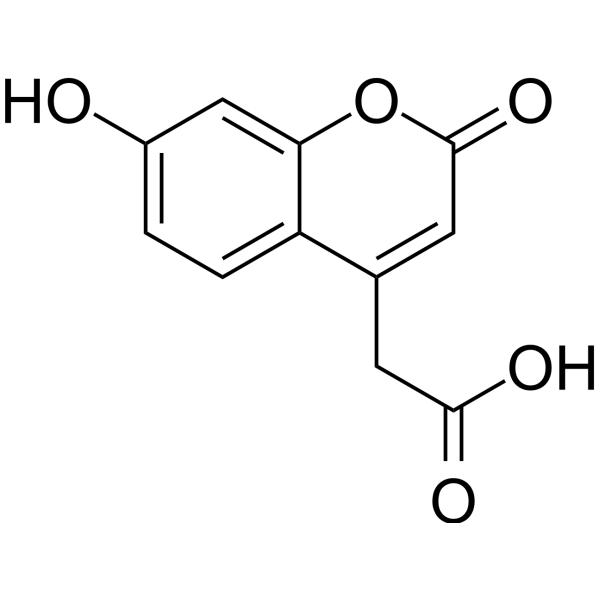
7-Hydroxycoumarin-4-acetic acid, a pH-indicator dye, is covalently bound to bovine serum albumin (BSA) at the positions of reactive amino groups (λmax=326 nm) .
|
-
-
- HY-P99696
-
|
LIB003
|
PCSK9
|
Cardiovascular Disease
Metabolic Disease
|
|
Lerodalcibep (LIB003) is a recombinant fusion protein of a PCSK9-binding domain (adnectin) and human serum albumin. Lerodalcibep is a Lipid-lowering agent. Lerodalcibep can be used for the research of hypercholesterolemia and cardiovascular diseases .
|
-

-
- HY-154818
-
|
Ac-BSA
|
Biochemical Assay Reagents
|
Others
|
|
Bovine Serum Albumin, Acetylated (Ac-BSA) is a polypeptide of known structure with strong antigenicity. Bovine Serum Albumin, Acetylated produced a significant immune response, validating the accuracy and reliability of the experimental method. Bovine Serum Albumin, Acetylated can be used as a positive control substance in ELISA or WB experiments, and can be used in experiments with acetylated lysine monoclonal or polyclonal antibodies. Bovine Serum Albumin, Acetylated also improves encapsulation efficiency at low concentrations of PLGA, a polymer for biopharmaceutical delivery with biocompatibility, degradability, and controlled release properties .
|
-
-
- HY-160052
-
|
|
Interleukin Related
|
Inflammation/Immunology
Cancer
|
|
IL-6 aptamer sodium is an aptamer that specifically binds to IL-6, and can serve as a biological recognition receptor for high-sensitivity detection. IL-6 aptamer sodium enables label-free specific detection through changes in electrical signals of carbon nanotube microarrays or alterations in capacitive impedance on the surface of gold sensors. IL-6 aptamer sodium still maintains high selectivity even below the gray zone threshold for cancer diagnosis, and shows no significant non-specific binding to bovine serum albumin. IL-6 aptamer sodium can form an ordered self-assembled monolayer with 6-mercapto-1-hexanol on gold surfaces, making it suitable for reagent-free capacitive impedance biosensing platforms. IL-6 aptamer sodium is widely used in research related to fields such as cancer, inflammatory diseases, myeloma, liver cancer and glioma .
|
-
-
- HY-NP039
-
|
BSA-APC
|
Biochemical Assay Reagents
|
Others
|
|
Bovine Serum Albumin-APC (BSA-APC) is a biochemical reagent that can be used as a biological material or organic compound for life science related research .
|
-

-
- HY-NP142
-
|
MA-BSA
|
Biochemical Assay Reagents
|
Neurological Disease
|
|
Methamphetamine-BSA is a protein consists of Methamphetamine and Bovine Serum Albumin (BSA). Methamphetamine-BSA is an antigen to generate specific antibodies for the detection of Methamphetamine in biological samples .
|
-

-
- HY-W134328A
-
|
Dextran blue (MW 5000)
|
Biochemical Assay Reagents
|
Others
|
|
Blue dextran (MW 5000) (Dextran blue (MW 5000)) is a conjugate of dextran and Cibacron Blue 3G-A ligand, mainly used for purification of human serum albumin .
|
-

-
- HY-W411827
-
|
4:2 FTSA
|
Biochemical Assay Reagents
|
Others
|
|
1H,1H,2H,2H-Perfluorohexanesulfonic acid (4:2 FTSA) is a short-chain perfluoroalkyl sulfonic acid with 6 carbon atoms that can bind to human serum albumin .
|
-

-
- HY-N8375
-
|
|
Others
|
Metabolic Disease
|
|
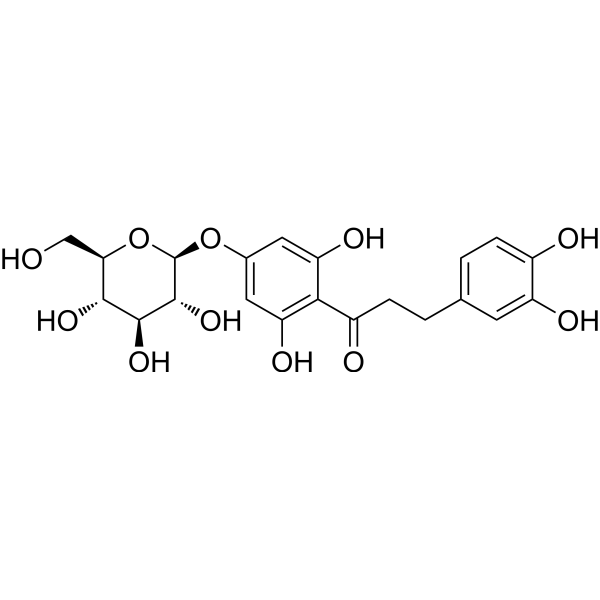
Sieboldin is a dihydrochalcone, which inhibits the production of advanced glycation end products (AGE) produced by bovine serum albumins (BSA), has free radical scavenging activity and cytotoxicity in cancer cell lines, and is also used to capture of methylglyoxal (MGO) from Malus baccata .
|
-
-
- HY-NP002C
-
|
|
Biochemical Assay Reagents
|
Inflammation/Immunology
|
|
Rabbit Serum Albumin (globulin free) is a plasma protein derived from rabbits. Rabbit Serum Albumin (globulin-free) can stereoselectively bind to a variety of bioactive molecules. Rabbit Serum Albumin (globulin free) acts as the allergen Ory c RSA with cross-reactivity to other mammalian serum albumins. Rabbit Serum Albumin (globulin free) can be used for the research of allergy .
|
-

-
- HY-D0015
-
|
|
Fluorescent Dye
|
Others
|
|
Cresol red, 97% is an acidic phenolsulfonphthalein triphenylmethane dye. Cresol red, 97% generates reactive oxygen species and singlet oxygen under ultrasonic irradiation, interacts with bovine serum albumin, alters the structure of bovine serum albumin, and oxidizes the fluorescent amino acid residues of bovine serum albumin. Cresol red, 97% can be decolorized and biodegraded by *Absidia spinosa* M15, producing phenylacetic acid and benzoic acid metabolites. Cresol red, 97% serves as a pH indicator (orange at pH 1.8-yellow at pH 2.0, yellow at pH 7.0-purple at pH 8.8). Cresol red, 97% can be used to indicate pH, temperature and salinity .
|
-

-
- HY-W080797
-
|
3:3 FTCA
|
Biochemical Assay Reagents
|
Others
|
|
4,4,5,5,6,6,6-Heptafluorohexanoic acid (3:3 FTCA) is a polyfluoroalkyl substance (PFAS) that accumulate in the environment. 3:3 FTCA binds to many proteins, including the primary human serum transport protein albumin (HSA) .
|
-

- HY-W110790
-
|
|
Biochemical Assay Reagents
|
Others
|
|
Bromocresol purple sodium is a pH indicator, whose color changes from yellow to purple when the pH increases from 5.2 to 6.8. Bromocresol purple sodium can be used for detecting yeast cells with plasma membrane damage and measuring serum albumin concentrations .
|
-

- HY-NP207
-
-

- HY-NP047
-
|
BSA-Cy7
|
Biochemical Assay Reagents
|
Others
|
|
Bovine Serum Albumin-Cy7 (BSA-Cy7) is a biochemical reagent that can be used as a biological material or organic compound for life science related research .
|
-

- HY-W134328D
-
|
Dextran blue (MW 40000)
|
Biochemical Assay Reagents
|
Others
|
|
Blue dextran (MW 40000) (Dextran blue (MW 4000)) is a conjugate of dextran and Cibacron Blue 3G-A ligand, mainly used for purification of human serum albumin .
|
-

- HY-W134328I
-
|
Dextran blue (MW 500000)
|
Biochemical Assay Reagents
|
Others
|
|
Blue dextran (MW 500000) (Dextran blue (MW 500000)) is a conjugate of dextran and Cibacron Blue 3G-A ligand, mainly used for purification of human serum albumin .
|
-

- HY-W134328H
-
|
Dextran blue (MW 110000)
|
Biochemical Assay Reagents
|
Others
|
|
Blue dextran (MW 110000) (Dextran blue (MW 110000)) is a conjugate of dextran and Cibacron Blue 3G-A ligand, mainly used for purification of human serum albumin .
|
-

- HY-W856375
-
|
|
MOFs
Fluorescent Dye
|
Others
|
|
(E)-BSPOTPE is the E configuration of BSPOTPE (HY-W856375A). BSPOTPE binds Human serum albumin (HSA) (HY-P1956), exhibits aggregation-induced emission (AIE) phenomenon. BSPOTPE shows selectivity for albumin (such as HSA and BSA), but has no obvious fluorescence response to other proteins and DNA. BSPOTPE can be used as fluorescent probe for HSA .
|
-

- HY-N8773
-
|
|
Others
|
Others
|
|
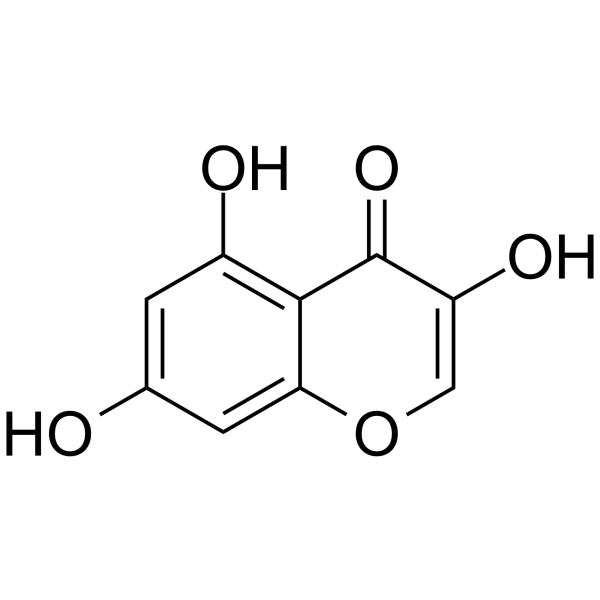
3,5,7-Trihydroxychromone is the analogue of galangin. 3,5,7-Trihydroxychromone is also the binder of bovine serum albumin. 3,5,7-Trihydroxychromone undergoes multiple antioxidant pathways .
|
-
- HY-150978
-
|
|
Fluorescent Dye
|
Others
|
|
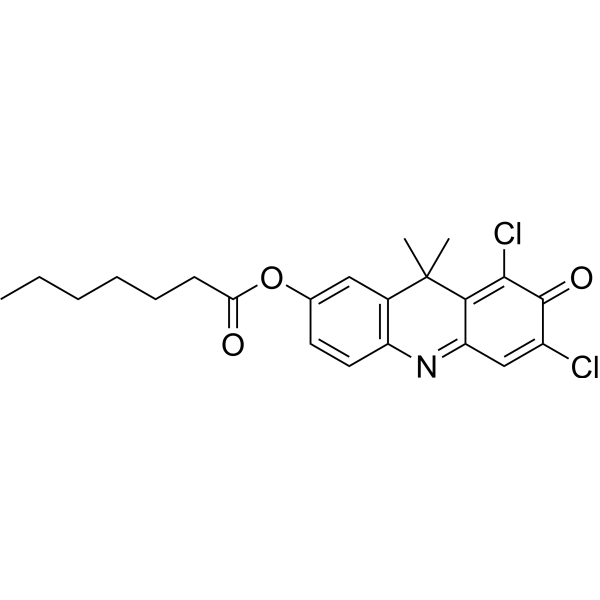
DDAO-C6 is a cridone ester derivative, highly specific fluorescence for detecting human serum albumin (HSA). DDAO-C6 acts as an enzymatic activatable near-infrared fluorescent probe in visually sensing endogenous lipase from gut microbes (Ex/Em=600/658 nm) .
|
-
- HY-D1258
-
|
VDP-green
|
Fluorescent Dye
|
Others
|
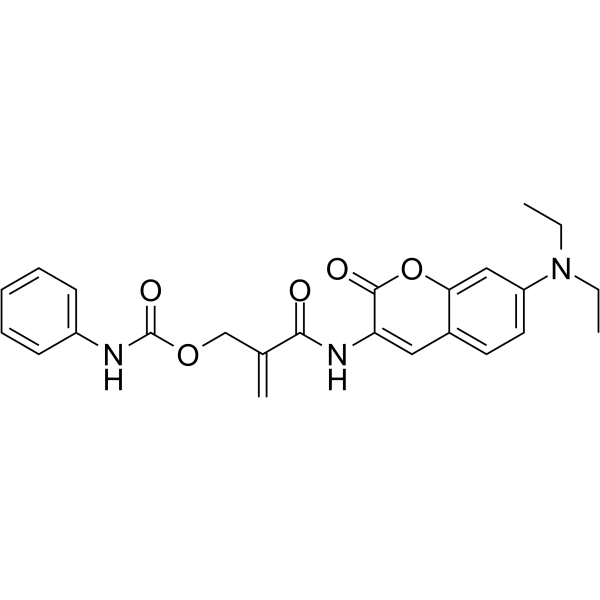
AC-green (VDP-green) is a β-allyl carbamate fluorescent probe for specifically imaging vicinal dithiol proteins (VDPs) in living systems (λex/λem=400/475 nm). AC-green can detect the reduced bovine serum albumin (rBSA) with high sensitivity. AC-green displays low toxicity and features high sensitivity, and is suitable for sensing VDPs in living cells and zebrafishes .
|
-
- HY-139248
-
|
|
Drug Derivative
|
Cancer
|
|
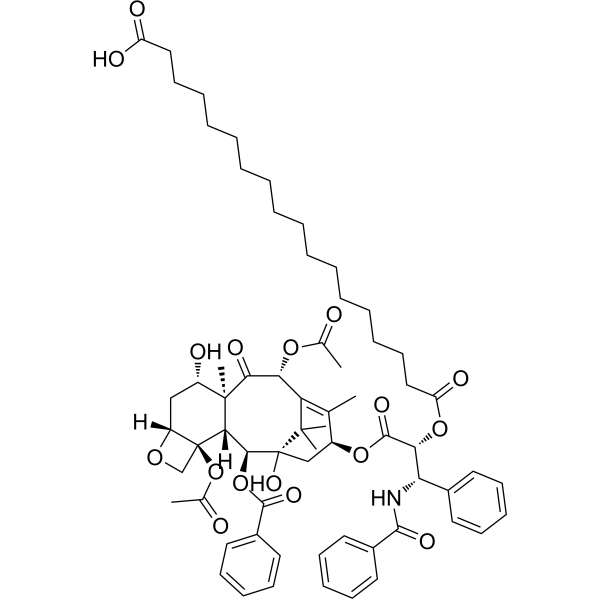
Paclitaxel octadecanedioate (compound PTX-FA18) is comprised of Paclitaxel (HY-B0015) conjugated to 1,18-octadecanedioic acid (HY-W005178). Paclitaxel octadecanedioate mixed with human serum albumin (HAS) is cytotoxic to HT-1080, PANC-1, HT-29 and Hela cells (IC50s = 12, 2.48, 8.62, and 64.42 nM, respectively) .
|
-
- HY-NP0215
-
|
|
Biochemical Assay Reagents
|
Others
|
|
Chicken Serum Albumin is a plasma protein derived from chicken. Serum albumin is a multifunctional protein with extraordinary ligand binding capacity, making it a transporter molecule for a diverse range of metabolites, drugs, nutrients, metals and other molecules .
|
-

- HY-NP002N
-
|
|
Biochemical Assay Reagents
|
Others
|
|
Pigeon Serum Albumin is a plasma protein derived from pigeon. Serum albumin is a multifunctional protein with extraordinary ligand binding capacity, making it a transporter molecule for a diverse range of metabolites, drugs, nutrients, metals and other molecules .
|
-

- HY-NP061
-
|
BSA-AF750
|
Biochemical Assay Reagents
|
Others
|
|
Bovine Serum Albumin-AF750 (BSA-AF750) is an AF750 conjugated BSA (Ex=752 nM, Em=780 nm). Bovine Serum Albumin-AF750 can be used in the research of protein fluorescence detection .
|
-

- HY-N14785
-
|
|
Antibiotic
Bacterial
|
Infection
Cancer
|
|
Deflectin 1a is an antibiotic with the activity of lysing bacteria, lysing red blood cells and inhibiting Ehrlich ascites cancer cells, and its activity can be offset by adding serum or serum albumin .
|
-

- HY-W096997S
-
|
Sodium capryl sulfate-d17
|
Isotope-Labeled Compounds
|
Others
|
|
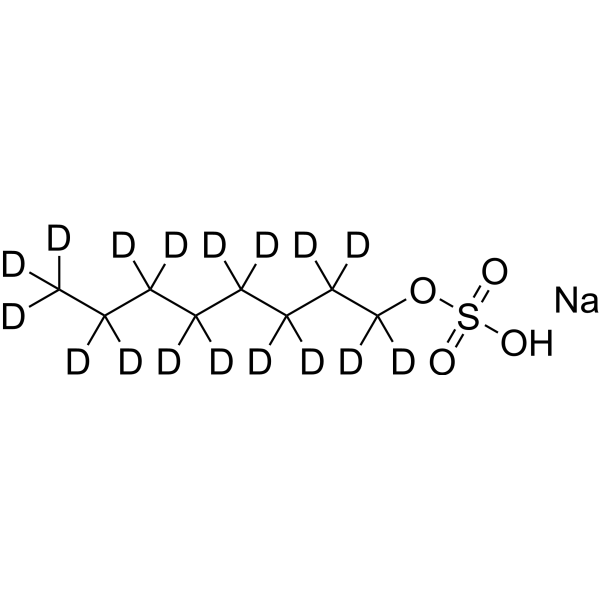
Sodium octyl sulfate (SOS)-d17 (Sodium capryl sulfate-d17) is the deuterated analogue of Sodium octyl sulfate (SOS). Sodium octyl sulfate (Sodium capryl sulfate; SOS) is a medium‑chain anionic surfactant. Sodium octyl sulfate (SOS) can undergo strong hydrophobic interactions with serum albumins (such as human serum albumin (HSA) and bovine serum albumin (BSA)), while exhibiting weak interactions with other proteins including myoglobin and hemoglobin. As an environmental pollutant in freshwater ecosystems, Sodium octyl sulfate (SOS) can mimic interspecific pheromones released by Daphnia magna and induce the formation of multicellular colonies in green algae.
|
-
- HY-NP040
-
|
BSA-RBITC
|
Biochemical Assay Reagents
|
Others
|
|
Bovine Serum Albumin-RBITC (BSA-RBITC) is a biochemical reagent that can be used as a biological material or organic compound for life science related research .
|
-

- HY-163020
-
|
|
Biochemical Assay Reagents
|
Cancer
|
|
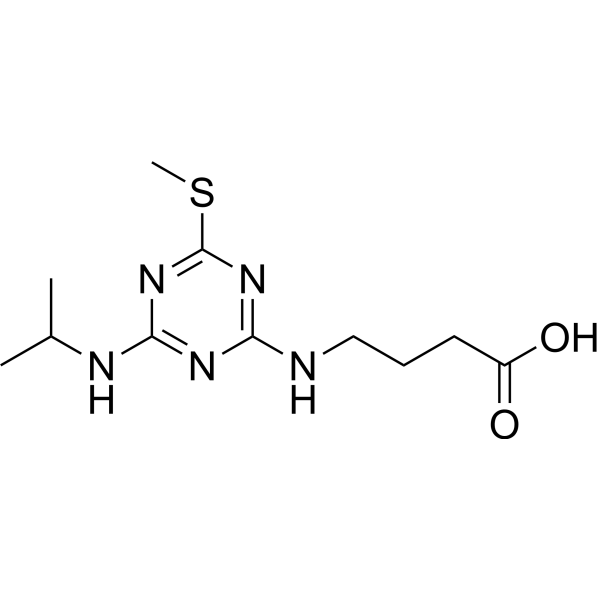
Ametryn-acetic acid is a hapten that can be coupled with bovine serum albumin (BSA). PcAbs obtained were with a high titer (at least 6.4×10 4) .
|
-
- HY-NP034
-
|
BSA-AF350
|
Biochemical Assay Reagents
|
Others
|
|
Bovine Serum Albumin-AF350 (BSA-AF350) is a kind of biological materials or organic compounds that are widely used in life science research .
|
-

- HY-157185
-
|
MPPEE acid
|
Biochemical Assay Reagents
|
Others
|
|
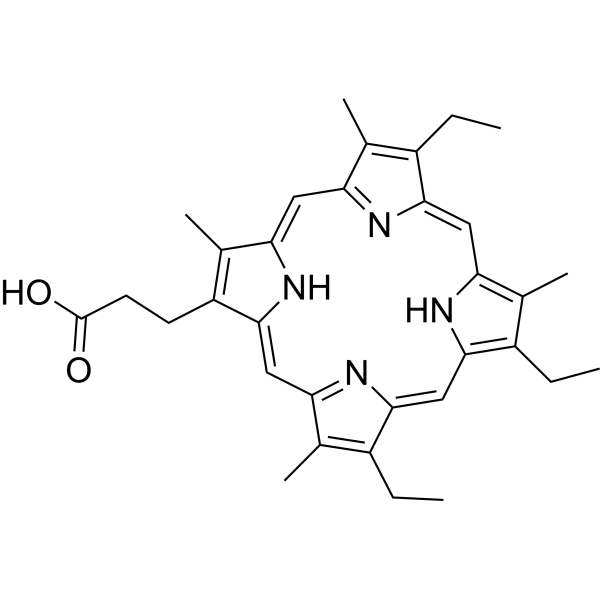
Methylpyrroporphyrin XXI acid is a hapten that can be coupled with bovine serum albumin and keyhole limpet hemocyanin. Methylpyrroporphyrin XXI acid can target porphyrin with IC50 of 1.3 μM .
|
-
- HY-125694
-
|
|
Fungal
|
Infection
|
|
MFB-1041 is an orally active antifungal agent, but exhibits poor oral absorption. MFB-1041 induces the binding of drug to serum albumin .
|
-

- HY-NP038
-
|
BSA-AF405
|
Biochemical Assay Reagents
|
Others
|
|
Bovine Serum Albumin-AF405 (BSA-AF405) is a biochemical reagent that can be used as a biological material or organic compound for life science related research .
|
-

- HY-163021
-
-
- HY-P11008
-
|
|
Biochemical Assay Reagents
|
Others
|
|
DX-236 is a macrocyclic peptide with a binding affinity of 1.9 µM to human serum albumin (HSA). DX-236 can fuse with HSV to prolong its circulation in vivo .
|
-

- HY-B0161D
-
|
LY248686 hydrochloride
|
Serotonin Transporter
|
Others
|
|
(R)-Duloxetine (LY248686) Hydrochloride is a napthalenyloxy-substituted amine utilized in binding studies with human serum albumin, and unlike its enantiomer (S)-Duloxetine, it exhibits limited efficacy as a dual serotonin and norepinephrine reuptake inhibitor (SNRI).
|
-

- HY-161547
-
|
|
Antibiotic
Biochemical Assay Reagents
|
Others
|
Tetracycline/BSA is a tetracycline-carrier protein conjugate of Tetracycline (HY-A0107) and bovine serum albumin (BSA). Tetracycline/BSA can be used as an immobilized capture antigen for the detection of tetracycline residues in milk .
|
-

- HY-138997
-
|
|
PPAR
|
Metabolic Disease
|
|
MBX-102 acid is a selective partial PPAR-γ agonist. MBX-102 acid binds highly to plasma proteins, mainly serum albumin. MBX-102 acid can be used to study type 2 diabetes .
|
-

- HY-N12329
-
|
|
Others
|
Others
|
|
Fumonisin B4 is a derivative of fumonisin. Fumonisin B4 has low albumin binding capacity .
|
-
- HY-P99458
-
|
CG 10639
|
c-Fms
|
Cancer
|
|
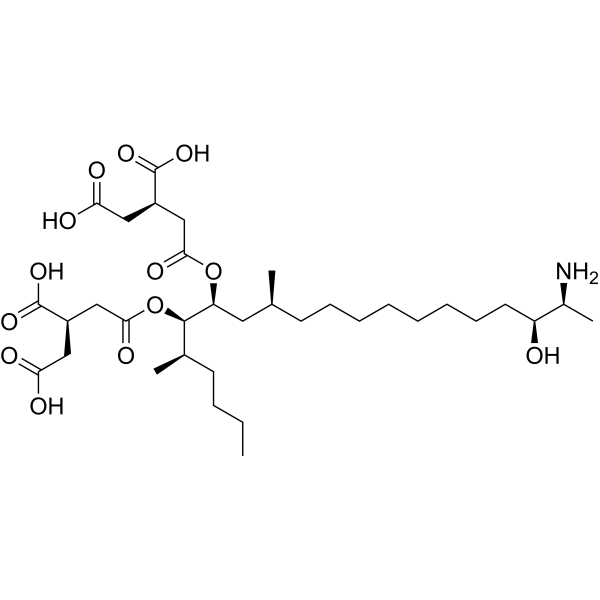
Balugrastim (CG 10639) is a novel long-acting recombinant granulocyte colony-stimulating factor (G-CSF) obtained by means of a genetic fusion between recombinant human serum albumin and granulocyte colony-stimulating factor. Balugrastim can be used for the research of breast cancer .
|
-

- HY-168728
-
|
|
Monoamine Oxidase
|
Neurological Disease
|
|
MAO-B-IN-37 (Compound 37) is a derivative of TT01001 (HY-114520), and a selective inhibitor for monoamine oxidase B (MAO-B) with an IC50 of 270 nM. MAO-B-IN-37 exhibits good metabolic stability in mice microsomes and good affinity with human serum albumin .
|
-

- HY-161544
-
|
|
Biochemical Assay Reagents
|
Inflammation/Immunology
|
|
Cholyglycine/BSA is a conjugate of Cholyglycine and Bovine Serum Albumin (BSA). By conjugating the antigen with a protein adjuvant, the production of antigen-specific antibodies in vaccine models can be enhanced. The conjugate does not affect protein folding or disrupt major epitopes, and it can enhance cross-presentation and the production of antigen-specific T cells.
|
-

- HY-117909
-
|
RXDX-107
|
Apoptosis
|
Cancer
|
|
CEP-40125 (RXDX-107) is a modified form of Bendamustine (HY-13567), a DNA cross-linking agent that may cause DNA damage and cell apoptosis. CEP-40125 (RXDX-107) is formed by encapsulating the alkyl ester form of Bendamustine in human serum albumin .
|
-

- HY-161583
-
|
|
Biochemical Assay Reagents
|
Inflammation/Immunology
|
|
Marijuana/BSA is the antigen-adjuvant conjugate of Marijuana and Bovine Serum Albumin (BSA). By conjugating the antigen with a protein adjuvant, the production of antigen-specific antibodies in vaccine models can be enhanced. The conjugate does not affect protein folding or destroy major epitopes, and it can enhance cross-presentation and the production of antigen-specific T cells.
|
-

- HY-161562
-
|
|
Biochemical Assay Reagents
|
Inflammation/Immunology
|
|
PROMETON/BSA is an antigen-adjuvant conjugate formed by the coupling of PROMETON with bovine serum albumin (BSA). By coupling the antigen to the protein adjuvant, the production of antigen-specific antibodies in vaccine models can be enhanced. The conjugate does not affect protein folding or disrupt major epitopes, and it can enhance cross-presentation and the production of antigen-specific T cells.
|
-

- HY-133936
-
|
|
Bacterial
|
Others
|
|
Sulfaethidole, a heterocyclic sulfonamide, is an antimicrobial agent. Sulfaethidole binds to bovine Serum Albumin (BSA) with a pKA of 6.0 .
|
-

- HY-167770
-
|
|
Drug Metabolite
|
Metabolic Disease
|
|
Chrysin 7-sulfate is a conjugated metabolite of Chrysin (HY-14589). Chrysin 7-sulfate can strongly displace the Site I marker warfarin from human serum albumin. Chrysin 7-sulfate can effectively displace Ochratoxin A (OTA) (HY-N6788) from albumin both in vitro and in vivo .
|
-

- HY-N13470
-
|
|
Drug Isomer
|
Inflammation/Immunology
|
|
meso-Astaxanthin is a natural stereoisomer of Astaxanthin (HY-B2163) with antioxidant activity and is found in a variety of aquatic animals. meso-Astaxanthin binds to human serum albumin in a monomeric form at a stoichiometric ratio; at low ligand-to-protein ratios, human serum albumin acts as a chiral template for supramolecular assembly at higher ratios. meso-Astaxanthin directly scavenges superoxide anions. meso-Astaxanthin can be used in the research of myocardial ischemia-reperfusion injury .
|
-

- HY-P992098
-
|
NEI-01
|
Protein Arginine Deiminase
|
Cancer
|
|
Adargiminase (NEI-01) is a modified arginine-depleting enzyme and albumin binder. Adargiminase catalyzes the conversion of arginine to citrulline and ammonia, reduces plasma arginine levels to undetectable levels, and binds to serum albumin from Mus musculus (mouse), Rattus norvegicus (rat), Canis lupus familiaris (dog) and Homo sapiens (human) to extend its half-life. Adargiminase inhibits the viability of ASS1-negative pancreatic cancer cells, and reduces tumor volume and weight. Adargiminase can be used for the research of pancreatic cancer .
|
-

- HY-183022
-
|
|
Biochemical Assay Reagents
|
Others
|
|
1-(3-Azidopropyl)-1H-pyrrole-2,5-dione is a maleimide derivative with a 3-azidopropyl substituent, used to introduce an azide functional group to bovine serum albumin (BSA). 1-(3-Azidopropyl)-1H-pyrrole-2,5-dione reacts with the free, solvent-accessible thiol group of BSA to produce azide-functionalized BSA, which is used in click chemistry to form a TLL-BSA hetero-dimer .
|
-

- HY-D3025
-
|
HSA-FITC
|
Fluorescent Dye
|
Others
|
|
Human Serum Albumin-FITC (HSA-FITC) is a FITC (HY-66019) labeled serum albumin. Human Serum Albumin-FITC plays an important role in fluorescent labeling, drug delivery research, and other fields (Ex/Em = 488/525 nm) .
|
-

- HY-D3027
-
|
HSA-Rhodamine
|
Fluorescent Dye
|
Others
|
|
Human Serum Albumin-Rhodamine (HSA-Rhodamine) is a Rhodamine B (HY-Y0016) labeled serum albumin. Human Serum Albumin-Rhodamine plays an important role in fluorescent labeling, drug delivery research, and other fields (Ex/Em = 546/610 nm) .
|
-

- HY-D3026
-
|
HSA-ICG
|
Fluorescent Dye
|
Others
|
|
Human Serum Albumin-ICG (HSA-ICG) is a Indocyanine green (ICG) (HY-D0711) labeled serum albumin. Human Serum Albumin-ICG plays an important role in fluorescent labeling, drug delivery research, and other fields (Ex/Em = 785/813 nm) .
|
-

- HY-183764
-
|
|
COX
Lipoxygenase
TNF Receptor
Interleukin Related
MMP
|
Inflammation/Immunology
|
|
COX-2/5-LOX-IN-8 is an orally active dual COX-2/5-LOX inhibitor, with an IC50 of 6.30 μM against sheep-derived COX-2 and an IC50 of 8.09 μM against 5-LOX. COX-2/5-LOX-IN-8 acts as a membrane stabilizer that stabilizes erythrocyte membranes against hypotonicity-induced hemolysis. COX-2/5-LOX-IN-8 functions as a protein stabilizer that inhibits heat-induced denaturation of bovine serum albumin. COX-2/5-LOX-IN-8 reduces paw swelling, improves hind limb weight-bearing function, decreases serum levels of pro-inflammatory cytokines (TNF-α, IL-1β, IL-6, CRP), and lowers serum levels of cartilage degradation biomarkers (COMP, MMP-3, CTX-II). COX-2/5-LOX-IN-8 can be used in the research of osteoarthritis .
|
-

- HY-D3028
-
|
HSA-CY7
|
Fluorescent Dye
|
Others
|
|
Human Serum Albumin-CY7 (HSA-CY7) is a CY7 (HY-D0825) labeled serum albumin. Human Serum Albumin-CY7 plays an important role in fluorescent labeling, drug delivery research, and other fields (Ex/Em = 740/770 nm) .
|
-

- HY-D3029
-
|
HSA-CY5.5
|
Fluorescent Dye
|
Others
|
|
Human Serum Albumin-CY5.5 (HSA-CY5.5) is a CY5.5 (HY-D0924) labeled serum albumin. Human Serum Albumin-CY5.5 plays an important role in fluorescent labeling, drug delivery research, and other fields (Ex/Em = 680/710 nm) .
|
-

- HY-186189
-
|
|
Biochemical Assay Reagents
|
Infection
Cancer
|
|
OPA-S-S-alkyne is a cell surface protein-selective labeling agent. OPA-S-S-alkyne selectively labels hyper-reactive extracellular lysines including ROR2 K382 and ENG K285, blocks ENG-BMP9 interaction, and labels purified human serum albumin with minimal bias. OPA-S-S-alkyne can be used for the research of hematologic and influenza A virus infection .
|
-

- HY-NP002M
-
|
|
Biochemical Assay Reagents
|
Others
|
|
Guinea Pig Serum Albumin is a plasma protein derived from guinea pig. Serum albumin is a multifunctional protein with extraordinary ligand binding capacity, making it a transporter molecule for a diverse range of metabolites, drugs, nutrients, metals and other molecules .
|
-

- HY-W778375
-
|
|
Apoptosis
|
Inflammation/Immunology
Cancer
|
|
Hesperetin triacetate is an active compound with anti-inflammatory and anti-tumor activities. Hesperetin triacetate inhibits bovine serum albumin denaturation in vitro. Hesperetin triacetate inhibits carrageenan-induced paw swelling in mice in vivo. Hesperetin triacetate exhibits anti-proliferative activity against breast cancer cells. Hesperetin triacetate induces DNA degradation and apoptosis in breast cancer cells. Hesperetin triacetate can be used in studies related to breast cancer and inflammation .
|
-

- HY-N13285
-
|
(-)-EGC-4'-O-ME
|
Drug Derivative
|
Metabolic Disease
Inflammation/Immunology
|
|
(-)-Epigallocatechin-4'-O-methylether ((-)-EGC-4'-O-ME) is an orally active natural phenolic catechin with antioxidant, free radical-scavenging and hepatoprotective activities. (-)-Epigallocatechin-4'-O-methylether interferes with radiation-induced free radical formation, scavenges DPPH free radicals, inhibits carbon tetrachloride-induced increases in serum GOT and GPT, suppresses carbon tetrachloride-induced TBA-RS formation, and counteracts carbon tetrachloride-induced hepatocyte toxicity. (-)-Epigallocatechin-4'-O-methylether binds specifically to human serum albumin. (-)-Epigallocatechin-4'-O-methylether can be used in studies related to liver injury .
|
-

- HY-127016
-
|
|
Endogenous Metabolite
|
Cancer
|
|
Manninotrionate potassium is a hapten that can be conjugated to bovine serum albumin (BSA) or to ovalbumin. In vivo antisera generated from manninotrionate potassium-protein conjugates produce weak precipitation reactions with bovine lung galactan, guaran, gum arabic, and larch arabinogalactan.
|
-

- HY-P990966
-
|
JR-142
|
GHR
IGF-1R
|
Others
|
|
Redalsomatropin alfa (JR-142) is a recombinant long-acting growth hormone. Redalsomatropin alfa extends its half-life through fusion with modified serum albumin. Redalsomatropin alfa is well-tolerated and can maintain IGF-1 levels. Redalsomatropin alfa can be used in research related to growth hormone deficiency .
|
-

- HY-P991088
-
|
|
CD3
|
Cancer
|
|
HPN536 is a trispecific, T-cell-activating protein-based construct, which binds to mesothelin-expressing tumor cells, CD3ε on T cells, and to serum albumin. HPN536 specifically redirects T cells for potent redirected lysis of mesothelin-expressing cancer cells with concomitant T-cell activation .
|
-

- HY-161529
-
|
|
Angiotensin Receptor
|
Inflammation/Immunology
|
|
Angiotensin I/BSA is an antigen-adjuvant conjugate of Angiotensin I and bovine serum albumin (BSA). By conjugating the antigen with a protein adjuvant, the production of antigen-specific antibodies in vaccine models can be enhanced. The conjugate does not affect protein folding or disrupt major epitopes, and it can enhance cross-presentation and the generation of antigen-specific T cells.
|
-

- HY-161549
-
|
|
Biochemical Assay Reagents
|
Inflammation/Immunology
|
|
Phosphotyrosine/BSA is an antigen-adjuvant conjugate formed by coupling Phosphotyrosine with Bovine Serum Albumin (BSA). By conjugating the antigen with protein adjuvants, the production of antigen-specific antibodies in vaccine models can be enhanced. The conjugate does not affect protein folding or disrupt major epitopes, and it can enhance cross-presentation and the generation of antigen-specific T cells.
|
-

- HY-161531
-
|
|
Biochemical Assay Reagents
|
Inflammation/Immunology
|
|
Diethylstilbestrol/BSA is a conjugate of Diethylstilbestrol (HY-14598) and Bovine Serum Albumin (BSA). By conjugating the antigen with a protein adjuvant, the production of antigen-specific antibodies in vaccine models can be enhanced. The conjugate does not affect protein folding or disrupt major epitopes, and it can enhance cross-presentation and the production of antigen-specific T cells.
|
-

- HY-163556
-
|
|
Biochemical Assay Reagents
|
Inflammation/Immunology
|
|
COT/BSA is the antigen-adjuvant conjugate of COT (cyclooctatetraene) and Bovine Serum Albumin (BSA). By conjugating the antigen with a protein adjuvant, the production of antigen-specific antibodies in vaccine models can be enhanced. The conjugate does not affect protein folding or disrupt major epitopes and can enhance cross-presentation and the generation of antigen-specific T cells.
|
-

- HY-161542
-
|
|
Biochemical Assay Reagents
|
Inflammation/Immunology
|
|
Isoniazid/BSA is an antigen-adjuvant conjugate of Isoniazid (HY-B0329) and Bovine Serum Albumin (BSA). By conjugating the antigen with a protein adjuvant, the production of antigen-specific antibodies in vaccine models can be enhanced. The conjugate does not affect protein folding or disrupt major epitopes, and it can enhance cross-presentation and the generation of antigen-specific T cells.
|
-

- HY-163555
-
|
|
Biochemical Assay Reagents
|
Inflammation/Immunology
|
|
BZO/BSA is an antigen-adjuvant conjugate formed by the coupling of BZO (benzodiazepine) with bovine serum albumin (BSA). By conjugating the antigen with a protein adjuvant, the production of antigen-specific antibodies in vaccine models can be enhanced. The conjugate does not affect protein folding or disrupt major epitopes, and it can enhance cross-presentation and the production of antigen-specific T cells.
|
-

- HY-161554
-
|
|
Biochemical Assay Reagents
|
Inflammation/Immunology
|
|
Clenbuterol/BSA is an antigen-adjuvant conjugate of Clenbuterol (HY-B1615) and Bovine Serum Albumin (BSA). By conjugating the antigen with a protein adjuvant, it can enhance the production of antigen-specific antibodies in vaccine models. The conjugate does not affect protein folding or disrupt major epitopes, and it can enhance cross-presentation and the generation of antigen-specific T cells.
|
-

- HY-161566
-
|
|
Biochemical Assay Reagents
|
Inflammation/Immunology
|
|
DHT/BSA is an antigen-adjuvant conjugate formed by the coupling of DHT (dihydrotestosterone) and bovine serum albumin (BSA). By conjugating the antigen with the protein adjuvant, the production of antigen-specific antibodies in vaccine models can be enhanced. The conjugate does not affect protein folding or disrupt major epitopes, and it can enhance cross-presentation and the generation of antigen-specific T cells.
|
-

- HY-NP0245
-
|
|
Biochemical Assay Reagents
|
Inflammation/Immunology
|
|
Retinoic acid-HSA is a conjugate of Retinoic acid (HY-14649) and Human serum albumin (HSA). By conjugating the antigen with protein adjuvants, the production of antigen-specific antibodies in vaccine models can be enhanced. The conjugate does not affect protein folding or disrupt the primary epitopes, and it can enhance cross-presentation and the generation of antigen-specific T cells .
|
-

- HY-111186
-
|
WL 108366
|
Glucocorticoid Receptor
MMP
VKOR
|
Others
|
|
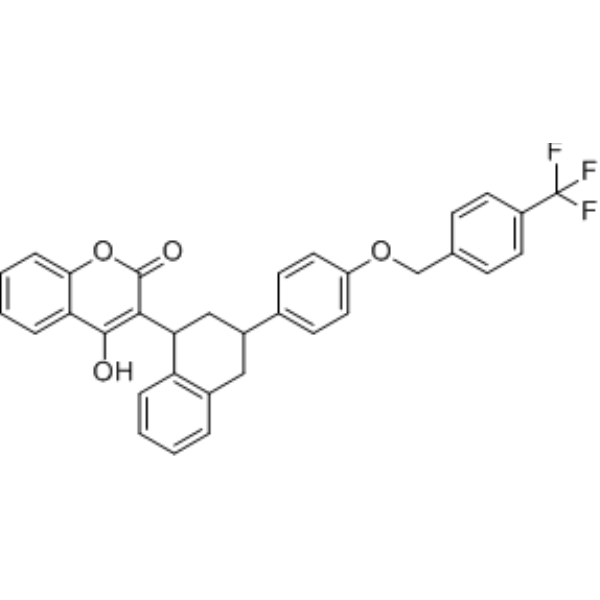
Flocoumafen (WL 108366) is an orally active vitamin K epoxide reductase inhibitor and a multi-target ligand, which includes prostaglandin F synthase, serum albumin, glucocorticoid receptor 2, and MMP-9. Flocoumafen is a second-generation anticoagulant rodenticide (ARs) with a half-life of 177.4 hours and has deadly anticoagulant effects .
|
-
- HY-161591
-
|
|
Biochemical Assay Reagents
|
Inflammation/Immunology
|
|
SEM/BSA is an antigen-adjuvant conjugate formed by the conjugation of SEM (furanesalin) with bovine serum albumin (BSA). By conjugating the antigen with a protein adjuvant, the production of antigen-specific antibodies in vaccine models can be enhanced. The conjugate does not affect protein folding or disrupt major epitopes, and it can enhance cross-presentation and the generation of antigen-specific T cells.
|
-

- HY-161594
-
|
|
Biochemical Assay Reagents
|
Inflammation/Immunology
|
|
Furazolidone/BSA is the antigen-adjuvant conjugate of Furazolidone (HY-B1336) and bovine serum albumin (BSA). By conjugating the antigen with the protein adjuvant, the production of antigen-specific antibodies in vaccine models can be enhanced. The conjugate does not affect protein folding or disrupt the major epitopes, and it can enhance cross-presentation and the generation of antigen-specific T cells.
|
-

- HY-161530
-
|
|
Angiotensin Receptor
|
Inflammation/Immunology
|
|
Angiotensin II/BSA is an antigen-adjuvant conjugate formed by the coupling of Angiotensin II with bovine serum albumin (BSA). By coupling the antigen with a protein adjuvant, the production of antigen-specific antibodies in vaccine models can be enhanced. The conjugate does not affect protein folding or disrupt major epitopes, and it can enhance cross-presentation and the generation of antigen-specific T cells.
|
-

- HY-161533
-
|
|
Biochemical Assay Reagents
|
Inflammation/Immunology
|
|
Digoxin/BSA is an antigen-adjuvant conjugate of Digoxin (HY-B1049) and Bovine Serum Albumin (BSA). By conjugating the antigen with a protein adjuvant, the production of antigen-specific antibodies in vaccine models can be enhanced. The conjugate does not affect protein folding or disrupt major epitopes, and it can enhance cross-presentation and the generation of antigen-specific T cells.
|
-

- HY-163553
-
|
|
Biochemical Assay Reagents
|
Inflammation/Immunology
|
|
Metronidazole/BSA is an antigen-adjuvant conjugate of Metronidazole (HY-B0318) and Bovine Serum Albumin (BSA). By conjugating the antigen with the protein adjuvant, the production of antigen-specific antibodies in vaccine models can be enhanced. The conjugate does not affect protein folding or disrupt major epitopes, and it can enhance cross-presentation and the production of antigen-specific T cells.
|
-

- HY-N5092
-
|
|
Reactive Oxygen Species (ROS)
Cytochrome P450
|
Metabolic Disease
|
|
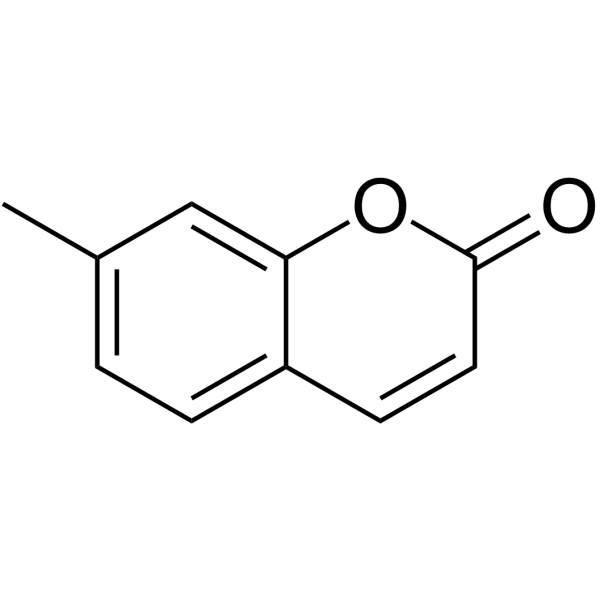
7-Methylcoumarin is a coumarin derivative with potent hepatoprotective and antioxidant properties. 7-Methylcoumarin is a mechanism-based inhibitor for CYP2A6. 7-Methylcoumarin significantly decreases alanine aminotransferase (ALT), aspartate aminotransferase (AST), and serum bilirubin (TB) in rats with CCl4-induced liver damage, whilst restoring total protein (TP) and albumin (TA) levels in serum as well as preventing oxidative stress. 7-Methylcoumarin can decline mitotic activity of A. sativum promeristem .
|
-
- HY-161590
-
|
|
Biochemical Assay Reagents
|
Inflammation/Immunology
|
|
AHD/BSA is the antigen-adjuvant conjugate of AHD (furan-2-carboxylic acid) and Bovine Serum Albumin (BSA). By conjugating the antigen with the protein adjuvant, the production of antigen-specific antibodies in vaccine models can be enhanced. The conjugate does not affect protein folding or destroy the main epitopes, and it can enhance cross-presentation and the generation of antigen-specific T cells.
|
-

- HY-163550
-
|
|
Biochemical Assay Reagents
|
Inflammation/Immunology
|
|
5-MethylCytosine/BSA is a conjugate of 5-MethylCytosine (HY-W008091) and Bovine Serum Albumin (BSA). By conjugating the antigen with the protein adjuvant, the production of antigen-specific antibodies in vaccine models can be enhanced. The conjugate does not affect protein folding or destroy key epitopes, and it can enhance cross-presentation and the generation of antigen-specific T cells.
|
-

- HY-161586
-
-

- HY-161535
-
|
|
Biochemical Assay Reagents
|
Inflammation/Immunology
|
|
Oxytetracycline/BSA is an antigen-adjuvant conjugate formed by the coupling of Oxytetracycline (HY-B0275) with Bovine Serum Albumin (BSA). By conjugating the antigen with the protein adjuvant, the production of antigen-specific antibodies in vaccine models can be enhanced. The conjugate does not affect protein folding or disrupt major epitopes, and it can enhance cross-presentation and the production of antigen-specific T cells.
|
-

- HY-161580
-
|
|
Biochemical Assay Reagents
|
Inflammation/Immunology
|
|
3-Nitrotyrosine/BSA is an antigen-adjuvant conjugate formed by the conjugation of 3-Nitrotyrosine with Bovine Serum Albumin (BSA). By conjugating the antigen with a protein adjuvant, the production of antigen-specific antibodies in vaccine models can be enhanced. The conjugate does not affect protein folding or disrupt major epitopes, and it enhances cross-presentation and the generation of antigen-specific T cells.
|
-

- HY-161560
-
|
|
Biochemical Assay Reagents
|
Inflammation/Immunology
|
|
Tacrolimus/BSA is the antigen-adjuvant conjugate formed by the conjugation of Tacrolimus (HY-13756) with Bovine Serum Albumin (BSA). By conjugating the antigen with a protein adjuvant, it can enhance the production of antigen-specific antibodies in vaccine models. The conjugate does not affect protein folding or disrupt major epitopes, and it can enhance cross-presentation and the generation of antigen-specific T cells.
|
-

- HY-N8487
-
|
|
Cytochrome P450
|
Neurological Disease
Inflammation/Immunology
Cancer
|
|
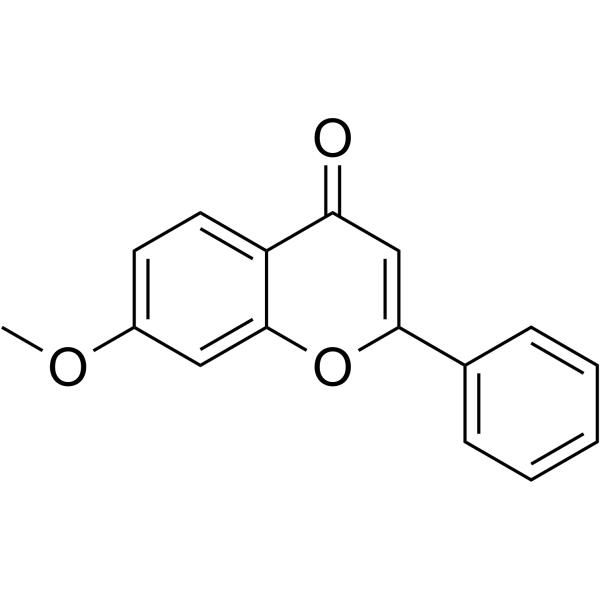
7-Methoxyflavone is a flavonoid compound that can be isolated from Zornia brasiliensis. 7-Methoxyflavone can bind to human serum albumin and is an aromatase inhibitor. 7-Methoxyflavone has peripheral analgesic and certain antitumor activities. 7-Methoxyflavone is effective against chemical pain but has no significant effect on thermal pain .
|
-
- HY-161557
-
|
|
Biochemical Assay Reagents
|
Inflammation/Immunology
|
|
Ractopamine/BSA is an antigen-adjuvant conjugate formed by the conjugation of Ractopamine (HY-113781) with Bovine Serum Albumin (BSA). By conjugating the antigen with a protein adjuvant, the production of antigen-specific antibodies in vaccine models can be enhanced. The conjugate does not affect protein folding or disrupt major epitopes, and it can enhance cross-presentation and the generation of antigen-specific T cells.
|
-

- HY-161541
-
|
|
Biochemical Assay Reagents
|
Inflammation/Immunology
|
|
Estradiol/BSA is the antigen-adjuvant conjugate formed by the coupling of Estradiol (HY-B0141) with Bovine Serum Albumin (BSA). By coupling the antigen with a protein adjuvant, the production of antigen-specific antibodies in vaccine models can be enhanced. The conjugate does not affect protein folding or disrupt major epitopes, and it can enhance cross-presentation and the generation of antigen-specific T cells.
|
-

- HY-161534
-
|
|
Biochemical Assay Reagents
|
Inflammation/Immunology
|
|
Sulfadiazine/BSA is an antigen-adjuvant conjugate formed by the conjugation of Sulfadiazine (HY-B0273) with Bovine Serum Albumin (BSA). By conjugating the antigen with the protein adjuvant, the production of antigen-specific antibodies in vaccine models can be enhanced. The conjugate does not affect protein folding or disrupt major epitopes, and it can enhance cross-presentation and the generation of antigen-specific T cells.
|
-

- HY-161552
-
|
|
Biochemical Assay Reagents
|
Inflammation/Immunology
|
|
T3/BSA is an antigen-adjuvant conjugate of T3 (thyroid hormone) and bovine serum albumin (BSA). By conjugating the antigen with a protein adjuvant, the production of antigen-specific antibodies in vaccine models can be enhanced. The conjugate does not affect protein folding or disrupt major epitopes, and it can enhance cross-presentation and the generation of antigen-specific T cells.
|
-

- HY-161588
-
|
|
Biochemical Assay Reagents
|
Inflammation/Immunology
|
|
GABA/BSA is an antigen-adjuvant conjugate formed by the coupling of GABA (γ-aminobutyric acid) with Bovine Serum Albumin (BSA). By coupling the antigen with a protein adjuvant, the production of antigen-specific antibodies in vaccine models can be enhanced. The conjugate does not affect protein folding or disrupt major epitopes, and it can enhance cross-presentation and the generation of antigen-specific T cells.
|
-

- HY-153934
-
|
|
GHR
|
Endocrinology
|
|
Tetrazole-C15-(N-acetylsulfamoyl)butanoic acid (Ligand 1) improves the pharmacokinetic properties of therapeutic peptides and proteins through non-covalent binding with human serum albumin (HSA). Tetrazole-C15-(N-acetylsulfamoyl)butanoic acid can be used for synthesis of long-acting human growth hormone (HGH) analog somapacitan .
|
-

- HY-N2252
-
-
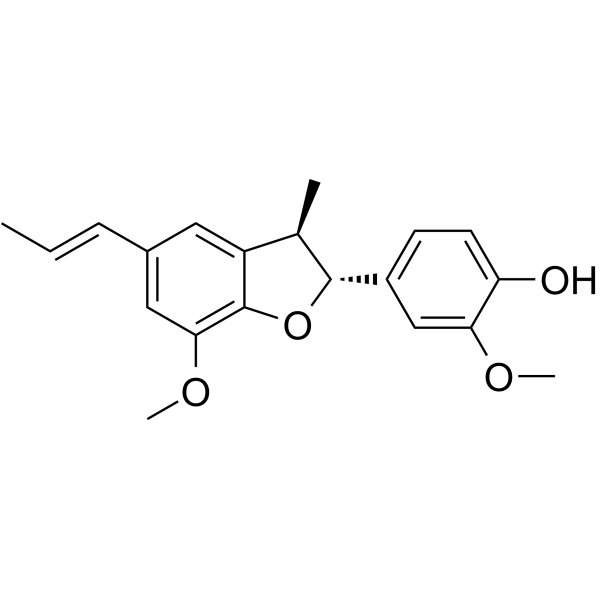
- HY-161545
-
|
|
Biochemical Assay Reagents
|
Inflammation/Immunology
|
|
Sudan I/BSA is the antigen-adjuvant conjugate formed by Sudan I (HY-D0024) and Bovine Serum Albumin (BSA). By conjugating the antigen with a protein adjuvant, the production of antigen-specific antibodies in vaccine models can be enhanced. The conjugate does not affect protein folding or disrupt major epitopes, and it can enhance cross-presentation and the generation of antigen-specific T cells.
|
-

- HY-NP180
-
|
|
Calcium Channel
|
Metabolic Disease
|
|
Progesterone/BSA is a conjugate of Progesterone (HY-N0437) and bovine serum albumin (BSA). Progesterone/BSA cannot penetrate the plasma membrane of human sperm, but still rapidly elevates intracellular free calcium and induces the acrosome reaction. Progesterone/BSA can also act as a probe to specifically bind to progesterone-binding proteins on the membrane of rat brain synaptosomes .
|
-

- HY-CP002
-
|
|
Biochemical Assay Reagents
|
Others
|
|
Bovine Serum Albumin (BSA) is a 583 amino acid protein consisting of three homologous full alpha structural domains. BSA is a spherical protein essential for the transport of molecules such as fatty acids, drugs and hormones from the blood. It is used in many biochemical applications as a drug carrier for biologically active compounds. For long-term storage, recombinant protein solution should be diluted further with 0.1% BSA .
|
-
- HY-W268542
-
|
|
COX
SOD
PGE synthase
|
Inflammation/Immunology
Cancer
|
|
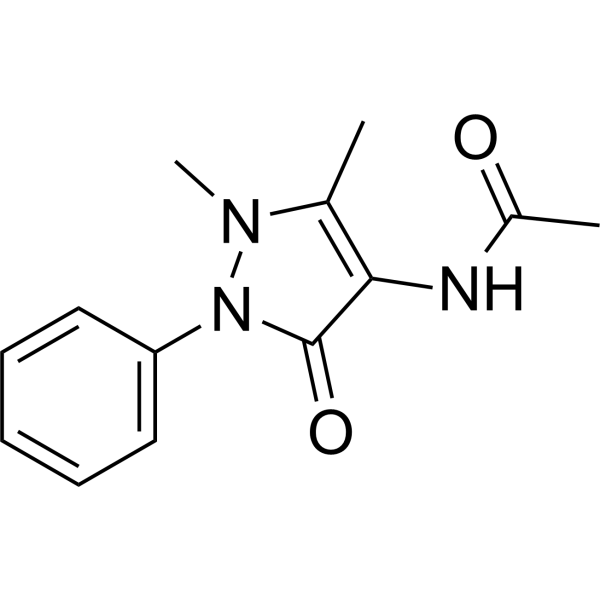
4-Acetylaminoantipyrine (4-AA) is a derivative of antipyrine (HY-B0171). 4-Acetylaminoantipyrine acts as a PGE2-dependent blocker and inhibitor of cyclooxygenase (COX) . 4-Acetylaminoantipyrine can inhibit Cu/ZnSOD . 4-Acetylaminoantipyrine can spontaneously bind with bovine serum albumin (BSA) and alter its conformation .
|
-
- HY-161565
-
|
|
Biochemical Assay Reagents
|
Inflammation/Immunology
|
|
Gastrin(1-17)/BSA is an antigen-adjuvant conjugate formed by the coupling of Gastrin(1-17) and Bovine Serum Albumin (BSA). By conjugating the antigen with a protein adjuvant, the production of antigen-specific antibodies in vaccine models can be enhanced. The conjugate does not affect protein folding or destroy major epitopes, and it can enhance cross-presentation and the production of antigen-specific T cells.
|
-

- HY-163552
-
|
|
Prostaglandin Receptor
|
Inflammation/Immunology
|
|
Prostaglandin F2a/BSA is an antigen-adjuvant conjugate formed by the conjugation of Prostaglandin F2a with Bovine Serum Albumin (BSA). By conjugating the antigen with a protein adjuvant, the production of antigen-specific antibodies in vaccine models can be enhanced. The conjugate does not affect protein folding or disrupt major epitopes and can enhance cross-presentation as well as the generation of antigen-specific T cells.
|
-

- HY-116870
-
|
|
Parasite
|
Infection
|
|
Vamidothion is a polar organophosphorus insecticide and acaricide with biological activity against insects and mites. Vamidothion is degraded by human serum albumin (HSA) and promotes adduct formation with tyrosine residues. The phosphate amino acid adducts formed after the reaction of vamidothion with HSA are detected by liquid chromatography quadrupole-Orbitrap mass spectrometry. The metabolites of vamidothion can be used in forensic toxicology to help determine deaths caused by organophosphorus poisoning .
|
-

- HY-161563
-
|
|
Biochemical Assay Reagents
|
Inflammation/Immunology
|
|
4,4'-Sulfonyldiphenol/BSA is the antigen-adjuvant conjugate of 4,4'-Sulfonyldiphenol (HY-W011927) and Bovine Serum Albumin (BSA). By conjugating the antigen with a protein adjuvant, the production of antigen-specific antibodies in vaccine models can be enhanced. The conjugate does not affect protein folding or disrupt major epitopes, and it can enhance cross-presentation and the production of antigen-specific T cells.
|
-

- HY-19820A
-
|
|
Akt
Ser/Thr Protease
Apoptosis
MMP
|
Cardiovascular Disease
Neurological Disease
Inflammation/Immunology
|
|
NSC45586 sodium is an inhibitor of PHLPP. NSC45586 sodium targets the PP2C phosphatase domains of PHLPP1 and PHLPP2, blocks the phosphatase activity of PHLPP, increases the expression level of FOXO1 in the nucleus, and reduces the protein expression of PHLPP1. NSC45586 sodium activates the AKT survival signaling pathway, enhances IGF-1-induced AKT activation, and inhibits the phosphorylation of AKT/ERK under basal conditions. NSC45586 sodium reduces staurosporine-induced neuronal death, preserves notochord cell morphology and KRT19 expression, inhibits cell apoptosis (apoptosis), improves the viability and proliferation of nucleus pulposus cells, upregulates the expression of ACAN/SOX9, and downregulates the expression of MMP13. NSC45586 sodium binds tightly to bovine serum albumin (bovine serum albumin), and exerts a more significant effect on nucleus pulposus in male individuals. NSC45586 sodium can be used in studies related to global cerebral ischemia and intervertebral disc degeneration .
|
-
- HY-141508
-
|
|
Xanthine Oxidase
NO Synthase
|
Neurological Disease
Metabolic Disease
Inflammation/Immunology
|
|
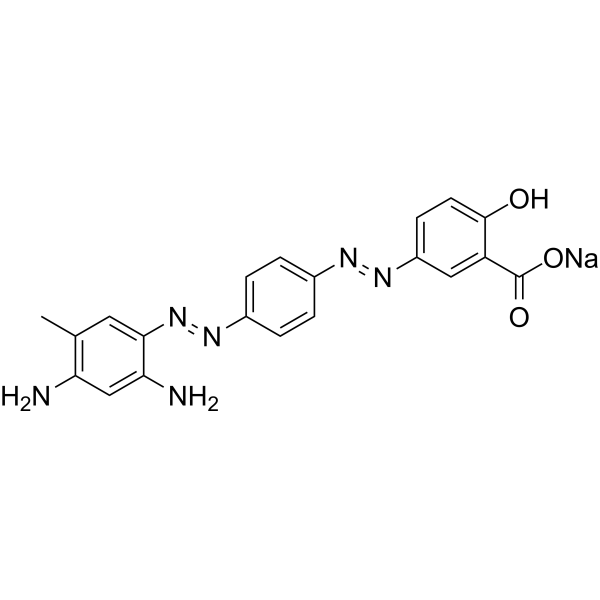
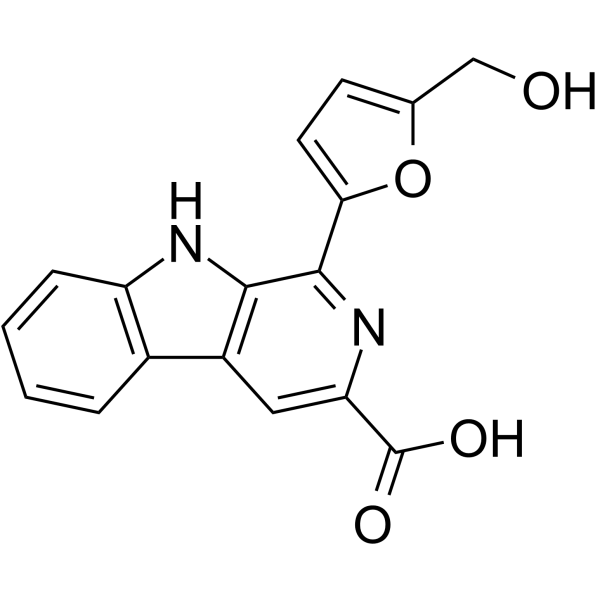
Flazin is a non-enzymatic protein glycation inhibitor, also inhibits peroxynitrite (ONOO -), with an IC50 value of 85.31 μM for bovine serum albumin (BSA) glycation and an EC50 value of 71.99 μM for ONOO -. Flazin can be used for researching diabetes and neuronal disorders. Flazin also can used as a lipid droplet (LD) regulator against lipid disorders, and a xanthine oxidase (XOD) inhibitor .
|
-
- HY-D0932
-
|
Solvent Red 24; C.I. 26105
|
Environmental Pollutants
Biochemical Assay Reagents
Cytochrome P450
Aryl Hydrocarbon Receptor
|
Metabolic Disease
|
|
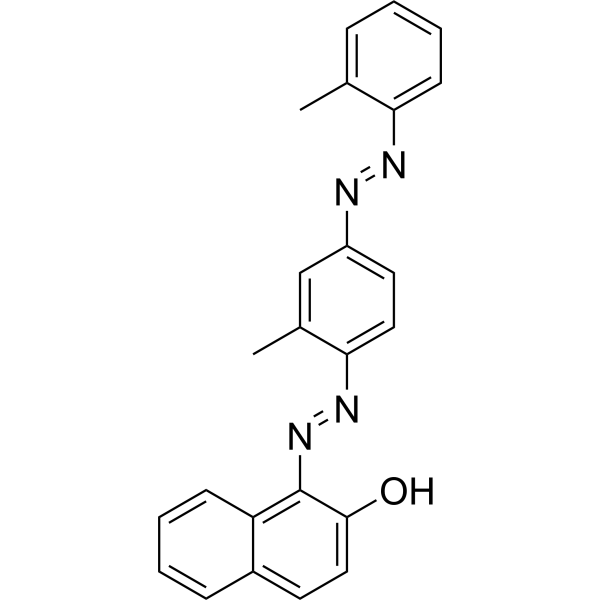
Sudan IV is an agonist of the aryl hydrocarbon receptor (AhR) that activates downstream signaling pathways and induces CYP1A1 expression. Sudan IV promotes CYP1A1 gene transcription by activating AhR-ARNT heterodimers and binding to exogenous response elements (XREs) on DNA, thereby enhancing drug metabolizing enzyme activity. Sudan IV can be used to study the toxicity mechanisms of industrial dyes and the effects of interactions with serum proteins (such as bovine serum albumin (BSA)) on their distribution in vivo. Sudan IV is a fat-soluble diazo dye that can be used to stain lipids, triglycerides, and lipoproteins on frozen sections .
|
-
- HY-N5092R
-
|
|
Reference Standards
Reactive Oxygen Species (ROS)
Cytochrome P450
|
Metabolic Disease
|
|
7-Methylcoumarin (Standard) is the analytical standard of 7-Methylcoumarin. This product is intended for research and analytical applications. 7-Methylcoumarin is a coumarin derivative with potent hepatoprotective and antioxidant properties. 7-Methylcoumarin is a mechanism-based inhibitor for CYP2A6. 7-Methylcoumarin significantly decreases alanine aminotransferase (ALT), aspartate aminotransferase (AST), and serum bilirubin (TB) in rats with CCl4-induced liver damage, whilst restoring total protein (TP) and albumin (TA) levels in serum as well as preventing oxidative stress. 7-Methylcoumarin can decline mitotic activity of A. sativum promeristem .
|
-

- HY-111186R
-
|
WL 108366 (Standard)
|
Reference Standards
VKOR
Glucocorticoid Receptor
MMP
|
Others
|
|
Flocoumafen (Standard) is the analytical standard of Flocoumafen. This product is intended for research and analytical applications. Flocoumafen (WL 108366) is an orally active vitamin K epoxide reductase inhibitor and a multi-target ligand, which includes prostaglandin F synthase, serum albumin, glucocorticoid receptor 2, and MMP-9. Flocoumafen is a second-generation anticoagulant rodenticide (ARs) with a half-life of 177.4 hours and has deadly anticoagulant effects .
|
-

- HY-B1102
-
|
Direct Blue 53; T-1824; C.I. 23860
|
EAAT
iGluR
|
Cardiovascular Disease
Neurological Disease
|
|
Evans Blue (Direct Blue 53) is a potent inhibitor of L-glutamate uptake via the membrane bound excitatory amino acid transporter (EAAT). Evans Blue is a L-glutamate and kainate receptor-mediated currents inhibitor. Evans Blue has a strong affinity towards serum albumin, making it a high molecular weight protein tracer. Evans Blue is also used to study BBB (blood-brain barrier) permeability .
|
-
- HY-158089
-
|
|
Biochemical Assay Reagents
|
Others
|
|
PLGA-COOH (MW 80000) (LA/GA 50:50) is a copolymer composed of lactic acid (LA)-glycolic acid (GA) at a molar ratio of 50:50 and a terminal carboxyl group. PLGA-COOH (MW 80000) (LA/GA 50:50) is used in compound delivery systems due to its biocompatibility and biodegradability .
|
-

- HY-W142692
-
|
|
Biochemical Assay Reagents
|
Others
|
|
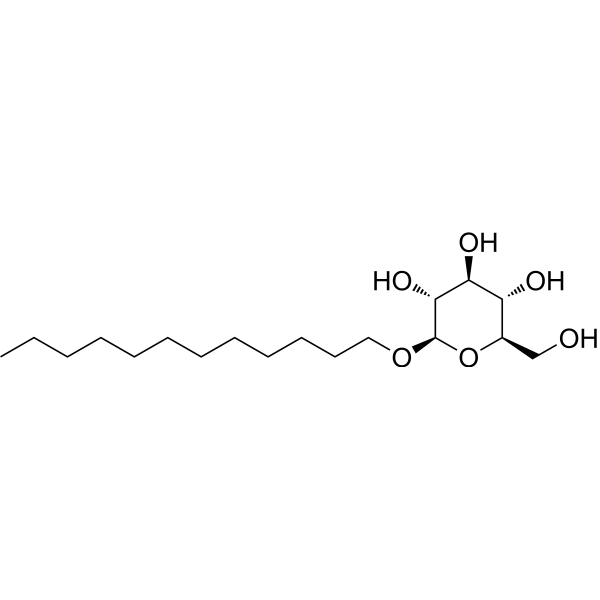
Dodecyl β-D-glucopyranoside is a non-ionic detergent and surfactant commonly used to solubilize and purify membrane proteins in biochemical research. Dodecyl β-D-glucopyranoside also interacts with bovine serum albumin (BSA) to quench its intrinsic fluorescence. The critical micelle concentration (CMC) of Dodecyl β-D-glucopyranoside (DG) and DG/BSA complex is 2.0 mM and 2.34 mM, respectively. Micelles can be formed in aqueous solutions above this concentration .
|
-
- HY-P11178
-
|
|
Apoptosis
SARS-CoV
|
Infection
Metabolic Disease
Inflammation/Immunology
|
|
Corisin is a pro-apoptotic small peptide produced by Staphylococcus species. Corisin binds to serum albumin to target organs such as the lungs and kidneys, induces cellular senescence, apoptosis and epithelial-mesenchymal transition, and accelerates the progression of organ fibrosis including pulmonary fibrosis and diabetic renal fibrosis. Corisin levels are closely associated with coronavirus disease 2019 (COVID-19), diabetic chronic kidney disease (CKD), non-diabetic CKD, and idiopathic pulmonary fibrosis (IPF) .
|
-

- HY-D0932R
-
|
Solvent Red 24 (Standard); C.I. 26105 (Standard)
|
Biochemical Assay Reagents
Aryl Hydrocarbon Receptor
Cytochrome P450
Reference Standards
|
Metabolic Disease
|
|
Sudan IV (Standard) (Solvent Red 24 (Standard)) is the analytical standard of Sudan IV (HY-D0932). This product is intended for research and analytical applications. Sudan IV is an agonist of the aryl hydrocarbon receptor (AhR) that activates downstream signaling pathways and induces CYP1A1 expression. Sudan IV promotes CYP1A1 gene transcription by activating AhR-ARNT heterodimers and binding to exogenous response elements (XREs) on DNA, thereby enhancing drug metabolizing enzyme activity. Sudan IV can be used to study the toxicity mechanisms of industrial dyes and the effects of interactions with serum proteins (such as bovine serum albumin (BSA)) on their distribution in vivo. Sudan IV is a fat-soluble diazo dye that can be used to stain lipids, triglycerides, and lipoproteins on frozen sections.
|
-

- HY-161525
-
|
|
Biochemical Assay Reagents
|
Inflammation/Immunology
|
|
1-(2-Aminoethyl)-1H-pyrazol-4-ylphosphonic acid linker/BSA is the conjugate of 1-(2-Aminoethyl)-1H-pyrazol-4-ylphosphonic acid linker and bovine serum albumin (BSA). By conjugating the antigen with a protein adjuvant, it enhances the production of antigen-specific antibodies in vaccine models. The conjugate does not affect protein folding or disrupt key epitopes, and it can enhance cross-presentation and the generation of antigen-specific T cells.
|
-

- HY-W268542S1
-
|
|
Isotope-Labeled Compounds
COX
PGE synthase
SOD
|
Cancer
|
|
4-Acetylaminoantipyrine-d3 is the deuterium labeled 4-Acetylaminoantipyrine (HY-W268542). 4-Acetylaminoantipyrine (4-AA) is a derivative of antipyrine (HY-B0171). 4-Acetylaminoantipyrine acts as a PGE2-dependent blocker and inhibitor of cyclooxygenase (COX) . 4-Acetylaminoantipyrine can inhibit Cu/ZnSOD . 4-Acetylaminoantipyrine can spontaneously bind with bovine serum albumin (BSA) and alter its conformation .
|
-

- HY-W013195
-
|
|
Nucleoside Antimetabolite/Analog
|
Cancer
|
|
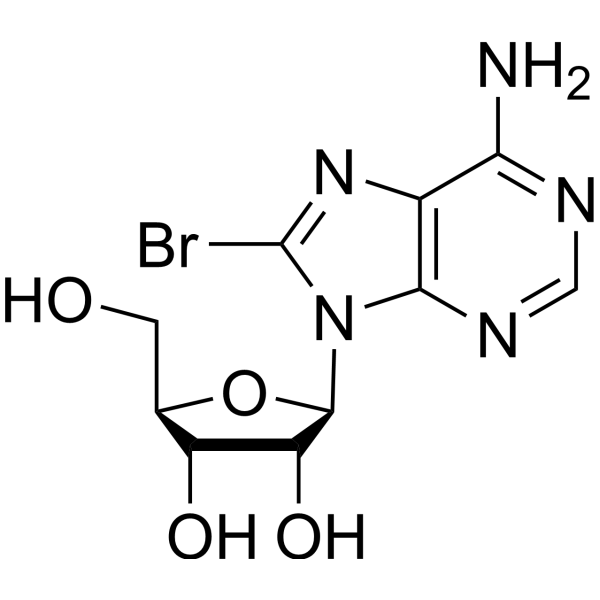
8-Bromoadenosine is an adenosine analog. Adenosine analogs mostly act as smooth muscle vasodilators and have also been shown to inhibit cancer progression. 8-Bromoadenosine can quench the intrinsic fluorescence of human serum albumin (HSA) through static quenching procedure. 8-Bromoadenosine can be used to synthesize adenosine phosphate, such as Acadesine (HY-13417), Clofarabine (HY-A0005), Fludarabine phosphate (HY-B0028) and Vidarabine (HY-B0277) .
|
-
- HY-N8487R
-
|
|
Reference Standards
Cytochrome P450
|
Neurological Disease
Inflammation/Immunology
Cancer
|
|
7-Methoxyflavone (Standard) is the analytical standard of 7-Methoxyflavone (HY-N8487). This product is intended for research and analytical applications. 7-Methoxyflavone is a flavonoid compound that can be isolated from Zornia brasiliensis. 7-Methoxyflavone can bind to human serum albumin and is an aromatase inhibitor. 7-Methoxyflavone has peripheral analgesic and certain antitumor activities. 7-Methoxyflavone is effective against chemical pain but has no significant effect on thermal pain .
|
-

- HY-W268542R
-
|
|
Reference Standards
COX
SOD
PGE synthase
|
Inflammation/Immunology
Cancer
|
|
4-Acetylaminoantipyrine (Standard) is the analytical standard of 4-Acetylaminoantipyrine. This product is intended for research and analytical applications. 4-Acetylaminoantipyrine (4-AA) is a derivative of antipyrine (HY-B0171). 4-Acetylaminoantipyrine acts as a PGE2-dependent blocker and inhibitor of cyclooxygenase (COX) . 4-Acetylaminoantipyrine can inhibit Cu/ZnSOD . 4-Acetylaminoantipyrine can spontaneously bind with bovine serum albumin (BSA) and alter its conformation .
|
-

- HY-16350
-
|
NKP-1339; IT-139; KP-1339
|
DNA/RNA Synthesis
Apoptosis
|
Cancer
|
|
BOLD-100 (NKP-1339; IT-139) is the first-in-class ruthenium-based anticancer agent in development against solid cancer with limited side effects. BOLD-100 induces G2/M cell cycle arrest, blockage of DNA synthesis, and induction of apoptosis via the mitochondrial pathway. BOLD-100 has a high tumor targeting potential, strongly binds to serum proteins such as albumin and transferrin and activates in the reductive tumor milieu .
|
-
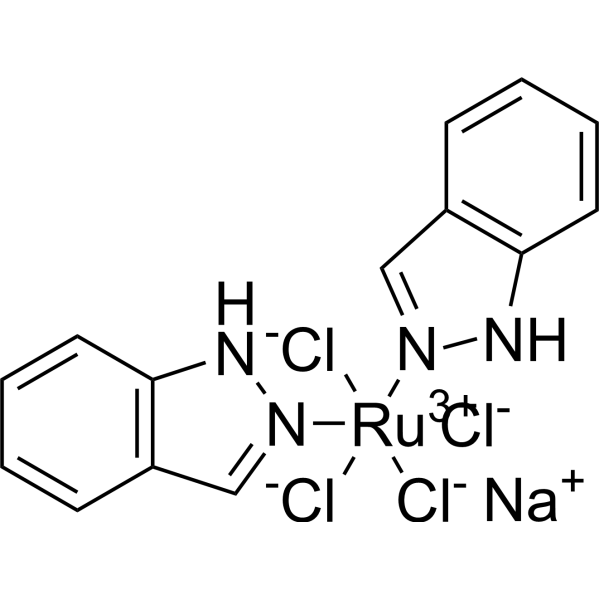
- HY-131577A
-
|
Dispase I
|
Collagen
|
Others
|
|
Neutral protease I (Dispase I) is a rapid, effective, gentle and neutral protease that can separate intact epidermis from the dermis. Neutral protease I can also separate intact epithelial sheets in culture from the substratum. Neutral protease I preserves the viability of the epithelial cells while cleaving the basement membrane zone region. Neutral protease I can also be used to prevent clumping in suspension cultures. Neutral protease I cleaves fibronectin and type IV collagen, but not laminin, type V collagen, serum albumin, or transferrin .
|
-

- HY-D0932S
-
|
Solvent Red 24-d6; C.I. 26105-d6
|
Isotope-Labeled Compounds
Biochemical Assay Reagents
Aryl Hydrocarbon Receptor
Cytochrome P450
|
Metabolic Disease
|
|
Sudan IV-d6 (Solvent Red 24-d6) is the deuterium labeled Sudan IV(HY-D0932). Sudan IV is an agonist of the aryl hydrocarbon receptor (AhR) that activates downstream signaling pathways and induces CYP1A1 expression. Sudan IV promotes CYP1A1 gene transcription by activating AhR-ARNT heterodimers and binding to exogenous response elements (XREs) on DNA, thereby enhancing drug metabolizing enzyme activity. Sudan IV can be used to study the toxicity mechanisms of industrial dyes and the effects of interactions with serum proteins (such as bovine serum albumin (BSA)) on their distribution in vivo. Sudan IV is a fat-soluble diazo dye that can be used to stain lipids, triglycerides, and lipoproteins on frozen sections .
|
-

- HY-Y1123
-
|
Glycinamide hydrochloride
|
Amino Acid Derivatives
Phosphatase
|
Endocrinology
|
|
2-Aminoacetamide hydrochloride (Glycinamide hydrochloride) is a derivative of Glycine (HY-Y0966). 2-Aminoacetamide hydrochloride forms cell-absorbable nanocomplexes with proteins (such as bovine serum albumin) through strong electrostatic interactions, promoting cellular uptake of related proteins. 2-Aminoacetamide hydrochloride synergizes with BMP2 to upregulate the expression of osteogenic marker genes (such as Col1a1, Alp, Runx2) and proteins (such as COL1, BSP), enhancing collagen synthesis. 2-Aminoacetamide hydrochloride synergizes with BMP2 to promote osteoblast differentiation in vitro and bone regeneration in vivo .
|
-
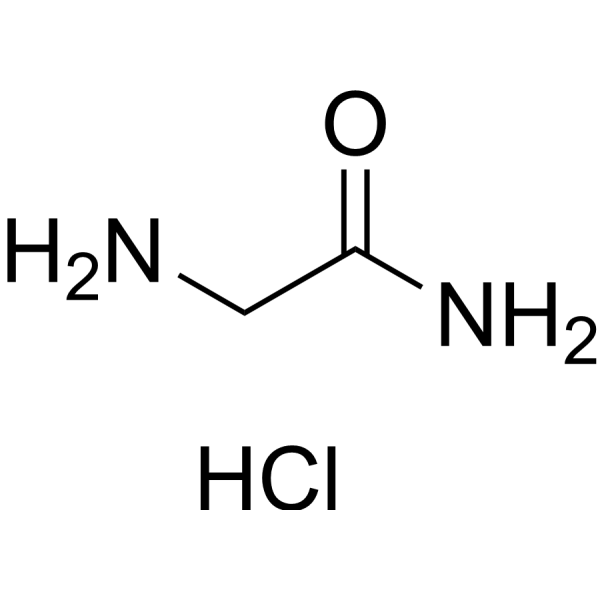
- HY-B0890
-
|
McN-2783-21-98
|
PGE synthase
|
Neurological Disease
Inflammation/Immunology
|
|
Zomepirac sodium salt (McN-2783-21-98) is an orally active prostaglandin synthetase inhibitor. Zomepirac sodium salt blocks prostaglandin synthesis and inhibits Collagen (HY-P72147)- or Epinephrine (HY-B0447)-induced platelet aggregation. Zomepirac sodium salt can be used for the research of postoperative pain and osteoarthritis .
|
-
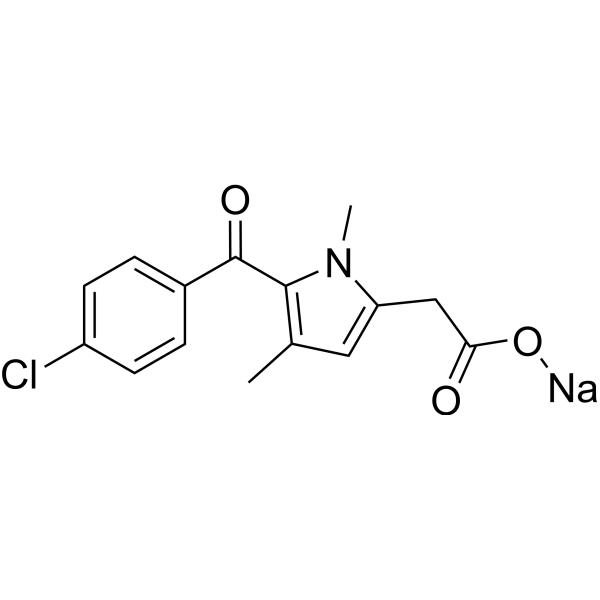
- HY-B0890R
-
|
McN-2783-21-98 (Standard)
|
PGE synthase
Reference Standards
|
Neurological Disease
Inflammation/Immunology
|
|
Zomepirac sodium salt (Standard) is the analytical standard of Zomepirac sodium salt (HY-B0890). This product is intended for research and analytical applications. Zomepirac sodium salt (McN-2783-21-98) is an orally active prostaglandin synthetase inhibitor. Zomepirac sodium salt blocks prostaglandin synthesis and inhibits Collagen (HY-P72147)- or Epinephrine (HY-B0447)-induced platelet aggregation. Zomepirac sodium salt can be used for the research of postoperative pain and osteoarthritis .
|
-

- HY-B0890A
-
|
McN-2783-21-98 free acid
|
PGE synthase
|
Neurological Disease
Inflammation/Immunology
|
|
Zomepirac (McN-2783-21-98 free acid) is an orally active prostaglandin synthetase inhibitor. Zomepirac blocks prostaglandin synthesis and inhibits Collagen (HY-P72147)- or Epinephrine (HY-B0447)-induced platelet aggregation. Zomepirac can be used for the research of postoperative pain and osteoarthritis .
|
-

- HY-131586
-
|
Resogalangin
|
17β-HSD
Estrogen Receptor/ERR
Aldose Reductase
|
Endocrinology
Cancer
|
|
3,7-Dihydroxyflavone (Resogalangin) is a flavonoid phytoestrogen, which can be isolated from Adenophora species. 3,7-Dihydroxyflavone is a modulator of estrogen receptors and an inhibitor of human progesterone metabolizing enzyme AKR1C1 and fungal 17β-hydroxysteroid dehydrogenase and a redox inhibitor (IC50=0.6 and 6.0 μM, respectively). 3,7-Dihydroxyflavone is a fluorescent binding substrate for human serum albumin (HSA) with excitation wavelengths of 370 nm (pH 7.4) and 350 nm (pH 3.5), respectively, and emission wavelength of 515 nm .
|
-

- HY-W040144
-
|
|
Fluorescent Dye
|
Others
|
|
Bromocresol green is a pH-sensitive triphenylmethane dye commonly used for the determination of protein and albumin in serum. Bromocresol green is a bio-based dye with a yellow-green to blue-green color. Bromocresol green turns yellow (λmax=435 nm, protonated form) when placed in acidic solution (e.g. pH=4.15), and turns blue in basic solution (λmax=615 nm, deprotonated form). Bromocresol green is widely used as a pH indicator in the field of biochemical analysis. In addition, Bromocresol green is also used to detect the concentration of molecules such as creatinine, and to judge the viability of cells .
|
-
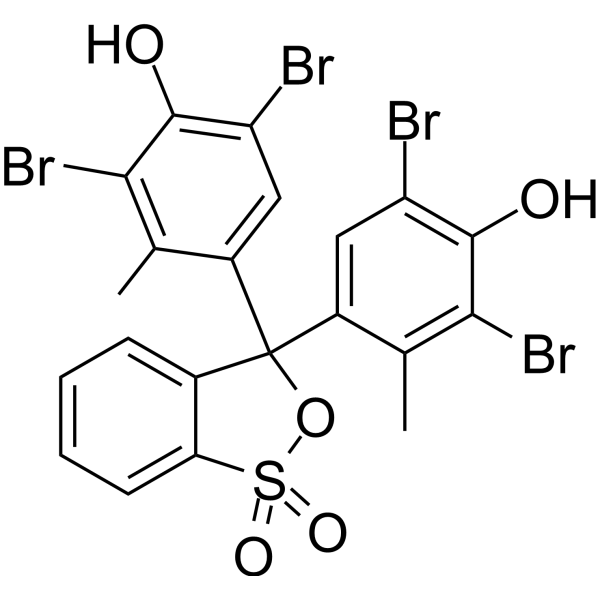
- HY-P11845
-
|
|
Radionuclide-Drug Conjugates (RDCs)
Neurotensin Receptor
|
Cancer
|
|
DOTA-NT-20.3-IPBA is a Neurotensin receptor 1 (NTR1)-targeting albumin binder with specific high-affinity binding to NTR1. DOTA-NT-20.3-IPBA is formed by the conjugation of DOTA-NT-20.3 and IPBA. DOTA-NT-20.3-IPBA can be used for positron emission tomography (PET) imaging following labeling with [ 68Ga]Ga .
|
-

- HY-135541
-
|
YM150 maleate
|
Endogenous Metabolite
|
Cardiovascular Disease
|
|
Darexaban maleate (YM150 maleate) is a direct factor Xa inhibitor with activity in preventing venous thromboembolism. The major metabolite of Darexaban maleate in humans is Darexaban glucitol, which acts pharmacologically. The glucitolation reaction of Darexaban maleate is mainly catalyzed by UGT1A9 and UGT1A10 in the human liver and intestine. The K(m) value of Darexaban maleate glucitolation in the liver is greater than 250 μM, while in the intestine it exhibits substrate inhibition kinetics with a K(m) value of 27.3 μM. The unbound K(m) value of Darexaban maleate is significantly reduced by the influence of fatty acid-free bovine serum albumin in both HLM and UGT1A9 .
|
-

- HY-D2449
-
|
|
Fluorescent Dye
|
Others
|
|
DQ-BSA-Red is a bovine serum albumin labeled with a red fluorescent dye that can be used to detect lysosomal activity. The excitation wavelength and emission wavelength of DQ-BSA-Red are 590 nm and 620 nm, respectively. The BSA molecule in DQ-BSA-Red is labeled with high concentration of red fluorescent dye in multiple sites, which shows high fluorescence self-inhibition. Once DQ-BSA-RED enters the lysosome, DQ-BSA is cleaved by lysosomal proteases, resulting in unquenched and released fluorescent fragments, emitting bright fluorescence. Inactivated lysosomes are unable to degrade the BSA protein and thus have a lower or even no fluorescent signal .
|
-

- HY-179356
-
|
|
PTHR
|
Endocrinology
|
Octadecyl β-D-glucopyranosiduronic acid (Compound 9) is a parathyroid hormone 1 receptor (PTH1R) activator, with a pEC50 value > 9. Octadecyl β-D-glucopyranosiduronic acid can be used for research on hypoparathyroidism .
|
-

- HY-D0862
-
|
|
Biochemical Assay Reagents
|
Others
|
|
DIDNTB is a dye. DIDNTB exhibits chemical sensitivity and specificity toward albumin. DIDNTB is much less affected by other proteins. DIDNTB enables the detection of urinary albumin at concentrations ≥10 mg/L .\n
|
-
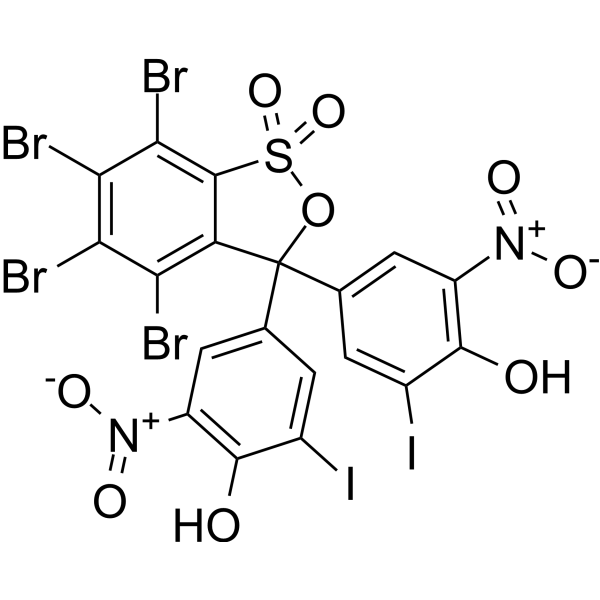
- HY-121535
-
|
|
Sodium Channel
Calcium Channel
|
Others
|
|
Levosemotiadil, an S-isomer of semotiadil, exhibits stronger binding affinity to human serum albumin (HSA) compared to its R-isomer counterpart. This study utilized high-performance frontal analysis (HPFA) to demonstrate that levosemotiadil binds approximately three times more strongly to HSA than semotiadil. The binding parameters were evaluated using Scatchard analysis, revealing specific interactions with the diazepam binding site on HSA. The presence of diazepam decreased the binding affinity of both enantiomers, while warfarin did not alter their binding characteristics. These findings highlight levosemotiadil's potential as a Ca- and Na-channel blocker with significant binding preferences for HSA, crucial for understanding its pharmacokinetics and therapeutic effects .
|
-

- HY-118124
-
|
|
Endogenous Metabolite
|
Others
|
|
2-Iodoestradiol is a potent human sex hormone binding globulin (SHBG) ligand with a remarkably high affinity for SHBG. 2-Iodoestradiol exhibits competition for the same binding site as dihydrotestosterone in binding to human SHBG. The binding affinity constant of 2-Iodoestradiol at physiological pH and 37 degrees Celsius is 2.4 x 10(9) M-1, exceeding that for SHBG. 2-Iodoestradiol has been shown to bind to serum albumin, but with lower affinity. The radioisotope 125I-derivative of 2-Iodoestradiol has been used to study the binding properties of human SHBG, demonstrating its potential application in biological research .
|
-

- HY-W008293
-
|
|
Drug Derivative
|
Inflammation/Immunology
|
|
Himic anhydride is an acid anhydride compound and sensitizer. Himic anhydride with cross-reactivity to hexahydrophthalic anhydride. Himic anhydride induces immunoglobulin E (IgE)-mediated sensitization and allergic immune responses. Himic anhydride can be used for the research of occupational asthma .
|
-

- HY-Y0131
-
|
|
Biochemical Assay Reagents
|
Others
|
|
Pyrazine-2-carbonitrile is a biochemical reagent that can be used as a biological material or organic compound for life science related research .
|
-
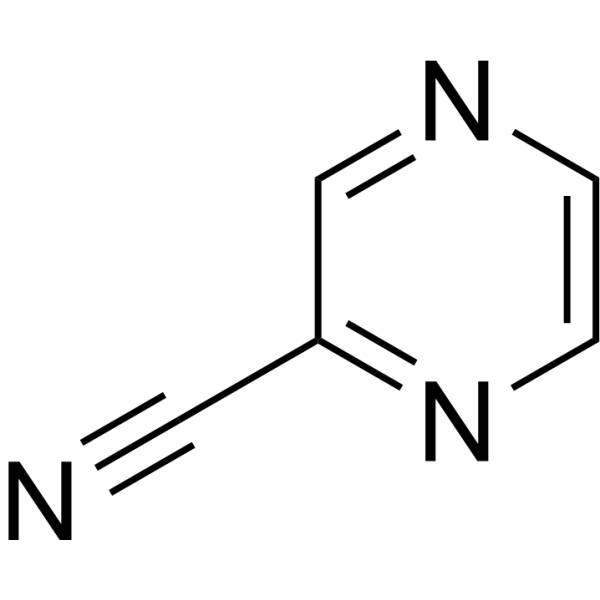
- HY-182419
-
|
|
MetAP
|
Cancer
|
|
A-849519 is a reversible methionine aminopeptidase-2 (MetAP-2) inhibitor with an IC50 of 19 nM. A-849519 binds to the active site of the Mn 2+ form of human MetAP-2, where the oxygen atom of one acidic functional group interacts with the manganese ion, and another heteroatom binds to the water molecule above the two manganese ions, thereby functionally inhibiting enzyme activity. A-849519 inhibits the methionine processing activity of MetAP-2 as well as the proliferation of fibrosarcoma cells. A-849519 can be used in studies related to fibrosarcoma .
|
-

- HY-W713877
-
|
Montelukast AG
|
Drug Metabolite
|
Others
|
|
Montelukast acyl-b-D-glucuronide (Montelukast AG) is a acyl glucuronide metabolite of Montelukast (HY-13315A) .
|
-

- HY-W015405
-
-

- HY-170333
-
|
CICL1
|
Liposome
|
Inflammation/Immunology
|
|
Lipid A-11 (Compound A-11) (CICL1) is an ionizable cationic lipid. Lipid A-11 can be used to prepare lipid nanoparticles. Lipid A-11 can be used in research involving T cell-targeted transfection .
|
-

- HY-D3174
-
|
|
Fluorescent Dye
|
Metabolic Disease
Inflammation/Immunology
|
|
PiF is a fluorescent probe with high specificity for pancreatic β-cells (Ex/Em = 535 nm/565 nm), and its fluorescence signal increases significantly with elevated insulin concentrations in in vitro experiments. PiF enables visualization of rat and human islets transplanted via the portal vein in mouse livers with low liver background signals. The fluorine atom of PiF can be replaced by radioactive 18F to prepare a PET tracer. PiF can be used for research on type 1 diabetes .
|
-

- HY-W895360
-
|
|
Biochemical Assay Reagents
|
Others
|
|
pacFA is a bifunctional fatty acid with both photocrosslinking and click chemistry properties. pacFA can be metabolically incorporated into phospholipids by cells, enabling in-situ capture, identification and imaging of protein-lipid interactions in live cells and living organisms via ultraviolet crosslinking and click reactions .
|
-

- HY-107207
-
|
Kaempferol 3-O-neohesperidoside
|
Insulin Receptor
PI3K
PKC
|
Metabolic Disease
|
|
Kaempferol 3-neohesperidoside (Kaempferol 3-O-neohesperidoside) is a flavonoid. Kaempferol 3-neohesperidoside mimics insulin action via the PI3K/PKC pathway, significantly promoting glucose uptake and increasing muscle glycogen content in rat soleus muscles. Kaempferol 3-neohesperidoside also exhibits anti-glycation activity. Kaempferol 3-neohesperidoside binds to albumin through hydrogen bonding and hydrophobic interactions, and inhibits the formation of advanced glycation end products. Kaempferol 3-neohesperidoside can be used in studies of diabetes and its related complications .
|
-
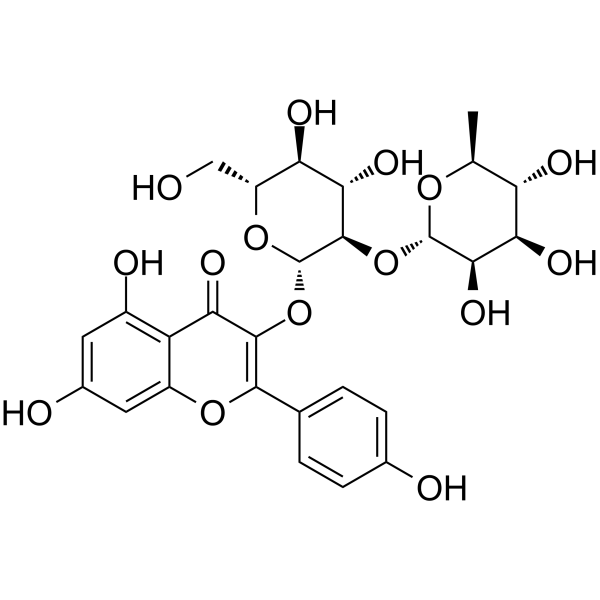
- HY-182780
-
|
|
Drug Derivative
|
Cancer
|
|
LSPN925 is an anticancer agent. LSPN925 exhibits cytotoxic and antiproliferative activities against tumor cells. LSPN925 has predicted oral bioavailability, low risks of hepatotoxicity and acute toxicity, and no risk of cardiotoxicity. LSPN925 can be used for the research of ovarian cancer, melanoma and breast cancer .
|
-

- HY-D0025
-
|
|
Fluorescent Dye
Drug Intermediate
|
Others
|
|
7-Amino-4-methylcoumarin-3-acetic acid (AMCA) serves as the parent structure of coumarin-based blue fluorescent dyes, and its activated form AMCA-NHS can directly conjugate with proteins (Ex/Em ≈ 350/440-460).
|
-
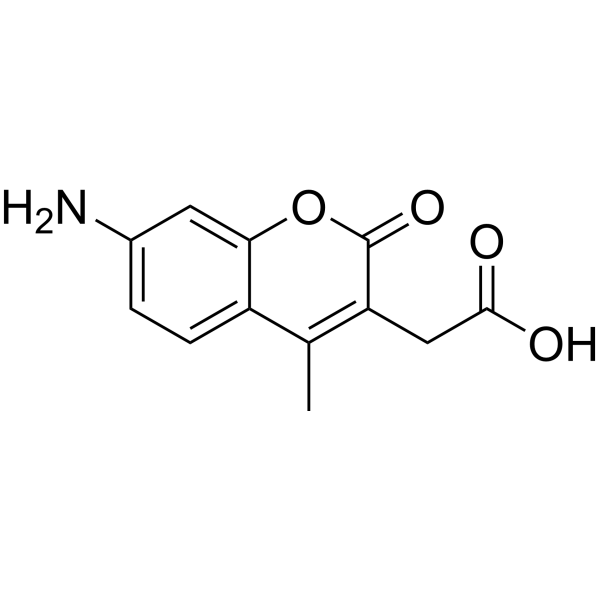
- HY-W009706
-
|
Allopydin; W-7320
|
Prostaglandin Receptor
|
Neurological Disease
Inflammation/Immunology
|
|
Alclofenac (Allopydin) is an orally active prostaglandin synthase inhibitor with anti-inflammatory, analgesic and antipyretic activities. Alclofenac irreversibly inhibits platelet aggregation. Alclofenac can be used in research related to rheumatoid arthritis, osteoarthritis, ankylosing spondylitis, low back pain and sciatica .
|
-
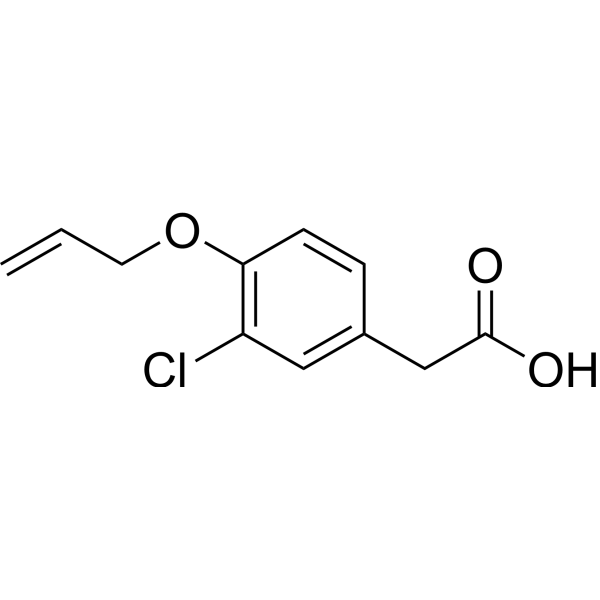
- HY-156106
-
|
|
HIF/HIF Prolyl-Hydroxylase
Ligands for E3 Ligase
E1/E2/E3 Enzyme
|
Cancer
|
|
VHL-IN-1 (Compound 30) is an E3 ligase VHL inhibitor with a Kd value of 37 nM. VHL-IN-1 blocks VHL-mediated ubiquitination and degradation of HIF-1α. VHL-IN-1 stabilizes the protein levels of HIF-1α and hydroxylated HIF-1α, and induces the transcriptional activity of HIF-1α. VHL-IN-1 can be used for PROTAC development. VHL-IN-1 is applicable for cancer research .
|
-
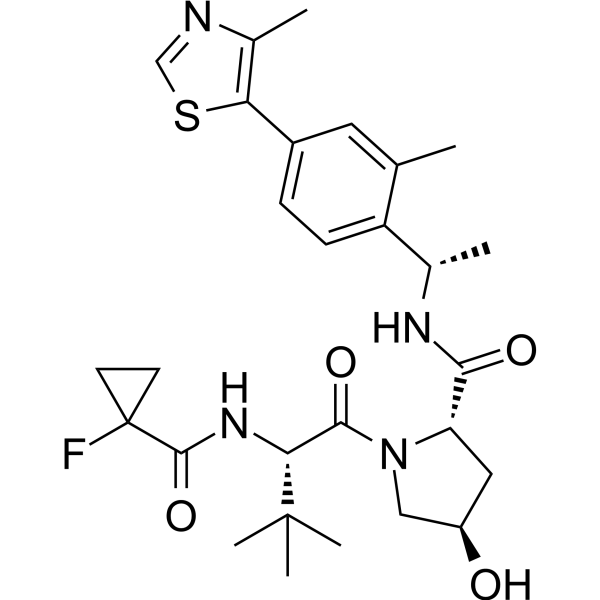
- HY-151759
-
|
|
Fluorescent Dye
|
Cancer
|
|
Sulfo-Cy5-TCO is a water-soluble sulfonated Cy5 fluorescent reagent containing trans-cyclooctene (TCO). Sulfo-Cy5-TCO undergoes an inverse electron demand Diels‑Alder reaction with tetrazine-labeled fixed breast cancer cells to achieve cell labeling. Sulfo-Cy5-TCO is used for fluorescent labeling and imaging of biological samples such as proteins and cells .
|
-
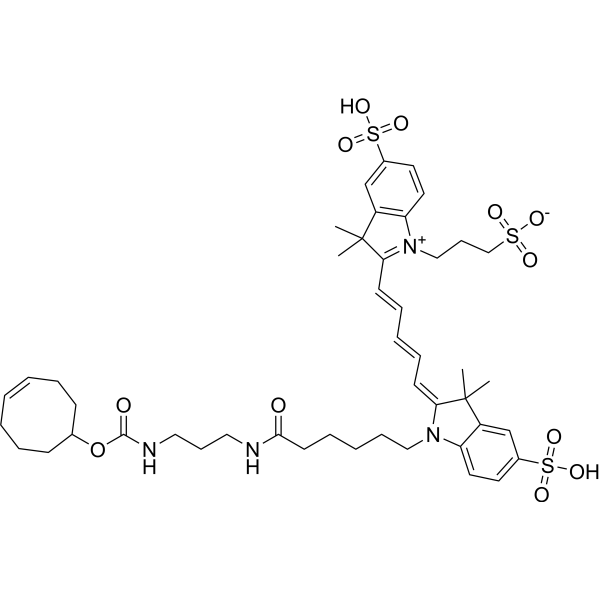
- HY-182027
-
|
|
Bacterial
Reactive Oxygen Species (ROS)
Lactate Dehydrogenase
DNA/RNA Synthesis
|
Infection
|
Antibacterial agent 330 is an antibacterial agent. Antibacterial agent 330 triggers ROS accumulation, forms DNA supramolecular complex by intercalation to block DNA replication and inhibits LDH to
disturb metabolism, and further prompts bacterial cell rupture to induce the leakage of intracellular content, ultimately causing bacterial death. Antibacterial agent 330 displays antibacterial activity and promotes wound healing in both G. Mellonella larval and murine wound infection models. Antibacterial agent 330 can be used for the research of bacterial infections .
|
-

- HY-D0193A
-
|
Acid Red 18 (85%); New Coccine (85%)
|
Environmental Pollutants
Drug Derivative
|
Neurological Disease
Inflammation/Immunology
|
|
Ponceau 4R (85%) (Acid Red 18 (85%); New Coccine (85%)) is an orally active synthetic food colorant and a HSA-binding aggregator. Ponceau 4R (85%) binds to HSA, inducing its partial unfolding, conformational changes and aggregation. Ponceau 4R (85%) serves as a food colorant and can be used in research on diseases including type Ⅱ diabetes, Parkinson's disease, Huntington's disease and spongiform encephalopathy .
|
-
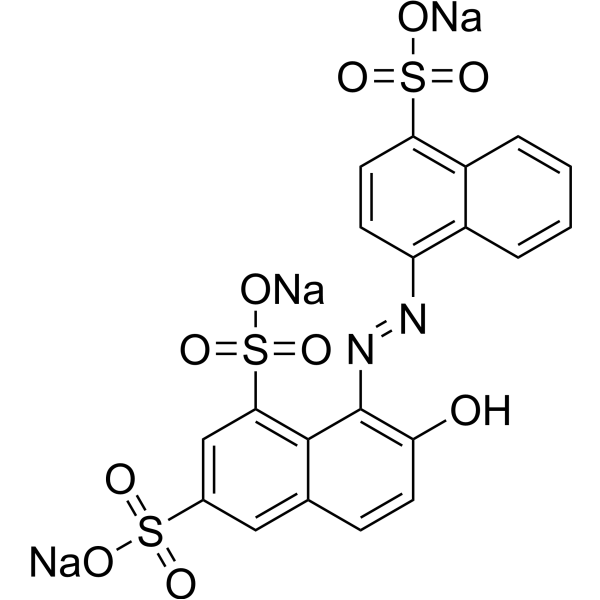
- HY-179631
-
|
|
Apoptosis
|
Cancer
|
|
2DG-ODDA is a 2-deoxyglucose (2-DG) (HY-13966) derivative with potent antitumor activity. 2DG-ODDA induces apoptosis, and reduces ATP production. 2DG-ODDA is taken up through both fatty acid and glucose transporters and is cleaved by α-Mannosidase (HY-P2950), releases 2DG to inhibit N-glycosylation and disrupt cellular metabolism. 2DG-ODDA inhibits tumor growth in a 4T1 mouse model. 2DG-ODDA can be used for the research of triple-negative breast cancer (TNBC) .
|
-

| Cat. No. |
Product Name |
Type |
-
- HY-D2449
-
|
|
Fluorescent Dyes
|
|
DQ-BSA-Red is a bovine serum albumin labeled with a red fluorescent dye that can be used to detect lysosomal activity. The excitation wavelength and emission wavelength of DQ-BSA-Red are 590 nm and 620 nm, respectively. The BSA molecule in DQ-BSA-Red is labeled with high concentration of red fluorescent dye in multiple sites, which shows high fluorescence self-inhibition. Once DQ-BSA-RED enters the lysosome, DQ-BSA is cleaved by lysosomal proteases, resulting in unquenched and released fluorescent fragments, emitting bright fluorescence. Inactivated lysosomes are unable to degrade the BSA protein and thus have a lower or even no fluorescent signal .
|
-
- HY-D0022
-
|
5-AF
|
Fluorescent Dyes
|
|
5-Aminofluorescein (5-AF) is a fluorescence marker, covalently bound to human serum albumin. The excitation wavelength is 495 nm and the emission wavelength is 535 nm .
|
-
- HY-D0932
-
|
Solvent Red 24; C.I. 26105
|
Fluorescent Dyes
|
|
Sudan IV is an agonist of the aryl hydrocarbon receptor (AhR) that activates downstream signaling pathways and induces CYP1A1 expression. Sudan IV promotes CYP1A1 gene transcription by activating AhR-ARNT heterodimers and binding to exogenous response elements (XREs) on DNA, thereby enhancing drug metabolizing enzyme activity. Sudan IV can be used to study the toxicity mechanisms of industrial dyes and the effects of interactions with serum proteins (such as bovine serum albumin (BSA)) on their distribution in vivo. Sudan IV is a fat-soluble diazo dye that can be used to stain lipids, triglycerides, and lipoproteins on frozen sections .
|
-
- HY-D0025
-
|
|
Fluorescent Dyes
|
|
7-Amino-4-methylcoumarin-3-acetic acid (AMCA) serves as the parent structure of coumarin-based blue fluorescent dyes, and its activated form AMCA-NHS can directly conjugate with proteins (Ex/Em ≈ 350/440-460).
|
-
- HY-D0193A
-
|
Acid Red 18 (85%); New Coccine (85%)
|
Fluorescent Dyes
|
|
Ponceau 4R (85%) (Acid Red 18 (85%); New Coccine (85%)) is an orally active synthetic food colorant and a HSA-binding aggregator. Ponceau 4R (85%) binds to HSA, inducing its partial unfolding, conformational changes and aggregation. Ponceau 4R (85%) serves as a food colorant and can be used in research on diseases including type Ⅱ diabetes, Parkinson's disease, Huntington's disease and spongiform encephalopathy .
|
-
- HY-W856375A
-
|
|
Fluorescent Dyes
|
|
BSPOTPE is the mixture of (E)-BSPOTPE (HY-W856375) and (Z)-BSPOTPE. BSPOTPE binds Human serum albumin (HSA) (HY-P1956), exhibits aggregation-induced emission (AIE) phenomenon. BSPOTPE shows selectivity for albumin (such as HSA and BSA), but has no obvious fluorescence response to other proteins and DNA. BSPOTPE can be used as fluorescent probe for HSA .
|
-
- HY-D0112
-
|
|
Fluorescent Dyes
|
|
7-Hydroxycoumarin-4-acetic acid, a pH-indicator dye, is covalently bound to bovine serum albumin (BSA) at the positions of reactive amino groups (λmax=326 nm) .
|
-
- HY-151759
-
|
|
Fluorescent Dyes
|
|
Sulfo-Cy5-TCO is a water-soluble sulfonated Cy5 fluorescent reagent containing trans-cyclooctene (TCO). Sulfo-Cy5-TCO undergoes an inverse electron demand Diels‑Alder reaction with tetrazine-labeled fixed breast cancer cells to achieve cell labeling. Sulfo-Cy5-TCO is used for fluorescent labeling and imaging of biological samples such as proteins and cells .
|
-
- HY-D0932R
-
|
Solvent Red 24 (Standard); C.I. 26105 (Standard)
|
Fluorescent Dyes
|
|
Sudan IV (Standard) (Solvent Red 24 (Standard)) is the analytical standard of Sudan IV (HY-D0932). This product is intended for research and analytical applications. Sudan IV is an agonist of the aryl hydrocarbon receptor (AhR) that activates downstream signaling pathways and induces CYP1A1 expression. Sudan IV promotes CYP1A1 gene transcription by activating AhR-ARNT heterodimers and binding to exogenous response elements (XREs) on DNA, thereby enhancing drug metabolizing enzyme activity. Sudan IV can be used to study the toxicity mechanisms of industrial dyes and the effects of interactions with serum proteins (such as bovine serum albumin (BSA)) on their distribution in vivo. Sudan IV is a fat-soluble diazo dye that can be used to stain lipids, triglycerides, and lipoproteins on frozen sections.
|
-
- HY-D0015
-
|
|
Fluorescent Dyes
|
|
Cresol red, 97% is an acidic phenolsulfonphthalein triphenylmethane dye. Cresol red, 97% generates reactive oxygen species and singlet oxygen under ultrasonic irradiation, interacts with bovine serum albumin, alters the structure of bovine serum albumin, and oxidizes the fluorescent amino acid residues of bovine serum albumin. Cresol red, 97% can be decolorized and biodegraded by *Absidia spinosa* M15, producing phenylacetic acid and benzoic acid metabolites. Cresol red, 97% serves as a pH indicator (orange at pH 1.8-yellow at pH 2.0, yellow at pH 7.0-purple at pH 8.8). Cresol red, 97% can be used to indicate pH, temperature and salinity .
|
-
- HY-W856375
-
|
|
Fluorescent Dyes
|
|
(E)-BSPOTPE is the E configuration of BSPOTPE (HY-W856375A). BSPOTPE binds Human serum albumin (HSA) (HY-P1956), exhibits aggregation-induced emission (AIE) phenomenon. BSPOTPE shows selectivity for albumin (such as HSA and BSA), but has no obvious fluorescence response to other proteins and DNA. BSPOTPE can be used as fluorescent probe for HSA .
|
-
- HY-150978
-
|
|
Fluorescent Dyes
|
|
DDAO-C6 is a cridone ester derivative, highly specific fluorescence for detecting human serum albumin (HSA). DDAO-C6 acts as an enzymatic activatable near-infrared fluorescent probe in visually sensing endogenous lipase from gut microbes (Ex/Em=600/658 nm) .
|
-
- HY-D1258
-
|
VDP-green
|
Fluorescent Dyes
|
AC-green (VDP-green) is a β-allyl carbamate fluorescent probe for specifically imaging vicinal dithiol proteins (VDPs) in living systems (λex/λem=400/475 nm). AC-green can detect the reduced bovine serum albumin (rBSA) with high sensitivity. AC-green displays low toxicity and features high sensitivity, and is suitable for sensing VDPs in living cells and zebrafishes .
|
-
- HY-D3025
-
|
HSA-FITC
|
Fluorescent Dyes
|
|
Human Serum Albumin-FITC (HSA-FITC) is a FITC (HY-66019) labeled serum albumin. Human Serum Albumin-FITC plays an important role in fluorescent labeling, drug delivery research, and other fields (Ex/Em = 488/525 nm) .
|
-
- HY-D3027
-
|
HSA-Rhodamine
|
Fluorescent Dyes
|
|
Human Serum Albumin-Rhodamine (HSA-Rhodamine) is a Rhodamine B (HY-Y0016) labeled serum albumin. Human Serum Albumin-Rhodamine plays an important role in fluorescent labeling, drug delivery research, and other fields (Ex/Em = 546/610 nm) .
|
-
- HY-D3026
-
|
HSA-ICG
|
Fluorescent Dyes
|
|
Human Serum Albumin-ICG (HSA-ICG) is a Indocyanine green (ICG) (HY-D0711) labeled serum albumin. Human Serum Albumin-ICG plays an important role in fluorescent labeling, drug delivery research, and other fields (Ex/Em = 785/813 nm) .
|
-
- HY-D3028
-
|
HSA-CY7
|
Fluorescent Dyes
|
|
Human Serum Albumin-CY7 (HSA-CY7) is a CY7 (HY-D0825) labeled serum albumin. Human Serum Albumin-CY7 plays an important role in fluorescent labeling, drug delivery research, and other fields (Ex/Em = 740/770 nm) .
|
-
- HY-D3029
-
|
HSA-CY5.5
|
Fluorescent Dyes
|
|
Human Serum Albumin-CY5.5 (HSA-CY5.5) is a CY5.5 (HY-D0924) labeled serum albumin. Human Serum Albumin-CY5.5 plays an important role in fluorescent labeling, drug delivery research, and other fields (Ex/Em = 680/710 nm) .
|
-
- HY-D3174
-
|
|
Fluorescent Dyes
|
|
PiF is a fluorescent probe with high specificity for pancreatic β-cells (Ex/Em = 535 nm/565 nm), and its fluorescence signal increases significantly with elevated insulin concentrations in in vitro experiments. PiF enables visualization of rat and human islets transplanted via the portal vein in mouse livers with low liver background signals. The fluorine atom of PiF can be replaced by radioactive 18F to prepare a PET tracer. PiF can be used for research on type 1 diabetes .
|
| Cat. No. |
Product Name |
Type |
-
- HY-D0842A
-
|
Albumin bovine serum (Low Endotoxin,Fatty acid free); BSA (Low Endotoxin,Fatty acid free)
|
Biochemical Assay Reagents
|
|
Bovine Serum Albumin (Low Endotoxin,Fatty acid free) (BSA) is a 583 amino acid globular protein and oligonucleotide binding protein composed of three homologous full α domains. Bovine Serum Albumin (Low Endotoxin,Fatty acid free) (BSA) blocks the overall binding of oligonucleotides to cells. Bovine Serum Albumin (Low Endotoxin,Fatty acid free) (BSA) regulates the development of hamster embryos and induces arthritis .
|
-
- HY-D0842
-
|
Albumin bovine serum; BSA
|
Biochemical Assay Reagents
|
|
Bovine Serum Albumin (BSA) is a 583-residue protein consisting of three homologous all-α domains, organized in a heart-shaped structure. BSA is a globular protein that is used in numerous biochemical applications.
|
-
- HY-B1102
-
|
Direct Blue 53; T-1824; C.I. 23860
|
Biochemical Assay Reagents
|
|
Evans Blue (Direct Blue 53) is a potent inhibitor of L-glutamate uptake via the membrane bound excitatory amino acid transporter (EAAT). Evans Blue is a L-glutamate and kainate receptor-mediated currents inhibitor. Evans Blue has a strong affinity towards serum albumin, making it a high molecular weight protein tracer. Evans Blue is also used to study BBB (blood-brain barrier) permeability .
|
-
- HY-P1956
-
|
HSA
|
Biochemical Assay Reagents
|
Human serum albumin (HSA) is the most abundant protein in plasma and is a major determinant of plasma oncotic pressure. Human serum albumin exhibits antioxidant, anticoagulant, anti-inflammatory, anti-platelet aggregation activities as well as colloid osmotic action. Human serum albumin can block the inhibitory effect of GML on human T cells, providing protective function for T cells. Human serum albumin is also associated with cardiovascular diseases and can partially prevent the LPS (HY-D1056) induced oxidative stress, as well as the upregulation of NF-κB, NF-κB, and peroxynitrite (ONOO −) in the vascular wall, contributing to the reduction of blood pressure .
This product is recombinant Human Serum Albumin expressed in a microbial expression system.
|
-
- HY-P1956A
-
|
HSA (Cell culture grade, Endotoxin<0.125 EU/mg)
|
Biochemical Assay Reagents
|
Human serum albumin (Cell culture grade, Endotoxin<0.125 EU/mg) (HSA) is the most abundant protein in plasma and is a major determinant of plasma oncotic pressure. Human serum albumin (Cell culture grade, Endotoxin<0.125 EU/mg) exhibits antioxidant, anticoagulant, anti-inflammatory, anti-platelet aggregation activities as well as colloid osmotic action. Human serum albumin (Cell culture grade, Endotoxin<0.125 EU/mg) can block the inhibitory effect of GML on human T cells, providing protective function for T cells. Human serum albumin (Cell culture grade, Endotoxin<0.125 EU/mg) is also associated with cardiovascular diseases and can partially prevent the LPS (HY-D1056) induced oxidative stress, as well as the upregulation of NF-κB, iNOS, and peroxynitrite (ONOO −) in the vascular wall, contributing to the reduction of blood pressure. Human serum albumin (Cell culture grade, Endotoxin<0.125 EU/mg) can be used for in vitro cell culture .
This product is human serum albumin recombinantly expressed in an Escherichia coli expression system.
|
-
- HY-NP141
-
|
4-Hydroxy-3-nitrophenylacetyl-bovine serum albumin
|
Biochemical Assay Reagents
|
|
NP-BSA (4-Hydroxy-3-nitrophenylacetyl-bovine serum albumin) is an antigen-adjuvant conjugate of 4-Hydroxy-3-nitrophenylacetyl (NP) conjugated to bovine serum albumin (BSA), which is an immune complex. NP-BSA is taken up, processed, and presented by antigen-presenting cells to stimulate T-cell proliferation and the production of antigen-specific antibodies. NP-BSA can be used in the research of immunological vaccines .
|
-
- HY-NP002B
-
|
|
Biochemical Assay Reagents
|
|
Rabbit Serum Albumin is a plasma protein derived from rabbits. Rabbit Serum Albumin can hydrolyze the carbamate pesticide carbaryl and induce fever in rabbits. Rabbit Serum Albumin can be used for biochemical and immunological research, including vaccine developing .
|
-
- HY-159181
-
|
|
Biochemical Assay Reagents
|
|
p-NCS-Bz-DOTA-GA is a bifunctional chelator. p-NCS-Bz-DOTA-GA can be used as a versatile linker in targeted molecular imaging for both PET/SPECT and MRI applications .
|
-
- HY-CP002
-
|
|
Biochemical Assay Reagents
|
|
Bovine Serum Albumin (BSA) is a 583 amino acid protein consisting of three homologous full alpha structural domains. BSA is a spherical protein essential for the transport of molecules such as fatty acids, drugs and hormones from the blood. It is used in many biochemical applications as a drug carrier for biologically active compounds. For long-term storage, recombinant protein solution should be diluted further with 0.1% BSA .
|
-
- HY-NP0204
-
|
|
Biochemical Assay Reagents
|
|
Mouse Serum Albumin is most abundant protein in plasma, which leaks into the brain parenchyma when the blood-brain barrier (BBB) is impaired. Mouse Serum Albumin induces astrocytes to A1 phenotype to remarkably increase levels of Elovl1. Mouse Serum Albumin promotes VLSFAs secretion and causes neuronal lippoapoptosis through endoplasmic reticulum stress response pathway. MSA-activated microglia triggeres remarkable tau phosphorylation at multiple sites (Ser202/Thr205) through NLRP3 inflammasome pathway. Mouse Serum Albumin decreases the spatial learning and memory abilities in mice. Mouse Serum Albumin can be used for the study of neurodegenerative diseases like Alzheimer’s disease (AD) and frontotemporal dementia (FTD) .
|
-
- HY-150097
-
|
|
Biochemical Assay Reagents
|
|
Recombinant Human Serum Albumin (rHSA) is a non-glycosylated monomeric plasma protein that acts as a core factor for maintaining plasma colloid osmotic pressure. Recombinant Human Serum Albumin (rHSA) possesses multiple physiological functions including carrier, metabolic regulation, detoxification, antioxidation and enzyme mimicking. Recombinant Human Serum Albumin (rHSA) not only scavenges reactive oxygen and nitrogen species via specific residues and binds a variety of endogenous and exogenous compounds to maintain redox homeostasis, but also serves as a biomarker for multiple diseases such as cancer and inflammation. Recombinant Human Serum Albumin (rHSA) broadly supports the development of implantable materials, surgical adhesives and ligand capture, and can be used for research on critical illnesses including hypovolemia, liver failure, severe sepsis and various types of trauma resuscitation .
|
-
- HY-NP002D
-
|
|
Biochemical Assay Reagents
|
|
Bovine Serum Albumin (Biotinylated) is a biotinylated bovine serum albumin that selectively binds to different vascular subsets in lymphoid tissue. Bovine Serum Albumin (Biotinylated) can be used as a histochemical probe, and a targeting ligand for drug delivery .
|
-
- HY-NP002J
-
|
|
Biochemical Assay Reagents
|
|
Horse Serum Albumin is an abundant, multifunctional mammalian plasma protein and transport molecule. Horse Serum Albumin acts as an allergen, exhibits high cross-reactivity with serum albumins from other mammals, and contains epitope regions recognizable by antibodies. Horse Serum Albumin binds a variety of metabolites, drugs, nutrients, metals and other molecules .
|
-
- HY-NP002L
-
|
|
Biochemical Assay Reagents
|
|
Canine Serum Albumin is a plasma protein derived from dogs. Canine Serum Albumin exhibits greater flexibility than human serum albumin and bovine serum albumin. Serum albumin is a multifunctional protein with exceptional ligand-binding capacity, which enables it to act as a transport molecule for various metabolites, drugs, nutrients, metals and other molecules .
|
-
- HY-NP181
-
|
|
Biochemical Assay Reagents
|
|
Testosterone/BSA, a conjugate of Testosterone (HY-113415) and bovine serum albumin (BSA), acts as a nuclear transporter and cytoplasmic accumulator. Testosterone/BSA can enter the nuclei of rat testicular spermatocytes, spermatids and rat liver endothelial cells, while the antigenicity of BSA remains intact. Testosterone/BSA accumulates in the cytoplasm of rat hepatocytes in granular form. Testosterone/BSA can be used to investigate the membrane-initiated or non-genomic activities of steroid hormones .
|
-
- HY-NP001
-
|
CBSA
|
Biochemical Assay Reagents
|
|
Cationic Bovine Serum Albumin is a bovine serum albumin (BSA) modified with excess ethylenediamine, which has enhanced immunogenicity compared to native BSA. Positively charged primary amines block all negatively charged carboxyl groups, making Cationic Bovine Serum Albumin a cationic protein. Cationic Bovine Serum Albumin has remarkable neuroprotective effects on ischemic stroke when in combination with Tanshinone IIA (HY-N0135) .
|
-
- HY-W040144
-
|
|
Biochemical Assay Reagents
|
|
Bromocresol green is a pH-sensitive triphenylmethane dye commonly used for the determination of protein and albumin in serum. Bromocresol green is a bio-based dye with a yellow-green to blue-green color. Bromocresol green turns yellow (λmax=435 nm, protonated form) when placed in acidic solution (e.g. pH=4.15), and turns blue in basic solution (λmax=615 nm, deprotonated form). Bromocresol green is widely used as a pH indicator in the field of biochemical analysis. In addition, Bromocresol green is also used to detect the concentration of molecules such as creatinine, and to judge the viability of cells .
|
-
- HY-NP002
-
|
|
Biochemical Assay Reagents
|
|
BSA Standard Solution (5 mg/mL) is a bovine serum albumin solution commonly used as a standard for total serum protein detection. BSA Standard Solution (5 mg/mL) can be used for drawing standard curves and calibrating experiments in total protein assays. BSA Standard Solution (5 mg/mL) is also suitable for various biological experiments, including PCR detection inhibition, antibody desalting, chromatography control, SDS-PAGE electrophoresis, and calibration of UV spectrophotometers .
|
-
- HY-NP002E
-
|
|
Biochemical Assay Reagents
|
|
Porcine Serum Albumin is a serum albumin protein that contains a flexible C-terminal region. Porcine Serum Albumin can serve both as a pork allergen and as a biomarker for detecting pork .
|
-
- HY-W087928
-
|
|
Biochemical Assay Reagents
|
|
Bromocresol purple is a pH indicator, whose color changes from yellow to purple when the pH increases from 5.2 to 6.8. Bromocresol purple can be used for detecting yeast cells with plasma membrane damage and measuring serum albumin concentrations .
|
-
- HY-NP051
-
|
|
Biochemical Assay Reagents
|
|
Bovine Serum Albumin-FITC is a bovine Serum albumin conjugated to FITC (Ex=495 nm; Em=525 nm). Bovine Serum Albumin-FITC can be used as a fluorescent marker to label or detect specific antigens, molecules or cellular structures .
|
-
- HY-NP002I
-
|
|
Biochemical Assay Reagents
|
|
Sheep Serum Albumin is a plasma protein derived from sheep. Sheep serum albumin is a 583 amino acid residues long multidomain monomeric protein which is rich in cysteine and low in tryptophan content. Sheep Serum Albumin can be used as a potential biomarker of age-related decline .
|
-
- HY-Y1123
-
|
Glycinamide hydrochloride
|
Biochemical Assay Reagents
|
|
2-Aminoacetamide hydrochloride (Glycinamide hydrochloride) is a derivative of Glycine (HY-Y0966). 2-Aminoacetamide hydrochloride forms cell-absorbable nanocomplexes with proteins (such as bovine serum albumin) through strong electrostatic interactions, promoting cellular uptake of related proteins. 2-Aminoacetamide hydrochloride synergizes with BMP2 to upregulate the expression of osteogenic marker genes (such as Col1a1, Alp, Runx2) and proteins (such as COL1, BSP), enhancing collagen synthesis. 2-Aminoacetamide hydrochloride synergizes with BMP2 to promote osteoblast differentiation in vitro and bone regeneration in vivo .
|
-
- HY-D0862
-
|
|
Biochemical Assay Reagents
|
|
DIDNTB is a dye. DIDNTB exhibits chemical sensitivity and specificity toward albumin. DIDNTB is much less affected by other proteins. DIDNTB enables the detection of urinary albumin at concentrations ≥10 mg/L .\n
|
-
- HY-NP062
-
|
BSA-Cy5.5
|
Biochemical Assay Reagents
|
|
Bovine Serum Albumin-Cy5.5 is Cy5.5-labeled Bovine Serum Albumin (BSA) (HY-D0842). Bovine Serum Albumin-Cy5.5 can be used in fields such as bioimaging, molecular tracing, drug delivery research, and in vitro and in vivo fluorescence detection (Ex/Em = 680/710 nm) .
|
-
- HY-NP041
-
|
BSA-PE
|
Biochemical Assay Reagents
|
|
Bovine Serum Albumin-PE (BSA-PE) is a biochemical reagent conjugated to fluorescein PE (Ex=565 nm; Em=578 nm). Bovine Serum Albumin-PE can be used to label or detect specific antigens, molecules or cellular structures .
|
-
- HY-W134328E
-
|
Dextran blue (MW 70000)
|
Biochemical Assay Reagents
|
|
Blue dextran (MW 70000) (Dextran blue (MW 70000)) is a conjugate of dextran and Cibacron Blue 3G-A ligand, mainly used for purification of human serum albumin .
|
-
- HY-NP180
-
|
|
Biochemical Assay Reagents
|
|
Progesterone/BSA is a conjugate of Progesterone (HY-N0437) and bovine serum albumin (BSA). Progesterone/BSA cannot penetrate the plasma membrane of human sperm, but still rapidly elevates intracellular free calcium and induces the acrosome reaction. Progesterone/BSA can also act as a probe to specifically bind to progesterone-binding proteins on the membrane of rat brain synaptosomes .
|
-
- HY-NP002K
-
|
|
Biochemical Assay Reagents
|
|
Rat Serum Albumin is a plasma protein derived from rat. Serum albumin is a multifunctional protein with extraordinary ligand binding capacity, making it a transporter molecule for a diverse range of metabolites, drugs, nutrients, metals and other molecules .
|
-
- HY-NP002O
-
|
|
Biochemical Assay Reagents
|
|
Cynomolgus Monkey serum albumin is a plasma protein derived from cynomolgus monkey. Serum albumin is a multifunctional protein with extraordinary ligand binding capacity, making it a transporter molecule for a diverse range of metabolites, drugs, nutrients, metals and other molecules.
|
-
- HY-NP002A
-
|
|
Biochemical Assay Reagents
|
|
Goat Serum Albumin is a plasma protein derived from goats. Goat Serum Albumin is a versatile protein commonly used in various life sciences research applications, including immunoassays and the production and purification of monoclonal antibodies .
|
-
- HY-W134328C
-
|
Dextran blue (MW 20000)
|
Biochemical Assay Reagents
|
|
Blue dextran (MW 20000) (Dextran blue (MW 20000)) is a conjugate of dextran and Cibacron Blue 3G-A ligand, mainly used for purification of human serum albumin .
|
-
- HY-NP002H
-
|
|
Biochemical Assay Reagents
|
|
Porcine Serum Albumin (globulin free) is a serum albumin protein containing a flexible C-terminal region. Porcine Serum Albumin (globulin free) induces the production of anti-PSA IgG antibodies in rats and triggers severe immune responses upon secondary administration .
|
-
- HY-161533
-
|
|
Biochemical Assay Reagents
|
|
Digoxin/BSA is an antigen-adjuvant conjugate of Digoxin (HY-B1049) and Bovine Serum Albumin (BSA). By conjugating the antigen with a protein adjuvant, the production of antigen-specific antibodies in vaccine models can be enhanced. The conjugate does not affect protein folding or disrupt major epitopes, and it can enhance cross-presentation and the generation of antigen-specific T cells.
|
-
- HY-161560
-
|
|
Biochemical Assay Reagents
|
|
Tacrolimus/BSA is the antigen-adjuvant conjugate formed by the conjugation of Tacrolimus (HY-13756) with Bovine Serum Albumin (BSA). By conjugating the antigen with a protein adjuvant, it can enhance the production of antigen-specific antibodies in vaccine models. The conjugate does not affect protein folding or disrupt major epitopes, and it can enhance cross-presentation and the generation of antigen-specific T cells.
|
-
- HY-Y0131
-
|
|
Biochemical Assay Reagents
|
|
Pyrazine-2-carbonitrile is a biochemical reagent that can be used as a biological material or organic compound for life science related research .
|
-
- HY-154818
-
|
Ac-BSA
|
Biochemical Assay Reagents
|
|
Bovine Serum Albumin, Acetylated (Ac-BSA) is a polypeptide of known structure with strong antigenicity. Bovine Serum Albumin, Acetylated produced a significant immune response, validating the accuracy and reliability of the experimental method. Bovine Serum Albumin, Acetylated can be used as a positive control substance in ELISA or WB experiments, and can be used in experiments with acetylated lysine monoclonal or polyclonal antibodies. Bovine Serum Albumin, Acetylated also improves encapsulation efficiency at low concentrations of PLGA, a polymer for biopharmaceutical delivery with biocompatibility, degradability, and controlled release properties .
|
-
- HY-NP039
-
|
BSA-APC
|
Biochemical Assay Reagents
|
|
Bovine Serum Albumin-APC (BSA-APC) is a biochemical reagent that can be used as a biological material or organic compound for life science related research .
|
-
- HY-NP142
-
|
MA-BSA
|
Biochemical Assay Reagents
|
|
Methamphetamine-BSA is a protein consists of Methamphetamine and Bovine Serum Albumin (BSA). Methamphetamine-BSA is an antigen to generate specific antibodies for the detection of Methamphetamine in biological samples .
|
-
- HY-W134328A
-
|
Dextran blue (MW 5000)
|
Biochemical Assay Reagents
|
|
Blue dextran (MW 5000) (Dextran blue (MW 5000)) is a conjugate of dextran and Cibacron Blue 3G-A ligand, mainly used for purification of human serum albumin .
|
-
- HY-NP002C
-
|
|
Biochemical Assay Reagents
|
|
Rabbit Serum Albumin (globulin free) is a plasma protein derived from rabbits. Rabbit Serum Albumin (globulin-free) can stereoselectively bind to a variety of bioactive molecules. Rabbit Serum Albumin (globulin free) acts as the allergen Ory c RSA with cross-reactivity to other mammalian serum albumins. Rabbit Serum Albumin (globulin free) can be used for the research of allergy .
|
-
- HY-W142692
-
|
|
Biochemical Assay Reagents
|
|
Dodecyl β-D-glucopyranoside is a non-ionic detergent and surfactant commonly used to solubilize and purify membrane proteins in biochemical research. Dodecyl β-D-glucopyranoside also interacts with bovine serum albumin (BSA) to quench its intrinsic fluorescence. The critical micelle concentration (CMC) of Dodecyl β-D-glucopyranoside (DG) and DG/BSA complex is 2.0 mM and 2.34 mM, respectively. Micelles can be formed in aqueous solutions above this concentration .
|
-
- HY-D0015
-
|
|
Biochemical Assay Reagents
|
|
Cresol red, 97% is an acidic phenolsulfonphthalein triphenylmethane dye. Cresol red, 97% generates reactive oxygen species and singlet oxygen under ultrasonic irradiation, interacts with bovine serum albumin, alters the structure of bovine serum albumin, and oxidizes the fluorescent amino acid residues of bovine serum albumin. Cresol red, 97% can be decolorized and biodegraded by *Absidia spinosa* M15, producing phenylacetic acid and benzoic acid metabolites. Cresol red, 97% serves as a pH indicator (orange at pH 1.8-yellow at pH 2.0, yellow at pH 7.0-purple at pH 8.8). Cresol red, 97% can be used to indicate pH, temperature and salinity .
|
-
- HY-161541
-
|
|
Biochemical Assay Reagents
|
|
Estradiol/BSA is the antigen-adjuvant conjugate formed by the coupling of Estradiol (HY-B0141) with Bovine Serum Albumin (BSA). By coupling the antigen with a protein adjuvant, the production of antigen-specific antibodies in vaccine models can be enhanced. The conjugate does not affect protein folding or disrupt major epitopes, and it can enhance cross-presentation and the generation of antigen-specific T cells.
|
-
- HY-161552
-
|
|
Biochemical Assay Reagents
|
|
T3/BSA is an antigen-adjuvant conjugate of T3 (thyroid hormone) and bovine serum albumin (BSA). By conjugating the antigen with a protein adjuvant, the production of antigen-specific antibodies in vaccine models can be enhanced. The conjugate does not affect protein folding or disrupt major epitopes, and it can enhance cross-presentation and the generation of antigen-specific T cells.
|
-
- HY-W110790
-
|
|
Biochemical Assay Reagents
|
|
Bromocresol purple sodium is a pH indicator, whose color changes from yellow to purple when the pH increases from 5.2 to 6.8. Bromocresol purple sodium can be used for detecting yeast cells with plasma membrane damage and measuring serum albumin concentrations .
|
-
- HY-NP207
-
|
HSA-HRP
|
Biochemical Assay Reagents
|
|
Human Serum Albumin-HRP (HSA-HRP) is a HRP labeled serum albumin. Human Serum Albumin-HRP (HSA-HRP) can be used for ELISA and Western blot detection of human serum albumin .
|
-
- HY-NP047
-
|
BSA-Cy7
|
Biochemical Assay Reagents
|
|
Bovine Serum Albumin-Cy7 (BSA-Cy7) is a biochemical reagent that can be used as a biological material or organic compound for life science related research .
|
-
- HY-W134328D
-
|
Dextran blue (MW 40000)
|
Biochemical Assay Reagents
|
|
Blue dextran (MW 40000) (Dextran blue (MW 4000)) is a conjugate of dextran and Cibacron Blue 3G-A ligand, mainly used for purification of human serum albumin .
|
-
- HY-W134328I
-
|
Dextran blue (MW 500000)
|
Biochemical Assay Reagents
|
|
Blue dextran (MW 500000) (Dextran blue (MW 500000)) is a conjugate of dextran and Cibacron Blue 3G-A ligand, mainly used for purification of human serum albumin .
|
- HY-W134328H
-
|
Dextran blue (MW 110000)
|
Biochemical Assay Reagents
|
|
Blue dextran (MW 110000) (Dextran blue (MW 110000)) is a conjugate of dextran and Cibacron Blue 3G-A ligand, mainly used for purification of human serum albumin .
|
- HY-161566
-
|
|
Biochemical Assay Reagents
|
|
DHT/BSA is an antigen-adjuvant conjugate formed by the coupling of DHT (dihydrotestosterone) and bovine serum albumin (BSA). By conjugating the antigen with the protein adjuvant, the production of antigen-specific antibodies in vaccine models can be enhanced. The conjugate does not affect protein folding or disrupt major epitopes, and it can enhance cross-presentation and the generation of antigen-specific T cells.
|
- HY-NP033
-
|
BSA-HRP
|
Biochemical Assay Reagents
|
|
Bovine Serum Albumin-HRP (BSA-HRP) is Horseradish Peroxidase (HRP)-labeled Bovine Serum Albumin (BSA, HY-D0842) .
|
- HY-NP0215
-
|
|
Biochemical Assay Reagents
|
|
Chicken Serum Albumin is a plasma protein derived from chicken. Serum albumin is a multifunctional protein with extraordinary ligand binding capacity, making it a transporter molecule for a diverse range of metabolites, drugs, nutrients, metals and other molecules .
|
- HY-NP002N
-
|
|
Biochemical Assay Reagents
|
|
Pigeon Serum Albumin is a plasma protein derived from pigeon. Serum albumin is a multifunctional protein with extraordinary ligand binding capacity, making it a transporter molecule for a diverse range of metabolites, drugs, nutrients, metals and other molecules .
|
- HY-NP061
-
|
BSA-AF750
|
Biochemical Assay Reagents
|
|
Bovine Serum Albumin-AF750 (BSA-AF750) is an AF750 conjugated BSA (Ex=752 nM, Em=780 nm). Bovine Serum Albumin-AF750 can be used in the research of protein fluorescence detection .
|
- HY-NP040
-
|
BSA-RBITC
|
Biochemical Assay Reagents
|
|
Bovine Serum Albumin-RBITC (BSA-RBITC) is a biochemical reagent that can be used as a biological material or organic compound for life science related research .
|
- HY-NP034
-
|
BSA-AF350
|
Biochemical Assay Reagents
|
|
Bovine Serum Albumin-AF350 (BSA-AF350) is a kind of biological materials or organic compounds that are widely used in life science research .
|
- HY-NP038
-
|
BSA-AF405
|
Biochemical Assay Reagents
|
|
Bovine Serum Albumin-AF405 (BSA-AF405) is a biochemical reagent that can be used as a biological material or organic compound for life science related research .
|
- HY-161547
-
|
|
Biochemical Assay Reagents
|
Tetracycline/BSA is a tetracycline-carrier protein conjugate of Tetracycline (HY-A0107) and bovine serum albumin (BSA). Tetracycline/BSA can be used as an immobilized capture antigen for the detection of tetracycline residues in milk .
|
- HY-161544
-
|
|
Biochemical Assay Reagents
|
|
Cholyglycine/BSA is a conjugate of Cholyglycine and Bovine Serum Albumin (BSA). By conjugating the antigen with a protein adjuvant, the production of antigen-specific antibodies in vaccine models can be enhanced. The conjugate does not affect protein folding or disrupt major epitopes, and it can enhance cross-presentation and the production of antigen-specific T cells.
|
- HY-161583
-
|
|
Biochemical Assay Reagents
|
|
Marijuana/BSA is the antigen-adjuvant conjugate of Marijuana and Bovine Serum Albumin (BSA). By conjugating the antigen with a protein adjuvant, the production of antigen-specific antibodies in vaccine models can be enhanced. The conjugate does not affect protein folding or destroy major epitopes, and it can enhance cross-presentation and the production of antigen-specific T cells.
|
- HY-161549
-
|
|
Biochemical Assay Reagents
|
|
Phosphotyrosine/BSA is an antigen-adjuvant conjugate formed by coupling Phosphotyrosine with Bovine Serum Albumin (BSA). By conjugating the antigen with protein adjuvants, the production of antigen-specific antibodies in vaccine models can be enhanced. The conjugate does not affect protein folding or disrupt major epitopes, and it can enhance cross-presentation and the generation of antigen-specific T cells.
|
- HY-161562
-
|
|
Biochemical Assay Reagents
|
|
PROMETON/BSA is an antigen-adjuvant conjugate formed by the coupling of PROMETON with bovine serum albumin (BSA). By coupling the antigen to the protein adjuvant, the production of antigen-specific antibodies in vaccine models can be enhanced. The conjugate does not affect protein folding or disrupt major epitopes, and it can enhance cross-presentation and the production of antigen-specific T cells.
|
- HY-161529
-
|
|
Biochemical Assay Reagents
|
|
Angiotensin I/BSA is an antigen-adjuvant conjugate of Angiotensin I and bovine serum albumin (BSA). By conjugating the antigen with a protein adjuvant, the production of antigen-specific antibodies in vaccine models can be enhanced. The conjugate does not affect protein folding or disrupt major epitopes, and it can enhance cross-presentation and the generation of antigen-specific T cells.
|
- HY-161531
-
|
|
Biochemical Assay Reagents
|
|
Diethylstilbestrol/BSA is a conjugate of Diethylstilbestrol (HY-14598) and Bovine Serum Albumin (BSA). By conjugating the antigen with a protein adjuvant, the production of antigen-specific antibodies in vaccine models can be enhanced. The conjugate does not affect protein folding or disrupt major epitopes, and it can enhance cross-presentation and the production of antigen-specific T cells.
|
- HY-163556
-
|
|
Biochemical Assay Reagents
|
|
COT/BSA is the antigen-adjuvant conjugate of COT (cyclooctatetraene) and Bovine Serum Albumin (BSA). By conjugating the antigen with a protein adjuvant, the production of antigen-specific antibodies in vaccine models can be enhanced. The conjugate does not affect protein folding or disrupt major epitopes and can enhance cross-presentation and the generation of antigen-specific T cells.
|
- HY-161542
-
|
|
Biochemical Assay Reagents
|
|
Isoniazid/BSA is an antigen-adjuvant conjugate of Isoniazid (HY-B0329) and Bovine Serum Albumin (BSA). By conjugating the antigen with a protein adjuvant, the production of antigen-specific antibodies in vaccine models can be enhanced. The conjugate does not affect protein folding or disrupt major epitopes, and it can enhance cross-presentation and the generation of antigen-specific T cells.
|
- HY-163555
-
|
|
Biochemical Assay Reagents
|
|
BZO/BSA is an antigen-adjuvant conjugate formed by the coupling of BZO (benzodiazepine) with bovine serum albumin (BSA). By conjugating the antigen with a protein adjuvant, the production of antigen-specific antibodies in vaccine models can be enhanced. The conjugate does not affect protein folding or disrupt major epitopes, and it can enhance cross-presentation and the production of antigen-specific T cells.
|
- HY-161554
-
|
|
Biochemical Assay Reagents
|
|
Clenbuterol/BSA is an antigen-adjuvant conjugate of Clenbuterol (HY-B1615) and Bovine Serum Albumin (BSA). By conjugating the antigen with a protein adjuvant, it can enhance the production of antigen-specific antibodies in vaccine models. The conjugate does not affect protein folding or disrupt major epitopes, and it can enhance cross-presentation and the generation of antigen-specific T cells.
|
- HY-NP0245
-
|
|
Biochemical Assay Reagents
|
|
Retinoic acid-HSA is a conjugate of Retinoic acid (HY-14649) and Human serum albumin (HSA). By conjugating the antigen with protein adjuvants, the production of antigen-specific antibodies in vaccine models can be enhanced. The conjugate does not affect protein folding or disrupt the primary epitopes, and it can enhance cross-presentation and the generation of antigen-specific T cells .
|
- HY-161591
-
|
|
Biochemical Assay Reagents
|
|
SEM/BSA is an antigen-adjuvant conjugate formed by the conjugation of SEM (furanesalin) with bovine serum albumin (BSA). By conjugating the antigen with a protein adjuvant, the production of antigen-specific antibodies in vaccine models can be enhanced. The conjugate does not affect protein folding or disrupt major epitopes, and it can enhance cross-presentation and the generation of antigen-specific T cells.
|
- HY-161594
-
|
|
Biochemical Assay Reagents
|
|
Furazolidone/BSA is the antigen-adjuvant conjugate of Furazolidone (HY-B1336) and bovine serum albumin (BSA). By conjugating the antigen with the protein adjuvant, the production of antigen-specific antibodies in vaccine models can be enhanced. The conjugate does not affect protein folding or disrupt the major epitopes, and it can enhance cross-presentation and the generation of antigen-specific T cells.
|
- HY-161530
-
|
|
Biochemical Assay Reagents
|
|
Angiotensin II/BSA is an antigen-adjuvant conjugate formed by the coupling of Angiotensin II with bovine serum albumin (BSA). By coupling the antigen with a protein adjuvant, the production of antigen-specific antibodies in vaccine models can be enhanced. The conjugate does not affect protein folding or disrupt major epitopes, and it can enhance cross-presentation and the generation of antigen-specific T cells.
|
- HY-163553
-
|
|
Biochemical Assay Reagents
|
|
Metronidazole/BSA is an antigen-adjuvant conjugate of Metronidazole (HY-B0318) and Bovine Serum Albumin (BSA). By conjugating the antigen with the protein adjuvant, the production of antigen-specific antibodies in vaccine models can be enhanced. The conjugate does not affect protein folding or disrupt major epitopes, and it can enhance cross-presentation and the production of antigen-specific T cells.
|
- HY-161580
-
|
|
Biochemical Assay Reagents
|
|
3-Nitrotyrosine/BSA is an antigen-adjuvant conjugate formed by the conjugation of 3-Nitrotyrosine with Bovine Serum Albumin (BSA). By conjugating the antigen with a protein adjuvant, the production of antigen-specific antibodies in vaccine models can be enhanced. The conjugate does not affect protein folding or disrupt major epitopes, and it enhances cross-presentation and the generation of antigen-specific T cells.
|
- HY-161590
-
|
|
Biochemical Assay Reagents
|
|
AHD/BSA is the antigen-adjuvant conjugate of AHD (furan-2-carboxylic acid) and Bovine Serum Albumin (BSA). By conjugating the antigen with the protein adjuvant, the production of antigen-specific antibodies in vaccine models can be enhanced. The conjugate does not affect protein folding or destroy the main epitopes, and it can enhance cross-presentation and the generation of antigen-specific T cells.
|
- HY-161586
-
|
|
Biochemical Assay Reagents
|
|
Chloramphenicol/BSA is the antigen-adjuvant conjugate formed by the coupling of Chloramphenicol (HY-B0239) with Bovine Serum Albumin (BSA). By conjugating the antigen with a protein adjuvant, the production of antigen-specific antibodies in vaccine models can be enhanced. The conjugate does not affect protein folding or disrupt major epitopes, and it can enhance cross-presentation and the generation of antigen-specific T cells.
|
- HY-161535
-
|
|
Biochemical Assay Reagents
|
|
Oxytetracycline/BSA is an antigen-adjuvant conjugate formed by the coupling of Oxytetracycline (HY-B0275) with Bovine Serum Albumin (BSA). By conjugating the antigen with the protein adjuvant, the production of antigen-specific antibodies in vaccine models can be enhanced. The conjugate does not affect protein folding or disrupt major epitopes, and it can enhance cross-presentation and the production of antigen-specific T cells.
|
- HY-161557
-
|
|
Biochemical Assay Reagents
|
|
Ractopamine/BSA is an antigen-adjuvant conjugate formed by the conjugation of Ractopamine (HY-113781) with Bovine Serum Albumin (BSA). By conjugating the antigen with a protein adjuvant, the production of antigen-specific antibodies in vaccine models can be enhanced. The conjugate does not affect protein folding or disrupt major epitopes, and it can enhance cross-presentation and the generation of antigen-specific T cells.
|
- HY-161534
-
|
|
Biochemical Assay Reagents
|
|
Sulfadiazine/BSA is an antigen-adjuvant conjugate formed by the conjugation of Sulfadiazine (HY-B0273) with Bovine Serum Albumin (BSA). By conjugating the antigen with the protein adjuvant, the production of antigen-specific antibodies in vaccine models can be enhanced. The conjugate does not affect protein folding or disrupt major epitopes, and it can enhance cross-presentation and the generation of antigen-specific T cells.
|
- HY-161588
-
|
|
Biochemical Assay Reagents
|
|
GABA/BSA is an antigen-adjuvant conjugate formed by the coupling of GABA (γ-aminobutyric acid) with Bovine Serum Albumin (BSA). By coupling the antigen with a protein adjuvant, the production of antigen-specific antibodies in vaccine models can be enhanced. The conjugate does not affect protein folding or disrupt major epitopes, and it can enhance cross-presentation and the generation of antigen-specific T cells.
|
- HY-161545
-
|
|
Biochemical Assay Reagents
|
|
Sudan I/BSA is the antigen-adjuvant conjugate formed by Sudan I (HY-D0024) and Bovine Serum Albumin (BSA). By conjugating the antigen with a protein adjuvant, the production of antigen-specific antibodies in vaccine models can be enhanced. The conjugate does not affect protein folding or disrupt major epitopes, and it can enhance cross-presentation and the generation of antigen-specific T cells.
|
- HY-161565
-
|
|
Biochemical Assay Reagents
|
|
Gastrin(1-17)/BSA is an antigen-adjuvant conjugate formed by the coupling of Gastrin(1-17) and Bovine Serum Albumin (BSA). By conjugating the antigen with a protein adjuvant, the production of antigen-specific antibodies in vaccine models can be enhanced. The conjugate does not affect protein folding or destroy major epitopes, and it can enhance cross-presentation and the production of antigen-specific T cells.
|
- HY-163552
-
|
|
Biochemical Assay Reagents
|
|
Prostaglandin F2a/BSA is an antigen-adjuvant conjugate formed by the conjugation of Prostaglandin F2a with Bovine Serum Albumin (BSA). By conjugating the antigen with a protein adjuvant, the production of antigen-specific antibodies in vaccine models can be enhanced. The conjugate does not affect protein folding or disrupt major epitopes and can enhance cross-presentation as well as the generation of antigen-specific T cells.
|
- HY-161563
-
|
|
Biochemical Assay Reagents
|
|
4,4'-Sulfonyldiphenol/BSA is the antigen-adjuvant conjugate of 4,4'-Sulfonyldiphenol (HY-W011927) and Bovine Serum Albumin (BSA). By conjugating the antigen with a protein adjuvant, the production of antigen-specific antibodies in vaccine models can be enhanced. The conjugate does not affect protein folding or disrupt major epitopes, and it can enhance cross-presentation and the production of antigen-specific T cells.
|
- HY-161525
-
|
|
Biochemical Assay Reagents
|
|
1-(2-Aminoethyl)-1H-pyrazol-4-ylphosphonic acid linker/BSA is the conjugate of 1-(2-Aminoethyl)-1H-pyrazol-4-ylphosphonic acid linker and bovine serum albumin (BSA). By conjugating the antigen with a protein adjuvant, it enhances the production of antigen-specific antibodies in vaccine models. The conjugate does not affect protein folding or disrupt key epitopes, and it can enhance cross-presentation and the generation of antigen-specific T cells.
|
- HY-NP002M
-
|
|
Biochemical Assay Reagents
|
|
Guinea Pig Serum Albumin is a plasma protein derived from guinea pig. Serum albumin is a multifunctional protein with extraordinary ligand binding capacity, making it a transporter molecule for a diverse range of metabolites, drugs, nutrients, metals and other molecules .
|
- HY-163550
-
|
|
Biochemical Assay Reagents
|
|
5-MethylCytosine/BSA is a conjugate of 5-MethylCytosine (HY-W008091) and Bovine Serum Albumin (BSA). By conjugating the antigen with the protein adjuvant, the production of antigen-specific antibodies in vaccine models can be enhanced. The conjugate does not affect protein folding or destroy key epitopes, and it can enhance cross-presentation and the generation of antigen-specific T cells.
|
| Cat. No. |
Product Name |
Target |
Research Area |
-
- HY-P4070
-
|
|
Insulin Receptor
|
Metabolic Disease
|
|
Insulin icodec is an Insulin (HY-P0035) analog that strongly but reversibly binds to albumin. Insulin icodec has long plasma half-life. Insulin icodec modulates insulin receptor activity, controls blood glucose levels, reduces HbA1c levels, and binds reversibly to human serum albumin. Insulin icodec can be used for the research of type 2 diabetes mellitus .
|
-
- HY-P11178
-
|
|
Apoptosis
SARS-CoV
|
Infection
Metabolic Disease
Inflammation/Immunology
|
|
Corisin is a pro-apoptotic small peptide produced by Staphylococcus species. Corisin binds to serum albumin to target organs such as the lungs and kidneys, induces cellular senescence, apoptosis and epithelial-mesenchymal transition, and accelerates the progression of organ fibrosis including pulmonary fibrosis and diabetic renal fibrosis. Corisin levels are closely associated with coronavirus disease 2019 (COVID-19), diabetic chronic kidney disease (CKD), non-diabetic CKD, and idiopathic pulmonary fibrosis (IPF) .
|
-
- HY-P11317
-
|
|
Peptides
|
Others
|
|
HWGMWSY is a polystyrene binding peptide. HWGMWSY is a target-unrelated peptide while interacting with polystyrene plastic surfaces .
|
-
- HY-P11008
-
|
|
Biochemical Assay Reagents
|
Others
|
|
DX-236 is a macrocyclic peptide with a binding affinity of 1.9 µM to human serum albumin (HSA). DX-236 can fuse with HSV to prolong its circulation in vivo .
|
-
- HY-P11845
-
|
|
Radionuclide-Drug Conjugates (RDCs)
Neurotensin Receptor
|
Cancer
|
|
DOTA-NT-20.3-IPBA is a Neurotensin receptor 1 (NTR1)-targeting albumin binder with specific high-affinity binding to NTR1. DOTA-NT-20.3-IPBA is formed by the conjugation of DOTA-NT-20.3 and IPBA. DOTA-NT-20.3-IPBA can be used for positron emission tomography (PET) imaging following labeling with [ 68Ga]Ga .
|
-
- HY-P11784
-
|
|
Peptides
|
Others
|
|
p5RHH is an acid-activated membrane-lytic peptide derived from melittin. p5RHH, as a siRNA delivery vector, initiates synchronous disassembly of nanocomplexes and endosome lysis in response to acidic pH, and triggers the release of siRNA into the cytoplasm following macropinocytosis .
|
-
- HY-K3022
-
|
|
|
MCE Recombinant Human Serum Albumin Solution (rHSA, 20%) can be widely used in various cell culture systems and is particularly suitable for maintaining the undifferentiated growth and expansion of human embryonic stem cells (hESC) and induced pluripotent stem cells (hiPSC) under both feeder-dependent and feeder-free conditions.
|
| Cat. No. |
Product Name |
Target |
Research Area |
Image |
-
- HY-P99796
-
|
ATN-103; PF-5230896
|
TNF Receptor
|
Inflammation/Immunology
|
|
Ozoralizumab (ATN-103) is an anti-TNFα humanized antibody. Ozoralizumab is a humanized trivalent nanobody compound that consists of two anti-human TNFα nanobodies and an anti-human serum albumin (HSA) nanobody. Ozoralizumab can be used in research of arthritis .
|
-

(5)
-
- HY-P99397
-
|
ALX 0761; M 1095
|
Interleukin Related
MMP
|
Inflammation/Immunology
|
|
Sonelokimab (ALX 0761) is a trivalent bispecific nanobody composed of camel derived humanized IL-17F antibodies, IL-17A/F antibodies, and serum albumin VHH antibodies. Sonelokimab can prolong the plasma half-life by binding to human serum albumin. Sonelokimab can be used for research on rheumatoid arthritis and psoriasis .
|
-
(5)
-
- HY-P990735
-
|
|
Interleukin Related
|
Inflammation/Immunology
|
|
Donzakimig is a trispecific anti-IL-13/IL-22/HSA antibody. Donzakimig adopts a Fab-scFv-scFv structural format (without an Fc region), in which the Fab domain is linked to the scFv domains via a S (G4S)2 linker. Donzakimig binds to and inhibits the activities of IL-13 and IL-22, thereby blocking the signal transduction of these two cytokines. Donzakimig can extend its serum half-life by binding to human serum albumin, enhancing its in vivo stability and achieving long-acting efficacy. Donzakimig can be used in research on moderate-to-severe atopic dermatitis, moderate-to-severe asthma (especially eosinophilic type), psoriasis, inflammatory bowel disease, and other conditions .
|
-
(5)
-
- HY-P99385
-
|
ALX-0061
|
Interleukin Related
|
Inflammation/Immunology
|
|
Vobarilizumab (ALX-0061) is a humanized bispecific anti-IL-6R and anti-human serum albumin (ALB) monoclonal antibody (mAb) (Kd: 0.19 pM). Vobarilizumab consists of an anti-IL-6R domain and an anti-human serum albumin domain. Vobarilizumab can be used in the research of inflammatory autoimmune diseases, such as rheumatoid arthritis .
|
-
(5)
-
- HY-P99696
-
|
LIB003
|
PCSK9
|
Cardiovascular Disease
Metabolic Disease
|
|
Lerodalcibep (LIB003) is a recombinant fusion protein of a PCSK9-binding domain (adnectin) and human serum albumin. Lerodalcibep is a Lipid-lowering agent. Lerodalcibep can be used for the research of hypercholesterolemia and cardiovascular diseases .
|
-
(5)
-
- HY-P991088
-
|
|
CD3
|
Cancer
|
|
HPN536 is a trispecific, T-cell-activating protein-based construct, which binds to mesothelin-expressing tumor cells, CD3ε on T cells, and to serum albumin. HPN536 specifically redirects T cells for potent redirected lysis of mesothelin-expressing cancer cells with concomitant T-cell activation .
|
-
(5)
-
- HY-P990966
-
|
JR-142
|
GHR
IGF-1R
|
Others
|
|
Redalsomatropin alfa (JR-142) is a recombinant long-acting growth hormone. Redalsomatropin alfa extends its half-life through fusion with modified serum albumin. Redalsomatropin alfa is well-tolerated and can maintain IGF-1 levels. Redalsomatropin alfa can be used in research related to growth hormone deficiency .
|
-
(5)
-
- HY-P99458
-
|
CG 10639
|
c-Fms
|
Cancer
|
|
Balugrastim (CG 10639) is a novel long-acting recombinant granulocyte colony-stimulating factor (G-CSF) obtained by means of a genetic fusion between recombinant human serum albumin and granulocyte colony-stimulating factor. Balugrastim can be used for the research of breast cancer .
|
-
(5)
-
- HY-P990963
-
|
|
Inhibitory Antibodies
|
Inflammation/Immunology
Cancer
|
|
Albipagrastim alfa is a long-acting granulocyte colony-stimulating factor (G-CSF), which is formed by the fusion of highly active recombinant G-CSF and human serum albumin (HSA). Albipagrastim alfa can significantly inhibit the clearance pathway mediated by the G-CSF receptor. Albipagrastim alfa can be used in tumor-related research .
|
-

(5)
-
- HY-P992098
-
|
NEI-01
|
Protein Arginine Deiminase
|
Cancer
|
|
Adargiminase (NEI-01) is a modified arginine-depleting enzyme and albumin binder. Adargiminase catalyzes the conversion of arginine to citrulline and ammonia, reduces plasma arginine levels to undetectable levels, and binds to serum albumin from Mus musculus (mouse), Rattus norvegicus (rat), Canis lupus familiaris (dog) and Homo sapiens (human) to extend its half-life. Adargiminase inhibits the viability of ASS1-negative pancreatic cancer cells, and reduces tumor volume and weight. Adargiminase can be used for the research of pancreatic cancer .
|
-
(5)
| Cat. No. |
Product Name |
Category |
Target |
Chemical Structure |
-
- HY-N8487
-
-
-
- HY-N6678
-
-
-
- HY-N5092
-
-
-
- HY-107207
-
-
-
- HY-N2252
-
-
-
- HY-141508
-
-
-
- HY-N2452
-
|
|
other families
Classification of Application Fields
Phenols
Polyphenols
Metabolic Disease
Plants
Disease Research Fields
Source Classification
|
GLP Receptor
|
|
Cochinchinenin C is a GLP-1R agonist that binds to the extracellular domain of the receptor via hydrophobic interactions and hydrogen bonds, and promotes glucose-dependent insulin secretion from pancreatic β-cells. Cochinchinenin C also increases intracellular cAMP and ATP levels. At low concentrations, Cochinchinenin C binds to human serum albumin, alters its microenvironment, and induces dominant static fluorescence quenching. Cochinchinenin C shows almost no cytotoxicity to pancreatic β-cells, and exerts a synergistic effect with Loureirin A (HY-N1505) when binding to human serum albumin. Cochinchinenin C has been widely used in studies of type 2 diabetes, Helicobacter pylori infection, thrombotic diseases, and other conditions .
|
-
-
- HY-N8671
-
|
|
Structural Classification
Withania somnifera
Solanaceae
Plants
Steroids
Source Classification
|
Amyloid-β
Apoptosis
Reactive Oxygen Species (ROS)
SARS-CoV
|
|
Withanoside V is a blood-brain barrier-permeable withanolide derivative . Withanoside V binds strongly to Sudlow I (domain IIA) of human serum albumin (HSA) to form a stable complex and alter the secondary structure of albumin, thereby increasing helix content and reducing β-sheet and random coil. Withanoside V binds to Aβ (1-42) to block the interaction between monomers and subsequent aggregation. Withanoside V inhibits the viability of neuroblastoma cells, reduces the number of apoptotic cells induced by Aβ (1-42), and decreases ROS production. Withanoside V inhibits SARS-CoV-2 Mpro. Withanoside V can be used for research on Alzheimer's disease and coronavirus disease 2019 .
|
-
-
- HY-N8375
-
-
-
- HY-N8773
-
-
-
- HY-N14785
-
-
-
- HY-N12329
-
-
-
- HY-N5092R
-
|
|
Microorganisms
Coumarins
Phenylpropanoids
Source Classification
|
Reference Standards
Reactive Oxygen Species (ROS)
Cytochrome P450
|
|
7-Methylcoumarin (Standard) is the analytical standard of 7-Methylcoumarin. This product is intended for research and analytical applications. 7-Methylcoumarin is a coumarin derivative with potent hepatoprotective and antioxidant properties. 7-Methylcoumarin is a mechanism-based inhibitor for CYP2A6. 7-Methylcoumarin significantly decreases alanine aminotransferase (ALT), aspartate aminotransferase (AST), and serum bilirubin (TB) in rats with CCl4-induced liver damage, whilst restoring total protein (TP) and albumin (TA) levels in serum as well as preventing oxidative stress. 7-Methylcoumarin can decline mitotic activity of A. sativum promeristem .
|
-
-
- HY-131586
-
|
Resogalangin
|
Flavonoids
Flavones
Plants
Fabaceae
Zuccagnia punctata Cav.
Source Classification
|
17β-HSD
Estrogen Receptor/ERR
Aldose Reductase
|
|
3,7-Dihydroxyflavone (Resogalangin) is a flavonoid phytoestrogen, which can be isolated from Adenophora species. 3,7-Dihydroxyflavone is a modulator of estrogen receptors and an inhibitor of human progesterone metabolizing enzyme AKR1C1 and fungal 17β-hydroxysteroid dehydrogenase and a redox inhibitor (IC50=0.6 and 6.0 μM, respectively). 3,7-Dihydroxyflavone is a fluorescent binding substrate for human serum albumin (HSA) with excitation wavelengths of 370 nm (pH 7.4) and 350 nm (pH 3.5), respectively, and emission wavelength of 515 nm .
|
-
-
- HY-N13470
-
|
|
Other Terpenoids
Structural Classification
Natural Products
Animals
Terpenoids
Source Classification
|
Drug Isomer
|
|
meso-Astaxanthin is a natural stereoisomer of Astaxanthin (HY-B2163) with antioxidant activity and is found in a variety of aquatic animals. meso-Astaxanthin binds to human serum albumin in a monomeric form at a stoichiometric ratio; at low ligand-to-protein ratios, human serum albumin acts as a chiral template for supramolecular assembly at higher ratios. meso-Astaxanthin directly scavenges superoxide anions. meso-Astaxanthin can be used in the research of myocardial ischemia-reperfusion injury .
|
-
-
- HY-N13285
-
|
(-)-EGC-4'-O-ME
|
Structural Classification
Ouratea Aubl.
Phenols
Polyphenols
Plants
Source Classification
|
Drug Derivative
|
|
(-)-Epigallocatechin-4'-O-methylether ((-)-EGC-4'-O-ME) is an orally active natural phenolic catechin with antioxidant, free radical-scavenging and hepatoprotective activities. (-)-Epigallocatechin-4'-O-methylether interferes with radiation-induced free radical formation, scavenges DPPH free radicals, inhibits carbon tetrachloride-induced increases in serum GOT and GPT, suppresses carbon tetrachloride-induced TBA-RS formation, and counteracts carbon tetrachloride-induced hepatocyte toxicity. (-)-Epigallocatechin-4'-O-methylether binds specifically to human serum albumin. (-)-Epigallocatechin-4'-O-methylether can be used in studies related to liver injury .
|
-
-
- HY-N8487R
-
|
|
Flavonoids
Flavones
Leguminosae
Zornia brasiliensis
Plants
Source Classification
|
Reference Standards
Cytochrome P450
|
|
7-Methoxyflavone (Standard) is the analytical standard of 7-Methoxyflavone (HY-N8487). This product is intended for research and analytical applications. 7-Methoxyflavone is a flavonoid compound that can be isolated from Zornia brasiliensis. 7-Methoxyflavone can bind to human serum albumin and is an aromatase inhibitor. 7-Methoxyflavone has peripheral analgesic and certain antitumor activities. 7-Methoxyflavone is effective against chemical pain but has no significant effect on thermal pain .
|
-
| Cat. No. |
Product Name |
Chemical Structure |
-
- HY-W096997S
-
|
|
|
Sodium octyl sulfate (SOS)-d17 (Sodium capryl sulfate-d17) is the deuterated analogue of Sodium octyl sulfate (SOS). Sodium octyl sulfate (Sodium capryl sulfate; SOS) is a medium‑chain anionic surfactant. Sodium octyl sulfate (SOS) can undergo strong hydrophobic interactions with serum albumins (such as human serum albumin (HSA) and bovine serum albumin (BSA)), while exhibiting weak interactions with other proteins including myoglobin and hemoglobin. As an environmental pollutant in freshwater ecosystems, Sodium octyl sulfate (SOS) can mimic interspecific pheromones released by Daphnia magna and induce the formation of multicellular colonies in green algae.
|
-
-
- HY-W268542S1
-
|
|
|
4-Acetylaminoantipyrine-d3 is the deuterium labeled 4-Acetylaminoantipyrine (HY-W268542). 4-Acetylaminoantipyrine (4-AA) is a derivative of antipyrine (HY-B0171). 4-Acetylaminoantipyrine acts as a PGE2-dependent blocker and inhibitor of cyclooxygenase (COX) . 4-Acetylaminoantipyrine can inhibit Cu/ZnSOD . 4-Acetylaminoantipyrine can spontaneously bind with bovine serum albumin (BSA) and alter its conformation .
|
-
-
- HY-D0932S
-
|
|
|
Sudan IV-d6 (Solvent Red 24-d6) is the deuterium labeled Sudan IV(HY-D0932). Sudan IV is an agonist of the aryl hydrocarbon receptor (AhR) that activates downstream signaling pathways and induces CYP1A1 expression. Sudan IV promotes CYP1A1 gene transcription by activating AhR-ARNT heterodimers and binding to exogenous response elements (XREs) on DNA, thereby enhancing drug metabolizing enzyme activity. Sudan IV can be used to study the toxicity mechanisms of industrial dyes and the effects of interactions with serum proteins (such as bovine serum albumin (BSA)) on their distribution in vivo. Sudan IV is a fat-soluble diazo dye that can be used to stain lipids, triglycerides, and lipoproteins on frozen sections .
|
-
| Cat. No. |
Product Name |
|
Classification |
-
- HY-151759
-
|
|
|
Labeling and Fluorescence Imaging
TCO
|
|
Sulfo-Cy5-TCO is a water-soluble sulfonated Cy5 fluorescent reagent containing trans-cyclooctene (TCO). Sulfo-Cy5-TCO undergoes an inverse electron demand Diels‑Alder reaction with tetrazine-labeled fixed breast cancer cells to achieve cell labeling. Sulfo-Cy5-TCO is used for fluorescent labeling and imaging of biological samples such as proteins and cells .
|
-
- HY-183022
-
|
|
|
Azide
|
|
1-(3-Azidopropyl)-1H-pyrrole-2,5-dione is a maleimide derivative with a 3-azidopropyl substituent, used to introduce an azide functional group to bovine serum albumin (BSA). 1-(3-Azidopropyl)-1H-pyrrole-2,5-dione reacts with the free, solvent-accessible thiol group of BSA to produce azide-functionalized BSA, which is used in click chemistry to form a TLL-BSA hetero-dimer .
|
-
- HY-186189
-
|
|
|
Alkynes
|
|
OPA-S-S-alkyne is a cell surface protein-selective labeling agent. OPA-S-S-alkyne selectively labels hyper-reactive extracellular lysines including ROR2 K382 and ENG K285, blocks ENG-BMP9 interaction, and labels purified human serum albumin with minimal bias. OPA-S-S-alkyne can be used for the research of hematologic and influenza A virus infection .
|
-
- HY-W895360
-
|
|
|
Alkynes
|
|
pacFA is a bifunctional fatty acid with both photocrosslinking and click chemistry properties. pacFA can be metabolically incorporated into phospholipids by cells, enabling in-situ capture, identification and imaging of protein-lipid interactions in live cells and living organisms via ultraviolet crosslinking and click reactions .
|
| Cat. No. |
Product Name |
|
Classification |
-
- HY-170333
-
|
CICL1
|
|
Cationic Lipids
|
|
Lipid A-11 (Compound A-11) (CICL1) is an ionizable cationic lipid. Lipid A-11 can be used to prepare lipid nanoparticles. Lipid A-11 can be used in research involving T cell-targeted transfection .
|
-
- HY-158089
-
|
|
|
Polymers
|
|
PLGA-COOH (MW 80000) (LA/GA 50:50) is a copolymer composed of lactic acid (LA)-glycolic acid (GA) at a molar ratio of 50:50 and a terminal carboxyl group. PLGA-COOH (MW 80000) (LA/GA 50:50) is used in compound delivery systems due to its biocompatibility and biodegradability .
|
-
- HY-W013195
-
|
|
|
Nucleoside Analogs
Adenosine
|
|
8-Bromoadenosine is an adenosine analog. Adenosine analogs mostly act as smooth muscle vasodilators and have also been shown to inhibit cancer progression. 8-Bromoadenosine can quench the intrinsic fluorescence of human serum albumin (HSA) through static quenching procedure. 8-Bromoadenosine can be used to synthesize adenosine phosphate, such as Acadesine (HY-13417), Clofarabine (HY-A0005), Fludarabine phosphate (HY-B0028) and Vidarabine (HY-B0277) .
|
-
- HY-160052
-
|
|
|
Aptamers
|
|
IL-6 aptamer sodium is an aptamer that specifically binds to IL-6, and can serve as a biological recognition receptor for high-sensitivity detection. IL-6 aptamer sodium enables label-free specific detection through changes in electrical signals of carbon nanotube microarrays or alterations in capacitive impedance on the surface of gold sensors. IL-6 aptamer sodium still maintains high selectivity even below the gray zone threshold for cancer diagnosis, and shows no significant non-specific binding to bovine serum albumin. IL-6 aptamer sodium can form an ordered self-assembled monolayer with 6-mercapto-1-hexanol on gold surfaces, making it suitable for reagent-free capacitive impedance biosensing platforms. IL-6 aptamer sodium is widely used in research related to fields such as cancer, inflammatory diseases, myeloma, liver cancer and glioma .
|
Your information is safe with us. * Required Fields.
Inquiry Information
- Product Name:
- Cat. No.:
- Quantity:
- MCE Japan Authorized Agent:








