



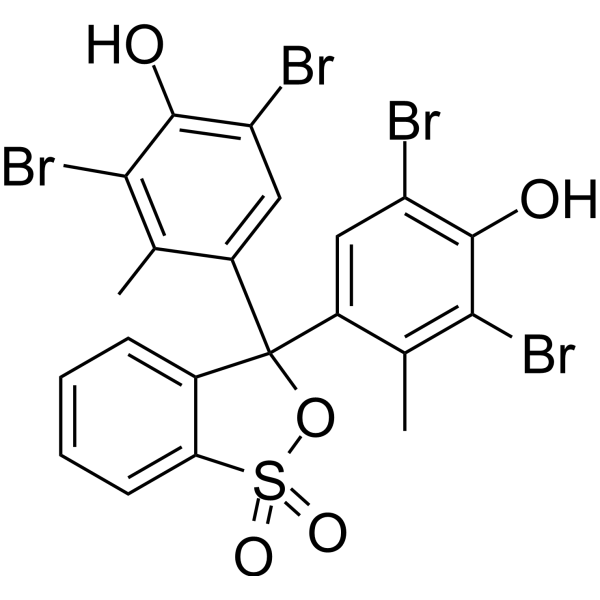
Bromocresol green
Based on 1 publication(s) in Google Scholar
Bromocresol green is a pH-sensitive triphenylmethane dye commonly used for the determination of protein and albumin in serum. Bromocresol green is a bio-based dye with a yellow-green to blue-green color. Bromocresol green turns yellow (λmax=435 nm, protonated form) when placed in acidic solution (e.g. pH=4.15), and turns blue in basic solution (λmax=615 nm, deprotonated form). Bromocresol green is widely used as a pH indicator in the field of biochemical analysis. In addition, Bromocresol green is also used to detect the concentration of molecules such as creatinine, and to judge the viability of cells.
Para uso exclusivo en investigación. No vendemos a pacientes.
- Pureza : 99.59%
- No. CAS: 76-60-8
- Fòrmula: C21H14Br4O5S
- Peso molecular:698.01
-
Almacenamiento:
RT, stored under nitrogen.
In solvent -80°C, 1 year , -20°C, 6 months

To place orders, for customer services and technical support, please contact: MedChemExpress USA
Tel: 609-228-6898 E-mail: [email protected] [email protected]


-
 Actividad biológica
-
Chemical Information
-
Solvente y solubilidad
- Protocolo
- Pureza y Documentación
- Referencias
-
 Help & FAQs


-

HY-W087928
Bromocresol purplepH Indicator -
HY-Y0699
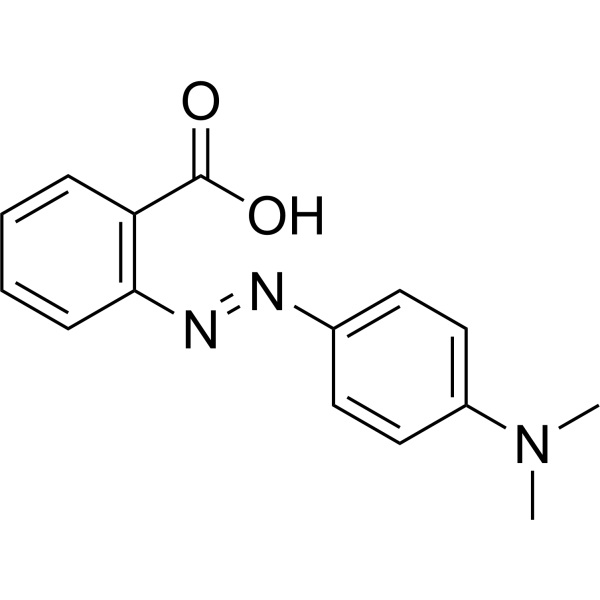
Methyl redAzo Dye -
HY-B1571
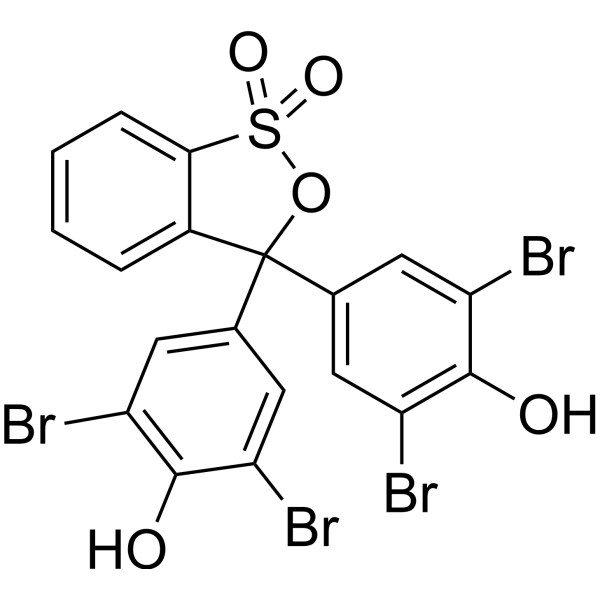
Bromophenol bluepH Indicator -
HY-D0169
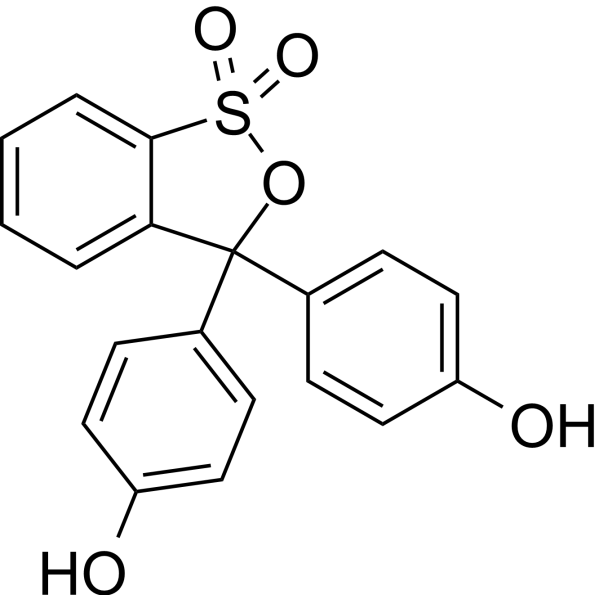
Phenol RedpH Indicator Dye -
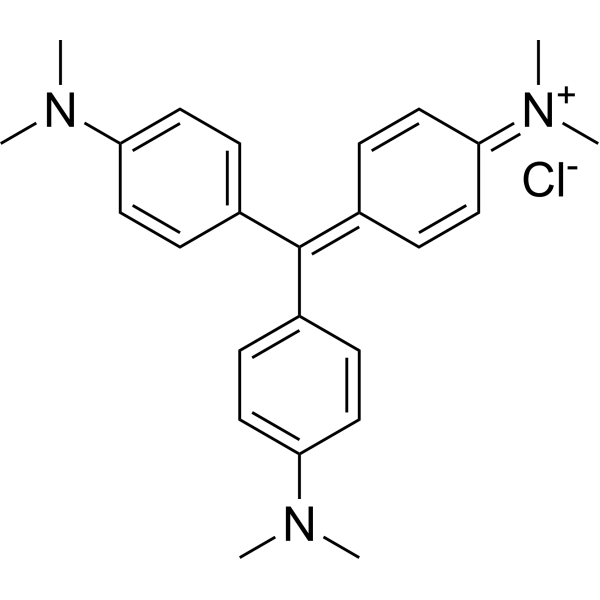
HY-B0324A
Crystal VioletFluorochrome -

HY-D0015
Cresol red, 97%Triphenylmethane Dye -
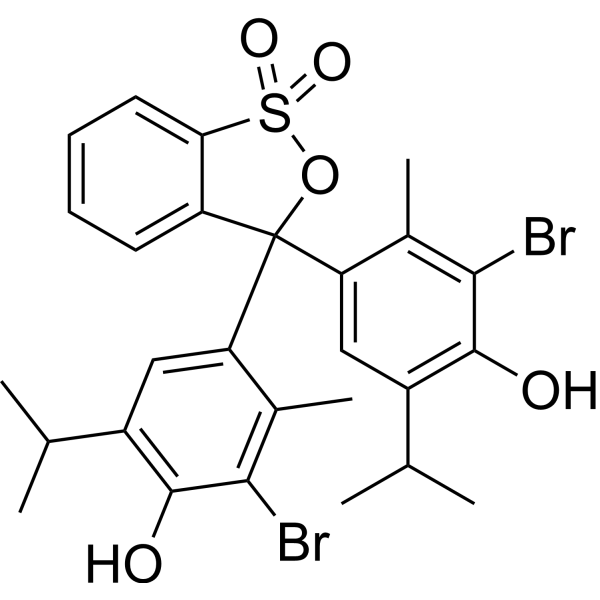
HY-D0012
Bromothymol BluepH Indicator -
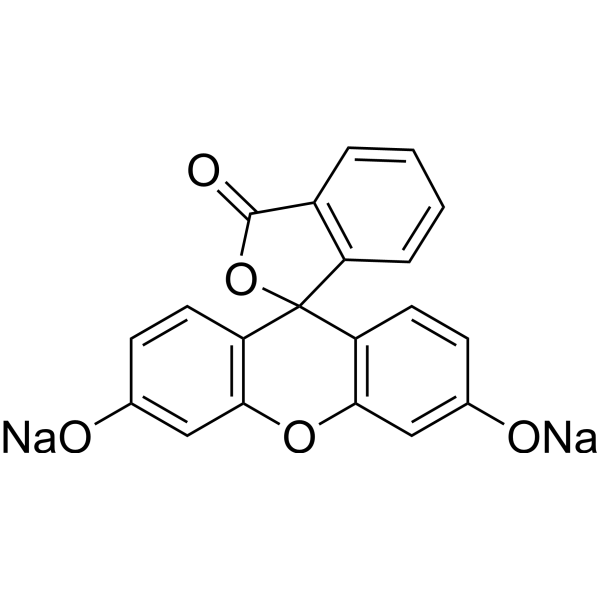
HY-D0208
Fluorescein sodiumFluorescent Tracer -
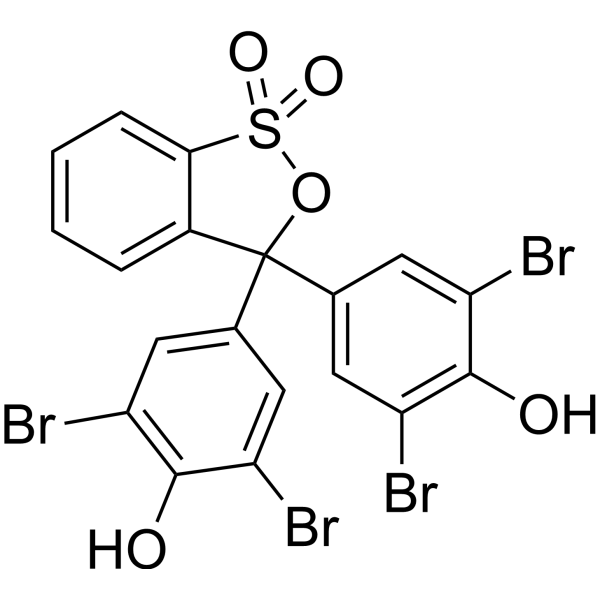
HY-W110798
Bromophenol blue indicator (3.0-4.6)Biochemical Assay Reagent -

HY-DY2001
Crystal Violet (solution)Fluorochrome -
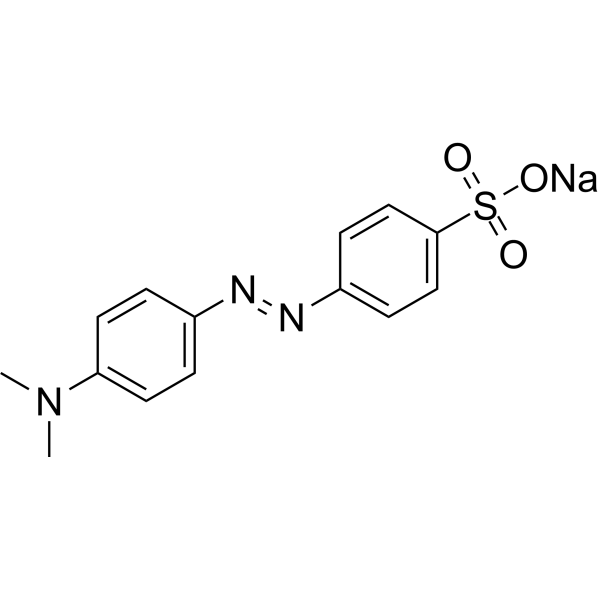
HY-118907
Methyl OrangeAzo Dye -
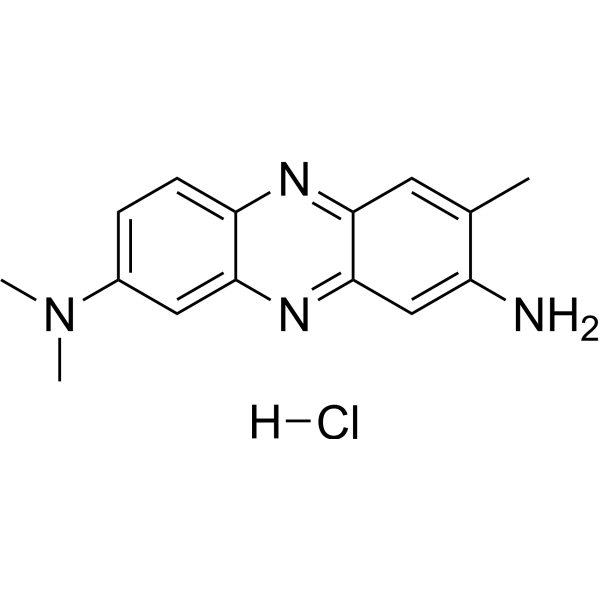
HY-D0166
Neutral RedBiochemical Assay Reagent
Publications Citing Use of MedChemExpress (MCE) Bromocresol green
More

Actividad biológica
Descripciòn
In Vitro
Determination of Bromocresol Green Binding with Human Serum Albumin[1]
(1) Reagent preparation: Prepare a 0.05 M phosphate buffer or any other needed buffer, adding NaCl if necessary to maintain an ionic strength of at least 0.03. Dissolve Bromocresol Green in water and adjust the pH with NaOH to ensure it forms a divalent anionic form, creating a 0.04% stock solution.
(2) Sample preparation: Prepare a solution of human serum albumin. After determining the nitrogen content using the Kjeldahl method, dilute it with the required buffer to create a solution with an appropriate concentration of albumin. Depending on the experimental design, prepare buffers of different pH values and different concentrations of Bromocresol Green solution.
(3) Binding experiment: Under set pH conditions (e.g., pH 6.95), add a certain amount of Bromocresol Green to a solution containing a fixed concentration of human serum albumin. Measure the changes in absorbance of the solution at specific wavelengths using a spectrophotometer, and record the data. Pay special attention to changes at 615 nm, as this is where the maximum absorption difference between the free form and the albumin-bound state of Bromocresol Green occurs. Separate the free and bound indicators using ultrafiltration and measure the absorbance again.
(4) Data analysis: Analyze the absorbance data to determine the binding constant and the number of binding sites. Use the Scatchard plot analysis method to estimate the number of binding sites and their respective binding constants. Compare the experimental data with theoretical curves to evaluate the effect of different pH values on binding.
MedChemExpress (MCE) has not independently confirmed the accuracy of these methods. They are for reference only.


Chemical Information
-
No. CAS 76-60-8
-
Appearance Solid
-
Peso molecular 698.01
-
Fòrmula C21H14Br4O5S
-
Color Off-white to light brown
-
SMILES
O=S1(OC(C2=CC(Br)=C(O)C(Br)=C2C)(C3=CC(Br)=C(O)C(Br)=C3C)C4=CC=CC=C41)=O
-
Envío
Room temperature in continental US; may vary elsewhere.
-
Almacenamiento
RT, stored under nitrogen
In solvent -80°C 1 year -20°C 6 months


Publications (1)
-
Journal Impact Factor
-
Most Recent


Solvente y solubilidad
In Vitro:
DMSO : 100 mg/mL (143.26 mM; Need ultrasonic; Hygroscopic DMSO has a significant impact on the solubility of product, please use newly opened DMSO)
Please refer to the solubility information to select the appropriate solvent. Once prepared, please aliquot and store the solution to prevent product inactivation from repeated freeze-thaw cycles.
Storage method and period of stock solution: -80°C, 1 year; -20°C, 6 months. When stored at -80°C, please use it within 1 year. When stored at -20°C, please use it within 6 months.
Please refer to the solubility information to select the appropriate solvent. Once prepared, please aliquot and store the solution to prevent product inactivation from repeated freeze-thaw cycles.
Storage method and period of stock solution: -80°C, 1 year; -20°C, 6 months. When stored at -80°C, please use it within 1 year. When stored at -20°C, please use it within 6 months.
Concentration (start) × Volume (start) = Concentration (final) × Volume (final)
In Vivo:
Select the appropriate dissolution method based on your experimental animal and administration route.
- For the following dissolution methods, please ensure to first prepare a clear stock solution using an In Vitro approach and then sequentially add co-solvents:
- To ensure reliable experimental results, the clarified stock solution can be appropriately stored based on storage conditions. As for the working solution for In Vivo experiments, it is recommended to prepare freshly and use it on the same day.
- The percentages shown for the solvents indicate their volumetric ratio in the final prepared solution. If precipitation or phase separation occurs during preparation, heat and/or sonication can be used to aid dissolution.
Add each solvent one by one: 10% DMSO 90% (20% SBE-β-CD in Saline)
Solubility: ≥ 2.5 mg/mL (3.58 mM); Clear solution
This protocol yields a clear solution of ≥ 2.5 mg/mL (saturation unknown).
Taking 1 mL working solution as an example, add 100 μL DMSO stock solution (25.0 mg/mL) to 900 μL 20% SBE-β-CD in Saline, and mix evenly.
Preparation of 20% SBE-β-CD in Saline (4°C, storage for one week): 2 g SBE-β-CD powder is dissolved in 10 mL Saline, completely dissolve until clear.
In Vivo Dissolution Calculator
Please enter the basic information of animal experiments:
-
-
-
-
Recommended: Prepare an additional quantity of animals to account for potential losses during experiments.
Please enter your animal formula composition:
-
%DMSO +
Recommended: Keep the proportion of DMSO in working solution below 2% if your animal is weak.
-
%+
-
+%Tween-80 + +
-
%Saline +
The co-solvents required include: DMSO, . All of co-solvents are available by MedChemExpress (MCE). , Tween 80. All of co-solvents are available by MedChemExpress (MCE).
Working solution concentration: 0.22 mg/mL
Method for preparing stock solution: mg drug dissolved in μL DMSO. Stock solution concentration: mg/mL.
1. Take μL DMSO stock solution;
2. Add μL .
μL , mix evenly;
3. Then add μL Tween 80, mix evenly;
4. Then add μL
Please ensure that the stock solution in the first step is dissolved to a clear state, and add co-solvents in sequence. You can use ultrasonic heating (ultrasonic cleaner, recommended frequency 20-40 kHz), vortexing, etc. to assist dissolution.


Pureza y Documentación
-
Ficha de datos (285 KB)
-
SDS (396 KB)
- English - EN (396 KB)
- Français - FR (396 KB)
- Deutsch - DE (396 KB)
- Norwegian - NO (396 KB)
- Español - ES (396 KB)
- Swedish - SV (396 KB)
- Italian - IT (396 KB)
- Korean - KR (396 KB)
- Portuguese - PT (396 KB)
-
Instrucciones de manejo (2659 KB)
Referencias
[1]. Delanghe S, et al. Binding of bromocresol green and bromocresol purple to albumin in hemodialysis patients. Clin Chem Lab Med. 2018 Feb 23;56(3):436-440. [Content Brief]
[3]. Chaiyo S, et al. A novel paper-based colorimetry device for the determination of the albumin to creatinine ratio. Analyst. 2018 Nov 5;143(22):5453-5460. [Content Brief]
[4]. Hou H, et al. Single-cell pH imaging and detection for pH profiling and label-free rapid identification of cancer-cells. Sci Rep. 2017 May 11;7(1):1759. [Content Brief]


Complete Stock Solution Preparation Table
Please refer to the solubility information to select the appropriate solvent. Once prepared, please aliquot and store the solution to prevent product inactivation from repeated freeze-thaw cycles.
Storage method and period of stock solution: -80°C, 1 year; -20°C, 6 months. When stored at -80°C, please use it within 1 year. When stored at -20°C, please use it within 6 months.
| Optional Solvent | Concentration Solvent Mass | 1 mg | 5 mg | 10 mg | 25 mg |
|---|---|---|---|---|---|
| DMSO | 1 mM | 1.4326 mL | 7.1632 mL | 14.3264 mL | 35.8161 mL |
| 5 mM | 0.2865 mL | 1.4326 mL | 2.8653 mL | 7.1632 mL | |
| 10 mM | 0.1433 mL | 0.7163 mL | 1.4326 mL | 3.5816 mL | |
| 15 mM | 0.0955 mL | 0.4775 mL | 0.9551 mL | 2.3877 mL | |
| 20 mM | 0.0716 mL | 0.3582 mL | 0.7163 mL | 1.7908 mL | |
| 25 mM | 0.0573 mL | 0.2865 mL | 0.5731 mL | 1.4326 mL | |
| 30 mM | 0.0478 mL | 0.2388 mL | 0.4775 mL | 1.1939 mL | |
| 40 mM | 0.0358 mL | 0.1791 mL | 0.3582 mL | 0.8954 mL | |
| 50 mM | 0.0287 mL | 0.1433 mL | 0.2865 mL | 0.7163 mL | |
| 60 mM | 0.0239 mL | 0.1194 mL | 0.2388 mL | 0.5969 mL | |
| 80 mM | 0.0179 mL | 0.0895 mL | 0.1791 mL | 0.4477 mL | |
| 100 mM | 0.0143 mL | 0.0716 mL | 0.1433 mL | 0.3582 mL |


Bromocresol green Related Classifications
HY-W040144 Related Classifications
 Powered by Bioz