



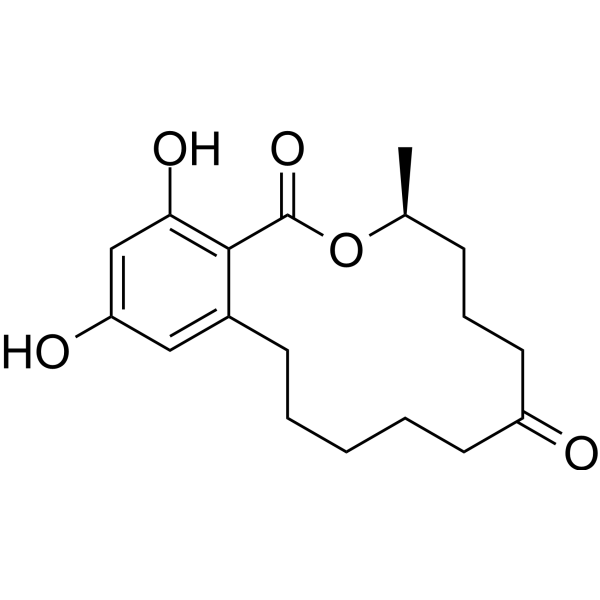
Zearalanone
Based on 2 publication(s) in Google Scholar
Zearalanone is a reductive metabolite of Zearalenone (HY-103447). Zearalanone binds to serum albumin across multiple species. Zearalanone enhances the binding affinity of Warfarin (HY-B0687) to serum albumin.
For research use only. We do not sell to patients.
- Purity : 99.60%
- CAS No.: 5975-78-0
- Formula: C18H24O5
- Molecular Weight:320.38
-
Storage:Powder -20°C, 3 years , 4°C, 2 years ; In solvent -80°C, 6 months , -20°C, 1 month

To place orders, for customer services and technical support, please contact: MedChemExpress USA
Tel: 609-228-6898 E-mail: [email protected] [email protected]


-
 Biological Activity
-
Chemical Information
-
Solvent & Solubility
- Purity & Documentation
- References
-
 Help & FAQs


-
HY-N6710
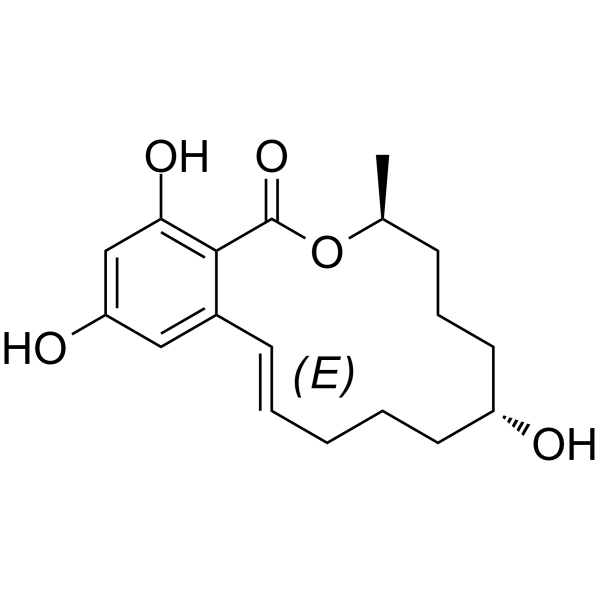
α-ZearalenolEstrogen Receptor/ERR Inhibitor -
HY-N0150
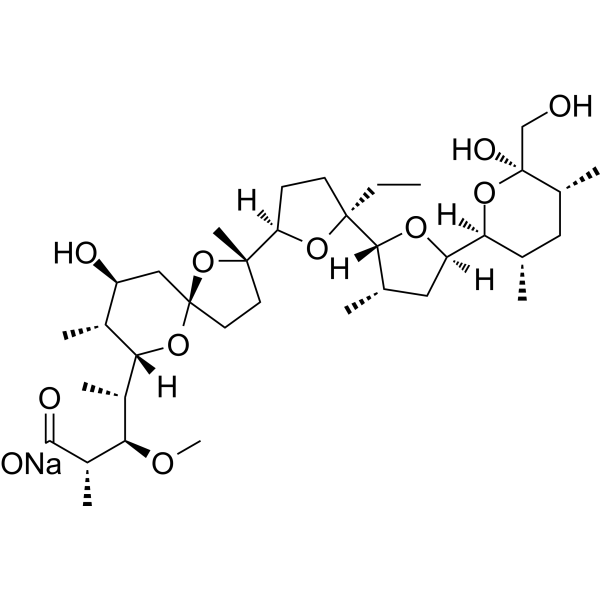
Monensin sodiumAntibiotic -
HY-103447
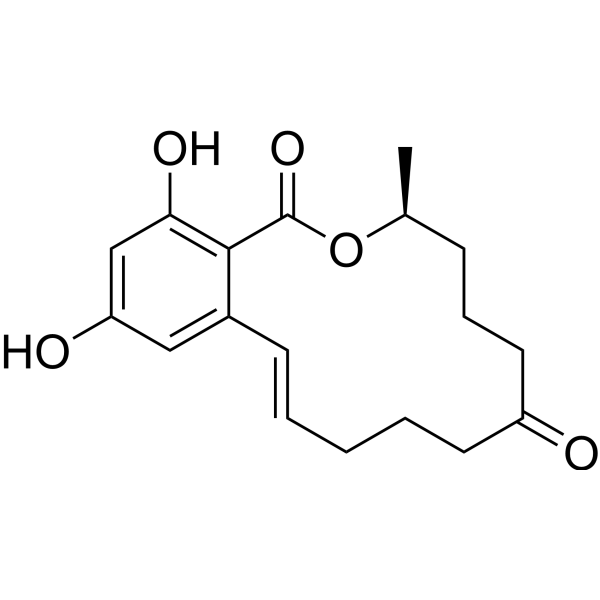
ZearalenoneMycotoxin Compound -
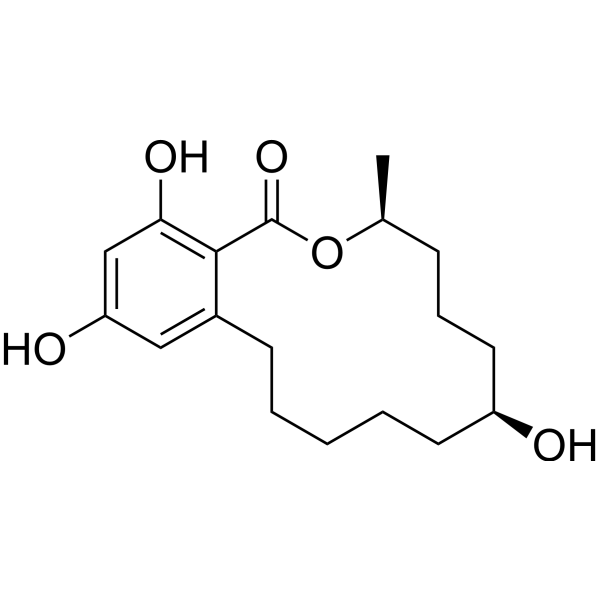
HY-N6740
Beta-ZearalanolApoptosis Inducer -
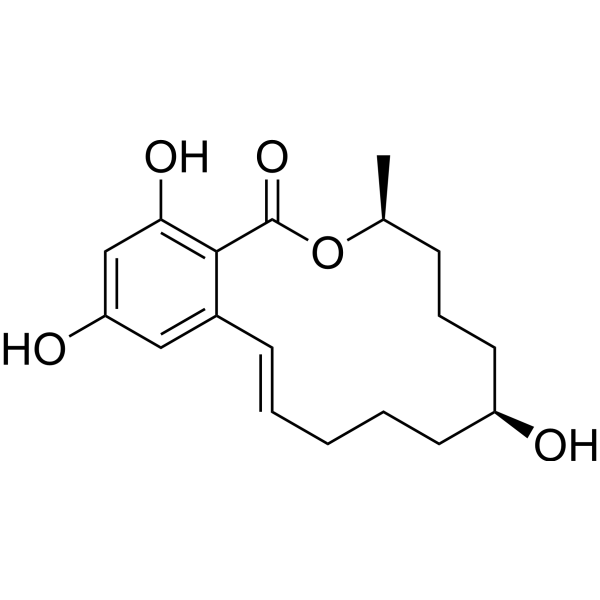
HY-N6741
β-ZearalenolEstrogen Receptor Binder -

HY-N6678R
Zearalanone (Standard)Estrogen Receptor/ERR Activator -
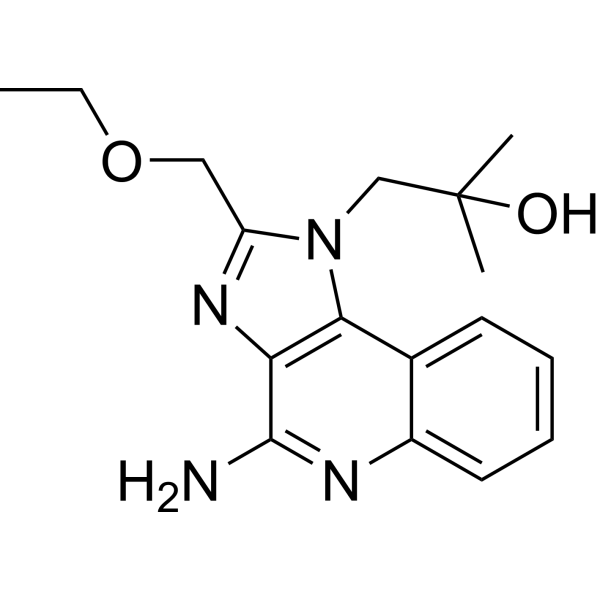
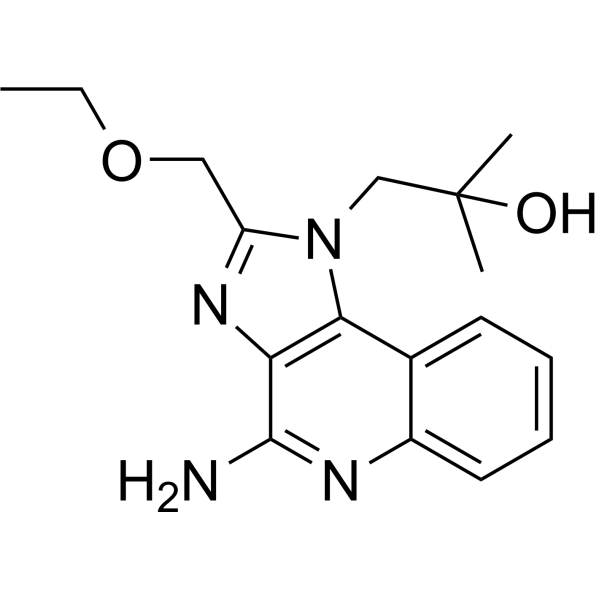
HY-13740
ResiquimodTLR7/8 Agonist -
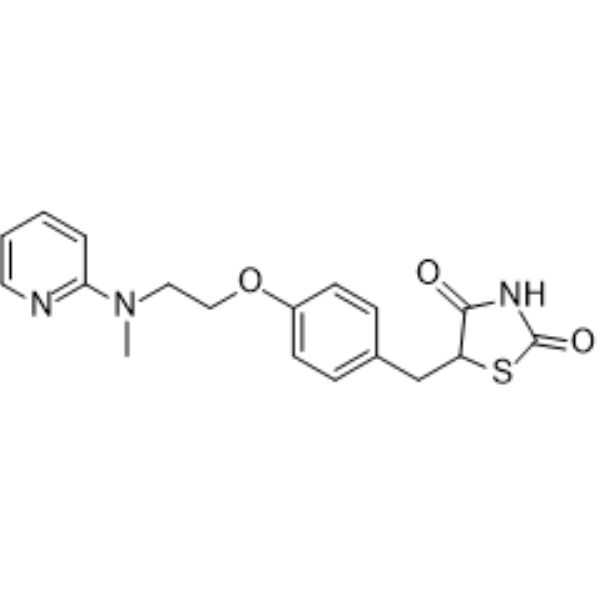
HY-17386
RosiglitazonePPARγ Agonist -
HY-13740G
Resiquimod (GMP)TLR7/TLR8 Agonist (GMP) -

HY-17386R
Rosiglitazone (Standard)PPARγ Agonist -
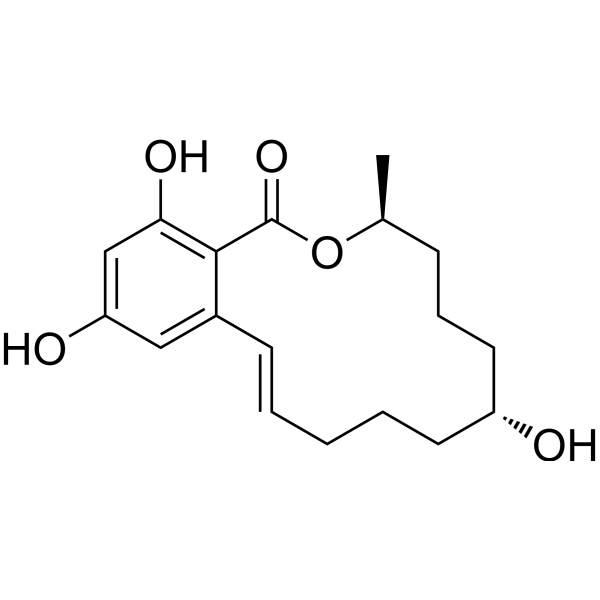
HY-N6710R
α-Zearalenol (Standard) -
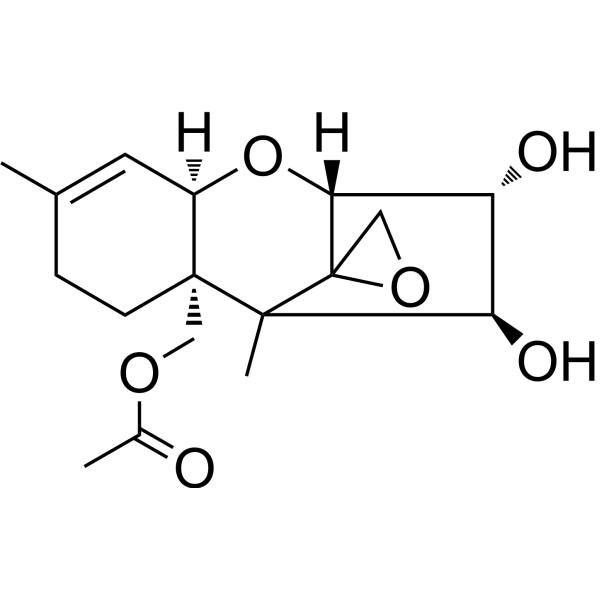
HY-N6681
15-AcetoxyscirpenolCaspase Activator
Publications Citing Use of MedChemExpress (MCE) Zearalanone
More

Biological Activity
Description
IC50 & Target
|
Estrogen receptor |
Cellular Effect
|
Cell Line

|
Type | Value | Description | References |
|---|---|---|---|---|
| MCF7 | IC50 |
>25 μM
Compound: 9
|
Cytotoxicity against human MCF7 cells after 72 hrs by MTS assay
Cytotoxicity against human MCF7 cells after 72 hrs by MTS assay
|
[PMID: 21513293] |
| NCI-H460 | IC50 |
>25 μM
Compound: 9
|
Cytotoxicity against human H460 cells after 72 hrs by MTS assay
Cytotoxicity against human H460 cells after 72 hrs by MTS assay
|
[PMID: 21513293] |
| SF-268 | IC50 |
>50 μM
Compound: 9
|
Cytotoxicity against human SF268 cells after 72 hrs by MTS assay
Cytotoxicity against human SF268 cells after 72 hrs by MTS assay
|
[PMID: 21513293] |
| Vero | IC50 |
151.26 μM
Compound: 15
|
Cytotoxicity against African green monkey Vero cells assessed as reduction in cell viability by green fluorescent protein-based assay
Cytotoxicity against African green monkey Vero cells assessed as reduction in cell viability by green fluorescent protein-based assay
|
[PMID: 27311894] |
In Vitro
Zearalanone forms stable 1:1 complexes with bovine, porcine, and rat serum albumin, with the highest binding affinity to rat serum albumin (logK = 5.12 L/mol) and the lowest binding affinity to porcine serum albumin (logK = 3.97 L/mol)[1].
Zearalanone (0-15 μM) enhances the binding affinity of Warfarin (HY-B0687) to serum albumin[1].
MedChemExpress (MCE) has not independently confirmed the accuracy of these methods. They are for reference only. .


Chemical Information
-
CAS No. 5975-78-0
-
Appearance Solid
-
Molecular Weight 320.38
-
Formula C18H24O5
-
Color White to off-white
-
SMILES
O=C(O[C@@H](C)CCC1)C2=C(O)C=C(O)C=C2CCCCCC1=O
-
Structure Classification
-
Initial Source
Fusarium
-
Shipping
Room temperature in continental US; may vary elsewhere.
-
Storage
Powder -20°C 3 years 4°C 2 years In solvent -80°C 6 months -20°C 1 month


Publications (2)
-
Journal Impact Factor
-
Most Recent
-
Environ Health (Wash)
Fish Skin Mucus Vitellogenin as a Noninvasive, Sensitive Biomarker for Aquatic Xenoestrogens. [Abstract]2025 Jan 10;3(4):414-424. PMID: 40270534 -
Neoplasia
PAD4-dependent citrullination of nuclear translocation of GSK3β promotes colorectal cancer progression via the degradation of nuclear CDKN1A. [Abstract]2022 Nov;33:100835. PMID: 36113195


Solvent & Solubility
In Vitro:
DMSO : 100 mg/mL (312.13 mM; Need ultrasonic; Hygroscopic DMSO has a significant impact on the solubility of product, please use newly opened DMSO)
Please refer to the solubility information to select the appropriate solvent. Once prepared, please aliquot and store the solution to prevent product inactivation from repeated freeze-thaw cycles.
Storage method and period of stock solution: -80°C, 6 months; -20°C, 1 month. When stored at -80°C, please use it within 6 months. When stored at -20°C, please use it within 1 month.
Please refer to the solubility information to select the appropriate solvent. Once prepared, please aliquot and store the solution to prevent product inactivation from repeated freeze-thaw cycles.
Storage method and period of stock solution: -80°C, 6 months; -20°C, 1 month. When stored at -80°C, please use it within 6 months. When stored at -20°C, please use it within 1 month.
Concentration (start) × Volume (start) = Concentration (final) × Volume (final)
In Vivo:
Select the appropriate dissolution method based on your experimental animal and administration route.
- For the following dissolution methods, please ensure to first prepare a clear stock solution using an In Vitro approach and then sequentially add co-solvents:
- To ensure reliable experimental results, the clarified stock solution can be appropriately stored based on storage conditions. As for the working solution for In Vivo experiments, it is recommended to prepare freshly and use it on the same day.
- The percentages shown for the solvents indicate their volumetric ratio in the final prepared solution. If precipitation or phase separation occurs during preparation, heat and/or sonication can be used to aid dissolution.
Add each solvent one by one: 10% DMSO 40% PEG300 5% Tween-80 45% Saline
Solubility: ≥ 2.5 mg/mL (7.80 mM); Clear solution
This protocol yields a clear solution of ≥ 2.5 mg/mL (saturation unknown).
Taking 1 mL working solution as an example, add 100 μL DMSO stock solution (25.0 mg/mL) to 400 μL PEG300, and mix evenly; then add 50 μL Tween-80 and mix evenly; then add 450 μL Saline to adjust the volume to 1 mL.
Preparation of Saline: Dissolve 0.9 g sodium chloride in ddH₂O and dilute to 100 mL to obtain a clear Saline solution.
In Vivo Dissolution Calculator
Please enter the basic information of animal experiments:
-
-
-
-
Recommended: Prepare an additional quantity of animals to account for potential losses during experiments.
Please enter your animal formula composition:
-
%DMSO +
Recommended: Keep the proportion of DMSO in working solution below 2% if your animal is weak.
-
%+
-
+%Tween-80 + +
-
%Saline +
The co-solvents required include: DMSO, . All of co-solvents are available by MedChemExpress (MCE). , Tween 80. All of co-solvents are available by MedChemExpress (MCE).
Working solution concentration: 0.22 mg/mL
Method for preparing stock solution: mg drug dissolved in μL DMSO. Stock solution concentration: mg/mL.
1. Take μL DMSO stock solution;
2. Add μL .
μL , mix evenly;
3. Then add μL Tween 80, mix evenly;
4. Then add μL
Please ensure that the stock solution in the first step is dissolved to a clear state, and add co-solvents in sequence. You can use ultrasonic heating (ultrasonic cleaner, recommended frequency 20-40 kHz), vortexing, etc. to assist dissolution.


Purity & Documentation
-
Data Sheet (274 KB)
-
SDS (418 KB)
- English - EN (418 KB)
- Français - FR (418 KB)
- Deutsch - DE (418 KB)
- Norwegian - NO (418 KB)
- Español - ES (418 KB)
- Swedish - SV (418 KB)
- Italian - IT (418 KB)
- Korean - KR (418 KB)
- Portuguese - PT (418 KB)
-
Handling Instructions (2659 KB)
References
[1]. Faisal Z, et al. Interactions of zearalanone, α-zearalanol, β-zearalanol, zearalenone-14-sulfate, and zearalenone-14-glucoside with serum albumin. Mycotoxin Res. 2020;36(4):389-397. [Content Brief]
[2]. Zöllner P, et al. Concentration levels of zearalenone and its metabolites in urine, muscle tissue, and liver samples of pigs fed with mycotoxin-contaminated oats. J Agric Food Chem. 2002;50(9):2494-2501. [Content Brief]


Complete Stock Solution Preparation Table
Please refer to the solubility information to select the appropriate solvent. Once prepared, please aliquot and store the solution to prevent product inactivation from repeated freeze-thaw cycles.
Storage method and period of stock solution: -80°C, 6 months; -20°C, 1 month. When stored at -80°C, please use it within 6 months. When stored at -20°C, please use it within 1 month.
| Optional Solvent | Concentration Solvent Mass | 1 mg | 5 mg | 10 mg | 25 mg |
|---|---|---|---|---|---|
| DMSO | 1 mM | 3.1213 mL | 15.6065 mL | 31.2129 mL | 78.0323 mL |
| 5 mM | 0.6243 mL | 3.1213 mL | 6.2426 mL | 15.6065 mL | |
| 10 mM | 0.3121 mL | 1.5606 mL | 3.1213 mL | 7.8032 mL | |
| 15 mM | 0.2081 mL | 1.0404 mL | 2.0809 mL | 5.2022 mL | |
| 20 mM | 0.1561 mL | 0.7803 mL | 1.5606 mL | 3.9016 mL | |
| 25 mM | 0.1249 mL | 0.6243 mL | 1.2485 mL | 3.1213 mL | |
| 30 mM | 0.1040 mL | 0.5202 mL | 1.0404 mL | 2.6011 mL | |
| 40 mM | 0.0780 mL | 0.3902 mL | 0.7803 mL | 1.9508 mL | |
| 50 mM | 0.0624 mL | 0.3121 mL | 0.6243 mL | 1.5606 mL | |
| 60 mM | 0.0520 mL | 0.2601 mL | 0.5202 mL | 1.3005 mL | |
| 80 mM | 0.0390 mL | 0.1951 mL | 0.3902 mL | 0.9754 mL | |
| 100 mM | 0.0312 mL | 0.1561 mL | 0.3121 mL | 0.7803 mL |


Zearalanone Related Classifications
HY-N6678 Related Classifications
 Powered by Bioz