



Zearalenone
Based on 11 publication(s) in Google Scholar
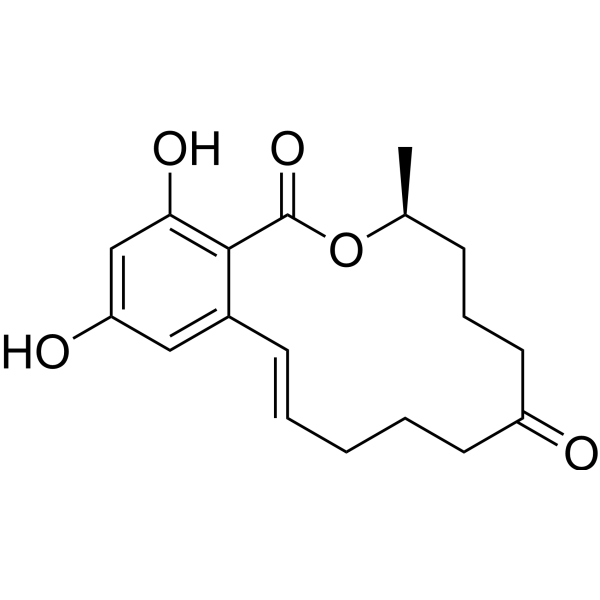
Zearalenone is a mycotoxin produced mainly by fungi belonging to the genus Fusarium in foods and feeds. Possess oestrogenic activity in pigs, cattle and sheep, with low acute toxicity. Causes precocious development of mammae and other estrogenic effects in young gilts.
For research use only. We do not sell to patients.
- Purity : 98.94%
- CAS No.: 17924-92-4
- Formula: C18H22O5
- Molecular Weight:318.36
-
Storage:
4°C, stored under nitrogen
* In solvent : -80°C, 1 year; -20°C, 6 months (stored under nitrogen)

To place orders, for customer services and technical support, please contact: MedChemExpress USA
Tel: 609-228-6898 E-mail: [email protected] [email protected]


-
 Biological Activity
-
Chemical Information
-
Solvent & Solubility
- Protocols
- Purity & Documentation
- References
-
 Help & FAQs


-
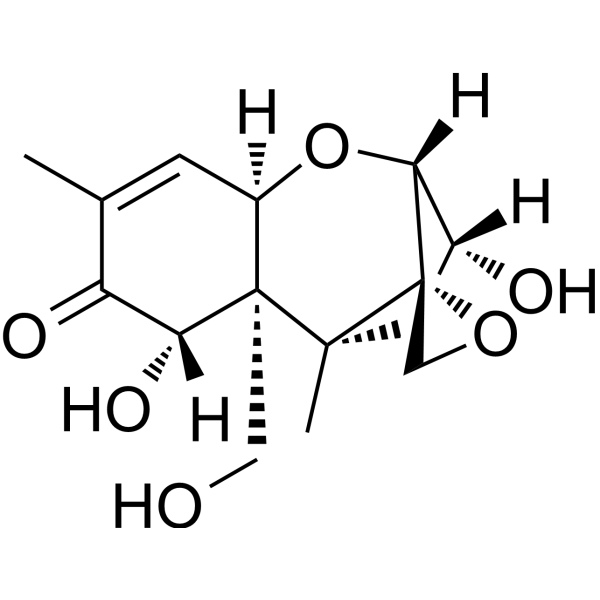
HY-N6684
DeoxynivalenolMycotoxin -
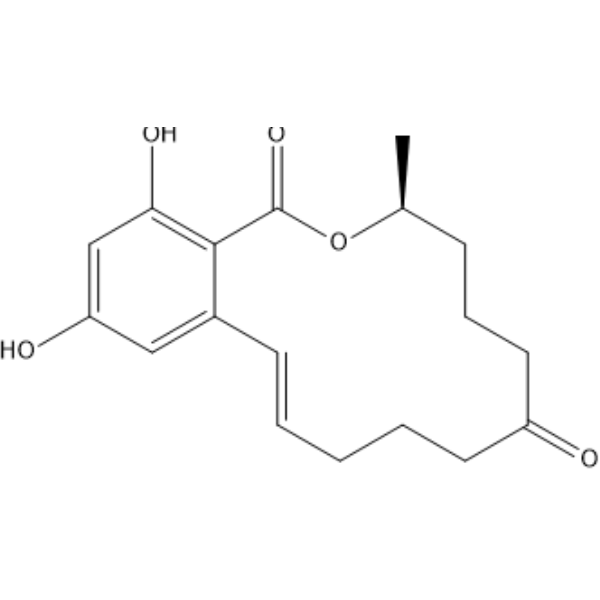
HY-103447R
Zearalenone (Standard) -
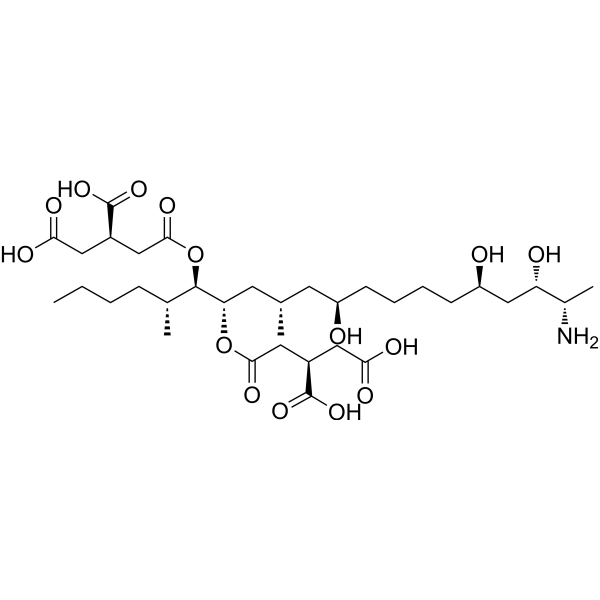
HY-N6719
Fumonisin B1Sphingosine N-acyltransferase Inhibitor -
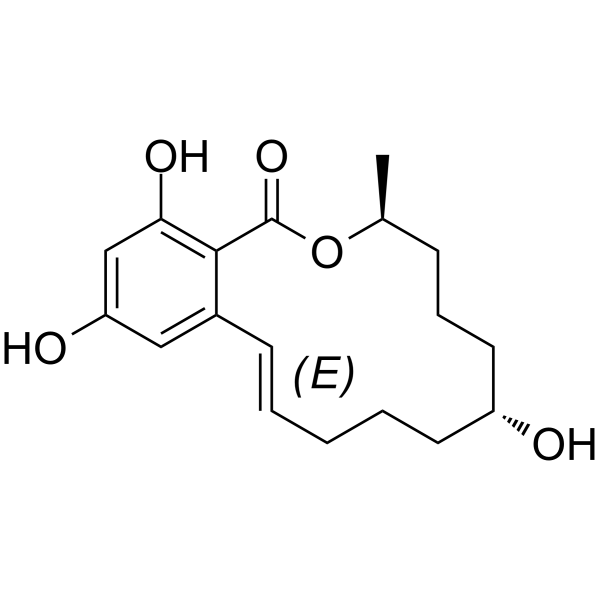
HY-N6710
α-ZearalenolEstrogen Receptor/ERR Inhibitor -
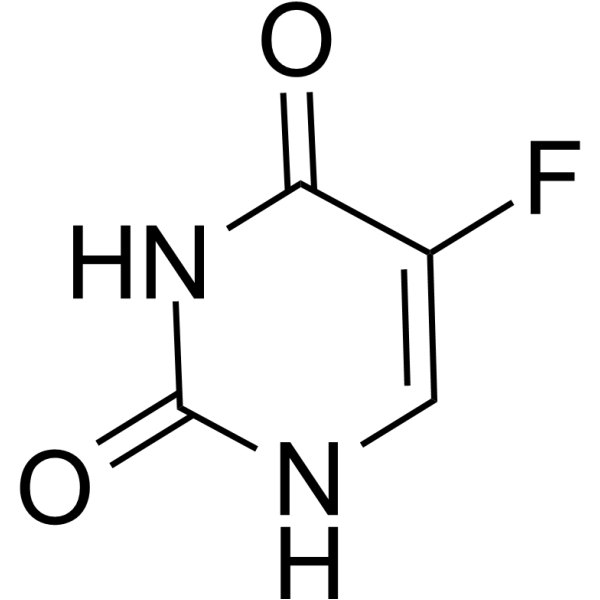
HY-90006
5-FluorouracilThymidylate Synthase Inhibitor -
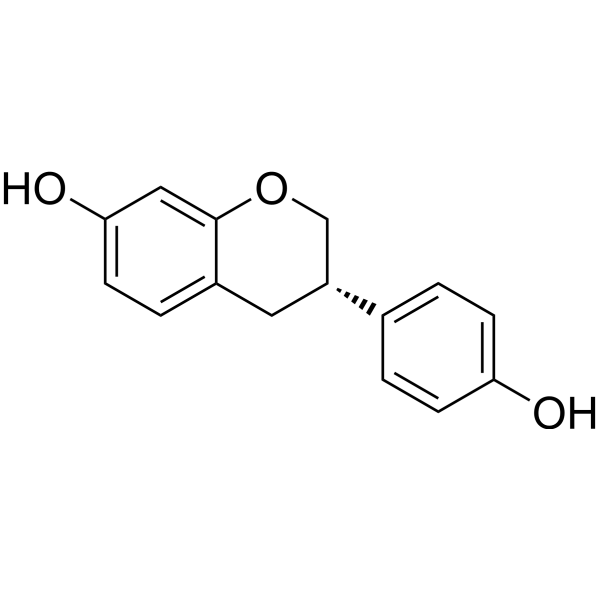
HY-100583
(-)-(S)-EquolEstrogen Receptor β Ligand -
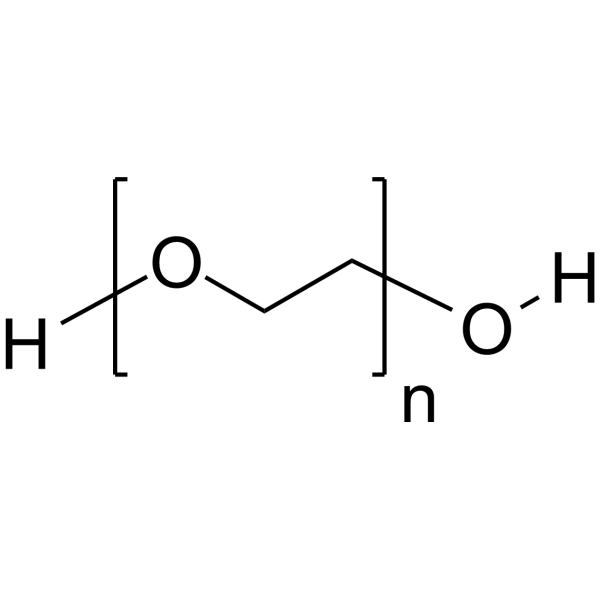
HY-Y0873
PEG300Neutral Polymer -

HY-103447R1
Zearalenone in Acetonitrile (Standard) -
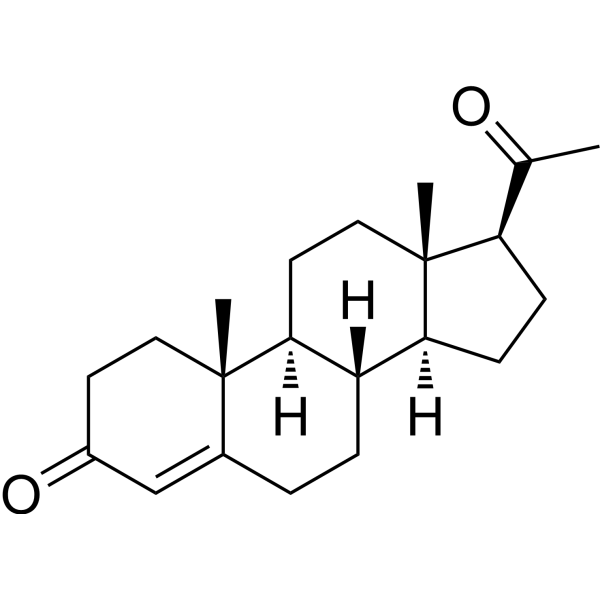
HY-N0437
ProgesteroneEndogenous Metabolite -
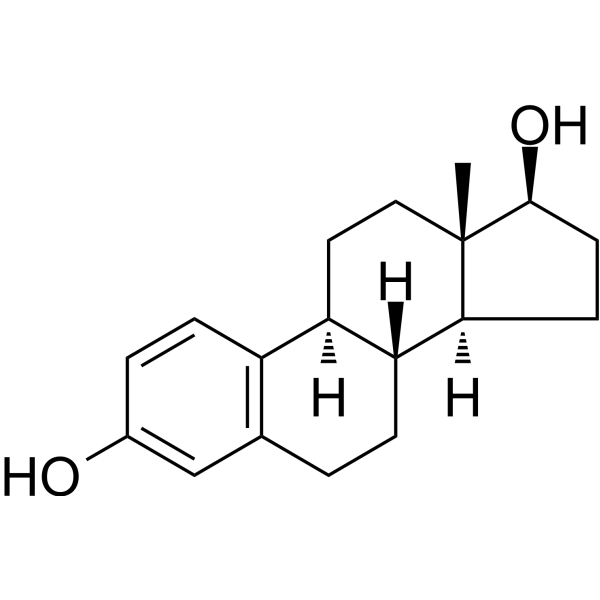
HY-B0141
EstradiolHuman Endogenous Metabolite -
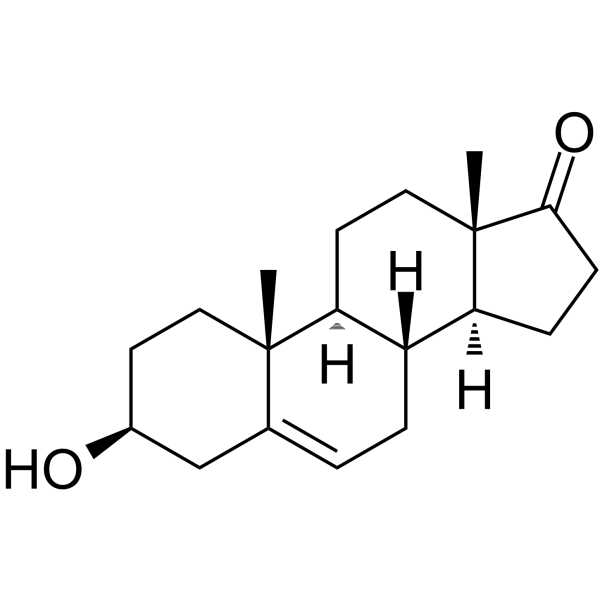
HY-14650
DHEASteroid Hormone
Publications Citing Use of MedChemExpress (MCE) Zearalenone
More- Food Chem. 2024 Sep 17;463(Pt 3):141297. [Abstract]
- Sens Actuators B Chem. 2025 Oct 1.
- Antioxidants (Basel). 2025 Dec 29.
- Anal Chem. 2022 Feb 22;94(7):3400-3407. [Abstract]
- Ecotoxicol Environ Saf. 2025 Sep 15:303:119045. [Abstract]
- Ecotoxicol Environ Saf. 2024 Oct 1:284:116914. [Abstract]
- Food Funct. 2022 Jul 18;13(14):7857-7870. [Abstract]
- Anal Chim Acta. 2022 Nov 1:1232:340478. [Abstract]
- Biomolecules. 2026 Jun 7;16(6):837. [Abstract]
- Biomedicines. 2024 Apr 24;12(5):943. [Abstract]
- Biometals. 2022 Aug;35(4):699-710. [Abstract]
 Customer Validation & Images

-
Cell Proliferation/Viability Assay
-
Bio/Physico-chemical Assay
-
WB
-
Cell Proliferation/Viability Assay
-
Cell Proliferation/Viability Assay


Biological Activity
Description
Cellular Effect
|
Cell Line

|
Type | Value | Description | References |
|---|---|---|---|---|
| HL-60 | IC50 |
138.21 μM
Compound: 1
|
Cytotoxicity against human HL60 cells assessed as reduction in cell viability after 24 hrs by MTT assay
Cytotoxicity against human HL60 cells assessed as reduction in cell viability after 24 hrs by MTT assay
|
[PMID: 27311894] |
| KB | IC50 |
46.3 μM
Compound: 1
|
Cytotoxicity against human KB cells assessed as reduction in cell viability by resazurin microplate assay
Cytotoxicity against human KB cells assessed as reduction in cell viability by resazurin microplate assay
|
[PMID: 27311894] |
| MCF7 | IC50 |
>25 μM
Compound: 8
|
Cytotoxicity against human MCF7 cells after 72 hrs by MTS assay
Cytotoxicity against human MCF7 cells after 72 hrs by MTS assay
|
[PMID: 21513293] |
| MCF7 | IC50 |
104.72 μM
Compound: 1
|
Cytotoxicity against human MCF7 cells assessed as reduction in cell viability by resazurin microplate assay
Cytotoxicity against human MCF7 cells assessed as reduction in cell viability by resazurin microplate assay
|
[PMID: 27311894] |
| NCI-H460 | IC50 |
>25 μM
Compound: 8
|
Cytotoxicity against human H460 cells after 72 hrs by MTS assay
Cytotoxicity against human H460 cells after 72 hrs by MTS assay
|
[PMID: 21513293] |
| SF-268 | IC50 |
>50 μM
Compound: 8
|
Cytotoxicity against human SF268 cells after 72 hrs by MTS assay
Cytotoxicity against human SF268 cells after 72 hrs by MTS assay
|
[PMID: 21513293] |
| Vero | IC50 |
40.58 μM
Compound: 1
|
Cytotoxicity against African green monkey Vero cells assessed as reduction in cell viability by green fluorescent protein-based assay
Cytotoxicity against African green monkey Vero cells assessed as reduction in cell viability by green fluorescent protein-based assay
|
[PMID: 27311894] |
In Vivo
MedChemExpress (MCE) has not independently confirmed the accuracy of these methods. They are for reference only.


Chemical Information
-
CAS No. 17924-92-4
-
Appearance Solid
-
Molecular Weight 318.36
-
Formula C18H22O5
-
Color White to off-white
-
SMILES
O=C(O[C@@H](C)CCC1)C2=C(O)C=C(O)C=C2/C=C/CCCC1=O
-
Synonyms
Mycotoxin F2; Toxin F2
-
Structure Classification
-
Initial Source
Fusarium
-
Shipping
Room temperature in continental US; may vary elsewhere.
-
Storage
4°C, stored under nitrogen
* In solvent : -80°C, 1 year; -20°C, 6 months (stored under nitrogen)


Publications (11)
-
Journal Impact Factor
-
Most Recent
-
Food Chem
Functional peptide conjugated ordered gold nanoparticles based rational electrochemical immunosensor for highly stable and selective detection of zearalenone. [Abstract]2024 Sep 17;463(Pt 3):141297. PMID: 39305646 -
-
-
Anal Chem
Highly Sensitive Chemiluminescent Immunoassay of Mycotoxins Using ZIF-8-Derived Yolk-Shell Co Single-Atom Site Catalysts as Superior Fenton-like Probes. [Abstract]2022 Feb 22;94(7):3400-3407. PMID: 35138805 -
Ecotoxicol Environ Saf
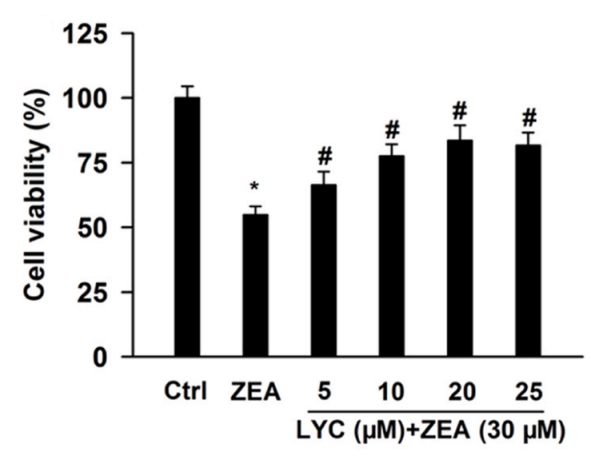
Lycopene inhibits zearalenone-induced ferroptosis via activating AMPK/Nrf2 signaling pathway in AML-12 hepatocytes and in mice livers. [Abstract]2025 Sep 15:303:119045. PMID: 40945091
Zearalenone purchased from MedChemExpress. Usage Cited in: Ecotoxicol Environ Saf. 2025 Sep 15:303:119045. [Abstract]
Cells were pretreated with the indicated concentrations of LYC and then stimulated with 30 μM Zearalenone for 24 h. The cell viability was detected.
Zearalenone purchased from MedChemExpress. Usage Cited in: Ecotoxicol Environ Saf. 2025 Sep 15:303:119045. [Abstract]
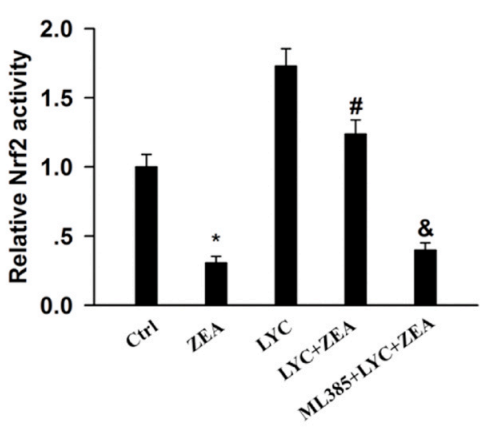
AML-12 cells were pretreated with 20 μM LYC or/and 5 μM ML385 for 2 h, followed by incubation with 30 μM Zearalenone for 24 h. Nuclear proteins were isolated, and Nrf2 activity was detected.
Zearalenone purchased from MedChemExpress. Usage Cited in: Ecotoxicol Environ Saf. 2025 Sep 15:303:119045. [Abstract]
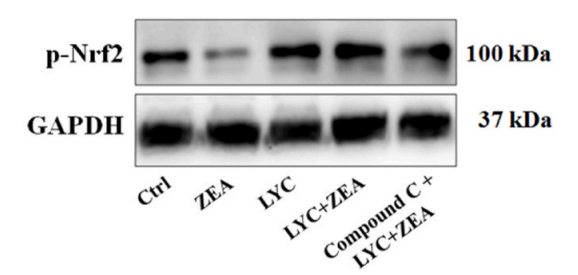
AML-12 cells were pretreated with 20 μM LYC or/and 10 μM Compound C for 2 h, followed by incubation with 30 μM Zearalenone for 24 h. p-Nrf2 protein expression.
-
Ecotoxicol Environ Saf
Prophylactic supplementation with selenium nanoparticles protects against foodborne toxin zearalenone-induced intestinal barrier dysfunction. [Abstract]2024 Oct 1:284:116914. PMID: 39182281
Zearalenone purchased from MedChemExpress. Usage Cited in: Ecotoxicol Environ Saf. 2024 Oct 1:284:116914. [Abstract]
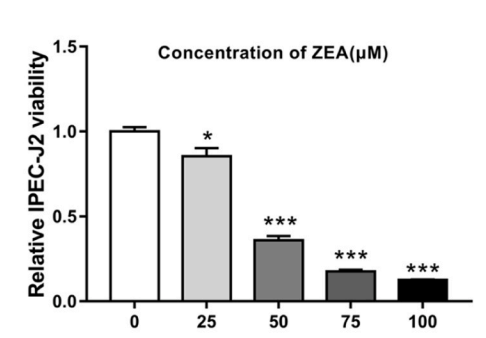
The effect of different concentrations of Zearalenone (0-100 μM) on the viability of IPEC-J2 cells was detected by CCK-8 assay.
Zearalenone purchased from MedChemExpress. Usage Cited in: Ecotoxicol Environ Saf. 2024 Oct 1:284:116914. [Abstract]
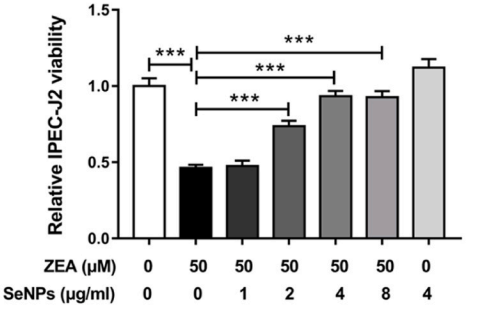
Protective effects of different concentrations of SeNPs against Zearalenone (0-50 μM)-induced cytotoxicity.
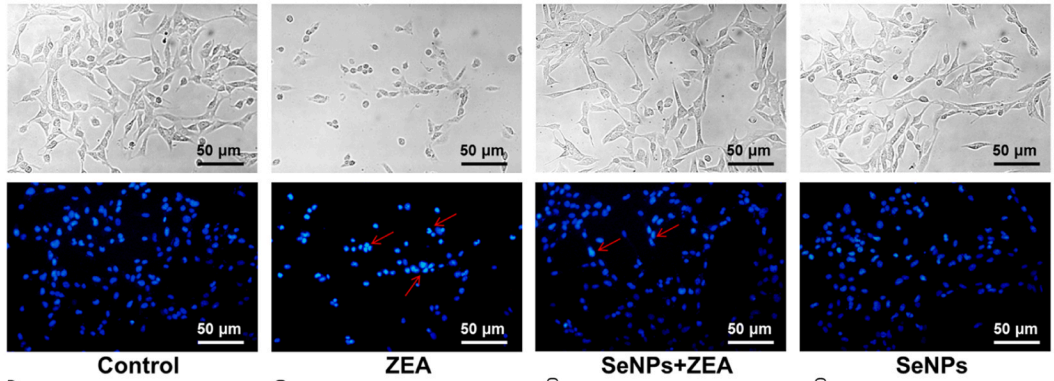
Zearalenone purchased from MedChemExpress. Usage Cited in: Ecotoxicol Environ Saf. 2024 Oct 1:284:116914. [Abstract]
Cellular morphology and apoptosis of IPEC-J2 cells exposed to Zearalenone and (or) SeNPs. Apoptotic cells have bright blue fluorescence (red arrows).
-
Food Funct
Glucosamine alleviates zearalenone-induced damage to porcine trophectoderm cells by activating the PI3K/AKT signaling pathway. [Abstract]2022 Jul 18;13(14):7857-7870. PMID: 35771143 -
Anal Chim Acta
CoN4-supported Co2N metal clusters for developing sensitive chemiluminescent immunochromatographic assays. [Abstract]2022 Nov 1:1232:340478. PMID: 36257748 -
Biomolecules
Zearalenone Induces Gap Junction Damage in Ovine Ovarian Granulosa Cells by Upregulating GPR30 and Activating the Oxidative Stress-NLRP3 Inflammasome Axis. [Abstract]2026 Jun 7;16(6):837. PMID: 42352304 -
Biomedicines
The Efficacy of Hispidin and Magnesium Nanoparticles against Zearalenone-Induced Fungal Toxicity Causing Polycystic Ovarian Syndrome in Rats. [Abstract]2024 Apr 24;12(5):943. PMID: 38790905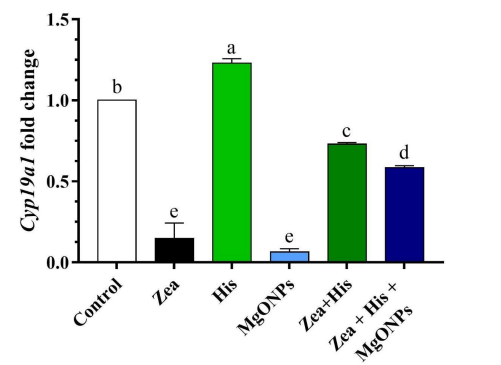
Zearalenone purchased from MedChemExpress. Usage Cited in: Biomedicines. 2024 Apr 24;12(5):943. [Abstract]
Mean (±SE) expression level of Cyp19α1 in rats exposed to zearalenone 0.1 mg/kg b.w. (Zearalenone), hispidin (His), and/or magnesium oxide nanoparticles (MgONPs) and Zearalenone treated with hispidin (Zearalenone + His) or combined hispidin and magnesium oxide nanoparticles (Zearalenone + His + MgONPs). Different letters indicate significant differences between groups (p ≤ 0.05).
-
Biometals
Sodium selenite attenuates zearalenone-induced apoptosis through inhibition of endoplasmic reticulum stress in goat trophoblast cells. [Abstract]2022 Aug;35(4):699-710. PMID: 35513732


Solvent & Solubility
In Vitro:
DMSO : 100 mg/mL (314.11 mM; Need ultrasonic; Hygroscopic DMSO has a significant impact on the solubility of product, please use newly opened DMSO)
Please refer to the solubility information to select the appropriate solvent. Once prepared, please aliquot and store the solution to prevent product inactivation from repeated freeze-thaw cycles.
Storage method and period of stock solution: -80°C, 1 year; -20°C, 6 months (stored under nitrogen). When stored at -80°C, please use it within 1 year. When stored at -20°C, please use it within 6 months.
Please refer to the solubility information to select the appropriate solvent. Once prepared, please aliquot and store the solution to prevent product inactivation from repeated freeze-thaw cycles.
Storage method and period of stock solution: -80°C, 1 year; -20°C, 6 months (stored under nitrogen). When stored at -80°C, please use it within 1 year. When stored at -20°C, please use it within 6 months.
Concentration (start) × Volume (start) = Concentration (final) × Volume (final)
In Vivo:
Select the appropriate dissolution method based on your experimental animal and administration route.
- For the following dissolution methods, please ensure to first prepare a clear stock solution using an In Vitro approach and then sequentially add co-solvents:
- To ensure reliable experimental results, the clarified stock solution can be appropriately stored based on storage conditions. As for the working solution for In Vivo experiments, it is recommended to prepare freshly and use it on the same day.
- The percentages shown for the solvents indicate their volumetric ratio in the final prepared solution. If precipitation or phase separation occurs during preparation, heat and/or sonication can be used to aid dissolution.
Add each solvent one by one: 10% DMSO 40% PEG300 5% Tween-80 45% Saline
Solubility: ≥ 2.08 mg/mL (6.53 mM); Clear solution
This protocol yields a clear solution of ≥ 2.08 mg/mL (saturation unknown).
Taking 1 mL working solution as an example, add 100 μL DMSO stock solution (20.8 mg/mL) to 400 μL PEG300, and mix evenly; then add 50 μL Tween-80 and mix evenly; then add 450 μL Saline to adjust the volume to 1 mL.
Preparation of Saline: Dissolve 0.9 g sodium chloride in ddH₂O and dilute to 100 mL to obtain a clear Saline solution.
Add each solvent one by one: 10% DMSO 90% (20% SBE-β-CD in Saline)
Solubility: ≥ 2.08 mg/mL (6.53 mM); Clear solution
This protocol yields a clear solution of ≥ 2.08 mg/mL (saturation unknown).
Taking 1 mL working solution as an example, add 100 μL DMSO stock solution (20.8 mg/mL) to 900 μL 20% SBE-β-CD in Saline, and mix evenly.
Preparation of 20% SBE-β-CD in Saline (4°C, storage for one week): 2 g SBE-β-CD powder is dissolved in 10 mL Saline, completely dissolve until clear.
In Vivo Dissolution Calculator
Please enter the basic information of animal experiments:
-
-
-
-
Recommended: Prepare an additional quantity of animals to account for potential losses during experiments.
Please enter your animal formula composition:
-
%DMSO +
Recommended: Keep the proportion of DMSO in working solution below 2% if your animal is weak.
-
%+
-
+%Tween-80 + +
-
%Saline +
The co-solvents required include: DMSO, . All of co-solvents are available by MedChemExpress (MCE). , Tween 80. All of co-solvents are available by MedChemExpress (MCE).
Working solution concentration: 0.22 mg/mL
Method for preparing stock solution: mg drug dissolved in μL DMSO. Stock solution concentration: mg/mL. * In solvent : -80°C, 1 year; -20°C, 6 months (stored under nitrogen)
1. Take μL DMSO stock solution;
2. Add μL .
μL , mix evenly;
3. Then add μL Tween 80, mix evenly;
4. Then add μL
Please ensure that the stock solution in the first step is dissolved to a clear state, and add co-solvents in sequence. You can use ultrasonic heating (ultrasonic cleaner, recommended frequency 20-40 kHz), vortexing, etc. to assist dissolution.

Protocols
-
Acute Systemic Toxicity Study
Acute systemic toxicity studies evaluate adverse effects occurring after a single exposure, or repeated exposure within a short acute window, and the main in vivo readouts are mortality, moribund condition, clinical signs, body-weight change, and gross pathological findings; acute oral toxicity methods were developed to replace classical LD50 testing with reduced-animal designs such as fixed-dose procedure, acute toxic class method, and up-and-down procedure. The fixed-dose procedure classifies acute toxicity by administering predefined dose levels and observing evident toxicity rather than using death as the primary endpoint, whereas the acute toxic class method uses sequential groups of three animals per step and the up-and-down procedure doses animals sequentially to estimate an LD50 with fewer animals than conventional LD50 testing.


Purity & Documentation
-
Data Sheet (274 KB)
-
SDS (641 KB)
- English - EN (641 KB)
- Français - FR (641 KB)
- Deutsch - DE (641 KB)
- Norwegian - NO (641 KB)
- Español - ES (641 KB)
- Swedish - SV (641 KB)
- Italian - IT (641 KB)
- Korean - KR (641 KB)
- Portuguese - PT (641 KB)
-
Handling Instructions (2659 KB)
References
[1]. Zinedine A, et al. Review on the toxicity, occurrence, metabolism, detoxification, regulations and intake of zearalenone: an oestrogenic mycotoxin. Food Chem Toxicol. 2007 Jan;45(1):1-18. [Content Brief]
[2]. Richard JL, et al. Some major mycotoxins and their mycotoxicoses--an overview. Int J Food Microbiol. 2007 Oct 20;119(1-2):3-10. [Content Brief]


Complete Stock Solution Preparation Table
Please refer to the solubility information to select the appropriate solvent. Once prepared, please aliquot and store the solution to prevent product inactivation from repeated freeze-thaw cycles.
Storage method and period of stock solution: -80°C, 1 year; -20°C, 6 months (stored under nitrogen). When stored at -80°C, please use it within 1 year. When stored at -20°C, please use it within 6 months.
| Optional Solvent | Concentration Solvent Mass | 1 mg | 5 mg | 10 mg | 25 mg |
|---|---|---|---|---|---|
| DMSO | 1 mM | 3.1411 mL | 15.7055 mL | 31.4110 mL | 78.5275 mL |
| 5 mM | 0.6282 mL | 3.1411 mL | 6.2822 mL | 15.7055 mL | |
| 10 mM | 0.3141 mL | 1.5705 mL | 3.1411 mL | 7.8527 mL | |
| 15 mM | 0.2094 mL | 1.0470 mL | 2.0941 mL | 5.2352 mL | |
| 20 mM | 0.1571 mL | 0.7853 mL | 1.5705 mL | 3.9264 mL | |
| 25 mM | 0.1256 mL | 0.6282 mL | 1.2564 mL | 3.1411 mL | |
| 30 mM | 0.1047 mL | 0.5235 mL | 1.0470 mL | 2.6176 mL | |
| 40 mM | 0.0785 mL | 0.3926 mL | 0.7853 mL | 1.9632 mL | |
| 50 mM | 0.0628 mL | 0.3141 mL | 0.6282 mL | 1.5705 mL | |
| 60 mM | 0.0524 mL | 0.2618 mL | 0.5235 mL | 1.3088 mL | |
| 80 mM | 0.0393 mL | 0.1963 mL | 0.3926 mL | 0.9816 mL | |
| 100 mM | 0.0314 mL | 0.1571 mL | 0.3141 mL | 0.7853 mL |


Zearalenone Related Classifications
HY-103447 Related Classifications
 Powered by Bioz