



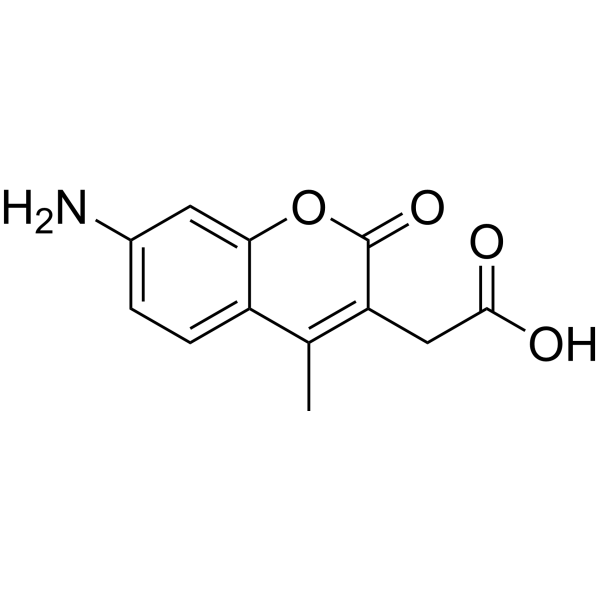
7-Amino-4-methylcoumarin-3-acetic acid

Based on 1 Customer Validation
7-Amino-4-methylcoumarin-3-acetic acid (AMCA) serves as the parent structure of coumarin-based blue fluorescent dyes, and its activated form AMCA-NHS can directly conjugate with proteins (Ex/Em ≈ 350/440-460).
For research use only. We do not sell to patients.
- Purity : 99.85%
- CAS No.: 106562-32-7
- Formula: C12H11NO4
- Molecular Weight:233.22
-
Storage:
4°C, protect from light
* In solvent : -80°C, 6 months; -20°C, 1 month (protect from light)

To place orders, for customer services and technical support, please contact: MedChemExpress USA
Tel: 609-228-6898 E-mail: [email protected] [email protected]


-
 Biological Activity
-
Chemical Information
-
Solvent & Solubility
- Purity & Documentation
- References
-
 Help & FAQs


-
HY-D0711
Indocyanine greenFluorescent Agent -
HY-15941
5(6)-FITCFluorescent Dye -
HY-D0027
7-Amino-4-methylcoumarinFluorescent Probe -
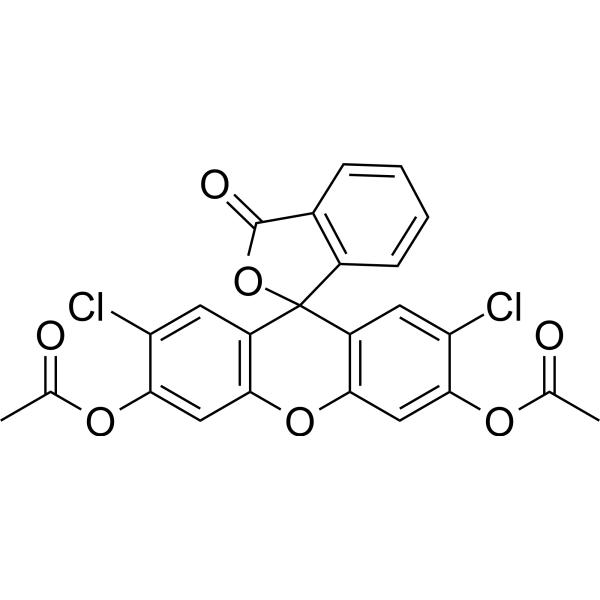
HY-126793
2′,7′-Dichlorofluorescein diacetateFluorescent Probe -
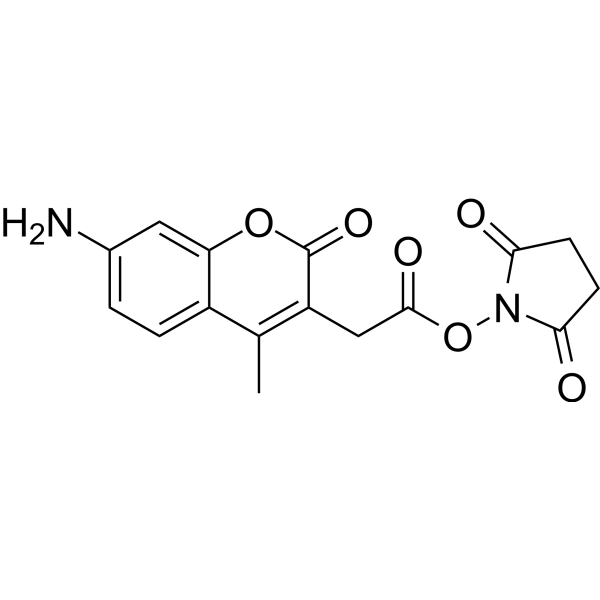
HY-D0026
AMCA,SEFluorescent Dyes -
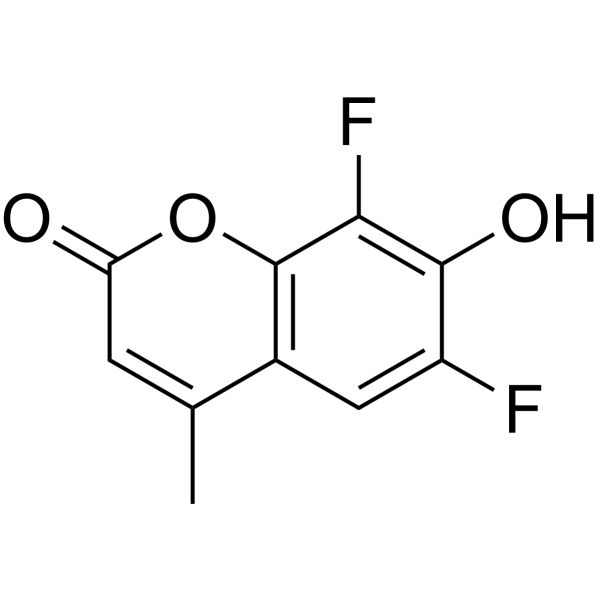
HY-D1303
Marina blueDye -
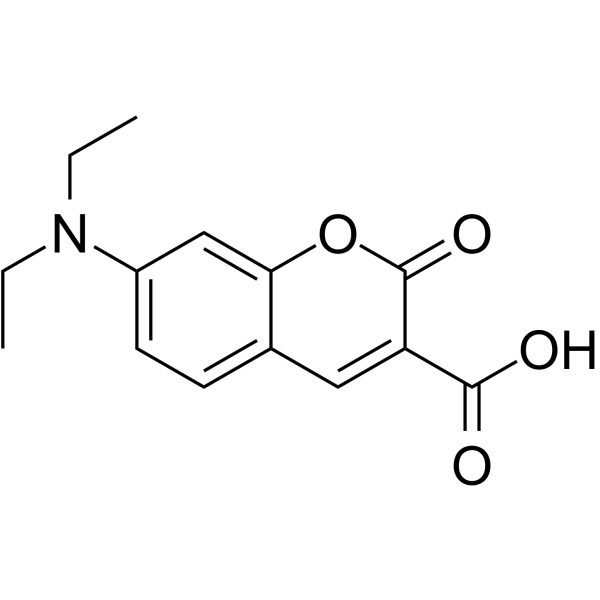
HY-D0067
7ACC1Monocarboxylate Transporter Inhibitor -
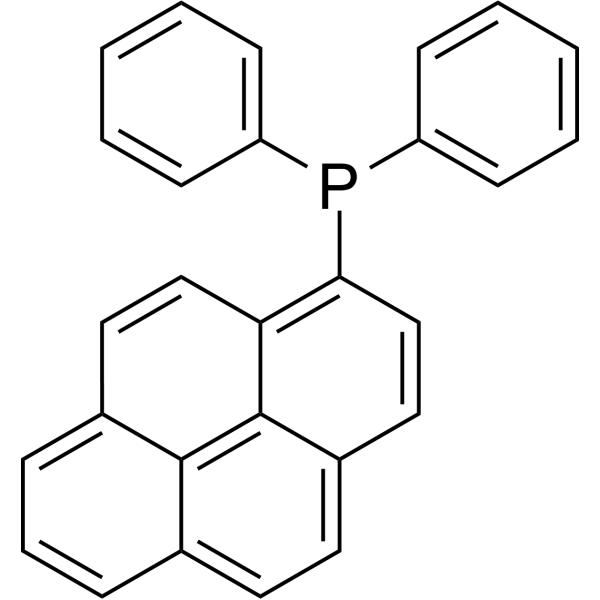
HY-118159
Diphenyl-1-pyrenylphosphinefluorescent probe -
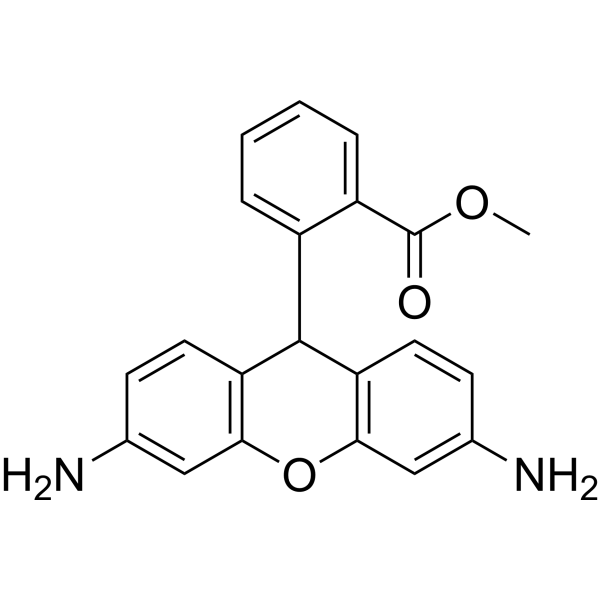
HY-101894
Dihydrorhodamine 123ROS Indicator -
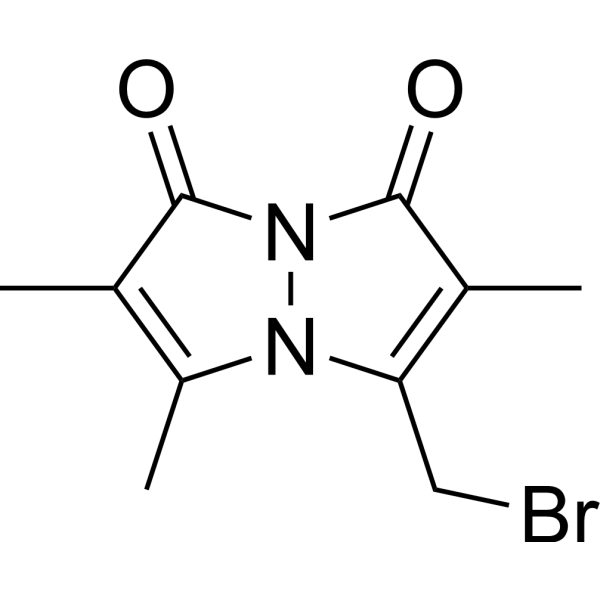
HY-100041
BromobimaneDye Reagent -
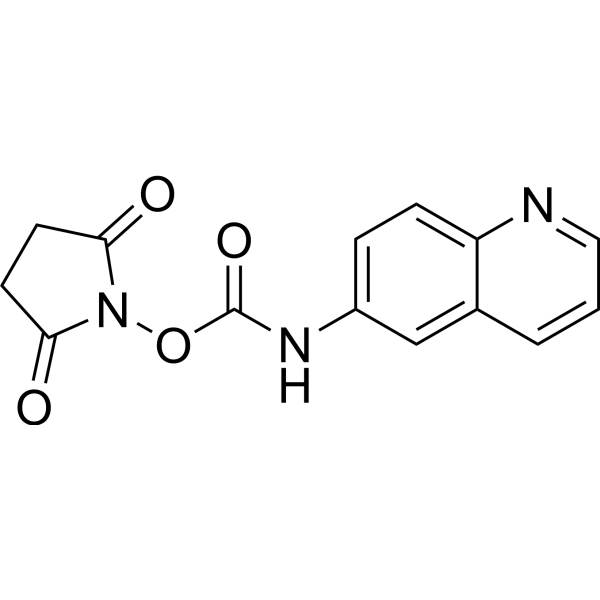
HY-117695
AQCAmino Acid Sequence Detection Reagent -
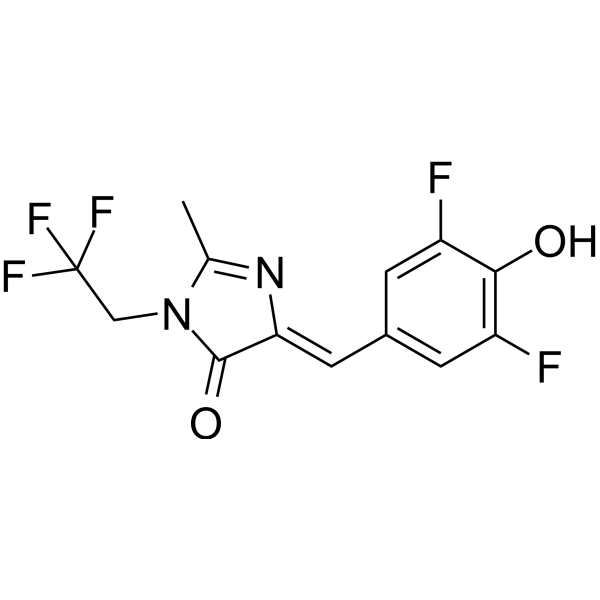
HY-110251
DFHBI-1TRNA Aptamers Probe


Biological Activity
Description
In Vitro
Guide (The following is our recommended protocol, which serves only as a guideline and should be modified according to your specific needs)[1][2].
1. Conjugation Reaction
1.1 Protein Preparation: Dilute the protein to be labeled with conjugation buffer (0.5 M borate, pH 8.5) to a concentration of approximately 1-10 mg/mL. Ensure that the protein solution contains no primary amines (such as Tris, glycine, ammonium ions) to avoid competitive reactions with AMCA-NHS.
1.2 Dye Preparation: Freshly prepare an AMCA-NHS stock solution (e.g., 10 mg/mL) with anhydrous DMSO under light-protected conditions. Calculate the required amount of AMCA-NHS; a molar ratio of dye to protein between 5:1 and 20:1 is generally recommended to achieve moderate labeling.
1.3 Mixing and Reaction: Add the calculated volume of AMCA-NHS/DMSO solution dropwise to the protein solution under continuous gentle stirring or inversion mixing. Ensure that the final volume fraction of DMSO does not exceed 5-10% to prevent protein denaturation.
1.4 Incubation: Incubate the reaction mixture at room temperature (approximately 25°C) for 1-2 hours under light-protected conditions.
2. Purification and Desalting
2.1 Termination of Reaction: After incubation, excess glycine (final concentration ~50 mM) can be added to quench unreacted dye, but direct purification is generally sufficient.
2.2 Removal of Free Dye: Load the reaction mixture onto a pre-equilibrated Sephadex G-25 or G-50 gel filtration column with PBS or the desired buffer. Collect the first eluted colored protein peak (i.e., AMCA-protein conjugate) and discard the later eluted free dye peak.
2.3 Dialysis: As an alternative or supplementary step, dialyze the reaction solution against a large volume of PBS (or other suitable buffer) at 4°C overnight to completely remove small molecule impurities and salt ions.
3. Quantitative Analysis
Use a spectrophotometer to measure the absorbance of the purified conjugate at 280 nm and 350 nm (A280 and A350).
MedChemExpress (MCE) has not independently confirmed the accuracy of these methods. They are for reference only. .
Emission (Em)
454
Excitation (Ex)
344


Chemical Information
-
CAS No. 106562-32-7
-
Appearance Solid
-
Molecular Weight 233.22
-
Formula C12H11NO4
-
Color Off-white to light brown
-
SMILES
O=C(O)CC1=C(C)C2=CC=C(N)C=C2OC1=O
-
Shipping
Room temperature in continental US; may vary elsewhere.
-
Storage
4°C, protect from light
* In solvent : -80°C, 6 months; -20°C, 1 month (protect from light)


Solvent & Solubility
In Vitro:
DMSO : 125 mg/mL (535.97 mM; Need ultrasonic; Hygroscopic DMSO has a significant impact on the solubility of product, please use newly opened DMSO)
Please refer to the solubility information to select the appropriate solvent. Once prepared, please aliquot and store the solution to prevent product inactivation from repeated freeze-thaw cycles.
Storage method and period of stock solution: -80°C, 6 months; -20°C, 1 month (protect from light). When stored at -80°C, please use it within 6 months. When stored at -20°C, please use it within 1 month.
Please refer to the solubility information to select the appropriate solvent. Once prepared, please aliquot and store the solution to prevent product inactivation from repeated freeze-thaw cycles.
Storage method and period of stock solution: -80°C, 6 months; -20°C, 1 month (protect from light). When stored at -80°C, please use it within 6 months. When stored at -20°C, please use it within 1 month.
Concentration (start) × Volume (start) = Concentration (final) × Volume (final)


Purity & Documentation
-
Data Sheet (273 KB)
-
SDS (393 KB)
- English - EN (393 KB)
- Français - FR (393 KB)
- Deutsch - DE (393 KB)
- Norwegian - NO (393 KB)
- Español - ES (393 KB)
- Swedish - SV (393 KB)
- Italian - IT (393 KB)
- Korean - KR (393 KB)
- Portuguese - PT (393 KB)
-
Handling Instructions (2659 KB)
References
[1]. Khalfan H, et al. Aminomethyl coumarin acetic acid: a new fluorescent labelling agent for proteins. Histochem J. 1986;18(9):497-499. [Content Brief]
[2]. Wessendorf MW, et al. A spectrophotometric method for determination of fluorophore-to-protein ratios in conjugates of the blue fluorophore 7-amino-4-methylcoumarin-3-acetic acid (AMCA). J Histochem Cytochem. 1990;38(1):87-94. [Content Brief]


Complete Stock Solution Preparation Table
Please refer to the solubility information to select the appropriate solvent. Once prepared, please aliquot and store the solution to prevent product inactivation from repeated freeze-thaw cycles.
Storage method and period of stock solution: -80°C, 6 months; -20°C, 1 month (protect from light). When stored at -80°C, please use it within 6 months. When stored at -20°C, please use it within 1 month.
| Optional Solvent | Concentration Solvent Mass | 1 mg | 5 mg | 10 mg | 25 mg |
|---|---|---|---|---|---|
| DMSO | 1 mM | 4.2878 mL | 21.4390 mL | 42.8780 mL | 107.1949 mL |
| 5 mM | 0.8576 mL | 4.2878 mL | 8.5756 mL | 21.4390 mL | |
| 10 mM | 0.4288 mL | 2.1439 mL | 4.2878 mL | 10.7195 mL | |
| 15 mM | 0.2859 mL | 1.4293 mL | 2.8585 mL | 7.1463 mL | |
| 20 mM | 0.2144 mL | 1.0719 mL | 2.1439 mL | 5.3597 mL | |
| 25 mM | 0.1715 mL | 0.8576 mL | 1.7151 mL | 4.2878 mL | |
| 30 mM | 0.1429 mL | 0.7146 mL | 1.4293 mL | 3.5732 mL | |
| 40 mM | 0.1072 mL | 0.5360 mL | 1.0719 mL | 2.6799 mL | |
| 50 mM | 0.0858 mL | 0.4288 mL | 0.8576 mL | 2.1439 mL | |
| 60 mM | 0.0715 mL | 0.3573 mL | 0.7146 mL | 1.7866 mL | |
| 80 mM | 0.0536 mL | 0.2680 mL | 0.5360 mL | 1.3399 mL | |
| 100 mM | 0.0429 mL | 0.2144 mL | 0.4288 mL | 1.0719 mL |


7-Amino-4-methylcoumarin-3-acetic acid Related Classifications
HY-D0025 Related Classifications
 Powered by Bioz
Keywords
- 7-Amino-4-methylcoumarin-3-acetic acid
- 106562-32-7
- Fluorescent Dye
- Drug Intermediate
- equine cytochrome C
- human kidney glomerular basement membranes
- immunoglobulin conjugates
- human serum albumin
- immunofluorescence protocols
- lysine residues
- IgG
- bovine thyroglobulin
- immunohistochemistry
- immunocytochemistry
- Inhibitor
- inhibitor
- inhibit