1. Apoptosis NF-κB Metabolic Enzyme/Protease Immunology/Inflammation Cell Cycle/DNA Damage Epigenetics Neuronal Signaling
  2. Apoptosis Reactive Oxygen Species (ROS) Mitochondrial Metabolism MMP CDK Caspase Bcl-2 Family PARP MDM-2/p53 Cholinesterase (ChE)
  3. Cardanol monoene

Cardanol monoene  (Synonyms: Cardanol C15:1)

Cat. No.: HY-119979 Purity: 99.51%
Handling Instructions Technical Support

Cardanol monoene (Cardanol C15:1) is a phenolic compound which can be found in cashew nut shell liquid. Cardanol monoene can inhibit cancer cells proliferation, migration, cause S phase arrest, induce apoptosis, ROS production and mitochondrial depolarization. Cardanol monoene downregulates MMP-2, MMP-9, cyclinA1 expression, regulates CDK2, p53, Bax, cytochrome c, cleaved caspase-3, cleaved PARP, Apaf-1 expression and Bax/Bcl-2 ratio. Cardanol monoene shows weak DPPH radical scavenging activity and AChE inhibition activity. Cardanol monoene is lethal to Artemia salina nauplii. Cardanol monoene. Cardanol monoene can be used for the research of cancer, infection and inflamation.

For research use only. We do not sell to patients.

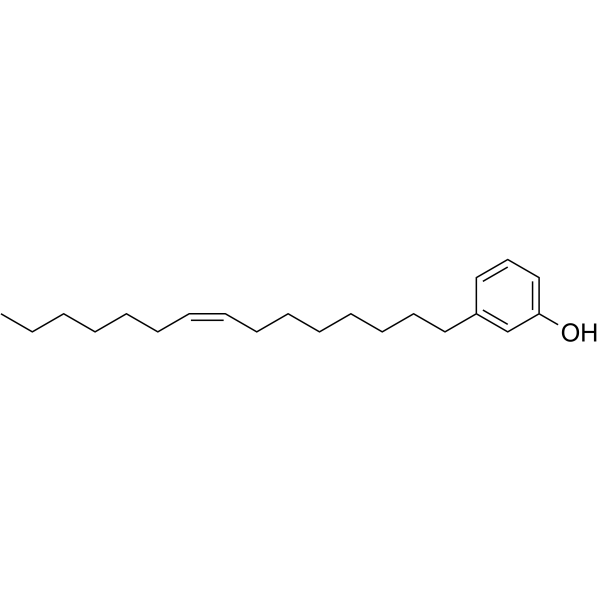
Cardanol monoene

Cardanol monoene Chemical Structure

CAS No. : 501-26-8

Size Price Stock Quantity
1 mg In-stock
5 mg In-stock
10 mg In-stock
50 mg   Get quote  
100 mg   Get quote  

* Please select Quantity before adding items.

This product is a controlled substance and not for sale in your territory.

Customer Review

Based on 1 Customer Validation

Top Publications Citing Use of Products
  • Biological Activity

  • Purity & Documentation

  • References

  • Customer Review

Description

Cardanol monoene (Cardanol C15:1) is a phenolic compound which can be found in cashew nut shell liquid. Cardanol monoene can inhibit cancer cells proliferation, migration, cause S phase arrest, induce apoptosis, ROS production and mitochondrial depolarization. Cardanol monoene downregulates MMP-2, MMP-9, cyclinA1 expression, regulates CDK2, p53, Bax, cytochrome c, cleaved caspase-3, cleaved PARP, Apaf-1 expression and Bax/Bcl-2 ratio. Cardanol monoene shows weak DPPH radical scavenging activity and AChE inhibition activity. Cardanol monoene is lethal to Artemia salina nauplii. Cardanol monoene. Cardanol monoene can be used for the research of cancer, infection and inflamation[1][2].

IC50 & Target[1]

MMP-2


MMP-9


cdk2/cyclin A


Caspase 3


Bcl-2


Bax


AChE


Cellular Effect
Cell Line Type Value Description References
A549 IC50
9.09 6
Compound: 1, cardanol C15:1
Growth inhibition of human A549 cells after 2 days by SRB assay
[PMID: 9677265]
A549 IC50
9.09 6
Compound: 1, cardanol C15:1
Growth inhibition of human A549 cells after 2 days by SRB assay
[PMID: 9677265]
A549 IC50
9.09 6
Compound: 1, cardanol C15:1
Growth inhibition of human A549 cells after 2 days by SRB assay
[PMID: 9677265]
CCD-18Co IC50
54.58 6
Compound: 1, cardanol C15:1
Growth inhibition of human CCD-18Co cells after 2 days by SRB assay
[PMID: 9677265]
CCD-18Co IC50
54.58 6
Compound: 1, cardanol C15:1
Growth inhibition of human CCD-18Co cells after 2 days by SRB assay
[PMID: 9677265]
CCD-18Co IC50
54.58 6
Compound: 1, cardanol C15:1
Growth inhibition of human CCD-18Co cells after 2 days by SRB assay
[PMID: 9677265]
HCT-15 IC50
29.9 6
Compound: 1, cardanol C15:1
Growth inhibition of human HCT15 cells after 2 days by SRB assay
[PMID: 9677265]
HCT-15 IC50
29.9 6
Compound: 1, cardanol C15:1
Growth inhibition of human HCT15 cells after 2 days by SRB assay
[PMID: 9677265]
HCT-15 IC50
29.9 6
Compound: 1, cardanol C15:1
Growth inhibition of human HCT15 cells after 2 days by SRB assay
[PMID: 9677265]
HT1197 IC50
18.81 6
Compound: 1, cardanol C15:1
Growth inhibition of human HT1197 cells after 2 days by SRB assay
[PMID: 9677265]
HT1197 IC50
18.81 6
Compound: 1, cardanol C15:1
Growth inhibition of human HT1197 cells after 2 days by SRB assay
[PMID: 9677265]
HT1197 IC50
18.81 6
Compound: 1, cardanol C15:1
Growth inhibition of human HT1197 cells after 2 days by SRB assay
[PMID: 9677265]
MCF7 IC50
5.56 6
Compound: 1, cardanol C15:1
Growth inhibition of human MCF7 cells after 2 days by SRB assay
[PMID: 9677265]
MCF7 IC50
5.56 6
Compound: 1, cardanol C15:1
Growth inhibition of human MCF7 cells after 2 days by SRB assay
[PMID: 9677265]
MCF7 IC50
5.56 6
Compound: 1, cardanol C15:1
Growth inhibition of human MCF7 cells after 2 days by SRB assay
[PMID: 9677265]
SK-OV-3 IC50
12.9 6
Compound: 1, cardanol C15:1
Growth inhibition of human SKOV3 cells after 2 days by SRB assay
[PMID: 9677265]
SK-OV-3 IC50
12.9 6
Compound: 1, cardanol C15:1
Growth inhibition of human SKOV3 cells after 2 days by SRB assay
[PMID: 9677265]
SK-OV-3 IC50
12.9 6
Compound: 1, cardanol C15:1
Growth inhibition of human SKOV3 cells after 2 days by SRB assay
[PMID: 9677265]
In Vitro

Cardanol monoene (2.5-40 μM; 24-48 h) inhibits human M14 melanoma cell proliferation with IC50 values of 23.15 ± 2.42 μM at 24 h and 12.30 ± 1.67 μM at 48 h, acting in a dose-dependent and time-dependent manner[1].
Cardanol monoene (10-50 μM; 2 weeks) dose-dependently reduces the colony-formation ability of human M14 melanoma cells, with 40 μM treatment lowering efficiency to 5.46% over 7 days[1].
Cardanol monoene (10-40 μM; 48 h) dose-dependently inhibits human M14 melanoma cell migration over 48 h by down-regulating MMP-2 and MMP-9 protein expression[1].
Cardanol monoene (10-40 μM; 24 h) induces dose-dependent S phase arrest in human M14 melanoma cells after 24 h treatment, reducing cyclinA1 mRNA expression and increasing CDK2 mRNA expression to inhibit cell proliferation[1].
Cardanol monoene (10-50 μM; 24-48 h) induces dose-dependent caspase-mediated apoptosis in human M14 melanoma cells via up-regulating pro-apoptotic proteins (p53, Bax, cytochrome c, cleaved caspase-3, cleaved PARP, Apaf-1), increasing the Bax/Bcl-2 ratio, and down-regulating anti-apoptotic Bcl-2, with 40 μM treatment causing 43.46% apoptotic cells after 24 h[1].
Cardanol monoene (10-40 μM; 24 h) dose-dependently increases intracellular ROS levels in human M14 melanoma cells after 24 h treatment, with 40 μM causing a 65.27% increase relative to control[1].
Cardanol monoene (10-40 μM; 24 h) dose-dependently induces mitochondrial depolarization in human M14 melanoma cells after 24 h treatment, with 40 μM reducing the red/green JC-1 fluorescence ratio to 50.37% of control[1].
Cardanol monoene (40 μM; 24 h) alters the expression of 2527 genes in human M14 melanoma cells, with DEGs enriched in cancer-related pathways including Pathways in cancer, PI3K-Akt, MAPK, and p53 signaling pathways[1].
Cardanol monoene shows weak DPPH radical scavenging and AChE inhibition activity[2].

MedChemExpress (MCE) has not independently confirmed the accuracy of these methods. They are for reference only.

Cell Viability Assay[1]

Cell Line: human M14 melanoma cells
Concentration: 2.5, 5, 10, 20, 30, 40 μM
Incubation Time: 24 h; 48 h
Result: Inhibited M14 cell growth in a dose-dependent and time-dependent manner.
Reached IC50 values of 23.15 ± 2.42 μM after 24 h and 12.30 ± 1.67 μM after 48 h of treatment.

Cell Migration Assay [1]

Cell Line: human M14 melanoma cells
Concentration: 10, 20, 30, 40 μM
Incubation Time: 48 h
Result: Dose-dependently reduced M14 cell migration ability, with wound gap size increasing as cardanol monoene concentration increased.
Dose-dependently down-regulated the expression levels of MMP-2 and MMP-9 proteins.

Cell Cycle Analysis[1]

Cell Line: human M14 melanoma cells
Concentration: 10, 20, 30, 40 μM
Incubation Time: 24 h
Result: Induced dose-dependent S phase arrest: increased the proportion of cells in S phase from 16.1% (control) to 37.9% (40 μM).
Reduced cyclinA1 mRNA expression and increased CDK2 mRNA expression via Real Time qPCR.

Apoptosis Analysis[1]

Cell Line: human M14 melanoma cells
Concentration: 10, 20, 30, 40, 50 μM (AO/EB, Hoechst 33258 staining); 10, 20, 30, 40 μM (Annexin V-FITC/PI staining, western blotting); 30 μM (apoptosis inhibition assay with Z-VAD-FMK (HY-16658B))
Incubation Time: 24 h (Annexin V-FITC/PI staining, western blotting, apoptosis inhibition assay); 24 h, 48 h (AO/EB, Hoechst 33258 staining)
Result: Dose-dependently increased M14 cell apoptosis rate; raised the proportion of early and late apoptotic cells to 43.46% with 40 μM treatment, compared to 1.85% in the control.
Reduced cardanol monoene (30 μM)-induced M14 cell apoptosis ratio from 30.56% to 13.17% when combined with 40 μM Z-VAD-FMK.
Induced apoptotic morphological changes including nuclear condensation, bright staining, and fragmentation, which were reduced by Z-VAD-FMK treatment.
Dose-dependently up-regulated the expression of p53, cytochrome c, cleaved caspase-3, cleaved PARP, and Apaf-1, increased the Bax/Bcl-2 ratio, and down-regulated Bcl-2 expression at 20, 30, 40 μM.
Increased cytochrome c release from mitochondria to cytosol in a dose-dependent manner.
Elevated mRNA expression levels of Bax, p53, and p21, down-regulated Bcl-2 mRNA expression, and increased the Bax/Bcl-2 ratio dose-dependently via Real Time qPCR.
In Vivo

Cardanol monoene (1-1000 mg/mL; 24 h) is lethal to Artemia salina nauplii with an LC50 of 43,186.00 ± 1991.00 μg/mL[2].

MedChemExpress (MCE) has not independently confirmed the accuracy of these methods. They are for reference only.

Animal Model: Artemia salina nauplii[2]
Dosage: 1, 10, 100, 1000 ppm
Administration: 24 h
Result: Showed an LC50 of 43,186.00 ± 1991.00 μg/mL.
Molecular Weight

302.49

Formula

C21H34O

CAS No.
Appearance

Oil

Color

Colorless to light yellow

SMILES

OC1=CC=CC(CCCCCCC/C=C\CCCCCC)=C1

Structure Classification
Initial Source
Shipping

Room temperature in continental US; may vary elsewhere.

Storage
Pure form -20°C 3 years
4°C 2 years
In solvent -80°C 6 months
-20°C 1 month
Solvent & Solubility
In Vitro: 

DMSO : 100 mg/mL (330.59 mM; Need ultrasonic; Hygroscopic DMSO has a significant impact on the solubility of product, please use newly opened DMSO)

Preparing
Stock Solutions
Concentration Solvent Mass 1 mg 5 mg 10 mg
1 mM 3.3059 mL 16.5295 mL 33.0589 mL
5 mM 0.6612 mL 3.3059 mL 6.6118 mL
View the Complete Stock Solution Preparation Table

* Please refer to the solubility information to select the appropriate solvent. Once prepared, please aliquot and store the solution to prevent product inactivation from repeated freeze-thaw cycles.
Storage method and period of stock solution: -80°C, 6 months; -20°C, 1 month. When stored at -80°C, please use it within 6 months. When stored at -20°C, please use it within 1 month.

  • Molarity Calculator

  • Dilution Calculator

Mass (g) = Concentration (mol/L) × Volume (L) × Molecular Weight (g/mol)

Mass
=
Concentration
×
Volume
×
Molecular Weight *

Concentration (start) × Volume (start) = Concentration (final) × Volume (final)

This equation is commonly abbreviated as: C1V1 = C2V2

Concentration (start)

C1

×
Volume (start)

V1

=
Concentration (final)

C2

×
Volume (final)

V2

In Vivo:

Select the appropriate dissolution method based on your experimental animal and administration route.

For the following dissolution methods, please ensure to first prepare a clear stock solution using an In Vitro approach and then sequentially add co-solvents:
To ensure reliable experimental results, the clarified stock solution can be appropriately stored based on storage conditions. As for the working solution for in vivo experiments, it is recommended to prepare freshly and use it on the same day.
The percentages shown for the solvents indicate their volumetric ratio in the final prepared solution. If precipitation or phase separation occurs during preparation, heat and/or sonication can be used to aid dissolution.

  • Protocol 1

    Add each solvent one by one:  10% DMSO    40% PEG300    5% Tween-80    45% Saline

    Solubility: ≥ 2.5 mg/mL (8.26 mM); Clear solution

    This protocol yields a clear solution of ≥ 2.5 mg/mL (saturation unknown).

    Taking 1 mL working solution as an example, add 100 μL DMSO stock solution (25.0 mg/mL) to 400 μL PEG300, and mix evenly; then add 50 μL Tween-80 and mix evenly; then add 450 μL Saline to adjust the volume to 1 mL.

    Preparation of Saline: Dissolve 0.9 g sodium chloride in ddH₂O and dilute to 100 mL to obtain a clear Saline solution.
  • Protocol 2

    Add each solvent one by one:  10% DMSO    90% Corn Oil

    Solubility: ≥ 2.5 mg/mL (8.26 mM); Clear solution

    This protocol yields a clear solution of ≥ 2.5 mg/mL (saturation unknown). If the continuous dosing period exceeds half a month, please choose this protocol carefully.

    Taking 1 mL working solution as an example, add 100 μL DMSO stock solution (25.0 mg/mL) to 900 μL Corn oil, and mix evenly.

In Vivo Dissolution Calculator
Please enter the basic information of animal experiments:

Dosage

mg/kg

Animal weight
(per animal)

g

Dosing volume
(per animal)

μL

Number of animals

Recommended: Prepare an additional quantity of animals to account for potential losses during experiments.
Please enter your animal formula composition:
%
DMSO +
+
%
Tween-80 +
%
Saline
Recommended: Keep the proportion of DMSO in working solution below 2% if your animal is weak.
The co-solvents required include: DMSO, . All of co-solvents are available by MedChemExpress (MCE). , Tween 80. All of co-solvents are available by MedChemExpress (MCE).
Calculation results:
Working solution concentration: mg/mL
Method for preparing stock solution: mg drug dissolved in μL  DMSO (Stock solution concentration: mg/mL).
The concentration of the stock solution you require exceeds the measured solubility. The following solution is for reference only. If necessary, please contact MedChemExpress (MCE).
Method for preparing in vivo working solution for animal experiments: Take μL DMSO stock solution, add μL . μL , mix evenly, next add μL Tween 80, mix evenly, then add μL Saline.
 If the continuous dosing period exceeds half a month, please choose this protocol carefully.
Please ensure that the stock solution in the first step is dissolved to a clear state, and add co-solvents in sequence. You can use ultrasonic heating (ultrasonic cleaner, recommended frequency 20-40 kHz), vortexing, etc. to assist dissolution.
Purity & Documentation

Purity: 99.51%

References

Complete Stock Solution Preparation Table

* Please refer to the solubility information to select the appropriate solvent. Once prepared, please aliquot and store the solution to prevent product inactivation from repeated freeze-thaw cycles.
Storage method and period of stock solution: -80°C, 6 months; -20°C, 1 month. When stored at -80°C, please use it within 6 months. When stored at -20°C, please use it within 1 month.

Optional Solvent Concentration Solvent Mass 1 mg 5 mg 10 mg 25 mg
DMSO 1 mM 3.3059 mL 16.5295 mL 33.0589 mL 82.6474 mL
5 mM 0.6612 mL 3.3059 mL 6.6118 mL 16.5295 mL
10 mM 0.3306 mL 1.6529 mL 3.3059 mL 8.2647 mL
15 mM 0.2204 mL 1.1020 mL 2.2039 mL 5.5098 mL
20 mM 0.1653 mL 0.8265 mL 1.6529 mL 4.1324 mL
25 mM 0.1322 mL 0.6612 mL 1.3224 mL 3.3059 mL
30 mM 0.1102 mL 0.5510 mL 1.1020 mL 2.7549 mL
40 mM 0.0826 mL 0.4132 mL 0.8265 mL 2.0662 mL
50 mM 0.0661 mL 0.3306 mL 0.6612 mL 1.6529 mL
60 mM 0.0551 mL 0.2755 mL 0.5510 mL 1.3775 mL
80 mM 0.0413 mL 0.2066 mL 0.4132 mL 1.0331 mL
100 mM 0.0331 mL 0.1653 mL 0.3306 mL 0.8265 mL
  • No file chosen (Maximum size is: 1024 Kb)
  • If you have published this work, please enter the PubMed ID.
  • Your name will appear on the site.
Help & FAQs
  • Do most proteins show cross-species activity?

    Species cross-reactivity must be investigated individually for each product. Many human cytokines will produce a nice response in mouse cell lines, and many mouse proteins will show activity on human cells. Other proteins may have a lower specific activity when used in the opposite species.

Your Recently Viewed Products:

Inquiry Online

Your information is safe with us. * Required Fields.

Product Name


Requested Quantity *

Applicant Name *


Salutation

Email Address *


Phone Number *

Department


Organization Name *

City

State

Country or Region *


Remarks

Bulk Inquiry

Inquiry Information

Product Name:
Cardanol monoene
Cat. No.:
HY-119979
Quantity:
MCE Japan Authorized Agent: