Search Result
Results for "
Antiparasitic activity
" in MedChemExpress (MCE) Product Catalog:
3
Biochemical Assay Reagents
11
Isotope-Labeled Compounds
| Cat. No. |
Product Name |
Target |
Research Areas |
Chemical Structure |
-
- HY-10502
-
|
IND 58359; R115777
|
Farnesyl Transferase
|
Infection
Cancer
|
|
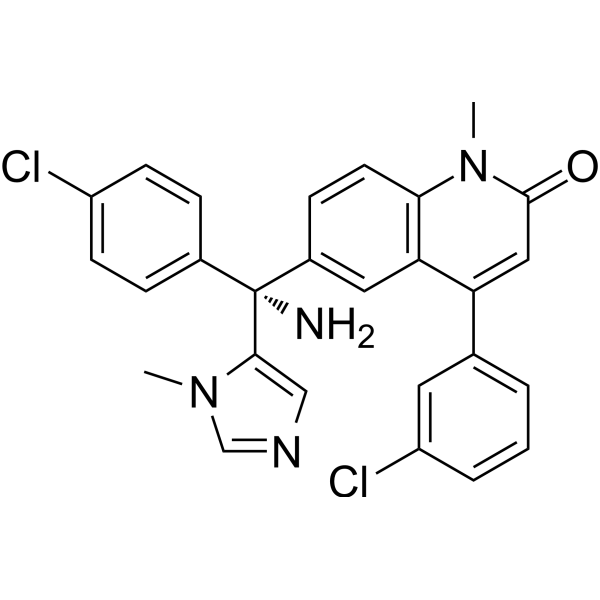
Tipifarnib (IND 58359) binds to and inhibits farnesyltransferase (FTase) with an IC50 of 0.86 nM. Antineoplastic activity and antiparasitic activity .
|
-
-
- HY-P1975
-
|
Basifungin
|
Antibiotic
Fungal
Parasite
|
Infection
Inflammation/Immunology
|
|
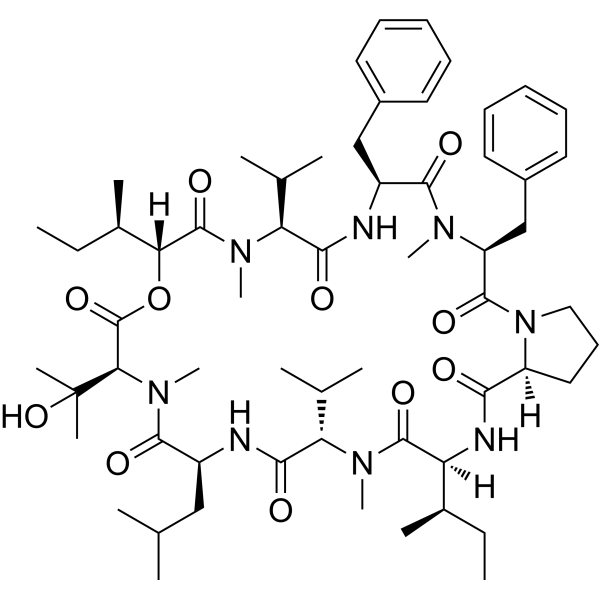
Aureobasidin A (Basifungin) is a cyclic peptide antibiotic with oral activity. Aureobasidin A is an inhibitor of inositol phosphorylated ceramide synthetase AUR1. Aureobasidin A has antifungal and antiparasitic activity .
|
-
-
- HY-100593
-
|
Rovamycin
|
Bacterial
Parasite
Antibiotic
|
Infection
|
|
Spiramycin (Rovamycin) is a macrolide antibiotic produced by Streptomyces ambofaciens with against bacteria and Toxoplasma gondii activities, and also has antiparasitic effect. Spiramycin is composed of a 16-member lactone ring, on which three sugars (mycaminose, forosamine, and mycarose) are attached .
|
-
-
- HY-N6735
-
|
OSI 2040
|
HDAC
Parasite
|
Infection
Cancer
|
|
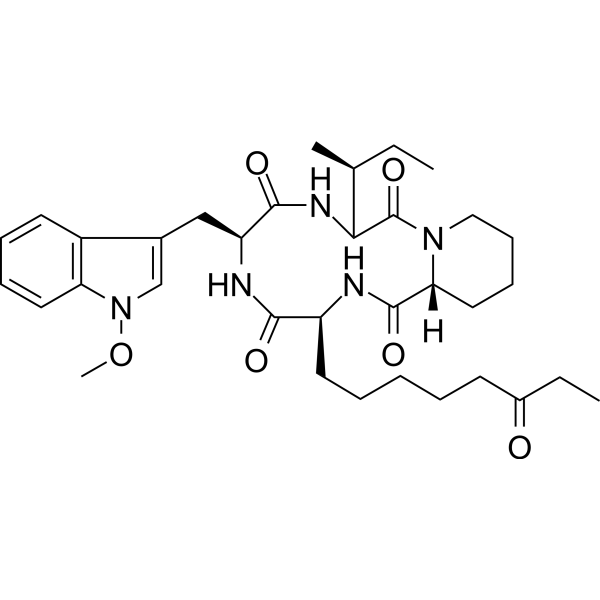
Apicidin (OSI 2040) is a fungal metabolite, acts as an orally active histone deacetylase 7/8 (HDAC7/8) inhibitor, with antiparasitic activity and a broad spectrum antiproliferative activity. Apicidin can be used for cancer research .
|
-
-
- HY-17596
-
|
|
Parasite
|
Infection
|
|
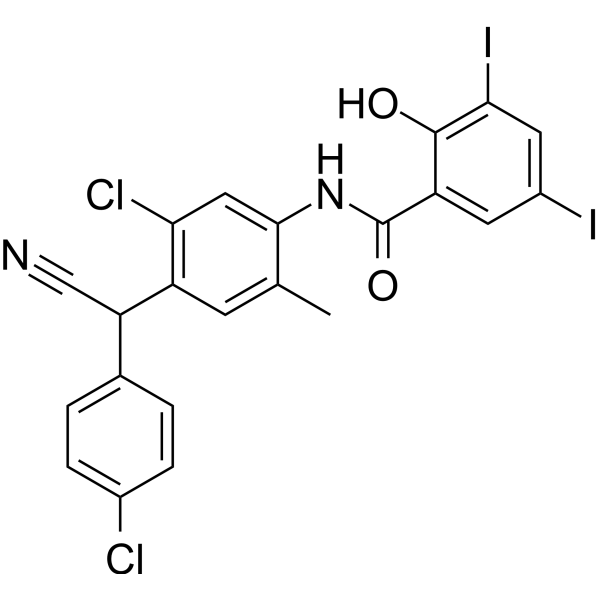
Closantel is a halogenated salicylanilide with a potent anti-parasitic activity. Closantel is a potent and highly specific Onchocerca volvulus chitinase (OvCHT1) inhibitor with an IC50 of 1.6 μM and a Ki of 468 nM. Closantel inhibits the O. volvulus L3 to L4 molt of developing .
|
-
-
- HY-N1451
-
|
Betunolic acid; Liquidambaric acid; (+)-Betulonic acid
|
Parasite
HSV
|
Infection
Inflammation/Immunology
Cancer
|
|
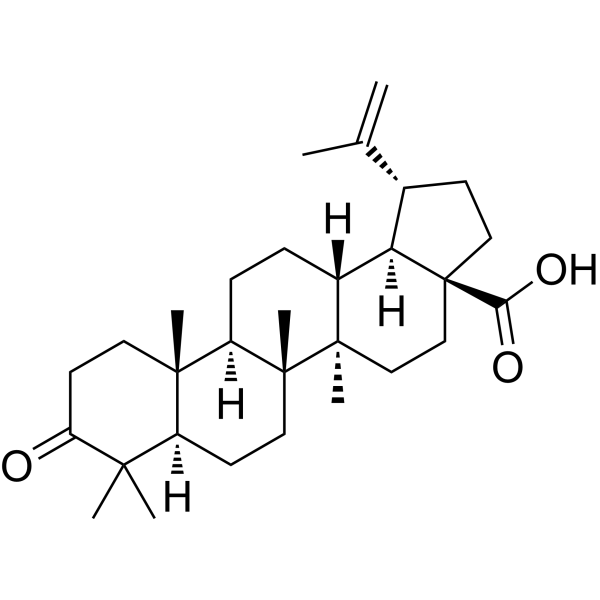
Betulonic acid (Betunolic acid), a naturally occurring triterpene, is found in many plants. Betulonic acid has anti-tumor, anti-inflammatory, antiparasitic and anti-viral (HSV-1) activities .
|
-
-
- HY-W018025
-
-
-
- HY-B1400
-
|
Iodoquinol; 5,7-Diiodo-8-hydroxyquinoline; 5,7-Diiodo-8-quinolinol
|
Environmental Pollutants
Parasite
SARS-CoV
|
Infection
Inflammation/Immunology
|
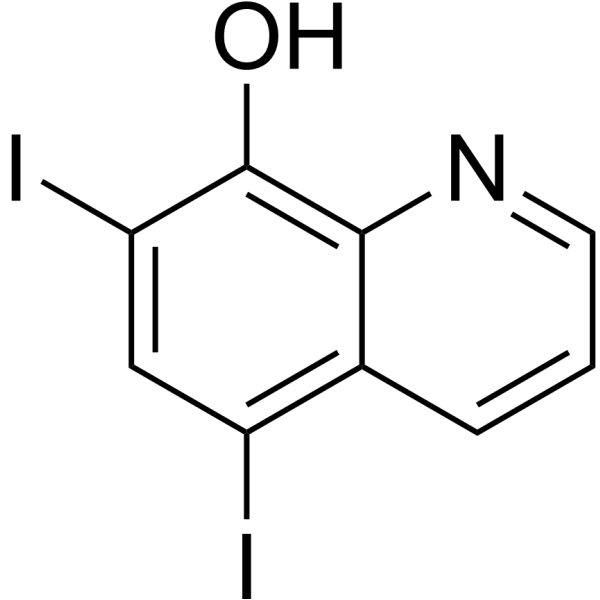
Diiodohydroxyquinoline (Iodoquinol, 5,7-Diiodo-8-hydroxyquinoline, 5,7-Diiodo-8-quinolinol) has an orally active and satisfactory antiparasitic properties. Diiodohydroxyquinoline exhibits mutagenic potential in mice and potent anti-SARS-CoV-2 activity with an EC50 value of 1.38 μM in VeroE6 cells. Diiodohydroxyquinoline's antimutagen is ascorbic acid. Diiodohydroxyquinoline is promising for research in inflammationin, testinal amebiasis, amebic liver abscess and chronic nonspecific diarrheas .
|
-
-
- HY-121054
-
|
(E/Z)-Benzylideneacetophenone
|
Bacterial
Parasite
|
Inflammation/Immunology
Cancer
|
|
Chalcone is isolated from Glycyrrhiza uralensis and used to synthesize chalcone derivatives. Chalcone derivatives possess varied biological and pharmacological activity, including anti-inflammatory, antioxidative, antibacterial, anticancer, and anti-parasitic activities .
|
-
-
- HY-123230
-
-
-
- HY-B1212
-
|
Dibromohydroxyquinoline; 5,7-Dibromo-8-hydroxyquinoline
|
Parasite
Influenza Virus
|
Infection
|
|
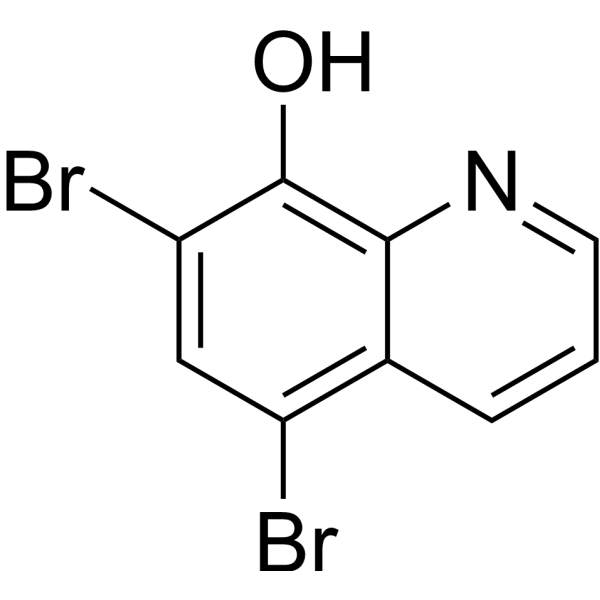
Broxyquinoline (Dibromohydroxyquinoline) is an effective inhibitor of severe fever with thrombocytopenia syndrome virus (SFTSV) with an IC50 of 5.8 µM. Additionally, Broxyquinoline is an inhibitor of CpACBP1 with an IC50 of 64.9 μM. CpACBP1 is a fatty acyl-CoA binding protein of Cryptosporidium parvum, thus Broxyquinoline has the potential to inhibit parasite growth. Broxyquinoline shows promise for research in the field of infectious diseases .
|
-
-
- HY-75247
-
-
-
- HY-12912
-
|
|
PI4K
Parasite
|
Infection
|
|
KDU691, an imidazopyrazine with potent anti-parasitic activity against blood stage schizonts, gametocytes and liver stages, is a Plasmodium PI4K inhibitor. KDU691 selectively inhibits dihydroartemisinin-pretreated Plasmodium falciparum ring-stage parasites .
|
-
-
- HY-N0397
-
|
|
Parasite
|
Infection
Inflammation/Immunology
|
|
Harpagide is a class of iridoid glycoside isolated from Scrophularia ningpoensis and has antiparasitic activity, which exhibits good in vitro trypanocidal activities against African trypanosomes (T.b. rhodesiense) with an IC50 of 21 μg/mL. Harpagide exerts significant antileishmanial activity against L. donovani with an IC50 value of 2.0 μg/mL. Harpagide also possess significant anti-inflammatory activities .
|
-
-
- HY-17596A
-
|
|
Parasite
|
Infection
|
|
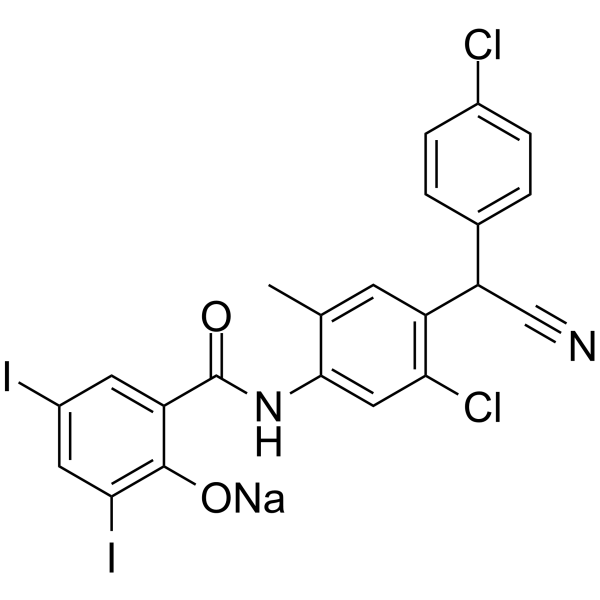
Closantel sodium is a halogenated salicylanilide with a potent anti-parasitic activity. Closantel sodium is a potent and highly specific Onchocerca volvulus chitinase (OvCHT1) inhibitor with an IC50 of 1.6 μM and a Ki of 468 nM. Closantel sodium inhibits the O. volvulus L3 to L4 molt of developing .
|
-
-
- HY-N3544
-
-
-
- HY-109077
-
-
-
- HY-B1056
-
|
Propazol; 2-Benzimidazolepropionic acid
|
Bacterial
Parasite
Antibiotic
Carbonic Anhydrase
|
Infection
Cancer
|
|
Procodazole is an orally active enhancer and a non-specific active immune protector against viral and bacterial infections. Procodazole also exhibits antiparasitic activity. In addition, Procodazole is a carbonic anhydrase inhibitor with antitumor activity .
|
-
-
- HY-W012550
-
|
|
Parasite
|
Infection
|
|
D-Carnitine is an orally available isomer of the essential nutrient L-carnitine that promotes long-chain fatty acid transport into the mitochondrial matrix for beta-oxidation. D-Carnitine has antiparasitic activity .
|
-
-
- HY-21496
-
|
4-Carboxybenzyl bromide
|
Parasite
|
Infection
|
|
4-(Bromomethyl)benzoic acid (4-Carboxybenzyl bromide) is an antiparasitic agent with low activity against Leishmania amazonensis and Trypanosoma cruzi. 4-(Bromomethyl)benzoic acid has certain cytotoxicity to PBMCs, with an IC50 of 88.8 μM .
|
-
-
- HY-W718418
-
|
|
Drug Derivative
|
Others
|
|
3-Ketoadipic acid is a dicarboxylic acid containing a keto group that can be isolated from Brazilian propolis (Et-Bra). Brazilian propolis exhibits antibacterial, antifungal, and antiparasitic activities .
|
-
-
- HY-120809
-
|
|
Bacterial
Parasite
Antibiotic
|
Infection
|
|
Spiramycin III (SPMIII) is a main component of Spiramycin. Spiramycin (HY-100593) is a macrolide antibiotic produced by Streptomyces ambofaciens with against bacteria and Toxoplasma gondii activities, and also has antiparasitic effect .
|
-
-
- HY-N11173A
-
|
|
Parasite
|
Infection
|
|
trans-Melilotoside is a coumarin precursor and that can be isolated from Melilotus neapolitan. trans-Melilotoside exhibits antiparasitic and DPPH radical-scavenging activity. trans-Melilotoside can be used for the research of human african trypanosomiasis, chagas’ disease, malaria [1] [3].
|
-
-
- HY-116387A
-
|
BRL 6231
|
Dihydrofolate reductase (DHFR)
Parasite
|
Infection
|
|
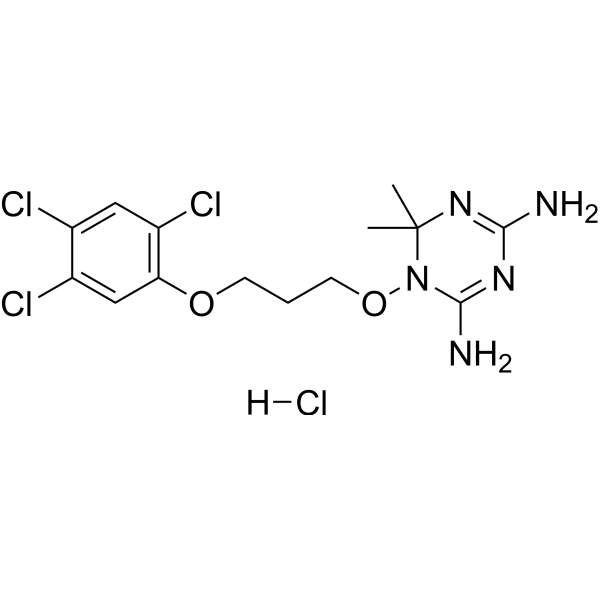
WR99210 hydrochloride is an orally active and low-toxicity dihydrofolate reductase (DHFR) inhibitor (IC50<0.075 nM). WR99210 hydrochloride shows good antiparasitic activity and is effective against P. falciparum and P. falciparum strains as well as T. gondii .
|
-
-
- HY-N0924A
-
|
Tetrahydrocoptisine hydrochloride
|
Parasite
|
Inflammation/Immunology
|
|
(±)-Stylopine (Tetrahydrocoptisine) hydrochloride is an alkaloid compound originally isolated from Corydalis tubers that exhibits anti-inflammatory and anti-parasitic activities .
|
-
-
- HY-169728
-
|
|
Hexokinase
Parasite
|
Infection
|
|
SID 24785302 is a hexokinase inhibitor with antiparasitic activity. SID 24785302 exhibits activity against T. brucei and Leishmania. SID 24785302 can be used for the research of mitochondrial DNA disorders and parasitic infection .
|
-
-
- HY-118383
-
-
-
- HY-W009213
-
|
Bis(3-nitrophenyl) disulfide; Nitrophenide
|
Parasite
|
Infection
|
|
3-Nitrophenyl disulfide (Bis(3-Nitrophenyl) disulfide) is an inhibitor of mannitol-1-phosphate dehydrogenase (M1PDH) with IC50 of 3 μM. 3-Nitrophenyl disulfide has antiparasitic activity .
|
-
-
- HY-161666
-
-
-
- HY-N2656
-
|
|
Parasite
|
Infection
|
|
5,7,8-Trimethoxycoumarin is an anti-parasite agent with IC50s of 25.5 μM and 57.7 μM against Trypanosoma cruzi and L. amazonensis, respectively .
|
-
-
- HY-146045
-
|
|
Parasite
|
Infection
|
|
Antiparasitic agent-7 (compound 5d) has selectively antiparasitic activity against Leishmania infantum (L. infantum) with an IC50 value of 2.85 μM. Antiparasitic agent-7 also has certain cytotoxicity against HepG2 (CC50 = 10.61 μM) .
|
-
-
- HY-179690
-
|
|
Parasite
Adenosine Kinase
|
Infection
|
|
Antiparasitic agent-30 is a potent adenosine kinase TbrAK modulator and antitrypanosomal agent. Antiparasitic agent-30 exhibits significant inhibitory activity against Trypanosoma brucei rhodesiense, while enhancing the activity of recombinant TbrAK(EC50=38 nM, Ka=75 nM-497 nM). Antiparasitic agent-30 exerts its pharmacological effects by eliminating intrinsic substrate inhibition and hyperactivating TbrAK in Trypanosoma brucei rhodesiense. Antiparasitic agent-30 serves as a valuable tool molecule for studying acute African human trypanosomiasis (sleeping sickness) .
|
-
-
- HY-NP0222
-
|
|
Parasite
|
Infection
|
|
Apolactoferrin is an iron-free form of lactoferrin with antiparasitic activity. Apolactoferrin is an iron-binding protein .
|
-
-
- HY-P3917
-
|
LfcinB (20–30)
|
Bacterial
|
Infection
|
|
LfcinB (20–30) is a fragment of bovine lactoferricin. LfcinB (20–30) has bactericidal, antifungal, antiparasitic, antitumor, antiviral and immunomodulatory activities.
|
-
-
- HY-W106742
-
|
Propyl phenyl ether
|
Drug Intermediate
Parasite
|
Infection
|
|
Propoxybenzene (Propyl phenyl ether) is a dialkoxybenzene intermediate. Propoxybenzene has antiparasitic activity. Propoxybenzene can be used in the study of Varroa mite infestation .
|
-
-
- HY-B0226A
-
|
(E)-Nitrofural
|
Bacterial
Parasite
|
Infection
|
|
(E)-Nitrofurazone ((E)-Nitrofural) is a topical broad-spectrum antibacterial agent effective against both Gram-negative and Gram-positive bacteria. (E)-Nitrofurazone also possesses antiprotozoal and antiparasitic activities. (E)-Nitrofurazone is commonly used in the research of superficial wounds, burns, skin infections, pyoderma, infectious skin diseases, trypanosomiasis, and acute bacillary dysentery .
|
-
-
- HY-B1400R
-
|
Iodoquinol (Standard); 5,7-Diiodo-8-hydroxyquinoline (Standard); 5,7-Diiodo-8-quinolinol (Standard)
|
Reference Standards
Parasite
SARS-CoV
|
Infection
Inflammation/Immunology
|
Diiodohydroxyquinoline (Standard) is the analytical standard of Diiodohydroxyquinoline. This product is intended for research and analytical applications. Diiodohydroxyquinoline (Iodoquinol, 5,7-Diiodo-8-hydroxyquinoline, 5,7-Diiodo-8-quinolinol) has an orally active and satisfactory antiparasitic properties. Diiodohydroxyquinoline exhibits mutagenic potential in mice and potent anti-SARS-CoV-2 activity with an EC50 value of 1.38 μM in VeroE6 cells. Diiodohydroxyquinoline's antimutagen is ascorbic acid. Diiodohydroxyquinoline is promising for research in inflammationin, testinal amebiasis, amebic liver abscess and chronic nonspecific diarrheas .
|
-
-
- HY-118495
-
|
|
Parasite
|
Infection
|
|
Cardol diene is a potent antiparasitic agent. Cardol diene shows schistosomicidal activity and inhibits cell viability .
|
-
-
- HY-175507
-
|
|
Parasite
TRP Channel
|
Infection
|
|
TRPMPZQ-IN-1 (Compound 52) is a TRPMPZQ inhibitor, with an EC50 of 0.38 μM against TRPMPZQ from Spirometra erinaceieuropaei. TRPMPZQ-IN-1 exhibits antiparasitic activity, showing an EC50 of 4.3 μM against Echinococcus multilocularis. TRPMPZQ-IN-1 can be used in antiparasitic research .
|
-
-
- HY-W006672
-
|
|
Parasite
|
Infection
|
|
Dibenzo[b,e]oxepin-11(6H)-one (Compound 1a) is a dibenzoxepinone derivative that exhibits significant antiparasitic activity .
|
-
-
- HY-N10402
-
|
|
Fungal
Bacterial
Parasite
|
Infection
Cancer
|
|
Norbatzelladine L (Compound 2) is an inhibitor of the catalytic and functional activity of Pdr5p transporter. Norbatzelladine L inhibits Pdr5p ATPase activity with an IC50 of 3.8 µM. Norbatzelladine L shows antifungal, antiparasitic, antiviral, antibacterial and antitumoral activities .
|
-
-
- HY-N11920
-
-
-
- HY-14461
-
|
|
Parasite
|
Infection
|
|
SJL 01 (Compound 8) is an anti-parasitic agent. SJL 01 (Compound 8) is cytotoxic to L-6 myocytes and exhibits antileishmaniasis activity both in vivo and in vitro. SJL 01 can be used for visceral leishmaniasis research .
|
-
-
- HY-113562
-
-
-
- HY-157466
-
|
|
Parasite
|
Infection
|
|
Antiparasitic agent-21 (compound 28) has selectively antiparasitic activity against Naegleria fowleri with an EC50 of 0.92 μM. Antiparasitic agent-21 has excellent blood-brain barrier permeability .
|
-
-
- HY-149078
-
|
|
Parasite
|
Infection
|
|
Antiparasitic agent-14 is a potent antiparasitic agent. Antiparasitic agent-14 shows cytotoxicity and antiparasitic activity. Antiparasitic agent-14 inhibits the growth of trypomastigote and amastigote .
|
-
-
- HY-151133
-
|
|
Parasite
|
Infection
|
|
Antiparasitic agent-9 (compound 47) is an orally active and potent antiparasitic agent. Antiparasitic agent-9 shows antiparasitic activity against the human parasite .
|
-
-
- HY-151433
-
|
|
Parasite
|
Infection
|
|
Antiparasitic agent-10 (Compound 94) is an anti-parasitic agent, shows anti-schistosomal activity. Antiparasitic agent-10 shows activity against adults of Schistosoma mansoni, and can be used in Schistosomiasis research .
|
-
-
- HY-157028
-
|
|
Others
|
Infection
|
|
Antiparasitic agent-19 (compound 40) is a compound with broad-spectrum antiparasitic activity. Antiparasitic agent-19 has minimal toxicity against Trypanosoma brucei, Leishmania Infantum, and Trypanosoma cruzi .
|
-
-
- HY-178064
-
|
|
Parasite
Mitochondrial Metabolism
|
Infection
|
|
Antiparasitic agent-29 (Compound 5) is a Trypanosome alternative oxidase (TAO) inhibitor with an IC50 of 1.3 nM in Trypanosoma brucei. Antiparasitic agent-29 has a broad-spectrum antiparasitic activity against Trypanosoma and Leishmania spp. Antiparasitic agent-29 accumulates in parasite mitochondria, selectively disrupting its energy metabolism and has potent membrane-perturbing activity with no cross-resistance. Antiparasitic agent-29 shows low ecotoxicity in zebrafish and Daphnia magna models. Antiparasitic agent-29 can be used for parasitic diseases like surra and dourine research .
|
-
- HY-160985
-
|
|
Parasite
|
Others
|
|
Lemidosul is an anti-trypanosomiasis compound that can be further optimized for its performance as an anti-trypanosomiasis drug by means of a computer-aided drug design (CADD) approach .
|
-
- HY-147806
-
|
|
Parasite
|
Infection
|
|
Antiparasitic agent-8 (Compound 9) is an antiparasitic agent against Hymenolepis nana with low cytotoxicity .
|
-
- HY-149722
-
|
|
Parasite
|
Infection
|
|
Antiparasitic agent-20 (Compound 1p) is a parasite inhibitor with broad antiparasitic activity. Antiparasitic agent-20 has inhibitory effects on T. brucei and T. cruzi with EC50 values of 0.09 μM and 14.1 μM respectively .
|
-
- HY-146043
-
|
|
Parasite
|
Infection
|
|
Antiparasitic agent-5 (compound 8h) has selectively antiparasitic activity against Leishmania infantum (L. infantum) with an IC50 value of 2.50 μM. Antiparasitic agent-5 also has certain cytotoxicity against HepG2 (CC50 = 6.78 μM) .
|
-
- HY-146044
-
|
|
Parasite
|
Infection
|
|
Antiparasitic agent-6 (compound 5b) has selectively antiparasitic activity against Leishmania infantum (L. infantum) with an IC50 value of 3.89 μM. Antiparasitic agent-6 also has certain cytotoxicity against HepG2 (CC50 = 13.64 μM) .
|
-
- HY-173356
-
|
|
Parasite
Reactive Oxygen Species (ROS)
|
Infection
Inflammation/Immunology
|
|
Antiparasitic agent-26 (Compound 8) is an antiparasitic compound that potently inhibits the growth of Naegleria fowleri, with IC50 values of 22.87 μM (trophozoite stage) and 25.16 μM (cyst stage). Antiparasitic agent-26 exerts its antiparasitic activity by inducing programmed cell death, including cytoplasmic calcium accumulation, mitochondrial membrane potential collapse, ATP synthesis inhibition, ROS accumulation, and chromatin condensation. Antiparasitic agent-26 can be used in the research of primary amoebic meningoencephalitis (PAM) .
|
-
- HY-N15098
-
|
|
Parasite
|
Infection
|
|
Milbemycin α15 possess a potent antiparasitic activity, including acaricidal, insecticidal and nematocidal activities .
|
-
- HY-146042
-
|
|
Parasite
|
Infection
|
|
Antiparasitic agent-4 (compound 4q) has highly antiparasitic activity against Leishmania infantum (L. infantum) and Trypanosoma cruzi (T. cruzi) with IC50s of 8.51 μM and 2.20 μM, respectively. Antiparasitic agent-4 also has certain cytotoxicity against HepG2 (CC50 = 18.97 μM) .
|
-
- HY-146041
-
|
|
Parasite
|
Infection
|
|
Antiparasitic agent-2 (compound 8a) has highly antiparasitic activity against Leishmania infantum (L. infantum) and Trypanosoma cruzi (T. cruzi) with IC50s of 7.28 μM and 2.30 μM, respectively. Antiparasitic agent-2 also has certain cytotoxicity against HepG2 (CC50 = 26.79 μM) .
|
-
- HY-155087
-
|
|
Parasite
|
Infection
Cancer
|
|
Anticancer agent 140 (Compd 3) is a compound with potential anticancer and antiparasitic activities .
|
-
- HY-125298
-
|
|
Parasite
|
Infection
|
|
Cycloaspeptide A, isolated from the endophytic fungus Penicillium janczewskii, has antiparasitic activity .
|
-
- HY-149079
-
|
|
Parasite
Necroptosis
|
Infection
|
|
Antiparasitic agent-15, a pyridine-thiazolidinone, has anti-Trypanosoma cruzi and leishmanicidal activities. Antiparasitic agent-15 has IC50s of 0.9 μM and 0.64 μM against trypomastigote and amastigote forms of T. cruzi. Antiparasitic agent-15 has IC50s of 42.2 μM and 9.58 μM against trypomastigote and amastigote forms of L. amazonensis. Antiparasitic agent-15 induces parasite cell death through necrosis induction. Antiparasitic agent-15 induces morphological changes such as shortening, retraction and curvature of the parasite body and leakage of internal content with T. cruzi trypomastigotes .
|
-
- HY-149080
-
|
|
Parasite
Necroptosis
|
Infection
|
|
Antiparasitic agent-16, a pyridine-thiazolidinone, has anti-Trypanosoma cruzi and leishmanicidal activities. Antiparasitic agent-16 has IC50s of 1.0 μM and 0.6 μM against trypomastigote and amastigote forms of T. cruzi. Antiparasitic agent-16 has IC50s of 150.2 μM and 16.75 μM against trypomastigote and amastigote forms of L. amazonensis. Antiparasitic agent-16 induces parasite cell death through necrosis induction. Antiparasitic agent-16 induces morphological changes such as shortening, retraction and curvature of the parasite body and leakage of internal content with T. cruzi trypomastigotes .
|
-
- HY-N10769
-
|
|
Parasite
|
Infection
|
|
Atanine is an alkaloid with antiparasitic activity. Atanine can be isolated from medicinal plant, Evodia rutaecarpa .
|
-
- HY-118357
-
|
|
Parasite
Insecticide
|
|
|
Milbemycin A3 Oxime is a macrocyclic lactone antiparasitic agent that exhibits potent inhibitory activity against Dirofilaria immitis .
|
-
- HY-155281
-
|
|
Parasite
|
Infection
|
|
Antiparasitic agent-18 (compound 3a) is active and selective against the T. brucei (EC50=0.4 μM), T. cruzi (EC50=0.21 μM), and L. donovani (EC50=0.26 μM). Antiparasitic agent-18 has potent antiprotozoal activity .
|
-
- HY-N0924R
-
-
- HY-179273
-
|
|
Proteasome
Parasite
|
Infection
|
|
Proteasome-IN-1 (Compound 130) is a proteasome inhibitor. Proteasome-IN-1 exhibits antiparasitic activity against P. faciparum 3D7 .
|
-
- HY-146747
-
|
|
Fungal
Parasite
|
Infection
Inflammation/Immunology
|
|
Antifungal agent 26, a Pradimicin A derivative, shows antifungal, antiviral, and antiparasitic activities through binding to d-mannose (Man)-containing glycans of pathogenic species .
|
-
- HY-129130
-
|
Canthin-6-one 3-oxide
|
Parasite
|
Infection
|
|
Canthin-6-one N-oxide (Canthin-6-one 3-oxide) is an orally active antiparasitic agent with limited activity .
|
-
- HY-122382
-
|
NF-602
|
Parasite
Bacterial
|
Infection
|
|
Levofuraltadone (NF-602) is an antibacterial and antiparasitic agent. Levofuraltadone has anti-trypanosomiasis activity and can be used in the study of human african trypanosomiasis as well as bacterial infections .
|
-
- HY-161309
-
|
|
Parasite
|
Infection
|
|
RUPB-61 is a potent Plasmodium falciparum cGMP-dependent protein kinase (PfPKG) inhibitor with an IC50 value of 13 nM. RUPB-61 shows antiparasitic activity .
|
-
- HY-P10215
-
|
|
Parasite
|
Infection
|
|
Ac-{Cpg}-Thr-Ala-{Ala(CO)}-Asp-{Cpg}-NH2 (compound 40) is a potent Plasmodium subtilisin-like protease 1 (SUB1) inhibitor. SUB1-IN-1 shows IC50 values of 12 nM and 10 nM against P. vivax and P. falciparum SUB1 (Pv- and PfSUB1), respectively .
|
-
- HY-150506
-
|
|
Parasite
|
Infection
|
|
SPR7 (compound 7) is a potent and selective rhodesain inhibitor, with a Ki of 0.51 nM. SPR7 shows antiparasitic activity against T. b. brucei, with an EC50 of 1.65 μM .
|
-
- HY-162656
-
|
|
Dihydrofolate reductase (DHFR)
|
Infection
|
|
DHFR-IN-19 (Compound 2g) is a selective inhibitor for TbDHFR with Ki of 9 nM. DHFR-IN-19 exhibits antiparasitic activity against Trypanosoma brucei with an EC50 of 14.5 μM .
|
-
- HY-109077S
-
-
- HY-N8846
-
|
|
Fungal
|
Infection
|
|
dl-Aloesol is a natural product that can be isolated from fungus Aspergillus sp. Aspergillus sp metabolites has cytotoxic, antibacterial, free radical scavenging, anti-parasitic, antiviral and antiproliferative activities, etc .
|
-
- HY-124210
-
|
|
Antibiotic
Parasite
|
Infection
Cancer
|
|
Formycin B is an antibiotic, which exhibits antiparasitic activity against Leishmania. Formycin B exhibits toxicity to leukocytes, reversibly decreases neutrophils. Formycin B can be used in research about myeloid leukemia .
|
-
- HY-177540
-
|
|
Drug Isomer
Bacterial
Parasite
|
Infection
Cancer
|
|
ent-Rhizocarpic acid is an enantiomer of Rhizocarpic acid. ent-Rhizocarpic acid has more potent antibacterial and antiparasitic activity against Staphylococcus aureus (ATCC 25923) and Giardiaduodenalis 713 compared to Rhizocarpic acid. ent-Rhizocarpic acid also has a weak but selective antitumor activity against NS-1 cells .
|
-
- HY-177539
-
|
|
Drug Isomer
Bacterial
Parasite
|
Infection
|
|
ent-Epanorin is an enantiomer of Epanorin (HY-N16418). ent-Epanorin has more potent antibacterial and antiparasitic activity against Bacillus subtilis (ATCC 6633), Staphylococcus aureus (ATCC 25923) and Giardiaduodenalis 713 compared to Epanorin .
|
-
- HY-P11155
-
|
|
Parasite
|
Infection
|
|
Halictine 2 is an antimicrobial peptide. Halictine 2 exhibits promising anti-parasitic activity against Leishmania spp., targeting both the extracellular infective metacyclic promastigotes and intracellular amastigotes. Halictine 2 can be used for the study of leishmaniases .
|
-
- HY-75247R
-
-
- HY-121054R
-
|
(E/Z)-Benzylideneacetophenone (Standard)
|
Bacterial
Parasite
Reference Standards
|
Inflammation/Immunology
Cancer
|
|
Chalcone (Standard) is the analytical standard of Chalcone. This product is intended for research and analytical applications. Chalcone is isolated from Glycyrrhiza uralensis and used to synthesize chalcone derivatives. Chalcone derivatives possess varied biological and pharmacological activity, including anti-inflammatory, antioxidative, antibacterial, anticancer, and anti-parasitic activities .
|
-
- HY-146489
-
|
|
Bacterial
Parasite
|
Infection
|
|
Anti-infective agent 3 (compound 3l) shows antiparasitic activity against P. falciparum and T. brucei rhodesiense, with IC50 values of 0.47 and 0.13 μM, respectively. Anti-infective agent 3 shows antimycobacterial activity against Mycobacterium smegmatis with a MIC of 4 μg/mL .
|
-
- HY-178785
-
|
|
Parasite
|
Infection
|
|
Anti-infective agent 11 (Compound 19) is an orally active antiparasitic agent. Anti-infective agent 11 inhibits the proteolytic activity of P. falciparum. Anti-infective agent 11 exhibits inhibitory activity against P. falciparum 3D7 with an IC50 of 0.28 μM .
|
-
- HY-N13197
-
-
- HY-146488
-
|
|
Parasite
Bacterial
|
Infection
|
|
Anti-infective agent 2 (compound 3k) shows antiparasitic activity against P. falciparum and T. brucei rhodesiense, with IC50 values of 0.07 and 2.20 μM, respectively. Anti-infective agent 2 shows antimycobacterial activity against Mycobacterium smegmatis with a MIC of 32 μg/mL .
|
-
- HY-100593A
-
|
Rovamycin (hexanedioate)
|
Parasite
Antibiotic
Bacterial
|
Infection
|
|
Spiramycin hexanedioate (Rovamycin) is a macrolide antibiotic produced by Streptomyces ambofaciens with against bacteria and Toxoplasma gondii activities, and also has antiparasitic effect. Spiramycin hexanedioate is composed of a 16-member lactone ring, on which three sugars (mycaminose, forosamine, and mycarose) are attached .
|
-
- HY-N10441
-
|
|
Parasite
|
Infection
|
|
3β-Hydroxy-hop-22(29)-ene (compound 3) is a potent antiparasitic agent. 3β-Hydroxy-hop-22(29)-ene shows moderate activity against Trypanosoma cruzi and Leishmania mexicana .
|
-
- HY-N1451R
-
|
Betunolic acid (Standard); Liquidambaric acid (Standard); (+)-Betulonic acid (Standard)
|
Reference Standards
Parasite
HSV
|
Infection
Inflammation/Immunology
Cancer
|
|
Betulonic acid (Standard) is the analytical standard of Betulonic acid. This product is intended for research and analytical applications. Betulonic acid (Betunolic acid), a naturally occurring triterpene, is found in many plants. Betulonic acid has anti-tumor, anti-inflammatory, antiparasitic and anti-viral (HSV-1) activities .
|
-
- HY-180360
-
|
|
Parasite
|
Infection
|
|
Antiparasitic agent-34 (Compound NO.6913) is an orally active antiparasitic agent. Antiparasitic agent-34 exhibits anti-S. mansoni activity in mice .
|
-
- HY-180352
-
|
|
Parasite
|
Infection
|
|
Antiparasitic agent-37 (Compound 4717) is an orally active antiparasitic agent. Antiparasitic agent-37 exhibits activity against S. mansoni in mice. Antiparasitic agent-37 has an oral LD50 of 0.4 g/kg in mice after a single dose. Antiparasitic agent-37 can be used for the research of infectious diseases .
|
-
- HY-180110
-
|
|
Parasite
Lactate Dehydrogenase
|
Infection
|
|
Antiparasitic agent-32 (compound M9), a Piperaquine (HY-B1896) analog, is a potent P. falciparum lactate dehydrogenase (Pf LDH)-targeting antiparasitic agent (Pf3D7 IC50 = 0.40 μM). Antiparasitic agent-32 exhibits significant activity against both Pf asexual and gametocyte stages. Antiparasitic agent-32 exerts antiplasmodial activity through stable and specific noncovalent interactions at the NADH-binding site. Antiparasitic agent-32 can be used for malaria research .
|
-
- HY-180943
-
|
|
Parasite
Drug Derivative
Mitochondrial Metabolism
|
Infection
|
|
Antiparasitic agent-39 (Compound 14) is a selective antiparasitic agent and Deferasirox (HY-17359) derivative. Antiparasitic agent-39 reduces the mitochondrial membrane potential. Antiparasitic agent-39 shows antiparasitic activity against T. brucei, T. gambiense, L. Mexicana, T. gondii, B. divergens, P. falciparum with EC50s of 4.2 nM, 10.4 nM, 52.0 nM, 17.0 nM, 41.2 nM, 54.8 nM, respectively .
|
-
- HY-181437
-
|
|
Parasite
Aminopeptidase
|
Infection
|
|
Antiparasitic agent-40 (compound 4.3) is a 4-thiazolidinone-based antileishmaniasis inhibitor. Antiparasitic agent-40 exhibits significant inhibitory activity against methionine aminopeptidase .
|
-
- HY-180339
-
|
|
|
Infection
|
|
Antiparasitic agent-36 is a Schistosoma mansoni-targeting antischistosomal agent that exhibits antischistosomal activity in mice with oral effectiveness, and is a nuclear substituted monoaminophenoxyalkane. Antiparasitic agent-36 can be used for the research of schistosomiasis .
|
-
- HY-10502R
-
|
IND 58359 (Standard); R115777 (Standard)
|
Reference Standards
Farnesyl Transferase
|
Infection
Cancer
|
|
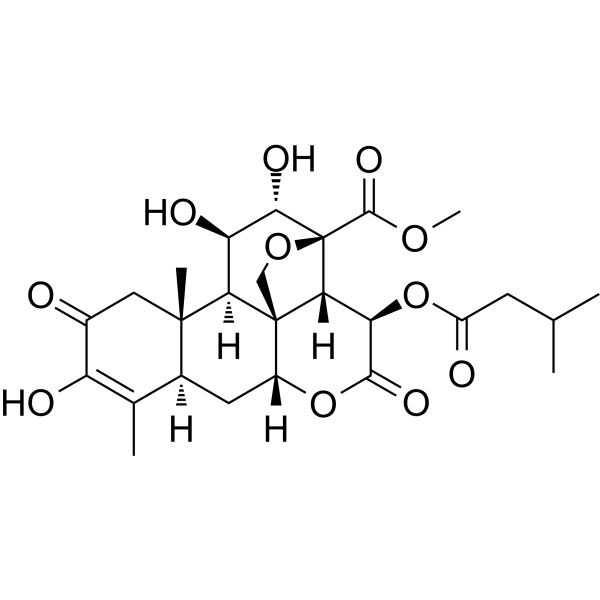
Tipifarnib (Standard) is the analytical standard of Tipifarnib (HY-10502). This product is intended for research and analytical applications. Tipifarnib (IND 58359) binds to and inhibits farnesyltransferase (FTase) with an IC50 of 0.86 nM. Antineoplastic activity and antiparasitic activity .
|
-
- HY-180418
-
|
|
Parasite
|
Infection
|
|
Homidium chloride is a potent antiparasitic agent exhibiting activity against Trypanosoma rhodesiense and Trypanosoma congolense. Homidium chloride can reduce parasitaemia in murine models of infection. Homidium chloride can be used for trypanosomiasis research .
|
-
- HY-181544
-
|
|
Parasite
|
Infection
|
|
SB5-171 is a covalent PfCLK3 inhibitor with IC50 values of 10-12 nM. SB5-171shows antiparasitic activity. SB5-171 can be used for the research of malaria .
|
-
- HY-N13034
-
|
|
Caspase
Apoptosis
Parasite
|
Infection
Cancer
|
|
Diuvaretin is an antimalarial agent and a C-phenylated dihydrochalcone. Diuvaretin can be isolated from the roots of U. acuminata. Diuvaretin increases the activity of Caspase-3 and triggers Apoptosis. Diuvaretin exhibits antiparasitic activity against Plasmodium falciparum. Diuvaretin can be used in the research of promyelocytic leukemia and malaria .
|
-
- HY-W139907
-
|
|
Parasite
Drug Intermediate
|
Infection
|
|
1,2-Dimethylbenzimidazole is a benzimidazole derivative. 1,2-Dimethylbenzimidazole exhibits antiparasitic activity with an IC50 of 0.089 μM against G. duodenalis. 1,2-Dimethylbenzimidazole can also be used in the synthesis of other bioactive compounds, such as antitumor agents .
|
-
- HY-W071746
-
|
Linoelaidic acid
|
Endogenous Metabolite
Parasite
Apoptosis
|
Infection
Inflammation/Immunology
|
|
Linolelaidic acid (Linoelaidic acid) is an omega-6 trans fatty acid (TFA) that is an essential nutrient with oral activity. Linolelaidic acid can be added to enteral nutrition (oral), parenteral nutrition (intravenous), and infant formula. Linolelaidic acid has anti-inflammatory and anti-parasitic ((Parasite)) activities, and can induce Apoptosis. Linolelaidic acid is useful for research in infections .
|
-
- HY-N6015
-
|
|
Parasite
P-glycoprotein
|
Infection
Cancer
|
|
Bacopasaponin C is an orally active natural glycoside. Bacopasaponin C can be isolated from Bacopa monniera. Bacopasaponin C inhibits Verapamil (HY-14275)-stimulated P-gp ATPase activity with an IC50 of 57.83 μg/mL. Bacopasaponin C has antitumor activity against sarcomas. Bacopasaponin C has antiparasitic activity against Leishmania donovani .
|
-
- HY-123230S1
-
|
CGA 279202-d3
|
Fungal
Isotope-Labeled Compounds
|
Others
|
|
Trifloxystrobin-d3 is the deuterium labeled Trifloxystrobin (HY-123230). Trifloxystrobin (CGA 279202) is a type of fungicide. Trifloxystrobin has toxicity, antiparasitic activity and induce apoptosis, oxidative stress and DNA damage. Trifloxystrobin can be used for the reaesrch of fungal diseases .
|
-
- HY-12724A
-
|
|
Parasite
Adrenergic Receptor
|
Cardiovascular Disease
Cancer
|
|
Guanabenz hydrochloride is an orally active α-2-adrenoceptor agonist. Guanabenz hydrochloride has antihypertensive effect and antiparasitic activity. Guanabenz hydrochloride interferes ER stress-signalling and has protective effects in cardiac myocytes. Guanabenz hydrochloride also is used for the research of high blood pressure .
|
-
- HY-123230R
-
|
CGA 279202 (Standard)
|
Reference Standards
Fungal
Caspase
PARP
Apoptosis
|
Infection
Neurological Disease
|
|
Trifloxystrobin (Standard) is the analytical standard of Trifloxystrobin. This product is intended for research and analytical applications. Trifloxystrobin (CGA 279202) is a type of fungicide. Trifloxystrobin has toxicity, antiparasitic activity and induce apoptosis, oxidative stress and DNA damage. Trifloxystrobin can be used for the reaesrch of fungal diseases .
|
-
- HY-12724
-
|
|
Adrenergic Receptor
Parasite
|
Cardiovascular Disease
Cancer
|
|
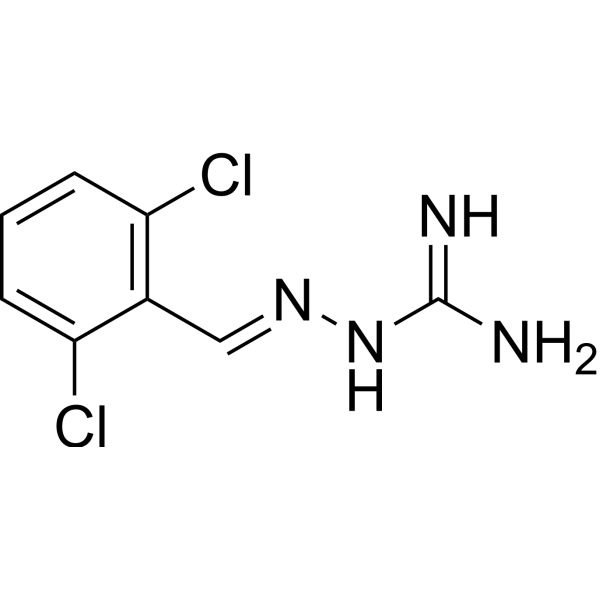
Guanabenz is an orally active α-2-adrenoceptor agonist. Guanabenz has antihypertensive effect and antiparasitic activity. Guanabenz interferes ER stress-signalling and has protective effects in cardiac myocytes. Guanabenz also is used for the research of high blood pressure .
|
-
- HY-108170
-
|
|
Insecticide
Parasite
|
Infection
Inflammation/Immunology
|
|
Pyrethrin II is an orally active insecticidal ester of chrysanthemum acid found in Chrysanthemum cinerariifolium and C. coccineum Willd., an active constituent of pyrethrum extract with low mammalian toxicity. Pyrethrin II exhibits antiparasitic activity. Pyrethrin II can be used for the research of allergic contact dermatitis and parasitic infections .
|
-
- HY-W009689
-
|
|
Parasite
|
Infection
|
|
TbPTR1 inhibitor 2 (Compound 3a) is a PTR1 enzyme inhibitor, with IC50s of 34.2 and 32.9 μM for TbPTR1 and LmPTR1. TbPTR1 inhibitor 2 has anti-parasitic activity against T. brucei (IC50: 34.2 μM) .
|
-
- HY-146487
-
|
|
Bacterial
Parasite
|
Infection
|
|
Anti-infective agent 1 (compound 3a) is a potent and selective antiprotozoal and antimycobacterial agent. Anti-infective agent 1 shows antiparasitic activity against P. falciparum and T. brucei rhodesiense, with IC50 values of 10.95 and 0.06 μM, respectively. Anti-infective agent 1 shows antimycobacterial activity against Mycobacterium smegmatis with a MIC of 8 μg/mL .
|
-
- HY-W012550R
-
|
|
Reference Standards
Parasite
|
Infection
|
|
D-Carnitine (Standard) is the analytical standard of D-Carnitine. This product is intended for research and analytical applications. D-Carnitine is an orally available isomer of the essential nutrient L-carnitine that promotes long-chain fatty acid transport into the mitochondrial matrix for beta-oxidation. D-Carnitine has antiparasitic activity .
|
-
- HY-125188
-
|
|
Parasite
DNA/RNA Synthesis
AMPK
Clathrin
|
Infection
|
|
NEU-4438 is an antimalarial agent. NEU-4438 inhibits DNA synthesis, reduces AMPK-γ, and increases Clathrin heavy chain. NEU-4438 exhibits antiparasitic activity against Trypanosoma brucei. NEU-4438 reduces trypanosome tissue burden in a chronic HAT mouse model .
|
-
- HY-17596S
-
|
|
Isotope-Labeled Compounds
Parasite
|
Infection
|
|
Closantel- 13C6 is the 13C6 labeled Closantel. Closantel is a halogenated salicylanilide with a potent anti-parasitic activity. Closantel is a potent and highly specific Onchocerca volvulus chitinase (OvCHT1) inhibitor with an IC50 of 1.6 μM and a Ki of 468 nM. Closantel inhibits the O. volvulus L3 to L4 molt of developing.
|
-
- HY-N0413
-
-
- HY-N16426
-
|
|
Parasite
|
Infection
Cancer
|
|
Mycoleptone A is an azafluorenone compound. Mycoleptone A exhibits certain anti-leishmanial activity, with an LD50 of 28.5 μM against L. major. Mycoleptone A shows cytotoxicity against human prostate cancer cell line PC3, with an IC50 of 10.0 μM. Mycoleptone A can be used in research on anti-parasitic and anti-tumor aspects .
|
-
- HY-B0778
-
|
|
Antibiotic
Parasite
|
Infection
|
|
Milbemycin oxime is an orally active macrolide with broad-spectrum antiparasitic activity. Milbemycin oxime is a mixture of oximes consisting of oxime derivatives corresponding to milbemycin A4 and A3. Milbemycin oxime binds to glutamate-gated chloride channels and has inhibitory potency against intestinal nematodes and lung/heart worms .
|
-
- HY-175246
-
|
|
Parasite
|
Infection
|
|
Antitoxoplasmal agent-1 (Compound 4) is an antiparasitic agent. Antitoxoplasmal agent-1 has strong activity and selectivity against T. gondii, with an IC50 of 3.1 μM. Antitoxoplasmal agent-1 also has certain activity against L. major amastigotes, with an EC50 of 23.3 μM. Antitoxoplasmal agent-1 can be used in the research of parasite-related diseases .
|
-
- HY-N0397R
-
|
|
Reference Standards
Parasite
|
Infection
Inflammation/Immunology
|
|
Harpagide (Standard) is the analytical standard of Harpagide. This product is intended for research and analytical applications. Harpagide is a class of iridoid glycoside isolated from Scrophularia ningpoensis and has antiparasitic activity, which exhibits good in vitro trypanocidal activities against African trypanosomes (T.b. rhodesiense) with an IC50 of 21 μg/mL. Harpagide exerts significant antileishmanial activity against L. donovani with an IC50 value of 2.0 μg/mL. Harpagide also possess significant anti-inflammatory activities .
|
-
- HY-10969
-
|
GX15-070 Mesylate
|
Bcl-2 Family
Autophagy
Parasite
|
Infection
Cancer
|
|
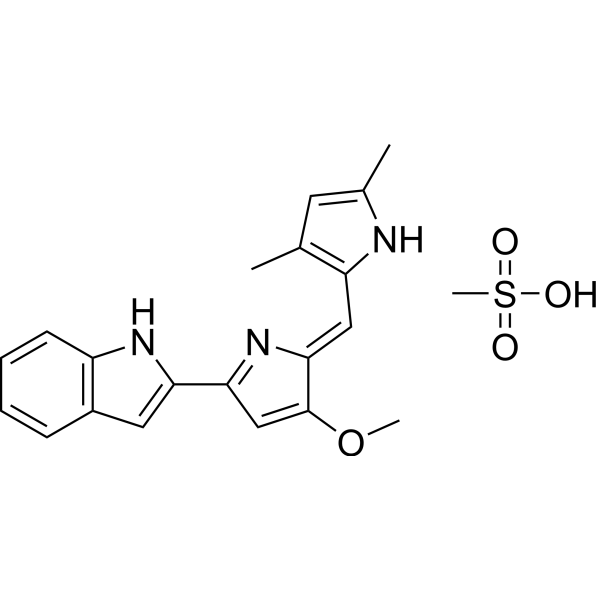
Obatoclax Mesylate (GX15-070 Mesylate), a BH3 mimetic, is a pan-BCL-2 family proteins inhibitor with a Ki of 220 nM for BCL-2 . Obatoclax Mesylate induces autophagy-dependent cell death and targets cyclin D1 for proteasomal degradation. Obatoclax Mesylate has anti-cancer and broad-spectrum antiparasitic activity .
|
-
- HY-116387
-
WR99210
4 Publications Verification
BRL 6231 free base
|
Dihydrofolate reductase (DHFR)
Parasite
|
Infection
|
|
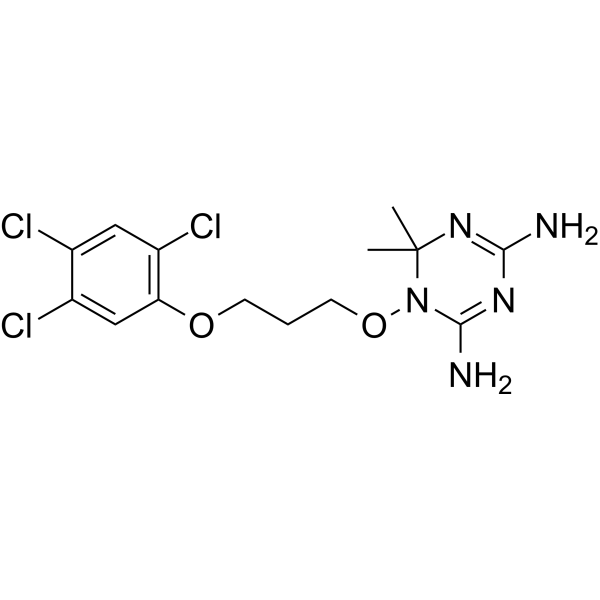
WR99210 is an orally active and low-toxicity dihydrofolate reductase (DHFR) inhibitor (IC50<0.075 nM). WR99210 shows good antiparasitic activity and is effective against P. falciparum and P. falciparum strains (including Pyrimethamine< (HY-18062)-resistant P. falciparum strains) as well as T. gondii .
|
-
- HY-W018025R
-
-
- HY-180388
-
|
|
Fructose-1,6-bisphosphate aldolase
Parasite
Phosphatase
|
Infection
|
|
Stibophen is a potent antiparasitic agent is effective against Litomosoides carinii, Dipetalonema witei, and Brugia pahangi. Stibophen inhibits lactate accumulation and phosphofructokinases (PFK) activity in adult filariids. Stibophen also inhibits Ascaris and Hymenolepis diminuta PFK without inhibiting mammalian liver PFK. Stibophen can be used for the research of schistosomiasis and filariid infections .
|
-
- HY-10969A
-
|
GX15-070
|
Bcl-2 Family
Autophagy
Parasite
|
Infection
Cancer
|
|
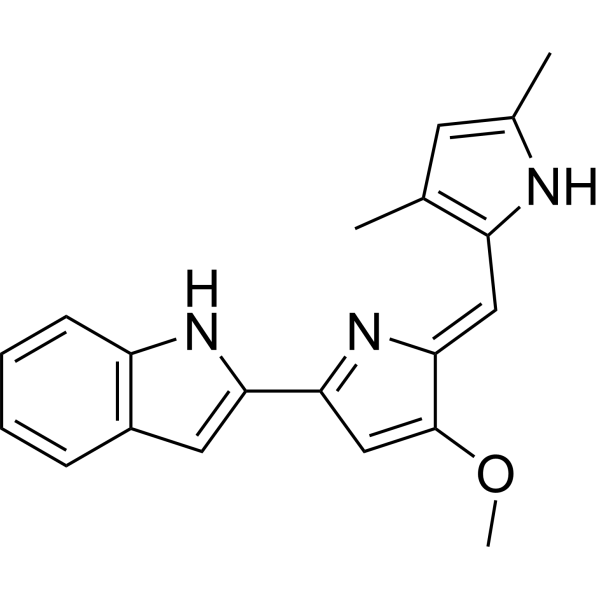
Obatoclax (GX15-070), a BH3 mimetic, is a pan-BCL-2 family proteins inhibitor with a Ki of 220 nM for BCL-2 . Obatoclax induces autophagy-dependent cell death and targets cyclin D1 for proteasomal degradation. Obatoclax has anti-cancer and broad-spectrum antiparasitic activity .
|
-
- HY-N0841
-
|
Dihydrobrusatol; NSC310616
|
Parasite
NF-κB
p38 MAPK
Phosphatase
Apoptosis
|
Infection
Cancer
|
|
Bruceine A (Dihydrobrusatol) is a natural quassinoid. Bruceine A is an inhibitor of parasites, NF-κB, and PFKFB4 (Kd: 44 nM). Bruceine A is an activator of P38α MAPK. Bruceine A has antiparasitic activity. Bruceine A has antitumor activity and inhibits cancer cell migration. Bruceine A blocks the cell cycle and induces apoptosis. Bruceine A can be used in parasites, pancreatic cancer, and breast cancer research .
|
-
- HY-148014
-
-
- HY-17596AR
-
|
|
Reference Standards
Parasite
|
Infection
|
|
Closantel (sodium) (Standard) is the analytical standard of Closantel (sodium). This product is intended for research and analytical applications. Closantel sodium is a halogenated salicylanilide with a potent anti-parasitic activity. Closantel sodium is a potent and highly specific Onchocerca volvulus chitinase (OvCHT1) inhibitor with an IC50 of 1.6 μM and a Ki of 468 nM. Closantel sodium inhibits the O. volvulus L3 to L4 molt of developing .
|
-
- HY-17596R
-
|
|
Reference Standards
Parasite
|
Infection
|
|
Closantel (Standard) is the analytical standard of Closantel. This product is intended for research and analytical applications. Closantel is a halogenated salicylanilide with a potent anti-parasitic activity. Closantel is a potent and highly specific Onchocerca volvulus chitinase (OvCHT1) inhibitor with an IC50 of 1.6 μM and a Ki of 468 nM. Closantel inhibits the O. volvulus L3 to L4 molt of developing .
|
-
- HY-W071746R
-
|
Linoelaidic acid (Standard)
|
Reference Standards
Endogenous Metabolite
Parasite
Apoptosis
|
Infection
Inflammation/Immunology
|
|
Linolelaidic acid (Standard) is the analytical standard of Linolelaidic acid. This product is intended for research and analytical applications. Linolelaidic acid (Linoelaidic acid) is an omega-6 trans fatty acid (TFA) that is an essential nutrient with oral activity. Linolelaidic acid can be added to enteral nutrition (oral), parenteral nutrition (intravenous), and infant formula. Linolelaidic acid has anti-inflammatory and anti-parasitic ((Parasite)) activities, and can induce Apoptosis. Linolelaidic acid is useful for research in infections[1][2][3].
|
-
- HY-113050
-
|
2,3-DPG
|
Parasite
|
Infection
Neurological Disease
|
|
2,3-Diphosphoglyceric acid (2,3-DPG) is an intermediate of the glycolytic pathway. 2,3-Diphosphoglyceric acid stabilizes the deoxygenated form of hemoglobin by allosteric binding and facilitates oxygen release at tissue sites. 2, 3-diphosphoglyceric acid has antiparasitic activity. 2,3-Diphosphoglyceric acid can be used in the study of Alzheimer's disease (AD) .
|
-
- HY-182295
-
|
|
Reactive Oxygen Species (ROS)
Apoptosis
MMP
Bacterial
Parasite
|
Cardiovascular Disease
Infection
Neurological Disease
|
|
Negundoside is an iridoid glycoside compound. Negundoside exhibits hepatoprotective effects, reduces ROS, lipid peroxidation and intracellular calcium ion levels, and prevents the decrease of mitochondrial membrane potential (MMP) and apoptosis (apoptosis). Negundoside has neuroprotective effects, improves behavioral deficits, alleviates oxidative damage, and ameliorates cerebral infarction. Negundoside also possesses antibacterial and antiparasitic activities .
|
-
- HY-12724AR
-
|
|
Parasite
Adrenergic Receptor
Reference Standards
|
Cardiovascular Disease
Cancer
|
|
Guanabenz (hydrochloride) (Standard) is the analytical standard of Guanabenz (hydrochloride). This product is intended for research and analytical applications. Guanabenz hydrochloride is an orally active α-2-adrenoceptor agonist. Guanabenz hydrochloride has antihypertensive effect and antiparasitic activity. Guanabenz hydrochloride interferes ER stress-signalling and has protective effects in cardiac myocytes. Guanabenz hydrochloride also is used for the research of high blood pressure .
|
-
- HY-165440
-
|
MK130
|
5-HT Receptor
Parasite
|
Infection
Neurological Disease
|
|
Cyclobenzaprine (MK130) is an orally active 5-HT2 receptor antagonist. Cyclobenzaprine acts centrally, providing skeletal muscle relaxation, alleviating muscle spasms, and reducing pain. Cyclobenzaprine also possesses antiparasitic activity. Cyclobenzaprine holds promise for research in the fields of acute, painful skeletal muscle disorders and infectious diseases .
|
-
- HY-B0740
-
|
MK130 hydrochloride
|
5-HT Receptor
Parasite
|
Infection
Neurological Disease
|
|
Cyclobenzaprine (MK130) hydrochloride is an orally active 5-HT2 receptor antagonist. Cyclobenzaprine hydrochloride acts centrally, providing skeletal muscle relaxation, alleviating muscle spasms, and reducing pain. Cyclobenzaprine hydrochloride also possesses antiparasitic activity. Cyclobenzaprine hydrochloride holds promise for research in the fields of acute, painful skeletal muscle disorders and infectious diseases .
|
-
- HY-N0078
-
|
Ginkgolic acid (13:0); Ginkgoneolic Acid; 6-Tridecylsalicylic acid
|
Bacterial
PI3K
Parasite
|
Infection
Inflammation/Immunology
|
|
Ginkgolic Acid (C13:0) (Ginkgoneolic Acid) is an anti-cariogenic agent and a PI3Kδ inhibitor (IC50: 2.49 μM). Ginkgolic Acid (C13:0) exhibits antibacterial and anti-parasitic activities. Ginkgolic Acid (C13:0) can also inhibit mast cell degranulation (IC50: 2.40 μM) .
|
-
- HY-12538
-
-
- HY-N0176
-
|
Dihydroqinghaosu; β-Dihydroartemisinin; Artenimol
|
Parasite
NF-κB
Autophagy
Reactive Oxygen Species (ROS)
Drug Metabolite
|
Infection
Neurological Disease
Metabolic Disease
Inflammation/Immunology
Cancer
|
|
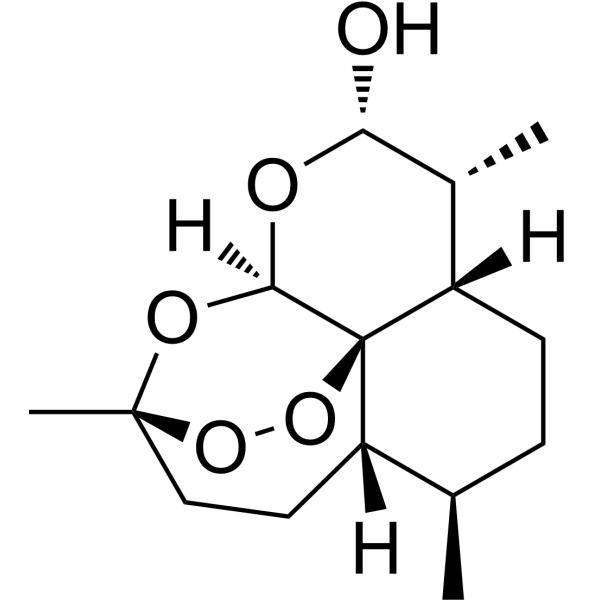
Dihydroartemisinin is an orally active metabolite of rtemisinin (HY-B0094) and antimalarial agent. Dihydroartemisinin induces Autophagy by inhibiting NF-κB activation. Dihydroartemisinin promotes ROS accumulation. Dihydroartemisinin exhibits anticancer activity in esophageal cancer cells. Dihydroartemisinin shows schistosomicidal activity against juvenile and adult worms of Schistosoma japonicum, reduces worm burden, and displays antiparasitic activity. Dihydroartemisinin can be used in research related to multiple myeloma, promyelocytic leukemia, esophageal cancer, and Schistosoma japonicum infection .
|
-
- HY-N6674
-
|
ECO-4601; TLN-4601; BU 4664L
|
Apoptosis
Bacterial
Cathepsin
Parasite
Endogenous Metabolite
|
Infection
Inflammation/Immunology
Cancer
|
|
Diazepinomicin (ECO-4601) is an anticancer and antibacterial agent. Diazepinomicin can be produced by a Micromonospora strain. Diazepinomicin induces Apoptosis. Diazepinomicin inhibits the proteases Rhodesain and Cathepsin L at an IC50 of 70-90 μM. Diazepinomicin possesses anti-inflammatory and anti-tumor activity. Diazepinomicin has demonstrated activity against hepatocellular carcinoma. Diazepinomicin shows antiparasitic activity against trypomastigote forms of Trypanosoma brucei with an IC50 of 13.5 μM. Diazepinomicin exhibits moderate antibacterial activity against specific Gram-positive bacteria, with an MIC of approximately 32 μg/mL .
|
-
- HY-B0413
-
|
|
Parasite
HIF/HIF Prolyl-Hydroxylase
Microtubule/Tubulin
Antibiotic
|
Infection
Cancer
|
|
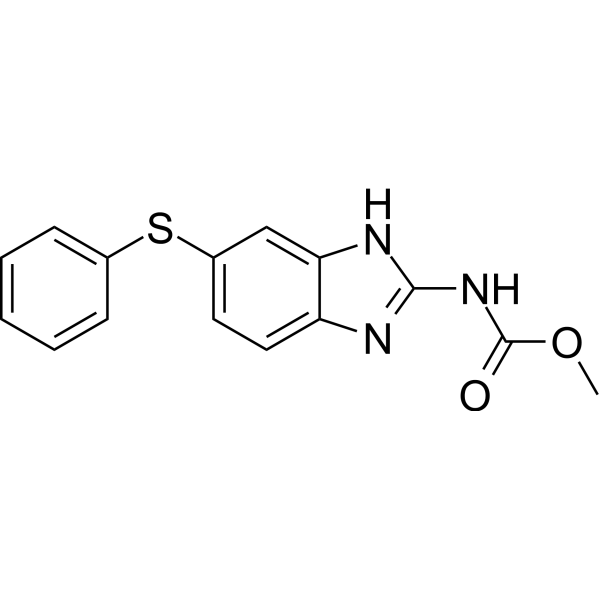
Fenbendazole is an orally active benzimidazole anthelmintic agent, with a broad antiparasitic range. Fenbendazole is a microtubule destabilizing agent and acts on helminthes primarily by binding to tubulin and disrupting the tubulin microtubule equilibrium. Fenbendazole stabilizes the transcriptional activator HIF-1α. Fenbendazole possesses an efficient anti-proliferative activity and induces apoptosis. Fenbendazole causes cell-cycle arrest and mitotic cell death, and has antitumor activity in mice xenografted with wild-type p53 .
|
-
- HY-B0740R
-
|
MK130 hydrochloride (Standard)
|
Reference Standards
5-HT Receptor
|
Neurological Disease
|
|
Cyclobenzaprine (MK130) hydrochloride (Standard) is the analytical standard of Cyclobenzaprine (MK130) hydrochloride. This product is intended for research and analytical applications. Cyclobenzaprine hydrochloride is an orally active 5-HT2 receptor antagonist. Cyclobenzaprine hydrochloride acts centrally, providing skeletal muscle relaxation, alleviating muscle spasms, and reducing pain. Additionally, Cyclobenzaprine hydrochloride has antiprotozoal activity. Additionally, Cyclobenzaprine hydrochloride also possesses antiparasitic activity. Cyclobenzaprine hydrochloride holds promise for research in the fields of acute, painful skeletal muscle disorders and infectious diseases
|
-
- HY-172523
-
|
|
Fungal
Parasite
Reactive Oxygen Species (ROS)
|
Infection
|
|
CDA-IN-3 (NCDI) is an inhibitor of chitin deacetylase (CDA) with anti-parasitic activity. CDA-IN-3 disrupts the chitin metabolism of nematodes, leading to an increase in the level of ROS in nematodes and causing cell damage. CDA-IN-3 has a significant inhibitory effect on all developmental stages of Caenorhabditis elegans. CDA-IN-3 can be used in the research of the anti-infection field .
|
-
- HY-N3544R
-
|
(-)-Caryophyllene oxide (Standard)
|
Reference Standards
Apoptosis
Bacterial
Fungal
Parasite
|
Infection
Neurological Disease
Inflammation/Immunology
Cancer
|
|
Caryophyllene oxide (Standard) ((-)-Caryophyllene oxide (Standard)) is the analytical standard of Caryophyllene oxide (HY-N3544). This product is intended for research and analytical applications. Caryophyllene oxide is a bicyclic sesquiterpene with anticancer effects. Caryophyllene oxide induces apoptosis of PC-3 cells. Caryophyllene oxide shows analgesic and anti-inflammatory activities. Caryophyllene oxide has insecticidal, antioxidant, antimicrobial, antifungal, and antiparasitic properties.
|
-
- HY-129278
-
|
|
Parasite
|
Infection
Cardiovascular Disease
Neurological Disease
|
|
Lunarine is an alkaloid, which can be isolated from the seeds of kale (Lunaria annua). Lunarine lowers the blood pressure, stimulates small intestinal motility, inhibits spontaneous contractions of uterus and nervous system, and exhibits an acute toxicity with LD50 of 62.3 mg/kg in dogs and rabbits. Lunarine exhibits antiparasitic activity through a competitive inhibition of protozoan oxidoreductase trypanothione reductase (TryR) with Ki of 304 μM .
|
-
- HY-159915
-
|
|
Parasite
|
Infection
|
|
Se2h is a cruzain inhibitor that exhibits strong activity against the intracellular amastigotes of Trypanosoma cruzi (EC50 < 1 μM, SI > 10), with an inhibitory activity against cruzain of IC50 < 100 nM (SI > 5.55). Compared to Benznidazole (HY-B1548) and the cruzain inhibitor K777 (HY-119293), Se2h shows superior selectivity and inhibition, while its selenazole structure reduces selenium-related toxicity. Se2h exhibits antiparasitic activity and holds promise for research in Chagas disease .
|
-
- HY-N6015R
-
|
|
Reference Standards
Parasite
P-glycoprotein
|
Infection
Cancer
|
|
Bacopasaponin C (Standard) is the analytical standard of Bacopasaponin C (HY-N6015). This product is intended for research and analytical applications. Bacopasaponin C is an orally active natural glycoside. Bacopasaponin C can be isolated from Bacopa monniera. Bacopasaponin C inhibits Verapamil (HY-14275)-stimulated P-gp ATPase activity with an IC50 of 57.83 μg/mL. Bacopasaponin C has antitumor activity against sarcomas. Bacopasaponin C has antiparasitic activity against Leishmania donovani .
|
-
- HY-N0413R
-
-
- HY-159603
-
|
|
Parasite
Na+/K+ ATPase
|
Infection
|
|
S-WJM992 (compound 10ahb) is an antiparasitic agent that inhibits ATPase activity under high [Na+] conditions. S-WJM992 also has significant inhibitory effects on parasites that have developed PfATP4 inhibitor-resistance. S-WJM992 is a potential transmission blocker that effectively inhibits gamete development and prevents parasite transmission to mosquitoes via blood feeding .
|
-
- HY-B0319
-
|
UK-20349
|
Fungal
Antibiotic
Parasite
Akt
PI3K
mTOR
Autophagy
|
Infection
Cancer
|
|
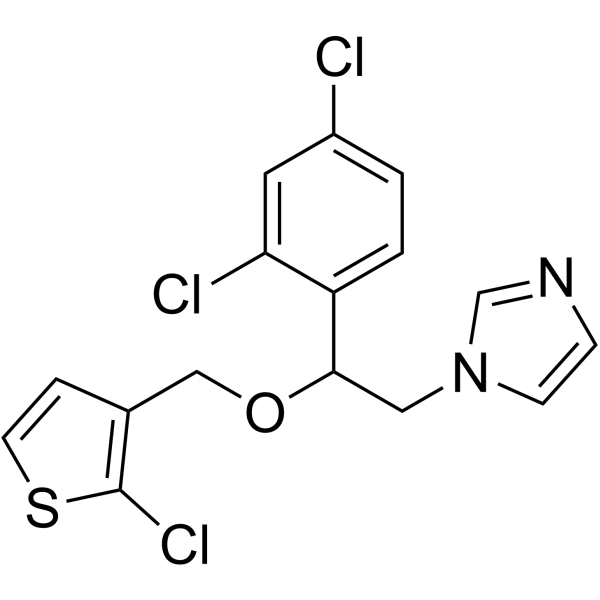
Tioconazole (UK-20349) is a broad-spectrum antifungal imidazole derivative. Tioconazole inhibits several dermatophytes and yeasts, with MIC50 values of less than 3.12 mg/L and 9 mg/L, respectively. Additionally, Tioconazole exhibits anti-parasitic activity. Tioconazole exerts anticancer activity by inhibiting the PI3K/AKT/mTOR signaling pathway and blocking autophagy. Tioconazole is applicable for research in the fields of anti-infection and anticancer therapy .
|
-
- HY-W391625
-
|
(Rac)-Epiligulyl oxide
|
Fungal
|
Cancer
|
|
(Rac)-Dehydrocostus Lactone ((Rac)-Epiligulyl oxide) is a natural product with antiparasitic activity. (Rac)-Dehydrocostus Lactone can significantly inhibit the growth of Trypanosoma brucei rhodesiense. (Rac)-Dehydrocostus Lactone exhibits a broad spectrum of biological effects, including anti-inflammatory, anticancer, antiviral and antimicrobial activities. (Rac)-Dehydrocostus Lactone also has antifungal, antioxidant, antidiabetic, antiulcer and antihelminthic effects. (Rac)-Dehydrocostus Lactone exhibits different IC(50) values in cytotoxicity tests and has a high selectivity index .
|
-
- HY-111027
-
|
|
Apoptosis
|
Infection
|
|
HDAC8-IN-13 is a novel histone deacetylase 8 (HDAC8) inhibitor with antiparasitic activity. HDAC8-IN-13 can effectively inhibit the acetyl-L-lysine deacetylase activity of schistosomes, affecting the parasite's infectivity. HDAC8-IN-13 can induce apoptosis and cause the death of schistosome cells. Through a specific structural basis design, HDAC8-IN-13 exhibits reduced affinity for human HDACs, thereby enhancing its selectivity .
|
-
- HY-B0778R
-
|
|
Reference Standards
Antibiotic
Parasite
|
Infection
|
|
Milbemycin oxime (Standard) is the analytical standard of Milbemycin oxime. This product is intended for research and analytical applications. Milbemycin oxime is an orally active macrolide with broad-spectrum antiparasitic activity. Milbemycin oxime is a mixture of oximes consisting of oxime derivatives corresponding to milbemycin A4 and A3. Milbemycin oxime binds to glutamate-gated chloride channels and has inhibitory potency against intestinal nematodes and lung/heart worms .
|
-
- HY-W751350
-
|
|
Isotope-Labeled Compounds
5-HT Receptor
Parasite
|
Infection
Neurological Disease
|
|
Cyclobenzaprine-d6 is the deuterium labeled Cyclobenzaprine. Cyclobenzaprine (MK130) hydrochloride is an orally active 5-HT2 receptor antagonist. Cyclobenzaprine hydrochloride acts centrally, providing skeletal muscle relaxation, alleviating muscle spasms, and reducing pain. Cyclobenzaprine hydrochloride also possesses antiparasitic activity. Cyclobenzaprine hydrochloride holds promise for research in the fields of acute, painful skeletal muscle disorders and infectious diseases .
|
-
- HY-N0176S6
-
|
Dihydroqinghaosu-d; β-Dihydroartemisinin-d; Artenimol-d
|
Isotope-Labeled Compounds
Parasite
NF-κB
Autophagy
Reactive Oxygen Species (ROS)
Drug Metabolite
|
Infection
Neurological Disease
Metabolic Disease
Inflammation/Immunology
Cancer
|
|
Dihydroartemisinin-d (Dihydroqinghaosu-d) is the deuterium labeled Dihydroartemisinin (HY-N0176). Dihydroartemisinin is an orally active metabolite of rtemisinin (HY-B0094) and antimalarial agent. Dihydroartemisinin induces Autophagy by inhibiting NF-κB activation. Dihydroartemisinin promotes ROS accumulation. Dihydroartemisinin exhibits anticancer activity in esophageal cancer cells. Dihydroartemisinin shows schistosomicidal activity against juvenile and adult worms of Schistosoma japonicum, reduces worm burden, and displays antiparasitic activity. Dihydroartemisinin can be used in research related to multiple myeloma, promyelocytic leukemia, esophageal cancer, and Schistosoma japonicum infection.
|
-
- HY-B0413R
-
|
|
Reference Standards
Parasite
HIF/HIF Prolyl-Hydroxylase
Microtubule/Tubulin
Antibiotic
|
Infection
|
|
Fenbendazole (Standard) is the analytical standard of Fenbendazole. This product is intended for research and analytical applications. Fenbendazole is an orally active benzimidazole anthelmintic agent, with a broad antiparasitic range. Fenbendazole is a microtubule destabilizing agent and acts on helminthes primarily by binding to tubulin and disrupting the tubulin microtubule equilibrium. Fenbendazole stabilizes the transcriptional activator HIF-1α. Fenbendazole possesses an efficient anti-proliferative activity and induces apoptosis. Fenbendazole causes cell-cycle arrest and mitotic cell death, and has antitumor activity in mice xenografted with wild-type p53 .
|
-
- HY-N7236
-
|
|
Parasite
Fungal
|
Infection
|
|
Pervicoside B is a glycoside C isolated from Neothyone gibbosa sea cucumber. In vitro studies have shown that Pervicoside B has a potent antiparasitic effect against Leishmania mexicana, inhibiting 100% of promastigotes at 5-10 μg/mL. Pervicoside B also exhibits strong antifungal activity against Aspergillus niger, with MIC values ranging from 4.65 to 16.7 μg/mL. Pervicoside B has potential applications in the inhibition of parasitic infections and fungal diseases .
|
-
- HY-12538R
-
|
Rutamine (Standard)
|
Reference Standards
Apoptosis
Autophagy
Fungal
Parasite
Reactive Oxygen Species (ROS)
Interleukin Related
JAK
STAT
|
Infection
Inflammation/Immunology
Cancer
|
|
Graveoline (Standard) is the analytical standard of Graveoline (HY-12538). This product is intended for research and analytical applications. Graveoline (Rutamine) is an orally active alkaloid with various activities such as antifungal, antiparasitic, anti-inflammatory, and antitumor effects. Graveoline can induce tumor cell apoptosis and autophagy through a reactive oxygen species-mediated pathway. Graveoline has an MIC of 500 μg/mL for Candida albicans. Graveoline can be used in the research of various diseases such as tumors and liver injury .
|
-
- HY-17598
-
|
|
Oxidative Phosphorylation
Parasite
p38 MAPK
Raf
Apoptosis
|
Infection
Cancer
|
|
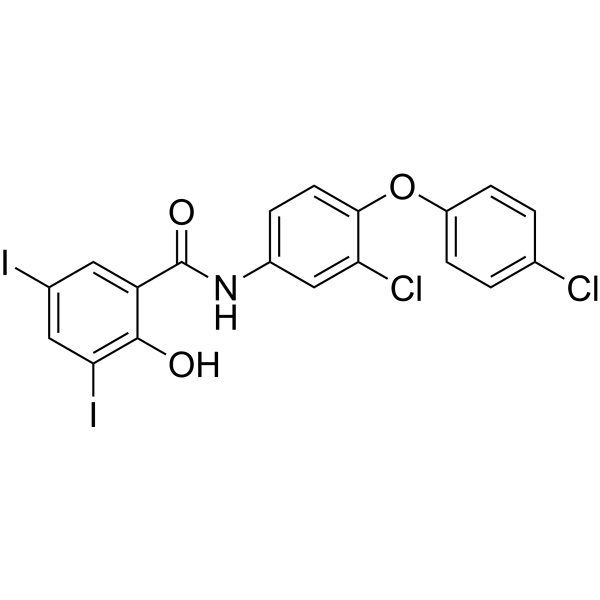
Rafoxanide is a poent, orally active halogenated salicylaniline agent with antiparasitic activity. Rafoxanide interferes with energy metabolism in trematodes by uncoupling oxidative phosphorylation. Rafoxanide is also found to be a potent inhibitor of the BRAF V600E mutant protein, which is important in colorectal cancer. Rafoxanide can be used for the control of infestation with Hemonchus species or Fasciola species in sheep and cattle as well as Oestrus ovis in sheep. Rafoxanide can also be used for cancer research .
|
-
- HY-123746
-
|
|
Farnesyl Transferase
Fungal
Parasite
|
Infection
|
|
E5700 is an orally active squalene synthase inhibitor, antimalarial agent and antifungal agent with an IC50 of 0.49 nM (without PPi) against squalene synthase from T. cruzi epimastigotes. E5700 shows antiparasitic activities against Trypanosoma cruzi. E5700 inhibits the growth and alters the lipid prolife and the ultrastructure of a multiple agent-resistant C. tropicalis strain. E5700 is a potent and selective inhibitor of the growth of Leishmania amazonensis .
|
-
- HY-179710
-
|
|
Parasite
Reactive Oxygen Species (ROS)
DNA/RNA Synthesis
Apoptosis
|
Infection
|
|
SET-12 is an antiparasitic agent with high activity and selectivity against the Leishmania amazonensis. SET-12 exhibits excellent activity against the pre-flagellated form of the Leishmania amazonensis, with an IC₅₀ of 10.89 μM and a selectivity index (SI) of up to 12.1. SET-12 is also effective against the non-flagellated form within cells, with an IC₅₀ of 3.81 μM and a further increased selectivity index (SI) to 34.5. SET-12 causes signs of parasite cell apoptosis, including mitochondrial damage and accumulation of ROS .
|
-
- HY-B0413S
-
|
|
HIF/HIF Prolyl-Hydroxylase
Parasite
Microtubule/Tubulin
Antibiotic
|
Infection
|
|
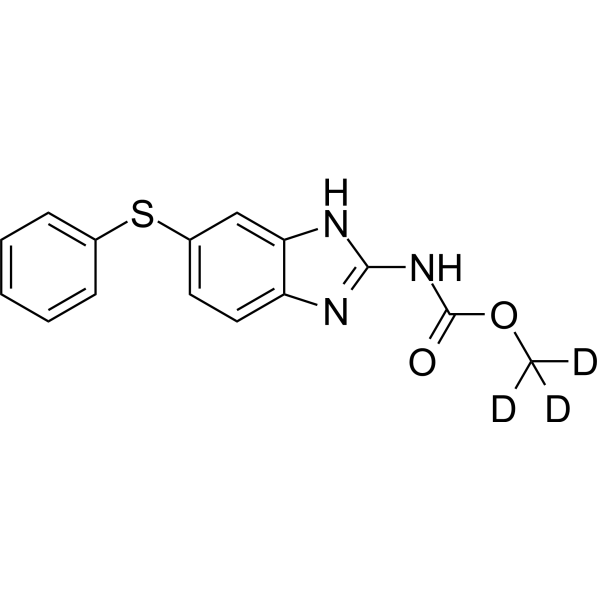
Fenbendazole-d3 is a deuterium labeled Fenbendazole. Fenbendazole-d3 is a HIF-1α agonist and activates the HIF-1α-related GLUT1 pathway. Fenbendazole is an orally active benzimidazole anthelmintic agent, with a broad antiparasitic range. Fenbendazole is a microtubule destabilizing agent. Fenbendazole causes cell-cycle arrest and mitotic cell death, and has antitumor activity in mice xenografted with wild-type p53 .
|
-
- HY-B0740S3
-
|
MK130-d3-1 hydrochloride
|
Isotope-Labeled Compounds
5-HT Receptor
Parasite
|
Infection
Neurological Disease
|
|
Cyclobenzaprine-d3-1 hydrochloride (MK130-d3-1 hydrochloride) is the deuterium labeled Cyclobenzaprine hydrochloride (HY-B0740). Cyclobenzaprine (MK130) hydrochloride is an orally active 5-HT2 receptor antagonist. Cyclobenzaprine hydrochloride acts centrally, providing skeletal muscle relaxation, alleviating muscle spasms, and reducing pain. Additionally, Cyclobenzaprine hydrochloride has antiprotozoal activity. Additionally, Cyclobenzaprine hydrochloride also possesses antiparasitic activity. Cyclobenzaprine hydrochloride holds promise for research in the fields of acute, painful skeletal muscle disorders and infectious diseases
|
-
- HY-17598R
-
|
|
Oxidative Phosphorylation
Reference Standards
Parasite
p38 MAPK
Raf
Apoptosis
|
Infection
Cancer
|
|
Rafoxanide (Standard) is the analytical standard of Rafoxanide. This product is intended for research and analytical applications. Rafoxanide is a poent, orally active halogenated salicylaniline agent with antiparasitic activity. Rafoxanide interferes with energy metabolism in trematodes by uncoupling oxidative phosphorylation. Rafoxanide is also found to be a potent inhibitor of the BRAF V600E mutant protein, which is important in colorectal cancer. Rafoxanide can be used for the control of infestation with Hemonchus species or Fasciola species in sheep and cattle as well as Oestrus ovis in sheep. Rafoxanide can also be used for cancer research .
|
-
- HY-W751808S
-
|
2,3-DPG-13C3
|
Isotope-Labeled Compounds
Parasite
|
Infection
Neurological Disease
|
|
2,3-Diphosphoglyceric acid- 13C3 is the 13C-labeled 2,3-Diphosphoglyceric acid (HY-113050). 2,3-Diphosphoglyceric acid (2,3-DPG) is an intermediate of the glycolytic pathway. 2,3-Diphosphoglyceric acid stabilizes the deoxygenated form of hemoglobin by allosteric binding and facilitates oxygen release at tissue sites. 2, 3-diphosphoglyceric acid has antiparasitic activity. 2,3-Diphosphoglyceric acid can be used in the study of Alzheimer's disease (AD) .
|
-
- HY-N0078R
-
|
Ginkgolic acid (13:0) (Standard); Ginkgoneolic Acid (Standard); 6-Tridecylsalicylic acid (Standard)
|
Reference Standards
Bacterial
PI3K
Parasite
|
Infection
Inflammation/Immunology
|
|
Ginkgolic Acid (C13:0) (Standard) is the analytical standard of Ginkgolic Acid (C13:0) (HY-N0078). This product is intended for research and analytical applications. Ginkgolic Acid (C13:0) (Ginkgoneolic Acid) is an anti-cariogenic agent and a PI3Kδ inhibitor (IC50: 2.49 μM). Ginkgolic Acid (C13:0) exhibits antibacterial and anti-parasitic activities. Ginkgolic Acid (C13:0) can also inhibit mast cell degranulation (IC50: 2.40 μM) .
|
-
- HY-136450
-
|
TCBZ-SO
|
Parasite
BCRP
|
Infection
Cancer
|
|
Triclabendazole sulfoxide (TCBZ-SO) is an orally active ABCG2 inhibitor with antiparasitic activity. Triclabendazole sulfoxide inhibits ABCG2-mediated active efflux and ATPase activity. Triclabendazole sulfoxide increases the intracellular accumulation of Mitoxantrone (HY-13502). Triclabendazole sulfoxide reduces the apical-directed transepithelial transport of Nitrofurantoin and Danofloxacin, while increasing their basolateral-directed transepithelial transport. Triclabendazole sulfoxide elevates the plasma levels of sulfasalazine in wild-type mice. Triclabendazole sulfoxide decreases ABCG2-mediated secretion of Nitrofurantoin into milk in wild-type lactating mice. Triclabendazole sulfoxide can be used in the research of insecticidal agents and cancers such as breast cancer .
|
-
- HY-175517
-
|
|
Parasite
|
Infection
|
|
PEX5-PEX14 PPI-IN-3 (Compound 7) is an inhibitor of the PEX5-PEX14 protein-protein interaction (PPI) with an EC50 of 95 μM. PEX5-PEX14 PPI-IN-3 has an EC50 of 7.2 μM against Trypanosoma brucei (T. brucei). PEX5-PEX14 PPI-IN-3 exhibits low cytotoxicity towards HepG2 cells and possesses antiparasitic activity .
|
-
- HY-113050SA
-
|
2,3-DPG-d3 ammonium
|
Isotope-Labeled Compounds
Parasite
|
Infection
Neurological Disease
|
|
2,3-Diphosphoglyceric acid-d3 ammonium (2,3-DPG-d3 ammonium) is the deuterium labeled 2,3-Diphosphoglyceric acid (HY-113050). 2,3-Diphosphoglyceric acid (2,3-DPG) is an intermediate of the glycolytic pathway. 2,3-Diphosphoglyceric acid stabilizes the deoxygenated form of hemoglobin by allosteric binding and facilitates oxygen release at tissue sites. 2, 3-diphosphoglyceric acid has antiparasitic activity. 2,3-Diphosphoglyceric acid can be used in the study of Alzheimer's disease (AD) .
|
-
- HY-136450R
-
|
TCBZ-SO (Standard)
|
Reference Standards
Parasite
BCRP
|
Infection
|
|
Triclabendazole sulfoxide (Standard) is the analytical standard of Triclabendazole sulfoxide. This product is intended for research and analytical applications. Triclabendazole sulfoxide (TCBZ-SO) is an orally active ABCG2 inhibitor with antiparasitic activity. Triclabendazole sulfoxide inhibits ABCG2-mediated active efflux and ATPase activity. Triclabendazole sulfoxide increases the intracellular accumulation of Mitoxantrone (HY-13502). Triclabendazole sulfoxide reduces the apical-directed transepithelial transport of Nitrofurantoin and Danofloxacin, while increasing their basolateral-directed transepithelial transport. Triclabendazole sulfoxide elevates the plasma levels of sulfasalazine in wild-type mice. Triclabendazole sulfoxide decreases ABCG2-mediated secretion of Nitrofurantoin into milk in wild-type lactating mice. Triclabendazole sulfoxide can be used in the research of insecticidal agents and cancers such as breast cancer .
|
-
- HY-136450S
-
|
TCBZ-SO-d3
|
Isotope-Labeled Compounds
Parasite
BCRP
|
Infection
|
|
Triclabendazole sulfoxide-d3 is the deuterium labeled Triclabendazole sulfoxide. Triclabendazole sulfoxide (TCBZ-SO) is an orally active ABCG2 inhibitor with antiparasitic activity. Triclabendazole sulfoxide inhibits ABCG2-mediated active efflux and ATPase activity. Triclabendazole sulfoxide increases the intracellular accumulation of Mitoxantrone (HY-13502). Triclabendazole sulfoxide reduces the apical-directed transepithelial transport of Nitrofurantoin and Danofloxacin, while increasing their basolateral-directed transepithelial transport. Triclabendazole sulfoxide elevates the plasma levels of sulfasalazine in wild-type mice. Triclabendazole sulfoxide decreases ABCG2-mediated secretion of Nitrofurantoin into milk in wild-type lactating mice. Triclabendazole sulfoxide can be used in the research of insecticidal agents and cancers such as breast cancer .
|
-
- HY-P1752B
-
|
|
CRFR
Bacterial
Parasite
NF-κB
ERK
|
Metabolic Disease
|
|
Urocortin II, human acetate is a selective endogenous peptide agonist of type-2 corticotropin-releasing factor (CRF2) receptor. Urocortin II, human acetate has an effect of promoting satiet and neuroprotective effect. Urocortin II, human acetate also has bactericidal, antiparasitic and pro-inflammation activity. Urocortin II, human acetate can activate NF-κB pathway and ERK1/2 MAP kinase. Urocortin II, human acetate can reduce pulmonary arterial hypertension and shows cardiac protection effect. Urocortin II, human acetate can be used for the researches of infection, inflammation, metabolic, neurological and cardiovascular disease .
|
-
- HY-183009
-
|
|
Proteasome
Parasite
|
Infection
|
|
Pf20S-IN-1 is a selective inhibitor of the 20S proteasome β5 subunit of Plasmodium falciparum. Pf20S-IN-1 exhibits antiparasitic activity against Plasmodium falciparum, with an EC50 of 20.1 nM against the Plasmodium falciparum W2 strain. Pf20S-IN-1 shows weak inhibitory effect on human 20S proteasome, has no obvious toxicity to human foreskin fibroblasts (HFF), and has a selectivity index > 25000. Pf20S-IN-1 can be used in malaria research .
|
-
- HY-P1752
-
|
|
CRFR
Bacterial
Parasite
NF-κB
ERK
|
Metabolic Disease
|
|
Urocortin II, human is a selective endogenous peptide agonist of type-2 corticotropin-releasing factor (CRF2) receptor. Urocortin II, human has an effect of promoting satiet and neuroprotective effect. Urocortin II, human also has bactericidal, antiparasitic and pro-inflammation activity. Urocortin II, human can activate NF-κB pathway and ERK1/2 MAP kinase. Urocortin II, human can reduce pulmonary arterial hypertension and shows cardiac protection effect. Urocortin II, human can be used for the researches of infection, inflammation, metabolic, neurological and cardiovascular disease .
|
-
- HY-136450S1
-
|
TCBZ-SO-13C,d3
|
Isotope-Labeled Compounds
Parasite
BCRP
|
Infection
|
|
Triclabendazole sulfoxide- 13C,d3 is the 13C- and deuterium labeled Triclabendazole sulfoxide. Triclabendazole sulfoxide (TCBZ-SO) is an orally active ABCG2 inhibitor with antiparasitic activity. Triclabendazole sulfoxide inhibits ABCG2-mediated active efflux and ATPase activity. Triclabendazole sulfoxide increases the intracellular accumulation of Mitoxantrone (HY-13502). Triclabendazole sulfoxide reduces the apical-directed transepithelial transport of Nitrofurantoin and Danofloxacin, while increasing their basolateral-directed transepithelial transport. Triclabendazole sulfoxide elevates the plasma levels of sulfasalazine in wild-type mice. Triclabendazole sulfoxide decreases ABCG2-mediated secretion of Nitrofurantoin into milk in wild-type lactating mice. Triclabendazole sulfoxide can be used in the research of insecticidal agents and cancers such as breast cancer .
|
-
- HY-153021
-
|
|
Parasite
|
Infection
|
|
NMT-IN-1 is a Trypanosoma brucei N-myristoyltransferase (TbNMT) inhibitor, with an IC50 of 31 μM against TbNMT and an IC50 of 66 μM against hNMT. As a thiazolidinone hit compound identified via virtual screening, NMT-IN-1 exerts enzymatic inhibitory effects by binding to the active site of TbNMT. NMT-IN-1 adopts a binding mode distinct from that of pyrazole sulfonamide inhibitors and can inhibit the myristoyl transfer reaction catalyzed by TbNMT. NMT-IN-1 is mainly used in the research of anti-parasitic lead compounds for human African trypanosomiasis (African sleeping sickness). It provides a structural basis for the subsequent optimization of TbNMT inhibitors with high activity, high selectivity and blood-brain barrier permeability .
|
-
- HY-P1752A
-
|
|
CRFR
Bacterial
Parasite
NF-κB
ERK
|
Metabolic Disease
|
|
Urocortin II, human TFA is a selective endogenous peptide agonist of type-2 corticotropin-releasing factor (CRF2) receptor. Urocortin II, human TFA has an effect of promoting satiet and neuroprotective effect. Urocortin II, human TFA also has bactericidal, antiparasitic and pro-inflammation activity. Urocortin II, human TFA can activate NF-κB pathway and ERK1/2 MAP kinase. Urocortin II, human TFA can reduce pulmonary arterial hypertension and shows cardiac protection effect. Urocortin II, human TFA can be used for the researches of infection, inflammation, metabolic, neurological and cardiovascular disease .
|
-
-
-
HY-L082
-
|
|
644 compounds
|
|
A parasite is an organism that lives on or in a host organism and gets its food from or at the expense of its host. Parasites of humans include protozoans, helminths, and ecto-parasites (organisms that live on the external surface of a host). They are responsible for many diseases and are transmitted to their hosts most often through the ingestion of contaminated food, water or through the bite of an arthropod (e.g., a fly or tick), which can act as an intermediate host and as a vector. Parasitic diseases of humans are a major global health problem causing significant morbidity and mortality, especially in developing countries. Each year there are hundreds of millions of people infected with disease-causing parasites, particularly in tropical and subtropical regions of the world, resulting in an estimated one million deaths. Therefore, there is a dire need of novel anti-parasitic drugs.
MCE has a unique collection of 644 compounds with validated anti-parasitic activity which offer researchers an opportunity to screen novel anti-parasitic targets.
|
| Cat. No. |
Product Name |
Type |
-
- HY-W012550
-
|
|
Biochemical Assay Reagents
|
|
D-Carnitine is an orally available isomer of the essential nutrient L-carnitine that promotes long-chain fatty acid transport into the mitochondrial matrix for beta-oxidation. D-Carnitine has antiparasitic activity .
|
-
- HY-NP0222
-
|
|
Biochemical Assay Reagents
|
|
Apolactoferrin is an iron-free form of lactoferrin with antiparasitic activity. Apolactoferrin is an iron-binding protein .
|
-
- HY-W012550R
-
|
|
Biochemical Assay Reagents
|
|
D-Carnitine (Standard) is the analytical standard of D-Carnitine. This product is intended for research and analytical applications. D-Carnitine is an orally available isomer of the essential nutrient L-carnitine that promotes long-chain fatty acid transport into the mitochondrial matrix for beta-oxidation. D-Carnitine has antiparasitic activity .
|
| Cat. No. |
Product Name |
Target |
Research Area |
-
- HY-P1975
-
|
Basifungin
|
Antibiotic
Fungal
Parasite
|
Infection
Inflammation/Immunology
|
|
Aureobasidin A (Basifungin) is a cyclic peptide antibiotic with oral activity. Aureobasidin A is an inhibitor of inositol phosphorylated ceramide synthetase AUR1. Aureobasidin A has antifungal and antiparasitic activity .
|
-
- HY-P1752
-
|
|
CRFR
Bacterial
Parasite
NF-κB
ERK
|
Metabolic Disease
|
|
Urocortin II, human is a selective endogenous peptide agonist of type-2 corticotropin-releasing factor (CRF2) receptor. Urocortin II, human has an effect of promoting satiet and neuroprotective effect. Urocortin II, human also has bactericidal, antiparasitic and pro-inflammation activity. Urocortin II, human can activate NF-κB pathway and ERK1/2 MAP kinase. Urocortin II, human can reduce pulmonary arterial hypertension and shows cardiac protection effect. Urocortin II, human can be used for the researches of infection, inflammation, metabolic, neurological and cardiovascular disease .
|
-
- HY-P1752B
-
|
|
CRFR
Bacterial
Parasite
NF-κB
ERK
|
Metabolic Disease
|
|
Urocortin II, human acetate is a selective endogenous peptide agonist of type-2 corticotropin-releasing factor (CRF2) receptor. Urocortin II, human acetate has an effect of promoting satiet and neuroprotective effect. Urocortin II, human acetate also has bactericidal, antiparasitic and pro-inflammation activity. Urocortin II, human acetate can activate NF-κB pathway and ERK1/2 MAP kinase. Urocortin II, human acetate can reduce pulmonary arterial hypertension and shows cardiac protection effect. Urocortin II, human acetate can be used for the researches of infection, inflammation, metabolic, neurological and cardiovascular disease .
|
-
- HY-P3917
-
|
LfcinB (20–30)
|
Bacterial
|
Infection
|
|
LfcinB (20–30) is a fragment of bovine lactoferricin. LfcinB (20–30) has bactericidal, antifungal, antiparasitic, antitumor, antiviral and immunomodulatory activities.
|
-
- HY-P10215
-
|
|
Parasite
|
Infection
|
|
Ac-{Cpg}-Thr-Ala-{Ala(CO)}-Asp-{Cpg}-NH2 (compound 40) is a potent Plasmodium subtilisin-like protease 1 (SUB1) inhibitor. SUB1-IN-1 shows IC50 values of 12 nM and 10 nM against P. vivax and P. falciparum SUB1 (Pv- and PfSUB1), respectively .
|
-
- HY-P11155
-
|
|
Parasite
|
Infection
|
|
Halictine 2 is an antimicrobial peptide. Halictine 2 exhibits promising anti-parasitic activity against Leishmania spp., targeting both the extracellular infective metacyclic promastigotes and intracellular amastigotes. Halictine 2 can be used for the study of leishmaniases .
|
-
- HY-P1752A
-
|
|
CRFR
Bacterial
Parasite
NF-κB
ERK
|
Metabolic Disease
|
|
Urocortin II, human TFA is a selective endogenous peptide agonist of type-2 corticotropin-releasing factor (CRF2) receptor. Urocortin II, human TFA has an effect of promoting satiet and neuroprotective effect. Urocortin II, human TFA also has bactericidal, antiparasitic and pro-inflammation activity. Urocortin II, human TFA can activate NF-κB pathway and ERK1/2 MAP kinase. Urocortin II, human TFA can reduce pulmonary arterial hypertension and shows cardiac protection effect. Urocortin II, human TFA can be used for the researches of infection, inflammation, metabolic, neurological and cardiovascular disease .
|
| Cat. No. |
Product Name |
Category |
Target |
Chemical Structure |
-
- HY-N0176
-
-
-
- HY-P1975
-
-
-
- HY-100593
-
-
-
- HY-W071746
-
-
-
- HY-N6735
-
-
-
- HY-N1451
-
-
-
- HY-W018025
-
-
-
- HY-B0778
-
-
-
- HY-N0841
-
-
-
- HY-121054
-
-
-
- HY-75247
-
-
-
- HY-N0397
-
-
-
- HY-N3544
-
-
-
- HY-N0078
-
-
-
- HY-12538
-
-
-
- HY-N6015
-
-
-
- HY-108170
-
-
-
- HY-N0413
-
-
-
- HY-W718418
-
-
-
- HY-120809
-
-
-
- HY-N11173A
-
-
-
- HY-N0924A
-
-
-
- HY-118383
-
-
-
- HY-N2656
-
-
-
- HY-W071746R
-
-
-
- HY-118495
-
-
-
- HY-N10402
-
|
|
Alkaloids
Microorganisms
Source Classification
|
Fungal
Bacterial
Parasite
|
|
Norbatzelladine L (Compound 2) is an inhibitor of the catalytic and functional activity of Pdr5p transporter. Norbatzelladine L inhibits Pdr5p ATPase activity with an IC50 of 3.8 µM. Norbatzelladine L shows antifungal, antiparasitic, antiviral, antibacterial and antitumoral activities .
|
-
-
- HY-N11920
-
-
-
- HY-129278
-
|
|
Alkaloids
Lunaria annua L.
Other Alkaloids
Plants
Brassicaceae
Source Classification
|
Parasite
|
|
Lunarine is an alkaloid, which can be isolated from the seeds of kale (Lunaria annua). Lunarine lowers the blood pressure, stimulates small intestinal motility, inhibits spontaneous contractions of uterus and nervous system, and exhibits an acute toxicity with LD50 of 62.3 mg/kg in dogs and rabbits. Lunarine exhibits antiparasitic activity through a competitive inhibition of protozoan oxidoreductase trypanothione reductase (TryR) with Ki of 304 μM .
|
-
-
- HY-N15098
-
-
-
- HY-125298
-
-
-
- HY-N10769
-
-
-
- HY-N0924R
-
-
-
- HY-129130
-
-
-
- HY-N8846
-
-
-
- HY-124210
-
-
-
- HY-75247R
-
-
-
- HY-121054R
-
-
-
- HY-N13197
-
-
-
- HY-N10441
-
-
-
- HY-N1451R
-
-
-
- HY-N16426
-
|
|
Natural Products
Microorganisms
Source Classification
|
Parasite
|
|
Mycoleptone A is an azafluorenone compound. Mycoleptone A exhibits certain anti-leishmanial activity, with an LD50 of 28.5 μM against L. major. Mycoleptone A shows cytotoxicity against human prostate cancer cell line PC3, with an IC50 of 10.0 μM. Mycoleptone A can be used in research on anti-parasitic and anti-tumor aspects .
|
-
-
- HY-N0397R
-
|
|
Iridoids
Scrophularia ningpoensis Hemsl.
Terpenoids
Scrophulariaceae
Plants
Source Classification
|
Reference Standards
Parasite
|
|
Harpagide (Standard) is the analytical standard of Harpagide. This product is intended for research and analytical applications. Harpagide is a class of iridoid glycoside isolated from Scrophularia ningpoensis and has antiparasitic activity, which exhibits good in vitro trypanocidal activities against African trypanosomes (T.b. rhodesiense) with an IC50 of 21 μg/mL. Harpagide exerts significant antileishmanial activity against L. donovani with an IC50 value of 2.0 μg/mL. Harpagide also possess significant anti-inflammatory activities .
|
-
-
- HY-W018025R
-
-
-
- HY-N3544R
-
-
-
- HY-N6015R
-
-
-
- HY-N0413R
-
-
-
- HY-B0778R
-
|
|
Structural Classification
Natural Products
Microorganisms
Source Classification
|
Reference Standards
Antibiotic
Parasite
|
|
Milbemycin oxime (Standard) is the analytical standard of Milbemycin oxime. This product is intended for research and analytical applications. Milbemycin oxime is an orally active macrolide with broad-spectrum antiparasitic activity. Milbemycin oxime is a mixture of oximes consisting of oxime derivatives corresponding to milbemycin A4 and A3. Milbemycin oxime binds to glutamate-gated chloride channels and has inhibitory potency against intestinal nematodes and lung/heart worms .
|
-
-
- HY-N7236
-
|
|
Triterpenes
Animals
Terpenoids
Source Classification
|
Parasite
Fungal
|
|
Pervicoside B is a glycoside C isolated from Neothyone gibbosa sea cucumber. In vitro studies have shown that Pervicoside B has a potent antiparasitic effect against Leishmania mexicana, inhibiting 100% of promastigotes at 5-10 μg/mL. Pervicoside B also exhibits strong antifungal activity against Aspergillus niger, with MIC values ranging from 4.65 to 16.7 μg/mL. Pervicoside B has potential applications in the inhibition of parasitic infections and fungal diseases .
|
-
-
- HY-12538R
-
-
- HY-N0078R
-
-
- HY-N13034
-
-
| Cat. No. |
Product Name |
Chemical Structure |
-
- HY-B0413S
-
5 Publications Verification
|
|
Fenbendazole-d3 is a deuterium labeled Fenbendazole. Fenbendazole-d3 is a HIF-1α agonist and activates the HIF-1α-related GLUT1 pathway. Fenbendazole is an orally active benzimidazole anthelmintic agent, with a broad antiparasitic range. Fenbendazole is a microtubule destabilizing agent. Fenbendazole causes cell-cycle arrest and mitotic cell death, and has antitumor activity in mice xenografted with wild-type p53 .
|
-
-
- HY-17596S
-
|
|
|
Closantel- 13C6 is the 13C6 labeled Closantel. Closantel is a halogenated salicylanilide with a potent anti-parasitic activity. Closantel is a potent and highly specific Onchocerca volvulus chitinase (OvCHT1) inhibitor with an IC50 of 1.6 μM and a Ki of 468 nM. Closantel inhibits the O. volvulus L3 to L4 molt of developing.
|
-
-
- HY-109077S
-
|
|
|
Tigolaner-d4 is deuterium labeled Tigolaner. Tigolaner (BAY-1272858) acts on γ-aminobutyric acid (GABA) and glutamate-gated chloride channels. Tigolaner has antiparasitic activity .
|
-
-
- HY-123230S1
-
|
|
|
Trifloxystrobin-d3 is the deuterium labeled Trifloxystrobin (HY-123230). Trifloxystrobin (CGA 279202) is a type of fungicide. Trifloxystrobin has toxicity, antiparasitic activity and induce apoptosis, oxidative stress and DNA damage. Trifloxystrobin can be used for the reaesrch of fungal diseases .
|
-
-
- HY-B0740S3
-
|
|
|
Cyclobenzaprine-d3-1 hydrochloride (MK130-d3-1 hydrochloride) is the deuterium labeled Cyclobenzaprine hydrochloride (HY-B0740). Cyclobenzaprine (MK130) hydrochloride is an orally active 5-HT2 receptor antagonist. Cyclobenzaprine hydrochloride acts centrally, providing skeletal muscle relaxation, alleviating muscle spasms, and reducing pain. Additionally, Cyclobenzaprine hydrochloride has antiprotozoal activity. Additionally, Cyclobenzaprine hydrochloride also possesses antiparasitic activity. Cyclobenzaprine hydrochloride holds promise for research in the fields of acute, painful skeletal muscle disorders and infectious diseases
|
-
-
- HY-113050SA
-
|
|
|
2,3-Diphosphoglyceric acid-d3 ammonium (2,3-DPG-d3 ammonium) is the deuterium labeled 2,3-Diphosphoglyceric acid (HY-113050). 2,3-Diphosphoglyceric acid (2,3-DPG) is an intermediate of the glycolytic pathway. 2,3-Diphosphoglyceric acid stabilizes the deoxygenated form of hemoglobin by allosteric binding and facilitates oxygen release at tissue sites. 2, 3-diphosphoglyceric acid has antiparasitic activity. 2,3-Diphosphoglyceric acid can be used in the study of Alzheimer's disease (AD) .
|
-
-
- HY-136450S
-
|
|
|
Triclabendazole sulfoxide-d3 is the deuterium labeled Triclabendazole sulfoxide. Triclabendazole sulfoxide (TCBZ-SO) is an orally active ABCG2 inhibitor with antiparasitic activity. Triclabendazole sulfoxide inhibits ABCG2-mediated active efflux and ATPase activity. Triclabendazole sulfoxide increases the intracellular accumulation of Mitoxantrone (HY-13502). Triclabendazole sulfoxide reduces the apical-directed transepithelial transport of Nitrofurantoin and Danofloxacin, while increasing their basolateral-directed transepithelial transport. Triclabendazole sulfoxide elevates the plasma levels of sulfasalazine in wild-type mice. Triclabendazole sulfoxide decreases ABCG2-mediated secretion of Nitrofurantoin into milk in wild-type lactating mice. Triclabendazole sulfoxide can be used in the research of insecticidal agents and cancers such as breast cancer .
|
-
-
- HY-136450S1
-
|
|
|
Triclabendazole sulfoxide- 13C,d3 is the 13C- and deuterium labeled Triclabendazole sulfoxide. Triclabendazole sulfoxide (TCBZ-SO) is an orally active ABCG2 inhibitor with antiparasitic activity. Triclabendazole sulfoxide inhibits ABCG2-mediated active efflux and ATPase activity. Triclabendazole sulfoxide increases the intracellular accumulation of Mitoxantrone (HY-13502). Triclabendazole sulfoxide reduces the apical-directed transepithelial transport of Nitrofurantoin and Danofloxacin, while increasing their basolateral-directed transepithelial transport. Triclabendazole sulfoxide elevates the plasma levels of sulfasalazine in wild-type mice. Triclabendazole sulfoxide decreases ABCG2-mediated secretion of Nitrofurantoin into milk in wild-type lactating mice. Triclabendazole sulfoxide can be used in the research of insecticidal agents and cancers such as breast cancer .
|
-
-
- HY-W751350
-
|
|
|
Cyclobenzaprine-d6 is the deuterium labeled Cyclobenzaprine. Cyclobenzaprine (MK130) hydrochloride is an orally active 5-HT2 receptor antagonist. Cyclobenzaprine hydrochloride acts centrally, providing skeletal muscle relaxation, alleviating muscle spasms, and reducing pain. Cyclobenzaprine hydrochloride also possesses antiparasitic activity. Cyclobenzaprine hydrochloride holds promise for research in the fields of acute, painful skeletal muscle disorders and infectious diseases .
|
-
-
- HY-N0176S6
-
|
|
|
Dihydroartemisinin-d (Dihydroqinghaosu-d) is the deuterium labeled Dihydroartemisinin (HY-N0176). Dihydroartemisinin is an orally active metabolite of rtemisinin (HY-B0094) and antimalarial agent. Dihydroartemisinin induces Autophagy by inhibiting NF-κB activation. Dihydroartemisinin promotes ROS accumulation. Dihydroartemisinin exhibits anticancer activity in esophageal cancer cells. Dihydroartemisinin shows schistosomicidal activity against juvenile and adult worms of Schistosoma japonicum, reduces worm burden, and displays antiparasitic activity. Dihydroartemisinin can be used in research related to multiple myeloma, promyelocytic leukemia, esophageal cancer, and Schistosoma japonicum infection.
|
-
-
- HY-W751808S
-
|
|
|
2,3-Diphosphoglyceric acid- 13C3 is the 13C-labeled 2,3-Diphosphoglyceric acid (HY-113050). 2,3-Diphosphoglyceric acid (2,3-DPG) is an intermediate of the glycolytic pathway. 2,3-Diphosphoglyceric acid stabilizes the deoxygenated form of hemoglobin by allosteric binding and facilitates oxygen release at tissue sites. 2, 3-diphosphoglyceric acid has antiparasitic activity. 2,3-Diphosphoglyceric acid can be used in the study of Alzheimer's disease (AD) .
|
-
Your information is safe with us. * Required Fields.
Inquiry Information
- Product Name:
- Cat. No.:
- Quantity:
- MCE Japan Authorized Agent:

