



Cyclobenzaprine hydrochloride

Based on 1 Customer Validation
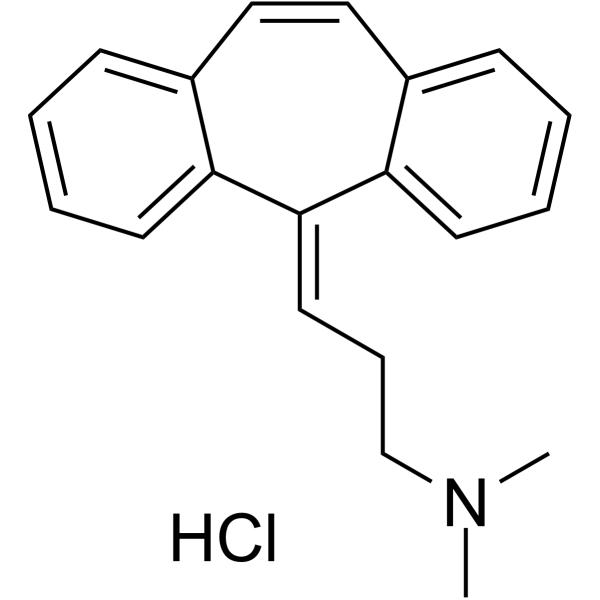
Cyclobenzaprine (MK130) hydrochloride is an orally active 5-HT2 receptor antagonist. Cyclobenzaprine hydrochloride acts centrally, providing skeletal muscle relaxation, alleviating muscle spasms, and reducing pain. Cyclobenzaprine hydrochloride also possesses antiparasitic activity. Cyclobenzaprine hydrochloride holds promise for research in the fields of acute, painful skeletal muscle disorders and infectious diseases.
For research use only. We do not sell to patients.
- Purity : 99.95%
- CAS No.: 6202-23-9
- Formula: C20H22ClN
- Molecular Weight:311.85
-
Storage:
4°C, sealed storage, away from moisture
* In solvent : -80°C, 6 months; -20°C, 1 month (sealed storage, away from moisture)

To place orders, for customer services and technical support, please contact: MedChemExpress USA
Tel: 609-228-6898 E-mail: [email protected] [email protected]


-
 Biological Activity
-
Chemical Information
-
Solvent & Solubility
- Purity & Documentation
- References
-
 Help & FAQs


-
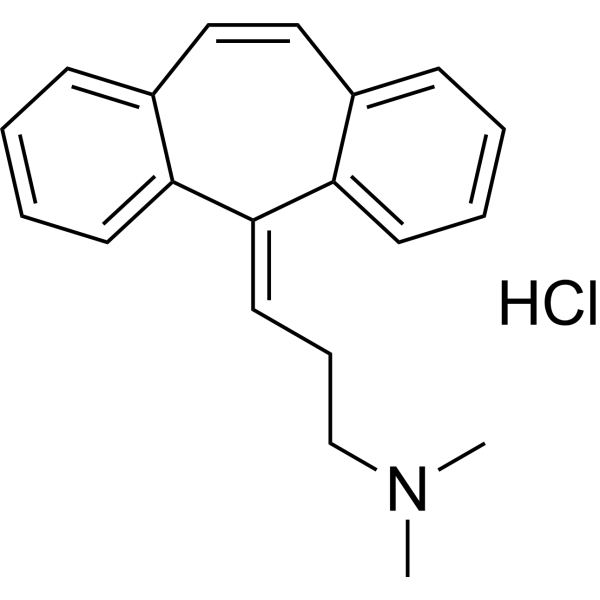
HY-B0740R
Cyclobenzaprine hydrochloride (Standard) -
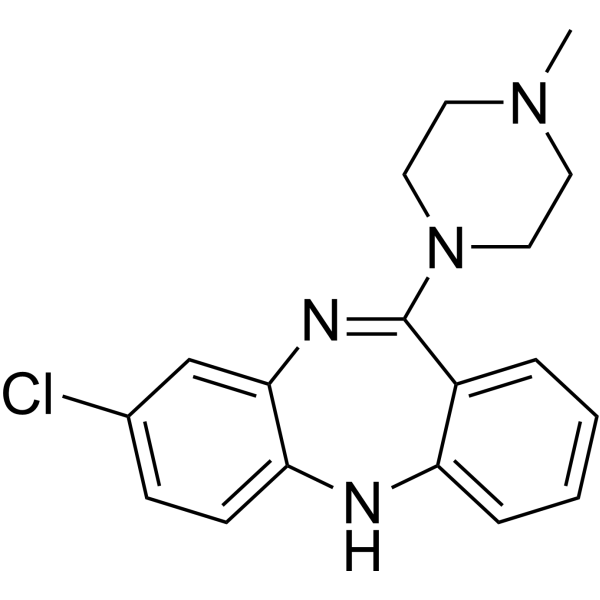
HY-14539
Clozapine -
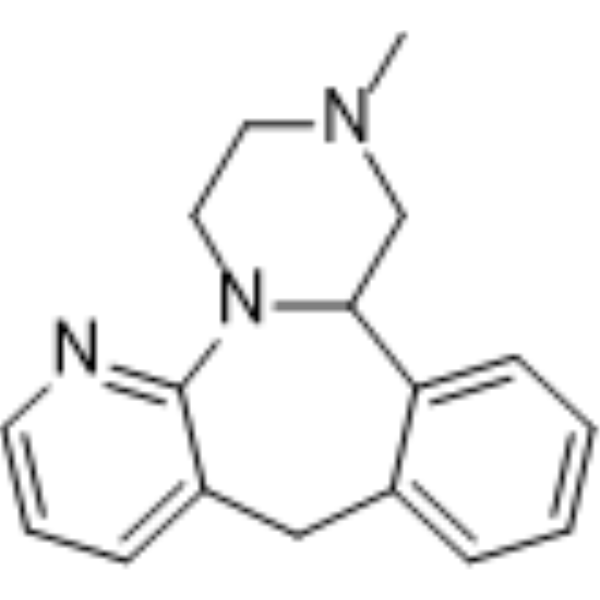
HY-B0352
Mirtazapine -
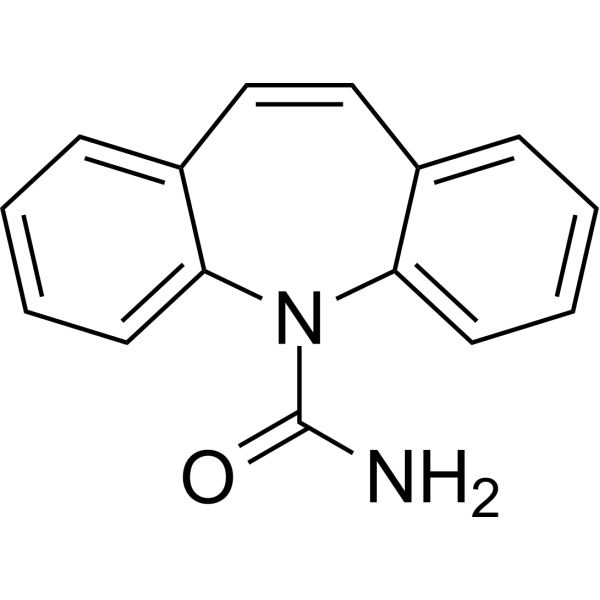
HY-B0246
Carbamazepine -
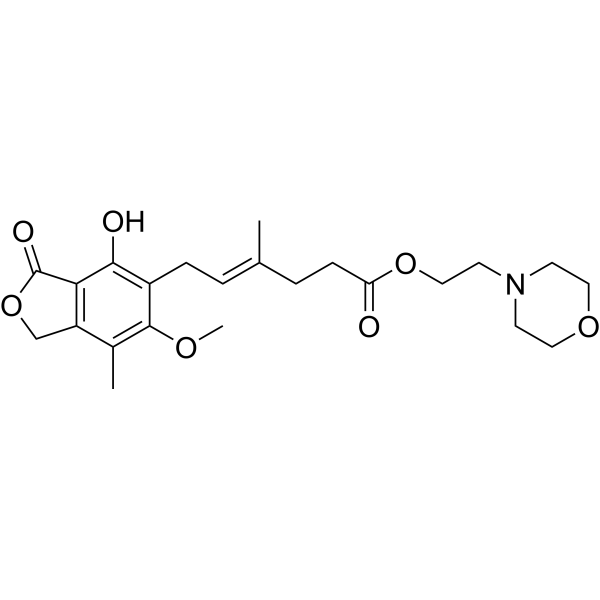
HY-B0199
Mycophenolate Mofetil -
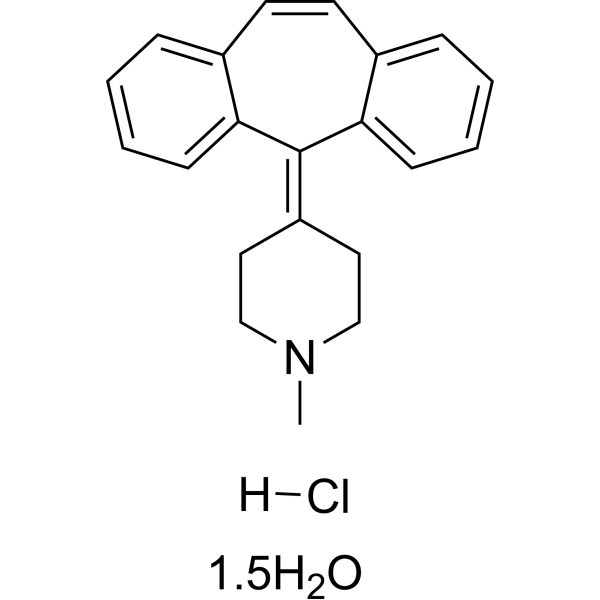
HY-B1165
Cyproheptadine hydrochloride sesquihydrate -
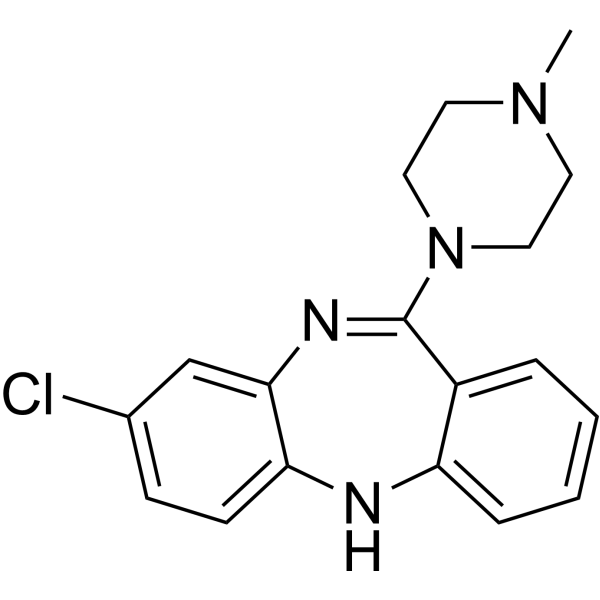
HY-14539R
Clozapine (Standard) -
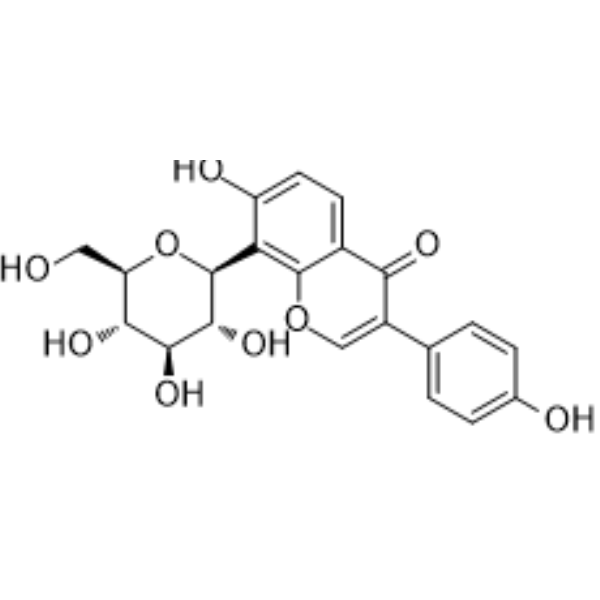
HY-N0145
Puerarin -
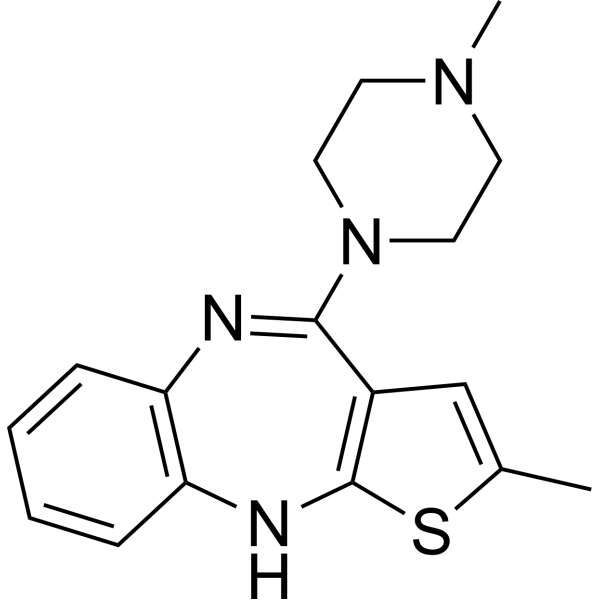
HY-14541
Olanzapine -

HY-B0246R
Carbamazepine (Standard) -
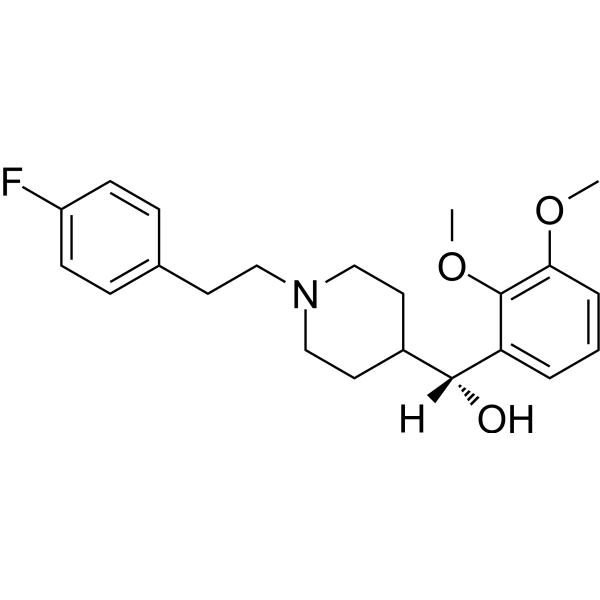
HY-14940
Volinanserin -
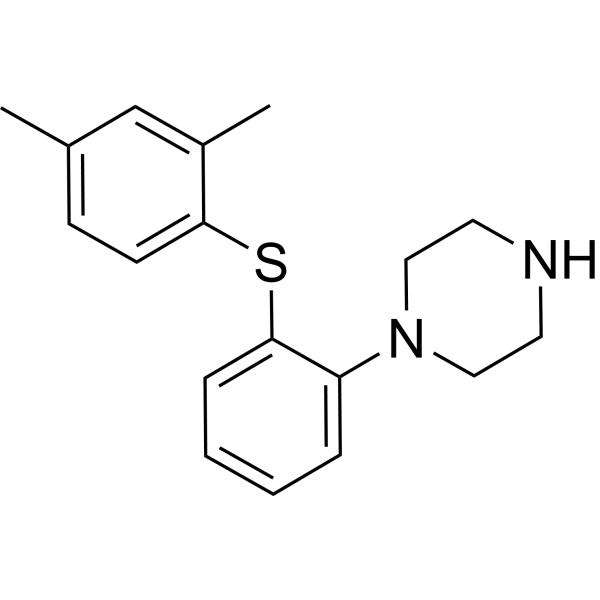
HY-15414
Vortioxetine


Biological Activity
Description
IC50 & Target
[1]|
5-HT2 Receptor |
In Vitro
Cyclobenzaprine (0-50 μM, 72 h) demonstrates a concentration-dependent activity in Leishmania infantum promastigotes growth, with an IC50 value of 14.5 μM[4]. Cyclobenzaprine (0-50 μM, 72 h) reduces the number of intracellular amastigotes in Leishmania infantum-infected macrophages, with an IC50 value of 12.6 μM[4]. Cyclobenzaprine (0-50 μM, 6 h) induces oxidative stress in Leishmania infantum in a concentration- and time-dependent manner[4].
MedChemExpress (MCE) has not independently confirmed the accuracy of these methods. They are for reference only.
In Vivo
MedChemExpress (MCE) has not independently confirmed the accuracy of these methods. They are for reference only.
-
Animal Model:Spinalized Male Wistar rats; Non-spinalized/Intact Male Wistar rats[5]
-
Dosage:0.3, 1.0, 3.0 mg/kg
-
Administration:Intravenous injection (i.v.), single dose
-
Result:Dose-dependently reduced the monosynaptic reflex amplitude in non-spinalized rats, whereas it did not change the monosynaptic reflex amplitude in spinalized rats. Significantly inhibited the effect of the 5-HT2 receptor agonist DOI at the dose of 1 mg/kg, which had significantly increased the monosynaptic reflex in spinalized rats at 5 minutes.
-
Animal Model:Leishmania infantum-infected BALB/c mice model[3]
-
Dosage:12.32, 24.64 and 49.28 mg/kg
-
Administration:Oral gavage (p.o.), once daily for 5 days
-
Result:Was effective in reducing the parasite load by 40.4% and 66.7% in spleen at 24.64 and 49.28 mg/kg, respectively and by 85.6% and 89.3% in liver at 24.64 and 49.28 mg/kg.


Chemical Information
-
CAS No. 6202-23-9
-
Appearance Solid
-
Molecular Weight 311.85
-
Formula C20H22ClN
-
Color White to off-white
-
SMILES
CN(C)CC/C=C1C2=CC=CC=C2C=CC3=CC=CC=C\13.Cl
-
Synonyms
MK130 hydrochloride
-
Shipping
Room temperature in continental US; may vary elsewhere.
-
Storage
4°C, sealed storage, away from moisture
* In solvent : -80°C, 6 months; -20°C, 1 month (sealed storage, away from moisture)


Solvent & Solubility
In Vitro:
H2O : ≥ 100 mg/mL (320.67 mM)
DMSO : 50 mg/mL (160.33 mM; Need ultrasonic; Hygroscopic DMSO has a significant impact on the solubility of product, please use newly opened DMSO)
* "≥" means soluble, but saturation unknown.
Please refer to the solubility information to select the appropriate solvent. Once prepared, please aliquot and store the solution to prevent product inactivation from repeated freeze-thaw cycles.
Storage method and period of stock solution: -80°C, 6 months; -20°C, 1 month (sealed storage, away from moisture). When stored at -80°C, please use it within 6 months. When stored at -20°C, please use it within 1 month.
* Note: If you choose water as the stock solution, please dilute it to the working solution, then filter and sterilize it with a 0.22 μm filter before use.
Please refer to the solubility information to select the appropriate solvent. Once prepared, please aliquot and store the solution to prevent product inactivation from repeated freeze-thaw cycles.
Storage method and period of stock solution: -80°C, 6 months; -20°C, 1 month (sealed storage, away from moisture). When stored at -80°C, please use it within 6 months. When stored at -20°C, please use it within 1 month.
* Note: If you choose water as the stock solution, please dilute it to the working solution, then filter and sterilize it with a 0.22 μm filter before use.
Concentration (start) × Volume (start) = Concentration (final) × Volume (final)
In Vivo:
Select the appropriate dissolution method based on your experimental animal and administration route.
- For the following dissolution methods, please ensure to first prepare a clear stock solution using an In Vitro approach and then sequentially add co-solvents:
- To ensure reliable experimental results, the clarified stock solution can be appropriately stored based on storage conditions. As for the working solution for In Vivo experiments, it is recommended to prepare freshly and use it on the same day.
- The percentages shown for the solvents indicate their volumetric ratio in the final prepared solution. If precipitation or phase separation occurs during preparation, heat and/or sonication can be used to aid dissolution.
Add each solvent one by one: 10% DMSO 40% PEG300 5% Tween-80 45% Saline
Solubility: ≥ 2.5 mg/mL (8.02 mM); Clear solution
This protocol yields a clear solution of ≥ 2.5 mg/mL (saturation unknown).
Taking 1 mL working solution as an example, add 100 μL DMSO stock solution (25.0 mg/mL) to 400 μL PEG300, and mix evenly; then add 50 μL Tween-80 and mix evenly; then add 450 μL Saline to adjust the volume to 1 mL.
Preparation of Saline: Dissolve 0.9 g sodium chloride in ddH₂O and dilute to 100 mL to obtain a clear Saline solution.
Add each solvent one by one: 10% DMSO 90% (20% SBE-β-CD in Saline)
Solubility: ≥ 2.5 mg/mL (8.02 mM); Clear solution
This protocol yields a clear solution of ≥ 2.5 mg/mL (saturation unknown).
Taking 1 mL working solution as an example, add 100 μL DMSO stock solution (25.0 mg/mL) to 900 μL 20% SBE-β-CD in Saline, and mix evenly.
Preparation of 20% SBE-β-CD in Saline (4°C, storage for one week): 2 g SBE-β-CD powder is dissolved in 10 mL Saline, completely dissolve until clear.
For the following dissolution methods, please prepare the working solution directly:
It is recommended to prepare fresh solutions and use them promptly within a short period of time.
The percentages shown for the solvents indicate their volumetric ratio in the final prepared solution. If precipitation or phase separation occurs during preparation, heat and/or sonication can be used to aid dissolution.
Add each solvent one by one: PBS
Solubility: 110 mg/mL (352.73 mM); Clear solution; Need ultrasonic
In Vivo Dissolution Calculator
Please enter the basic information of animal experiments:
-
-
-
-
Recommended: Prepare an additional quantity of animals to account for potential losses during experiments.
Working solution concentration: 0.22 mg/mL
This product has good water solubility, please refer to the measured solubility data in water/PBS/Saline for details.


Purity & Documentation
-
Data Sheet (285 KB)
-
SDS (796 KB)
- English - EN (796 KB)
- Français - FR (796 KB)
- Deutsch - DE (796 KB)
- Norwegian - NO (796 KB)
- Español - ES (796 KB)
- Swedish - SV (796 KB)
- Italian - IT (796 KB)
- Korean - KR (796 KB)
- Portuguese - PT (796 KB)
-
Handling Instructions (2659 KB)
References
[1]. Honda, M., T. Nishida, and H. Ono, Tricyclic analogs cyclobenzaprine, amitriptyline and cyproheptadine inhibit the spinal reflex transmission through 5-HT(2) receptors. Eur J Pharmacol, 2003. 458(1-2): p. 91-9. [Content Brief]
[2]. Borenstein D G & Korn S. Efficacy of a low-dose regimen of cyclobenzaprine hydrochloride in acute skeletal muscle spasm: results of two placebo-controlled trials[J]. Clinical therapeutics, 2003, 25(4): 1056-1073. [Content Brief]
[3]. Share N N, et al. Cyclobenzaprine: a novel centrally acting skeletal muscle relaxant[J]. Neuropharmacology, 1975, 14(9): 675-684. [Content Brief]
[4]. Cunha-Júnior EF, et al. Cyclobenzaprine Raises ROS Levels in Leishmania infantum and Reduces Parasite Burden in Infected Mice. PLoS Negl Trop Dis. 2017 Jan 3;11(1):e0005281. [Content Brief]
[5]. Kobayashi, H., Y. Hasegawa, and H. Ono, Cyclobenzaprine, a centrally acting muscle relaxant, acts on descending serotonergic systems. Eur J Pharmacol, 1996. 311(1): p. 29-35. [Content Brief]


Complete Stock Solution Preparation Table
Please refer to the solubility information to select the appropriate solvent. Once prepared, please aliquot and store the solution to prevent product inactivation from repeated freeze-thaw cycles.
Storage method and period of stock solution: -80°C, 6 months; -20°C, 1 month (sealed storage, away from moisture). When stored at -80°C, please use it within 6 months. When stored at -20°C, please use it within 1 month.
| Optional Solvent | Concentration Solvent Mass | 1 mg | 5 mg | 10 mg | 25 mg |
|---|---|---|---|---|---|
| DMSO / H2O | 1 mM | 3.2067 mL | 16.0333 mL | 32.0667 mL | 80.1667 mL |
| 5 mM | 0.6413 mL | 3.2067 mL | 6.4133 mL | 16.0333 mL | |
| 10 mM | 0.3207 mL | 1.6033 mL | 3.2067 mL | 8.0167 mL | |
| 15 mM | 0.2138 mL | 1.0689 mL | 2.1378 mL | 5.3444 mL | |
| 20 mM | 0.1603 mL | 0.8017 mL | 1.6033 mL | 4.0083 mL | |
| 25 mM | 0.1283 mL | 0.6413 mL | 1.2827 mL | 3.2067 mL | |
| 30 mM | 0.1069 mL | 0.5344 mL | 1.0689 mL | 2.6722 mL | |
| 40 mM | 0.0802 mL | 0.4008 mL | 0.8017 mL | 2.0042 mL | |
| 50 mM | 0.0641 mL | 0.3207 mL | 0.6413 mL | 1.6033 mL | |
| 60 mM | 0.0534 mL | 0.2672 mL | 0.5344 mL | 1.3361 mL | |
| 80 mM | 0.0401 mL | 0.2004 mL | 0.4008 mL | 1.0021 mL | |
| 100 mM | 0.0321 mL | 0.1603 mL | 0.3207 mL | 0.8017 mL |
* Note: If you choose water as the stock solution, please dilute it to the working solution, then filter and sterilize it with a 0.22 μm filter before use.


Cyclobenzaprine hydrochloride Related Classifications
HY-B0740 Related Classifications
 Powered by Bioz