



Diiodohydroxyquinoline
Based on 2 publication(s) in Google Scholar
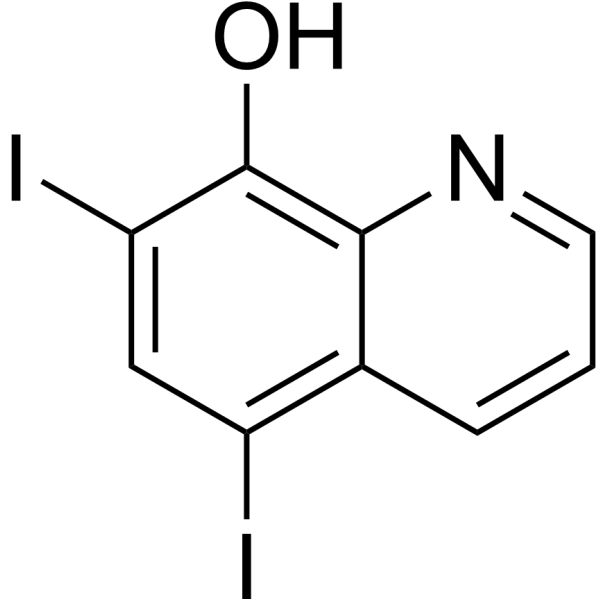
Diiodohydroxyquinoline (Iodoquinol, 5,7-Diiodo-8-hydroxyquinoline, 5,7-Diiodo-8-quinolinol) has an orally active and satisfactory antiparasitic properties. Diiodohydroxyquinoline exhibits mutagenic potential in mice and potent anti-SARS-CoV-2 activity with an EC50 value of 1.38 μM in VeroE6 cells. Diiodohydroxyquinoline's antimutagen is ascorbic acid. Diiodohydroxyquinoline is promising for research in inflammationin, testinal amebiasis, amebic liver abscess and chronic nonspecific diarrheas.
For research use only. We do not sell to patients.
- Purity : 98.0%
- CAS No.: 83-73-8
- Formula: C9H5I2NO
- Molecular Weight:396.95
-
Storage:Powder -20°C, 3 years , 4°C, 2 years ; In solvent -80°C, 2 years , -20°C, 1 year

To place orders, for customer services and technical support, please contact: MedChemExpress USA
Tel: 609-228-6898 E-mail: [email protected] [email protected]


-
 Biological Activity
-
Chemical Information
-
Solvent & Solubility
- Protocols
- Purity & Documentation
- References
-
 Help & FAQs


-
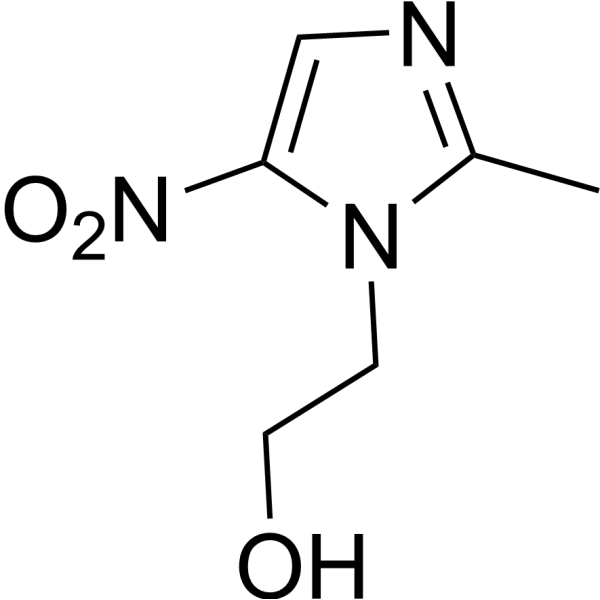
HY-B0318
MetronidazoleAntibiotic -
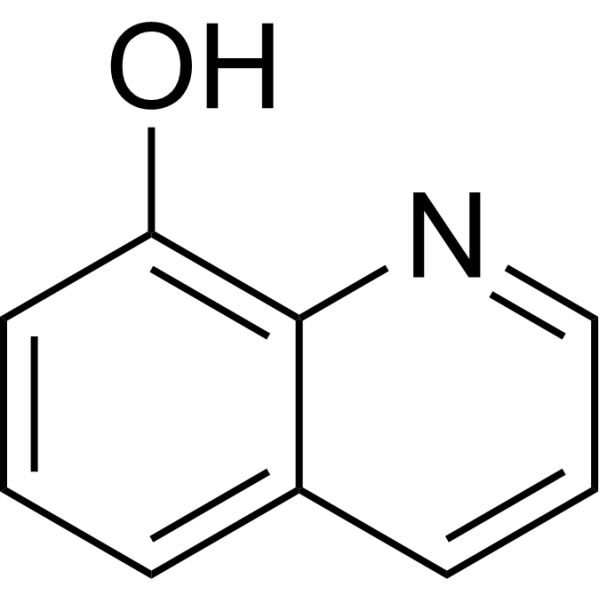
HY-B1005
8-HydroxyquinolineFungicide -
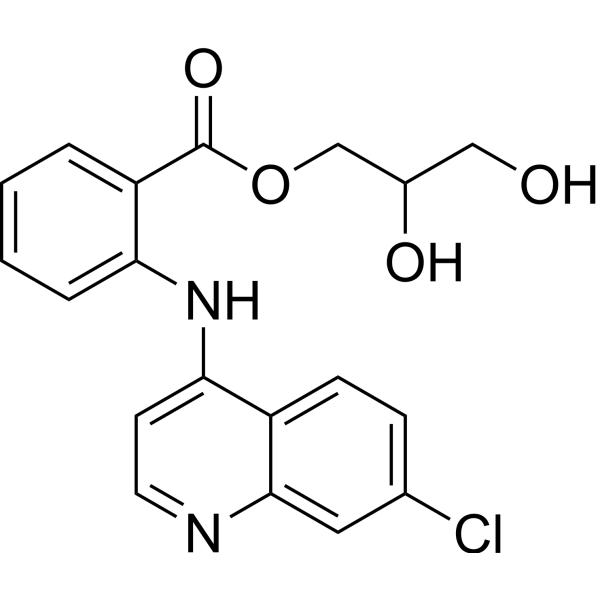
HY-B1153
GlafenineNon-Steroidal Anti-Inflammatory Agent -
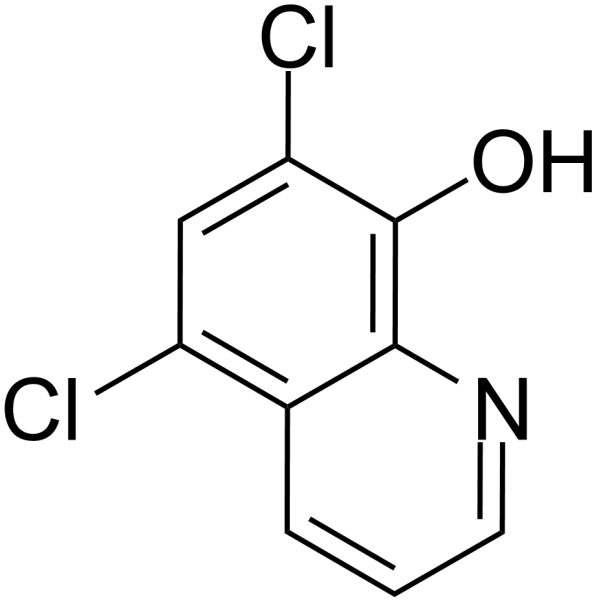
HY-B0295
ChloroxineBacterial Inhibitor -

HY-B1400R
Diiodohydroxyquinoline (Standard)Antibacterial Agent, Antiviral Agent, Mutagenic Agent, Antiparasitic Agent -
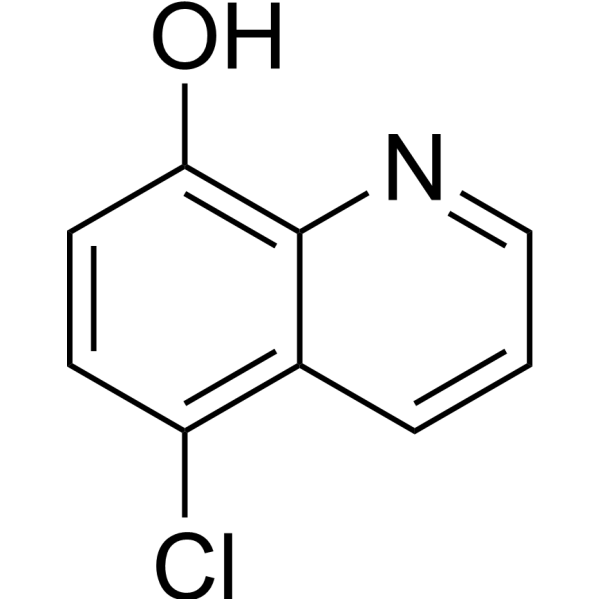
HY-B0963
CloxiquineBacterial/Fungal Inhibitor -
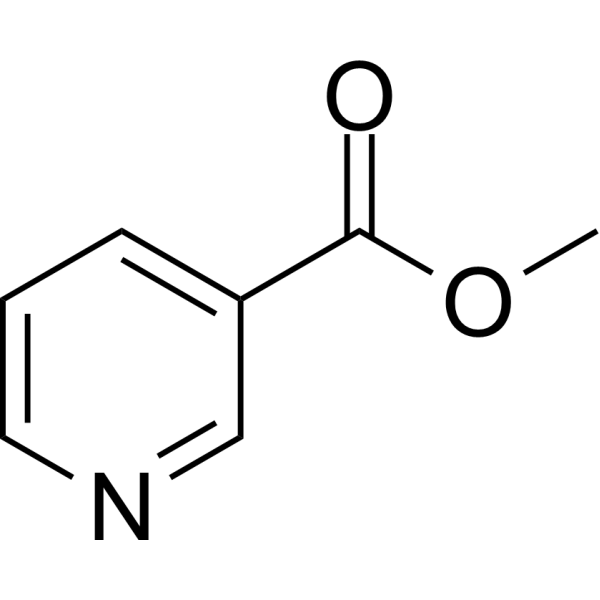
HY-B1695
Methyl nicotinateTopical Preparations Active Compound, Vasodilator -
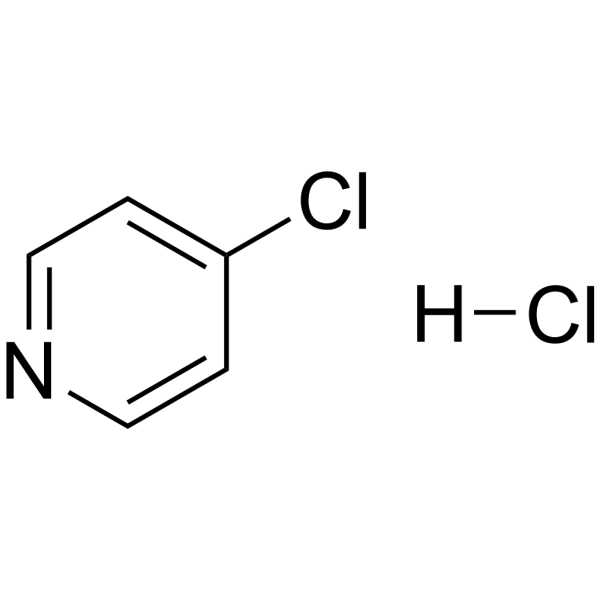
HY-Y0178
4-Chloropyridine hydrochlorideBiochemical Reagent -

HY-B1695R
Methyl nicotinate (Standard)Topical Preparations Active Compound, Vasodilator -
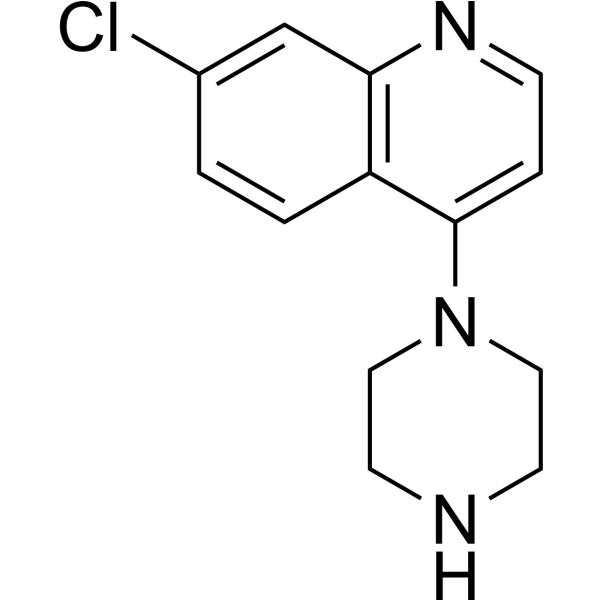
HY-W020111
7-Chloro-4-(piperazin-1-yl)quinolineDrug Intermediate -
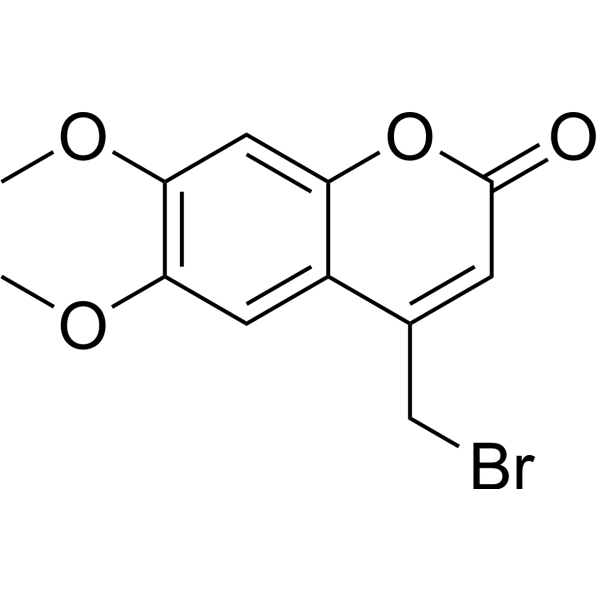
HY-W269179
4-Bromomethyl-6,7-dimethoxycoumarinFluorescent Label -
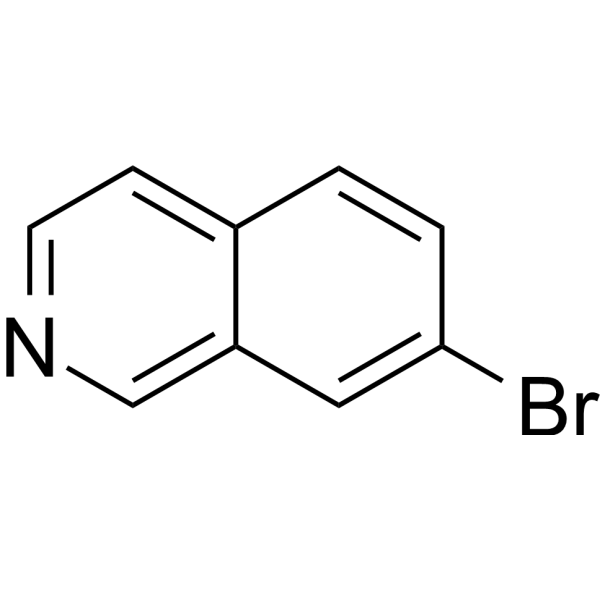
HY-69055
7-BromoisoquinolineSynthetic Precursor
Publications Citing Use of MedChemExpress (MCE) Diiodohydroxyquinoline
MoreAll Parasite Isoforms
More

Biological Activity
Description
Cellular Effect
|
Cell Line

|
Type | Value | Description | References |
|---|---|---|---|---|
| HeLa | IC50 |
>25 μM
Compound: 60; MMV002817
|
Cytotoxicity against human HeLa cells assessed as reduction in cell viability after 48 hrs by resazurin dye based fluorescence assay
Cytotoxicity against human HeLa cells assessed as reduction in cell viability after 48 hrs by resazurin dye based fluorescence assay
|
[PMID: 30647879] |
In Vitro
Diiodohydroxyquinoline (0-10 μM, 72 h) inhibits the viral load, viral antigen expression and infectious viral particle production of SARS-CoV-2, and protected SARS-CoV-2-induced cell damages similar to Remdesivir (HY-104077) in vero E6 cells[3].
MedChemExpress (MCE) has not independently confirmed the accuracy of these methods. They are for reference only. Further protocols information, click here.
-
Cell Line:Caco2 cells
-
Concentration:0-10 μM
-
Incubation Time:48 h
-
Result:Exhibited dose-dependent viral load reduction in SARS-CoV-2-infected Caco2 (human colorectal adenocarcinoma) cell culture supernatants and cell lysates.
In Vivo
MedChemExpress (MCE) has not independently confirmed the accuracy of these methods. They are for reference only.
-
Animal Model:Male Swiss albino mice (6 weeks old and weighing about 20 g) [2]
-
Dosage:80 mg/kg
-
Administration:p.o., a single dose for 24 h
-
Result:Showed mutagenic activity dose-dependently in Swiss albino mice.


Chemical Information
-
CAS No. 83-73-8
-
Appearance Solid
-
Molecular Weight 396.95
-
Formula C9H5I2NO
-
SMILES
OC1=C2N=CC=CC2=C(I)C=C1I
-
Synonyms
Iodoquinol; 5,7-Diiodo-8-hydroxyquinoline; 5,7-Diiodo-8-quinolinol
-
Shipping
Room temperature in continental US; may vary elsewhere.
-
Storage
Powder -20°C 3 years 4°C 2 years In solvent -80°C 2 years -20°C 1 year


Publications (2)
-
Journal Impact Factor
-
Most Recent
-
Environ Sci Technol
IodoFinder: Machine Learning-Guided Recognition of Iodinated Chemicals in Nontargeted LC-MS/MS Analysis. [Abstract]2025 Mar 11;59(9):4530-4539. PMID: 40015982 -
Anal Biochem
Inhibitor screening assay for neurexin-LRRTM adhesion protein interaction involved in synaptic maintenance and neurological disorders. [Abstract]2019 Dec 15:587:113463. PMID: 31574254


Solvent & Solubility
In Vitro:
DMSO : 20.83 mg/mL (52.48 mM; ultrasonic and warming and heat to 60°C; Hygroscopic DMSO has a significant impact on the solubility of product, please use newly opened DMSO)
H2O : < 0.1 mg/mL (insoluble)
Please refer to the solubility information to select the appropriate solvent. Once prepared, please aliquot and store the solution to prevent product inactivation from repeated freeze-thaw cycles.
Storage method and period of stock solution: -80°C, 2 years; -20°C, 1 year. When stored at -80°C, please use it within 2 years. When stored at -20°C, please use it within 1 year.
Please refer to the solubility information to select the appropriate solvent. Once prepared, please aliquot and store the solution to prevent product inactivation from repeated freeze-thaw cycles.
Storage method and period of stock solution: -80°C, 2 years; -20°C, 1 year. When stored at -80°C, please use it within 2 years. When stored at -20°C, please use it within 1 year.
Concentration (start) × Volume (start) = Concentration (final) × Volume (final)
In Vivo:
Select the appropriate dissolution method based on your experimental animal and administration route.
- For the following dissolution methods, please ensure to first prepare a clear stock solution using an In Vitro approach and then sequentially add co-solvents:
- To ensure reliable experimental results, the clarified stock solution can be appropriately stored based on storage conditions. As for the working solution for In Vivo experiments, it is recommended to prepare freshly and use it on the same day.
- The percentages shown for the solvents indicate their volumetric ratio in the final prepared solution. If precipitation or phase separation occurs during preparation, heat and/or sonication can be used to aid dissolution.
Add each solvent one by one: 10% DMSO 40% PEG300 5% Tween-80 45% Saline
Solubility: 2.5 mg/mL (6.30 mM); Suspended solution; Need ultrasonic
This protocol yields a suspended solution of 2.5 mg/mL. Suspended solution can be used for oral and intraperitoneal injection.
Taking 1 mL working solution as an example, add 100 μL DMSO stock solution (25.0 mg/mL) to 400 μL PEG300, and mix evenly; then add 50 μL Tween-80 and mix evenly; then add 450 μL Saline to adjust the volume to 1 mL.
Preparation of Saline: Dissolve 0.9 g sodium chloride in ddH₂O and dilute to 100 mL to obtain a clear Saline solution.
In Vivo Dissolution Calculator
Please enter the basic information of animal experiments:
-
-
-
-
Recommended: Prepare an additional quantity of animals to account for potential losses during experiments.
Please enter your animal formula composition:
-
%DMSO +
Recommended: Keep the proportion of DMSO in working solution below 2% if your animal is weak.
-
%+
-
+%Tween-80 + +
-
%Saline +
The co-solvents required include: DMSO, . All of co-solvents are available by MedChemExpress (MCE). , Tween 80. All of co-solvents are available by MedChemExpress (MCE).
Working solution concentration: 0.22 mg/mL
Method for preparing stock solution: mg drug dissolved in μL DMSO. Stock solution concentration: mg/mL.
1. Take μL DMSO stock solution;
2. Add μL .
μL , mix evenly;
3. Then add μL Tween 80, mix evenly;
4. Then add μL
Please ensure that the stock solution in the first step is dissolved to a clear state, and add co-solvents in sequence. You can use ultrasonic heating (ultrasonic cleaner, recommended frequency 20-40 kHz), vortexing, etc. to assist dissolution.

Protocols
-
Genotoxicity/Mutagenicity Study
The bacterial reverse mutation assay detects point mutations that restore amino-acid prototrophy in auxotrophic Salmonella typhimurium or Escherichia coli tester strains; after exposure to a test article, mutagenic activity is read out as an increased number of revertant colonies on minimal agar compared with the vehicle control. The assay uses tester strains with different mutation targets so that base-substitution and frameshift mutagens can be detected, and testing is performed with and without exogenous mammalian metabolic activation because some chemicals require biotransformation to become mutagenic.


Purity & Documentation
-
Data Sheet (278 KB)
-
SDS (614 KB)
- English - EN (614 KB)
- Français - FR (614 KB)
- Deutsch - DE (614 KB)
- Norwegian - NO (614 KB)
- Español - ES (614 KB)
- Swedish - SV (614 KB)
- Italian - IT (614 KB)
- Korean - KR (614 KB)
- Portuguese - PT (614 KB)
-
Handling Instructions (2659 KB)
References
[1]. Martínez-Castillo M, et al. Flavonoids as a Natural Treatment Against Entamoeba histolytica. Front Cell Infect Microbiol. 2018 Jun 22;8:209. [Content Brief]
[2]. Ghaskadbi S, et al. In vivo antimutagenic effect of ascorbic acid against mutagenicity of the common antiamebic drug diiodohydroxyquinoline[J]. Mutat Res. 1989 Mar;222(3):219-22. [Content Brief]
[3]. Yuan S, et al. Discovery of the FDA-approved drugs bexarotene, cetilistat, diiodohydroxyquinoline, and abiraterone as potential COVID-19 treatments with a robust two-tier screening system[J]. Pharmacol Res. 2020 Sep;159:104960. [Content Brief]
[5]. Cohlan SQ. Chronic nonspecific diarrhea in infants and children treated with diiodohydroxyquinoline. Pediatrics. 1956 Sep;18(3):424-32. [Content Brief]


Complete Stock Solution Preparation Table
Please refer to the solubility information to select the appropriate solvent. Once prepared, please aliquot and store the solution to prevent product inactivation from repeated freeze-thaw cycles.
Storage method and period of stock solution: -80°C, 2 years; -20°C, 1 year. When stored at -80°C, please use it within 2 years. When stored at -20°C, please use it within 1 year.
| Optional Solvent | Concentration Solvent Mass | 1 mg | 5 mg | 10 mg | 25 mg |
|---|---|---|---|---|---|
| DMSO | 1 mM | 2.5192 mL | 12.5960 mL | 25.1921 mL | 62.9802 mL |
| 5 mM | 0.5038 mL | 2.5192 mL | 5.0384 mL | 12.5960 mL | |
| 10 mM | 0.2519 mL | 1.2596 mL | 2.5192 mL | 6.2980 mL | |
| 15 mM | 0.1679 mL | 0.8397 mL | 1.6795 mL | 4.1987 mL | |
| 20 mM | 0.1260 mL | 0.6298 mL | 1.2596 mL | 3.1490 mL | |
| 25 mM | 0.1008 mL | 0.5038 mL | 1.0077 mL | 2.5192 mL | |
| 30 mM | 0.0840 mL | 0.4199 mL | 0.8397 mL | 2.0993 mL | |
| 40 mM | 0.0630 mL | 0.3149 mL | 0.6298 mL | 1.5745 mL | |
| 50 mM | 0.0504 mL | 0.2519 mL | 0.5038 mL | 1.2596 mL |


Diiodohydroxyquinoline Related Classifications
HY-B1400 Related Classifications
 Powered by Bioz
Keywords