



Spiramycin
Based on 1 publication(s) in Google Scholar
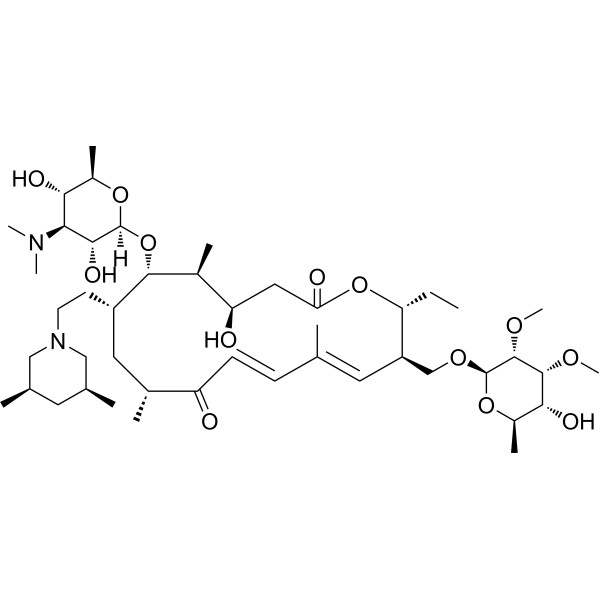
Spiramycin (Rovamycin) is a macrolide antibiotic produced by Streptomyces ambofaciens with against bacteria and Toxoplasma gondii activities, and also has antiparasitic effect. Spiramycin is composed of a 16-member lactone ring, on which three sugars (mycaminose, forosamine, and mycarose) are attached.
For research use only. We do not sell to patients.
- Purity : 97.14%
- CAS No.: 8025-81-8
-
Storage:Powder -20°C, 3 years , 4°C, 2 years ; In solvent -80°C, 6 months , -20°C, 1 month

To place orders, for customer services and technical support, please contact: MedChemExpress USA
Tel: 609-228-6898 E-mail: [email protected] [email protected]


-
 Biological Activity
-
Chemical Information
-
Solvent & Solubility
- Purity & Documentation
- References
-
 Help & FAQs


-
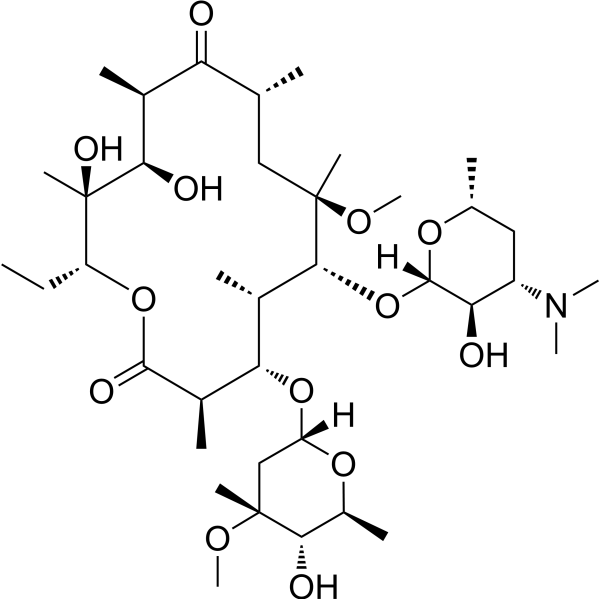
HY-17508
ClarithromycinAntimicrobial Agent -
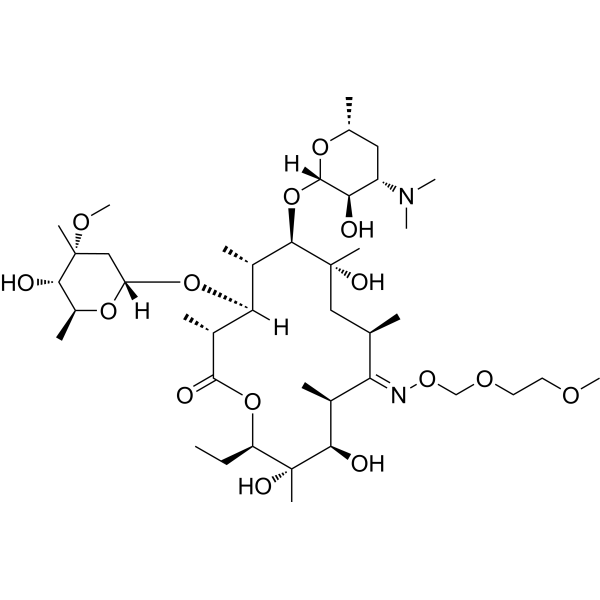
HY-B0435
RoxithromycinBacterial Inhibitor -
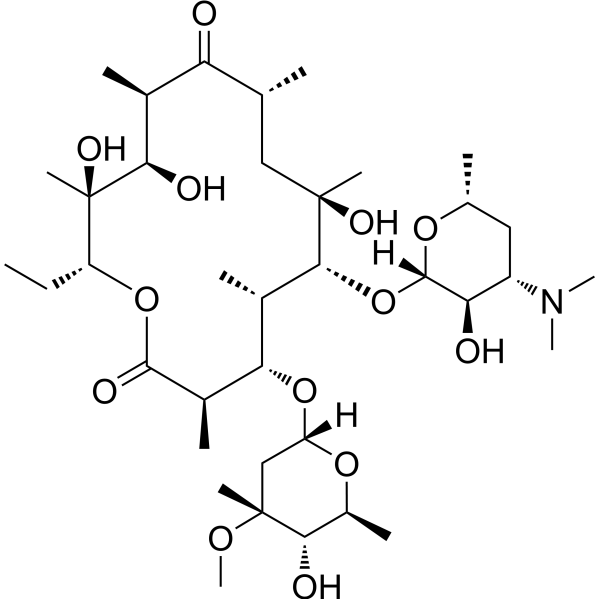
HY-B0220
ErythromycinAntibiotic -
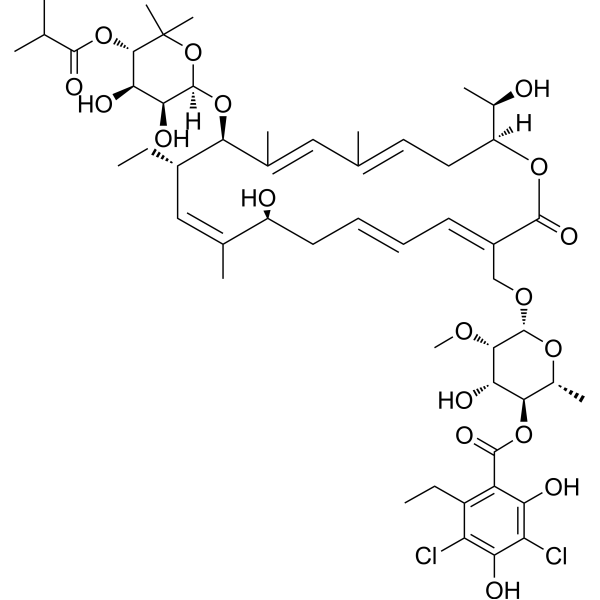
HY-17580
FidaxomicinAntibacterial Agent -
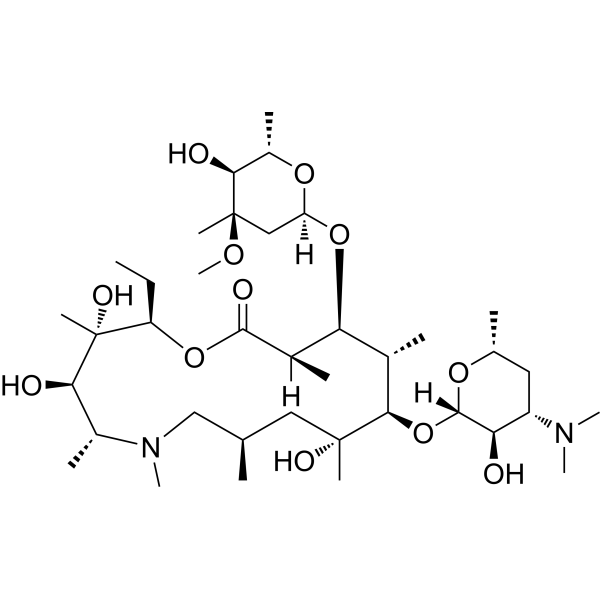
HY-17506
Azithromycin -
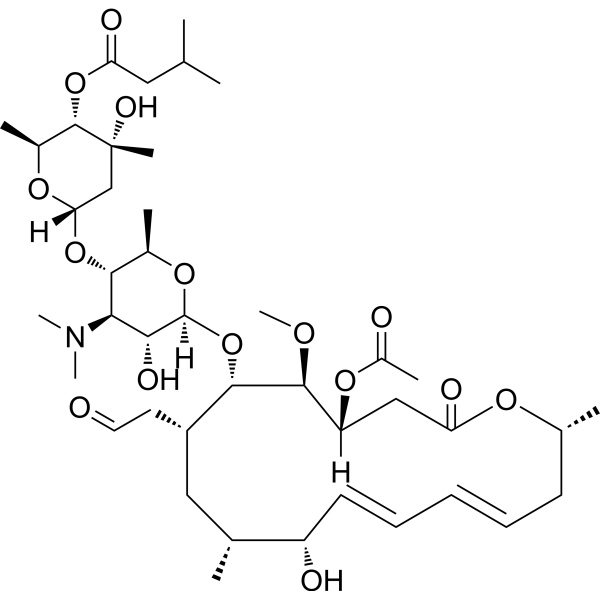
HY-B1920
JosamycinAntibiotic -
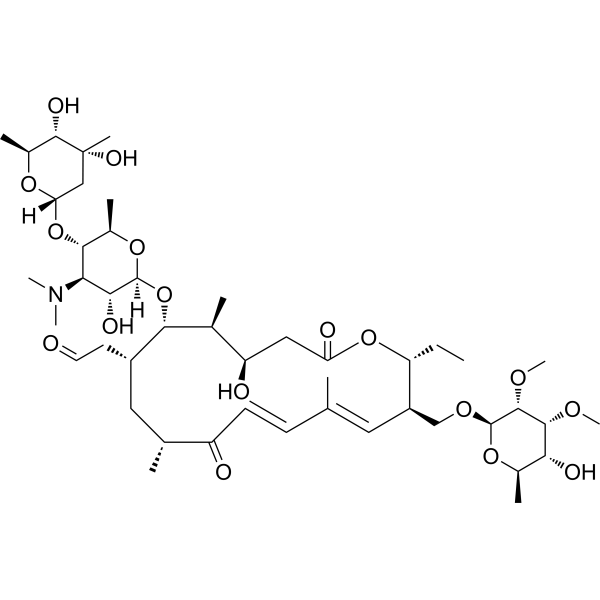
HY-B0519A
TylosinAntibiotic for Poultry -
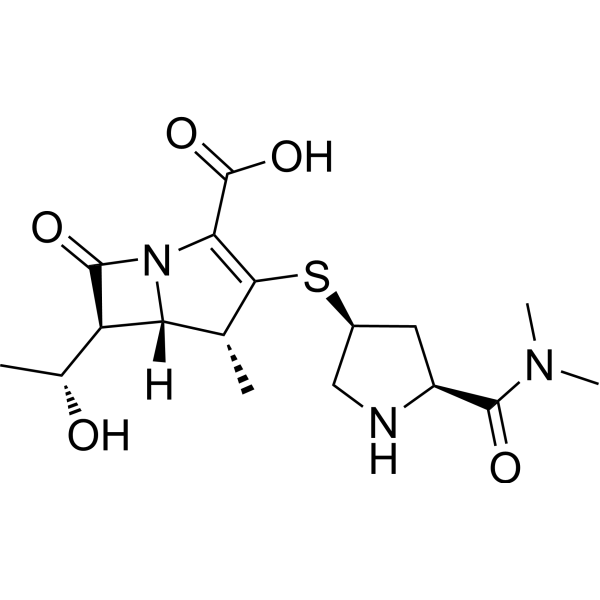
HY-13678
MeropenemAntimicrobial Agent -
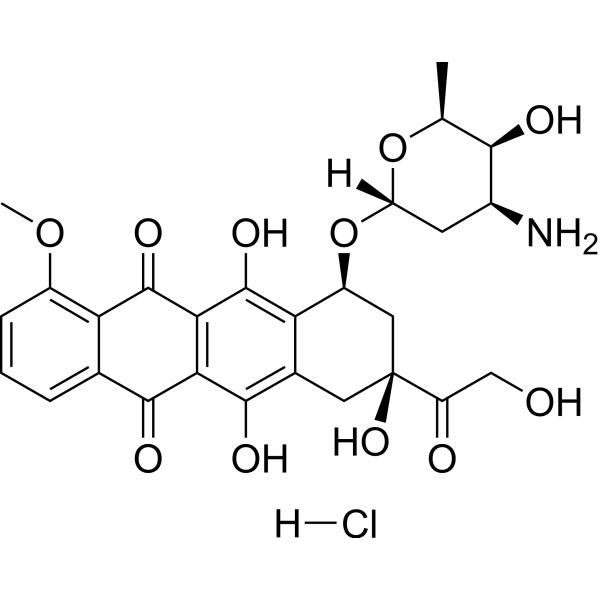
HY-15142
Doxorubicin hydrochlorideTopoisomerase Inhibitor -
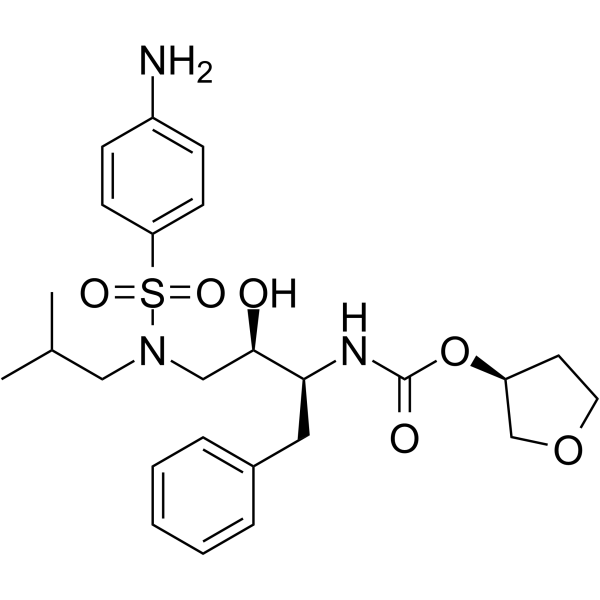
HY-17430
AmprenavirHIV Protease Inhibitor -
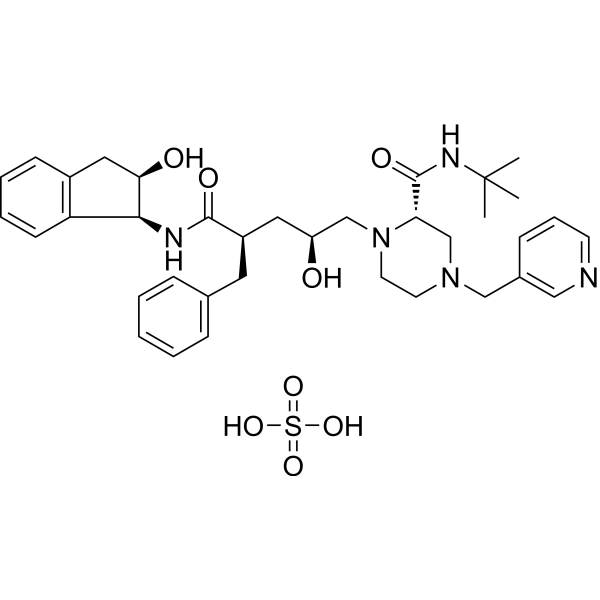
HY-B0689A
Indinavir sulfateHIV Protease Inhibitor -
HY-B0905
TilmicosinBacterial Inhibitor
Publications Citing Use of MedChemExpress (MCE) Spiramycin
MoreAll Parasite Isoforms
MoreAll Antibiotic Isoforms
More

Biological Activity
Description
IC50 & Target
|
Macrolide |
Toxoplasma |
Cellular Effect
|
Cell Line

|
Type | Value | Description | References |
|---|---|---|---|---|
| HeLa | IC50 |
189 μM
Compound: Spiramycin
|
Cytotoxicity against human HeLa cells assessed as cell growth inhibition measured after 24 hrs by MTT assay
Cytotoxicity against human HeLa cells assessed as cell growth inhibition measured after 24 hrs by MTT assay
|
[PMID: 34894691] |
| HeLa | IC50 |
34.41 μM
Compound: 1
|
Cytotoxicity against human HeLa cells assessed as reduction in cell survival after 72 hrs by sulforhodamine B assay
Cytotoxicity against human HeLa cells assessed as reduction in cell survival after 72 hrs by sulforhodamine B assay
|
[PMID: 27501415] |
| HepG2 | IC50 |
30.51 μM
Compound: 1
|
Cytotoxicity against human HepG2 cells assessed as reduction in cell survival after 72 hrs by sulforhodamine B assay
Cytotoxicity against human HepG2 cells assessed as reduction in cell survival after 72 hrs by sulforhodamine B assay
|
[PMID: 27501415] |
| KB | IC50 |
31.26 μM
Compound: 1
|
Cytotoxicity against human KB cells assessed as reduction in cell survival after 72 hrs by sulforhodamine B assay
Cytotoxicity against human KB cells assessed as reduction in cell survival after 72 hrs by sulforhodamine B assay
|
[PMID: 27501415] |
| MCF7 | IC50 |
33.11 μM
Compound: 1
|
Cytotoxicity against human MCF7 cells assessed as reduction in cell survival after 72 hrs by sulforhodamine B assay
Cytotoxicity against human MCF7 cells assessed as reduction in cell survival after 72 hrs by sulforhodamine B assay
|
[PMID: 27501415] |
| NHDF | IC50 |
31.1 μM
Compound: 1
|
Cytotoxicity against HDF assessed as reduction in cell survival after 72 hrs by sulforhodamine B assay
Cytotoxicity against HDF assessed as reduction in cell survival after 72 hrs by sulforhodamine B assay
|
[PMID: 27501415] |
In Vitro
Spiramycin (24 hours; 1-1000 μM; T. gondii infected HeLa cells and HeLa cells) treatment reduces the cytotoxicity, and shows anti-Toxoplasma gondii activity, with IC50 values of 189 μM for HeLa cells; and 262 μM for T. gondii-infected HeLa cells[3].
MedChemExpress (MCE) has not independently confirmed the accuracy of these methods. They are for reference only. .
-
Cell Line:T. gondii infected HeLa cells and HeLa cells
-
Concentration:1-1000 μM
-
Incubation Time:24 hours
-
Result:Reduced the cytotoxicity.
In Vivo
MedChemExpress (MCE) has not independently confirmed the accuracy of these methods. They are for reference only.
-
Animal Model:36 female KM mice with T.gondii[3]
-
Dosage:100 mg/kg
-
Administration:Intraperitoneal injection; every day; for 4 days
-
Result:The number of tachyzoites was significantly reduced. Reduced hepatotoxicity and significantly enhanced antioxidative effects. Granuloma and cyst formation were inhibitied.
Clinical Trial
| NCT Number | Sponsor | Condition | Start Date |
Phase
|
|---|---|---|---|---|
| NCT01329991 | Plexxikon| | 2011-05 | PHASE1 |


Chemical Information
-
CAS No. 8025-81-8
-
Appearance Solid
-
Color White to off-white
-
SMILES
N/A
-
Synonyms
Rovamycin
-
Structure Classification
-
Initial Source
Streptomyces ambofaciens
-
Shipping
Room temperature in continental US; may vary elsewhere.
-
Storage
Powder -20°C 3 years 4°C 2 years In solvent -80°C 6 months -20°C 1 month


Publications (1)
-
Journal Impact Factor
-
Most Recent
-
Cell Prolif
Direct inhibitory effect on viral entry of influenza A and SARS-CoV-2 viruses by azithromycin. [Abstract]2021 Jan;54(1):e12953. PMID: 33211371


Solvent & Solubility
In Vitro:
DMSO : ≥ 100 mg/mL
* "≥" means soluble, but saturation unknown.
In Vivo:
Select the appropriate dissolution method based on your experimental animal and administration route.
- For the following dissolution methods, please ensure to first prepare a clear stock solution using an In Vitro approach and then sequentially add co-solvents:
- To ensure reliable experimental results, the clarified stock solution can be appropriately stored based on storage conditions. As for the working solution for In Vivo experiments, it is recommended to prepare freshly and use it on the same day.
- The percentages shown for the solvents indicate their volumetric ratio in the final prepared solution. If precipitation or phase separation occurs during preparation, heat and/or sonication can be used to aid dissolution.
Add each solvent one by one: 10% DMSO 40% PEG300 5% Tween-80 45% Saline
Solubility: ≥ 2.5 mg/mL; Clear solution
This protocol yields a clear solution of ≥ 2.5 mg/mL (saturation unknown).
Taking 1 mL working solution as an example, add 100 μL DMSO stock solution (25.0 mg/mL) to 400 μL PEG300, and mix evenly; then add 50 μL Tween-80 and mix evenly; then add 450 μL Saline to adjust the volume to 1 mL.
Preparation of Saline: Dissolve 0.9 g sodium chloride in ddH₂O and dilute to 100 mL to obtain a clear Saline solution.
Add each solvent one by one: 10% DMSO 90% (20% SBE-β-CD in Saline)
Solubility: ≥ 2.5 mg/mL; Clear solution
This protocol yields a clear solution of ≥ 2.5 mg/mL (saturation unknown).
Taking 1 mL working solution as an example, add 100 μL DMSO stock solution (25.0 mg/mL) to 900 μL 20% SBE-β-CD in Saline, and mix evenly.
Preparation of 20% SBE-β-CD in Saline (4°C, storage for one week): 2 g SBE-β-CD powder is dissolved in 10 mL Saline, completely dissolve until clear.
In Vivo Dissolution Calculator
Please enter the basic information of animal experiments:
-
-
-
-
Recommended: Prepare an additional quantity of animals to account for potential losses during experiments.
Please enter your animal formula composition:
-
%DMSO +
Recommended: Keep the proportion of DMSO in working solution below 2% if your animal is weak.
-
%+
-
+%Tween-80 + +
-
%Saline +
The co-solvents required include: DMSO, . All of co-solvents are available by MedChemExpress (MCE). , Tween 80. All of co-solvents are available by MedChemExpress (MCE).
Working solution concentration: 0.22 mg/mL
Method for preparing stock solution: mg drug dissolved in μL DMSO. Stock solution concentration: mg/mL.
1. Take μL DMSO stock solution;
2. Add μL .
μL , mix evenly;
3. Then add μL Tween 80, mix evenly;
4. Then add μL
Please ensure that the stock solution in the first step is dissolved to a clear state, and add co-solvents in sequence. You can use ultrasonic heating (ultrasonic cleaner, recommended frequency 20-40 kHz), vortexing, etc. to assist dissolution.


Purity & Documentation
-
Data Sheet (275 KB)
-
SDS (458 KB)
- English - EN (458 KB)
- Français - FR (458 KB)
- Deutsch - DE (458 KB)
- Norwegian - NO (458 KB)
- Español - ES (458 KB)
- Swedish - SV (458 KB)
- Italian - IT (458 KB)
- Korean - KR (458 KB)
- Portuguese - PT (458 KB)
-
Handling Instructions (2659 KB)
References
[1]. Nguyen HC, et al. Post-PKS tailoring steps of the spiramycin macrolactone ring in Streptomyces ambofaciens. Antimicrob Agents Chemother. 2013 Aug;57(8):3836-42. [Content Brief]
[2]. Etewa SE, et al. Assessment of spiramycin-loaded chitosan nanoparticles treatment on acute and chronic toxoplasmosis in mice. J Parasit Dis. 2018 Mar;42(1):102-113. [Content Brief]
[3]. Guo HY, et al. Synthesis and Biological Evaluation of (+)-Usnic Acid Derivatives as Potential Anti-Toxoplasma gondii Agents. J Agric Food Chem. 2019 Aug 28;67(34):9630-9642. [Content Brief]

Calculators
Concentration (start) × Volume (start) = Concentration (final) × Volume (final)


Spiramycin Related Classifications
HY-100593 Related Classifications
 Powered by Bioz