From 11:00 pm to 12:00 pm EST ( 8:00 pm to 9:00 pm PST ) on January 6th, the website will be under maintenance. We are sorry for the inconvenience. Please arrange your schedule properly.
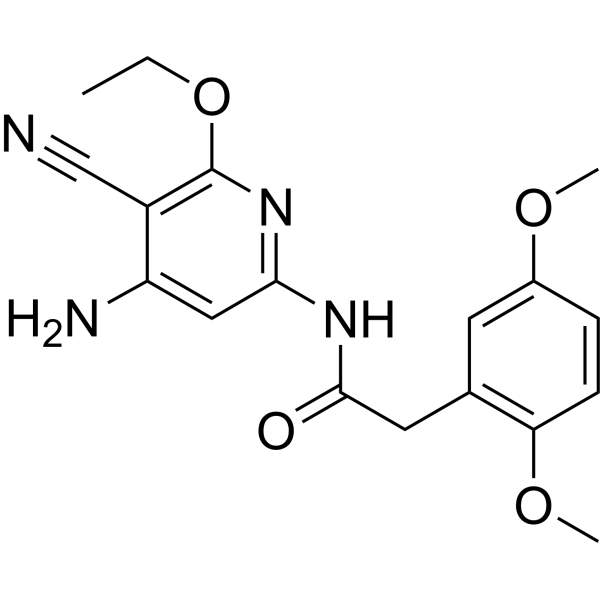
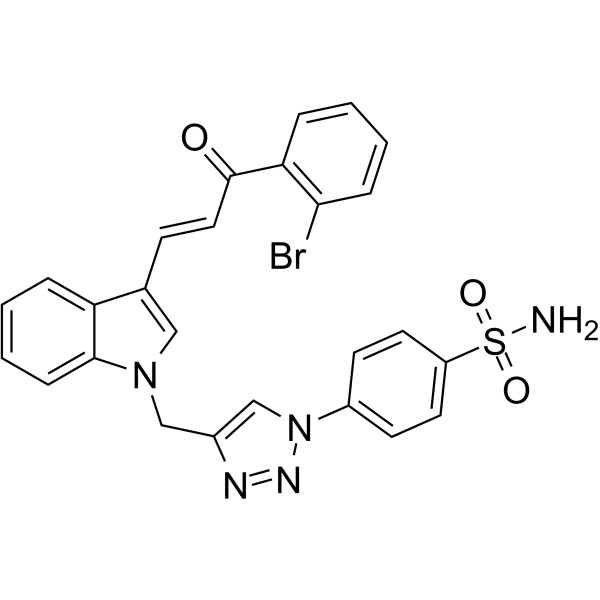
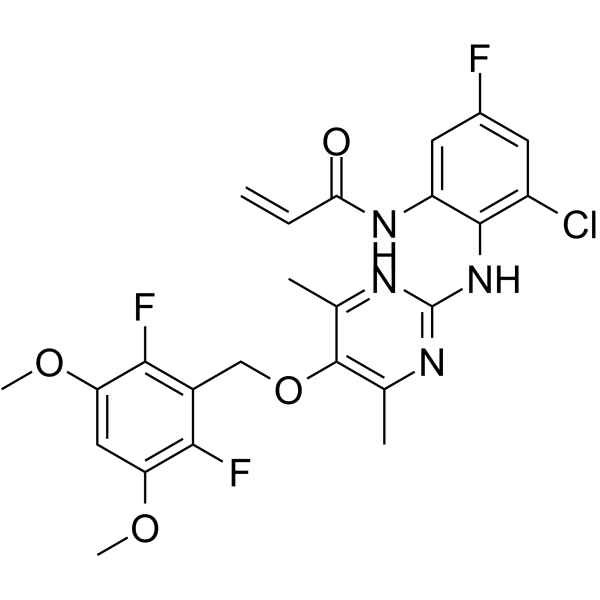
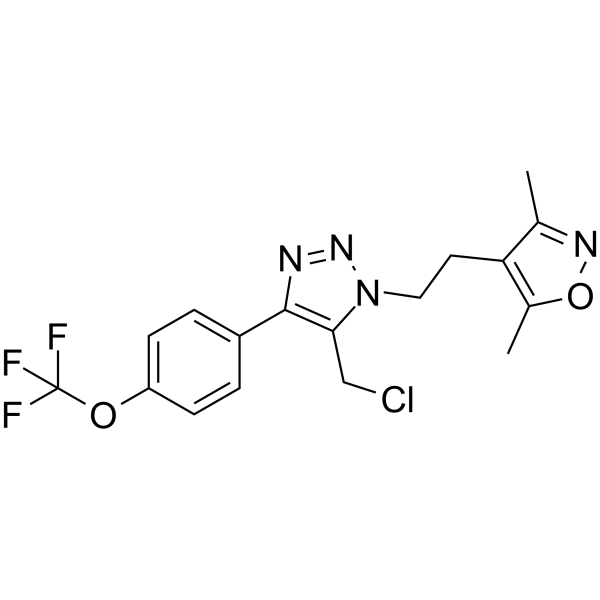
JNK Inhibitor VIII (TCS JNK 6o) is a c-Jun N-terminal kinases (JNK-1, -2, and -3) inhibitor with Ki values of 2 nM, 4 nM, 52 nM, respectively, and has IC50 values of 45 nM and 160 nM for JNK-1 and -2, respectively .
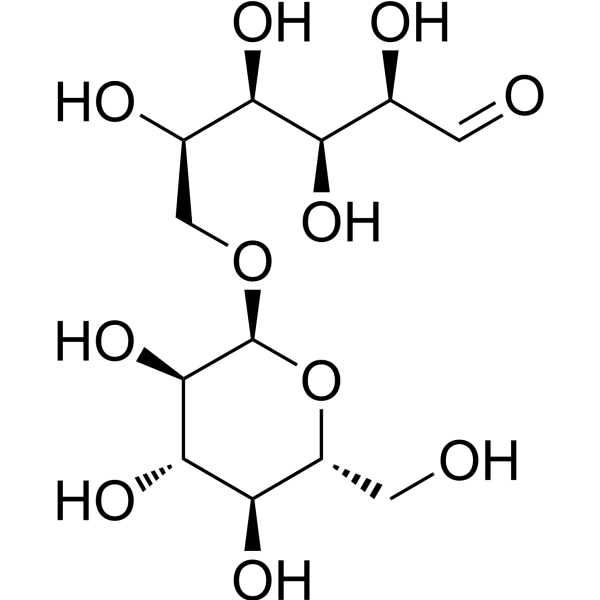
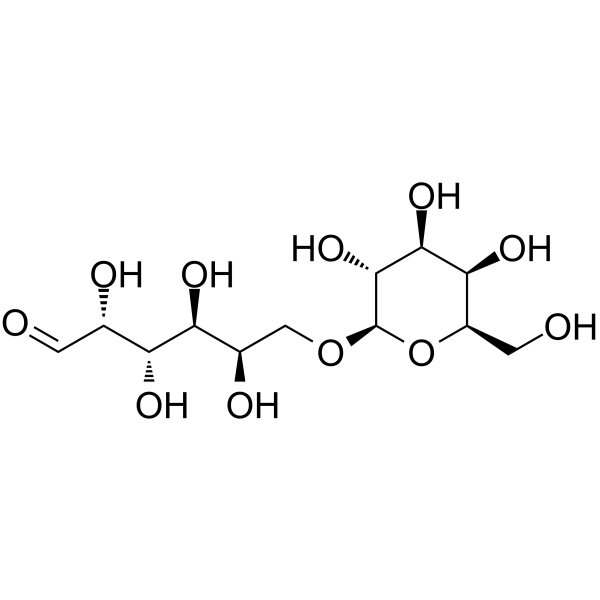
Isomaltose (6-O-α-D-Glucopyranosyl-D-glucose) is a glucose disaccharide. Isomaltose induces G-CSF secretion via heat-induced oxidative polymerization of glucose groups into high-molecular-weight compounds. Isomaltose modulates cecal bacterial cluster structure in mice. Isomaltose exhibits low glycemic index, slow hydrolysis, and prebiotic properties. Isomaltose reduces in vivoCryptosporidium parvum colonization in neonatal mice. Isomaltose can be used for the research of Cryptosporidium parvum infection .
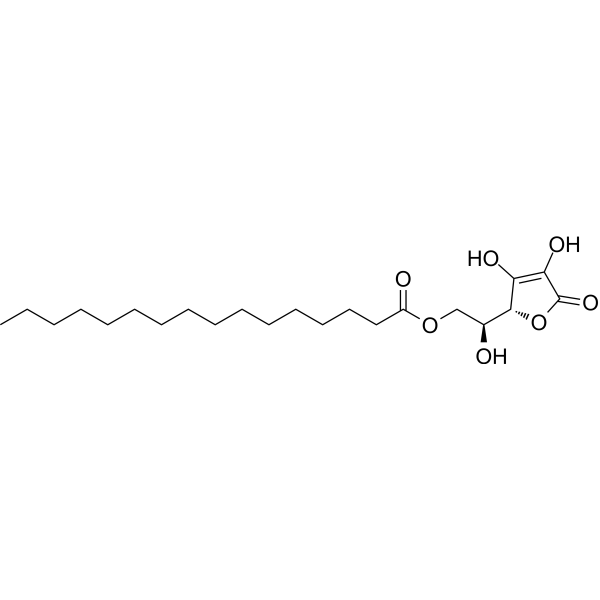
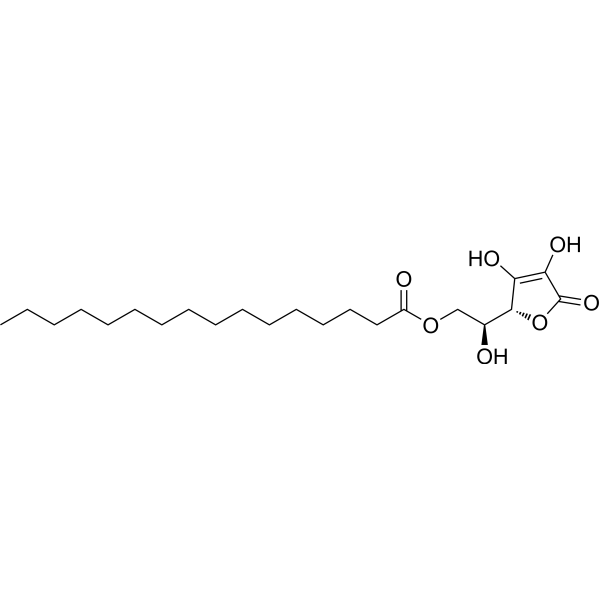
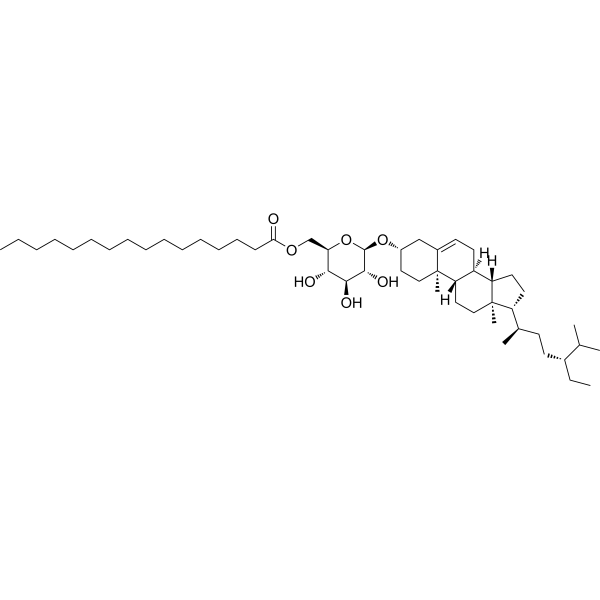
Ascorbyl palmitate is an orally active ester formed from ascorbic acid and palmitic acid, used as an antioxidant and food additive. Ascorbyl palmitate in preventing fat and oil oxidation is more efficient than Butylated hydroxyanisole (HY-B1066) and Butylated hydroxytoluene (HY-Y0172). Ascorbyl palmitate mitigates inhibition of collagen synthesis by select calcium and sodium channel blockers. Ascorbyl palmitate induces Apoptosis in human umbilical vein endothelial cells (HUVECs). Ascorbyl palmitate ameliorates inflammatory diseases by inhibition of NLRP3 inflammasome .
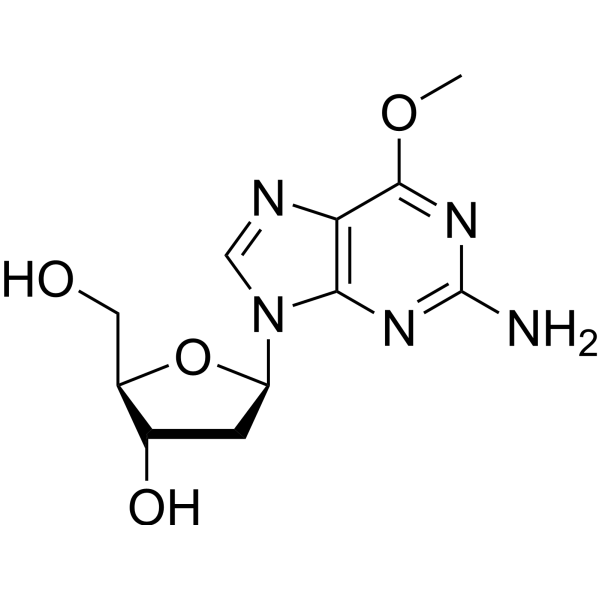
6-O-Methyl Guanosine is a Ribonucleoside. Replacement of the conserved G5, G8 or G12 residues in hammerhead ribozymes with 6-O-Methyl Guanosine reduces kcat without altering Km. 6-O-Methyl Guanosine exerts position-dependent regulatory effects on ribosomal velocity and fidelity. When 6-O-Methyl Guanosine is located at the first or third position of a codon, it decreases the accuracy of tRNA selection. When 6-O-Methyl Guanosine is located at the second position of a codon, it slows down the peptide bond formation rate of cognate aminoacyl-tRNA but does not change the reaction rate of near-cognate aminoacyl-tRNA .
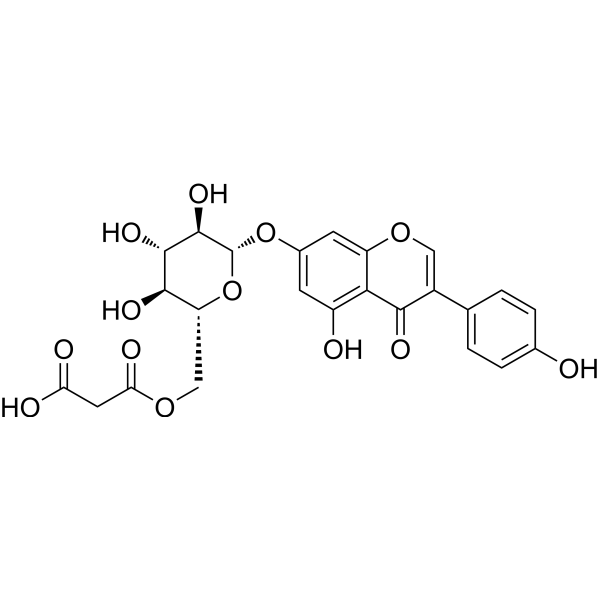
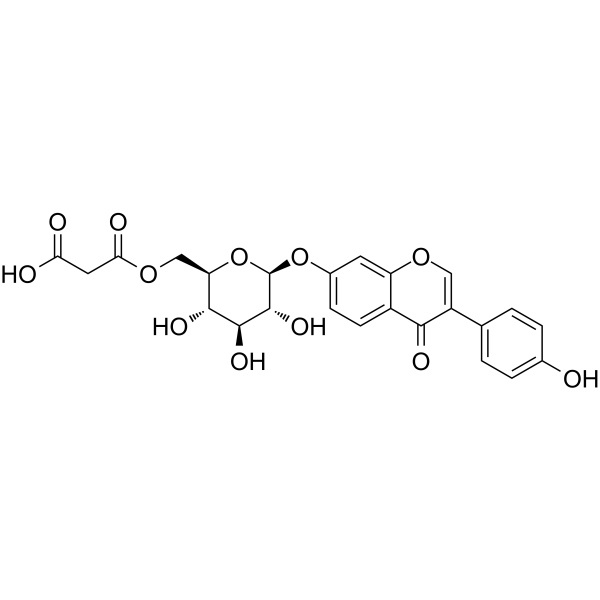
6''-O-Malonylgenistin (Malonylgenistin) is a glycosylated isoflavone and metabolite of Genistin (HY-N0595). 6''-O-Malonylgenistin activates hTAS2R39. 6''-O-Malonylgenistin can be used in the research of bitter taste .
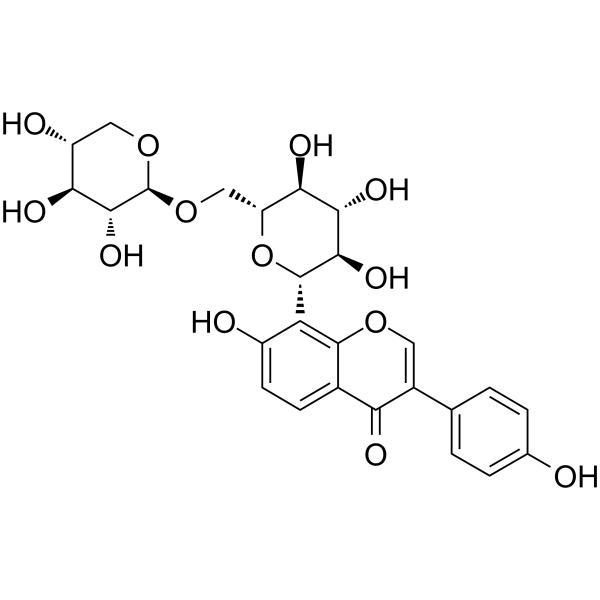
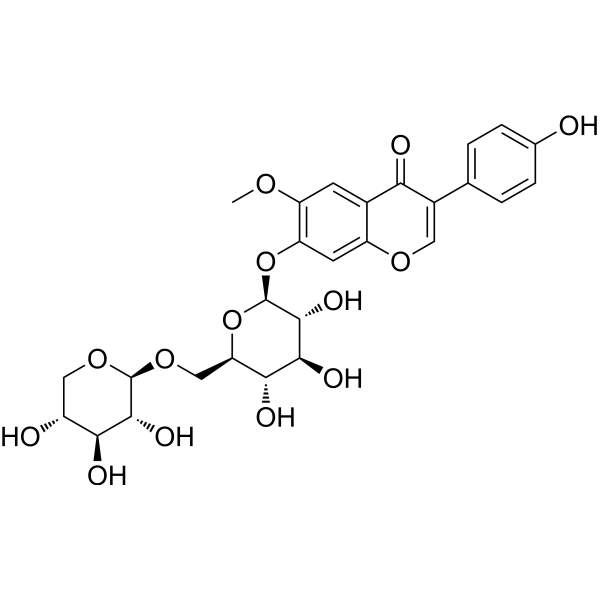
Puerarin 6''-O-Xyloside is one of the major iso-flavones found in P. lobata. Puerarin 6''-O-Xyloside inhibits cancer cells proliferation, induces apoptosis by upregulating cleaved caspase-3, 7, 9, Bax and downregulating Bcl-2 levles and inhibits tumor growth in mice. Puerarin 6''-O-Xyloside has anti-osteoporotic activity in ovariectomized mice. Puerarin 6''-O-Xyloside inhibits mushroom tyrosinase with an IC50 of 513.8 μM. Puerarin 6''-O-Xyloside can be used for the research of human lung carcinoma, osteoporosis, melanosis and melanomar .
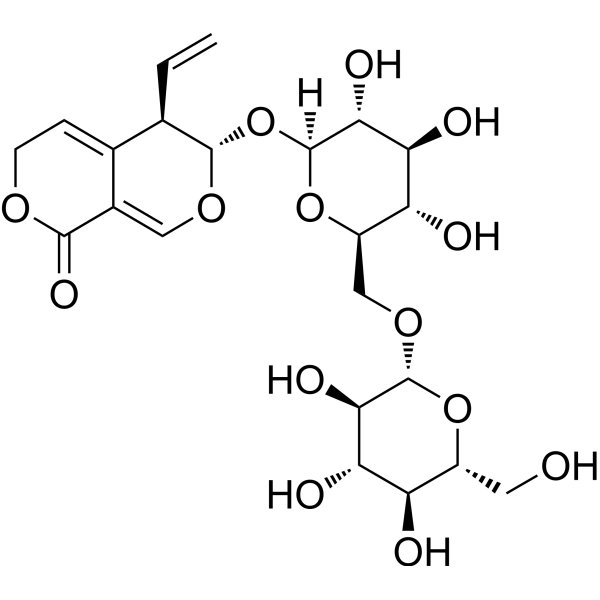
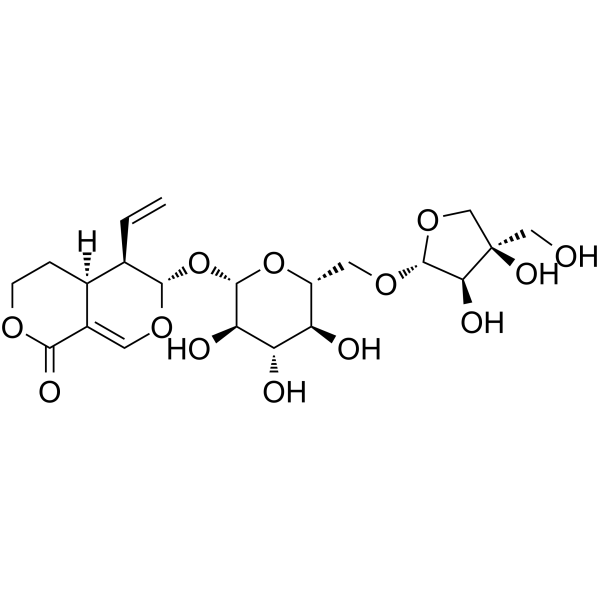
6'-O-beta-D-Glucosylgentiopicroside is a secoiridoid isolated from the roots of G. straminea. 6'-O-beta-D-Glucosylgentiopicroside strongly suppresses N-formyl-methionyl-leucyl-phenylalanine (fMLP)-induced superoxide generation .
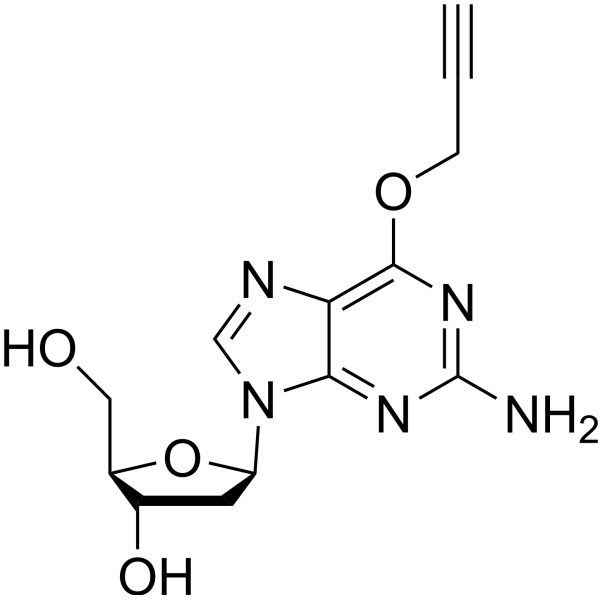
6-O-Propynyl-2'-deoxyguanosine is a click chemistry reagent containing an alkyne group. 6-O-Propynyl-2'-deoxyguanosine can be used for the research of various biochemical .
6-O-Bis-(4,5-dimethoxy-2-nitrobenzyloxyphosphoryl)-D-trehalose is a synthetic compound that interferes with plant sugar signaling. After being absorbed by plants, 6-O-Bis-(4,5-dimethoxy-2-nitrobenzyloxyphosphoryl)-D-trehalose can trigger the release of T6P by light exposure, thereby activating the signaling pathway inside the plant. 6-O-Bis-(4,5-dimethoxy-2-nitrobenzyloxyphosphoryl)-D-trehalose can be used to study plant biosynthesis .
ERK2-IN-4 (Compound 6o) is an effective and selective ERK2 inhibitor with a Ki of 0.006 μM. ERK2-IN-4 inhibits the ERK signaling pathway and can be used in cancer research .
6-O-Oleoyltrehalose is a derivative of trehalose. 6-O-Oleoyltrehalose has biodegradable and low surface tension reduction ability. 6-O-Oleoyltrehalose preserves Lactate dehydrogenase (LDH) activity during freeze/thaw cycles. 6-O-Oleoyltrehalose can be used for stabilizer research .
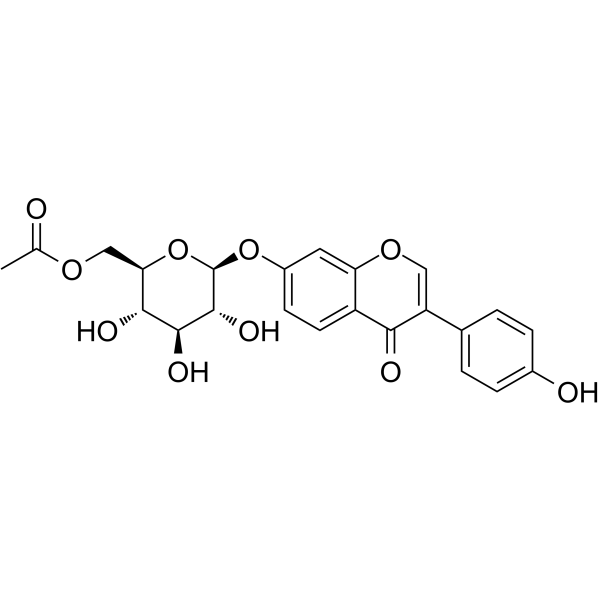
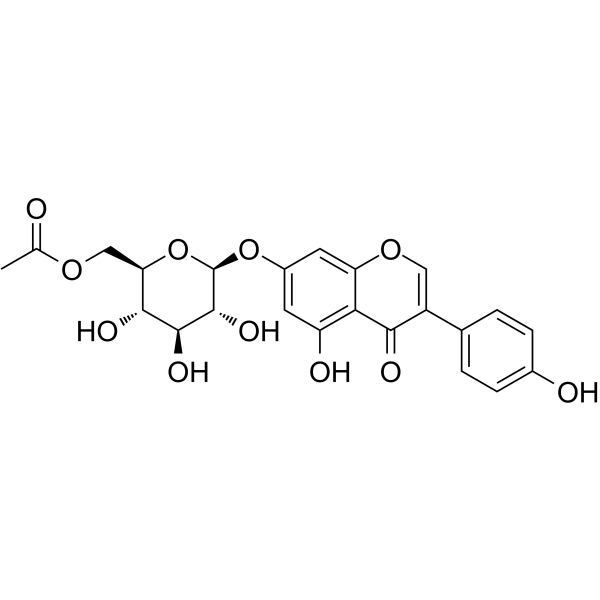
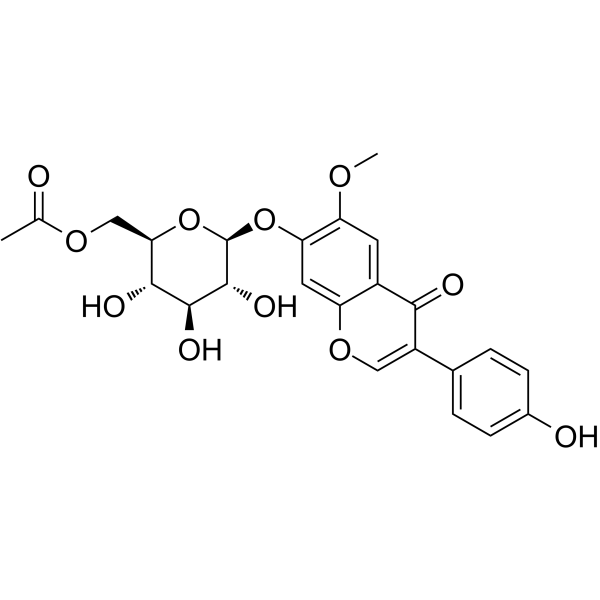
6"-O-Acetylgenistin is an isoflavone glycoside isolated from soybeans. 6"-O-Acetylgenistin significantly inhibits lipid peroxidation in rat liver microsome with an IC50 of 10.6 μM .
6"-O-Acetyldaidzin is an isoflavone glycoside isolated from soybeans. 6"-O-Acetyldaidzin significantly inhibits lipid peroxidation in rat liver microsome with an IC50 of 8.2 μM .
6-O-β-D-Galactopyranosyl-D-galactose, a disaccharide, is a part of the polysaccharide main chain with β-(1→6)-glycoside bonds with a side chain bonded to the main one by the β-(1→3) bond. 6-O-β-D-Galactopyranosyl-D-galactose can be isolated from enzyme-hydrolyzed peach gum .
O6-Methyldeoxy guanosine; DNA adduct is a purine nucleoside analog. Purine nucleoside analogs have broad antitumor activity targeting indolent lymphoid malignancies. Anticancer mechanisms in this process rely on inhibition of DNA synthesis, induction of apoptosis, etc .
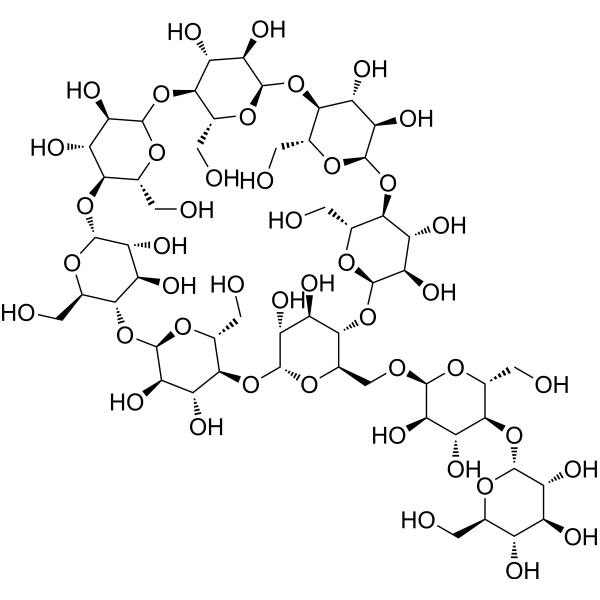
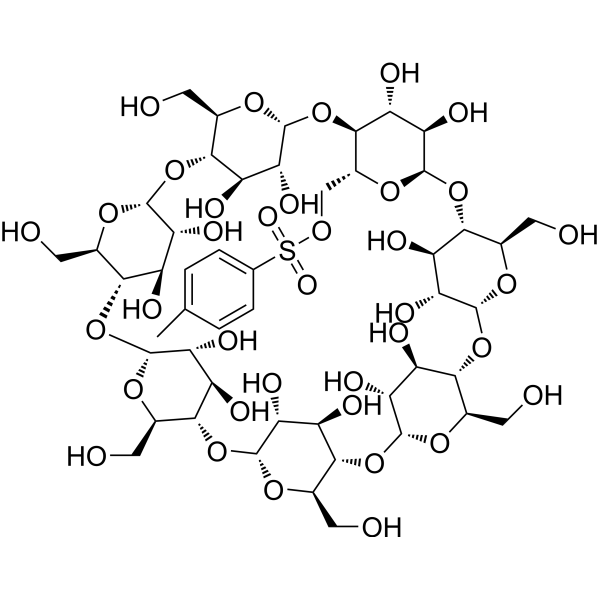
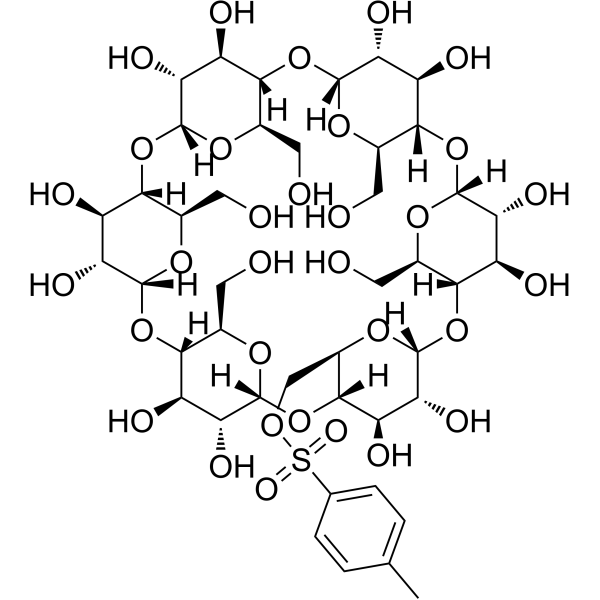
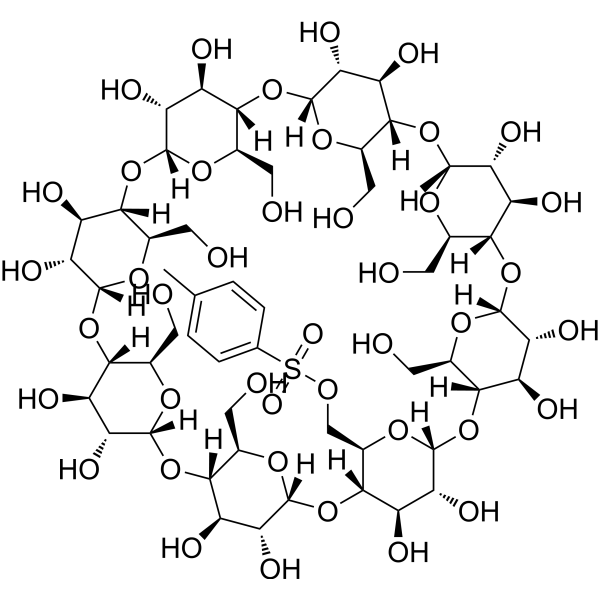
Mono-(6-p-toluenesulfonyl)-β-cyclodextrin is a biochemical reagent that can be used as a biological material or organic compound for life science related research.
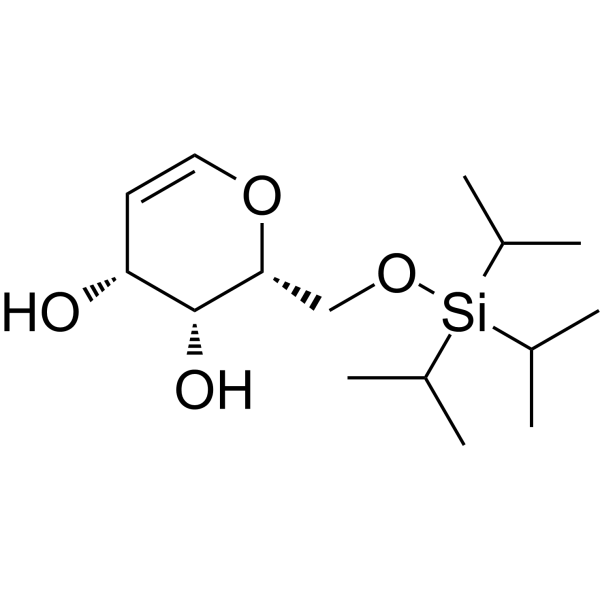
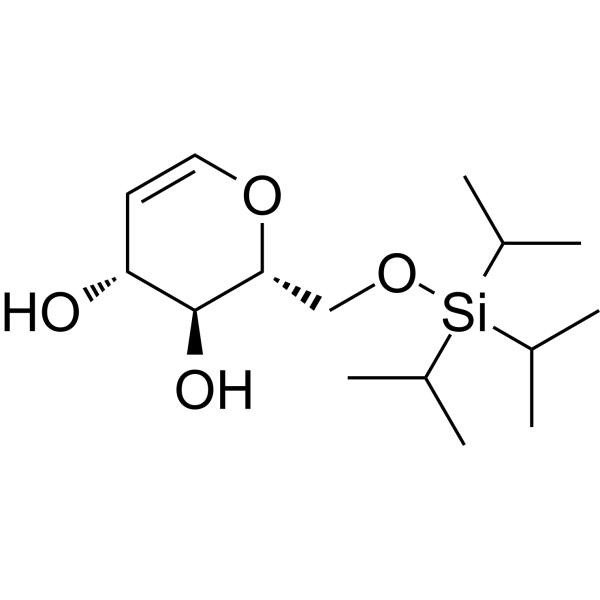
6-O-(Triisopropylsilyl)-D-galactal is a biochemical reagent that can be used as a biological material or organic compound for life science related research.
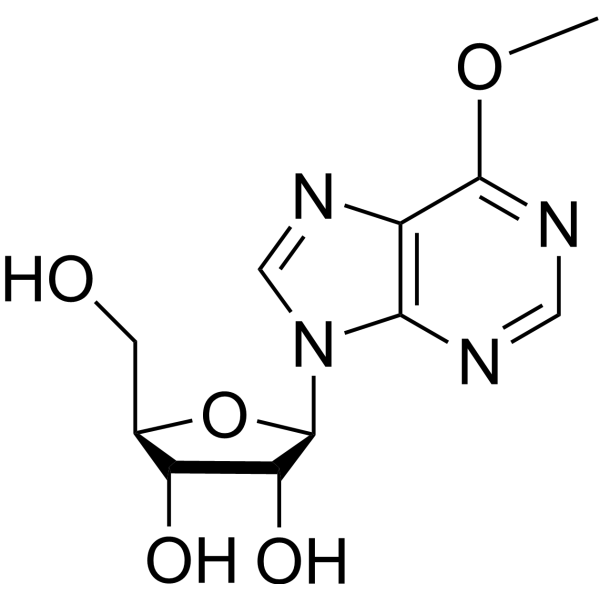
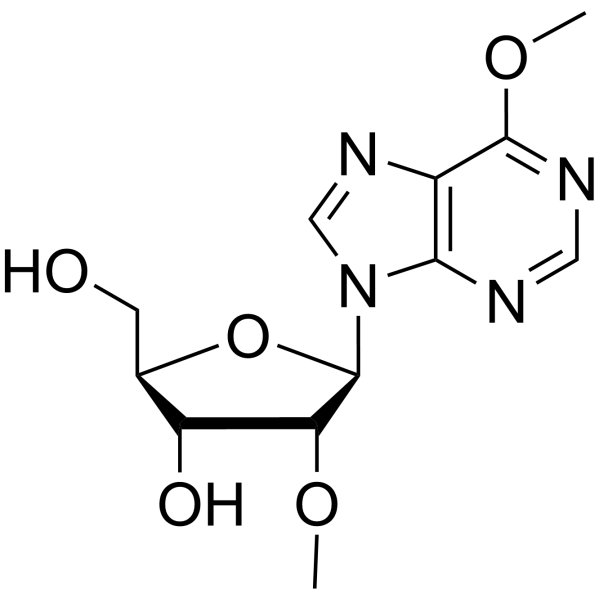
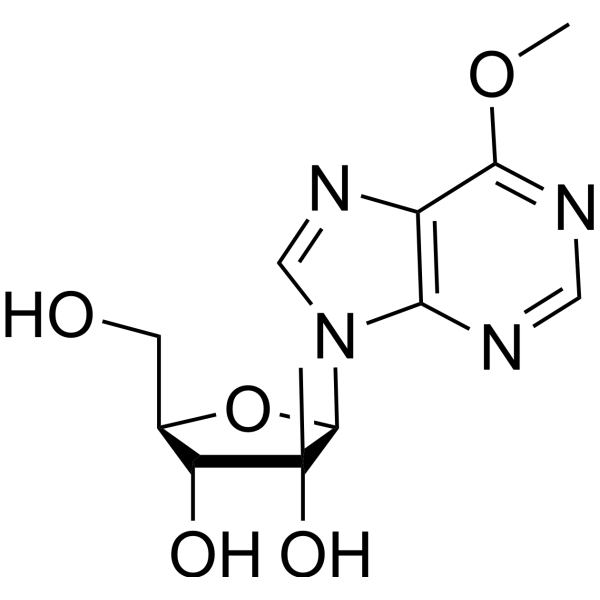
6-O-Methylinosine is a hypoxanthine analogue. Hypoxanthine is a kind of purine base mainly present in muscle tissue. And it is a metabolite produced by purine oxidase acting on xanthine. Hypoxanthine has typical anti-inflammatory effects and is a potential endogenous poly(ADP-ribose) polymerase (PARP) inhibitor. It is cytoprotective by inhibiting PAPR activity, inhibiting peroxynitrite-induced mitochondrial depolarization and secondary superoxide production. Hypoxanthine can also be used as an indicator of hypoxia .
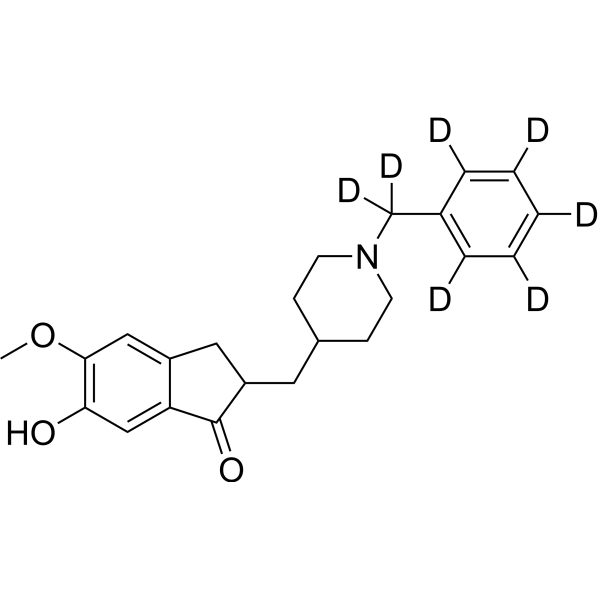
Ascorbyl palmitate (Standard) is the analytical standard of Ascorbyl palmitate. This product is intended for research and analytical applications. Ascorbyl palmitate is an ester formed from ascorbic acid and palmitic acid creating an vitamin C, it is also used as an antioxidant food additive.
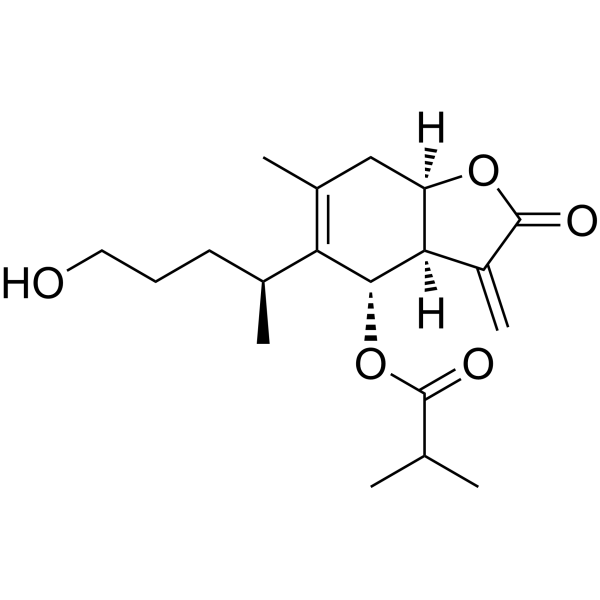
6-O-Isobutyrylbritannilactone is a natural melanogenesis inhibitor. 6-O-Isobutyrylbritannilactone, a sesquiterpene, can be isolated from the flowers of Inula britannica. 6-O-Isobutyrylbritannilactone inhibits IBMX (HY-12318)-induced melanin production in B16F10 cells. 6-O-Isobutyrylbritannilactone also regulates ERK, PI3K/AKT, and CREB, shows antimelanogenic activity in zebrafish embryos models .
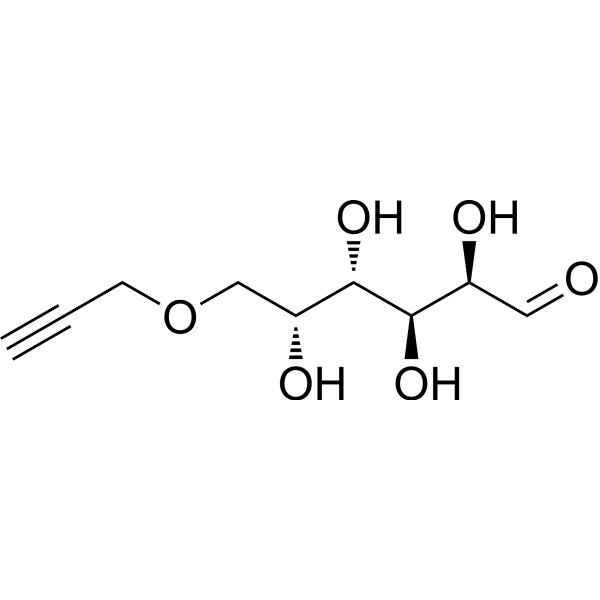
6-O-2-Propyn-1-yl-D-galactose is a nonclaevable glycolinker for the functionalization of cytotoxic agents and applications in antibody-agent conjugation. 6-O-2-Propyn-1-yl-D-galactose is a click chemistry reagent, it contains an Alkyne group and can undergo copper-catalyzed azide-alkyne cycloaddition (CuAAc) with molecules containing Azide groups.
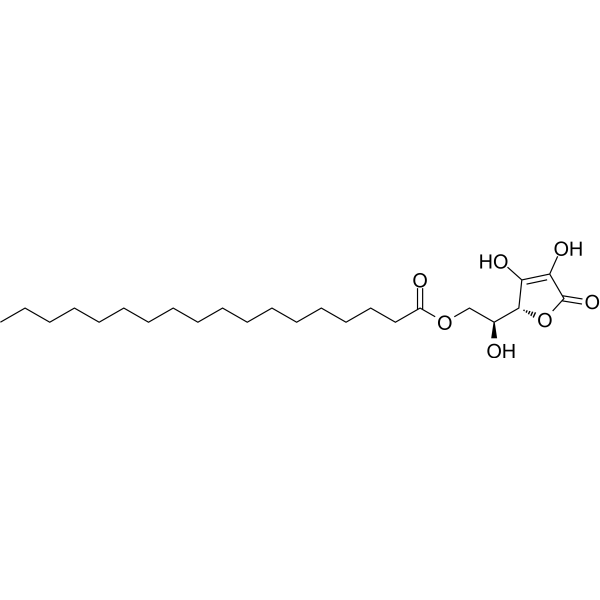
6-O-Staroyl-L-ascorbic acid is an organic compound commonly used in cosmetics and skin care products. It can be used as an antioxidant and whitening agent, and is widely used in anti-aging, moisturizing and skin repairing. In addition, this compound is used as a catalyst or buffer in certain chemical reactions.
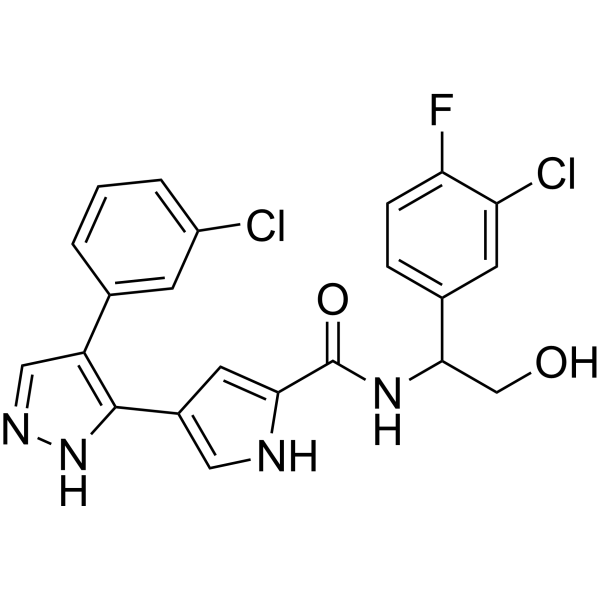
Anticancer agent 184 (Compound 6o) is a novel, effective and low toxic anticancer drug. Anticancer agent 184 induces apoptosis by blocking the S phase .
hCAXII-IN-5 (compound 6o) is a potent and selective hCAXII inhibitor with Ki values of >10000, >10000, 286.1, 1.0 nM for hCAI, hCAII, hCAIX and hCAXII, respectively .
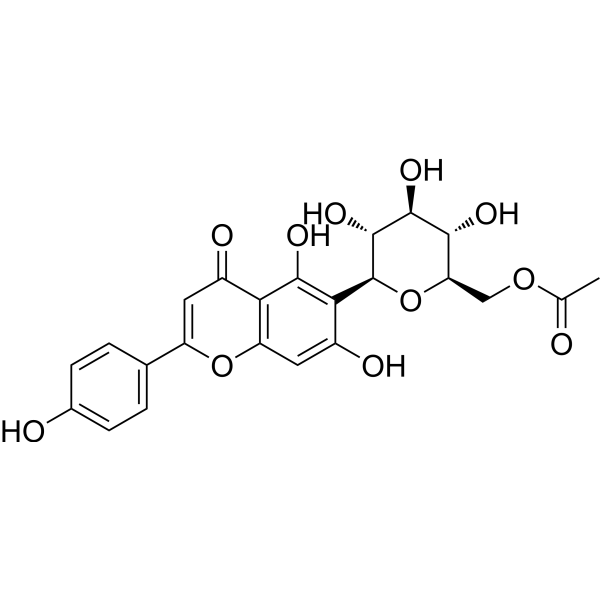
FGFR4-IN-9 (Compound 6O) is a selective FGFR4 inhibitor with an IC50 of 75.3 nM. FGFR4-IN-9 effectively inhibits both the growth and angiogenesis of HCC .
JNK Inhibitor VIII (Standard) is the analytical standard of JNK Inhibitor VIII (HY-107598). This product is intended for research and analytical applications. JNK Inhibitor VIII (TCS JNK 6o) is a c-Jun N-terminal Kinases (JNK-1, -2, and -3) inhibitor with Ki values of 2 nM, 4 nM, 52 nM, respectively, and has IC50 values of 45 nM and 160 nM for JNK-1 and -2, respectively .
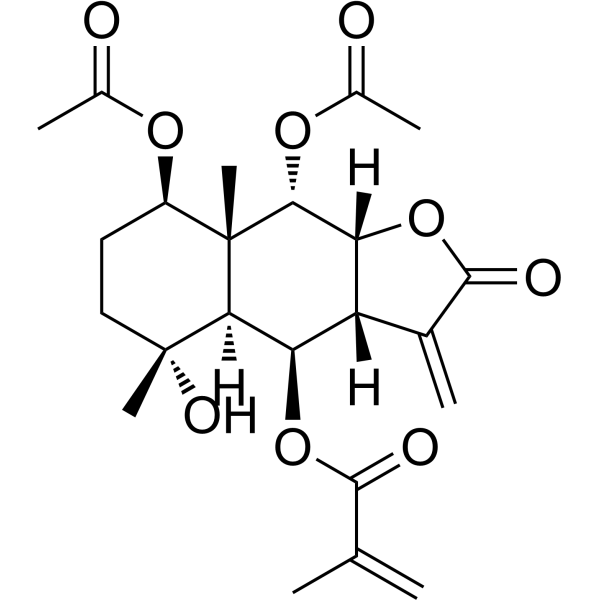
6-O-Methacrylate, a trilobolide, is isolated from the leaves of Wedelia trilobata. 6-O-Methacrylate displays marked antimalarial activity, with IC50 of 8.9 μg/mL against P. falciparum parasite. 6-O-Methacrylate also has anti-tobacco mosaic virus (TMV) activity .
6’-O-Galloylsalidroside is an active component of Rhodiola. 6’-O-Galloylsalidroside is promising for research of Alzheimer’s disease, lung diseases, cerebrovascular disease, diabetes, cardiovascular disease and aging-related diseases .
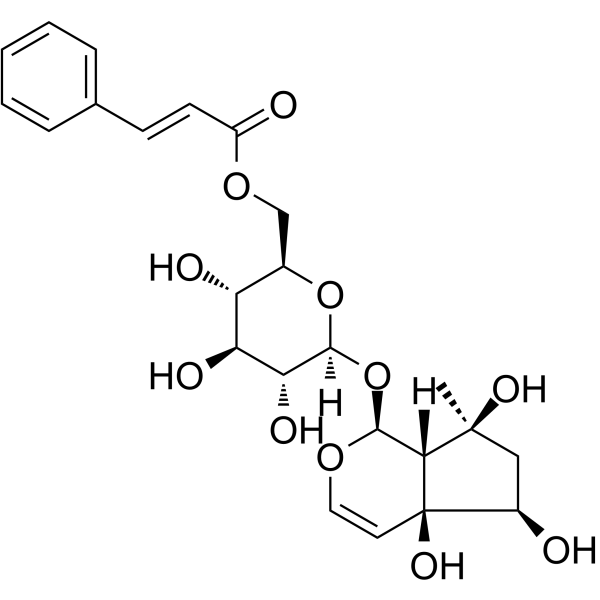
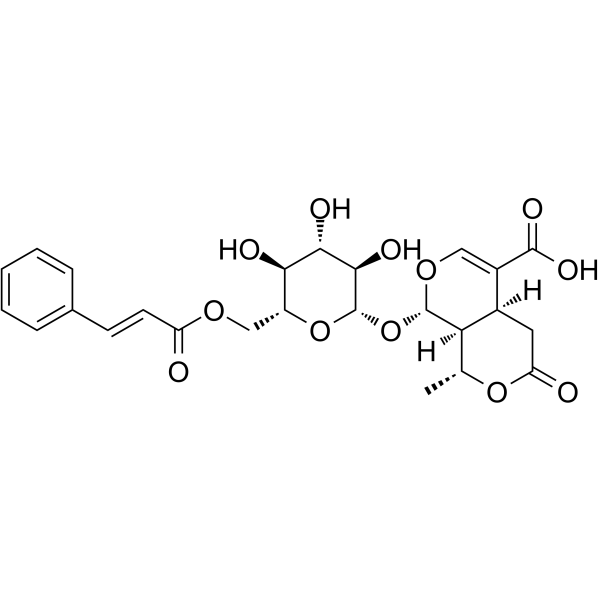
6'-O-Cinnamoyl-8-epikingisidic acid (6'-O-trans-cinnamoyl 8-epikingisidic acid) is a secoiridoid constituent isolated from the dried fruits of Ligustrum lucidum AIT .
Puerarin 6''-O-Xyloside (Standard) is the analytical standard of Puerarin 6''-O-Xyloside (HY-N2135). This product is intended for research and analytical applications. Puerarin 6''-O-Xyloside is one of the major iso-flavones found in P. lobata. Puerarin 6''-O-Xyloside inhibits cancer cells proliferation, induces apoptosis by upregulating cleaved caspase-3, 7, 9, Bax and downregulating Bcl-2 levles and inhibits tumor growth in mice. Puerarin 6''-O-Xyloside has anti-osteoporotic activity in ovariectomized mice. Puerarin 6''-O-Xyloside inhibits mushroom tyrosinase with an IC50 of 513.8 μM. Puerarin 6''-O-Xyloside can be used for the research of human lung carcinoma, osteoporosis, melanosis and melanomar .
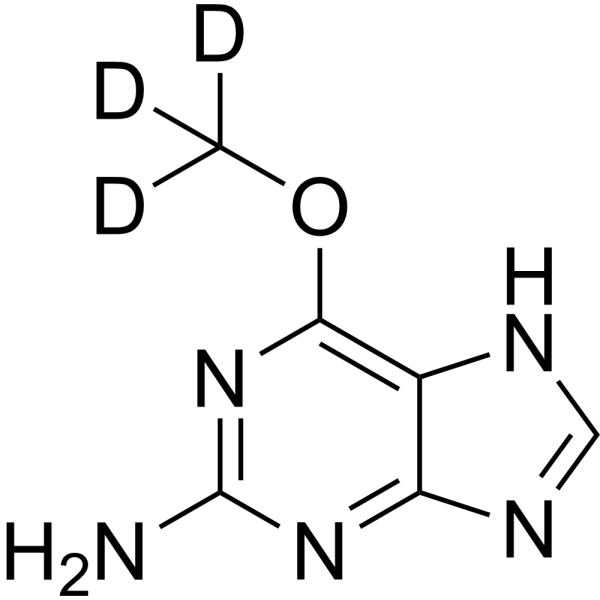
6-O-Methyl-guanine (Standard) is the analytical standard of 6-O-Methyl-guanine. This product is intended for research and analytical applications. 6-O-Methyl-guanine is a biochemical reagent that can be used as a biological material or organic compound for life science related research .
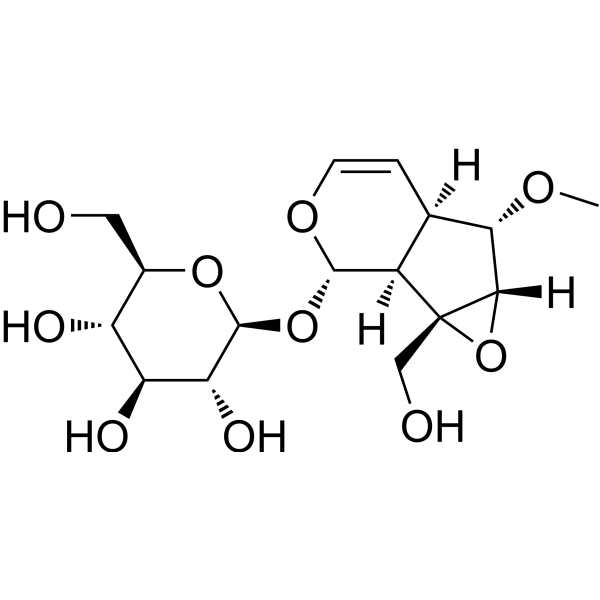
6-O-Methylcatalpol can be isolated from the roots of Scrophularia ningpoensis. 6-O-Methylcatalpol has anti-protozoal activity against Trypanosoma b. rhodesiense and Leishmania donovani (IC50: 32.5 and 8.3 μg/mL) .
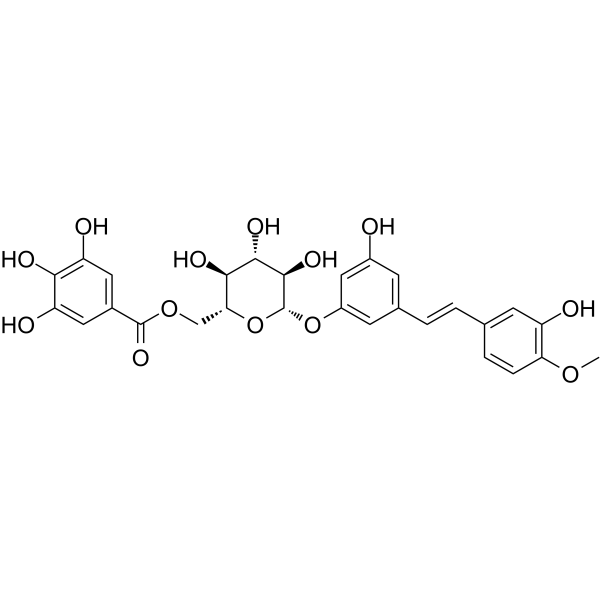
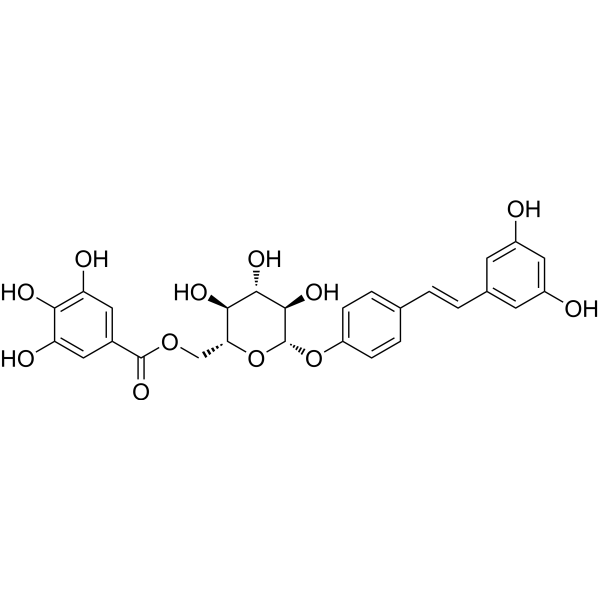
Rhaponticin 6′′-O-gallate is a stilbene glucoside gallate that can be found in rhizome of Rheum undulatum L. Rhaponticin 6′′-O-gallate inhibits nitric oxide production in lipopolysaccharide-activated macrophages .
Ladanetin-6-O-β-(6′′-O-acetyl)glucoside is a flavonoid isolated from the whole plants of Dracocephalum tanguticum, with antioxidant ability. Flavonoids from Dracocephalum tanguticum show cardioprotective effects against Doxorubicin (HY-15142A)-induced toxicity in H9c2 cells .
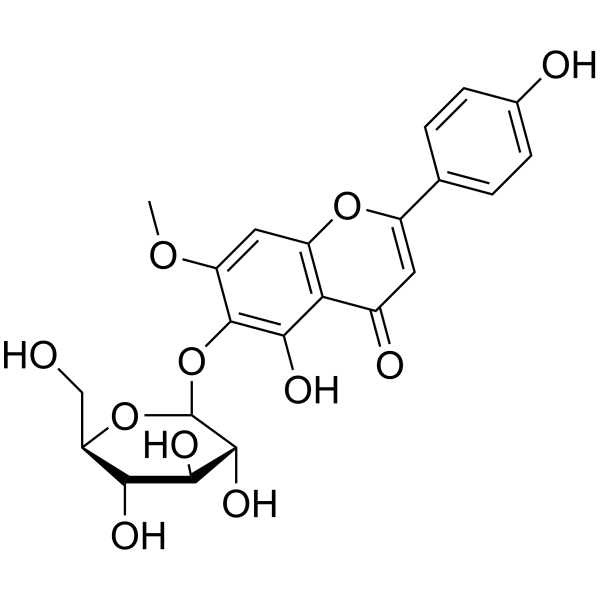
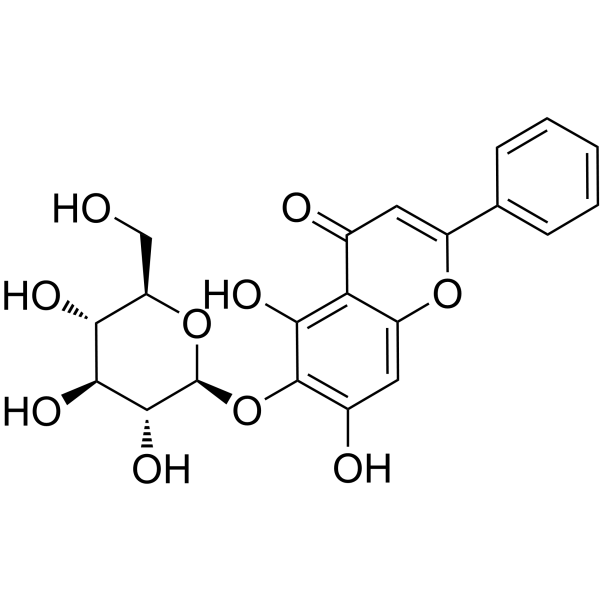
Ladanetin-6-O-β-D-glucopyranoside is an active flavonoid. Ladanetin-6-O-β-D-glucopyranoside has antioxidative effect. Ladanetin-6-O-β-D-glucopyranoside can be used for the research of cardioprotective effects .
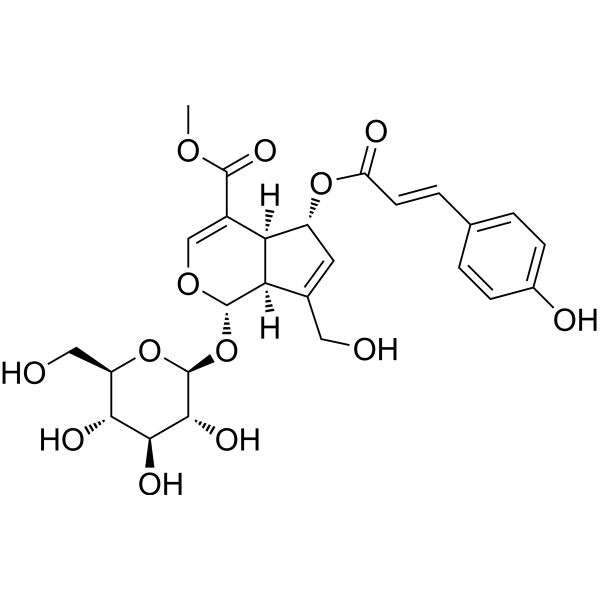
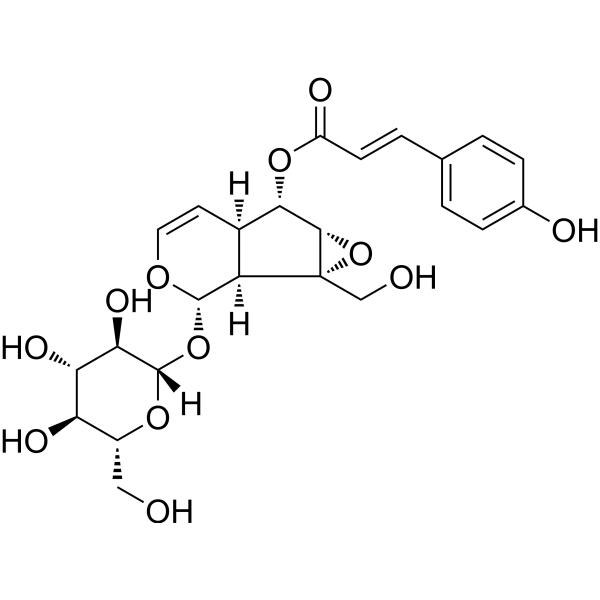
6-O-p-Coumaroyl scandoside methyl ester is a compound that can be isolated from oldenlandia diffusa. 6-O-p-Coumaroyl scandoside methyl ester has anti-inflammatory activity .
6-O-Methylreticulol (compound 1a) is an isocoumarin isolated from an endophytic fungus on the mangrove plant Avicennia marina in the Pearl River Estuary in southern China .
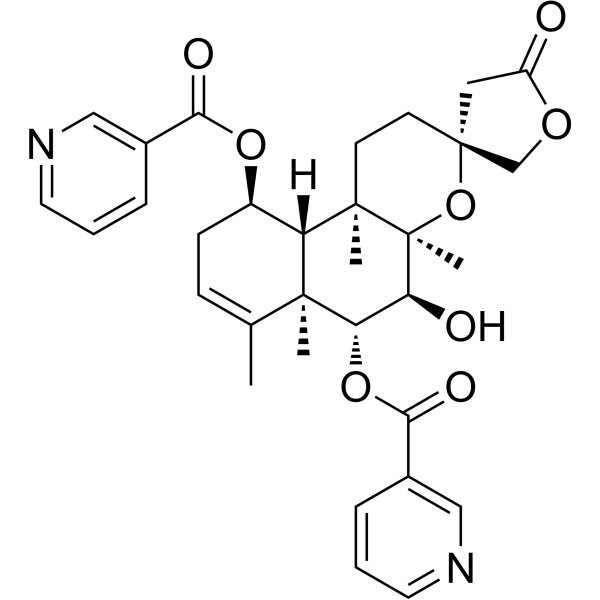
6-O-Nicotinoylscutebarbatine G is an alkaloid that can be isolated from Scutellaria barbata.6-O-Nicotinoylscutebarbatine has cytotoxic activities against HONE-1, KB and HT29 cells with IC50s of 3.1, 2.1 and 5.7 μM, respectively .
6-O-(Triisopropylsilyl)-D-glucal is a biochemical reagent that can be used as a biological material or organic compound for life science related research.
6-O-Bis[1-(2-nitrophenyl)-ethoxyphosphoryl]-D-trehalose is an important signaling molecule that regulates carbon utilization and growth in plants. 6-O-Bis[1-(2-nitrophenyl)-ethoxyphosphoryl]-D-trehalose releases T6P through light activation, which can stimulate starch synthesis and promote plant growth by inhibiting SnRK1, a protein kinase involved in energy conservation and survival. 6-O-Bis[1-(2-nitrophenyl)-ethoxyphosphoryl]-D-trehalose can be used to study plant growth and metabolism .
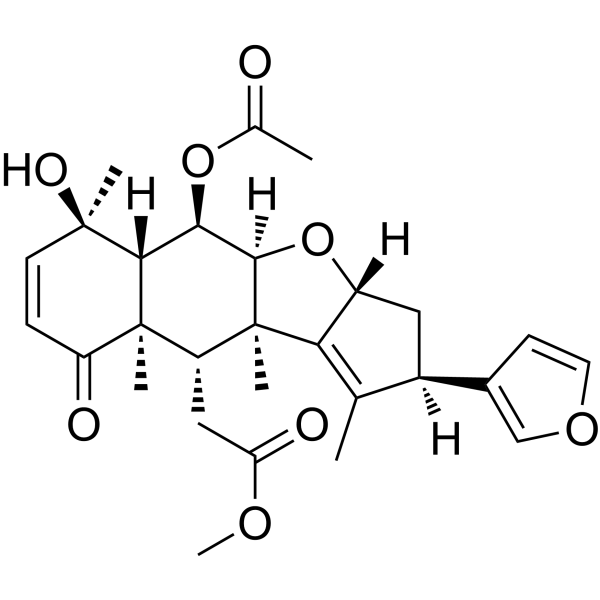
6-Acetylnimbandiol (6-O-Acetylnimbandiol) is a non-cytotoxic tyrosinase inhibitor (IC50=69.85 μM) that effectively inhibits melanin production and MITF expression. 6-Acetylnimbandiol can be used in melanoma research .
6-O-Methyl-2’-O-methylinosine is a purine nucleoside analog. Purine nucleoside analogs have broad antitumor activity targeting indolent lymphoid malignancies. Anticancer mechanisms in this process rely on inhibition of DNA synthesis, induction of apoptosis, etc .
6-O-(Triphenylmethyl)-D-glucose is a class of biochemical reagents used in glycobiology research. Glycobiology studies the structure, synthesis, biology, and evolution of sugars. It involves carbohydrate chemistry, enzymology of glycan formation and degradation, protein-glycan recognition, and the role of glycans in biological systems. This field is closely related to basic research, biomedicine, and biotechnology .
6-O-(tert-Butyldimethylsilyl)-D-galactal is a class of biochemical reagents used in glycobiology research. Glycobiology studies the structure, synthesis, biology, and evolution of sugars. It involves carbohydrate chemistry, enzymology of glycan formation and degradation, protein-glycan recognition, and the role of glycans in biological systems. This field is closely related to basic research, biomedicine, and biotechnology .
6-O-α-D-Mannopyranosyl-D-mannose is a class of biochemical reagents used in glycobiology research. Glycobiology studies the structure, synthesis, biology, and evolution of sugars. It involves carbohydrate chemistry, enzymology of glycan formation and degradation, protein-glycan recognition, and the role of glycans in biological systems. This field is closely related to basic research, biomedicine, and biotechnology .
Isomaltose (Standard) is the analytical standard of Isomaltose (HY-N3018). This product is intended for research and analytical applications. Isomaltose induces G-CSF secretion via heat-induced oxidative polymerization of glucose groups into high-molecular-weight compounds. Isomaltose modulates cecal bacterial cluster structure in mice. Isomaltose exhibits low glycemic index, slow hydrolysis, and prebiotic properties. Isomaltose reduces in vivoCryptosporidium parvum colonization in neonatal mice. Isomaltose can be used for the research of Cryptosporidium parvum infection .
6-O-Senesioyl plenolin is a sesquiterpene lactone found in Centipeda minima with antiallergic activity. 6-O-Senesioyl plenolin inhibits histamine release from mast cells (IC50 = 18 μM) and suppresses pigment exudation in passive cutaneous anaphylaxis tests. 6-O-Senesioyl plenolin can be used in research related to allergy .
6'-O-Glucopyranosylalbiflorin is a monoterpene glycoside compound containing two β-D-glucose units, which has bone formation-promoting effects. 0.01-10 μM 6'-O-Glucopyranosylalbiflorin shows significant activity against osteoblast MC3T3-E1 cells, promoting alkaline phosphatase activity and calcium deposition to stimulate osteoblast differentiation. 6'-O-Glucopyranosylalbiflorin can be used in research of osteoporosis. 6'-O-Glucopyranosylalbiflorin can be naturally extracted from the dried roots of Paeonia lactiflora Pall. (peony) from Vinh Phuc province, Vietnam .
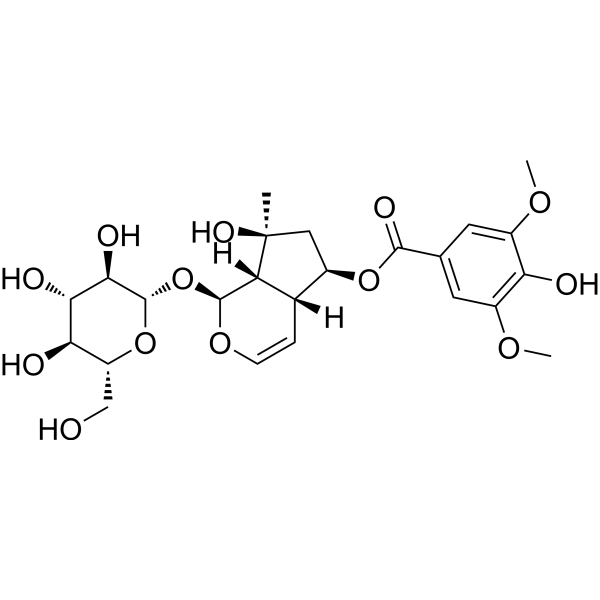
6-O-p-Hydroxybenzoylglutinoside acts as a selective NF-κB inhibitor that suppresses the transcriptional activity of TNF-α-activated NF-κB (IC50=52.78 μM). 6-O-p-Hydroxybenzoylglutinoside shows no significant inhibitory activity against sEH, AChE, or BChE. 6-O-p-Hydroxybenzoylglutinoside is a caged chlorinated iridoid glycoside identified from the seeds of Catalpa bungei (Manchurian catalpa) .
6''-O-(3'''-Hydroxy-3'''-methylglutaryl) vitexin is an orally active flavonoid glycoside and insecticide that can be isolated from the twigs of Eleusine coracana. 6''-O-(3'''-Hydroxy-3'''-methylglutaryl) vitexin exhibits distinct antifeedant activity against Nilaparvata lugens (brown planthopper) nymphs and effectively inhibits their feeding behavior. 6''-O-(3'''-Hydroxy-3'''-methylglutaryl) vitexin can serve as a plant-derived natural defense substance for regulating pest behavior and investigating potential control mechanisms of agricultural pests .
6-O-(tert-Butyldimethylsilyl)-D-glucal is a class of biochemical reagents used in glycobiology research. Glycobiology studies the structure, synthesis, biology, and evolution of sugars. It involves carbohydrate chemistry, enzymology of glycan formation and degradation, protein-glycan recognition, and the role of glycans in biological systems. This field is closely related to basic research, biomedicine, and biotechnology .
IST-622 (6-O-(3-Ethoxypropionyl)-3',4'-O-exo-benzylidenechartreusin) is an anti-tumor agent with significant growth inhibitory activity. IST-622 exhibits significant anti-tumor effects against a variety of mouse tumors such as P388 and L1210 leukemias, B16 melanoma, Lewis lung carcinoma, Colon 26 and Colon 38 adenocarcinomas, and M5076 reticulum cell sarcoma. IST-622 was orally administered and the results showed efficacy in different tumor types. In addition, IST-622 provided significant inhibitory effects against two human tumor xenograft models: large cell lung carcinoma (Lu-116) and gastric adenocarcinoma (St-4). IST-622 also exhibited significant growth inhibitory activity against P388 leukemia in vitro, with a half inhibitory concentration (IC50) more than 20 times lower than CT .
(6-O-p-Coumaroyl)-β-D-glucopyranosyl-2-O-(4-hydroxybenzoyl)-4-O-β-D-glucopyranosyl-6-hydroxyphenylacetate is a selective α-glucosidase inhibitor (IC50=10.53 μg/mL) with anti-hepatic fibrosis and anti-diabetic properties. It also inhibits the growth of mouse hepatic stellate cells (t-HSC/Cl-6) with an IC50 of 109.2 μg/mL. (6-O-p-Coumaroyl)-β-D-glucopyranosyl-2-O-(4-hydroxybenzoyl)-4-O-β-D-glucopyranosyl-6-hydroxyphenylacetate can be isolated from the ester derivatives of Impatiens balsamina L. flowers. (6-O-p-Coumaroyl)-β-D-glucopyranosyl-2-O-(4-hydroxybenzoyl)-4-O-β-D-glucopyranosyl-6-hydroxyphenylacetate can be used in research related to hepatic fibrosis and type 2 diabetes.
Agrimonolide 6-O-β-D-glucoside is a isocoumarin that can be isolated from Agrimonia pilosa. Agrimonolide 6-O-β-D-glucoside is used in hepatic disease research .
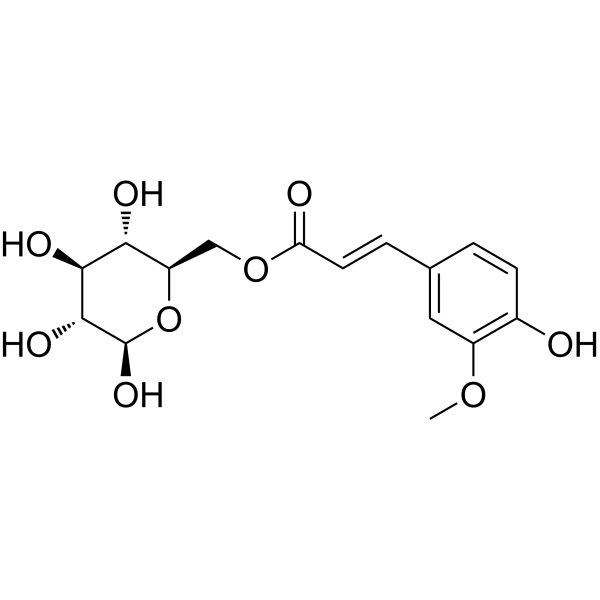
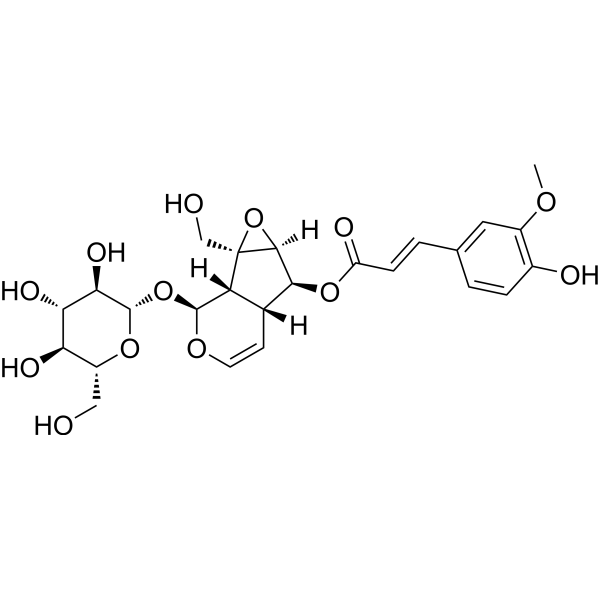
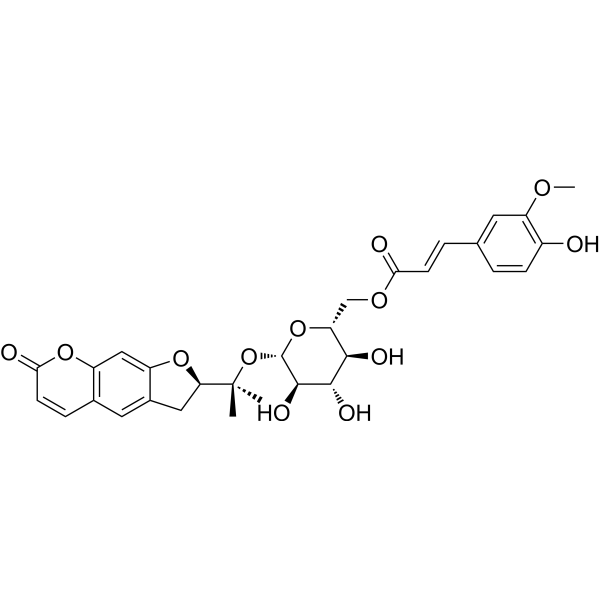
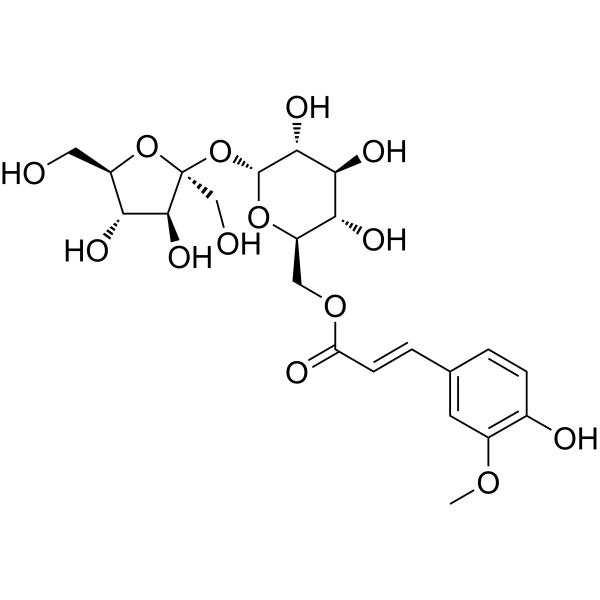
6'-O-trans-Feruloylnodakenin is a marker compound used for HPLC fingerprint of N. forbesii . 6'-O-trans-Feruloylnodakenin has antitumor activities (IC50 = 7.5x10⁻⁷ mol/L) in vitro.
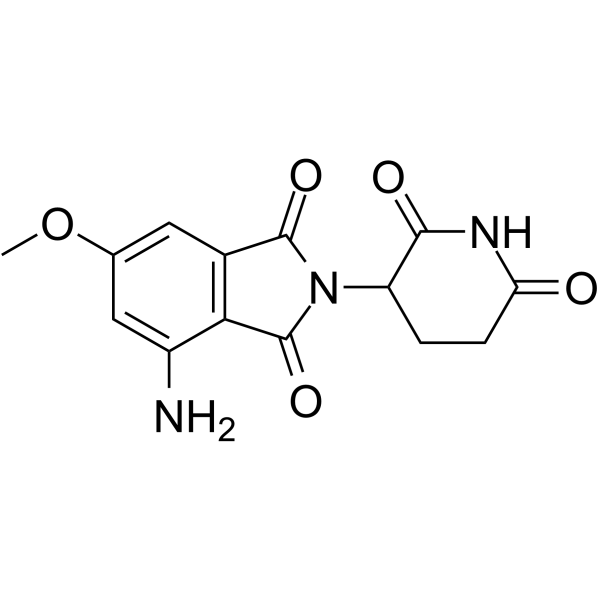
Pomalidomide-6-O-CH3 is the Pomalidomide-based cereblon (CRBN) ligand used in the recruitment of CRBN protein. Pomalidomide-6-O-CH3 can be connected to the ligand for protein by a linker to form PROTAC .
anti-NSCLC agent-2 (compound 6o) is a SLC7A11 and GPX4 inhibitor that reduces the expression of ferroptosis key regulators SLC7A11 and GPX4. anti-NSCLC agent-2 disrupts redox homeostasis, depletes glutathione, accumulates lipid peroxides, and induces ferroptosis in non-small cell lung cancer cells. anti-NSCLC agent-2 is applicable to research related to non-small cell lung cancer .
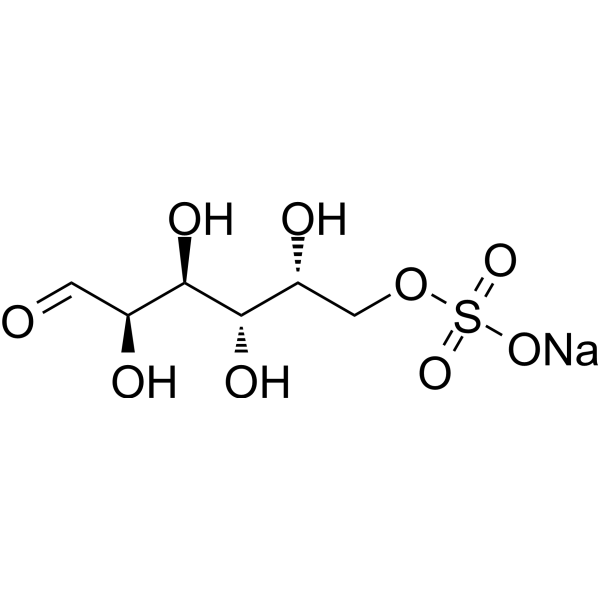
D-Galactose-6-O-sulfate sodium salt is a biochemical reagent that can be used as a biological material or organic compound for life science related research.
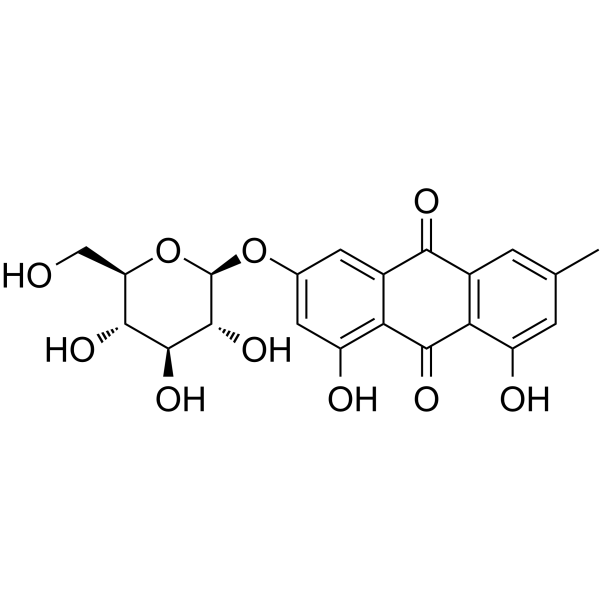
Emodin-6-O-β-D-glucoside (Glucoemodin) is an active compound from Reynoutria japonica. Emodin-6-O-β-D-glucoside shows potent anti-inflammatory and barrier protective effects. Emodin-6-O-β-D-glucoside can be used for the research of diabetic complications and atherosclerosis .
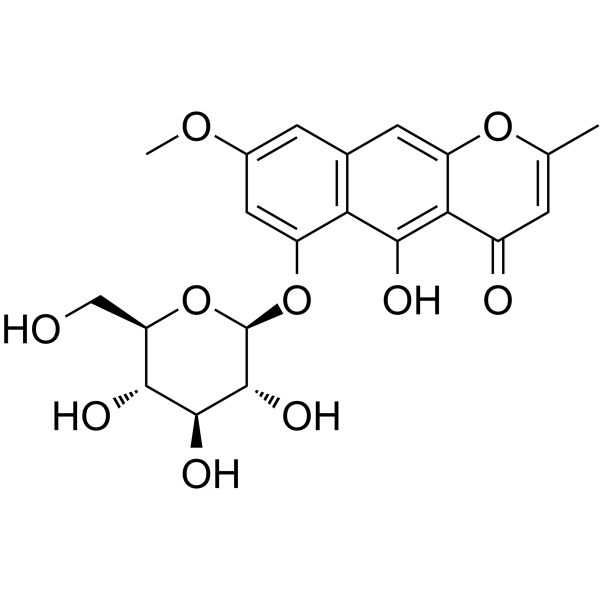
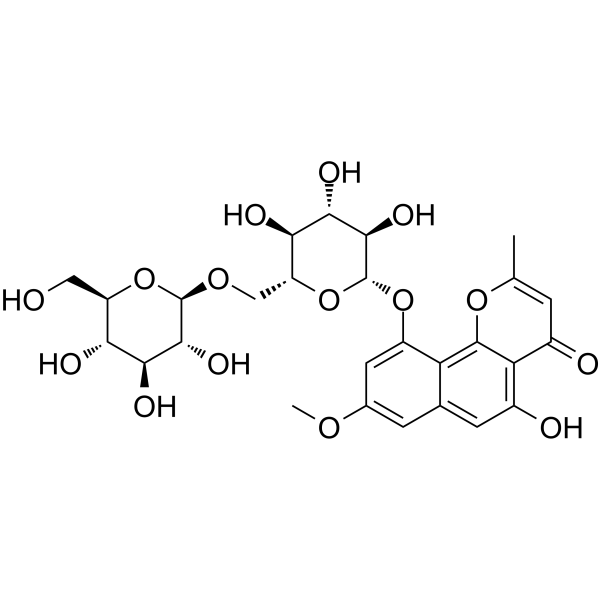
Rubrofusarin 6-O-β-D-glucopyranoside, the glycoside of Rubrofusarin, is a protein tyrosine phosphatase 1B (PTP1B) inhibitor with the IC50 of 87.36 μM. Rubrofusarin 6-O-β-D-glucopyranoside can be used for the research of comorbid diabetes and depression .
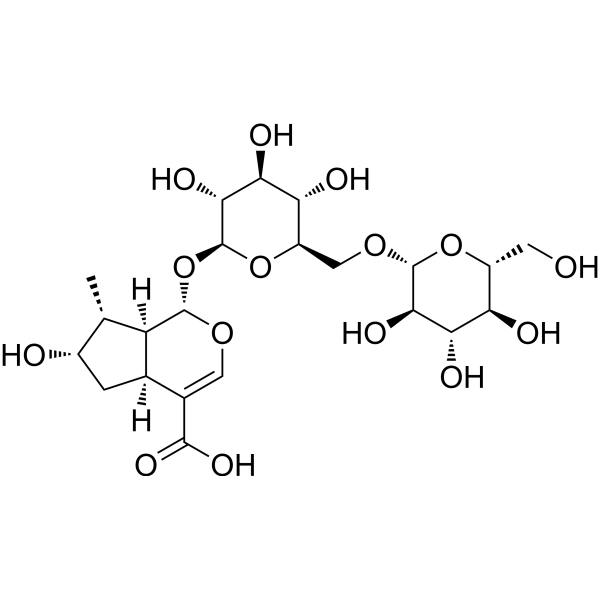
Loganic acid 6′-O-β-D-glucoside, a iridoidal glucoside, is isolated from the whole plant of Gentiana rhodantha (Gentianaceae). Loganic acid 6′-O-β-D-glucoside inhibits LPS-induced NO and TNF-α production in macrophage RAW264.7 cells .
Heptakis(6-O-tert-butyldimethylsilyl)-β-cyclodextrin tetradecaacetate is a chemically modified cyclodextrin with good cosolvent activity. Heptakis(6-O-tert-butyldimethylsilyl)-β-cyclodextrin tetradecaacetate is widely used in compound formulations to improve the solubility and bioavailability of compounds. Heptakis(6-O-tert-butyldimethylsilyl)-β-cyclodextrin tetradecaacetate helps improve the release characteristics of compounds.
6''-O-Acetylglycitin, a acetyl glucoside, is one of the isoflavone isomer in soybeans, shows various extents of content reduction dependent on storage temperature, packaging condition, and its isoflavone isomer kind .
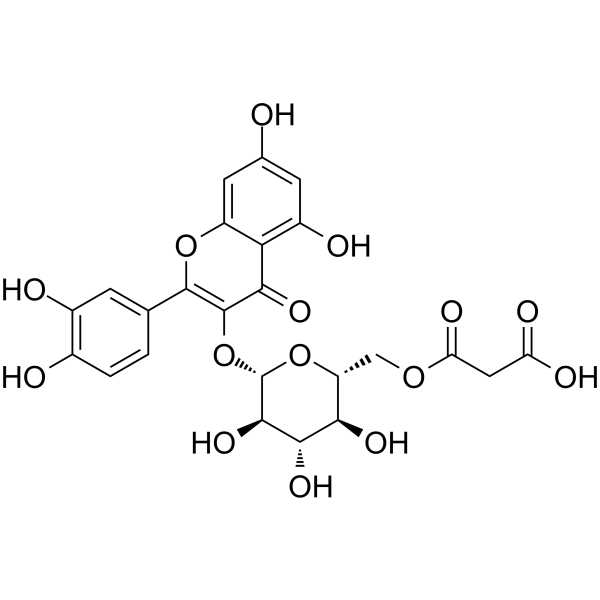
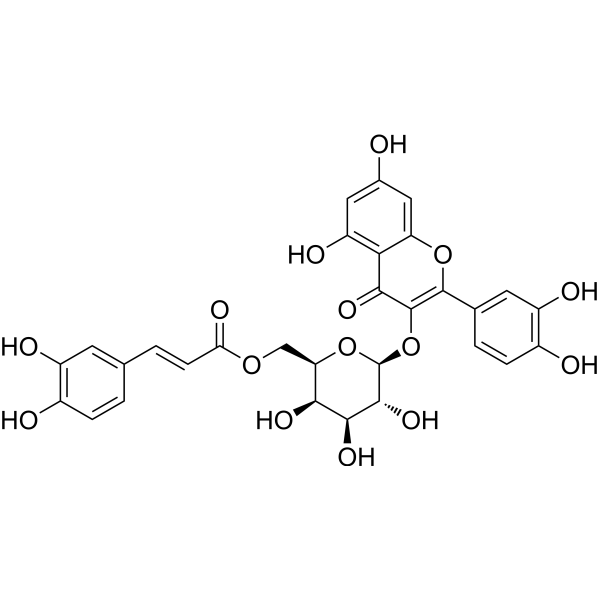
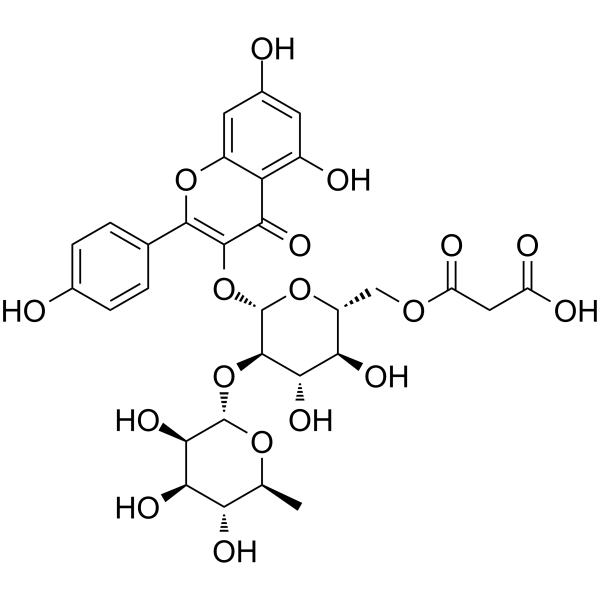
Quercetin 3-O-(6''-O-malonyl)-β-D-glucoside (Standard) is an analytical standard for Quercetin 3-O-(6''-O-malonyl)-β-D-glucoside. This product is intended for research and analytical applications. Quercetin 3-O-(6''-O-malonyl)-β-D-glucoside is a flavonol glycoside. Quercetin 3-O-(6''-O-malonyl)-β-D-glucoside has antioxidant activity.
(S)-6-O-Desmethylnaproxen (Standard) is the analytical standard of (S)-6-O-Desmethylnaproxen. This product is intended for research and analytical applications. (S)-6-O-Desmethylnaproxen ((S)-6-Desmethyl Naproxen) is a metabolite of the non-steroidal anti-inflammatory drug (NSAID) and COX inhibitor (+)-naproxen ((S)-naproxen). (S)-6-O-Desmethylnaproxen is formed from (S)-naproxen by the cytochrome P450 (CYP) isoforms CYP1A2 and CYP2C9.
Mono-6-O-(p-toluenesulfonyl)-α-cyclodextrin is a biochemical reagent that can be used as a biological material or organic compound for life science related research.
Galloylalbiflorin (6′-O-Galloylalbiflorin) is an androgen receptor (AR) antagonist (IC50=53.3 μM) and can be found in the roots of Paeonia lactiflora. Galloylalbiflorin shows anti-androgens activity .
Acacetin 7-O-(6-O-malonylglucoside) is a monoamine oxidase inhibitor with strong inhibitory effects on monoamine oxidase A (MAO-A) and monoamine oxidase B (MAO-B) with IC50 values of 2.34 and 1.87 μM, respectively. Acacetin 7-O-(6-O-malonylglucoside) is a reversible MAO inhibitor that can be used in the research of neurodegenerative diseases and affective disorders .
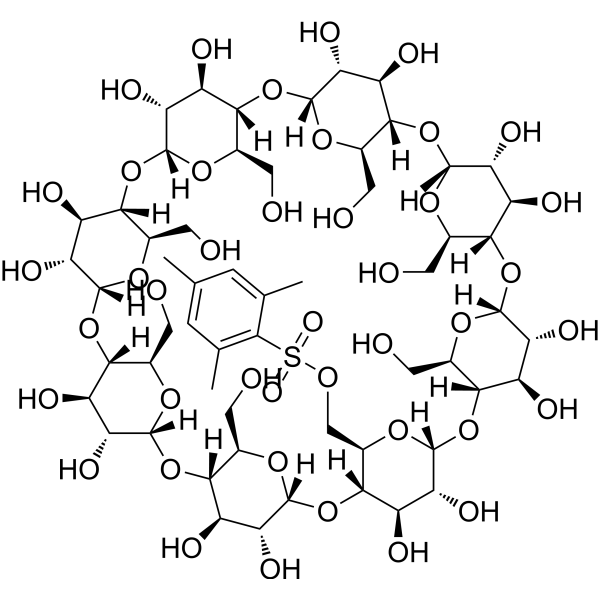
Mono-6-O-mesitylenesulfonyl-γ-cyclodextrin is a biochemical reagent that can be used as a biological material or organic compound for life science related research.
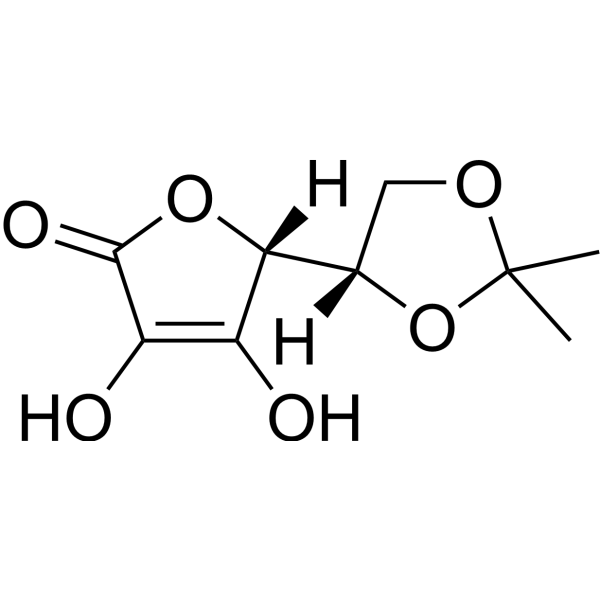
5,6-O-Isopropylidene-L-ascorbic acid (L-Ascorbic acid 5,6-acetonide) is an organic compound. 5,6-O-Isopropylidene-L-ascorbic acid is a derivative of L-Ascorbic acid (vitamin C). Ascorbic acid has antioxidant properties.
Luteolin 7-O-(6-O-malonyl-β-D-glucoside) is an orally active flavonoid free radical scavenger. Luteolin 7-O-(6-O-malonyl-β-D-glucoside) scavenges free radicals, inhibits the activity elevation of aspartate aminotransferase and alanine aminotransferase in mouse plasma, as well as the elevation of liver lipid hydroperoxide content. Luteolin 7-O-(6-O-malonyl-β-D-glucoside) is applicable for liver injury research .
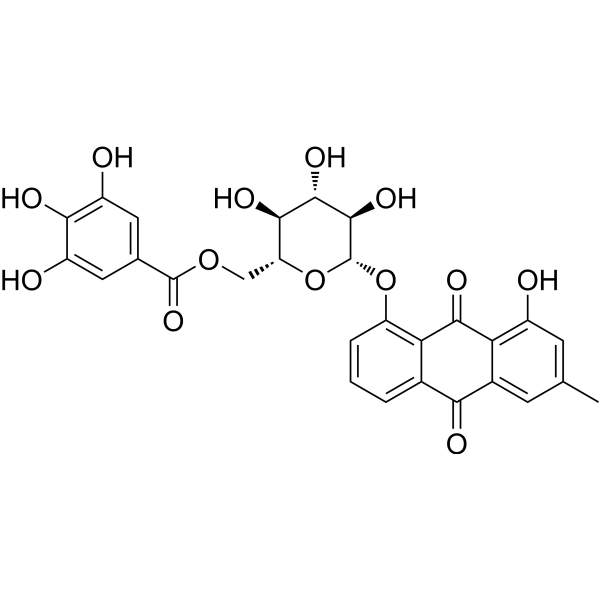
Chrysophanol 8-O-β-D-(6’-O-galloyl)glucopyranoside, an anthraquinone glucoside, can be isolated from Rheum undulatum L. Chrysophanol 8-O-β-D-(6’-O-galloyl)glucopyranoside has potent DPPH radical and ?O2- scavenging activity .
Mono-6-O-(p-toluenesulfonyl)-γ-cyclodextrin is a biochemical reagent that can be used as a biological material or organic compound for life science related research.
(S)-6-O-Desmethylnaproxen ((S)-6-Desmethyl Naproxen) is a metabolite of the non-steroidal anti-inflammatory drug (NSAID) and COX inhibitor (+)-naproxen ((S)-naproxen). (S)-6-O-Desmethylnaproxen is formed from (S)-naproxen by the cytochrome P450 (CYP) isoforms CYP1A2 and CYP2C9.
6'-Malonyltrifolirhizin (Trifolirhizin 6''-O-malonate) is a malonylated pterocarpan glucoside that can be isolated both from the roots and callus cultures of Sophora flavescens var. angustifolia .
Phenylmethyl 6-O-α-L-arabinofuranosyl-β-D-glucopyranoside (Compound 12) is a nerve growth factor (NGF) secretion promoter, which is found in plants of the genus Piper. Phenylmethyl 6-O-α-L-arabinofuranosyl-β-D-glucopyranoside is promising for research of neurodegenerative diseases (such as Parkinson's disease and Alzheimer's disease) and diabetic polyneuropathy .
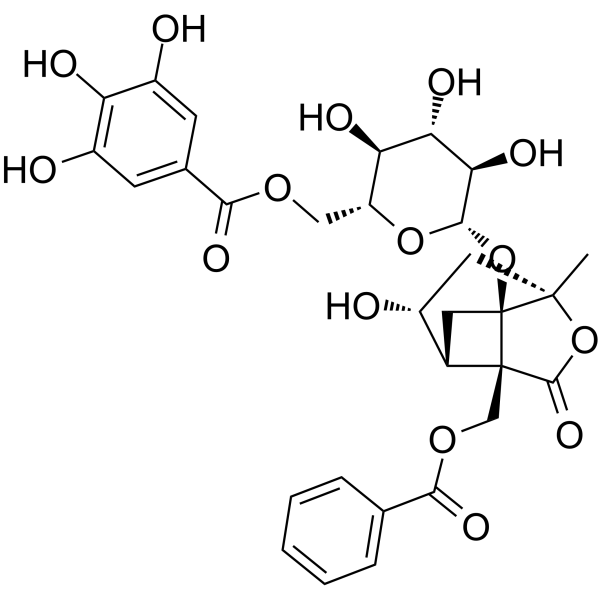
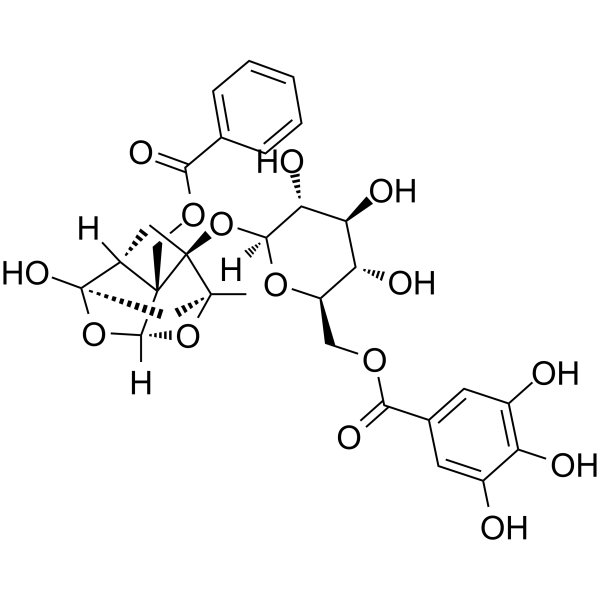
Paeoniflorin-6′-O-benzene sulfonate (CP-25) is the inhibitor for G protein-coupled receptor kinase 2 (GRK2) that inhibits the translocation of GRK2 to the cell membrane, inhibits JAK1/STAT3 signaling pathway. Paeoniflorin-6′-O-benzene sulfonate inhibits IL-17A/CXCL2-induced proliferation of HaCaT. Paeoniflorin-6′-O-benzene sulfonate reduces the levels of inflammatory factors and chemokines such as IL-17A, IL-17F, IFN-γ, TNF-α, IL-22, IL-23, CXCL2, CXCL3 and CXCL9, alleviates Imiquimod (HY-B0180)-induced psoriasis in mouse model .
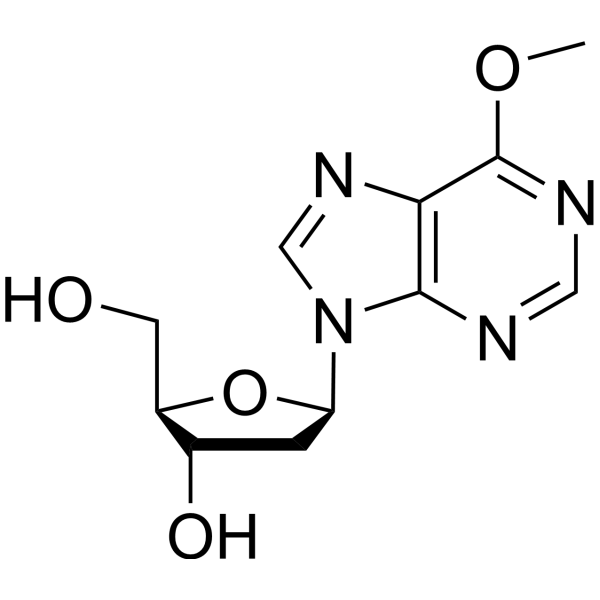
2′-Deoxy-6-O-methylinosine is a purine nucleoside analog. Purine nucleoside analogs have broad antitumor activity targeting indolent lymphoid malignancies. Anticancer mechanisms in this process rely on inhibition of DNA synthesis, induction of apoptosis, etc .
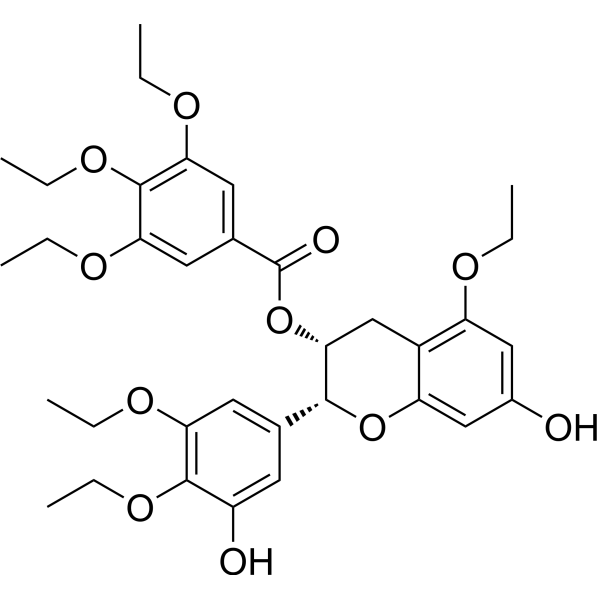
5,3',4',3'',4'',5''-6-O-Ethyl-EGCG (Y6) is a potent adjuvant obtained by optimization of the structure of EGCG. 5,3',4',3'',4'',5''-6-O-Ethyl-EGCG (Y6) decreases the expression of HIF-1α and CBR1 at both the mRNA and protein levels .
Haploperoside A (Scopolin-6'-O-α-L-rhamnopyranoside) is found in the roots of Althaea officinalis. Haploperoside A has the potential to be used in the study of oral tissue inflammation and cough .
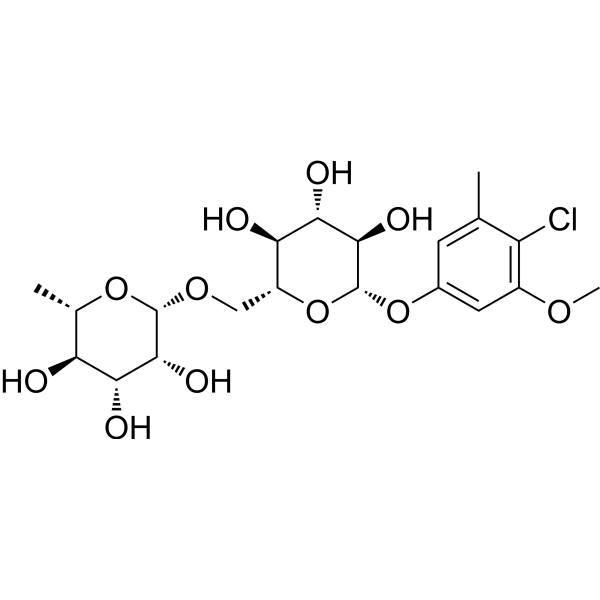
4-Chloro-3-methoxy-5-methylphenyl 6-O-(6-deoxy-β-L-mannopyranosyl)-β-D-glucopyranoside (compound 3) is an anticancer agent and natural product that can effectively inhibit lung cancer proliferation of A549 cells. 4-Chloro-3-methoxy-5-methylphenyl 6-O-(6-deoxy-β-L-mannopyranosyl)-β-D-glucopyranoside is available from Lilium regale and has potential for use in cancer research .
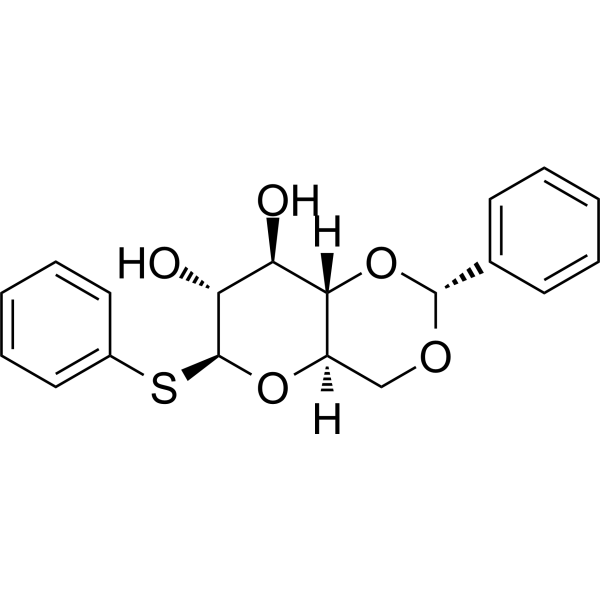
Phenyl 4,6-O-Benzylidene-1-thio-β-D-glucopyranoside is a biochemical reagent that can be used as a biological material or organic compound for life science related research.
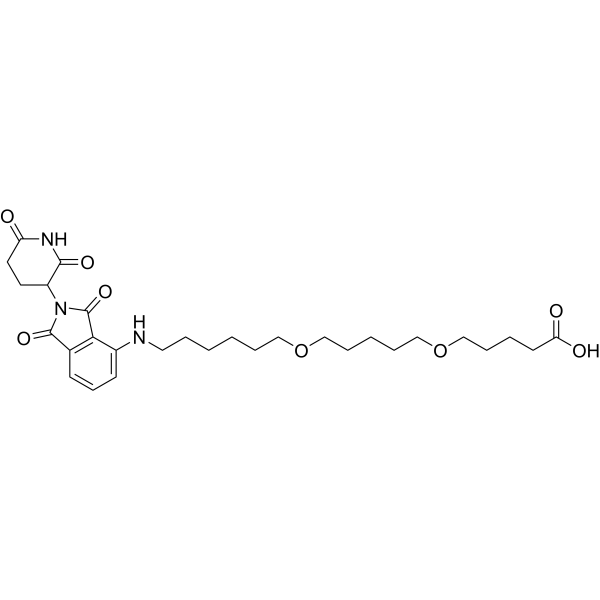
Pomalidomide-C6-O-C5-O-C4-COOH is a E3 ligase ligand-linker conjugate comprising a Pomalidomide (HY-10984)-based cereblon ligand and linker. Pomalidomide-C6-O-C5-O-C4-COOH can be used for the synthesis of PROTACs .
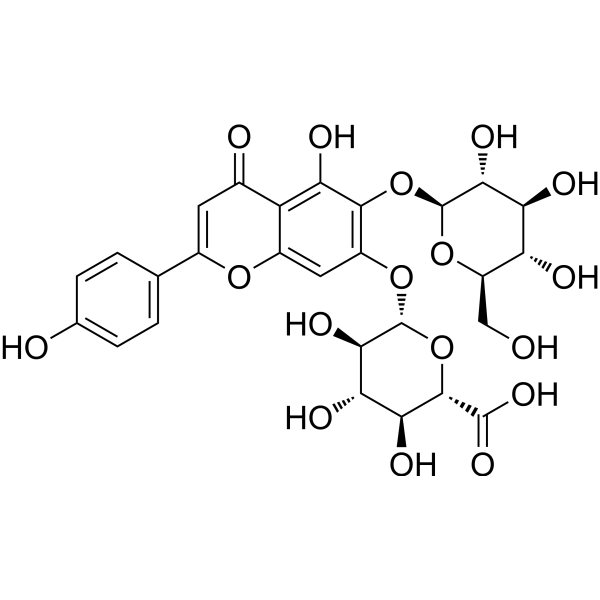
6-Hydroxyapigenin 6-O-β-D-glucoside-7-O-β-D-glucuronide (compound 8) is a kind of flavonoid. 6-Hydroxyapigenin 6-O-β-D-glucoside-7-O-β-D-glucuronide can be isolated from the water extract of Carthamus tinctorius .
4-Hydroxy-3-methoxyphenyl 6-O-β-D-glucopyranosyl-β-D-glucopyranoside (Compound 9) is a natural product. 4-Hydroxy-3-methoxyphenyl 6-O-β-D-glucopyranosyl-β-D-glucopyranoside can be isolated from Lycopodiella cernua (L.) Pic. Serm. .
6''-O-β-D-Apiofuranosylastragalin (compound 1) is a flavonoid glycoside that can be naturally extracted from the methanol extract of fresh leaves of Solidago altissima L. (a plant of the genus Solidago in the Asteraceae family). The related methanol extract exhibits antifeedant activity against Thrips palmi and can be used in the research of natural antifeedants for agricultural pest control .
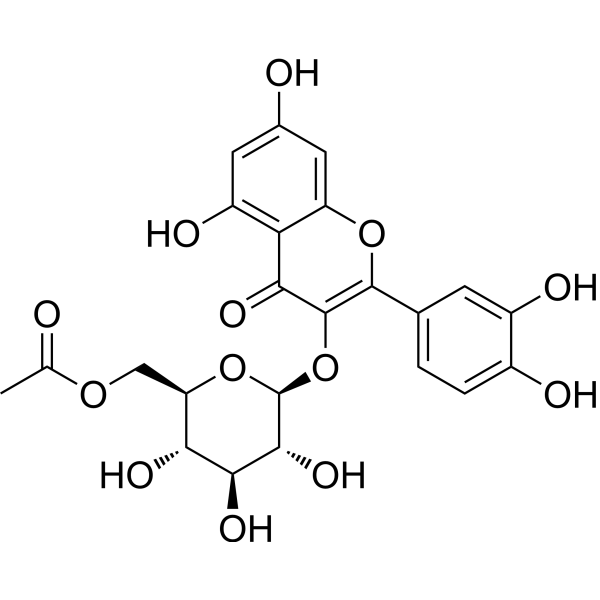
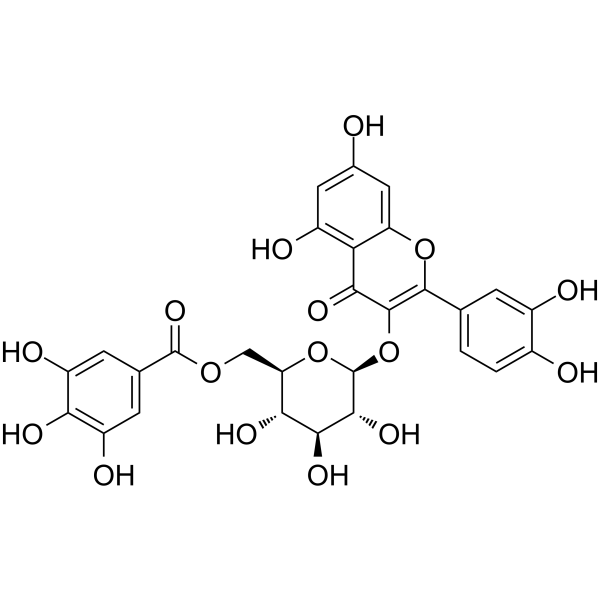
Quercetin 3-O-(6''-O-galloyl)-β-D-glucoside (Tellimoside) is a flavonol glycoside with strong inhibitory activity against the growth of Microcystis aeruginosa .
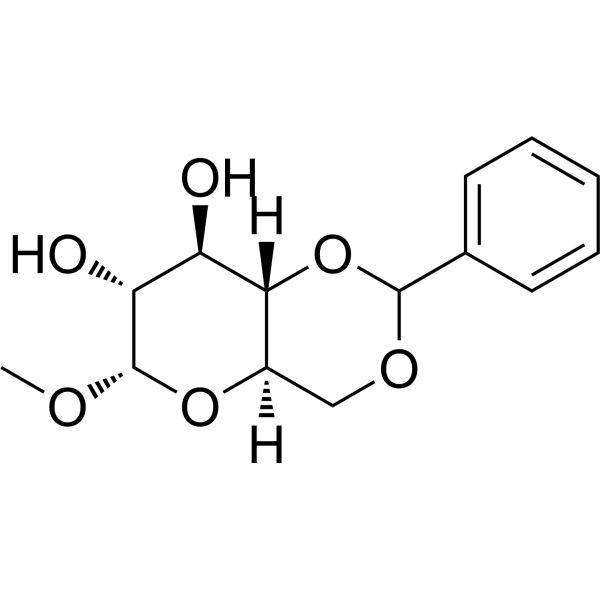
Methyl 4,6-O-Benzylidene-α-D-glucopyranoside serves as the starting material for the active intermediate Dibutylstannylene acetals. Using Dibutylstannylene acetals as the starting material, the regioselective synthesis of carbohydrate-based vinyl monomer compounds is successfully achieved .
4,6-O-Isopropylidene-D-glucal is a class of biochemical reagents used in glycobiology research. Glycobiology studies the structure, synthesis, biology, and evolution of sugars. It involves carbohydrate chemistry, enzymology of glycan formation and degradation, protein-glycan recognition, and the role of glycans in biological systems. This field is closely related to basic research, biomedicine, and biotechnology .
(S)-JQ-35-C6-O-Ph-C-COOH (Compound S6) is a target protein ligand-linker conjugate that can be used for the synthesis of PROTACs, such as RAFKBP12 (HY-181498).
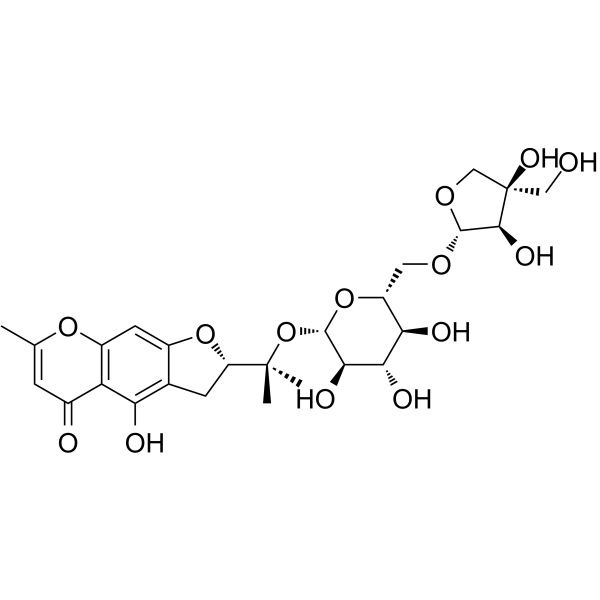
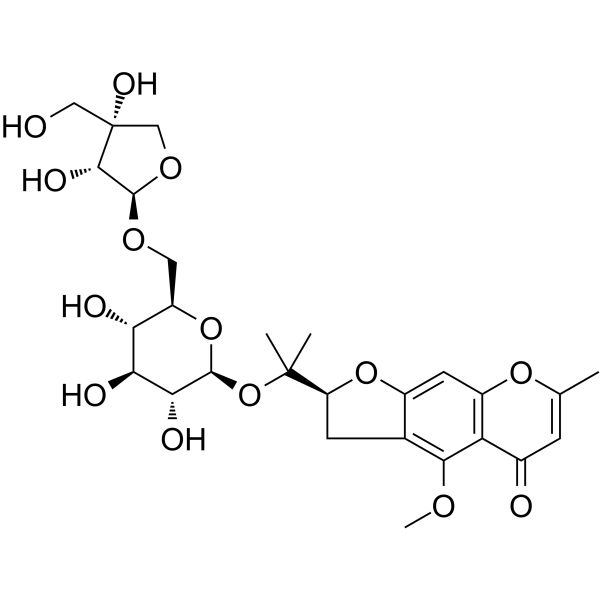
(2′S)-4′-O-β-D-apiofuranosyl-(1→6)-O-β-D-glucopyranosylvisamminol is a chromone Glycoside that could be isolated from Roots of Saposhnikovia divaricate. (2′S)-4′-O-β-D-apiofuranosyl-(1→6)-O-β-D-glucopyranosylvisamminol exhibits weak anti-cancer activity in human cancer cell lines .
Methyl 6-O-(triphenylmethyl)-α-D-galactopyranoside is a class of biochemical reagents used in glycobiology research. Glycobiology studies the structure, synthesis, biology, and evolution of sugars. It involves carbohydrate chemistry, enzymology of glycan formation and degradation, protein-glycan recognition, and the role of glycans in biological systems. This field is closely related to basic research, biomedicine, and biotechnology .
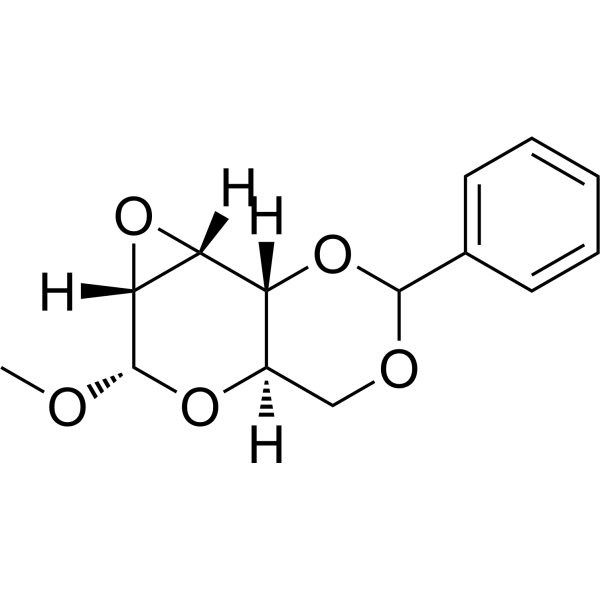
Methyl 2,3-anhydro-4,6-O-benzylidene-α-D-allopyranoside is a biochemical reagent that can be used as a biological material or organic compound for life science related research.
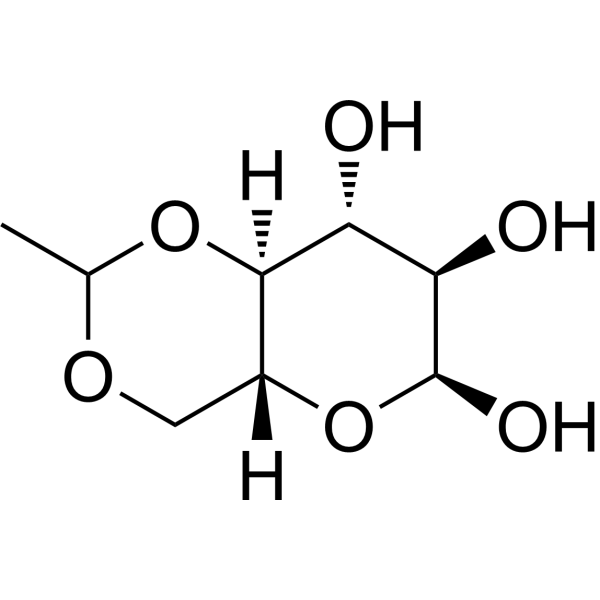
4,6-O-ethylidene-α-D-glucose (Ethylidene-glucose), a glucose derivative, is a competitive exofacial binding-site inhibitor on glucose transporter 1 (GLUT1) with a Ki of 12 mM for wild-type 2-deoxy-D-glucose transport .
Quercetin 3-O-(6-O-malonyl-β-D-galactoside) is an antioxidant derived from Apocynum venetum that exhibits strong scavenging activity against DPPH (HY-112053) free radicals, with an EC50 value of 11.4 μM .
2′-C-Methyl-6-O-methylinosine is a hypoxanthine analog. Hypoxanthine is a kind of purine base mainly present in muscle tissue. And it is a metabolite produced by purine oxidase acting on xanthine. Hypoxanthine has typical anti-inflammatory effects and is a potential endogenous poly(ADP-ribose) polymerase (PARP) inhibitor. It is cytoprotective by inhibiting PAPR activity, inhibiting peroxynitrite-induced mitochondrial depolarization and secondary superoxide production. Hypoxanthine can also be used as an indicator of hypoxia .
Methyl 4,6-O-Benzylidene-β-D-glucopyranoside is a class of biochemical reagents used in glycobiology research. Glycobiology studies the structure, synthesis, biology, and evolution of sugars. It involves carbohydrate chemistry, enzymology of glycan formation and degradation, protein-glycan recognition, and the role of glycans in biological systems. This field is closely related to basic research, biomedicine, and biotechnology .
Phenylmethyl 4,6-O-(phenylmethylene)-α-D-mannopyranoside is a class of biochemical reagents used in glycobiology research. Glycobiology studies the structure, synthesis, biology, and evolution of sugars. It involves carbohydrate chemistry, enzymology of glycan formation and degradation, protein-glycan recognition, and the role of glycans in biological systems. This field is closely related to basic research, biomedicine, and biotechnology .
Phenylmethyl 4,6-O-(phenylmethylene)-β-D-glucopyranoside is a class of biochemical reagents used in glycobiology research. Glycobiology studies the structure, synthesis, biology, and evolution of sugars. It involves carbohydrate chemistry, enzymology of glycan formation and degradation, protein-glycan recognition, and the role of glycans in biological systems. This field is closely related to basic research, biomedicine, and biotechnology .
Benzyl N-acetyl-4,6-O-benzylidene normuranic acid is a class of biochemical reagents used in glycobiology research. Glycobiology studies the structure, synthesis, biology, and evolution of sugars. It involves carbohydrate chemistry, enzymology of glycan formation and degradation, protein-glycan recognition, and the role of glycans in biological systems. This field is closely related to basic research, biomedicine, and biotechnology .
4,6-O-ethylidene-α-D-glucose (Ethylidene-glucose), a glucose derivative, is a competitive exofacial binding-site inhibitor on glucose transporter 1 (GLUT1) with a Ki of 12 mM for wild-type 2-deoxy-D-glucose transport .
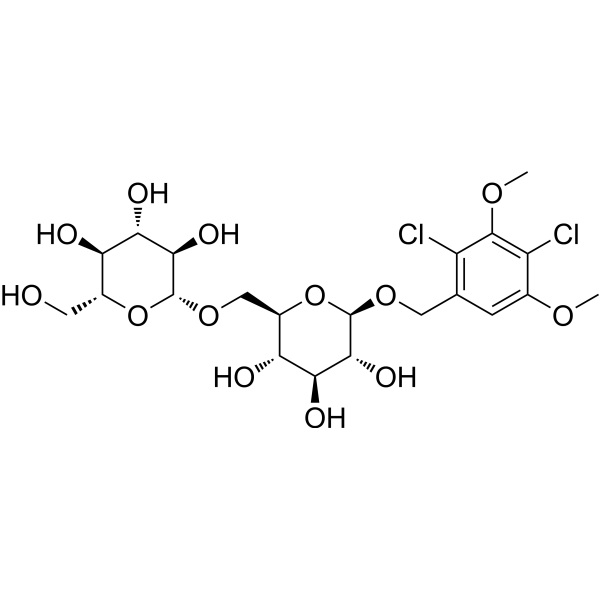
(2,4-Dichloro-3,5-dimethoxyphenyl) methyl 6-O-β-D-glucopyranosyl-β-D-glucopyranoside is an anticancer agent that inhibits the proliferation of lung cancer A549 cells (IC50=29 μΜ). (2,4-Dichloro-3,5-dimethoxyphenyl) methyl 6-O-β-D-glucopyranosyl-β-D-glucopyranoside can be obtained from Lilium regale and can be used in cancer research .
α-D-Galactopyranoside,methyl 6-O-(triphenylmethyl)-,triacetate is a class of biochemical reagents used in glycobiology research. Glycobiology studies the structure, synthesis, biology, and evolution of sugars. It involves carbohydrate chemistry, enzymology of glycan formation and degradation, protein-glycan recognition, and the role of glycans in biological systems. This field is closely related to basic research, biomedicine, and biotechnology .
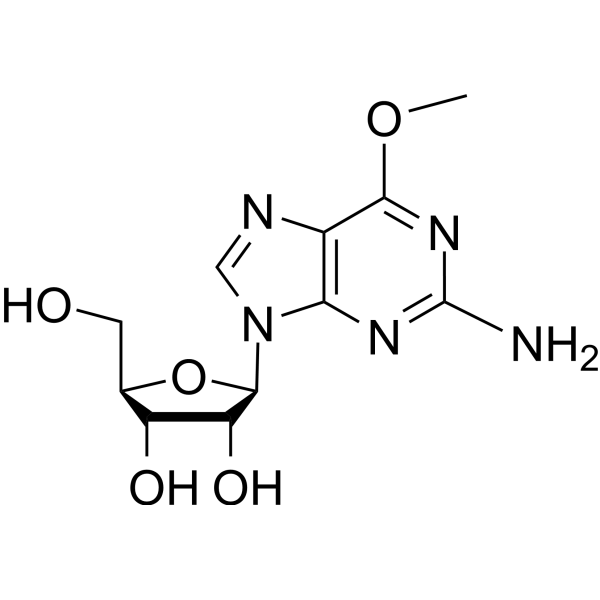
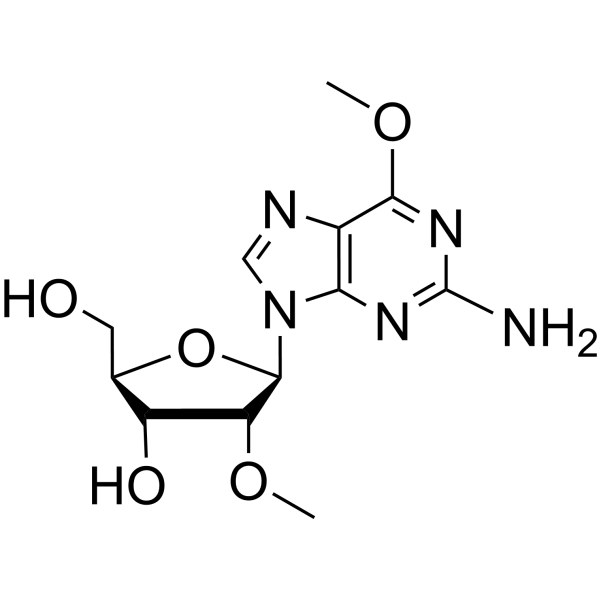
2-Amino-6-O-methyl-2’-O-methyl purine riboside is a purine nucleoside analog. Purine nucleoside analogs have broad antitumor activity targeting indolent lymphoid malignancies. Anticancer mechanisms in this process rely on inhibition of DNA synthesis, induction of apoptosis, etc .
4-Methylphenyl 4,6-O-benzylidene-β-D-thiogalactopyranoside is a class of biochemical reagents used in glycobiology research. Glycobiology studies the structure, synthesis, biology, and evolution of sugars. It involves carbohydrate chemistry, enzymology of glycan formation and degradation, protein-glycan recognition, and the role of glycans in biological systems. This field is closely related to basic research, biomedicine, and biotechnology .
Methyl 4,6-O-(1-methylethylidene)-α-D-mannopyranoside is a class of biochemical reagents used in glycobiology research. Glycobiology studies the structure, synthesis, biology, and evolution of sugars. It involves carbohydrate chemistry, enzymology of glycan formation and degradation, protein-glycan recognition, and the role of glycans in biological systems. This field is closely related to basic research, biomedicine, and biotechnology .
Benzyl N-acetyl-4,6-O-benzylidene-α-isomuramic acid is a class of biochemical reagents used in glycobiology research. Glycobiology studies the structure, synthesis, biology, and evolution of sugars. It involves carbohydrate chemistry, enzymology of glycan formation and degradation, protein-glycan recognition, and the role of glycans in biological systems. This field is closely related to basic research, biomedicine, and biotechnology .
4-Nitrophenyl 4,6-O-(phenylmethylene)-α-D-mannopyranoside is a class of biochemical reagents used in glycobiology research. Glycobiology studies the structure, synthesis, biology, and evolution of sugars. It involves carbohydrate chemistry, enzymology of glycan formation and degradation, protein-glycan recognition, and the role of glycans in biological systems. This field is closely related to basic research, biomedicine, and biotechnology .
1,5-Anhydro-4,6-O-(phenylmethylene)-D-glucitol is a class of biochemical reagents used in glycobiology research. Glycobiology studies the structure, synthesis, biology, and evolution of sugars. It involves carbohydrate chemistry, enzymology of glycan formation and degradation, protein-glycan recognition, and the role of glycans in biological systems. This field is closely related to basic research, biomedicine, and biotechnology .
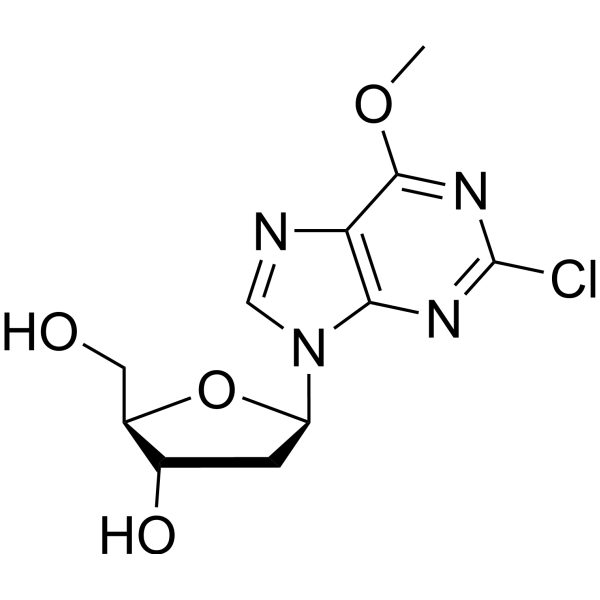
2-Chloro-2'-deoxy-6-O-methylinosine is a hypoxanthine analog. Hypoxanthine is a kind of purine base mainly present in muscle tissue. And it is a metabolite produced by purine oxidase acting on xanthine. Hypoxanthine has typical anti-inflammatory effects and is a potential endogenous poly(ADP-ribose) polymerase (PARP) inhibitor. It is cytoprotective by inhibiting PAPR activity, inhibiting peroxynitrite-induced mitochondrial depolarization and secondary superoxide production. Hypoxanthine can also be used as an indicator of hypoxia .
Entadamide A 2'-O-(6''-O-β-D-glucopyranosyl)-β-D-glucopyranoside (MFLNH I) (compound 5) can be isolated from the seed kernel of Entada rheedei. Entada rheedei is a medicinal plant from Thailand that is used to suppress stomach pain .
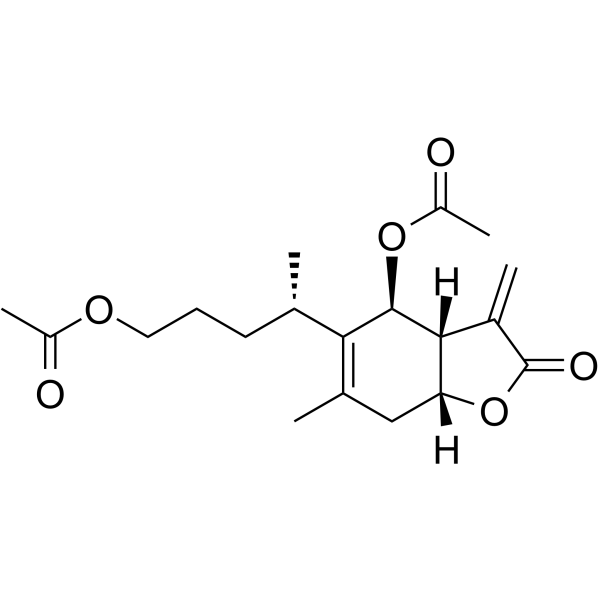
Britannilactone diacetate (1,6-O,O-Diacetylbritannilactone; Compound 2) exhibits potential NO inhibition effect. Britannilactone diacetate exhibits activity against NO production induced by LPS in BV-2 microglial cells with the EC50 value of 6.3 μM. Britannilactone diacetate exhibits a favorable blood-brain barriers (BBB) penetration and absorption, distribution, metabolism, excretion, and toxicity (ADMET) property .
4-Nitrophenyl 6-O-α-D-mannopyranosyl-α-D-mannopyranoside is a class of biochemical reagents used in glycobiology research. Glycobiology studies the structure, synthesis, biology, and evolution of sugars. It involves carbohydrate chemistry, enzymology of glycan formation and degradation, protein-glycan recognition, and the role of glycans in biological systems. This field is closely related to basic research, biomedicine, and biotechnology .
β-D-Galactopyranoside, methyl 4,6-O-(phenylmethylene)-, dibenzoate is a class of biochemical reagents used in glycobiology research. Glycobiology studies the structure, synthesis, biology, and evolution of sugars. It involves carbohydrate chemistry, enzymology of glycan formation and degradation, protein-glycan recognition, and the role of glycans in biological systems. This field is closely related to basic research, biomedicine, and biotechnology .
4-Nitrophenyl 6-O-α-D-glucopyranosyl-α-D-glucopyranoside is a class of biochemical reagents used in glycobiology research. Glycobiology studies the structure, synthesis, biology, and evolution of sugars. It involves carbohydrate chemistry, enzymology of glycan formation and degradation, protein-glycan recognition, and the role of glycans in biological systems. This field is closely related to basic research, biomedicine, and biotechnology .
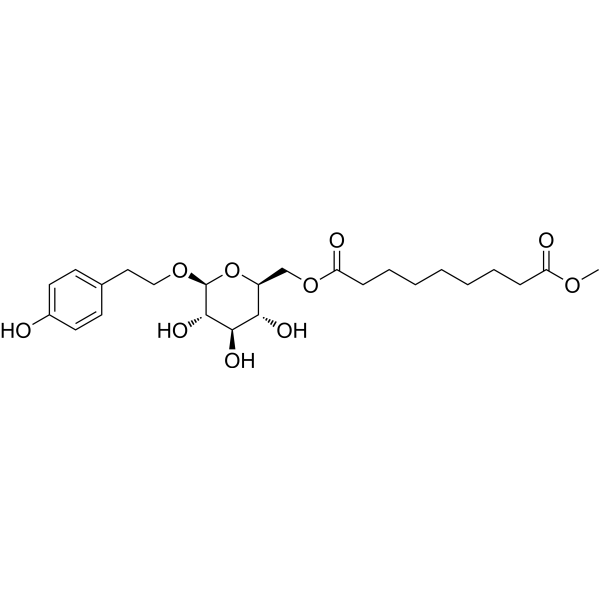
4-(4-Hydroxyphenyl)-2-butanone 4'-O-β-D-(2-O-galloyl-6-O-cinnamoyl)glucopyranoside is a pancreatic lipase inhibitor, with an IC50 value of 2.91 μM. 4-(4-Hydroxyphenyl)-2-butanone 4'-O-β-D-(2-O-galloyl-6-O-cinnamoyl)glucopyranoside can effectively reduce lipid absorption and regulate obesity-related metabolic disorders, making it useful for research on obesity .
α-D-Glucopyranoside,methyl 6-O-(phenylmethyl),2,3-diacetate is a class of biochemical reagents used in glycobiology research. Glycobiology studies the structure, synthesis, biology, and evolution of sugars. It involves carbohydrate chemistry, enzymology of glycan formation and degradation, protein-glycan recognition, and the role of glycans in biological systems. This field is closely related to basic research, biomedicine, and biotechnology .
2-(Acetylamino)-2-deoxy-4,6-O-(phenylmethylene)-D-galactose is a class of biochemical reagents used in glycobiology research. Glycobiology studies the structure, synthesis, biology, and evolution of sugars. It involves carbohydrate chemistry, enzymology of glycan formation and degradation, protein-glycan recognition, and the role of glycans in biological systems. This field is closely related to basic research, biomedicine, and biotechnology .
2-(Acetylamino)-2-deoxy-4,6-O-(phenylmethylene)-D-glucopyranose is a class of biochemical reagents used in glycobiology research. Glycobiology studies the structure, synthesis, biology, and evolution of sugars. It involves carbohydrate chemistry, enzymology of glycan formation and degradation, protein-glycan recognition, and the role of glycans in biological systems. This field is closely related to basic research, biomedicine, and biotechnology .
Galloylpaeoniflorin (6'-O-Galloyl paeoniflorin) is an orally active galloylated derivative of Paeoniflorin (HY-N0293) found in peony roots with various anti-inflammatory and antioxidant activities. Galloylpaeoniflorin suppresses RANKL-induced activation of ERK, JNK, c-Fos, c-Jun, and NFATc1, and reduces osteoclast-specific gene expression. Galloylpaeoniflorin activates Nrf2 and PI3K/Akt pathways, inhibits NF-κB activation, and scavenges ROS to reduce oxidative DNA, lipid, and protein damage. Galloylpaeoniflorin attenuates neuroinflammation, inhibits apoptosis, reduces Helicobacter pylori-induced gastric mucosa injury and UVB-induced cell damage. Galloylpaeoniflorin can be used for the research of osteoporosis, gastritis, ischemic stroke and skin diseases .
Benzyl 2,3-O-Isopropylidene-6-O-trityl-α-D-mannofuranose is a class of biochemical reagents used in glycobiology research. Glycobiology studies the structure, synthesis, biology, and evolution of sugars. It involves carbohydrate chemistry, enzymology of glycan formation and degradation, protein-glycan recognition, and the role of glycans in biological systems. This field is closely related to basic research, biomedicine, and biotechnology .
α-D-Glucopyranoside,methyl 4,6-O-(phenylmethylene),2-benzoate is a class of biochemical reagents used in glycobiology research. Glycobiology studies the structure, synthesis, biology, and evolution of sugars. It involves carbohydrate chemistry, enzymology of glycan formation and degradation, protein-glycan recognition, and the role of glycans in biological systems. This field is closely related to basic research, biomedicine, and biotechnology .
Methyl 3-O-methyl-4,6-O-(phenylmethylene)-α-D-mannopyranoside is a class of biochemical reagents used in glycobiology research. Glycobiology studies the structure, synthesis, biology, and evolution of sugars. It involves carbohydrate chemistry, enzymology of glycan formation and degradation, protein-glycan recognition, and the role of glycans in biological systems. This field is closely related to basic research, biomedicine, and biotechnology .
Phenylmethyl 3-O-(phenylmethyl)-4,6-O-(phenylmethylene)-α-D-mannopyranoside is a class of biochemical reagents used in glycobiology research. Glycobiology studies the structure, synthesis, biology, and evolution of sugars. It involves carbohydrate chemistry, enzymology of glycan formation and degradation, protein-glycan recognition, and the role of glycans in biological systems. This field is closely related to basic research, biomedicine, and biotechnology .
Benzyl 2-O-Benzyl-4,6-O-benzylidene-α-D-mannopyranoside is a class of biochemical reagents used in glycobiology research. Glycobiology studies the structure, synthesis, biology, and evolution of sugars. It involves carbohydrate chemistry, enzymology of glycan formation and degradation, protein-glycan recognition, and the role of glycans in biological systems. This field is closely related to basic research, biomedicine, and biotechnology .
4-O-[4,6-O-(Phenylmethylene)-α-D-glucopyranosyl]-D-glucoseis a class of biochemical reagents used in glycobiology research. Glycobiology studies the structure, synthesis, biology, and evolution of sugars. It involves carbohydrate chemistry, enzymology of glycan formation and degradation, protein-glycan recognition, and the role of glycans in biological systems. This field is closely related to basic research, biomedicine, and biotechnology .
Methyl 3,4-O-Isopropylidene-6-O-trityl-α-D-galactopyranoside is a class of biochemical reagents used in glycobiology research. Glycobiology studies the structure, synthesis, biology, and evolution of sugars. It involves carbohydrate chemistry, enzymology of glycan formation and degradation, protein-glycan recognition, and the role of glycans in biological systems. This field is closely related to basic research, biomedicine, and biotechnology .
4-Nitrophenyl 2-benzoyl-4,6-O-benzylidene-α-D-mannopyranoside is a class of biochemical reagents used in glycobiology research. Glycobiology studies the structure, synthesis, biology, and evolution of sugars. It involves carbohydrate chemistry, enzymology of glycan formation and degradation, protein-glycan recognition, and the role of glycans in biological systems. This field is closely related to basic research, biomedicine, and biotechnology .
2-Acetamido-4,6-O-benzylidene-2-deoxy-β-D-glucopyranosyl is a class of biochemical reagents used in glycobiology research. Glycobiology studies the structure, synthesis, biology, and evolution of sugars. It involves carbohydrate chemistry, enzymology of glycan formation and degradation, protein-glycan recognition, and the role of glycans in biological systems. This field is closely related to basic research, biomedicine, and biotechnology .
2-Acetamido-2-deoxy-6-O-(α-L-fucopyranosyl)-D-glucopyranose is a class of biochemical reagents used in glycobiology research. Glycobiology studies the structure, synthesis, biology, and evolution of sugars. It involves carbohydrate chemistry, enzymology of glycan formation and degradation, protein-glycan recognition, and the role of glycans in biological systems. This field is closely related to basic research, biomedicine, and biotechnology .
1,5-Anhydro-4,6-O-benzylidene-3-deoxy-D-glucitol is a class of biochemical reagents used in glycobiology research. Glycobiology studies the structure, synthesis, biology, and evolution of sugars. It involves carbohydrate chemistry, enzymology of glycan formation and degradation, protein-glycan recognition, and the role of glycans in biological systems. This field is closely related to basic research, biomedicine, and biotechnology .
2-(Acetylamino)-2-deoxy-4,6-O-(1-methylethylidene)-D-glucose is a class of biochemical reagents used in glycobiology research. Glycobiology studies the structure, synthesis, biology, and evolution of sugars. It involves carbohydrate chemistry, enzymology of glycan formation and degradation, protein-glycan recognition, and the role of glycans in biological systems. This field is closely related to basic research, biomedicine, and biotechnology .
O-n-Butanoyl-2,3,5,6-O-diisopropylidene-α-D-mannofuranosideis a class of biochemical reagents used in glycobiology research. Glycobiology studies the structure, synthesis, biology, and evolution of sugars. It involves carbohydrate chemistry, enzymology of glycan formation and degradation, protein-glycan recognition, and the role of glycans in biological systems. This field is closely related to basic research, biomedicine, and biotechnology .
4,6-O-Benzylidene-N-(tert-butoxycarbonyl)-1,5-imino-D-glucitol is a class of biochemical reagents used in glycobiology research. Glycobiology studies the structure, synthesis, biology, and evolution of sugars. It involves carbohydrate chemistry, enzymology of glycan formation and degradation, protein-glycan recognition, and the role of glycans in biological systems. This field is closely related to basic research, biomedicine, and biotechnology .
α-D-Mannopyranoside,methyl 4,6-O-(1-methylethylidene),cyclic carbonate is a class of biochemical reagents used in glycobiology research. Glycobiology studies the structure, synthesis, biology, and evolution of sugars. It involves carbohydrate chemistry, enzymology of glycan formation and degradation, protein-glycan recognition, and the role of glycans in biological systems. This field is closely related to basic research, biomedicine, and biotechnology .
4-Methoxyphenyl 3-O-benzyl-4,6-O-benzylidene-β-D-glucopyranoside is a class of biochemical reagents used in glycobiology research. Glycobiology studies the structure, synthesis, biology, and evolution of sugars. It involves carbohydrate chemistry, enzymology of glycan formation and degradation, protein-glycan recognition, and the role of glycans in biological systems. This field is closely related to basic research, biomedicine, and biotechnology .
Methyl N-acetyl-1-O-(phenylmethyl)-4,6-O-(phenylmethylene)-α-muramateis a class of biochemical reagents used in glycobiology research. Glycobiology studies the structure, synthesis, biology, and evolution of sugars. It involves carbohydrate chemistry, enzymology of glycan formation and degradation, protein-glycan recognition, and the role of glycans in biological systems. This field is closely related to basic research, biomedicine, and biotechnology .
4-Methoxyphenyl 3-O-Allyl-4,6-O-benzylidene-β-D-galactopyranoside is a class of biochemical reagents used in glycobiology research. Glycobiology studies the structure, synthesis, biology, and evolution of sugars. It involves carbohydrate chemistry, enzymology of glycan formation and degradation, protein-glycan recognition, and the role of glycans in biological systems. This field is closely related to basic research, biomedicine, and biotechnology .
Allyl 2-(acetylamino)-2-deoxy-4,6-O-(phenylmethylene)-α-D-glucopyranoside is a class of biochemical reagents used in glycobiology research. Glycobiology studies the structure, synthesis, biology, and evolution of sugars. It involves carbohydrate chemistry, enzymology of glycan formation and degradation, protein-glycan recognition, and the role of glycans in biological systems. This field is closely related to basic research, biomedicine, and biotechnology .
3-Acetyl-1,2-O-isopropylidene-6-O-trityl-α-D-galactofuranose is a class of biochemical reagents used in glycobiology research. Glycobiology studies the structure, synthesis, biology, and evolution of sugars. It involves carbohydrate chemistry, enzymology of glycan formation and degradation, protein-glycan recognition, and the role of glycans in biological systems. This field is closely related to basic research, biomedicine, and biotechnology .
2,5-Anhydro-1,3-O-isopropylidene-6-O-trityl-D-glucitol is a class of biochemical reagents used in glycobiology research. Glycobiology studies the structure, synthesis, biology, and evolution of sugars. It involves carbohydrate chemistry, enzymology of glycan formation and degradation, protein-glycan recognition, and the role of glycans in biological systems. This field is closely related to basic research, biomedicine, and biotechnology .
β-D-Mannopyranoside,4-nitrophenyl 4,6-O-cyclohexylidene,3-benzoate is a class of biochemical reagents used in glycobiology research. Glycobiology studies the structure, synthesis, biology, and evolution of sugars. It involves carbohydrate chemistry, enzymology of glycan formation and degradation, protein-glycan recognition, and the role of glycans in biological systems. This field is closely related to basic research, biomedicine, and biotechnology .
Phenylmethyl 2-(acetylamino)-2-deoxy-4,6-O-(phenylmethylene)-α-D-glucopyranoside is a class of biochemical reagents used in glycobiology research. Glycobiology studies the structure, synthesis, biology, and evolution of sugars. It involves carbohydrate chemistry, enzymology of glycan formation and degradation, protein-glycan recognition, and the role of glycans in biological systems. This field is closely related to basic research, biomedicine, and biotechnology .
Benzyl 2-deoxy-2-phthalimido-4,6-O-benzylidene-β-D-glucopyranosideis a class of biochemical reagents used in glycobiology research. Glycobiology studies the structure, synthesis, biology, and evolution of sugars. It involves carbohydrate chemistry, enzymology of glycan formation and degradation, protein-glycan recognition, and the role of glycans in biological systems. This field is closely related to basic research, biomedicine, and biotechnology .
Benzyl 2-acetamido-2-deoxy-4,6-O-benzylidene-α-D-galactopyranoside is a class of biochemical reagents used in glycobiology research. Glycobiology studies the structure, synthesis, biology, and evolution of sugars. It involves carbohydrate chemistry, enzymology of glycan formation and degradation, protein-glycan recognition, and the role of glycans in biological systems. This field is closely related to basic research, biomedicine, and biotechnology .
Methyl 2,3-Di-O-benzoyl-4,6-O-benzylidene-α-D-glucopyranoside is a class of biochemical reagents used in glycobiology research. Glycobiology studies the structure, synthesis, biology, and evolution of sugars. It involves carbohydrate chemistry, enzymology of glycan formation and degradation, protein-glycan recognition, and the role of glycans in biological systems. This field is closely related to basic research, biomedicine, and biotechnology .
Benzyl 2,3-O-Isopropylidene-6-O-trityl-5-keto-α-D-mannofuranose is a class of biochemical reagents used in glycobiology research. Glycobiology studies the structure, synthesis, biology, and evolution of sugars. It involves carbohydrate chemistry, enzymology of glycan formation and degradation, protein-glycan recognition, and the role of glycans in biological systems. This field is closely related to basic research, biomedicine, and biotechnology .
Benzyl 2-acetamido-2-deoxy-6-O-(β-D-galactopyranosyl) -α-D-Galactopyranoside is a class of biochemical reagents used in the study of glycobiology. Glycobiology studies the structure, synthesis, biology, and evolution of sugars. It deals with carbohydrate chemistry, glycan formation and degradation enzymology, protein-glycan recognition, and the role of glycans in biological systems. The field is closely related to basic research, biomedicine and biotechnology .
Benzyl 2-acetamido-4,6-O-benzylidene-2-deoxy-α-D-glucopyranoside 3-acetate is a class of biochemical reagents used in glycobiology research. Glycobiology studies the structure, synthesis, biology, and evolution of sugars. It involves carbohydrate chemistry, enzymology of glycan formation and degradation, protein-glycan recognition, and the role of glycans in biological systems. This field is closely related to basic research, biomedicine, and biotechnology .
4-Methoxyphenyl 2-azido-4,6-O-benzylidene-2-deoxy-β-D-glucopyranoside is a class of biochemical reagents used in glycobiology research. Glycobiology studies the structure, synthesis, biology, and evolution of sugars. It involves carbohydrate chemistry, enzymology of glycan formation and degradation, protein-glycan recognition, and the role of glycans in biological systems. This field is closely related to basic research, biomedicine, and biotechnology .
2-Acetamido-4,6-O-benzylidene-2-deoxy-D-gluconohydroximo-1,5-lactone is a class of biochemical reagents used in glycobiology research. Glycobiology studies the structure, synthesis, biology, and evolution of sugars. It involves carbohydrate chemistry, enzymology of glycan formation and degradation, protein-glycan recognition, and the role of glycans in biological systems. This field is closely related to basic research, biomedicine, and biotechnology .
Methyl 3-acetylamino-2,3-dideoxy-4,6-O-benzylidene-α-D-ribo-hexopyranoside is a class of biochemical reagents used in glycobiology research. Glycobiology studies the structure, synthesis, biology, and evolution of sugars. It involves carbohydrate chemistry, enzymology of glycan formation and degradation, protein-glycan recognition, and the role of glycans in biological systems. This field is closely related to basic research, biomedicine, and biotechnology .
Methyl 4, 6-O-Benzylidene-2-deoxy-α-d-Erythro-Hexopyranosid-3-ulose oxime is a class of biochemical reagents used in the study of glycobiology. Glycobiology studies the structure, synthesis, biology, and evolution of sugars. It deals with carbohydrate chemistry, glycan formation and degradation enzymology, protein-glycan recognition, and the role of glycans in biological systems. The field is closely related to basic research, biomedicine and biotechnology .
Methyl 3-acetamido-4,6-O-benzylidene-2,3-dideoxy-α-D-arabino-hexopyranoside is a class of biochemical reagents used in glycobiology research. Glycobiology studies the structure, synthesis, biology, and evolution of sugars. It involves carbohydrate chemistry, enzymology of glycan formation and degradation, protein-glycan recognition, and the role of glycans in biological systems. This field is closely related to basic research, biomedicine, and biotechnology .
Methyl 2-O-allyl-3-O-benzyl-4,6-O-benzylidene-α-D-mannopyranoside is a class of biochemical reagents used in glycobiology research. Glycobiology studies the structure, synthesis, biology, and evolution of sugars. It involves carbohydrate chemistry, enzymology of glycan formation and degradation, protein-glycan recognition, and the role of glycans in biological systems. This field is closely related to basic research, biomedicine, and biotechnology .
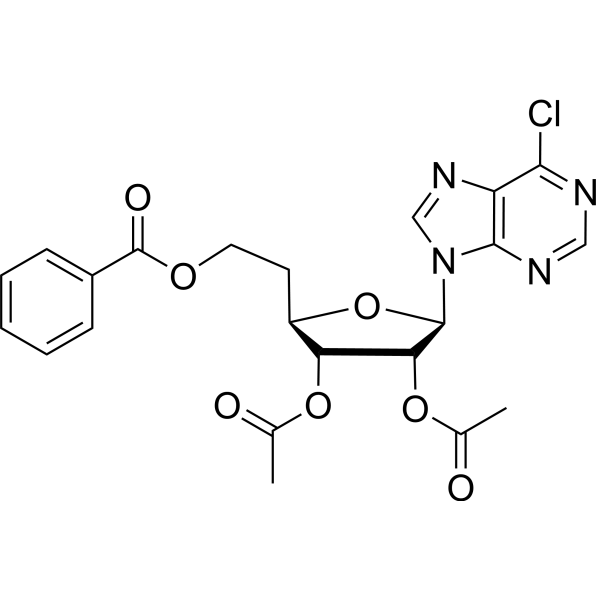
9-(2,3-Di-O-acetyl-6-O-benzoyl-5-deoxy-D-ribo-exofuranoyl)-6-chloropurine is a purine nucleoside analog. Purine nucleoside analogs have broad antitumor activity targeting indolent lymphoid malignancies. Anticancer mechanisms in this process rely on inhibition of DNA synthesis, induction of apoptosis, etc .
Methyl 4,6-O-(phenylmethylene)-3-O-2-propen-1-yl-α-D-mannopyranoside is a class of biochemical reagents used in glycobiology research. Glycobiology studies the structure, synthesis, biology, and evolution of sugars. It involves carbohydrate chemistry, enzymology of glycan formation and degradation, protein-glycan recognition, and the role of glycans in biological systems. This field is closely related to basic research, biomedicine, and biotechnology .
Methyl4,6-O-(phenylmethylene)-2-O-2-propen-1-yl-α-D-mannopyranoside is a class of biochemical reagents used in glycobiology research. Glycobiology studies the structure, synthesis, biology, and evolution of sugars. It involves carbohydrate chemistry, enzymology of glycan formation and degradation, protein-glycan recognition, and the role of glycans in biological systems. This field is closely related to basic research, biomedicine, and biotechnology .
2-Acetamido-3-O-benzyl-4,6-O-benzylidene-2-deoxy-β-D-glucopyranosyl azide is a class of biochemical reagents used in glycobiology research. Glycobiology studies the structure, synthesis, biology, and evolution of sugars. It involves carbohydrate chemistry, enzymology of glycan formation and degradation, protein-glycan recognition, and the role of glycans in biological systems. This field is closely related to basic research, biomedicine, and biotechnology .
Benzyl 5-amino-5-deoxy-2,3-O-isopropylidene-6-O-trityl-α-D-mannofuranoside is a class of biochemical reagents used in glycobiology research. Glycobiology studies the structure, synthesis, biology, and evolution of sugars. It involves carbohydrate chemistry, enzymology of glycan formation and degradation, protein-glycan recognition, and the role of glycans in biological systems. This field is closely related to basic research, biomedicine, and biotechnology .
Methyl 4-Azido-2,3-di-O-benzoyl-4-deoxy-6-O-trityl-α-D-glucopyranoside is a class of biochemical reagents used in glycobiology research. Glycobiology studies the structure, synthesis, biology, and evolution of sugars. It involves carbohydrate chemistry, enzymology of glycan formation and degradation, protein-glycan recognition, and the role of glycans in biological systems. This field is closely related to basic research, biomedicine, and biotechnology .
Methyl 3-O-benzyl-4, 6-O-Benzylidene-2-deoxy-2-N-Phthalimido-β-d-Glucopyranoside is a class of biochemical reagents used in the study of glycobiology. Glycobiology studies the structure, synthesis, biology, and evolution of sugars. It deals with carbohydrate chemistry, glycan formation and degradation enzymology, protein-glycan recognition, and the role of glycans in biological systems. The field is closely related to basic research, biomedicine and biotechnology .
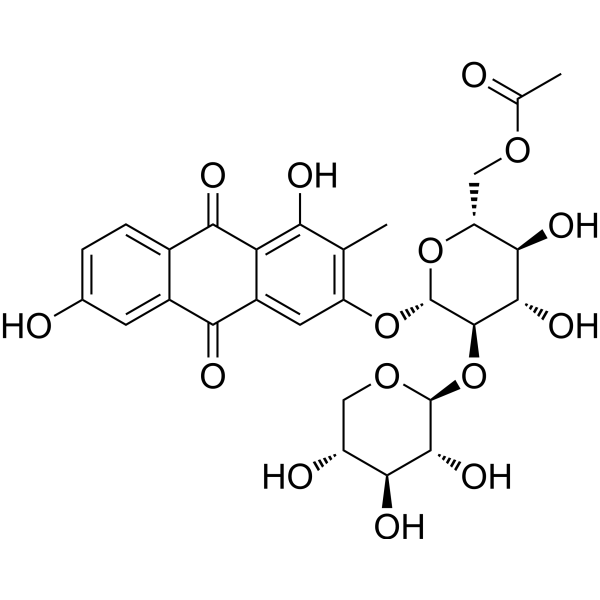
1,3,6-Trihydroxy-2-methyl-9,10-anthraquinone-3-O-(6'-O-acetyl)-beta-D-xylopyranosyl-(1->2)-beta-D-glucopyranoside ( Compound 20) is a quinone compound that can be isolated from the roots and rhizomes of Madder .
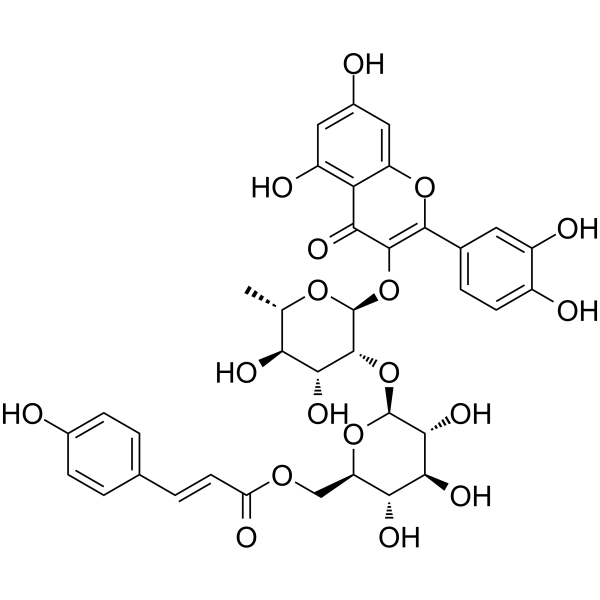
Quercetin 3-O-β-D-(6''-p-coumaroyl)glucopyranosyl(1→2)-α-L-rhamnopyranoside (Quercetin-3-O-[2-O-(6-O-p-hydroxyl-E-coumaroyl)-D-glucosyl]-(1→2)-L-rhamnoside) is one of the major antioxidants of Ginkgo biloba leaves .
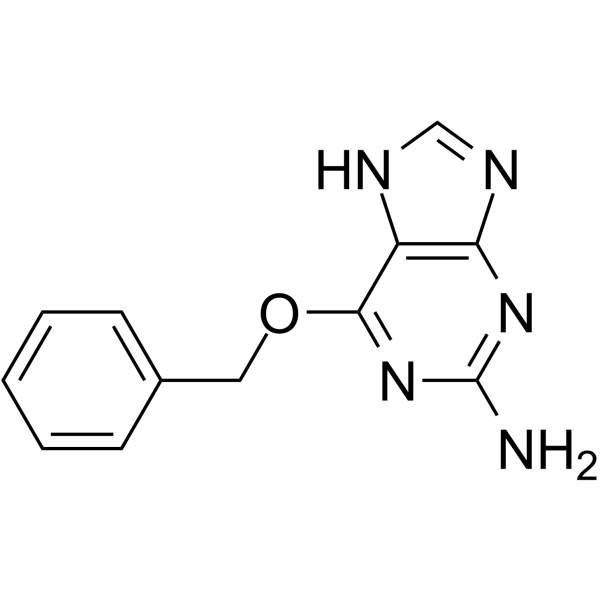
O6-Benzylguanine, a guanine analog, is the DNA repair enzyme O6-alkylguanine-DNA alkyltransferase (MGMT/AGT) inhibitor. O6-Benzylguanine acts as an AGT substrate, which transfers its benzyl group to the AGT cysteine residue, thereby irreversibly inactivating AGT and preventing DNA repair. O6-Benzylguanine induces tumor cell apoptosis. Antineoplastic activity .
β-Primeverosidase (EC 3.2.1.149) is responsible for the formation of the alcoholic aroma in oolong and black tea. In addition to β-primeverosides [i.e. 6-O-(β-D-xylopyranosyl)-β-D-glucopyranosides], it also hydrolyses 6-O-(β-D-apiofuranosyl)-β-D-glucopyranosides and, less rapidly, β-vicianosides and 6-O-(α-L-arabinofuranosyl)-β-D-glucopyranosides, but not β-glucosides. Geranyl-, linaloyl-, benzyl-and p-nitrophenol glycosides are all hydrolysed.
Nebramycin V' (Nebramine factor 5′) is a multi-component aminoglycoside antibiotic with a broad-spectrum activity against Gram-positive and Gram-negative bacteria and mycobacteria .
Hecameg is a natural product commonly used as a raw material for plant growth regulators and agricultural fertilizers. It can be used to improve the absorption and utilization efficiency of nutrients by plants, and to promote the growth and development of plants. In addition, this natural product is used as a growth factor for some microorganisms and animals
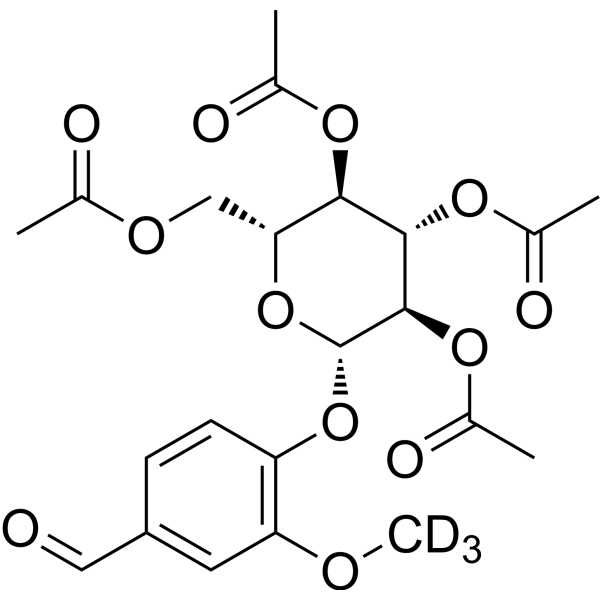
N,O-Dimethylhydroxylamine-d6 hydrochloride is a deuterium labeled N,O-Dimethylhydroxylamine hydrochloride (HY-41074). N,O-Dimethylhydroxylamine hydrochloride as an anomeric protecting group for use in oligosaccharide synthesis .
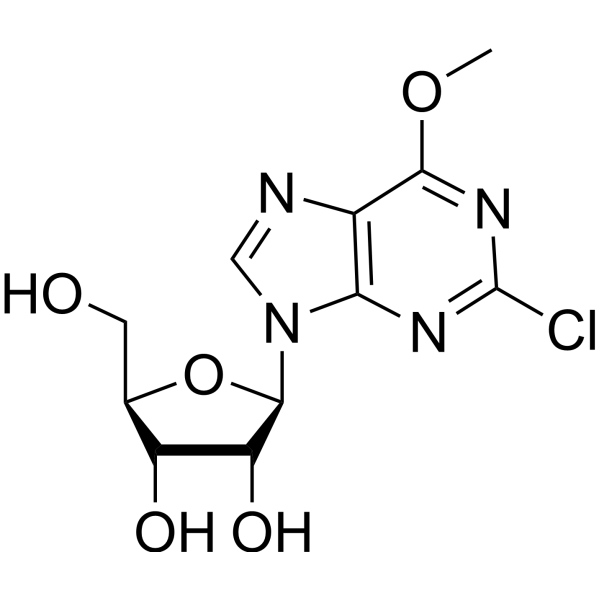
2-Chloro-6-methoxypurine riboside is a hypoxanthine analog. Hypoxanthine is a kind of purine base mainly present in muscle tissue. And it is a metabolite produced by purine oxidase acting on xanthine. Hypoxanthine has typical anti-inflammatory effects and is a potential endogenous poly(ADP-ribose) polymerase (PARP) inhibitor. It is cytoprotective by inhibiting PAPR activity, inhibiting peroxynitrite-induced mitochondrial depolarization and secondary superoxide production. Hypoxanthine can also be used as an indicator of hypoxia .
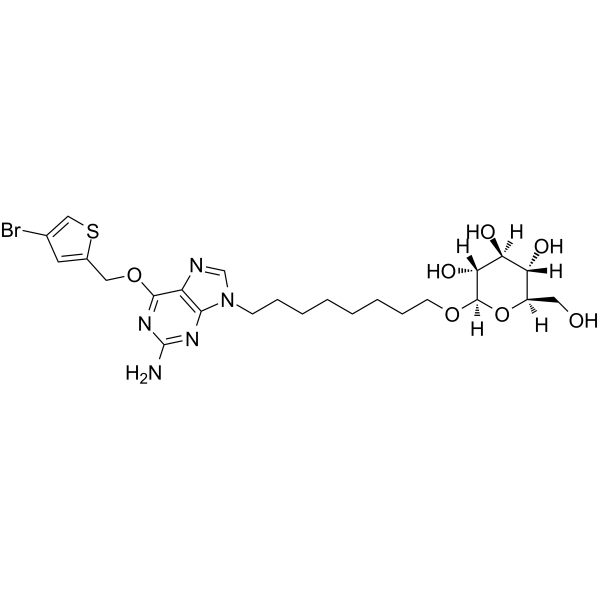
O6BTG-octylglucoside is a potent O 6-methylguanine-DNAmethyl-transferase (MGMT) inhibitor, with IC50s of 32 nM in vitro (cell extracts) and 10 nM in HeLa S3 cells.
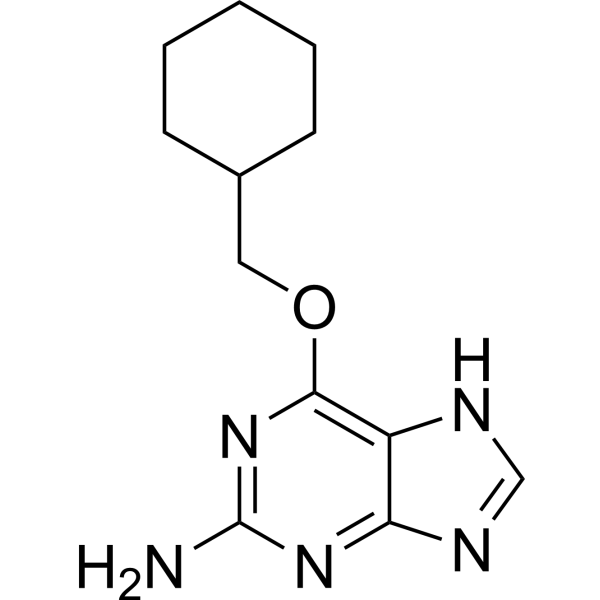
NU2058 (O6-(Cyclohexylmethyl)guanine) is a potent, competitive and guanine-based CDK inhibitor with IC50s of 17 μM and 26 μM for CDK2 and CDK1. NU2058 has anti-cancer activity.
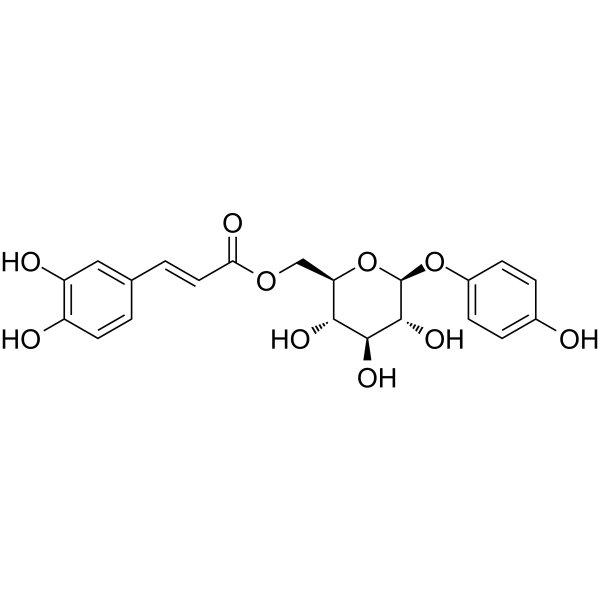
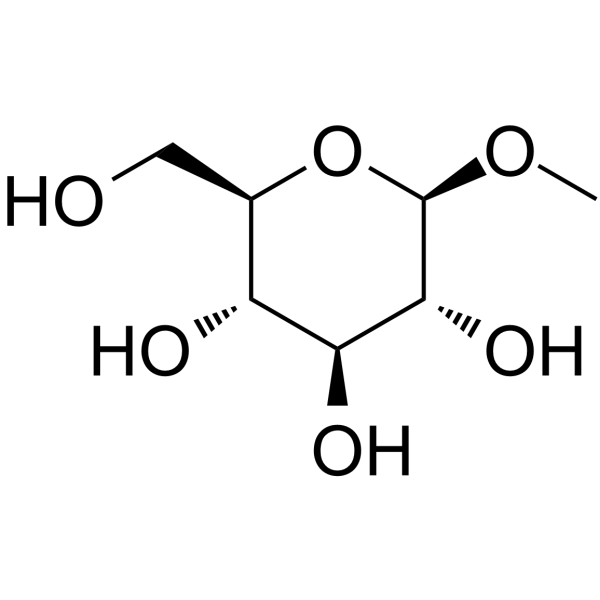
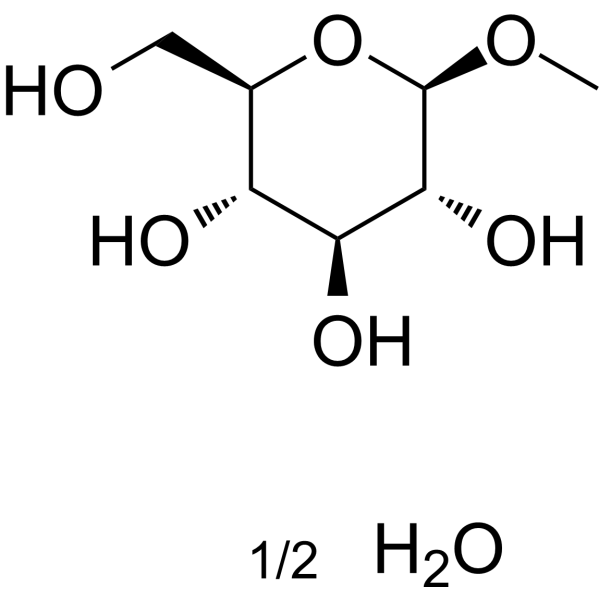
Methyl β-D-glucopyranoside (Methyl β-D-glucoside) is a model glycosyl acceptor for enzymatic glycosylation reactions. Methyl β-D-glucopyranoside participates in glycoside synthesis and can react with acyl donors such as caffeic acid esters under the catalysis of specific enzymes (such as Lipozyme TL IM) to achieve acylation modification. Methyl β-D-glucopyranoside can generate biologically active derivatives (such as 6-O-caffeoyl glucoside). Methyl β-D-glucopyranoside can be used in organic synthesis and biocatalysis research, especially the efficient enzymatic preparation of medicinal glycosides (such as Robustaside B (HY-N2720), 6-O-caffeoyl salidroside) .
CoDi3 is a covalent dimerization inducer. CoDi3 can specifically, covalently and irreversibly induce the dimerization of two proteins that have been fused with O6-alkylguanine-DNA alkyltransferase (AGT, also known as SNAP-tag) in living cells. CoDi3 can act as a "sensor" for protein-protein interactions .
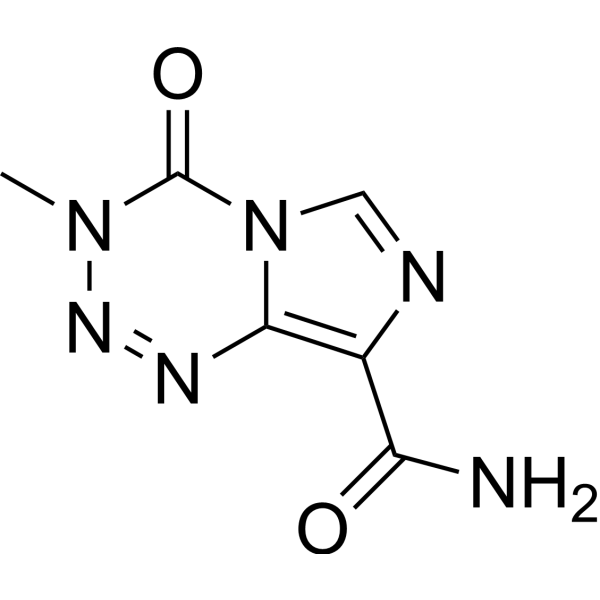
Temozolomide (NSC 362856) is an oral active DNA alkylating agent that crosses the blood-brain barrier. Temozolomide is also a proautophagic and proapoptotic agent. Temozolomide is effective against tumor cells that are characterized by low levels of O6-alkylguanine DNA alkyltransferase (OGAT) and a functional mismatch repair system. Temozolomide has antitumor and antiangiogenic effects .
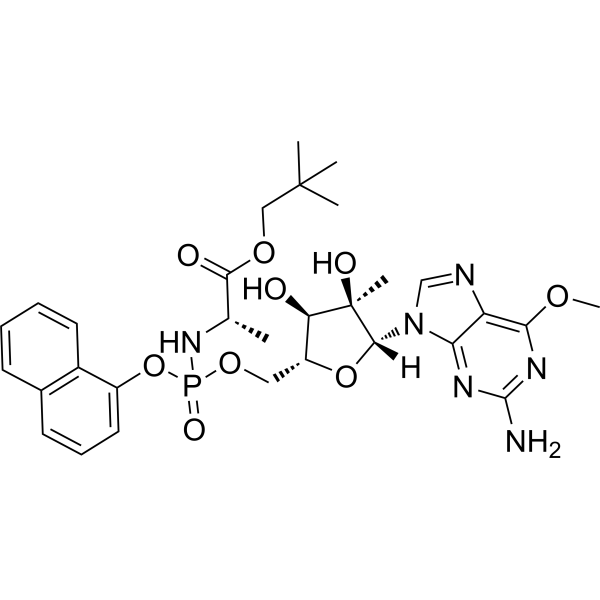
BMS-986094 (INX-08189) is a potent inhibitor of hepatitis C virus (HCV) replication, with an EC50 of 35 nM at 24 h in Huh-7 cells. BMS-986094 is a phosphoramidate proagent of 6-O-methyl-2’-C-methyl guanosine. BMS-986094 can be used for the research of chronic HCV infection .
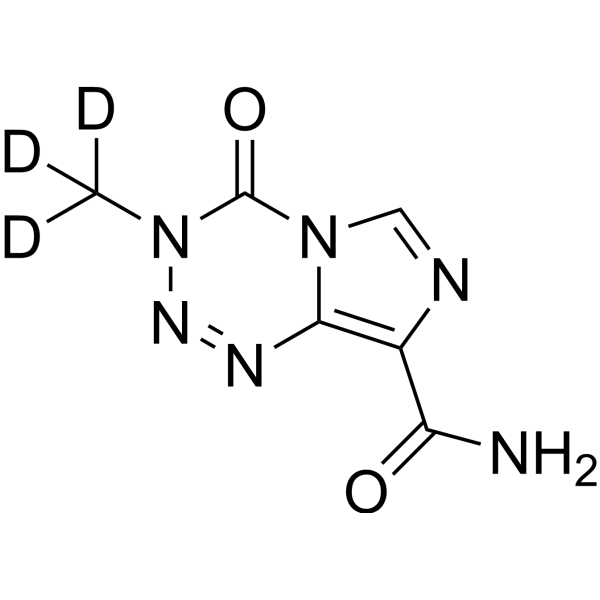
Temozolomide-d3 is the deuterium labeled Temozolomide. Temozolomide (NSC 362856) is an oral active DNA alkylating agent that crosses the blood-brain barrier. Temozolomide is also a proautophagic and proapoptotic agent. Temozolomide is effective against tumor cells that are characterized by low levels of O6-alkylguanine DNA alkyltransferase (OGAT) and a functional mismatch repair system. Temozolomide has antitumor and antiangiogenic effects .
Gemfibrozil 1-O-β-glucuronide-d6 is the deuterium labeled Gemfibrozil 1-O-β-glucuronide (HY-129993). Gemfibrozil 1-O-β-Glucuronide, a metabolite of Gemfibrozil (CI-719; HY-B0258), is a potent and competitive P450 (CYP) isoform CYP2C8 inhibitor with an IC50 of 4.07 μM .
Temozolomide (Standard) is the analytical standard of Temozolomide. This product is intended for research and analytical applications. Temozolomide (NSC 362856) is an oral active DNA alkylating agent that crosses the blood-brain barrier. Temozolomide is also a proautophagic and proapoptotic agent. Temozolomide is effective against tumor cells that are characterized by low levels of O6-alkylguanine DNA alkyltransferase (OGAT) and a functional mismatch repair system. Temozolomide has antitumor and antiangiogenic effects .
dTCOBG (dTCO-SNAP) is a SNAP-tag reactive benzylguanine (BG) analogue specifically designed for the specific labeling of immune cells. dTCOBG forms a stable thioether bond through the cysteine at the active site of SNAP-tag and O6-benzylguanine, resulting in a covalent linkage. dTCOBG demonstrates unique advantages in the labeling of macrophages derived from ER-HoxB8: it only labels SNAP-tag + macrophages, with no background signal in the control group. dTCOBG can be used for click chemistry labeling .
O-Desmethyl midostaurin- 13C6 (CGP62221- 13C6; O-Desmethyl PKC412- 13C6) is the 13C-labeled O-Desmethyl Midostaurin (HY-129491). O-Desmethyl Midostaurin (CGP62221; O-Desmethyl PKC412) is the active metabolite of Midostaurin (HY-10230) via cytochrome P450 liver enzyme metabolism. O-Desmethyl Midostaurin can be used as an indicator for Midostaurin metabolism in vivo . Midostaurin is a multi-targeted protein kinase inhibitor?with?IC50?ranging from 22-500 nM.
O6BTG-C8-αGlu is an O6-methylguanine-DNA methyltransferase (MGMT) inhibitor with an IC50 of 0.45 μM. At a concentration of 0.1 μM, O6BTG-C8-αGlu can completely inhibit MGMT in HeLaS3 cells. Even when applied chronically at high doses (up to 20 μM), it does not exhibit cytotoxicity. O6BTG-C8-αGlu is suitable for research on MGMT-related cancer diseases .
Hedgehog IN-11 is an orally active Hedgehog inhibitor. Hedgehog IN-11 downregulates the expression of O6-methylguanine-DNA methyltransferase (MGMT) to impair the Temozolomide (TMZ) (HY-17364) resistance by inhibiting the Hedgehog pathway. Hedgehog IN-11 shows improved inhibition of cell migration and invasion, and induced cell apoptosis in TMZ-resistant GBM cell lines. Hedgehog IN-11 is predicted by computer simulation to have good blood-brain barrier penetration. Hedgehog IN-11 can be used for the study of glioblastoma (GBM) .
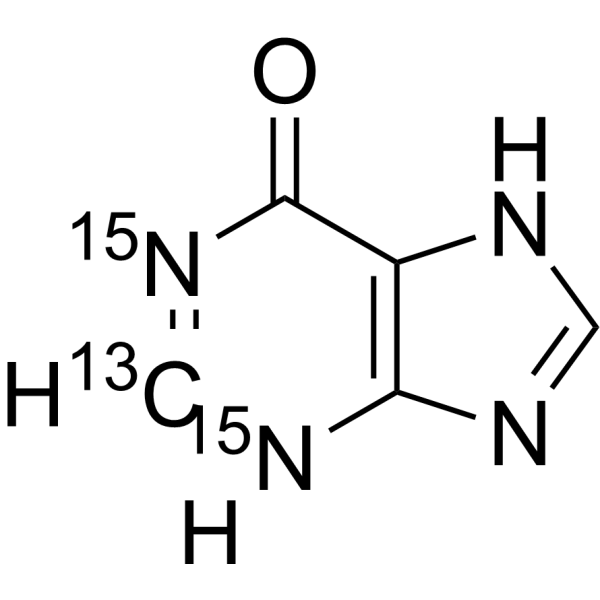
Hypoxanthine- 13C, 15N2 is a 15N-labeled and 13C-labled Hypoxanthine (HY-N0091). Hypoxanthine, a purine derivative, is a potential free radical generator and could be used as an indicator of hypoxia.
CoDi3 is a covalent dimerization inducer. CoDi3 can specifically, covalently and irreversibly induce the dimerization of two proteins that have been fused with O6-alkylguanine-DNA alkyltransferase (AGT, also known as SNAP-tag) in living cells. CoDi3 can act as a "sensor" for protein-protein interactions .
dTCOBG (dTCO-SNAP) is a SNAP-tag reactive benzylguanine (BG) analogue specifically designed for the specific labeling of immune cells. dTCOBG forms a stable thioether bond through the cysteine at the active site of SNAP-tag and O6-benzylguanine, resulting in a covalent linkage. dTCOBG demonstrates unique advantages in the labeling of macrophages derived from ER-HoxB8: it only labels SNAP-tag + macrophages, with no background signal in the control group. dTCOBG can be used for click chemistry labeling .
5,6-O-Isopropylidene-L-ascorbic acid (L-Ascorbic acid 5,6-acetonide) is an organic compound. 5,6-O-Isopropylidene-L-ascorbic acid is a derivative of L-Ascorbic acid (vitamin C). Ascorbic acid has antioxidant properties.
D-Galactose-6-O-sulfate sodium salt is a biochemical reagent that can be used as a biological material or organic compound for life science related research.
Mono-(6-p-toluenesulfonyl)-β-cyclodextrin is a biochemical reagent that can be used as a biological material or organic compound for life science related research.
Methyl 4,6-O-Benzylidene-α-D-glucopyranoside serves as the starting material for the active intermediate Dibutylstannylene acetals. Using Dibutylstannylene acetals as the starting material, the regioselective synthesis of carbohydrate-based vinyl monomer compounds is successfully achieved .
6-O-(Triisopropylsilyl)-D-galactal is a biochemical reagent that can be used as a biological material or organic compound for life science related research.
2-Acetamido-2-deoxy-6-O-(α-L-fucopyranosyl)-D-glucopyranose is a class of biochemical reagents used in glycobiology research. Glycobiology studies the structure, synthesis, biology, and evolution of sugars. It involves carbohydrate chemistry, enzymology of glycan formation and degradation, protein-glycan recognition, and the role of glycans in biological systems. This field is closely related to basic research, biomedicine, and biotechnology .
Methyl 4,6-O-Benzylidene-β-D-glucopyranoside is a class of biochemical reagents used in glycobiology research. Glycobiology studies the structure, synthesis, biology, and evolution of sugars. It involves carbohydrate chemistry, enzymology of glycan formation and degradation, protein-glycan recognition, and the role of glycans in biological systems. This field is closely related to basic research, biomedicine, and biotechnology .
6-O-Staroyl-L-ascorbic acid is an organic compound commonly used in cosmetics and skin care products. It can be used as an antioxidant and whitening agent, and is widely used in anti-aging, moisturizing and skin repairing. In addition, this compound is used as a catalyst or buffer in certain chemical reactions.
6-O-Methyl-guanine (Standard) is the analytical standard of 6-O-Methyl-guanine. This product is intended for research and analytical applications. 6-O-Methyl-guanine is a biochemical reagent that can be used as a biological material or organic compound for life science related research .
Heptakis(6-O-tert-butyldimethylsilyl)-β-cyclodextrin tetradecaacetate is a chemically modified cyclodextrin with good cosolvent activity. Heptakis(6-O-tert-butyldimethylsilyl)-β-cyclodextrin tetradecaacetate is widely used in compound formulations to improve the solubility and bioavailability of compounds. Heptakis(6-O-tert-butyldimethylsilyl)-β-cyclodextrin tetradecaacetate helps improve the release characteristics of compounds.
Mono-6-O-(p-toluenesulfonyl)-α-cyclodextrin is a biochemical reagent that can be used as a biological material or organic compound for life science related research.
Mono-6-O-mesitylenesulfonyl-γ-cyclodextrin is a biochemical reagent that can be used as a biological material or organic compound for life science related research.
6-O-(Triisopropylsilyl)-D-glucal is a biochemical reagent that can be used as a biological material or organic compound for life science related research.
Mono-6-O-(p-toluenesulfonyl)-γ-cyclodextrin is a biochemical reagent that can be used as a biological material or organic compound for life science related research.
6-O-(Triphenylmethyl)-D-glucose is a class of biochemical reagents used in glycobiology research. Glycobiology studies the structure, synthesis, biology, and evolution of sugars. It involves carbohydrate chemistry, enzymology of glycan formation and degradation, protein-glycan recognition, and the role of glycans in biological systems. This field is closely related to basic research, biomedicine, and biotechnology .
6-O-(tert-Butyldimethylsilyl)-D-galactal is a class of biochemical reagents used in glycobiology research. Glycobiology studies the structure, synthesis, biology, and evolution of sugars. It involves carbohydrate chemistry, enzymology of glycan formation and degradation, protein-glycan recognition, and the role of glycans in biological systems. This field is closely related to basic research, biomedicine, and biotechnology .
4,6-O-Isopropylidene-D-glucal is a class of biochemical reagents used in glycobiology research. Glycobiology studies the structure, synthesis, biology, and evolution of sugars. It involves carbohydrate chemistry, enzymology of glycan formation and degradation, protein-glycan recognition, and the role of glycans in biological systems. This field is closely related to basic research, biomedicine, and biotechnology .
6-O-α-D-Mannopyranosyl-D-mannose is a class of biochemical reagents used in glycobiology research. Glycobiology studies the structure, synthesis, biology, and evolution of sugars. It involves carbohydrate chemistry, enzymology of glycan formation and degradation, protein-glycan recognition, and the role of glycans in biological systems. This field is closely related to basic research, biomedicine, and biotechnology .
Methyl 6-O-(triphenylmethyl)-α-D-galactopyranoside is a class of biochemical reagents used in glycobiology research. Glycobiology studies the structure, synthesis, biology, and evolution of sugars. It involves carbohydrate chemistry, enzymology of glycan formation and degradation, protein-glycan recognition, and the role of glycans in biological systems. This field is closely related to basic research, biomedicine, and biotechnology .
Methyl 2,3-anhydro-4,6-O-benzylidene-α-D-allopyranoside is a biochemical reagent that can be used as a biological material or organic compound for life science related research.
Phenylmethyl 4,6-O-(phenylmethylene)-α-D-mannopyranoside is a class of biochemical reagents used in glycobiology research. Glycobiology studies the structure, synthesis, biology, and evolution of sugars. It involves carbohydrate chemistry, enzymology of glycan formation and degradation, protein-glycan recognition, and the role of glycans in biological systems. This field is closely related to basic research, biomedicine, and biotechnology .
Benzyl N-acetyl-4,6-O-benzylidene normuranic acid is a class of biochemical reagents used in glycobiology research. Glycobiology studies the structure, synthesis, biology, and evolution of sugars. It involves carbohydrate chemistry, enzymology of glycan formation and degradation, protein-glycan recognition, and the role of glycans in biological systems. This field is closely related to basic research, biomedicine, and biotechnology .
4-Methylphenyl 4,6-O-benzylidene-β-D-thiogalactopyranoside is a class of biochemical reagents used in glycobiology research. Glycobiology studies the structure, synthesis, biology, and evolution of sugars. It involves carbohydrate chemistry, enzymology of glycan formation and degradation, protein-glycan recognition, and the role of glycans in biological systems. This field is closely related to basic research, biomedicine, and biotechnology .
Methyl 4,6-O-(1-methylethylidene)-α-D-mannopyranoside is a class of biochemical reagents used in glycobiology research. Glycobiology studies the structure, synthesis, biology, and evolution of sugars. It involves carbohydrate chemistry, enzymology of glycan formation and degradation, protein-glycan recognition, and the role of glycans in biological systems. This field is closely related to basic research, biomedicine, and biotechnology .
Benzyl N-acetyl-4,6-O-benzylidene-α-isomuramic acid is a class of biochemical reagents used in glycobiology research. Glycobiology studies the structure, synthesis, biology, and evolution of sugars. It involves carbohydrate chemistry, enzymology of glycan formation and degradation, protein-glycan recognition, and the role of glycans in biological systems. This field is closely related to basic research, biomedicine, and biotechnology .
4-Nitrophenyl 4,6-O-(phenylmethylene)-α-D-mannopyranoside is a class of biochemical reagents used in glycobiology research. Glycobiology studies the structure, synthesis, biology, and evolution of sugars. It involves carbohydrate chemistry, enzymology of glycan formation and degradation, protein-glycan recognition, and the role of glycans in biological systems. This field is closely related to basic research, biomedicine, and biotechnology .
β-D-Galactopyranoside, methyl 4,6-O-(phenylmethylene)-, dibenzoate is a class of biochemical reagents used in glycobiology research. Glycobiology studies the structure, synthesis, biology, and evolution of sugars. It involves carbohydrate chemistry, enzymology of glycan formation and degradation, protein-glycan recognition, and the role of glycans in biological systems. This field is closely related to basic research, biomedicine, and biotechnology .
4-Nitrophenyl 6-O-α-D-glucopyranosyl-α-D-glucopyranoside is a class of biochemical reagents used in glycobiology research. Glycobiology studies the structure, synthesis, biology, and evolution of sugars. It involves carbohydrate chemistry, enzymology of glycan formation and degradation, protein-glycan recognition, and the role of glycans in biological systems. This field is closely related to basic research, biomedicine, and biotechnology .
α-D-Glucopyranoside,methyl 6-O-(phenylmethyl),2,3-diacetate is a class of biochemical reagents used in glycobiology research. Glycobiology studies the structure, synthesis, biology, and evolution of sugars. It involves carbohydrate chemistry, enzymology of glycan formation and degradation, protein-glycan recognition, and the role of glycans in biological systems. This field is closely related to basic research, biomedicine, and biotechnology .
Benzyl 2,3-O-Isopropylidene-6-O-trityl-α-D-mannofuranose is a class of biochemical reagents used in glycobiology research. Glycobiology studies the structure, synthesis, biology, and evolution of sugars. It involves carbohydrate chemistry, enzymology of glycan formation and degradation, protein-glycan recognition, and the role of glycans in biological systems. This field is closely related to basic research, biomedicine, and biotechnology .
α-D-Glucopyranoside,methyl 4,6-O-(phenylmethylene),2-benzoate is a class of biochemical reagents used in glycobiology research. Glycobiology studies the structure, synthesis, biology, and evolution of sugars. It involves carbohydrate chemistry, enzymology of glycan formation and degradation, protein-glycan recognition, and the role of glycans in biological systems. This field is closely related to basic research, biomedicine, and biotechnology .
Methyl 3-O-methyl-4,6-O-(phenylmethylene)-α-D-mannopyranoside is a class of biochemical reagents used in glycobiology research. Glycobiology studies the structure, synthesis, biology, and evolution of sugars. It involves carbohydrate chemistry, enzymology of glycan formation and degradation, protein-glycan recognition, and the role of glycans in biological systems. This field is closely related to basic research, biomedicine, and biotechnology .
4-O-[4,6-O-(Phenylmethylene)-α-D-glucopyranosyl]-D-glucoseis a class of biochemical reagents used in glycobiology research. Glycobiology studies the structure, synthesis, biology, and evolution of sugars. It involves carbohydrate chemistry, enzymology of glycan formation and degradation, protein-glycan recognition, and the role of glycans in biological systems. This field is closely related to basic research, biomedicine, and biotechnology .
2-Acetamido-4,6-O-benzylidene-2-deoxy-β-D-glucopyranosyl is a class of biochemical reagents used in glycobiology research. Glycobiology studies the structure, synthesis, biology, and evolution of sugars. It involves carbohydrate chemistry, enzymology of glycan formation and degradation, protein-glycan recognition, and the role of glycans in biological systems. This field is closely related to basic research, biomedicine, and biotechnology .
1,5-Anhydro-4,6-O-benzylidene-3-deoxy-D-glucitol is a class of biochemical reagents used in glycobiology research. Glycobiology studies the structure, synthesis, biology, and evolution of sugars. It involves carbohydrate chemistry, enzymology of glycan formation and degradation, protein-glycan recognition, and the role of glycans in biological systems. This field is closely related to basic research, biomedicine, and biotechnology .
O-n-Butanoyl-2,3,5,6-O-diisopropylidene-α-D-mannofuranosideis a class of biochemical reagents used in glycobiology research. Glycobiology studies the structure, synthesis, biology, and evolution of sugars. It involves carbohydrate chemistry, enzymology of glycan formation and degradation, protein-glycan recognition, and the role of glycans in biological systems. This field is closely related to basic research, biomedicine, and biotechnology .
4,6-O-Benzylidene-N-(tert-butoxycarbonyl)-1,5-imino-D-glucitol is a class of biochemical reagents used in glycobiology research. Glycobiology studies the structure, synthesis, biology, and evolution of sugars. It involves carbohydrate chemistry, enzymology of glycan formation and degradation, protein-glycan recognition, and the role of glycans in biological systems. This field is closely related to basic research, biomedicine, and biotechnology .
4-Methoxyphenyl 3-O-benzyl-4,6-O-benzylidene-β-D-glucopyranoside is a class of biochemical reagents used in glycobiology research. Glycobiology studies the structure, synthesis, biology, and evolution of sugars. It involves carbohydrate chemistry, enzymology of glycan formation and degradation, protein-glycan recognition, and the role of glycans in biological systems. This field is closely related to basic research, biomedicine, and biotechnology .
Methyl N-acetyl-1-O-(phenylmethyl)-4,6-O-(phenylmethylene)-α-muramateis a class of biochemical reagents used in glycobiology research. Glycobiology studies the structure, synthesis, biology, and evolution of sugars. It involves carbohydrate chemistry, enzymology of glycan formation and degradation, protein-glycan recognition, and the role of glycans in biological systems. This field is closely related to basic research, biomedicine, and biotechnology .
4-Methoxyphenyl 3-O-Allyl-4,6-O-benzylidene-β-D-galactopyranoside is a class of biochemical reagents used in glycobiology research. Glycobiology studies the structure, synthesis, biology, and evolution of sugars. It involves carbohydrate chemistry, enzymology of glycan formation and degradation, protein-glycan recognition, and the role of glycans in biological systems. This field is closely related to basic research, biomedicine, and biotechnology .
Phenylmethyl 2-(acetylamino)-2-deoxy-4,6-O-(phenylmethylene)-α-D-glucopyranoside is a class of biochemical reagents used in glycobiology research. Glycobiology studies the structure, synthesis, biology, and evolution of sugars. It involves carbohydrate chemistry, enzymology of glycan formation and degradation, protein-glycan recognition, and the role of glycans in biological systems. This field is closely related to basic research, biomedicine, and biotechnology .
3-Acetyl-1,2-O-isopropylidene-6-O-trityl-α-D-galactofuranose is a class of biochemical reagents used in glycobiology research. Glycobiology studies the structure, synthesis, biology, and evolution of sugars. It involves carbohydrate chemistry, enzymology of glycan formation and degradation, protein-glycan recognition, and the role of glycans in biological systems. This field is closely related to basic research, biomedicine, and biotechnology .
2,5-Anhydro-1,3-O-isopropylidene-6-O-trityl-D-glucitol is a class of biochemical reagents used in glycobiology research. Glycobiology studies the structure, synthesis, biology, and evolution of sugars. It involves carbohydrate chemistry, enzymology of glycan formation and degradation, protein-glycan recognition, and the role of glycans in biological systems. This field is closely related to basic research, biomedicine, and biotechnology .
β-D-Mannopyranoside,4-nitrophenyl 4,6-O-cyclohexylidene,3-benzoate is a class of biochemical reagents used in glycobiology research. Glycobiology studies the structure, synthesis, biology, and evolution of sugars. It involves carbohydrate chemistry, enzymology of glycan formation and degradation, protein-glycan recognition, and the role of glycans in biological systems. This field is closely related to basic research, biomedicine, and biotechnology .
Benzyl 2-deoxy-2-phthalimido-4,6-O-benzylidene-β-D-glucopyranosideis a class of biochemical reagents used in glycobiology research. Glycobiology studies the structure, synthesis, biology, and evolution of sugars. It involves carbohydrate chemistry, enzymology of glycan formation and degradation, protein-glycan recognition, and the role of glycans in biological systems. This field is closely related to basic research, biomedicine, and biotechnology .
Benzyl 2-acetamido-2-deoxy-4,6-O-benzylidene-α-D-galactopyranoside is a class of biochemical reagents used in glycobiology research. Glycobiology studies the structure, synthesis, biology, and evolution of sugars. It involves carbohydrate chemistry, enzymology of glycan formation and degradation, protein-glycan recognition, and the role of glycans in biological systems. This field is closely related to basic research, biomedicine, and biotechnology .
Methyl 2,3-Di-O-benzoyl-4,6-O-benzylidene-α-D-glucopyranoside is a class of biochemical reagents used in glycobiology research. Glycobiology studies the structure, synthesis, biology, and evolution of sugars. It involves carbohydrate chemistry, enzymology of glycan formation and degradation, protein-glycan recognition, and the role of glycans in biological systems. This field is closely related to basic research, biomedicine, and biotechnology .
Benzyl 2,3-O-Isopropylidene-6-O-trityl-5-keto-α-D-mannofuranose is a class of biochemical reagents used in glycobiology research. Glycobiology studies the structure, synthesis, biology, and evolution of sugars. It involves carbohydrate chemistry, enzymology of glycan formation and degradation, protein-glycan recognition, and the role of glycans in biological systems. This field is closely related to basic research, biomedicine, and biotechnology .
Benzyl 2-acetamido-2-deoxy-6-O-(β-D-galactopyranosyl) -α-D-Galactopyranoside is a class of biochemical reagents used in the study of glycobiology. Glycobiology studies the structure, synthesis, biology, and evolution of sugars. It deals with carbohydrate chemistry, glycan formation and degradation enzymology, protein-glycan recognition, and the role of glycans in biological systems. The field is closely related to basic research, biomedicine and biotechnology .
Benzyl 2-acetamido-4,6-O-benzylidene-2-deoxy-α-D-glucopyranoside 3-acetate is a class of biochemical reagents used in glycobiology research. Glycobiology studies the structure, synthesis, biology, and evolution of sugars. It involves carbohydrate chemistry, enzymology of glycan formation and degradation, protein-glycan recognition, and the role of glycans in biological systems. This field is closely related to basic research, biomedicine, and biotechnology .
4-Methoxyphenyl 2-azido-4,6-O-benzylidene-2-deoxy-β-D-glucopyranoside is a class of biochemical reagents used in glycobiology research. Glycobiology studies the structure, synthesis, biology, and evolution of sugars. It involves carbohydrate chemistry, enzymology of glycan formation and degradation, protein-glycan recognition, and the role of glycans in biological systems. This field is closely related to basic research, biomedicine, and biotechnology .
2-Acetamido-4,6-O-benzylidene-2-deoxy-D-gluconohydroximo-1,5-lactone is a class of biochemical reagents used in glycobiology research. Glycobiology studies the structure, synthesis, biology, and evolution of sugars. It involves carbohydrate chemistry, enzymology of glycan formation and degradation, protein-glycan recognition, and the role of glycans in biological systems. This field is closely related to basic research, biomedicine, and biotechnology .
Methyl 3-acetylamino-2,3-dideoxy-4,6-O-benzylidene-α-D-ribo-hexopyranoside is a class of biochemical reagents used in glycobiology research. Glycobiology studies the structure, synthesis, biology, and evolution of sugars. It involves carbohydrate chemistry, enzymology of glycan formation and degradation, protein-glycan recognition, and the role of glycans in biological systems. This field is closely related to basic research, biomedicine, and biotechnology .
Methyl 3-acetamido-4,6-O-benzylidene-2,3-dideoxy-α-D-arabino-hexopyranoside is a class of biochemical reagents used in glycobiology research. Glycobiology studies the structure, synthesis, biology, and evolution of sugars. It involves carbohydrate chemistry, enzymology of glycan formation and degradation, protein-glycan recognition, and the role of glycans in biological systems. This field is closely related to basic research, biomedicine, and biotechnology .
Methyl 2-O-allyl-3-O-benzyl-4,6-O-benzylidene-α-D-mannopyranoside is a class of biochemical reagents used in glycobiology research. Glycobiology studies the structure, synthesis, biology, and evolution of sugars. It involves carbohydrate chemistry, enzymology of glycan formation and degradation, protein-glycan recognition, and the role of glycans in biological systems. This field is closely related to basic research, biomedicine, and biotechnology .
Methyl 4,6-O-(phenylmethylene)-3-O-2-propen-1-yl-α-D-mannopyranoside is a class of biochemical reagents used in glycobiology research. Glycobiology studies the structure, synthesis, biology, and evolution of sugars. It involves carbohydrate chemistry, enzymology of glycan formation and degradation, protein-glycan recognition, and the role of glycans in biological systems. This field is closely related to basic research, biomedicine, and biotechnology .
Benzyl 5-amino-5-deoxy-2,3-O-isopropylidene-6-O-trityl-α-D-mannofuranoside is a class of biochemical reagents used in glycobiology research. Glycobiology studies the structure, synthesis, biology, and evolution of sugars. It involves carbohydrate chemistry, enzymology of glycan formation and degradation, protein-glycan recognition, and the role of glycans in biological systems. This field is closely related to basic research, biomedicine, and biotechnology .
Methyl 3-O-benzyl-4, 6-O-Benzylidene-2-deoxy-2-N-Phthalimido-β-d-Glucopyranoside is a class of biochemical reagents used in the study of glycobiology. Glycobiology studies the structure, synthesis, biology, and evolution of sugars. It deals with carbohydrate chemistry, glycan formation and degradation enzymology, protein-glycan recognition, and the role of glycans in biological systems. The field is closely related to basic research, biomedicine and biotechnology .
Hecameg is a natural product commonly used as a raw material for plant growth regulators and agricultural fertilizers. It can be used to improve the absorption and utilization efficiency of nutrients by plants, and to promote the growth and development of plants. In addition, this natural product is used as a growth factor for some microorganisms and animals
Phenyl 4,6-O-Benzylidene-1-thio-β-D-glucopyranoside is a biochemical reagent that can be used as a biological material or organic compound for life science related research.
6-O-(tert-Butyldimethylsilyl)-D-glucal is a class of biochemical reagents used in glycobiology research. Glycobiology studies the structure, synthesis, biology, and evolution of sugars. It involves carbohydrate chemistry, enzymology of glycan formation and degradation, protein-glycan recognition, and the role of glycans in biological systems. This field is closely related to basic research, biomedicine, and biotechnology .
Phenylmethyl 4,6-O-(phenylmethylene)-β-D-glucopyranoside is a class of biochemical reagents used in glycobiology research. Glycobiology studies the structure, synthesis, biology, and evolution of sugars. It involves carbohydrate chemistry, enzymology of glycan formation and degradation, protein-glycan recognition, and the role of glycans in biological systems. This field is closely related to basic research, biomedicine, and biotechnology .
α-D-Galactopyranoside,methyl 6-O-(triphenylmethyl)-,triacetate is a class of biochemical reagents used in glycobiology research. Glycobiology studies the structure, synthesis, biology, and evolution of sugars. It involves carbohydrate chemistry, enzymology of glycan formation and degradation, protein-glycan recognition, and the role of glycans in biological systems. This field is closely related to basic research, biomedicine, and biotechnology .
1,5-Anhydro-4,6-O-(phenylmethylene)-D-glucitol is a class of biochemical reagents used in glycobiology research. Glycobiology studies the structure, synthesis, biology, and evolution of sugars. It involves carbohydrate chemistry, enzymology of glycan formation and degradation, protein-glycan recognition, and the role of glycans in biological systems. This field is closely related to basic research, biomedicine, and biotechnology .
4-Nitrophenyl 6-O-α-D-mannopyranosyl-α-D-mannopyranoside is a class of biochemical reagents used in glycobiology research. Glycobiology studies the structure, synthesis, biology, and evolution of sugars. It involves carbohydrate chemistry, enzymology of glycan formation and degradation, protein-glycan recognition, and the role of glycans in biological systems. This field is closely related to basic research, biomedicine, and biotechnology .
2-(Acetylamino)-2-deoxy-4,6-O-(phenylmethylene)-D-galactose is a class of biochemical reagents used in glycobiology research. Glycobiology studies the structure, synthesis, biology, and evolution of sugars. It involves carbohydrate chemistry, enzymology of glycan formation and degradation, protein-glycan recognition, and the role of glycans in biological systems. This field is closely related to basic research, biomedicine, and biotechnology .
2-(Acetylamino)-2-deoxy-4,6-O-(phenylmethylene)-D-glucopyranose is a class of biochemical reagents used in glycobiology research. Glycobiology studies the structure, synthesis, biology, and evolution of sugars. It involves carbohydrate chemistry, enzymology of glycan formation and degradation, protein-glycan recognition, and the role of glycans in biological systems. This field is closely related to basic research, biomedicine, and biotechnology .
Phenylmethyl 3-O-(phenylmethyl)-4,6-O-(phenylmethylene)-α-D-mannopyranoside is a class of biochemical reagents used in glycobiology research. Glycobiology studies the structure, synthesis, biology, and evolution of sugars. It involves carbohydrate chemistry, enzymology of glycan formation and degradation, protein-glycan recognition, and the role of glycans in biological systems. This field is closely related to basic research, biomedicine, and biotechnology .
Benzyl 2-O-Benzyl-4,6-O-benzylidene-α-D-mannopyranoside is a class of biochemical reagents used in glycobiology research. Glycobiology studies the structure, synthesis, biology, and evolution of sugars. It involves carbohydrate chemistry, enzymology of glycan formation and degradation, protein-glycan recognition, and the role of glycans in biological systems. This field is closely related to basic research, biomedicine, and biotechnology .
Methyl 3,4-O-Isopropylidene-6-O-trityl-α-D-galactopyranoside is a class of biochemical reagents used in glycobiology research. Glycobiology studies the structure, synthesis, biology, and evolution of sugars. It involves carbohydrate chemistry, enzymology of glycan formation and degradation, protein-glycan recognition, and the role of glycans in biological systems. This field is closely related to basic research, biomedicine, and biotechnology .
4-Nitrophenyl 2-benzoyl-4,6-O-benzylidene-α-D-mannopyranoside is a class of biochemical reagents used in glycobiology research. Glycobiology studies the structure, synthesis, biology, and evolution of sugars. It involves carbohydrate chemistry, enzymology of glycan formation and degradation, protein-glycan recognition, and the role of glycans in biological systems. This field is closely related to basic research, biomedicine, and biotechnology .
2-(Acetylamino)-2-deoxy-4,6-O-(1-methylethylidene)-D-glucose is a class of biochemical reagents used in glycobiology research. Glycobiology studies the structure, synthesis, biology, and evolution of sugars. It involves carbohydrate chemistry, enzymology of glycan formation and degradation, protein-glycan recognition, and the role of glycans in biological systems. This field is closely related to basic research, biomedicine, and biotechnology .
α-D-Mannopyranoside,methyl 4,6-O-(1-methylethylidene),cyclic carbonate is a class of biochemical reagents used in glycobiology research. Glycobiology studies the structure, synthesis, biology, and evolution of sugars. It involves carbohydrate chemistry, enzymology of glycan formation and degradation, protein-glycan recognition, and the role of glycans in biological systems. This field is closely related to basic research, biomedicine, and biotechnology .
Allyl 2-(acetylamino)-2-deoxy-4,6-O-(phenylmethylene)-α-D-glucopyranoside is a class of biochemical reagents used in glycobiology research. Glycobiology studies the structure, synthesis, biology, and evolution of sugars. It involves carbohydrate chemistry, enzymology of glycan formation and degradation, protein-glycan recognition, and the role of glycans in biological systems. This field is closely related to basic research, biomedicine, and biotechnology .
Methyl 4, 6-O-Benzylidene-2-deoxy-α-d-Erythro-Hexopyranosid-3-ulose oxime is a class of biochemical reagents used in the study of glycobiology. Glycobiology studies the structure, synthesis, biology, and evolution of sugars. It deals with carbohydrate chemistry, glycan formation and degradation enzymology, protein-glycan recognition, and the role of glycans in biological systems. The field is closely related to basic research, biomedicine and biotechnology .
Methyl4,6-O-(phenylmethylene)-2-O-2-propen-1-yl-α-D-mannopyranoside is a class of biochemical reagents used in glycobiology research. Glycobiology studies the structure, synthesis, biology, and evolution of sugars. It involves carbohydrate chemistry, enzymology of glycan formation and degradation, protein-glycan recognition, and the role of glycans in biological systems. This field is closely related to basic research, biomedicine, and biotechnology .
2-Acetamido-3-O-benzyl-4,6-O-benzylidene-2-deoxy-β-D-glucopyranosyl azide is a class of biochemical reagents used in glycobiology research. Glycobiology studies the structure, synthesis, biology, and evolution of sugars. It involves carbohydrate chemistry, enzymology of glycan formation and degradation, protein-glycan recognition, and the role of glycans in biological systems. This field is closely related to basic research, biomedicine, and biotechnology .
Methyl 4-Azido-2,3-di-O-benzoyl-4-deoxy-6-O-trityl-α-D-glucopyranoside is a class of biochemical reagents used in glycobiology research. Glycobiology studies the structure, synthesis, biology, and evolution of sugars. It involves carbohydrate chemistry, enzymology of glycan formation and degradation, protein-glycan recognition, and the role of glycans in biological systems. This field is closely related to basic research, biomedicine, and biotechnology .
Isomaltose (6-O-α-D-Glucopyranosyl-D-glucose) is a glucose disaccharide. Isomaltose induces G-CSF secretion via heat-induced oxidative polymerization of glucose groups into high-molecular-weight compounds. Isomaltose modulates cecal bacterial cluster structure in mice. Isomaltose exhibits low glycemic index, slow hydrolysis, and prebiotic properties. Isomaltose reduces in vivoCryptosporidium parvum colonization in neonatal mice. Isomaltose can be used for the research of Cryptosporidium parvum infection .
Ascorbyl palmitate is an orally active ester formed from ascorbic acid and palmitic acid, used as an antioxidant and food additive. Ascorbyl palmitate in preventing fat and oil oxidation is more efficient than Butylated hydroxyanisole (HY-B1066) and Butylated hydroxytoluene (HY-Y0172). Ascorbyl palmitate mitigates inhibition of collagen synthesis by select calcium and sodium channel blockers. Ascorbyl palmitate induces Apoptosis in human umbilical vein endothelial cells (HUVECs). Ascorbyl palmitate ameliorates inflammatory diseases by inhibition of NLRP3 inflammasome .
6''-O-Malonylgenistin (Malonylgenistin) is a glycosylated isoflavone and metabolite of Genistin (HY-N0595). 6''-O-Malonylgenistin activates hTAS2R39. 6''-O-Malonylgenistin can be used in the research of bitter taste .
Puerarin 6''-O-Xyloside is one of the major iso-flavones found in P. lobata. Puerarin 6''-O-Xyloside inhibits cancer cells proliferation, induces apoptosis by upregulating cleaved caspase-3, 7, 9, Bax and downregulating Bcl-2 levles and inhibits tumor growth in mice. Puerarin 6''-O-Xyloside has anti-osteoporotic activity in ovariectomized mice. Puerarin 6''-O-Xyloside inhibits mushroom tyrosinase with an IC50 of 513.8 μM. Puerarin 6''-O-Xyloside can be used for the research of human lung carcinoma, osteoporosis, melanosis and melanomar .
6'-O-beta-D-Glucosylgentiopicroside is a secoiridoid isolated from the roots of G. straminea. 6'-O-beta-D-Glucosylgentiopicroside strongly suppresses N-formyl-methionyl-leucyl-phenylalanine (fMLP)-induced superoxide generation .
6''-O-Acetylglycitin, a acetyl glucoside, is one of the isoflavone isomer in soybeans, shows various extents of content reduction dependent on storage temperature, packaging condition, and its isoflavone isomer kind .
6"-O-Acetylgenistin is an isoflavone glycoside isolated from soybeans. 6"-O-Acetylgenistin significantly inhibits lipid peroxidation in rat liver microsome with an IC50 of 10.6 μM .
6"-O-Acetyldaidzin is an isoflavone glycoside isolated from soybeans. 6"-O-Acetyldaidzin significantly inhibits lipid peroxidation in rat liver microsome with an IC50 of 8.2 μM .
6-O-β-D-Galactopyranosyl-D-galactose, a disaccharide, is a part of the polysaccharide main chain with β-(1→6)-glycoside bonds with a side chain bonded to the main one by the β-(1→3) bond. 6-O-β-D-Galactopyranosyl-D-galactose can be isolated from enzyme-hydrolyzed peach gum .
Emodin-6-O-β-D-glucoside (Glucoemodin) is an active compound from Reynoutria japonica. Emodin-6-O-β-D-glucoside shows potent anti-inflammatory and barrier protective effects. Emodin-6-O-β-D-glucoside can be used for the research of diabetic complications and atherosclerosis .
Ascorbyl palmitate (Standard) is the analytical standard of Ascorbyl palmitate. This product is intended for research and analytical applications. Ascorbyl palmitate is an ester formed from ascorbic acid and palmitic acid creating an vitamin C, it is also used as an antioxidant food additive.
6-O-Isobutyrylbritannilactone is a natural melanogenesis inhibitor. 6-O-Isobutyrylbritannilactone, a sesquiterpene, can be isolated from the flowers of Inula britannica. 6-O-Isobutyrylbritannilactone inhibits IBMX (HY-12318)-induced melanin production in B16F10 cells. 6-O-Isobutyrylbritannilactone also regulates ERK, PI3K/AKT, and CREB, shows antimelanogenic activity in zebrafish embryos models .
Galloylalbiflorin (6′-O-Galloylalbiflorin) is an androgen receptor (AR) antagonist (IC50=53.3 μM) and can be found in the roots of Paeonia lactiflora. Galloylalbiflorin shows anti-androgens activity .
6-O-Methacrylate, a trilobolide, is isolated from the leaves of Wedelia trilobata. 6-O-Methacrylate displays marked antimalarial activity, with IC50 of 8.9 μg/mL against P. falciparum parasite. 6-O-Methacrylate also has anti-tobacco mosaic virus (TMV) activity .
6’-O-Galloylsalidroside is an active component of Rhodiola. 6’-O-Galloylsalidroside is promising for research of Alzheimer’s disease, lung diseases, cerebrovascular disease, diabetes, cardiovascular disease and aging-related diseases .
6'-O-Cinnamoyl-8-epikingisidic acid (6'-O-trans-cinnamoyl 8-epikingisidic acid) is a secoiridoid constituent isolated from the dried fruits of Ligustrum lucidum AIT .
Puerarin 6''-O-Xyloside (Standard) is the analytical standard of Puerarin 6''-O-Xyloside (HY-N2135). This product is intended for research and analytical applications. Puerarin 6''-O-Xyloside is one of the major iso-flavones found in P. lobata. Puerarin 6''-O-Xyloside inhibits cancer cells proliferation, induces apoptosis by upregulating cleaved caspase-3, 7, 9, Bax and downregulating Bcl-2 levles and inhibits tumor growth in mice. Puerarin 6''-O-Xyloside has anti-osteoporotic activity in ovariectomized mice. Puerarin 6''-O-Xyloside inhibits mushroom tyrosinase with an IC50 of 513.8 μM. Puerarin 6''-O-Xyloside can be used for the research of human lung carcinoma, osteoporosis, melanosis and melanomar .
6-O-Methylcatalpol can be isolated from the roots of Scrophularia ningpoensis. 6-O-Methylcatalpol has anti-protozoal activity against Trypanosoma b. rhodesiense and Leishmania donovani (IC50: 32.5 and 8.3 μg/mL) .
Rhaponticin 6′′-O-gallate is a stilbene glucoside gallate that can be found in rhizome of Rheum undulatum L. Rhaponticin 6′′-O-gallate inhibits nitric oxide production in lipopolysaccharide-activated macrophages .
Ladanetin-6-O-β-(6′′-O-acetyl)glucoside is a flavonoid isolated from the whole plants of Dracocephalum tanguticum, with antioxidant ability. Flavonoids from Dracocephalum tanguticum show cardioprotective effects against Doxorubicin (HY-15142A)-induced toxicity in H9c2 cells .
Ladanetin-6-O-β-D-glucopyranoside is an active flavonoid. Ladanetin-6-O-β-D-glucopyranoside has antioxidative effect. Ladanetin-6-O-β-D-glucopyranoside can be used for the research of cardioprotective effects .
6-O-p-Coumaroyl scandoside methyl ester is a compound that can be isolated from oldenlandia diffusa. 6-O-p-Coumaroyl scandoside methyl ester has anti-inflammatory activity .
Agrimonolide 6-O-β-D-glucoside is a isocoumarin that can be isolated from Agrimonia pilosa. Agrimonolide 6-O-β-D-glucoside is used in hepatic disease research .
6-O-Methylreticulol (compound 1a) is an isocoumarin isolated from an endophytic fungus on the mangrove plant Avicennia marina in the Pearl River Estuary in southern China .
Rubrofusarin 6-O-β-D-glucopyranoside, the glycoside of Rubrofusarin, is a protein tyrosine phosphatase 1B (PTP1B) inhibitor with the IC50 of 87.36 μM. Rubrofusarin 6-O-β-D-glucopyranoside can be used for the research of comorbid diabetes and depression .
Loganic acid 6′-O-β-D-glucoside, a iridoidal glucoside, is isolated from the whole plant of Gentiana rhodantha (Gentianaceae). Loganic acid 6′-O-β-D-glucoside inhibits LPS-induced NO and TNF-α production in macrophage RAW264.7 cells .
6-O-Nicotinoylscutebarbatine G is an alkaloid that can be isolated from Scutellaria barbata.6-O-Nicotinoylscutebarbatine has cytotoxic activities against HONE-1, KB and HT29 cells with IC50s of 3.1, 2.1 and 5.7 μM, respectively .
Quercetin 3-O-(6''-O-malonyl)-β-D-glucoside (Standard) is an analytical standard for Quercetin 3-O-(6''-O-malonyl)-β-D-glucoside. This product is intended for research and analytical applications. Quercetin 3-O-(6''-O-malonyl)-β-D-glucoside is a flavonol glycoside. Quercetin 3-O-(6''-O-malonyl)-β-D-glucoside has antioxidant activity.
Acacetin 7-O-(6-O-malonylglucoside) is a monoamine oxidase inhibitor with strong inhibitory effects on monoamine oxidase A (MAO-A) and monoamine oxidase B (MAO-B) with IC50 values of 2.34 and 1.87 μM, respectively. Acacetin 7-O-(6-O-malonylglucoside) is a reversible MAO inhibitor that can be used in the research of neurodegenerative diseases and affective disorders .
6-Acetylnimbandiol (6-O-Acetylnimbandiol) is a non-cytotoxic tyrosinase inhibitor (IC50=69.85 μM) that effectively inhibits melanin production and MITF expression. 6-Acetylnimbandiol can be used in melanoma research .
Isomaltose (Standard) is the analytical standard of Isomaltose (HY-N3018). This product is intended for research and analytical applications. Isomaltose induces G-CSF secretion via heat-induced oxidative polymerization of glucose groups into high-molecular-weight compounds. Isomaltose modulates cecal bacterial cluster structure in mice. Isomaltose exhibits low glycemic index, slow hydrolysis, and prebiotic properties. Isomaltose reduces in vivoCryptosporidium parvum colonization in neonatal mice. Isomaltose can be used for the research of Cryptosporidium parvum infection .
6-O-Senesioyl plenolin is a sesquiterpene lactone found in Centipeda minima with antiallergic activity. 6-O-Senesioyl plenolin inhibits histamine release from mast cells (IC50 = 18 μM) and suppresses pigment exudation in passive cutaneous anaphylaxis tests. 6-O-Senesioyl plenolin can be used in research related to allergy .
6'-O-Glucopyranosylalbiflorin is a monoterpene glycoside compound containing two β-D-glucose units, which has bone formation-promoting effects. 0.01-10 μM 6'-O-Glucopyranosylalbiflorin shows significant activity against osteoblast MC3T3-E1 cells, promoting alkaline phosphatase activity and calcium deposition to stimulate osteoblast differentiation. 6'-O-Glucopyranosylalbiflorin can be used in research of osteoporosis. 6'-O-Glucopyranosylalbiflorin can be naturally extracted from the dried roots of Paeonia lactiflora Pall. (peony) from Vinh Phuc province, Vietnam .
6-O-p-Hydroxybenzoylglutinoside acts as a selective NF-κB inhibitor that suppresses the transcriptional activity of TNF-α-activated NF-κB (IC50=52.78 μM). 6-O-p-Hydroxybenzoylglutinoside shows no significant inhibitory activity against sEH, AChE, or BChE. 6-O-p-Hydroxybenzoylglutinoside is a caged chlorinated iridoid glycoside identified from the seeds of Catalpa bungei (Manchurian catalpa) .
6''-O-(3'''-Hydroxy-3'''-methylglutaryl) vitexin is an orally active flavonoid glycoside and insecticide that can be isolated from the twigs of Eleusine coracana. 6''-O-(3'''-Hydroxy-3'''-methylglutaryl) vitexin exhibits distinct antifeedant activity against Nilaparvata lugens (brown planthopper) nymphs and effectively inhibits their feeding behavior. 6''-O-(3'''-Hydroxy-3'''-methylglutaryl) vitexin can serve as a plant-derived natural defense substance for regulating pest behavior and investigating potential control mechanisms of agricultural pests .
6'-O-trans-Feruloylnodakenin is a marker compound used for HPLC fingerprint of N. forbesii . 6'-O-trans-Feruloylnodakenin has antitumor activities (IC50 = 7.5x10⁻⁷ mol/L) in vitro.
Luteolin 7-O-(6-O-malonyl-β-D-glucoside) is an orally active flavonoid free radical scavenger. Luteolin 7-O-(6-O-malonyl-β-D-glucoside) scavenges free radicals, inhibits the activity elevation of aspartate aminotransferase and alanine aminotransferase in mouse plasma, as well as the elevation of liver lipid hydroperoxide content. Luteolin 7-O-(6-O-malonyl-β-D-glucoside) is applicable for liver injury research .
(6-O-p-Coumaroyl)-β-D-glucopyranosyl-2-O-(4-hydroxybenzoyl)-4-O-β-D-glucopyranosyl-6-hydroxyphenylacetate is a selective α-glucosidase inhibitor (IC50=10.53 μg/mL) with anti-hepatic fibrosis and anti-diabetic properties. It also inhibits the growth of mouse hepatic stellate cells (t-HSC/Cl-6) with an IC50 of 109.2 μg/mL. (6-O-p-Coumaroyl)-β-D-glucopyranosyl-2-O-(4-hydroxybenzoyl)-4-O-β-D-glucopyranosyl-6-hydroxyphenylacetate can be isolated from the ester derivatives of Impatiens balsamina L. flowers. (6-O-p-Coumaroyl)-β-D-glucopyranosyl-2-O-(4-hydroxybenzoyl)-4-O-β-D-glucopyranosyl-6-hydroxyphenylacetate can be used in research related to hepatic fibrosis and type 2 diabetes.
Chrysophanol 8-O-β-D-(6’-O-galloyl)glucopyranoside, an anthraquinone glucoside, can be isolated from Rheum undulatum L. Chrysophanol 8-O-β-D-(6’-O-galloyl)glucopyranoside has potent DPPH radical and ?O2- scavenging activity .
6'-Malonyltrifolirhizin (Trifolirhizin 6''-O-malonate) is a malonylated pterocarpan glucoside that can be isolated both from the roots and callus cultures of Sophora flavescens var. angustifolia .
Phenylmethyl 6-O-α-L-arabinofuranosyl-β-D-glucopyranoside (Compound 12) is a nerve growth factor (NGF) secretion promoter, which is found in plants of the genus Piper. Phenylmethyl 6-O-α-L-arabinofuranosyl-β-D-glucopyranoside is promising for research of neurodegenerative diseases (such as Parkinson's disease and Alzheimer's disease) and diabetic polyneuropathy .
Haploperoside A (Scopolin-6'-O-α-L-rhamnopyranoside) is found in the roots of Althaea officinalis. Haploperoside A has the potential to be used in the study of oral tissue inflammation and cough .
4-Chloro-3-methoxy-5-methylphenyl 6-O-(6-deoxy-β-L-mannopyranosyl)-β-D-glucopyranoside (compound 3) is an anticancer agent and natural product that can effectively inhibit lung cancer proliferation of A549 cells. 4-Chloro-3-methoxy-5-methylphenyl 6-O-(6-deoxy-β-L-mannopyranosyl)-β-D-glucopyranoside is available from Lilium regale and has potential for use in cancer research .
6-Hydroxyapigenin 6-O-β-D-glucoside-7-O-β-D-glucuronide (compound 8) is a kind of flavonoid. 6-Hydroxyapigenin 6-O-β-D-glucoside-7-O-β-D-glucuronide can be isolated from the water extract of Carthamus tinctorius .
4-Hydroxy-3-methoxyphenyl 6-O-β-D-glucopyranosyl-β-D-glucopyranoside (Compound 9) is a natural product. 4-Hydroxy-3-methoxyphenyl 6-O-β-D-glucopyranosyl-β-D-glucopyranoside can be isolated from Lycopodiella cernua (L.) Pic. Serm. .
6''-O-β-D-Apiofuranosylastragalin (compound 1) is a flavonoid glycoside that can be naturally extracted from the methanol extract of fresh leaves of Solidago altissima L. (a plant of the genus Solidago in the Asteraceae family). The related methanol extract exhibits antifeedant activity against Thrips palmi and can be used in the research of natural antifeedants for agricultural pest control .
Quercetin 3-O-(6''-O-galloyl)-β-D-glucoside (Tellimoside) is a flavonol glycoside with strong inhibitory activity against the growth of Microcystis aeruginosa .
(2′S)-4′-O-β-D-apiofuranosyl-(1→6)-O-β-D-glucopyranosylvisamminol is a chromone Glycoside that could be isolated from Roots of Saposhnikovia divaricate. (2′S)-4′-O-β-D-apiofuranosyl-(1→6)-O-β-D-glucopyranosylvisamminol exhibits weak anti-cancer activity in human cancer cell lines .
4,6-O-ethylidene-α-D-glucose (Ethylidene-glucose), a glucose derivative, is a competitive exofacial binding-site inhibitor on glucose transporter 1 (GLUT1) with a Ki of 12 mM for wild-type 2-deoxy-D-glucose transport .
Quercetin 3-O-(6-O-malonyl-β-D-galactoside) is an antioxidant derived from Apocynum venetum that exhibits strong scavenging activity against DPPH (HY-112053) free radicals, with an EC50 value of 11.4 μM .
4,6-O-ethylidene-α-D-glucose (Ethylidene-glucose), a glucose derivative, is a competitive exofacial binding-site inhibitor on glucose transporter 1 (GLUT1) with a Ki of 12 mM for wild-type 2-deoxy-D-glucose transport .
(2,4-Dichloro-3,5-dimethoxyphenyl) methyl 6-O-β-D-glucopyranosyl-β-D-glucopyranoside is an anticancer agent that inhibits the proliferation of lung cancer A549 cells (IC50=29 μΜ). (2,4-Dichloro-3,5-dimethoxyphenyl) methyl 6-O-β-D-glucopyranosyl-β-D-glucopyranoside can be obtained from Lilium regale and can be used in cancer research .
Entadamide A 2'-O-(6''-O-β-D-glucopyranosyl)-β-D-glucopyranoside (MFLNH I) (compound 5) can be isolated from the seed kernel of Entada rheedei. Entada rheedei is a medicinal plant from Thailand that is used to suppress stomach pain .
Britannilactone diacetate (1,6-O,O-Diacetylbritannilactone; Compound 2) exhibits potential NO inhibition effect. Britannilactone diacetate exhibits activity against NO production induced by LPS in BV-2 microglial cells with the EC50 value of 6.3 μM. Britannilactone diacetate exhibits a favorable blood-brain barriers (BBB) penetration and absorption, distribution, metabolism, excretion, and toxicity (ADMET) property .
4-(4-Hydroxyphenyl)-2-butanone 4'-O-β-D-(2-O-galloyl-6-O-cinnamoyl)glucopyranoside is a pancreatic lipase inhibitor, with an IC50 value of 2.91 μM. 4-(4-Hydroxyphenyl)-2-butanone 4'-O-β-D-(2-O-galloyl-6-O-cinnamoyl)glucopyranoside can effectively reduce lipid absorption and regulate obesity-related metabolic disorders, making it useful for research on obesity .
Galloylpaeoniflorin (6'-O-Galloyl paeoniflorin) is an orally active galloylated derivative of Paeoniflorin (HY-N0293) found in peony roots with various anti-inflammatory and antioxidant activities. Galloylpaeoniflorin suppresses RANKL-induced activation of ERK, JNK, c-Fos, c-Jun, and NFATc1, and reduces osteoclast-specific gene expression. Galloylpaeoniflorin activates Nrf2 and PI3K/Akt pathways, inhibits NF-κB activation, and scavenges ROS to reduce oxidative DNA, lipid, and protein damage. Galloylpaeoniflorin attenuates neuroinflammation, inhibits apoptosis, reduces Helicobacter pylori-induced gastric mucosa injury and UVB-induced cell damage. Galloylpaeoniflorin can be used for the research of osteoporosis, gastritis, ischemic stroke and skin diseases .
1,3,6-Trihydroxy-2-methyl-9,10-anthraquinone-3-O-(6'-O-acetyl)-beta-D-xylopyranosyl-(1->2)-beta-D-glucopyranoside ( Compound 20) is a quinone compound that can be isolated from the roots and rhizomes of Madder .
Quercetin 3-O-β-D-(6''-p-coumaroyl)glucopyranosyl(1→2)-α-L-rhamnopyranoside (Quercetin-3-O-[2-O-(6-O-p-hydroxyl-E-coumaroyl)-D-glucosyl]-(1→2)-L-rhamnoside) is one of the major antioxidants of Ginkgo biloba leaves .
Nebramycin V' (Nebramine factor 5′) is a multi-component aminoglycoside antibiotic with a broad-spectrum activity against Gram-positive and Gram-negative bacteria and mycobacteria .
Heparan Sulfate-6-O-Sulfotransferase-3 (HS6ST3) is an enzyme involved in modifying heparan sulfate proteoglycan biosynthesis. It is predicted to be a membrane-bound integral component. HS6ST3 shows specific expression in the adult cortex (RPKM 1.3) and frontal lobe (RPKM 0.8), implying its potential role in determining the sulfation patterns of heparan sulfate in these contexts. Heparan Sulfate-6-O-Sulfotransferase-3 Protein, Mouse (HEK293, His) is the recombinant mouse-derived Heparan Sulfate-6-O-Sulfotransferase-3 protein, expressed by HEK293 , with N-His labeled tag.
The CHST3 protein utilizes PAPS to keyly catalyze the transfer of sulfate to position 6 of GalNAc in chondroitin, the major proteoglycan in cartilage. CHST3 also sulfonates Gal residues in keratan sulfate and sialic acid LacNAc oligosaccharides with less efficiency. CHST3 Protein, Mouse (HEK293, His) is the recombinant mouse-derived CHST3 protein, expressed by HEK293 , with N-His labeled tag.
MGMT Protein crucially defends against O6-methylguanine (O6-MeG) and O4-methylthymine (O4-MeT) in DNA, using a suicide reaction to repair methylated nucleobases. It stoichiometrically transfers the methyl group to a cysteine residue, but this process irreversibly inactivates MGMT. The sacrificial nature of MGMT's function emphasizes its commitment to safeguarding cellular DNA integrity at the expense of its own activity. MGMT Protein, Human (His) is the recombinant human-derived MGMT protein, expressed by E. coli , with N-6*His labeled tag.
Temozolomide-d3 is the deuterium labeled Temozolomide. Temozolomide (NSC 362856) is an oral active DNA alkylating agent that crosses the blood-brain barrier. Temozolomide is also a proautophagic and proapoptotic agent. Temozolomide is effective against tumor cells that are characterized by low levels of O6-alkylguanine DNA alkyltransferase (OGAT) and a functional mismatch repair system. Temozolomide has antitumor and antiangiogenic effects .
N,O-Dimethylhydroxylamine-d6 hydrochloride is a deuterium labeled N,O-Dimethylhydroxylamine hydrochloride (HY-41074). N,O-Dimethylhydroxylamine hydrochloride as an anomeric protecting group for use in oligosaccharide synthesis .
Gemfibrozil 1-O-β-glucuronide-d6 is the deuterium labeled Gemfibrozil 1-O-β-glucuronide (HY-129993). Gemfibrozil 1-O-β-Glucuronide, a metabolite of Gemfibrozil (CI-719; HY-B0258), is a potent and competitive P450 (CYP) isoform CYP2C8 inhibitor with an IC50 of 4.07 μM .
O-Desmethyl midostaurin- 13C6 (CGP62221- 13C6; O-Desmethyl PKC412- 13C6) is the 13C-labeled O-Desmethyl Midostaurin (HY-129491). O-Desmethyl Midostaurin (CGP62221; O-Desmethyl PKC412) is the active metabolite of Midostaurin (HY-10230) via cytochrome P450 liver enzyme metabolism. O-Desmethyl Midostaurin can be used as an indicator for Midostaurin metabolism in vivo . Midostaurin is a multi-targeted protein kinase inhibitor?with?IC50?ranging from 22-500 nM.
Hypoxanthine- 13C, 15N2 is a 15N-labeled and 13C-labled Hypoxanthine (HY-N0091). Hypoxanthine, a purine derivative, is a potential free radical generator and could be used as an indicator of hypoxia.
6-O-2-Propyn-1-yl-D-galactose is a nonclaevable glycolinker for the functionalization of cytotoxic agents and applications in antibody-agent conjugation. 6-O-2-Propyn-1-yl-D-galactose is a click chemistry reagent, it contains an Alkyne group and can undergo copper-catalyzed azide-alkyne cycloaddition (CuAAc) with molecules containing Azide groups.
4-Methoxyphenyl 2-azido-4,6-O-benzylidene-2-deoxy-β-D-glucopyranoside is a class of biochemical reagents used in glycobiology research. Glycobiology studies the structure, synthesis, biology, and evolution of sugars. It involves carbohydrate chemistry, enzymology of glycan formation and degradation, protein-glycan recognition, and the role of glycans in biological systems. This field is closely related to basic research, biomedicine, and biotechnology .
2-Acetamido-3-O-benzyl-4,6-O-benzylidene-2-deoxy-β-D-glucopyranosyl azide is a class of biochemical reagents used in glycobiology research. Glycobiology studies the structure, synthesis, biology, and evolution of sugars. It involves carbohydrate chemistry, enzymology of glycan formation and degradation, protein-glycan recognition, and the role of glycans in biological systems. This field is closely related to basic research, biomedicine, and biotechnology .
6-O-Methyl Guanosine is a Ribonucleoside. Replacement of the conserved G5, G8 or G12 residues in hammerhead ribozymes with 6-O-Methyl Guanosine reduces kcat without altering Km. 6-O-Methyl Guanosine exerts position-dependent regulatory effects on ribosomal velocity and fidelity. When 6-O-Methyl Guanosine is located at the first or third position of a codon, it decreases the accuracy of tRNA selection. When 6-O-Methyl Guanosine is located at the second position of a codon, it slows down the peptide bond formation rate of cognate aminoacyl-tRNA but does not change the reaction rate of near-cognate aminoacyl-tRNA .
O6-Methyldeoxy guanosine; DNA adduct is a purine nucleoside analog. Purine nucleoside analogs have broad antitumor activity targeting indolent lymphoid malignancies. Anticancer mechanisms in this process rely on inhibition of DNA synthesis, induction of apoptosis, etc .
6-O-Methylinosine is a hypoxanthine analogue. Hypoxanthine is a kind of purine base mainly present in muscle tissue. And it is a metabolite produced by purine oxidase acting on xanthine. Hypoxanthine has typical anti-inflammatory effects and is a potential endogenous poly(ADP-ribose) polymerase (PARP) inhibitor. It is cytoprotective by inhibiting PAPR activity, inhibiting peroxynitrite-induced mitochondrial depolarization and secondary superoxide production. Hypoxanthine can also be used as an indicator of hypoxia .
2′-Deoxy-6-O-methylinosine is a purine nucleoside analog. Purine nucleoside analogs have broad antitumor activity targeting indolent lymphoid malignancies. Anticancer mechanisms in this process rely on inhibition of DNA synthesis, induction of apoptosis, etc .
6-O-Methyl-2’-O-methylinosine is a purine nucleoside analog. Purine nucleoside analogs have broad antitumor activity targeting indolent lymphoid malignancies. Anticancer mechanisms in this process rely on inhibition of DNA synthesis, induction of apoptosis, etc .
2′-C-Methyl-6-O-methylinosine is a hypoxanthine analog. Hypoxanthine is a kind of purine base mainly present in muscle tissue. And it is a metabolite produced by purine oxidase acting on xanthine. Hypoxanthine has typical anti-inflammatory effects and is a potential endogenous poly(ADP-ribose) polymerase (PARP) inhibitor. It is cytoprotective by inhibiting PAPR activity, inhibiting peroxynitrite-induced mitochondrial depolarization and secondary superoxide production. Hypoxanthine can also be used as an indicator of hypoxia .
2-Amino-6-O-methyl-2’-O-methyl purine riboside is a purine nucleoside analog. Purine nucleoside analogs have broad antitumor activity targeting indolent lymphoid malignancies. Anticancer mechanisms in this process rely on inhibition of DNA synthesis, induction of apoptosis, etc .
2-Chloro-2'-deoxy-6-O-methylinosine is a hypoxanthine analog. Hypoxanthine is a kind of purine base mainly present in muscle tissue. And it is a metabolite produced by purine oxidase acting on xanthine. Hypoxanthine has typical anti-inflammatory effects and is a potential endogenous poly(ADP-ribose) polymerase (PARP) inhibitor. It is cytoprotective by inhibiting PAPR activity, inhibiting peroxynitrite-induced mitochondrial depolarization and secondary superoxide production. Hypoxanthine can also be used as an indicator of hypoxia .
9-(2,3-Di-O-acetyl-6-O-benzoyl-5-deoxy-D-ribo-exofuranoyl)-6-chloropurine is a purine nucleoside analog. Purine nucleoside analogs have broad antitumor activity targeting indolent lymphoid malignancies. Anticancer mechanisms in this process rely on inhibition of DNA synthesis, induction of apoptosis, etc .
Western blot analysis of extracts from THP-1(lane 2(20μg), Jurkat (lane 3(20μg) and NIH3T3(lane 4(20μg) using FOXO1A (HY-P80132) Rabbit mAb. Proteins were transferred
to a PVDF membrane and blocked with 5% non-fat milk in TBST for 2 hour at room temperature. The primary antibody (1/1000) and Loading control antibody (Beta Actin, HY-P80438, 1/10000) was
used in 5% non-fat milk in TBST at 4°C overnight. Goat Anti-Mouse/Rabbit IgG-HRP Secondary Antibody (1/10000) was used for 1 hour at room temperature.
Western blot analysis of extracts from THP-1(lane 2(20μg), Jurkat (lane 3(20μg) and NIH3T3(lane 4(20μg) using FOXO1A (HY-P80132) Rabbit mAb. Proteins were transferred
to a PVDF membrane and blocked with 5% non-fat milk in TBST for 2 hour at room temperature. The primary antibody (1/1000) and Loading control antibody (Beta Actin, HY-P80438, 1/10000) was
used in 5% non-fat milk in TBST at 4°C overnight. Goat Anti-Mouse/Rabbit IgG-HRP Secondary Antibody (1/10000) was used for 1 hour at room temperature.
Western blot analysis of extracts from THP-1(lane 2(20μg), Jurkat (lane 3(20μg) and NIH3T3(lane 4(20μg) using FOXO1A (HY-P80132) Rabbit mAb. Proteins were transferred
to a PVDF membrane and blocked with 5% non-fat milk in TBST for 2 hour at room temperature. The primary antibody (1/1000) and Loading control antibody (Beta Actin, HY-P80438, 1/10000) was
used in 5% non-fat milk in TBST at 4°C overnight. Goat Anti-Mouse/Rabbit IgG-HRP Secondary Antibody (1/10000) was used for 1 hour at room temperature.
Western blot analysis of extracts from THP-1(lane 2(20μg), Jurkat (lane 3(20μg) and NIH3T3(lane 4(20μg) using FOXO1A (HY-P80132) Rabbit mAb. Proteins were transferred
to a PVDF membrane and blocked with 5% non-fat milk in TBST for 2 hour at room temperature. The primary antibody (1/1000) and Loading control antibody (Beta Actin, HY-P80438, 1/10000) was
MedchemExpress Validation 03
Western blot analysis of extracts from THP-1(lane 2(20μg), Jurkat (lane 3(20μg) and NIH3T3(lane 4(20μg) using FOXO1A (HY-P80132) Rabbit mAb. Proteins were transferred
MedchemExpress Validation 04
Western blot analysis of extracts from THP-1(lane 2(20μg), Jurkat (lane 3(20μg) and NIH3T3(lane 4(20μg) using FOXO1A (HY-P80132) Rabbit mAb. Proteins were transferred
to a PVDF membrane and blocked with 5% non-fat milk in TBST for 2 hour at room temperature. The primary antibody (1/1000) and Loading control antibody (Beta Actin, HY-P80438, 1/10000) was
used in 5% non-fat milk in TBST at 4°C overnight. Goat Anti-Mouse/Rabbit IgG-HRP Secondary Antibody (1/10000) was used for 1 hour at room temperature.
MedchemExpress Validation
Western blot analysis of extracts from THP-1(lane 2(20μg), Jurkat (lane 3(20μg) and NIH3T3(lane 4(20μg) using FOXO1A (HY-P80132) Rabbit mAb. Proteins were transferred
to a PVDF membrane and blocked with 5% non-fat milk in TBST for 2 hour at room temperature. The primary antibody (1/1000) and Loading control antibody (Beta Actin, HY-P80438, 1/10000) was
used in 5% non-fat milk in TBST at 4°C overnight. Goat Anti-Mouse/Rabbit IgG-HRP Secondary Antibody (1/10000) was used for 1 hour at room temperature.
Western blot analysis of extracts from THP-1(lane 2(20μg), Jurkat (lane 3(20μg) and NIH3T3(lane 4(20μg) using FOXO1A (HY-P80132) Rabbit mAb. Proteins were transferred
to a PVDF membrane and blocked with 5% non-fat milk in TBST for 2 hour at room temperature. The primary antibody (1/1000) and Loading control antibody (Beta Actin, HY-P80438, 1/10000) was
used in 5% non-fat milk in TBST at 4°C overnight. Goat Anti-Mouse/Rabbit IgG-HRP Secondary Antibody (1/10000) was used for 1 hour at room temperature.
MedchemExpress Validation
Western blot analysis of extracts from THP-1(lane 2(20μg), Jurkat (lane 3(20μg) and NIH3T3(lane 4(20μg) using FOXO1A (HY-P80132) Rabbit mAb. Proteins were transferred
to a PVDF membrane and blocked with 5% non-fat milk in TBST for 2 hour at room temperature. The primary antibody (1/1000) and Loading control antibody (Beta Actin, HY-P80438, 1/10000) was
used in 5% non-fat milk in TBST at 4°C overnight. Goat Anti-Mouse/Rabbit IgG-HRP Secondary Antibody (1/10000) was used for 1 hour at room temperature.
MedchemExpress Validation
Western blot analysis of extracts from THP-1(lane 2(20μg), Jurkat (lane 3(20μg) and NIH3T3(lane 4(20μg) using FOXO1A (HY-P80132) Rabbit mAb. Proteins were transferred
to a PVDF membrane and blocked with 5% non-fat milk in TBST for 2 hour at room temperature. The primary antibody (1/1000) and Loading control antibody (Beta Actin, HY-P80438, 1/10000) was
used in 5% non-fat milk in TBST at 4°C overnight. Goat Anti-Mouse/Rabbit IgG-HRP Secondary Antibody (1/10000) was used for 1 hour at room temperature.
MedchemExpress Validation
Western blot analysis of extracts from THP-1(lane 2(20μg), Jurkat (lane 3(20μg) and NIH3T3(lane 4(20μg) using FOXO1A (HY-P80132) Rabbit mAb. Proteins were transferred
to a PVDF membrane and blocked with 5% non-fat milk in TBST for 2 hour at room temperature. The primary antibody (1/1000) and Loading control antibody (Beta Actin, HY-P80438, 1/10000) was
used in 5% non-fat milk in TBST at 4°C overnight. Goat Anti-Mouse/Rabbit IgG-HRP Secondary Antibody (1/10000) was used for 1 hour at room temperature.
MedchemExpress Validation
Western blot analysis of extracts from THP-1(lane 2(20μg), Jurkat (lane 3(20μg) and NIH3T3(lane 4(20μg) using FOXO1A (HY-P80132) Rabbit mAb. Proteins were transferred
to a PVDF membrane and blocked with 5% non-fat milk in TBST for 2 hour at room temperature. The primary antibody (1/1000) and Loading control antibody (Beta Actin, HY-P80438, 1/10000) was
used in 5% non-fat milk in TBST at 4°C overnight. Goat Anti-Mouse/Rabbit IgG-HRP Secondary Antibody (1/10000) was used for 1 hour at room temperature.
MedchemExpress Validation
Western blot analysis of extracts from THP-1(lane 2(20μg), Jurkat (lane 3(20μg) and NIH3T3(lane 4(20μg) using FOXO1A (HY-P80132) Rabbit mAb. Proteins were transferred
to a PVDF membrane and blocked with 5% non-fat milk in TBST for 2 hour at room temperature. The primary antibody (1/1000) and Loading control antibody (Beta Actin, HY-P80438, 1/10000) was
used in 5% non-fat milk in TBST at 4°C overnight. Goat Anti-Mouse/Rabbit IgG-HRP Secondary Antibody (1/10000) was used for 1 hour at room temperature.
MedchemExpress Validation
Western blot analysis of extracts from THP-1(lane 2(20μg), Jurkat (lane 3(20μg) and NIH3T3(lane 4(20μg) using FOXO1A (HY-P80132) Rabbit mAb. Proteins were transferred
to a PVDF membrane and blocked with 5% non-fat milk in TBST for 2 hour at room temperature. The primary antibody (1/1000) and Loading control antibody (Beta Actin, HY-P80438, 1/10000) was
used in 5% non-fat milk in TBST at 4°C overnight. Goat Anti-Mouse/Rabbit IgG-HRP Secondary Antibody (1/10000) was used for 1 hour at room temperature.
MedChemExpress values your privacy and your trust is important to us. We use cookies to enhance your website experience. Some cookies are necessary to run the website.
Privacy and Cookie Policy