



Ascorbyl palmitate
Based on 3 publication(s) in Google Scholar
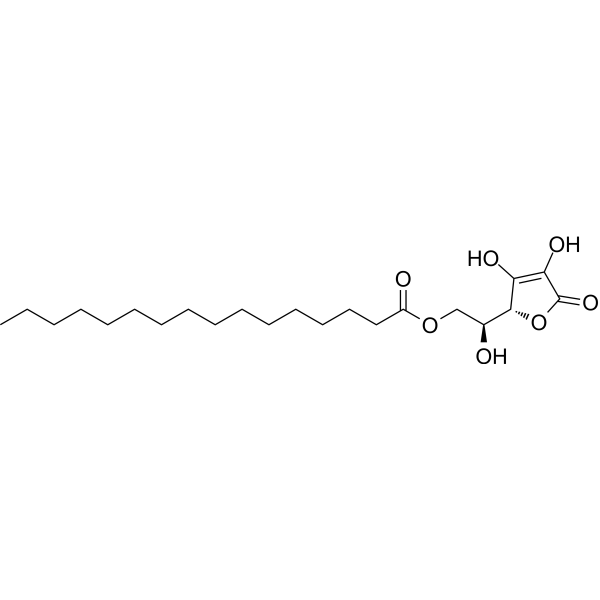
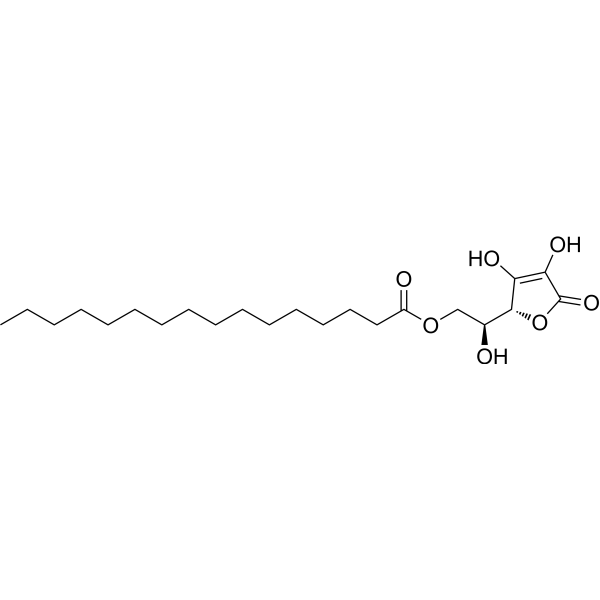
Ascorbyl palmitate is an orally active ester formed from ascorbic acid and palmitic acid, used as an antioxidant and food additive. Ascorbyl palmitate in preventing fat and oil oxidation is more efficient than Butylated hydroxyanisole (HY-B1066) and Butylated hydroxytoluene (HY-Y0172). Ascorbyl palmitate mitigates inhibition of collagen synthesis by select calcium and sodium channel blockers. Ascorbyl palmitate induces Apoptosis in human umbilical vein endothelial cells (HUVECs). Ascorbyl palmitate ameliorates inflammatory diseases by inhibition of NLRP3 inflammasome.
For research use only. We do not sell to patients.
- Purity : 99.62%
- CAS No.: 137-66-6
- Formula: C22H38O7
- Molecular Weight:414.53
-
Storage:Powder -20°C, 3 years , 4°C, 2 years ; In solvent -80°C, 2 years , -20°C, 1 year

To place orders, for customer services and technical support, please contact: MedChemExpress USA
Tel: 609-228-6898 E-mail: [email protected] [email protected]


-
 Biological Activity
-
Chemical Information
-
Solvent & Solubility
- Protocols
- Purity & Documentation
- References
-
 Help & FAQs


-
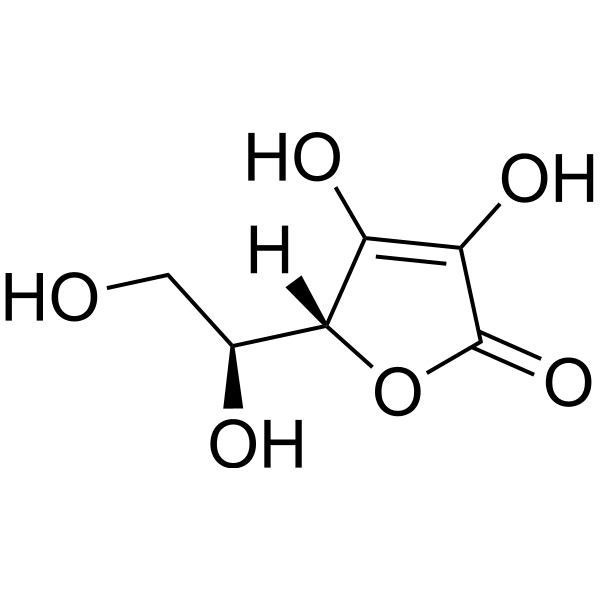
HY-B0166
L-Ascorbic acidAntioxidant -
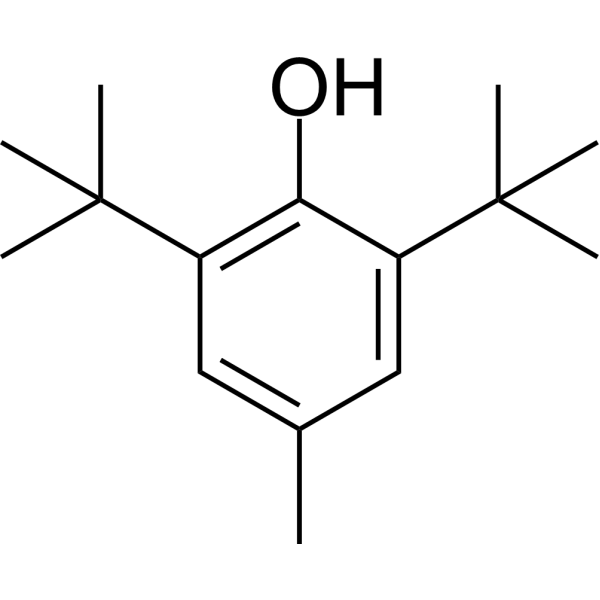
HY-Y0172
Butylated hydroxytoluene -
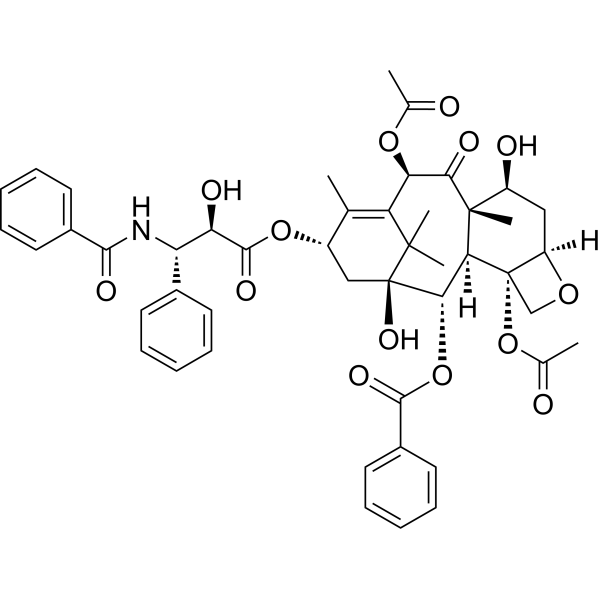
HY-B0015
PaclitaxelAntitumor Agent -
HY-101103
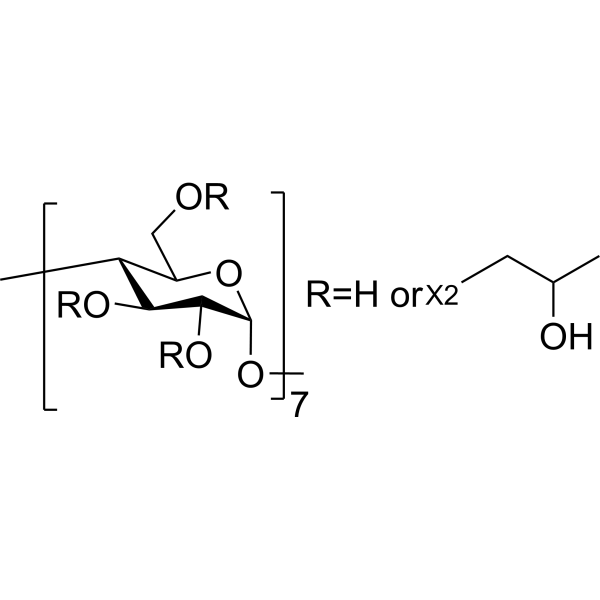
HP-β-CDCo-solvent -
HY-B1066
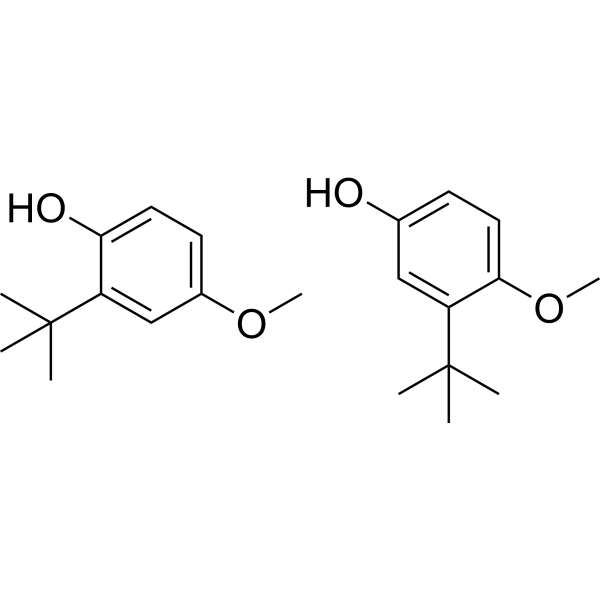
ButylhydroxyanisoleAntioxidant -
HY-W013812
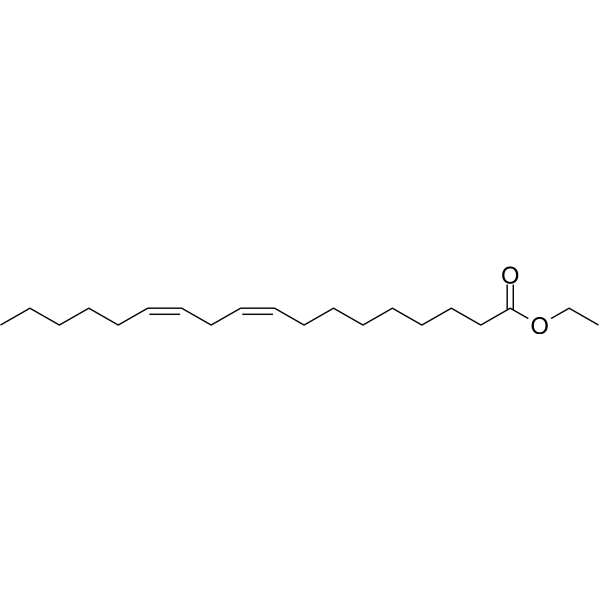
Ethyl linoleateAntiinflammatory Agent -
HY-B0987R
Ascorbyl palmitate (Standard)Endogenous Metabolite -
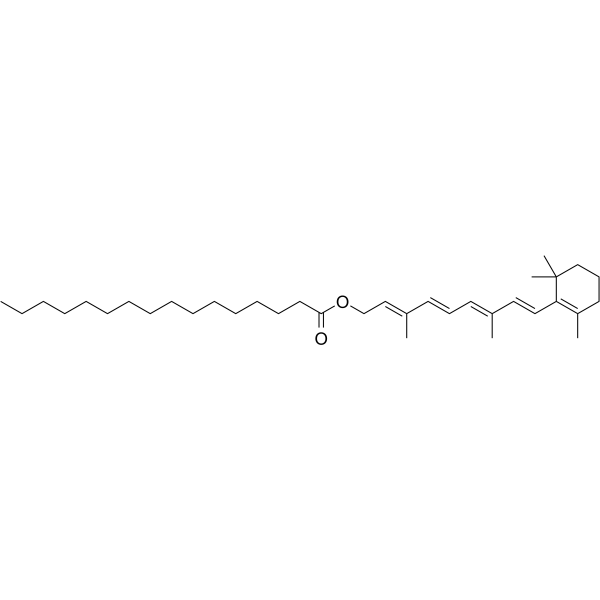
HY-B1384
Retinyl palmitateEndogenous Metabolite -
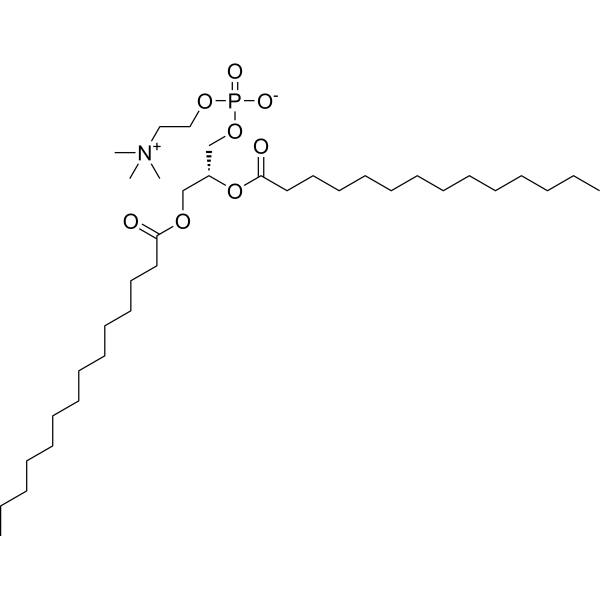
HY-109541
Colfosceril miristatePhospholipid Compound -
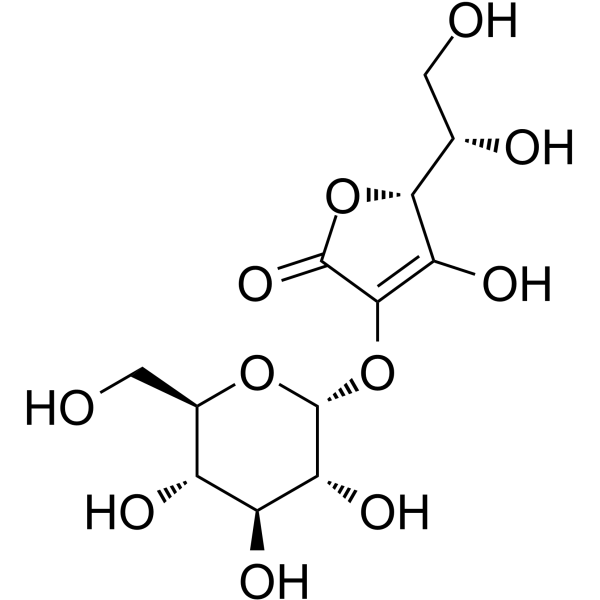
HY-N6821
2-O-α-D-Glucopyranosyl-L-ascorbic AcidGlucoside Derivative -
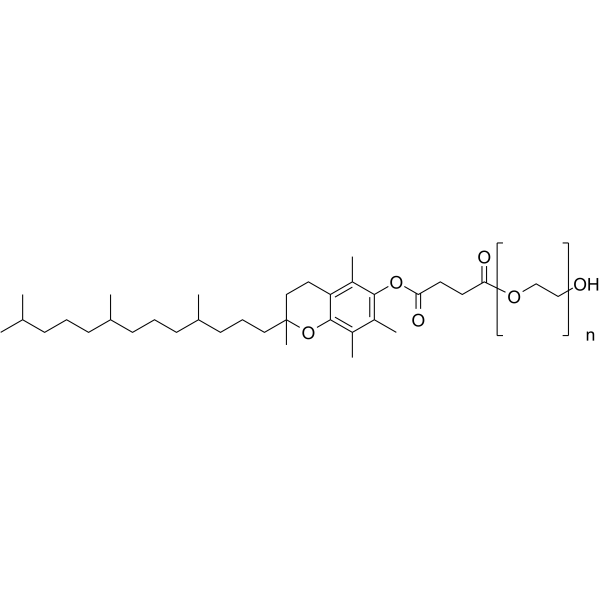
HY-B0717
TocofersolanVitamin E Derivative -
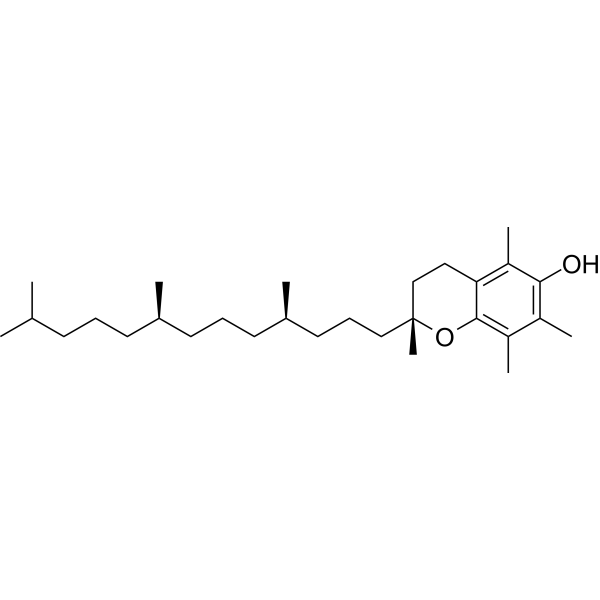
HY-N0683
α-Vitamin EAntioxidant
Publications Citing Use of MedChemExpress (MCE) Ascorbyl palmitate
MoreAll Calcium Channel Isoforms
MoreAll Endogenous Metabolite Isoforms
MoreAll Caspase Isoforms
More

Biological Activity
Description
Cellular Effect
|
Cell Line

|
Type | Value | Description | References |
|---|---|---|---|---|
| RD | EC50 |
>240 μM
Compound: PAA
|
Antiviral activity against Herpes simplex virus type 1 infected in human RD cells assessed as inhibition of virus-induced cytopathic effect
Antiviral activity against Herpes simplex virus type 1 infected in human RD cells assessed as inhibition of virus-induced cytopathic effect
|
[PMID: 22390834] |
In Vitro
Ascorbyl palmitate (25-400 μM, 24 h and 48 h) induces cell cytotoxicity and inhibits cell growth in HUVECs in a dose- and time-dependent manner[1].
Ascorbyl palmitate (125 μM, 24 h and 48 h) inhibits proliferation of HUVECs and induces cell death by inducing apoptosis, which decreases Bcl-2 gene expression ratio and increases Caspase-3, 9 activities in HUVECs[1].
Ascorbyl palmitate (1.25-20 μM, 72 h) dependent extracellular matrix (ECM) deposition of collagen type l is significantly reduced in aortic smooth muscle cells, which is inhibited by Nifedipine (HY-B0284) (50 µM, 72 h)[2].
Ascorbyl palmitate (0-20 μM, 1 h) has stronger inhibitory activity against NLRP3 inflammasome through its antioxidant ability than ascorbic acid in LPS (HY-D1056)-primed bone marrow-derived macrophages (BMDMs)[3].
MedChemExpress (MCE) has not independently confirmed the accuracy of these methods. They are for reference only. Further protocols information, click here.
-
Cell Line:Human umbilical vein endothelial cells (HUVECs)
-
Concentration:25-400 μM
-
Incubation Time:24 h and 48 h
-
Result:Inhibited cell growth after 24h and 48 h with IC50 values of 440 µM and 125 µM, respectively in HUVECs.
-
Cell Line:HUVECs
-
Concentration:125 μM
-
Incubation Time:24 h and 48 h
-
Result:Resulted that DNA fragmentation which was sign of Apoptosis induction was obvious.
-
Cell Line:HUVECs
-
Concentration:125 μM
-
Incubation Time:24 h and 48 h
-
Result:Decreased Bcl-2 gene expression ratio and increased Caspase-3, 9 activities in HUVECs.
-
Cell Line:Mouse BMDMs
-
Concentration:5-20 μM
-
Incubation Time:1 h
-
Result:Dose-dependently inhibited the cleavage of caspase-1 in BMDMs.
In Vivo
MedChemExpress (MCE) has not independently confirmed the accuracy of these methods. They are for reference only.
-
Animal Model:Mice administrated with 2.5 % (w/v) DSS in drinking water for 6 days to induse colitis[3]
-
Dosage:25 mg/kg
-
Administration:i.p., every 2 days for 10 days
-
Result:Reduced the IL-1β production in serum, colon shortening, loss of goblet cells, destruction of intestinal epithelium structure, infiltration of inflammatory cells in mice with DSS-induced colitis.
-
Animal Model:Mice immunized with MOG35-55 (HY-P1240) peptide (300 μg, s.c.) on day 0 and Pertussis toxin (HY-112779) (700 ng, i.v.) on days 0 and 2 to induce EAE[3]
-
Dosage:25 mg/kg
-
Administration:i.p., every 2 days for 14 days
-
Result:Decreased the expression levels of proin-flammatory cytokines, including IL-1β, IL-6, TNF-α in the spinal cord of mice.


Chemical Information
-
CAS No. 137-66-6
-
Appearance Solid
-
Molecular Weight 414.53
-
Formula C22H38O7
-
Color White to off-white
-
SMILES
OC([C@H](O1)[C@H](COC(CCCCCCCCCCCCCCC)=O)O)=C(O)C1=O
-
Synonyms
L-Ascorbic acid 6-hexadecanoate; 6-O-Palmitoyl-L-ascorbic acid
-
Structure Classification
-
Initial Source
-
Shipping
Room temperature in continental US; may vary elsewhere.
-
Storage
Powder -20°C 3 years 4°C 2 years In solvent -80°C 2 years -20°C 1 year


Publications (3)
-
Journal Impact Factor
-
Most Recent
-
Cell
Distinct longevity mechanisms across and within species and their association with aging. [Abstract]2023 Jun 22;186(13):2929-2949.e20. PMID: 37269831 -
Cell Metab
Identification and Application of Gene Expression Signatures Associated with Lifespan Extension. [Abstract]2019 Sep 3;30(3):573-593.e8. PMID: 31353263 -


Solvent & Solubility
In Vitro:
DMSO : 100 mg/mL (241.24 mM; Need ultrasonic; Hygroscopic DMSO has a significant impact on the solubility of product, please use newly opened DMSO)
H2O : < 0.1 mg/mL (insoluble)
Please refer to the solubility information to select the appropriate solvent. Once prepared, please aliquot and store the solution to prevent product inactivation from repeated freeze-thaw cycles.
Storage method and period of stock solution: -80°C, 2 years; -20°C, 1 year. When stored at -80°C, please use it within 2 years. When stored at -20°C, please use it within 1 year.
Please refer to the solubility information to select the appropriate solvent. Once prepared, please aliquot and store the solution to prevent product inactivation from repeated freeze-thaw cycles.
Storage method and period of stock solution: -80°C, 2 years; -20°C, 1 year. When stored at -80°C, please use it within 2 years. When stored at -20°C, please use it within 1 year.
Concentration (start) × Volume (start) = Concentration (final) × Volume (final)
In Vivo:
Select the appropriate dissolution method based on your experimental animal and administration route.
- For the following dissolution methods, please ensure to first prepare a clear stock solution using an In Vitro approach and then sequentially add co-solvents:
- To ensure reliable experimental results, the clarified stock solution can be appropriately stored based on storage conditions. As for the working solution for In Vivo experiments, it is recommended to prepare freshly and use it on the same day.
- The percentages shown for the solvents indicate their volumetric ratio in the final prepared solution. If precipitation or phase separation occurs during preparation, heat and/or sonication can be used to aid dissolution.
In Vivo Dissolution Calculator
Please enter the basic information of animal experiments:
-
-
-
-
Recommended: Prepare an additional quantity of animals to account for potential losses during experiments.
Please enter your animal formula composition:
-
%DMSO +
Recommended: Keep the proportion of DMSO in working solution below 2% if your animal is weak.
-
%+
-
+%Tween-80 + +
-
%Saline +
The co-solvents required include: DMSO, . All of co-solvents are available by MedChemExpress (MCE). , Tween 80. All of co-solvents are available by MedChemExpress (MCE).
Working solution concentration: 0.22 mg/mL
Method for preparing stock solution: mg drug dissolved in μL DMSO. Stock solution concentration: mg/mL.
1. Take μL DMSO stock solution;
2. Add μL .
μL , mix evenly;
3. Then add μL Tween 80, mix evenly;
4. Then add μL
Please ensure that the stock solution in the first step is dissolved to a clear state, and add co-solvents in sequence. You can use ultrasonic heating (ultrasonic cleaner, recommended frequency 20-40 kHz), vortexing, etc. to assist dissolution.

Protocols
-
Apoptosis
Apoptosis, also called programmed cell death, is generally characterized by distinct morphological characteristics.
-
TUNEL staining for apoptotic DNA fragmentation
TUNEL staining detects DNA strand breaks by using terminal deoxynucleotidyl transferase to add labeled nucleotides to exposed 3′-OH DNA termini, generating either microscopic staining in fixed cells or tissue sections, or fluorescence/cytometric signal in cell suspensions. TUNEL positivity reflects DNA fragmentation but should not be interpreted alone as definitive apoptosis, because TUNEL can also label necrotic, autolytic, mechanically damaged, or DNA-repair-associated DNA breaks.
-
Annexin V plus membrane-impermeant dye apoptosis staining
Annexin V-based apoptosis assays rely on the detection of phosphatidylserine (PS) externalization from the inner leaflet of the plasma membrane to the outer leaflet, an early biochemical hallmark of apoptosis. Fluorescently labeled Annexin V binds PS in a calcium-dependent manner, enabling identification of early apoptotic cells by flow cytometry or fluorescence microscopy. When combined with a membrane-impermeant DNA-binding dye (e. g. , propidium iodide), this approach allows discrimination between viable (Annexin V−/dye−), early apoptotic (Annexin V+/dye−), and late apoptotic or necrotic (Annexin V+/dye+) cell populations by assessing membrane integrity and PS exposure.
-
Endothelial Tube Formation Assay
Endothelial tube formation assay evaluates the ability of endothelial cells to attach, migrate, align, and organize into capillary-like networks when cultured on gelled basement membrane extract or Matrigel; the readout is the morphology and quantity of tube-like networks, which reflects an in vitro endothelial morphogenesis step related to angiogenesis. Basement membrane extract/Matrigel provides laminin-rich extracellular matrix cues that support endothelial differentiation into capillary-like structures, but it can contain biologically active growth factors, so growth-factor-reduced matrix is preferred when testing defined angiogenic stimulators or inhibitors.
-
Apoptosis Solutions
Apoptosis is a regulated, generally non-lytic cell-death pathway that removes unwanted, damaged, infected, or abnormal cells through coordinated morphological changes, caspase activation, DNA fragmentation, and membrane remodeling. The intrinsic apoptosis pathway is controlled mainly by mitochondrial outer membrane permeabilization, BCL-2 family proteins, cytochrome c release, apoptosome formation, caspase-9 activation, and downstream executioner caspase-3/7 activation. The extrinsic apoptosis pathway is initiated by death receptors such as Fas, TNFR, and TRAIL receptors, which recruit adaptor proteins and activate caspase-8 before engaging executioner caspases or mitochondrial amplification through BID cleavage. Apoptosis is linked to many phenotypes, including cancer cell killing, tissue homeostasis, immune regulation, neurodegeneration, infection response, and treatment-induced cytotoxicity; unresolved questions include how apoptosis interacts with necroptosis, pyroptosis, ferroptos
-
Pyroptosis Solutions
Pyroptosis is a lytic inflammatory cell-death pathway executed by gasdermin pores, most classically through inflammasome-mediated activation of caspase-1, cleavage of gasdermin D, membrane pore formation, LDH release, and secretion of IL-1β and IL-18. The canonical pathway is commonly modeled by priming cells with an inflammatory signal such as LPS to induce pro-IL-1β and inflammasome components, followed by an activation signal such as ATP or nigericin to activate NLRP3, ASC speck formation, caspase-1 cleavage, GSDMD cleavage, cytokine release, and pyroptotic membrane rupture. The non-canonical pathway is triggered when cytosolic LPS activates mouse caspase-11 or human caspase-4/5, leading to GSDMD cleavage and pyroptosis, and this can secondarily activate NLRP3-dependent IL-1β release. Pyroptosis is linked to inflammatory injury, infection, cancer, liver disease, ocular disease, placental inflammation, and other disease phenotypes, but unresolved questions include which gasdermin fam


Purity & Documentation
-
Data Sheet (276 KB)
-
SDS (396 KB)
- English - EN (396 KB)
- Français - FR (396 KB)
- Deutsch - DE (396 KB)
- Norwegian - NO (396 KB)
- Español - ES (396 KB)
- Swedish - SV (396 KB)
- Italian - IT (396 KB)
- Korean - KR (396 KB)
- Portuguese - PT (396 KB)
-
Handling Instructions (2659 KB)
References
[1]. Sohrabi Y, et al. Cytotoxicity and Genotoxicity Assessment of Ascorbyl Palmitate (AP) Food Additive[J]. Adv Pharm Bull. 2018 Jun;8(2):341-346. [Content Brief]
[2]. Ivanov V, et al. Inhibition of collagen synthesis by select calcium and sodium channel blockers can be mitigated by ascorbic acid and ascorbyl palmitate. Am J Cardiovasc Dis. 2016 May 18;6(2):26-35. [Content Brief]
[3]. Zhang L, et al. Ascorbyl palmitate ameliorates inflammatory diseases by inhibition of NLRP3 inflammasome[J]. Int Immunopharmacol. 2024 Apr 20;131:111915. [Content Brief]
[4]. Jonker D, et al. Comparison of the effects of ascorbyl palmitate and L-ascorbic acid on paracetamol-induced hepatotoxicity in the mouse[J]. Toxicology. 1988 Nov 30;52(3):287-95. [Content Brief]


Complete Stock Solution Preparation Table
Please refer to the solubility information to select the appropriate solvent. Once prepared, please aliquot and store the solution to prevent product inactivation from repeated freeze-thaw cycles.
Storage method and period of stock solution: -80°C, 2 years; -20°C, 1 year. When stored at -80°C, please use it within 2 years. When stored at -20°C, please use it within 1 year.
| Optional Solvent | Concentration Solvent Mass | 1 mg | 5 mg | 10 mg | 25 mg |
|---|---|---|---|---|---|
| DMSO | 1 mM | 2.4124 mL | 12.0619 mL | 24.1237 mL | 60.3093 mL |
| 5 mM | 0.4825 mL | 2.4124 mL | 4.8247 mL | 12.0619 mL | |
| 10 mM | 0.2412 mL | 1.2062 mL | 2.4124 mL | 6.0309 mL | |
| 15 mM | 0.1608 mL | 0.8041 mL | 1.6082 mL | 4.0206 mL | |
| 20 mM | 0.1206 mL | 0.6031 mL | 1.2062 mL | 3.0155 mL | |
| 25 mM | 0.0965 mL | 0.4825 mL | 0.9649 mL | 2.4124 mL | |
| 30 mM | 0.0804 mL | 0.4021 mL | 0.8041 mL | 2.0103 mL | |
| 40 mM | 0.0603 mL | 0.3015 mL | 0.6031 mL | 1.5077 mL | |
| 50 mM | 0.0482 mL | 0.2412 mL | 0.4825 mL | 1.2062 mL | |
| 60 mM | 0.0402 mL | 0.2010 mL | 0.4021 mL | 1.0052 mL | |
| 80 mM | 0.0302 mL | 0.1508 mL | 0.3015 mL | 0.7539 mL | |
| 100 mM | 0.0241 mL | 0.1206 mL | 0.2412 mL | 0.6031 mL |


Ascorbyl palmitate Related Classifications
HY-B0987 Related Classifications
 Powered by Bioz
Keywords
- Ascorbyl
- 137-66-6
- L-Ascorbic acid 6-hexadecanoate
- 6-O-Palmitoyl-L-ascorbic acid
- Environmental Pollutants
- Apoptosis
- Calcium Channel
- Endogenous Metabolite
- Caspase
- Sodium Channel
- Reactive Oxygen Species (ROS)
- Bcl-2 Family
- NOD-like Receptor (NLR)
- ester
- antioxidant
- food additive
- oxidation
- collagen synthesis
- apoptosis
- HUVECs
- inflammatory
- Inhibitor
- inhibitor
- inhibit