Delivery of temperature sensitive items including proteins and kits will be paused on 6/19 for the Juneteenth holiday. For urgent orders please contact customer service.
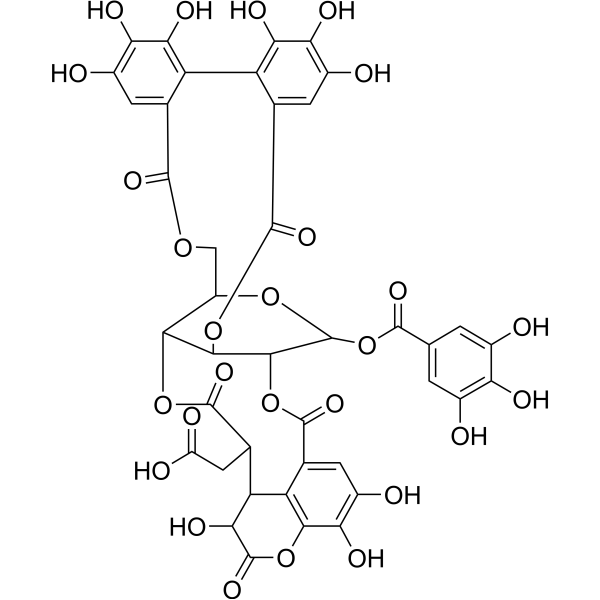
Chebulagic acid is a COX-LOX dual inhibitor isolated from the fruits of Terminalia chebula Retz, on angiogenesis. Chebulagic acid is a M2 serine to asparagine 31 mutation (S31N) inhibitor and influenza antiviral. Chebulagic acid also against SARS-CoV-2 viral replication with an EC50 of 9.76 μM.
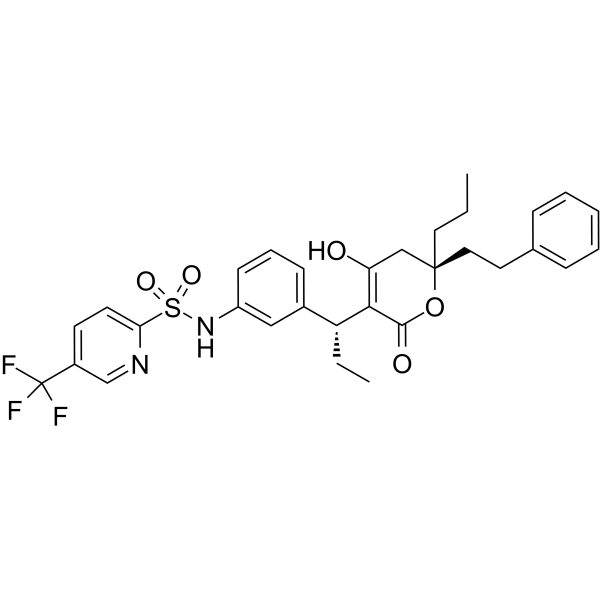
Tipranavir (PNU-140690) inhibits the enzymatic activity and dimerization of HIV-1 protease, exerts potent activity against multi-protease inhibitor (PI)-resistant HIV-1 isolates with IC50s of 66-410 nM . Tipranavir inhibits SARS-CoV-2 3CL pro activity .
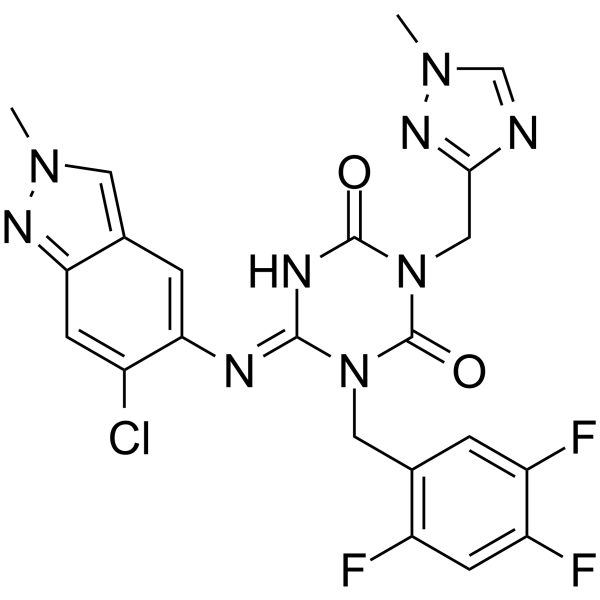
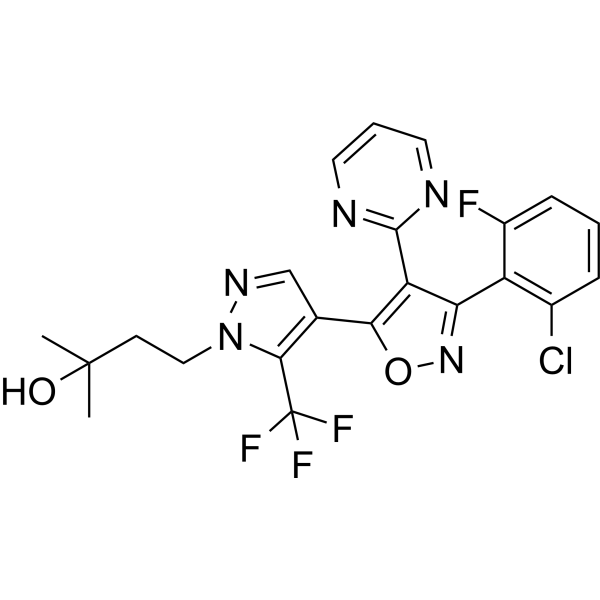
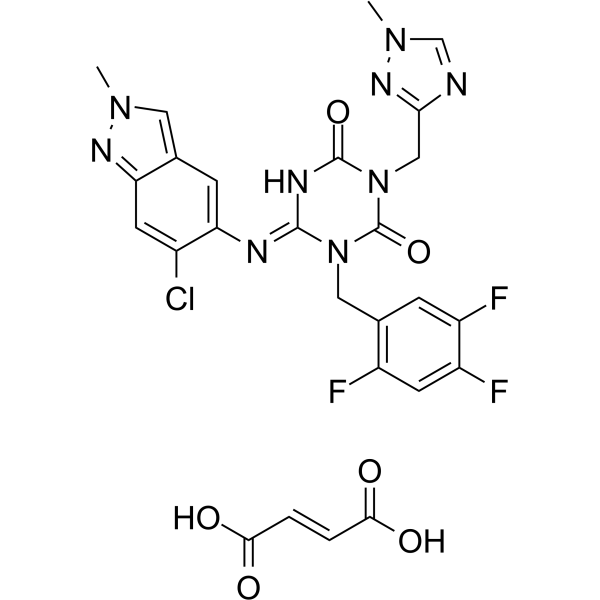
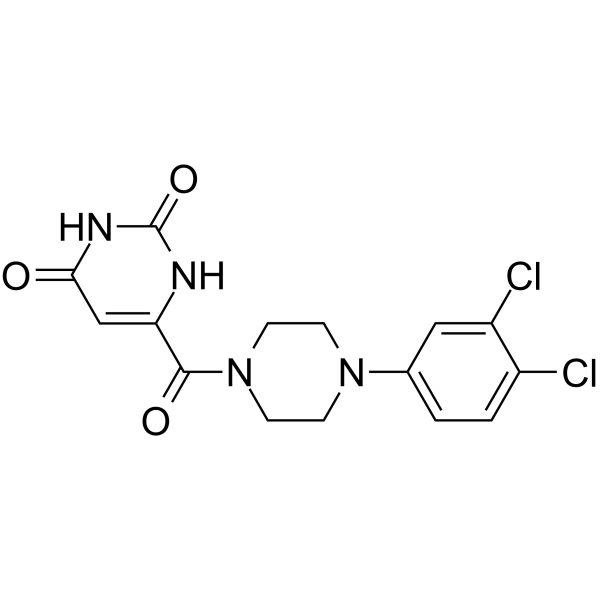
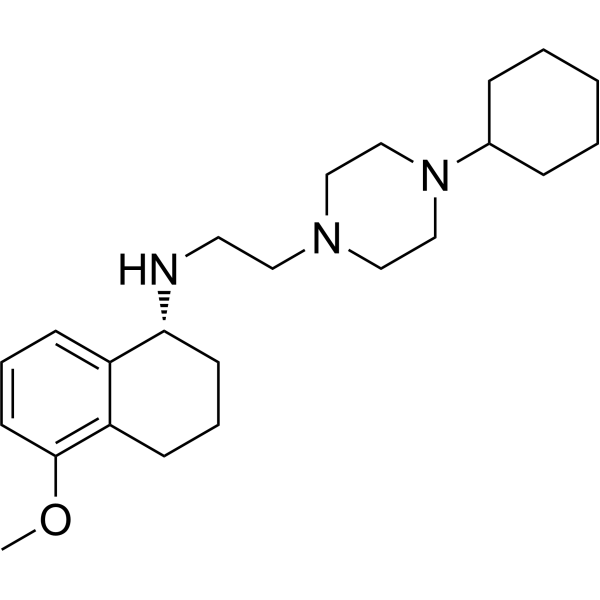
Izumerogant (IMU-935) is an orally active RORγ/DHODH dual inhibitor with IC50s of 10 and 98 nM against RORγ and DHODH. Izumerogant efficiently blocks the replication of SARS-CoV-2, HCMV and HAdV5 with EC50 values between 3.6 and 17 nM. Izumerogant can be used for researching antiviral properties .
Tixagevimab (AZD8895) is a human monoclonal antibody that targets the SARS-CoV-2 receptor binding domain (RBD). It exhibits neutralizing activity against SARS-CoV-2 by binding to the RBD and the S-glycoprotein ectodomain and blocking S-glycoprotein-mediated binding to the receptor .
Bamlanivimab (Anti-Human SARS-CoV-2) is the first COVID-19 monoclonal antibody (mAb) to be granted Emergency Use Authorization (EUA) in November 2020 by the U.S. Food and agent Administration (FDA). However, Bamlanivimab is withdrawn in April 2021 following the rise of SARS-CoV-2 virus variants resistant to Bamlanivimab .
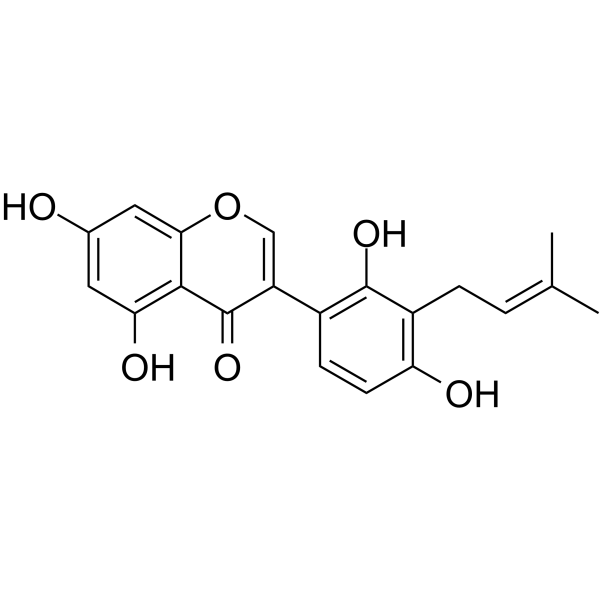
Licoisoflavone A is an orally active isoflavone. Licoisoflavone A inhibits proliferation, induces apoptosis, and causes G1/S phase arrest in colorectal cancer (CRC) cells. Licoisoflavone A inhibits the CDK2-CyclinE1 axis. Licoisoflavone A inhibits lipid peroxidation with an IC50 of 7.2 μM. Licoisoflavone A shows a dose-dependent inhibition effect on SARS-CoV-2 infection. Licoisoflavone A exhibits significant anti-tumor efficacy in mice bearing CT26 cell subcutaneous xenografts. Licoisoflavone A can be used for the study of colorectal cancer and SARS-CoV-2 infection .
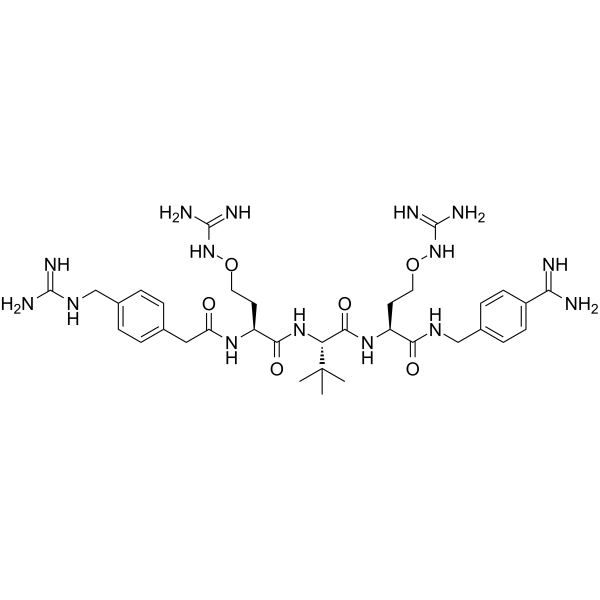
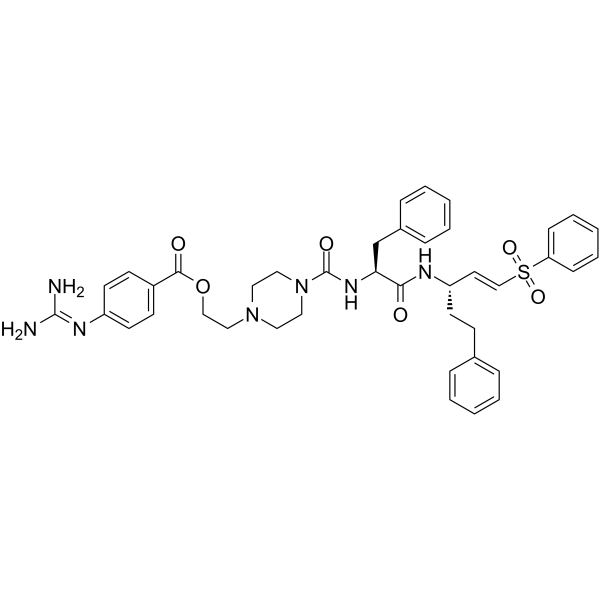
MI-1851 is a potent furin inhibitor. MI-1851 prevents the proteolytic processing of the S protein of SARS-CoV-2 by endogenous flavoprotease in HEK293 cells. MI-185 has antiviral activity .
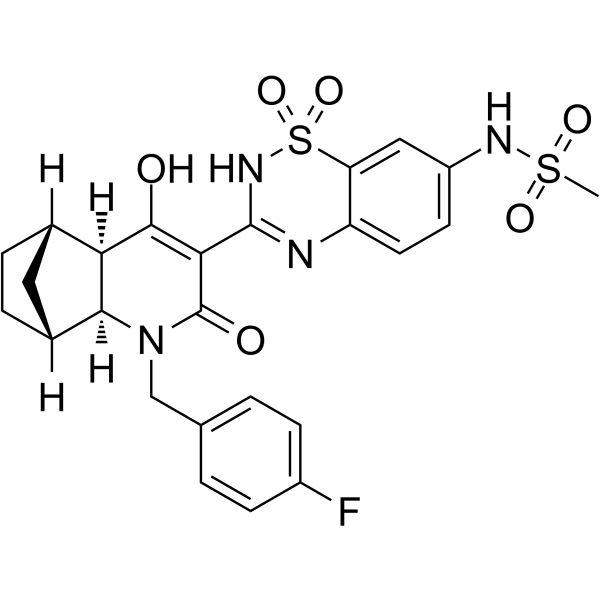
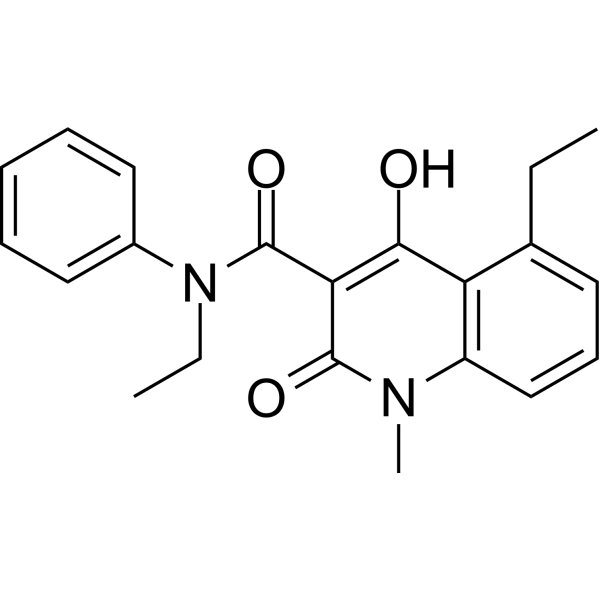
Setrobuvir (ANA598) is an orally active non-nucleosidic HCV NS5B polymerase inhibitor. ANA-598 inhibits both de novo RNA synthesis and primer extension, with IC50s between 4 and 5 nM. Setrobuvir also shows excellent binding affinity to SARS-CoV-2RdRp and induces RdRp inhibition .
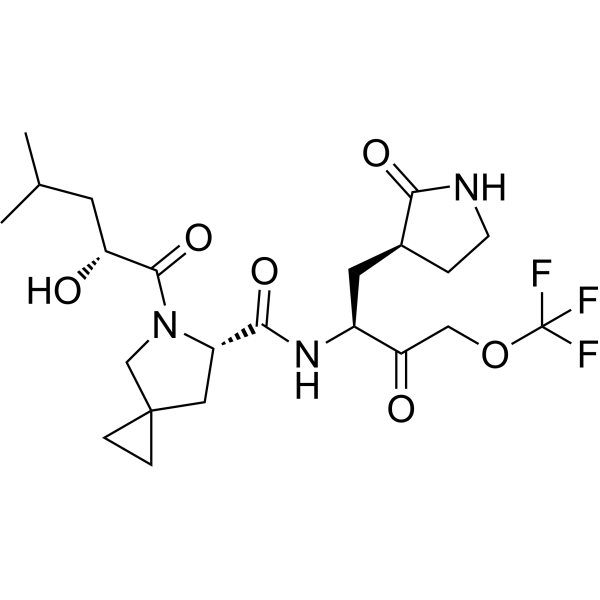
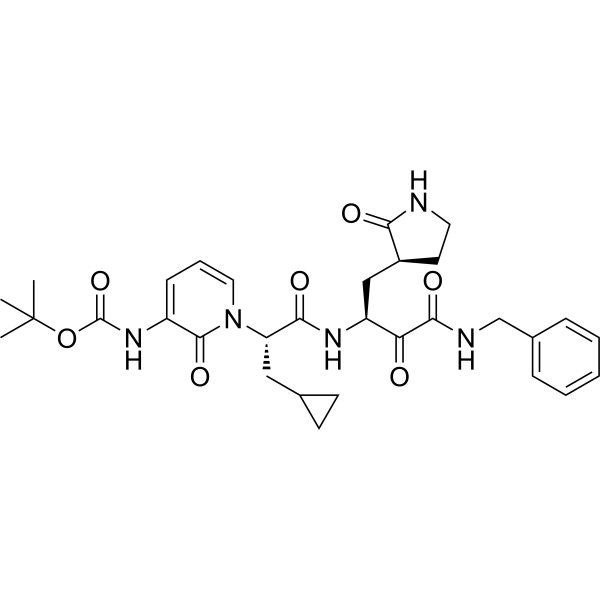
CMX990 is a SARS-CoV-2 3CL protease inhibitor. The EC90s for inhibiting SARS-CoV-2 were 9.6 nM and 101 nM in human bronchial epithelial cells (HBECs) and HeLa-ACE2 cells, respectively. CMX990 has good ADME and pharmacokinetic properties .
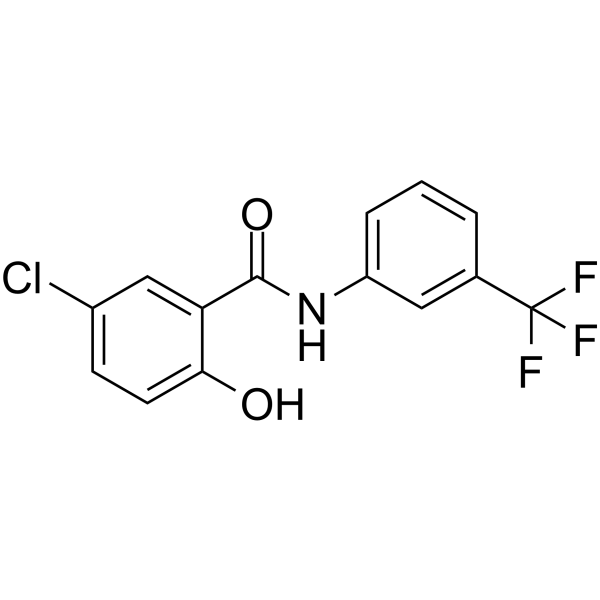
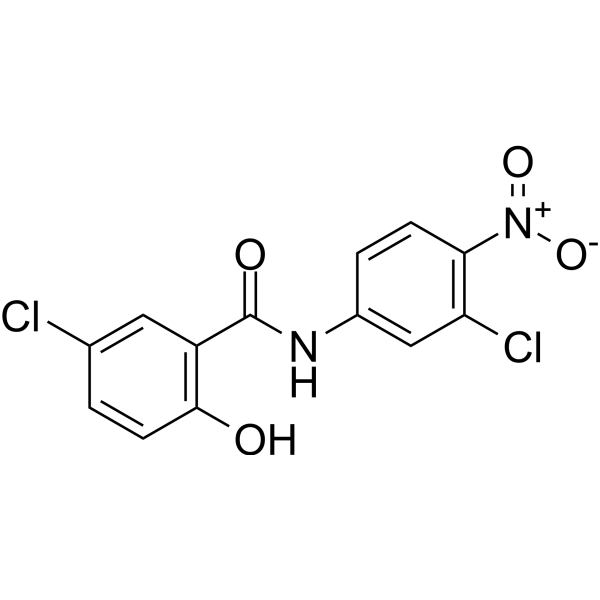
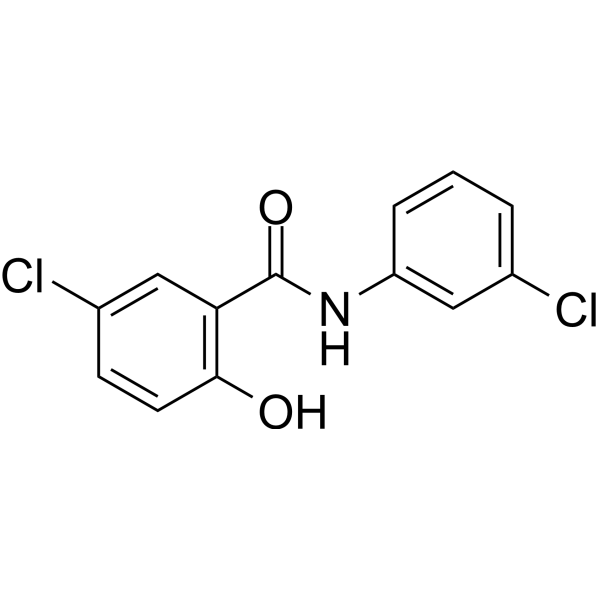
SARS-CoV-2-IN-15 (compound 11) is a potent inhibitor of SARS-CoV-2 with an IC50 of 0.49 μM. SARS-CoV-2-IN-15 is a niclosamide analogue. SARS-CoV-2-IN-15 contains higher stability in human plasma and liver S9 enzymes assay than niclosamide, which can improve bioavailability and half-life when administered orally .
DNDI-6510 (Compound (S)-x38) is a non-covalent SARS-CoV-2 MPro inhibitor with a IC50 of 0.04 μM. DNDI-6510 has a potent antiviral activity across SARS-CoV-2 and its variants as well as a weak efficacy to SARS-CoV-1. DNDI-6510 significantly improves drug exposure in metabolically humanized mice model (8HUM) .
Bisoxatin is a laxative drug used for constipation. Bisoxatin binds substantially at the S-protein-ACE2 interface. Bisoxatin has the potential for inhibiting SARS-CoV-2 entry into the host research .
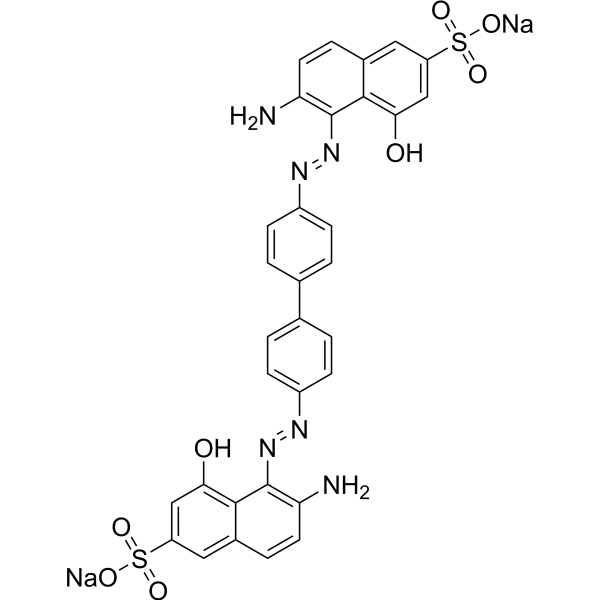
Direct Violet 1, an azo dye, is a textile dye. Direct Violet 1 is also the protein-protein interaction (PPI) between the SARS-CoV-2 spike protein and ACE2 inhibitor with IC50s of 1.47-2.63 μM .
SARS-CoV-2-IN-13 (compound 5) is a potent inhibitor of SARS-CoV-2 with an IC50 of 0.057 μM. SARS-CoV-2-IN-13 is a niclosamide analogue. SARS-CoV-2-IN-13 contains higher stability in human plasma and liver S9 enzymes assay than niclosamide, which can improve bioavailability and half-life when administered orally .
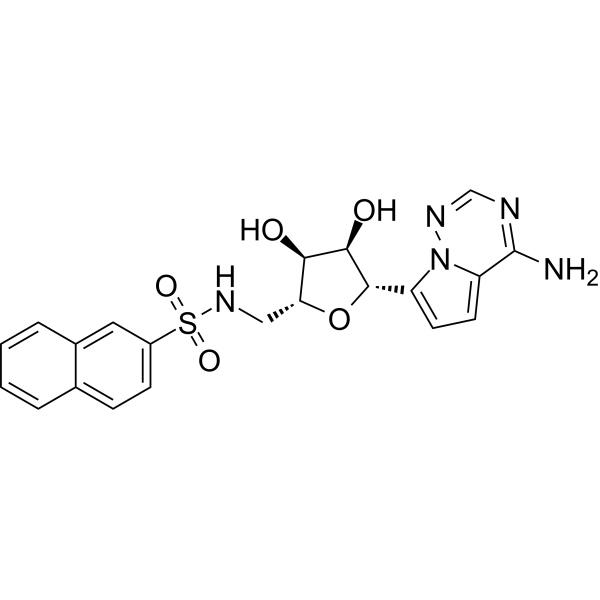
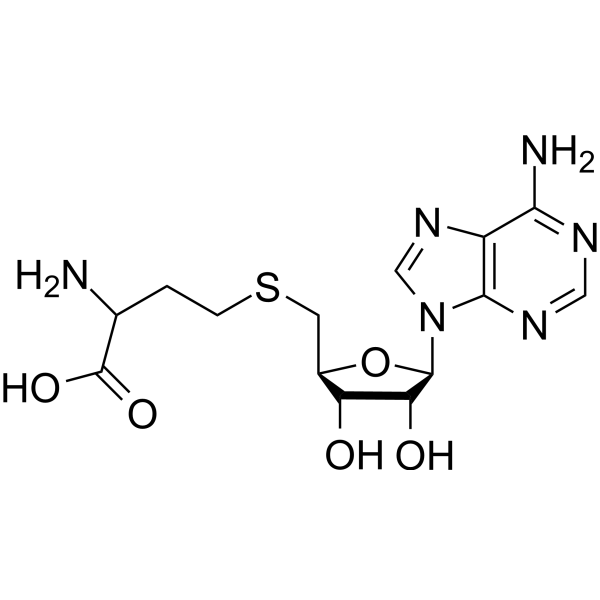
SARS-CoV-2-IN-60 (compound 5a) is an S-adenosylmethionine (SAM)-competitive and irreversible SARS-CoV-2 nsp16-nsp10 methyltransferase activity inhibitor with an IC50 of 9 μM and a Ki of 26 μM. SARS-CoV-2-IN-60 can specifically occupy a newly identified pocket adjacent to the SAM-binding site on nsp16. SARS-CoV-2-IN-60 has the potential for pan-coronavirus therapeutics .
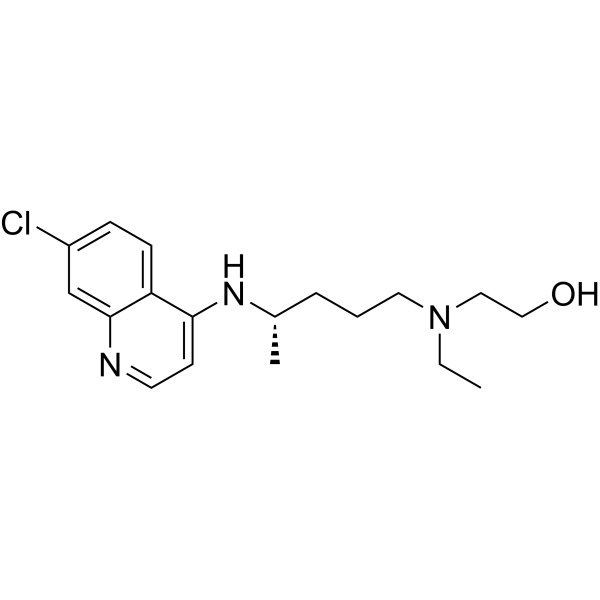
(S)-Hydroxychloroquine ((S)-HCQ) is the enantiomer of Hydroxychloroquine . Hydroxychloroquine, a synthetic antimalarial agent, inhibits Toll-like receptor 7/9 (TLR7/9) signaling, and shows efficiently inhibits SARS-CoV-2 infection in vitro .
Beludavimab (BMS 4182137; VIR 7832) is a monoclonal antibody targeting the spike glycoprotein of SARS-CoV-2. Beludavimab binds to recombinant spike protein receptor-binding domain (S-RBD) with an EC50 value of 14.9 ng/mL and a Kd of 0.21 nM .
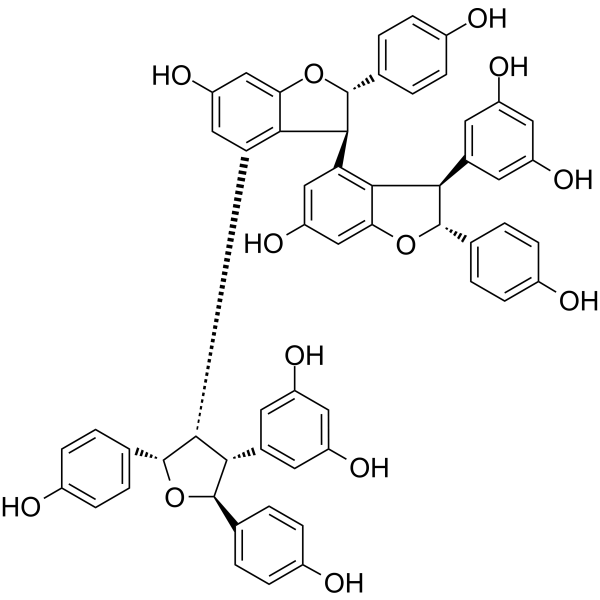
Kobophenol A, an oligomeric stilbene, blocks the interaction between the ACE2 receptor and S1-RBD with an IC50 of 1.81 μM and inhibits SARS-CoV-2 viral infection in cells with an EC50 of 71.6 μM. Kobophenol A inhibits the activity of partially purified rat brain protein kinase C (PKC) with an IC50 of 52 µM .
SARS-CoV-2-IN-116 (Compound (S,S)-4) is a highly selective angiotensin-converting enzyme 2 (ACE2) inhibitor (pIC50=7.61). SARS-CoV-2-IN-116 blocks the interaction between SARS-CoV-2 spike protein and ACE2. SARS-CoV-2-IN-116 is promising for research of COVID-19 .
SARS-CoV-2-IN-1 is a potent Mpro inhibitor. SARS-CoV-2-IN-1 inhibits the purified recombinant SARS-CoV-2 Mpro, SARS-CoV Mpro and MERS-CoV Mpro with IC50s of 0.67, 0.90 and 0.58 μM, respectively .
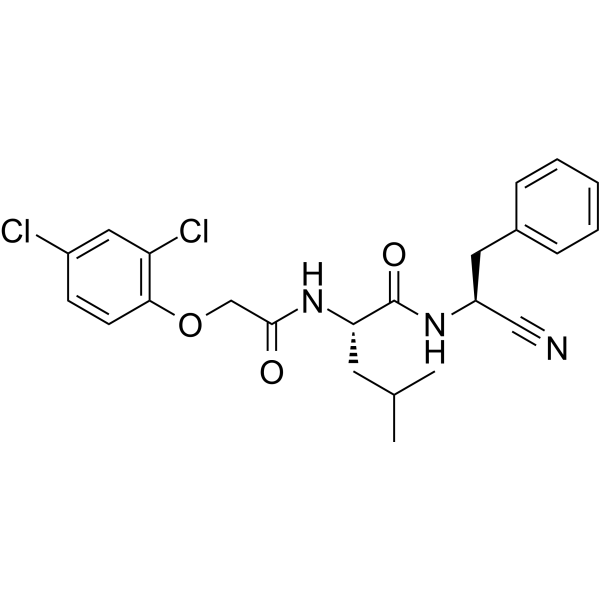
SARS-CoV-2-IN-77 (compound 11e) is a cathepsin L and cathepsin S inhibitor with Ki values of 111 nM and 103 nM, respectively. SARS-CoV-2-IN-77 inhibits SARS-CoV-2 with an EC50 value of 38.4 nM in Calu-3 cells without showing cytotoxicity .
Anti-SARS-CoV-2S protein Antibody (NTD, SARS2-29) is a mouse-derived IgG1 κ type antibody inhibitor, targeting to SARS-CoV-2S protein. Anti-SARS-CoV-2S protein Antibody (NTD, SARS2-29) reacts with the N-terminal domain (NTD) in the spike (S) protein of SARS-CoV-2 (Severe Acute Respiratory Syndrome Coronavirus 2). Anti-SARS-CoV-2S protein Antibody (NTD, SARS2-29) can be used for the detections of flow cytometry and ELISA in SARS-CoV-2 infection .
Anti-SARS-CoV-2S protein Antibody (RBD epitope B, SARS2-34) is a mouse-derived IgG1 κ type antibody inhibitor, targeting to SARS-CoV-2S protein. Anti-SARS-CoV-2S protein Antibody (RBD epitope B, SARS2-34) reacts with the receptor binding domain (RBD) epitope B in the spike (S) protein of SARS-CoV-2 (Severe Acute Respiratory Syndrome Coronavirus 2). Anti-SARS-CoV-2S protein Antibody (RBD epitope B, SARS2-34) can block the binding of the SARS-CoV-2S protein to angiotensin-converting enzyme 2 (ACE2). Anti-SARS-CoV-2S protein Antibody (RBD epitope B, SARS2-34) can be used for the research of SARS-CoV-2 infection .
Anti-SARS-CoV-2S protein Antibody (RBD epitope A, SARS2-01) is a mouse-derived IgG1 κ type antibody inhibitor, targeting to SARS-CoV-2S protein. Anti-SARS-CoV-2S protein Antibody (RBD epitope A, SARS2-01) reacts with the receptor binding domain (RBD) epitope A in the spike (S) protein of SARS-CoV-2 (Severe Acute Respiratory Syndrome Coronavirus 2). Anti-SARS-CoV-2S protein Antibody (RBD epitope A, SARS2-01) can block the binding of the SARS-CoV-2S protein to angiotensin-converting enzyme 2 (ACE2). Anti-SARS-CoV-2S protein Antibody (RBD epitope A, SARS2-01) can be used for the research of SARS-CoV-2 infection .
ALG-097558 is an orally active 3CLpro inhibitor. ALG-097558 demonstrates pan-coronavirus activity against various SARS-CoV-2 variants as well as other human coronaviruses (HCoVs) such as SARS-CoV-1, α-HCoV 229E, and β-HCoV OC43. ALG-097558 demonstrates potent inhibition with IC50s of 2 nM (SARS-CoV-2 3CLpro) and 6 nM (229E 3CLpro). ALG-097558 demonstrates antiviral activity in the SARS-CoV-2 hamster infection model. ALG-097558 can be used for the study of viral infections[1].
CTSLCTSB-IN-1 (compound 212-148) is a bispecific inhibitor of host viral spike cleaver proteins CTSL/CTSB and TMPRSS2 with IC50s of 2.13/64.07 nM and 1.38 μM, respectively. CTSLCTSB-IN-1 blocks two relevant SARS-CoV-2 viral entry pathways by inhibiting the viral spike cleavage and can be applied to anti-SARS-CoV-2 research .
VD5123 is a serine protease inhibitor. VD5123 inhibits TMPRS2, HGFA, matriptase, hepsin with IC50s of 15, 3980, 140, 37 nM respectively. VD5123 can be used for antiviral research, such as SARS-CoV-2 and broad panel of coronaviruses and influenza viruses .
Chebulagic acid (Standard) is the analytical standard of Chebulagic acid. This product is intended for research and analytical applications. Chebulagic acid is a COX-LOX dual inhibitor isolated from the fruits of Terminalia chebula Retz, on angiogenesis. Chebulagic acid is a M2 serine to asparagine 31 mutation (S31N) inhibitor and influenza antiviral. Chebulagic acid also against SARS-CoV-2 viral replication with an EC50 of 9.76 μM.
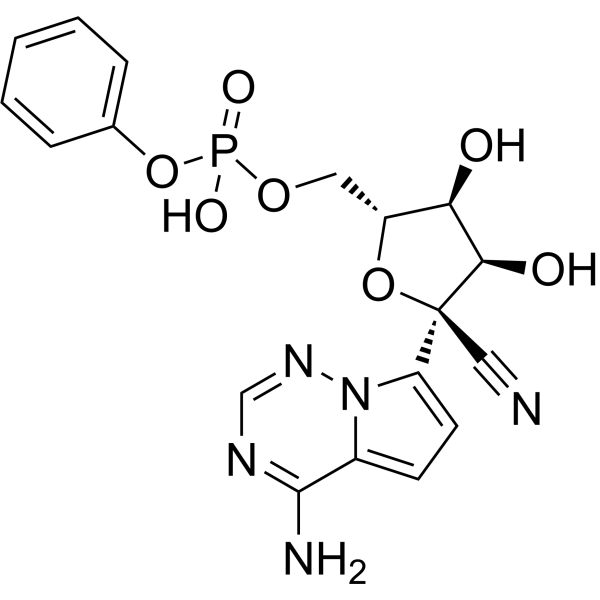
Remdesivir de(ethylbutyl 2-aminopropanoate) is an impurity of Remdesivir. Remdesivir, a nucleoside analogue with effective antiviral activity, has EC50s of 74 nM for SARS-CoV and MERS-CoV in HAE cells, and 30 nM for murine hepatitis virus in delayed brain tumor cells. Remdesivir is highly effective in the control of SARS-CoV-2 (COVID-19) infection in vitro .
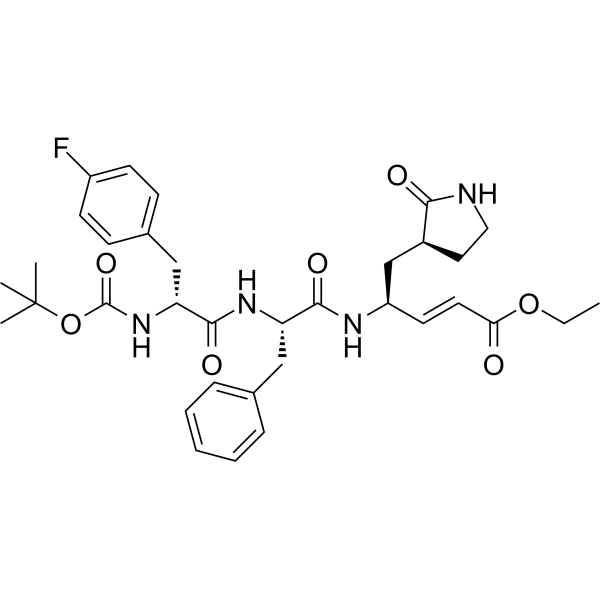
SARS-CoV-2 Mpro-IN-17 (compound S5-28) is an orally active and noncovalent SARS-CoV-2 Mpro inhibitor with the EC50 of 1.35 μM. SARS-CoV-2 Mpro-IN-17 can be used for study of COVID-19 .
SARS-CoV-2 Mpro-IN-5 is a dual Inhibitor of Main Protease (M Pro) and Cathepsin L (CatL), with IC50s of 1800 nM and 145 nM respectively. SARS-CoV-2 Mpro-IN-5 has antiviral activity against SARS-CoV2. SARS-CoV-2 Mpro-IN-5 blocks SARS-CoV2 replication in hACE2 expressing A549 cells with IC50 value of 14.7 nM .
SARS-CoV-2 Mpro-IN-4 is a dual Inhibitor of Main Protease (M Pro) and Cathepsin L (CatL), with IC50s of 900 nM and 60 nM respectively. SARS-CoV-2 Mpro-IN-4 has antiviral activity against SARS-CoV2. SARS-CoV-2 Mpro-IN-4 blocks SARS-CoV2 replication in hACE2 expressing A549 cells with IC50 value of 8.2 nM .
SARS-CoV-2-IN-34 (S-20-1) is a blood brain barrier penetrable pan-coronavirus (CoV) fusion inhibitor with broad-spectrum inhibitory activity. SARS-CoV-2-IN-34 effectively inhibits infection by pseudotyped and authentic SARS-CoV-2, and pseudotyped variants of concern (VOCs). SARS-CoV-2-IN-34 shows high affinity to RBD in S1 and HR1 domain in S2 of SARS-CoV-2S protein. SARS-CoV-2-IN-34 can be used for the research of infection .
SARS-CoV-2 nsp14-IN-2 is a potent SARS-CoV-2 Nsp14 methyltransferase inhibitor with an IC50 value of 0.093 µM. SARS-CoV-2 nsp14-IN-2 shows antiviral activity. SARS-CoV-2 nsp14-IN-2 shows plasma and liver S9 stability. SARS-CoV-2 nsp14-IN-2 has the potential for the research of COVID-19 .
SARS-CoV-2-IN-40 (Compound 19) is a SARS-CoV-2 inhibitor. SARS-CoV-2-IN-40 inhibits SARS-CoV-2 BA.1 and BA.5 variant infection of Calu3 lung cells, with IC50s of 100 nM and 160 nM respectively .
SARS-CoV-2 Mpro-IN-50 (Compound 30) is a noncovalent SARS-CoV-2 Mpro inhibitor with an IC50 of 14 nM. SARS-CoV-2 Mpro-IN-50 is also a pan-CoV Mpro inhibitor with IC50 s of 20-190 nM for SARS-CoV-1 Mpro, 229E Mpro, HKU1 Mpro, MERS Mpro, NL63 Mpro and OC43 Mpro. SARS-CoV-2 Mpro-IN-50 has significant antiviral activity against the SARS-CoV-2 omicron variant (EC50 : 22 nM). SARS-CoV-2 Mpro-IN-50 can be used for coronavirus infections research .
Spike Glycoprotein (1147-1162) is a linear and broadly neutralizing peptide in the S2 protein of SARS-CoV-2. Spike Glycoprotein (1147-1162) is conserved across SARS-CoV, BatCoV RaTG13, SARS-CoV-2, and SARS-CoV-2 variants. Spike Glycoprotein (1147-1162)-targeting mAbs can neutralize both SARS-CoV-2 and SARS-CoV by preventing fusion between the virus and cell membrane. Spike Glycoprotein (1147-1162) can be used for universal vaccines against SARS-CoV-2 mutants research .
SARS-CoV-2-IN-51 (S-10) is a potent lead compound of Omicron fusion inhibitor. SARS-CoV-2-IN-51 inhibits Omicron and other variants with EC50s of 0.82-5.45 μM. SARS-CoV-2-IN-51 inhibits SARS-CoV-2 virus entry, by the direct interaction with S in the prefusion state .
Covidcil-19 (compound C5) avidly binds to the revised attenuator hairpin structure of the SARS-CoV-2 frameshifting element (FSE) with a Kd of 11 nM. Covidcil-19 stabilizes the hairpin’s folded state and impairs frameshifting in cells. Covidcil-19 reduces frameshifting efficiency of the SARS-CoV-2 FSE and does not affect SARS-CoV-2 FSE RNA levels. Covidcil-19 inhibits a process essential for SARS-CoV-2 viral propagation .
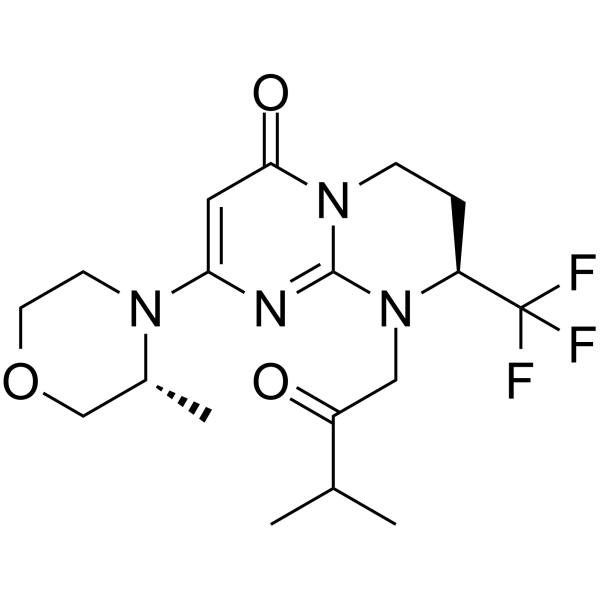
SARS-CoV-2-IN-57 (compound (+)-R-26) is a potent inhibitor of SARS-CoV-2 (IC50: 80 nM). SARS-CoV-2-IN-57 has high affinity for Sigma Receptor with Kis of 13.6 nM (S1R) and 14.4 nM (S2R) respectively .
SARS-CoV-2 3CLpro-IN-26 (Compound (S,R)-4y) is an allosteric inhibitor for SARS-CoV-2 3CLpro with an IC50 of 0.43 μM. SARS-CoV-2 3CLpro-IN-26 exhibits good cell permeability and is able to effectively cross the cell membrane, after co-incubation with Vero-E6 cells .
SARS-CoV-2-IN-55(compound 65) is a low cytotoxicity inhibtor of SARS-CoV-2 with an IC50 value of 0.3 μM, by the direct interaction with VSV-S pseudoparticles .
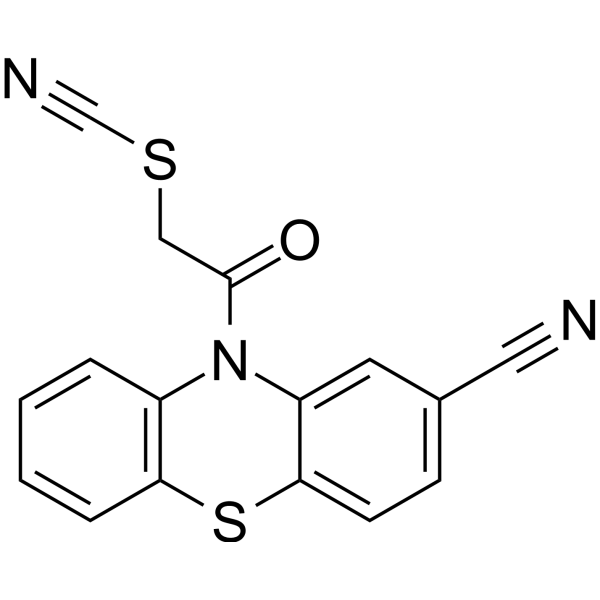
MePT-S-N-Pme is an inhibitor of SARS-CoV-2 RdRp activity. MePT-S-N-Pme demonstrates a significant reduced reporter activity with an IC50 of 7 μM in HEK 293 cells. MePT-S-N-Pme has a slight inhibitory effect on nucleotidyltransferase activity. MePT-S-N-Pme significantly inhibits SARS-CoV-2 replication in vitro .
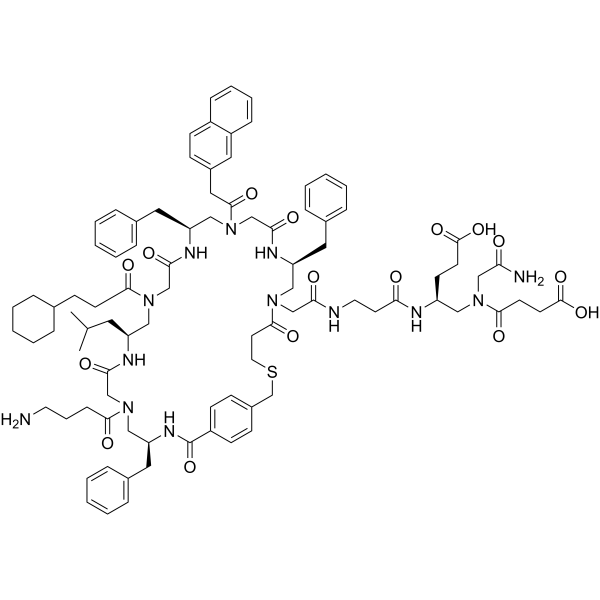
S1b3inL1 is a SARS-CoV-2spike protein macrocyclic peptide inhibitor. S1b3inL1 can bind the conserved site of spike protein with high affinity and inhibit the infection of various SARS-CoV-2 variant strains. S1b3inL1 has antiviral activity .
F594-1001 (compound 6) hydrochloride is a potent and highly selective SARS-CoV-2 Mac1-ADP-ribose inhibitor with IC50s of 8.5 μM, 68 μM and 45 μM for SARS-CoV-2 in AS, FP, and FRET assays, respectively. F594-1001 hydrochloride directly binds to SARS-CoV-2 Mac1 and exhibits a dose-dependent inhibition of Mac1 ADP-ribosylhydrolase activity .
F594-1001 (compound 6) is a potent and highly selective SARS-CoV-2 Mac1-ADP-ribose inhibitor with IC50s of 8.5 μM, 68 μM and 45 μM for SARS-CoV-2 in AS, FP, and FRET assays, respectively. F594-1001 directly binds to SARS-CoV-2 Mac1 and exhibits a dose-dependent inhibition of Mac1 ADP-ribosylhydrolase activity .
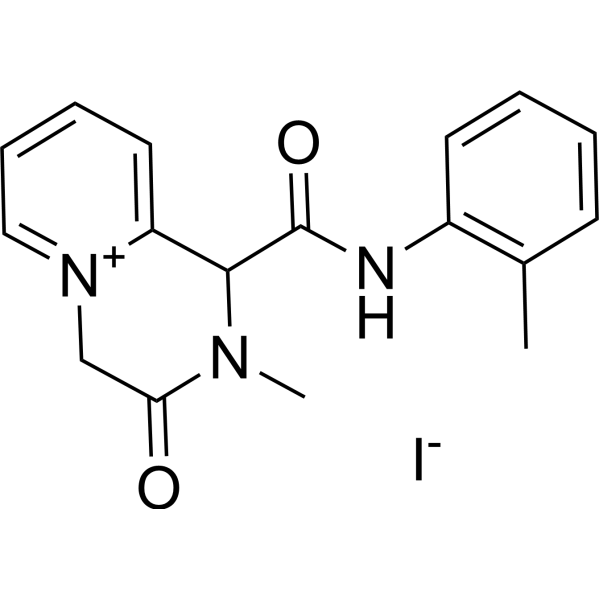
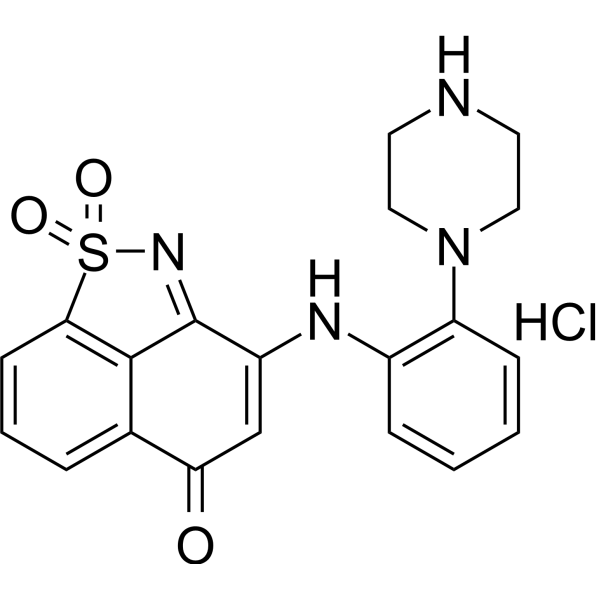
M56-S2 iodide is a SARS-CoV-2 M pro inhibitor (IC50=4.0 μM). M56-S2 iodide showed good oral bioavailability and low toxicity in ADMET prediction. M56-S2 iodide has good drug potential and can be used in antiviral (such as SARS-CoV-2) research .
SARS-CoV-2 3CLpro-IN-19 (Compound C5a) is a non-covalent, non-peptide SARS-CoV-2 3CLpro inhibitor (IC50s: 0.7 μM). SARS-CoV-2 3CLpro-IN-19 has broad-spectrum activity against Omicron subvariants (BA.5, BQ.1.1, and XBB.1.5) infection in human cells, with EC50 values between 30-69 nM .
SARS-CoV-2-IN-14 (compound 6) is a potent inhibitor of SARS-CoV-2 with an IC50 of 0.39 μM. SARS-CoV-2-IN-14 is a niclosamide analogue. SARS-CoV-2-IN-14 contains higher stability in human plasma and liver S9 enzymes assay than niclosamide, which can improve bioavailability and half-life when administered orally .
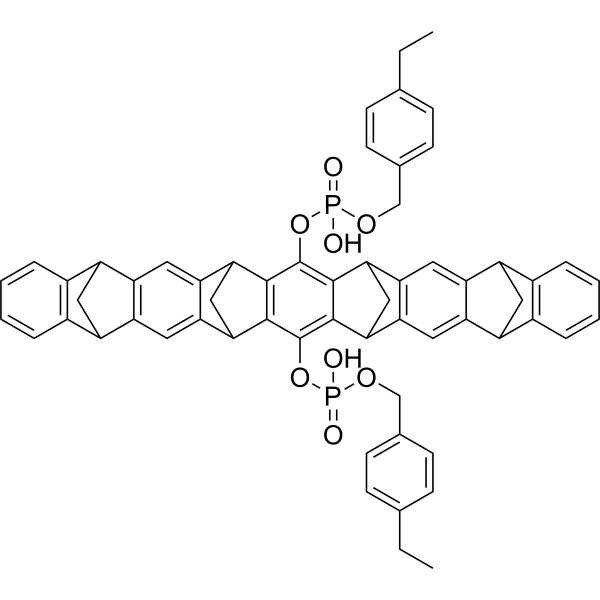
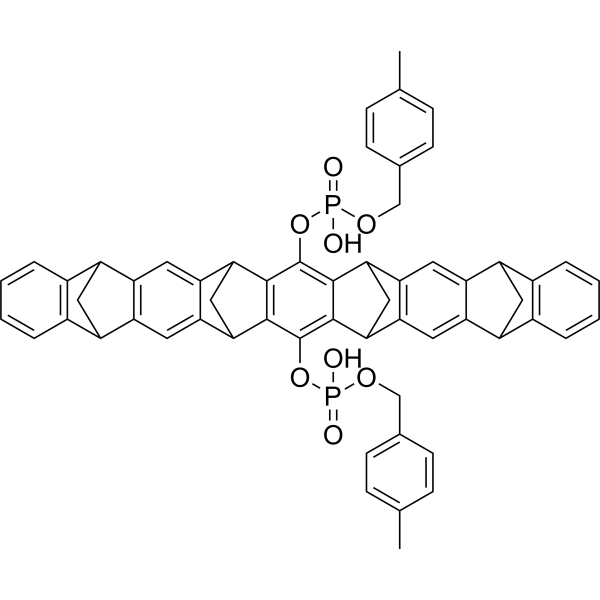
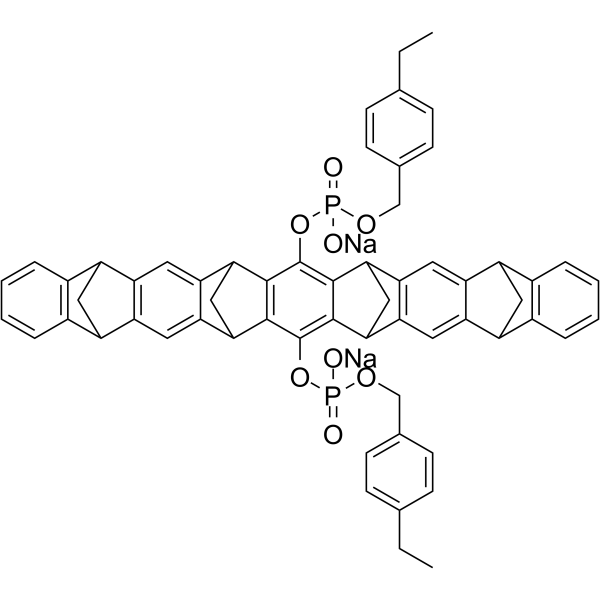
SARS-CoV-2-IN-30 is a two-armed diphosphate ester with benzene system and molecular tweezers. SARS-CoV-2-IN-30 exhibits antiviral activity with IC50s of 0.6 μM and 6.9 μM against SARS-CoV-2 activity and the spike pseudoparticle transduction, respectively. SARS-CoV-2-IN-30 induces liposomal membrane disruption with an EC50 value of 6.9 μM .
SARS-CoV-2-IN-23 is a two-armed diphosphate ester and medium length molecular tweezers. SARS-CoV-2-IN-23 exhibits antiviral activity with IC50s of 8.2 μM and 2.6 μM against SARS-CoV-2 activity and the spike pseudoparticle transduction, respectively. SARS-CoV-2-IN-23 induces liposomal membrane disruption with an EC50 value of 4.4 μM .
SARS-CoV-2-IN-29 is a two-armed diphosphate ester with benzene system and molecular tweezers. SARS-CoV-2-IN-29 exhibits antiviral activity with IC50s of 1.5 μM and 1.6 μM against SARS-CoV-2 activity and the spike pseudoparticle transduction, respectively. SARS-CoV-2-IN-29 induces liposomal membrane disruption with an EC50 value of 3.0 μM .
SARS-CoV-2-IN-23 disodium is a two-armed diphosphate ester and medium length molecular tweezers. SARS-CoV-2-IN-23 disodium exhibits antiviral activity with IC50s of 8.2 μM and 2.6 μM against SARS-CoV-2 activity and the spike pseudoparticle transduction, respectively. SARS-CoV-2-IN-23 disodium induces liposomal membrane disruption with an EC50 value of 4.4 μM .
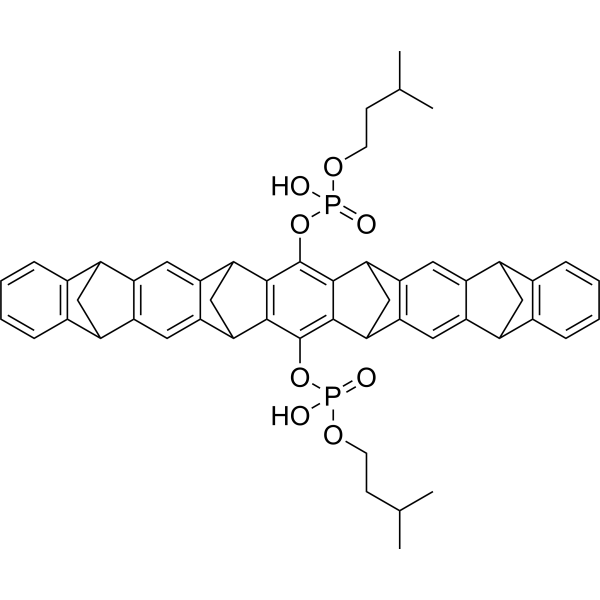
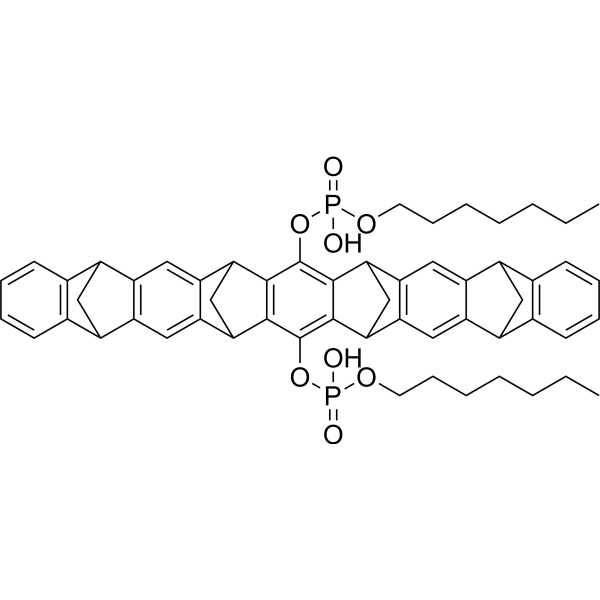
SARS-CoV-2-IN-28 is a two-armed diphosphate ester with C7 alkyl and molecular tweezers with extended length. SARS-CoV-2-IN-28 exhibits antiviral activity with IC50s of 0.4 μM and 1.0 μM against SARS-CoV-2 activity and the spike pseudoparticle transduction, respectively. SARS-CoV-2-IN-28 induces liposomal membrane disruption with an EC50 value of 4.4 μM .
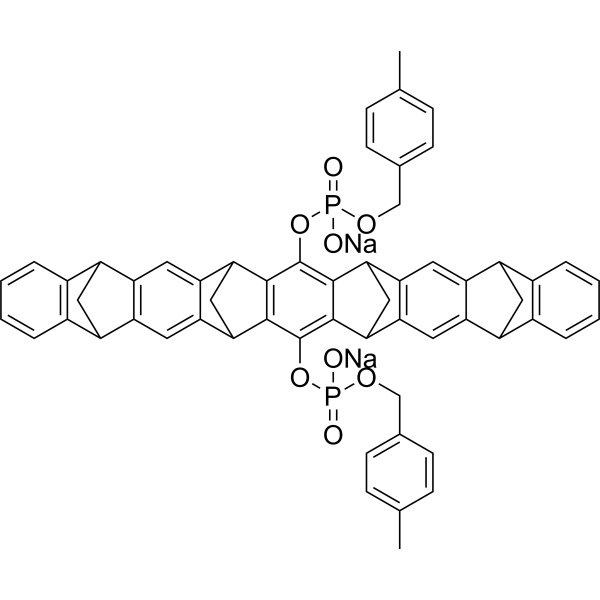
SARS-CoV-2-IN-29 disodium is a two-armed diphosphate ester with benzene system and molecular tweezers. SARS-CoV-2-IN-29 disodium exhibits antiviral activity with IC50s of 1.5 μM and 1.6 μM against SARS-CoV-2 activity and the spike pseudoparticle transduction, respectively. SARS-CoV-2-IN-29 disodium induces liposomal membrane disruption with an EC50 value of 3.0 μM .
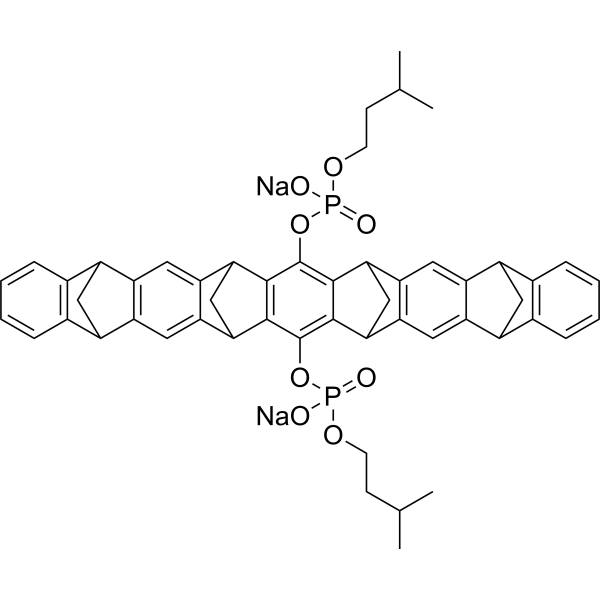
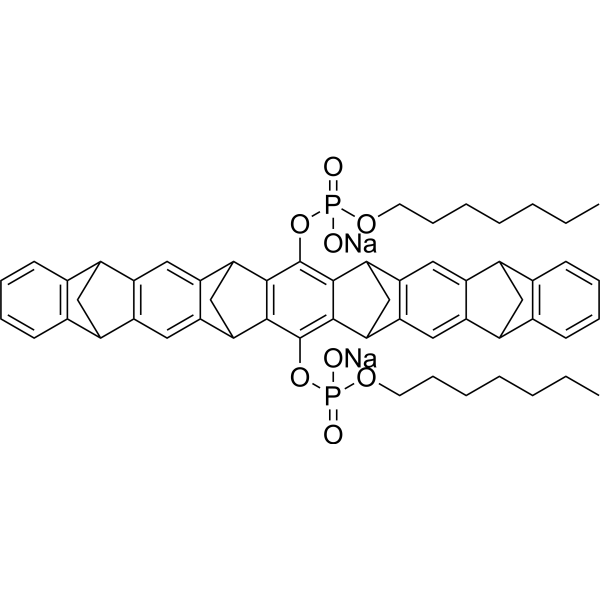
SARS-CoV-2-IN-28 disodium is a two-armed diphosphate ester with C7 alkyl and molecular tweezers with extended length. SARS-CoV-2-IN-28 disodium exhibits antiviral activity with IC50s of 0.4 μM and 1.0 μM against SARS-CoV-2 activity and the spike pseudoparticle transduction, respectively. SARS-CoV-2-IN-28 disodium induces liposomal membrane disruption with an EC50 value of 4.4 μM .
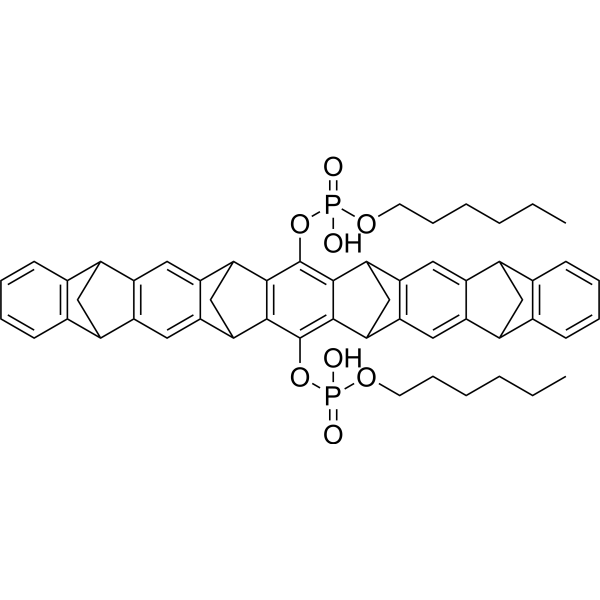
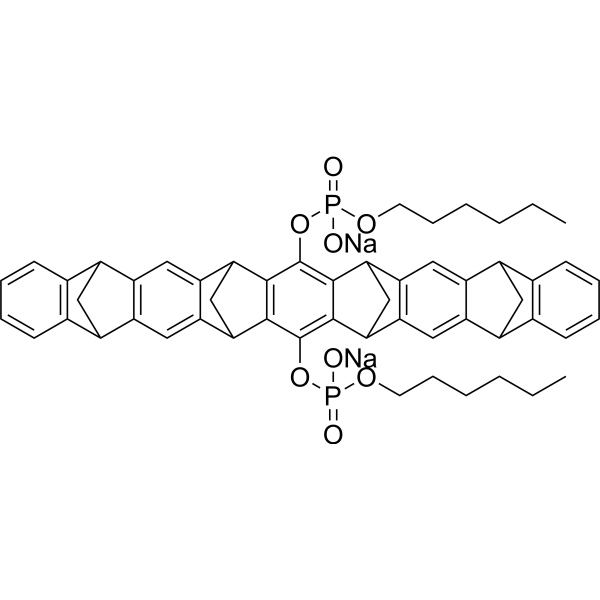
SARS-CoV-2-IN-27 is a two-armed diphosphate ester with C6 alkyl and molecular tweezers with extended length. SARS-CoV-2-IN-27 exhibits antiviral activity with IC50s of 1.0 μM and 1.7 μM against SARS-CoV-2 activity and the spike pseudoparticle transduction, respectively. SARS-CoV-2-IN-27 induces liposomal membrane disruption with an EC50 value of 6.5 μM .
SARS-CoV-2-IN-27 disodium is a two-armed diphosphate ester with C6 alkyl and molecular tweezers with extended length. SARS-CoV-2-IN-27 disodium exhibits antiviral activity with IC50s of 1.0 μM and 1.7 μM against SARS-CoV-2 activity and the spike pseudoparticle transduction, respectively. SARS-CoV-2-IN-27 disodium induces liposomal membrane disruption with an EC50 value of 6.5 μM .
SARS-CoV-2-IN-30 disodium is a two-armed diphosphate ester with benzene system and molecular tweezers. SARS-CoV-2-IN-30 disodium exhibits antiviral activity with IC50s of 0.6 μM and 6.9 μM against SARS-CoV-2 activity and the spike pseudoparticle transduction, respectively. SARS-CoV-2-IN-30 disodium induces liposomal membrane disruption with an EC50 value of 6.9 μM .
PROTAC SARS-CoV-2 Mpro degrader-3 (Compound P2) exhibits antiviral activity through the degradation of the main protease (Mpro) of human coronaviruses (HCoVs) (DC50=27 μM). PROTAC SARS-CoV-2 Mpro degrader-3 inhibits the viral replication, with EC50 of 4.6 μM, 4.6 μM, and 0.71 μM, for human coronaviruses HCoV-229E, HCoV-OC43 and SARS-CoV-2, respectively. (Pink: ligand for target protein Mpro ligand 2 (HY-161791); Black: linker (HY-161792); Blue: ligand for E3 ligase (S,R,S)-AHPC (HY-125845)) .
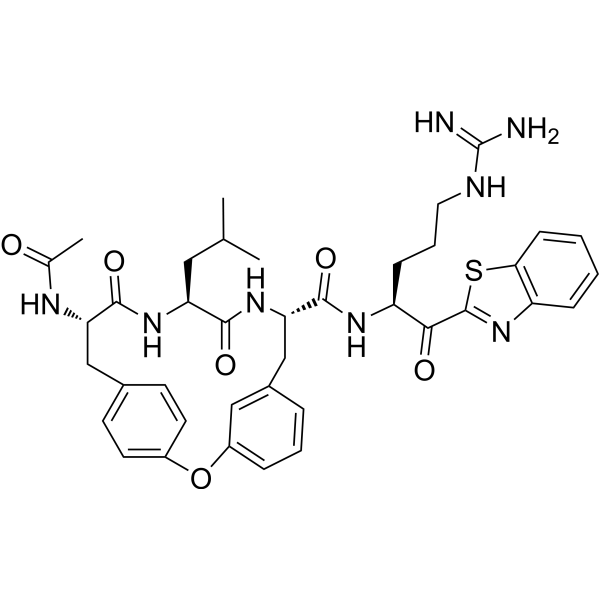
(H)S(OMe)-DFR-kbt (compound 9) is a potent and selective TMPRSS2 inhibitor with a Ki of 0.13 nM. (H)S(OMe)-DFR-kbt can be used in the study of SARS-CoV-2 .
(S)-Azelastine hydrochloride, an antihistamine, is a potent and selective histamine 1 (H1) antagonist. (S)-Azelastine hydrochloride can be used for the research of allergic rhinitis, asthma, diabetic hyperlipidemic and SARS-CoV-2 .
(S)-GS-621763 is the S-enantiomer of GS-621763 (HY-145119). GS-621763 is an orally active prodrug form of GS-443902 (HY-126303) that inhibits SARS-CoV-2 .
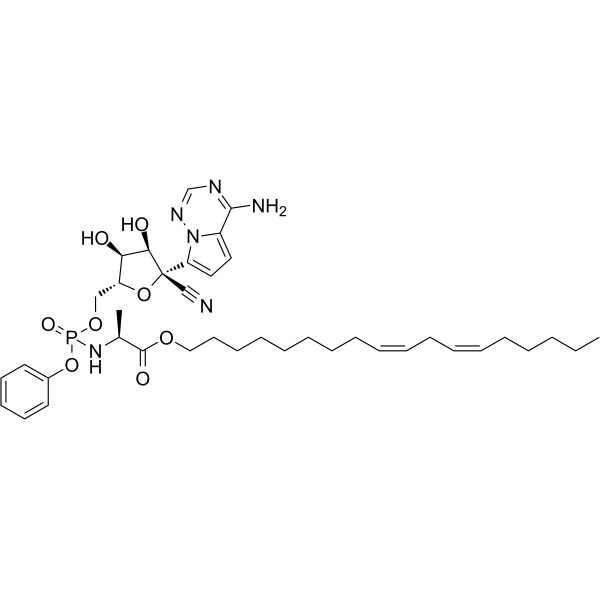
MMT5-14 is a remdesivir analogue with a higher antiviral activity in four variants of SARS-CoV-2 than Remdesivir (HY-104077). MMT5-14 inhibits SARS-CoV-2, α, β, γ and δ variants with EC50s of 0.4, 2.5, 15.9, 1.7 and 5.6 μM, respectively. MMT5-14 can be used for the research of COVID-19 .
Ogalvibart (C-135-LS) is a human anti-SARS-CoV-2 monoclonal antibody (IgG1 type). Ogalvibart binds to the spike (S) glycoprotein receptor-binding domain (RBD) of SARS-CoV-2. Ogalvibart in combination with C144LS (1:1 ratio) shows good preventive activity and can effectively block the development of COVID19 in a rhesus monkey disease model .
Bisoxatin (Standard) is the analytical standard of Bisoxatin. This product is intended for research and analytical applications. Bisoxatin is a laxative drug used for constipation. Bisoxatin binds substantially at the S-protein-ACE2 interface. Bisoxatin has the potential for inhibiting SARS-CoV-2 entry into the host research .
Anti-SARS-CoV-2S protein (RBD) Antibody (SARS2-38) reacts with many variants of SARS-CoV-2 that binds a conserved epitope on the RBD (amino acids K444 and G446). Anti-SARS-CoV-2S protein (RBD) Antibody (SARS2-38) does not cross-react with the SARS-CoV-1 spike protein. Recommend Isotype Controls: Mouse IgG1 kappa, Isotype Control (HY-P99977) .
AAK1/HDACs-IN-1 (Compound 12) is the dual inhibitor for AAK1 and HDAC, that inhibits AAK1, HDAC1, and HDAC6 with IC50s of 15.9, 148.6, and 5.2 nM, respectively. AAK1/HDACs-IN-1 inhibits SARS-CoV-2 infection, suppresses the endocytosis of ACE2-SARS-CoV-2 complex, as well as AP2M1-ACE2 interaction .
N-0920 is a potent TMPRSS2 inhibitor with an IC50 of 0.35 nM. N-0920 effectively inhibits SARS-CoV-2 variants EG.5.1 and JN.1 entry in Calu-3 cells, with picomolar EC50s values of 300 pM and 90 pM, respectively .
(S,R,S)-AHPC-NHCO-C-O-C5-N3 is a conjugate of ligand for E3 ligase (HY-125845) and linker (HY-161792). (S,R,S)-AHPC-NHCO-C-O-C5-N3 can be utilized for synthesis of PROTAC SARS-CoV-2 Mpro degrader-3 (HY-161789) .
MERS-CoV-IN-2 (compound 3c) is a MERS-CoV 3CLpro inhibitor (IC50=17nM). MERS-CoV-IN-2 inhibits the activity of the 3CLpro enzyme by binding to the active site of the enzyme, specifically the S4 subsite, thereby exhibiting antiviral activity against SARS-CoV-2 and MERS-CoV .
SARS-CoV-IN-5 (compound 49) is a highly selective, nonpeptidic and noncovalent 3CL pro inhibitor with IC50s of 38 nM, 21.1 nM and 86 nM for 3CL pro of SARS-CoV-1, SARS-CoV-2, Bat coronavirus WIV1, respectively. SARS-CoV-IN-5 inhibits the replication of the SARS-CoV-2 delta variant with an EC50 of 0.272 μM. SARS-CoV-IN-5 significantly reduces the lung viral copies in a K18-hACE2 transgenic mouse model. SARS-CoV-IN-5 has good target-specific and potential broad-spectrum anticoronavirus activities against SARS-CoV-1, WIV1, MERS, HCoV-OC43, HCoV-229E, and HKU9 .
SARS-CoV-2-IN-76 (compound 1) is a nsp14-viral cap N7 methyltranferase and PLpro inhibitor of severe acute respiratory syndrome corona virus (SARS-CoV-2) .
SARS-CoV-2 PLpro-IN-4 is a SARS-CoV-2 papain-like protease (PL Pro) inhibitor with an IC50 of 0.4 μM. SARS-CoV-2 PLpro-IN-4 binds to the S3 and S4 pockets of SARS-CoV-2 PL Pro, thereby functionally inhibiting its activity. SARS-CoV-2 PLpro-IN-4 exhibits antiviral activity and can be used in research on COVID-19 .
SARS-CoV-2 nsp14-IN-10 is a highly potent and selective NSP14 (IC50 = 0.34 µM) S-adenosylmethionine (SAM) binding pocket inhibitor. SARS-CoV-2 nsp14-IN-10 demonstrates robust antiviral activity against SARS-CoV-2. SARS-CoV-2 nsp14-IN-10 exhibits broad-spectrum activity against other betacoronaviruses and inhibits SARS-CoV-2 at the replication stage. SARS-CoV-2 nsp14-IN-10 suppresses viral translation and exhibits immunostimulatory effects. SARS-CoV-2 nsp14-IN-10 specifically reverses NSP14-mediated alterations inhost transcriptome. SARS-CoV-2 nsp14-IN-10 can be used for the study of SARS-CoV-2 .
SARS-CoV-2 3CLpro-IN-36 is a SARS-CoV-2 3CLpro inhibitor and antiviral agent with a human sub-micromolar IC50 against SARS-CoV-23CLpro.SARS-CoV-2 3CLpro-IN-36 forms a covalent bond with catalytic Cys145 of SARS-CoV-2 3CLpro; its tetrazole core occupies the S1 pocket and interacts with His163, while its chloroacetamide carbonyl forms hydrogen bonds with the backbone amides of Gly143 and Ser144 in the oxyanion hole.SARS-CoV-2 3CLpro-IN-36 reduces SARS-CoV-2 replication in infected cells.SARS-CoV-2 3CLpro-IN-36 can be used for the research of SARS-CoV-2 infection .
SARS-CoV-2-IN-119 (Compound A28) is a SARS-CoV-2 fusion inhibitor. SARS-CoV-2-IN-119 strongly inhibits Omicron entry with an EC50s of 1.95 and 1.08 μM for pOmicron (BA.2.86.1) and wild Omicron. SARS-CoV-2-IN-119 also has antiviral activities against wild SARS-CoV-2 and other variants, such as pseudotyped Delta SARS-CoV-2, pOmicron (BA.4) and (KP.3). SARS-CoV-2-IN-119 directly interferes with Omicron S2-mediated viral membrane fusion to block Omicron virus into host cells. SARS-CoV-2-IN-119 can be used for COVID-19 research .
SARS-CoV-2 Mpro-IN-52 (compound 47) is a potent SARS-CoV-2 main protease (MPro) inhibitor (EC50 = 0.0099 µM) with antiviral activity. SARS-CoV-2 Mpro-IN-52 exhibits potent and broad-spectrum activity against MERS, OC43, 229E with EC50s of 0.00961, 0.138, and 0.117 µM. SARS-CoV-2 Mpro-IN-52 can be used for COVID-19 research .
SARS-CoV-2-IN-122 is a SARS-CoV-2 inhibitor by targeting the S2 subunit of the spike protein. SARS-CoV-2-IN-122 interacts with residues linked to membrane fusion-associated conformational rearrangements, interfering with viral entry events. SARS-CoV-2-IN-122 inhibits SARS-CoV-2 replication, lacks direct virucidal activity, and does not impair viral-host cell attachment. SARS-CoV-2-IN-122 exhibits activity against SARS-CoV-2 variants including B.1 and Omicron (BA.2.86.1). SARS-CoV-2-IN-122 can be used for the research of coronavirus disease 2019 (COVID-19) .
SARS-CoV-2 Mpro-IN-37 (compound 8r) is a SARS-CoV-2 main protease (M pro) inhibitor, with an IC50 of 0.0199 μM. SARS-CoV-2 Mpro-IN-37 inhibits SARS-CoV-1 M pro and MERS-CoV M pro with IC50s of 0.00945 and 0.111 μM, respectively. SARS-CoV-2 Mpro-IN-37 displays high antiviral activity in the nanomolar range without showing cellular toxicity .
SARS-CoV-2-IN-120 (Compound S22) is a SARS-CoV-2-specific entry inhibitor. SARS-CoV-2-IN-120 binds and trimerizes within the apex cavity of the SARS2 spike trimer. SARS-CoV-2-IN-120 blocks RBD-ACE2 interaction. SARS-CoV-2-IN-120 neutralizes BA.2 and subsequent Omicron variants. SARS-CoV-2-IN-120 inhibits SARS-CoV-2 replication in mice .
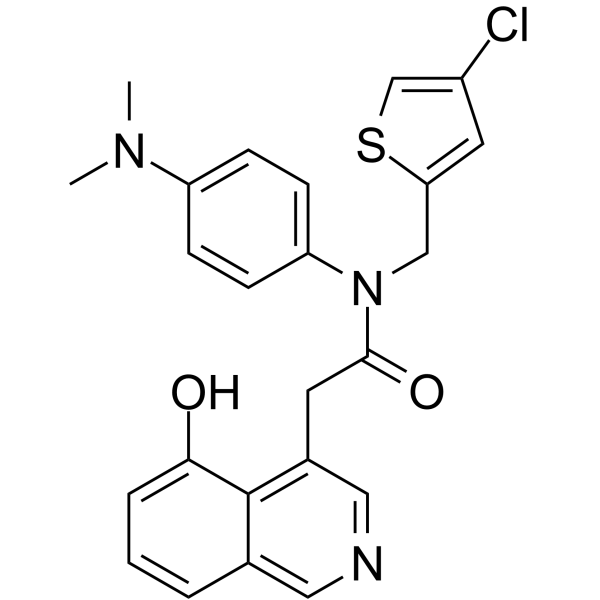
MWAC-3429 is a potent SARS-CoV-2 Nsp13 helicase inhibitor. MWAC-3429 inhibits SARS-CoV-2 and SARS-CoV1 with EC50s of 5.39 (nLuc assay) and 17.00 μM (CPE assay), respectively, while showing low cytotoxicity in A549-hACE2 cells (CC50 > 50 μM). MWAC-3429 can be used for SARS-CoV-infection research .
Oberadilol (CID-3047798) is an ACE2 receptor binding agent. Oberadilol binds to the human ACE2 receptor and SARS-CoV proteins (Spike S glycoprotein, protease) with a Kd of 23.18 mM for the SARS-CoV-2 main protease .
(S,R,S)-AHPC-Me-C2-piperazine is an E3 ligase ligand-linker conjugate containing an E3 ligase ligand (HY-112078) and a PROTAC linker. (S,R,S)-AHPC-Me-C2-piperazine can be used in the PROTAC SARS-CoV-2 Mpro degrader-8 (HY-181870) .
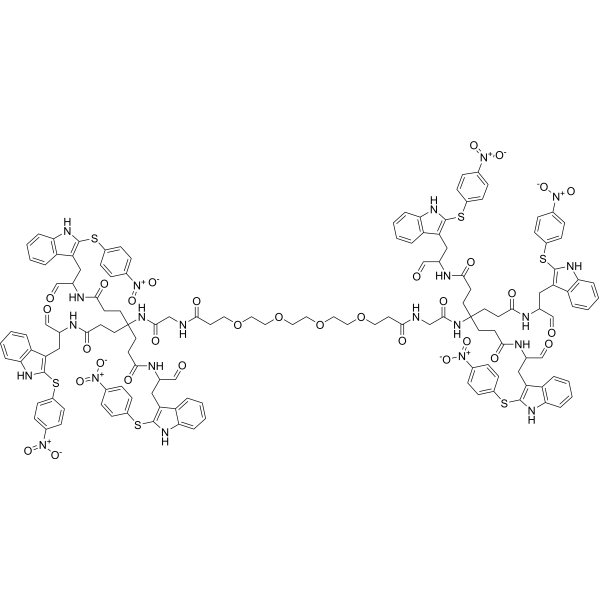
ASF-006 sodium, a tetrapodal tryptophan derivative, is a potent viral invasion inhibitor. ASF-006 sodium shows potent antiviral activity against different SARS-CoV-2 Omicron variants but not against the ancestral SARS-CoV.2 strain (Wuhan-Hu-1). ASF-006 sodium competitively inhibits receptor-binding domain (RBD)-ACE2 binding via an allosteric mechanism. ASF-006 sodium inhibits Omicron BA.1, Omicron XBB.1.5, respiratory syncytial virus (RSV) and Ebola virus infection with IC50s of 0.02 μM, 0.3 μM, 1.52 μM and 0.2 μM, respectively. ASF-006 sodium inhibits cell entry of both HIV and enterovirus A71[1].
Anti-SARS-CoV-2 Spike mAb (CR3022) is a a CHO cell derived human monoclonal IgG1 antibody. It binds to both S1 domain of SARS-CoV/SARS-CoV-2 Spike protein .
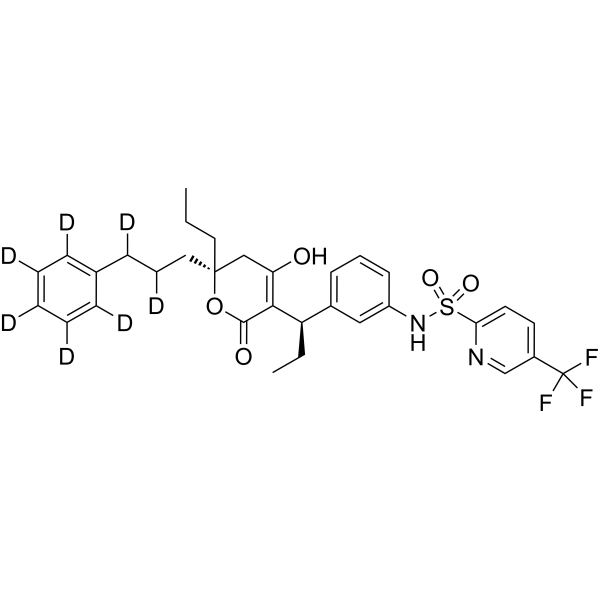
Tipranavir-d7 is deuterated labeled Tipranavir (HY-15148). Tipranavir (PNU-140690) inhibits the enzymatic activity and dimerization of HIV-1 protease, exerts potent activity against multi-protease inhibitor (PI)-resistant HIV-1 isolates with IC50s of 66-410 nM . Tipranavir inhibits SARS-CoV-2 3CL pro activity .
Tipranavir (Standard) is the analytical standard of Tipranavir. This product is intended for research and analytical applications. Tipranavir (PNU-140690) inhibits the enzymatic activity and dimerization of HIV-1 protease, exerts potent activity against multi-protease inhibitor (PI)-resistant HIV-1 isolates with IC50s of 66-410 nM . Tipranavir inhibits SARS-CoV-2 3CL pro activity .
Sotrovimab (VIR 7831) is a human IgG1κ pan-sarbecovirus monoclonal antibody (mAb), neutralizes SARS-CoV-2, SARS-CoV-1, and multiple other sarbecoviruses. Sotrovimab is developed based on S309, exhibits a long half-life and great bioavailability in the respiratory mucosa. Sotrovimab could result in immune-mediated viral clearance and prevent progression of Covid-19 early in the course of disease .
Vps34-IN-2 is a novel, potent and selective inhibitor of Vps34 with IC50s of 2 and 82 nM on the Vps34 enzymatic assay and the GFP-FYVE cellular assay, respectively . Vps34-IN-2 shows antiviral activity against SARS-CoV-2 (IC50 of 3.1 μM), HCoV-229E (IC50 of 0.7 μM) and HCoV-OC43 .
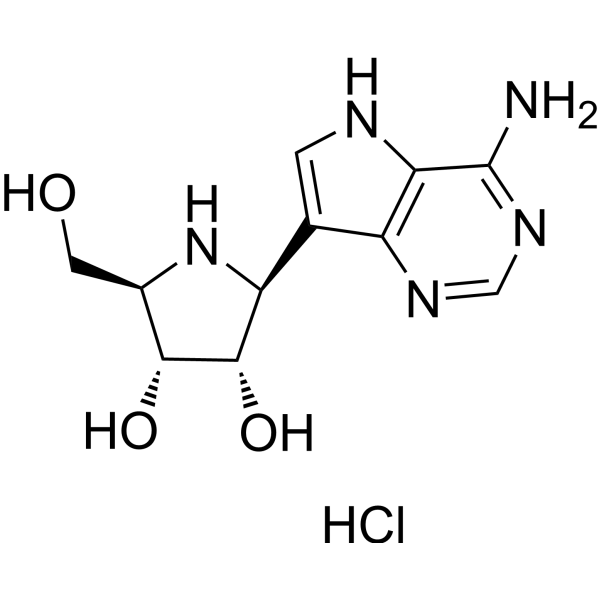
Galidesivir (BCX4430) hydrochloride, an adenosine analog and a direct-acting antiviral agent, disrupts viral RNA-dependent RNA polymerase (RdRp) activity. Galidesivir hydrochloride is active in vitro against many RNA viral pathogens, including the filoviruses and emerging infectious agents such as MERS-CoV, SARS-CoV, and SARS-CoV-2. Galidesivir hydrochloride inhibits some negative-sense RNA viruses with EC50s ranging from ~3 to ~68 μM .
P315V3 is an pan inhibitor for coronavirus, that inhibits SARS-CoV-2 prototypePT, Delta, BA.1 and BA.4 strain with IC50s of 10.9, 8.9, 8.6, and 2.7 nM. P315V3 exhibits cytotoxicity in Vero cell with CC50 of 4.3 μM. P315V3 exhibits anti-infectious efficacy in mouse models .
VIR-7229 is a human IgG1 monoclonal antibody (mAb) targeting Receptor-Binding Domain, RBD, Spike glycoprotein. VIR-7229 exerts antiviral activity by competing with ACE2 for binding and inducing S1 protein shedding. VIR-7229 can be used in SARS-CoV-2 infection research. Recommended isotype control: Human IgG1 kappa, Isotype Control (HY-P99001) .
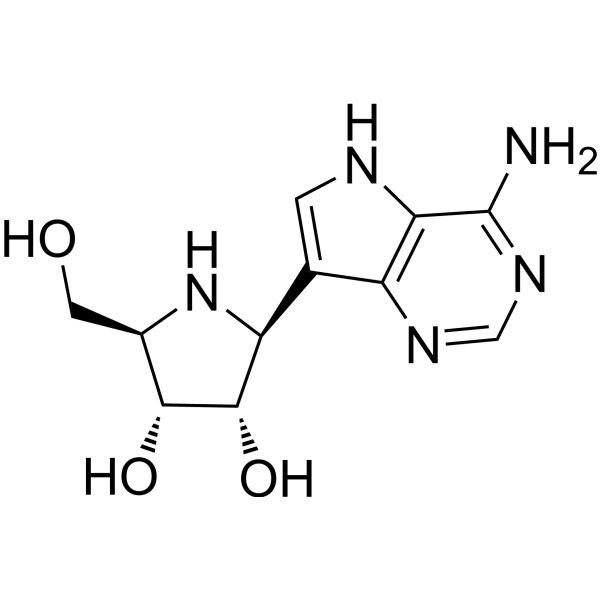
Galidesivir (BCX4430), an adenosine analog and a direct-acting antiviral agent, disrupts viral RNA-dependent RNA polymerase (RdRp) activity. Galidesivir is active in vitro against many RNA viral pathogens, including the filoviruses and emerging infectious agents such as MERS-CoV, SARS-CoV, and SARS-CoV-2. Galidesivir inhibits some negative-sense RNA viruses with EC50s ranging from ~3 to ~68 μM .
SRX3177 is a triple inhibitor of CDK4/6, PI3K, and BRD4, with IC50s of <2.5 nM (CDK4), 3.3 nM (CDK6), 33 nM (BRD4 BD1), 89 nM (BRD4 BD2), 79 nM (PI3Kα), 83 nM (PI3Kδ), 3.18 μM (PI3Kγ) , respectively. SRX3177 blocks the interaction between the SARS-CoV-2E protein and the BRD2/4 BD1 domain, restores E protein-attenuated NF-κB activity. SRX3177 exerts broad cytotoxic activity against cancer cells. SRX3177 can be used for the study of anti-SARS-CoV-2 and cancer .
Tipranavir-d5 (PNU-140690-d5) is the deuterium labeled Tipranavir (HY-15148). Tipranavir (PNU-140690) inhibits the enzymatic activity and dimerization of HIV-1 protease, exerts potent activity against multi-protease inhibitor (PI)-resistant HIV-1 isolates with IC50s of 66-410 nM . Tipranavir inhibits SARS-CoV-2 3CL pro activity .
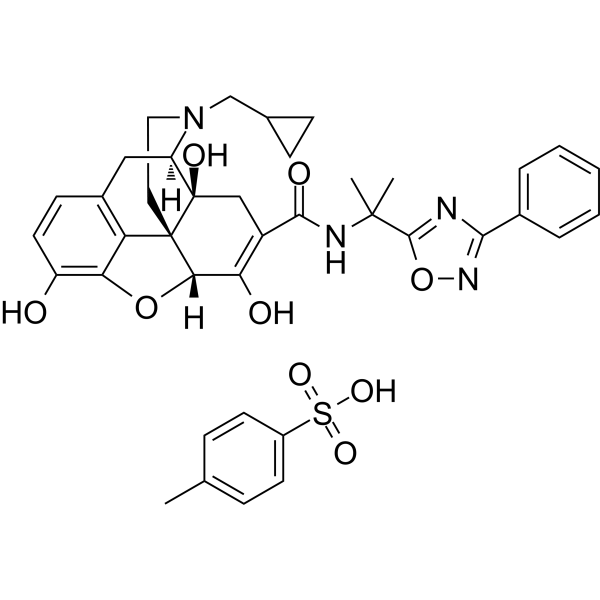
Naldemedine (S-297995) tosylate is an orally active μ-opioid receptor antagonist (PAMORA) . Naldemedine tosylate shows potent binding affinities (Ki=0.34, 0.43, 0.94 nM, respectively) and antagonist activities (IC50=25.57, 7.09, 16.1 nM, respectively) for recombinant human μ-, δ-, and κ- opioid receptors . Naldemedine can be used in opioid-induced constipation (OIC) research . Naldemedine tosylate is predicted to bind to 3CL pro encoded by SARS-CoV2 genome .
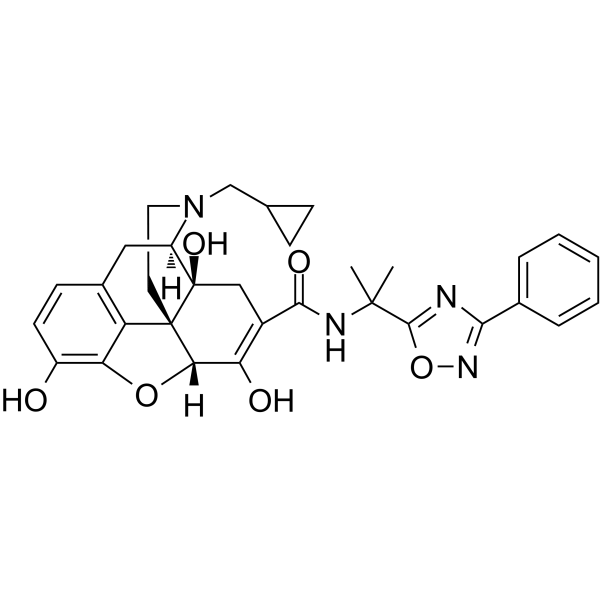
Naldemedine (S-297995) is an orally active μ-opioid receptor antagonist (PAMORA) . Naldemedine shows potent binding affinities (Ki=0.34, 0.43, 0.94 nM, respectively) and antagonist activities (IC50=25.57, 7.09, 16.1 nM, respectively) for recombinant human μ-, δ-, and κ- opioid receptors . Naldemedine can be used in opioid-induced constipation (OIC) research . Naldemedine is predicted to bind to 3CL pro encoded by SARS-CoV2 genome .
Glycosyltransferase-IN-2 (Compound 20) is a Glycosyltransferase inhibitor. Glycosyltransferase-IN-2 has a broad-spectrum anticoronavirus activity with IC50s of 11.3, 5.5 and ~16.2 μM for MHV, HCoV-NL63 and SARS-CoV-2, respectively. Glycosyltransferase-IN-2 interferes with the coronavirus infectivity, alters viral protein glycosylation with inhibition of interaction with the ACE2 receptor or SC-VLP secretion, and inhibits RNA replication. Glycosyltransferase-IN-2 can be used for coronavirus infections research .
LY1 is a potent, selective and covalent inhibitor against both SARS-CoV-2 PL pro and M pro with Kd values of 1.5 μM and 2.3 μM for M pro C145A protein and PL pro C111A protein, respectively. LY1 potent against the viral proteases, with IC50s of 0.12 μM and 0.99 μM against M pro and PL pro. LY1 shows high selectivity over other kinases, human proteases and metalloenzyme .
BOC-(1R,3S)-3-aminocyclopentane carboxylic acid ((1S,3S)-3-[(tert-Butoxycarbonyl)amino]cyclopentanecarboxylic acid) is a conformationally constrained peptide building block and a key component of SARS-CoV-2 main protease (Mpro) inhibitors. When incorporated into macrocyclic peptides, BOC-(1R,3S)-3-aminocyclopentane carboxylic acid not only helps generate high-affinity Mpro inhibitors by preorganizing the secondary structure of peptides, but also exerts sequence-dependent functional inhibition on the hydrolytic activity of Mpro. BOC-(1R,3S)-3-aminocyclopentane carboxylic is widely used in COVID-19-related research .
Paquinimod (ABR 215757) is a specific and orally active inhibitor of S100A8/S100A9. Paquinimod rescues the pneumonia with substantial reduction of viral loads in SARS-CoV-2-infected mice .
BACE-1/Mpro-IN-1 is a high brain-penetrant BACE-1 (IC50 = 0.26 μM) and SARS-CoV-2 Mpro (IC50 = 0.91 μM) dual inhibitor. BACE-1/Mpro-IN-1 binds to the aspartyl protease and cysteine protease as a mixed-type inhibitor. BACE-1/Mpro-IN-1 exhibits the most favorable docking score and a strong interaction profile. BACE-1/Mpro-IN-1 can be used for the study of COVID-19 exacerbated Neuroinflammation and Alzheimer’s disease .
(Rac)-Z-FA-FMK is the racemate of Z-FA-FMK. (Rac)-Z-FA-FMK is an inhibitor of cathepsin B with a Ki of 1.5 μM. (Rac)-Z-FA-FMK inhibits caspase-2, -3, -6, -7, and -9 with IC50s of 6.147, 15.41, 32.45, 9.077, and 110.7 μM. (Rac)-Z-FA-FMK inhibits the main protease of SARS-CoV-2 replication with an IC50 of 11.39 μM. (Rac)-Z-FA-FMK inhibits the increased IL-1β level induced by LPS and NF-κB transactivation in macrophages .
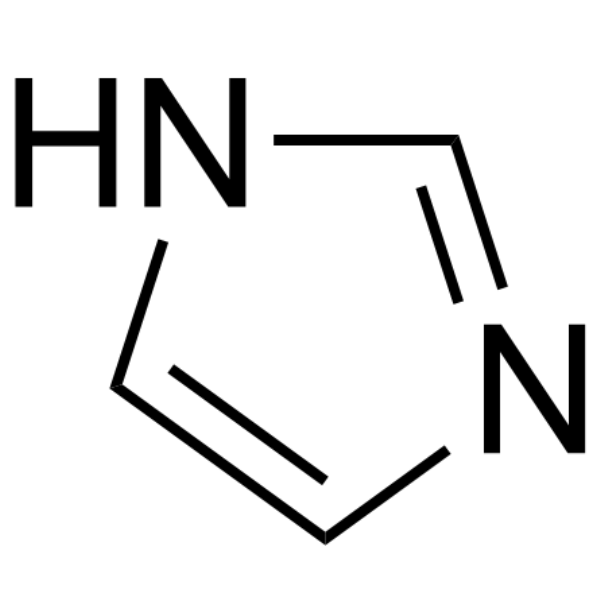
Imidazole (Glyoxaline; 1,3-Diaza-2,4-cyclopentadiene) is a heterocyclic aromatic compound. Imidazole bearing molecules have been used as corrosion, acetylcholinesterase (AChEI) and xanthine oxidase (XO) inhibitors, performing biological activities such as antifungal, antituberculosis, anti-inflammatory, antioxidant, and analgesic, amongst many others. Imidazole inhibits the enzymatic conversion of the endoperoxides (PGG2 and PGH2) to thromboxane A2 by platelet microsomes. Imidazole derivatives exhibits inhibition on SARS-CoV-2 3CL Pro enzyme, which is promising for research in the field of Alzheimer’s disease, gout, COVID-19 and thrombo-embolic disease .
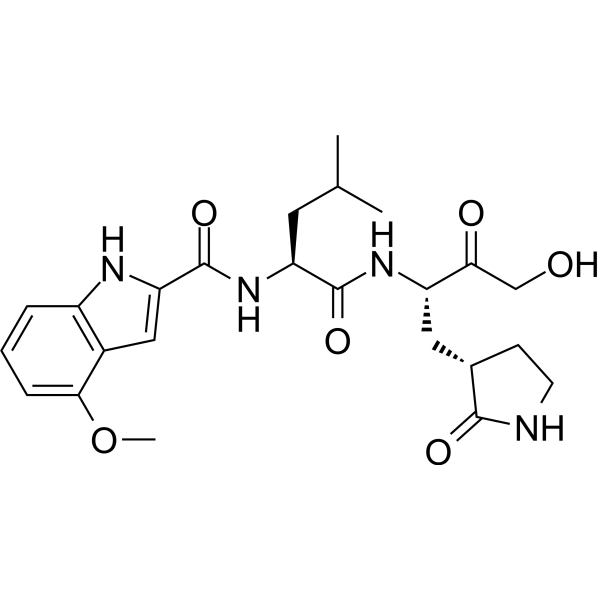
PF-00835231 is a CoV-2 cysteine 3C-like protease (3CL pro) inhibitor, with IC50s of 0.27 nM and 4 nM for SARS CoV-2 and SARS CoV-1 3CL pro, respectively. PF-00835231 is developed for the research of anti-SARS-CoV-2/COVID-19. PF-00835231 can inhibit cell infections and also suppress infections in animal models .
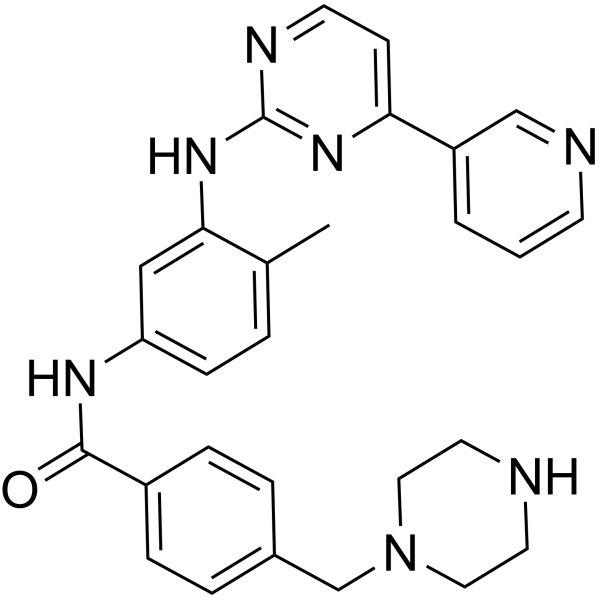
N‑Desmethyl imatinib (Norimatinib) is an active metabolite of Imatinib (HY-15463), a selective c‑Abl inhibitor, and a substrate of P‑glycoprotein. N-Desmethyl imatinib binds to the c-Abl catalytic domain to prevent substrate phosphorylation, inhibits c-Abl-mediated α-synuclein activation and downstream inflammatory signaling pathways. N-Desmethyl imatinib induces apoptosis in K562 human leukemia cells. N-Desmethyl imatinib shows significantly elevated plasma levels in gastrointestinal stromal tumor (GIST) models with mild SARS-CoV-2 infection. N-Desmethyl imatinib can be used for the research of Parkinson’s disease, gastrointestinal stromal tumor, and chronic myeloid leukemia .
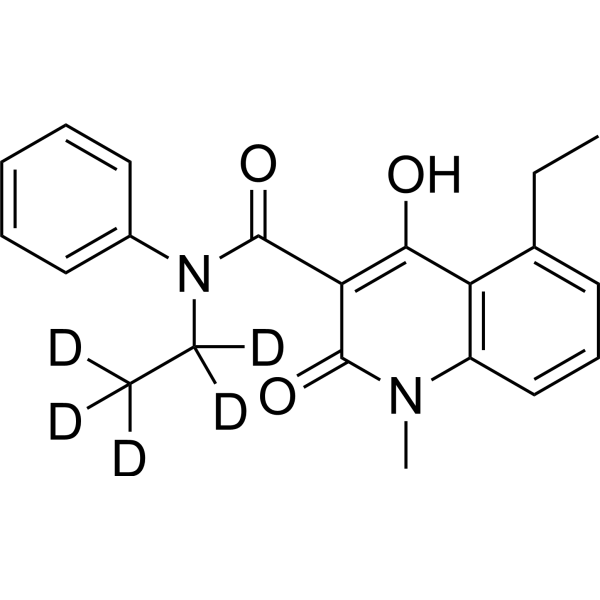
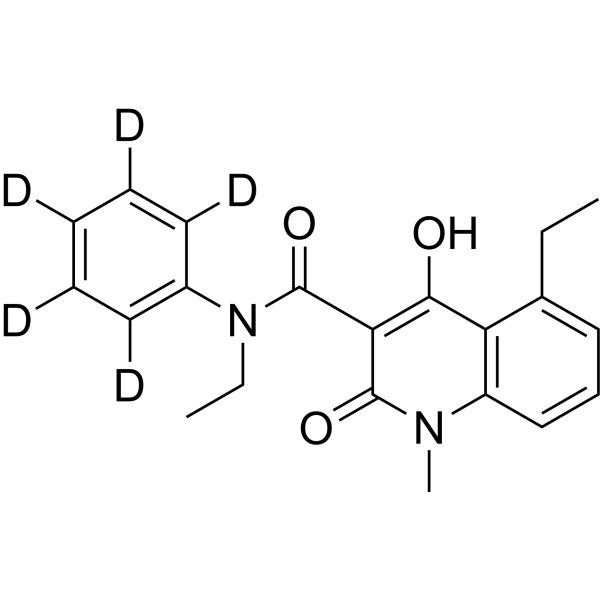
Paquinimod-d5 is a deuterated analog of Paquinimod (HY-100442). Paquinimod (ABR 215757) is a specific and orally active inhibitor of S100A8/S100A9. Paquinimod rescues the pneumonia with substantial reduction of viral loads in SARS-CoV-2-infected mice .
Paquinimod (Standard) is the analytical standard of Paquinimod. This product is intended for research and analytical applications. Paquinimod (ABR 215757) is a specific and orally active inhibitor of S100A8/S100A9. Paquinimod rescues the pneumonia with substantial reduction of viral loads in SARS-CoV-2-infected mice .
Imidazole- 15N2 (Glyoxaline- 15N2) is 15N labeled Imidazole. Imidazole (Glyoxaline; 1,3-Diaza-2,4-cyclopentadiene) is a heterocyclic aromatic compound. Imidazole bearing molecules have been used as corrosion, acetylcholinesterase (AChEI) and xanthine oxidase (XO) inhibitors, performing biological activities such as antifungal, antituberculosis, anti-inflammatory, antioxidant, and analgesic, amongst many others. Imidazole inhibits the enzymatic conversion of the endoperoxides (PGG2 and PGH2) to thromboxane A2 by platelet microsomes. Imidazole derivatives exhibits inhibition on SARS-CoV-2 3CL Pro enzyme, which is promising for research in the field of Alzheimer’s disease, gout, COVID-19 and thrombo-embolic disease .
Imidazole (Standard) is the analytical standard of Imidazole. This product is intended for research and analytical applications. Imidazole (Glyoxaline; 1,3-Diaza-2,4-cyclopentadiene) is a heterocyclic aromatic compound. Imidazole bearing molecules have been used as corrosion, acetylcholinesterase (AChEI) and xanthine oxidase (XO) inhibitors, performing biological activities such as antifungal, antituberculosis, anti-inflammatory, antioxidant, and analgesic, amongst many others. Imidazole inhibits the enzymatic conversion of the endoperoxides (PGG2 and PGH2) to thromboxane A2 by platelet microsomes. Imidazole derivatives exhibits inhibition on SARS-CoV-2 3CLPro enzyme, which is promising for research in the field of Alzheimer’s disease, gout, COVID-19 and thrombo-embolic disease .
Paquinimod-d5-1 is a deuterated analog of Paquinimod (HY-100442). Paquinimod (ABR 215757) is a specific and orally active inhibitor of S100A8/S100A9. Paquinimod rescues the pneumonia with substantial reduction of viral loads in SARS-CoV-2-infected mice .
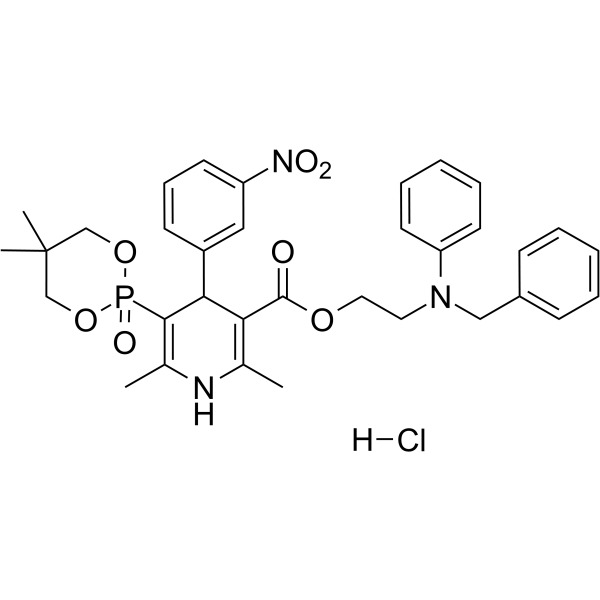
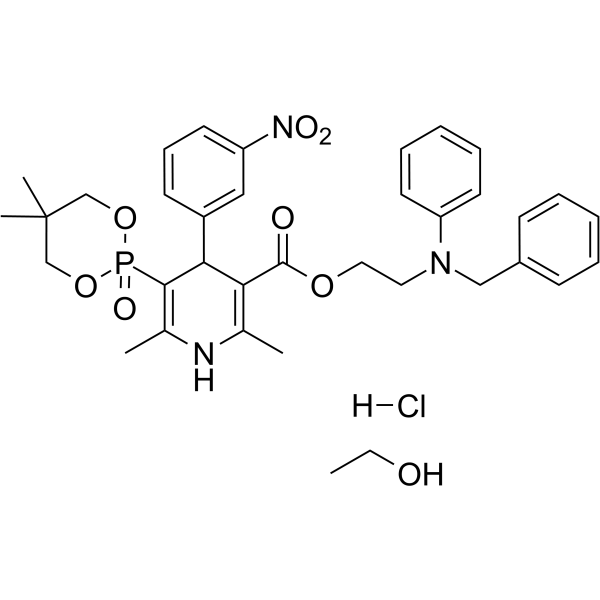
Efonidipine (NZ-105) hydrochloride is an orally active dual L-type and T-type calcium channel blocker (CCB) with IC50 values of 1.8 and 350 nM, respectively. Efonidipine hydrochloride inhibits SARS-CoV-2 main protease. Efonidipine hydrochloride modulates adrenal steroidogenesis by increasing the expression of steroidogenic acute regulatory protein (StAR), dbcAMP-or angiotensin II-induced StAR mRNA expression and DHEA-S production, while suppressing the biosynthesis of aldosterone and cortisol. Efonidipine hydrochloride reduces plasma aldosterone levels in vivo. Efonidipine hydrochloride improves cardiac function in heart failure models by inhibiting T-type calcium channels (via both tonic and use-dependent blockade), independently of blood pressure reduction. Efonidipine hydrochloride can be used for research in hypertension, heart failure, and disorders involving dysregulated steroid hormone synthesis .
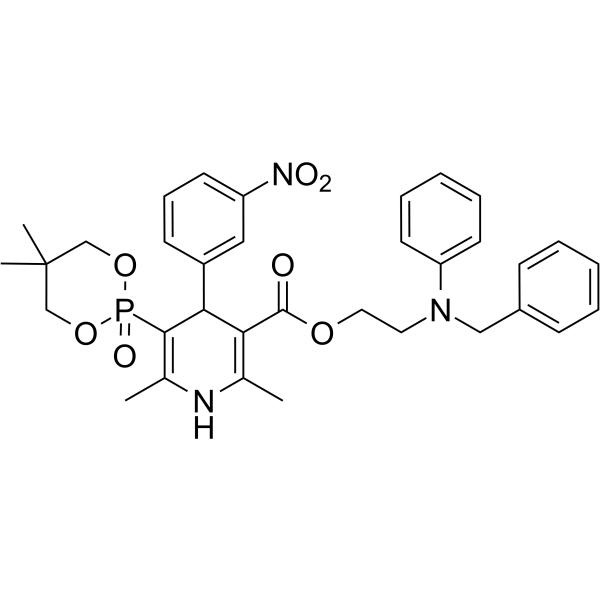
Efonidipine (NZ-105) is an orally active dual L-type and T-type calcium channel blocker (CCB) with IC50 values of 1.8 and 350 nM, respectively. Efonidipine inhibits SARS-CoV-2 main protease. Efonidipine modulates adrenal steroidogenesis by increasing the expression of steroidogenic acute regulatory protein (StAR), dbcAMP-or angiotensin II-induced StAR mRNA expression and DHEA-S production, while suppressing the biosynthesis of aldosterone and cortisol. Efonidipine reduces plasma aldosterone levels in vivo. Efonidipine improves cardiac function in heart failure models by inhibiting T-type calcium channels (via both tonic and use-dependent blockade), independently of blood pressure reduction. Efonidipine can be used for research in hypertension, heart failure, and disorders involving dysregulated steroid hormone synthesis .
Efonidipine (NZ-105) hydrochloride monoethanolate is an orally active dual L-type and T-type calcium channel blocker (CCB) with IC50 values of 1.8 and 350 nM, respectively. Efonidipine hydrochloride monoethanolate inhibits SARS-CoV-2 main protease. Efonidipine hydrochloride monoethanolate modulates adrenal steroidogenesis by increasing the expression of steroidogenic acute regulatory protein (StAR), dbcAMP-or angiotensin II-induced StAR mRNA expression and DHEA-S production, while suppressing the biosynthesis of aldosterone and cortisol. Efonidipine hydrochloride monoethanolate reduces plasma aldosterone levels in vivo. Efonidipine hydrochloride monoethanolate improves cardiac function in heart failure models by inhibiting T-type calcium channels (via both tonic and use-dependent blockade), independently of blood pressure reduction. Efonidipine hydrochloride monoethanolate can be used for research in hypertension, heart failure, and disorders involving dysregulated steroid hormone synthesis .
Efonidipine (NZ-105) hydrochloride monoethanolate (Standard) is the analytical standard of Efonidipine hydrochloride monoethanolate (HY-12502AR). This product is intended for research and analytical applications. Efonidipine (NZ-105) hydrochloride monoethanolate is an orally active dual L-type and T-type calcium channel blocker (CCB) with IC50 values of 1.8 and 350 nM, respectively. Efonidipine hydrochloride monoethanolate inhibits SARS-CoV-2 main protease. Efonidipine hydrochloride monoethanolate modulates adrenal steroidogenesis by increasing the expression of steroidogenic acute regulatory protein (StAR), dbcAMP-or angiotensin II-induced StAR mRNA expression and DHEA-S production, while suppressing the biosynthesis of aldosterone and cortisol. Efonidipine hydrochloride monoethanolate reduces plasma aldosterone levels in vivo. Efonidipine hydrochloride monoethanolate improves cardiac function in heart failure models by inhibiting T-type calcium channels (via both tonic and use-dependent blockade), independently of blood pressure reduction. Efonidipine hydrochloride monoethanolate can be used for research in hypertension, heart failure, and disorders involving dysregulated steroid hormone synthesis .
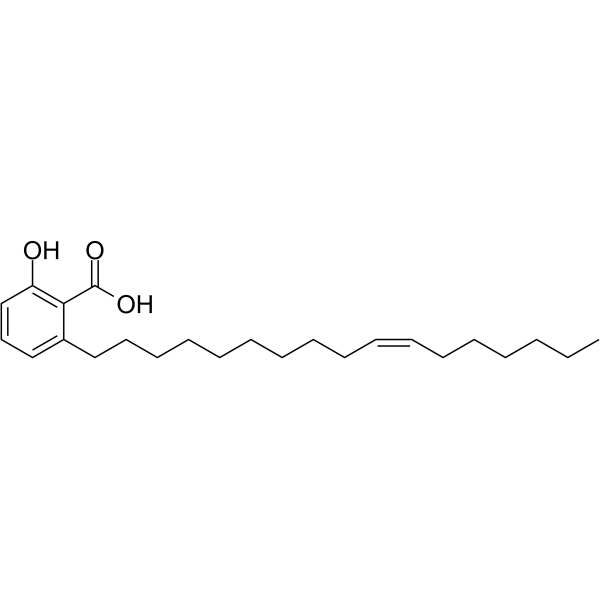
Ginkgolic acid C17:1 is a fatty acid synthase (FAS) inhibitor with an IC50 of 10.5 µM. Ginkgolic acid C17:1 shows anti-tumor activity by inhibiting the phosphorylation of STAT3 and inducing apoptosis. Ginkgolic acid C17:1 can block the interaction between S-RBD and ACE2, and has anti-SARS-CoV-2-S pseudovirus activity. Ginkgolic acid C17:1 inhibits the biofilm formation of enterohemorrhagic Escherichia coli and Staphylococcus aureus .
Ginkgolic acid C17:1 (Standard) is the analytical standard of Ginkgolic acid C17:1. This product is intended for research and analytical applications. Ginkgolic acid C17:1 is a fatty acid synthase (FAS) inhibitor with an IC50 of 10.5 µM. Ginkgolic acid C17:1 shows anti-tumor activity by inhibiting the phosphorylation of STAT3 and inducing apoptosis. Ginkgolic acid C17:1 can block the interaction between S-RBD and ACE2, and has anti-SARS-CoV-2-S pseudovirus activity. Ginkgolic acid C17:1 inhibits the biofilm formation of enterohemorrhagic Escherichia coli and Staphylococcus aureus .
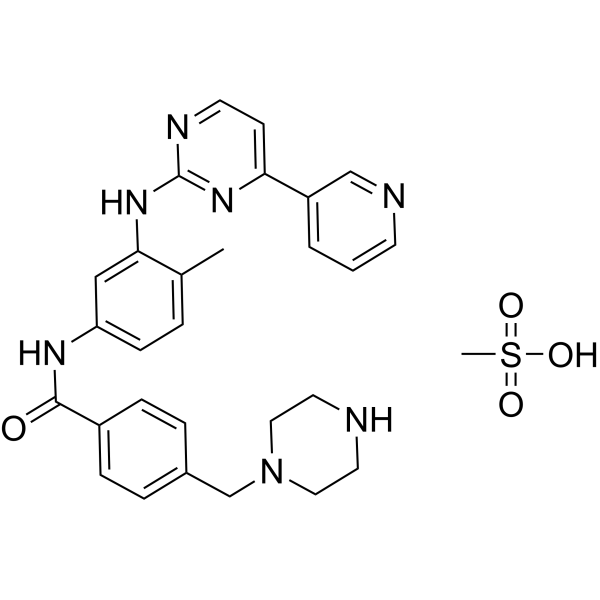
N-Desmethyl imatinib mesylate (Norimatinib mesylate) is an active metabolite of Imatinib (HY-15463), a selective c‑Abl inhibitor, and a substrate of P‑glycoprotein. N-Desmethyl imatinib mesylate binds to the c-Abl catalytic domain to prevent substrate phosphorylation, inhibits c-Abl-mediated α-synuclein activation and downstream inflammatory signaling pathways. N-Desmethyl imatinib mesylate induces apoptosis in K562 human leukemia cells. N-Desmethyl imatinib mesylate exhibits significantly elevated plasma levels in gastrointestinal stromal tumor (GIST) settings following mild SARS CoV 2 infection. N-Desmethyl imatinib mesylate can be used for the research of Parkinson’s disease, gastrointestinal stromal tumor, and chronic myeloid leukemia .
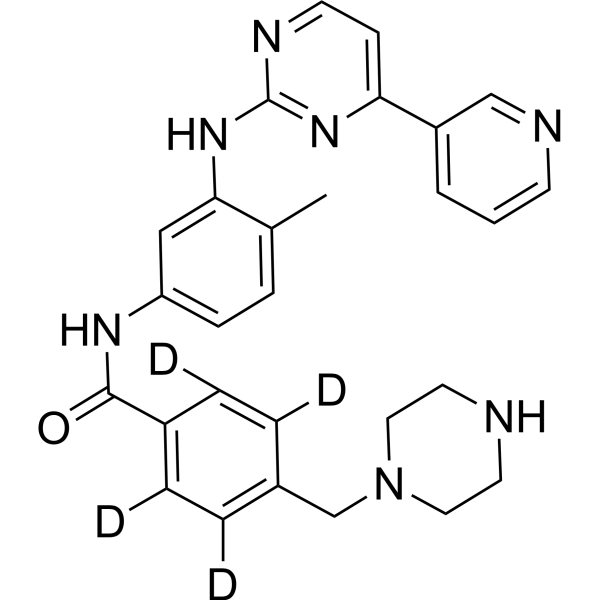
N-Desmethyl imatinib-d4 is the deuterium-labeled N-Desmethyl imatinib (HY-G0017). N‑Desmethyl imatinib (Norimatinib) is an active metabolite of Imatinib (HY-15463), a selective c‑Abl inhibitor, and a substrate of P‑glycoprotein. N-Desmethyl imatinib binds to the c-Abl catalytic domain to prevent substrate phosphorylation, inhibits c-Abl-mediated α-synuclein activation and downstream inflammatory signaling pathways. N-Desmethyl imatinib induces apoptosis in K562 human leukemia cells. N-Desmethyl imatinib exhibits significantly elevated plasma levels in gastrointestinal stromal tumor (GIST) settings following mild SARS CoV 2 infection. N-Desmethyl imatinib can be used for the research of Parkinson’s disease, gastrointestinal stromal tumor, and chronic myeloid leukemia .
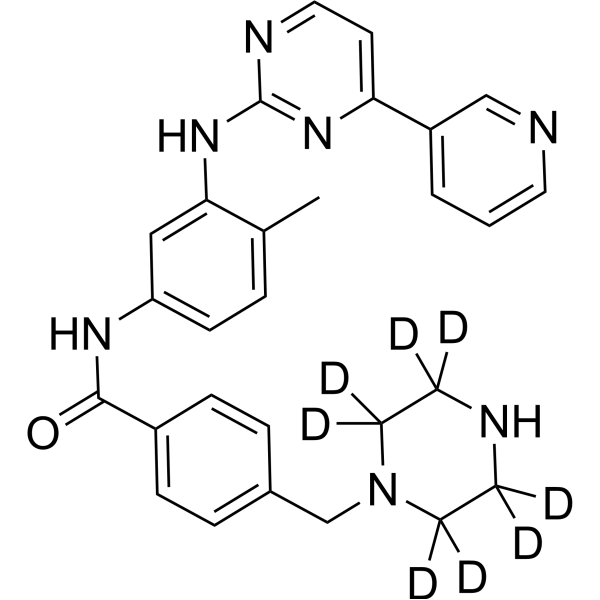
N-Desmethyl imatinib-d8 is a deuterium labeled Imatinib metabolite N-Desmethyl Imatinib (HY-G0017). N‑Desmethyl imatinib (Norimatinib) is an active metabolite of Imatinib (HY-15463), a selective c‑Abl inhibitor, and a substrate of P‑glycoprotein. N-Desmethyl imatinib binds to the c-Abl catalytic domain to prevent substrate phosphorylation, inhibits c-Abl-mediated α-synuclein activation and downstream inflammatory signaling pathways. N-Desmethyl imatinib induces apoptosis in K562 human leukemia cells. N-Desmethyl imatinib exhibits significantly elevated plasma levels in gastrointestinal stromal tumor (GIST) settings following mild SARS CoV 2 infection. N-Desmethyl imatinib can be used for the research of Parkinson’s disease, gastrointestinal stromal tumor, and chronic myeloid leukemia .
N‑Desmethyl imatinib (Standard) is the analytical standard of N‑Desmethyl imatinib (Norimatinib) (HY-G0017R). This product is intended for research and analytical applications. N‑Desmethyl imatinib (Norimatinib) is an active metabolite of Imatinib (HY-15463), a selective c‑Abl inhibitor, and a substrate of P‑glycoprotein. N-Desmethyl imatinib binds to the c-Abl catalytic domain to prevent substrate phosphorylation, inhibits c-Abl-mediated α-synuclein activation and downstream inflammatory signaling pathways. N-Desmethyl imatinib induces apoptosis in K562 human leukemia cells. N-Desmethyl imatinib exhibits significantly elevated plasma levels in gastrointestinal stromal tumor (GIST) settings following mild SARS CoV 2 infection. N-Desmethyl imatinib can be used for the research of Parkinson’s disease, gastrointestinal stromal tumor, and chronic myeloid leukemia .
Direct Violet 1, an azo dye, is a textile dye. Direct Violet 1 is also the protein-protein interaction (PPI) between the SARS-CoV-2 spike protein and ACE2 inhibitor with IC50s of 1.47-2.63 μM .
Imidazole (Glyoxaline; 1,3-Diaza-2,4-cyclopentadiene) is a heterocyclic aromatic compound. Imidazole bearing molecules have been used as corrosion, acetylcholinesterase (AChEI) and xanthine oxidase (XO) inhibitors, performing biological activities such as antifungal, antituberculosis, anti-inflammatory, antioxidant, and analgesic, amongst many others. Imidazole inhibits the enzymatic conversion of the endoperoxides (PGG2 and PGH2) to thromboxane A2 by platelet microsomes. Imidazole derivatives exhibits inhibition on SARS-CoV-2 3CL Pro enzyme, which is promising for research in the field of Alzheimer’s disease, gout, COVID-19 and thrombo-embolic disease .
Imidazole (Standard) is the analytical standard of Imidazole. This product is intended for research and analytical applications. Imidazole (Glyoxaline; 1,3-Diaza-2,4-cyclopentadiene) is a heterocyclic aromatic compound. Imidazole bearing molecules have been used as corrosion, acetylcholinesterase (AChEI) and xanthine oxidase (XO) inhibitors, performing biological activities such as antifungal, antituberculosis, anti-inflammatory, antioxidant, and analgesic, amongst many others. Imidazole inhibits the enzymatic conversion of the endoperoxides (PGG2 and PGH2) to thromboxane A2 by platelet microsomes. Imidazole derivatives exhibits inhibition on SARS-CoV-2 3CLPro enzyme, which is promising for research in the field of Alzheimer’s disease, gout, COVID-19 and thrombo-embolic disease .
SARS-CoV-2-IN-34 (S-20-1) is a blood brain barrier penetrable pan-coronavirus (CoV) fusion inhibitor with broad-spectrum inhibitory activity. SARS-CoV-2-IN-34 effectively inhibits infection by pseudotyped and authentic SARS-CoV-2, and pseudotyped variants of concern (VOCs). SARS-CoV-2-IN-34 shows high affinity to RBD in S1 and HR1 domain in S2 of SARS-CoV-2S protein. SARS-CoV-2-IN-34 can be used for the research of infection .
Spike Glycoprotein (1147-1162) is a linear and broadly neutralizing peptide in the S2 protein of SARS-CoV-2. Spike Glycoprotein (1147-1162) is conserved across SARS-CoV, BatCoV RaTG13, SARS-CoV-2, and SARS-CoV-2 variants. Spike Glycoprotein (1147-1162)-targeting mAbs can neutralize both SARS-CoV-2 and SARS-CoV by preventing fusion between the virus and cell membrane. Spike Glycoprotein (1147-1162) can be used for universal vaccines against SARS-CoV-2 mutants research .
S1b3inL1 is a SARS-CoV-2spike protein macrocyclic peptide inhibitor. S1b3inL1 can bind the conserved site of spike protein with high affinity and inhibit the infection of various SARS-CoV-2 variant strains. S1b3inL1 has antiviral activity .
N-0920 is a potent TMPRSS2 inhibitor with an IC50 of 0.35 nM. N-0920 effectively inhibits SARS-CoV-2 variants EG.5.1 and JN.1 entry in Calu-3 cells, with picomolar EC50s values of 300 pM and 90 pM, respectively .
P315V3 is an pan inhibitor for coronavirus, that inhibits SARS-CoV-2 prototypePT, Delta, BA.1 and BA.4 strain with IC50s of 10.9, 8.9, 8.6, and 2.7 nM. P315V3 exhibits cytotoxicity in Vero cell with CC50 of 4.3 μM. P315V3 exhibits anti-infectious efficacy in mouse models .
Sotrovimab (VIR 7831) is a human IgG1κ pan-sarbecovirus monoclonal antibody (mAb), neutralizes SARS-CoV-2, SARS-CoV-1, and multiple other sarbecoviruses. Sotrovimab is developed based on S309, exhibits a long half-life and great bioavailability in the respiratory mucosa. Sotrovimab could result in immune-mediated viral clearance and prevent progression of Covid-19 early in the course of disease .
Tixagevimab (AZD8895) is a human monoclonal antibody that targets the SARS-CoV-2 receptor binding domain (RBD). It exhibits neutralizing activity against SARS-CoV-2 by binding to the RBD and the S-glycoprotein ectodomain and blocking S-glycoprotein-mediated binding to the receptor .
Bamlanivimab (Anti-Human SARS-CoV-2) is the first COVID-19 monoclonal antibody (mAb) to be granted Emergency Use Authorization (EUA) in November 2020 by the U.S. Food and agent Administration (FDA). However, Bamlanivimab is withdrawn in April 2021 following the rise of SARS-CoV-2 virus variants resistant to Bamlanivimab .
Beludavimab (BMS 4182137; VIR 7832) is a monoclonal antibody targeting the spike glycoprotein of SARS-CoV-2. Beludavimab binds to recombinant spike protein receptor-binding domain (S-RBD) with an EC50 value of 14.9 ng/mL and a Kd of 0.21 nM .
Anti-SARS-CoV-2S protein Antibody (NTD, SARS2-29) is a mouse-derived IgG1 κ type antibody inhibitor, targeting to SARS-CoV-2S protein. Anti-SARS-CoV-2S protein Antibody (NTD, SARS2-29) reacts with the N-terminal domain (NTD) in the spike (S) protein of SARS-CoV-2 (Severe Acute Respiratory Syndrome Coronavirus 2). Anti-SARS-CoV-2S protein Antibody (NTD, SARS2-29) can be used for the detections of flow cytometry and ELISA in SARS-CoV-2 infection .
Anti-SARS-CoV-2S protein Antibody (RBD epitope B, SARS2-34) is a mouse-derived IgG1 κ type antibody inhibitor, targeting to SARS-CoV-2S protein. Anti-SARS-CoV-2S protein Antibody (RBD epitope B, SARS2-34) reacts with the receptor binding domain (RBD) epitope B in the spike (S) protein of SARS-CoV-2 (Severe Acute Respiratory Syndrome Coronavirus 2). Anti-SARS-CoV-2S protein Antibody (RBD epitope B, SARS2-34) can block the binding of the SARS-CoV-2S protein to angiotensin-converting enzyme 2 (ACE2). Anti-SARS-CoV-2S protein Antibody (RBD epitope B, SARS2-34) can be used for the research of SARS-CoV-2 infection .
Anti-SARS-CoV-2S protein Antibody (RBD epitope A, SARS2-01) is a mouse-derived IgG1 κ type antibody inhibitor, targeting to SARS-CoV-2S protein. Anti-SARS-CoV-2S protein Antibody (RBD epitope A, SARS2-01) reacts with the receptor binding domain (RBD) epitope A in the spike (S) protein of SARS-CoV-2 (Severe Acute Respiratory Syndrome Coronavirus 2). Anti-SARS-CoV-2S protein Antibody (RBD epitope A, SARS2-01) can block the binding of the SARS-CoV-2S protein to angiotensin-converting enzyme 2 (ACE2). Anti-SARS-CoV-2S protein Antibody (RBD epitope A, SARS2-01) can be used for the research of SARS-CoV-2 infection .
Anti-SARS-CoV-2 Spike mAb (CR3022) is a a CHO cell derived human monoclonal IgG1 antibody. It binds to both S1 domain of SARS-CoV/SARS-CoV-2 Spike protein .
Ogalvibart (C-135-LS) is a human anti-SARS-CoV-2 monoclonal antibody (IgG1 type). Ogalvibart binds to the spike (S) glycoprotein receptor-binding domain (RBD) of SARS-CoV-2. Ogalvibart in combination with C144LS (1:1 ratio) shows good preventive activity and can effectively block the development of COVID19 in a rhesus monkey disease model .
Anti-SARS-CoV-2S protein (RBD) Antibody (SARS2-38) reacts with many variants of SARS-CoV-2 that binds a conserved epitope on the RBD (amino acids K444 and G446). Anti-SARS-CoV-2S protein (RBD) Antibody (SARS2-38) does not cross-react with the SARS-CoV-1 spike protein. Recommend Isotype Controls: Mouse IgG1 kappa, Isotype Control (HY-P99977) .
VIR-7229 is a human IgG1 monoclonal antibody (mAb) targeting Receptor-Binding Domain, RBD, Spike glycoprotein. VIR-7229 exerts antiviral activity by competing with ACE2 for binding and inducing S1 protein shedding. VIR-7229 can be used in SARS-CoV-2 infection research. Recommended isotype control: Human IgG1 kappa, Isotype Control (HY-P99001) .
Chebulagic acid is a COX-LOX dual inhibitor isolated from the fruits of Terminalia chebula Retz, on angiogenesis. Chebulagic acid is a M2 serine to asparagine 31 mutation (S31N) inhibitor and influenza antiviral. Chebulagic acid also against SARS-CoV-2 viral replication with an EC50 of 9.76 μM.
Ginkgolic acid C17:1 is a fatty acid synthase (FAS) inhibitor with an IC50 of 10.5 µM. Ginkgolic acid C17:1 shows anti-tumor activity by inhibiting the phosphorylation of STAT3 and inducing apoptosis. Ginkgolic acid C17:1 can block the interaction between S-RBD and ACE2, and has anti-SARS-CoV-2-S pseudovirus activity. Ginkgolic acid C17:1 inhibits the biofilm formation of enterohemorrhagic Escherichia coli and Staphylococcus aureus .
Licoisoflavone A is an orally active isoflavone. Licoisoflavone A inhibits proliferation, induces apoptosis, and causes G1/S phase arrest in colorectal cancer (CRC) cells. Licoisoflavone A inhibits the CDK2-CyclinE1 axis. Licoisoflavone A inhibits lipid peroxidation with an IC50 of 7.2 μM. Licoisoflavone A shows a dose-dependent inhibition effect on SARS-CoV-2 infection. Licoisoflavone A exhibits significant anti-tumor efficacy in mice bearing CT26 cell subcutaneous xenografts. Licoisoflavone A can be used for the study of colorectal cancer and SARS-CoV-2 infection .
Kobophenol A, an oligomeric stilbene, blocks the interaction between the ACE2 receptor and S1-RBD with an IC50 of 1.81 μM and inhibits SARS-CoV-2 viral infection in cells with an EC50 of 71.6 μM. Kobophenol A inhibits the activity of partially purified rat brain protein kinase C (PKC) with an IC50 of 52 µM .
Chebulagic acid (Standard) is the analytical standard of Chebulagic acid. This product is intended for research and analytical applications. Chebulagic acid is a COX-LOX dual inhibitor isolated from the fruits of Terminalia chebula Retz, on angiogenesis. Chebulagic acid is a M2 serine to asparagine 31 mutation (S31N) inhibitor and influenza antiviral. Chebulagic acid also against SARS-CoV-2 viral replication with an EC50 of 9.76 μM.
Ginkgolic acid C17:1 (Standard) is the analytical standard of Ginkgolic acid C17:1. This product is intended for research and analytical applications. Ginkgolic acid C17:1 is a fatty acid synthase (FAS) inhibitor with an IC50 of 10.5 µM. Ginkgolic acid C17:1 shows anti-tumor activity by inhibiting the phosphorylation of STAT3 and inducing apoptosis. Ginkgolic acid C17:1 can block the interaction between S-RBD and ACE2, and has anti-SARS-CoV-2-S pseudovirus activity. Ginkgolic acid C17:1 inhibits the biofilm formation of enterohemorrhagic Escherichia coli and Staphylococcus aureus .
The SARS-Cov-2 S glycoprotein is a SARS-Cov-2 S glycoprotein. The amino acid sequence 1261-1267a.a of the SARS-Cov-2 S glycoprotein is transmembrane. The SARS-Cov-2 S glycoprotein is a highly glycosylated trimer, each of which consists of 1260 amino acids (residues 14-1273), divided into four structural domains: the n-terminal domain (NTD), the c-terminal domain (CTD, also known as the receptor-binding domain, RBD), and two subdomains (SD1 and SD2). SARS-CoV-2 S1 Protein (N234Q, HEK293, His) is the recombinant Virus-derived SARS-CoV-2 S1 protein, expressed by HEK293 , with C-His labeled tag.
The SARS-Cov-2 S glycoprotein is a SARS-Cov-2 S glycoprotein. The amino acid sequence 1261-1267a.a of the SARS-Cov-2 S glycoprotein is transmembrane. The SARS-Cov-2 S glycoprotein is a highly glycosylated trimer, each of which consists of 1260 amino acids (residues 14-1273), divided into four structural domains: the n-terminal domain (NTD), the c-terminal domain (CTD, also known as the receptor-binding domain, RBD), and two subdomains (SD1 and SD2). SARS-CoV-2 S Protein RBD (Omicron, B.1.1.529, HEK293, His) is the recombinant Virus-derived SARS-CoV-2 S protein RBD, expressed by HEK293 , with C-His labeled tag.
The SARS-Cov-2 S glycoprotein is a SARS-Cov-2 S glycoprotein. The amino acid sequence 1261-1267a.a of the SARS-Cov-2 S glycoprotein is transmembrane. The SARS-Cov-2 S glycoprotein is a highly glycosylated trimer, each of which consists of 1260 amino acids (residues 14-1273), divided into four structural domains: the n-terminal domain (NTD), the c-terminal domain (CTD, also known as the receptor-binding domain, RBD), and two subdomains (SD1 and SD2). SARS-CoV-2 S Protein (Omicron, B.1.1.529, HEK293, His) is the recombinant Virus-derived SARS-CoV-2 S protein, expressed by HEK293 , with C-His labeled tag. SARS-CoV-2 S Protein (Omicron, B.1.1.529, His), has molecular weight of ~136.67 kDa.
The SARS-Cov-2 S glycoprotein is a SARS-Cov-2 S glycoprotein. The amino acid sequence 1261-1267a.a of the SARS-Cov-2 S glycoprotein is transmembrane. The SARS-Cov-2 S glycoprotein is a highly glycosylated trimer, each of which consists of 1260 amino acids (residues 14-1273), divided into four structural domains: the n-terminal domain (NTD), the c-terminal domain (CTD, also known as the receptor-binding domain, RBD), and two subdomains (SD1 and SD2). SARS-CoV-2 S Protein RBD (Biotinylated, Omicron, B.1.1.529, HEK293, His-Avi) is the recombinant Virus-derived SARS-CoV-2 S protein RBD, expressed by HEK293 , with C-Avi, C-His labeled tag.
The SARS-Cov-2 S glycoprotein is a SARS-Cov-2 S glycoprotein. The amino acid sequence 1261-1267a.a of the SARS-Cov-2 S glycoprotein is transmembrane. The SARS-Cov-2 S glycoprotein is a highly glycosylated trimer, each of which consists of 1260 amino acids (residues 14-1273), divided into four structural domains: the n-terminal domain (NTD), the c-terminal domain (CTD, also known as the receptor-binding domain, RBD), and two subdomains (SD1 and SD2). SARS-CoV-2 S2 Protein (HEK293, His) is the recombinant Virus-derived SARS-CoV-2 S2 protein, expressed by HEK293 , with C-His labeled tag.
The SARS-Cov-2 S glycoprotein is a SARS-Cov-2 S glycoprotein. The amino acid sequence 1261-1267a.a of the SARS-Cov-2 S glycoprotein is transmembrane. The SARS-Cov-2 S glycoprotein is a highly glycosylated trimer, each of which consists of 1260 amino acids (residues 14-1273), divided into four structural domains: the n-terminal domain (NTD), the c-terminal domain (CTD, also known as the receptor-binding domain, RBD), and two subdomains (SD1 and SD2). SARS-CoV-2 S1 Protein (Omicron, B.1.1.529, HEK293, His, solution) is the recombinant Virus-derived SARS-CoV-2 S1 protein, expressed by HEK293 , with C-His labeled tag.
The SARS-Cov-2 S glycoprotein is a SARS-Cov-2 S glycoprotein. The amino acid sequence 1261-1267a.a of the SARS-Cov-2 S glycoprotein is transmembrane. The SARS-Cov-2 S glycoprotein is a highly glycosylated trimer, each of which consists of 1260 amino acids (residues 14-1273), divided into four structural domains: the n-terminal domain (NTD), the c-terminal domain (CTD, also known as the receptor-binding domain, RBD), and two subdomains (SD1 and SD2). SARS-CoV-2 S1 Protein (Omicron, B.1.1.529, HEK293, C-His) is the recombinant Virus-derived SARS-CoV-2 S1 protein, expressed by HEK293 , with C-10*His labeled tag.
The SARS-Cov-2 S glycoprotein is a SARS-Cov-2 S glycoprotein. The amino acid sequence 1261-1267a.a of the SARS-Cov-2 S glycoprotein is transmembrane. The SARS-Cov-2 S glycoprotein is a highly glycosylated trimer, each of which consists of 1260 amino acids (residues 14-1273), divided into four structural domains: the n-terminal domain (NTD), the c-terminal domain (CTD, also known as the receptor-binding domain, RBD), and two subdomains (SD1 and SD2). SARS-CoV-2 S Protein (Biotinylated, sf9, Avi-His) is the recombinant Virus-derived SARS-CoV-2 S protein, expressed by Sf9 insect cells , with C-Avi, C-His labeled tag.
The SARS-Cov-2 S glycoprotein is a SARS-Cov-2 S glycoprotein. The amino acid sequence 1261-1267a.a of the SARS-Cov-2 S glycoprotein is transmembrane. The SARS-Cov-2 S glycoprotein is a highly glycosylated trimer, each of which consists of 1260 amino acids (residues 14-1273), divided into four structural domains: the n-terminal domain (NTD), the c-terminal domain (CTD, also known as the receptor-binding domain, RBD), and two subdomains (SD1 and SD2). SARS-CoV-2 S1 Protein NTD (Biotinylated, HEK293, Fc-Avi) is the recombinant Virus-derived SARS-CoV-2 S1 protein NTD, expressed by HEK293 , with C-Avi, C-hFc labeled tag.
The SARS-Cov-2 S glycoprotein is a SARS-Cov-2 S glycoprotein. The amino acid sequence 1261-1267a.a of the SARS-Cov-2 S glycoprotein is transmembrane. The SARS-Cov-2 S glycoprotein is a highly glycosylated trimer, each of which consists of 1260 amino acids (residues 14-1273), divided into four structural domains: the n-terminal domain (NTD), the c-terminal domain (CTD, also known as the receptor-binding domain, RBD), and two subdomains (SD1 and SD2). SARS-CoV-2 S Protein (Biotinylated, sf9, His) is the recombinant Virus-derived SARS-CoV-2 S protein, expressed by Sf9 insect cells , with C-His labeled tag.
The SARS-Cov-2 S glycoprotein is a SARS-Cov-2 S glycoprotein. The amino acid sequence 1261-1267a.a of the SARS-Cov-2 S glycoprotein is transmembrane. The SARS-Cov-2 S glycoprotein is a highly glycosylated trimer, each of which consists of 1260 amino acids (residues 14-1273), divided into four structural domains: the n-terminal domain (NTD), the c-terminal domain (CTD, also known as the receptor-binding domain, RBD), and two subdomains (SD1 and SD2). SARS-CoV-2 S2 Protein (HEK293, Fc) is the recombinant Virus-derived SARS-CoV-2 S2 protein, expressed by HEK293 , with C-hFc labeled tag.
The SARS-Cov-2 S glycoprotein is a SARS-Cov-2 S glycoprotein. The amino acid sequence 1261-1267a.a of the SARS-Cov-2 S glycoprotein is transmembrane. The SARS-Cov-2 S glycoprotein is a highly glycosylated trimer, each of which consists of 1260 amino acids (residues 14-1273), divided into four structural domains: the n-terminal domain (NTD), the c-terminal domain (CTD, also known as the receptor-binding domain, RBD), and two subdomains (SD1 and SD2). SARS-CoV-2 S Protein (Mutated, HEK293, His) is the recombinant Virus-derived SARS-CoV-2 S protein, expressed by HEK293 , with C-His labeled tag.
The SARS-Cov-2 S glycoprotein is a SARS-Cov-2 S glycoprotein. The amino acid sequence 1261-1267a.a of the SARS-Cov-2 S glycoprotein is transmembrane. The SARS-Cov-2 S glycoprotein is a highly glycosylated trimer, each of which consists of 1260 amino acids (residues 14-1273), divided into four structural domains: the n-terminal domain (NTD), the c-terminal domain (CTD, also known as the receptor-binding domain, RBD), and two subdomains (SD1 and SD2). SARS-CoV-2 S Protein (sf9, His) is the recombinant Virus-derived SARS-CoV-2 S protein, expressed by Sf9 insect cells , with C-His labeled tag.
The SARS-Cov-2 S glycoprotein is a SARS-Cov-2 S glycoprotein. The amino acid sequence 1261-1267a.a of the SARS-Cov-2 S glycoprotein is transmembrane. The SARS-Cov-2 S glycoprotein is a highly glycosylated trimer, each of which consists of 1260 amino acids (residues 14-1273), divided into four structural domains: the n-terminal domain (NTD), the c-terminal domain (CTD, also known as the receptor-binding domain, RBD), and two subdomains (SD1 and SD2). SARS-CoV-2 S Protein RBD (G485S, HEK293, His) is the recombinant Virus-derived SARS-CoV-2 S protein RBD, expressed by HEK293 , with C-His labeled tag.
The SARS-Cov-2 S glycoprotein is a SARS-Cov-2 S glycoprotein. The amino acid sequence 1261-1267a.a of the SARS-Cov-2 S glycoprotein is transmembrane. The SARS-Cov-2 S glycoprotein is a highly glycosylated trimer, each of which consists of 1260 amino acids (residues 14-1273), divided into four structural domains: the n-terminal domain (NTD), the c-terminal domain (CTD, also known as the receptor-binding domain, RBD), and two subdomains (SD1 and SD2). SARS-CoV-2 S2 Protein (sf9, His) is the recombinant Virus-derived SARS-CoV-2 S2 protein, expressed by Sf9 insect cells , with C-His labeled tag.
The SARS-Cov-2 S glycoprotein is a SARS-Cov-2 S glycoprotein. The amino acid sequence 1261-1267a.a of the SARS-Cov-2 S glycoprotein is transmembrane. The SARS-Cov-2 S glycoprotein is a highly glycosylated trimer, each of which consists of 1260 amino acids (residues 14-1273), divided into four structural domains: the n-terminal domain (NTD), the c-terminal domain (CTD, also known as the receptor-binding domain, RBD), and two subdomains (SD1 and SD2). SARS-CoV-2 S Protein (D614G, sf9, His) is the recombinant Virus-derived SARS-CoV-2 S protein, expressed by Sf9 insect cells , with C-His labeled tag.
The SARS-Cov-2 S glycoprotein is a SARS-Cov-2 S glycoprotein. The amino acid sequence 1261-1267a.a of the SARS-Cov-2 S glycoprotein is transmembrane. The SARS-Cov-2 S glycoprotein is a highly glycosylated trimer, each of which consists of 1260 amino acids (residues 14-1273), divided into four structural domains: the n-terminal domain (NTD), the c-terminal domain (CTD, also known as the receptor-binding domain, RBD), and two subdomains (SD1 and SD2). SARS-CoV-2 S1 Protein NTD (Biotinylated, HEK293, His-Avi) is the recombinant Virus-derived SARS-CoV-2 S1 protein NTD, expressed by HEK293 , with C-Avi, C-His labeled tag.
The SARS-CoV-2 S glycoprotein is critical in infection, binding to the ACE2 receptor and allowing viral particles to attach to the host cell membrane. Cleavage of S2/S2′ triggers cell membrane fusion or internalization via endocytosis. SARS-CoV-2 S glycoprotein (P.pastoris, His, SUMO) is the recombinant Virus-derived SARS-CoV-2 S glycoprotein, expressed by P. pastoris , with N-6*His, N-SUMO labeled tag.
The SARS-Cov-2 S glycoprotein is a SARS-Cov-2 S glycoprotein. The amino acid sequence 1261-1267a.a of the SARS-Cov-2 S glycoprotein is transmembrane. The SARS-Cov-2 S glycoprotein is a highly glycosylated trimer, each of which consists of 1260 amino acids (residues 14-1273), divided into four structural domains: the n-terminal domain (NTD), the c-terminal domain (CTD, also known as the receptor-binding domain, RBD), and two subdomains (SD1 and SD2). SARS-CoV-2 S Protein RBD (N481D, HEK293, His) is the recombinant Virus-derived SARS-CoV-2 S protein RBD, expressed by HEK293 , with C-His labeled tag.
The SARS-Cov-2 S glycoprotein is a SARS-Cov-2 S glycoprotein. The amino acid sequence 1261-1267a.a of the SARS-Cov-2 S glycoprotein is transmembrane. The SARS-Cov-2 S glycoprotein is a highly glycosylated trimer, each of which consists of 1260 amino acids (residues 14-1273), divided into four structural domains: the n-terminal domain (NTD), the c-terminal domain (CTD, also known as the receptor-binding domain, RBD), and two subdomains (SD1 and SD2). SARS-CoV-2 S Protein RBD (P499R, HEK293, His) is the recombinant Virus-derived SARS-CoV-2 S protein RBD, expressed by HEK293 , with C-His labeled tag.
The SARS-Cov-2 S glycoprotein is a SARS-Cov-2 S glycoprotein. The amino acid sequence 1261-1267a.a of the SARS-Cov-2 S glycoprotein is transmembrane. The SARS-Cov-2 S glycoprotein is a highly glycosylated trimer, each of which consists of 1260 amino acids (residues 14-1273), divided into four structural domains: the n-terminal domain (NTD), the c-terminal domain (CTD, also known as the receptor-binding domain, RBD), and two subdomains (SD1 and SD2). SARS-CoV-2 S2 Protein (sf9, Fc) is the recombinant Virus-derived SARS-CoV-2 S2 protein, expressed by Sf9 insect cells , with C-mFc labeled tag.
The SARS-CoV-2 S glycoprotein is critical in infection, binding to the ACE2 receptor and allowing viral particles to attach to the host cell membrane. Cleavage of S2/S2′ triggers cell membrane fusion or internalization via endocytosis. SARS-CoV-2 S glycoprotein (HEK293, His, Flag) is the recombinant Virus-derived SARS-CoV-2 S glycoprotein, expressed by HEK293 , with N-10*His, C-Flag labeled tag.
The SARS-CoV-2 S glycoprotein is critical in infection, binding to the ACE2 receptor and allowing viral particles to attach to the host cell membrane. Cleavage of S2/S2′ triggers cell membrane fusion or internalization via endocytosis. SARS-CoV-2 S glycoprotein (HEK293, His-Myc) is the recombinant Virus-derived SARS-CoV-2 S glycoprotein, expressed by HEK293 , with N-10*His, C-Myc labeled tag.
SARS-CoV-2 S glycoprotein (G476S, HEK 293, His) is a SARS-CoV-2 S glycoprotein G476S protein with a His-flag. Variations at G476S alters the ACE2 binding affinity. G476S variants display reduced affinity to ACE2 in comparison to the Wuhan SARS-CoV2 spike protein.
The SARS-CoV-2 S glycoprotein is critical in infection, binding to the ACE2 receptor and allowing viral particles to attach to the host cell membrane. Cleavage of S2/S2′ triggers cell membrane fusion or internalization via endocytosis. SARS-CoV-2 S glycoprotein (HEK293, His-mFc) is the recombinant Virus-derived SARS-CoV-2 S glycoprotein, expressed by HEK293 , with C-mFc, C-6*His labeled tag.
SARS-CoV-2 S1 Protein, in its Spike protein S1 form, initiates infection by attaching the virion to the cell membrane through host receptor interaction. Simultaneously, Spike protein S2' acts as a viral fusion peptide, revealing itself after S2 cleavage during virus endocytosis. SARS-COV-2 S Trimer Protein (HEK293, Fc) is the recombinant Virus-derived SARS-COV-2 S Trimer protein, expressed by HEK293 , with C-hFc labeled tag.
The SARS-Cov-2 S glycoprotein is a SARS-Cov-2 S glycoprotein. The amino acid sequence 1261-1267a.a of the SARS-Cov-2 S glycoprotein is transmembrane. The SARS-Cov-2 S glycoprotein is a highly glycosylated trimer, each of which consists of 1260 amino acids (residues 14-1273), divided into four structural domains: the n-terminal domain (NTD), the c-terminal domain (CTD, also known as the receptor-binding domain, RBD), and two subdomains (SD1 and SD2). SARS-CoV-2 S2 Protein (Biotinylated, sf9, His) is the recombinant Virus-derived SARS-CoV-2 S2 protein, expressed by Sf9 insect cells , with C-His labeled tag.
The SARS-Cov-2 S glycoprotein is a SARS-Cov-2 S glycoprotein. The amino acid sequence 1261-1267a.a of the SARS-Cov-2 S glycoprotein is transmembrane. The SARS-Cov-2 S glycoprotein is a highly glycosylated trimer, each of which consists of 1260 amino acids (residues 14-1273), divided into four structural domains: the n-terminal domain (NTD), the c-terminal domain (CTD, also known as the receptor-binding domain, RBD), and two subdomains (SD1 and SD2). SARS-CoV-2 S1 Protein (HEK293, His-Avi) is the recombinant Virus-derived SARS-CoV-2 S1 protein, expressed by HEK293 , with C-Avi, C-His labeled tag.
The SARS-Cov-2 S glycoprotein is a SARS-Cov-2 S glycoprotein. The amino acid sequence 1261-1267a.a of the SARS-Cov-2 S glycoprotein is transmembrane. The SARS-Cov-2 S glycoprotein is a highly glycosylated trimer, each of which consists of 1260 amino acids (residues 14-1273), divided into four structural domains: the n-terminal domain (NTD), the c-terminal domain (CTD, also known as the receptor-binding domain, RBD), and two subdomains (SD1 and SD2). SARS-CoV-2 S1 Protein (Biotinylated, HEK293, His) is the recombinant Virus-derived SARS-CoV-2 S1 protein, expressed by HEK293 , with C-His labeled tag.
The SARS-Cov-2 S glycoprotein is a SARS-Cov-2 S glycoprotein. The amino acid sequence 1261-1267a.a of the SARS-Cov-2 S glycoprotein is transmembrane. The SARS-Cov-2 S glycoprotein is a highly glycosylated trimer, each of which consists of 1260 amino acids (residues 14-1273), divided into four structural domains: the n-terminal domain (NTD), the c-terminal domain (CTD, also known as the receptor-binding domain, RBD), and two subdomains (SD1 and SD2). SARS-CoV-2 S Protein (R683A, R685A, K986P, V987P, HEK293, His) is the recombinant Virus-derived SARS-CoV-2 S protein, expressed by HEK293 , with C-His labeled tag.
SARS-CoV-2 S glycoprotein (D614G, HEK 293, His) is a SARS-CoV-2 S glycoprotein D614G protein with a His-flag. SARS-CoV-2 S glycoprotein (D614G) is a SARS-CoV-2 variant carrying the S protein amino acid (aa) change D614G, this variant has become the most prevalent form and has been associated with greater infectivity.
SARS-CoV-2 S glycoprotein (V367F, HEK 293, His) is a SARS-CoV-2 S glycoprotein V367F protein with a His-flag. SARS-CoV-2 S glycoprotein (V367F) is a SARS-CoV-2 variant carrying the S protein amino acid (aa) change V367F. The mutant type V367F continuously circulating worldwide displays higher binding affinity to human ACE2 .
SARS-CoV-2 S glycoprotein (V483A, HEK 293, His) is a recombinant protein expressed in HEK 293 cells with a His tag. S glycoprotein plays an important role in the evolution and transmission of SARS-CoV-2.
SARS-CoV-2 S1 Protein, in its Spike protein S1 form, initiates infection by attaching the virion to the cell membrane through host receptor interaction. Simultaneously, Spike protein S2' acts as a viral fusion peptide, revealing itself after S2 cleavage during virus endocytosis. SARS-COV-2 S Trimer Protein (HEK293, His-Avi) is the recombinant Virus-derived SARS-COV-2 S Trimer protein, expressed by HEK293 , with C-Avi, C-His labeled tag.
SARS-CoV-2 S1 Protein, in its Spike protein S1 form, initiates infection by attaching the virion to the cell membrane through host receptor interaction. Simultaneously, Spike protein S2' acts as a viral fusion peptide, revealing itself after S2 cleavage during virus endocytosis. SARS-COV-2 S Protein RBD (HEK293, His-Avi) is the recombinant Virus-derived SARS-COV-2 S protein RBD, expressed by HEK293 , with C-Avi, C-His labeled tag.
SARS-CoV-2 S1 Protein, in its Spike protein S1 form, initiates infection by attaching the virion to the cell membrane through host receptor interaction. Simultaneously, Spike protein S2' acts as a viral fusion peptide, revealing itself after S2 cleavage during virus endocytosis. SARS-CoV-2 S Trimer Protein (Biotinylated, HEK293, His-Avi) is the recombinant Virus-derived SARS-CoV-2 S Trimer protein, expressed by HEK293 , with C-Avi, C-His labeled tag.
The SARS-Cov-2 S glycoprotein is a SARS-Cov-2 S glycoprotein. The amino acid sequence 1261-1267a.a of the SARS-Cov-2 S glycoprotein is transmembrane. The SARS-Cov-2 S glycoprotein is a highly glycosylated trimer, each of which consists of 1260 amino acids (residues 14-1273), divided into four structural domains: the n-terminal domain (NTD), the c-terminal domain (CTD, also known as the receptor-binding domain, RBD), and two subdomains (SD1 and SD2). SARS-CoV-2 S1 Protein (D614G, HEK293, His) is the recombinant Virus-derived SARS-CoV-2 S1 protein, expressed by HEK293 , with C-His labeled tag.
The SARS-Cov-2 S glycoprotein is a SARS-Cov-2 S glycoprotein. The amino acid sequence 1261-1267a.a of the SARS-Cov-2 S glycoprotein is transmembrane. The SARS-Cov-2 S glycoprotein is a highly glycosylated trimer, each of which consists of 1260 amino acids (residues 14-1273), divided into four structural domains: the n-terminal domain (NTD), the c-terminal domain (CTD, also known as the receptor-binding domain, RBD), and two subdomains (SD1 and SD2). SARS-CoV-2 S1 Protein (D614G, HEK293, Fc) is the recombinant Virus-derived SARS-CoV-2 S1 protein, expressed by HEK293 , with C-hFc labeled tag.
SARS-CoV-2 S1 Protein, in its Spike protein S1 form, initiates infection by attaching the virion to the cell membrane through host receptor interaction. Simultaneously, Spike protein S2' acts as a viral fusion peptide, revealing itself after S2 cleavage during virus endocytosis. SARS-CoV-2 S Protein RBD (Biotinylated, HEK293, Fc-Avi) is the recombinant Virus-derived SARS-CoV-2 S protein RBD, expressed by HEK293 , with C-Avi, C-hFc labeled tag.
The SARS-Cov-2 S glycoprotein is a SARS-Cov-2 S glycoprotein. The amino acid sequence 1261-1267a.a of the SARS-Cov-2 S glycoprotein is transmembrane. The SARS-Cov-2 S glycoprotein is a highly glycosylated trimer, each of which consists of 1260 amino acids (residues 14-1273), divided into four structural domains: the n-terminal domain (NTD), the c-terminal domain (CTD, also known as the receptor-binding domain, RBD), and two subdomains (SD1 and SD2). SARS-CoV-2 S1 Protein (305a.a, HEK293, Fc-Avi) is the recombinant Virus-derived SARS-CoV-2 S1 protein, expressed by HEK293 , with C-Avi, C-hFc labeled tag.
The SARS-CoV-2 S glycoprotein is critical in infection, binding to the ACE2 receptor and allowing viral particles to attach to the host cell membrane. Cleavage of S2/S2′ triggers cell membrane fusion or internalization via endocytosis. SARS-COV-2 S trimer Protein (BA.2, HEK293, His) is the recombinant virus-derived SARS-COV-2 S trimer protein, expressed by HEK293, with C-His labeled tag, mutations, and furin cleavage site mutants.
SARS-CoV-2 S1 Protein, in its Spike protein S1 form, initiates infection by attaching the virion to the cell membrane through host receptor interaction. Simultaneously, Spike protein S2' acts as a viral fusion peptide, revealing itself after S2 cleavage during virus endocytosis. SARS-COV-2 S Trimer Protein (D614G, HEK293, His-Avi) is the recombinant Virus-derived SARS-COV-2 S Trimer protein, expressed by HEK293 , with C-Avi, C-His labeled tag.
The SARS-Cov-2 S glycoprotein is a SARS-Cov-2 S glycoprotein. The amino acid sequence 1261-1267a.a of the SARS-Cov-2 S glycoprotein is transmembrane. The SARS-Cov-2 S glycoprotein is a highly glycosylated trimer, each of which consists of 1260 amino acids (residues 14-1273), divided into four structural domains: the n-terminal domain (NTD), the c-terminal domain (CTD, also known as the receptor-binding domain, RBD), and two subdomains (SD1 and SD2). SARS-CoV-2 S1 Protein (Delta, B.1.617.2, His) is the recombinant virus-derived SARS-CoV-2 S1, expressed by HEK293, with C-10*His labeled tag.
The SARS-Cov-2 S glycoprotein is a SARS-Cov-2 S glycoprotein. The amino acid sequence 1261-1267a.a of the SARS-Cov-2 S glycoprotein is transmembrane. The SARS-Cov-2 S glycoprotein is a highly glycosylated trimer, each of which consists of 1260 amino acids (residues 14-1273), divided into four structural domains: the n-terminal domain (NTD), the c-terminal domain (CTD, also known as the receptor-binding domain, RBD), and two subdomains (SD1 and SD2). SARS-COV-2 S trimer Protein (XBB.1.16, HEK293, His) is the recombinant virus-derived SARS-COV-2 S trimer, expressed by HEK293, with C-His labeled tag.
SARS-CoV-2 S1 Protein, in its Spike protein S1 form, initiates infection by attaching the virion to the cell membrane through host receptor interaction. Simultaneously, Spike protein S2' acts as a viral fusion peptide, revealing itself after S2 cleavage during virus endocytosis. SARS-CoV-2 S1 Protein (Biotinylated, HEK293, Fc-Avi) is the recombinant Virus-derived SARS-CoV-2 S1 protein, expressed by HEK293 , with C-Avi, C-hFc labeled tag.
The SARS-Cov-2 S glycoprotein is a SARS-Cov-2 S glycoprotein. The amino acid sequence 1261-1267a.a of the SARS-Cov-2 S glycoprotein is transmembrane. The SARS-Cov-2 S glycoprotein is a highly glycosylated trimer, each of which consists of 1260 amino acids (residues 14-1273), divided into four structural domains: the n-terminal domain (NTD), the c-terminal domain (CTD, also known as the receptor-binding domain, RBD), and two subdomains (SD1 and SD2). SARS-CoV-2 S Protein RBD (HEK293) is the recombinant Virus-derived SARS-CoV-2 S protein RBD, expressed by HEK293 , with tag free.
The SARS-Cov-2 S glycoprotein is a SARS-Cov-2 S glycoprotein. The amino acid sequence 1261-1267a.a of the SARS-Cov-2 S glycoprotein is transmembrane. The SARS-Cov-2 S glycoprotein is a highly glycosylated trimer, each of which consists of 1260 amino acids (residues 14-1273), divided into four structural domains: the n-terminal domain (NTD), the c-terminal domain (CTD, also known as the receptor-binding domain, RBD), and two subdomains (SD1 and SD2). SARS-COV-2 S1 Protein (N501Y, HEK293, His) is the recombinant Virus-derived SARS-COV-2 S1 protein, expressed by HEK293 , with C-His labeled tag.
SARS-CoV-2 S1 Protein, in its Spike protein S1 form, initiates infection by attaching the virion to the cell membrane through host receptor interaction. Simultaneously, Spike protein S2' acts as a viral fusion peptide, revealing itself after S2 cleavage during virus endocytosis. SARS-COV-2 S1 Protein (D614G, HEK293, His-Avi) is the recombinant Virus-derived SARS-COV-2 S1 protein, expressed by HEK293 , with C-Avi, C-His labeled tag.
SARS-CoV-2 S1 Protein, in its Spike protein S1 form, initiates infection by attaching the virion to the cell membrane through host receptor interaction. Simultaneously, Spike protein S2' acts as a viral fusion peptide, revealing itself after S2 cleavage during virus endocytosis. SARS-COV-2 S1 Protein (670a.a, HEK293, Fc-Avi) is the recombinant Virus-derived SARS-COV-2 S1 protein, expressed by HEK293 , with C-Avi, C-hFc labeled tag.
The SARS-Cov-2 S glycoprotein is a SARS-Cov-2 S glycoprotein. The amino acid sequence 1261-1267a.a of the SARS-Cov-2 S glycoprotein is transmembrane. The SARS-Cov-2 S glycoprotein is a highly glycosylated trimer, each of which consists of 1260 amino acids (residues 14-1273), divided into four structural domains: the n-terminal domain (NTD), the c-terminal domain (CTD, also known as the receptor-binding domain, RBD), and two subdomains (SD1 and SD2). SARS-CoV-2 S Protein RBD (HEK293, Fc) is the recombinant Virus-derived SARS-CoV-2 S protein RBD, expressed by HEK293 , with C-hFc labeled tag.
The SARS-Cov-2 S glycoprotein is a SARS-Cov-2 S glycoprotein. The amino acid sequence 1261-1267a.a of the SARS-Cov-2 S glycoprotein is transmembrane. The SARS-Cov-2 S glycoprotein is a highly glycosylated trimer, each of which consists of 1260 amino acids (residues 14-1273), divided into four structural domains: the n-terminal domain (NTD), the c-terminal domain (CTD, also known as the receptor-binding domain, RBD), and two subdomains (SD1 and SD2). SARS-CoV-2 S1 Protein (HEK293, His) is the recombinant Virus-derived SARS-CoV-2 S1 protein, expressed by HEK293 , with C-His labeled tag.
The SARS-Cov-2 S glycoprotein is a SARS-Cov-2 S glycoprotein. The amino acid sequence 1261-1267a.a of the SARS-Cov-2 S glycoprotein is transmembrane. The SARS-Cov-2 S glycoprotein is a highly glycosylated trimer, each of which consists of 1260 amino acids (residues 14-1273), divided into four structural domains: the n-terminal domain (NTD), the c-terminal domain (CTD, also known as the receptor-binding domain, RBD), and two subdomains (SD1 and SD2). SARS-CoV-2 S Protein RBD (sf9, His) is the recombinant Virus-derived SARS-CoV-2 S protein RBD, expressed by Sf9 insect cells , with C-His labeled tag.
The SARS-Cov-2 S glycoprotein is a SARS-Cov-2 S glycoprotein. The amino acid sequence 1261-1267a.a of the SARS-Cov-2 S glycoprotein is transmembrane. The SARS-Cov-2 S glycoprotein is a highly glycosylated trimer, each of which consists of 1260 amino acids (residues 14-1273), divided into four structural domains: the n-terminal domain (NTD), the c-terminal domain (CTD, also known as the receptor-binding domain, RBD), and two subdomains (SD1 and SD2). SARS-CoV-2 S Protein RBD (HEK293, mFc) is the recombinant Virus-derived SARS-CoV-2 S protein RBD, expressed by HEK293 , with C-mFc labeled tag.
The SARS-Cov-2 S glycoprotein is a SARS-Cov-2 S glycoprotein. The amino acid sequence 1261-1267a.a of the SARS-Cov-2 S glycoprotein is transmembrane. The SARS-Cov-2 S glycoprotein is a highly glycosylated trimer, each of which consists of 1260 amino acids (residues 14-1273), divided into four structural domains: the n-terminal domain (NTD), the c-terminal domain (CTD, also known as the receptor-binding domain, RBD), and two subdomains (SD1 and SD2). SARS-CoV-2 S Protein RBD (HEK293, rFc) is the recombinant Virus-derived SARS-CoV-2 S protein RBD, expressed by HEK293 , with C-rFc labeled tag.
The SARS-Cov-2 S glycoprotein is a SARS-Cov-2 S glycoprotein. The amino acid sequence 1261-1267a.a of the SARS-Cov-2 S glycoprotein is transmembrane. The SARS-Cov-2 S glycoprotein is a highly glycosylated trimer, each of which consists of 1260 amino acids (residues 14-1273), divided into four structural domains: the n-terminal domain (NTD), the c-terminal domain (CTD, also known as the receptor-binding domain, RBD), and two subdomains (SD1 and SD2). SARS-CoV-2 S1 Protein (sf9, His) is the recombinant Virus-derived SARS-CoV-2 S1 protein, expressed by Sf9 insect cells , with C-His labeled tag.
SARS-CoV-2 S1 Protein, in its Spike protein S1 form, initiates infection by attaching the virion to the cell membrane through host receptor interaction. Simultaneously, Spike protein S2' acts as a viral fusion peptide, revealing itself after S2 cleavage during virus endocytosis. SARS-CoV-2 S Protein RBD (N501Y, K417N, E484K, HEK293, His) is the recombinant Virus-derived SARS-CoV-2 S protein RBD, expressed by HEK293 , with C-His labeled tag.
The SARS-Cov-2 S glycoprotein is a SARS-Cov-2 S glycoprotein. The amino acid sequence 1261-1267a.a of the SARS-Cov-2 S glycoprotein is transmembrane. The SARS-Cov-2 S glycoprotein is a highly glycosylated trimer, each of which consists of 1260 amino acids (residues 14-1273), divided into four structural domains: the n-terminal domain (NTD), the c-terminal domain (CTD, also known as the receptor-binding domain, RBD), and two subdomains (SD1 and SD2). SARS-CoV-2 S Protein RBD (Biotinylated, sf9, His) is the recombinant Virus-derived SARS-CoV-2 S protein RBD, expressed by Sf9 insect cells , with C-His labeled tag.
The SARS-Cov-2 S glycoprotein is a SARS-Cov-2 S glycoprotein. The amino acid sequence 1261-1267a.a of the SARS-Cov-2 S glycoprotein is transmembrane. The SARS-Cov-2 S glycoprotein is a highly glycosylated trimer, each of which consists of 1260 amino acids (residues 14-1273), divided into four structural domains: the n-terminal domain (NTD), the c-terminal domain (CTD, also known as the receptor-binding domain, RBD), and two subdomains (SD1 and SD2). SARS-CoV-2 S Protein RBD (Biotinylated, HEK293, His) is the recombinant Virus-derived SARS-CoV-2 S protein RBD, expressed by HEK293 , with C-His labeled tag.
The SARS-Cov-2 S glycoprotein is a SARS-Cov-2 S glycoprotein. The amino acid sequence 1261-1267a.a of the SARS-Cov-2 S glycoprotein is transmembrane. The SARS-Cov-2 S glycoprotein is a highly glycosylated trimer, each of which consists of 1260 amino acids (residues 14-1273), divided into four structural domains: the n-terminal domain (NTD), the c-terminal domain (CTD, also known as the receptor-binding domain, RBD), and two subdomains (SD1 and SD2). SARS-CoV-2 S Protein RBD (A435S, HEK293, His) is the recombinant Virus-derived SARS-CoV-2 S protein RBD, expressed by HEK293 , with C-His labeled tag.
The SARS-Cov-2 S glycoprotein is a SARS-Cov-2 S glycoprotein. The amino acid sequence 1261-1267a.a of the SARS-Cov-2 S glycoprotein is transmembrane. The SARS-Cov-2 S glycoprotein is a highly glycosylated trimer, each of which consists of 1260 amino acids (residues 14-1273), divided into four structural domains: the n-terminal domain (NTD), the c-terminal domain (CTD, also known as the receptor-binding domain, RBD), and two subdomains (SD1 and SD2). SARS-CoV-2 S Protein RBD (A344S, HEK293, His) is the recombinant Virus-derived SARS-CoV-2 S protein RBD, expressed by HEK293 , with C-His labeled tag.
The SARS-Cov-2 S glycoprotein is a SARS-Cov-2 S glycoprotein. The amino acid sequence 1261-1267a.a of the SARS-Cov-2 S glycoprotein is transmembrane. The SARS-Cov-2 S glycoprotein is a highly glycosylated trimer, each of which consists of 1260 amino acids (residues 14-1273), divided into four structural domains: the n-terminal domain (NTD), the c-terminal domain (CTD, also known as the receptor-binding domain, RBD), and two subdomains (SD1 and SD2). SARS-CoV-2 S Protein RBD (A352S, HEK293, His) is the recombinant Virus-derived SARS-CoV-2 S protein RBD, expressed by HEK293 , with C-His labeled tag.
The SARS-Cov-2 S glycoprotein is a SARS-Cov-2 S glycoprotein. The amino acid sequence 1261-1267a.a of the SARS-Cov-2 S glycoprotein is transmembrane. The SARS-Cov-2 S glycoprotein is a highly glycosylated trimer, each of which consists of 1260 amino acids (residues 14-1273), divided into four structural domains: the n-terminal domain (NTD), the c-terminal domain (CTD, also known as the receptor-binding domain, RBD), and two subdomains (SD1 and SD2). SARS-CoV-2 S Protein RBD (S359N, HEK293, His) is the recombinant Virus-derived SARS-CoV-2 S protein RBD, expressed by HEK293 , with C-His labeled tag.
The SARS-Cov-2 S glycoprotein is a SARS-Cov-2 S glycoprotein. The amino acid sequence 1261-1267a.a of the SARS-Cov-2 S glycoprotein is transmembrane. The SARS-Cov-2 S glycoprotein is a highly glycosylated trimer, each of which consists of 1260 amino acids (residues 14-1273), divided into four structural domains: the n-terminal domain (NTD), the c-terminal domain (CTD, also known as the receptor-binding domain, RBD), and two subdomains (SD1 and SD2). SARS-CoV-2 S protein RBD (A348S, HEK293, His) is the recombinant Virus-derived SARS-CoV-2 S protein RBD, expressed by HEK293 , with C-His labeled tag.
The SARS-Cov-2 S glycoprotein is a SARS-Cov-2 S glycoprotein. The amino acid sequence 1261-1267a.a of the SARS-Cov-2 S glycoprotein is transmembrane. The SARS-Cov-2 S glycoprotein is a highly glycosylated trimer, each of which consists of 1260 amino acids (residues 14-1273), divided into four structural domains: the n-terminal domain (NTD), the c-terminal domain (CTD, also known as the receptor-binding domain, RBD), and two subdomains (SD1 and SD2). SARS-CoV-2 S protein RBD (A372S, HEK293, His) is the recombinant Virus-derived SARS-CoV-2 S protein RBD, expressed by HEK293 , with C-His labeled tag.
The SARS-Cov-2 S glycoprotein is a SARS-Cov-2 S glycoprotein. The amino acid sequence 1261-1267a.a of the SARS-Cov-2 S glycoprotein is transmembrane. The SARS-Cov-2 S glycoprotein is a highly glycosylated trimer, each of which consists of 1260 amino acids (residues 14-1273), divided into four structural domains: the n-terminal domain (NTD), the c-terminal domain (CTD, also known as the receptor-binding domain, RBD), and two subdomains (SD1 and SD2). SARS-CoV-2 S protein RBD (A520S, HEK293, His) is the recombinant Virus-derived SARS-CoV-2 S protein RBD, expressed by HEK293 , with C-His labeled tag.
The SARS-Cov-2 S glycoprotein is a SARS-Cov-2 S glycoprotein. The amino acid sequence 1261-1267a.a of the SARS-Cov-2 S glycoprotein is transmembrane. The SARS-Cov-2 S glycoprotein is a highly glycosylated trimer, each of which consists of 1260 amino acids (residues 14-1273), divided into four structural domains: the n-terminal domain (NTD), the c-terminal domain (CTD, also known as the receptor-binding domain, RBD), and two subdomains (SD1 and SD2). SARS-CoV-2 S protein RBD (A522S, HEK293, His) is the recombinant Virus-derived SARS-CoV-2 S protein RBD, expressed by HEK293 , with C-His labeled tag.
The SARS-Cov-2 S glycoprotein is a SARS-Cov-2 S glycoprotein. The amino acid sequence 1261-1267a.a of the SARS-Cov-2 S glycoprotein is transmembrane. The SARS-Cov-2 S glycoprotein is a highly glycosylated trimer, each of which consists of 1260 amino acids (residues 14-1273), divided into four structural domains: the n-terminal domain (NTD), the c-terminal domain (CTD, also known as the receptor-binding domain, RBD), and two subdomains (SD1 and SD2). SARS-CoV-2 S protein RBD (F486S, HEK293, His) is the recombinant Virus-derived SARS-CoV-2 S protein RBD, expressed by HEK293 , with C-His labeled tag.
The SARS-Cov-2 S glycoprotein is a SARS-Cov-2 S glycoprotein. The amino acid sequence 1261-1267a.a of the SARS-Cov-2 S glycoprotein is transmembrane. The SARS-Cov-2 S glycoprotein is a highly glycosylated trimer, each of which consists of 1260 amino acids (residues 14-1273), divided into four structural domains: the n-terminal domain (NTD), the c-terminal domain (CTD, also known as the receptor-binding domain, RBD), and two subdomains (SD1 and SD2). SARS-CoV-2 S protein RBD (F490S, HEK293, His) is the recombinant Virus-derived SARS-CoV-2 S protein RBD, expressed by HEK293 , with C-His labeled tag.
The SARS-Cov-2 S glycoprotein is a SARS-Cov-2 S glycoprotein. The amino acid sequence 1261-1267a.a of the SARS-Cov-2 S glycoprotein is transmembrane. The SARS-Cov-2 S glycoprotein is a highly glycosylated trimer, each of which consists of 1260 amino acids (residues 14-1273), divided into four structural domains: the n-terminal domain (NTD), the c-terminal domain (CTD, also known as the receptor-binding domain, RBD), and two subdomains (SD1 and SD2). SARS-CoV-2 S protein RBD (G446S, HEK293, His) is the recombinant Virus-derived SARS-CoV-2 S protein RBD, expressed by HEK293 , with C-His labeled tag.
The SARS-Cov-2 S glycoprotein is a SARS-Cov-2 S glycoprotein. The amino acid sequence 1261-1267a.a of the SARS-Cov-2 S glycoprotein is transmembrane. The SARS-Cov-2 S glycoprotein is a highly glycosylated trimer, each of which consists of 1260 amino acids (residues 14-1273), divided into four structural domains: the n-terminal domain (NTD), the c-terminal domain (CTD, also known as the receptor-binding domain, RBD), and two subdomains (SD1 and SD2). SARS-CoV-2 S protein RBD (G482S, HEK293, His) is the recombinant Virus-derived SARS-CoV-2 S protein RBD, expressed by HEK293 , with C-His labeled tag.
The SARS-Cov-2 S glycoprotein is a SARS-Cov-2 S glycoprotein. The amino acid sequence 1261-1267a.a of the SARS-Cov-2 S glycoprotein is transmembrane. The SARS-Cov-2 S glycoprotein is a highly glycosylated trimer, each of which consists of 1260 amino acids (residues 14-1273), divided into four structural domains: the n-terminal domain (NTD), the c-terminal domain (CTD, also known as the receptor-binding domain, RBD), and two subdomains (SD1 and SD2). SARS-CoV-2 S protein RBD (P337S, HEK293, His) is the recombinant Virus-derived SARS-CoV-2 S protein RBD, expressed by HEK293 , with C-His labeled tag.
The SARS-Cov-2 S glycoprotein is a SARS-Cov-2 S glycoprotein. The amino acid sequence 1261-1267a.a of the SARS-Cov-2 S glycoprotein is transmembrane. The SARS-Cov-2 S glycoprotein is a highly glycosylated trimer, each of which consists of 1260 amino acids (residues 14-1273), divided into four structural domains: the n-terminal domain (NTD), the c-terminal domain (CTD, also known as the receptor-binding domain, RBD), and two subdomains (SD1 and SD2). SARS-CoV-2 S protein RBD (P479S, HEK293, His) is the recombinant Virus-derived SARS-CoV-2 S protein RBD, expressed by HEK293 , with C-His labeled tag.
The SARS-Cov-2 S glycoprotein is a SARS-Cov-2 S glycoprotein. The amino acid sequence 1261-1267a.a of the SARS-Cov-2 S glycoprotein is transmembrane. The SARS-Cov-2 S glycoprotein is a highly glycosylated trimer, each of which consists of 1260 amino acids (residues 14-1273), divided into four structural domains: the n-terminal domain (NTD), the c-terminal domain (CTD, also known as the receptor-binding domain, RBD), and two subdomains (SD1 and SD2). SARS-CoV-2 S protein RBD (P521S, HEK293, His) is the recombinant Virus-derived SARS-CoV-2 S protein RBD, expressed by HEK293 , with C-His labeled tag.
The SARS-Cov-2 S glycoprotein is a SARS-Cov-2 S glycoprotein. The amino acid sequence 1261-1267a.a of the SARS-Cov-2 S glycoprotein is transmembrane. The SARS-Cov-2 S glycoprotein is a highly glycosylated trimer, each of which consists of 1260 amino acids (residues 14-1273), divided into four structural domains: the n-terminal domain (NTD), the c-terminal domain (CTD, also known as the receptor-binding domain, RBD), and two subdomains (SD1 and SD2). SARS-CoV-2 S protein RBD (S477I, HEK293, His) is the recombinant Virus-derived SARS-CoV-2 S protein RBD, expressed by HEK293 , with C-His labeled tag and S477I mutation.
The SARS-Cov-2 S glycoprotein is a SARS-Cov-2 S glycoprotein. The amino acid sequence 1261-1267a.a of the SARS-Cov-2 S glycoprotein is transmembrane. The SARS-Cov-2 S glycoprotein is a highly glycosylated trimer, each of which consists of 1260 amino acids (residues 14-1273), divided into four structural domains: the n-terminal domain (NTD), the c-terminal domain (CTD, also known as the receptor-binding domain, RBD), and two subdomains (SD1 and SD2). SARS-CoV-2 S protein RBD (S477R, HEK293, His) is the recombinant Virus-derived SARS-CoV-2 S protein RBD, expressed by HEK293 , with C-His labeled tag.
The SARS-Cov-2 S glycoprotein is a SARS-Cov-2 S glycoprotein. The amino acid sequence 1261-1267a.a of the SARS-Cov-2 S glycoprotein is transmembrane. The SARS-Cov-2 S glycoprotein is a highly glycosylated trimer, each of which consists of 1260 amino acids (residues 14-1273), divided into four structural domains: the n-terminal domain (NTD), the c-terminal domain (CTD, also known as the receptor-binding domain, RBD), and two subdomains (SD1 and SD2). SARS-CoV-2 S protein RBD (S494P, HEK293, His) is the recombinant Virus-derived SARS-CoV-2 S protein RBD, expressed by HEK293 , with C-His labeled tag.
The SARS-Cov-2 S glycoprotein is a SARS-Cov-2 S glycoprotein. The amino acid sequence 1261-1267a.a of the SARS-Cov-2 S glycoprotein is transmembrane. The SARS-Cov-2 S glycoprotein is a highly glycosylated trimer, each of which consists of 1260 amino acids (residues 14-1273), divided into four structural domains: the n-terminal domain (NTD), the c-terminal domain (CTD, also known as the receptor-binding domain, RBD), and two subdomains (SD1 and SD2). SARS-CoV-2 S Protein RBD (G476S, HEK293, His) is the recombinant Virus-derived SARS-CoV-2 S protein RBD, expressed by HEK293 , with C-His labeled tag.
The SARS-Cov-2 S glycoprotein is a SARS-Cov-2 S glycoprotein. The amino acid sequence 1261-1267a.a of the SARS-Cov-2 S glycoprotein is transmembrane. The SARS-Cov-2 S glycoprotein is a highly glycosylated trimer, each of which consists of 1260 amino acids (residues 14-1273), divided into four structural domains: the n-terminal domain (NTD), the c-terminal domain (CTD, also known as the receptor-binding domain, RBD), and two subdomains (SD1 and SD2). SARS-CoV-2 S Protein RBD (N370S, HEK293, His) is the recombinant Virus-derived SARS-CoV-2 S protein RBD, expressed by HEK293 , with C-His labeled tag.
The SARS-Cov-2 S glycoprotein is a SARS-Cov-2 S glycoprotein. The amino acid sequence 1261-1267a.a of the SARS-Cov-2 S glycoprotein is transmembrane. The SARS-Cov-2 S glycoprotein is a highly glycosylated trimer, each of which consists of 1260 amino acids (residues 14-1273), divided into four structural domains: the n-terminal domain (NTD), the c-terminal domain (CTD, also known as the receptor-binding domain, RBD), and two subdomains (SD1 and SD2). SARS-CoV-2 S Protein RBD (S477N, HEK293, His) is the recombinant Virus-derived SARS-CoV-2 S protein RBD, expressed by HEK293 , with C-His labeled tag.
The SARS-CoV-2 S glycoprotein is critical in infection, binding to the ACE2 receptor and allowing viral particles to attach to the host cell membrane. Cleavage of S2/S2′ triggers cell membrane fusion or internalization via endocytosis. Spike glycoprotein, SARS-CoV-2 (Sf9, His) is the recombinant virus-derived Spike glycoprotein, expressed by Sf9 insect cells, with His labeled tag.
The SARS-Cov-2 S glycoprotein is a SARS-Cov-2 S glycoprotein. The amino acid sequence 1261-1267a.a of the SARS-Cov-2 S glycoprotein is transmembrane. The SARS-Cov-2 S glycoprotein is a highly glycosylated trimer, each of which consists of 1260 amino acids (residues 14-1273), divided into four structural domains: the n-terminal domain (NTD), the c-terminal domain (CTD, also known as the receptor-binding domain, RBD), and two subdomains (SD1 and SD2). SARS-CoV-2 S Protein RBD (Biotinylated, HEK293, Avi-His) is the recombinant Virus-derived SARS-CoV-2 S protein RBD, expressed by HEK293 , with C-Avi, C-His labeled tag.
SARS-CoV-2 S protein RBD-SD1 (HEK293, mFc) produced in HEK293 cells is a recombinant 2019-nCoV S protein receptor-binding domain (RBD) to conserved subdomains SD1 fragment with C-mFc tag.
SARS-CoV-2 S protein RBD-SD1 (HEK293, His) produced in HEK293 cells is a recombinant 2019-nCoV S protein receptor-binding domain (RBD) to conserved subdomains SD1 fragment with His tag.
The SARS-Cov-2 S glycoprotein is a SARS-Cov-2 S glycoprotein. The amino acid sequence 1261-1267a.a of the SARS-Cov-2 S glycoprotein is transmembrane. The SARS-Cov-2 S glycoprotein is a highly glycosylated trimer, each of which consists of 1260 amino acids (residues 14-1273), divided into four structural domains: the n-terminal domain (NTD), the c-terminal domain (CTD, also known as the receptor-binding domain, RBD), and two subdomains (SD1 and SD2). SARS-CoV-2 S Protein RBD (Biotinylated, sf9, Avi-His) is the recombinant Virus-derived SARS-CoV-2 S protein RBD, expressed by Sf9 insect cells , with C-Avi, C-His labeled tag.
The SARS-Cov-2 S glycoprotein is a SARS-Cov-2 S glycoprotein. The amino acid sequence 1261-1267a.a of the SARS-Cov-2 S glycoprotein is transmembrane. The SARS-Cov-2 S glycoprotein is a highly glycosylated trimer, each of which consists of 1260 amino acids (residues 14-1273), divided into four structural domains: the n-terminal domain (NTD), the c-terminal domain (CTD, also known as the receptor-binding domain, RBD), and two subdomains (SD1 and SD2). SARS-CoV-2 S1 Protein (Biotinylated, HEK293, Avi-His) is the recombinant Virus-derived SARS-CoV-2 S1 protein, expressed by HEK293 , with C-Avi, C-His labeled tag.
SARS-CoV-2 S1 Protein, in its Spike protein S1 form, initiates infection by attaching the virion to the cell membrane through host receptor interaction. Simultaneously, Spike protein S2' acts as a viral fusion peptide, revealing itself after S2 cleavage during virus endocytosis. SARS-COV-2 S1 Protein NTD (HEK293, His-Flag) is the recombinant Virus-derived SARS-COV-2 S1 protein NTD, expressed by HEK293 , with C-His, C-Flag labeled tag.
The SARS-Cov-2 S glycoprotein is a SARS-Cov-2 S glycoprotein. The amino acid sequence 1261-1267a.a of the SARS-Cov-2 S glycoprotein is transmembrane. The SARS-Cov-2 S glycoprotein is a highly glycosylated trimer, each of which consists of 1260 amino acids (residues 14-1273), divided into four structural domains: the n-terminal domain (NTD), the c-terminal domain (CTD, also known as the receptor-binding domain, RBD), and two subdomains (SD1 and SD2). SARS-CoV-2 S Protein RBD (F342L, HEK293, His) is the recombinant Virus-derived SARS-CoV-2 S protein RBD, expressed by HEK293 , with C-His labeled tag.
The SARS-Cov-2 S glycoprotein is a SARS-Cov-2 S glycoprotein. The amino acid sequence 1261-1267a.a of the SARS-Cov-2 S glycoprotein is transmembrane. The SARS-Cov-2 S glycoprotein is a highly glycosylated trimer, each of which consists of 1260 amino acids (residues 14-1273), divided into four structural domains: the n-terminal domain (NTD), the c-terminal domain (CTD, also known as the receptor-binding domain, RBD), and two subdomains (SD1 and SD2). SARS-CoV-2 S Protein RBD (K458R, HEK293, His) is the recombinant Virus-derived SARS-CoV-2 S protein RBD, expressed by HEK293 , with C-His labeled tag.
The SARS-Cov-2 S glycoprotein is a SARS-Cov-2 S glycoprotein. The amino acid sequence 1261-1267a.a of the SARS-Cov-2 S glycoprotein is transmembrane. The SARS-Cov-2 S glycoprotein is a highly glycosylated trimer, each of which consists of 1260 amino acids (residues 14-1273), divided into four structural domains: the n-terminal domain (NTD), the c-terminal domain (CTD, also known as the receptor-binding domain, RBD), and two subdomains (SD1 and SD2). SARS-CoV-2 S Protein RBD (V367F, HEK293, His) is the recombinant Virus-derived SARS-CoV-2 S protein RBD, expressed by HEK293 , with C-His labeled tag.
The SARS-Cov-2 S glycoprotein is a SARS-Cov-2 S glycoprotein. The amino acid sequence 1261-1267a.a of the SARS-Cov-2 S glycoprotein is transmembrane. The SARS-Cov-2 S glycoprotein is a highly glycosylated trimer, each of which consists of 1260 amino acids (residues 14-1273), divided into four structural domains: the n-terminal domain (NTD), the c-terminal domain (CTD, also known as the receptor-binding domain, RBD), and two subdomains (SD1 and SD2). SARS-CoV-2 S Protein RBD (V483A, HEK293, His) is the recombinant Virus-derived SARS-CoV-2 S protein RBD, expressed by HEK293 , with C-His labeled tag.
The SARS-Cov-2 S glycoprotein is a SARS-Cov-2 S glycoprotein. The amino acid sequence 1261-1267a.a of the SARS-Cov-2 S glycoprotein is transmembrane. The SARS-Cov-2 S glycoprotein is a highly glycosylated trimer, each of which consists of 1260 amino acids (residues 14-1273), divided into four structural domains: the n-terminal domain (NTD), the c-terminal domain (CTD, also known as the receptor-binding domain, RBD), and two subdomains (SD1 and SD2). SARS-CoV-2 S Protein RBD (W436R, HEK293,His) is the recombinant Virus-derived SARS-CoV-2 S protein RBD, expressed by HEK293 , with C-His labeled tag.
The SARS-Cov-2 S glycoprotein is a SARS-Cov-2 S glycoprotein. The amino acid sequence 1261-1267a.a of the SARS-Cov-2 S glycoprotein is transmembrane. The SARS-Cov-2 S glycoprotein is a highly glycosylated trimer, each of which consists of 1260 amino acids (residues 14-1273), divided into four structural domains: the n-terminal domain (NTD), the c-terminal domain (CTD, also known as the receptor-binding domain, RBD), and two subdomains (SD1 and SD2). SARS-CoV-2 S Protein RBD (223a.a, HEK293, His) is the recombinant Virus-derived SARS-CoV-2 S protein RBD, expressed by HEK293 , with C-His labeled tag.
The SARS-Cov-2 S glycoprotein is a SARS-Cov-2 S glycoprotein. The amino acid sequence 1261-1267a.a of the SARS-Cov-2 S glycoprotein is transmembrane. The SARS-Cov-2 S glycoprotein is a highly glycosylated trimer, each of which consists of 1260 amino acids (residues 14-1273), divided into four structural domains: the n-terminal domain (NTD), the c-terminal domain (CTD, also known as the receptor-binding domain, RBD), and two subdomains (SD1 and SD2). SARS-CoV-2 S Protein RBD (V367F, HEK293, Fc) is the recombinant Virus-derived SARS-CoV-2 S protein RBD, expressed by HEK293 , with C-mFc labeled tag.
The SARS-Cov-2 S glycoprotein is a SARS-Cov-2 S glycoprotein. The amino acid sequence 1261-1267a.a of the SARS-Cov-2 S glycoprotein is transmembrane. The SARS-Cov-2 S glycoprotein is a highly glycosylated trimer, each of which consists of 1260 amino acids (residues 14-1273), divided into four structural domains: the n-terminal domain (NTD), the c-terminal domain (CTD, also known as the receptor-binding domain, RBD), and two subdomains (SD1 and SD2). SARS-CoV-2 S Protein RBD (N354D, HEK293, His) is the recombinant Virus-derived SARS-CoV-2 S protein RBD, expressed by HEK293 , with C-His labeled tag.
The SARS-Cov-2 S glycoprotein is a SARS-Cov-2 S glycoprotein. The amino acid sequence 1261-1267a.a of the SARS-Cov-2 S glycoprotein is transmembrane. The SARS-Cov-2 S glycoprotein is a highly glycosylated trimer, each of which consists of 1260 amino acids (residues 14-1273), divided into four structural domains: the n-terminal domain (NTD), the c-terminal domain (CTD, also known as the receptor-binding domain, RBD), and two subdomains (SD1 and SD2). SARS-CoV-2 S Protein RBD (A372T, HEK293, His) is the recombinant Virus-derived SARS-CoV-2 S protein RBD, expressed by HEK293 , with C-His labeled tag.
The SARS-Cov-2 S glycoprotein is a SARS-Cov-2 S glycoprotein. The amino acid sequence 1261-1267a.a of the SARS-Cov-2 S glycoprotein is transmembrane. The SARS-Cov-2 S glycoprotein is a highly glycosylated trimer, each of which consists of 1260 amino acids (residues 14-1273), divided into four structural domains: the n-terminal domain (NTD), the c-terminal domain (CTD, also known as the receptor-binding domain, RBD), and two subdomains (SD1 and SD2). SARS-CoV-2 S Protein RBD (F377L, HEK293, His) is the recombinant Virus-derived SARS-CoV-2 S protein RBD, expressed by HEK293 , with C-His labeled tag.
The SARS-Cov-2 S glycoprotein is a SARS-Cov-2 S glycoprotein. The amino acid sequence 1261-1267a.a of the SARS-Cov-2 S glycoprotein is transmembrane. The SARS-Cov-2 S glycoprotein is a highly glycosylated trimer, each of which consists of 1260 amino acids (residues 14-1273), divided into four structural domains: the n-terminal domain (NTD), the c-terminal domain (CTD, also known as the receptor-binding domain, RBD), and two subdomains (SD1 and SD2). SARS-CoV-2 S Protein RBD (I472V, HEK293, His) is the recombinant Virus-derived SARS-CoV-2 S protein RBD, expressed by HEK293 , with C-His labeled tag.
The SARS-Cov-2 S glycoprotein is a SARS-Cov-2 S glycoprotein. The amino acid sequence 1261-1267a.a of the SARS-Cov-2 S glycoprotein is transmembrane. The SARS-Cov-2 S glycoprotein is a highly glycosylated trimer, each of which consists of 1260 amino acids (residues 14-1273), divided into four structural domains: the n-terminal domain (NTD), the c-terminal domain (CTD, also known as the receptor-binding domain, RBD), and two subdomains (SD1 and SD2). SARS-CoV-2 S Protein RBD (K417N, HEK293, His) is the recombinant Virus-derived SARS-CoV-2 S protein RBD, expressed by HEK293 , with C-His labeled tag.
The SARS-Cov-2 S glycoprotein is a SARS-Cov-2 S glycoprotein. The amino acid sequence 1261-1267a.a of the SARS-Cov-2 S glycoprotein is transmembrane. The SARS-Cov-2 S glycoprotein is a highly glycosylated trimer, each of which consists of 1260 amino acids (residues 14-1273), divided into four structural domains: the n-terminal domain (NTD), the c-terminal domain (CTD, also known as the receptor-binding domain, RBD), and two subdomains (SD1 and SD2). SARS-CoV-2 S Protein RBD (K444R, HEK293, His) is the recombinant Virus-derived SARS-CoV-2 S protein RBD, expressed by HEK293 , with C-His labeled tag.
The SARS-Cov-2 S glycoprotein is a SARS-Cov-2 S glycoprotein. The amino acid sequence 1261-1267a.a of the SARS-Cov-2 S glycoprotein is transmembrane. The SARS-Cov-2 S glycoprotein is a highly glycosylated trimer, each of which consists of 1260 amino acids (residues 14-1273), divided into four structural domains: the n-terminal domain (NTD), the c-terminal domain (CTD, also known as the receptor-binding domain, RBD), and two subdomains (SD1 and SD2). SARS-CoV-2 S Protein RBD (K458Q, HEK293, His) is the recombinant Virus-derived SARS-CoV-2 S protein RBD, expressed by HEK293 , with C-His labeled tag.
The SARS-Cov-2 S glycoprotein is a SARS-Cov-2 S glycoprotein. The amino acid sequence 1261-1267a.a of the SARS-Cov-2 S glycoprotein is transmembrane. The SARS-Cov-2 S glycoprotein is a highly glycosylated trimer, each of which consists of 1260 amino acids (residues 14-1273), divided into four structural domains: the n-terminal domain (NTD), the c-terminal domain (CTD, also known as the receptor-binding domain, RBD), and two subdomains (SD1 and SD2). SARS-CoV-2 S Protein RBD (L452R, HEK293, His) is the recombinant Virus-derived SARS-CoV-2 S protein RBD, expressed by HEK293 , with C-His labeled tag.
The SARS-Cov-2 S glycoprotein is a SARS-Cov-2 S glycoprotein. The amino acid sequence 1261-1267a.a of the SARS-Cov-2 S glycoprotein is transmembrane. The SARS-Cov-2 S glycoprotein is a highly glycosylated trimer, each of which consists of 1260 amino acids (residues 14-1273), divided into four structural domains: the n-terminal domain (NTD), the c-terminal domain (CTD, also known as the receptor-binding domain, RBD), and two subdomains (SD1 and SD2). SARS-CoV-2 S Protein RBD (N439K, HEK293, His) is the recombinant Virus-derived SARS-CoV-2 S protein RBD, expressed by HEK293 , with C-His labeled tag.
The SARS-Cov-2 S glycoprotein is a SARS-Cov-2 S glycoprotein. The amino acid sequence 1261-1267a.a of the SARS-Cov-2 S glycoprotein is transmembrane. The SARS-Cov-2 S glycoprotein is a highly glycosylated trimer, each of which consists of 1260 amino acids (residues 14-1273), divided into four structural domains: the n-terminal domain (NTD), the c-terminal domain (CTD, also known as the receptor-binding domain, RBD), and two subdomains (SD1 and SD2). SARS-CoV-2 S Protein RBD (N440K, HEK293, His) is the recombinant Virus-derived SARS-CoV-2 S protein RBD, expressed by HEK293 , with C-His labeled tag.
The SARS-Cov-2 S glycoprotein is a SARS-Cov-2 S glycoprotein. The amino acid sequence 1261-1267a.a of the SARS-Cov-2 S glycoprotein is transmembrane. The SARS-Cov-2 S glycoprotein is a highly glycosylated trimer, each of which consists of 1260 amino acids (residues 14-1273), divided into four structural domains: the n-terminal domain (NTD), the c-terminal domain (CTD, also known as the receptor-binding domain, RBD), and two subdomains (SD1 and SD2). SARS-CoV-2 S Protein RBD (N501Y, HEK293, His) is the recombinant Virus-derived SARS-CoV-2 S protein RBD, expressed by HEK293 , with C-His labeled tag.
The SARS-Cov-2 S glycoprotein is a SARS-Cov-2 S glycoprotein. The amino acid sequence 1261-1267a.a of the SARS-Cov-2 S glycoprotein is transmembrane. The SARS-Cov-2 S glycoprotein is a highly glycosylated trimer, each of which consists of 1260 amino acids (residues 14-1273), divided into four structural domains: the n-terminal domain (NTD), the c-terminal domain (CTD, also known as the receptor-binding domain, RBD), and two subdomains (SD1 and SD2). SARS-CoV-2 S Protein RBD (P521R, HEK293, His) is the recombinant Virus-derived SARS-CoV-2 S protein RBD, expressed by HEK293 , with C-His labeled tag.
The SARS-Cov-2 S glycoprotein is a SARS-Cov-2 S glycoprotein. The amino acid sequence 1261-1267a.a of the SARS-Cov-2 S glycoprotein is transmembrane. The SARS-Cov-2 S glycoprotein is a highly glycosylated trimer, each of which consists of 1260 amino acids (residues 14-1273), divided into four structural domains: the n-terminal domain (NTD), the c-terminal domain (CTD, also known as the receptor-binding domain, RBD), and two subdomains (SD1 and SD2). SARS-CoV-2 S Protein RBD (Q414E, HEK293, His) is the recombinant Virus-derived SARS-CoV-2 S protein RBD, expressed by HEK293 , with C-His labeled tag.
The SARS-Cov-2 S glycoprotein is a SARS-Cov-2 S glycoprotein. The amino acid sequence 1261-1267a.a of the SARS-Cov-2 S glycoprotein is transmembrane. The SARS-Cov-2 S glycoprotein is a highly glycosylated trimer, each of which consists of 1260 amino acids (residues 14-1273), divided into four structural domains: the n-terminal domain (NTD), the c-terminal domain (CTD, also known as the receptor-binding domain, RBD), and two subdomains (SD1 and SD2). SARS-CoV-2 S Protein RBD (Q414R, HEK293, His) is the recombinant Virus-derived SARS-CoV-2 S protein RBD, expressed by HEK293 , with C-His labeled tag.
The SARS-Cov-2 S glycoprotein is a SARS-Cov-2 S glycoprotein. The amino acid sequence 1261-1267a.a of the SARS-Cov-2 S glycoprotein is transmembrane. The SARS-Cov-2 S glycoprotein is a highly glycosylated trimer, each of which consists of 1260 amino acids (residues 14-1273), divided into four structural domains: the n-terminal domain (NTD), the c-terminal domain (CTD, also known as the receptor-binding domain, RBD), and two subdomains (SD1 and SD2). SARS-CoV-2 S Protein RBD (T393P, HEK293, His) is the recombinant Virus-derived SARS-CoV-2 S protein RBD, expressed by HEK293 , with C-His labeled tag.
The SARS-Cov-2 S glycoprotein is a SARS-Cov-2 S glycoprotein. The amino acid sequence 1261-1267a.a of the SARS-Cov-2 S glycoprotein is transmembrane. The SARS-Cov-2 S glycoprotein is a highly glycosylated trimer, each of which consists of 1260 amino acids (residues 14-1273), divided into four structural domains: the n-terminal domain (NTD), the c-terminal domain (CTD, also known as the receptor-binding domain, RBD), and two subdomains (SD1 and SD2). SARS-CoV-2 S Protein RBD (V341I, HEK293, His) is the recombinant Virus-derived SARS-CoV-2 S protein RBD, expressed by HEK293 , with C-His labeled tag.
The SARS-Cov-2 S glycoprotein is a SARS-Cov-2 S glycoprotein. The amino acid sequence 1261-1267a.a of the SARS-Cov-2 S glycoprotein is transmembrane. The SARS-Cov-2 S glycoprotein is a highly glycosylated trimer, each of which consists of 1260 amino acids (residues 14-1273), divided into four structural domains: the n-terminal domain (NTD), the c-terminal domain (CTD, also known as the receptor-binding domain, RBD), and two subdomains (SD1 and SD2). SARS-CoV-2 S Protein RBD (V445F, HEK293, His) is the recombinant Virus-derived SARS-CoV-2 S protein RBD, expressed by HEK293 , with C-His labeled tag.
The SARS-Cov-2 S glycoprotein is a SARS-Cov-2 S glycoprotein. The amino acid sequence 1261-1267a.a of the SARS-Cov-2 S glycoprotein is transmembrane. The SARS-Cov-2 S glycoprotein is a highly glycosylated trimer, each of which consists of 1260 amino acids (residues 14-1273), divided into four structural domains: the n-terminal domain (NTD), the c-terminal domain (CTD, also known as the receptor-binding domain, RBD), and two subdomains (SD1 and SD2). SARS-CoV-2 S Protein RBD (V483I, HEK293, His) is the recombinant Virus-derived SARS-CoV-2 S protein RBD, expressed by HEK293 , with C-His labeled tag.
The SARS-Cov-2 S glycoprotein is a SARS-Cov-2 S glycoprotein. The amino acid sequence 1261-1267a.a of the SARS-Cov-2 S glycoprotein is transmembrane. The SARS-Cov-2 S glycoprotein is a highly glycosylated trimer, each of which consists of 1260 amino acids (residues 14-1273), divided into four structural domains: the n-terminal domain (NTD), the c-terminal domain (CTD, also known as the receptor-binding domain, RBD), and two subdomains (SD1 and SD2). SARS-CoV-2 S Protein RBD (Y508H, HEK293, His) is the recombinant Virus-derived SARS-CoV-2 S protein RBD, expressed by HEK293 , with C-His labeled tag.
The SARS-Cov-2 S glycoprotein is a SARS-Cov-2 S glycoprotein. The amino acid sequence 1261-1267a.a of the SARS-Cov-2 S glycoprotein is transmembrane. The SARS-Cov-2 S glycoprotein is a highly glycosylated trimer, each of which consists of 1260 amino acids (residues 14-1273), divided into four structural domains: the n-terminal domain (NTD), the c-terminal domain (CTD, also known as the receptor-binding domain, RBD), and two subdomains (SD1 and SD2). SARS-CoV-2 S protein RBD (A475V, HEK293, His) is the recombinant Virus-derived SARS-CoV-2 S protein RBD, expressed by HEK293 , with C-His labeled tag.
The SARS-Cov-2 S glycoprotein is a SARS-Cov-2 S glycoprotein. The amino acid sequence 1261-1267a.a of the SARS-Cov-2 S glycoprotein is transmembrane. The SARS-Cov-2 S glycoprotein is a highly glycosylated trimer, each of which consists of 1260 amino acids (residues 14-1273), divided into four structural domains: the n-terminal domain (NTD), the c-terminal domain (CTD, also known as the receptor-binding domain, RBD), and two subdomains (SD1 and SD2). SARS-CoV-2 S protein RBD (A520V, HEK293, His) is the recombinant Virus-derived SARS-CoV-2 S protein RBD, expressed by HEK293 , with C-His labeled tag.
The SARS-Cov-2 S glycoprotein is a SARS-Cov-2 S glycoprotein. The amino acid sequence 1261-1267a.a of the SARS-Cov-2 S glycoprotein is transmembrane. The SARS-Cov-2 S glycoprotein is a highly glycosylated trimer, each of which consists of 1260 amino acids (residues 14-1273), divided into four structural domains: the n-terminal domain (NTD), the c-terminal domain (CTD, also known as the receptor-binding domain, RBD), and two subdomains (SD1 and SD2). SARS-CoV-2 S protein RBD (A522V, HEK293, His) is the recombinant Virus-derived SARS-CoV-2 S protein RBD, expressed by HEK293 , with C-His labeled tag.
The SARS-Cov-2 S glycoprotein is a SARS-Cov-2 S glycoprotein. The amino acid sequence 1261-1267a.a of the SARS-Cov-2 S glycoprotein is transmembrane. The SARS-Cov-2 S glycoprotein is a highly glycosylated trimer, each of which consists of 1260 amino acids (residues 14-1273), divided into four structural domains: the n-terminal domain (NTD), the c-terminal domain (CTD, also known as the receptor-binding domain, RBD), and two subdomains (SD1 and SD2). SARS-CoV-2 S protein RBD (E406Q, HEK293, His) is the recombinant Virus-derived SARS-CoV-2 S protein RBD, expressed by HEK293 , with C-His labeled tag.
The SARS-Cov-2 S glycoprotein is a SARS-Cov-2 S glycoprotein. The amino acid sequence 1261-1267a.a of the SARS-Cov-2 S glycoprotein is transmembrane. The SARS-Cov-2 S glycoprotein is a highly glycosylated trimer, each of which consists of 1260 amino acids (residues 14-1273), divided into four structural domains: the n-terminal domain (NTD), the c-terminal domain (CTD, also known as the receptor-binding domain, RBD), and two subdomains (SD1 and SD2). SARS-CoV-2 S protein RBD (E471Q, HEK293, His) is the recombinant Virus-derived SARS-CoV-2 S protein RBD, expressed by HEK293 , with C-His labeled tag.
The SARS-Cov-2 S glycoprotein is a SARS-Cov-2 S glycoprotein. The amino acid sequence 1261-1267a.a of the SARS-Cov-2 S glycoprotein is transmembrane. The SARS-Cov-2 S glycoprotein is a highly glycosylated trimer, each of which consists of 1260 amino acids (residues 14-1273), divided into four structural domains: the n-terminal domain (NTD), the c-terminal domain (CTD, also known as the receptor-binding domain, RBD), and two subdomains (SD1 and SD2). SARS-CoV-2 S protein RBD (F338L, HEK293, His) is the recombinant Virus-derived SARS-CoV-2 S protein RBD, expressed by HEK293 , with C-His labeled tag.
The SARS-Cov-2 S glycoprotein is a SARS-Cov-2 S glycoprotein. The amino acid sequence 1261-1267a.a of the SARS-Cov-2 S glycoprotein is transmembrane. The SARS-Cov-2 S glycoprotein is a highly glycosylated trimer, each of which consists of 1260 amino acids (residues 14-1273), divided into four structural domains: the n-terminal domain (NTD), the c-terminal domain (CTD, also known as the receptor-binding domain, RBD), and two subdomains (SD1 and SD2). SARS-CoV-2 S protein RBD (F456E, HEK293, His) is the recombinant Virus-derived SARS-CoV-2 S protein RBD, expressed by HEK293 , with C-His labeled tag.
The SARS-Cov-2 S glycoprotein is a SARS-Cov-2 S glycoprotein. The amino acid sequence 1261-1267a.a of the SARS-Cov-2 S glycoprotein is transmembrane. The SARS-Cov-2 S glycoprotein is a highly glycosylated trimer, each of which consists of 1260 amino acids (residues 14-1273), divided into four structural domains: the n-terminal domain (NTD), the c-terminal domain (CTD, also known as the receptor-binding domain, RBD), and two subdomains (SD1 and SD2). SARS-CoV-2 S protein RBD (F456L, HEK293, His) is the recombinant Virus-derived SARS-CoV-2 S protein RBD, expressed by HEK293 , with C-His labeled tag.
The SARS-Cov-2 S glycoprotein is a SARS-Cov-2 S glycoprotein. The amino acid sequence 1261-1267a.a of the SARS-Cov-2 S glycoprotein is transmembrane. The SARS-Cov-2 S glycoprotein is a highly glycosylated trimer, each of which consists of 1260 amino acids (residues 14-1273), divided into four structural domains: the n-terminal domain (NTD), the c-terminal domain (CTD, also known as the receptor-binding domain, RBD), and two subdomains (SD1 and SD2). SARS-CoV-2 S protein RBD (F490L, HEK293, His) is the recombinant Virus-derived SARS-CoV-2 S protein RBD, expressed by HEK293 , with C-His labeled tag.
The SARS-Cov-2 S glycoprotein is a SARS-Cov-2 S glycoprotein. The amino acid sequence 1261-1267a.a of the SARS-Cov-2 S glycoprotein is transmembrane. The SARS-Cov-2 S glycoprotein is a highly glycosylated trimer, each of which consists of 1260 amino acids (residues 14-1273), divided into four structural domains: the n-terminal domain (NTD), the c-terminal domain (CTD, also known as the receptor-binding domain, RBD), and two subdomains (SD1 and SD2). SARS-CoV-2 S protein RBD (G446V, HEK293, His) is the recombinant Virus-derived SARS-CoV-2 S protein RBD, expressed by HEK293 , with C-His labeled tag.
The SARS-Cov-2 S glycoprotein is a SARS-Cov-2 S glycoprotein. The amino acid sequence 1261-1267a.a of the SARS-Cov-2 S glycoprotein is transmembrane. The SARS-Cov-2 S glycoprotein is a highly glycosylated trimer, each of which consists of 1260 amino acids (residues 14-1273), divided into four structural domains: the n-terminal domain (NTD), the c-terminal domain (CTD, also known as the receptor-binding domain, RBD), and two subdomains (SD1 and SD2). SARS-CoV-2 S protein RBD (K378N, HEK293, His) is the recombinant Virus-derived SARS-CoV-2 S protein RBD, expressed by HEK293 , with C-His labeled tag.
The SARS-Cov-2 S glycoprotein is a SARS-Cov-2 S glycoprotein. The amino acid sequence 1261-1267a.a of the SARS-Cov-2 S glycoprotein is transmembrane. The SARS-Cov-2 S glycoprotein is a highly glycosylated trimer, each of which consists of 1260 amino acids (residues 14-1273), divided into four structural domains: the n-terminal domain (NTD), the c-terminal domain (CTD, also known as the receptor-binding domain, RBD), and two subdomains (SD1 and SD2). SARS-CoV-2 S protein RBD (K378R, HEK293, His) is the recombinant Virus-derived SARS-CoV-2 S protein RBD, expressed by HEK293 , with C-His labeled tag.
The SARS-Cov-2 S glycoprotein is a SARS-Cov-2 S glycoprotein. The amino acid sequence 1261-1267a.a of the SARS-Cov-2 S glycoprotein is transmembrane. The SARS-Cov-2 S glycoprotein is a highly glycosylated trimer, each of which consists of 1260 amino acids (residues 14-1273), divided into four structural domains: the n-terminal domain (NTD), the c-terminal domain (CTD, also known as the receptor-binding domain, RBD), and two subdomains (SD1 and SD2). SARS-CoV-2 S protein RBD (L455F, HEK293, His) is the recombinant Virus-derived SARS-CoV-2 S protein RBD, expressed by HEK293 , with C-His labeled tag.
The SARS-Cov-2 S glycoprotein is a SARS-Cov-2 S glycoprotein. The amino acid sequence 1261-1267a.a of the SARS-Cov-2 S glycoprotein is transmembrane. The SARS-Cov-2 S glycoprotein is a highly glycosylated trimer, each of which consists of 1260 amino acids (residues 14-1273), divided into four structural domains: the n-terminal domain (NTD), the c-terminal domain (CTD, also known as the receptor-binding domain, RBD), and two subdomains (SD1 and SD2). SARS-CoV-2 S protein RBD (N487R, HEK293, His) is the recombinant Virus-derived SARS-CoV-2 S protein RBD, expressed by HEK293 , with C-His labeled tag.
The SARS-Cov-2 S glycoprotein is a SARS-Cov-2 S glycoprotein. The amino acid sequence 1261-1267a.a of the SARS-Cov-2 S glycoprotein is transmembrane. The SARS-Cov-2 S glycoprotein is a highly glycosylated trimer, each of which consists of 1260 amino acids (residues 14-1273), divided into four structural domains: the n-terminal domain (NTD), the c-terminal domain (CTD, also known as the receptor-binding domain, RBD), and two subdomains (SD1 and SD2). SARS-CoV-2 S protein RBD (P384L, HEK293, His) is the recombinant Virus-derived SARS-CoV-2 S protein RBD, expressed by HEK293 , with C-His labeled tag.
The SARS-Cov-2 S glycoprotein is a SARS-Cov-2 S glycoprotein. The amino acid sequence 1261-1267a.a of the SARS-Cov-2 S glycoprotein is transmembrane. The SARS-Cov-2 S glycoprotein is a highly glycosylated trimer, each of which consists of 1260 amino acids (residues 14-1273), divided into four structural domains: the n-terminal domain (NTD), the c-terminal domain (CTD, also known as the receptor-binding domain, RBD), and two subdomains (SD1 and SD2). SARS-CoV-2 S protein RBD (Q409E, HEK293, His) is the recombinant Virus-derived SARS-CoV-2 S protein RBD, expressed by HEK293 , with C-His labeled tag.
The SARS-Cov-2 S glycoprotein is a SARS-Cov-2 S glycoprotein. The amino acid sequence 1261-1267a.a of the SARS-Cov-2 S glycoprotein is transmembrane. The SARS-Cov-2 S glycoprotein is a highly glycosylated trimer, each of which consists of 1260 amino acids (residues 14-1273), divided into four structural domains: the n-terminal domain (NTD), the c-terminal domain (CTD, also known as the receptor-binding domain, RBD), and two subdomains (SD1 and SD2). SARS-CoV-2 S protein RBD (R408I, HEK293, His) is the recombinant Virus-derived SARS-CoV-2 S protein RBD, expressed by HEK293 , with C-His labeled tag.
The SARS-Cov-2 S glycoprotein is a SARS-Cov-2 S glycoprotein. The amino acid sequence 1261-1267a.a of the SARS-Cov-2 S glycoprotein is transmembrane. The SARS-Cov-2 S glycoprotein is a highly glycosylated trimer, each of which consists of 1260 amino acids (residues 14-1273), divided into four structural domains: the n-terminal domain (NTD), the c-terminal domain (CTD, also known as the receptor-binding domain, RBD), and two subdomains (SD1 and SD2). SARS-CoV-2 S protein RBD (T385A, HEK293, His) is the recombinant Virus-derived SARS-CoV-2 S protein RBD, expressed by HEK293 , with C-His labeled tag.
The SARS-Cov-2 S glycoprotein is a SARS-Cov-2 S glycoprotein. The amino acid sequence 1261-1267a.a of the SARS-Cov-2 S glycoprotein is transmembrane. The SARS-Cov-2 S glycoprotein is a highly glycosylated trimer, each of which consists of 1260 amino acids (residues 14-1273), divided into four structural domains: the n-terminal domain (NTD), the c-terminal domain (CTD, also known as the receptor-binding domain, RBD), and two subdomains (SD1 and SD2). SARS-CoV-2 S protein RBD (T478I, HEK293, His) is the recombinant Virus-derived SARS-CoV-2 S protein RBD, expressed by HEK293 , with C-His labeled tag.
The SARS-Cov-2 S glycoprotein is a SARS-Cov-2 S glycoprotein. The amino acid sequence 1261-1267a.a of the SARS-Cov-2 S glycoprotein is transmembrane. The SARS-Cov-2 S glycoprotein is a highly glycosylated trimer, each of which consists of 1260 amino acids (residues 14-1273), divided into four structural domains: the n-terminal domain (NTD), the c-terminal domain (CTD, also known as the receptor-binding domain, RBD), and two subdomains (SD1 and SD2). SARS-CoV-2 S protein RBD (V395I, HEK293, His) is the recombinant Virus-derived SARS-CoV-2 S protein RBD, expressed by HEK293 , with C-His labeled tag.
The SARS-Cov-2 S glycoprotein is a SARS-Cov-2 S glycoprotein. The amino acid sequence 1261-1267a.a of the SARS-Cov-2 S glycoprotein is transmembrane. The SARS-Cov-2 S glycoprotein is a highly glycosylated trimer, each of which consists of 1260 amino acids (residues 14-1273), divided into four structural domains: the n-terminal domain (NTD), the c-terminal domain (CTD, also known as the receptor-binding domain, RBD), and two subdomains (SD1 and SD2). SARS-CoV-2 S protein RBD (V503F, HEK293, His) is the recombinant Virus-derived SARS-CoV-2 S protein RBD, expressed by HEK293 , with C-His labeled tag.
The SARS-Cov-2 S glycoprotein is a SARS-Cov-2 S glycoprotein. The amino acid sequence 1261-1267a.a of the SARS-Cov-2 S glycoprotein is transmembrane. The SARS-Cov-2 S glycoprotein is a highly glycosylated trimer, each of which consists of 1260 amino acids (residues 14-1273), divided into four structural domains: the n-terminal domain (NTD), the c-terminal domain (CTD, also known as the receptor-binding domain, RBD), and two subdomains (SD1 and SD2). SARS-CoV-2 S Protein RBD (Y453F, HEK293, His) is the recombinant Virus-derived SARS-CoV-2 S protein RBD, expressed by HEK293 , with C-His labeled tag.
The SARS-Cov-2 S glycoprotein is a SARS-Cov-2 S glycoprotein. The amino acid sequence 1261-1267a.a of the SARS-Cov-2 S glycoprotein is transmembrane. The SARS-Cov-2 S glycoprotein is a highly glycosylated trimer, each of which consists of 1260 amino acids (residues 14-1273), divided into four structural domains: the n-terminal domain (NTD), the c-terminal domain (CTD, also known as the receptor-binding domain, RBD), and two subdomains (SD1 and SD2). SARS-CoV-2 S Protein RBD (Y505C, HEK293, His) is the recombinant Virus-derived SARS-CoV-2 S protein RBD, expressed by HEK293 , with C-His labeled tag.
SARS-CoV-2 S1 Protein, in its Spike protein S1 form, initiates infection by attaching the virion to the cell membrane through host receptor interaction. Simultaneously, Spike protein S2' acts as a viral fusion peptide, revealing itself after S2 cleavage during virus endocytosis. SARS-CoV-2 S1 Protein (Biotinylated, Omicron, B.1.1.529, HEK293, His-Avi) is a recombinant protein dimer complex containing Virus-derived SARS-CoV-2 S1 protein, expressed by HEK293 , with C-His, C-Avi labeled tag. SARS-CoV-2 S1 Protein (Biotinylated, Omicron, B.1.1.529, HEK293, His-Avi), has molecular weight of 110-120 kDa.
SARS-CoV-2 S1 Protein, in its Spike protein S1 form, initiates infection by attaching the virion to the cell membrane through host receptor interaction. Simultaneously, Spike protein S2' acts as a viral fusion peptide, revealing itself after S2 cleavage during virus endocytosis. SARS-CoV-2 S Protein RBD (194a.a, HEK293, C-His) is the recombinant Virus-derived SARS-CoV-2 S protein RBD, expressed by HEK293 , with C-6*His labeled tag.
The SARS-Cov-2 S glycoprotein is a SARS-Cov-2 S glycoprotein. The amino acid sequence 1261-1267a.a of the SARS-Cov-2 S glycoprotein is transmembrane. The SARS-Cov-2 S glycoprotein is a highly glycosylated trimer, each of which consists of 1260 amino acids (residues 14-1273), divided into four structural domains: the n-terminal domain (NTD), the c-terminal domain (CTD, also known as the receptor-binding domain, RBD), and two subdomains (SD1 and SD2). SARS-COV-2 S1 Protein (N501Y, K417N, E484K, HEK293, His) is the recombinant Virus-derived SARS-COV-2 S1 protein, expressed by HEK293 , with C-His labeled tag.
The SARS-Cov-2 S glycoprotein is a SARS-Cov-2 S glycoprotein. The amino acid sequence 1261-1267a.a of the SARS-Cov-2 S glycoprotein is transmembrane. The SARS-Cov-2 S glycoprotein is a highly glycosylated trimer, each of which consists of 1260 amino acids (residues 14-1273), divided into four structural domains: the n-terminal domain (NTD), the c-terminal domain (CTD, also known as the receptor-binding domain, RBD), and two subdomains (SD1 and SD2). SARS-CoV-2 S protein RBD (D405V, Q414A, HEK293, His) is the recombinant Virus-derived SARS-CoV-2 S protein RBD, expressed by HEK293 , with C-His labeled tag.
The SARS-CoV-2 S glycoprotein is critical in infection, binding to the ACE2 receptor and allowing viral particles to attach to the host cell membrane. Cleavage of S2/S2′ triggers cell membrane fusion or internalization via endocytosis. SARS-CoV-2 S glycoprotein (V987P, HEK293, Strep, His) is the recombinant virus-derived Spike glycoProtein, expressed by HEK293, with Strep, His labeled tag.
The SARS-CoV Spike glycoprotein (S) has three subunits S1, S2' and S2 through alternative splicing. S protein orchestrates viral entry by attaching the virion to the cell membrane through interactions with human ACE2 and CLEC4M/DC-SIGNR receptors. S protein also impairs target cell killing, cytokine production and down-regulates host tetherin (BST2), countering the antiviral activity of host. SARS-CoV S1 Protein (Biotinylated, sf9, His) is the recombinant Virus-derived SARS-CoV S1 protein, expressed by Sf9 insect cells , with C-His labeled tag.
The SARS-CoV Spike glycoprotein (S) has three subunits S1, S2' and S2 through alternative splicing. The engagement of the MERS-CoV spike protein S1 with CD26 (also known as dipeptidyl peptidase 4, DPP4) mediates viral attachment to host cells and virus鈥揷ell fusion, thereby initiating infection. S2 mediates fusion of the virion and cellular membranes by acting as a class I viral fusion protein and S2' is unmasked following S2 cleavage occurring upon virus endocytosis. MERS-CoV Spike/S1 Protein (1297a.a, sf9, His) is the recombinant Virus-derived MERS-CoV Spike/S1 protein, expressed by Sf9 insect cells , with C-His labeled tag.
The SARS-CoV Spike glycoprotein (S) has three subunits S1, S2' and S2 through alternative splicing. The engagement of the MERS-CoV spike protein S1 with CD26 (also known as dipeptidyl peptidase 4, DPP4) mediates viral attachment to host cells and virus鈥揷ell fusion, thereby initiating infection. S2 mediates fusion of the virion and cellular membranes by acting as a class I viral fusion protein and S2' is unmasked following S2 cleavage occurring upon virus endocytosis. MERS-CoV Spike/S1 Protein (725a.a, sf9, His) is the recombinant Virus-derived MERS-CoV Spike/S1 protein, expressed by Sf9 insect cells , with C-His labeled tag.
N-Desmethyl imatinib-d8 is a deuterium labeled Imatinib metabolite N-Desmethyl Imatinib (HY-G0017). N‑Desmethyl imatinib (Norimatinib) is an active metabolite of Imatinib (HY-15463), a selective c‑Abl inhibitor, and a substrate of P‑glycoprotein. N-Desmethyl imatinib binds to the c-Abl catalytic domain to prevent substrate phosphorylation, inhibits c-Abl-mediated α-synuclein activation and downstream inflammatory signaling pathways. N-Desmethyl imatinib induces apoptosis in K562 human leukemia cells. N-Desmethyl imatinib exhibits significantly elevated plasma levels in gastrointestinal stromal tumor (GIST) settings following mild SARS CoV 2 infection. N-Desmethyl imatinib can be used for the research of Parkinson’s disease, gastrointestinal stromal tumor, and chronic myeloid leukemia .
Paquinimod-d5-1 is a deuterated analog of Paquinimod (HY-100442). Paquinimod (ABR 215757) is a specific and orally active inhibitor of S100A8/S100A9. Paquinimod rescues the pneumonia with substantial reduction of viral loads in SARS-CoV-2-infected mice .
Tipranavir-d7 is deuterated labeled Tipranavir (HY-15148). Tipranavir (PNU-140690) inhibits the enzymatic activity and dimerization of HIV-1 protease, exerts potent activity against multi-protease inhibitor (PI)-resistant HIV-1 isolates with IC50s of 66-410 nM . Tipranavir inhibits SARS-CoV-2 3CL pro activity .
Paquinimod-d5 is a deuterated analog of Paquinimod (HY-100442). Paquinimod (ABR 215757) is a specific and orally active inhibitor of S100A8/S100A9. Paquinimod rescues the pneumonia with substantial reduction of viral loads in SARS-CoV-2-infected mice .
Imidazole- 15N2 (Glyoxaline- 15N2) is 15N labeled Imidazole. Imidazole (Glyoxaline; 1,3-Diaza-2,4-cyclopentadiene) is a heterocyclic aromatic compound. Imidazole bearing molecules have been used as corrosion, acetylcholinesterase (AChEI) and xanthine oxidase (XO) inhibitors, performing biological activities such as antifungal, antituberculosis, anti-inflammatory, antioxidant, and analgesic, amongst many others. Imidazole inhibits the enzymatic conversion of the endoperoxides (PGG2 and PGH2) to thromboxane A2 by platelet microsomes. Imidazole derivatives exhibits inhibition on SARS-CoV-2 3CL Pro enzyme, which is promising for research in the field of Alzheimer’s disease, gout, COVID-19 and thrombo-embolic disease .
N-Desmethyl imatinib-d4 is the deuterium-labeled N-Desmethyl imatinib (HY-G0017). N‑Desmethyl imatinib (Norimatinib) is an active metabolite of Imatinib (HY-15463), a selective c‑Abl inhibitor, and a substrate of P‑glycoprotein. N-Desmethyl imatinib binds to the c-Abl catalytic domain to prevent substrate phosphorylation, inhibits c-Abl-mediated α-synuclein activation and downstream inflammatory signaling pathways. N-Desmethyl imatinib induces apoptosis in K562 human leukemia cells. N-Desmethyl imatinib exhibits significantly elevated plasma levels in gastrointestinal stromal tumor (GIST) settings following mild SARS CoV 2 infection. N-Desmethyl imatinib can be used for the research of Parkinson’s disease, gastrointestinal stromal tumor, and chronic myeloid leukemia .
Tipranavir-d5 (PNU-140690-d5) is the deuterium labeled Tipranavir (HY-15148). Tipranavir (PNU-140690) inhibits the enzymatic activity and dimerization of HIV-1 protease, exerts potent activity against multi-protease inhibitor (PI)-resistant HIV-1 isolates with IC50s of 66-410 nM . Tipranavir inhibits SARS-CoV-2 3CL pro activity .
SARS-CoV-2 3CLpro-IN-26 (Compound (S,R)-4y) is an allosteric inhibitor for SARS-CoV-2 3CLpro with an IC50 of 0.43 μM. SARS-CoV-2 3CLpro-IN-26 exhibits good cell permeability and is able to effectively cross the cell membrane, after co-incubation with Vero-E6 cells .
(S,R,S)-AHPC-NHCO-C-O-C5-N3 is a conjugate of ligand for E3 ligase (HY-125845) and linker (HY-161792). (S,R,S)-AHPC-NHCO-C-O-C5-N3 can be utilized for synthesis of PROTAC SARS-CoV-2 Mpro degrader-3 (HY-161789) .
온라인 문의
Your information is safe with us. * Required Fields.
Western blot analysis of extracts from THP-1(lane 2(20μg), Jurkat (lane 3(20μg) and NIH3T3(lane 4(20μg) using FOXO1A (HY-P80132) Rabbit mAb. Proteins were transferred
to a PVDF membrane and blocked with 5% non-fat milk in TBST for 2 hour at room temperature. The primary antibody (1/1000) and Loading control antibody (Beta Actin, HY-P80438, 1/10000) was
used in 5% non-fat milk in TBST at 4°C overnight. Goat Anti-Mouse/Rabbit IgG-HRP Secondary Antibody (1/10000) was used for 1 hour at room temperature.
Western blot analysis of extracts from THP-1(lane 2(20μg), Jurkat (lane 3(20μg) and NIH3T3(lane 4(20μg) using FOXO1A (HY-P80132) Rabbit mAb. Proteins were transferred
to a PVDF membrane and blocked with 5% non-fat milk in TBST for 2 hour at room temperature. The primary antibody (1/1000) and Loading control antibody (Beta Actin, HY-P80438, 1/10000) was
used in 5% non-fat milk in TBST at 4°C overnight. Goat Anti-Mouse/Rabbit IgG-HRP Secondary Antibody (1/10000) was used for 1 hour at room temperature.
Western blot analysis of extracts from THP-1(lane 2(20μg), Jurkat (lane 3(20μg) and NIH3T3(lane 4(20μg) using FOXO1A (HY-P80132) Rabbit mAb. Proteins were transferred
to a PVDF membrane and blocked with 5% non-fat milk in TBST for 2 hour at room temperature. The primary antibody (1/1000) and Loading control antibody (Beta Actin, HY-P80438, 1/10000) was
used in 5% non-fat milk in TBST at 4°C overnight. Goat Anti-Mouse/Rabbit IgG-HRP Secondary Antibody (1/10000) was used for 1 hour at room temperature.
Western blot analysis of extracts from THP-1(lane 2(20μg), Jurkat (lane 3(20μg) and NIH3T3(lane 4(20μg) using FOXO1A (HY-P80132) Rabbit mAb. Proteins were transferred
to a PVDF membrane and blocked with 5% non-fat milk in TBST for 2 hour at room temperature. The primary antibody (1/1000) and Loading control antibody (Beta Actin, HY-P80438, 1/10000) was
MedchemExpress Validation 03
Western blot analysis of extracts from THP-1(lane 2(20μg), Jurkat (lane 3(20μg) and NIH3T3(lane 4(20μg) using FOXO1A (HY-P80132) Rabbit mAb. Proteins were transferred
MedchemExpress Validation 04
Western blot analysis of extracts from THP-1(lane 2(20μg), Jurkat (lane 3(20μg) and NIH3T3(lane 4(20μg) using FOXO1A (HY-P80132) Rabbit mAb. Proteins were transferred
to a PVDF membrane and blocked with 5% non-fat milk in TBST for 2 hour at room temperature. The primary antibody (1/1000) and Loading control antibody (Beta Actin, HY-P80438, 1/10000) was
used in 5% non-fat milk in TBST at 4°C overnight. Goat Anti-Mouse/Rabbit IgG-HRP Secondary Antibody (1/10000) was used for 1 hour at room temperature.
MedchemExpress Validation
Western blot analysis of extracts from THP-1(lane 2(20μg), Jurkat (lane 3(20μg) and NIH3T3(lane 4(20μg) using FOXO1A (HY-P80132) Rabbit mAb. Proteins were transferred
to a PVDF membrane and blocked with 5% non-fat milk in TBST for 2 hour at room temperature. The primary antibody (1/1000) and Loading control antibody (Beta Actin, HY-P80438, 1/10000) was
used in 5% non-fat milk in TBST at 4°C overnight. Goat Anti-Mouse/Rabbit IgG-HRP Secondary Antibody (1/10000) was used for 1 hour at room temperature.
Western blot analysis of extracts from THP-1(lane 2(20μg), Jurkat (lane 3(20μg) and NIH3T3(lane 4(20μg) using FOXO1A (HY-P80132) Rabbit mAb. Proteins were transferred
to a PVDF membrane and blocked with 5% non-fat milk in TBST for 2 hour at room temperature. The primary antibody (1/1000) and Loading control antibody (Beta Actin, HY-P80438, 1/10000) was
used in 5% non-fat milk in TBST at 4°C overnight. Goat Anti-Mouse/Rabbit IgG-HRP Secondary Antibody (1/10000) was used for 1 hour at room temperature.
MedchemExpress Validation
Western blot analysis of extracts from THP-1(lane 2(20μg), Jurkat (lane 3(20μg) and NIH3T3(lane 4(20μg) using FOXO1A (HY-P80132) Rabbit mAb. Proteins were transferred
to a PVDF membrane and blocked with 5% non-fat milk in TBST for 2 hour at room temperature. The primary antibody (1/1000) and Loading control antibody (Beta Actin, HY-P80438, 1/10000) was
used in 5% non-fat milk in TBST at 4°C overnight. Goat Anti-Mouse/Rabbit IgG-HRP Secondary Antibody (1/10000) was used for 1 hour at room temperature.
MedchemExpress Validation
Western blot analysis of extracts from THP-1(lane 2(20μg), Jurkat (lane 3(20μg) and NIH3T3(lane 4(20μg) using FOXO1A (HY-P80132) Rabbit mAb. Proteins were transferred
to a PVDF membrane and blocked with 5% non-fat milk in TBST for 2 hour at room temperature. The primary antibody (1/1000) and Loading control antibody (Beta Actin, HY-P80438, 1/10000) was
used in 5% non-fat milk in TBST at 4°C overnight. Goat Anti-Mouse/Rabbit IgG-HRP Secondary Antibody (1/10000) was used for 1 hour at room temperature.
MedchemExpress Validation
Western blot analysis of extracts from THP-1(lane 2(20μg), Jurkat (lane 3(20μg) and NIH3T3(lane 4(20μg) using FOXO1A (HY-P80132) Rabbit mAb. Proteins were transferred
to a PVDF membrane and blocked with 5% non-fat milk in TBST for 2 hour at room temperature. The primary antibody (1/1000) and Loading control antibody (Beta Actin, HY-P80438, 1/10000) was
used in 5% non-fat milk in TBST at 4°C overnight. Goat Anti-Mouse/Rabbit IgG-HRP Secondary Antibody (1/10000) was used for 1 hour at room temperature.
MedchemExpress Validation
Western blot analysis of extracts from THP-1(lane 2(20μg), Jurkat (lane 3(20μg) and NIH3T3(lane 4(20μg) using FOXO1A (HY-P80132) Rabbit mAb. Proteins were transferred
to a PVDF membrane and blocked with 5% non-fat milk in TBST for 2 hour at room temperature. The primary antibody (1/1000) and Loading control antibody (Beta Actin, HY-P80438, 1/10000) was
used in 5% non-fat milk in TBST at 4°C overnight. Goat Anti-Mouse/Rabbit IgG-HRP Secondary Antibody (1/10000) was used for 1 hour at room temperature.
MedchemExpress Validation
Western blot analysis of extracts from THP-1(lane 2(20μg), Jurkat (lane 3(20μg) and NIH3T3(lane 4(20μg) using FOXO1A (HY-P80132) Rabbit mAb. Proteins were transferred
to a PVDF membrane and blocked with 5% non-fat milk in TBST for 2 hour at room temperature. The primary antibody (1/1000) and Loading control antibody (Beta Actin, HY-P80438, 1/10000) was
used in 5% non-fat milk in TBST at 4°C overnight. Goat Anti-Mouse/Rabbit IgG-HRP Secondary Antibody (1/10000) was used for 1 hour at room temperature.
MedchemExpress Validation
Western blot analysis of extracts from THP-1(lane 2(20μg), Jurkat (lane 3(20μg) and NIH3T3(lane 4(20μg) using FOXO1A (HY-P80132) Rabbit mAb. Proteins were transferred
to a PVDF membrane and blocked with 5% non-fat milk in TBST for 2 hour at room temperature. The primary antibody (1/1000) and Loading control antibody (Beta Actin, HY-P80438, 1/10000) was
used in 5% non-fat milk in TBST at 4°C overnight. Goat Anti-Mouse/Rabbit IgG-HRP Secondary Antibody (1/10000) was used for 1 hour at room temperature.
MedChemExpress values your privacy and your trust is important to us. We use cookies to enhance your website experience. Some cookies are necessary to run the website.
Privacy and Cookie Policy