
Search Result
Results for "
μ opioid receptor
" in MedChemExpress (MCE) Product Catalog:
11
Isotope-Labeled Compounds
| Cat. No. |
상품명 |
Target |
연구분야 |
Chemical Structure |
-
- HY-P0210
-
DAMGO
Maximum Cited Publications
12 Publications Verification
|
Opioid Receptor
|
Cancer
|
|
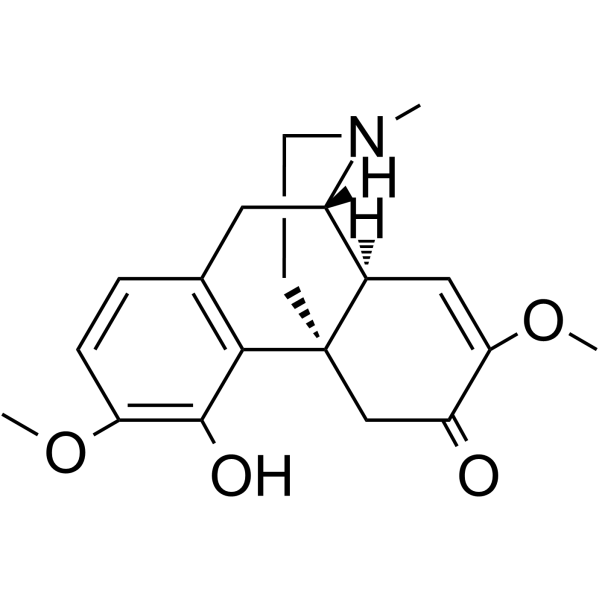
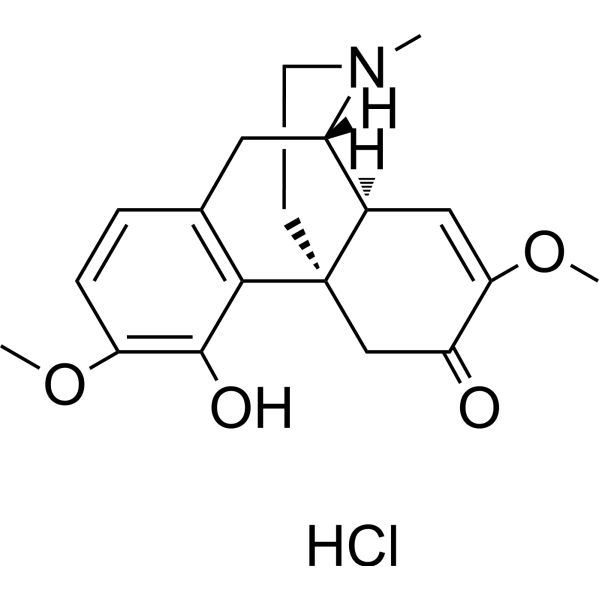
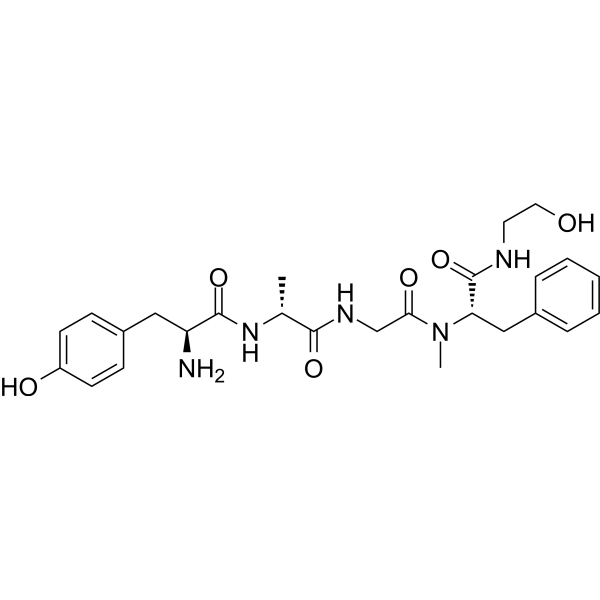
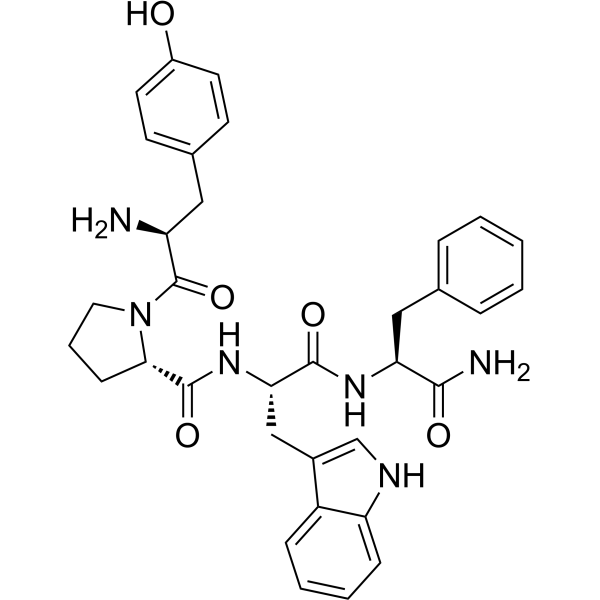
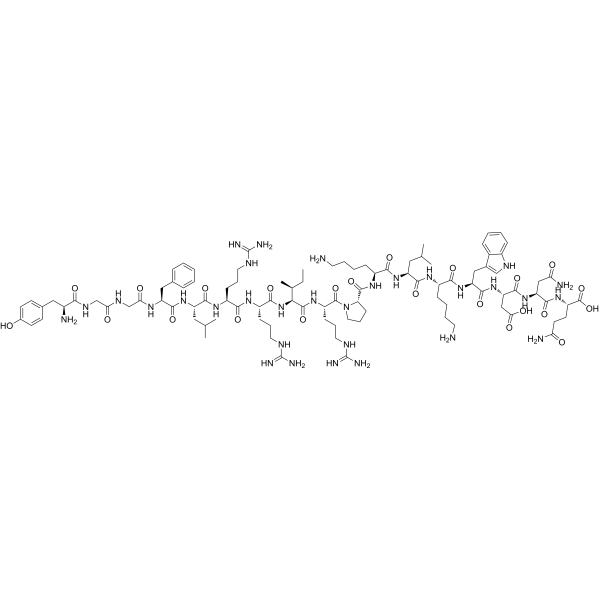
DAMGO is a μ-opioid receptor (μ-OPR ) selective agonist with a Kd of 3.46 nM for native μ-OPR .
|
-
-
- HY-15122
-
-
-
- HY-P1502
-
|
|
Opioid Receptor
|
Neurological Disease
|
|
β-Endorphin, human, a prominent endogenous peptide, existing in the hypophysis cerebri and hypothalamus, is an agonist of opioid receptor, with preferred affinity for μ-opioid receptor and δ-opioid receptor; β-Endorphin, human exhibits antinociception activity.
|
-
-
- HY-15122A
-
-
-
- HY-A0118A
-
|
NKTR-118 oxalate; AZ-13337019 oxalate
|
Opioid Receptor
|
Metabolic Disease
|
|
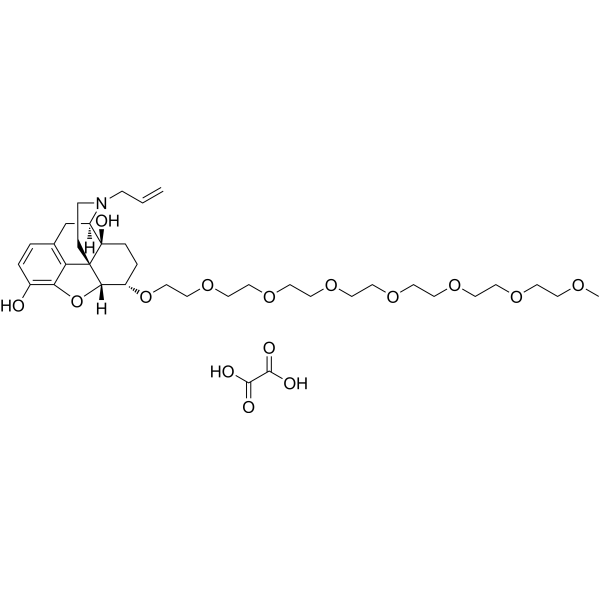
Naloxegol oxalate (NKTR-118 oxalate; AZ-13337019 oxalate) is an orally active peripherally acting μ-opioid receptor antagonist with a target Ki of 7.42 nM. Naloxegol oxalate inhibits the binding of opioids to μ-opioid receptors in the gastrointestinal tract, and alleviates opioid-induced gastrointestinal hypomotility, delayed transit, hypertonicity, and increased fluid reabsorption. Naloxegol oxalate is applicable to research related to opioid-induced constipation .
|
-
-
- HY-13243
-
|
ADL 8-2698; LY 246736
|
Opioid Receptor
|
Neurological Disease
|
|
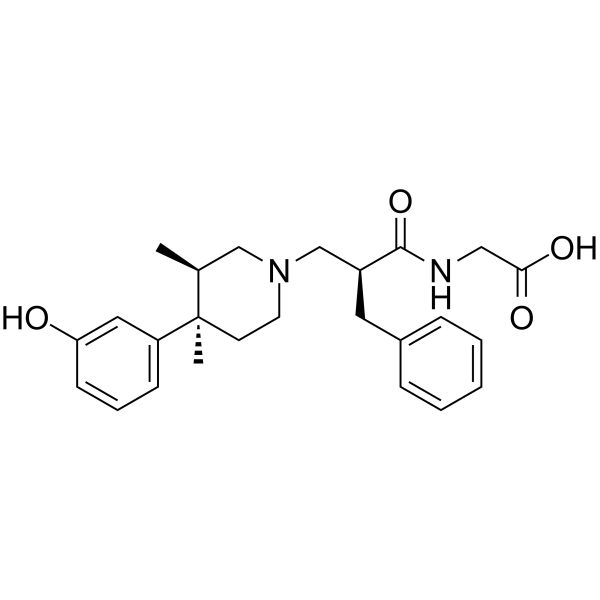
Alvimopan (ADL 8-2698) is a potent, selective, orally active and reversible μ-opioid receptor antagonist, with an IC50 of 1.7 nM. Alvimopan has selectivity for μ-opioid receptor (Ki=0.47 nM) over κ- and δ-opioid receptors (Kis=100, 12 nM, respectively). Alvimopan can be used for the research of postoperative ileus .
|
-
-
- HY-P1333
-
|
|
Opioid Receptor
Apoptosis
Caspase
Endogenous Metabolite
|
Neurological Disease
|
|
Dynorphin A is an endogenous opioid peptide involved in inhibitory neurotransmission in the central nervous system (CNS). Dynorphin A is a highy potent kappa opioid receptor (KOR) agonist, and is also an agonist for other opioid receptors, such as mu (MOR) and delta (DOR). Dynorphin A can induce neuronal death, and can be used in the research of neurological disease .
|
-
-
- HY-156131
-
|
ADL 2-1294
|
Opioid Receptor
|
Neurological Disease
Inflammation/Immunology
|
|
Loperamide (ADL 2-1294) is selective and orally active μ opioid receptor agonist with Ki valuess of 3, 48 and 1156 nM against μ, δ and κ opioid receptor, respectively. Loperamide produces antinociception and antihyperalgesia. Loperamide exhibits peripheral selectivity, enhancing fluid, electrolyte, and glucose absorption, reversing PGE2 (HY-101952)- and Cholera toxin (HY-P1446)-induced intestinal secretion, and reducing intestinal motility. Loperamide can be used for the researches of inflammatory pain and protracted diarrhoea .
|
-
-
- HY-111454
-
-
-
- HY-101386
-
-
-
- HY-P1087
-
|
Metorphamide
|
Opioid Receptor
|
Cancer
|
|
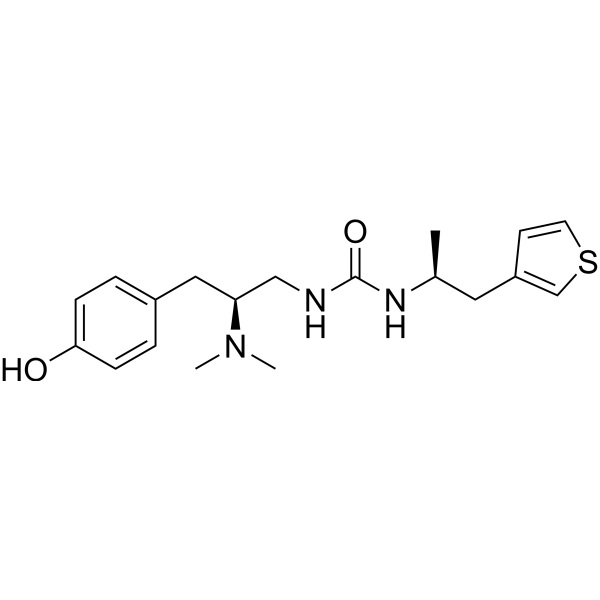
Adrenorphin is a opioid octapeptide, acting as a potent agonist of μ-opioid receptor, with Ki of 12 nM.
|
-
-
- HY-P0244
-
-
-
- HY-123689
-
|
ALKS-33; RDC-0313
|
Opioid Receptor
|
Neurological Disease
|
|
Samidorphan (ALKS-33) is an orally active opioid system modulator that has a high affinity for binding with μ‐opioid, κ‐opioid, and δ‐opioid receptors. Samidorphan acts as an antagonist at μ‐opioid receptors and acts as a partial agonist at k-opioid and δ‐opioid receptors. Samidorphan primarily acts as an opioid receptor antagonist in vivo. Samidorphan can improve the behavior of depressed animals .
|
-
-
- HY-P0210B
-
DAMGO TFA
Maximum Cited Publications
12 Publications Verification
|
Opioid Receptor
|
Cancer
|
|
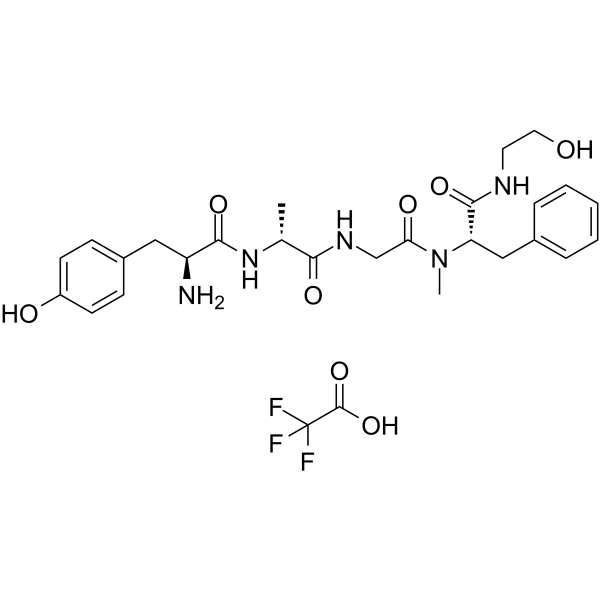
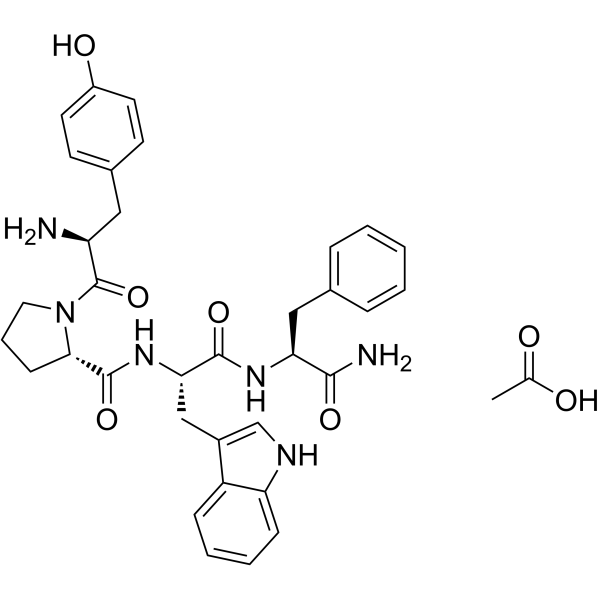
DAMGO TFA is a μ-opioid receptor (μ-OPR ) selective agonist with a Kd of 3.46 nM for native μ-OPR .
|
-
-
- HY-N0398
-
|
|
Opioid Receptor
|
Neurological Disease
|
|
Sec-O-Glucosylhamaudol is a natural compound extracted from Peucedanum japonicum Thunb, decreases levels of μ-opioid receptor, with analgesic effect .
|
-
-
- HY-101011
-
-
-
- HY-101318
-
|
β-FNA hydrochloride
|
Opioid Receptor
p38 MAPK
STAT
NF-κB
NO Synthase
Toll-like Receptor (TLR)
|
Cardiovascular Disease
Neurological Disease
|
|
β-Funaltrexamine (β-FNA) hydrochloride is a blood-brain barrier-permeable, selective and irreversible μ-opioid receptor antagonist with immunomodulatory, anti-inflammatory and neuroprotective activities. β-Funaltrexamine hydrochloride inhibits p38 MAPK and TLR4 signaling by blocking μ-opioid receptors, and reduces the transcriptional activities of NF-κB, AP-1, CREB and Stat. Furthermore, β-Funaltrexamine hydrochloride inhibits iNOS activation and pro-inflammatory microglial polarization, converting microglia to an anti-inflammatory phenotype, thereby downregulating neuroinflammation and ameliorating neuronal degeneration. β-Funaltrexamine hydrochloride is widely applicable to research related to stroke, cerebral ischemia/reperfusion injury and neurodegenerative diseases .
|
-
-
- HY-104006
-
|
|
Opioid Receptor
|
Neurological Disease
|
|
CYM51010 is a biased ligand of μ-opioid receptor – δ-opioid receptor heterodimers with an EC50 of 403 nM. CYM51010 exhibits anti-nociceptive activity similar to morphine but with a decreased levels of tolerance development and withdrawal symptoms .
|
-
-
- HY-100122
-
-
-
- HY-141515
-
|
|
Opioid Receptor
|
Neurological Disease
|
|
BMS-986121 is a positive allosteric modulator (PAM) of the μ opioid receptor extracted from patent WO2014107344. BMS-986121 is built on a chemical scaffold representing a new chemotype for μ receptor PAMs .
|
-
-
- HY-P3870
-
|
|
Opioid Receptor
|
Neurological Disease
|
|
DALDA is a potent and highly selective μ-opioid receptor agonist with a Ki of 1.69 nM. DALDA shows antinociceptive and respiratory effects .
|
-
-
- HY-144609
-
|
|
Opioid Receptor
|
Neurological Disease
|
|
Mu opioid receptor antagonist 4 (compound 31) is a potent and selective μ opioid receptor (MOR) antagonist with a Ki of 0.38 nM and an EC50 of 1.07 nM. Mu opioid receptor antagonist 4 has remarkable CNS antagonism against morphine, and precipitated fewer withdrawal symptoms than Naloxone. Mu opioid receptor antagonist 4 Mu opioid receptor antagonist 4 can be used for researching opioid use disorders (OUD) .
|
-
-
- HY-144607
-
|
|
Opioid Receptor
|
Neurological Disease
|
|
Mu opioid receptor antagonist 2 (compound 25) is a potent, selective and blood-brain barrier (BBB) penetrant μ opioid receptor (MOR) antagonist with a Ki of 0.37 nM and an EC50 of 0.44 nM. Mu opioid receptor antagonist 2 has remarkable CNS antagonism against morphine, and precipitated fewer withdrawal symptoms than Naloxone. Mu opioid receptor antagonist 2 can be used for researching opioid use disorders (OUD) .
|
-
-
- HY-107750A
-
|
|
Opioid Receptor
|
Neurological Disease
|
|
Cyprodime hydrochloride is a highly selective μ-opioid receptor antagonist with Ki values of 5.4 nM, 244.6 nM and 2187 nM for μ-, δ- and κ-opioid receptors, respectively. Cyprodime hydrochloride has anti-depressant-like effect .
|
-
-
- HY-76657A
-
|
ADL 8-2698 dihydrate; LY 246736 dihydrate
|
Opioid Receptor
|
Neurological Disease
Cancer
|
|
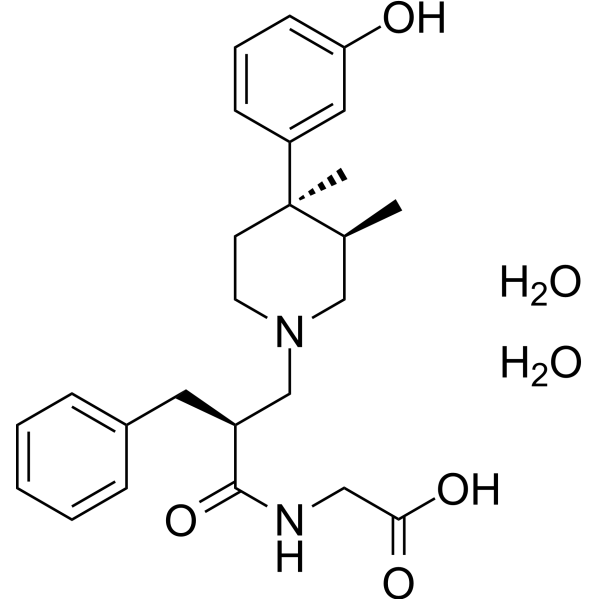
Alvimopan dihydrate (ADL 8-2698 dihydrate) is a potent, selective, orally active and reversible μ-opioid receptor antagonist, with an IC50 of 1.7 nM. Alvimopan dihydrate has selectivity for μ-opioid receptor (Ki=0.47 nM) over κ- and δ-opioid receptors (Kis=100, 12 nM, respectively). Alvimopan dihydrate can be used for the research of postoperative ileus .
|
-
-
- HY-P3870A
-
|
|
Opioid Receptor
|
Neurological Disease
|
|
DALDA acetate is a potent and highly selective μ-opioid receptor agonist with a Ki of 1.69 nM. DALDA acetate shows antinociceptive and respiratory effects .
|
-
-
- HY-101307
-
|
7-Benzylidenenaltrexone maleate
|
Opioid Receptor
|
Neurological Disease
|
|
BNTX (7-Benzylidenenaltrexone) maleate is a δ1-opioid receptor antagonist with the Kis of 0.1, 10.8, 13.3, and 58.6 nM for δ1, δ2-, μ-, and κ-opioid receptor, respectively. BNTX maleate shows antinociceptive activity .
|
-
-
- HY-P1866A
-
|
|
Opioid Receptor
|
Neurological Disease
|
|
β-Endorphin, equine TFA is an endogenous opioid peptide, which binds at high affinity to both μ/δ opioid receptors. β-Endorphin, equine TFA has analgesic properties .
|
-
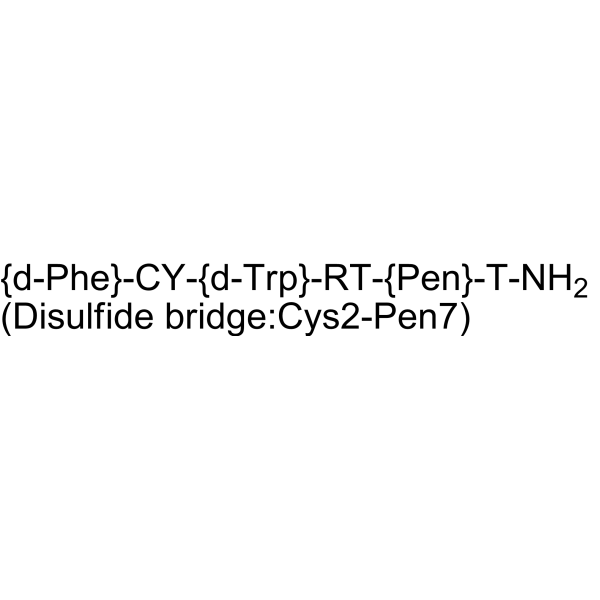
-
- HY-162771
-
|
|
Opioid Receptor
|
Neurological Disease
|
|
Mu opioid receptor agonist 1 (compound 12) is a Mu opioid receptor agonist. Mu opioid receptor agonist 1 can be used in nervous system related research .
|
-
-
- HY-144606
-
|
|
Opioid Receptor
|
Neurological Disease
|
|
Mu opioid receptor antagonist 1 (compound 19) is a selective and orally active μ opioid receptor (MOR) ligand with an Ki value of 0.58 nM and an EC50 of 1.15 nM. Orally administrating with Mu opioid receptor antagonist 1 increases intestinal motility during morphine-induced constipation. Mu opioid receptor antagonist 1 can be used for researching opioid-induced constipation (OIC) .
|
-
-
- HY-155320
-
|
|
Opioid Receptor
|
Neurological Disease
|
|
Mu opioid receptor antagonist 7 (compound 24) is a potent and CNS permeable antagonist of µOR (µ-opioid receptor), with an IC50 of 29 ± 3.0 nM. Mu opioid receptor antagonist 7 can be used for the research of pain and opioid use disorder .
|
-
-
- HY-144608
-
|
|
Opioid Receptor
|
Neurological Disease
|
|
Mu opioid receptor antagonist 3 (compound 26) is a potent and selective μ opioid receptor (MOR) antagonist with a Ki of 0.24 nM and an EC50 of 0.54 nM. Mu opioid receptor antagonist 3 has remarkable CNS antagonism against morphine, and precipitated fewer withdrawal symptoms than Naloxone. Mu opioid receptor antagonist 3 can be used for researching opioid use disorders (OUD) .
|
-
-
- HY-144610
-
|
|
Opioid Receptor
|
Neurological Disease
|
|
Mu opioid receptor antagonist 5 (compound NAP) is a selective and blood-brain barrier (BBB) penetrant μ opioid receptor (MOR) antagonist with an EC50 value of 1.14 nM and a Ki value of 0.37 nM. Mu opioid receptor antagonist 5 can be used for researching opioid use disorders (OUD) .
|
-
-
- HY-155319
-
|
|
Opioid Receptor
|
Neurological Disease
|
|
μ opioid receptor agonist 3 (compound 20) is a potent μ opioid receptor (µOR) agonist with an EC50 of 0.87 nM. μ opioid receptor agonist 3 has the potential for pain and neuropsychiatric indications research .
|
-
-
- HY-107743
-
|
NalBzoH
|
Opioid Receptor
|
Neurological Disease
|
|
Naloxone benzoylhydrazone (NalBzoH) is a mixed agonist/antagonist. Naloxone benzoylhydrazone is a prototypic κ3-opioid receptor agonist, and a partial agonist at the cloned μ and δ opioid receptors, and an antagonist at opioid-like NOP receptors. Naloxone benzoylhydrazone has potently analgesia effect .
|
-
-
- HY-147560
-
|
|
Sigma Receptor
Opioid Receptor
|
Neurological Disease
|
|
σ1 Receptor/μ Opioid receptor modulator 1 (Compound 44) is a potent σ1 receptor antagonist and μ opioid receptor agonist with Kis of 1.86 nM and 2.1 nM, respectively.σ1 Receptor/μ Opioid receptor modulator 1 exhibits potent analgesic activity. σ1 Receptor/μ Opioid receptor modulator 1 can be used for the research of neuropathic pain .
|
-
-
- HY-169867
-
|
7-Benzylidenenaltrexone
|
Opioid Receptor
|
Neurological Disease
|
|
BNTX (7-Benzylidenenaltrexone) is a highly selective δ1 opioid receptor antagonist. BNTX selectively antagonizes the antinociceptive activity mediated by spinal δ1 opioid receptors, and does not alter the antinociceptive effects mediated by δ2, μ or κ opioid receptors at selective doses .
|
-
-
- HY-118416
-
|
|
Opioid Receptor
|
Neurological Disease
|
|
BMS-986124 is a μ-opioid receptor silent allosteric modulator (μ-SAMs). BMS-986124 antagonizes positive allosteric modulator effect of BMS-986122 (µ-OR PAM) .
|
-
-
- HY-A0115R
-
|
HOE 498 diacid (Standard); Ramipril diacid (Standard)
|
Drug Metabolite
Reference Standards
Angiotensin-converting Enzyme (ACE)
Endogenous Metabolite
|
Cardiovascular Disease
|
|
Alvimopan (dihydrate) (Standard) is the analytical standard of Alvimopan (dihydrate). This product is intended for research and analytical applications. Alvimopan dihydrate (ADL 8-2698 dihydrate) is a potent, selective, orally active and reversible μ-opioid receptor antagonist, with an IC50 of 1.7 nM. Alvimopan dihydrate has selectivity for μ-opioid receptor (Ki=0.47 nM) over κ- and δ-opioid receptors (Kis=100, 12 nM, respectively). Alvimopan dihydrate can be used for the research of postoperative ileus .
|
-
-
- HY-162669
-
|
|
Opioid Receptor
|
Neurological Disease
|
|
Mu opioid receptor antagonist 8 (368) is a μ-opioid receptor antagonist. Mu opioid receptor antagonist 8 (368) significantly inhibits met-enkephalin-induced µOR activation of Gi .
|
-
-
- HY-P10203
-
|
|
Opioid Receptor
|
Inflammation/Immunology
|
|
μ/κ/δ opioid receptor agonist 1 is a μ opioid receptor (MOR), κ opioid receptor (KOR), and δ opioid receptor (DOR) agonist. μ/κ/δ opioid receptor agonist 1 produces a strong and long-lasting analgesic effect through peripheral MOR and KOR in the tail-flick test .
|
-
-
- HY-151811
-
|
|
Opioid Receptor
|
Neurological Disease
|
|
NAQ is a potent and selective μ opioid receptor partial agonist, with a Ki of 0.55 nM. NAQ shows selectivity for Mu opioid receptor over the δ receptor (Ki=132.50 nM) and the κ receptor (Ki=26.45 nM). NAQ can be used for the research of opioid withdrawal or dependence .
|
-
-
- HY-123689S1
-
|
ALKS-33-d5; RDC-0313-d5
|
Isotope-Labeled Compounds
Opioid Receptor
|
Neurological Disease
|
|
Samidorphan-d5 (ALKS-33-d5) is is a deuterated compound of Samidorphan. Samidorphan is an orally active opioid system modulator that binds with high affinity to μ-opioid, κ-opioid, and δ-opioid receptors. Samidorphan is a μ-opioid receptor antagonist and a partial agonist at k-opioid and δ-opioid receptors. Samidorphan acts primarily as an opioid receptor antagonist in vivo .
|
-
-
- HY-P10175
-
|
|
Opioid Receptor
|
Neurological Disease
|
|
Acetalin-1 (Ac-RFMWMK-NH2), a hexapeptide, is a μ opioid receptor antagonist with high affinity for μ and κ3 opioid receptor, weak affinity for κ1 receptors and no affinity for κ2 receptors .
|
-
-
- HY-A0118
-
|
NKTR-118; AZ-13337019
|
Opioid Receptor
|
Neurological Disease
Cancer
|
|
Naloxegol (NKTR-118; AZ-13337019) is an orally active peripherally acting μ-opioid receptor antagonist with a target Ki of 7.42 nM. Naloxegol inhibits the binding of opioids to μ-opioid receptors in the gastrointestinal tract, and alleviates opioid-induced gastrointestinal hypomotility, delayed transit, hypertonicity, and increased fluid reabsorption. Naloxegol is applicable to research related to opioid-induced constipation .
|
-
-
- HY-P2018
-
-
-
- HY-122681
-
|
SR-16435 free base
|
Opioid Receptor
|
Neurological Disease
|
|
SR-16434 is a nociceptin/orphanin FQ (NOP)/μ-opioid receptor partial agonist, with high binding affinity (NOP receptor Ki=7.49; μ-Opioid receptor Ki=2.70). SR-16434 can relieve pain .
|
-
-
- HY-142918
-
|
|
Opioid Receptor
|
Neurological Disease
|
|
μ opioid receptor agonist 1 (Compound H-1a)is an optically pure oxaspiro ring substituted pyrrolopyrazole derivative, acts as a MOR receptor agonist and can be used for the research of pain and pain related diseases .
|
-
-
- HY-142919
-
|
|
Opioid Receptor
|
Neurological Disease
|
|
μ opioid receptor agonist 2 (Compound H-3)is an optically pure oxaspiro ring substituted pyrrolopyrazole derivative, acts as a MOR receptor agonist and can be used for the research of pain and pain related diseases .
|
-
-
- HY-76657
-
|
ADL 8-2698 monohydrate; LY 246736 monohydrate
|
Opioid Receptor
|
Neurological Disease
Cancer
|
|
Alvimopan monohydrate (ADL 8-2698 monohydrate) is a potent, selective, orally active and reversible μ-opioid receptor antagonist, with an IC50 of 1.7 nM. Alvimopan monohydrate has selectivity for μ-opioid receptor (Ki=0.47 nM) over κ- and δ-opioid receptors (Kis=100, 12 nM, respectively). Alvimopan monohydrate can be used for the research of postoperative ileus .
|
-
- HY-145369
-
-
- HY-163065
-
|
|
Opioid Receptor
Sigma Receptor
|
Neurological Disease
|
|
σ1 Receptor/μ Opioid receptor modulator 2 (compound 4x) is a dual μOR agonist/σ1R antagonist, and displays picomolar μOR agonism activity (EC50: 0.6 ± 0.2 nM) and good σ1R inhibitory activity (Ki: 363.7 ± 5.6 nM). σ1 Receptor/μ Opioid receptor modulator 2 exhibits robust analgesic effects in various pain models .
|
-
- HY-171758
-
|
|
Opioid Receptor
|
Neurological Disease
|
|
BU72 is a highly potent and long-acting agonist of μ and κ opioid receptors, and also has a partial agonist effect on δ opioid receptors (EC50 values are 0.054, 0.033, and 0.58 nM, respectively). BU72 has a strong and long-lasting analgesic effect, which is mainly mediated by μ opioid receptors. BU72 has a long-lasting activity and can partially reverse the analgesic effect of morphine. BU72 can be used in the study of opioid dependence .
|
-
- HY-P1866
-
-
- HY-172637
-
|
|
Opioid Receptor
|
Neurological Disease
|
|
Phenethyl 4-ANPP is a MOR (μ-opioid receptor) agonist. Phenethyl 4-ANPP is an analytical reference standard that is structurally similar to known opioids .
|
-
- HY-170310
-
|
|
Opioid Receptor
|
Neurological Disease
|
|
AP-238 is a a new synthetic opioid (NSO), and acts as an agonist for μ-opioid receptor (MOR) with an EC50 of 248 nM. AP-238 exhibits analgesic activity .
|
-
- HY-120385
-
|
GRT-6006
|
Opioid Receptor
|
Neurological Disease
|
|
Lexanopadol (GRT-6006) is a μ-opioid receptor and nociceptor receptor (ORL-1 receptor) agonist. Lexanopadol can be used to study pain .
|
-
- HY-N15180
-
|
(-)-Corynantheidine
|
Opioid Receptor
|
Neurological Disease
|
|
Corynantheidine ((-)-Corynantheidine) is a mu-opioid receptor (MOR) partial agonist that shows MOR-dependent analgesic effects in mice .
|
-
- HY-106601A
-
|
LY-150720 hydrochloride
|
Opioid Receptor
|
Neurological Disease
|
|
Picenadol (LY-150720) hydrochloride is an opioid mixed agonist-antagonist analgesic. Picenadol hydrochloride is an external racemic mixture, where its d-isomer (LY136596) is a potent μ-opioid receptor agonist, and the l-isomer (LY136595) is a weak μ-receptor competitive antagonist, which can inhibit the agonist effect and reduce the risk of dependence. Picenadol hydrochloride has anticholinergic activity .
|
-
- HY-P0244A
-
-
- HY-121854A
-
|
|
Opioid Receptor
|
Inflammation/Immunology
|
|
Bromadoline maleate is an opioid analgesic selective for the μ-opioid receptor, exhibiting analgesic activity in various biological fluids. Bromadoline maleate has been successfully quantified alongside its N-demethylated metabolites in human and canine samples.
|
-
- HY-16765
-
|
TD-1211
|
Opioid Receptor
|
Neurological Disease
|
|
Axelopran (TD-1211) is an opioid receptor antagonist with pKi values of 9.8, 8.8 and 9.9 for human recombinant μ and δ receptors and guinea pig κ receptor, respectively.
|
-
- HY-106732
-
|
|
Opioid Receptor
|
Neurological Disease
|
|
AT-076 is an opioid pan antagonist at nociception, kappa, mu, and delta opioid receptors, with Ki values of 1.75 nM (NOP), 1.67 nM (MOP), 1.14 nM (KOP) and 19.6 nM (DOP), respectively .
|
-
- HY-109166
-
-
- HY-P1338
-
|
|
Opioid Receptor
|
Neurological Disease
|
|
PL-017 is a potent and selective μ opioid receptor agonist with an IC50 of 5.5 nM for 125I-FK 33,824 binding to μ site. PL-017 produces long-lasting, reversible analgesia in rats .
|
-
- HY-P1338A
-
|
|
Opioid Receptor
|
Neurological Disease
|
|
PL-017 TFA is a potent and selective μ opioid receptor agonist with an IC50 of 5.5 nM for 125I-FK 33,824 binding to μ site. PL-017 TFA produces long-lasting, reversible analgesia in rats .
|
-
- HY-179282
-
|
|
Opioid Receptor
|
Neurological Disease
|
|
Mu opioid receptor antagonist 9 is potent, selective and CNS-pentrant mu-opioid receptor (MOR) antagonist with a Ki of 77.3 nM. Mu opioid receptor antagonist 9 exhibits selectivity over kappa-opioid receptor (KOR), and delta-opioid receptor (DOR). Mu opioid receptor antagonist 9 effectively blocks the antinociceptive effects of psychoactive substances. Mu opioid receptor antagonist 9 can reverse psychoactive substances-induced respiratory depression in mice. Mu opioid receptor antagonist 9 can be used for the research of Opioid Use Disorder (OUD) .
|
-
- HY-185355
-
|
|
Opioid Receptor
|
Neurological Disease
|
|
μ Opioid receptor agonist 4 (Compound 104) acts as an agonist of the μ-opioid receptor (MOP). μ Opioid receptor agonist 4 produces analgesic effects in mice, with a potency 2300-fold higher than that of Meperidine .
|
-
- HY-120927
-
|
|
Opioid Receptor
|
Neurological Disease
|
|
Alvimopan metabolite is a μ opioid receptor antagonist with activity that selectively interacts with μ peripheral receptors. Alvimopan metabolite can be used as a potential inhibitory drug to alleviate the side effects caused by opioids. Alvimopan metabolite was identified as a highly selective μ opioid receptor antagonist during research and development .
|
-
- HY-123689A
-
|
ALKS-33 hydrochloride; RDC-0313 hydrochloride
|
Opioid Receptor
|
Neurological Disease
|
|
Samidorphan hydrochloride is an orally active opioid system modulator that has a high affinity for binding with μ‐opioid, κ‐opioid, and δ‐opioid receptors. Samidorphan hydrochloride acts as an antagonist at μ‐opioid receptors and acts as a partial agonist at k-opioid and δ‐opioid receptors. Samidorphan hydrochloride primarily acts as an opioid receptor antagonist in vivo. Samidorphan can improve the behavior of depressed animals .
|
-
- HY-123689S
-
|
ALKS-33-d4; RDC-0313-d4
|
Isotope-Labeled Compounds
Opioid Receptor
|
Neurological Disease
|
|
Samidorphan-d4 is the deuterium labeled Samidorphan(HY-123689).Samidorphan (ALKS-33) is an orally active opioid system modulator that has a high affinity for binding with μ‐opioid, κ‐opioid, and δ‐opioid receptors. Samidorphan acts as an antagonist at μ‐opioid receptors and acts as a partial agonist at k-opioid and δ‐opioid receptors. Samidorphan primarily acts as an opioid receptor antagonist in vivo .
|
-
- HY-170033
-
|
|
Opioid Receptor
|
Neurological Disease
|
|
3-Carboxamidonaltrexone (example 32) is a opioid receptor binding compound with Ki values of 1.9 nM, 110 nM, and 22 nM for μ-opioid receptor, δ-opioid receptor, and K-opioid receptor, respectively .
|
-
- HY-123689R
-
|
ALKS-33 (Standard); RDC-0313 (Standard)
|
Opioid Receptor
Reference Standards
|
Neurological Disease
|
|
Samidorphan (Standard) is the analytical standard of Samidorphan. This product is intended for research and analytical applications. Samidorphan (ALKS-33) is an orally active opioid system modulator that has a high affinity for binding with μ‐opioid, κ‐opioid, and δ‐opioid receptors. Samidorphan acts as an antagonist at μ‐opioid receptors and acts as a partial agonist at k-opioid and δ‐opioid receptors. Samidorphan primarily acts as an opioid receptor antagonist in vivo. Samidorphan can improve the behavior of depressed animals.
|
-
- HY-P10177
-
|
|
Opioid Receptor
|
Neurological Disease
|
|
Acetalin-3 (Ac-RFMWMT-NH2), a hexapeptide, is a μ opioid receptor antagonist with high affinity for μ and κ3 opioid receptor, weak affinity for κ1 receptors and no affinity for κ2 receptors .
|
-
- HY-A0118AS
-
|
|
Isotope-Labeled Compounds
Opioid Receptor
|
Neurological Disease
|
|
Naloxegol-d5 (oxalate) is deuterium labeled Naloxegol (oxalate). Naloxegol oxalate (NKTR-118 oxalate; AZ-13337019 oxalate) is a μ-opioid-receptor antagonist. Naloxegol oxalate inhibits opioid binding in μ-opioid receptors in the gastrointestinal tract and effective for alleviating opioid-induced constipation .
|
-
- HY-A0118S
-
|
NKTR-118-13C,d3; AZ-13337019-13C,d3
|
Isotope-Labeled Compounds
|
Neurological Disease
Cancer
|
|
Naloxegol- 13C,d3 (NKTR-118- 13C,d3) is 13C labeled Naloxegol. Naloxegol (NKTR-118; AZ-13337019) is a μ-opioid-receptor antagonist. Naloxegol inhibits opioid binding in μ-opioid receptors in the gastrointestinal tract and effective for alleviating opioid-induced constipation .
|
-
- HY-A0118S1
-
|
NKTR-118-13C,d2; AZ-13337019-13C,d2
|
Isotope-Labeled Compounds
Opioid Receptor
|
Neurological Disease
Cancer
|
|
Naloxegol- 13C,d2 (NKTR-118- 13C,d2) is 13C labeled Naloxegol. Naloxegol (NKTR-118; AZ-13337019) is a μ-opioid-receptor antagonist. Naloxegol inhibits opioid binding in μ-opioid receptors in the gastrointestinal tract and effective for alleviating opioid-induced constipation .
|
-
- HY-107750
-
-
- HY-130367
-
-
- HY-13243R
-
|
ADL 8-2698 (Standard); LY 246736 (Standard)
|
Opioid Receptor
Reference Standards
|
Neurological Disease
Cancer
|
|
Alvimopan (Standard) is the analytical standard of Alvimopan. This product is intended for research and analytical applications. Alvimopan (ADL 8-2698) is a potent, selective, orally active and reversible μ-opioid receptor antagonist, with an IC50 of 1.7 nM. Alvimopan has selectivity for μ-opioid receptor (Ki=0.47 nM) over κ- and δ-opioid receptors (Kis=100, 12 nM, respectively). Alvimopan can be used for the research of postoperative ileus .
|
-
- HY-123142
-
-
- HY-P1577
-
-
- HY-16765A
-
|
TD-1211 sulfate
|
Opioid Receptor
|
Neurological Disease
|
|
Axelopran sulfate is an opioid receptor antagonist with pKi values of 9.8, 8.8 and 9.9 for human recombinant μ and δ receptors and guinea pig κ receptor, respectively.
|
-
- HY-106601
-
|
LY-150720
|
Opioid Receptor
|
Neurological Disease
|
|
Picenadol (LY-150720) is an opioid mixed agonist-antagonist analgesic. Picenadol is an external racemic mixture, where its d-isomer (LY136596) is a potent μ-opioid receptor agonist, and the l-isomer (LY136595) is a weak μ-receptor competitive antagonist, which can inhibit the agonist effect and reduce the risk of dependence. Picenadol has anticholinergic activity .
|
-
- HY-P1599
-
|
|
Opioid Receptor
|
Neurological Disease
Cancer
|
|
Valorphin is an endogenous hemoglobin β-chain (33-39) fragment with opioid analgesic activity, binds to rat mu-opioid receptor, with an IC50 of 14 nM; Valorphin also shows anti-tumor activity.
|
-
- HY-76657AR
-
|
ADL 8-2698 dihydrate (Standard); LY 246736 dihydrate (Standard)
|
Reference Standards
Opioid Receptor
|
Neurological Disease
Cancer
|
|
Alvimopan (dihydrate) (Standard) is the analytical standard of Alvimopan (dihydrate). This product is intended for research and analytical applications. Alvimopan dihydrate (ADL 8-2698 dihydrate) is a potent, selective, orally active and reversible μ-opioid receptor antagonist, with an IC50 of 1.7 nM. Alvimopan dihydrate has selectivity for μ-opioid receptor (Ki=0.47 nM) over κ- and δ-opioid receptors (Kis=100, 12 nM, respectively). Alvimopan dihydrate can be used for the research of postoperative ileus .
|
-
- HY-167946
-
|
|
Opioid Receptor
|
Others
|
|
CP-866087 is a new, highly effective, and selective antagonist of the mu-opioid receptor designed for exploring female sexual dysfunction.
|
-
- HY-P1502F
-
|
|
Opioid Receptor
|
Neurological Disease
|
|
Biocytin-β-endorphin, human is abiotinylated β-Endorphin, human (HY-P1502). β-Endorphin, human, a prominent endogenous peptide, existing in the hypophysis cerebri and hypothalamus, is an agonist of opioid receptor, with preferred affinity for μ-opioid receptor and δ-opioid receptor; β-Endorphin, human exhibits antinociception activity.
|
-
- HY-118615
-
|
|
Opioid Receptor
|
Neurological Disease
|
|
LY2048978 is a non-selective opioid receptor antagonist with Ki of 0.287, 0.471 and 1.05 nM for human mu, kappa and delta opioid receptors in vitro, respectively. LY2048978 can be used in the research of major depressive disorder and alcohol use disorder .
|
-
- HY-P1333A
-
|
|
Opioid Receptor
Apoptosis
Caspase
Endogenous Metabolite
|
Neurological Disease
|
|
Dynorphin A TFA is an endogenous opioid peptide involved in inhibitory neurotransmission in the central nervous system (CNS). Dynorphin A TFA is a highy potent kappa opioid receptor (KOR) agonist, and is also an agonist for other opioid receptors, such as mu (MOR) and delta (DOR). Dynorphin A TFA can induce neuronal death, and can be used in the research of neurological disease .
|
-
- HY-P3870B
-
|
|
Opioid Receptor
|
Neurological Disease
|
|
DALDA TFA is a potent and highly selective μ-opioid receptor agonist with a Ki of 1.69 nM. DALDA TFA shows antinociceptive and respiratory effects .
|
-
- HY-P3043
-
|
|
Opioid Receptor
|
Neurological Disease
|
|
Bilaid A is a μ-opioid receptor agonist that can be extracted from Penicillium. The Ki value is 3.1 μM. Bilaid A can be used in pain research .
|
-
- HY-182563
-
|
|
Opioid Receptor
|
Endocrinology
|
|
Tyr-Ala-N-(1,3-dimethylbutyl)glycinamide is a μ/δ opioid receptor ligand with high μ opioid receptor selectivity and agonist activity. Tyr-Ala-N-(1,3-dimethylbutyl)glycinamide has an IC50 of 237 nM for μ receptors and 1050 nM for δ receptors. Tyr-Ala-N-(1,3-dimethylbutyl)glycinamide shows Ki values of 17 nM for μ receptors and 480 nM for δ receptors. Tyr-Ala-N-(1,3-dimethylbutyl)glycinamide inhibits electrically evoked contractions of guinea pig ileum and mouse vas deferens. Tyr-Ala-N-(1,3-dimethylbutyl)glycinamide serves as a starting compound for structure-activity relationship investigations of μ receptor recognition .
|
-
- HY-125790
-
|
|
Opioid Receptor
|
Neurological Disease
|
|
Cyclazocine is a μ, δ, and κ opioid receptor modulator with Ki values of 0.32, 1.1, and 0.18 nM, respectively. Cyclazocine exhibits "mixed" pharmacological activities, acting as a μ-partial antagonist, κ-agonist, and low-affinity δ ligand. Cyclazocine shows antinociceptive activity in mice. Cyclazocine can be used in studies on psychoactive substance addiction .
|
-
- HY-W399025
-
|
|
Opioid Receptor
Arrestin
|
Neurological Disease
|
|
ID110460001 is a full agonist of μ-opioid receptor and an agonist of δ-opioid receptor. ID110460001 exhibits high intrinsic efficacy for G protein pathway activation of μ-opioid receptor, and this property is not affected by the reduction in receptor quantity. ID110460001 acts only as a very weak partial agonist in the β-arrestin-2 pathway of both receptors, and binds to μ-opioid receptor via a specific mode. The efficacy of ID110460001 in the G protein pathway of δ-opioid receptor is sensitive to changes in receptor quantity. ID110460001 can be used in pain-related research .
|
-
- HY-P0210S
-
|
|
Isotope-Labeled Compounds
|
Others
|
|
DAMGO-d2 is the deuterium labeled DAMGO (HY-P0210). DAMGO is a μ-opioid receptor (μ-OPR ) selective agonist with a Kd of 3.46 nM for native μ-OPR.
|
-
- HY-182453
-
|
|
Opioid Receptor
|
Neurological Disease
|
|
RM1490 (Compound 251) acts as an inhibitor of μ-opioid receptor (MOR) (IC50 ≤ 300 nM), an activator of δ-opioid receptor (DOR) (EC50 > 3000 nM), and an inhibitor of κ-opioid receptor (KOR) (IC50 ≤ 300 nM). RM1490 is applicable to the research of neuropsychiatric disorders .
|
-
- HY-179319
-
-
- HY-13243S1
-
|
ADL 8-2698-d7; LY 246736-d7
|
Isotope-Labeled Compounds
Opioid Receptor
|
Neurological Disease
Cancer
|
|
Alvimopan-d7 (ADL 8-2698-d7) is deuterium labeled Alvimopan. Alvimopan (ADL 8-2698) is a potent, selective, orally active and reversible μ-opioid receptor antagonist, with an IC50 of 1.7 nM. Alvimopan has selectivity for μ-opioid receptor (Ki=0.47 nM) over κ- and δ-opioid receptors (Kis=100, 12 nM, respectively). Alvimopan can be used for the research of postoperative ileus .
|
-
- HY-177218
-
|
NSC 119910
|
Phospholipase
Opioid Receptor
|
Neurological Disease
|
|
M119 (NSC 119910) is a selective Gβγ-subunit inhibitor. M119 selectively potentiates μ-opioid-dependent antinociception. M119 inhibits μ-receptor-dependent phospholipase (PLC) activation. M119 can enhance opioid analgesia and attenuate its acute tolerance and dependence in mice. M119 can be used for pain research .
|
-
- HY-122189
-
|
(-)-Akuammine; Vincamajoridine
|
Others
|
Neurological Disease
|
|
Akuammine is an indole alkaloid that has been found in Picralima nitida and has analgesic activity. It selectively binds to the μ- and κ-opioid receptors over the δ-opioid receptor (Kis=0.3, 1.68, and 10.4 μM for the human receptors, respectively). Akuammine inhibits forskolin-induced cAMP production in HEK293 cells expressing human μ- or κ-opioid receptors (IC50s=2.6 and 0.073 μM, respectively). It increases the latency to withdrawal in the tail-flick or hot plate test in mice when administered at a dose of 60 mg/kg.
|
-
- HY-19231
-
|
Org 41793
|
Opioid Receptor
|
Neurological Disease
|
|
DPI-3290 (Org 41793) is a potent and specific opioid receptors agonist with Ki values of 0.18 nM, 0.46 nM, and 0.62 nM for δ-, μ-, and κ-opioid receptors, respectively. DPI-3290 is one of a series of novel centrally acting agents with potent antinociceptive activity .
|
-
- HY-170437
-
|
|
Opioid Receptor
|
Neurological Disease
|
|
MOR modulator-1 (compound 6) is a potent and selective μ opioid receptor (MOR) modulator. MOR modulator-1 exhibits improved opioid receptor selectivity, enhanced in vivo antagonistic effect, and overall fewer withdrawal symptoms compared to NAT (6α-configuration). MOR modulator-1 links with carboxamido linker μ, δ, γ with Kis of 0.25, 41.1, 1.30 nM, respectively[1]
|
-
- HY-19627A
-
|
S-297995 tosylate
|
Opioid Receptor
|
Neurological Disease
Metabolic Disease
|
|
Naldemedine (S-297995) tosylate is an orally active μ-opioid receptor antagonist (PAMORA) . Naldemedine tosylate shows potent binding affinities (Ki=0.34, 0.43, 0.94 nM, respectively) and antagonist activities (IC50=25.57, 7.09, 16.1 nM, respectively) for recombinant human μ-, δ-, and κ- opioid receptors . Naldemedine can be used in opioid-induced constipation (OIC) research . Naldemedine tosylate is predicted to bind to 3CL pro encoded by SARS-CoV2 genome .
|
-
- HY-19627
-
|
S-297995
|
Opioid Receptor
|
Neurological Disease
Metabolic Disease
|
|
Naldemedine (S-297995) is an orally active μ-opioid receptor antagonist (PAMORA) . Naldemedine shows potent binding affinities (Ki=0.34, 0.43, 0.94 nM, respectively) and antagonist activities (IC50=25.57, 7.09, 16.1 nM, respectively) for recombinant human μ-, δ-, and κ- opioid receptors . Naldemedine can be used in opioid-induced constipation (OIC) research . Naldemedine is predicted to bind to 3CL pro encoded by SARS-CoV2 genome .
|
-
- HY-19902
-
|
|
Opioid Receptor
|
Neurological Disease
|
|
GSK1521498 is a potent and selective μ-opioid receptor (MOR) antagonist. GSK1521498 has the potential for disorders of compulsive consumption of food, alcohol, and agents .
|
-
- HY-P3517
-
|
β-EP (6-31), human
|
Opioid Receptor
|
Neurological Disease
Endocrinology
|
|
β-Endorphin, an endogenous opioid neuropeptide, is an opioid receptor agonist. β-Endorphin binds preferentially to μ-opioid receptors and is produced in certain neurons of the central and peripheral nervous system and is one of three endorphins produced in humans. β-Endorphin can be used to reduce stress and maintain homeostasis in the body and is involved in neurological pain perception regulation .
|
-
- HY-N2304A
-
|
|
Opioid Receptor
|
Inflammation/Immunology
|
|
Methyl-6-alpha-Naltrexol is a metabolite of Methylnaltrexone (MNTX). Methylnaltrexone is a selective mu-opioid receptor antagonist and functions as a peripherally acting receptor antagonist in tissues of the gastrointestinal tract .
|
-
- HY-135698
-
|
M-CAM
|
Opioid Receptor
|
Neurological Disease
|
|
Methocinnamox (M-CAM) a selective and long-acting μ-opioid receptor (MOR) antagonist with a Ki of 0.6 nM. Methocinnamox binds to the orthosteric site of the MOR in a pseudo-irreversible, non-covalent manner, resulting in prolonged receptor blockade that persists until new receptors are synthesized. Methocinnamox acts as a reversible antagonist at both the kappa-opioid receptor (KOR) (Ki = 4.9 nM) and delta-opioid receptor (DOR) (Ki = 2.2 nM), and it exhibits no intrinsic agonist activity at these receptors. Methocinnamox can be used to reverse and prevent opioid overdose and addiction .
|
-
- HY-117436
-
|
|
Dopamine Receptor
|
Cardiovascular Disease
|
|
R(+)-6-Bromo-APB hydrobromide is a dopamine (DA) agonist. R(+)-6-Bromo-APB hydrobromide increased the expression of µ opioid receptor (MOR) mRNA in the nucleus accumbens .
|
-
- HY-177790
-
|
|
Orexin Receptor (OX Receptor)
|
Neurological Disease
|
|
Orexin receptor antagonist 7 (Compound 34) is an antagonist of the orexin receptor (OX1R), with a Ki value of 4.05 nM. Orexin receptor antagonist 7 shows no detectable activity towards OX2R and has very low affinities for the three opioid receptors (μ, δ, κ) (Ki > 1,000 nM). Orexin receptor antagonist 7 can be used for research on opioid addiction .
|
-
- HY-163667
-
|
|
Opioid Receptor
|
Neurological Disease
|
|
Atoxifent is a potent μ-opioid receptor agonist (EC50=0.39 nM). These receptors are found in brain regions that control pain, emotions, habitual learning, and cognition. Atoxifent exhibits strong analgesic effects and a lower risk of respiratory depression. Atoxifent can be used for research in opioid pharmacology and signal transduction .
|
-
- HY-101302
-
|
|
Opioid Receptor
TRP Channel
|
Inflammation/Immunology
|
|
Naltriben mesylate is a potent δ2-opioid receptor antagonist and a TRPM7 activator. Naltriben mesylate shows Ki values of 0.013 nM, 19 nM and 152 nM for δ, μ and κ receptors, respectively. Naltriben mesylate enhances glioblastoma cell migration and invasion. Naltriben mesylate can be used in research into neurological diseases and cancer .
|
-
- HY-P0186
-
|
|
Opioid Receptor
|
Neurological Disease
|
|
Endomorphin 2, a high affinity, highly selective agonist of the μ-opioid receptor, displays reasonable affinities for kappa3 binding sites, with Ki value between 20 and 30 nM.
|
-
- HY-N12302A
-
|
(E/Z)-N1-Dihydrocaffeoyl, N10-caffeoyl spermidine
|
Drug Derivative
|
Others
|
|
(E/Z)-Scotanamine D is a hydroxycinnamic acid amide found in the roots of Scopolia tangutica. (E/Z)-Scotanamine D is inactive against μ-, δ-, and κ-opioid receptors .
|
-
- HY-P1335
-
CTAP
2 Publications Verification
|
Opioid Receptor
|
Neurological Disease
|
|
CTAP is a potent, highly selective, and BBB penetrant μ opioid receptor antagonist, with an IC50 of 3.5 nM. CTAP displays over 1200-fold selectivity over δ opioid (IC50=4500 nM) and somatostatin receptors. CTAP can be used for the study of L-DOPA-induced dyskinesia (LID) and opiate overdose or addiction .
|
-
- HY-172865
-
|
3,4-MDO-U-47700 hydrochloride
|
Opioid Receptor
|
Neurological Disease
|
|
3,4-Methylenedioxy U-47700 (3,4-MDO-U-47700) hydrochloride is a psychoactive substance and a complete agonist of μ-opioid receptor .
|
-
- HY-128624
-
|
|
Opioid Receptor
|
Neurological Disease
|
|
DS39201083, a Conolidine derivative, is a potent and orally active analgesic agent. DS39201083 shows no agonist activity at the mu opioid receptor. DS39201083 can be used for the study of neurological diseases .
|
-
- HY-P2199
-
-
- HY-P0186A
-
|
|
Opioid Receptor
|
Neurological Disease
|
|
Endomorphin 2 TFA, a high affinity, highly selective agonist of the μ-opioid receptor, displays reasonable affinities for kappa3 binding sites, with Ki value between 20 and 30 nM .
|
-
- HY-115066
-
|
|
Opioid Receptor
|
Neurological Disease
|
|
GSK1521498 free base is a potent and selective μ-opioid receptor (MOR) antagonist. GSK1521498 free base has the potential for disorders of compulsive consumption of food, alcohol, and agents .
|
-
- HY-104006R
-
|
|
Reference Standards
Opioid Receptor
|
Neurological Disease
|
|
CYM51010 (Standard) is the analytical standard of CYM51010 (HY-104006). This product is intended for research and analytical applications. CYM51010 is a biased ligand of μ-opioid receptor – δ-opioid receptor heterodimers with an EC50 of 403 nM. CYM51010 exhibits anti-nociceptive activity similar to morphine but with a decreased levels of tolerance development and withdrawal symptoms .
|
-
- HY-P1625
-
|
Dynorphin A ethylamide (1-9)
|
Opioid Receptor
|
Neurological Disease
|
|
Daeatal (Dynorphin A ethylamide (1-9)) is an ethylamine-modified dynorphin fragment that can be used in the study of analgesia, addiction, depression, etc. Dynorphin A is an endogenous opioid peptide involved in inhibitory neurotransmission in the central nervous system (CNS). Dynorphin A is a highy potent kappa opioid receptor (KOR) agonist, and is also an agonist for other opioid receptors, such as mu (MOR) and delta (DOR). Dynorphin A can induce neuronal death, and can be used in the research of neurological disease .
|
-
- HY-178235
-
|
|
Opioid Receptor
|
Neurological Disease
|
|
MDAN-21 is a bivalent opioid ligand that contains both μ-opioid receptor agonists and δ-opioid receptor antagonists. MDAN-21 has a strong analgesic effect and does not produce tolerance in mouse studies. MDAN-21 can effectively inhibit the withdrawal of morphine dependent monkeys and alleviate abnormal pain in the study of rhesus monkeys. MDAN-21 can be used for the study of allodynia .
|
-
- HY-76711
-
|
|
Opioid Receptor
|
Neurological Disease
Metabolic Disease
Inflammation/Immunology
Cancer
|
Naltrexone is an orally active, long-acting opioid receptor (opioid receptor) antagonist. Naltrexone blocks the euphoric effects of exogenous opioids and reduces alcohol craving by blocking opioid receptors (μ, κ, and δ) as well as opioid growth factor receptors. Low doses of Naltrexone are used to relieve chronic pain, treat inflammatory diseases and inhibit tumor growth, while high doses or continuous administration exert pro-inflammatory or pro-proliferative effects. Naltrexone relieves intractable pruritus caused by psoriasis, atopic dermatitis and other conditions, and its combination with Bupropion (HY-B0403) inhibits food craving, thereby reducing body weight .
|
-
- HY-115066A
-
|
|
Opioid Receptor
|
Neurological Disease
|
|
GSK1521498 free base (hydrochloride) is a potent and selective μ-opioid receptor (MOR) antagonist. GSK1521498 free base (hydrochloride) is being used for the treatment of disorders of compulsive consumption of food, alcohol, and agents .
|
-
- HY-108043
-
|
|
Opioid Receptor
|
Neurological Disease
|
|
AZD-2327 is a potent and selective δ-opioid receptor agonist. AZD-2327 binds to the human opioid receptor (Ki of 0.49 and 0.75 nM and EC50 of 24 and 9.2 nM at the C27 and F27 isoforms, respectively). AZD-2327 shows selectivity of >1000-fold over the human μ- and κ-opioid receptor subtypes as well as >130 other receptors and channels. AZD-2327 exhibits antidepressant and anxiolytic activities and can be used for the research of neurological disease .
|
-
- HY-183773
-
|
|
Opioid Receptor
|
Neurological Disease
|
|
KOR agonist-9 is a selective kappa opioid receptor (KOR) agonist with an EC50 of 1.41 nM. KOR agonist-9 exhibits >125-fold selectivity over μ/δ-opioid receptors. KOR agonist-9 antinociceptive and antipruritic effects in mice. KOR agonist-9 can be used for the research of pain, pruritus .
|
-
- HY-P1335A
-
|
|
Opioid Receptor
|
Neurological Disease
|
|
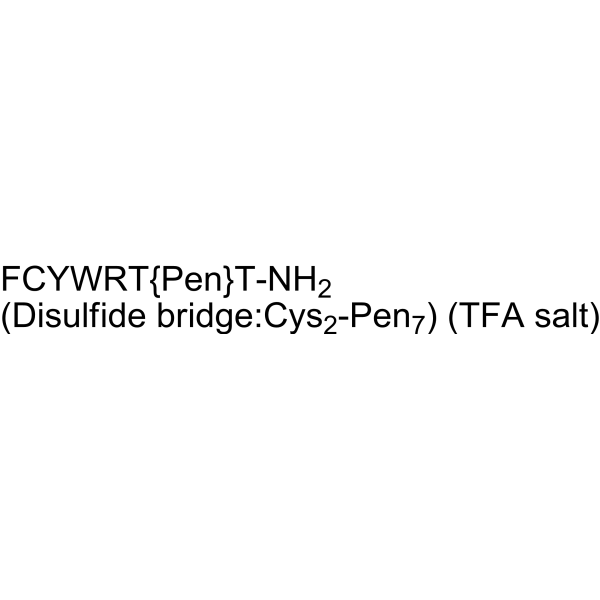
CTAP TFA is a potent, highly selective, and BBB penetrant μ opioid receptor antagonist, with an IC50 of 3.5 nM. CTAP TFA displays over 1200-fold selectivity over δ opioid (IC50=4500 nM) and somatostatin receptors. CTAP TFA can be used for the study of L-DOPA-induced dyskinesia (LID) and opiate overdose or addiction .
|
-
- HY-180212
-
|
|
Opioid Receptor
|
Neurological Disease
|
|
SYK-1106 is a potent delta-opioid receptor (DOR) agonist with an EC50 of 89 pM and a Ki of 848 pM. SYK-1106 is selective for μ and κ opioid receptors, with Ki values of 9.54 nM and 2.45 nM, respectively. SYK-1106 induces dose-dependent antidepressant-like effects. SYK-1106 can be used for the research of depression .
|
-
- HY-112692
-
|
|
Opioid Receptor
|
Neurological Disease
|
|
AT-121 is a bifunctional nociception and mu opioid receptor agonist, with Kis of 3.67 and 16.49 nM, respectively. AT-121 is a safe, non-addictive analgesic, and shows antinociceptive and antiallodynic effects .
|
-
- HY-112692A
-
|
|
Opioid Receptor
|
Neurological Disease
|
|
AT-121 hydrochloride is a bifunctional nociception and mu opioid receptor agonist, with Kis of 3.67 and 16.49 nM, respectively. AT-121 hydrochloride is a safe, non-addictive analgesic, and shows antinociceptive and antiallodynic effects .
|
-
- HY-122489A
-
|
|
Opioid Receptor
GABA Receptor
|
Cardiovascular Disease
Neurological Disease
|
|
(S)-Laudanosine is an alkaloid that can be found in poppies and is the S-enantiomer of Laudanosine. Laudanosine acts on the central nervous system and cardiovascular system, inhibiting low-affinity GABA receptors with an IC50 value of 10 μM, and can cause seizures, hypotension, and bradycardia. Additionally, Laudanosine exerts analgesic effects by competitively binding to the opioid Mu-1 receptor (Ki = 2.7 μM) .
|
-
- HY-P1299
-
|
|
Opioid Receptor
|
Neurological Disease
|
|
UFP-101 is a potent, selective, and competitive antagonist of the NOP receptor, with a pKi of 10.24. UFP-101 displays >3000-fold selectivity over δ, μ and κ opioid receptors. UFP-101 shows antidepressant-like effect .
|
-
- HY-76711R
-
|
|
Reference Standards
Opioid Receptor
|
Neurological Disease
Metabolic Disease
Inflammation/Immunology
Cancer
|
Naltrexone (Standard) is the analytical standard of Naltrexone (HY-76711). This product is intended for research and analytical applications. Naltrexone is an orally active, long-acting opioid receptor (opioid receptor) antagonist. Naltrexone blocks the euphoric effects of exogenous opioids and reduces alcohol craving by blocking opioid receptors (μ, κ, and δ) as well as opioid growth factor receptors. Low doses of Naltrexone are used to relieve chronic pain, treat inflammatory diseases and inhibit tumor growth, while high doses or continuous administration exert pro-inflammatory or pro-proliferative effects. Naltrexone relieves intractable pruritus caused by psoriasis, atopic dermatitis and other conditions, and its combination with Bupropion (HY-B0403) inhibits food craving, thereby reducing body weight.
|
-
- HY-76711S
-
|
|
Isotope-Labeled Compounds
Opioid Receptor
|
Neurological Disease
Metabolic Disease
Inflammation/Immunology
Cancer
|
Naltrexone-d4 is deuterium labeled Naltrexone (HY-76711). Naltrexone is an orally active, long-acting opioid receptor (opioid receptor) antagonist. Naltrexone blocks the euphoric effects of exogenous opioids and reduces alcohol craving by blocking opioid receptors (μ, κ, and δ) as well as opioid growth factor receptors. Low doses of Naltrexone are used to relieve chronic pain, treat inflammatory diseases and inhibit tumor growth, while high doses or continuous administration exert pro-inflammatory or pro-proliferative effects. Naltrexone relieves intractable pruritus caused by psoriasis, atopic dermatitis and other conditions, and its combination with Bupropion (HY-B0403) inhibits food craving, thereby reducing body weight.
|
-
- HY-101386R
-
|
|
Opioid Receptor
Reference Standards
|
Neurological Disease
|
|
PZM21 (Standard) is the analytical standard of PZM21 (HY-101386). This product is intended for research and analytical applications. PZM21 is a potent and selective μ opioid receptor agonist with an EC50 of 1.8 nM .
|
-
- HY-15122R
-
-
- HY-P1626
-
|
|
Opioid Receptor
|
Neurological Disease
|
|
Acetyl tetrapeptide-15 is a synthetic peptide. Acetyl tetrapeptide-15 is derived from endomorphin-2 (Tyr-Pro-Phe-Phe-NH2), a human μ-opioid agonist with selective anti-nociceptive effect. Acetyl tetrapeptide-15 reduces skin hyperreactivity producing inflammatory, chronic and neuropathic pain, by increasing the threshold of neuronal excitability in μ-opioid receptor via an endorphin-like pathway. Acetyl tetrapeptide-15 is used in the cosmetics for sensitive skin .
|
-
- HY-123534A
-
|
|
Opioid Receptor
|
Neurological Disease
|
|
CYT-1010 hydrochloride is a mu-opioid receptor agonist extracted from patent WO2013173730A2, with EC50s of 13.1 nM and 0.0053 nM on beta-arrestin recruitment and inhibition of cAMP production, respectively .
|
-
- HY-123534
-
|
|
Opioid Receptor
|
Neurological Disease
|
|
CYT-1010 is a mu-opioid receptor agonist extracted from patent WO2013173730A2, with EC50s of 13.1 nM and 0.0053 nM on beta-arrestin recruitment and inhibition of cAMP production, respectively .
|
-
- HY-15122AR
-
-
- HY-153471
-
-
- HY-11052A
-
|
|
Opioid Receptor
|
Neurological Disease
|
|
Trap-101 hydrochloride is a potent, selective and competitive antagonist of NOP receptors over classical opioid receptors. Trap-101 stimulates GTPγ 35S binding to CHOhNOP membranes with pKi values of 8.65, 6.60, 6.14 and <5 for NOP, μ-, κ-, and δ-opioid receptors, respectively. Trap-101 attenuates motor deficits in a rat model of parkinson's disease and can be used for the research of nervous system diseases .
|
-
- HY-123582
-
|
|
Opioid Receptor
|
Neurological Disease
|
|
CP-866,087 is a novel, potent and selective μ-opioid receptor antagonist with activity to inhibit opioid effects. CP-866,087 has shown promising preclinical efficacy data in disease models associated with alcohol consumption. CP-866,087 has also been used to study female sexual dysfunction .
|
-
- HY-P5892
-
|
|
Opioid Receptor
|
Neurological Disease
|
|
β-Endorphin (1-27) (human) is an opioid antagonist that binds μ-, δ-, and κ-opioid receptors with Kis of 5.31, 6.17, and 39.82 nM, respectively. β-Endorphin (1-27) (human) inhibits β-Endorphin (HY-P1502)-induced and etorphine-induced analgesia .
|
-
- HY-181605
-
|
|
Opioid Receptor
|
Neurological Disease
|
|
MOR antagonist 2 hydrochloride is a blood-brain barrier-permeable μ-opioid receptor (MOR) antagonist, with an IC50 of 28.37 nM, an EC50 of 4.25 nM, and a Ki of 0.18 nM against MOR. MOR antagonist 2 hydrochloride stabilizes the inactive conformation of MOR to reduce receptor activation levels. MOR antagonist 2 hydrochloride antagonizes analgesic effects in the mouse warm-water tail-flick test. MOR antagonist 2 hydrochloride induces fewer opioid withdrawal symptoms (wet dog shakes, paw tremors) in mice with opioid withdrawal symptoms. MOR antagonist 2 hydrochloride can be used for the research of opioid use disorder .
|
-
- HY-N11960
-
|
|
Opioid Receptor
|
Inflammation/Immunology
|
|
Ignavine is a conformational modulator of μ-opioid receptors (IC50 = 2.0 μM). Ignavine exhibits a concentration dependent bidirectional regulatory effect in vitro. Ignavine has analgesic activity. Ignavine can be used for research on pain related conditions .
|
-
- HY-P4107
-
|
|
Opioid Receptor
|
Neurological Disease
|
|
Bilaid C, a tetrapeptide, can be isolated from the Australian estuarine isolate of Penicillium sp. MST-MF667. Bilaid C is also a potent and selective μ-Opioid Receptor (MOPr) agonist (Ki=210 nM, hMOPr) .
|
-
- HY-120613
-
|
|
Opioid Receptor
|
Neurological Disease
|
|
BMS-986187 is an δ-opioid receptor-selective positive allosteric modulator (PAM) with an EC50 of 0.03 μM and a pKB of 6.02 (~1 μM). BMS-986187 has no observable PAM activity at the μ-receptor (EC50=3 μM) .
|
-
- HY-P1316A
-
|
|
Opioid Receptor
|
Neurological Disease
|
|
Ac-RYYRWK-NH2 is a potent and selective partial agonist for the nociceptin receptor (NOP), [ 3H]Ac-RYYRWK-NH2 binds to rat cortical membranes ORL1 with a Kd of 0.071 nM, but has no affinity for μ-, κ- or δ-opioid receptors .
|
-
- HY-19876
-
|
Debio-0827
|
Opioid Receptor
Aminopeptidase
Neprilysin
|
Neurological Disease
Metabolic Disease
|
|
PL37 (Debio-0827) is an orally active Enkephalinase dual inhibitor (dual inhibition refers to the simultaneous inhibition of Neutral Endopeptidase and Aminopeptidase N activities). PL37 exerts its anti-hyperalgesic effects by activating μ-opioid receptors (µ-opioid receptors), with an ED50 value of 13.4 mg/kg for analgesic effects in mice. PL37 can be used to study diabetic neuropathic pain .
|
-
- HY-120925
-
|
|
Opioid Receptor
Arrestin
|
Neurological Disease
|
|
TRV0109101 is a μ-opioid peptide receptor (MOPR) selective agonist (KD = 70 nM) with blood-brain barrier permeability. TRV0109101 selectively promotes G protein signaling pathway coupling while reducing the recruitment of β-arrestin. TRV0109101 inhibits opioid-induced mechanical hyperalgesia and induces antinociceptive tolerance. TRV0109101 is applicable for pain-related research .
|
-
- HY-169450
-
|
9-O-Desmethyl mitragynine
|
Opioid Receptor
|
Neurological Disease
|
|
(-)-9-Hydroxycorynantheidine (9-O-Desmethyl mitragynine), the 9-demethyl analogue of Mitragynine, is a selective and partial agonist of μ-opioid receptor. (-)-9-Hydroxycorynantheidine inhibits electrically stimulated twitch contraction in guinea-pig ileum .
|
-
- HY-168351
-
|
|
Opioid Receptor
|
Neurological Disease
|
|
Fluorphine is an analogue of Brorphine and can bind to μ-opioid receptor (MOR) (Ki: 12.5 nM). Fluorphine has GTPγS binding (EC50: 75 nM) and βarrestin 2 recruitment (EC50: 377 nM) activity. Fluorphine induces respiratory depressant effects .
|
-
- HY-P1329
-
|
|
Opioid Receptor
|
Neurological Disease
|
|
CTOP is a potent and highly selective μ-opioid receptor antagonist. CTOP antagonizes the acute morphine-induced analgesic effect and hypermotility. CTOP enhances extracellular dopamine levels in the nucleus accumbens. CTOP dose-dependently enhances locomotor activity .
|
-
- HY-136208
-
|
|
Opioid Receptor
|
Neurological Disease
|
|
TAN-452 is an orally active, selective peripherally acting δ-opioid receptor (DOR) antagonist with a Ki of 0.47 nM and a Kb of 0.21 nM. TAN-452 is an antagonist for μ-opioid receptor (MOR; Ki=36.56 nM and Kb=9.43 nM) and κ-opioid receptor (KOR; Ki=5.31 nM and Kb=7.18 nM). TAN-452, a derivative of Naltrindole, demonstrates low brain penetrability and attenuates morphine-induced side effects without affecting pain control .
|
-
- HY-145404
-
|
|
Opioid Receptor
|
Metabolic Disease
|
|
Mitragynine pseudoindoxyl is a potent orally active agonist of the μ-opioid receptor (MOR-1, Ki=0.8 nM) and an antagonist of the δ-opioid receptor (DOR-1, Ki=3.0 nM). Mitragynine pseudoindoxyl has moderate affinity for the κ-opioid receptor (KOR-1, Ki=24 nM) and does not recruit β-arrestin-2, acting through G protein-mediated signaling pathways without β-arrestin-2-related activation. Mitragynine pseudoindoxyl produces potent analgesic activity through a mixed μ-agonist/δ-antagonist mechanism, with low side effects such as physical dependence, respiratory depression, and constipation, and no rewarding or aversive behaviors. Mitragynine pseudoindoxyl reduces hyperactivity, inhibits GI transit, and enhances characteristics, making it a potential analgesic .
|
-
- HY-124959
-
|
U-62066 mesylate
|
Opioid Receptor
|
Neurological Disease
|
|
Spiradoline mesylate (U-62066 mesylate), an arylacetamide, is a selective kappa opioid receptor (KOR) agonist with a Ki of 8.6 nM in guinea pig. The Ki values of Spiradoline mesylate for μ and δ receptors are 252 nM and 9400 nM, respectively. Spiradoline mesylate has potent diuretic, analgesic, antiarrythmic, antitussive, neuroprotective properties and easily penetrates the blood-brain barrier .
|
-
- HY-128865
-
|
|
Opioid Receptor
|
Neurological Disease
|
|
BPR1M97 is a dual-acting mu opioid receptor (MOP) and nociceptin-orphanin FQ peptide (NOP) receptor agonist with Ki values of 1.8 and 4.2 nM, respectively. BPR1M97 shows high potency and blood-brain barrier penetration, and produces potent antinociceptive effects .
|
-
- HY-106756
-
|
U-62066
|
Opioid Receptor
|
Neurological Disease
|
|
Spiradoline (U-62066), an arylacetamide, is a selective kappa opioid receptor (KOR) agonist with a Ki of 8.6 nM in guinea pig. The Ki values of Spiradoline for μ and δ receptors are 252 nM and 9400 nM, respectively. Spiradoline has potent diuretic, analgesic, antiarrythmic, antitussive, neuroprotective properties and easily penetrates the blood-brain barrier .
|
-
- HY-P0185
-
|
|
Opioid Receptor
|
Neurological Disease
|
|
Endomorphin 1, a high affinity, highly selective agonist of the μ-opioid receptor (Ki: 1.11 nM), displays reasonable affinities for kappa3 binding sites, with Ki value between 20 and 30 nM. Endomorphin 1 has antinociceptive properties .
|
-
- HY-P0185A
-
|
|
Opioid Receptor
|
Neurological Disease
|
|
Endomorphin 1 acetate, a high affinity, highly selective agonist of the μ-opioid receptor (Ki: 1.11 nM), displays reasonable affinities for kappa3 binding sites, with Ki value between 20 and 30 nM. Endomorphin 1 acetate has antinociceptive properties .
|
-
- HY-N0398R
-
|
|
Reference Standards
Opioid Receptor
|
Neurological Disease
|
|
Sec-O-Glucosylhamaudol (Standard) is the analytical standard of Sec-O-Glucosylhamaudol. This product is intended for research and analytical applications. Sec-O-Glucosylhamaudol is a natural compound extracted from Peucedanum japonicum Thunb, decreases levels of μ-opioid receptor, with analgesic effect .
|
-
- HY-173016
-
|
|
Opioid Receptor
|
Neurological Disease
|
|
HINT1-IN-1 (Compound 8) is the inhibitor for histidine triad nucleotide-binding protein 1 (HINT1) with a Ki of 1.14 μM. HINT1-IN-1 affects the cross-regulation between μ-opioid receptor (MOR) and NMDA receptor (NMDAR). HINT1-IN-1 enhances the analgesic effect of morphine without causing opioid tolerance and has independent analgesic effects in mouse model .
|
-
- HY-105389
-
|
RWJ-38705
|
Opioid Receptor
|
Neurological Disease
|
|
Tramadol N-oxide (RWJ 38705) is an analgesic. Tramadol N-oxide sproduces dose-related, long-lasting antinociception. Tramadol N-oxide has affinity for μ opioid receptor (Ki = 38.5 μM) and δ, κ receptors (Ki > 100 μM). Tramadol N-oxide can be used for the study of analgesic effect .
|
-
- HY-P1299A
-
|
|
Opioid Receptor
|
Neurological Disease
|
|
UFP-101 TFA is a potent, selective, and competitive antagonist of the N/OFQ peptide (NOP) receptor, with a pKi of 10.24. UFP-101 TFA displays >3000-fold selectivity over δ, μ and κ opioid receptors. UFP-101 TFA shows antidepressant-like effect .
|
-
- HY-134189
-
|
|
Opioid Receptor
Sigma Receptor
|
Neurological Disease
|
|
EST73502 is a selective, orally active and blood-brain barrier (BBB) penetrant dual μ-opioid receptor (MOR) agonist and σ1 receptor (σ1R) antagonist, with Kis of 64 nM and 118 nM for MOR and σ1R, respectively. EST73502 has antinociceptive activity .
|
-
- HY-P5131
-
|
|
Opioid Receptor
|
Others
|
|
[Dmt1]DALDA is a potent and long-acting analgesic binds to the mu opioid receptor with high affinity and selectivity. [Dmt1]DALDA is a full agonist at hMOR (Kd = 0.199 nM) and hDOR, but only partial agonist against hKOR .
|
-
- HY-W1121939
-
|
|
Opioid Receptor
|
Neurological Disease
Inflammation/Immunology
|
|
Perillyl acetate is a monoterpene found in in essential oils of plants and is synthesized from perillyl alcohol (HY-N7000). Perillyl acetate can activate the μ-opioid receptor and exert potent analgesic activity. Perillyl acetate can be used for the research of inflammation and neurological disease such as arthritis .
|
-
- HY-P1329A
-
|
|
Opioid Receptor
|
Neurological Disease
|
|
CTOP TFA is a potent and highly selective μ-opioid receptor antagonist. CTOP TFA antagonizes the acute analgesic effect and hypermotility. CTOP TFA enhances extracellular dopamine levels in the nucleus accumbens. CTOP TFA dose-dependently enhances locomotor activity .
|
-
- HY-101079
-
|
|
Opioid Receptor
|
Neurological Disease
|
|
BRL 52537 hydrochloride is a highly selective κ-Opioid receptor (KOR) agonist with Kis of 0.24 nM and 1560 nM for κ and μ subtypes, respectively. BRL 52537 hydrochloride decreases ischemia-evoked NO production as a potential mechanism of neuroprotection. BRL 52537 hydrochloride attenuates early stroke damage .
|
-
- HY-160938
-
|
β-FNA
|
Opioid Receptor
STAT
NF-κB
Toll-like Receptor (TLR)
NO Synthase
p38 MAPK
|
Cardiovascular Disease
Neurological Disease
|
|
β-Funaltrexamine (β-FNA) is a blood-brain barrier-permeable, selective and irreversible μ-opioid receptor antagonist with immunomodulatory, anti-inflammatory and neuroprotective activities. β-Funaltrexamine inhibits p38 MAPK and TLR4 signaling by blocking μ-opioid receptors, and reduces the transcriptional activities of NF-κB, AP-1, CREB and Stat. Furthermore, β-Funaltrexamine inhibits iNOS activation and pro-inflammatory microglial polarization, converting microglia to an anti-inflammatory phenotype, thereby downregulating neuroinflammation and ameliorating neuronal degeneration. β-Funaltrexamine is widely applicable to research related to stroke, cerebral ischemia/reperfusion injury and neurodegenerative diseases .
|
-
- HY-134189A
-
|
|
Sigma Receptor
Opioid Receptor
|
Neurological Disease
|
|
EST73502 monohydrochloride is a selective, orally active and blood-brain barrier (BBB) penetrant dual μ-opioid receptor (MOR) agonist and σ1 receptor (σ1R) antagonist, with Kis of 64 nM and 118 nM for MOR and σ1R, respectively. EST73502 monohydrochloride has antinociceptive activity .
|
-
- HY-P1253
-
|
|
Opioid Receptor
|
Neurological Disease
|
|
α-Endorphin (human) is a neuropeptide, that acts on the central nervous system (CNS) and peripheral nervous system (PNS). α-Endorphin (human) binds μ-opioid receptor, and exhibits analgesic efficacy. α-Endorphin (human) regulates sexual behaviors and pleasure felling .
|
-
- HY-118949
-
|
|
Opioid Receptor
|
Metabolic Disease
|
|
LY255582 is a pan-opioid antagonist and has high affinity for mu, delta, and kappa receptors (Ki: 0.4 nM, 5.2, 2.0 nM respectively). LY255582 can decrease food intake and body weight. LY255582 can be used for the research of obesity .
|
-
- HY-119733
-
|
|
Opioid Receptor
|
Neurological Disease
|
|
BU09059 is a potent and selective Kappa-opioid receptor antagonist with a pA2 of 8.62. BU09059 has nanomolar affinity for the κ-receptor, with 15-fold and 616-fold selectivity over μ- and δ-receptors, respectively. BU09059 significantly blocks U50488 (HY-15997B)-induced antinociception .
|
-
- HY-122561
-
|
|
Opioid Receptor
|
Neurological Disease
|
|
MK-1925 is an orally active, CNS-penetrant ORL1 receptor antagonist with an IC50 of 8.2 nM. MK-1925 selectively inhibits the ORL1 receptor and shows no significant activity against other opioid receptors or the hERG potassium channel .
|
-
- HY-170973
-
|
|
Opioid Receptor
|
|
|
KOR agonist 4 (compound 39) is an agonist of Kappa Opioid Receptor. KOR agonist 4 is an activator of G-protein signaling. KOR agonist 4 binds with GTPγS with an EC50 of 14 nM and with an Emax of 83 %. KOR agonist 4 demonstrates moderate to high intrinsic clearance in human hepatocytes. KOR agonist 4 exhibits 60- and 810-fold selectivities versus the related mu (MOR) and delta (DOR) opioid receptors. KOR agonist 4 is potential for central nervous system (CNS) disorders research .
|
-
- HY-P1301
-
|
|
Opioid Receptor
|
Neurological Disease
|
|
[Arg14,Lys15]Nociceptin is a highly potent and selective NOP receptor (ORL1; OP4) agonist, with an EC50 of 1 nM. [Arg14,Lys15]Nociceptin displays high selectivity over opioid receptors, with IC50s of 0.32, 280, >10000 and 1500 nM for NOP, μ, δ and κ receptors, respectively .
|
-
- HY-181103
-
|
|
Opioid Receptor
Potassium Channel
|
Neurological Disease
|
|
ERG-IN-6 (compound (+)-(S)-5a) is a μ-opioid receptor activator with an EC50 of 0.12 nM. ERG-IN-6 also is a hERG (Kv11.1) potassium channel inhibitor with an IC50 of 0.681 μM. ERG-IN-6 can be used for the research of pain .
|
-
- HY-162728
-
|
|
Opioid Receptor
|
Neurological Disease
|
|
RO-76 is a mu opioid receptor (μOR) selective partial agonist. RO-76 binds to μOR-G-protein complex with an EC50 value of 454 nM. RO-76 reduces β-Arrestin-1/2 recruitment. RO-76 shows antinociception activity .
|
-
- HY-122286
-
|
|
Neurokinin Receptor
|
Neurological Disease
|
|
SB 414240 is a selective neurokinin-2 receptor (NK-2R) antagonist with Kis of 1 nM and 193 nM for human NK-3R and human NK-2R, respectively. SB 414240 does not bind the human μ-opioid receptor (hMOR). SB 414240 can be used for the study of neurological disease .
|
-
- HY-136832
-
|
|
Serotonin Transporter
Potassium Channel
Arrestin
Opioid Receptor
|
Cardiovascular Disease
Neurological Disease
|
|
Noribogaine hydrochloride is an orally active, blood-brain barrier permeable SERT inhibitor (IC50=50-300 nM) and hERG channel blocker. Noribogaine hydrochloride enhances serotonergic transmission, activates the κ-opioid receptor (OPRK) G protein signaling pathway and inhibits β-arrestin recruitment. Meanwhile, Noribogaine hydrochloride blocks the μ-opioid receptor (OPRM) signaling pathway as well as ion channels associated with cardiac repolarization. Noribogaine hydrochloride induces neuritogenesis, upregulates GDNF mRNA expression, and modulates opioid tolerance. Noribogaine hydrochloride reduces alcohol-seeking behavior in experimental animals, and is widely used in studies related to depression, addiction, alcoholism, and cardiotoxicity .
|
-
- HY-W414109
-
|
|
Opioid Receptor
Arrestin
|
Neurological Disease
|
|
ID110460002 possesses both full agonist activity at the μ-opioid receptor (OPRM) and agonist activity at the δ-opioid receptor (OPRD). ID110460002 acts as a potent agonist for the G protein pathways of both receptors, but exhibits only very weak partial agonist activity towards the β-arrestin-2 pathway. The agonistic potency of ID110460002 at OPRM has extremely high intrinsic activity and is unaffected by reduced receptor expression levels, while its potency at OPRD depends on receptor expression levels. ID110460002 displays tissue- or organ-dependent properties, and serves as a critical compound for investigating pain mechanisms and analgesia .
|
-
- HY-105525
-
|
NIH 10908 free base
|
Opioid Receptor
|
Neurological Disease
|
|
Sameridine (NIH-10908 free base) is a weak partial agonist of the μ-opioid receptor. Sameridine shows local anesthetic and analgesic properties. Sameridine has minimal respiratory depression at low doses, but can suppress ventilatory response at high doses. Sameridine can be used for the study of analgesic effect .
|
-
- HY-P1301A
-
|
|
Opioid Receptor
|
Neurological Disease
|
|
[Arg14,Lys15]Nociceptin TFA is a highly potent and selective NOP receptor (ORL1; OP4) agonist, with an EC50 of 1 nM. [Arg14,Lys15]Nociceptin TFA displays high selectivity over opioid receptors, with IC50s of 0.32, 280, >10000 and 1500 nM for NOP, μ, δ and κ receptors, respectively .
|
-
- HY-113316A
-
|
|
Endogenous Metabolite
Opioid Receptor
|
Neurological Disease
|
|
(±)-Salsolinol hydrochloride is the hydrochloride form of (±)-Salsolinol (HY-113316). (±)-Salsolinol hydrochloride is a Dopamine (HY-B0451)-derived endogenous metabolite. (±)-Salsolinol hydrochloride activates μ-opioid receptors (MORs), reduces GABAergic transmission, increases the excitability of dopamine (DA) neurons, and thus accelerates the sustained firing of neurons in the posterior ventral tegmental area (pVTA) .
|
-
- HY-179705
-
|
|
Opioid Receptor
|
Neurological Disease
|
|
MOR agonist-5 is a selective and potent mu-opioid receptor (MOR) agonist with an EC50 of 0.25 nM. MOR agonist-5 shows an EC50 of 10 nM for DOR and >10000 nM for KOR and NOR. MOR agonist-5 exerts significant antinociceptive activity. MOR agonist-5 can be used for the research of pain .
|
-
- HY-16979
-
|
|
Opioid Receptor
|
Neurological Disease
|
|
RK-851 is a highly selective and orally active δ-opioid receptor antagonist, with a negative logarithm of the antagonist concentration (pA2) of 8.84. TRK-851 exhibits the selectivity for the δ receptor of more than 100 times higher than that for the μ or κ receptors. TRK-851 exhibits a potent antitussive effect in a rat model of capsaicin-induced cough. TRK-851 can be used for research on antitussive effects .
|
-
- HY-132428S
-
|
|
Isotope-Labeled Compounds
Opioid Receptor
|
Neurological Disease
|
|
O-Desmethyl Tramadol-d6 is the deuterium labeled O-Desmethyl Tramadol. O-Desmethyl Tramadol is a primary active metabolite of Tramadol. O-Desmethyl Tramadol is mainly responsible for its μ-opioid receptor-related analgesic effect. Tramadol is metabolized to O-Demethyltramadol mainly by the cytochrome P450 (CYP) 2D6 enzyme .
|
-
- HY-N0923
-
|
(+)-Corydaline; Corydalin
|
Cholinesterase (ChE)
Enterovirus
Opioid Receptor
|
Neurological Disease
|
|
Corydaline ((+)-Corydaline), an isoquinoline alkaloid isolated from Corydalis yanhusuo, is an AChE inhibitor with an IC50 of 226 μM. Corydaline is a μ-opioid receptor (Ki of 1.23 μM) agonist and inhibits enterovirus 71 (EV71) replication (IC50 of 25.23 μM). Corydaline has anti-angiogenic, anti-allergic and gastric-emptying and antinociceptive activities .
|
-
- HY-90003
-
|
|
Opioid Receptor
iGluR
MMP
PI3K
Akt
NF-κB
|
Neurological Disease
Inflammation/Immunology
|
|
Tianeptine is an atypical antidepressant. Tianeptine is a moderate-intensity agonist of the μ-opioid receptor (MOR), and to a lesser extent, is an agonist of the δ-opioid receptor (DOR). Tianeptine is a glutamate modulator that can enhance AMPA receptor and antagonize NMDA receptor. tianeptine increases sensitivity of the α1 adrenergic receptor, which only manifests in chronic treatment. Tianeptine exerts neuroprotective effects under stress/inflammation-induced conditions, exhibiting anti-inflammatory and antioxidant properties. Tianeptine inhibits MMP-9 by suppressing the PI3K/Akt-mediated NF-κB pathway. Tianeptine can be used to alleviate symptoms of depression and anxiety, but does not cause sedative effects .
|
-
- HY-90003A
-
|
|
Opioid Receptor
iGluR
MMP
PI3K
Akt
NF-κB
|
Neurological Disease
Inflammation/Immunology
|
|
Tianeptine sodium salt is an atypical antidepressant. Tianeptine sodium salt is a moderate-intensity agonist of the μ-opioid receptor (MOR), and to a lesser extent, is an agonist of the δ-opioid receptor (DOR). Tianeptine sodium salt is a glutamate modulator that can enhance AMPA receptor and antagonize NMDA receptor. Tianeptine sodium salt increases sensitivity of the α1 adrenergic receptor, which only manifests in chronic treatment. Tianeptine sodium salt exerts neuroprotective effects under stress/inflammation-induced conditions, exhibiting anti-inflammatory and antioxidant properties. Tianeptine sodium salt inhibits MMP-9 by suppressing the PI3K/Akt-mediated NF-κB pathway. Tianeptine sodium salt can be used to alleviate symptoms of depression and anxiety, but does not cause sedative effects .
|
-
- HY-144224S
-
|
|
Isotope-Labeled Compounds
Opioid Receptor
iGluR
MMP
PI3K
Akt
NF-κB
|
Neurological Disease
Inflammation/Immunology
Cancer
|
|
Tianeptine-d6 hydrochloride is the deuterium labeled Tianeptine hydrochloride. Tianeptine hydrochloride is an atypical antidepressant. Tianeptine hydrochloride is a moderate-intensity agonist of the μ-opioid receptor (MOR), and to a lesser extent, is an agonist of the δ-opioid receptor (DOR). Tianeptine hydrochloride is a glutamate modulator that can enhance AMPA receptor and antagonize NMDA receptor. Tianeptine hydrochloride increases sensitivity of the α1 adrenergic receptor, which only manifests in chronic treatment. Tianeptine hydrochloride exerts neuroprotective effects under stress/inflammation-induced conditions, exhibiting anti-inflammatory and antioxidant properties. Tianeptine hydrochloride inhibits MMP-9 by suppressing the PI3K/Akt-mediated NF-κB pathway. Tianeptine hydrochloride can be used to alleviate symptoms of depression and anxiety, but does not cause sedative effects.
|
-
- HY-P1300
-
|
|
Opioid Receptor
|
Neurological Disease
|
|
[(pF)Phe4]Nociceptin(1-13)NH2 is a highly potent and selective NOP receptor (OP4) agonist, with a pKi of 10.68 and a pEC50 of 9.31. [(pF)Phe4]Nociceptin(1-13)NH2 displays high selectivity over δ, κ, and μ opioid receptors (>3000 fold) .
|
-
- HY-P1300A
-
|
|
Opioid Receptor
|
Neurological Disease
|
|
[(pF)Phe4]Nociceptin(1-13)NH2 TFA is a highly potent and selective NOP receptor (OP4) agonist, with a pKi of 10.68 and a pEC50 of 9.31. [(pF)Phe4]Nociceptin(1-13)NH2 TFA displays high selectivity over δ, κ, and μ opioid receptors (>3000 fold) .
|
-
- HY-120645
-
|
|
Opioid Receptor
|
Neurological Disease
|
|
BMS-986122 is a selective, potent positive allosteric modulator of the mu-opioid receptor (µ-OR). BMS-986122 shows potentiation of orthosteric agonist-mediated β-arrestin recruitment, adenylyl cyclase inhibition, and G protein activation. BMS-986122 potentiates DAMGO-mediated [ 35S]GTPγS binding in mouse brain membranes .
|
-
- HY-90003S
-
|
|
Isotope-Labeled Compounds
Opioid Receptor
iGluR
MMP
PI3K
Akt
NF-κB
|
Neurological Disease
Inflammation/Immunology
|
|
Tianeptine-d12 is a deuterated analog of Tianeptine (HY-90003).Tianeptine is an atypical antidepressant. Tianeptine is a moderate-intensity agonist of the μ-opioid receptor (MOR), and to a lesser extent, is an agonist of the δ-opioid receptor (DOR). Tianeptine is a glutamate modulator that can enhance AMPA receptor and antagonize NMDA receptor. Tianeptine increases sensitivity of the α1 adrenergic receptor, which only manifests in chronic treatment. Tianeptine exerts neuroprotective effects under stress/inflammation-induced conditions, exhibiting anti-inflammatory and antioxidant properties. Tianeptine inhibits MMP-9 by suppressing the PI3K/Akt-mediated NF-κB pathway. Tianeptine can be used to alleviate symptoms of depression and anxiety, but does not cause sedative effects.
|
-
- HY-90003AR
-
|
|
Reference Standards
Opioid Receptor
iGluR
MMP
PI3K
Akt
NF-κB
|
Neurological Disease
Inflammation/Immunology
|
|
Tianeptine sodium salt (Standard) is the analytical standard of Tianeptine sodium salt (HY-90003A). This product is intended for research and analytical applications. Tianeptine sodium salt is an atypical antidepressant. Tianeptine sodium salt is a moderate-intensity agonist of the μ-opioid receptor (MOR), and to a lesser extent, is an agonist of the δ-opioid receptor (DOR). Tianeptine sodium salt is a glutamate modulator that can enhance AMPA receptor and antagonize NMDA receptor. Tianeptine sodium salt increases sensitivity of the α1 adrenergic receptor, which only manifests in chronic treatment. Tianeptine sodium salt exerts neuroprotective effects under stress/inflammation-induced conditions, exhibiting anti-inflammatory and antioxidant properties. Tianeptine sodium salt inhibits MMP-9 by suppressing the PI3K/Akt-mediated NF-κB pathway. Tianeptine sodium salt can be used to alleviate symptoms of depression and anxiety, but does not cause sedative effects.
|
-
- HY-155707
-
|
|
Dopamine Receptor
|
Inflammation/Immunology
|
|
MOR agonist-3 (Compound 84) is a D3R/MOR antagonist/partial agonist a(Ki 382 nM and 55.2 nM respectively). MOR agonist-3 has the potential to produce analgesic effects through MOR (μ-opioid receptor) (HY-149337) partial agonists. MOR agonist-3 can be used in the inflammation and neuropathic pain research .
|
-
- HY-W013353
-
|
|
Endogenous Metabolite
Opioid Receptor
|
Neurological Disease
|
|
(RS)-Salsolinol hydrobromide is the hydrobromide form of (±)-Salsolinol (HY-113316). (RS)-Salsolinol hydrobromide is a Dopamine (HY-B0451)-derived endogenous metabolite. (RS)-Salsolinol hydrobromide activates μ-opioid receptors (MORs), reduces GABAergic transmission, increases the excitability of dopamine (DA) neurons, and thus accelerates the sustained firing of neurons in the posterior ventral tegmental area (pVTA) .
|
-
- HY-178945
-
|
|
Opioid Receptor
Interleukin Related
TNF Receptor
Sigma Receptor
|
Neurological Disease
Inflammation/Immunology
|
|
KOR agonist 7 (Compound 29) is a highly selective κ-opioid receptor (KOR) agonist with a Ki of 138 nM. KOR agonist 7 shows no activity at μ- and δ-opioid receptors or σ1 receptor, and exhibits extremely low affinity for σ2 receptor (Ki = 2.8 μM). KOR agonist 7 significantly reduces the secretion of pro-inflammatory cytokines such as IL-6, TNF-α, and IFN-γ, while increasing the production of the anti-inflammatory cytokine IL-10. KOR agonist 7 downregulates the expression of the pro-inflammatory M1 macrophage marker CD80 and upregulates the anti-inflammatory M2 macrophage marker CD163. KOR agonist 7 holds potential for applications in analgesia and immune modulation .
|
-
- HY-159923
-
|
|
Opioid Receptor
|
Neurological Disease
|
|
BPRMU191 is a μ-opioid receptor (MOR) modulator that converts small-molecule morphinan antagonists into G protein-biased MOR agonists, thereby inducing MOR-dependent activation and analgesic effects. Co-administration of BPRMU191 with morphinan antagonists provides analgesia while reducing side effects such as gastrointestinal dysfunction, antinociceptive tolerance, and dependency-related adverse effects. BPRMU191, in combination with morphinan antagonists, offers a potential strategy for studying severe pain management and G protein-coupled receptor modulation .
|
-
- HY-15997
-
|
(-)-Trans-(1S,2S)-U-50488 hydrochloride
|
Opioid Receptor
|
Infection
Cancer
|
|
(-)-U-50488 hydrochloride ((-)-Trans-(1S,2S)-U-50488 hydrochloride) is a selective kappa-opioid receptor (KOR) agonist (b>Kd=2.2 nM) over μ-opioid receptor (MOR) (b>Kd=430 nM). (-)-U-50488 hydrochloride is a more active enantiomer than (+)?trans-(1R,2R) U-50488 (HY-15997A)?or the (±)?trans-racemic mixture U-50488 (HY-15997B). (-)-U-50488 hydrochloride has a potent and sustained anti-HIV effect in fected blood monocyte-derived macrophages (MDM) .
|
-
- HY-139678
-
|
|
FLAP
Opioid Receptor
Apoptosis
STING
|
Neurological Disease
Cancer
|
|
SC13 is an orally active, selective Flap structure-specific endonuclease 1 (FEN1) inhibitor and mu opioid receptor (MOR) activator. SC13 impairs DNA damage repair and induces apoptosis in cancer cells. SC13 activates cGAS-STING signaling, increases chemokine secretion, and promotes CAR-T cell infiltration at solid tumour sites. SC13 can be used for the research of solid tumours and pain .
|
-
- HY-N0923R
-
|
(+)-Corydaline (Standard); Corydalin (Standard)
|
Reference Standards
Cholinesterase (ChE)
Enterovirus
Opioid Receptor
|
Neurological Disease
|
|
Corydaline (Standard) is the analytical standard of Corydaline. This product is intended for research and analytical applications. Corydaline ((+)-Corydaline), an isoquinoline alkaloid isolated from Corydalis yanhusuo, is an AChE inhibitor with an IC50 of 226 μM. Corydaline is a μ-opioid receptor (Ki of 1.23 μM) agonist and inhibits enterovirus 71 (EV71) replication (IC50 of 25.23 μM). Corydaline has anti-angiogenic, anti-allergic and gastric-emptying and antinociceptive activities .
|
-
- HY-W856819
-
|
|
Opioid Receptor
Cholinesterase (ChE)
Drug Metabolite
nAChR
|
Neurological Disease
|
|
Eseroline is a potent μ-opioid receptor agonist, which is the hydrolytic metabolite of Physostigmine (HY-N6608). Eseroline is a selective and competitive acetylcholinesterase (AChE) inhibitor, with its Ki values for AChE and BuChE being 0.1 μM and 200 μM respectively. Eseroline has nicotinic acetylcholine receptor allosteric enhancing ligand (nAChR-APL) activity, meaning it does not activate the receptor but significantly enhances the signal transduction of Ach triggered by the receptor. Eseroline is neurotoxic, causing cell membrane damage (LDH leakage) and energy metabolism collapse (ATP depletion). Eseroline can be used for the study of Alzheimer's disease .
|
-
- HY-101202
-
|
NIH 10815
|
Opioid Receptor
|
Neurological Disease
|
|
SNC80 (NIH 10815) is a potent, highly selective and non-peptide δ-opioid receptor agonist with a Ki of 1.78 nM and an IC50 of 2.73 nM. SNC80 also selectively activates μ-δ heteromer in HEK293 cells with an EC50 of 52.8 nM. SNC80 shows antinociceptive, antihyperalgesic and antidepressant‐like effects. SNC80 has the potential for multiple headache disorders treatment .
|
-
- HY-176063
-
|
|
TRP Channel
Opioid Receptor
|
Neurological Disease
|
|
TRPV1 antagonist 11 (compound 2ac) is a potent TRPV1 antagonist with an IC50 of 29.3 nM. TRPV1 antagonist 11 is a potent μ-opioid receptor (MOR) agonist with a Ki of 60.3 nM. TRPV1 antagonist 11, a pyrimidine piperazine, exhibits pain relieving effects by antagonizing TRPV1 and stimulating MOR. TRPV1 antagonist 11 shows a potent, dose-dependent anti-nociceptive effect in a Formalin-induced pain model in mice .
|
-
- HY-P10555
-
|
|
Opioid Receptor
|
Neurological Disease
|
|
(D-Arg2, Sar 4)-Dermorphin (1-4) is a tetrapeptide derivative of the peptide Dermorphin (HY-P0244) found in amphibian skin. (D-Arg2, Sar 4)-Dermorphin (1-4) has significant analgesic effects by binding to the μ-opioid receptor (MOR) in the body. (D-Arg2, Sar 4)-Dermorphin (1-4) can be used in the development of analgesic drugs .
|
-
- HY-130118
-
|
|
Mas-related G-protein-coupled Receptor (MRGPR)
|
Neurological Disease
|
|
MRGPRX1 agonist 1 is a highly potent MRGPRX1 agonist (EC50=50 nM) with greater than 50-fold selectivity for δ, μ, and κ opioid receptors. MRGPRX1 agonist 1 is inactive against MRGPRC11. MRGPRC11 inhibits high voltage-activated (HVA) Ca 2+ currents, reduces neurotransmitter release, and mitigates nociceptive transmission in the spinal cord. MRGPRX1 agonist 1 is useful for the study of chronic pain, especially neuropathic pain .
|
-
- HY-120511
-
KNT-127
1 Publications Verification
|
Opioid Receptor
|
Neurological Disease
|
|
KNT-127 is a selective and BBB-penetrant δ-opioid receptor (DOR) agonist (Ki = 0.16 nM). KNT-127 is highly selective to the δ receptor, with Ki values of 0.16, 21.3 and 153 nM for δ, μ and κ receptors, respectively. KNT-127 acts as a biased ligand that mainly activates cyclic adenosine monophosphate (cAMP) signaling with lower beta-arrestin signaling activation. KNT-127 increases the release of dopamine and L-glutamate in the striatum, nucleus accumbens, and prefrontal cortex. KNT-127 exhibits antidepressant- and anxiolytic-like effects. KNT-127 can be studied in research on neurological diseases .
|
-
- HY-101202R
-
|
NIH 10815 (Standard)
|
Opioid Receptor
Reference Standards
|
Neurological Disease
|
|
SNC80 (Standard) is the analytical standard of SNC80 (HY-101202). This product is intended for research and analytical applications. SNC80 (NIH 10815) is a potent, highly selective and non-peptide δ-opioid receptor agonist with a Ki of 1.78 nM and an IC50 of 2.73 nM. SNC80 also selectively activates μ-δ heteromer in HEK293 cells with an EC50 of 52.8 nM. SNC80 shows antinociceptive, antihyperalgesic and antidepressant‐like effects. SNC80 has the potential for multiple headache disorders treatment .
|
-
- HY-101343
-
|
|
5-HT Receptor
|
Neurological Disease
|
|
RS 39604 is a potent, selective, and orally active 5-HT4 receptor antagonist with a pKi of 9.1 in guinea pig striatal membranes. RS 39604 displays a low affinity (pKi<6.5) for 5-HT1A, 5-HT2C, 5-HT3, α1c, D1, D2, M1, M2, AT1, B1 and opioid mu receptors and moderate affinity for δ1, (pKi=6.8) and δ2 (pKi=7.8) sites .
|
-
- HY-P11642
-
|
|
ERK
Androgen Receptor
Opioid Receptor
Enteropeptidase
mTOR
Aminopeptidase
|
Neurological Disease
Inflammation/Immunology
Cancer
|
|
Sialorphin is a neutral endopeptidase (NEP) and aminopeptidase N (APN) inhibitor that responds to androgen signals. Sialorphin blocks the degradation of endogenous opioid peptides and interacts with μ-, δ-, κ-opioid receptors. Sialorphin regulates the ERK/mTOR signaling pathway by inducing cell cycle arrest, enhancing ERK1/2 activity, and reducing the phosphorylation levels of mTOR, 4E-BP1, p70S6K; accordingly, Sialorphin exhibits antiproliferative activity against colorectal cancer, glioma and prostate cancer cells without cytotoxicity. In addition, Sialorphin also produces antinociceptive responses, regulates sexual behavior, relaxes corpus cavernosum smooth muscle, and alleviates experimental colitis. Sialorphin is also a copper (II) ion-binding ligand. Sialorphin has been used in mechanistic studies related to cancer, pain management and inflammatory bowel disease .
|
-
- HY-N2571
-
|
|
Reverse Transcriptase
HIV
Opioid Receptor
|
Infection
Neurological Disease
Cancer
|
|
Corydine is a HIV-1 reverse transcriptase inhibitor and μ-opioid receptor (MOR) agonist, with an IC50 of 356.7 μg/mL against HIV-1 reverse transcriptase, an EC50 of 0.51 μM for MOR, and a Ki of 2.82 μM for MOR. Corydine produces antinociceptive effects by inhibiting acetic acid-induced writhing behavior in a MOR-dependent manner. Corydine inhibits the proliferation of cancer cells, mitogen-stimulated lymphocytes and IL-2-dependent cells. Corydine can be used in studies related to human immunodeficiency virus infection, visceral pain, leukemia, melanoma, bladder cancer and colon adenocarcinoma .
|
-
- HY-P11642A
-
|
|
Enteropeptidase
Aminopeptidase
Opioid Receptor
ERK
mTOR
Androgen Receptor
|
Inflammation/Immunology
|
|
Sialorphin TFA is a neutral endopeptidase (NEP) and aminopeptidase N (APN) inhibitor that responds to androgen signals. Sialorphin TFA blocks the degradation of endogenous opioid peptides and interacts with μ-, δ-, κ-opioid receptors. Sialorphin TFA regulates the ERK/mTOR signaling pathway by inducing cell cycle arrest, enhancing ERK1/2 activity, and reducing the phosphorylation levels of mTOR, 4E-BP1, p70S6K; accordingly, Sialorphin TFA exhibits antiproliferative activity against colorectal cancer, glioma and prostate cancer cells without cytotoxicity. In addition, Sialorphin TFA also produces antinociceptive responses, regulates sexual behavior, relaxes corpus cavernosum smooth muscle, and alleviates experimental colitis. Sialorphin TFA is also a copper (II) ion-binding ligand. Sialorphin TFA has been used in mechanistic studies related to cancer, pain management and inflammatory bowel disease .
|
-
- HY-175532
-
|
|
mAChR
|
Neurological Disease
|
|
M4 mAChR Modulator-2 is an orally active, selective, brain-penetrant positive allosteric modulator (PAM) of the M4 muscarinic acetylcholine receptor (M4 mAChR) (EC50 = 513 nM). M4 mAChR Modulator-2 exhibits high target selectivity, showing negligible affinity and low inhibition rates for non-target receptors (D1R/D2R/D3R, 5-HT subtypes, κ/δ/μ opioid receptors, H1, M1/M2) while specifically binding to M4 mAChR with a Ki of 377 nM and an inhibition rate of 62.8%. M4 mAChR Modulator-2 reverses Dizocilpine (MK-801) (HY-15084B)-induced hyperlocomotion in mice. M4 mAChR Modulator-2 can be used for the study of schizophrenia
|
-
- HY-115500
-
|
|
Endogenous Metabolite
Opioid Receptor
Leukotriene Receptor
|
Neurological Disease
Inflammation/Immunology
|
|
PL265 is an orally active dual enkephalinase inhibitor. PL265 is a prodrug of PL254, which can simultaneously and efficiently inhibit neutral endopeptidase (Neprilysin) and Aminopeptidase N. PL265 can effectively protect and significantly increase the local concentration of enkephalins (such as Met-Enkephalin and Leu-Enkephalin) released by cells at the pain or inflammation sites, thereby activating μ and δ opioid receptors to produce a potent analgesic effect. PL254 can also inhibit leukotriene A4 hydrolase (LTA4H), which may contribute to its additional anti-inflammatory effect by reducing the production of pro-inflammatory mediator leukotriene B4 (LTB4). PL265 can be used in non-addictive chronic pain research .
|
-
- HY-186105A
-
|
|
Opioid Receptor
Apoptosis
|
Neurological Disease
|
|
(-)-P7C3-S243 is an orally active, blood-brain barrier permeable neuroprotective agent. (-)-P7C3-S243 binds to μ-opioid Receptor and TSPO. (-)-P7C3-S243 inhibits the premature apoptosis death of newborn hippocampal neurons, protects mature nigral dopaminergic neurons, promotes neuronal survival and prevents cognitive impairment. (-)-P7C3-S243 ameliorates depression-like behaviors in rat models. (-)-P7C3-S243 is applicable to research related to Parkinson's disease and Alzheimer's disease .
|
-
- HY-13906
-
|
(+)-Largazole
|
HDAC
|
Neurological Disease
Cancer
|
|
Largazole ((+)-Largazole) is a potent, selective, orally active and brain-penetrant class I HDAC inhibitor found in marine cyanobacteria. Largazole shows an IC50 of 0.07 nM for HDAC2. Largazole releases its active form Largazole thiol (HY-170890) after hydrolysis. Largazole has a strong inhibitory effect on SF-268, SF-295 and SH-SY5Y cells, with IC50 values of 62, 68 and 102 nM respectively Largazole can upregulate the tumor suppressor gene Pax6 to inhibit the proliferation, invasion and colony formation of glioblastoma cells. Largazole can significantly upregulated brain-derived neurotrophic factor BDNF, neuronal transcription factor Pax6, and μ-opioid receptor gene Oprm1. Largazole exerts antitumor and neuroprotective effects. Largazole can be used for researches of Glioblastoma and Alzheimer’s disease .
|
-
- HY-N2392
-
|
|
Parasite
Lipoxygenase
Opioid Receptor
Apoptosis
Autophagy
Reactive Oxygen Species (ROS)
Interleukin Related
TNF Receptor
PGE synthase
COX
|
Infection
Neurological Disease
Metabolic Disease
Inflammation/Immunology
Cancer
|
|
Kukoamine A, a spermine alkaloid, is an orally active and brain-penetrant component found in the root barks of Lycium chinense (L. chinense) Miller. Kukoamine A inhibits purified Crithidia fasciculata trypanothione reductase and soybean lipoxygenase, activates μ-opioid receptor. Kukoamine A can inhibt cancer cell proliferation, migration and invasion, cause G0/G1 phase cell cycle arrest and induce apoptosis. Kukoamine A exerts neuroprotective effect and can induce autophagy . Kukoamine A inhibits LPS (HY-D1056)-induced NO, ROS, PGE2, TNF-α, IL-1β, IL-6 production and COX-2 activity. Kukoamine A reverses palmitic acid-induced insulin resistance, lipid accumulation, and oxidative stress via downregulation of Srebp-1c. Kukoamine A can be used for the research of cancer, infection, inflammation, metabolic and neurological disease, such as glioblastoma and Parkinson's disease .
|
-
| Cat. No. |
상품명 |
Target |
Research Area |
-
- HY-P0210
-
DAMGO
Maximum Cited Publications
12 Publications Verification
|
Opioid Receptor
|
Cancer
|
|
DAMGO is a μ-opioid receptor (μ-OPR ) selective agonist with a Kd of 3.46 nM for native μ-OPR .
|
-
- HY-P1502
-
|
|
Opioid Receptor
|
Neurological Disease
|
|
β-Endorphin, human, a prominent endogenous peptide, existing in the hypophysis cerebri and hypothalamus, is an agonist of opioid receptor, with preferred affinity for μ-opioid receptor and δ-opioid receptor; β-Endorphin, human exhibits antinociception activity.
|
-
- HY-P1333
-
|
|
Opioid Receptor
Apoptosis
Caspase
Endogenous Metabolite
|
Neurological Disease
|
|
Dynorphin A is an endogenous opioid peptide involved in inhibitory neurotransmission in the central nervous system (CNS). Dynorphin A is a highy potent kappa opioid receptor (KOR) agonist, and is also an agonist for other opioid receptors, such as mu (MOR) and delta (DOR). Dynorphin A can induce neuronal death, and can be used in the research of neurological disease .
|
-
- HY-P1335
-
CTAP
2 Publications Verification
|
Opioid Receptor
|
Neurological Disease
|
|
CTAP is a potent, highly selective, and BBB penetrant μ opioid receptor antagonist, with an IC50 of 3.5 nM. CTAP displays over 1200-fold selectivity over δ opioid (IC50=4500 nM) and somatostatin receptors. CTAP can be used for the study of L-DOPA-induced dyskinesia (LID) and opiate overdose or addiction .
|
-
- HY-P0185
-
|
|
Opioid Receptor
|
Neurological Disease
|
|
Endomorphin 1, a high affinity, highly selective agonist of the μ-opioid receptor (Ki: 1.11 nM), displays reasonable affinities for kappa3 binding sites, with Ki value between 20 and 30 nM. Endomorphin 1 has antinociceptive properties .
|
-
- HY-P1087
-
|
Metorphamide
|
Opioid Receptor
|
Cancer
|
|
Adrenorphin is a opioid octapeptide, acting as a potent agonist of μ-opioid receptor, with Ki of 12 nM.
|
-
- HY-P0244
-
-
- HY-P1626
-
|
|
Opioid Receptor
|
Neurological Disease
|
|
Acetyl tetrapeptide-15 is a synthetic peptide. Acetyl tetrapeptide-15 is derived from endomorphin-2 (Tyr-Pro-Phe-Phe-NH2), a human μ-opioid agonist with selective anti-nociceptive effect. Acetyl tetrapeptide-15 reduces skin hyperreactivity producing inflammatory, chronic and neuropathic pain, by increasing the threshold of neuronal excitability in μ-opioid receptor via an endorphin-like pathway. Acetyl tetrapeptide-15 is used in the cosmetics for sensitive skin .
|
-
- HY-P0210B
-
DAMGO TFA
Maximum Cited Publications
12 Publications Verification
|
Opioid Receptor
|
Cancer
|
|
DAMGO TFA is a μ-opioid receptor (μ-OPR ) selective agonist with a Kd of 3.46 nM for native μ-OPR .
|
-
- HY-P0186A
-
|
|
Opioid Receptor
|
Neurological Disease
|
|
Endomorphin 2 TFA, a high affinity, highly selective agonist of the μ-opioid receptor, displays reasonable affinities for kappa3 binding sites, with Ki value between 20 and 30 nM .
|
-
- HY-P3870
-
|
|
Opioid Receptor
|
Neurological Disease
|
|
DALDA is a potent and highly selective μ-opioid receptor agonist with a Ki of 1.69 nM. DALDA shows antinociceptive and respiratory effects .
|
-
- HY-P1335A
-
|
|
Opioid Receptor
|
Neurological Disease
|
|
CTAP TFA is a potent, highly selective, and BBB penetrant μ opioid receptor antagonist, with an IC50 of 3.5 nM. CTAP TFA displays over 1200-fold selectivity over δ opioid (IC50=4500 nM) and somatostatin receptors. CTAP TFA can be used for the study of L-DOPA-induced dyskinesia (LID) and opiate overdose or addiction .
|
-
- HY-P1329A
-
|
|
Opioid Receptor
|
Neurological Disease
|
|
CTOP TFA is a potent and highly selective μ-opioid receptor antagonist. CTOP TFA antagonizes the acute analgesic effect and hypermotility. CTOP TFA enhances extracellular dopamine levels in the nucleus accumbens. CTOP TFA dose-dependently enhances locomotor activity .
|
-
- HY-P3870A
-
|
|
Opioid Receptor
|
Neurological Disease
|
|
DALDA acetate is a potent and highly selective μ-opioid receptor agonist with a Ki of 1.69 nM. DALDA acetate shows antinociceptive and respiratory effects .
|
-
- HY-P1866A
-
|
|
Opioid Receptor
|
Neurological Disease
|
|
β-Endorphin, equine TFA is an endogenous opioid peptide, which binds at high affinity to both μ/δ opioid receptors. β-Endorphin, equine TFA has analgesic properties .
|
-
- HY-P1329
-
|
|
Opioid Receptor
|
Neurological Disease
|
|
CTOP is a potent and highly selective μ-opioid receptor antagonist. CTOP antagonizes the acute morphine-induced analgesic effect and hypermotility. CTOP enhances extracellular dopamine levels in the nucleus accumbens. CTOP dose-dependently enhances locomotor activity .
|
-
- HY-P1299A
-
|
|
Opioid Receptor
|
Neurological Disease
|
|
UFP-101 TFA is a potent, selective, and competitive antagonist of the N/OFQ peptide (NOP) receptor, with a pKi of 10.24. UFP-101 TFA displays >3000-fold selectivity over δ, μ and κ opioid receptors. UFP-101 TFA shows antidepressant-like effect .
|
-
- HY-P10203
-
|
|
Opioid Receptor
|
Inflammation/Immunology
|
|
μ/κ/δ opioid receptor agonist 1 is a μ opioid receptor (MOR), κ opioid receptor (KOR), and δ opioid receptor (DOR) agonist. μ/κ/δ opioid receptor agonist 1 produces a strong and long-lasting analgesic effect through peripheral MOR and KOR in the tail-flick test .
|
-
- HY-P10175
-
|
|
Opioid Receptor
|
Neurological Disease
|
|
Acetalin-1 (Ac-RFMWMK-NH2), a hexapeptide, is a μ opioid receptor antagonist with high affinity for μ and κ3 opioid receptor, weak affinity for κ1 receptors and no affinity for κ2 receptors .
|
-
- HY-P2018
-
-
- HY-P1866
-
-
- HY-P0244A
-
-
- HY-P0186
-
|
|
Opioid Receptor
|
Neurological Disease
|
|
Endomorphin 2, a high affinity, highly selective agonist of the μ-opioid receptor, displays reasonable affinities for kappa3 binding sites, with Ki value between 20 and 30 nM.
|
-
- HY-109166
-
-
- HY-P1299
-
|
|
Opioid Receptor
|
Neurological Disease
|
|
UFP-101 is a potent, selective, and competitive antagonist of the NOP receptor, with a pKi of 10.24. UFP-101 displays >3000-fold selectivity over δ, μ and κ opioid receptors. UFP-101 shows antidepressant-like effect .
|
-
- HY-P1316A
-
|
|
Opioid Receptor
|
Neurological Disease
|
|
Ac-RYYRWK-NH2 is a potent and selective partial agonist for the nociceptin receptor (NOP), [ 3H]Ac-RYYRWK-NH2 binds to rat cortical membranes ORL1 with a Kd of 0.071 nM, but has no affinity for μ-, κ- or δ-opioid receptors .
|
-
- HY-P0185A
-
|
|
Opioid Receptor
|
Neurological Disease
|
|
Endomorphin 1 acetate, a high affinity, highly selective agonist of the μ-opioid receptor (Ki: 1.11 nM), displays reasonable affinities for kappa3 binding sites, with Ki value between 20 and 30 nM. Endomorphin 1 acetate has antinociceptive properties .
|
-
- HY-P5131
-
|
|
Opioid Receptor
|
Others
|
|
[Dmt1]DALDA is a potent and long-acting analgesic binds to the mu opioid receptor with high affinity and selectivity. [Dmt1]DALDA is a full agonist at hMOR (Kd = 0.199 nM) and hDOR, but only partial agonist against hKOR .
|
-
- HY-P1338
-
|
|
Opioid Receptor
|
Neurological Disease
|
|
PL-017 is a potent and selective μ opioid receptor agonist with an IC50 of 5.5 nM for 125I-FK 33,824 binding to μ site. PL-017 produces long-lasting, reversible analgesia in rats .
|
-
- HY-P1338A
-
|
|
Opioid Receptor
|
Neurological Disease
|
|
PL-017 TFA is a potent and selective μ opioid receptor agonist with an IC50 of 5.5 nM for 125I-FK 33,824 binding to μ site. PL-017 TFA produces long-lasting, reversible analgesia in rats .
|
-
- HY-P11642A
-
|
|
Enteropeptidase
Aminopeptidase
Opioid Receptor
ERK
mTOR
Androgen Receptor
|
Inflammation/Immunology
|
|
Sialorphin TFA is a neutral endopeptidase (NEP) and aminopeptidase N (APN) inhibitor that responds to androgen signals. Sialorphin TFA blocks the degradation of endogenous opioid peptides and interacts with μ-, δ-, κ-opioid receptors. Sialorphin TFA regulates the ERK/mTOR signaling pathway by inducing cell cycle arrest, enhancing ERK1/2 activity, and reducing the phosphorylation levels of mTOR, 4E-BP1, p70S6K; accordingly, Sialorphin TFA exhibits antiproliferative activity against colorectal cancer, glioma and prostate cancer cells without cytotoxicity. In addition, Sialorphin TFA also produces antinociceptive responses, regulates sexual behavior, relaxes corpus cavernosum smooth muscle, and alleviates experimental colitis. Sialorphin TFA is also a copper (II) ion-binding ligand. Sialorphin TFA has been used in mechanistic studies related to cancer, pain management and inflammatory bowel disease .
|
-
- HY-P10177
-
|
|
Opioid Receptor
|
Neurological Disease
|
|
Acetalin-3 (Ac-RFMWMT-NH2), a hexapeptide, is a μ opioid receptor antagonist with high affinity for μ and κ3 opioid receptor, weak affinity for κ1 receptors and no affinity for κ2 receptors .
|
-
- HY-P1577
-
-
- HY-P1502F
-
|
|
Opioid Receptor
|
Neurological Disease
|
|
Biocytin-β-endorphin, human is abiotinylated β-Endorphin, human (HY-P1502). β-Endorphin, human, a prominent endogenous peptide, existing in the hypophysis cerebri and hypothalamus, is an agonist of opioid receptor, with preferred affinity for μ-opioid receptor and δ-opioid receptor; β-Endorphin, human exhibits antinociception activity.
|
-
- HY-P1333A
-
|
|
Opioid Receptor
Apoptosis
Caspase
Endogenous Metabolite
|
Neurological Disease
|
|
Dynorphin A TFA is an endogenous opioid peptide involved in inhibitory neurotransmission in the central nervous system (CNS). Dynorphin A TFA is a highy potent kappa opioid receptor (KOR) agonist, and is also an agonist for other opioid receptors, such as mu (MOR) and delta (DOR). Dynorphin A TFA can induce neuronal death, and can be used in the research of neurological disease .
|
-
- HY-P3870B
-
|
|
Opioid Receptor
|
Neurological Disease
|
|
DALDA TFA is a potent and highly selective μ-opioid receptor agonist with a Ki of 1.69 nM. DALDA TFA shows antinociceptive and respiratory effects .
|
-
- HY-P3043
-
|
|
Opioid Receptor
|
Neurological Disease
|
|
Bilaid A is a μ-opioid receptor agonist that can be extracted from Penicillium. The Ki value is 3.1 μM. Bilaid A can be used in pain research .
|
-
- HY-P3517
-
|
β-EP (6-31), human
|
Opioid Receptor
|
Neurological Disease
Endocrinology
|
|
β-Endorphin, an endogenous opioid neuropeptide, is an opioid receptor agonist. β-Endorphin binds preferentially to μ-opioid receptors and is produced in certain neurons of the central and peripheral nervous system and is one of three endorphins produced in humans. β-Endorphin can be used to reduce stress and maintain homeostasis in the body and is involved in neurological pain perception regulation .
|
-
- HY-P2199
-
-
- HY-P1625
-
|
Dynorphin A ethylamide (1-9)
|
Opioid Receptor
|
Neurological Disease
|
|
Daeatal (Dynorphin A ethylamide (1-9)) is an ethylamine-modified dynorphin fragment that can be used in the study of analgesia, addiction, depression, etc. Dynorphin A is an endogenous opioid peptide involved in inhibitory neurotransmission in the central nervous system (CNS). Dynorphin A is a highy potent kappa opioid receptor (KOR) agonist, and is also an agonist for other opioid receptors, such as mu (MOR) and delta (DOR). Dynorphin A can induce neuronal death, and can be used in the research of neurological disease .
|
-
- HY-P5892
-
|
|
Opioid Receptor
|
Neurological Disease
|
|
β-Endorphin (1-27) (human) is an opioid antagonist that binds μ-, δ-, and κ-opioid receptors with Kis of 5.31, 6.17, and 39.82 nM, respectively. β-Endorphin (1-27) (human) inhibits β-Endorphin (HY-P1502)-induced and etorphine-induced analgesia .
|
-
- HY-P4107
-
|
|
Opioid Receptor
|
Neurological Disease
|
|
Bilaid C, a tetrapeptide, can be isolated from the Australian estuarine isolate of Penicillium sp. MST-MF667. Bilaid C is also a potent and selective μ-Opioid Receptor (MOPr) agonist (Ki=210 nM, hMOPr) .
|
-
- HY-P1253
-
|
|
Opioid Receptor
|
Neurological Disease
|
|
α-Endorphin (human) is a neuropeptide, that acts on the central nervous system (CNS) and peripheral nervous system (PNS). α-Endorphin (human) binds μ-opioid receptor, and exhibits analgesic efficacy. α-Endorphin (human) regulates sexual behaviors and pleasure felling .
|
-
- HY-P1301
-
|
|
Opioid Receptor
|
Neurological Disease
|
|
[Arg14,Lys15]Nociceptin is a highly potent and selective NOP receptor (ORL1; OP4) agonist, with an EC50 of 1 nM. [Arg14,Lys15]Nociceptin displays high selectivity over opioid receptors, with IC50s of 0.32, 280, >10000 and 1500 nM for NOP, μ, δ and κ receptors, respectively .
|
-
- HY-P1301A
-
|
|
Opioid Receptor
|
Neurological Disease
|
|
[Arg14,Lys15]Nociceptin TFA is a highly potent and selective NOP receptor (ORL1; OP4) agonist, with an EC50 of 1 nM. [Arg14,Lys15]Nociceptin TFA displays high selectivity over opioid receptors, with IC50s of 0.32, 280, >10000 and 1500 nM for NOP, μ, δ and κ receptors, respectively .
|
-
- HY-P1300
-
|
|
Opioid Receptor
|
Neurological Disease
|
|
[(pF)Phe4]Nociceptin(1-13)NH2 is a highly potent and selective NOP receptor (OP4) agonist, with a pKi of 10.68 and a pEC50 of 9.31. [(pF)Phe4]Nociceptin(1-13)NH2 displays high selectivity over δ, κ, and μ opioid receptors (>3000 fold) .
|
-
- HY-P1300A
-
|
|
Opioid Receptor
|
Neurological Disease
|
|
[(pF)Phe4]Nociceptin(1-13)NH2 TFA is a highly potent and selective NOP receptor (OP4) agonist, with a pKi of 10.68 and a pEC50 of 9.31. [(pF)Phe4]Nociceptin(1-13)NH2 TFA displays high selectivity over δ, κ, and μ opioid receptors (>3000 fold) .
|
-
- HY-P10555
-
|
|
Opioid Receptor
|
Neurological Disease
|
|
(D-Arg2, Sar 4)-Dermorphin (1-4) is a tetrapeptide derivative of the peptide Dermorphin (HY-P0244) found in amphibian skin. (D-Arg2, Sar 4)-Dermorphin (1-4) has significant analgesic effects by binding to the μ-opioid receptor (MOR) in the body. (D-Arg2, Sar 4)-Dermorphin (1-4) can be used in the development of analgesic drugs .
|
-
- HY-P0210S
-
|
|
Isotope-Labeled Compounds
|
Others
|
|
DAMGO-d2 is the deuterium labeled DAMGO (HY-P0210). DAMGO is a μ-opioid receptor (μ-OPR ) selective agonist with a Kd of 3.46 nM for native μ-OPR.
|
-
- HY-P11642
-
|
|
ERK
Androgen Receptor
Opioid Receptor
Enteropeptidase
mTOR
Aminopeptidase
|
Neurological Disease
Inflammation/Immunology
Cancer
|
|
Sialorphin is a neutral endopeptidase (NEP) and aminopeptidase N (APN) inhibitor that responds to androgen signals. Sialorphin blocks the degradation of endogenous opioid peptides and interacts with μ-, δ-, κ-opioid receptors. Sialorphin regulates the ERK/mTOR signaling pathway by inducing cell cycle arrest, enhancing ERK1/2 activity, and reducing the phosphorylation levels of mTOR, 4E-BP1, p70S6K; accordingly, Sialorphin exhibits antiproliferative activity against colorectal cancer, glioma and prostate cancer cells without cytotoxicity. In addition, Sialorphin also produces antinociceptive responses, regulates sexual behavior, relaxes corpus cavernosum smooth muscle, and alleviates experimental colitis. Sialorphin is also a copper (II) ion-binding ligand. Sialorphin has been used in mechanistic studies related to cancer, pain management and inflammatory bowel disease .
|
| Cat. No. |
상품명 |
Category |
Target |
Chemical Structure |
-
- HY-15122
-
-
-
- HY-15122A
-
-
-
- HY-N0923
-
-
-
- HY-N2392
-
|
|
Cardiovascular Disease
Alkaloids
Structural Classification
other families
Classification of Application Fields
Other Alkaloids
Phenols
Polyphenols
Plants
Disease Research Fields
Source Classification
|
Parasite
Lipoxygenase
Opioid Receptor
Apoptosis
Autophagy
Reactive Oxygen Species (ROS)
Interleukin Related
TNF Receptor
PGE synthase
COX
|
|
Kukoamine A, a spermine alkaloid, is an orally active and brain-penetrant component found in the root barks of Lycium chinense (L. chinense) Miller. Kukoamine A inhibits purified Crithidia fasciculata trypanothione reductase and soybean lipoxygenase, activates μ-opioid receptor. Kukoamine A can inhibt cancer cell proliferation, migration and invasion, cause G0/G1 phase cell cycle arrest and induce apoptosis. Kukoamine A exerts neuroprotective effect and can induce autophagy . Kukoamine A inhibits LPS (HY-D1056)-induced NO, ROS, PGE2, TNF-α, IL-1β, IL-6 production and COX-2 activity. Kukoamine A reverses palmitic acid-induced insulin resistance, lipid accumulation, and oxidative stress via downregulation of Srebp-1c. Kukoamine A can be used for the research of cancer, infection, inflammation, metabolic and neurological disease, such as glioblastoma and Parkinson's disease .
|
-
-
- HY-P0185
-
-
-
- HY-P0244
-
-
-
- HY-N2571
-
-
-
- HY-N0398
-
-
-
- HY-P1866A
-
-
-
- HY-A0115R
-
-
-
- HY-15122R
-
-
-
- HY-W1121939
-
|
|
Citrus × aurantium Natsudaidai
Rutaceae
Plants
Source Classification
|
Opioid Receptor
|
|
Perillyl acetate is a monoterpene found in in essential oils of plants and is synthesized from perillyl alcohol (HY-N7000). Perillyl acetate can activate the μ-opioid receptor and exert potent analgesic activity. Perillyl acetate can be used for the research of inflammation and neurological disease such as arthritis .
|
-
-
- HY-13906
-
|
(+)-Largazole
|
Structural Classification
Natural Products
Microorganisms
Source Classification
|
HDAC
|
|
Largazole ((+)-Largazole) is a potent, selective, orally active and brain-penetrant class I HDAC inhibitor found in marine cyanobacteria. Largazole shows an IC50 of 0.07 nM for HDAC2. Largazole releases its active form Largazole thiol (HY-170890) after hydrolysis. Largazole has a strong inhibitory effect on SF-268, SF-295 and SH-SY5Y cells, with IC50 values of 62, 68 and 102 nM respectively Largazole can upregulate the tumor suppressor gene Pax6 to inhibit the proliferation, invasion and colony formation of glioblastoma cells. Largazole can significantly upregulated brain-derived neurotrophic factor BDNF, neuronal transcription factor Pax6, and μ-opioid receptor gene Oprm1. Largazole exerts antitumor and neuroprotective effects. Largazole can be used for researches of Glioblastoma and Alzheimer’s disease .
|
-
-
- HY-P1866
-
-
-
- HY-N15180
-
-
-
- HY-P0244A
-
-
-
- HY-122489A
-
|
|
Alkaloids
Microorganisms
Isoquinoline Alkaloids
Source Classification
|
Opioid Receptor
GABA Receptor
|
|
(S)-Laudanosine is an alkaloid that can be found in poppies and is the S-enantiomer of Laudanosine. Laudanosine acts on the central nervous system and cardiovascular system, inhibiting low-affinity GABA receptors with an IC50 value of 10 μM, and can cause seizures, hypotension, and bradycardia. Additionally, Laudanosine exerts analgesic effects by competitively binding to the opioid Mu-1 receptor (Ki = 2.7 μM) .
|
-
-
- HY-N11960
-
-
-
- HY-15122AR
-
-
-
- HY-N0398R
-
-
-
- HY-N0923R
-
-
-
- HY-N12302A
-
-
| Cat. No. |
Compare |
상품명 |
Species |
Source |
Image |
Compare Products
|
| Products |
|
| Cat. No. |
|
| Species |
|
| Source |
|
| Tag |
|
| Accession |
|
| Gene ID |
|
| Molecular Weight |
|
| Purity |
|
| Endotoxin Level |
|
| Biological Activity |
|
| Appearance |
|
| Formulation |
|
| Storage & Stability |
|
| Shipping |
|
| Free Sample |
Yes
No
|
| Size |
* This product has been "discontinued".
Optimized version of product available:
|
| Cat. No. |
상품명 |
Chemical Structure |
-
- HY-76711S
-
|
|
Naltrexone-d4 is deuterium labeled Naltrexone (HY-76711). Naltrexone is an orally active, long-acting opioid receptor (opioid receptor) antagonist. Naltrexone blocks the euphoric effects of exogenous opioids and reduces alcohol craving by blocking opioid receptors (μ, κ, and δ) as well as opioid growth factor receptors. Low doses of Naltrexone are used to relieve chronic pain, treat inflammatory diseases and inhibit tumor growth, while high doses or continuous administration exert pro-inflammatory or pro-proliferative effects. Naltrexone relieves intractable pruritus caused by psoriasis, atopic dermatitis and other conditions, and its combination with Bupropion (HY-B0403) inhibits food craving, thereby reducing body weight.
|
-
-
- HY-123689S1
-
|
|
|
Samidorphan-d5 (ALKS-33-d5) is is a deuterated compound of Samidorphan. Samidorphan is an orally active opioid system modulator that binds with high affinity to μ-opioid, κ-opioid, and δ-opioid receptors. Samidorphan is a μ-opioid receptor antagonist and a partial agonist at k-opioid and δ-opioid receptors. Samidorphan acts primarily as an opioid receptor antagonist in vivo .
|
-
-
- HY-132428S
-
|
|
|
O-Desmethyl Tramadol-d6 is the deuterium labeled O-Desmethyl Tramadol. O-Desmethyl Tramadol is a primary active metabolite of Tramadol. O-Desmethyl Tramadol is mainly responsible for its μ-opioid receptor-related analgesic effect. Tramadol is metabolized to O-Demethyltramadol mainly by the cytochrome P450 (CYP) 2D6 enzyme .
|
-
-
- HY-90003S
-
|
|
|
Tianeptine-d12 is a deuterated analog of Tianeptine (HY-90003).Tianeptine is an atypical antidepressant. Tianeptine is a moderate-intensity agonist of the μ-opioid receptor (MOR), and to a lesser extent, is an agonist of the δ-opioid receptor (DOR). Tianeptine is a glutamate modulator that can enhance AMPA receptor and antagonize NMDA receptor. Tianeptine increases sensitivity of the α1 adrenergic receptor, which only manifests in chronic treatment. Tianeptine exerts neuroprotective effects under stress/inflammation-induced conditions, exhibiting anti-inflammatory and antioxidant properties. Tianeptine inhibits MMP-9 by suppressing the PI3K/Akt-mediated NF-κB pathway. Tianeptine can be used to alleviate symptoms of depression and anxiety, but does not cause sedative effects.
|
-
-
- HY-123689S
-
|
|
|
Samidorphan-d4 is the deuterium labeled Samidorphan(HY-123689).Samidorphan (ALKS-33) is an orally active opioid system modulator that has a high affinity for binding with μ‐opioid, κ‐opioid, and δ‐opioid receptors. Samidorphan acts as an antagonist at μ‐opioid receptors and acts as a partial agonist at k-opioid and δ‐opioid receptors. Samidorphan primarily acts as an opioid receptor antagonist in vivo .
|
-
-
- HY-A0118AS
-
|
|
|
Naloxegol-d5 (oxalate) is deuterium labeled Naloxegol (oxalate). Naloxegol oxalate (NKTR-118 oxalate; AZ-13337019 oxalate) is a μ-opioid-receptor antagonist. Naloxegol oxalate inhibits opioid binding in μ-opioid receptors in the gastrointestinal tract and effective for alleviating opioid-induced constipation .
|
-
-
- HY-A0118S
-
|
|
|
Naloxegol- 13C,d3 (NKTR-118- 13C,d3) is 13C labeled Naloxegol. Naloxegol (NKTR-118; AZ-13337019) is a μ-opioid-receptor antagonist. Naloxegol inhibits opioid binding in μ-opioid receptors in the gastrointestinal tract and effective for alleviating opioid-induced constipation .
|
-
-
- HY-A0118S1
-
|
|
|
Naloxegol- 13C,d2 (NKTR-118- 13C,d2) is 13C labeled Naloxegol. Naloxegol (NKTR-118; AZ-13337019) is a μ-opioid-receptor antagonist. Naloxegol inhibits opioid binding in μ-opioid receptors in the gastrointestinal tract and effective for alleviating opioid-induced constipation .
|
-
-
- HY-144224S
-
|
|
|
Tianeptine-d6 hydrochloride is the deuterium labeled Tianeptine hydrochloride. Tianeptine hydrochloride is an atypical antidepressant. Tianeptine hydrochloride is a moderate-intensity agonist of the μ-opioid receptor (MOR), and to a lesser extent, is an agonist of the δ-opioid receptor (DOR). Tianeptine hydrochloride is a glutamate modulator that can enhance AMPA receptor and antagonize NMDA receptor. Tianeptine hydrochloride increases sensitivity of the α1 adrenergic receptor, which only manifests in chronic treatment. Tianeptine hydrochloride exerts neuroprotective effects under stress/inflammation-induced conditions, exhibiting anti-inflammatory and antioxidant properties. Tianeptine hydrochloride inhibits MMP-9 by suppressing the PI3K/Akt-mediated NF-κB pathway. Tianeptine hydrochloride can be used to alleviate symptoms of depression and anxiety, but does not cause sedative effects.
|
-
-
- HY-P0210S
-
|
|
|
DAMGO-d2 is the deuterium labeled DAMGO (HY-P0210). DAMGO is a μ-opioid receptor (μ-OPR ) selective agonist with a Kd of 3.46 nM for native μ-OPR.
|
-
-
- HY-13243S1
-
|
|
|
Alvimopan-d7 (ADL 8-2698-d7) is deuterium labeled Alvimopan. Alvimopan (ADL 8-2698) is a potent, selective, orally active and reversible μ-opioid receptor antagonist, with an IC50 of 1.7 nM. Alvimopan has selectivity for μ-opioid receptor (Ki=0.47 nM) over κ- and δ-opioid receptors (Kis=100, 12 nM, respectively). Alvimopan can be used for the research of postoperative ileus .
|
-
Your information is safe with us. * Required Fields.
Inquiry Information
- 상품명:
- Cat. No.:
- 수량:
- MCE Japan Authorized Agent:

