
Search Result
Results for "
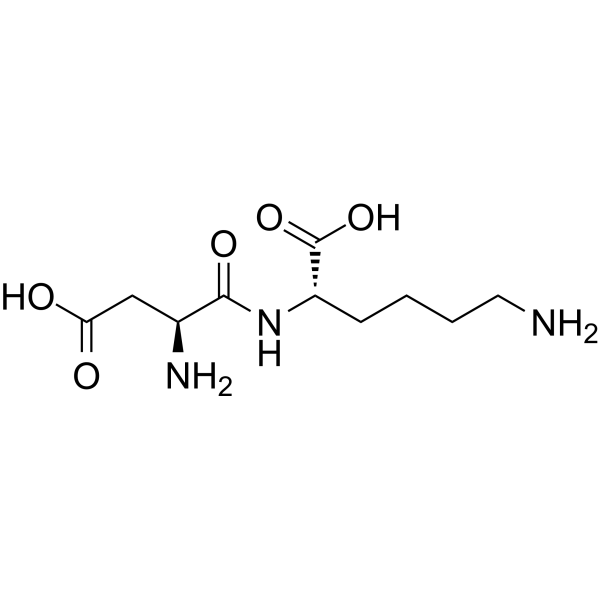
Asp-Lys
" in MedChemExpress (MCE) Product Catalog:
7
Biochemical Assay Reagents
10
Isotope-Labeled Compounds
| Cat. No. |
Product Name |
Target |
Research Areas |
Chemical Structure |
-
- HY-167874
-
|
|
Heme Oxygenase (HO)
NF-κB
Transmembrane Glycoprotein
|
Cardiovascular Disease
|
|
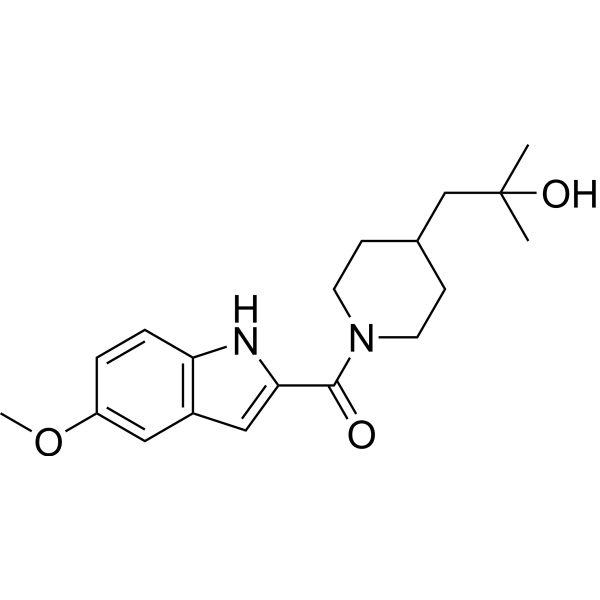
ASP-8731 is an orally active BACH1 inhibitor. ASP-8731 activates antioxidant, anti-inflammatory and globin gene pathways by relieving the inhibitory effect of BACH1 on NRF2-mediated gene transcription. ASP-8731 significantly upregulates the expression of HMOX1, FTH1 and various globins (such as HGB, HBG, HBA), increases fetal hemoglobin (HbF) levels, and effectively induces F-cell production in hydroxyurea-unresponsive cells. Meanwhile, ASP-8731 reduces inflammatory responses and white blood cell counts by downregulating VCAM1, ICAM-1 and the phosphorylation level of NF-κB(p65), and blocks heme-induced glutathione depletion and microcirculatory stasis. ASP-8731 holds potential for inhibiting sickle cell disease and related hematological disorders .
|
-
-
- HY-W094758A
-
|
|
Fluorescent Dye
|
Cancer
|
|
4-Di-1-ASP is a styryl dye used to stain glioma cells in living brain tissue for analysis of cell structure, viability, proliferation and endocytosis, cytokinesis and phagocytosis, as well as for observation of mitochondrial structures in living cells. 4-Di-1-ASP fluoresces green when imaged microscopically (λex /λem = 475/606 nm) .
|
-
-
- HY-19903
-
|
|
17β-HSD
|
Cancer
|
|
ASP-9521 is a potent, selective and orally available AKR1C3 inhibitor with an IC50 of 11 nM for human AKR1C3.
|
-
-
- HY-13326
-
|
|
Anaplastic lymphoma kinase (ALK)
Apoptosis
ROS Kinase
Caspase
PARP
IGF-1R
STAT
Akt
JNK
|
Cancer
|
|
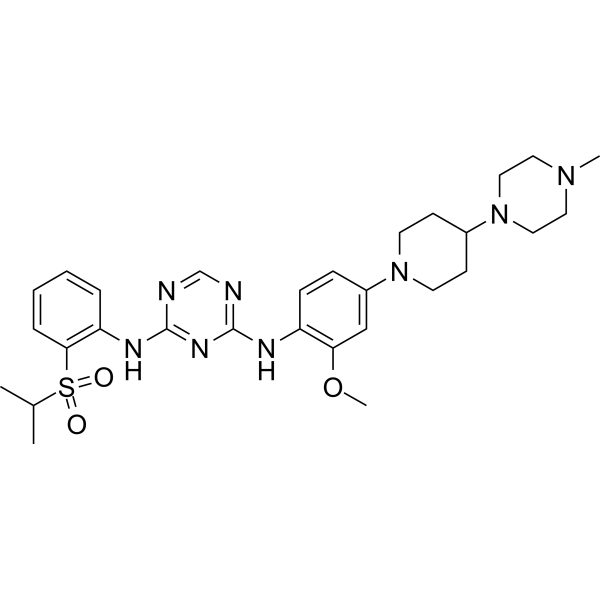
ASP3026 is a selective and orally active inhibitor of anaplastic lymphoma kinase (ALK). ASP3026 is a selective and oral active anaplastic lymphoma kinase (ALK) inhibitor with a IC50 value of 3.5 nM. ASP3026 can inhibit the phosphorylation of IGF-1R, STAT3, AKT and JNK proteins, and induce the cleavage of caspase 3 and PARP. It also inhibited ROS and ACK. ASP3026 can be used in anti-tumor research .
|
-
-
- HY-135009
-
|
DAspI
|
G-quadruplex
|
Others
|
|
2-Di-1-ASP (DASPI; Compound 18a) is a mono-stryryl dye, and widely used as mitochondrial stain and groove-binding fluorescent probes for double-stranded DNA. 2-Di-1-ASP is selective for G-quadruplex (G4) and double-stranded DNA .
|
-
-
- HY-P10004
-
-
-
- HY-D0060
-
|
|
Fluorescent Dye
|
Others
|
|
4-Di-2-ASP, a styryl pyridinium fluorescent dye, is a vital mitochondrial marker. 4-Di-2-ASP shows reliable and specific labelling of pulmonary NEBs (neuroepithelial bodies) .
|
-
-
- HY-101907
-
ASP7663
2 Publications Verification
|
TRP Channel
|
Neurological Disease
|
|
ASP7663 is an orally active and selective TRPA1 agonist. ASP7663 exerts both anti-constipation and anti-abdominal pain actions .
|
-
-
- HY-P1613A
-
|
Cyclo(RGDfV) TFA; C(RGDfV) TFA
|
Integrin
Apoptosis
|
Cancer
|
|
Cyclo(Arg-Gly-Asp-D-Phe-Val) (TFA) (Cyclo(RGDfV) (TFA))is an integrin αvβ3 inhibitor. Cyclo(Arg-Gly-Asp-D-Phe-Val) (TFA) has antitumor activity. Cyclo(Arg-Gly-Asp-D-Phe-Val) (TFA) can be used for the research of acute myeloid leukemia .
|
-
-
- HY-W010959
-
-
-
- HY-W008075
-
-
-
- HY-P2660
-
|
GD4K-na
|
Enteropeptidase
|
Others
|
|
Gly-Asp-Asp-Asp-Asp-Lys-β-naphthylamide (GD4K-na) is a substrate for human enteropeptidase (Km: 0.16 mM) .
|
-
-
- HY-P3823
-
|
|
Influenza Virus
|
Infection
|
|
Asp-Asp-Asp-Asp-Asp-Asp is a polyaspartic acid. The specificity of the catalytic and antigenic sites of influenza virus neuraminidase is related to the number of specific amino acids.
|
-
-
- HY-160888
-
|
|
mAChR
|
Endocrinology
|
|
ASP8302 is a positive and allosteric muscarinic M3 receptor modulator. ASP8302 improves voiding efficiency and reduced residual urine volume in two voiding dysfunction models. ASP8302 can be used for research of underactive bladder .
|
-
-
- HY-136447
-
ASP4132
1 Publications Verification
|
AMPK
|
Cancer
|
|
ASP4132 is an orally active, potent AMPK activator with an EC50 of 18 nM. ASP4132 has anti-cancer activity and makes tumor regression in breast cancer xenograft mouse models .
|
-
-
- HY-W002326
-
-
-
- HY-D1630
-
|
|
Fluorescent Dye
|
Others
|
|
4-Di-10-ASP is a fluorescent lipophilic tracer (Excitation 485 nm; Emission 620 nm). 4-Di-10-ASP can be used to stain phospholipid membranes in a specific manner .
|
-
-
- HY-P5021
-
|
c(RGDfE)
|
Integrin
|
Cancer
|
|
Cyclo(Arg-Gly-Asp-(D-Phe)-Glu) c(RGDfE) is a cyclic RGD peptide targeting integrin αvβ3. Cyclo(Arg-Gly-Asp-(D-Phe)-Glu) is commonly used for modifying drug loaded nanoparticles. Cyclo(Arg-Gly-Asp-(D-Phe)-Glu) is often used in cancer research, such as pancreatic cancer .
|
-
-
- HY-W041982
-
-
-
- HY-137950
-
-
-
- HY-W024554
-
-
-
- HY-30231
-
-
-
- HY-W007399
-
-
-
- HY-W142115
-
-
-
- HY-133876
-
|
DiA
|
Fluorescent Dye
|
Others
|
|
4-Di-16-ASP is a green fluorescent membrane dye. 4-Di-16-ASP is a lipophilic aminostyryl probe with a broad emission spectrum (can be detected with green, orange or even red filters). It is commonly used for neuronal membrane tracing (it diffuses faster than DiO) .
|
-
-
- HY-P4453
-
|
|
Caspase
|
Cancer
|
|
Boc-Ala-Ala-Asp-pNA is a chromogenic substrate of granzyme B. Boc-Ala-Ala-Asp-pNA can be used to test functional activity of granzyme B .
|
-
-
- HY-W018741
-
-
-
- HY-132966
-
ASP2453
1 Publications Verification
|
Ras
ERK
|
Cancer
|
|
ASP2453 is a potent, selective and orally active KRAS G12C inhibitor. ASP2453 inhibits the Son of Sevenless (SOS)-mediated interaction between KRAS G12C and Raf with an IC50 value of 40 nM.
|
-
-
- HY-W018489
-
-
-
- HY-W129833
-
-
-
- HY-W011278
-
-
-
- HY-P3217A
-
|
|
Oxytocin Receptor
|
Endocrinology
|
|
[Asp5]-Oxytocin acetate is the first 5-position neurohypophyseal hormone analogue possessing significant biological activity. [Asp5]-Oxytocin acetate causes uterine contractions in vitro, enhanced by Mg 2+. [Asp5]-Oxytocin acetate has the ability of rat uteroconstrictor, avian vasodilator, and rat antidiuretic .
|
-
-
- HY-179478
-
-
-
- HY-P4389
-
|
|
GLP Receptor
|
Metabolic Disease
|
|
(Asp28)-Glucagon (1-29) (human, rat, porcine) is an optimized structure of glucagon, the 28th position is replaced by aspartic acid (Asp) which significantly increases the aqueous solubility of glucagon in a physiological pH buffer, has the same activity as glucagon .
|
-
-
- HY-W008360
-
-
-
- HY-W008685
-
-
-
- HY-W011703
-
-
-
- HY-W009328
-
-
-
- HY-W011553
-
-
-
- HY-W011126
-
-
-
- HY-124428
-
|
FK881
|
COX
|
Cardiovascular Disease
|
|
ASP6537 is a potent and selective rhCOX-1 inhibitor with an IC50 of 0.703 nM. ASP6537 has the potential for cardiovascular disease research .
|
-
-
- HY-W142117
-
|
|
Fluorescent Dye
|
Others
|
|
H-Asp(AMC)-OH, a amino acid derivative, is a fluorescent dye. H-Asp(AMC)-OH dose not inhibit glycine transport at a concentration of 0.25 mM .
|
-
-
- HY-P1613
-
|
Cyclo(RGDfV); C(RGDfV)
|
Integrin
Apoptosis
|
Cancer
|
|
Cyclo(Arg-Gly-Asp-D-Phe-Val) (Cyclo(RGDfV)) is an integrin αvβ3 inhibitor. Cyclo(Arg-Gly-Asp-D-Phe-Val) has antitumor activity. Cyclo(Arg-Gly-Asp-D-Phe-Val) can be used for the research of acute myeloid leukemia .
|
-
-
- HY-42065
-
-
-
- HY-W017499
-
-
-
- HY-W041996
-
-
-
- HY-W013145
-
-
-
- HY-P3217
-
|
|
Oxytocin Receptor
|
Endocrinology
|
|
[Asp5]-Oxytocin is the first 5-position neurohypophyseal hormone analogue possessing significant biological activity. [Asp5]-Oxytocin causes uterine contractions in vitro, enhanced by Mg 2+. [Asp5]-Oxytocin has the ability of rat uteroconstrictor, avian vasodilator, and rat antidiuretic .
|
-
-
- HY-167084A
-
|
|
mAChR
|
Inflammation/Immunology
|
|
ASP9133 is a long-acting muscarinic antagonist. ASP9133 inhibits bronchoconstriction. ASP9133 can be used for research of Chronic obstructive pulmonary disease (COPD) [1]/ .
|
-
-
- HY-162249
-
|
|
Ras
|
Cancer
|
|
ASP6918 is a potent and orally active KRAS G12C inhibitor with an IC50 value of 0.028 µM. ASP6918 inhibits cell growth. ASP6918 shows antitumor activity .
|
-
- HY-P991603
-
|
|
Integrin
|
Inflammation/Immunology
|
|
ASP5094 is a humanized monoclonal antibody against integrin alpha-9. ASP5094 has good safety and tolerability. ASP5094 can be used in the research of diseases such as rheumatoid arthritis .
|
-
- HY-U00289
-
-
- HY-P4391
-
-
- HY-167677
-
|
|
5-HT Receptor
|
Neurological Disease
|
|
ASP-2205 is a 5-HT2C receptor agonist (human 5-HT2C receptor, EC50=0.85 nM; rat 5-HT2C receptor, EC50=2.5 nM). ASP-2205 enhances the pudendal nerve-mediated urethral closure reflex through the 5-HT2C receptor, thereby preventing urinary incontinence .
|
-
- HY-W105884
-
-
- HY-P5737
-
|
|
Bacterial
|
Infection
|
|
ASP-1 is a strong antistaphylococcal peptide with minimum inhibitory concentrations (MICs) of the purified peptide against S. aureus and methicillin-resistant S. aureus (MRSA) ranged from 2 μg/mL to 64 μg/mL .
|
-
- HY-P991393
-
|
|
Transmembrane Glycoprotein
IFNAR
TNF Receptor
|
Cancer
|
|
ASP8374 is a human IgG4 monoclonal antibody (mAb) targeting TIGIT. ASP8374 increases IL-2 production in Jurkat cells and IFN-γ and TNF-α production in human PBMCs. ASP8374 can be used in advanced solid tumors research. Recommended isotype control: Human IgG4 kappa, Isotype Control (HY-P99003) .
|
-
- HY-W008787
-
-
- HY-Y0029
-
-
- HY-W009840
-
-
- HY-P3823A
-
|
|
Influenza Virus
|
Infection
|
|
Asp-Asp-Asp-Asp-Asp-Asp TFA is a polyaspartic acid. The specificity of the catalytic and antigenic sites of influenza virus neuraminidase is related to the number of specific amino acids.
|
-
- HY-19903R
-
|
|
17β-HSD
Reference Standards
|
Cancer
|
|
ASP-9521 (Standard) is the analytical standard of ASP-9521. This product is intended for research and analytical applications. ASP-9521 is a potent, selective and orally available AKR1C3 inhibitor with an IC50 of 11 nM for human AKR1C3.
|
-
- HY-152210
-
|
|
Cathepsin
|
Cancer
|
|
ASPER-29 is Asperphenamate HY-129578 analog. ASPER-29 also is a dual cathepsin L and S inhibitor with IC50 value of 6.03 μM and 5.02 μM, respectively. ASPER-29 can be used for the research of the migration and invasion of cancer .
|
-
- HY-P991329
-
|
|
Complement System
|
Cancer
|
|
ASP-1948 is a human monoclonal antibody (mAb) targeting NRP1/VEGF165R/CD34. ASP-1948 reverses the suppressive effects of regulatory T cells. ASP-1948 can be used in solid tumors research .
|
-
- HY-P4386
-
|
|
GLP Receptor
|
Metabolic Disease
|
|
(Asp28)-Exenatide is a degradation product of exenatide (HY-13443). (Asp28)-Exenatide can be used as a GLP-1R agonist .
|
-
- HY-P2631
-
|
|
Folate Receptor (FR)
|
Others
|
|
EC119 consists of Pteroic acid-gGlu-Asp-Arg-Asp-Asp-Cys, which is the folate–peptide moiety found within both the EC140 and EC145 structures .
|
-
- HY-W013291A
-
|
|
Amino Acid Derivatives
|
Others
|
|
H-D-Asp(OtBu)-OtBu·HCl is the isomer of H-Asp(OtBu)-OtBu.HCl (HY-W013291), and can be used as an experimental control. H-Asp(OtBu)-OtBu.HCl is an aspartic acid derivative .
|
-
- HY-P3950
-
|
|
Fluorescent Dye
|
Others
|
|
Fluorescent Substrate for Asp-Specific Proteases is a substrate to cleave specifically the Asp-Val bond .
|
-
- HY-177894
-
|
|
Drug Intermediate
|
Others
|
|
Fmoc-Asp(OMpe)-Cbz is a drug intermediate that can be used for the synthesis of Fmoc-Asp(OMpe)-OH.
|
-
- HY-W338079
-
|
|
Caspase
|
Others
|
|
Ac-Asp-Glu-Val-Asp-pNA is a peptidic substrate of caspase-3/7 .
|
-
- HY-P10450
-
|
D2R; (D)2-Rhodamine 110
|
Caspase
|
Others
|
|
(Asp)2-Rhodamine 110 (D2R) is a fluorescent caspase substrate .
|
-
- HY-163991
-
-
- HY-13326R
-
|
|
Anaplastic lymphoma kinase (ALK)
Apoptosis
ROS Kinase
Caspase
PARP
IGF-1R
STAT
Akt
JNK
|
Cancer
|
|
ASP3026 (Standard) is the analytical standard of ASP3026. This product is intended for research and analytical applications. ASP3026 is a selective and orally active inhibitor of anaplastic lymphoma kinase (ALK). ASP3026 is a selective and oral active anaplastic lymphoma kinase (ALK) inhibitor with a IC50 value of 3.5 nM. ASP3026 can inhibit the phosphorylation of IGF-1R, STAT3, AKT and JNK proteins, and induce the cleavage of caspase 3 and PARP. It also inhibited ROS and ACK. ASP3026 can be used in anti-tumor research .
|
-
- HY-171780
-
-
- HY-111294
-
|
|
Dipeptidyl Peptidase
|
Metabolic Disease
|
|
ASP4000 hydrochloride is a potent, competitive, selective, orally active DPP4 inhibitor with an IC50 value of 2.25 nM against human recombinant DPP4. ASP4000 hydrochloride shows antihyperglycemic activity. ASP4000 hydrochloride can be used in the research of type 2 diabetes .
|
-
- HY-Y1169S1
-
|
|
Isotope-Labeled Compounds
|
Others
|
|
Fmoc-Asp(OtBu)-OH- 13C4, 15N is the 13C and 15N labeled Fmoc-Asp(OtBu)-OH . Fmoc-Asp(OtBu)-OH (4-tert-Butyl N-(fluoren-9-ylmethoxycarbonyl)-L-aspartate) is a aspartate derivative containing amine protecting group Fmoc. Fmoc-Asp(OtBu)-OH can be used for peptide synthesis .
|
-
- HY-12290R
-
|
RGDS peptide (Standard); Fibronectin tetrapeptide (Standard)
|
Integrin
Reference Standards
|
Inflammation/Immunology
|
|
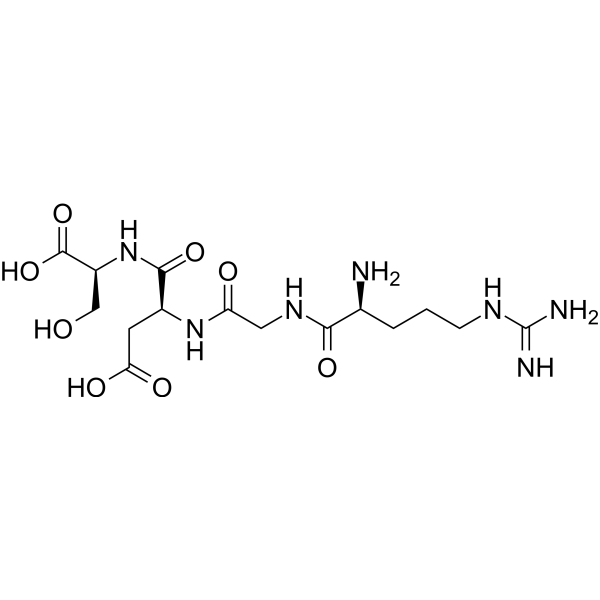
Arg-Gly-Asp-Ser (Standard) is the analytical standard of Arg-Gly-Asp-Ser. This product is intended for research and analytical applications. Arg-Gly-Asp-Ser is an integrin binding sequence that inhibits integrin receptor function. Arg-Gly-Asp-Ser directly and specifically bind pro-caspase-8, pro-caspase-9 and pro-caspase-3, while it does not bind pro-caspase-1.
|
-
- HY-P10147
-
|
|
Caspase
|
Cancer
|
|
Ac-LDESD-AMC is a caspase-2 inhibitor. Ac-LDESD-AMC has a peptide sequence of Leu-Asp-Glu-Ser-Asp .
|
-
- HY-P2306
-
|
|
Biochemical Assay Reagents
|
Others
|
|
Cyclo(Arg-Ala-Asp-D-Phe-Cys), a cyclic RAD peptide, is a positive or negative control peptide of cyclo(Arg-Gly-Asp-D-Phe-Cys) (HY-P2300). Cyclo(Arg-Ala-Asp-D-Phe-Cys) can be used for multicolor ultrasound molecular imaging (USMI) .
|
-
- HY-Y1169S2
-
|
4-tert-Butyl N-(fluoren-9-ylmethoxycarbonyl)-L-Aspartate-d3; Fmoc-L-Asp(OtBu)-OH-d3
|
Isotope-Labeled Compounds
Amino Acid Derivatives
|
Others
|
|
Fmoc-Asp(OtBu)-OH-d3 (4-tert-Butyl N-(fluoren-9-ylmethoxycarbonyl)-L-aspartate-d3) is deuterium labeled Fmoc-Asp(OtBu)-OH. Fmoc-Asp(OtBu)-OH (4-tert-Butyl N-(fluoren-9-ylmethoxycarbonyl)-L-aspartate) is a aspartate derivative containing amine protecting group Fmoc. Fmoc-Asp(OtBu)-OH can be used for peptide synthesis .
|
-
- HY-P4603
-
-
- HY-134563
-
|
|
Caspase
Apoptosis
|
Cancer
|
|
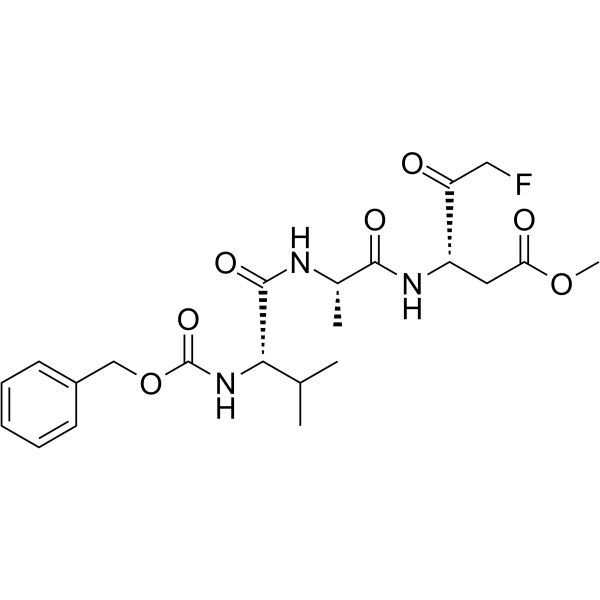
Z-Asp(OMe)-Gln-Met-Asp(OMe)-FMK is an inhibitor for caspase-3, and inhibits Dihydroartemisinin (HY-N0176) and Dictamnine (HY-N0849) co-induced apoptosis .
|
-
- HY-W013659
-
-
- HY-77757
-
-
- HY-186040
-
-
- HY-182092C
-
|
|
Liposome
|
Others
|
|
DSPE-PEG3400-Asp6 is a PEG compound which composed of DSPE and a Asp6 peptide. DSPE-PEG3400-Asp6 achieves bone-targeted delivery of drugs or imaging agents by binding to bone tissue with the Asp6 peptide through high affinity .
|
-
- HY-182092
-
|
|
Liposome
|
Others
|
|
DSPE-PEG1000-Asp6 is a PEG compound which composed of DSPE and a Asp6 peptide. DSPE-PEG1000-Asp6 achieves bone-targeted delivery of drugs or imaging agents by binding to bone tissue with the Asp6 peptide through high affinity .
|
-
- HY-182092A
-
|
|
Liposome
|
Others
|
|
DSPE-PEG5000-Asp6 is a PEG compound which composed of DSPE and a Asp6 peptide. DSPE-PEG5000-Asp6 achieves bone-targeted delivery of drugs or imaging agents by binding to bone tissue with the Asp6 peptide through high affinity .
|
-
- HY-182092B
-
|
|
Liposome
|
Others
|
|
DSPE-PEG2000-Asp6 is a PEG compound which composed of DSPE and a Asp6 peptide. DSPE-PEG2000-Asp6 achieves bone-targeted delivery of drugs or imaging agents by binding to bone tissue with the Asp6 peptide through high affinity .
|
-
- HY-101907R
-
|
|
Reference Standards
TRP Channel
|
Neurological Disease
|
|
ASP7663 (Standard) is the analytical standard of ASP7663 (HY-101907). This product is intended for research and analytical applications. ASP7663 is an orally active and selective TRPA1 agonist. ASP7663 exerts both anti-constipation and anti-abdominal pain actions .
|
-
- HY-P11429
-
|
|
Neurokinin Receptor
|
Metabolic Disease
|
|
[Asp5,6,Me-Phe8] Substance P (5-11) is a tachykinin NK-3 receptor agonist. [Asp5,6,Me-Phe8] Substance P (5-11) reduces alcohol intake in genetically selected alcohol-preferring rats .
|
-
- HY-W011553R
-
|
|
Amino Acid Derivatives
Reference Standards
|
Others
|
|
Z-Asp(OMe)-OH (Standard) is the analytical standard of Z-Asp(OMe)-OH (HY-W011553). This product is intended for research and analytical applications. Z-Asp(OMe)-OH is an aspartic acid derivative .
|
-
- HY-Y1169S
-
|
|
Isotope-Labeled Compounds
Amino Acid Derivatives
|
Others
|
|
Fmoc-Asp(OtBu)-OH- 15N is the 15N-labeled Fmoc-Asp(OtBu)-OH (HY-Y1169). Fmoc-Asp(OtBu)-OH (4-tert-Butyl N-(fluoren-9-ylmethoxycarbonyl)-L-aspartate) is an aspartate derivative containing amine protecting group Fmoc. Fmoc-Asp(OtBu)-OH can be used for peptide synthesis .
|
-
- HY-W013144S
-
-
- HY-W130364
-
|
Pro-Asp
|
Biochemical Assay Reagents
|
Others
|
|
H-Pro-Asp-OH (Pro-asp) is a biochemical reagent that can be used as a biological material or organic compound for life science related research.
|
-
- HY-P992315
-
|
PTZ-522
|
TNF Receptor
|
Cancer
|
|
ASP1951 (PTZ-522) is a monoclonal antibody that targets GITR and is a GITR agonist. ASP1951 can be used for the research of advanced solid tumours .
|
-
- HY-182437
-
|
|
Dopamine Receptor
|
Neurological Disease
|
|
ASP4345 free base is a blood-brain barrier-permeable dopamine D1 receptor modulator. ASP4345 free base binds to the allosteric site of the dopamine D1 receptor, thereby enhancing dopamine activity. ASP4345 free base can be used in the research of schizophrenia and Parkinson's disease .
|
-
- HY-120291
-
|
|
Phosphodiesterase (PDE)
|
Neurological Disease
|
|
ASP9436 is an orally active and blood-brain barrier permeable PDE10A inhibitor with an IC50 of 8 nM against human PDE10A. ASP9436 attenuates locomotor activity in mouse hyperactivity models and ameliorates visual recognition memory impairment in neonatal mice. ASP9436 is applicable to research related to schizophrenia .
|
-
- HY-19568S
-
|
Asp015K-d3; JNJ-54781532-d3
|
Isotope-Labeled Compounds
JAK
|
Inflammation/Immunology
|
|
Peficitinib-d3 (ASP015K-d3) is the deuterium labeled Peficitinib (HY-19568). Peficitinib (ASP015K) is an orally active JAK inhibitor, with IC50s of 3.9, 5.0, 0.7 and 4.8 nM for JAK1, JAK2, JAK3 and Tyk2, respectively .
|
-
- HY-103348R
-
|
Boc-Asp(OMe)-FMK (Standard)
|
Reference Standards
Caspase
|
Inflammation/Immunology
|
|
Boc-Asp(OMe)-fluoromethyl ketone (Standard) is the analytical standard of Boc-Asp(OMe)-fluoromethyl ketone (HY-103348). This product is intended for research and analytical applications. Boc-Asp(OME)-Fluoromethyl Ketone is a broad range caspase inhibitor that inhibits Fas-mediated phagocytosis and oxidative rupture inhibition, but does not affect the chemotactic activity of IL-8 .
|
-
- HY-W007108
-
-
- HY-P2376
-
-
- HY-W013291
-
-
- HY-108942
-
|
|
Adenosine Receptor
|
Cardiovascular Disease
Neurological Disease
|
|
ASP5854 is an orally active, blood-brain barrier permeable adenosine A1/A2a dual receptor antagonist. ASP5854 blocks receptor activity and agonist-induced intracellular calcium elevation, and exhibits the characteristic of slow dissociation from striatal A2a receptors in primates. ASP5854 reverses catalepsy, enhances cognitive ability, improves motor function and exerts neuroprotective effects, while also alleviating dyskinesia and increasing contralateral turning behavior. ASP5854 is mainly used in studies related to ischemic stroke and Parkinson's disease .
|
-
- HY-110176
-
|
|
GlyT
|
Neurological Disease
|
|
ASP2535 is a potent, orally bioavailable, selective, brain permeable and centrally-active glycine transporter-1 (GlyT1) inhibitor. ASP2535 can improve cognitive impairment in animal models of schizophrenia and Alzheimer's disease .
|
-
- HY-P2016
-
|
|
Proteasome
|
Others
|
|
Ac-Nle-Pro-Nle-Asp-AMC is a specific substrate for 26S proteasome. Ac-Nle-Pro-Nle-Asp-AMC can be used for the 26S proteasome caspase-like activity analysis .
|
-
- HY-P4487
-
|
|
Biochemical Assay Reagents
|
Others
|
|
H-Pro-Pro-Asp-NH2 is a potent and selective catalyst for asymmetric aldol reactions. H-Pro-Pro-Asp-NH2 catalyzes aldol reactions between acetone and several aldehydes .
|
-
- HY-P3726
-
|
|
Integrin
|
Inflammation/Immunology
Cancer
|
|
Lys-Gln-Ala-Gly-Asp-Val (KQAGDV) is the six most carboxyl-terminal amino acids in the fibrinogen γ-chain sequence. Lys-Gln-Ala-Gly-Asp-Val is a cell adhesion peptide which is mediated through the α2bβ3 integrin. Lys-Gln-Ala-Gly-Asp-Val is a potent adhesion ligand for smooth muscle cells (SMCs) .
|
-
- HY-P0319
-
|
|
Biochemical Assay Reagents
|
Others
|
|
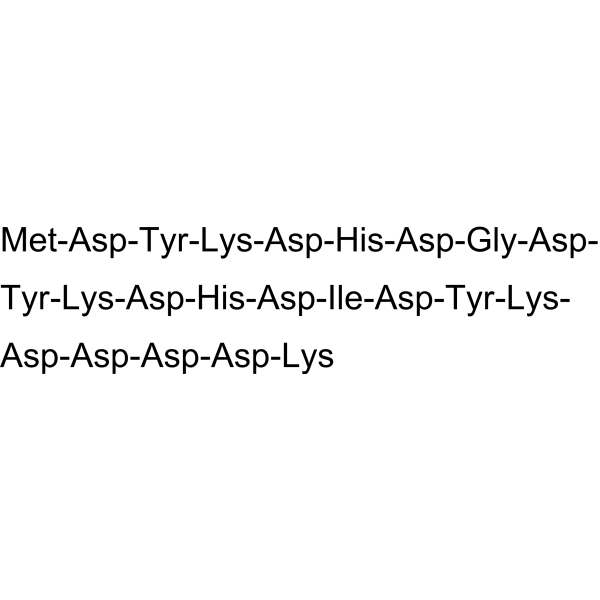
3X FLAG peptides are FLAG-tagged peptides containing three repeats of the Asp-Tyr-Lys-Xaa-Xaa-Asp motif. 3X FLAG peptide can be used for protein separation and purification, and competitive elution with target proteins.
|
-
- HY-N3331
-
|
|
Others
|
Others
|
|
Magnolignan A is a natural lignan found in the heartwood of Streblus asper .
|
-
- HY-W013719
-
-
- HY-W004083
-
-
- HY-W015233
-
-
- HY-W013144
-
-
- HY-W142120
-
-
- HY-W011279
-
-
- HY-W041999
-
-
- HY-W142111
-
-
- HY-122015
-
|
|
Potassium Channel
|
Neurological Disease
|
|
ASP2905 is an orally active potassium channel Kv12.2 inhibitor encoded by the Kcnh3/BEC1 gene. ASP2905 can cross the blood-brain barrier and has antipsychotic activities .
|
-
- HY-W752451
-
|
Asp2151-d6
|
Isotope-Labeled Compounds
HSV
|
Infection
|
|
Amenamevir-d6 (ASP2151-d6) is the deuterium labeled Amenamevir (HY-14809). Amenamevir is a helicase-primase inhibitor which has potent antiviral activity against HSVs with an EC50 of 14 ng/mL.
|
-
- HY-Y1169
-
|
4-tert-Butyl N-(fluoren-9-ylmethoxycarbonyl)-L-Aspartate; Fmoc-L-Asp(OtBu)-OH
|
Amino Acid Derivatives
|
Others
|
|
Fmoc-Asp(OtBu)-OH (4-tert-Butyl N-(fluoren-9-ylmethoxycarbonyl)-L-aspartate) is an aspartate derivative containing amine protecting group Fmoc. Fmoc-Asp(OtBu)-OH can be used for peptide synthesis .
|
-
- HY-111021
-
|
|
LPL Receptor
|
Inflammation/Immunology
|
|
ASP-4058 is a next-generation, selective and oral bioactive agonist for Sphingosine 1-Phosphate receptors 1 and 5 (S1P1 and S1P5), ameliorates rodent experimental autoimmune encephalomyelitis with a favorable safety profile .
|
-
- HY-111021A
-
|
|
LPL Receptor
|
Inflammation/Immunology
|
|
ASP-4058 hydrochloride is a next-generation, selective and orally active agonist for Sphingosine 1-Phosphate receptors 1 and 5 (S1P1 and S1P5), ameliorates rodent experimental autoimmune encephalomyelitis with a favorable safety profile .
|
-
- HY-W141911
-
-
- HY-46859
-
-
- HY-P3351
-
-
- HY-W009426
-
-
- HY-W663527
-
-
- HY-W013740
-
-
- HY-P2300A
-
|
Cyclo(RGDfC) TFA
|
Integrin
|
Cancer
|
|
Cyclo(Arg-Gly-Asp-D-Phe-Cys) (Cyclo RGDfC) TFA, a cyclic RGD peptide which has high affinity to αvβ3, can disrupt cell integrin interactions. Cyclo(Arg-Gly-Asp-D-Phe-Cys) TFA inhibits pluripotent marker expression in embryonic stem cells (ESCs) and the tumorigenic potential of mESCs in vivo. Cyclo(Arg-Gly-Asp-D-Phe-Cys) TFA can be used in the research of tumors .
|
-
- HY-125881
-
|
|
LPL Receptor
|
Inflammation/Immunology
|
|
ASP1126 is a selective and orally active sphingosine-1-phosphate (S1P) agonist, with EC50 values of 7.12 nM, 517 nM for hS1P1 and hS1P3, respectively. ASP1126 decreases the number of peripheral lymphocytes, naive T cells, central memory T cells and effector memory T cells in the peripheral blood. ASP1126 has the potential to be applied in clinical transplantation with improved safety profile .
|
-
- HY-P10925A
-
|
(Z)-FOG-001; I-67
|
β-catenin
|
Cancer
|
|
(Z)-Zolucatetide (I-67) is a β-catenin inhibitor with IC50 ≤50 nM. (Z)-Zolucatetide's sequence is Ac-PL3-Asp-Npg-B5-Asp-3COOHF-Aib-Ala-Phe-Lys3-PyrS2-3Thi-BztA-GlnR3-Ala-NH2. (Z)-Zolucatetide can be used for cancer research .
|
-
- HY-P2300
-
|
Cyclo(RGDfC)
|
Integrin
|
Cancer
|
|
Cyclo(Arg-Gly-Asp-D-Phe-Cys) (Cyclo RGDfC), a cyclic RGD peptide which has high affinity to αvβ3, can disrupt cell integrin interactions. Cyclo(Arg-Gly-Asp-D-Phe-Cys) inhibits pluripotent marker expression in embryonic stem cells (ESCs) and the tumorigenic potential of mESCs in vivo. Cyclo(Arg-Gly-Asp-D-Phe-Cys) can be used in the research of tumors .
|
-
- HY-N2238
-
|
|
Others
|
Metabolic Disease
|
|
Dipsanoside A is a novel tetrairidoid glucoside from Dipsacus asper. Dipsacus asper Wall., a perennial plant widespread in China, has been used in traditional Chinese medicine for hundreds of years as a tonic for refreshment, as a fissiparism promoter of the osseous cells, and as an embryo security agent, etc .
|
-
- HY-123171
-
|
|
Dipeptidyl Peptidase
|
Metabolic Disease
|
|
ASP8497 is a competitive dipeptidyl peptidase IV (DPP-IV) inhibitor that reduces blood glucose levels and increases plasma active GLP-1 and insulin levels without causing hypoglycemia in fasted normal mice. ASP8497 can be utilized for antihyperglycemic research .
|
-
- HY-W650842
-
|
|
Caspase
|
Cancer
|
|
Boc-Asp(OBzl)-CMK is an inhibitor for IL-1 converting enzyme (ICE, caspase1). Boc-Asp(OBzl)-CMK prevents death of CHP100 neuroblastoma cell, and IL-1β release elicited by the viral coat protein .
|
-
- HY-19983
-
ASP5878
1 Publications Verification
|
FGFR
|
Cancer
|
|
ASP5878 is an oral active inhibitor of FGFR 1, 2, 3, and 4, with IC50 values of 0.47 nM, 0.6 nM, 0.74 nM and 3.5 nM for FGFR 1, 2, 3, and 4 kinase activity. ASP5878 has potential antineoplastic activity .
|
-
- HY-P2403
-
-
- HY-N9352
-
|
|
Others
|
Others
|
|
Cantleyoside is a natiural iridoid glycoside that could be found in the Roots of Dipsacus asper .
|
-
- HY-P2404
-
-
- HY-120833
-
|
|
Caspase
|
Others
|
|
Ac-Ile-Glu-Thr-Asp-pNA is a substrate for caspase-8. Caspase-8 binds to and cleaves the Ile-Glu-Thr-Asp (IETD) peptide sequence to release p-nitroalinide, which can be quantified by colorimetric detection at 405 nm as a measure of enzyme activity .
|
-
- HY-P11363
-
|
|
Angiotensin Receptor
|
Cardiovascular Disease
|
|
(Des-Asp1,Ile8)-Angiotensin II is a peptide related to angiotensin II. (Des-Asp1,Ile8)-Angiotensin II can be used for studying the interaction between angiotensin II and its receptors .
|
-
- HY-P0295
-
|
GRGDS
|
Integrin
|
Others
|
|
Gly-Arg-Gly-Asp-Ser (GRGDS) is a pentapeptide that forms the cell-binding domain of a glycoprotein, osteopontin. Gly-Arg-Gly-Asp-Ser binds to integrin receptors αvβ3 and αvβ5 with estimated IC50 of ~5 and ~6.5 μM
|
-
- HY-W016749
-
-
- HY-12290
-
|
RGDS peptide; Fibronectin tetrapeptide
|
Integrin
|
Inflammation/Immunology
|
|
Arg-Gly-Asp-Ser is an integrin binding sequence that inhibits integrin receptor function. Arg-Gly-Asp-Ser directly and specifically bind pro-caspase-8, pro-caspase-9 and pro-caspase-3, while it does not bind pro-caspase-1.
|
-
- HY-P4419
-
|
|
Fluorescent Dye
|
Others
|
|
Boc-Asp(OBzl)-Pro-Arg-AMC is a fluorogenic substrate for the determination of protease activity. Boc-Asp(OBzl)-Pro-Arg-AMC undergoes hydrolysis and releases the fluorescent product 7-amino-4-methylcoumarin (AMC). The excitation and emission wavelengths are 351 nm and 430 nm, respectively .
|
-
- HY-P0295A
-
|
GRGDS TFA
|
Integrin
|
Inflammation/Immunology
|
|
Gly-Arg-Gly-Asp-Ser (TFA) is a pentapeptide that forms the cell-binding domain of a glycoprotein, osteopontin . Gly-Arg-Gly-Asp-Ser binds to integrin receptors αvβ3 and αvβ5 with estimated IC50 of ∼5 and ∼6.5 μM .
|
-
- HY-179477
-
|
|
Amino Acid Derivatives
Drug Intermediate
|
Others
|
|
Fmoc-β-Ala-Asp(OMpe)-OH is a specialized amino acid derivative used in solid-phase peptide synthesis (SPPS). Fmoc-β-Ala-Asp(OMpe)-OH consists of a beta-alanine spacer linked to an aspartic acid residue, where the beta-carboxyl group is protected with a 3-methylpentyl ester (OMpe) to prevent aspartimide formation during synthesis. Fmoc-β-Ala-Asp(OMpe)-OH a useful building block for creating peptides that contain aspartic acid, as the OMpe group is designed to minimize unwanted side reactions .
|
-
- HY-112415
-
-
- HY-P4900
-
|
|
Caspase
|
Others
|
|
Fluorescein-6-carbonyl-Asp(OMe)-Glu(OMe)-Val-DL-Asp(OMe)-fluoromethylketone is a cell-permeable, non-toxic inhibitor that binds irreversibly to activated caspase-3 in apoptotic cells. The fluorescence intensity can be measured by flow cytometry, microwell plate reader, or fluorescence microscopy .
|
-
- HY-N2236
-
|
|
Others
|
Infection
|
|
Dipsanoside B is a novel tetrairidoid glucoside from Dipsacus asper. Dipasandin B shows s an anti-osteoarthritis effect. Dipsacus asper Wall., a perennial plant widespread in China, has been used in traditional Chinese medicine for hundreds of years as a tonic for refreshment, as a fissiparism promoter of the osseous cells, and as an embryo security agent, etc .
|
-
- HY-136733
-
|
Ac-Asp-Asn-Leu-Asp-CHO
|
Caspase
|
Infection
Neurological Disease
|
|
Ac-DNLD-CHO (Ac-Asp-Asn-Leu-Asp-CHO) is a Caspase-3/7 inhibitor (IC50: 9.89, 245 nM respectively; Ki app: 0.68, 55.7 nM respectively). Ac-DNLD-CHO can be used for research of caspase-mediated apoptosis diseases, such as neurodegenerative disorders and viral infection diseases .
|
-
- HY-P4419A
-
|
|
Fluorescent Dye
|
Others
|
|
Boc-Asp(OBzl)-Pro-Arg-AMC acetate is a fluorogenic substrate for the determination of protease activity. Boc-Asp(OBzl)-Pro-Arg-AMC acetate undergoes hydrolysis and releases the fluorescent product 7-amino-4-methylcoumarin (AMC). AMC is fluorescent under UV light and can emit a fluorescent signal .
|
-
- HY-12290A
-
|
RGDS peptide TFA; Fibronectin tetrapeptide TFA
|
Integrin
|
Inflammation/Immunology
|
|
Arg-Gly-Asp-Ser (TFA) is an integrin binding sequence that inhibits integrin receptor function. Arg-Gly-Asp-Ser (TFA) directly and specifically bind pro-caspase-8, pro-caspase-9 and pro-caspase-3, while it does not bind pro-caspase-1 .
|
-
- HY-W554764
-
-
- HY-P4901
-
-
- HY-B1349
-
|
|
Biochemical Assay Reagents
|
Others
|
|
Mepiroxol can form various interactions with key residues of specific proteins. It establishes salt bridges with Arg-153 and Arg-74, and forms two hydrogen bonds with Asp-50 and Gly-96 through its terminal hydroxyl group, these interactions help enhance its binding affinity and lead to a higher docking score .
|
-
- HY-N0240
-
|
|
Ornithine decarboxylase (ODC)
|
Cancer
|
|
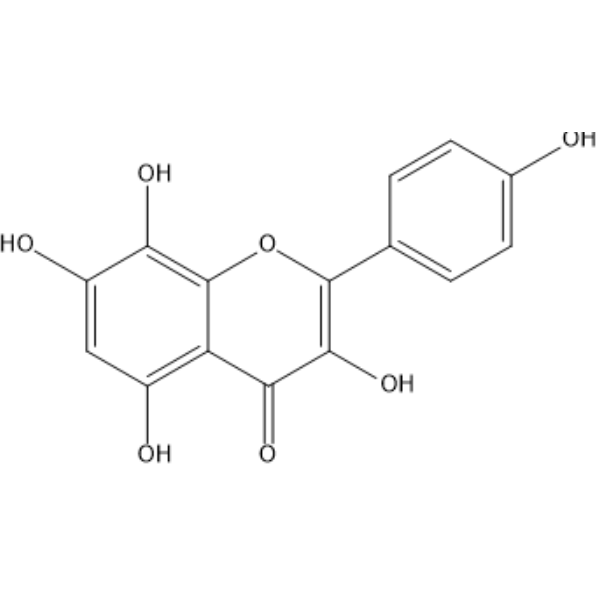
Herbacetin is a natural flavonoid from flaxseed, exerts various pharmacological activities, including antioxidant, anti-inflammatory and anticancer effects . Herbacetin is an Ornithine decarboxylase (ODC) allosteric inhibitor, directly binds to Asp44, Asp243, and Glu384 on ODC. Ornithine decarboxylase (ODC) is a rate-limiting enzyme in the first step of polyamine biosynthesis .
|
-
- HY-P5974
-
|
Z-Tyr-Val-Ala-Asp-pNA
|
Caspase
|
Others
|
|
Z-YVAD-pNA (Z-Tyr-Val-Ala-Asp-pNA) is a caspase-1 substrate .
|
-
- HY-P5023
-
-
- HY-P11201
-
-
- HY-135418
-
|
|
ADC Linker
|
Cancer
|
|
Fmoc-Asp-NH2 is a cleavable ADC linker used in the synthesis of antibody-drug conjugates (ADCs).
|
-
- HY-P4232
-
-
- HY-P3761
-
|
|
Caspase
|
Inflammation/Immunology
|
|
Ac-Tyr-Val-Lys-Asp-aldehyde is a reversible caspase-1 inhibitor. Ac-Tyr-Val-Lys-Asp-aldehyde increases GATA1 levels by inhibiting caspase-1 and promotes erythroid differentiation. can be used for disease research including anemia-associated to chronic diseases, chemotherapy-induced anemia and Diamond-Blackfan anemia .
|
-
- HY-P4403
-
|
(Z-Asp-Glu-Val-Asp)₂-Rhodamine 110
|
Fluorescent Dye
Apoptosis
Caspase
|
Others
|
|
Z-DEVD-R110 ((Z-Asp-Glu-Val-Asp)2-Rhodamine 110) is a fluorogenic caspase-3/7 substrate. Z-DEVD-R110 can be used to detect apoptosis. Z-DEVD-R110 is a rhodamine derivative with two four–amino acid (DEVD) peptides linked to the fuorophore .
|
-
- HY-175860
-
|
|
Target Protein Ligand-Linker Conjugates
Ras
|
Cancer
|
|
KRAS G12D ligand-Linker Conjugate 2 is a conjugate of the KRAS (G12D) ligand (HY-175859) and the linker (HY-168698). KRAS G12D ligand-Linker Conjugate 2 can be used for synthesizing PROTAC KRAS (G12D) degrader ASP-3082 (HY-157505) .
|
-
- HY-124744
-
|
|
FAAH
|
Neurological Disease
|
|
ASP 8477 is an orally active and selective fatty acid amide hydrolase (FAAH) inhibitor with IC50 values of 3.99, 1.65, and 57.3 nM for human FAAH-1, FAAH-1 (P129T), and FAAH-2, respectively. ASP 8477 has central nervous system activity and can be used in analgesia research .
|
-
- HY-P5038
-
|
c(GRGDSP)
|
Integrin
|
Cancer
|
|
Cyclo(Gly-Arg-Gly-Asp-Ser-Pro) (c(GRGDSP)) is an RGD-containing inhibitory peptide. Cyclo(Gly-Arg-Gly-Asp-Ser-Pro) is a synthetic α5β1 integrin ligand that competitively inhibits the binding of invasin (Inv) to α5β1 integrin expressed on Caco-2 cells .
|
-
- HY-N3557
-
|
Leontoside A
|
Fungal
|
Infection
|
|
Cauloside A (Leontoside A) is a saponin isolated from Dipsacus asper roots. Cauloside A has potent antifungal activity .
|
-
- HY-112860
-
-
- HY-P4724
-
-
- HY-P4431
-
|
|
Amino Acid Derivatives
|
Others
|
|
H-Met-Asp-OH is a dipeptide containing methionine and aspartic acid, which can be used for the synthesis of polypeptides .
|
-
- HY-184073
-
|
|
ADC Linker
|
Cancer
|
|
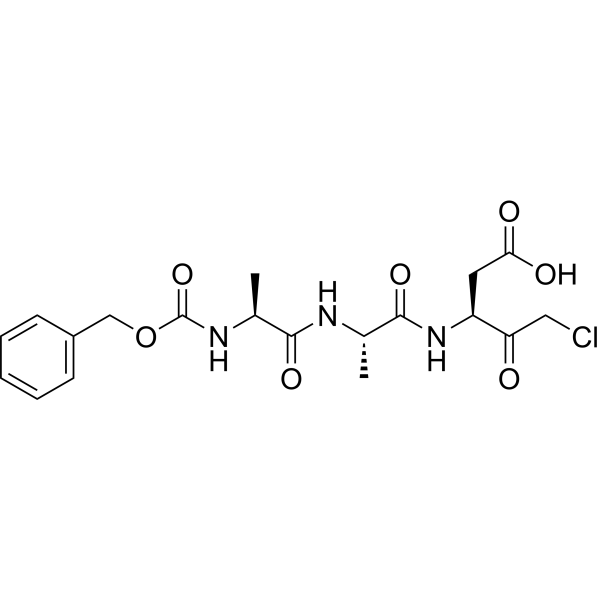
Mal-PEG8-CO-Ala-Ala-Asp-MAA is a linker. Mal-PEG8-CO-Ala-Ala-Asp-MAA can be used to synthesize QHL-1618 (HY-176772). QHL-1618 is a tumor microenvironment-activated conjugate. QHL-1618 inhibits tumor growth in various tumor models .
|
-
- HY-W015824
-
|
DL-Asp-OH
|
Biochemical Assay Reagents
|
Others
|
|
DL-Aspartic acid (DL-Asp-OH) is a kind of biological materials or organic compounds that are widely used in life science research .
|
-
- HY-E70196
-
|
Asp-N
|
MMP
|
Others
|
|
Endoproteinase Asp-N (MS grade) is a metalloprotease that can specifically cleave the N-terminal side of aspartyl and cysteic acid residues .
|
-
- HY-P5023A
-
-
- HY-P4288
-
|
|
Amino Acid Derivatives
|
Others
|
|
Beta-Asp-His is a dipeptide containing aspartic acid and histidine, which can form amino acid derivatives by complexing with Zinc .
|
-
- HY-P4547
-
|
AC-WEHD-AMC
|
Caspase
|
Others
|
|
Ac-Trp-Glu-His-Asp-AMC (AC-WEHD-AMC) is a potent fluorogenic substrate of caspase-1 .
|
-
- HY-P11596
-
|
|
Integrin
|
Cancer
|
|
NOTA-Asp2-αvβ6L is an integrin αvβ6 binder with selective accumulation in αvβ6-positive pancreatic cancer cells and tumors. NOTA-Asp2-αvβ6L can be used as a PET/CT tracer for imaging pancreatic ductal adenocarcinoma (PDAC) .
|
-
- HY-P4022
-
-
- HY-P0309
-
|
|
Integrin
|
Cancer
|
|
Arg-Gly-Glu-Ser is a polypeptide related to RGD and is a negative control for Arg-Gly-Asp-Ser (HY-12290) .
|
-
- HY-P4535
-
-
- HY-P3227
-
|
XJ735
|
Integrin
|
Inflammation/Immunology
|
|
Cyclo(Ala-Arg-Gly-Asp-Mamb) is a selective RGD peptide antagonist and has the potential for Pulmonary arterial hypertension research .
|
-
- HY-142031
-
|
|
Bacterial
|
Infection
|
|
4-Piperidinecarboxamide is a mycobacterial aspartyl-tRNA synthetase (AspS) inhibitor. 4-Piperidinecarboxamide is a promising anti-tuberculosis (TB) agent .
|
-
- HY-P4813
-
-
- HY-P0309A
-
-
- HY-181555
-
|
|
Ras
|
Endocrinology
Cancer
|
|
IACS-56676 is a selective NRAS G12D inhibitor with a target IC50 of 0.031 μM. IACS-56676 stabilizes the p-loop, maintains key interactions with Asp12, Gly60 and Asp69, and achieves selectivity against wild-type KRAS through substitution targeting Leu95. IACS-56676 can be used in the research of melanoma, hematologic malignancies and thyroid cancer .
|
-
- HY-N0240R
-
|
|
Reference Standards
Others
|
Cancer
|
|
Herbacetin (Standard) is the analytical standard of Herbacetin. This product is intended for research and analytical applications. Herbacetin is a natural flavonoid from flaxseed, exerts various pharmacological activities, including antioxidant, anti-inflammatory and anticancer effects . Herbacetin is an Ornithine decarboxylase (ODC) allosteric inhibitor, directly binds to Asp44, Asp243, and Glu384 on ODC. Ornithine decarboxylase (ODC) is a rate-limiting enzyme in the first step of polyamine biosynthesis .
|
-
- HY-P3523
-
|
|
Integrin
|
Others
|
|
KGDS is synthetic peptides, targeting integrin GPIIb-IIIa located on the membrane of human activated platelets. Amino acid sequence: Lys-Gly-Asp-Ser .
|
-
- HY-P11384
-
-
- HY-136727
-
|
|
Caspase
|
Cancer
|
|
Ac-LEVD-CHO is a caspase-4 inhibitor. Ac-LEVD-CHO is a peptide with the sequence of Ac-Leu-Glu-Val-Asp-al .
|
-
- HY-113953
-
|
|
Caspase
Apoptosis
|
Inflammation/Immunology
|
|
Z-Asp-CH2-DCB is an irreversible broad spectrum caspase inhibitor. Z-Asp-CH2-DCB also inhibits proteases with caspase-like activity. Z-D-CH2-DCB blocks the production of IL-1β, TNF-α, IL-6, and IFN-γ in staphylococcal enterotoxin B (SEB)-stimulated peripheral blood mononuclear cells (PBMC), and reduces SEB-1-stimulated T-cell proliferation in a dose-dependent manner. Z-Asp-CH2-DCB prevents SU5416-induced septal cell apoptosis and emphysema development .
|
-
- HY-14894S2
-
|
Asp1941-13C6
|
Isotope-Labeled Compounds
SGLT
|
Metabolic Disease
|
|
Pragliflozin- 13C6 (ASP1941- 13C6) is 13C labeled Ipragliflozin. Ipragliflozin (ASP1941) is an orally active and selective SGLT2 inhibitor with IC50s of 7.38 and 1876 nM, 6.73 and 1166 nM, 5.64 and 1380 nM for human SGLT2 and SGLT1, rat SGLT2 and SGLT1, mouse SGLT2 and SGLT1, respectively. Antidiabetic agent .
|
-
- HY-19803
-
|
Asp8273 mesylate
|
EGFR
|
Cancer
|
|
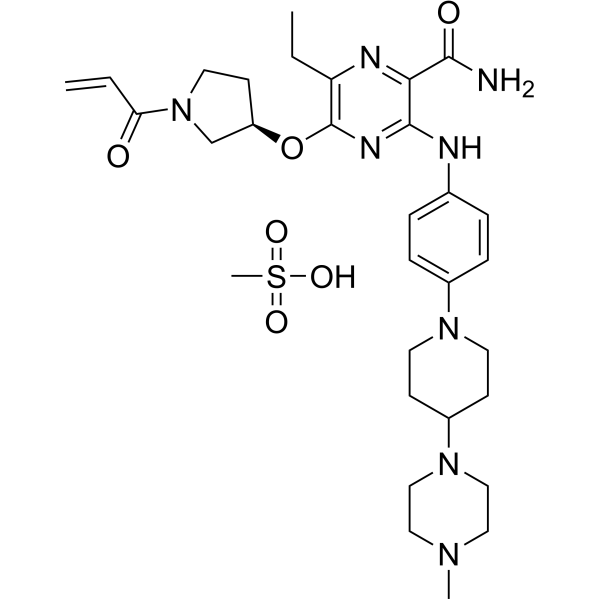
Naquotinib mesylate (ASP8273 mesylate) is an orally available, mutant-selective and irreversible EGFR inhibitor; with IC50s of 8-33 nM toward EGFR mutants and 230 nM for EGFR.
|
-
- HY-19729
-
|
Asp8273
|
EGFR
|
Cancer
|
|
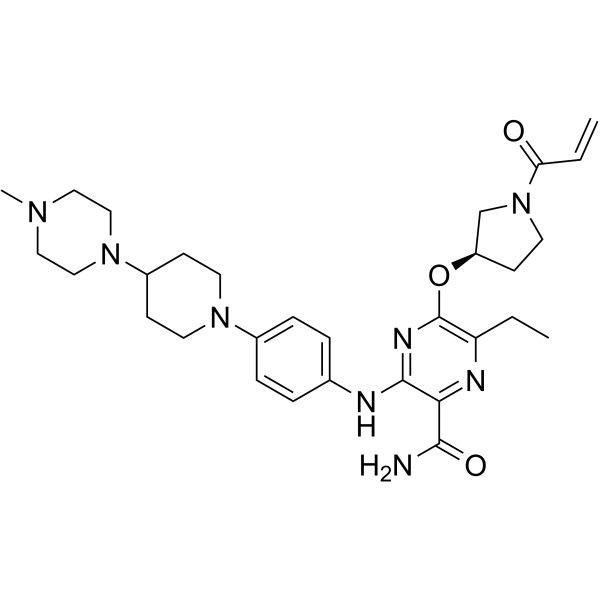
Naquotinib (ASP8273) is an orally available, mutant-selective and irreversible EGFR inhibitor; with IC50s of 8-33 nM toward EGFR mutants and 230 nM for EGFR.
|
-
- HY-12432A
-
|
Asp2215 hemifumarate
|
FLT3
TAM Receptor
|
Cancer
|
|
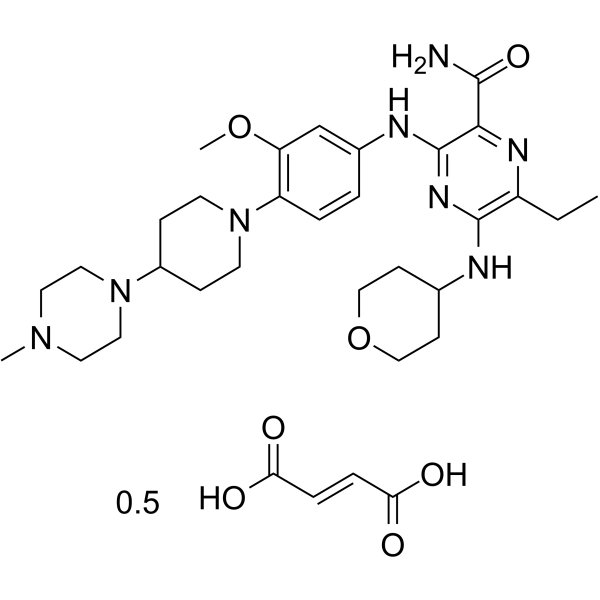
Gilteritinib (ASP2215) hemifumarate is a potent and ATP-competitive FLT3/AXL inhibitor with IC50 of 0.29 nM/0.73 nM, respectively.
|
-
- HY-120598
-
-
- HY-P4665
-
-
- HY-12432
-
|
Asp2215
|
FLT3
TAM Receptor
|
Cancer
|
|
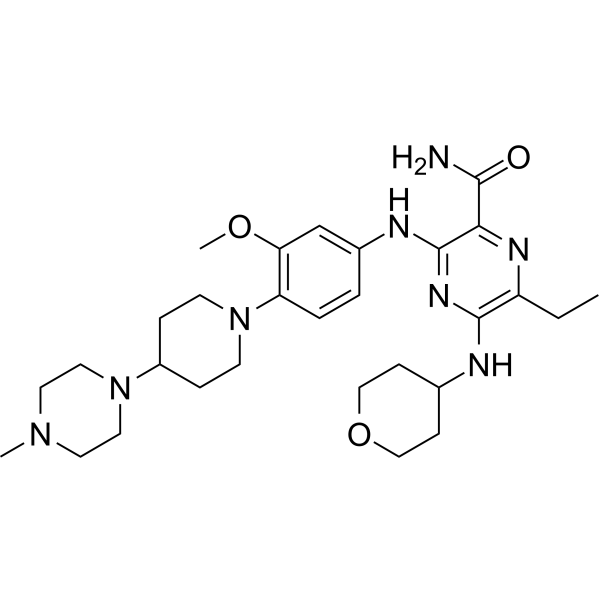
Gilteritinib (ASP2215) is a potent and ATP-competitive FLT3/AXL inhibitor with IC50s of 0.29 nM/0.73 nM, respectively.
|
-
- HY-P4410
-
|
|
Drug Derivative
|
Metabolic Disease
|
|
(D-Asp28)-Exenatide is an Exenatide (HY-13443) impurity. Exenatide is a long-acting glucagon-like peptide-1 receptor agonist .
|
-
- HY-P1008A
-
|
Z-VD(OMe)VAD(OMe)-(DL-Asp)-FMK
|
Caspase
|
Cancer
|
|
Z-VDVA-(DL-Asp)-FMK is a Z-VDVAD-FMK derivative. Z-VDVAD-FMK (HY-P1008) is a special inhibitor of caspase-2 .
|
-
- HY-P10303
-
|
Cyclo[RGDfK(Azide)]
|
Biochemical Assay Reagents
|
Others
|
|
Cyclo[Arg-Gly-Asp-D-Phe-Lys(Azide)] is the derivative of Cyclo(-RGDfK) (HY-P0023). Cyclo[Arg-Gly-Asp-D-Phe-Lys(Azide)] is a click chemistry reagent containing an azide group. Click chemistry has great potential for use in binding between nucleic acids, lipids, proteins, and other molecules, and has been used in many research fields because of its beneficial characteristics, including high yield, high specificity, and simplicity .
|
-
- HY-P3236
-
|
Ac-IEPD-pNA
|
Ser/Thr Protease
|
Cancer
|
|
N-Acetyl-Ile-Glu-Pro-Asp-p-nitroanilide (Ac-IEPD-pNA) is a colorimetric peptide substrate of granzyme B that allows accurate measurement of granzyme B activity .
|
-
- HY-120478
-
|
|
LPL Receptor
|
Infection
|
|
ASP6432 is a potent and selective type 1 lysophosphatidic acid receptor (LPA1) antagonist with IC50s of 11 nM and 30 nM for human LPA1 and rat LPA1, respectively .
|
-
- HY-W011254
-
|
Ac-Val-Ala-Asp-CHO
|
Caspase
|
Cancer
|
|
Ac-VAD-CHO (Ac-Val-Ala-Asp-CHO) is a pan-caspase inhibitor. Ac-VAD-CHO inhibits dissipation of MMP and cytochrome c release in hypoxia-exposed cells .
|
-
- HY-P10001
-
|
Z-Ile-Glu-Thr-Asp-pNA
|
Caspase
|
Cancer
|
|
Z-IETD-pNA (Z-Ile-Glu-Thr-Asp-pNA) is a colorimetric caspase-8 and granzyme B substrate. Z-IETD-pNA is hydrlyzed by caspase 8 to generate pNA .
|
-
- HY-P5996
-
|
|
Fluorescent Dye
|
Others
|
|
MCA-Gly-Asp-Ala-Glu-pTyr-Ala-Ala-Lys(DNP)-Arg-NH2 is a protein tyrosine phosphatase fluorogenic substrate that can be detected at 393 nm (with excitation at 325 nm) .
|
-
- HY-P0110
-
|
(Iso)-Z-Val-Ala-Asp(OMe)-FMK
|
Caspase
|
Cancer
|
|
(Iso)-Z-VAD(OMe)-FMK ((Iso)-Z-Val-Ala-Asp(OMe)-FMK) is an isomer of the caspase and UCHL1 inhibitor Z-VAD(OMe)-FMK (HY-16658) .
|
-
- HY-103348
-
|
Boc-Asp(OMe)-FMK
|
Caspase
|
Inflammation/Immunology
|
|
Boc-Asp(OME)-Fluoromethyl Ketone is a broad range caspase inhibitor that inhibits Fas-mediated phagocytosis and oxidative rupture inhibition, but does not affect the chemotactic activity of IL-8 .
|
-
- HY-W590561
-
|
|
Biochemical Assay Reagents
|
Others
|
|
Fmoc-Asp(biotinyl-PEG)-OH is a biotinylation reagent with a Fmoc-protected amino group. The Fmoc group can be deprotected under basic conditions to obtain the free amine which can be used for further conjugations.
|
-
- HY-P992157
-
|
murine version of Bapineuzumab
|
Amyloid-β
|
Neurological Disease
|
|
Anti-APP/Amyloid beta Antibody (3D6) is an antibody targeting β-amyloid protein (Aβ) containing free Asp1. Anti-APP/Amyloid beta Antibody (3D6) recognizes and binds to the amino acid epitope at positions 1-5 of β-amyloid protein with a free Asp1 residue. Anti-APP/Amyloid beta Antibody (3D6) serves as a detection antibody in immunoblot analysis. Anti-APP/Amyloid beta Antibody (3D6) is applicable to research related to Alzheimer's disease .
|
-
- HY-112535
-
-
- HY-W015824R
-
|
DL-Asp-OH (Standard)
|
Biochemical Assay Reagents
Reference Standards
|
Others
|
|
DL-Aspartic acid (Standard) is the analytical standard of DL-Aspartic acid. This product is intended for research and analytical applications. DL-Aspartic acid (DL-Asp-OH) is a kind of biological materials or organic compounds that are widely used in life science research .
|
-
- HY-P5025
-
|
Azido-c(RGDyK)
|
Drug Intermediate
|
Others
|
|
Cyclo(Arg-Gly-Asp-D-Tyr-ε-azido-Nle) (Azido-c(RGDyK)) is a polypeptide composed of arginine, glycine, aspartic acid, and tyrosine that can be used for Synthesis of [ 18F]FPyKYNE-c(RGDyK) .
|
-
- HY-103248R
-
|
Vengicide (Standard)
|
Reference Standards
IRE1
Fungal
Antibiotic
Apoptosis
CDK
|
Infection
Cancer
|
|
DL-Aspartic acid (Standard) is the analytical standard of DL-Aspartic acid. This product is intended for research and analytical applications. DL-Aspartic acid (DL-Asp-OH) is a kind of biological materials or organic compounds that are widely used in life science research .
|
-
- HY-P4787
-
|
|
Cathepsin
|
Others
|
|
Ac-Glu-Asp(EDANS)-Lys-Pro-Ile-Leu-Phe-Phe-Arg-Leu-Gly-Lys(DABCYL)-Glu-NH2 is a cathepsin D substrate, that can be used for cathepsin D FRET assay .
|
-
- HY-19568B
-
|
Asp015K hydrochloride; JNJ-54781532 hydrochloride
|
JAK
|
Inflammation/Immunology
|
|
Peficitinib (ASP015K) hydrochloride is an orally active JAK inhibitor, with IC50s of 3.9, 5.0, 0.7 and 4.8 nM for JAK1, JAK2, JAK3 and Tyk2, respectively .
|
-
- HY-19568
-
|
Asp015K; JNJ-54781532
|
JAK
|
Inflammation/Immunology
|
|
Peficitinib (ASP015K) is an orally active JAK inhibitor, with IC50s of 3.9, 5.0, 0.7 and 4.8 nM for JAK1, JAK2, JAK3 and Tyk2, respectively .
|
-
- HY-108767
-
|
B28Asp; B28-Asp-insulin; INA-X 14; Insulin X 14
|
Insulin Receptor
Drug Derivative
|
Metabolic Disease
|
|
Insulin aspart (B28Asp) is a rapid-acting h-Insulin (HY-P0035) analog. Insulin aspart induces a faster hypoglycemic effect. Insulin aspart can be used in diabetes-related research .
|
-
- HY-P4787A
-
|
|
Cathepsin
|
Others
|
|
Ac-Glu-Asp(EDANS)-Lys-Pro-Ile-Leu-Phe-Phe-Arg-Leu-Gly-Lys(DABCYL)-Glu-NH2 acetate is a Cathepsin D substrate, that can be used for cathepsin D FRET assay .
|
-
- HY-12432S1
-
|
Asp2215-d8
|
FLT3
TAM Receptor
|
Cancer
|
|
Gilteritinib-d8 is deuterium labeled Gilteritinib. Gilteritinib (ASP2215) is a potent and ATP-competitive FLT3/AXL inhibitor with IC50s of 0.29 nM/0.73 nM, respectively.
|
-
- HY-19568A
-
|
Asp015K hydrobromide; JNJ-54781532 hydrobromide
|
JAK
|
Inflammation/Immunology
|
|
Peficitinib (ASP015K) hydrobromide is an orally active JAK inhibitor, with IC50s of 3.9, 5.0, 0.7 and 4.8 nM for JAK1, JAK2, JAK3 and Tyk2, respectively .
|
-
- HY-P1897A
-
|
|
Integrin
|
Inflammation/Immunology
|
|
Fibronectin active fragment control acetate is an active peptide fragment of fibronectin. Fibronectin is a glycoprotein interacting with integrins. Fibronectin active fragment control acetate can be used as a control for Gly-Arg-Gly-Asp-Ser (HY-P0295) .
|
-
- HY-P1897
-
|
|
Integrin
|
Inflammation/Immunology
|
|
Fibronectin active fragment control is an active peptide fragment of fibronectin. Fibronectin is a glycoprotein interacting with integrins. Fibronectin active fragment control can be used as a control for Gly-Arg-Gly-Asp-Ser (HY-P0295) .
|
-
- HY-P0322
-
|
EMD 56574
|
Integrin
|
Cardiovascular Disease
Metabolic Disease
|
|
GRGDSPK (EMD 56574) is a peptide incluing Arg-Gly-Asp (RGD). GRGDSPK (EMD 56574) is an competitive and reversible inhibitory peptide for inhibiting integrin-fibronectin binding. GRGDSPK is used to study the role of integrins in bone formation and resorption .
|
-
- HY-P3234
-
|
|
Casein Kinase
|
Others
|
|
Ac-ESMD-CHO is an inhibitor of caspase-3 and caspase-7. Ac-ESMD-CHO inhibits proteolytic cleavage of the caspase-3 precursor peptide (CPP32) at the Glu-Ser-Met-Asp (ESMD) site .
|
-
- HY-N15723
-
|
|
Others
|
Others
|
|
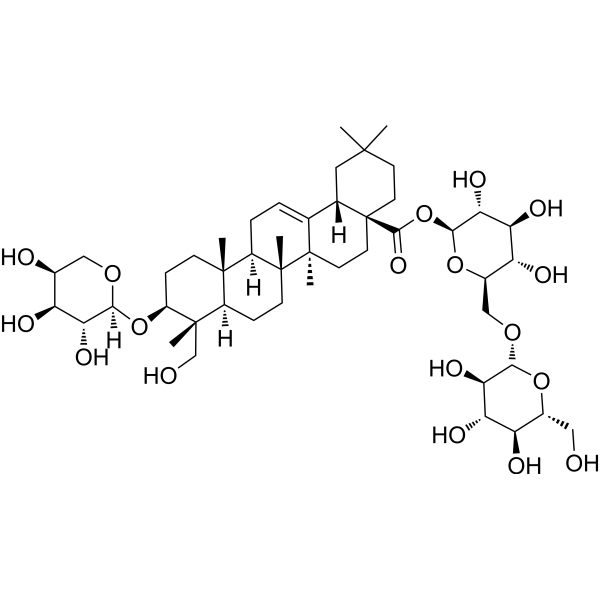
Dipsacus saponin A is an orally active triterpenoid saponin found in the roots of Dipsacus asper. Dipsacus saponin A promotes bone repair by regulating osteoblast activity and inhibiting osteoclast function. Dipsacus saponin A is promising for research of bone diseases such as fracture healing and osteoporosis .
|
-
- HY-P3497
-
|
|
Amino Acid Derivatives
|
Others
|
|
Fmoc-Cys-Asp10 is a non-releasable oligopeptide linker, involves in the synthesis of releasable oligopeptide linker. Releasable oligopeptide linker can be used to deliver agent to a bone fracture-homing oligopeptide and reduces fractured femur healing times .
|
-
- HY-P4896
-
|
|
Integrin
|
Cancer
|
|
FITC-Ahx Gly Arg Gly Asp Ser Pro is a GRGDSP (HY-P0290) coupled to FITC. GRGDSP is an integrin inhibitor that can inhibit the adherence of tumor cells to endothelial cells of blood vessels and limit its metastasis .
|
-
- HY-12432R
-
|
Asp2215 (Standard)
|
Reference Standards
FLT3
TAM Receptor
|
Cancer
|
|
Gilteritinib (Standard) is the analytical standard of Gilteritinib. This product is intended for research and analytical applications. Gilteritinib (ASP2215) is a potent and ATP-competitive FLT3/AXL inhibitor with IC50s of 0.29 nM/0.73 nM, respectively.
|
-
- HY-P0322A
-
|
EMD 56574 TFA
|
Integrin
|
Cardiovascular Disease
Metabolic Disease
|
|
GRGDSPK TFA (EMD 56574 TFA) is a peptide incluing Arg-Gly-Asp (RGD). GRGDSPK TFA is an competitive and reversible inhibitory peptide for inhibiting integrin-fibronectin binding. GRGDSPK TFA is used to study the role of integrins in bone formation and resorption .
|
-
- HY-P3497A
-
|
|
Amino Acid Derivatives
|
Others
|
|
Fmoc-Cys-Asp10 (TFA) is a non-releasable oligopeptide linker, involves in the synthesis of releasable oligopeptide linker. Releasable oligopeptide linker can be used to deliver agent to a bone fracture-homing oligopeptide and reduces fractured femur healing times .
|
-
- HY-P3858
-
|
|
Amyloid-β
|
Neurological Disease
|
|
(D-Asp1)-Amyloid β-Protein (1-42) is a peptide fragment of amyloid β-protein (Aβ). Amyloid β-protein is the primary component of both vascular and parenchymal amyloid deposits in Alzheimer's disease .
|
-
- HY-N11141
-
|
|
Adrenergic Receptor
|
Others
|
|
(R)-Octopamine is a Gs-coupled receptor agonist. (R)-Octopamine binds to the orthosteric site of BmOAR2 and interacts with the Asp115, Ser202 and Tyr300 residues to activate the receptor, which couples to Gs protein and thereby stimulates adenylate cyclase activity .
|
-
- HY-P11652
-
|
|
Biochemical Assay Reagents
|
Others
|
|
Cardiogen is a short biologically active peptide (Ala-Glu-Asp-Arg) that does not bind single-stranded deoxyribooligonucleotides, slightly quenches fluorescence of some double-stranded deoxyribooligonucleotides, strongly quenches fluorescence of methylated and unmethylated λ phage DNA-ethidium bromide complexes .
|
-
- HY-12432AR
-
|
Asp2215 hemifumarate (Standard)
|
FLT3
TAM Receptor
Reference Standards
|
Cancer
|
|
Gilteritinib hemifumarate (Standard) is the analytical standard of Gilteritinib hemifumarate. This product is intended for research and analytical applications. Gilteritinib (ASP2215) hemifumarate is a potent and ATP-competitive FLT3/AXL inhibitor with IC50 of 0.29 nM/0.73 nM, respectively.
|
-
- HY-Y0313S
-
-
- HY-10423
-
|
Asp7486
|
mTOR
Autophagy
|
Cancer
|
|
OSI-027 (ASP7486) is a potent, selective, orally active and ATP-competitive mTOR kinase activity inhibitor with an IC50 of 4 nM. OSI-027 targets both mTORC1 and mTORC2 with IC50s of 22 nM and 65 nM, respectively .
|
-
- HY-N17309
-
|
|
Drug Derivative
|
Others
|
|
3'-O-Acetyl-akebia saponin D (compound 23) is a triterpenoid saponin found in the roots of Dipsacus asper (Radix Dipsaci).3'-O-Acetyl-akebia saponin D is an isomer of 4'-O-acetyl-akebia saponin D .
|
-
- HY-Y0313S1
-
-
- HY-P1816
-
|
|
Integrin
|
Cancer
|
|
The connecting segment 1 (CS-1) is a cell attachment domain located in the type III homology connecting segment (IIICS) of fibronectin. Fibronectin CS1 Peptide lacks the Arg-Gly-Asp-containing domain, actively inhibits tumor metastases in spontaneous and experimental metastasis models .
|
-
- HY-136980
-
|
Asp-Glu
|
Endogenous Metabolite
|
Neurological Disease
|
|
Aspartylglutamate (Asp-Glu) is a dipeptide that exhibits excitatory activity, as it has been shown to depolarize CA1 pyramidal neurons and increase conductance in response to stimulation. Aspartylglutamate selectively binds to certain glutamate receptors and demonstrates potent effects in specific regions of the hippocampus, particularly in the stratum radiatum where it enhances excitatory neurotransmission.
|
-
- HY-P4320
-
|
|
Integrin
|
Cancer
|
|
Cys-Arg-Gly-Asp-Phe-Pro-Ala-Ser-Ser-Cys (Disulfide bridge: Cys1-Cys10), a decapeptide containing a cyclic RGD active sequence, is an Integrin αIIbβ3 antagonist that inhibits platelet and Adhesion of proMMP-13 .
|
-
- HY-P4307
-
|
|
SARS-CoV
|
Infection
|
|
Antioxidant agent-9 is a peptide with the sequence Asp-Trp. Antioxidant agent-9 shows antioxidant activity. Antioxidant agent-9 also is potential as SARS-CoV-2 antiviral, with an affinity strength equal to Chloroquine (HY-17589A) and Favipiravir (HY-14768) .
|
-
- HY-111770
-
|
2-Bromopalmitic acid; 2-Bromopalmitate
|
Pyroptosis
|
Infection
Inflammation/Immunology
Cancer
|
|
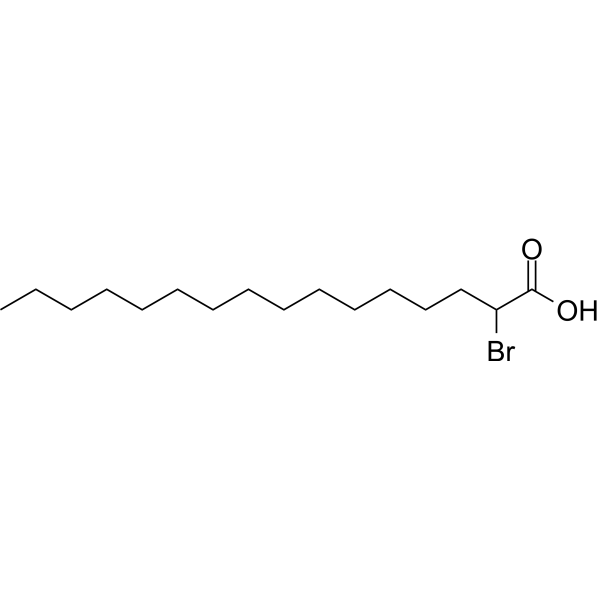
2-Bromohexadecanoic acid (2-Bromopalmitate; 2-BP) is a palmitoylation inhibitor targeting DHHC (Asp-His-His-Cys) protein palmitoyltransferase. 2-Bromohexadecanoic acid inhibits palmitoylation of GSDME-C during pyroptosis and inhibits BAK/BAX-Caspase 3-GSDME pathway-mediated pyroptosis .
|
-
- HY-19568R
-
|
Asp015K (Standard); JNJ-54781532 (Standard)
|
Reference Standards
JAK
|
Inflammation/Immunology
|
|
Peficitinib (Standard) is the analytical standard of Peficitinib. This product is intended for research and analytical applications. Peficitinib (ASP015K) is an orally active JAK inhibitor, with IC50s of 3.9, 5.0, 0.7 and 4.8 nM for JAK1, JAK2, JAK3 and Tyk2, respectively .
|
-
- HY-P3615
-
|
|
Endothelin Receptor
|
Cardiovascular Disease
|
|
[Asn18] Endothelin-1 swine, human is a structural analogue of Endothelin 1 (swine, human) (HY-P0202), with the Asp amino acid at position 18 mutated to Asn. Endothelin 1 (swine, human) is a synthetic peptide with human and porcine endothelin 1 sequences and is a potent endogenous vasoconstrictor .
|
-
- HY-14894
-
|
Asp1941
|
SGLT
|
Metabolic Disease
|
|
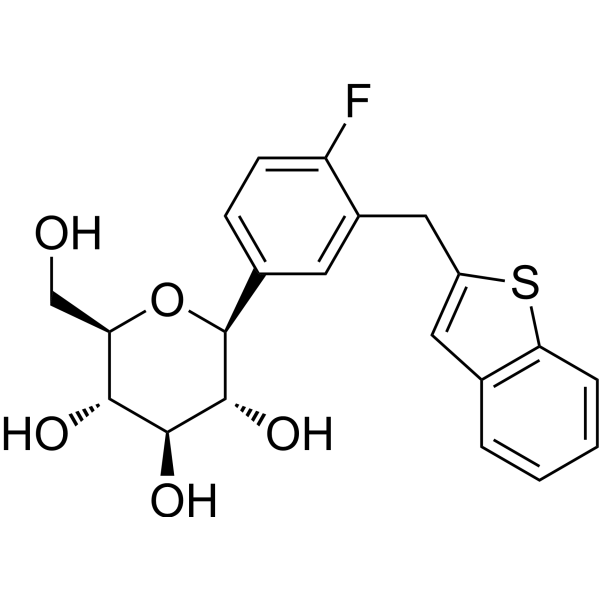
Ipragliflozin (ASP1941) is an orally active and selective SGLT2 inhibitor with IC50s of 7.38 and 1876 nM, 6.73 and 1166 nM, 5.64 and 1380 nM for human SGLT2 and SGLT1, rat SGLT2 and SGLT1, mouse SGLT2 and SGLT1, respectively. Antidiabetic agent .
|
-
- HY-P10215
-
|
|
Parasite
|
Infection
|
|
Ac-{Cpg}-Thr-Ala-{Ala(CO)}-Asp-{Cpg}-NH2 (compound 40) is a potent Plasmodium subtilisin-like protease 1 (SUB1) inhibitor. SUB1-IN-1 shows IC50 values of 12 nM and 10 nM against P. vivax and P. falciparum SUB1 (Pv- and PfSUB1), respectively .
|
-
- HY-16658
-
Z-VAD(OMe)-FMK
Maximum Cited Publications
200 Publications Verification
Z-Val-Ala-Asp(OMe)-FMK
|
Caspase
|
Cancer
|
|
Z-VAD(OMe)-FMK (Z-Val-Ala-Asp(OMe)-FMK) is a cell-permeable and irreversible pan-caspase inhibitor . Z-VAD(OMe)-FMK is an ubiquitin carboxy-terminal hydrolase L1 (UCHL1) inhibitor. Z-VAD(OMe)-FMK irreversibly modifies UCHL1 by targeting the active site of UCHL1 .
|
-
- HY-P99413
-
|
Asp1650
|
HCV
|
Cancer
|
|
IMAB027 (ASP1650) is a specific anti-CLDN6 mAb, while CLDN6 (Claudin 6) is a tight junction membrane protein, aberrantly expressed in various human cancer types, ovarian cancers particularly. IMAB 027 shows anti-tumor activity, and induces apoptosis in CLDN6 + ovarian and testicular cancer cell lines .
|
-
- HY-P990774
-
|
Asp-7266; TRAB-1; UPB-101
|
Interleukin Related
|
Inflammation/Immunology
|
|
Verekitug (ASP-7266; TRAB-1; UPB-101) is a human monoclonal antibody targeting the thymic stromal lymphopoietin receptor (TSLPR), with a mean half-life of approximately 20 days. At doses of Verekitug ≥100 mg, complete and sustained TSLPR-specific occupancy is achieved, and the antibody does not bind to IL-7Rα. By inhibiting TSLP-driven inflammatory responses, Verekitug blocks TSLP-induced cell proliferation and TARC expression, while reducing fractional exhaled NO levels, blood eosinophil counts, and levels of IL-5 and IgE. Verekitug significantly improves scores for nasal polyps, nasal congestion and olfactory dysfunction, with favorable safety and good tolerability; potential adverse reactions include headache, upper respiratory tract infection, sinusitis and nasopharyngitis. Verekitug is used in relevant studies on asthma, chronic rhinosinusitis with nasal polyps and chronic obstructive pulmonary disease .
|
-
- HY-150044
-
|
|
DNA/RNA Synthesis
Topoisomerase
Bacterial
|
Infection
|
|
Type II topoisomerase inhibitor 1 is a potent and selective E. coli DNA gyrase inhibitor (IC50: 1.7 nM), and forms hydrogen bonds with Asp73 residue. Type II topoisomerase inhibitor 1 inhibits topoisomerase IV activity (IC50: 0.98 μM). Type II topoisomerase inhibitor 1 can be used in the research of antibacterial area .
|
-
- HY-182357
-
|
|
PAK
Potassium Channel
|
Others
|
|
PAK1-IN-3 is a PAK1 inhibitor with an IC50 of 10 nM, an IC50 of 20 nM against PAK2, and an IC50 of 1079 nM against hERG potassium channels. PAK1-IN-3 forms a salt bridge with Asp106 in PAK1 via a properly positioned tertiary amine. PAK1-IN-3 inhibits PAK2 and hERG potassium channels .
|
-
- HY-P0178
-
|
|
Integrin
|
Inflammation/Immunology
|
|
LXW7, a cyclic peptide containing Arg-Gly-Asp (RGD), is an integrin αvβ3 inhibitor. LXW7 has a high binding affinity to αvβ3 integrin with an IC50 of 0.68 μM. LXW7 increases phosphorylation of VEGFR-2 and activation of ERK1/2. Anti-inflammatory effect .
|
-
- HY-14894R
-
|
Asp1941 (Standard)
|
Reference Standards
SGLT
|
Metabolic Disease
|
|
Ipragliflozin (Standard) is the analytical standard of Ipragliflozin. This product is intended for research and analytical applications. Ipragliflozin (ASP1941) is an orally active and selective SGLT2 inhibitor with IC50s of 7.38 and 1876 nM, 6.73 and 1166 nM, 5.64 and 1380 nM for human SGLT2 and SGLT1, rat SGLT2 and SGLT1, mouse SGLT2 and SGLT1, respectively. Antidiabetic agent .
|
-
- HY-152086
-
|
|
Dynamin
|
Cardiovascular Disease
|
|
DRP1i27 is a potent inhibitor of human Drp1 (dynamin-related protein 1). DRP1i27 binds to the GTPase site of Drp1, with hydrogen bonds to Gln34 and Asp218. DRP1i27 targets Drp1-mediated mitochondrial fission in cell line models and protects against simulated ischemia-reperfusion injury .
|
-
- HY-10423R
-
|
Asp7486 (Standard)
|
Reference Standards
mTOR
Autophagy
|
Cancer
|
|
OSI-027 (Standard) is the analytical standard of OSI-027 (HY-10423). This product is intended for research and analytical applications. OSI-027 (ASP7486) is a potent, selective, orally active and ATP-competitive mTOR kinase activity inhibitor with an IC50 of 4 nM. OSI-027 targets both mTORC1 and mTORC2 with IC50s of 22 nM and 65 nM, respectively .
|
-
- HY-P0178A
-
|
|
Integrin
|
Inflammation/Immunology
|
|
LXW7 TFA, a cyclic peptide containing Arg-Gly-Asp (RGD), is an integrin αvβ3 inhibitor. LXW7 has a high binding affinity to αvβ3 integrin with an IC50 of 0.68 μM. LXW7 TFA increases phosphorylation of VEGFR-2 and activation of ERK1/2. Anti-inflammatory effect .
|
-
- HY-152086A
-
|
|
Dynamin
|
Cardiovascular Disease
|
|
DRP1i27 dihydrochloride is a potent inhibitor of human Drp1 (dynamin-related protein 1). DRP1i27 dihydrochloride binds to the GTPase site of Drp1, with hydrogen bonds to Gln34 and Asp218. DRP1i27 dihydrochloride targets Drp1-mediated mitochondrial fission in cell line models and protects against simulated ischemia-reperfusion injury .
|
-
- HY-126402
-
|
|
Integrin
|
Cancer
|
|
Arg-Gly-Asp (RGD) is a synthetic peptide corresponding to the cell adhesion sequence for the integrins αVβ1, αVβ3, αVβ5, αVβ6, αVβ8, α8β1, and α5β1. It is a component of radioligands and peptidomimetics that have been used in the study of integrin expression and activity in vivo.
|
-
- HY-P11773
-
|
|
Radionuclide-Drug Conjugates (RDCs)
Integrin
|
Others
|
|
3P-RGD2 is a dimeric cyclic RGD (Arg-Gly-Asp) peptide. When radiolabeled with 99mTc, 3P-RGD2 serves as a selective radiotracer for integrin αvβ3. When radiolabeled with 99mTc, 3P-RGD2 enables single-photon emission computed tomography imaging of integrin αvβ3 .
|
-
- HY-P3732
-
|
|
Integrin
|
Cancer
|
|
RGD-4C is a arginine-glycine-aspartic acid peptide (ACDCRGDCFC) with integrin binding activity. The Arg-Gly-Asp (RGD) sequence serves as the primary integrin recognition site in extracellular matrix proteins, and peptides containing this sequence can mimic the recognition specificity of the matrix proteins. RGD-4C is a αv-integrin ligand, can conjugate with bioactive molecule to exert antitumor effects in animal models .
|
-
- HY-E70894
-
|
|
Endogenous Metabolite
|
Metabolic Disease
|
|
α,γ-Homocysteinase, Trichomonas vaginalis is a pyridoxal-5’-phosphate dependent enzyme. α,γ-Homocysteinase, Trichomonas vaginalis is a mutant of homocysteinase from Trichomonas vaginalis encoded by mgl1 gene, containing three point mutations, such as; Phe47Leu, Asp172Glu, Ser308Tyr. α,γ-Homocysteinase, Trichomonas vaginalis can metabolize homocysteine into α-keto butyrate, hydrogen sulfide and ammonia.
|
-
- HY-183698
-
|
|
CDK
|
Cancer
|
|
CDK9-IN-51 is a CDK9 inhibitor. CDK9-IN-51 binds stably to purified CDK9 protein via interactions with key active-site residues Cys106, Asp109, and Phe103. CDK9-IN-51 exhibits antiproliferative activity against multiple cancer cells. CDK9-IN-51 can be used for the research of cancer, such as lung carcinoma, cervical carcinoma and breast carcinoma .
|
-
- HY-181944
-
|
|
RIP kinase
Necroptosis
|
Cancer
|
|
RIPK1-IN-40 (Compound 51) is a RIPK1 inhibitor and anti-necroptotic agent (with an EC50 of 0.07 μM against necroptosis). RIPK1-IN-40 binds to the kinase domain of RIPK1, forms hydrogen bond interactions with Met95, and establishes additional polar contacts with Asp156 to stabilize binding, thereby inhibiting necroptosis. RIPK1-IN-40 can be used for the research of colorectal cancer .
|
-
- HY-N0265
-
-
- HY-123201
-
|
|
FLT3
|
Cancer
|
|
KRN383 analog is an analog of KRN383. KRN383 is an orally active Flt3 inhibitor that inhibits the autophosphorylation of Flt3 bearing internal tandem duplications (ITDs) and the Asp835Tyr (D835Y) point mutation with IC50 values of < or =5.9 and 43 nM, respectively. KRN383 also inhibits the proliferation of the ITD-positive cell lines with IC50 values of < or =2.9 nM. KRN383 can be used for the research of acute myeloid leukemia .
|
-
- HY-120496
-
|
Asp3662
|
11β-HSD
|
Neurological Disease
Metabolic Disease
|
|
Clofutriben (ASP3662) is a selective, orally active and brain-penetrant 11β-hydroxysteroid dehydrogenase type 1 (11β-HSD1) inhibitor with Ki values of 5.3 nM (human), 2.6 nM (mouse), and 23 nM (rat). Clofutriben inhibits conversion of inactive glucocorticoids to active glucocorticoids, reducing intracellular glucocorticoid exposure. Clofutriben ameliorates neuropathic pain, and restores muscle pressure thresholds in rodent models, while lacking effects in inflammatory pain .
|
-
- HY-153793
-
|
DGKζ-IN-1
|
DGK
IFNAR
Interleukin Related
ERK
|
Cancer
|
|
Alcudacigib (ASP1570; DGKζ-IN-1) is an orally active diacylglycerol kinase ζ (DGKζ) inhibitor, with an IC50 of 4.7 nM against human DGKζ and an IC50 of 3.0 nM against mouse DGKζ. Alcudacigib selectively inhibits the kinase activity of DGKζ and induces proteasome-dependent degradation of DGKζ protein. Alcudacigib enhances the anti-tumor functions of T cells and NK cells. Alcudacigib can be used for the research of advanced/metastatic solid tumors .
|
-
- HY-P991084
-
|
|
PD-1/PD-L1
|
Cancer
|
|
TQB-2858 is a bifunctional fusion protein composed of a monoclonal antibody against PD-L1 fused with the extracellular domain of TGF-β receptor. TQB-2858 has a high affinity for PD-L1, TGF-β1, and TGF-β3 and exhibited high PD-L1 target occupancy. TQB-2858 can be used for the study of osteosarcoma and alveolar soft part sarcoma (ASPS) .
|
-
- HY-P4919
-
|
|
Beta-secretase
|
Others
|
|
Mca-SEVNLDAEFK(Dnp) is a Beta-secretase 1 (BACE-1) peptide FRET substrate, containing the 'Swedish' Lys-Met/Asn-Leu mutation of the amyloid precursor protein (APP) β-secretase cleavage site. Cleavage at -Leu-Asp- of Mca-SEVNLDAEFK(Dnp) liberates the highly fluorescent 7-methoxycoumarin (Mca) fragment from the proximity quenching effect of the 2,4-dinitrophenyl (Dnp) internal quencher resulting in a large and easily detectable increase in fluorescence intensity.
|
-
- HY-134377
-
|
Asp0367; MA-0211
|
PPAR
|
Metabolic Disease
|
|
Bocidelpar (ASP0367; MA-0211) is a selective, orally active PPARδ modulator. Bocidelpar activates the PPARδ downstream signaling pathway, upregulates the expression of target genes such as ABCA1 and ACAA2. Bocidelpar then promotes fatty acid oxidation (FAO) and mitochondrial biogenesis, and improves mitochondrial dysfunction. Bocidelpar can improve mitochondrial biogenesis and function in muscle cells. Bocidelpar is mainly used in the study of mitochondrial dysfunction diseases such as primary mitochondrial myopathy (PMM) and Duchenne muscular dystrophy (DMD) .
|
-
- HY-183282
-
|
|
Deubiquitinase
|
Cancer
|
|
LC-U7-44 is a potent USP7 inhibitor with an IC50 of 0.96 μM. LC-U7-44 binds to the hydrophobic catalytic pocket of USP7, forming hydrogen bonds with Gln297, Arg408, Asp295, Val296, and Gln351, and hydrophobic interactions with Leu406. LC-U7-44 exerts anti-proliferative effects on prostate cancer cells. LC-U7-44 can be used for the research of prostate cancer .
|
-
- HY-153793A
-
|
DGKζ-IN-1 TFA
|
DGK
IFNAR
Interleukin Related
ERK
|
Cancer
|
|
Alcudacigib (ASP1570; DGKζ-IN-1) TFA is an orally active diacylglycerol kinase ζ (DGKζ) inhibitor, with an IC50 of 4.7 nM against human DGKζ and an IC50 of 3.0 nM against mouse DGKζ. Alcudacigib TFA selectively inhibits the kinase activity of DGKζ and induces proteasome-dependent degradation of DGKζ protein. Alcudacigib TFA enhances the anti-tumor functions of T cells and NK cells. Alcudacigib TFA can be used for the research of advanced/metastatic solid tumors .
|
-
- HY-180537
-
|
|
Apoptosis
|
Cancer
|
|
Apoptosis inducer 57 is a apoptosis inducer and Thymidylate Synthase (TS) inhibitor. Apoptosis inducer 57 exhibits cytotoxic activity against SW480 and MCF-7 cancer cells with IC50 values of 15.7 and 16.5 µM, and induces dose-dependent apoptosis and S-phase cell cycle arrest. Apoptosis inducer 57 stalely binds the TS active site via interactions with Asp218 and Met311. TS-IN-9 can be used for breast cancer and colorectal cancer research .
|
-
- HY-N0265R
-
|
Akebia saponin D (Standard)
|
Reference Standards
Caspase
Apoptosis
PERK
Akt
p38 MAPK
HIF/HIF Prolyl-Hydroxylase
PPAR
|
Cardiovascular Disease
Neurological Disease
|
|
Asperosaponin VI (Standard) is the analytical standard of Asperosaponin VI. This product is intended for research and analytical applications. Asperosaponin VI is a saponin component from Dipsacus asper. Asperosaponin VI induces osteoblast differentiation through the BMP-2/p38 and ERK1/2 signaling pathways. Asperosaponin VI protects against hypoxia-induced cardiomyocyte apoptosis by activating the PI3K/Akt and CREB pathways. Additionally, Asperosaponin VI also has antidepressant and wound-healing-promoting activities .
|
-
- HY-P991356
-
|
LAE-005
|
PD-1/PD-L1
|
Cancer
|
|
FAZ-053 is a human monoclonal antibody (mAb) targeting B7-H1/PD-L1/CD274. FAZ-053 inhibits the interaction of PD-L1 with PD-1 and B7-1 on monocytes, dendritic cells, and B cells. FAZ-053 enhances interleukin 2 production. FAZ-053 can be used in advanced alveolar soft tissue sarcoma (ASPS), chordoma, and triple-negative breast cancer research .
|
-
- HY-P2875
-
|
|
Endogenous Metabolite
|
Others
|
|
Hemicellulase is a hemicellulose-targeting hydrolase that breaks down the binding of glucose and polymers to water molecules present in plant fibers. Hemicellulase specifically degrades hemicellulose (such as xylan and mannan) in plant cell walls by hydrolyzing β-1,4-xylosidic bonds and ester bonds (such as acetyl and ferulic acid ester bonds). Hemicellulase relies on the synergistic action of the glycoside hydrolase (GH) and carbohydrate esterase (CE) families to achieve efficient hydrolysis through acid-base catalysis (such as Glu/Asp residues) and substrate binding pockets. Hemicellulase can be used in the food industry (such as improving bread texture), biofuel production (lignocellulose pretreatment) and paper industry (biobleaching) .
|
-
- HY-172815
-
|
|
JNK
Eukaryotic Initiation Factor (eIF)
p38 MAPK
|
Cancer
|
|
IDB-001 is a human ribosomal peptidyl transferase center (PTC) inhibitor that induces conformational changes and blocks translational elongation in specific sequence contexts through complementary interactions with Asp/Glu residues in nascent polypeptides. IDB-001 preferentially stalls ribosomes at positions containing acidic peptide motifs, thereby inhibiting cancer cell proliferation, and activates the integrated stress response via eIF2α phosphorylation at high concentrations. In addition, IDB-001 mildly triggers ribotoxic stress responses through phosphorylation of JNK and p38. IDB-001 has been applied to mechanistic studies of triple-negative breast cancer .
|
-
- HY-148273
-
|
Asp-3082; KRAS G12D inhibitor 17
|
PROTACs
Ras
ERK
Akt
|
Cancer
|
|
Setidegrasib (KRAS G12D inhibitor 17, ASP3082) is a PROTAC KRAS degrader (DC50: 37 nM). Setidegrasib induces the degradation of G12D-mutation KRAS protein. Setidegrasib suppresses p-ERK, p-AKT, p-S6 levels in AsPC-1 cells. Setidegrasib exhibits anti-tumor activity in various cancer xenograft models in mice. Setidegrasib can be used for the study of KRAS(G12D)-mutated solid tumors. (Blue: VHL ligase ligand (HY-168699); Black: linker (HY-168698); Pink: G12D ligand (HY-168700)) .
|
-
- HY-181676
-
|
|
Cathepsin
|
Inflammation/Immunology
|
|
Anti-inflammatory agent 113 (compound B5) is a Cathepsin L (CTSL) inhibitor and anti-inflammatory agent with a CTSL IC50 of 5.52 μM. Anti-inflammatory agent 113 suppresses CTSL maturation, attenuates NF-κB and p38 MAPK signaling pathway activation, and binds stably in CTSL’s active site via noncovalent interactions with Asp162, Cys25, and Glu63. Anti-inflammatory agent 113 inhibits pro-inflammatory cytokine (IL-6, IL-8) production, reduces inflammatory cell lung infiltration, and alleviates lung tissue injury. Anti-inflammatory agent 113 can be used for the research of acute lung injury .
|
-
- HY-113166
-
|
(-)-Lauroylcarnitine
|
Endogenous Metabolite
|
Metabolic Disease
Inflammation/Immunology
|
|
Dodecanoylcarnitine ((-)-Lauroylcarnitine) is a medium long-chain acylcarnitine, an intermediate product in key energy metabolic pathways of fatty acid β-oxidation and amino acids catabolism. The abnormal decrease in the Dodecanoylcarnitine levels indicats that mitochondrial fuel metabolism, including fatty acid oxidation is significantly disturbed. Changes in plasma concentrations of Dodecanoylcarnitine are not only associated with type II diabetes, but also with pre-diabetes status. Dodecanoylcarnitine is present in fatty acid oxidation disorders such as long-chain acyl CoA dehydrogenase deficiency, carnitine palmitoyltransferase I/II deficiency, and is also associated with celiac disease. Dodecanoylcarnitine deomonstrates high sensitivities and specificities in predicting asthma. Combined model of Decanoylcarnitine (HY-113069), Dodecanoylcarnitine, PC (16:0/0:0), and Asp Arg Pro can be used as a potential biomarker for the diagnosis of Yin-deficiency-heat syndrome .
|
-
- HY-183335
-
|
|
Smo
Hedgehog
Gli
Apoptosis
Caspase
|
Cancer
|
|
Anticancer agent 321 is a Smoothened (SMO) inhibitor with a human IC50 of 0.12 μM, enhanced aqueous solubility, good plasma and metabolic stability, moderate therapeutic index, preliminary safety profile, and moderate oral bioavailability in rats.Anticancer agent 321 binds to SMO’s 7-transmembrane helical channel, forming hydrogen bonds with Asp384 and hydrophobic/π-π interactions with His470, Phe391, Tyr394, stabilizing SMO’s inactive conformation to inhibit Hedgehog/GLI signaling.Anticancer agent 321 inhibits proliferation, suppresses colony formation, induces apoptosis, and downregulates Hedgehog/GLI pathway target genes GLI1, GLI2, Ptch1, HHip in cancer cells.Anticancer agent 321 inhibits tumor growth, downregulates Ki67 and SOX2, and upregulates cleaved-caspase 3 in tumor tissues.Anticancer agent 321 can be used for the research of cutaneous squamous cell carcinoma .
|
-
- HY-113166R
-
|
(-)-Lauroylcarnitine (Standard)
|
Reference Standards
Endogenous Metabolite
|
Metabolic Disease
Inflammation/Immunology
|
|
Dodecanoylcarnitine (Standard) is the analytical standard of Dodecanoylcarnitine (HY-113166). This product is intended for research and analytical applications. Dodecanoylcarnitine ((-)-Lauroylcarnitine) is a medium long-chain acylcarnitine, an intermediate product in key energy metabolic pathways of fatty acid β-oxidation and amino acids catabolism. The abnormal decrease in the Dodecanoylcarnitine levels indicats that mitochondrial fuel metabolism, including fatty acid oxidation is significantly disturbed. Changes in plasma concentrations of Dodecanoylcarnitine are not only associated with type II diabetes, but also with pre-diabetes status. Dodecanoylcarnitine is present in fatty acid oxidation disorders such as long-chain acyl CoA dehydrogenase deficiency, carnitine palmitoyltransferase I/II deficiency, and is also associated with celiac disease. Dodecanoylcarnitine deomonstrates high sensitivities and specificities in predicting asthma. Combined model of Decanoylcarnitine (HY-113069), Dodecanoylcarnitine, PC (16:0/0:0), and Asp Arg Pro can be used as a potential biomarker for the diagnosis of Yin-deficiency-heat syndrome .
|
-
- HY-183355
-
|
|
Ras
ERK
Akt
Reactive Oxygen Species (ROS)
Apoptosis
Bcl-2 Family
Caspase
|
Cancer
|
|
KRAS G12D-IN-37 is a KRAS G12D inhibitor. KRAS G12D-IN-37 shows antiproliferative activity against KRAS G12D mutant tumor cells and minimal cytotoxicity toward normal cells. KRAS G12D-IN-37 binds stably to KRAS G12D via hydrogen bond interactions with residues His 95, Arg 68, and Asp 12, and inhibits downstream ERK/AKT signaling pathways. KRAS G12D-IN-37 elevates ROS levels, induces apoptosis, disrupts mitochondrial membrane potential. KRAS G12D-IN-37 downregulates the level of anti-apoptotic protein Bcl-2, and upregulates the levels of pro-apoptotic proteins Bax and caspase 3. KRAS G12D-IN-37 can be used for the research of cancer, such as gastric adenocarcinoma and colorectal cancer .
|
-
- HY-182361
-
|
|
AMPK
JAK
Cadherin
|
Cancer
|
|
NUAK1-IN-3 is a potent and selective NUAK1 inhibitor with an IC50 of 0.49 nM. NUAK1-IN-3 also inhibits NUAK2 and JAK3 with IC50 values of 265 and 225 nM. NUAK1-IN-3 engages Glu139 of NUAK1, forms a salt bridge between its bicyclic ring nitrogen and Asp142, and uses a fluorine atom to enhance hydrophobic binding interactions. NUAK1-IN-3 attenuates MYPT1 phosphorylation, suppresses the NUAK1-MYPT1 signaling axis, and inhibits proliferation, migration, and invasion of triple-negative breast cancer cells. NUAK1-IN-3 reverses TGF-β1-induced epithelial-mesenchymal transition (EMT) marker alterations, downregulates Snail and N-cadherin, and upregulates E-cadherin in tumor tissues. NUAK1-IN-3 suppresses tumor growth in triple-negative breast cancer xenograft models. NUAK1-IN-3 can be used for the research of triple-negative breast cancer .
|
-
| Cat. No. |
Product Name |
Type |
-
- HY-W094758A
-
|
|
Fluorescent Dyes
|
|
4-Di-1-ASP is a styryl dye used to stain glioma cells in living brain tissue for analysis of cell structure, viability, proliferation and endocytosis, cytokinesis and phagocytosis, as well as for observation of mitochondrial structures in living cells. 4-Di-1-ASP fluoresces green when imaged microscopically (λex /λem = 475/606 nm) .
|
-
- HY-135009
-
|
DAspI
|
Fluorescent Dyes
|
|
2-Di-1-ASP (DASPI; Compound 18a) is a mono-stryryl dye, and widely used as mitochondrial stain and groove-binding fluorescent probes for double-stranded DNA. 2-Di-1-ASP is selective for G-quadruplex (G4) and double-stranded DNA .
|
-
- HY-D0060
-
|
|
Fluorescent Dyes
|
|
4-Di-2-ASP, a styryl pyridinium fluorescent dye, is a vital mitochondrial marker. 4-Di-2-ASP shows reliable and specific labelling of pulmonary NEBs (neuroepithelial bodies) .
|
-
- HY-P3236
-
|
Ac-IEPD-pNA
|
Fluorescent Dyes
|
|
N-Acetyl-Ile-Glu-Pro-Asp-p-nitroanilide (Ac-IEPD-pNA) is a colorimetric peptide substrate of granzyme B that allows accurate measurement of granzyme B activity .
|
-
- HY-D1630
-
|
|
Fluorescent Dyes
|
|
4-Di-10-ASP is a fluorescent lipophilic tracer (Excitation 485 nm; Emission 620 nm). 4-Di-10-ASP can be used to stain phospholipid membranes in a specific manner .
|
-
- HY-133876
-
|
DiA
|
Fluorescent Dyes
|
|
4-Di-16-ASP is a green fluorescent membrane dye. 4-Di-16-ASP is a lipophilic aminostyryl probe with a broad emission spectrum (can be detected with green, orange or even red filters). It is commonly used for neuronal membrane tracing (it diffuses faster than DiO) .
|
-
- HY-W142117
-
|
|
Fluorescent Dyes
|
|
H-Asp(AMC)-OH, a amino acid derivative, is a fluorescent dye. H-Asp(AMC)-OH dose not inhibit glycine transport at a concentration of 0.25 mM .
|
-
- HY-W338079
-
|
|
Fluorescent Dyes
|
|
Ac-Asp-Glu-Val-Asp-pNA is a peptidic substrate of caspase-3/7 .
|
| Cat. No. |
Product Name |
Type |
-
- HY-W015824
-
|
DL-Asp-OH
|
Biochemical Assay Reagents
|
|
DL-Aspartic acid (DL-Asp-OH) is a kind of biological materials or organic compounds that are widely used in life science research .
|
-
- HY-163991
-
-
- HY-182092C
-
|
|
Biochemical Assay Reagents
|
|
DSPE-PEG3400-Asp6 is a PEG compound which composed of DSPE and a Asp6 peptide. DSPE-PEG3400-Asp6 achieves bone-targeted delivery of drugs or imaging agents by binding to bone tissue with the Asp6 peptide through high affinity .
|
-
- HY-182092
-
|
|
Biochemical Assay Reagents
|
|
DSPE-PEG1000-Asp6 is a PEG compound which composed of DSPE and a Asp6 peptide. DSPE-PEG1000-Asp6 achieves bone-targeted delivery of drugs or imaging agents by binding to bone tissue with the Asp6 peptide through high affinity .
|
-
- HY-182092A
-
|
|
Biochemical Assay Reagents
|
|
DSPE-PEG5000-Asp6 is a PEG compound which composed of DSPE and a Asp6 peptide. DSPE-PEG5000-Asp6 achieves bone-targeted delivery of drugs or imaging agents by binding to bone tissue with the Asp6 peptide through high affinity .
|
-
- HY-182092B
-
|
|
Biochemical Assay Reagents
|
|
DSPE-PEG2000-Asp6 is a PEG compound which composed of DSPE and a Asp6 peptide. DSPE-PEG2000-Asp6 achieves bone-targeted delivery of drugs or imaging agents by binding to bone tissue with the Asp6 peptide through high affinity .
|
-
- HY-W015824R
-
|
DL-Asp-OH (Standard)
|
Biochemical Assay Reagents
|
|
DL-Aspartic acid (Standard) is the analytical standard of DL-Aspartic acid. This product is intended for research and analytical applications. DL-Aspartic acid (DL-Asp-OH) is a kind of biological materials or organic compounds that are widely used in life science research .
|
| Cat. No. |
Product Name |
Target |
Research Area |
-
- HY-P0319
-
|
|
Biochemical Assay Reagents
|
Others
|
|
3X FLAG peptides are FLAG-tagged peptides containing three repeats of the Asp-Tyr-Lys-Xaa-Xaa-Asp motif. 3X FLAG peptide can be used for protein separation and purification, and competitive elution with target proteins.
|
-
- HY-P0319A
-
|
|
Peptides
|
Others
|
|
3X FLAG peptide TFA is a FLAG-tagged peptide containing three repeats of the Asp-Tyr-Lys-Xaa-Xaa-Asp motif. 3X FLAG peptide TFA can be used for protein separation and purification, and competitive elution with target proteins.
|
-
- HY-Y1169
-
|
4-tert-Butyl N-(fluoren-9-ylmethoxycarbonyl)-L-Aspartate; Fmoc-L-Asp(OtBu)-OH
|
Amino Acid Derivatives
|
Others
|
|
Fmoc-Asp(OtBu)-OH (4-tert-Butyl N-(fluoren-9-ylmethoxycarbonyl)-L-aspartate) is an aspartate derivative containing amine protecting group Fmoc. Fmoc-Asp(OtBu)-OH can be used for peptide synthesis .
|
-
- HY-12290
-
|
RGDS peptide; Fibronectin tetrapeptide
|
Integrin
|
Inflammation/Immunology
|
|
Arg-Gly-Asp-Ser is an integrin binding sequence that inhibits integrin receptor function. Arg-Gly-Asp-Ser directly and specifically bind pro-caspase-8, pro-caspase-9 and pro-caspase-3, while it does not bind pro-caspase-1.
|
-
- HY-P2300
-
|
Cyclo(RGDfC)
|
Integrin
|
Cancer
|
|
Cyclo(Arg-Gly-Asp-D-Phe-Cys) (Cyclo RGDfC), a cyclic RGD peptide which has high affinity to αvβ3, can disrupt cell integrin interactions. Cyclo(Arg-Gly-Asp-D-Phe-Cys) inhibits pluripotent marker expression in embryonic stem cells (ESCs) and the tumorigenic potential of mESCs in vivo. Cyclo(Arg-Gly-Asp-D-Phe-Cys) can be used in the research of tumors .
|
-
- HY-P10004
-
-
- HY-P10925A
-
|
(Z)-FOG-001; I-67
|
β-catenin
|
Cancer
|
|
(Z)-Zolucatetide (I-67) is a β-catenin inhibitor with IC50 ≤50 nM. (Z)-Zolucatetide's sequence is Ac-PL3-Asp-Npg-B5-Asp-3COOHF-Aib-Ala-Phe-Lys3-PyrS2-3Thi-BztA-GlnR3-Ala-NH2. (Z)-Zolucatetide can be used for cancer research .
|
-
- HY-P1613A
-
|
Cyclo(RGDfV) TFA; C(RGDfV) TFA
|
Integrin
Apoptosis
|
Cancer
|
|
Cyclo(Arg-Gly-Asp-D-Phe-Val) (TFA) (Cyclo(RGDfV) (TFA))is an integrin αvβ3 inhibitor. Cyclo(Arg-Gly-Asp-D-Phe-Val) (TFA) has antitumor activity. Cyclo(Arg-Gly-Asp-D-Phe-Val) (TFA) can be used for the research of acute myeloid leukemia .
|
-
- HY-W010959
-
-
- HY-W008075
-
-
- HY-P2660
-
|
GD4K-na
|
Enteropeptidase
|
Others
|
|
Gly-Asp-Asp-Asp-Asp-Lys-β-naphthylamide (GD4K-na) is a substrate for human enteropeptidase (Km: 0.16 mM) .
|
-
- HY-P3823
-
|
|
Influenza Virus
|
Infection
|
|
Asp-Asp-Asp-Asp-Asp-Asp is a polyaspartic acid. The specificity of the catalytic and antigenic sites of influenza virus neuraminidase is related to the number of specific amino acids.
|
-
- HY-W002326
-
-
- HY-P0295
-
|
GRGDS
|
Integrin
|
Others
|
|
Gly-Arg-Gly-Asp-Ser (GRGDS) is a pentapeptide that forms the cell-binding domain of a glycoprotein, osteopontin. Gly-Arg-Gly-Asp-Ser binds to integrin receptors αvβ3 and αvβ5 with estimated IC50 of ~5 and ~6.5 μM
|
-
- HY-P5021
-
|
c(RGDfE)
|
Integrin
|
Cancer
|
|
Cyclo(Arg-Gly-Asp-(D-Phe)-Glu) c(RGDfE) is a cyclic RGD peptide targeting integrin αvβ3. Cyclo(Arg-Gly-Asp-(D-Phe)-Glu) is commonly used for modifying drug loaded nanoparticles. Cyclo(Arg-Gly-Asp-(D-Phe)-Glu) is often used in cancer research, such as pancreatic cancer .
|
-
- HY-W041982
-
-
- HY-137950
-
-
- HY-W024554
-
-
- HY-30231
-
-
- HY-W007399
-
-
- HY-W142115
-
-
- HY-W013144
-
-
- HY-W013740
-
-
- HY-P2300A
-
|
Cyclo(RGDfC) TFA
|
Integrin
|
Cancer
|
|
Cyclo(Arg-Gly-Asp-D-Phe-Cys) (Cyclo RGDfC) TFA, a cyclic RGD peptide which has high affinity to αvβ3, can disrupt cell integrin interactions. Cyclo(Arg-Gly-Asp-D-Phe-Cys) TFA inhibits pluripotent marker expression in embryonic stem cells (ESCs) and the tumorigenic potential of mESCs in vivo. Cyclo(Arg-Gly-Asp-D-Phe-Cys) TFA can be used in the research of tumors .
|
-
- HY-P4453
-
|
|
Caspase
|
Cancer
|
|
Boc-Ala-Ala-Asp-pNA is a chromogenic substrate of granzyme B. Boc-Ala-Ala-Asp-pNA can be used to test functional activity of granzyme B .
|
-
- HY-W018741
-
-
- HY-W018489
-
-
- HY-W011278
-
-
- HY-W007108
-
-
- HY-P2016
-
|
|
Proteasome
|
Others
|
|
Ac-Nle-Pro-Nle-Asp-AMC is a specific substrate for 26S proteasome. Ac-Nle-Pro-Nle-Asp-AMC can be used for the 26S proteasome caspase-like activity analysis .
|
-
- HY-P3726
-
|
|
Integrin
|
Inflammation/Immunology
Cancer
|
|
Lys-Gln-Ala-Gly-Asp-Val (KQAGDV) is the six most carboxyl-terminal amino acids in the fibrinogen γ-chain sequence. Lys-Gln-Ala-Gly-Asp-Val is a cell adhesion peptide which is mediated through the α2bβ3 integrin. Lys-Gln-Ala-Gly-Asp-Val is a potent adhesion ligand for smooth muscle cells (SMCs) .
|
-
- HY-W016749
-
-
- HY-P4305
-
|
|
Peptides
|
Others
|
|
Asp-Lys is a polypeptide that can be found by peptide screening. Peptide screening is a research tool that pools active peptides primarily by immunoassay. Peptide screening can be used for protein interaction, functional analysis, epitope screening, especially in the field of agent research and development .
|
-
- HY-P3217A
-
|
|
Oxytocin Receptor
|
Endocrinology
|
|
[Asp5]-Oxytocin acetate is the first 5-position neurohypophyseal hormone analogue possessing significant biological activity. [Asp5]-Oxytocin acetate causes uterine contractions in vitro, enhanced by Mg 2+. [Asp5]-Oxytocin acetate has the ability of rat uteroconstrictor, avian vasodilator, and rat antidiuretic .
|
-
- HY-P4389
-
|
|
GLP Receptor
|
Metabolic Disease
|
|
(Asp28)-Glucagon (1-29) (human, rat, porcine) is an optimized structure of glucagon, the 28th position is replaced by aspartic acid (Asp) which significantly increases the aqueous solubility of glucagon in a physiological pH buffer, has the same activity as glucagon .
|
-
- HY-W008360
-
-
- HY-W008685
-
-
- HY-W011703
-
-
- HY-W009328
-
-
- HY-W011553
-
-
- HY-W011126
-
-
- HY-W004083
-
-
- HY-W015233
-
-
- HY-W041999
-
-
- HY-P10461
-
|
|
Peptides
|
Others
|
|
Abz-Val-Ala-Asp-Nva-Arg-Asp-Arg-Gln-EDDnp is a fluorescence-quenched peptide substrate for human proteinase 3 (kcat/Km = 1,570 mM -1s -1), and can be used for detection of proteinase 3 (PR3) activity .
|
-
- HY-120833
-
|
|
Caspase
|
Others
|
|
Ac-Ile-Glu-Thr-Asp-pNA is a substrate for caspase-8. Caspase-8 binds to and cleaves the Ile-Glu-Thr-Asp (IETD) peptide sequence to release p-nitroalinide, which can be quantified by colorimetric detection at 405 nm as a measure of enzyme activity .
|
-
- HY-P0321
-
-
- HY-P4313
-
|
|
Peptides
|
Others
|
|
Asp-Val is a dipeptide formed from L-alpha-aspartyl and L-valine residues. Asp-Val has a role as a metabolite. Asp-Val can be isolated from an enzymatic hydrolysate of food proteins .
|
-
- HY-W142117
-
|
|
Fluorescent Dye
|
Others
|
|
H-Asp(AMC)-OH, a amino acid derivative, is a fluorescent dye. H-Asp(AMC)-OH dose not inhibit glycine transport at a concentration of 0.25 mM .
|
-
- HY-P1613
-
|
Cyclo(RGDfV); C(RGDfV)
|
Integrin
Apoptosis
|
Cancer
|
|
Cyclo(Arg-Gly-Asp-D-Phe-Val) (Cyclo(RGDfV)) is an integrin αvβ3 inhibitor. Cyclo(Arg-Gly-Asp-D-Phe-Val) has antitumor activity. Cyclo(Arg-Gly-Asp-D-Phe-Val) can be used for the research of acute myeloid leukemia .
|
- HY-P0314A
-
|
|
Peptides
|
Cardiovascular Disease
|
|
Arg-Gly-Asp-Cys TFA is the binding motif of fibronectin to cell adhesion molecules. Arg-Gly-Asp-Cys TFA can inhibit platelet aggregation and fibrinogen binding .
|
- HY-P4233
-
|
|
Peptides
|
Cancer
|
|
Gly-Arg-Gly-Asp-Ser-NH2 is a pentapeptide with no N-terminal modification. Gly-Arg-Gly-Asp-Ser-NH2 can be coupled to carrriers .
|
- HY-42065
-
- HY-W017499
-
- HY-W041996
-
- HY-W013145
-
- HY-P11363
-
|
|
Angiotensin Receptor
|
Cardiovascular Disease
|
|
(Des-Asp1,Ile8)-Angiotensin II is a peptide related to angiotensin II. (Des-Asp1,Ile8)-Angiotensin II can be used for studying the interaction between angiotensin II and its receptors .
|
- HY-P3217
-
|
|
Oxytocin Receptor
|
Endocrinology
|
|
[Asp5]-Oxytocin is the first 5-position neurohypophyseal hormone analogue possessing significant biological activity. [Asp5]-Oxytocin causes uterine contractions in vitro, enhanced by Mg 2+. [Asp5]-Oxytocin has the ability of rat uteroconstrictor, avian vasodilator, and rat antidiuretic .
|
- HY-P4391
-
- HY-W105884
-
- HY-P5737
-
|
|
Bacterial
|
Infection
|
|
ASP-1 is a strong antistaphylococcal peptide with minimum inhibitory concentrations (MICs) of the purified peptide against S. aureus and methicillin-resistant S. aureus (MRSA) ranged from 2 μg/mL to 64 μg/mL .
|
- HY-W008787
-
- HY-Y0029
-
- HY-W009840
-
- HY-W013291
-
- HY-P2376
-
- HY-W013719
-
- HY-W141911
-
- HY-P3351
-
- HY-P3823A
-
|
|
Influenza Virus
|
Infection
|
|
Asp-Asp-Asp-Asp-Asp-Asp TFA is a polyaspartic acid. The specificity of the catalytic and antigenic sites of influenza virus neuraminidase is related to the number of specific amino acids.
|
- HY-P5029
-
- HY-P4386
-
|
|
GLP Receptor
|
Metabolic Disease
|
|
(Asp28)-Exenatide is a degradation product of exenatide (HY-13443). (Asp28)-Exenatide can be used as a GLP-1R agonist .
|
- HY-P2631
-
|
|
Folate Receptor (FR)
|
Others
|
|
EC119 consists of Pteroic acid-gGlu-Asp-Arg-Asp-Asp-Cys, which is the folate–peptide moiety found within both the EC140 and EC145 structures .
|
- HY-P3950
-
|
|
Fluorescent Dye
|
Others
|
|
Fluorescent Substrate for Asp-Specific Proteases is a substrate to cleave specifically the Asp-Val bond .
|
- HY-P10450
-
|
D2R; (D)2-Rhodamine 110
|
Caspase
|
Others
|
|
(Asp)2-Rhodamine 110 (D2R) is a fluorescent caspase substrate .
|
- HY-12290R
-
|
RGDS peptide (Standard); Fibronectin tetrapeptide (Standard)
|
Integrin
Reference Standards
|
Inflammation/Immunology
|
|
Arg-Gly-Asp-Ser (Standard) is the analytical standard of Arg-Gly-Asp-Ser. This product is intended for research and analytical applications. Arg-Gly-Asp-Ser is an integrin binding sequence that inhibits integrin receptor function. Arg-Gly-Asp-Ser directly and specifically bind pro-caspase-8, pro-caspase-9 and pro-caspase-3, while it does not bind pro-caspase-1.
|
- HY-P10147
-
|
|
Caspase
|
Cancer
|
|
Ac-LDESD-AMC is a caspase-2 inhibitor. Ac-LDESD-AMC has a peptide sequence of Leu-Asp-Glu-Ser-Asp .
|
- HY-P2306
-
|
|
Biochemical Assay Reagents
|
Others
|
|
Cyclo(Arg-Ala-Asp-D-Phe-Cys), a cyclic RAD peptide, is a positive or negative control peptide of cyclo(Arg-Gly-Asp-D-Phe-Cys) (HY-P2300). Cyclo(Arg-Ala-Asp-D-Phe-Cys) can be used for multicolor ultrasound molecular imaging (USMI) .
|
- HY-P4601
-
- HY-P4603
-
- HY-P4529
-
- HY-P4598
-
- HY-P4601A
-
- HY-W013659
-
- HY-77757
-
- HY-P4487
-
|
|
Biochemical Assay Reagents
|
Others
|
|
H-Pro-Pro-Asp-NH2 is a potent and selective catalyst for asymmetric aldol reactions. H-Pro-Pro-Asp-NH2 catalyzes aldol reactions between acetone and several aldehydes .
|
- HY-W011279
-
- HY-W142120
-
- HY-W142111
-
- HY-P3746
-
|
|
Peptides
|
Inflammation/Immunology
|
|
Pentigetide is a sythsis pepetide (Asp-Ser-Asp-Pro-Arg or D-S-D-P-R), also know as “HEPP” for “Human IgE Pentapeptide”. Pentigetide can not produce IgE inhibition in several different systems, due to the aspartic acids in HEPP changed into an asparagine .
|
- HY-W650842
-
|
|
Caspase
|
Cancer
|
|
Boc-Asp(OBzl)-CMK is an inhibitor for IL-1 converting enzyme (ICE, caspase1). Boc-Asp(OBzl)-CMK prevents death of CHP100 neuroblastoma cell, and IL-1β release elicited by the viral coat protein .
|
- HY-P2403
-
- HY-P2404
-
- HY-P4419
-
|
|
Fluorescent Dye
|
Others
|
|
Boc-Asp(OBzl)-Pro-Arg-AMC is a fluorogenic substrate for the determination of protease activity. Boc-Asp(OBzl)-Pro-Arg-AMC undergoes hydrolysis and releases the fluorescent product 7-amino-4-methylcoumarin (AMC). The excitation and emission wavelengths are 351 nm and 430 nm, respectively .
|
- HY-P0295A
-
|
GRGDS TFA
|
Integrin
|
Inflammation/Immunology
|
|
Gly-Arg-Gly-Asp-Ser (TFA) is a pentapeptide that forms the cell-binding domain of a glycoprotein, osteopontin . Gly-Arg-Gly-Asp-Ser binds to integrin receptors αvβ3 and αvβ5 with estimated IC50 of ∼5 and ∼6.5 μM .
|
- HY-P4395
-
|
|
Peptides
|
Others
|
|
(Asp76)-pTH (39-84) (human) is a polypeptide that can be found by peptide screening. Peptide screening is a research tool that pools active peptides primarily by immunoassay. Peptide screening can be used for protein interaction, functional analysis, epitope screening, especially in the field of agent research and development .
|
- HY-P4940
-
|
|
Peptides
|
Others
|
|
Abz-Val-Asn-Leu-Asp-Ala-Glu-EDDnp is a quenched fluorometric substrate .
|
- HY-P11429
-
|
|
Neurokinin Receptor
|
Metabolic Disease
|
|
[Asp5,6,Me-Phe8] Substance P (5-11) is a tachykinin NK-3 receptor agonist. [Asp5,6,Me-Phe8] Substance P (5-11) reduces alcohol intake in genetically selected alcohol-preferring rats .
|
- HY-W011553R
-
|
|
Amino Acid Derivatives
Reference Standards
|
Others
|
|
Z-Asp(OMe)-OH (Standard) is the analytical standard of Z-Asp(OMe)-OH (HY-W011553). This product is intended for research and analytical applications. Z-Asp(OMe)-OH is an aspartic acid derivative .
|
- HY-P11552
-
|
(DSS)6
|
Peptides
|
Metabolic Disease
|
|
(Asp-Ser-Ser)6 ((DSS)6) is an artificially designed bone-targeting peptide. (Asp-Ser-Ser)6 is used as a ligand to modify apoptotic extracellular vesicles (ApoEVs) in order to enhance the bone targeting and efficacy of ApoEVs in the treatment of osteoporosis. (Asp-Ser-Ser)6 can be used for research on osteoporosis .
|
- HY-P4900
-
|
|
Caspase
|
Others
|
|
Fluorescein-6-carbonyl-Asp(OMe)-Glu(OMe)-Val-DL-Asp(OMe)-fluoromethylketone is a cell-permeable, non-toxic inhibitor that binds irreversibly to activated caspase-3 in apoptotic cells. The fluorescence intensity can be measured by flow cytometry, microwell plate reader, or fluorescence microscopy .
|
- HY-136733
-
|
Ac-Asp-Asn-Leu-Asp-CHO
|
Caspase
|
Infection
Neurological Disease
|
|
Ac-DNLD-CHO (Ac-Asp-Asn-Leu-Asp-CHO) is a Caspase-3/7 inhibitor (IC50: 9.89, 245 nM respectively; Ki app: 0.68, 55.7 nM respectively). Ac-DNLD-CHO can be used for research of caspase-mediated apoptosis diseases, such as neurodegenerative disorders and viral infection diseases .
|
- HY-P4419A
-
|
|
Fluorescent Dye
|
Others
|
|
Boc-Asp(OBzl)-Pro-Arg-AMC acetate is a fluorogenic substrate for the determination of protease activity. Boc-Asp(OBzl)-Pro-Arg-AMC acetate undergoes hydrolysis and releases the fluorescent product 7-amino-4-methylcoumarin (AMC). AMC is fluorescent under UV light and can emit a fluorescent signal .
|
- HY-12290A
-
|
RGDS peptide TFA; Fibronectin tetrapeptide TFA
|
Integrin
|
Inflammation/Immunology
|
|
Arg-Gly-Asp-Ser (TFA) is an integrin binding sequence that inhibits integrin receptor function. Arg-Gly-Asp-Ser (TFA) directly and specifically bind pro-caspase-8, pro-caspase-9 and pro-caspase-3, while it does not bind pro-caspase-1 .
|
- HY-P4901
-
- HY-P4727
-
|
DSIP-isoD
|
Peptides
|
Others
|
|
(β-Asp5)-Delta-Sleep Inducing Peptide (DSIP-isoD) is a synthetic polypeptide that can be partially hydrolyzed by NaOH or SDS. (β-Asp5)-Delta-Sleep Inducing Peptide can be used to study the catalytic activity of mitochondrial protein L-isoaspartyl (D-aspartyl) methyltransferase (PIMT) .
|
- HY-P5974
-
|
Z-Tyr-Val-Ala-Asp-pNA
|
Caspase
|
Others
|
|
Z-YVAD-pNA (Z-Tyr-Val-Ala-Asp-pNA) is a caspase-1 substrate .
|
- HY-P5023
-
- HY-P11201
-
- HY-P4232
-
- HY-P3520
-
|
|
Peptides
|
Others
|
|
SDGR is a Ser-Asp-Gly-Arg tetrapeptide sequence that effectively inhibits fibronectin-mediated cell attachment
|
- HY-P3761
-
|
|
Caspase
|
Inflammation/Immunology
|
|
Ac-Tyr-Val-Lys-Asp-aldehyde is a reversible caspase-1 inhibitor. Ac-Tyr-Val-Lys-Asp-aldehyde increases GATA1 levels by inhibiting caspase-1 and promotes erythroid differentiation. can be used for disease research including anemia-associated to chronic diseases, chemotherapy-induced anemia and Diamond-Blackfan anemia .
|
- HY-P4403
-
|
(Z-Asp-Glu-Val-Asp)₂-Rhodamine 110
|
Fluorescent Dye
Apoptosis
Caspase
|
Others
|
|
Z-DEVD-R110 ((Z-Asp-Glu-Val-Asp)2-Rhodamine 110) is a fluorogenic caspase-3/7 substrate. Z-DEVD-R110 can be used to detect apoptosis. Z-DEVD-R110 is a rhodamine derivative with two four–amino acid (DEVD) peptides linked to the fuorophore .
|
- HY-P5038
-
|
c(GRGDSP)
|
Integrin
|
Cancer
|
|
Cyclo(Gly-Arg-Gly-Asp-Ser-Pro) (c(GRGDSP)) is an RGD-containing inhibitory peptide. Cyclo(Gly-Arg-Gly-Asp-Ser-Pro) is a synthetic α5β1 integrin ligand that competitively inhibits the binding of invasin (Inv) to α5β1 integrin expressed on Caco-2 cells .
|
- HY-P4724
-
- HY-P4431
-
|
|
Amino Acid Derivatives
|
Others
|
|
H-Met-Asp-OH is a dipeptide containing methionine and aspartic acid, which can be used for the synthesis of polypeptides .
|
- HY-P5023A
-
- HY-P0314
-
|
|
Peptides
|
Others
|
|
Arg-Gly-Asp-Cys is the binding motif of fibronectin to cell adhesion molecules, and can inhibit platelet aggregation and fibrinogen binding.
|
- HY-P4288
-
|
|
Amino Acid Derivatives
|
Others
|
|
Beta-Asp-His is a dipeptide containing aspartic acid and histidine, which can form amino acid derivatives by complexing with Zinc .
|
- HY-P4547
-
|
AC-WEHD-AMC
|
Caspase
|
Others
|
|
Ac-Trp-Glu-His-Asp-AMC (AC-WEHD-AMC) is a potent fluorogenic substrate of caspase-1 .
|
- HY-P11596
-
|
|
Integrin
|
Cancer
|
|
NOTA-Asp2-αvβ6L is an integrin αvβ6 binder with selective accumulation in αvβ6-positive pancreatic cancer cells and tumors. NOTA-Asp2-αvβ6L can be used as a PET/CT tracer for imaging pancreatic ductal adenocarcinoma (PDAC) .
|
- HY-P4022
-
- HY-P0309
-
|
|
Integrin
|
Cancer
|
|
Arg-Gly-Glu-Ser is a polypeptide related to RGD and is a negative control for Arg-Gly-Asp-Ser (HY-12290) .
|
- HY-P4535
-
- HY-P3227
-
|
XJ735
|
Integrin
|
Inflammation/Immunology
|
|
Cyclo(Ala-Arg-Gly-Asp-Mamb) is a selective RGD peptide antagonist and has the potential for Pulmonary arterial hypertension research .
|
- HY-P4813
-
- HY-P0309A
-
- HY-P3523
-
|
|
Integrin
|
Others
|
|
KGDS is synthetic peptides, targeting integrin GPIIb-IIIa located on the membrane of human activated platelets. Amino acid sequence: Lys-Gly-Asp-Ser .
|
- HY-P11384
-
- HY-136727
-
|
|
Caspase
|
Cancer
|
|
Ac-LEVD-CHO is a caspase-4 inhibitor. Ac-LEVD-CHO is a peptide with the sequence of Ac-Leu-Glu-Val-Asp-al .
|
- HY-P5394
-
|
|
Peptides
|
Others
|
|
Dby HY Peptide (608-622), mouse is a biological active peptide. (Dby HY Peptide, NAGFNSNRANSSRSS, is a HYAb epitope belonging to a well-conserved family of genes coding for known or putative RNA helicases and containing a core sequence with a DEAD (Asp-Glu-Ala-Asp) box peptide motif, hence the name Dby (Dead box RNA helicase Y). The single Phenylalanine in the sequence serves as the anchor point while FNSNRANSS most likely is the “core” sequence of this HYAb epitope.)
|
- HY-P4665
-
- HY-P4410
-
|
|
Drug Derivative
|
Metabolic Disease
|
|
(D-Asp28)-Exenatide is an Exenatide (HY-13443) impurity. Exenatide is a long-acting glucagon-like peptide-1 receptor agonist .
|
- HY-P10303
-
|
Cyclo[RGDfK(Azide)]
|
Biochemical Assay Reagents
|
Others
|
|
Cyclo[Arg-Gly-Asp-D-Phe-Lys(Azide)] is the derivative of Cyclo(-RGDfK) (HY-P0023). Cyclo[Arg-Gly-Asp-D-Phe-Lys(Azide)] is a click chemistry reagent containing an azide group. Click chemistry has great potential for use in binding between nucleic acids, lipids, proteins, and other molecules, and has been used in many research fields because of its beneficial characteristics, including high yield, high specificity, and simplicity .
|
- HY-P3236
-
|
Ac-IEPD-pNA
|
Ser/Thr Protease
|
Cancer
|
|
N-Acetyl-Ile-Glu-Pro-Asp-p-nitroanilide (Ac-IEPD-pNA) is a colorimetric peptide substrate of granzyme B that allows accurate measurement of granzyme B activity .
|
- HY-W011254
-
|
Ac-Val-Ala-Asp-CHO
|
Caspase
|
Cancer
|
|
Ac-VAD-CHO (Ac-Val-Ala-Asp-CHO) is a pan-caspase inhibitor. Ac-VAD-CHO inhibits dissipation of MMP and cytochrome c release in hypoxia-exposed cells .
|
- HY-P10001
-
|
Z-Ile-Glu-Thr-Asp-pNA
|
Caspase
|
Cancer
|
|
Z-IETD-pNA (Z-Ile-Glu-Thr-Asp-pNA) is a colorimetric caspase-8 and granzyme B substrate. Z-IETD-pNA is hydrlyzed by caspase 8 to generate pNA .
|
- HY-P5996
-
|
|
Fluorescent Dye
|
Others
|
|
MCA-Gly-Asp-Ala-Glu-pTyr-Ala-Ala-Lys(DNP)-Arg-NH2 is a protein tyrosine phosphatase fluorogenic substrate that can be detected at 393 nm (with excitation at 325 nm) .
|
- HY-P0110
-
|
(Iso)-Z-Val-Ala-Asp(OMe)-FMK
|
Caspase
|
Cancer
|
|
(Iso)-Z-VAD(OMe)-FMK ((Iso)-Z-Val-Ala-Asp(OMe)-FMK) is an isomer of the caspase and UCHL1 inhibitor Z-VAD(OMe)-FMK (HY-16658) .
|
- HY-P3788
-
|
|
Peptides
|
Others
|
|
Ac-Asp-Tyr(2-malonyl)-Val-Pro-Met-Leu-NH2 is a peptide, can be used to synthesise tyrosine kinase inhibitor for hair growth reduction .
|
- HY-P5025
-
|
Azido-c(RGDyK)
|
Drug Intermediate
|
Others
|
|
Cyclo(Arg-Gly-Asp-D-Tyr-ε-azido-Nle) (Azido-c(RGDyK)) is a polypeptide composed of arginine, glycine, aspartic acid, and tyrosine that can be used for Synthesis of [ 18F]FPyKYNE-c(RGDyK) .
|
- HY-P4787
-
|
|
Cathepsin
|
Others
|
|
Ac-Glu-Asp(EDANS)-Lys-Pro-Ile-Leu-Phe-Phe-Arg-Leu-Gly-Lys(DABCYL)-Glu-NH2 is a cathepsin D substrate, that can be used for cathepsin D FRET assay .
|
- HY-108767
-
|
B28Asp; B28-Asp-insulin; INA-X 14; Insulin X 14
|
Insulin Receptor
Drug Derivative
|
Metabolic Disease
|
|
Insulin aspart (B28Asp) is a rapid-acting h-Insulin (HY-P0035) analog. Insulin aspart induces a faster hypoglycemic effect. Insulin aspart can be used in diabetes-related research .
|
- HY-P4787A
-
|
|
Cathepsin
|
Others
|
|
Ac-Glu-Asp(EDANS)-Lys-Pro-Ile-Leu-Phe-Phe-Arg-Leu-Gly-Lys(DABCYL)-Glu-NH2 acetate is a Cathepsin D substrate, that can be used for cathepsin D FRET assay .
|
- HY-P1897A
-
|
|
Integrin
|
Inflammation/Immunology
|
|
Fibronectin active fragment control acetate is an active peptide fragment of fibronectin. Fibronectin is a glycoprotein interacting with integrins. Fibronectin active fragment control acetate can be used as a control for Gly-Arg-Gly-Asp-Ser (HY-P0295) .
|
- HY-P1897
-
|
|
Integrin
|
Inflammation/Immunology
|
|
Fibronectin active fragment control is an active peptide fragment of fibronectin. Fibronectin is a glycoprotein interacting with integrins. Fibronectin active fragment control can be used as a control for Gly-Arg-Gly-Asp-Ser (HY-P0295) .
|
- HY-P0322
-
|
EMD 56574
|
Integrin
|
Cardiovascular Disease
Metabolic Disease
|
|
GRGDSPK (EMD 56574) is a peptide incluing Arg-Gly-Asp (RGD). GRGDSPK (EMD 56574) is an competitive and reversible inhibitory peptide for inhibiting integrin-fibronectin binding. GRGDSPK is used to study the role of integrins in bone formation and resorption .
|
- HY-P3234
-
|
|
Casein Kinase
|
Others
|
|
Ac-ESMD-CHO is an inhibitor of caspase-3 and caspase-7. Ac-ESMD-CHO inhibits proteolytic cleavage of the caspase-3 precursor peptide (CPP32) at the Glu-Ser-Met-Asp (ESMD) site .
|
- HY-P4324
-
|
|
Peptides
|
Cardiovascular Disease
|
|
Cys-Asp-Pro-Gly-Tyr-Ile-Gly-Ser-Arg-NH2 is a linear peptide from laminin B1 chain that interferes with tumor cell attachment and invasion into basement membrane and has anti-angiogenic effects .
|
- HY-P3497
-
|
|
Amino Acid Derivatives
|
Others
|
|
Fmoc-Cys-Asp10 is a non-releasable oligopeptide linker, involves in the synthesis of releasable oligopeptide linker. Releasable oligopeptide linker can be used to deliver agent to a bone fracture-homing oligopeptide and reduces fractured femur healing times .
|
- HY-P4896
-
|
|
Integrin
|
Cancer
|
|
FITC-Ahx Gly Arg Gly Asp Ser Pro is a GRGDSP (HY-P0290) coupled to FITC. GRGDSP is an integrin inhibitor that can inhibit the adherence of tumor cells to endothelial cells of blood vessels and limit its metastasis .
|
- HY-P4026
-
|
|
Peptides
|
Others
|
|
K(biotinyl)-KEDVV-Abu-CS-Abu-SYKK-NH2 is a peptide that the primary structure is: Lys(biotinyl)-Lys-Glu-Asp-Val-Val-Abu-Cys-Ser-Abu-Ser-Tyr-Lys-Lys-NH2.
|
- HY-P0322A
-
|
EMD 56574 TFA
|
Integrin
|
Cardiovascular Disease
Metabolic Disease
|
|
GRGDSPK TFA (EMD 56574 TFA) is a peptide incluing Arg-Gly-Asp (RGD). GRGDSPK TFA is an competitive and reversible inhibitory peptide for inhibiting integrin-fibronectin binding. GRGDSPK TFA is used to study the role of integrins in bone formation and resorption .
|
- HY-P3497A
-
|
|
Amino Acid Derivatives
|
Others
|
|
Fmoc-Cys-Asp10 (TFA) is a non-releasable oligopeptide linker, involves in the synthesis of releasable oligopeptide linker. Releasable oligopeptide linker can be used to deliver agent to a bone fracture-homing oligopeptide and reduces fractured femur healing times .
|
- HY-P3858
-
|
|
Amyloid-β
|
Neurological Disease
|
|
(D-Asp1)-Amyloid β-Protein (1-42) is a peptide fragment of amyloid β-protein (Aβ). Amyloid β-protein is the primary component of both vascular and parenchymal amyloid deposits in Alzheimer's disease .
|
- HY-P11652
-
|
|
Biochemical Assay Reagents
|
Others
|
|
Cardiogen is a short biologically active peptide (Ala-Glu-Asp-Arg) that does not bind single-stranded deoxyribooligonucleotides, slightly quenches fluorescence of some double-stranded deoxyribooligonucleotides, strongly quenches fluorescence of methylated and unmethylated λ phage DNA-ethidium bromide complexes .
|
- HY-P4412
-
|
|
Peptides
|
Others
|
|
H-Lys-Asp-OH is a polypeptide that can be found by peptide screening. Peptide screening is a research tool that pools active peptides primarily by immunoassay. Peptide screening can be used for protein interaction, functional analysis, epitope screening, especially in the field of agent research and development .
|
- HY-P4377
-
|
|
Peptides
|
Others
|
|
H-Leu-Asp-OH is a polypeptide that can be found by peptide screening. Peptide screening is a research tool that pools active peptides primarily by immunoassay. Peptide screening can be used for protein interaction, functional analysis, epitope screening, especially in the field of agent research and development .
|
- HY-P4501
-
|
|
Peptides
|
Others
|
|
H-Ser-Asp-OH is a polypeptide that can be found by peptide screening. Peptide screening is a research tool that pools active peptides primarily by immunoassay. Peptide screening can be used for protein interaction, functional analysis, epitope screening, especially in the field of agent research and development .
|
- HY-P4472
-
|
Phe-Asp
|
Peptides
|
Others
|
|
H-Phe-Asp-OH is a polypeptide that can be found by peptide screening. Peptide screening is a research tool that pools active peptides primarily by immunoassay. Peptide screening can be used for protein interaction, functional analysis, epitope screening, especially in the field of agent research and development .
|
- HY-P4539
-
|
|
Peptides
|
Others
|
|
H-Thr-Asp-OH is a polypeptide that can be found by peptide screening. Peptide screening is a research tool that pools active peptides primarily by immunoassay. Peptide screening can be used for protein interaction, functional analysis, epitope screening, especially in the field of agent research and development .
|
- HY-P3787
-
|
|
Peptides
|
Metabolic Disease
|
|
Ac-Asp-Tyr(PO3H2)-Val-Pro-Met-Leu-NH2 is the SH2 domain ligand. SH2 domains participate in protein tyrosine kinase (PTK)-mediated cellular signal .
|
- HY-P4660
-
|
|
Peptides
|
Others
|
|
H-Val-Asp-OH is a polypeptide that can be found by peptide screening. Peptide screening is a research tool that pools active peptides primarily by immunoassay. Peptide screening can be used for protein interaction, functional analysis, epitope screening, especially in the field of agent research and development .
|
- HY-P5510
-
|
HCV NS3 protease substrate
|
Peptides
|
Others
|
|
Ac-Asp-Glu-Asp(EDANS)-Glu-Glu-Abu-ψ-(COO)Ala-Ser-Lys(DABCYL)-NH2 (HCV NS3 protease substrate) is a biological active peptide. (This peptide is a HCV protease substrate incorporating an ester bond between residues P1 and P1. Due to ready transesterification of the scissile bond to the acyl-enzyme intermediate, this substrate shows very high kcat/Km values, enabling detection of activity with subnanomolar nonstructural protein 3 (NS3 protease) concentrations. It is widely used for the continuous assay of NS3 protease activity. Substrate cleavage is proportional to the enzyme concentration with a detection limit for NS3 between 1 nM and 250 pM.
|
- HY-P4234
-
|
|
Peptides
|
Others
|
|
H-Gly-Asp-Gly-OH is a polypeptide that can be found by peptide screening. Peptide screening is a research tool that pools active peptides primarily by immunoassay. Peptide screening can be used for protein interaction, functional analysis, epitope screening, especially in the field of agent research and development .
|
- HY-P4258
-
|
|
Peptides
|
Others
|
|
Arg-Gly-Asp-Ser-Pro is a polypeptide that can be found by peptide screening. Peptide screening is a research tool that pools active peptides primarily by immunoassay. Peptide screening can be used for protein interaction, functional analysis, epitope screening, especially in the field of agent research and development .
|
- HY-P1816
-
|
|
Integrin
|
Cancer
|
|
The connecting segment 1 (CS-1) is a cell attachment domain located in the type III homology connecting segment (IIICS) of fibronectin. Fibronectin CS1 Peptide lacks the Arg-Gly-Asp-containing domain, actively inhibits tumor metastases in spontaneous and experimental metastasis models .
|
- HY-P4945
-
|
|
Peptides
|
Others
|
|
Biotinyl-(εAhx)-Gly-Arg-Gly-Asp-Ser is a polypeptide that can be found by peptide screening. Peptide screening is a research tool that pools active peptides primarily by immunoassay. Peptide screening can be used for protein interaction, functional analysis, epitope screening, especially in the field of agent research and development .
|
- HY-P4320
-
|
|
Integrin
|
Cancer
|
|
Cys-Arg-Gly-Asp-Phe-Pro-Ala-Ser-Ser-Cys (Disulfide bridge: Cys1-Cys10), a decapeptide containing a cyclic RGD active sequence, is an Integrin αIIbβ3 antagonist that inhibits platelet and Adhesion of proMMP-13 .
|
- HY-P4730
-
|
|
Peptides
|
Others
|
|
(β-D-Asp28)-Exenatide is a polypeptide that can be found by peptide screening. Peptide screening is a research tool that pools active peptides primarily by immunoassay. Peptide screening can be used for protein interaction, functional analysis, epitope screening, especially in the field of agent research and development .
|
- HY-P4307
-
|
|
SARS-CoV
|
Infection
|
|
Antioxidant agent-9 is a peptide with the sequence Asp-Trp. Antioxidant agent-9 shows antioxidant activity. Antioxidant agent-9 also is potential as SARS-CoV-2 antiviral, with an affinity strength equal to Chloroquine (HY-17589A) and Favipiravir (HY-14768) .
|
- HY-P5000
-
|
H-Asp-Tyr-OH
|
Peptides
|
Others
|
|
Cholecystokinin Octapeptide (1-2) (desulfated) (H-Asp-Tyr-OH) is a polypeptide that can be found by peptide screening. Peptide screening is a research tool that pools active peptides primarily by immunoassay. Peptide screening can be used for protein interaction, functional analysis, epitope screening, especially in the field of agent research and development .
|
- HY-P3615
-
|
|
Endothelin Receptor
|
Cardiovascular Disease
|
|
[Asn18] Endothelin-1 swine, human is a structural analogue of Endothelin 1 (swine, human) (HY-P0202), with the Asp amino acid at position 18 mutated to Asn. Endothelin 1 (swine, human) is a synthetic peptide with human and porcine endothelin 1 sequences and is a potent endogenous vasoconstrictor .
|
- HY-P10215
-
|
|
Parasite
|
Infection
|
|
Ac-{Cpg}-Thr-Ala-{Ala(CO)}-Asp-{Cpg}-NH2 (compound 40) is a potent Plasmodium subtilisin-like protease 1 (SUB1) inhibitor. SUB1-IN-1 shows IC50 values of 12 nM and 10 nM against P. vivax and P. falciparum SUB1 (Pv- and PfSUB1), respectively .
|
- HY-P0178
-
|
|
Integrin
|
Inflammation/Immunology
|
|
LXW7, a cyclic peptide containing Arg-Gly-Asp (RGD), is an integrin αvβ3 inhibitor. LXW7 has a high binding affinity to αvβ3 integrin with an IC50 of 0.68 μM. LXW7 increases phosphorylation of VEGFR-2 and activation of ERK1/2. Anti-inflammatory effect .
|
- HY-P0178A
-
|
|
Integrin
|
Inflammation/Immunology
|
|
LXW7 TFA, a cyclic peptide containing Arg-Gly-Asp (RGD), is an integrin αvβ3 inhibitor. LXW7 has a high binding affinity to αvβ3 integrin with an IC50 of 0.68 μM. LXW7 TFA increases phosphorylation of VEGFR-2 and activation of ERK1/2. Anti-inflammatory effect .
|
- HY-P11773
-
|
|
Radionuclide-Drug Conjugates (RDCs)
Integrin
|
Others
|
|
3P-RGD2 is a dimeric cyclic RGD (Arg-Gly-Asp) peptide. When radiolabeled with 99mTc, 3P-RGD2 serves as a selective radiotracer for integrin αvβ3. When radiolabeled with 99mTc, 3P-RGD2 enables single-photon emission computed tomography imaging of integrin αvβ3 .
|
- HY-P3732
-
|
|
Integrin
|
Cancer
|
|
RGD-4C is a arginine-glycine-aspartic acid peptide (ACDCRGDCFC) with integrin binding activity. The Arg-Gly-Asp (RGD) sequence serves as the primary integrin recognition site in extracellular matrix proteins, and peptides containing this sequence can mimic the recognition specificity of the matrix proteins. RGD-4C is a αv-integrin ligand, can conjugate with bioactive molecule to exert antitumor effects in animal models .
|
- HY-P4919
-
|
|
Beta-secretase
|
Others
|
|
Mca-SEVNLDAEFK(Dnp) is a Beta-secretase 1 (BACE-1) peptide FRET substrate, containing the 'Swedish' Lys-Met/Asn-Leu mutation of the amyloid precursor protein (APP) β-secretase cleavage site. Cleavage at -Leu-Asp- of Mca-SEVNLDAEFK(Dnp) liberates the highly fluorescent 7-methoxycoumarin (Mca) fragment from the proximity quenching effect of the 2,4-dinitrophenyl (Dnp) internal quencher resulting in a large and easily detectable increase in fluorescence intensity.
|
- HY-P5365
-
|
|
Peptides
|
Others
|
|
[Asn23] β-Amyloid (1-40), Iowa mutation is a biological active peptide. (Several mutations in the beta amyloid precursor gene cause autosomal dominant Alzheimer's Disease in a number of kindreds. The Iowa mutation, where Asp 23 is replaced with Asn, is associated with severe cerebral amyloid beta-protein angiopathy (CAA). The affected individuals share a missense mutation in APP at position 694. The mutated beta-amyloid peptide aggregates more rapidly and forms toxic fibrils.)
|
- HY-P5331
-
|
|
Peptides
|
Others
|
|
[Asn23]-beta-Amyloid (1-42), iowa mutation is a biological active peptide. (Several mutations in the beta amyloid precursor gene cause autosomal dominant Alzheimer's Disease in a number of kindreds. The Iowa mutation, where Asp 23 is replaced with Asn, is associated with severe cerebral amyloid beta-protein angiopathy (CAA). The affected individuals share a missense mutation in APP at position 694. The mutated beta-amyloid peptide aggregates more rapidly and forms toxic fibrils.)
|
-
- HY-KE7022
-
|
|
|
MCE Kpn I is a restriction enzyme for rapid DNA digestion, including plasmid, genomic DNA as well as PCR products. Isoschizomers: Asp718 I, Acc65 I.
|
| Cat. No. |
Product Name |
Target |
Research Area |
Image |
-
- HY-P990774
-
|
Asp-7266; TRAB-1; UPB-101
|
Interleukin Related
|
Inflammation/Immunology
|
|
Verekitug (ASP-7266; TRAB-1; UPB-101) is a human monoclonal antibody targeting the thymic stromal lymphopoietin receptor (TSLPR), with a mean half-life of approximately 20 days. At doses of Verekitug ≥100 mg, complete and sustained TSLPR-specific occupancy is achieved, and the antibody does not bind to IL-7Rα. By inhibiting TSLP-driven inflammatory responses, Verekitug blocks TSLP-induced cell proliferation and TARC expression, while reducing fractional exhaled NO levels, blood eosinophil counts, and levels of IL-5 and IgE. Verekitug significantly improves scores for nasal polyps, nasal congestion and olfactory dysfunction, with favorable safety and good tolerability; potential adverse reactions include headache, upper respiratory tract infection, sinusitis and nasopharyngitis. Verekitug is used in relevant studies on asthma, chronic rhinosinusitis with nasal polyps and chronic obstructive pulmonary disease .
|
-
(5)
-
- HY-P99413
-
|
Asp1650
|
HCV
|
Cancer
|
|
IMAB027 (ASP1650) is a specific anti-CLDN6 mAb, while CLDN6 (Claudin 6) is a tight junction membrane protein, aberrantly expressed in various human cancer types, ovarian cancers particularly. IMAB 027 shows anti-tumor activity, and induces apoptosis in CLDN6 + ovarian and testicular cancer cell lines .
|
-
(5)
-
- HY-P991603
-
|
|
Integrin
|
Inflammation/Immunology
|
|
ASP5094 is a humanized monoclonal antibody against integrin alpha-9. ASP5094 has good safety and tolerability. ASP5094 can be used in the research of diseases such as rheumatoid arthritis .
|
-
(5)
-
- HY-P991393
-
|
|
Transmembrane Glycoprotein
IFNAR
TNF Receptor
|
Cancer
|
|
ASP8374 is a human IgG4 monoclonal antibody (mAb) targeting TIGIT. ASP8374 increases IL-2 production in Jurkat cells and IFN-γ and TNF-α production in human PBMCs. ASP8374 can be used in advanced solid tumors research. Recommended isotype control: Human IgG4 kappa, Isotype Control (HY-P99003) .
|
-
(5)
-
- HY-P991084
-
|
|
PD-1/PD-L1
|
Cancer
|
|
TQB-2858 is a bifunctional fusion protein composed of a monoclonal antibody against PD-L1 fused with the extracellular domain of TGF-β receptor. TQB-2858 has a high affinity for PD-L1, TGF-β1, and TGF-β3 and exhibited high PD-L1 target occupancy. TQB-2858 can be used for the study of osteosarcoma and alveolar soft part sarcoma (ASPS) .
|
-
(5)
-
- HY-P991329
-
|
|
Complement System
|
Cancer
|
|
ASP-1948 is a human monoclonal antibody (mAb) targeting NRP1/VEGF165R/CD34. ASP-1948 reverses the suppressive effects of regulatory T cells. ASP-1948 can be used in solid tumors research .
|
-
(5)
-
- HY-P991356
-
|
LAE-005
|
PD-1/PD-L1
|
Cancer
|
|
FAZ-053 is a human monoclonal antibody (mAb) targeting B7-H1/PD-L1/CD274. FAZ-053 inhibits the interaction of PD-L1 with PD-1 and B7-1 on monocytes, dendritic cells, and B cells. FAZ-053 enhances interleukin 2 production. FAZ-053 can be used in advanced alveolar soft tissue sarcoma (ASPS), chordoma, and triple-negative breast cancer research .
|
-
(5)
-
- HY-P992315
-
|
PTZ-522
|
TNF Receptor
|
Cancer
|
|
ASP1951 (PTZ-522) is a monoclonal antibody that targets GITR and is a GITR agonist. ASP1951 can be used for the research of advanced solid tumours .
|
-
(5)
-
- HY-P992157
-
|
murine version of Bapineuzumab
|
Amyloid-β
|
Neurological Disease
|
|
Anti-APP/Amyloid beta Antibody (3D6) is an antibody targeting β-amyloid protein (Aβ) containing free Asp1. Anti-APP/Amyloid beta Antibody (3D6) recognizes and binds to the amino acid epitope at positions 1-5 of β-amyloid protein with a free Asp1 residue. Anti-APP/Amyloid beta Antibody (3D6) serves as a detection antibody in immunoblot analysis. Anti-APP/Amyloid beta Antibody (3D6) is applicable to research related to Alzheimer's disease .
|
-
(5)
| Cat. No. |
Product Name |
Category |
Target |
Chemical Structure |
-
- HY-N0265
-
-
-
- HY-N0240
-
-
-
- HY-113166
-
|
(-)-Lauroylcarnitine
|
Structural Classification
Immune System Disorder
Classification of Application Fields
Ketones, Aldehydes, Acids
Disease markers
Endocrine diseases
Metabolic Disease
Endogenous metabolite
Disease Research Fields
Source Classification
|
Endogenous Metabolite
|
|
Dodecanoylcarnitine ((-)-Lauroylcarnitine) is a medium long-chain acylcarnitine, an intermediate product in key energy metabolic pathways of fatty acid β-oxidation and amino acids catabolism. The abnormal decrease in the Dodecanoylcarnitine levels indicats that mitochondrial fuel metabolism, including fatty acid oxidation is significantly disturbed. Changes in plasma concentrations of Dodecanoylcarnitine are not only associated with type II diabetes, but also with pre-diabetes status. Dodecanoylcarnitine is present in fatty acid oxidation disorders such as long-chain acyl CoA dehydrogenase deficiency, carnitine palmitoyltransferase I/II deficiency, and is also associated with celiac disease. Dodecanoylcarnitine deomonstrates high sensitivities and specificities in predicting asthma. Combined model of Decanoylcarnitine (HY-113069), Dodecanoylcarnitine, PC (16:0/0:0), and Asp Arg Pro can be used as a potential biomarker for the diagnosis of Yin-deficiency-heat syndrome .
|
-
-
- HY-N3557
-
-
-
- HY-N15723
-
-
-
- HY-N2238
-
-
-
- HY-N9352
-
-
-
- HY-N2236
-
-
-
- HY-N0265R
-
-
-
- HY-N3331
-
-
-
- HY-N0240R
-
-
-
- HY-103248R
-
-
-
- HY-113166R
-
|
(-)-Lauroylcarnitine (Standard)
|
Structural Classification
Immune System Disorder
Microorganisms
Ketones, Aldehydes, Acids
Disease markers
Endocrine diseases
Endogenous metabolite
Source Classification
|
Reference Standards
Endogenous Metabolite
|
|
Dodecanoylcarnitine (Standard) is the analytical standard of Dodecanoylcarnitine (HY-113166). This product is intended for research and analytical applications. Dodecanoylcarnitine ((-)-Lauroylcarnitine) is a medium long-chain acylcarnitine, an intermediate product in key energy metabolic pathways of fatty acid β-oxidation and amino acids catabolism. The abnormal decrease in the Dodecanoylcarnitine levels indicats that mitochondrial fuel metabolism, including fatty acid oxidation is significantly disturbed. Changes in plasma concentrations of Dodecanoylcarnitine are not only associated with type II diabetes, but also with pre-diabetes status. Dodecanoylcarnitine is present in fatty acid oxidation disorders such as long-chain acyl CoA dehydrogenase deficiency, carnitine palmitoyltransferase I/II deficiency, and is also associated with celiac disease. Dodecanoylcarnitine deomonstrates high sensitivities and specificities in predicting asthma. Combined model of Decanoylcarnitine (HY-113069), Dodecanoylcarnitine, PC (16:0/0:0), and Asp Arg Pro can be used as a potential biomarker for the diagnosis of Yin-deficiency-heat syndrome .
|
-
-
- HY-N11141
-
-
-
- HY-N17309
-
-
| Cat. No. |
Product Name |
Chemical Structure |
-
- HY-12432S1
-
|
|
|
Gilteritinib-d8 is deuterium labeled Gilteritinib. Gilteritinib (ASP2215) is a potent and ATP-competitive FLT3/AXL inhibitor with IC50s of 0.29 nM/0.73 nM, respectively.
|
-
-
- HY-Y0313S
-
|
|
|
p-Hydroxybenzaldehyde-d4 is the deuterium labeled p-Hydroxybenzaldehyde. p-Hydroxybenzaldehyde is a one of the major components in Dendrocalamus asper bamboo shoots, with antagonistic effect on GABAA receptor of the α1β2γ2S subtype at high concentrations.
|
-
-
- HY-Y0313S1
-
|
|
|
p-Hydroxybenzaldehyde- 13C is the 13C-labeled p-Hydroxybenzaldehyde. p-Hydroxybenzaldehyde is a one of the major components in Dendrocalamus asper bamboo shoots, with antagonistic effect on GABAA receptor of the α1β2γ2S subtype at high concentrations.
|
-
-
- HY-Y1169S1
-
|
|
|
Fmoc-Asp(OtBu)-OH- 13C4, 15N is the 13C and 15N labeled Fmoc-Asp(OtBu)-OH . Fmoc-Asp(OtBu)-OH (4-tert-Butyl N-(fluoren-9-ylmethoxycarbonyl)-L-aspartate) is a aspartate derivative containing amine protecting group Fmoc. Fmoc-Asp(OtBu)-OH can be used for peptide synthesis .
|
-
-
- HY-Y1169S2
-
|
|
|
Fmoc-Asp(OtBu)-OH-d3 (4-tert-Butyl N-(fluoren-9-ylmethoxycarbonyl)-L-aspartate-d3) is deuterium labeled Fmoc-Asp(OtBu)-OH. Fmoc-Asp(OtBu)-OH (4-tert-Butyl N-(fluoren-9-ylmethoxycarbonyl)-L-aspartate) is a aspartate derivative containing amine protecting group Fmoc. Fmoc-Asp(OtBu)-OH can be used for peptide synthesis .
|
-
-
- HY-14894S2
-
|
|
|
Pragliflozin- 13C6 (ASP1941- 13C6) is 13C labeled Ipragliflozin. Ipragliflozin (ASP1941) is an orally active and selective SGLT2 inhibitor with IC50s of 7.38 and 1876 nM, 6.73 and 1166 nM, 5.64 and 1380 nM for human SGLT2 and SGLT1, rat SGLT2 and SGLT1, mouse SGLT2 and SGLT1, respectively. Antidiabetic agent .
|
-
-
- HY-Y1169S
-
|
|
|
Fmoc-Asp(OtBu)-OH- 15N is the 15N-labeled Fmoc-Asp(OtBu)-OH (HY-Y1169). Fmoc-Asp(OtBu)-OH (4-tert-Butyl N-(fluoren-9-ylmethoxycarbonyl)-L-aspartate) is an aspartate derivative containing amine protecting group Fmoc. Fmoc-Asp(OtBu)-OH can be used for peptide synthesis .
|
-
-
- HY-W013144S
-
|
|
|
Fmoc-D-Asp(OtBu)-OH- 13C4, 15N is the 13C- and 15N-labeled Fmoc-D-Asp(OtBu)-OH (HY-W013144). Fmoc-D-Asp(OtBu)-OH is an aspartic acid derivative .
|
-
-
- HY-19568S
-
|
|
|
Peficitinib-d3 (ASP015K-d3) is the deuterium labeled Peficitinib (HY-19568). Peficitinib (ASP015K) is an orally active JAK inhibitor, with IC50s of 3.9, 5.0, 0.7 and 4.8 nM for JAK1, JAK2, JAK3 and Tyk2, respectively .
|
-
-
- HY-W752451
-
|
|
|
Amenamevir-d6 (ASP2151-d6) is the deuterium labeled Amenamevir (HY-14809). Amenamevir is a helicase-primase inhibitor which has potent antiviral activity against HSVs with an EC50 of 14 ng/mL.
|
-
| Cat. No. |
Product Name |
|
Classification |
-
- HY-P10303
-
|
Cyclo[RGDfK(Azide)]
|
|
Azide
|
|
Cyclo[Arg-Gly-Asp-D-Phe-Lys(Azide)] is the derivative of Cyclo(-RGDfK) (HY-P0023). Cyclo[Arg-Gly-Asp-D-Phe-Lys(Azide)] is a click chemistry reagent containing an azide group. Click chemistry has great potential for use in binding between nucleic acids, lipids, proteins, and other molecules, and has been used in many research fields because of its beneficial characteristics, including high yield, high specificity, and simplicity .
|
-
- HY-175860
-
|
|
|
Alkynes
|
|
KRAS G12D ligand-Linker Conjugate 2 is a conjugate of the KRAS (G12D) ligand (HY-175859) and the linker (HY-168698). KRAS G12D ligand-Linker Conjugate 2 can be used for synthesizing PROTAC KRAS (G12D) degrader ASP-3082 (HY-157505) .
|
| Cat. No. |
Product Name |
|
Classification |
-
- HY-113166
-
|
(-)-Lauroylcarnitine
|
|
Cationic Lipids
|
|
Dodecanoylcarnitine ((-)-Lauroylcarnitine) is a medium long-chain acylcarnitine, an intermediate product in key energy metabolic pathways of fatty acid β-oxidation and amino acids catabolism. The abnormal decrease in the Dodecanoylcarnitine levels indicats that mitochondrial fuel metabolism, including fatty acid oxidation is significantly disturbed. Changes in plasma concentrations of Dodecanoylcarnitine are not only associated with type II diabetes, but also with pre-diabetes status. Dodecanoylcarnitine is present in fatty acid oxidation disorders such as long-chain acyl CoA dehydrogenase deficiency, carnitine palmitoyltransferase I/II deficiency, and is also associated with celiac disease. Dodecanoylcarnitine deomonstrates high sensitivities and specificities in predicting asthma. Combined model of Decanoylcarnitine (HY-113069), Dodecanoylcarnitine, PC (16:0/0:0), and Asp Arg Pro can be used as a potential biomarker for the diagnosis of Yin-deficiency-heat syndrome .
|
Your information is safe with us. * Required Fields.
Inquiry Information
- Product Name:
- Cat. No.:
- Quantity:
- MCE Japan Authorized Agent:

