



LXW7

Based on 1 Customer Validation
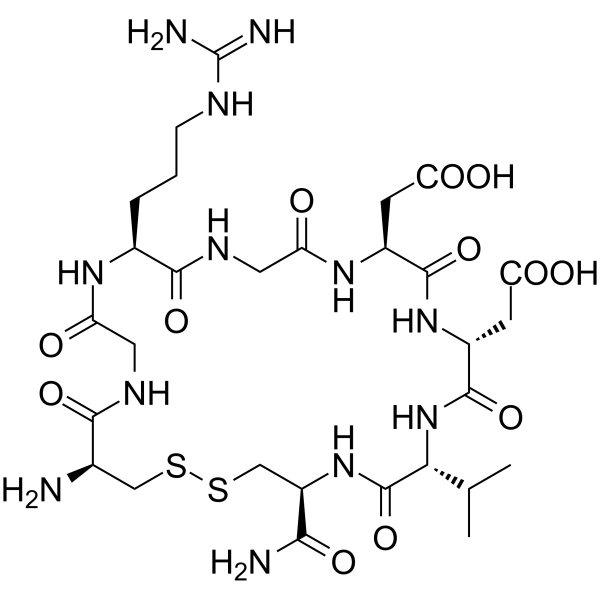
LXW7, a cyclic peptide containing Arg-Gly-Asp (RGD), is an integrin αvβ3 inhibitor. LXW7 has a high binding affinity to αvβ3 integrin with an IC50 of 0.68 μM. LXW7 increases phosphorylation of VEGFR-2 and activation of ERK1/2. Anti-inflammatory effect.
Nur für Forschungszwecke. Wir verkaufen nicht an Patienten.
- Reinheit : 99.00%
- CAS. Nr.: 1313004-77-1
- Formel: C29H48N12O12S2
- Molecular Weight:820.89
-
Speicherung:
Sealed storage, away from moisture.
Powder -80°C, 2 years , -20°C, 1 year* In solvent : -80°C, 6 months; -20°C, 1 month (sealed storage, away from moisture)

To place orders, for customer services and technical support, please contact: MedChemExpress USA
Tel: 609-228-6898 E-mail: [email protected] [email protected]


-
 Biologische Aktivität
-
Chemical Information
-
Lösungsmittel & Löslichkeit
- Protokoll
- Reinheit & Dokumentation
- Verweise
-
 Help & FAQs


-
HY-100506
GLPG0187Integrin Receptor Antagonist -
HY-14571
E7820Angiogenesis Inhibitor -
HY-137561
Bexotegrastαvβ6/αvβ1 Integrin Inhibitor -
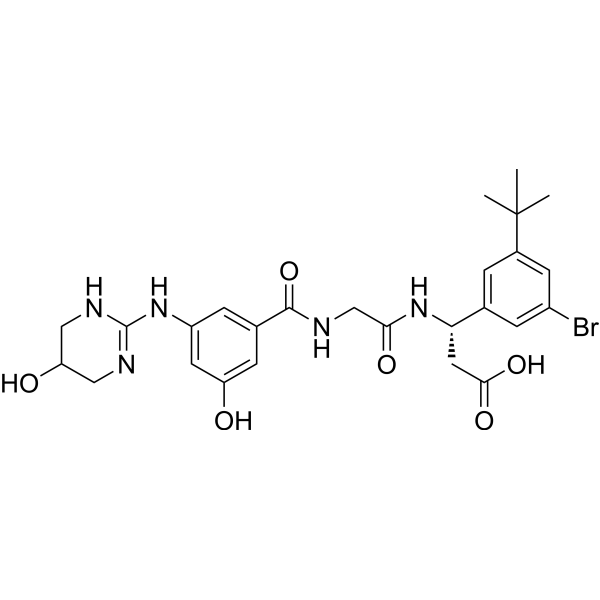
HY-18644
CWHM-12αV Integrins Inhibitor -
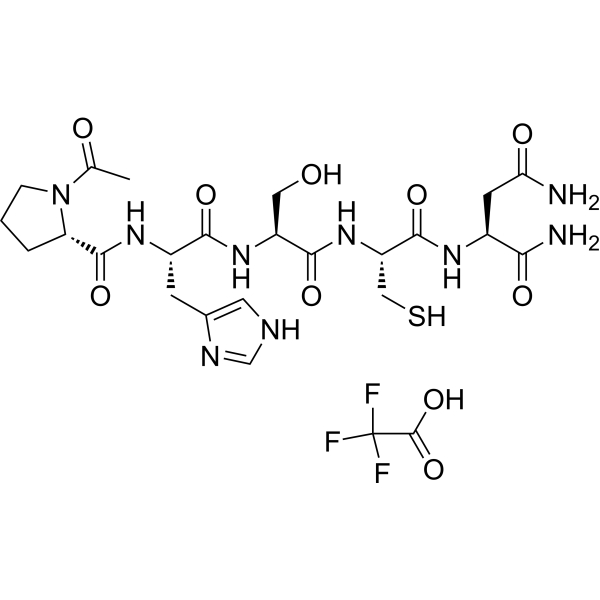
HY-13535A
ATN-161 trifluoroacetate saltIntegrin Antagonist -
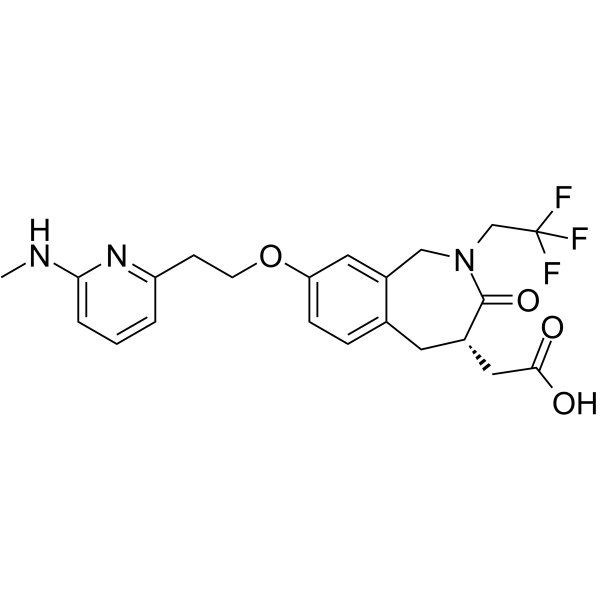
HY-19307
SB-273005αvβ3/αvβ5 Receptor Antagonist -
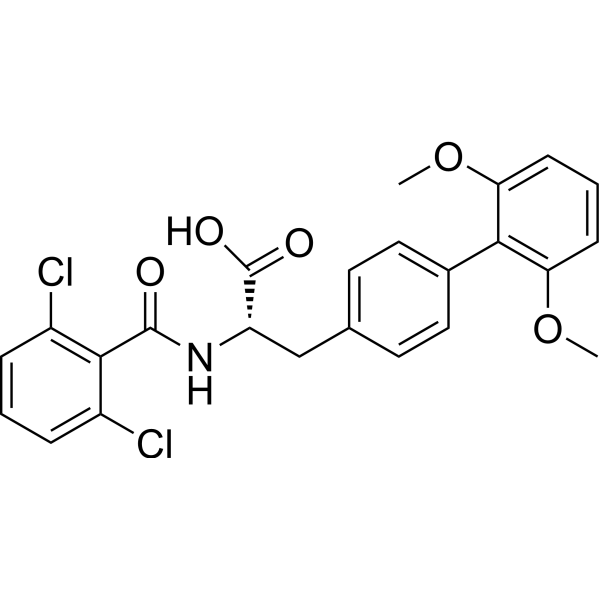
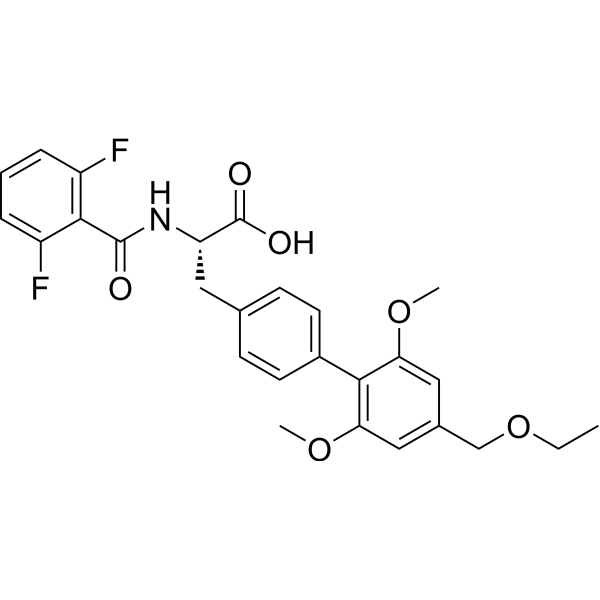
HY-15770
TR-14035α4β7/α4β1 Antagonist -
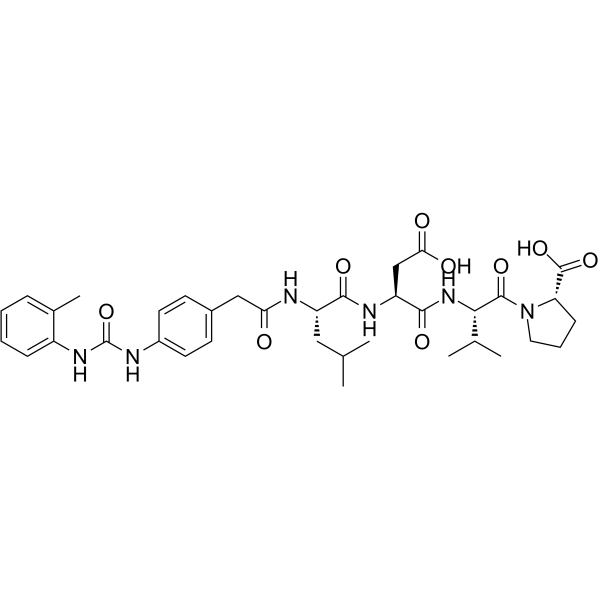
HY-14951
FirategrastIntegrin Antagonist -
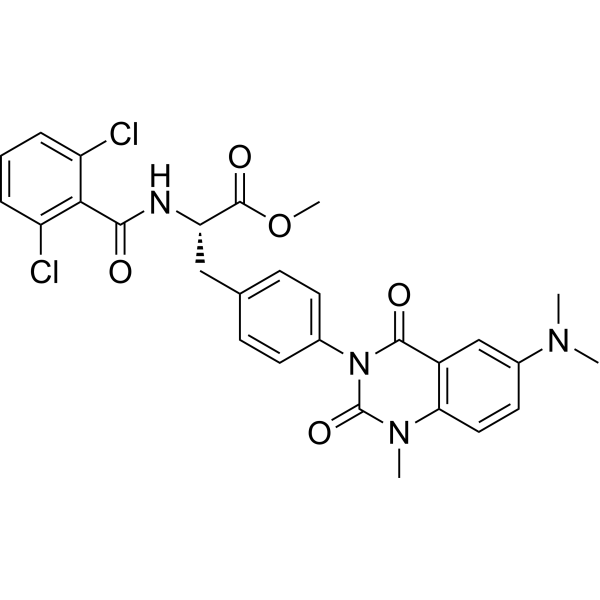
HY-14126
BIO-1211α4β1 (VLA-4) Inhibitor -
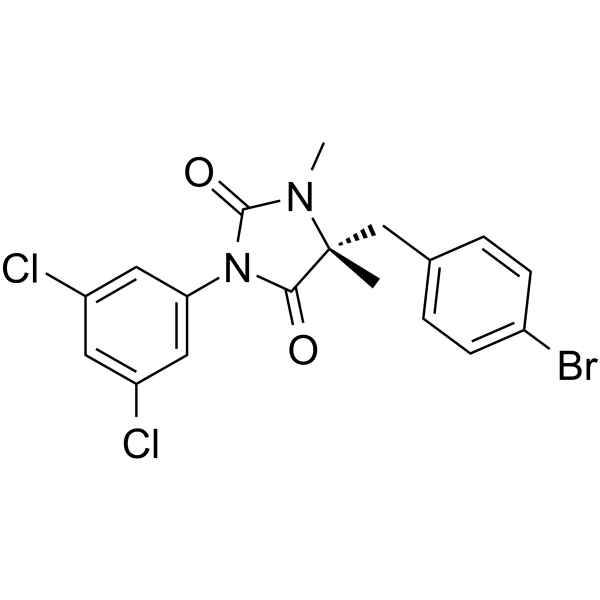
HY-124290
Carotegrast methylα4 Integrin Antagonist -
HY-110117
BIRT 377LFA-1 Inhibitor -
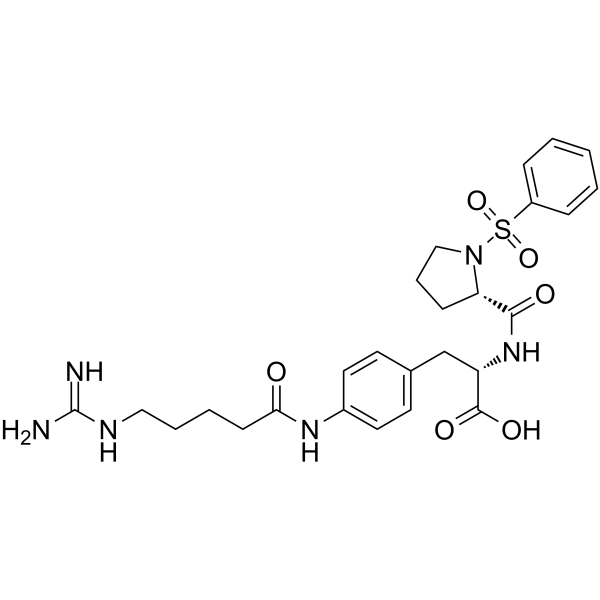
HY-100445
αvβ1 integrin-IN-1αvβ1 Inhibitor


Biologische Aktivität
Beschreibung
IC50 & Target
IC50: 0.68 μM (αvβ3 integrin)[1]
In Vitro
LXW7 specially binds to αvβ3 integrin (Kd=76±10 nM). LXW7 binds strongly to αvβ3-K562 cells, weakly to αvβ5-K562 cells and αIIbβ3-K562 cells, and no binding to K562 cells. LXW7 has great potential as a highly efficient peptide ligand for targeted imaging and drug delivery[1].
LXW7 acts as a potent and specific endothelial progenitor cells (EPCs) and endothelial cells (ECs) targeting ligand[2].
MedChemExpress (MCE) has not independently confirmed the accuracy of these methods. They are for reference only.
In Vivo
MedChemExpress (MCE) has not independently confirmed the accuracy of these methods. They are for reference only.
-
Animal Model:Male Sprague-Dawley rats (250-280 g) subjected to middle cerebral artery occlusion (MCAO)[3]
-
Dosage:100 μg/kg
-
Administration:Intravenous injection
-
Result:Infarct volumes and BWC were significantly lower compared to those in the MCAO+PBS (control) group.


Chemical Information
-
CAS. Nr. 1313004-77-1
-
Appearance Solid
-
Molecular Weight 820.89
-
Formel C29H48N12O12S2
-
Color White to off-white
-
Sequence
d(Cys-Gly)-Arg-Gly-Asp-d(Asp-Val-Cys)-NH2 (Disulfide bridge:Cys1-Cys8)
-
Sequence Shortening
d(Cys-Gly)-RGD-d(Asp-Val-Cys)-NH2 (Disulfide bridge:Cys1-Cys8)
-
Versand
Room temperature in continental US; may vary elsewhere.
-
Speicherung
Sealed storage, away from moisture
Powder -80°C 2 years -20°C 1 year * In solvent : -80°C, 6 months; -20°C, 1 month (sealed storage, away from moisture)


Lösungsmittel & Löslichkeit
In Vitro
H2O
Peptide Solubility and Storage Guidelines:
1. Calculate the length of the peptide.
2. Calculate the overall charge of the entire peptide according to the following table:
| Contents | Assign value | |
|---|---|---|
| Acidic amino acid | Asp (D), Glu (E), and the C-terminal -COOH. | -1 |
| Basic amino acid | Arg (R), Lys (K), His (H), and the N-terminal -NH2 | +1 |
| Neutral amino acid | Gly (G), Ala (A), Leu (L), Ile (I), Val (V), Cys (C), Met (M), Thr (T), Ser (S), Phe (F), Tyr (Y), Trp (W), Pro (P), Asn (N), Gln (Q) | 0 |
3. Recommended solution:
| Overall charge of peptide | Details |
|---|---|
| Negative (<0) |
1. Try to dissolve the peptide in water first. 2. If water fails, add NH4OH (<50 μL). 3. If the peptide still does not dissolve, add DMSO (50-100 μL) to solubilize the peptide. |
| Positive (>0) |
1. Try to dissolve the peptide in water first. 2. If water fails, try dissolving the peptide in a 10%-30% acetic acid solution. 3. If the peptide still does not dissolve, try dissolving the peptide in a small amount of DMSO. |
| Zero (=0) |
1. Try to dissolve the peptide in organic solvent (acetonitrile, methanol, etc.) first. 2. For very hydrophobic peptides, try dissolving the peptide in a small amount of DMSO, and then dilute the solution with water to the desired concentration. |


Reinheit & Dokumentation
-
Data Sheet (264 KB)
-
SDS (394 KB)
- English - EN (394 KB)
- Français - FR (394 KB)
- Deutsch - DE (394 KB)
- Norwegian - NO (394 KB)
- Español - ES (394 KB)
- Swedish - SV (394 KB)
- Italian - IT (394 KB)
- Korean - KR (394 KB)
- Portuguese - PT (394 KB)
-
Handling Instructions (2659 KB)
Verweise
[1]. Xiao W, et al. The use of one-bead one-compound combinatorial library technology to discover high-affinity αvβ3 integrin and cancer targeting arginine-glycine-aspartic acid ligands with a built-in handle. Mol Cancer Ther. 2010 Oct;9(10):2714-23. [Content Brief]
[2]. Hao D, et al. Discovery and Characterization of a Potent and Specific Peptide Ligand Targeting Endothelial Progenitor Cells and Endothelial Cells for Tissue Regeneration. ACS Chem Biol. 2017 Apr 21;12(4):1075-1086. [Content Brief]
[3]. Fang T, et al. LXW7 ameliorates focal cerebral ischemia injury and attenuates inflammatory responses in activated microglia in rats. Braz J Med Biol Res. 2016 Aug 1;49(9):e5287. [Content Brief]

Calculators
Konzentration (Stammlösung) × Volumen (Stammlösung) = Konzentration (Ziellösung) × Volumen (Ziellösung)


LXW7 Related Classifications
HY-P0178 Related Classifications
 Powered by Bioz