



Dodecanoylcarnitine
Based on 1 publication(s) in Google Scholar
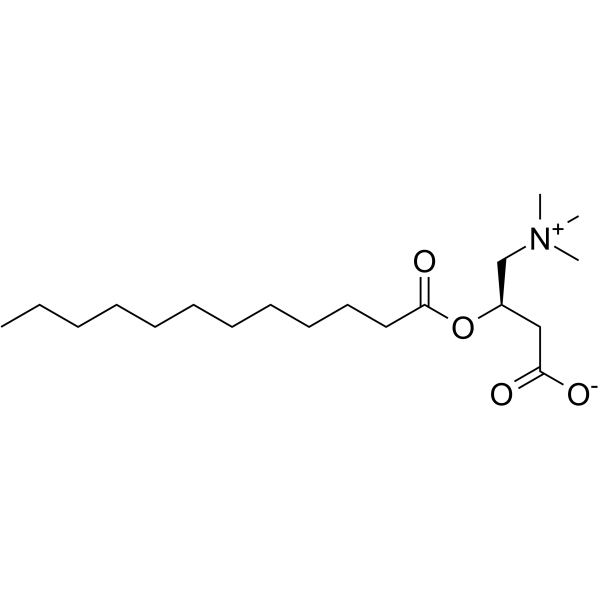
Dodecanoylcarnitine ((-)-Lauroylcarnitine) is a medium long-chain acylcarnitine, an intermediate product in key energy metabolic pathways of fatty acid β-oxidation and amino acids catabolism. The abnormal decrease in the Dodecanoylcarnitine levels indicats that mitochondrial fuel metabolism, including fatty acid oxidation is significantly disturbed. Changes in plasma concentrations of Dodecanoylcarnitine are not only associated with type II diabetes, but also with pre-diabetes status. Dodecanoylcarnitine is present in fatty acid oxidation disorders such as long-chain acyl CoA dehydrogenase deficiency, carnitine palmitoyltransferase I/II deficiency, and is also associated with celiac disease. Dodecanoylcarnitine deomonstrates high sensitivities and specificities in predicting asthma. Combined model of Decanoylcarnitine (HY-113069), Dodecanoylcarnitine, PC (16:0/0:0), and Asp Arg Pro can be used as a potential biomarker for the diagnosis of Yin-deficiency-heat syndrome.
For research use only. We do not sell to patients.
- Purity : 99.75%
- CAS No.: 25518-54-1
- Formula: C19H37NO4
- Molecular Weight:343.50
-
Storage:Powder -20°C, 3 years , 4°C, 2 years ; In solvent -80°C, 6 months , -20°C, 1 month

To place orders, for customer services and technical support, please contact: MedChemExpress USA
Tel: 609-228-6898 E-mail: [email protected] [email protected]


-
 Biological Activity
-
Chemical Information
-
Solvent & Solubility
- Protocols
- Purity & Documentation
- References
-
 Help & FAQs


-
HY-113201
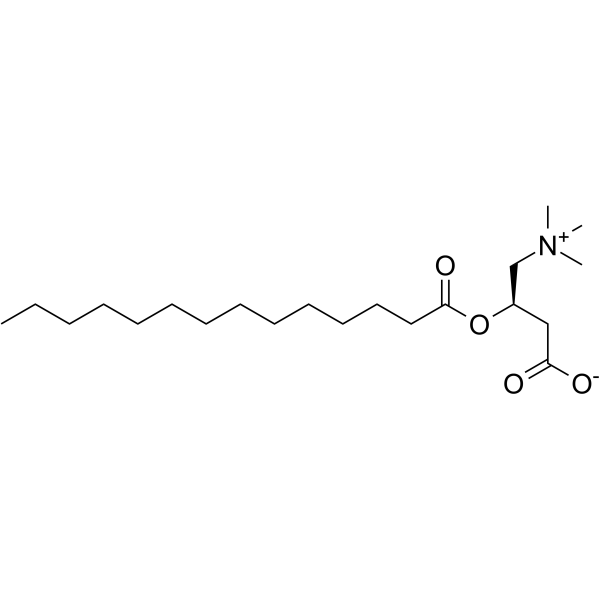
TetradecanoylcarnitineParkinson's Disease Biomarker -
HY-113161
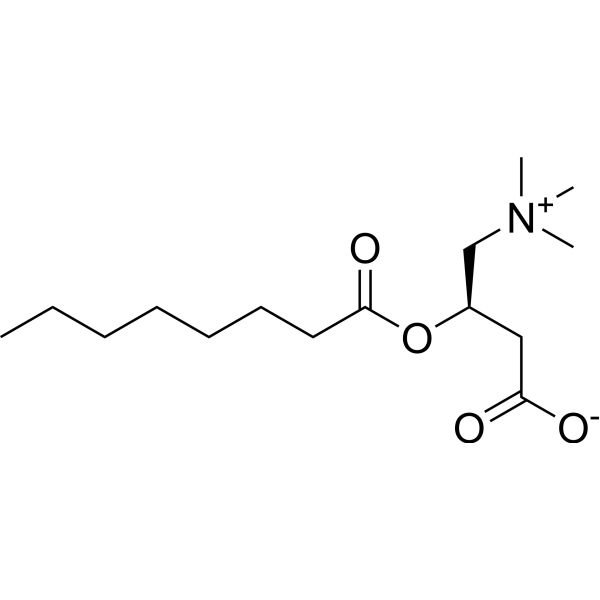
L-OctanoylcarnitineEndogenous Metabolite -
HY-121705
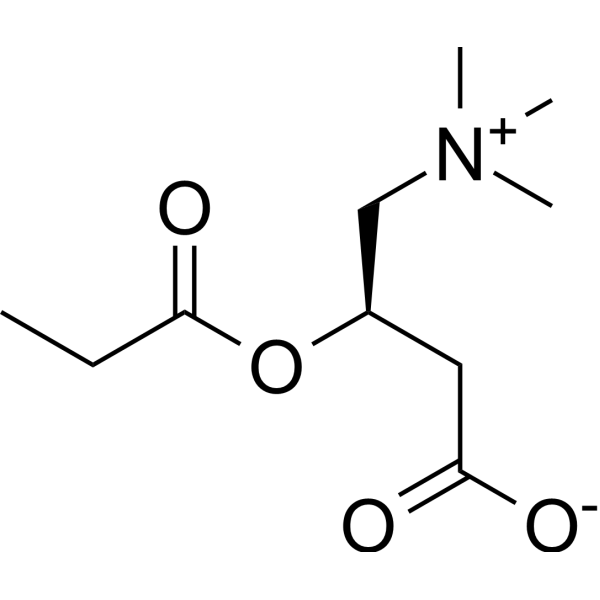
Propionyl-L-carnitineL-Carnitine Derivative -
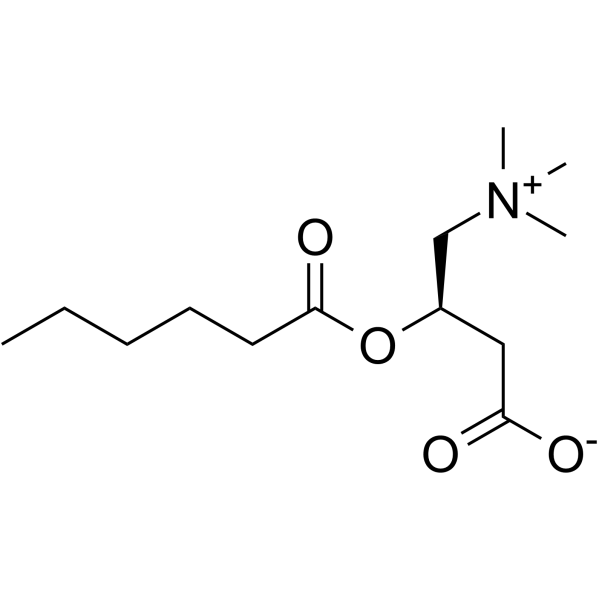
HY-113144
L-HexanoylcarnitineEndogenous Metabolite -
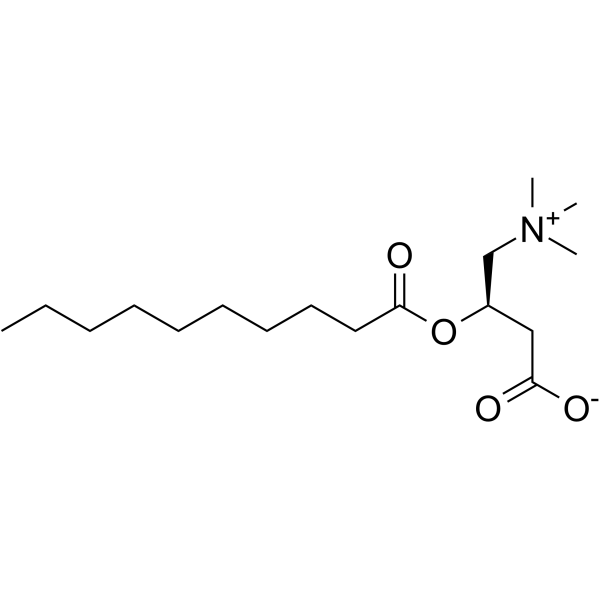
HY-135035
Decanoyl-L-carnitineEndogenous Metabolite -
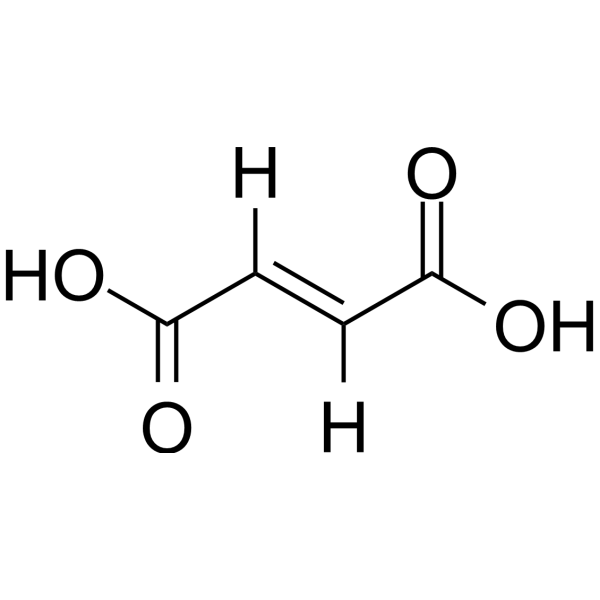
HY-W015883
Fumaric acidAnti-inflammatory agent -
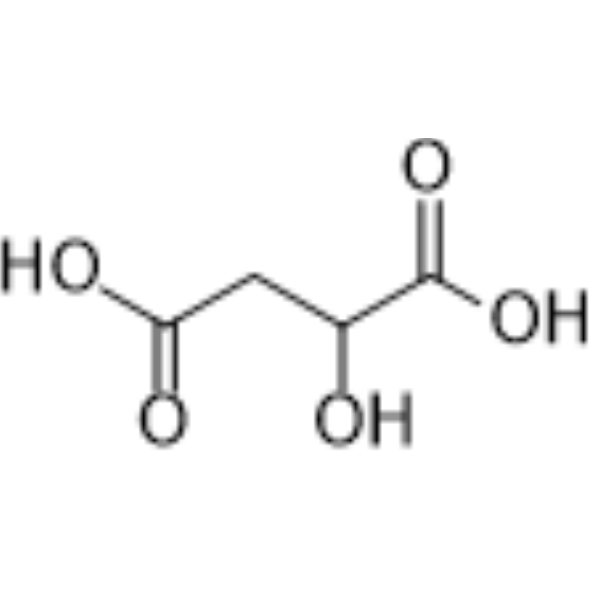
HY-Y1311
Malic acidDicarboxylic Acid -
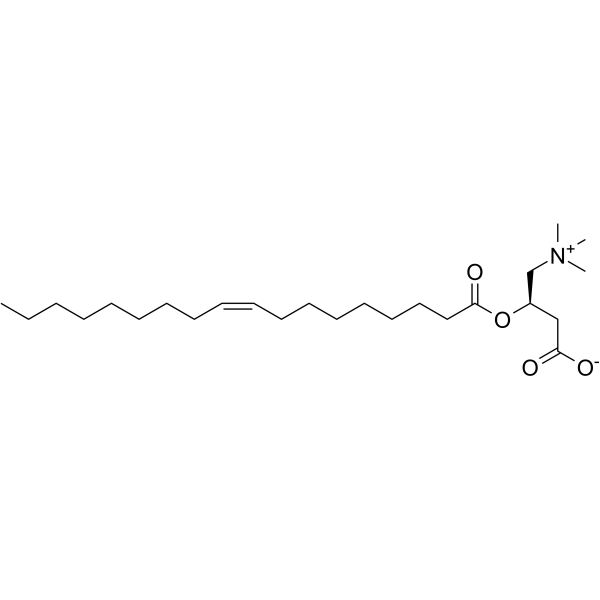
HY-113261
OleoylcarnitineHCC Biomarker -
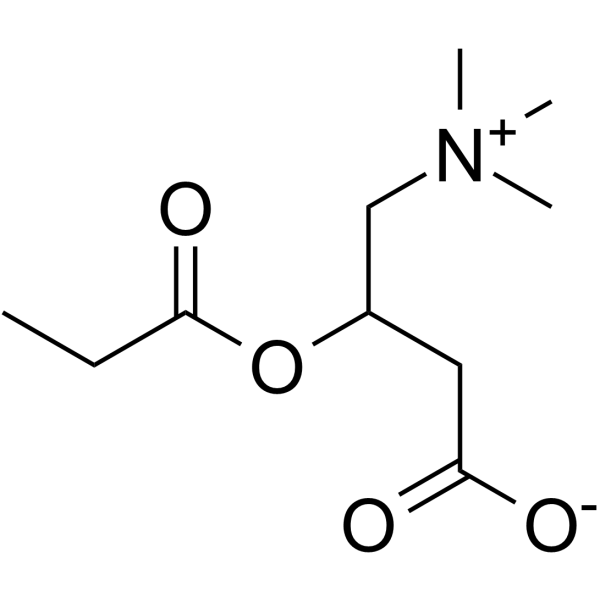
HY-113092
PropionylcarnitineCarnitine Acetyltransferase Metabolite -
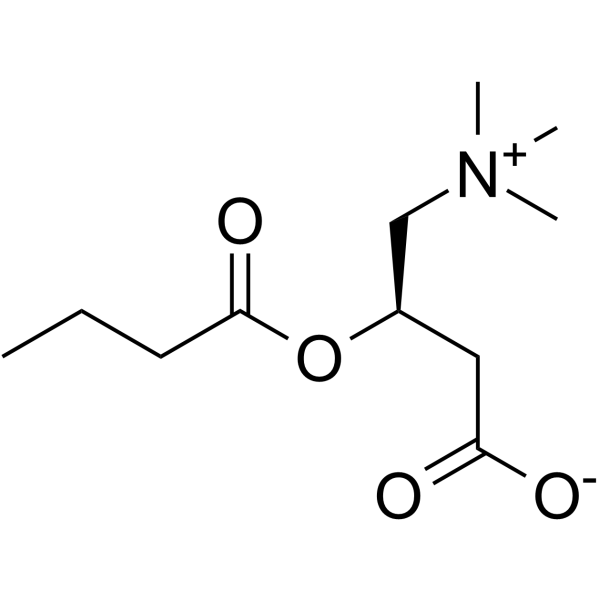
HY-113168
ButyrylcarnitineEndogenous Metabolite -

HY-113166R
Dodecanoylcarnitine (Standard)Standard of Dodecanoylcarnitine -
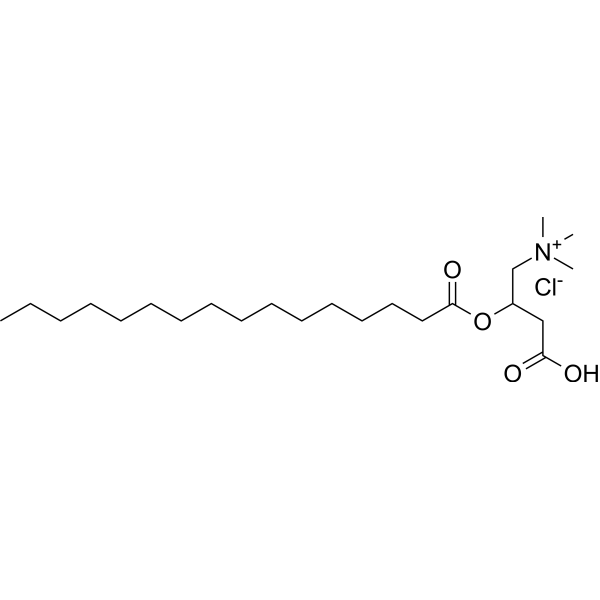
HY-101017
Palmitoylcarnitine chlorideAcylcarnitine
Publications Citing Use of MedChemExpress (MCE) Dodecanoylcarnitine
MoreAll Endogenous Metabolite Isoforms
More

Biological Activity
Description
IC50 & Target
|
Human Endogenous Metabolite |
In Vitro
Dodecanoylcarnitine is associated with very long-chain acyl-CoA dehydrogenase deficiency[1].
Serum Dodecanoylcarnitine demonstrates high sensitivities and specificities in predicting asthma[2].
Dodecanoylcarnitine levels are increased in asthma[2].
The abnormal decrease in the Dodecanoylcarnitine levels indicats that mitochondrial fuel metabolism, including fatty acid oxidation is significantly disturbed[3].
Changes in plasma concentrations of Dodecanoylcarnitine are not only associated with type II diabetes, but also with pre-diabetes status[3].
Combined model of Decanoylcarnitine, Dodecanoylcarnitine, PC (16:0/0:0), and Asp Arg Pro can be used as a potential biomarker for the diagnosis of Yin-deficiency-heat syndrome[3].
MedChemExpress (MCE) has not independently confirmed the accuracy of these methods. They are for reference only.


Chemical Information
-
CAS No. 25518-54-1
-
Appearance Solid
-
Molecular Weight 343.50
-
Formula C19H37NO4
-
Color White to off-white
-
SMILES
CCCCCCCCCCCC(O[C@H](CC([O-])=O)C[N+](C)(C)C)=O
-
Synonyms
(-)-Lauroylcarnitine
-
Structure Classification
-
Shipping
Room temperature in continental US; may vary elsewhere.
-
Storage
Powder -20°C 3 years 4°C 2 years In solvent -80°C 6 months -20°C 1 month


Publications (1)
-
Journal Impact Factor
-
Most Recent
-
EBioMedicine
The potential role of lung microbiota and lauroylcarnitine in T-cell activation associated with checkpoint inhibitor pneumonitis. [Abstract]2024 Aug:106:105267. PMID: 39098109


Solvent & Solubility
In Vitro:
DMSO : 33.33 mg/mL (97.03 mM; Need ultrasonic; Hygroscopic DMSO has a significant impact on the solubility of product, please use newly opened DMSO)
Please refer to the solubility information to select the appropriate solvent. Once prepared, please aliquot and store the solution to prevent product inactivation from repeated freeze-thaw cycles.
Storage method and period of stock solution: -80°C, 6 months; -20°C, 1 month. When stored at -80°C, please use it within 6 months. When stored at -20°C, please use it within 1 month.
Please refer to the solubility information to select the appropriate solvent. Once prepared, please aliquot and store the solution to prevent product inactivation from repeated freeze-thaw cycles.
Storage method and period of stock solution: -80°C, 6 months; -20°C, 1 month. When stored at -80°C, please use it within 6 months. When stored at -20°C, please use it within 1 month.
Concentration (start) × Volume (start) = Concentration (final) × Volume (final)
In Vivo:
Select the appropriate dissolution method based on your experimental animal and administration route.
- For the following dissolution methods, please ensure to first prepare a clear stock solution using an In Vitro approach and then sequentially add co-solvents:
- To ensure reliable experimental results, the clarified stock solution can be appropriately stored based on storage conditions. As for the working solution for In Vivo experiments, it is recommended to prepare freshly and use it on the same day.
- The percentages shown for the solvents indicate their volumetric ratio in the final prepared solution. If precipitation or phase separation occurs during preparation, heat and/or sonication can be used to aid dissolution.
Add each solvent one by one: 10% DMSO 40% PEG300 5% Tween-80 45% Saline
Solubility: ≥ 2.5 mg/mL (7.28 mM); Clear solution
This protocol yields a clear solution of ≥ 2.5 mg/mL (saturation unknown).
Taking 1 mL working solution as an example, add 100 μL DMSO stock solution (25.0 mg/mL) to 400 μL PEG300, and mix evenly; then add 50 μL Tween-80 and mix evenly; then add 450 μL Saline to adjust the volume to 1 mL.
Preparation of Saline: Dissolve 0.9 g sodium chloride in ddH₂O and dilute to 100 mL to obtain a clear Saline solution.
Add each solvent one by one: 10% DMSO 90% (20% SBE-β-CD in Saline)
Solubility: ≥ 2.5 mg/mL (7.28 mM); Clear solution
This protocol yields a clear solution of ≥ 2.5 mg/mL (saturation unknown).
Taking 1 mL working solution as an example, add 100 μL DMSO stock solution (25.0 mg/mL) to 900 μL 20% SBE-β-CD in Saline, and mix evenly.
Preparation of 20% SBE-β-CD in Saline (4°C, storage for one week): 2 g SBE-β-CD powder is dissolved in 10 mL Saline, completely dissolve until clear.
In Vivo Dissolution Calculator
Please enter the basic information of animal experiments:
-
-
-
-
Recommended: Prepare an additional quantity of animals to account for potential losses during experiments.
Please enter your animal formula composition:
-
%DMSO +
Recommended: Keep the proportion of DMSO in working solution below 2% if your animal is weak.
-
%+
-
+%Tween-80 + +
-
%Saline +
The co-solvents required include: DMSO, . All of co-solvents are available by MedChemExpress (MCE). , Tween 80. All of co-solvents are available by MedChemExpress (MCE).
Working solution concentration: 0.22 mg/mL
Method for preparing stock solution: mg drug dissolved in μL DMSO. Stock solution concentration: mg/mL.
1. Take μL DMSO stock solution;
2. Add μL .
μL , mix evenly;
3. Then add μL Tween 80, mix evenly;
4. Then add μL
Please ensure that the stock solution in the first step is dissolved to a clear state, and add co-solvents in sequence. You can use ultrasonic heating (ultrasonic cleaner, recommended frequency 20-40 kHz), vortexing, etc. to assist dissolution.


Purity & Documentation
-
Data Sheet (275 KB)
-
SDS (394 KB)
- English - EN (394 KB)
- Français - FR (394 KB)
- Deutsch - DE (394 KB)
- Norwegian - NO (394 KB)
- Español - ES (394 KB)
- Swedish - SV (394 KB)
- Italian - IT (394 KB)
- Korean - KR (394 KB)
- Portuguese - PT (394 KB)
-
Handling Instructions (2659 KB)
References
[1]. Shigematsu Y, et al. Selective screening for fatty acid oxidation disorders by tandem mass spectrometry: difficulties in practical discrimination. J Chromatogr B Analyt Technol Biomed Life Sci. 2003 Jul 15;792(1):63-72. [Content Brief]
[2]. Zhu, T., et al., (2024). Serum Metabolomics Reveals Metabolomic Profile and Potential Biomarkers in Asthma. Allergy, asthma & immunology research, 16(3), 235–252. [Content Brief]


Complete Stock Solution Preparation Table
Please refer to the solubility information to select the appropriate solvent. Once prepared, please aliquot and store the solution to prevent product inactivation from repeated freeze-thaw cycles.
Storage method and period of stock solution: -80°C, 6 months; -20°C, 1 month. When stored at -80°C, please use it within 6 months. When stored at -20°C, please use it within 1 month.
| Optional Solvent | Concentration Solvent Mass | 1 mg | 5 mg | 10 mg | 25 mg |
|---|---|---|---|---|---|
| DMSO | 1 mM | 2.9112 mL | 14.5560 mL | 29.1121 mL | 72.7802 mL |
| 5 mM | 0.5822 mL | 2.9112 mL | 5.8224 mL | 14.5560 mL | |
| 10 mM | 0.2911 mL | 1.4556 mL | 2.9112 mL | 7.2780 mL | |
| 15 mM | 0.1941 mL | 0.9704 mL | 1.9408 mL | 4.8520 mL | |
| 20 mM | 0.1456 mL | 0.7278 mL | 1.4556 mL | 3.6390 mL | |
| 25 mM | 0.1164 mL | 0.5822 mL | 1.1645 mL | 2.9112 mL | |
| 30 mM | 0.0970 mL | 0.4852 mL | 0.9704 mL | 2.4260 mL | |
| 40 mM | 0.0728 mL | 0.3639 mL | 0.7278 mL | 1.8195 mL | |
| 50 mM | 0.0582 mL | 0.2911 mL | 0.5822 mL | 1.4556 mL | |
| 60 mM | 0.0485 mL | 0.2426 mL | 0.4852 mL | 1.2130 mL | |
| 80 mM | 0.0364 mL | 0.1820 mL | 0.3639 mL | 0.9098 mL |


Dodecanoylcarnitine Related Classifications
HY-113166 Related Classifications
 Powered by Bioz